John Olney, Donovan Brothers Ltd

John Olney told me it all began with two brothers, Jeremiah & Dennis O’Donovan, who came to Liverpool from Dublin in the eighteen thirties at the time of the potato famine in Ireland. Dennis took a passage from Liverpool across the Atlantic to seek his fortune with the Hudson Bay Trading Company, while Jeremiah came to the East End and settled in Fireball Court, Aldgate.
It sounds like an adventure story of long ago, yet John imbues it with a vivid present tense quality because Jeremiah was his great-great-grandfather and, to a degree, the nature of John’s own life has been the outcome of these events. The brothers’ tale explains both how he came to be here and why Donovan Brothers continues today in the way it does as a family business.
I was touched by John’s story because it was the first I have heard of the Irish in Spitalfields recounted to me by a descendant. Of the different waves of immigration that have passed through, the Irish are the least acknowledged and the people who have left the least evidence visible today. Yet anyone who walks through Spitalfields knows the building in Crispin St with the fine old signwriting that says “Donovan Brothers – The noted house for paper bags,” this was where the business began that John still runs today at the New Spitalfields Market in Leyton.
John and I sat talking in the office of the Market Tenants’ Association in the grey light of early morning recently, watching as the wholesale fruit & vegetable market wound up for the night and the car park emptied out. There is an innate modesty to this gracious man with a strong physical presence and a discreet, withheld quality that colours the plain telling of his stories. You can tell from his glinting eyes that John’s family possesses an intensity of meaning for him, yet he adopts a quiet unemotional tone while speaking of it which serves to communicate a greater depth of feeling than any overt emotion.
“So you’ve come to hear about the fields…” he said, thinking out loud. By “the fields” John meant Spitalfields, using a term of reference I had not heard before. In its archaic colloquial tone, it spoke eloquently of his relationship to the place where his family dwelled continuously from the eighteen thirties and where he began his lifelong involvement with markets.
“My mother was a Donovan” declared John, outlining his precise connection to the line of descent, “She was one of eight, five boys and three daughters. We were a very close knit family, and it was so exciting for a boy of seven or eight, when I first entered the Spitalfields shop and sat on the counter. My uncle would sit outside with the chicken seller at the corner of Leyden St and reminisce about old times. It was history that was being spoken, you didn’t have to read it in books. My uncle used to end up at the bottom of Whites Row where there used to be a barbers and I would sit outside on the curb with my sweets – and that’s how it was in the old days.
My grandfather Patrick Donovan was one of nine children, he started the business and then the brothers came in and that’s how Donovan Brothers came about. I always knew I had a job to go to in the family business. You did everything. If there was a job there, from sweeping up to serving, you did it. It was second nature. Our motto was politeness cost nothing, I would always say, ‘Good Morning, Mr So & So,’ and my uncle would say to the customer, ‘The boy will take it out for you.’
We ran it as a family business and if there was a problem we dealt with it at once between us. The eldest was my grandfather, the governor, and when he died my uncles took over. The governor tells you what to do but everyone else asks. To everyone that works for me today, I am the governor, but in the family my elderly uncles are still the governors. Like in all family businesses, you could count upon one another. There’s no one person shouldering all the problems at any one time.
Every one of my uncles ran a different market. We were involved in Covent Garden, Borough and Stratford Market as well as Spitalfields. I would go out and make the deliveries. Whichever market I was in, it was always the same, whenever I walked through, traders would come up to me with orders and say ‘Tell your father.’ No-one knew who I was. I was ‘the boy’ and I still am to my uncles, and this makes a family. Because although we do retire as such, there’s no retirement from the family business. You are born on the job. You die on the job.”
John’s two sons and daughter all work for Donovan Brothers now, ensuring the family business goes on for another generation. I think we may permit him to enjoy a certain swagger, coming in to work before dawn in all weathers and continuing his pattern of napping twice a day, at the end of the afternoon and in the late evening, thereby sustaining himself with superlative resilience through the extended antisocial hours that market life entails. The market is a world to itself and it is John Olney’s world.
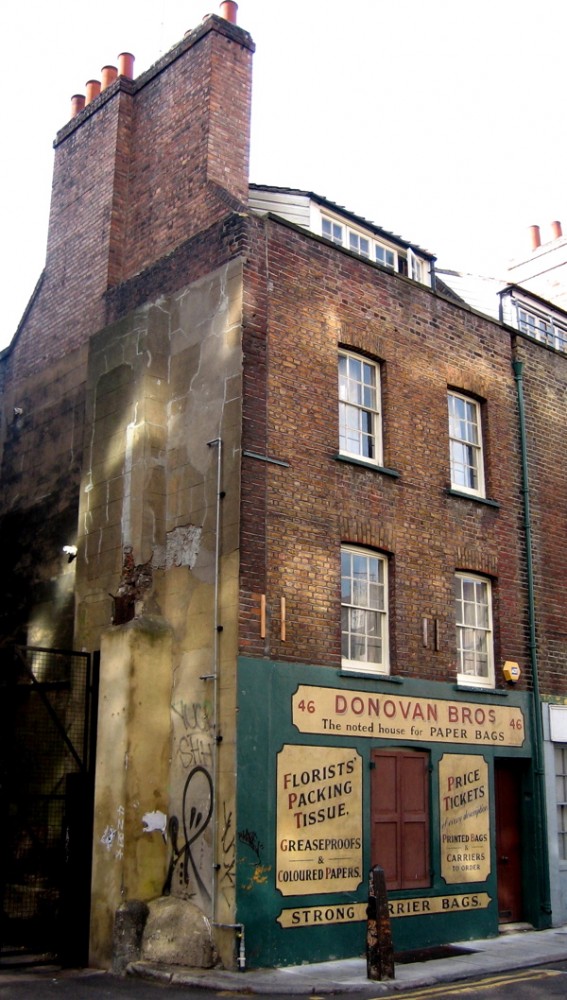
The building in Crispin St retains its signwriting today.

In Commercial St, nineteen sixties.

John’s shop in the Spitalfields Market, nineteen eighties

John Olney outside his shop in the New Spitalfields Market, Leyton.
Portraits of John Olney © Mark Jackson
You may like to see Mark Jackson & Huw Davies’ photographs of the old Spitalfields Market.
The Trannies of Bethnal Green

Hessel St is named in remembrance of Phoebe Hessel (born 1713), known as the “Amazon of Stepney” who dressed as a man to enlist in the army to be with her lover – an honourable example which demonstrates that trannies are an integral part of the culture and history of the East End. And I am proud to report that this venerable tradition still flourishes today, reaching its exuberant zenith each year at “London’s Next Top Tranny Contest” held at the Bethnal Green Working Men’s Social Club.
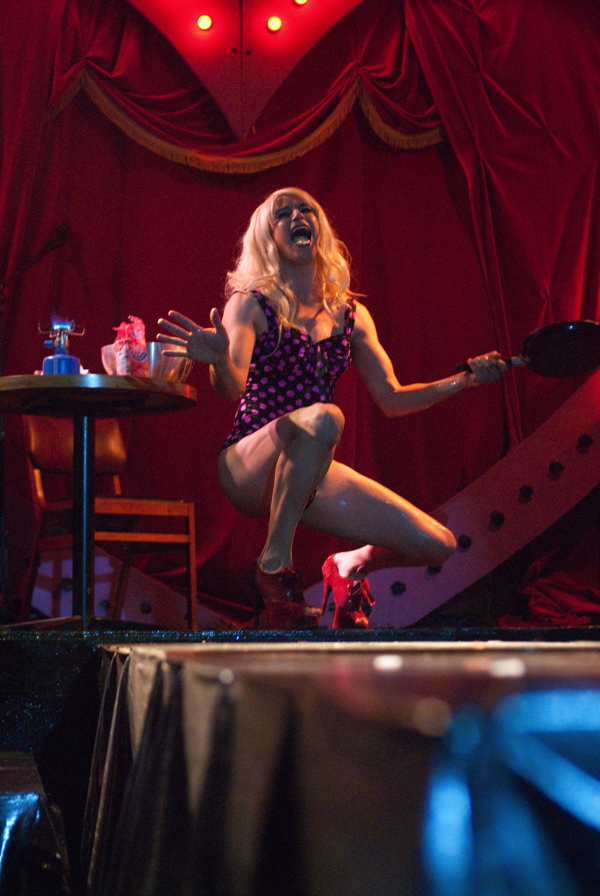
It was my privilege to sit at the head of the catwalk, surrounded by a raucous and appreciative crown, to witness these glamorous extravagant flowers at close quarters as they competed furiously in last week’s nail-biting contest finale. Yet before proceedings commenced, Russella – our long-legged pole dancing hostess in pink glitter – confessed her motives with a refreshing lack of false modesty, redefining the terms of the contest unambiguously.
“Why would I want to give the title of London’s Top Tranny to someone less talented and less good looking than myself? That’s why I am the host tonight, because the winner will be London’s Next Top Tranny – after me. They will be London’s Next Top Tranny when I die. In other words, over my dead body…” she declared, fluttering her spidery eyelashes as she twisted her sparkly lips into an insouciant smile and tossed her blonde locks with self conscious grace.
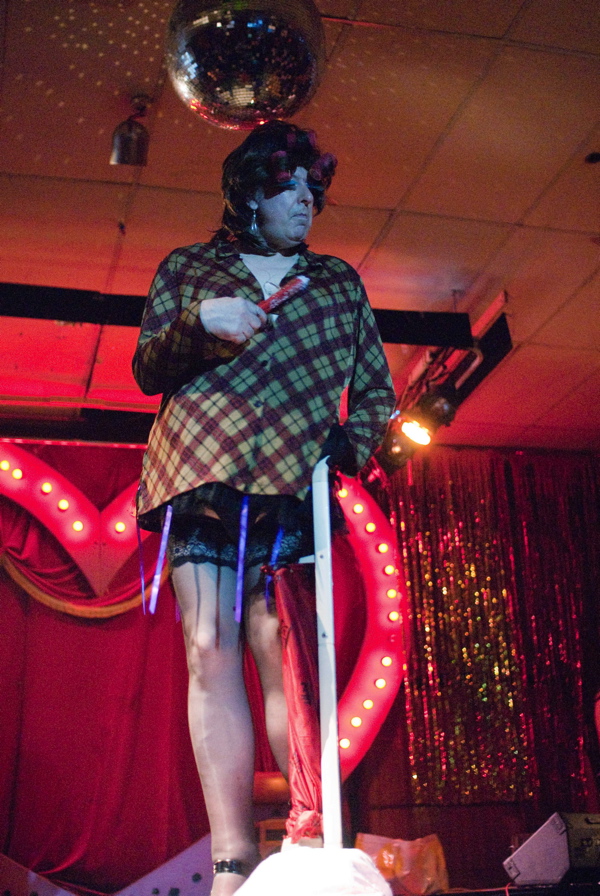
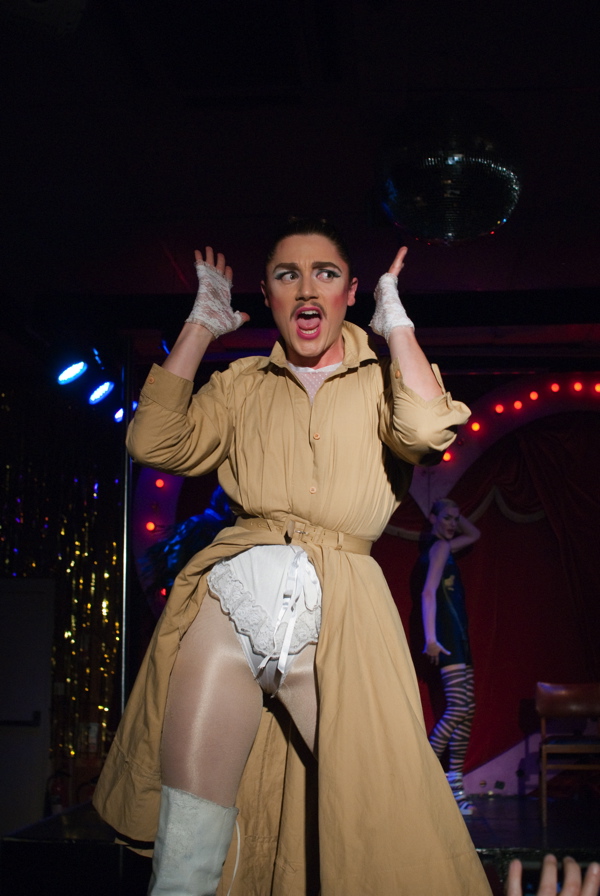
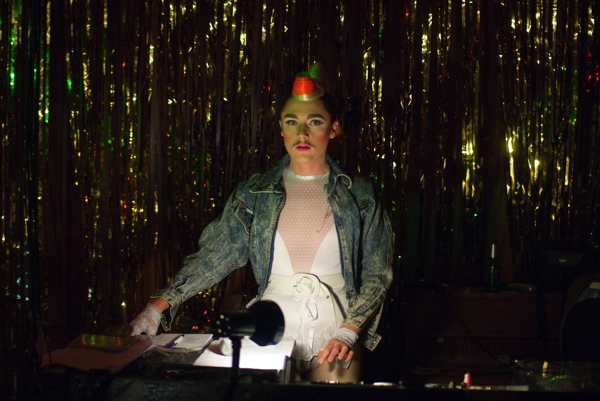
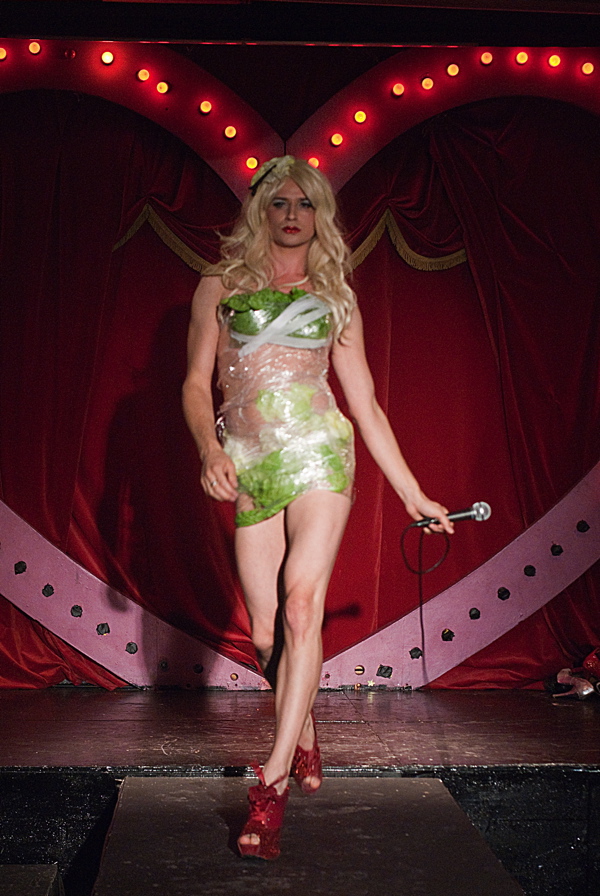
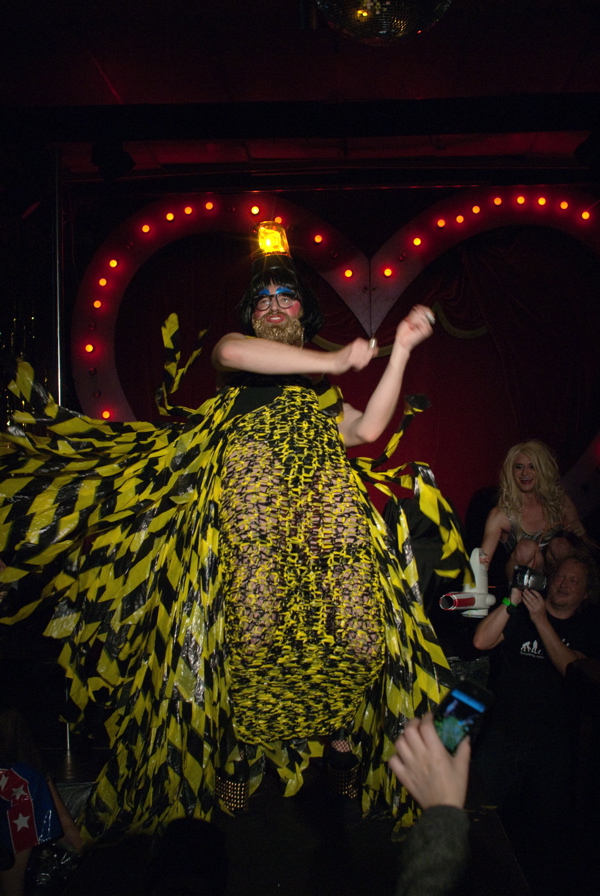
Once the unassailable Russella had asserted her alpha-tranny status, it was time to bring on the contestants, Miss Cairo, Fancy Chance, Stephanie, Polly Sexual, Jean Benett and Strawberry Pickles, and what a gorgeous display of unapologetically ambiguous gender they presented – to delight the most jaded eye and uplift the weariest spirit. Six brave souls who had cast aside conventional notions of dignity in the quest for greatness. Lacking breasts, possessing male body hair (and in one case having a beard), none of these contestants aspired literally to be taken for women, instead they had adopted female trappings to aid them in exaggerated variations upon the performance of femininity. And, as if to emphasise the point, Russella even staged an uproarious cookery demonstration making pancakes on stage.
Running through the evening was a compelling dramatic tension between the trannies’ performances that invite our suspension of disbelief and their clunky pantomime outfits which simultaneously remind us of their wearers’ inauthentic gender. These fearless trannies incarnate a persuasive poetry. It is a question of how far are you prepared to go to humiliate yourself for the sake of becoming fabulous.
And these trannies held nothing back, embracing challenges to retain dignity while walking in wildly mis-matched ill-fitting shoes, displaying extreme emotions while blasted by a wind machine, drinking copious amounts of of cider, and eating live worms, raw meat and dog food. Stephanie, a shy senior tranny in a bridal gown, won affection early on for tottering in ill-matched heels displaying swollen ankles and varicose veins, and then, as if to dispel the audience’s pity, won a round of applause for eating a whole can of dog food. Other memorable highlights included Miss Cairo’s supermodel walk sustained while wearing a wooden clog and a five inch heel, Polly Sexual’s glorious dress woven from yellow and black hazard tape, Strawberry Pickles’ soulful appeal for drag queen asylum to prevent her being sent back to Sarah Palin’s America, Jean Benett’s curiously Gwyneth Paltrow-like enactment of constipation, and Fancy Chance’s performance as the artist formerly known as Prince, which made such ingenious use of an aerosol of cream and drew deafening shrieks of joy from the crowd.
It all came down to two contenders. Strawberry Pickles, distinguished by her relentless cheerfulness and Fancy Chance who accomplished that rare stage feat of being mean and charming at the same time. She was the dark horse of the contest, wearing trousers and exuding masculinity, I wrongly assumed Fancy was a man performing as a manly woman. Only part-way through the contest did I realise that Fancy Chance was the only entrant going in the opposite direction to the others, from woman to man. She had taken me in from the start. So it was only just that she won, though friends were surprised next day when I said I had been to a tranny contest and a woman won – though I have no doubt Phoebe Hessel would have approved of the result.
There is a strange nobility in the trannies’ condition, emerging from the shadowlands of gender into the limelight, so proud and flamboyant, craving attention like children, and seeking affection and respect for their fabulousness. We love them for their excess, their devotion to sentimental songs and inability to lipsynch, their make-up that smears, their wigs that come off and their trashy costumes that come apart. We cherish their magnificent failures. We love them for their audacity. They are delicate creatures of the nighttime and we do not want to know where they go in the daytime, because there is an elusive magic to these vibrant personalities unlocked by cross-dressing.

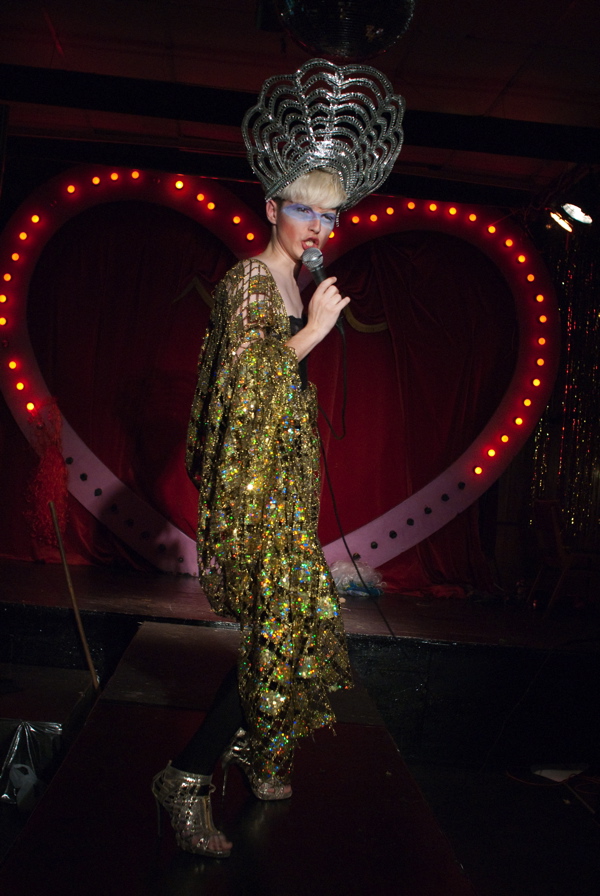

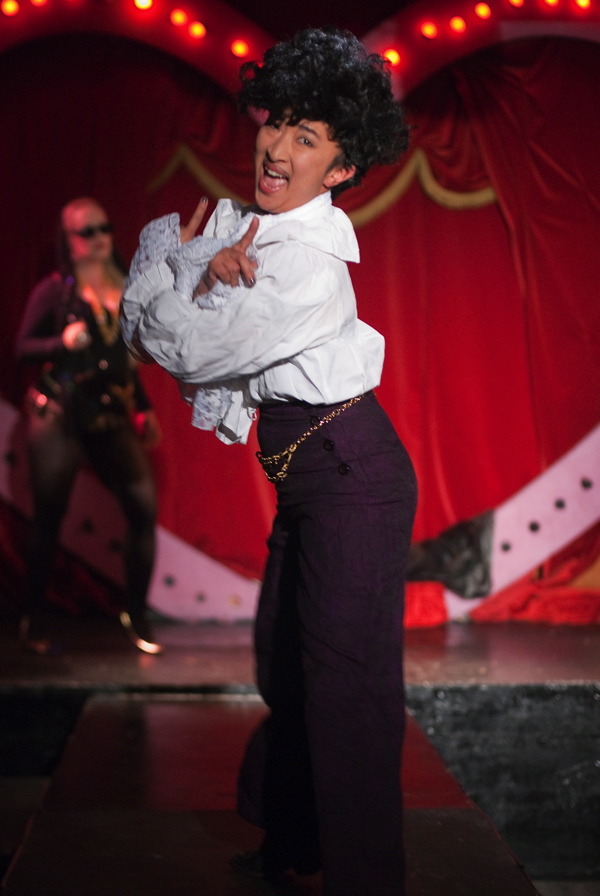

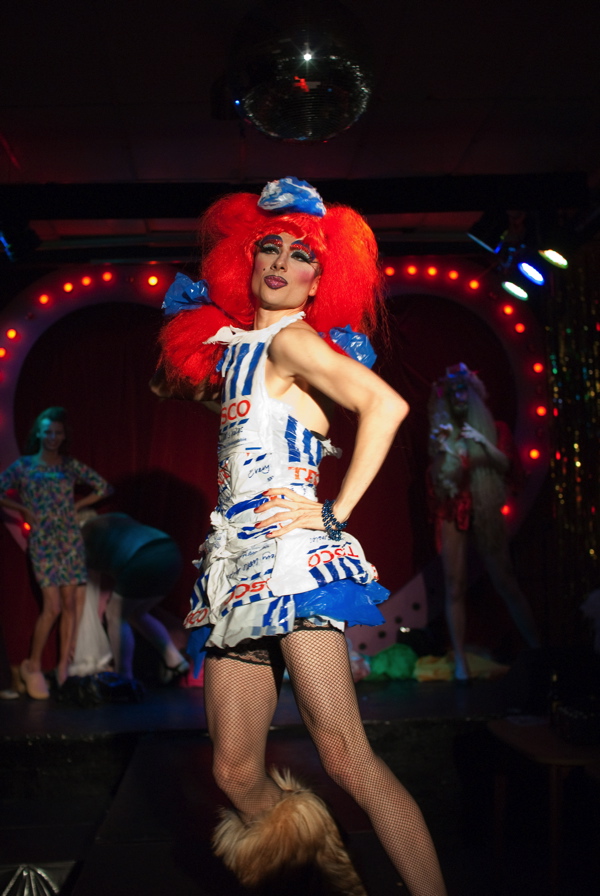






Photographs copyright © Sarah Ainslie
Find out more about the Bethnal Green Working Men’s Social Club at www.workersplaytime.net
Columbia Road Market 53
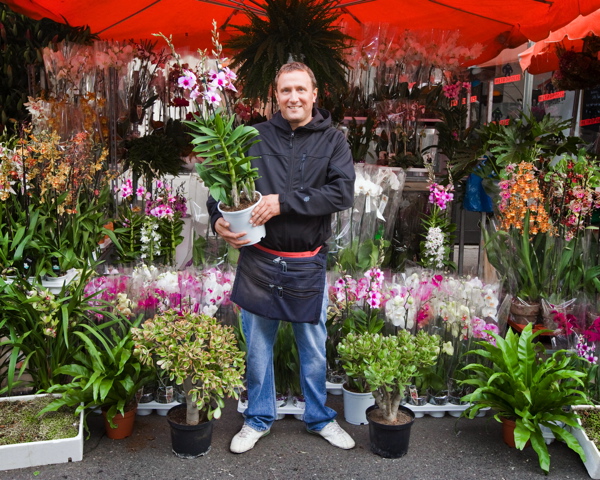
This is Neil Swailes who specialises in house plants, surrounded by some prime specimens of the tropical orchids upon which he bases his reputation. “Go and look at the web and you’ll be back to buy the best!” is one of Neil’s cries.“We pride ourselves on selling top quality stuff,” he assured me, proudly holding up an exotic bloom with a confident grin.
A relative newcomer in this long established market,“I’ve been here for just eight years,” he declared modestly, “although my family’s been here for twenty.” Neil married into the trade, his wife’s family own the business –“I married their daughter and then started working on the stall,” explained Neil with the open-hearted alacrity of one who takes life as it comes. Based in Theydon Bois, Essex, Neil’s business consists in the import and selling of indoor plants, and he works as a gardener for the rest of the week.
Each Sunday, Neil gets up at 1:30 in the morning to drive up to Columbia Rd and work a sixteen hour day. In common with many of his fellow traders he is devoted to this weekly ritual. “It’s a good business and nice people. I don’t know what I’d do without it now, I’d be lost,” he confided to me, even tolerating the mysterious meteorological phenomenon whereby, “It always usually rains on Sundays.” Just like the sale of garden plants, the trade in indoor plants also seasonal, “In the Summer it trails off but it picks up in the Winter, and Christmas is a good time.” said Neil with a grin of anticipation, as the season shifts in his favour.
There is a certain resilience of spirit and brightness of manner that is required in the market and for Neil these are innate. Though when I asked if he would like his children to come into the business, he dismissed the idea at once. “I hope not, it’s a hard old grind!” he exclaimed. Yet in this walk of life, major recognition can come in unexpected ways.“David Bailey took my photograph,” admitted Neil proudly, “He brought me a framed print and I’m going to be in his new book.”
Photograph copyright © Jeremy Freedman
In Spitalfields in Autumn
The rain is falling on Spitalfields, upon the church and the market, and on the streets, yards and gardens. Dripping off the roofs and splashing onto the pavements, filling the gutters and coursing down the pipes, it overflows the culverts and drains to restore the flow of the Black Ditch, the notorious lost river of Spitalfields that once flowed from here to Limehouse Dock. This was the watercourse that transmitted the cholera in 1832. An open sewer piped off in the nineteenth century, the Black Ditch has been co-opted into the drainage system today, but it is still running unknown beneath our feet in Spitalfields – the underground river with the bad reputation.
The shades of Autumn encourage such dark thoughts, especially when the clouds hang over the City and the Indian Summer has unravelled to leave us with incessant rain bringing the first leaves down. In Spitalfields, curry touts shiver in the chill and office smokers gather in doorways, peering at the downpour. The balance of the season has shifted and sunny days have become exceptions, to be appreciated as the last vestiges of the long Summer.
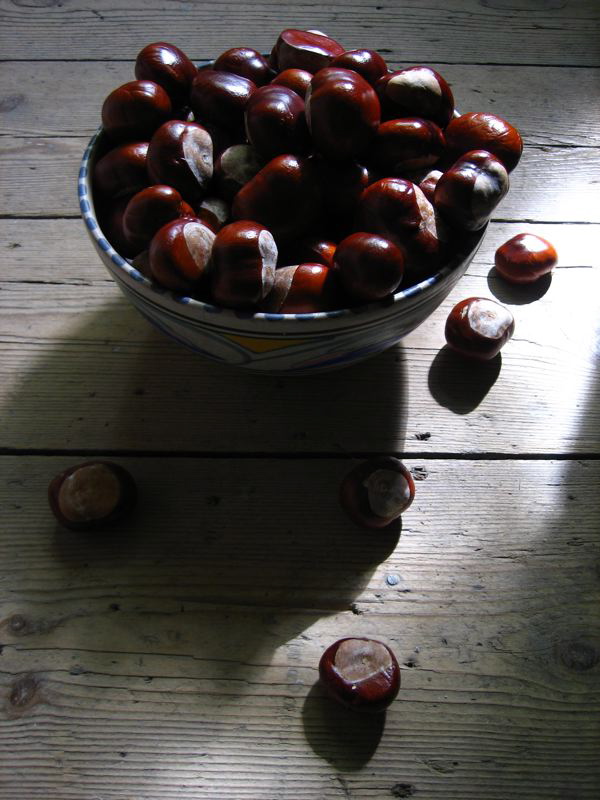
On such a day recently, I could not resist collecting these conkers that were lying neglected on the grass in the sunshine. And when I got home I photographed them in that same Autumn sunlight to capture their perfect lustre for you. Let me confess, ever since I came to live in the city, it has always amazed me to see conkers scattered and ignored. I cannot understand why city children do not pick them up, when even as an adult I cannot resist the temptation to fill a bag. In Devon, we raced from the school gates and down the lane to be the first to collect the fresh specimens. Their glistening beauty declared their value even if, like gold, their use was limited. I did not bore holes in them with a meat skewer and string them, to fight with them as others do, because it meant spoiling their glossy perfection. Instead I filled a leather suitcase under my bed with conkers and felt secure in my wealth, until one day I opened the case to discover they had all dried out, shrivelled up and gone mouldy.
Let me admit, I feel the sense of darkness accumulating now and regret the tender loss of Summer, just as I revel in the fruit of the season and the excuse to retreat to bed with a hot water bottle that Autumn provides. I lie under the quilt I sewed and I feel protected like a child, though I know I am not a child. I cannot resist dark thoughts, I have a sense of dread at the Winter to come and the nights closing in. Yet in the city, there is the drama of the new season escalating towards Christmas and coloured lights gleaming in wet streets. As the nights draw in, people put on the light earlier at home, creating my favourite spectacle of city life, that of the lit room viewed from the street. Every chamber becomes a lantern or a theatre to the lonely stranger on the gloomy street, glimpsing the commonplace ritual of domestic life. Even a mundane scene touches my heart when I hesitate to gaze upon it in passing, like an anonymous ghost in the shadow.
Here in Spitalfields, I have no opportunity to walk through beech woods to admire the copper leaves, instead I must do it in memory. I shall not search birch woods for chanterelles this year either, but I will seek them out to admire in the market, even if I do not buy any. Instead I shall get a box of cooking apples and look forward to eating baked apples by the fire. I have been busy cutting up broken pallets and scrap timber from the streets, and I already have a respectable wood pile stacked up. I am looking forward to lighting the fire. I am looking forward to Halloween. I am looking forward to Bonfire Night. I am looking forward to Christmas. And I always look forward to writing to you every day. The Summer is over but there is so much to look forward to.

My Autumn shirt, the counterpart to my Spring shirt.
You can visit the Spitalfields City Farm to celebrate Apple Day on Sunday 17th October.
Laurie Allen of Petticoat Lane
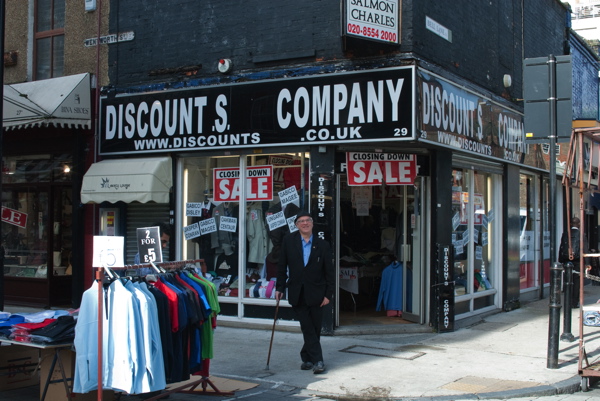
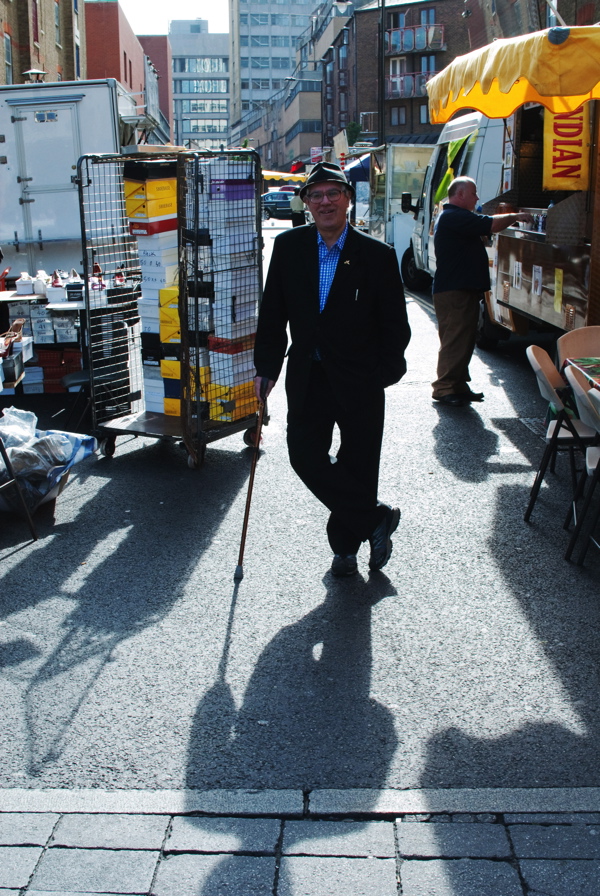
This fellow – so at home he is almost merging with the shopfront behind him – is Laurie Allen standing on a street corner in Petticoat Lane, assuming a characteristically nonchalant posture and watching the world go by. Through his debonaire stance, Laurie demonstrates his confidence, good humour and general optimistic attitude to life. Laurie grew up in Petticoat Lane and still lives in Petticoat Lane. He is at ease with the current of life in Petticoat Lane, that provides him with unceasing fascination and delight.“Throbbing with wonderment,” is his phrase for Petticoat Lane.
Yet Petticoat Lane does not exist on any map, which is appropriate, because for Laurie it is a mythic land of adventure and romance. Petticoat Lane was renamed Middlesex St in 1830 to define the boundary with the City of London, although everyone still calls it by its earlier name, now used to refer to all the streets of the market. This unwitting act of popular defiance is characteristic of the independence of spirit that reigns here in these shabby ancient streets of Spitalfields, which were long established before the roads beside the church on the more more fashionable side of the neighbourhood even existed.
Laurie grew up in Petticoat Lane in the post war years, in what is now remembered as the hey day of the Lane when it was a predominantly Jewish neighbourhood. Ask him anything about Petticoat Lane or its history and he will break into a smile of anticipation at the opportunity you have given him to expound upon his favourite subject, Petticoat Lane. “Yeah!” he exclaims to himself occasionally, when a reminiscence comes into focus and the full emotion of the moment comes back into the present tense. Unlike Marcel Proust, Laurie Allen can truly recall times past, because all his experiences stay present here in Petticoat Lane and he can run through them the way barrow boys once ran through the market, shouting “Wet paint!” to part the crowds.
For the last forty years, Laurie has lived in a small flat in Wentworth Buildings, fifty yards round the corner from Wentworth Dwellings where he grew up. Introducing his account of life in the three rooms his family inhabited, he described collecting firewood from the Spitalfields Market and his childhood wonder at the faces he saw in the flames.“It had a mystical quality about it,” he told me, raising his head a little as if to avert the heat. The abandoned bombsites were a paradise for young Laurie, and he christened them with evocative names to enrich his adventures there. Raising his eyebrows for dramatic effect, Laurie told me of China Town at the end of Middlesex St, Black Panther over in Devonshire Sq and the American Hole in Leman St, confiding their names as cherished secrets.
When Carol Reed came to Petticoat Lane in 1955 to film his classic movie of the East End, “A Kid for Two Farthings” – set against the vibrant life of the market – Laurie was given half a crown by one of the producers, as one of three boys running around the corner of Wentworth St in the background of a street scene. But the revelation to the eleven year old Laurie was fifties sex kitten Diana Dors, a platinum blonde in a cashmere sweater. Even today he winces to speak of this goddess. “All we had seen were our mothers and sisters, we had never seen a woman that shape before!” he admitted, tenderly raising his hands to his chest with prurient pleasure.
Walking through Petticoat Lane with him today you will be introduced to people worth meeting like Abdulla Fadli, ex-attendant at the former Goulston St baths for thirty nine years. Yet Laurie also recognises those that have gone who are still vivid in his mind. “The characters, the sights and sounds of Petticoat Lane are equal to any I have ever seen.” he informed me authoritatively, in the present tense while speaking of the past. There was Mary Green, selling pickled herrings from the barrel, yet she never changed her greasy stinking clothes. There was Prince Monolulu, the horse tipster who dressed like a primitive tribesman, calling “Pick a horse! Pick a horse!” knowing that one had to win. There was the soulful beigel seller crying, “Buy them hot – because when they’re gone, they’re really gone.” There was Jack Strong, a crockery seller who could fan out a set of plates like playing cards, throw them up in the air and catch them again, still in a fan. There was Jackie Bryan, selling dresses, calling out, “Buy one and I’ll get you into modelling, buy two and I’ll get you into films.” A topical spot of patter when”A Kid for Two Farthings” was being filmed round the corner.
Yet in spite of the compelling life of Petticoat Lane, Laurie saw all his contemporaries leave one by one, “People would get married or take a job out of the East End. The old boys and girls stayed on while the younger elements all moved out to North London to make a better life and buy a house.” outlined Laurie philosophically. “There’s only a couple of us left now.” he admitted with a grin.
I wondered if Laurie’s affectionate memories were a reaction to the poor living conditions that existed in Petticoat Lane, but he is insistent that this is not the case, “I knew nothing better and I wanted nothing better,” he said plainly, looking back over the intimacy and richness of experience that binds him to this place. Seeking an uncontestable example,“It’s just magic when you live with your mum and dad, and have your mates come and call for you to do something nice.” said Laurie.“It didn’t suit me to exit stage left. The East End is my life, I feel comfortable in my bolt hole.” he confirmed, “Even after all the changes, it has still got a lot going for it.”
Laurie Allen’s Petticoat Lane is a place that belongs to him. He is the least alienated person you could meet in the city. “I like people and people seem to like me.” he added, speaking the truth with a modest candour, as if this were explanation enough.
Click here to watch Sid James looks at Life – Petticoat Lane
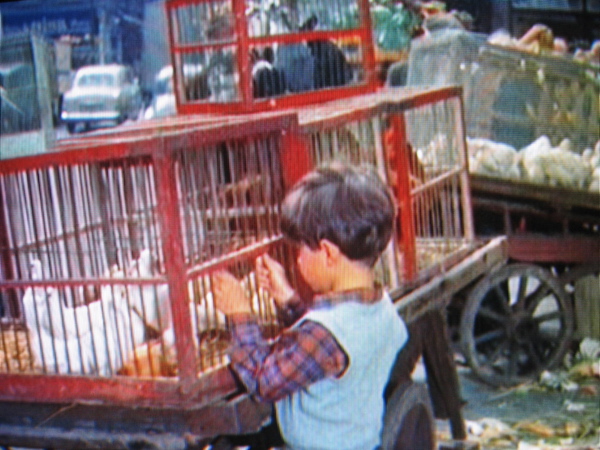
From “A Kid for Two Farthings”
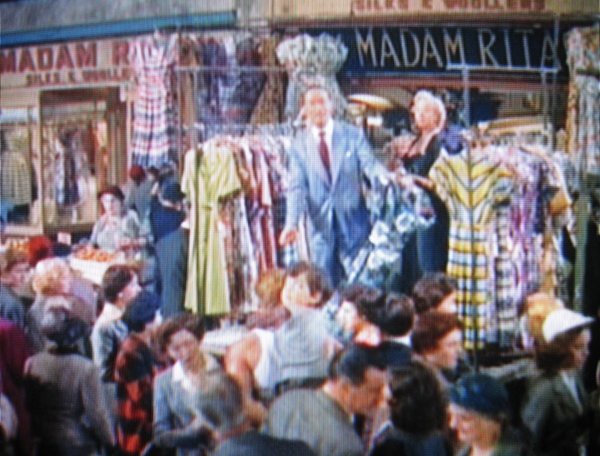

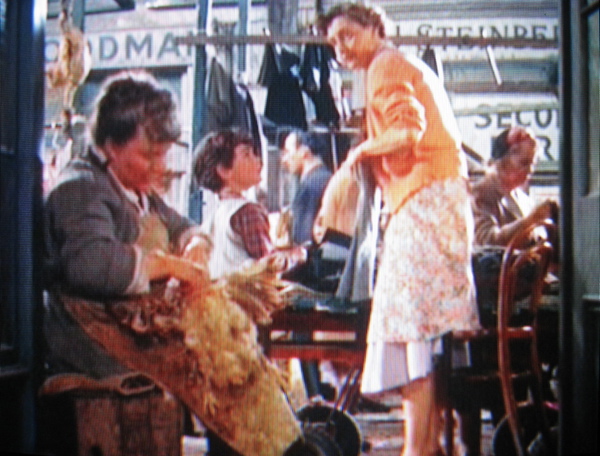
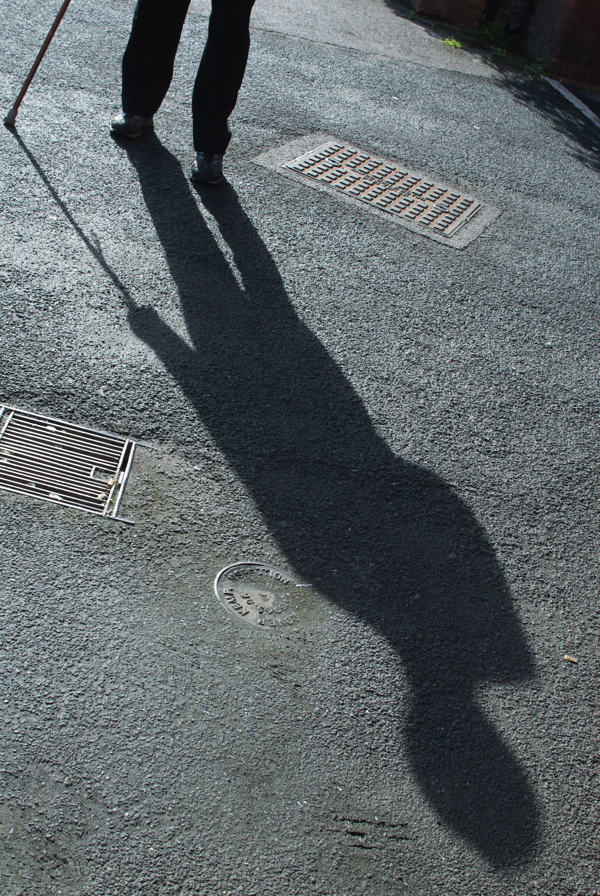
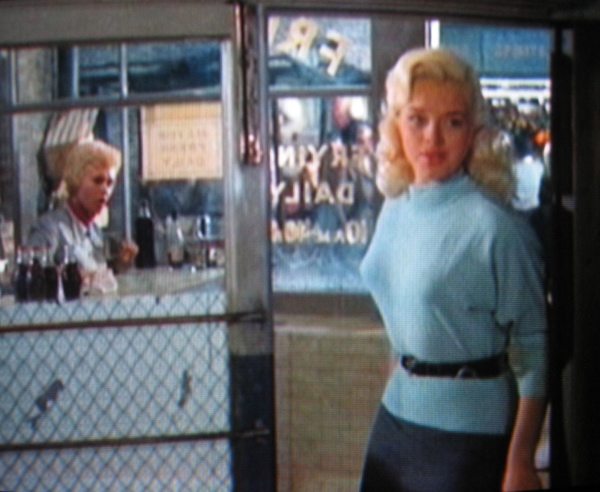
Diana Dors on Petticoat Lane, 1955
New photographs copyright © Sarah Ainslie
Dennis Severs’ Menagerie
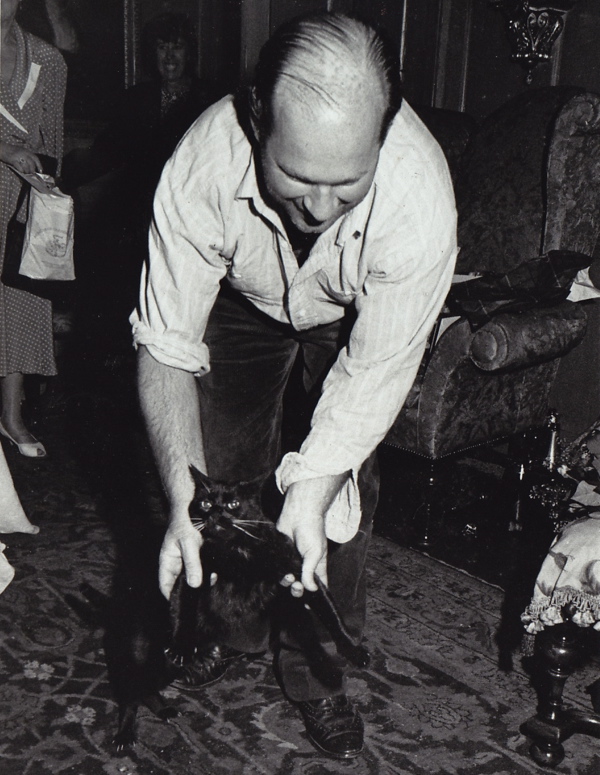
Try as he might, all Dennis Severs’ attempts to teach tap dancing to his cat Madge were met with stubborn resistance. Unsurprisingly, the cat was eager to preserve the dignity of its species and so the wayward creature refused to co-operate.
“Aren’t you a disappointment to me, Madge?” Dennis Severs used to say – in that affectionate yet imperious way of his – to the impassive feline. Because, as you can appreciate, once he had created his eighteenth century time capsule house at 18 Folgate St, banishing the modern world successfully and opening it to the public for tours by candlelight, a tap-dancing cat would have been the final flourish. But in spite of this minor setback, animals played a vital part in Dennis Severs’ vision, instrumental in his strategies to bring the past alive for the present day.
Before he came to Spitalfields, Dennis Severs ran tours in the nineteen seventies for wealthy Americans around Chelsea, transporting them back in time in a horsedrawn carriage. “That was when Dennis found his ability to tell stories,” explained David Milne, curator at Dennis Severs’ House, when I joined him and Mick Pedroli, house manager, to discuss Dennis Severs and his animals.“When he first moved here, he arrived in his horse and carriage,” added David.
Buying the house was an evolution in Dennis Severs’ ideas that gave him the opportunity to create a fantasy environment to transport visitors imaginatively, and it was a vision in which cats and canaries had their own roles to play. Like many of the houses in Spitalfields built directly onto the earth, 18 Folgate St has mice coming up through the floor and Dennis Severs got a cat to keep them at bay, just as the inhabitants of these dwellings have done for centuries. He christened the scruffy black kitten Whitechapel although it was always known as Madge. A mysterious nickname of which the significance was only revealed years later when Dennis was confined to a wheelchair and beckoned to David who was serving as his footman at the time. Expecting some profound revelation, David heard Dennis whisper, “Madge is for Majesty…”
The Huguenot weavers in Spitalfields had the custom of keeping canaries, and Dennis Severs got his from the Club Row animal market in 1979. He hung the cages on the shutters in Folgate St until a kestrel nesting on Christ Church savaged one of the birds through the bars. “There’s always been canaries here until this year when the last one died, Mr D’Arcy,” said Mick wistfully, admitting,“We cremate them in the kitchen. We put on Verdi’s Requiem and hold hands by the fire.” “They go in the coals and we like to see them consumed,” added David with morbid delight,“They burn spectacularly.” It might sound callous if you did not know that David also wishes to be cremated upon an open pyre when he dies. “We’re going to get pair of boy finches,” he announced cheerfully, to dispel the brief moment of gloom, “The boys are the most beautiful and they sing the best.”
Madge, Dennis Severs’ first cat, ate rat poison and died of kidney failure in 1991, but she became the founder of a dynasty, followed in 1993 by an identical black cat also named Madge. But maybe because he was so attached to his first cat or maybe because she refused his entreaties to dance, Dennis was less involved with the second Madge. So in 1995, when Mick Pedroli moved into the house, he took pity upon her. “She lived in a big dark house with a black coat on and so she often got stepped on which made her nervous,” confessed Mick with a sympathetic smile,“I was able to give her affection and she slept on my bed. Then at one point she stopped eating. We thought she had a chicken bone in her throat but she was diagnosed with cancer. It was very sad, I brought her a white rose and stayed with her till she died.”
Madge’s third incarnation stalks the house today and the ashes of the second sit in a casket in the Victorian parlour. “It took me a year to get a new one,” confided Mick, with significant nod to David, “He refused to have a new one until a period of mourning had passed. Then one day I called a pet shop and she was the grumpiest one that ran to me from the litter. She was a little bitch.” “A minx!” interpolated David. “She hated David,” revealed Mick, raising his eyebrows. “She hissed at me,” David informed me with barely concealed delight. “She came from a farm in Somerset,” said Mick turning lyrical in defence of Madge, “She is a country girl. So it was a bit of a shock for her. She likes going out for long walks. She climbs up the creepers onto the roof , waits for the birds to come into the back yard, and sometimes she falls from the sky and lands on her four feet. I find I have to invite her inside when the house is opening for visitors and I say, ‘Madge we need to work,’ and I always introduce her to guests because she is such a feature. Yet even so, I quite often hear shrieks when she appears unexpectedly from a dark corner.”
More than ten years after Dennis Severs died of Aids in 1999 at the age of fifty-one, the cats and canaries have kept the show running like successive performers in a long running West End hit, even though none ever mastered the art of tap dancing. He recognised that these living elements bring a space alive by drawing an emotional recognition from us, because we respond to their unselfconscious helpless natures that mirror our own vulnerability. And in spite of their short life spans, they are a constant, linking us back to Dennis Severs and beyond, to all those people whose ways of life are manifested in the rooms of his extraordinary house at 18 Folgate St.
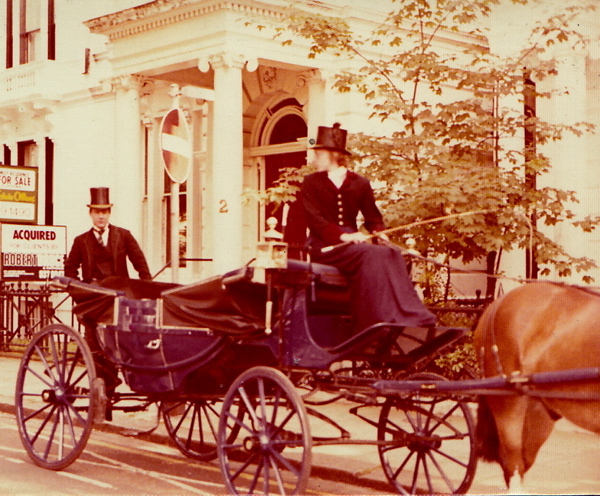
Dennis Severs when he gave tours in his open-top landau, 1977.
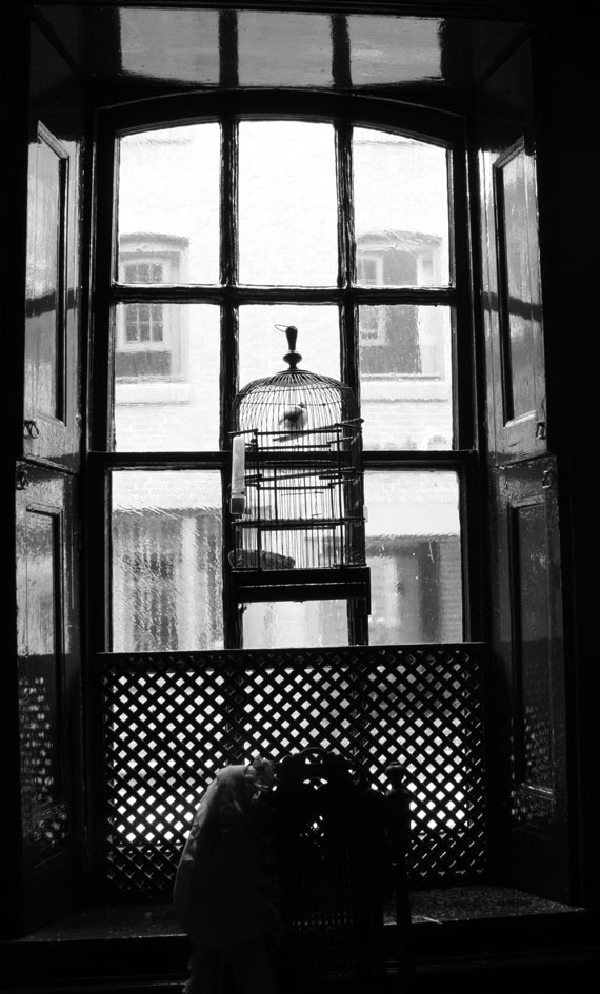
Mr D’Arcy, the canary in the dining room window at 18 Folgate St. (Photo by Jane Watt)
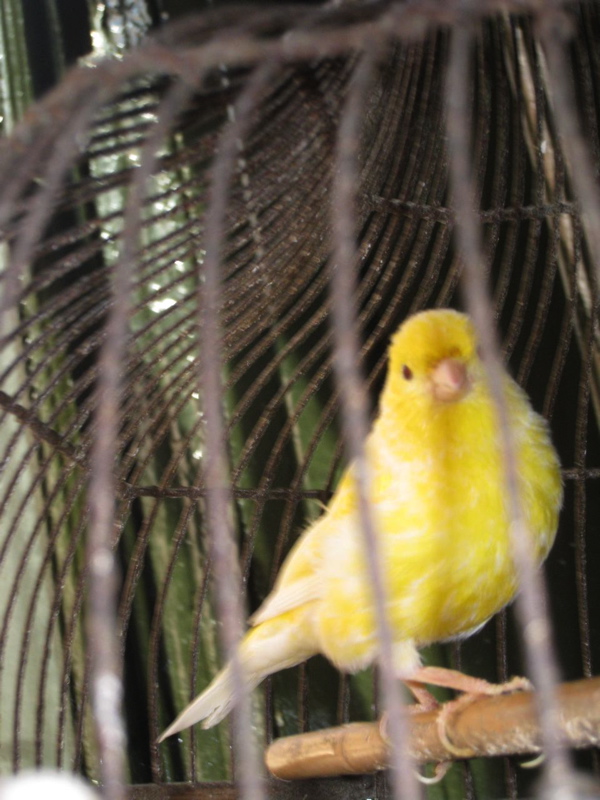
A wise old bird (Photo by Jim Howett)
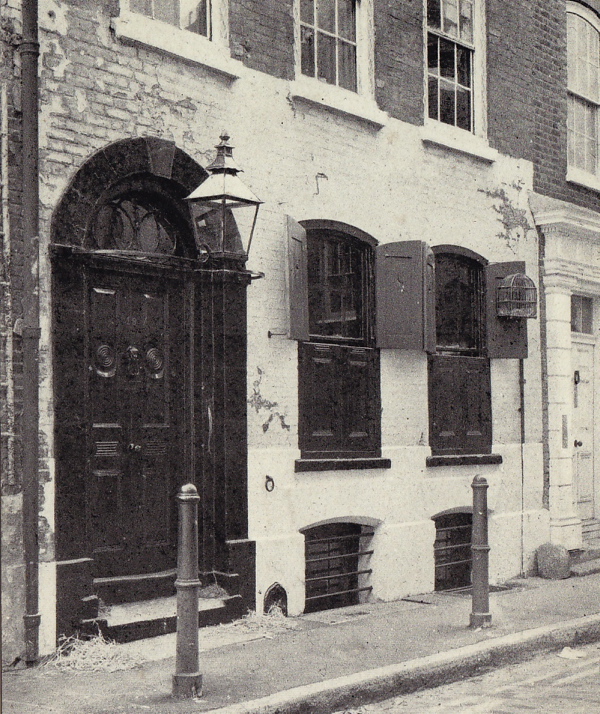
The canary’s cage hung out in the street on Summer days until a kestrel savaged one through the bars.
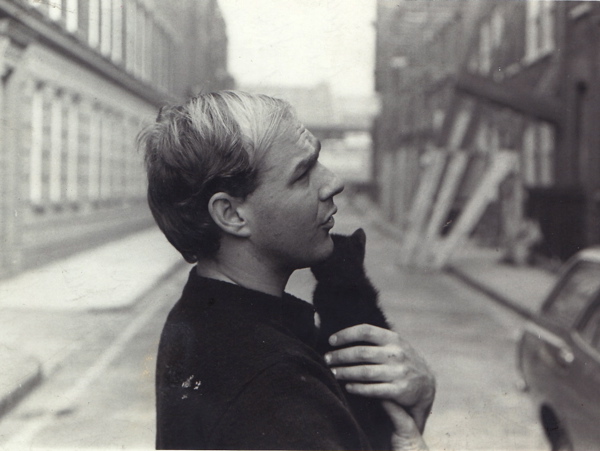
Dennis with his first cat that ate rat poison and died.
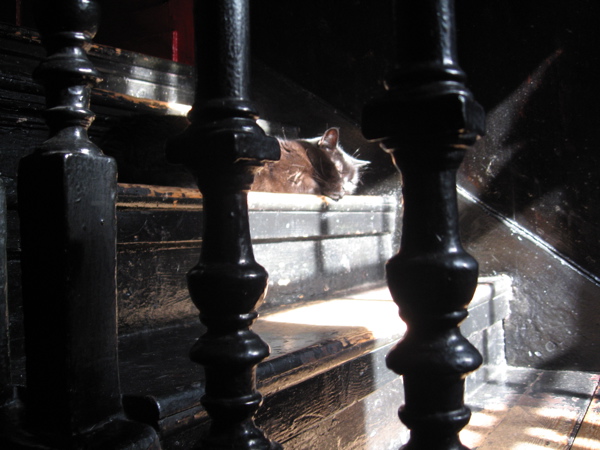
The second Madge dozes on the staircase, her ashes are preserved in a casket in the Victorian parlour.
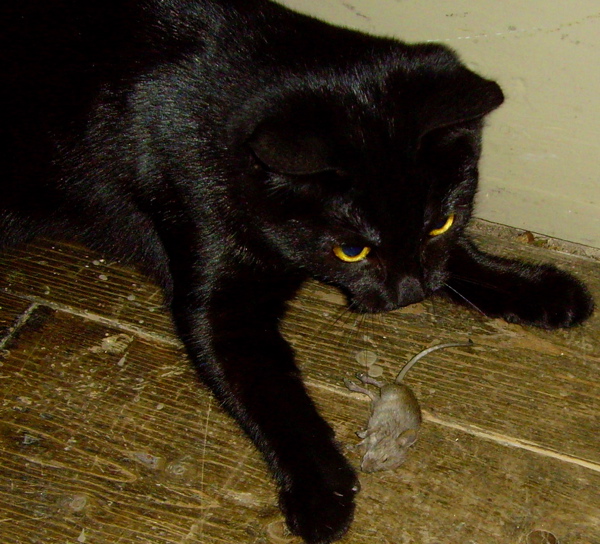
The current Madge demonstrates her skill learnt on the farm in Somerset.
If you want to read more about the cats of Spitalfields you may enjoy
The Life of a Mudlark, 1861

After my portrait yesterday of Steve Brooker, the contemporary mudlark, it is my pleasure today to publish this account of a nineteenth century mudlark by Henry Mayhew from his extra volume of “London Labour & London Poor,” 1861.
The mudlarks generally consist of boys and girls, varying in age from eight to fourteen or fifteen. For the most part they are ragged, and in a very filthy state, and are a peculiar class, confined to the river. As soon as the tide is out they make their appearance, and remain till it comes in. These mudlarks are generally strong and healthy, though their clothes are in rags. Their fathers are robust men. By going too often to the public house they keep their families in destitution, and the mothers of the poor children are glad to get a few pence in whatever way they can.
The following narrative was given to us by a mudlark we found on a float on the river Thames at Millwall, to the eastward end of the Ratcliffe Highway. On our calling to him, he got the use of a boat lying near and came towards us with alacrity. He was an Irish lad of about thirteen years, dressed in a brown fustian coat and vest, dirty greasy canvas trousers roughly-patched, striped shirt with the collar folded down, and a cap with a peak.
“About two year ago I left school, and commenced to work as a mudlark on the river, in the neighbourhood of Millwall, picking up pieces of coal and iron, and copper, and bits of canvas on the bed of the river, or of wood floating on the surface. I commenced this work with a little boy of the name of Fitzgerald.
When the bargemen heave coals to be carried from their barge to the shore, pieces drop into the water among the mud, which we afterwards pick up. Sometimes we get as many coals about one barge as sell for 6d. On other occasions we work for days, and only get perhaps as much as sells for 6d. We generally have a bag or a basket to put the articles we gather into. I have sometimes got so much at one time, that it filled my basket twice – before the tide went back. I sell the coals to the poor people in the neighbourhood. I generally manage to get as many a day as sell for 8d.
We often find among the mud, in the bed of the river, pieces of iron; such as rivets out of ships, and what is termed washers and other articles cast away or dropped in the iron-yards in building ships and barges. We get these in the neighbourhood of Limehouse, where they build boats and vessels. I generally get some pieces of iron every day, which sells at ¼d. a pound and often make 1d. or 2d. a day, sometimes 3d., at other times only a farthing. Pieces of rope are occasionally dropped or thrown overboard from the ships or barges and are found embedded in the mud. Rope is sold to the marine store dealers at ½d. a pound. We also get pieces of canvas, which sells at ½d. a pound. I have on some occasions got as much as three pounds. We also pick up pieces of fat along the river-side. Sometimes we get four or five pounds and sell it at ¾d. a pound at the marine stores; these are thrown overboard by the cooks in the ships, and after floating on the river are driven on shore.
I generally rise in the morning at six o’clock, and go down to the riverside with my youngest brother you saw beside me at the barges. In the winter time we do not work so many hours as in the summer; yet in winter we generally are more successful than in the long days of summer. There are generally thirteen or fourteen mudlarks about Limehouse in the summer, and about six boys steadily there in the winter, who are strong and hardy, and well able to endure the cold. Some of the mudlarks are orphan boys and have no home. In the summer time they often sleep in the barges or in sheds or stables or cow-houses, with their clothes on. Some of them have not a shirt, others have a tattered shirt which is never washed, as they have no father nor mother, nor friend to care for them. Some of these orphan lads have good warm clothing; others are ragged and dirty, and covered with vermin.
The mudlarks generally have a pound of bread to breakfast, and a pint of beer when they can afford it. They do not go to coffee-shops, not being allowed to go in, as they are apt to steal the men’s ‘grub.’ They often have no dinner, but when they are able they have a pound of bread and 1d. worth of cheese. I never saw any of them take supper.The boys who are out all night lie down to sleep when it is dark, and rise as early as daylight. Sometimes they buy an article of dress, a jacket, cap or pair of trousers from a dolly or rag-shop. They get a pair of trousers for 3d. or 4d., an old jacket for 2d, and an old cap for ½d or 1d. When they have money they take a bed in a low lodging-house for 2d. or 3d. a night.
I take what I can get as well as the rest when I get an opportunity. The Thames’ police often come upon us and carry off our bags and baskets with the contents. The mudlarks are generally good swimmers. When a bargeman gets hold of them in his barge on the river, he often throws them into the river, when they swim ashore and take off their wet clothes and dry them. They are often seized by the police in the middle of the river, and thrown overboard, when they swim to the shore. I have been chased twice by a police galley.
I have been in the habit of stealing pieces of rope, lumps of coal, and other articles for the last two years; but my parents do not know of this. I have never been tried by the police court for any felony. It is my intention to go to sea, as my brothers have done, so soon as I can find a captain to take me on board his ship.”
Henry Mayhew chose to include this account in the extra volume of “London Labour & London Poor” – which was published ten years after his original three volumes – describing “Those that will not work,” because, in spite of their industriousness, mudlarks were dismissed as thieves. The mudlark was published in a chapter entitled “Felonies on the River Thames” alongside smugglers and pirates. There is a tragic poignancy in this nineteenth century account of a resourceful child scraping a living in the face of tyrannical circumstances, yet in spite of its apparent exoticism there are working children elsewhere in the world struggling under comparable depredations today.
Henry Mayhew met his unnamed mudlark in the same stretch of Thames between Limehouse where Steve and I combed the shore. Although the shipyards and almost everything that Mayhew would have seen have gone, the rivets mentioned by the mudlark still litter the foreshore today as evidence of the ships, including the SS Great Eastern, that were built there. You could say Steve and I were in the footsteps of Mayhew’s mudlark, if the mud had not erased them long ago. We will never know if the mudlark went to sea, but I hope he found a captain to take him and his brother Fitzgerald on board, and they sailed far away to experience the wonders of the greater world beyond the Thames.
Mudlarking is legal today, as long as you have a licence from the Port of London Authority which costs forty pounds for three years. And the Thames is no longer an open sewer these days, it is a cleaner living river where Steve finds eels and shrimps under every rock he lifts. Steve Brooker became a mudlark out of a passion for history and seventeen years later he has signed a contract with the History Channel to co-present a six part series with Johnny Vaughan, entitled “Mudmen.” Life is very different for a mudlark in London a hundred and fifty years later, there are career prospects now.

Steve Brooker, twenty-first century mudlark, has a deal with a television network.