
At the Ten Bells
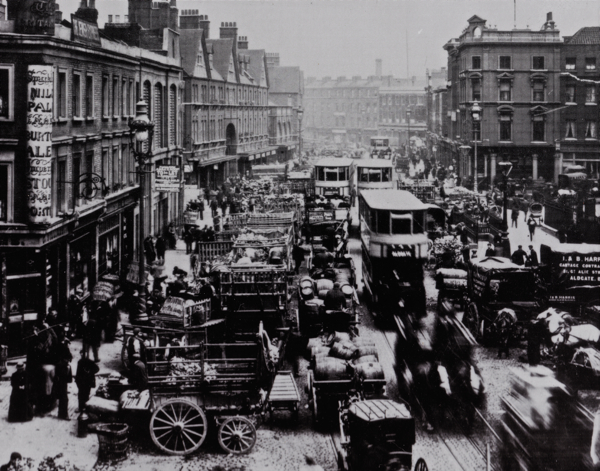
The Ten Bells – seen in the top right of this busy photograph of Commercial St in 1905 – is almost as old as Nicholas Hawksmoor’s mighty edifice of Christ Church, Spitalfields, which it sits beneath just like a parcel under a Christmas tree. Once the church was completed in 1729, funds were raised for the installation of a standard peal of eight bells, and in 1755, The Eight Bells Alehouse was recorded in Red Lion St, the thoroughfare that became Commercial St in the nineteenth century. And The Eight Bells was renamed The Ten Bells in 1788, when a new set of ten chimes was installed in the belfry at Christ Church.
In 1851, as a result of the vast expansion of trade in London, Commercial St was cut through Spitalfields to convey traffic from the docks, diverting it from passing through the City, and the former Red Lion St was widened, resulting in the demolition of The Ten Bells. At the same time, the end of Fournier St was chopped off and, in compensation for the loss of their premises, Truman, Hanbury, Buxton & Co, owners of The Ten Bells were given the freehold of number thirty-three, the last house standing at the Western extremity of the street, along with five hundred pounds to rebuild the property. The architect’s solution was to build the wrap-around facade which you see today, to cover the naked embarrassment of this fragment at the end of the terrace, enclosing a Georgian building within a Victorian frontage.
I learnt all this from John Twomey, the landlord, when he took me on a tour of the current renovations that are nearing completion after six years of planning and which will result in the reopening of the upper room with its dramatic views across to the market, down Commercial St and up to the spire of Christ Church looming overhead. The internal structure is an eccentric hybrid, in which, upon the upper floors, walls veer at unexpected angles to link the regularly spaced windows of the exterior with the jumble of interior spaces derived from the previous building.
As part of the restoration, the previous signboards have been removed to reveal those from a century ago, emblazoned with “Truman’s Beers” in gold capitals upon a deep green ground, and – by chance – when I came to meet John Twomey, my arrival coincided with the new delivery of Truman’s Beer that is now returning to the pubs of the East End. Walking in off the street, I discovered that the bar has been moved to the centre of the room which throws emphasis onto the magnificent coloured tiles that gleam in the light just as they have done for over century, connecting us to the countless thousands before us for whom this pub was a refuge from their working lives. In Spitalfields, many casual workers rented beds by the night and had no place to relax, socialise and seek solace after work except the bars – giving literal meaning to the phrase “public house.” And in the smoothed stone upon the threshold, in its beaten up floors and worn staircases, everywhere throughout this old building, the soulful presence of all our predecessors is tangible at The Ten Bells.
“Coming from multiple career backgrounds and living in multiple locations, the only place I have ever felt at home is Spitalfields, which always changes,” admitted John, who lives up above the pub in the warren of rooms with views across to the church. A fearless entrepreneur with steel blue eyes and copper hair who underplays his keen intelligence through magnanimous demonstrations of Hibernian charm and levity, John brings his own story to graft onto that of The Ten Bells. “Once upon a time,” he began, “my mother started a fencing club and at thirteen I won a major competition. I began competing all over Europe, and it gave me a life of travelling and learning languages. But since the day I bought this pub, I haven’t done a day’s training.”
“As a kid, I invented electrical testing equipment for fencing and that led me to study electrical engineering as a student. In Ireland, I won the national championship ten times, which was a record in their history, so I wasn’t particularly interested in winning it eleven times. After university, I went to the Soviet Union and learnt Russian, but because I was in Estonia, which broke away, I had to learn Estonian too. It was exciting to be in a country that was being born, I got involved in starting a bank and was able to enjoy careers in banking and fencing hand-in-hand. The Soviet Union were the World Champions at the time, so to be invited to join an Estonian team was a great honour and we won their national championship. Then in 1996, I decided to move to London and by then I could speak ten languages. So I got a job designing systems for banks that allowed me to travel to places where I could do fencing, but by now I had fallen in love with Spitalfields…”
And then John fell silent, casting his eyes around humorously, after recounting his extraordinary narrative, because since 2001, this has been his life – here at The Ten Bells – even though he could not resist restoring a five hundred year old building in Morocco to create a hotel, as a side project. I could only marvel at this catalogue of achievement and draw the irresistible conclusion that John possesses that rare combination of both flourish and acumen, essential for a successful landlord.
We were sitting in the bar, upon tiny chairs from a primary school, on a sunny morning. Most prominent on the wall was William Butler Simpson & Sons’ whimsical ceramic mural dating from the eighteen eighties, now cleaned by the same company that originally manufactured it, and we took a moment to admire it. Entitled “Spitalfields in ye olden times” and displaying a scene of aristocrats coming to buy silks from a weaver in the eighteenth century, John revealed it would shortly acquire a companion piece entitled “Spitalfields in modern times,” painted by Ian Harper.
Over the next week, all manner of wild rumours reached me concerning who was being portrayed in this new painting and in what form. Then, last night, the residents gathered in a state of high anticipation in the upper room, for a party hosted by John, where Ian Harper pulled off the dust sheet to applause and murmurs of approval from the assembled crowd. It was the beginning of a new chapter, heralding renewed life at The Ten Bells.
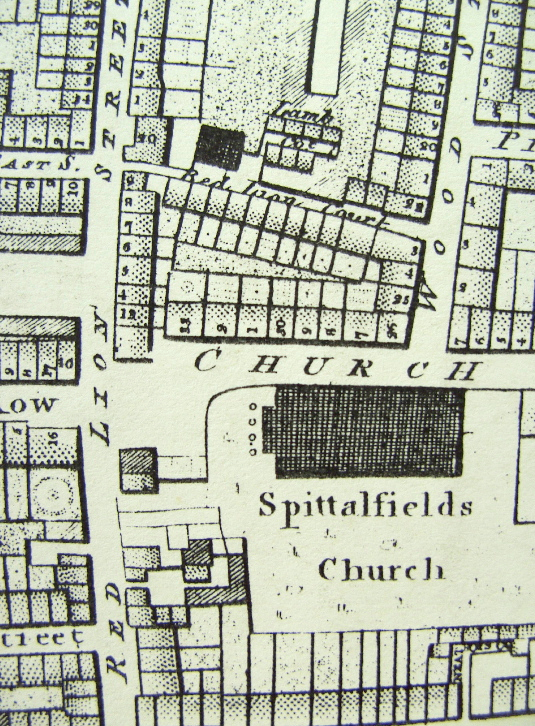
This section of John Horwood’s map (1794-99) shows Spitalfields before Commercial St was cut through along the line of Red Lion St. At this time, The Ten Bells occupied the un-numbered building at the corner of Red Lion St and Church St (now Fournier St). When these premises were demolished in the creation of Commercial St, the Ten Bells moved to the property numbered 33 Church St on this map and a new facade was built enclosing the earlier building, which you see today.
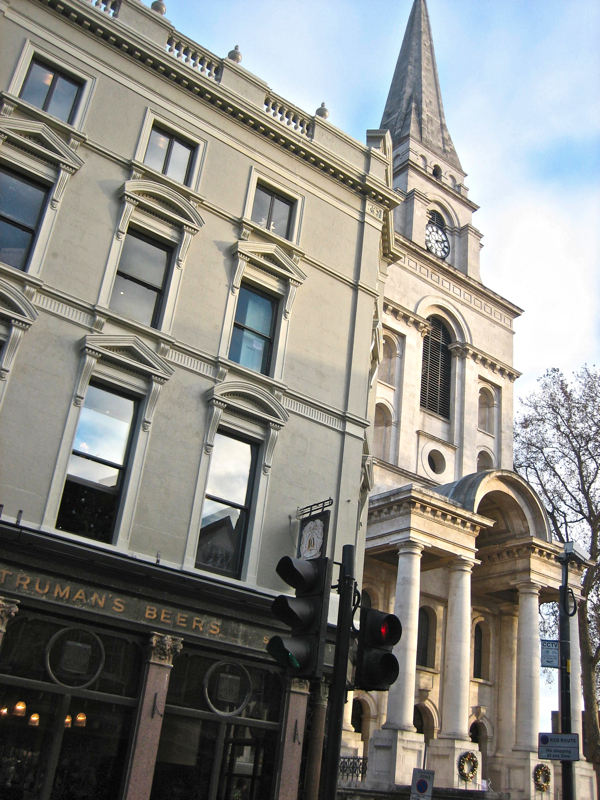
The Ten Bells sits beneath Christ Church, Spitalfields.
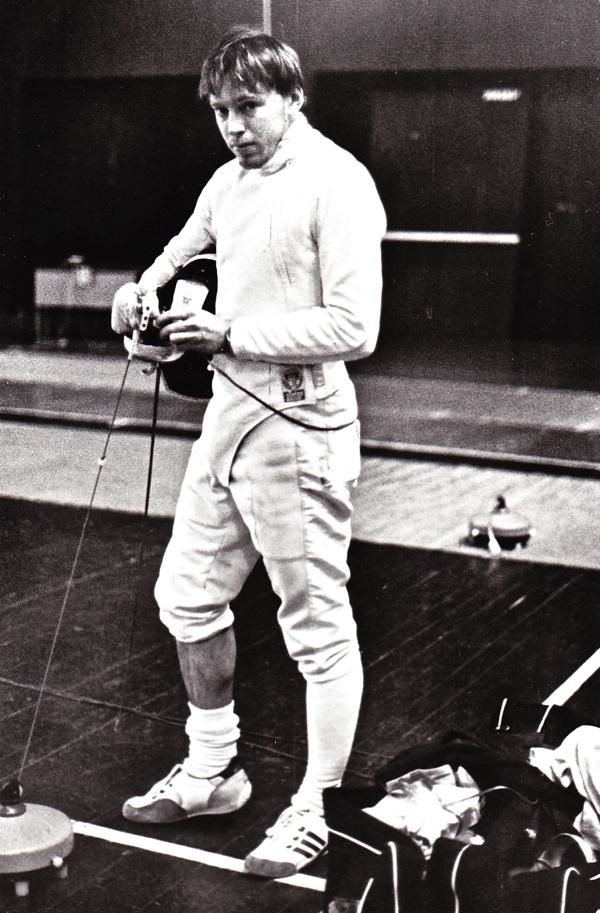
John Twomey, Olympic Fencer, Tallinn 1993.
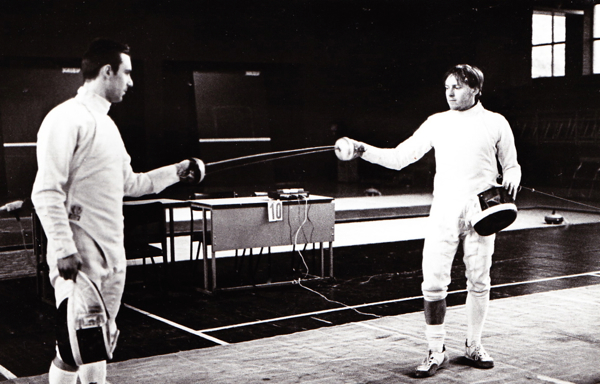
John prepares to engage.
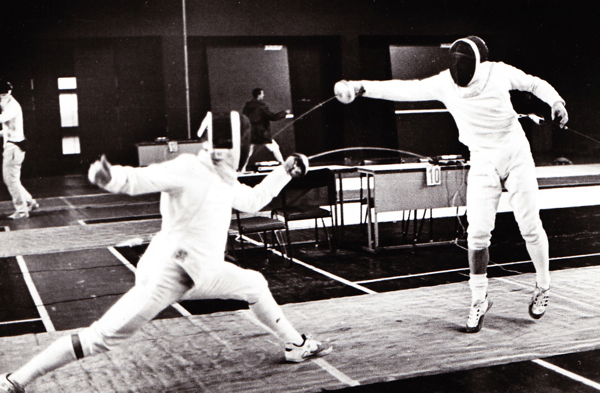
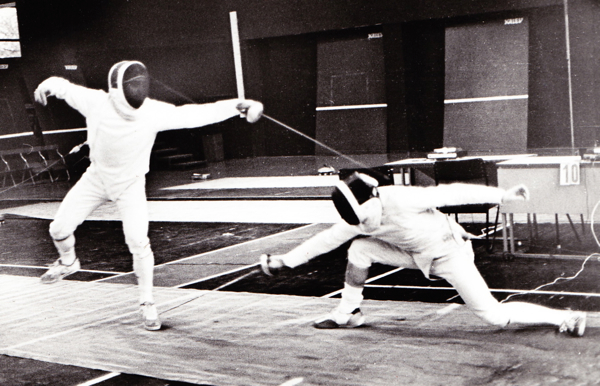
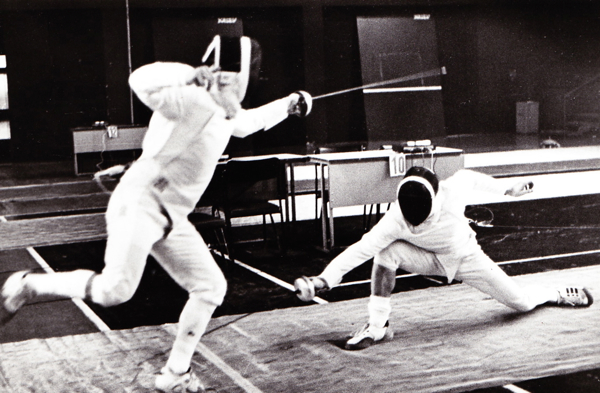
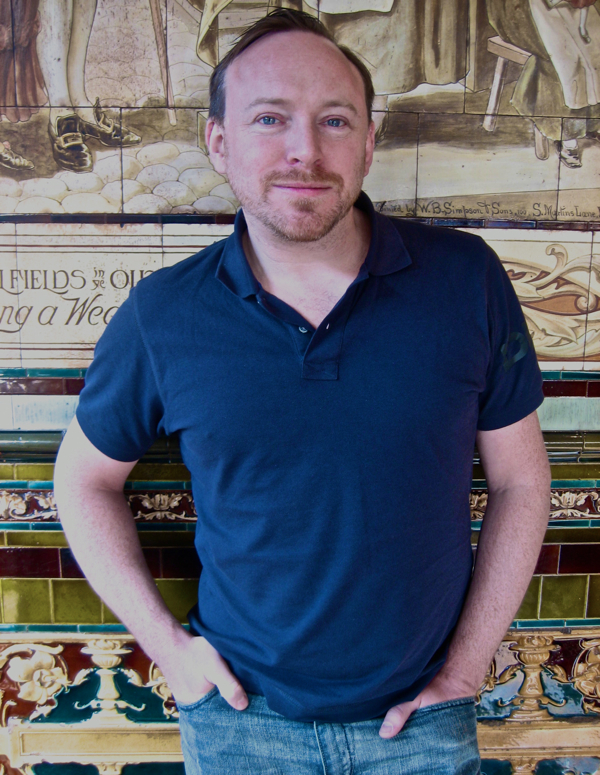
John Twomey, landlord of The Ten Bells.
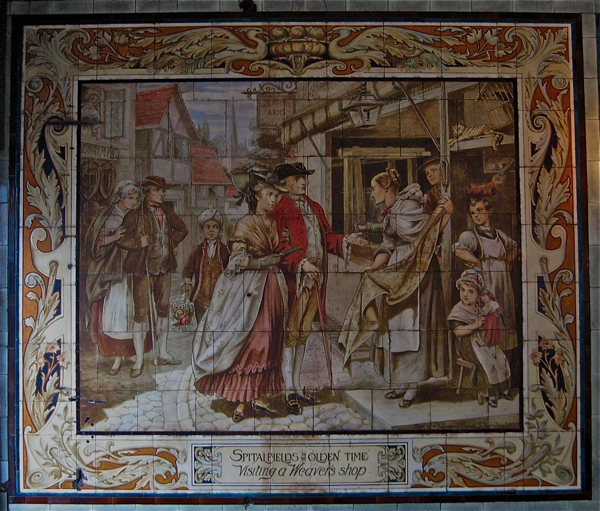
Nineteenth century ceramic mural in the bar, “Spitalfields in ye olden time – visiting a weaver’s shop.”
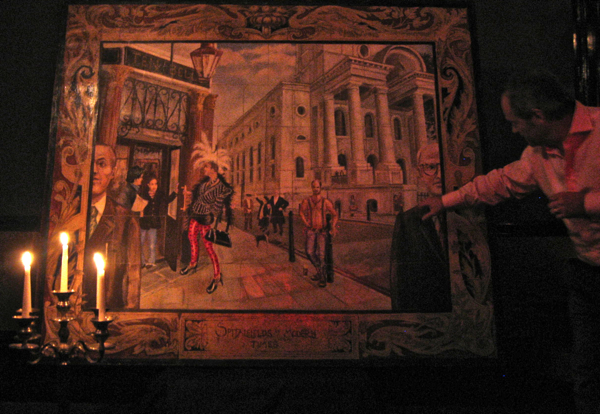
Ian Harper unveiled “Spitalfields in modern times” last night at The Ten Bells. Pay a visit yourself and you will recognise several figures from the pages of Spitalfields Life.
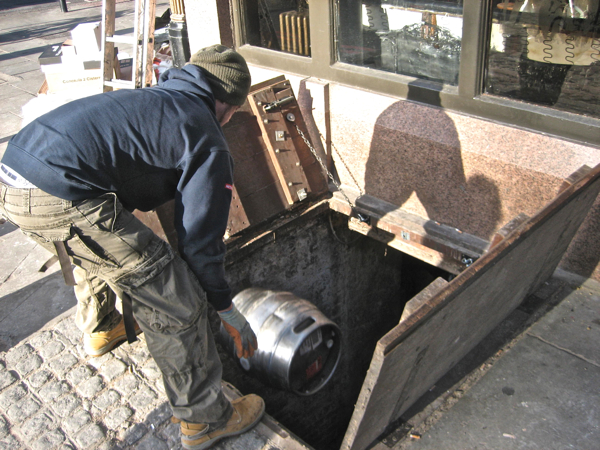
Truman’s Beer is delivered to The Ten Bells.
Patricia Niven’s Golden Oldies
It was a bold gesture when they built the Golden Lane Estate in a progressive modernist style upon a bomb site after World War II, and gave new homes to local residents who had previously inhabited the old tenements and poor housing that once defined this area at the edge of the City of London. The Estate is now fifty years old and, in celebration of this, photographer Patricia Niven set out to take portraits of long-term residents accompanied with interviews by novelist Sarah Winman. I enjoyed the privilege of meeting with Patricia and Sarah – themselves residents of the Estate – to enjoy a cup of tea with Doris McGovern, one of subjects of their portraits, at her flat in Stanley Cohen House in the Golden Lane Estate that she shares with her old cat Mischief.
Doris told me that the Estate was all young families when she moved in half a century ago, then as the years passed and the children left home it grew to be mostly old people, but now another change is happening as a new wave of younger people are moving into the flats. “I’m eighty-five myself and I’ve always taken care of my elderly neighbours because I enjoy looking after old people, but now I have young man in the flat next door, he can take care of me,” suggested Doris with a twinkle in her eye. The enduring sense of community in the Estate is a tribute to the visionary architecture of this housing development, containing a social club, a school, playgrounds, tennis courts, a pool, and shops, all within elegant sympathetic spaces where the residents feel comfortable.
I am delighted to publish Patricia Niven’s exemplary portraits. They are compelling, vibrant images, exploring the beauty, the poignancy and joy of this great mystery of ageing – an essential part of the human experience that we all come to know in time.

Doris, age 85
When I moved onto the Estate, I was married to Lawrence and had two small boys. My hair was dark brown.
After spending the first four years of our married life in rooms with gas light, and carrying a pram up five flights of stairs, you can imagine how wonderful we thought our new flat was – It had central heating, hot water and a bathroom! We were very happy there. I did not think I’d still be living on the Estate fifty years later.
Lawrence and I used to love walking along the Embankment to the park with the children, playing on the swings and enjoying a cup of tea.
My aspirations when I was younger were to marry and have children, both of which I did. My husband passed away ten years ago. Next year would have been our sixtieth.
Today, I still like the Estate and my home. Most people are friendly and easy to get on with.
I enjoy playing bowls, keep fit, and attending the Ralph Perring Club. I also like to go to church on Sunday mornings.
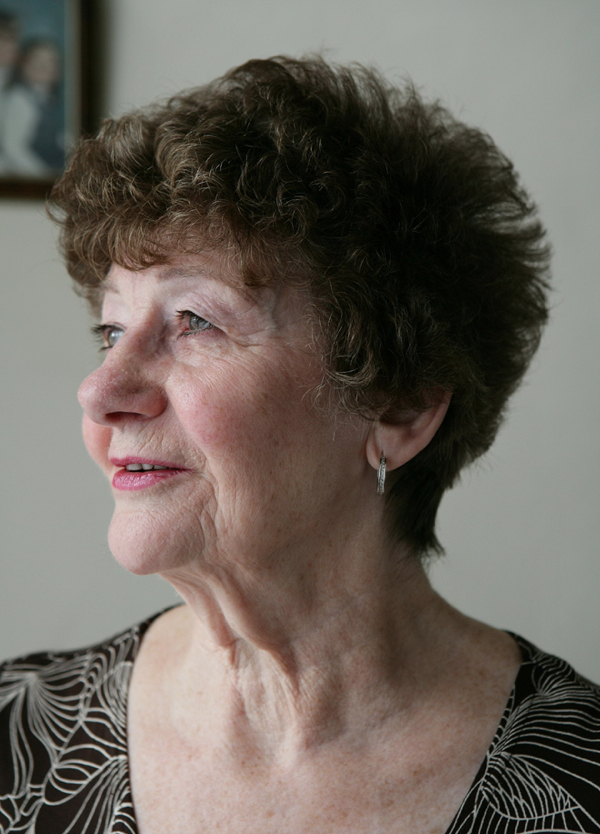
Iris, age 77
It was 1974. Harold Wilson was Prime Minister and I had two boys at school. My hair was brown.
We often used the club on the Estate, where there were dances and other entertainment. I wore long dresses, loved make-up! My hopes were very clear at that time: For my husband to get on in his new job, and for my children to get educated and to get good jobs too. It all happened.
I am on my own now. It was lonely at first. But I have a lot of good friends and life is once again good. I still use the club and go to St. Luke’s.
I enjoy reading, swimming, yoga, television, theatre.

Lilias, age 89
I was a redhead in my day.
When I moved onto the Estate twenty-six years ago, I had just retired from the NHS’s Chapter House Chambers, where I’d worked as a manager for ten years. I then went on to do a year’s work for the Women’s Voluntary Service.
It was the first time I’d ever owned my own flat. I was happy, very fit and even went to work at the St. James Club in the West End for another ten years. I was living life to the full.
I enjoy reading and watching television and am comfortable in my home. I do not mix well with others because of my disability. I love a gin and tonic every night.
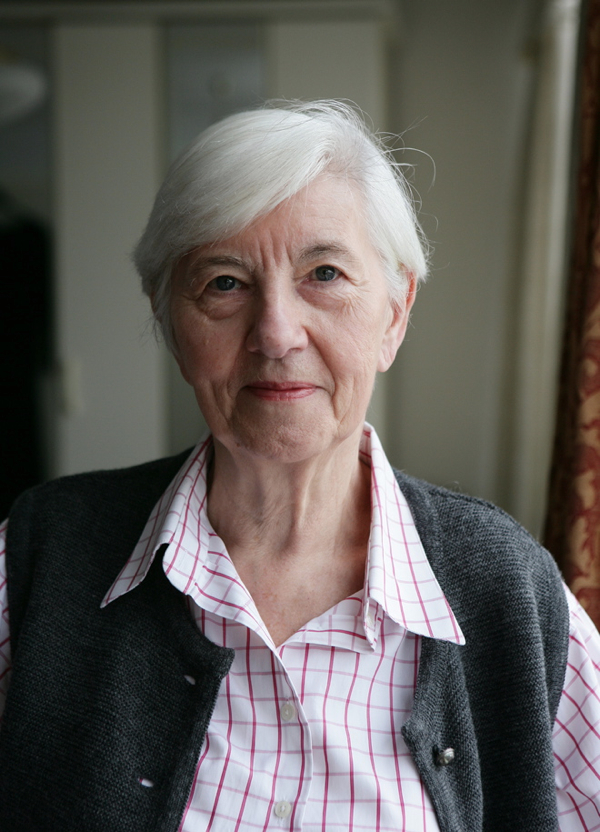
Maureen, age 79
I moved onto the Estate in 1987 with my husband Ted. I was still working at St Bart’s hospital at the time and my hair was brown.
We’d come from a very old tenement flat and here we were in this lovely, modern flat with central heating and a balcony – it felt like heaven. (Sometimes though, I missed the old flat; simply because I was born there and had lived in it for fifty years).
I loved living on the Estate. There was a very good social club which we made great use of. My hopes at the time were looking forward to more grandchildren – I had just one then and seven more were to follow – and thinking about their future and that of my children.
Most people liked the look of these flats and I did think that I’d still be here now, because we are not people to move about much. I still love it here and think it’s the best Council Estate in London. And London is the only place I want to live.
My main aim is to keep well and to keep fit, and to go out socially as much as possible and to enjoy life.
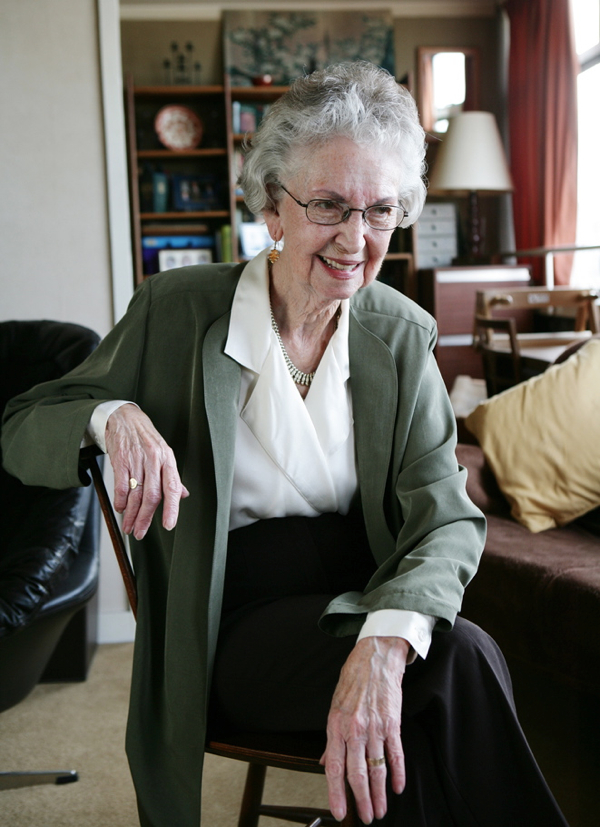
Joan, age 83
I was a single mother when I moved onto the Estate. My hair was brown. My aspiration at the time was for my son to get a good education – first of all at St. Luke’s Primary, and then at Woolverstone Hall Grammar.
Our flat was well-planned out: light and sunny, with good storage, and best of all, with central heating. It even had a balcony. I loved that view from Hatfield House.
The world seemed quieter and cleaner then. People cleaned their windows, swept doorsteps.
I’m in Great Arthur House now – ideal because there are no stairs. The Owner’s Association provides a strong sense of community. I hope the Residents’ Association will grow.
I’m still very interested in the Associations and the young people who’ll continue to care for the Estate.
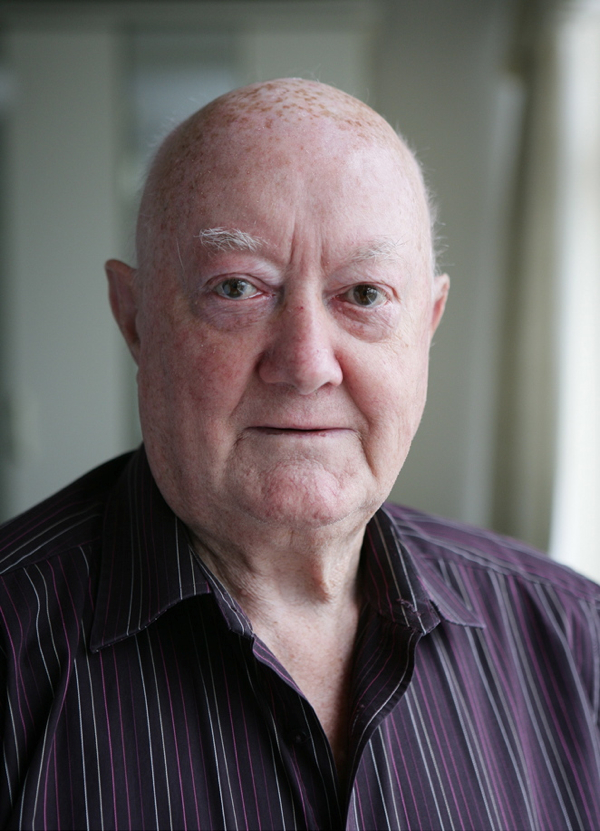
Ted, age 83
I moved onto the Estate in 1987 with my wife Maureen. I was a proofreader at the time. My hair was auburn.
I thought the modern flat we moved into was very nice. I still do. I loved my way of life; believed the world was a more gentle world then, but badly governed.
My hopes were to live to retirement and to play with my grandchildren.
I hope to live to an old age.
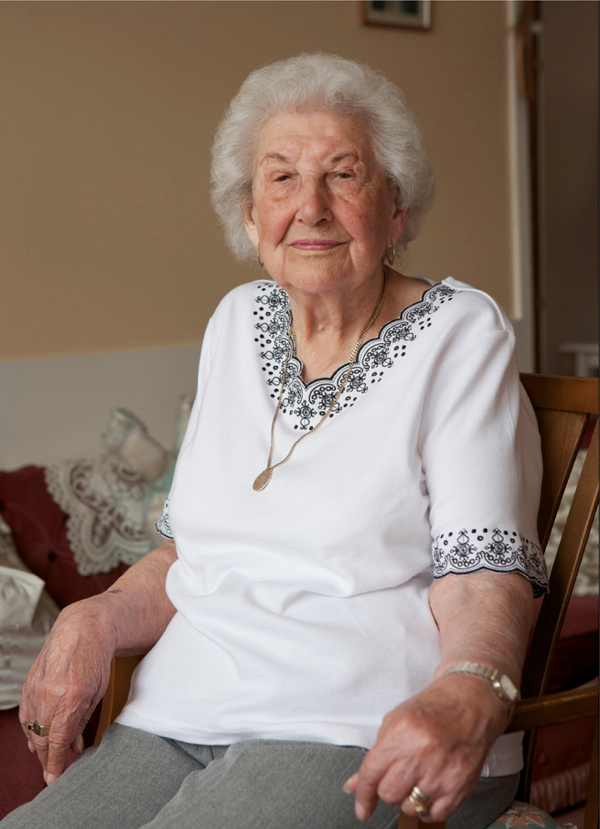
Elsie, age 90
1976, my husband and I moved onto the Estate when we took up the position of Stewards at the Licensed Club.
My hair was light auburn.
We hoped for an easier life than we’d had before – we used to run a pub in Watford, and though the flat we moved into was smaller than where we’d previously lived, it was easier to maintain.
People were friendly. My neighbours and I were all of similar ages and we socialized together. I think it was a better world than today. I loved the music of the time – ballads and Rod Stewart, and when we weren’t working we’d have a night in, fish and chips around the telly.
My flat today is self-contained and comfortable and I don’t want for much. I didn’t think I’d still be alive, let alone still living on this Estate! – Guess hard work keeps you going.
I love listening to the radio in the morning, reading romances, doing quizzes, watching the telly and being with my good friends – the ones who are alive. I used to go to the Ralph Perring Club where I was Secretary and then Treasurer for twenty-six years.
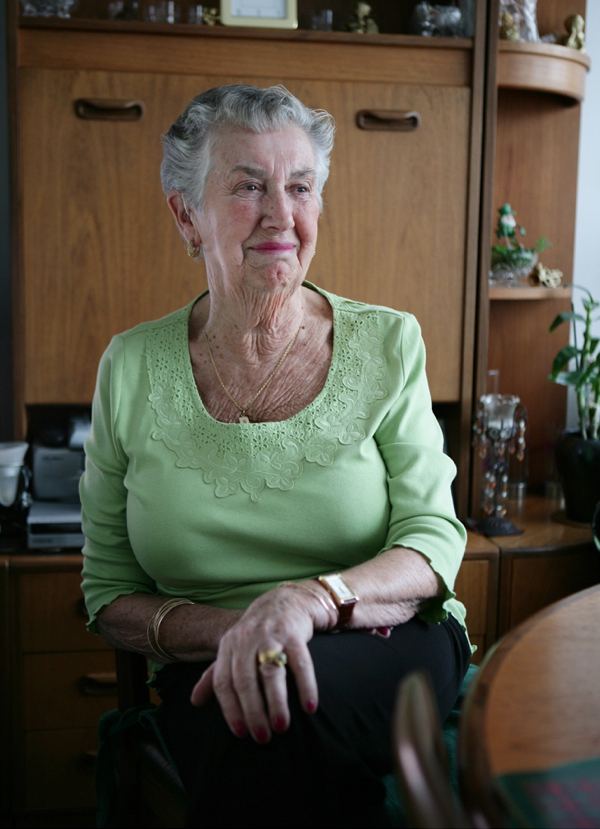
Doreen, age 78
It was 1957 and my hair was brown. Everything was G plan and three piece suites! I loved holidaying and shopping, and my main aspiration was to be a mother.
What did I think of the flat that I moved into? It was the tops. Number one! And fifty-two years later, I still feel the same. I love my home and the community I am part of.
I enjoy reading, shopping, line-dancing.
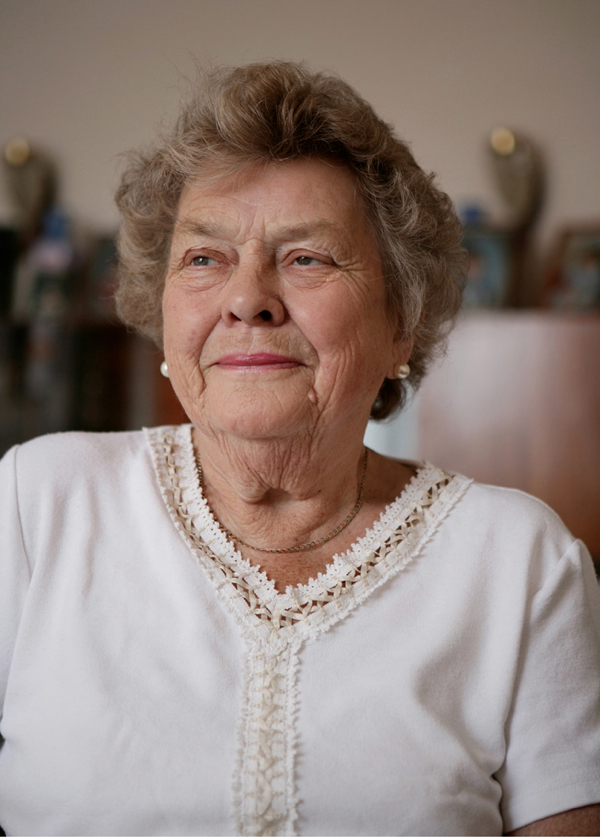
Doris, age 81
It was 1960. I was a mother of a 4½ year old son and working at Mencap. My hair was fair.
My husband and I used to go to the dog track at Walthamstow. Also to a nightclub at Smithfield, where there were drag performers. I loved music and dancing. I wore cerise lip stick, always loved to be ‘with it’.
At the time we hoped to own our own flat, but like so many others, we couldn’t afford it. We moved onto the Estate from Kentish Town – a world away from our new modern home.
This is a good community. It’s been wonderful having the new kitchen and bathroom installed. I have lots of friends. Sad part is that at this time of life, some are dying.
I still like to go out and enjoy myself – anything I can go to, I’ll go to! I spend time with my friends, and enjoy the estate’s social clubs. I like Bingo and card games – especially Hoy – and the dog track in Kent.
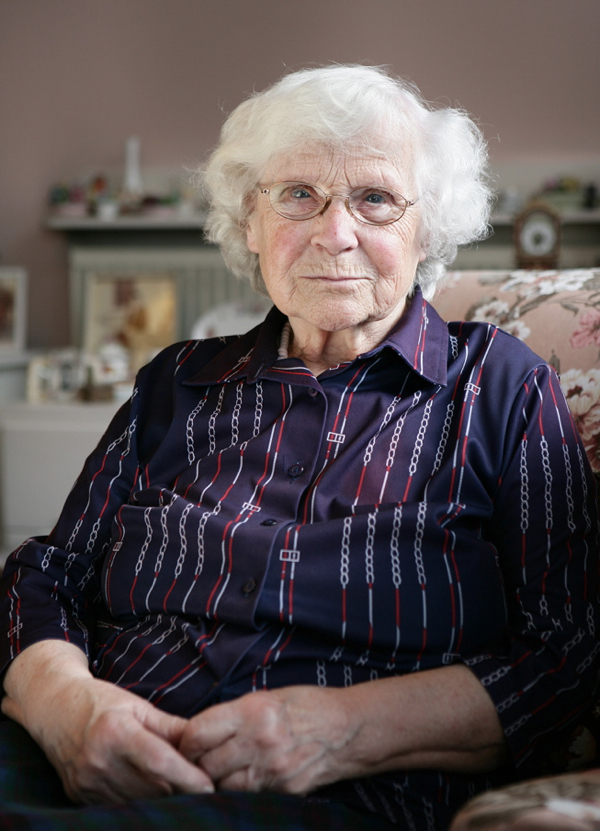
Maureen, age 90
When I moved onto the estate I was still working at St Bart’s hospital. My hair was brown.
I was on night duty then and had been living over the Gatehouse which I shared with two vicars and a security officer. Heating was minimal and the bathroom was three floors down in the basement. To move into a modern flat that had heating and a bathroom and a little fridge all under one roof, was amazing. But everyone thought the flats were amazing. People even came from China to take photos of Great Arthur House. It was something special.
I loved my work and wanted to do as much work as possible: at the hospital or helping my sisters. I could never stay still. The time I did have off, I’d go to Lyons Corner House; afternoon tea with live music. I loved reading, especially books by John Galsworthy and always took books on my travels to the Holy Land, Rome, Greece and Lourdes (eight times).
I didn’t think I’d live to be ninety, let alone still living on the Estate! I’m very happy in my home in Crescent House. I do not think the community is as good or friendly as it used to be. No one has time for others any more. Or maybe it’s just because I’m getting older.
I love reading and visiting my sister in Bognor. I like watching television especially debates and “Question Time.” I love Irish authors, if only they weren’t so fond of swearing.
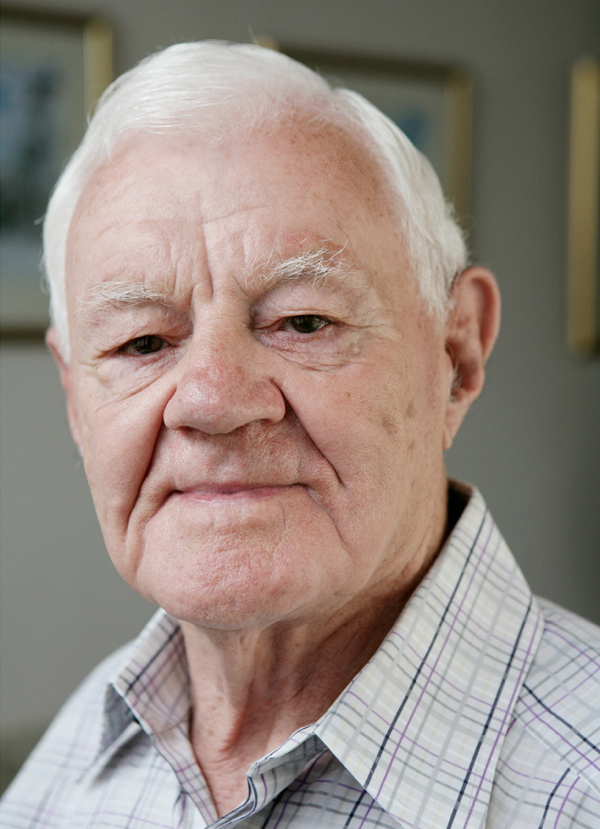
Tegwyn ‘Tom,’ age 89
It was 1962 and I was the personnel manager at the Post Office on Old Street.
I remember seeing the top of Great Arthur House for the first time and wondering if it was an aeroplane wing. I knew straight away that I wanted to live on the Estate and on my next visit put my name down for a flat. I was lucky enough to get one. I moved in with two chairs that I slept on for months. I enjoyed the gradual furnishing of my flat, the making it my own.
My hair was grey. Even then. It happened when I was forty.
In those days I’d go to the theatre or to the ballet – you could go to Sadler’s Wells for a shilling. Often I simply enjoyed the walk into the West End. I travelled, too – Europe, Spain. My hopes at the time were to live a happy life and to enjoy as much of it as I could, which I have done.
Today, people don’t seem to take the same amount of care and interest in their homes: A sign of the times, I expect. In winter, my flat gets very cold due to the windows.
I love life. You must live your life to the best of your ability. I go for a walk every day – often to Epping Forest to feed the squirrels. I like to read and watch television too.
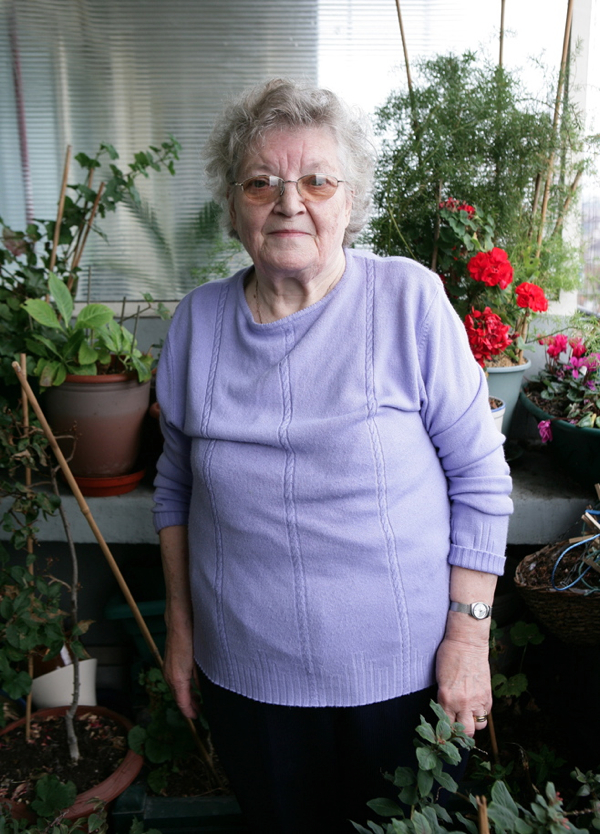
Jean, age 80
I was called ‘Blondie’ in my day.
I was a widow when I moved onto the Estate and had just retired from managing a public house. I loved the scent ‘Evening in Paris’, music, a game of bingo, the Pictures, and visiting places I’d never had the time to visit before.
I’d heard the Estate was a good place to live and I wanted to be involved in all that was going on. I knew I’d be here for the rest of my life.
As Chairman of the Sir Ralph Perring Club, I hope to keep it going for as long as I can.
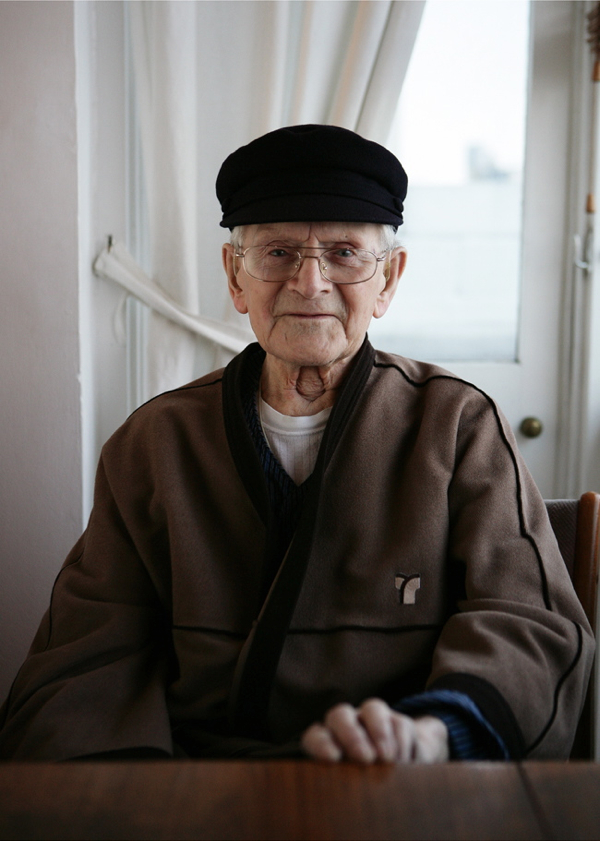
Fred, age 95½
My wife and I moved into a two bedroom flat on the Golden Lane Estate in about 1960, after a mutual exchange housing programme. It was so good not to have to commute anymore. I was a technician for the medical trade, and then became a messenger for a bank in the City. I did that until I was eighty-two.
My hair was brown.
My wife loved the city after previously living in Kent. I liked meeting different people, and being inquisitive about the world. I liked dancing. I also enjoyed travelling, especially in Australia.
I think people were friendlier then.
Your body slows down as you get older. My daughter visits regularly and cares for me, and my neighbour brings me my newspaper. I should probably be in a care home, really.
I love nineteen seventies’ music and films, especially “The Green Mile” (it has amazing jail scenes), “Along Came a Spider” and “Return of Jaws.” I think there’s a load of rubbish on TV. It’s all repeats.
Photographs copyright © Patricia Niven
Patricia Niven: Golden Oldies II runs at Exhibit from 17th December until 29th January at Golden Lane Estate, 20 Goswell Rd, London EC1
Columbia Road Market 63
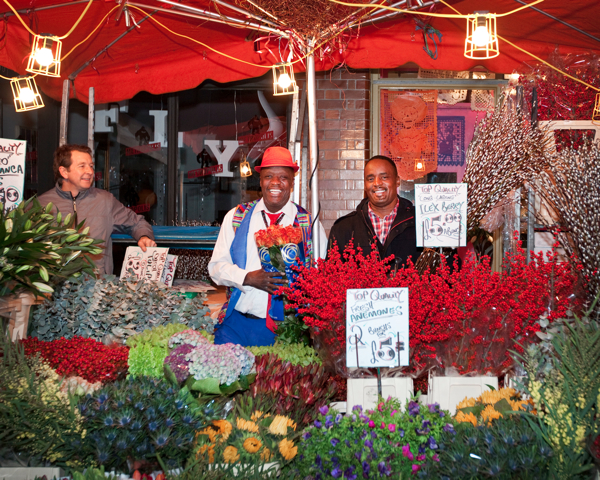
“We help out Carl and Mick – who I call dad – on a Sunday, selling the flowers, and we just love it. They’re my adopted family now.” explained Keith Manning proudly, speaking for himself and his brother Donald, when I managed to snatch a brief conversation with Keith round the back of Carl Grover’s stall. Keith, who magnanimously describes his baby brother Donald as “the good-looking one,” is renowned for his primary coloured outfits, always topped off by one of his collection of more than twenty hats. “I love bright colours and I find the customers like it too, ” he informed me enthusiastically.
For more than ten years, Keith and Donald have been coming to Columbia Rd to assist Mick and Sylvia Grover, the herbsellers, and their son Carl Grover, the flowerseller, at their adjoining stalls. “We get together at social occasions too, it’s a family thing. Since my dad’s passed away, Mick’s become like a father to me, and Carl’s got to share his dad with me now.” confessed Keith with a toothy grin, before revealing that this remarkable friendship between the Grovers and the Manning brothers came about quite fortuitously. “One day I was driving my black cab past Mick’s flowershop in South Kensington, when he gave me a bird of paradise flower and I put it in the front of the cab.” recalled Keith fondly. He is a colourful bird of paradise himself, and I realised it was this parallel that inspired Mick’s spontaneous gesture, which became the catalyst for their friendship.
“Then, coincidentally, we met again when we recognised each other at Columbia Rd,” continued Keith, “and me and my brother started doing flower deliveries for him on special occasions like Valentine’s Day. Then I began coming here every week to help, I started with flowers because my mother loves flowers and I help Mick pack up too.” As well as being cab drivers for thirty years and supporting the Grovers, Keith and his brother make regular trips to Gambia on a personal mission. “We collect clothes and other things, and we go out to the villages there and distribute them.” admitted Keith, who had just returned from Africa that week. On a cold morning, I was cheered by my chat with Keith Manning, illustrating the beauty of the random connections that can happen in the big city and the unexpected bonds of friendship which may result.
Photograph copyright © Jeremy Freedman
The Back Passages of Spitalfields

For ten years, Steve Wells & Alan Gilbey gave guided tours of Spitalfields under the uproarious title “The Back Passages of Spitalfields,” renowned for their anarchic comedy and ascerbic social observation. Wearing suits, pulling a shopping trolley full of props and fireworks for impromptu displays, maintaining a constant comic banter, rubbing the Jack the Ripper tours up the wrong way, disappearing down alleys to run ahead and ambush the audience, Steve & Alan were the self-appointed jesters of Spitalfields, and they made the streets and back passages their theatre.
Since it was my misfortune to miss these walks the first time around, Alan took me on a personal tour around his old haunts in Spitalfields yesterday, and it was my delight to see the neighbourhood through another’s eyes and learn some new stories. We met outside Liverpool St Station, where I discovered Alan – with an ear-to-ear grin – holding a sign that read, “Yes, this is the Spitalfields Walk.” Once upon a time, two hundred people would gather here in the glory days of the “back passages” tours, but yesterday it was just me and Alan reminiscing. Pointing across Bishopsgate, he explained it was all about the difference between this side of the road (the City of London) and that side of the road (Spitalfields).
Walking quickly, Alan vanished down Rose Alley at the side of the police station, and I followed him into a narrow passageway that I had never been in before. “Neither very historic, or atmospheric, or hygienic,” he described it, when we found ourselves in a grimy little courtyard with buildings towering on either side. Yet it illustrated perfectly the contradiction between the wealth and the filth of these two neighbourhoods side by side. Emerging into Petticoat Lane, Alan informed me that this market was originated by the first wave of Jewish immigrants in the medieval period, who were forbidden to trade within the walls of the City.
In Artillery Passage, at the heart of what was once a rat warren of houses, Alan paused to quote Dickens’ account of the poverty he discovered here a hundred and fifty years ago. “People can have very set ideas about how history should be told, ” Alan admitted with a good-natured shrug, “We always wanted to be intelligently stupid,” and he quoted the example of a woman who declared,“I am a professional historian and this walk is painful to me.” stomping off to applause from the rest of the audience. Yet Alan & Steve knew what they were talking about, adopting levity and sharp humour to engage an audience, both satirising cliches of East End history through pointing out “Jack the Ripper’s car park,” and dramatising contemporary politics by telling the story of the soon-to-be closed market with fruit & vegetables, which culminated in beating a marrow with a sledgehammer. Not popular with the market security, unsurprisingly.
All this was happening through a period of rapid change in Spitalfields, with wranglers required to keep the street alcoholics at bay in the early days and then objections from the well-to-do residents in the later days. Someone with a plummy accent once leaned out of a window in Fournier St to plead with Alan & Steve when the nightly high-jinks became too much. “People have to live here you know!” they appealed, provoking a member of the audience to declare, “I’ll swap with you,” and all the others to join in as well, Spartacus-style, calling “I’ll swap, I’ll swap.” Yet the two jesters persisted in telling the human story of those at the sharp end of social change over the centuries in Spitalfields, and satirising new developments too, even taking their audience to the site of the first cappuccino poured on Brick Lane, at Dray Walk – amongst other historic locations.
Alan cherishes the memory of when he and Steve found themselves walking in step with Gilbert & George down either side of Fournier St, each besuited couple carried on walking, studiously ignoring the other. Some members of the community chose to become participants though, and Alan delighted to tell me of the growing numbers of Bengali children that would join in the nightly Huguenot battle staged in Puma Court as part of the tour. The walk concluded outside Rosa’s Cafe where Bud Flanagan was born, beside Rossi’s Cafe where the aunt of Francis Rossi out of Status Quo worked. So, with sublime logic, Steve & Alan led the audience in a version of “Underneath the Arches” in the style of Status Quo, before everyone went into the Golden Heart for a reviving drink.
Alan’s background is in the old East End and he was born in Cable St, but he is now a screenwriter and spends his days writing at a laptop in a coffee shop on Brick Lane (writing scripts for the Mutant Ninja Turtles and working on a Pinky & Perky revival), amongst the cool people of the new East End. Yet he used to show photos of his grandmother’s wedding in Juniper St, a slum known as “Incubator St” because people had so many babies, and Alan’s father was a draftsman in an East End biscuit factory. To Alan, the debate about the relationship of the old and new East End is personal, and he can only laugh when he tries to square his family history with his current life and make sense of it all.
“I’ve never known an area that so many people wanted to own, as Spitalfields,” confided Alan to me in sprightly amazement, stopping in the street for a moment, and referring to the multiple fictions of history around us, all competing to be the authentic Spitalfields. But our walk – in and out of alleys, and in and out of stories – had demonstrated the constant flux which exists, derived from the meeting of many peoples, that together have created the infinite fascination of this place.

In Rose Alley – “Neither very historic, or atmospheric, or hygienic.”
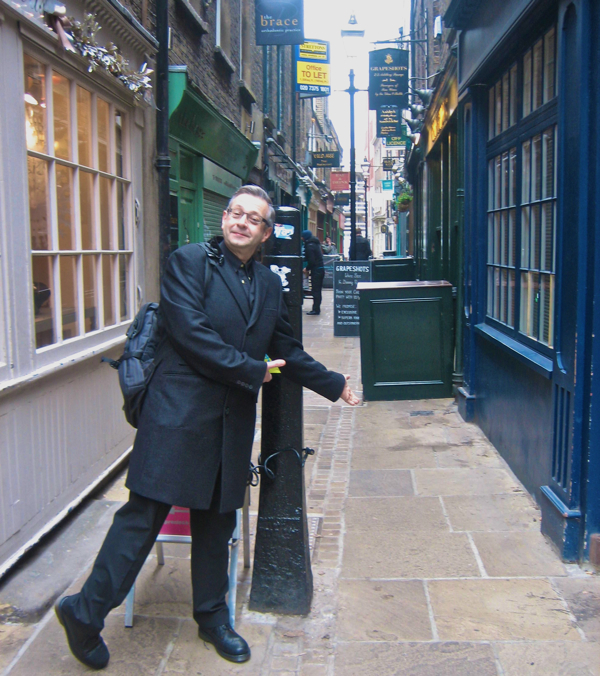
In the footsteps of Charles Dickens and Wilkie Collins in Artillery Passage.

Organic plums were offered to members of the audience for spotting Keith Bowler’s Roundels.

Alan Gilbey
The Return of Joanna Moore

This quiet drawing captures the spirit of one of my favourite places in Spitalfields, Dino’s Cafe in Commercial St next to Christ Church. The location of frequent Spitalfields Life interviews, it boasts the egalitarian distinction of being the cafe with the widest range of clientele – where builders sit at one table with bankers at the next table, all gathered here as equals to enjoy an honest breakfast.
On the basis of Joanna Moore’s drawings of Spitalfields that I published earlier in the year, she was offered an exhibition at the Townhouse in Fournier St, which opened last night. It was the ideal opportunity to catch up, so I went along early to have a chat with Joanna before the crowds arrived, and found her in the empty gallery surrounded by her pictures, accompanied by her dad who had come along to offer moral support. When I first met Joanna in the Summer, she was about to quit her job and pursue drawing full time, and this September she commenced a year’s course at the Prince’s Drawing School in Shoreditch.
“I moved to Wapping in October, I have a studio in the Tea Building on the corner of the Bethnal Green Rd and I work one day a week at the Society for the Preservation of Ancient Buildings in Spital Sq, so my whole life is in the East End now,” Joanna told me, glowing with anticipation for the opening of her first exhibition. “You’re never going to see this show again,” she confided, delighting in the rapid evolution that is taking place in her drawing. “Since I left my job, I had a Summer of drawing, and I drew in the way I have done for the past ten years – capturing London details – but the more I drew the freer I got, and the looser my drawings became.”
The thirty drawings in the exhibition were all done between February and October this year and are remarkable for their exuberant sense of discovery, recording an artist exploring her abilities and pushing the boundaries of her own capability. Joanna is blessed with a natural gift of draughtsmanship and keen sense of proportion – and she has a strong sense of architecture, which was her chosen subject of study for many years – but the developing theme throughout this body of work is the presence of people.
“I used to put people in the background to give a sense of scale to the architecture,” she admitted, explaining that at the drawing school she has been encouraged to go out and draw people at work, at butcher’s shops and in bakeries, at orchestral rehearsals and ballet. “Drawing people feels very new to me, after drawing buildings for ten years,” she revealed, widening her eyes in excitement, “In the old days, I drew buildings because they stayed still. But now my drawings are becoming more populated, with the buildings secondary and the people central.”
We stood in the beautifully proportioned outhouse at the rear of number five Fournier St, that was built in 1820 as a doctor’s surgery, surrounded by Joanna’s handsome drawings lining the walls – a series of visions that are the substance of her year’s achievement. It was the both the end of Joanna’s first term at the drawing school and the opening of the show which begins her career too, incarnating an auspicious moment. Joanna reminded me that it was the inspiration of being in Spitalfields last Winter which formed the catalyst for her to commence drawing seriously, in way that led her to change the direction of her life. And we agreed it completes the year perfectly to have this exhibition in Fournier St now, in celebration of a remarkable formative twelve months and a courageous departure that brought Joanna Moore to live and work in the East End.
You can follow Joanna Moore’s work by reading her blog Town Mouse.

“This was drawn after I moved to Wapping a few months ago. I’d planned to visit two other pubs to choose which would be my local, but once I’d claimed this great people watching spot by the bar at the Captain Kidd, I was sold.”
 “Now and then, I like drawing something I feel won’t be there for long and, in this case, these ruins and scaffolding were as beautiful as the surrounding buildings in Commercial Rd, although I’m sure they’ll be replaced by dull flats fairly soon. The street opposite turned out to be a fortunate perch, as I had firemen peeking over my shoulder as they came into work at the firestation behind me.”
 “After drawing St Paul’s I was in the mood for something simpler but no less monumental. Drawing straight onto paper in pen was harder than I thought with this subject – it’s so precisely, even coldly formed that it’s important to get the proportions just right.”

“It’s impossible to stand and draw in the middle of the road in a busy market, so tucking myself behind this trader at Columbia Rd seemed to do the trick and I liked this different viewpoint – the flowerseller appears as an actor in front of the audience.”
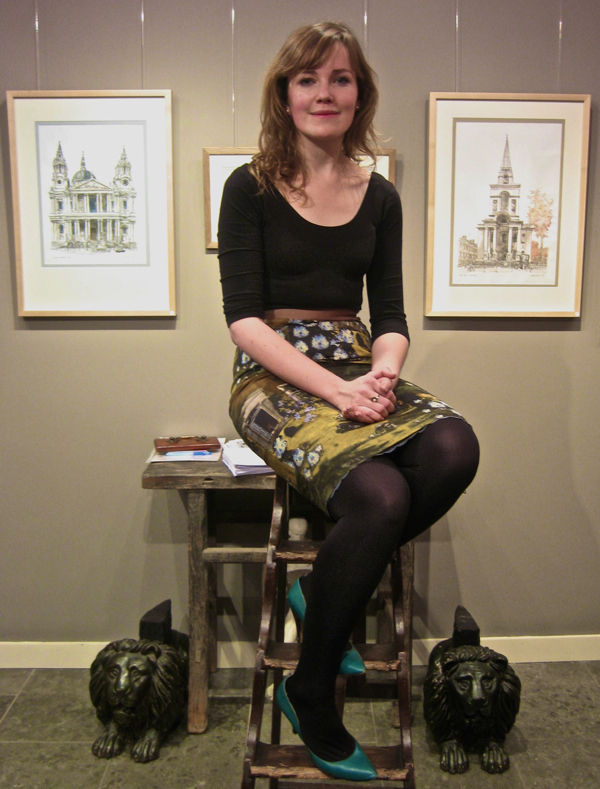
Joanna Moore’ s exhibition, City Sketches, “Original drawings of London life,” runs at the Townhouse, 5 Fournier St, Spitalfields until 18th December, 11:30 until 5:30 daily.
Remembering the Cat Lady of Spitalfields
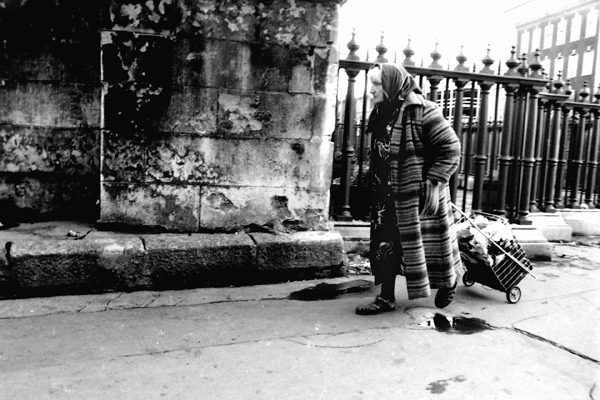
When I published Phil Maxwell‘s wonderful photographs of the mysterious Cat Lady of Spitalfields, my friend Rodney Archer contacted me to say that he used to know her and has even included her as a character in the novel he is writing. So I went round to enjoy a cup of tea and shot of rum with Rodney in his cosy basement kitchen in Fournier St, eager the learn more about this enigmatic presence who made it her business to befriend all the felines in Spitalfields during the nineteen eighties.
Rodney: Joan went all around the neighbourhood feeding the cats regularly and she had names for them. And you’d see her crouching, looking through the corrugated iron surrounding Truman’s Brewery, waiting for the cats to come and then they suddenly all appeared. I think once I saw her there and I asked her what she was doing, and she said ‘I’m waiting for the cats to appear.’
‘My darlings,’ she really did call them, ‘My darlings,’ and it was wonderful in a way that she had this love of cats and spent her life encouraging them and feeding them and keeping them alive.
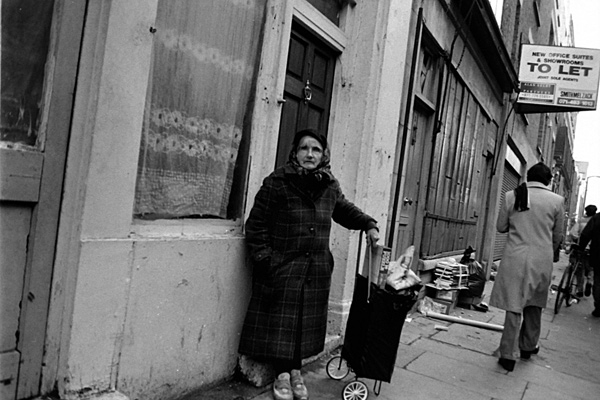
I could never quite work it out, but she had a bag, like one of those trolleys you carry, full of cat food. Now, either she’d taken the tops off the tins or something, since I noticed – because she had a kind of witchlike aspect – that although she put her hands right into the tin to feed them and then just threw it down, I never saw any cat food on her hands. It was like something out of Grimm’s Fairy Tales.
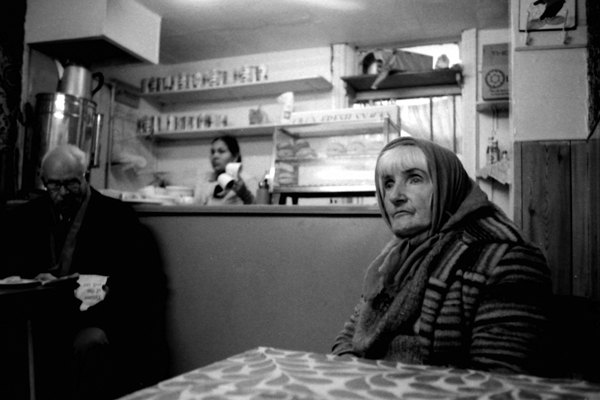
Over the years, I would chat to her and she was someone that you had to have some time for, because once she began she went on and on. She lived down off Brick Lane and she had her own flat, and I don’t know if it was a council flat, but eventually she was moved to South London. I think she was not an easy neighbour and, whether she was surrounded by immigrants, she certainly didn’t like anyone from any other place but England.
So, I’d chat with her when she’d come up from South London on the 40 bus, I think that stops at Aldgate. Every day she would come back, even though she had moved on, and she would make her way round the neighbourhood. She wore these snowboots, I remember once commenting on her new boots, and they were a gift from her sister.
It’s a strange thing about Spitalfields – when I read again what I had written about the Cat Lady, I thought, ‘My God, did I make this up?’ but I wouldn’t have made up that she died. And I do remember going to her funeral and I was one of the only mourners and there was this woman, and we went and had tea together afterwards and it was her sister, and I don’t think there was much contact. She was totally unlike the Cat Lady because the Cat Lady was strange – she spent all her money on the cats – she was like a character out of Dickens. She was almost a street person, except she had a place to live. And she did get benefits and she wasn’t an alcoholic or anything, she was very doughty, she had a bit of a moustache.
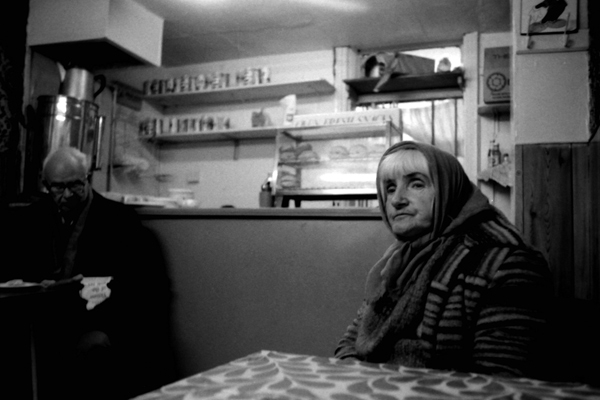
She was the kind of woman that, a hundred years ago, people would have been fearful of in a way. There was something awesome about her, because she had her own aura and she was there to feed the cats, and the cats were much more important to her than people. And I’d talk about my cat to her, and I think once she stopped by my door and I opened it, and my cat sat looking at her and she would ask me about him. I don’t know if she had any cats at home. I don’t know how old she was exactly, she must have been in her sixties or seventies, I suppose. You might look up William Taylor’s description of her in his book “This Bright Field,” – did he get in touch with you?
The Gentle Author: Yes, he wrote to say he thought she was called Joan and she had this mantra which was “Cats are better than rats.” Were there a lot of rats here at that time?
Rodney: I think there were. When the market was still going and you had all the fruit and vegetables, the rats would come out to feed. I never saw that myself, but you might see a rat running along the curb. A lot of people said they were looking forward to the market closing because the area would be cleaner and neater, but I regretted that the market left and there weren’t cabbages everywhere.
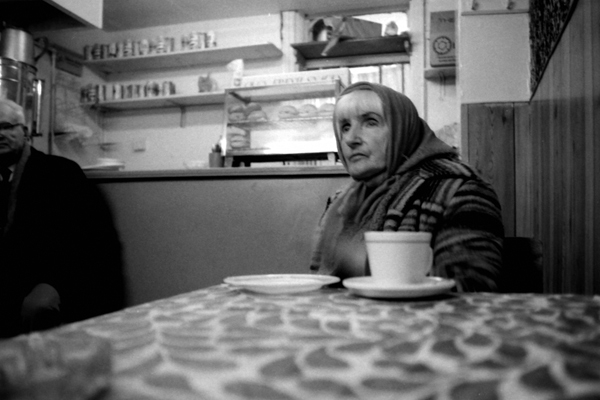
The Gentle Author: Can you remember when you first saw the Cat Lady?
Rodney: I think I first saw her on the corner of Fournier St and Brick Lane. She had a huge physical endurance, but I think she must have been exhausted by her journey every day, because she would often stop and she’d stop for quite a long time, and she’d just be there looking around, I suppose she might have been looking for the cats. That’s why you could pass her and catch up with her and ask her how she was doing.
So one day I just spoke to her. Maybe I’d seen her around and I said, ‘Are you feeding the cats?’ And she told me, and I said had a cat and so we talked about cats and the wisdom of cats and all that kind of thing. And afterwards I’d see her quite often, but I couldn’t always stop because sometimes it was difficult to know how to reply if she was saying something you disagreed with.
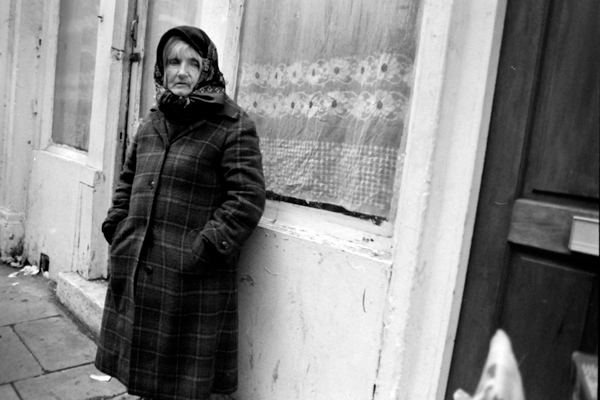
The Gentle Author: How did you discover that the Cat Lady had died?
Rodney: Somehow, someone who knew her told me. The funeral was out at the East London Crematorium. Her sister was there from the North of England, she seemed of be a kind of middle class woman who’d married and had a family and was quite respectable in a way that Joan wasn’t.
The Gentle Author: Do you know if the Cat Lady had a family?
Rodney: I don’t think she had any close relatives at all – she didn’t talk much about her past life – but she was the great mother of all the cats.
Photographs copyright © Phil Maxwell
Michael Louca, Gunmaker

Gunmaker Michael Louca is the proprietor of Watson Bros, the last independently-owned gun and rifle manufacturer in London, originally established in 1885. Operating from a small workshop in Shoreditch, each year Michael and his close-knit team of employees craft around a dozen of the most superlative shotguns that money can buy. With a client list that includes the Sultan of Turkey and the Shah of Persia, Michael is incontestably at the top of his game.
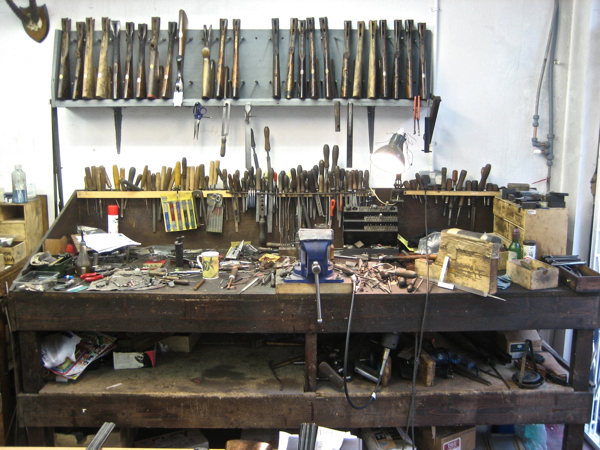
Yet walking in off the street, you find yourself in a modest artisan’s workshop with three workbenches along one wall and all manner of well-worn hand tools on display. It is only upon second glance when you see the gun barrels and wooden stocks lined up, and the animal trophies peering down at you from the walls, that you realise the particular nature of this endeavour. Amongst the detritus of the workbenches my eye was drawn first to tiny metal plates with exquisite engravings upon them of birds in flight surrounded by scrollwork. The technique was breathtaking, and yet these were designed and custom-made for a single shotgun by Michael’s own engraver who works here on the premises. I was told as many as four engravers can work upon the decoration of a single gun. It was the first indicator of the extraordinary degree of application and skill that goes into the manufacture of these amazing pieces.
We are accustomed to the notion that machines are mass-produced, and so there is something quite startling in sophisticated hand-made mechanical devices such as these. Honed to scrupulous perfection and with an action that slides like silk, Michael’s guns seem alive. I never handled a gun before, but when Michael passed me a long shotgun that he took from a secure cupboard in the corner of his private office, I encountered a feeling comparable to the delight in a perfectly balanced kitchen knife in the hand, only amplified a hundred times – sleek, heavy and quick with life, as if it could spring from my fingers. It was a serious weapon, sleek and worthy of respect.
The authority and grace of these devices is derived from centuries of London gunmaking, and the manufacture entails long months of patient work by engineers who undergo a five year apprenticeship to learn the trade. “I grew up on a farm and I grew up shooting,” explained Bradley Hodgson who I spoke with first as he pored over the coffin-shaped metal chamber of a gun gripped in the vice at his workbench. Bradley who originates from the Lake District, has been here three and a half years, and now breezily calls himself a lock, single-trigger and ejector man. “Ninety per cent of the gun is handmade at the bench,” he confirmed proudly, “we make the pins that hold them together, we don’t even buy nuts and bolts. It’s just a beautiful end product, completely bespoke, and getting everything to work right – when you master it – that’s very rewarding.”
Next to Bradley worked James Brown, a nineteen-year-old apprentice who had been there just fourteen months. Both he and Bradley were concerned with painstaking intricate work, upon which Michael cast a discreet eye from the adjoining bench. “I’ve always liked guns,” James explained to me with bright-eyed enthusiasm,“I went into the army cadets at school and then I started clay pigeon shooting, so my dad suggested gunmaking. And I’m not going to change my job after this, it’s my life!” It was an extraordinary declaration, making me wonder how many other occupations could inspire such devotion today.
In the privacy of his upstairs office, away from the mess of the workshop, surrounded by a trophy bison, black bear and polar bear skins, and toting one of his prized shotguns, Michael opened his heart to me. “With our guns, no-one has to have one – it’s a want, a desire.” he said, articulating the intense emotional quality of these charismatic objects that incarnate power in your hands. “They do far more than their purpose, in the same way you might want to drive a Ferrari rather than a Mini.” he confided. “If you want to shoot a pheasant, how do you want to do it?” he asked, catching my eye with an implied challenge and posing a question that transcends the hypothetical for his customers, “It’s about what gives you pleasure.”
“I was always in the trade. I’d done an apprenticeship and I’d started working in the trade when I developed a new gun,” continued Michael, revealing the secret of his success – creating an over-and-under shotgun (with the barrels one above the other) that is as light as a side-by-side (with the barrels on either side). The trick of this innovation lay in Michael’s cunning design of a simpler ejector system, a patent that today is unique to Watson Bros and confirms Michael’s position as top gunmaker in London. Unlike many of his colleagues in the trade, Michael is a shooter. With three hundred gameshoots happening every week during the season Michael likes to be out weekly wielding his shotgun, and he told me it helps him to understand his customers better. All Michael’s guns are made to order, measured to fit their owners’ reach and handsize and in a style that reflects the customer’s taste.
To my untutored eye, I could make no distinction between guns made recently by Michael, those from the nineteen thirties and those the eighteen forties. All these designs appeared to be the near culmination of the perfection of form and function, and notions of modernity did not register in this arena. It did not appear either that Michael’s guns were old-fashioned – this was, equally, a meaningless notion in the context. But what was remarkable and inspiring to me was that guns can still be manufactured today with the accomplishment and skill that matches the masters of centuries past. The making of guns by hand is a vital living tradition at Watson Bros in Shoreditch.


Bradley Hodgson


James Brown


Pieces of Turkish walnut waiting for customers to select them for the stocks of shotguns.

Michael Louca












