All Change at Shelf

I have a secret route to get to Shelf – I go past the farm, across the park, under the railway line, across the wasteland, under the sinister railway arch, over the graffitied footbridge, and then I turn left down Cheshire St to arrive excitedly at this oddball tangerine-coloured shop which only opens at weekends. It has been my place of constant pilgrimage for ten happy years of treats, where I could always guarantee to discover some new delight, but last week Katy Hackney & Jane Petrie invited me round to break the news that Shelf is leaving Spitalfields, because in future they will be open for business to the whole world, night and day at www.helpyourshelf.co.uk
When they first opened in Cheshire St, I did not have a place of my own to live and so, as consolation, I went to Shelf and bought an iron door knocker, vowing that one day I should have my own front door to go with it. Ten years later, this handsome door knocker, cast from a nineteenth century mould in a Belgian factory, greets me every day as I go in and out of my house. I always relied upon Shelf for serious nonsense, whenever I had urgent need of some nicely painted wooden rabbits at Easter or a candle powered merry-go-round, hand carved with deer from the Black Forest, at Christmas. There must be room in life for whimsy and joy, and Shelf is a toy shop for adults where you can rely upon finding a functional wooden radio or clockwork songbird that really sings.
I always wondered where on earth proprietors Katy Hackney & Jane Petrie got all this astonishing stuff, which you could find nowhere else – “Our elaborate hobby,” they term it modestly. It was a rare adventure to visit these two shrewd yet playful women from Dundee who maintain a constantly engaging double act, full of non-sequiturs and completing each others sentences. After several years, I enjoyed the privilege of viewing their most coveted finds, colourful old prints and toys which they stash safely in drawers in the basement for their own pleasure – just to make sure no customer could ever find them and buy them – and it became apparent then that Shelf was an endeavour based upon extraordinary personal enthusiasms.
At Shelf, in perverse yet welcome contrast to common practise, Katy & Jane have championed old designers, like Pravoslav Rada of Prague, eighty-seven years old, and Frerk Muller of Berlin, who is well into his sixties. It is the exclusive outlet in Britain for Pravoslava Rada’s bright-coloured ceramics which he has been making in an unchanging style since the nineteen sixties, and also the only place you can find the designs of Frerk Muller – an old beatnik who creates droll minimalist images of birds with moody expressions – printed onto mugs and towels.
Undefinable and unlike any other shop in London, Shelf has thrived on its own idiosyncrasy, even though Katy & Jane never set out out to be shopkeepers – a role which they are happy to relinquish to concentrate on designing their own things for Shelf. And I am especially excited to learn that now all the treasures from the cellar will go on sale. Naturally, I shall miss popping in for a chat and emerging with a bird whistle, but Katy & Jane are going to be back, setting up stalls at Christmas fairs and seasonal events. And in the meantime you can enjoy a Shelf bonanza at the shop, where everything is on sale at daft prices while stocks last. Be assured, this is not “Goodbye” to Shelf but simply “Au Revoir.”
Vist the Shelf blog The Other Side of the Shelf and Jane Petrie’s Costume Detail blog


Kellner figures, made by the same family since 1919

Paper mache animal head by Rachel Warren

Wooden merry-go-rounds from the Black Forest

Plaster letters rescued from the Californian desert, originally created to make titles for silent films.

Design by Frerk Muller, a beatnik from Berlin.


Ceramic by Pravoslav Rada of Prague

Stationery packs with tickets, boot polish tins and rare old paper bags from Paul Gardner’s basement.

Enamelled copper letters to make your own signs.

Ceramic by Pravoslav Rada

Paul Gardner visited Shelf to deliver the last paper bags on Friday.

John Moyr Smith’s Tiles
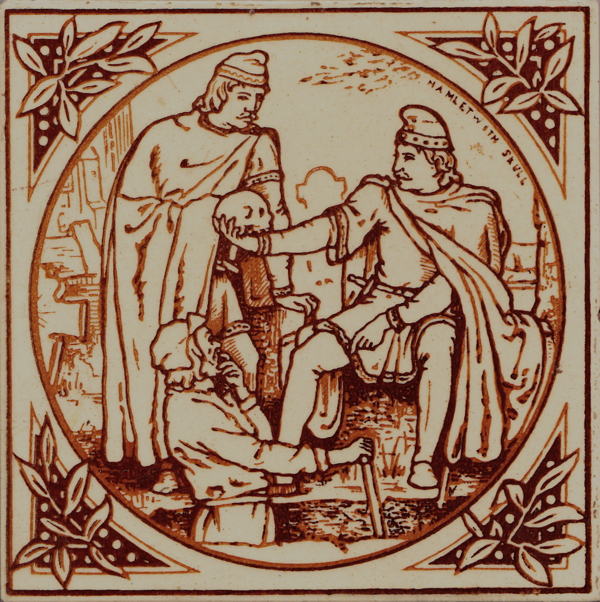
It was only after several of my interviewees asked me if I had been standing next to a bonfire recently, that I realised the smoky old fire in my house causes my clothes to reek like those of a hobo who sleeps next to the campfire each night. Even though everyone has been tactful, assuring me how enraptured they are by the whiff of wood smoke that accompanies me each time I walk in the door – to ameliorate this situation, I have decided to fit a stove in my fireplace before next Winter. Although kind friends now regularly leave pallets outside my house, collecting broken pallets from the streets of Spitalfields each week, dragging them home in the cold and chopping them up has become a burdensome chore. A stove will solve my smoke problem, give me more heat from less wood, spare me the coating of ashes that settles upon every surface in my living room – and now I can tile the fireplace.
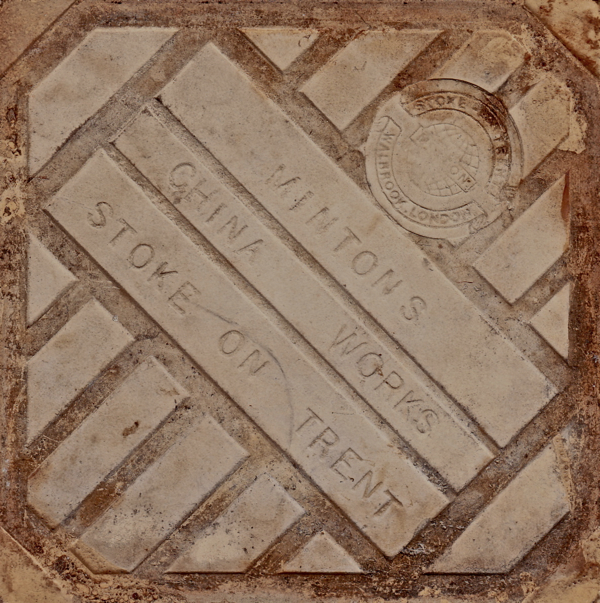
My budget precludes delft tiles, and casting around for an alternative that suits my pocket I came across the work of John Moyr Smith, an artist and designer born in Glasgow in 1839, who worked in the Arts & Crafts tradition and designed graphic illustrated tiles for Minton in the eighteen seventies. I like their brownish hues which suit my quiet taste, but what attracts me most are their intricate scenes, like panels from a comic strip, telling stories from Shakespeare’s plays, the Bible, the Morte D’Arthur, the Arabian Nights and Aesop’s Fables. Although rare ones in pristine condition change hands for hundreds of pounds, there are enough around to buy more common examples in used condition for under ten pounds. So now I have set out to collect enough to fill my fireplace and here you can see the first eleven I have found, out of the sixty or so I will need in total.
The notion of a fireplace lined with stories to contemplate on cold Winter nights is one that appeals greatly, and although I originally imagined it would be exclusively Shakespeare – as a kind of shrine to the bard – I could not resist widening my collection to include scenes from the life of Jesus and Fairy Tales too. In place of the phantoms that are conjured gazing into the flames of my open grate, I shall have a gallery of dramatic fictions in the fireplace surrounding my stove, and just as all the stories I have ever read are interwoven in my mind, I cherish the notion of Hamlet and Jesus and Bluebeard side by side among the tiles. Reading the life of St Brendan, who paddled to America in a coracle, I came upon the story of an island he discovered which was revealed as whale when he lit a fire, and years later, reading the Arabian Nights, I came across the same adventure ascribed to Sinbad the Sailor, a correlation which confirms that all my tiles can be harmonious neighbours, their diverse cultural origins notwithstanding – because all the stories in the world must interconnect eventually.
I think John Moyr Smith could have had a very successful career as a comic book artist if he had lived a hundred years later, judging on his ability to visualise fictional characters convincingly and incarnate the dramatic moment in graphic form. On each of these tiles, almost like living tableaux or posed snapshots, there is a vibrant energy to his figures which suggests a use of models or, at very least, a fluent grasp of anatomy – because the postures and the resulting tension between the characters, always evokes the specific drama with dynamic precision.
Jesus’ powerful arm, extended to turn water into wine, possesses a force worthy of a superhero, while the shocked expressions of the witnesses are enough to confirm his miracle. A similar effect is employed in stilling the tempest, when the fishermen’s expressions of terror reveal the violence of the storm while Jesus stands impassive. Observe how, in the illustration to Othello, Desdemona and Othello’s gestures reflect and complement each other, placing her father who is dubious of their marriage in self-conscious isolation. In another example, notice Blubeard’s fist curled behind his back as a expression of his violent inner turmoil when confronting his young wife and the bloody keys that expose his darkest secret. My current favourite amongst the tiles I have so far is the scene from As You Like It – for the tenderness of expression as Celia leans over Rosalind languishing in distress at the loss of Orlando. It delights me to see how, in each case, John Moyr Smith found an effective image to reveal the sympathetic human truth expressed in a fictional moment.
As you will now understand, tiling this modest fireplace has become an epic undertaking in my imagination, and so – every few months during this year – I shall be showing you the new additions to my growing collection of Moyr Smith tiles as it accumulates. Then, next Christmas, you will see my ceramic gallery of storytelling complete, once it is installed to give me inspiration by reminding me of some favourite stories, when sitting with my cat beside the stove and whiling away the long dark nights of Winter in Spitalfields – in the days when my overcoat will no longer smell of wood smoke.
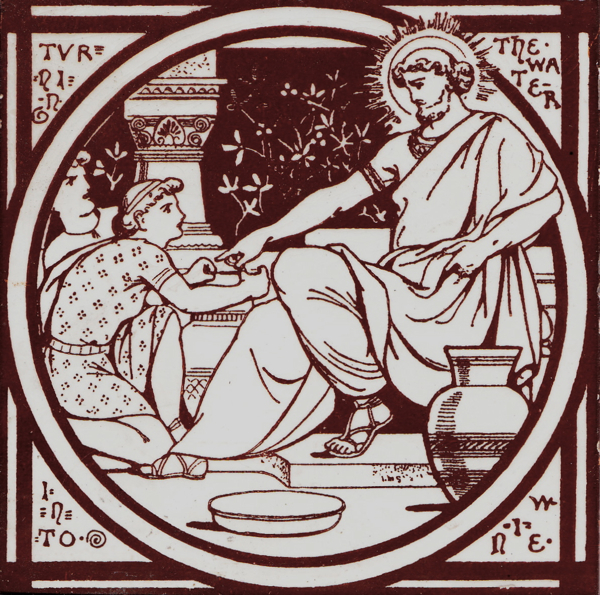
Jesus turns water into wine.
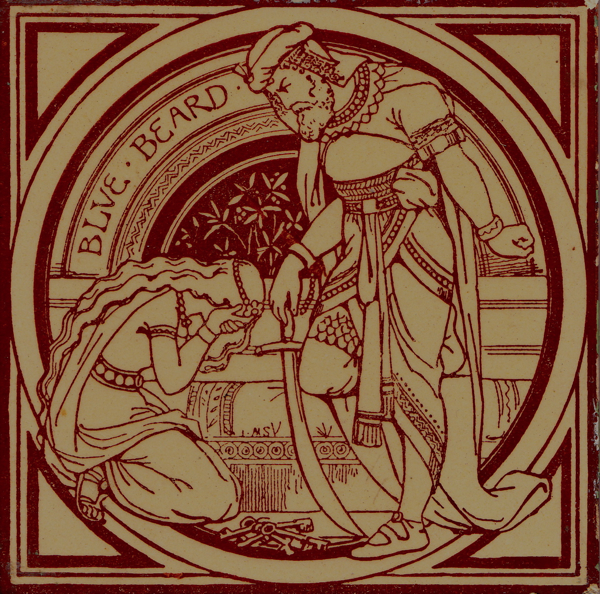
Bluebeard threatens to behead his wife when he discovers the bloodied keys.
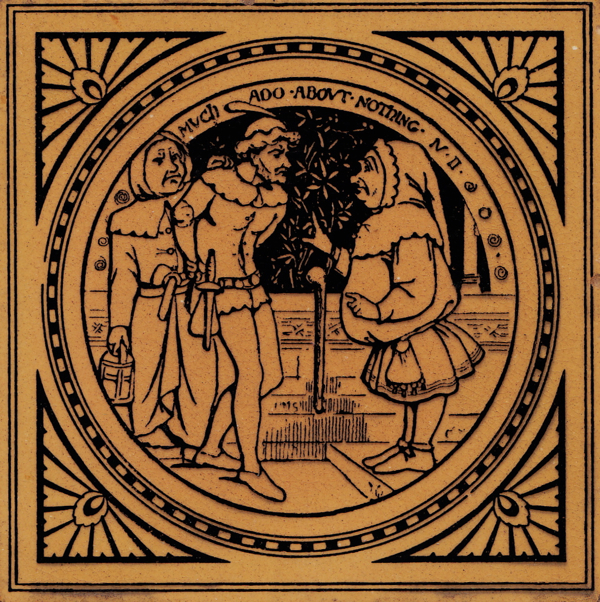
Much Ado About Nothing – Dogberry confronts the villain Conrade in prison.
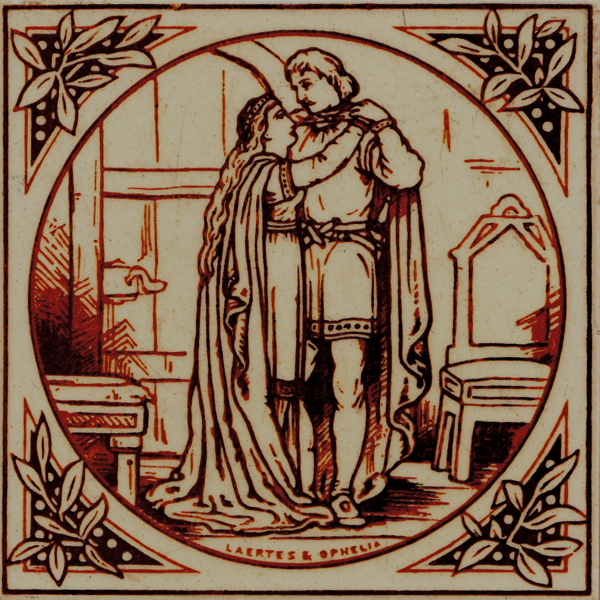
Hamlet – Laertes & Ophelia.
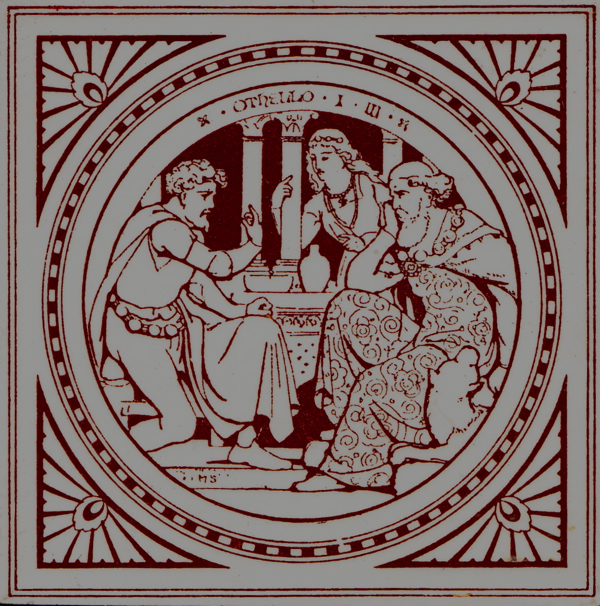
Othello – Brabantio is sceptical of his daughter Desdemona’s marriage to Othello.
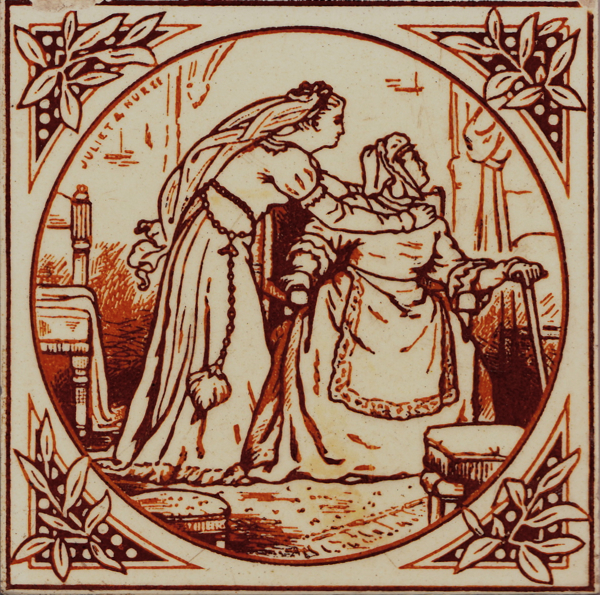
Romeo & Juliet – Juliet & Nurse.
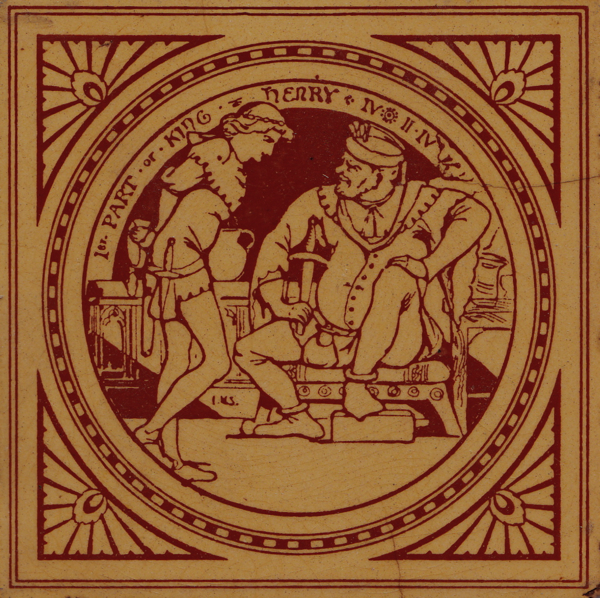
Henry IV Part I – Young Hal and Falstaff at the Boar’s Head in Cheapside.
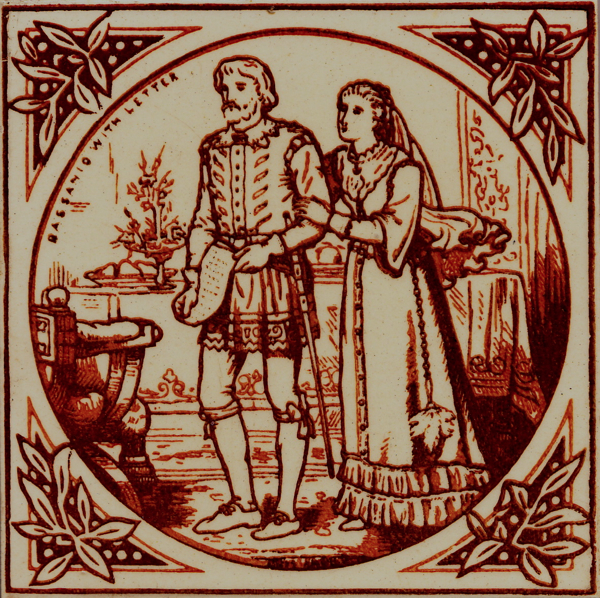
The Merchant of Venice – Portia sees Bassanio turning pale upon reading Antonio’s letter.

Jesus stills the tempest.
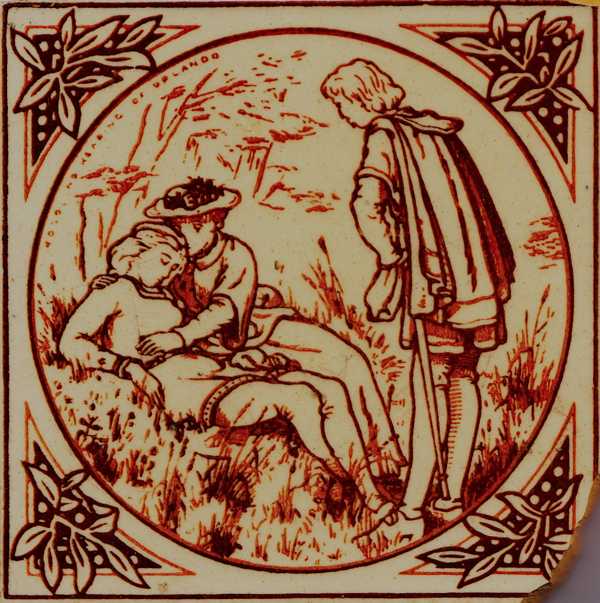
As You Like It – Rosalind collapses upon being told of her beloved Orlando’s supposed death.
You may like to read about Simon Pettet’s Tiles at Dennis Severs’ House.
Columbia Road Market 67

This is George Gladwell selling his Busy Lizzies from the back of a van at Columbia Rd in the early seventies, drawing the attention of bystanders to the quality of his plants and captivating his audience with a bold dramatic gesture of presentation worthy of Hamlet holding up a skull.
Last week, I published George’s account of trading at the market since 1949 and this week it is my delight to show a prime selection from his personal collection of photographs, which have never been seen before. There is an appealing air of informality about the flower market as it is portrayed in these pictures. The metal trolleys that all the traders use today are barely in evidence, instead plants are sold from trestle tables or directly off the ground – pitched as auctions – while seedlings come straight from the greenhouse in wooden trays, and customers carry away their bare-rooted plants wrapped in newspaper. Consequently, the atmosphere is of a smaller local market than we know today, with less stalls and just a crowd of people from the neighbourhood. Whilst you can see the boarded-up furniture factories, that once defined Bethnal Green, and Ravenscroft Buildings, subsequently demolished to create Ravenscroft Park, both still in evidence in the background – I hope sharp-eyed readers may also recognise a few traders who continue working in Columbia Rd Market today.
During the week, I had the pleasure to visit George & his wife Margaret at their beautiful smallholding surrounded by trees, at the end of a lane in the Langdon Hills, and George searched through a lifetime’s photo collection to find these beautiful portraits that he took of his fellow traders at Columbia Rd one Summer long ago. Over the years, many thousands of images have been taken of Columbia Rd Flower Market, but George Gladwell’s relaxed photographs are special because they capture the random poetry and spontaneous drama of the market seen through the eyes of an insider.
Read George Gladwell’s account of trading since 1949 in Columbia Road Market 66

Albert Harnett

Colin Roberts


Albert Playle


Bert Shilling
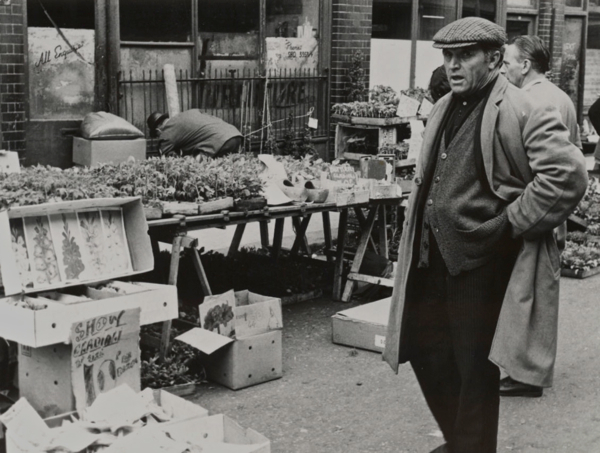
Ernie Mokes
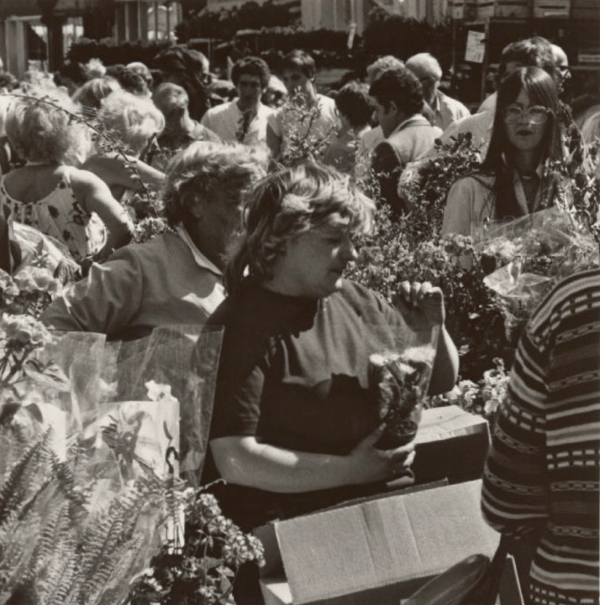
The magnificently named Carol Eden.


Fred Harnett, Senior

Herbie Burridge

George Burridge, Junior


Jim Burridge, Senior

Kenny Cramer

Lou Burridge

Robert Roper


Ray Frost

Robert Roper

George Burridge
Photographs copyright © George Gladwell
Dilruba Khanam, Photographer

This photograph by Dilruba Khanam of a Bengali bride in East London fascinates me with its unlikely combination of lyrical and urban realist elements. The bride in her luxuriant wedding clothes sitting beneath a tree might be an image from a classical miniature painting, if it were not for the satellite dish and the car – which place the picture precisely in the here and now. And when Dilruba told me her principal subjects were fashion and politics, it confirmed the source of the dynamic tension that enlivens this extraordinary image. Yet when Dilruba told me her story, I realised that as much as it reflects aesthetic choices, her remarkable sensibility is the outcome of her own struggle to wrestle freedom from the tyranny of circumstance.
Growing up in a high-ranking Muslim family in Bangladesh, Dilruba acquired a vivid knowledge of politics through personal experience. “The head of my family had supreme authority, and women were not even allowed to go out.” she admitted to me when I visited her in Mile End last week,“There was a separate conference room for the men where the newspapers were kept and females were not allowed to enter, but I would secretly go there and read them. I was the first female to break the rules, because I could not tolerate any injustice to women and I wanted to fight against it. As a young girl, I knew many politicians closely and I had seen their dirty politics and corruption, and I did not like it.”
At sixteen years old, Dilruba left home and went to live in the YWCA. “It was difficult for me to survive without family support,” she revealed in unsentimental reminiscence,“I was desperate to find a job, and I went from office to office asking. At that time, I had long hair and I was good looking, and I saw their dirty thinking about me, so I realised I had to protect myself. I cut my hair short and me and my best friend Javine – who was the first professional female magician in Bangladesh – we got training in judo, karate and shooting guns.” At first, Dilruba pursued athletics but it was photography that became her career. Once she had some training, Dilruba won freelance commissions from newspapers in Dhaka and became Bangladesh’s first professional female photographer, covering politics and fashion. One day, when Audrey Hepburn came to Bangladesh, Dilruba went along to take photographs of a star who herself once portrayed a certain youthful independence. But events took an ironic twist when the other photojournalists, who were all male, took pictures of Dilruba with her short hair and Western casual clothes, making her first prominent public appearance as a professional photographer – which ended upon the front pages of the national newspapers next day instead of Audrey Hepburn. An unexpected turn of events, but one – I like to think – that Audrey would have savoured with amusement.
Thus, Dilruba came to the attention of Rowshan Ershad, First Lady of Bangladesh and wife of President Ershad, who extended her personal support, appointing Dilruba as her official photographer upon all engagements for the next two years. And, almost like fairy tale, a whole new world of success opened up in which Dilruba was invited to Bollywood to photograph the stars, becoming accepted into the world of celebrities, singers, dancers, actors and models who took her as an equal and in many cases as a friend. Yet Dilruba could never forget the wider political picture, and when students at Dhaka University protesting against the ruling party were beaten up, she found that as a woman photographer she alone was able to get into the hospital to photograph their injuries.
Through her own courage and talent, Dilruba had achieved what no woman had done before in Bangladesh, forging a career as a photographer, but she realised that she could never be at peace there. Using the mobility that her professional status gave her she came to London. “First of all, I came to see the difference, and I found this is the place I want to live – because this is a free country.” she explained with a smile of quiet relief, ” I brought my camera with me and I started working with a Bengali newspaper here. Then I published my own glossy magazine ‘Elegant,’ and I stated my own modelling agency with a mixture of Asian and European models.”
“My family apologised to me,” she confided frankly, “when they realised I had done well and the newspapers wrote good things about me, but it was too late. I went through a lot of pain and hardship, and when I needed them most, I was all alone. So I can’t forgive and forget.”
Today, Dilruba Khanam is happy to live a relatively low-profile life in the East End, concentrating on the subjects of her photography rather than becoming a subject herself – but there is an intensity in her portraits of women, a detachment in her pictures of politicians, and a frequent use of passionate flaming reds, that – in different ways – all speak of the challenges she overcame on her journey to get here.
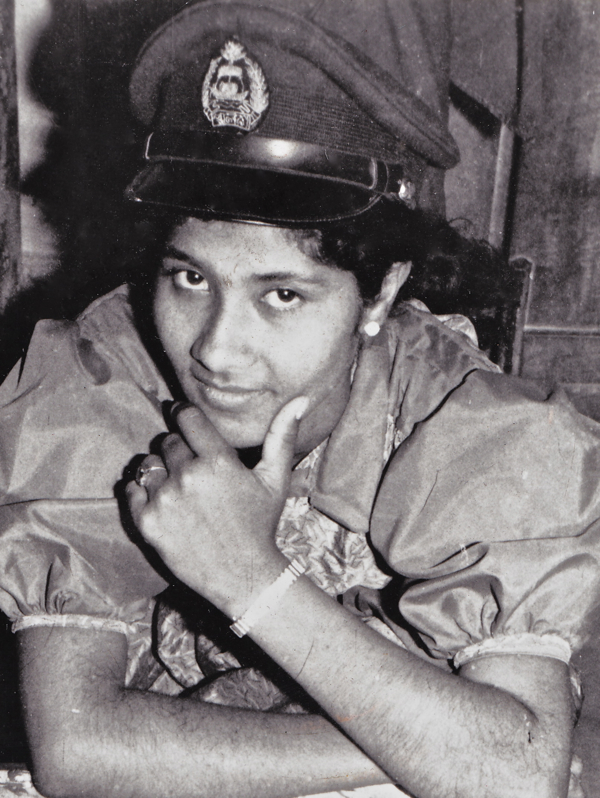
Dilruba as a teenage rebel in a Bangladeshi policeman’s hat.
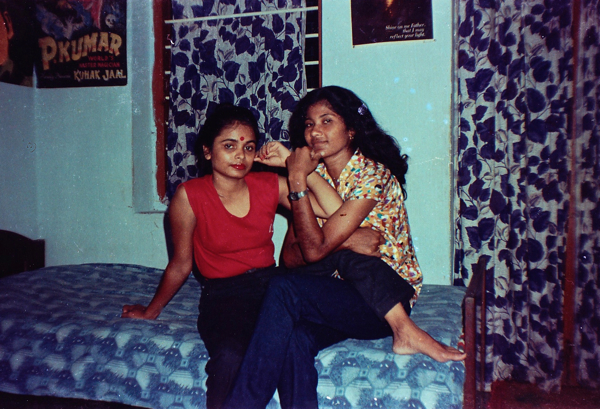
Azra Javine, the first female magician in Bangladesh with Dilruba the first female photographer in Bangladesh, 1987.
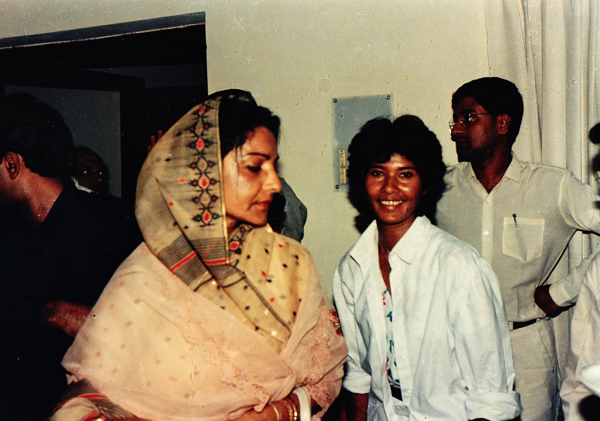
Dilruba with her patron Rowshan Ershad, First Lady of Bangladesh
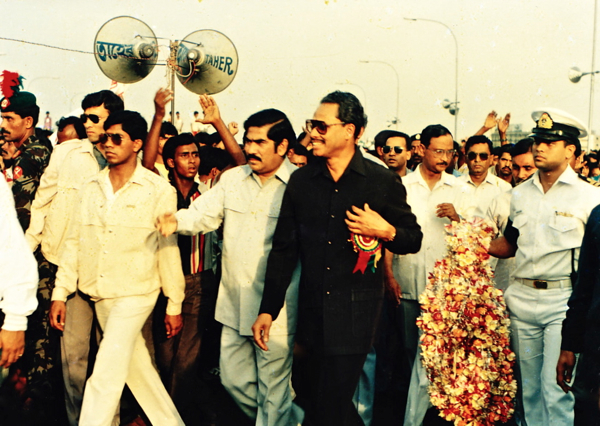
President Ershad of Bangladesh.
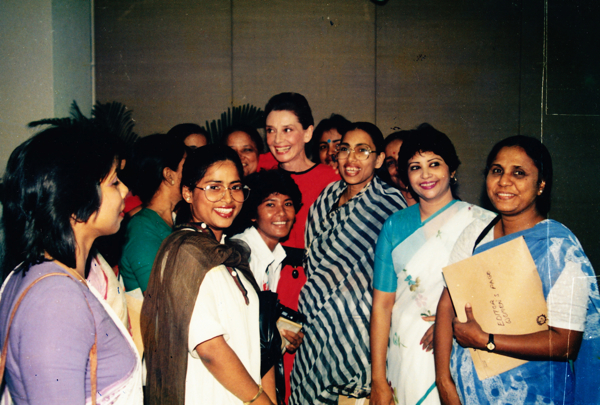
Dilruba with Audrey Hepburn in Bangladesh, 1989.
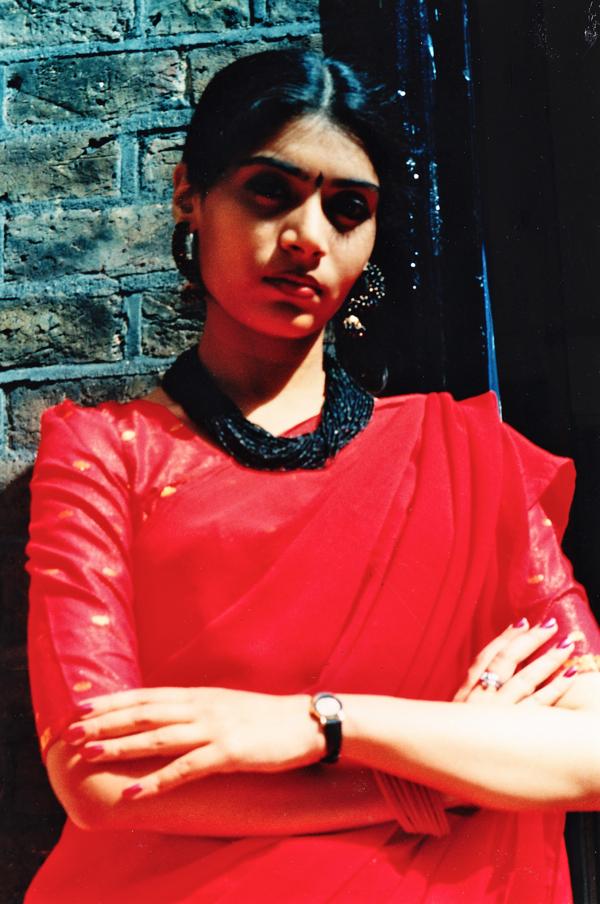
A famous dancer from Bangladesh.

Lata, TV Star
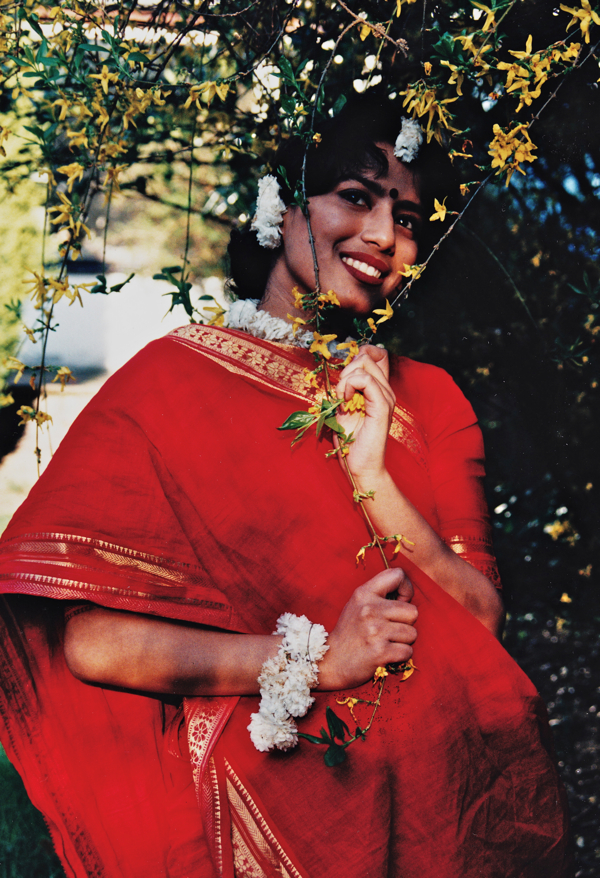
Nasrin Hussain Hema, choreographer.

Shabnoor, Film Star

Chatna, Model

Celebrating Boishakhi, 2000
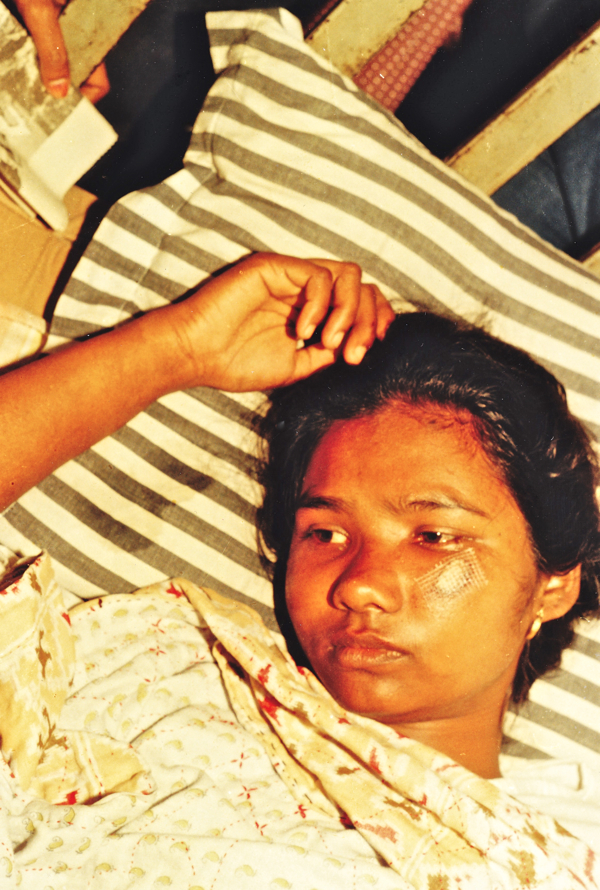
A student of Dhaka University beaten with chains by the Jatiotabadi Chattra Dal (the student front of the Bangladeshi National Party), 1988.

Yet another bruised girl of Dhaka University, 1988.
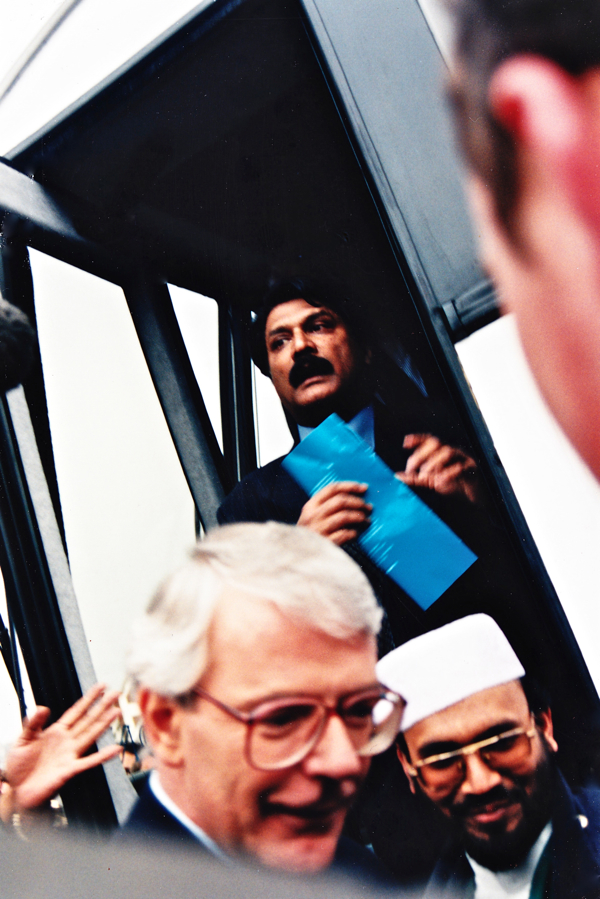
John Major in Brick Lane, 1995.

George Galloway in Whitechapel, 2009.
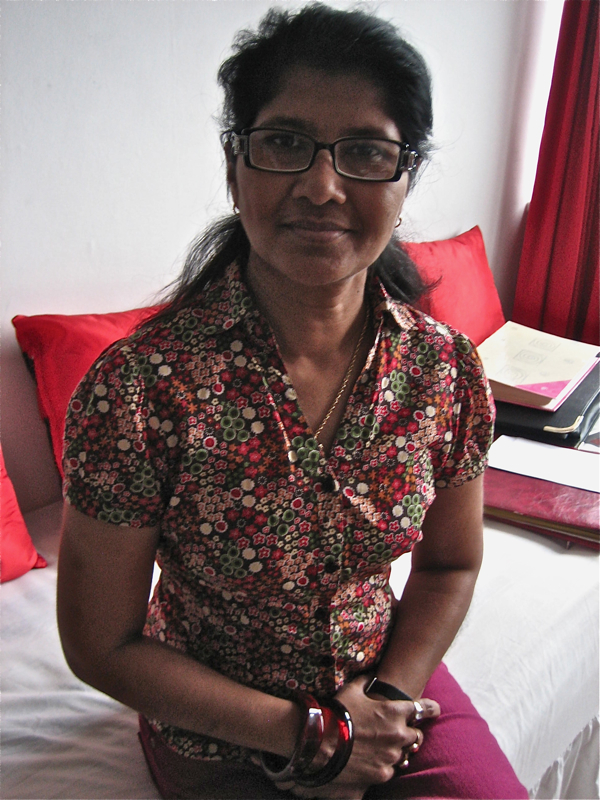
Dilruba Khanam
Photographs copyright © Dilruba Khanam
Mavis Bullwinkle, Secretary
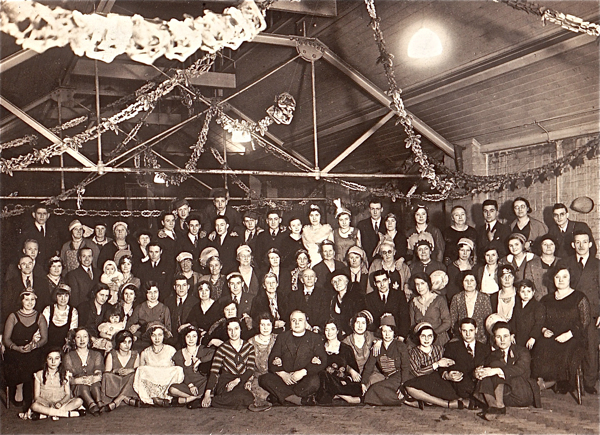
This is the first photo of the remarkable Mavis Bullwinkle, seen here attending a Christmas party in 1932 at the Drill Hall in Buxton St, hosted by Rev Holdstock of All Saints’ Church, Spitalfields – Mavis can easily be distinguished to the left of the happy crowd, because she is a baby in her mother Gwendoline’s arms. In this picture, you see her at the centre of life in Spitalfields and even though this hall does not exist anymore and the church it was attached to was demolished in 1951, and everyone else in this photo has gone now too, I am happy to report that Mavis is still alive and kicking, to carry the story of this world and continue her existence at the centre of things in the neighbourhood.
Mavis’ grandfather, Richard Pugh, was a lay preacher who came to Spitalfields with his wife and family from North Wales in 1898, where he held bible classes at All Saints and spoke at open air meetings and, in the absence of social workers, counselled men from the Truman Brewery in their family problems. His mother paid for him to return alone to Wales to see her for two weeks annual holiday from the East End each year. But Mavis’ grandmother Frances never had a holiday, she said, “Why should people take notice of you when you talk of living the Christian life, when you have an easier time than they do?” Then in 1905, Richard died unexpectedly of pneumonia and Frances was left almost bereft in Spitalfields. She had to leave the church house and take care of her seven children alone. She received a modest pension from the Scripture Readers’ Union until her youngest son, Albert, was fourteen, the Truman Brewery gave her a small grant twice a year and she took work scrubbing floors.
The family moved into Albert Family Dwellings, a large nineteenth century block in Deal St, where subsequently Mavis grew up, living there until it was demolished in 1975 when they were rehoused in a new block in Hanbury St. And today, when I visited Mavis in Hanbury St less than a hundred yards away from the site of Albert Family Dwellings and she described her grandmother who died when she was six, an extraordinary perspective became apparent, connecting our world with that of Spitalfields more than a century ago.“I remember her shape and her North Wales accent, a lilt.” Mavis told me, conjuring the image in her mind’s eye,” She would always call my father Alfred, when everyone else called him Alf. She was short of stature and she worked hard.”
Mavis’ testimony of life in the East End is one of proud working class families who strove to lead decent lives in spite of limited circumstances. “People like to think that they were all drunks who dropped their ‘h’s, and they were dirty,” she said, eager to dispel this misconception, “Years ago, people were poor but they were completely clean. You can wash without a bathroom, but it takes a lot of work. My father used to put the water on to boil and pour it into the bath. And in the Family Dwellings, it was very well maintained, low rents, strict rules and a uniformed superintendent. When my mother was small and people had large families, if the superintendent saw children playing after eight o’ clock, he’d say ‘Go to bed!’ and you had to do it. I often think of it now when I see children playing outside at eleven at night. Then, everyone used to know each other and help one another. If you were going away on holiday, you’d tell everyone and they’d wave you goodbye.”
Mavis’ story of her family’s existence in Albert Family Dwellings spans the original flat where her grandmother lived with her two maiden aunts, and then Mavis’ parents’ flat that she grew up in. Mavis took care of her mother and the two aunts, who lived to be eighty-six,ninety and ninety-five respectively, even after they all moved out – seventy years after they first moved in as an act of expediency. But by then the nature of the place had changed and it was condemned as part of a slum clearance programme. “It suddenly went down hill in the late fifties when the housing association sold it,” admitted Mavis with a regreftul smile, looking from her living room window across the rooftops of Spitalfields to the space where Albert Family Dwellings formerly stood, a space that holds so much of her family history. If Mavis had married, she would have left Spitalfields but instead she stayed to care for the elderly members of her family and worked for forty years as a secretary in the social work department at the Royal London Hospital, where she was born in 1932. A woman of dauntless temperament, even retired now, she returns one day a week on a voluntary basis to do typing for the friends of the hospital and on another day each week she does reading with a reception class at Christ Church School in Brick Lane where she is a governor.
In Mavis’ personal landscape, Spitalfields’ neighbouring territory, the City of London holds an enduring fascination as a symbolic counterpoint to these streets where she makes her home. “I love the City because I went to school in the City at the Sir John Cass School,” she confided with pleasure, “and my father worked as a clerk in the City, at the Royal London Oil Company for fifty-one years. To go from Tower Hamlets to the City, crossing Middlesex St, was like crossing the River Jordan to the Promised Land. Everyone in Stepney used to dream of living in the City. Before the war, all kinds of people lived in the City, caretakers and such, not just rich people like now.” And then Mavis ran into another room to bring a framed certificate to show me and held it up with a gleaming playful smile of triumph. It read, “Mavis Gwendoline Bullwinkle, Citizen of the City of London.”
Mavis Gwendoline Bullwinkle – Citizen of Spitalfields – is a woman who makes no apology to call herself a secretary, because she is inspired by the best of that proud nineteenth century spirit which carried a compassionate egalitarian sense of moral purpose.
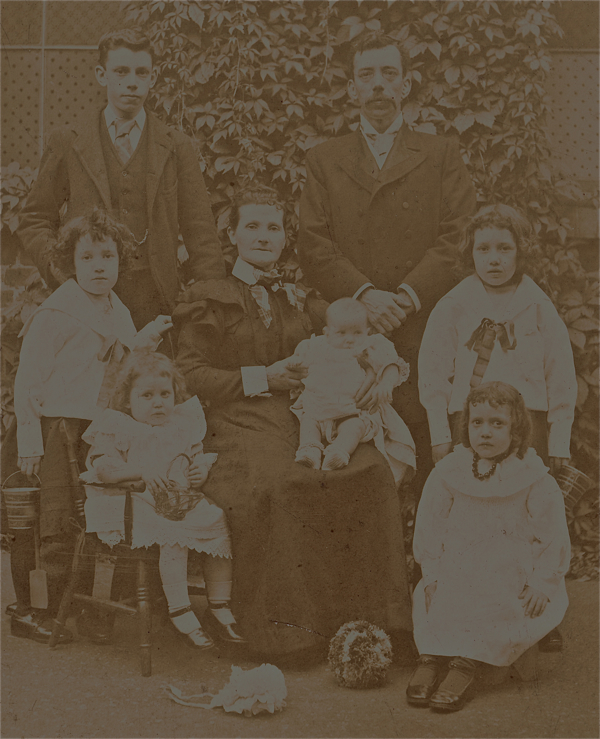
Mavis’ mother’s family, the Pughs of North Wales, photographed in Spitalfields in 1900. At the centre, Mavis’ grandmother Frances holds Mavis’ mother Gwendoline as a baby, with her grandfather Richard at her shoulder, a lay preacher who died unexpectedly of pneumonia four years later.
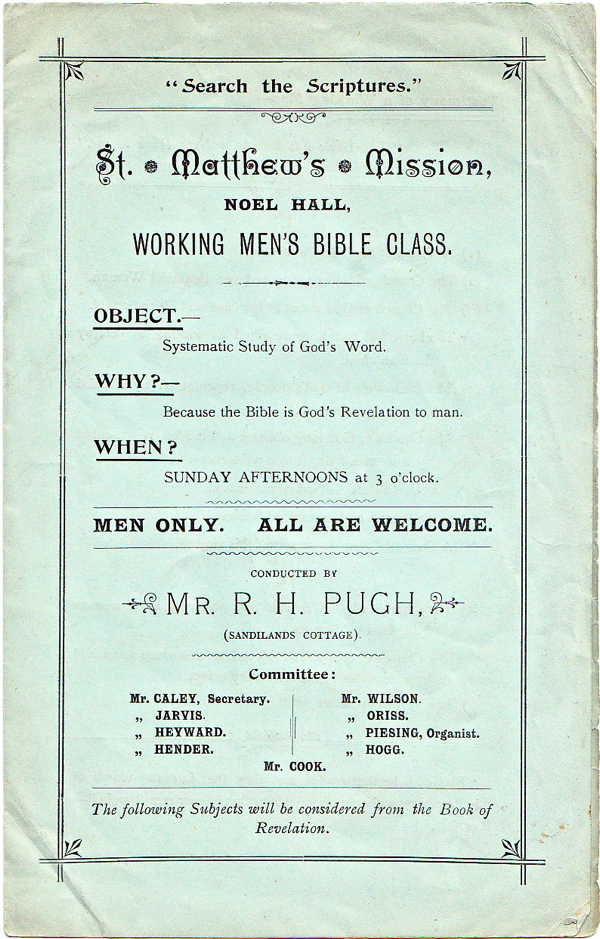
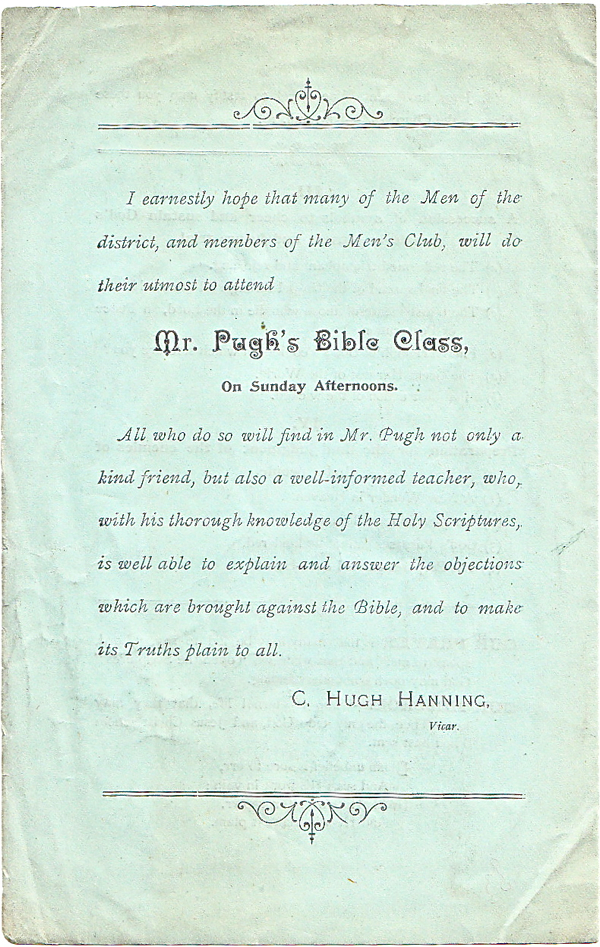
Handbill for one of Mavis’ grandfather’s bible classes at St Matthew’s Mission, Fulham.
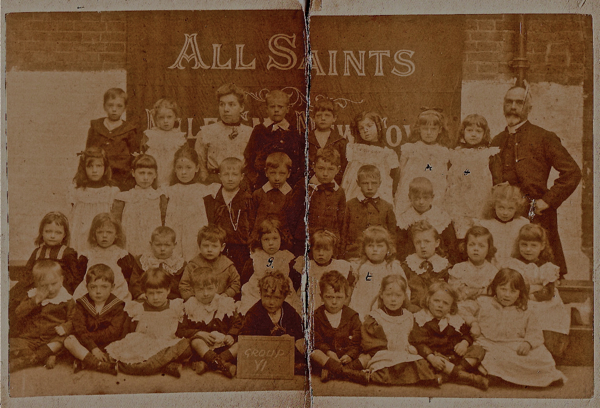
Mavis’ mother Gwendoline and her sisters at All Saints School, Buxton St, Spitalfields, 1904. g – Gwendoline, l – Laura, a – Ada and h – Hilda.
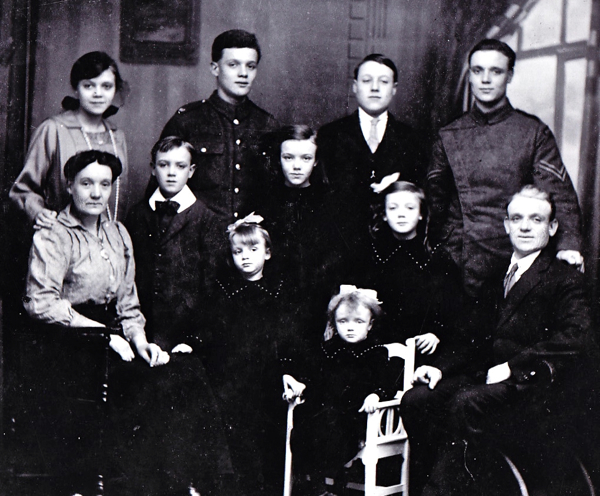
Mavis’ father’s family, the Bullwinkles of Bow in 1917. Her grandmother Lousia sits on the left and her grandfather Edwin on the right. Mavis’ father Alfred stands between his two brothers Harry and Ted, both in Royal Air Corps uniform. The eldest daughter standing behind her mother was also Louisa but known as “Sis.”

Mavis, with her parents Gwendoline and Alfred, and younger sister Margaret in Barking Park, 1939 – before Mavis & Margaret were evacuated to Aylesbury.
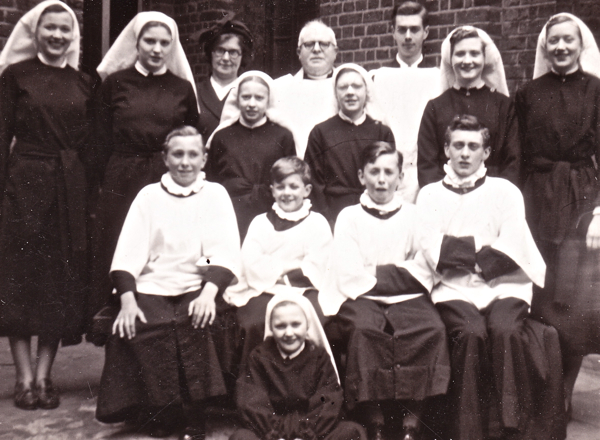
Mavis stands on the extreme left of this picture of the All Saints Church Spitalfields choir, 1951.
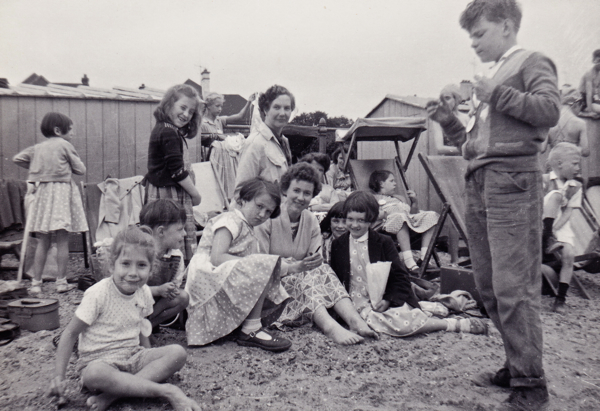
Mavis sits at the centre of the picnic at this Christ Church, Spitalfields, Sunday School outing to Chalkwell in the late fifties – presided over by Mrs Berdoe (top centre).
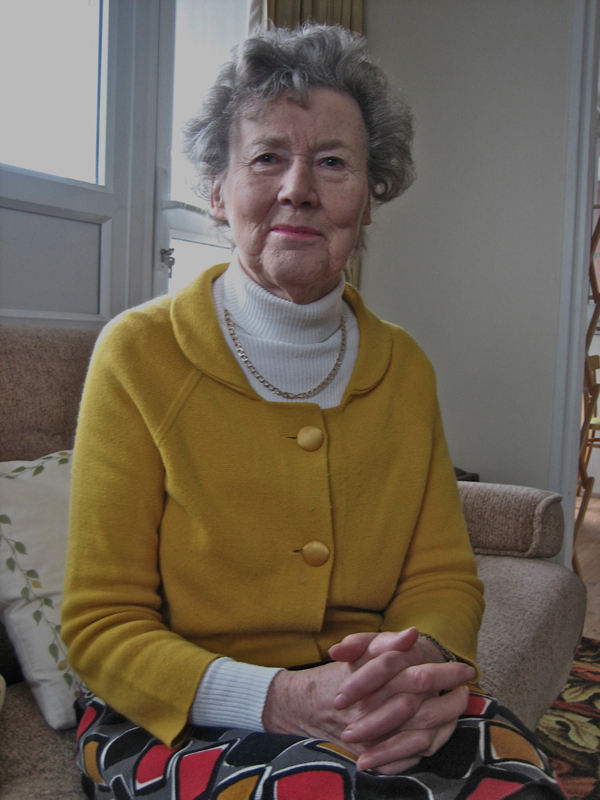
Mavis Bullwinkle in her Hanbury St flat today.
At James Ince & Sons, Umbrella Makers

The factory of James Ince & Sons, the oldest established umbrella makers in the country, is one of the few places in London where you will not hear complaints about the rainy weather, because – while our moist climate is such a disappointment to the population in general – it has happily sustained generations of Inces for over two centuries now. If you walked down Whites Row in Spitalfields in 1824, you would have found William Ince making umbrellas and this week, six generations later, I was able to visit Richard Ince, still making umbrellas in the East End. Yet although the date of origin of the company is conservatively set at 1805, there was a William Inch, a tailor listed in Spitalfields in 1793, who may have been father to William Ince of Whites Row – which makes it credible to surmise that Inces have been making umbrellas since they first became popular at the end of the eighteenth century.
You might assume that the weight of so much history weighs heavily upon Richard Ince, but it is like water off a duck’s back to him, because he is simply too busy manufacturing umbrellas. Richard’s father and grandfather were managers with a large staff of employees, but Richard is one of only four workers at James Ince & Sons today, and he works alongside his colleagues as one of the team, cutting and stitching, personally supervising all the orders. Watching them at work this week, it was a glimpse of what William Ince’s workshop might have been like in Spitalfields in 1824, because – although synthetics and steel have replaced silk and whalebone, and all stitching is done by machine now – the essential design and manufacturing process of umbrellas remains the same.
Between these two workshops of William Ince in 1824 and Richard Ince in 2011, exists a majestic history, which might be best described as one of gracious expansion and then sudden contraction, in the manner of an umbrella itself. It was the necessity of silk that made Spitalfields the natural home for James Ince & Sons. The company prospered there during the expansion of London through the nineteenth century and the increase in colonial trade, especially to India and Burma. In 1837, they moved into larger premises in Brushfield St and, by 1857, filled a building on Bishopsgate too. In the twentieth century, workers at Inces’ factory in Spitalfields took cover in the basement during air raids, and then emerged to resume making military umbrellas for soldiers in the trenches during the First World War and canvas covers for guns during the Second World War. Luckily, the factory itself narrowly survived a flying bomb, permitting the company to enjoy post-war success, diversifying into angling umbrellas, golfing umbrellas, sun umbrellas and promotional umbrellas, even a ceremonial umbrella for a Nigerian Chief. But in the nineteen eighties, a change in tax law, meaning that umbrella makers could no longer be classed as self-employed, challenged the viability of the company, causing James Ince & Sons to shed most of the staff and move to smaller premises in Hackney.
This is some of the history that Richard Ince does not think about very much, whilst deeply engaged through every working hour with the elegant contrivance of making umbrellas. In the twenty-first century, James Ince & Sons fashion the umbrellas for Rubeus Hagrid and Mary Poppins, surely the most famous brollies on the planet. A fact which permits Richard a small, yet justly deserved, smile of satisfaction as the proper outcome of more than two hundred years of umbrella making by seven generations of his family. A smile that in its quiet intensity reveals his passion for his calling. “My father didn’t want to do it,” he admitted with a grin of regret, “but I left school at seventeen and I felt my way in. I used to spend my Saturdays in Spitalfields, kicking cabbages around as footballs, and when we had the big tax problem, it taught me that I had to get involved.” This was how Richard oversaw the transformation of his company to become the lean operation it is today. “We are the only people who are prepared to look at making weird umbrellas, when they want strange ones for film and theatre.” he confessed with yet another modest smile, as if this indication of his expertise were a mere admission of amiable gullibility.
On the ground floor of his factory in Vyner St, is a long block where Richard unfurls the rolls of fabric and cuts the umbrella panels using a wooden pattern and a sharp knife. Then he carries the armful of pieces upstairs to Rita Smith, the irresistibly charming machinist with vivid green eyes that match her uniform, who sits perched by the window eager to sew the panels together, deploying a deceptively casual expertise honed over sixty years at her machine. Seventy-six year old Rita has sewn umbrella covers for three generations of Inces, Richard, Wilfred and Geoffrey, Richard’s father, whose picture she glances at occasionally for reassurance, high upon the wall in the workroom. “I never wanted to try anything else. My Aunt Eva got me the job when I was fifteen and I worked beside her at first. If I got it wrong, she said, ‘Do it again or I’ll knock you off your chair!'” confided Rita to me mischievously, enacting the role of Aunt Eva with fearsome conviction. “I started in Spitalfields in 1950 as a machinist.” she continued brightly, “Upstairs there used to be a cutter for ladies and gentlemen’s umbrellas and one for garden umbrellas, and below four machinists who did garden umbrellas and three who did ladies and gents’ and golf umbrellas, as well as six ‘tippers’ who sewed the covers on by hand.” All the time Rita spoke, she worked, almost automatically, sewing the triangular panels of slippery fabric in pairs, combining them into fours and then adding a thin, perfectly even seam, all round the circumference once she had made a complete cover of eight pieces.
As soon as the covers are sewn, Job Forster takes them and does the “tipping,” consisting of fixing the “points” (which attach the cover to the ends of the ribs), sewing the cover to the frame and adding the tie which is used to furl the umbrella when not in use. Job was making some huge umbrellas for The Berkeley, used by the doormen to shepherd guests through the rain, and I watched as he clamped the bare metal frame to the bench, revolving it as he stitched the cover to each rib in turn, to complete the umbrella. Then came the moment when Job opened it up to scrutinise his handiwork. With a satisfying “thunk,” the black cover expanded like a giant bat stretching its wings taut and I was spellbound by the drama of the moment – because now I understood what it takes to make one, I was seeing an umbrella for the first time, thanks to James Ince & Sons (Umbrella Makers) Ltd.

Richard Ince, seventh generation umbrella maker, prepares to cut covers for brollies.

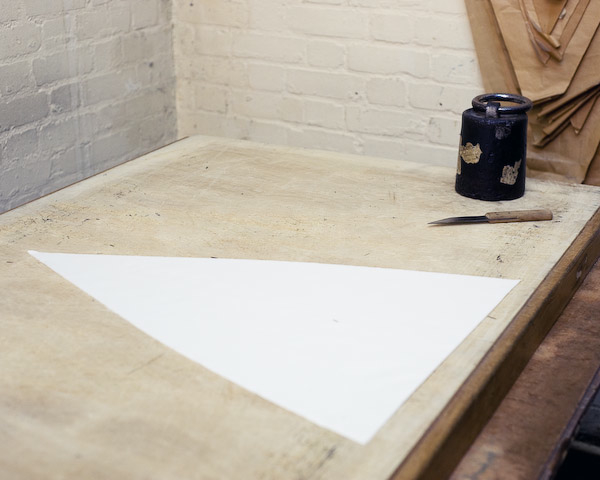


Rita Smith of Bethnal Green began sewing covers for umbrellas in Spitalfields in 1950. “I’ve always liked the work. I only do two days now, but I go home and I just get bored to tears sitting on my bottom – I found myself playing Chinese patience the other day. I don’t think I’ll be here much longer though, I’m thirty years older than anyone else, but we all get on pretty well considering the difference in years. I’m not a trouble maker.”


Job Forster sews the cover to the ribs of the umbrella.


James Ince, born 1816

James John Ince, born 1830

Samuel George Ince, born 1853


Ernest Edward Sears, born 1870


Wilfred Sears Ince, born 1894


Geoffrey Ince, born 1932


Richard Ince, “Prepare for a rainy day!”
New photographs copyright © Chris Hill-Scott
Archive photographs copyright © Bishopsgate Institute
Rob Ryan’s Tintinnabulation of Bells
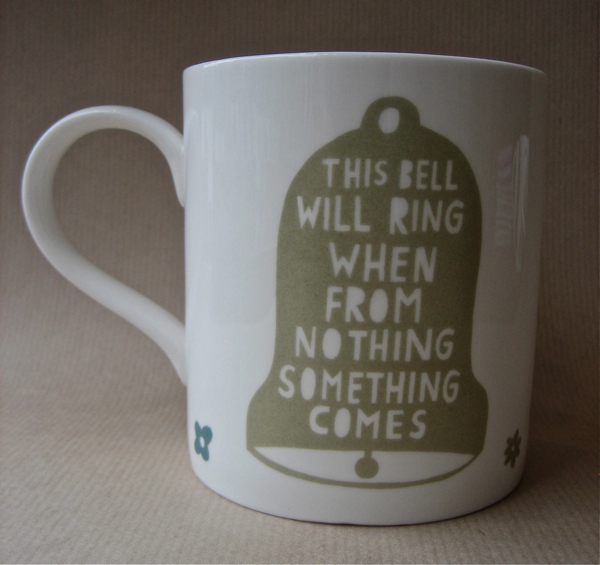
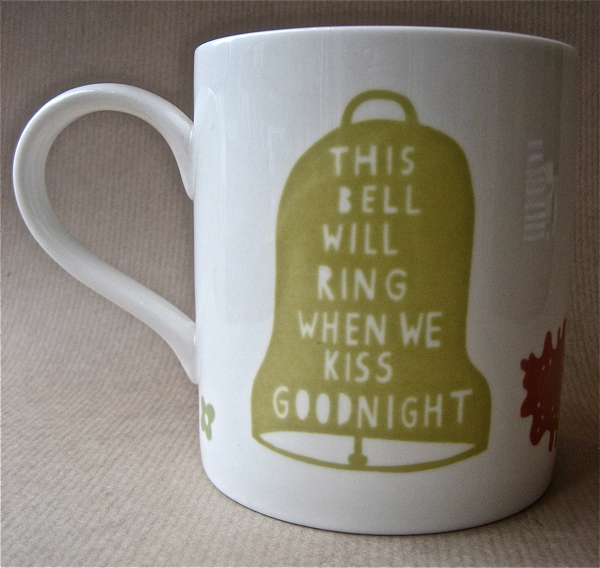
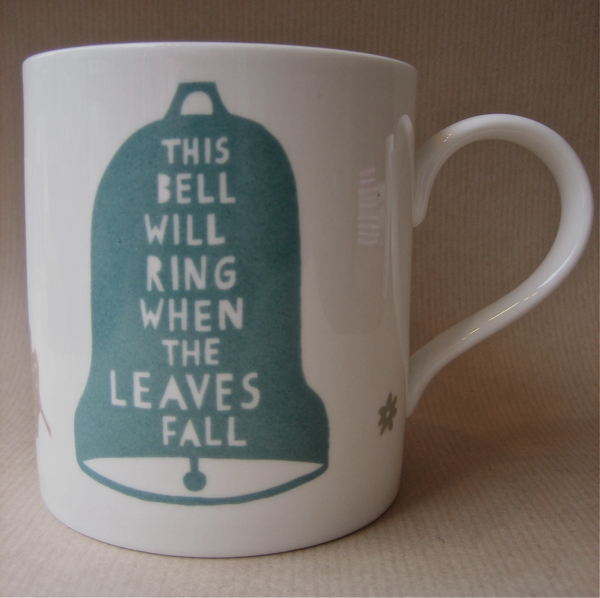
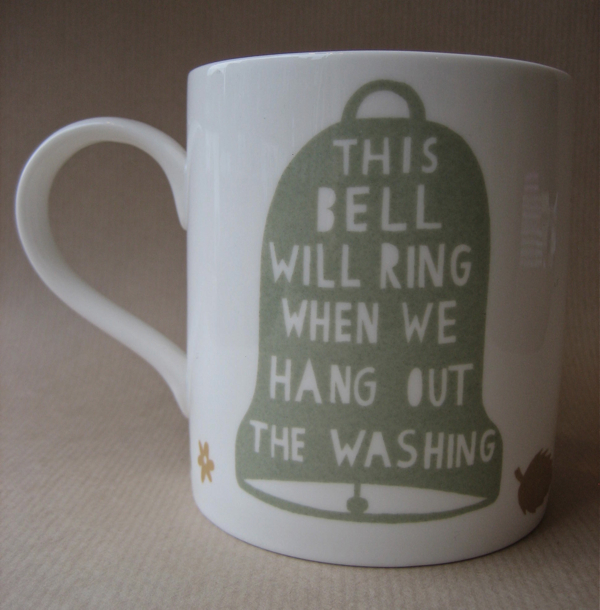
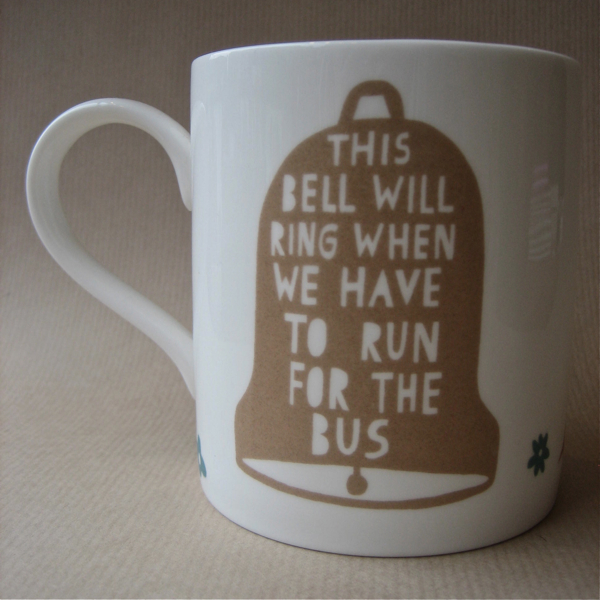
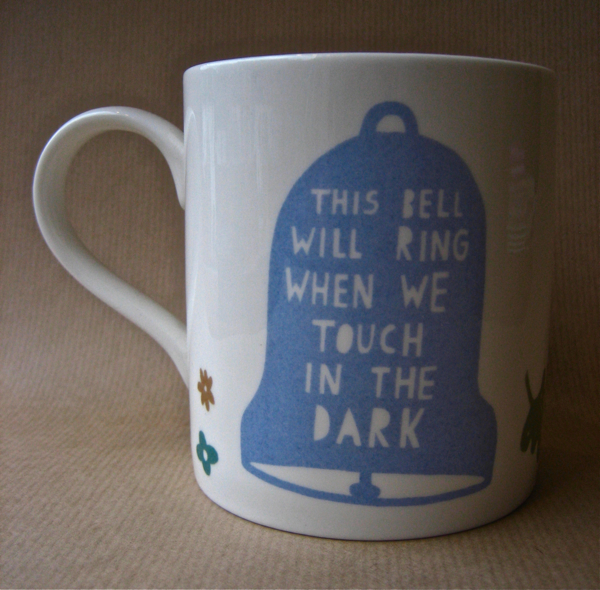
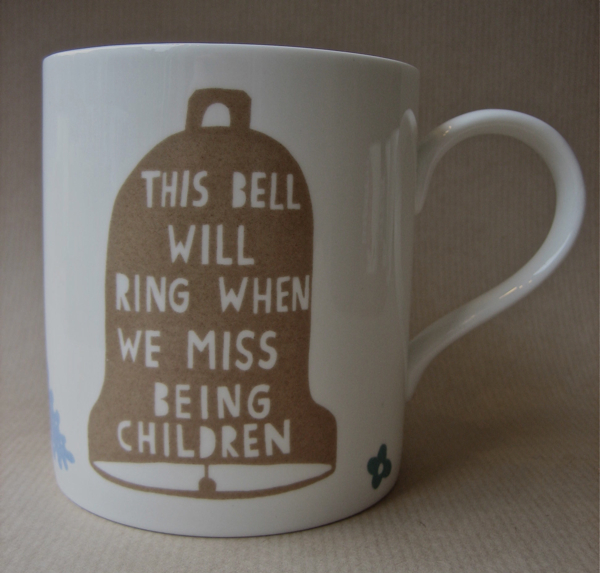
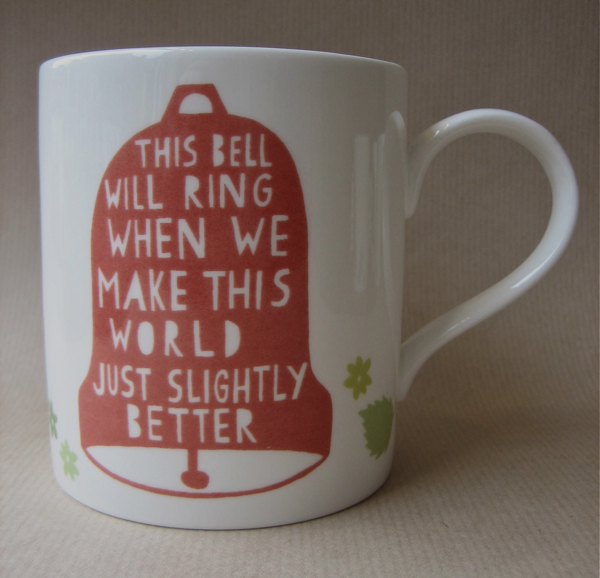
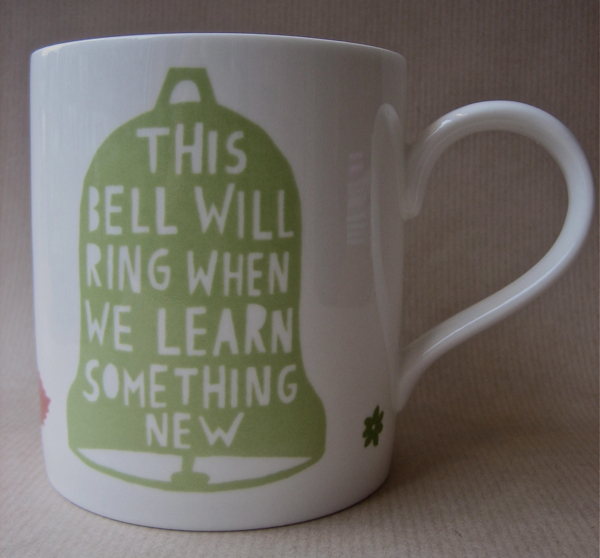
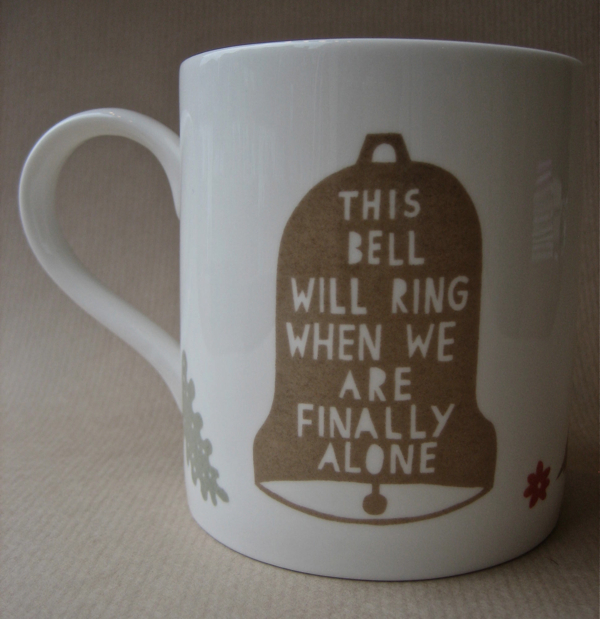
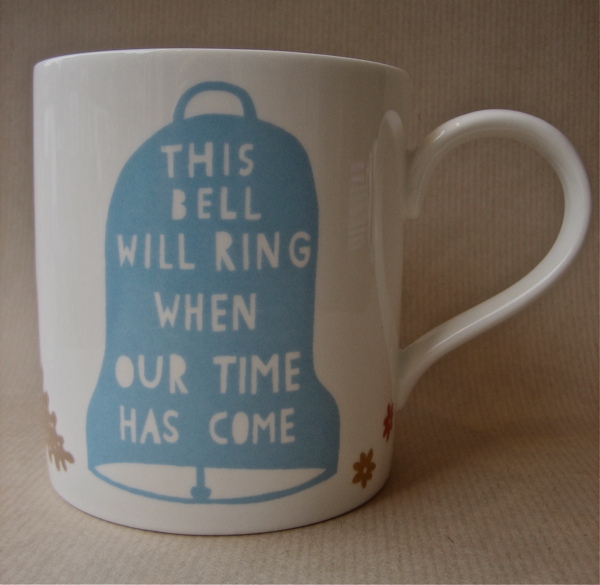
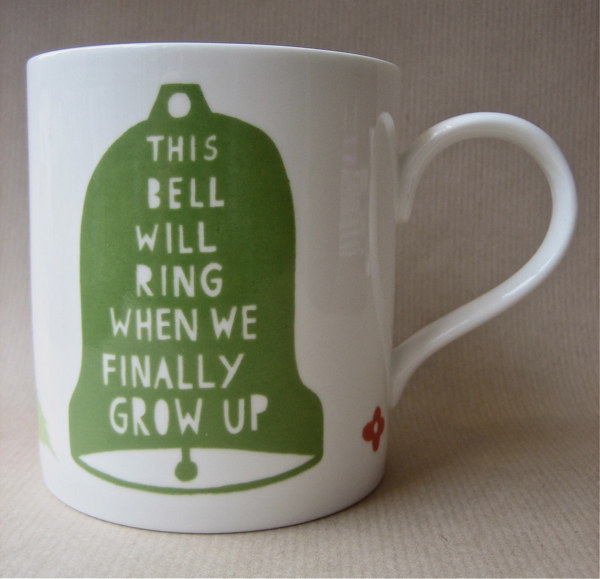
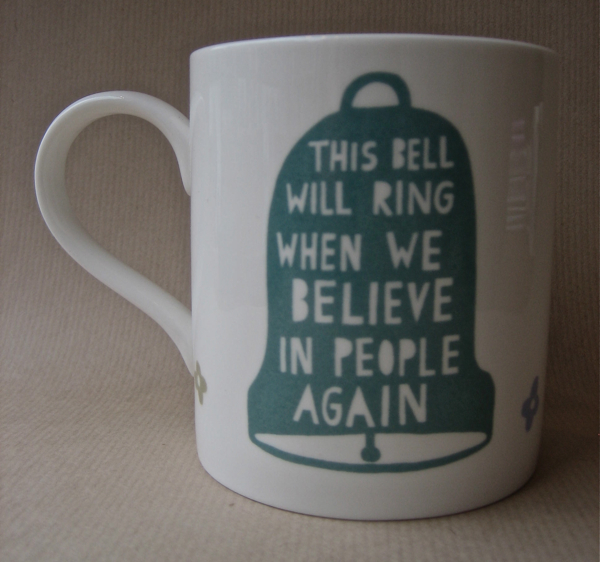
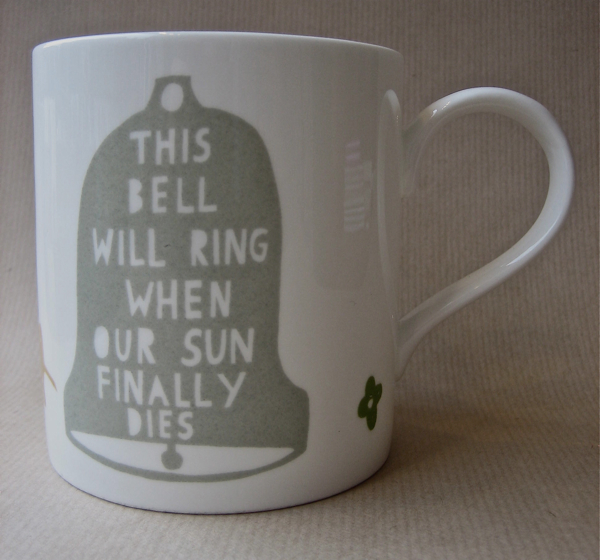
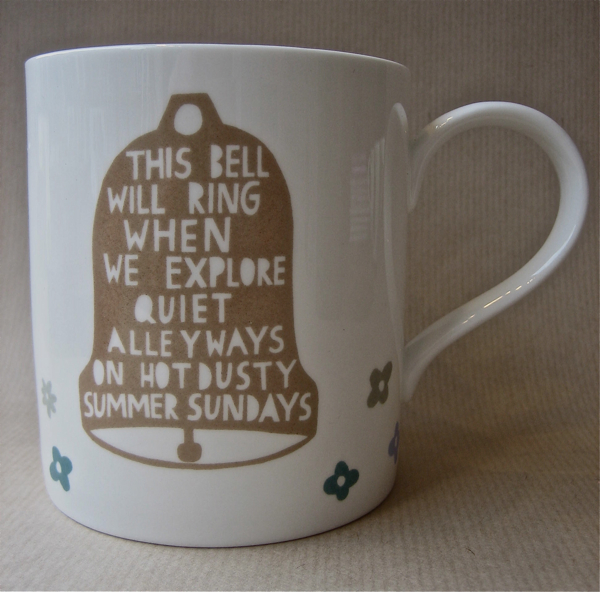
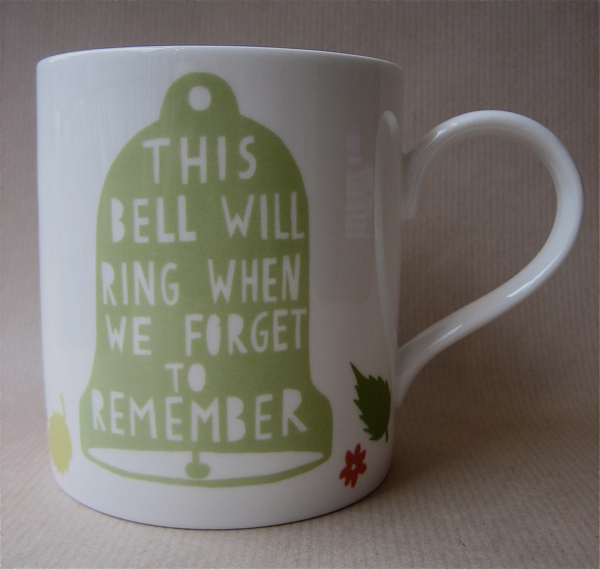
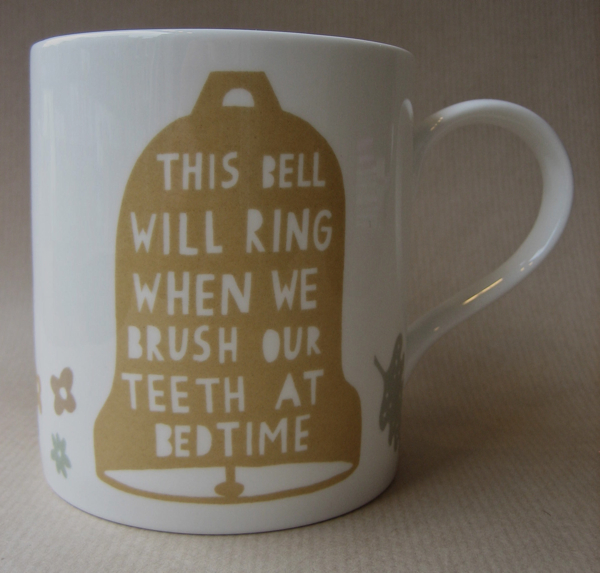
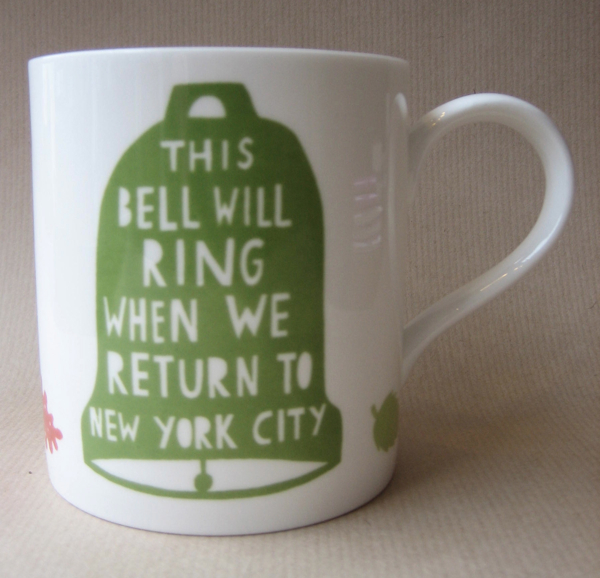
At Rob Ryan’s exhibition in Stafford last year, I was captivated by a large glass-fronted cabinet with dozens of mugs in rows, each one with an image of a bell and a different text. So when I discovered Rob was selling them, I paid a call to Ryantown in Columbia Rd to photograph this exceptional collection of ceramics before they were dispersed forever. Every one is an eloquent poem in its own right and yet, because bells sound better the more there are, I wanted to record Rob Ryan’s tintinnabulation of bells for you.
The entire story of human life can be expressed through our relationship with bells, from the bells given to babies in the cradle, to school bells, to exam bells, to work bells, to wedding bells, to alarm bells, to funeral bells – with plenty of doorbells opening up the possibilities of existence in between. Even in the age of the mobile phone, the old-school telephone bell has recovered its pre-eminence recently, and now when one rings, everybody within vicinity dives for their phone. Let me admit, bells are my favourite sound in the world, and it never fails to lift my heart when I come round the corner of Commercial St to encounter the pealing of bells from Christ Church, Spitalfields, reverberating through the narrow streets and in the market, where Rob once had his studio.
Rob Ryan grew up the nineteen sixties, when Sunday was sacrosanct, a time of silence and bells.“Sunday was once a quiet, sad, boring day – and now I still harbour a connection to this day in my childhood which doesn’t really exist anymore.” he explained to me, introducing his growing fascination with bells over the years.“Later, I became a big fan of John Betjeman and his ‘Summoned by Bells.’ And when I was in Germany on tour with a band, I bought this CD at Cologne Cathedral and it was a recording of the bells there. I used to listen to that and there was a booklet inside it, and I discovered that bells have inscriptions and names, which I never knew before. And I thought ‘That’s interesting,’ because it was as if each bell had a personality and a voice and it was saying something – so I held onto that idea. And also there used to this programme on the radio called ‘Bells on Sunday,’ at really peculiar times, like two in the morning, and it was just five minutes of church bells, and I always thought that was quite nice too. But rather than seeing bells as overtly religious, I wanted to adapt them more to everyday things which would relate to everybody on a personal level. I didn’t want them to sound pompous.”
Rob Ryan’s bells resonate in my mind, because while some texts are playful and celebratory, the very act of marking out time and pin-pointing the fleeting moment, emphasises the transience of existence. “We live from day to day, and go from week to week.” mused Rob, “You are always looking forward to something, ‘I’m going bowling tonight,’ and then that day will come and go. And you think, ‘I’m going to that party on Saturday’ and we live on this cycle of a couple of weeks, always looking to the next thing.”
It is is the absurd contrast between the everyday – This bell will ring when hang out the washing – and the apocalyptic – This bell will ring when our sun finally dies – that touches me, since a paradox of life is that it is simultaneously a modest endeavour and the greatest epic ever told. And that is why I love the poetry of these deceptively simple designs in their subtle warm colours because they remind me that, even on the grimmest January day, we are all on journey through a landscape of wonders.
You can listen to “Bells on Sunday” by clicking here.


Images copyright © Rob Ryan
Read my other Rob Ryan stories