
The Wallpapers of Spitalfields

One house in Fournier St has wallpapers dating from 1690 until 1960. This oldest piece of wallpaper was already thirty years old when it was pasted onto the walls of the new house built by joiner William Taylor in 1721, providing evidence – as if it were ever needed – that people have always prized beautiful old things.
John Nicolson, the current inhabitant of the house, keeps his treasured collection of wallpaper preserved between layers of tissue in chronological order, revealing both the history and tastes of his predecessors. First, there were the wealthy Huguenot silk weavers who lived in the house until they left for Scotland in the nineteenth century, when it was subdivided as rented dwellings for Jewish people fleeing the pogroms in Eastern Europe. Yet, as well as illustrating the precise social history of this location in Spitalfields, the wider significance of the collection is that it tells the story of English wallpaper – through examples from a single house.
When John Nicolson bought it in 1995, the house had been uninhabited since the nineteen thirties, becoming a Jewish tailoring workshop and then an Asian sweatshop before reaching the low point of dereliction, repossessed and rotting. John undertook a ten year renovation programme, moving into the attic and then colonising the rooms as they became habitable, one by one. Behind layers of cladding applied to the walls, the original fabric of the house was uncovered and John ensured that no materials left the building, removing nothing that predated 1970. A leaky roof had destroyed the plaster which came off the walls as he uncovered them, but John painstakingly salvaged all the fragments of wallpaper and all the curios lost by the previous inhabitants between the floorboards too.
“I wanted it to look like a three hundred year old house that had been lovingly cared for and aged gracefully over three centuries,” said John, outlining his ambition for the endeavour, “- but it had been trashed, so the challenge was to avoid either the falsification of history or a slavish recreation of one particular era.” The house had undergone two earlier renovations, to update the style of the panelling in the seventeen-eighties and to add a shopfront in the eighteen-twenties. John chose to restore the facade as a domestic frontage, but elsewhere his work has been that of careful repair to create a home that retains its modest domesticity and humane proportions, honouring the qualities that make these Spitalfields houses distinctive.
The ancient wallpaper fragments are as delicate as butterfly wings now, but each one was once a backdrop to life as it was played out through the ages in this tottering old house. I can envisage the seventeenth century wallpaper with its golden lozenges framing dog roses would have gleamed by candlelight and brightened a dark drawing room through the Winter months with its images of Summer flowers, and I can also imagine the warm glow of the brown-hued Victorian designs under gaslight in the tiny rented rooms, a century later within the same house. When I think of the countless hours I have spent staring at the wallpaper in my brief existence, I can only wonder at the number of day dreams that were once projected upon these three centuries of wallpaper.
Flowers and foliage are the constant motifs throughout all these papers, confirming that the popular fashion for floral designs on the wall has extended for over three hundred years already. Sometimes the flowers are sparser, sometimes more stylised but, in general, I think we may surmise that, when it comes to choosing wallpaper, people like to surround themselves with flowers. Wallpaper offers an opportunity to inhabit an everlasting bower, a garden that never fades or requires maintenance. And maybe a pattern of flowers is more forgiving than a geometric design? When it comes to concealing the damp patches, or where the baby vomited, or where the young mistress threw the wine glass at the wall in a tantrum, floral is the perfect English compromise of the bucolic and the practical.
Two surprises in this collection of wallpaper contradict the assumed history of Spitalfields. One is a specimen from 1895 that has been traced through the Victoria & Albert Museum archive and discovered to be very expensive – sixpence a yard, equivalent to week’s salary – entirely at odds with the assumption that these rented rooms were inhabited exclusively by the poor at that time. It seems that then, as now, there were those prepared to scrimp for the sake of enjoying exhorbitant wallpaper. The other surprise is a modernist Scandanavian design by Eliel Saarinen from the nineteen twenties – we shall never know how this got there. John Nicolson likes to think that people who appreciate good design have always recognised the beauty of these exemplary old houses in Fournier St, which would account for the presence of both the expensive 1895 paper and the Saarinen pattern from 1920, and I see no reason to discount this noble theory.
I leave you to take a look at this selection of fragments from John’s archive and imagine for yourself the human dramas witnessed by these humble wallpapers of Spitalfields.
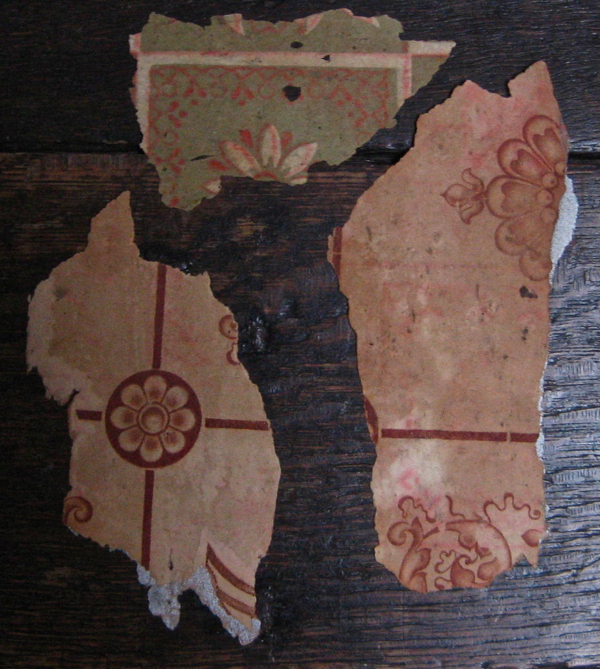
Fragments from the seventeen twenties.

Hand-painted wallpaper from the seventeen eighties.

Printed wallpaper from the seventeen eighties.
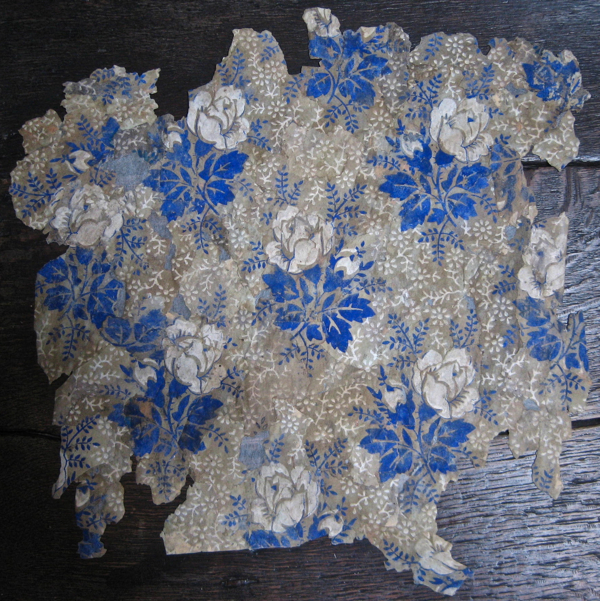
Eighteen twenties.
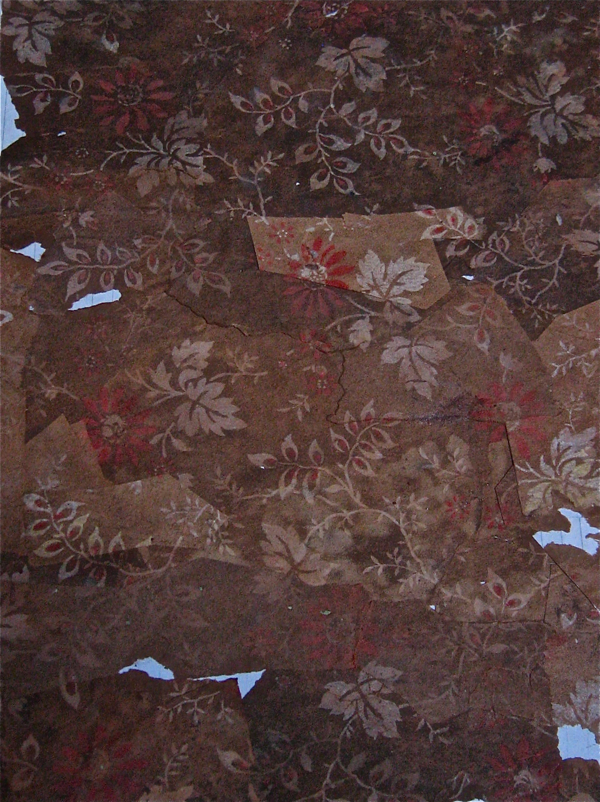
Eighteen forties.

Mid-nineteenth century fake wood panelling wallpaper, as papered over real wooden panelling.

Wallpaper by William Morris, 1880.
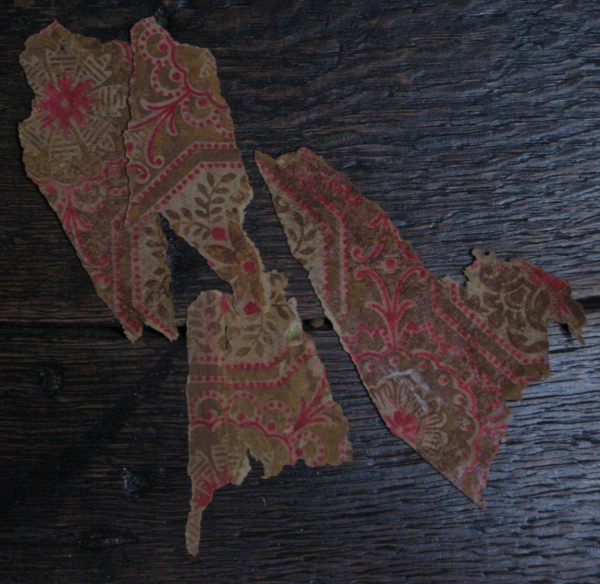
Expensive wallpaper at sixpence a yard from 1885.
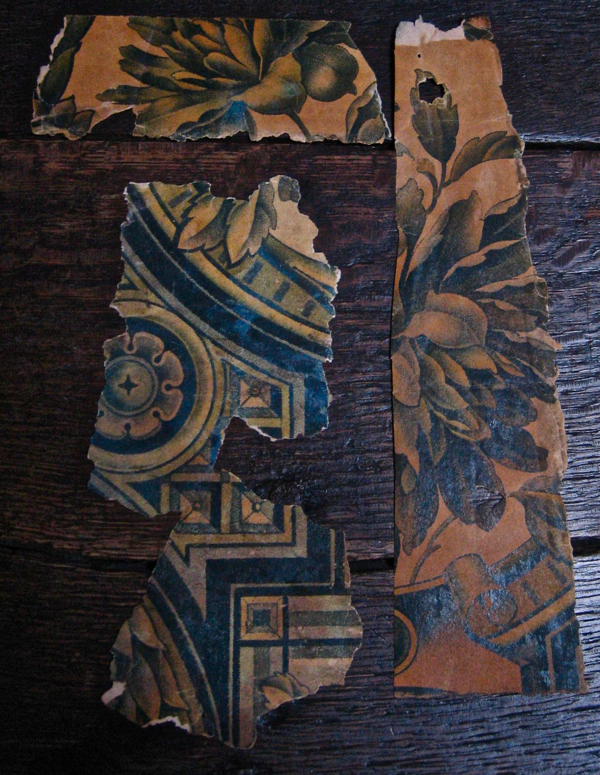
1895
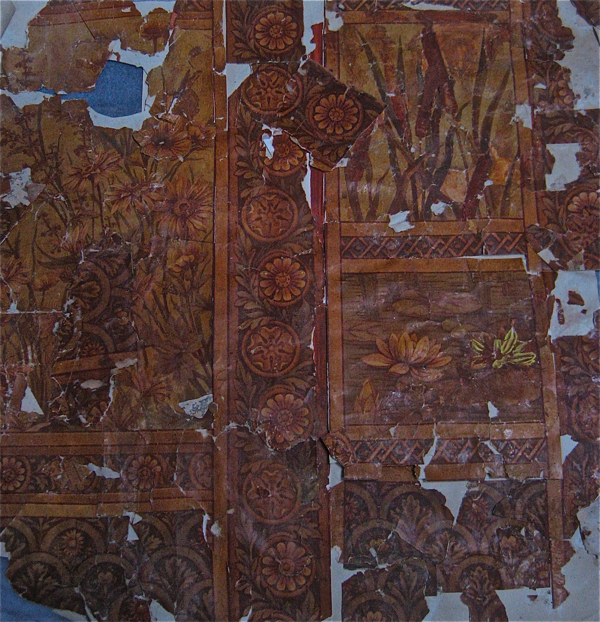
Late nineteenth century, in a lugubrious Arts & Crafts style.
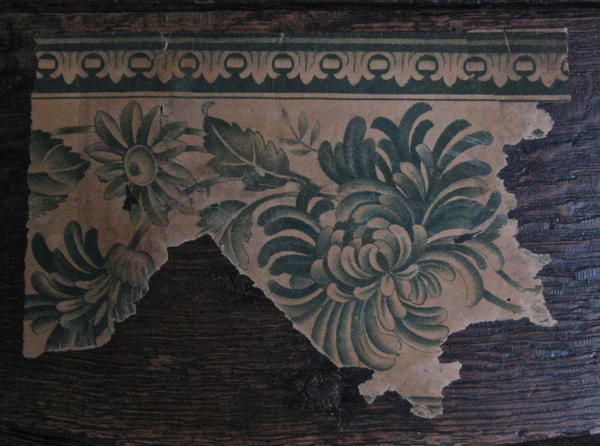
A frieze dating from 1900.
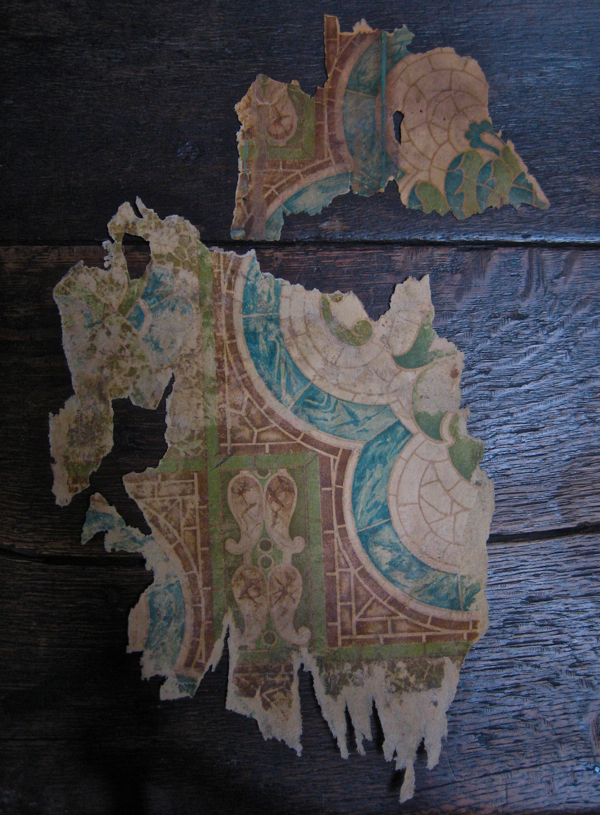
In an Art Nouveau style c. 1900.
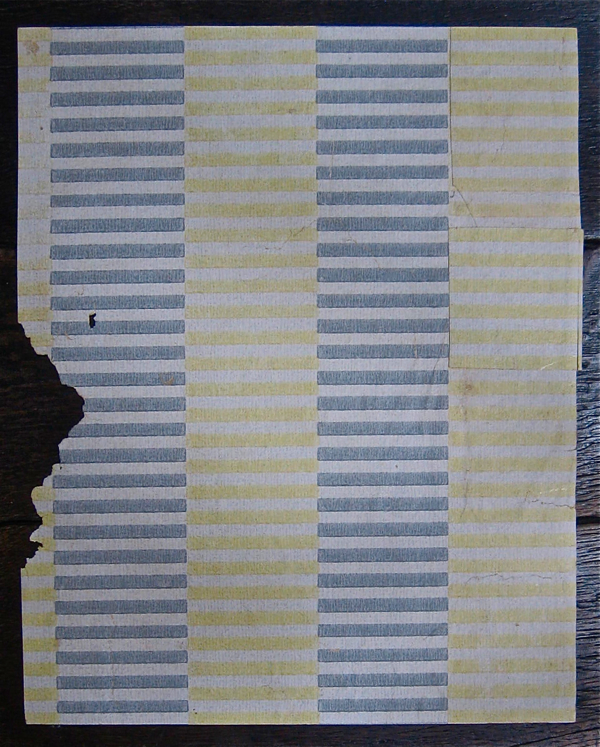
Modernist design by Finnish designer Eliel Saarinen from the nineteen twenties.
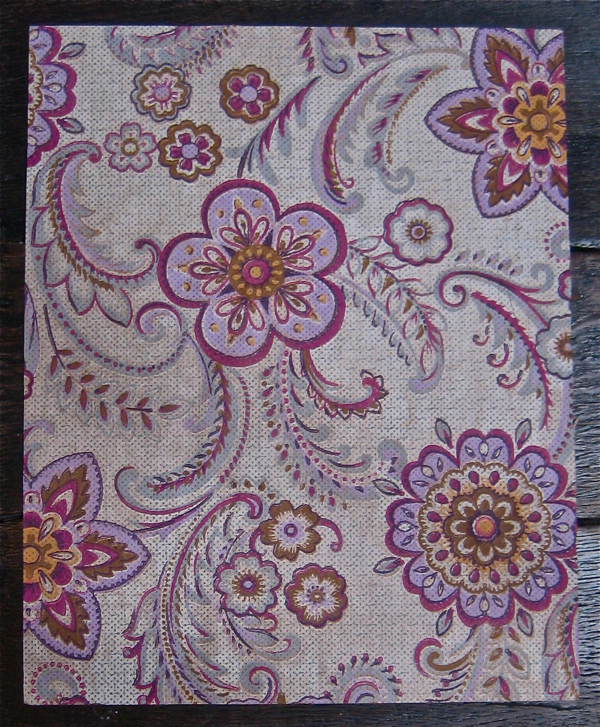 Nineteen sixties floral.
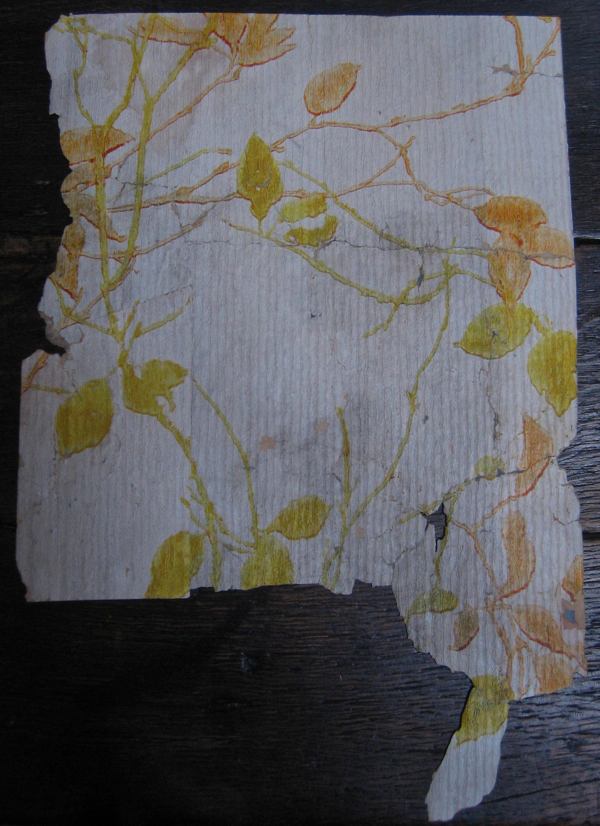
Vinyl wallpaper from the nineteen sixties.

Items that John Nicolson found under the floorboards of his eighteenth century house in Fournier St, including a wedding ring, pipes, buttons, coins, cotton reels, spinning tops, marbles, broken china and children’s toys. Note the child’s leather boot, the pair of jacks found under the front step, and the blue bottle of poison complete with syringe discovered in a sealed-up medicine cupboard which had been papered over. Horseshoes were found hidden throughout the fabric of the house to bring good luck, and the jacks and child’s shoe may also have been placed there for similar reasons.
You may like to see The Secret Gardens of Spitalfields
At the 65th Annual Grimaldi Service

The first Sunday in February is when all the clowns arrive in East London for the annual service to honour Joseph Grimaldi (1778-1837), the greatest British clown – held since 1946 at this time of year, when the clowns traditionally gathered in the capital prior to the start of the Circus touring season. Originally celebrated at St James’ Pentonville Rd, where Grimaldi is buried, the service transferred to Holy Trinity, Dalston in 1959 where the event has grown and grown, and where there is now a shrine to Grimaldi graced with a commemorative stained glass window.
By mistake, I walked into the church hall which served as the changing room to discover myself surrounded with painted faces and multicoloured suits. Seeing my disorientation, Mr Woo (in a red wig and clutching a balloon dog) kindly stepped over to greet me, explaining that he was veteran of forty years clowning including a stint at Bertram Mills Circus with the legendary Coco the clown – before revealing it was cut short when he fell over and fractured his leg, illustrating the anecdote by lifting his trouser to reveal a savagely scarred shin bone. “He’s never going to win a knobbly knees contest now!” declared Uncle Colin with alarming levity, Mr Woo’s performing partner in the double act known as The Custard Clowns. “But what did you do?” I enquired, still alarmed by Mr Woo’s injury. “I got a comedy car!” was Mr Woo’s response, accompanied by an unnerving chuckle.
Reeling from the tragic ambiguity of this conversation, I walked around to the church where fans were gathering for the service and there in the quiet corner church dedicated to Joseph Grimaldi, I had the good fortune to shake hands with Streaky the clown, a skinny veteran of sixty-three years clowning. There is a poignant dignity to old clowns such as Streaky with face paint applied to wrinkled skin, because the disparity between the harsh make-up and the infinite nuance of the indelibly lined face beneath cannot fail to make a soulful impression.
At first, the presence of the clowns doing their sideshows to warm up the congregation changed the meaning of the sacred space, as if the vaulted arches were tent poles and we had come to a show rather than a church service, but both were reconciled in the atmosphere of celebration that prevailed. Yet although the children delighted in the comedy and the audience laughed at the gags, I must admit that (as I always have) I found the clowns more funny peculiar than funny ha-ha. But it is precisely this contradiction that draws me to them, because I believe that through wholeheartedly embracing such grotesque self-humilation they expose an essential quality of humanity – that of our innate foolishness, underscored by our propensity to take ourselves too seriously. We need to be startled, or even alarmed by their extreme appearances, their gurning and their dopey japes, in order to recognise our true selves. This is the corrective that clowns deliver with a cheesey grin, confronting us with a necessary sense of the ridiculous in life.
“This is the best job I ever had – to make people smile and get them to laugh,” declared Conk the clown, once he had demonstrated blowing bubbles from his saxophone. “How did you start?” I asked. “I got divorced,” he replied. And everyone within earshot laughed, except me. “I had depression,” Conk continued with a helpless smirk, “so I joined the amateur dramatics, but I was no good at it, so I thought, ‘I’ll be a clown!'” Twelve years later, Conk has no apparent cause to regret his decision, as his mirthful demeanour confirmed. “It’s something inside, a feeling you know – everyone’s got laughter inside them.” he informed me with a wink, before he disappeared up the aisle in a cloud of bubbles pursued by laughing children.
Turning around, I found myself greeted by Glory B., an elegant lady dressed in tones of turquoise and blue, and sporting a huge butterfly upon her hat. Significantly, her face was not painted and she described herself as a “Children’s Entertainer” rather than a “Clown.” “Sometimes children are scared of clowns, “ she admitted, articulating my own thoughts with a gentle smile, “so I work with Mr Woo as a go-between, to comfort them if they are distressed.”
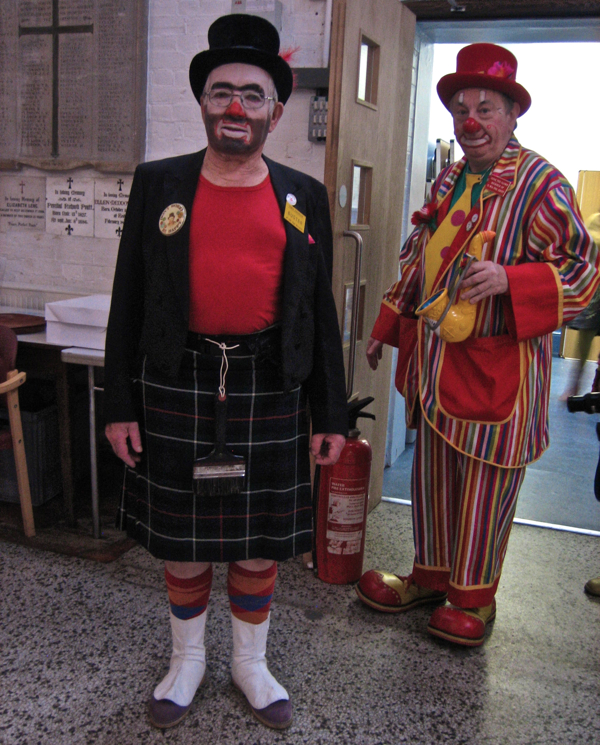
Once the clown organist began to play, everyone took their seats and the parade of clowns commenced, old troupers and young goons, buffoons and funsters, jokers and jesters, enough to delight the most weary eyes, and lift the spirits of the most down-hearted February day. An army of clowns filled the church with their pranking and japes, and their high wattage personalities. The intensity of an army of clowns is a presence that defies description, because even at rest there is such bristling potential for misrule which might be unleashed at any moment.
In their primary coloured parodic suits, I could recognise the styles of many periods, from the twentieth century, the nineteenth century and when a clown stood up to carry the wreath to lay in honour of “Joey Grimaldi,” I saw he was wearing an eighteenth century clown suit. At the climax of the service, the names of those clowns who had died in the year were read out and, for each one, a child carried a candle down the nave. After the announcements of “Sir Norman Wisdom,” “Buddi,” “Bilbo,” and “Frosty,” I saw a feint light travel through the crowd to be lost at the rear of the church and it made tangible the brave purpose of clowning – that of laughing in the face of the darkness which surrounds us.

Mr Woo once worked with Coco the clown at Bertram Mills Circus until he fractured his leg.

Conk the clown once suffered from depression.
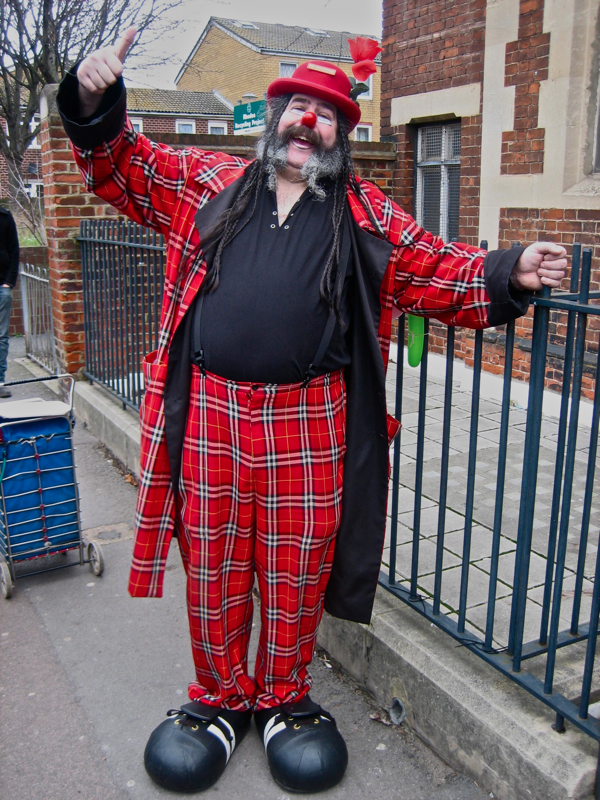
Arriving at Holy Trinity, Dalston.

Streaky at Grimaldi’s shrine with the case of eggs recording the distinctive make-up of famous clowns.

Streaky the clown, a veteran of sixty-three years clowning.

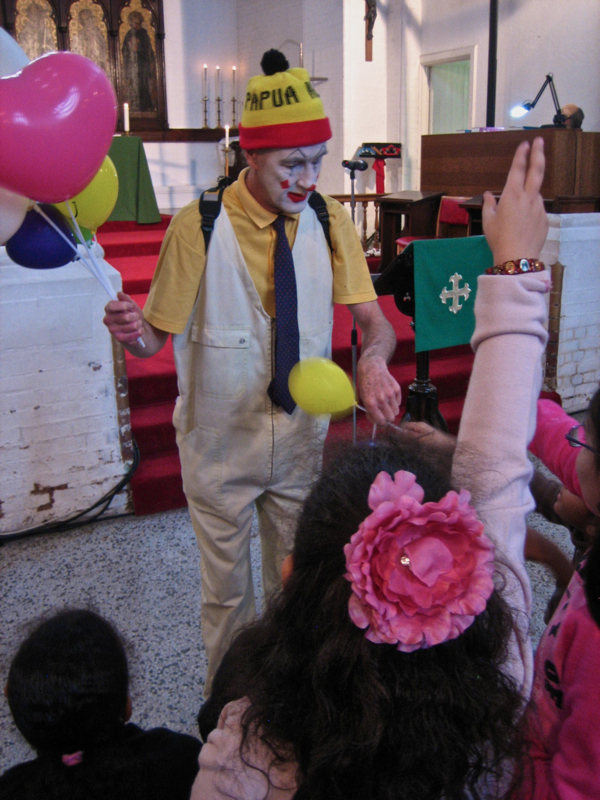

Glory B., Children’s Entertainer.
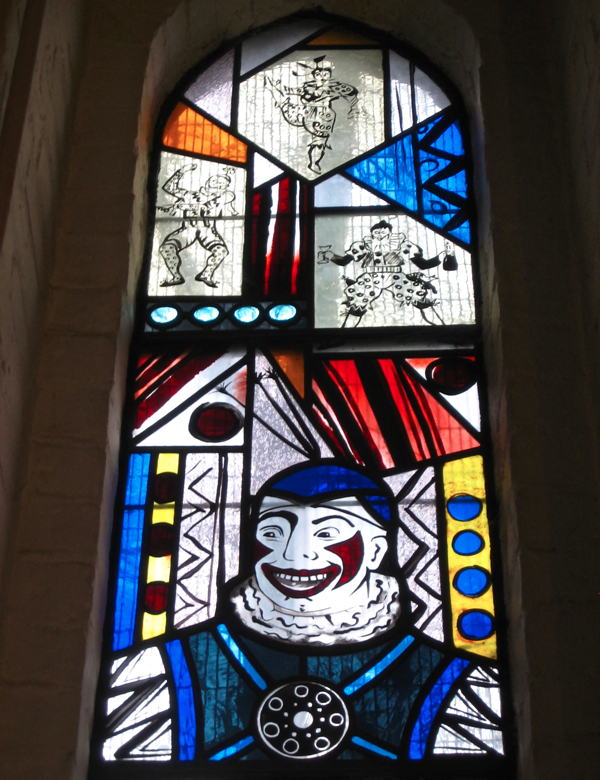
The commemorative window for Joseph Grimaldi.

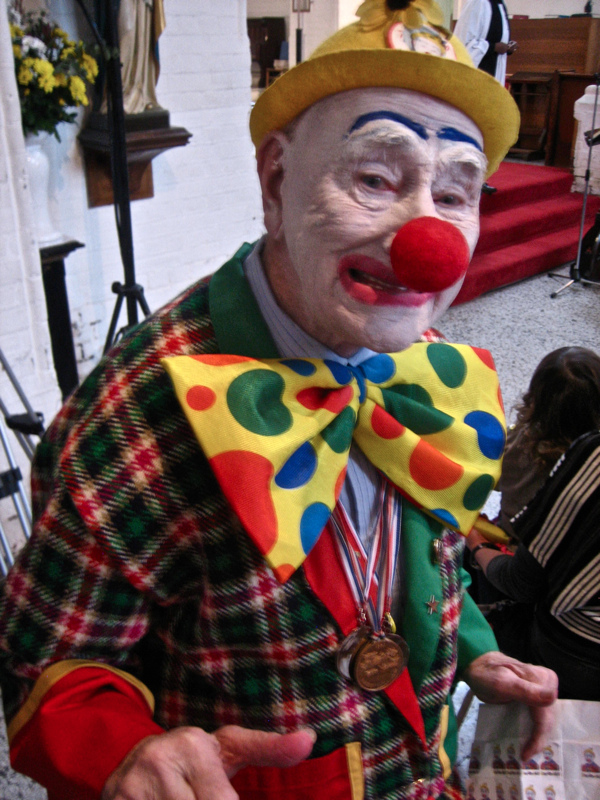


A wreath for Joseph Grimaldi.


Sunday Morning in the East
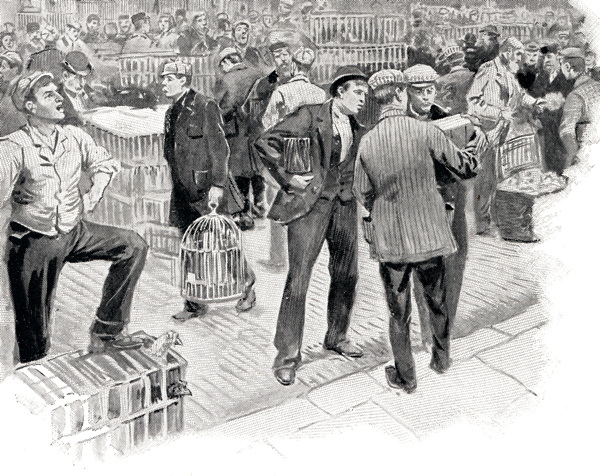
Bird Fair, Sclater St
After sixty-eight Sundays reporting to you from Columbia Road Flower Market, I shall be widening the scope of my stories in future to bring you a weekly report from across the Sunday markets of the East End – either Brick Lane Market, Petticoat Lane Market or Columbia Rd Flower Market.
As before, I will be publishing pen portraits of the traders, but you can be assured that I shall also continue to show you pictures of the plants and flowers that I buy at Columbia Rd. To mark this change of gear, I am publishing these short excerpts from “Sunday Morning East & West” written by A. St John Adcock in 1902 for “Living London,” the first mass-market publication to use photography as social reportage. Readers who know these markets today may draw their own comparisons with this description.
“…Across the other side of London at this hour there gathers a surging, struggling, closely-packed mob, elbowing and shouldering hither and thither sturdily. Here the sun glares down upon a dusty malodorous atmosphere, for you are in the East, and this is Middlesex St, unofficially known as Petticoat Lane.
Arriving in Bishopsgate, a little before eleven, you might have seen the tide of well-dressed or decent church-goers and heard the church bells ringing placidly in the West, but the moment you enter the “Lane,” the pealing is inaudible in the nearer clamour of human voices. This tall red building is the Jews’ Free School, and the droning of scholars at their lessons floats out the open windows and mingles with the howls of fish salesman, the wails of the lemon seller, and the raucous patter of the cheapjack. You pass from a butcher’s, to tinware, crockery, toys, fruit, hat and cap stalls, confectioner’s stalls, boot stalls, more cheap jacks, more fish stalls, more clothiers, and pretty well of them are Jews.
Now and then you collide with a man who, having no stall, careers about in the crowd with a stack of trousers on his shoulder, and flourishing a pair in his hand implores you to take your choice from his stock at “a dollar a time.” Opposite an earnest man in his shirt sleeves bellows over a glass tank, “Ere yar! The champiun lemun drink – ‘apenny a glass. ‘Ave yer money back if you don’t like it!” Just beyond, a clothier mad with zeal has leapt upon his stall, and is frantically waving a coat before the eyes of the crowd. “As good as the day it was made!” he shrieks, “Look at it for yerselves.” And he hurls it at the simmering masses and they toss it back to him.
The fair overflows all the streets branching from Petticoat Lane and, diverging to the West, you may penetrate to Cutler St and Phil’s Buildings which are wholly given over to clothiers. Going farther East by way of Wentworth St, which is as rampant as congested as the “Lane” itself, you emerge on Spitalfields, where the Market is half open, trafficking with costermongers, whose trucks and donkey carts are huddled outside it. The turning by the church brings us to Brick Lane, and Brick Lane leads us to Sclater St, locally known as Club Row, where you will find a Bird Fair in full blast. It is Petticoat Lane over again on a much smaller scale, hardly any women, less diversity, no side-shows, no frivolity in short, but strict attention to business.
Most of the shops in Sclater St are kept by bird dealers, and their outer walls up to the first floor have all broken into an eruption of bird cages. Beside the shop doors and in the gutters, hutches and cages, towering one above another, swarm with rabbits, fowls, pigeons, thrushes, canaries, and smaller birds in amazing variety, and the sellers bawl against each other, and the birds crow, coo, quack, scream and sing against each other deafeningly. Men without shops or stands roam in the crowd carrying a cage or two and crying their wares. Men and boys waylay you in the crush, or on the skirts of it, with wriggling heaps of rabbits at the bottom of small sacks, and offer you the pick of the bunch for sixpence.
Escaping through Cygnet St, you stumble into Bethnal Green Rd, for the sale of cycle tyres and second-hand accessories, and meat and vegetable stalls are moderately busy for some distance past it. Noon being gone, as you follow the Bethnal Green Rd and Cambridge Heath Rd to Mile End Gate, people are coming away from Sunday morning services, many in Salvation Army uniforms, and loafers, gathering at street corners, are yearning for the public houses to open.”
In spite of the vast changes in the social landscape that separate us from this report, the markets of the East remain as exuberant with chaotic life as they did a century ago, as any visitor will attest. Even though the Jewish community has departed from Petticoat Lane and the bird market in Club Row is no more, the crowds continue to come unceasingly every weekend, surging through the streets of the East End to visit newer attractions like Columbia Rd Flower Market, the Truman Brewery Markets and the renovated Spitalfields Market. By contrast, Sclater St and Bethnal Green Rd are the last scruffy markets where the spirit of this report still lingers, and there – remarkably – cycle spares are sold on the same spot today as over a century ago.
I hope you will join me each Sunday over the coming weeks, months, and years, as I introduce you to all the traders who carry the life and history of these celebrated markets.
You can watch a film of Petticoat Lane in 1903 by clicking here
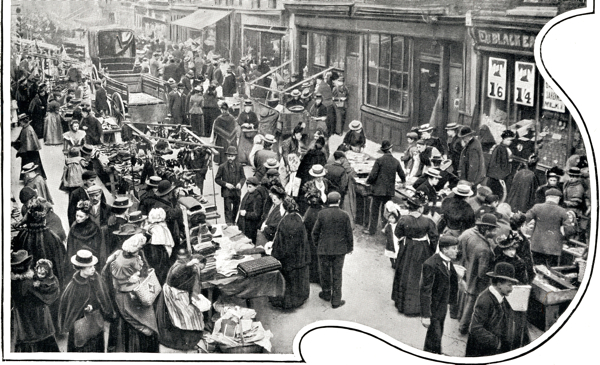 A Scene in Brick Lane.
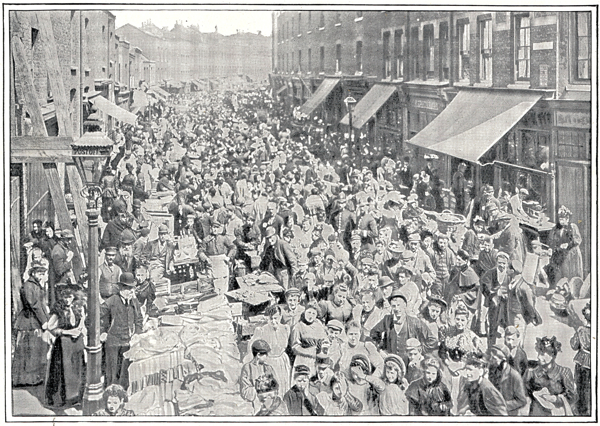
Sunday morning in Middlesex St.
You may also like to take a look at
Ronald Searle & Kaye Webb’s visit to Brick Lane in 1953 Dog Days at Club Row Market.
East End Scrap Dealers
In my innocence, I set out through the East End in search of the crowded scrapyards of my imagination, filled with curious treasures barely contained by old corrugated iron fences, only to discover that there is no such thing as general scrap anymore – the industry has become specialised. Yet this recognition merely served to enrich my investigation, proposing multiple tantalising avenues of enquiry, even though Spitalfields Life contributing photographer Sarah Ainslie and I chose to concentrate upon furniture reclamation and scrap metal.
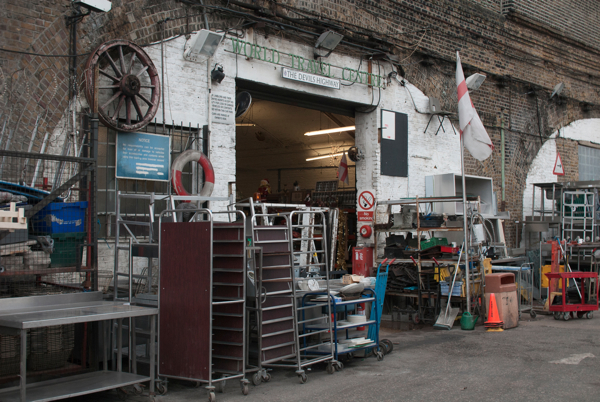
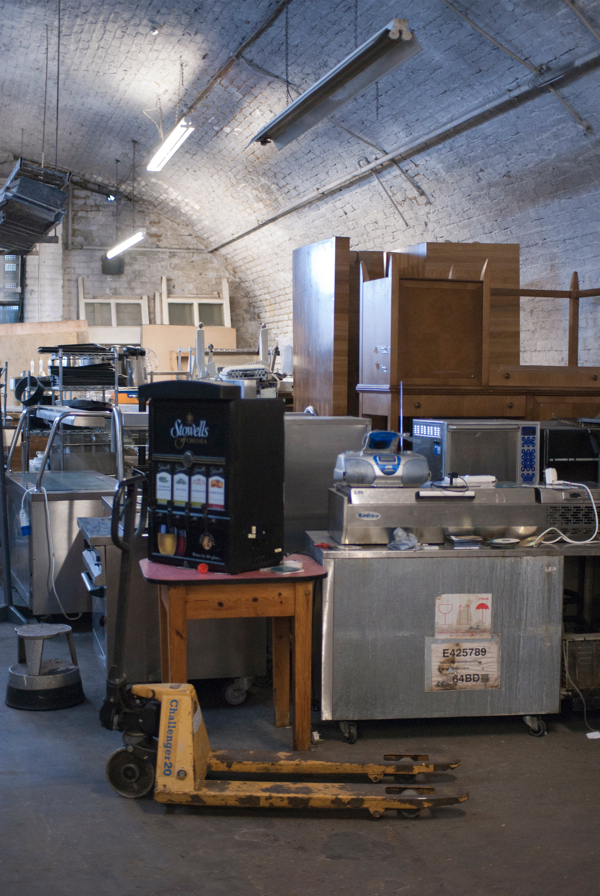
Nearest to Spitalfields, we had the good fortune to meet the gleefully ebullient Darren Hahn, and his mascot Ponjee the cat, at Forest Reclamation occupying three railway arches in Valance Rd – a veritable kingdom of its own populated by more steel cookers, fire extinguishers, lockers, toilets, sinks, carpet tiles, coffee machines and lamps than you could ever require to furnish any office or industrial kitchen, all crammed together in the half-light as if in some vast subterranean necropolis. Here the Christmas decorations are up all year round and St George’s flag always flies in declaration of Darren’s indomitable spirit. “I like the job, but I’m not saying I like too much of the customers,” Darren confided to me in a quiet moment, “You say £100 and they say £30. They ask your best price and you say £80, then they offer £50!”
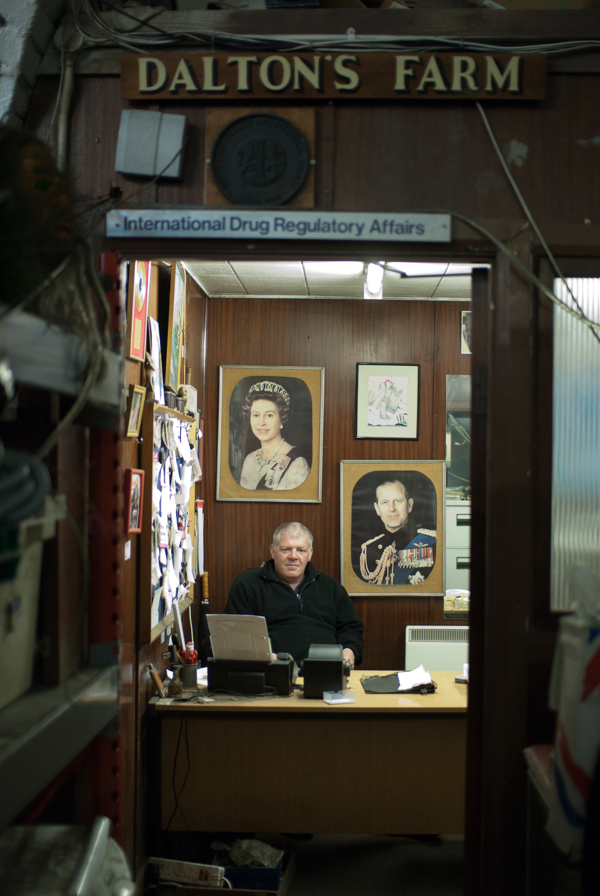
In spite of the ceaseless trials of his profession, Darren maintains an enviable humour, exemplified by his bizarre collection of signs that announce the location as simultaneously, “The Devil’s Highway,” “World Travel Centre,” “International Drug Regulatory Affairs,” and “Dalton’s Farm.” And the giddy irony of these conflicting signs served to enforce the vertiginous sense of surrealism that such places engender, where all the jigsaw pieces which fit together to create the familiar world lie around in jumbled piles.
Around the corner at Burdett Metals, also crammed under a picturesque arch, we encountered a very different endeavour. Scrap was being broken down into its constituent metals and the atmosphere was more that of the boneyard, in contrast to the necropolis we had come from. But even here, I spied a wall hung with inn signs that the employees had hung up for their amusement and, as you will see from Sarah’s picture, a venerable scrapyard truck is suspended upon a top shelf for no other purpose than as an eye-catching piece of pop sculpture. These observations were interrupted when two wary men arrived with discreet shopping trolleys, and it was only when they began to produce metal items from their bags that I realised they were “totters” – those who walk the streets seeking odd pieces of scrap metal and bringing it here to earn a few pounds for each load.
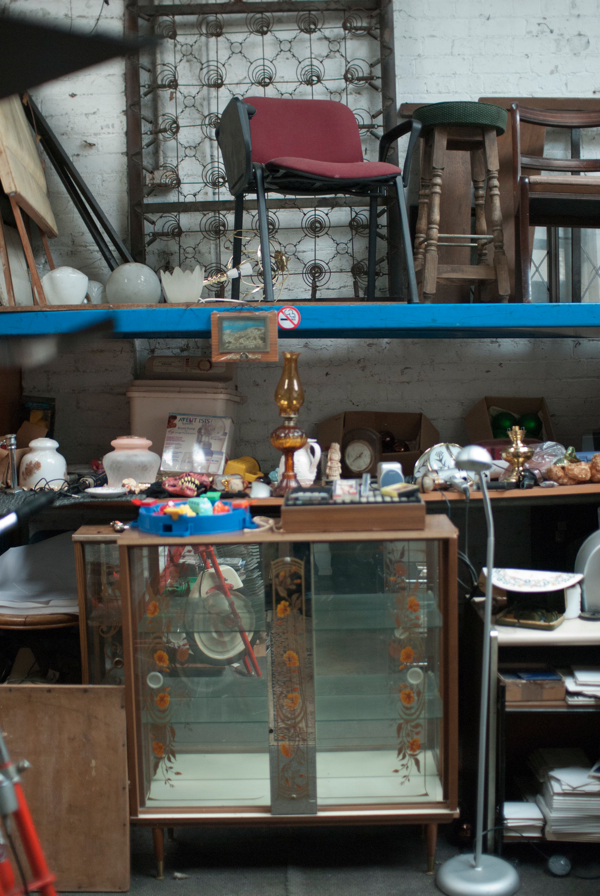
Over at Bow Metals, we found a similar industrial operation fenced off like a high-security prison, but there was nothing even to photograph because the turn-over of scrap to raw materials is immediate. A fierce dog with no name encouraged us to move on to Mile End where we were grateful for the genial welcome of Reed at 2nd Time Around. Let me admit, this was the undisputed highlight of our trip because Reed is a dealer of seventy years old with a feeling for his trade and is proprietor of an establishment that has soul. In a crumbling old carriage house with a leaky roof, Reed has created a cathedral of junky furniture with a cosy den at the far end adorned with photographs and curios where he keeps himself warm and communes with Ginger his cat. “If I was to pack this up, I’d be finished,” he admitted to me with a placid smile,“But I am still alive here because I am still lifting and carrying.”
A visit to Great Eastern Waste in London Fields rounded off our modest survey nicely, because there we encountered Andy with his beloved dogs Molly and Kelly, three playmates frolicking together in the midst of the yard where, as elsewhere, wily totters came to deliver their finds scavenged in the city and left excitedly clutching single banknotes. All the proud scrap dealers had endeared themselves to me with their unsentimental independence of spirit and reliably droll attitudes, derived from witnessing the frayed ends of existence where businesses get closed down and houses get cleared out every day.
This final stop afforded an intriguing realisation too – that, in this exclusively male business, reclamation dealers liked to build themselves dens and keep cats, while scrap merchants inhabit bare yards and keep big energetic dogs. I leave you to draw your own interpretations of this particular distinction, but I can confirm that in the East End the days of the old-school scrapyard are gone and the age of industrialised recycling is upon us.
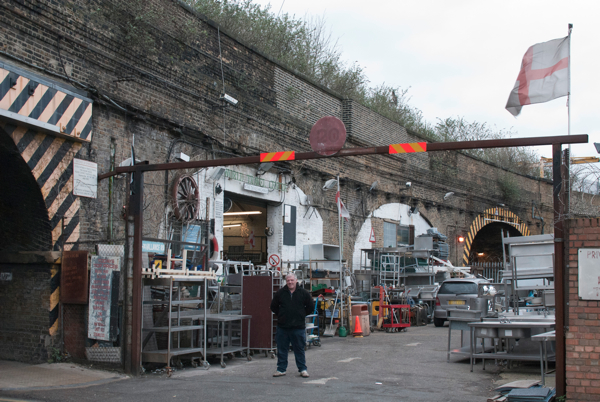
Darren flies the flag for England at Forest Reclamation – “you can furnish an office here for £500”


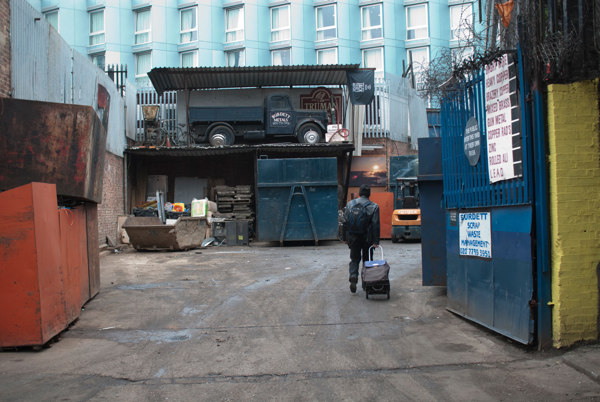
A totter arrives at Burdett Scrap Metal in Bethnal Green.
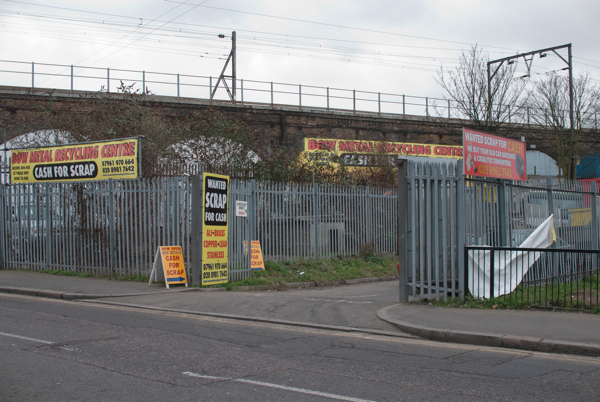
Bow Metals.
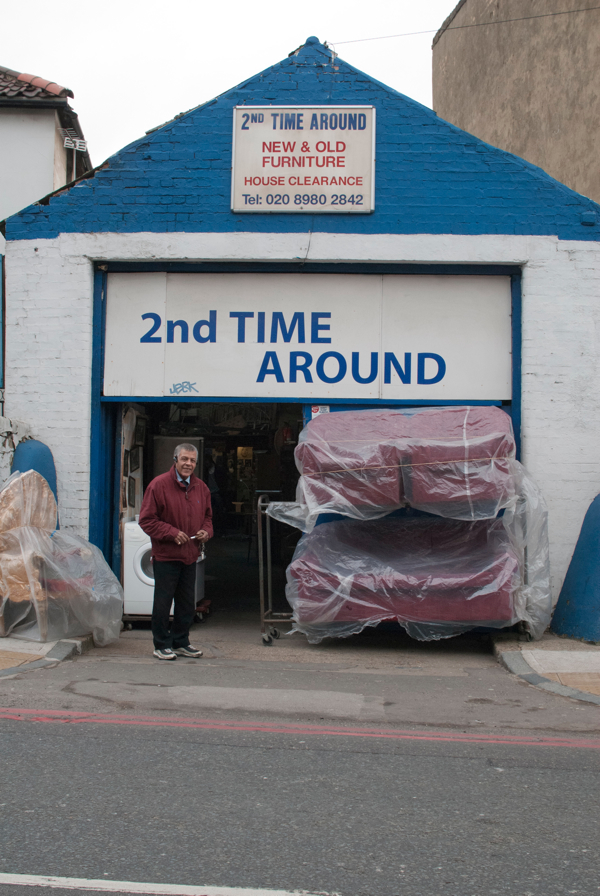
Reed, proprietor of 2nd Time Around in Mile End.
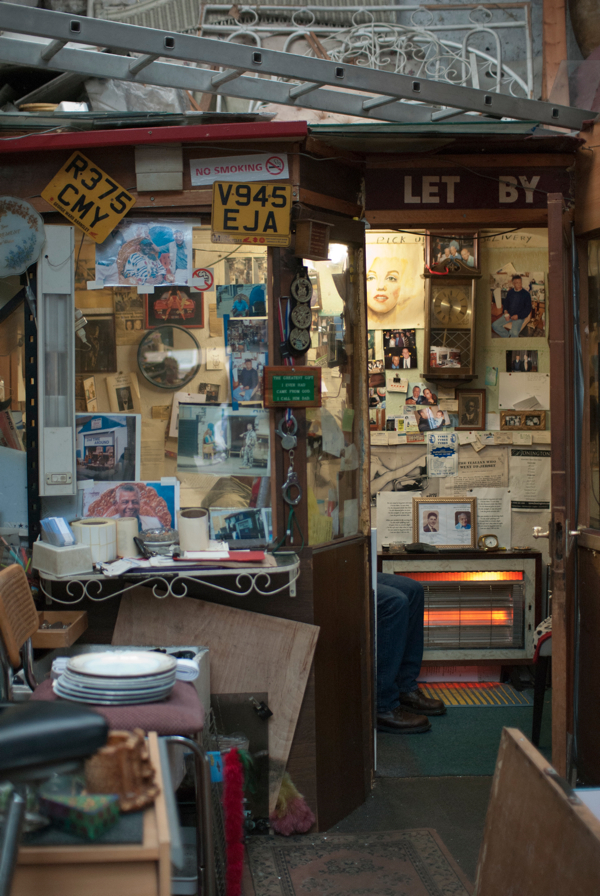
Reed in the den at 2nd Time Around
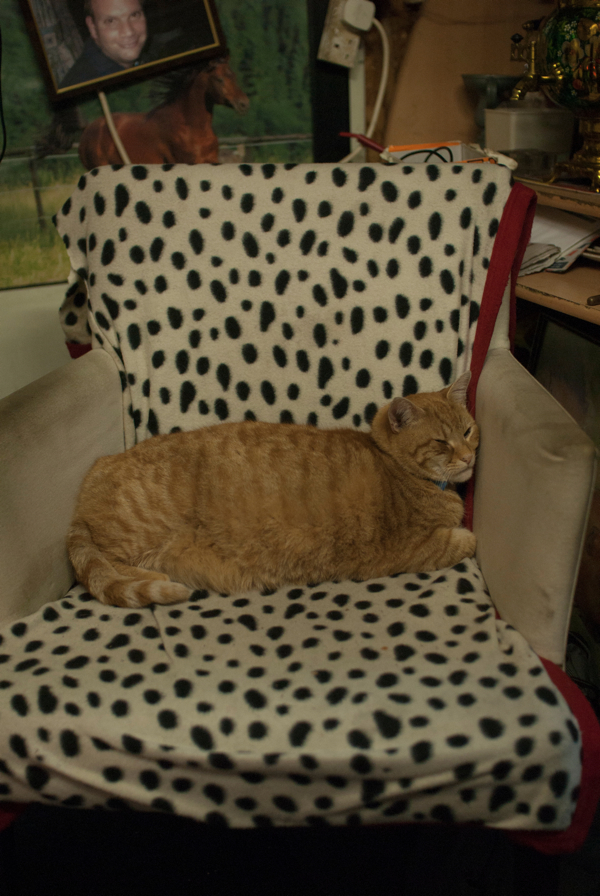
Ginger at 2nd Time Around – “She costs me a fortune in cat food but she fights off the other strays.”
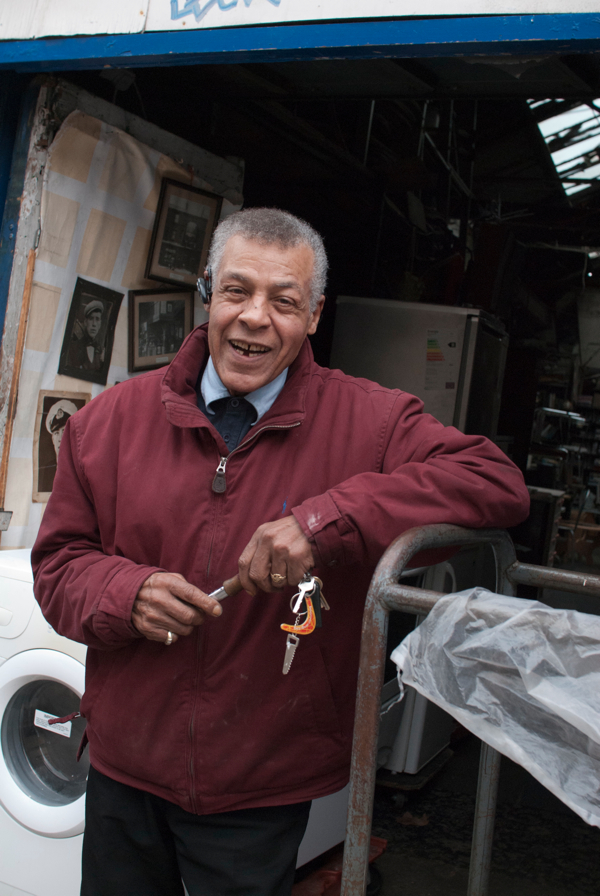
Reed – “If I was to pack it in, I’d be finished – but I am still alive because I am still lifting and carrying”
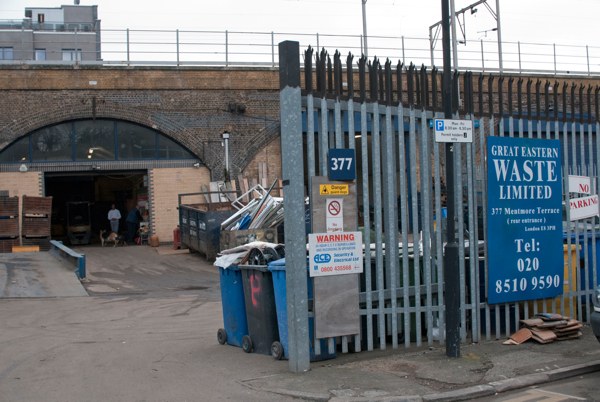
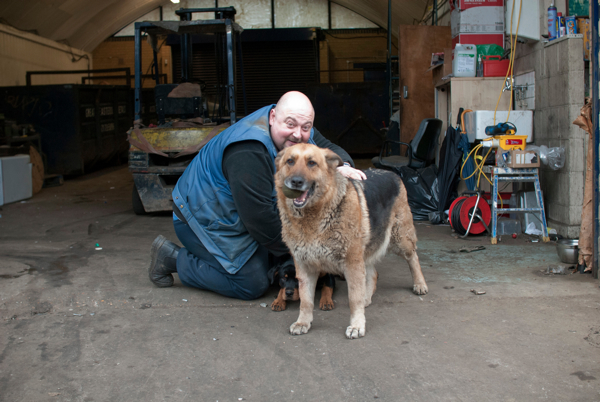
Molly, Kelly and Andy at Great Eastern Waste in London Fields.
Photographs copyright © Sarah Ainslie
William Nicholson’s London Types

When William Nicholson designed his stylish “London Types” in 1898 – that together with his “Almanac of Twelve Sports” and “An Illustrated Alphabet” were to make his reputation as a printmaker – his son Ben, who was to eclipse him entirely in the history of British Art through his Modernist works, was only five years old.
Yet, while working within the culture of the British popular print, William Nicholson deliberately chose to use the coarse-grained side of the block in his wood cuts, in a style that owed more to Toulouse Lautrec and Japanese precedents than to native visual traditions – which give these prints an innovative quality, even as they might seem to be celebrating unchanging roles in British society.
Although not strictly “Cries of London,” some of these characters are familiar from earlier series of prints stretching back over the previous century and, recognising this, Nicholson portrays them as quaint curiosities from another age. In each case, the ironic doggerel by W.E. Henley that accompanied them poked fun at the anachronistic nature of these social stereotypes, through outlining the ambivalent existence of the individual subjects – whether the street hawker displaced in Kensington far from his East End home, or the aristocratic lady at Rotten Row challenged by her suburban counterparts, or the drunken Sandwich-man displaying moral texts, or the fifteenth generation Bluecoat boy at Charterhouse School in Smithfield now moved out to Horsham.
These prints continue to fascinate me because, in spite of their chunky monochromatic aesthetic, they manage to convey the human presence with subtlety, placing the protagonists in dynamic relationships both with the viewer and the social landscape of London, as it was in the final years of the nineteenth century. The Lady and the Coster confront the viewer with equal assurance and, the disparity in their conditions notwithstanding, we meet both gazes with empathy. In William Nicholson’s designs, all the subjects retain self-possession because while the prints may illustrate their diverse social situations, their attitude is commonly impassive.
Working in partnership with his brother-in-law James Pryde, under the pseudonym the Beggarstaff Brothers, William Nicholson enjoyed a successful career creating vibrant graphics which served the boom in advertising that happened in the eighteen nineties. After 1900, he shifted his attention to painting, embarking on a series of portraits including J.M.Barrie, Rudyard Kipling and Max Beerbohm that filled the rest of his career. Nicholson had always wanted to paint, regarding his graphic work as a lesser achievement, a reservation illustrated by his modest self-portrait as a pavement artist.
More than a century later, William Nicholson’s “London Types” exist as a noble contribution to the series that have portrayed street life in the capital throughout the centuries, not just for their superlative graphic elegance, but because they reflect the changing society of London at the dawn of the twentieth century with complexity and wit.
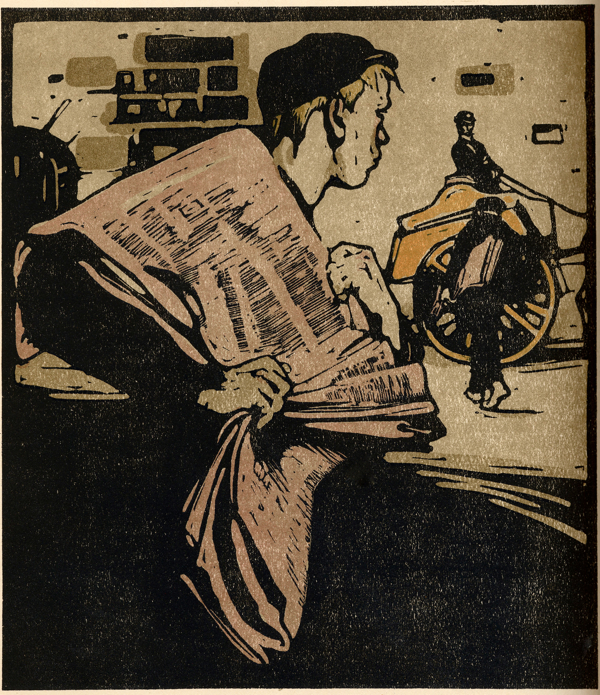
News-Boy, the City – “the London ear loathes his speeshul yell…”
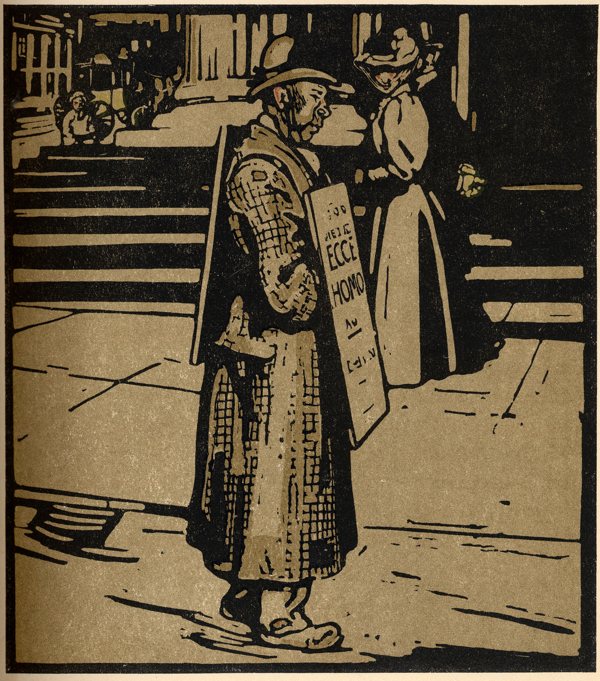
Sandwich-Man, Trafalgar Square – “the drunkard’s mouth awash for something drinkable…”
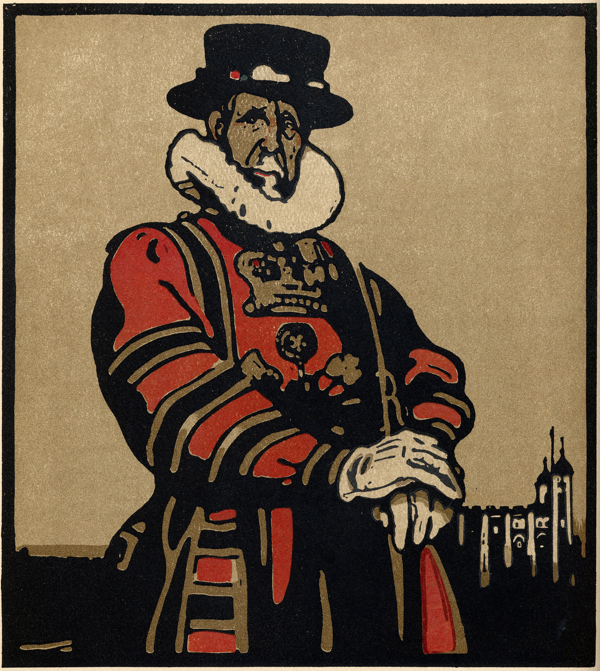
Beef-eater, Tower of London – “his beat lies knee-high through a dust of story.”
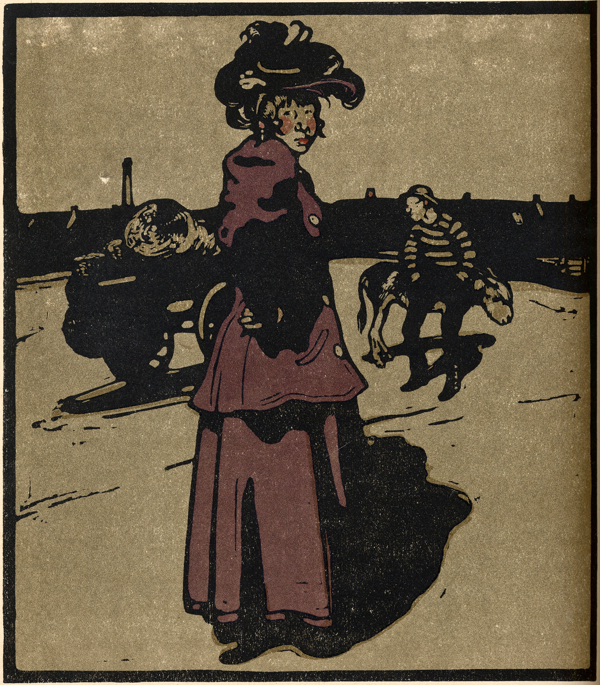
Coster, Hammersmith – “deems herself a perfect lady.”
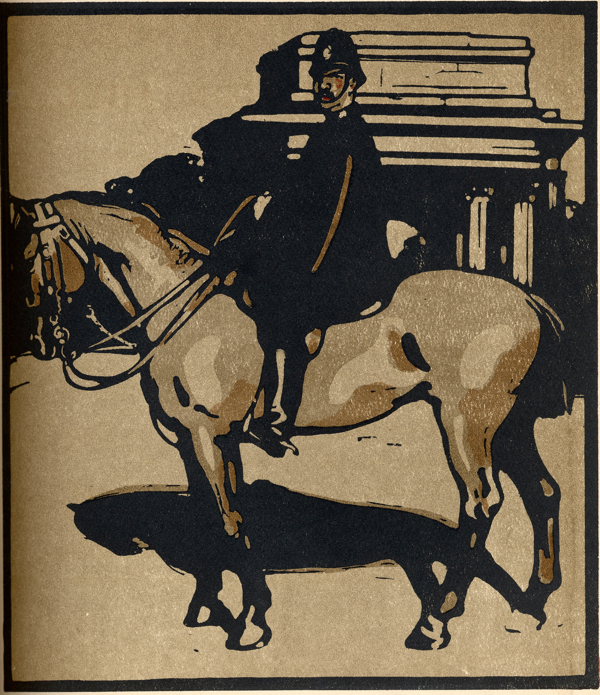
Policeman, Constitution Hill – “whenever pageants pass, he moves conspicuous…”
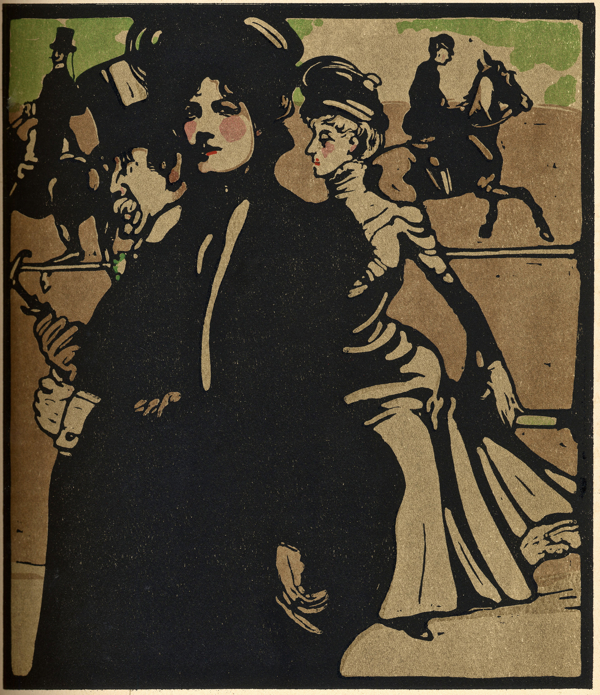
Lady, Rotten Row – “one of that gay adulterous world.”

Bluecoat Boy, Newgate St. – “the old school nearing exile…”
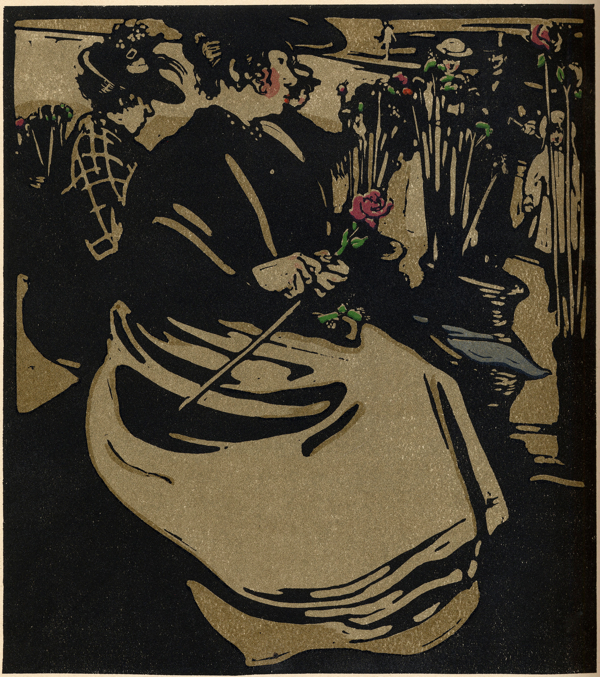
Flower Girl, – “of populous corners right advantage taking…”
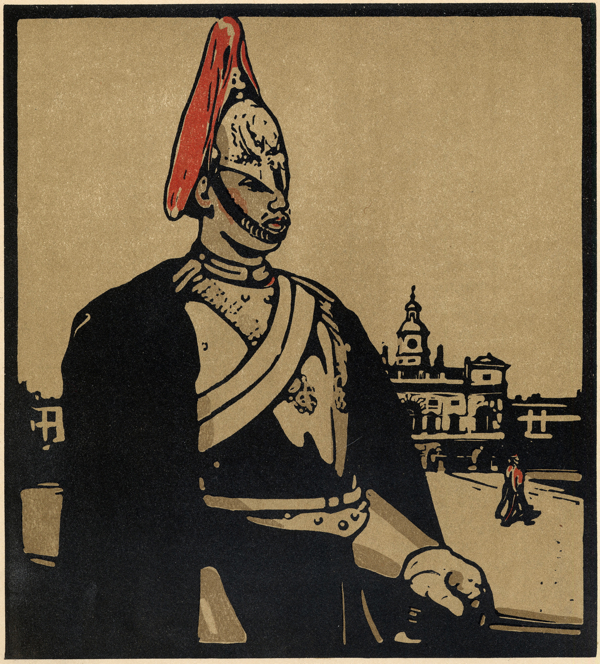
Guardsman, Horseguards Parade. – “of British blood, and bone, and beef and beer.”
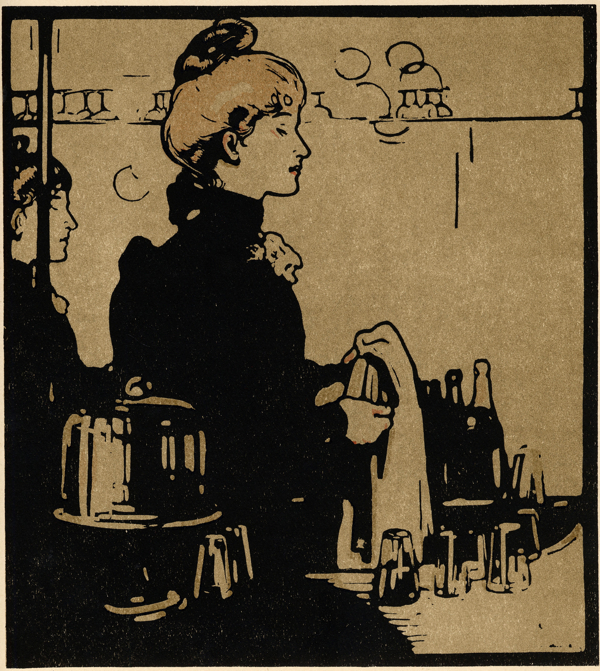
Barmaid, any bar – “posing as a dove among the pots.”

Drum-Major, Wimbledon Common – “his bulk itself’s pure genius…”
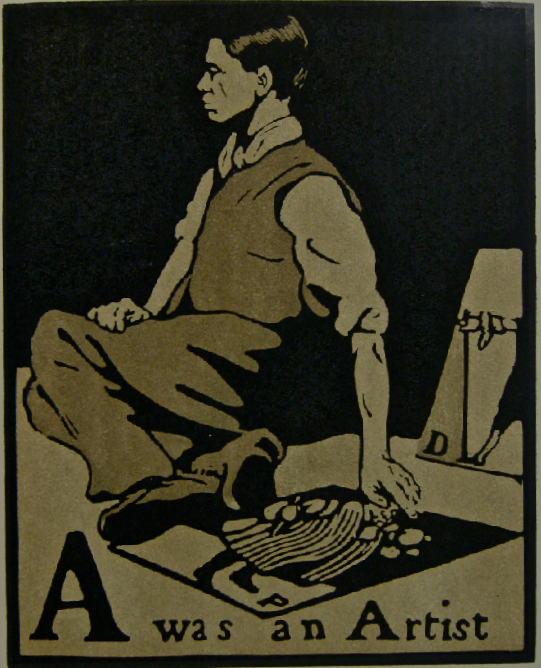
William Nicholson portrayed himself as pavement artist.
Images copyright © Desmond Banks
You may like to take a look at
Francis Wheatley’s Cries of London
Mark Petty’s Multicoloured Coats
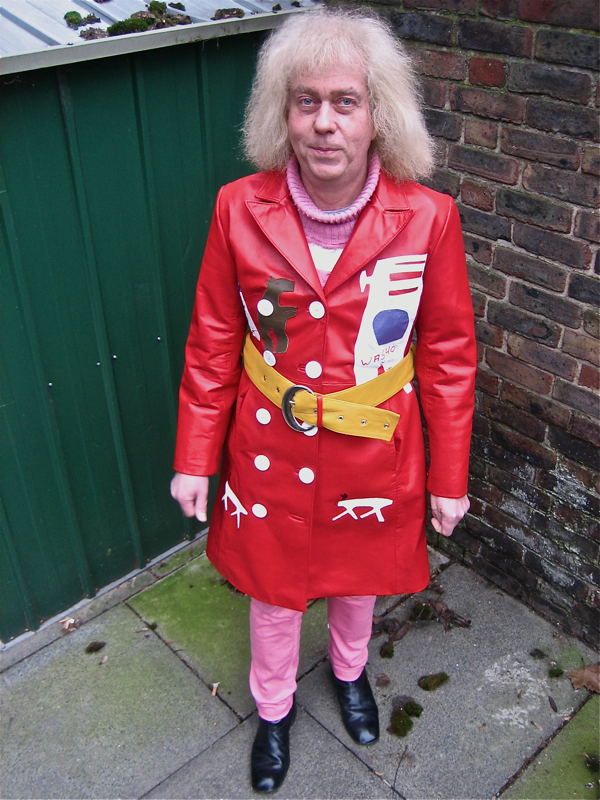
It has been so grey recently that I decided to visit my esteemed friend Mark Petty, the trendsetter, who I introduced you to last year. Mark is well known in Spitalfields and Bethnal Green for his primary coloured leather suits and, even in these dark days, can always be relied to upon to elevate our lives with the audacious use of colour in his personal wardrobe. In fact, when I met Mark in Cheshire St recently, he invited me round to see his series of multicoloured coats that he has designed, each adorned with motifs which tell a story, and, even though, based on Mark’s previous outfits my expectations were high, I can assure you that I was not disappointed.
“My mother used to say I have the creative touch. At work, I used to make the sausage rolls and meat pies that it was my job to bake – but then I made all the cakes and puddings too!” Mark told me proudly, confiding the innate creativity that he has directed to such spectacular effect recently.
Mark Petty’s multicoloured coats represent the latest fruits of the collaboration between Mark as pattern-cutter and Mr Singh of Batty Fashions in the Hackney Rd who sews them. As with many of the most creative partnerships it is not entirely without friction, yet the finished results successfully combine Mark’s flamboyant colour sense with Mr Singh’s attention to fit and finish – even if just occasionally Mark’s extravagant imagination is too much for Mr Singh’s conservative sensibilities, as with the case of the words “Bethnal Green” across the rear of the lilac shorts below, which Mark had to sew on himself.
I am fascinated by the iconography of Mark’s coats, rendered so elegantly in Matisse-style cutouts, which in each case have vivid personal meaning for Mark. Of the first coat he designed, the tangerine number with the geese, Mark explained the origin of this imagery in his childhood. “When I was much younger, I lived with my mother and my uncle and aunt in this bungalow in the wilds of nowhere in Essex,” he explained, as if beginning a fairy tale, “and the only way to get out was through this horrible wood. I liked geese and when my mother went up to feed them, I fed them too. And she told me the story of this woman who used to drive her geese through East London.”
“I drew up the patterns of the geese and I said to Mr Singh, ‘We’re not going to have any disagreements, we’re going to do it my way!'” admitted Mark affectionately, recalling how it all began. You might wonder why anyone might choose such a breathtaking colour for a coat when most people prefer brown or black or blue, but in order to tell the story of these coats I think can reveal to you – without compromising Mark’s privacy – that his initial impulse was to draw the attention of a “significant other” that Mark cherished.
This intention is overt in the second coat which adopts the theme of railways and shows two steam trains in love, meeting under a light, with the text, “Come to me.” While the third coat, in Mark’s favourite colour of pink, manifests open-hearted emotionalism,with friendly animals that incarnate innocent affection and the unqualified declaration, “Can you handle it?” This gloriously exuberant design has bear motifs because Mark revealed that this was his term of endearment for his beloved, who never saw the coat because the relationship foundered – casting a sweet melancholic poetry upon the garment today.
The final coats in the sequence explore Mark’s feelings in the aftermath, beginning with a subdued blue coat illustrating the Ice Age, with images of extinct creatures, dodos and woolly mammoths on ice flows, labelled in Fahrenheit , an outdated form of measurement. This is followed by a vivid red coat with a Prehistoric theme, going further back in time. This garment is defiant in its emotionalism, with a pair of Brontosauruses in love and a picture of a bear dropping a mobile phone – as Mark’s beloved did when he saw the first coat – and a fond image of Mark’s washing machine that he keeps in his bedroom because it will not go through the kitchen door. In this coat, the relationship is memorialised and celebrated, as Mark takes ownership of his feelings and translates them into images that satisfy him.
“As a child, I had no toys except a Brontosaurus. We were a family that never stayed much in place, we came over from Ireland in the fourteen sixties. So I thought I’d include Brontosauruses to record who I am.” announced Mark, with a broad smile to reveal the culmination of his series, “My last coat will be a mythological theme, Welsh Dragons to commemorate people I once knew and people who have died and gone.”
Mark Petty understands the magic power of clothes – and his project to take his innermost feelings and put them on the outside, unashamedly, is one that expresses an extraordinary commitment to emotional truth. It demonstrates moral courage too, because while these coats are unapologetically outspoken, Mark possesses an undemonstrative personality. “I used to go out in fear because of the kids throwing bottles and calling me a ‘white tranny bitch,'” he confided to me with an absurd grimace, “you don’t expect it here in Bethnal Green that’s supposed to be so multicultural. But I go out anyway, because I am determined. You have to do these things. Because I believe if you use love, you show there is more to life than hatred”.

The first joyous coat emblazoned with the geese of Mark’s childhood.
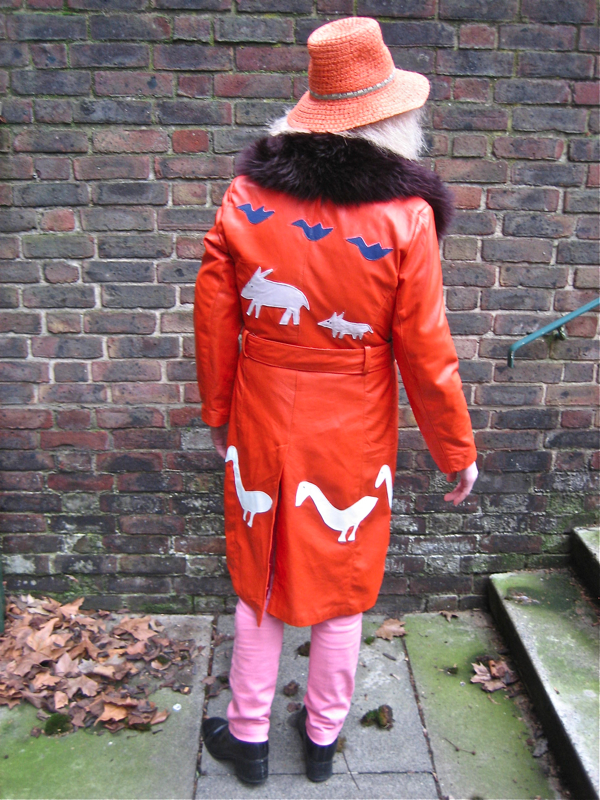
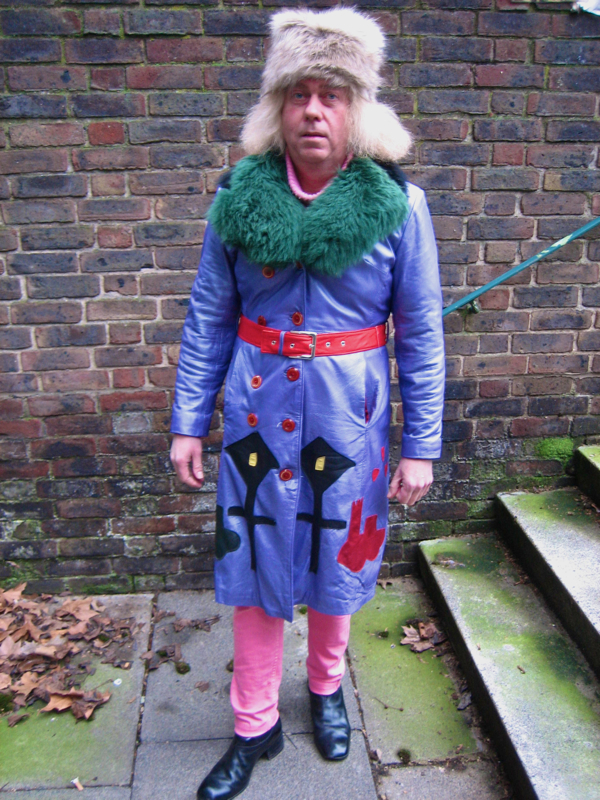
The railway themed coat, completed with a cossack hat.
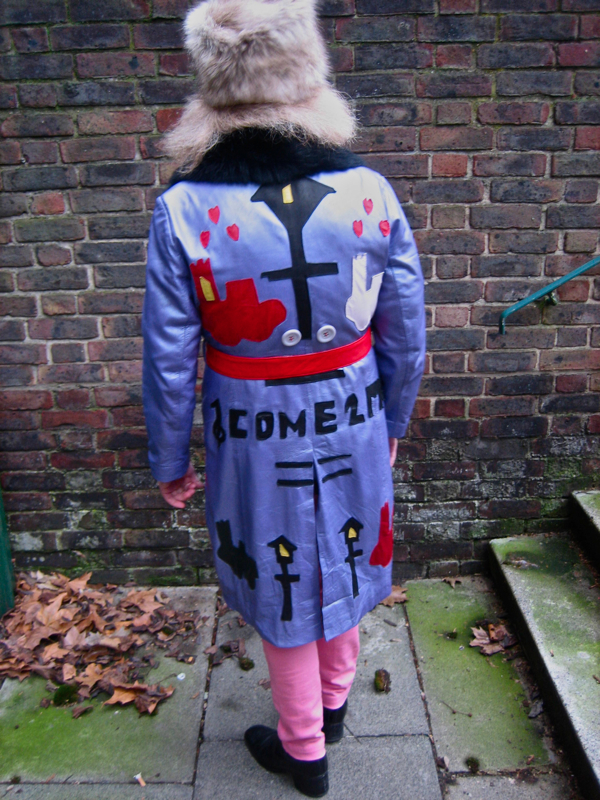
Two steam trains in love meet under a light.

Little bears in celebration of innocent affection.
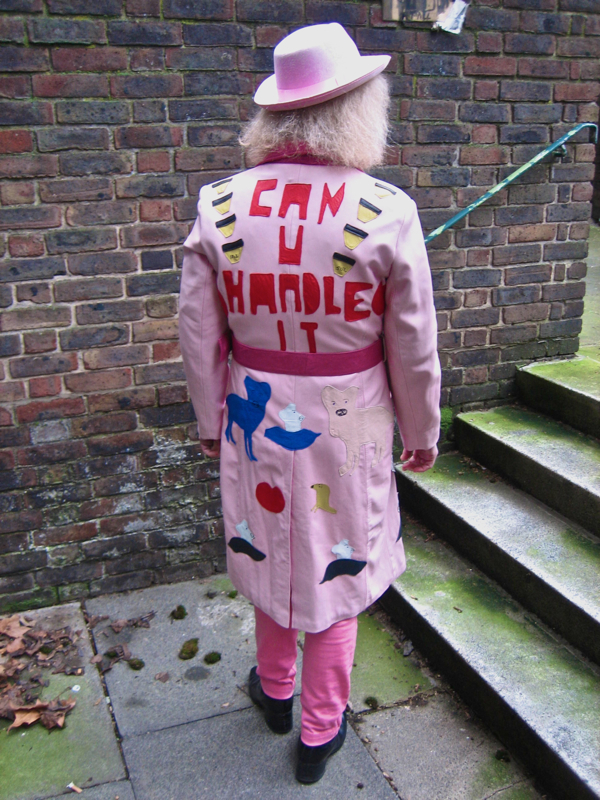
Can you handle it? – a declaration of unrequited love.
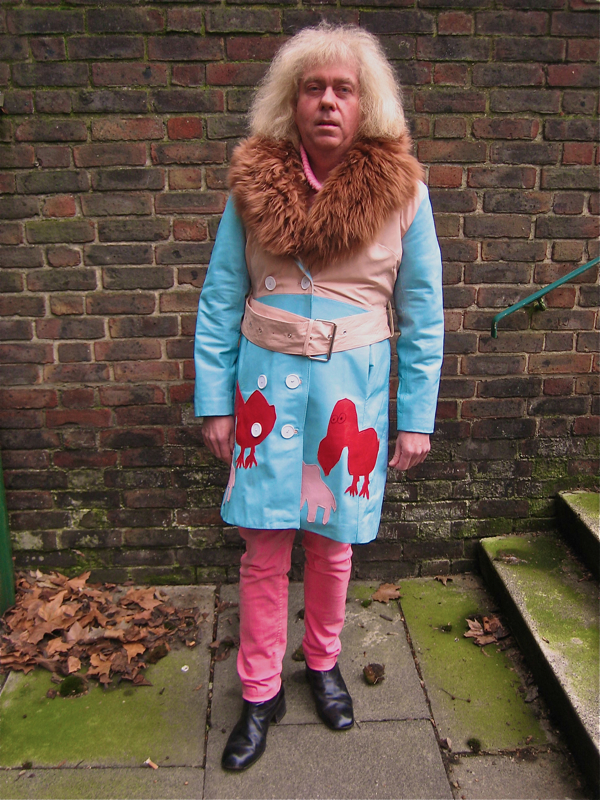
This Ice Age themed coat features dodos, woolly mammoths and creatures that are extinct.
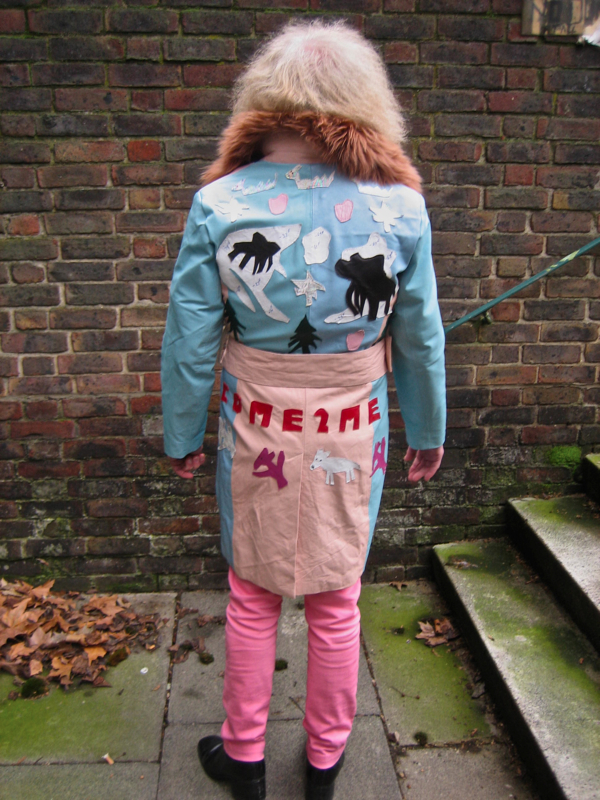
Woolly Mammoths separated by the Atlantic upon ice flows labelled with temperatures in Fahrenheit.
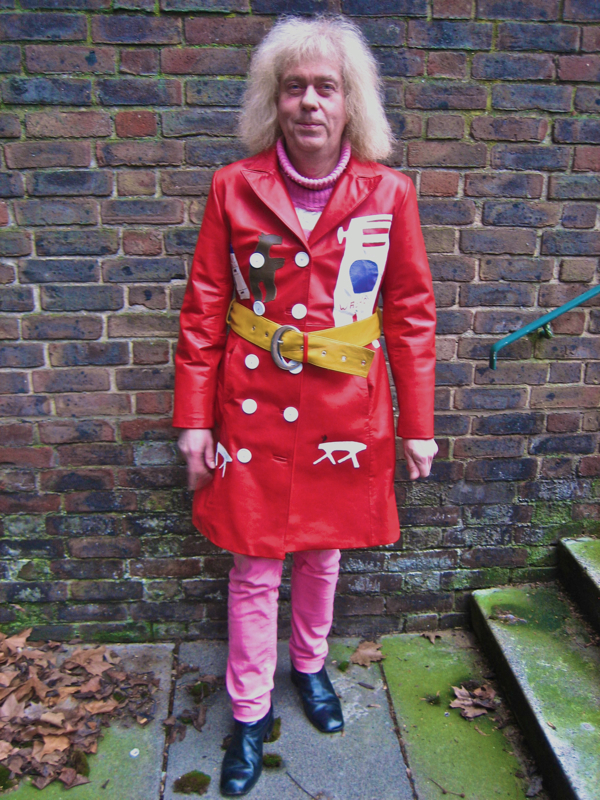
Motifs of bear with a mobile phone and a washing machine adorn this coat.
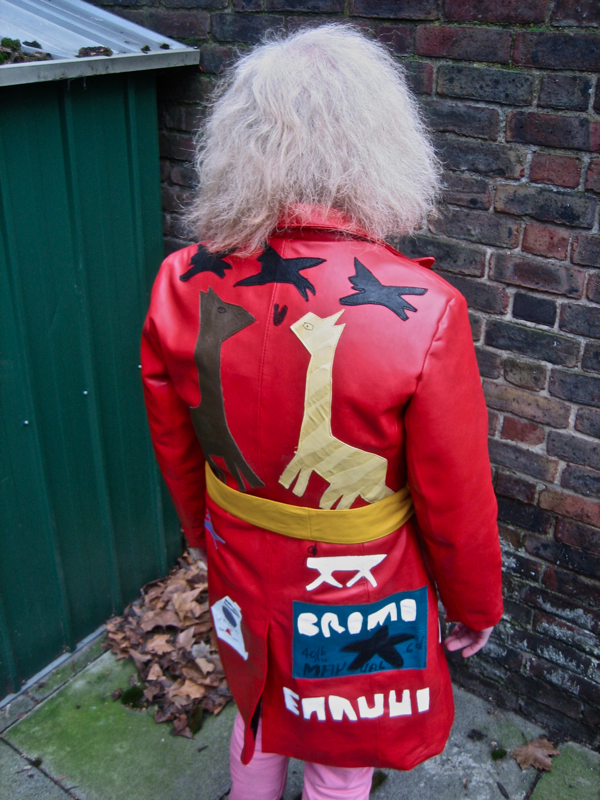
Brontosauruses in love, with Pterodactyls flying overhead.
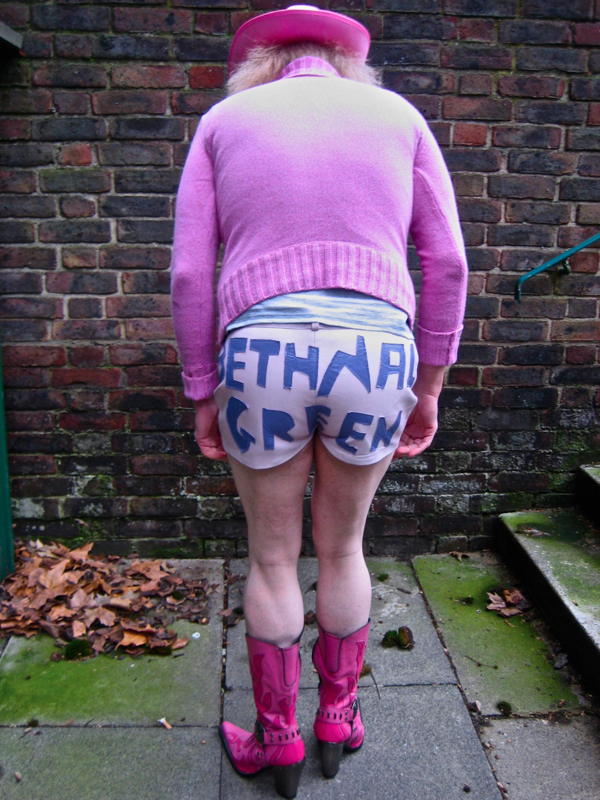
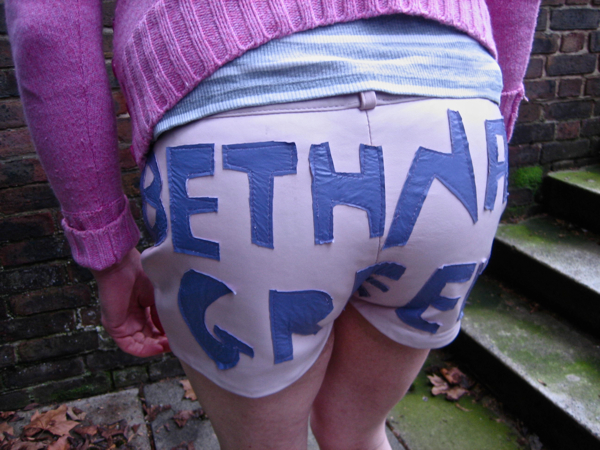
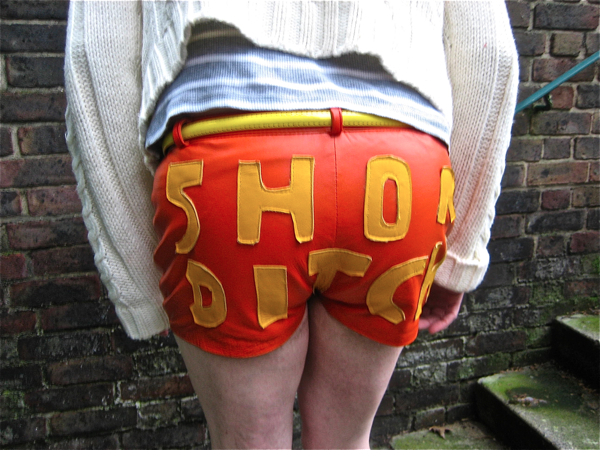
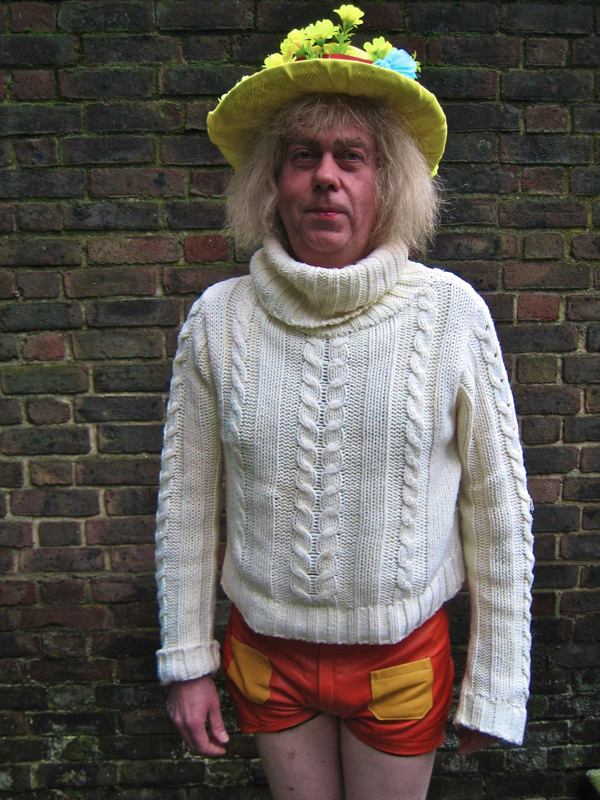
Mark’s new hat design, paired with his Shoreditch hot pants, proposes an optimistic look for Spring.
Read my first story about Mark Petty, Trendsetter
John Leighton’s London Cries
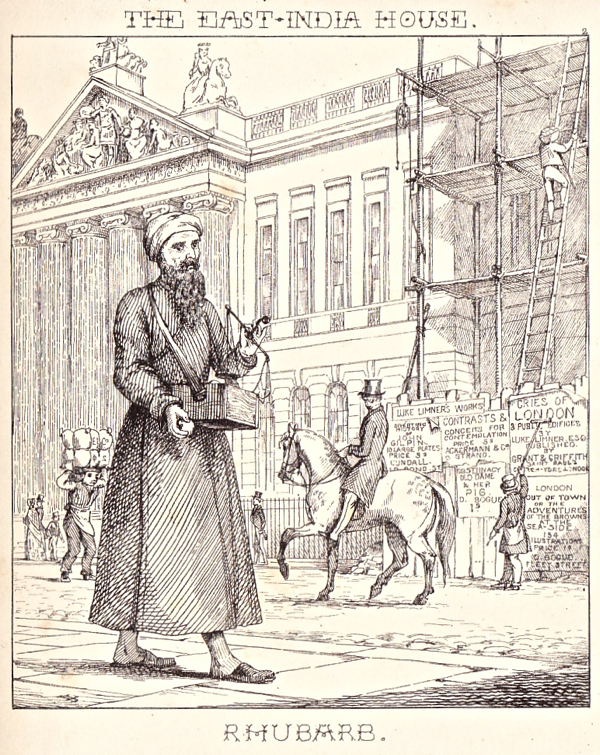
John Leighton’s “London Cries & Public Edifices” were published in 1851 under his playful pseudonym Luke Limner. Today Leighton is remembered primarily for his designs for book bindings but I have a fondness for his Cries because, while they may not have the grace of Francis Wheatley’s set from the seventeen nineties or the draughtsmanship of John Thomas Smith’s Vagabondiana from 1817, they share the same fascinating evocative poetry, recalling the long lost street life of London with sly humour.
This Turkish rhubarb seller in Leadenhall St is of great curiosity to me, especially as fresh rhubarb is sold by the Costard-Monger in another plate, but since Leighton refers to rhubarb in this context as a drug and it is being sold here in dried form, I can only conclude that this oriental gentleman is selling rhubarb as a laxative. I leave you to imagine what cry might be appropriate to such a tradesman, although I understand the phrase “Fine Turkey Rhubarb!” was sufficient to get the message across in 1851. In fact, John Leighton himself was not averse to a little hawking and if you look at the hoardings closely, you will see they advertise his other self-published works.
Francis Wheatley’s influence can be discerned in The Cherry Seller, The Milk Maid and The Bay Seller, elegant young women presenting themselves with poise to catch the attention of the viewer. But in the Match Seller a different sensibility is at work, the nature of the viewer is specified through the shadow of the lady and gentleman approaching the Bank of England, and the anxious expression upon the seller’s face points the irony of the poorest vendor standing in front of the symbol of the greatest riches.
Each of Leighton’s characters have unsentimental vivid life, as if they are all paying rapt attention – like the Cats’ & Dogs’ Meat Seller in Smithfield, surrounded by dogs and cats, and just waiting for some sentimental animal lover to come along with cash to feed the hungry. Some of these drawings appear to be portraits, because who would invent the one-legged chair mender, or the camp Costard-Monger or the crone selling watercress who seems to have walked out a fairy tale? The hunched posture of the Umbrella-Mender tells you everything about his profession, while Hot Potato Seller jumping to keep warm in the snow speaks of direct observation from life.
Finally, it is remarkable how many of the landmarks of 1851 still stand unchanged – in the City of London, where John Soane’s Bank of England, The Mansion House and the Royal Exchange face each other today as they did then, and further towards the centre, Charing Cross Station and Trafalgar Square are as we know them. At first, I though the sellers and the buildings looked as if they were from separate drawings that had been pasted together, until I realised that this disparity is the point – the edifices of wealth and the occupations of the poor.

The Tinker is swinging his fire-pot to make it burn, having placed his soldering iron in it, and is proceeding to some corner to repair the saucepan he carries.
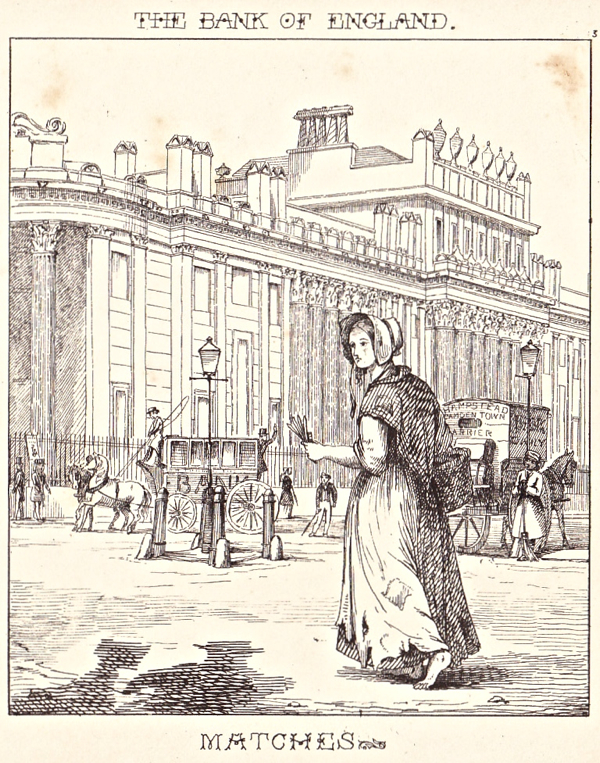
Of all the poor itinerants of London, the Matchsellers are the poorest and subsist as much as on donations as by the sale of their wares.
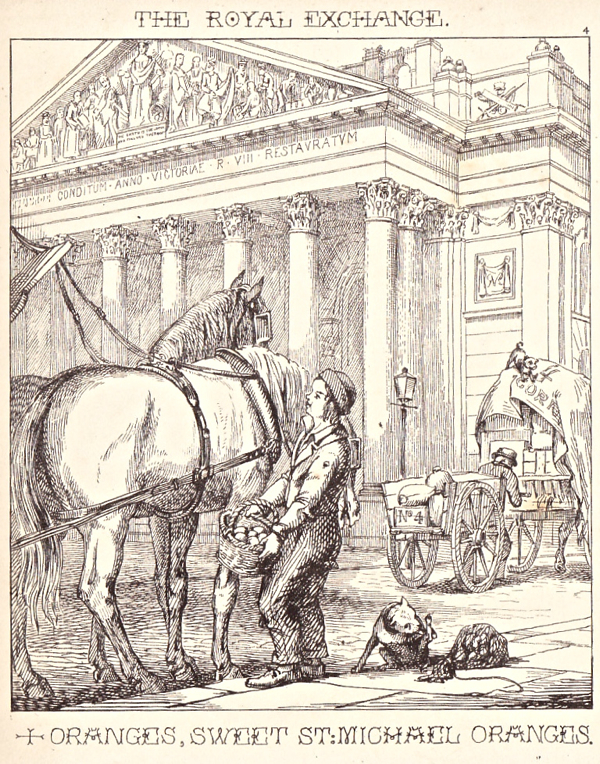
Here is a poor Irish boy endeavouring to dispose of his oranges to some passengers outside an omnibus.

These little prisons are principally manufactured by foreigners who have them of all sizes to suit the nature and habits of little captive melodists.

This artificer does not necessarily pay much rent for workshops, as he commences operations with his canes or rushes up the nearest court or gateway.

As the vendor approaches, the cats and dogs bound out at the well-known cry.
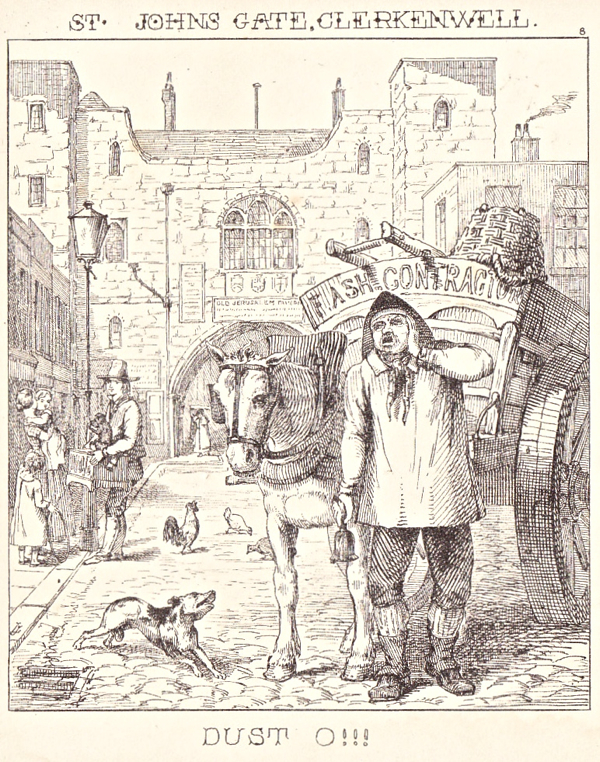
The costume of the Dustman bears a string resemblance to that of the Coalheaver, probably through their being connected with the same material, the one before it is burnt, the one after.
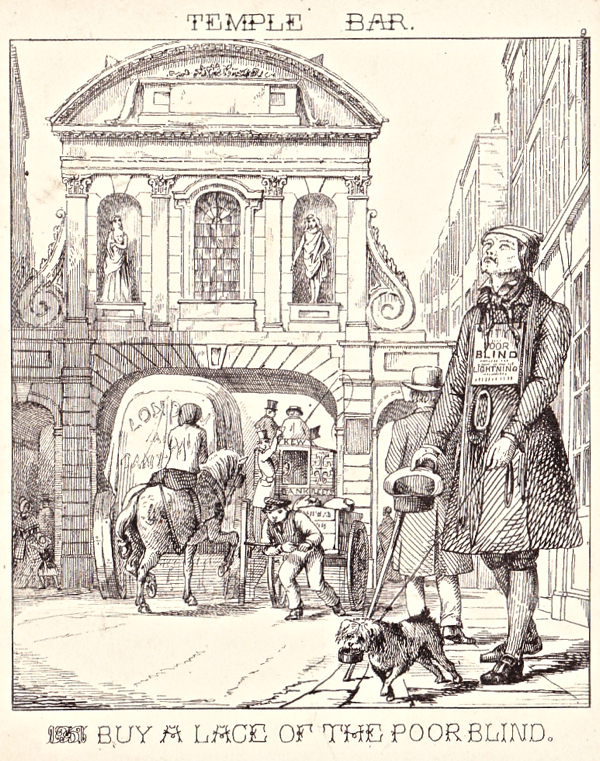
The blind must gain a livelihood as well as those who are blest with sight. He sells cabbage nets, kettle-holders, and laces, doubtless the work of his own hands in the evenings.
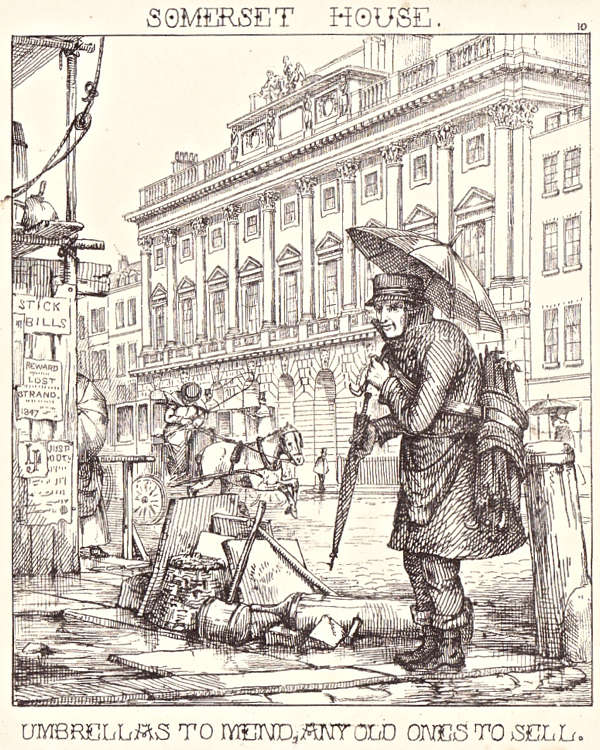
During the day, the Umbrella-mender goes his rounds, calling “Umbrellas to mend! Sixpence a piece for your broken umbrellas!” and then he returns home to patch and mend them, after which he hawks them for sale. Here he appears in his glory under the auspices of St Swithin.
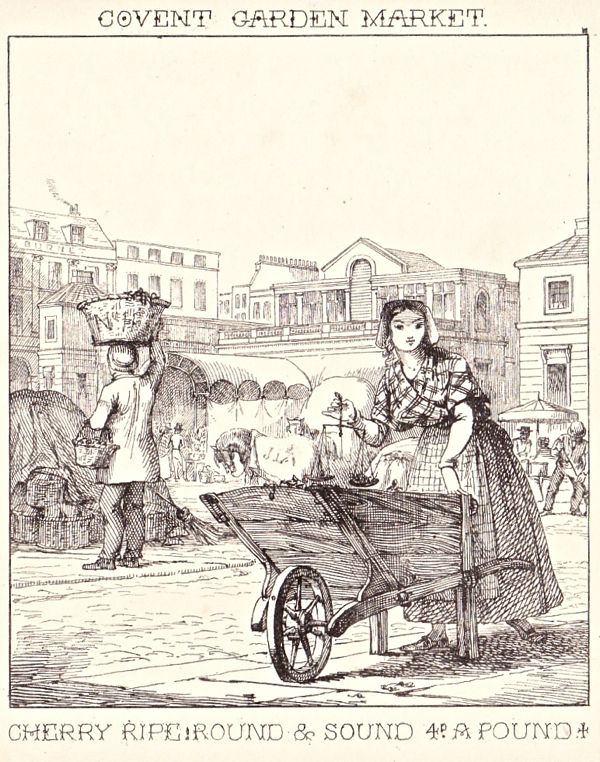
Of cherries, there are a great variety and most come from the county of Kent.

The Costard Monger is an itinerant vendor of garden produce, in the background is a seller of hearthstones in conversation with a Punch & Judy man.
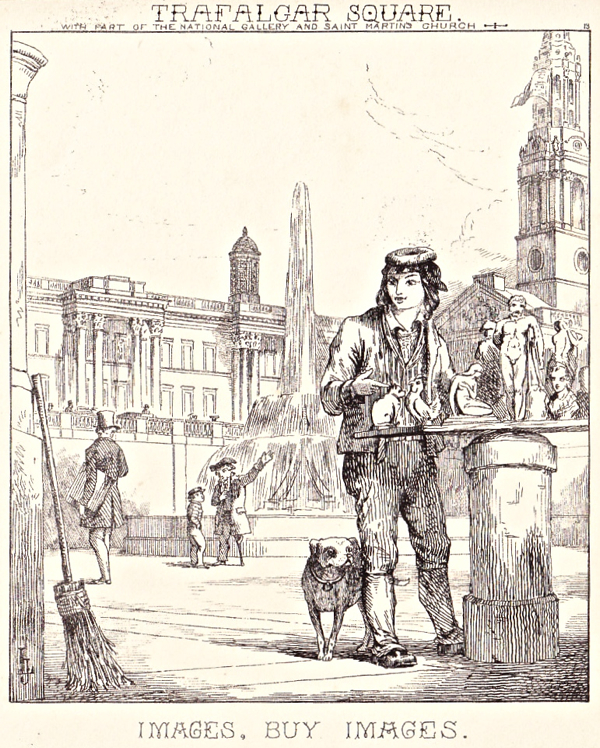
The dealers in these items are mostly Italians, our vendor has some high class items, the Farnese Hercules, Cupid & Psyche, and Chantrey’s bust of Sir Walter Scott.
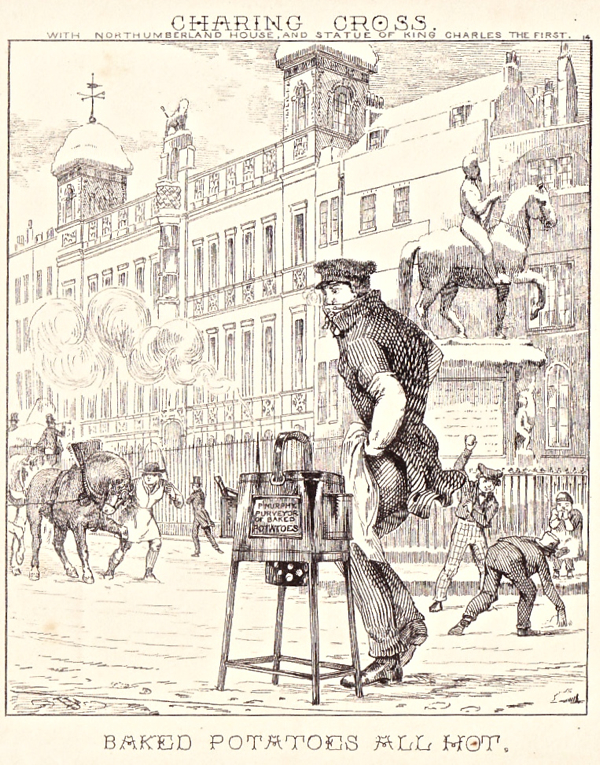
“How very cold it is!” The Potato-merchant jumps about to warm his feet.
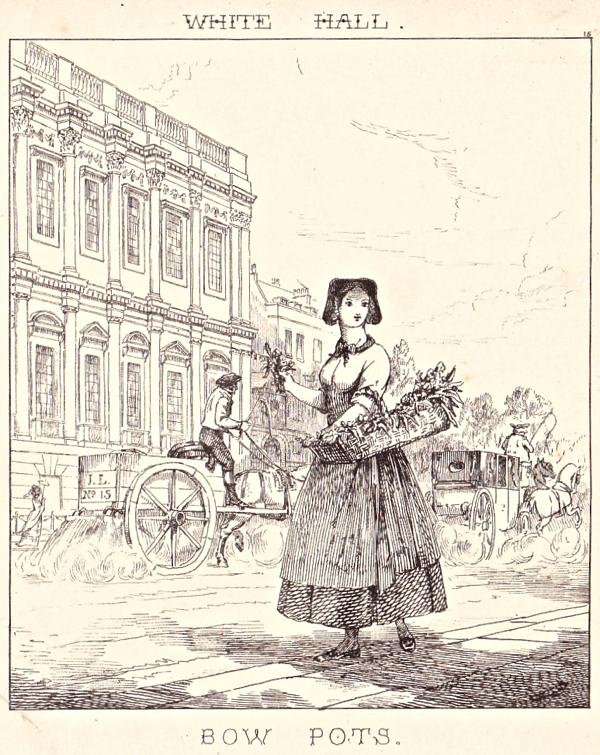
Bow Pots! (or Bay Pots!) two a penny!
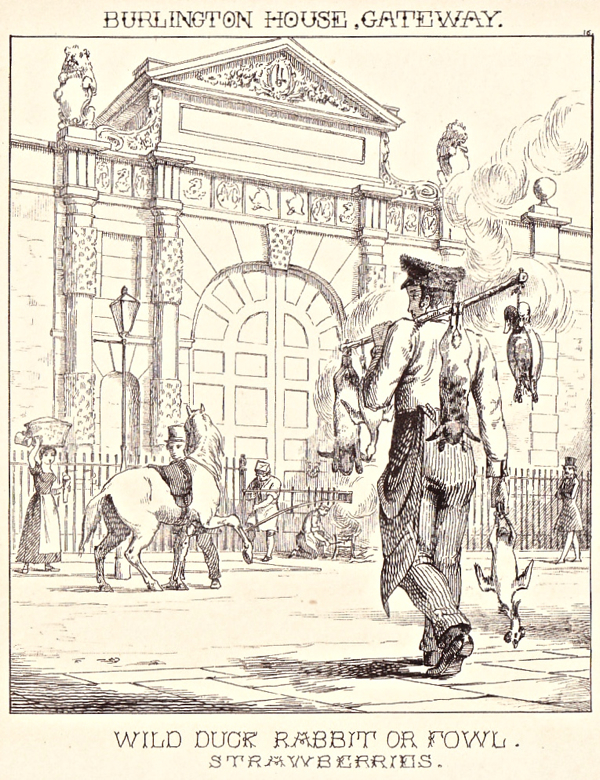
Wild ducks from the fens of Lincolnshire, Rabbits from Hampshire and Poultry from Norfolk.
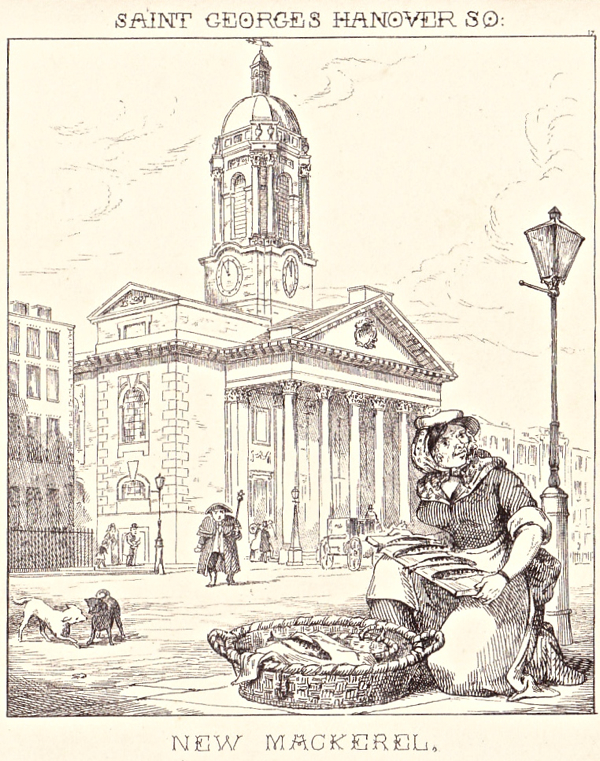
There is a law that permits of Mackerel being sold on Sundays, and here comes the beadle to warn off the Fish-woman.

The old clothesman and bonnet -box seller go their rounds.
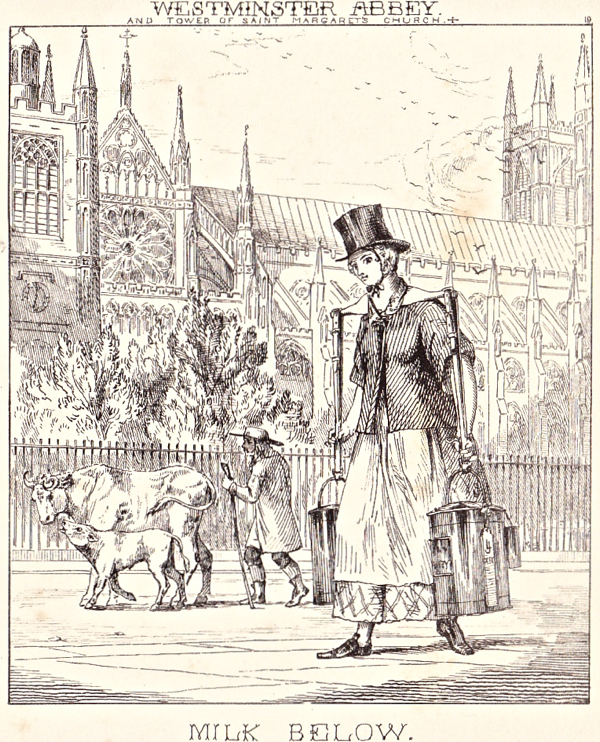
Of dealers in milk there are two classes – the one keeping cows, and the other purchasing it from dairymen in the outskirts and selling it on their own account.
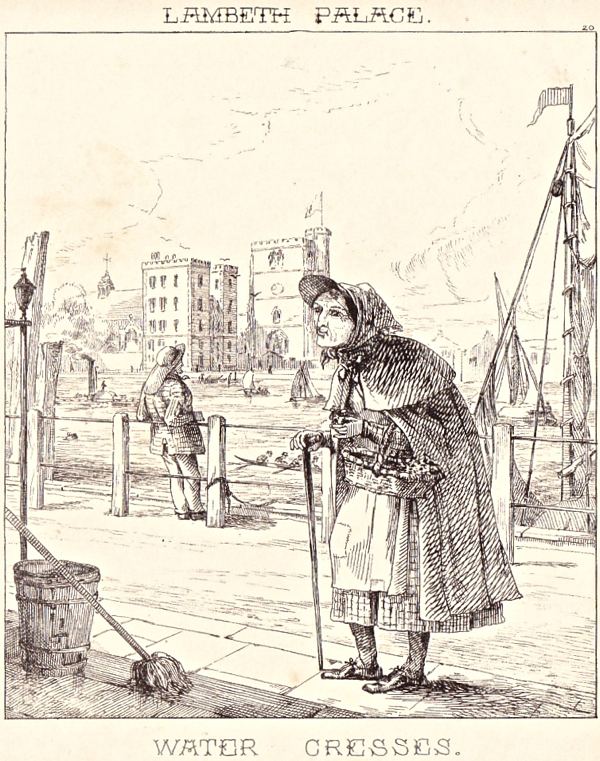
At half past eight, the step is mopped and Betty runs to get the penny for the poor old dame.
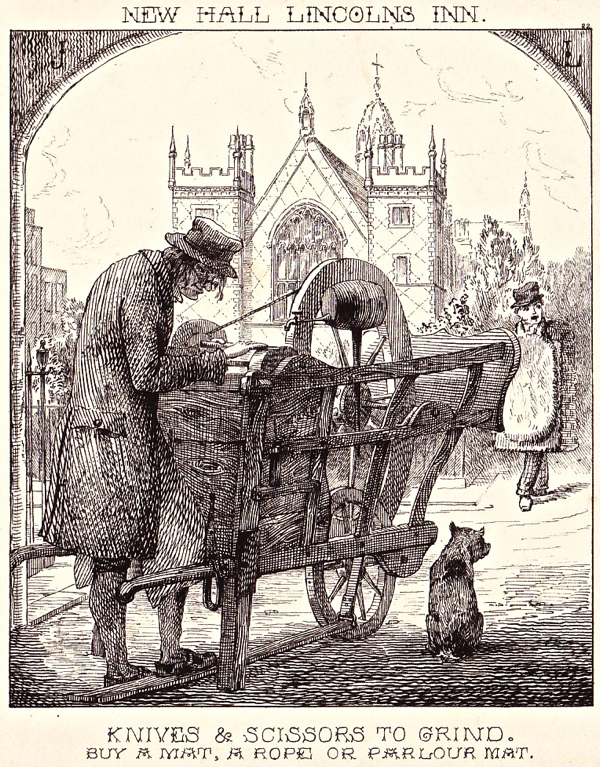
Knife Grinder at the entrance to Lincoln’s Inn Fields, with a seller of rush, rope and wool mats.
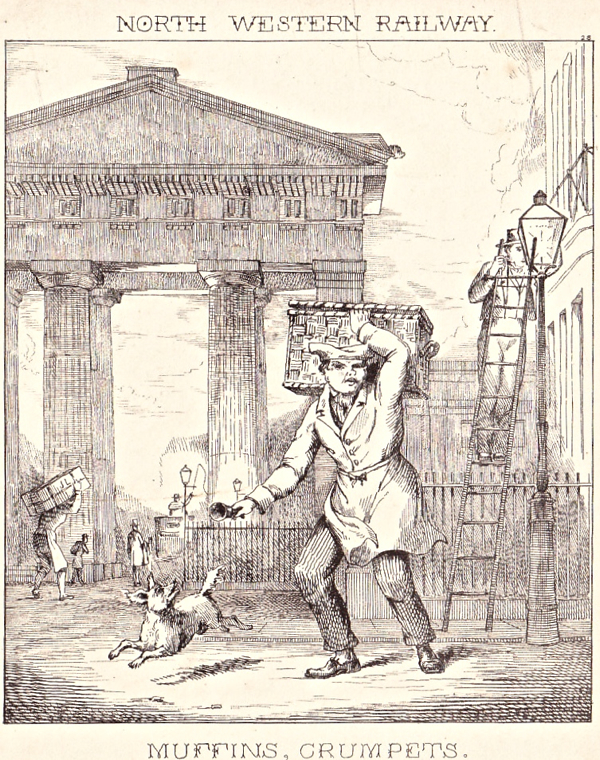
This is the evening cry in Winter.
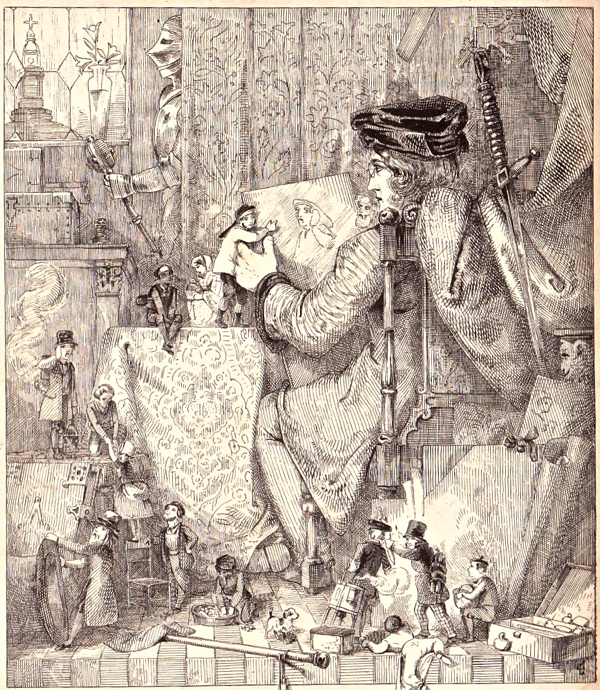
John Leighton and his cries of London.
You may like to take a look at
Francis Wheatley’s Cries of London












