Irene & Ivan Kingsley, Market Traders

Irene Kingsley, Herbert House, Spitalfields 1957
Although it may not be apparent to the casual visitor, Middlesex St is the boundary between the Borough of Tower Hamlets and the City of London. It is a distinction of great significance to residents of this particular neighbourhood, because – as Irene Kingsley, who has lived here her whole life, put it to me with succinct humour – “When you are in the gutter, you are in Tower Hamlets but when you are on the pavement, you are in the City.”
“I live in the City now, but I spent most of my life in Tower Hamlets.” she added as a qualification, just in case I should take her quip in the wrong spirit. Although Irene has ascended to the lofty heights of a flat in Petticoat Tower on the City side of Middlesex St, she was not bragging that she had gone up in the world, but rather admitting that her heart remained back on the other side of the street where she started out. And when I went to visit her and her husband Ivan, I understood the difference at once, as I climbing the steps from the shabby Petticoat Lane Market into the well-tended courtyard garden of Petticoat Tower, quite a contrast to comparable developments in Tower Hamlets.
In the hallway of their flat on the seventeen floor more plants flourished, these were tended by the Kingsleys. I had only a moment to contemplate them before Ivan appeared to hustle me through the modest yet comfortable flat to the living room where Irene was waiting. Then, as I entered, my eyes were drawn by the yawning chasm of the view over the City from their window. “Everyone goes straight for the view!” Irene declared, exchanging a knowing smile with Ivan. “We used to be able to see the Tower of London, until they built that,” she said, indicating a blue glass block. “And we could see the Monument, before the Gherkin went up,” said Ivan, pointing in the other direction. With such an astonishing prospect, I could understand how anyone might get a little proprietorial.
“We’ve seen a lot of changes in Petticoat Lane.” Irene admitted to me as we sat down, and exchanging another a glance with Ivan which was the cue for him to serve tea and biscuits. I knew this was the beginning of her story.
“I was born in Brune House in Toynbee St. My father was a bus conductor and my mother was a seamstress.” she explained, “My grandfather was a cobbler in Artillery Passage and my grandmother had a tea stall in Leyden St, she had seven daughters and they all worked with her, and as time went on all the daughters had their own stalls and they were passed down to grandchildren. I left school at fifteen to work in the office of a clothing factory in Golding St, near Cable St. Until I was fifteen, I lived at Brune House, then I to moved to Herbert House nearby to live with my aunt, she had a daughter of her own and she took me in because I lost my mother. She treated me just like a mother, she took over as my mother.
In 1956 I went to Los Angeles. I took the Queen Mary to New York and then I went by plane from New York to Los Angeles. I worked in the office of an insurance company and I loved it there but I was very homesick, so after a year I came back to pick up the pieces. I had various office jobs and I enjoyed travelling with girlfriends but I never settled down. When I turned fifty, I decided to go into the market selling baby clothes and that’s where I met my husband…”
At this point Ivan and Irene exchanged big smiles, because this was the part where it became a shared narrative.
“We both started out as casual traders,” continued Irene, still looking at Ivan and saying “casual traders,” as if it were a term of endearment, “You had to put your name down on the list and wait around until there were available pitches and it just happened that while we were waiting we used to go to a cafe together. Then the old lady at the stall next to us, she had a granddaughter and we were both invited to the Bell for a celebration and we haven’t look back since!
This was the moment when Ivan took over.“I am not an East End boy,” he announced, “though until I was seven I lived on Underwood St in Spitalfields and from there we moved to Ford Sq in Whitechapel, until in 1940 when we moved to Stoke Newington which in those days was upmarket. I ran a furniture factory in Newington Green until 1976, when I took a job as milkman and from there I went to work for Conway Trading in Toynbee St. They sold socks and underwear for men, and I learnt about that trade, so when they went bankrupt I put what I had learnt into practice, I used to go up North to the sock makers, buy stock and sell it to the retailers. I even applied for the lease to the Conway Trading shop, but for some reason the council refused me and the place is still empty, thirty-five years later.”
By now, I realised where this was going, because like Irene, the climax of Ivan’s story was becoming a market trader.
“So I decided to start trading in the market.” he said, speaking like a true zealot, “Sundays was brilliant and when I started, even in the week, it was good. It was a wonderful experience because you met so many different kinds of people, all sorts, and, because you were all working in the gutter together, you got to know each other. We were all friends since we were all in the same position. At one point, the council wanted to stop casual traders for nine months, so we went on strike and marched to Bethnal Green Town Hall and demonstrated there. They realised the market could fold and they couldn’t take away the livelihood from seventy people, so from then on we got licences to trade. It was an education, and it was a hard life too, but while you are working you enjoy it.”
Irene and Ivan had stalls side by side and then they combined stalls, unifying their presence in the market, just as their lives became intertwined in marriage. “I retired from the market three and a half years ago when my husband was seventy-five and I was seventy-two, so we feel we’ve done enough.” explained Irene clasping her hands in satisfaction. Yet both acknowledge that trading in the Petticoat Lane Market was a highlight of their existence, a source of livelihood, a social education and a romantic adventure too, which all goes to prove that sometimes the gutter can be a better place to be than the pavement.

Irene & Ivan Kingsley in their flat in Petticoat Tower.
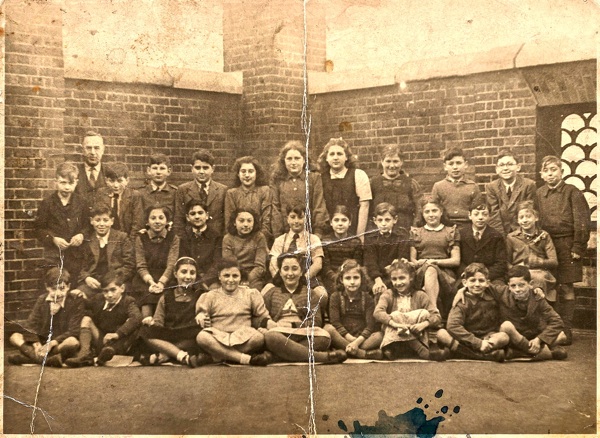
Irene at Canon Barnett School, 1947 – she is the sixth from the left in the back row.
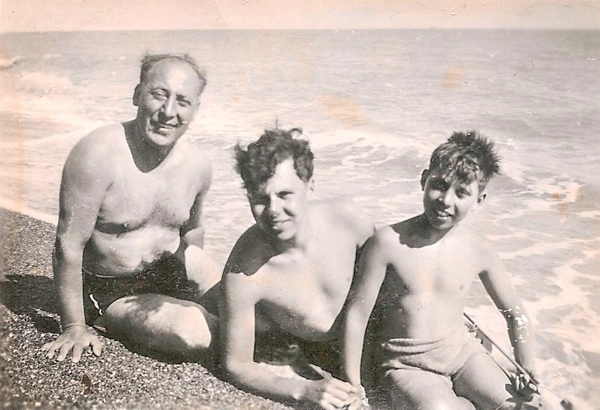
Ivan (centre) as a young man on Hythe Beach with his family.

Irene (left) at Riccione Beach in 1970 with her friends Phyllis Gee, Stella Spanjar and Celina Martin.
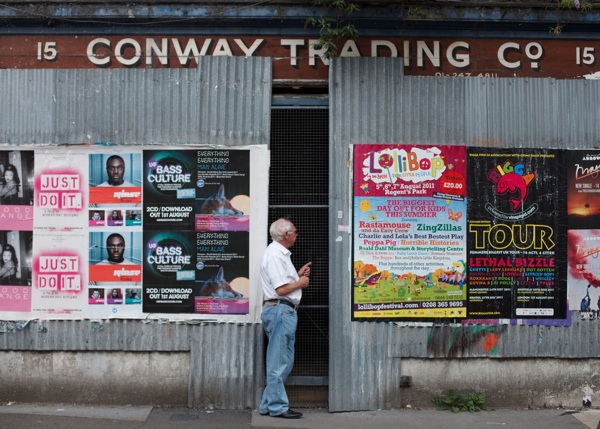
Ivan returns to Conway Trading on Toynbee St where he worked in the seventies. Ivan tried to lease it from the council thirty-five years ago but they refused and it has been empty ever since.

Irene & Ivan walk through Petticoat Lane Market, in the shadow of Petticoat Tower.

Looking towards the City from Irene & Ivan’s flat in Petticoat Tower.
Photographs copyright © Jeremy Freedman
You might also like to read about
Laurie Allen of Petticoat Lane
The Stepney School Strike of 1971

Forty years ago this Summer, eight hundred pupils went on strike in Stepney, demanding that their teacher, Chris Searle, be reinstated after the school fired him for publishing a book of their poetry. At a time of unrest, following strikes by postmen and dustmen, the children’s strike became national headline news and they received universal support in the press for their protest.
More than two years later, after the parents, the Inner London Education Authority, the National Union of Teachers, and even Margaret Thatcher, then Education Secretary, came out in favour of Chris Searle, he got his job back and the children were vindicated. And the book of verse, entitled “Stepney Words” sold more than fifteen thousand copies, with the poems published in newspapers, and broadcast on television and read at the Albert Hall. It was an inspirational moment that revealed the liberating power of poetry as a profound expression of the truth of human experience.
Many of those school children – in their fifties now – still recall the event with great affection as a formative moment that changed their lives forever, and so when Chris Searle, the twenty-four-year-old student teacher of 1971 returned to the East End to recall that cathartic Summer and meet some of his former pupils, it was an understandably emotional occasion. And I was lucky enough to be there to hear what he had to say.
I grew up in the fifties and sixties, failed the eleven plus and I hated any kind of divisiveness in education, I saw hundreds of my mates just pushed out into menial jobs. So I got into a Libertarian frame of mind and became involved in Socialist politics. I was in the Caribbean at the time of the Black Power uprisings, so I had some fairly strong ideas about power and education. Sir John Cass Foundation & Redcoat School in Stepney was grim. It was a so-called Christian School and many of the teachers were priests, yet I remember one used to walk round with a cape and cane like something out of Dickens.
The ways of the school contrasted harshly with the vitality and verve of the students. As drama teacher, I used to do play readings but I found they responded better to poetry, and I was reading William Blake and Isaac Rosenberg to them, both London poets who took inspiration from the streets. So I took the pupils out onto the street and asked them to write about what they saw, and the poems these eleven-year-olds wrote were so beautiful, I was stunned and I thought they should be published. Blake and Rosenberg were published, why not these young writers? We asked the school governors but they said the poems were too gloomy, so they forbade us to publish them.
I showed the poems to Trevor Huddleston, the Bishop of Stepney, and he loved them. And it became evident that there was a duality in the church, because the chairman of the school governors who was a priest said to me, ‘“Don’t you realise these are fallen children?” in other words, they were of the devil. But Trevor Huddleston read the poems and then, with a profound look, said, “These children are the children of God.” So I should have realised there was going to be a bit of a battle.
There was even a suggestion that I had written the poems myself, but though I am a poet, I could not have written anything as powerful as these children had done. Once it was published, the sequence of events was swift, I was suspended and eight hundred children went on strike the next day, standing outside in the rain and refusing to go inside the school. I didn’t know they were going to go on strike, but the day before they were very secretive and I realised something was up, though I didn’t know what it was.
I didn’t have an easy time as a teacher, it was sometimes difficult to get their interest, and I had bad days and I had good days, and sometimes I had wonderful days. Looking back, it was the energy, and vitality, and extraordinary sense of humour of the children that got you through the day. And if, as a teacher, you could set these kids free, then you really did begin to enjoy the days. It gave me the impetus to remain a teacher for the rest of my life.
I tried to get the kids to go back into the school.
Tony Harcup, a former pupil of Chris Searle’s and now senior lecturer in Journalism at Sheffield University, spoke for many when he admitted, “It was one of the proudest days of my life, it taught me that you can make a stand. It was about dignified mutual respect. He didn’t expect the worst of us, he believed everyone could produce work of value. He opened your eyes to the world.”
During the two years Chris was waiting to be reinstated at the school, he founded a group of writers in the basement of St George’s Town Hall in Cable St. Students who had their work published in “Stepney Words” were able to continue their writing there, thinking of themselves as writers now rather than pupils. People of different ages came to join them, especially pensioners, and they used the money from “Stepney Words” to publish other works, beginning with the poetry of Stephen Hicks, the boxer poet, who lived near the school and had been befriended by many of children.
“Stepney Words” became the catalyst for an entire movement of community publishing in this country, and many involved went on to become writers or work in related professions.“The power to write, the power to create, and the power of the imagination, these are the fundamentals to achieve a satisfied life,” said Chris, speaking from the heart, “and when you look back today at the lives of those in the Basement Writers, you can see the proof of that.”
The story of the Stepney school strike reveals what happens when a single individual is able to unlock the creative potential of a group of people, who might otherwise be considered to be without prospects, and it also reminds us of all the human possibility that for the most part, remains untapped. ” I just want to thank the young people that stood up for me” declared Chris Searle with humility, thinking back over his life and recalling his experiences in Stepney, “How could you not be optimistic about youth when you were faced with that?”


Returning to the East End forty years after the school strike, teacher Chris Searle reads one of the original poems from Stepney Words,”Let it Flow, Joe.”, with some of his former pupils.

A current exhibition at the Whitechapel Gallery, entitled This is Whitechapel contains publications by the Basement Writers and it runs until September 4th.
You might like to read about
At Sweetings

It is no wonder this elegant gentleman of seventy-eight years old looks so serene – the picture of good health and contented refinement – he is Richard Barfoot, the noble proprietor of Sweetings restaurant in the City of London, my favourite place to eat fish for lunch. For Mr Barfoot, it is the culmination of a lifetime in the fish business to preside here at this temple of seafood. Immaculately shaved, in a well-cut suit with discreet cuff links and his Sweetings tie, he is a dignified figure who might present an austere impression if it were not for the evident twinkle in his eyes, indicative of the sheer pleasure it gives him to be here.
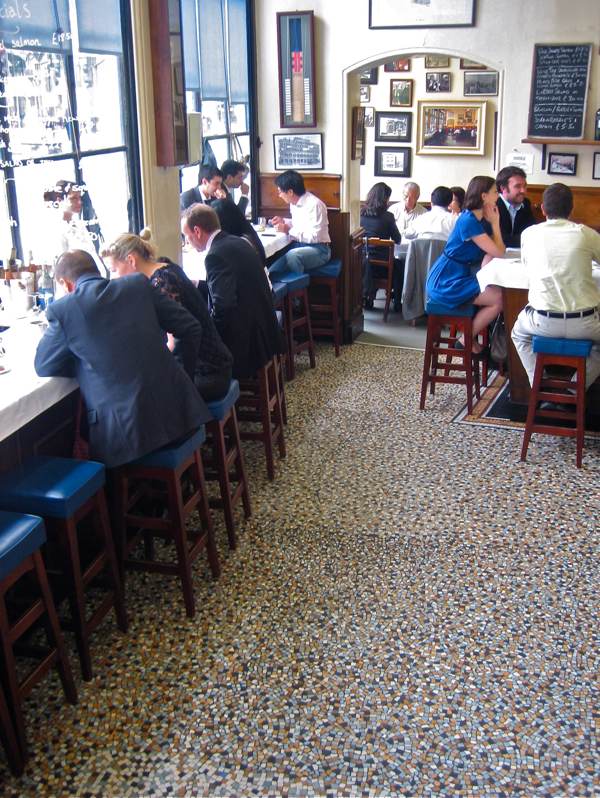
Opened in 1890, and unchanged today, Sweetings is a marvel. Occupying a triangular corner site, customers perch at counters in an interior lined with old panelling, mosaic, marble and mirrors, where the very finest fresh fish are served in season and oysters are a speciality. Over all these years, certain systems have been contrived which permit this operation to function with ease in its unusual space. On your right, is the marble slab where gleaming fresh salmon and lobsters are displayed and, on your left, is the first of several counters covered in plain white cloths and adorned with attractive old cutlery shining in the sunlight, each one supervised by a waitress standing behind and commanding her pitch with personal style and repartee to add to this lively theatre.
Yet before I ventured into the restaurant and took my eagerly anticipated place at a counter, I was able to enjoy the privilege of a quiet word with the venerable Mr Barfoot,who revealed himself to be a precise and emotional speaker, alive to the subtle ironies of life.
I love Sweetings, which I bought from the wife of my very best friend, Graham Needham, who, unfortunately, after a very successful spell running it from 1979, died in 1993. His wife took over ownership and she sold it to me in 2000. So here we are, really. It’s absolutely fantastic, I am the fifth owner in its history and we are an institution in the City of London. We’ve gone through two World Wars and several financial upsets that life has thrown at us, but because of our reputation customers have stayed loyal to Sweetings.
For our customers, it’s like school dinners, they sit next to each other during lunch, and most of them know each other and chat while they’re eating. It is a place which is loved by all in the City. I understood the institution, having come here since 1975 – never realising it would ever be mine – but since its mine I intend that it should stay in my family for the next hundred years so that the tradition of Sweeting can be maintained as, thankfully, I have tried to do.
I’m a fish merchant by trade, in the Billingsgate Market. I’ve been in the business since 1951, I think I’m celebrating sixy-one years in it this year, if you can call it celebrating. I’ve done it since I left school at fifteen and got a job with Macfisheries, in those days the biggest fishmonger with five hundred shops across the country and two fleets of trawlers. I worked in Leadenhall Market until the age of eighteen and did all sorts of jobs in the fish industry specialising in selling and management. This lasted until 1980 when I started out for myself and created Barfoot Ltd, a wholesale fish distribution centre in Rotherhithe where we did fish preparation for hotels. Then in 2000 when my son joined the company, I bought Sweetings restaurant and decided to run it myself.
I love it, to be involved in the day to day running and to meet old friends and old customers who appear on a regular basis, and generally to soak up the atmosphere of the place. To be honest, I’d had so many lunches and get togethers here that I felt I knew the place very well, therefore it was no surprise to me that I am able to take on the responsibility with so much ease, having been party to the place for twenty-five years already…
By now the lunchtime rush had begun and, awaiting their places, customers were gathering at the bar like wading birds at a lake.“No bookings, no coffees,” exclaimed Mr Barfoot, brimful with cheer, and observing my wonder at how they keep the crowds moving. “When I brought in credit card machines it was big news, “Sweetings have succumbed to modern day living!”‘ he jeered in amusement at his own fearless iconoclasm, “but it did stop the queue at the Halifax cash machine across the road.”
I find it such a treat to perch at the counter at Sweetings, feeling at the very centre of the world, and perusing the long bill of fare in the daylight reflected from the mirrors on either side, where the specials of the day are written in whitewash upon the glass. These same mirrors are used strategically by the staff to send messages between them, so that you might wonder how the orders get passed around – if you were not absorbed in the quaint steel tankards that drinks are served in, and wondering if you are occupying the same seat and seeing the same view as Toulouse Lautrec or Francis Bacon, who both came here in past days.
The cuisine at Sweetings is the model of simplicity with fish grilled or fried or poached, and accompanied by fresh vegetables – only around the corners of the menu are the subtlest inflections that reveal the origins of Head Chef Carlos Vasquez in Galicia. “My mother worked in the fishmarket at Arteixo,” he admitted to me later, when I made a foray into the kitchen,“She brought home all the different kinds of fish, and taught me how to prepare and cook them.”
When your fish arrives, you scrutinise it like a scientist, because the stool and counter configuration brings you closer to your plate than sitting at a table. It looks perfect and it tastes good, and there you are in your private moment of contemplation with your fish, curiously peaceful in the midst of the clattering drama of lunch at Sweetings, in this glinting prism of glass, with the City traffic roaring past outside.


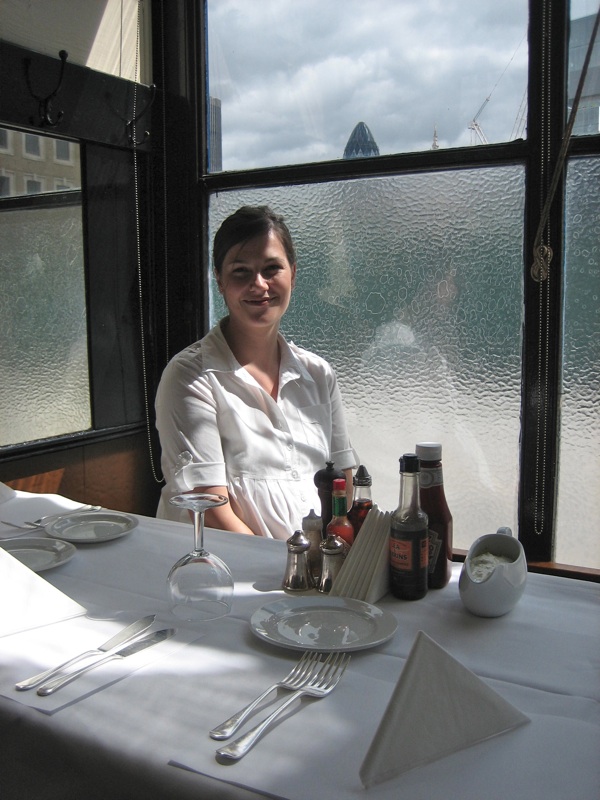
Jodie Winterflood

Begonia Martinez

Chaxi Lujan & Paula Martinez

Georgina Prado

Carlos Vasquez, Head Chef
At St Mary’s Secret Garden

St Mary’s Secret Garden is situated in a quiet back street in Shoreditch and it comes as a welcome surprise to discover this verdant enclave amongst the dense maze of streets and housing that surround it. Yet two hundred years ago, this area North of Old St was the preserve of market gardens and nurseries, before the expansion of the city rendered what was once commonplace as the exception.
In 1986, some volunteers cultivated plants upon a piece of wasteground and, twenty-five years later, there are well-established trees and a density of luxuriant growth that propose a convincingly leafy grove worthy of being described as a secret garden. You walk through the gate and you leave the realm of concrete and enter the realm of plants. Here nature is not something to be eradicated but is encouraged, where the enclosing trees induce a state of calm and urban anxieties retreat.
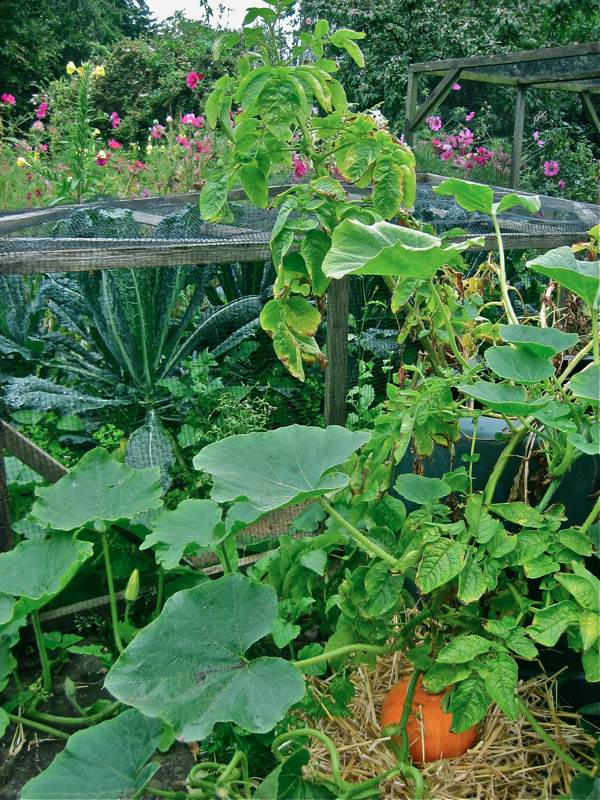
One overcast August morning, with fine rain blowing in the wind, I walked over to spend a morning at this Shoreditch Eden. I followed a path through an overarching stand of hazels with beehives in a line, leading round to the greenhouse and an old market barrow used to display plants for sale, while beyond this lay a vegetable garden organised in raised beds and a peaceful herb garden with a huge bay tree at the centre, with plants selected for their scent and texture.
Once you have made this journey you are at the centre of St Mary’s Secret Garden, and when I sat here alone to contemplate the peace, an hour passed before I realised it. Clearly it is not just me that finds gardens therapeutic because, as well being open to the public, St Mary’s runs gardening sessions for people with disabilities of all kinds. Horticultural therapy is the smart name for it.
“I saw an ad in the Hackney Gazette for volunteers to come and clear this place up, it had been neglected” explained Ita Keown who retired from teaching in 1996, “I started volunteering then and I’ve been coming back ever since.” Ita was keen to tell me about a group she supervises who come each Thursday afternoon from the nearby Mildmay Hospital. “As they live in the hospital, they are very keen to be outside and do some digging.” she confided, “Many are from African or Afro-Caribbean or Indian backgrounds, and they know about growing food and are keen to put those skills to use. In the Autumn, we make chutneys with green tomatoes, pumpkin and beetroots. In the Winter, we work in the greenhouse planting bulbs for selling, and packing seeds in envelopes, and we make lavender bags. For these people, it can be their only opportunity to leave the hospital and it’s the most exciting day of the week for them.”
Yet before this group arrived, I joined a small club of people with mental disability who were there for the morning, planting a new garden that is approaching completion. Here I met Israel Forrest, an enthusiastic gardener who has been coming from Donnington each Tuesday and Thursday for the past six years and Victoria Fellows, an occupational therapy student on a Summer placement, and we all sat and chatted in the rain, while planting Scabious in a shingle bank. Others wheeled barrows of gravel around and some laid brick edgings and everybody was placidly occupied, working as equals and sharing the peaceful camaraderie of gardening.
Anyone can come to St Mary’s Secret Garden to find solace. You can volunteer, take gardening courses, rent space to grow vegetables, and buy plants and seeds cheaply. Or you can simply escape the city streets to sit and dream surrounded by the green leaves – as I did – enjoying horticultural therapy.
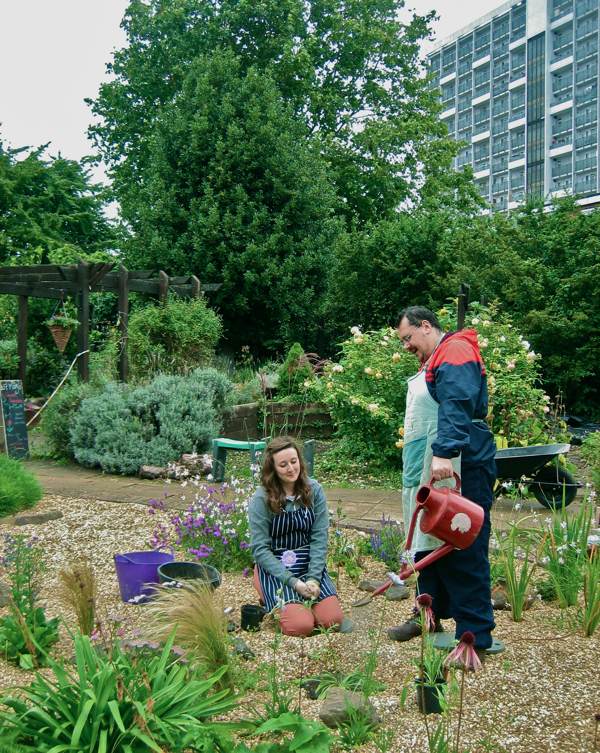
Victoria Fellows and Israel Forrest planting Scabious.
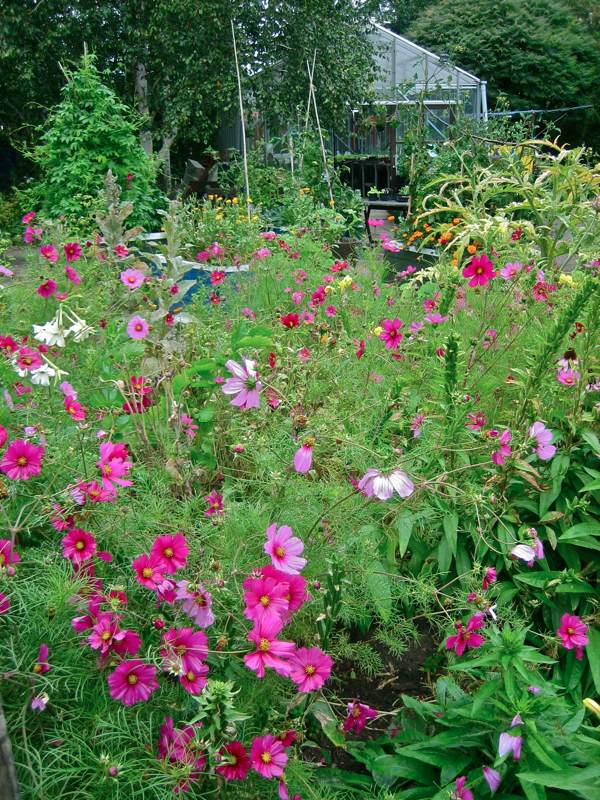
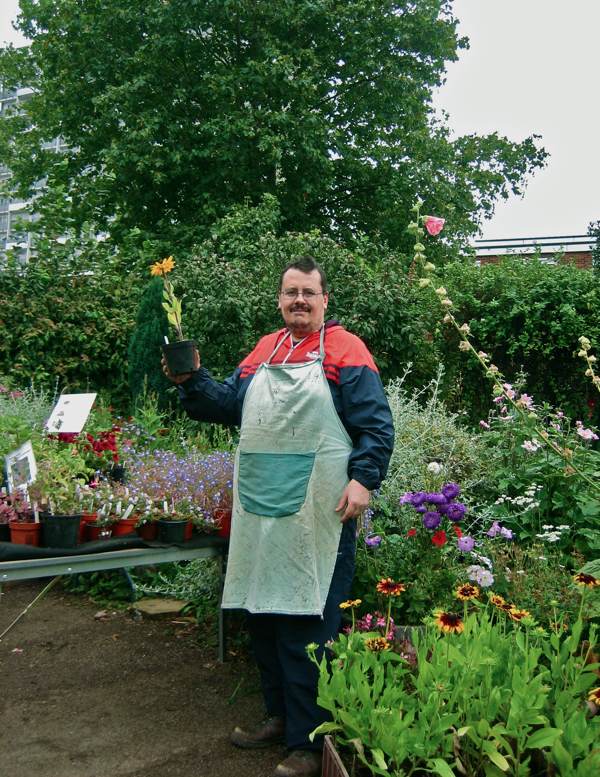

The garden where I lost an hour.

You may also like to read about
Heather Stevens, Head Gardener at the Geffrye Museum
At Frying Pan Alley with Jack London

The twenty-six year old American novelist Jack London came to report upon the Coronation of Edward VII in the Summer of 1902, but when he arrived he chose instead to spend seven weeks exploring the East End and wrote an account published as “The People of the Abyss.” London grew up in poverty in San Francisco and worked in all kinds of menial jobs whilst becoming a writer, allying himself with the lowest of the low, tramping across America and being imprisoned as vagrant before he was able to make a living from his writing. Yet although he won wealth and success, his own experience gave him a personal understanding of what it meant to struggle and he never lost his passion to tell the stories of the lives of the poor.
One day in August 1902, walking down the Mile End Rd with a sweatshop shoemaker – “a man of twenty-eight who eked out a precarious existence in a sweating den” – Jack London accepted his invitation to visit the workplace in question and see the conditions for himself.
Passing Leman St, we cut off to the left into Spitalfields, and dived into Frying Pan Alley. A swarm of children cluttered the slimy pavement, for all the world like tadpoles just turned frogs on the bottom of a dry pond. In a narrow doorway, so narrow that perforce we stepped over her, sat a woman with a young babe, nursing at her breasts grossly naked and libelling all the sacredness of motherhood. In the black and narrow hall behind her, we waded through a mess of young life, and essayed an even narrower and fouler stairway. Up we went, three flights, each landing two feet by three in area, and heaped with filth and refuse.
There were seven rooms in this abomination called a house. In six of the rooms, twenty-odd people, of both sexes and all ages, cooked, ate, slept and worked. In size the rooms averaged eight feet by eight, or possibly nine. The seventh room we entered. It was a den in which five men “sweated.” It was seven feet wide by eight long, and the table at which the work was performed took up the major portion of the space. On this table were five lasts, and there was barely room for the men to stand to their work, for the rest of the space was heaped with cardboard, leather, bundles of shoe uppers, and a miscellaneous assortment of materials used in attaching the uppers of shoes to their soles.
In the adjoining room lived a woman and six children. In another vile hole lived a widow, with an only son of sixteen who was dying of consumption. The woman hawked sweetmeats on the street, I was told, and more often failed than not to supply her son with the three quarts of milk that he daily required. Further, this son, weak and dying, did not taste meat oftener than once a week, and the kind and quality of this meat cannot possibly be imagined by people who have never watched human swine eat.
“The way ‘e coughs is somethin’ terrible,” volunteered my sweated friend, referring to the dying boy. “We ‘ear ‘im ‘ere, while we’re workin’, an’ it’s terrible, I say, terrible!” And, what of the coughing and the sweetmeats, I found another menace added to the hostile environment of the children of the slum.
My sweated friend, when work was to be had, toiled with four other men, in his eight-by-seven room. In the Winter, a lamp burned nearly all the day and added its fumes to the over-loaded air, which was breathed, and breathed, and breathed again.
In good times, when there was a rush of work, this man told me that he could earn as high as “thirty bob a week,” – Thirty shillings! “But it’s only the best of us can do it,” he qualified. “An’ then we can work twelve, thirteen and fourteen hours a day, just as fast as we can. An’ you should see us sweat! Just running from us! If you could see us it’d dazzle your eyes – tacks flyin’ out of mouth like from a machine. Look at my mouth.”
I looked. The teeth were worn down by the constant friction of the metallic brads, while they were coal black and rotten.“I clean my teeth,” he added, “else they’d be worse.”
After he told me that the workers had to furnish their own tools, brads, “grindery,” cardboard, rent, light, and what not, it was plain that his thirty bob was a diminishing quantity.
“But how long does the rush season last, in which you receive this high wage of thirty bob?” I asked. “Four months,” was the answer, and for the rest of the year, he informed me, they average from “half a quid,” to “a quid” a week. The present week was half gone and he had earned four bob. And yet I was given to understand that this was one of the better grades of sweating.
I looked out of the window, which should have commanded the backyards of the neighbouring buildings. But there were no backyards, or rather they were covered with one-storey hovels, cowsheds in which people lived. The roofs of these hovels were covered with deposits of filth, in some places a couple of feet deep – the contributions from the back windows of the second and third storeys. I could make out meat and fish bones, garbage, pestilential rags, old boots, broken earthenware, and all the general refuse of the human sty.
“This is the last year of this trade, they’re getting machines to do away with us,” said the seated one mournfully, as we stepped over the young woman with the breasts grossly naked and waded anew through the cheap young life.
If Jack London returned he would find Frying Pan Alley unrecognisable now, with upmarket food chains in the snazzy Nido student tower on one side and the new Raven Row art gallery on the other. No doubt he would be pleased to see that the squalor and filth he witnessed here have been consigned to history.
At the time of Jack London’s visit in 1902, the population of the East End was three times what it is today, yet he would not have wander too far on his return visit to discover that overcrowded housing and child poverty persist over a century later. He would not be very happy about that. And although he would be delighted that sweatshops such as he described have gone from East London – even if only within living memory – yet he I think he would be disappointed to learn that manufacturing under comparable conditions still exists on the other side of the world and their products are on sale throughout the streets of our modern capital.
“I went down into the under-world with an attitude of mind that may be best likened to that of an explorer,” wrote Jack London of his researches in that long ago Summer. In conclusion to “People of the Abyss,” he explored questions raised by his East End sojourn. “If Civilisation has increased the producing power of the average man,” he wrote,“why has it not bettered the lot of the average man?” It is a question that, in various forms, has been debated ever since.
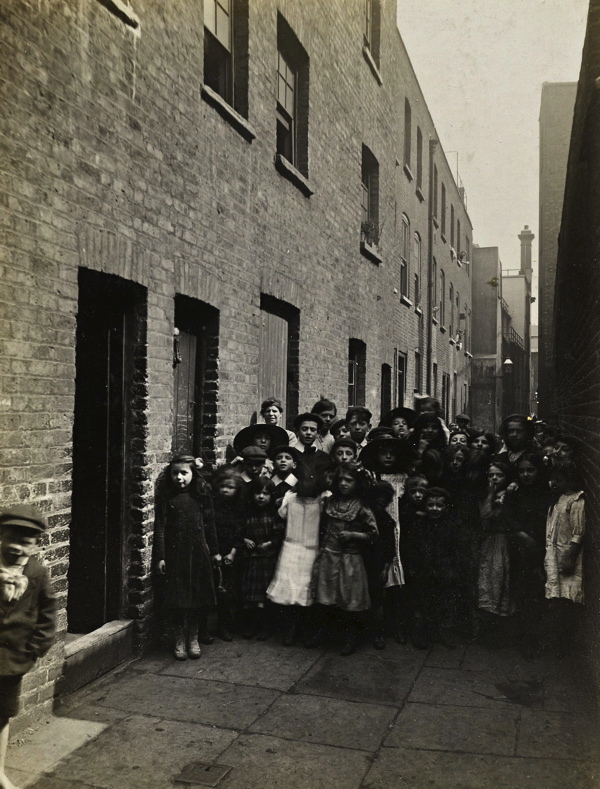
Frying Pan Alley, 1912, by C. A. Mathew
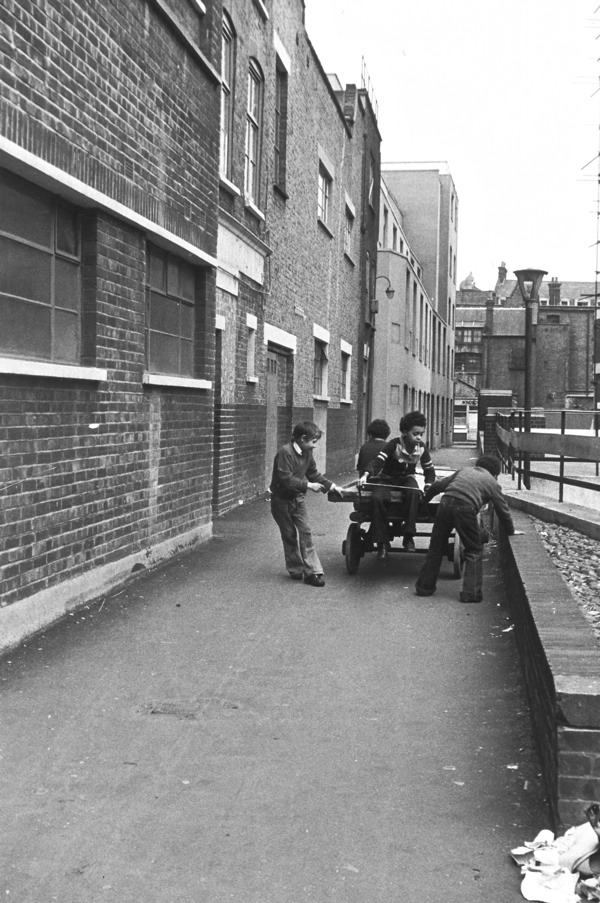
Frying Pan Alley, nineteen seventies.
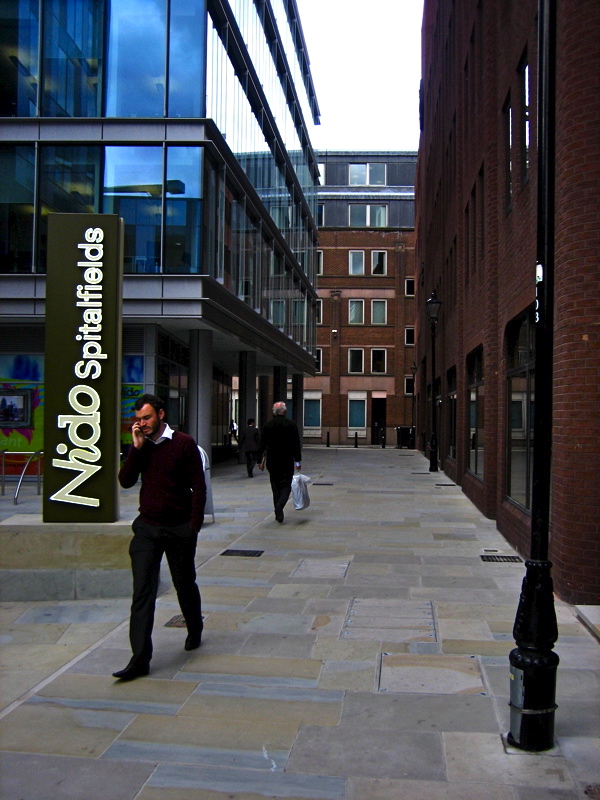 Frying Pan Alley, 2010
Archive photographs copyright © Bishopsgate Institute
You might also like to read about Jack London at Itchy Park
Richard & Cosmo Wise’s Collection

Cosmo Wise
Richard & Cosmo Wise have the most beautiful collection of old clothes I have ever seen, a momentous stash filling three huge studios in the rambling building in Hackney Wick where they live and work, surrounded at every corner with piles and rails of historic apparel. Father & son have devoted their lives to seeking specimens of extravagantly worn-out work garments – usually pre-1930 and some as old as 1880 – in rural France and Japan. These remarkable raiments, each with its story to tell, are gathered together in this afterlife for tired clothing where they can be appreciated and cared for. If only they could speak and tell their tales, what a wonderful party it would be.
Yet although Richard & Cosmo are both knowledgeable about the history of these pieces and passionately respectful of the skill and technique displayed in their making, the intention is not recreation of another era but to look forward – finding contemporary ways to wear these old clothes and also to create new clothes inspired by their aesthetic. Darning and patching with care, following the painstaking methods which have given these clothes such longevity, and sometimes restructuring, when garments have warped and lost their shape, it is possible for this attire to have a second life. And now, using sources of rare old fabric, Richard & Cosmo are created limited numbers of “new” garments, closely based upon the patterns of their treasured discoveries, sold under their label “De Rien.”
Cosmo & Richard dress entirely in clothes from their collection, putting them together with such bravura that it creates an intoxicating prospect, stylish yet strangely liberating from all the anxieties of fashion too. As rock star Adam Ant exclaimed, when he met Cosmo for the first time – “I want to look like him!’
On my recent visit to their magical emporium of garb, Cosmo brought out some of his favourites to show me, and here you can see for yourself and learn more of the discreet appeal of these charismatic old rags.

A double-breasted blue moleskin French work jacket from the late nineteenth century, still with its original metal buttons. “This is very rare thing,” explained Cosmo in awe. Blue jackets were for factory workers and black jackets were for agricultural workers.

Reverse of the jacket above. As mass production developed through the twentieth century, the styles become boxier, and the subtleties and fit were lost. In the nineteenth century, work jackets were more tailored. The back of this one has four panels and sophisticated curved seams, which fit the jacket to the rib cage and back of the wearer.
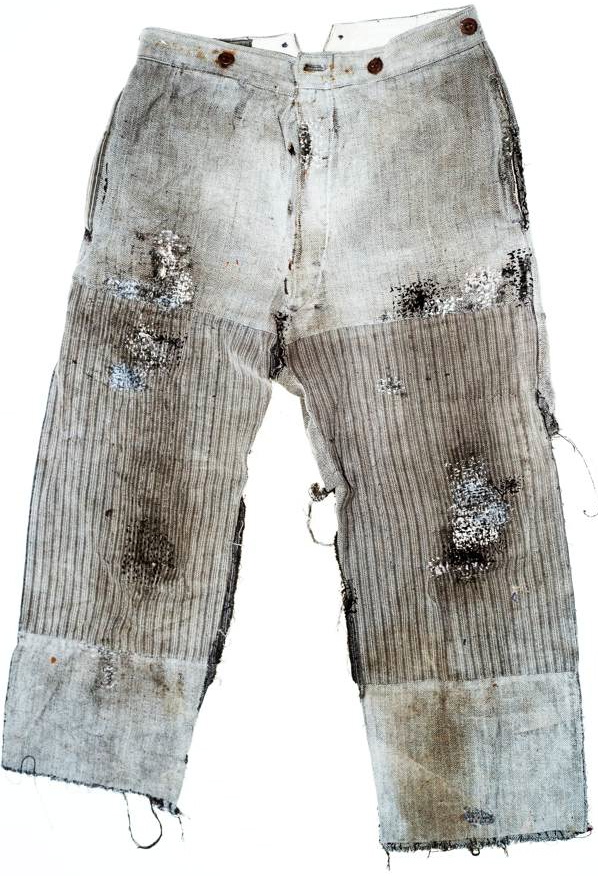
A faded pair of late nineteenth century striped trousers with patching and darning from that time. “No-one darns like the French!” Cosmo exclaimed in sheer admiration. The patches are an interesting collection of different stripes that compliment – herringbones and cables. “Each year the textile companies competed to bring out new stripes to delight the customers.”
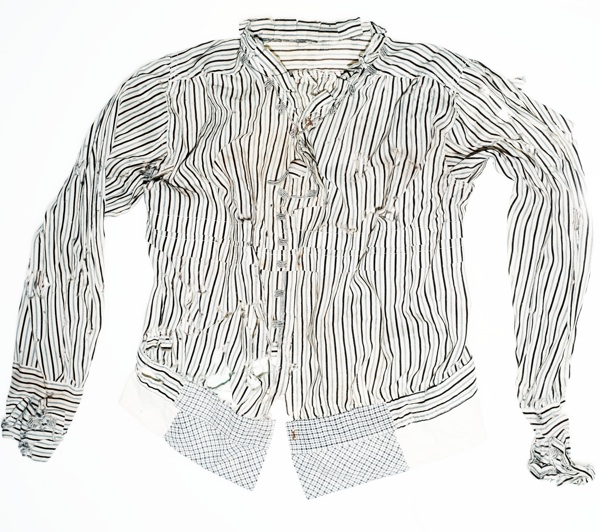
A woman’s silk blouse of around 1900 from Northern France. “Nice, simple and classic.”
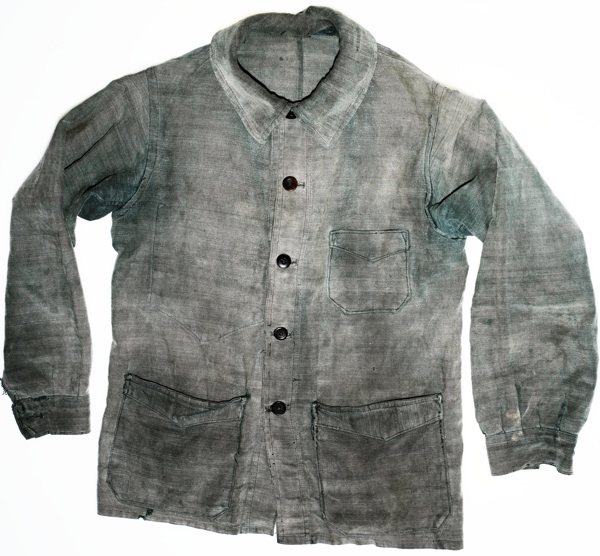
A natural indigo dyed linen work jacket from the period between 1880 and 1900, faded almost to green. Indigo dye came from the East and was very expensive, so when a synthetic version was produced around 1900, it completely died out. “For every thousand workwear jackets you go through, you find one of these, plain, simple and well-proportioned.”
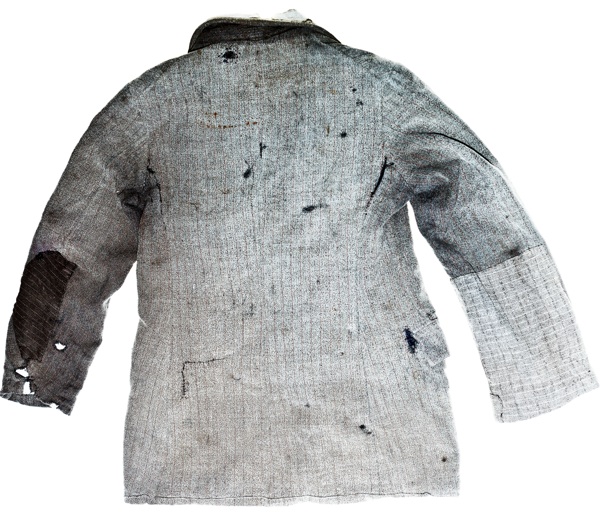
A patched coat of pre-nineteen thirties, from Normandy. “This is an incredibly made jacket,” explained Cosmo, “I love the patching, it’s an inspiration to us, and it makes me think of Comme des Garçons. When these sorts of fine old wool fade, the colours are marvellous.”
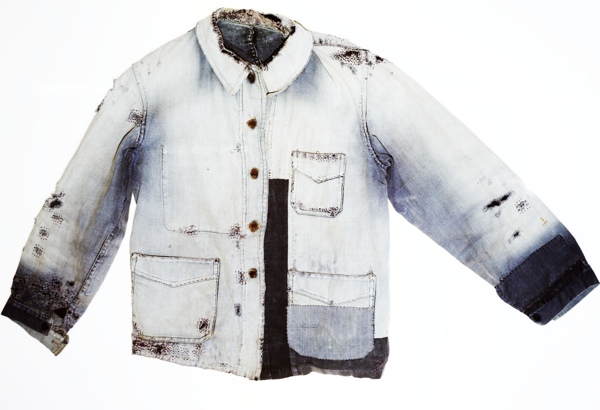
“This is an example of our trademark stuff.” said Cosmo of this moleskin work jacket from between the wars, “We have sold a lot of these over the years. When we first put them on sale, people laughed at us, but then style leaders bought them. This is impossible to source now.” The extreme fading of this garments suggests it may be from the South of France. “You get twenty different hues and incredible stitching. These clothes do become art, but I like the idea of these museum pieces being worn.”
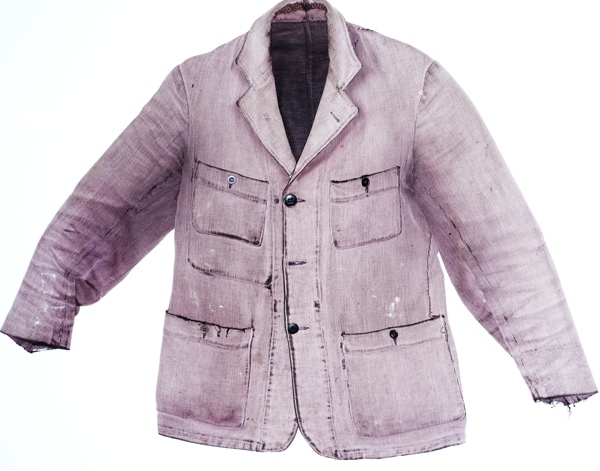
A sturdy cotton corduroy hunting jacket from the first decades of the twentieth century. “After the revolution, the land was open to everybody so the French have a tradition of working class hunting clothes which we don’t have.” explained Cosmo, “We only have poachers.”
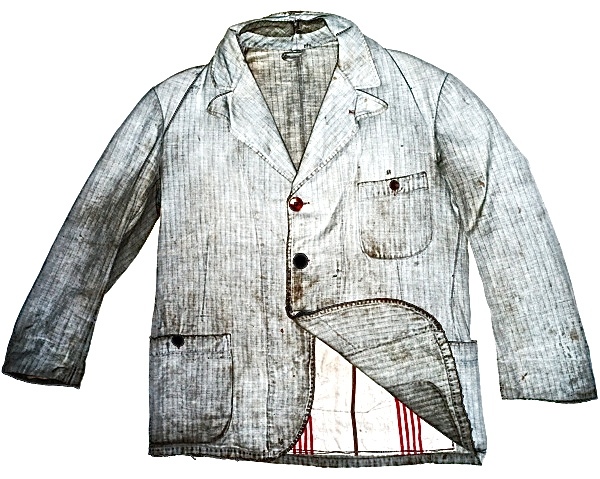
A young boy’s homemade hunting jacket of pre-1920,with four pockets, and the striped lining of mattress ticking contains a larger pocket.
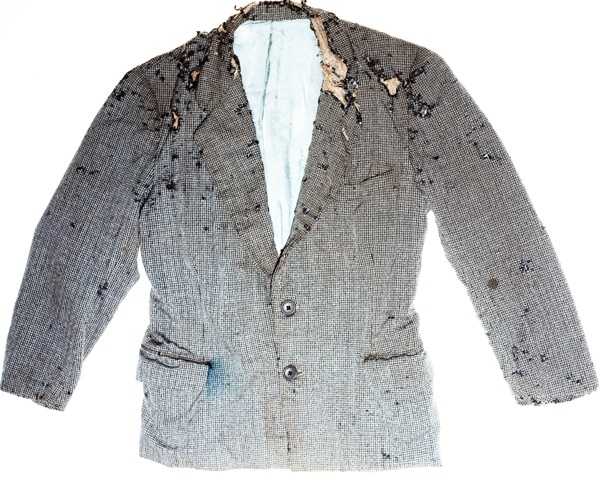
This nineteen forties jacket is a piece from the famous haul at Creve Coeur, where the largest owner of workwear in France buried his entire stock in an underground vault to hide it from tax man after the war, and it stayed there for thirty years. A factory made garment but of high quality fabric, and it has hessian fusing and horsehair in its structure.
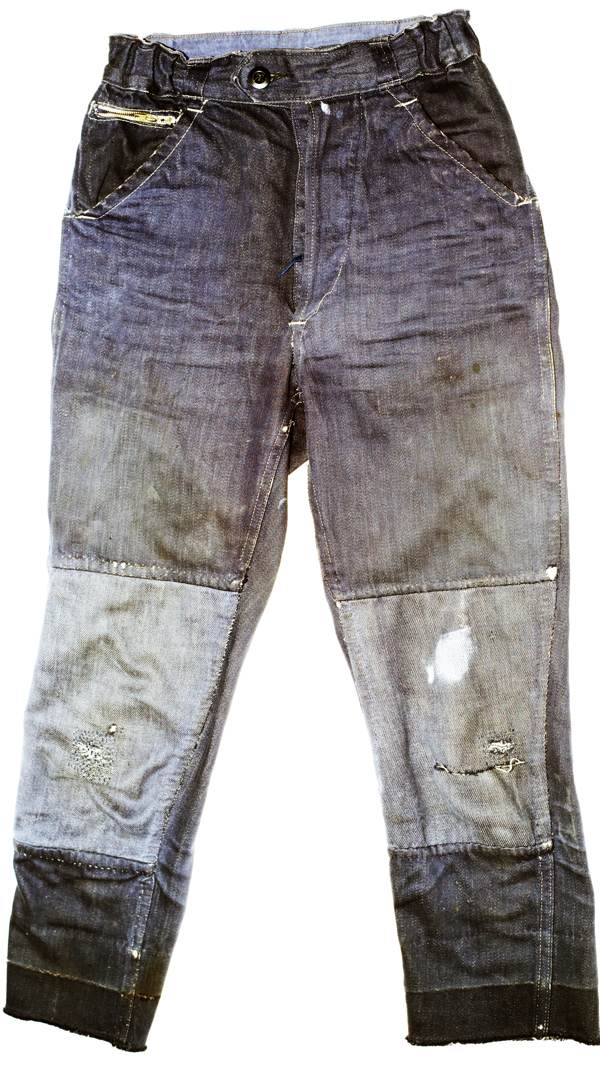
These panel-patched trousers made of old French denim were described by Cosmo as “an archetype of peasant clothing.” This high waisted pair made for a woman or a child are from the late forties/early fifties when the influence of American workwear was growing, visible in the use of Levis-style rivets and leather re-inforcing of pockets. “Until the nineteen thirties, French workwear was copied all over the world, and then it changed and they all started copied America.” Cosmo informed me, with a hint of regret at the passing of European dominance in the design of utilitarian clothing.
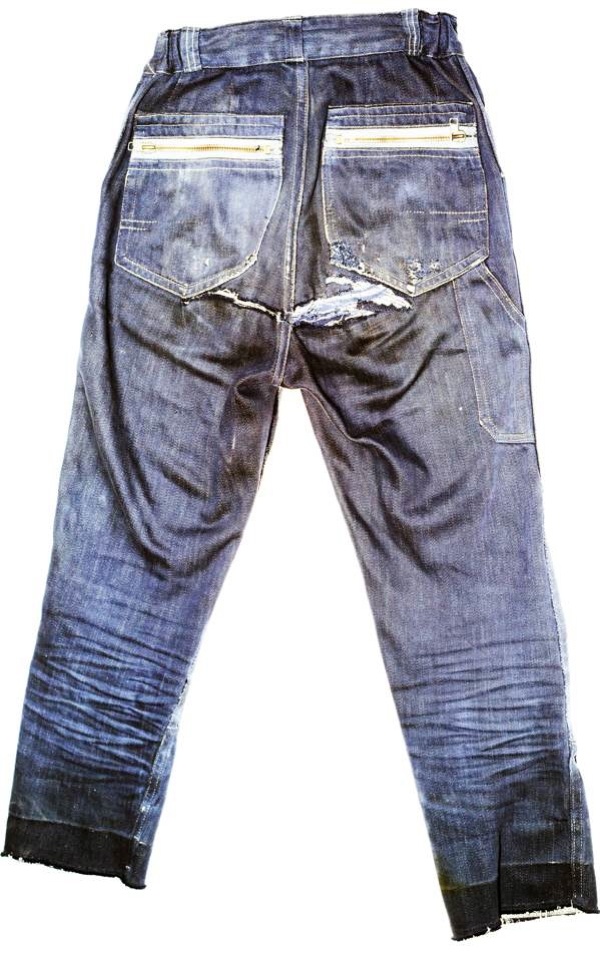
The reverse of the trousers above. The American influence is apparent in the use of zips in the pockets.

From the late thirties or early forties, this is a very early zip-up cardigan in patriotic French colours. “Up until the thirties, very little changed but then mass-produced fashion appeared and people could look like something other than their professions. Clothes became less functional and the quality slipped. It became more throw away, and clothes weren’t maintained and repaired as they once were when things were patched up over generations. In fact, these items rarely survive because they were poorly made compared with earlier clothes.”

Cosmo’s chair was created by Marisa de la Lopez
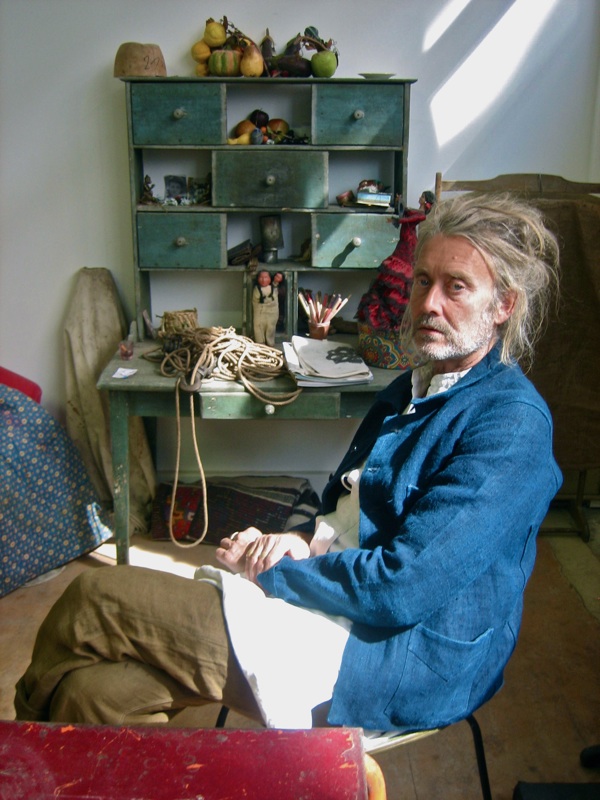
Richard Wise wears a natural indigo dyed jacket by De Rien.
Garment photographs copyright © Sofiane Boukhari
You can find Richard & Cosmo Wise in the Spitalfields Antiques Market every Thursday. Cosmo is also showing clothes at the Brimfield Market in Boston, USA on 6th-10th September and on 11th September at the Rosebowl in Los Angeles.
For sales enquiries and further information email cosmo@derien.co.uk
You might like to read my original feature about Richard & Cosmo Wise, Rag Dealers.
Spitalfields Antiques Market 25
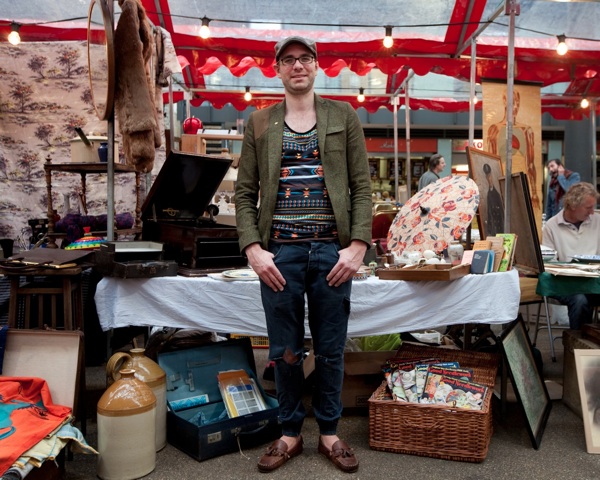
This is Chris Ford in a state of high excitement, as you can tell from his cheerful posture and jaunty placing of his hands in his pockets. “I used to work in A&E at the Royal London Hospital, but this is much more fun!” he admitted to me breathlessly on his first day as a trader at the market – an escapade that constitutes a “day off” from his chosen profession of nursing. “I think the other dealers smelled fresh blood, they were going through our boxes before we’d even had time to unpack.” he whispered, widening his eyes in thrilled amazement, “So we were able to make big chunk of money at the beginning and everything since has been a bonus.” Coming to the market is an unexpected adventure for Chris.“My partner inherited an entire house full of antiques and we didn’t know what to do with it,” he revealed. Though, in spite of the day’s success, I doubt if he will be forsaking A&E just yet. “Somehow, I don’t think this will bring home the bacon,” Chris replied with a shrug, when I asked if he was considering a career change.
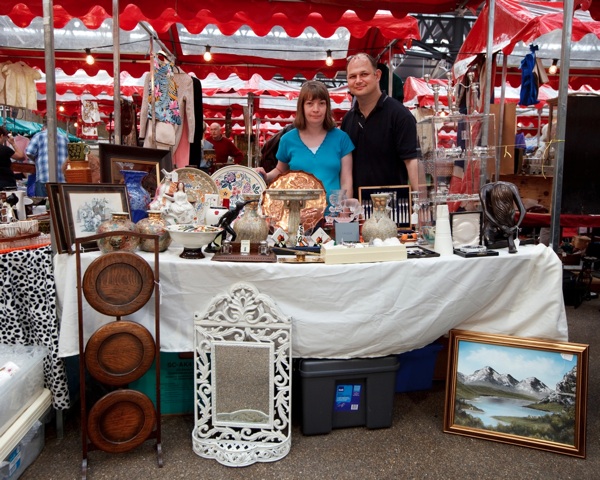
This is Danny Hamilton & Vicky Gibson, also pictured on their first day’s trading, enjoying an auspicious start in the crowded market hall filled with those escaping the Summer downpour. “It’s been really good,” Danny admitted to me, rubbing his hands in satisfaction,“There is a real buzz in here today.” Danny brought a range of things to test the market – from a fine piece of Staffordshire to a nicely painted Poole plate, and a selection of the old silverware that is his personal speciality. “I grew up with antiques because my father used to buy them to furnish the old cottage we lived in,” explained Danny, who started dealing in silver two years ago. Like many in this market, Danny began as a collector and then started trading. By contrast, “I’m just here to learn what I can,” proposed Vicky modestly. Yet, although she claimed she was only there to offer moral support to Danny, the one item she had on the stall was sold. “I bought it yesterday and sold it today, “ she announced in triumph, “doubled my money!” So I think we may conclude this pair are here to stay.
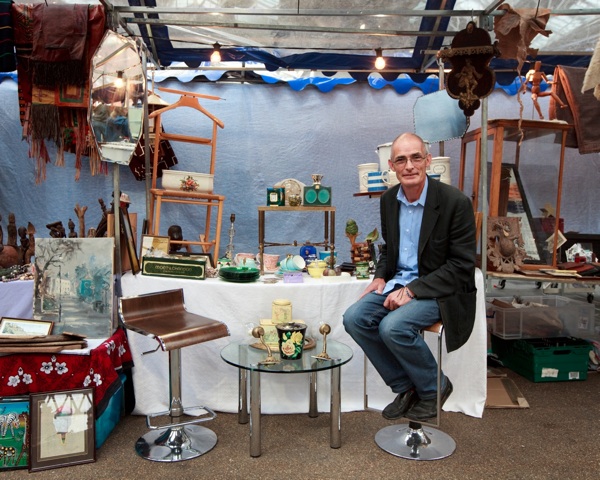
This is the softly spoken and erudite Eugene Tiernan, an antique dealer of thirty-two years experience. “My mother was a dealer in Ireland,” he began, as a conversation opener, whilst I took my perch on the vacant stool beside him.“I have always operated at the decorative end of the market, and I have an encyclopaedic knowledge of the decorative arts of the nineteenth and twentieth centuries,” Eugene told me, as if that was something quite commonplace, adding for interest’s sake “- the style of how we live today was really decided in the early nineteenth century at the time of the Prince Regent.” There is no doubt that Eugene brings a touch of class to the market, though he would blush if you were to compliment him on his educated loquacity. “I don’t stall any place other than Spitalfields Market,” he confided to me, as if he were revealing a priceless secret, “I believe in it because it has an incredible cross-section of people with great knowledge and I know a new look will emerge out of this market.” Now that Eugene has spoken, it is only a matter of time.
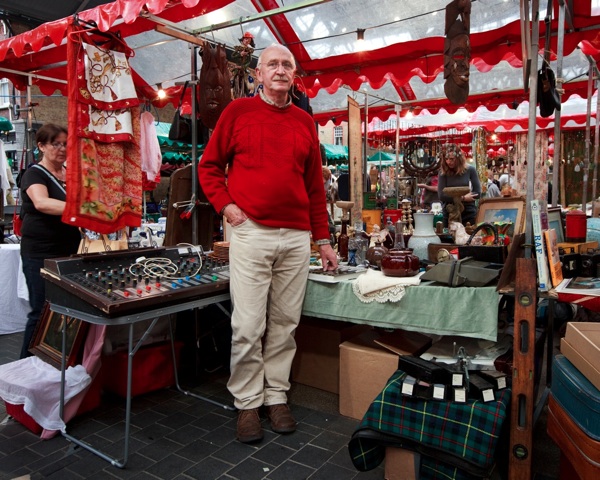
This dignified gentleman is Robert Russell, who got up at quarter to four in the morning to come here from Kent. “This is a side interest,” Robert admitted to me discreetly, which made his early rising even more impressive. “If I was doing this to make a living, I’d be struggling.” he added, catching my eye and talking plainly from experience, before conjuring a picture of his crowded existence in the country,“Since I retired from British Airways, I’ve got nearly ten acres of ground which keeps me busy. You’d think that if I was retired, I have all the time in the world but it doesn’t work that way. I’m not objecting, I’m happy to be busy and I have plenty of animals – five geese, two rare breed sheep, a cat, and two dogs looking for a walk.” Robert’s day out in the market may constitute a break from his rural menagerie, yet he always comes up with plenty of interesting new finds – like the nineteen seventies manually operated mixing desk and the boxes of magic lantern slides, both examples of equally arcane technology today.
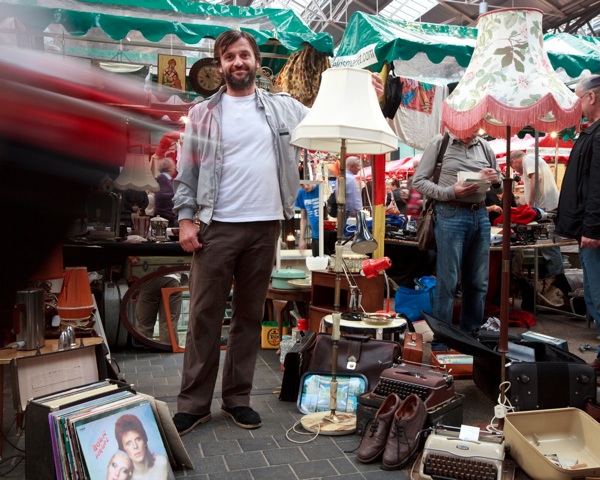
This is Shep, an adventurous Yorkshireman, who started in markets on the other side of the world and now trades in Stoke Newington and Wimbledon as well as Spitalfields. “I lived in Sydney for a while, working in house clearance, and I began running a stall.” he recalled, “I am really enjoying the buying and selling, I just hate packing up at the end of every day!” Yet Shep had much less to pack away than he brought, because like many others that week, his trading had been good. “Every week I learn a bit more and every week I make a bit more money,” he confided, “I would like to take this further, but it’s a question of whether I can sustain it. I’d like to build it up and have a shop one day, that’s my dream.”
Photographs copyright © Jeremy Freedman