Unveiling the Map of Spitalfields Life
[youtube mvq38fBhGDI nolink]
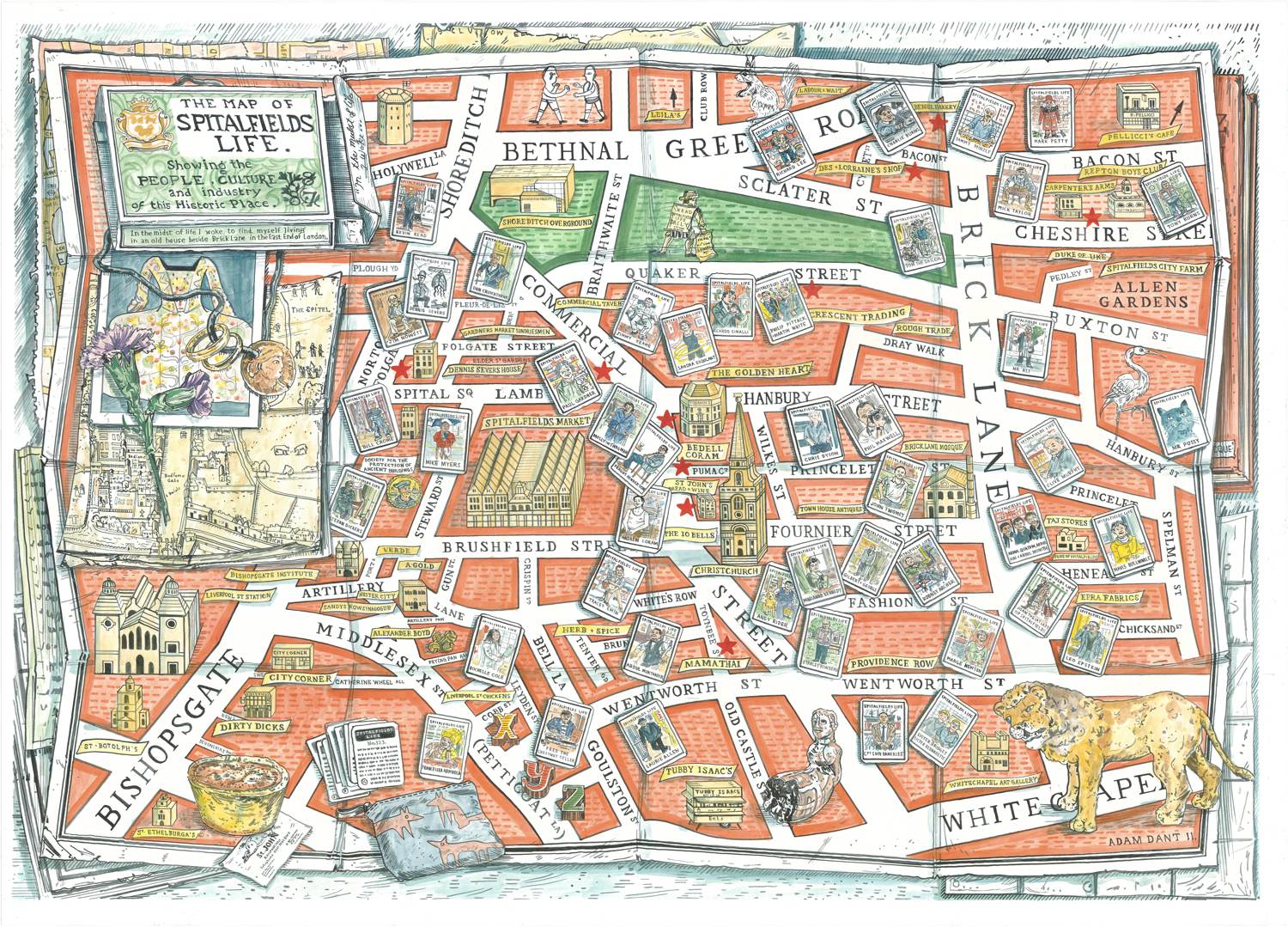 Click to enlarge the map
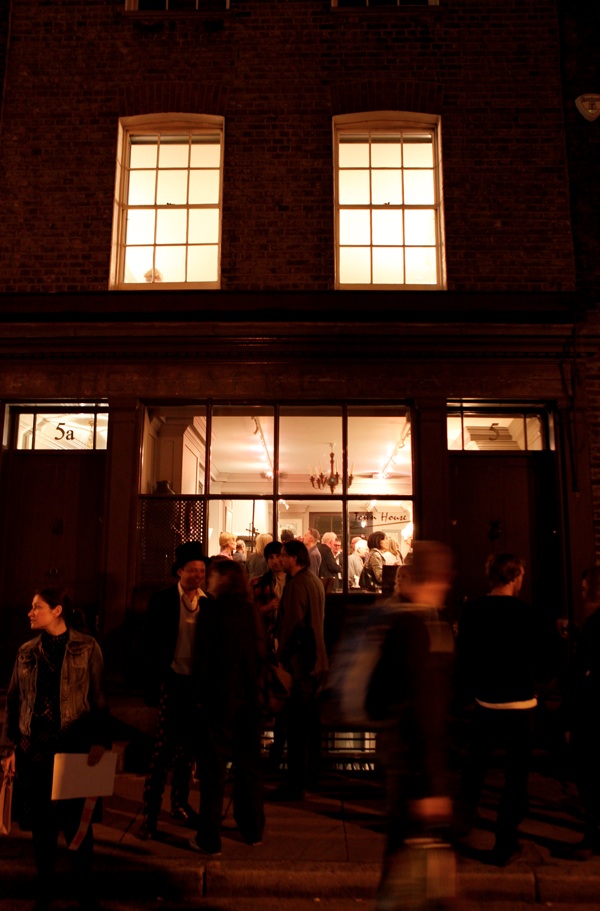
There was a hullabaloo in Fournier St on Thursday night as the people of Spitalfields crowded excitedly into the Town House at number five for the unveiling of The Map of Spitalfields Life by Sandra Esqulant, landlady of the Golden Heart in Commercial St. Fortunately, Leila McAlister was on hand to provide steadying glasses of Gin Fizz to the assembled throng as they gathered in the eighteen twenties’ doctor’s surgery at the rear of this tottering eighteenth century weavers’ house.
Once, if there was an accident at the brewery in Brick Lane or in the Spitalfields Market, the unfortunate victim was ferried on a stretcher to this surgery for the necessary amputation. Yet although Thursday night’s event was of a far lighter nature, the anticipation reached fever pitch and some were seen to dab perspiration from their brows, as the crowd parted upon Sandra Esqulant ‘s arrival, regal in a couture gown, to draw back the golden silk cloth and reveal the map.
The walls were lined with the extraordinary maps of the East End which Adam Dant has drawn over the past ten years – works that have established him as London’s Cartographer Extraordinaire. And there at the centre of the gallery was Adam’s latest creation The Map of Spitalfields Life under its silken drape glistening in the light, ready to delight the crowds and take its place among his other masterpieces of cartographic ingenuity.
It was only in the preceding days, as I delivered the invitations in person, that I discovered how this metaphor of being “on the map” acquired real meaning, and the most commonly heard line of Thursday evening was the critical question, “Are you on the map?”
A great number of those you have read about here in the pages of Spitalfields Life are on the map and, at the unveiling, it was exciting to welcome Molly the Swagman, Andy Rider the Rector of Spitalfields, Mick Taylor the Sartorialist of Brick Lane, Rochelle Cole the Poulterer, Paul Gardner the Market Sundriesman (proprietor of Spitalfields’ oldest family business), Clive Murphy the Oral Historian, Philip Pittack & Martin White of Crescent Trading, Mark Petty the Trendsetter, Dan Cruickshank the Architectural Historian, Mike Myers the Spitalfields Crooner, Robson Cezar the King of the Bottletops, Simon Watkins & Rachel Wythe-Moran of Labour & Wait, Roy Emmins the Whitechapel Sculptor, Philippa Stockley the Historical Novelist, Rodney Archer the Aesthete, Gary Arber the Printer from the Roman Rd, Mick Pedroli & David Milne of Dennis Severs House, Laurie Allen of Petticoat Lane, Cecile Loyez of Agnès b Spitalfields, Bill Crome the Window Cleaner who sees ghosts, Andrew Coram the Antique Dealer, Chris Dyson the Architect, Pam & Raj Chawla of Mama Thai Noodle Bar, Paul Bommer the Illustrator, Marge Hewson the Nursery Nurse from Christ Church School, Sarah Winman the Novelist, Leo Epstein the last Jewish trader on Brick Lane, Cynthia Grandfield the Queen of Ryantown, Mavis Bullwinkle the Secretary, Boyd Bowman of Alexander Boyd, Stefan Dickers the Archivist at the Bishopsgate Institute, Marianna Kennedy the Arbiter of Elegance, and Jim Howett who is responsible for many of the best renovations in Spitalfields. As you can imagine, I took great pleasure in making introductions, especially between those who had known each other by sight for years but not spoken before.
Adam Dant raised a hand to silence the hubbub and then – with a few plain words from the heart – Sandra Esqulant pulled back the gold silk cloth. It slid from the picture with a satisfying rustle and fell to the floor in silence before a collective gasp of wonder arose from the room. Then Adam Dant’s daughter Grace presented a bouquet of exotic roses to Sandra for performing the honours and the crowd surged forward in excitement, with index fingers extended to seek their portraits upon the map.
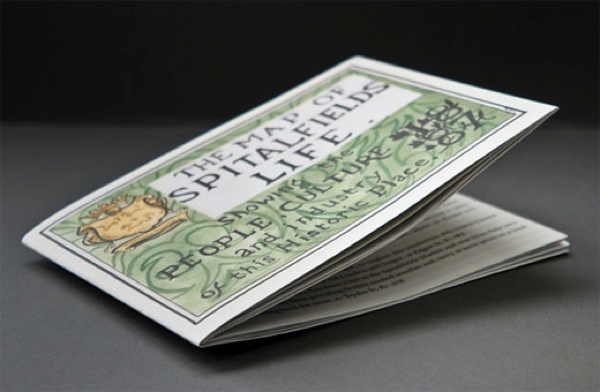
The Map of Spitalfields Life is published by Herb Lester in a pocket-sized edition with Adam’s cartography on the front and my stories of the people of Spitalfields on the reverse. A hand-tinted limited edition is also available suitable for framing, signed by Adam Dant and yours truly. Both can be purchased directly from www.spitalfieldslife.com as well as limited editions of many of Adam’s most popular maps featured in his exhibition, including The Map of Hoxton Square and The Map of Shoreditch as New York.
The exhibition Adam Dant – Unusual Cartography of East London runs at the Town House, 5 Fournier St, until Sunday 2nd October. Open every day except Monday, from 11:30 am – 5:30pm and at other times by arrangement with Town House.
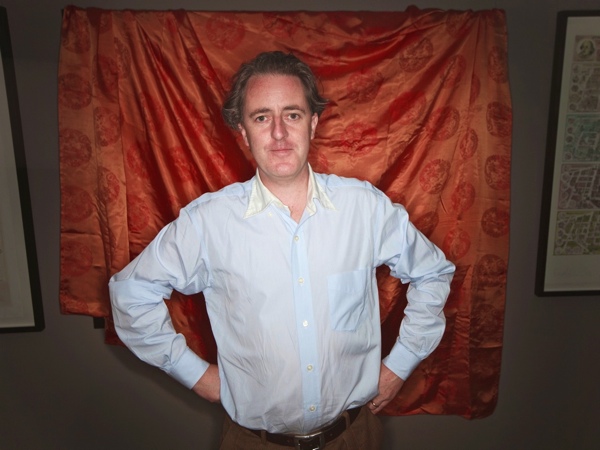
Artist Adam Dant, the Hero of the Hour.
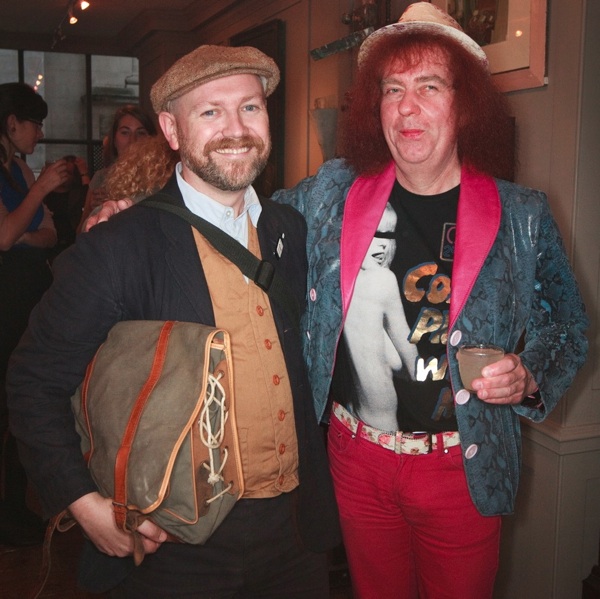
Illustrator Paul Bommer & Trendsetter Mark Petty
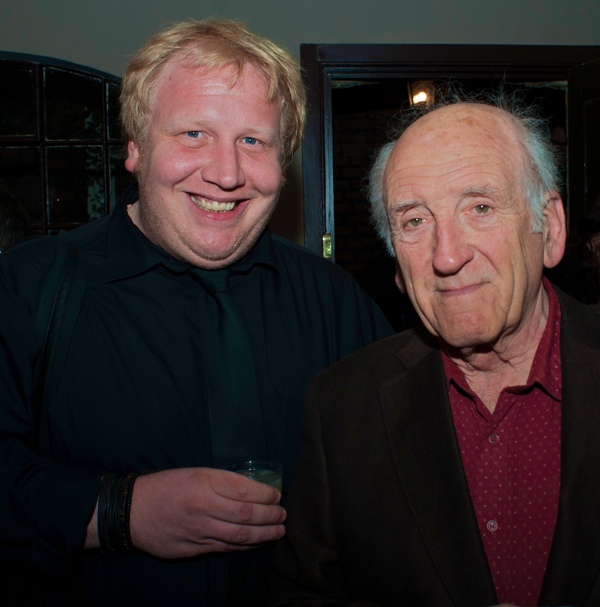
Archivist of the Bishopsgate Institute Stefan Dickers & Mike Myers the Spitalfields Crooner.
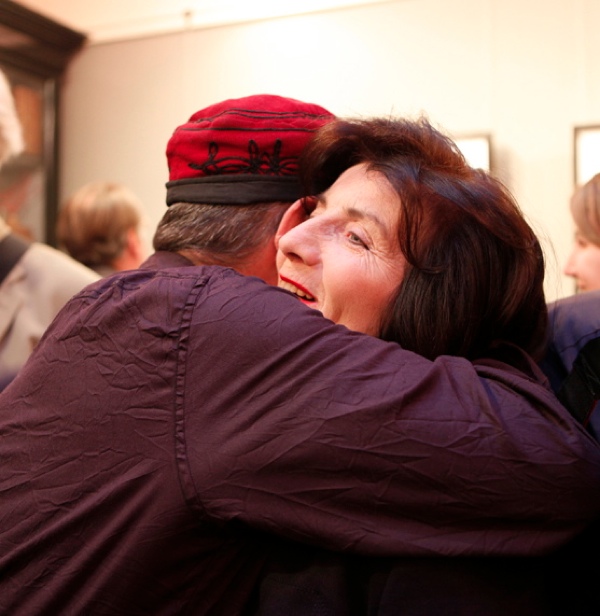
Rodney Archer, the Aesthete, embraces Sandra Esqulant.
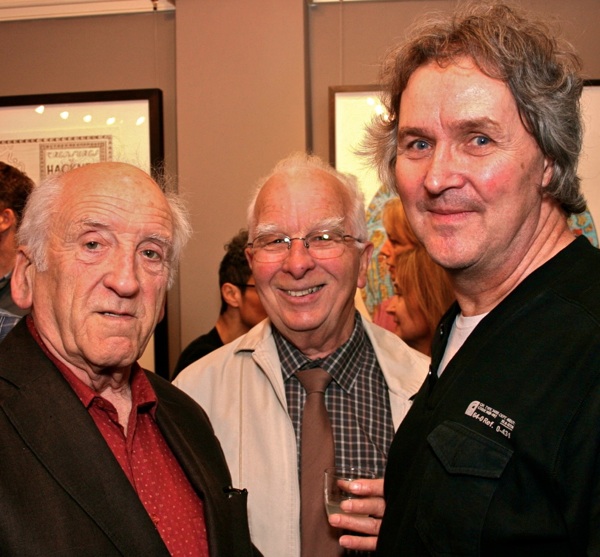
Mike Myers, Stanley Rondeau the Ninth Generation Huguenot & Paul Gardner, Market Sundriesman.
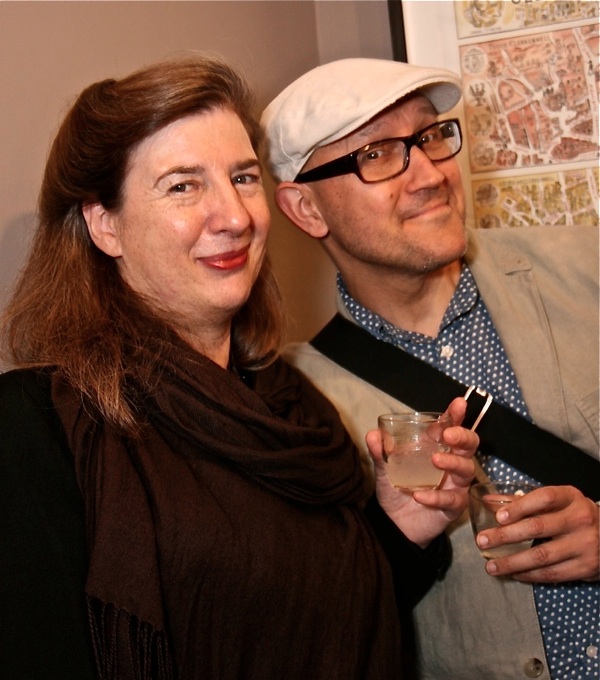
Jane Wildgoose of the Wildgoose Memorial Library & Simon Costin of the Museum of British Folklore.
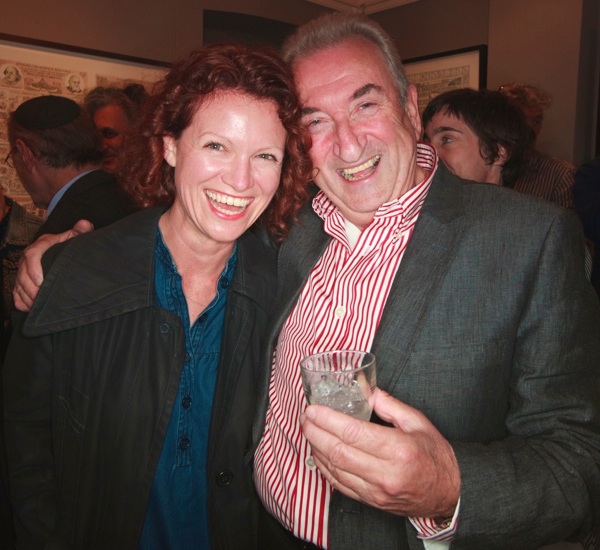
Photographer Patricia Niven with Phillip Pittack, Cloth Merchant of Crescent Trading.
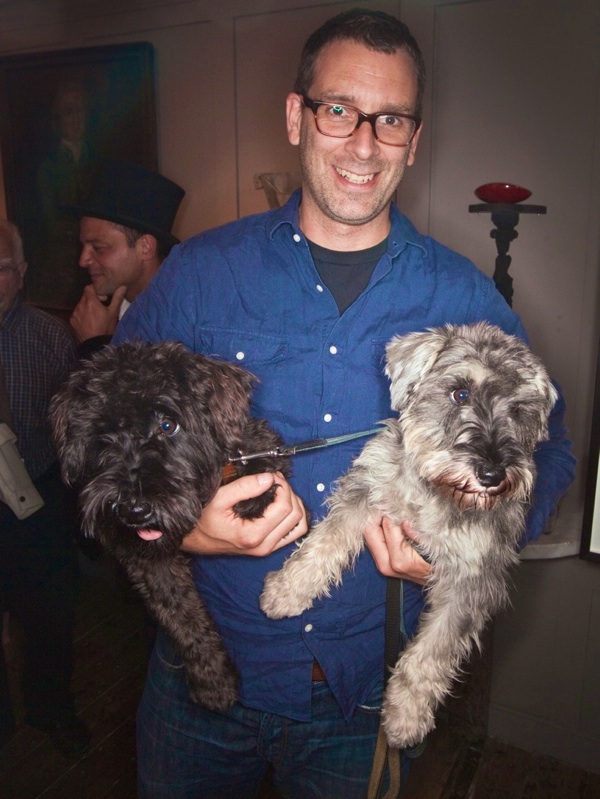
Photographer Martin Usborne with canine friends.
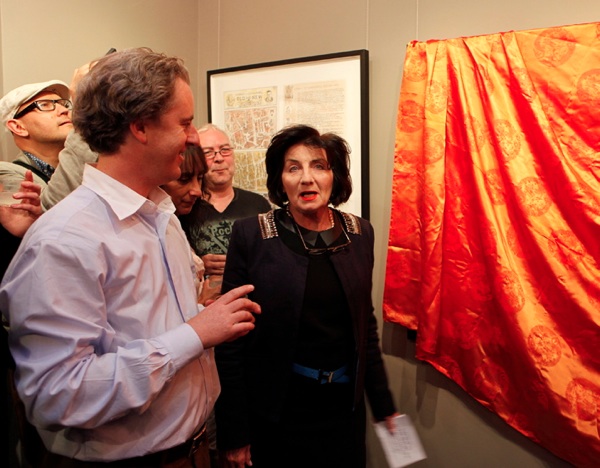
Adam Dant & Sandra Esqulant
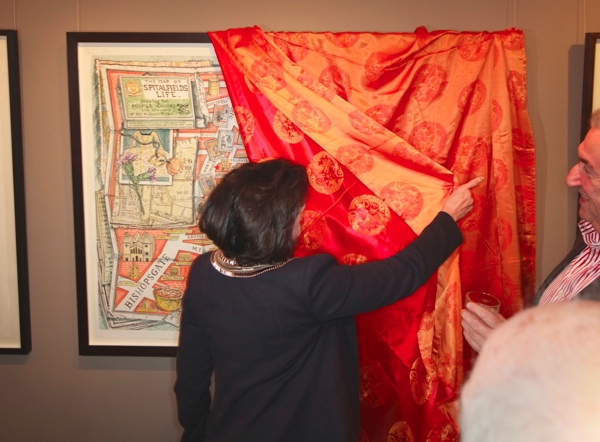
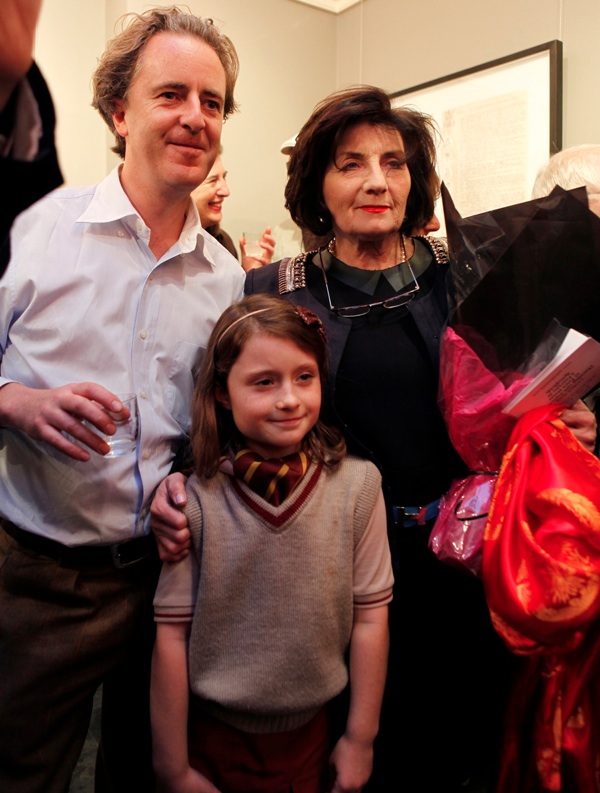
Adam Dant, Sandra Esqulant & Grace Dant
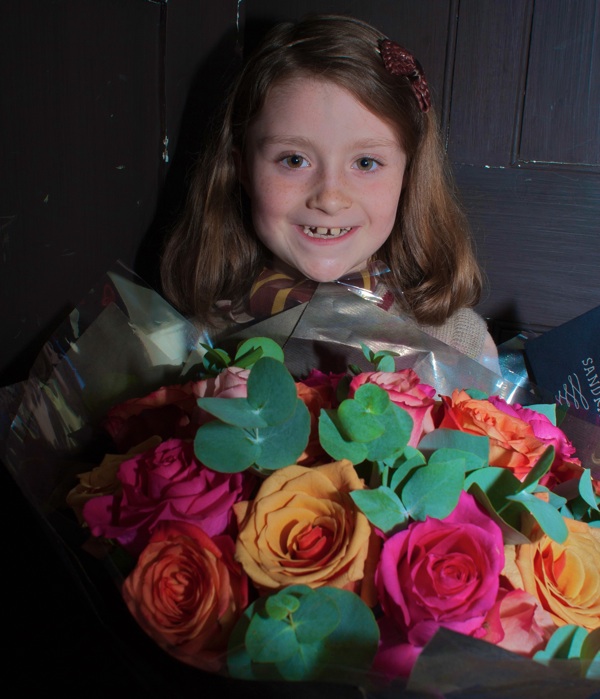
Grace Dant with the bouquet she presented to Sandra Esqulant.
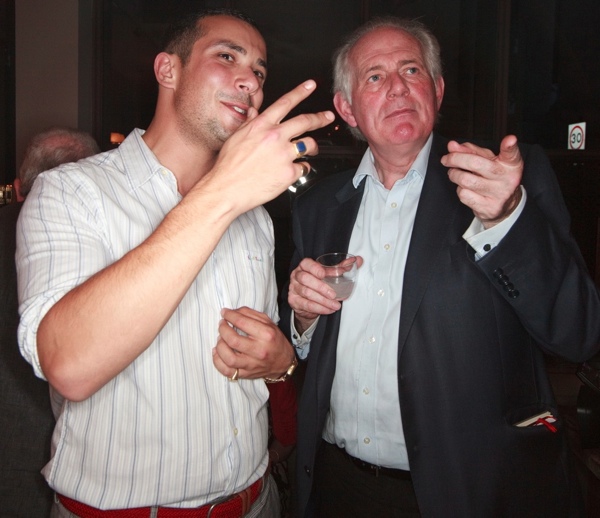
Photographer Jeremy Freedman & Architectural Historian Dan Cruickshank admire the map.
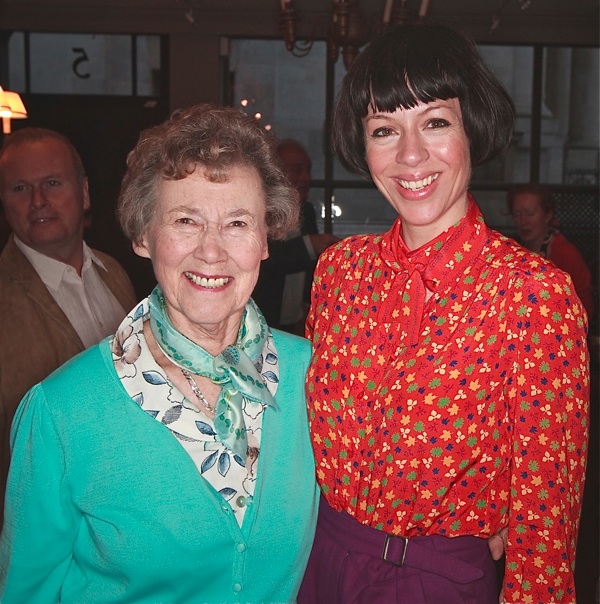
Secretary Mavis Bullwinkle makes a new friend.
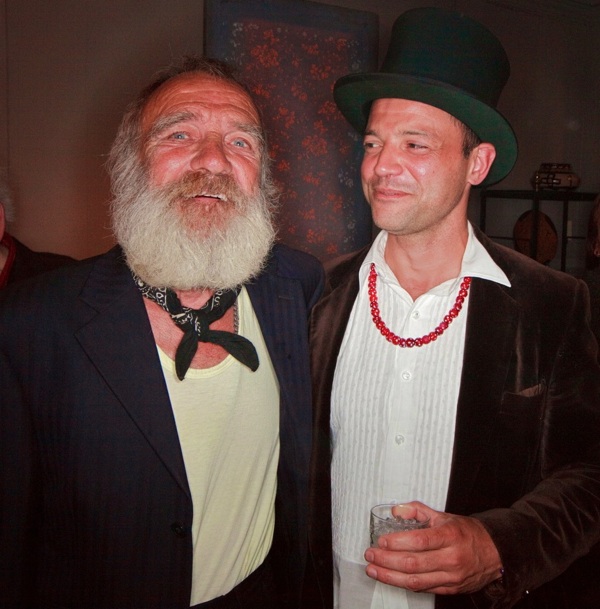
Mick Taylor the Sartorialist of Brick Lane & Robson Cezar, King of the Bottletops.
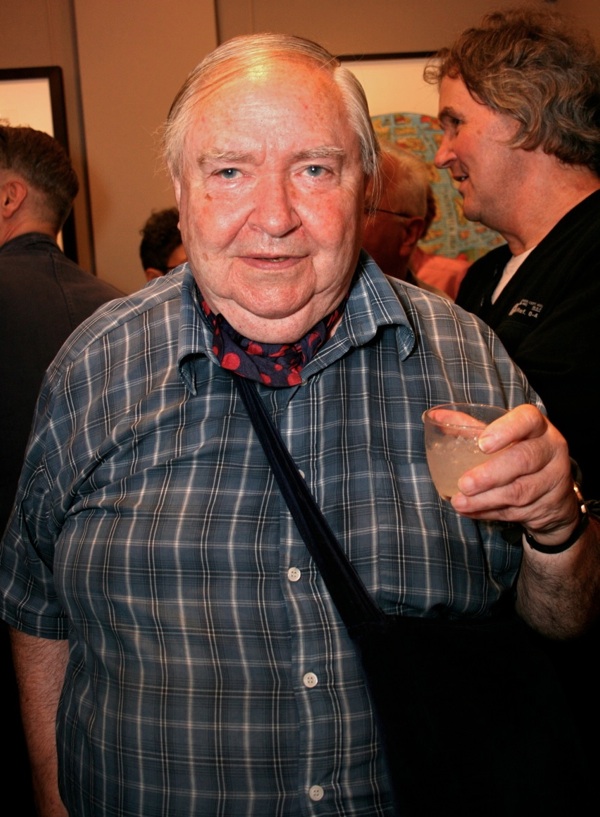
Clive Murphy, Oral Historian & Writer of Ribald Rhymes.
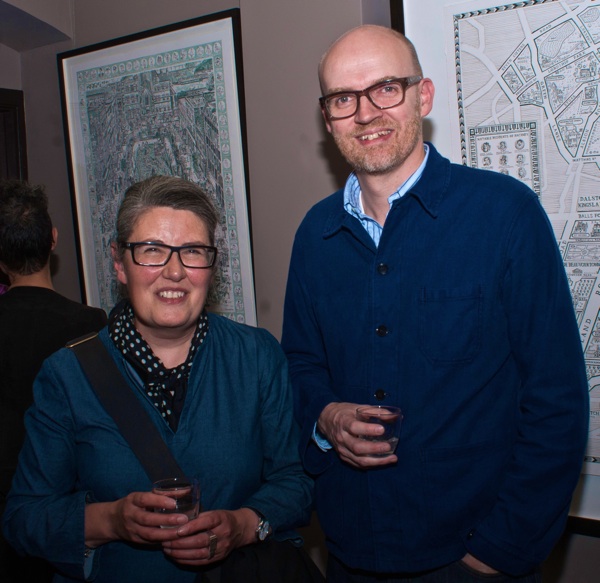
Rachel Wythe-Moran & Simon Watkins of Labour & Wait.
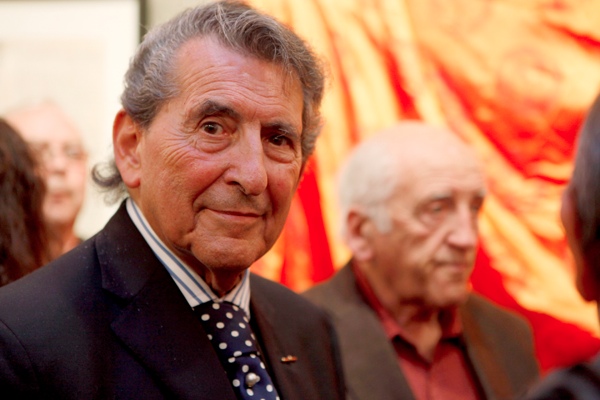
Martin White, Cloth Merchant of Crescent Trading.
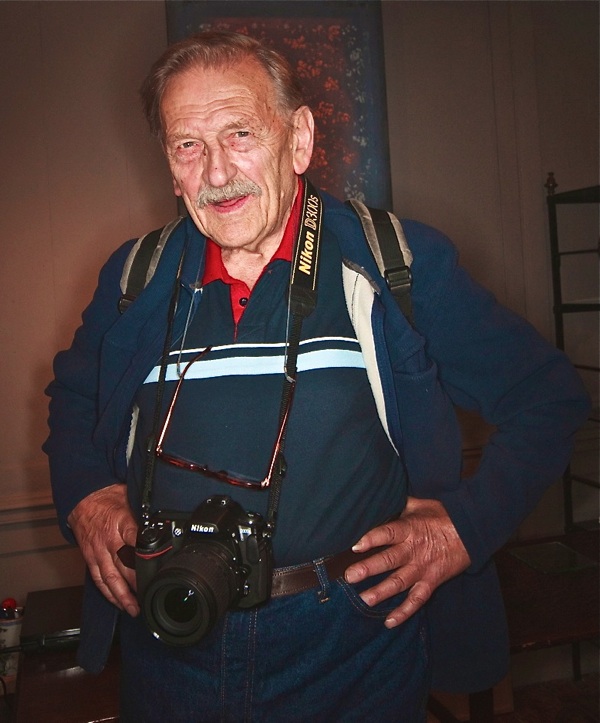
Gary Arber, of W.F.Arber & Co Ltd Printers in the Roman Rd
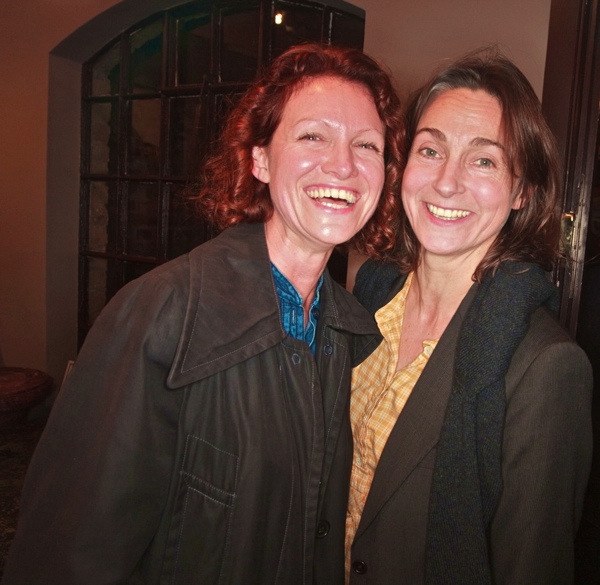
Photographer Patricia Niven & Novelist Sarah Winman.
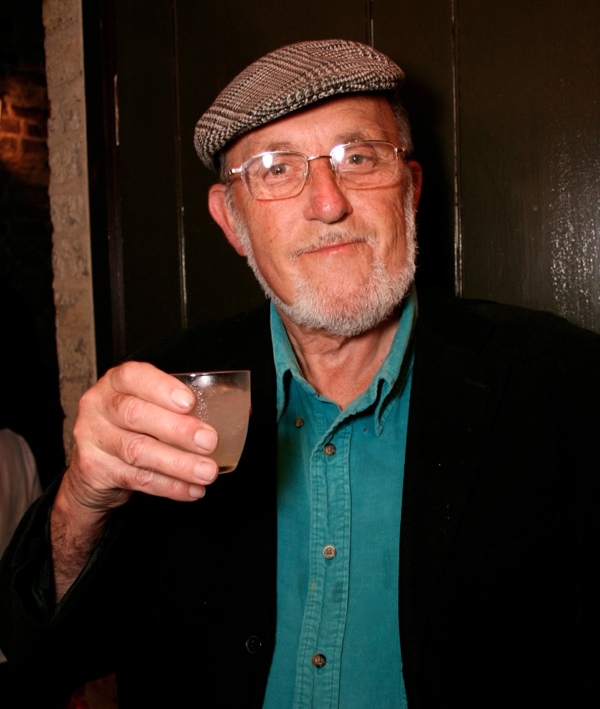
Roy Emmins, Sculptor of Whitechapel.
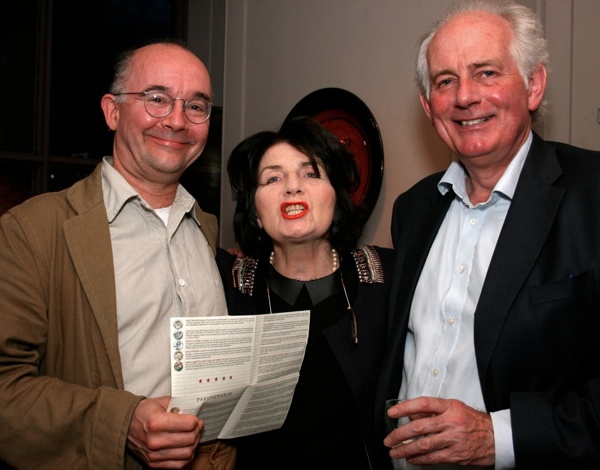
Jim Howett, Sandra Esqulant & Dan Cruickshank.

Robson Cezar & Cynthia Grandfield, Queen of Ryantown.
Photographs by Spitalfields Life Contributing Photographers Sarah Ainslie, Lucinda Douglas Menzies, Jeremy Freedman & Patricia Niven. Photograph of the folded map by Stepanie Lynn
Brick Lane Market 15

This is the genial Bob Barrance who has been selling cut-price prepacked food from the same spot in Bacon St for over forty years. Suiting its name, this street was formerly reserved exclusively for food stalls and – pointing out the empty pitches of his long-gone neighbours – Bob recalled the stall that sold hot pineapple fritters, another which dealt in every kind of pickled onion and Tubby Isaacs Jellied Eels, all once keeping him company in the place where today he is the lone trader.
I had intended to interview several stallholders that Sunday morning on the Lane, but when I asked Bob how he came to be there trading on Bacon St, the answer was so extraordinary that I realised his testimony must stand alone.
“I enjoy the people, I’ve sold to the same people for thirty years. I’ve attended three funerals of my customers. They all know me as Bob and I know a lot of them by their first names too. I absolutely fell into it, my dad was doing this before me and I took over at twenty-one. I come from the Portobello Rd and I used to help out the stallholders, but I never thought I’d do this for life.
My dad was a compulsive gambler and we emigrated to Australia to escape his debts when I was fifteen. We were called “Ten Pound Poms,” the Australian government paid your boat fare if you emigrated. We were waiting on the wharf at Southampton when he disappeared, so we got on the boat without him. My mum and seven brothers and sisters, we didn’t even know whether he was on board or not but, an hour after departure, we discovered he had been carried on board on a stretcher and was in the ship’s hospital. The little bit of money we had, he had gambled it away and then had a mild heart attack at the bookmakers. We went six weeks without a penny in our pockets.
He won the football pools in 1963 and blew it all on a greyhound that he ran at Stamford Bridge, instead of buying a house.
He was the manager of a betting shop, and he ran the tobacco kiosk at the Trocadero in Piccadilly and lost all the takings on the dogs, but as they hadn’t done a stock take before he took over the kiosk, they couldn’t pin it on him. He worked in Hamleys and in Selfridges and he gave us all toys, but they were stolen – three detectives turned up at our house one Christmas Eve and stripped it completely of toys. He worked as a baggage handler for BOAC and he went through all the suitcases. He got a job as paymaster and, on his way to the bank, he’d take all the cash to the betting shop. We’d go to White City every Sunday and Thursday, betting, and he’d come out of there without a penny and we’d get on the bus to go home without any fare. If the inspector came, he said “Two tickets to Acton, please,” which was in the opposite direction, so then we’d have to get off and walk the rest of the way. He’d do lots of silly things like that.
He was so clever it was unbelievable, he had so many incredible jobs and he blew them all. He couldn’t help himself. I felt sorry for my mother, he caused her a lot of upset.
He used to have the keys to the ICI building in Melbourne, and he went in when it was empty and took all the money from the desks. When I was nineteen, I wanted to come back to Britain to do National Service. I was sick of him, so I took the boat back alone. But when I arrived he was already here to greet me. He asked to be repatriated, he wrote to Harold Wilson, the Queen and the Australian Prime Minister. They flew him back for nothing and had two Rolls Royces waiting at Heathrow for him and the family. He was the only man to go the Australia and back for free! The News of the World were going to do his story and they offered him a nice few bob, but he asked for more money and they dropped it.
He was working for the man who ran this stall on Bacon St, until he had a heart attack and ended up in the Royal London Hospital. So then I asked the stallholder for the job, but he was worried I would steal from him like my dad did, but I proved myself and eventually I took over the pitch from him. Now I do five markets a week and the rest of the time I am running around getting the stock, selling it is the easiest part compared to that. Two of my kids work for me, though I wish they didn’t because it’s got so tough. Yet I wouldn’t have done it for forty years if I didn’t enjoy it. Even when you wake up and there’s six feet of snow, you still do it.
My dad – he taught me a lot of good things – he instilled morals and values in me.”
Photograph copyright © Jeremy Freedman
Bobby Prentice, Waterman & Lighterman
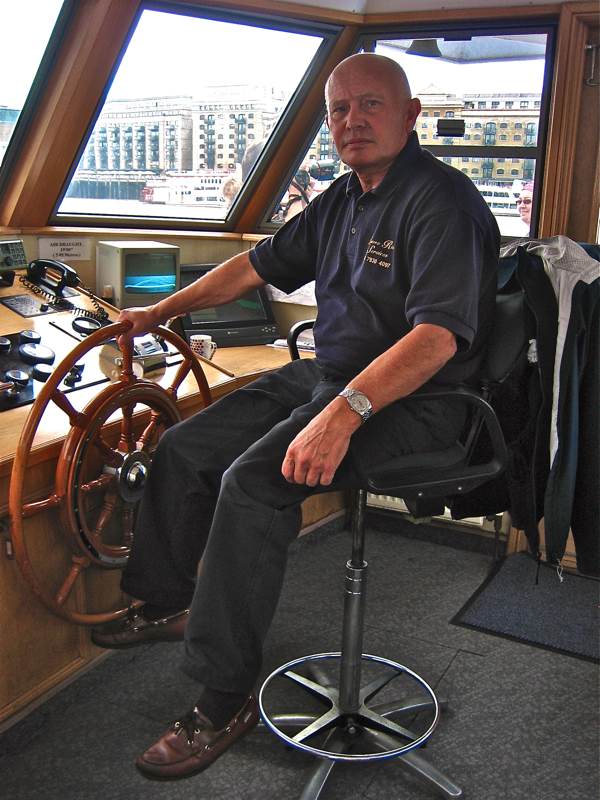
Bobby Prentice, Waterman & Lighterman, is a well respected personality along the river. Today he is the skipper of a pleasure boat ferrying tourists between Hungerford Bridge and Greenwich, but his relationship with the Thames is lifelong and profound. Bobby holds the record for the Doggett’s Coat & Badge Race, is one of the Vintner’s Company Swan Upping Team, and his legendary prowess as a rower even includes successive attempts to row the Atlantic Ocean. Amiable and possessing a striking natural gravity, there is no doubt that Bobby is a hardy soul.
Originally, Watermen were those who took passengers across the river, and today it is necessary to win your Doggett’s Coat and Badge – in the annual race held each June – to be able to call yourself a true Waterman. In a critical distinction, Lightermen were those who transported goods, lightening the load of cargo vessels with their barges which were called “Lighters.” Both professions are of ancient origin upon the Thames and, in his career, Bobby has been both a Waterman & a Lighterman.
On a sparkling September afternoon, I joined Bobby and his son Robert in the cabin of the Sarpenden and – as we slid down river from Hungerford Bridge along King’s Reach and through the Pool of London, passing under Tower Bridge – he outlined his relationship with this powerful watercourse that defines our city.
I was born and bred in Wapping, all my family come from Wapping. In 1969, at the age of sixteen, I was apprenticed to my father Robert. His father Robert was a Lighterman before him and his father Robert before that, which makes me the fourth as far as we know – there may well have been other Robert Prentices before – and my son Robert is also a Lighterman. We worked for the Mercantile Lighterage Co and in those days Fords at Dagenham did a lot of manufacturing, and we used to deliver knocked down kit ( that’s all the parts to assemble a car) to West India Dock, London Docks, Royal Albert Docks, Victoria Docks, Tilbury Docks and to Sheerness on the Medway for export.
I chose to do it, but my father didn’t want me to because the docks were already closing. When I wanted to leave school at fifteen, he encouraged me to stay on a year to get my exams. But I loved every minute of being on the river. I joined Poplar & Blackwall Rowing Club at ten and I spent all my youth on the river. I had the river in me. I used to go and work with my father as a little boy, just as children do today – I often have my grandchildren on the boat with me.
I did a five year apprenticeship, and a lot of Watermen & Lightermen still apprentice their children for five years, even though you can get a boat driver’s licence in two. My grandfather bought me my first sculling boat for £100 in 1968 and I won the Junior International Championship in 1970 and 1971, and represented Britain in the Youth World Championships. I won the Doggett’s Coat & Badge in 1973, then the double sculls at Henley with Martin Spencer, and subsequently Martin & I won three Home Internationals for England and two National Championships.
When I finished my apprenticeship, I spent my first two years in West India Dock. Once I got my licence, it enabled me to tow barges behind tugs and much more. I was one of the “jazz hands,” which is like being a journeyman. At twenty-two I got moved down to Grays in Essex and became a Tug Skipper, but in 1982 the Mercantile Lighterage Co folded as a consequence of the decline of the docks. The only lighterage left now is “rough goods’ – London’s waste, and my youngest son does that – towing the barges down to Mucky Flats and Pitsea Creek. This current business, Crown River Cruises, started in 1986, we began with one boat and we’ve got five now, and we do scheduled services. I still row.
Yet no-one who works on the Thames can ultimately resist the tidal pull of that great expanse of water beyond and in Bobby Prentice’s case this attraction led him to try to cross the Atlantic in a rowing boat.
Like most nutty things I’ve done it started in a pub. We’d been to a Doggett’s function and one of the lads suggesting rowing the Atlantic and I said , “No, I’ve finished serious rowing.” But then I went for a walk along Hadrian’s Wall and came back, and I decided to do it. We entered the Atlantic Race in 2005 from Gomera in the Canary Islands to Antigua and we set off a fortnight before Christmas in bad weather. It was hard mentally, but I made an agreement with my wife that I’d call her every Sunday at six on the satellite phone and I looked forward to it.
After seven weeks rowing, it became a lottery who was going to capsize next – “bombing” we call it. The boat was so small, you’re literally living in a coffin. Then, early one morning, we bombed out and spent forty-nine hours in a life raft. My wife handled it very well when they called to say I was “lost” – “He’s done that before,” she said, “He’ll be back.” When I was in the life raft I’d just had my weekly call and the satellite phone was at the bottom of the ocean. They didn’t know where we were and the beacon we had was faulty, we didn’t know if it worked. I was lying in the raft and my elbow blistered from trying to hold the beacon up the satellite. I was trying not to sleep because of the hypothermia and hoping someone had picked up my signal, which only gave a seven mile vicinity of my position. We were picked up by 160,000 ton tanker called “The Towman.” The ship was searching an area of 1500 square miles. It was an oil tanker with an Indian crew, they were lovely people. After ten days on the ship, we ended up in Gabon and were repatriated to Heathrow.
We decided to have another go in 2008, this time with four in the crew, but we had several breakdowns and aborted after ten days, ending up in the Verde Islands. So I thought, “That’s the end of it, I’m never going to do it again.” Then Simon Chalke approached me and said, “We’re building a twelve man boat. and we want to go for the Atlantic record.” I had turned fifty-six at the time and I said, “It’s not fair on those in the crew who are twenty,” because the rota was six hours rowing and six hours rest. But Ian Couch, the skipper, had already rowed the Atlantic and the Indian Ocean, and he wanted me on board, so I went for it. It was hard to tell my wife, but when I broke the news, she said, “Tell me something I didn’t know.”
I’d gone out in late November for training and come back again for Christmas. We were on standby waiting for the weather to clear, and then I got the call on Boxing Day and we set out a few days later in very early January. We didn’t break any records but we landed in Barbados after thirty-eight days, further South than we intended because of the weather conditions. I still haven’t been to Antigua.
And then, even as I was still reeling from this account, Bobby shook hands and hopped off the boat at Tower Bridge leaving me in the company of his son Robert, the skipper of the ship, for the rest of the trip to the Thames Barrier. “So are you planning to row the Atlantic too?” I asked, wondering if this challenge might now become a rite of passage for successive Robert Prentices. “I wouldn’t discount the possibility,” he declared with relish as he stood with hands upon the wheel, his beady eyes twinkling excitedly at this enticing possibility.
I sat beside Robert on the bridge and he spoke animatedly as we travelled on through Limehouse Reach, Greenwich Reach, Blackwall Reach, Bugsby’s Reach and Woolwich Reach. He told me about the porpoises, dolphins and hundreds of seals he sees on the river, and how the whale in Westminster was not the first on the Thames because he saw one at Purfleet.
One Robert Prentice had disembarked, another Robert Prentice took his place at the wheel – the fourth and fifth Robert Prentices respectively – Watermen & Lightermen steering vessels through time as the mighty Thames flowed on.
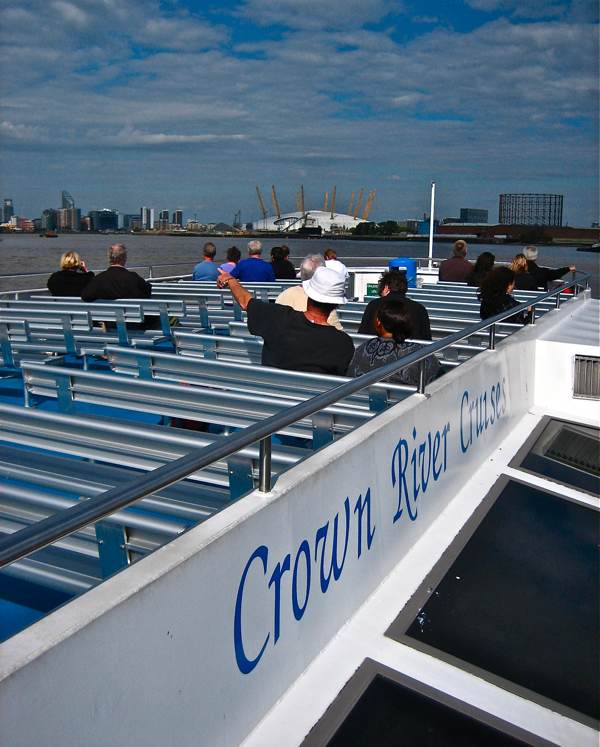
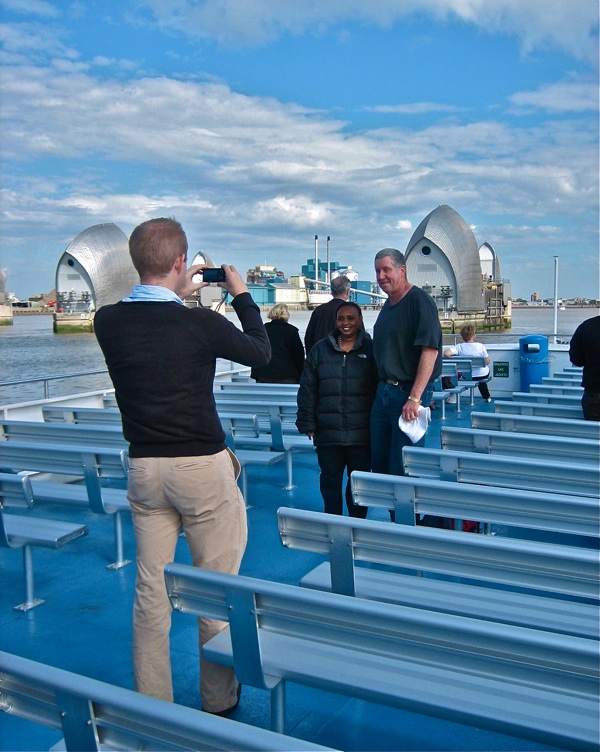
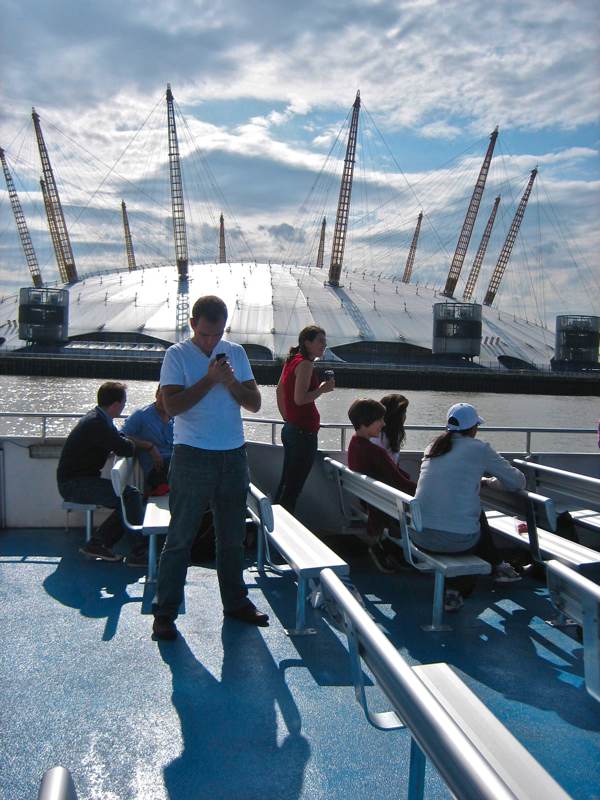
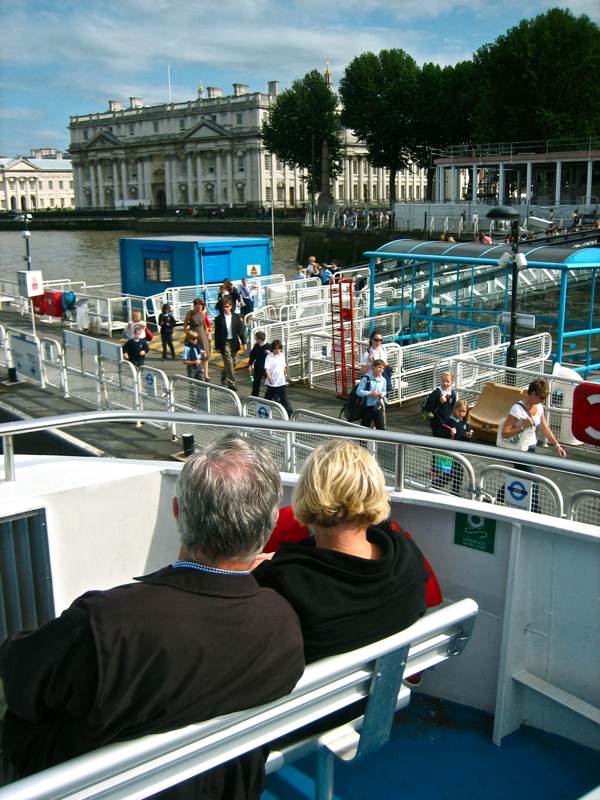
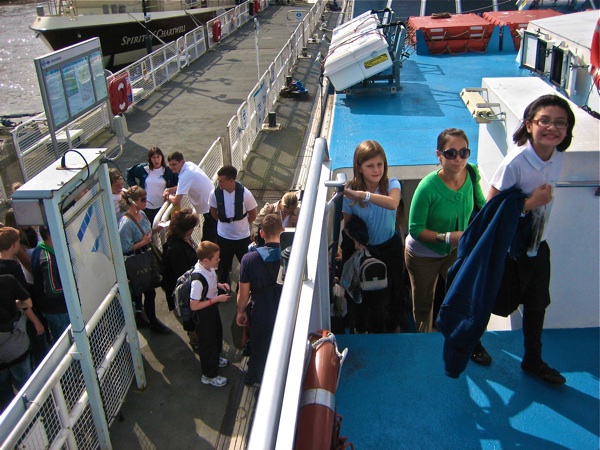
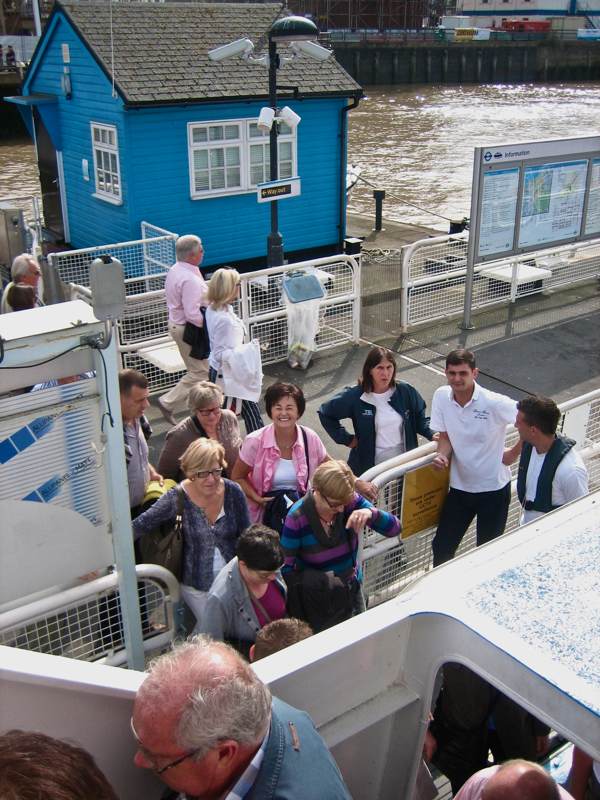
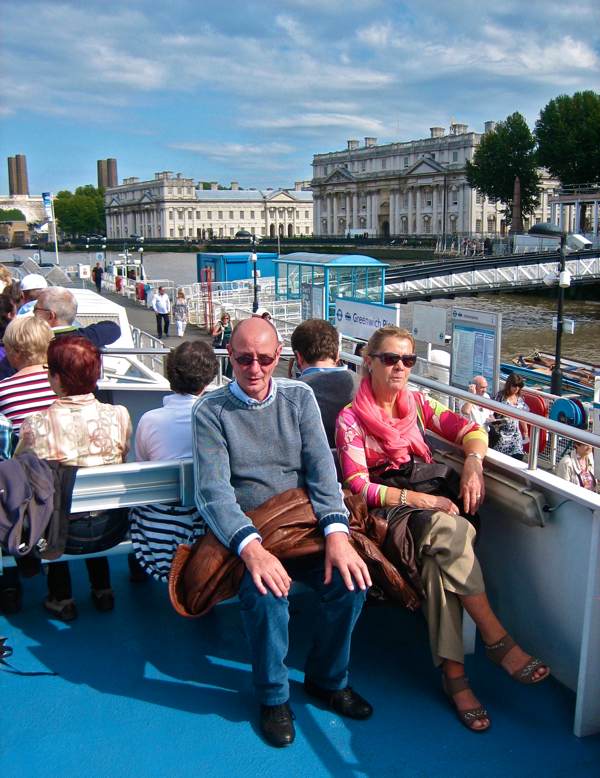
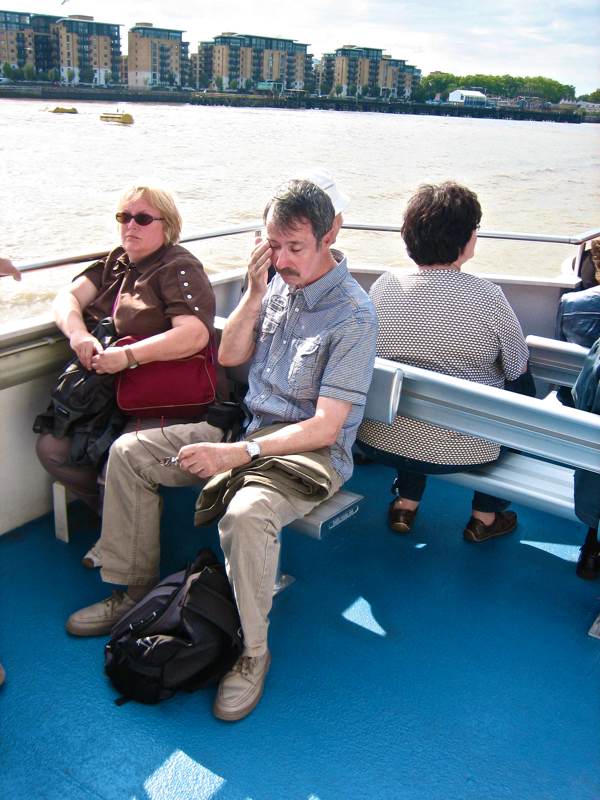
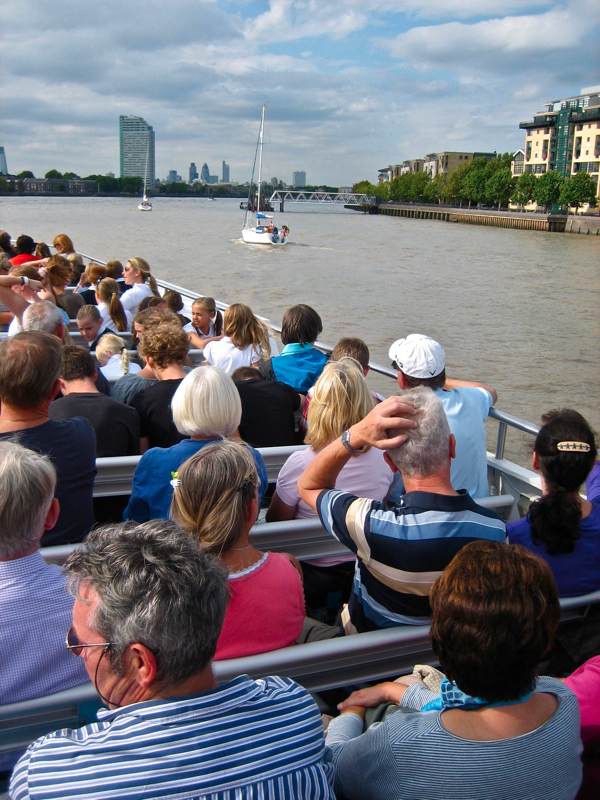
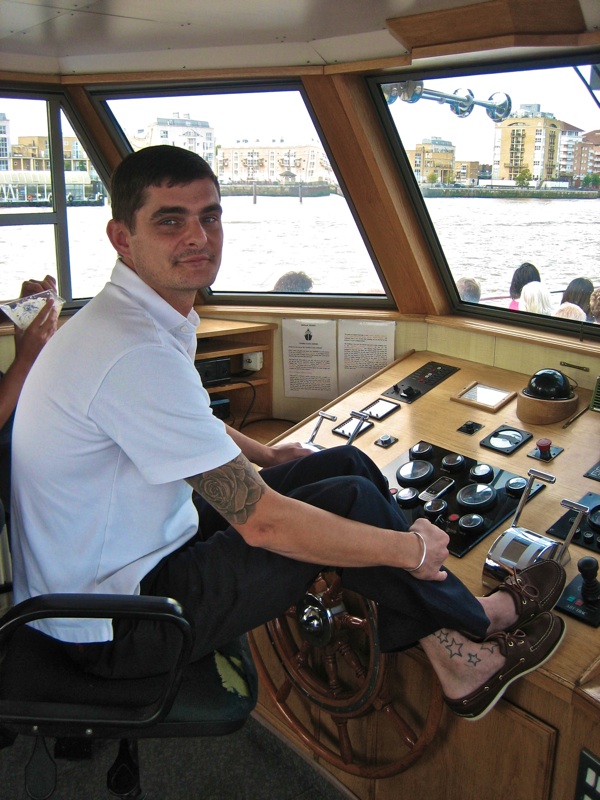
Robert Prentice, fifth generation Waterman & Lighterman.
You may also like to read about Swan Upping on the Thames
Mark Petty’s New Outfits

“Oh Romford! There is nowhere quite like it,” says Mark, “For Essex, the people are quite friendly.”
With London Fashion Week upon us and the change in the seasons requiring everyone to reconsider their wardrobes, it was the ideal time this week to pay a visit to my friend Mark Petty, the trendsetter. While there are many who pursue fashion in the East End, Mark’s approach to clothes transcends such frippery – for him, clothing is an unmitigated form of personal expression that redefines the notion of being a style pioneer.
Yet even more remarkable than the audacity of Mark’s outfits is the moral courage he summons to carry them off. Mark understands that the reaction he encounters on the street is a barometer of the degree of social acceptance of him as a human being, and this is why he refuses to be cowed or compromise his appearance for the sake of an easy life. The wicked humour and delight in colour that Mark expresses in his clothing is irresistible to me because it is a brave affirmation of life and personal freedom – specifically the right to be different. This is why Mark makes sacrifices to be able to afford these clothes, spending every penny he has upon their manufacture. In a grey world, Mark’s multicoloured outfits manifest his capacity for joy, and his regular presence in Brick Lane is an inspiration to us all.
The outfits you see here are all the product Mark’s feverish creativity over the last six months. Although Mark would not necessarily use these words, I do not think he would object to us describing them as – the Mark Petty Collection for Autumn/ Winter 2011/2. Essential Mark Petty style is characterised by the generous use of coloured leather with words and images applied in contrasted colours. He works in partnership with Mr Batty of Batty Fashions in the Hackney Rd who sews the clothes from Mark’s patterns. Mark and Mr Batty enjoy a symbiotic relationship something like that of Domenico Dolce & Stefano Gabbana – in the sense that Mark brings the creative ideas while Mr Batty is a conservative force, achieving the practical make-up of the garments and occasionally offering (futile) resistance to the elements of Mark’s unfettered imagination that transgress his personal notion of social convention.
As we sat in Mark’s pink living room in Bethnal Green, he told me about his current obsession with shorts, some emblazoned with the names of places that have an emotion meaning for him and others carrying slogans of personal significance. Additionally Mark is passionate about the cultural identity of the regions, especially Wales and Ireland, as well as a possessing a fascination with English history and figures that inspire him – such as Boudicca, Robin Hood and Dick Turpin. As yet, Mark has only completed his Boudicca outfit in this projected series which means we have Robin Hood and Dick Turpin yet to look forward to.
It was in recognition of his Celtic origins that Mark chose to dye his hair red, emphasising his own Irish ancestry. This colour is also ideal for Mark’s Boudicca outfit which consists of shorts, jacket and cape, celebrating a woman who is a personal inspiration for him. “I’m thinking of changing my name to Boudicca O’Reilly,” Mark confessed to me, “Boudicca, because I admire the way she was able to command attention and O’Reilly, because of my Irish descent.”

Mark’s Welsh Coat.
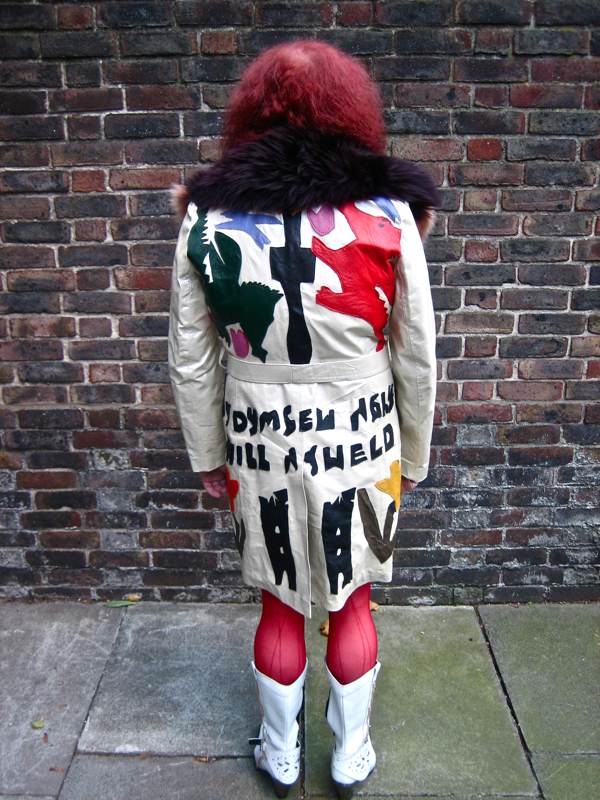
The reverse of the Welsh Coat features dragons and a text in Welsh, “tydymgen nghy faillngweld” meaning “Hello my friend.”

Mark’s Irish Coat.

The reverse of Irish Coat features Irish dragons and the greeting “Top of the Morning.”

Mark in the short jacket he wears to complement his shorts.

“Boudica Rides Again” with applique design of chariot and horses.
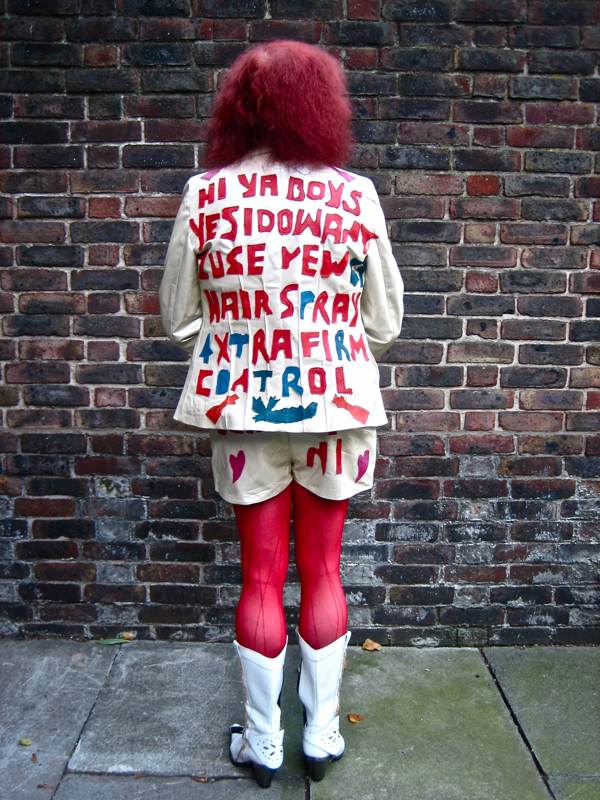
This jacket matches the “Islington” shorts just visible.

Mark’s tribute to Dublin’s fair city.


Mark made these shorts as a souvenir of the generosity of spirit he encountered in Manchester.

Mark made these to celebrate the genius of William Shakespeare.

The first in a series of capes Mark is planning to protect him from the elements in the coming Winter.


Read my original profile of Mark Petty, Trendsetter
and take a look at Mark Petty’s Multicoloured Coats
Leila’s Shop Report 5

Each Monday night throughout the year, Leila McAlister goes to Covent Garden Market to buy vegetables and drives back in the early hours with the pick of the season. Each Tuesday morning, Norman Hyams arrives at seven thirty to make up the weekly delivery boxes from Leila’s purchases and thereby supply some of the freshest fruit and vegetables in the East End. With the assistance of Lindsay Sekulowicz, who organises the displays in the shop, he lays out the green plastic crates under the brown awning in Calvert Avenue and together they distribute the produce between the boxes and, by eleven o’clock, he is on the road making his deliveries.
If you are lucky enough to receive one of these, then it turns Tuesday morning into one of the highlights of the week, and the contents of the box becomes a regular indicator of the changing seasons as different fruit and vegetables appear in each new crate. It never fails to excite me, as I search through the contents when it arrives, popping the bunches of parsley and mint in water, and assessing the possibilities for the days ahead. As a point of honour, I always eat all the vegetables within the week, which increases my consumption of greens, and makes shopping for meals easy, because I simply buy meat or fish to accompany what is in the box. In fact, such is the beauty of these lush colourful boxes of vegetables, and such is my fascination with the progress of the year, that I photograph the box each week to create an informal vegetable calendar – you can see the last few months below.
“I’ve been doing it for two years, and Leila did it for at least three years before me, “explained Norman enthusiastically, as we set off in the van together this week on the round, spiralling around the streets from Arnold Circus, “And it just gets bigger and bigger!”
“I was born opposite Leila’s Shop, in Shiplake House,” he volunteered, “that’s what made me come back.” Norman is a painter who lives in Ladbroke Grove and commutes to his studio in Bow – except for one day a week, when he does the deliveries for Leila.“I left when I was an infant so I don’t have any memories of it, but I remember my mother telling me she was was keen to get out of the Boundary Estate.” he revealed, shaking his head in bemusement, “In those days nobody wanted to live here. My mum and dad both lived in Shoreditch when they were young, and we moved around quite a lot when I was a child. Council flats were easy to get in those days, so every time they had another baby, we got a new place to live, and I have two brothers and two sisters.”
I thought I had the cushy job, ticking off the names on a clipboard for Norman while he carried the boxes in to the make the deliveries, but then I realised that on each call he was welcomed so eagerly by the recipients, and I became so intrigued by the different worlds he entered, that I leapt out of the van and accompanied him inside. Curious eyes peered hungrily over laptops at the Abake studio where the designers sat round a table working at their computers as if at a meal, and once we left our vegetable box – we presume – they swapped their devices for the serious business of lunch. Equally, at the Boudicca fashion label, where furious preparations for London Fashion Week were underway, the same roving eyes followed the box as we carried it in and put it down.
Norman delights in all the fleeting conversations in these worlds where he is the vegetable envoy. “I used to work a couple of days a week for my brother in hospitality and it was doing my head in,” he confessed to me with a frown as we walked back to the van, “So I thought it would nice to work for Leila and I texted her asking her if she needed anyone to do washing up, but there was nothing doing – instead she offered me the vegetable round.” And he gave me a smile of triumph, which indicated that he couldn’t believe his luck.
By now we were almost done, yet I had become at home with the constant fragrance of fresh parsley as we drove around the East End. “When you get basil in the delivery boxes, the whole van smells of basil,” Norman said, with a broad smile, breathing in with a sigh of pleasure, half-lowering his eyelids in illustration of the intensity of his delight.

Norman Hyams


You may also like to read
Leila’s weekly vegetable boxes are available for delivery throughout Shoreditch, Dalston, London Fields, Bethnal Green, Spitalfields and Whitechapel.
You can find the vegetable box blog by clicking here.
Dan Jones’ Paintings
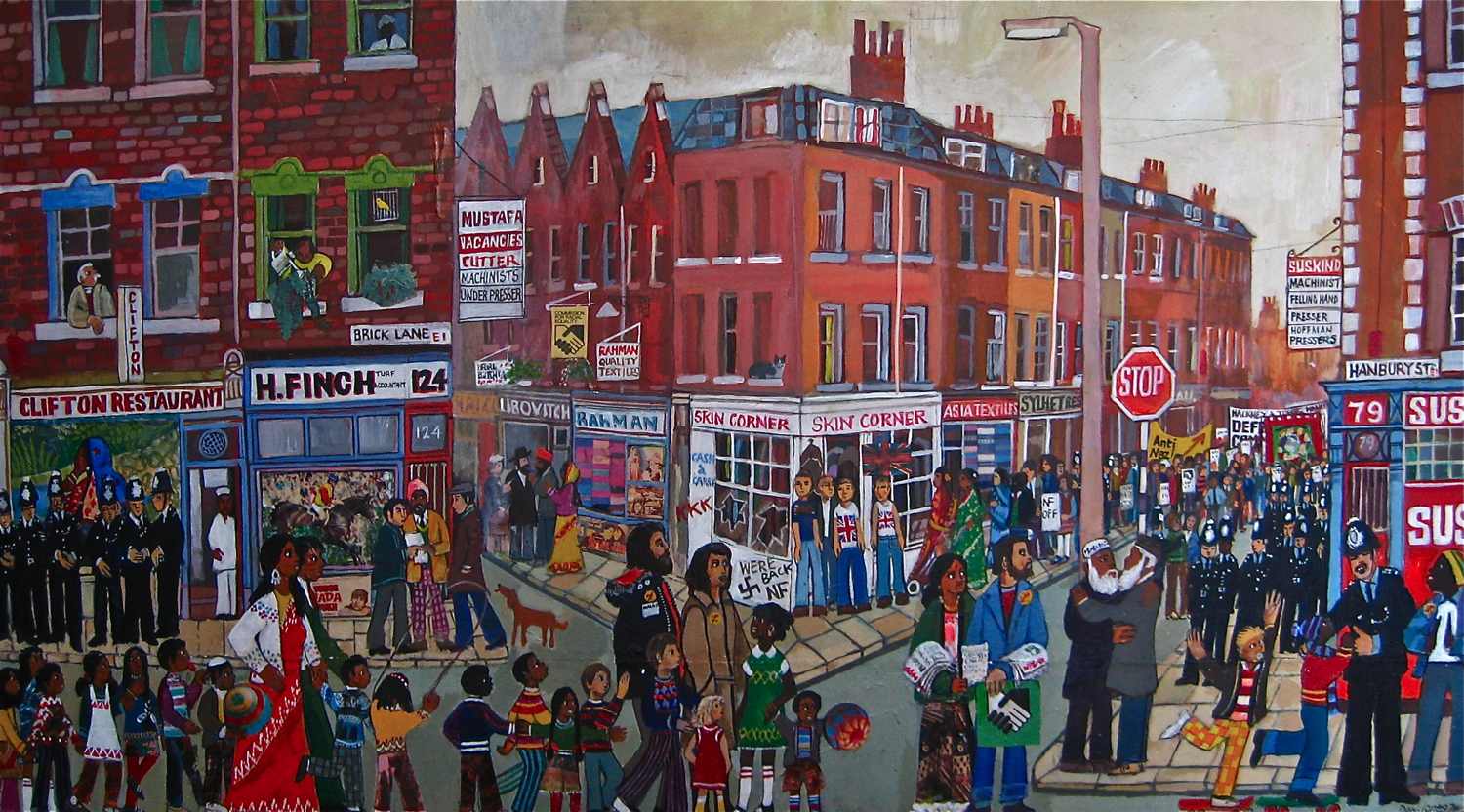
Click to enlarge Dan Jones’ painting of Brick Lane 1978
In Dan Jones’ exuberant and playful painting, Brick Lane is a stage upon which an epic political drama is enacted. From this vantage point at the corner of the Truman Brewery, we see an Anti-Racist demonstration advancing up Brick Lane, while a bunch of skinheads stand at the junction with Hanbury St outside the fortuitously named “Skin Corner.” Meanwhile, a policeman stops a black boy on the opposite corner in front of a partially visible sign reading as “Sus,” in reference to the “Sus” law that permitted police to stop and search anyone on suspicion, a law repealed in 1981. And in the foreground of all this action, life goes on – two senior Bengali men embrace, as Dan and his family arrive to join the march, while bystanders of different creeds and colours chat together. More than thirty years since Dan painted this scene, many of the premises on Brick Lane have changed hands, but the recent attempted march by the English Defence League brings the central drama of this picture back into the present tense.
Dan Jones’ mother was the artist Pearl Binder, who came to live in Whitechapel in the nineteen twenties, and since 1967, Dan has lived down in Cable St where he brought up his family in an old terraced house next to the Crown & Dolphin. A prolific painter, Dan has creating many panoramic works – often of political scenes, such as you see here, as well as smaller pictures produced to illustrate two books of Nursery Rhymes, “Inky, Pinky, Ponky” and “Mother Goose comes to Cable St,” both published in the eighties. In recent years, he has undertaken a series of large playground murals portraying school children and the infinite variety of their games and rhymes.
Employed at first in youth work in the Cable St area, and subsequently involved in social work with immigrant families, Dan has been a popular figure in the East End for many years, and his canvases are crammed with affectionate portraits of hundreds of the people that he has come to know through his work and political campaigning. Today Dan works for Amnesty International, and continues to paint and to pursue his lifelong passion for collecting rhymes.
There is a highly personal vision of the East End manifest in Dan Jones’ paintings, which captivate me with the quality of their intricate detail and tender observation. When Dan showed me his work, he pointed out the names of all the people portrayed and told me the story behind every picture. Like the Pipe & Drum Band in Wapping painted by Dan in 1974 – to give but one example – which had been going since the eighteen eighties using the same sheet music, their performances were a living fossil of the music of those days until a row closed them down in 1980. “They were good – good flute players and renowned as boxers,” Dan informed me respectfully.

The End of Club Row, 1983. The animal market held in Sclater St and Club Row was closed after protests by Animal Rights’ Campaigners.
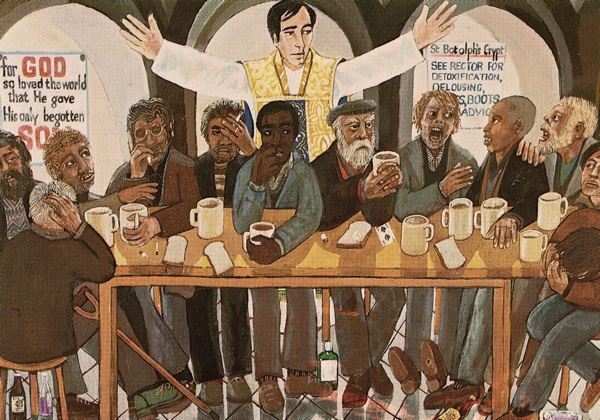
Last Supper at St Botolph’s, Aldgate. Reverend Malcolm Johnston preaches to the homeless at Easter 1982.

Pipe and Drum Band in Tent St, Wapping, 1974.
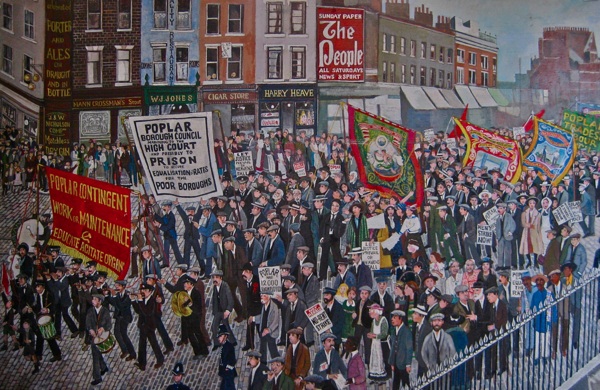
The Poplar Rates Rebellion of 1921

Parade on the the sixtieth anniversary of the Battle of Cable St, 1996
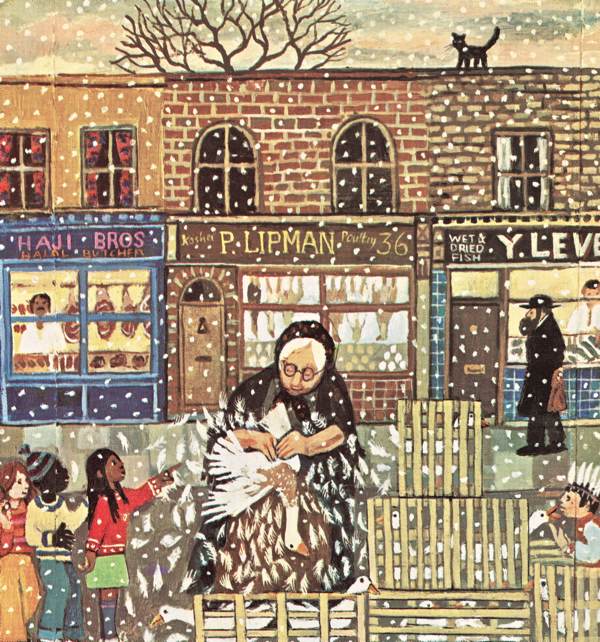
Live poultry sold in Hessel St.

Fishing at Limehouse Basin.

Tubby Isaacs in Goulston St, Petticoat Lane.

Palaseum Cinema in Commercial Rd

A Teddy Bear rampages outside the Whitechapel Bell Foundry.
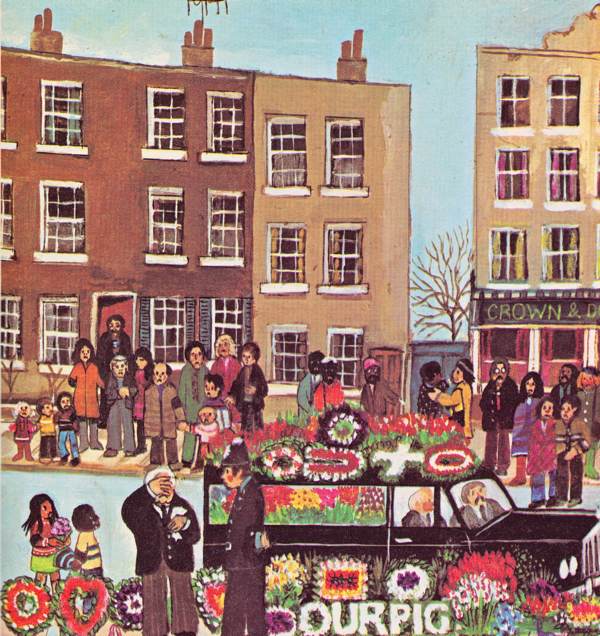
Funeral of a pig in Cable St, Dan Jones and his family come out of their house to watch.

Christ Church School, Brick Lane

Liverpool St Station
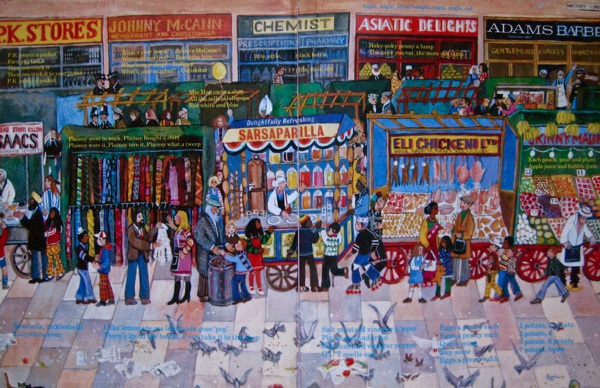
Watney Market

Dan Jones
Paintings copyright © Dan Jones
Look at Dan’s interactive playground painting by clicking here.
Read my original profile of Dan Jones, Rhyme Collector
and Dan Jones’ mother Pearl Binder, Artist & Writer
Clive & Steven Phythian, Master Cutter & Apprentice

“When I was twelve my father said, ‘What are you going to do in life? You need to learn something.'” recalled Clive Phythian, Head Cutter at Alexander Boyd when I dropped by to see what he had in hand last week. He spoke as he worked at the cutting table in the small tailoring workshop that he shares with his son Steven at the rear of the shop in Artillery Passage. “
I learnt a little but I couldn’t say I learnt a lot” confessed Clive with laconic reserve, considering those Saturdays spent in his grandfather’s tailoring shop in Walthamstow which were the outcome of that conversation with his father. “At twelve you’d rather be outside running about,” he acknowledged with a sympathetic smile, “but it gave me the discipline and I saw how hard he had to work.”
Every Saturday, I worked with him and, as I grew older, I had clothes made for me which was absolutely fantastic – I was the envy of my friends. At the time, my father was Head Cutter at Blades in Savile Row. When I was fourteen, I used to go up there with him and I started making the baists (first fittings) of jackets and waistcoats. I had my eyes opened to what goes on there, and my father said, “I’m going to try and get you a place at the London College of Fashion on a three year City & Guilds tailoring course.” I must admit, I thoroughly enjoyed it, and I won cups for my work too.
Prior to leaving, I had two interviews, one with Davis & Sons, traditional bespoke West End tailors, and the other was with Gieves & Hawkes in Savile Row. I went to Gieves & Hawkes! When you are a young person, you see a bigger company and you think you are going to go places, and I worked there nine years – a fantastic experience. There were nine cutters and I managed to learn so much from them, they were a fount of knowledge. In some respects, I have forgotten some of the things I learnt at Gieves & Hawkes, but I expect they are still slotted away somewhere in the back of my mind. From there, I went to work for my uncle who had a very successful business in the City, Aspers in Cullum St, by Lloyds of London. You could say he poached me from Gieves & Hawkes because he offered more money. The West End is the more elegant side and you have more time, whereas in the City people always want it yesterday.
Then my father moved from the West End and set up his own business in the City too. I knew I would always work for my father, so there came a time when I said to my uncle, “I’m going to work with my dad,” and it put his nose out of joint – but you can choose your friends, not your family.The company my father bought was J.G.Chappels near Fenchurch St Station. I enjoyed working alongside him, and my brother joined the company as well. But then my father father died, and although my brother and I ran the business for another three years, we got tired of it. So we decided to take a gap year and I went to do tarmacking. When I was a young kid, my uncle used to work in tarmacking and I helped him out, so I had the knowledge. It was much to my wife’s disgust, but we needed a year out to get our heads back together.
One of my friends, Stuart Lemprell, was Head Cutter at Timothy Everest and he gave me a call and said, “Do you want to come back in?” So I said, “Yes.” I enjoyed working there for four years, until new people arrived who wanted to computerise things, so I said, “I’m off.” I’ve got morals. I don’t want a computer to do what I do. I don’t need a computer, my knowledge is in the tape, the square and the yardstick.
I came and spoke with Boyd, and I’ve been here as Master Cutter at Alexander Boyd ever since, more than five years now. The role of the Master Cutter is very important, without the knowledge of someone who knows how a garment is put together and how it should be cut, you’re not going to get a good product. You have to measure, but if your eye tells you it’s not right, even if the measurement is correct you know it’s wrong.
I get immense satisfaction from seeing a client put on a garment I have made and walk out of the shop with a big smile on his face. I love cutting. I’ve been doing it thirty-six years and I’m still learning. Cutting is my passion. You have to have that… something. Steven has it. He’s inherited it from my grandfather who was a tailor, and my father, and my uncles, Roy, Terry and Paul, they were all tailors, and my aunty Pam, she was a tailor too. So I suppose you could say it’s in the genes.”
“Dad’s always said, ‘Do what you want to do,’ there’s been no pressure to become a tailor,” Steven Phythian confided to me with unaffected honesty, when I joined him at the counter where he was cutting patterns for trousers. It was quite a different story from his father, yet the result was the same – though Steven revealed he had worked in Argos, as a car valet and as pizza delivery man, as well qualifying as a locksmith, even applying to the police force, in the ten years after college before he chose to follow in his father’s footsteps and become the fourth generation to work in tailoring.
“It will be quite a long process,” he admitted with calm acceptance, just six months into his apprenticeship, “Five years before I can fully understand all aspects of cutting. But as my father says – even after more than thirty years – he’s still learning.”
So I left them there, both absorbed in their work in the quiet of the tailoring shop, the atmosphere broken occasionally by customers coming and going. Whenever I walk through Artillery Passage in future, I shall always cast a glance in their window to catch a glimpse of Clive & Steven at work. Almost the last tailors in Spitalfields – a place that once the centre of tailoring – yet I think we may be assured these two will be here for many years to come.


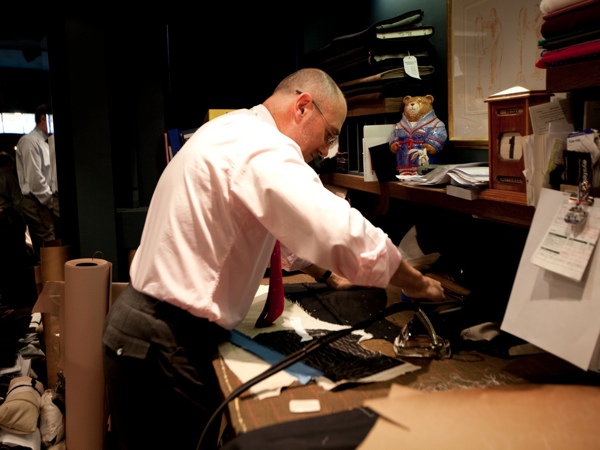


Clive Phythian in Men’s Wear, February, 1977

Steven Phythian, September 2011

Clive Phythian’s three piece co-ordinate in Walnut dogtooth check that won first prize in the IMBEX Student Fashion Competition, 1977.

Clive Phythian, Master Cutter at Alexander Boyd, September 2011.


Clive & Steven Phythian
Photographs copyright © Jeremy Freedman