
At Prick Your Finger
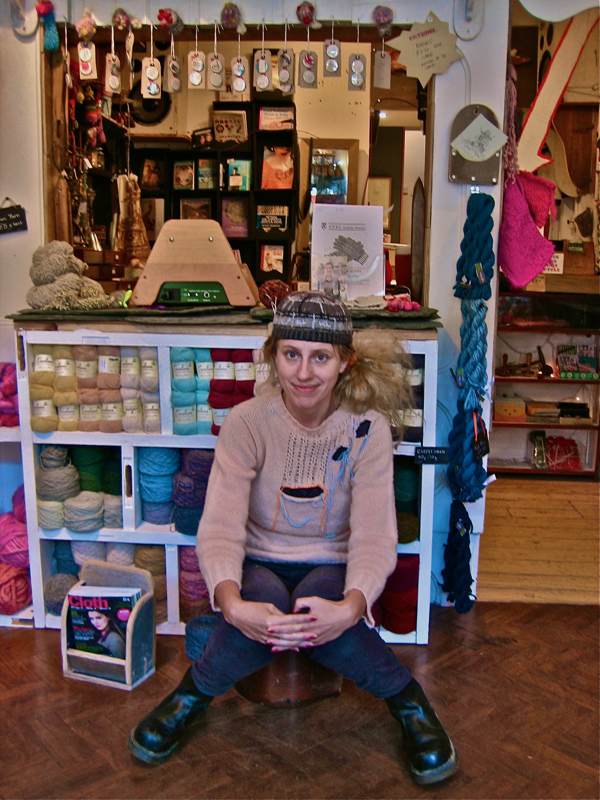
“Why not start by falling in love with a yarn?”
You might not expect a knitting shop to be an exciting place – but when I arrived at Prick Your Finger at 260 Globe Rd and reached out to discover that the bridge of a guitar had been substituted for the door handle, I realised I was in for a rock and roll experience. You might assume that hand-knitting has been rendered obsolete by cheap mass-production – lost in the fast pace of contemporary life – but you would be wrong, it is enjoying a lively renaissance at present. Knitters of all ages and backgrounds are coming together to share their skills, tossing aside patterns to express their creativity in unconventional ways and transgressing the boundaries of a creative medium that was once a byword for mundanity.
Operating from their tiny shop which has become the focus of this culture in the East End, Rachel Matthews & Louise Harvey are exuberant evangelists of the revival, espousing needlecraft as a means of individual creative expression and even of personal liberation. And I was especially keen to pay a visit because this is the time of year to embark upon an ambitious knitting project to fill the long Winter nights ahead.
“‘Why not start by falling in love with a yarn?’ that’s what we say to people when they come in, because often they bring an idea of what they like based on something they may have seen in a magazine,” admitted Rachel who opened the shop with her college pal Louise four years ago,“Instead, we try to help people focus on their relationship with the material.”
“A lot of officeworkers are losing their dexterity and feel they can’t create anything, so we offer intensive support to people who want to become knitters.” continued Rachel with a sympathetic smile, “We try to teach people dexterity in their fingers, but what we’re actually teaching is that using your hands well through knitting can give you a confidence which stays with you your whole life.”
When Rachel found this shop, the building had been partially reconstructed internally by an errant architect, leaving a labyrinth of strangely-angled rooms resembling the interior of a house drawn by Dr Seuss. Downstairs, the shop is crammed to the roof with yarn and quirky details – including a knitted fish on a shelf, crocheted mushrooms in fairy rings on the ceiling and a woven stork’s nest complete with brood in a corner. Upstairs is a large studio where classes are held nightly, enabling customers to buy their yarn and needles below then seek tuition above, receiving all the necessary technical guidance and emotional encouragement to fulfil their dreams in knitwear.
Rachel & Louise met at St Martin’s School of Art where they both studied textiles, united in solidarity as the only students in the canteen to bring their lunch in thermos flasks. “There was no gallery even to display textile work because people were embarrassed by it,” revealed Louise with comic affront, sharing a glance of reminiscence with Rachel as she revealed the origins of their fervour,“We really suffered from that.” Dismayed at the high art sensibility which forbade them to use the phrase “wallhanging,” they left with a shared desire to express their appreciation for “low craft,” the domestic skills of knitting and needlework which had become disregarded and unfashionable. “You get fed up with knitting being a big joke!” declared Rachel, flashing her eyes and crossing her arms in mock outrage.
After college, Louise designed knitwear at a fashion house while Rachel worked as a community artist spearheading the KIP movement – Knitting In Public – which has been key in the resurgence of popular needlecraft. Then the duo opened Prick Your Finger, with a playful approach to the subject yet respecting the subtle emotional meanings and deep personal investment which knitters bring to their creations.
“When customers come in they tell us why they want to knit something, and it’s usually a rite of passage, having a baby, falling in love or children leaving home,” revealed Rachel, obviously savouring all these confidences exchanged over needles. “We welcome UFOs too,” added Louise helpfully, slipping it into the conversation in a way that left me speechless,“People can bring their UnFinished Objects to us for administration and then we pass them onto to someone else to complete before returning them to the owner. There is usually a story that reveals why they are not finished, and sometimes it might involve heartbreak or death.”
“When we started we had only twenty balls of wool,” recalled Louise, rolling her eyes to take in the walls of their shop, now lined with hanks, skeins and balls of fibre in an infinite variety of colours and textures, “We found there was nowhere in London you could buy British yarn, so we decided to become haberdashers and open our own place. Now we have over one hundred suppliers, all from this country.”
In the East End, Prick Your Finger is a place of which it may truly be said that you can always be guaranteed to find a good yarn.

Louise Harvey at her knitting machine.

Rachel Matthews & Louise Harvey
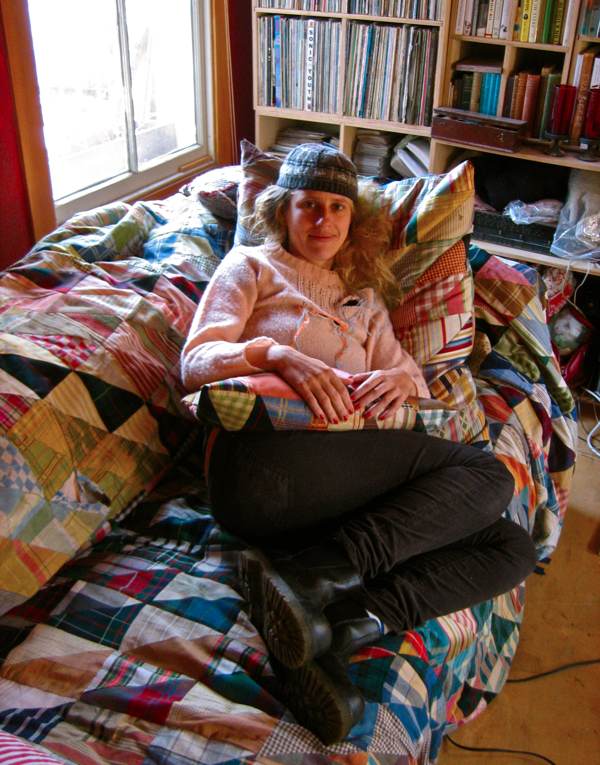
Rachel Matthews with the quilt her mother made.
At Richard & Cosmo Wise’s Shop
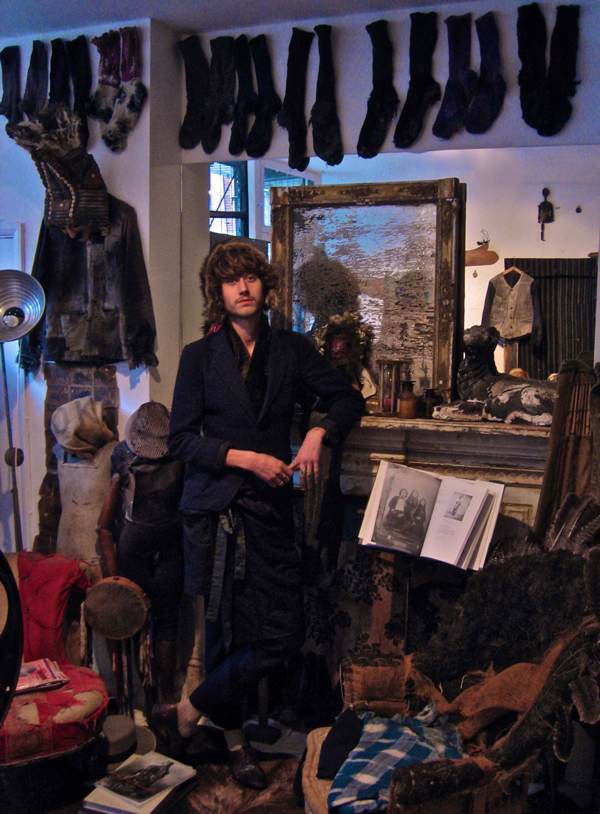
Cosmo Wise, proud of his collection of darned nineteenth century farmer’ socks
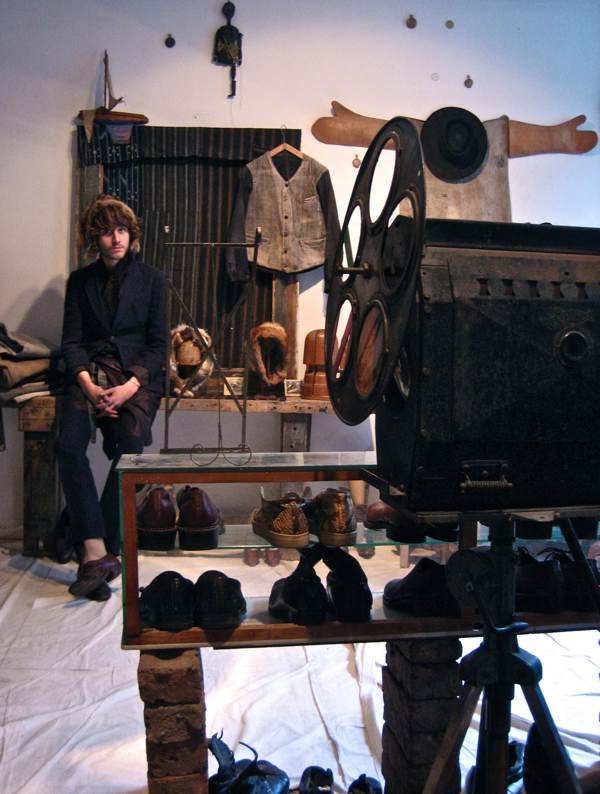
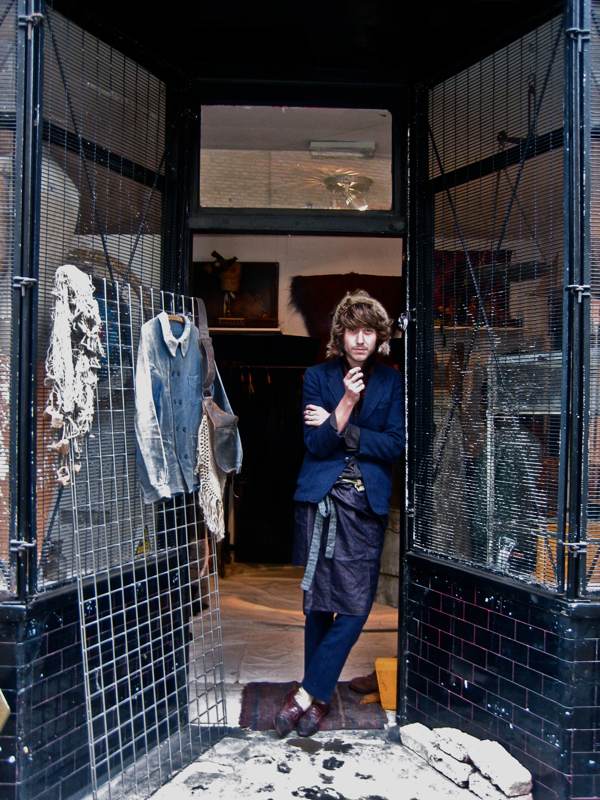
If you cannot get excited by the new styles in the stores this season, you might prefer to go along to Richard & Cosmo Wise’s shop at 68a Cheshire St where all the clothes are between seventy and one hundred and thirty years old. These are the raiment that your great-grandparents got dragged through a hedge backwards in and yet, miraculously, survived – through endless ingenious patching and artful darning – to fall into the hands of this father and son team who cherish these magnificently damaged old togs. Searching rural France and Japan, Cosmo & Richard have amassed an extraordinarily charismatic trove of glad rags and work clothes that have inspired them to pursue a tender aesthetic of loving repair, renewing these garments and giving them a fresh life, in which their histories and idiosyncrasies can be appreciated by aficionados.
“I learnt a huge amount from those anonymous people,” Cosmo admitted to me, producing a lovingly patched-up coat from a rail and stroking it,“I feel I have a symbiotic relationship with the seamstresses of a hundred years ago. They each had their own styles of darning and repair. More than utilitarian, there’s a real sensibility present.”
The garment in question appeared to be half-and-half, two different jackets joined laterally to create a new coat in which Cosmo’s repairs were indistinguishable from those done generations ago, and lined with vintage quilted French and Japanese fabric. This eye-catching collage of textiles was also undeniably contemporary in appearance, sewn together with superlative skill and possessing a certain charisma no mass-produced item could ever match. Cosmo is keen to emphasise that his interventions are always based upon precedents, such as – in this case – the half-and-half shirts of seventy years ago with extended tails in contrasting fabric to be worn over trousers like smocks.
For just a couple of weeks, until 20th November, you can try some of these fascinating clothes for yourself in an enchanted space full of Richard & Cosmo’s glorious paraphernalia. “It’s a place where people can come to find out what we are about – where everyone’s always welcome to come round for drink,” Cosmo declared to me with reckless abandon, both supremely excited about the new venture and lacking two nights’ sleep.
In the shop you will find fine specimens of their discoveries – examples that have been sympathetically renovated alongside clothes which have been newly-made from patterns based upon old designs using pre-war fabrics, sold under their own label, “De Rien.” “We live with this stuff,” Cosmo confessed, gesturing affectionately to the rails of the most characterful old clothes I ever saw,“this shop is a more ordered version of our home. Here you will find a lot of indigo, old French hunting gear, and plenty of exceedingly patched up workwear with a lot of life to it.”
In an age of mediocre disposable High St fashion, Richard & Cosmo are visionaries who recognise the rich poetry in patched-up old garb, respecting the tale these rags tell of the time when almost all had well-made clothes. By appreciating the dignity and restraint in modest garments tailored for working people, they honour the lives of those who for whom it was the custom to wear their clothes out, rather than simply dispensing with last year’s fashions.
Each item of clothing in Richard & Cosmo’s shop has a story, and every one speaks of a different life and another world.
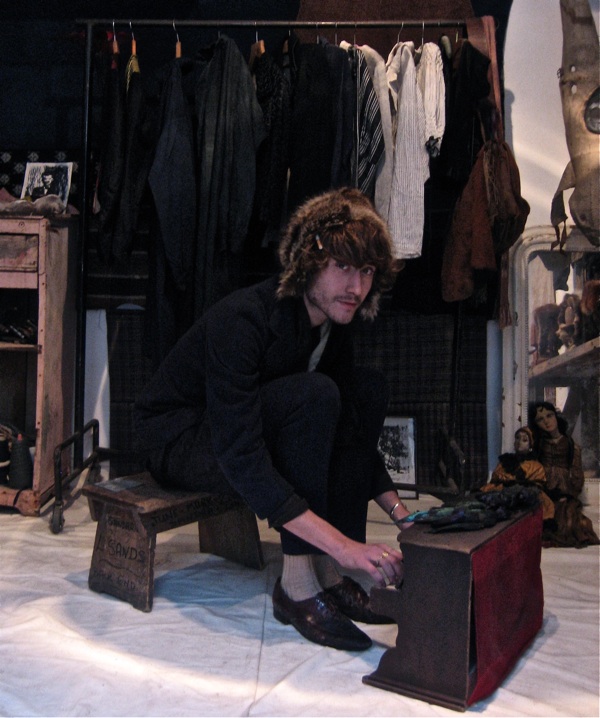
Click to enlarge
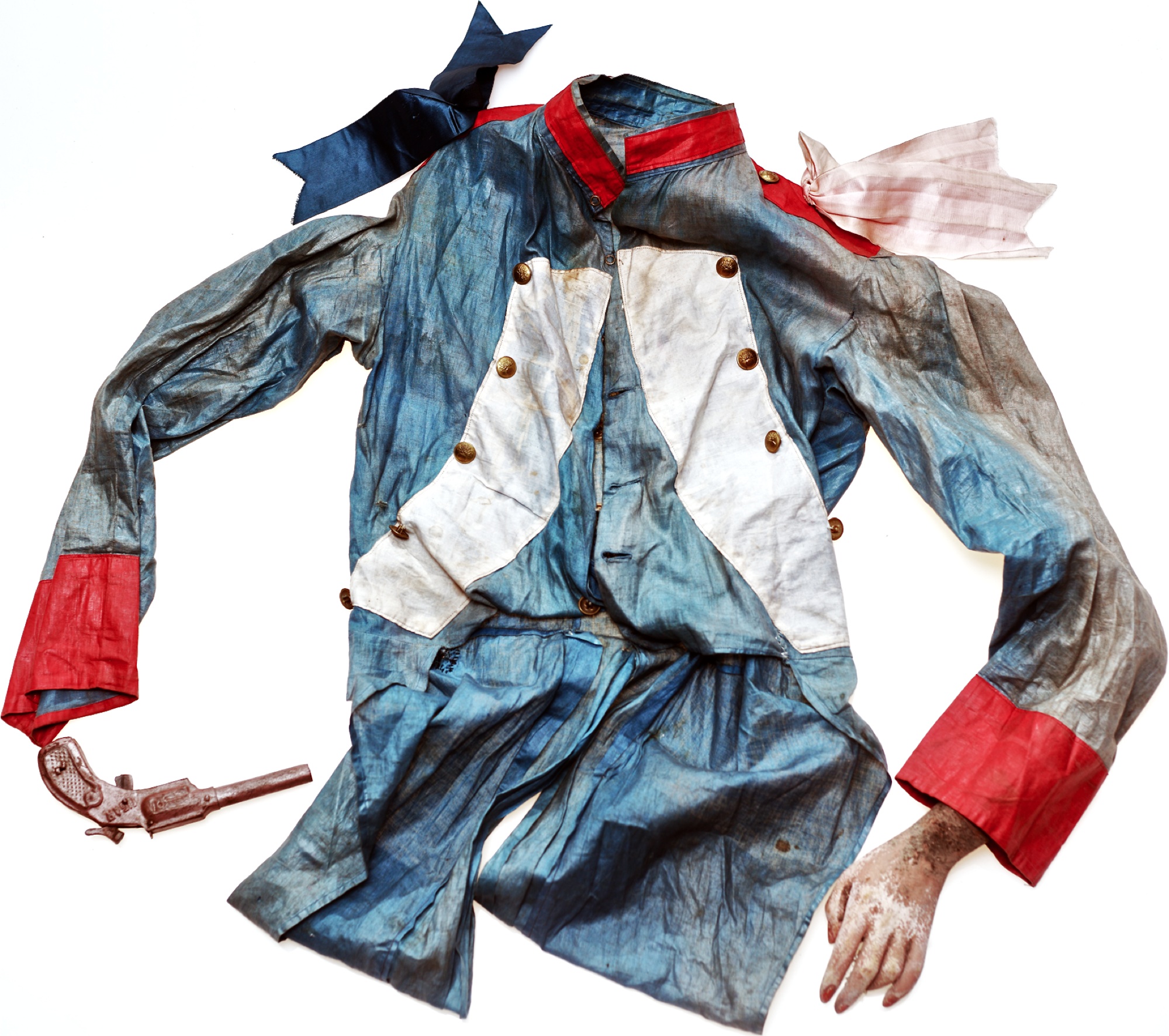
Dating from 1879, this tricolore fireman’s uniform was created to celebrate the centenary of the French Revolution. Designed for a pageant or parade, it is a homemade garment of the finest glazed linen. At this time, the French often sewed tricolore ribbons inside the inner pockets of frock coats to remind them of their country’s liberty.
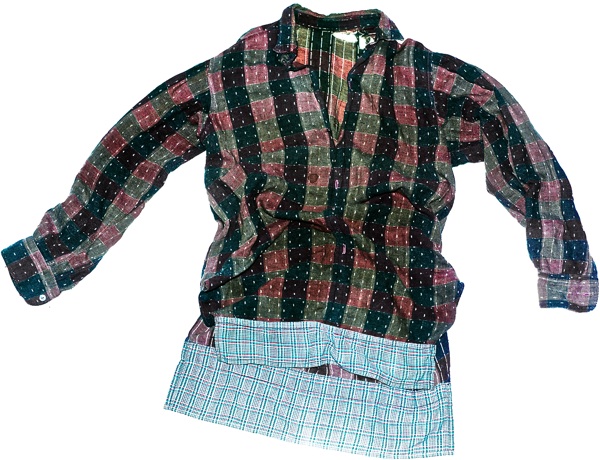
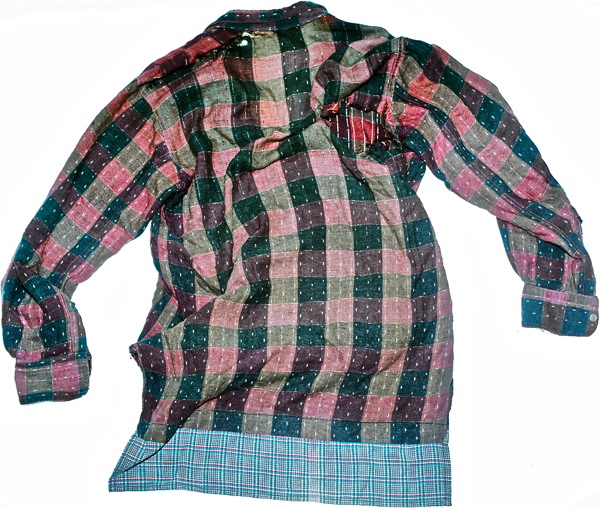
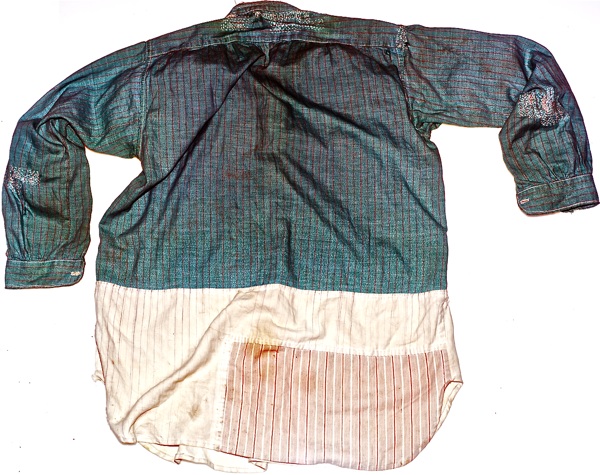
Dating from the late thirties or early forties, this cotton flannel shirt – where the bottom is lengthened by the addition of a contrasting fabric – represents a classic example of a certain style of repair where an aesthetic choice is apparent which transcends mere utility.
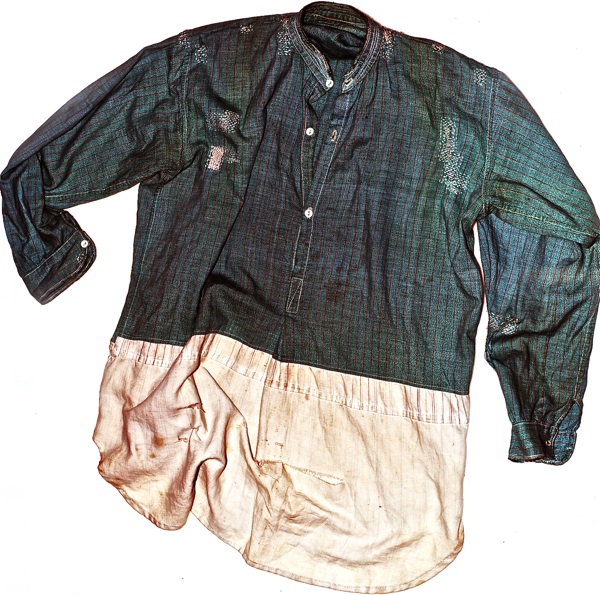
This chambray shirt from the same period has been extended with the addition of two layers of fabric, a flannel and a poplin – the stripes on the extension have even been aligned with those on the original shirt. This garment is also notable for the fine darning which complements the white stitching upon the seams.
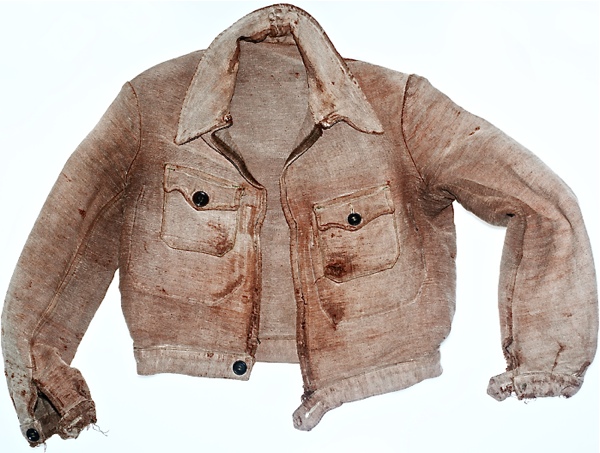
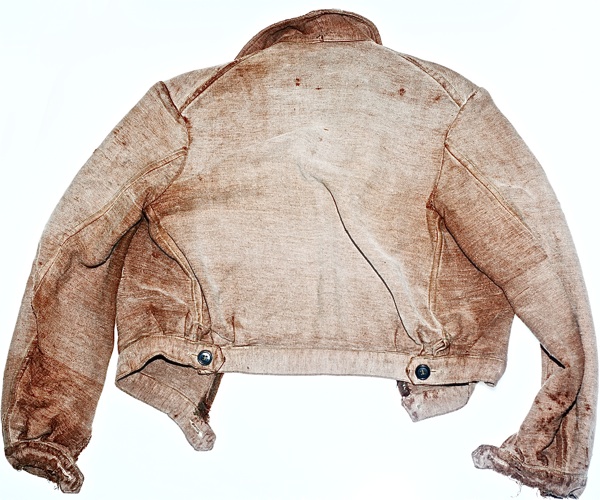
A moleskin cycling jacket from the nineteen thirties in an attractively faded ochre, with extended sleeves and a high waist to suit the posture of a rider.
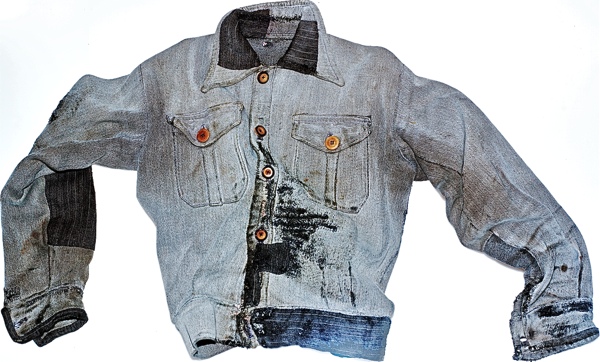
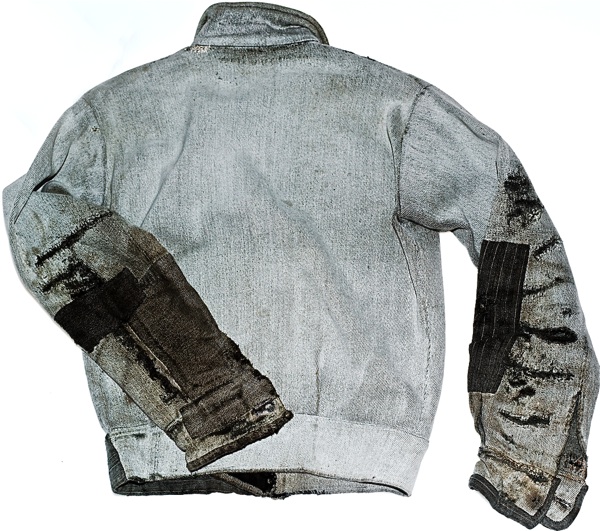
Manufactured of heavy duty cotton which is brushed on one side, this grey patched jacket dates from the nineteen forties and sports some attractive contrasted patching including a waist band that resembles a built-in cummerbund.
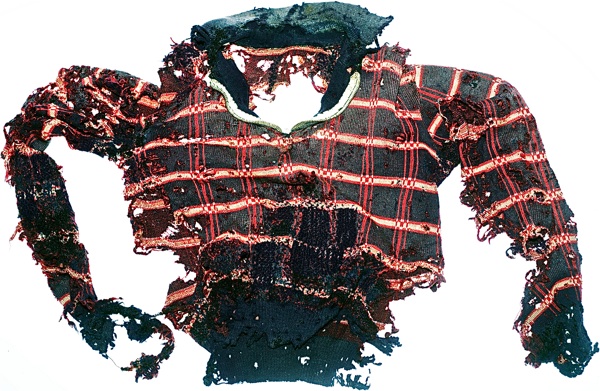
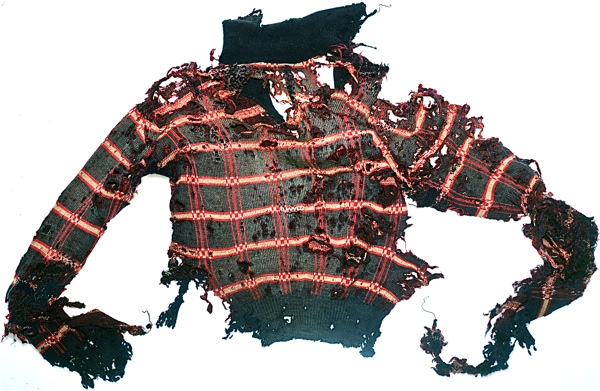
The survival of woollens is rare and this plaid specimen with a zip-up collar dates from the early forties.
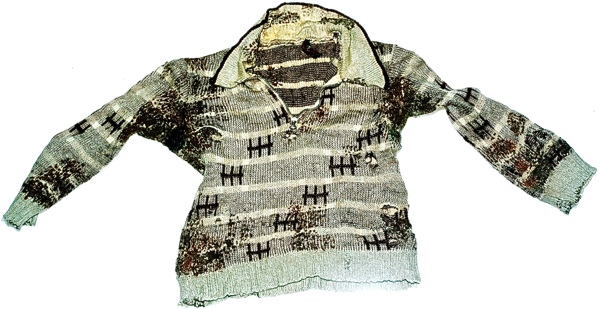
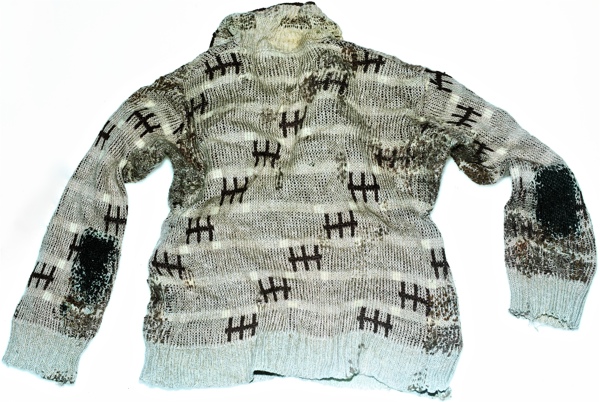
This child’s sweater with a characteristic ‘gate’ motif is also from the nineteen forties and displays some spectacularly intricate darning, especially in the armpits.
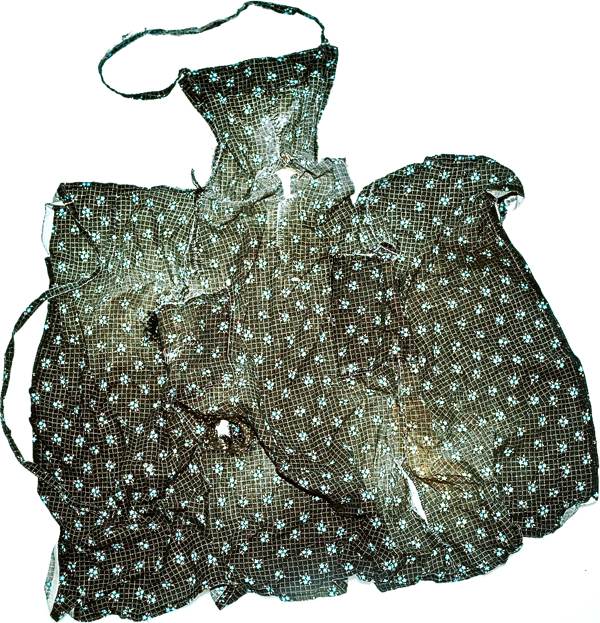
An early twentieth century apron, from the period 1915 to 1930.
Garment photographs copyright © Sofiane Boukhari
The shop was styled by Marisa de la Lopez
You may also like to read about
Richard & Cosmo Wise, Rag Dealers
Richard & Cosmo Wise’s Collection
At 68a Cheshire St daily from 11am to 7pm, seven days a week, until November 20th.
At Alexander Boyd’s Tailoring Workshop

Marek Tadeusz Markowski, Tailor
Within living memory, the rag trade was the primary industry in the East End and it was once said you could walk the entire length of the Whitechapel Rd going from one clothing factory to the next, but today it has all gone – apart from the tailoring workshop of Alexander Boyd in Bow. Yet this is no sweatshop, here – beneath a high ceiling with ample space and light – fourteen people work to the exacting standards of Marek Tadeusz Markowski, the Master Tailor, producing fine bespoke garments.
If you walk into the shop in Artillery Lane and order a suit from Clive Phythian, the Master Cutter, this is where it will be made, just few miles East of Spitalfields. To the uninitiated, it might appear that Clive is the tailor, but in fact he is the conductor of an orchestra comprising many different skills and of which Marek is the leader. And although I thought I had met tailors before, when I was introduced to Marek -a purist in the art of fine tailoring who presides with benign yet scrupulous authority over his minions – I discovered that I was meeting a tailor for the first time.
“Those people up in the West End may call themselves tailors but in fact they are coat makers, waistcoat makers or trouser makers – they are specialists. So if you ask them to make something else, they will say, “It’s not my cup of tea.” I call myself a tailor because I can do everything. If you want a suit, a shirt, breeches, a velvet smoking jacket, a pair of curtains or even your underwear darned, I can do it all because the training I had in Poland was magnificent.
My grandmother was a tailor and my grandfather was a shoemaker. I come from a family of shoemakers in Elblag, we are an old skills family. At fifteen years old, I finished school and trained as a tailor for three years. We had to learn to make everything, in three days a week of tailoring and three days at school. My teacher said to me, “You may learn this now but in the next three days you will forget,” so I worked twelve hours every day, working at tailoring before and after school, from six o’clock in the morning before classes and until eight o’clock afterwards. The system in Poland then was that the government took money off the tailor’s taxes for each apprentice, so it didn’t cost him anything. He was only paying me pocket money and the quicker I learnt, the quicker I could make money by making clothes for my friends and having my own customers.
At eighteen, I went to do an A level in tailoring and cutting at an evening college, and during the day I was opening my own business, after just three years of training. Then, in 1981, I came to visit my uncle in Bristol for a couple of months and found I couldn’t go back to Poland because the borders were closed when martial law was imposed. So I asked the Home Office to extend my visa for a few months and thought, “I’ll go back then,” but it didn’t happen. After four years, I learnt English and opened my own shop in Reigate, Surrey. I ran this until 1997, when I returned to Poland to open a tailoring shop with my brother but I discovered there was no demand there any more, those with money wanted mass-produced designer clothes like Versace.
When I returned to London in 2001, I started working for Huntsman’s in Savile Rowe and I stayed there a year and a half. Then I went to Maurice Sedwell, Gieves & Hawkes and Henry Poole, moving from one place to the next – by observing how other tailors work, you pick up little things that you can adapt to your own system. And that way you move forward because if you don’t move forward you start going back. Boyd of Alexander Boyd approached me when I was working for Wilkinson in St George St. It was Clive Phythian, Head Cutter who introduced me.“He’s a true tailor,” Clive said,“he’s got the knowledge of cutting and everything to do with tailoring.”
I am not a designer, I am a constructor. If you draw me a garment, then I can cut the pattern and make it. Sometimes I simply do a drawing from a customer’s description and then make it. I would say I am at the top of my profession. There is no secret for me as far as tailoring is concerned.
I have been in this job since July and have fourteen people working under me. We advertised in papers and on the internet, and they are from Poland, Lithuania, Slovakia and England. I can say that at the moment I have an “A team.” It’s not a big factory, it’s a small workshop. It gives me pleasure that I can pass on my knowledge and we can produce garments here that compete with the best companies in the world.”
While I was there, the skills of the workshop were focussed upon a few bespoke pieces – some fine linen jackets and a long tweed overcoat – as well as making new staff uniforms for the Boundary Hotel. A peaceful atmosphere of concentrated application presided, with the tailors constantly bringing things to refer to Marek who hovered around to offer support – in between returning to his stool that permitted him to oversee the entire workshop, as he sat with his long needle between his dexterous fingers, forming the living fabric to his will.


Marek Tadeusz Markowski
You may like to read my profile of Clive Phythian, Master Cutter at Alexander Boyd
and also take a look
At Rayner & Sturges, Shirtmakers
At Drakes of London, Tiemakers
The Camp at Finsbury Square

Exactly a week after demonstrators first gathered upon the steps of St Paul’s and then pitched camp beside the cathedral, a second camp has appeared at Finsbury Sq. It is the same location in Moorfields where protestors gathered in the Summer of 1780, drawn together by many grievances including unemployment, rising prices and a government that was out of touch with the populace. Yet any similarity ends there because – in contrast to their eighteenth century predecessors – these people are committed to staging an entirely peaceful occupation.
When I visited the camp at St Paul’s, I could not tell whether it would last – but the arrival of a second camp in the City confirms growing support for this international movement, which began last Summer in Wall St, New York, and has now spread across the globe.
By mid-evening, once the commuters have piled out of the offices that surround Moorgate and disappeared into the tube, these streets are usually deserted with just a few stray drunks stumbling from the pub to hail a taxi home. All that changed this week, as orderly lines of tents appeared upon the green at the centre of Finsbury Sq, quickly establishing a small community and drawing the attention of crowds of passersby who linger upon the pavement in conversation with the tent dwellers .
Standing in the shadowy park sets you at one remove from the illuminated towers that surround it. Here I joined the evening’s general assembly and learned the language of hand signals that has become a unifying characteristic of this movement, enabling large groups of people to communicate efficiently. The primary gestures are – shaking your fingers to agree, crossing your hands to disagree, raising both your index fingers to make a point, making the letter ‘T” with your hands to make a technical comment and rolling your hands in a circular gesture which proposes that the meeting needs to move on.
In effect, one hundred people were gathered in parliament with a “facilitator” acting in a similar role to the Speaker in the House of Commons, directing who should talk next. In the half-light, one by one, various working groups of the residents reported to the assembly on the day’s developments in their collective efforts to establish the camp sustainably. A plan was mooted to join the striking electricians in Blackfriars next day and a message of support was read out from workers on the London Underground who are currently facing fifteen hundred job cuts. Just three days into the camp, the discussions moved from getting portaloos and keeping the park tidy, to T’ai Chi classes, organising a football team, arranging nightwatchmen and inviting musicians from the Guildhall School to come and play in the square.
“We are not here to make ourselves a luxury life, we are here to change this situation,” declared one resident, with noble understatement in regard to the living conditions. No one could fail to be touched by the courtesy that was paid to each speaker, however timid their contribution. There was no cynicism among this group of hardy souls gathered in the darkened park, who had put themselves on the line for the sake of daring to dream of a better world. It was a wide constituency, including students, nurses, ex-servicemen, teachers and old timer activitists. And it was a timeless spectacle, watching these individuals crouched together at such an intense conference in the gloom. In three days, this disparate group of people had created their own society with discrete codes of respect and shared responsibilities.
As rain began to fall in the darkness, we all took shelter and I found myself under an awning in conversation with a resident of Fitzrovia who had been here each night and over the weekend at St Paul’s, working in the media department, representing the protestors to journalists. Looking slightly at odds in his dark suit and tie, he revealed he was an investment banker who came to the park after finishing work. “This is an historic moment. We are on the precipice of what could easily become another great depression like the nineteen thirties,” he informed me, his eyes gleaming with agitation, “I am here because money does not mean much to me, I value people for what they do rather than their wealth.”
The rain was closing in and I was grateful to walk back to Spitalfields where my warm bed awaited, yet I shall be keeping the sleepers at these camps in mind, as the nights grow colder and Winter begins.


You may also like to read about
Changes at Sandys Row Synagogue

Spitalfields Life contributing artist Lucinda Rogers began this picture of the interior of Sandys Row Synagogue almost a year ago – just a week before major structural renovations commenced – and it bears testimony both to the scrupulous nature of the restoration and also to the precision of Lucinda’s drawing that, to the untrained eye, if you were to stand at this spot in the women’s gallery and look down upon the view now there would appear to be have been no change.
Yet in the past year, the roof of the synagogue – built originally as a Huguenot chapel in 1766 – has been entirely reconstructed, following the alarming discovery that as a result of vibrations caused by exploding bombs in 1942, the timbers had shifted and the entire structure was resting upon no more than lathe and plaster, leaving it in danger of collapse at any moment.
As both the last synagogue operating in Spitalfields and the oldest Askhenazi synagogue in London, the meaning of the building is composed of the many layers of its usage, which means this was could never be one of those speculative renovations taking the structure back to how it might have been. This project was about preserving Sandys Row with all its history intact for the future. Consequently, once the roof had been secured, the former colours of gloss paintwork dating from the nineteen-fifties improvements were reinstated, and now the synagogue has regained its distinctive pink and coral paintwork, highlighted by touches of gold. For those who have been coming here their whole lives, like Henry Freedman, the synagogue is as it has always been – the soul of the place remains.
“My first visit to the shul was probably as a baby in 1956 when my parents lived in Petticoat Lane,” he told me when I went to take a look recently and we sat to enjoy a quiet chat in the peace of the empty synagogue. Henry’s ancestor’s were Dutch tobacco dealers and even though he is a fifth generation immigrant, Henry still has relatives living in Amsterdam who escaped the prison camps of World War II. “I was Bar Mitzvahed here and so was my father, grandfather and great-grandfather – and my ancestor was one of the founders,” he confided, casting his eyes around this charged space that carries so much signficance for his family.“It’s the only place I have ever felt any spiritual connection.” he continued, thinking out loud, “I’ve got memories of people, I can see their ghosts in the places where they used to sit.”
“My father was president of the shul for twelve years and when he was dying, I said, ‘What’s going to happen to the place when you’re not here?'” Henry revealed to me, “That generation were content to let things tick over.” Throughout the second half of the last century, Jewish people left Spitalfields and the synagogue went into decline but, after his father’s death, Henry decided to become involved as a Treasurer & Trustee, working alongside the other board members to secure a future for the shul. Undaunted when the surveyor revealed the potential collapse of the roof, whilst assessing the meaning of a large crack, they raised half a million pounds to address the problem, partly funded by one of the largest grants to a Jewish organisation from English Heritage and with the help of numerous private donations.
Meanwhile, an assessment of the contents of the building has thrown up some hidden treasures, including a two-hundred-and-fifty-year-old iron strong box, which had not been unlocked in living memory but opened first time when the genuine keyhole had been distinguished from the false ones. A mysterious object, evoking an unknown past, it reflects both aspects of the history of the building since it could equally have come to Spitalfields with the Huguenots as with the Askhenazi Jews. When Henry showed me the cellar, dominated by huge roof beams creating the atmosphere of being below deck in a eighteenth century man’o’war, I leaned against a timber which should have been supporting the floor above only to have it swing out of position. Clearly, there is both scope for further renovation and additional space here, offering the possibility of a gallery or centre for visitors.
Throughout the last year, services continued uninterrupted by the scaffolding that was finally removed from the building in time for a dinner on 28th September, the eve of Rosh Hasanah, the Jewish New Year. “We want to continue as a full-time shul, now that Jewish people are moving back into Spitalfields,” Henry confirmed for me, able to speak with an assured optimism, now that the largest renovation in its history has secured the future of Sandys Row.


The cellar, like the lower deck of an eighteenth century man’o’war.

The mysterious eighteenth century strongbox discovered in the cellar.

Eighteenth century ceiling rose before restoration…

…and after.

The scrolls are returned to the synagogue after the restoration.

Henry Freedman

Dinner at sundown on the eve of Rosh Hashanah.

Photographs copyright © Jeremy Freedman
Lucinda Rogers’ drawing of Sandys Row Synagogue is available as a limited edition print in support of the restoration fund from www.lucindarogers.co.uk. The synagogue is now open again and tours can be arranged by contacting www.sandysrow.org.uk
You may also like to read about
Brick Lane Market 17
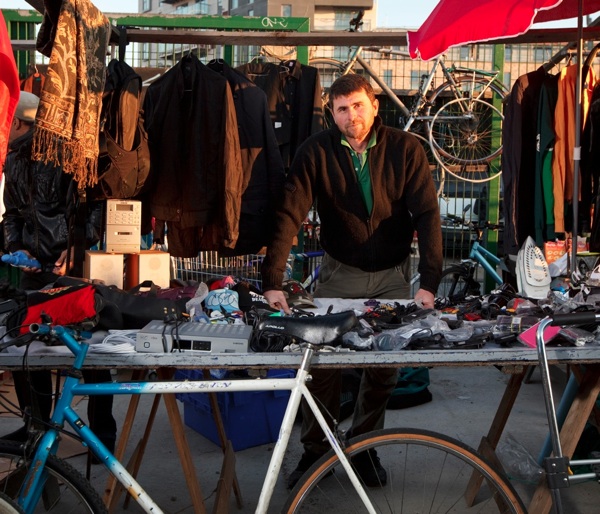
This is Ivan Tchoukouv from Bulgaria, who will shortly be making the thirty-five hour bus journey back to his home country for the Winter. “I only come over for the Summer now, working on building sites all week and trading here each Sunday,” he explained to me, “I came to United Kingdom first in 1995 in the back of a lorry.”
Since 2006, Ivan has been migrating annually, travelling back and forth with the seasons. “My wife is a teacher and, when it was time for our children to go to school, she took them back to Bulgaria because the education system is better there.” Ivan told me with a frown of regret, “Here they are allowed to do whatever they want but in my country the schools are tough on discipline.”
Ivan speaks to his family each night by Skype, missing his children who he has not seen since the Spring. “I live in a small town there, where I’ll be looking after my properties.” he revealed with a tender grin, “My house has a big garden where I keep honey bees and chickens.” In the meantime, Ivan will be making the best of crowded sleeping conditions in London for just one more week – confessing with dignified self-effacement, “In the tiny flat where I live there is a Bengali family who are Muslims, two youths from India who are Hindus and me, I am a Christian, yet we all get with no problem.”
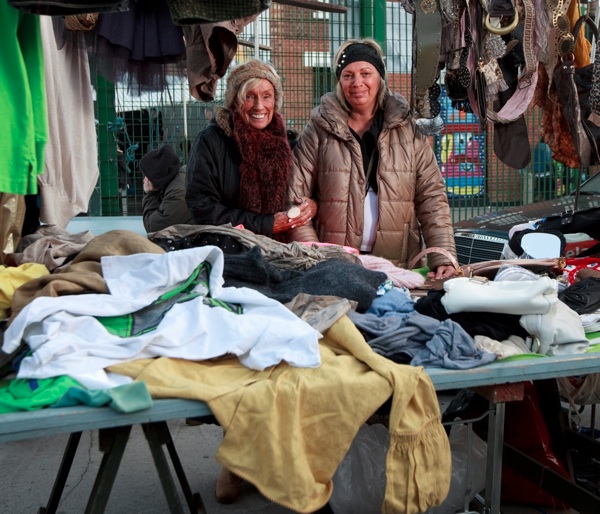
This is Leigh Kelly and her niece Tina Allpress, two feisty East End females. “We are local,” declared Tina proudly, slipping an arm round her favourite aunt.“My dad worked as a Spitalfields market porter,” boasted Leigh, her bright eyes shining with nostalgic emotion to confide she was born in Columbia Rd and counts Mary Kelly – one of the Whitechapel murder victims – among her ancestors.
“I was here in Sclater St when I was three years old with my dad, selling chaffinches and Yorkshire terriers,” she continued, fondly recalling the days of the animal market, “we had chickens in the back yard, monkeys in the house and I used to watch the dogs giving birth to puppies on the kitchen table.”
Leigh worked in Maurice Ginsberg’s handbag shop in Petticoat Lane for over thirty years and her niece joined her there before it shut fifteen years ago.”We’re always been close,” admitted Tina, “and we can’t sleep the night before coming down to the market, we’re so excited.” Both women were feeling the heat of the October sunshine, swathed in layers of scarfs and furs against the cold. “I was up at three,” chirped Leigh breathlessly, clasping her hands adorned with rings and setting her bangles jangling, “It was dark and frosty then, but at the end of the day we go home sweaty and rosy-cheeked.”
Pictures copyright © Jeremy Freedman
Syed Monsur Uddin, Newspaper Editor
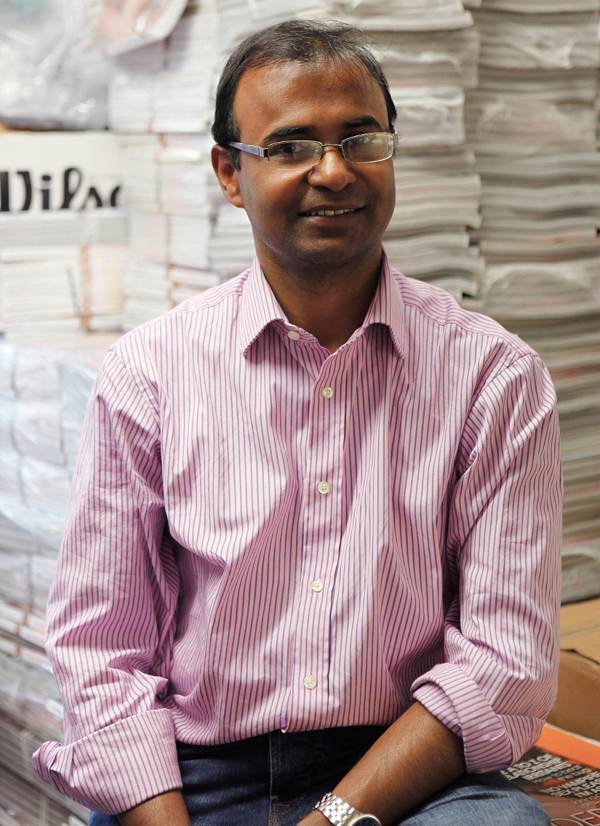
Syed Monsur Uddin is editor of Surma – Britain’s largest Bengali newspaper – operating from modest premises in Quaker St. Now in its thirty-first year of publication, Surma is distributed by mainstream outlets and available in hundreds of supermarkets and corner shops up and down the nation.
As editor of the most widely-read Bengali publication, it befalls to Syed to face the knotty dilemma of creating a weekly newspaper that reflects the nature of an increasingly diverse community, while remaining acceptable to the entire readership. Yet, in spite of this weighty responsibility, Syed presents a relaxed professional persona, displaying lively humour and carrying his status lightly.
“When I came to the United Kingdom in 1997, it was to work for Bangla TV and then in 2000 there was a vacancy as a news editor here at Surma. At first, I lived in Bethnal Green but now I live in Chigwell which Charles Dickens described as the greatest place in the world.
Previously, I worked at Daily Banglabazar, the primary newspaper in Bangladesh. Whilst I was a student at Dhaka University, I started working as a freelancer for them and then, when I graduated, they offered me a job as a full-time journalist.
As editor at Surma, it’s a mixture of reporting, translation and editorial work – it’s a varied job, and I have to do everything. I lead a team of seven, we go to print each Thursday, so Wednesday is our deadline and we can work many long hours, until two or three o’clock in the morning.We publish every Friday. I write an editorial each week and the paper is a mixture of stories from Bangladesh, stories from the UK and world news, all in Bengali. Surma is sold nationwide in every Bengali grocery store. It’s rewarding in terms of serving my community, they are immigrants, they left their country and they left their families. They want news from home in their own language. Quite a serious newspaper.
I am forty years old, so this is the peak of my career. My uncle was a journalist and he introduced me to this profession. It is a very serious occupation. In no other career do people judge you every day. You have to be careful. I find it a very tough job. You have to balance everything, find the middle ground and keep everyone happy. Sometimes it is very difficult. If you appear to support the Conservatives, the Labour supporters are unhappy and vice versa. Your reputation is always on the line.
We had a very bad experience in 2007, when we were all beaten up. We covered the suicide of a Bengali woman in a mental hospital. Suicide is a huge stigma amongst the Bengali community, so when we published the story – even though it was against the mental hospital – the relatives of that woman came and beat us. Her brothers and three or four other people, around eight of them, they arrived in three cars, parked outside here, came in and beat us severely. They broke a television remote control over my head! Yet our story was completely in support of the lady, criticising the negligence of the hospital which should should have supervised her twenty-four hours.
It can be a dangerous job, but this is one of the most civilised countries in the world. In Bangladesh, as a journalist you can get killed – if you upset a rich or powerful person, they can order it. There is no law and order, here you can get justice. The Metropolitan Police Commander came to help us and they tried to get the thugs. We had support. This is the beauty of this country, this is why Britain is great. You will not find this in any other country except perhaps the United States. Every language, colour and creed is welcomed here.
It was a real example of how people can overreact, but we are not just trying to make people happy, we are trying to tell the truth.”
When Syed told the story about being beaten up, he pointed outside into the street – indicating where the thugs had blocked the road with their cars – and he picked up the television remote control to indicate how they broke it in pieces over his head, illustrated by dramatic eye-rolling on his part. It was a shocking story in itself, and sobering to learn that, by contrast with Bangladesh, Syed regards the United Kingdom as a safe haven for journalists.
Syed Monsur Uddin can understand his readers because he has travelled their journey, from Bangladesh to the East End, and beyond – and he appreciates the human accommodations necessary upon such an odyssey across continents. His special quality – which qualifies him to edit Surma – is that instead of being doctrinaire, he has found a means to speak to his people by demonstrating generosity of spirit.

Syed is seen on the right, at three years old in 1975, in a studio portrait with his mother and aunty.
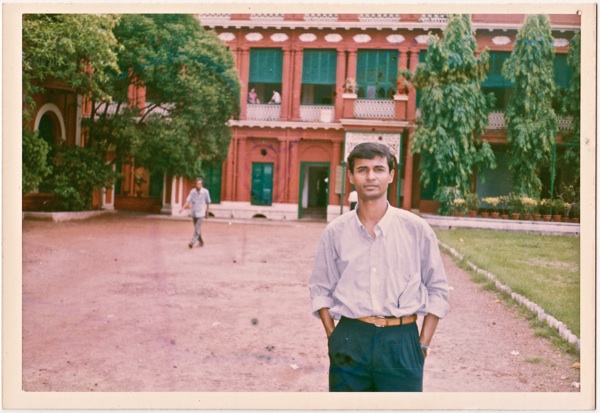
As a young student outside the house of Rabindranath Tagore in Kolkata.
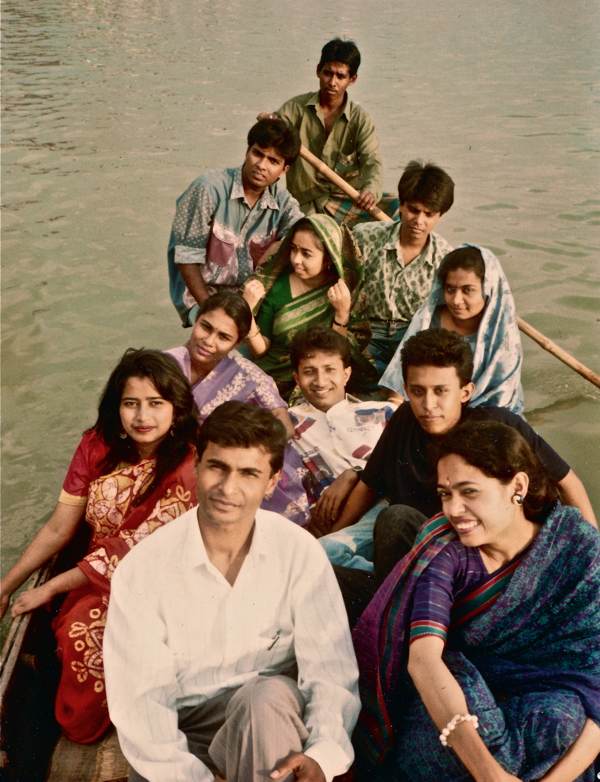
Enjoying a boat trip as a student 1992/93.
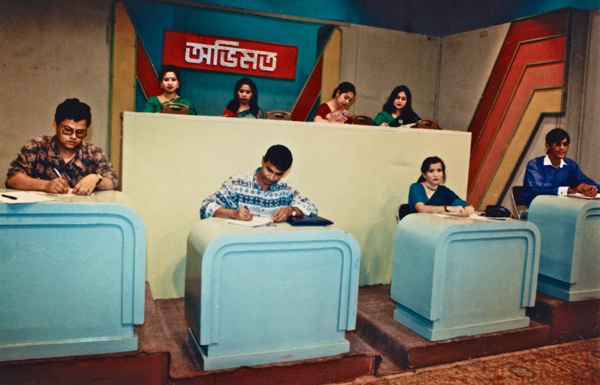
Syed working for the TV news in Bangladesh.
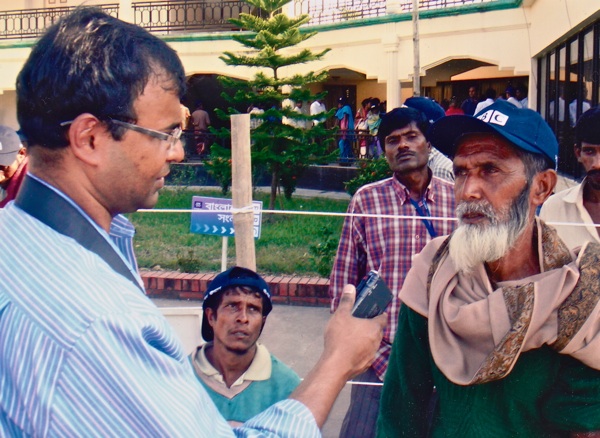
Interviewing a victim of the Bangladesh cyclone for Banglabazaar.
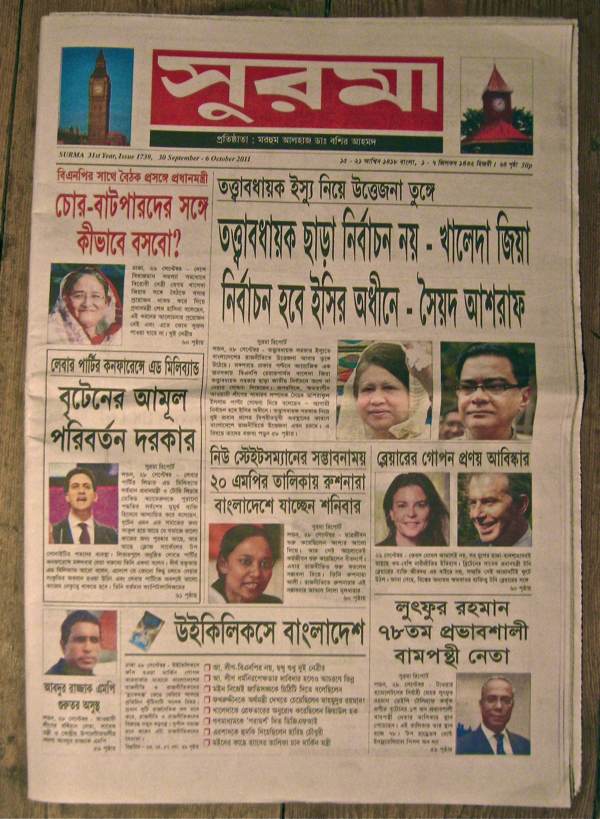
A recent copy of Surma.
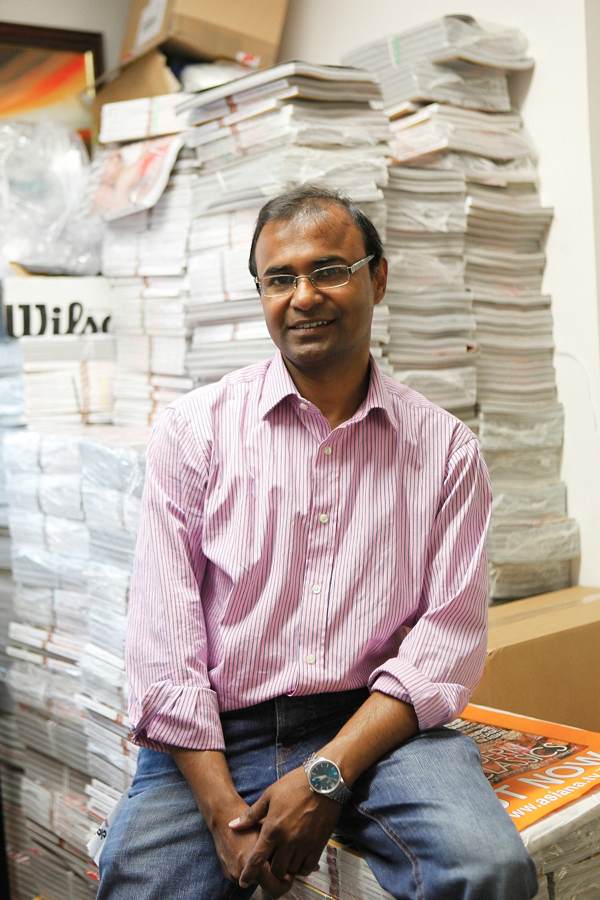
Syed Monsur Uddin, Editor of Surma, Britain’s largest Bengali newspaper.
Portraits copyright © Patricia Niven
You may also like to read about
Boundary Estate Cooking Portraits












