
Alex Guarneri, Cheesemonger

Alex Guarneri is the big cheese in Spitalfields. The man with the nose for fromage. And a very handsome Gallic proboscis it is, long and elegantly sculpted and extremely sensitive. Wisely, Alex has always followed his nose and it has led him in the direction of all things cheesy – with the result that today le fromage is his existence, his religion and his life. Both a connoisseur and an evangelist of cheese, Alex has lessons to impart. Alex loves to talk cheese. Alex wants to tell you that it is all about timing. Cheeses for all seasons. Alex ensures he gets the cheese direct from the maker when it is at its best and then he matures it in his cave until it is just right, not too ripe. Alex prefers you to be frugal. Be like the church mouse and buy a little piece of cheese. Alex does not want you to keep it until it goes stale. Alex wants you to eat it now.
As a proud Frenchman, Alex sees cheese as an egalitarian birthright. He has no truck with the snobby British notion of posh cheeses as luxury food. In fact, Alex refuses the sell large pieces of cheese or to supply cheeses early for Christmas. Alex suggests you bring him whatever you might afford to spend on cheese at the supermarket – however modest – and he will find you something much better for your money.
Descended from a venerable line of French grocers, Alex and his brother Leo grew up outside Paris where their mother ran a cookery school.“We never had sweets, we had bread, cheese and preserves after school,” he recalled wistfully, sipping his Coca Cola. Working at first as a cashier at Androuet – the pre-eminent chain of cheese shops in France – as a holiday job while he was a student in Paris, Alex graduated to become an affineur, the head of the cave. From there he came to London to the equivalent job at Paxton & Whitfield. “On my first day, they told me I had to deliver the cheese to Buckingham Palace and I thought they were kidding.” he confided to me with the absurd grin of a born republican, before adding,“It was fantastic working there, I met a lot of chefs while I was doing the deliveries to restaurants and in time I went out to meet all the producers too.”
Demonstrating a nose for business as well as for cheese, Alex capitalised upon his privileged knowledge of both British and French cheeses, brokering a deal between Androuet and Paxton & Whitfield that gave him the franchise to open the first Androuet shop in London.“We created a partnership, supplying French cheeses to Paxton & Whitfield and they supply us with English cheeses that we export and sell in France.” he revealed proudly. Starting from a single stall in 2009, Alex and his brother Leo have graduated to a cheese palace – their shop Androuet in the Spitalfields Market with an ever-changing stock of French and English cheese, and a small restaurant with a cheese-inflected menu created by chef Alessandro Granot.
One of a tiny handful in London who know the secrets of ageing cheese, Alex pays scrupulous attention to his precious charges. “The temperature of the room and the humidity are crucial,” he informed me, lifting his eyebrows for emphasis and raising a finger of instruction, before unfurling his hand to illustrate – “The way I touch them and clean off the flower.” (Alex never talks about mould.) “Every week, I remove the flower, so that the cheese creates a new rind, and this makes such a difference to the flavour.” he continued, affectionately cradling a wrinkly specimen and delicately brushing the bloom with his fingers, “I learnt all this in Paris. I was down in my cellar, it was big. You don’t have any people left that you can ask, so instead I tasted everything and that is how I developed my technique, through testing.”
“We only deal with seasonal cheeses in the shop. Every Friday, I ring my cheese producers in France and they tell me what is good now. They send the cheese to Paris and it is delivered here – every Wednesday, I get the cheese from France. We keep cheese for a minimum of a week and for as long as five or six months. You lose weight by keeping cheese and it is sold by weight, that’s why people don’t usually like to do it.”
Indulging in a little spéléologie, we descended deep below the Spitalfields Market to Alex’s magic cave where his cheeses sat ripening, awaiting their destiny in the gloom – acquiring character and personality over time, just as we all do in life. Some were cheeky, others were reserved, yet Alex was encouraging them all towards perfection.

Alex Guarneri is the cheesemonger of the moment.


Alex Guarneri – the man with the nose for fromage.
Photographs copyright © Patricia Niven
Elizabeth Omar, Wages Clerk
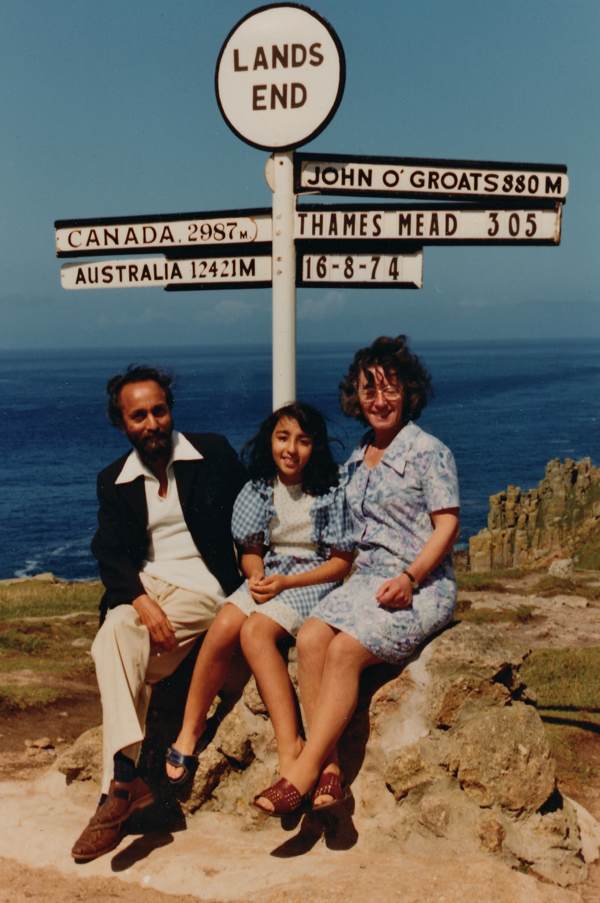
Mohammed, Deena & Elizabeth Omar, 16/8/74
Observe this happy family group on their holidays at Lands End in 1974. A cherished memory for Deena now that both her parents are gone, and especially significant as she looks back upon their lives and realises how unusual such a marriage was in its day. For both her parents stepped outside their own cultures to forge their relationship, making bold personal choices that went against the custom of the time. Yet the reward of their moral courage was the loving family life which Deena enjoyed as a child, recorded in this affectionate holiday photograph.
When this picture was taken, Deena’s mother was known as Elizabeth Omar, reflecting her marriage to Deena’s father Mohammed Omar and her status as a professional woman working her way up the financial hierarchy at British Telecom, but when she grew up in the Boundary Estate in the nineteen thirties, she was known as Bessie Benjamin. A year after her mother’s death, Deena Omar came to the East End this week for the inauguration of a commemorative bench in the park at Arnold Circus and, over a quiet cup of tea in Calvert Avenue, she recounted her mother’s story for me. Deena told me she first came on an architectural tour of the Boundary Estate and was astounded how beautiful it was, recalling that her mother’s family could not wait to leave it more than seventy years earlier.
“My mother was always known as Bessie. She was born into a large East End Jewish family in Bethnal Green in 1922. Her parents were born in this country but her grandparents were from Poland – her mother’s maiden name was Esther Rosenberg and her father was a cobbler by the name of Moss Benjamin. Shortly after Bessie was born, they moved to 10 Iffley Buildings on the Boundary Estate where she spent her formative childhood years. There were seven children and two parents in a two bedroom flat with no bathroom, so in 1938 when they got the chance of a four bedroom flat with a bathroom in Stamford Hill that was a really good move.
Yet even though it was really poor and run down when they lived in Arnold Circus, it was a big improvement on the place they lived in Bethnal Green. Nevertheless it was hard growing up there, overcrowded, and there was sickness in the family. The blackshirts used to stand directly on the streetcorner outside handing out leaflets and the family used to tip water onto them from the window high above.
Bessie left school at fourteen, she was smart with a great head for figures and had no trouble getting a job. She worked in the accounts departments of lots of different companies, including Max Factor and the News of the World. During the war, she was a switchboard operator for the fire service in Clerkenwell and she did a circuit each day checking the hydrants on the street. One night, she decided to go the other way round and that was the night she would have been hit by a bomb if she had gone the usual way. She was very proud of that.
She married a Bengali immigrant – she met him in the late fifties when he was working in an Indian restaurant, the Bombay in St Giles High St. One of her sisters Dinah introduced them. What Aunty Dinah was doing hanging out with a lot of Bengali waiters, I don’t know – but she never married and I think she had an interesting life. The relationship started quite late for both of them and by the time I was born my mother was thirty-nine. They got married at Hackney Town Hall and the reception was at my Aunty’s flat, it was a civil ceremony.
This was in the days when mixed-race marriages were few and far between. As their daughter, looking back, I can only wonder what they may have endured. But my mother’s relatives – an unconventional Jewish family – welcomed my dad into the bosum of the family. I never knew my grandfather Moss but I heard that when he was very old man he like to play cards with my dad, so I think they must have got along.
He came from a large Bengali family, and he ran away from home and lied about his age to join the Navy. He was so enamoured of England, yet he struggled when he came to London and life was hard for him, living in various lodgings. He was looking for love and he was a romantic. He wanted to have children and to make something of his life. He went to college as a mature student and studied to be an engineer but he couldn’t get work at it. He progressed from being a waiter to being a manager and he opened his own restaurant in Wallington but it didn’t work out. He never fulfilled his career goals but instead he found love and had a child. He was the sort of person who was interested in poetry and philosophy and spirituality, the complete opposite of my mum – she was down-to earth and she was the breadwinner. My father became a muslim in his late fifties but by then I was sixteen and I had been brought up in a secular household where we only observed major holidays. We ate bacon and we didn’t eat kosher. My father ended up as kind of teacher, teaching the Koran to children.
When I was born, my mother didn’t work for four years. Then she went back to work for British Telecom and worked her way up from wages clerk through the hierarchy until she was an executive officer when she retired. And then she became an independent traveller, visiting Russia, China and the United States.”
I joined Deena and her family gathering at the bench in the November sunshine, surrounded by the falling leaves cast down by the plane trees in the park at Arnold Circus. The bench was a former GWR specimen placed strategically across from Iffley House, and we all raised a glass of champagne to the memory of Elizabeth Omar née Benjamin. We cast our eyes up to the windows where she might have leaned out more than seventy years ago, aged fourteen, to empty a bucket of water onto a blackshirt below and we celebrated the life of a remarkable woman.
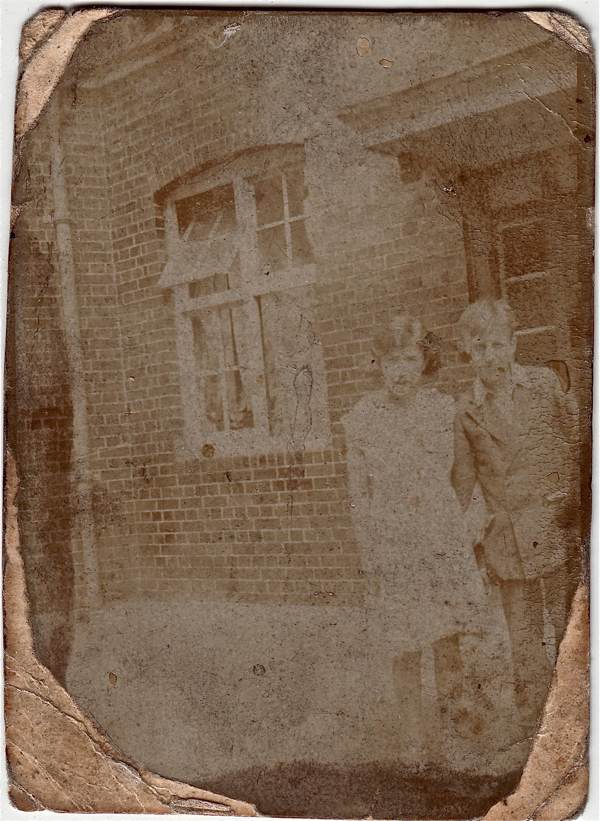
Bessie Benjamin and her brother Louis at the entrance to Iffley Buildings in the 1930s.
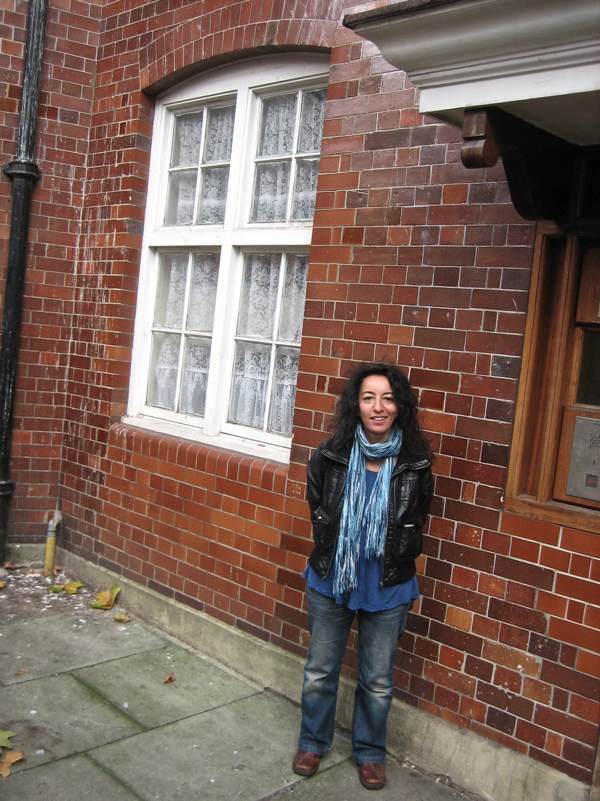
Bessie’s daughter Deena returns to Iffley Buildings more than seventy years later.
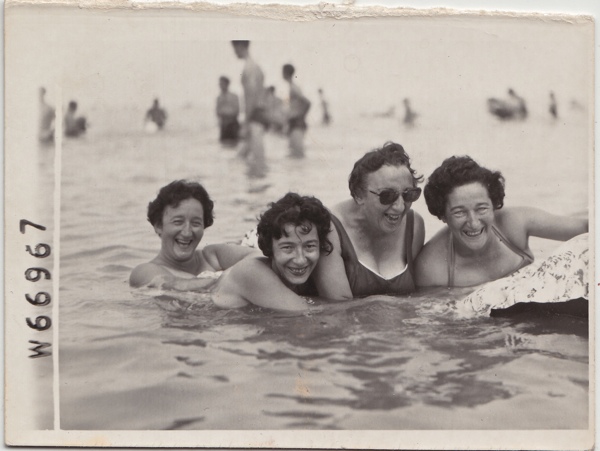
Lily, Bessie, Dinah and Carrie Benjamin in the 1950s.
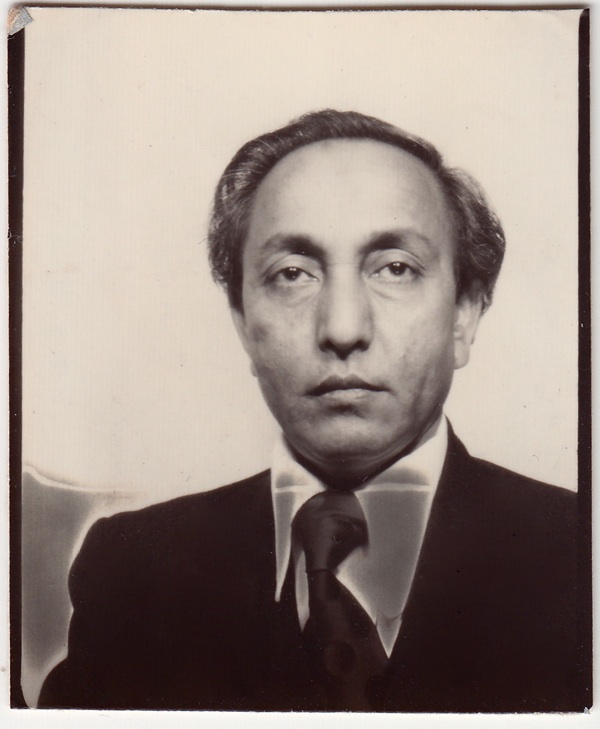
Mohammed Omar.
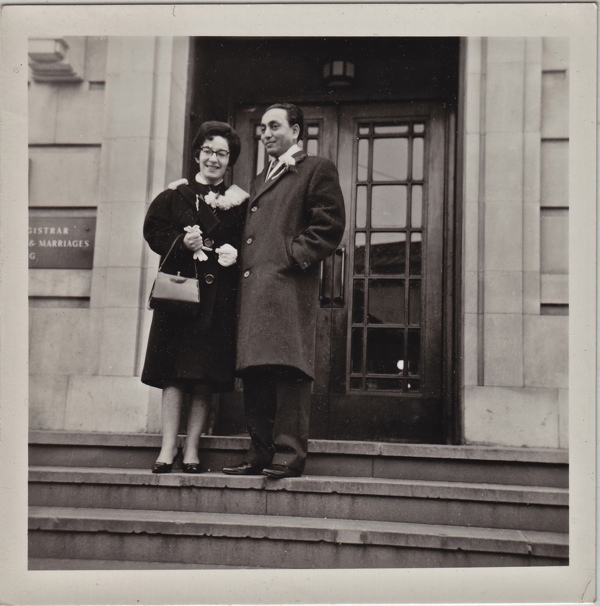
Bessie and Mohammed on the steps of Hackney Town Hall after their marriage.
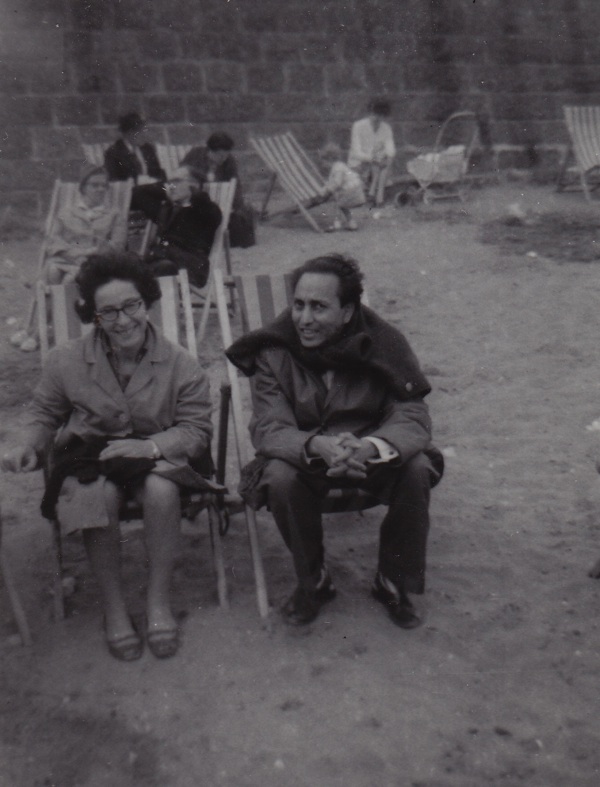
Bessie and Mohammed wrapped up against an English Summer’s day at the beach.
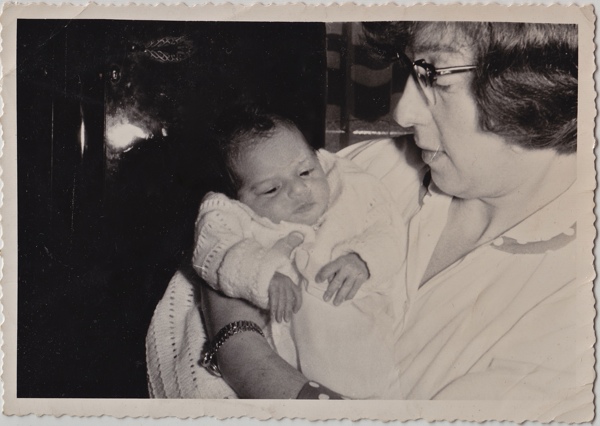
Deena as a baby with her mother.
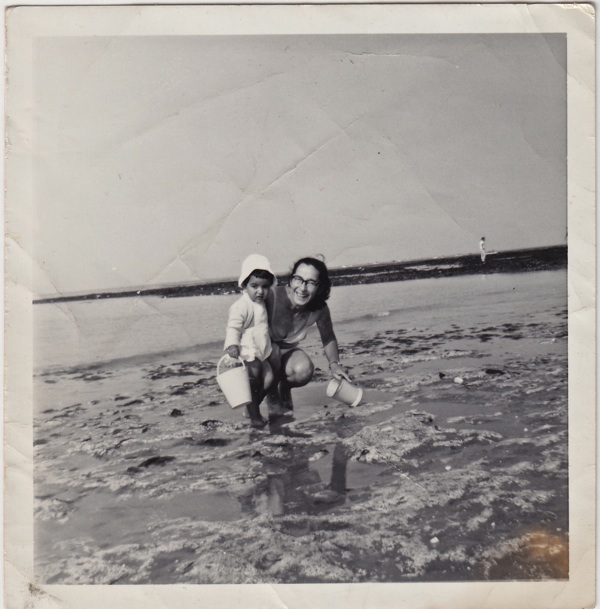
Deena and Bessie.
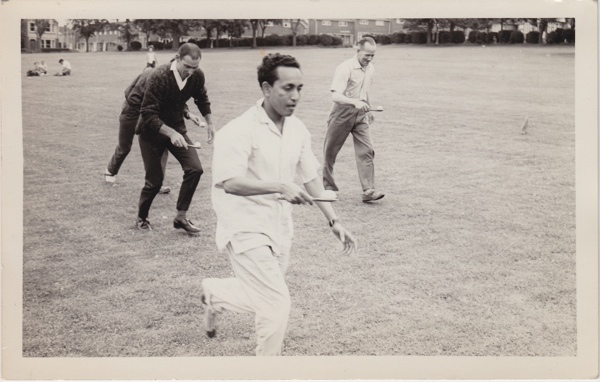
Mohammed wins the egg and spoon race.
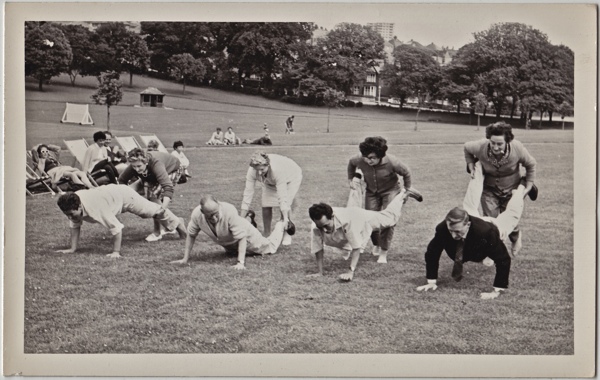
Bessie and Mohammed enter the wheelbarrow race.
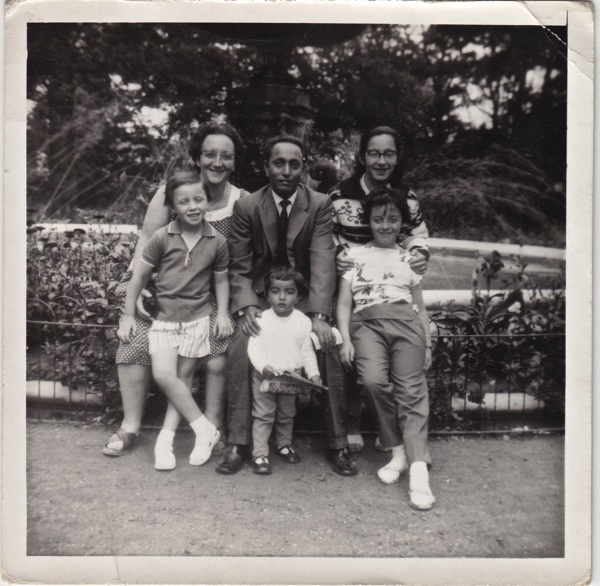
Lily, Mohammed and Bessie with Deena in the centre.
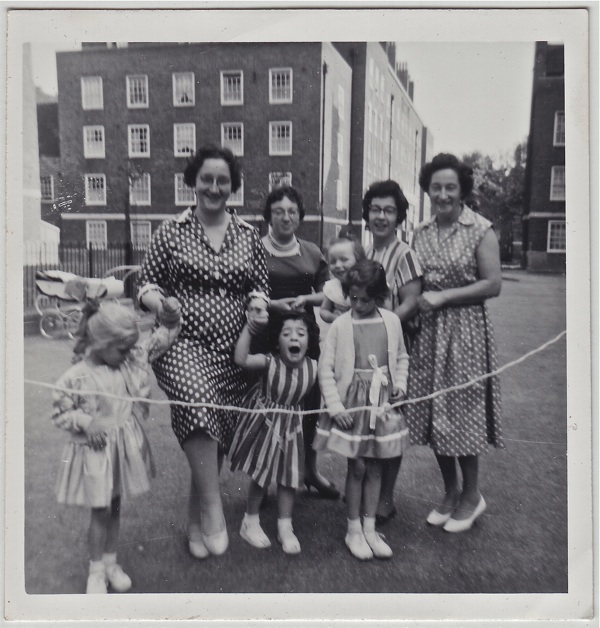
Lily, Dinah, Bessie and Carrie with their children in Stamford Hill in the 1950s.
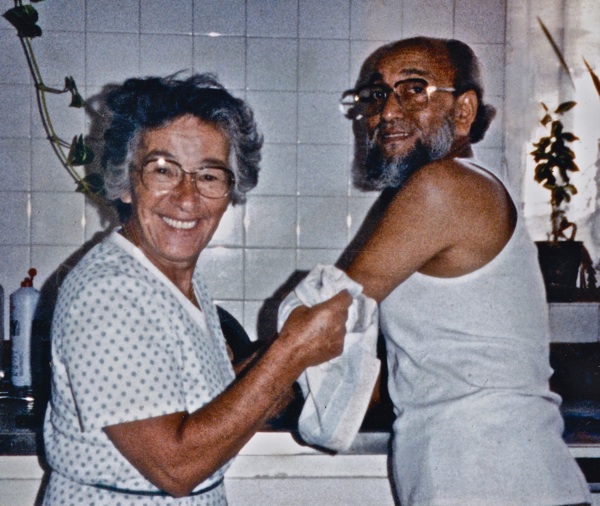
Bessie and Mohammed in later years.
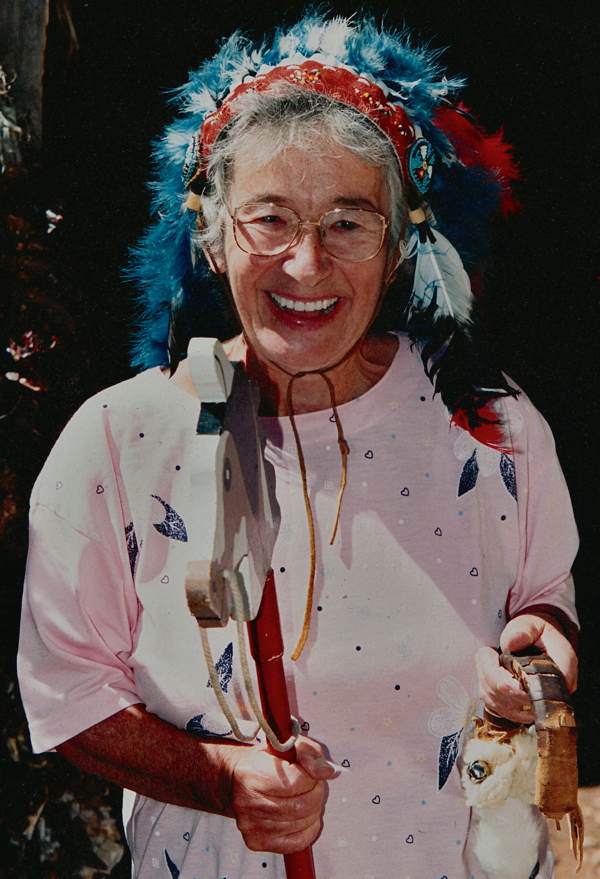
Bessie visited a Native American reserve in the 1990s.
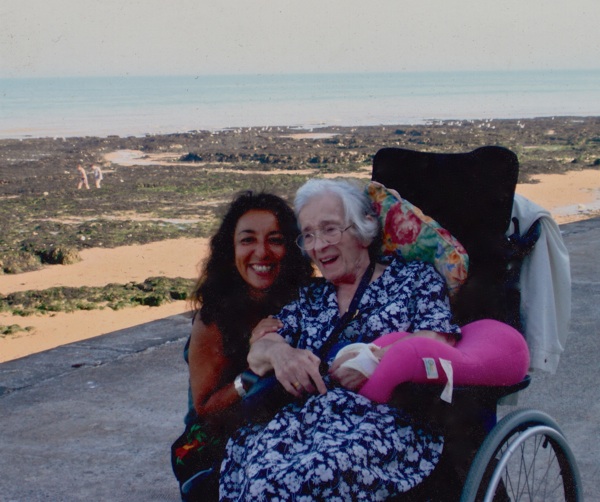
Deena took her mother to the sea for the last time in 2006.
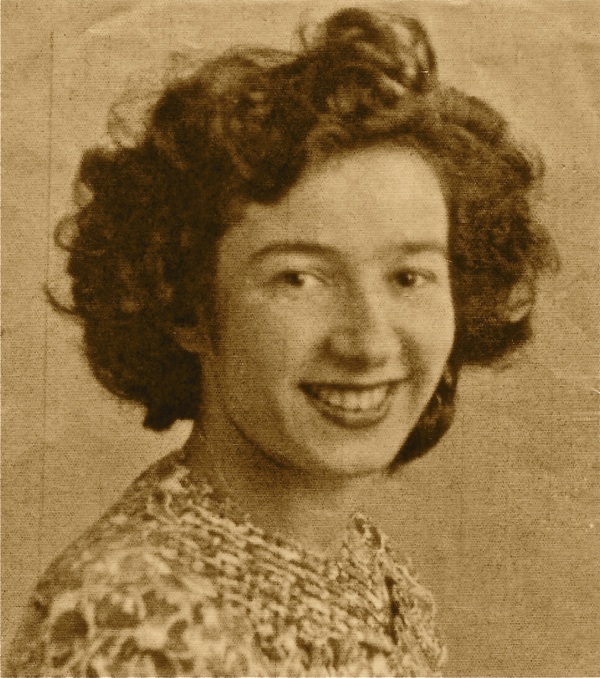
Elizabeth Omar (Bessie), née Benjamin.
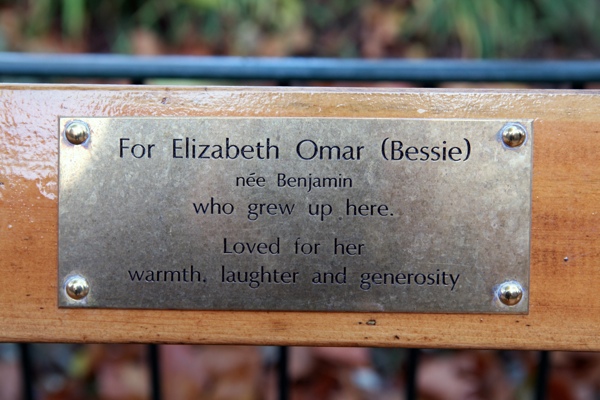
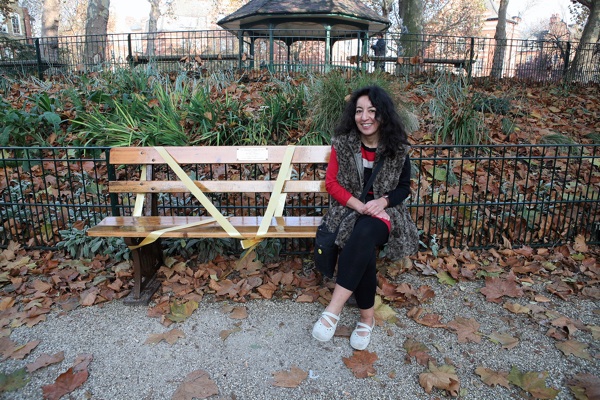
Deena Omar sits upon the bench in commemoration of her mother.
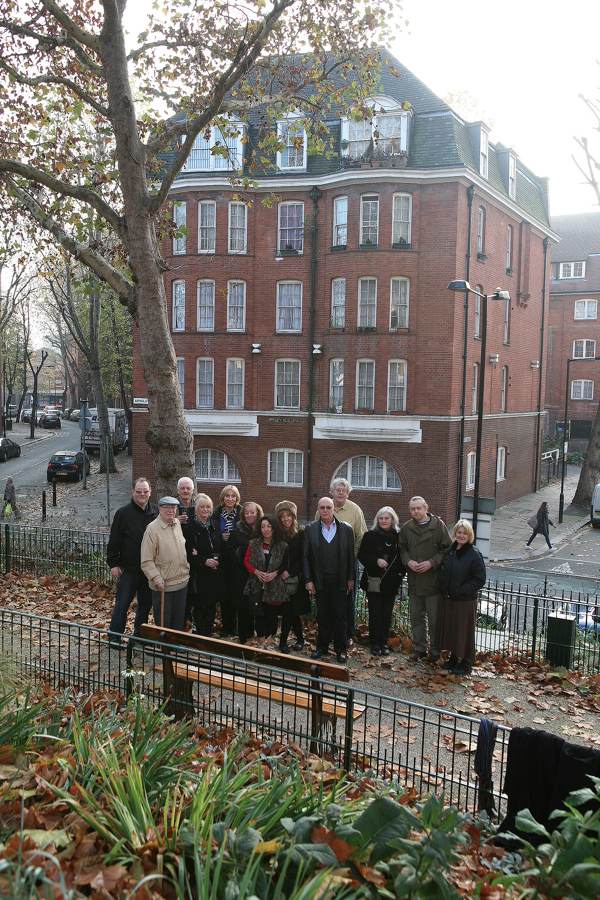
Friends and relatives stand in front of the bench with Iffley Buildings in the background.
Photographs of the inauguration of the bench copyright © Colin O’Brien
You may also like to read about
Mark Petty returns to Brick Lane
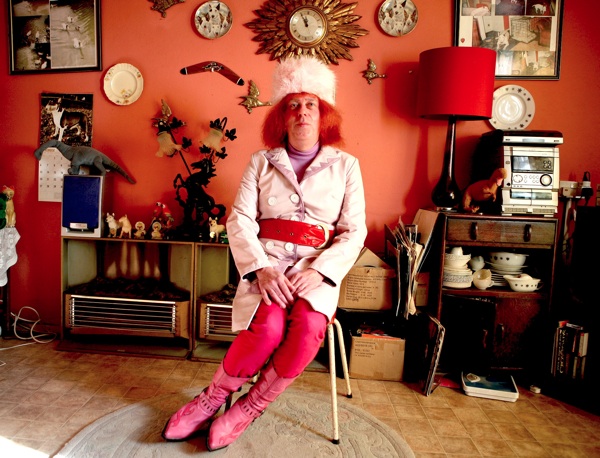
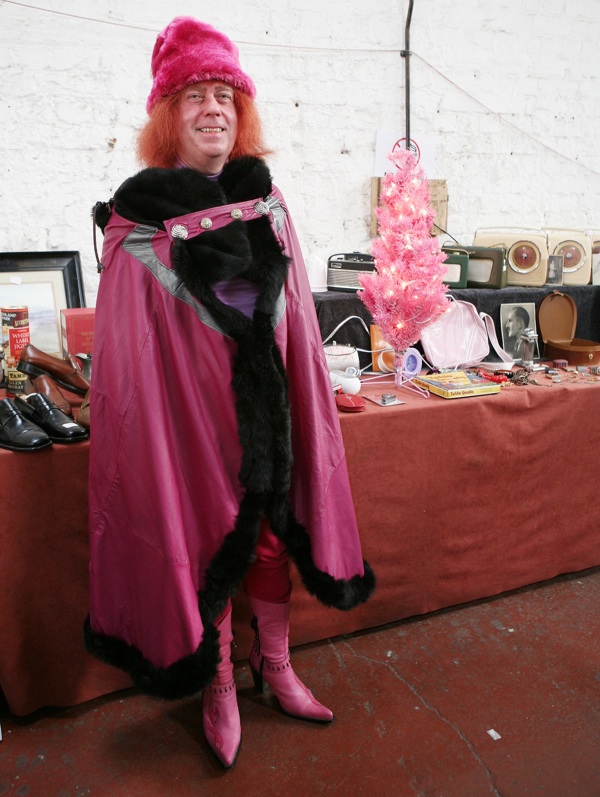
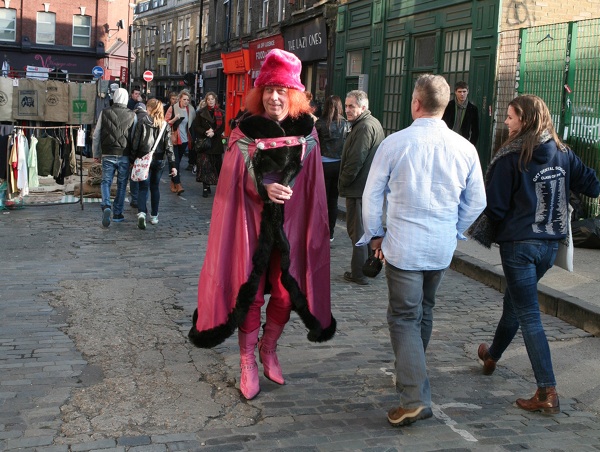
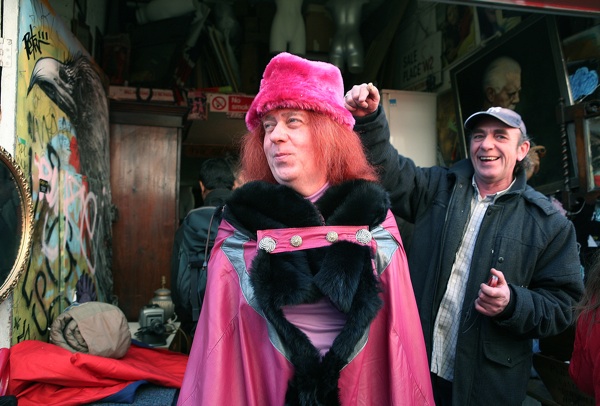
Mark Petty in his Mrs Slocombe tribute coat
Trendsetter, Mark Petty, rang me to announce that he was returning to Brick Lane. Even though he is one of the bravest people I know, Mark has suffered a crisis of confidence over recent months and I had missed his regular presence at the market, bringing such delight and joy to the weekend crowds with his multicoloured outfits. So naturally, I was delighted to hear the good news and offered to accompany Mark to show him moral support. And Spitalfields Life contributing photographer Colin O’Brien agreed to come along too and record the auspicious occasion.
When we arrived at his small flat in a quiet corner of Bethnal Green last Sunday, Mark was deliberating over his choice of outfit. Even though he has three wardrobes full of clothing, Mark declared he had nothing to wear. However, we were delighted to get this opportunity to view more of his original designs, especially admiring his Mrs Slocombe tribute coat with its co-ordinated pink fluffy hat resembling a coconut marshmallow, that he wore to open the door to us.
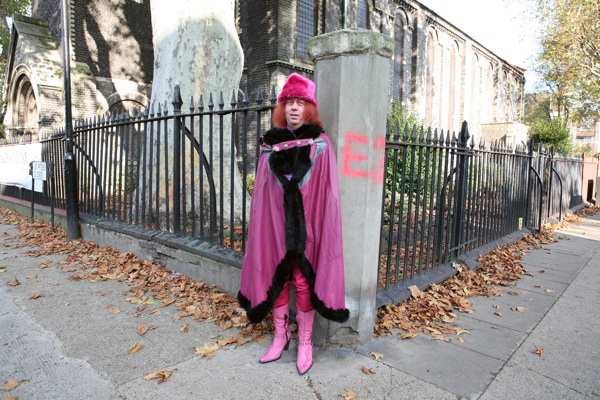
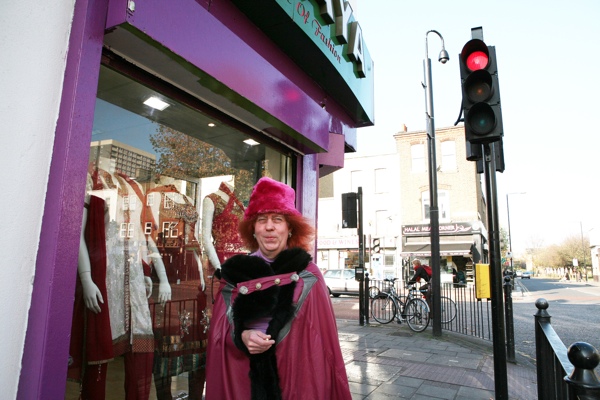
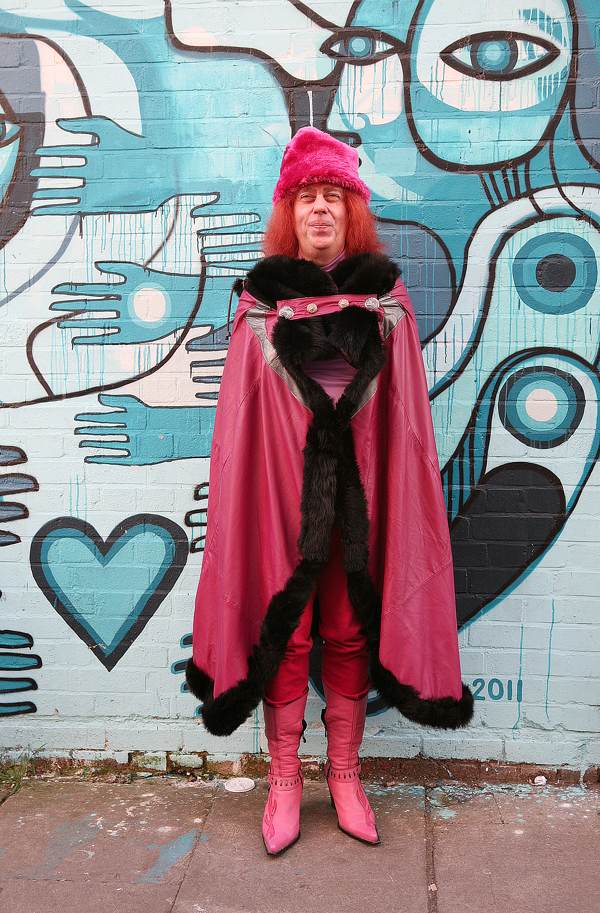
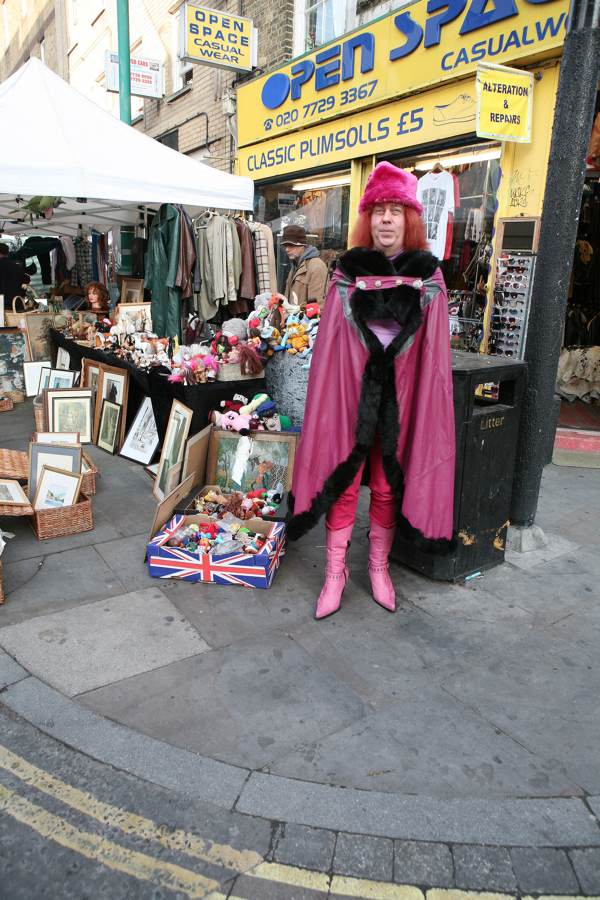
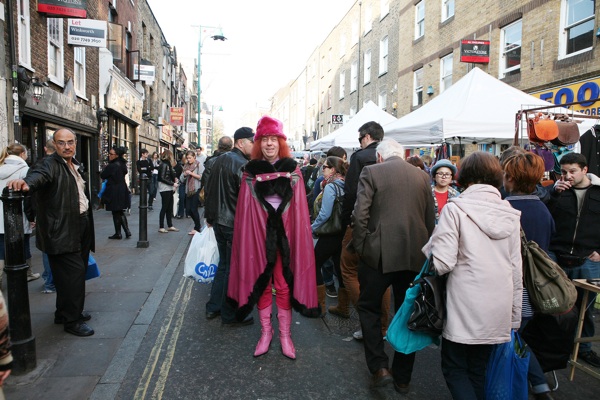
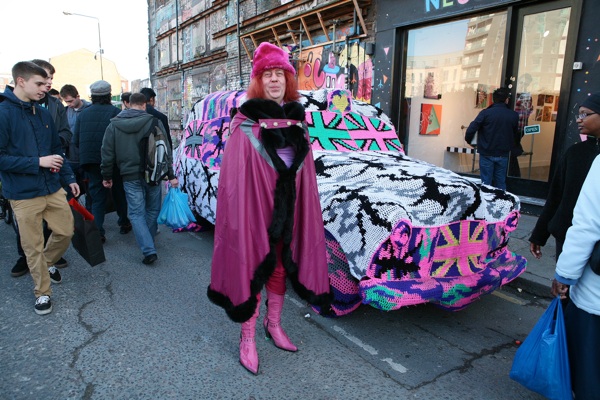
Prudently, Mark decided to wear one of his fur-trimmed leather capes to protect himself against the breeze that had arisen that morning, which just left a choice between options in red, white and pink. Mark chose the pink cape to match the pink cowboy boots he was already wearing and – as he pulled the cape around him and set the matching furry pink cap in place – he revealed that this outfit was a tribute to Boudicca. In fact, the sophisticated detailing around the neck was drawn from the Celtic torques, those metal collars that chieftains wore in days of old.
Boudicca of the Iceni tribe is a figure of such personal significance for Mark that he is shortly to change his name to Boudicca. “When her husband died the Romans took all her lands, so she gathered her army and her three daughters and they burnt Colchester and St Albans and even captured London before the Roman Army cut her down to size at Forest Hill,” explained Mark, growing visibly emotional, “She represents the power to unite the people in resistance against the forces of oppression.”
With this brave declaration, we set out through the backstreets of Bethnal Green towards Brick Lane trudging through the fallen leaves in the bright sunshine of a crisp Autumn morning, filling Mark with nostalgia for his childhood spent living as a poor relation among his aristocratic aunts and uncles on the farm. “I used to hide the kittens in the hayloft to save them from being drowned,” he recalled,“And when I was five, I moved into a corrugated iron shed in the woods to live with my aunt’s servant Greville – it was eerie when you heard the owl screech and the big old oak tree opposite groaning in the wind.”
I would like to have heard more, but already people were leaning out of cars to cheer,“Where’s the party?” Mark acknowledged these passing fans with a discreet wave yet concentrated on keeping as steady a pace as he could, hobbling along in his stiff leather boots. Then, turning into Cheshire St, we arrived at Coppermill Market where all the stallholders greeted Mark with startled enthusiasm, their eyes lighting up at first sight of him – setting a pattern that was to be amplified throughout our morning in Brick Lane. “He always comes and cheers up the market,” Ann, who has been coming from Basildon every Sunday for forty years, admitted to me fondly.
Joe & Steve, anti-fur protesters, were keen to have their pictures taken with Mark – who only wears fake fur – before commencing their protest outside Beyond Retro. “Even wearing vintage fur promotes the wearing of fur,” they assured me. Our next stop was Richard & Cosmo Wise’s shop where the newest clothes are at least seventy years old and it was my delight to introduce Richard and Mark, individuals who dress utterly differently yet with equal inventiveness.
“You’ve excelled yourself this time!” announced burly stallholder Nigel Zoyers who sells discount shirts in Cheshire St, throwing his arms around Mark ,“Now I know why you’ve been away three months.” Then he brought out his mobile phone and scrolled back through images of Mark over the last few years, occasioning mutual chuckles of amusement – “Going down Memory Lane!” he declared, “That was a lovely one” – “Remember the striped suit?” – “The gold jacket?”
Walking into the Sclater St yard, between the narrow lanes of stalls crowded together, a cheering grew among the stallholders breaking into sporadic applause as hundreds turned their heads in wonder at Mark’s extraordinary outfit. And Mark beamed with pleasure, assuming a demeanour of such regal confidence as if he were the long-lost prophet returned or a super hero come to save the world, protected by the magic armour of his full-length purple leather cloak.
At Des & Lorraine’s junk shop in Bacon St, Lorraine who has known Mark for twenty years wiped away a tear to welcome his return. “We miss Mark when he’s not here,” she confided to me, “When he’s in hibernation.”
Our final stop was Batty Fashions in the Bethnal Green Rd where Mark’s outfits are made and where the members of the Batty family lined up to greet their best customer with pride, because Mark is a walking advertisement for the imaginative possibilities of what can be achieved with coloured leather.
Following just behind Mark through the crowds that morning, I got to witness the wake he creates of double-takes and disbelief – people asking themselves, “Did I just see what I thought I saw?” At any moment, I expected music to commence and everyone to star singing and dancing. I had the feeling I had walked into a big-screen musical comedy, yet this was something even better because it was real and, aside from a couple of anxious cigarettes, Mark carried it off consummate aplomb. On behalf of the rest of us, Mark asserted his point, daring to stand up for the right to be different and, after we said our good byes, I watched him wander off homewards down the Bethnal Green Rd, hobbling contentedly as he went.
Be it known throughout the East End! Let the pigeons sing it from the rooftops! Let the bells of Christ Church peal! Mark Petty is back in Brick Lane! Boudicca Lives!
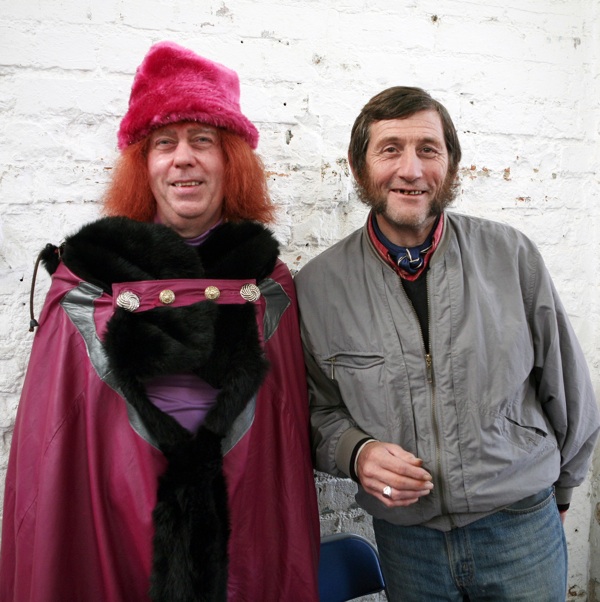
with Roy
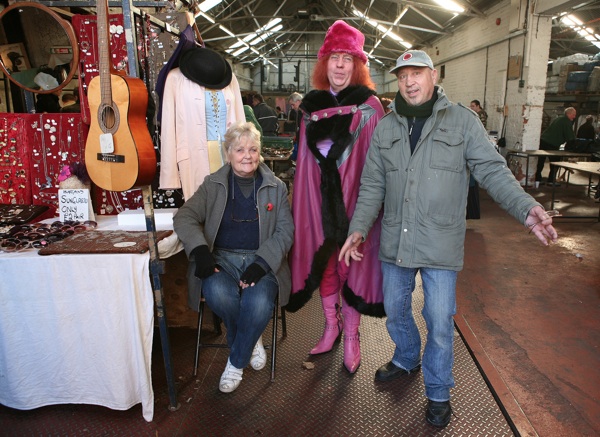
with Ann & Charlie from Basildon
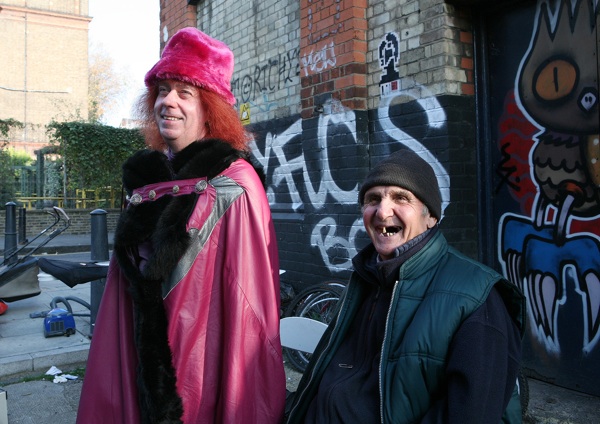
with Danny
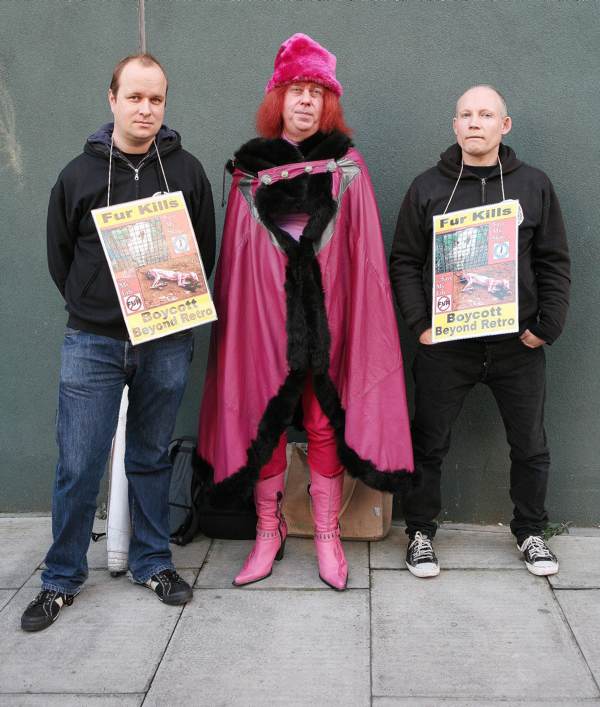
with Joe & Steve, anti-fur protestors
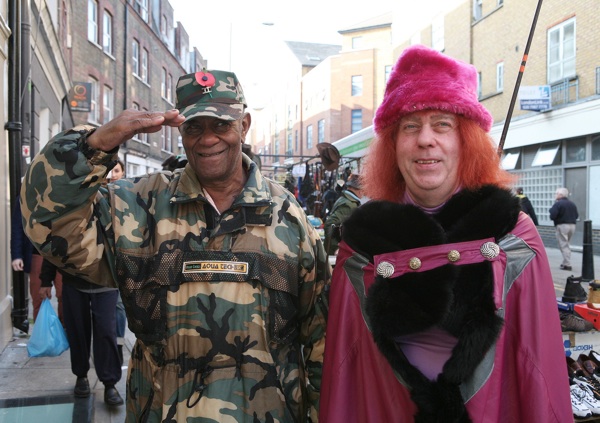
with Captain Joe Louis
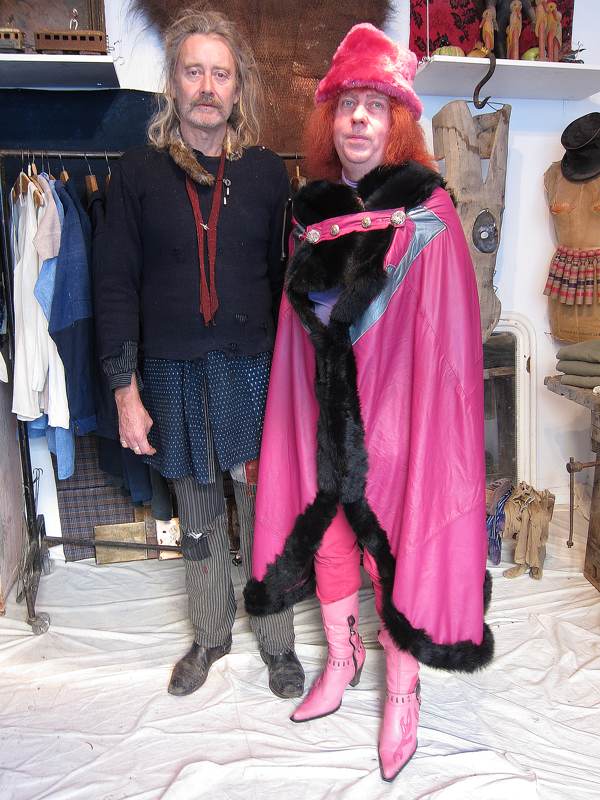
with Richard Wise
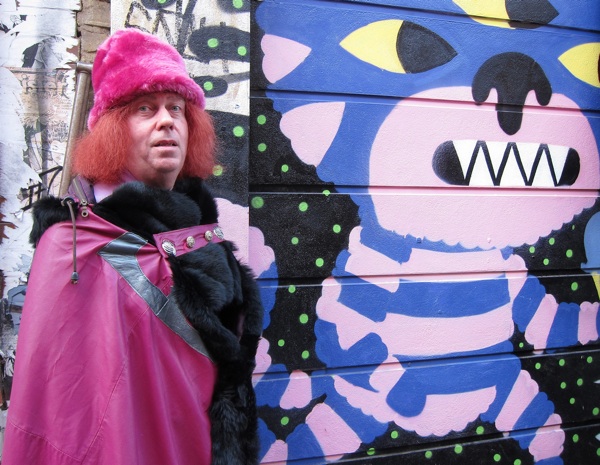
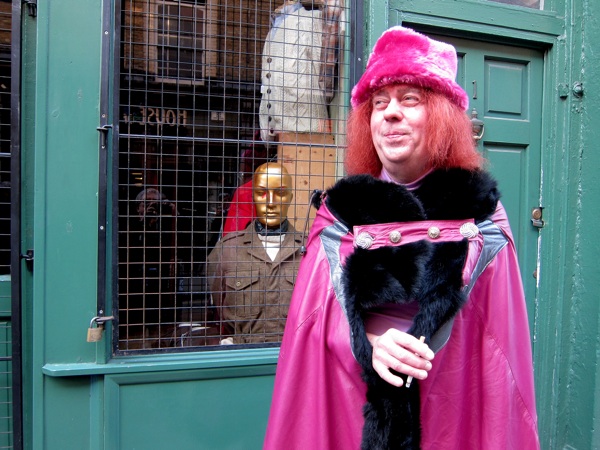
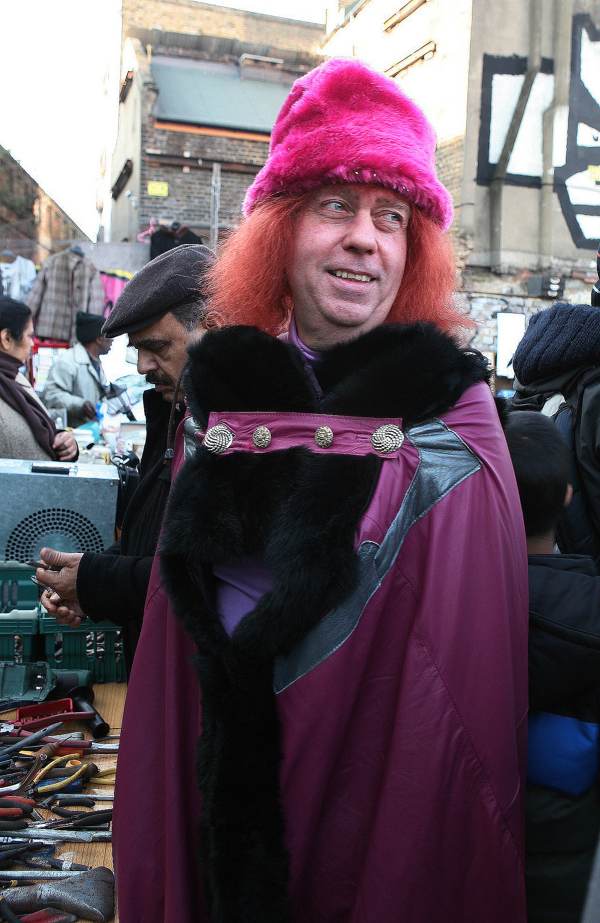
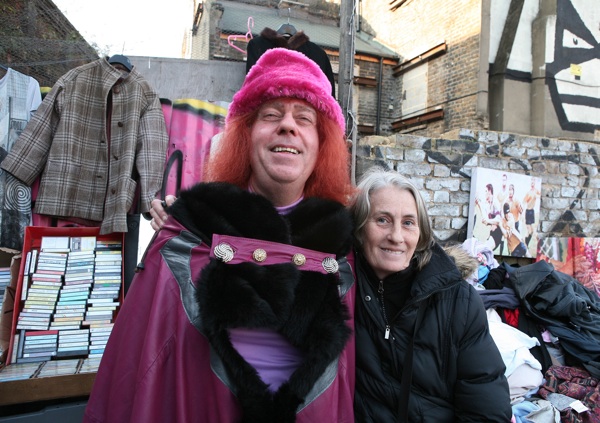
with Dolly
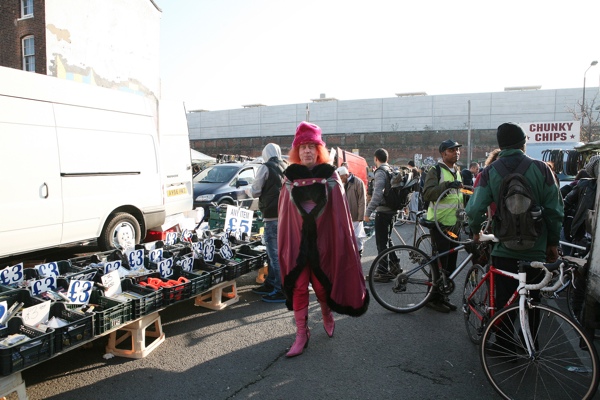

with Lorraine
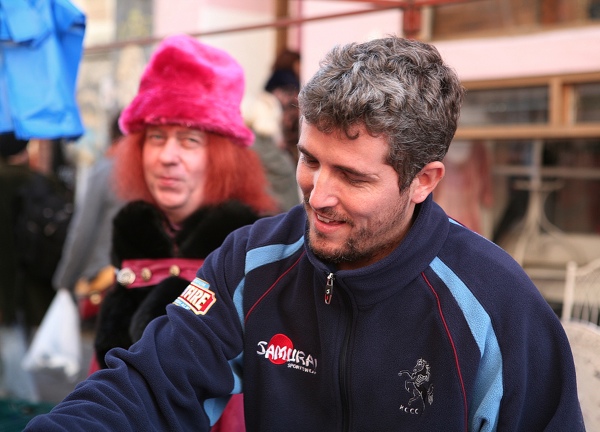
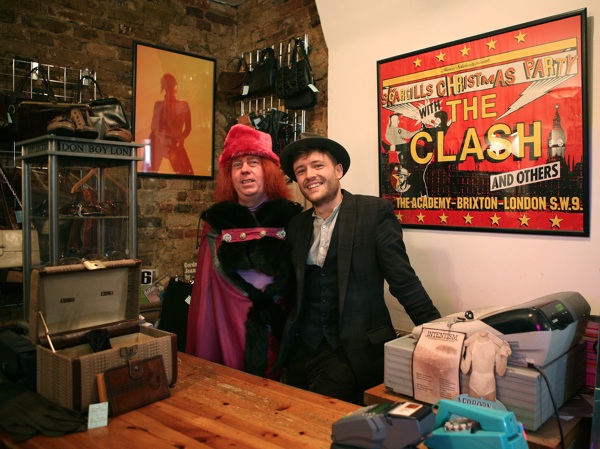
with Adam
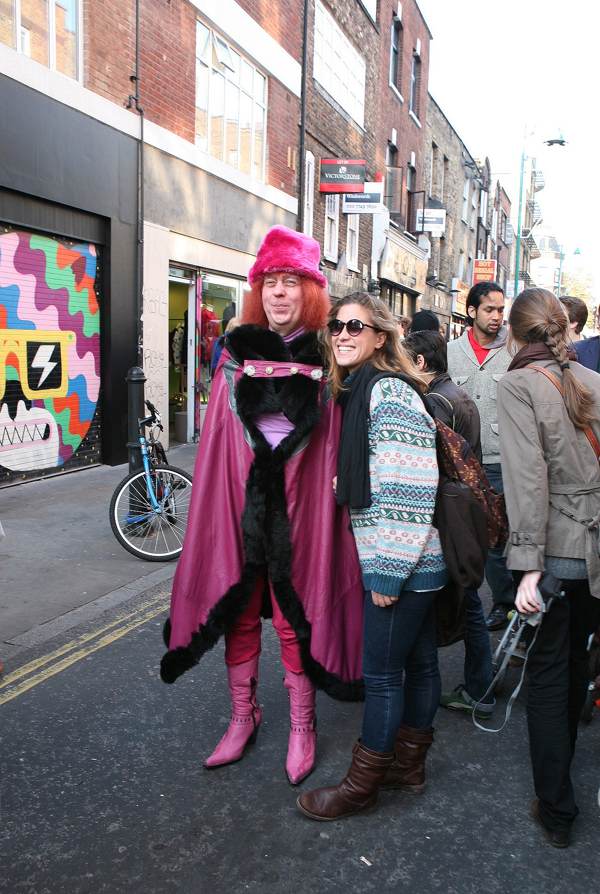
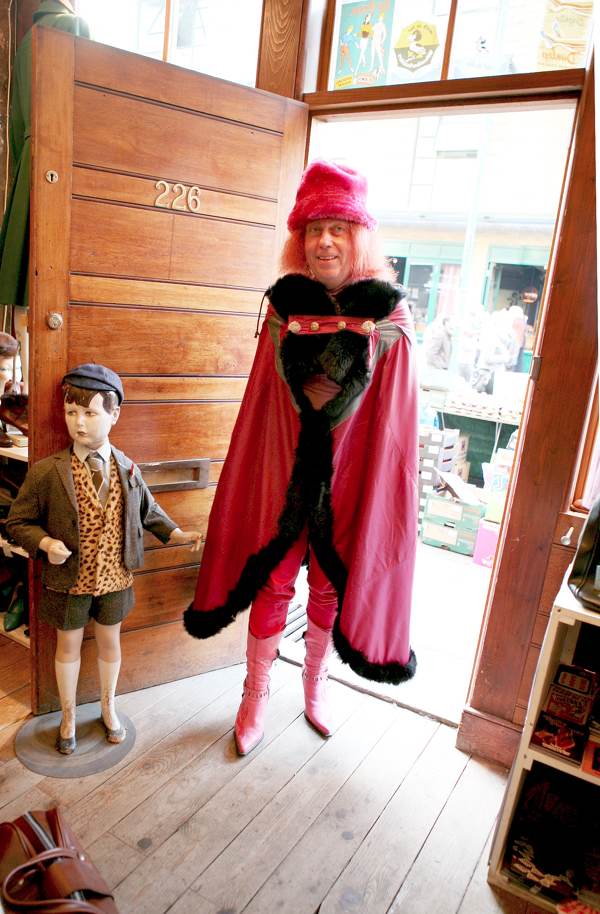
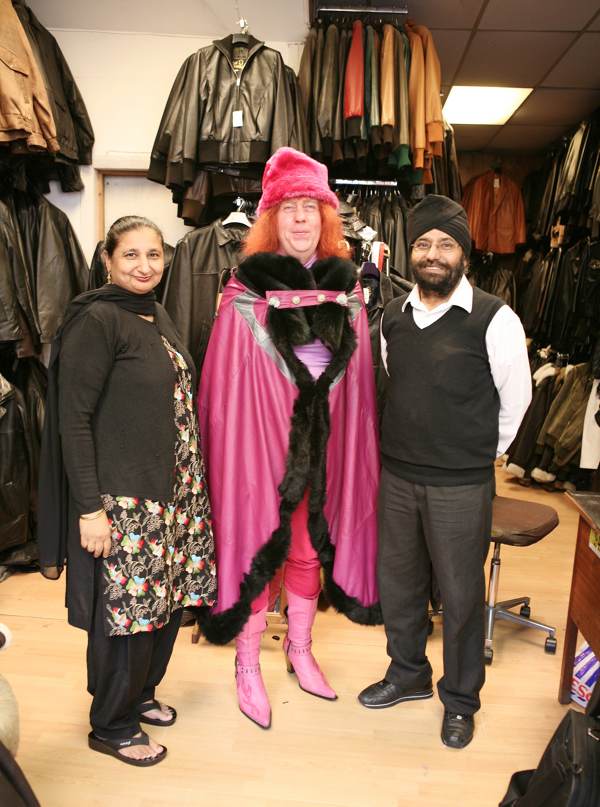
with Kuldip & Guamett Battu of Batty Fashion where Mark’s clothes are made.
Photographs copyright © Colin O’Brien
Read my original profile of Mark Petty, Trendsetter
and take a look at Mark Petty’s Multicoloured Coats
Dorothy Annan’s Murals in Farringdon St
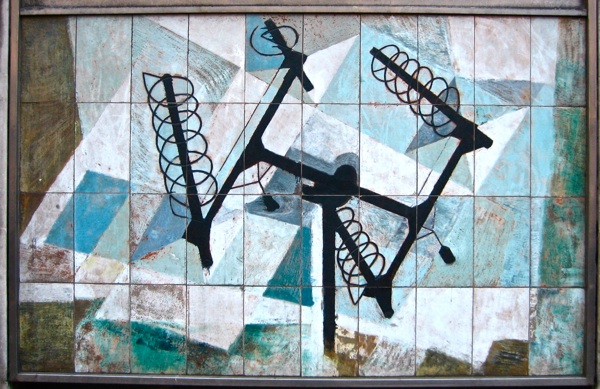
1. Radio communications and television
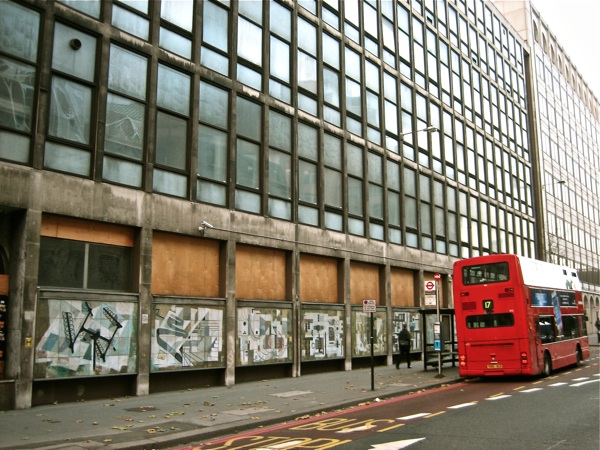
Wandering down under Holborn Viaduct yesterday, I was halted in my tracks by the beauty of a series of nine large ceramic murals upon the frontage of Eric Bedford’s elegant modernist Fleet House of 1960 at 70 Farringdon St. Their subtle lichen and slate tones suited the occluded November afternoon and my mood. Yet even as I savoured their austere grace, I raised my eyes to discover that the edifice was boarded up and I wondered if next time I came by it should be gone. Just up from here, there are vast chasms where entire blocks have disappeared at Snow Hill and beside Farringdon Station, so I would not be surprised if the vacant Fleet House went next.
Each of the murals is constructed of forty bulky stoneware panels and it was their texture that first drew my attention, emphasising the presence of the maker. Framed in steel and set in bays defined by pieces of sandstone, this handcrafted modernism counterbalances the austere geometry of the building to sympathetic effect. Appropriately for the telephone exchange where the first international direct-dialled call was made – by Lord Mayor of London Sir Ralph Perring to Monsieur Jacques Marette, the French Minister of Posts, Telegraphs and Telephones in Paris at 11am on 8th March 1963 – these reliefs celebrate the wonders of communication as an heroic human endeavour. In 1961, the General Post Office Telephonist Recruitment Centre was housed here and they paid telephonists £11 week, plus a special operating allowance of six shillings and threepence for those employed on the international exchange.
These appealing works, enriching the streetscape with complex visual poetry, were created by Dorothy Annan (1908-1983) a painter and ceramicist with a bohemian reputation who, earlier in the century, produced pictures in a loose post-impressionist style and was married to the sculptor Trevor Tennant. Although her work is unapologetic in declaring the influence of Ben Nicholson and Paul Klee, she succeeded in constructing a personal visual language which is distinctive and speaks across time, successfully tempering modernism with organic forms and a natural palette.
It was the abstract qualities of these murals that first caught my eye, even though on closer examination many contain figurative elements, illustrating aspects of communication technology – motifs of aerials and wires which are subsumed to the rhythmic play of texture and tone, offering a lively backdrop to the endless passage of pedestrians down Farringdon St.
Once a proud showcase for the future of telecommunications, Fleet House has been empty for years and is now the property of Goldman Sachs who have their own plans for the site. Yet although the building is not listed, the City of Londoners planning authority have earmarked the murals for preservation as a condition of any future development. But if you want to see them as Dorothy Annan intended them, you would be advised to take stroll down under the Holborn Viaduct soon – because this could be your last chance.
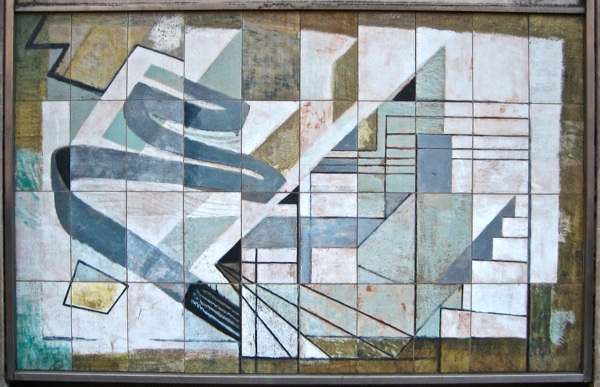
2. Cables and communication in buildings
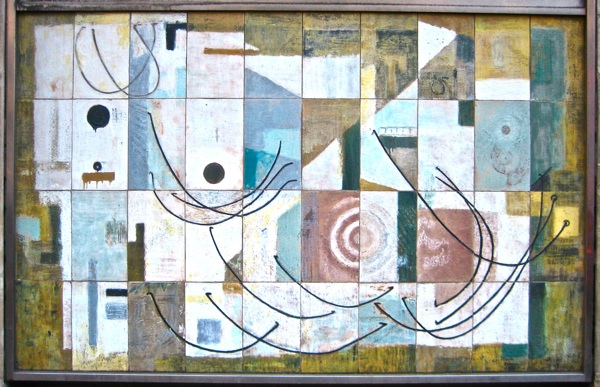
3. Test frame for linking circuits
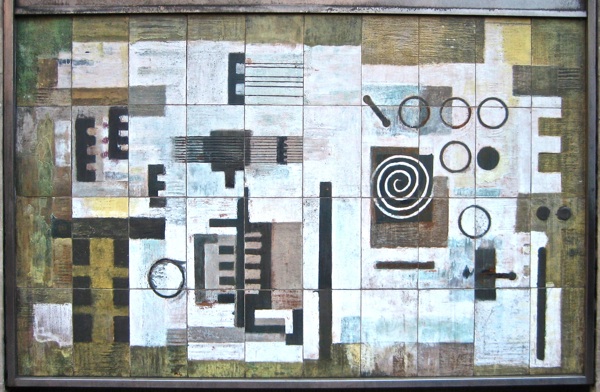
4. Cable chamber with cables entering from street
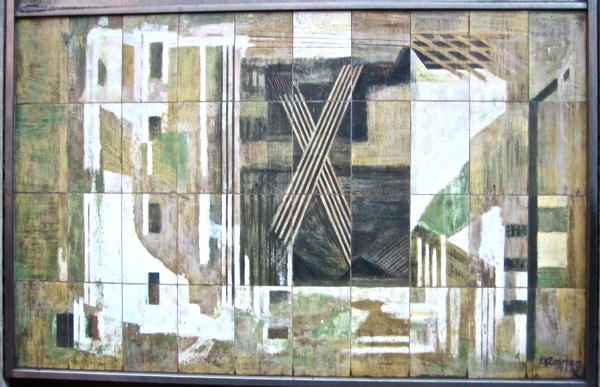
5. Cross connection frame
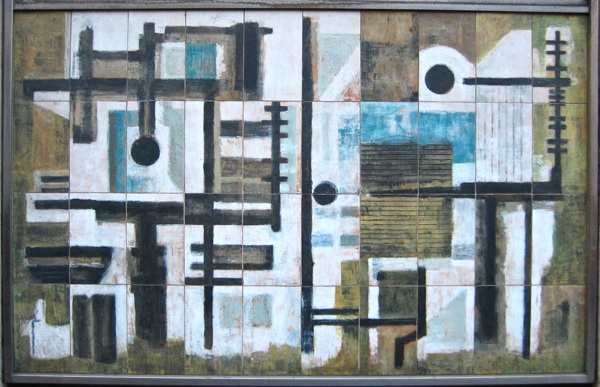
6. Power and generators
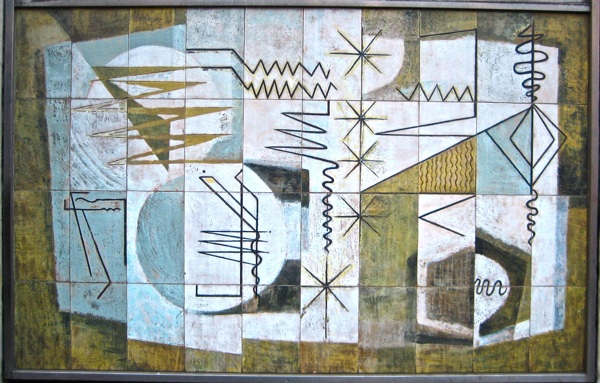
7. Impressions derived from the patterns produced in cathode ray oscilligraphs used in testing
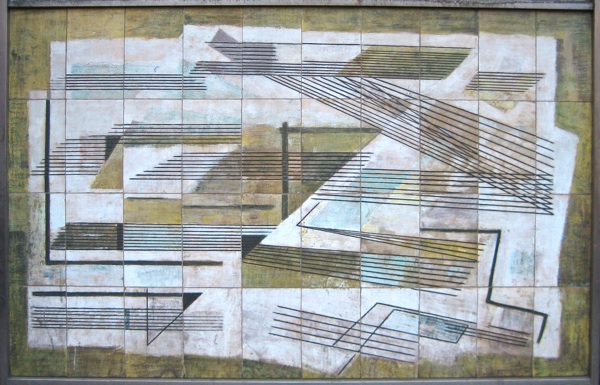
8. Lines over the countryside
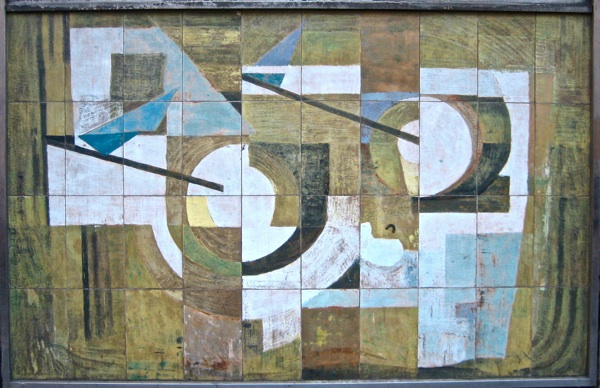
9. Overseas communication showing cable buoys
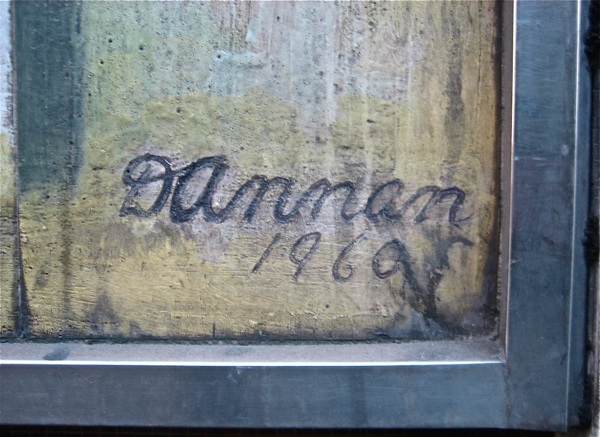
You can see two paintings by Dorothy Annan here
You might also like to take a look at
Peter Thomas, Fruit & Vegetable Supplier
It is my pleasure to publish these extracts from Craig Taylor’s fascinating new book published by Granta – Londoners: The Days and Nights of London Now – As Told by Those Who Love it, Hate it, Live it, Left It & Long For It – collecting together the myriad voices of the metropolis to create a panoramic oral history of contemporary London.

Peter Thomas
During one visit to the New Spitalfields Market in Leyton, I noticed a buyer who moved up and down the aisles with particular speed, wandering, looking, negotiating and ticking off his checklist. He walked up and down for hours. He never came to rest. I sought him out and tried to ask him a question; he waved me off. I persisted and he told me he’d been in this industry since he was sixteen. “You have to be the greatest actor in the world,” he said. “You have to say exactly the right thing at the right time.” He told me his name was Peter Thomas and when I asked him if I could accompany him through the market sometime, he said, “Sure, if you can keep up.”
1.20 a.m.
Peter: Come on then. Here you are, Craig. (He deposits a box of asparagus in my hands.) Just put that asparagus on there. Nice and dry underneath. Smells okay. Got that crispness. Hear that? That squeak. This is Peruvian. This time of year it all comes from South America. English has just finished. You have your seasons, you see. (He turns to the guvnor, perched behind a podium.) Ain’t bad, John, is it. What’s the ecrip?
John: Tom Mix?
Peter: Okay, come and talk to you in a minute.
John: All right.
(The guvnor, John, wanders away. Peter looks over some courgette flowers and says quietly, mischievously:)
Peter: Now then, what I want to do, Craig … we might have some fresh coming in in a minute, see? But he’s only got three now. So I’ll get this, I’ve got to hide the courgette flowers somewhere.
Craig: You’re going to hide the courgette flowers?
Peter: Now at least I’ve got that, you know what I mean? Now when the fresh comes in, I’ll change it over.
(He hides the veg out of sight, straightens up, tucks in his shirt, and starts to walk.)
Peter: Keep up. Now over there I spoke to them in rhyming slang. I said, “What’s the ecrip?”
Craig: The what?
Peter: The ecrip. Did you hear me say, how’s the ecrip? That’s “price” backwards, so that you didn’t know what I was talking about. And he said to me, Tom Mix, which is rhyming slang. What’s Tom Mix?
Craig: Six.
Peter: Yeah. This was why the language was designed, so that I could talk to him and no one knew what we was talking about. “Carpet” means three. That one goes back to years and years ago, when people was given a prison sentence, and if what they got was it was either three months or three years, they got a carpet in the cell and that’s what they used to say. How d’you get on? Oh, I got a carpet. Oh, fuck me, did ya? And that’s how it was. It was either three months or three years, but I know a carpet is three. “Ben neves” is “seven” backwards. “Thgiet” is “eight” backwards. “Flo’s line” is nine, “cockle” is ten. “Bottle of blue” is two and then I’ll sling one at an Aristotle. An Aristotle is a bottle. Double rhyming slang. All veg has got different ones. Celery is “horn root,” because years ago they thought that celery was an aphrodisiac. And they said it gave you the horn. So they called it horn root. “Self starters” is tomatoes. “Navigators” is taters. “Boy scouts” are sprouts. “Tom and Jerry” is cherries.
Craig: Do you have different banter with people who aren’t English? Like the Turks?
Peter: Yes, it’s no good talking rhyming slang to them, is it? They just about understand proper English. One of the young Pakistani fellows learned the rhyming slang just so he’d know what was going on. (He gestures around the market.) Now these people are all salesmen and they’re all here to make as much money as they possibly can. They will try to get as much money out of me and I will try to get as much money out of them. There’s no friends in business. We’ll be talking about football and all of a sudden the business side comes to it, and that’s it. All the time we’re talking we know that any minute now, any second, it’s going to be, “How much is that?” Then we go back to being friends. You can’t drop your card.
2.05 a.m.
Peter: Let’s go and see if those courgette vans have turned up. Come on. We’ll see Kevin. He’s one of the most experienced men on the market, Craig. There ain’t much he doesn’t know. Anything you want to know about business, that’s your man. (We approach a large stall.) Kevin, have you got any fresh courgette flowers to arrive?
Kevin: No.
Peter: No! Fibber.
Kevin: No, I forgot to order them! As soon as those words come out of your mouth I thought to myself, oh fuck! I’ve got no memory.
Peter: Okay, Kev. I’ll see you later. Don’t forget to order them for tomorrow, eh?
Kevin: Yeah, that’s right.
Peter: He forgot to order them. (We’re away) He forgot to order them. Now there’s a lot of winding up goes on in this market. One of the worst things is for a seller to come over and see what you’re up to. If a salesman knows you’re rushing about for something and you need it, then they get you at it. Now I’ve gone in there for courgette flowers and there ain’t none in and I need them for customer, an important customer, so I go to Kevin just now and I said, Kev, courgette flowers? You just missed them, Pete, I had them. That’s what he said, been and gone. I said, got any fresh, I see you’re out of them. See what I mean, it winds you up. That’s why I put those courgette flowers to one side earlier. See what I mean? Because at the other stall he had only three left and if he had none fresh come in I’ll bet them other two there are gone now. And I’d have gone back there and he’d have said, Pete, I sold them.
Craig: How do you know how to do all this? Is it like an instinct every morning?
Peter: I don’t know. You’ve just got to be on your toes. The minute I get out of bed I start thinking all the time.
2:30 a.m.
(He tosses an apricot pit in the air and kicks it. He eats another apricot.)
Peter: I have a permanent stomach ache, Craig. What can you do? It’s fruit. You can’t change the fact it’s fruit.


You may also like to read about
Ivor Robins, Fruit & Vegetable Purveyor
John Olney, Donovan Brothers Ltd
Jim Heppel, New Spitalfields Market
Blackie, the Last Spitalfields Market Cat
and take a look at these galleries of pictures
At Paul’s Tea Stall

Paul Featherstone
At the junction of Sclater St and Cygnet St, on the corner of the car park, sits Paul’s Tea Stall selling a modest range of beverages and hot snacks at keen prices. A cherished haven for anyone who would rather pay 80p than the two pounds charged for a cup of tea in some of the fancy coffee shops – Paul Featherstone’s burger van has become a Spitalfields institution in just three years . For those who do not have the time or spare cash to go into a cafe, and for those who prefer to take their refreshment en plein air, it is the centre of the world.
As the November dusk falls in the mid-afternoon, the spill of illumination from Paul’s Tea Stall casts a glowing pool of light into the chill of the gathering gloom, as if to manifest the warmth of this friendly harbour in the midst of the urban landscape.
If you have been working on one of the surrounding construction sites since dawn, this is where you escape to get your cup of tea and bacon sandwich. If you are cab driver or a courier, driving around London all day, you can turn up and Paul will greet you by name, like a long lost friend. If you seek company and you have little money and nowhere else to go, you will be welcome here. Even if you are a peckish schoolboy that skipped the duff school lunch, you can drop by for a sausage sandwich on the way home.
All of these I witnessed yesterday – when I joined the regulars at Paul’s Tea Stall for a couple of hours, perched on a stool and clutching a hot cup of tea to warm me in the cold, while enjoying the constant theatre of customers coming and going and sharing their stories. Always buoyant, Paul welcomes every one of his customers individually, fulfilling the role of host with conscientious good spirits.
With everybody leaning against the counter, sipping their drinks, and swapping genial banter and backchat along the line, the atmosphere is more like that of a pub than a cafe – and I was delighted to meet my old friend Tom the Sailor who is here every day with his dog Matty. And somehow, in the few quiet moments, Paul managed to fit in telling me his story too.
“I used to have a fruit & veg stall outside Staple Inn in High Holborn, I was there fifteen years from 1988. But I was brought up in a cafe in Harrow, even as a child I worked there for my pocket money – so I thought, I’ll open a cafe.
With the fruit & veg, it’s passing trade, you never get to speak much but here people stay and talk. You’ve got the community. You meet people like Tom – there’s plenty round here. I’ve been on the phone for them sorting out their pension and electricity. Someone needs to take care of them. My dad was a compulsive gambler and, while he was round the betting shop gambling our money away, my mother and I used to be feeding and taking care of all the waifs and strays in the cafe. I do the same here, when people come and say they have no money, I feed them up.
I haven’t had a day off in three years or a holiday in five years. Saturday is the only day I am not here and I like to spend it in bed, catching up on my kip, but my wife tries to get me to do the gardening. I leave home in Southend each morning before six to get here before eight and open up, then I leave again at six and get home around seven thirty or eight, depending on traffic. It does feel like all work and no play, but I’d rather be doing this than working for someone else. And it’s interesting here, you never know who’s going to turn up next. I like to chat with all my customers, many are friends now and I know all their names. I’ve never fallen out with anybody.
Most of the constructions workers are foreigners and don’t have wives to go back to, so I stay open late for them to pick up sandwiches and cold drinks to take home to their digs. I had a good first year, when they were building the East London Line the workers came here, but since they left it hasn’t picked up. So now I hope there’ll be more people coming to work on all the new buildings that are going up hereabouts.”
The tall red cranes towering over Paul’s Tea Stall and promising future custom, are also harbingers of the time when his presence may no longer be welcome. Yet Paul takes it in his stride, he has seen the East End change before – on leaving school at eighteen he became a van driver for a company supplying lining fabrics to the clothing factories that are now gone – so, for the time being at least, Tom and Matty are a regular fixture at Paul’s Tea Stall each morning in Sclater St.

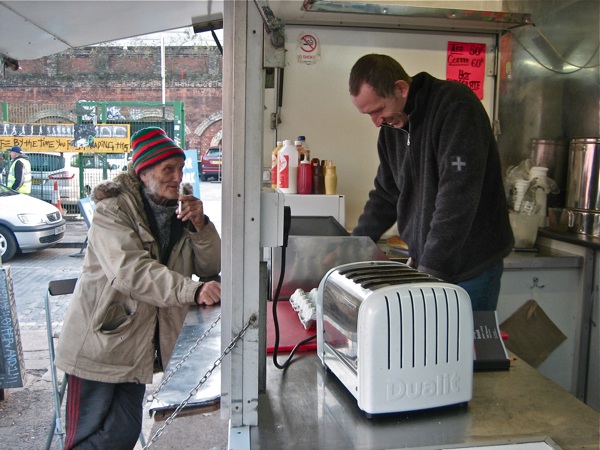


Tom Finch & Matty
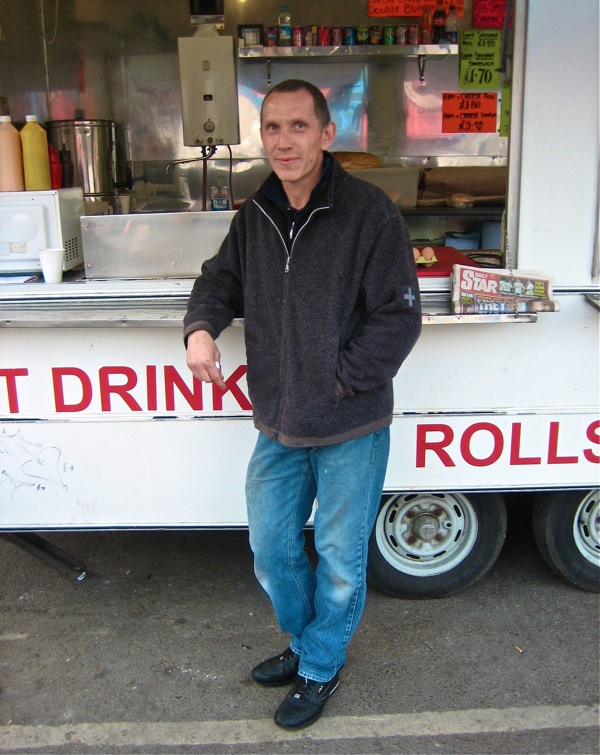
Paul Featherstone
You may also like to read about
Mr Pussy is Ten

A little over ten years ago, I woke one morning and decided to get a cat. It was just a few weeks after my father died and I had been lying awake trying to think of ways to console my mother. The funeral was over but we were still living without any sign of a new equilibrium. I decided a cat was the answer, so I set out to find one and take it with me on the train to Devon that night, as a gift for her. Yet I hit a blank at once, when I rang a pet shop and discovered that cats cannot be bought. I spoke to the RSPCA and cat charities, and they could not help me either. They told me they required an inspection of the prospective owner’s house before they could even consider offering me a cat.
As a child, I owned a beloved grey tabby that I acquired when I began primary school and which died when I left home to go to college. The creature’s existence spanned an era in the life of our family and, at the time, my mother said that she would never replace it with another because its death caused her too much sadness. Yet I always wondered if this was, in fact, her reponse to my own departure, as her only child.
Now my father was dead, she was alone in a large house with a long garden ending in an orchard. It was an ideal home for a cat, and she had experience with cats, and I knew absolutely that at this moment of bereavement, she needed a cat to bring fresh life into her world. I called her and discussed it, hypothetically. She told me she wanted a female.
I rang veterinary surgeries asking if they knew of anyone giving kittens away, without any luck. Working systematically, I rang every pet shop in the London directory, asking if they knew anyone wanting to dispose of kittens. Eventually, a pet shop offered to help me – as long as I could be discreet, they said. They had rescued a litter of kittens just a few weeks old, prematurely separated from their mother and abandoned on the street, and they needed to find homes for them urgently. Naturally, they could not sell me one because that would be illegal, but maybe – they said – I could give them something to cover the costs of taking care of the others?
So I went to the pet shop in question, in a quiet street around the back of Mile End tube station. (It does not exist anymore.) By now, it was mid-afternoon and the light was fading. I was planning to go to Paddington directly afterward and catch the train to Exeter. As I approached the shop, my heart was beating fast and I recognised my own emotionalism, channelling my sense of loss into this strange pursuit. I entered the shop and there on the right was a cage of kittens, all tangled up playing together. Instantly, one left the litter and walked over to the grille, studying me. This was the moment. This was the cat. A mutual decision had been made.
I asked the owner if I could have the black one that was now clawing at the mesh to hold my attention. The shopkeeper assured me the cat was female and, after a short negotiation, I gave the owner forty pounds. Becoming distressed when it was time for me to leave, “You will take care of it won’t you?” he implored me, tears dripping from his eyes. Startled by his outburst, I walked away quickly and got onto the tube just as the rush hour began. The tiny creature in the box screamed insistently, drawing the attention of the entire carriage. It screamed all the way to Devon and that night I lay in bed clutching the animal to my chest, as the only way I could find to lull it enough to sleep. My mother christened it “Rosemary” and the cat grew calm under her influence, as she sat by the fireside reading novels through the long Winter months.
Next Summer, I moved back to live with my mother in the house where I grew up – when it became clear she could no longer live alone – and I discovered the new cat had fallen into all the same paths and patterns of behaviour as my childhood tabby. But when we sent the cat to the vet for neutering, there was a surprise – they rang to inform us it was a tom cat, not a female as we had believed. The name “Rosemary” was abandoned, instead we called him “Mr Pussy” in recognition of this early gender confusion.
My mother died within five years and I had to keep him away from her room eventually, because the presence of a cat became too threatening to her in her paralysis. Mr Pussy skulked around in disappointment and revealed an independent spirit, running wild, chasing moorhens through the water meadows of the River Exe. But then one day, I picked Mr Pussy up and sat with him on my lap in the cabin of a removal truck as we made the return journey to London.
Until this experience, I had always been critical of those who were overly affectionate to pets, but these events taught me how an animal can become a receptacle of emotional memory. Mr Pussy’s age will always be the amount of time that has passed time since my father died and – nearly five years after my mother’s death – Mr Pussy still carries her placid nature. Today, Mr Pussy has returned to the East End after his youthful sojourn in the West of England. Now, Mr Pussy longer goes roving, instead he lies on the bed at my feet while I write late into the night. And Mr Pussy is there, sleeping close by as I compose these words.
Mr Pussy does not measure his life in minutes, hours, weeks and years. Mr Pussy does not count time as humans do. Mr Pussy does not think of mortality. It is of no consequence to Mr Pussy that he is ten years old. Mr Pussy requires no Metaphysics because Mr Pussy exists in his own feline eternity.

Mr Pussy in his first year, whilst still known as “Rosemary.”

My drawing of my childhood cat that died when I left home.
You may also like to read












