
Columbia Road Market 75

“No enemy but winter and rough weather…”
Every year at this time – the low ebb of the seasons – I go to Columbia Rd to buy potted bulbs and winter-flowering plants which I replant into my collection of old pots from the market and arrange upon the oak dresser, to observe their growth at close quarters and thereby gain solace and inspiration until my garden shows convincing signs of new life.
Each morning, I drag myself from bed – still coughing and wheezing from winter chills – and stumble to the dresser in my pyjamas like one in a holy order paying due reverence to an altar. When the grey gloom of morning feels unremitting, the musky scent of hyacinth or the delicate fragrance of the cyclamen is a tonic to my system, tangible evidence that the season of green leaves and abundant flowers will return. When plant life is scarce, my flowers in pots that I bought for just a few pounds each at Columbia Rd acquire a magical allure for me, an enchanted quality confirmed by the speed of their growth in the warmth of the house, and I delight to have this collection of diverse varieties in dishes to wonder at, as if each one were a unique specimen from an exotic land.
And once they have flowered, I place these plants in a cold corner of the house until I can replant them in the garden. As a consequence, my clumps of Hellebores and Snowdrops are expanding every year and thus I get to enjoy my plants at least twice over – at first on the dresser and in subsequent years growing in my garden.


Staffordshire figure of Orlando from “As You Like It.”
Old Town Small Trades

Francis in the role of Newsvendor.
Let me admit to you, I do not know how I could have got through these last two winters without the sturdy tweed trousers that Marie & Will at Old Town made for me. When I visited them in their modest workshop at Holt in Norfolk to collect my trousers, they showed me a book of Irving Penn’s “Small Trades,” dignified studio portraits of artisans and tradesmen taken in the 1950s. And last weekend, Marie & Will came down to Spitalfields to create an entirely new set of Small Trades commissioned from photographer Scott Wishart.
Taking over a first floor room in Fournier St, they borrowed baskets from Leila’s Shop, feather dusters from Labour & Wait, and co-opted friends and local characters to assume the roles of the tradesmen and women, all dressed head-to-toe in Old Town clothing. These garments draw their inspiration from classic twentieth century workwear, yet now that almost all casualwear is termed “workwear” Marie & Will sought a means to illustrate the provenance of their clothes, which are derived from actual working clothes and can be worn for work.
When Francis Wheatley painted the most famous set of the Cries of London in 1790s, all featuring his wife in the roles of the different hawkers to be found around Covent Garden, he initiated the tradition of these staged portraits of working people, of which these pictures propose the latest example. Readers may recognise some of these individuals – Jim is actually a Carpenter and Barry is a Barber operating from Andrew Coram’s Antique Shop in Commercial St, but I leave you to puzzle out the rest for yourself.

Sonia in the role of Archivist at the Department of Circumlocution

Jim in the role of Carpenter.
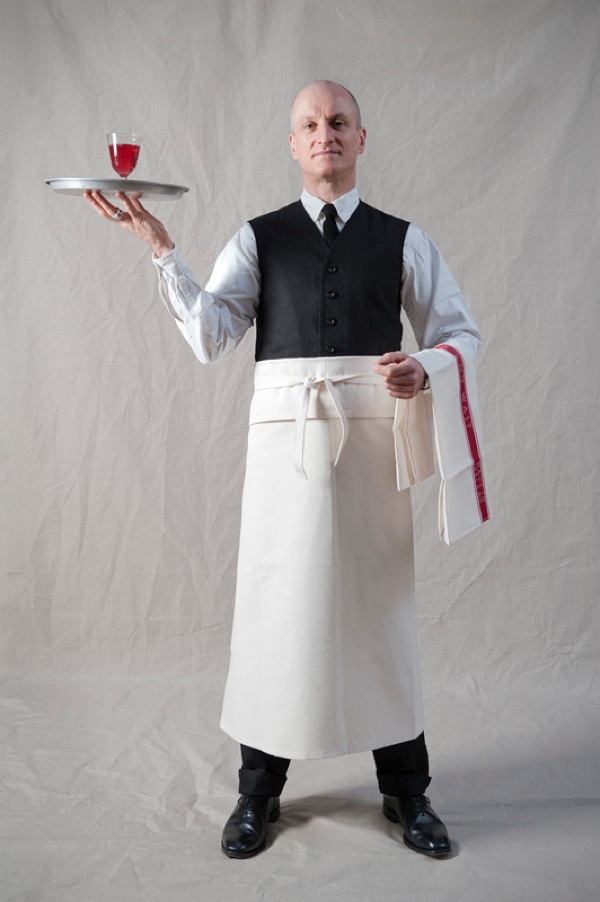
Harvey in the role of Waiter.

Twins Lee & Lisa in the role of Housekeepers.

Chris in the role of Costermonger.

Miss Willey and Old Brown in the role of Tea Stall Proprietors.

Izzy in the role of Flower Girl.
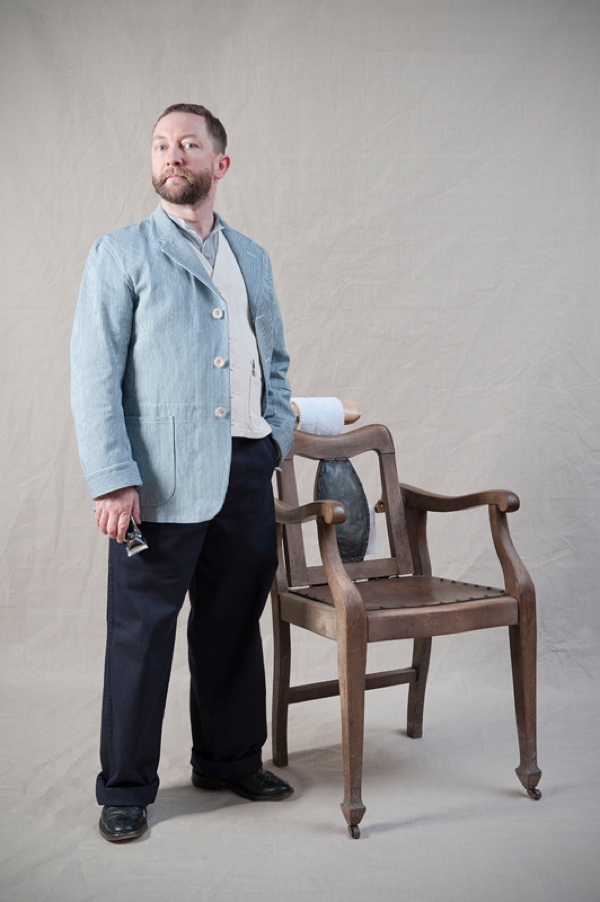
Barry in the role of Barber.

Bommer & Appleton in the role of Piano Movers.
Photographs copyright © Old Town
You may also like to read about
Alfred Daniels, Artist
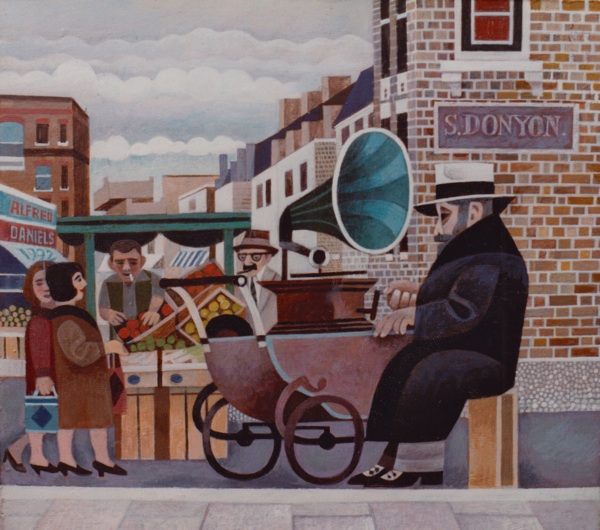
The Gramophone Man
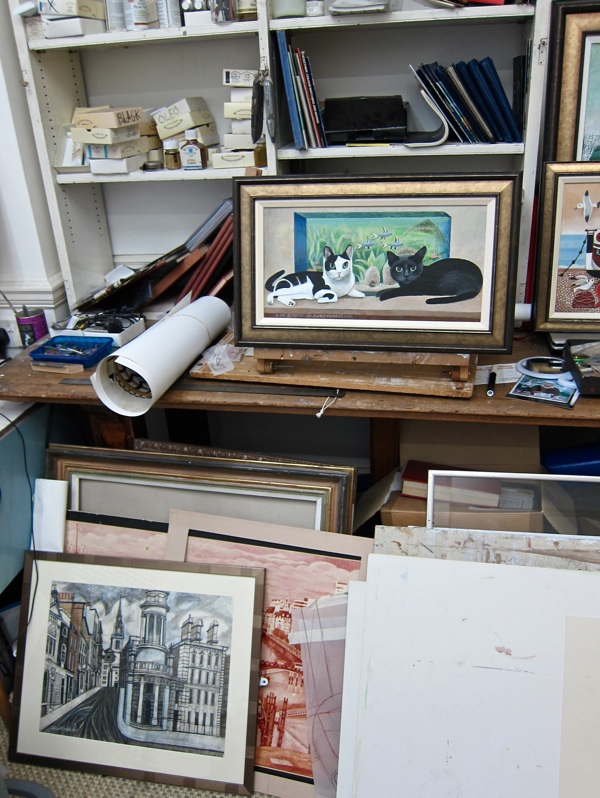
“I’m not really an East Ender, I’m more of a Bow boy,” asserted Alfred Daniels with characteristic precision of thought, when I enquired of his origin. “My parents left the East End, because they were scared of the doodlebugs and bought this house in 1945,” he explained, as he welcomed me to the generous suburban mansion in Chiswick where he lives today. Greeting me in his pyjamas and dressing gown in the afternoon, no-one could be more at home than Alfred in his studio occupying the former living room of his parents’ house. And yesterday, he was snug in the central heating and just putting the finishing touches to a commission that his dealer was coming to collect at six.
Alfred is at the point in life now where the copyright payments on the resale of works from his sixty year painting career mean he no longer has to struggle. “I’ve done hundreds of things to make a living,” he confessed, rolling his eyes in amusement, “Although my father was a brilliant tailor, he was a dreadful business man so we were on the breadline for most of the nineteen thirties – which was a good thing because we never got fat …” Smiling at his own bravado, Alfred continued painting as he spoke, adding depth to the shadows with a fine brush. “This is the way to make a living,” he declared with a flourish as he placed the brush back in the pot with finality, completing the day’s work and placing the painting to one side, ready to go. “The past is history, the future is a mystery but the present is a gift,” he informed me, as we climbed the stairs to the upstairs kitchen over-looking the garden, to seek a cup of tea.
Alfred had spent the morning making copious notes on his personal history, just it to get it straight for me. “This has been fun,” he admitted, rustling through the handwritten pages. “My grandfather came from Russia in the 1880s, he was called Donyon, and they said, ‘Sounds like Daniels.’ My grandfather on the other side came from Plotska in Poland in the 1880s, he didn’t have a surname so they said ‘Sounds like a good man’ and they called him Goodman. My parents, Sam and Rose, were both born in the 1890s and my mother lived to be ninety-two. I was born in Trellis St in Bow in 1924 and in the early thirties we moved to 145 Bow Rd, next to the railway station. I can still remember the sound of the goods wagons going by at night.
One good thing is, I gave up the Jewish religion and thank goodness for that. It was only when I was twelve and I read about the Hitler problem that I realised I was Jewish. Fortunately, we weren’t religious in my family and we didn’t go to the synagogue. But I went to prepare for my Bar Mitzvah and they tried to harm me with Hebrew. We were taught by these Russians and if you didn’t learn it they bashed you. That put me off religion there and then. Yet when we got outside the Black Shirts were waiting for us in the street, calling ‘Here look, it’s the Jew boys!’ and they wanted to bash me too. Fortunately, I could run fast in those days.
My mother used to do all the shopping in the Roman Rd market. She hated shopping, so she sent me to do it for her in Brick Lane. It was a penny on the tram, there and back. But they all spoke Yiddish and I couldn’t communicate, so I thought, ‘I’d better listen to my grandmother who spoke Yiddish.’ I learnt it from her and it is one of the funniest languages you can imagine.
Although my parents were poor, my Uncle Charlie was rich. He was a commercial artist and my father said to him, ‘The boy wants to learn a craft.’ So Charlie got me a place at Woolwich Polytechnic to learn signwriting but I spent all day trying to sharpen my pencil. Then he took me out of the school and got me a job as a lettering artist at the Lawrence Danes Studio in Chancery Lane. It was wonderful to come up to the city to work, and his nephew befriended me and we went to art shops together to look at art books. We drew out letters and filled them in with Indian Ink, mostly Gill Sans. Typesetters usually got the spacing wrong but if you did it by hand you could get it right. It was all squares, circles and triangles.
When Uncle Charlie started his own studio in Fetter Lane above the Vogue photo studio, he offered me a job at £1 a week. Nobody showed me how to do anything, I worked it out for myself. He got me to do illustrations and comic drawings and retouching of photographs. At night, we went down in the tube stations entertaining people sheltering from the blitz. I played my violin like Django Reinhardt and he played like Stefan Grappelli, and one day we were recorded and ended up on Workers’ Playtime.
I had been doing some still lifes but I wanted to paint the beautiful old shops in Campbell Rd, Bow, so I went to make some sketches and a policeman came up and asked to see my identity card. ‘You can’t do this because we’ve had complaints you’re a spy,’ he said. It was illegal to take photographs during the war, so I sat and absorbed into memory what I saw. And the result came out like a naive or primitive painting. When Herbert Buckley my tutor at Woolwich saw it, he said, ‘Would you like to be a painter? I’ll put you in for the Royal College of Art. To be honest, I should rather have done illustration or lettering. At the Royal College of Art, my tutors included Carel Weight – he said, ‘I’m not interested in art only in pictures.’ – Ruskin Spear – ‘always drunk because of the pain of polio’ – and John Minton – ‘ a lovely man, if only he hadn’t been so mixed up.'”
Alfred was keen to enlist, “I wanted to stop Hitler coming over and stringing me up !” – though he never saw active service, but the discovery of painting and of his signature style as the British Douanier Rousseau stayed with him for the rest of his life. After Alfred left the East End in 1945, he kept coming back to make sketchbooks and do paintings, often of the same subjects – as you see above and below, with two images of the Gramophone man in Wentworth St painted fifty years apart.
With natural generosity of spirit, Alfred Daniels told me, “Making a painting is like baking a cake, one slice is for you but the rest is for everyone else.”

The Gramophone Man in Wentworth St, 1950

Sketchbook pages – Cable St, April 1964.
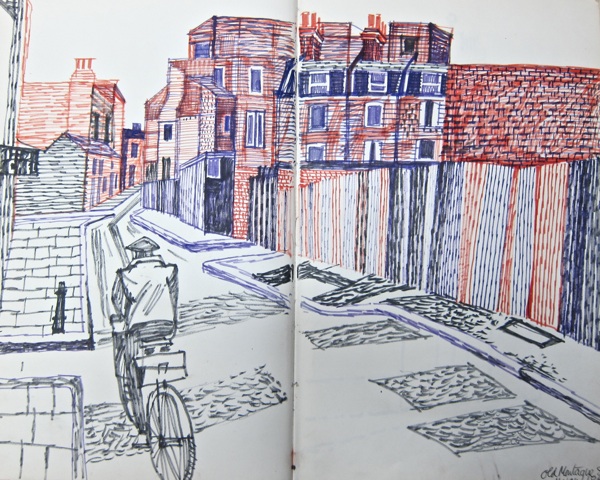
Sketchbook pages – Old Montague St, March 1964.

Sketchbook pages – Hessel St, April 1964.
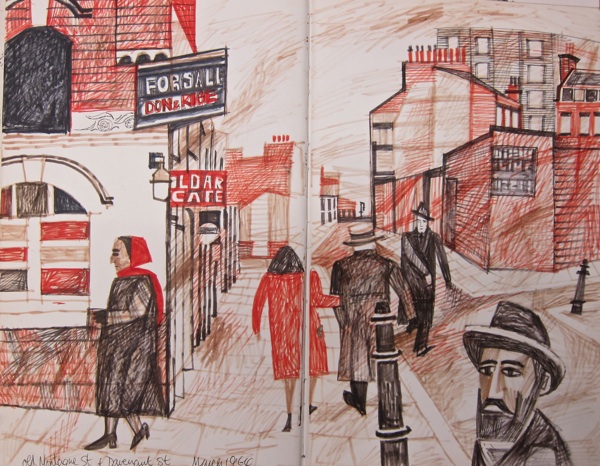
Sketchbook pages – Old Montague St & Davenant St, March 1964.
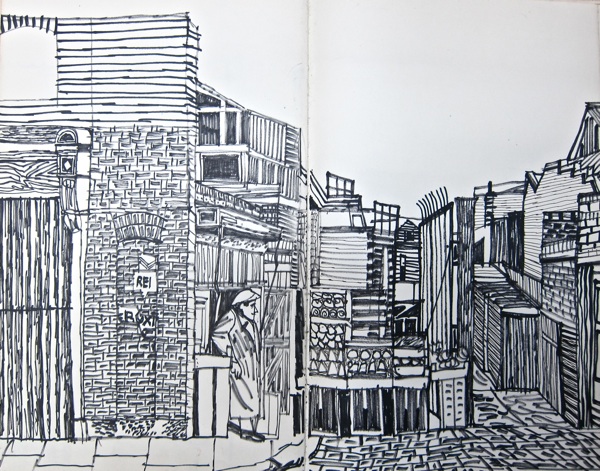
Sketchbook pages – Fruit Seller in Hessel St, March 1964.

Leadenhall Market, drawing, 2008.

Billingsgate Market.

Tower Bridge, 2008.

The Royal Exchange, 2008.

Crossing London Bridge, 2008.

In Alfred’s studio
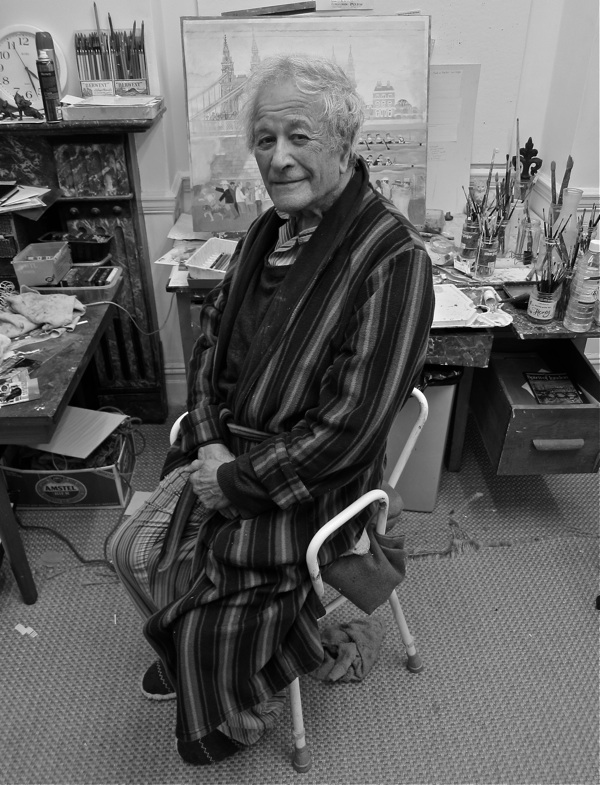
Alfred Daniels, Artist
George Wells, Able Seaman
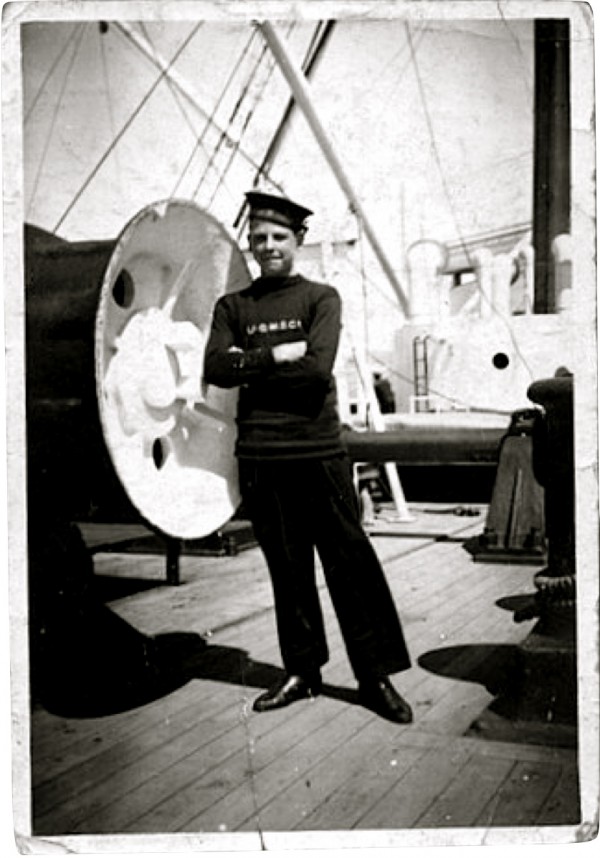
To Able Seaman George Wells, the modest cluster of buildings next to St Anne’s Church, Limehouse, will always be his training ship, and even today it still sports a cheery enamelled British Sailors’ Society sign as evidence of its former identity.
In 1938, fourteen year old George – a former sea scout from Dover – became a temporary East Ender, training here at the Prince of Wales Sea Training Hostel for Boys for just six months. Yet such was the intensity of this formative experience that George recalls it vividly seventy-five years later, even as he approaches his ninetieth birthday. “I suppose there’s not so many of us chaps left that remembers it?” he suggested to me when I paid a call upon him this week.
“I was fourteen years and five months old when I went up to Limehouse on 3rd January 1938. I always wanted to be in the Merchant Navy. I wanted to see the world and I knew that merchant ships went to many more places than the navy.
You walked into the main entrance where there was a bell and an ensign that you always saluted. You didn’t linger there, you walked straight through. On the left was the secretary’s office and on the right was the Commodore’s office. The two instructors were called Jack Frost and Freddie Painter, Jack was on the port watch and Freddie was on the starboard. They taught us everything to do with boatwork and navigation – signalling, semaphore and morse code – and things you could do with ropes. You had to be able to recite all thirty-two points of the compass from N to NE and back again.Your life depended on it and, if you couldn’t do it, you’d get horrible jobs to do.
We lived in dormitories at the top of the building, sleeping in iron bunks. You were given a horsehair mattress but no sheet, two blankets, one pillow and a counterpane. We got up at six in the morning and you folded your blankets with the pillow on top and the counterpane over it, like a pudding in the middle of the bed. We wore white duck trousers and a blue sailor’s top, plimsolls in winter and bare feet in summer. We would have a mug of tea and then we had to go out onto the signal deck – as we called the yard – for muster, where we were allocated jobs and between us we did all the cleaning. I remember they found one boy had a dirty neck on parade and he was put on report. He was taken below deck and stripped and washed by his fellows, and his skin was pink when he came back. When “Rigging, up and over!” was called, we had to run up the rigging and down the other side. One of us was chosen to be the “button boy,” he had to stand upon the very top. It was scary but we were young and when I got to sea they said, “Go aloft, you’re used to it.” because they knew where I had trained. I was given two pounds and seventeen shillings per month when I started with the corps.
Instructions continued until five daily and then we had homework. Two sideboys were on duty all day to attend the door. Saturdays and Sundays were the only days we were allowed out, and I learnt about the East End. We took the tram down to Tower Bridge, you could pick up girls there, but you had to be back by five. There were no cooks on Sunday, so we ate cold meat, pickles and mashed potato, plus trifle made of bread and jam with jelly and custard on top. We went out into the West India Dock, where we had a whaling ship and a gig. We used to learn to row in the dock, but it was a bit much pulling against the tide in the Thames. We had to carry sixteen foot oars on our shoulders, they were heavy when you got there.
It was very competitive. We had boxing matches under the big tree. It was known as “Grudge Day.” If you had a disagreement with someone, you informed the instructor and they put you in the ring together. They were all different sizes. I remember this big chap Wellham from Norfolk, he caught me with a bad one and split my eye open. Since I was appointed Chief Petty Office, everyone wanted to have a go at me and I’ve still got the scar under my eye from it.
The most embarrassing thing was when you were sent to have baths in the basement and then jump into the cold swimming pool. Captain Faulkner and his wife used to come and supervise us, but then he left and his wife – the matron – she stayed to watch us. All of us young boys in the buff, we had to go and stand in front of her. I think she enjoyed it more than we did.
Most of us were under fifteen, at fifteen you could go to sea. You were sent. The shipping companies funded the school to provide them with boys. I was actually on board my first ship, the Capetown Castle when I had my fifteenth birthday. It was a new ship, one of the biggest cargo ships afloat at 22,000 tons. Of the eight deck boys, there were two of us from the school, me and Alf. It was exciting. We left Southampton, we were going along the Channel and the officer said, “You’ve done signals. Call that ship over there and ask what it is.” It was the SS Beacon Grange, and it sent back the message “Capetown Castle, Bon Voyage!” I’ll never forget the first ship I spoke to on my first night at sea.
We used to go round the Cape on the mail run, Cape Town, Port Elizabeth, London. We carried wool, hides, chick peas, wine and fruit. And once we picked up crates of marmalade oranges from Madeira, so pungent they had to be kept stacked on deck. Next year – when the war came – we switched over to troop carrying. Starting as a deck boy, I became an ordinary seaman, then a sailor then an able seaman and a gunner. I stayed with the Capetown Castle until 1946, and I quit at twenty-three because, already, I could see the way the mercantile industry was going.
When I went to sea, I knew I could do it. You had responsibility at an early age in those days.”
Once the war began, the training school moved up to Norfolk, terminating its brief period in the East End. George married three times and enjoyed a very successful career as Supervisor of the three hundred workers at Newhaven Harbour, until he retired in 1986. After being empty and squatted for years, the buildings in Newell St were bought by the squatters and divided into homes with only minimal alteration to the buildings.
As you walk through these atmospheric rooms today, the worn floors and old staircases are reminders of the former life that was here. And if you go down to basement, an old sign that reads “British Sailors’ Society” greets you on the stairs. You will find the swimming pool in the cellar is still there too and was used by all the residents of the street until quite recently.

The Sea Training School in Newell St still stands largely unaltered today. The crown over the front door has gone, but the coloured enamel sign above advertising the British Sailors’ Society remains.
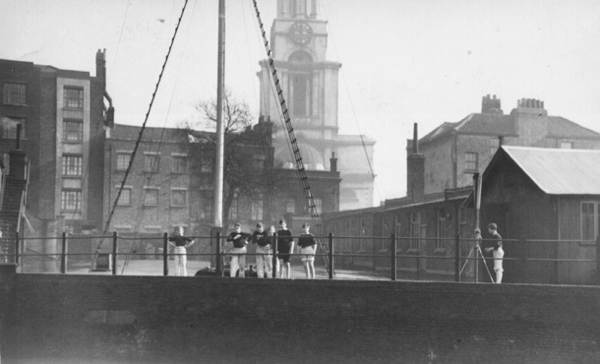
The Sea Training Hostel in Limehouse with St Anne’s in the background.

Sea cadets show off their acrobatic skills in Limehouse.

George’s membership card for the Old Boys’ Association as given on graduation in June 1938.

The motto was – “British boys for British ships.”

Daily Routine
6:30am Turn Out: wash down decks etc.
8:00am Breakfast: make up bunks.
9:00am Parade for inspection: daily prayers.
9:15 to 10:45am Instruction in signalling: physical jerks and organised games.
10:30 to 10:45am Stand easy: boys have bread and cheese, etc.
10:45 to 12:30pm Instruction in seamanship: boat pulling, washing clothes, etc.
12:45pm Dinner: boys have meat with two vegetables and pudding every day. One day each week fish instead of meat.
2:00pm Parade for kit inspection.
2:10 to 3:30pm Instruction in seamanship: making and mending kit, kitbag making and other useful subjects.
3:30 to 3:45pm Stand easy.
3:45 to 4:30pm Instruction as above.
4:45pm Tea.
6:30 to 7:30pm Instruction in swimming, lectures, gymnastics, etc.
9:00pm Turn in – 9:30pm Light out.

Sea cadets scale the rigging in Limehouse.

George graduated as the top top student in June 1938 just before his fifteenth birthday.

The Duchess of York visits the Sea Training Hostel in 1934.

Candidates for admission to the hostel must –
1. Have excellent references as to character.
2. Be between the ages of fourteen and a half and sixteen, and be able to swim one hundred yards.
3. Obtain the Board of Trade Sight Certificate for both form and colour vision. This certificate can be obtained at the Board of Trade Mercantile Marine Offices in London and chief seaports.
4. Have passed a Medical Examination certifying that they are sound and strong and in all respects physically qualified for employment in the Merchant Navy.
5. Be at least five feet one inch in height
In the selection of boys for admission to the Hostel, the orphan sons of sailors have prior claim.
Fees –
Orphan sons of sailors will be trained free of charge.
Boys from Society’s Sea Cadets Units and sons of sailors at a minimum of five shillings per week, but they should pay more if possible.
Boys not from Units and who have no claim on the Society, not less than ten shillings per week.

On parade at Limehouse with the canal in the background.
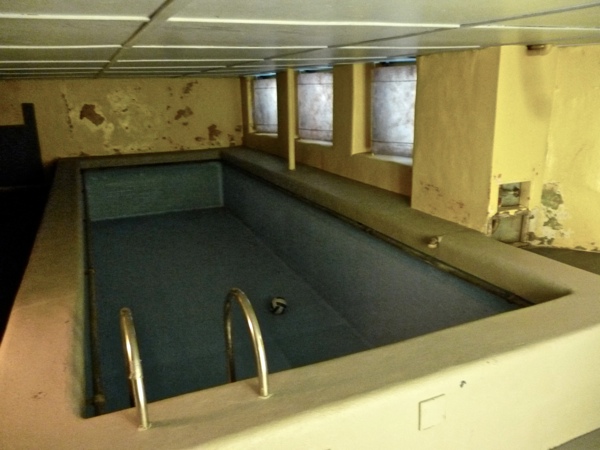
The pool in the basement at Newell St, Limehouse where George had the embarrassing experience,

The Capetown Castle
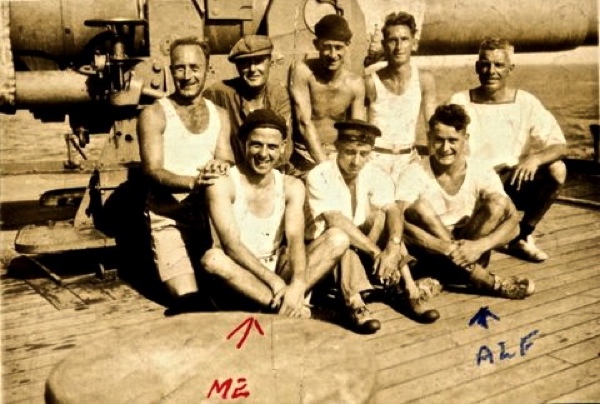
Pals on the Capetown Castle. Front Row – George Wells, Monty Dolan, Alf Everett. Back Row – Jumbo Jingles, Paddy Crawte, Les Harman, Ted Lane, Will Amy.

The Capetown Castle

Alf Everett & George Wells, best pals – Southampton 1939. George later married Alf’s sister.

On Capetown Castle during World War II, George stands on the extreme right.

George’s Sea Training Society Old Boys’ Association badge.

George Wells, Able Seaman.
With thanks to Cynthia Grant and Prince of Wales Sea Training School for their assistance with this feature.
You may also like to read about Captain Shiv Banerjee
Chris Kelly’s Cable St Gardeners
In September 2003, photographer Chris Kelly was invited to the open day of Cable Street Community Gardens and the result was a year-long project which culminated in an exhibition and a book. Fifty-two plot holders took part, aged from seven to eighty and originating from a dozen different countries, yet all unified by a love of gardening and the need for a haven where they could cultivate flowers, grow vegetables, chat to neighbours or enjoy solitude. Today, it is my delight to publish a selection of Chris Kelly’s beautiful portraits of the Cable St Gardeners. “Some of the old faces are no longer there,” Chris told me,“but the gardens thrive, new people have joined and it is still a magical place.”
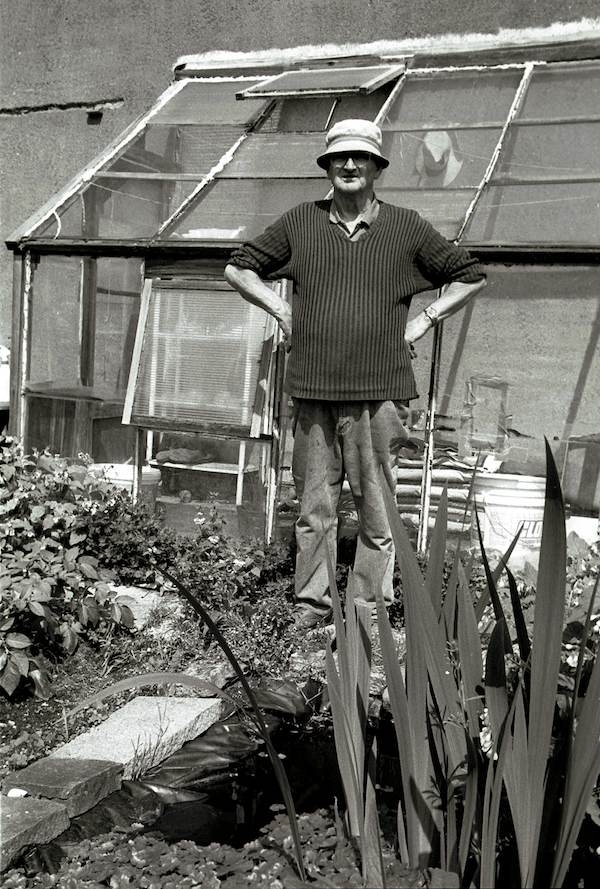
Bill Wren – I was born in Wapping and I moved to Shadwell nine years ago. I’ve had the plot for about fifteen years. We never had a garden when I was young. The nearest I came to gardening was picking hops in Kent. Later I had a friend in Burgess Hill and I used to grow things in her garden. That’s where the greenhouse came from, I put it on the roof of the car and brought it up from Sussex. I’ve built a shed here and a pond. There are plenty of frogs and newts, and I’ve planted a bank next to the road. It’s a wildlife haven now.
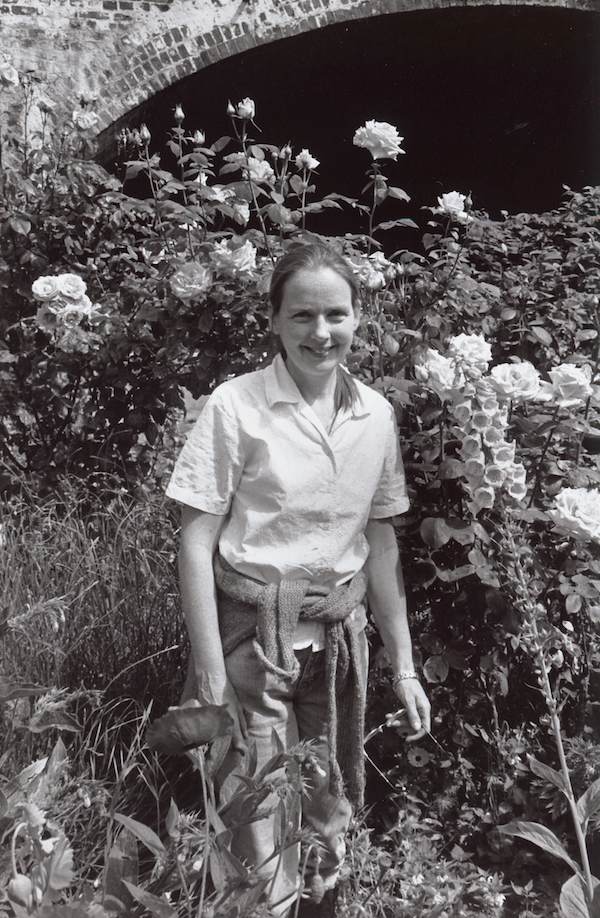
Jane Sill – I was born in Liverpool. My grandfather had an allotment in County Durham and my father was a very good gardener. I helped with weeding and cultivated sunflowers. I was living in Cable Street in the late seventies in a top floor flat with no balcony. One day I went to a community festival and Friends of the Earth were offering plots here. I was given one in 1980 and I knew straight away how important it was to establish ourselves as an organisation. We’ve had a two year waiting list since 1981. At one time I was working in a Job Centre and people used to come in and put their names down for a plot.
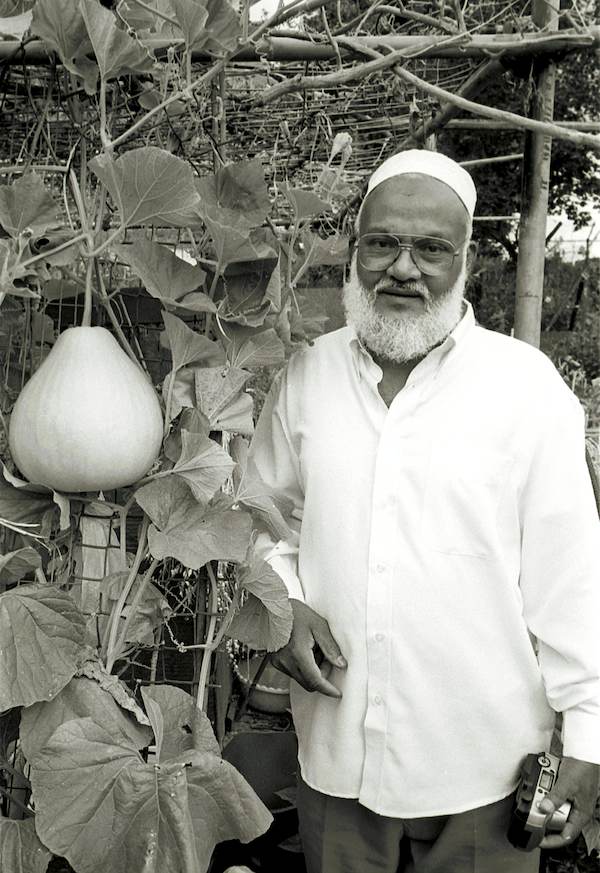
Mohammed Rahmat Ali Pathni – I have always been a gardener. I started on my father’s land in Bangladesh and when I came to live in Birmingham in 1978 I had a garden behind the back yard. I have lived in Wapping since 1983 and started gardening in Cable Street ten years ago. I’m enjoying myself and it helps my frozen shoulder. I taught my children to garden and my wife often works here too. Many gardeners provide food for other people and I regularly give vegetables to friends. I also write poetry which is printed in the Eurobangla News Weekly, and I am a member of a writers’ group.
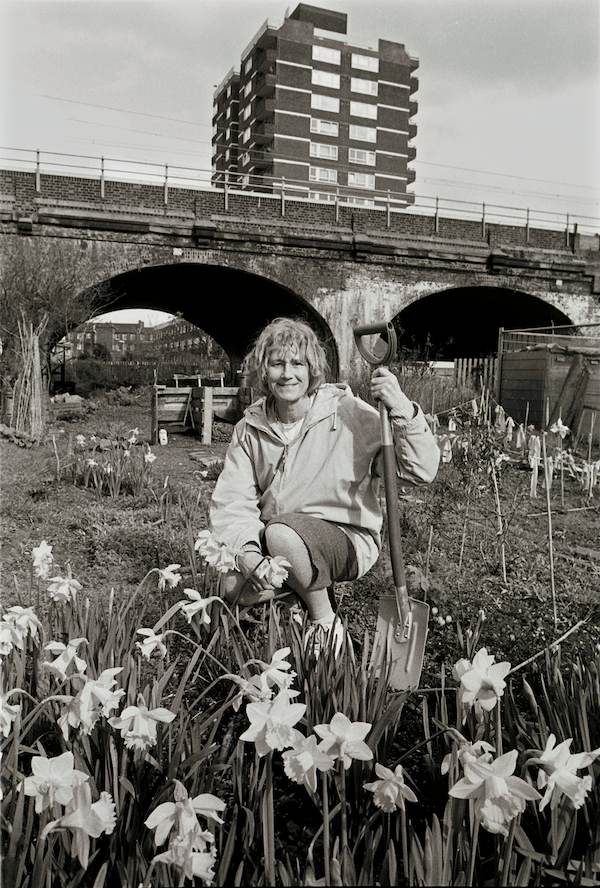
Alison Cochran – I moved to Shadwell five years ago because of the allotments and I live just across the road. I noticed them when I was living in Bethnal Green. I was born in Salisbury on a hill fort. I was keen on gardening when I was a child but when I came here I hadn’t gardened for years. I knew I wanted lots of flowers, but now I also grow salad vegetables and leeks, tomatoes, carrots and radishes. The soil is wonderful, everything seems to thrive here. I’ve used Victorian bricks for the paths because I wanted my plot to be in keeping with nearby housing.
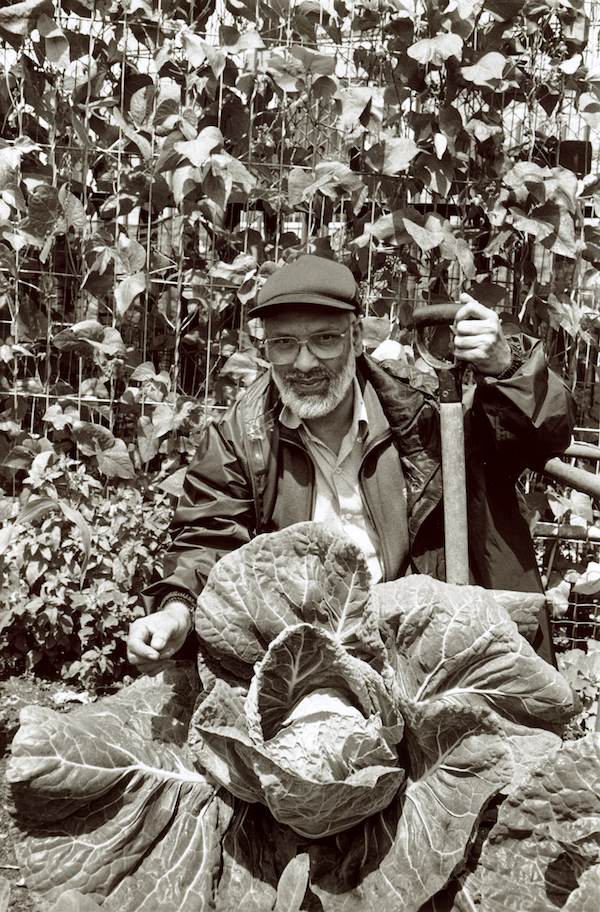
Monir Uddin – I’ve lived in the borough for twenty years and I’ve gardened here for eight or nine years. The plot was completely wild at first. I had to uproot everything and it took about two years to get the soil right. I used to grow about sixty different plants and vegetables, including huge pumpkins. I love experimenting with plants and growing them for their medicinal properties. I’m a photographer and I also wanted to produce plants to photograph. I’ve done many different types of work including weddings and portraits. I was involved in the Bollywood film industry, I’ve photographed celebrities and at one time I had a restaurant.
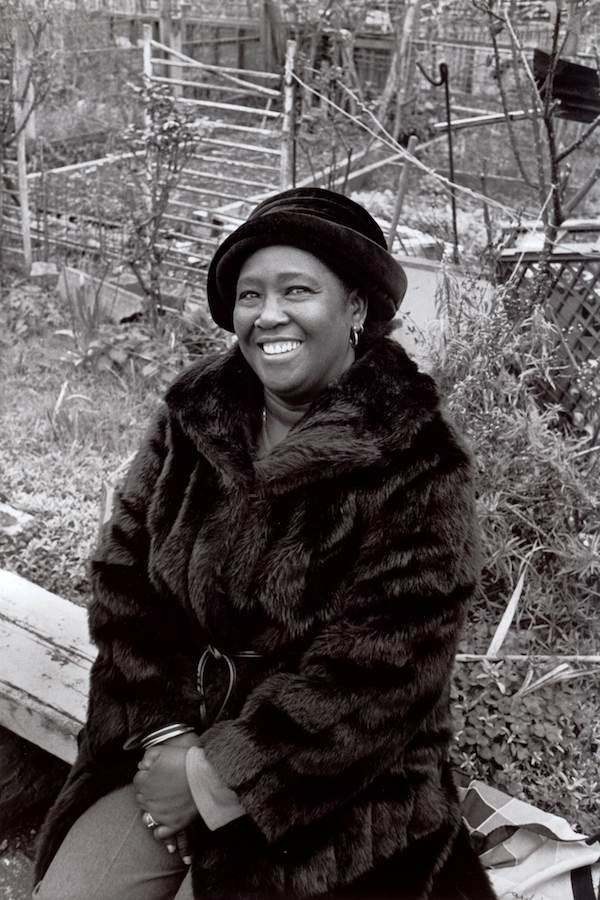
Agatha Athanaze – I’ve been gardening here for twelve years. I was born in Dominica and came to Tower Hamlets in 1961. I’ve done different jobs. I’ve been a machinist and a cleaner. I live in Wapping now. I had a garden in Dominica so I did have some experience. The vegetables came first – I grow cabbages, onions, spring onions, runner beans, carrots, tomatoes, rhubarb and kidney beans. I like flowers too. I’ve ordered roses from Holland and from Spalding. I just like to come here and grow things. There are two benches but I haven’t time to sit down.
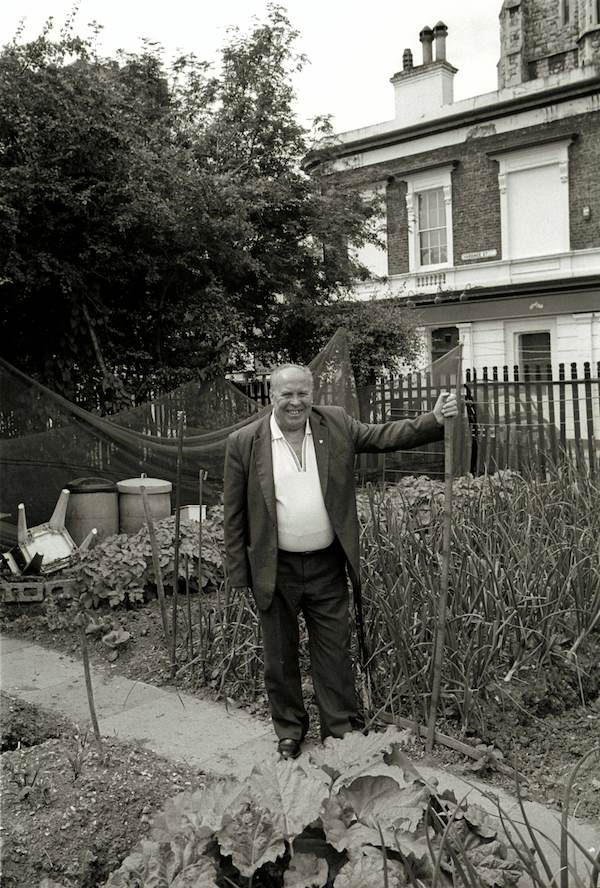
John Kelly – I was born in Cork City and I wasn’t a gardener. I came to this country in 1943 to work in the construction industry and started gardening as a hobby and to feed the family. I’ve had the plot here for seventeen years. I didn’t know much but I picked it up as I went along. I’ve always grown vegetables, never flowers. I can’t spend too much time here because I have to look after my wife and I have health problems too. I hate the sight of weeds but I don’t throw them out. I leave them on the ground to let them rot and they form green manure.
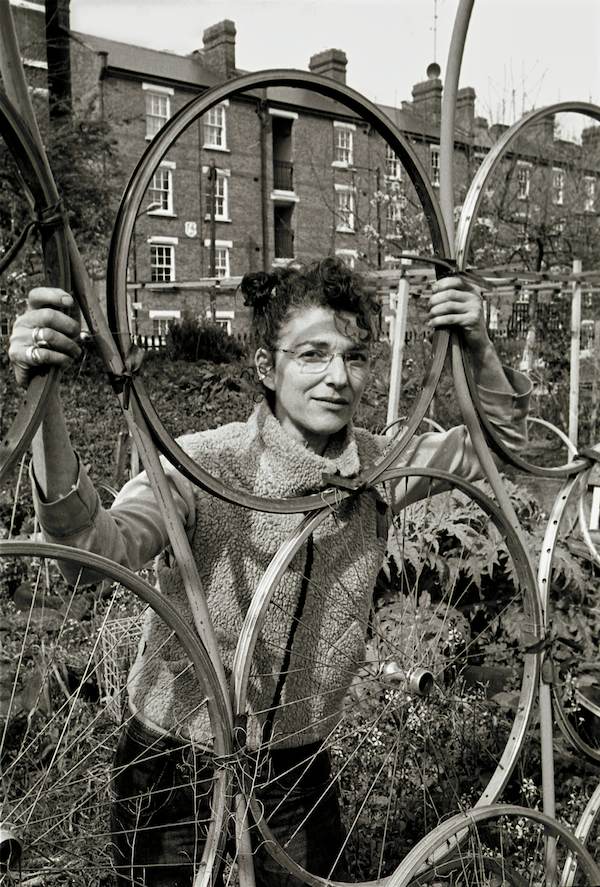
Manda Helal – I’m from Hertfordshire and I’ve lived in Tower Hamlets for twenty-six years. I’ve always been keen on gardening. We had a big garden when I was a child and I was given a section of my own. I’ve had my plot here for three years. My flat in Whitechapel is small and dark, so it’s wonderful to come here. The wheels are a frame for pumpkins. Squashes and pumpkins are so versatile. I grow artichokes and rocket, garlic, kale, cabbage, cauliflower, spinach and climbing purple beans. I’ve taught pottery in the borough for years and more recently I became a compost educator for the Women’s Environmental Network.
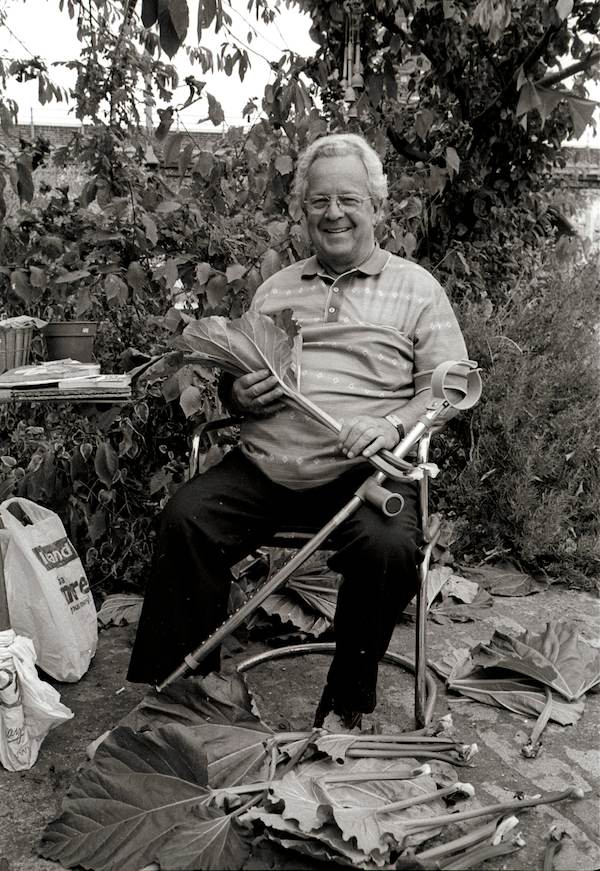
John Stokes – I’ve been gardening at Cable Street since I retired six years ago. I asked one of the nuns in the convent across the road and she said the allotments were for local people. I had no experience but I was brought up on a farm and I found I had an instinct for gardening. I came over from Ireland fifty years ago. I worked for London Transport for thirty-six years and missed only nine days. Now I’m at the gardens almost every day in summer and twice a week in winter. I grow vegetables for myself and my cousin and an aunt.
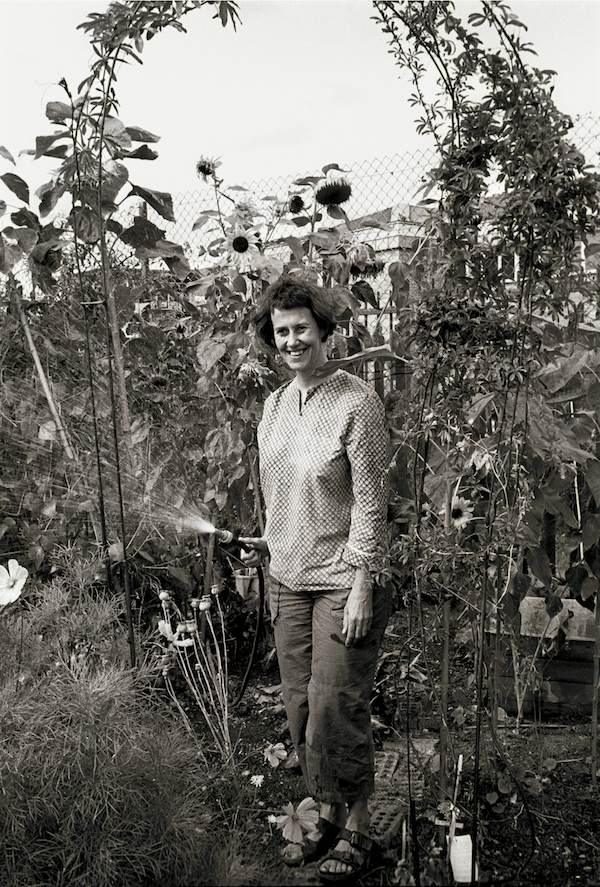
Anna Gaudion – I was born in Guernsey. I’ve lived in Stepney for the last ten years and I work as a midwife in Peckham. I was brought up in the country and I love being outside, hearing birds and growing things. I like allotments too, even just seeing them from trains. I’ve had this plot for three years now. My shed is made from a packing case used to take an object abroad from the British Museum where I was a curator. I enjoy cultivating flowers so I planted a nature garden. I share my plot with Claire who grows vegetables. Mine is the higgledy-piggledy part.
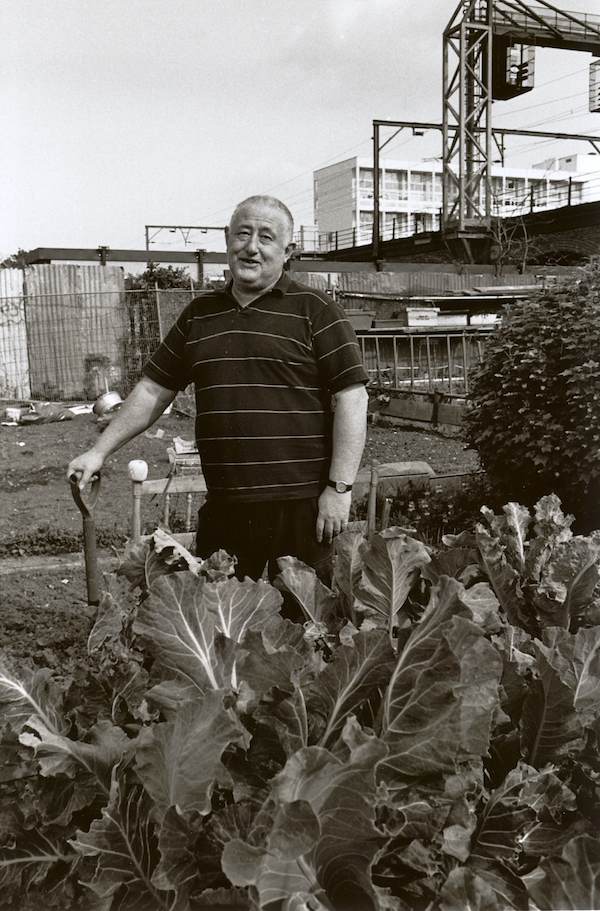
Andy Pickin – I grew up in Finchley and we moved to Shadwell twenty years ago. We spent eight years in Huntingdon when the firm moved there but most of us came back to London. I wanted an allotment because I’d always had great fun sharing one with my dad. I’ve had the plot for fourteen years. I grew vegetables because money was tight and the first year’s crop was fantastic. Our thirteen children all liked coming here when they were young. The older ones grow their own vegetables now. My wife likes the gardens too, she knows I sometimes come here to get away from the telly or the kids arguing.
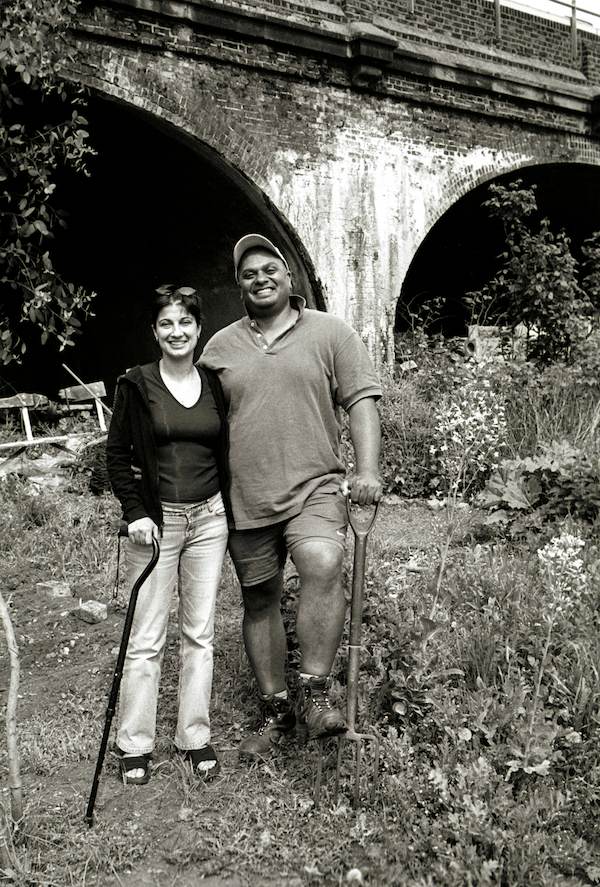
Robin & Maria Albert – Robin was in catering before becoming a gardener eight years ago. He was born in Mile End and he’s lived in London all his life. I was born in London too and brought up in Margate. My family is always trying to persuade us to move out to Kent but we like living in Bethnal Green. We grow flowers at home but we wanted somewhere separate for vegetables. The fact that everything is organic is part of the appeal. Producing your own pure food is very satisfying. We have some flowers too and a pond that attracts frogs. I can’t do so much now but I still find gardening very therapeutic.
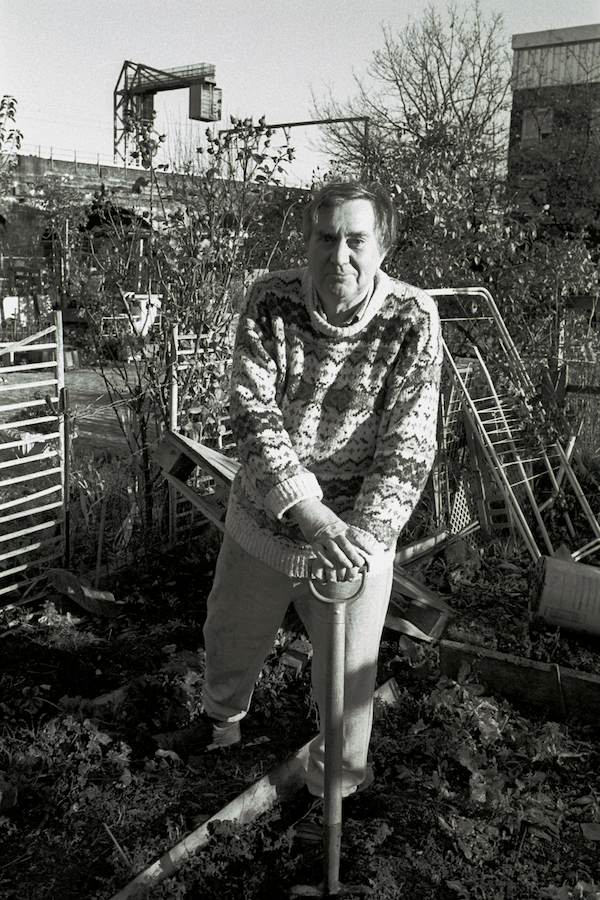
Ray Newton – I’ve always grown things. I share this plot with Agatha. We grow about a dozen different types of vegetables. It’s all organic. We don’t use pesticides. I retired last year from teaching business studies at Tower Hamlets College. Before that I worked in industry and at one time I was manager of a betting shop. I studied for O and A levels at evening classes and then took a degree course. I became a teacher and taught for twenty-five years. My other interests are local history and football. I’m the secretary of the History of Wapping Trust and a lifelong Millwall supporter.
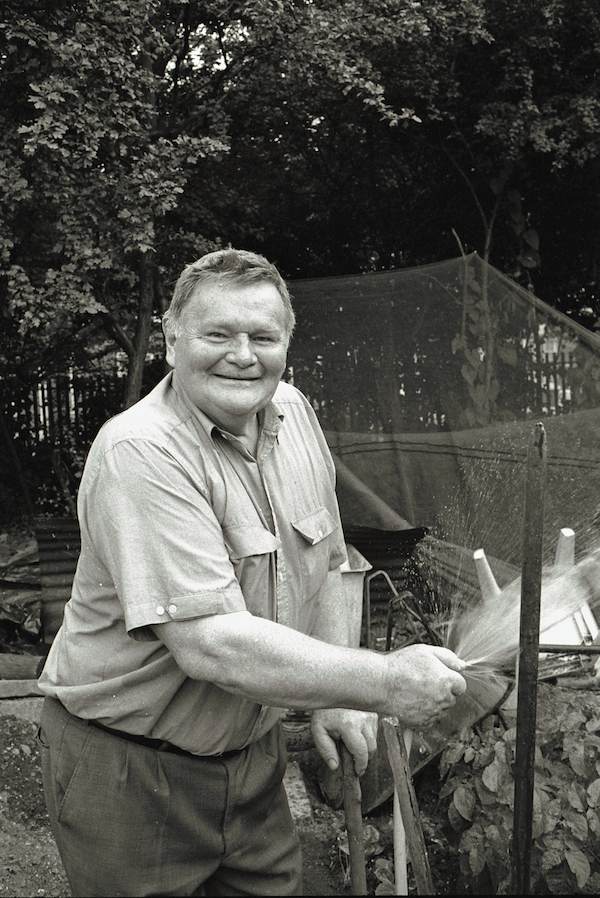
Will Daly – I was a founder member of the gardens. I was in a nearby pub when Jane came in with another Irish chap and they persuaded me to have a plot. I’ve been in the borough for twenty-seven years. I was born in Ireland and I made a living salmon fishing on a tributary of the Shannon. I came to this country in 1951 and did building work. One of my brothers came over too but he missed the river and went home after a while. I still go back to Ireland but only for weddings and funerals. I can’t do very much gardening now but I love the peace of it.
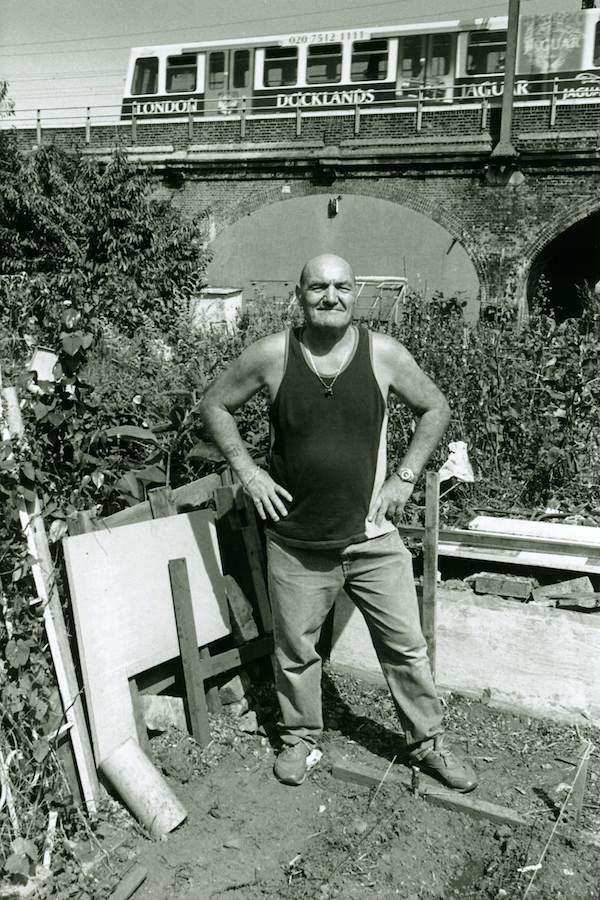
Raymond Hussey – This is my second year. I live in one of the flats nearby. I’m growing vegetables and learning as I go along. What I’m most proud of is the brussels. And my runner beans were unbelievable. I don’t know whether it’s the soil or me talking to them. Weeds are a problem. Sometimes I’d like to use gallons of weedkiller but we’re not allowed. So I come in and have a chat. I call them everything but weeds. I was born on one of the estates off Brick Lane. I’ve done lots of things including acting. In my last job I was a dustman but I got trapped by the lorry. I still can’t do heavy work so the plot’s a bit of a mess but it’s my little world and I love it.
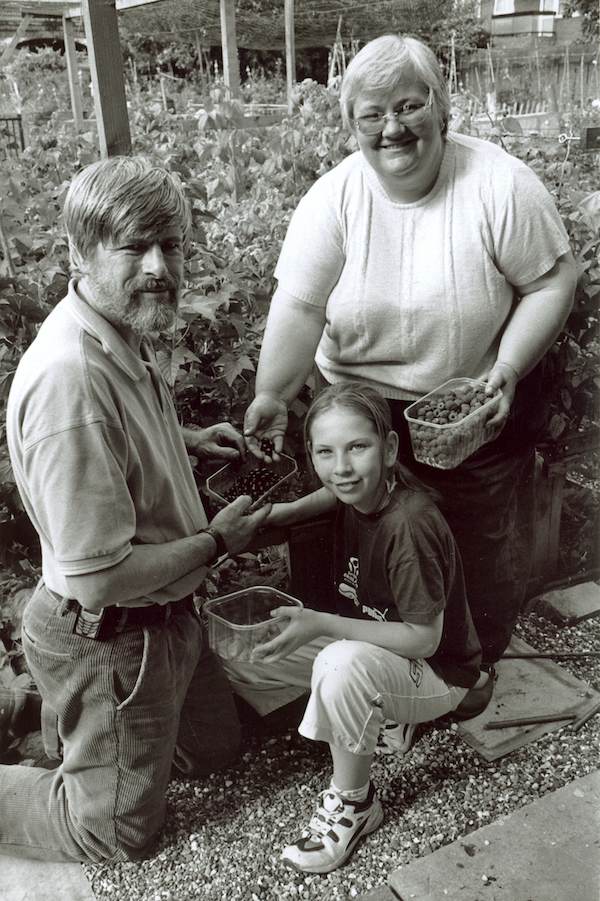
Robin, Yvonne and Katie Guess – We live at the other end of Cable Street. There’s a small courtyard garden but Yvonne and I were used to growing fruit and vegetables before we lived in London. We love soft fruit, we had a huge crop last year. We grow several vegetables and Yvonne has planted a mixed flower and herb bed. Our daughter Katie likes planting and picking but not weeding. We’re both from the south-east. I’ve been in the East End since 1968 and I worked on the Isle of Dogs as a quality control chemist. Now I’m with the Music Alliance in Oxford Street dealing with composer copyright.
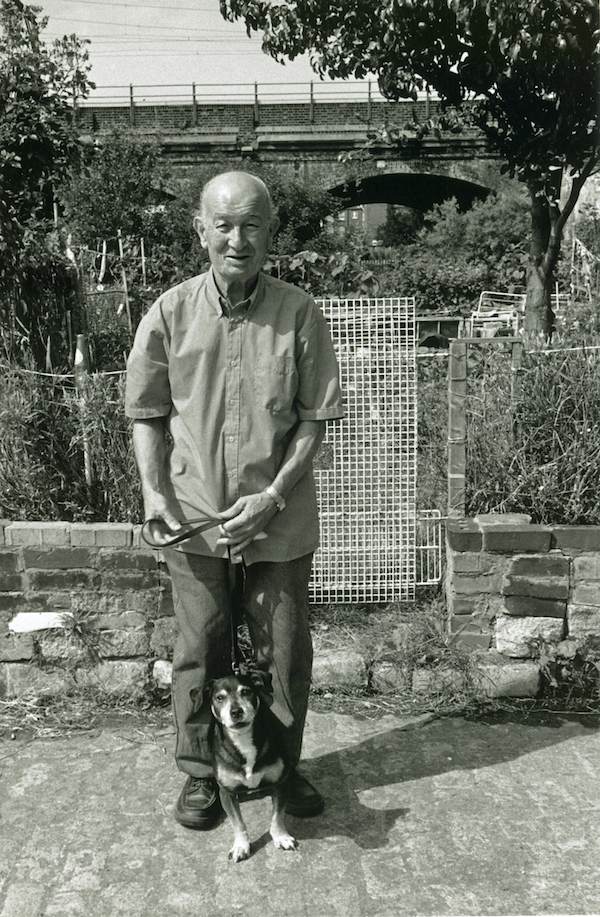
Carl Vella – I came to Tower Hamlets from Malta in 1950 and worked for the NHS, mostly as a fitter and stoker. I’m retired and since I took over the plot four years ago I like to come here every day. I grow mostly vegetables – potatoes and cabbages. I’m on my own now so I give a lot of produce away to an elderly neighbour. I live in the flats nearby and there’s no garden. Coming here stops me getting fed up. I take my dog for a walk, go to the bookie’s and come here. I’d like to bring Pedro more often but he won’t stay in one place.

Sister Elizabeth O’Connor – Our Order has been part of the local community since 1859 and I came to the convent in 1949. After the houses here were demolished the site became a dumping ground until Friends of the Earth initiated the gardens project. When I retired from teaching in 1991, I started gardening here. All the sisters appreciate home grown vegetables and having fresh flowers for the chapel. As a child in County Clare I enjoyed helping my father in our kitchen garden. Apart from the practical use, the gardens are a great place for breaking down barriers and it’s especially good that women can feel safe here on their own.
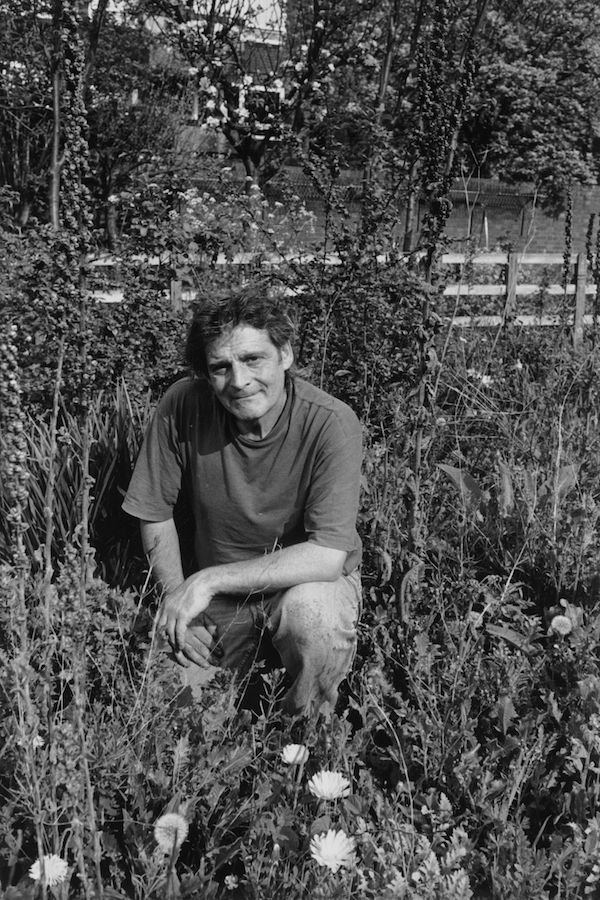
Graham Kenlin – I was born in Bermuda. My father was a navy chef and had a land-based job working for an admiral. We came back to England when I was four and I grew up in Hackney. I’ve lived in Wapping for thirty-eight years and I’ve had a plot here for about fifteen years. My family have always had allotments. It’s very relaxing but I’m a lazy gardener. I’m an archaeologist and I work abroad sometimes so the plot gets neglected. I’ve had the odd good year but normally I do just enough to stay credible. I like growing large weeds, anything that’s interesting.
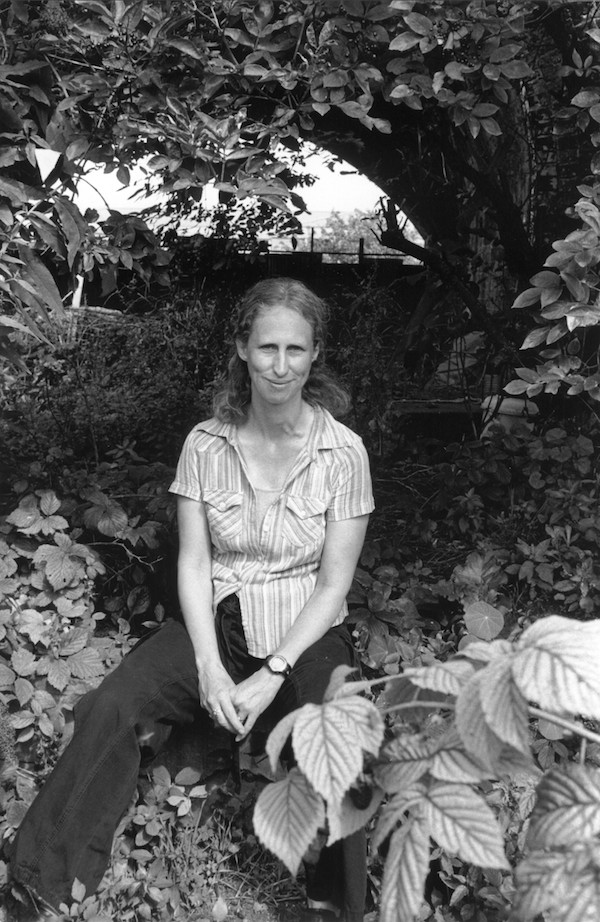
Sheila McQuaid – I came across the gardens at an open day. It was such an oasis of green and calm that I put my name down on the spot. Gardening is in the family. My parents were horticulturalists and I grew plants as a child but I’ve only become really interested in the last ten years. We decided on fruit because it’s expensive, especially if you want organic, and it doesn’t need constant attention. I was born and brought up in Cornwall and I’ve lived in Tower Hamlets for twenty-five years. I’m a housing adviser for Camden Council and I work for Stitches in Time on community textile projects.
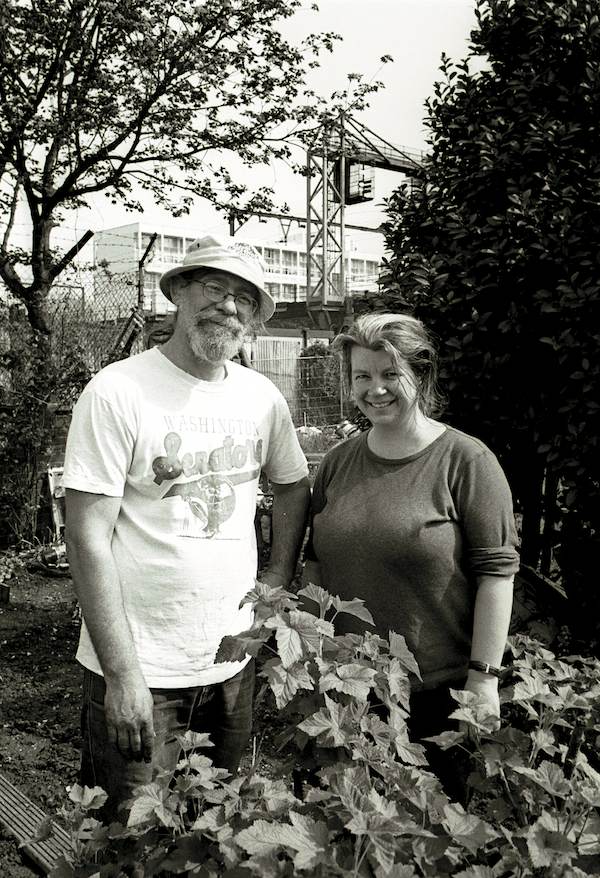
Anna Girvan and John Griemsman – We’ve had the plot for about ten years. We’re in a 10th floor flat in Limehouse and we wanted somewhere to spend time outside and to grow vegetables. I’m from Belfast and I’ve lived in Limehouse for twenty-five years. John is from Wisconsin and he’s been here for almost thirty years. I work as a librarian in the West End and John is a special needs assistant. I’m more pleased by the flowers in the end than the vegetables. My favourite is a dahlia that Annemarie gave me. It’s a beautiful purple pink and it flowers for such a long time.
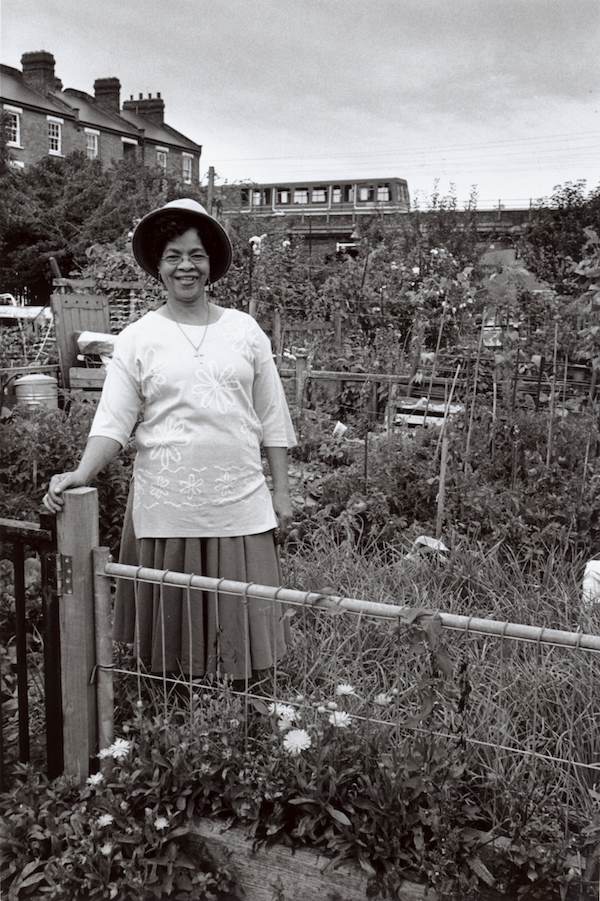
Mary Laurencin – I’ve been gardening here for about ten years. A cousin asked me to help then passed the plot on to me. I’d never gardened before but I was suffering from depression and sometimes it was the only place I felt comfortable. I learned to garden mainly by watching television. I’m from St Lucia and I’ve lived in Tower Hamlets for forty years. I came to England in 1962 and at one time I did four jobs every day – I worked in a cafe, had a job at Sainsbury’s, I was a machinist and I did some cleaning. I grow vegetables here. I love flowers but you can’t eat flowers.

Conrad, Donald and James Korek – I garden here with my wife Catherine and our two younger sons, Donald, ten, and James, six. Our eldest boy isn’t interested now. We’ve lived in the borough for fourteen years and started gardening at Cable Street about a year after we arrived. We have a flat nearby and we like to spend time outdoors. I was born in North London and Catherine was brought up on a farm in Scotland, so she has more experience of growing food. James likes weeding and he supports Arsenal. Donald is a West Ham supporter and he’s good at picking up stones and chatting to the other gardeners.
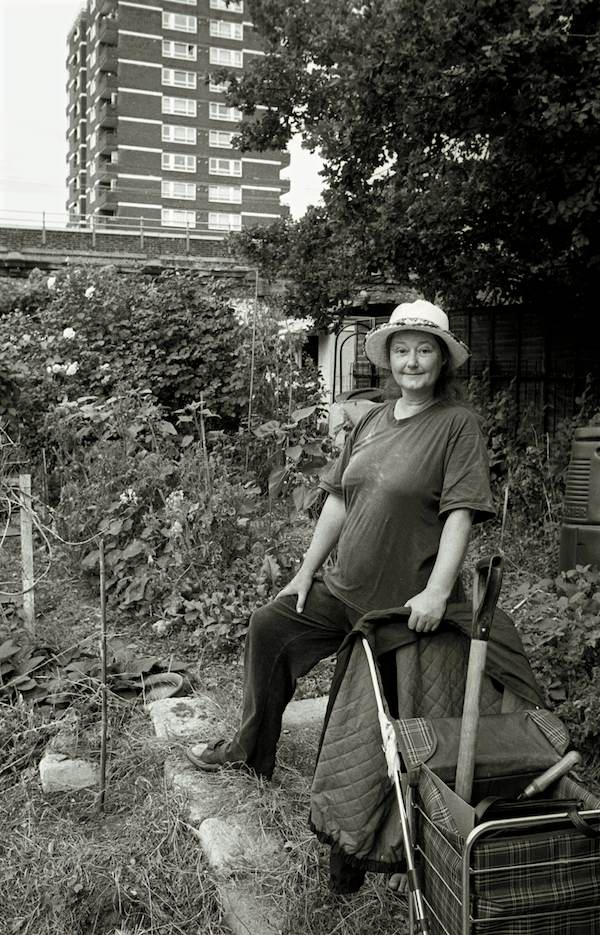
Annemarie Cooper – I’m a supply teacher and I write poetry. I’ve had a plot since 1986. I didn’t know anything about gardening but I love nature and being close to the earth. My dad was a very good vegetable gardener. He and my grandfather shared a plot and they were always arguing about it. I’ve lived in Tower Hamlets for twenty years. When I started here I thought I wanted to grow flowers then I got into vegetables. I love growing sweet peas and big flashy dahlias. Really I like anything that deigns to grow. I enjoy growing tomatoes and digging up potatoes.
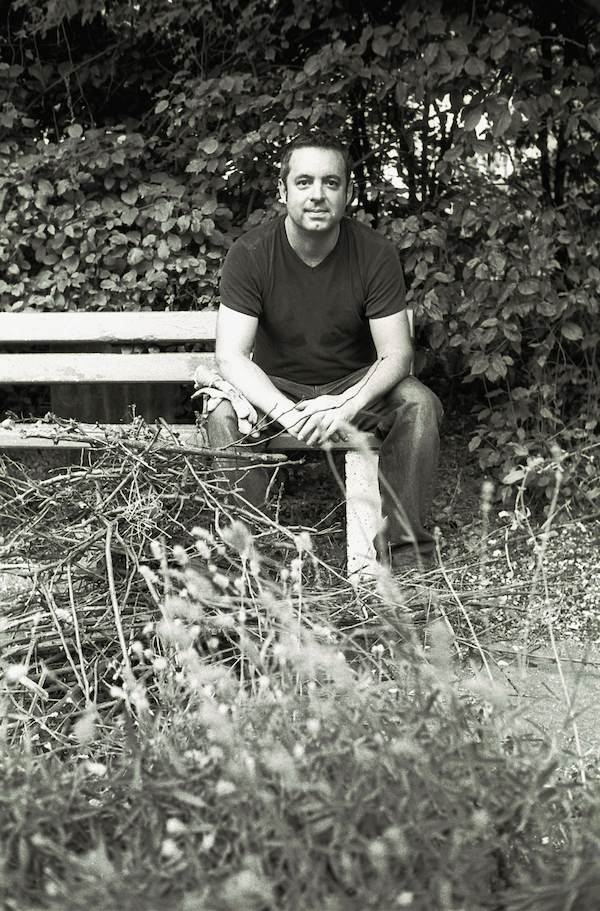
Emir Hasham – I’m on the waiting list and until I have a plot I’ll be working on the communal area. My work is computer based graphics and special effects for television and what I like about gardening is the real honest labour and getting my hands dirty. It will be great to grow my own fruit and vegetables My parents used to garden and I helped as a child. I was born in Sheffield. My mum is a Yorkshire lass and my dad is mainly Asian. I’ve lived in Tower Hamlets for twelve years now. I haven’t a garden at home and there’s only so much you can grow on a balcony.
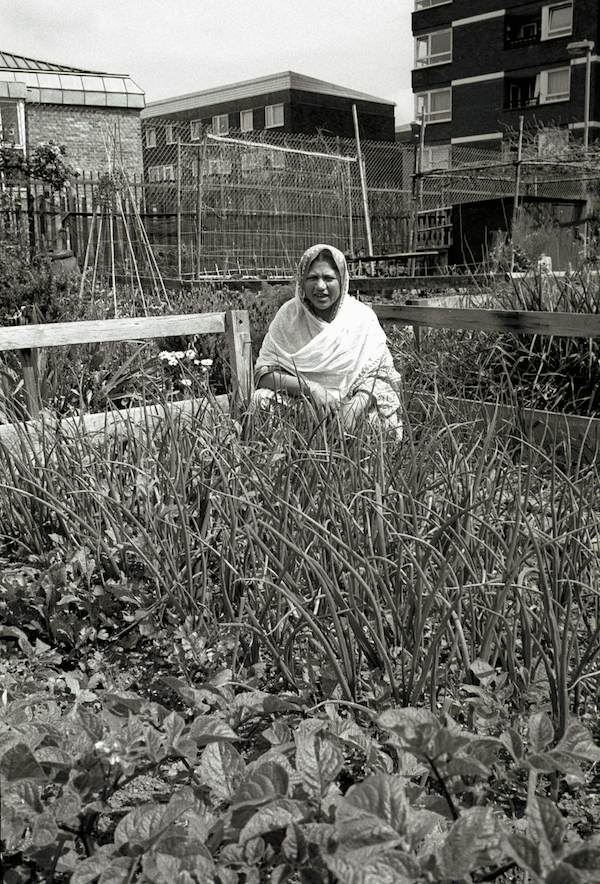
Anwara Begum – I was born in Bangladesh. My father was a businessman and had some land. My seven sisters and I helped mother with the farming. We never had to buy food from the market and we sold bamboo and bananas. When I was sixteen I came to live in Tower Hamlets and ten years ago I started gardening at Cable Street. The four children helped when they were younger but now they are busy with other things. They have to study and help with the housework. I’m studying too – IT, Childcare, Maths and English. And I’m taking Bengali GCSE as well as doing voluntary work in a nursery school.
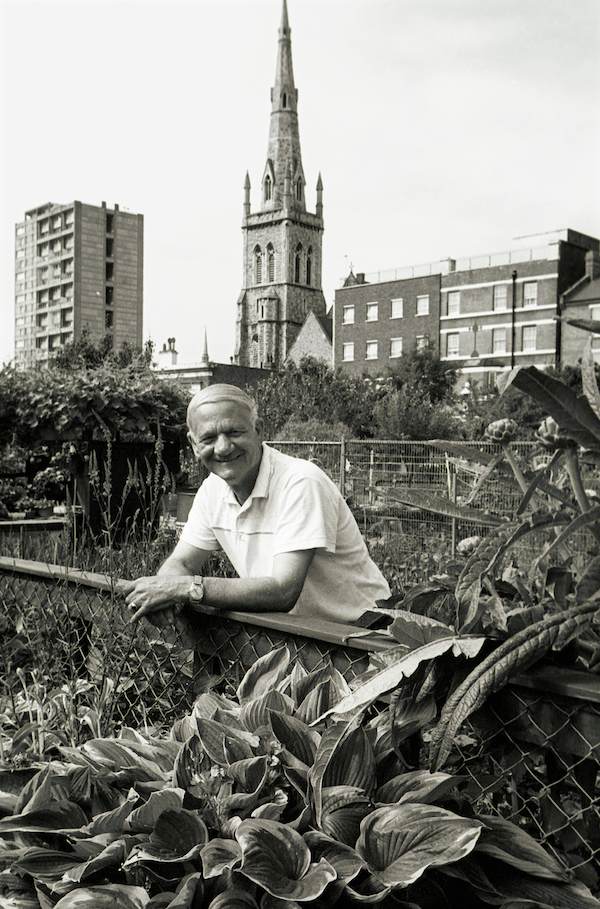
Joseph Micallef – I first came to the borough from Malta in 1955 and settled here permanently in 1961. I’ve had the plot for ten years. I didn’t know anything about gardening but my father had a farm in Malta so I knew something about agriculture. The vegetables came first and my wife likes the flowers, but I just enjoy seeing things grow and passing the time here. A lot of the produce is given away. You do tend to get too much at once. People look at the plot and think I’m an expert but I’m not, I just plant things and they grow.
Photographs copyright © Chris Kelly
To learn more about Cable Street Community Gardens or buy copies of the Cable St Gardeners book, contact Jane Sill (janesill@aol.com) or visit www.cablestreetcommunitygardens.co.uk
You may also like to take a look at Chris Kelly’s Columbia School Portraits 1996
“Old Bob” Prentice, Waterman & Lighterman
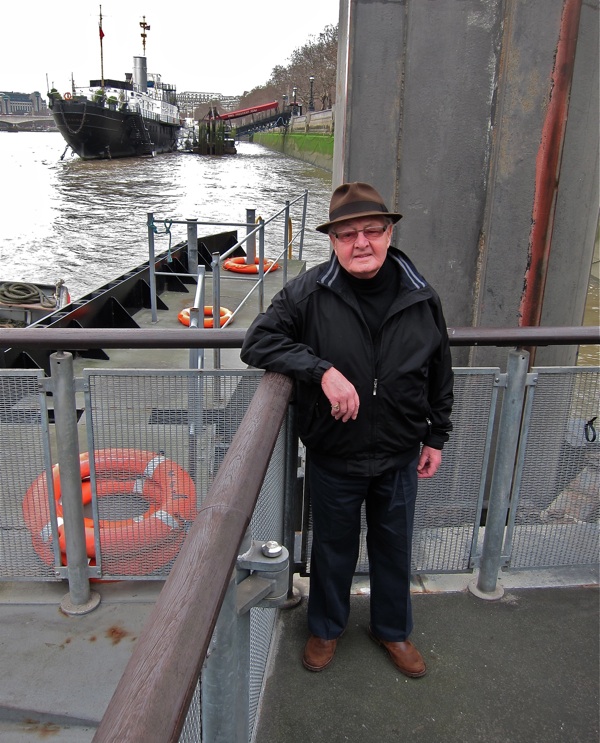
Old Bob
Waterman & Lighterman of the Thames, eighty-three year old Robert Prentice, is known as “Old Bob” to distinguish him from his son Robert Prentice, Waterman & Lighterman – who in turn is known as “Bobby” to distinguish him from his son, Robert Prentice, also Waterman & Lighterman.
Even before Old Bob, there were two previous Robert Prentices that were Watermen & Lightermen on the Thames – his father and grandfather. And Old Bob was feeling especially buoyant when I went down to visit him at Blackfriars Pier yesterday, because seven weeks ago another Robert Prentice was born, adding a sixth generation to the roster. So although this “New Bob” may not even yet be conscious of the nature of existence, he has an extraordinary riverine inheritance awaiting him.
We convened in the Old Pump House, a bizarre construction beside Blackfriars Bridge supported by stanchions from the river bed and here, in a cosy windowless room built like a cabin upon a ship, high above the brackish water of the Thames, Old Bob told me his story.
“We are East Enders, from Wapping and the eldest son is always called Robert. In 1944, at age fifteen, I was apprenticed to my father Robert. I was a dogsbody. You got apprenticed on Tuesday and you went to work on Wednesday. You learnt quickly. The docks were being bombed, but you worked night and day. I was a young boy and it was exciting for me. I can remember St Catherine’s Dock burning for three nights, it lit up the sky like daylight. It was a very old dock, specialising in tea, ivory and spirits.
We moved a lot of barges under oars then, my father was quite adept at it. The tide done your work for you. You’d come away on the ebb to go down along and come up on the flood tide. There are very few places where you could pull over the tide.
I worked for my dad until he went into the navy and I ended up on a sea-going tug. I sat an exam and got a licence which allowed me to work certain craft. It was only after I had served my time, five years, that I was fully qualified. At sixteen years old, you was like a man. You learnt to lie like a trooper. You seldom went to the office but you were always on the phone and radio. You was allowed to make up lies to get overtime. As lightermen, we considered ourselves the elite because we did our apprenticeship and we became freemen of the river once we had completed it. I wouldn’t know anything else.
The river was bustling, like Piccadilly Circus then. It was a way of life to be perfectly honest, a beautiful life. The amount of different work you did, you might start at six in the morning at West India Dock and finish at ten o’clock at night at Tilbury. You mixed with lighterage all day long and you went socialising. It was a great fraternity. Lightermen were militant. We had a union meeting once a week and we always headed to the pub at the end of the night.
In its heyday, the London Docks had the quickest turnaround for loading and unloading of any dock in Europe, because it was all done as piecework. But when the docks closed, whole areas like Canning Town and Silvertown were changed in a matter of weeks as thousands of people lost their jobs and all the companies, chandlers and dry docks closed too. It became like a ghost town. Once containerisation come to the docks, it shut the wharfs and so there was nowhere left to unload any more. Yet I was lucky, my guvnor, he owned a boat yard that built pleasure boats and, in 1978, he offered me the chance to become the skipper of one.”
When Old Bob retired a few years ago, he had served more than sixty years on the Thames and seen the transformation of the docks from thriving port to complete closure. At the start of his career, he worked the lighterman side of his profession, moving cargo on barges, yet he finished as a waterman, skippering a pleasure boat, a line of work continued by his son and grandson today.
At the beginning of the twentieth century, barges had sails and later auxiliary motors. When the Thames was “the silent highway,” barges were “driven,” never rowed, and the moorings were known as barge “roads.” Today, moorings with names like “The Heartbreak Buoys” recall the depression of the nineteen thirties when lightermen waited days there for work. Even in Old Bob’s time, a barge (known as a “lighter,” because it lightened a ship’s cargo) laden with one hundred and fifty tons of cargo could be driven by a skilled lighterman manipulating a single oar (known as a “sweep”) in expert relation to current and tide.
We took a break from the Old Pump House and walked down onto the pier at water level, empty of visitors on this grey January morning. Below the level of the embankment now, we were in Old Bob’s territory, where the flood tide churned under Blackfriars Bridge. Bob described the wharfs that once existed between here and Tower Bridge, and I asked if he missed the life of the docks and the days of the busy working river. “It breaks your heart sometimes.” he admitted, peering out across the empty water at his memories of vessels long gone. Yet there was a chill on the deserted waterfront and Bob turned his back on it, his energy lifting as we climbed the gangplank to the shore. “I’ve become yuppie now and bought a flat!” he confessed to me with a blush, eager to return to his centrally-heated home in Wapping and await the latest snap of the newly-born Robert Prentice.

“Old Bob” has worked on the Thames for over sixty years.
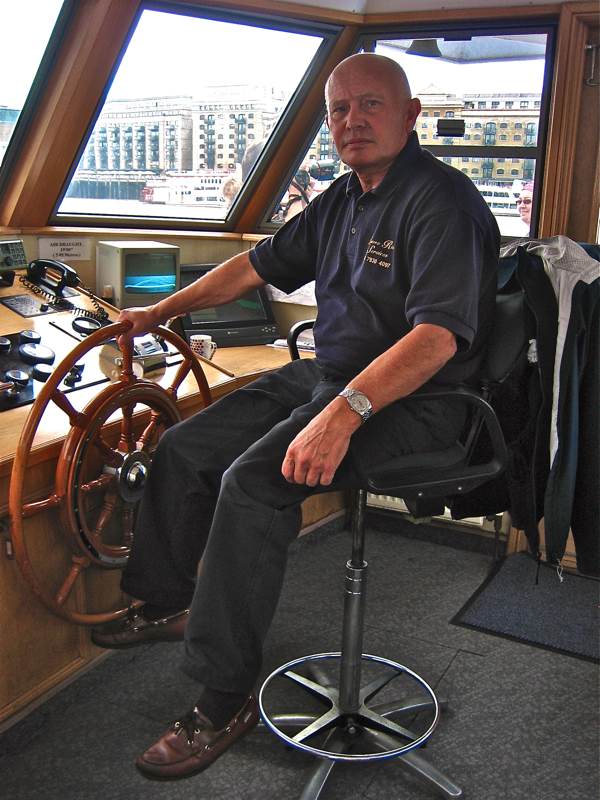
Bobby Prentice, fourth generation Waterman & Lighterman
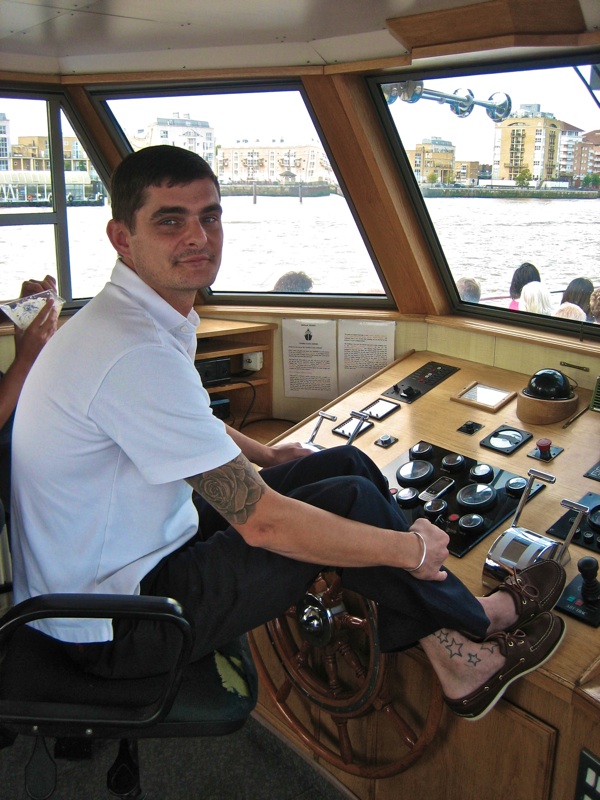
Robert Prentice, fifth generation Waterman & Lighterman
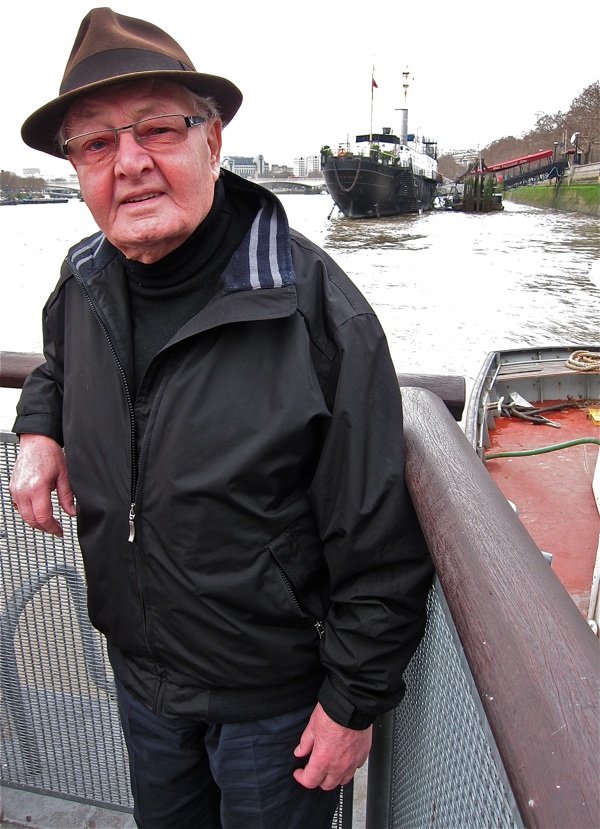
Old Bob Prentice, third generation Waterman & Lighterman
You may also like to read about
Javed Iqbal, TV Repair Man
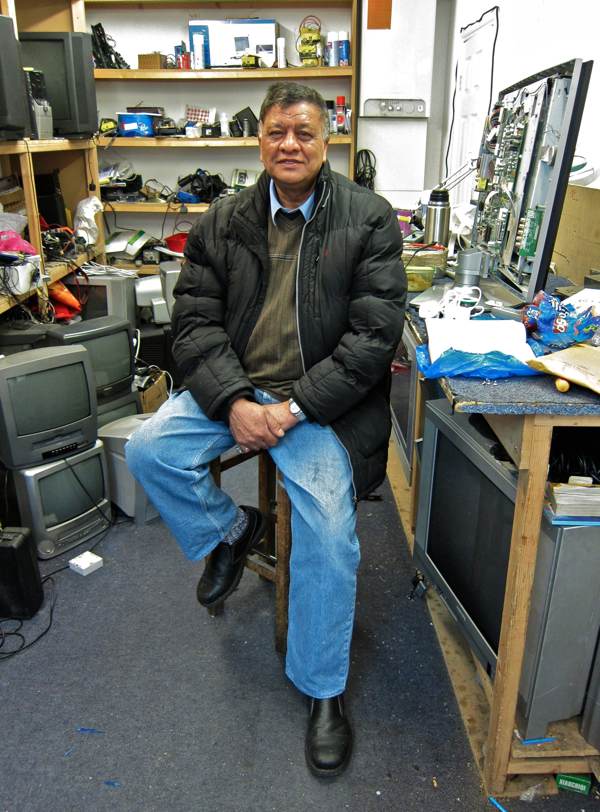
If you are looking for TV repair in the East End, I recommend you visit Master Tech in Heneage St off Brick Lane – where, not only will the job be done expertly and at a fair price, but most importantly you will have the opportunity to meet Javed Iqbal, one of Spitalfields’ most engaging raconteurs.
Although I do not even possess a TV, I was happy to spend my Saturday morning in Javed’s shop beside his workbench and surrounded by TV spare parts, as he topped up my tea cup from his thermos flask, while I perched listening to his extraordinary monologues, covering so many areas of existence with appealing levity. There is an indomitable good humour that underscores Javed’s conversation. A buoyancy which I found especially heroic when he revealed the years of overt antipathy and threats of physical violence he has withstood – just to create a modest life for himself.
One huge window gives onto Heneage St, and Javed sits upon a tall stool, level with his work bench at the centre of his shop, while the wall behind him is lined with shelves stacked with televisions waiting his attention. Upon the bench sits a large flat screen monitor with the back removed and – while exploring this labyrinth of wires and components – Javed is in his element, talking as he works.
“I came to Brick Lane from Pakistan with my father in 1960, and I went to Christ Church School across the road. On the first day, I went into the playground and I had my arm broken. I was the first Asian boy at the school.
I was seven. I came with my five year old brother Tasleem. We came in February and it was very cold indeed. It was strange, because I had never seen snow before and there was deep snow. We travelled BOAC. It was a beautiful experience. Forget the wonder of an aeroplane, I had never been in a car.
My father came in 1958. First he went to Liverpool and then came here and ran the Star Cafe on the corner, 66 Brick Lane. Once he was established, he came to fetch us. My father was very rich man thanks to the restaurant business, but he gambled it all away playing poker with Gregory Peck. He had the talent as a gambler and in those days there were few Asians, so it was a novelty for them to have one at the table.
The first house I lived in was 22 Princelet St where my father had a basement. Jews were the only people that would rents rooms to us. In those days, Irish, Jews, Blacks and Asians were known as “dogs.” When I was a little boy, the Seven Stars across the road was dominated by the Kray Brothers. Every Friday night, somebody would go out from there round all the businesses in Brick Lane and whatever you did, you had to pay.
I was allowed to watch television from four until five thirty and then my step-mother would down sticks, she had the temper of a gorilla. After school, I went to help in my father’s cafe. The Pakistanis were all coming here to Brick Lane. It was a mixed area then, the gateway for everybody basically.
When I started at the Robert Montefiore Secondary School in Deal St, it was a different headache. The pupils were divided between Christians and Jews, with two lunch sittings, kosher and non-kosher. One week the Jews ate first and the next week the Christians ate first. There was no halal in this country then, but Muslims can eat kosher so I ate with the Jews. I had one friend, Janel Singh, we were the only two Asians in the school, a Pakistani and an Indian. People looked at us in a different way.
On the first day, we were told to take our clothes off and they thought we must have TB because we were both so skinny. When we went to school, the white people used to hit us. The Turkish people were scared as well, so we got together. When we went to school, we had to go four or five of us together to be safe. The headmaster was Rhodes Boyson who became education minister for Margaret Thatcher, and he said, “What happens outside the school is not my responsibility.”
When I left school, I worked as a porter at the Royal London Hospital and I was learning TV repair after hours with a man from Mauritius who had a shop in the Roman Rd. One night, I was beaten up there by skinheads – it was sixteen to one. They beat me unconscious and, after I came round and stopped a taxi to take me to the hospital, the driver refused when he saw all the blood. He said he didn’t want to get blood on the inside of his taxi. I had a broken jaw. Later, I joined an anti-racist march here in Brick Lane after the death of Blair Peach and I was beaten up again. This time, by the police with truncheons.
Thanks to a Jewish doctor, Dr Wootliff, a good friend of my father’s, I got the biggest break of my life. He wrote me a reference and I got a job at Alba TV manufacturers in Tabernacle St. I was fitting radiograms together and I got a penny, ha’penny for each one. I thought, “Bloody Hell! This is a production line.” Most of my friends were white and they had already broken into skilled trades. I really wanted to be a TV repair man.
I went to an interview in Dagenham. They said, “Forget about the job, this area is not good for black people. Just leave now before somebody puts a knife in you.” I got a job in Canning Town for Multibroadcast where I found it bloody hard. There were many customers when they answered the door and saw you, they wouldn’t let you in the house. It was the worst place I could imagine working. The people were all dockers and they didn’t like my face. I’d park my car and when I’d return there’d be shit on it. After six months, I quit.
In the late seventies, I was working for a TV repair company called Derwent in Streatham. There was this great guy called George, an English guy. If you brought in a broken TV and put it on the bench, he’d say, “Put the kettle on!” and light a fag. Before the kettle boiled and he’d smoked the fag, the TV would be repaired. He inspired me. TV repairs were in big demand. One day I went to repair a TV and the customer’s brother was there who was also TV repairman, he worked for Visionhire. He asked me how much I earned a week, and when I told him £16, he offered me £50 a week to join his company.
I opened up my own shop here in Heneage St, Spitalfields in 1976. It used to be a sweets and paraffin shop belonging to a Mr Lewis, and I came here as a child with my father to buy sweets. It took me a year to clear out the rubbish and fix it up. I am the only Pakistani here surrounded by Bengalis. I said to them, “Fair enough, the country is divided but it’s nothing to do with me!” If God don’t give me, then the Devil will give me, and I will serve the mixed community. I started with ten shillings and I have worked here for thirty-eight years. And I am grateful to the Bengalis because I am still working and it is all through word of mouth.
I believe no country gives you anything, it’s what you can give and make that counts. I bought a house out of working in this shop. If you look back at the past, all the immigrants that made money started their own businesses. Even Marks & Spencer started here in Spitalfields in Old Montague St.
I have struggled quite a bit but with Allah’s help I have got through. I am not an Asian anymore, I am more British than the bloody British.”

“People looked at us in a different way.”

“In those days, Irish, Jews, Blacks and Asians were known as ‘dogs.'”

“If God don’t give me, then the Devil will give me …”

“With Allah’s help, I have got through …”
Master Tech, 1 Heneage St, Spitalfields, E1 5LJ 0207 247 7703 07956549599












