Tif Hunter’s Maltby St Portraits

Justin – Head Baker at St John
This is Justin Piers Gellatly, emerging from the depths of the railway arch in Maltby St, Bermondsey, where he does the baking for which St John has become deservedly renowned. His weary raffish expression is familiar to me, simultaneously frazzled by working long hours, yet equally buoyed with pride to send his masterly creations off into the world.
Every one of these charismatic portraits of working people by Tif Hunter evokes a different dramatic circumstance and – even when we are not party to the stories – there is a vivid sense that each subject exists in a moment stolen from the round of productive labour which characterises Maltby St – a phenomenon in recent years, where some of the best produce and provisions in London are to be discovered. As a consequence, it has become a regular excursion for me on a Saturday morning to walk down from Spitalfields across Tower Bridge, and it delights me to be able to go from arch to arch buying beer from the brewer, coffee from the roaster, meat from the farmer and – of course – doughnuts from the baker. Over this time, a few places have opened where you can eat lunch yet Maltby St has never become too busy, by operating only upon Saturday mornings it has kept its local identity.
A community has grown in Maltby St, occasioned by the common enthusiasm amongst those who work here and all the regular customers who turn up weekly to the same suppliers. As one who lives nearby and has been a visitor here since its inception, Tif Hunter created this series of dignified portraits to record the band of independent self-respecting folk who choose to work here in complicity, pursuing their own way of doing things.
Tif Hunter explained to me that he took these photographs with a 5×4 camera, which – to you and me – is one of those cumbersome nineteenth-century-style gadgets upon three legs with black bellows separating a lens and a plate. Tif invited his subjects to step out momentarily from their work into the street, then he disappeared under a black cloth and after an exposure of one second, each of these portraits was photographed in a single take. “They were all lit by God,” he told me in a sudden flight of lyricism. Yet the process is not as arcane as it sounds, because Tif uses Polaroid. This film produces both a positive image and negative, and it is this negative from which Tif to makes his print. “The quality of focus is unsurpassed,” he revealed with a smile of visible pleasure.
“I wanted to photograph through the seasons,” Tif explained to me, “to get people in t-shirts and in woolly hats, and everything in between.” There is an intensity to each of these portraits which compels the attention – borne of a coalescence of these spirited individuals and an imaginative embrace of the medium by the photographer. Starting in the spring of 2011, the series – which currently stands at fifty-five – remains a work in progress. “It is the beautiful accident, that’s what I am drawn to,” Tif confessed to me as we examined the effect of the random elements produced by the process which frame each image, generating a fascinating dynamic with the finesse of his portraits, “It’s the magic which brought me into photography in the first place.”

Katie – St John Bakery

Katherine – Fern Verrow

Elliott – The Ham & Cheese Company

Stasia – Topolski

Dominic – Borough Cheese Company

Jane – Fern Verrow

David – 40 Maltby St

Anita – Monmouth Coffee Company

Evin – Kernel Brewery

Lillian – Neal’s Yard Dairy

Guillaume – Aubert & Mascoli

John – Tayshaw Ltd

John – Mons Fromager

Jack – Coleman Coffee Roasters

Tony – Tayshaw Ltd

Joseph – The Ham & Cheese Company

JK – Monmouth Coffee Company

Anna – Monmouth Coffee Company
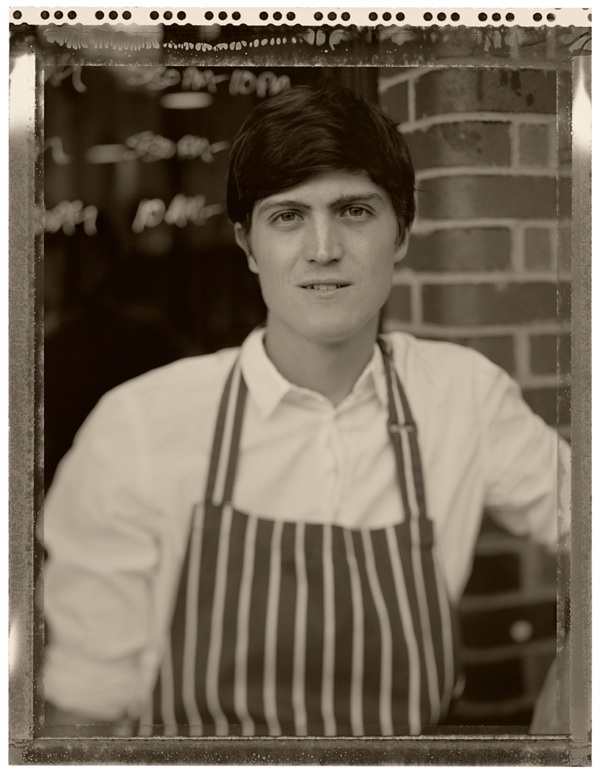
Raef – 40 Maltby St
The Microcosm of London II
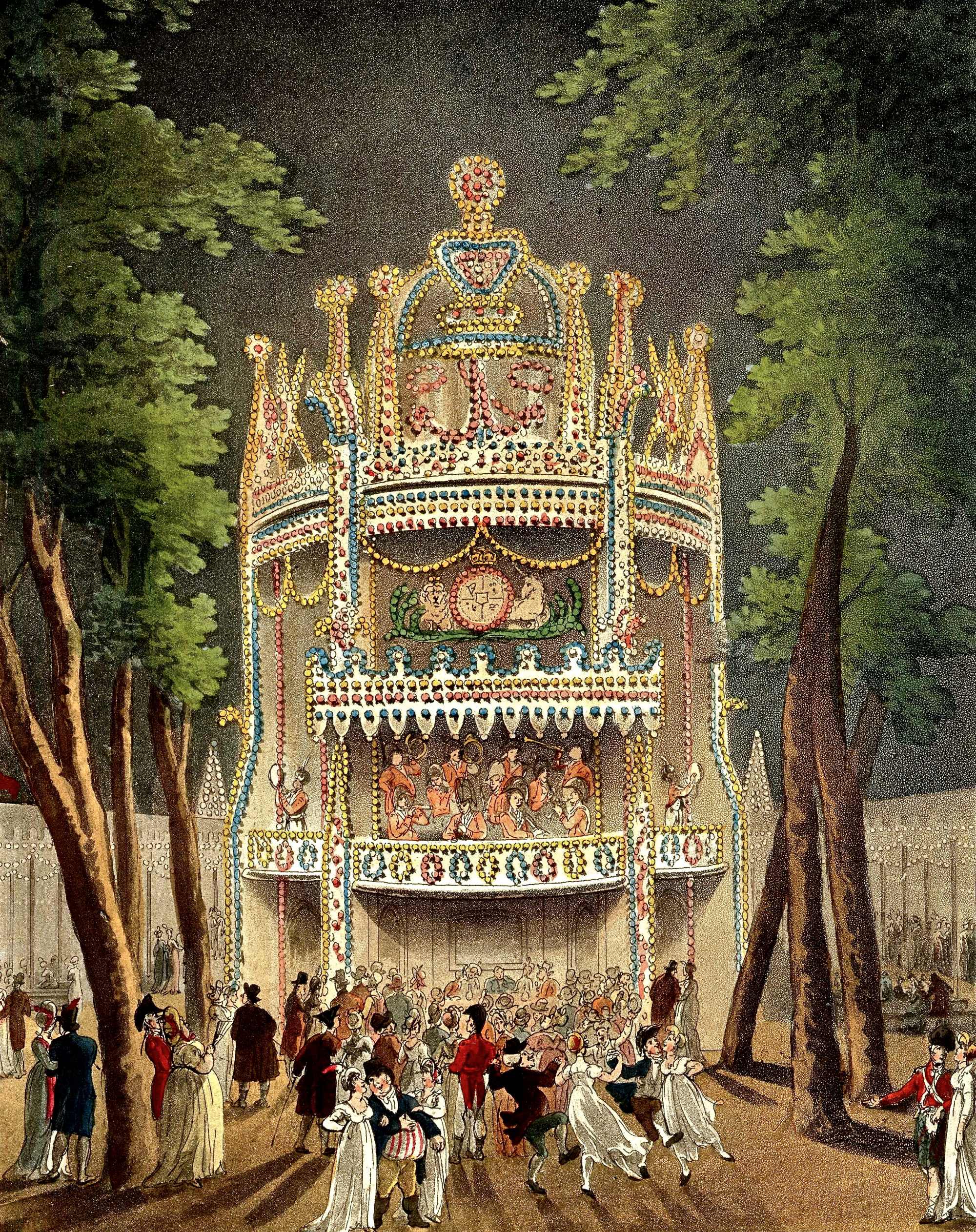
Vauxhall Gardens
(click on this plate or any of the others below to enlarge to full size and examine the details)
How very pleasant to be a tourist in the metropolis of 1809, thanks to the magnificent plates of “The Microcosm of London,” contained in three large red volumes at the Bishopsgate Institute. Here are the wonders of the capital, so appealingly coloured and so satisfyingly organised within the elegant classical architecture that frames most social activity – while also conveniently ignoring the domestic reality of the greater majority of the populace.
In fact, these images might be as vacuous as picture postcards, if it were not for the contribution of cartoonist Thomas Rowlandson who drew the human figures onto the architectural plates draughted by Augustus Charles Pugin, father of Augustus Welby Pugin who designed the Houses of Parliament.
While the first impression is of harmony and everyone in their place – whether it be church, masquerade, asylum, theatre, prison or lecture hall – examining these pictures close-up reveals the genius of Thomas Rowlandson who cannot either prevent himself introducing grotesque human drama or adding comic specimens of humanity into these idealised urban visions. Just like an early nineteenth century version of “Where’s Wally?”, Rowlandson implicitly invites us to seek the buffoons. Even if in some plates, such as the Drawing Room in St James, he appears to acquiesce to a notion of mannequin-like debutantes, Rowlandson more than makes up for it at the Bank of England where – surprise, surprise – the buffoons take centre stage. Spot the clown in a stripy waistcoat with a girl on each arm in Vauxhall Gardens, or the dolts all robed up in coats of arms at Herald’s College, or the Masquerade where as characters from Commedia dell’Arte the funsters seem most in their element.
Meanwhile at the Post Office, in cubicles not so different from those in call centres of our own day, clerks are at work in identical red uniforms which deny them both the idiosyncrasy and demonstrative individuality that is the vain prerogative of the rich in this vision of London. Equally, at the asylum nobody gets to assert themselves, while in the prisons people are diminished both in size and in colour by their environment. In “The Microcosm of London,” Augustus Pugin portrayed an architect’s fantasy vision of a city of business, of politics, of religion, of education, of entertainment, of punishment and reward, but Thomas Rowlandson populated it with life.
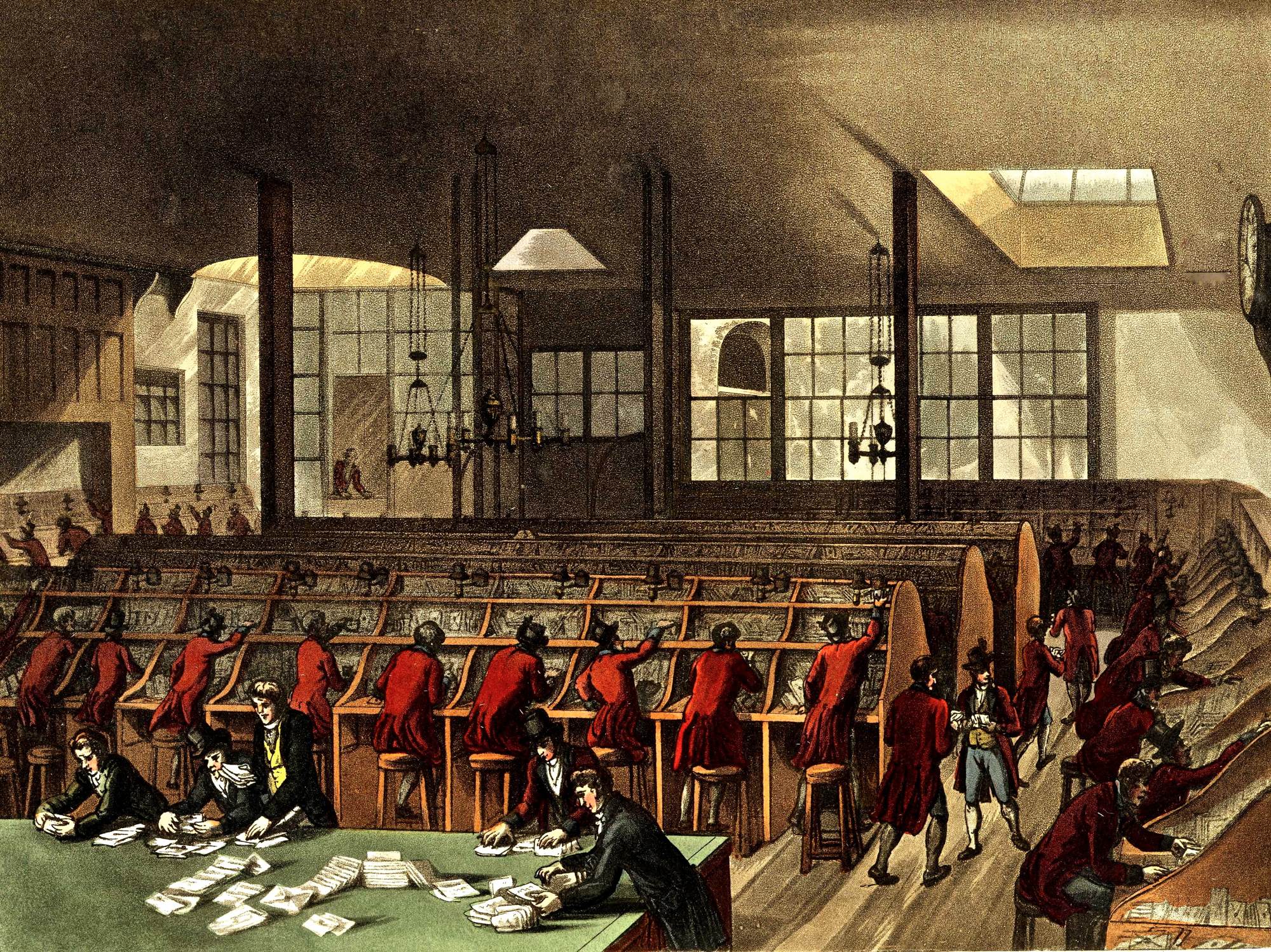
The Post Office
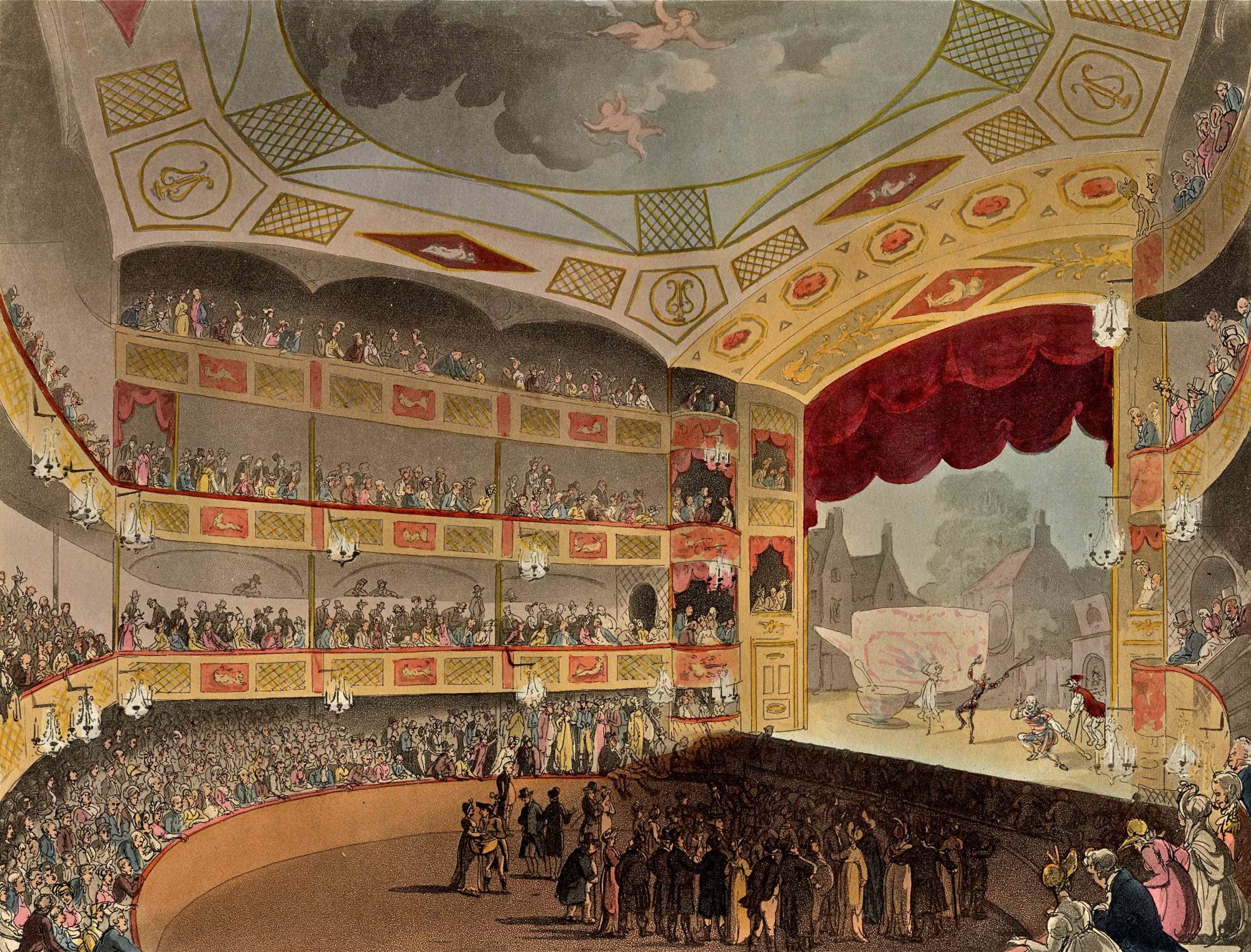
The Royal Circus

The Great Hall, Bank of England
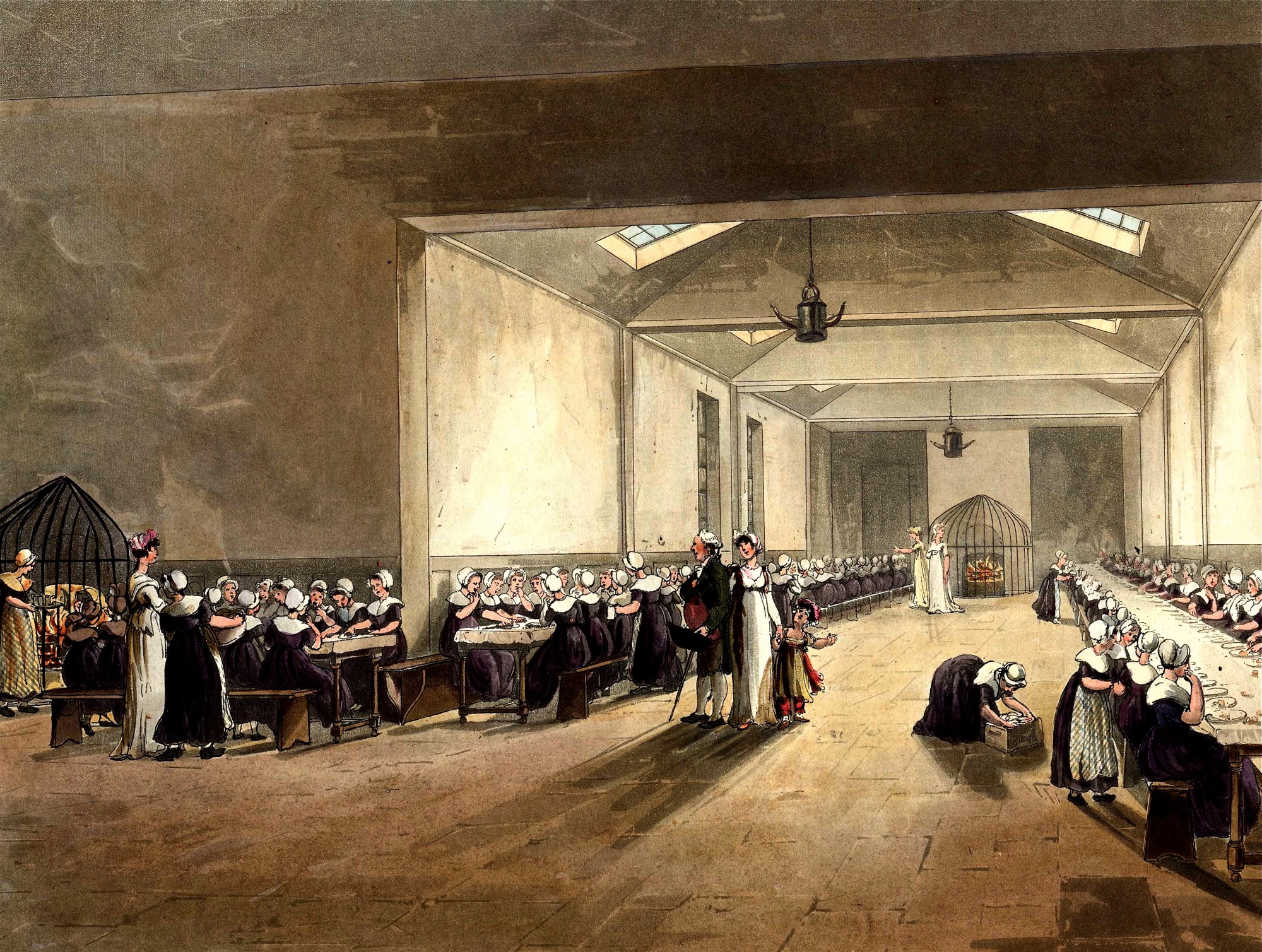
Dining Room, Asylum
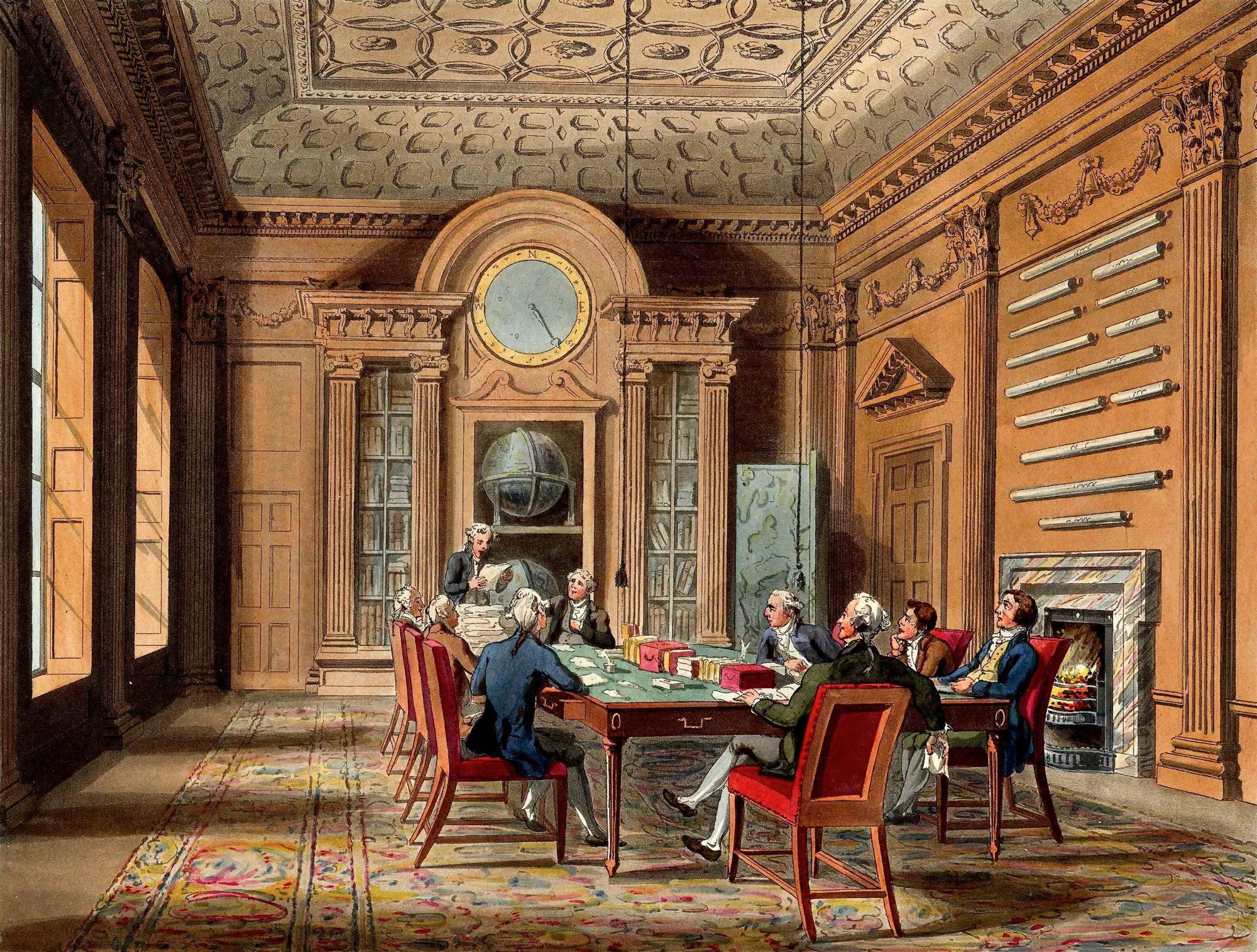
Royal Geographic Society

Drawing Room, St James

St Martin in the Fields
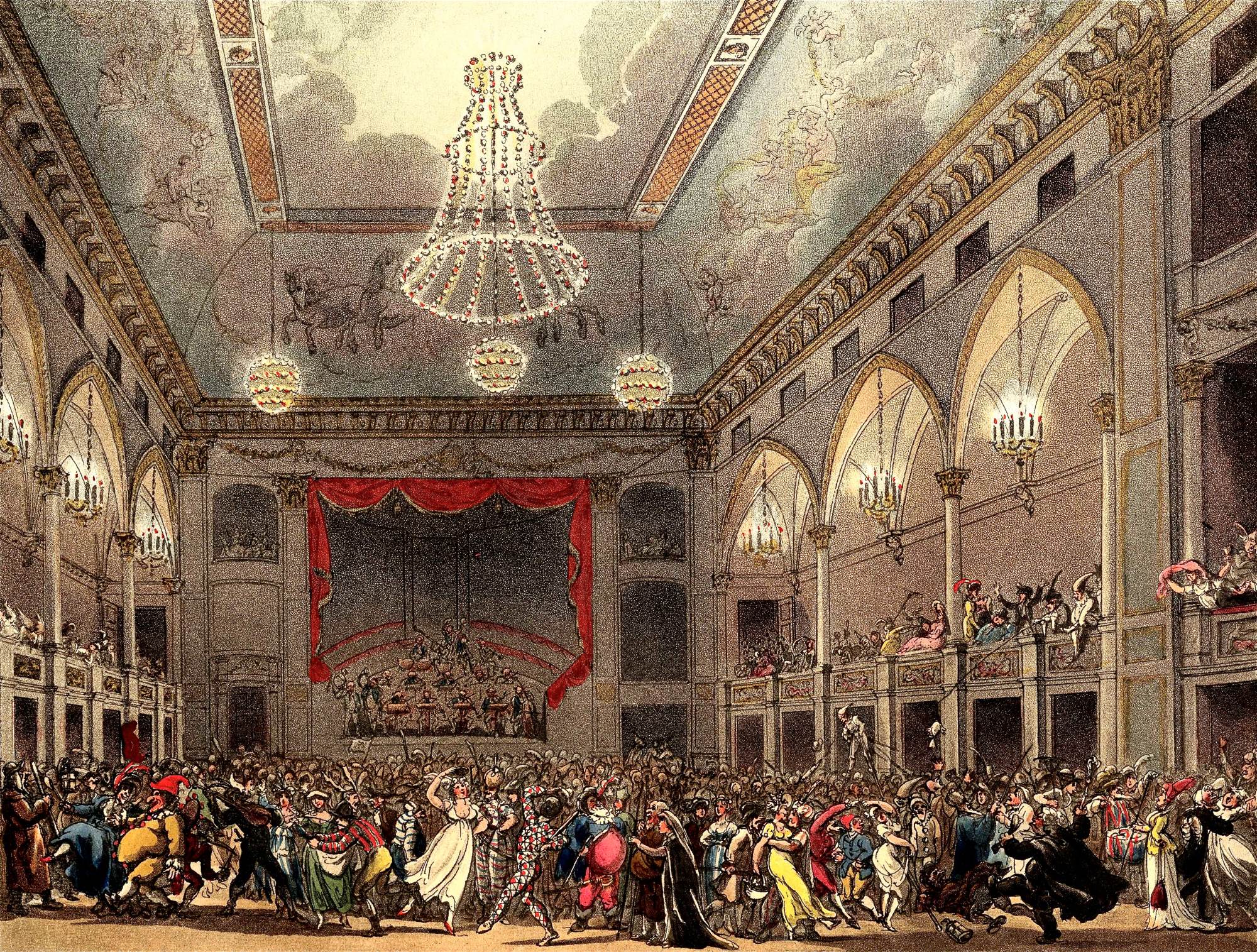
Pantheon Masquerade
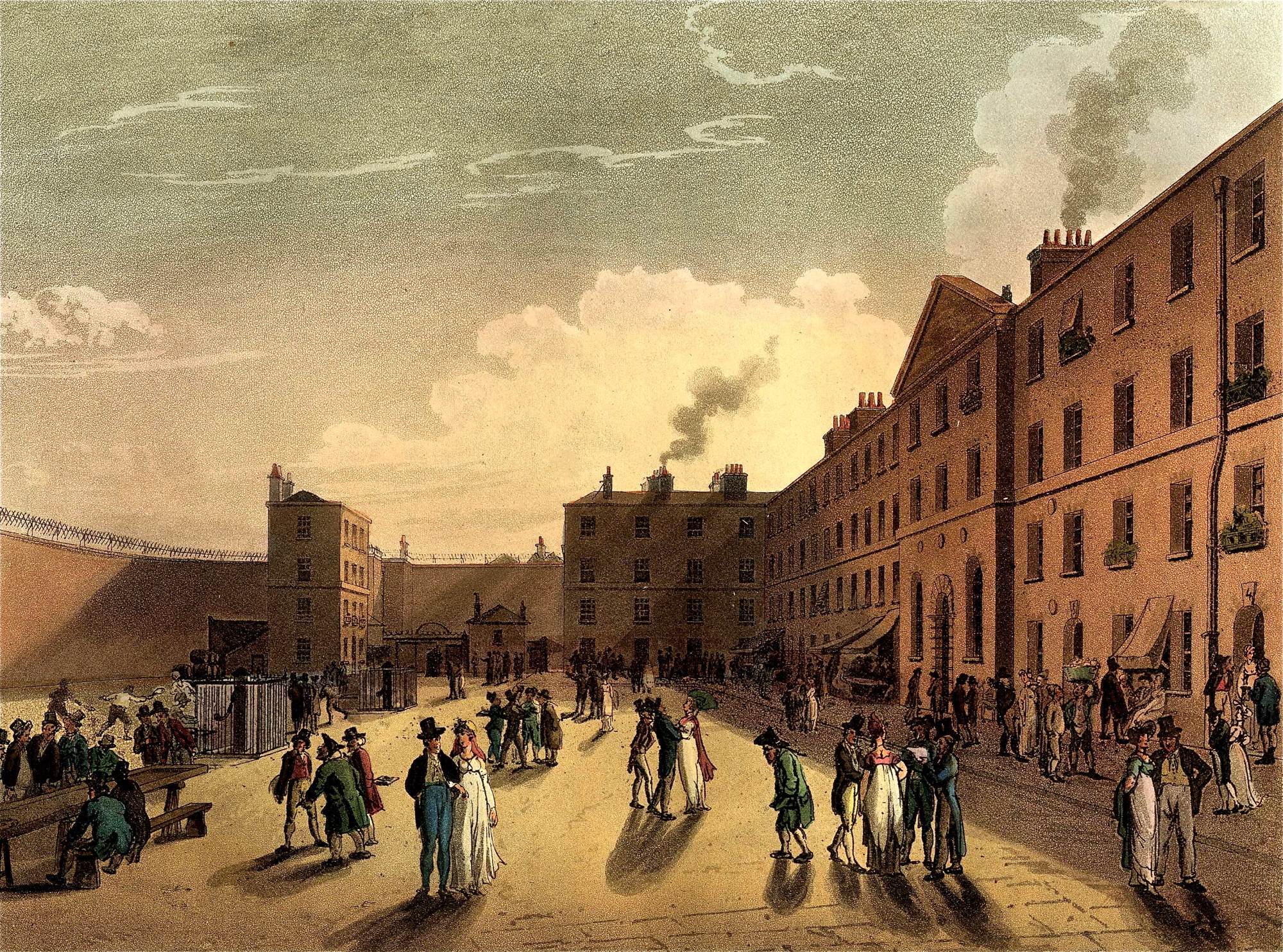
King’s Bench Prison
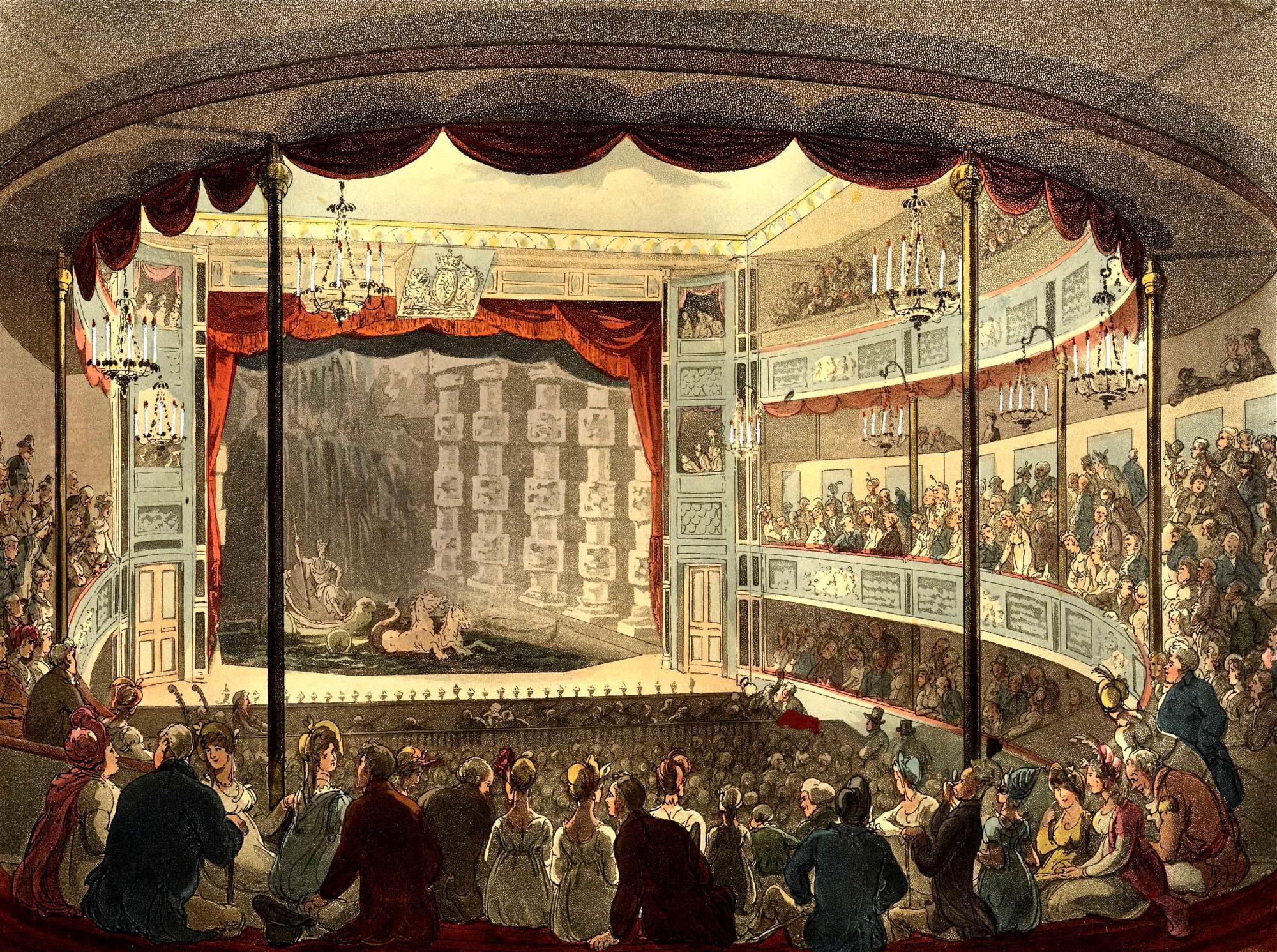
Sadler’s Wells Theatre
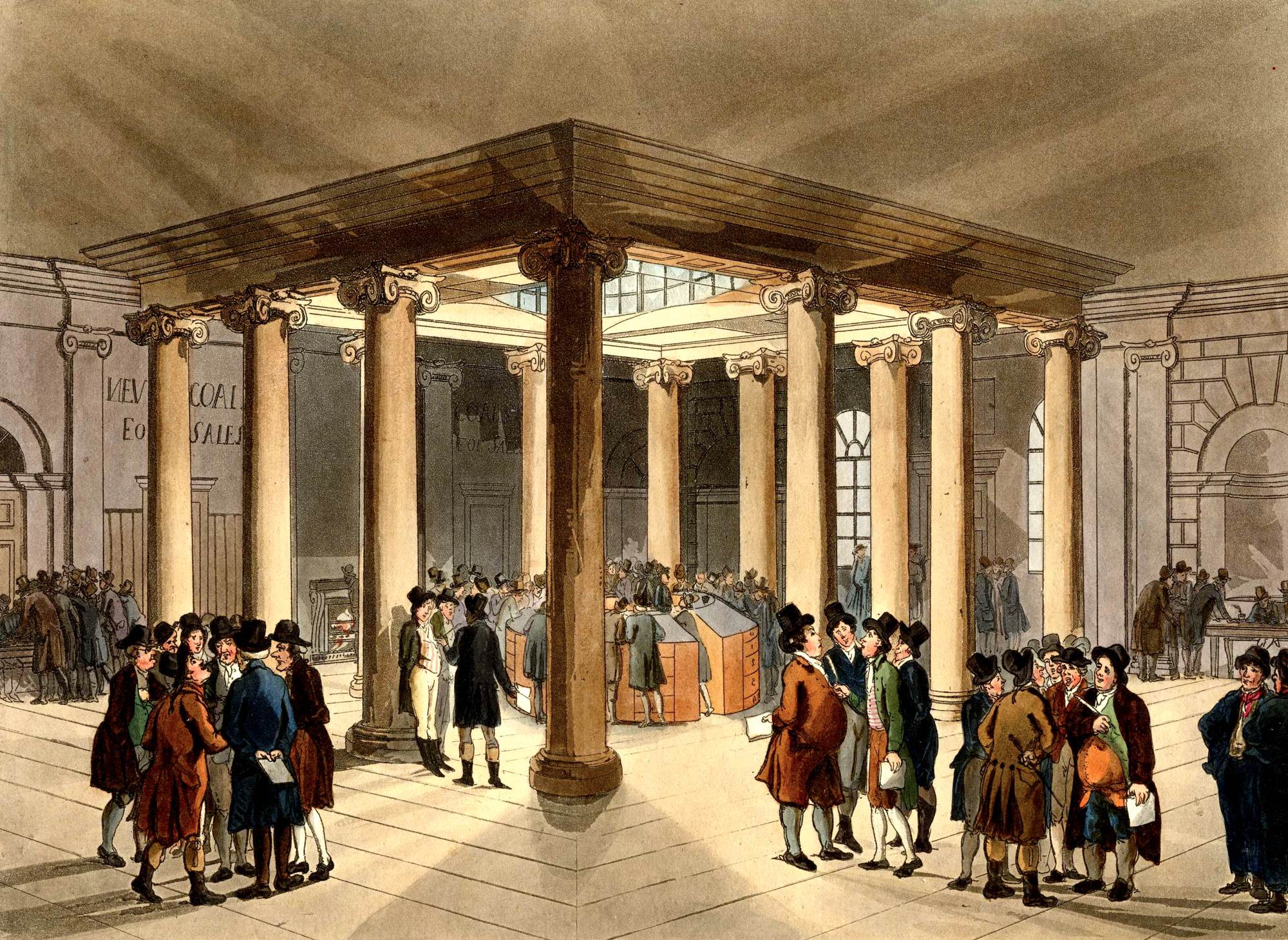
Coal Exchange

Herald’s College
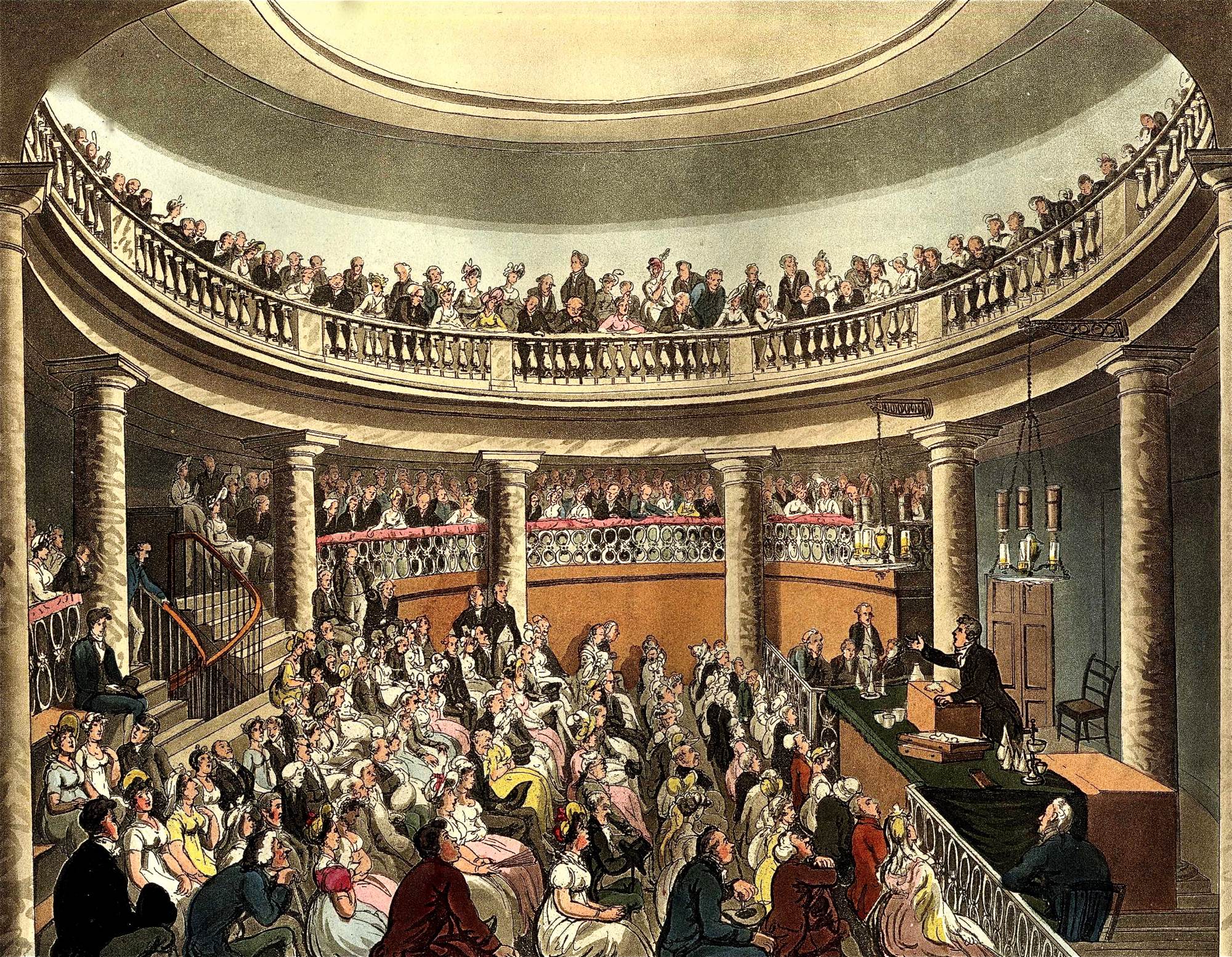
Surrey Institution
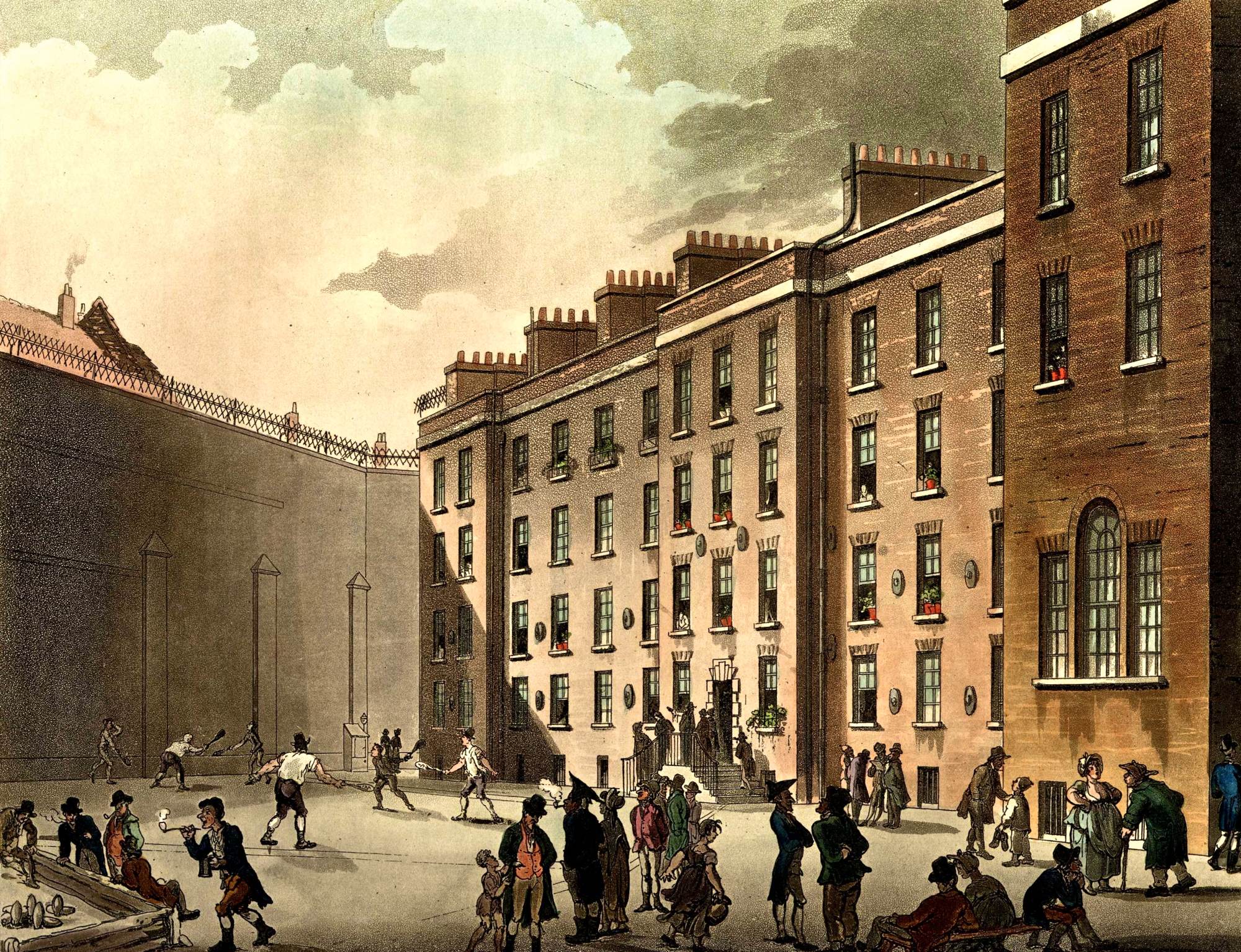
Fleet Prison
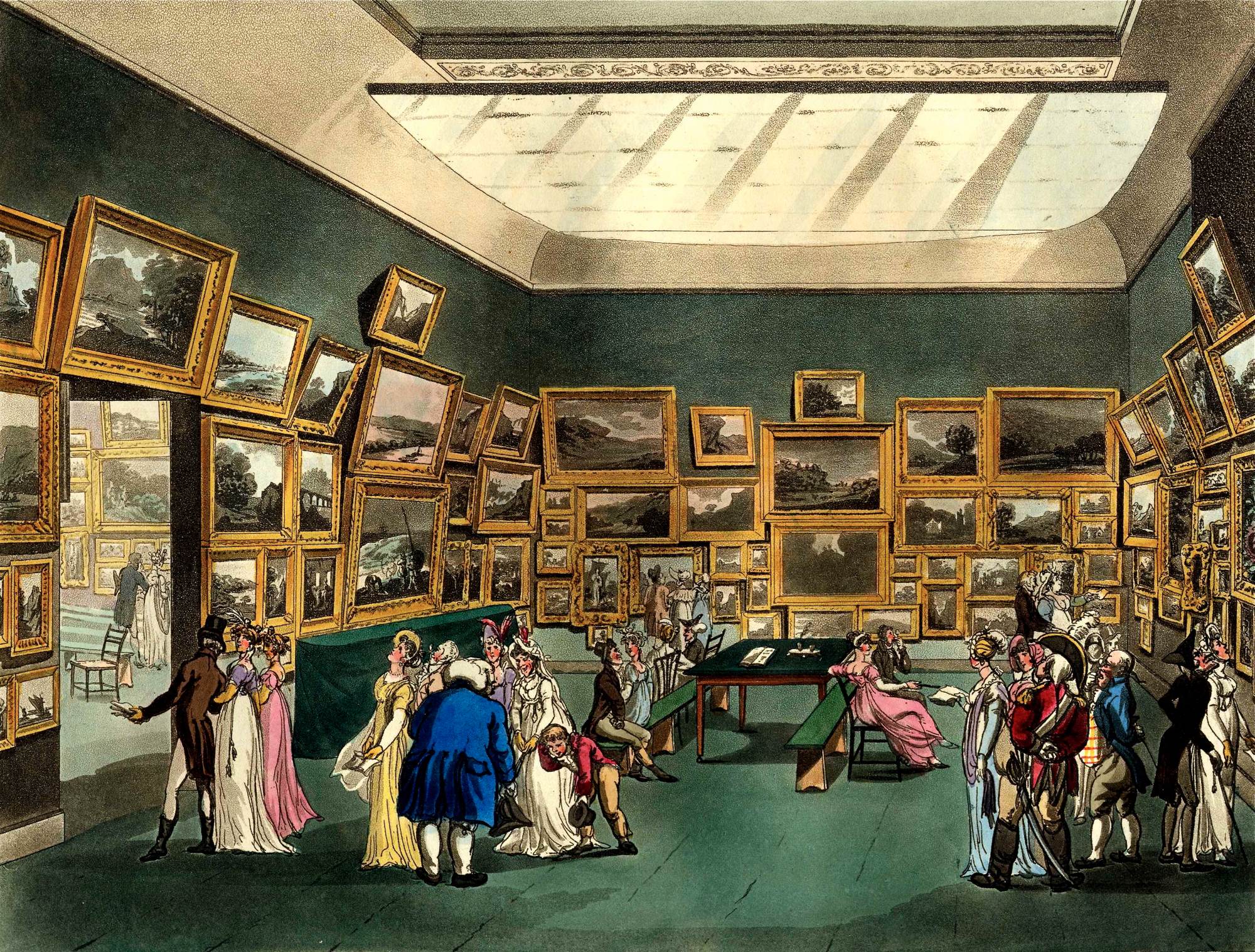
Watercolour Exhibition, Old Bond St
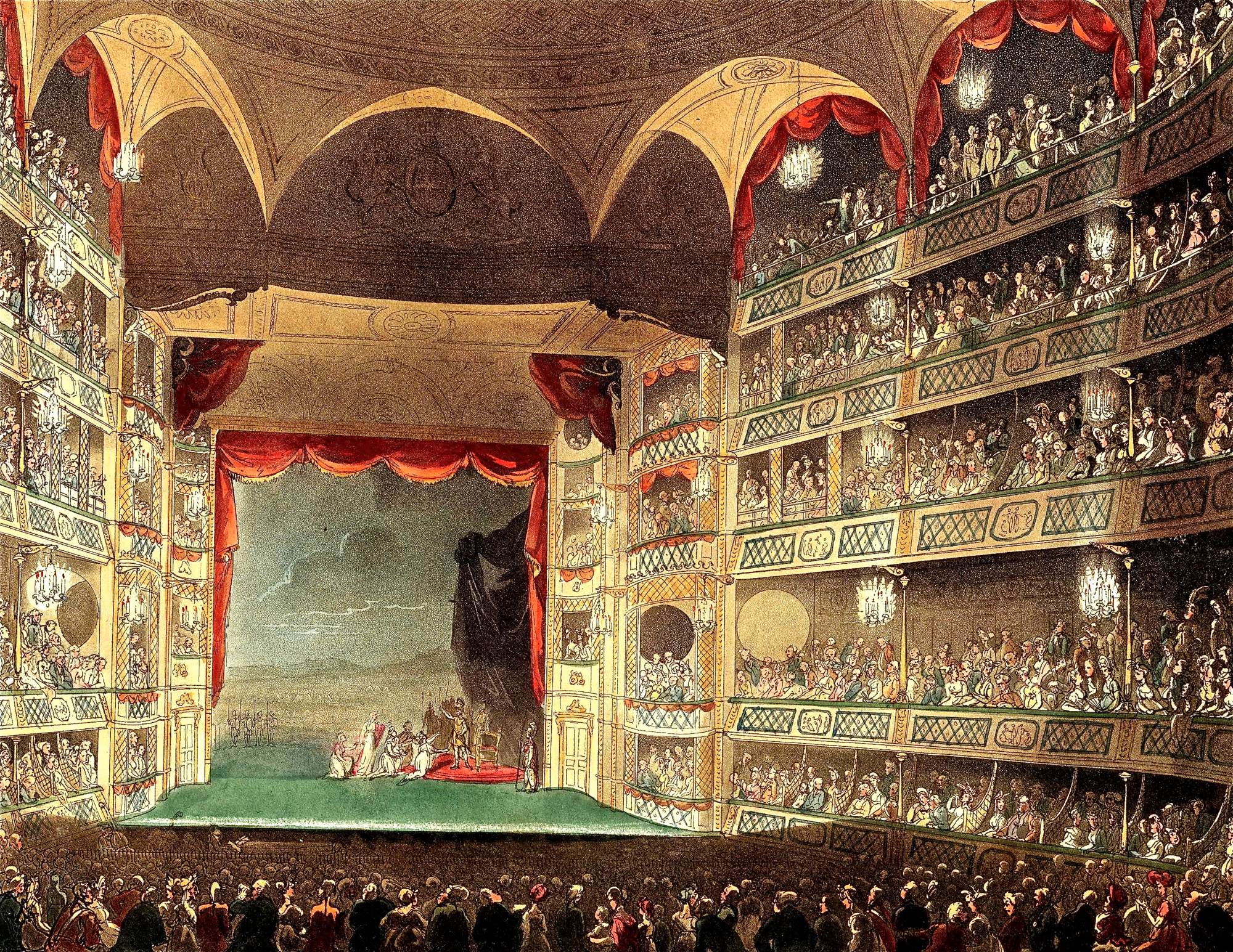
Drury Lane Theatre
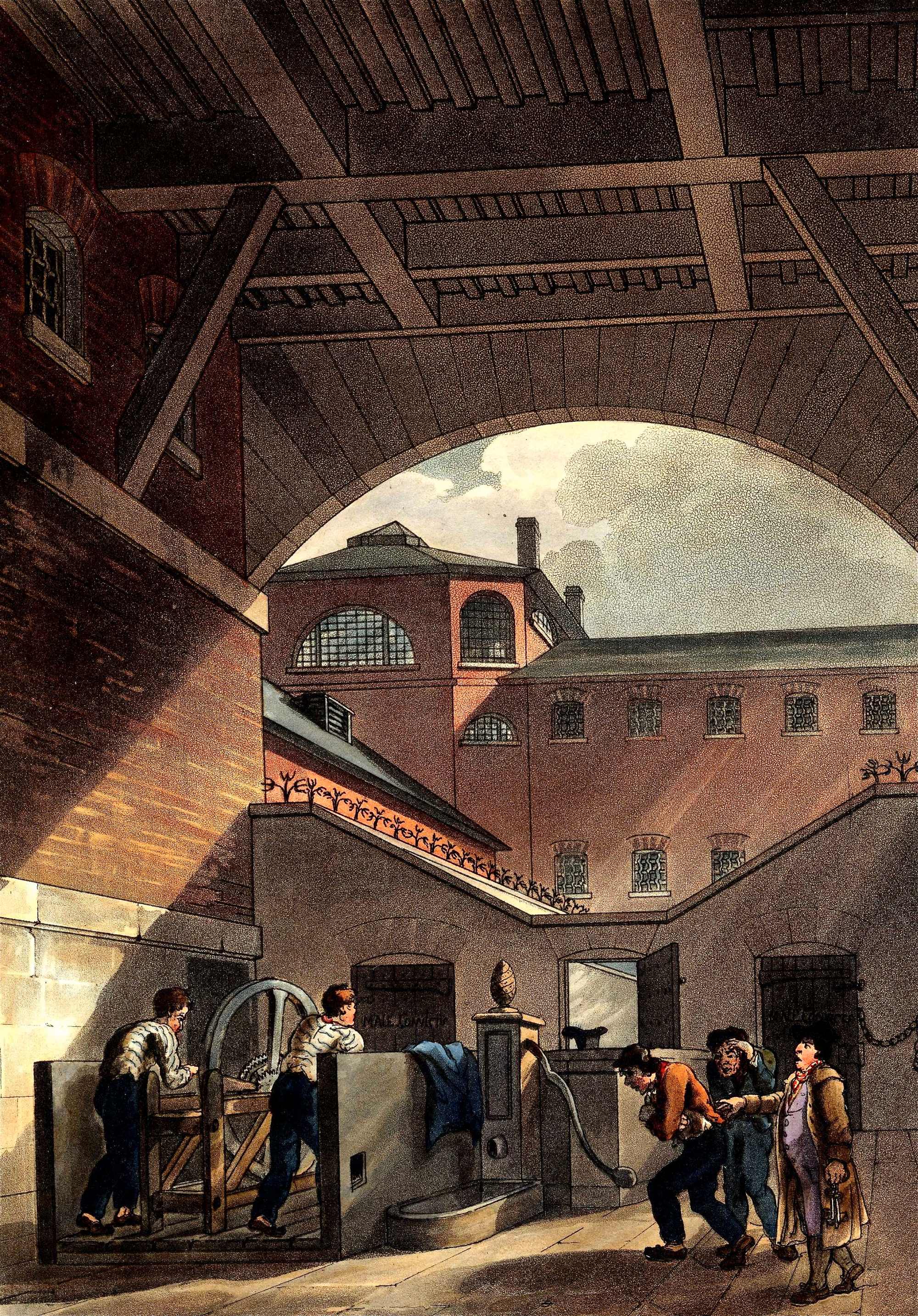
Coldbath Prison
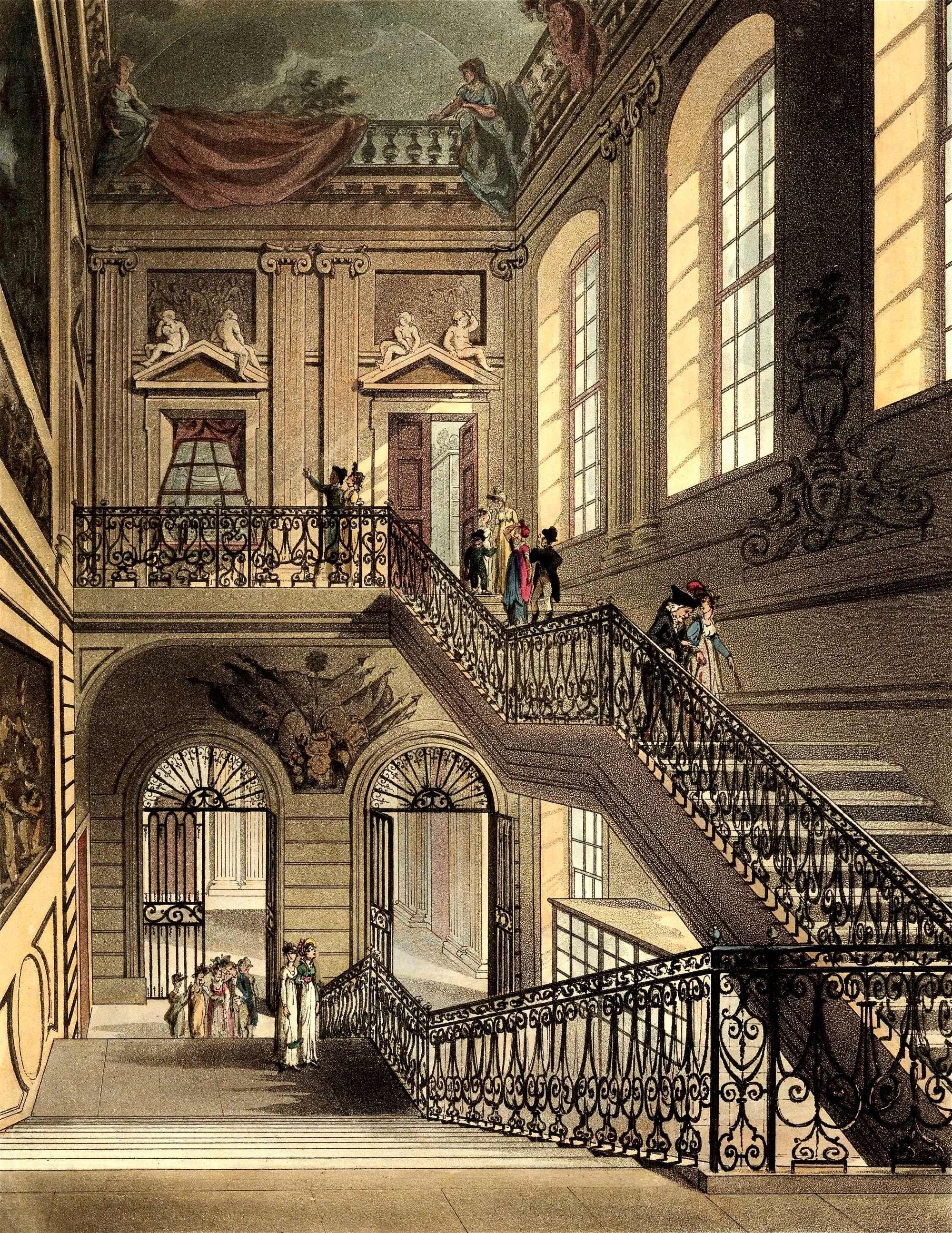
Hall and Staircase, British Museum
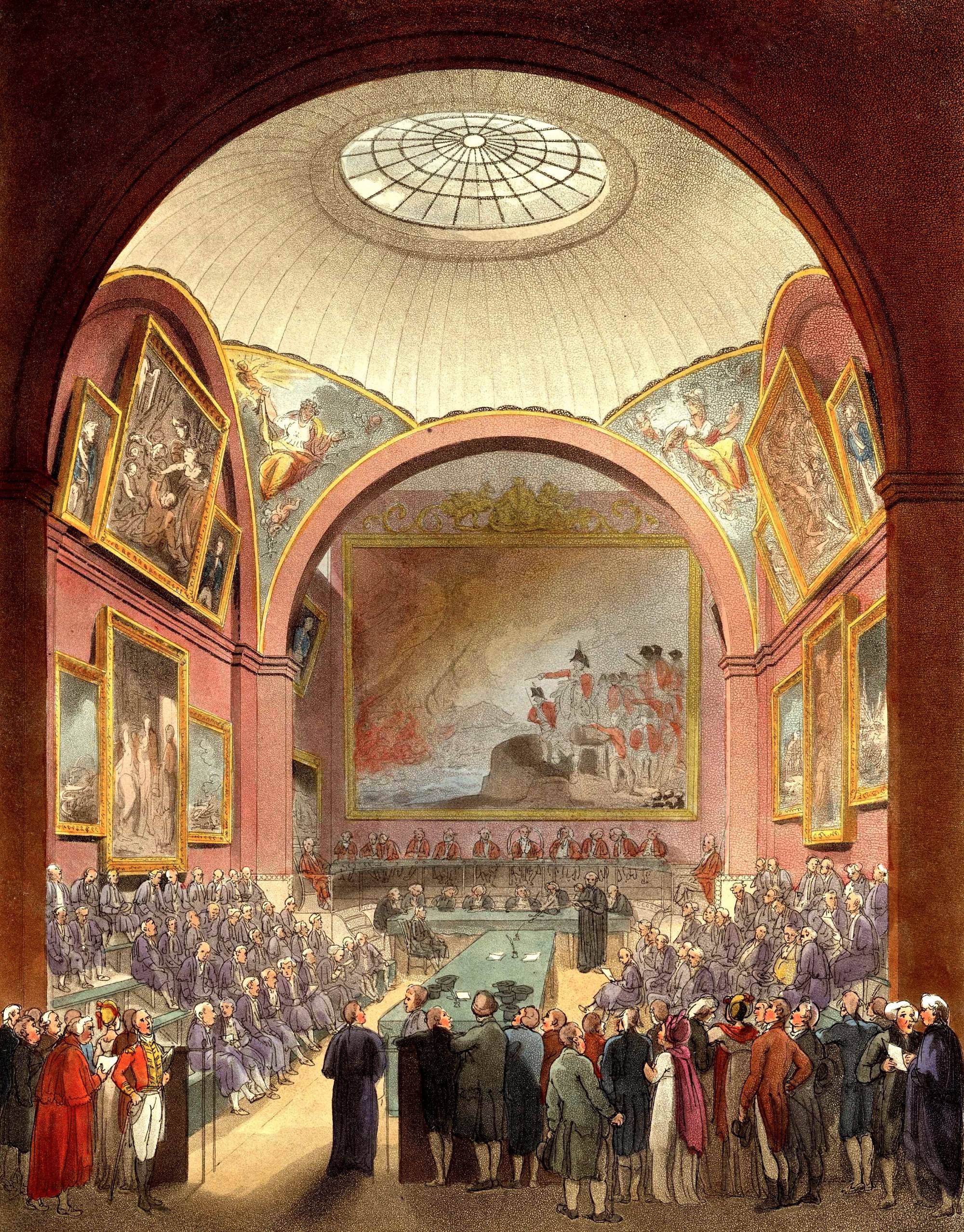
Common Council Chamber, Guildhall
Images courtesy of Bishopsgate Institute
You may also like to take a look at the rest of the plates in The Microcosm of London
At Stephen Long’s Antique Shop

David Milne, curator at Dennis Severs’ House, got in touch to tell me about the death of Stephen Long, an antique dealer who had dealt in early nineteenth century English china from a shop in the Fulham Rd since the nineteen sixties. This was where Dennis Severs bought much of the china that graces the house in Folgate St, he revealed – adding that by the end of this week the shop would be cleared out by an auction house prior to the sale of Stephen Long’s stock. But before that happened, there might be an opportunity to visit and photograph one of London’s last traditional antique shops, he suggested.
Until then, I had not quite noticed how the old school antique shops have been vanishing from the world. In Kensington Church St and in the Portobello Rd, in streets formerly lined with antique dealers – where once I used to wander, window shopping at all the beautiful old things I would never buy – such businesses are thinning out and becoming sparser. Similarly in Fulham and Chelsea, part of the accepted landscape of London is quietly dissolving away.
David and I walked through Brompton Cemetery to reach the quiet stretch of the Fulham Rd where Stephen Long had his shop, beyond the fashionable street life of Chelsea yet not proxy to the bustle of Fulham Broadway either. “I had no idea he was ill,” David confessed, “I saw his shop was shut and a glass panel was broken. Nobody could contact him, so in mid-December they broke in and found him sick upstairs, where he lived. And he died in hospital in January.”
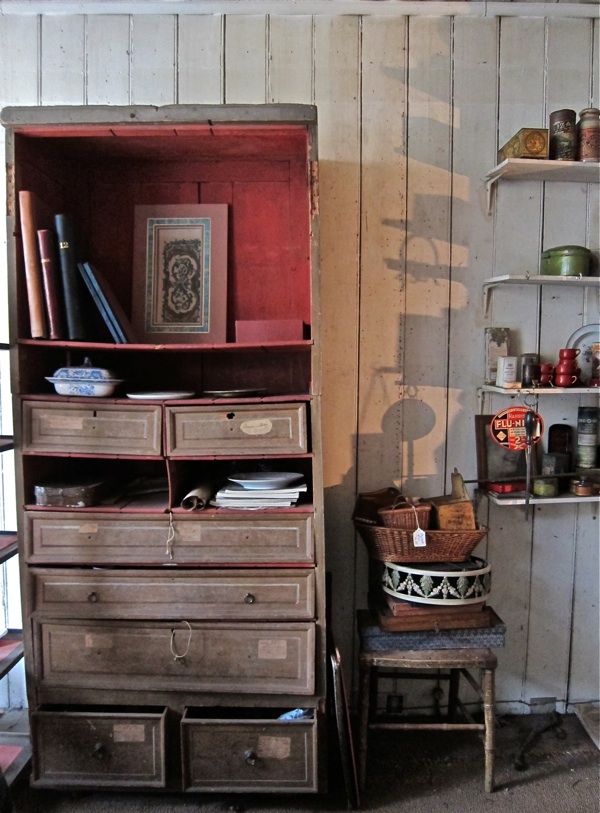
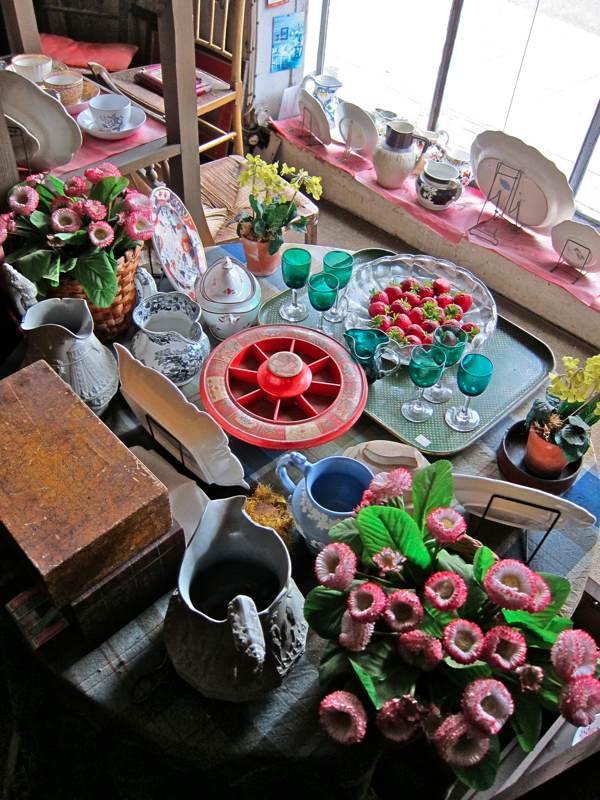
In a fine nineteenth century terrace, only one premises had its original shopfront intact, still in architectural unity with the upper storeys where the rest had been crudely modernised at street level to discordant effect. The name of Stephen Long caught my eye at once in its classic typeface, above the elegant five-bay Victorian display window. And, even before we entered, I recognised the shop as of the familiar kind I had visited a hundred times with my parents, for the delight of admiring the wonders yet ever wary that we might break something expensive. There were colourful old plates on wire stands and other pieces of china formally placed in symmetrical arrangements, their decorum offset by the whimsy of artificial fruit and flowers, and cheerful coloured paper lining the shelves.
“Stephen used to sit behind a low desk at the back of the shop – so that you couldn’t see him from the street, there in the shop in the darkness with beautiful stuff piled up around him,” recalled David, explaining how he discovered the connection with Dennis Severs, “I used to buy stuff from him and one day he told he knew a guy in Spitalfields.” Before Dennis Severs bought the house in Folgate St by which he is remembered, he lived in a mews in Gloucester Rd and gave rides around London in an open-top landau. Stephen Long told David, he remembered Dennis Severs parking the horse and carriage outside and coming in to buy things. Then, two years ago, Stephen Long visited Dennis Severs’ house at David’s invitation and when he saw the china, exclaimed, “I sold him all this!” At Dennis Severs’ House, the mass of china that decks the old dresser in the kitchen, the royal memorabilia in the parlour, the creamware and the teapots – it came from Stephen Long and his discreet price labels still remain on the underneath of the items to this day.
“What I loved about going into this shop, it was like stepping into the nineteenth century,” David confided to me as we entered the half light of the showroom, where most of the objects had been in stock for over twenty years but were now only resting in their former owner’s arrangements for one last afternoon. “In all the years I came to the shop, I never met anyone else in here,” David whispered, almost speaking to himself as he absorbed the atmosphere for the final time.
David told me Stephen Long was in his eighties, a quiet man, gentle, charming and of the old school, a dealer who knew his stuff. The shop was the manifestation of his sensibility and taste, after a lifetime of looking at things, displaying his eye for colour and form, and his playful delight in contrast and in gathering collections. “Like all the best dealers, he was a collector who only sold things to make room for the new,” said David and there it was, gleaming through the gloom – the last moment of one man’s treasure trove – just as he left it.


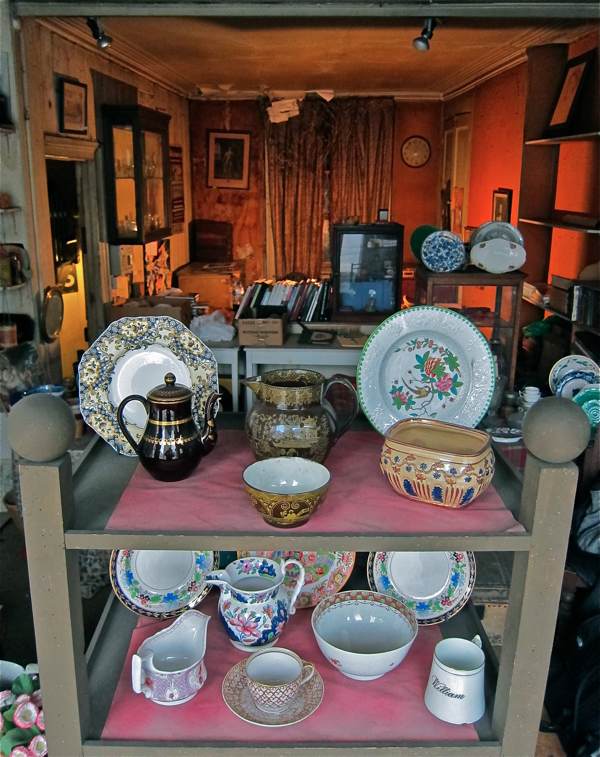

“He used to sit behind a low desk at the back of the shop – so that you couldn’t see him from the street.”





You may also like to read about
David Milne, Curator at Dennis Severs’ House
James Brown at Gardners Market Sundriesmen

This is illustrator & printmaker, James Brown, presenting Paul Gardner, the fourth generation paper bag seller, with a copy of the beautiful print he has created to celebrate this beloved and historic Spitalfields institution, Gardners Market Sundriesmen. When a one hundred and forty year old business advertises for the first time, something special is required and – working in collaboration with Paul – James has contrived a paper bag printed in gold and emblazoned with symbols of all the different items to be purchased at Gardners.
“Knowing about Paul and his story through Spitalfields Life, I thought it would be great to produce a design that he could use as a promotional flyer and that I could also make into a nice limited edition print too,” explained James shyly, standing in front of Paul and aware of the huge departure this first piece of advertising represents for Gardners.
Through supplying the bags, in this area traditionally occupied with small shops and markets, Gardners is naturally the epicentre. Yet with new people coming to set up stalls and open shops all the time, James’ beautiful postcards of his print constitute an ideal introduction to this uniquely appealing shop that will sell you as few bags as you need. In coming days, James & I will be distributing the cards in shops and markets on Paul’s behalf, but you can pick up some yourself direct from Gardners Market Sundriesmen and take the opportunity to admire the limited edition print, if you happen to be passing through Commercial St.
“Paul has so many stories to tell, my visits to Gardners were always lengthy and lively.” confided James, savouring the year it has take to develop his design. “It’s been great to get to know Paul and I really hope the flyer works for him, he is a lovely guy and offers a level of service that cannot be surpassed by any of the online bag and sundries suppliers.”
When I first met James Brown a couple of years ago, he had just quit a ten year career as a textile designer and struck out anew as an illustrator and printmaker, sharing a studio with his brother in Hackney Wick. Since then, I have been delighted to see his bravura designs turning up all over the place. “It’s snowballed really,” he admitted with a private smile of satisfaction, “And now I am making a living at it – exactly what I wanted to do and it’s brilliant!”
 James’ screenprint celebrating Gardners Market Sundriesmen, Spitalfields’ oldest family business.


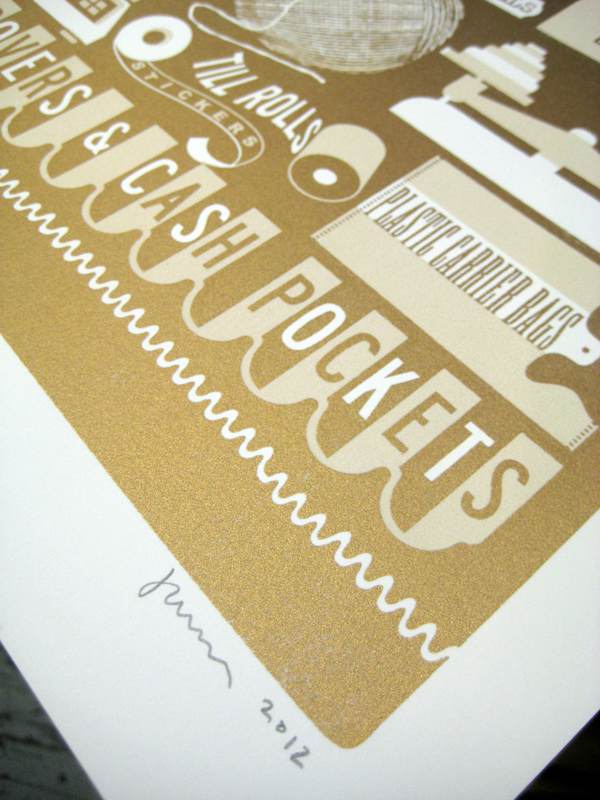
James Brown’s Gardners Market Sundriesmen print is available from Paul Gardner at 149 Commercial St, online from www.generalpattern.net and from Elphick’s Shop on Columbia Rd.
You may also like to read about
Last Orders At The Birdcage

This photograph records the historic Sunday night when popular landlady Teresa Farnham called “Last Orders!” at The Birdcage on Columbia Rd after twenty-one years behind the bar, heralding the end of an era in this corner of Bethnal Green. I slipped over to have a quiet drink with Teresa as the light began to fade on her final day at the pub. Outside the melancholy streets were coated in slush that began to freeze as dusk gathered, yet inside the cosy barroom at The Birdcage, a lively crowd was happily cheering in enjoyment at the constant thrills delivered by the big match on a widescreen TV. To use Teresa’s phrase, “It was chock-a-block!”
Even before we began our conversation, Teresa was keen to emphasise that regulars need not be entirely dismayed, because the new publican takes over this week and a smooth handover is promised. Continuity is of paramount importance for a public house established in 1760, and with a name that reflects the popular custom of keeping caged birds which was introduced to the East End by the Huguenots in the seventeenth century. The current building, constructed in the nineteenth century, still gleams with the handsome bottle-green Doulton ceramic tiles to be seen on many establishments in the vicinity, revealing that it was once a Truman’s pub. Although the ornate architectural flourish on the top may have been destroyed and the windows blown in during World War II, landlords Mr & Mrs Joel – who managed The Birdcage from 1922 until 1955 – kept the pub open thoughout, sleeping in the cellar between shifts of firewatching.
And thanks to the joint stewardship of Teresa and John Farnham, The Birdcage has continued to hold its own in Columbia Rd in recent years. Standing at the junction of several roads, it is a mighty block that defines the Western extremity of the flower market and stands sentinel beside the curved line of Columbia Rd which cuts through the grid of the surrounding streets, revealing itself as a trackway of an earlier date.
“I have been at The Birdcage for twenty-one years but I have lived here in the turning for fifty-two years. That’s how I met John. We both grew up in this turning, Wellington Road. I lived in the flats and he lived in the houses.
When we were little, we moved out from the East End to Basildon but my mum couldn’t settle there and so we moved back again to Bethnal Green. It was because my nan lived in Vallance Rd and my mum liked to go and see her every day. I went round after school and my mum always picked me up from there. My dad used to sell stuff down Brick Lane on a Sunday. He auctioned crockery. He threw it up in the air and caught it. I used to be in front of the stall taking the money. I was twelve when I first started, I’ve always worked with people and I was brought up to be polite and know my manners.
Because we only lived across the way, this was our local and I used to come here to the off licence to buy cigarettes for my mum, but I never used to come inside that much because I had two children and John’s not a drinker. The previous owners were Bob & Jean, he used to work in the Truman Brewery. They wanted to retire and they thought John & I would make good landlords. They asked us to take over, even though we had never run a pub in our lives. I was a housewife and John was a builder – but my husband, although he’s not academic, he’s clever in his own way.
To run a pub, people have got to like you, and we were very lucky that Bob & Jean were friends, so they helped us out at first. All you really have to know is how to clean the pipes for the beer and keep the cellar spotless. We’re very particular about that, it shows in the beer if you don’t do it. I change the barrels, I do everything but I don’t do the pipes for the beer. Only John does that. No-one else could do it good enough. He’s a perfectionist. He’s like that with everything, he’s always been that way. We’re very fussy about the general upkeep of the pub, and we have nice staff. My girls have been with me nineteen years, my sister and my sister-in-law and my two very good friends – we couldn’t have done it without them. The pub is only a building, but it’s the staff and clientele that make the pub.
Me & John are working landlords. Some landlords like to sit at the end of the bar, but we came in behind the counter and we’ve done that full-on for for twenty-one years. I like to talk to everybody. I often don’t finish before five in the morning and I am up again at nine. When we first came here, it was really busy with the bands but then that stopped and business went down, but we’ve brought it back bigger than before. Because the pub is always so busy, I haven’t had a day off in eight years. I don’t know what I am going to do now, I’m going to get up everyday and take it as it comes. I’ve got wardrobes to clear out.
I live next door. I’ve lived in this turning since I was sixteen. I’ve lived in the flats and I’ve lived in the houses, all in the same turning. There’s a strong sense of community here, we know everyone that comes to the pub. I shall miss it. I shall miss the people most. I love to see all the young ones singing and dancing. When I see that, I know it’s been well worth it. John & I, we’d like to thank everybody that’s supported us – and we’d like to say, please continue to support The Birdcage.”

Teresa & John Farnham, landlords at The Birdcage in Columbia Rd for twenty-one years.

“We both grew up in this turning, Wellington Road. I lived in the flats and John lived in the houses.”

“Some landlords like to sit at the end of the bar, but we came in behind the counter and we’ve done that full-on for for twenty-one years.”

The Birdcage as it was originally built before the flourish on the top got blown off in World War II.
Portraits copyright © Sarah Ainslie
Archive image courtesy of Truman’s Beer
You may also like to read about
Charles Dickens at Park Cottage
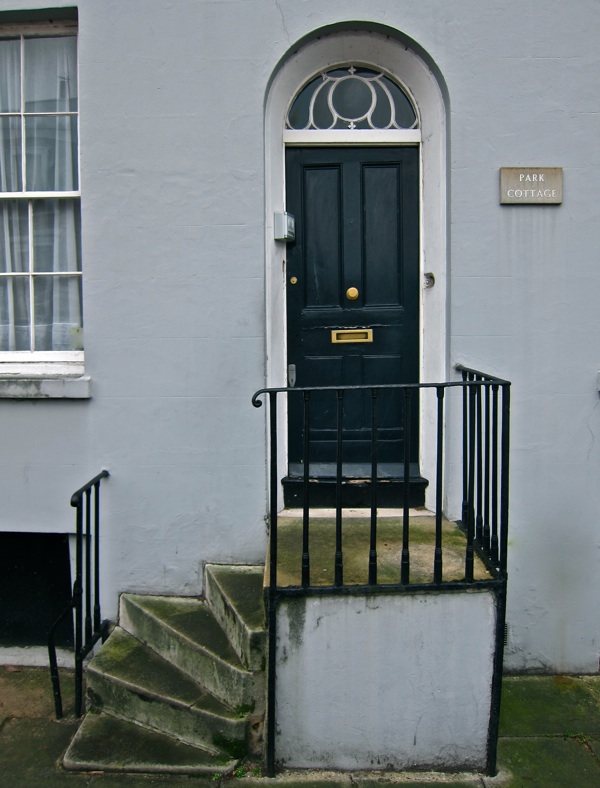
This is the front door where Charles Dickens walked in
Two birthdays will be remembered at Park Cottage in Canonbury on this day, one is of Joan Atkins the current owner – whose age discretion prevents me disclosing – and the other is Charles Dickens whose two hundredth birthday is celebrated today. Yet the connection extends further than the shared birthday, as Joan revealed to me when she kindly invited me round for tea recently.
Joan’s parents’ background was in the theatre, encouraging her curiosity to learn about her nineteenth century predecessors at Park Cottage, the Ternans – a theatrical family of mother and three daughters who attracted the interest of Charles Dickens. He came here in 1857 to pay visits upon the youngest daughter Ellen Ternan, after she and her sisters had acted with great success in two performances that he organised of Wilkie Collins’ play “The Frozen Deep” in Manchester. And it was Dickens’ growing fascination with the eighteen year old Nelly – as she was commonly known – that led to a meeting over tea in the living room at Park Cottage which signalled a turning point in his personal life and the separation in the following year from Catherine, his wife and mother of his ten children.
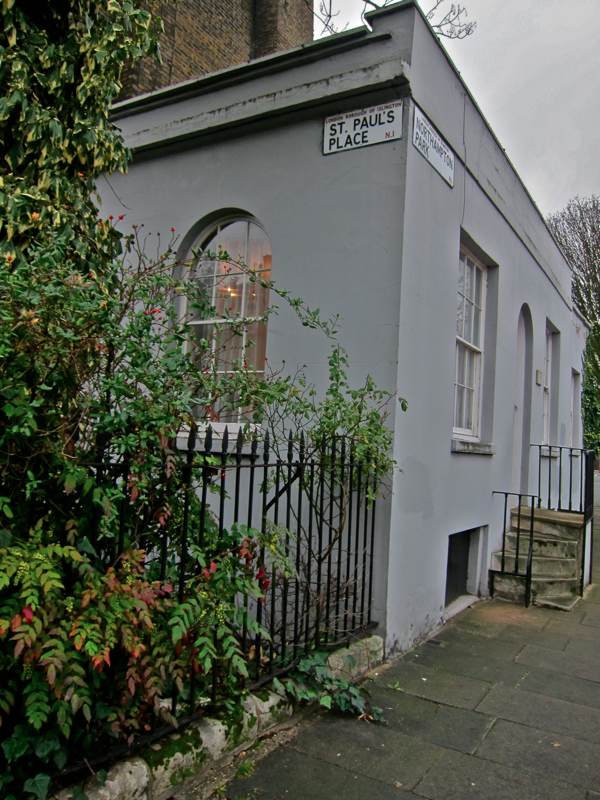
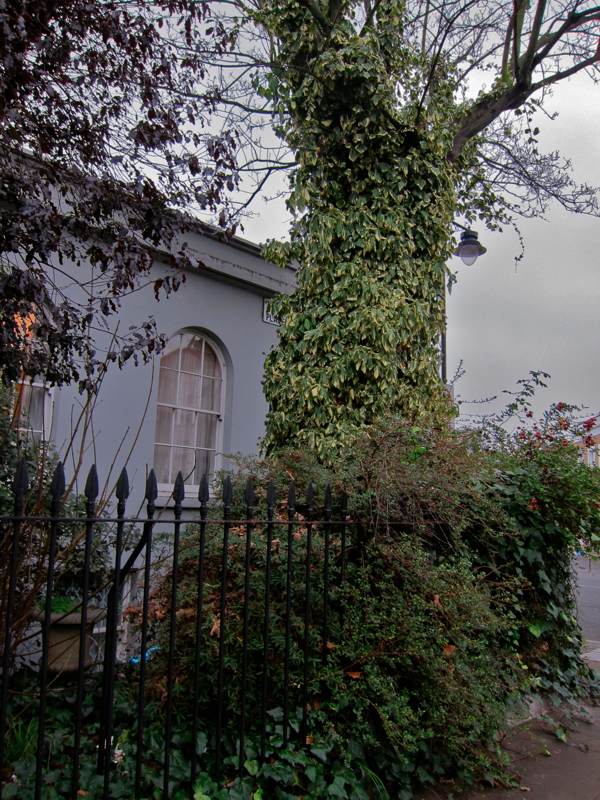
Coming upon Park Cottage at the corner of Northumberland Park, you might assume that this plain single storey edifice was merely an extension stuck onto the end of the 1835 terrace in St Paul’s Place, but in fact it is a 1790s dwelling that once stood alone here, built as the estate cottage when the surrounding fields were turned over as a plant nursery by Robert Barr. Climbing the worn stone steps to walk through the narrow front door with its decorative fanlight – suggesting an aspiration to greater things – you enter the raised ground floor of the cottage built originally as four rooms – two up, two down – that was extended shortly after construction to make six. These spaces are divided by wooden-panelled partitions in the familiar eighteenth century pattern, creating rooms of a generous height and proportion upon the ground floor with attractive fireplaces and large shuttered windows, while below in the semi-basement, where the flagged kitchen remained until the 1970s, the rooms are more modest and receive less daylight. It would have been a crowded house for the four Ternans and their servant to occupy.
The Ternans came to live here in the spring of 1855 while the mother and two elder sister were performing at the Princess Theatre. Mrs Ternan, the widow of Thomas Ternan the tragedian, struggled to maintain her family and protect the reputation of her daughters in the capricious world of show business. She was conscientious at first to ensure propriety in the relationship between the famous novelist and her youngest daughter. Though whether this supervision was due to moral concern or the better to manipulate Dickens obsession with her daughter to their advantage is open to question. Dickens’ nineteen year marriage to Catherine had already turned sour and he sentimentalised the virginal Nelly Ternan, confessing, “I do not suppose there ever was a man so seized and rendered by one Spirit.”
Years later, Dickens third daughter Kitty recalled the tense domestic atmosphere at this time – “This affair brought out all that was worst and all that was weakest in him. He did not care a damn what happened to any of us. Nothing could surpass the misery and unhappiness of our home.” Yet Dickens stubbornly protested his innocence in the face of Catherine’s accusations and sought to humiliate her for maligning Nelly, the idealised object of his infatuation. Kitty’s version of events is reported thus, “Entering the room, she found her mother seated at the dressing table in the act of putting on her bonnet, with tears rolling down her cheeks. Inquiring the cause of her distress, Mrs Dickens – between her sobs – replied,“Your father has asked me to go and see Ellen Ternan.” “You shall not go!” exclaimed Kitty angrily stamping her foot. But she went.”
Who can only imagine what conversation might have passed over the tea table in the course of such a bizarre encounter in the narrow room at Park Cottage with two arched windows giving onto St Paul’s Place? We shall never know if civility was preserved or if feathers flew. Did Catherine attend out of subservience to her husband or did she wish to confront the reality of his obsession? There is a story that Dickens ordered a bracelet for Nelly from a jeweller who sent it to Catherine by mistake, delivering the arbitrary event which brought the situation to crisis.
It was the end of Dickens marriage. “If you dislike me so much it might be better if we were to separate,” Catherine wrote to him. Afterwards, he made a financial settlement upon Nelly and, insisting that the crowded dwelling at Park Cottage was unwholesome, he established the mother and her daughters in a more central and better appointed dwelling on Berners St. In just eighteen months, the precarious existence of the Ternans had been transformed to one of stability and wealth. On her twenty-first birthday, Nelly became the owner of a house in Ampthill Sq, Mornington Crescent. And later, Dickens arranged an extended sojourn in France for her and visited regularly, leading the the suggestion that she was pregnant with his child
For the most part unchanged inside, Park Cottage retains the appealing rural quality of a workaday eighteenth century cottage where the nursery workers once came to collect their wages in the kitchen. If we cannot ever know exactly what happened when Dickens courted Nelly in these shadowy rooms, what we understand of the circumstances that led him to her, and of the outcome, permit us to speculate. At forty-five years old, Dickens sought renewal, describing Nelly in terms that exalt her as a totem of the life he craved – “There is not on earth a more virtuous and spotless creature than this young lady.”
We may be assured that Joan Atkins, the current inhabitant of Park Cottage, celebrates her birthday with a relaxed tea party attended by her loving family. And at today’s gathering, Joan’s shared birthday with the greatest of British nineteenth century novelists will be the only point of comparison with that mythic tea party which once took place in her house one hundred and fifty years ago.
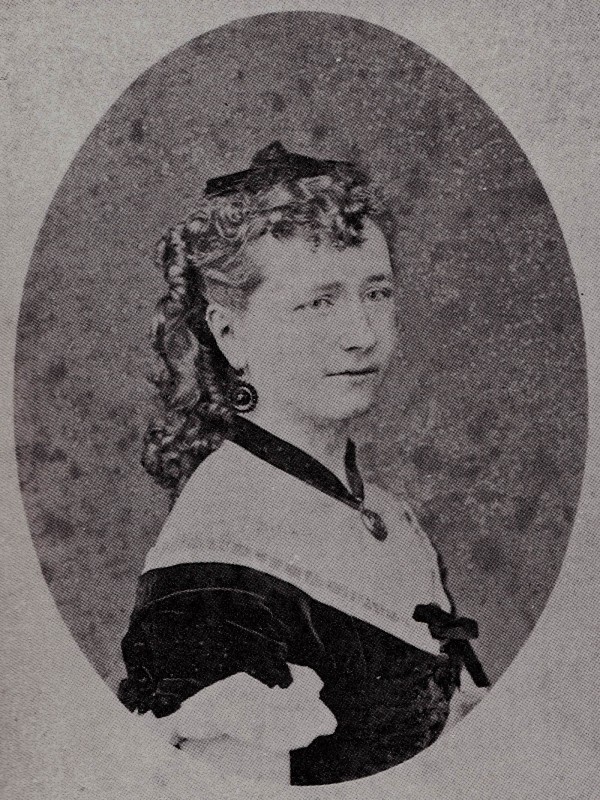
Ellen (Nelly) Ternan in 1858.
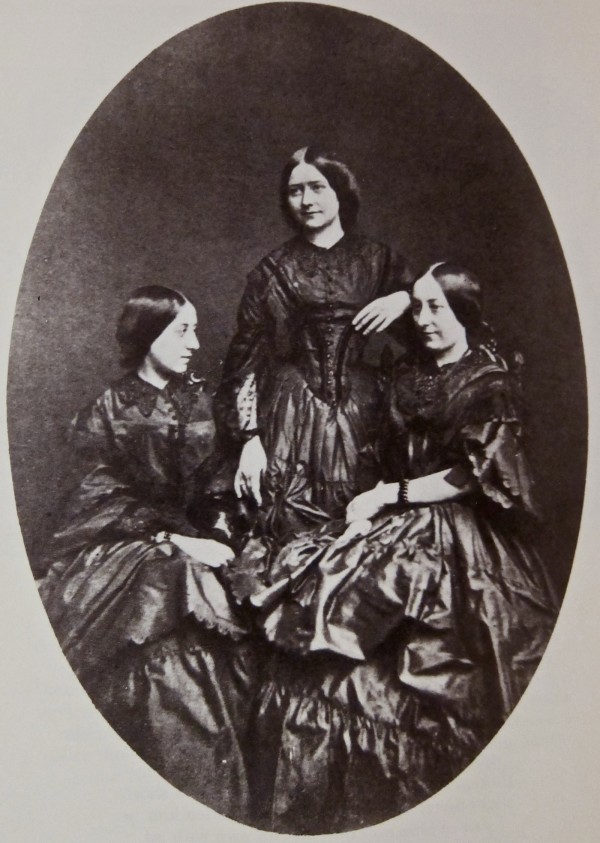
Maria, Ellen and Fanny Ternan.

The parlour at Park Cottage where Ellen Ternan once entertained Charles Dickens and his wife.
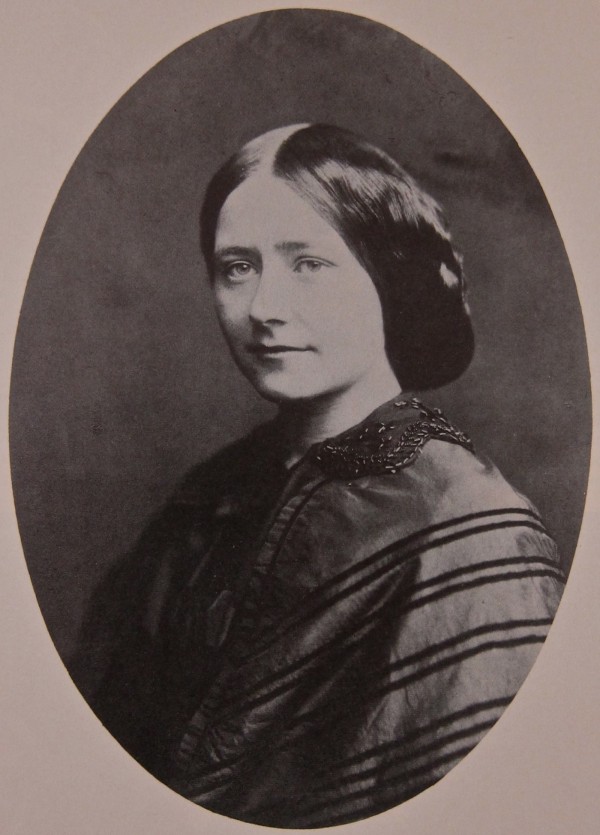
Ellen Ternan – Dickens described her as his “magic circle of one.”
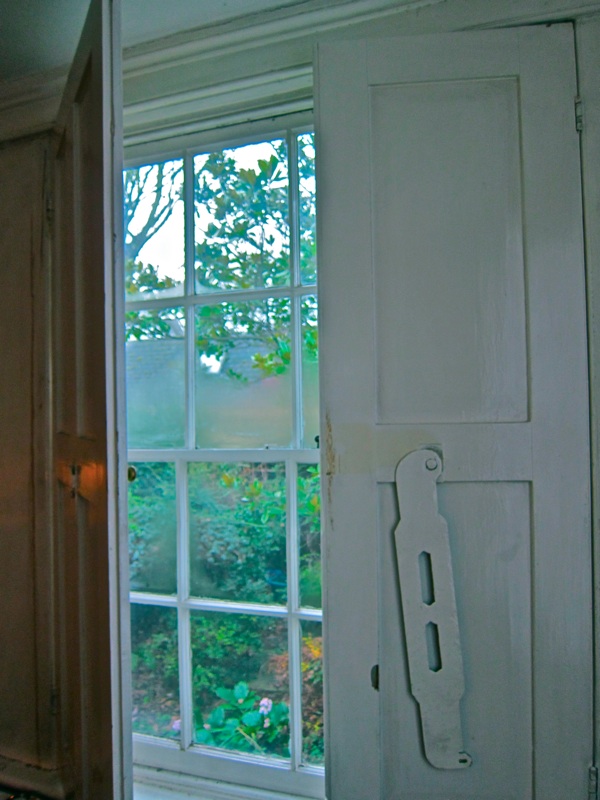
Looking out towards the walled garden.

Charles Dickens by William Powell Frith 1859.
You may also like to read about
Charles Dickens In Spitalfields
Charles Dickens in Spitalfields 2 – The Silk Warehouse
Charles Dickens in Spitalfields 3 – In the Streets
Charles Dickens in Spitalfields 4 – The Silk Weavers
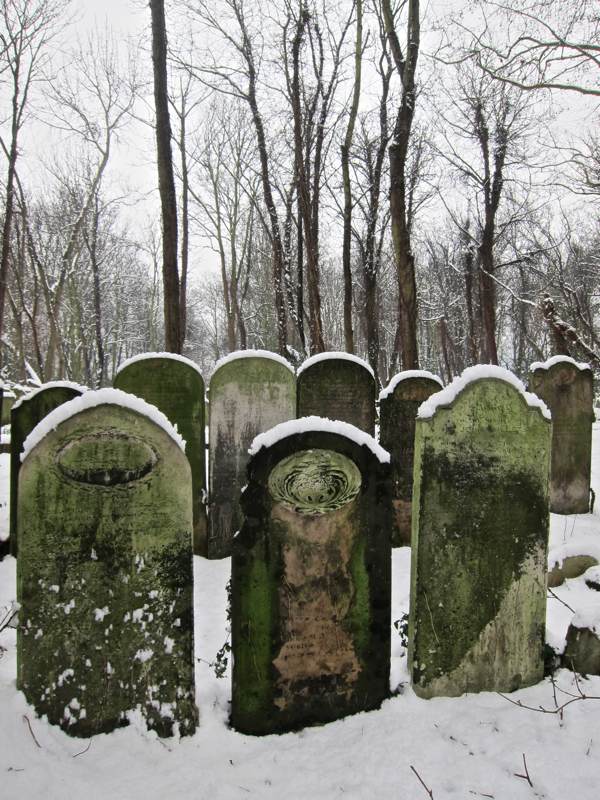
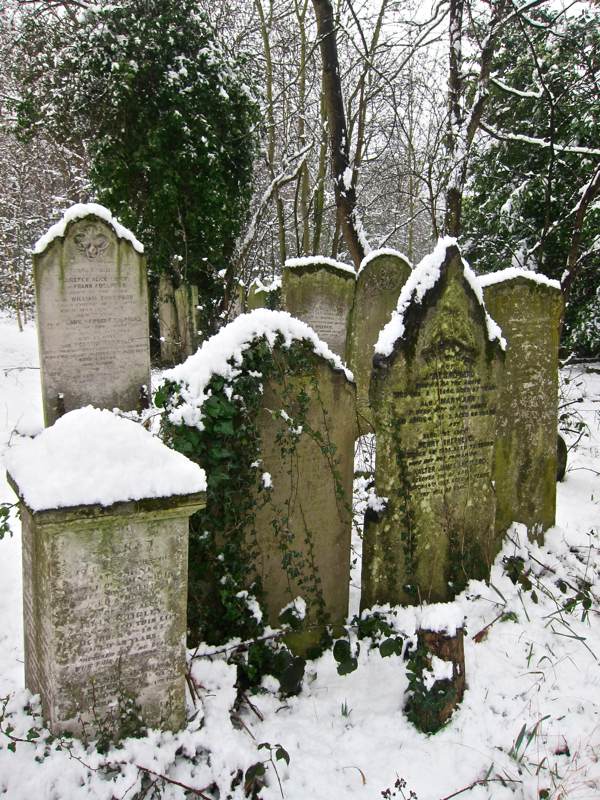
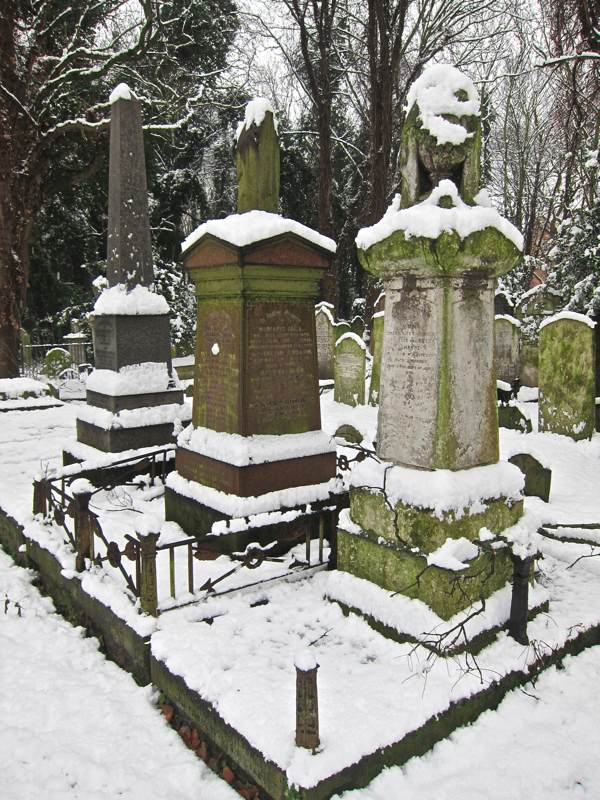
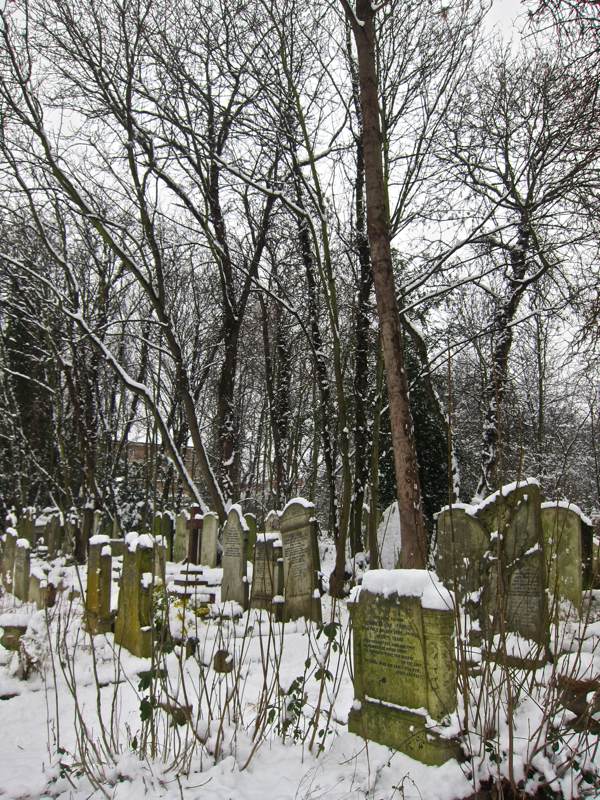
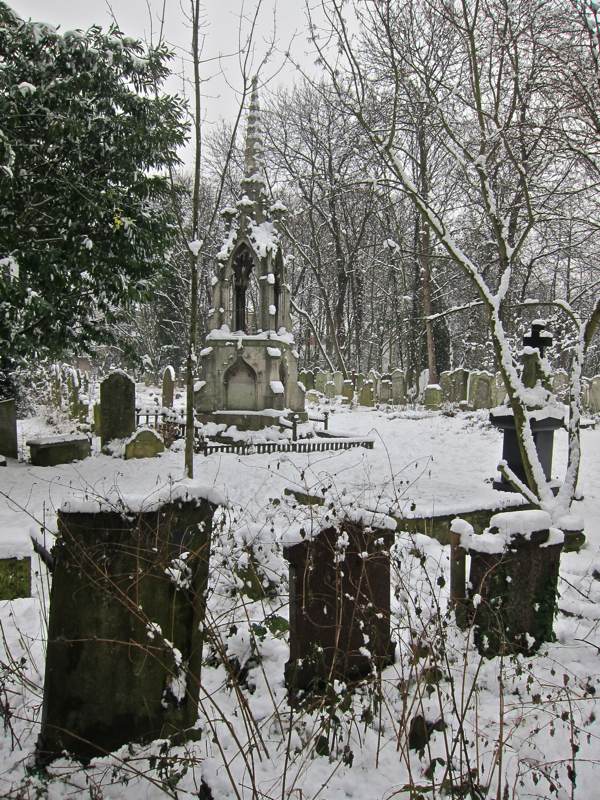
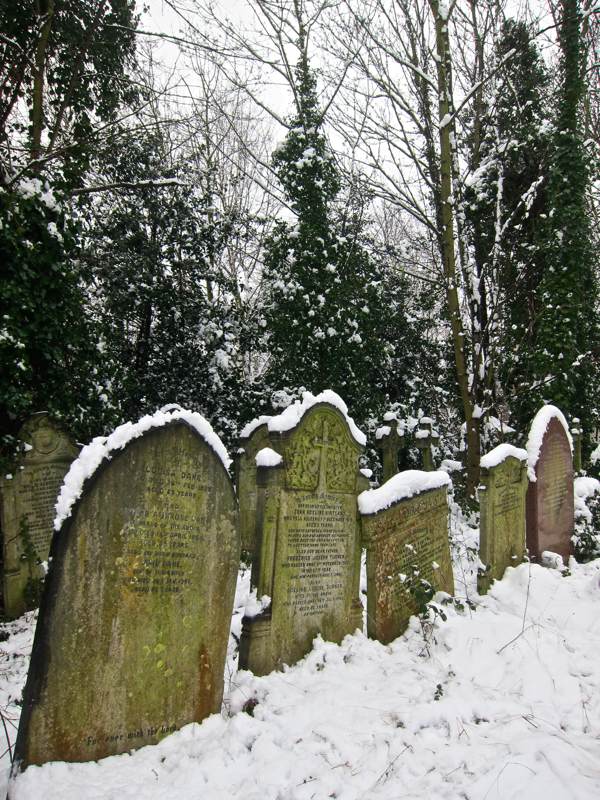
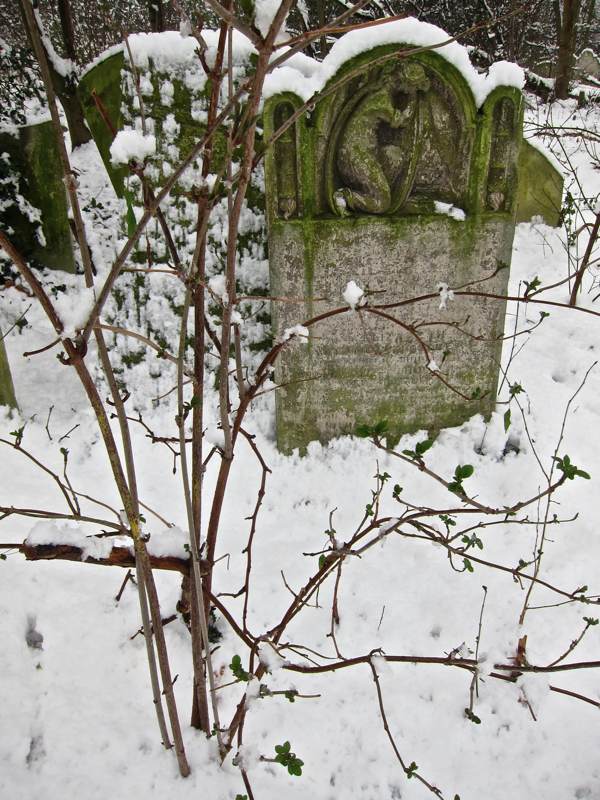
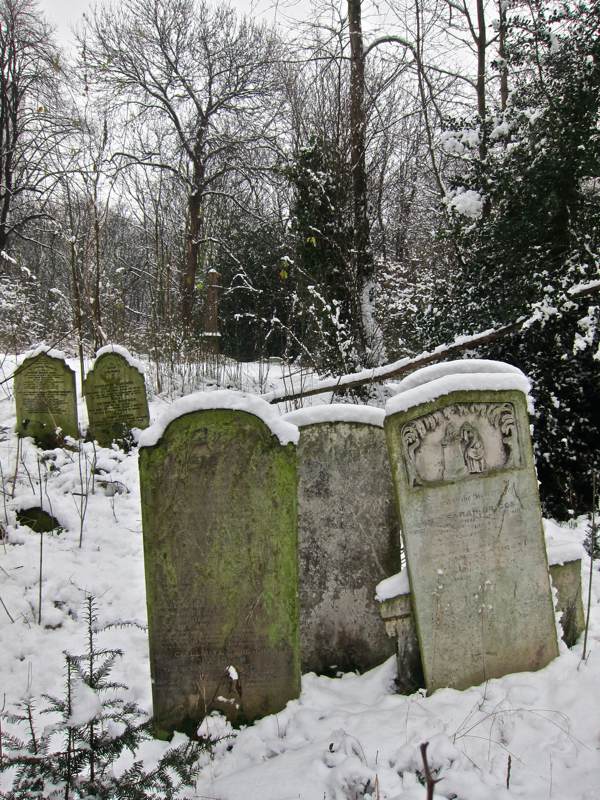
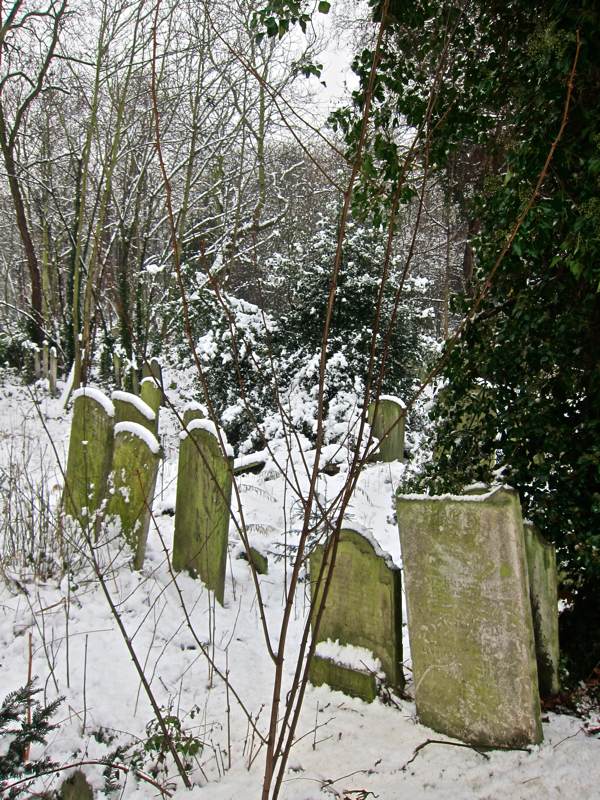
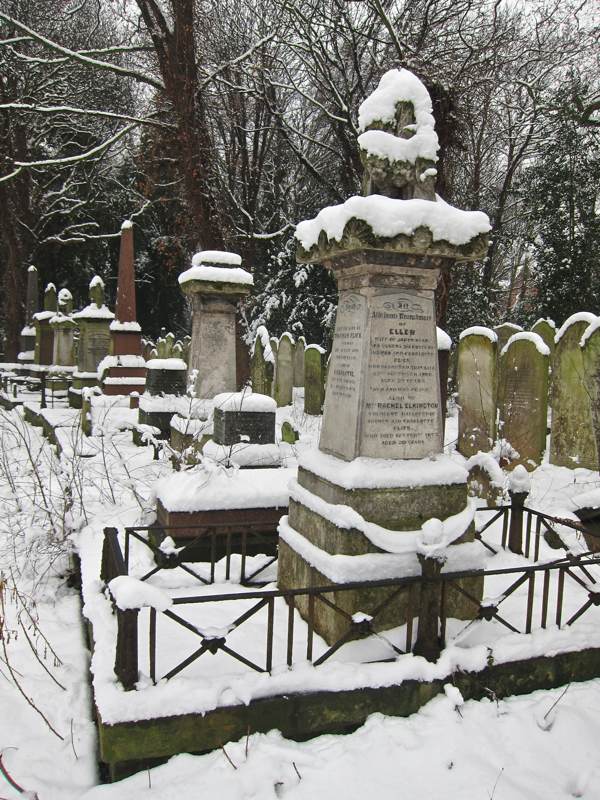
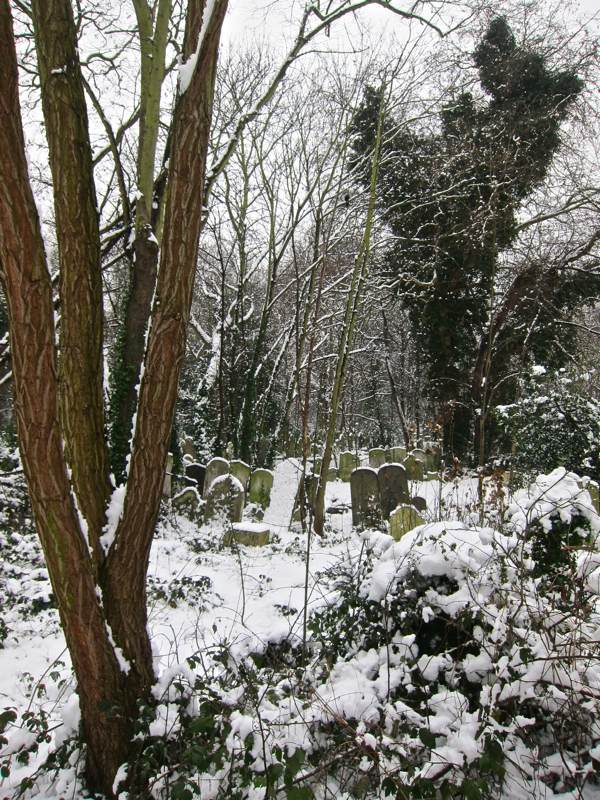
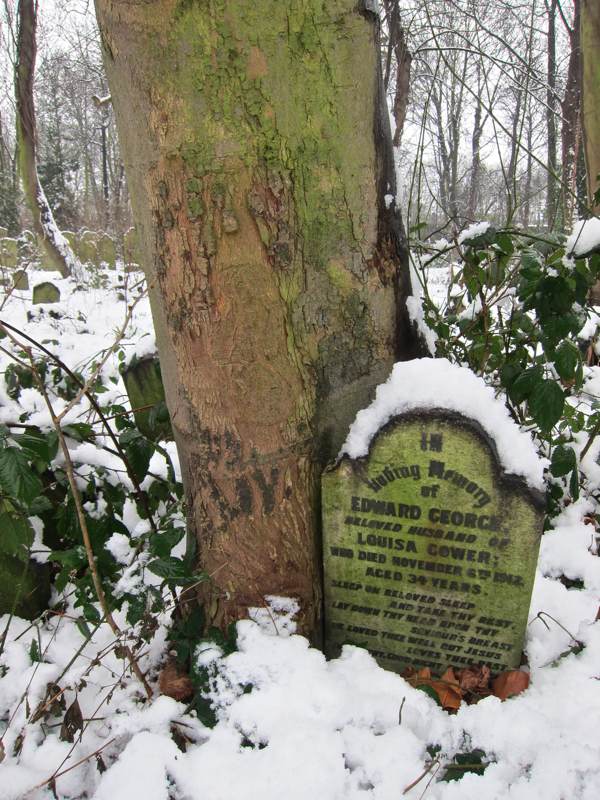
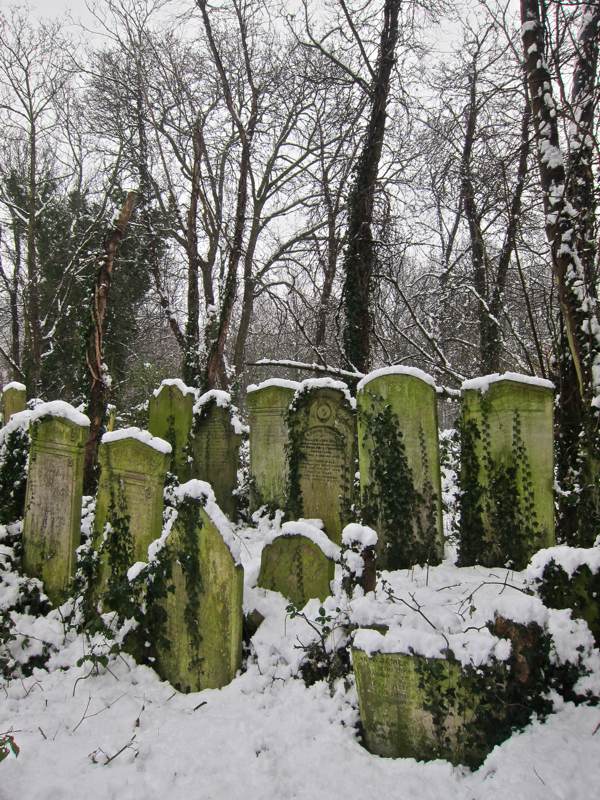
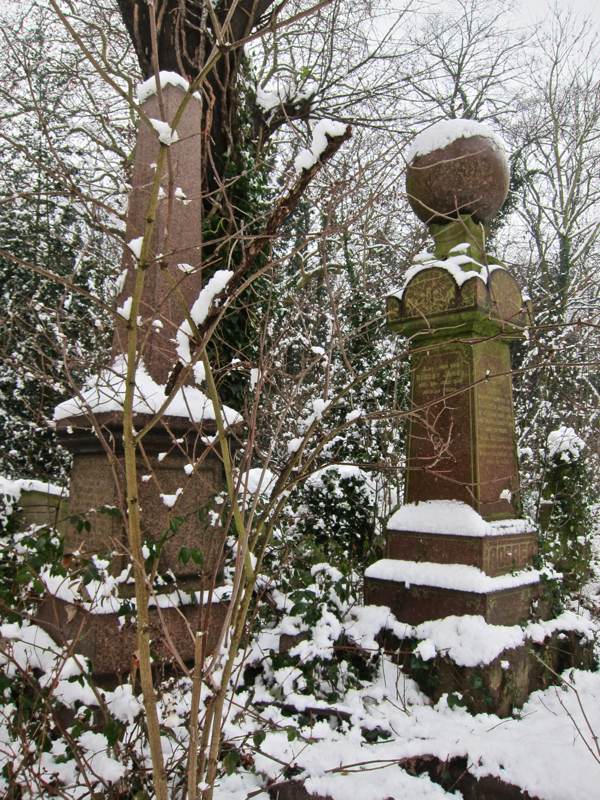
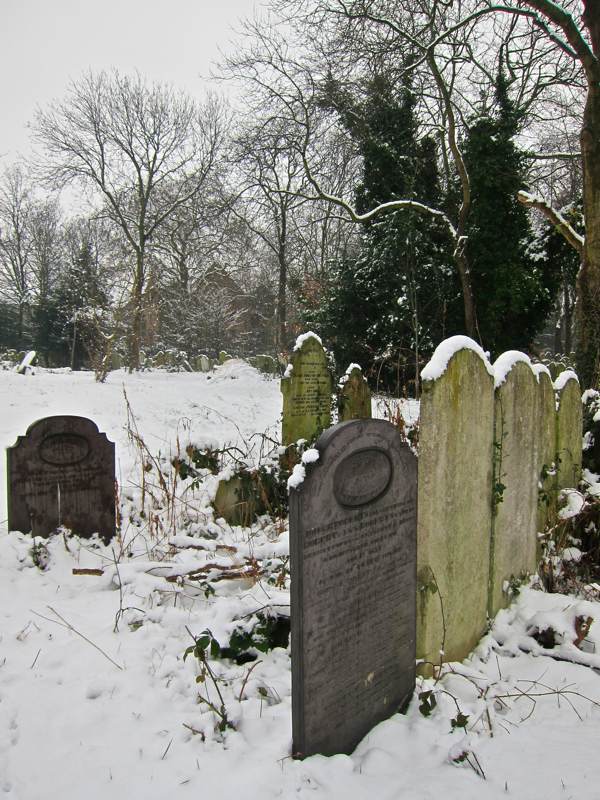
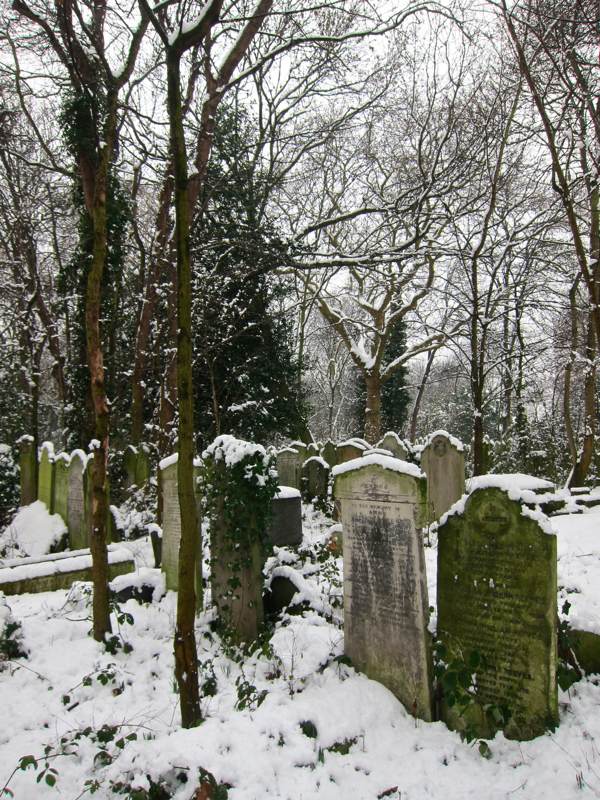
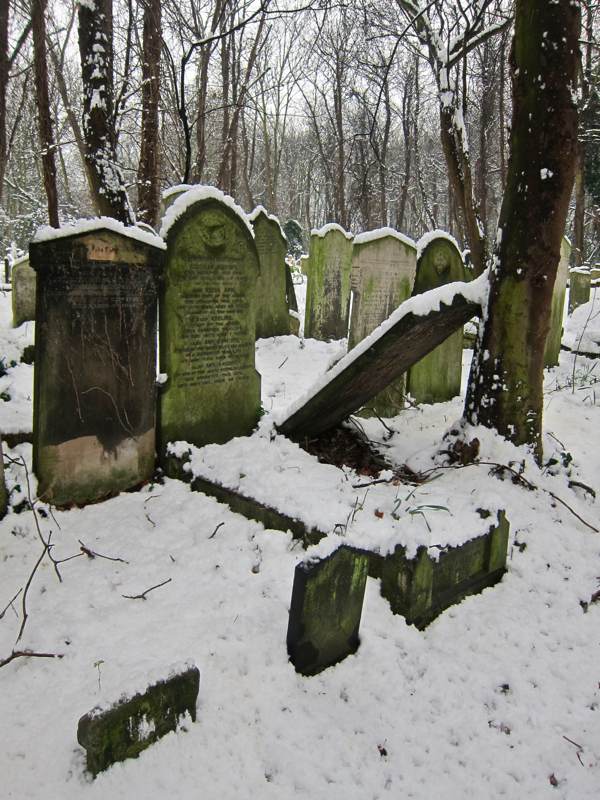
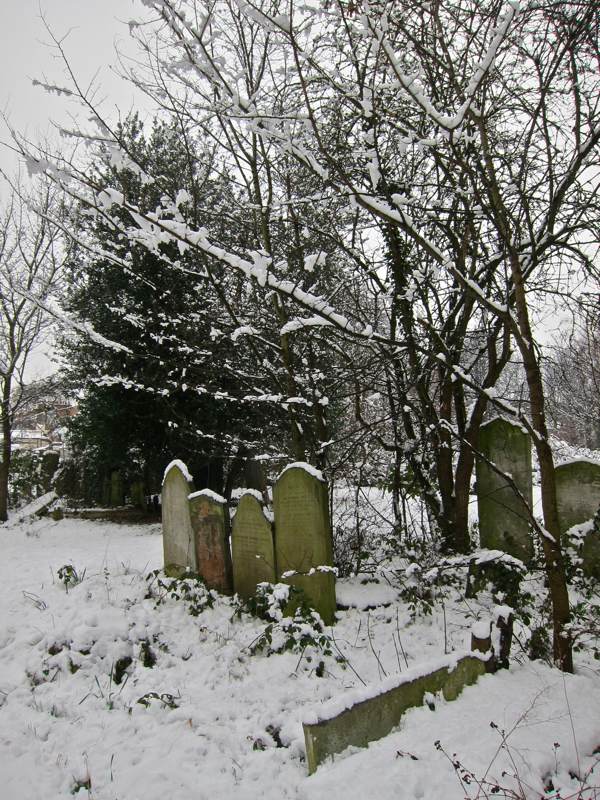
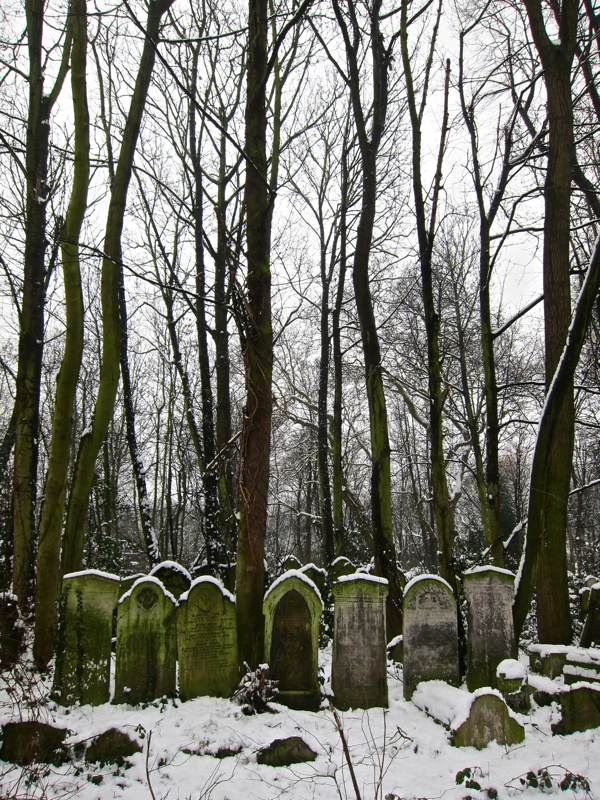
Snowfall at Bow Cemetery
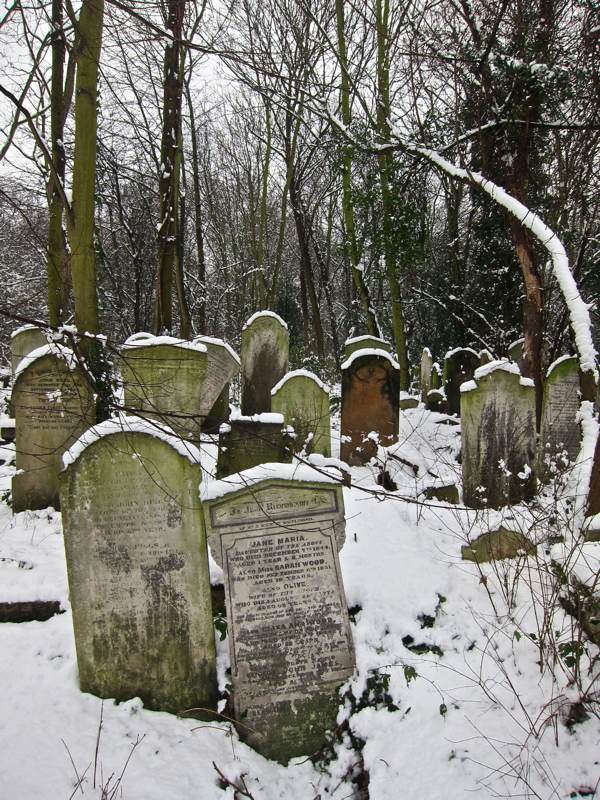
On Saturday night, a hush was cast upon the East End as the first snowfall of winter came down. Many cancelled their plans for going out, consequently the traffic thinned and the pavements emptied as the falling snow took possession of the territory. Awaking to silence on Sunday morning and looking from my bedroom window, the dark boughs of the great yew tree in the back yard were weighed down with a heavy covering of white – a bucolic wintry vision filling my gaze, as if the house had been transported in the night and I had woken high in the mountains.
Even as I opened my eyes, I knew I wanted to go to Bow Cemetery where I paid a visit to admire the precocious spring bulbs last February. That year, the snow had begun before Christmas and the spring came early, whereas this year the winter has been mild until the temperatures took a dip in mid-January, making up for lost time. So, as I have been awaiting the opportunity to see this magnificent graveyard in the snow all winter, the fulfilment of my wish compensated for the indisposition of slush filling the streets.
The appealing irony of Bow Cemetery is that this vast garden of death has become the largest preserve of wildlife in East London. Created once the small parish churchyards filled up, it is where those numberless thousands who made the East End in the nineteenth century are buried. On the Western side of the cemetery, near the main entrance, are fancy tombs and grand monuments but, as you walk East, they diminish and become more uniformly modest until, at the remotest extremity, there are only tiny stones. At first, I thought these were for children when, in fact, they were simply the cheapest option. Yet even these represent an aggrandisement, beyond the majority of those who were buried here in unmarked communal graves.
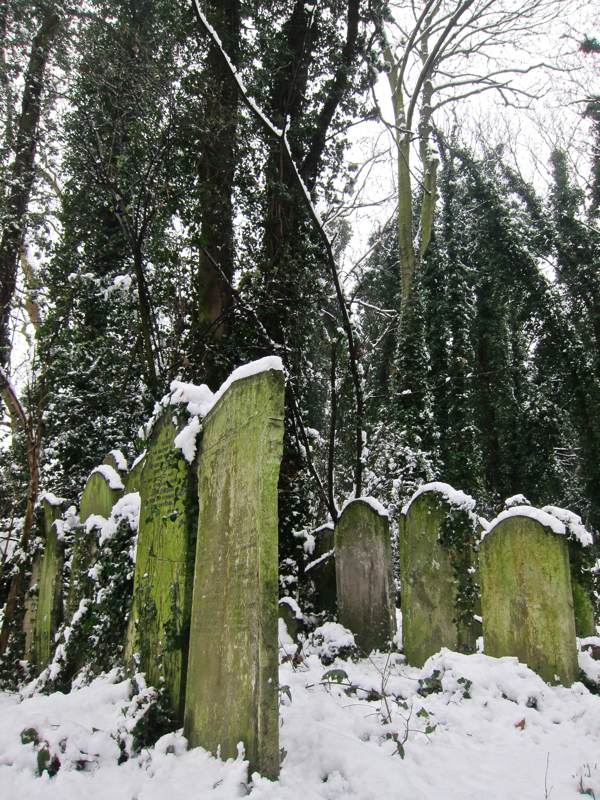
My spirits lifted to leave the icy mess of the streets and enter the quiet of the cemetery where since 1966, a forest has been permitted to grow. A freezing mist hung beneath the high woodland canopy, and the covering of white served to emphasise the rich green and golden lichen hues of the stones, and subtle brown tones of the tree trunks ascending from among the graves. As on my previous visits, there were few visitors here and I quickly lost myself in the network of narrow paths, letting the trees surround me in the areas where no human footprint had yet been made.
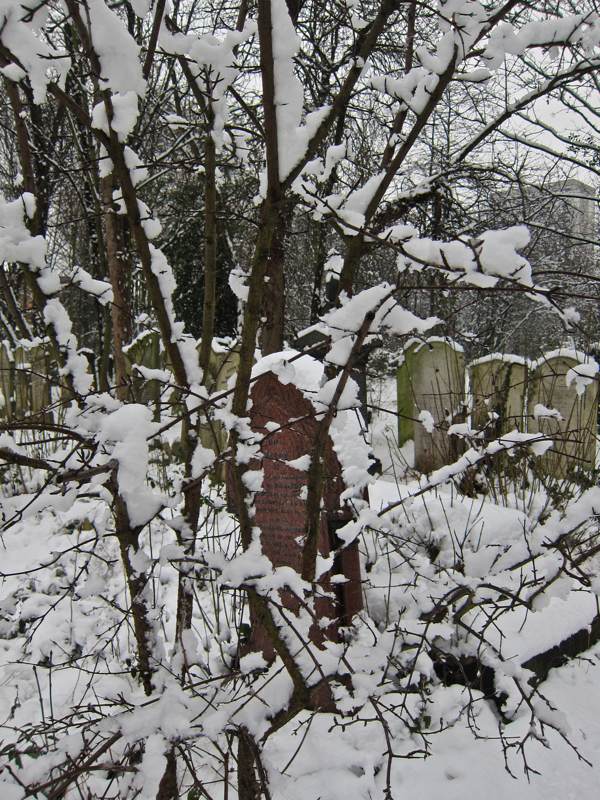
Crows called to each other and woodpeckers hammered away high in the tree tops, their sounds echoing in the still air. Thrushes searched for grubs under leaves in the rare patches of uncovered earth beneath stands of holly, and a young fox came by – standing out as a vivid rusty brown against the pale snow – slinking along self-conscious of his exposure. The spring bulbs that I saw last year in flower at this time were evidenced only by sparse green spears, protruding from snow criss-crossed by animal and bird tracks.
It was a very different place from the lush undergrowth of high summer when I first visited and another place again from the crocus-spangled garden of spring, yet I always discover peace and solitude here – a rare commodity in the East End – and, even in this bleakest season, there was life.


You may also like to read about
Find out more at www.towerhamletscemetery.org
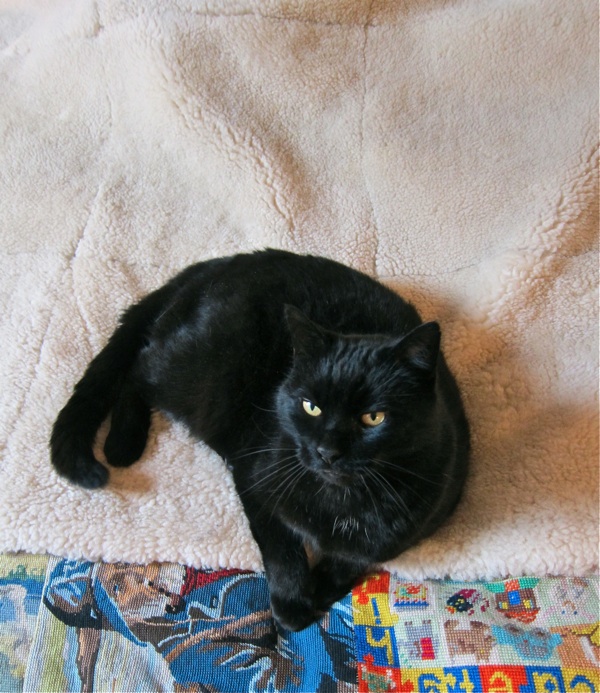
Apart from his necessary business, Mr Pussy did not stir from the house during the snow.