
The East End Trades Guild needs you!

With this sign, Paul Gardner, fourth generation paper bag seller and proprietor of Spitalfields’ oldest family business, eloquently expresses the situation that he and other small independent traders find themselves in. “2 & 8” is rhyming slang for “a bit of a state,” as he explained to me when I called round to his shop, Gardners’ Market Sundriesmen in Commercial St, yesterday.
Since the rebuilding of the Spitalfields Market introduced expensive office property and chain-stores into the neighbourhood, landlords have been pushing up rents mercilessly to the detriment of the small trades and family businesses which have always characterised this area at the boundary of the City of London.
Now change is in the air, as these independent traders are gathering together to form The East End Trades Guild, a union that can square up to exploitative landlords, demand the concessions from local government that are being granted to corporations, and be an advocate for the interests of shopkeepers and small businesses. It all started after community organiser Krissie Nicolson went to visit Paul Gardner, when she read in the pages of Spitalfields Life that he was being confronted with an overnight rent increase from £15,000 to £25,000 a year. It soon became clear that many others were facing similar pressure and then – in a defining moment – the Duke of Uke, Britain’s only ukulele shop, was forced out of Hanbury St. Matthew Reynolds, the proprietor, had created a destination that drew people from far and wide, encouraging some high-end brands to open there beside him, and raising the value of all the property in the street. Through this example, the simple paradox became apparent – upmarket companies are moving into the area because of the attractive identity created by local businesses, and those same businesses are getting pushed out as a result.
In such a climate, looking to short-term gain, landlords have escalated rents wildly with destructive outcome – as seen in Cheshire St, where exorbitant increases led to the departure of Shelf, Mimi, Labour and Wait, and other businesses which drew customers to come there from across London. Over a year later, many of those properties remain empty in a street that has lost its passing trade as a consequence, such is the hubris of the greedy landlord. The irony here is that the Duke of Uke has now opened in Cheshire St and looks set to bring it back to life by attracting other businesses, just as happened in Hanbury St. Maybe in a few years, he will get pushed out once more when the properties surrounding him are full, after he has put the street back on the map?
Landlords are seduced by fantasies of replacing independent traders with chain-stores, yet I am informed that among the largest chain-stores in Spitalfields some are unable to pay their rents. These overblown corporate enterprises stumble from one financial crisis to the next, seeking constant recapitalisation while still adding to their property portfolios by opening more unprofitable shops. As an alternative to this, a responsible private individual who commits themselves to paying a realistic rent long-term is a more prudent option for the owner of the property – if the landlords were not blinded by the pound signs in their eyes. Pursued to its bitter end, the landlords’ short-term profit motive will result in streets lined with chain-stores, and then the value of the commercial property will fall when the area resembles everywhere else and its distinctive appeal is gone.
Unless this situation can be changed, the outcome will be a complete loss of the culture of artisans and family businesses that has defined Spitalfields historically. As Raphael Samuel, the foremost historian of the East End, wrote with remarkable prescience in 1988 –“The fate of Spitalfields Market illustrates in stark form some of the paradoxes of contemporary metropolitan development – on the one hand, the preservation of “historic” houses, on the other, the wholesale destruction of London’s hereditary occupations and trades and the dispersal of its settled communities. The viewer is thus confronted with two versions of “enterprise” culture – the one that of family business and small scale firms, the other that of international high finance with computer screens linking the City of London to the money markets of the world.”
It was in Spitalfields that the match girls of Bryant & May met to form the very first trade union in the nineteenth century and now, demonstrating the same indomitable spirit, the shopkeepers and independent small businesses of the East End are gathering next Monday 30th April at 6:30pm at the Bishopsgate Institute to inaugurate The East End Trades Guild, which launches formally as a pressure group in September. All local small trades are invited to this open meeting to discuss what can be done to ensure their survival and to contribute ideas which can form the policy for the guild. If you are a shopkeeper or you run a small business in the East End, you need to be there to make your voice heard.
Paul Gardner, whose plight was the catalyst for the founding of The East End Trades Guild is its founder member. When I visited him in the building in Commercial St where his family have traded, serving the people of the East End for over one hundred and forty years, he said to me, “I hope it will unite us and give the little businesses a chance to survive, because unless something is done we’re all going to be gone from here in the next five years.”

Graphic by James Brown
You may also like to read
CHIT CHAT – The Umbrella Maker, The Dairyman & The Paper Bag Seller
and the article that started it all
Paul Gardner, Paper Bag Seller
and Raphael Samuel’s essay
Strange & Terrible News From Spittle-Fields


Paul Bommer’s Delft Tiles

Spitalfields Life Contributing Artist Paul Bommer has painted one hundred and twenty faux delft tiles that will be displayed in the living room of an eighteenth century house in a new exhibition – opening at 15 Wilkes St on Friday night and running through next weekend. Paul’s sly witty style is perfectly at home on tiles, bringing an extra level of humour and sophistication to this appealing vernacular art.“I’ve always been fond of delft tiles and the graphics of that period,” he admitted to me, “it’s like Folk Art at the low end, a popular medium illustrating the characters people knew and the things they used.” Many of the tiles that Paul has created were directly inspired by stories on Spitalfields Life and it is my pleasure to publish a selection here. Be sure to come along to Wilkes St and see the rest for yourself.

The former Whitechapel Mount, claimed by some to be a primeval earthwork of mystical significance, by others to be a spoil heap from digging the City’s eastern defences during the English Civil War.


Shakespearian Actors at St Leonard’s Shoreditch

James Ince & Sons, Umbrella Makers

With Jack London at Frying Pan Alley

Tubby Isaac’s Jellied Eels Stall

The Ceremony of the Widow’s Buns at Bow


The Ship & Blue Ball in Boundary St where they planned the Great Train Robbery.

Peter Hardwicke, London’s last signwriter working by eye.


John Twomey Fencing Champion & landlord of the Ten Bells.

Alex Guarneri, Cheesemonger at Andruoet


The owl is the symbol of the town of Holt in Norfolk, home of Old Town, the clothing company that hold regular fittings for their London customers in Spitalfields.

The Duke of Wellington

In Rhyming Slang “Butcher’s Hook” = Look

In Rhyming Slang “Titfer” = Hat


You may also like to read about
Bluebells at Bow Cemetery

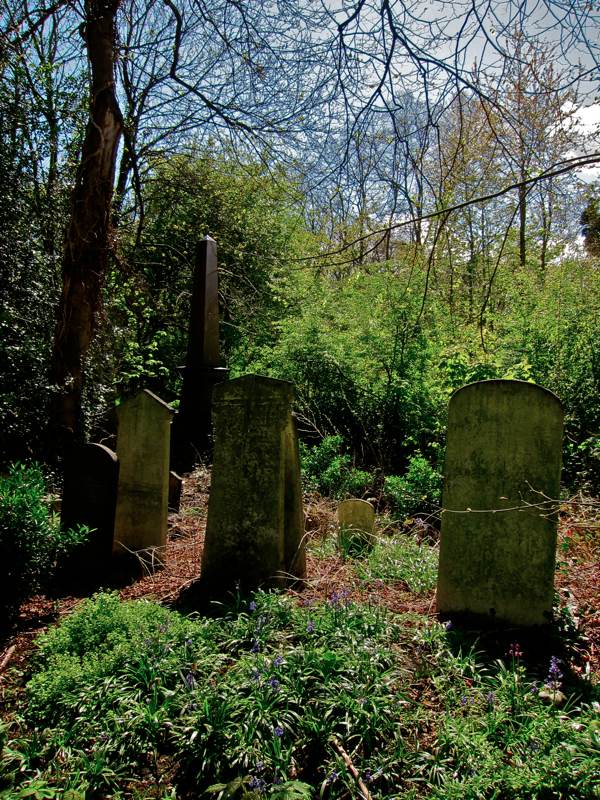
With a few bluebells in flower in my garden in Spitalfields, I was inspired make a visit to Bow Cemetery and view the display of bluebells sprouting under the tall forest canopy that has grown over the graves of the numberless East Enders buried there. In each season of the the year, this hallowed ground offers me an arcadian refuge from the city streets and my spirits always lift as I pass between the ancient brick walls that enclose it, setting out to lose myself among the winding paths, lined by tombstones and overarched with trees.
Equivocal weather rendered the timing of my trip as a gamble, and I was at the mercy of chance whether I should get there and back in sunshine. Yet I tried to hedge my bets by setting out after a shower and walking quickly down the Whitechapel Rd beneath a blue sky of small fast-moving clouds – though, even as I reached Mile End, a dark thunderhead came eastwards from the City casting gloom upon the land. It was too late to retrace my steps and instead I unfurled my umbrella in the cemetery as the first raindrops fell, taking shelter under a horse chestnut, newly in leaf, as the shower became a downpour.
Standing beneath the dripping tree in the half-light of the storm, I took a survey of the wildflowers around me, primroses spangling the green, the white star-like stitchwort adorning graves, a scattering of palest pink ladies smock highlighting the ground cover, yellow celandines sharp and bright against the dark green leaves, violets and wild strawberries nestling close to the earth and may blossom and cherry blossom up above – and, of course, the bluebells’ hazy azure mist shimmering between the lines of stones tilting at irregular angles. Alone beneath the umbrella under the tree in the heart of the vast graveyard, I waited. It was the place of death, but all around me there was new growth.
Once the rain relented sufficiently for me to leave my shelter, I turned towards the entrance in acceptance that my visit was curtailed. The pungent aroma of wild garlic filled the damp air. But then – demonstrating the quick-changing weather that is characteristic of April – the clouds were gone and dazzling sunshine descended in shafts through the forest canopy turning the wet leaves into a million tiny mirrors, reflecting light in a vision of phantasmagoric luminosity. Each fresh leaf and petal and branch glowed with intense colour after the rain. I stood still and cast my eyes around to absorb every detail in this sacred place. It was a moment of recognition that has recurred throughout my life, the awe-inspiring rush of growth of plant life in England in spring.




You may also like to read about
Find out more at www.towerhamletscemetery.org
In the Footsteps of C.A. Mathew
One hundred years ago yesterday, 20th April 1912, C.A.Mathew took photographs on the streets of Spitalfields. Today I publish my pictures of the same views as they are now.


It is a hundred years ago this week that C.A.Mathew visited Spitalfields in April 1912, but he was present once again as my invisible guide when I walked through the close-knit streets to take new pictures in the same locations, and make a photographic assessment of the changes that a century has brought. I had copies of his pictures with me, and in each instance I held them up to ascertain the correct alignment of buildings and other landmarks that told me I was in the same spot exactly.
Being in his footsteps revealed that C.A.Mathew composed his photographs to expose the most sympathetic play of light and shade, demonstrating a subtlety of tone that I dare not attempt to replicate in a different season at another time of day, in another age. Yet there was the delight of recognition when I knew I had found the right place and a sense of dislocation when there was no clue left. Disoriented, I found myself half in the world of a century ago and half in the present day.
When I discovered locations that cross-referenced precisely with the pictures, I felt a sense of elation because the street acquired a whole new dimension and the people in the old photographs took on a more tangible reality, as I contemplated the places where they stood. I relished being party to this secret knowledge and I knew C.A.Mathew was with me. But equally, I recognised an emptiness in the areas that are unrecognisably changed, and recent buildings appeared mere transient constructions to my eyes that had grown accustomed to the world of 1912. C.A.Mathew forsook me in these places, and I refrained from taking photographs when I could find no visible connection. Yet I told myself to resist sentimentality, because the world that C.A.Mathew photographed two years before World War I was one of flux too, only in his pictures could it be fixed eternally.
All streets belong to cars today and we cannot linger on the roadway or step off the pavement without risking our lives. A fact that became vividly apparent to me when I stood momentarily in the middle of the Bishopsgate traffic, risking my safety in my attempt to discover C.A.Mathew’s vantage point upon Middlesex St, before following his path Eastward. I have always been fascinated by the change of scale and atmosphere, walking from the expanse of Bishopsgate through into the medieval streets at the edge of Spitalfields. And in C.A.Mathew’s pictures this change is also emphasised by social contrast, because he found these small streets full of people that lived there. There is a domestic quality that continues to draw me back to these streets, alleys and byways which still evoke their previous inhabitants through scale and form. A century ago, Bishopsgate was a major thoroughfare as it is now – and both my pictures and C.A.Mathew’s show people going somewhere. However in the alleys which are no longer inhabited as they once were, people do not occupy the space with the same sense of belonging as their predecessors in these photographs. They were more at home in these streets than we are today.
Unlike C.A.Mathew, my walk was on a working day and I found myself surrounded by suits, participants in the omnipresent corporate drama of the City, as hundreds of anxious business men took to the streets for a lunchtime walk in the September sunshine. They had escaped the office for a furtive cigarette, to make a private call or have confidential discussions about problems at work. Some passersby spied me with suspicious fleeting curiosity as I stood to take my pictures, very different from the people of a century ago who stood in groups to participate in the novelty of a photograph. Yet I delighted in the exotic drama of everyday life in the twenty-first century, seeing it from the perspective of C.A.Mathew.


In this photograph, only the bollard on the left hand side remains from the earlier picture.
C.A.Mathew’s photographs courtesy Bishopsgate Institute
C.A.Mathew, Photographer
I am republishing my story about C.A. Mathew to commemorate the centenary of the day he walked out of Liverpool St Station and spent an afternoon taking photographs in Spitalfields. His pictures have subsequently become our primary visual record of that time, and tomorrow you can see my photographs of the same views as they are now.

In Crispin St, looking towards the Spitalfields Market
On Saturday April 20th 1912, C.A.Mathew walked out of Liverpool St Station with a camera in hand. No-one knows for certain why he chose to wander through the streets of Spitalfields taking photographs that day. It may be that the pictures were a commission, though this seems unlikely as they were never published. I prefer the other theory, that he was waiting for the train home to Brightlingsea in Essex where he had a studio in Tower St, and simply walked out of the station, taking these pictures to pass the time. It is not impossible that these exceptional photographs owe their existence to something as mundane as a delayed train.
Little is known of C.A.Mathew, who only started photography in 1911, the year before these pictures and died eleven years later in 1923 – yet today his beautiful set of photographs preserved at the Bishopsgate Institute exists as the most vivid evocation we have of Spitalfields at this time.
Because C.A.Mathew is such an enigmatic figure, I have conjured my own picture of him in a shabby suit and bowler hat, with a threadbare tweed coat and muffler against the chill April wind. I can see him trudging the streets of Spitalfields lugging his camera, grimacing behind his thick moustache as he squints at the sky to apprise the light and the buildings. Let me admit, it is hard to resist a sense of connection to him because of the generous humanity of some of these images. While his contemporaries sought more self-consciously picturesque staged photographs, C.A.Mathew’s pictures possess a relaxed spontaneity, even an informal quality, that allows his subjects to meet our gaze as equals. As viewer, we are put in the same position as the photographer and the residents of Spitalfields 1912 are peering at us with unknowing curiosity, while we observe them from the reverse of time’s two-way mirror.
How populated these pictures are. The streets of Spitalfields were fuller in those days – doubly surprising when you remember that this was a Jewish neighbourhood then and these photographs were taken upon the Sabbath. It is a joy to see so many children playing in the street, a sight no longer to be seen in Spitalfields. The other aspect of these photographs which is surprising to a modern eye is that the people, and especially the children, are well-dressed on the whole. They do not look like poor people and, contrary to the widespread perception that this was an area dominated by poverty at that time, I only spotted one bare-footed urchin among the hundreds of figures in these photographs.
The other source of fascination here is to see how some streets have changed beyond recognition while others remain almost identical. Most of all it is the human details that touch me, scrutinizing each of the individual figures presenting themselves with dignity in their worn clothes, and the children who treat the streets as their own. Spot the boy in the photograph above standing on the truck with his hoop and the girl sitting in the pram that she is too big for. In the view through Spitalfields to Christ Church from Bishopsgate, observe the boy in the cap leaning against the lamppost in the middle of Bishopsgate with such proprietorial ease, unthinkable in today’s traffic.
These pictures are all that exists of the life of C.A.Mathew, but I think they are a fine legacy for us to remember him because they contain a whole world in these few streets, that we could never know in such vibrant detail if it were not for him. Such is the haphazard nature of human life that these images may be the consequence of a delayed train, yet irrespective of the obscure circumstances of their origin, this is photography of the highest order. C.A.Mathew was recording life.

Looking down Brushfield St towards Christ Church, Spitalfields.

Bell Lane looking towards Crispin St.

Looking up Middlesex St from Bishopsgate.

Looking down Sandys Row from Artillery Lane – observe the horse and cart approaching in the distance.

Looking down Frying Pan Alley towards Crispin St.

Looking down Middlesex St towards Bishopsgate.

Widegate St looking towards Artillery Passage.

In Spital Square, looking towards the market.

At the corner of Sandys Row and Frying Pan Alley.

At the junction of Seward St and Artillery Lane.

Looking down Artillery Lane towards Artillery Passage.

An enlargement of the picture above reveals the newshoarding announcing the sinking of the Titanic, confirming the date of this photograph as 1912.

Spitalfields as C.A.Mathew found it, Bacon’s “Citizen” Map of the City of London 1912.
Photographs courtesy of Bishopsgate Institute
Spitalfields Antiques Market 28

Charlotte Hamilton‘s parents were antiques dealers and, after studying graphic and interior design, she has been stalling out in Spitalfields while she decides what to do next. “It’s my first year out of university and I’m not rushing into the daily grind of nine to five,” she admitted to me candidly, even though she got up at five thirty that morning to drive up from Surrey and would not be home until seven that night. I could not but admire her pertinacity, so I joined her behind the stall for a chat during a quiet spell, where I found her taking care of a lively terrier by the name of Drum and consoling herself with a packet of fancy macaroons.

This is Bill Smith who has been thirty years in the antiques trade, pictured here with his partner Kevin Costello. “I come from Shoreditch, my dad was a dealer in Bermondsey Market, and I started working with him when I was fifteen,” Bill admitted to me, “there are customers here in Spitalfields, who have been coming every week, that I remember from Bermondsey when they used to buy from my dad.” It was astonishing evidence of the continuity which exists in the apparently transient world of markets, and of the paramount significance of integrity and reputation among the dealers. “I have one lady who has been coming every single Thursday for years from Chelmsford, she always buys something from me and takes it back with her.” he boasted.

These three eager young men, James Bullock, Oliver Griffith & Oliver Dyson, have teamed up to run a stall together. “My dad’s a dealer in Camden Passage and since I was fourteen I’ve done markets with my mum,” explained Oliver Griffith, who also works as a projectionist at the Rio cinema to support his nascent career in the antiques trade. Backing him up with moral support and practical assistance are his pals Oliver Dyson and James Bullock. It was Oliver Dyson’s idea to stall out in Spitalfields and James Bullock completes the trio as driver.

David Tilleke sold his first print in 1977 when he was a young Army Officer in Germany and involved in a Nato exercise. During a night shift while waiting for the action to start, David hand-tinted some old lithographs, until he was interrupted by General Farndale, Commander 1(British) Corps. “I am hand-colouring a few antique prints, General,” was David’s reply to the inevitable query.“Are they for sale?” was the unexpected response from the Commander, “I’ll take three.” In 1987, David quit his job as General Manager of Phillips Antique & Fine Art Auctioneers and forsook his corporate career to work independently. “I’ve always been in love with interesting old things,” he confessed to me with a delighted smile, “And it’s kept me my whole life – kept me poor!” www.antiqueprintshop.co.uk

CELEBRATING THE BOOK OF SPITALFIELDS LIFE
Please join me for a glass of wine at Foyles Gallery at Foyles Bookshop in the Charing Cross Rd next Tuesday 24th April from 6:30 – 7:30pm to view the exhibition of FIFTY SPITALFIELDS MARKET PORTRAITS by Jeremy Freedman, and bring your antiquities and curios to have them identified and valued by three celebrated experts from Spitalfields – Andrew Coram, Harvey Derriell and my pal Bill.
Tickets are free but numbers are limited, so booking is essential – email events@foyles.co.uk to reserve your ticket.
Fifty Spitalfields Market Portraits by Jeremy Freedman continues at Foyles Gallery until Friday 27th April.
Here are my profiles of the traders you can meet on Tuesday at Foyles:
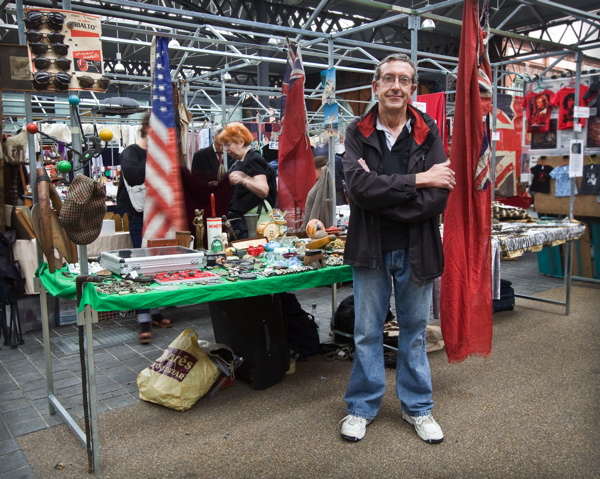
This is my pal Bill, a dignified market stalwart who deals in coins, antique whistles, gramophone needle boxes, souvenir thimbles, magic lantern slides, trading tokens, small classical antiquities and prehistoric artifacts. “I sell quite a few things, but on a low margin because it’s more interesting to have a quick turnover.” he admitted to me, speaking frankly, “I’m here more for enjoyment really – quite a few friends I’ve made over the years. I was a shy person before, but it’s made me confident having a stall. I’ve become an optimistic person.” Bill travels from Walthamstow to Spitalfields each week with all his stock in a backpack and large suitcase – practical, economic and an incentive to sell as much as possible.
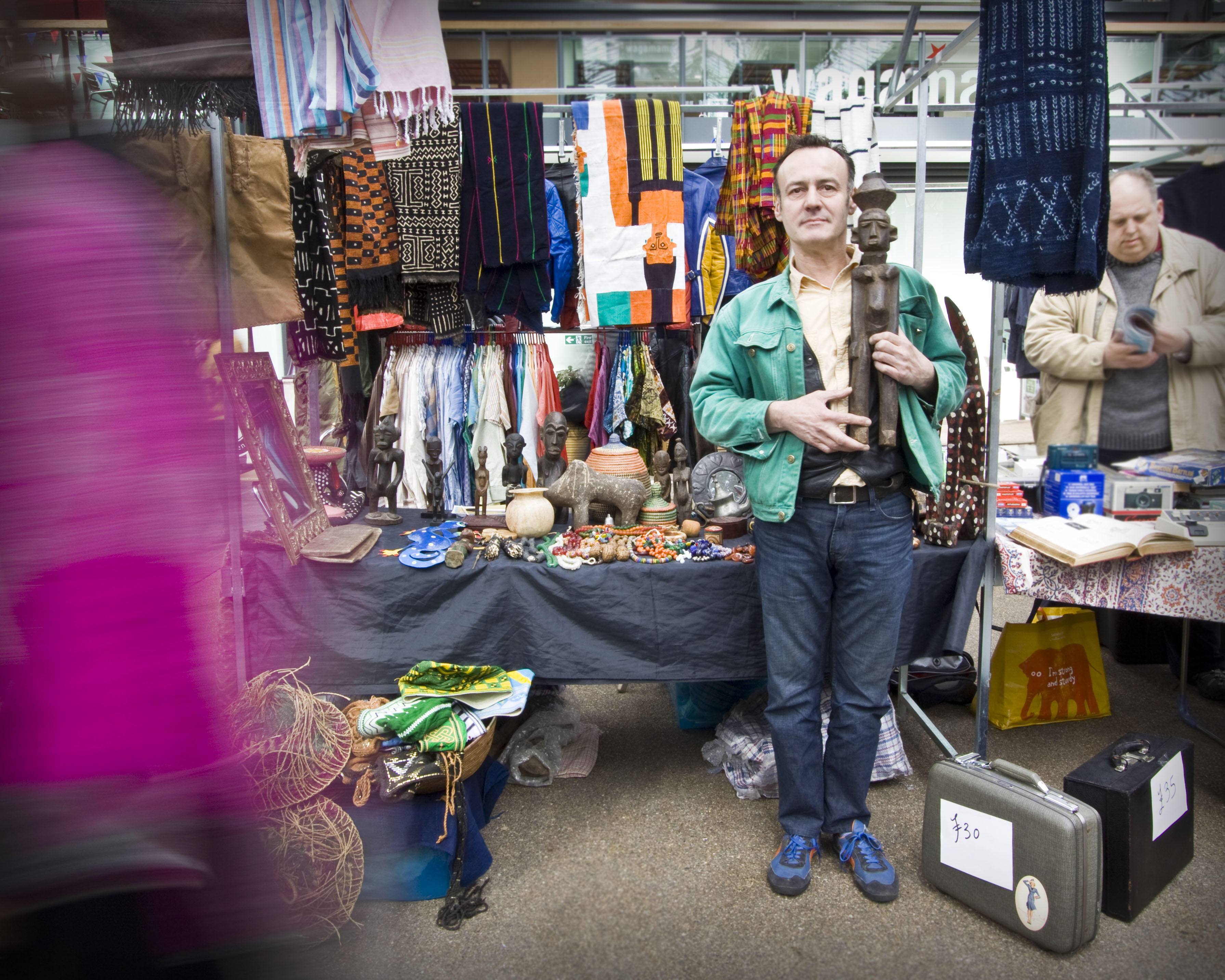
This is Harvey Derriell, a lean and soulful Frenchman of discriminating tastes, and a connoisseur of tribal art from West Africa, with his prized collection of sculptures, textiles and beads, including my own personal favourite, chevron trading beads. “Fourteen years ago, I went to Mali, and I fell in love with the place and the people and I wanted to return. Now I go back four times a year.” revealed Harvey, brimming with delight. I was dismayed to learn that the Golonina bead market is closed but Harvey reassured me that beads are still to be found. “In Bamako, they ask ‘What do you want? Drugs, gold, diamonds, girls, boys or beads?’ “ he explained.

For several years now, the most interesting shop window in Spitalfields has been that of Bedell Coram, Andrew Coram’s antique shop at 86a Commercial St. Every single day, I walk past and always direct my gaze to discover what is new. I am rarely disappointed with lack of novelty, and sometimes I am astounded by Andrew’s latest finds and ingeniously surreal displays that are worthy of Peter Blake or Marcel Duchamp.
Over a year ago, I admired three yellowed newspaper hoardings in his window, Evening Standard: THE PRINCE: TOUCHING SCENE, Evening News Late Extra: MAN-HUNT IN LEICESTER SQUARE and Evening News 6:30: LONDON HIGHWAYMEN ON WHEELS. They were gone as quickly as they appeared. “Gilbert & George bought them,” Andrew told me discreetly, “They rang to say they saw them in the window and came round next morning to buy them. They don’t usually collect old ones, they just go to the newsagent across the road each day to get them new.” Clearly, Andrew has a well-deserved following, and as I have gone about my interviews, when occasionally I have admired a delft bowl or a corner cupboard in an old house, invariably the proud owner will say, “I got it from Andrew.”
Andrew is the youngest of eight children of an antique dealer from Plymouth who was born in 1900 and died in 1980, when Andrew was still a child. His father began in domestic service and started in the antique business after World War II when the country houses of Devon were being knocked down, creating a vibrant trade in china, furniture and paintings. “He knew how to speak to those people,”explained Andrew, vividly aware of the negotiation skills that are key to his profession. When Andrew was growing up, his father was trading from Carhampton, near Minehead in Somerset, and he remembers long Summer holidays hanging around the shop. “I think my poor brother spent all his time polishing my finger marks off the mahogany furniture,” he recalled fondly.
Today, Andrew Coram is a popular figure in Spitalfields, with trenchant humour, and a fluent lyricism that he indulges when speaking of his treasured discoveries. He is a poet among antique dealers, with a melancholy streak that he resists, yet exposes when he speaks of his motives. Sitting in a chair wedged between boxes of stock, casting his eyes around at all the beautiful things that he has surrounded himself with in his shop, Andrew revealed almost apologetically, “It’s not about the money, it’s about the way that some antiques speak to you. There’s a sense of loss every time you sell something you like, which I didn’t have when I started. I think I may have lost focus. My father never lost focus because he had to support six people. It’s easy to let the things take over. You hope to do something that continually generates itself, and inspires you, so that, as you are discovering new things, you are learning more and you accumulate knowledge.”
Who cannot sympathise with this conflict? It is the quintessential dilemma that cuts to the heart of the passionate antique dealer. The modest trader spends his time searching, using his ingenuity to find wonderful things, and learns to appreciate and understand their histories, as Andrew has done. Then he collects his treasures together, and all for the purpose of disposing of them to others.
Even though his father was an antique dealer and Andrew incarnates his occupation so magnificently that I cannot think of him any other way, he did not set out to follow in his father’s footsteps. Impatient of waiting for a lucky break as an artist, Andrew started trading his personal collection in the Spitalfields Market years ago, in the days when it was free to have a stall, and he made £75 on the first day. “When you start out trading, you feel you have achieved something the first time you buy a Georgian chest of drawers or a long case clock on a hunch and it proves to be right.”, said Andrew, relating a milestone on the career path. He claims he learnt everything as he went along, that he has no conscious memories of the trade from his childhood, but I think Andrew’s upbringing accounts for the special quality of his personal sensibility that he brings to everything he does. Andrew’s unique sense of tone, his distinctive style of dress that is of no determinate period, his instinct for seeking out such charismatic artifacts and the artful displays he creates, all these attest to his special quality as an antique dealer, born and bred.
Still ambivalent about how much he chooses to keep, Andrew admitted recklessly, “There’s a part of me that would like to have nothing!” So I asked him what drew him to things that he liked and he thought for a moment, assuming his grimace of rumination. “Things that have rarity value – that you might not see again. As I said, things that speak to you. Things of which there’s a sort of … clarity about what they are … a quietness about them, even a stillness.” he replied, searching for words beyond grasp.
Then his eyes lit up, as he thought of an example to illustrate his point, and held it up, in mime,“I found this tooth, a boar’s tooth, mounted in silver with the inscription upon the base ‘Roasted upon ye Thames Jan 15th 1715/6’ – I’m not selling it!” Once we had considered this treasured momento from a frost fair together, in another mime for my delight, Andrew produced a copper pie dish with words“Lincoln’s Inn 1779” upon it, folding his fingers as if to grip the sides of the invisible dish. Then, returning to the material world, Andrew passed me a tiny delft tea bowl in pale porcelain with Chinese figures on the outside and the softest blackbird egg blue interior. It was a mid-eighteenth century English tea bowl and as I cradled it in my palm where it sat so comfortably, he told me in triumph it was worth a thousand pounds. “Holding a delicate thing like that in your hand puts you in touch the past. – it’s the story that connects us.” he said, intoxicated by the magic of the bowl, and breaking into a broad grin.
I spent much of my childhood being taken around the country antique shops of Devon and Somerset by my mother and father, and the romance of these places and my parents’ delight at their finds remain vividly with me today. I do not know if Andrew’s path and mine crossed back then, but I do know that Andrew Coram has soul and his antique shop is a proper one, of the old school, where authentic treasures are still to be found.
All portraits (except Andrew Coram) copyright © Jeremy Freedman


