
More Furniture Trade Cards Of Old London
After recently publishing a selection of furniture trade cards that might have been found in the secret drawer of a hypothetical cabinet in the eighteenth century, it is my pleasure to show this further selection discovered stashed behind a plate on the top shelf of a hypothetical alcove.


Images courtesy Bishopsgate Institute
You may like to see my earlier selections
Furniture Trade Cards of Old London
More Trade Cards of Old London
Yet More Trade Cards of Old London
Even More Trade Cards of Old London
Sebastian Harding, Illustrator
It is my pleasure to publish these excerpts from the work of illustrator Sebastian Harding who graduates this week from Camberwell College of Art, and whose Degree Show is exhibited in Shoreditch from today until Sunday.
“I’ve been in London for three years,” he told me, “and I got bored by the usual guides because there’s a lot of London you’re not encouraged to visit – such as Holborn, Smithfield and the City, but there’s been industry and life there for two thousand years.” So, Sebastian set out to create his own guidebook to Smithfield and evoke the vanished sights by constructing these characterful models of buildings that disappeared long ago. “Working as an illustrator in three dimensions, I wanted to make them more tangible and bring history alive.” he explained.

Many guidebooks talk of opening hours and prices, of queues and “must sees.” You need not worry about any of that with this tour, for all you are about to read about is gone. This book is for the intrepid traveller who is prepared to imagine as well as see. You will look in vain for a blue plaque, for this is a walk of lost lives and forgotten buildings. There is no necessary order in which to see these sights but all are within ten minutes of each other.
I hope you enjoy wandering among the ghosts of Smithfield’s dark and sordid past, and remember – the most gripping true stories have always contained an element of fiction.

The Fortunes Of War Public Tavern, Cock Lane – A Sinister Sidetrade.
Smithfield Market’s proximity to St Bartholomew’s Hospital betrays a lot about the British public’s distrust of the medical trade. It is fitting therefore to focus on one building that catered to both trades – The Fortunes Of War Public Tavern.
Let us place ourselves in the eighteenth century as we watch a student of anatomy making his way into the tavern. He is here, not as you would expect for his leisure, but for his studies. He is led by the landlord down dank mouldering stairs to the cellar. Rows of sacks give off a pungent smell of rotting meat, yet these are not the carcasses of swine or cattle but the bodies of recently dead Smithfield residents.
This was the secret trade of the Body Snatchers or Resurrectionists that supplied students and professors of anatomy with fresh corpses. For a God-fearing public, it was immoral and barbarous in the extreme, for this was a time when many believed a soul would only be granted into heaven if their corporeal body was intact, while being dissected meant an eternity in purgatory.

John Aston’s House, Charterhouse Lane – An Unfair Execution
John Aston was a priest in the parish of Smithfield, arrested at the same time as the influential protestant leader John Rogers. Queen Mary’s secret police randomly inspected any priests who had been advocates of protestantism before her ascension to the throne in 1553.
Unsurprisingly, the inspections would usually find a protestant bible or a mass being held. Typically, the raids were held on Sundays and John Aston’s misfortune was to be found eating meat in one of these raids. The tyrannical catholic religion of the sixteenth century forbade any consumption of meat on Sunday and he was burnt at the stake for this trifling pretence.

20 Cock Lane – Poltergeists in the Panelling.
The name of this street can be traced to its proximity to the market, where poultry would once have been traded, but it also serves also as a risqué innuendo, since for hundreds of years it was the preferred haunt of prostitutes. It was on this street that fraud, haunting, murder and sex were all intertwined in one story.
Late one November night in 1760,William Kent was away on business in Norfolk. His wife Fanny, wishing to alleviate the loneliness of her nights alone, invited Betty the youngest daughter of the Parsons – the landlord’s family – to sleep in her bed. In the night, Fanny was disturbed by scratching sounds like claws on wood and lay frozen with fear. On appealing to Mr & Mrs Parsons, she was told a shoemaker lived next door and her fears were assuaged. But the next night was Sunday when no good Christian would ever work, yet the scratching came again, brought to a terrifying end by a loud bang.
After William Kent returned the next night the sounds were not heard again. Then, two months’ later, after a furious row, Mr Parsons threw the Kents’ possessions out onto the street, even though William had not received a penny of the money he had loaned to his landlord the previous year. Subsequently, Fanny succumbed to smallpox and died on February 2nd 1761.
Some time later, the Parsons family began to hear the same scratching again and made sure it became a talking point for superstitious members of the community. The methodist preacher John Moore held a séance and ,when he asked if a spirit was present, a knock rang out. A second question followed – “Was the spirit that of the late Fanny?” Another knock. “Was Fanny murdered by her husband?” the reverend asked and then followed the loudest banging the party had heard.
Subsequently, William Kent was hanged, but afterwards the events were revealed as a fraud motivated by the feud between Mr Parsons and his tenant over the loan. Parsons was sentenced to three years in prison and three days in pillory, but later became regarded as something of a celebrity.

Mother Clapp’s Molly House, Field Lane – An Unusual Coffee House.
This was not a coffee house as we would know it, but rather a private club for gay gentlemen, where they could meet and form relationships without fear of discovery. The discretion of fellow members was crucial and entry was only permitted to those who knew a password. There were even gay marriage ceremonies conducted in locked rooms between men, with one donning a bride’s dress and the other a groom’s jacket. Mother Clapp herself presided over all, only leaving to get refreshments from the pub across the street.
Everything we know about this secret sub-culture stems from the raid by The Society For The Reformation Of Manners which had placed secret police inside the house. One man, a milkman, was hung for being found in the act of sodomy and Mother Clapp was sentenced to a day in the pillory. The crowd was so furious that they ripped the pillory from the ground and trampled it, and Mother Clapp died from the injuries sustained.

Sebastian Harding
The architectural legacy of the body snatchers can be seen in the watch houses that were built adjacent to most parish churches. An example of this may be seen at the church of St Sepulcre’s in Smithfield.
Illustrations copyright © Sebastian Harding
The Camberwell Illustration Degree Show including Sebastian Harding’s work opens tonight at the Red Gallery, 1-3 Rivington St, E2A 3DT and runs until midday Sunday.
A limited number of copies of Sebastian Harding’s Smithfield: A Selective History are available for sale at £7 and may be purchased from Sebastian at his show or email seb.harding1@gmail.com
Read an interview with Sebastian here
You may also like to look at
Lucas McKenna, Seamster

Lucas McKenna among examples of his handiwork
Seamster, Lucas McKenna, works in a basement in Shoreditch High St at the heart of the district that once housed London’s furniture and upholstery trade – now given a new injection of life by Lisa Whatmough who started Squint Limited seven years ago in Redchurch St, creating distinctive furniture in a contemporary style that maintains a skilled craft tradition. Lucas spends his days sewing all the different scraps of cloth together which go to make up the fabric of these pieces, conscientiously arranging colours and textures to achieve the subtle balance of harmony and contrast that gives them their appeal. Born in Stratford and living in Whitechapel, Lucas pursues a long-standing East End trade in a modern way.
“I studied graphic design but I have always enjoyed making things and I didn’t want to work solely in front of a computer.” he admitted to me,“My mum always made odds and ends, and wedding dresses, and I have been sewing from about fifteen or sixteen years of age.” At first, Lucas worked at a prop-making company in the Borough where he became head of the sewing department, then in Whitechapel for a vintage clothing company doing alterations and repairs, before he came to work for Lisa five years ago.
It is impossible to walk past the small frontage onto the street and not have your eyes drawn by the dazzling array of upholstery on display, yet few have seen the huge basement concealed beneath which is the centre of operations. The walls are lined with the rolls of silks, satins, velvets and deck chair stripes in lavish colours – the constituents of this particular art. To one side are two desks where orders are taken and Lisa’s dog Stanley sleeps upon an elegant sofa in a persuasive demonstration of the comfort of the upholstery. To the other side, furniture, lamps and mirrors are being wrapped in the signature patchwork style while – at the centre – Lucas works, moving between his ironing board, his sewing machine and his work table where he decides upon the best juxtapositions of textiles to achieve the optimum effect.
When I arrived he was working upon a piece of patchwork cloth to upholster a Chesterfield. All the work here is bespoke and no two pieces of furniture are ever the same. Lucas refers to a page with swatches of fabric selected by the customer and is guided by an upholsterer’s pattern which tells him the size and shape of the cloth that he needs to make. The work-in-progress was laid out upon the floor and, as we sat chatting, my appreciation grew as I recognised the deliberate composition of colour, pattern, texture and scale which Lucas had created. It was, in effect, a three-dimensional collage using larger blocks of colour to offset smaller patches of detailed pattern and in which lustrous silks shone beside velvets in rich hues that absorbed the light. Lucas worked by arranging pieces of fabric upon a flat surface but in his mind’s eye he was creating a sculptural form, with all the colours and patterns sitting in the ideal places upon the finished upholstery.
“Very few people can do what he does,” confided Lisa fondly, “Lucas is a perfectionist and gets to a level of quality that others cannot even approach.” When Lisa started her company, she worked with vintage fabrics and covered antique furniture, but the limited supplies of these led her to explore the possibilities offered by new fabric technology which offer more intense colours than ever before. “In this studio, we have to be quiet,” she informed me, “because everyone is making creative decisions as well as technical ones.” Less than ten years since it started, Squint has reinvented the art of traditional upholstery, employs ten people, sells through many of the top outlets and is about to open a shop in South Kensington. “Our primary overseas market is China,” Lisa revealed to me with a shy smile, “Chinese people don’t want Chinese goods, they aspire to what’s ‘Made in Britain.'”
And it is all more work for the seamster, delighting in the endless jigsaw puzzle and infinite permutations of combining fabric in upholstery. What especially fascinates me about this dramatic and exuberant work is the way it draws attention to the maker’s art. This is upholstery as high drama, in which the process of manufacture is made visible through the patchwork technique, leading the viewer to savour the sensuous quality of the fabric made tangible – in turn – by the ingenious contrasts within the design. Lucas spends at least a day making up the patchwork for a single piece of furniture and, for years to come, the owners can enjoy these ingenious colour arrangements, contemplating each one as a unique visual diary of a seamster’s life.

Lucas cuts the patches one by one.

Inutu Lisselo sorts out scraps to wrap a mirror frame.

Rachel Postlethwaite wraps a side table.

Lucas – “You have to look at each piece of work with fresh eyes.”

The Parker Knoll

The Highgate

The Bloomsbury

The Vienna

The Peebles

The Vienna (Green)

The Peebles (Stripes)

The Chesterfield

The Hampton

The Peebles (Fluorescent)

The Roxborough

The English Chesterfield
The Parker Knoll (Purple)
Squint Limited, 178 Shoreditch High St, E1 6HU
You may also like to read about
London Characters
Last week, I supplemented my ever-growing collection of the Cries of London down the ages with this fine set of London Characters, cigarette cards by an unknown artist issued by Lambert & Butler in 1934.
Remarkably, The Chestnut Seller, The Boot Black, The Coffee-Stall Keeper, The Flower-Seller, The Ice-Cream Vendor, The Hyde Park Orator, The Newsboy, The Fish-Stall Keeper and The Pavement Artist survive, in very limited numbers and in differing forms. With references to black-shirts and the depression, these cards speak eloquently of the life of inter-war London, – “these enlightened days of stainless steel ” as they are described here with brash confidence. Yet, only yesterday, I saw a woman standing outside Liverpool St Station with a large handmade placard ,”2 Bedroom Flat to Sell,” which made me wonder if we might be on the brink of a street-selling revival in our capital.

“Baked Chestnuts!” – With the approach of autumn, the Baked Chestnut Man wheels his barrow with its glowing fire – over which the chestnuts pop and sizzle – to a frequented spot where the appetizing smell of his wares tempts pennies from the pockets of the passers-by.
A Billingsgate Porter – Beginning his day’s work at five am, the Billingsgate Porter has nearly finished his labours by the time the trains and buses are unloading hundreds of City workers onto Eastcheap and Fish St Hill – streets which are pervaded by the unmistakable sea-weedy and fishy odours which never entirely depart from the neighbourhood of the Monument.

The Boot-Black – In bygone days, the boot-black was found in every street corner. Each man had a large tin kettle for removing mud, two or three brushes and a very old wig – the latter being indispensable in a shoeblack outfit, very useful for whisking away dust and wiping off wet mud.
The “Cabby” – Drivers of “growlers” and “hansom” cabs are still to be seen, and may be recognised by their whole-hearted contempt for motors, their ready wit and and preferences for frequenting places associated with horses, such as Tattersall’s, Barnet Fair and Regent’s Park on Whit Monday.

“Catch ‘Em Alive!” – Modern hygiene with its slogan “Swat that fly” has done away forever with, “Catch ’em alive, O!” – the cry of the tall man in the tall hat which displayed a struggling mass of flies on its sticky trimming.
The Chair-Mender – The kerbside mender of chairs, who “if he had more money to spend would not be crying – “Chairs to mend!” is one of the neatest-fingered of street traders. Watch how deftly he weaves his strips of cane in and out – how neatly he finishes off each chair, returning it to the owner, “good as new.”

The Coffee-Stall Keeper – Many a drama of London-in-the-darkness is enacted at the coffee stall, which trundles its way each evening to its pitch where it remains until the city begins to awaken. Men and women of many types seek its hospitality during the hours of darkness, “down and outs” rubbing shoulders with revellers returning home in the early morning – and not a few are gladdened by a copper or two thrust into their hands by comrades a little better off than themselves.
The Cornet Player – A character never lacking in London streets is the Cornet Player, who provides a kind of magic that draws dogs like a magnet to him. He relies chiefly upon the licensed houses for his living, and can usually be recognised by his bulk.

The Covent Garden Porter – The Covent Garden Porter is the “Cockney of all the Cockneys” – good-humoured, hard working and possessed of a ready wit. Like his confrère at Billingsgate, he has been accused of being a “linguist” but although his speech may occasionally be forceful and picturesque, there is doubtless many a fox-hunting squire who might give him points and a licking!
The Crossing Sweeper – In bygone days, the Crossing Sweeper was a veritable “gentleman” of the road, who in many cases inherited his broom and his pitch from his parents. Tradition relates that the profession of a crossing sweeper was at one time a safe road to fortune.

The Flower Seller – The Flowers Sellers or perhaps more correctly “flower-girls” – for flower sellers in London always remain girls irrespective of age – are among the most picturesque of London characters. The flower-girl of Piccadilly, sitting beside her gay and fragrant basket in the shadow of “Eros” is the aristocrat of them all.
The Hyde Park Orator – Red-shirt, black-shirt, green-shirt and others – all are sure of an audience, especially on Sundays, when occupying their rostrums near Marble Arch. they are usually prepared for good-natured heckling – and often get it! Should things take a less friendly turn, there is always a “bobby” to keep his eye on things!

The Ice-Cream Vendor – The old-fashioned ice-cream barrow is dying hard, despite the rivalry of mass-production. Ice-cream “merchants” were usually Italian and the gaudy representations of Lake Como and the Rialto decorating his stall. Invariably called “Johnnie,” he met the demands of his of his youthful clientele, of messenger-boys and the like – to whom ice-cream makes an irresistible appeal – with exemplary patience and good humour.
The Kerbstone Trader – Dignity fails at the sight of the Kerbstone Trader. Aldermen, merchants and mere office-boys “fall” for his latest novelty “all made to wind up.” Red hot from an important board meeting, the Chairman of the Company relaxes on hearing the unspeakable sounds which proceed from the slow collapsing india-rubber pig.

The Newsboy – In some respects, the Newsboy reveals quite remarkable business instincts, chief among them his gift of shouting commonplace news in such a manner to make it sound important. He reads his own papers – how and when is a complete mystery – for his eye is always on a likely customer, but he can always tell you what Arsenal has done, and who is riding the favourite in the “big ‘un.”
The Old Fish-Stall Keeper – Wherever Londoners gather together, the fish-stall is found, whether in the crowded streets or one of the seas-side resorts where Cockneys take their doses of ozone. “Arry” and “Arriet” do much of their courting around the whelk stall, and comic singers owe much amusing patter to its delicacies, winkles and the necessary “extra” in the shape of a pin.

The Organ Grinder – The Organ Grinder and his monkey belong to a less sophisticated age than the present, with its bands of unemployed musicians and “tinned music” in various forms. This organist of the eighties was usually a native of Switzerland and instrument was a worn-out organ, under the weight of which he could sometimes scarcely stagger.
The Pavement Artist – He is above all an optimist – a sudden shower and all his day’s work is in vain! You may find him in any open space – near St Martin-In-The-Fields, Trafalgar Sq or on the Embankment – with his equipment of brightly-coloured chalks and a duster. The pavement artist is said to have been “the cradle” of some successful artists, but is certain that many who have known better days have resorted to this means of making a living.

The Quack Medicine Man – The “Medicine Man” of the street corner sells many things, from a cure for toothache to a remedy for broken hearts. Blessed with a wonderful gift of the gab and an endless store of ready wit, he is ready to expose all the secrets of Pharmacopoeia.
The Rag & Bone Man – The cry of “rags and bones” is familiar in the meaner streets, but often it is nit easy to recognise the words! Closely allied with the dealer in “rags” is the dealer of “old clo!” – the lady or gentleman who offers an aspidistra or a pot of ferns for an overcoat or a pair of trousers which has seen better days!

The Knife Grinder – Even in these enlightened days of stainless steel, the old-fashioned Knife Grinder may still be seen plying his trade in the London streets, with his well-known cry, “Knives, scissors, grind!” His lack of wares is more than compensated for by the picturesqueness of his outfit.
The Muffin Man – This is the Muffin Man, his bell clangs out its story of cosy fireside teas, and at the same time announces that summer is over! But history relates that ever since one of the fraternity was summoned for ringing his bell on a Sunday afternoon, the Muffin Man must choose with care the locality in which he goes selling the muffins.

The Sandwich Man – The Sandwich Man strikes a minor note in the great symphony of London life. His is the métier of the unfortunate, and sometimes his role as a perambulating advertisement is tinged with bitter irony. The shabby man directing all and sundry to the smart tailor, and the shaggy man advertising a first-class barber are bad enough, but what is one to say of the poor stray condemned to carry a board advertising the price of a first-class lunch with complete menu?
The Windmill Man – The Windmill Man will go down to posterity as a kind of “Pied Pier” who lured away the children from the noise and squalor of the streets to fairyland. The sound of his voice – for street vendors are still permitted to call their wares in the meaner streets – is a signal for a throng of scampering children to gather round him to exchange old bottles for gaily-painted windmills.
You may also like to take a look at these other sets of the Cries of London
Geoffrey Fletcher’s Pavement Pounders
William Craig Marshall’s Itinerant Traders
H.W.Petherick’s London Characters
John Thomson’s Street Life in London
Aunt Busy Bee’s New London Cries
Marcellus Laroon’s Cries of London
More John Player’s Cries of London
William Nicholson’s London Types
Francis Wheatley’s Cries of London
John Thomas Smith’s Vagabondiana of 1817
John Thomas Smith’s Vagabondiana II
John Thomas Smith’s Vagabondiana III
Thomas Rowlandson’s Lower Orders
Time Out with John Claridge

Cornerman, E17 1982.
“People take time out of their lives in all kinds of ways, so I thought I’d explore the spectrum of the things people used to do.” Photographer John Claridge told me, outlining his rationale in selecting this contemplative set of pictures, published here for the first time. Each shows a moment of repose, yet all are dynamic images, charged by the lingering presence of what came before or the anticipation of what lies ahead.
While the photograph of the Cornerman above literally shows“time out” at a boxing match, John was also interested in the cross-section of people watching and taking a breather from their working lives. “With a boxing ring, you’re wondering what’s going to happen. You’re waiting for the episode.” he admitted, “I like that tension and quietness, knowing that you’re going to get boxers flying around the ring in a few minutes.”
Similiarly, speaking of his photograph below of the pub compere, John said to me, “You can’t see anyone on the stage but you know something’s going to happen. I like it that people have to contribute to the picture, it takes you into another environment. You have to enter another world. You have to ask questions.”
John’s pictorial frame equates to the boxing ring or the pub stage, encompassing a space through which life passes – but his is an arena of calm within the relentless clamour of existence, a transient place of both photographic and emotional exposure.
Time out!
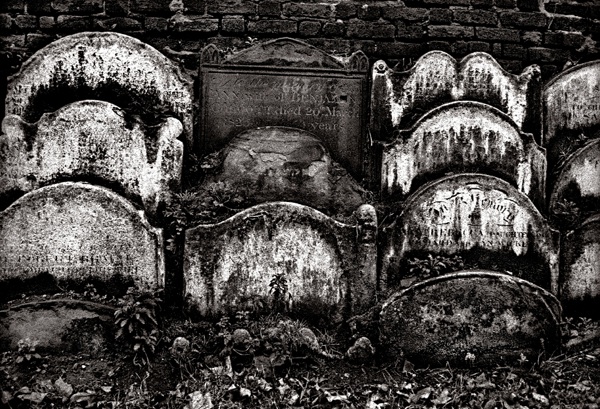
End of the Game, E14 1962 – “When the churchyard was dug up, someone arranged the stones respectfully so they could be seen. Life was over and even the churchyard was gone too.”

Sunday Morning, Spitalfields 1963. “He was leaning out the window having a conversation, it just felt like Sunday morning.”

The Allotment, E14 1959.

Soup Kitchen, Whitechapel 1967. “Time out for a cup of tea and a sandwich, time out from the streets.”

Passports, E16 1968.

Game at the Hostel, Salvation Army Victoria Homes, Whitechapel 1982.

The Conversation, 1982.

Underworld, Spitalfields 1982. This toilet outside Christ Church is now a night club called Public Life.

Pub Compere, E14 1964.

My Dad Singing At a Pub, E14 1964. – “He had a good voice, very powerful, and he used to play the ukelele banjo as well. My mum got up and sang too. He’d say, ‘Don’t be silly, you can’t sing.’ and she’d say, ‘Yes, I can,’ and get up there. They had a fantastic relationship.”

The Ring, E17 1982.

Wraps, E16 1968. “This is at Terry Lawless’ Gym. I still have a punchbag at home and start by putting my wraps on.”

After Sparring, E16 1968. – “He had just finished, marked up a little but not too bad.”

Dance Class, E7 1982. – “Did people go to learn to dance or because they were lonely?”

Dog Racing, Walthamstow Dog Track 1982.

Some Were Got Rid Of. – “It still looks like it’s running.”

Dart Night, E17 1968. – “We were playing darts and sat down for a break, everyone in their own world. The guy with the sideburns, his wife was jealous and always asked him to bring her a Chinese takeaway. He would remove the prawns, eat them himself and then rearrange the food. ‘She’s not worth all those,’ he said to me. ‘She won’t know,’ I said. ‘She’ll never know, but I do,’ he replied.”

Some People I Knew, Cable St 1969.

Don’t Ask, Dockside E16 1986.
Photographs copyright © John Claridge
You may also like to take a look at
Along the Thames with John Claridge
At the Salvation Army with John Claridge
A Few Diversions by John Claridge
Madge Darby, Historian of Wapping

“People have always come here, either to convert us or to rip us off.”
No-one knows more about the history of Wapping than Madge Darby, a woman who has made it her life’s imperative to recount the story of her people. And when Madge speaks of Wapping – as she does frequently – she uses the word “us” or she simply says “we.” This is her natural prerogative, because there are records of her family beginning with an Elizabeth Darby, christened there in 1636, while on her mother’s side, her great-great-grandfather, Robert Petley, and his family were turned out of their home at the beginning of in the nineteenth century for the building of St Katherine’s Dock. Thus, the story of the Darbys is the story of the place and it is a narrative with a certain poignancy because, at eighty-five years old, after so many generations, Madge is now the last of the Darbys in Wapping.
Yet Madge is not a sentimentalist and she is very much alive, occupying a central position in the neighbourhood – culturally, as chairman of the History of Wapping Trust and topographically, residing in an old terrace at Wapping Pierhead, cheek by jowl amongst the celebrities and bankers who have come to Wapping in recent years. It was here I visited Madge last week, discovering her in the dining room surrounded by the paperwork from the latest edition of her history of Wapping, “Piety & Piracy.”
“People have always come here, either to convert us or to rip us off,” she declared to me in explanation of the title of her book. And her eyes sparkled with emotion as she waved an estate agent’s circular which revealed that a neighbouring house had just sold for millions, thereby offering evidence of the nature of piracy in contemporary Wapping. Born in 1927 in Old Gravel Lane, five minutes walk from where she lives today, Madge and her family were twice displaced from their home, once for a road widening that never happened and once as part of a slum clearance programme.
“I’m not in favour of the housing policy that has pushed most of the indigenous people out and broken up the community,” she admitted frankly, deeply disappointed that recent generations of her family have been unable to find homes in the neighbourhood. A situation that she ascribes to escalating property prices and a social housing programme which, for decades, made little provision for those without children, forcing them to seek homes elsewhere.
“We were lucky to find this before the prices went up,” she said, casting her eyes around her appealingly dishevelled terrace house that she moved into in 1975 with her brother and mother, both of whom she cared for there until they died. “These houses were built in 1811 for dock staff and when we came there was only one tap. It took us years to save up to get heating installed.” she recalled. As a child, Madge came for piano lessons with a Miss Edith Pack in one of the adjoining buildings, overlooking the entrance to the docks, and was commonly distracted by the ships passing the window. Apart from a brief period of evacuation to Whitchurch, Madge was in London for most of the war, attending Raine’s School which operated in Spital Square before moving up to Dalston where Madge took her school certificates, prior to entering Queen Mary College to study History in 1945. In Madge’s memory, the streets of Wapping always smelled of spices, while in Spitalfields the smell of cabbages from the market prevailed.
Madge explained that her approach to history is based upon the evidence of surviving documentation. “Our dear mother used to say to us,’You’ll have to burn all those old letters in my bureau when I’m gone.'” Madge told me with a twinkle in her eye, “And I always replied, ‘Why? Where are you going dear?'” After her mother’s death, Madge published these letters in five volumes, comprising correspondence and diaries that tell the intertwining histories of her family and Wapping from 1886 until the beginning of our own century. The final volume is Madge’s personal memoir, commencing, “As soon as I became aware of the world around me, I found that I lived in Wapping. Wapping seemed to me a wonderful place and I could never understand how anyone fortunate enough to have been born there could wish to move away.”
We left the house and walked out to take a stroll upon the lawn at the Pierhead, overlooking the Thames, and we sat together overlooking the water in the sunshine. But while I only saw an empty expanse, Madge could remember when the docks were working at capacity and the river was busy with traffic. Madge told me about the previous inhabitants of the Pierhead before the current residents from the world of celebrity chatshows and bankers’ bonuses. Then, searching further in her mind, she spoke with excitement of Captain Bligh and Judge Jefferies in Wapping, both of whom are subjects of her books. “Wapping only became part of London in the seventeenth century,” she informed me with a tinge of regret, “Stowe describes it as one of the suburbs.”
With her thick white hair cropped into nineteen-thirties-style bob and her lively blue eyes, Madge was the picture of animation.“We carry on, we do our best,” she reassured me, speaking both of herself and of Wapping.

Madge Darby

Madge’s house is one room deep, with windows facing onto the road and towards the river.

Madge in the rose garden at Wapping Pierhead outside the former Dockmaster’s House.

The house in Cable St where Madge’s father, Harry Darby, was born.
Furniture Trade Cards of Old London
Just when I thought I had published all the eighteenth century trade cards there were to be found, I discovered these old furniture trade cards hidden in the secret drawer of a hypothetical cabinet.


Images courtesy Bishopsgate Institute
You may like to see my earlier selections
More Trade Cards of Old London
Yet More Trade Cards of Old London
Even More Trade Cards of Old London


