So Long, Philip Christou
There was a hush over the market yesterday as – for the first time that anyone could remember – Gina’s Restaurant was closed on a Sunday, following the sad news of Philip Christou’s death that morning. Today, I am republishing my portrait of Gina & Philip Christou as a tribute to this remarkable couple who served the people of Spitalfields since 1961.
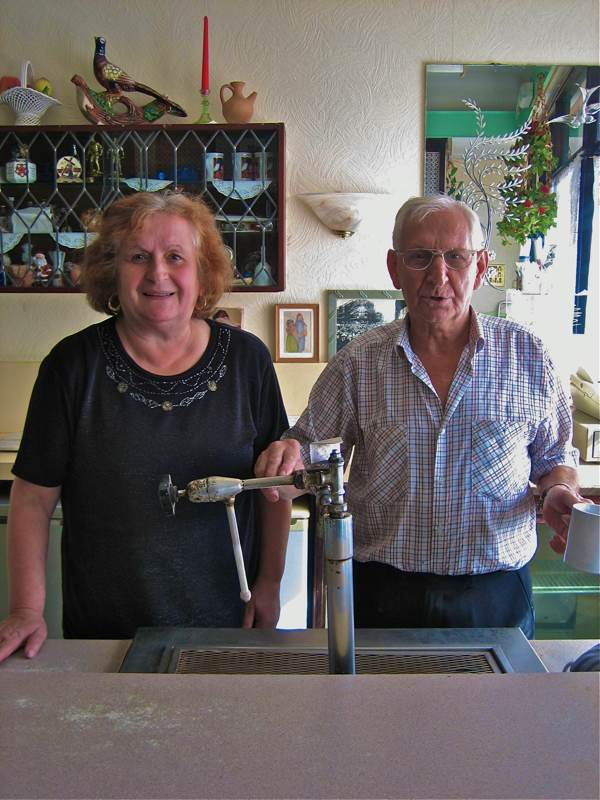
Gina & Philip Christou
In recent years, if you were looking for a Sunday roast in the East End then you could do no better than to go along to Gina’s Restaurant at 17 Bethnal Green Rd where Gina & Philip Christou opened just one day a week out of loyalty to their longstanding customers, many of whom had been coming since Gina & Philip first opened in Brick Lane in 1961.
“We used to open every day,” Philip explained to me with startling frankness when I spoke with him, “but what’s the point in killing yourself when you only have a few years left?”
Looking back over half a century, Gina confessed that she cried when she first saw the Hungarian Restaurant in Brick Lane, with three filthy rooms above it, that Philip bought. “I said ‘Jesus Christ! What I have we got here? I can’t live in this,'” she shrieked, growing visibly emotional at the mere recollection of moving with her one-month-old son into a flat with no bathroom and a rat infested toilet in the yard. Gina’s father had paid for her to train for six months as a hairdresser in Regent St and Philip had set out to buy her a salon, but he could not afford one and bought the lease on a restaurant instead. “I was going to buy her a hairdressing salon but it didn’t work out,” Philip admitted to me with a shrug, “so I said, “I’ll buy a cafe, I know how to cook, how to serve customers, how to do the shopping, and my wife can be a waitress!”
“I bought it from a Hungarian Jew and people used to come in and ask ‘Are you kosher?’ So I said, ‘Yes, I am kosher,’ And I used to offer them ‘kosher’ bacon sandwiches.” continued Philip with a twinkle in his eye. “My father told him he wasn’t good enough, when he asked if he could marry me,” interrupted Gina, raising a hand and turning sentimental as she recalled how they met when she joined her father for lunch at the Kennington restaurant where Philip was a waiter – adding, “but afterwards, he said, ‘As long as it’s alright with her.'”
“When we moved in, I went to Gostins, the timber merchants across the road and said, ‘Excuse me, I’m looking for old wallpaper books that you’re going to give away. I ‘ve got no money but I need wallpaper.'” Philip told me, amazed at his own resourcefulness “I papered the cafe with all the different coloured squares of wallpaper and painted the woodwork with some old blue paint my brother gave me. We opened up the cafe and we made a few bob, five pounds on the first day. It was good.”
“We had no furniture,” Gina announced with a gleeful smile, “My parents moved in, so I cleaned up a room for them and gave them our bed. The baby slept with them and we slept on the floor. ” When Gina & Philip came to Brick Lane in 1961 it was a Jewish neighbourhood with a few Asians, but by 1975 when they left it was mostly Bengali people. “We all used to help each other,” Gina explained, “Mrs Sagar across the road was an Indian lady married to a Jewish gentleman. When she learnt I had to sleep on the floor, she said, ‘I’ve got a bed, I’ll give it to you’ and later she gave me a wardrobe too.'”
Gina & Philip found themselves at the centre of a self-supporting community. “I couldn’t afford a van, so the chicken shop across the road leant me their bicycle to go to Smithfield Market each morning to buy chops, steak and sausages, and I used to be back by six thirty to open at seven every day.” Philip remembered fondly, amazed at his former vitality.
“Every Christmas, I used to open only for the old people and give them lunch,” Gina confessed to me, almost in a whisper, as if she did not want the word to get round, “I did it for years because I felt sorry for them. And I remember it was two shillings and sixpence to stay at the Salvation Army Hostel, and they charged a penny for hot water for their hot water bottles on top, so I told the hostellers to bring their bottles round to me and I gave them hot water for free.”
Yet in these unpromising circumstances, Gina & Philip’s Hungarian Restaurant became a unlikely commercial success when some long-distance lorry drivers, who parked their trucks at Aldgate, discovered it as they walked up Brick Lane on their way to the Well & Bucket public house. “One day these men came in and asked for a ‘Mixed Grill.'” Gina said, recalling the auspicious moment that changed her life, “So I went into the kitchen and said to Philip, ‘We’ve got new customers and they want a “Mixed Grill.” He made up a big plate of meat, and they ate it all and said, ‘Thankyou very much, we’ll see you again.’ The next day there was six, and ten the day after. In a month’s time, we had a multitude and a queue outside. I became famous for lorry drivers!”
On the basis of their new-found income, Gina & Philip were able to buy a house in Haringey, permitting extra space for their growing family of four children – exceedingly fortunate, because in 1972 the council served a compulsory purchase order on the restaurant to demolish it. “I cried when we had to leave!” declared Gina with a helpless smile, confessing the lachrymose parentheses to her sojourn in Brick Lane.
“I didn’t want to buy a cafe again, so I went to work at Blooms restaurant in Whitechapel,” said Philip. “And I wanted to be a machinist, but I couldn’t do it – I was always crying!” said Gina, eagerly carrying the narrative forward, “They asked me, ‘Why are you crying?’ I said, because it’s not a restaurant, there’s no people in it.’ I missed all the people, they were so friendly.”
Gina & Philip borrowed money from the bank to buy the cafe in the Bethnal Green Rd and all the regulars from Brick Lane and the long-distance lorry drivers followed them – especially as they now offered bed and breakfast above the cafe too. When they arrived, the Sunday animal market was still in full swing, filling the surrounding streets, selling birds and all kinds of creatures – “We bought a goat and called it Billy, but the neighbours complained about it eating their cabbages and we had to give it back,” Gina told me, as an aside. They originally opened up as G’N’T’S, changing it to “The Steakhouse” on a whim, only to discover this attracted a crowd that was too posh, which led to the ultimate incarnation as Gina’s Restaurant.
“I’ve got one old boy, he comes every week from Croydon. He’ll always have sausage, chips and beans – and eight to ten coffees.” Gina told me in affectionate reminiscence, “I’m a very soft woman, I talk to him and I feel good. I’m happy to listen to him because he lives by himself and has no-one to talk to but me.”
Sundays at Gina’s Restaurant – with Philip in the kitchen and Gina behind the counter – were a long-standing ritual in this corner of the East End, the focus of a particular world and one of the last places you could get a good cup of tea for 80p. Gina told me that many of the fly-pitchers who trade on the pavement outside – constantly hassled by council officials – are pensioners who have lived their whole lives in the neighbourhood and come to sell a few of their possessions simply to afford a Sunday lunch. Gina & Philip always opened every weekend to offer a safe haven to these people, and to anyone else that wanted an honest roast dinner.
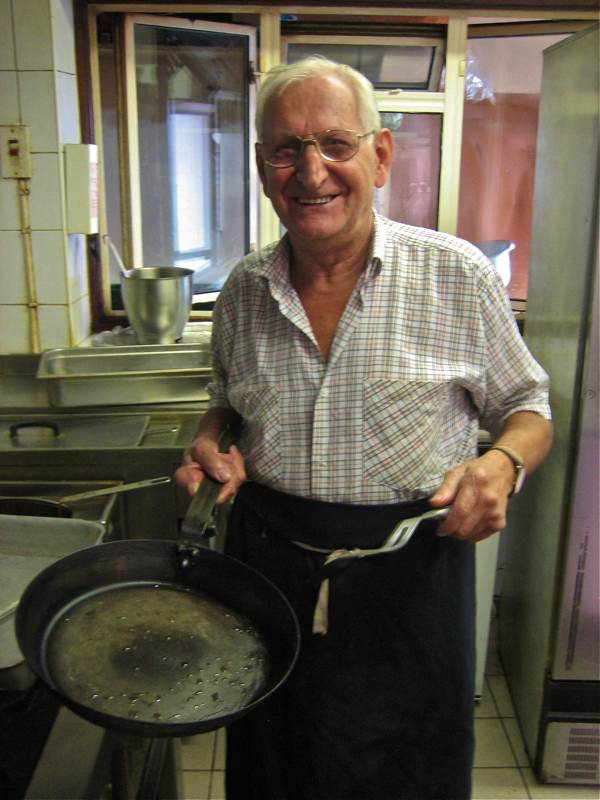
Philip with his favourite frying pan.

Gina with her favourite teapot.
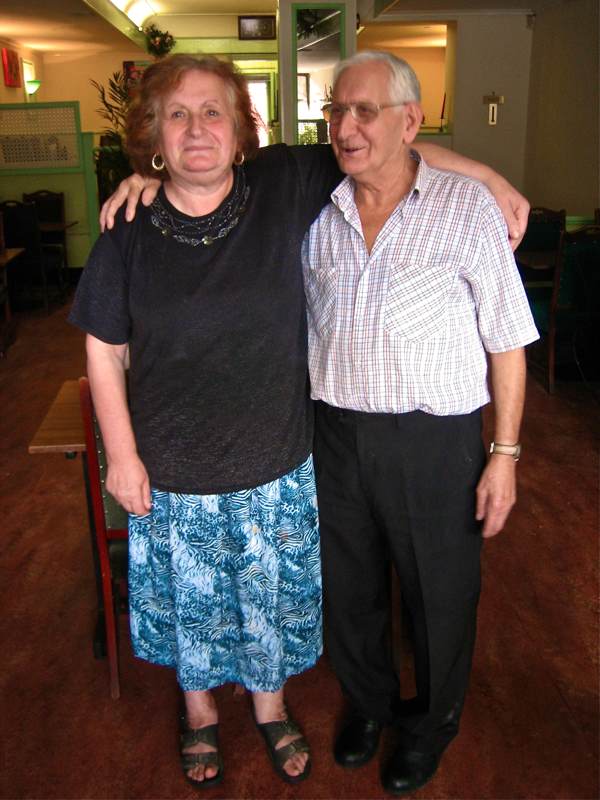
Gina & Philip Christou in their restaurant.
You may also like to take a look at these other stories of Gina’s Restaurant
Gina’s Restaurant Portraits by Colin O’Brien
The Staircases of Old London

Mercers’ Hall, c.1910
It gives me vertigo just to contemplate the staircases of old London – portrayed in these glass slides once used for magic lantern shows by the London & Middlesex Archaeological Society at the Bishopsgate Institute. Yet I cannot resist the foolish desire to climb every one to discover where it leads, scaling each creaking step and experiencing the sinister chill of the landing where the apparition materialises on moonless nights.
In the Mercers’ Hall and the Cutlers’ Hall, the half-light of a century ago glimmers at the top of the stairs eternally. Is someone standing there at the head of the staircase in the shadows? Did everyone that went up come down again? Or are they all still waiting at the top? These depopulated photographs are charged with the presence of those who ascended and descended through the centuries.
While it is tempting to follow on up, there is a certain grandeur to many of these staircases which presents an unspoken challenge – even a threat – to an interloper such as myself, inviting second thoughts. The question is, do you have the right? Not everybody enjoys the privilege of ascending the wide staircase of power to look down upon the rest of us. I suspect many of these places had a narrow stairway round the back, more suitable for the likes of you and I.
But since there is no-one around to stop us, why should we not walk right up the staircase to the top and take a look to see what is there? It cannot do any harm. You go first, I am right behind you.
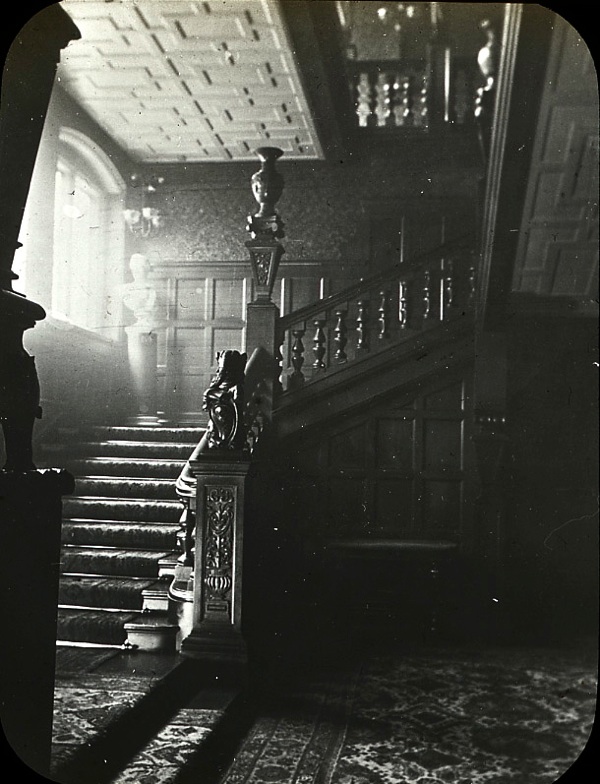
Cutlers’ Hall, c.1920.
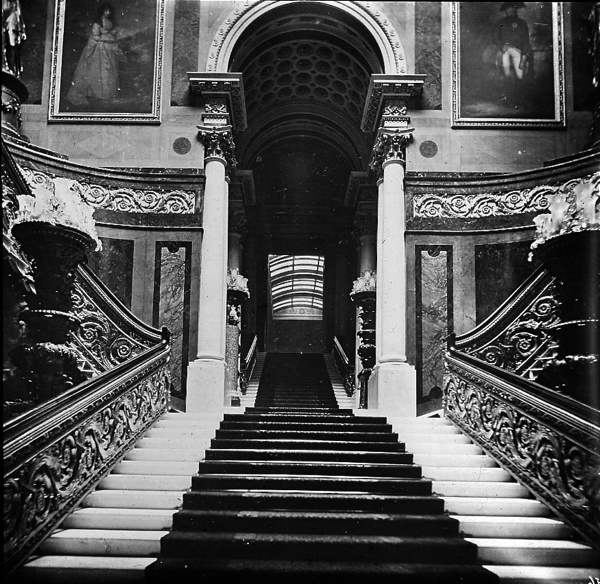
Buckingham Palace, Grand Staircase, c.1910.
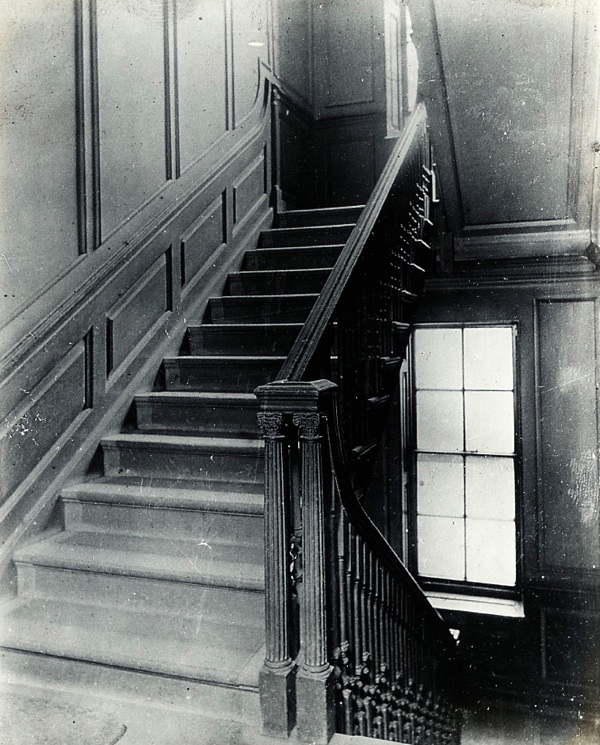
4 Catherine Court, Shadwell c.1900.
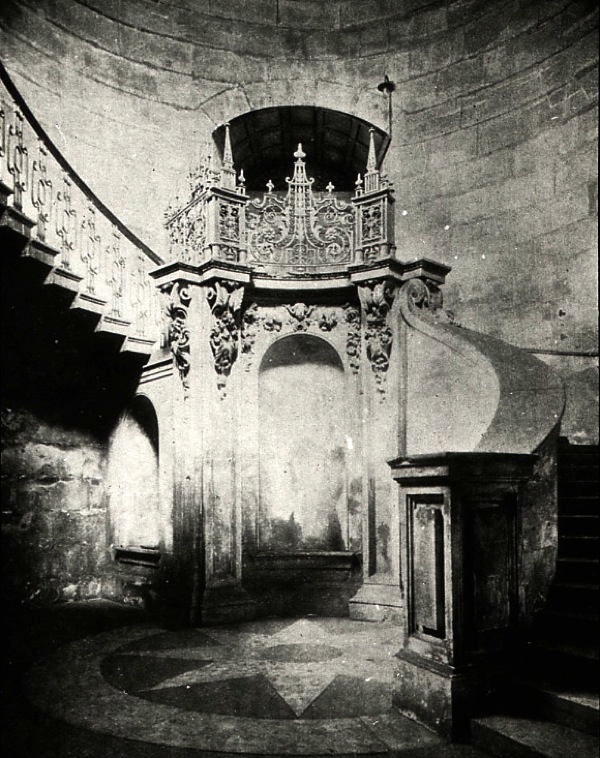
St Paul’s Cathedral, Dean’s staircase, c.1920.
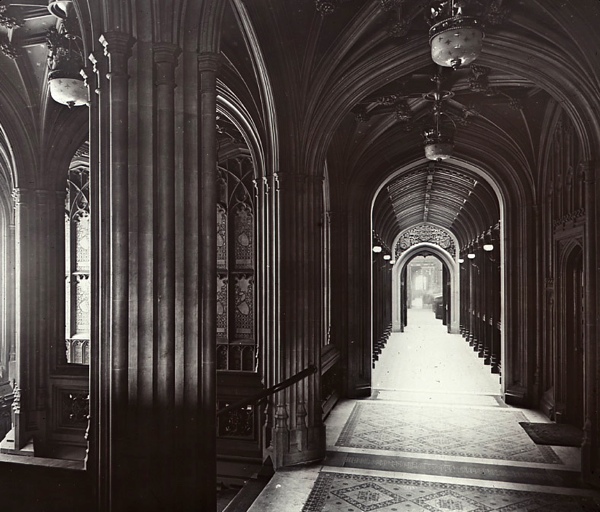
House of Lords, staircase and corridor, c.1920.
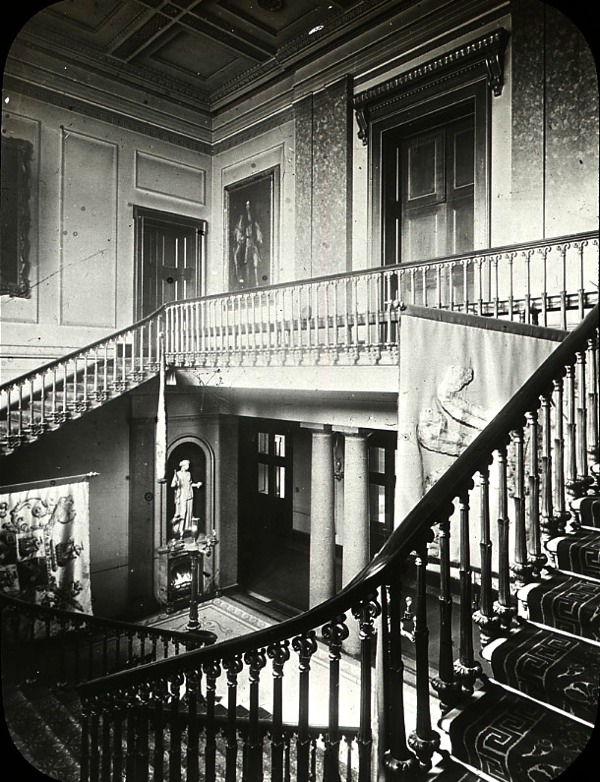
Fishmongers’ Hall, marble staircase, c.1920.
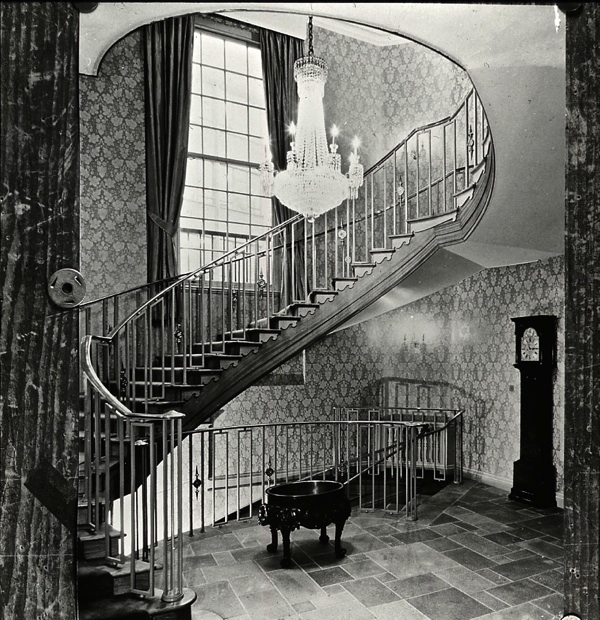
Girdlers’ Hall, c.1920.
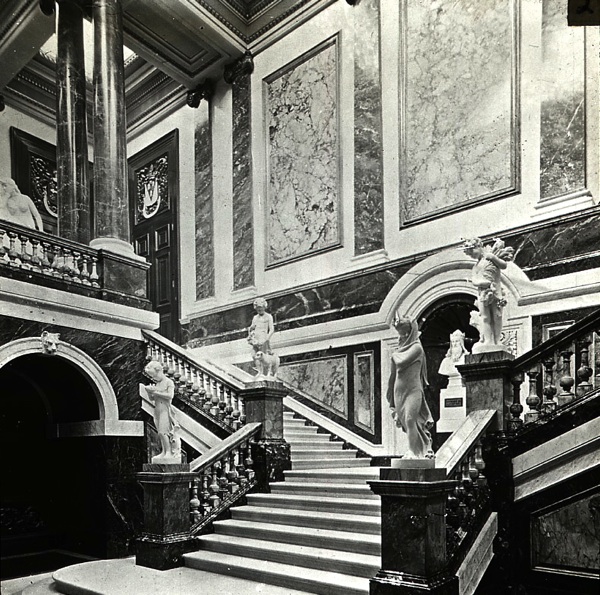
Goldsmiths’ Hall, c.1920.
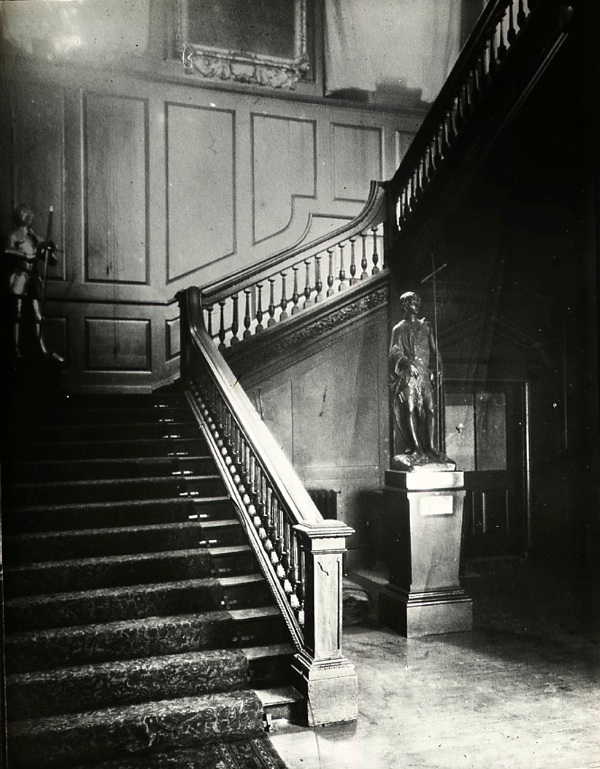
Merchant Taylors’ Hall, c.1920.

Cromwell House Hospital, Highgate Hill, c.1930.
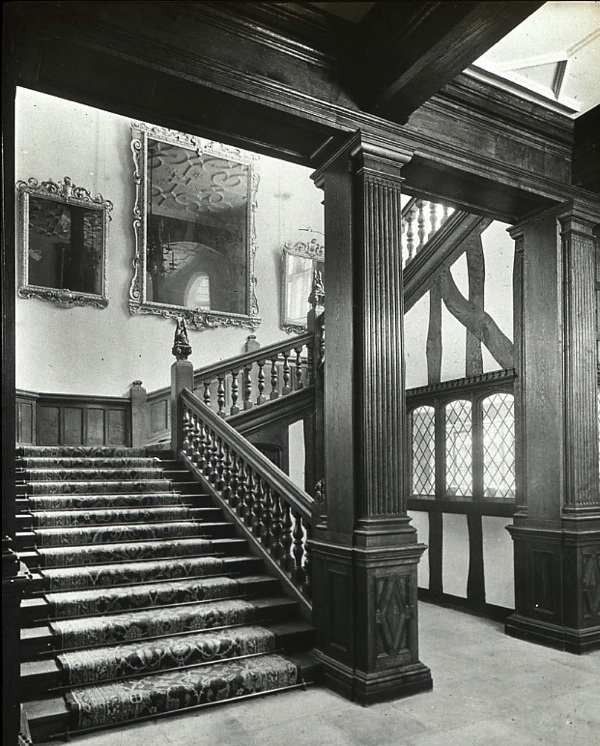
Ironmongers’ Hall, c.1910.
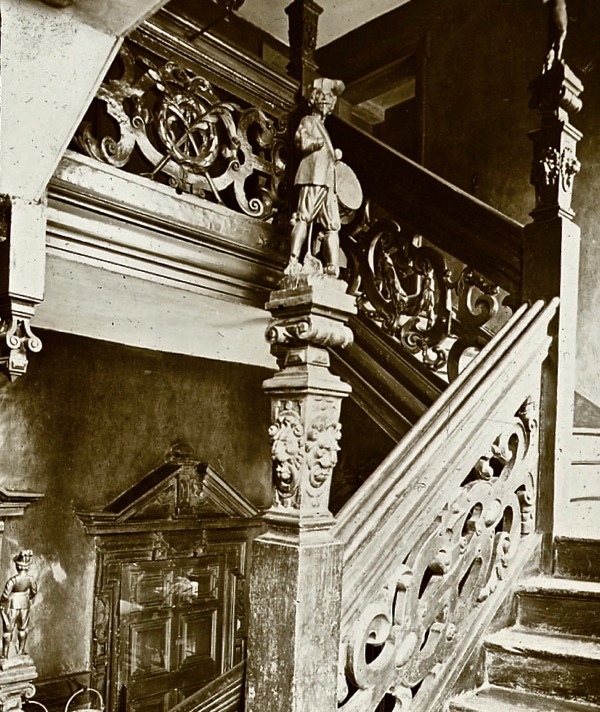
Cromwell House Hospital, Highgate Hill, c.1930.
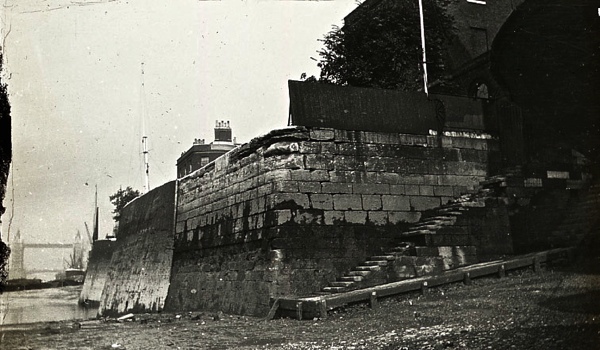
Stairs at Wapping, c.1910.
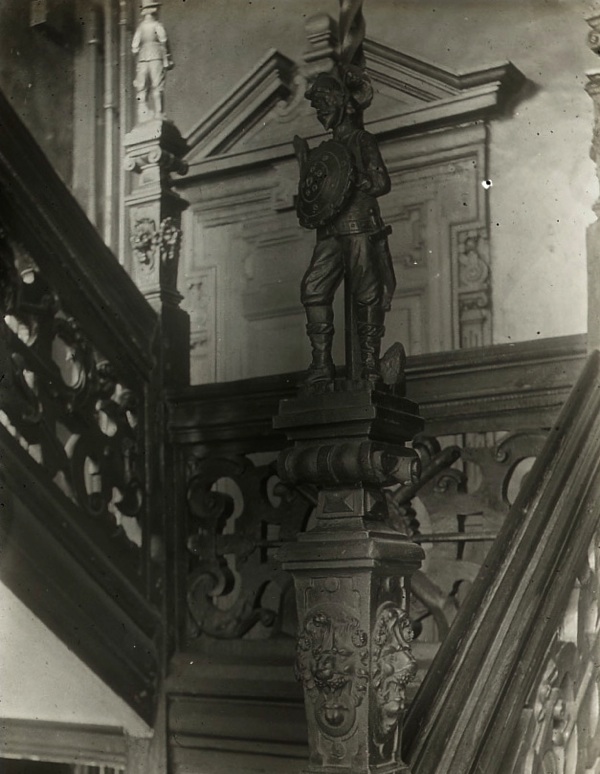
Cromwell House Hospital, Highgate Hill, c.1930.
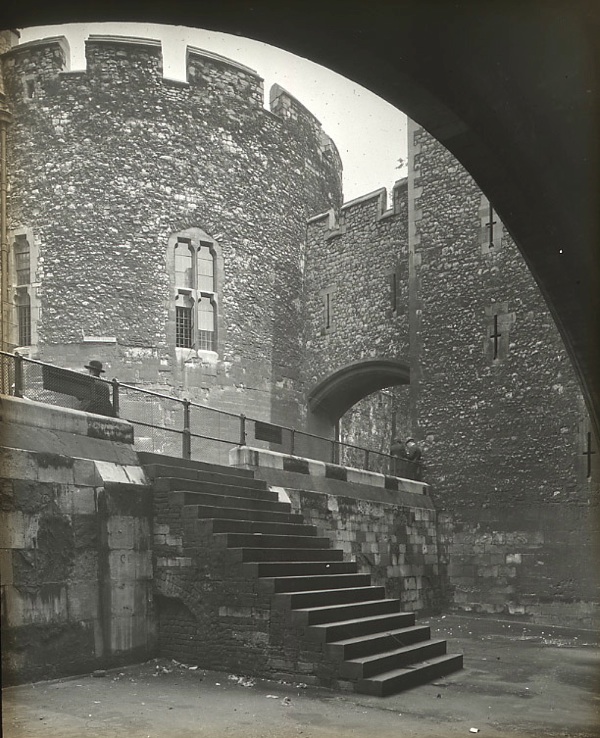
Staircase at the Tower of London, Traitors’ Gate, c.1910.
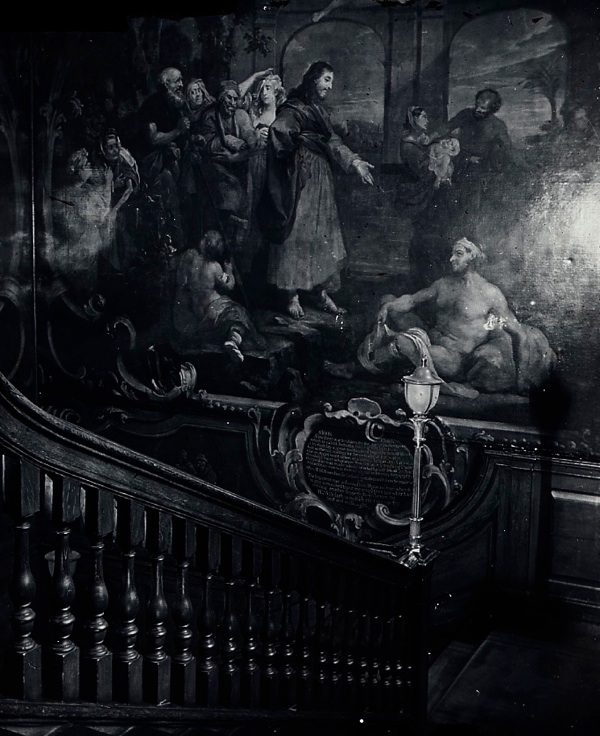
Hogarth’s “Christ at the Pool of Bethesda” on the staircase at Bart’s Hospital, c.1910.
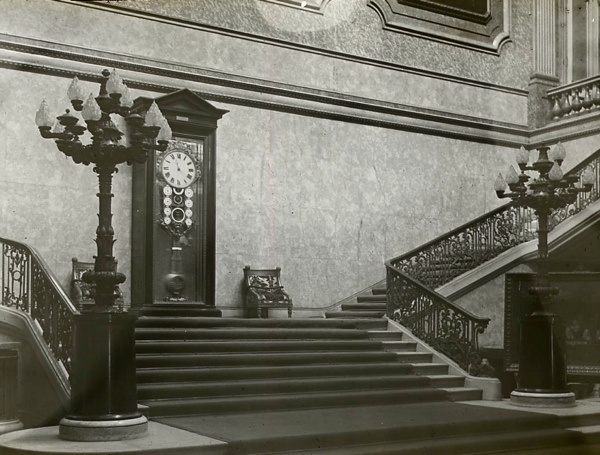
Lancaster House, c.1910.
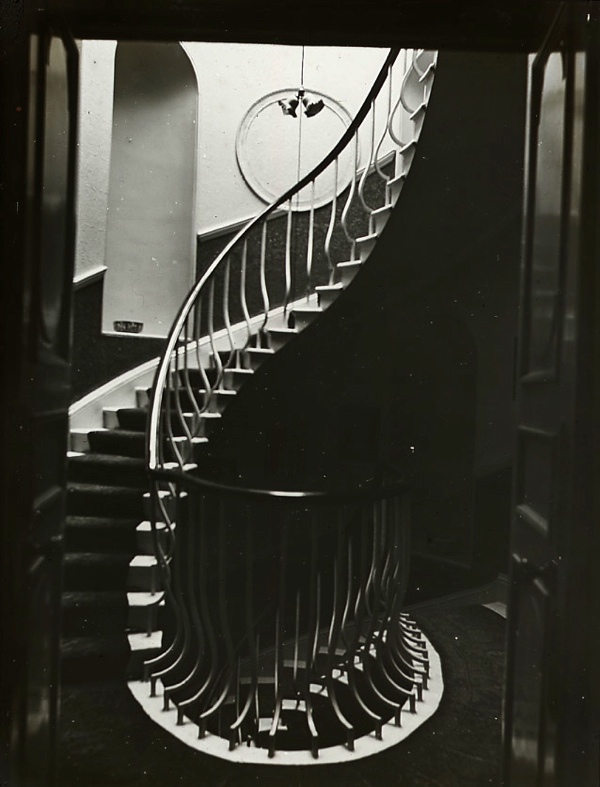
2 Arlington St, c.1915.
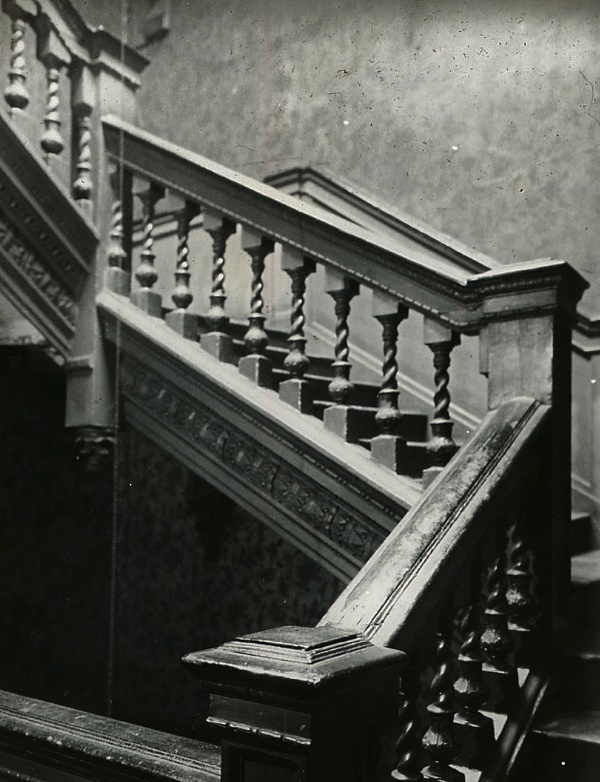
73 Cheapside, c.1910.
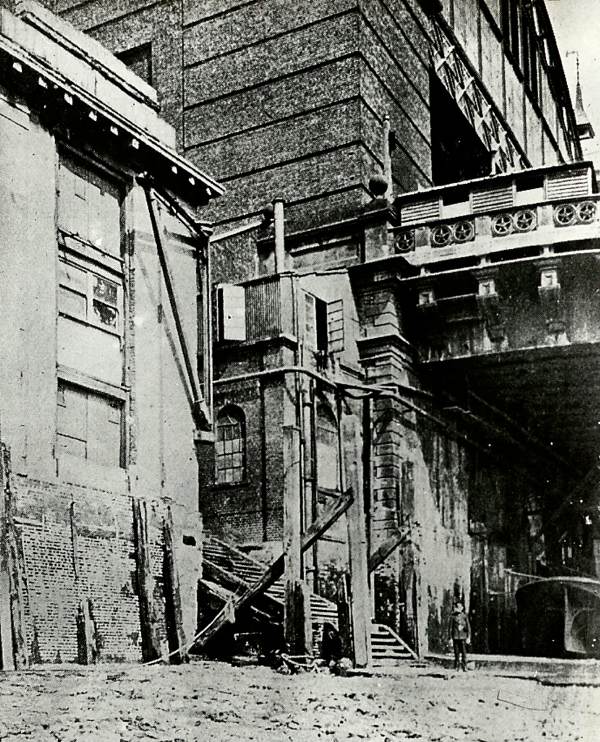
Dowgate stairs, c.1910.
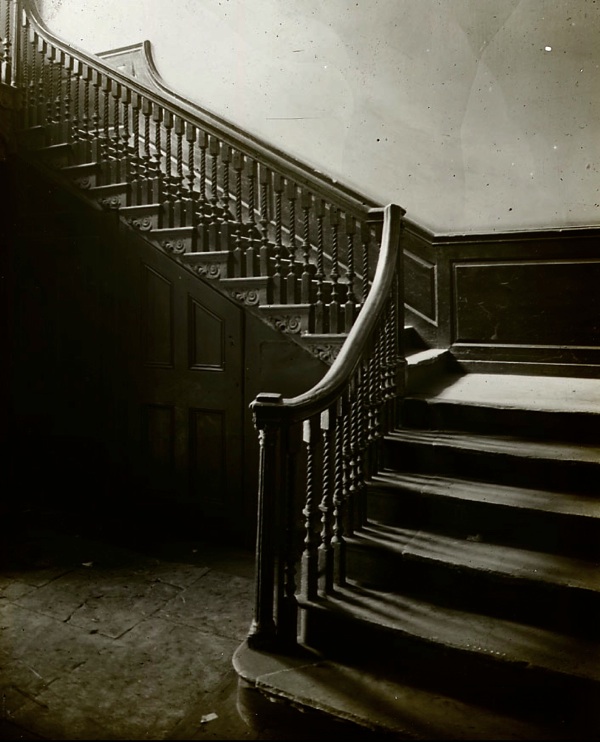
Crutched Friars, 1912.
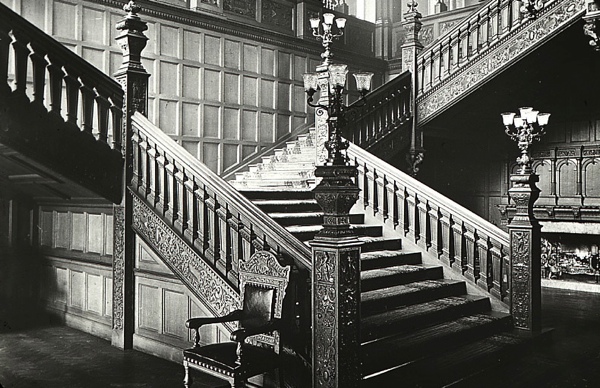
Grocers’ Hall, c.1910.
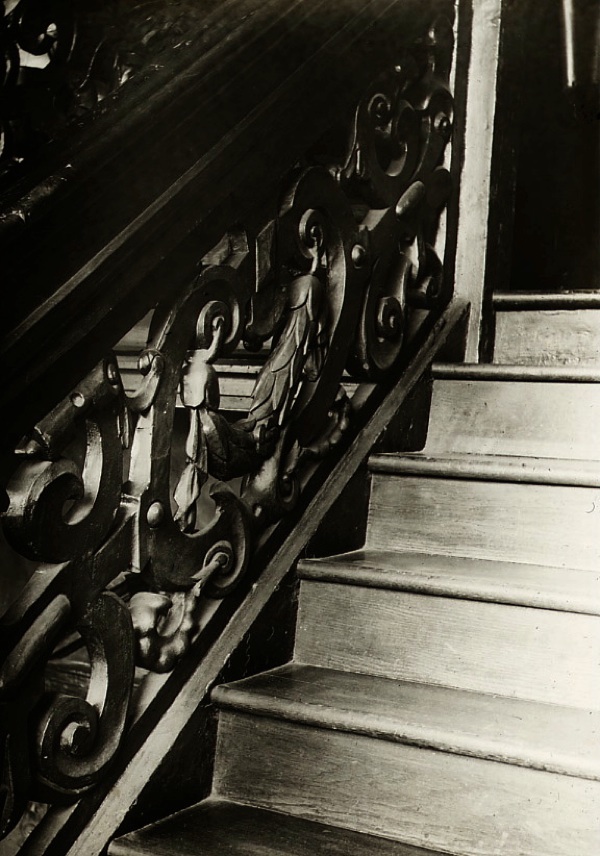
Cromwell House Hospital, Highgate Hill, c.1930.
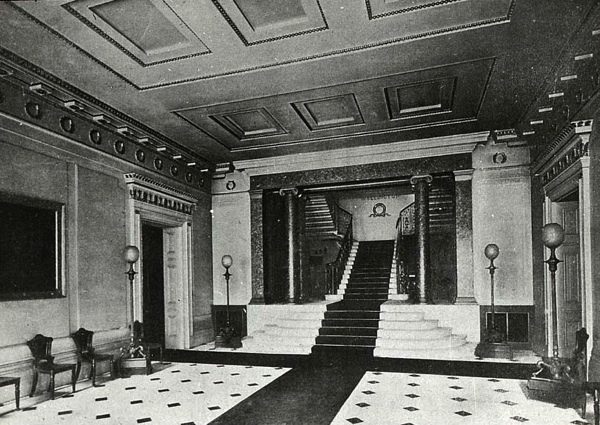
Salters’ Hall, Entrance Hall and Staircase, c.1910.
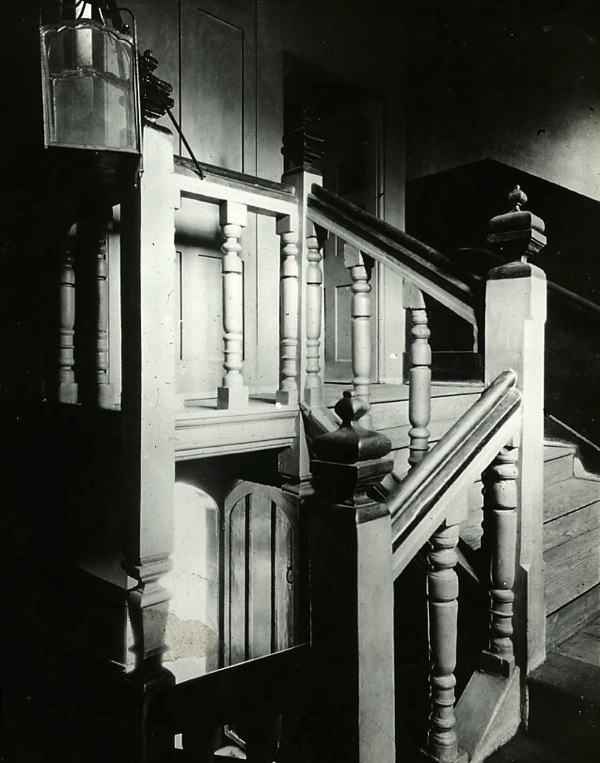
Holy Trinity Hospital, Greenwich, c.1910.
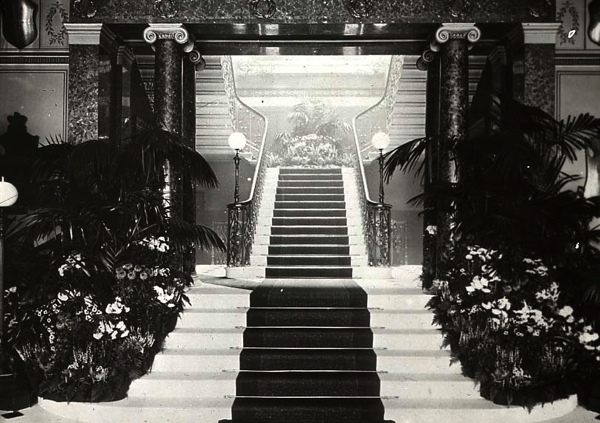
Salter’s Hall, c.1910.
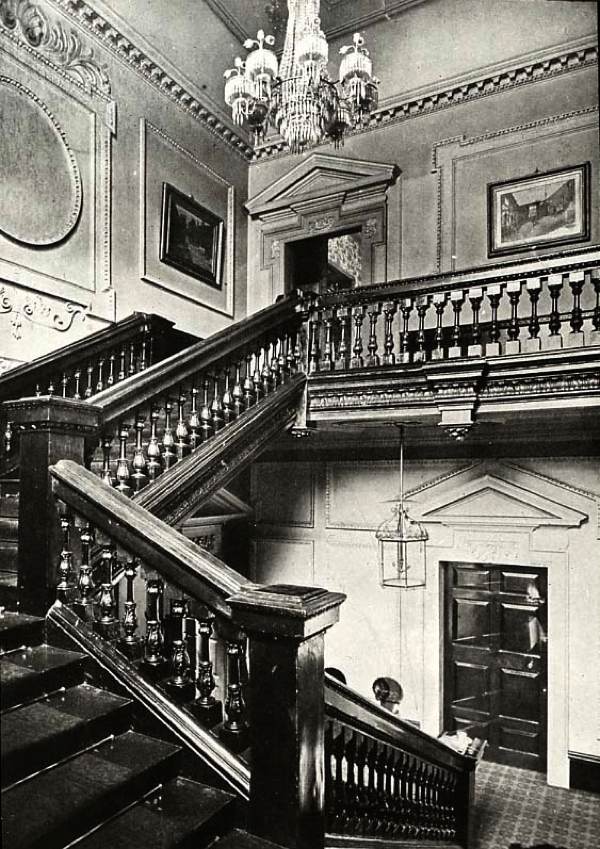
Skinners’ Hall, c.1910.
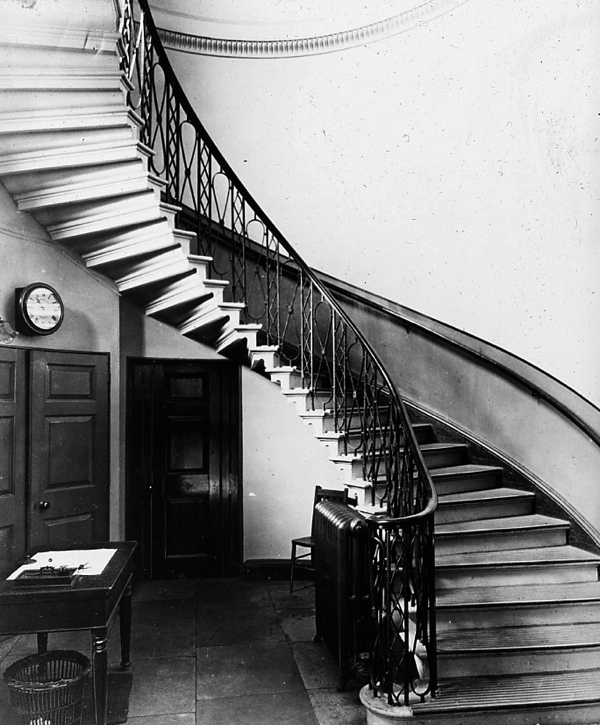
1 Horse Guards Avenue, 1932.
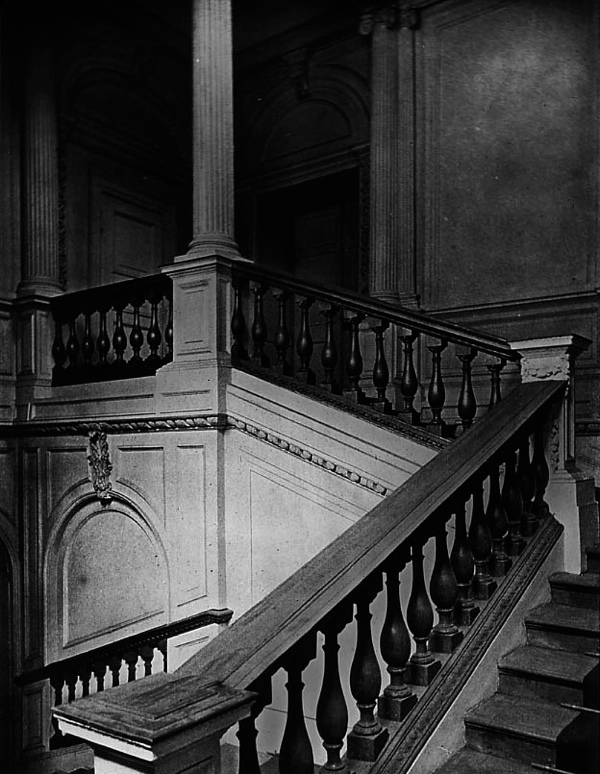
Ashburnham House, Westminster, c.1910.
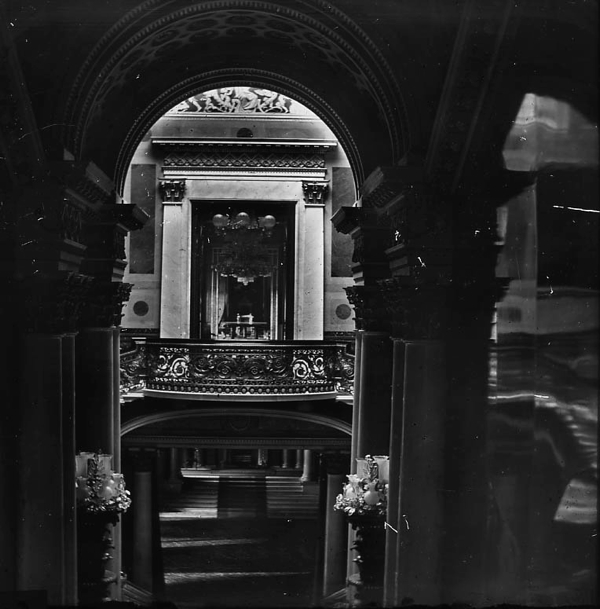
Buckingham Palace, c.1910.
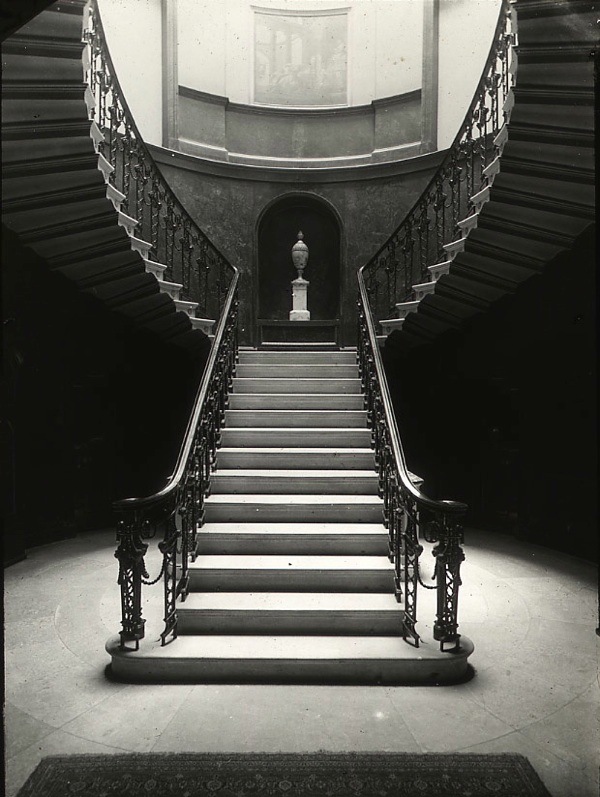
Home House, Portman Sq, c.1910.
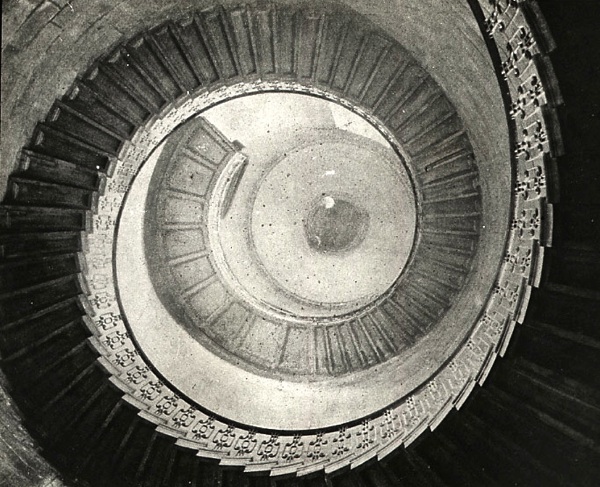
St Paul’s Cathedral, Dean’s Staircase, c.1920.
Glass slides copyright © Bishopsgate Institute
You may also like to take a look at
Terry Bay, Boxer, Compositor & Cab Driver

Terry aged four sitting on a cow named Tom
When he was evacuated from Bethnal Green at four years old, Terry Bay rode a cow through an orchard in Cambridgeshire but these days he rides a taxi around the London streets. In between these peregrinations – each delighting him with their ever-changing perspectives – Terry became a boxer and a compositor, exercising the breadth of his talents by adopting new professions to suit the varying demands of his life. Yet a pair of boxing gloves hangs from the rear-view mirror of Terry’s cab as an indicator of his true passion and, if any passenger should ask – as they often do – Terry brings out an envelope of boxing pictures that he always carries, eager to share his reminiscences with any fellow enthusiast.
I visited Terry in Barkingside where lives today, but I discovered his was a story of Bethnal Green and, in the hallway of his comfortable flat, he has an extraordinary gallery of sepia portraits of members of his and his wife’s families who all lived in Bethnal Green through many generations.
You would not automatically characterise Terry as a fighter, such is his gentle and self-effacing nature. Though when he told me his story and revealed that his father died when Terry was twelve, just before he started boxing, I understood how it became necessary to find the courage to stand up for himself. In fact, Terry discovered he was blessed with a natural talent as a boxer, yet although he won most of his fights he never became a champion. Instead, Terry shared an enduring camaraderie with his fellow boxers, benefiting from a wealth of friendships that has sustained him through the years and which he still enjoys today.
“If anybody asks, I say I come from Bethnal Green. I was born in Cranberry St off Vallance Rd in 1937 – but a bomb fell there in 1940 and we moved out, first to Corfield St and then to Middleton St where I lived until was twenty-six. But, in 1941, at four years old I was evacuated to Chatteris with my brother Albert and my sister Rita. My mother Connie – she was born in Russia Lane – she wouldn’t let us be separated. My father Bill – he was a fireman during the war – he came from Menotti St, and he died when I was twelve. He had TB and didn’t go for treatment. He worked in the Docks before the war and that’s how my brother got into the Docks. Later, me and my brother and my sister, were put under observation for TB because we were so skinny. We had to go the children’s clinic in Underwood Rd and they gave us spoonfuls of cod-liver oil which I hated.
The man we were sent to in Chatteris was a farmer, and he had an orchard out the back where he kept the chickens and pigs. He cleared out the chicken house and we stayed there, and my mum came to visit too. She used to wring the chicken’s necks and pluck them, and shoot the pigs with a pig gun. She did everything, she worked in bottle factory and she was a cleaner, and she lived for her children. Later, my cousins came down to join us and we all stayed in a cottage, and then my mum and dad came to visit us – and when the war was over, they came down and took us back to Bethnal Green.
I went to infant school in Teesdale St and then at eleven years old I went to the Mansford St where they had an after-school boxing club. There were all these boys standing in a circle and there was one kid who looked like a boxer. He was deciding who to box and – as I was thin and I didn’t look as if I could box – he picked me. It went a couple of rounds and he was supposed to be boxing me, but I was boxing his head off and he realised I had a natural talent – and he got the hump. So then I went off to the Mansford Boxing Club with Terry Staines and Georgie Whaiter and I had a couple of bouts there. The Repton Boxing Club was going strong and they poached Terry and Georgie, so I tagged along and became a Repton boy. They took me to the London Federation of Boys’ Clubs Competition and I won my first fight but got beaten in the semi-final. That was the story of my life, there was always somebody better than me! I boxed seventeen times as a junior and lost five. Then I gradually fell away from it, I was a teenager and I got distracted.
I left school and did a six year apprenticeship and became a compositor and got married and wanted to better myself and I went to work in Fleet St. At first, I worked for the Evening News where I got a holiday frame, covering for people on leave, but then I applied for a permanent job the next year and they kept me on. And I thought I was a millionaire, I was getting fifteen pounds before but at the Evening News I got thirty-seven pounds a week! This was in 1969 and I was thirty-two. You worked with hot metal and you had deadlines to meet. Firey Fred was the head printer and he used to be always on your back when you were working on a page, ‘Hurry up! Quick as you can, mates.’ There was a metal frame for the page and stories came in hot metal, and you had a graph of how it was supposed to be. The journalists came and told you where they’d like their stories and, if it was too long, they’d cut it down. Finally, you had to plane the plate down and that’s when I got my finger permanently bent. There was two of us working on a single page. One worked at the top and the one that worked at the bottom was the assistant. He was planing the finished page down to make it smooth and we were in a hurry because Firey Fred was making us sweat. It used to be a bit crazy. Then it’d all go quiet – and you’d go off and have breakfast or a beer until the next edition.
My wife and I moved into a flat in Cressy Mansions in Stepney when we got married but six months after our son Fraser was born in 1970 we moved out to a house in Chigwell. Eventually, after twelve years at the News Chronicle, I was made redundant when it closed in 1981. Then I did ten years at the Daily Mirror until computers came in and I was made redundant again, after Robert Maxwell took it over. I worked at Tower Typography in Holywell Lane, Shoreditch, doing general typesetting for a while, but I didn’t like it after the excitement of the newspapers. When I finally left printing, I bought a pub, The Dolphin on Redchurch St, but that didn’t suit either, the life of a publican. That’s when I became a cab driver, and that’s what I’ve done ever since, for the past twenty-four years.
I was never a famous boxer. My father loved boxing, he would have liked what I did but he died before I started. And although my mother never liked me doing it, I made a lot of friends and I had a fun-filled time with my pals. I was brought up in a rough area and people got into trouble. I was in a car once with some friends, and the police stopped us and found wax impressions and tools for making keys in the boot. They took us back to the station and I was remanded in Brixton for two weeks, even though I was never a villain or a thief.
The only thing I’ve done that I’m really proud of is my boxing life. Once I overheard the headmaster at my school talking to a class and he said, ‘I watched Terry Bay sparring in the playground and he’s very good.’ I didn’t know I was good. And for him to have said that meant everything to me.
I didn’t try to be a tough guy but you had to take care of yourself. I wasn’t brave, I was scared of being scared.”

Terry at the Repton Boxing Club.

Terry is on the far right of this picture of the Mansford St School Boxing team 1951.

Terry as a schoolboy.

Terry and his friend Bobby in Petticoat Lane, 1954.

Terry enjoys a drink with his mates at the Westminster Arms on the corner of Old Bethnal Green Rd.

Terry with pals outside departures at London Airport on the way to a holiday in Jersey.

At Strakers & Sons, Hackney Wick, where Terry was apprenticed as a compositor in 1956. Terry can be seen in the distance on the right in a white shirt.
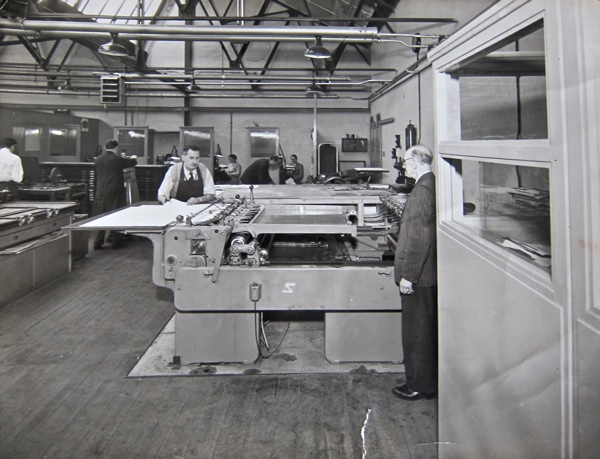
Mr Souter, the press man, and Nobby, the overseer. Terry is on the extreme left.
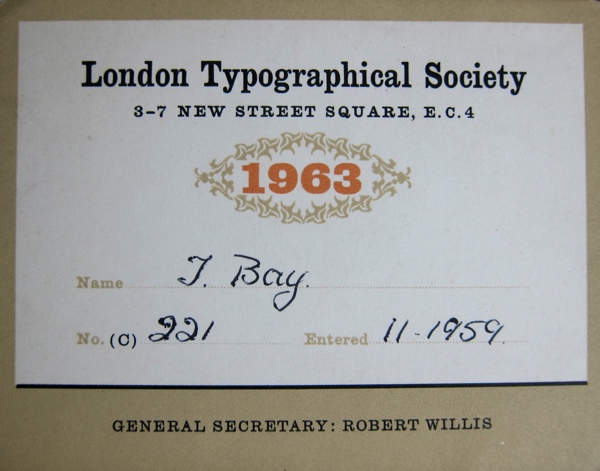


Terry & Eileen at their marriage in 1969.

Terry with his good friend Terry Spinks, the famous boxer who won a gold medal in the 1956 Olympics and died this year, also shown as a younger man in the inset.

Terry Bay has a pair of boxing gloves hanging in his cab and always carries his boxing photos in an envelope in case he meets a fellow boxing enthusiast.
You may like to read these boxing stories
Sylvester Mittee, Welterweight Champion
Ron Cooper, Lightweight Champion
Sammy McCarthy, Flyweight Champion
and take a look at these boxer portraits
Tif Hunter on Maltby St
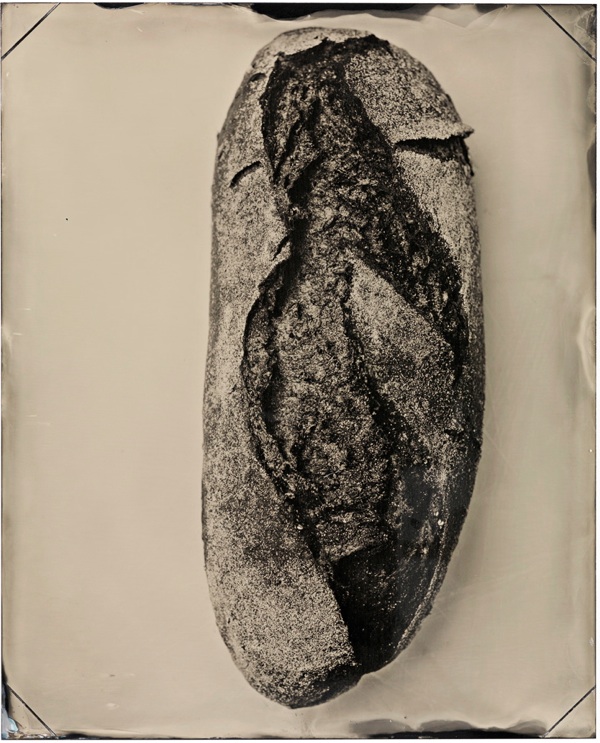
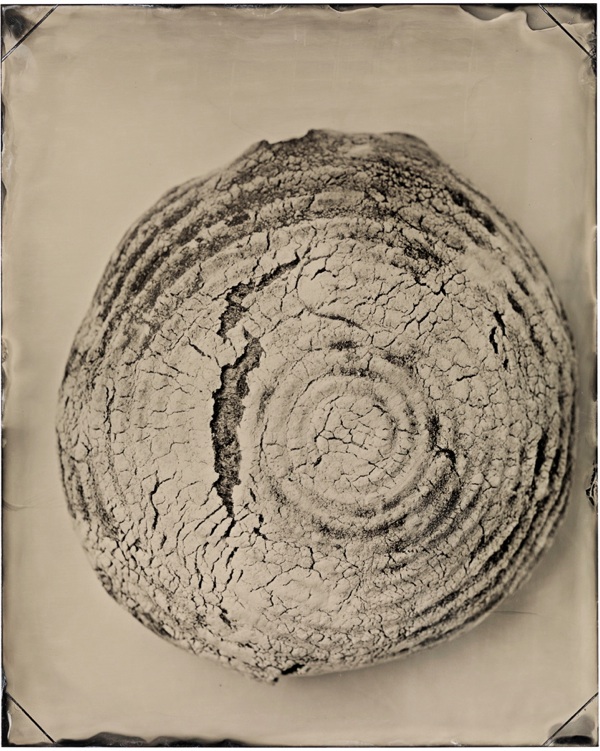
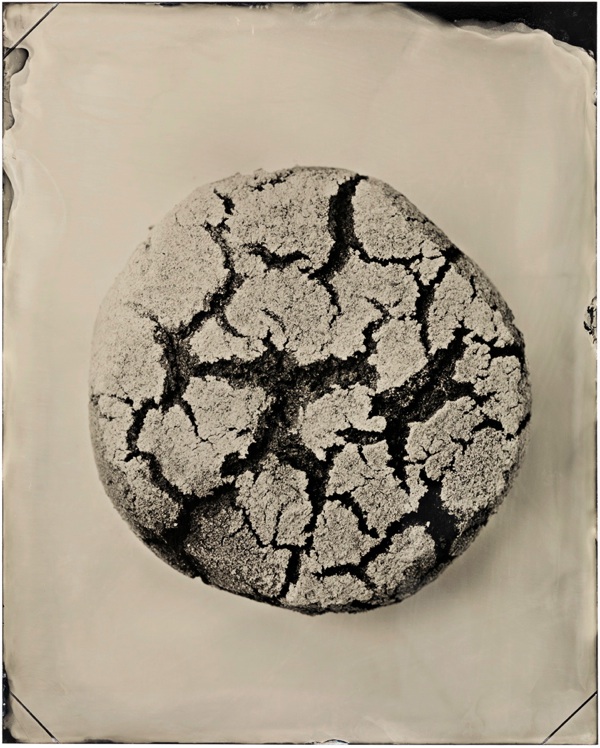
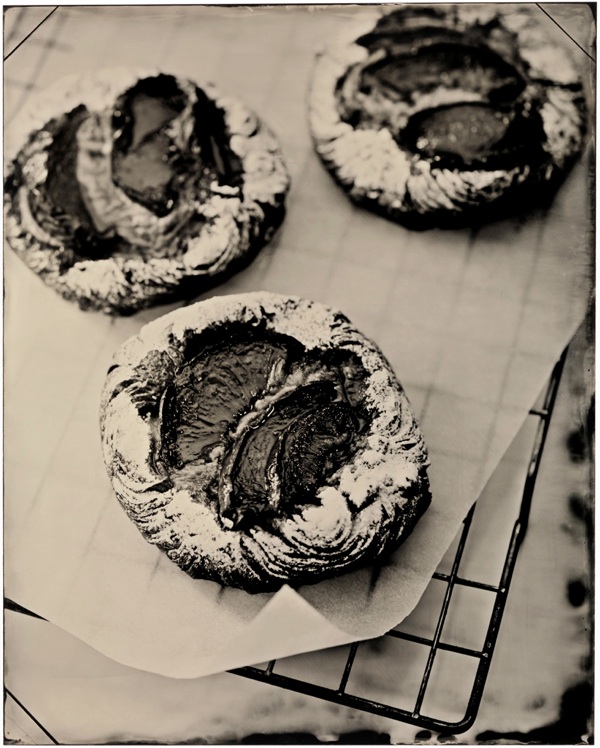
Over a year ago, Tif Hunter began taking portraits of those who worked selling food in Maltby St near his studio in Bermondsey, where he went each Saturday to buy his provisions. Having completed a fine series of these, he turned his attention to the produce, creating the magnificent still-lifes you see here. Using a hand-built wooden camera with nineteenth century lenses and employing the wet plate collodion process upon glass and metal plates, Tif has conjured an extraordinarily intense vision of these familiar rations, as if they were images plucked from a gastronomic dream. Offering the ideal complement to your visit to Maltby St, an exhibition of Tif’s polaroids and tintypes opens tomorrow at his studio and runs until 3rd November.
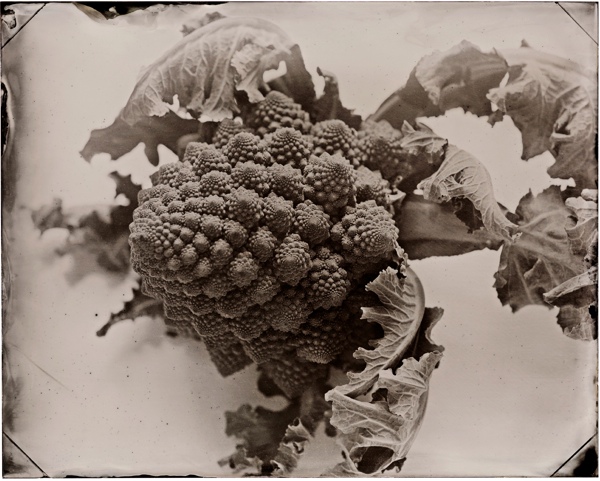
Romanesco
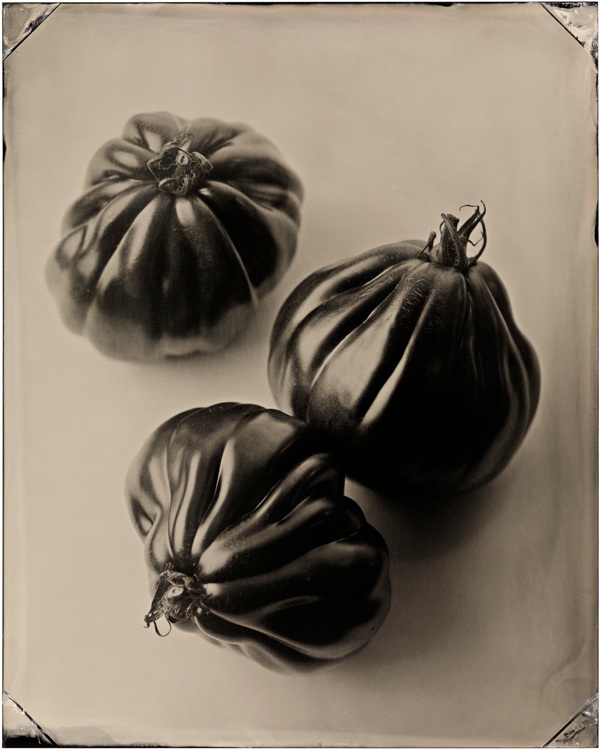
Three tomatoes
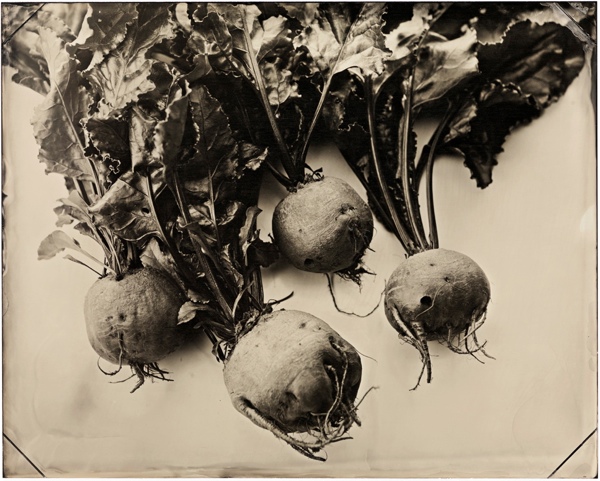
Golden beets
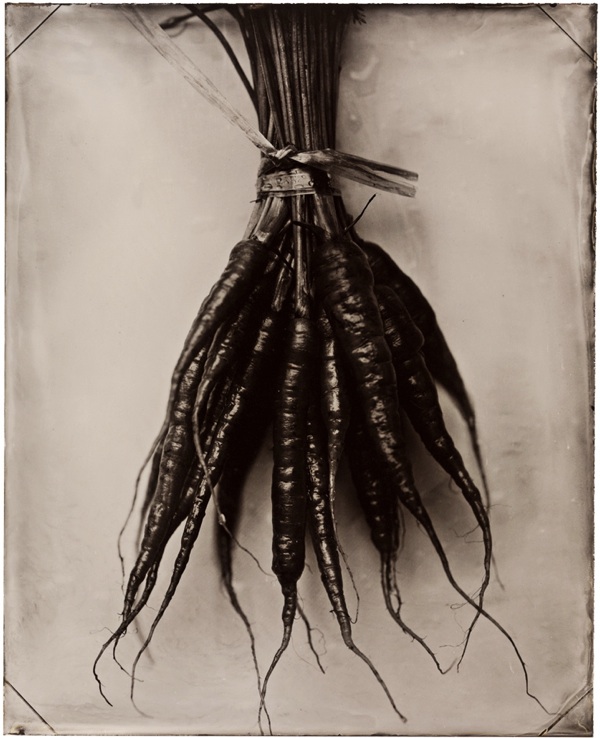
Carrots
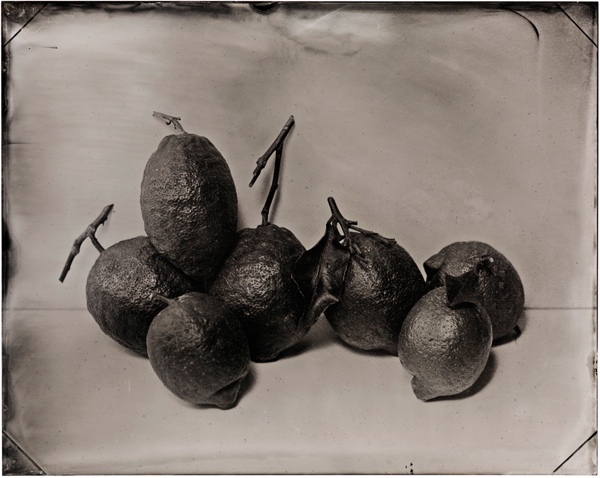
Lemons
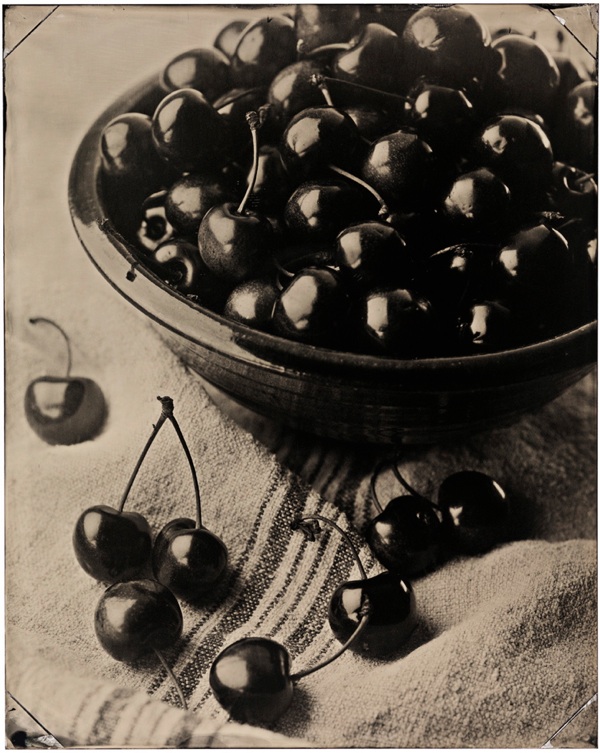
Cherries
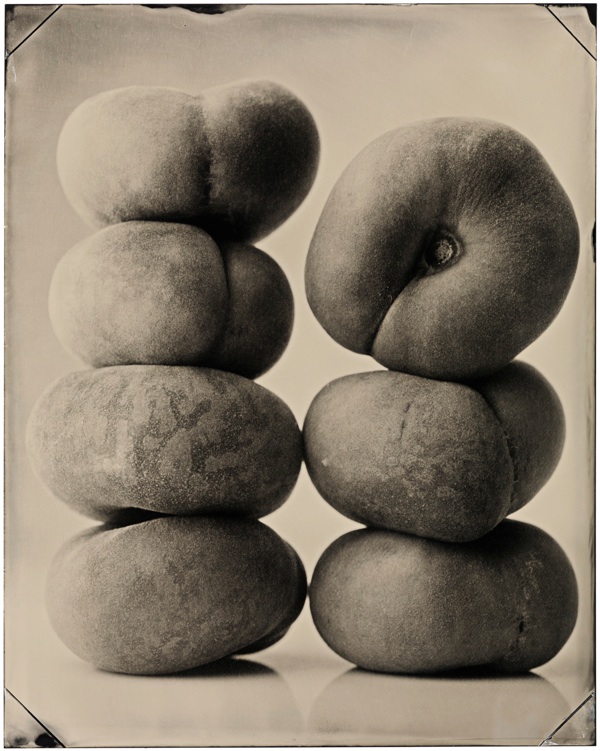
Flat peaches
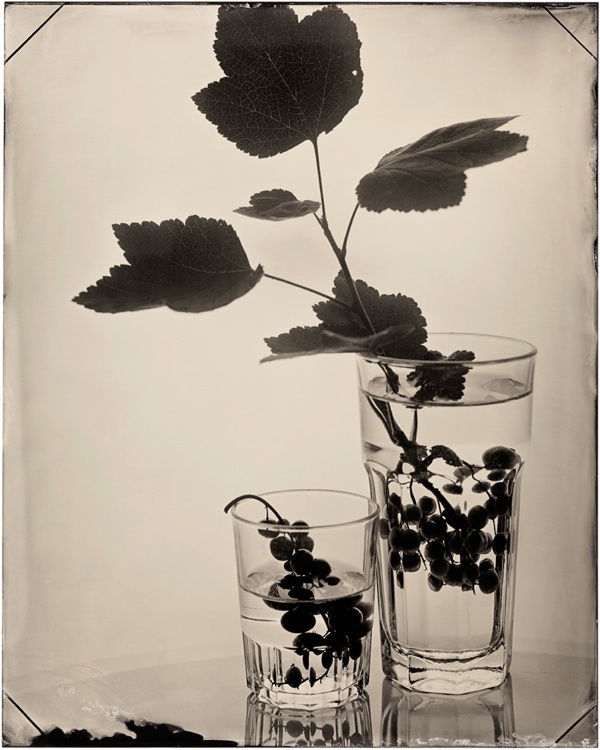
Blackcurrants
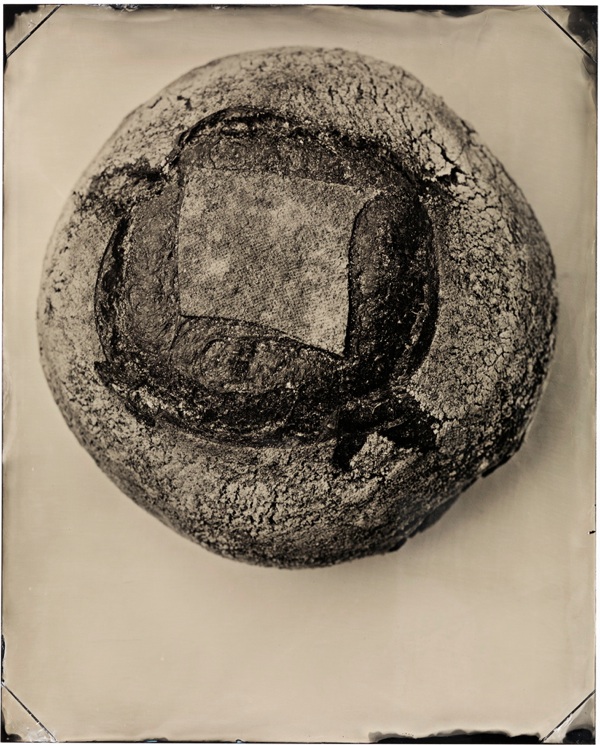
Loaf one
Loaf two
Loaf three
Loaf four
Peach danish
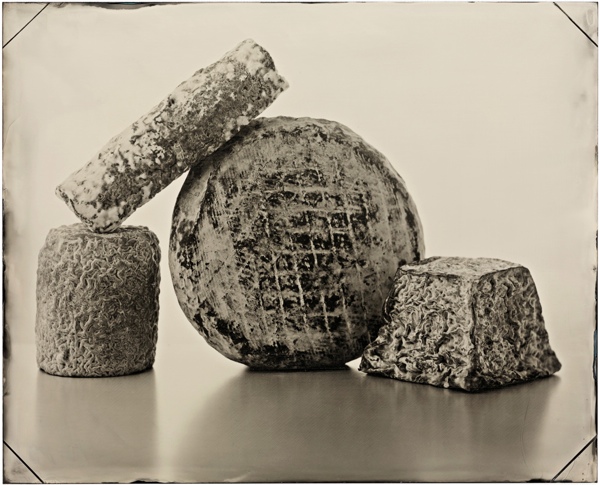
Goat cheese
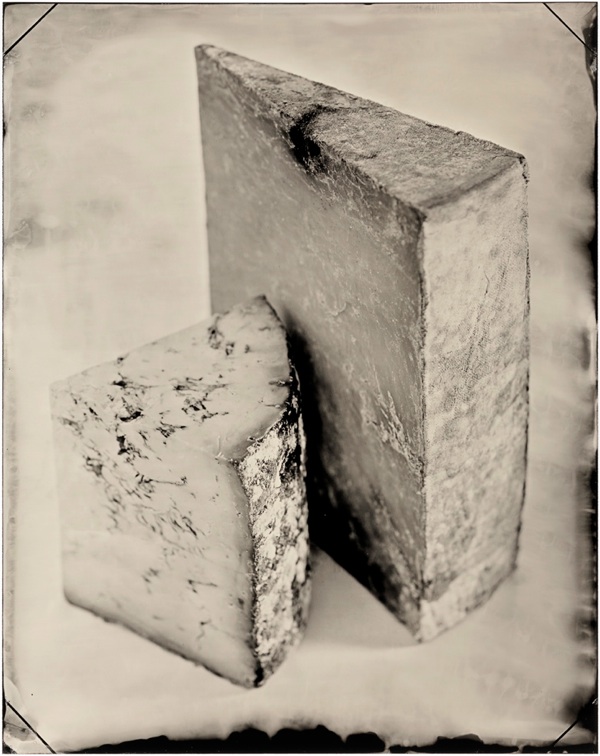
Cheddar and stilton
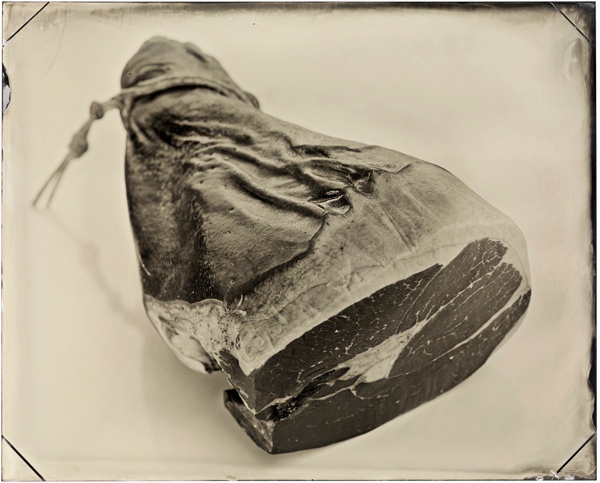
Ham
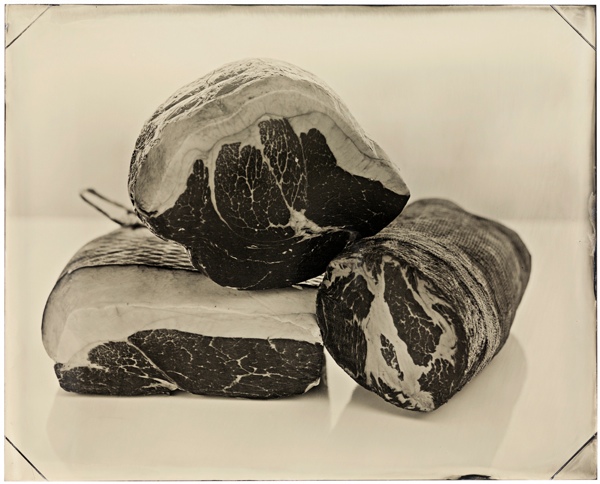
Three hams
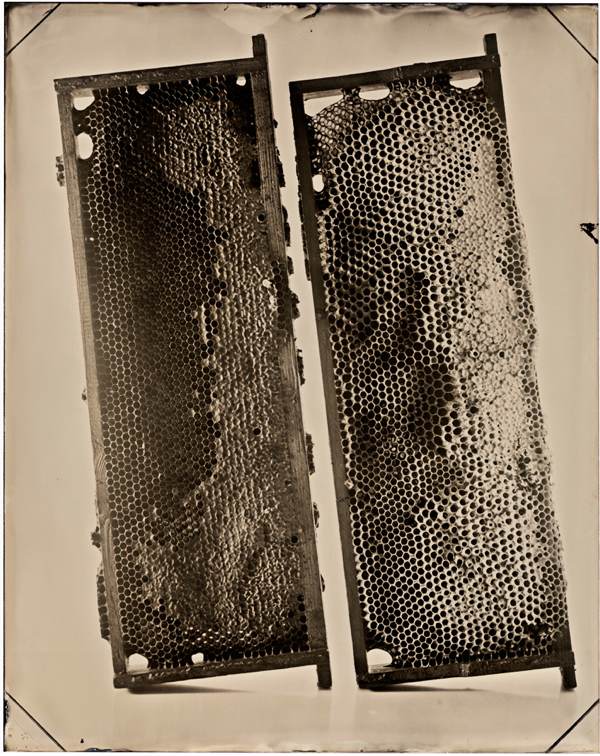
Honeycombs
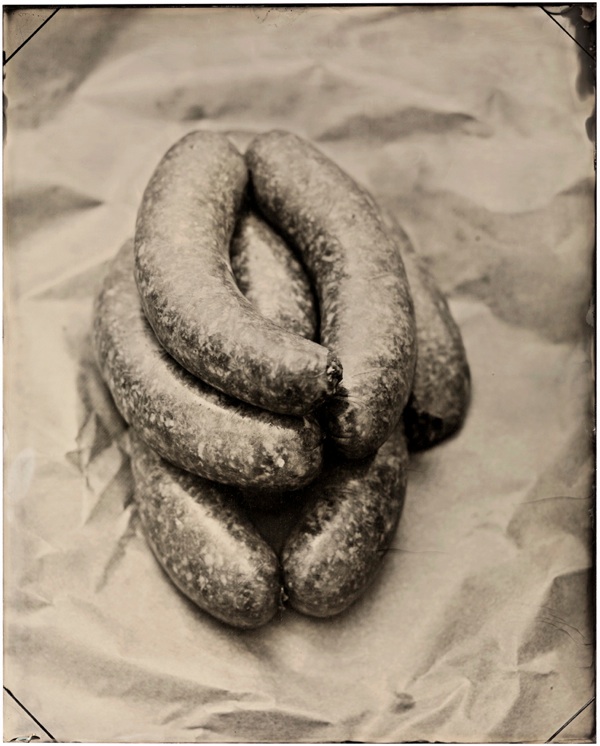
Sausages
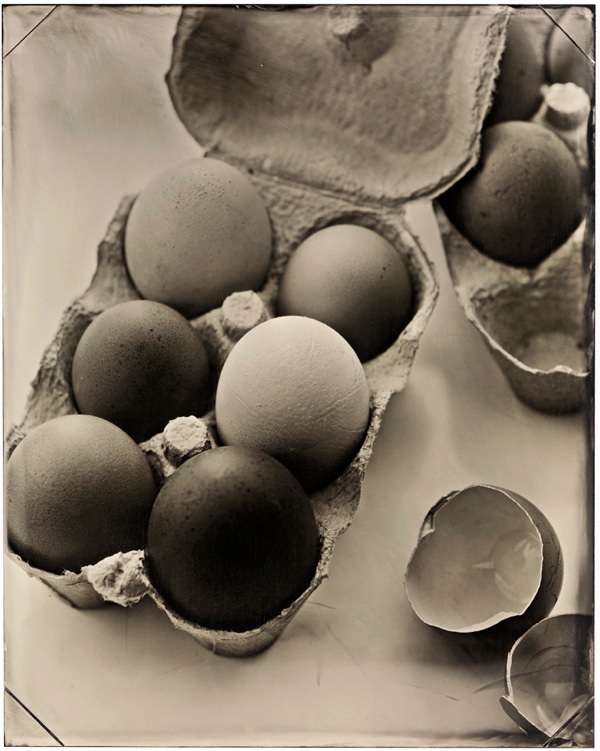
Eggs
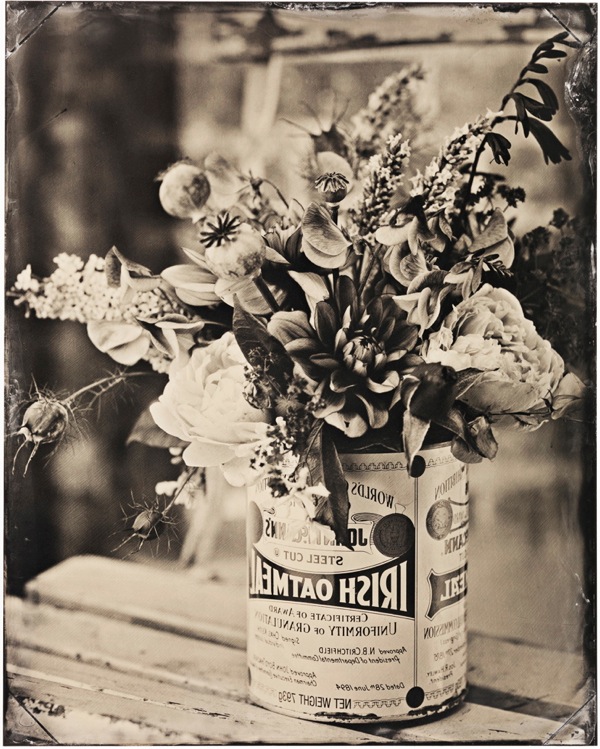
Flowers
Photographs copyright © Tif Hunter
ON MALTBY STREET 2011 – Polaroids & Tintypes by TIF HUNTER, runs from 20th October until 3rd November at 18a Wild’s Rents, Bermondsey, SE1 4QG. Saturday & Sunday, 10am-6pm. Tuesday – Friday, 2pm – 7pm. Closed Mondays.
You may also like to see
Tif Hunter’s Maltby St Portraits (Part One)
Tif Hunter’s Maltby St Portraits (Part Two)
and
Nicholas Culpeper in Spitalfields
Celebrating the birthday today of Nicholas Culpeper (1616-1654), it is my pleasure to publish this portrait of the famous herbalist of Spitalfields by Patricia Cleveland-Peck, gardener and writer.
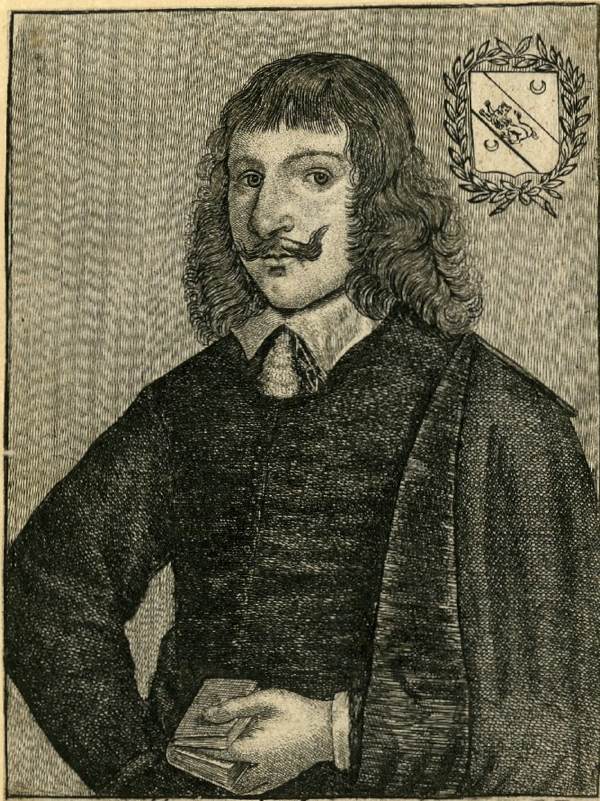
Of all Spitalfields’ past residents, one name stands out above others – Nicholas Culpeper, born on October 18th 1616, a herbalist and medical practitioner operating from Red Lion St (now Commercial St) who devoted his life to healing, and especially to healing the poor.
While apprenticed to the apothecary Francis Drake of Bishopsgate, Nicholas accompanied Thomas Johnson (later editor of the 1633 edition of Gerard’s Herball) on plant hunting excursions. He loved herbs since boyhood and became expert at their identification, essential in those days when almost all ailments were treated with plants. Herbals served as handbooks for doctors in which each plant was named together with its ‘virtues’ or uses. Nicholas’ skill in this subject, coupled with the fact that he was very caring, meant that the people of Spitalfields flocked to him – sometimes as many as forty a morning – and they commonly received treatment for little or no payment.
This was not popular among Nicholas Culpeper’s qualified medical colleagues who were infuriated by his view that, “no man deserved to starve to pay an insulting, insolent physician.” He also believed in “English herbs for English bodies,” and went out gathering his own herbs from the countryside for free which did not endear him to the apothecaries who often insisted on expensive imported exotic plants for their ‘cures’.
In those days, there were strict divisions between what university-educated physicians, apothecaries and barber-surgeons (who drew teeth and let blood) were allowed to do. Physicians were expensive, so for most sick people the first port of call would be their own herb garden or still room, the second the ‘wise woman’ down the road, the third a visit to the apothecary – after which, for many, there was no other option but to let the illness run its course.
In 1649, Nicholas inflamed the establishment by producing an English translation of their latin ‘bible’ the Pharmacopoeia Londinensis which included all the recipes for their medicines. Published as A Physical Directory, it not only revealed the secret ingredients but gave instructions on how to administer them – one of his most important contributions, as it provided the first effective self-help book to which people could turn.
Even more galling for the medical fraternity was the fact Nicholas had never completed his apprenticeship, and chose Spitalfields to set up a semi-legal practice because it was outside the City of London and thus not governed by the rules of the College of Physicians. Spitalfields in those days was quite different from today, beyond the site of huge priory of St Mary Spital stretched the farmland of Spital Field. The priory had been dissolved under Henry VIII although parts of the precincts were still inhabited, and it was an area which attracted outsiders like Nicholas who, as well as treating his patients, was something of a political radical. In his pamphlets, he railed against the king, priests and lawyers as well as physicians. Consequently he was no stranger to controversy and at one point was even accused of witchcraft – just one of the many troubles which accumulated to beset him during his life.
The first of these even occurred thirteen days before his life began, for it was then that his father died leaving his mother without support. She and the new-born Nicholas were obliged to return to the protection of her father, William Attersole, vicar of the little village of Isfield in Sussex. Attersole was not happy about this arrangement but, although he did not welcome the child, he did see it as his religious duty to provide instruction for him as he grew. Young Nicholas learned the scriptures and the classics, he studied mathematics and, under his grandfather’s guidance, began to take an interest in astrology which later featured in his own works. He even stole a book on anatomy out of the library (where he was only supposed to read the bible) and read it in a barn.
Importantly, he also spent a lot of time with his mother who we know owned a copy of Gerard’s Herball. She was responsible for the health of the household and, from his later works, we can glean the fact that he soon became familiar with all the local Sussex ‘simples’ or wild herbs. We know only little of this period of his life, but it is thought that he went to school in Lewes before – at the age of sixteen – setting off for Cambridge ostensibly to follow in his grandfather’s footsteps by studying theology. Once there, he began to attended lectures on anatomy and, perhaps frustrated that he couldn’t change to medicine, he spent most of his time smoking, drinking and socialising in taverns.
Yet the reason for his dropping out is a sad one. Young though he was, before leaving Sussex, Nicholas had fallen in love with Judith Rivers, a local heiress. She reciprocated his love and thus, knowing her family would never consent to the relationship, they planned to elope. They were to meet near Lewes and marry secretly, but on the way Judith’s coach was struck by lightning and she was killed. Nicholas was devastated and spent months sunk in melancholy. There was no question of his returning to Cambridge to study medicine or anything else. Eventually he chose to come to London and become an apothecary. Socially, this was a step down but he enjoyed his time at Bishopsgate and became very proficient.
Nicholas was twenty-four when he found love again. Called to treat a Mr Field for gouty arthritis, his eyes fell upon the fifteen-year-old daughter of the house, Alice. By a stroke of good fortune, she too was an heiress and it was her considerable dowry which enabled Nicholas to build a house in Red Lion St, Spitalfields from which he conducted his practice.
When the Civil War broke out two years later, the anti-royalist Nicholas signed up with Cromwell. Once his profession was discovered however, the recruiting offer commented, “We do not need you at the battlefield…come along as the field surgeon since most of the barbers and physicians are royal asses and we have use for someone to look after our injured.” Later, during the battle of Reading, Nicholas himself was wounded.
On his return to Spitalfields, he devoted himself to study and writing, and produced a number of books including a Directory for Midwives. Nicholas recognised that this was an unusual topic for a male herbalist, writing in the dedication, “If you (the matron) by your experiences find anything not according to the truth ( for I am a man and therefore subject to failings) first judge charitably of me…” Having grown up so close to his mother, Nicholas had a deep respect of women but this book may also have been inspired by some painful experiences in his own family for, although Alice bore him seven children, only one daughter lived to adulthood.
In 1652, Nicholas published his master work The English Physician also known as Culpeper’s Herbal which became the standard work for three hundred years and is still in print. It was sold cheaply and made its way to America where it had a lasting impact too. By 1665, ten years after his death, Nicholas’ name was so well-known that the Lord Mayor of London chose to use it alongside that of Sir Walter Raleigh in a pamphlet about avoiding infection from the Great Plague.
Nicholas Culpeper deserves to be remembered. He was always on the side of the underdog, he opposed the ‘closed shop’ of earlier physicians and he promoted sensible self-help. He also tried to offer reasonable explanations for what he wrote – “Neither Gerard nor Parkinson or any that ever wrote in a like manner ever gave one wise reason for what they wrote and so did nothing else but train up young novices in Physic in the School of Tradition, and teach them just as a parrot is taught… But in mine you see a reason for everything that is written.”
He died in 1654, aged only thirty-eight, of tuberculosis and is believed to be buried beneath Liverpool St Station.

Title page of the 1790 edition of Culpeper’s English Physician & Complete Herbal, published by C.Stalker, 4 Stationer’s Court, Ludgate St.


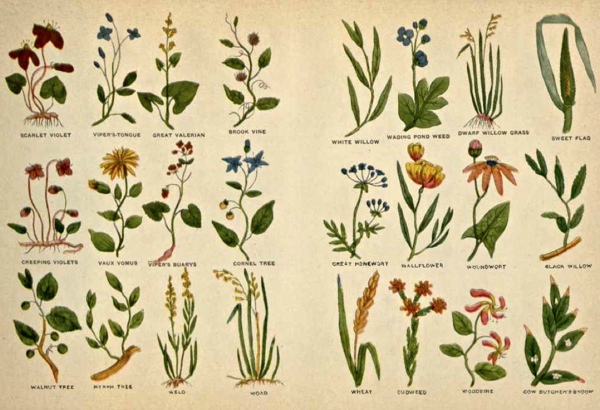


Plates from the edition published by Richard Evans, 8 White’s Row, Spitalfields, August 12th, 1814.
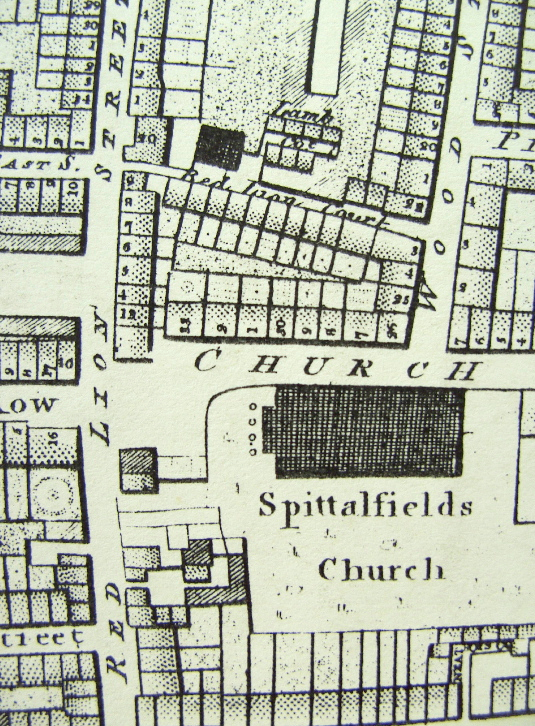
“Culpeper’s house, of which there are woodcuts extant, it is of wood, and is situated the corner of Red Lion Court and Red Lion Street, Spitalfields. It is now and has long been a public house, known by the sign of the Red Lion, but at the time it was inhabited by the sage herbalist, it was independent of other buildings. While in the occupation of Culpeper, who died in 1654, this house stood in Red Lion Field and was as a dispensary of medicines (perhaps the first) of very considerable celebrity.” The European Magazine and London Review, January 1812. Red Lion St and Red Lion Court as shown on John Horwood’s map (1794-99) before Commercial St was cut through in the nineteenth century.

Paul Bommer’s delft tile commemorating Nicholas Culpeper.
You may also like to read about
The Dogs of Spitalfields in Autumn
Spitalfields Life contributing photographer Sarah Ainslie and canine correspondent Andrew McCaldon have been out again in the parks, kicking up the leaves, enjoying the October sunshine and continuing their survey of East End dogs.
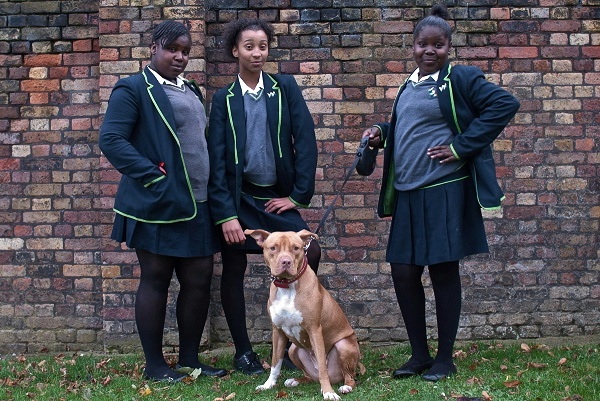
Storm (Staffordshire Bull Terrier) & Abeni & Leilah & Kermia
“We love dogs and we found Storm abandoned under a bridge. We washed her and fed her. We all liked her and we took her to the vets. She didn’t have any diseases or fleas and the vet said she was fine, so we decided to keep her.
At first she was called ‘Lightning’ but then we heard of another dog called that, so we changed her name to ‘Storm’ – we called her Storm because she’s so fast.
We also have a cat and a parrot at home. We used to have a rat too but the cat killed it. We’re all of us friends and Storm’s another member of the family. Things are different for us now we have her – life is happier.”
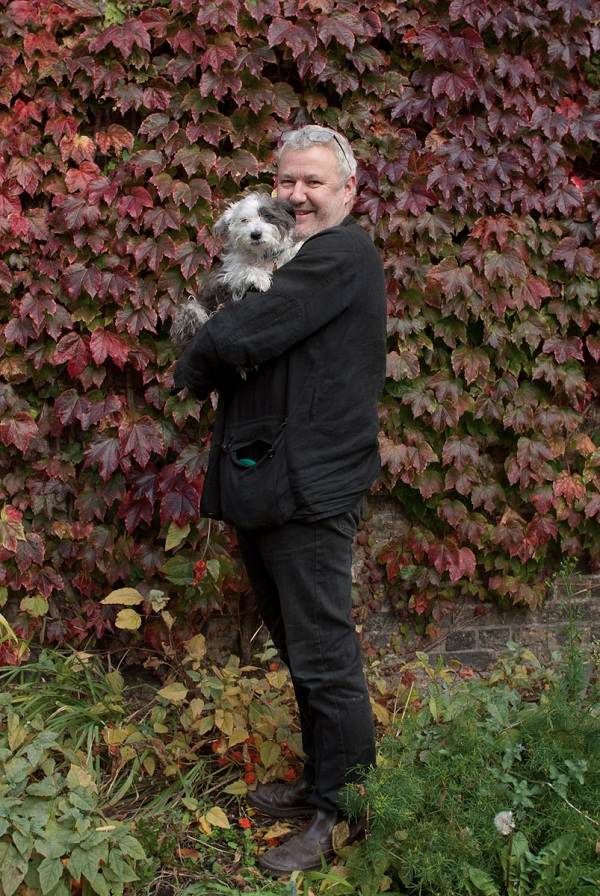
Glider (Chinese Crested/Yorkshire Terrier/Jack Russell cross) & Simon Rees
“It’s her birthday – she’s thirteen today!
She’s a bit deaf now and if she sees a pair of heels she just follows them. In Cambridge, she went off with a jogger one day – it took a lot of running before I eventually caught up with them both.
She has some sort of brain abnormality. I saw the result of the CAT scan, there was a huge mass on her brain and I was told she’d only have two weeks to live. That was five years ago and in fact, other than making her epileptic – thankfully – it hasn’t had any other affect.
You know, I’m never sure if Glider likes these walks or whether the real trigger for going out is the food she knows she’ll get afterwards.”
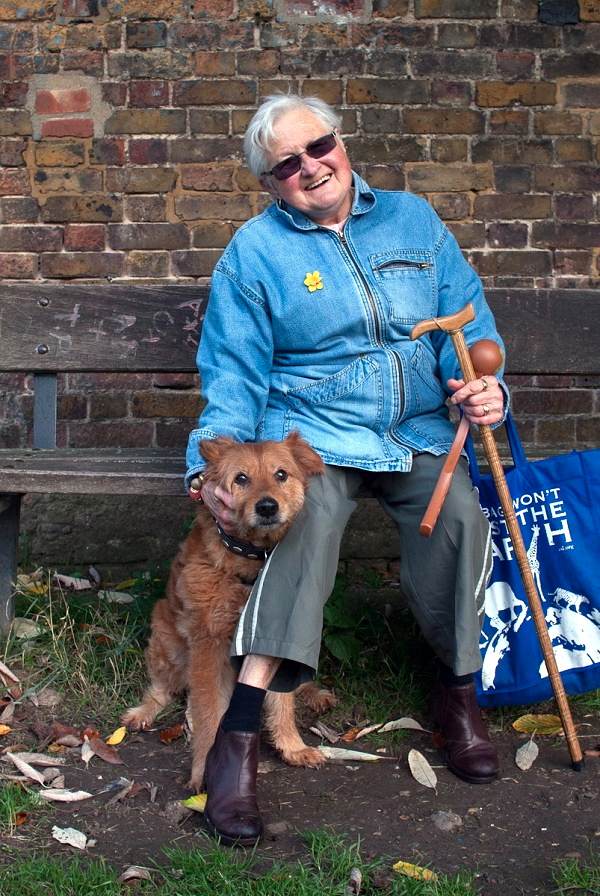
Rusty (Collie/Doberman cross) & Catherine Ray
“You wouldn’t believe his father was a Doberman, would you? But under his fur are black hairs. He’s twelve years old too but when I have him shaved off, every three months or so, people think he’s a pup.
They call me ‘The Biscuit Woman’ because I give all the dogs in the park little treats. The dogs were always trying to get into my pockets though, so now I have to keep the biscuits in a container.
My previous dog, Troy, was with me for fourteen years. When it came time for him to be put to sleep, I didn’t have the money and I wasn’t getting benefits around here, so I had to take him on the number eight bus all the way to place near Victoria. I met a woman on the bus and it was breaking her heart to see us. She put me in a taxi, paid the driver and said, ‘Take this woman where she needs to go.’
Now I’ve got Rusty with me. You see, a few years ago I buried my daughter and then I lost my husband and my brother in the space of a year. So Rusty’s company for me now.”
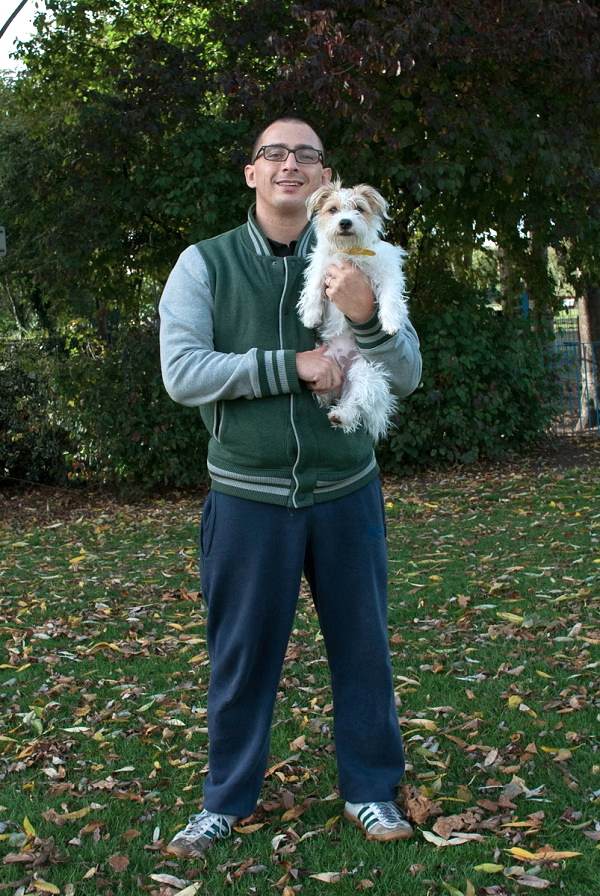
Clotty (Long-haired Jack Russell) & Gian Paolo Gori
“She’s sweet, polite and hyper. That’s because she’s a Jack Russell – she never tires and she really keeps me in training.
She’s clever too. We never had to struggle to teach her anything. She trained herself to fetch balls by putting them at the top of the stairs, letting them roll down and then taking them up to the top again.
Clotty has her meals cooked for her, usually beef or lamb mincemeat with some rice and vegetables, like carrots, broccoli or peas. I make cookies for her too, with ingredients like rice, flour, parsley, eggs and liver!”
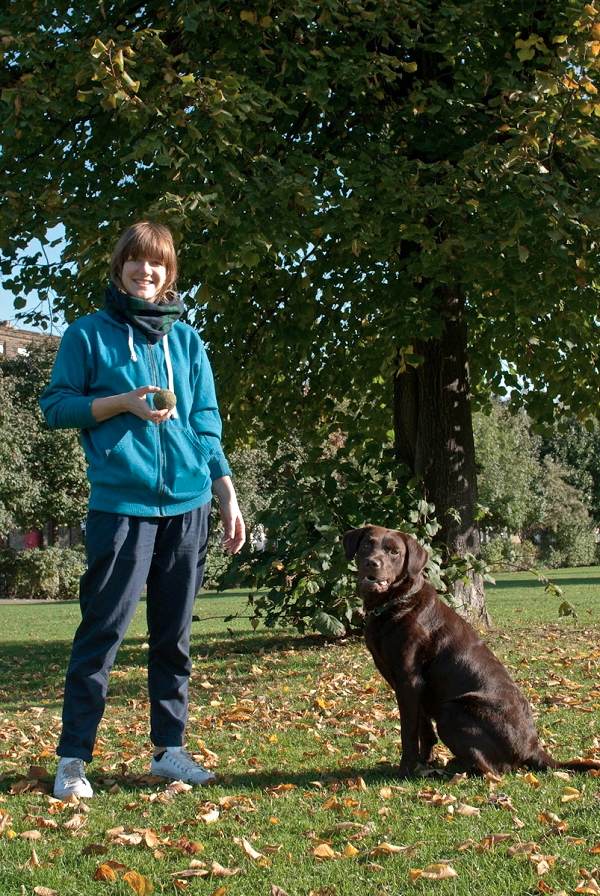
Roxy (Labrador) & Ali Mclean
“Roxy’s so playful today! Horses get friskier when it starts getting colder – so maybe the same thing happens with dogs?
She’s two years old and she’s my first dog since I’ve been living in London. I grew up in Aberdeen where we always had dogs and I went back to Scotland to get Roxy, as my friend owns her father. So she’s a piece of home and it’s nice to have that connection.
I share the responsibility for Roxy with my boyfriend, which is good because she’s got so much energy. She needs three hours walking a day – at least.”
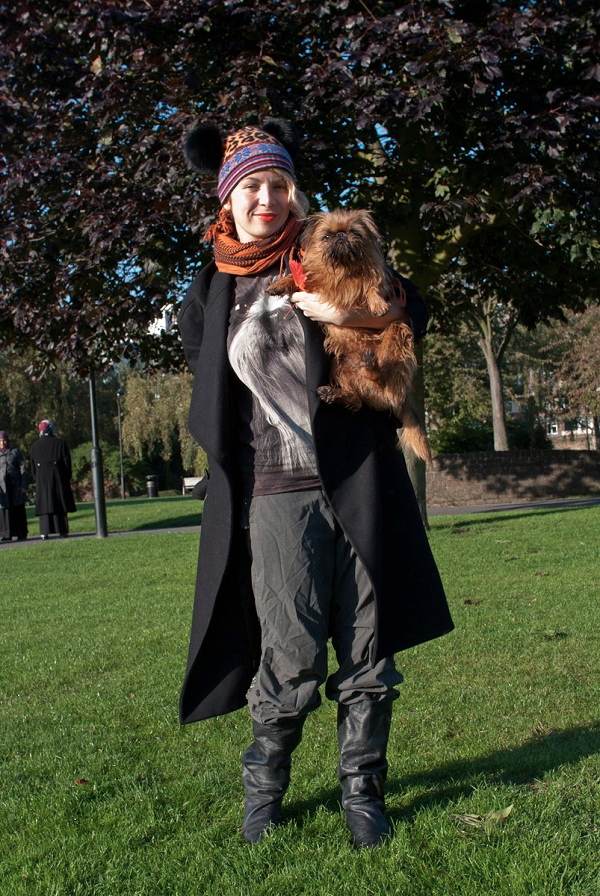
Anatole (Brussels Griffon) & Natasha Mason
“His full name is Anatole Wolfrus Zucowsky the Second. He was named after my Dad.
Out of all the breeds, Griffons are supposed to have the most human features and their character traits include having a big heart and an air of self importance! My Mum skypes Anatole from Spain and she’s already had her call this morning. She gives him a virtual tummy rub and I have to provide the real thing at the other end.
Having a dog has led to so much for me – I’ve been organising dog shows, I want to start a dog magazine and I’m about to go out to India to train as a canine behaviourist.
I’ve invented a new word – ‘dogalyst.’ A catalyst is something that causes a change, so a dogalyst is when a dog changes your life. Dogs have changed mine.”
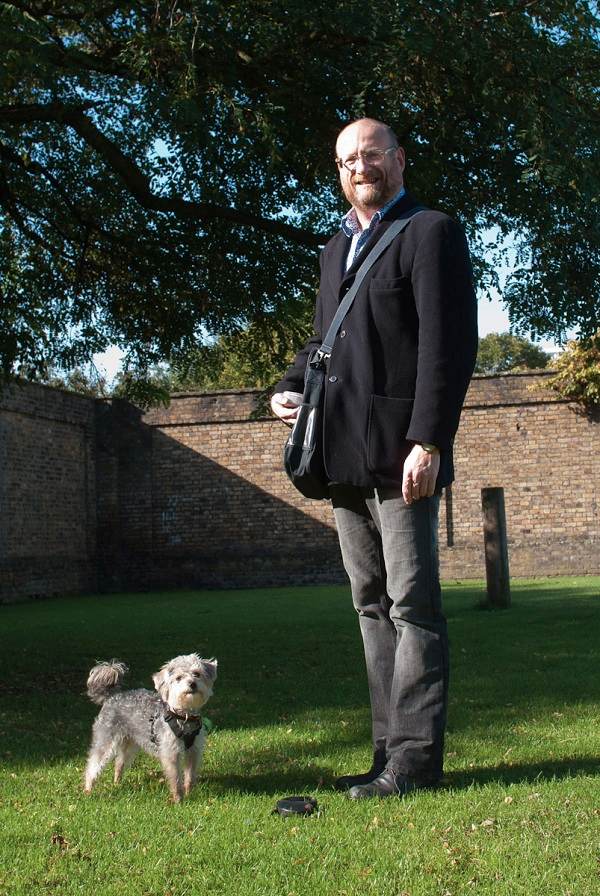
Maudie (Toy Poodle/Yorkshire Terrier cross) & Glenn Cleary
“I’m an only child and everyone in my family died, so I had nowhere for my feelings to go. Then I got Maudie. Now, I don’t have a life of my own.
When I was young there was an aristocratic cartoon character in the newspapers called Maudie Littlehampton, drawn by Osbert Lancaster. I loved her and I thought it was a fun name to give my dog.
Although she’s small, Maudie’s one of the fastest dogs in the park, other dogs give up chasing her because she doesn’t give them a chance.
I had a hip replacement, and I wanted a dog that didn’t pull me over – but instead I got one that trips me up.”

Max (German Shepherd) & Joe
“My granddaughter wanted a German Shepherd. Max was the runt of the litter and we really had to build him up.
He’s very fussy though, he doesn’t mind if it starts to rain while we’re out, but if it’s already raining before we leave he just won’t go anywhere.
I’m retired now. I was shafted and forced to leave my job, but actually it was the best thing that ever happened to me. These days, Max is my pastime. He’s my baby.”
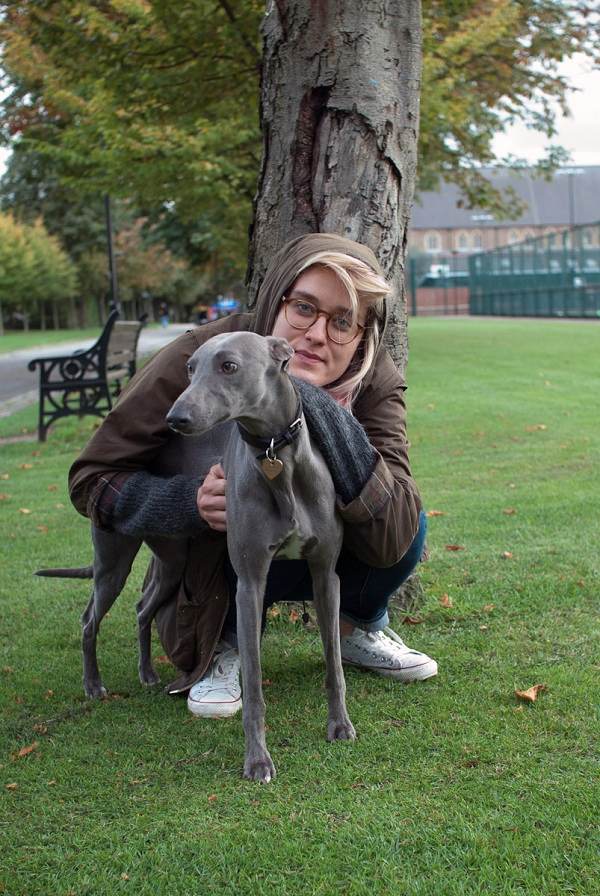
Horace (Blue Whippet) & Agatha
“Although I’m a photographer, Horace is very camera-shy, he’ll always look away when anyone takes a picture.
Horace comes with me for my work. He’s only three but he’s very well travelled. He’s got his own passport, has been to Paris and he loved the train to St. Petersburg. I used to take him on the tube and buses when he was a puppy, I wanted him to get used to the idea. It worked wonders – now he’s obsessed with trains.
I’m a very active person and that’s why I chose to get a whippet. I love watching Horace run.”
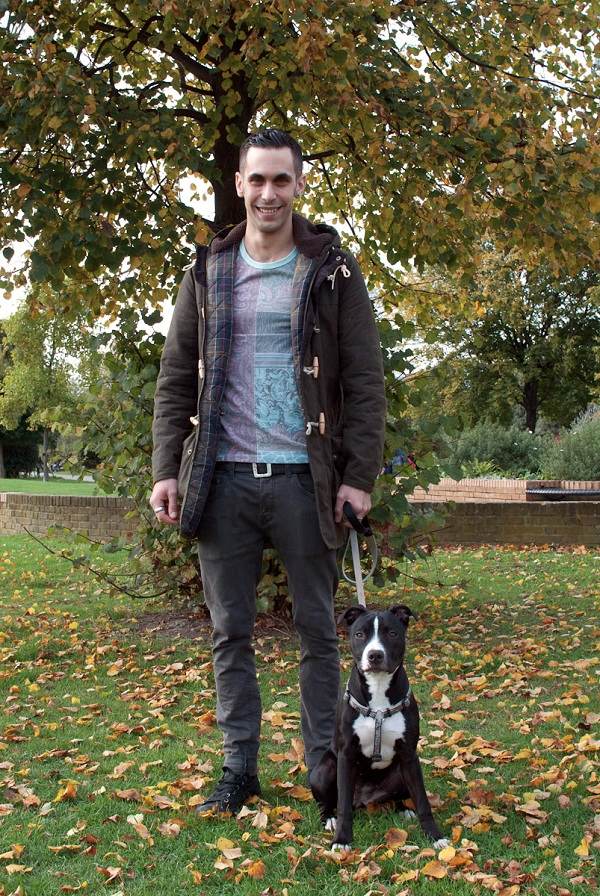
Mary Jane (Staffordshire Bull Terrier) & Riccardo Raia
“I am from Milano but life is hard in Italy in right now and there are no jobs for young people.
I came here alone and I wanted some company, so I found Mary Jane. I had another dog called ‘Blue’ in Italy but now my parents are looking after him. I would like to bring him here so they can be together.
Owning a dog here is better than at home. There’s a lot of parks and everyone loves dogs here. I’m very happy to now be part of London and, of course, Mary Jane is a British breed of dog!”

Neen (Lurcher) & Caroline Meadows & Bertie
“Neen is a rescue dog. I was driving to the Dogs Trust to look for a dog and saw Neen walking along a main road, looking very skinny and frightened. I had a tin of dog food in the back of the car and that’s how I managed to attract him. He had no microchip, no collar and I handed him into the police but no one claimed him, so he came to live with us.
We lived in a village in the Peak District until this January. It was a beautiful place, but of course dogs don’t care about gorgeous scenery. Neen prefers living here, where he can scavenge and there’s lots more different smells.
I think it will be great for Bertie to grow up with a dog. Children love animals, so many songs and books are about animals, and now he’ll have the real thing.”
Photographs copyright © Sarah Ainslie
The Dogs of Spitalfields in Spring
Nazir Tanbouli, Painter

“I was born into a family of painters, I’m the third generation,” Nazir Tanbouli revealed to me, “But when I came to London from Alexandria ten years ago as a thirty-one year old painter, I found it was impossible to get the chance show my paintings.”
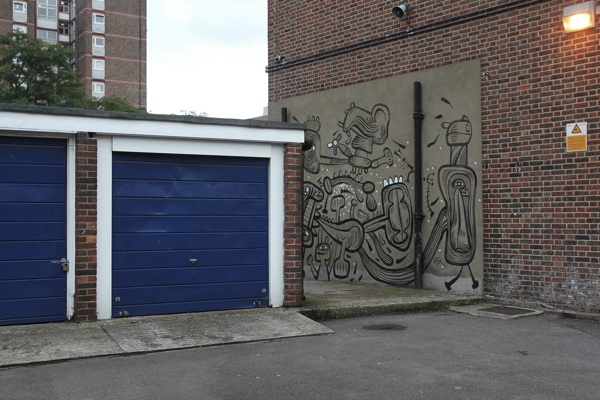
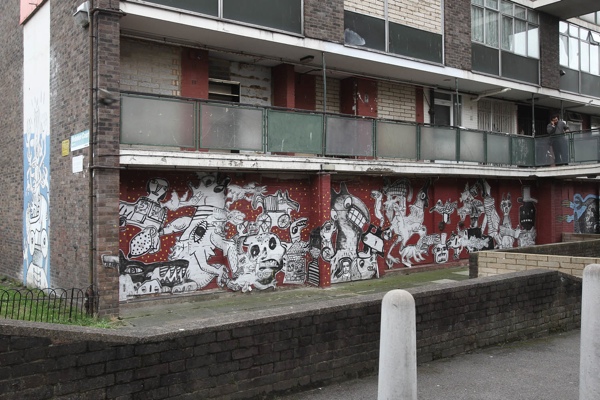
We were walking around the Kingsland Estate in Haggerston, a housing development built in 1952, expressing the optimism of the year of the Queen’s Coronation, and now pending demolition in 2012, the year of the Queen’s Diamond Jubilee. Most of the windows were bricked up in the decayed modernist blocks, with only the last die-hard residents awaiting the end of days. But in the meantime, Nazir has cunningly adorned the structures with a monumental series of murals. Counteracting the melancholy of dereliction, they brought the world to wonder at the poignant spectacle this summer, winning Nazir the audience he always sought for his work. Now that the crowds and news-crews have been and gone, Spitalfields Life Contributing Photographer Simon Mooney and I decided it was time to take a look for ourselves.
“I was always attracted to draw bigger than myself, “ Nazir admitted with an unapologetic grin,“When I was two years old, I was in my uncle’s studio and I destroyed his new canvas by drawing on it while he went out to get some cigarettes.” The Kingsland Estate murals saw the fulfilment of Nazir’s ambition to work on a large scale, painting fourteen buildings in three months and battling the inclement weather to finish in time for the scheduled demolition on the first of July. “After ten years of no maintenance and neglect, the flats were sold to a housing association, who are knocking some down and building some new,” Nazir told me, bemused that the long-awaited demolition is currently in abeyance, “My work was a reaction against their slow death, making the place fresh before they knocked it down, but since they haven’t knocked it down yet it has now entered another phase of slow death.”
We stood in front of the paper and paste mural that was the first of Nazir’s phantasmagorical Kingsland Estate murals. “It’s a lot of teeth, it’s a lot of bulging eyes and there’s a lot of tragedy but it’s communicated in a semi-comic way, “ he assured me as I cast my eyes at the grotesque faces coming at me from every direction, erupting like the angry spirits of the bricked-up buildings. “I used glue that cost me thirty pounds a bucket for this and it stayed,” he explained, before gesturing around sadly to the empty walls that surrounded it, “And I used glue that cost me two pounds a bucket for these and they’re gone – but the whole project only cost me £400.”
“Every entrance to the Estate had to have something to invite people in. I wanted them to become part of the experience and not just an audience. You see one picture and then another in the distance, and you find yourself in a labyrinth.” Nazir continued, as we turned a corner to arrive at the first of the painted murals that he did, using salvaged paint upon the base coat of the wall which had been painted blood red. On that rainy autumn afternoon, the bricked-up edifices which surrounded us gave the appearance of tombs sealed against grave robbers, yet Nazir’s paintings brought rampant chaotic life, manifesting creatures that crawled from the murky world of myth and the subconscious, creatures that would not be denied your attention. Creatures that challenged the rationalism which led to the conception of these little boxes stacked-up for people to live in.
Nazir’s studio is at the heart of the Estate, on the ground floor of Hebden Court, where he shivers now in a building without heating that has emptied out of tenants. I asked him how long before the flats will at last be demolished and he pointed to the new structure across the yard. “When the red building is complete,” he said, indicating the top floor flat that he is waiting to move into. Until then, Nazir is doing paintings to keep warm. “Drawing is like thinking on paper, but painting is a physical activity,” he informed me, “So, at this time of year, I come in and start painting at once or I get cold.”
On our walk, Nazir reserved his fondest affection for a painting in ink on concrete, a dynamic medium which permitted no error or correction and produced an absorbency of line not unlike ink on paper. He stood next to the wall, almost caressing it. “I’m not an artist if I cannot deliver something that people need daily, like the butcher and the baker do.” he declared, thinking out loud, and surrounded by the monsters that he both conjured and exorcised, “My purpose is to get rid of bad things. I am not an artist in residence, I am the resident who is an artist.”






Photographs copyright © Simon Mooney
Visitors are welcome to visit Nazir Tanbouli’s studio at 75 Hebden Court, Laburnum St, Haggerston E2 8BG, open each Friday, Saturday and Sunday from 2-6pm.
You may also like to read about