
At The Mansion House

Contributing Photographer Rachel Ferriman & I were granted the privilege of a visit to the Mansion House designed by George Dance the Elder (1739) in the City of London. I use the word privilege because this gleaming palace that serves as the official residence of the Lord Mayor of the City is an embodiment of the notion. Lest there should be any doubt, Robert Taylor’s sculptures on the pediment proclaim it by representing a female figure personifying the City triumphant, trampling the figure of Envy beneath her feet while receiving the bounty of the earth in a cornucopia delivered by another allegorical figure.
The weight of history is inescapable here. ‘This is the vortex and whirlpool, the centre of human life today on the earth,’ wrote Richard Jefferies in 1883 of the crossroads where the Bank of England, the Royal Exchange and the Mansion House face each other to form a triangle of powerful institutions. No-one would make the same comment today now that the traffic haas thinned out and the Empire is no more.
Arriving at the service entrance demystifies the pomp, just as it would if you entered the kitchen door of a restaurant or the stage door of a big theatre. Here is the vault where a vast array of the gold and silver is stored for the grand dinners, watched over by Plate Butler Andrew Ford who kindly points out Queen Elizabeth I’s sword and the chain of office believed to have been worn by Thomas More, lest you miss these astonishing personal artefacts amidst the dazzling bling. Leading off from the low vaulted passages are old wooden doors that led to holding cells in the days when the Mansion House served as a court of law. Emmeline Pankhurst was imprisoned here in the women’s cell known as the ‘birdcage.’
Ascending to the public spaces, you encounter the vast Salon at the centre of the building that was once an open courtyard. It is riot of pillars and plasterwork, highlighted in gilt and illuminated by massive crystal chandeliers. This is where Anne Fanshawe would have been seen in her dress of Spitalfields silk at the inauguration when her father Crisp Gascoyne became Lord Mayor in 1752.
From here you proceed to the galleried Egyptian Hall laid out for a banquet of over a hundred, where minions check that knives and forks are laid correctly while keeping an eye on the lustrous gold metalware adorning the long tables. Here the Chancellor gives the annual Mansion House speech, outlining the state of the economy.
On the other side of the building is the Old Ballroom with an impressive coffered ceiling embellished with rosettes and the largest sash window I ever saw. A door leads directly from the Ballroom to the State Bedroom which offers a startling juxtaposition between the public and the private while delivering luxurious convenience for an individual of high status. Although the furnishing of this room is a recreation apart from the Thomas Sheraton furniture, I found it the most evocative space where any manner of liaison might be envisioned by one with a colourful imagination.
Studying Sally Jeffery’s definitive architectural history of the Mansion House revealed how much the building and its interiors have been transformed through time, with the most recent renovation being in 1991. I could not resist an equivocal response. On one hand, the place fills me with fascination and respect for the breathtaking paintings and sculptures, and the superlative design and craft skills expended in the creation of such a wonder. On the other, I cannot wholeheartedly accept the celebration of imperial power that is embodied here. Yet despite my reservations, the Mansion House still does its job as an events venue for those City institutions whose guests seek the affirmation of status that these interiors are designed to celebrate.

The North-West Staircase

The Saloon

The Saloon

The Saloon

The north Drawing Room with reinstated 19th century colour scheme

The North-West Drawing Room


The Lord Mayor’s office

The North-West State Bedroom with furniture by Thomas Sheraton, conveniently adjacent to the Old Ballroom permitting monarchs or other important guests a private retreat

The Egyptian Hall

The Egyptian Hall

The Egyptian Hall

The Egyptian Hall

The Egyptian Hall

The Egyptian Hall

The Old Ballroom

The Old Ballroom
 Caroline Jack, Director of Mansion House at the large sash window at the end of the Old Ballroom

At the centre is a sword belonging to Elizabeth I
 Andrew Ford, Plate Butler in the vault

Door to one of the holding cells, where Emmeline Pankhurst was held prior to trial

Watchman’s chair in the vestibule
Photographs copyright © Rachel Ferriman
With thanks to Caroline Jack, Director of the Mansion House
You may also like to read about
At The Golden Heart
Photographer Phil Maxwell knows that the centre of the universe in Spitalfields is The Golden Heart on the corner of Hanbury St and Commercial St where publican Sandra Esqulant, hula-hoop champion and spiritual mother of our community, has presided for more than forty years.

“I cannot count the number of times I have said, “Wouldn’t it be great to go for a pint at The Golden Heart?” Relaxing with a drink and snatching a few moments with my friend Sandra has always been one of life’s great pleasures. Some of these photographs were taken as I drank a pint of real ale outside the ‘Heart’ with my partner Hazuan Hashim. If you enjoy people watching, then there is nowhere better in Spitalfields than the pavement outside The Golden Heart.”
Phil Maxwell


Photographs copyright © Phil Maxwell
Follow Phil Maxwell’s blog Playground of an East End Photographer
See more of Phil Maxwell’s work here
Phil Maxwell’s Kids on the Street
Phil Maxwell & Sandra Esqulant, Photographer & Muse
More of Phil Maxwell’s Old Ladies
Phil Maxwell’s Old Ladies in Colour
In Old Globetown

I took advantage of rare hours of January sunlight to take a stroll over to Globetown. You walk east from Museum Gardens in Bethnal Green through Sugar Loaf Walk and immediately recognise you have entered a different neighbourhood, where an atmosphere of domestic quietude prevails in distinct contrast to the clamour you encountered at the junction of Bethnal Green Rd and Cambridge Heath Rd. Cats prowl the empty streets while the residents are either snug in their homes or enjoying a long afternoon in The Camel or The Florists’ Arms.
This former marshland bisected by Globe Lane – now Globe Rd – takes its name from a old tavern that once stood here. The area was built up in the early nineteenth century by exploitative developers, throwing up poor quality homes for weavers on low incomes. Before long, commentators were comparing the notorious Globetown slum with Saffron Hill and St Giles High St. Consequently, most of the good quality nineteenth century building that remains today was constructed as social housing to alleviate the legacy of this poor development.
In Globe Rd, the first structure that you come upon is the handsome red brick Merceron Houses constructed by East End Dwellings Company in 1901. It was built upon the garden of Joseph Merceron, the most reprehensible eighteenth century resident of Bethnal Green, whose notoriety had faded by the end of the nineteenth century. Across the road is a modest sequence of terraces of workers’ cottages in the Arts & Crafts style from 1906 and, directly to the south, towers the handsome Board School with Mendip House and Shepton House beyond. All these buildings were the work of East End Dwellings Company and together they form a sympathetic complex of streets on a human scale, with The Camel adorned with its attractive Art Nouveau tiles at the centre.
Walking south and turning east into the Roman Rd, I was dismayed to discover the beloved Victoria Fish Bar has closed forever. After a lifetime of service behind the fryer, the proprietors have finally retired. On Sunday, Globetown Market Sq was empty but on weekdays this is a popular destination with stalls of keenly-priced fresh produce and the East End’s best wet fish barrow run by Del Downey, third generation fishmonger in this location.
I walked north up Bonner St and turned west again at the former Bishop Bonner pub into Cyprus St, built in a distinctly aspiration style as ‘Wellington St’ in 1850, still remembered in the name of the former Duke of Wellington pub. This is an astonishing and handsome example of an unaltered mid-nineteenth century streetscape.
These distinguished nineteenth century survivals are surrounded by twentieth century housing of greater and lesser quality, evidencing the continuing struggle to overcome the grim legacy of exploitative development – both historical and recent – and give everyone in the East End a decent home.

The Camel on Sugar Loaf Walk dates from before 1861 when it was named as the Museum Beer Shop

Cottages built by East End Dwellings company in Globe Rd


In Gawber Rd


Board School of 1900 in Welwyn St

Open staircase at Mendip Dwellings built by East End Dwellings Company in 1900

The Florists’ Arms in Globe Rd dates from before 1871 and its name refers to the former local culture of competitive flower growing introduced by the Huguenots

The Victoria Fish Bar in Roman Rd has closed forever

The Bishop Bonner, Bonner St, dates from before 1863 and its name refers to Bishop Bonner whose palace formerly stood nearby on the site of the London Chest Hospital

In Cyprus St


Memorial to former residents of Cyprus St who died in war – Bethnal Green provided the highest number of volunteers of any London borough in the First World War

Drinking fountain in Museum Gardens
You may also like to take a look at
John Thomas Smith’s Antient Topography

Bethelem Hospital with London Wall in Foreground – Drawn June 1812
Two centuries ago, John Thomas Smith set out to record the last vestiges of ancient London that survived from before the Great Fire of 1666 but which were vanishing in his lifetime. You can click on any of these images to enlarge them and study the tender human detail that Smith recorded in these splendid etchings he made from his own drawings. My passion for John Thomas Smith’s work was first ignited by his portraits of raffish street sellers published as Vagabondiana and I was delighted to spot several of those familiar characters included here in these vivid street scenes of London long ago.
Click on any of these images to enlarge

Bethel Hospital seen from London Wall – Drawn August 1844

Old House in Sweedon’s Passage, Grub St – Drawn July 1791, Taken Down March 1805

Old House in Sweedon’s Passage, Grub St – Drawn July 1791, Taken Down March 1805

London Wall in Churchyard of St Giles’ Cripplegate – Drawn 1793, Taken Down 1803

Houses on the Corner of Chancery Lane & Fleet St – Drawn August 1789, Taken Down May 1799

Houses in Leadenhall St – Drawn July 1796

Duke St, West Smithfield – Drawn July 1807, Taken Down October 1809

Corner of Hosier Lane, West Smithfield – Drawn April 1795

Houses on the South Side of London Wall – Drawn March 1808

Houses on West Side of Little Moorfields – Drawn May 1810

Magnificent Mansion in Hart St, Crutched Friars – Drawn May 1792, Taken Down 1801

Walls of the Convent of St Clare, Minories – Drawn April 1797

Watch Tower Discovered Near Ludgate Hill – Drawn June 1792

An Arch of London Bridge in the Great Frost – Drawn February 5th 1814
Images courtesy Bishopsgate Institute
You may also like to take a look at
John Thomas Smith’s Vagabondiana
Orange Wrappers
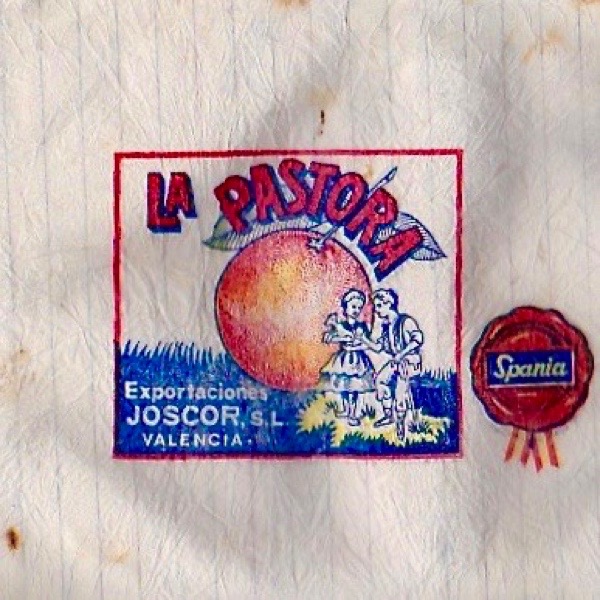
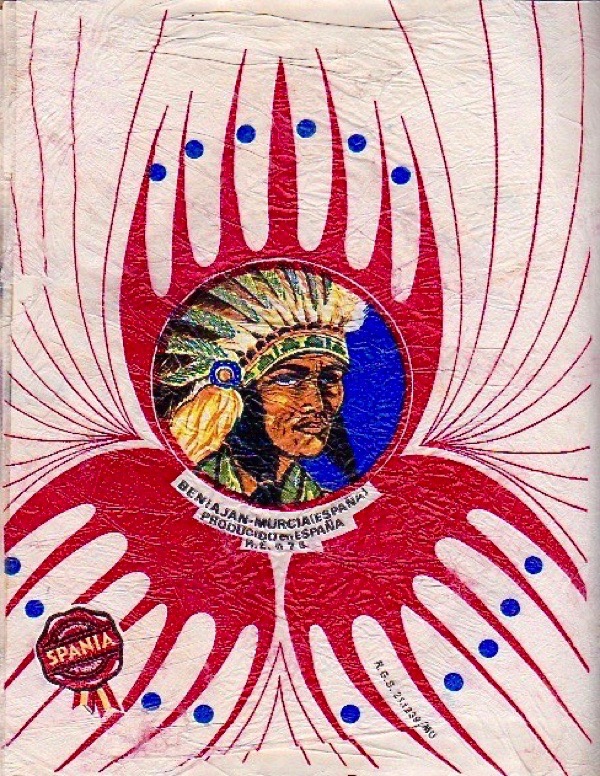
This is the season for oranges and lemons, when every morning I begin the day by consuming a juicy blood orange. So I was more than delighted when Keren McConnell kindly sent me her glorious fruit wrapper collection from the seventies to share with you.
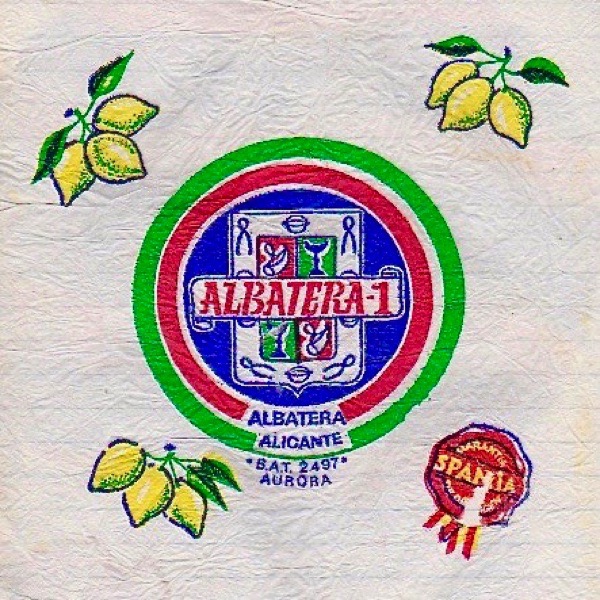
“I started collecting fruit papers when I was six years old, possibly inspired by a holiday in Spain in 1971. Most of the papers stuck in my small scrapbook were picked up while shopping for groceries with my mother at the local greengrocers in Blackheath. I think they reminded me of that holiday with their bright and graphic imagery.
I was drawn to the designs and texture and feel of the crinkly tissue paper. I also collected carrier bags and paper bags for their graphics, but this collection did not survive all our house moves.
Who knows? This book of fruit papers may have even informed my career. I became a print and graphics designer for fashion brands and retailers, sometimes using this scrapbook as reference material to inspire a T-shirt design.
As a child, particular favourites were the designs depicting animals, beautiful ladies and the smiling face on the Sicilian lemon is particularly appealing. I have no idea why the Tower of London was on a fruit paper from Spain. Perhaps the designer thought London was an exotic place, just as I had found Spain so exotic? Some of the designs seem to have been inspired by sport, such as horse racing and Formula One.
Are children today inclined to make collections like this? Mine was born out of boredom, particularly on wet Sundays when the days felt so long.”
Keren McConnell






You may also like to take a look at
T. Venables & Sons’ Almanack
In case you do not have an almanack yet for the new year, I am publishing this from T. Venables & Sons, Whitechapel, courtesy of Philip Mernick. This is an especially useful one because it includes a catalogue of drapery, carpets and furniture, as well as cab fares from Whitechapel, a chronicle of events of 1867/8 and a list of the powers of Europe, the Royal Family, Officers of State and Her Majesty’s Household.


Gertrude Gorham

‘Arabian’ bedsteads

Cots and bedsteads

Drawers and wardrobes

Drawing Room furniture

Tables and washstands

Toilet glasses and chairs

Silks and velvets

Uncle was laid up ill in bed in January 1882 quite helpless (gout)

Gertrude Gorham was examined at Westbourne Schools/82 (passed)

Aunt’s little bird died Saturday 1882

Mrs Pike fell downstairs and cracked her collarbone

Cab fares

Chronicle of events 1867-68: Explosion of nitro-glycerine in Newcastle. Bread and meat riots at Exeter. Hurricane at St Thomas.

Chief Powers of Europe and the Royal Family

T. Venables & Sons, 103, 104 & 105, Whitechapel and 2, 4, 6 & 8 Commercial St
You may also like to take a look at
Thomas Barnes, Photographer
The most prolific nineteenth century East End photographer was Thomas Barnes, responsible for producing over one hundred thousand portraits taken between 1858 and 1885 at his studio at 422 Mile End Rd in Bow.
Although these cartes de visite are nameless, Barnes numbered most of his pictures – enabling us to create a sequence and establish an indication of their dates, as demonstrated by these fine examples selected from Philip Mernick‘s collection gathered over the past twenty years.
Remembered today primarily for his widely-discredited before-and-after photos commissioned by Dr Barnardo, nevertheless Thomas Barnes’ studio portraits reveal a photographer of abundant talent and accomplishment. It is a poignant gallery of withheld emotion, bringing us face to face with anonymous long-dead East Enders who are now inhabitants of Tower Hamlets Cemetery Park.

Number 4178 – taken between 1858 & 1864

Unnumbered

Number 21236 – 1867

Number 33999 – taken around 1870

Number 34101 – taken around 1870

Number 37432 – taken after 1873

Unnumbered

Number 38774 – taken after 1873

Number 41536 – taken mid-1870s

Unnumbered

Number 43979 – taken mid-1870s

Number 44425 – taken prior to 1877

Number 47385 – taken prior to 1877

Number 53458 – 1877
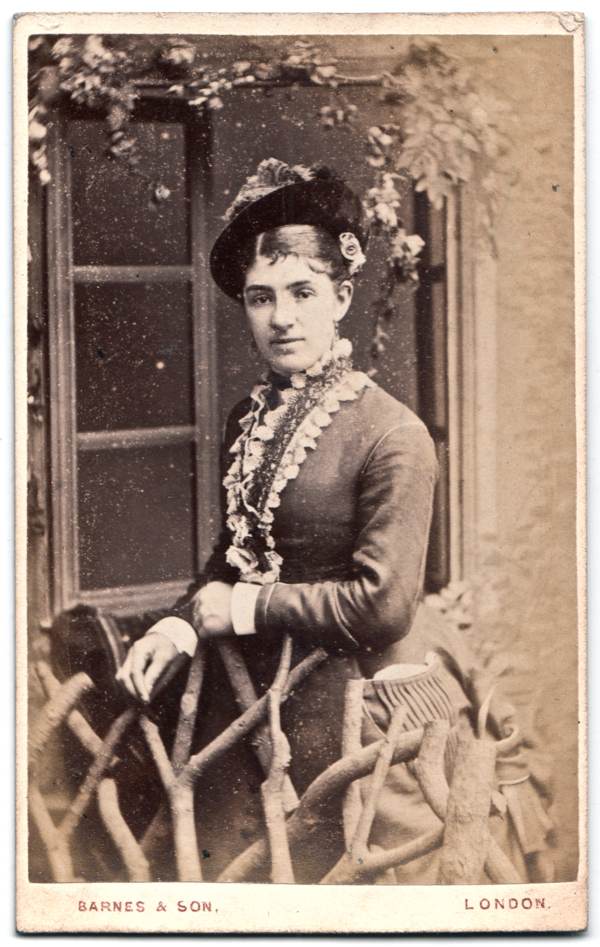
Number 56157 – 1877

Unnumbered

Number 57248 – 1877

Number 65460 – taken between 1877 and 1880

Number 75384 – taken after 1880

Photographs reproduced courtesy of Philip Mernick
Biographical details of Thomas Barnes supplied by David Webb
You may also like to take a look at


