
In The Lavender Fields Of Surrey
Click here to book THE GENTLE AUTHOR’S TOURS for July
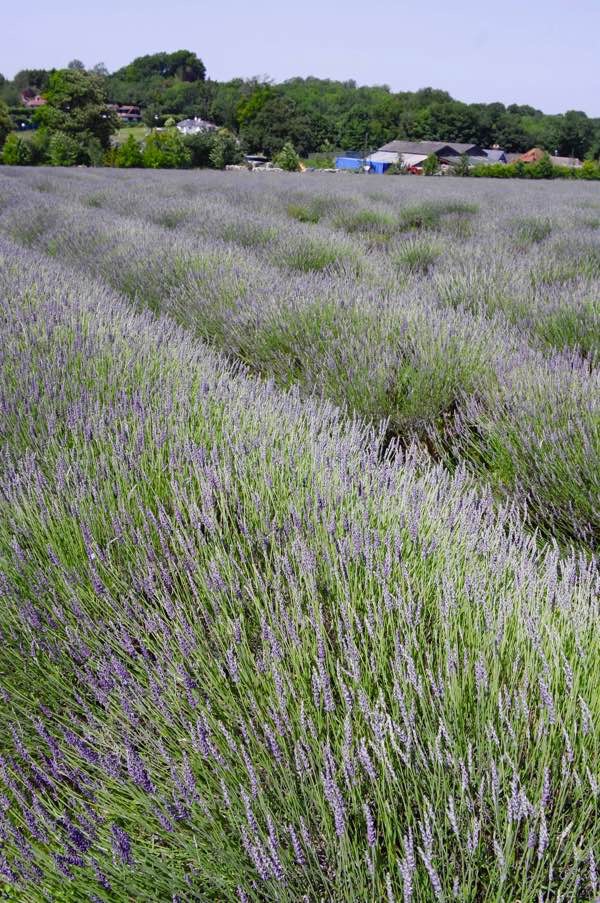
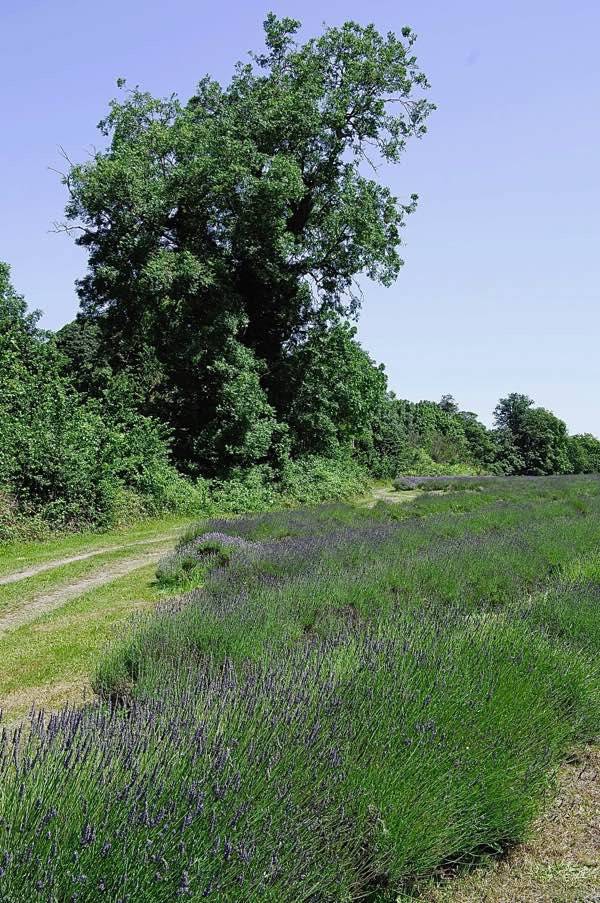
I cannot imagine a more relaxing way to enjoy a sunny English summer afternoon than a walk through a field of lavender. Observe the subtle tones of blue, extending like a mist to the horizon and rippling like the surface of the sea as the wind passes over. Inhale the pungent fragrance carried on the breeze. Delight in the orange butterflies dancing over the plants. Spot the pheasants scuttling away and – if you are as lucky as I was – encounter a red fox stalking the game birds through the forest of lavender. What an astonishing colour contrast his glossy russet pelt made as he disappeared into the haze of blue and green plants.
Lavender has been grown on the Surrey Downs for centuries and sold in summer upon the streets of the capital by itinerant traders. The aromatic properties and medicinal applications of lavender have always been appreciated, with each year’s new crop signalling the arrival of summer in London.
The lavender growing tradition in Surrey is kept alive by Mayfield Lavender in Banstead where visitors may stroll through fields of different varieties and then enjoy lavender ice cream or a cream tea with a lavender scone afterwards, before returning home laden with lavender pillows, soap, honey and oil.
Let me confess, I had given up on lavender – it had become the smell most redolent of sanitary cleaning products. But now I have learnt to distinguish between the different varieties and found a preference for a delicately-fragranced English lavender by the name of Folgate, I have rediscovered it again. My entire house is scented with it and the soporific qualities are evident. At the end of that sunny afternoon, when I returned from my excursion to the lavender fields of Surrey, I sat down in my armchair and did not awake again until supper time.


‘Six bunches a penny, sweet lavender!’ is the cry that invites in the street the purchasers of this cheap and pleasant perfume. A considerable quantity of the shrub is sold to the middling-classes of the inhabitants, who are fond of placing lavender among their linen – the scent of which conquers that of the soap used in washing. – William Craig Marshall’s Itinerant Traders, 1804

‘Delight in the orange butterflies dancing over the plants…’

Thomas Rowlandson’s Characteristic Series of the Lower Orders, 1820

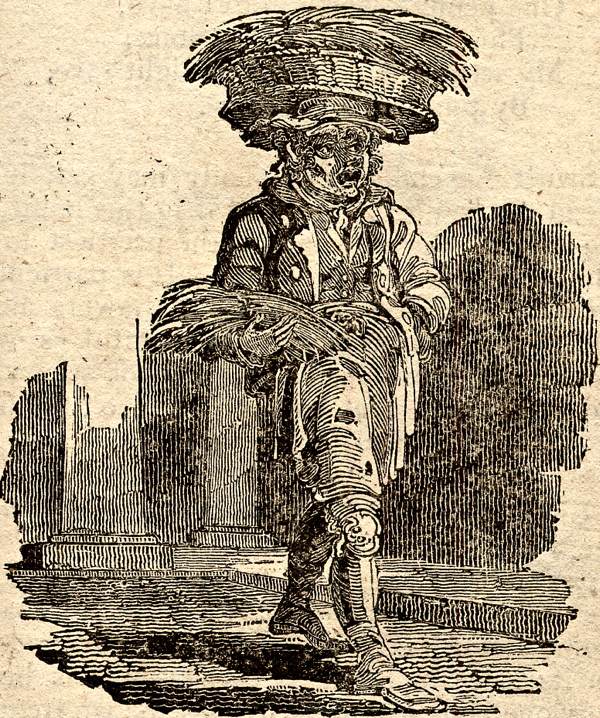
‘Six Bunches a-Penny, Sweet Lavender – Six Bunches a-Penny, Sweet Blooming Lavender’ from Luke Clennell’s London Melodies, 1812

‘Spot the pheasants scuttling away…’

From Aunt Busy Bee’s New London Cries

Card issued with Grenadier Cigarettes in 1902


WWI veteran selling lavender bags by Julius Mendes Price, 1919


Yardley issued Old English Lavender talcum powder tins from 1913 incorporating Francis Wheatley’s flower seller of 1792

Archive images courtesy Bishopsgate Institute
Clive Murphy, Oral Historian
Join me for a ramble through two thousand years of culture at the heart of old London followed by tea and cakes freshly baked to a recipe of 1720 served in a three hundred year old house. CLICK HERE TO BOOK
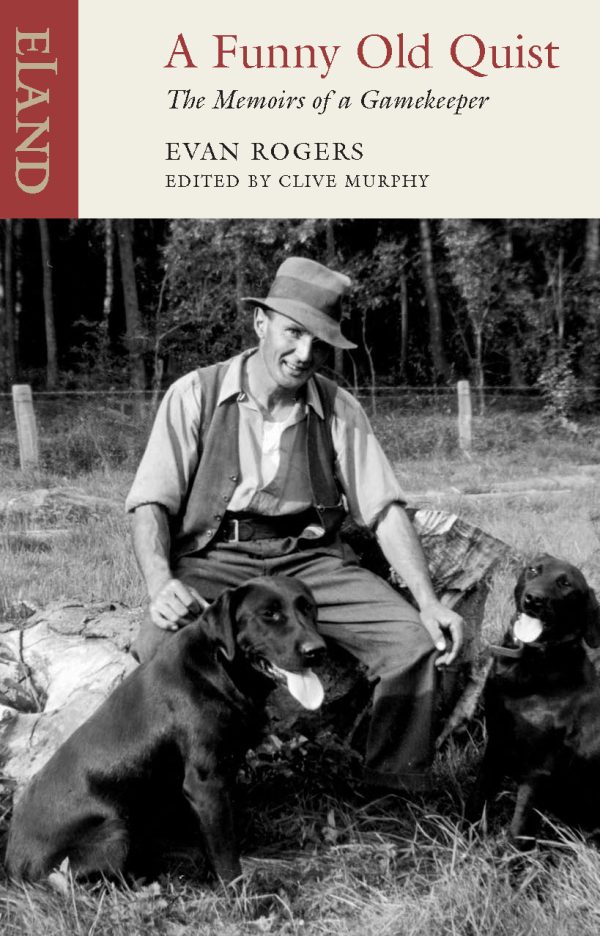
I am delighted to report that one of my late friend Clive Murphy‘s books, A Funny Old Quist (The Memoirs of a Gamekeeper), is to be republish by Eland Books
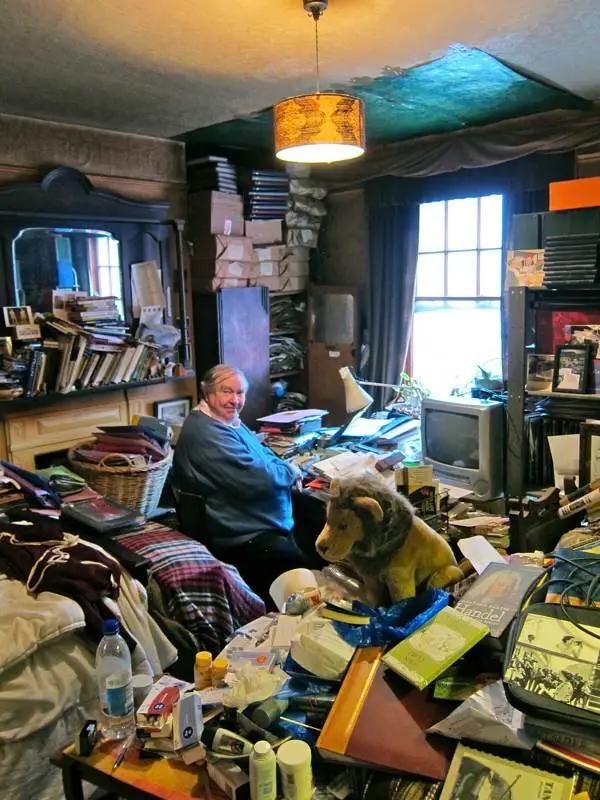
Above a curry house in Brick Lane lived Clive Murphy (1936-2012) like a wise owl snug in the nest he constructed of books, and lined with pictures, photographs, postcards and cuttings over the nearly fifty years that he occupied his tiny flat. Originally from Dublin, Clive had not a shred of an Irish accent. Instead he revelled in a well-educated vocabulary, a spectacular gift for rhetoric and a dry taste for savouring life’s ironies. He possessed a certain delicious arcane tone that you would recognise if you have heard his fellow-countryman Francis Bacon talking. In fact, Clive was a raconteur of the highest order and I was a willing audience, happy merely to sit at his feet and chuckle appreciatively at his colourful and sometimes raucous observations.
I was especially thrilled to meet Clive because he was a writer after my own heart who made it his business to seek out people and record their stories. At first in Pimlico and then here in Spitalfields through the sixties and seventies, Clive worked as a “modern Mayhew, publishing the lives of ordinary people who had lived through the extraordinary upheavals and social changes of the first three-quarters of the century before they left the stage.” He led me to a bookshelf in his front room and showed me a line of nine books of oral history that he edited, entitled Ordinary Lives, as well as his three novels and six volumes of ribald verse. I was astonished to be confronted with the achievements of this self-effacing man living there in two rooms in such beautiful extravagant chaos.
Naturally, I was immediately curious of Clive’s books of oral history. Each volume is an autobiography of one person recorded and edited by Clive, “ordinary” people whose lives are revealed in the telling to be compelling and extraordinary. They are A Funny Old Quist, memoirs of a gamekeeper, Oiky, memoirs of a pigman, The Good Deeds of a Good Woman, memoirs of an East End hostel dweller, A Stranger in Gloucester, memoirs of an Austrian refugee, Endsleigh, memoirs of a riverkeeper, At the Dog in Dulwich, memoirs of a struggling poet, Four Acres and a Donkey, memoirs of a lavatory attendant, Love, Dears! memoirs of a chorus girl and Born to Sing, memoirs of a Jewish East End mantle presser. The variety of subjects is intriguing and bizarre, and Clive explained his personal vision of creating a social panorama, “to begin with the humblest lavatory attendant and then work my way up in the world until I got to Princess Margaret.”
Much to Clive’s frustration, the project foundered when he got to the middle classes, and he coloured visibly as he explained, “I found the middle classes had an image of themselves they wanted to project and they asked to correct what they had said, afterwards, or they told downright lies, whereas the common people didn’t have an image of themselves and they had a natural gift of language.” I was curious to understand the origin of Clive’s curiosity, and learn how and why he came to edit all these books. And when he told me the story, I discovered the reasons were part of what brought Clive to England in the first place.
“I lived a sheltered life in Dublin in a suburb and qualified as a solicitor before I came to England in 1958. My mother wanted me to be solicitor to Trinity College where her father was Vice-Provost but I had been on two holidays to London and I’d fallen in love with the bright lights. I wanted to see a wider variety of people. So as soon as I qualified I left Dublin, where I had been offered a job as a solicitor at £4 and ten shillings a week, and came to London, where I got a job at once as a liftman at a Lyons Corner House for £8 a week and I have lived here ever since.
I was staying in Pimlico and there was a retired lavatory attendant and his wife who lived down below, and they invited me down for supper. He had such a natural gift for language and a quaint way of expressing himself, so I said ‘Let’s do a book!’ and that was Four Acres and a Donkey. Then I was living in another house and by complete chance there was another retired lavatory attendant, a woman who had once been a chorus girl, so I did another book with her, too, that was Love Dears!
At that time there was an organisation called Space which let out abandoned schools and warehouses to artists. In 1973, I answered their letter in The Times and they found me an empty building, it was the Old St Patrick’s School in Buxton St. I lived in the former headmaster’s study and that’s where I recorded my first East End book. I had nothing but a tea chest, a camp bed and a hurricane lamp. There was no electricity but there was running cold water. Meths drinkers used to sit on the doorstep night and day, and at night they would hammer on the door trying to get in. I was a bit frightened because I had never met meths drinkers before and I was all alone but gradually three artists came to live in the school with me.
Then I had to leave the school house because I was flooded out and, after a stint on Quaker St, I saw an ad in Harry’s Confectioners and moved here to Brick Lane in 1974. The building was owned by a Jewish lady who let the rooms to me and a professor from Rochester University who only came to use his place in vacations, so it was wonderfully quiet. There was a cloth warehouse on the ground floor then which is now the Aladin Restaurant. Every shopfront was a different trade, we had an ironmonger, an electrician and a wine merchant with a sign that said ‘purveyors to the diplomatic service.’ The wine merchant also had a concoction she sold exclusively to the meths drinkers but that wasn’t advertised.
I thought when I came here to Spitalfields I was going to be solely a writer, I had taught at a primary school in Islington but very soon I became a teacher of children with special needs here. Occasionally, I used to go in the middle of the night to buy food from a stall outside Christ Church, Spitalfields called ‘The Silver Gloves.’ I had no money hardly and I used to live off the fruit and veg thrown out by the market onto Brushfield St. But I found it exciting to be here because I found lots of people to interview. I had already written two novels and I was busy recording Alexander Hartog and Beatrice Ali, and I was happy to be learning about them, because I did lead a very restrictive life before I came to England.”
Clive was a poet at heart and there is an unsentimental appreciation of the human condition that runs through all his work. He chose his subjects because he saw the poetry in them when no-one else did and the books, recording the unexpected eloquence of these “ordinary” people telling their stories, bear witness to his compassionate insight.
As a writer writing my own pen portraits, I was curious to ask Clive what he had learnt from all his interviews with such a variety of people. “The gamekeeper said to me, ‘You mean you don’t know how to skin a mole?'” Clive recalled with relish, evoking the gamekeeper in question vividly, before returning to his own voice to explain himself, “I am amazed that we are all stuck in our little worlds – he really thought everyone would know that. It wasn’t just the knowledge that I learnt from people, it was their outlooks and personalities.”
Clive gave me copies of his two East End books and, as we sliced open a box I was delighted to discover “new” copies of books from 1975, beautifully printed in letterpress with fresh unfaded covers and some with a vinyl record inside to allow the reader to hear the voice of the protagonist. I could not wait to go home and read them, and listen.
I will never be able to walk down Brick Lane without thinking of Clive Murphy, who once lived above the Aladin Restaurant, as a beacon of inspiration to me while I am running around Spitalfields pursuing my own interviews.
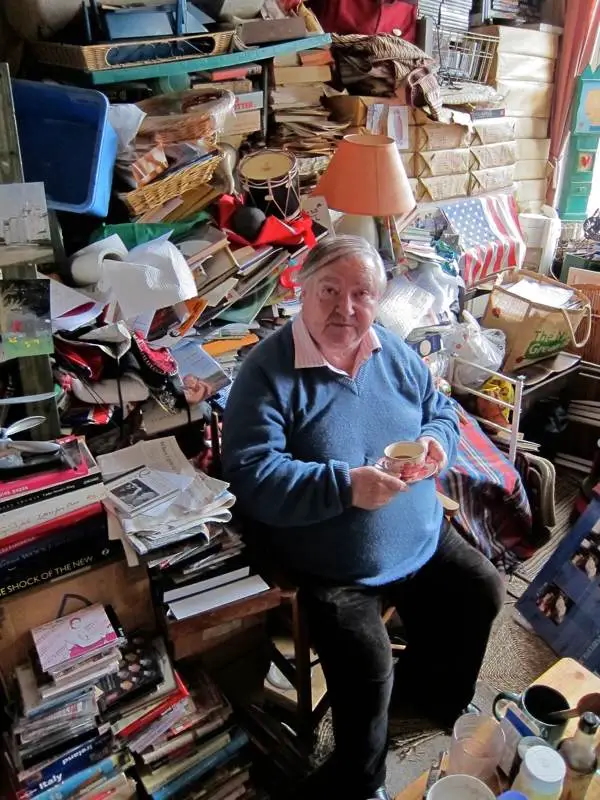
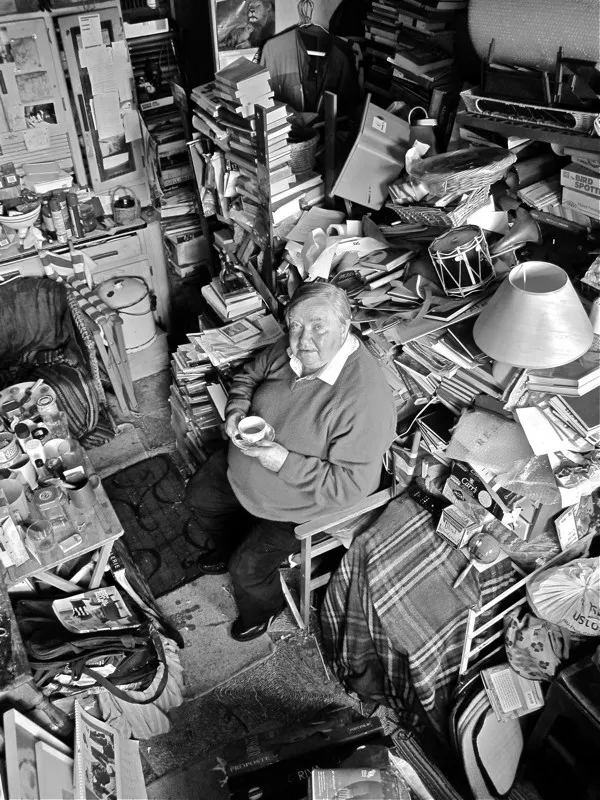
Clive in his kitchen
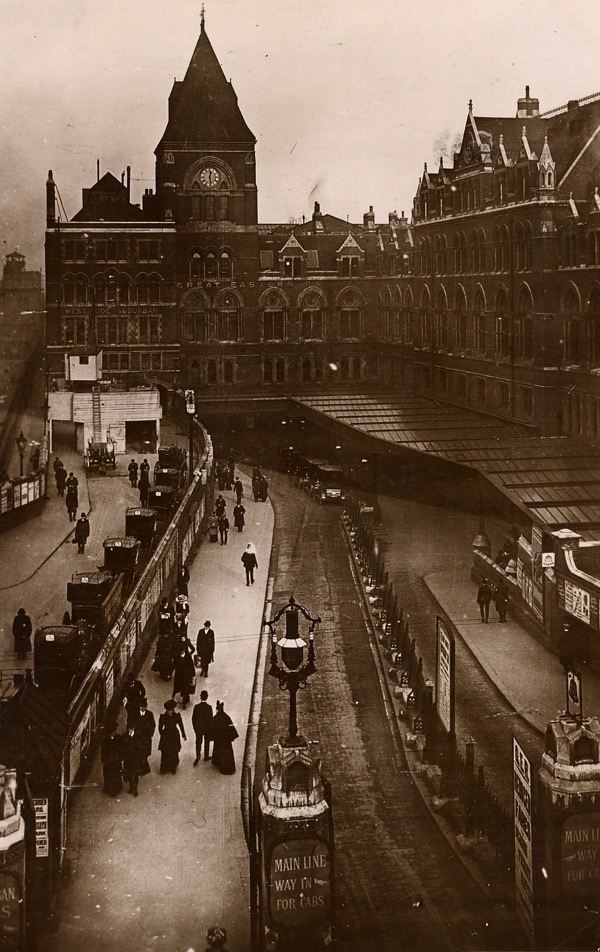
At Old Liverpool St Station
Many readers wrote objecting to the first version of the scheme to redevelop Liverpool St Station but now there is a new version all those objections have been discarded. If you want to stop this new proposal for a monster tower of 20 storeys on top of the station, blocking natural light from the concourse, please write a new objection before 4th July.
CLICK HERE FOR INSTRUCTIONS ON HOW TO OBJECT
Yesterday, Spitalfields Life readers crashed the City of London website trying to object, so if you were unsuccessful then please try again today, or write an email or letter.
Let us take a stroll through old Liverpool St Station as it was in the nineteenth century, courtesy of this magnificent gallery of photographs from the Bishopsgate Institute collection. Like a journey through the stomach of whale that swallows humans by the score, did the wondrous behemoth ever appear as awe-inspiringly labyrinthine and majestic as it did then?
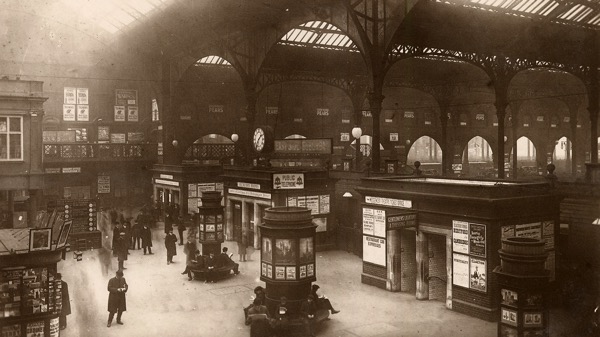
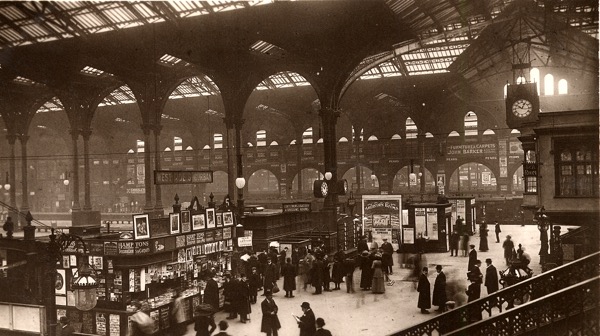
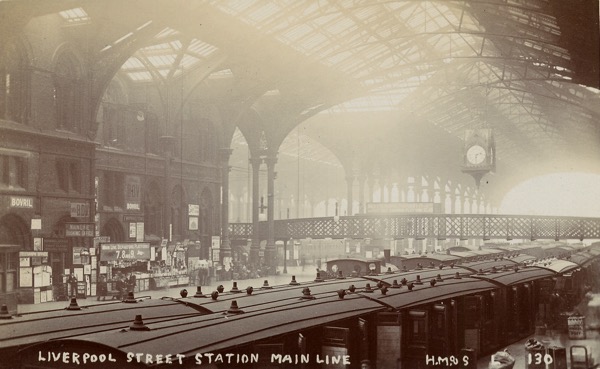
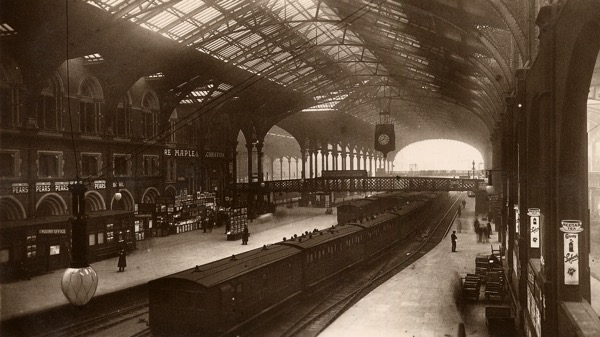
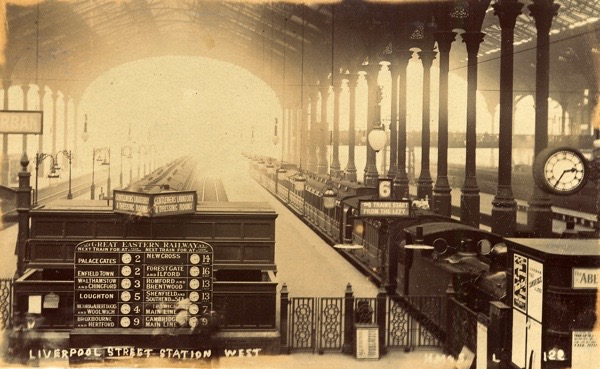
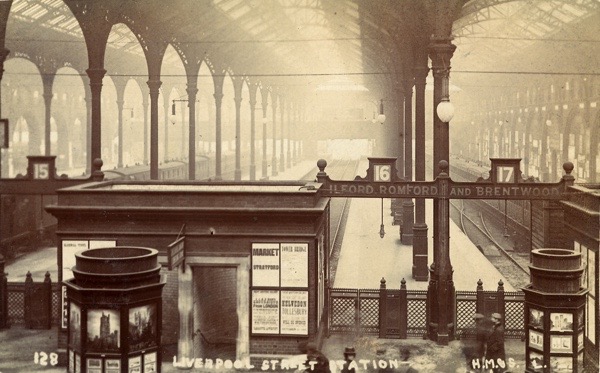
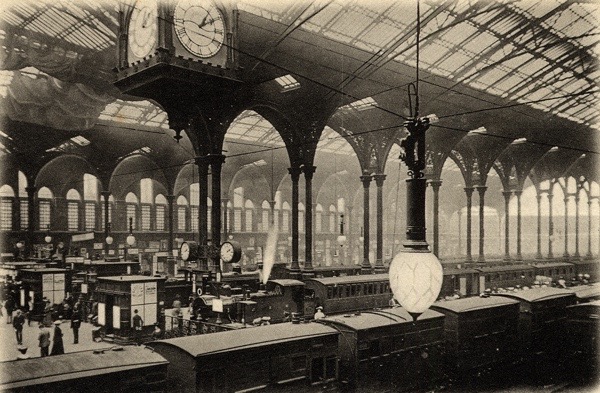
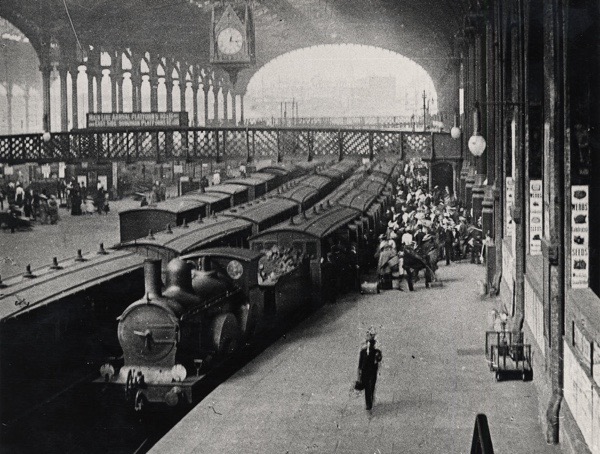
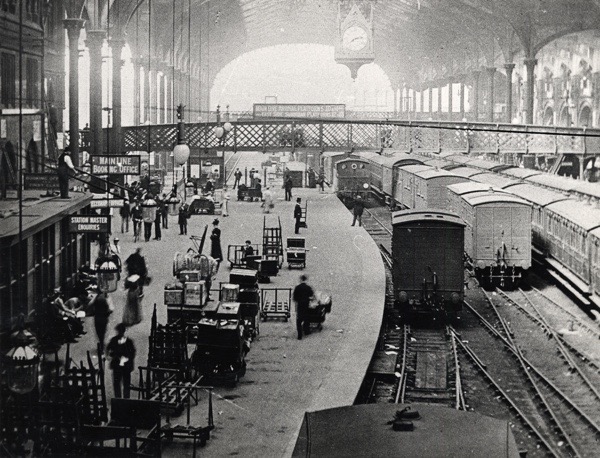
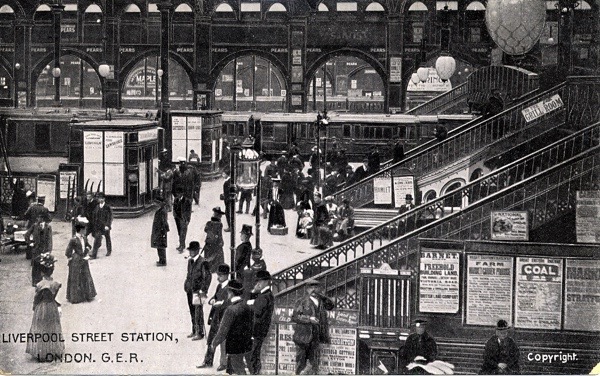
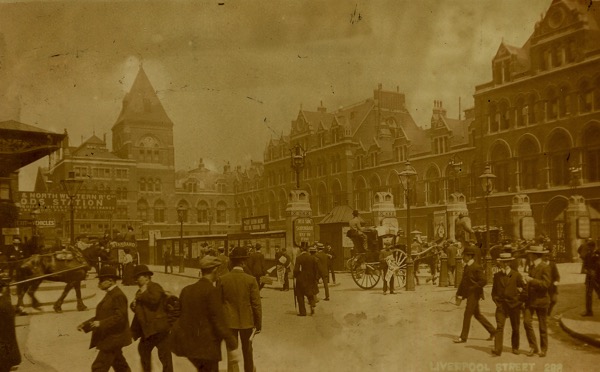
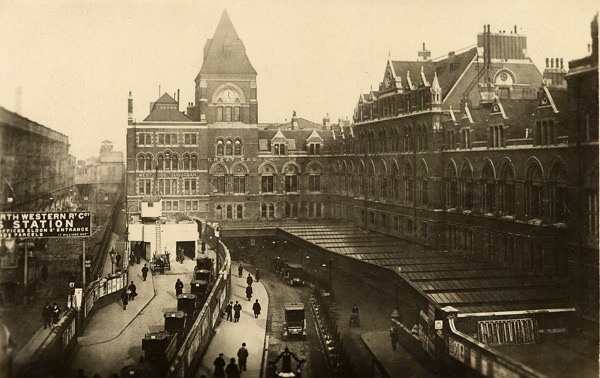
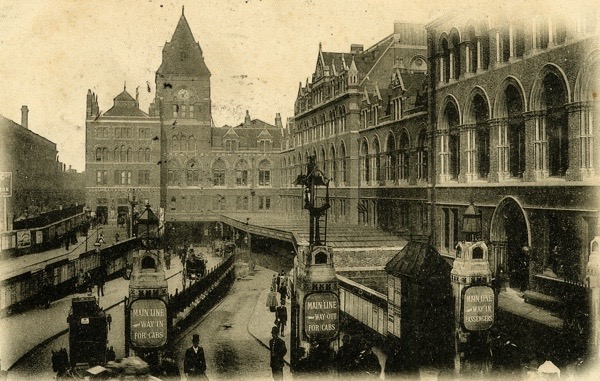
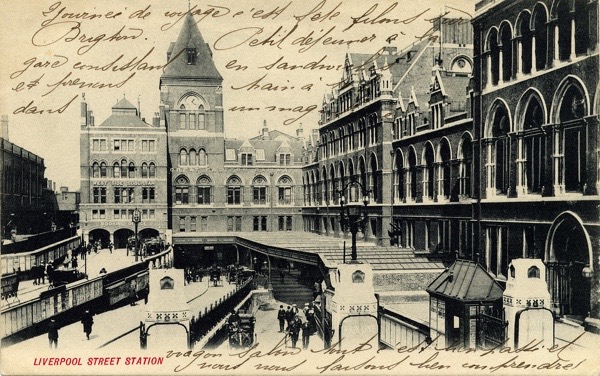
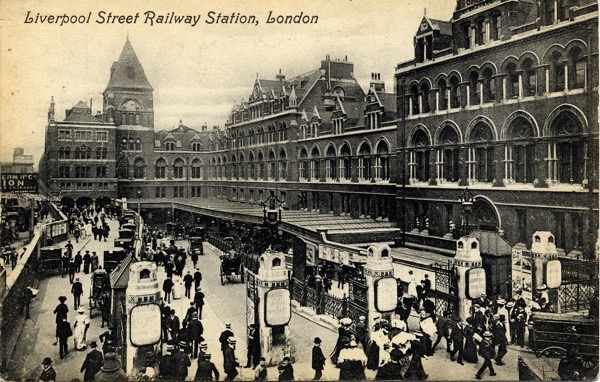
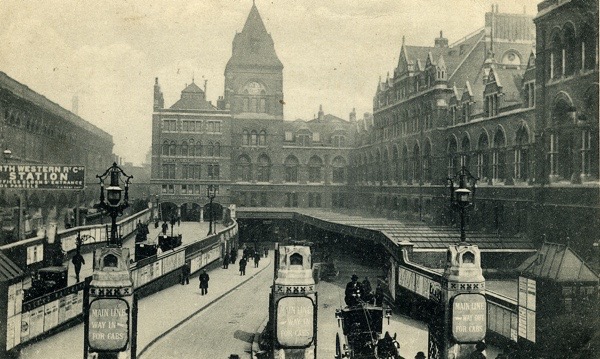
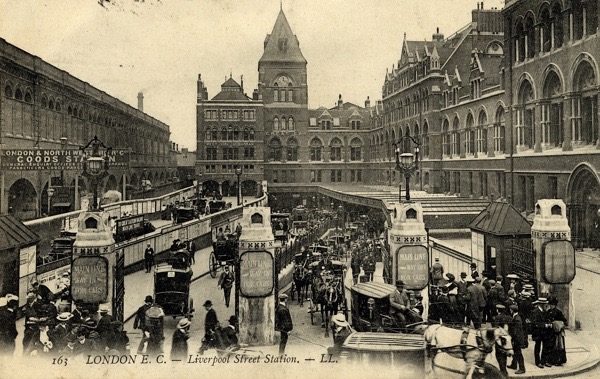
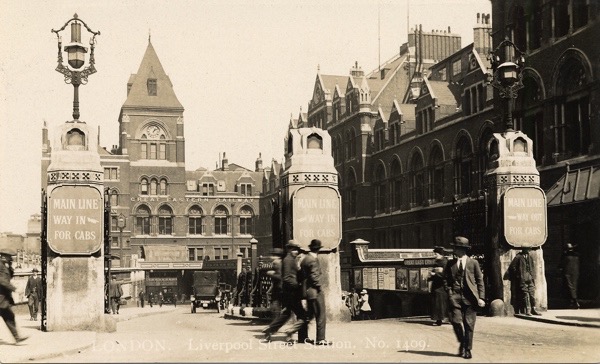
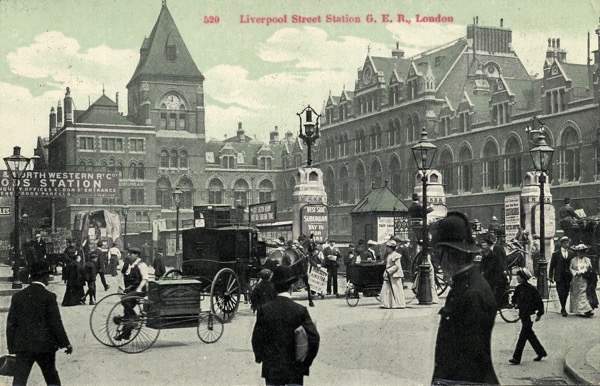
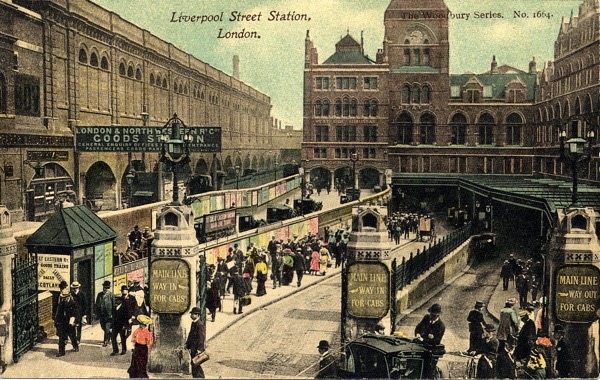
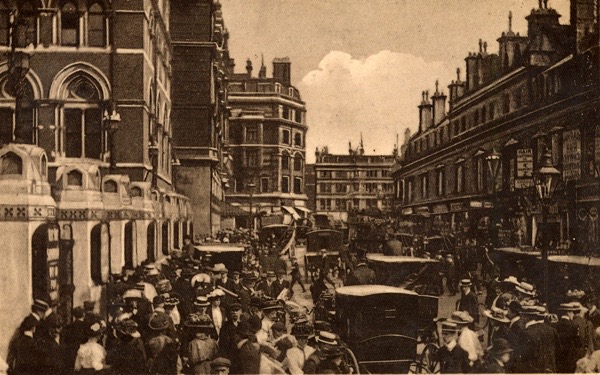
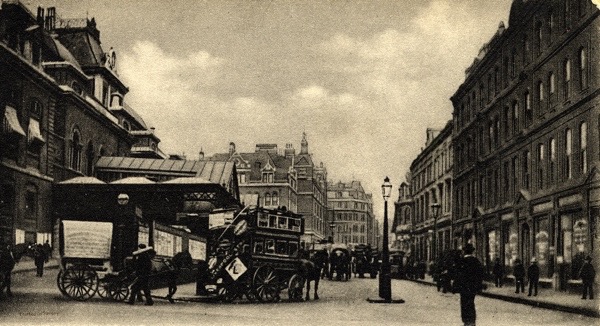
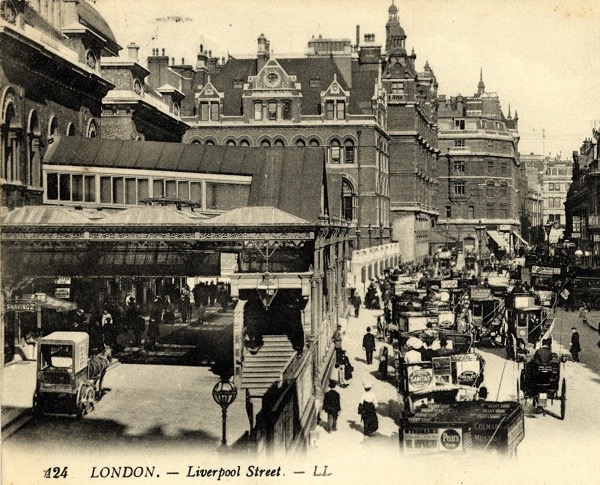
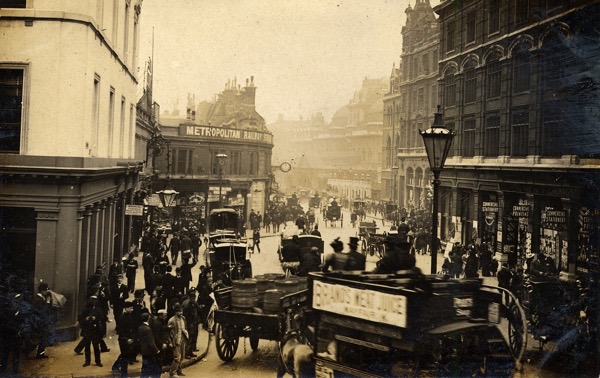
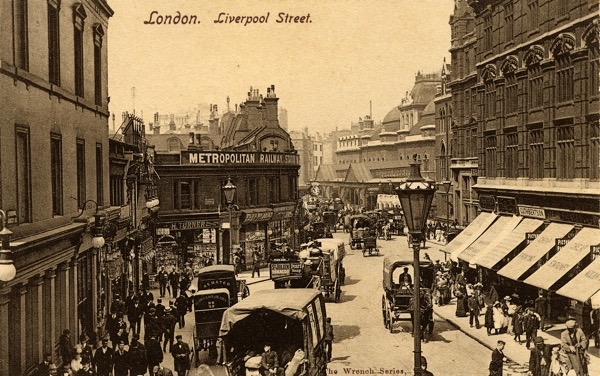
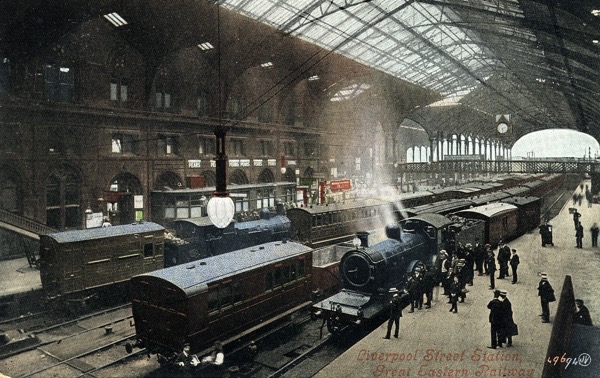
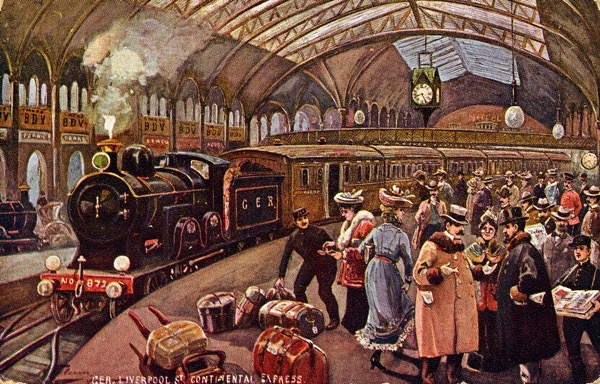
Photographs courtesy Bishopsgate Institute
You may also like to take a look at
Last Chance To Save Liverpool St Station From The Monster Block
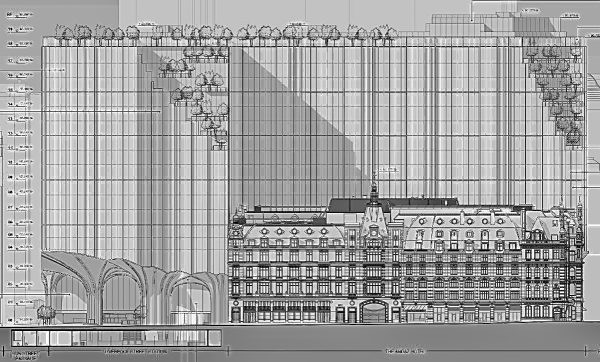
Behold, the twenty storey office block that Network Rail wants to plonk on top of Liverpool St Station. Note the height of Grade II*-listed Great Eastern Hotel in front and observe that this pile is more than twice the height. No amount of terraces with greenery can conceal the bulk of this monster which will block out daylight from the concourse.
Many readers wrote objecting to the first version of this scheme but now there is this new version all those objections have been discarded. If you want to stop this new offence, please write a new objection before 4th July.
You may have seen adverts on social media encouraging people to support improving access and toilets at Liverpool St Station, which lead through to an online form to register support for the new development. Yet it is Network Rail’s responsibility to provide proper access and toilets, and these adverts barely mention the twenty-storey block they want to build.
Unfortunately, the developers have garnered 613 messages of support against 180 objections so far, which is why your objection is imperative.
Please forward this post, and encourage your friends and family to object too.
HOW TO OBJECT EFFECTIVELY
You can object in writing online, by email or by letter.
More than one person can object in any household and anyone can object wherever you are in the world but you must include your postal address.
CLICK HERE TO REGISTER YOUR OBJECTION ONLINE
If you are objecting by email or letter, address your objection to Tom Sleigh, Chair of the Planning & Transport Committee and quote Planning Application 25/00494/FULEIA.
Say in the opening line of your objection ‘I object’ and if you submit your objection online you must also click the button that indicates you ‘object.’
We suggest the following opening line:
“I object to this application which would cause substantial harm to the significance of nationally important heritage assets. More specifically, I raise objections to:”
Follow in your own words with these legal points for objection.
POINTS FOR OBJECTION
- The substantial harm to the Grade II-listed station through the demolition of the roof of the concourse and its replacement with a new structure, which would also compromise the setting of the 19th century train shed.
- The insertion of large amounts of new retail units in the 19th century train sheds, including the construction of two elevated retail galleries, causing a high level of harm to the special interest and significance of the Grade II-listed heritage asset.
- The impact to the setting of surrounding listed heritage assets. In particular, harm to the significance of the Grade II*-listed hotel – the last continually functioning 19th century hotel in the City – through the construction of a twenty-storey tower over the station concourse.
- The substantial harm the scheme would cause to the Bishopsgate Conservation Area by the imposition of a tall building in an area characterised by low-and medium-scale buildings. This is contrary to the 2015 City Plan which requires the refusal of planning permission for tall buildings in inappropriate areas, such as in Conservation Areas and the St. Paul’s Cathedral Heights area. In addition, the scheme would impact on the setting of numerous designated and undesignated heritage assets in the City and beyond, such as many of the Grade I-listed Christopher Wren City churches and nearby St Botolph’s church.
- Be sure to reference the National Planning Policy Framework, otherwise your objection may be dismissed. Paragraph NPPF 213 states: “Substantial harm to or loss of: a) grade II listed buildings, or grade II registered parks or gardens, should be exceptional.”
YOU CAN SEND IT BY EMAIL
plncomments@cityoflondon.gov.uk;tom.sleigh@cityoflondon.gov.uk
cc:
shravan.joshi@cityoflondon.gov.uk; shravan.tana.adkin@cityoflondon.gov.uk; joshi@cityoflondon.gov.uk; samapti.bagchi@cityoflondon.gov.uk; matthew.bell@cityoflondon.gov.uk; emily.benn@cityoflondon.gov.uk; john.edwards@cityoflondon.gov.uk; anthony.fitzpatrick@cityoflondon.gov.uk; marianne.fredericks@cityoflondon.gov.uk; alison.gowman@cityoflondon.gov.uk; prem.goyal@cityoflondon.gov.uk; madush.gupta@cityoflondon.gov.uk; josephine.hayes@cityoflondon.gov.uk; jaspreet.hodgson@cityoflondon.gov.uk; amy.horscroft@cityoflondon.gov.uk; philip.kelvin@cityoflondon.gov.uk; elizabeth.king@cityoflondon.gov.uk; edward.lord@cityoflondon.gov.uk; antony.manchester@cityoflondon.gov.uk; alastair.moss@cityoflondon.gov.uk; deborah.oliver@cityoflondon.gov.uk; henry.pollard@cityoflondon.gov.uk; simon.pryke@cityoflondon.gov.uk; nighat.qureishi@cityoflondon.gov.uk; gaby.robertshaw2@cityoflondon.gov.uk; hugh.selka@cityoflondon.gov.uk; alethea.silk@cityoflondon.gov.uk; naresh.sonpar@cityoflondon.gov.uk; william.upton@cityoflondon.gov.uk; matthew.waters@cityoflondon.gov.uk; jacqui.webster@cityoflondon.gov.uk
YOU CAN SEND IT BY POST
Planning Department,
City of London Corporation,
Guildhall, PO Box 270,
London, EC2P 2EJ.
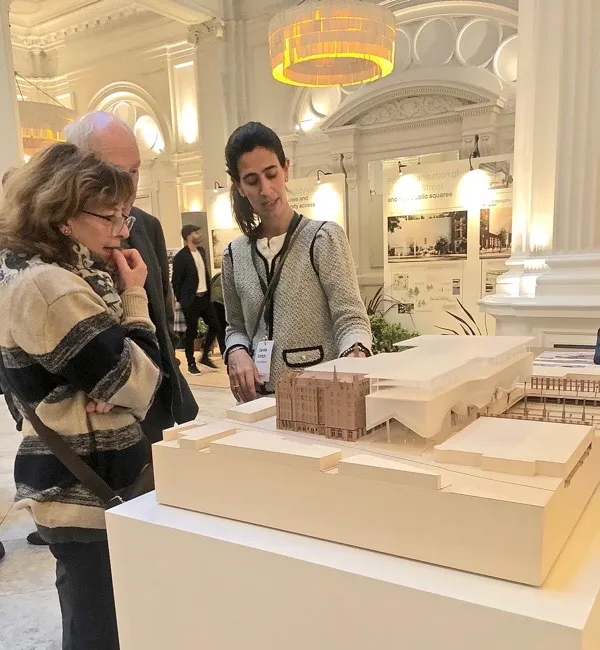
At the public consultation for the first Liverpool St Station scheme only the lower half of the model was shown
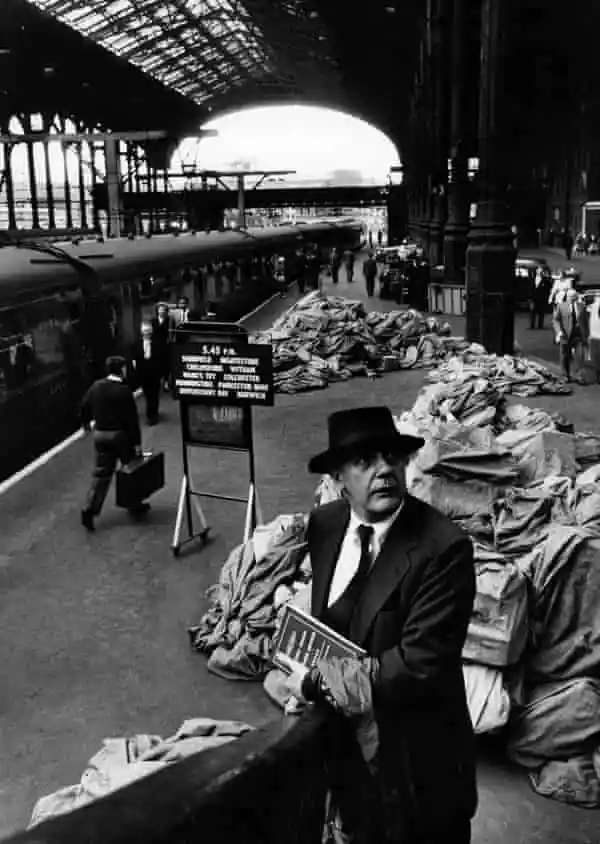
Sir John Betjeman led the campaign to save Liverpool St Station in the last century. Photograph by David Sim c.1961
Skilton’s London Life
Tickets available this Saturday 21st June
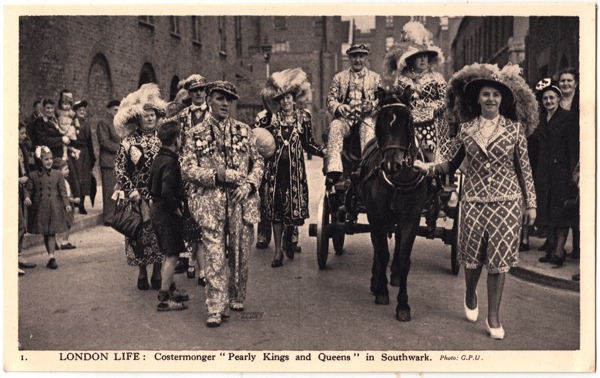
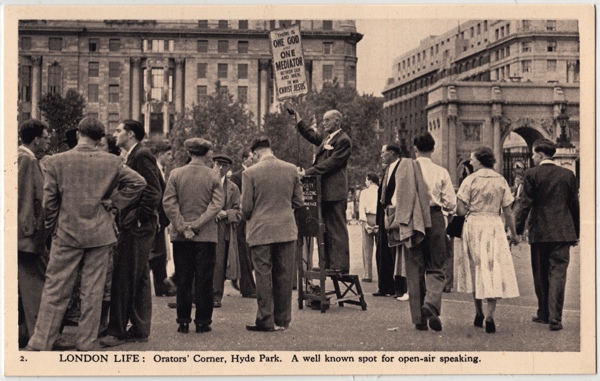
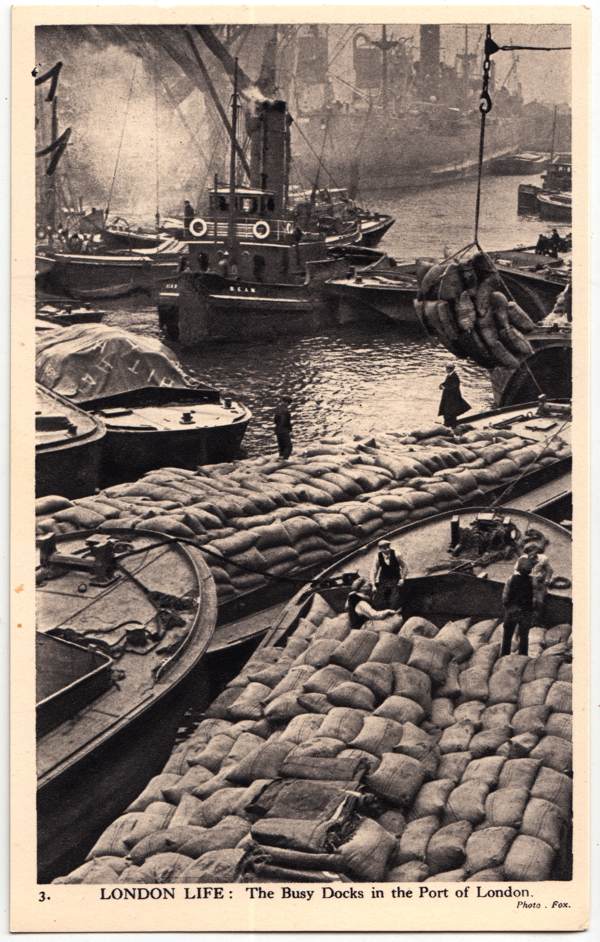
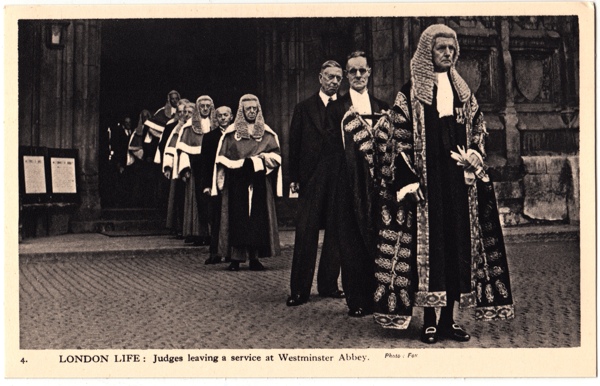
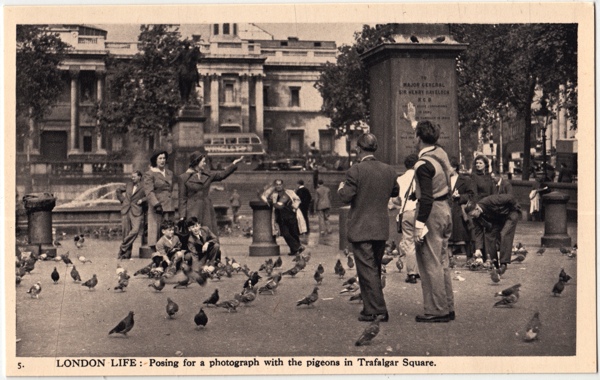
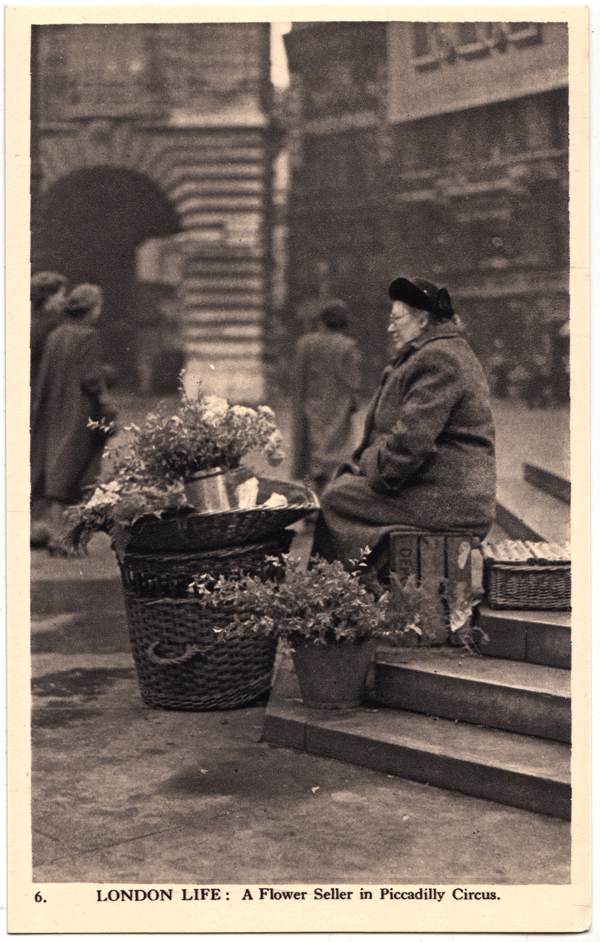
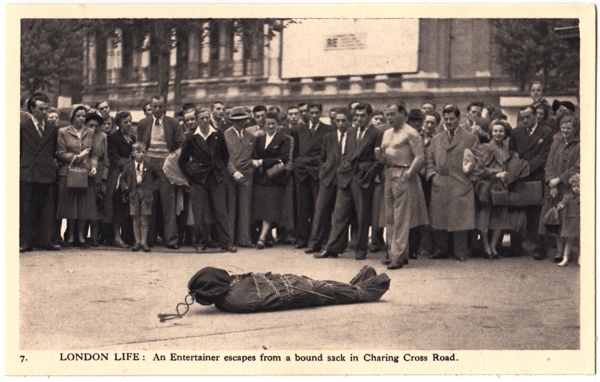
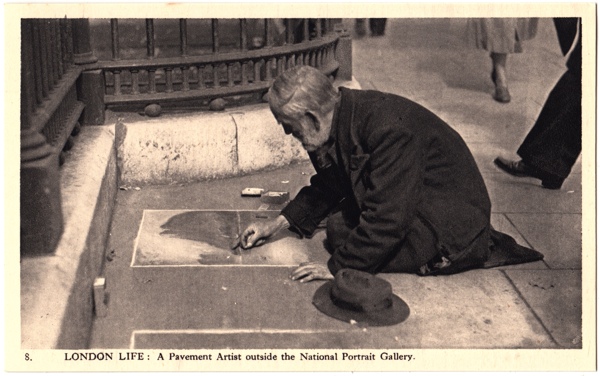
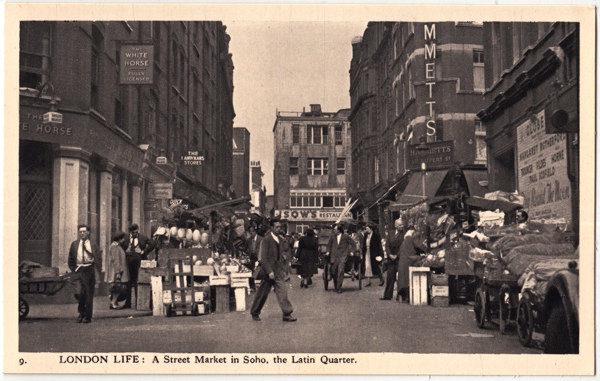
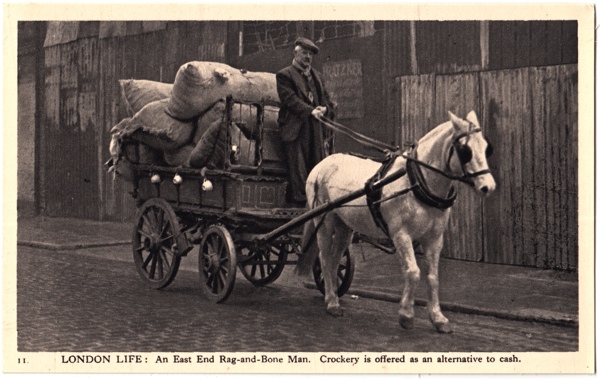
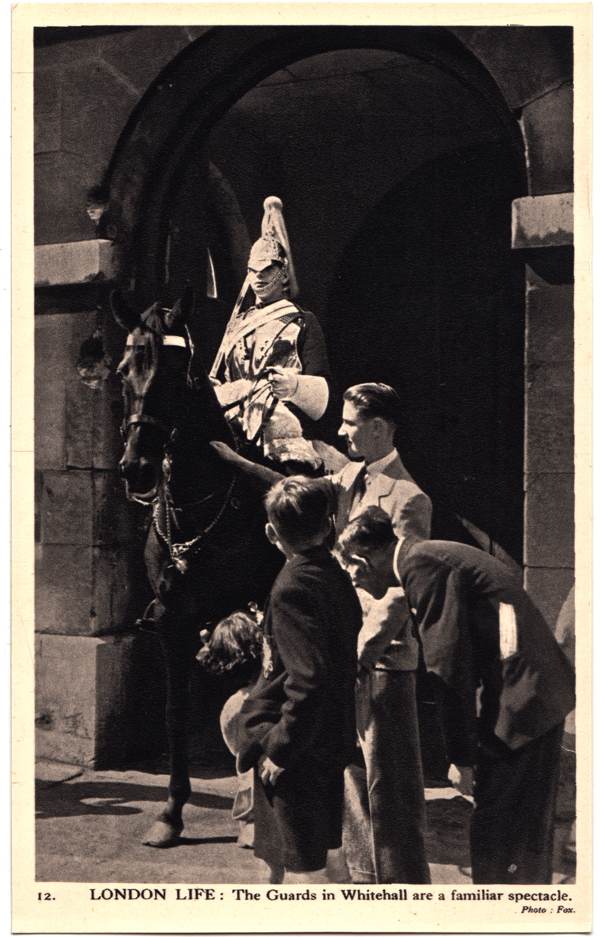
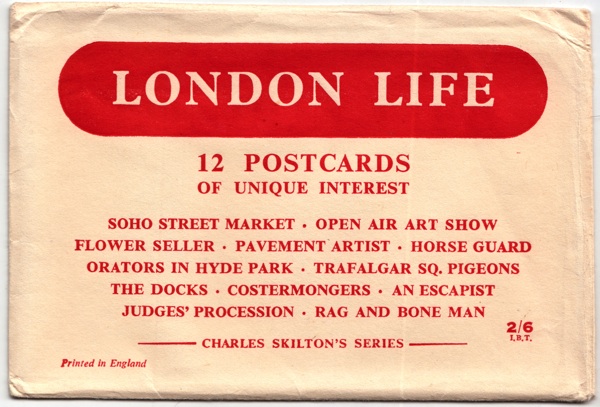
Now that the summer visitors are here and thronging in the capital’s streets and transport systems, I thought I would send you this fine set of postcards published by Charles Skilton, including my special favourites the escapologist and the pavement artist.
Looking at these monochrome images of the threadbare postwar years, you might easily imagine the photographs were earlier – but Margaret Rutherford in ‘Ring Round the Moon’ at The Globe in Shaftesbury Ave in number nine dates them to 1950. Celebrated in his day as publisher of the Billy Bunter stories, Charles Skilton won posthumous notoriety for his underground pornographic publishing empire, Luxor Press.

You may also like to take a look at
Visit Robson Cezar’s Studio In Bow
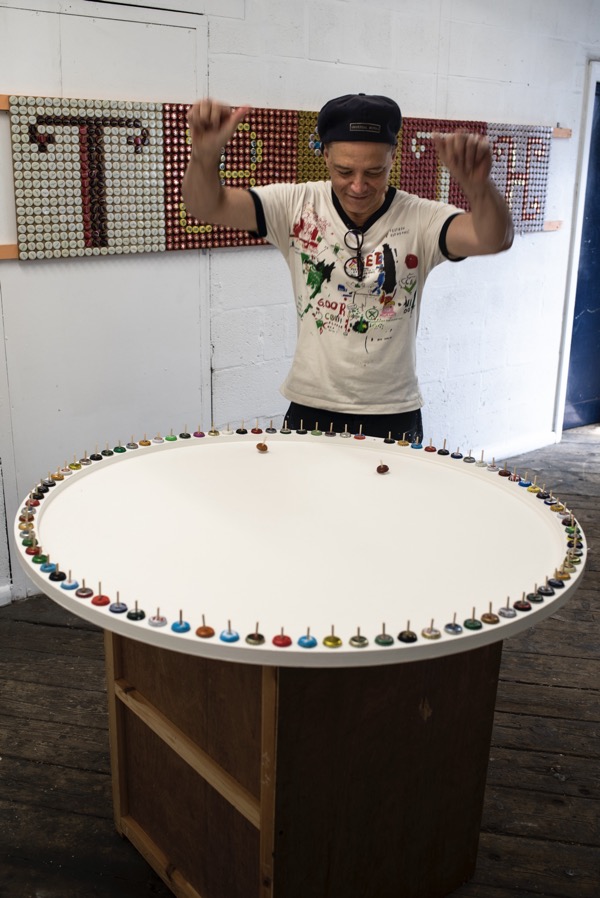
You are invited to visit Spitalfields artist Robson Cezar’s studio in Bow as part of Bow Arts Open Studios this Friday and Saturday, 20th & 21st June, at 181-183 Bow Road, E3 2SP. Contributing Photographer Sarah Ainslie went along this week as Robson was making final preparations, so that readers may have this sneak preview.
Robson has created a new artwork of 88 spinning tops made from bottletops which guests can enjoy spinning for themselves and take home for free afterwards as souvenirs. Each spinning top has words concealed underneath, like a fortune cookie or a cracker motto.
For this occasion, Robson has also produced an edition of five of his celebrated solar-powered recycled houses made out of boxes from Whitechapel Market, that can be seen below.
Every house is fitted with a solar panel. If you leave it on a window sill, it will charge in daylight, light up automatically at dusk and the light will go off at dawn. And they will do this more or less indefinitely. Robson has enjoyed employing the colours, printed lettering and images of fruit and vegetables on the boxes, and made windows from coloured mushroom crates.
As usual, these houses will be sold on a first-come, first-served basis. So if you like to buy one of these house please drop a line to spitalfieldslife@gmail.com specifying which one you would like and we will supply payment details. They are £200 each.
These houses are sculptures not toys and we do not recommend them for children under the age of twelve.
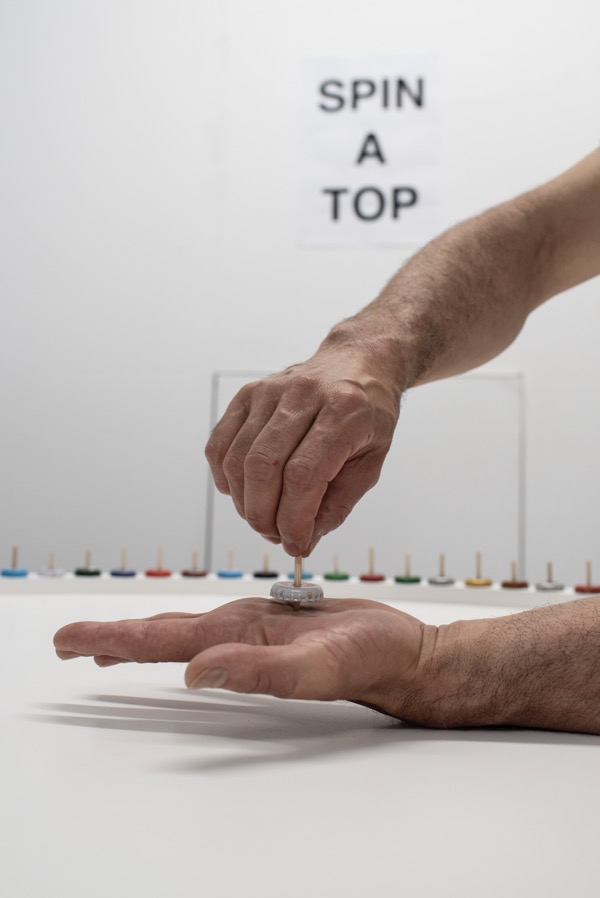
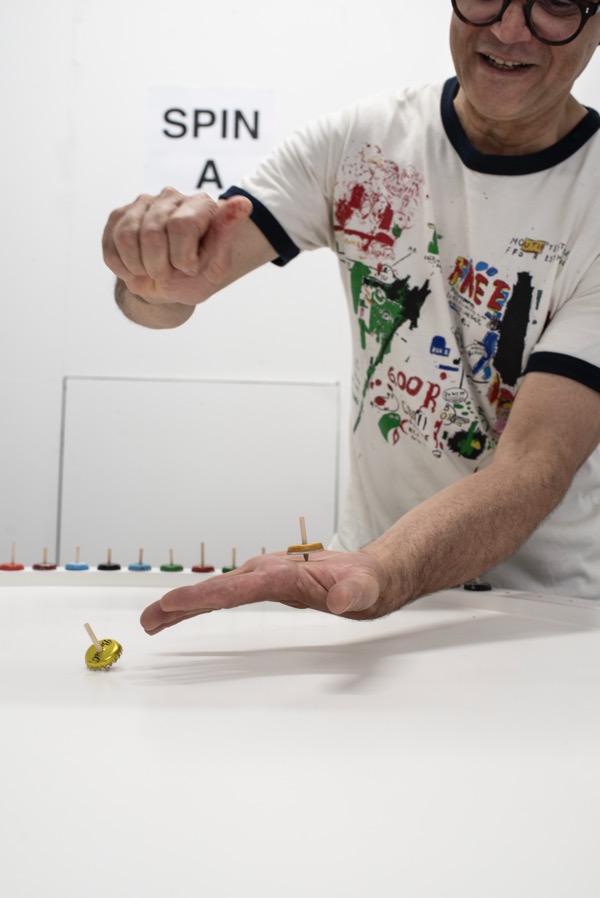
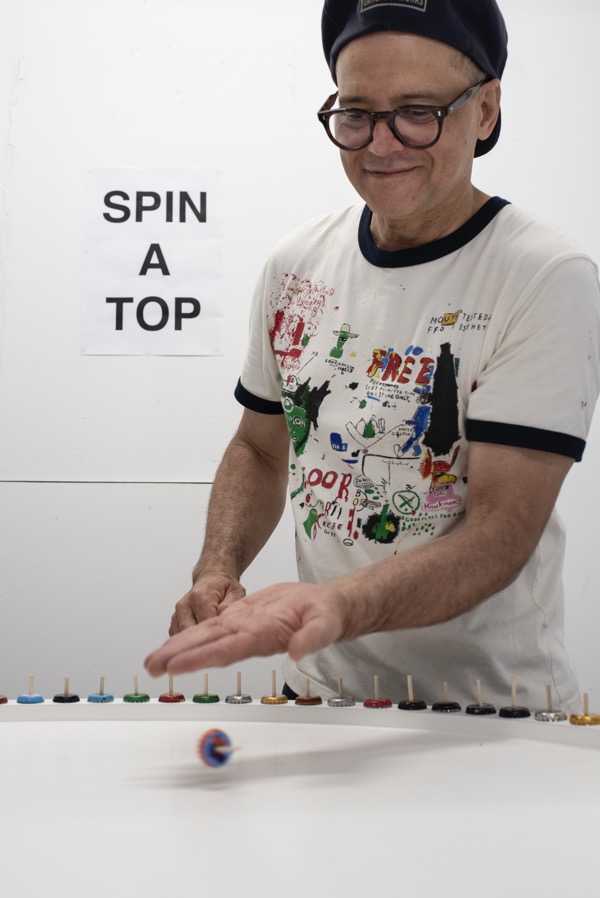
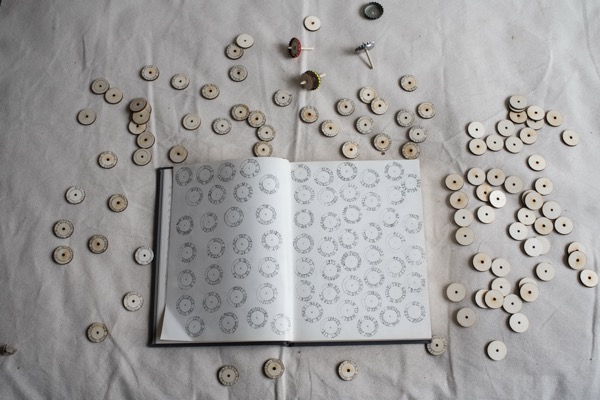
Devising the words for the spinning tops
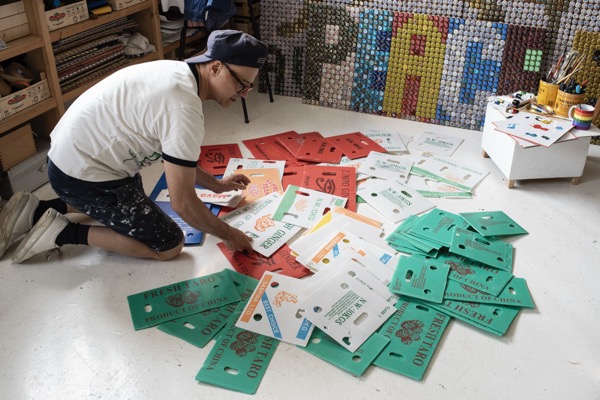
Robson sorting crates to make houses
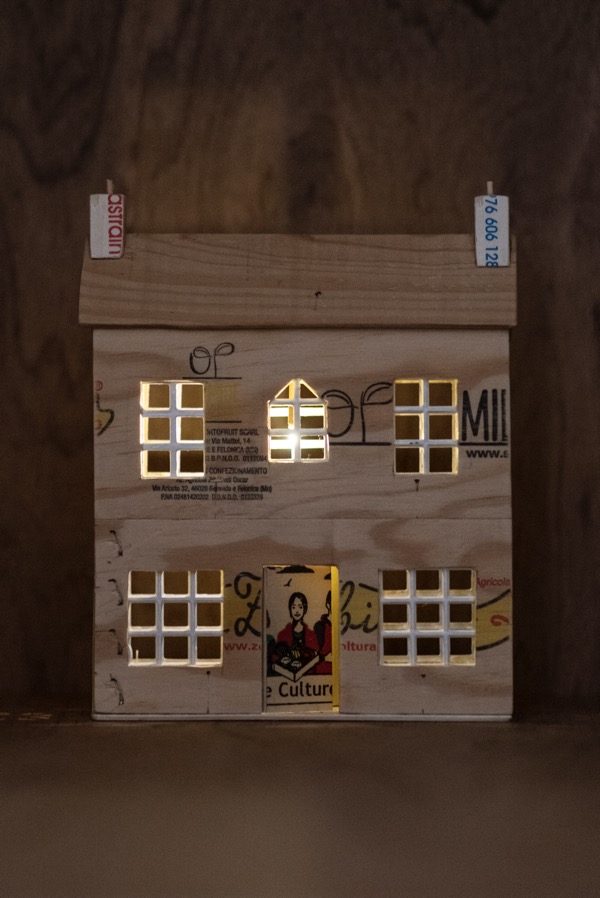
House A (front)
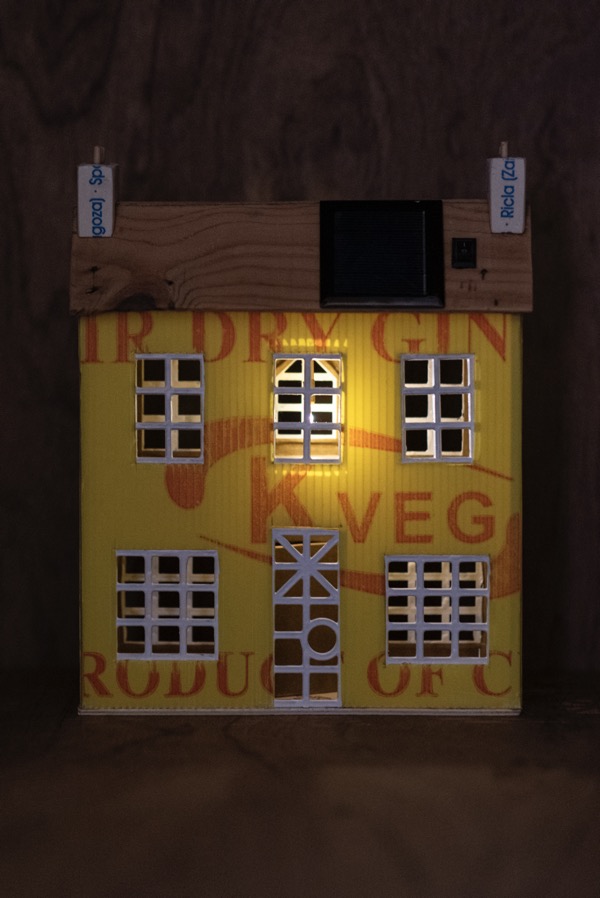
House A (reverse)
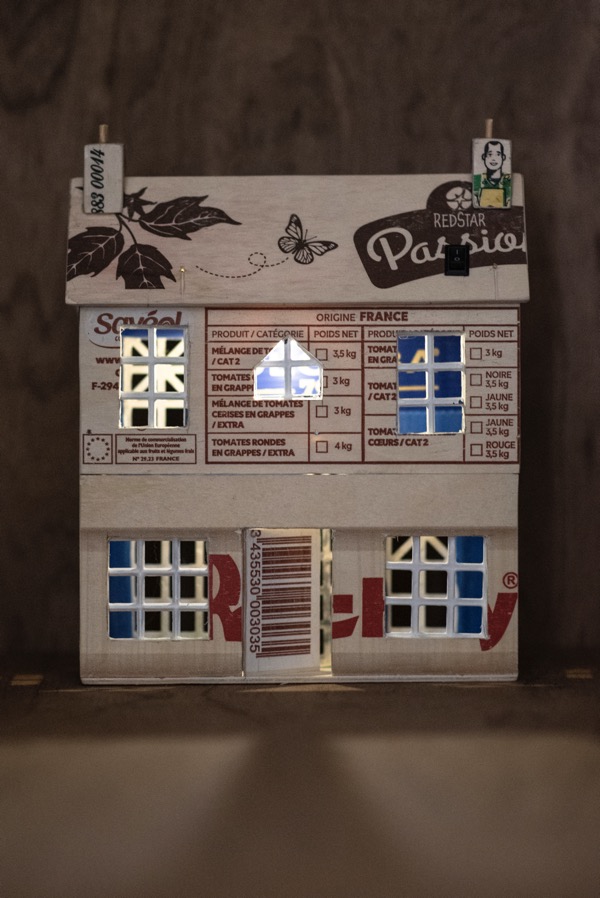
House B (front)
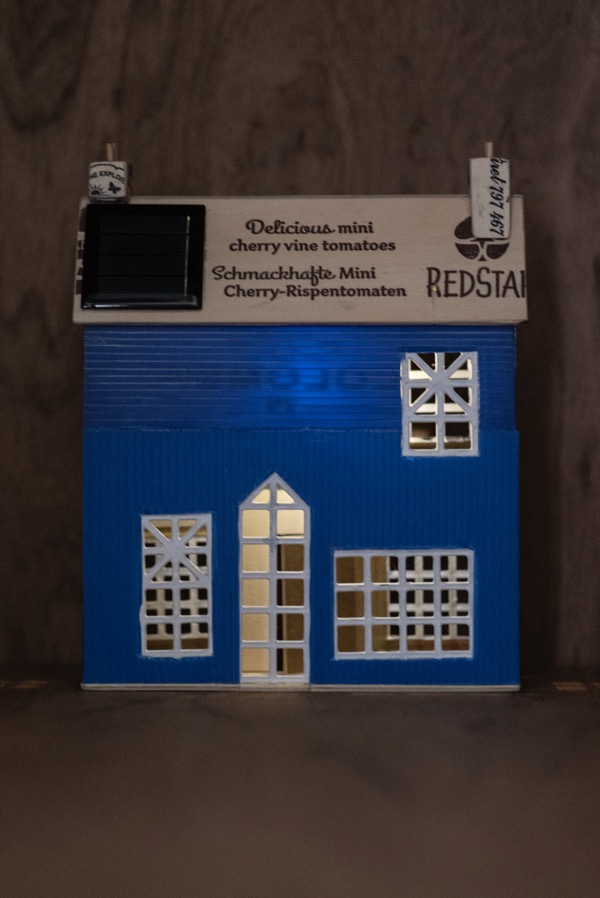
House B (reverse)
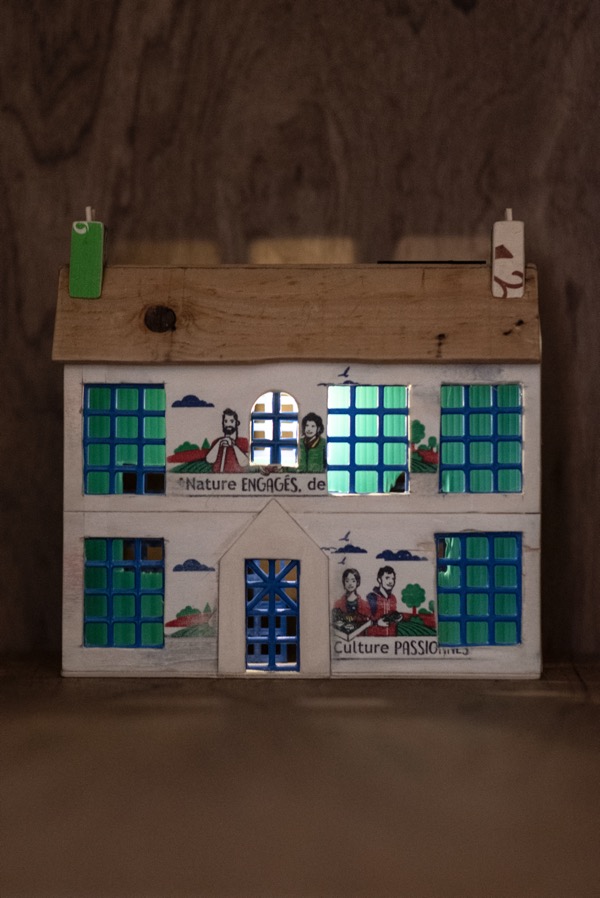
House C (front)
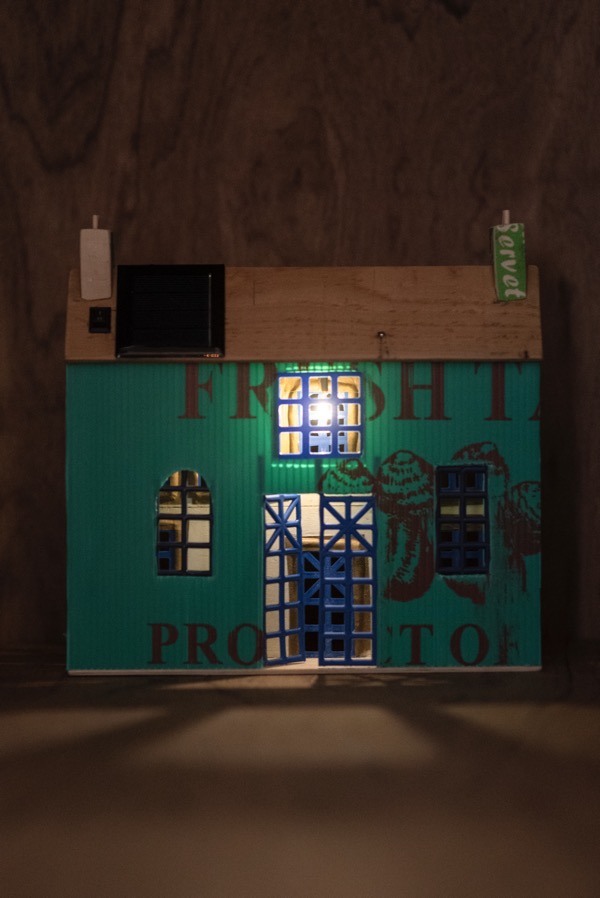
House C (reverse)
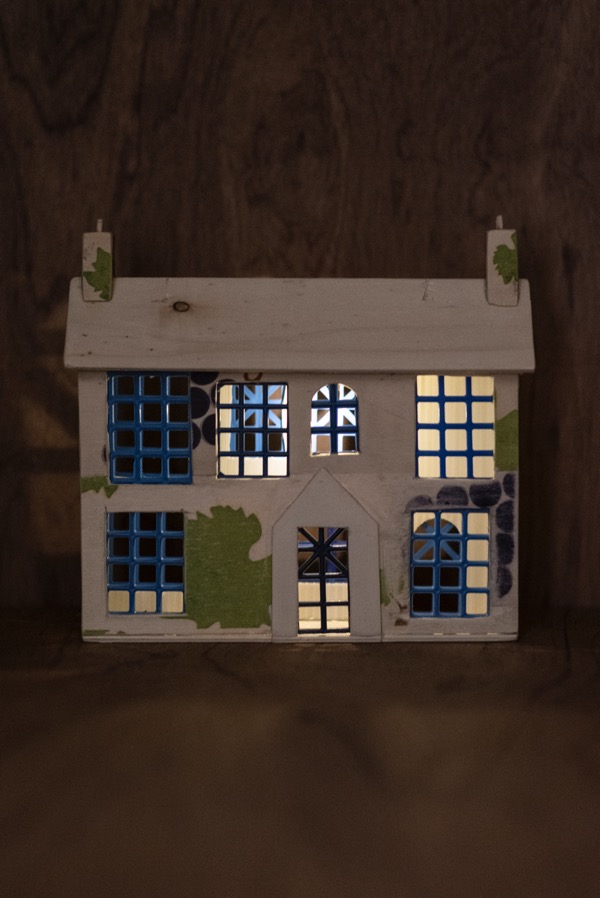
House D (front)
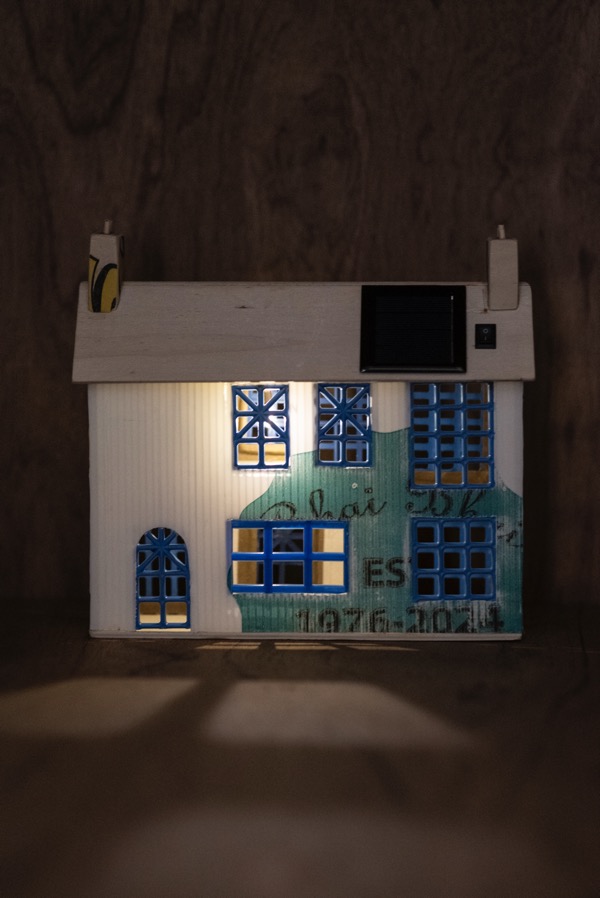
House D (reverse)
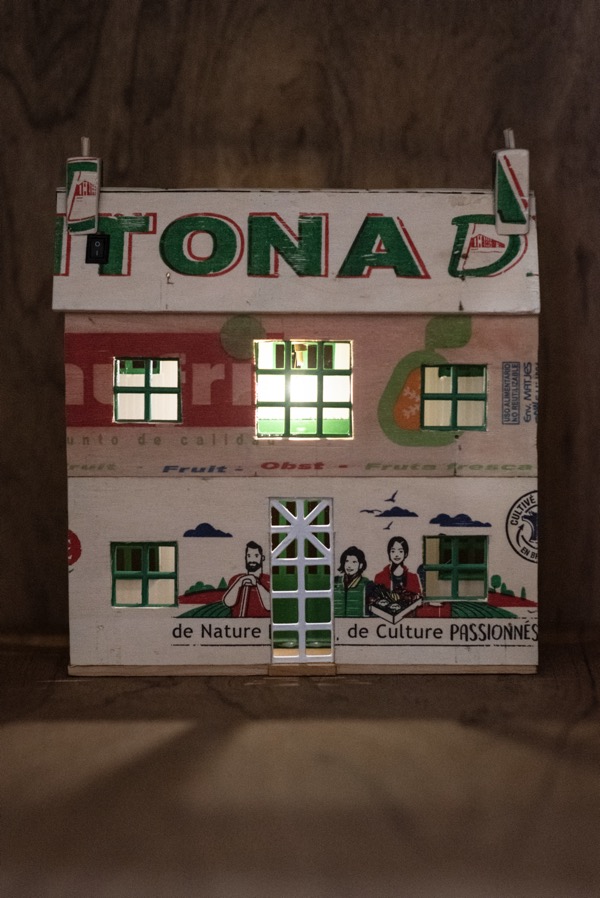
House E (front)
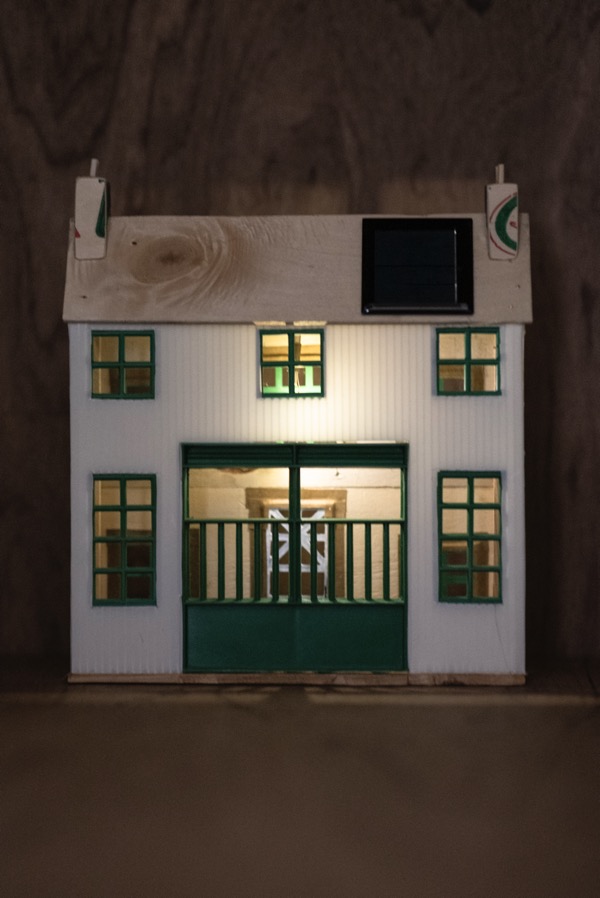
House E (front)
Photographs copyright © Sarah Ainslie
Tony Hall’s East End In The Afternoon
Tickets available this Saturday 21st June

There is little traffic on the road, children are at play, housewives linger in doorways, old men doze outside the library and, in the distance, a rag and bone man’s cart clatters down the street. This is the East End in the afternoon, as photographed by newspaper artist Tony Hall in the nineteen sixties while wandering with his camera in the quiet hours between shifts on The Evening News in Fleet St.
“Tony cared very much about the sense of community here.” Libby Hall, Tony’s wife, recalled, “He loved the warmth of the East End. And when he photographed buildings it was always for the human element, not just the aesthetic.”
Contemplating Tony’s clear-eyed photos – more than half a century after they were taken – raises questions about the changes enacted upon the East End in the intervening years. Most obviously, the loss of the pubs and corner shops which Tony portrayed with such affection in pictures that remind us of the importance of these meeting places, drawing people into a close relationship with their immediate environment.
“He photographed the pubs and little shops that he knew were on the edge of disappearing,” Libby Hall confirmed for me, ‘He loved the history of the East End, the Victorian overlap, and the sense that it was the last of Dickens’ London.”
In 1972, Tony Hall left The Evening News and with his new job came a new shift pattern which did not grant him afternoons off – thus drawing his East End photographic odyssey to a close. Yet for one who did not consider himself a photographer, Tony Hall’s opus comprises a tender vision of breathtaking clarity, constructed with purpose and insight as a social record. Speaking of her late husband, Libby Hall emphasised the prescience that lay behind Tony’s wanderings with his camera in the afternoon. “He knew what he was photographing and he recognised the significance of it,” she admitted.


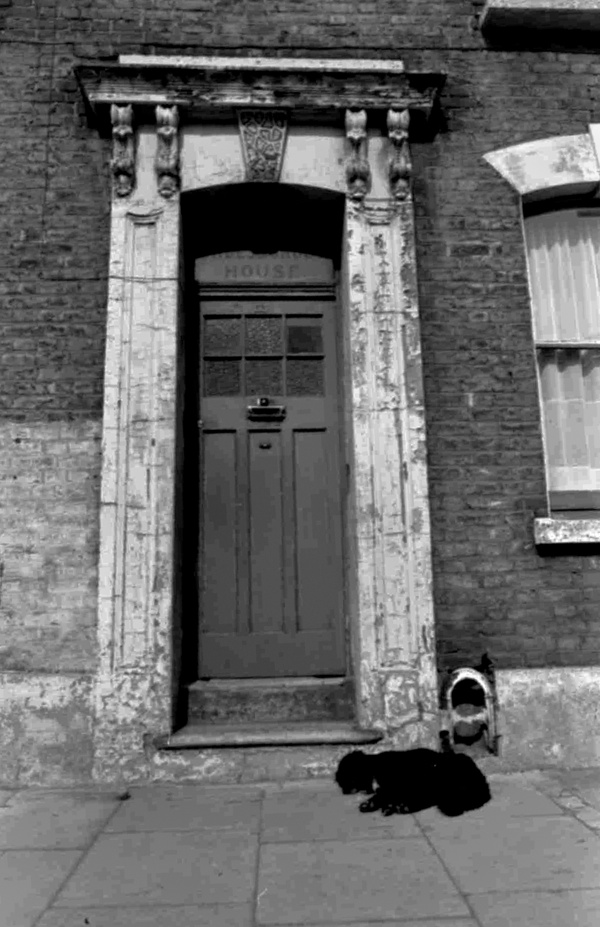


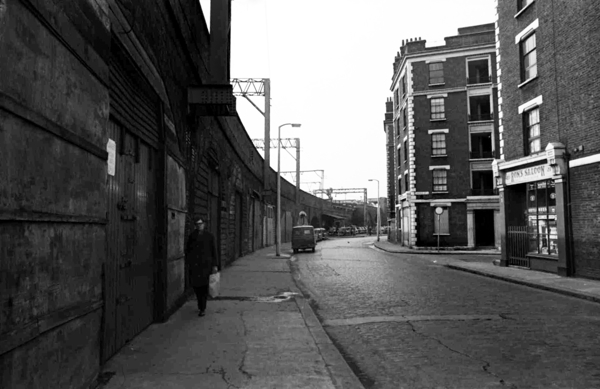
Three Colts Lane

Gunthorpe St


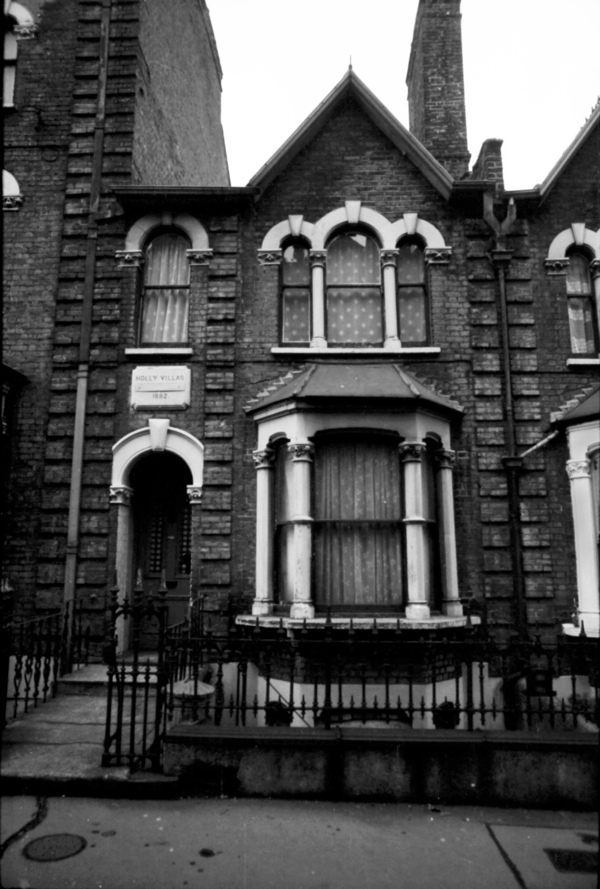


Ridley Rd Market


Stepney Green


Photographs copyright © Estate of Libby Hall
Images Courtesy of the Tony Hall Archive at the Bishopsgate Institute
You may also like to read
Tony Hall’s East End Panoramas












