Neville Turner Returns To Elder St
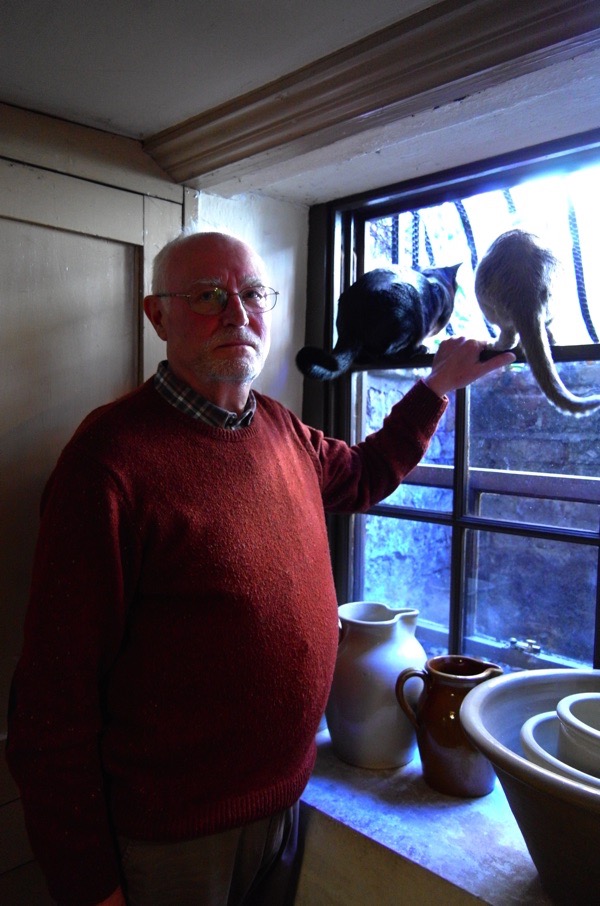
Neville in the cellar where he sheltered during the London blitz
Three years ago, I wrote an account of Neville Turner’s childhood in Elder St in the forties and fifties, and yesterday I had the pleasure of accompanying Neville when he visited his former home for the first time since he left in the sixties. Neville’s family lived here from 1931 to 1974, and were the last to inhabit this eighteenth century weaver’s house before it fell into disrepair and was narrowly saved from destruction at the hands of British Land through the intervention by the squatters of the Spitalfields Trust in 1977.
From the moment we walked through the door, the cats intuitively recognised Neville as a special visitor and – as you can see in the picture above – chose to accompany him closely as a gesture of respect to the returning son of the house.
Neville fondly remembered Mrs Knuckles who lived in the front room when he was a small child, she had been bombed out of her own home and Neville’s family took her in. Later, this became Neville’s bedroom. “I took this off,” he exclaimed in surprise pointing at the dado rail, “I did it so I could line the room with hardboard, even the cornice, and I hung wallpaper from Sanderson’s that cost me a week’s salary.” When he was sixteen, Neville was apprenticed as a tailor in Savile Row and by the age of eighteen, he had moved to another job in Aldersgate where he received double the wages – as a cutter in a ladies’ fashion house, permitting him the disposable income to decorate his room with fancy wallpaper.
Yet Neville’s tastes have changed in the intervening half century and he complimented the current owners on restoring the panelling and replacing the dado rail. “We wanted out with the old in those days,” he confessed to me in regret, “I used to walk across bomb sites to work in Aldersgate and we looked upon Centrepoint as the future – I used to love looking at that place.”
Upstairs on the first floor was the living room and kitchen in Neville’s day. Decorated with boldly patterned wisteria wallpaper, this was where the extended family enjoyed memorable Christmas dinners at a long table. “My father was in the gambling game and if people couldn’t pay their debts they gave him things, so we had two cookers and we were the first in the street to have a big American fridge and a car,” he explained as we stood in the current owner’s bedroom that was once Neville’s kitchen. The quiet yard at the rear of the house contained a stable in those days and was used to store costermongers’ barrow for the market. Neville recalled the clatter, the equine smells and the flies that filled the kitchen in the summer months.
Neville’s family only lived on two floors of the four storey house, so we did not ascend any further to the rooms above where a docker and his wife lived then, but descended instead to the cellar. “We never went down here much,” Neville declared as we climbed down to where he and his family were joined by their neighbours to shelter from the London blitz.
In wartime, the ceiling was re-inforced with corrugated iron and a steel prop to support the roof in case the house collapsed overhead. Around a dozen people passed long nights together here during the bombing, playing cards while Neville and his friends amused themselves by melting down lead scavenged from the nearby bomb sites to cast toy soldiers in a mould. “We were lucky no bombs fell on Elder St,” Neville admitted to me with a grin of relief. Today the cellar is in use as the kitchen of the house and Neville recognised the nineteenth century stone sink. “It was always dripping and an enormous fungus grew upon it which rather frightened me,” he recalled, “In fact, my father used to grow mushrooms down here.”
“If you were born here, this is your heritage,” Neville said to me, feeling comfortable again in his old home, “It was a community, everyone lived outside and it was completely safe. We even knew all the policemen at the station next door by name.”
“People I met were shocked, they said, ‘You live where?’ They couldn’t believe we didn’t have a bathroom,” he continued,” But I used to go the bathhouses in Goulston St, Pitfield St or Ironmonger Row – which was popular because it had showers. I’d never seen a shower before and you could pay extra to adjust the temperature.”
“I was the youngest of three children and – at a certain point – my mother said to me, ‘Don’t you think it’s time you got married?’ and I left here in 1964 and married Margaret in 1968,” Neville concluded with a shrug, “We moved down to Putney, but it was soulless and I nearly had a nervous breakdown. I’m sure people who grow up there like it, yet I didn’t – so we moved back to the Kingsland Rd to be in the East End again.”
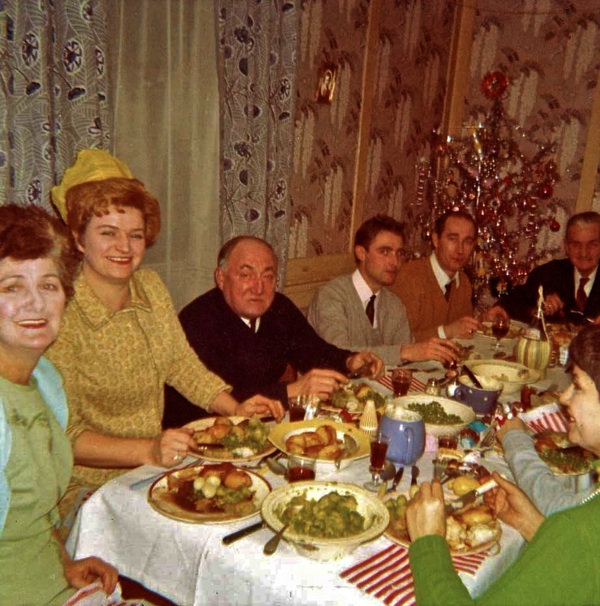
On the first floor, Neville (fourth from left ) sits next to his father for Christmas in 1968
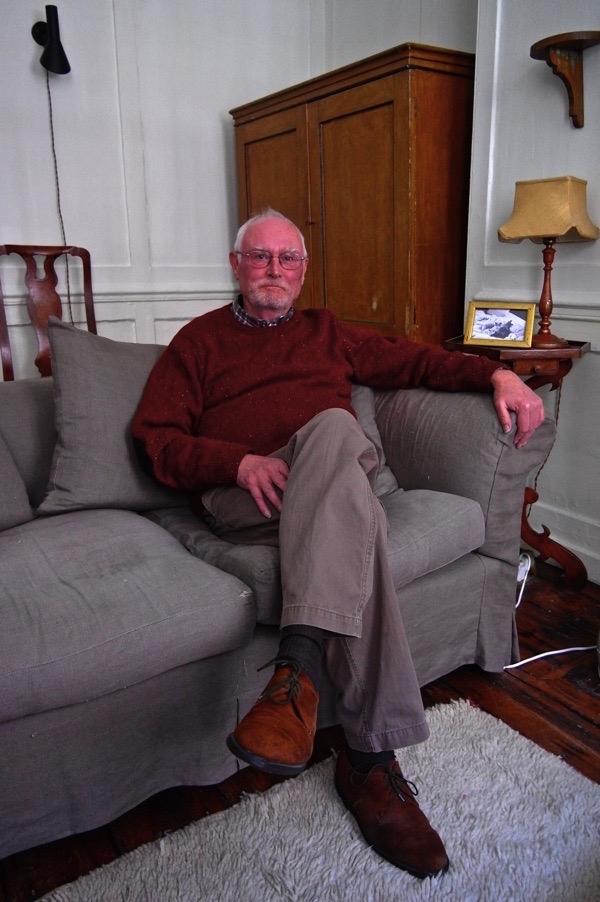
Neville relaxes in first floor room which was once his family’s dining room
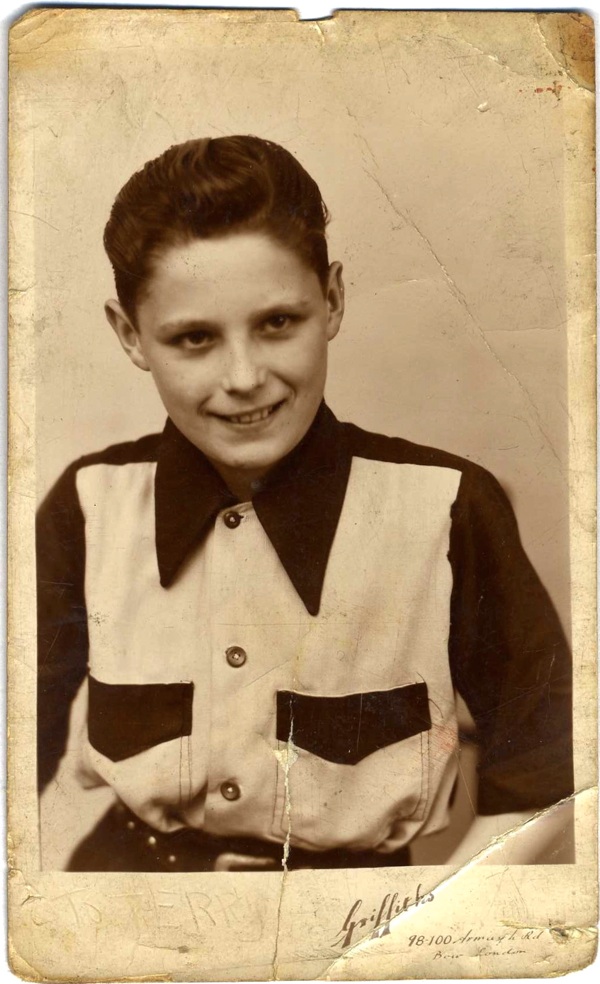
Neville aged eleven in 1951
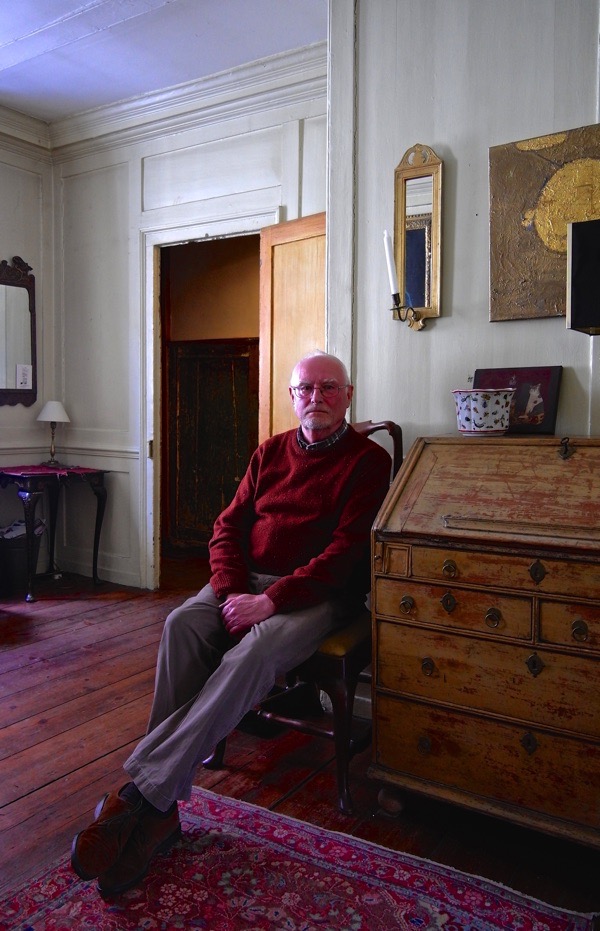
Neville sits in the ground floor room which was his childhood bedroom
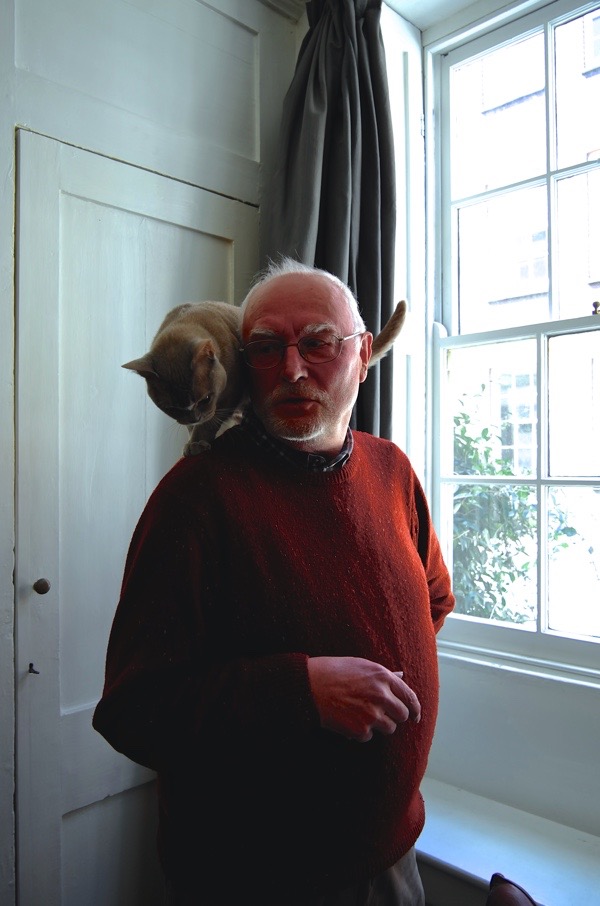
Neville is welcomed back by the presiding spirit of Elder St
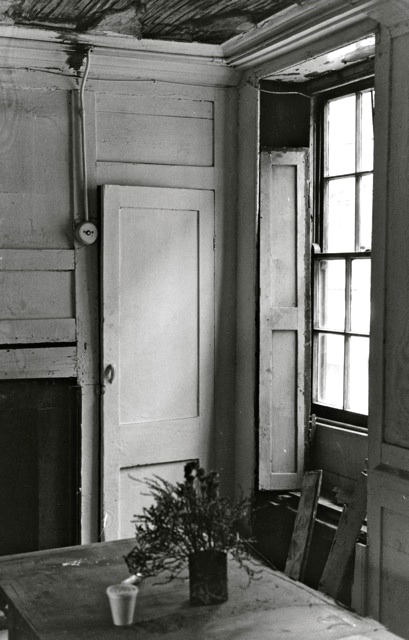
The first floor room during the squat to save the building in 1977
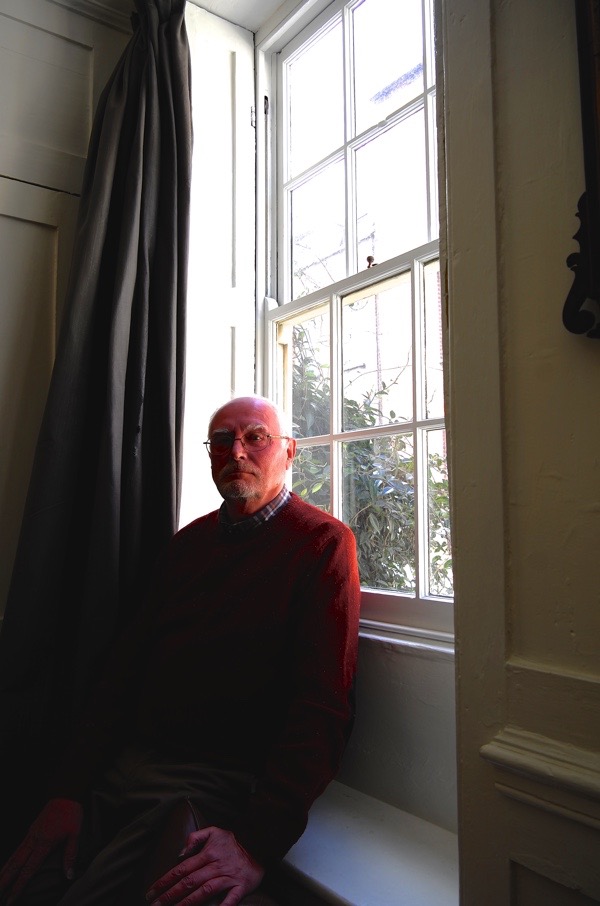
Neville sits in the window on the first floor
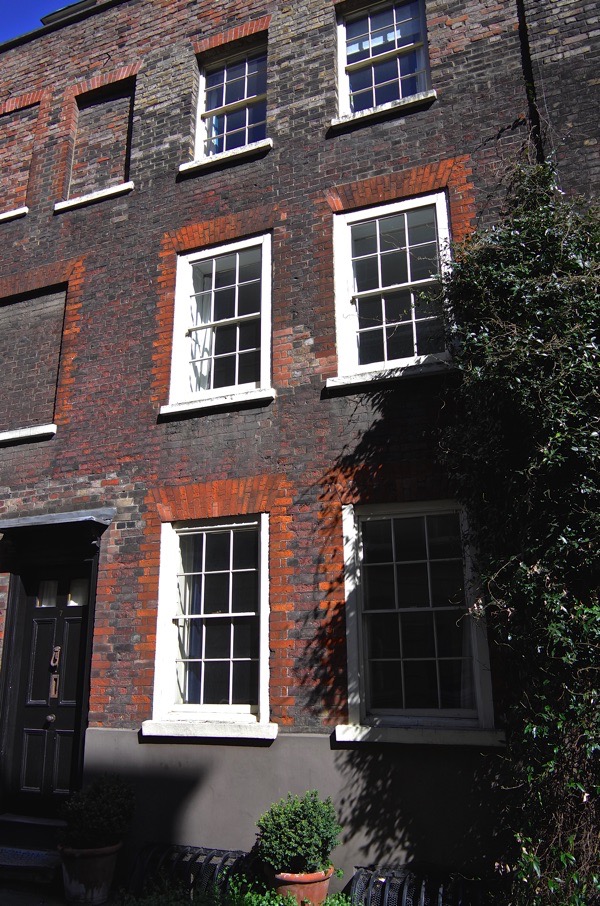
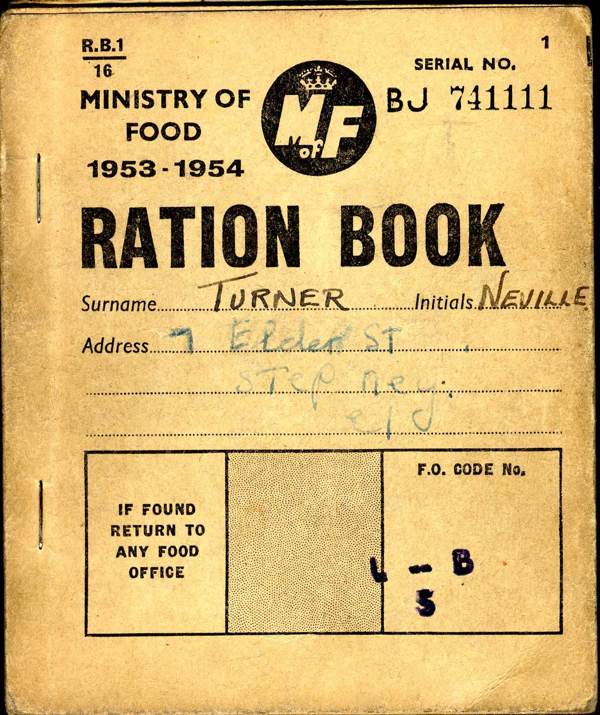
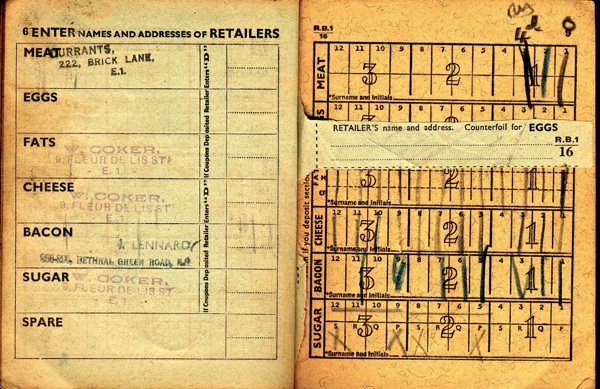
Neville’s ration book
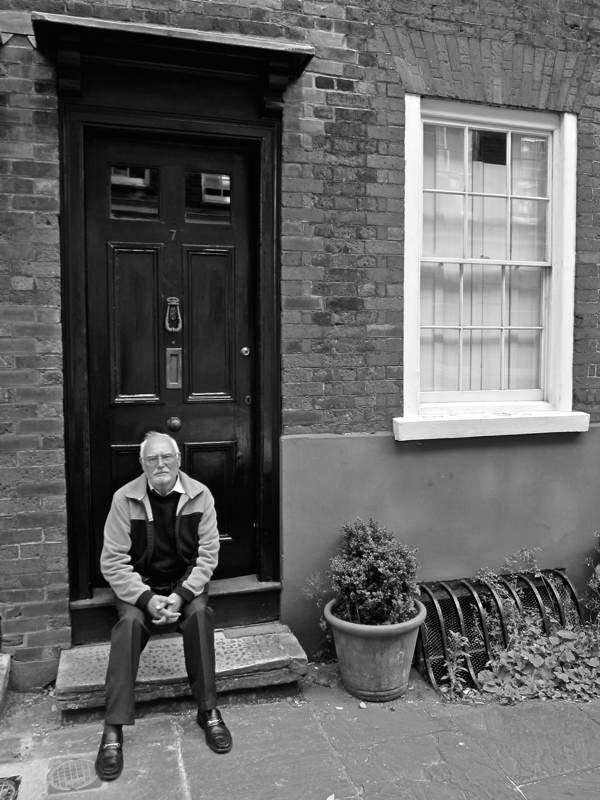
Neville sits on the step in Elder St just as he did as child in the nineteen-forties
You may like to read my original story
Squatters Return To Elder St
To reflect the strange time warp in Elder St – where British Land who were prevented from demolishing Norton Folgate in 1977 have returned in 2015 to finish the job – five of those who were photographed on the steps of 7 Elder St in 1977 have gathered in the same location to restage the picture nearly forty years later for Contributing Photographer Sarah Ainslie.
Below, Kate & Michael Hodgkin who grew up in 19 Elder St, the house of historian Raphael Samuel, recall that memorable teenage summer of 1977 when they found their way into a newspaper photograph.
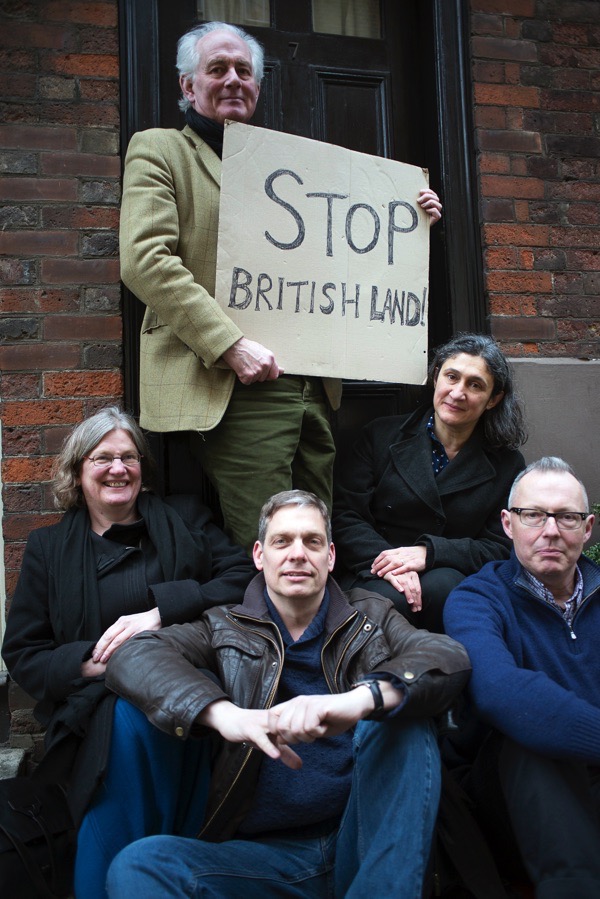
Dan Cruickshank standing with Katharine Hodgkin, Michael Hodgkin, Carla Mitchell & Colin Butler

Dan Cruickshank and friend stand in the doorway. Kate Hodgkin and Carla Mitchell sit in the doorway. Daniel Mitchell, Michael Hodgkin and Colin Butler sit on the step.
Katharine Hodgkin remembers Elder St
“When we first lived in Elder St at the beginning of the seventies, it was practically empty. As people left the last occupied houses on our side of the street, we would climb in and out of the backs of them. There were a few families still in the Peabody Buildings in Commmercial St, but when I went to the Central Foundation Girls’ School in Spital Sq none of the other girls lived nearby.
It was a strangely quiet place to live, beached by the outgoing tides of people. The local markets – Petticoat Lane and Club Row – were busy, and there were still Jewish shops run by Raphael Samuel’s relatives, and streets with new spicy smells that I did not yet identify as Bangladeshi. But the little cluster of Folgate St, Elder St, Blossom St, Fleur de Lys St, was a backwater run down into dereliction.
By the time of the photo, my brother Mick & I had moved out, though our older brother Dom stayed on with Raph (Raphael Samuel) and we came back most weekends. We were in the mid-to-late teens by then and busy being seventies political teenagers – it was the time of Rock Against Racism and the Anti-Nazi League and demos all the time. So we naturally gravitated to protests going on in Elder St.
The area has changed so much, and the ghost of the old Spitalfields can seem a faded and feeble one. But I was perversely heartened by the enduring shabbiness of the streets, and the sense that the materiality of the buildings continuing to hold memory of the former communities, even though the inhabitants have mostly changed.
I would rather see the graffiti and empty shells at the Commercial St end of Elder St than the neo-Georgian facades blighting Folgate St at the other. There is a stubborn continuity in the narrow turning streets and the way the houses close in around you. The thought of losing all this to more mega-buildings is a melancholy one.
When we met to restage the photo, we stood outside 7 Elder St sharing memories of outdoor lavatories, posters all over the kitchen wall, books lining the spiral staircase. It is good that the street was saved, is lived in, and the houses are better loved and cared for.”
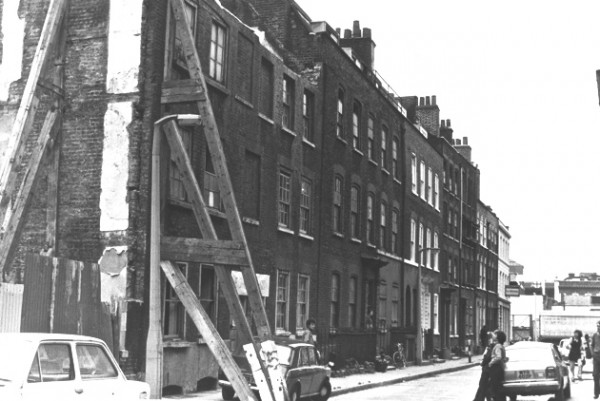
5 & 7 Elder St after the demolition was halted by the squatters of the Spitalfields Trust
Michael Hodgkin remembers Elder St
“Like my sister Kate, going back now, I remember how we used to scramble over the back wall from our home to the ragwort-covered building site behind. I would have fruit fights with abandoned produce in the market with a boy called John from the Peabody Buildings and the son of the family who ran the Italian shop on Commercial Rd by the top of Folgate St. And I remember painting our front step regularly with Cardinal Red to keep an East End traditional doorstep going.
One day we were sitting there barefoot, as we often did, when some passing American tourists starting taking photos as if documenting vestiges of late-nineteenth century East End poverty, rather than our late-twentieth century Bohemianism.”
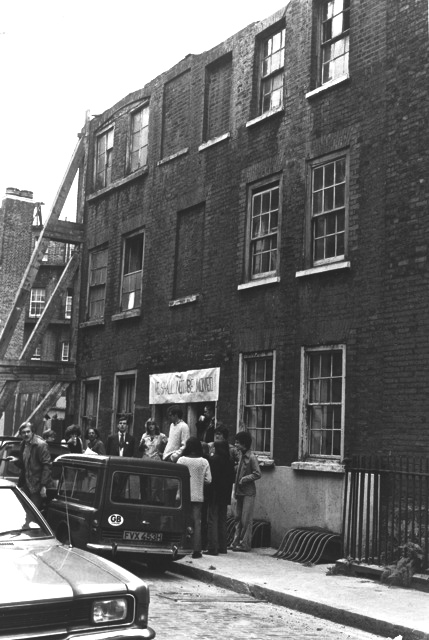
Squatters gather outside 7 Elder St – fourth from left is historian Raphael Samuel
Photographs by Anne Kilby
Dan Cruickshank speaks to SAVE NORTON FOLGATE at Shoreditch Church at 6:30pm on Wednesday 22nd April, with guests Sian Phillips reading the poetry of Sir John Betjeman and Conservation Consultant Alec Forshaw dissecting the British Land scheme. Dan will be telling the story of how British Land were defeated in Norton Folgate in 1977 and outlining the current battle. Click here to book your free ticket.
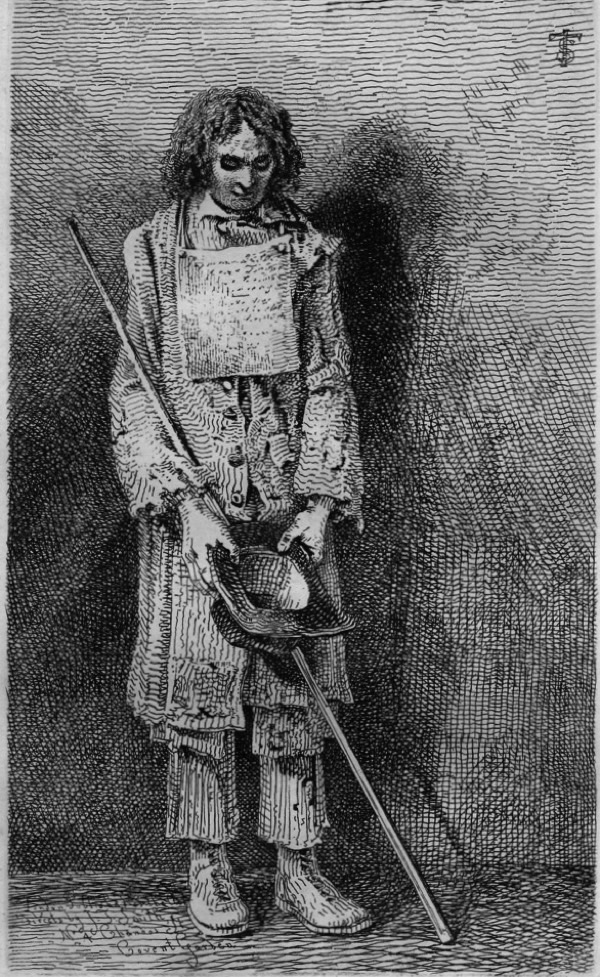
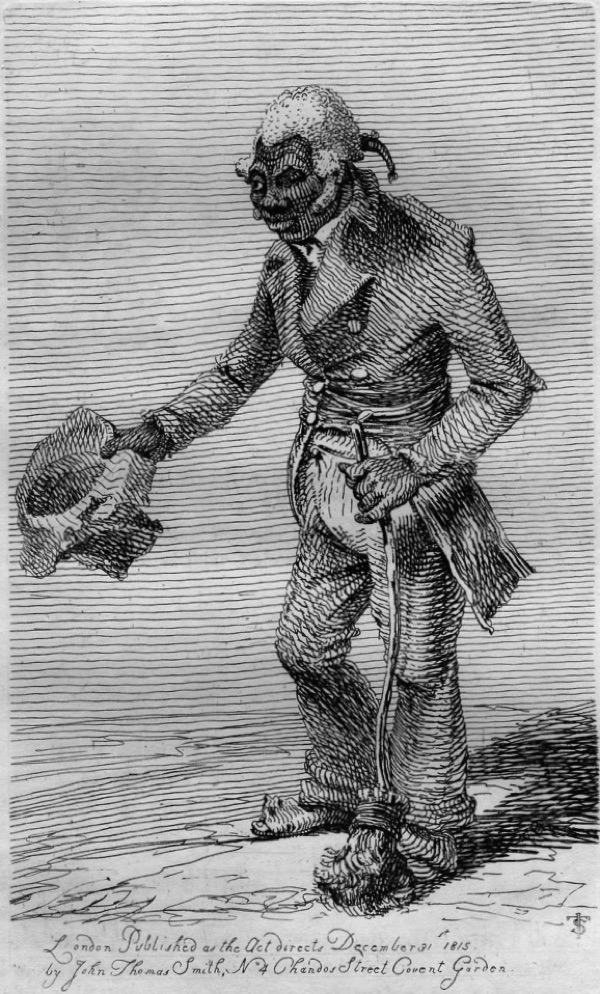
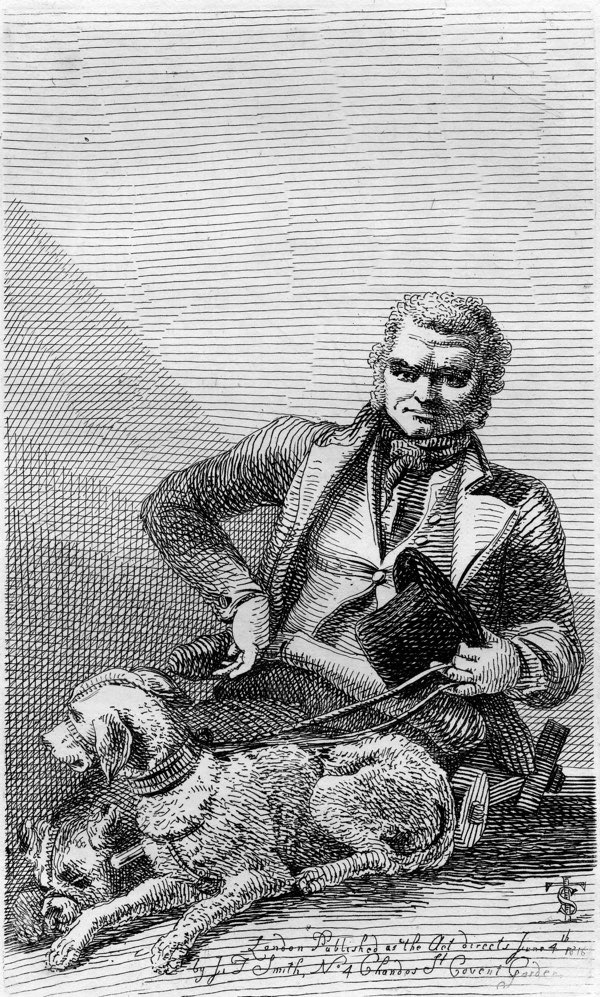
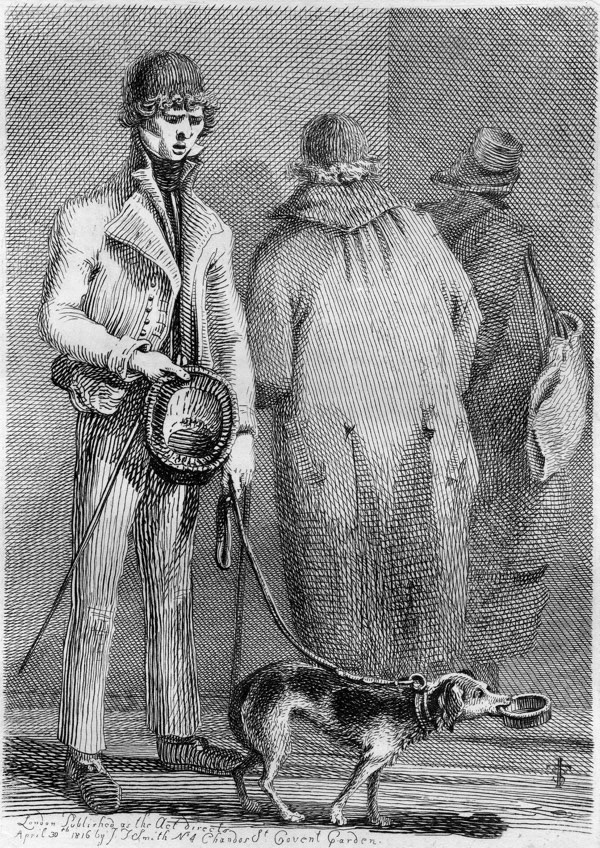
John Thomas Smith’s Remarkable Beggars
John Thomas Smith drew compassionate portraits of the beggars of London at the beginning of the nineteenth century. He was fascinated by the different ways in which the outcast poor scraped an existence out of little more than resourcefulness in the city streets and there is a dramatic equivocation in his acute portrayals, simultaneously witnessing the need and celebrating the spirit of his subjects.
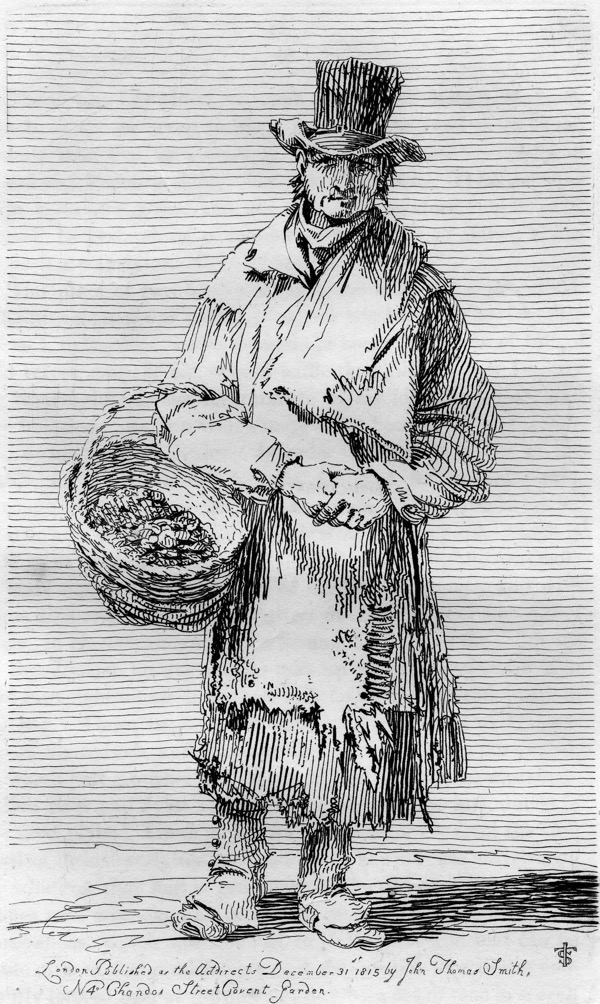
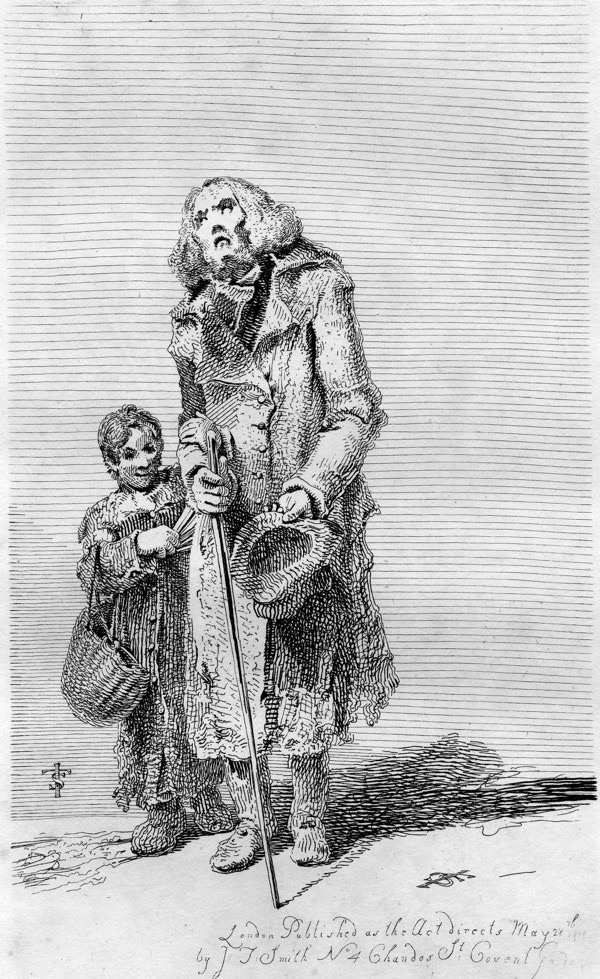
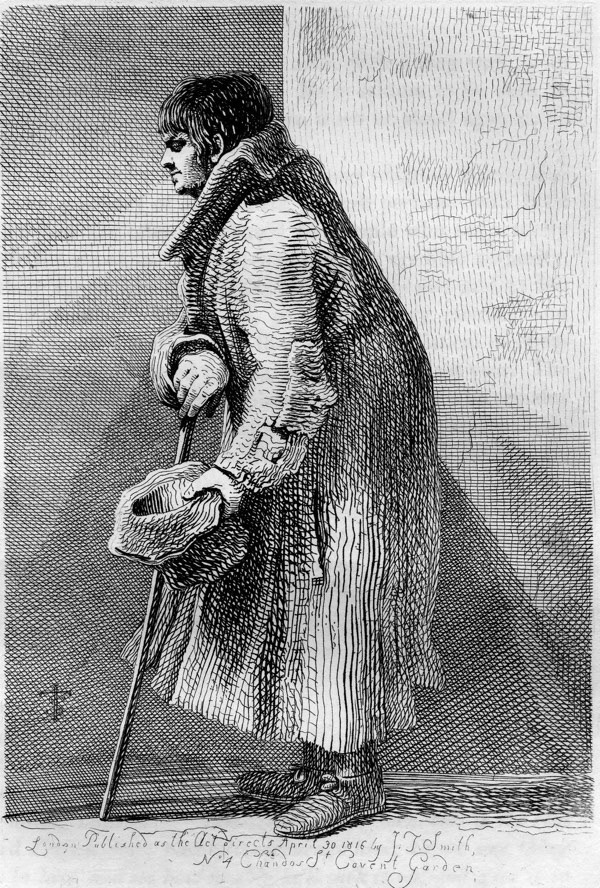
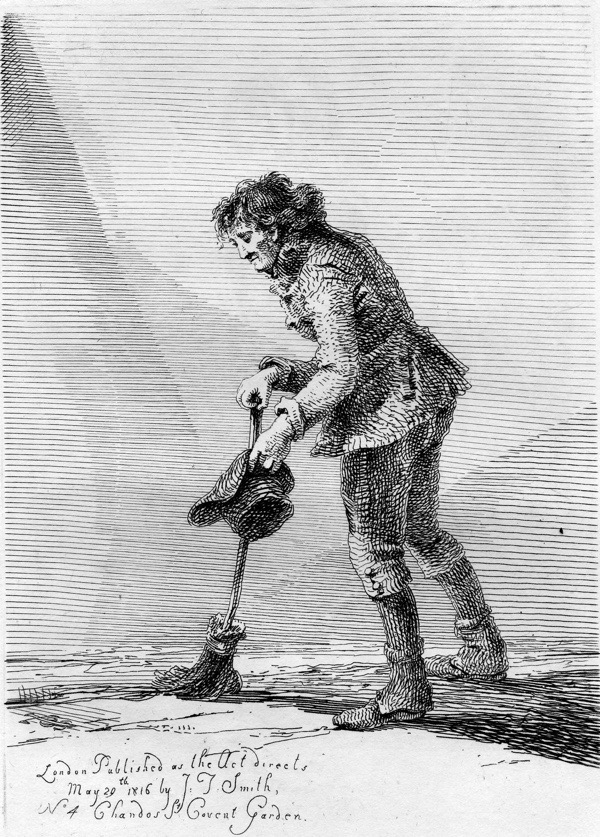
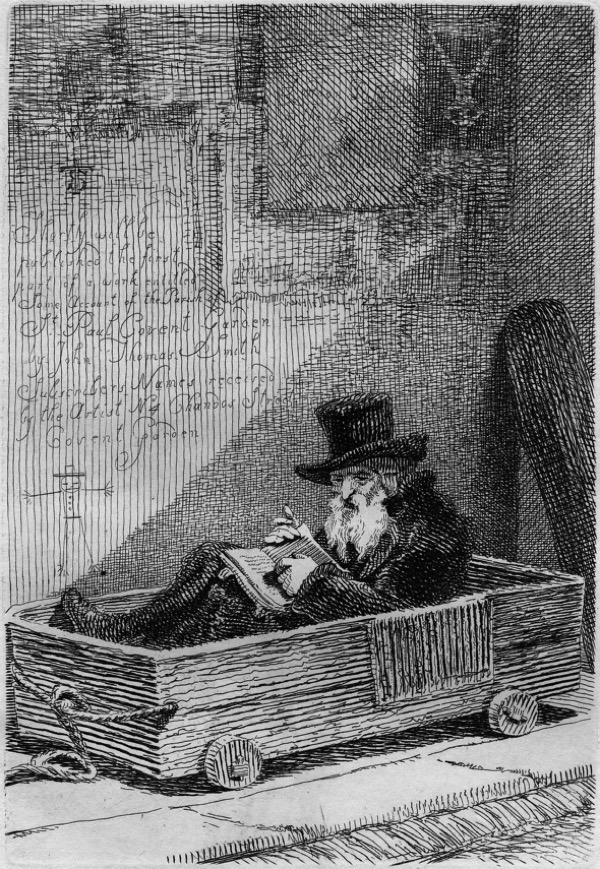

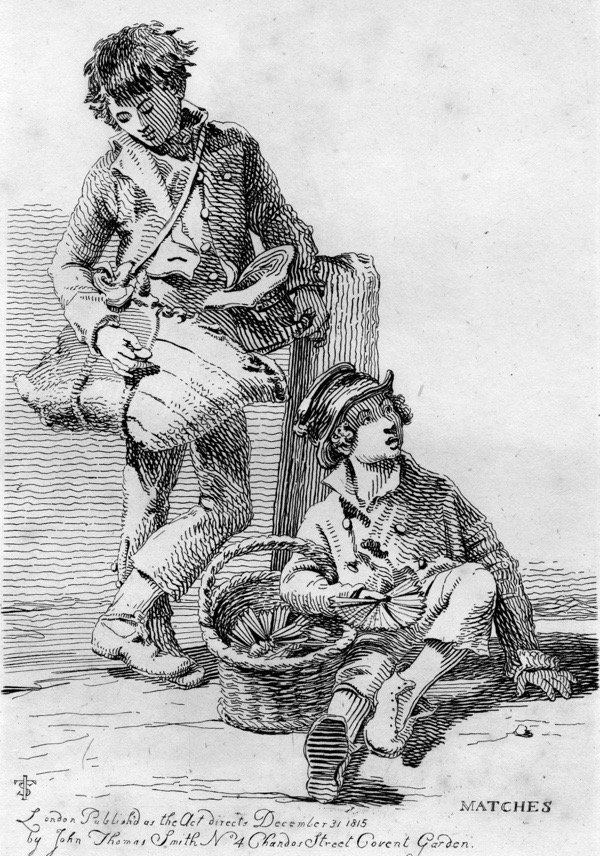
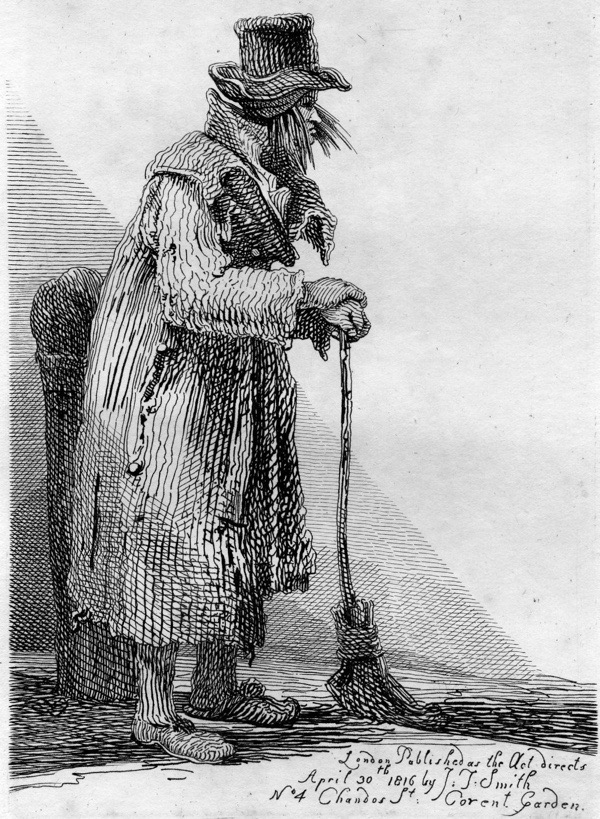
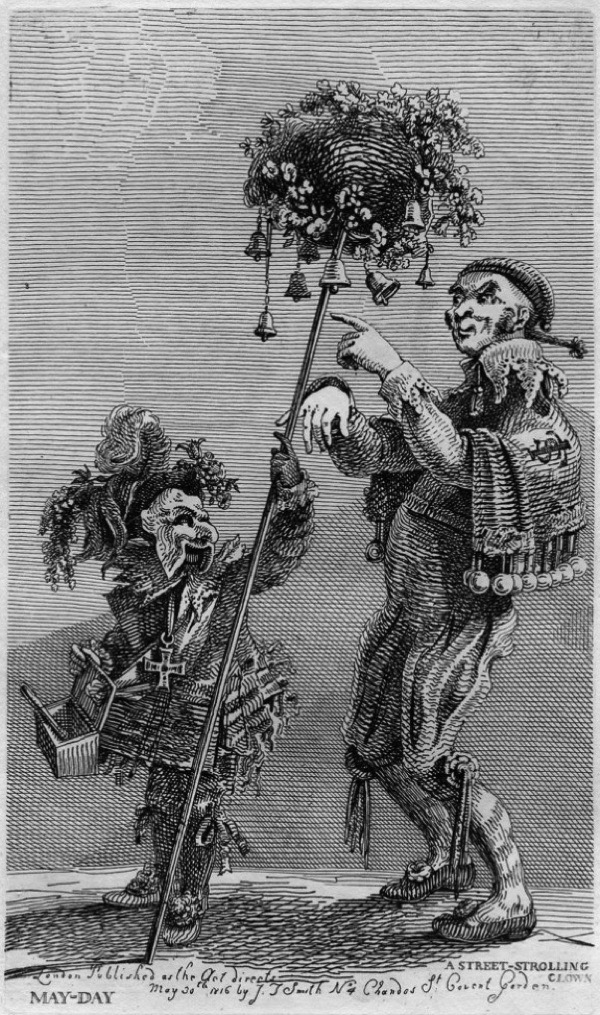
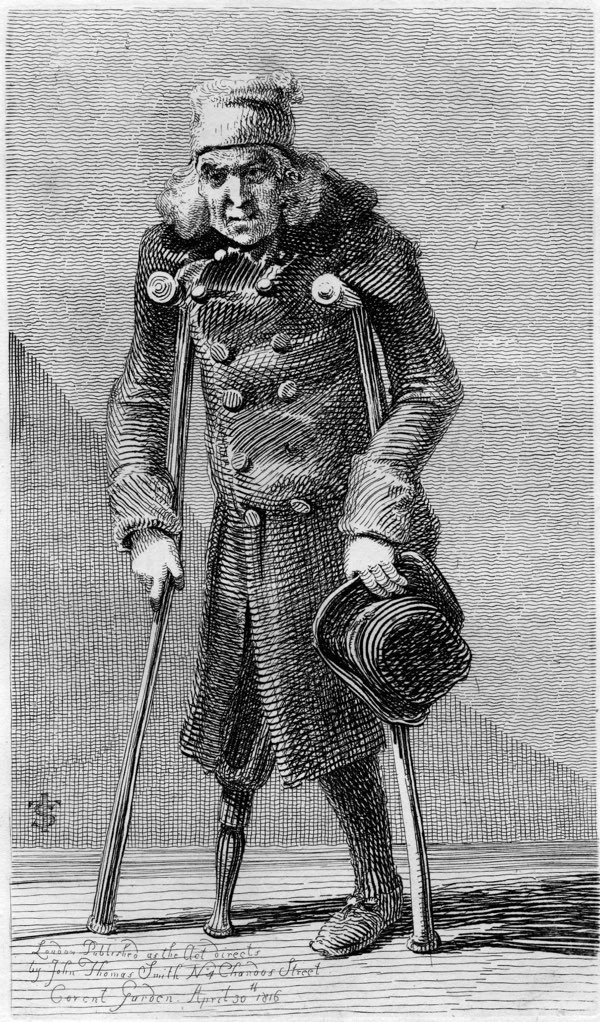
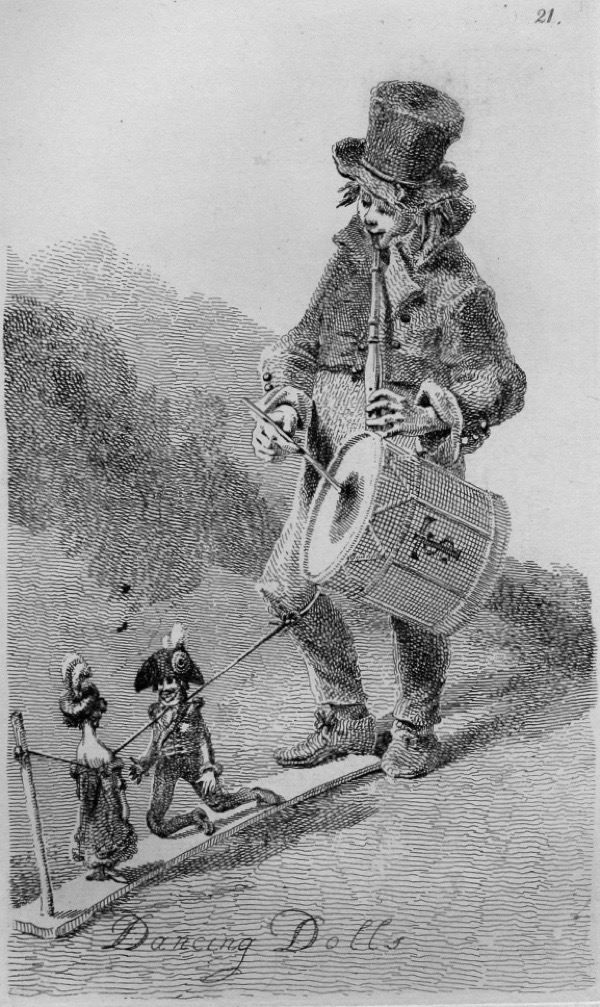
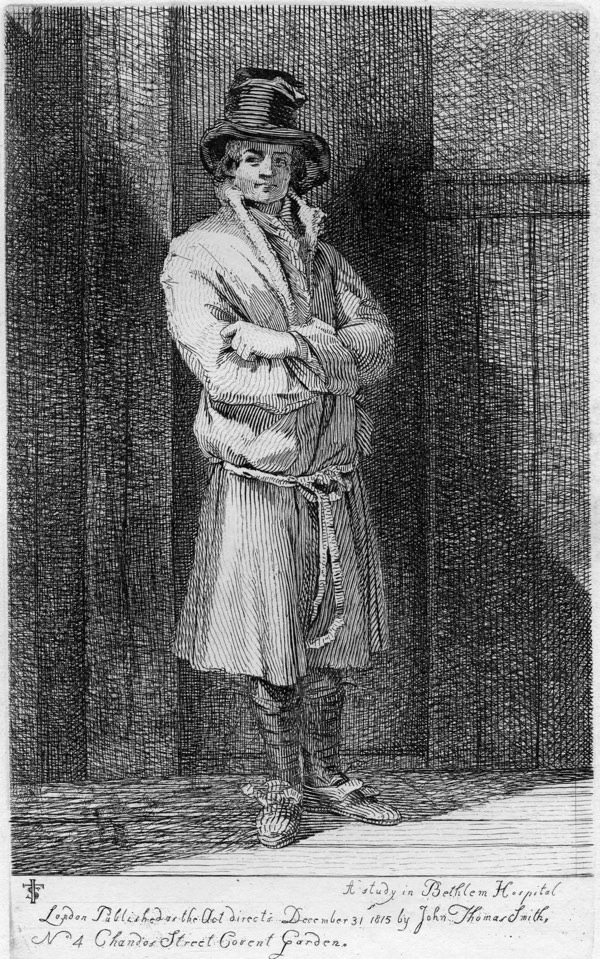
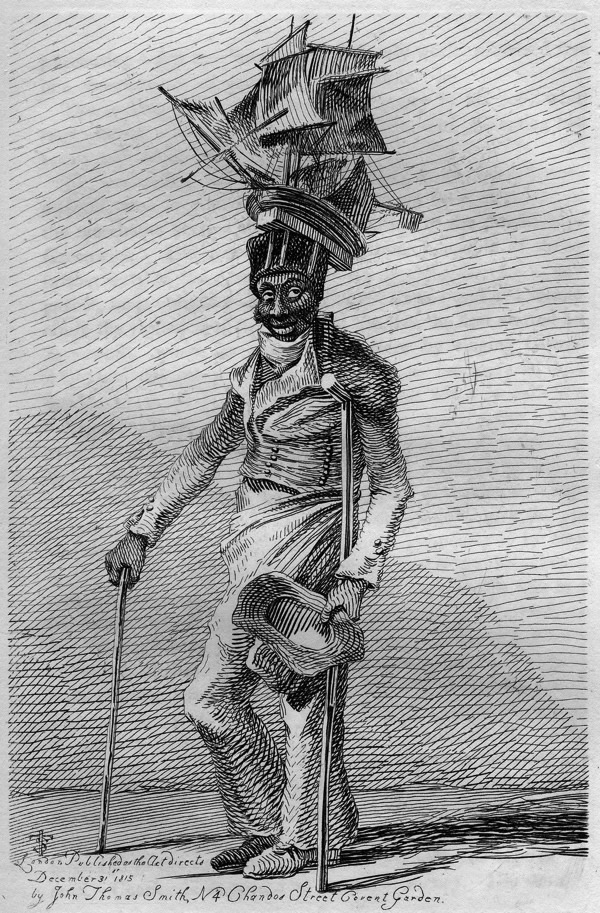
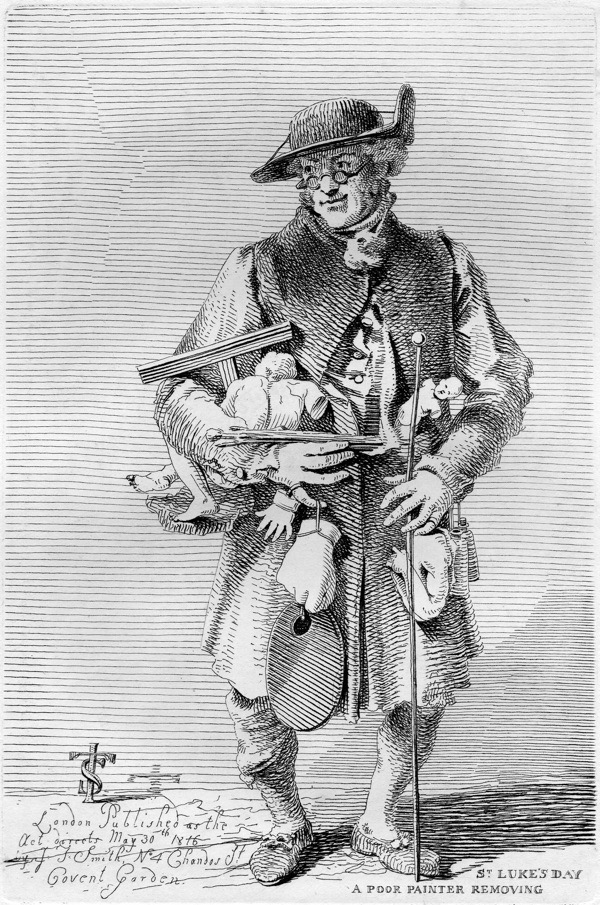
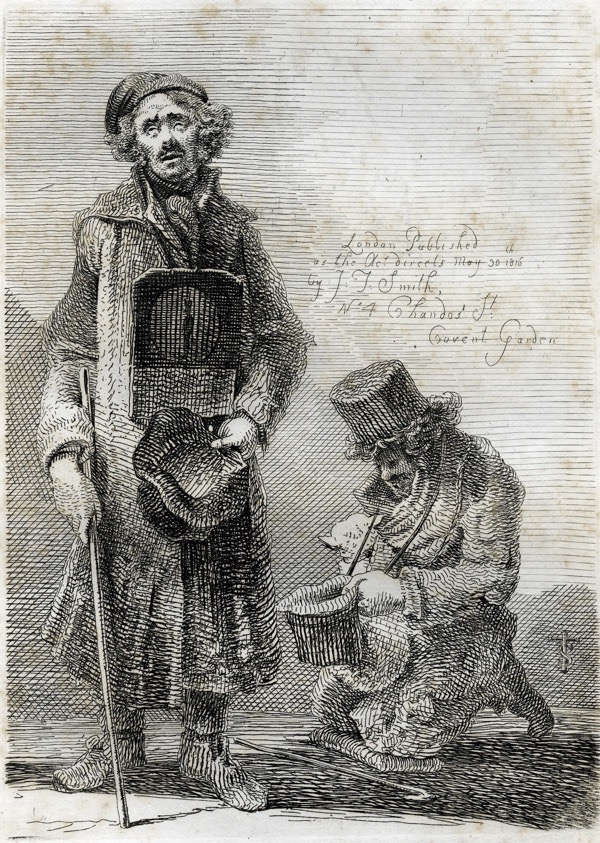

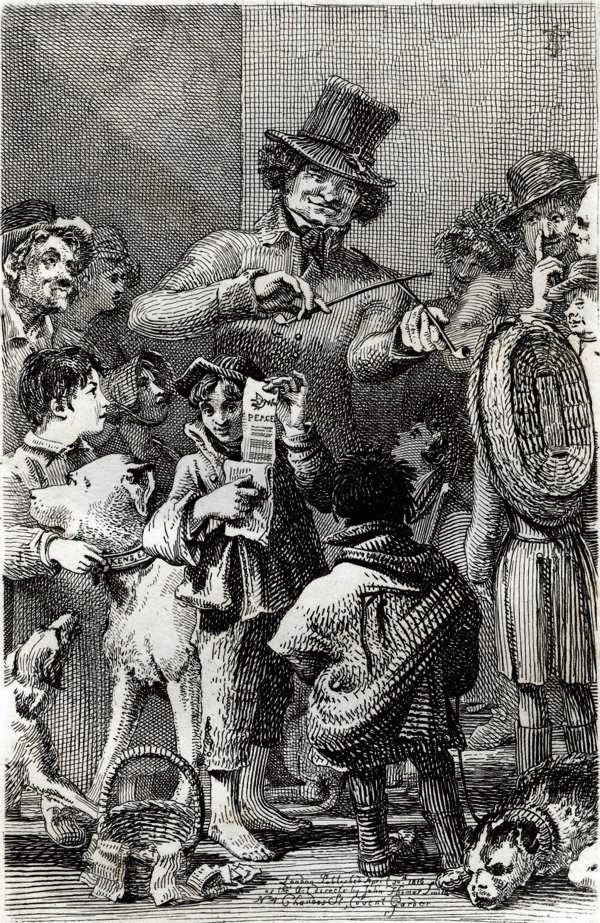
Images courtesy Bishopsgate Institute
You may also like to take a look at
John Thomas Smith’s Ancient Topography
John Thomas Smith’s Antiquities
John Thomas Smith’s Vagabondiana
In Search Of The Rope Makers Of Stepney

Rope makers of Stepney
In Stepney, there has always been an answer to the question, “How long is a piece of string?” It is as long as the distance between St Dunstan’s Church and Commercial Rd, which is the extent of the former Frost Brothers’ Rope Factory.
Let me explain how I came upon this arcane piece of knowledge. Earlier in the year, I published a series of photographs from a copy of Frost Brothers’ Album in the archive of the Bishopsgate Institute produced around 1900, illustrating the process of rope making and yarn spinning. As a consequence, a reader of Spitalfields Life walked into the Institute and donated a series of four group portraits of rope makers at Frost Brothers which I publish here today for the first time.
I find these pictures even more interesting than the ones I first showed because, while the photos in the Album illustrate the work of the factory, in these newly-revealed photos the subject is the rope makers themselves.
There are two pairs of pictures. Photographed on the same day, the first pair taken – in my estimation – around 1900, show a gang of men looking rather proud of themselves. There is a clear hierarchy among them and, in the first photo, they brandish tankards suggesting some celebratory occasion. The men in bowler hats assume authority and allow themselves more swagger while those in caps withhold their emotions. Yet although all these men are deliberately presenting themselves to the camera, there is relaxed quality and swagger in these pictures which communicates a vivid sense of the personality and presence of the subjects.
The other two photographs show larger groups and I believe were taken as much as a decade earlier. I wonder if the tall man in the bowler hat with a moustache in the centre of the back row in the first of these is the same as the man in the bowler hat in the later photographs? In these earlier photographs, the subjects have been corralled for the camera and many regard us with a weary implacable gaze.
The last of the photographs is the most elaborately staged and detailed. It repays attention for the diverse variety of expressions among its subjects, ranging from blank incomprehension of some to the tenderness of the young couple with the young man’s hands upon the young woman’s shoulders – a fleeting gesture of tenderness recorded for eternity.
I was so fascinated by these photographs I wanted to go and find the rope works for myself and, on an old map, I discovered the ropery stretching from Commercial Rd to St Dunstan’s, but – alas – I could discern nothing on the ground to indicate it was ever there. The Commercial Rd end of the factory is now occupied by the Tower Hamlets Car Pound, while the long extent of the ropery has been replaced by a terrace of house called Lighterman’s Court that, in its length and extent, follows the pattern of the earlier building quite closely. At the northern end, there is now a park where the factory reached the road facing St Dunstan’s. Yet the terraces of nineteenth century housing in Bromley St and Belgrave St remain on either side and, in Bromley St, the British Prince where the rope makers once quenched their thirsts still stands.
After the disappointment of my quest to find the rope works, I cherish these photographs of the rope makers of Stepney even more as the best record we have of their existence.

Gang of rope makers at Frost Brothers (You can click to enlarge this image)

Rope makers with a bale of fibre and reels of twine (You can click to enlarge this image )
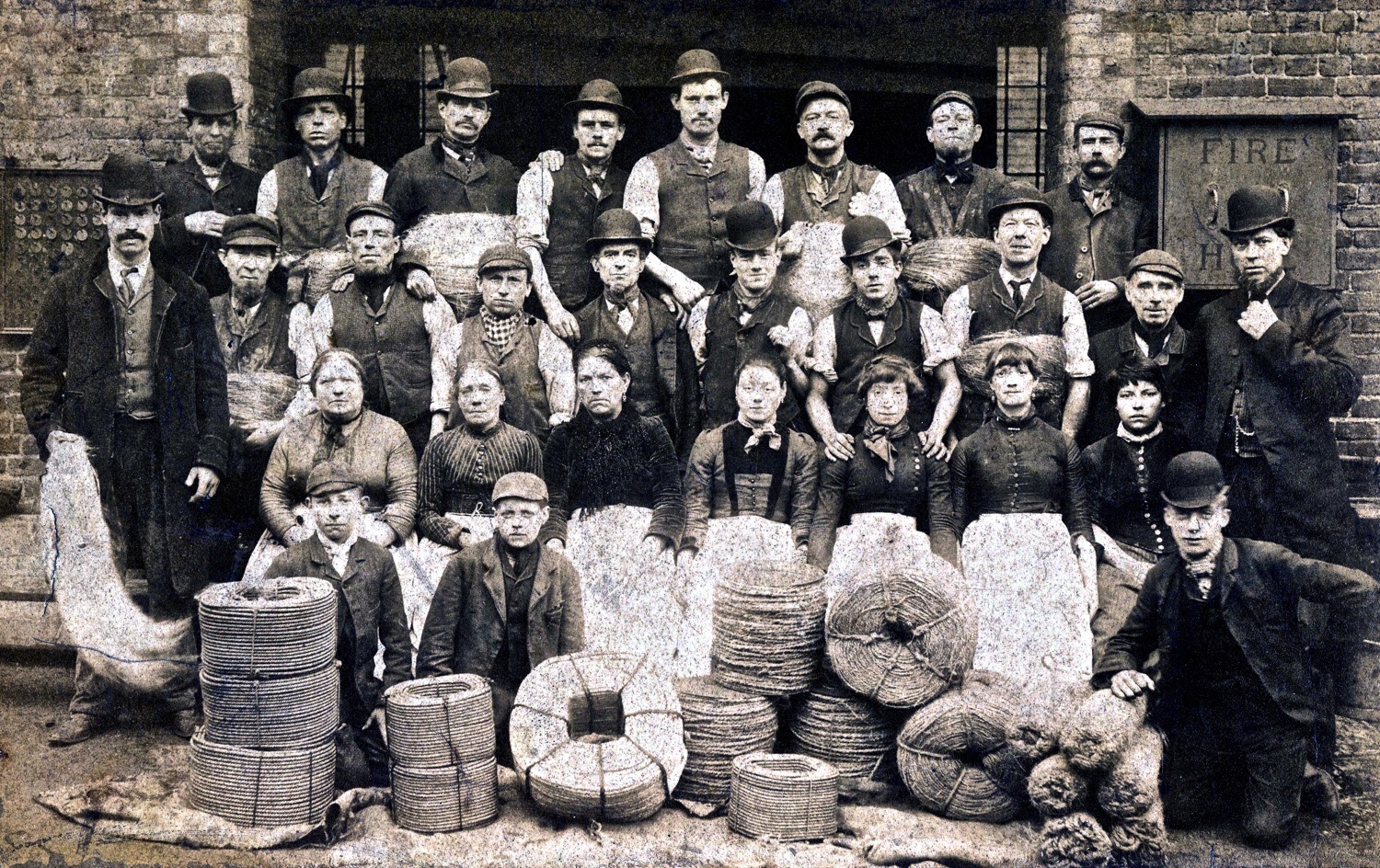
Rope makers including women and boys with coils of rope (You can click to enlarge this image)
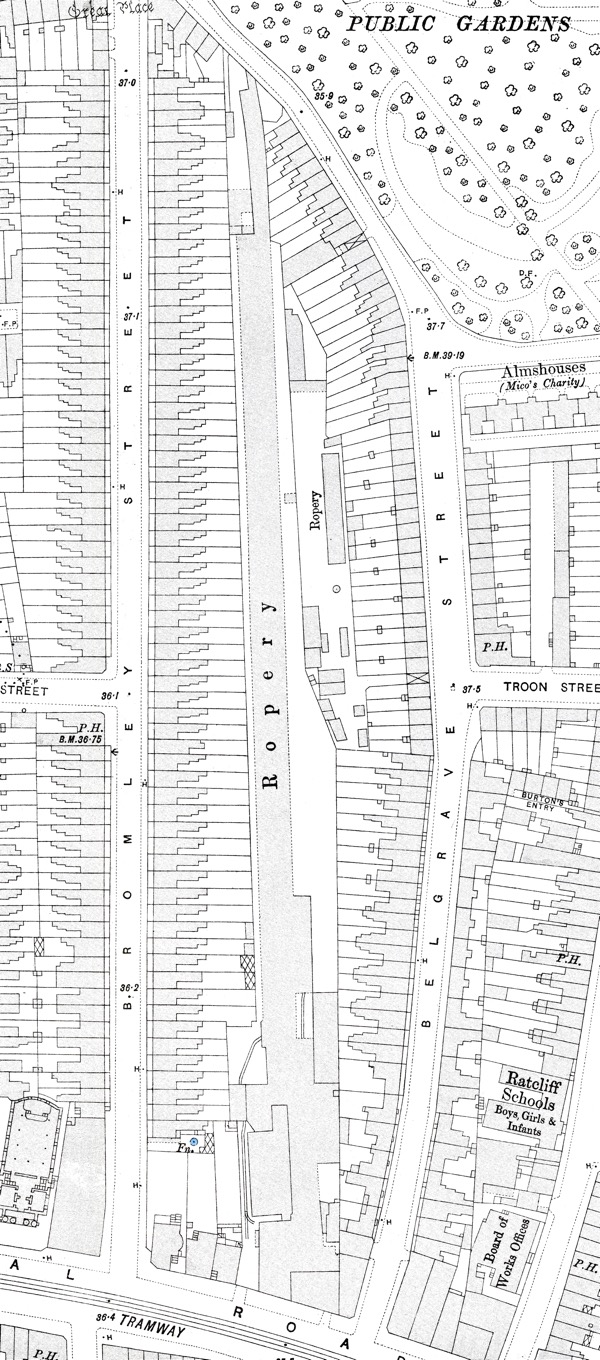
Frost Brothers Ropery stretched from Commercial St to St Dunstan’s Churchyard in Stepney
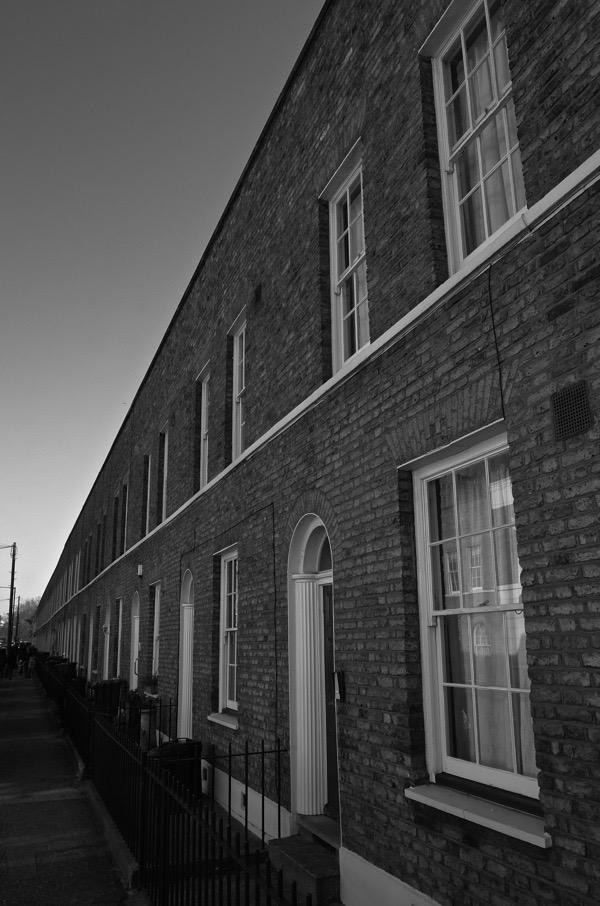
In Bromley St
Images courtesy Bishopsgate Institute
You may like to read the original post
Holland Estate Portraits
In the wake of recent news that East End Homes have submitted a pre-planning application for demolition of the Holland Estate next to Petticoat Lane prior to consulting with the people who live there, a member of the staff of East End Homes told residents their homes were “unfit for human habitation.” So yesterday, Contributing Photographer Sarah Ainslie & I spent an afternoon visiting flats on the Estate to take these portraits and assess the accommodation for ourselves.
We were touched by the strong sense of community we encountered and the generous welcome we received at the Holland Estate. We found the gracious brick structures are built of better quality materials than most modern developments and are humanely conceived, offering hospitable living spaces which are cherished and well-maintained by the occupants.
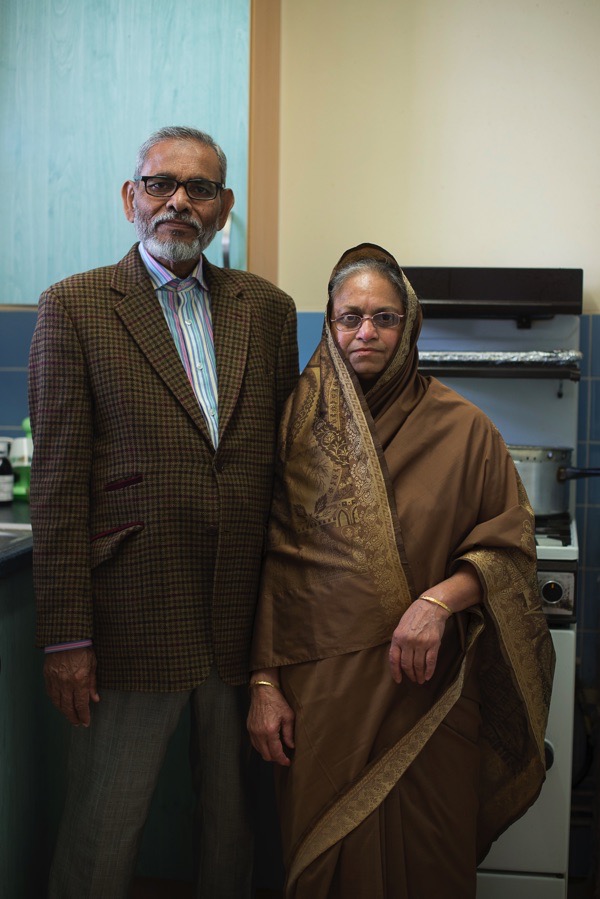
Ali Sahed Goyas & Jahnara Choudhury have lived on the Holland Estate for twenty-five years
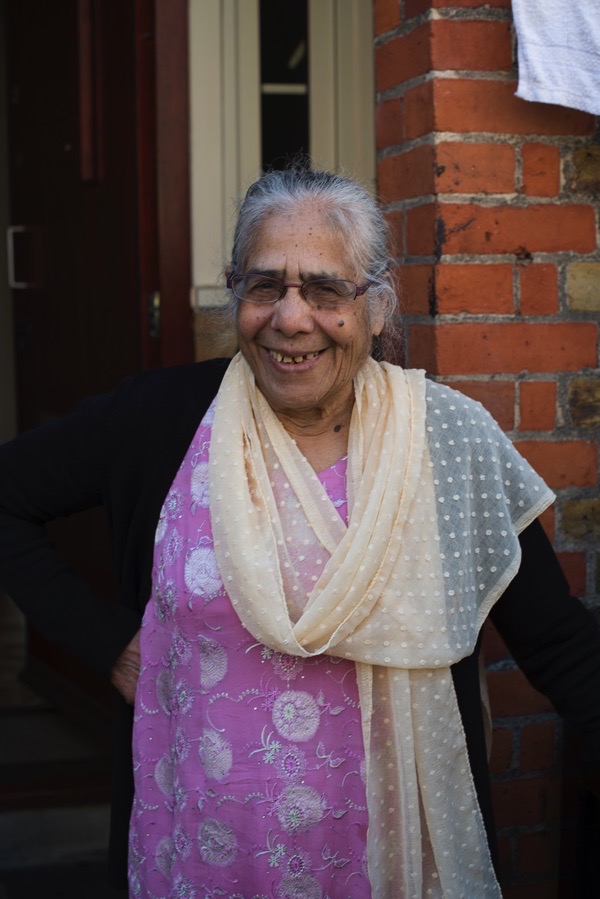
Pascha Singh has lived on the Holland Estate for more than thirty years
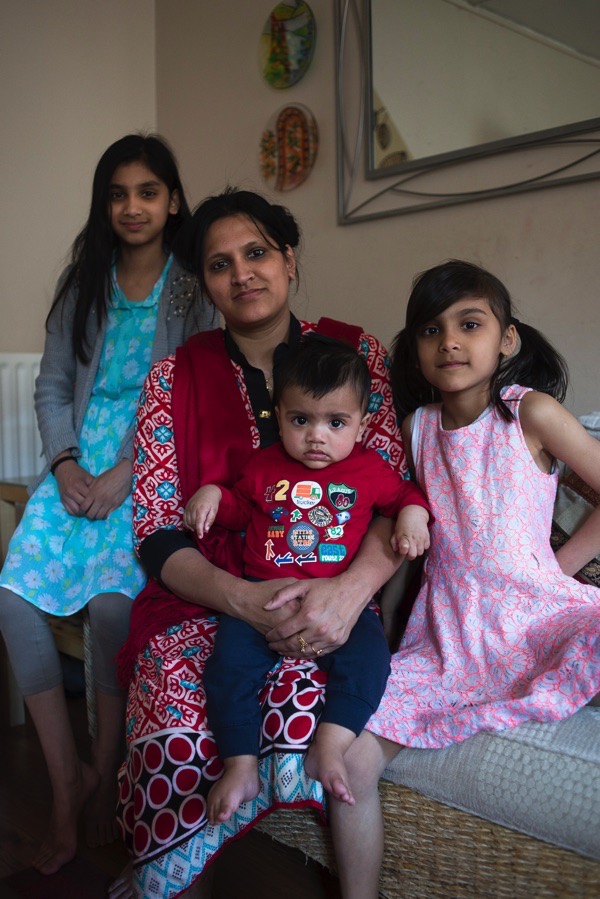
Mahjdiyat, Shammi, Manveen & Arshan Ahmed at home
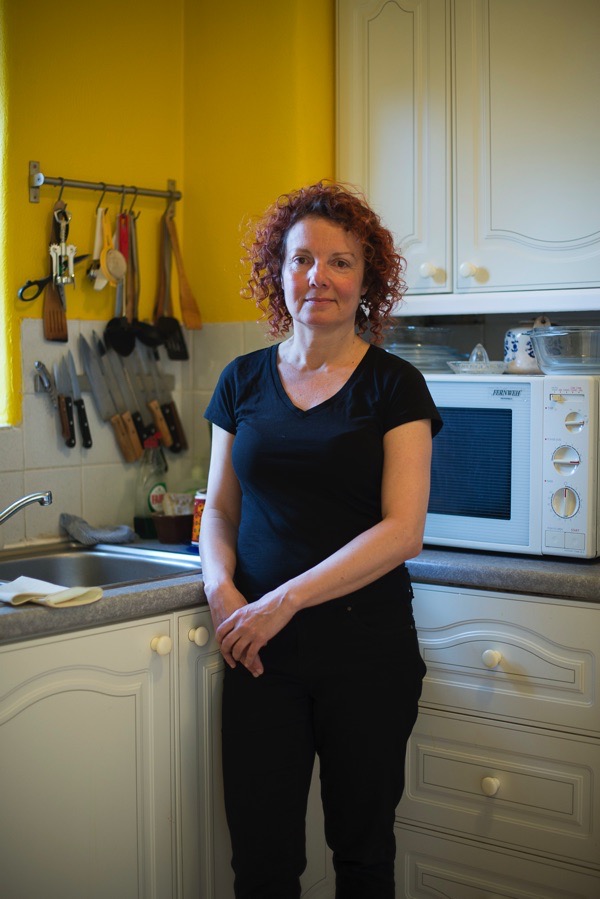
Yolanda De Los Buies has lived on the Holland Estate for seventeen years
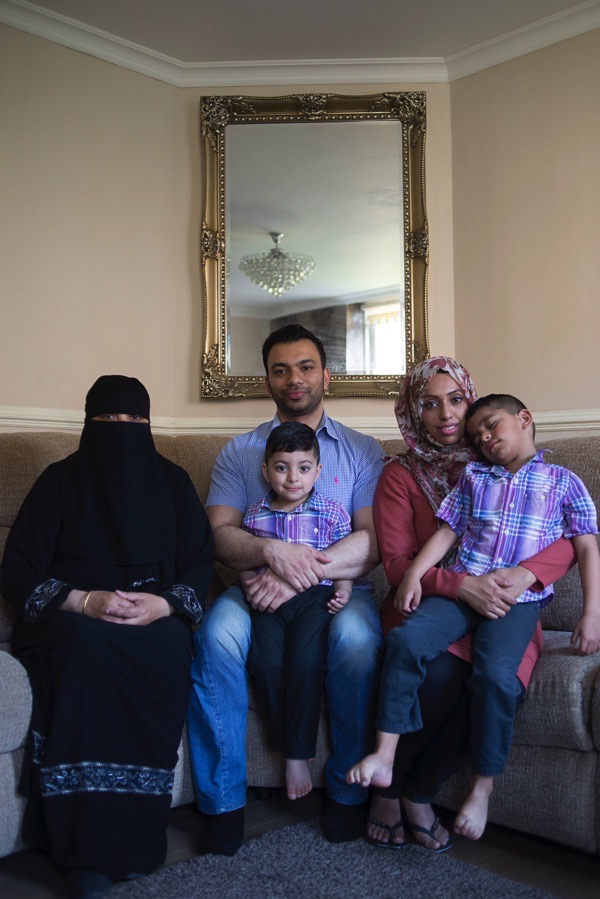
Saleha Khanam with her son Shamsur Rahman and his wife Rushna Begum and their children Yaseen and Hamza – Four generations of this family have lived on the Holland Estate

Azar Ali has lived on the Holland Estate for thirty-one years
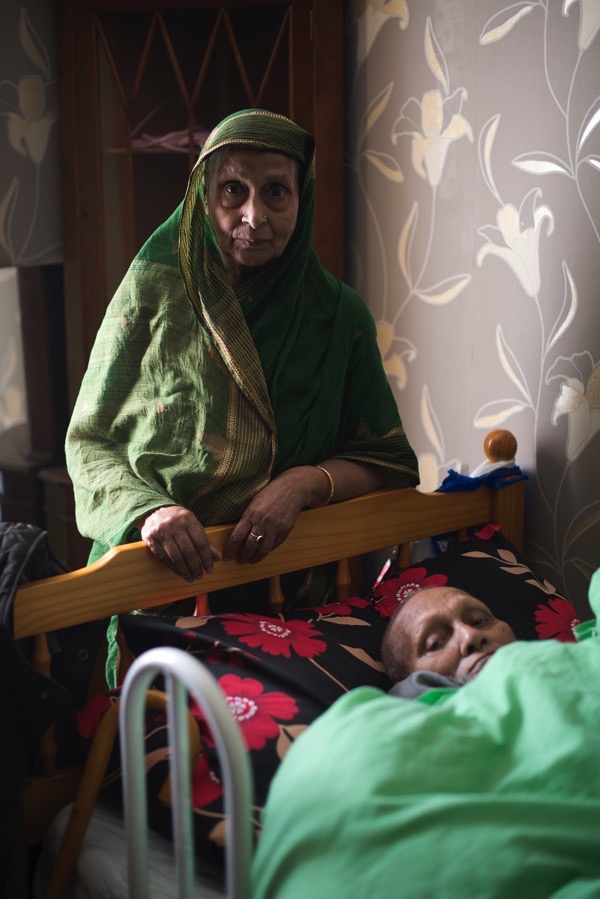
Nessa Aifun cares for her husband Rustum at home
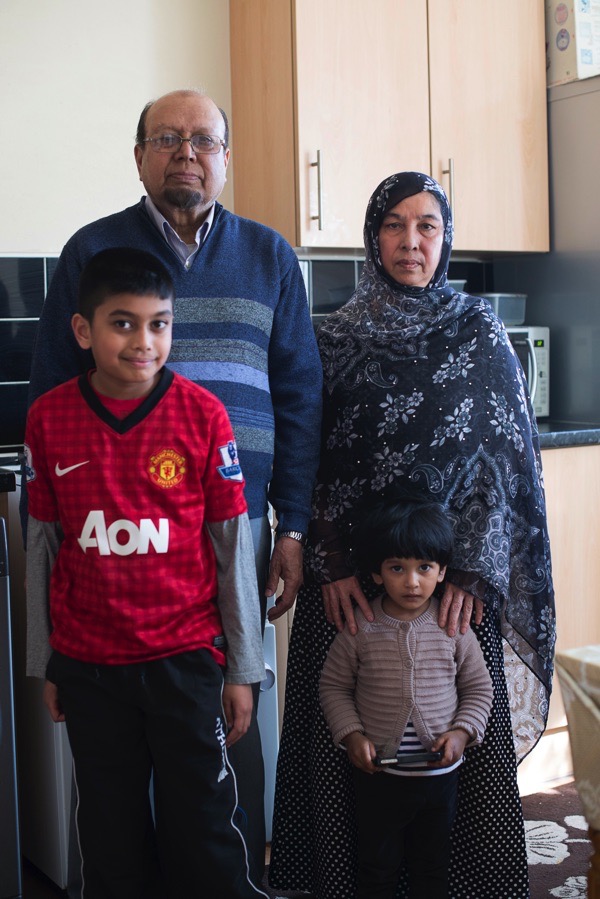
Saleh Ahmed & Rusnobun Bibi and their grandchildren Aakifah & Ismael
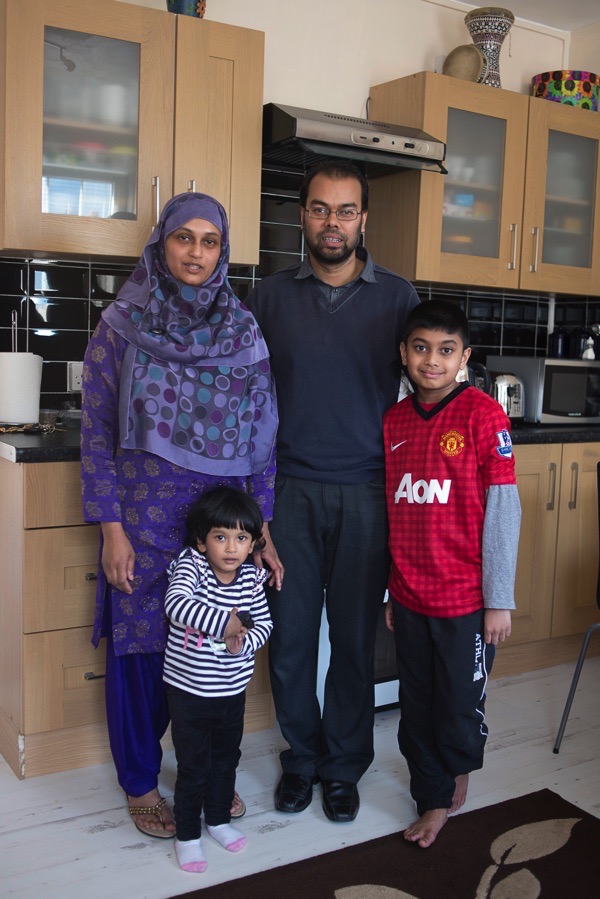
Kabir Ahmed & Nasrin Rob with their children Aakifah & Ismael
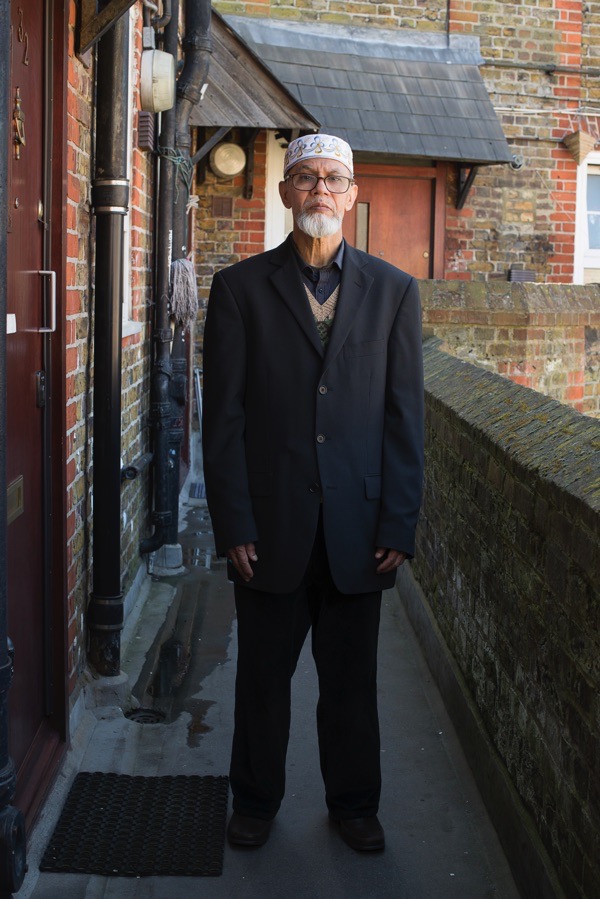
Murtata Choudhury has lived on the Holland Estate for fifty years
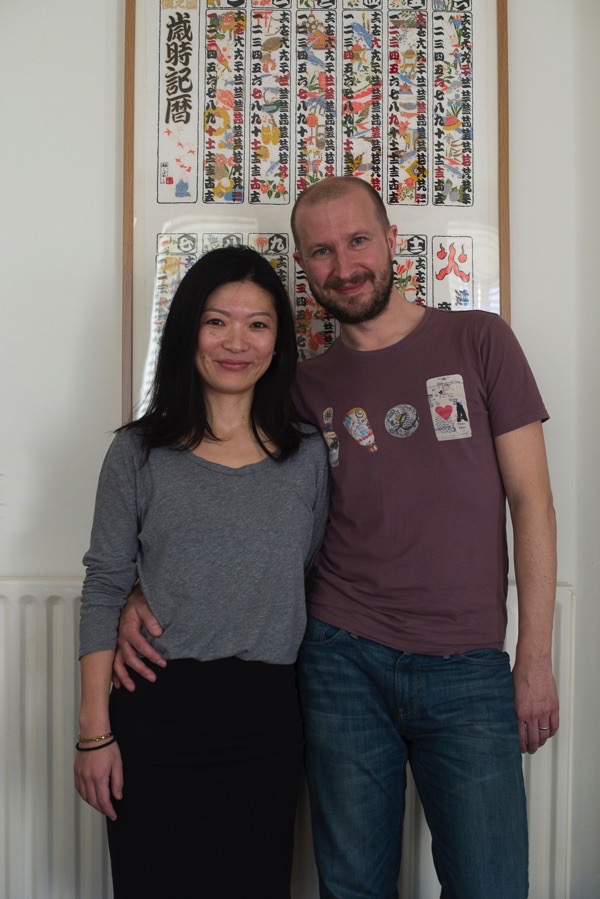
Shikiko Aoyama Sanderson & Jarrod Sanderson have lived on the Estate for six years

Samirun Chowdhury with Saima Chowdhury and Taher Uddin outside Samirun & Saima’s home
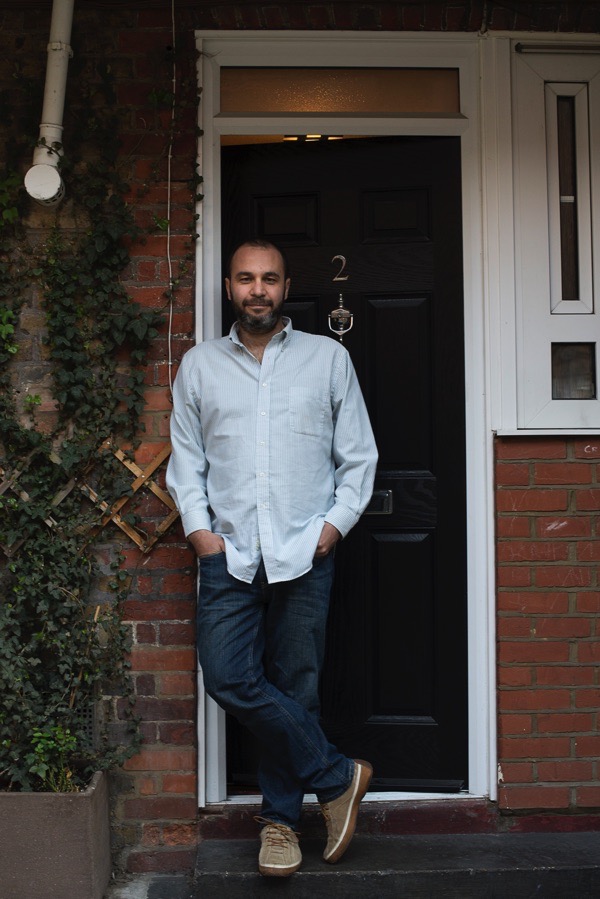
Enrico Bonadio has lived on the Holland Estate for three years
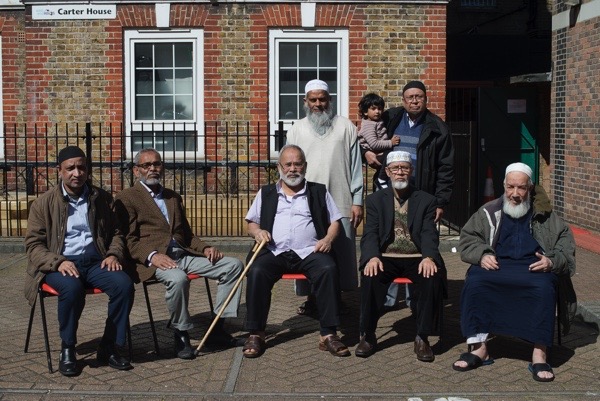
Rob Ali, Ali Sayed Goyas, Asab Miah, Murtata Choudhury, Saleh Ahmed with Aakifah Ahmed & Mohammed Ismael Ali
Photographs copyright @ Sarah Ainslie
You can follow the Residents Against Demolition campaign on
&
Twitter @bbcresidents
You might also like the read about
Bluebells At Bow
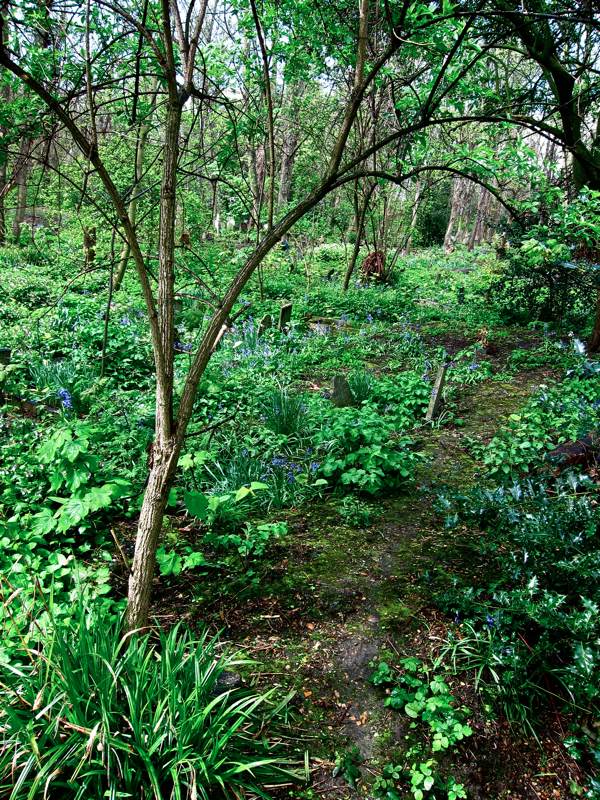
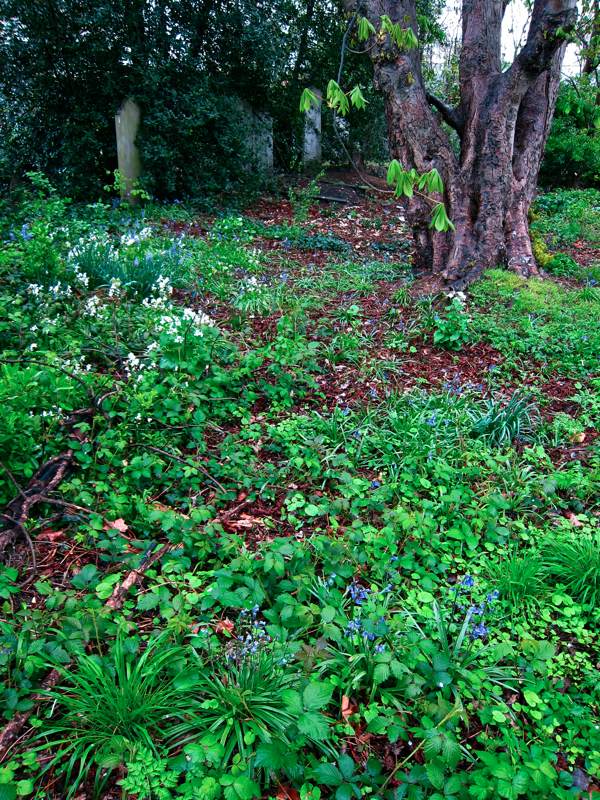
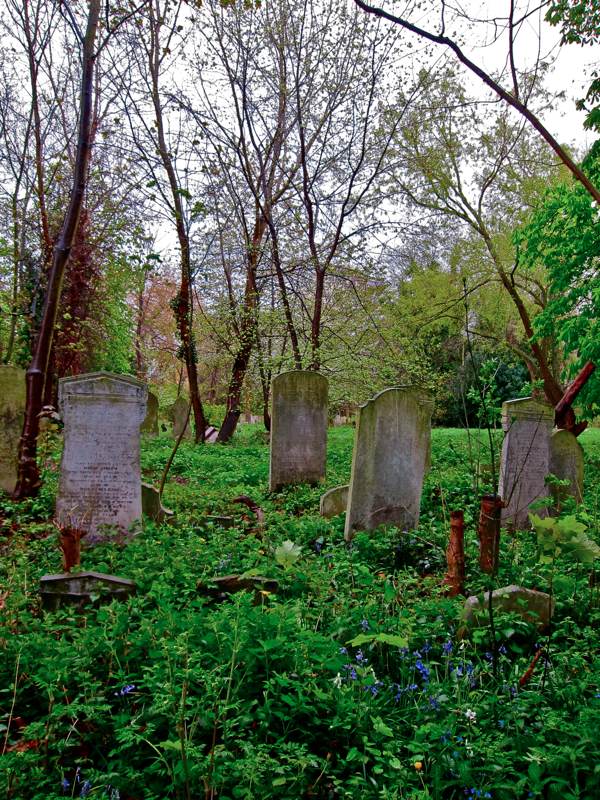
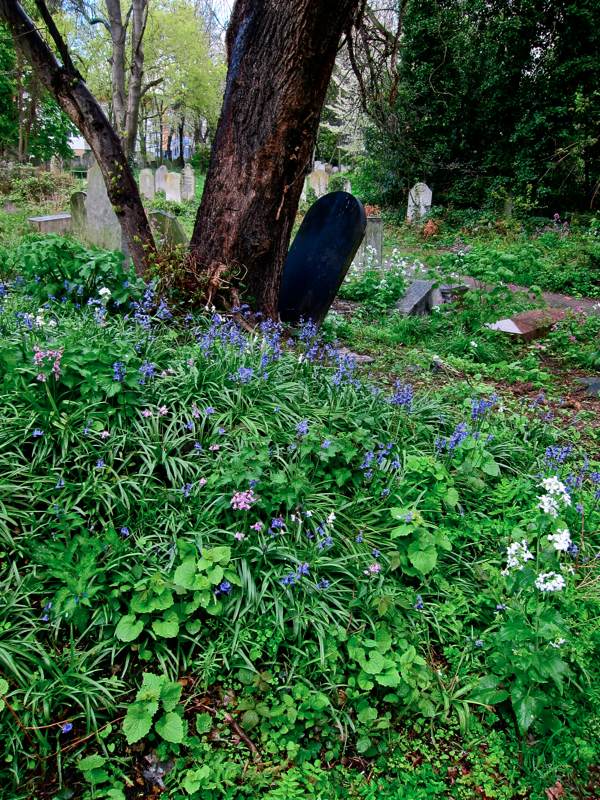
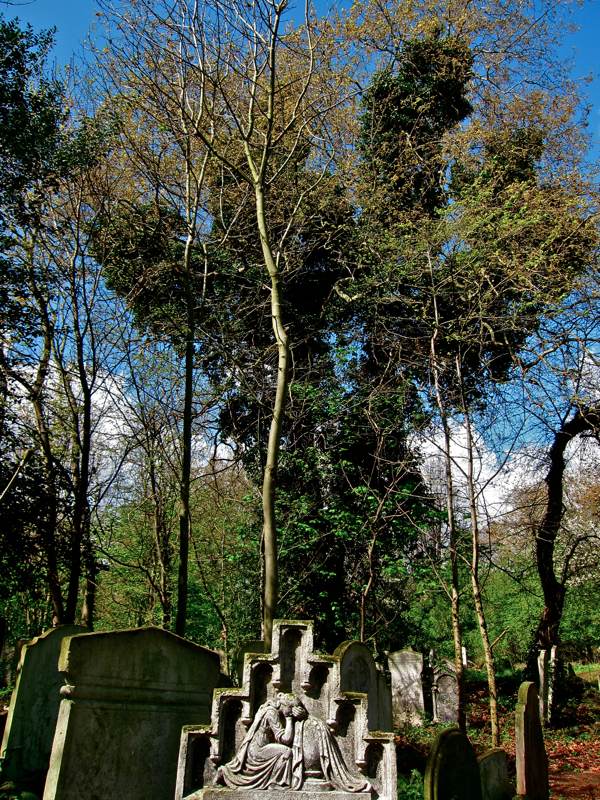
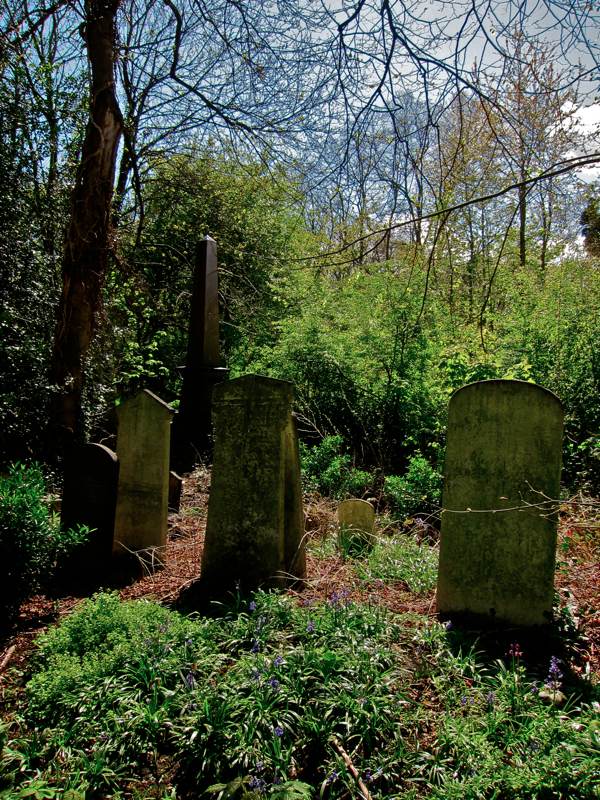
Once spring arrives, I am drawn to Bow Cemetery to admire the magnificent new growth of plant life
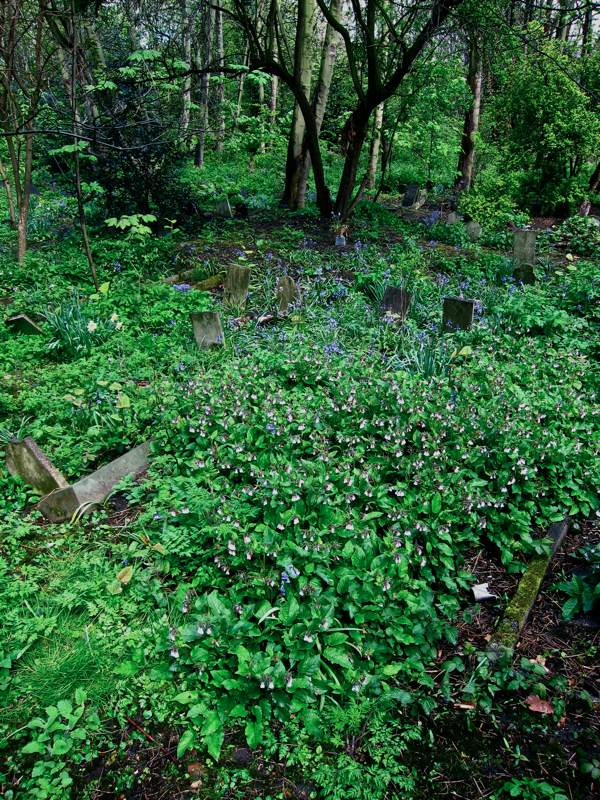
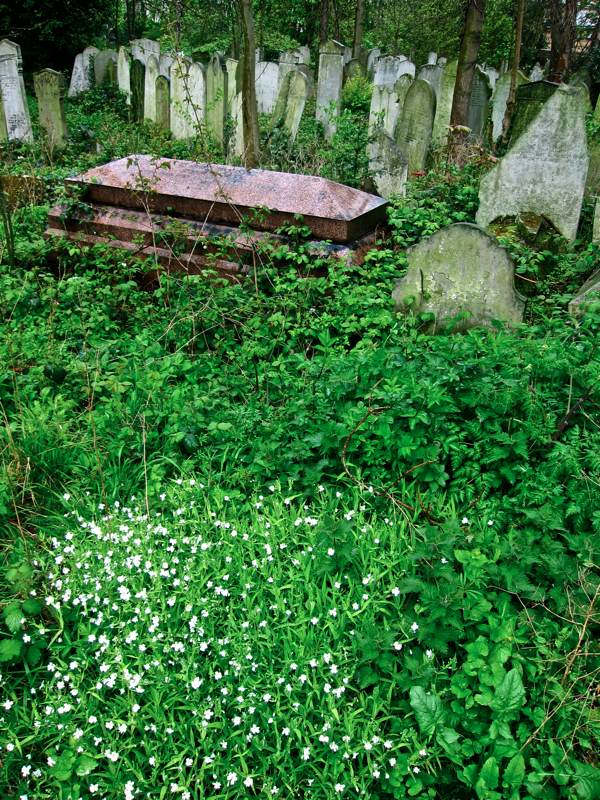
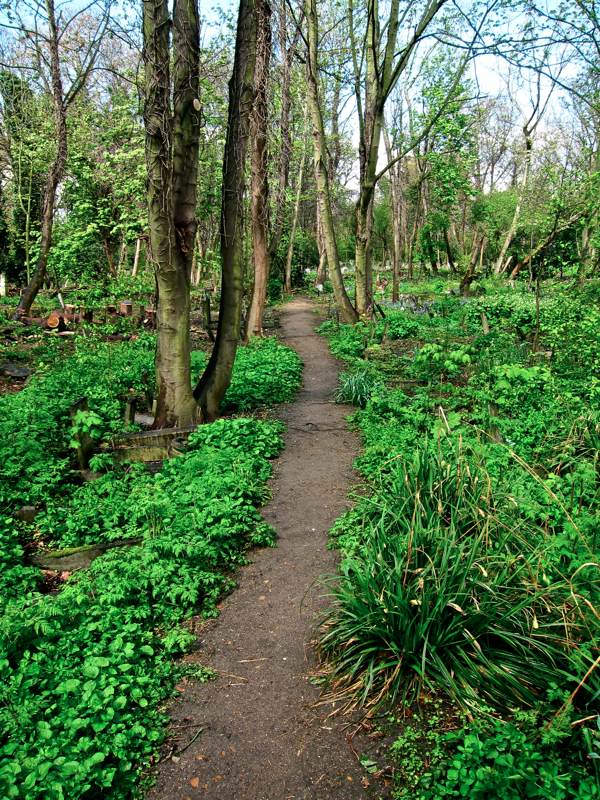
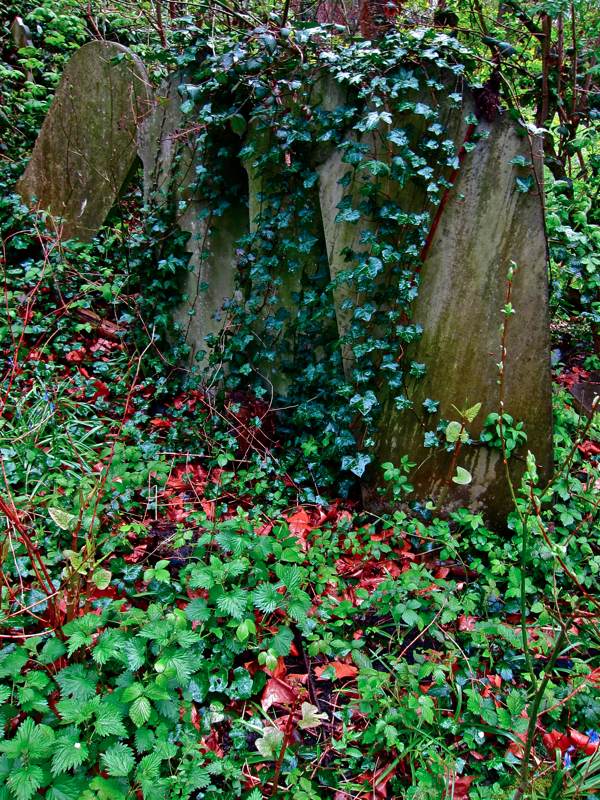
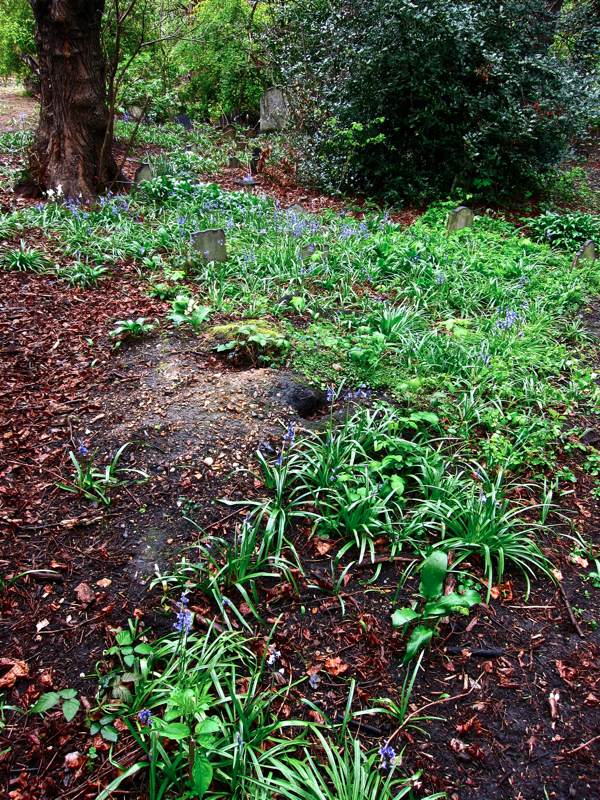
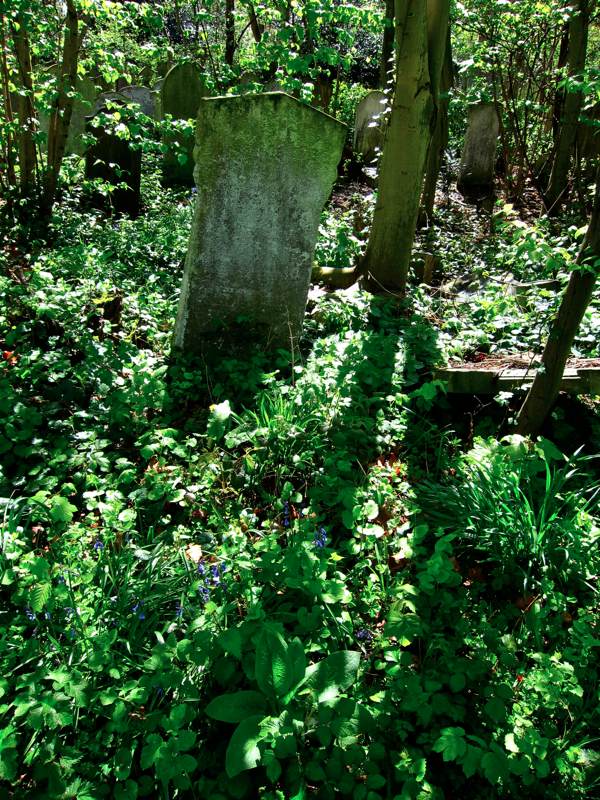
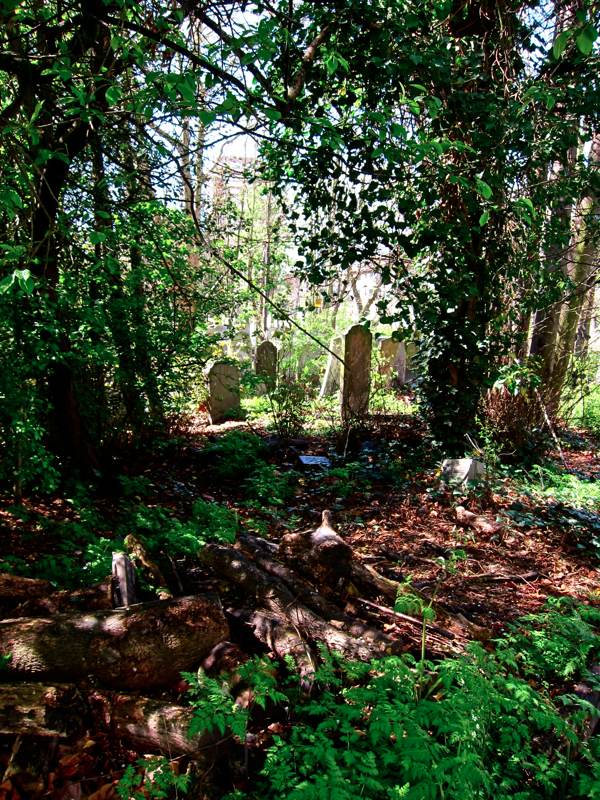
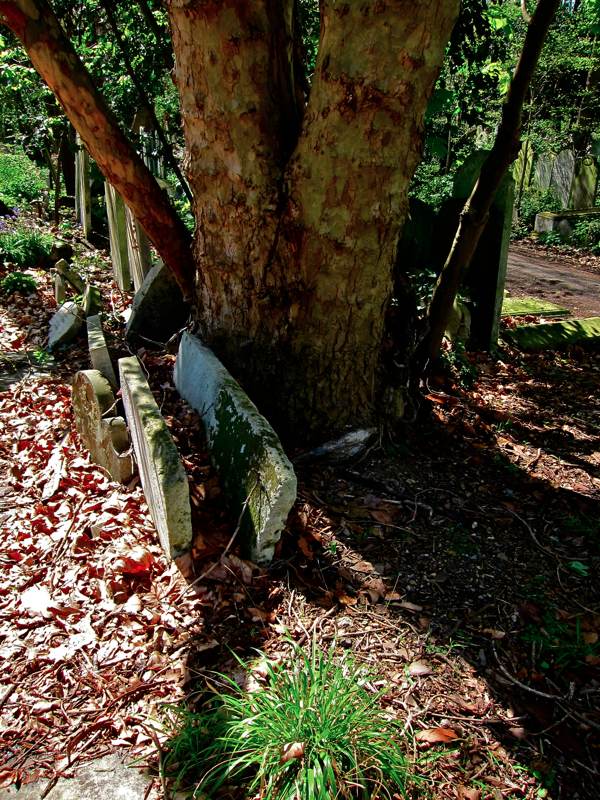
With the first bluebells in flower in my garden in Spitalfields, I was inspired make a visit to Bow and admire the display of bluebells sprouting under the tall forest canopy that has grown over the graves of the numberless East Enders buried there. In each season of the the year, this hallowed ground offers me an arcadian refuge from the city streets and my spirits always lift as I pass between the ancient brick walls that enclose it, setting out to lose myself among the winding paths, lined by tombstones and overarched with trees.
Equivocal weather rendered the timing of my trip as a gamble, and I was at the mercy of chance whether I should get there and back in sunshine. Yet I tried to hedge my bets by setting out after a shower and walking quickly down the Whitechapel Rd beneath a blue sky of small fast-moving clouds – though, even as I reached Mile End, a dark thunderhead came eastwards from the City casting gloom upon the land. It was too late to retrace my steps and instead I unfurled my umbrella in the cemetery as the first raindrops fell, taking shelter under a horse chestnut, newly in leaf, as the shower became a downpour.
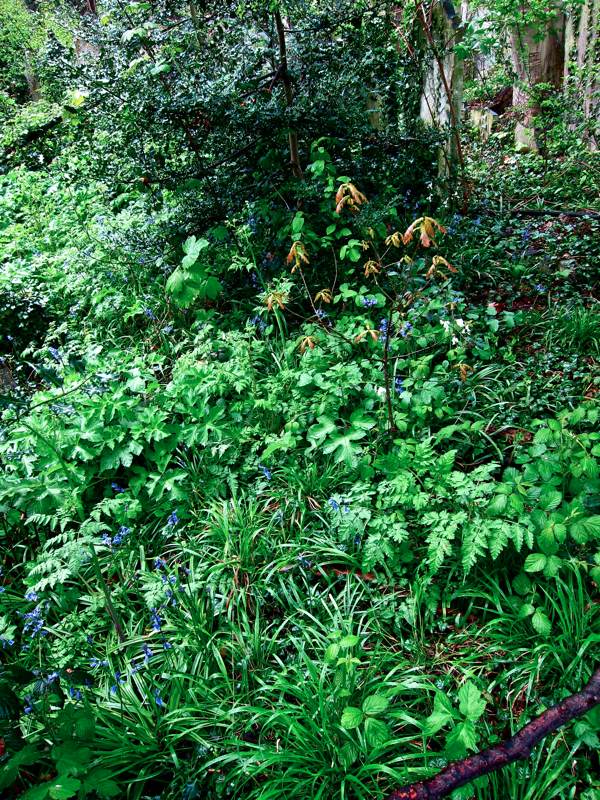
Standing beneath the dripping tree in the half-light of the storm, I took a survey of the wildflowers around me, primroses spangling the green, the white star-like stitchwort adorning graves, a scattering of palest pink ladies smock highlighting the ground cover, yellow celandines sharp and bright against the dark green leaves, violets and wild strawberries nestling close to the earth and may blossom and cherry blossom up above – and, of course, the bluebells’ hazy azure mist shimmering between the lines of stones tilting at irregular angles. Alone beneath the umbrella under the tree in the heart of the vast graveyard, I waited. It was the place of death, but all around me there was new growth.
Once the rain relented sufficiently for me to leave my shelter, I turned towards the entrance in acceptance that my visit was curtailed. The pungent aroma of wild garlic filled the damp air. But then – demonstrating the quick-changing weather that is characteristic of April – the clouds were gone and dazzling sunshine descended in shafts through the forest canopy turning the wet leaves into a million tiny mirrors, reflecting light in a vision of phantasmagoric luminosity. Each fresh leaf and petal and branch glowed with intense colour after the rain. I stood still and cast my eyes around to absorb every detail in this sacred place. It was a moment of recognition that has recurred throughout my life, the awe-inspiring rush of growth of plant life in England in spring.








You may also like to read about
Barn the Spoon at Bow Cemetery
Find out more at Friends of Tower Hamlets Cemetery Park
Dan Cruickshank’s Tales Of Norton Folgate
Dan Cruickshank speaks to SAVE NORTON FOLGATE at Shoreditch Church at 6:30pm on Wednesday 22nd April, with guests Sian Phillips reading the poetry of Sir John Betjeman and Conservation Consultant Alec Forshaw dissecting the British Land scheme. Dan will be telling the story of how British Land were defeated in Norton Folgate in 1977 and today he gives us a taster, reminiscing about battles old and new in Spitalfields. Click here to book your free ticket.
Seven years ago, I became involved in a strange East End adventure. At that time there was a plan to level the buildings on the west side of Norton Folgate, destroying a robust piece of railway architecture from around 1890 which, at the time, was used as a bar called The Light. All was to be replaced by a large-scale development named Principal Place, designed by Foster and Partners and incorporating a fifty-storey residential tower.
I have lived in Spitalfields since 1978 – my house is only a few minutes walk east from the site – and, like many, I could not see why a fine building in productive and convivial use, making many people happy, should be swept away so that a few people could make a great deal of money. A campaign to save the building was launched but the going was tough since the developers insisted that all had to be cleared, so their ‘vision’ for the new Norton Folgate could be realised, and local authorities showed little interest in the existing buildings or the extraordinary history of this small yet ancient part of London, that has a somewhat mysterious and exotic past.
The Liberty of Norton Folgate sits astride the Roman Ermine St in an area that contains part of the northern cemetery of Roman London, an early twelfth century emergency cemetery (perhaps related to a disastrous famine) and, from 1197, the main portion of the Augustinian Priory of St. Mary. The Liberty’s association with death continued after the foundation of the Priory, so that by the time it was ‘dissolved’ in the 1530s around 10,000 bodies had been deposited in its grounds, mostly in the Liberty of Norton Folgate.
Given the radical nature of the Reformation, the winding-up of the Priory seems to have been inevitable but, in fact, it almost survived. The Lord Mayor and Corporation of London lobbied Thomas Cromwell for its preservation for the reception of the ill and those needing medical assistance, notably woman in labour. Elsewhere, the Lord Mayor and Corporation were successful in their campaigns to save the former monastic establishments that became St. Bartholomew’s Hospital, St. Thomas’s Hospital and Bedlam. The fact that these medieval institutions survived the Reformations to continue their useful functions is one of the more pleasing tales of sixteenth century London.
But, sadly, Lord Mayor and City Corporation failed to save what would have become St. Mary’s Hospital in what, by the mid-sixteenth century, had become known as Spitalfields, named after the hospital – or ‘spital – in the fields. So St. Mary’s is London great ‘lost’ London hospital, with the vacuum not filled until 1740 when the London Hospital, serving the City and the East End, and funded through subscription, was founded in Moorfields before moving to Goodman’s Fields and then in 1757 to Whitechapel.
In the 1530s, the land of the Liberty of Norton Folgate passed to secular control with its government eventually vested in the hands its ‘antient’ inhabitants. This secular Liberty inherited some of the key characteristics of its monastic predecessor. The Augustinians, with their fine and large church, were outside the system of parishes, three of which lapped around its borders – St. Botolph to the south and west, St. Leonard to the north, and St. Dunstan to the east. Parishes were not only centres of religious life but also units of local government and – potentially – of political and social control. In addition, the Liberty of Norton Folgate was also largely outside the control of the City of London because the boundary of the City’s ward of Bishopsgate Without met, but did not overlap, the Liberty’s border. Governed by officers chosen annually from among its eligible residents and maintained through taxes raised within its boundaries, the Liberty survived until parish-based local government passed into the hands of the newly created London County Council in 1900.
At the time of the threat to The Light, I was horrified by the ignorance and brutalism of the building industry and the authorities but, while I was left feeling painfully impotent as disaster loomed, a fellow campaigner came up with a brilliantly creative idea.
Research suggested that there was a legal anomaly in the legislation that transferred power from London’s parishes to the LCC. The Liberty of Norton Folgate was not mentioned in documentation so – it was argued – since the Liberty had not been legally divested of its powers, it still existed as a sovereign London authority. This meant that its territory was not subject to the control of the London Boroughs of Hackney or Tower Hamlets and therefore permissions granted by them were not lawful or valid. Instead, governance was legally the right of its elected ‘antient’ residents. It was heady stuff – ‘Passport to Pimlico’ come to life – and instantly the local residents held an ad-hoc election to nominate officers of the Liberty.
The structure of the Liberty’s government, medieval and manorial, is well described in a draft Act of Parliament for running the Liberty that dates from 1759 and is preserved in Tower Hamlets’ Local History Library. It records that, by tradition, the officers chosen from among the Liberty’s ‘antient’ inhabitants were Headborough, Constable, Overseer and Scavenger who – collectively – were responsible for lighting, cleansing, policing and courts of the Liberty, and for the collection of the local taxes. The Headborough was the senior officer akin to Mayor. These jobs were not token but practical, and could be time-demanding and onerous. Eligible inhabitants might decline the honour of serving the Liberty when their turn came, but had to pay a fine of £10 – a large sum in the mid-eighteenth century when the average wage for a London journeymen was around £50 a year.
The draft Act of Parliament of 1759 offers fascinating detail about life in what was a well-ordered and prosperous part of London at that time. The locally-raised taxes – which, like the national Land Tax, were charged to occupants and based on the rental value of the houses they occupied – were used to pay for a Beadle, six Night-Watchmen, the daily collection of rubbish and a handsome array of globular street lamps, fixed to houses and on stanchions. The 1759 Liberty minute books reveal the mechanism by which the residents acted to assure the smooth governance of their Liberty. The minute book for June that year records that twenty-eight residents were present at a meeting and resolved to employ the beadle at £20 per annum. The Beadle was to ‘set the watch, attend at the watch house, attend collectors in collecting ye rates…keep the Liberty free of vagabonds and people making a shop to sell fruit etc…keep the book which of the watchmen’s turn it is to be on each stand [and] to be a constant resident of the Liberty.’ It was also resolved that six Watchmen (or Charleys) were to be hired at £12 per annum each. These Watchmen were to ‘Beat the round every half hour, watch from 9 o’clock in the evening to six in ye morning from Michaelmas to Ladyday, and from 10 in the evening to four in the morning from Ladyday to Michaelmas.’
A subsequent meeting of occupants of the Liberty determined how its paid work-force was to conduct itself. They were to ‘apprehend and detain Malefactors, Rogues, Vagabonds, Disturbers of the Peace and all Persons whom they have just reason to suspect have any evil designs…deliver to the Constable or Headborough…or the Beadle’ and then ‘with all convenient speed…to…some justice or justices of the Peace to be examined and dealt with according to law.’ The Watchmen were especially instructed to ‘apprehend any Person casting the night soil in the street and carry them to the watch house.’ This instruction suggests this was a particularly common offence.
The effectiveness of the Liberty’s body of Watchmen is open to question. The average age of the six appointed in 1759 was fifty-two, two were described as having bad eyesight and, by October 1759, one of the Watchmen had been dismissed after an earlier reprimand for missing thirty-three nights in one quarter. But, decrepit as the Night Watchmen may have been, it seems clear that in the mid-eighteenth century the Liberty was a model piece of city – well lit, cleaned and watched – which is not surprising since, at that moment of history, it was a wealthy neighbourhood. Spital Sq – developed from the late seventeenth century in ad-hoc manner out of Spital Yard, a former monastic space – was home to some of the leading occupants of the Liberty, with terrace of merchant palaces built along its eastern arm in the early 1730s.
Thus it was that, seven years ago, I became Headborough for a day with various of my neighbours filling other posts and we were joined by distinguished visitors, including Suggs of Madness. Our re-launch of the Liberty was not entirely fruitless. Ultimately, it succeeded in saving a large portion of the railway building occupied by The Light but, while the body of it was saved, the fate of its soul remains in doubt. The Light has gone today, the place stands boarded up and shorn of its western wing, awaiting its fate. Its future is currently scheduled as a place of fine dining in the shadow of the fifty storey tower that will eventually loom over it. Yet this tower is now the least of the problems challenging the survival of the Liberty.
On the east side of Norton Folgate, the former Nicholls & Clarke buildings stand in the way of a dread and brutish British Land proposed development. British Land’s proposal would, if given planning permission, create a terrifying precedent undermining all historic quarters throughout the country.
The particular site in British Land’s target has in recent years been acquired by the City of London Corporation as British Land’s collaborator in this scheme and it lies entirely within, and forms a large portion of, the Elder St Conservation Area. By law, developments in Conservation Areas must protect, reflect and enhance the existing architectural and social character, and preserve existing historic fabric. Tower Hamlets Council in its 2007 Appraisal of the Elder St Conservation Area puts the case correctly, ‘Overall this is a cohesive area that has little capacity for change. Future needs should be met by the sensitive repair of the historic building stock …….. Historic structures and buildings should be retained, and new development should respect the urban form, scale and block structure.’
The existing buildings include a fine row of warehouses of 1886, some of which contain their original, iron-framed interiors. These would be demolished, with only portions of their facades retained, if the British Land scheme gets planning permission. Indeed British Land proposes to demolish over seventy per cent of the existing buildings within the portion of the Conservation Area it controls, mostly replacing them with large-floor plate commercial buildings that rise as high as thirteen stories, instead of the general four-story height of existing buildings. If this happens, the Liberty – whose architectural and social character is still discernible in its street pattern and the tight grain of its buildings and mix of uses – would become no more that a bland corporate enclave of the City of London.
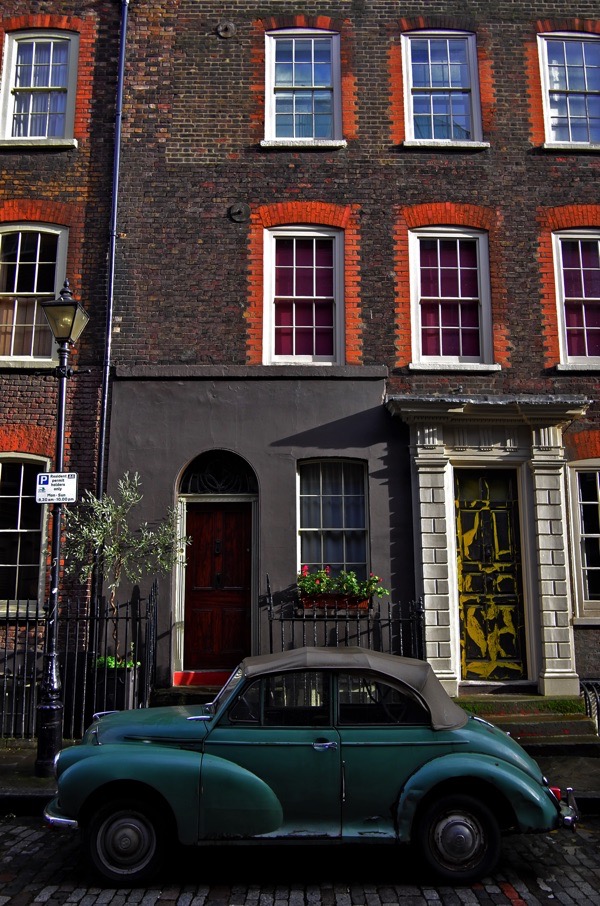
For me, this ghastly scheme possesses a particularly ghoulish character as an awful reminder of the cyclical – and seemingly futile – nature of human affairs. There is a sinister sense of déja vu. Before I moved into my house, I had battled for the existence of the early eighteenth century houses on Elder St’s east side. I was a trustee of the Spitalfields Historic Buildings Trust which had just been formed and, in the late summer of 1977, we fought to save the two most ruinous and threated houses in Elder St – 5 and 7 – which in their plan and details were particularly interesting. We thought if we could save these houses – or even if we failed but made a huge and public fuss – the rest of the street might be saved. We occupied 5 and 7, and we challenged the Development Company (which owned them and desired their demolition and the conversion of neighbouring houses into offices), the Housing Association (that hoped to acquire the site of 5 and 7 for flats), the Historic Buildings Department of the Greater London Council – and, of course, Tower Hamlets Council.
The contest dragged on for weeks – seemingly for months – and we had been lulled into a sense of false security when the developers regained possession of 5 and 7, and demolition men were immediately moved in. The roof of number 7 was ripped off within hours, but then it was demonstrated that the developers, by failing to give the GLC twenty-four hours notice of demolition, were in breach of their consents. So the demolition men were ejected and we regained possession, and patched up the shattered roof structure with tarpaulins. It was a stalemate. Tougher anti-squatting legislation was on its way – time was against us. The developers would not talk with us, so we moved things forward by occupying their offices in Portman Sq and seeking publicity. A high point was when we were visited and offered public support by Sir John Betjeman in Elder St. The sight of Betjeman – paper cup in hand (with I seem to remember white wine) – tottering along the street, ducking under raking shores, was memorable. The newspapers loved it.
Finally, against all expectation, the Leader of Tower Hamlets Council spoke up and gave the Spitalfields Trust his blessing, saying that we were acting to save the history of Tower Hamlets for the people of the area. This timely political support made all the difference and the Trust was able to buy 5 and 7 Elder Street, repair them and sell them on. This was a watershed in the recent history of Spitalfields. Then the developers put the rest of the houses on the east side of Elder Street on the market and they were bought by people willing and able to repair them and live in them, and this set in motion the revival of houses in the main Georgian streets of Spitalfields. It seemed – at last – Spitalfields was saved.
But now the shadow of demolition and over-scaled commercial development has returned to threaten buildings within a few metres of the site of the Trust’s epoch-making victory nearly forty years ago. And to highlight the frightful symmetry of events then and now – the predatory development company we fought off back in the seventies has returned and is the current opponent – British Land.
As the Trust fought then, we will fight now – with a firm belief in the justice of our cause. We want to save Spitalfields – with its rich mix of historic and old buildings, distinct character and special atmosphere – for the people of London and for visitors expecting to find something beyond familiar, bland corporate plazas. We are arguing that Spitalfields has vitality and economic potential that can be reconciled with the preservation of its existing buildings and character. But this gentle approach is not compatible with greed. Just as we did forty years ago, we want to save Spitalfields from those who seek merely to exploit it as a means to make themselves rich at the expense of the happiness of others.
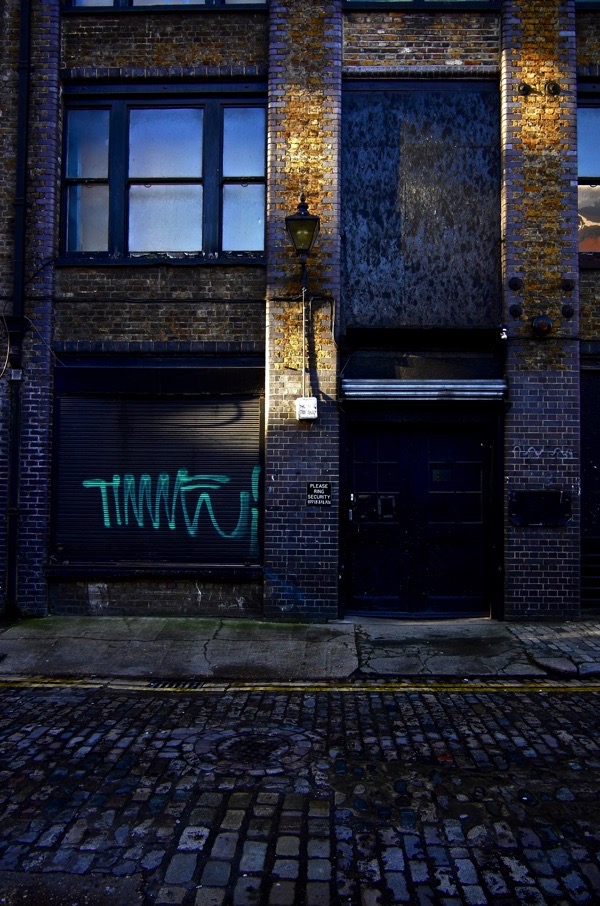
Blossom St
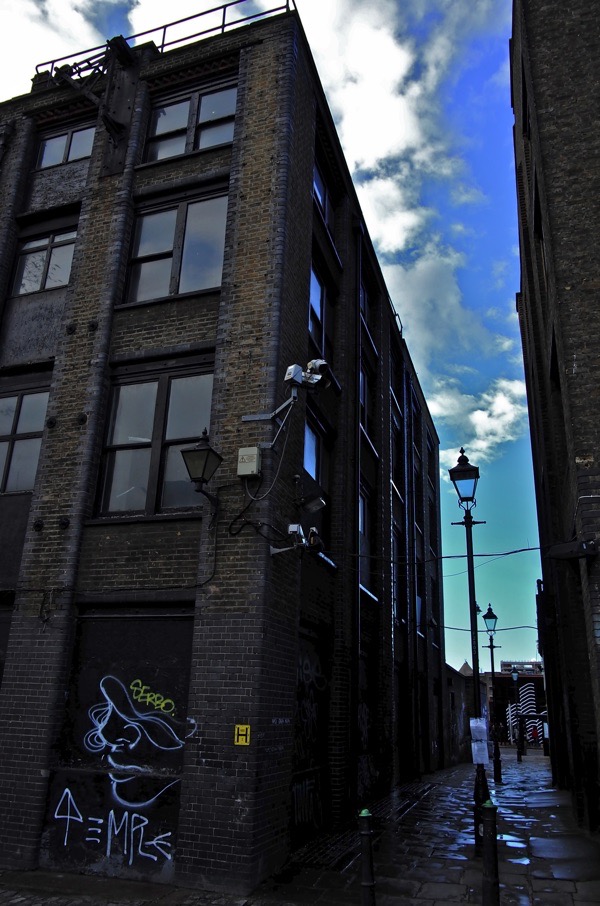
Fleur de Lys Passage
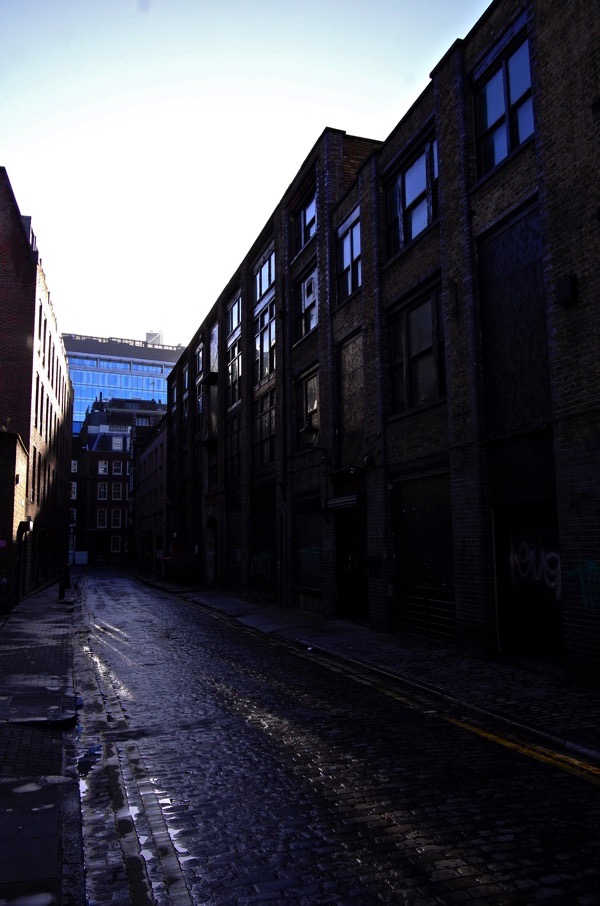
Blossom St
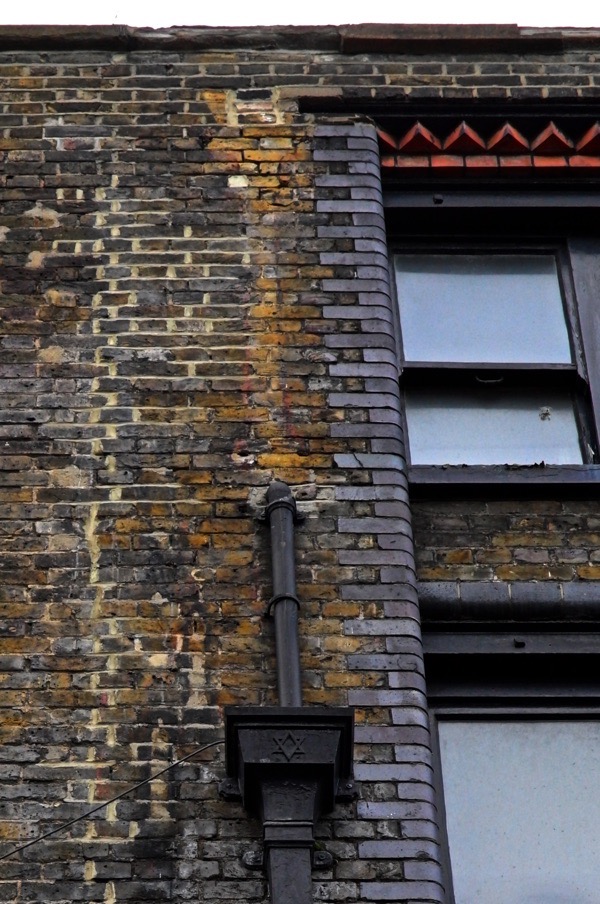
Star of David in Blossom St
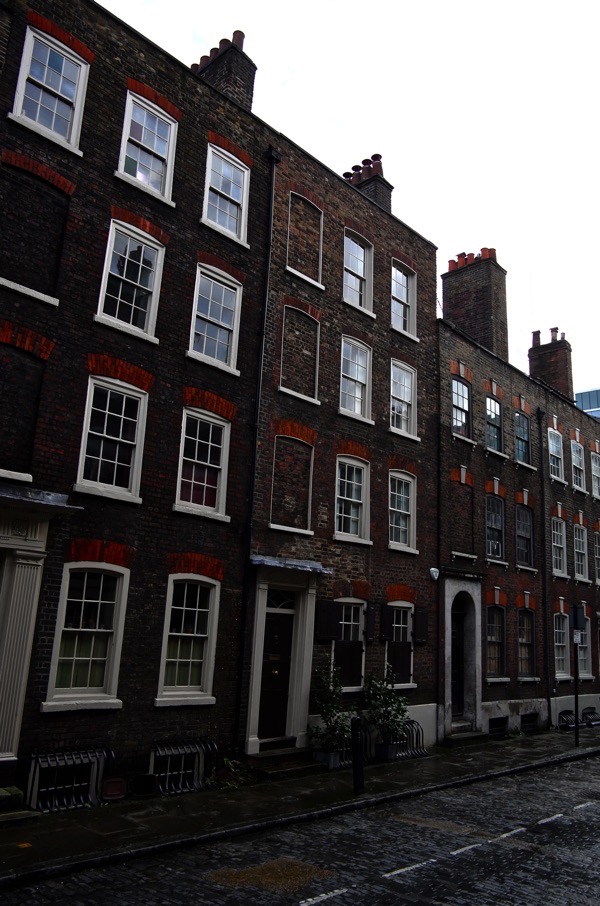
Elder St
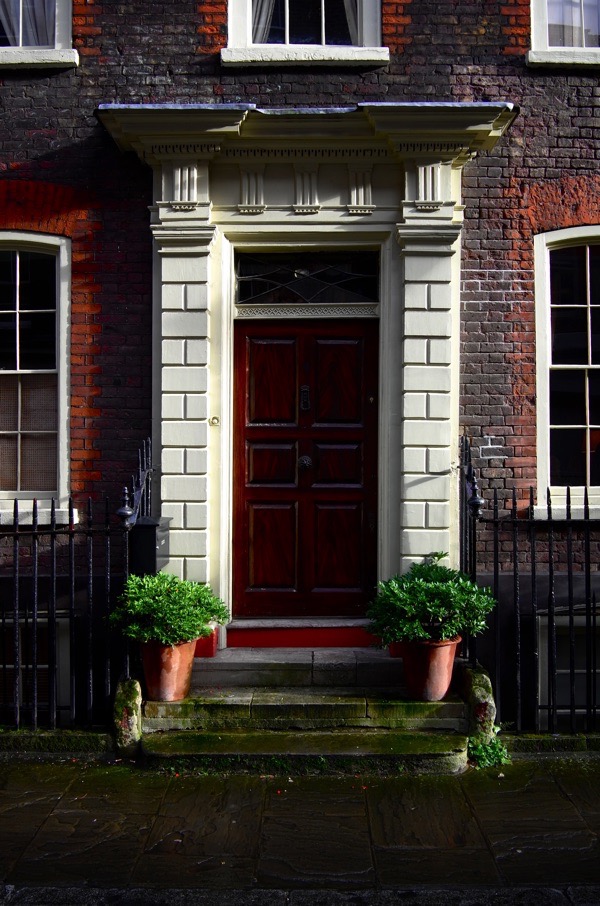
Elder St
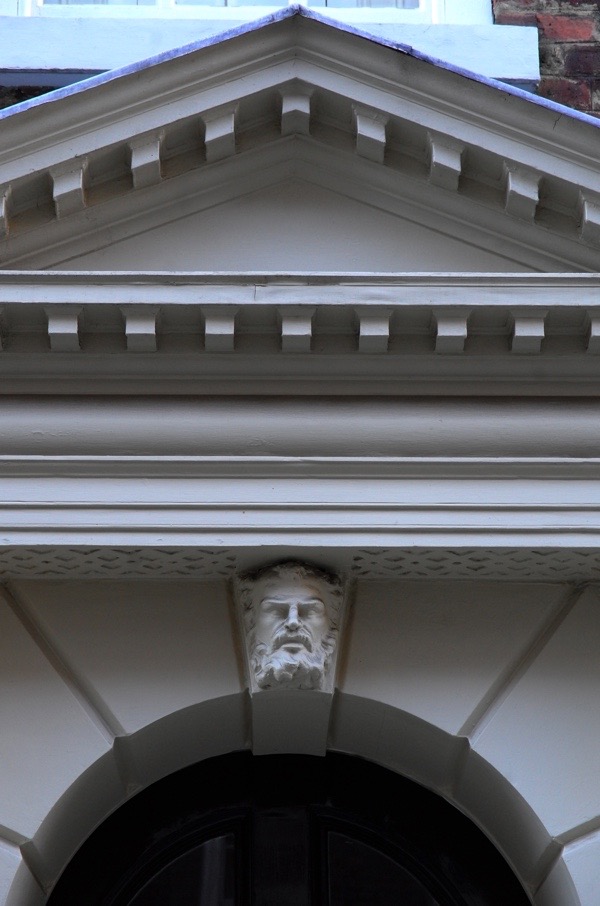
Elder St
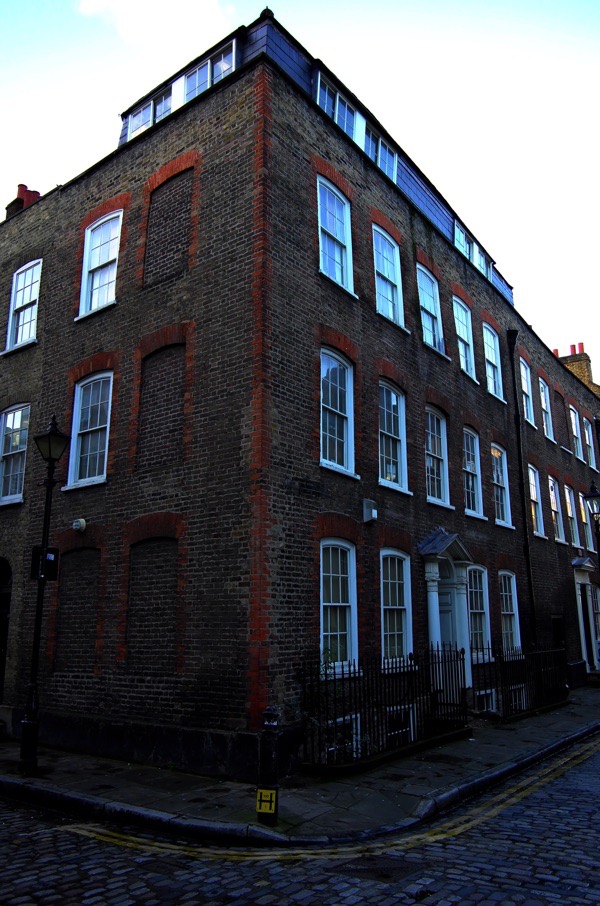
Folgate St
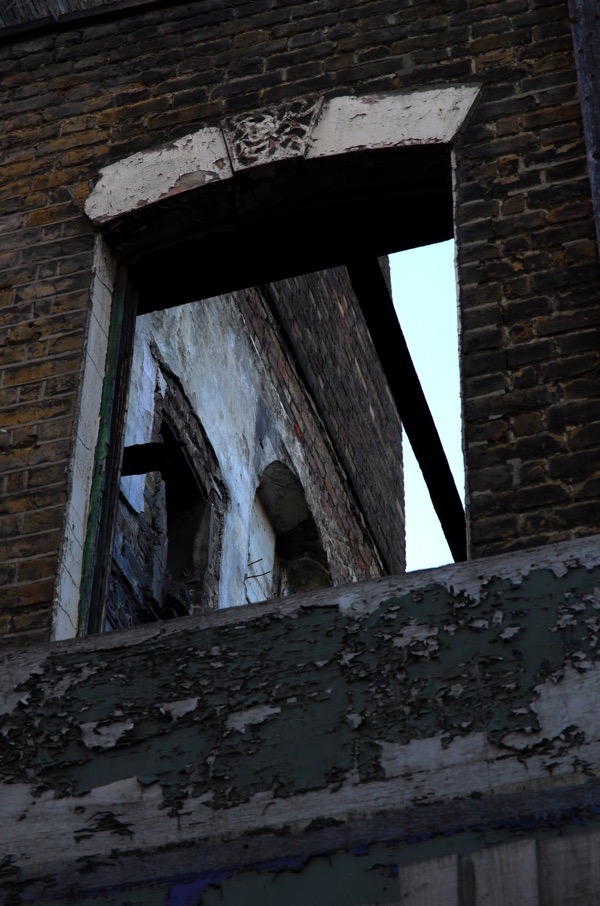
Elder St
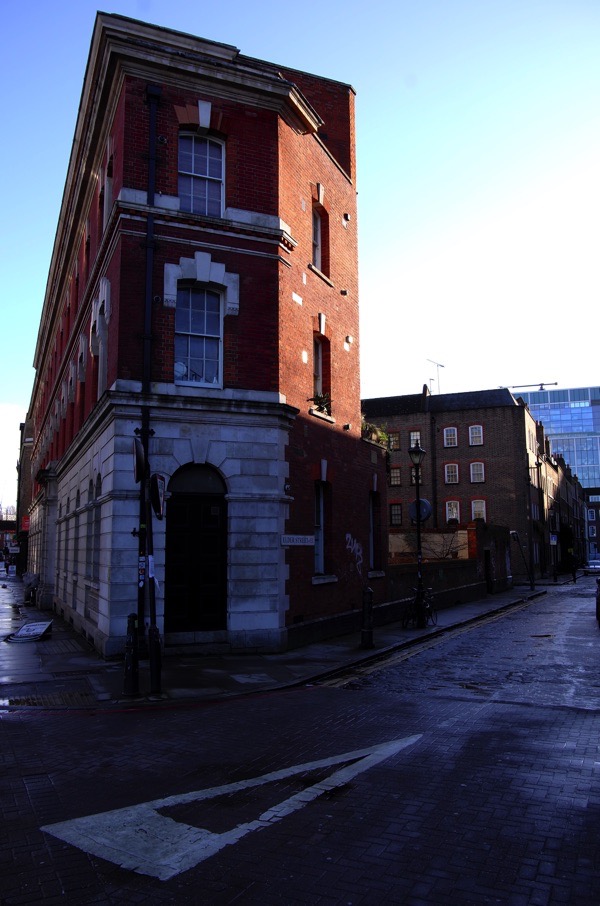
Corner of Elder St
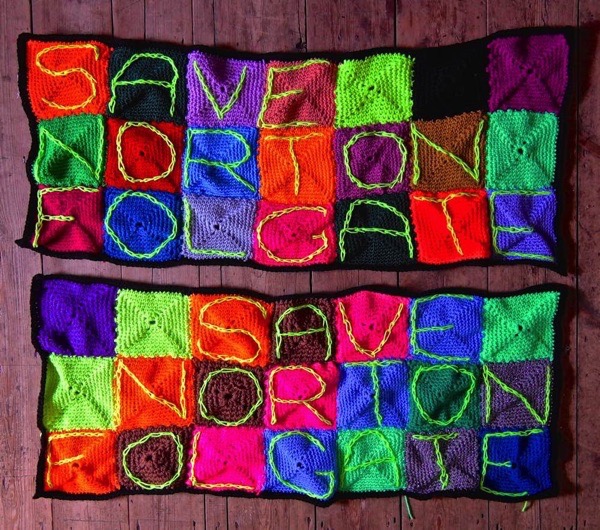
Crochet courtesy of the Revolutionary Crafting Circle of Edinburgh
[youtube UMQBhsJCU7Y nolink]
Take a walk around Norton Folgate with Dan Cruickshank
You may also like to take a look at
Inside the Nicholls & Clarke Buildings