
Save The Algha Spectacle Works!
Algha Works is the only historic industrial building still in use in the Fish Island Conservation Area and Britain’s last hand-made spectacle factory, but it is now under threat as the owners have applied for single-storey extension to convert it to luxury residential use, forcing out the spectacle makers out.
Londoners need workspace and employment as much as they need homes, so I encourage readers to click here and sign this petition to SAVE THE ALGHA WORKS

Between Victoria Park and the Olympic Park lies Fish Island, a narrow stretch of land filled with a crowded array of dignified old brick industrial buildings. Most are turned over to artists’ studios now, but standing amongst them at the corner of Smeed Rd is the world famous Algha Works, home to Britain’s last metal spectacle frame manufacturer, operating from here for the past century.
In this early steel frame building of 1907, the gold National Health Service spectacles that once corrected the sight of the population were made by Max Wiseman & Co, founded in 1898. Think of any of the famous gold rimmed glasses of the twentieth century, from Mahatma Gandhi to John Lennon, to every bank manager and headmaster, and this is where they were manufactured. The heart-shaped sunglasses for Stanley Kubrick’s “Lolita” and Harry Potter’s geeky specs were also made here.
You might say that Max Wiseman was a visionary in the world of spectacles. “As a young man of nineteen, I was inspired and tremendously enthusiastic at the possibility of ‘goldfilled’ being the future of spectacles.” he wrote breathlessly in the fiftieth anniversary edition of “The Optician” in 1941, and the rest was history. “Goldfilling” means coating the frame with a sleeve of gold which extends the life of the spectacles by preventing corrosion. Cheaper and lighter than solid gold, resistant to corrosion and longer lasting than gold plating, fourteen carat goldfilled spectacles from the Algha Works were universally available on the NHS in this country for forty years.
“They manufactured two and a half million frames a year here, when two hundred people worked in this building,” Peter Viner, the current managing director told me,“they lived next door and the building opposite was a school.” And he gestured back in time, and towards the window of his office on the top floor with views back across the East End in one direction and to the Olympic stadium in the other. When Peter came here in 1996, there were over fifty employees and today there are just fifteen, yet the ghosts of the past workforce linger in this light and spacious utilitarian building with its magnificent tiled stairwells and toilets.
Before 1932, Max Wiseman imported his frames from Germany, but the disruption of the First World War and inflation of the nineteen thirties led him to buy a complete factory in Rathnau, Germany and transport it to Hackney Wick along with ten optical technicians. When the Second World War broke out, these technicians found themselves interned in Scotland, but the machinery they set up remains in use after all this time. Efficient, serviceable and sturdy, the complete German plant for manufacturing metal spectacles from the nineteen thirties is used to make all the frames at the Algha Works today – one place were you can truly say, they still make them like they used to. In other words, where the purpose of the manufacture to is to create something of the highest quality that will last as long as possible, without built-in obsolescence.
“The black art,” as Peter terms it, describing the swaging, pressing, bending, notching, crimping, burnishing and other means of folding, that comprise the one hundred and thirty operations which go into making a pair of metal frames – including seventeen bends for the bridge alone. Protective of his unrivalled spectacle works, Peter restricted what might be photographed lest his Chinese competitors should garner trade secrets, yet he could not resist taking me to the manufacturing floor and showing off the heart of his operation, which gave me the opportunity to meet some of his proud spectacle makers.
Nirmal Chadha, who had been there twenty-four years, showed me the device that creates the “Hockey” end, bending the “temples” – as the arms of the spectacles are known in the trade. She put in the straight temple, pulled a lever and out came the temple crooked like a Hockey stick, as you would recognise it. Indi Singh, who had been there twenty-two years, demonstrated an elegant machine that spins different wires together to create the tensile arms for spectacles much in demand by sportmen – and curled into a “Fishook” so they can be secured around the ear.
Meanwhile Matt Havercroft, who had been working there just six months, was screwing temples to frames at the other end of the production line. He told me he was completely absorbed in all the processes and devices that are involved in the art of spectacle making. And after doing casual work in a bar and telephone sales, he was delighted to have found an occupation so engaging. Finally, I was proud to shake hands with Raymond Miller who had worked there thirty years and whose mother also worked there before him.
The shared endeavour at the Algha Works is a unique cultural phenomenon that has miraculously survived here in the East End, in spite of the withdrawal of free National Health Service glasses and the flood of cheap imports sold under designer labels which dominate chains of opticians today. So, if you want a pair of handmade classic spectacles that will last the rest of your life, you know where to go.
Glasses manufactured at the Algha Works are sold under the trade name of Savile Row Eyewear

Algha Works – Algha is a composite of ‘from Alpha to Omega’


Max Wiseman founder of Max Wiseman & Co in 1898, leading manufacturers of spectacles


Nirmal Chadha has worked here twenty-four years


Matthew Havercroft joined six months ago and intends to stay for the rest of his career


Indi Singh has worked here twenty-two years


Raymond Miller has worked at Algha Works for thirty years and his mother worked there before him

You may also like to read about
The Modest Wonders of Hackney Wick
The Gentle Author’s Snaps
As I go about my assignments, sometimes I take photographs other than those intended to illustrate stories and today I publish a selection of these curiosities in chronological order. Although I consider myself a novice photographer compared with the distinguished talents featured elsewhere in these pages, I hope you may find some interest in my snaps, each of which has its own tale to tell.

Hackney Wick, 26th July 2016

Pedley St, 21st July 2016

St Giles High St, 13th July 2016

Norton Folgate, 23rd July 2016

Red House, Bexleyheath 13th July 2016

Red House, Bexleyheath, 13th July 2016

Mile End Rd, 5th July 2016

Off Cable St, 5th June 2016

Wapping Old Stairs, 5th June 2016

Dublin, 29th May 2016

Buxton St, 11th May 2016

Hertfordshire, 9th May 2016

Bishopsgate, 9th May 2016

Faversham, 20th April 2016

Brook St, Mayfair, 13th April 2016

Hanbury St, 6th April 2016

St Anne’s Limehouse, 25th March 2016

South Woodford Station, 14th March 2016

South Woodford Station, 14th March 2016

Whitechapel, 29th February 2016

Fashion St, 29th February 2016

Gracechurch St, City of London, 29th February 2016

Bethnal Green, 11th February 2016

St Paul’s Cathedral, 29th January 2016

Rainham, 20th January 2016

Vallance Rd, 2nd October 2015
Summer At Arnold Circus

At this time of year, the canopy of trees over-arching Arnold Circus is an awe inspiring sight to behold, as if a forest clearing had been magically transported and placed at the centre of a maze of city streets. From within the tiny park you see the towering red brick mansion blocks framed by trees, imparting an atmosphere of lyrical romance entirely in tune with the Arts & Crafts ethos of Britain’s first Council Estate.
Yet, if you wander further within the Estate, you come upon satellite gardens contrived by the residents using old baths, canes and twigs as a means to create temporary vegetable plots among the yards between the buildings. The idiosyncratic forms of these curious contraptions hung with glinting things offer a sympathetic complement to the regularity of the architecture and it makes your heart leap to see cherished home grown vegetables nurtured so tenderly in unexpected circumstances.


You might also like to take a look at
Maurice Sills, 101 Years Young Today!
I am sure you will all want to join me in sending your congratulations to Maurice Sills who is celebrating his one hundred and first birthday today!

Maurice Sills in the library at St Paul’s where he wrote the catalogue
If you were to read the staff list at St Paul’s Cathedral, where Maurice Sills is described simply as ‘Cathedral Treasure’, you might assume that a final ‘r’ had been missed from the second word. But you would be wrong. Maurice Sills has been in the world longer than you or I have been in the world – longer, I venture, than anyone reading this article. The truth is that Maurice Sills is one hundred and one years old and he genuinely is a ‘Cathedral Treasure’ at St Paul’s.
Travelling to work by rail and tube from his home in North London three times a week, Maurice regularly gives up his seat to what he terms ‘old ladies,’ by which he means women of a generation later. There is an infectious enthusiastic energy about Maurice which he has kept alive through a long term involvement with sport and his delight in the presence of young people.
We met in the Chapter House at St Paul’s but Maurice was keen to take me up to the magnificent library, embellished with luxuriant carving by Grinling Gibbons, high in the roof of the old cathedral. When completed, the shelves were empty since all the books had been destroyed in the fire, but now the library is crowded with ancient tomes and Maurice has catalogued every one.
In this charismatic shadowy place, Maurice was completely at home – as if the weight of all his years fell away, rendered insequential by comparison with the treasures of far greater age that surrounded us, sequestered in an ancient library where time stood still.

Maurice – My earliest memory of anything – it must’ve been 1918 – was when I was staying with a relation who was manager of a grocer’s shop called Palmer’s in Mare St, Hackney, while my mother was having another child. They sold provisions – on one side you had bacon, butter and so forth and the other side fruit and vegetables. I can still picture us going down the wooden stairs of the shop into the cellar and, in the cellar, there was an oil stove, one of these with little holes in the top that cast lights onto the ceiling – I can still see those lights there. I worked out from my relations who I stayed with that it was a Zeppelin raid! So that was my first memory of life – those little marks on the ceiling while I was down in the cellar.
The Gentle Author – Maurice, are you a Londoner?
Maurice – Certainly I’m a Londoner, if West Norwood is London, yes. I was born there in 1915 and my baby brother still lives in the same house where he and I and five brothers were born, six of us all together.
The Gentle Author – What were your parents?
Maurice – My father worked in the Co-operative Bank. My mother was purely a mother, with six boys she had no choice but to be a mother! Norwood, in those days, was almost a village. My mother’s family were the local undertakers and everybody knew them. When somebody else opened up another undertakers that caused trouble. My parents got married a few months after my mother’s father died. My mother had to look after him when he was a widower, so she couldn’t get married. That’s how families were in those days, but when her father died that was freedom, so she had a quiet wedding and we were brought up in the house.
The Gentle Author – And what kind of childhood did you have?
Maurice – Being the eldest of six I had a lot of freedom because my mother had enough to do looking after the others – the three youngest boys were triplets. So I learnt to enjoy life. I was encouraged to enjoy sport by my father who played cricket and I became scorer for his team when I was eight. Cousins made sure I knew what soccer was like, so I enjoyed soccer for the whole of my days until lately. I played for my old school boys until I was forty-nine when I then got hurt badly and had to give up. My mother said, ‘Serve you right, you should’ve given up before,’ but I still played cricket until I was demoted to be the umpire because they wanted younger people, they said.
The Gentle Author – How old were you then?
Maurice – About eighty. They often asked me, as an umpire, where my dog was? Well, a blind man has a dog!
The Gentle Author – Did your parents bring you up to London to the West End?
Maurice – No, because we didn’t go far. We had a fortnight’s holiday every year in Bognor, Eastbourne or Clacton – a long way then. Other than that, the only outings I took on my own would be on bank holidays when I went to Crystal Palace where there was always a lot to see, whether it was motorcycle racing, speedway racing, or concerts.
When I was eleven, I obtained a free place at St Clement Dane’s school close to Bush House in the Aldwych, so I used to travel from South London on a tram every day to the Embankment and walk up the road to school.
The Gentle Author – What were your impressions of the city then?
Maurice – One was of The Lord Mayor’s show, which was not always on a Saturday as it is today. We were allowed to go into the churchyard at St Clement Danes and see the procession go by. The other thing which stuck in my mind was that every Christmas, Gamages in Holborn used to have a cricket week where well-known cricketers came, so I would go to obtain their autographs. But other than that, in a quiet way, I suppose I got to know London very well. I had a season ticket to town so, after two or three years, I would go to museums on my own. I was allowed complete freedom.
The Gentle Author – How wonderful for you to explore London.
Maurice – It meant I learnt a lot about it. I went to evening classes at Bolt Court just off Fleet Street. There were lectures on the City of London and summer evenings would be spent walking round to see things we had heard about.
The Gentle Author – Were you a good student?
Maurice – I did all the essays I was asked to do. I kept them til a few months ago when I was moving into an old people’s home and I decided I’d just got to say goodbye to them. I’ve no regrets. It was all wastepaper, it had been in a drawer for twenty years.
The Gentle Author – What age did you leave school?
Maurice – Seventeen. At that time it was very difficult to get a job.
The Gentle Author – This is the Depression?
Maurice – 1932. Like in the world today, it’s not who you are but who you know, and my father knew somebody so I started working. I went for interviews in banks, but I couldn’t pass the medical test. They weren’t very sure about my heart so they wouldn’t take me on. My father knew somebody at Croydon, not too far from where we lived, at the Co-operative there, so I worked at the office from 1932 to 1940, doing clerical work, and playing football and cricket, until the war came and I then went into the Navy for five years.
The Gentle Author – How did your involvement with St Paul’s Cathedral come about?
Maurice – In 1978, when I was at evening class at Bolt Court, a lady said to me at the tea break,‘You’ve just retired, you could come and help at St Paul’s.’ I came for a few months every Thursday and one day I took a school party round. Evidently, they wrote and said they had an interesting time, because the Dean asked me the next day if I could come more often.
The Gentle Author – Did you know the history already?
Maurice – I’d already got the background you see. I went home and said to my wife, ‘They want me to come more often, and she said, ‘Well, why can’t you?’ She was younger than me and was keeping me in the state of life that I wanted. She was kind. She only made one mistake in her life but there we are. She put up with it and suffered me for forty years!
The Gentle Author – Were you the mistake?
Maurice – Yes!
The Gentle Author – Why have you stuck with St Paul’s?
Maurice – After the Dean asked me and my wife said, ‘Of course you can,’ I took it on and for twenty-odd years I did all the school visits to the cathedral. But eventually they decided that the modern idea was to have an education department which meant they wanted a full-time paid person. I had been working twenty years for nothing and, because I worked for nothing, I enjoyed it – I didn’t have to worry what the other people thought. So I wouldn’t have put in for the new job and, fortunately, the headmaster at the Cathedral School said, ‘If they don’t want you, you can come here every day.’ So then I moved to working in the school.
The Gentle Author – Were you teaching?
Maurice – Helping out in various ways, especially hearing children read and going with the boys to watch them play football and cricket. For the last fifteen years I went every day, until eighteen months ago when I decided to cut it down and now I only go on Monday, Wednesday and Friday. But the little children make a fuss of me.
The Gentle Author – How are you involved with the cathedral?
Maurice – In the morning I’m in the Cathedral School but then, after school lunch, I help in the library. One of my jobs is to ensure that we have two copies of every service, I put them all in order and file them away. I look up letter queries for the librarian. When people write to say, ‘I believe my great grandfather was in the choir at St Paul’s,’ I go through the records. Usually they hadn’t, they had sung here but with a visiting choir probably.
The Gentle Author – Do you know the collection well?
Maurice – Oh yes, many years ago the librarian decided we ought to have a list of all the books. And so, in my spare time, for about five years I wrote down on sheets of paper all the books. The ones in Greek were difficult, I just had to copy the alphabet. Those records are kept and the librarian still consults them today.
The Gentle Author – That’s a big achievement.
Maurice – I was lucky I had a librarian who chased me around in good fun and called me rude things, saying, ‘Get some overalls on you lazy so-and-so and get some work done!’
The Gentle Author – Do you like the cathedral?
Maurice – It’s given me a great deal. I’ve walked with school parties up to the top of the dome at least two thousand times, but I can’t do it any longer.
The Gentle Author – When was the last time you went up on top?
Maurice – Oh, probably five years ago. I’ve only become an invalid in the last two to three years really.
The Gentle Author – You don’t seem like an invalid.
Maurice – I’m wearing out. It’s hard work now – I have to make myself come here whereas I used to be dashing here. When I was a schoolteacher, I knew how many days before the next holiday. But here, when the school says they’re away for three weeks, ‘Oh,’ I say, ‘I’m going to miss you. And the school lunch!’
The Gentle Author – Do you have any opinions about Wren’s architecture?
Maurice – Only insofar as I’ve read so much about it that I realise, in my lack of knowledge, what a wonderful person Wren was to do what he did, despite all the handicaps that he was up against.
The Gentle Author – What kind of man do you think Christopher Wren was?
Maurice – Well, he was so gifted at so much, you see, he was brilliant not just in one subject but in many things. And he persisted in what he wanted, even though it wasn’t always easy for him financially. He was a marvellous person to have done it and I realise it was 300 years ago, you know.
The Gentle Author – Three times your lifetime.
Maurice – That’s right and a lot has changed in my lifetime, so 300 years ago it was very different…
The Gentle Author – What do you think are the big changes in your lifetime?
Maurice – One of the biggest is computers, and now I realise my day is up. If I sit on the tube in the morning, if there are a dozen people – six here, six there – nine of them are playing with these tablets and phones. I’m not talking to anybody you see!
The Gentle Author – It’s rare to meet someone so senior, so I want to ask what have you learned in your life?
Maurice – I’ve learnt from experience how wonderful it can be to have sensible friends and a sensible upbringing and a perfect wife. My parents were strict insofar as we were told what was right and what was wrong. ‘I’d rather your hand was cut off than you stole something,’ my mother would say.
I learnt to live – I think – a full life. I’ve enjoyed my sport. How fortunate I have been in life that I have been pushed to do things rather than had ambition. I have no ambition.
When I was ending my time in the Royal Navy a colleague who was a schoolteacher said, ‘When the war is over you would make a good schoolteacher,’ and I said, ‘Of course I wouldn’t – my schoolteachers would laugh if you said that.’ But when the war was over, they were so short of male teachers, they were willing to take almost anybody. The result was my mate made me fill out a form – he pushed me and I became a teacher.
Every Christmas, I hear from about two dozen of my pupils of fifty years ago. When I go to watch cricket at the Oval when the season starts, one of my pupils of 1959, he’ll be there saying, ‘Oh you’re still breathing! We prayed for you every night and you always turned up in the morning despite our prayers!’
(Transcript by Rachel Blaylock)

Maurice Sills – ‘I learnt to live – I think – a full life’
You may also like to read about
Jack Corbett, London Oldest Fireman
Aaron Biber, London’s Oldest Barber
Under The Pedley St Arch

Pedley St Arch by John Claridge, 1968
The Pedley St Arch is one of Spitalfields’ most disreputable corners and has been for more than a century, evidenced by this description of it by Emmanuel Litvinoff from his autobiography ‘Journey Through A Small Planet’ (1968) recalling his childhood, growing up in Cheshire St in the nineteen-twenties.
“Late one night, about eleven o’clock, I was detailed to walk Fanya home… There were no unusual signs of debauchery when we came to the railway arch although couples grappled against the dripping walls and tramps lay around parcelled in old newspaper. The evil was in its gloom, its putrid stench, in the industrial grime of half a century with which it was impregnated.”
You need a strong stomach if you choose to visit the Pedley St Arch, since this is still where people go to urinate and defecate out of hours, and occasionally you will find homeless people taking shelter or dodgy builders dumping rubbish. But more likely – these days – you will encounter the making of a Hip Hop music video or a fashion shoot for urban streetwear. If there is such a thing as heritage of grime, Pedley St Arch has it in spades.

Pedley St Arch by John Claridge, 1987

Pedley St Arch today

Pedley St Arch today

Emmanuel Litvinoff at Pedley St Bridge, 1972
You may also like to read about
At Victoria Park Model Boat Club
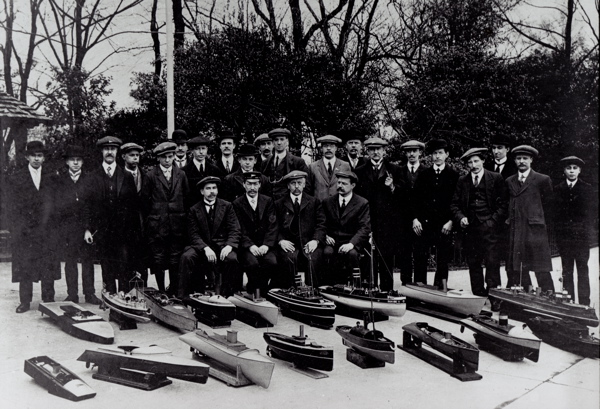
January 3rd 1937

Keith Reynolds, a sympathetic man with an appealingly straggly moustache who is Secretary of the Victoria Model Steam Boat Club, agreed to let me take a look at his photographic collection. So, as the members got steam up on the lakeside, I sat inside the club house and sifted through the archive, listening to all the variously enigmatic whistling and chugging sounds coming from the shore.
Keith told me that the model boat club existed even before the founding of the Model Steam Boat Club in 1904, preceded by a Model Sailing Boat Club that he believes was founded in 1875. The old club house in Victoria Park dates from this period and Keith showed me where the lockers once were, custom-built to store huge model sail boats, before the age of steam took over.
There are just a handful of early black and white pictures, donated years ago by member Olive Cotman. Although the photograph at the top is from January 3rd 1937, the other one is undated. As well as the impressive display of boats in both photographs, the members display a fine selection of hats, and in the top picture, if you look closely, you can see the pennant-shaped club badge pinned onto many of the caps.
The dignity of these men, seemingly so serious in their moustaches and caps, yet so proud to be photographed with their fleet of model steam boats, is undeniably touching. These boats were miniature versions of the vessels that you might see a mile away on the Thames at that time.
By contrast, the 1937 picture shows the crowd who braved the chill wind of Victoria Park in January to admire the model boats and the anonymous schoolboy in his cap on the far right is more interested in the camera than the boats, as he gazes towards us and into eternity.
As I looked through the thousands of colour photographs taken by Janet Reynolds, Keith’s wife, over the forty summers since their marriage, I became fascinated by these idyllic pictures which evoke so many long happy Sunday afternoons. I was looking at images of the younger selves of those members of the club who I had been introduced to that morning. Keith has been sailing steam boats for fifty years, since he was ten, although he had to wait until he was fourteen to become a full-fledged member in his own right in 1964.
One day Keith’s father stopped by the lake to speak with the father of the current chairman Norman Lara, and that was how it began for the Reynolds family, which has now been involved for four generations. ‘She married into the Boating Club,’ admitted Keith affectionately, referring to the induction of his wife Jan, ‘She took photographs because she didn’t want to boat, but then she decided it was more fun to get involved, and now my daughter and my grandson of fourteen are also members.’ These lyrical images were taken by a photographer who became seduced by this diminutive nautical sport, embracing it as a family endeavour to entertain successive generations.
Out on the shore, Keith introduced me to the engineer Phil Abbott who showed me the oldest vessel still in use, a steam-powered straight-racing boat with the name of ‘All alone’ from 1920, beside it sat ‘Yvonne’ a high-speed steam-powered straight-racing boat from 1947. These boats speak of the different eras of their manufacture. ‘All alone,’ with its brass funnels and tones of brown with an eau-de-nil interior, possesses a quiet twenties elegance in direct contrast to the snazzy red and beige forties colour scheme of the speed boat which raises its prow arrogantly in the water as it roars along.
‘All alone’ was made by Arthur Perkins, who offered it to the club, as many members do, before his demise and ‘Yvonne’ has a similar provenance. When Keith revealed that he had acquired half of the thirty-seven boats he possessed, making the others himself, I realised that the club was the boats rather than the members, who are – in effect – mere custodians, providing maintenance for these vessels, enabling them to sail on, across Victoria Park Boating Lake, over decades and through generations.
Keith pinned a blue and white pennant-shaped enamel club badge on my shirt, just like those in the photo, and confessed that the club is eager for new members. It does not matter if you do not have a boat, anyone is welcome to join the conversation at the lakeside, and guidance is offered if you want to buy or make your own vessel, he explained courteously. All you need to do is go along to see Keith one Sunday in Victoria Park.
It would be the perfect excuse to spend every Sunday boating for the rest of your life and you would be joining the honoured ranks of men and women who have pursued this noble passtime since 1904 on the lake in Victoria Park. These treasured photographs speak for themselves.




You may also like to read about
Norman Phelps, Boat Club President
Lucinda Douglas Menzies at Victoria Park Steam Model Boat Club
At Doggett’s Coat & Badge Race

Sculling under London Bridge
It might have been the hottest day of the year but that was not going to stop six young apprentice watermen rowing from Southwark to Chelsea in the Doggett’s Coat & Badge Race of 2016. Held annually since 1715, this is the world’s oldest continuously-held sporting event and a fiercely-contested prize among families of watermen who have been working on the Thames for centuries.
Photographer Tom Bunning & I climbed down onto Fishmongers’ Wharf next to London Bridge to watch the apprentices carrying their skiffs over their shoulders down Fishmongers’ Steps and launching them on the river as high tide approached. On the wharf, a large board listed the contestants names and outlined their form, revealing cousins, uncles and grandfathers who had attempted this race before them.
At 10:45am HMS Belfast fired its guns, sending the seagulls into a whirl and signalling that the river was closed to traffic for the duration of the race. The six contestants lined up in their skiffs, with the Umpire’s boat close behind carrying Bobby Prentice – who holds the unbroken record for Doggett’s Coat & Badge of twenty-three minutes and twenty-two seconds in 1973 – resplendent his magnificent gold-braided outfit. Then they were off, skimming across the surface of the water like beetles, and before we knew it they had disappeared under Cannon St Bridge and away into three hundred years of history.
The origin of the race lies with Thomas Doggett, a flamboyant Irishman who became an actor-manager at the Haymarket & Drury Lane Theatres at the beginning of the eighteenth century. Acclaimed as, ‘the leading low comedian of the London stage,’ Doggett began his career performing in a booth at the notorious Bartholomew Fair in Smithfield before graduating to the West End.
The story goes that the race began as a wager in gratitude to a young waterman who rescued Doggett when he fell overboard while crossing the Thames. Doggett offered a traditional waterman’s red coat and a silver badge inscribed with a horse as a symbol of the house of Hanover and the word ‘liberty,’ to be presented to whoever could row fastest between the Swan in Southwark and the Swan in Chelsea.
Originally, the race was held each year on August 1st as a celebration of the anniversary of George I’s accession to the throne and rowed against the tide by watermen in skerries taking as long as two hours to complete the course. Doggett financed it until his death in 1721 when responsibility passed to the Fishmongers Company who have organised the event ever since. In more recent times, the race has been run with the tide and the contestants now row in single sculls. A commentator of 1864 declared, ‘This deplorable decision to go with the flow obviously marks the start of the subsequent sustained decline in the British national character.”
When we saw the contestants of 2016 disappear from view, Benjamin Folkard had already established a significant lead and it was no surprise to see him return in a motorboat an hour later as the victor. Yet this was his third attempt and he received a generous emotional greeting at Fishmongers’ Wharf from Louis Pettifer who won last year, now wearing his fine red waterman’s coat and badge. Up on the terrace of Fishmongers Hall, Sir Steve Redgrave congratulated the winner formally as dignitaries stood round and an enthusiastic cheer went up from a flotilla of corporate hospitality boats on the Thames.
Tom & I observed all this from a vantage point on London Bridge where a small crowd had formed, and a small white-haired woman confided to me that she had come to London especially to see this race which had been won by her ancestor in 1825. The river sparkled, shimmering with sunlight, and it was curious to witness such an elusive event, simultaneously so fleeting but yet so old.

Alfie Anderson


Perry Flynn


Jacob Berry

The finish of Doggett’s Coat & Badge Race at Chelsea by Thomas Rowlandson

HMS Belfast fires a gun to signal closure of the river for the race

Umpire Bobby Prentice sits in the prow


Doggett’s Coat & Badge Race, 1838


Lining up at London Bridge in 1906


T Cole, winner in 1849

Benjamin Folkard embraced by last year’s winner Louis Pettipher at Fishmongers’ Wharf

A trumpeter plays a fanfare to announce Benjamin Folkard as winner of Doggett’s Race

Doggett’s Coat & Badge Winners, 1901

Louis Pettipher presents Benjamin Folkard with champagne on the terrace of Fishmongers’ Hall

Doggett’s Coat & Badge Winners, 1960

Louis Pettipher, Benjamin Folkard, Sir Steve Redgrave

Twenty winners of Doggett’s Coat & Badge, 1905 (click to enlarge this image)

Portraits believed to be of Thomas Doggett by Thomas Murray (left) and Johann Zoffany (right)

Plaque in Eltham churchyard – Doggett married the granddaughter of the Vicar of Eltham
Colour photographs copyright © Tom Bunning
You may also like to read about
Bobby Prentice, Waterman & Lighterman
Old Bob Prentice, Waterman & Lighterman


