The Publican & The Historian
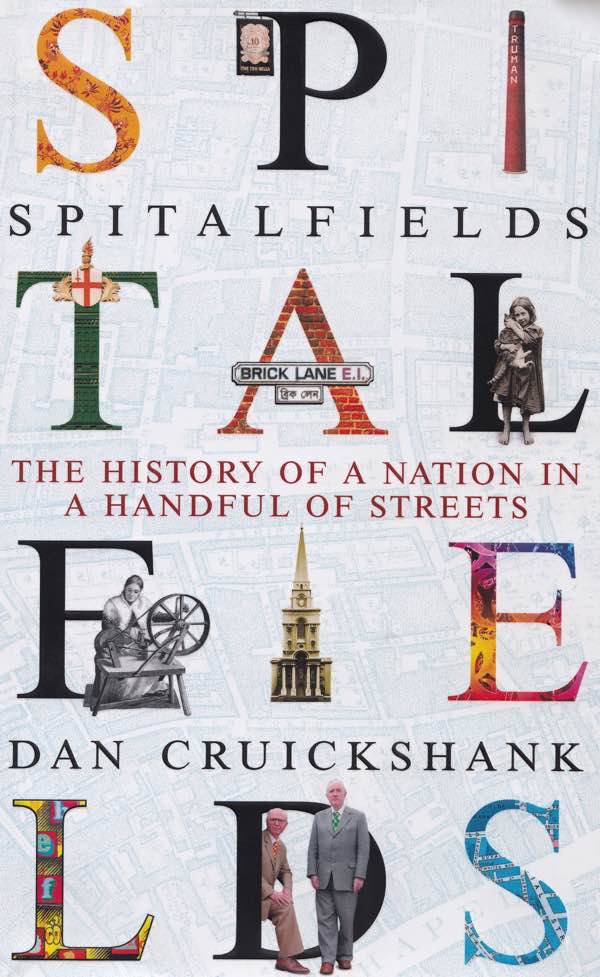
In this extract from his newly-published book SPITALFIELDS, The History of a Nation in a Handful of Streets, Dan Cruickshank reflects on his friendship with Sandra Esqulant, landlady of the Golden Heart, and the changes they have seen in the neighbourhood over the last forty years
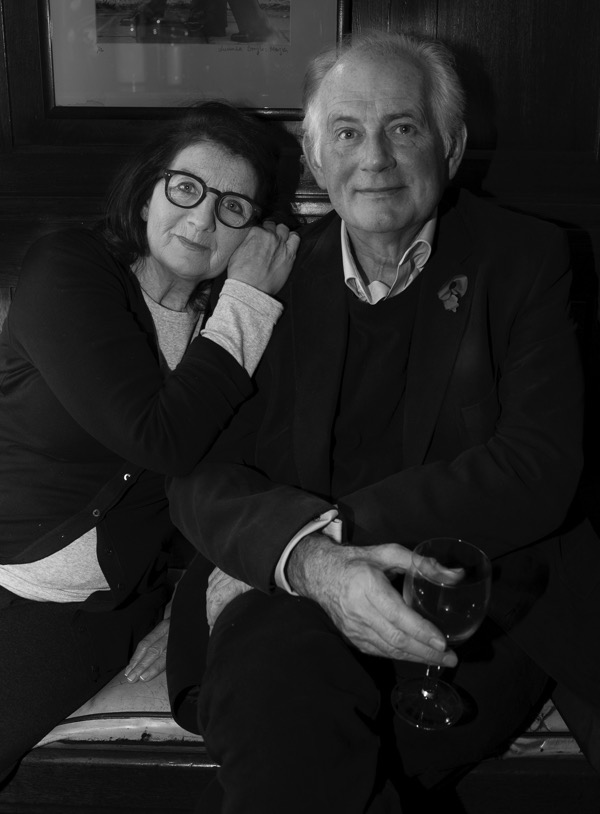
Portrait of Sandra Esqulant & Dan Cruickshank by Sarah Ainslie
I moved into my house in Spitalfields in 1977, the same year that Sandra and Dennis Esqulant took over the Golden Heart, and we soon became friends. Sadly Dennis died in 2009, but Sandra continues to run the Golden Heart with tremendous energy and enthusiasm. She is naturally generous, with a genuine belief in the beneficial power of friendship, and we sometimes sit in the heart of the Golden Heart, talking of Spitalfields past and present, of the living and the dead, of things that have been, that are and that might be.
We talk, for example, of the strange array of characters who occupied the area before the great watershed of 1991 when the ancient fruit, vegetable and flower retail market closed. While it was going strong the market transformed night into day, with pubs – granted special licences – and cafés thriving in the small hours, serving drinks and vast dinners to lorry drivers and market workers while wholesalers and shop owners arrived to buy their daily stocks. The Golden Heart was then a market pub and, like most market-related establishments, attracted not just local workers and visitors to the area but also society’s outsiders, who were drawn to the nocturnal life of Spitalfields and the sense of liberty that pervades all great markets. I remember the prostitutes who eased the lives of the hard-driving hauliers transporting fruit from Spain, flowers from the Netherlands or vegetables from the north. They gathered on the corners of streets leading to the market – at Fournier St next to Christ Church, along Commercial St – chatting to the lorry drivers with good humour, occasionally asking me, as I made my way home in the early hours of the morning, if I ‘wanted business, darlin.’ And I remember the piles of debris created by the market on a daily basis: the heaps of timber pallets, the abandoned crates of fruit and vegetables that seemed, to my inexpert eye, without blemish. I collected and burnt the pallets, which kept me warm as I repaired my house in Elder Street, and I ate the fruit and vegetables and took pleasure from bunches of discarded flowers. And I was not the only one.
The market helped to support a truly remarkable community of men and women. Once they would have been called ‘tramps’ (but most of them tramped nowhere) or ‘down and outs’ – certainly more accurate – or derelicts. I have no idea what they should be called – but I know their like no longer exists. Many were ragged, grimy, aged, eccentric, fiercely individual and independent – people who must have seen and suffered things beyond the comprehension or imagination of most. They gathered on corners at night, warming themselves in the early-morning light with huge fires, kindled from pallets, papers and any other available combustible debris. I remember they particularly favoured the corner of Brushfield St and what had been Steward St, in the heart of the market area, where they lingered against a backdrop of long-decayed or derelict late-eighteenth-century houses, like animations from the drawings of Hogarth. Such vivid images of outcast London were spellbinding and brought the mean streets of the past to life with an intensity and authenticity that it is now hard to imagine and impossible to see in the new, brittle, commercial and consumer-orientated Spitalfields, with its array of chain stores and ersatz ‘Victorian-style’ lamps and bollards. Much of the fabric and paraphernalia of life in the area is now fake, many of its historic houses ruthlessly ‘made-over’ and modernised. But – forty or so years ago – things were very different.
As far as I can remember Spitalfields’ destitute street characters never begged for money. Possibly they were too proud, or perhaps they just took the basics they needed – food and wood from the street, companionship from each other. Sandra too remembers many of these transient characters. Some would occasionally sneak into the pub for refuge, to watch television – she recalls the BBC’s current affairs programme Panorama was a favourite – and she of course would end up buying drinks for these penniless people. Sandra confirms that they never begged for money, but she recalls they would occasionally borrow £5 and then scrupulously pay it back, usually from the proceeds of erecting stalls in Petticoat Lane market. Some would offer to help out at the pub in lieu of repayment, collecting glasses and ashtrays, but unused to the niceties of civilised life they would as often as not cast the ash upon the floor and create more chaos than order.
There was ‘Big Jean’ who was – Sandra insists – given to drinking Esso Blue (something that seems hardly possible given that more than a few mouthfuls of this deadly paraffin would kill most people, or, at least, turn them blind). ‘Big Jean’ must have been made of heroic stuff. She was regularly purged by the Catholic nuns in the mid-nineteenth-century shelter in Crispin St, a place that has seen many desperate cases through the years, and would just as regularly return to her inebriated and unpredictable ways. Then there was ‘Cat Woman’, a mesmerising prostitute, and Elaine, who ran the all-night food van outside Christ Church and who was famed for her massive bacon and egg rolls known as – no one can now say why – ‘cowboys’.
And Sandra remembers – as do I – the lost peoples of East End life. We recall, for example, the families of Irish tinkers who arrived in due season to sell Christmas trees in the market. They would gather in large and extended family groups in the Golden Heart – women in one bar and men in the other – and drink through the long hours of the night and early morning, enjoying the pub’s liberal market licence. We also cast our minds back to the last days of Spitalfields’ Jewish community that as recently as the thirties had occupied nearly all the streets and courts around Wentworth St and Old Montague St. By the late seventies almost all of them had gone, leaving the odd bakery or hardware shop in Brick Lane, a delicatessen in Petticoat Lane and Bloom’s Restaurant in Aldgate. Just two of Spitalfields’ once numerous synagogues – those in Fournier St and in Sandys Row – remained open. Now only the Sandys Row synagogue continues in operation as a living reminder of a once vibrant community.
Sandra and I also consider the future, and try to imagine a neighbourhood that may soon be as remote from the Spitalfields of today as contemporary Spitalfields is from the East London of the Huguenot weavers. Spitalfields has always been a place of change, but in recent years the changes have been so great and rapid that it seems little of the old locality will be left: just a handful of early-Georgian buildings clustered around Christ Church and the junction of Folgate St and Elder St, and memories that are fast fading. Even as I write a block of eighteenth-, nineteenth- and twentieth-century buildings between Blossom St and the section of Ermine St named Norton Folgate is threatened with demolition. If this happens yet one more portion of Spitalfields will have gone, and a rich mix of buildings – small-scale and on a site on which Londoners have lived and worked for at least two thousand years – will have given way to corporate-style schemes, incorporating open-plan commercial space and rising as high as thirteen storeys behind some pathetic fragments of retained brick façades.
My book – among other things – celebrates lost and disappearing worlds.
You may also like to take a look at
Dan Cruickshank’s Photographs of Spitalfields
Lucy Kemp-Welch At The Royal Exchange
On Armistice Day, we celebrate the work of Lucy Kemp-Welch and her mural Women’s Work in the Great War at the Royal Exchange in the City of London.
If the current development proposals are approved, this magnificent painting and the other murals in the Exchange will be bisected by a mezzanine, and a 25cm horizontal section of every picture masked by a silicone seal where the new floor meets the surface of the painting. In this scheme, the lower part of Lucy Kemp-Welch’s mural will become the background to a luxury retail space while the upper part will decorate a high-end restaurant or bar.
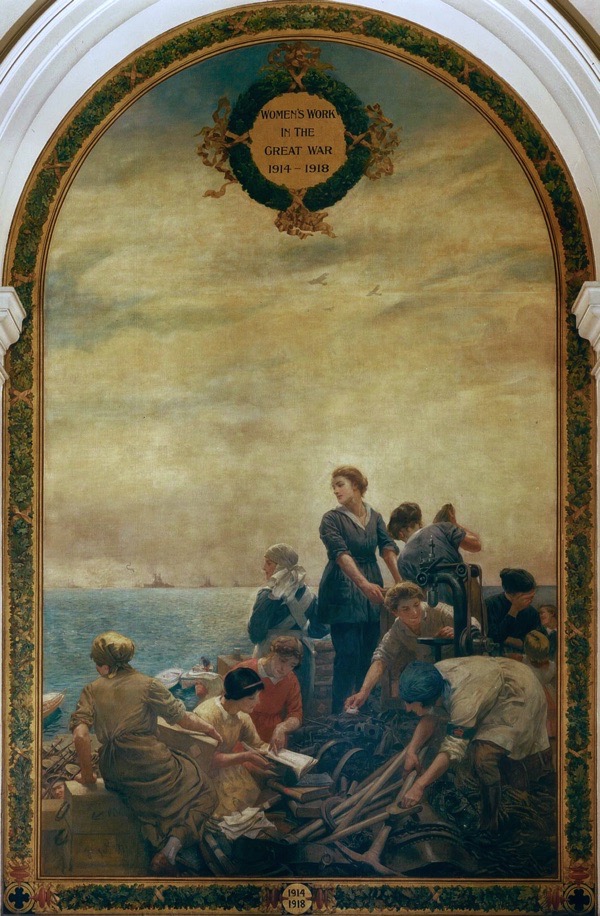
Women’s Work in the Great War 1914-1918 by Lucy Kemp-Welch
Lucy Kemp-Welch’s Women’s Work in the Great War was unveiled by Princess Mary in 1924 as the final panel, completing the series of twenty-four epic paintings by distinguished artists, commenced in 1892 at the Royal Exchange and comprising London’s most important series of murals. Lucy Kemp-Welch’s painting, alongside those by Sir Frank Salisbury and W L Wylie also depicting scenes from the war, reflected the significance of the Royal Exchange as a public space where Armistice Day services were held in subsequent years.
The campaign for women’s suffrage intensified before the First World War and its outbreak in 1914 offered an outlet for women to demonstrate their capabilities, both in the workplace and in public office. Lucy Kemp-Welch specialised in painting horses and, during the war, she designed a famous recruitment poster of a man on horseback entitled Forward! Forward to Victory! Enlist Now and undertook paintings of horses in military service. Kemp-Welch exhibited at the Whitechapel Gallery in April 1918, as part of a show of Women’s Work, including displays relating to heroic individuals such as Edith Cavell, amongst presentations devoted to munitions, hospitals, industry, canteens, honours and memorials, drawing 82,000 visitors in six weeks.
Her painting for the Royal Exchange comprises a group of female figures in the foreground, representative of the chief types of women’s war work, while in the background soldiers march away, planes fly overhead and battleships depart. On the left, a woman in khaki shifts boxes of munitions while two women clerical workers in yellow and red consult a ledger. Behind them, a woman in nurse’s uniform gazes out to sea and, at the highest point of the composition, stands a woman in the blue uniform of the Voluntary Aid Detachment with her hands poised upon a box of munitions which is being filled by her colleague. In front of them, another woman seated upon a pile of chains works a mechanical drill and an agricultural worker reaches for a spade and a pickaxe. To the far right, a widow sits isolated in grief with her two children.
Undertaking a mural on such a scale was a huge physical undertaking and it is a measure of Lucy Kemp-Welch’s commitment to her subject matter that, while working to complete the painting, she collapsed with exhaustion upon the scaffolding in February 1922 aged fifty-three. The doctor sent her away to Devon for three or four months rest and forbade all work, yet she returned – once she had recovered – and completed the painting.
Given the nature of Lucy Kemp-Welch’s Women’s Work in the Great War, its subject matter and cultural significance within the larger sequence of pictures which illustrate the history of London, it is profoundly disappointing to contemplate that this and the others may be bisected by mezzanine floors for the sake of creating more luxury retail and high-end catering space in the Royal Exchange.
The proposed technique of using a silicon seal against the surface of these paintings is untested. It is likely to create different conditions of humidity and temperature on either floor which will affect the different parts of the picture differently as they age, marring the paintings permanently. Equally, it is likely that the seal will collect dust and dirt so that, as the mezzanine floor moves subtly with the shifting tensions of the structure, this will create an abrasive action upon the surface of the paintings. Finally, the shopkeepers will be free to put objects in front of these paintings, there will be no protection to prevent wear and tear or the actions of over-zealous cleaners.
If the current proposal is permitted, damage to these murals is unavoidable. On Armistice Day, please write to object so that all these pictures, including Lucy Kemp-Welch’s Women’s Work in the Great War, may be preserved as a public record of the history of our city and the sacrifices made by our forebears, both men and women, for generations yet to come. You can view the planning application and object by clicking here to go to the City of London Planning website
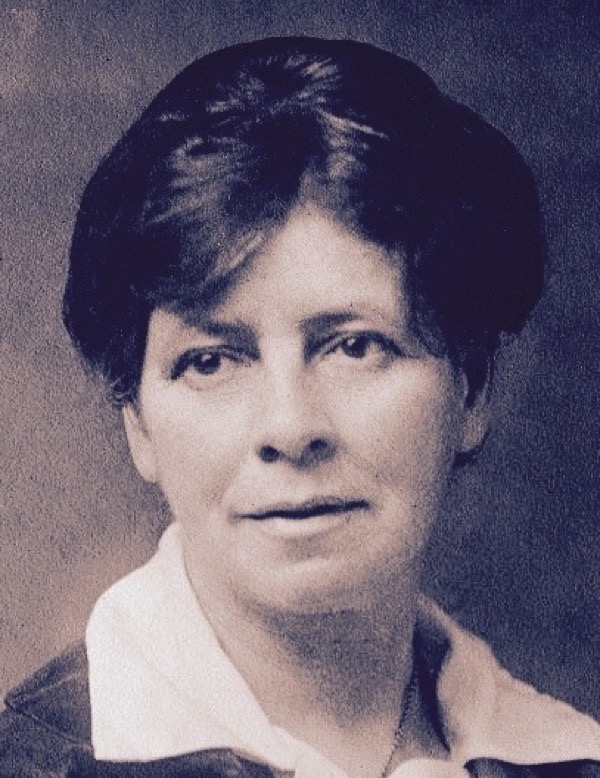
Lucy Kemp -Welch
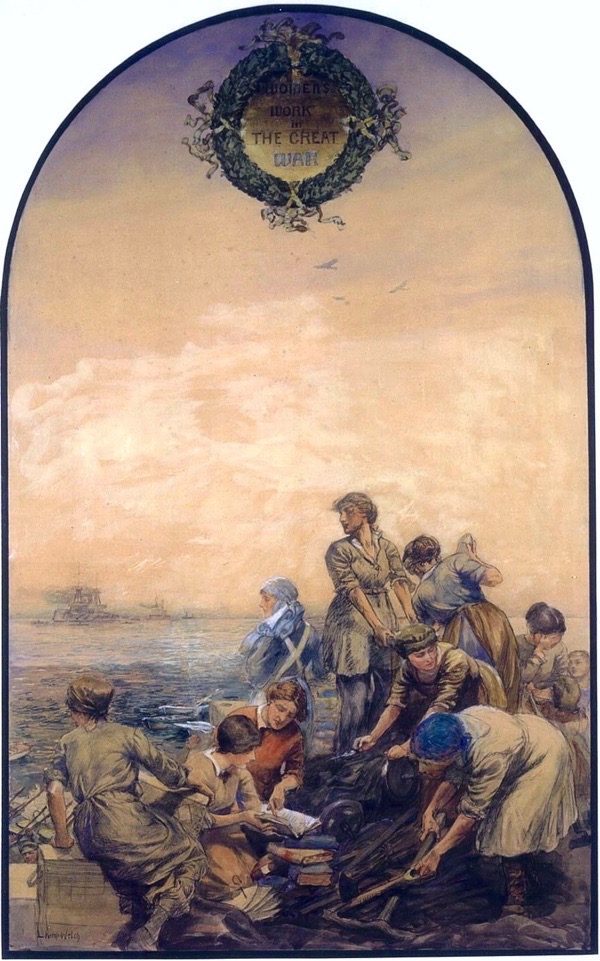
Sketch for Women’s Work in the Great War
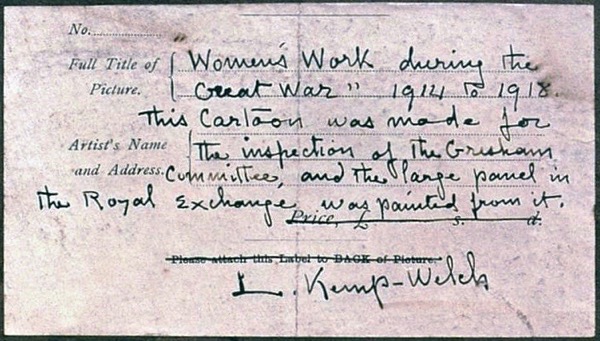
Note on reverse of sketch
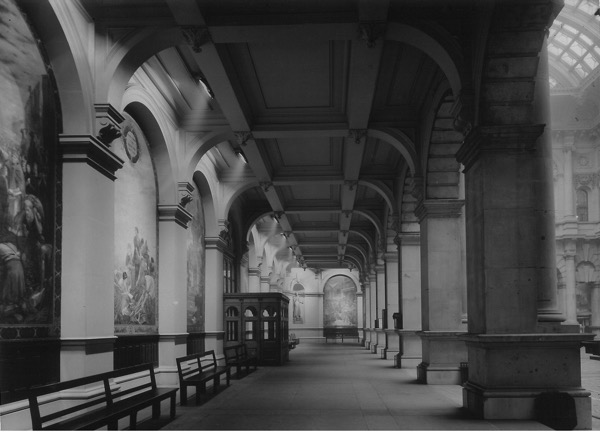
Interior of the Royal Exchange, illustrating the murals as they were intended to be viewed – Lucy Kemp-Welch’s Women’s Work in the Great War can be seen on the left of this photograph
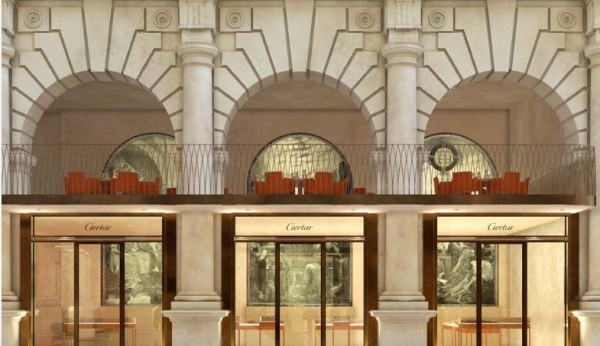
The proposal for new retail and restaurant/bar spaces with a mezzanine bisecting the murals – Lucy Kemp-Welch’s Women’s Work in the Great War can be seen on the right of this graphic visualisation
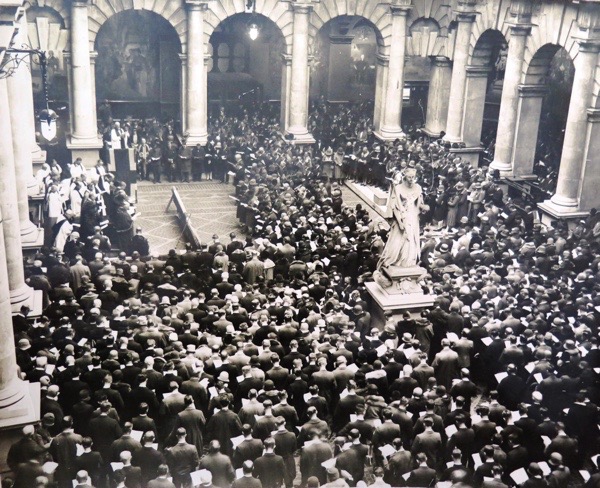
Armistice Service at the Royal Exchange in 1928
Archive images courtesy Mercers Company
With thanks to Sally Woodcock of the Roberson Archive at the Hamilton Kerr Institute, University of Cambridge, for her help in the preparation of this article
You may also like to read my original article
At The Garden Of Hope

(Click to enlarge this portrait of those involved in making the mosaic)
It was my pleasure to take a trip to Tottenham recently to spend an afternoon at the Mental Health Unit where Tessa Hunkin and the members of the Hackney Mosaic Project have been working with patients and staff over fourteen weeks through the summer to create a new mosaic entitled The Garden of Hope.
At the centre of the unit is a yard enclosed by buildings on all sides and lined with astroturf. Through discussion, the notion of conceiving of this space as The Garden of Hope arose and the heartfelt iconography of the mosaic was devised, featuring a pair of lions as representatives of the residents at the unit, with open gates and road leading to a white tower incarnating the possibility of reaching a better place.
Rosalie Simpson served rice and beans and we sat at long tables to eat our food in celebration of the joint achievement. Everyone was extremely proud of the beautiful mural that has been created and the collective desire that it represents in such poignant fashion, and – at this particular moment in a troubled year – it is a sentiment we can all understand.
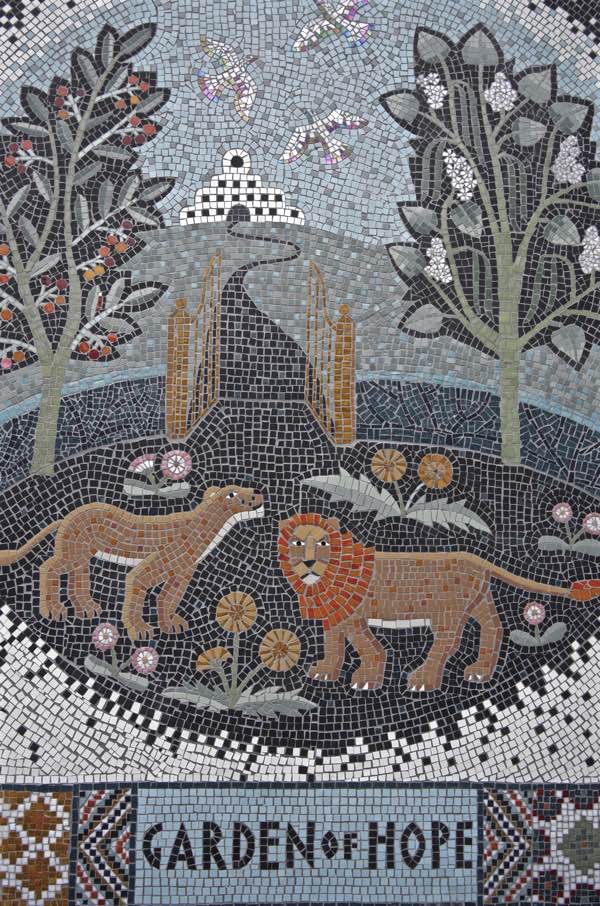
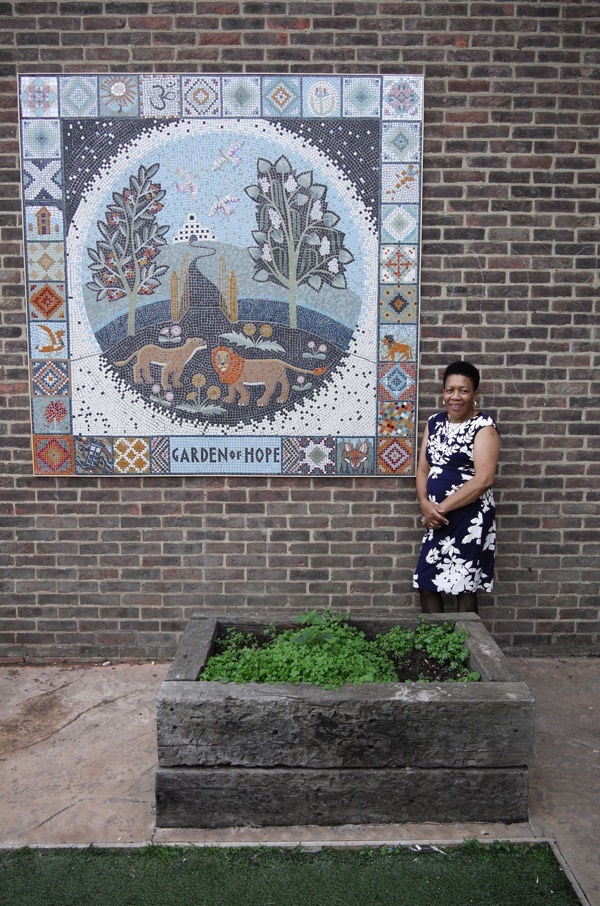
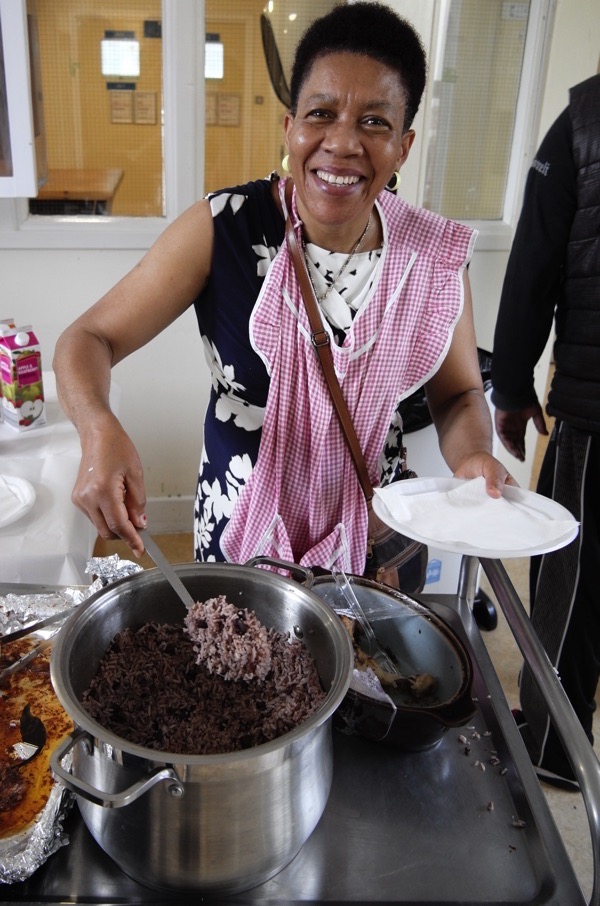
Rosalie Simpson cooked up rice and beans in celebration of the completion of the mosaic

(Click to enlarge and study the mosaic in detail)
THE HACKNEY MOSAIC PROJECT is seeking commissions, so if you would like a mosaic please get in touch hackneymosaic@gmail.com
You may also like to read about
The Mosaic Makers of Hackney Downs
A Celebration Of Colin O’Brien
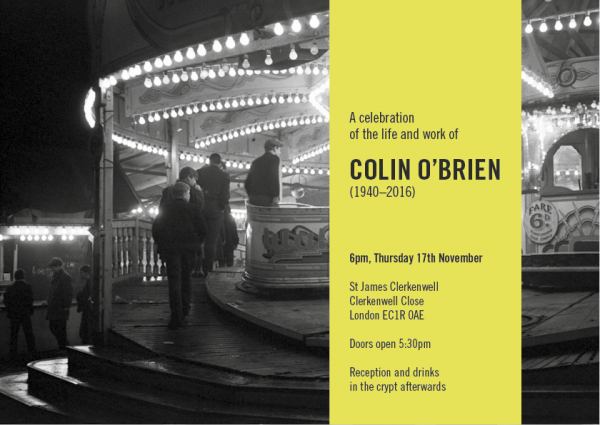
This week, we are making the final plans for our celebration of the life & work of photographer Colin O’Brien (1940-2016) next Thursday 17th November at St James’ Church, Clerkenwell, and I hope that as many readers who are able will join us at this candlelit event, comprising a sequence of photographs, readings, reminiscences, films and live music, followed by drinks and a reception in the crypt. Bells will ring from 5:30pm and we will commence at 6pm. All are welcome.
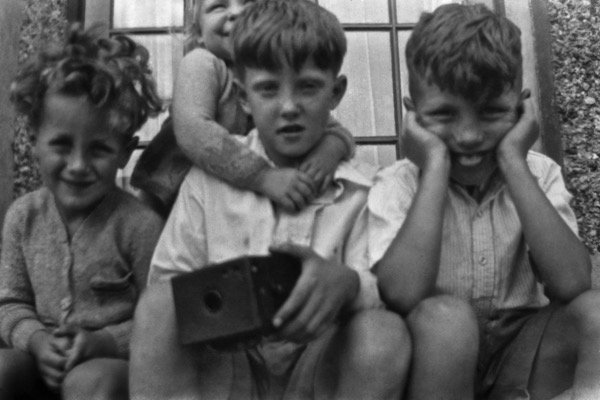
Colin O’Brien’s words introducing his monograph of photographs from 1948-2015, LONDON LIFE
My mother and father both came from large families of some six or seven children, as was usual in those days. Many did not live beyond infancy, dying from diseases they would survive today, and my mother often talked about her beautiful sister Eileen, who died from pneumonia when she was nine years old. Families were poor and people often went hungry. Children walked long distances to school and shoes were a luxury.
My parents grew up in Clerkenwell, which was called ‘Little Italy’ because of the Italian immigrants living there. St Peter’s Roman Catholic Church was the focus of their early lives, along with a building called ‘The Red House’ – with a distinctive red brick exterior still visible in Clerkenwell Road today. This was where they went when they needed a handout of food or clothing.
I was born on May 8th 1940 in Northampton Buildings in Northampton Street in the now-defunct London Borough of Finsbury. Soon after my birth, we moved from there to Victoria Dwellings, a sprawling series of tall Victorian buildings which ran along the junction of Clerkenwell Road and Farringdon Road. Then Edward, my father, left to serve in the Second World War, travelling to Germany, France and Italy before returning when I was five years old. And I cried when I saw him again because I wondered who this strange man was.
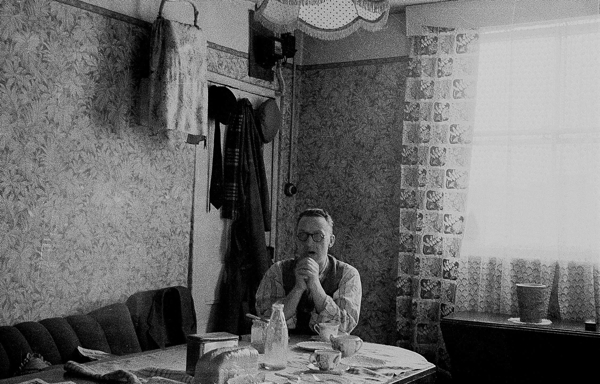
When my father came back from the war with no prospects, little money, and a son and a wife to support, he may well have wished he was back in the army but, eventually, he got a job sorting letters at Mount Pleasant. I remember finding a diary of his after he died. One entry read, “Five shillings short on the rent this week, I don’t know what I shall do,” yet he must have found the money from somewhere. He came to one of my early exhibitions at the Morley Gallery and wrote in the comments book, “I am very proud of my son and I enjoyed the exhibition very much.”
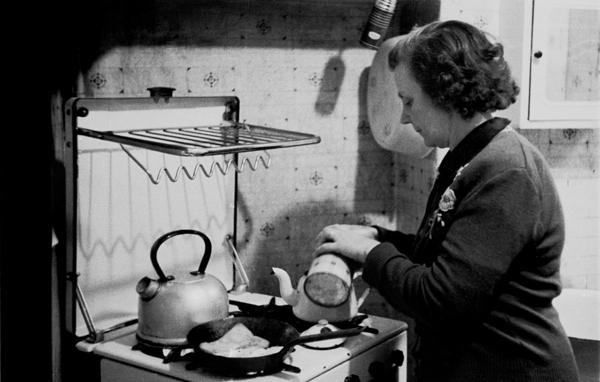
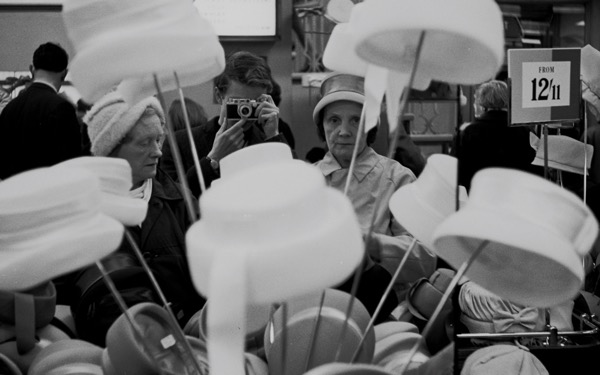
My mother, Edith, never had a career. She looked after me and her mother, Ada Kelly, who was crippled with arthritis and sat in a chair beside the radio, chuckling at Wilfred Pickles or listening to Mrs Dales’ Diary. My mother and her sister, Winnie, occasionally went ‘up west’ to look in the stores and try things on, even though they could not afford to buy them. I took some photographs of my mother trying on hats in British Home Stores in Oxford Street and laughing her head off when she saw herself in the mirror. My mother loved bright colours and flowery patterns. She made the effort to brighten up the drab surroundings in Victoria Dwellings, but it all felt so cosy that, as I grew up, I never questioned how we lived. To me it was our home, it was where I felt safe.

‘The Dwellings’ – as we called them – had survived the bombing, but were surrounded by derelict buildings and dangerous structures. For us children, these sites became our playgrounds with many exciting adventures to be had. It was part of life that we were allowed to go and play on our own in dangerous places. Our parents were too busy earning a living to worry about us overly. We learned to look after ourselves, but local people also looked out for us and, occasionally, a policeman would clip us round the ear if we were doing something wrong. We stayed out all day and played until we were exhausted, then came home to our tea before we went to bed and sank into a dream world of fantasy and romance.

Our flat was number 118, at the top of the building, and the view from the living room became my first window on the world. It was from here I looked down onto the junction of Clerkenwell Road and Farringdon Road – where I took images of violent car crashes and fatal accidents, and of a window cleaner perched precariously on a high ledge opposite in a snow storm. It was from my window that I saw the annual Italian procession in which I walked as a train bearer when I was six years old.
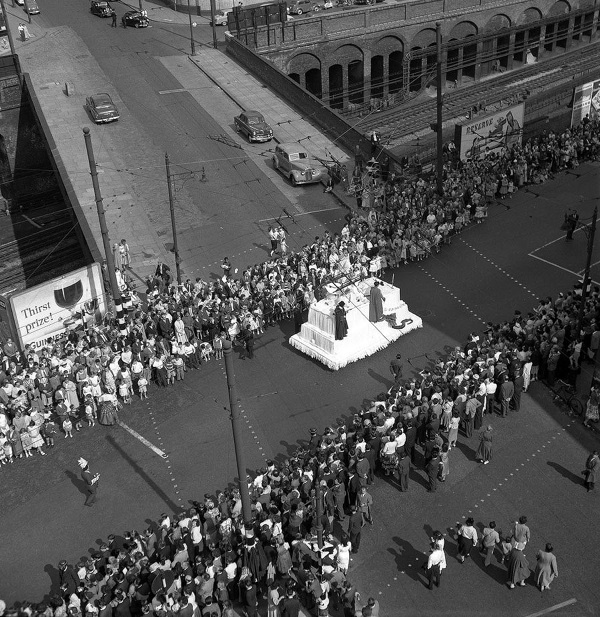
From this aerial perspective, I photographed ‘The Steps’ across Clerkenwell Road in Onslow Street, our usual meeting place as children before setting off for a day’s play on the bomb sites. From the living room, I watched trolley buses, delivery vans and women chatting. One of my photographs captures an almost-deserted crossing on New Year’s Eve with snow falling, taken while we sat during a power cut to see in the New Year by the light of a candle in 1962.

Early pictures show me carrying a box camera around and my first real photograph was of two boys leaning against a car in Hatton Garden. This is where my interest started – there in Clerkenwell in Little Italy in the London Borough of Finsbury, where I grew up with my mum and dad, and my aunts and uncles, and all my friends and acquaintances.
My uncle, William Kelly, was a taxi driver and a bit of an outsider. He rarely turned up for family gatherings but, at Christmas when I was six years old, he arrived with a parcel containing some bottles of chemicals, a printing frame and a couple of dishes. We mixed up the chemicals, took a box camera negative and put it in contact with light sensitive paper held in a small wooden frame. After we exposed it to daylight, we dipped the paper into the developer and I can still remember that moment when I first saw an image appear as if from nowhere.
My first photographic impulse was to capture the childhood world that surrounded me in Clerkenwell but, as my universe expanded and I travelled further afield, I continued to take pictures without ceasing. Shaping my perceptions and approach to existence, it was the life I recorded with my camera in Clerkenwell that made me the photographer I became.

You may also like to take a look at
Colin O’Brien’s Last Assignment
Last Days Out With Colin O’Brien
Mike Seaborne’s Isle of Dogs, Then & Now
No part of the East End has changed more in the last generation that the Isle of Dogs. Between 1983 & 1986, photographer Mike Seaborne recorded it prior to redevelopment, as part of a project with the Island History Society, and then returned in 2014 to capture the same views as they are today.
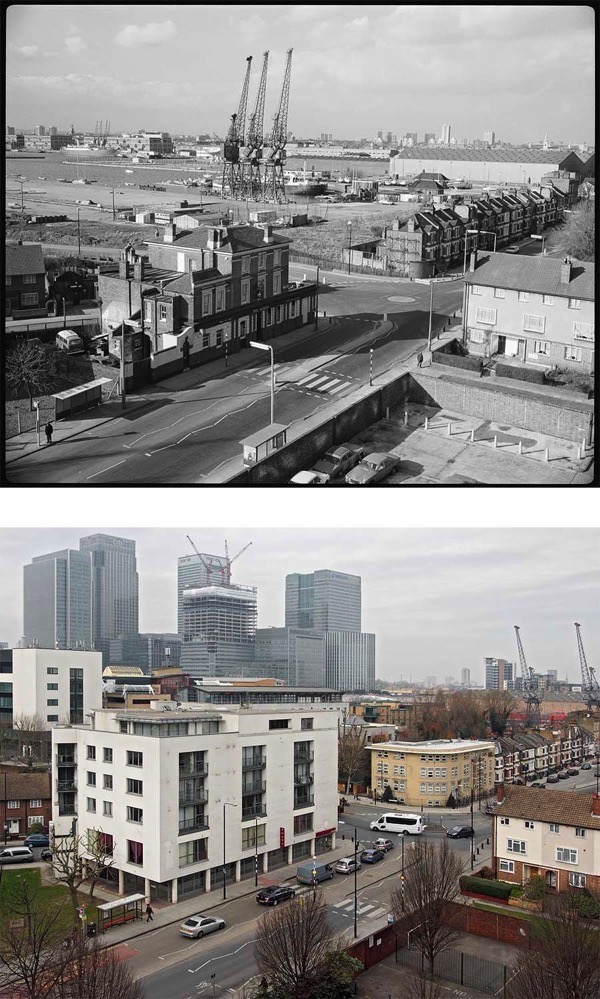
View from Alice Shepherd House, looking across Manchester Rd towards West India Docks
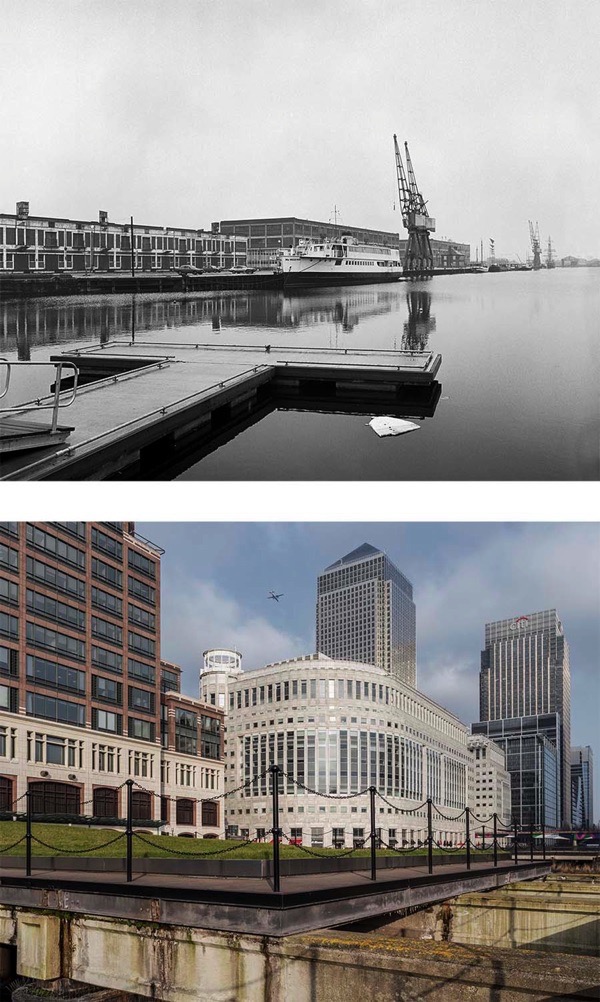
Canary Wharf, looking east
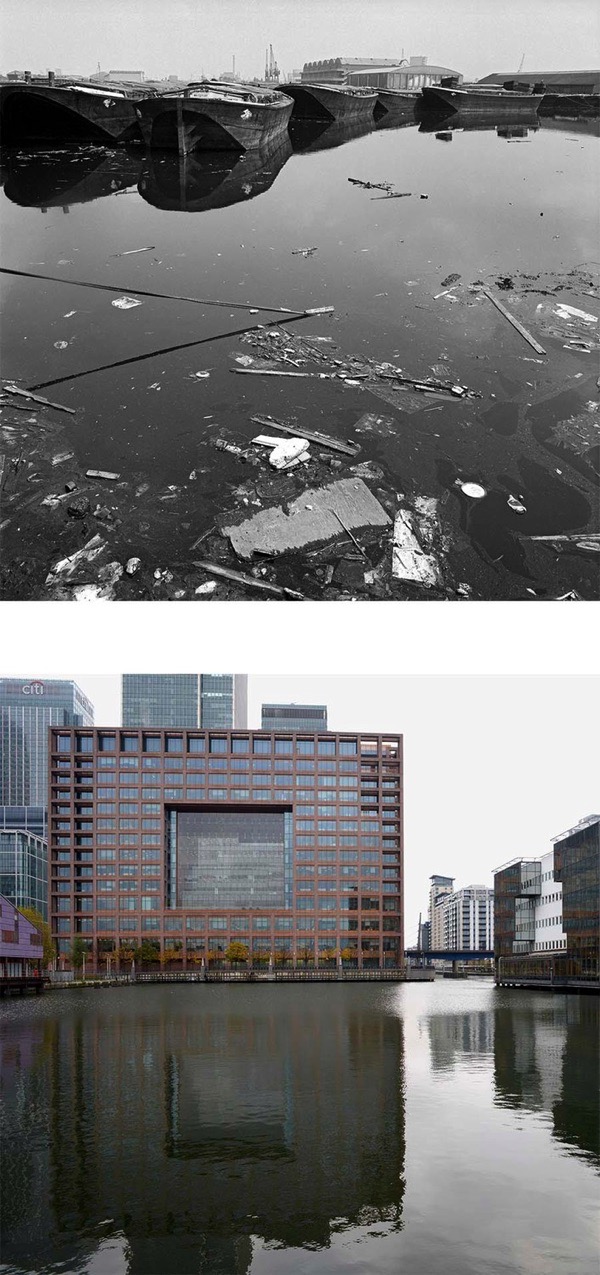
South West India Dock, looking east
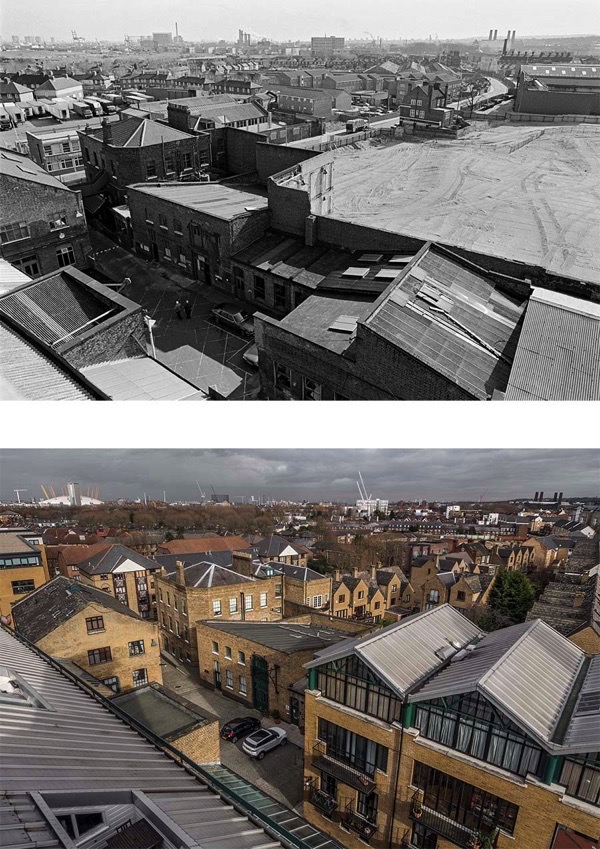
View east from the Plate House belfry, Burrell’s Wharf
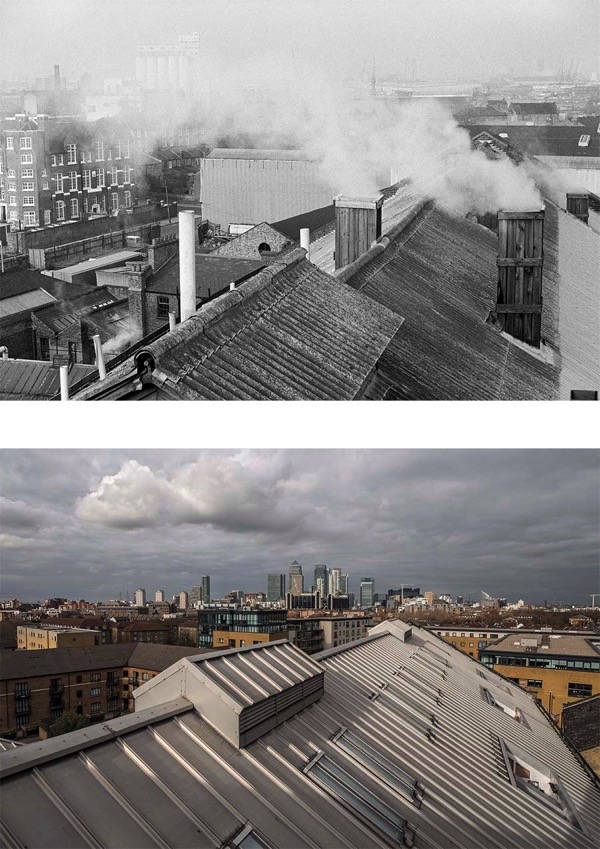
View north from the Plate House belfry, Burrell’s Wharf
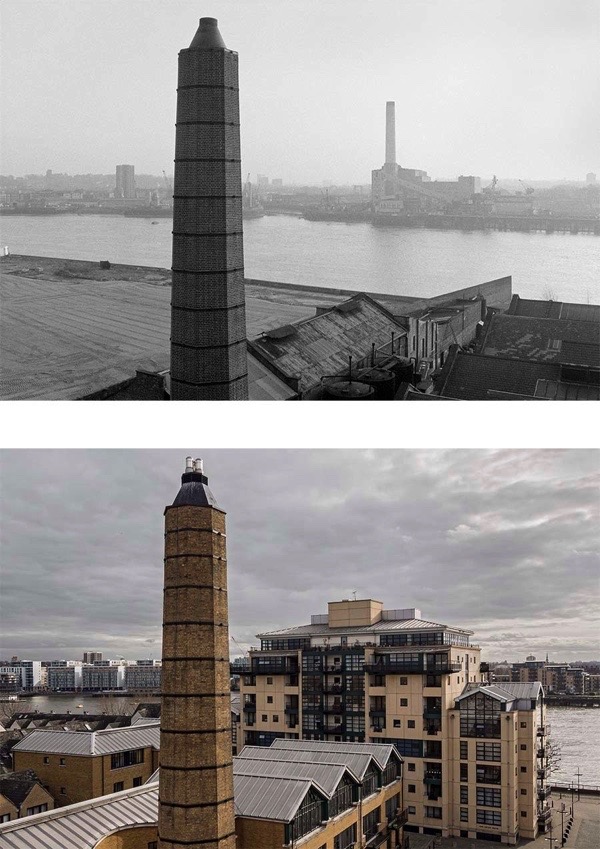
View south from the Plate House belfry, Burrell’s Wharf
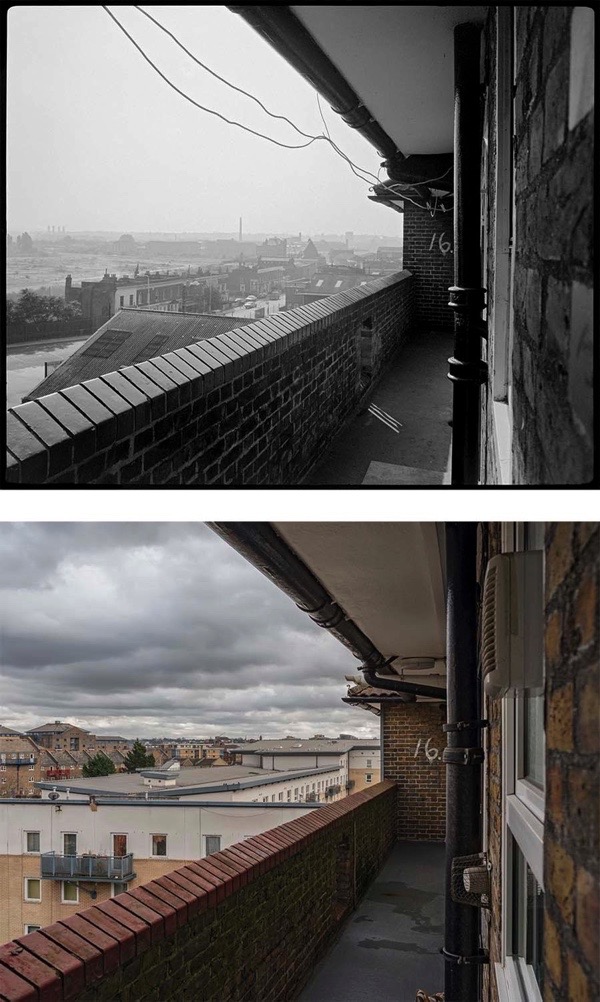
View from Montrose House
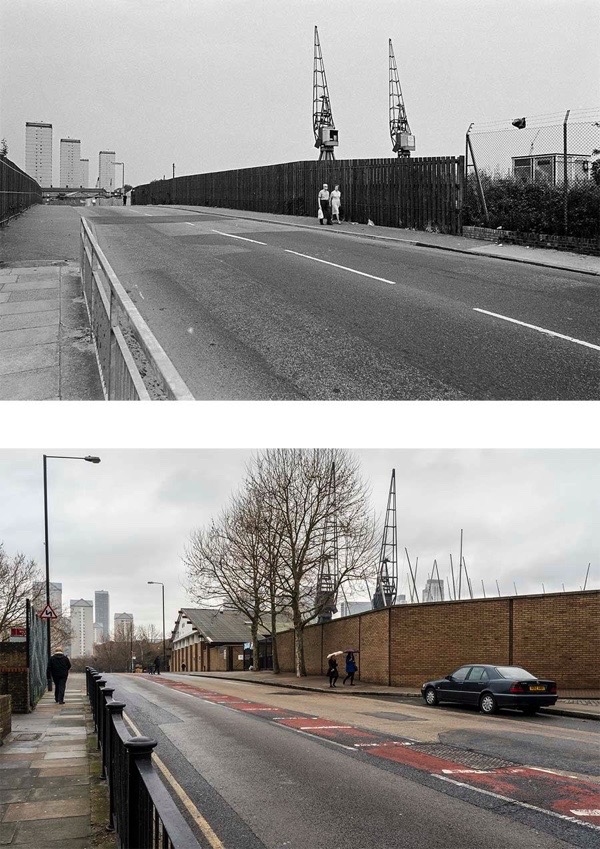
Westferry Rd to the south of the old entrance to Millwall Docks, looking north
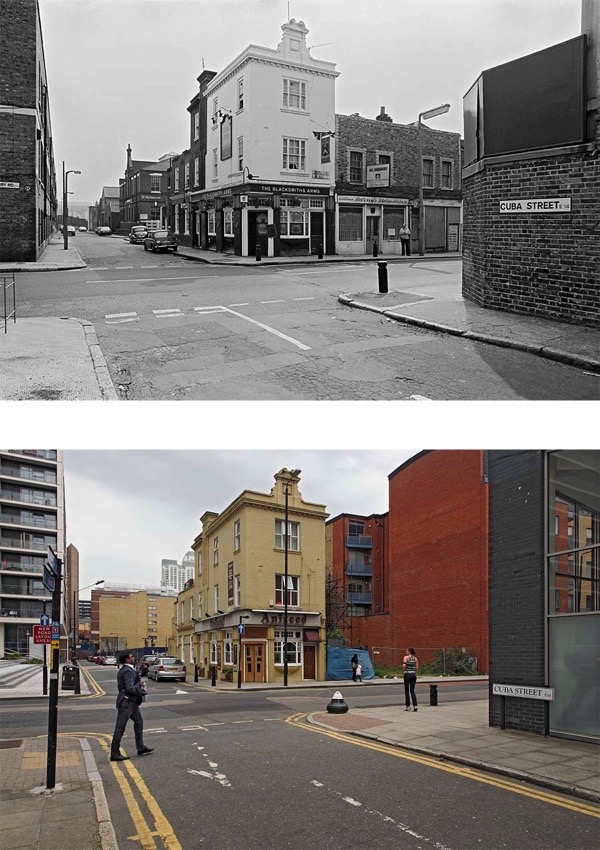
The Blacksmith’s Arms at the junction of Westferry Rd and Cuba St, now converted into a restaurant
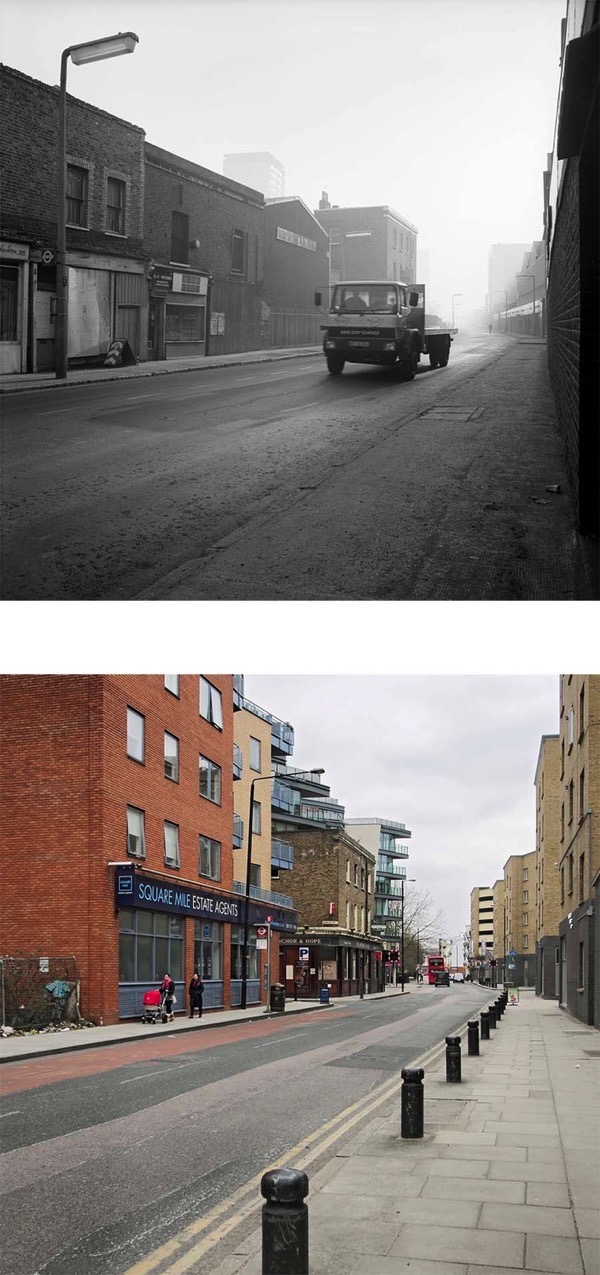
Westferry Road opposite Burrell’s Wharf, looking west
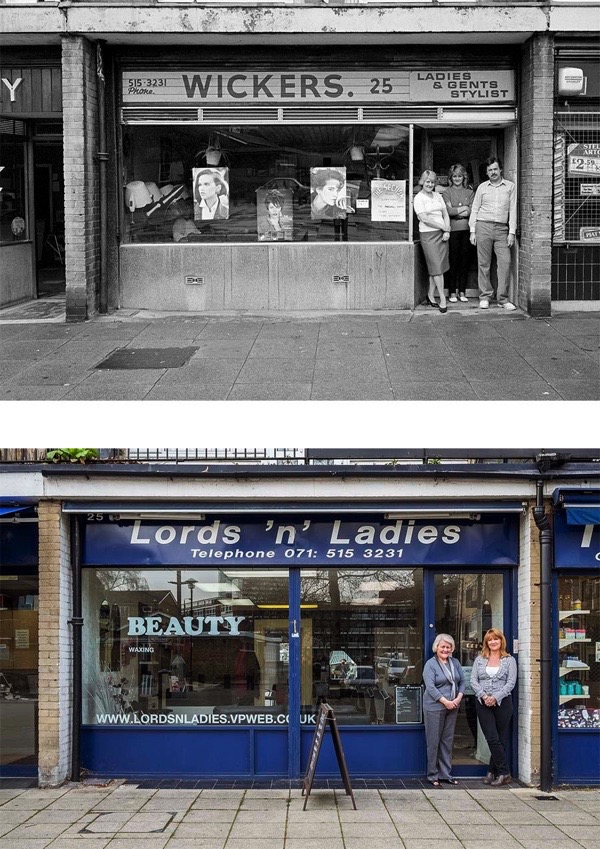
Castalia Sq, Jill Skeels & Madelaine Harvey still working at the hairdresser’s in 2014
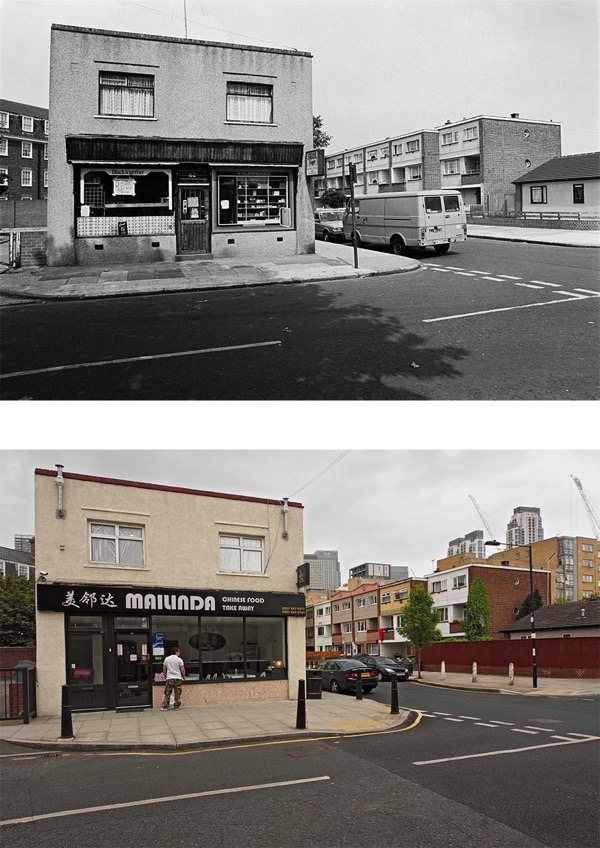
Mellish St at the junction with Alpha Grove
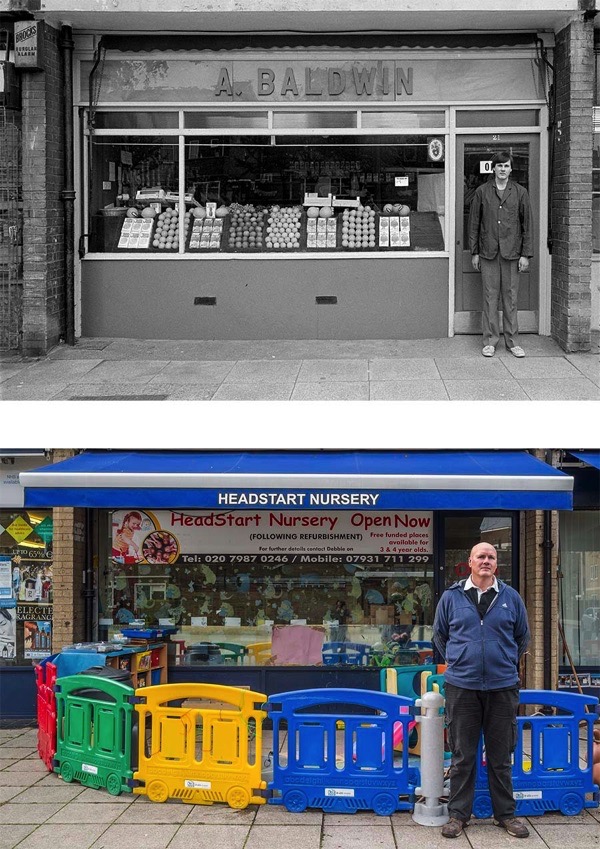
Castalia Sq, Ray Whiting, who ran the greengrocer’s in the eighties, still lives locally
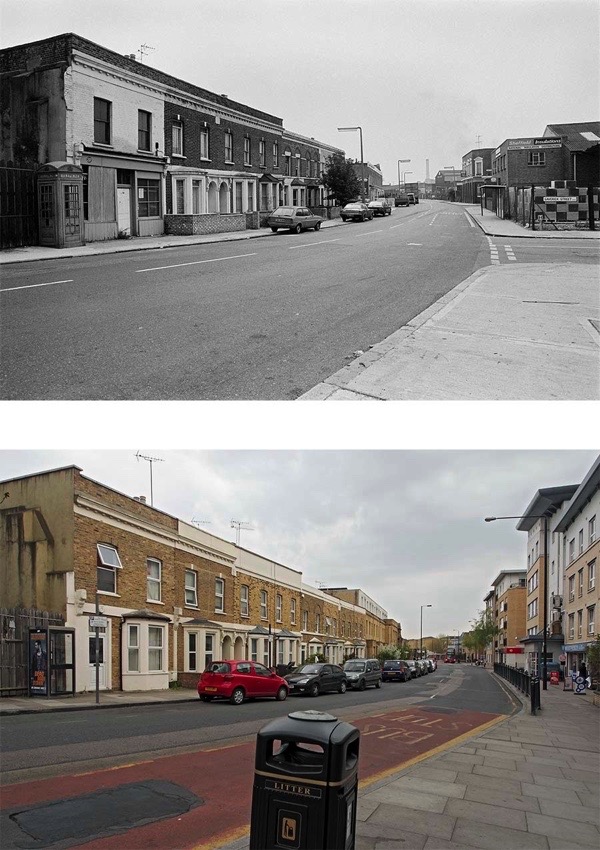
Westferry Rd opposite Gaverick St (later Mews), looking south
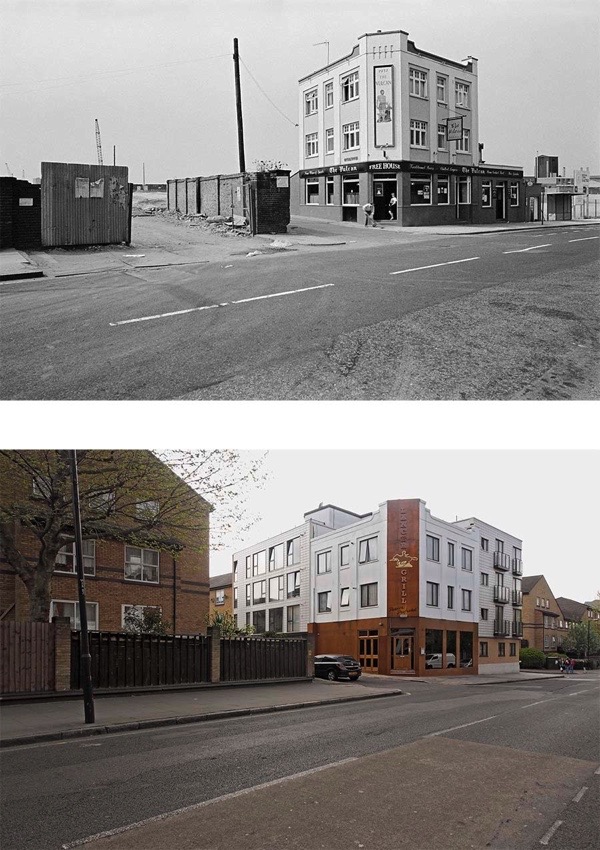
At the junction of Westferry Rd & Deptford Ferry Rd, The Vulcan has been converted into flats & a restaurant
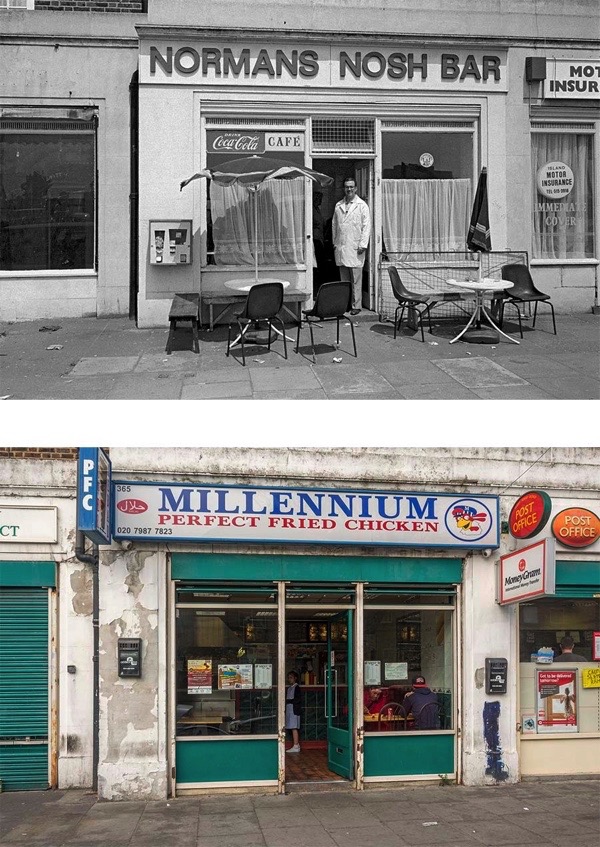
Arethusa House, Westferry Rd – in the early eighties Norman’s Nosh Bar was popular with workers clearing the Mast House Terrace site opposite
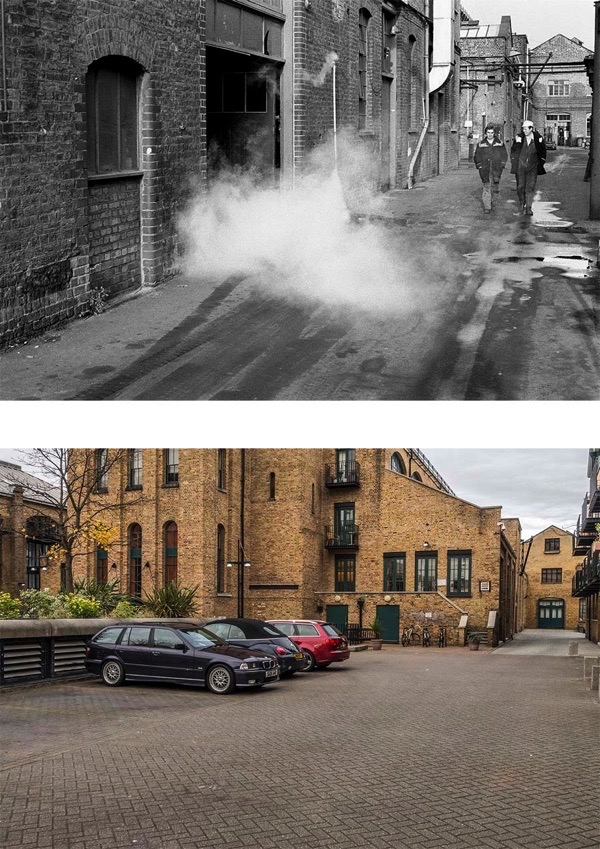
At Burrell’s Wharf
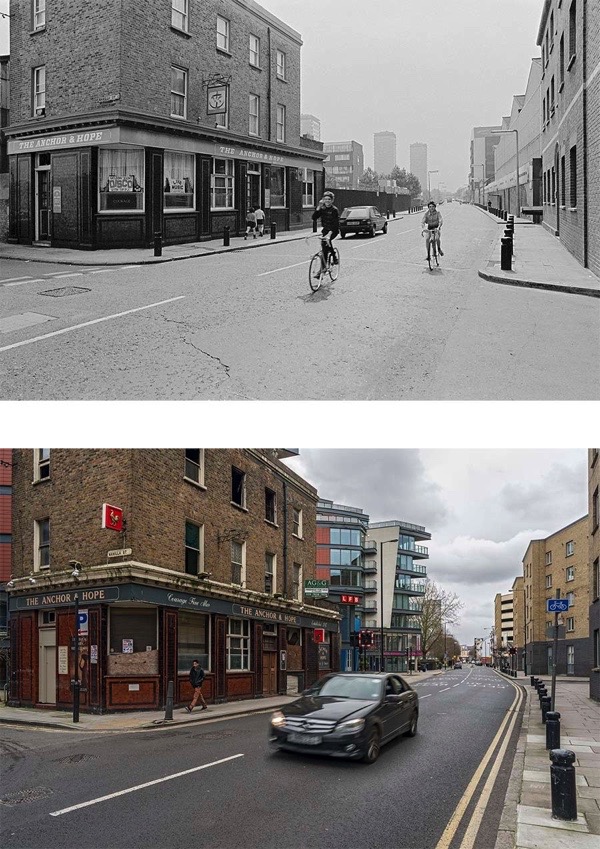
Junction of Westferry Rd & Manilla St, looking south. The Anchor & Hope closed in 2005 & was still empty in April 2014
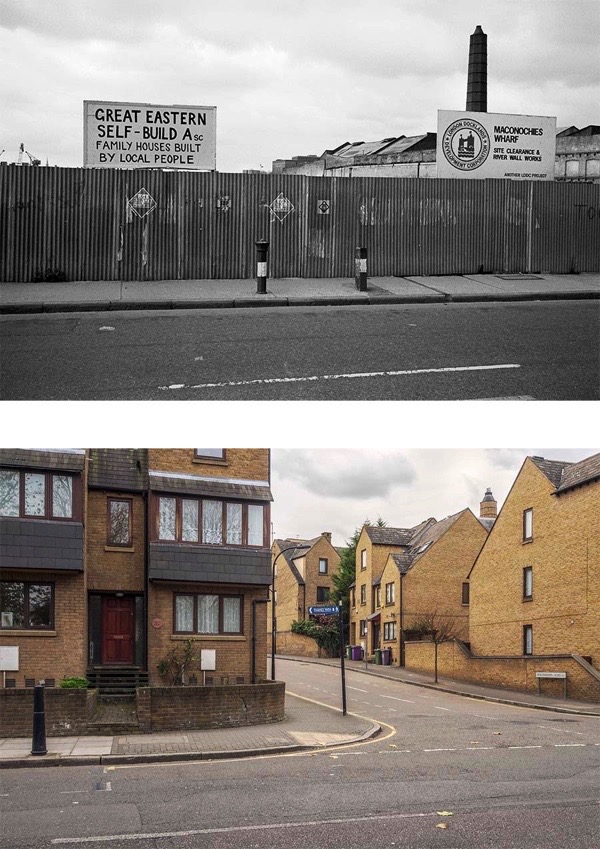
Maconochies Wharf, a derelict industrial site acquired in the early eighties by the Great Eastern Self-Build Association
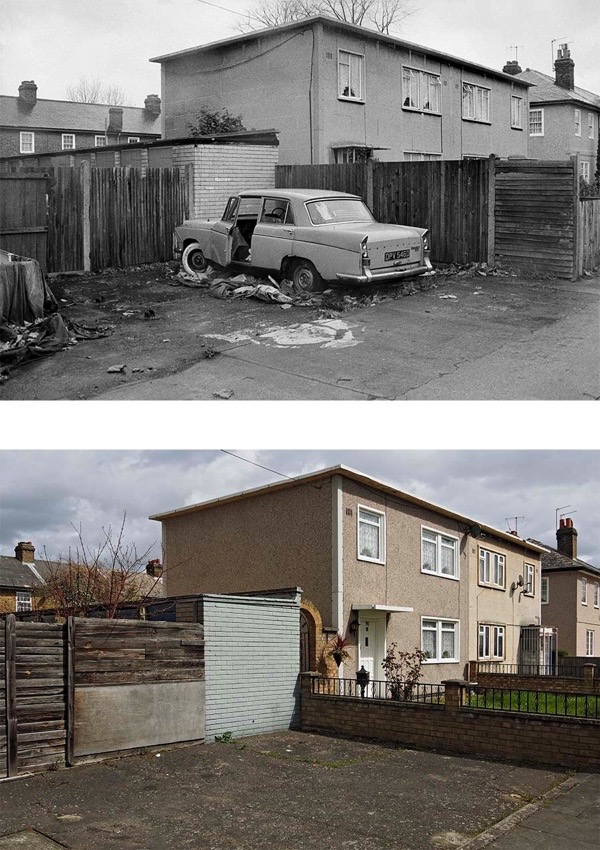
Billson St – the ‘temporary’ Orlit pre-fabricated houses built after WW2 still survived in 2014
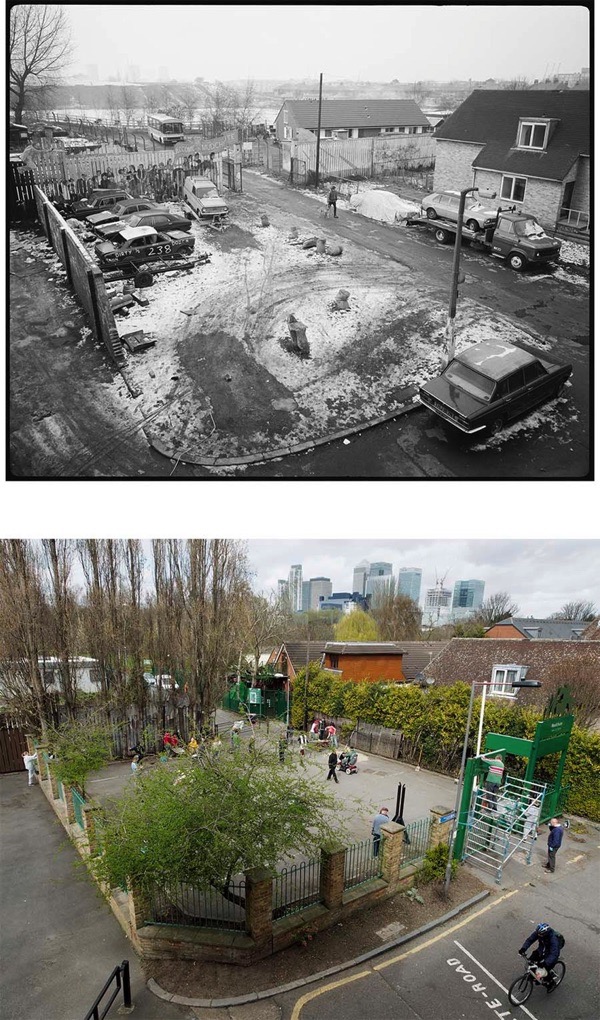
Pier St, looking west – view of the entrance to the Mudchute from Urmston House
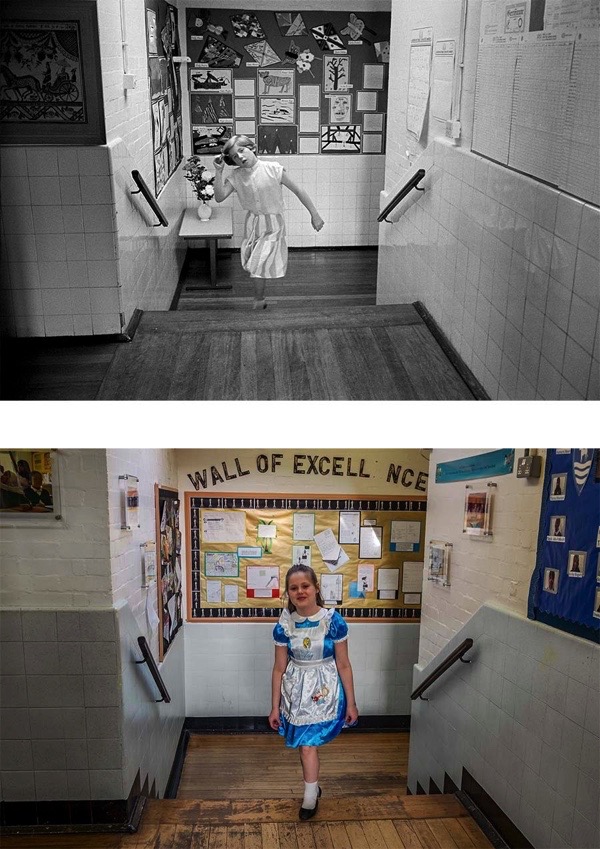
Cubitt Town Junior School
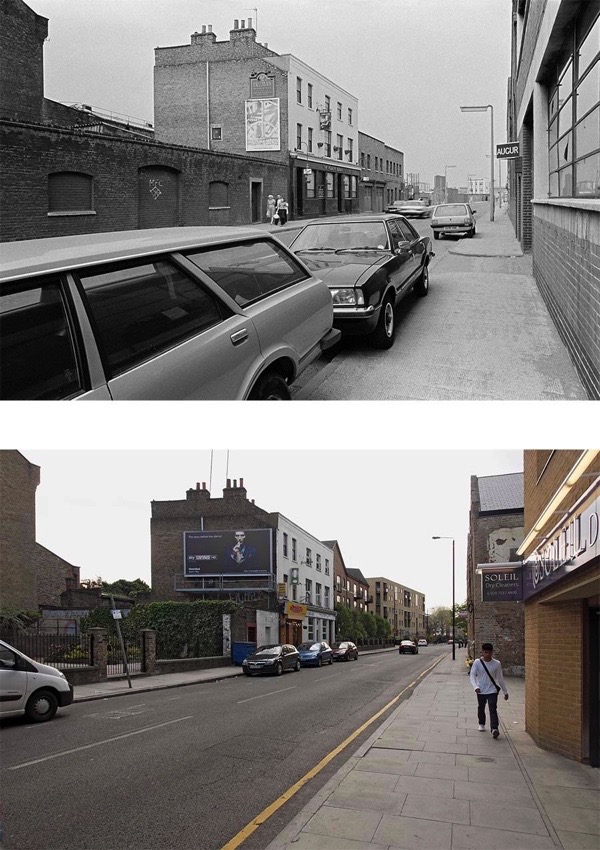
Westferry Rd, looking south from the junction with Cuba St
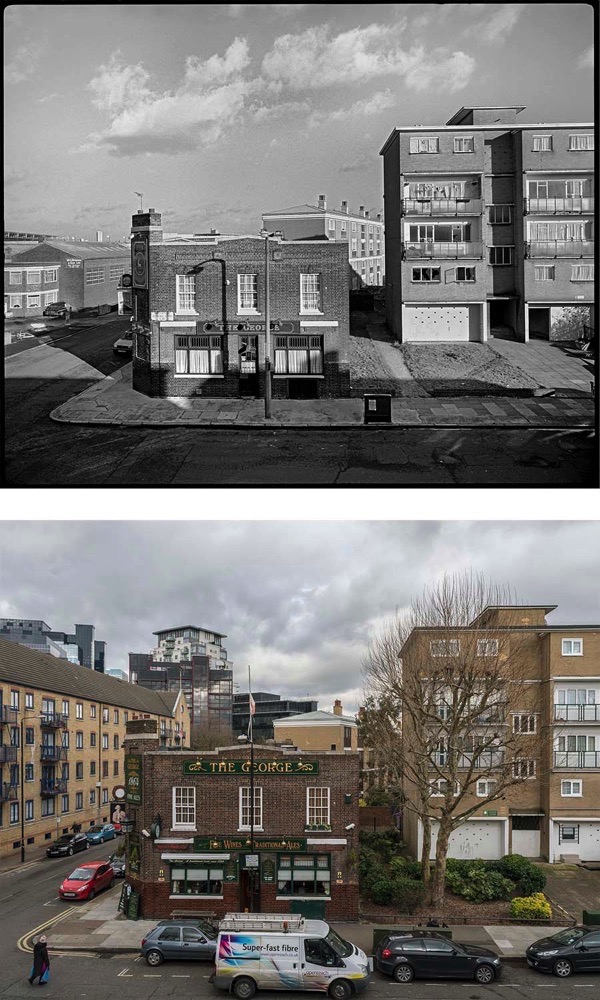
Glengall Grove from Finwhale House, looking north
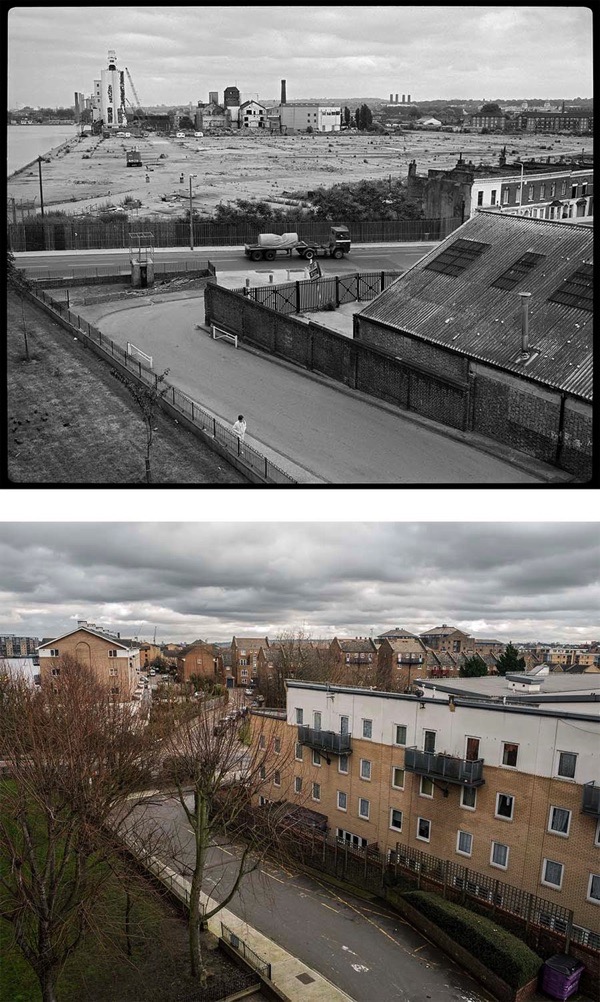
Looking east from Montrose House towards Westferry Rd & Millwall Outer Dock
Photographs copyright © Mike Seaborne
You can see more of these photographs at www.80sislandphotos.org.uk
A Date With Joseph Merceron
Today, join biographer Julian Woodford for a stroll around the East End on film in the footsteps of THE BOSS OF BETHNAL GREEN, Joseph Merceron, the Godfather of Regency London.
Tomorrow, Tuesday 8th November at 7pm, Julian will be giving an illustrated lecture at Waterstones Piccadilly. Email piccadilly@waterstones.com to book a free ticket.
On Wednesday 3oth November at 7pm, Julian will be speaking at a candlelit event at The Society Club, 3 Cheshire St, Spitalfields, E1
On Thursday 15th December at 1:15pm, Julian will be giving a lunchtime lecture at the National Portrait Gallery.
[youtube iznWirIaqB0 nolink]
You may like to read Julian’s piece introducing his book
The Alphabet Of Lost Pubs H-L
You will be in need of refreshment once you have contemplated H-L in the third part of my series of The Alphabet of Lost Pubs, but let us not arrange to meet in the King’s Arms or the Lord Nelson unless we have agreed which one. This time-travelling pub crawl is presented in collaboration with Heritage Assets who work in partnership with The National Brewery Heritage Trust, publishing these historic photographs of the myriad pubs of the East End from Charrington’s archive for the first time.
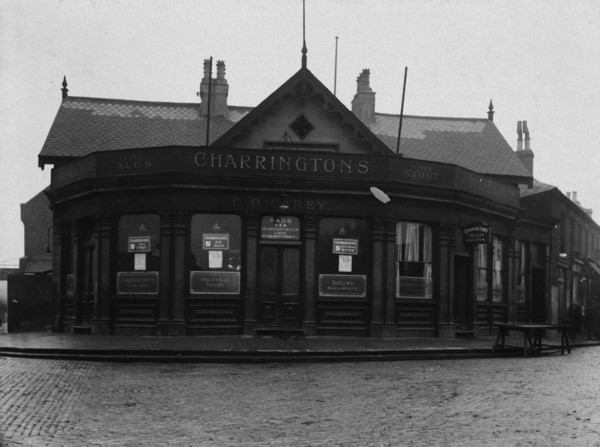
The Hallsville Tavern, 57 Hallsville Rd, Canning Tow, E16 (Opened before 1862 and closed in 2012 to become a restaurant)
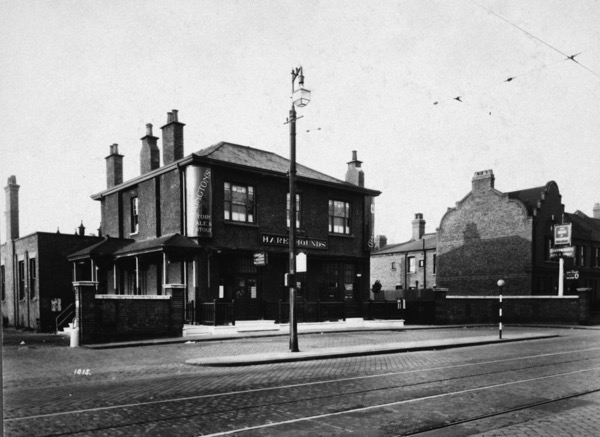
The Hare & Hounds, 278 Lea Bridge Rd, Leyton, E10 (Opened before 1862 and open today)
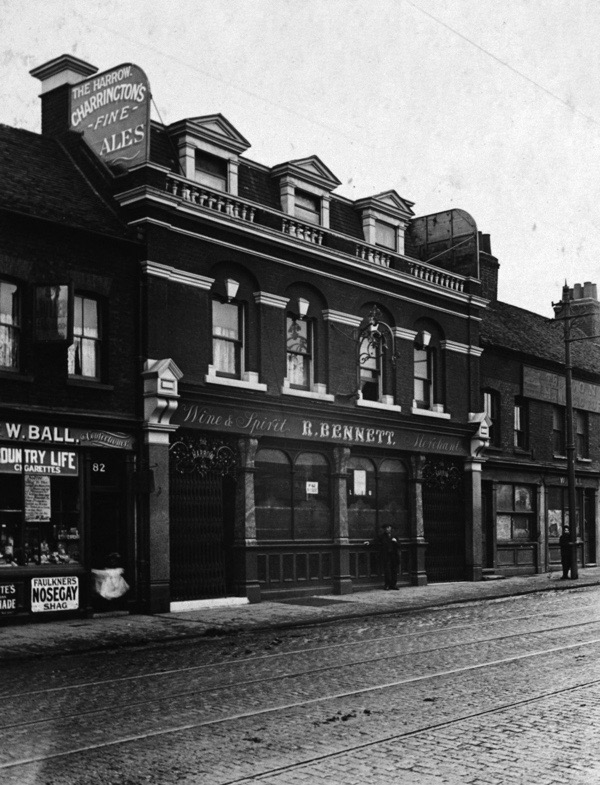
The Harrow, 84 High St, Stratford, E15 (Opened before 1823 and now demolished)
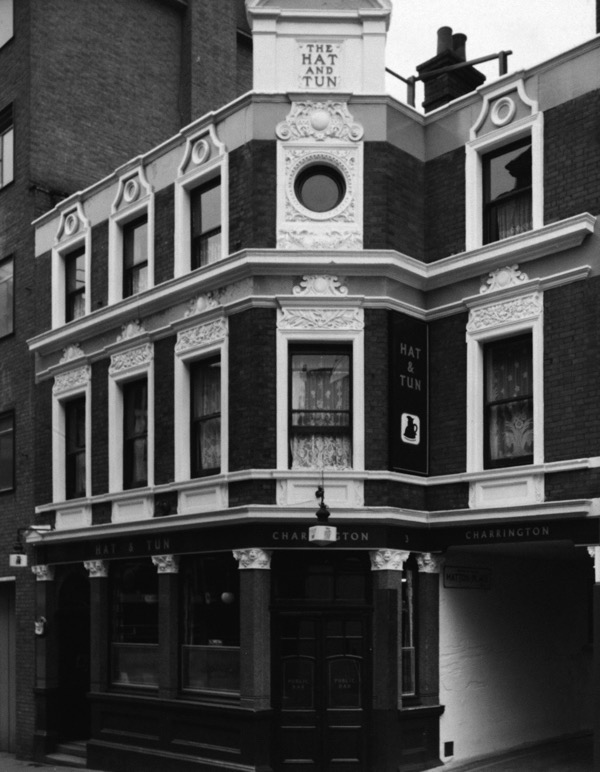
The Hat & Tun, 15 Hatton Wall, Hatton Garden, EC1 (Opened in the eighteenth century, renamed ‘Deux Beers’ in 2000 and open today)
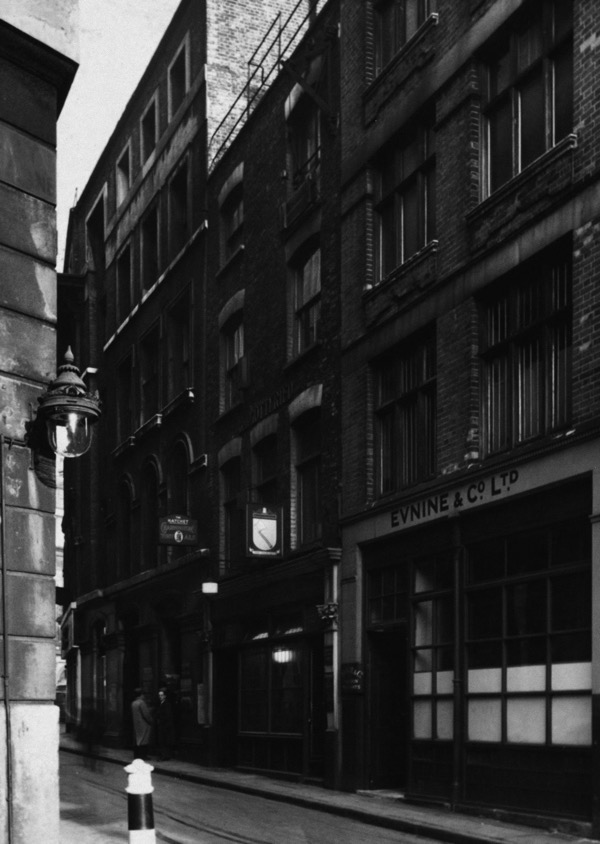
The Hatchet, 28 Garlick Hill, St Michael Queenhithe, City of London, EC4 (Opened before 1773 and open today)
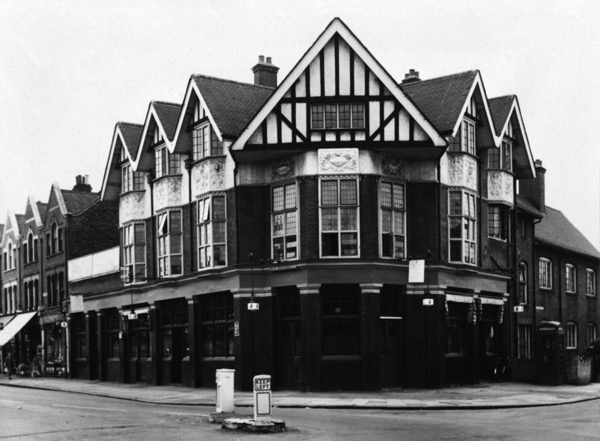
The Heathcote Arms, Grove Green Rd, Leytonstone, E11 (Opened before 1905 and open today)
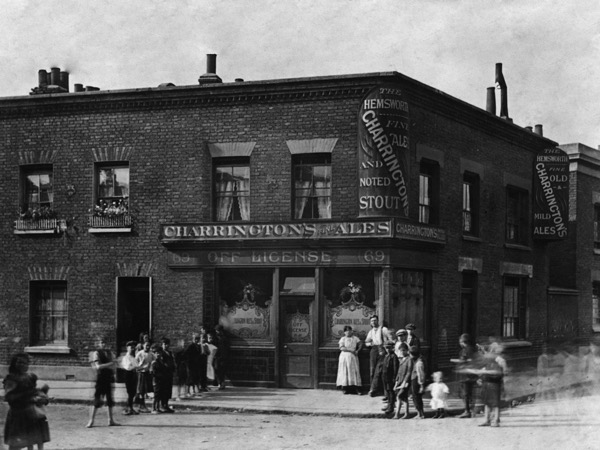
The Hemsworth, 69 Hemsworth St, Canning Town, E16 (Opened before 1891 then badly damaged by enemy action on 19th July 1944 and demolished in October 1944)
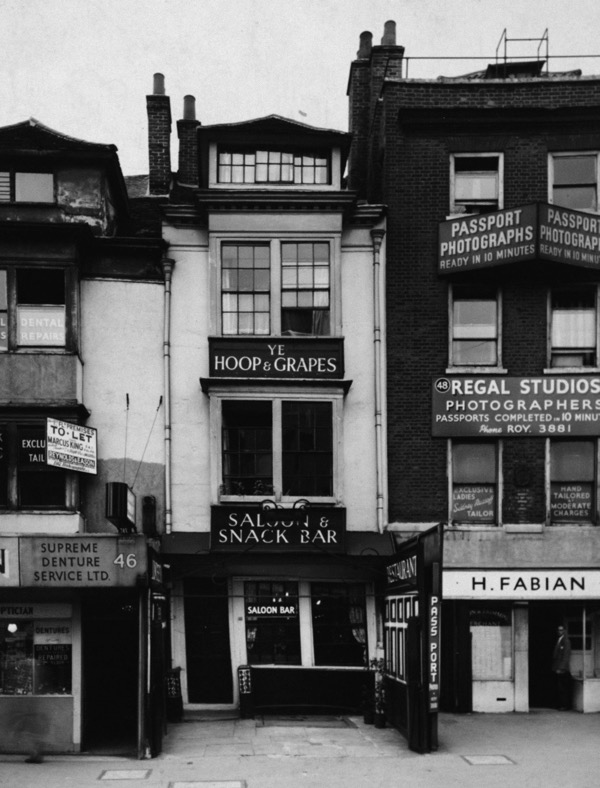
The Hoop & Grapes, 67 Aldgate High St, EC3 (Opened 1593 and open today)
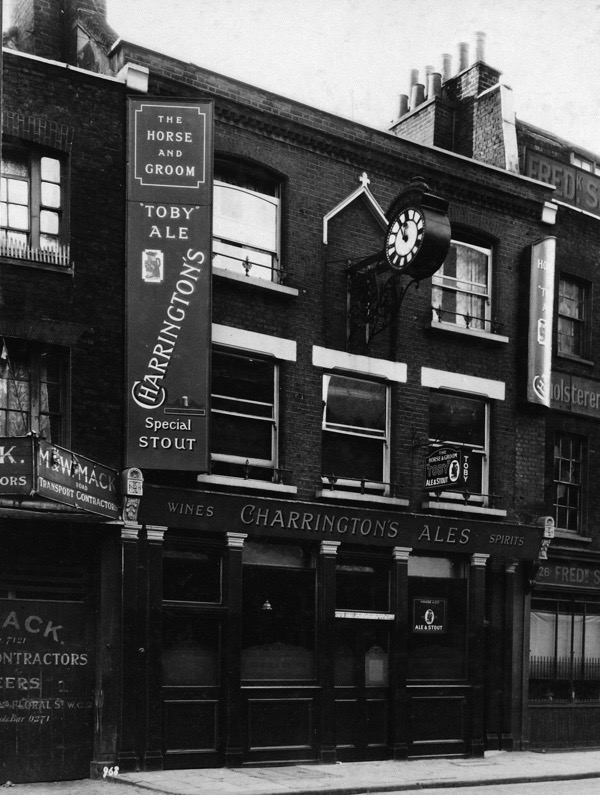
The Horse & Groom, 28 Curtain Rd, EC2 (Opened before 1803 and open today)
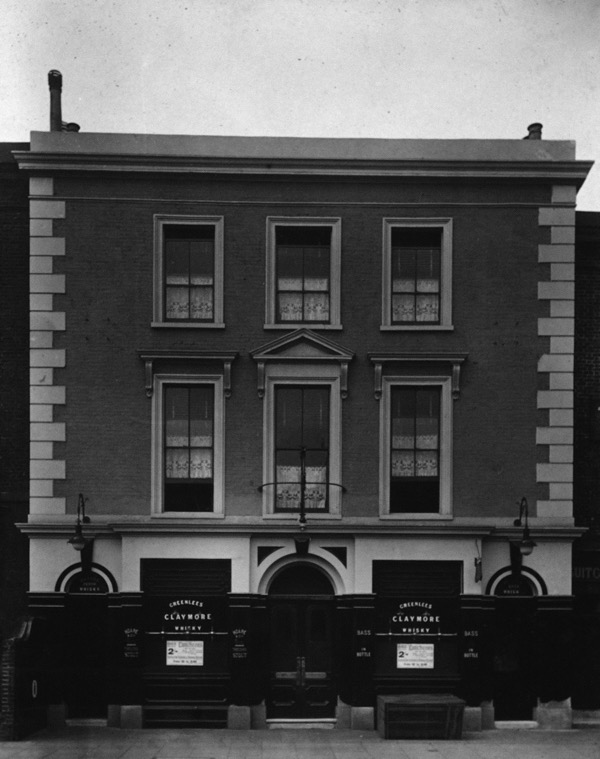
The Horse & Groom, 255 Mare St, Hackney, E8 (Opened before 1593, closed in 2013 and now a restaurant)
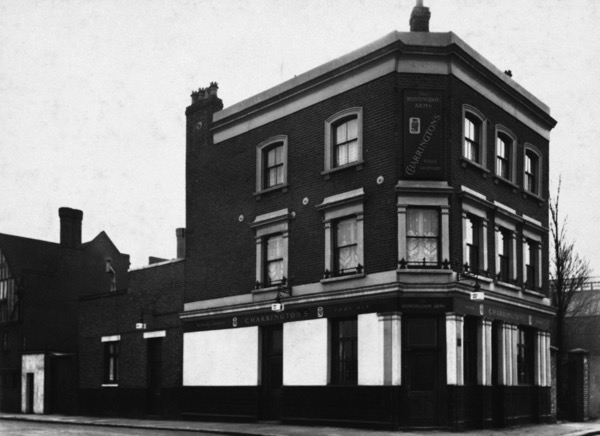
The Huntingdon Arms, 66 Burke St, Canning Town, E16 (Opened before 1881, closed in 1986, became a laundrette and now empty)
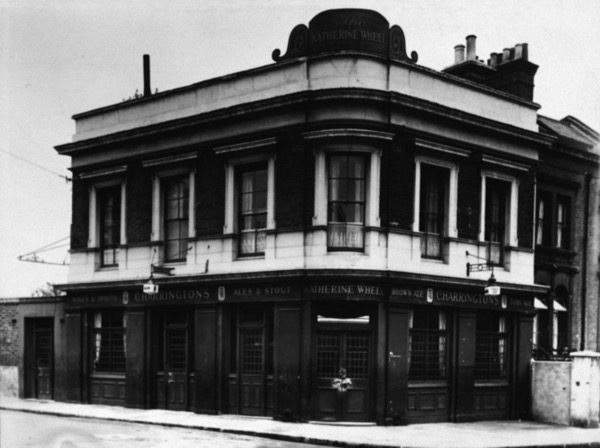
The Katherine Wheel, 50 1/2 St Peter’s Rd, Mile End, E1 (Opened before 1854, closed in 2000 and now flats)
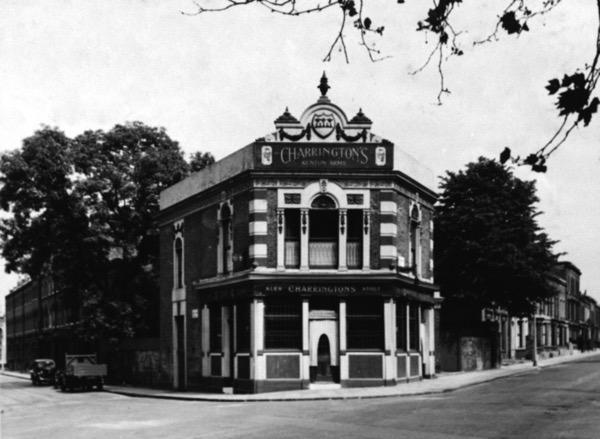
The Kenton Arms, 38 Kenton Rd, Hackney, E9 (Opened in 1858 and still open)
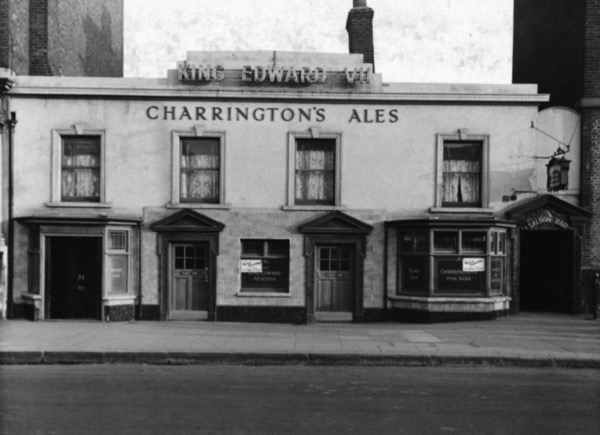
The King Edward VII, 47 The Broadway, Stratford, E15 (Opened before 1765 as ‘The King of Prussia,’ but changed to current name in 1914 and open today)
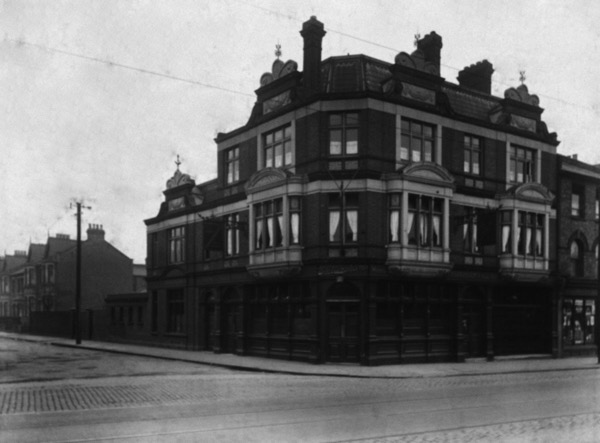
The King Harold, 116 High Rd, Leyton, E15 (Opened 1887, changed name to ‘The Leyton Star’ in 2016 and open today)
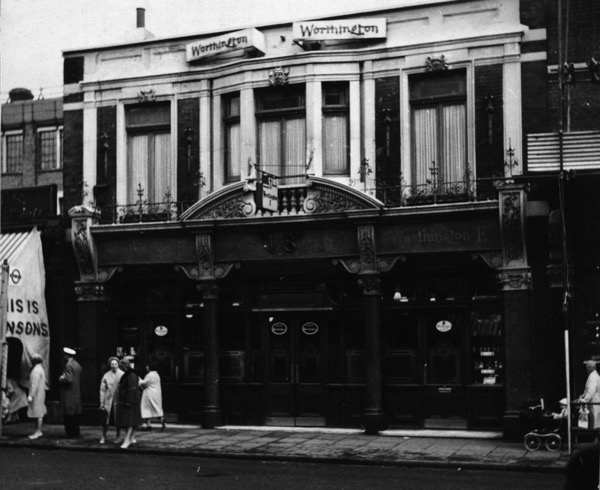
The King’s Arms, 18 Kingsland High St, E8 (Opened before 1636 and demolished in 2009 for construction of East London Line)
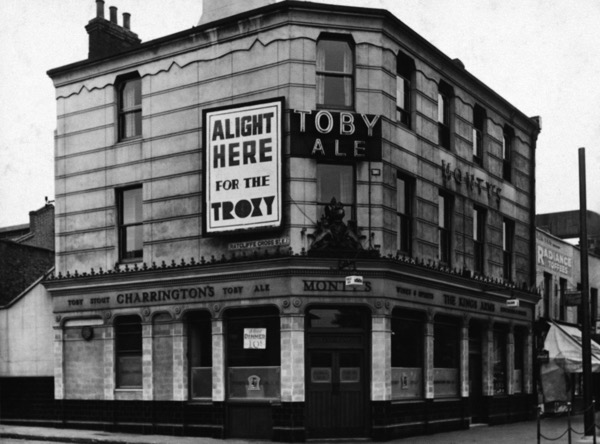
The King’s Arms, 514 Commercial Rd, Stepney, E1 (Opened before 1851, renamed ‘Mariners’ in 2002 and now a coffee shop)
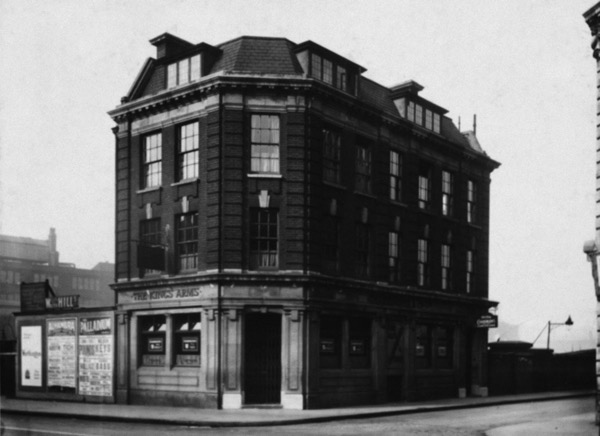
The King’s Arms, 27 Wormwood St, Bishopsgate Churchyard, E1 (Opened before 1762, rebuilt as part of a tower block in 1972 and open today)
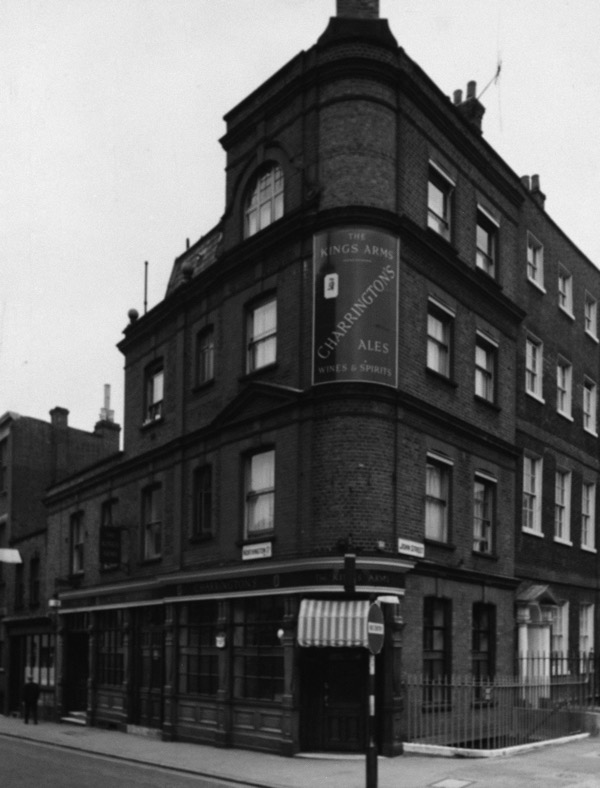
The King’s Arms, Rawstorne St, Clerkenwell, EC1 (Opened before 1839 and now demolished)
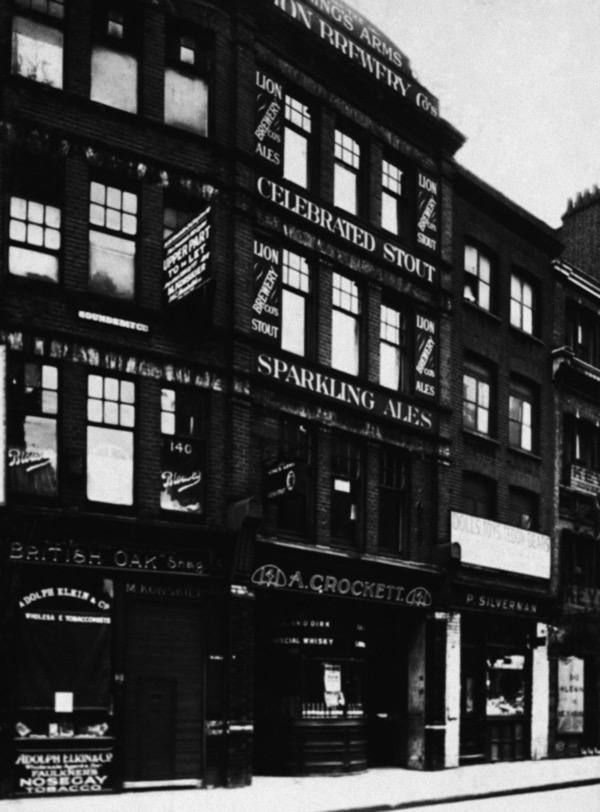
The King’s Arms, 141 Houndsditch, EC3 (Opened before 1792, closed 1938 and now demolished)
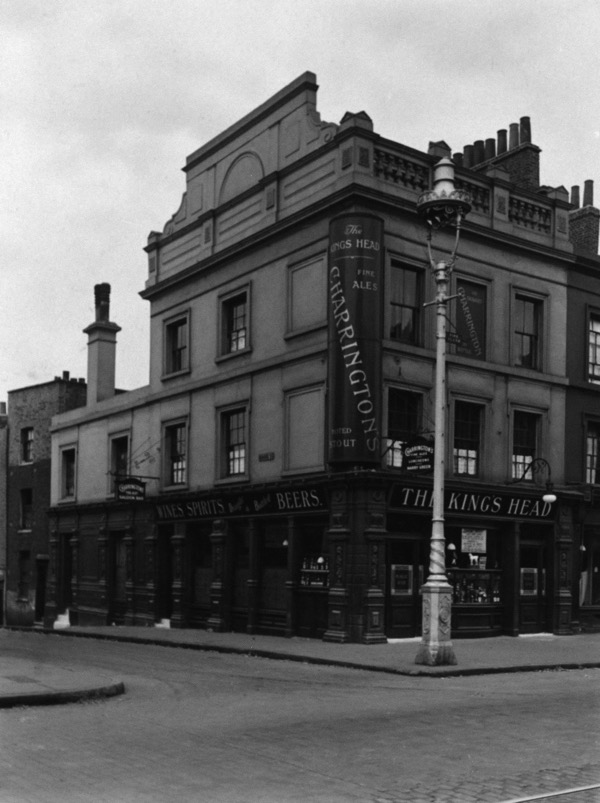
The King’s Head, 128 Commercial Rd, E1 (Opened 1820, closed 2000 and now demolished)
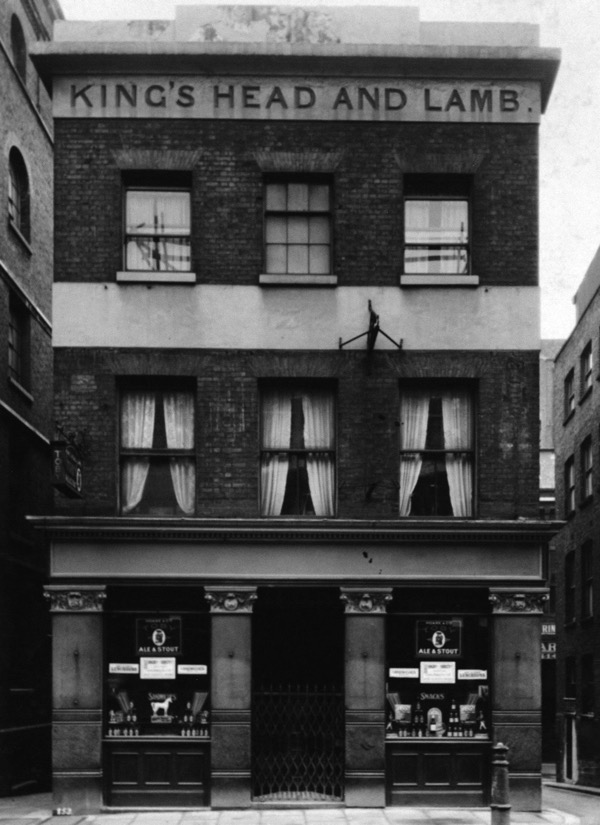
The King’s Head & Lamb, 49 Upper Thames St, St Michael Queenhithe, EC4 (Opened before 1809, damaged by enemy action on the 16th April 1941 but reopened on the 3rd November 1941, then closed and demolished in the seventies)
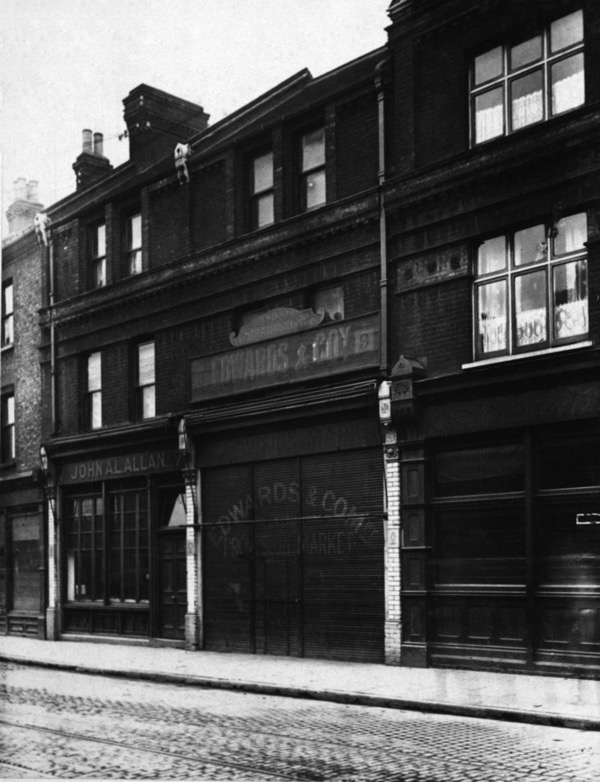
The King’s Head, 11 Church St, West Ham, E15 (Opened before 1826 and recently became a guest house)
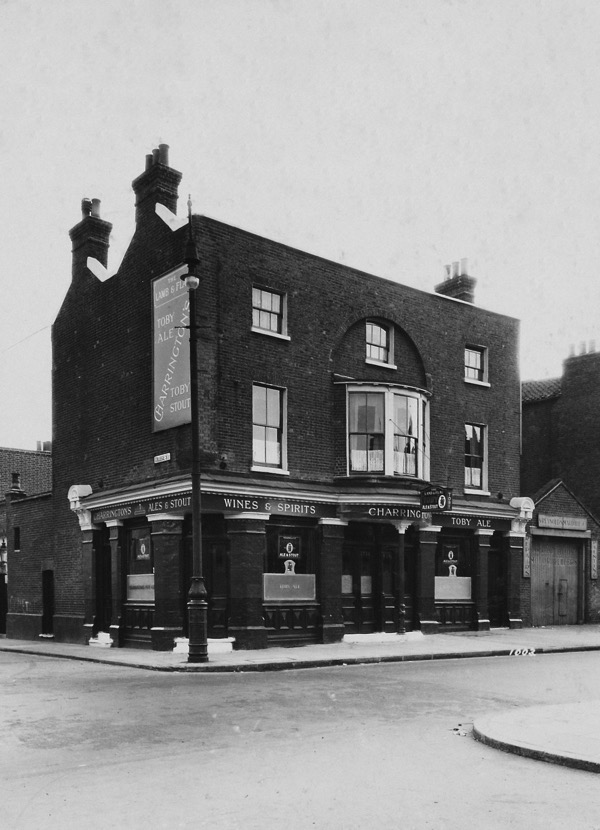
The Lamb & Flag, 69 Homerton High St, E9 (Opened before 1826, closed in 1944 and now demolished)
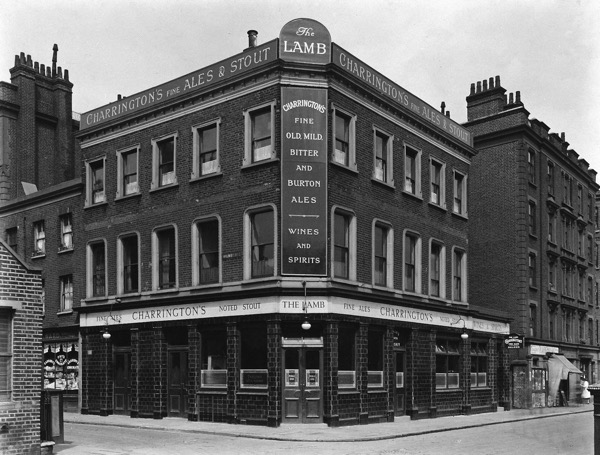
The Lamb, 36 Wilmot St, Bethnal Green, E2 (Opened before 1824, closed in 1993 and is now residential)
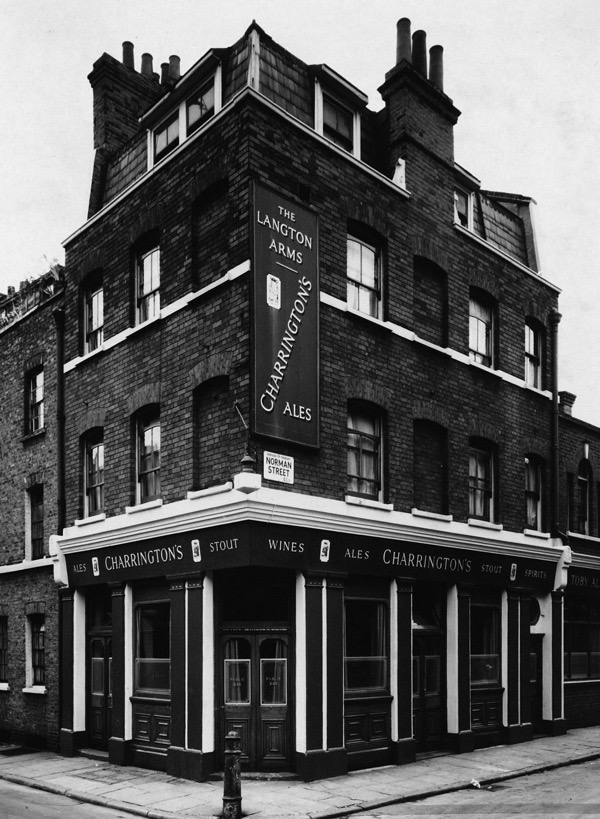
The Langton Arms, 22 Norman’s Buildings, St Lukes, EC1 (Opened before 1842, closed around 1989 and now in residential use)
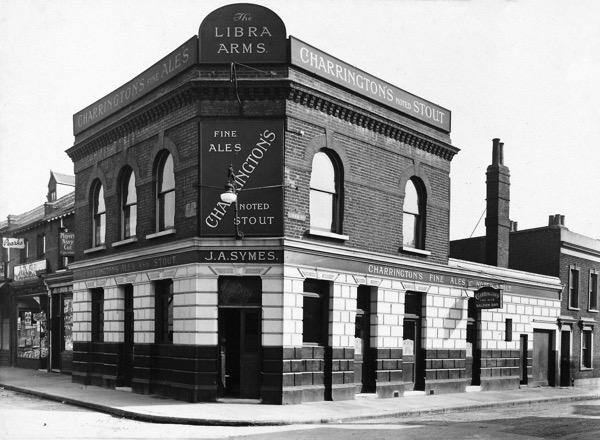
The Libra Arms, 53 Stratford Rd, Plaistow, E13 (Opened before 1871, closed 2006 and is now a Costcutter)

The Lion, 72 Angel Lane, Stratford, E15 (Opened before 1871 and now demolished)
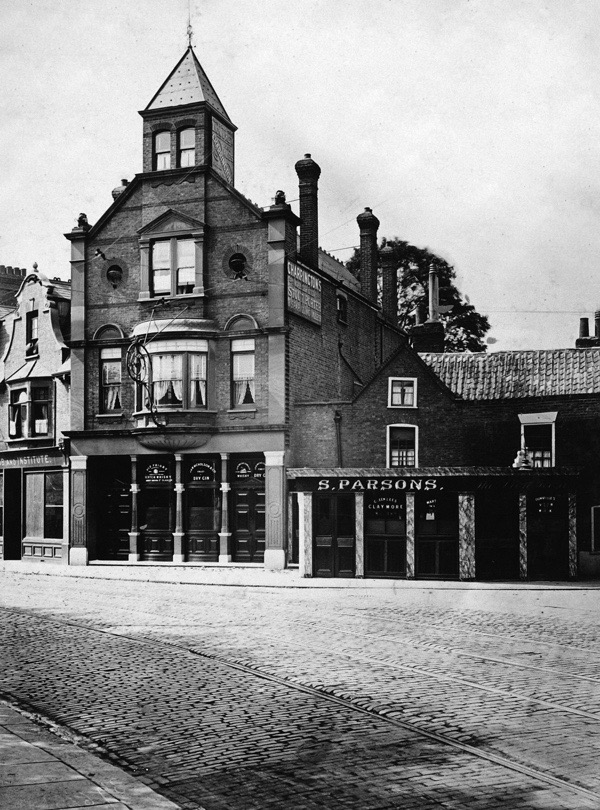
The Lion & Key, 475 High Rd, Leyton, E10 (Opened before 1300, closed 2009 and now a hotel)
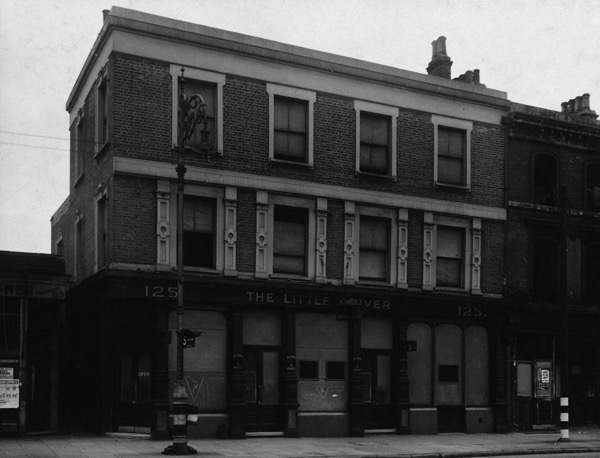
The Little Driver, 125 Bow Rd, E3 (Opened before 1820 and open today)
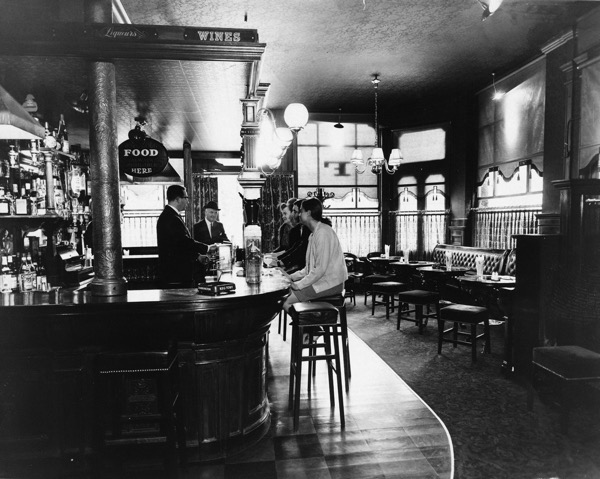
The Little Driver, 125 Bow Rd, E3 (Opened before 1820 and open today)
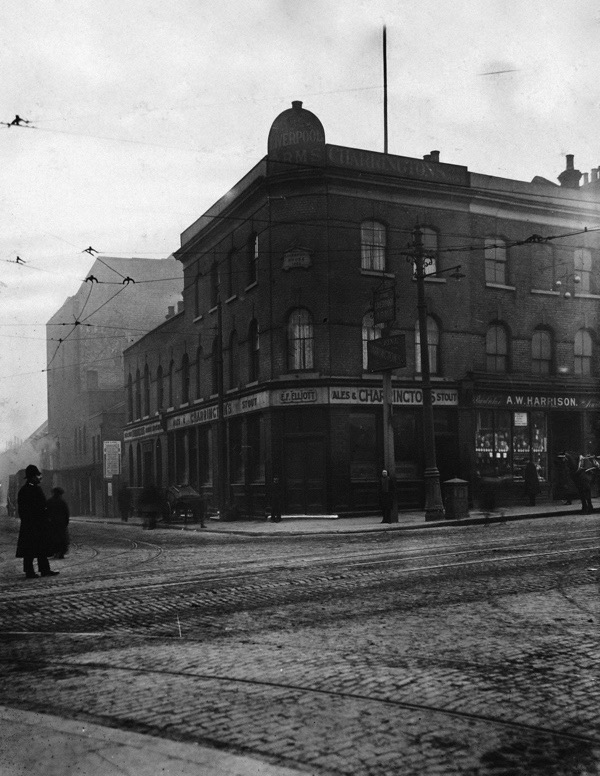
The Liverpool Arms, Liverpool Terrace, 14 Barking Rd, Canning Town, E16 (Opened before 1870, rebuilt 1930-32, damaged by enemy action and closed on 20th September 1940, reopened on the 6th January 1941, damaged again by enemy action on 10th May 1941 and closed, reopened again on 13th June 1941, shut in 1966 and demolished)
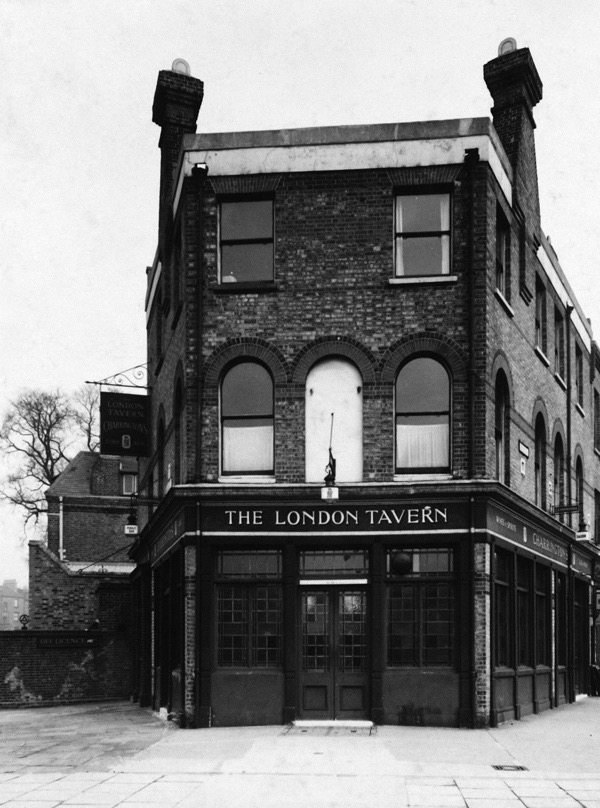
The London Tavern, 92 Rendlesham Rd, Clapton, E5 (Opened before 1866 and open today)
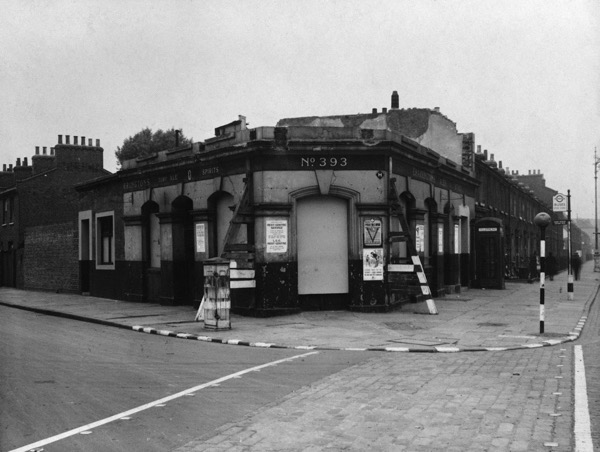
The London Tavern, 393 Manchester Rd, Milwall, E14 (Opened 1860 and demolished in 1954)
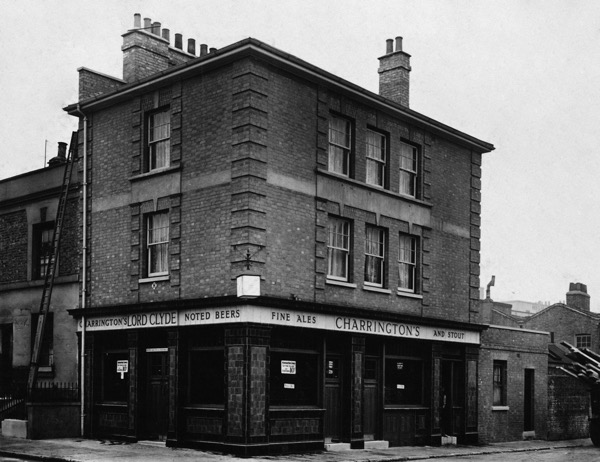
The Lord Clyde, 10 Lee St, Haggerston, E8 (Opened before 1881 and destroyed by enemy action 7th April 1941)
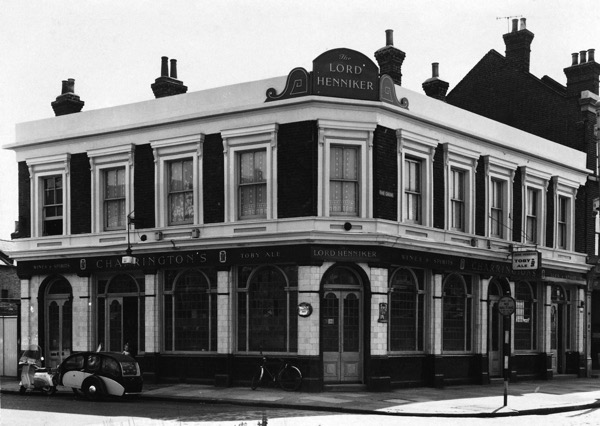
The Lord Henniker, 119 The Grove, Stratford, E15 (Opened before 1862, closed in 2003 and converted to residential)
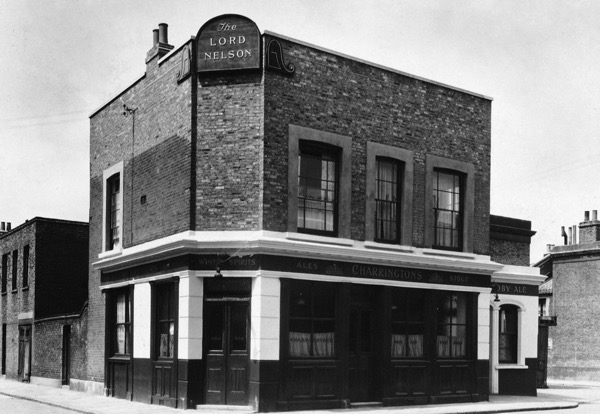
The Lord Nelson, 37 Cranbrook St, Bethnal Green, E2 (Opened before 1861 and now demolished)
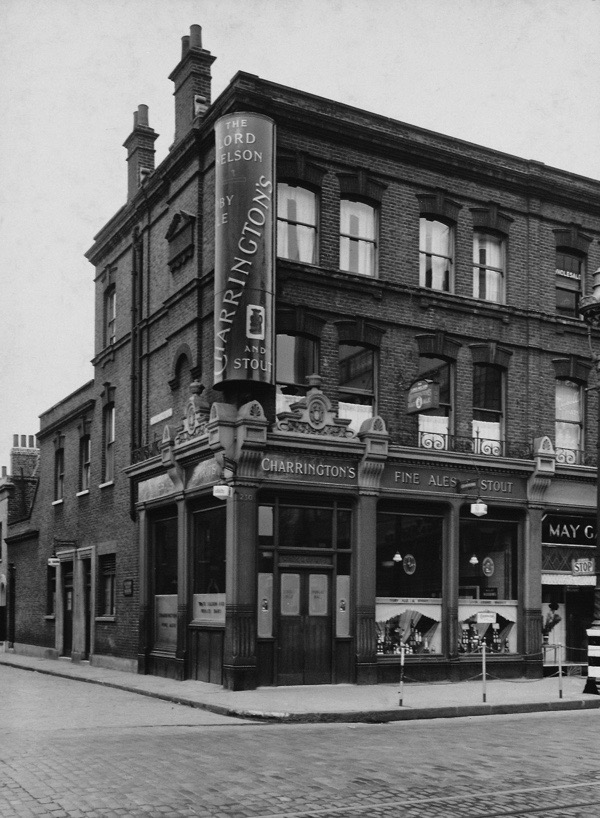
The Lord Nelson, 230 Commercial Rd, E1 (Opened 1865, rebuilt 1892, closed 2005 and now a restaurant)
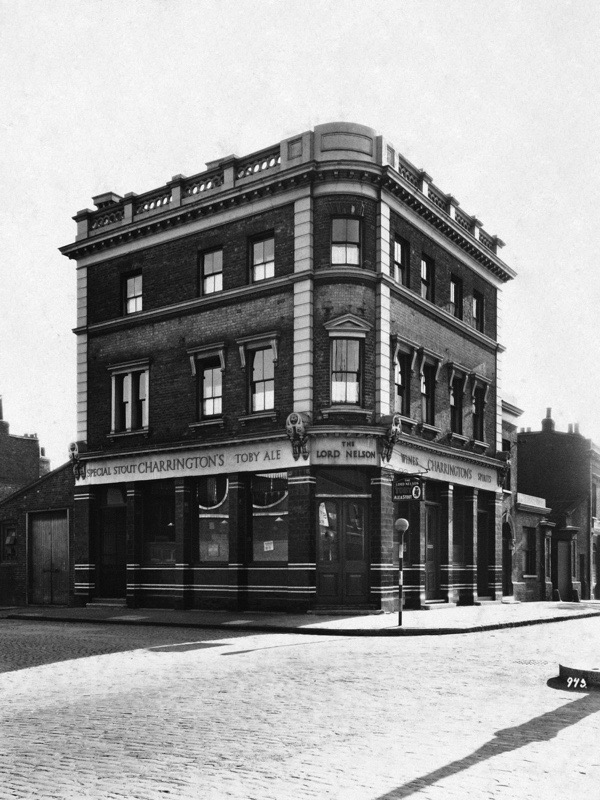
The Lord Nelson, 1 Manchester Rd, Millwall, E14 (Opened before 1855 and open today)
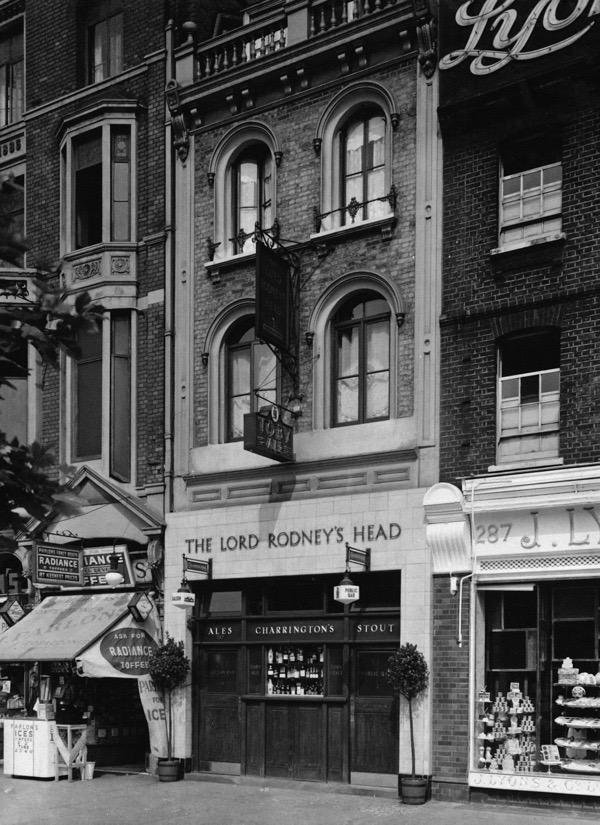
The Lord Rodney’s Head, 285 Whitechapel Rd, E1 (Opened before 1806, closed in 2004 and now a clothing shop)
Photographs courtesy Heritage Assets/The National Brewery Heritage Trust
You may also like to take a look at