Royal Jubilee Bells At Garlickhythe
In the fourth of my series of the stories of Whitechapel Bells, I visit the Royal Jubilee Bells
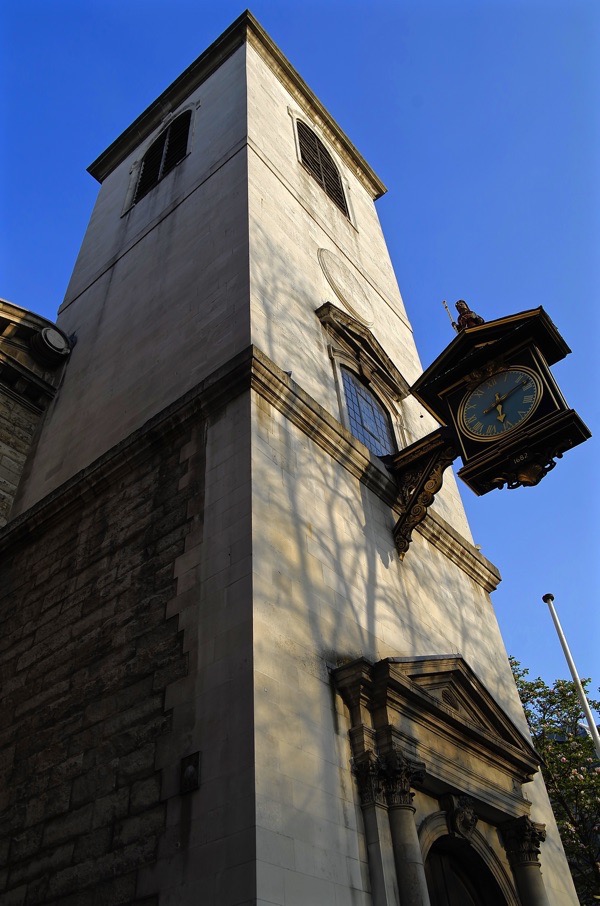
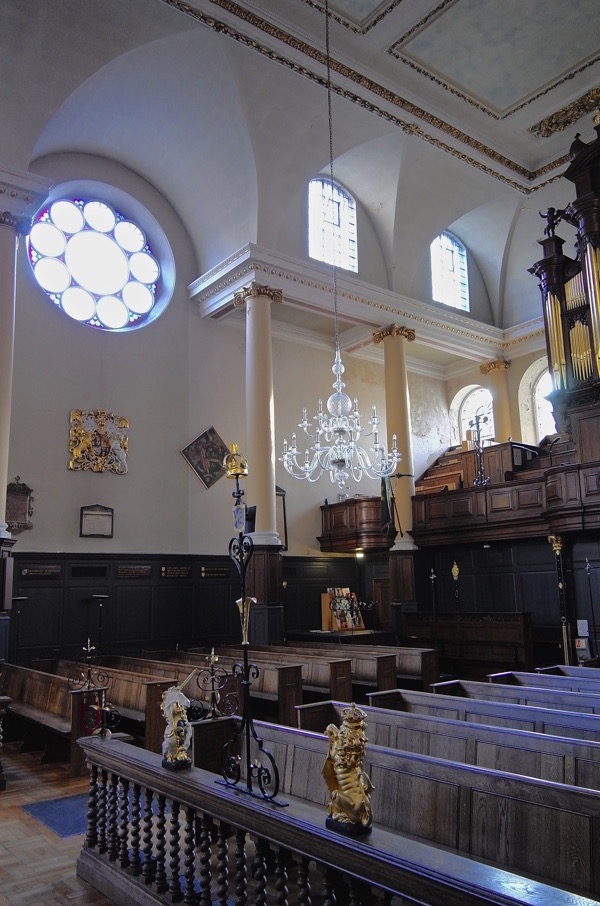
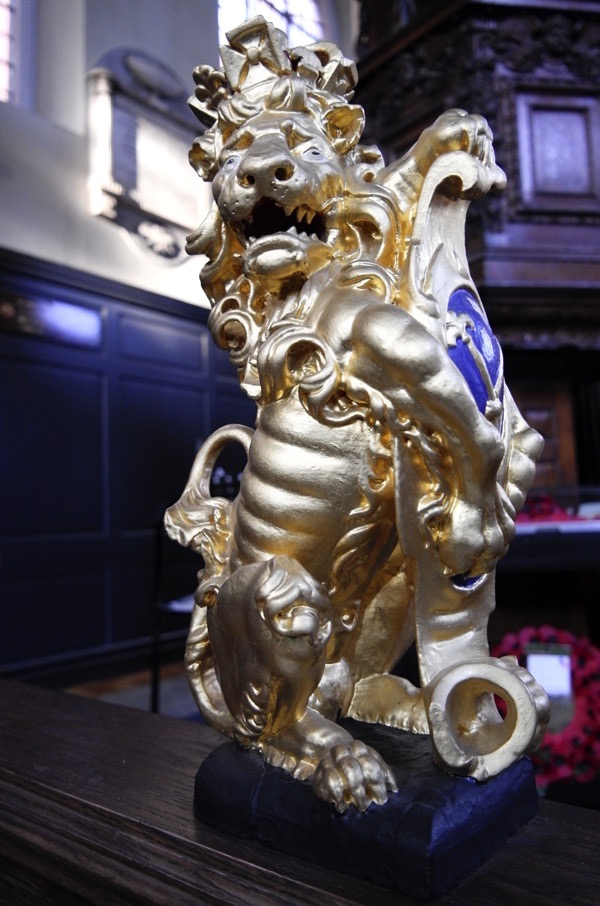
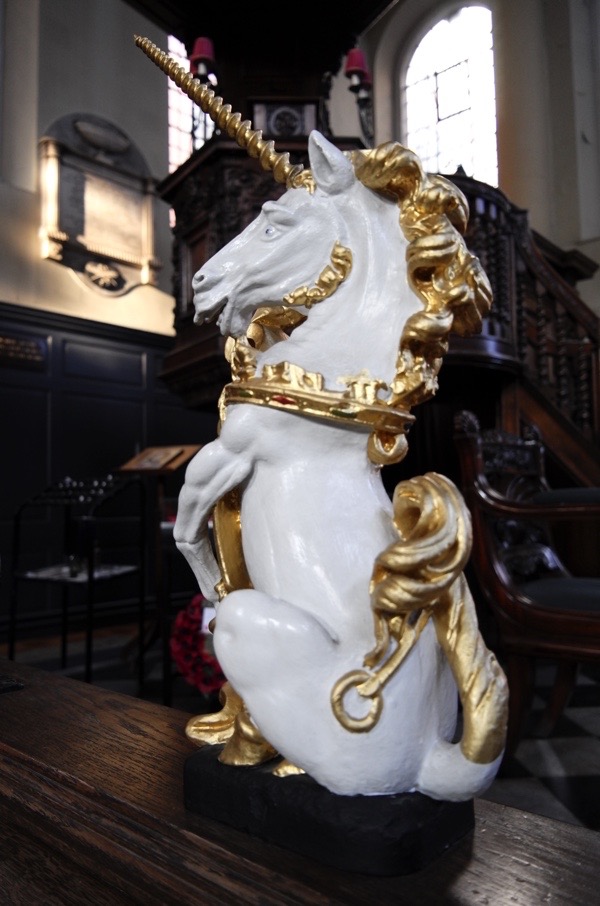
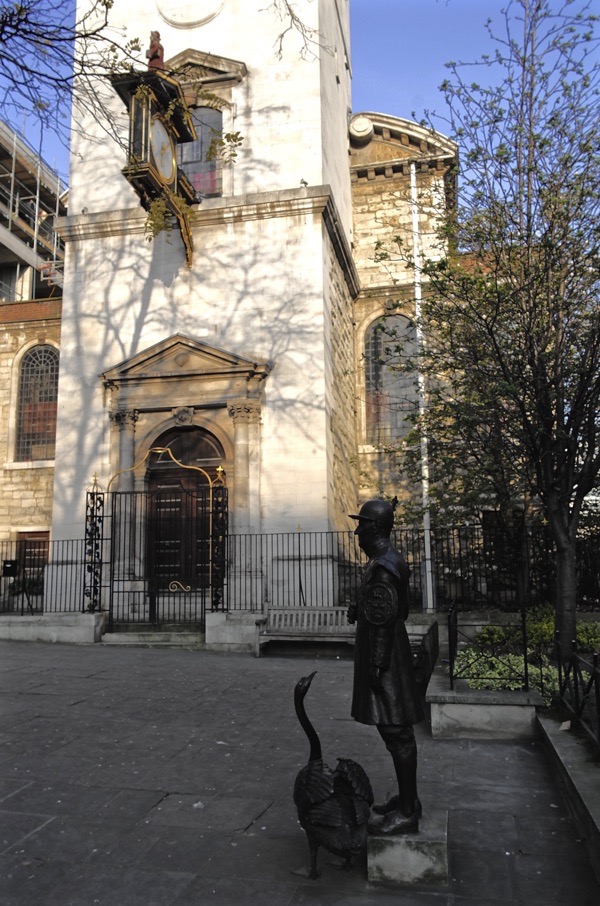
If you should pass by St James Garlickhythe on a Thursday evening when the bellringers are practising between six-thirty and eight, you can be assured of hearing the Royal Jubilee bells echoing and resounding through the surrounding streets. As I arrived to join the ringers last week, the last steep-angled shafts of sunlight entered Sir Christopher Wren’s church, picking out ancient monuments from the gloom and highlighting the quaint lion and unicorn figures in their dying rays.
Ascending a narrow spiral staircase within the wall of the tower, I arrived in the tiny ringers’ chamber, whitewashed and carpeted in plum. Here the ringers stood in a ritualistic circle under the tutelage of Dickon Love, who is the Magus of bell ringing in the City of London and author of the authoritative Love’s Guide to Church Bells.
A certain shared understanding characterises these gatherings, as ringers share a common quality of implacable concentration while engaged in their task. They are concentrating on maintaining the physical task of rhythmic pulling and catching, yet remaining alert to the actions of their fellows too. Observing this activity, watching the ropes bobbing and listening to the bells overheard proved a mesmeric experience.
For me, there is magic in the sound of bells. It is music in which – to my inexperienced ear – its several instruments seem to merge and divide, even as you are aware of their sound coruscating in the air around you.
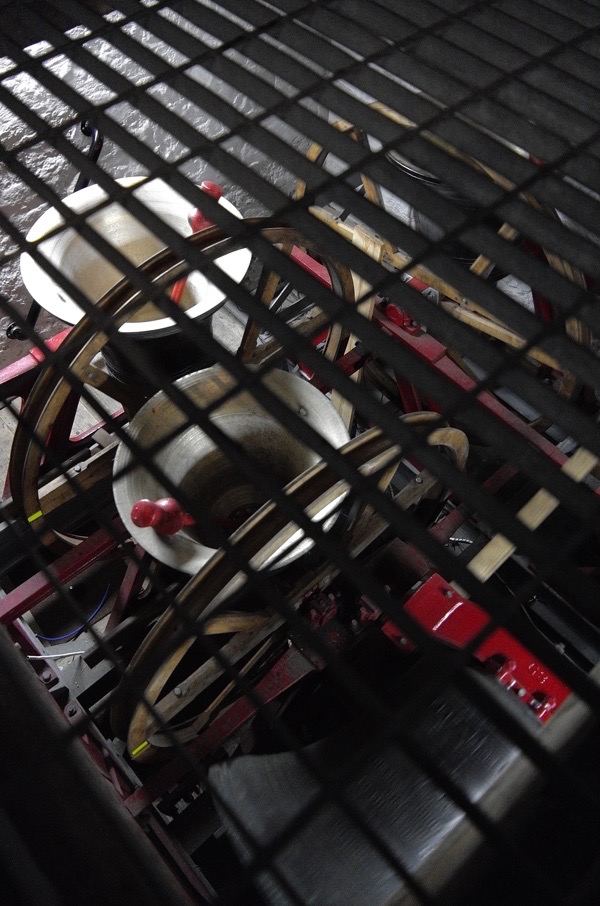
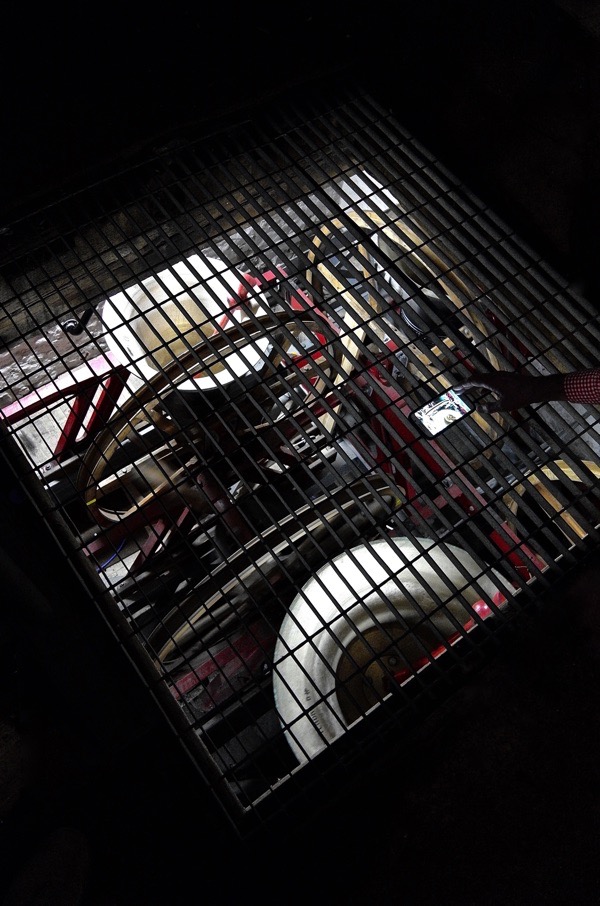
During practice, I climbed up to the floor above the bells – attired with ear protectors – to observe them in action through a metal grille. Peering from a darkened room at the brightly-lit spectacle of the vast gilt beasts wagging their long red tongues did not disappoint. At first, I was alarmed that the ancient wooden floor shifted with their vibrations, almost as if I were on a boat. Placing a hand upon the rough stonework wall confirmed that it too was moving. Yet I was assured this movement confirmed my safety – since the sheer weight of the tower ensured its stability, while the tensile quality of its timber floors and flexibility of its stone walls held together by lime mortar prevented it cracking.
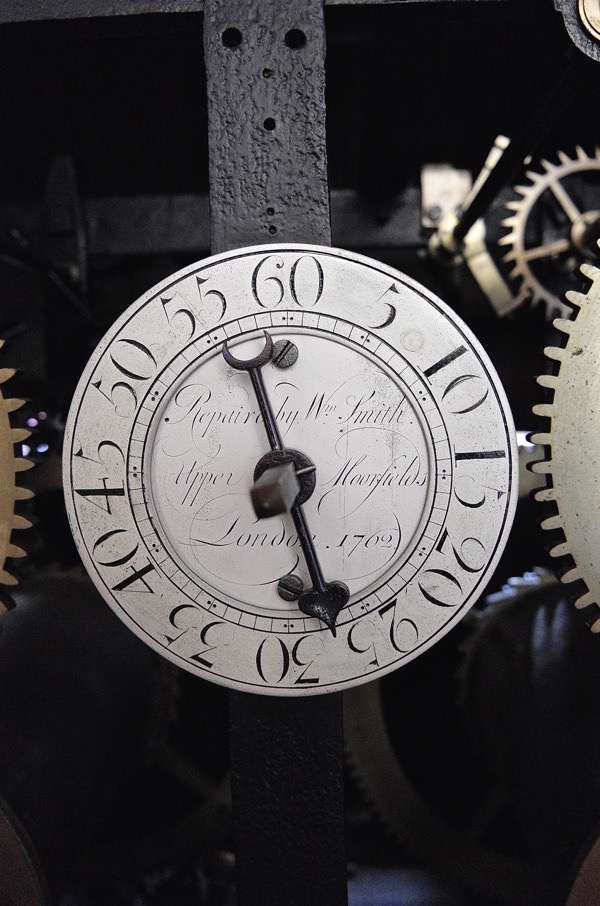
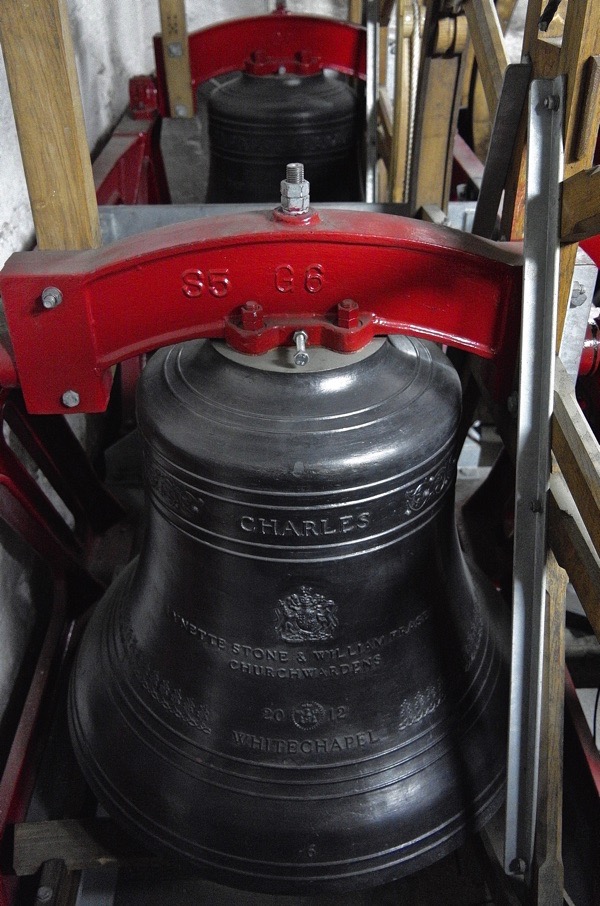
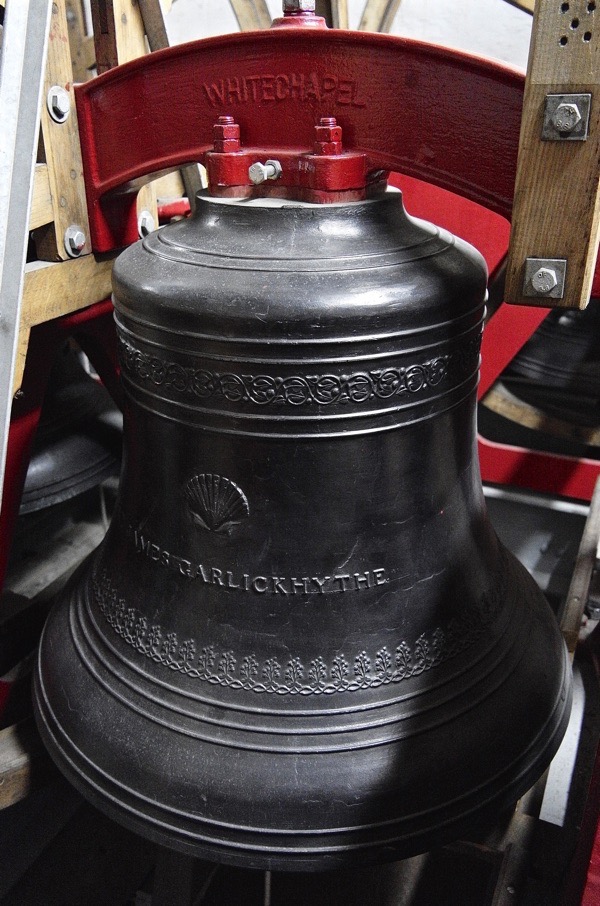
After practice, Dickon took me into the belfry to admire the eight Royal Jubilee bells cast at the Whitechapel Bell Foundry at close quarters. They were first played from a barge that led the Water Pageant upon the River Thames on 2nd June 2012 before they were installed in St James Garlickhythe later that summer. As the one who conceived and oversaw the commissioning and realisation of this grand conception, Dickon is justly proud of his achievement which is recorded by the text ‘Dickon Love put us here’ upon the F Double Sharp bell. Upon our descent from the tower, Dickon revealed he was celebrating his birthday next day but also – and perhaps more importantly – he commenced his ringing career on the eve of his thirteenth birthday, making him thirty-four years a bellringer that night.
I said my farewells to the thirsty ringers at the top of Garlick Hill as they made haste to The Watling for refreshment and celebration, while I turned my own steps across the City towards Spitalfields.
[youtube j88-6mkRwTk nolink]
Filmed by Christopher Stocks
You may also like to read about
The Most Famous Bells in the World
A Visit To Great Tom At St Paul’s
A Petition to Save the Bell Foundry
Save the Whitechapel Bell Foundry
So Long, Whitechapel Bell Foundry
CLICK HERE TO SIGN THE PETITION
Bex Shaw’s Shopfronts
Bex Shaw sent me these affectionate drawings of familiar East End shops (with a couple further afield), some rendered in ink and wash and others drawn on a computer, yet all celebrating the vernacular delights of traditional shopfronts
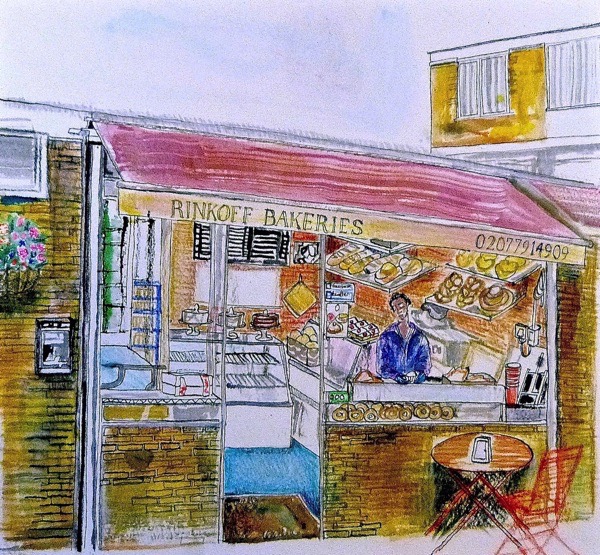
Rinkoff’s Bakery, Whitechapel, E1
“I have enjoyed drawing shopfronts and and market stalls since childhood, I have always liked looking at arrangements of things! I remember enjoying the huge piles of fruit and vegetables and the tiled doorstep of the local greengrocers when I was quite small. My great-grandfather was a sign painter and designer of shops, but it was from my granny who went to art school in the thirties that I learned my love of drawing. I am always drawn to the ways in which shopkeepers and stallholders place things, whether a deliberate aesthetic sense or the higgledy-piggledy delight of a pound shop.” – Bex Shaw
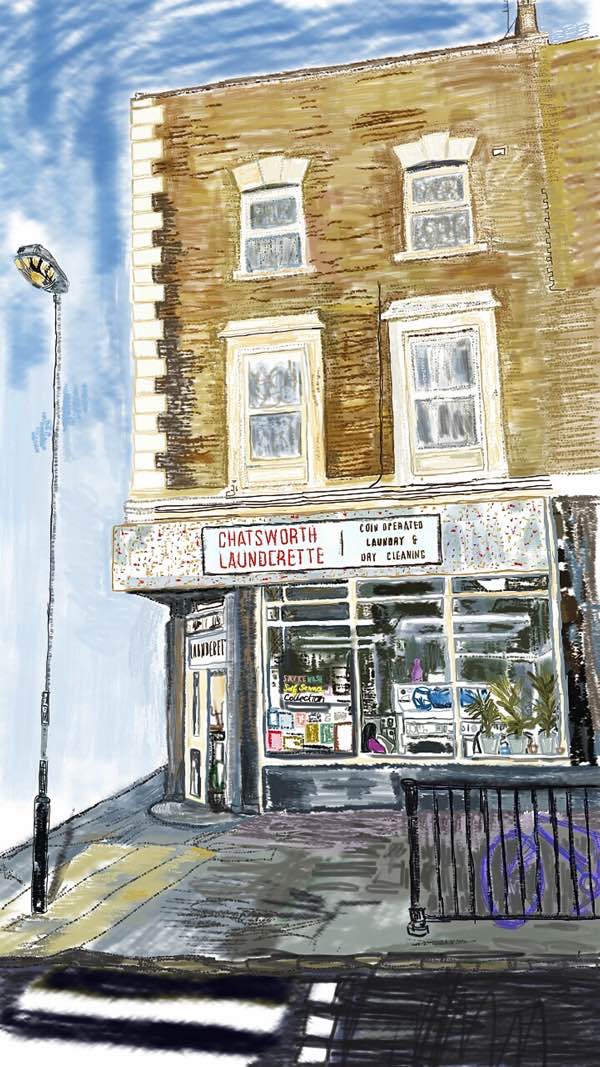
Chatsworth Rd Laundrette, Hackney, E5
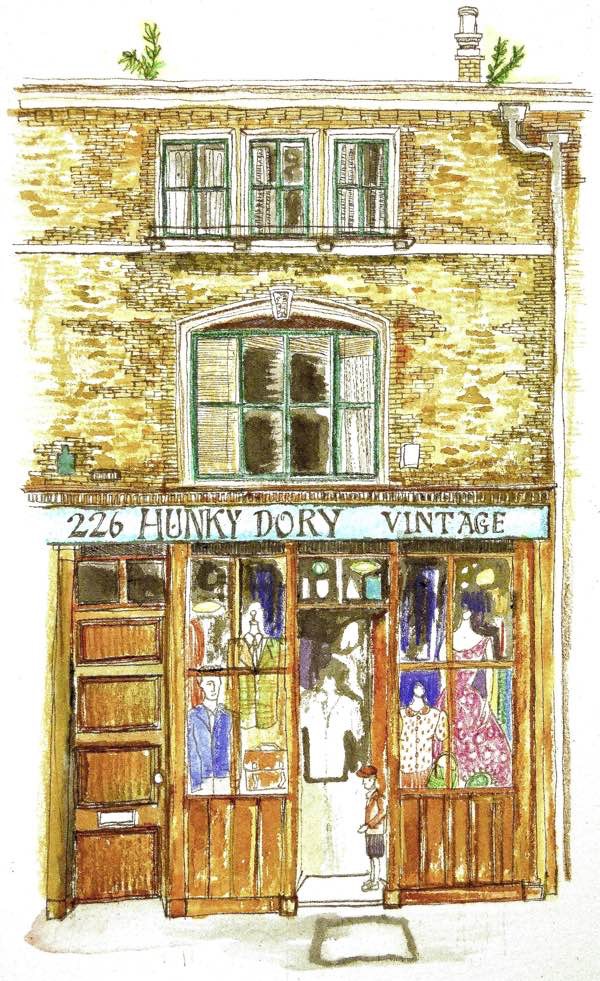
Hunky Dory Vintage Clothes, Brick Lane, E1
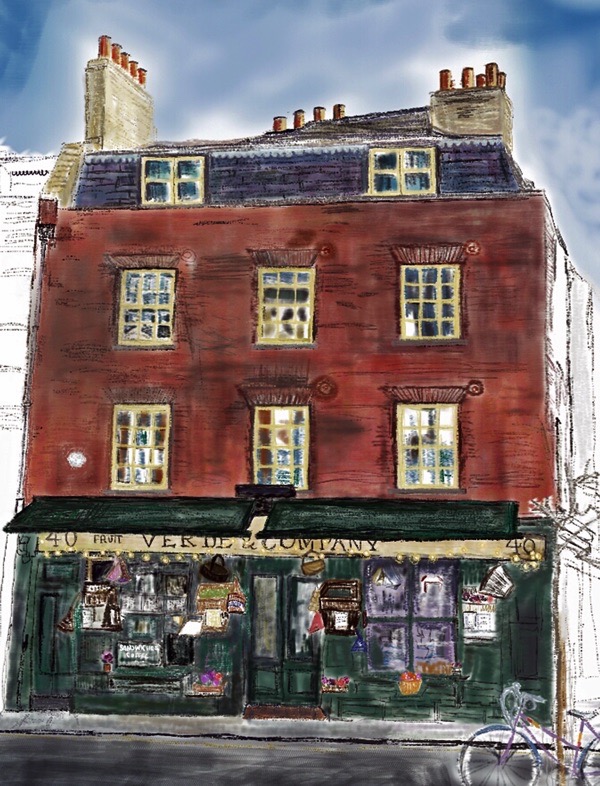
Verdes, Brushfield St, Spitalfields, E1 (Recently moved to Fournier St)
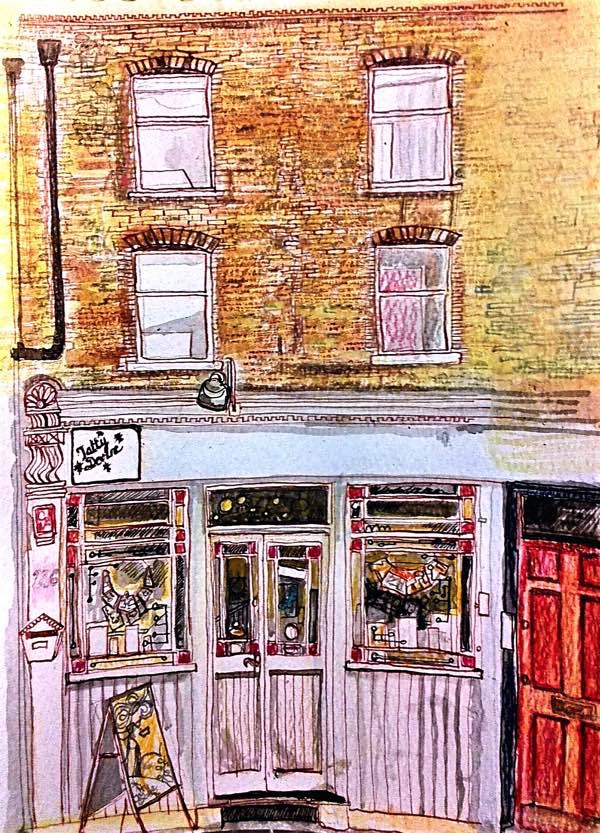
Tatty Devine, Brick Lane, E1
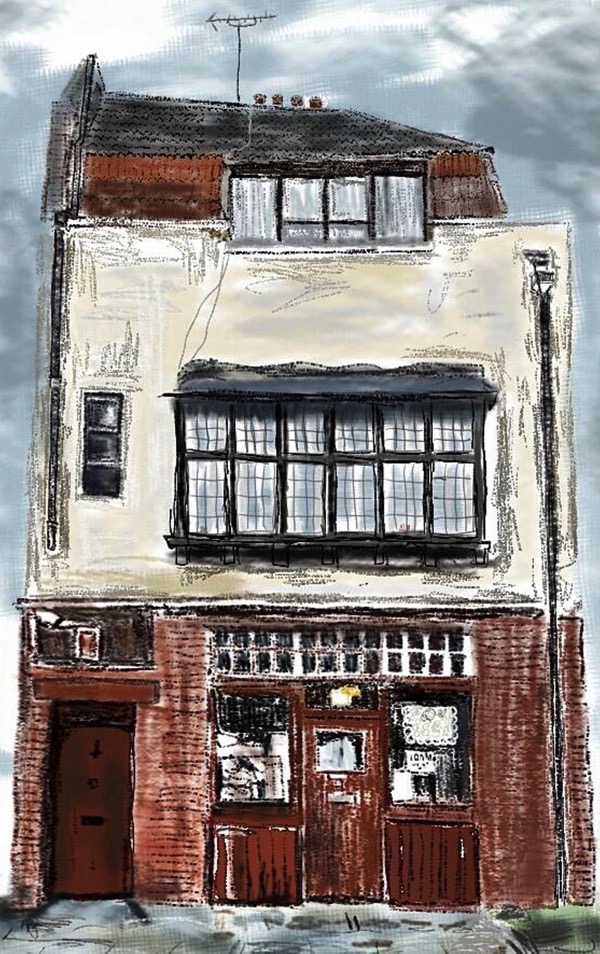
The Foam Shop, Swanfield St, E2
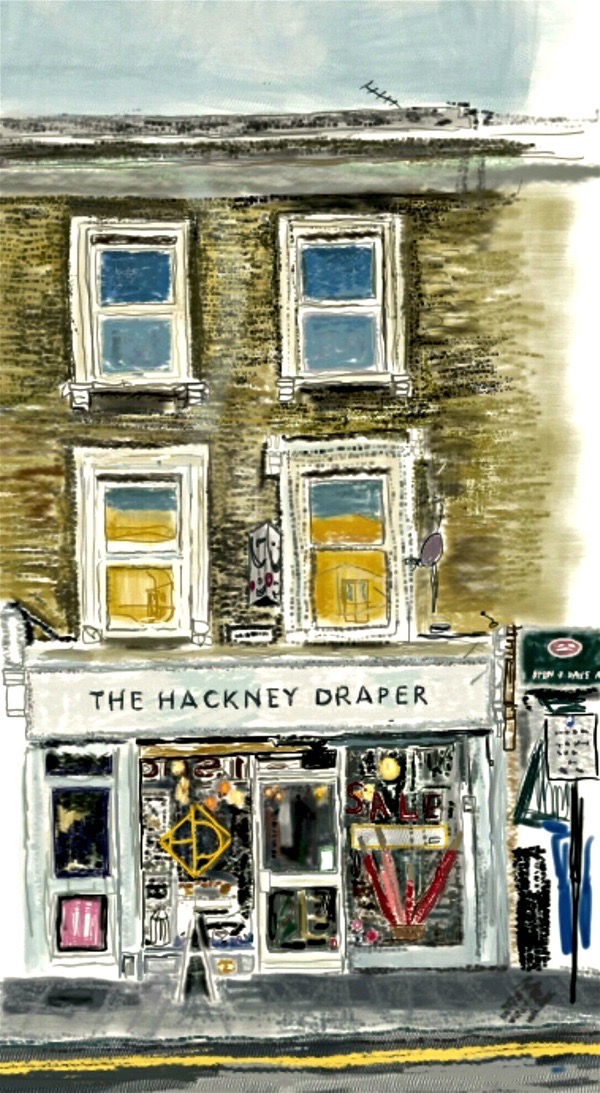
The Hackney Draper, Chatsworth Rd, Hackney, E5
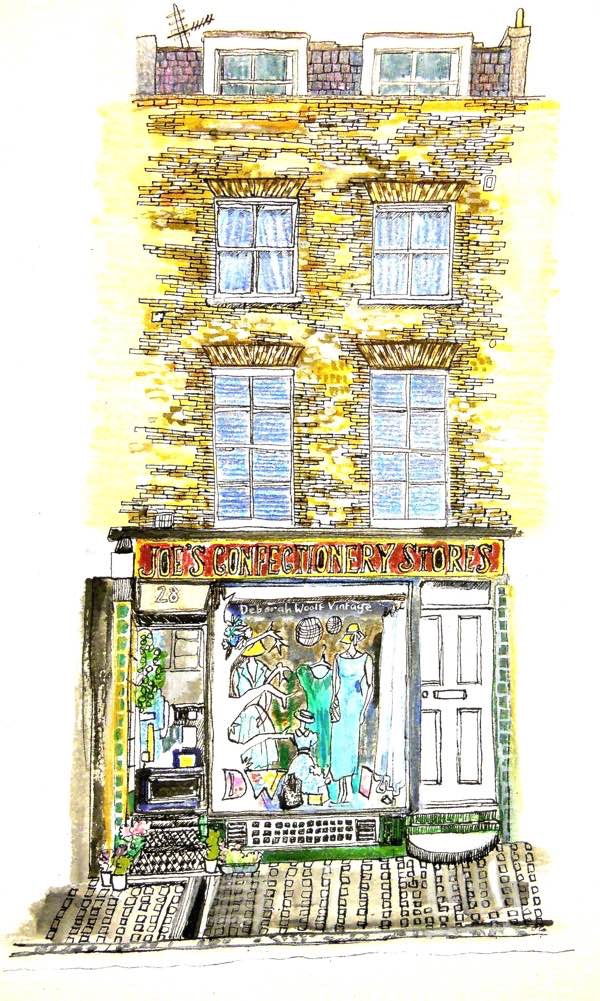
Joe’s Confectionery Stores, (now Deborah Woolf Vintage Clothes) Church St, Marylebone, NW8
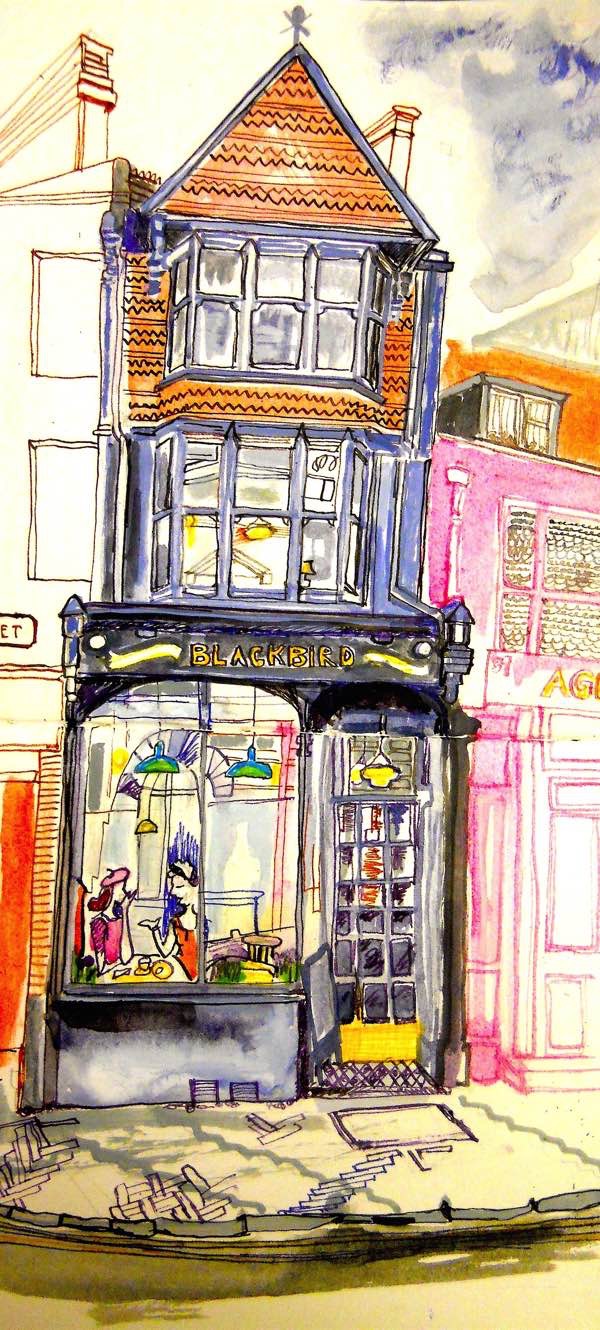
The Blackbird Tearooms, 30 Ship St, Brighton
Drawings copyright © Bex Shaw
The Return Of The Widow’s Buns
I am delighted to report that the Ceremony of the Widow’s Buns is returning to The Widow’s Son in Devons Rd this Good Friday after moving to The Queen’s Head in York Sq in 2016, when the celebrated and historic pub in Bow closed and changed hands before reopening at the end of last year
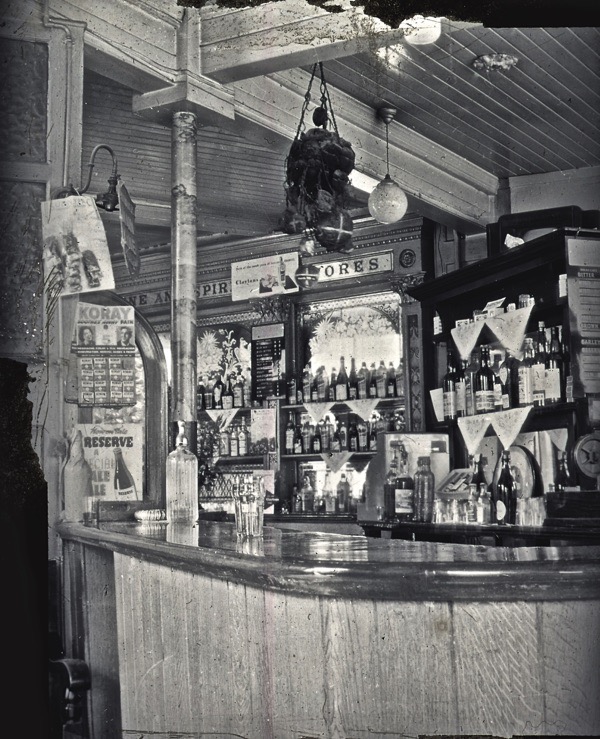
London’s oldest buns photographed by London & Middlesex Archaeological Society in the 1940s
A net of Hot Cross Buns hangs above the bar at The Widow’s Son in Bromley by Bow and each year a sailor comes to add another bun to the collection. Yet no Hot Cross Buns are eaten in the ceremony, they are purely for symbolic purposes – left to dry out and gather dust and hang in the net for eternity, London’s oldest buns exist as metaphors to represent the passing years and talismans to bring good luck but, more than this, they tell a story.
On Good Friday, what could be more appropriate to the equivocal nature of the day than an event which involves both celebration of Hot Cross Buns and the remembrance of the departed in a single custom – such is the ceremony of the Widow’s Buns at Bow.
The Widow’s Son was built in 1848 upon the former site of an old widow’s cottage, so the tale goes. When her only son left to be a sailor, she promised to bake him a Hot Cross Bun and keep it for his return. But although he drowned at sea, the widow refused to give up hope, preserving the bun upon his return and making a fresh one each year to add to the collection. This annual tradition has been continued in the pub as a remembrance of the widow and her son, and of the bond between all those on land and sea, with sailors of the Royal Navy coming to place the bun in the net every year.
Behind this custom lies the belief that Hot Cross Buns baked on Good Friday will never decay, reflected in the tradition of nailing a Hot Cross Bun to the wall so that the cross may bring good luck to the household – though what appeals to me about the story of the widow is the notion of baking as an act of faith, incarnating a mother’s hope that her son lives. I interpret the widow’s persistence in making the bun each year as a beautiful gesture, not of self-deception but of longing for wish-fulfilment, manifesting her love for her son. So I especially like the clever image upon the inn sign outside the Widow’s Son, illustrating an apocryphal scene in the story when the son returns from the sea many years later to discover a huge net of buns hanging behind the door, demonstrating that his mother always expected him back.
When I arrived at the Widow’s Son, I had the good fortune to meet Frederick Beckett who first came here for the ceremony in 1958 when his brother Alan placed the Hot Cross Bun in the net, and he had the treasured photo in his hand to show me. Frederick moved out from Bow to Dagenham fifteen years ago, but he still comes back each year to visit the Widow’s Son, one of many in this community and further afield who delight to converge here on Good Friday for old times’ sake. Already, there was a tangible sense of anticipation, with spirits uplifted by the sunshine and the flags hung outside.
The landlady proudly showed me the handsome fresh Hot Cross Bun, baked by Mr Bunn of Mr Bunn’s Bakery in Chadwell Heath who always makes the special bun each year -” fabulous buns!”declared Kathy, almost succumbing to a swoon, as he she held up her newest sweetest darling that would shortly join its fellows in the net over the bar. There were many more ancient buns, she explained, until a fire destroyed most of them fifteen years ago, and those burnt ones in the net today are merely those few which were salvaged by the firemen from the wreckage of the pub. Remarkably, having opened their hearts to the emotional poetry of Hot Cross Buns, at the Widow’s Son they even cherish those cinders which the rest of the world would consign to a bin.
The effect of several hours drinking beer upon a pub full of sailors and thirsty locals became apparent in the pervasive atmosphere of collective euphoria, heightened by a soundtrack of pounding rock, and, in the thick of it, I was delighted to meet my old pal Lenny Hamilton, the jewel thief. “I’m not here for the buns, I’m here for the bums!” he confided to me with a sip of his Corvoisier and lemonade, making a lewd gesture and breaking in to a wide grin of salacious enjoyment as various Bow belles, in off-the-shoulder dresses with flowing locks and wearing festive corsages, came over enthusiastically to shower this legendary rascal with kisses.
I stood beside Lenny as three o’ clock approached, enjoying the high spirits as the sailors gathered in front of the bar. The landlord handed over the Hot Cross Bun to widespread applause and the sailors lifted up their smallest recruit. Then, with a mighty cheer from the crowd and multiple camera flashes, the recruit placed the bun in the net. Once this heroic task was accomplished, and the landlady had removed the tinfoil covers from the dishes of food laid out upon the billiard table, all the elements were in place for a knees-up to last the rest of the day. As they like to say in Bromley by Bow, it was “Another year, another Good Friday, another bun.”

Baked at Mr Bunn’s Bakery in Chadwell Heath

Peter Gracey, Nick Edelshain and Roddy Urquhart raise a pint to the Widow’s Buns.

Tony Scott and Debbie Willis of HMS President with Frederick Beckett holding the photograph of his brother placing the bun in the net in 1958.
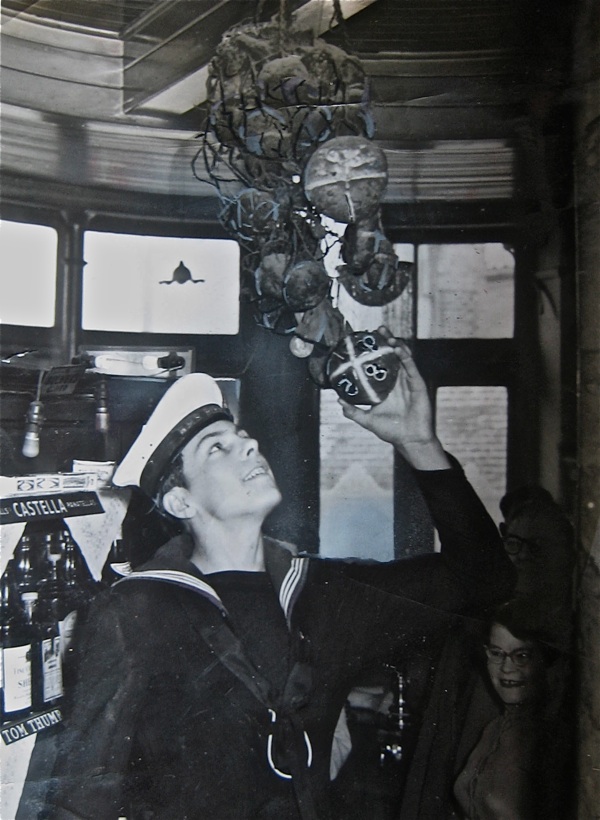
Alan Beckett places the bun on Good Friday, 4th April 1958.
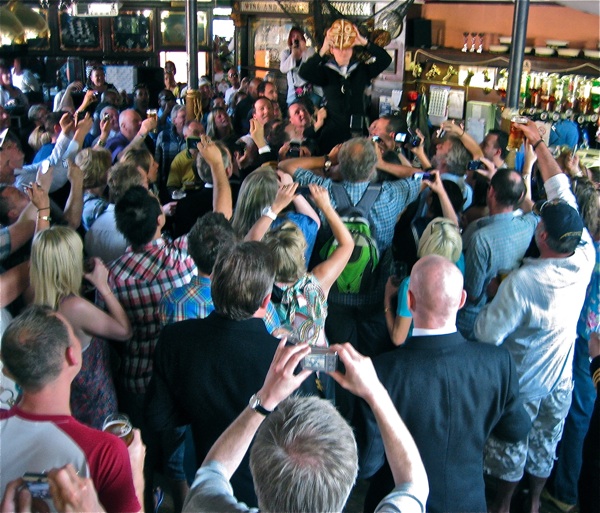
3 pm Good Friday
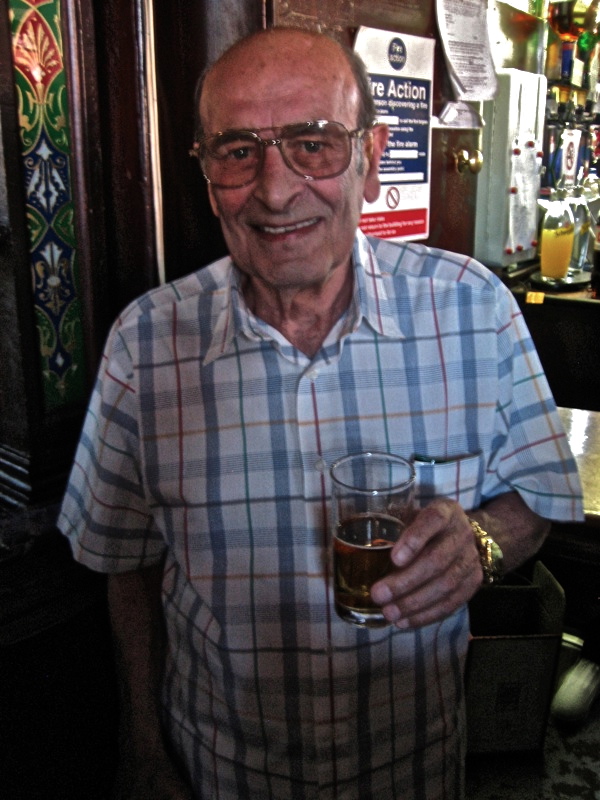
My pal Lenny Hamilton, the jewel thief, at home at The Widow’s Son


A Widow’s Son of Bromley by Bow
by Harold Adshead
A widow had an only son, The sea was his concern, His parting wish an Easter Bun Be kept for his return. But when it came to Eastertide No sailor came her way To claim the bun she set aside Against the happy day. They say the ship was lost at sea, The son came home no more But still with humble piety The widow kept her store. So year by year a humble bun Was charm against despair, A loving task that once began Became her livelong care. The Widow’s Son is now an inn That stands upon the site And signifies its origin Each year by Easter rite The buns hang up for all to see, A blackened mass above, A truly strange epitome Of patient mother love.
Archive photograph of buns courtesy Bishopsgate Institute
You may also like to read about
The Widow’s Buns at The Queen’s Head
At The Jewish Soup Kitchen In Brune St

Originally established in 1854 in Leman St, the Jewish Soup Kitchen opened in Brune St in 1902 and, even though it closed in 1992, the building in Spitalfields still proclaims its purpose to the world in bold ceramic lettering across the fascia. These days few remember when it was supplying groceries to fifteen hundred people weekly, which makes Photographer Stuart Freedman’s pictures especially interesting as a glimpse of one of the last vestiges of the Jewish East End.
“After I finished studying Politics at university, I decided I wanted to be a photographer but I didn’t know how to do it,” Stuart recalled, contemplating these pictures taken in 1990 at the very beginning of his career. “Although I was brought up in Dalston, my father had grown up in Stepney in the thirties and, invariably, when we used to go walking together we always ended up in Petticoat Lane, which seemed to have a talismanic quality for him. So I think I was following in his footsteps.”
“I used to wander with my camera and, one day, I was just walking around taking pictures, when I moseyed in to the Soup Kitchen and said ‘Can I take photographs?’ and they said, ‘Yes.’ “I didn’t realise what I was doing because now they seem to be the only pictures of this place in existence. You could smell that area then – the smell of damp in old men’s coats and the poverty.”
For the past twenty years Stuart Freedman has worked internationally as a photojournalist, yet he was surprised to come upon new soup kitchens recently while on assignment in the north of England. “The poverty is back,” he revealed to me in regret,“which makes these pictures relevant all over again.”

Groceries awaiting collection

A volunteer offers a second hand coat to an old lady

An old woman collects her grocery allowance

A volunteer distributes donated groceries

View from behind the hatch

A couple await their food parcel

An ex-boxer arrives to collect his weekly rations

An old boxer’s portrait, taken while waiting to collect his groceries

An elderly man leaves the soup kitchen with his supplies
Photographs copyright © Stuart Freedman
You can read more about the Soup Kitchen here
You may also like to take a look at
Trevor Salthouse, Butler

Trevor Salthouse by Sarah Ainslie
Trevor Salthouse started as a Junior Butler at Barings Bank in February 1981. ‘When ING Bank took over Barings, it came with the silver, the art collection, the wine cellar and me,’ he confided with a mild blush, lest this appear an immodest claim.
Blessed with natural poise, Trevor is the paragon of diplomacy and these days his work is a lot less menial – he might perhaps be described as Hospitality Manager, as well as Sommelier. And, possessing the wealth of experience of one who has seen the workings of the City from the inside for over thirty years, I suspect Trevor’s duties might also occasionally include being a Confidant but – if this is the case – he is far too discreet to admit it.
Trevor confessed to me that he feels far less comfortable in the lounge suit which he wears for work these days, preferring the morning suit that he wore until recently as a uniform which made his role apparent.
“I was born and brought up in Deptford with my twin sister. My father was dock worker, he was called up to join the Royal Navy and served as an Able Seaman on HMS Locust during the Second World War. He had a rough time of it and it affected him for many years. My mother worked in an office in Central London and then in a shop in Brockley. She died when I was fourteen and my dad passed away when I was thirty-nine. My parents had a different style of living compared with today, although they worked very hard we never had much money and we lived in a council house for many years.
I went to Comprehensive School but was not academic so, at fifteen, I was automatically placed onto a list to join the building trade. At first, we lived in Deptford with my grandparents and then we moved to Brockley where we rented a council house. In the late sixties ,my parents scraped together a deposit and purchased a small terrace house in Forest Hill in which my sister and her family live today.
After leaving school in the mid-sixties, I completed a City & Guilds apprenticeship in the building trade. In 1975, when I was seventeen, I joined the Territorial Army Royal Corps of Transport and I am sure helped me secure the job at Barings.
In 1980, we had one of the coldest winters for a long time. I was working outside painting houses and it was freezing. I decided to find a temporary job working inside where I would be warmer, so I applied to an advert in the Evening Standard catering section advertising for a Trainee Butler for a City institution. Once I applied and had one of two interviews I discovered it was Barings Bank. I must admit, I had never heard of the name Barings before then. There were thirty other applicants but, amazingly, I got the job. Historically, there was a huge catering staff at Barings – five House Butlers in the old days and at least twenty waitresses on hand when required– but slowly this amount was reduced over the years.
I started as a Junior Butler for Barings Bank on the 9th February 1981, when I was twenty-one years old. I was formally trained by Mr Stan Foden who was the Head Butler but – to confuse matters – there was also an Under Butler called Stan Kempton who took when Stan Foden retired in 1988. The catering team were expected to serve at the table and look after the requests of Senior Directors and Partners and their clients, when entertaining within the Bank.
Things really changed in 1995 when Barings Bank faced financial difficulties and, as a result, ING bought the business. . At that moment, we were down to three House Butlers and a handful of waitresses. By 1994, Stan Kempton had retired and I took over as the Head Butler.
At Barings Bank, the job required working long and, at times, unsociable hours. I tended to start early in the morning, between 06:00 or 6:30, as breakfasts would start at 07.00. On many occasions, I was required to offer evening service for dinners, suppers, and drinks parties . On occasion, I was also required to work at the Directors’ private homes, and this also included at weekends and sometimes over the Christmas period. I also used to cater at the Barings inter-banks’ shoot at Holland & Holland near Ruislip, West. London, and at a private estate in Scotland. I recall being in charge of some very nice wines whilst travelling there by train. When I enquired why the beaters on these shoots received a higher wage than me, Stan explained ‘they have a greater risk of being shot’.
Barings Bank was the company I started with and then carried on with ING Bank. I love the hospitality side of my job, especially the wine tastings and interacting with our clients. I got a huge amount of satisfaction seeing our clients happy and I enjoyed the fact that I was working for a fantastic family and Company as I do today with ING.
The work has changed a great deal from being a Butler to being a Manager. When I first joined Barings, I was classed as a ‘Junior Butler’ and it involved a great deal of menial work, which, looking back I quite enjoyed – it involved sometimes cleaning shoes and the family silver and general housekeeping, but the best part was serving at the table. Over time I acquired experience and knowledge about wines and how things should be done correctly. When it came to entertaining our very senior clients, the Partners would always prefer Butlers serving at the table for these events.
Whilst serving in the private rooms complete discretion is required. I am acutely aware that people are talking about sensitive information – the rule was always: what you hear in the room stays in the room. One minute you could be talking to a CEO or a Senior Partner and the next you would be in the kitchen washing up and assisting the Kitchen Porter, you had to be very flexible. You also have to be a good manager. Some members of the service staff including Messengers were ex-military, mostly Non-Commissioned Officers who had learnt to communicate and manage people whilst in the military. Some of those chaps I met in the early eighties were then coming up for retirement and had seen action in the Second World War, so they were very interesting people to talk to.
Barings was a very Victorian bank, so I felt I had experienced the nineteenth century in the twentieth century. Rothschilds, Warburgs, Casenoves and Lazards. all had a similar style of service and culture. Barings Bank was the oldest Merchant House within the City, but many of those companies go back to the seventeenth century and were the building blocks of the City of London.
Approximately a hundred years ago, life would have been much harder for service and house staff. They were expected to live on the premises where they worked which meant they were ‘on call’ 24/7 especially for the junior staff – they would also have been paid a minimal wage. They would have had to do manual and sometimes boring work and very long hours.
The majority of people I worked with are very respectful. You know what your job is and you try to do it the best you can. You were always instructed never to address a Director and Partner by his first name, it must be always either – ‘Sir’ or ‘Mister’ then surname. There was a strict dress protocol and you must never let the side down. You were expected to uphold a high level of professionalism within the bank. There was no point in being in service if you didn’t have loyalty, it was essential.
Stan Foden always reminded me, ‘never cross the invisible line.’ That line is always there, regardless.
When our guests came into Barings Bank, and now ING, to present and hold meetings, we try to ensure they feel at ease as much as possible so that they could conduct their business without too much inconvenience or stress. I am sure these meetings were and are very stressful at times, having to do presentations, and on occasions, eat a formal lunch whilst presenting.
You have to be one step ahead the whole time, you have to understand people and have a grasp of human nature. You have to be flexible when it comes to your approach to serving at the table or dealing with people. Even at reception, if you are inappropriate in your behaviour it could affect ING’s business. It is called ‘the seven second interview.’ After seven seconds, people have made a fundamental decision based on the first view they have – of me or the front of house staff including reception. You have to be a psychologist.
I do not think there will be City Butlers in the future, I believe I am one of the last. Butlers duties have changed a great deal in the last ten years, the term – ‘House Manager’ is used more these days.”

‘When the Directors of Barings Bank went grouse shooting, I asked Stan the Head Butler why, as a Junior Butler, I was paid less than the Beaters. He told me it was because I was less likely to get shot.’

‘When ING Bank took over Barings, it came with the silver, the art collection, the wine cellar and me’

‘I am very happy with my lot and I know a lot of these people here are very wealthy, but I am not sure if they are happy’
Photographs copyright © Sarah Ainslie
Fresh Fish For Passover In Stamford Hill
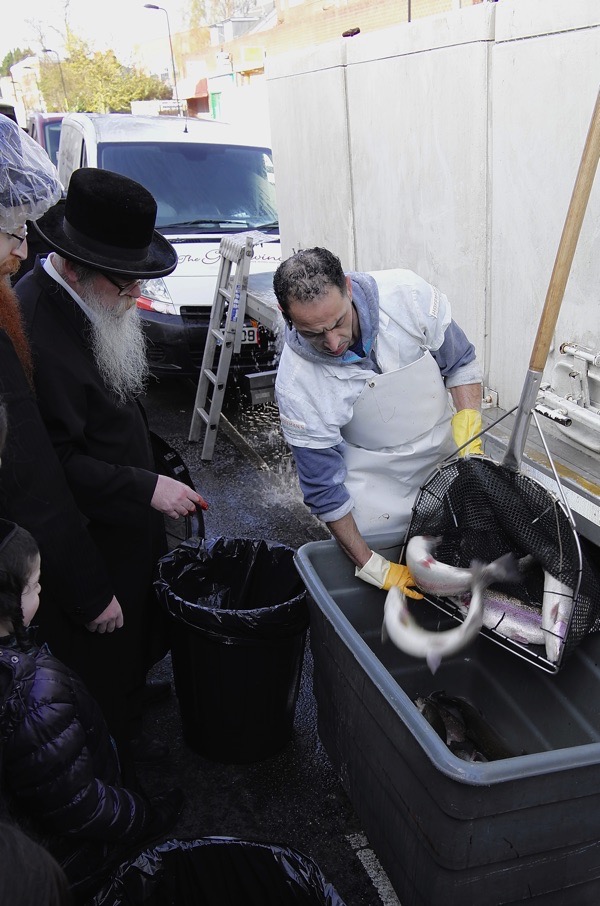
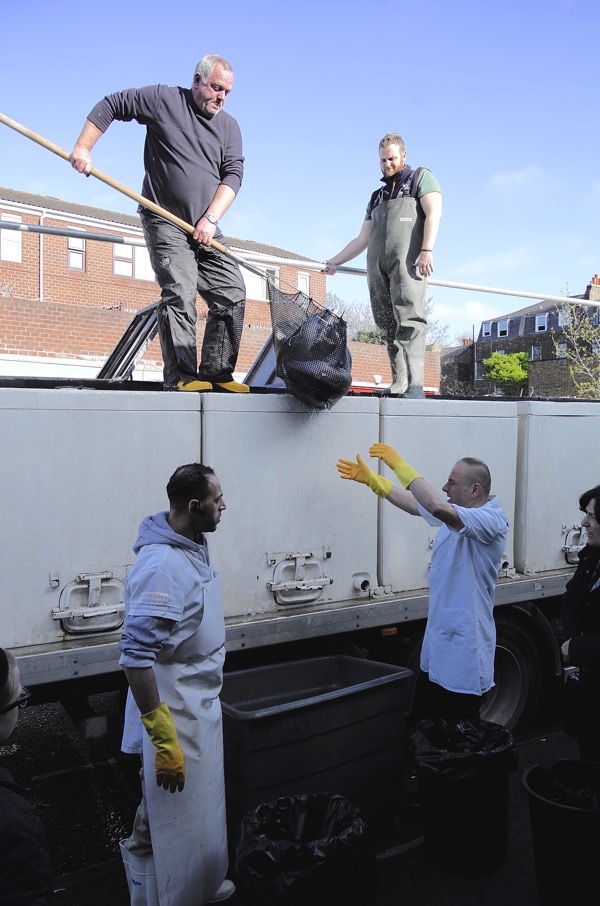
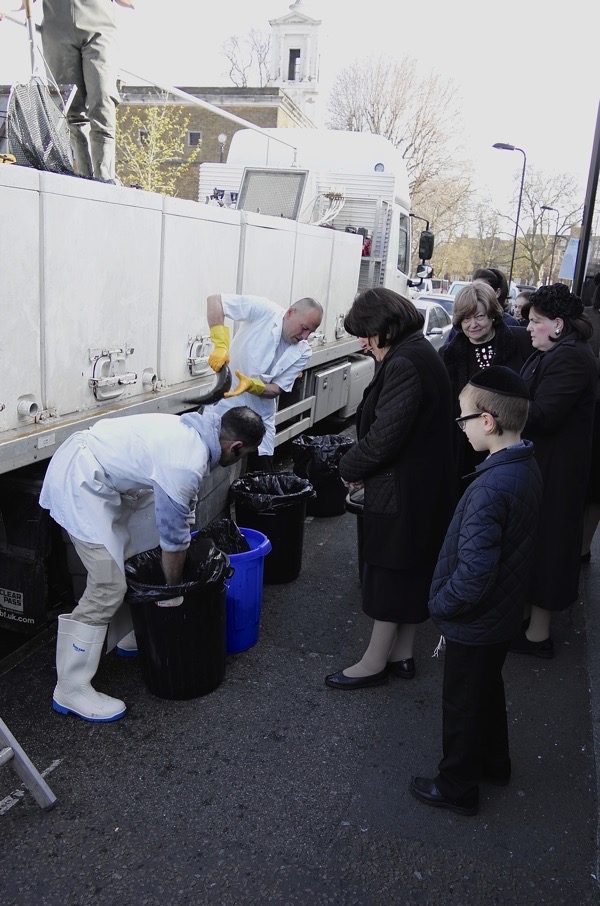
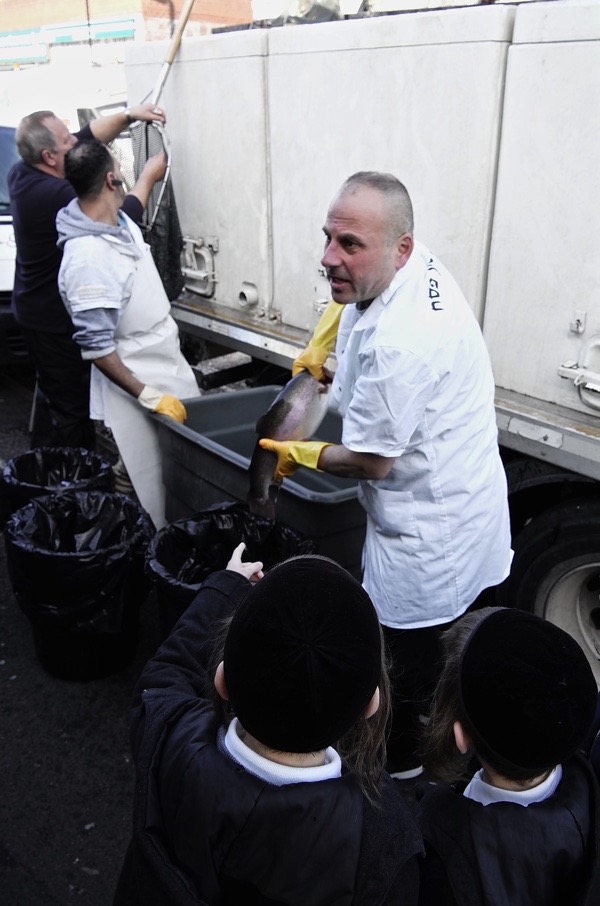
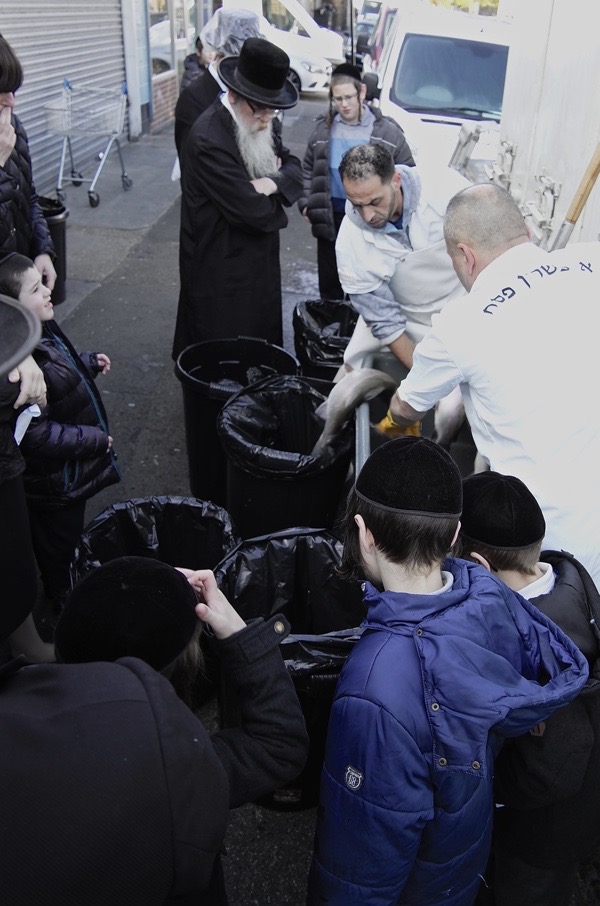
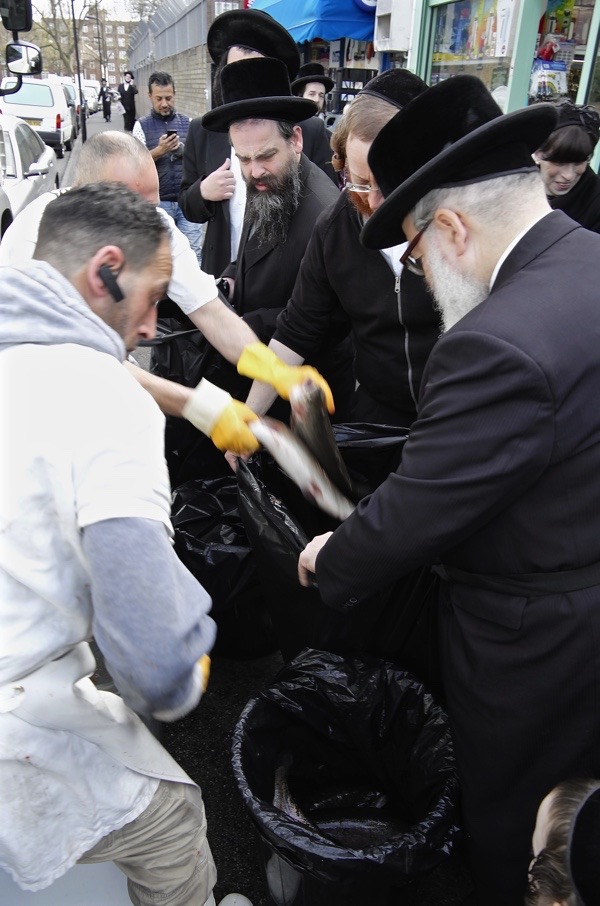
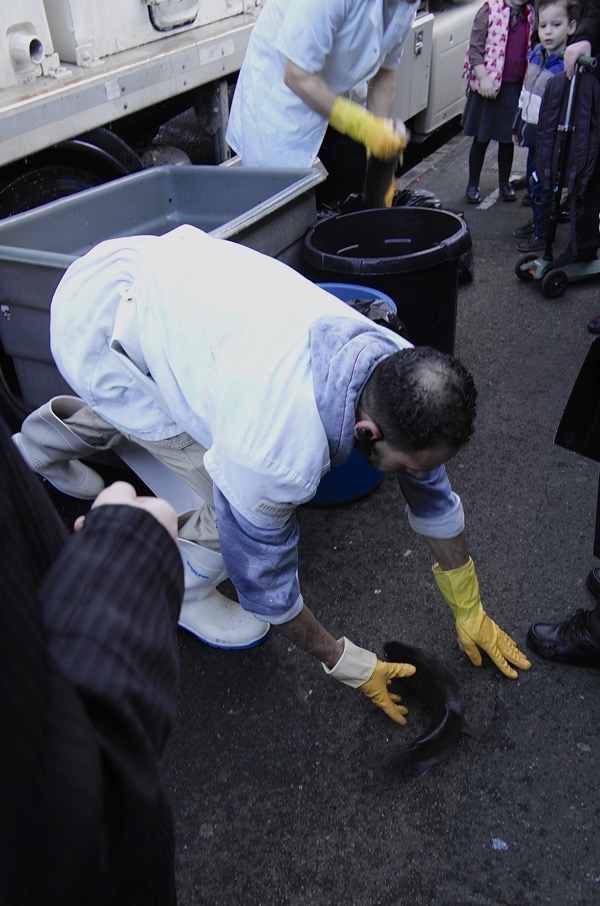
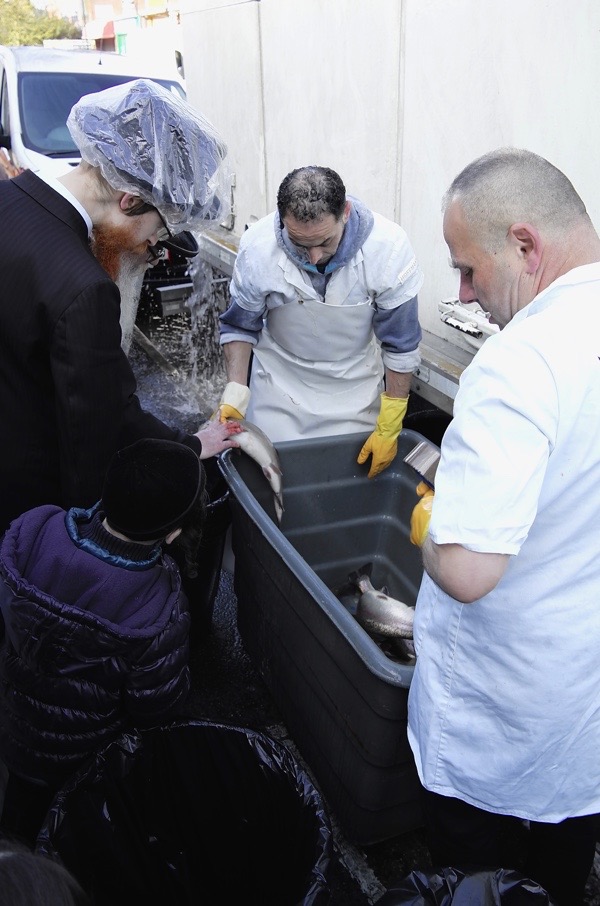
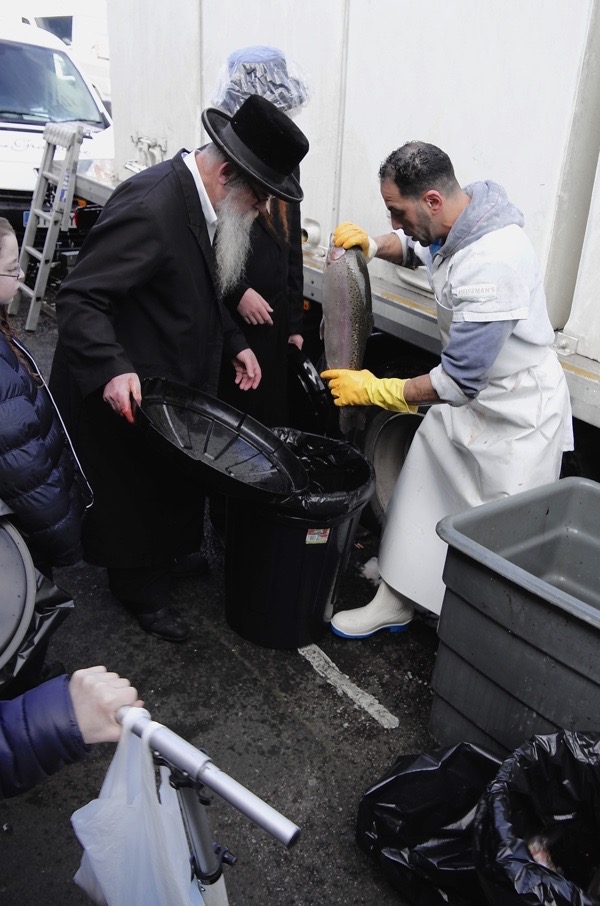
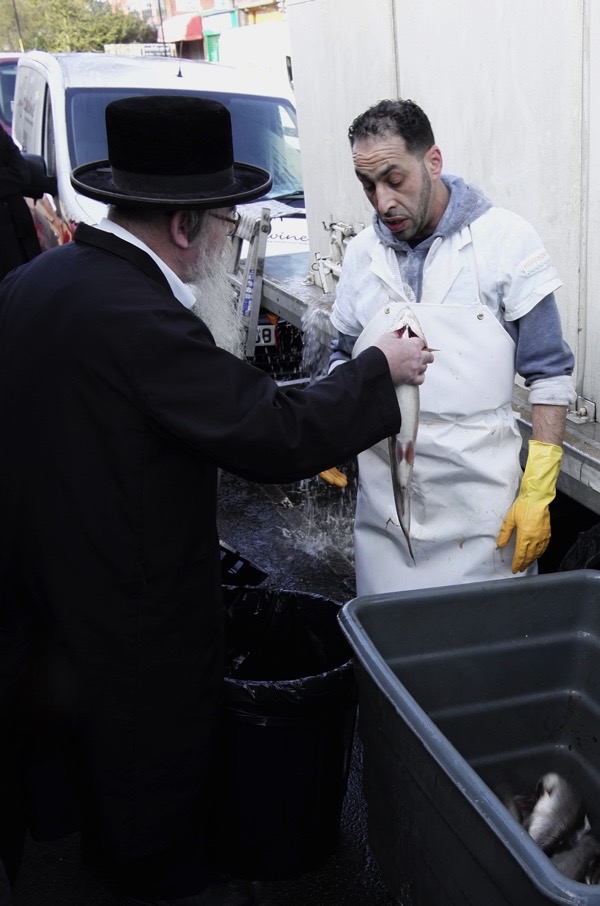
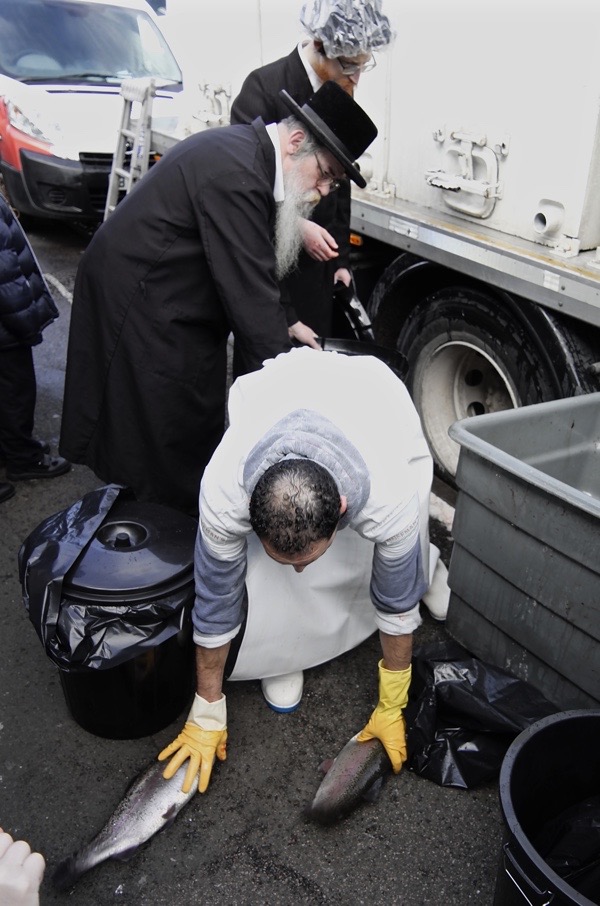
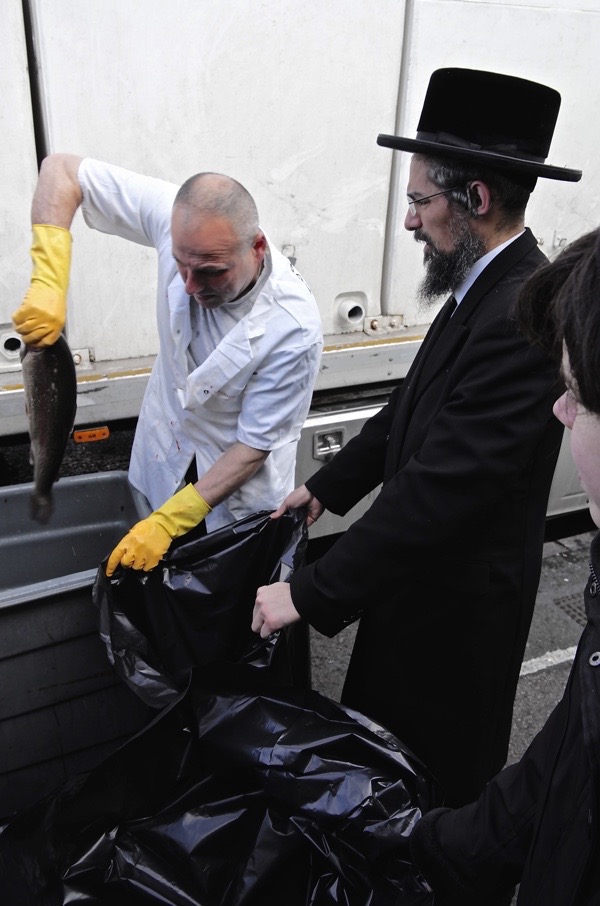
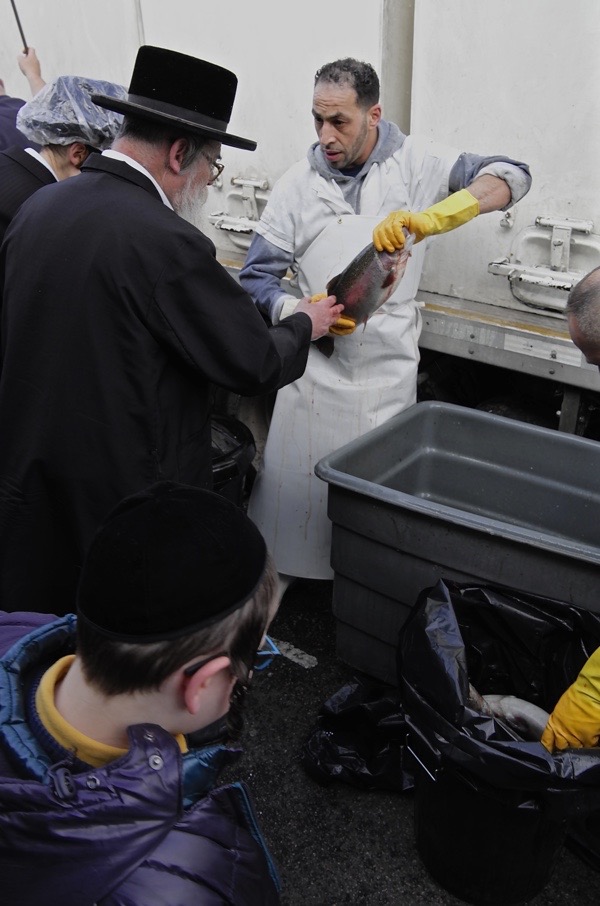
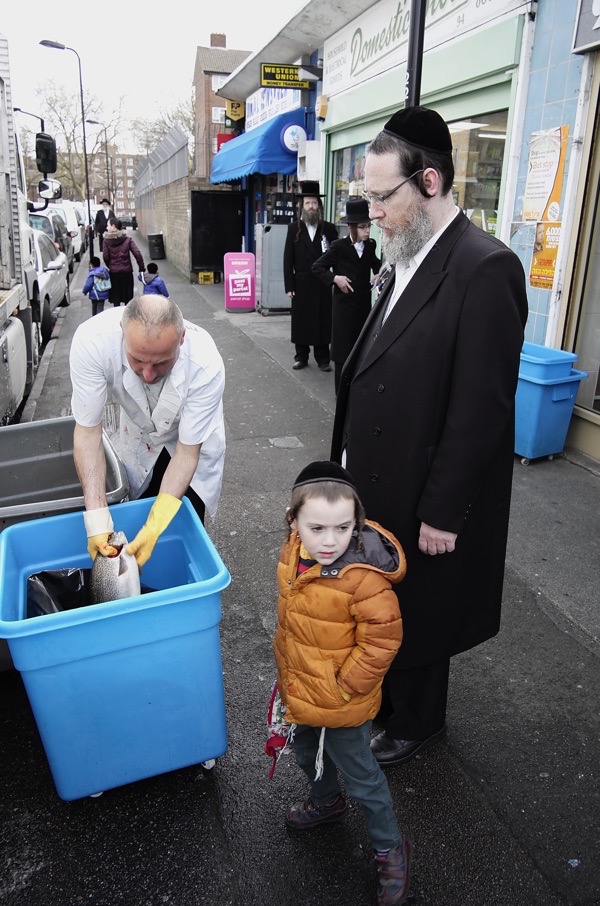
At nine o’clock yesterday morning, a tanker of fish pulled up at the kerb outside Hoffman’s Fish Shop in Stamford Hill, where a small crowd of families had already gathered in keen expectation of its arrival. They were seeking live salmon and trout to cook for Passover. Each customer had a plastic bin lined with a black bag and they stepped forward in turn to select live fish decanted in nets from the truck into tanks on the pavement.
The nature of the season, the splashing of the water and the liveliness of the fish engendered an infectious excitement as occasionally a large salmon made a leap for freedom onto the pavement, engendering shrieks of delight from the younger members of the congregation. Yet before long, everyone had acquired the requisite number of salmon and trout necessary to feed their family and relatives, and set off for home with their bags of fish still twitching in anticipation of Passover.
You may also like to read about
At Chu’s Garage
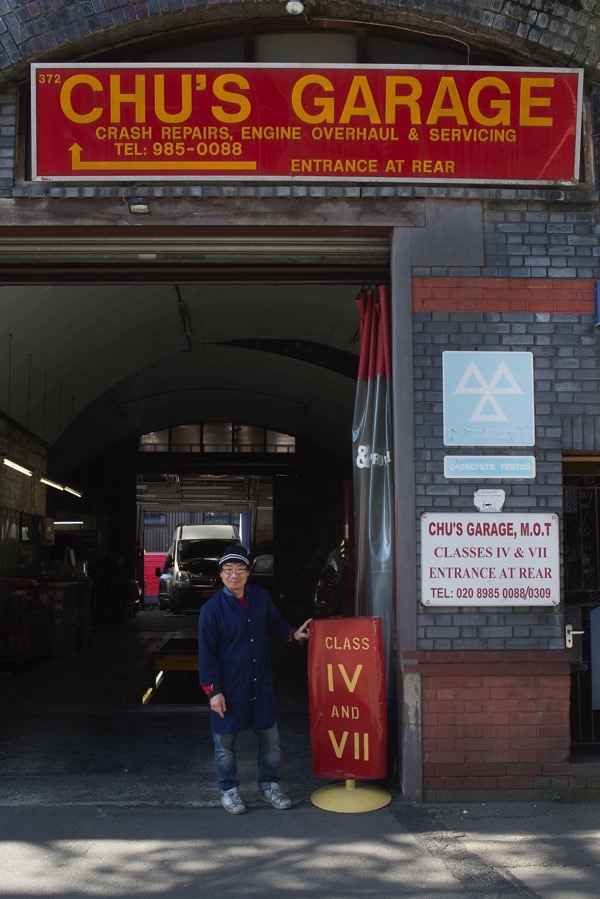
Quang Chu of Chu’s Garage
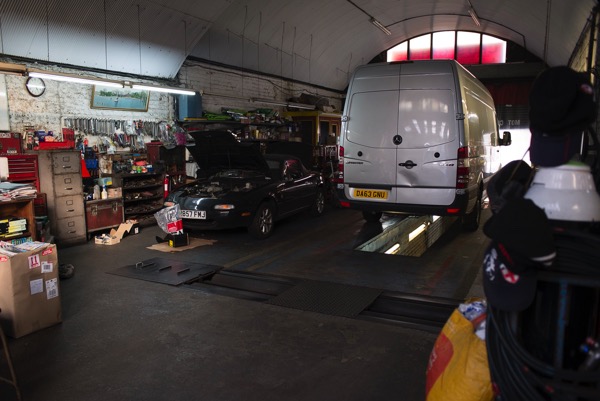
Chu’s Garage under the railway arches in London Fields has become a reliable institution among motorists in Hackney over the last thirty years for good service and honest dealing. Contributing Photographer Sarah Ainslie & I met the Chu family while making a survey of the small independent businesses under the arches which are currently being threatened with excessive rent increases up to 300% by Network Rail, and we decided to return to hear the Chu’s story.
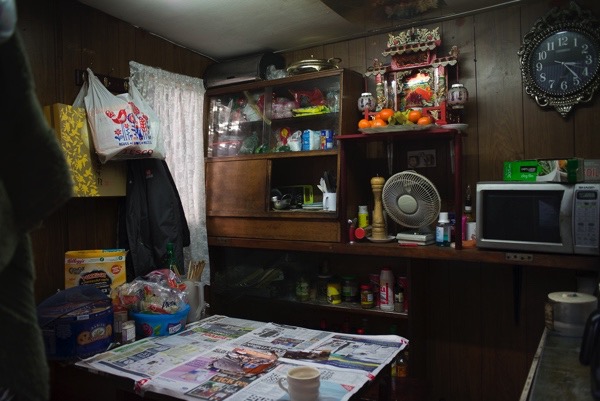
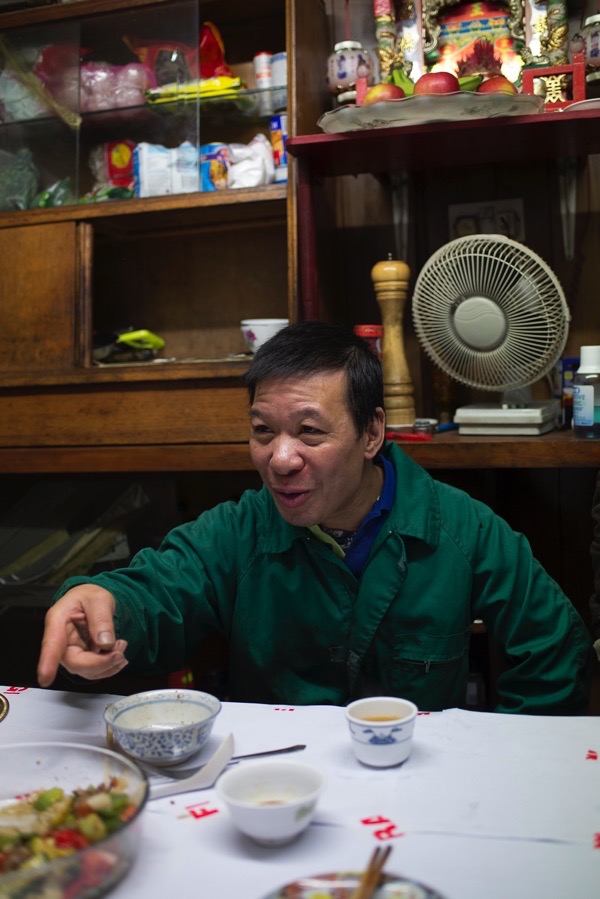
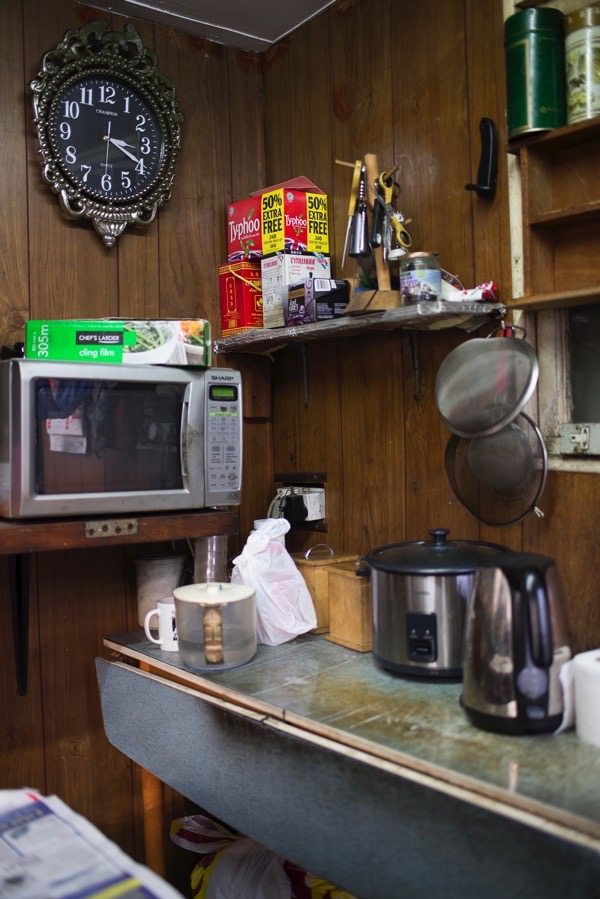
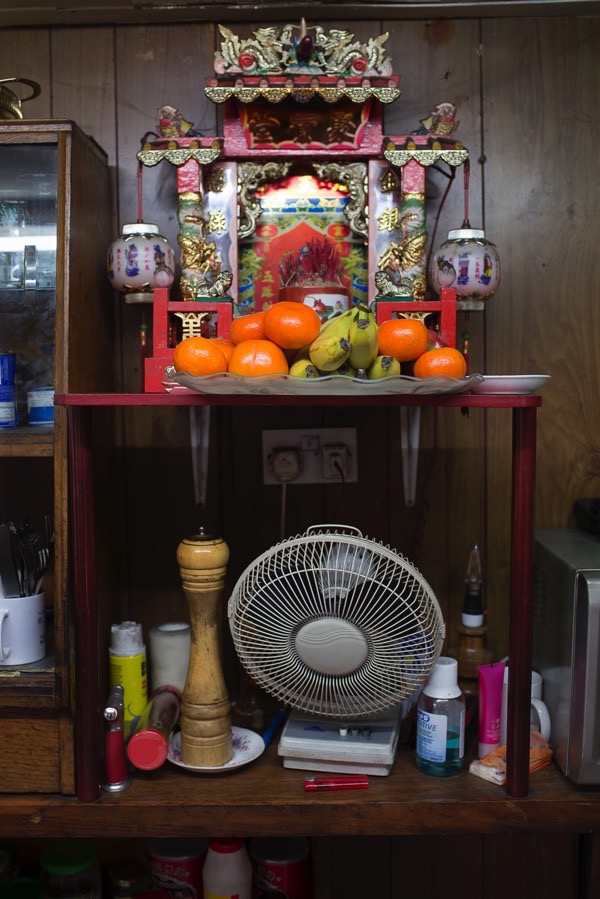
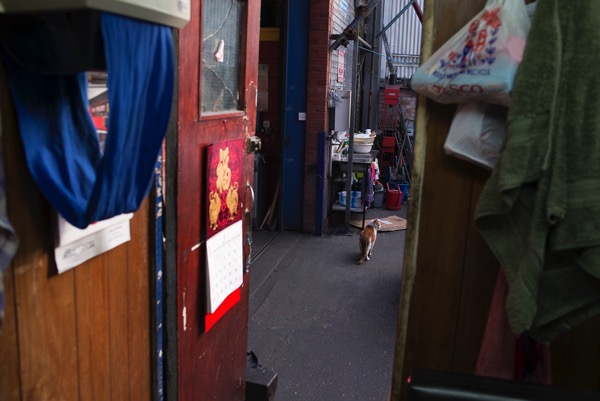
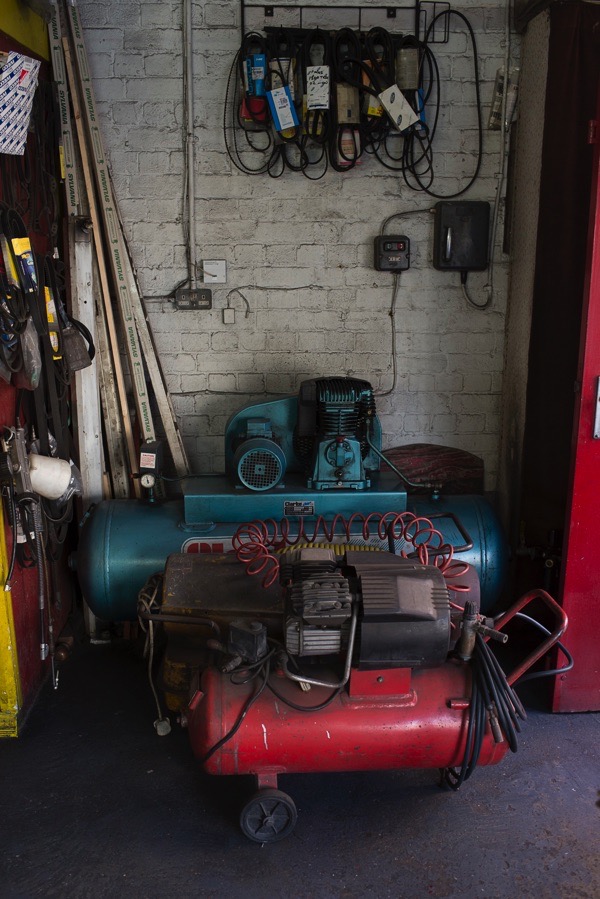
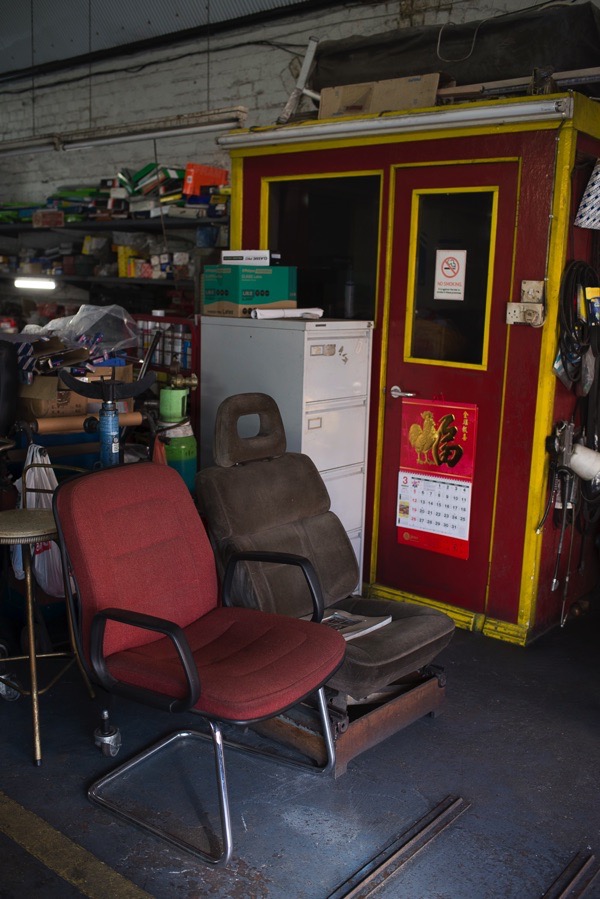
In the middle of the day at Chu’s Garage, work ceases and a ring is attached to a gas bottle for Jimmy Chu to cook a fresh lunch, which the family eat around the table in the cosy hut, complete with an altar, which serves as their dining room.
Sarah & I were honoured to be lunch guests and afterwards, over cups of green tea, we learnt of the astonishing story that lies behind Chu’s Garage. This was an unexpected epic, the dramatic tale of the Chu family’s perilous journey from Viet Nam to Britain, revealing their remarkable hard work, courage and tenacity in pursuit of a new life, which culminated in opening their beloved garage.
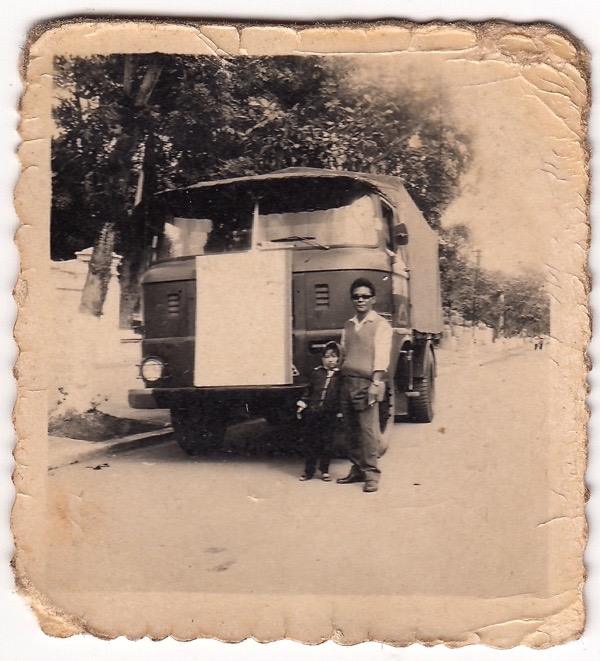
Chuong Kim Chu in Hai Phong, Viet Nam, 1974
Nhi Chu – My father, Chuong Kim Chu, was Chinese but he was born in 1935 in Viet Nam. My grandfather had come from Quanzhou in the south of China and migrated with his brothers to Viet Nam. So my father married my mother, Lien, who was Vietnamese and, although we grew up knowing that my dad was Chinese, we did not speak Chinese until we came to the refugee camp in Hong Kong.
Quang Chu – I remember when I was small my grandfather tried to speak Chinese with us. At that time, Viet Nam and America were at war and, many times by day and by night, they were bombing the city where we lived. It was very scary but interesting for a child. At night I saw the rockets and they were colourful, like fireworks. I remember the sound of the aeroplanes and fire everywhere. The table and chairs shook! Many times we were evacuated from the city to escape the bombs.
Chau Chu – One day my mum said there was a siren and, as we didn’t have a shelter, she went to the neighbours and asked ‘ Can we please come in to your shelter?’ But they said, ‘We’re so sorry, there’s no space.’ So my mum took us somewhere else and later that day, when we came back, we found our neighbours’ house had been bombed and everyone killed.
Nhi Chu – When my father grew up in Viet Nam, the family were poor so he didn’t go to school but he taught himself to read and write, Vietnamese and Chinese. He said, he learnt by eavesdropping on classrooms. When my father was seven, my grandfather, who was a herbalist, saved someone’s life and in return they said, ‘Your son can come with me and I will give him an education.’ But, one night, my father wet the bed and was so scared that he would be beaten up that he ran away, and that was the end of his education. When he was thirteen, he became an apprentice in the engine room on a big passenger ship. He had such a curious mind that, when the captain went away, he took an engine apart and memorised how it fitted together. But when he put it back he forgot one piece, so when the captain returned he got a whack over the head.
Chau Chu – We never saw our father much because he was always away from home as a long distance lorry driver. Whenever it broke down, he could fix it himself. That was how he started as a mechanic. The company gave him the lorry and he had to look after it. He saved up a long time to buy his truck, yet when the Communists took over they just took it from him.
Nhi Chu – During the war with America, Viet Nam and China were on good terms but, after the war ended the two countries fell out over a border dispute. At that time, there was a campaign by the Vietnamese government to get all Chinese migrants and their descendants to leave the country, and they were as hostile to them as they possibly could be. People started to lose their businesses. My mother said that my father was being subjected to a lot of abuse at work, from his colleagues who had once been his friends. He was quite a popular person and every year when they had the competition to see whose lorry was in the best condition, my dad always won the first prize. But then the tables turned and he had his truck taken away, so he no longer had his business or customers. My father knew that he had to leave because he was no longer able to make a living.
Meanwhile, my mother was being bombarded by people saying, ‘Leave your husband! He’s Chinese, you are Vietnamese. If he goes to China, you should stay here because you will be abused there.’ So there was a conflict, but my mother decided she wanted to stay with her husband and children. As children, we felt we were Vietnamese, we didn’t know we were Chinese, we didn’t make the distinction.
Chau Chu – All of a sudden, people were pointing at us and saying, ‘You are Chinese, you don’t belong here!’
Quang Chu – When we got to Hong Kong, they spoke Cantonese and we had to start everything from the beginning. Everything was very hard for us.
Chau Chu – We were forced to leave Viet Nam, we had no choice. We didn’t go to Hong Kong right away, we just wanted to leave the hostile environment of Viet Nam.
Nhi Chu – Because my father was Chinese, the Chinese government gave him visas and papers to go to China legally and we travelled from Viet Nam to China by train. We lived there for a year but the problem was that, although my dad was accepted as Chinese and got a job as a lorry driver, my mother and us kids were not accepted. We were city folk but we were sent to the mountains and every day we were given a portion of a field and had to turn it into fertile soil. Unfortunately, my mother looks Vietnamese and she was subjected to a lot of abuse from the locals. She had no choice but to hide inside the house. My dad realised this was no way to live and no future for us children. We couldn’t stay and he knew he had to find a new territory where all of us could live together peacefully.
We left China illegally because in those days no-one was permitted to leave. We couldn’t all leave in one go, so we divided the family. The plan was for our elder brothers Quang and Jimmy to leave to Hong Kong and make some money and send it back, and then the rest of us would join them there.
Quang Chu – The sea was very rough and lot of people died. The old boat was rotten and leaked inside, and it was overloaded. There were more than two hundred people, old and young and even babies just born. All kinds of people but all seasick. It was their first time ever on a boat. This was a short distance but a long journey, very long. Suddenly the sky might turn dark with thunder and lightning, heavy rain and strong wind – oh, it was scary. It was only a few days but the captains were inexperienced and they went round and round. We were lucky we survived the sharks but a lot of people didn’t.
Nhi Chu – We waited but we didn’t hear anything from them for six months and then a year.
Quang Chu – We sent them letters but they didn’t get them.
Nhi Chu – My dad decided that we couldn’t wait and we needed to go. We left at night but we had to make the house look as if we were still living there, because if the police found out they would come and stop us. For about a week, we were stranded at sea and then we got to Hong Kong.
Chau Chu – They hated us as well because we wanted to come onto their small island. They wouldn’t let our boat land, it was only when it was sinking that they picked us up. They had to check we were not from China, because if they knew we were from China they would send us back, so we had to say we had come from Viet Nam.
Nhi Chu – For two nights, we were on the boat and there was a storm which hit our boat and it began to sink, which is why they took us on board. For two weeks, we were held in a Forbidden Camp, where you can’t get out of, and then we were released to a Freedom Camp. We were waiting to be allocated a sleeping area when we saw my brother Jimmy. He came with Quang and we asked, ‘Still alive! How come you didn’t write to us?’ They explained that they had to get rid of all their paperwork at the border, so they lost the address and every day for a year they took turns to come to the camp to see if we were there. Finally, we were reunited but we found out that if we had been a month later we should have missed Quang and Jimmy, because they had already decided to go to America.
My dad didn’t want to go America, he wanted to come to England because he had been told that they treat old people very nicely here. He said, ‘I’m going to be old one day.’
Quang Chu – He said, ‘Why don’t they say ‘Speak American’? – they say ‘ Speak English.’ So he thought England must be a very good country, better than America.
Nhi Chu – That was 1979 and Mrs Thatcher announced she would accept ten thousand Vietnamese refugees, so we among the first batch. We came to England in 1980 and we first settled at the refugee centre in Dorchester for ten months where we started learning English.
Quang Chu – We went to the sea at Bridport, it was very nice.
Chau Chu – There were about fifteen families and we were happy there. Each of the families took turns cooking. Then we were resettled in Barrow-in-Furness and all the racism started again, like in Viet Nam.
Nhi Chu – We had been sheltered in Dorset but then suddenly we were the only Vietnamese family in Cumbria. It was back to square one, and we couldn’t find work so Quang had to move to Wigan and Jimmy to Bournemouth.
Quang Chu – Barrow-in-Furness is a very small town where everyone works at the shipyard and that only offers enough jobs for the local people, so we had to go elsewhere. But I think it’s good to see other places and other ways of life. You learn a lot when you have to stand on your own two feet, facing life.
Nhi Chu – After five years, we moved south.
Quang Chu – I think my father had decided that Barrow was good enough for him, but then he met so many people in London.
Nhi Chu – Even though my father was in his late forties by then, he managed to pick up the English language. He continued to attend evening classes after the rest of the family stopped and, after about a year, he managed to get a job at the local garage in Barrow. When he went for an interview, the manager just said, ‘Here’s a car, tell me how many faults you can find with it.’ When he came back, the manager said, ‘There should be eleven,’ and my father said, ‘I found thirteen’ – and that’s how he got the job. Dad worked there for three years to get his qualification and then he was promoted to foreman, but he had such a hard time because the other younger mechanics resented him because of his age and race.
Chau Chu – He always knew that he would come to London one day to set up a garage.
Nhi Chu – One of his mottos in life was ‘Whatever anyone can do, the Chu family can do it just as good, if not better.’ We could never go to him and say, ‘Dad I can’t do that.’ He’d say, ‘What do you mean? You can’t yet!’
Chau Chu – He was fifty when he came to London.
Quang Chu – In 1985, he started across the road from here in a shed that he shared with a Turkish guy. There were holes in the ceiling, which made it very slippery when it rained. At that time, the railway arches were vacant and this was a very rough area.
Nhi Chu – After a year, quite a few people applied to rent this arch, but my father was lucky and he was successful. The rent was between five and six thousand annually then.
Quang Chu – We moved in here in 1988 and we fitted it ourselves but there was no business.
Nhi Chu – Bricks and cement fell from the arch whenever trains ran across. We contacted Network Rail but they ignored us for years and years.
Quang Chu – Business was very difficult, so my father decided to do MOT Class 7, vans and light commercial vehicles. There were so many garages doing MOT Class 4 but MOT Class 7 was very rare. In Hackney, we have not heard of anyone else doing it. So my father decided that doing Class 7 MOTs was the way to survive. There was so much regulation and red tape to get to be an MOT Station – but then we realised we had no MOT testing equipment! Everything for us for us was new. It was very scary.
Nhi Chu – Dad had to study the MOT textbook, the rules and regulations, and then he had to go and do a test. He really struggled, so he had to have the help of his old English teacher to translate all the terminology – and my dad passed.
Quang Chu – When we first became the MOT-nominated tester, we held a party and invited our old friends. It was very expensive to set up and we had to borrow money from so many people. The bank wouldn’t lend to us, so we had to do it Vietnamese style – we go to a lot of people, relatives, neighbours and friends, and borrow small amounts of money and keep a list. They said, ‘This is good for everybody, good for you and for the Vietnamese community.’ So we have tried to look after them and pay back everyone gradually.
Chau Chu – The MOTs have kept our business going, otherwise we would have shut down.
Quang Chu – We feel good about it – even Hackney Council bring their vans here for MOT.
Nhi Chu – When my dad died, we wanted to have a grave to represent his life, so we got a designer to come here and take a look at the garage. He said, ‘Howabout if we design it with an arch?’ My father used to say, ‘I spent all my time here, my blood and sweat to make this garage as it is, so when I die bury me in the maintenance pit.’ We achieved that in a way by creating a tombstone in the shape of an arch which he is now resting beneath.
When we start talking about our father, we realise what an amazing character he was. When he passed away, we had to tell the customers and some of them burst out crying. A lot of people miss him. Without his motivation, we would not have been able to bring the whole family from one country to another country. This garage is his legacy.
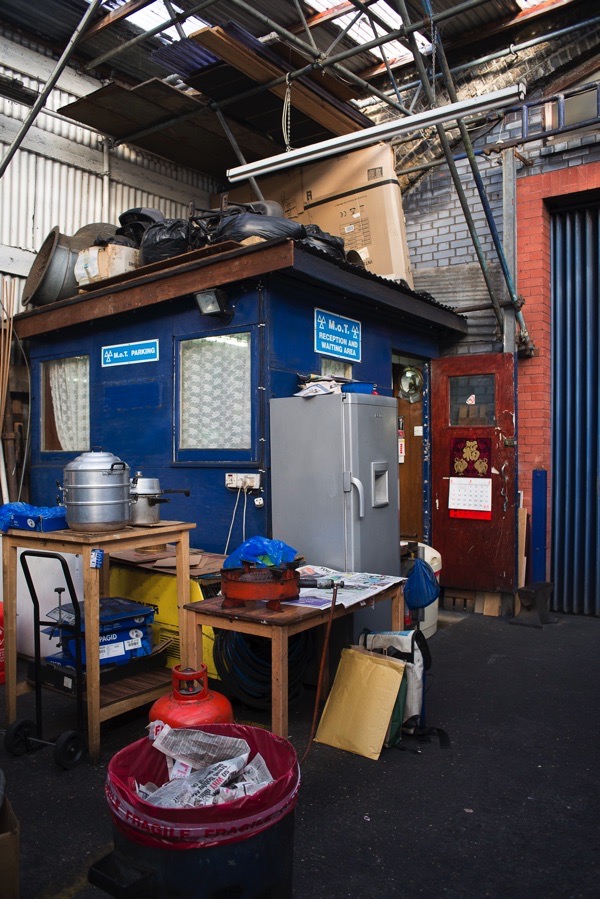
The Chus’ lunch cabin
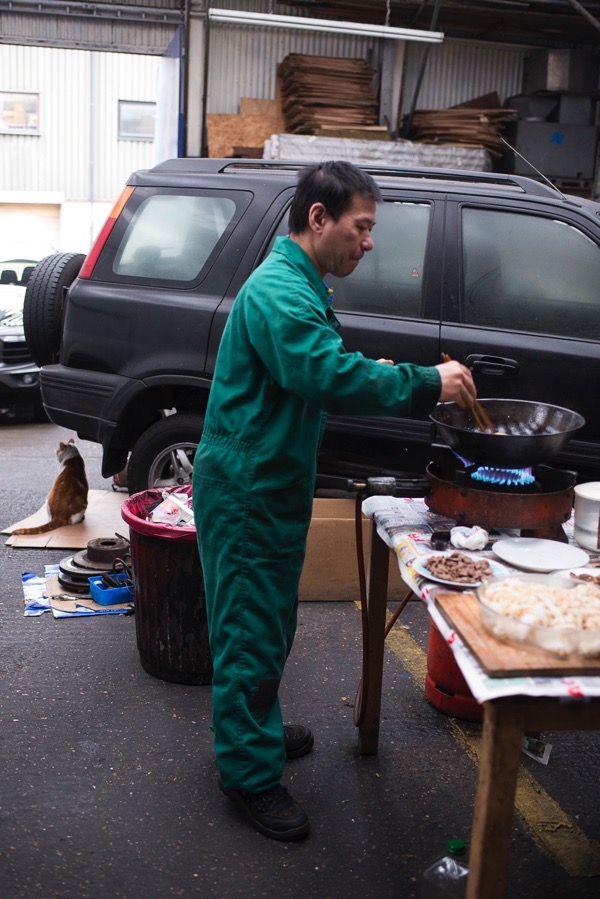
Jimmy Chu cooks lunch
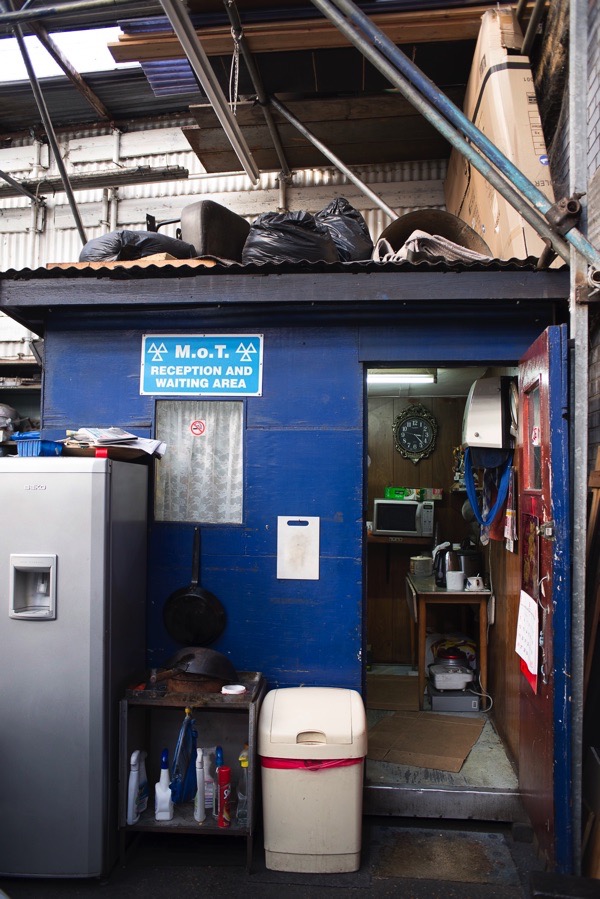
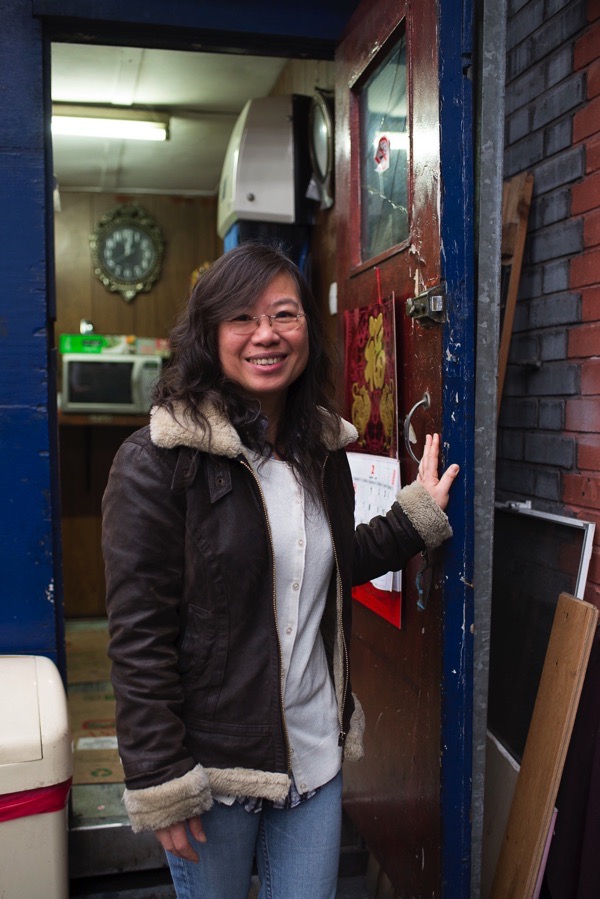
Nhi Chu
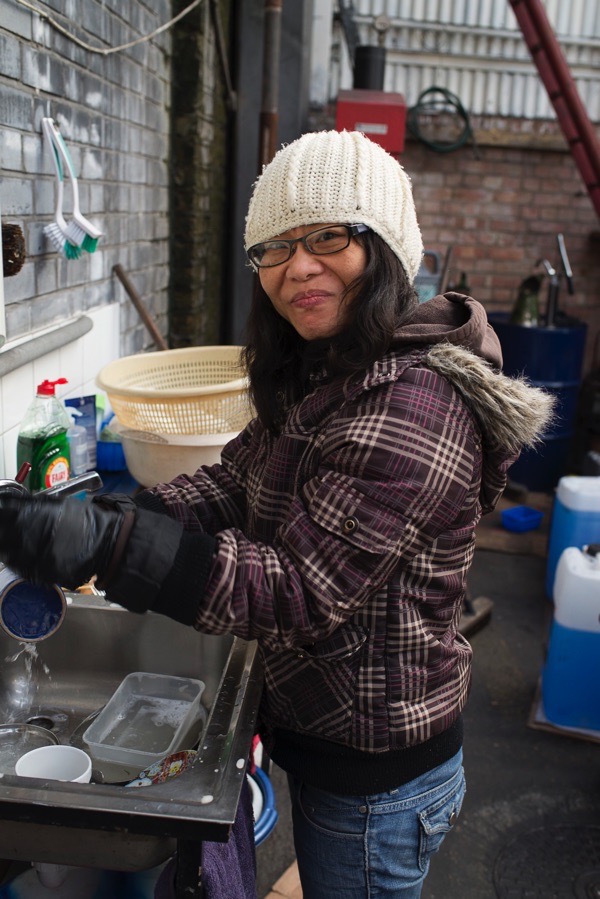
Chau Chu washes up
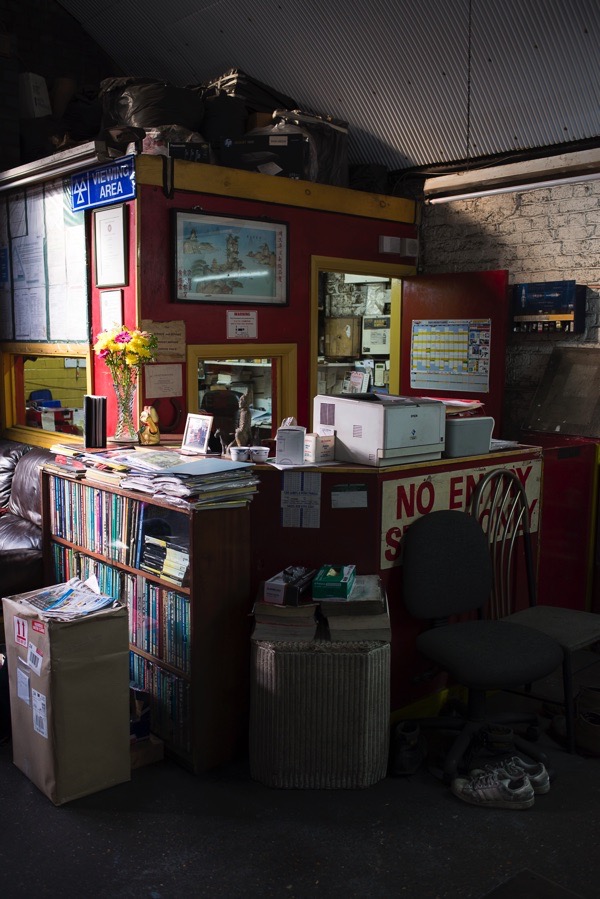
The Chu’s office
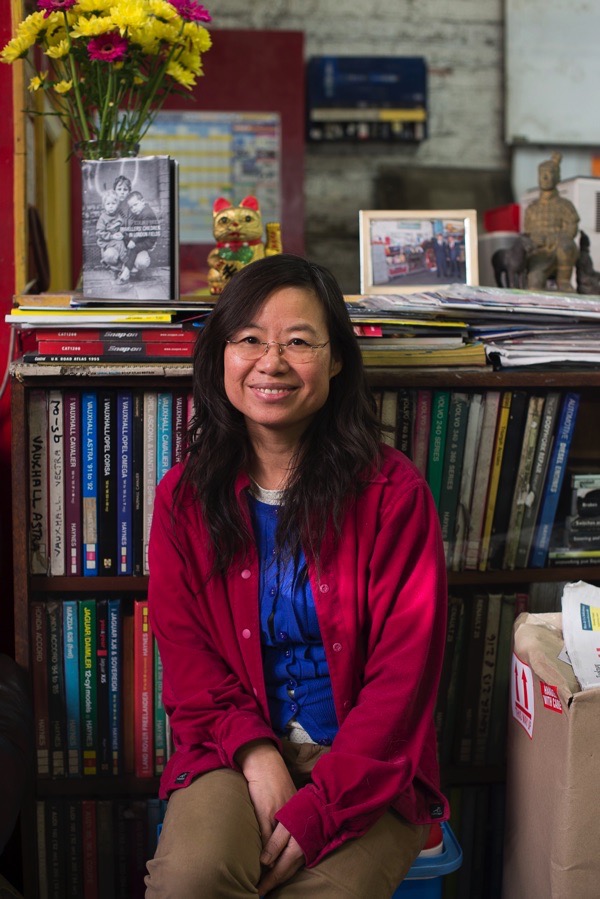
Nhi Chu
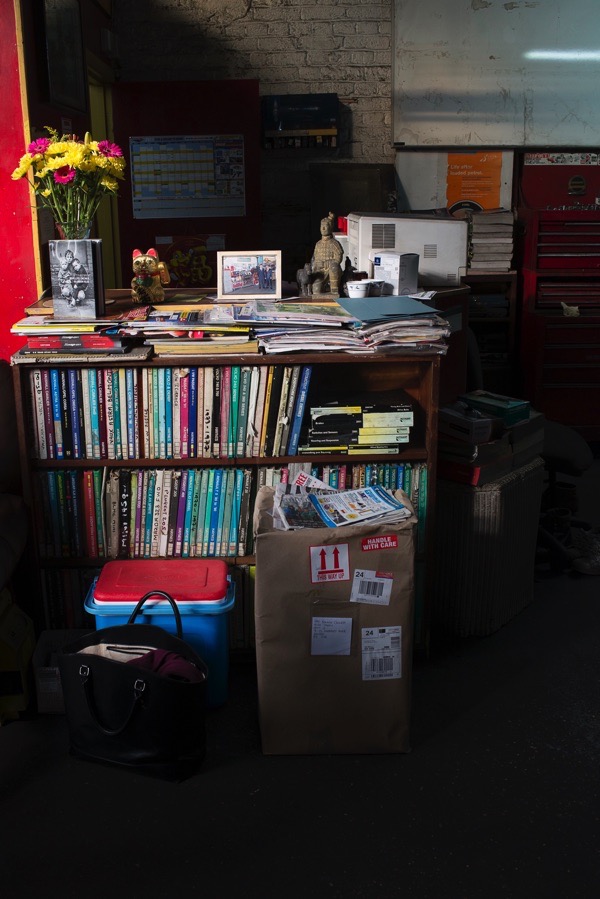
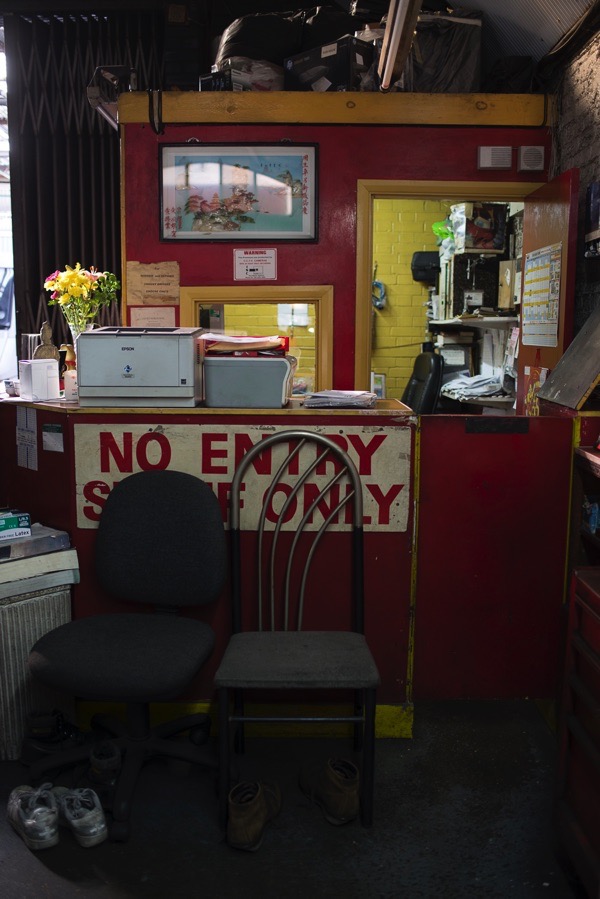
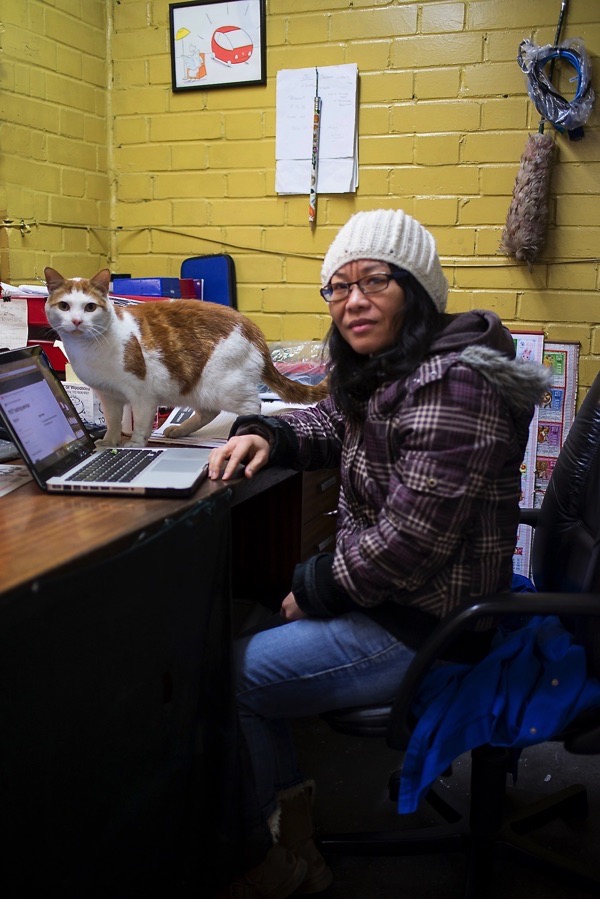
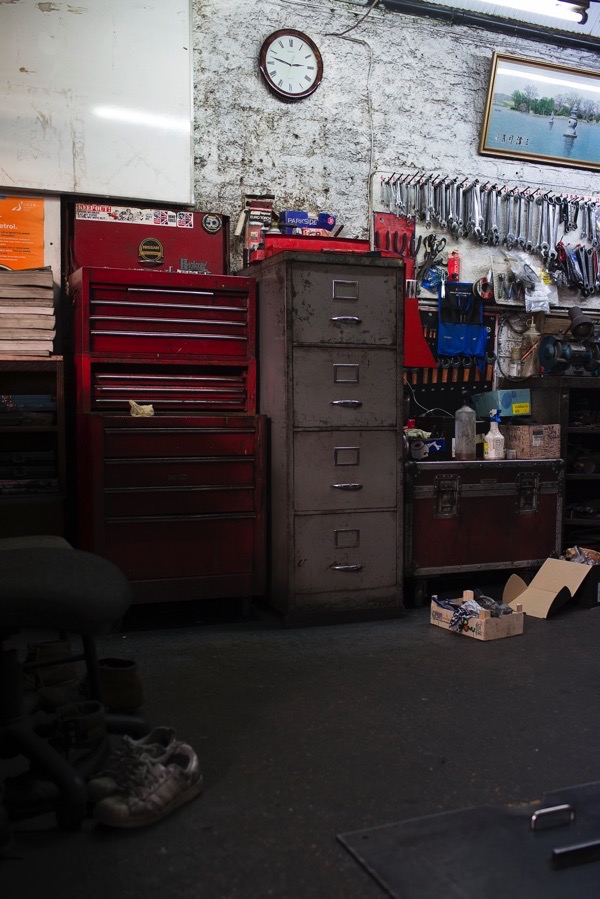
Chau Chu
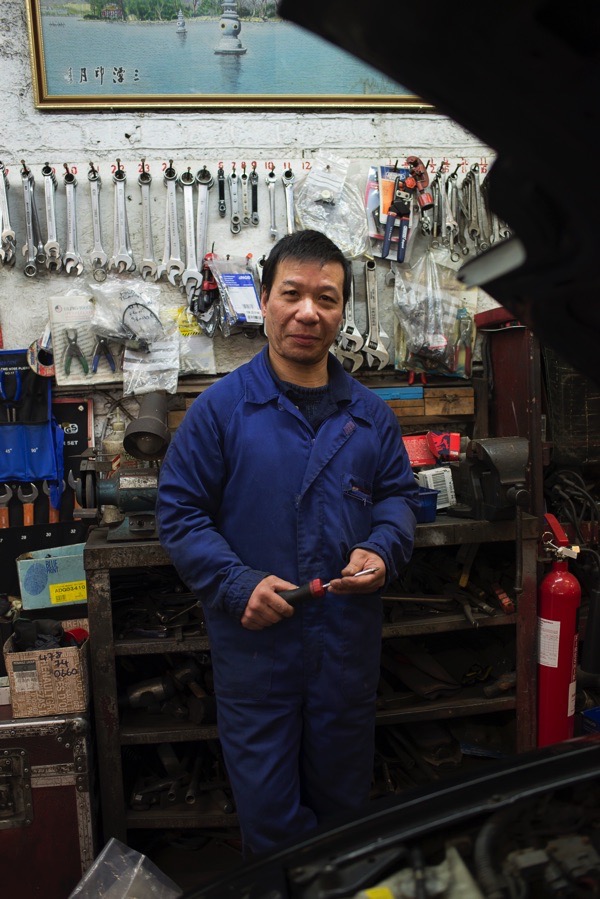
Jimmy Chu
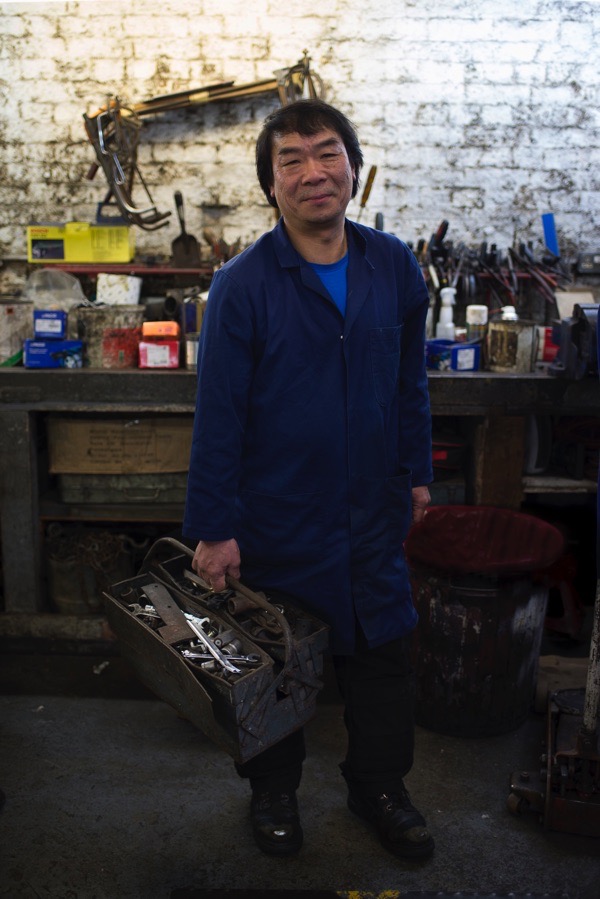
Quang Chu with his father’s toolbox
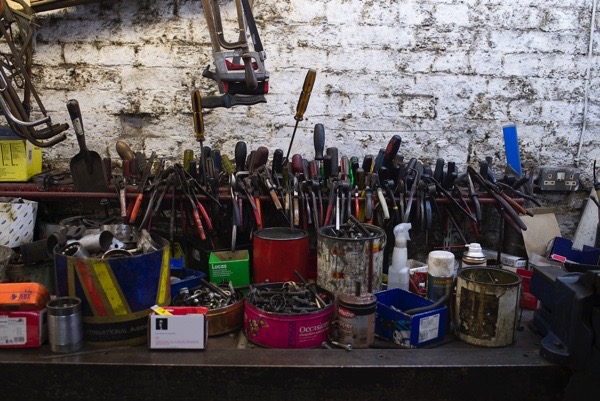
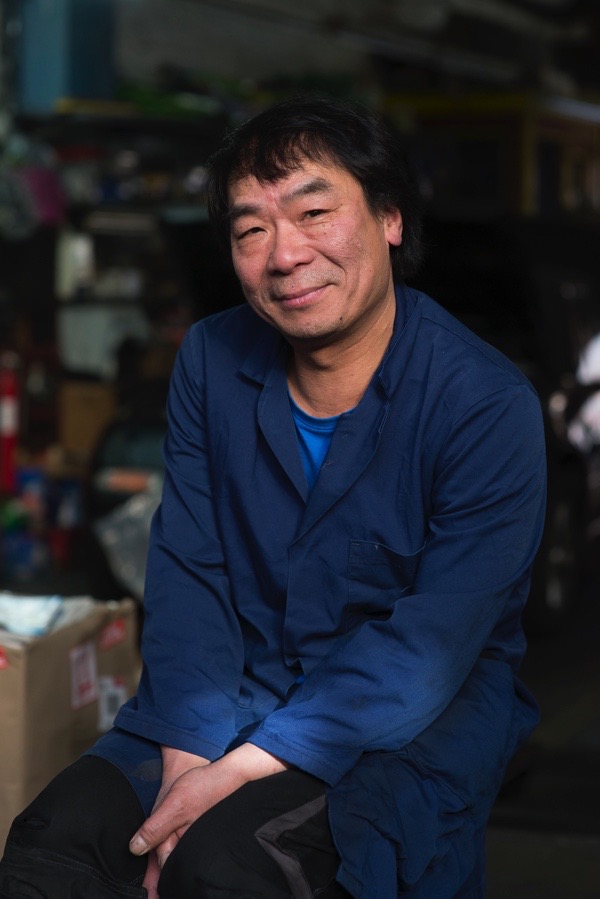
Quang Chu
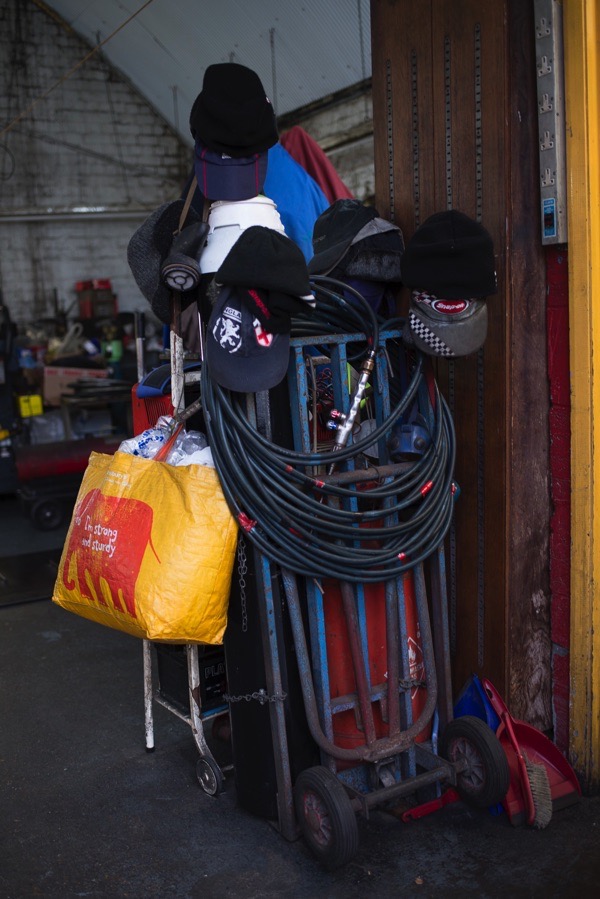
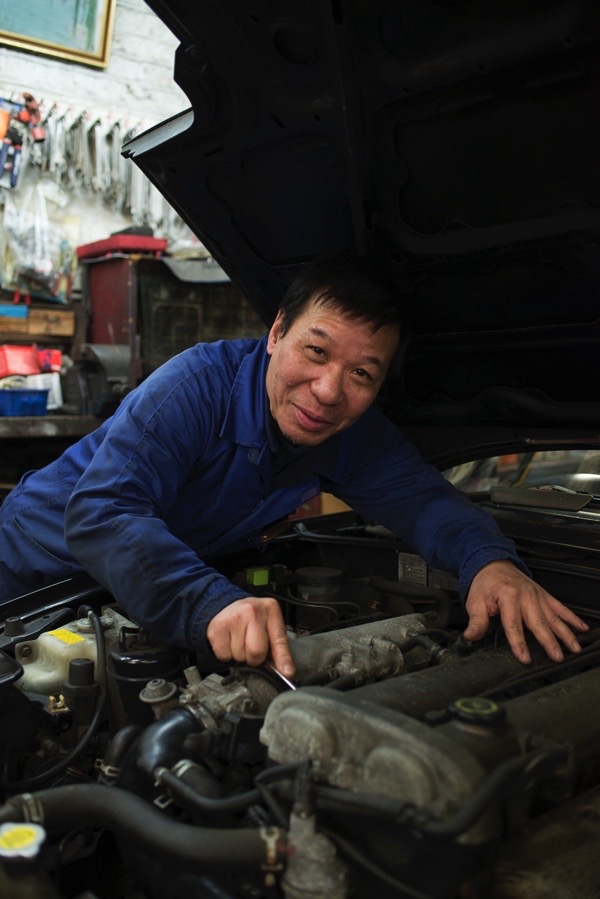
Jimmy Chu
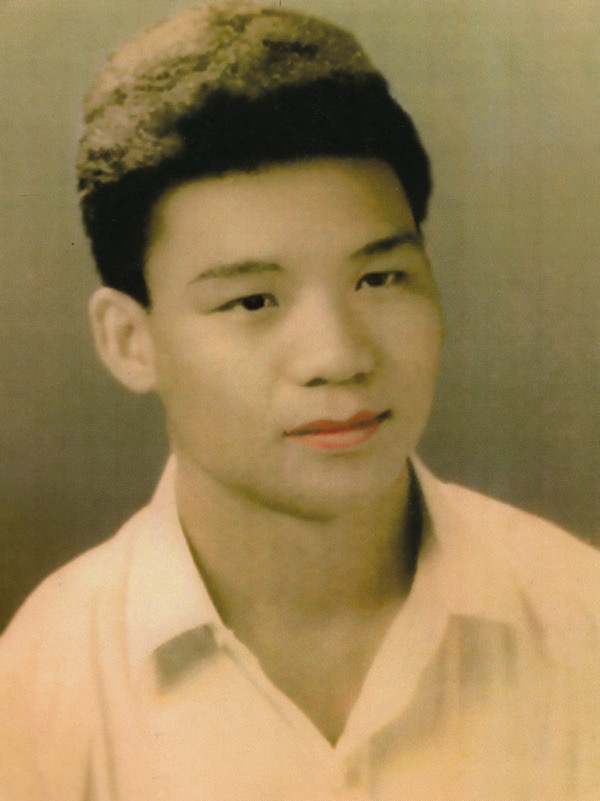
Chuong Kim Chu
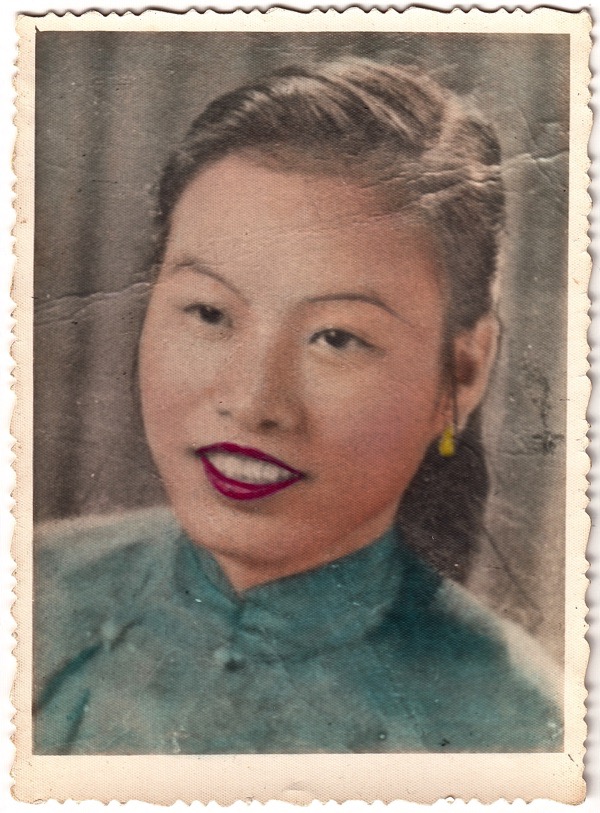
Lien Chu
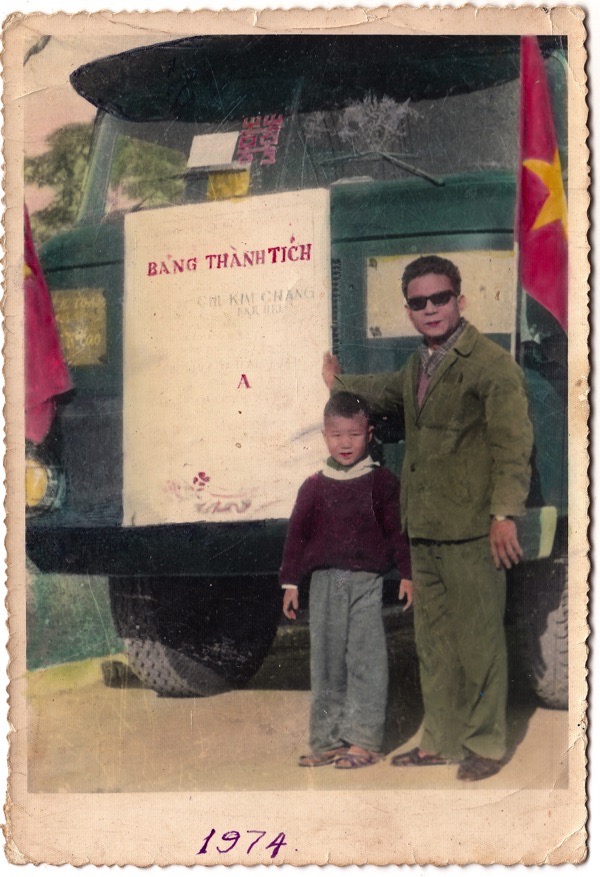 Chuong Chu standing in front of his trunk with Quang in Viet Nam, 1974
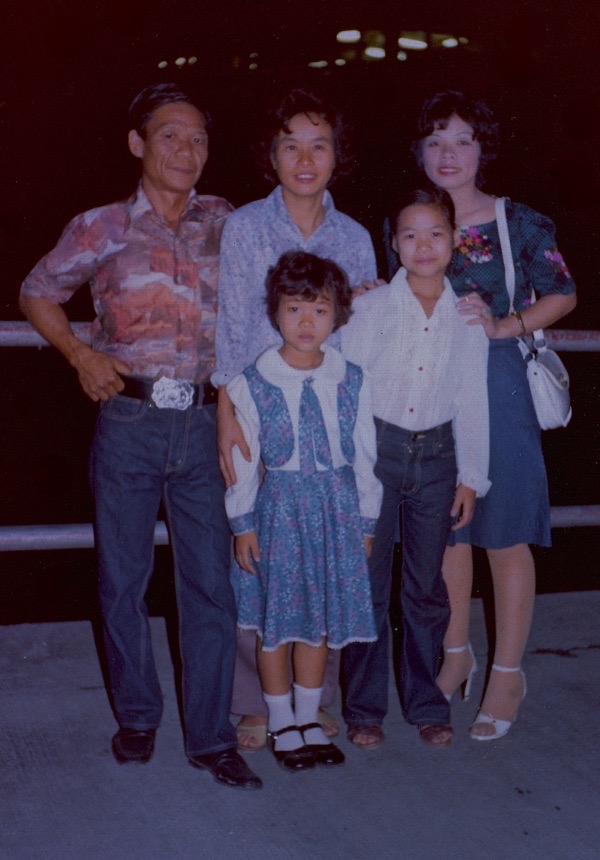
The Chu family reunited in Hong Kong 1979
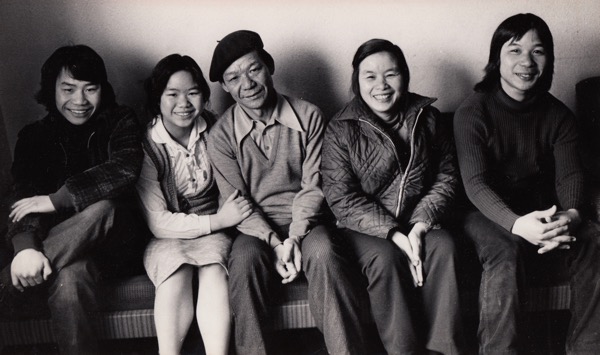
Chu family in Barrow-in Furness
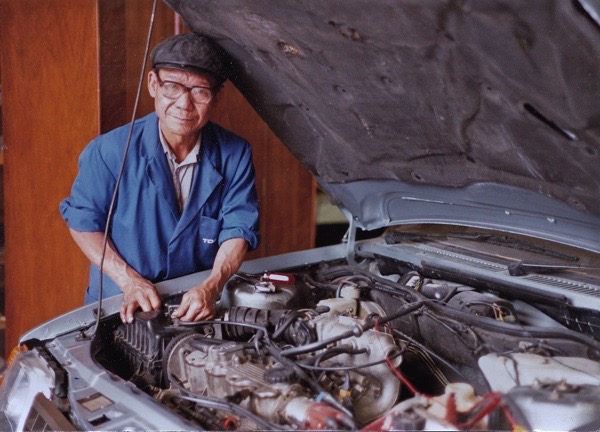
Chuong Chu at Chu’s garage
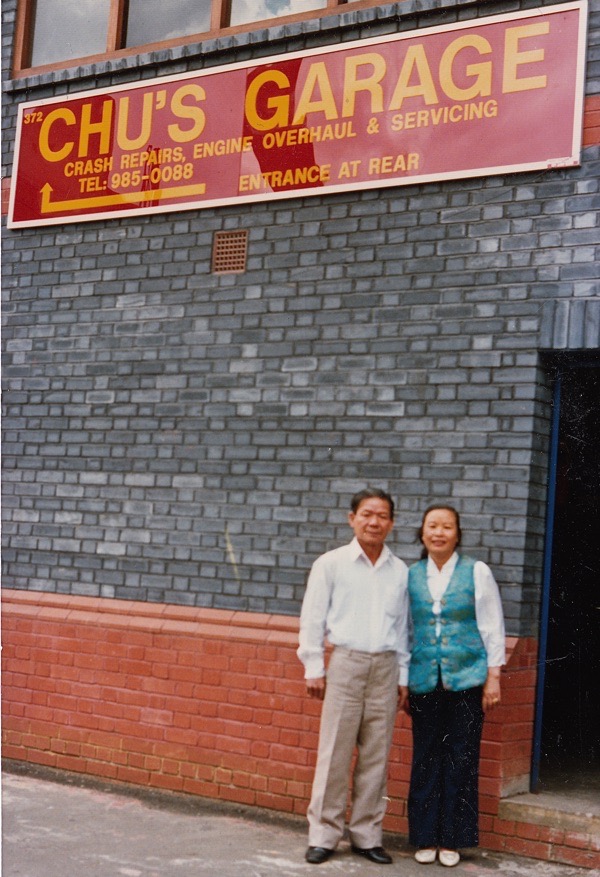
Mr & Mrs Chu outside Chu’s garage
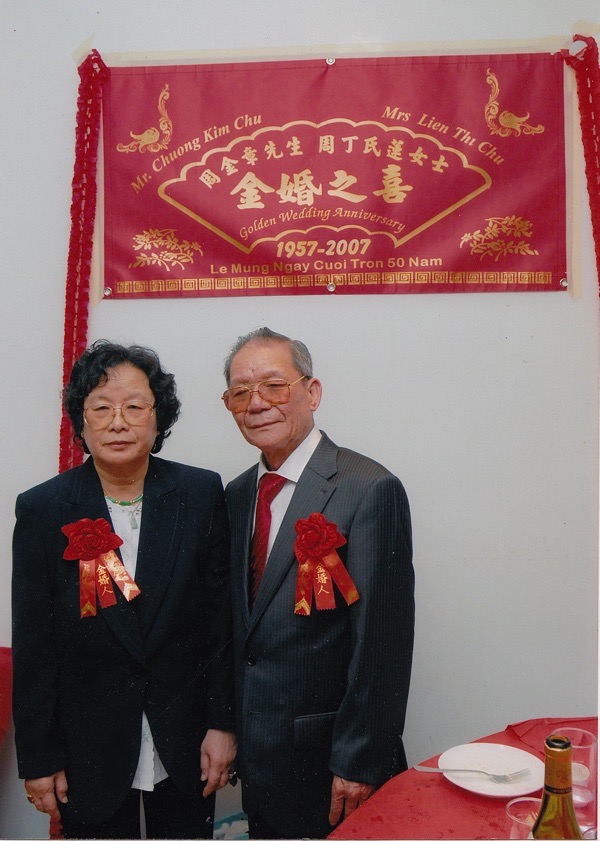
Mrs & Mrs Chu upon their return to Viet Nam for their fiftieth wedding anniversary
New photographs copyright © Sarah Ainslie
You may also like to read about