Charles Chusseau-Flaviens, Photographer

Petticoat Lane
Photographer Charles Chusseau-Flaviens came to London from Paris and took these pictures, reproduced courtesy of George Eastman House, before the First World War – mostly likely in 1911. This date is suggested by his photograph of the proclamation of the coronation of George V which took place in that year. Very little is known of Chusseau-Flaviens except he founded one of the world’s first picture agencies, located at 46 Rue Bayen, and he operated through the last decade of the nineteenth and first decade of the twentieth century. Although their origin is an enigma, Chusseau-Flaviens’ photographs of London and especially of Petticoat Lane constitute a rare and surprisingly intimate vision of a lost world.
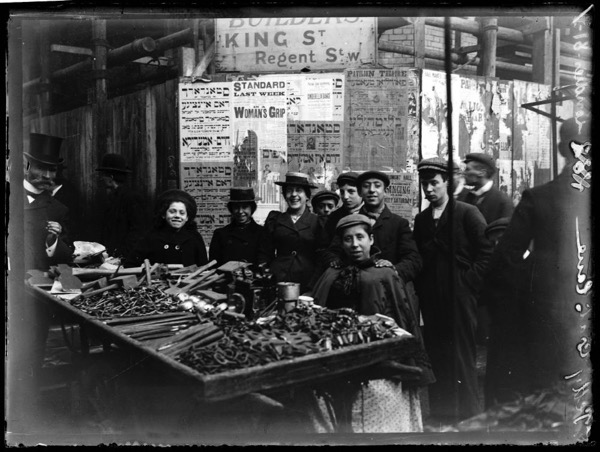
Petticoat Lane
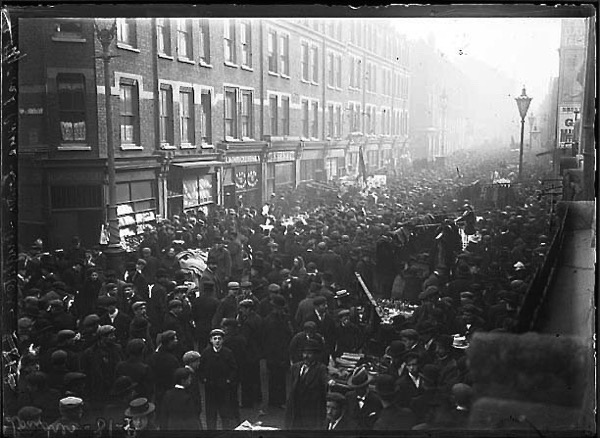
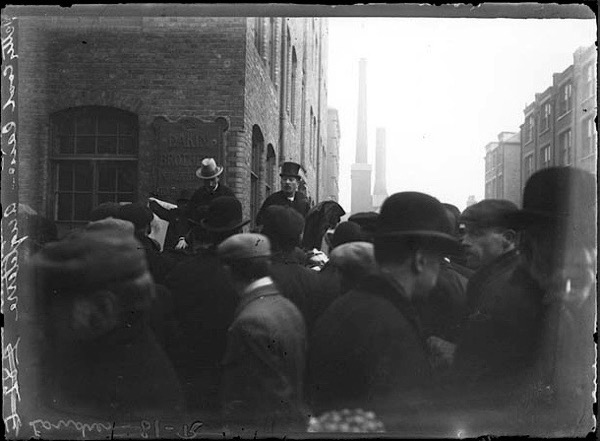
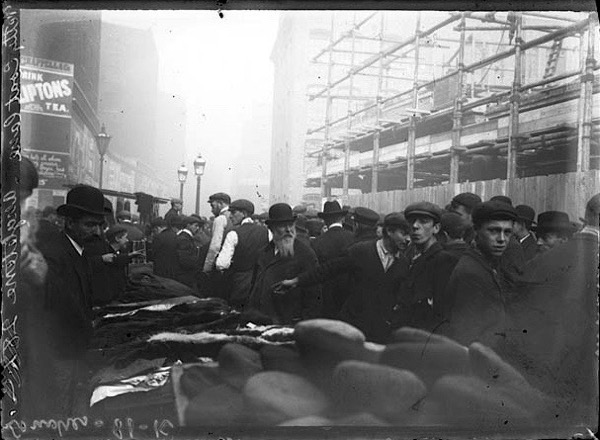
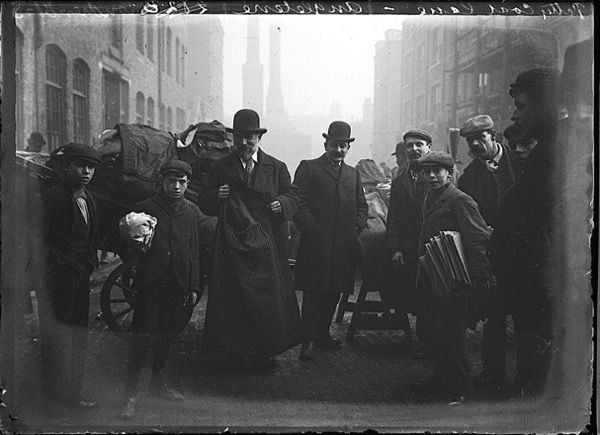
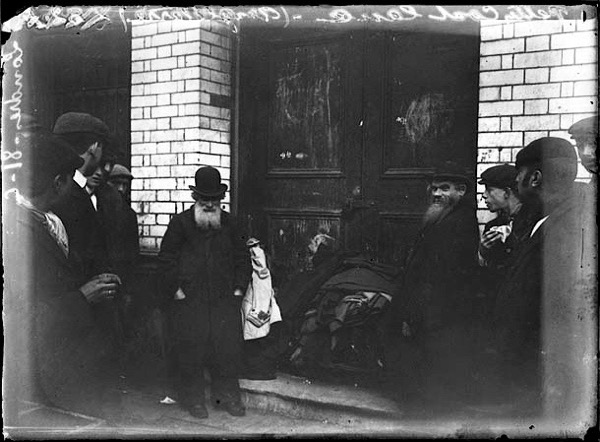
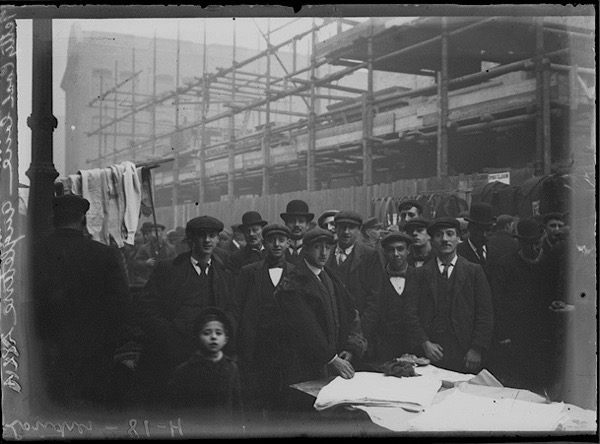
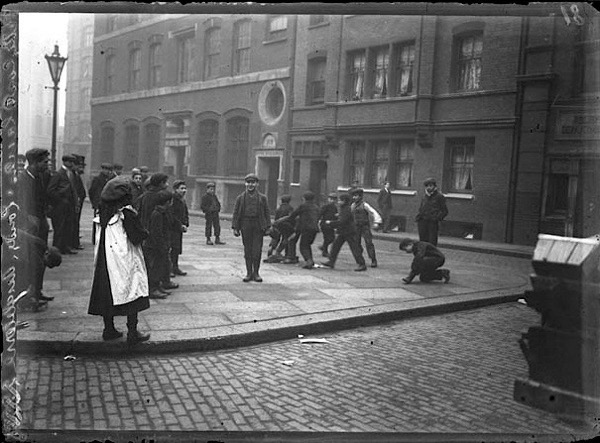
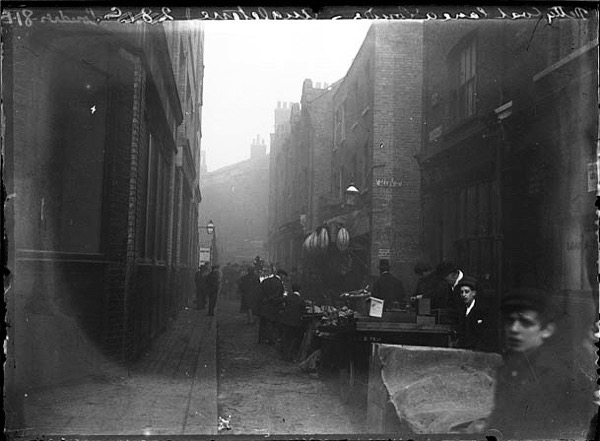
Sandys Row with Frying Pan Alley to the right
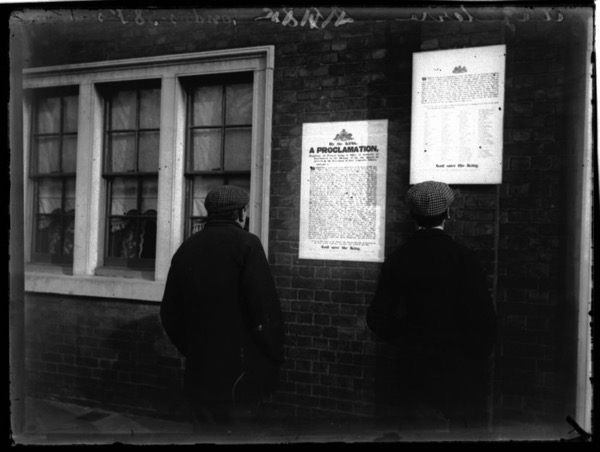
Proclamation of the coronation of George V, 1911
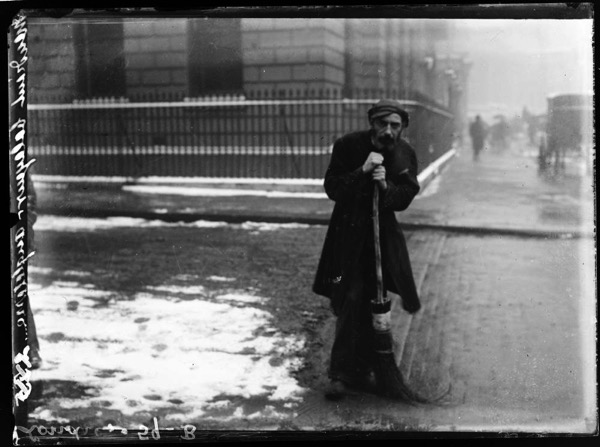
Crossing sweeper in the West End

Policeman on the beat in Oxford Circus, Regent St
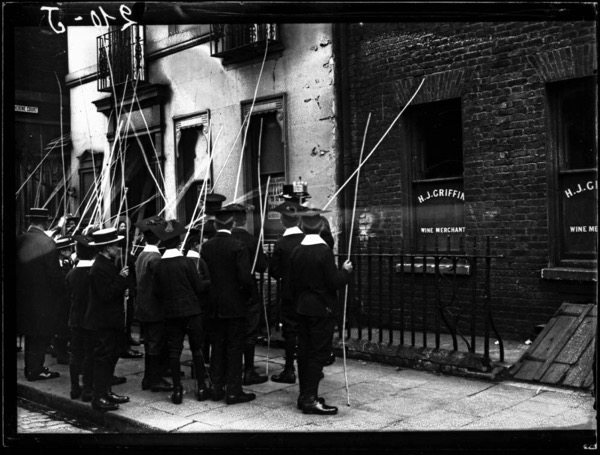
Beating the bounds for the Tower of London, Trinity Sq

Boats on the Round Pond, Kensington Gardens

Suffragette in Trafalgar Sq
Photographs courtesy George Eastman House
You may also like to take a look at
At Morden College
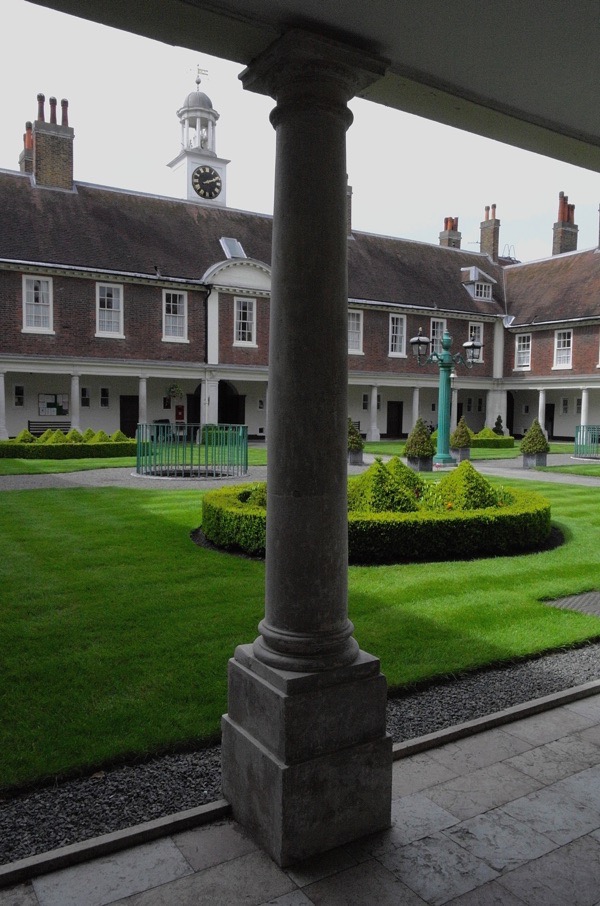
At the southeast corner of Blackheath Park stands a red-brick nineteenth century gatehouse with a drive curving beyond and disappearing into the trees. You might wonder if this is the London retreat of a reclusive plutocrat, yet a sign announcing ‘Morden College’ disabuses you of this notion. So then you assume it must be an exclusive private school and you look for errant pupils in uniform, yet you are wrong again. Morden College is one of the capital’s best-kept secrets.
It was founded by Sir John Morden (1623-1708) in 1685 as a charitable home for ‘decayed merchants’ of the Levant Company and constructed in the style of Christopher Wren by Wren’s master-mason Edward Strong. Remarkably, it is still going strong and now offers good quality retirement accommodation to four hundred people, including a nursing home.
When I visited recently, I walked up the sweeping drive to pass through the main entrance beneath the statues of Sir John & Lady Susan Morden and arrive at the central quadrangle, which looks as fine today as it did three hundred years ago. It was my privilege to enjoy lunch in the dining hall, sitting beneath the portrait of Sir John, followed by a stroll around the well-kept gardens just as the wisteria was coming into flower.
Sir John Morden administered the college himself in his final years and it flourishes today as a inspirational and far-sighted example of philanthropy. Born into a modest family in the parish of St Bride’s, Fleet St, he rose by his own ability through an apprenticeship to a Committee Member of the East India Company. After a successful posting to Aleppo, he later became Deputy Governor of the Company and a Board Member of the Levant Company. Yet he also lived through the Plague and the Great Fire, causing him to move from the City to Greenwich where Charles II held court and many distinguished Londoners sought refuge at the time. As his friend Daniel Defoe noted, “The beauty of Greenwich is owing to the lustre of its inhabitants.”
Without children, Sir John had no heir for his fortune and decided to use his wealth to found a college for, “Poor Merchants and such as have lost their Estates by accidents, danger and Perills of the Seas or by any other way of means in their honest endeavours to get a living by means of Merchandizing.”
Defoe wrote describing the venture.
“I had it from his own mouth that he was to make apartments for forty decay’d merchants to whom he resolv’d to allow forty shillings per annum each, with coals, a gown (and servants to look after their apartments) and many other conveniences so as the make their lives as comfortable as possible.
Each apartments consists of a bedchamber and a study, or large closet for their retreat, and to divert themselves with books etc.
They have a public kitchen, a hall to dine in. There is also a very good apartment for the chaplain, whose salary is fifty shillings a year, there are also dwellings for the cooks, butlers, porter, the women, and other servants, and reasonable salaries allow’d them. Behind the chapel is a handsome burial ground wall’d in, there are also very good gardens. In a word, it is the noblest foundation and most considerable single piece of charity that has been erected in England since Sutton’s hospital in London.”
While enjoying the benefits of good fortune, John Morden recognised that it was equally possible to suffer ill-fortune and – with startling insight and generosity – left his inheritance to support to those who needed it, in perpetuity. When William Morris campaigned to save the Trinity Green Almhouses in Whitechapel in the eighteen-eighties, he argued that we need them as a reminder of the enduring spirit of fellowship. I came away from Morden College uplifted by the same thought, humbled and touched by John Morden’s open-handed appreciation of the needs of others, and with a renewed recognition of the responsibility we all have to support those who are vulnerable in our society.
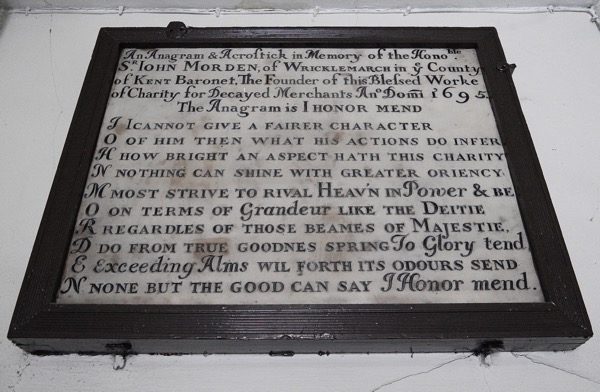
Anagram & acrostic in memory of Sir John Morden over the entrance to the dining hall
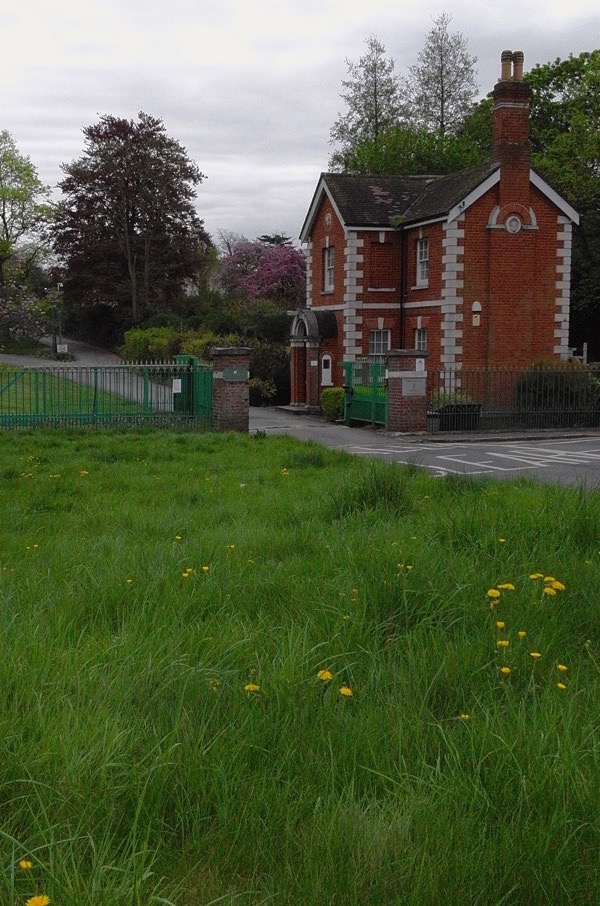
At the southeast corner of Blackheath Park stands a red-brick nineteenth century gatehouse
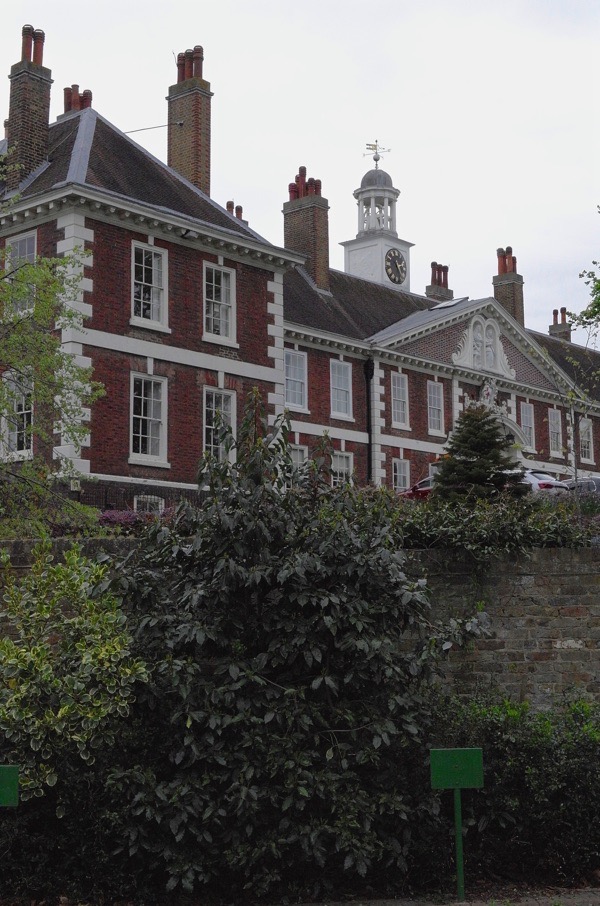
Constructed in the style of Christopher Wren by Wren’s master mason Edward Strong
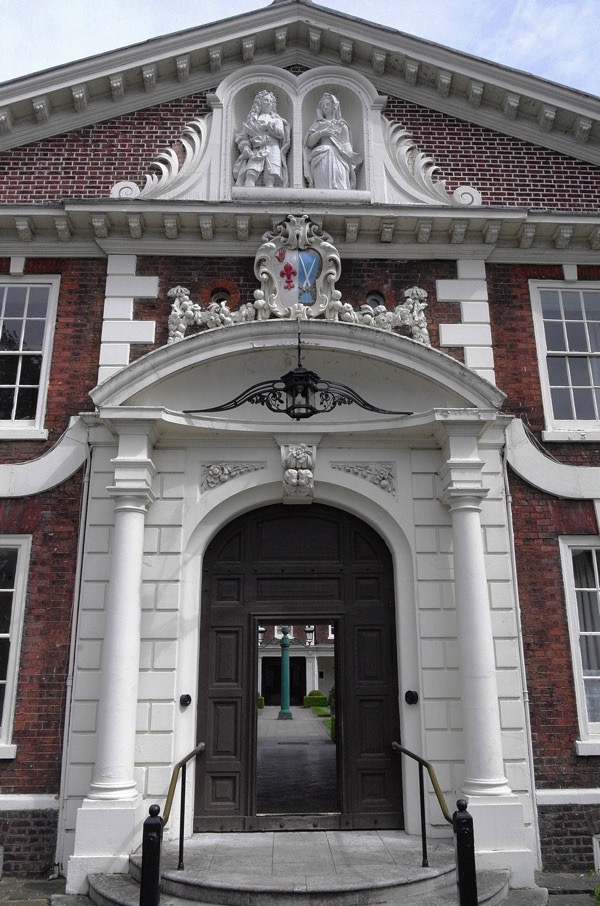
“His statue in stone set up by his lady and since her death her own is set up near by the trustees” – Daniel Defoe commented on the statues of Sir John & Lady Susan Morden when he visited in 1725
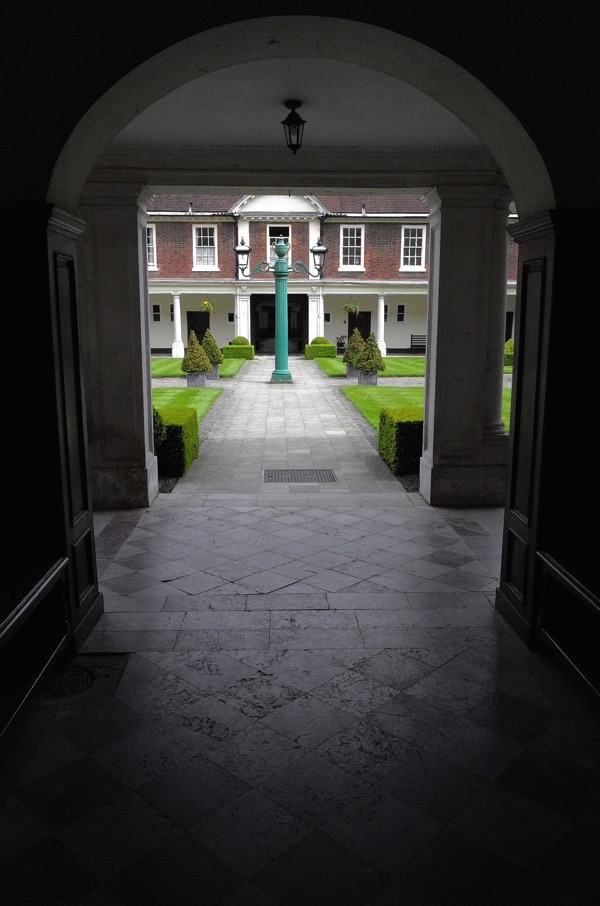
Entrance to the quadrangle
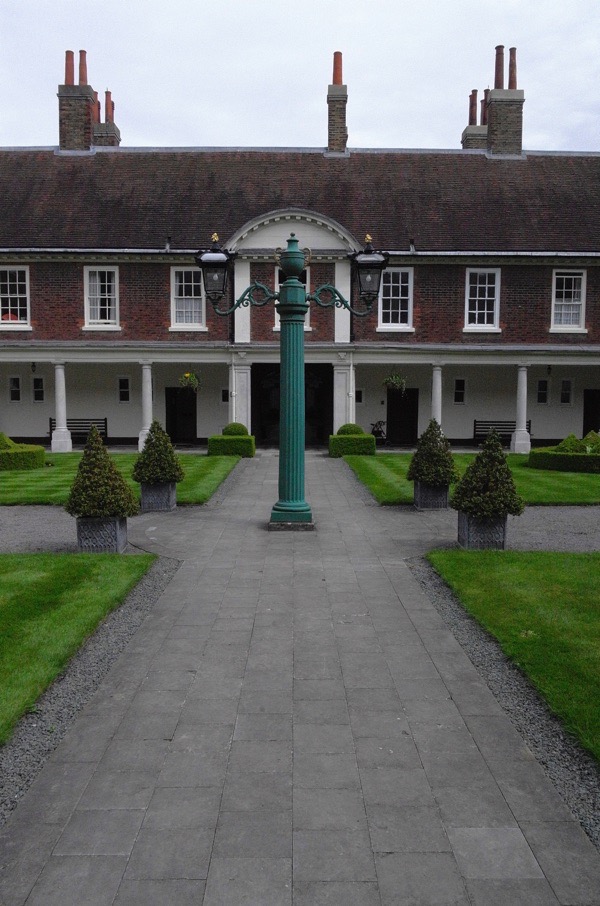
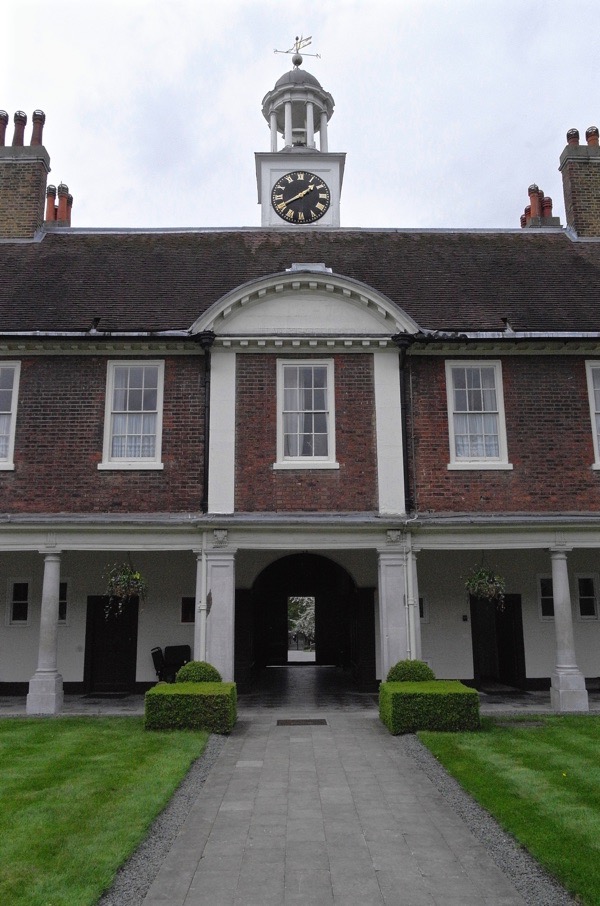
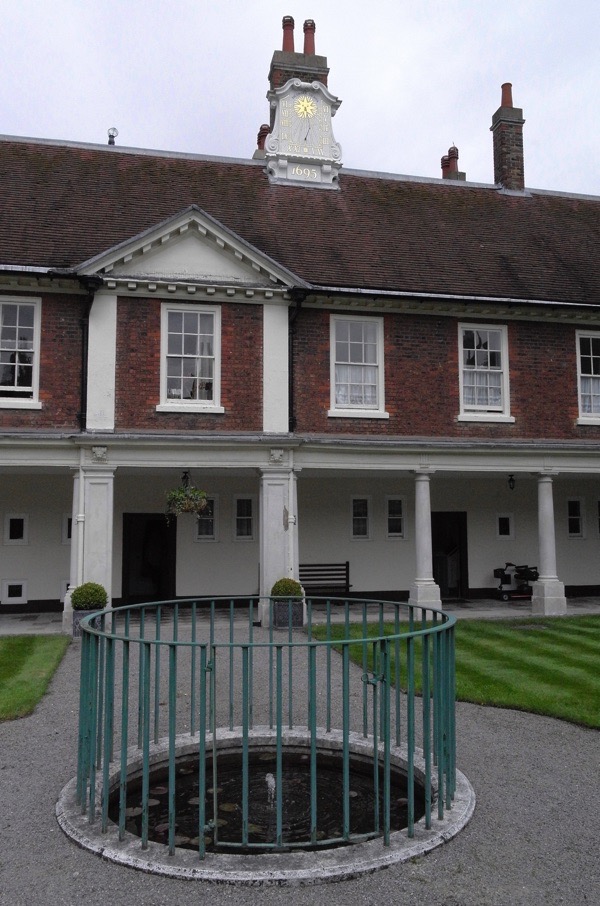
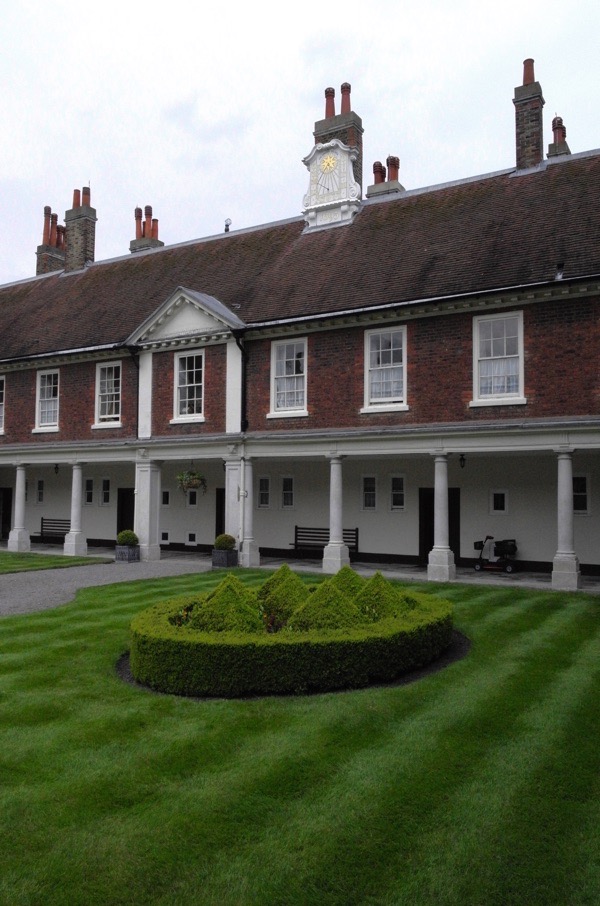
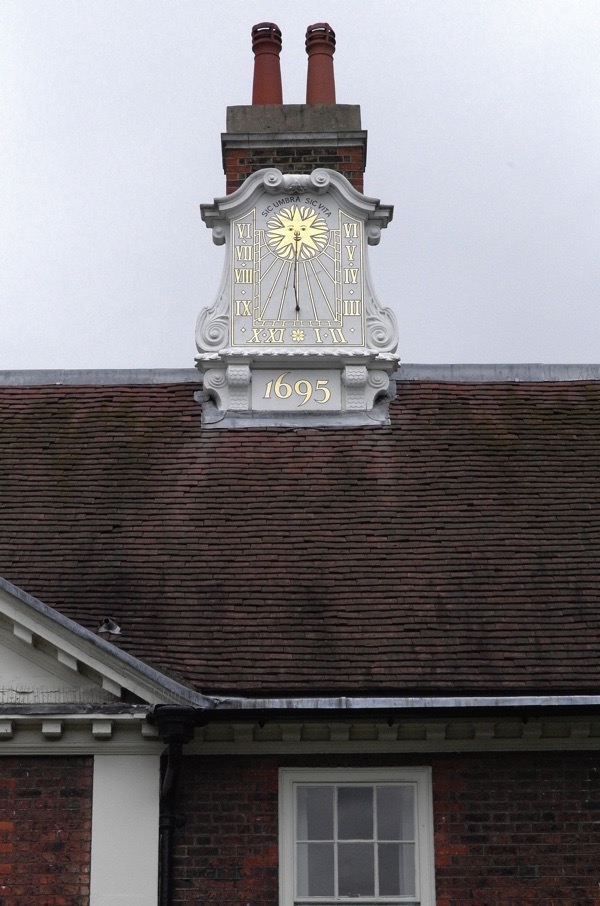
“And that there be a Sun Dyall set up for Keeping the Clock right w’ch often goes wrong.” The motto reads “Sic Umbra, sic vita,” comparing the transiency of life to a fleeting shadow.
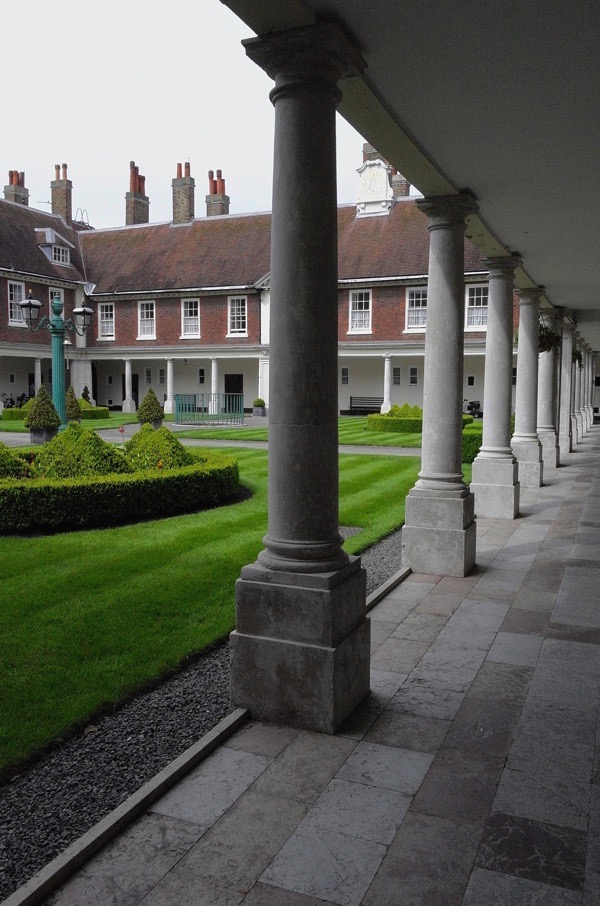
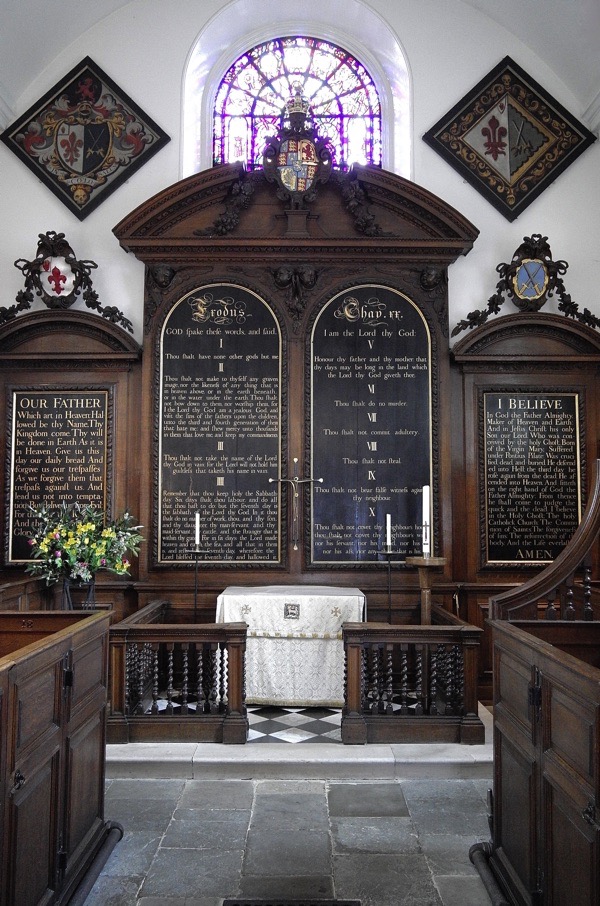
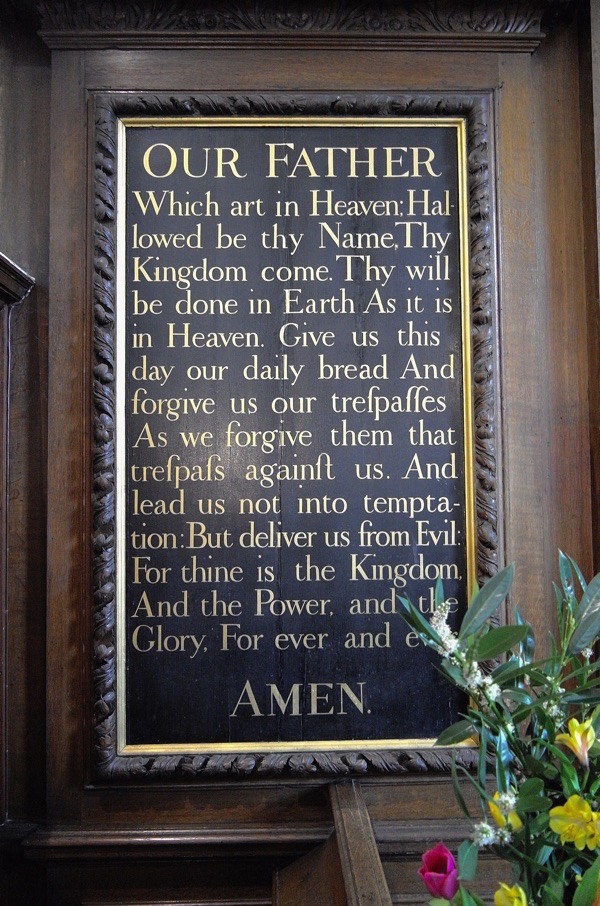
“the chaplain, whose salary is fifty shillings a year”
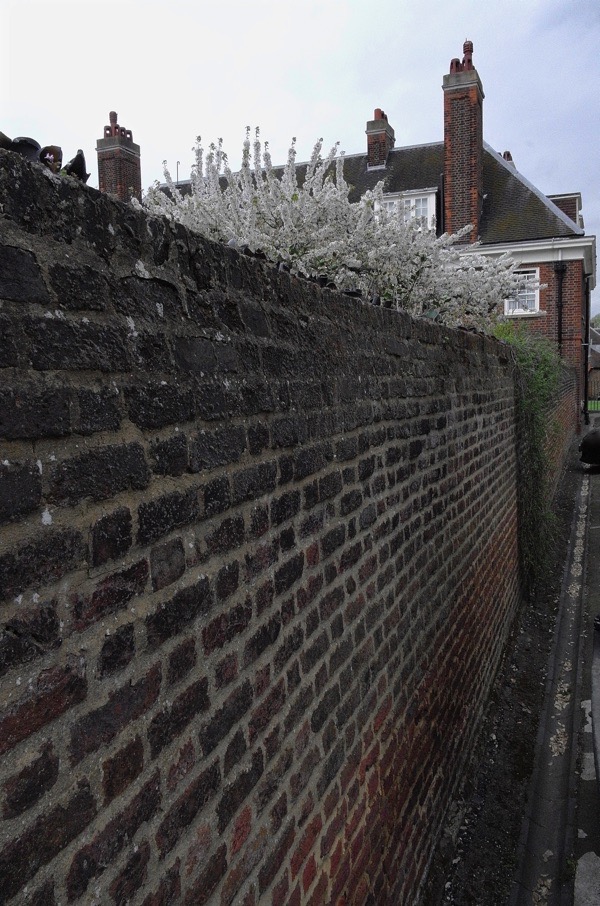
“a handsome burial ground wall’d in”
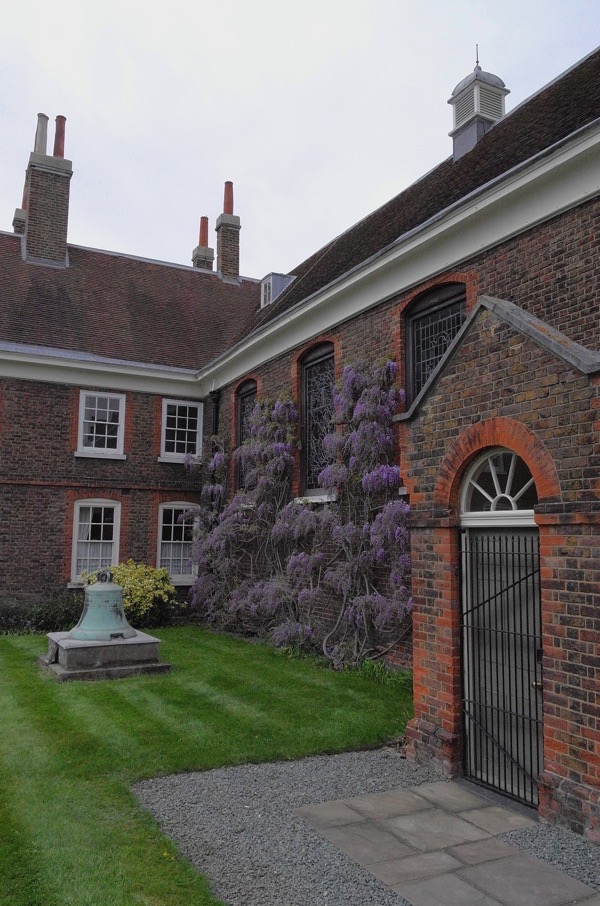
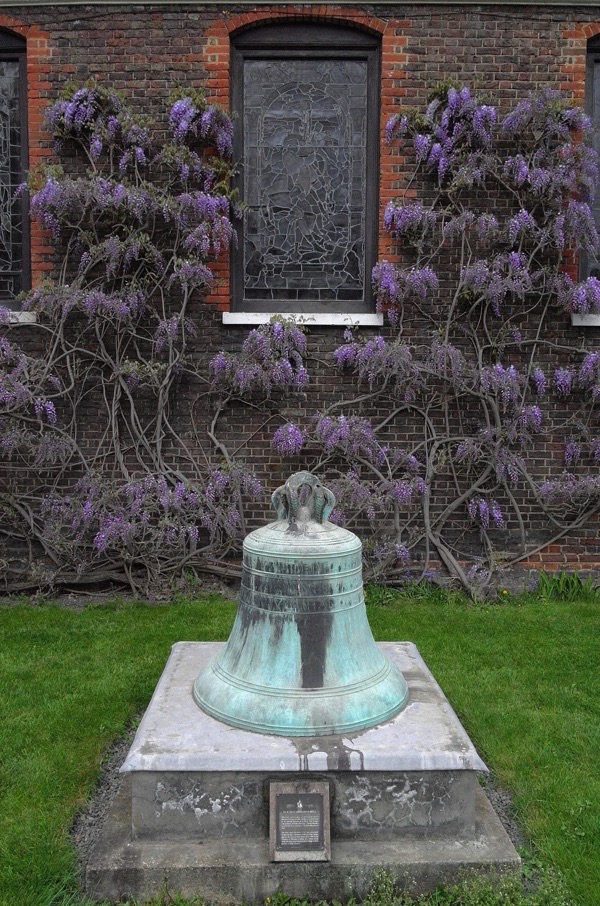
The Edwardstone bell from the church where Lady Susan Morden worshipped as a child
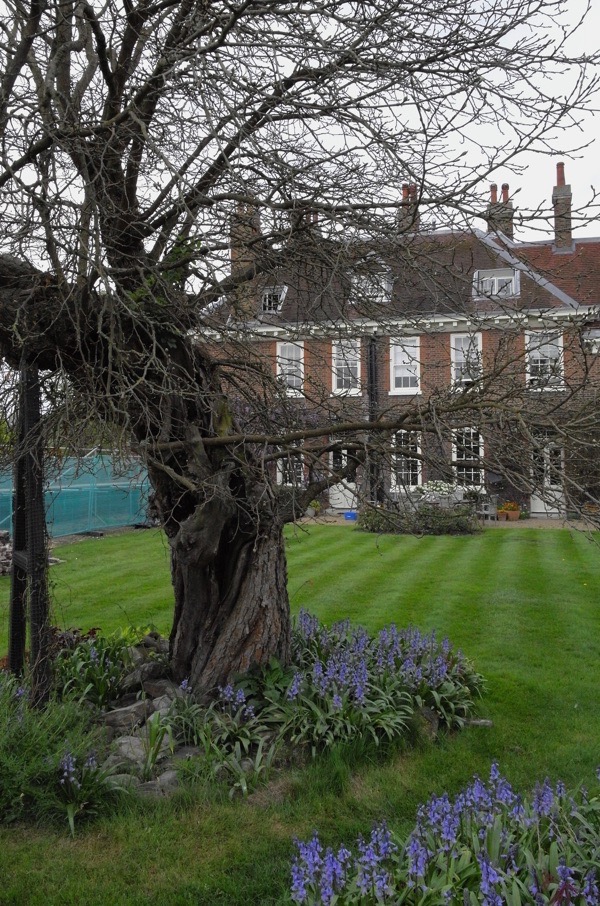
Mulberry tree c.1700
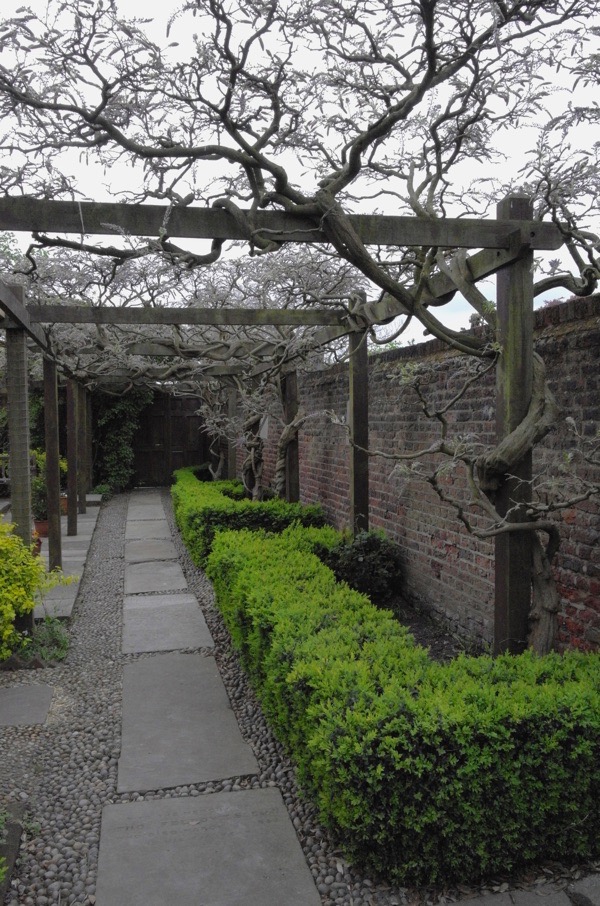
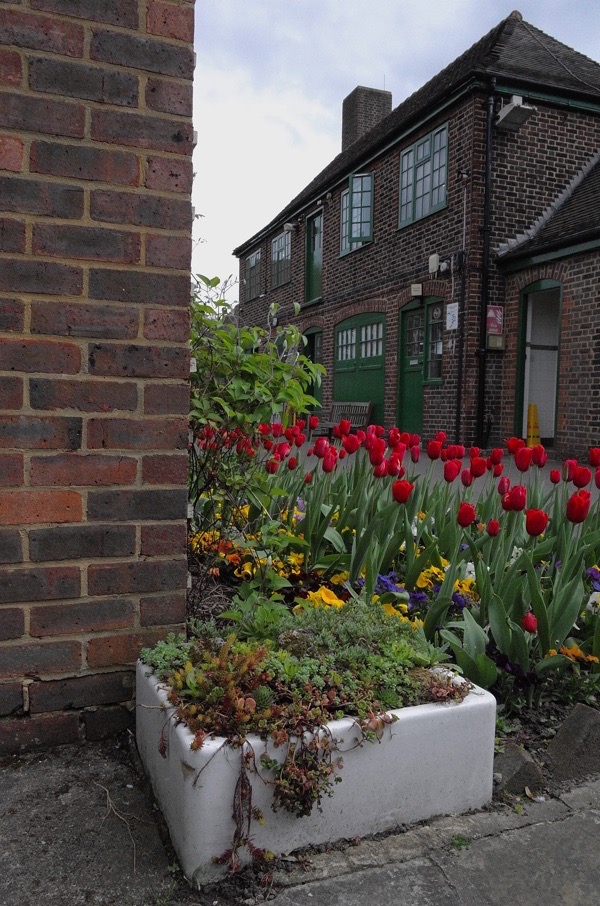
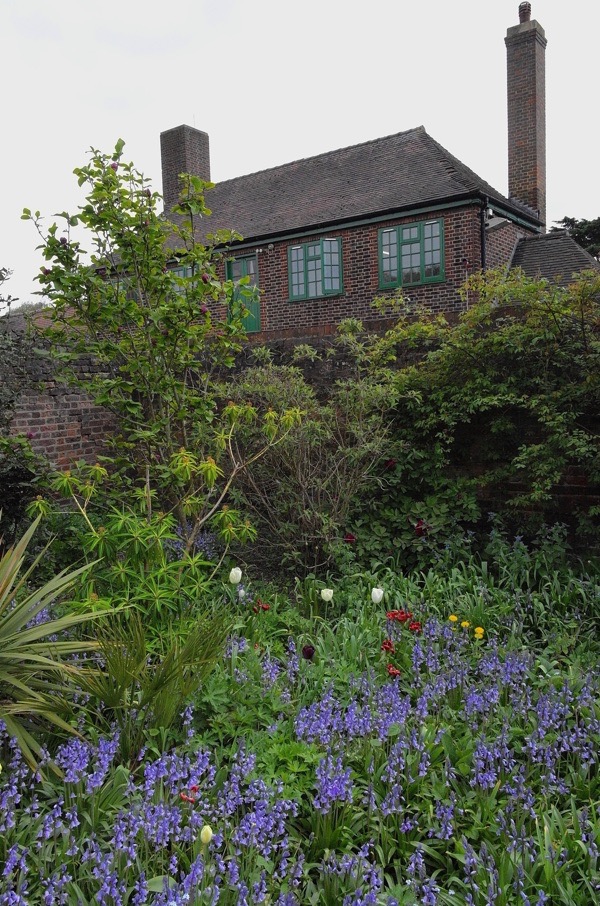
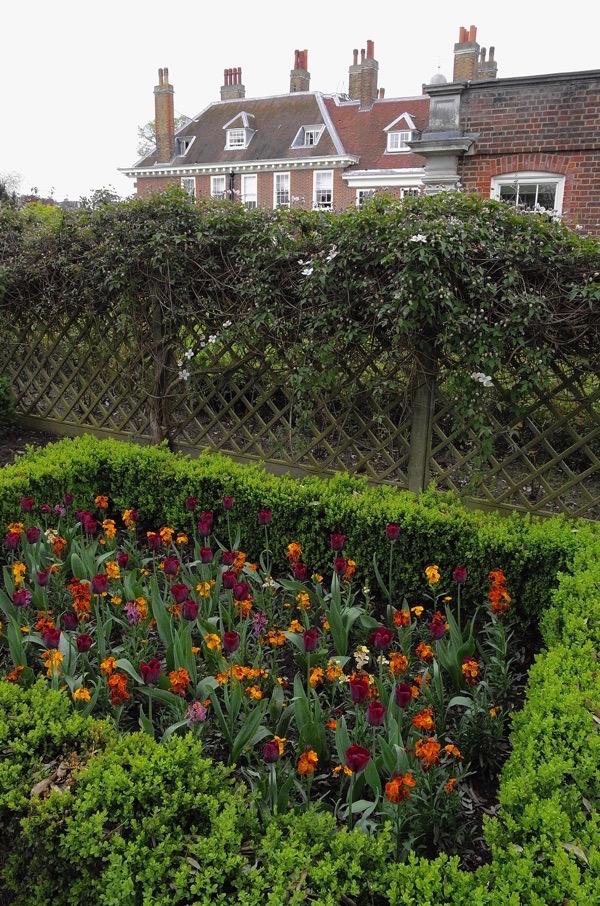
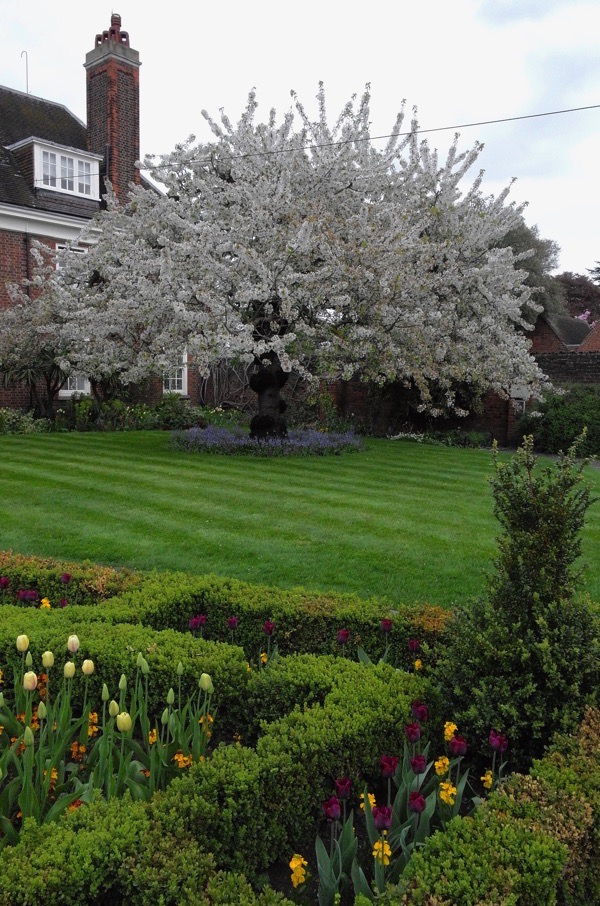
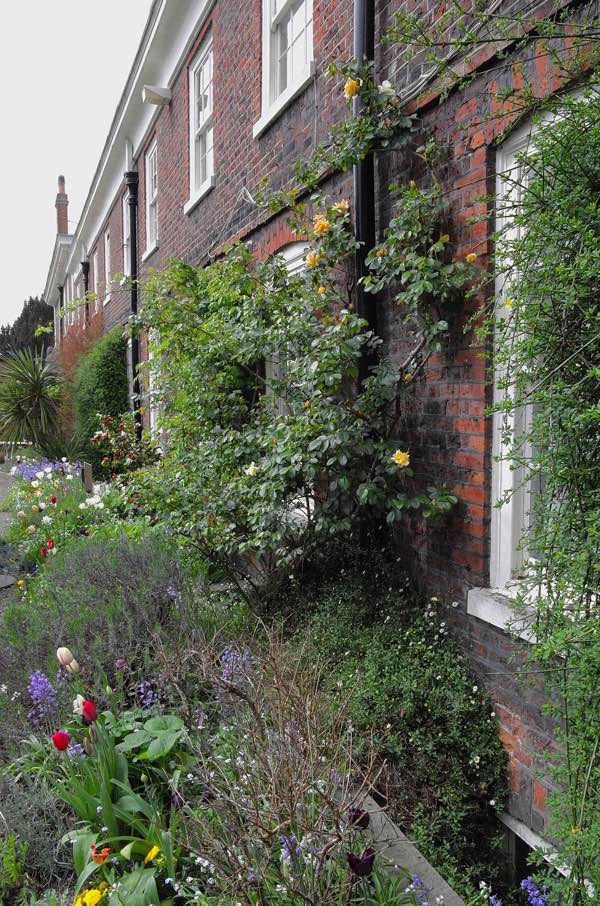
“there are also very good gardens”
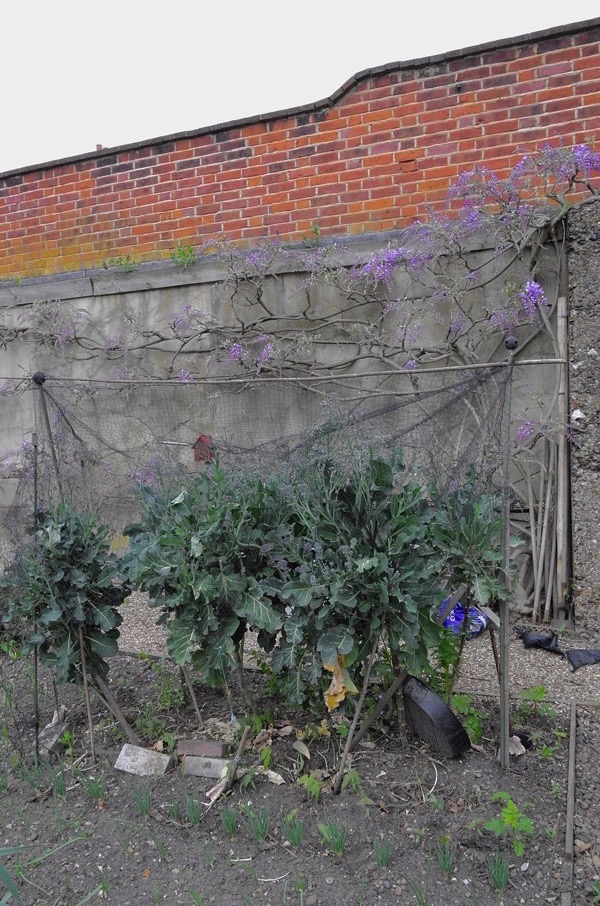
Purple sprouting and wisteria in the allotments
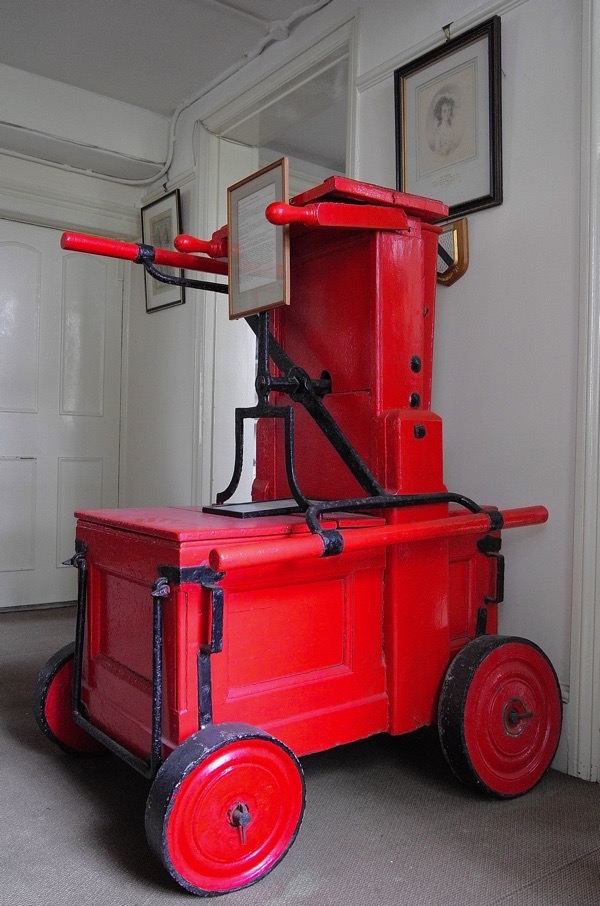
The college fire engine was presented by Richard Chiswell in 1751
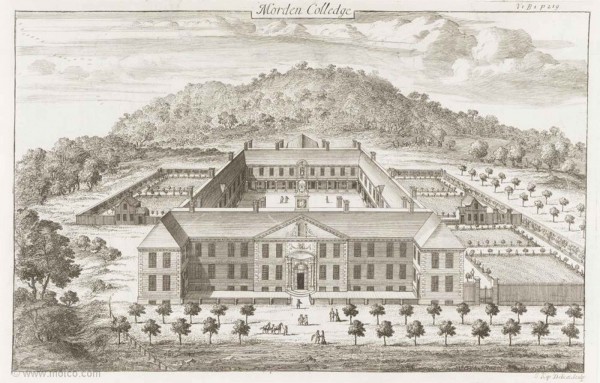
Morden College, 1755
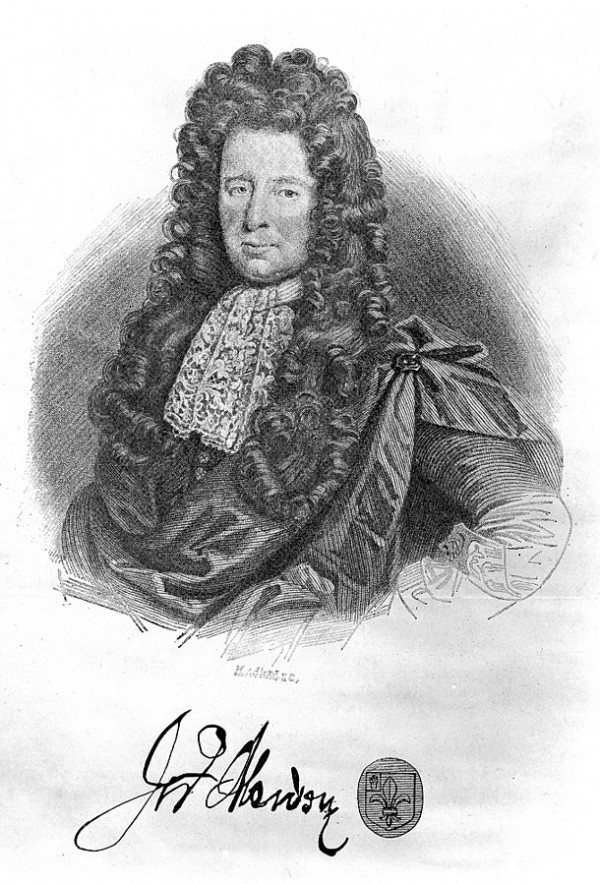
Sir John Morden (Courtesy of Wellcome Foundation)
You may also like to read about
The Departure Of Tom Disson
Only yesterday, I learnt of the retirement of Tom Disson of George’s Plaice in the Roman Rd, one of the East End’s longest-established and best loved fishmongers. I know you will want to join me in wishing Tom well for his retirement years.

Tom shows Jesus’ thumbprint on a Haddock
For the last thirty-five years Tom Disson has viewed the world through the narrow frame of the shopfront at George’s Plaice in the Roman Rd where he knows all his customers by name. When I joined him behind the fishermonger’s slab with its gleaming array of the harvest of the deep laid out before us, our conversation was regularly punctuated as Tom turned his head to utter a greeting to each person that appeared in the field of his peripheral vision, flitting past the shop window – “Hello Mary Love!”- “Hello Ted!” – “Hello Ginger!”
There has been a fishmonger on this site since 1898 and today George’s Plaice is the centre of the world in the Roman Rd, where customers come to introduce their daughters to cockles and to order jellied eels for family funerals, while Tom keeps everything buoyant with constant flow of banter, both lewd and lugubrious by turns. “Are you looking for service? I’m feeling chesty today,” proposed Tom with a provocative comedy smirk as his customers scrutinised the kippers, heroically suppressing the heavy cold that was getting him down.
“My dog had a wart on its ear and do you know what it cost me? – £387 to have it removed!” protested Tom, sharing his affront at the iniquity of our times with Rene, who matched it with an account of her greyhound’s leg that cost £475 to set. This statement was countered by Tom’s revelation that his dog required cream for its foot, to stop it scratching, that cost £85. A resultant empathetic silence of mutual outrage prevailed while Tom wrapped up Rene’s fish, before an exchange of genial smiles accompanied the close of the transaction.
“I was a banana salesman at Fyffes Bananas for fifteen years, until I met my lovely wife at an eel stall in Club Row and that’s how I came to be here,” Tom confided proudly, “She’s an East End girl, born in Poplar from a family of twelve. I’m from West London, but I never had cause to regret moving here because I’ve met some lovely, lovely people over the years. My brother-in-law George was a fishmonger, he used to go down to the country, buying crabs and whelks in Norfolk and Suffolk. He ran this shop for seven years before I took over from him in 1982, and the fellow before him, he was a porter from Billingsgate Fish Market.”
Tom has decorated his walls over the last thirty-five years with an appealing gallery of pictures, some of the old East End, others of himself in former days – with two stuffed oystercatchers in a glass box as the centrepiece of the shop. And the view from the pavement, looking across the expanse of coloured fish to where Tom stands in his white apron and flat cap with the backdrop of framed pictures, is a memorable spectacle.
Week in, week out, through all weathers, Tom has been sitting keeping his fish company with his good pal Geoffrey (“East End born and bred”) a former publican. “There used to be thirty-two pubs between here and Shoreditch, but if there’s eight now it’s a lot,” posited Geoffrey regretfully to me in a quiet moment. “We’ve definitely seen the best days,” agreed Tom, nodding with a sardonic grimace, playing Vladimir to Geoffrey’s Estragon in this fish shop re-enactment of Waiting for Godot. “Years ago, you had so much banter with the people, we used to have queues both ways on a Saturday morning!” continued Tom, crossing his arms, gazing across the sea of gleaming fish for consolation and smiling fondly in a reverie of the glory days of fishmongery in the Roman Rd.
Yet the moment a customer appeared, Tom and Geoffrey both sprang into animated life, eager to please, because they appreciated the esteem with which the local people hold this shop – as an unchanging landmark and reminder of the time when people always greeted each other in this neighbourhood. For Tom Disson, it was no duty, it was his joy, because this was his community. His customers may be aging but the affection with which George’s Plaice is held by the populace of the Roman Rd ensures that this bravura performance is destined to be remembered for many years to come

Choosing the haddock

Choosing the cod roe

Tom waits while customers deliberate over the skate

A satisfied customer, delighted with her cod roe


Tom’s vigil at George’s Plaice

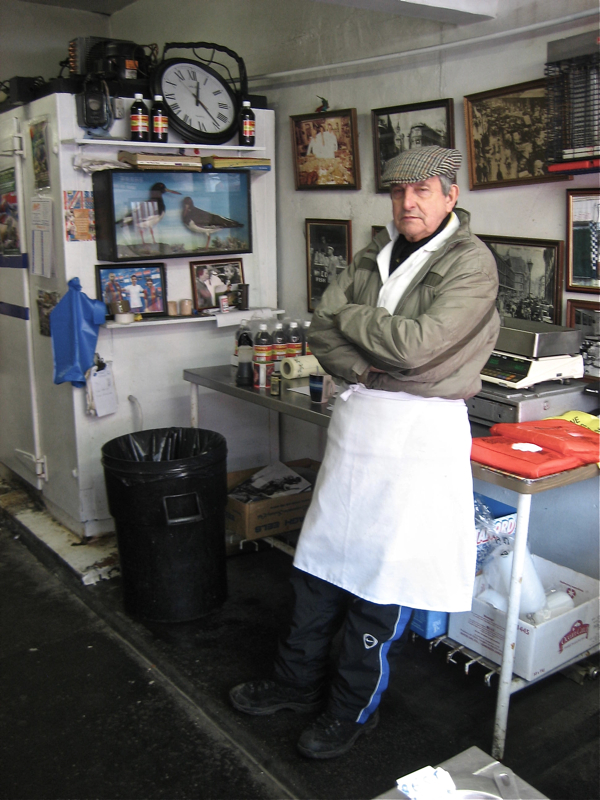
A thoughtful moment

1985


1985
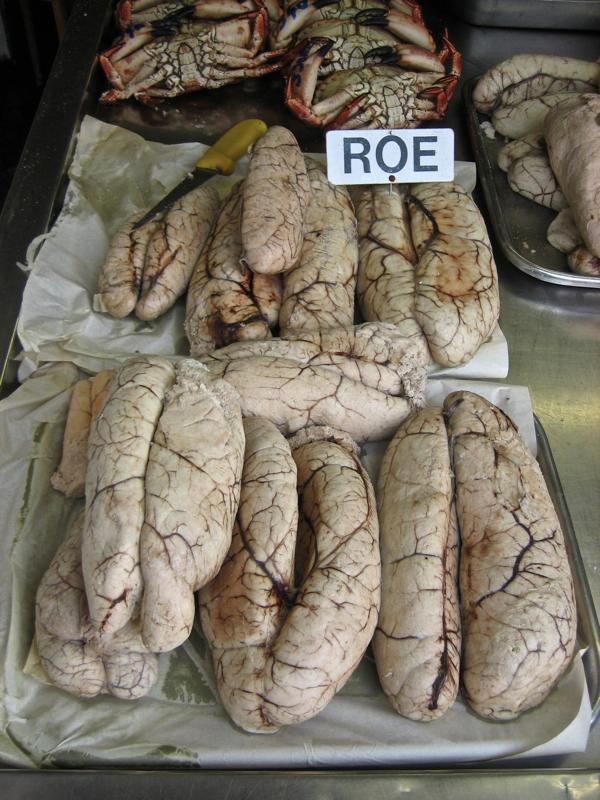
Tom’s magnificent display of freshly boiled cod roe

Tom Disson, 1985

Tom Disson, thirty-five years behind the counter in the Roman Rd
You may also like to read about
Eleanor Crow’s East End Fish Shops
Charles Dickens’ Inkwell
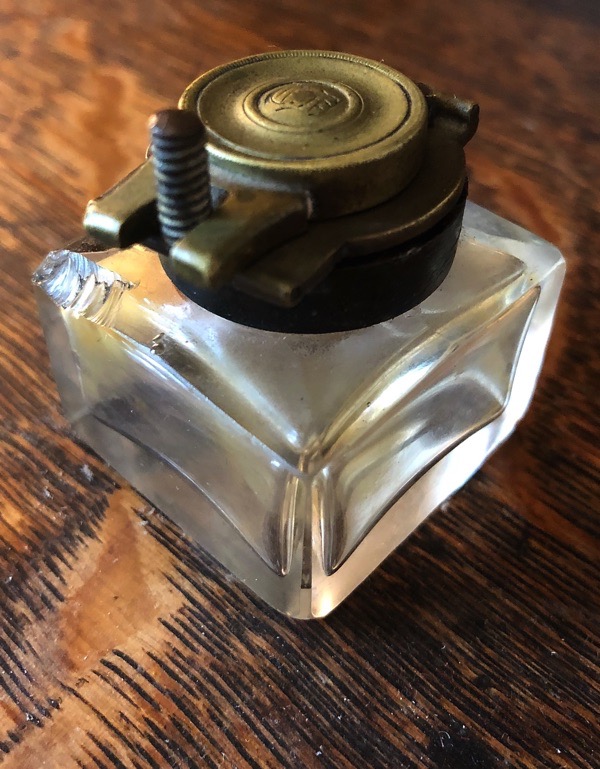
Last Christmas, I received the most extraordinary present I ever expect to receive. It is Charles Dickens’ inkwell.
In the week before Christmas, I paid a seasonal visit to photographer & collector Libby Hall in Clapton and, as we sat there beside a table groaning with festive treats, she handed me a parcel with the words, ‘I thought you should have this.’ It is a phrase often used when gifts are presented but it was only when I unwrapped it that I discovered the true meaning of her words. What better gift could there be for a writer than an inkwell that once belonged to Charles Dickens?
It is a small travelling inkwell which screws shut and that a writer might easily carry in a pocket or bag, as Dickens did with this one when he visited America in 1842 and left it behind. Barely larger than a pocket watch, it is a modest utilitarian item comprising a square glass bottle and a hinged brass top with a screw fixture to hold it shut. What distinguishes this specimen are the initials engraved on the lid in tentative gothic capitals, C.D.
Libby told me that it was a gift from her friend Cinda in New York whose father had been given it in 1949/50 by a Dr Rhodebeck. All Cinda can remember is that the Rhodebecks were a long-established family in Manhattan who lived in Park Avenue near 86th St. She understood they had been custodians of the inkwell since the eighteen-forties.
Charles Dickens’ first visit to America, which he described in his American Notes, proved a great source of disappointment to the young writer. Although his books were bestsellers and he received universal adulation, there was no law of copyright and he earned no income whatsoever from his sales there. He arrived with an idealistic view of America, imagining a democratic, progressive society without the handicap of decayed old-world aristocracy. What he discovered was the brutal reality of slavery, inhuman prisons and rampant gangsterism.
It was also the first time that Dickens encountered the full wattage of his own celebrity, forced to flee through the streets of Manhattan with crowds of over-enthusiastic fans in pursuit. Yet he rose to the occasion by acquiring an ostentatious wardrobe of new outfits, even if he was spooked by the fanaticism of those who wanted to steal the fluff from his coat as souvenirs.
This raises the question whether Dickens mislaid the inkwell or whether it was appropriated? A chip on the top left corner of the bottle suggests it might have been dropped and then discarded. The wing-nut which secures the lid is missing too and the brass top has come adrift, perhaps indicating that the inkwell was damaged and was no longer considered of use? At this time in his career, Dickens used black iron gall ink which is a corrosive, explaining why the metal top came off the bottle.
Seeking further information about the inkwell, I took it along to the Charles Dickens Museum in Doughty St where curator Louisa Price agreed to take a look and she confirmed that it is an inkwell of the correct period. We searched the Collected Letters and back numbers of the Dickensian to no avail for any mentions of a lost inkwell in America or the Rodabeck family. Then Louisa brought out a selection of engraved personal items belonging to Dickens from this era for comparison and we could see that he preferred his initials in gothic capitals over the roman or cursive alternatives that would have been available.
The most persuasive evidence was an inkwell from Dickens writing box which once sat upon his desk. Less utilitarian than the travelling version, this example nevertheless had an almost identical bottle in size and design, and although the large brass screw top was more elaborate, including his symbol of the lion recumbent, the gothic capitals were similar to those on the travelling inkwell.
Louisa Price concluded that the inkwell feels right and there is no evidence to suggest it is not authentic, but it would be helpful to uncover evidence linking Charles Dickens and the Rhodebeck family. So this is where I need your help, dear readers. I know that many of you are researchers and some of you are in America. Can anyone tell me more about the Rhodebecks or find any literary connections which might link them to Charles Dickens and establish the provenance of the inkwell?
UPDATE
With thanks to Linda Grandfield & Theresa Musgrove for locating Dr Rhodebeck
Dr. Edmund Jean Rhodebeck, b. 1894 had an office at 1040 Park Ave (near 86th St) and a residential address nearby at 1361 Madison Ave. He was a collector of literary materials, including a copy of The Works of William D’Avenant with Herman Melville marginalia. He also wrote an article about Kateri Takakwitha, a Mohawk woman considered for sainthood, for a 1963 newsletter. His father was Frederick, born in the 1860s and his grandfather was a Peter Rhodebeck, born c. 1830 who worked as a saloon keeper on Broadway c 1880, but in New York directories for 1867 and 1868 is listed as a ‘driver’ at 124 West First Avenue and then West 49th St.
Can anyone tell us more about Dr Rhodebeck and his literary collection?
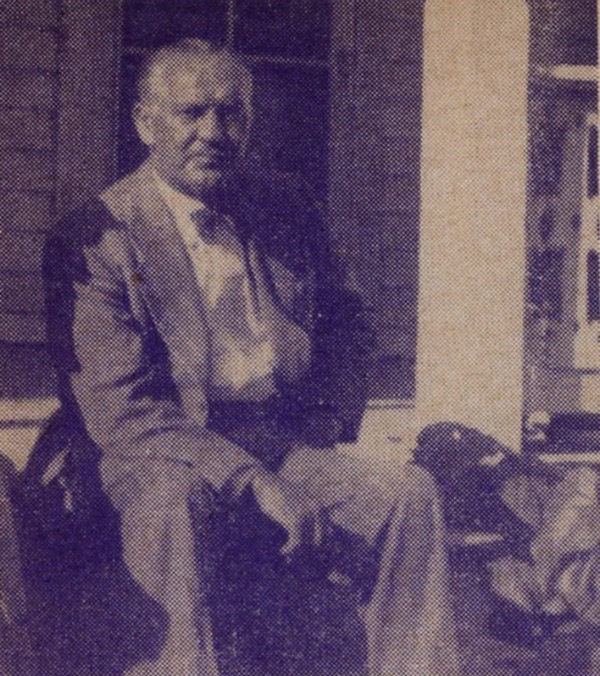
Dr Edmund Rhodebeck, former owner of the inkwell
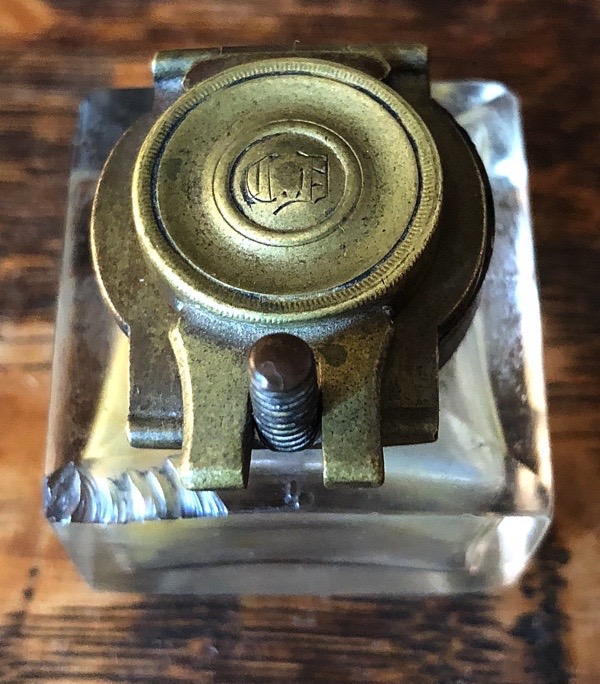
Charles Dickens’ inkwell sits upon my desk
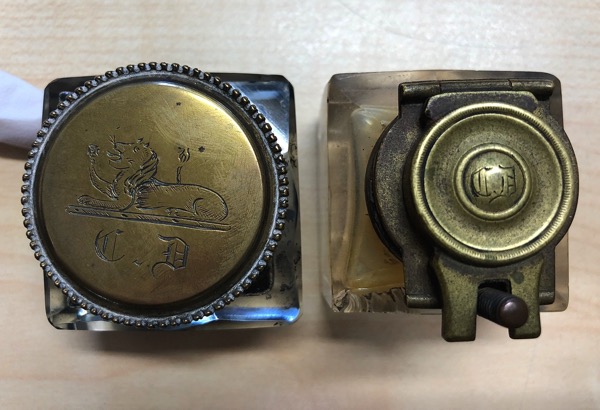
Comparative photograph showing an inkwell from Dickens’ writing box in the collection of the Dickens House Museum on the left and the travelling inkwell on the right. Note similarity of the glass bottles and the gothic capitals. (Writing box inkwell reproduced courtesy of Charles Dickens Museum)
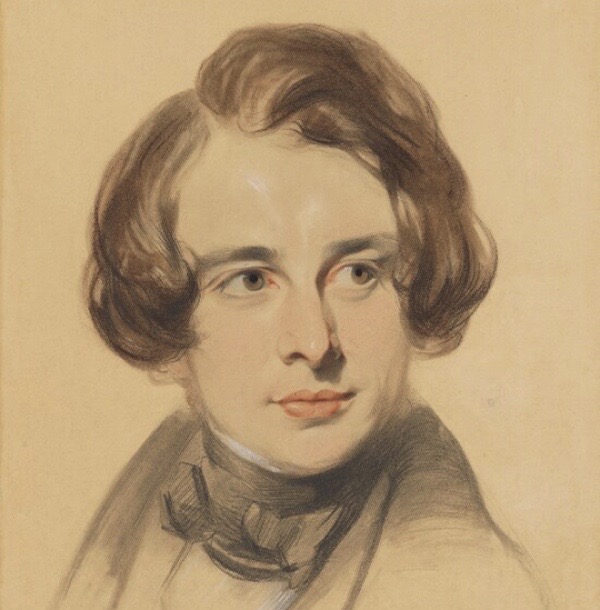
Charles Dicken in 1838 (Reproduced courtesy of National Portrait Gallery)
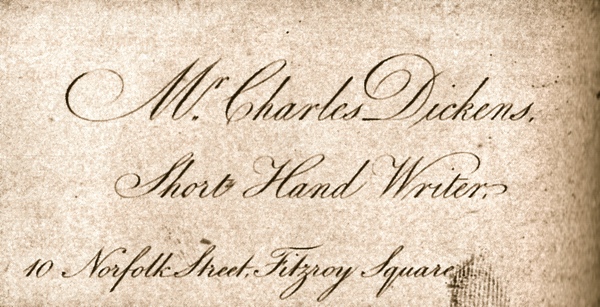
Dickens’ calling card as a young man (Reproduced courtesy of Dan Calinescu)
You may also like to read about
Charles Dickens in Spitalfields
Charles Dickens in Norton Folgate
The Map Of London Slang
Each Saturday, we shall be featuring one of Adam Dant’s MAPS OF LONDON & BEYOND from the forthcoming book of his extraordinary cartography to be published by Spitalfields Life Books & Batsford on June 7th.
Please support this ambitious venture by pre-ordering a copy, which will be signed by Adam Dant with an individual drawing on the flyleaf and sent to you on publication. CLICK TO ORDER A SIGNED COPY OF MAPS OF LONDON & BEYOND BY ADAM DANT
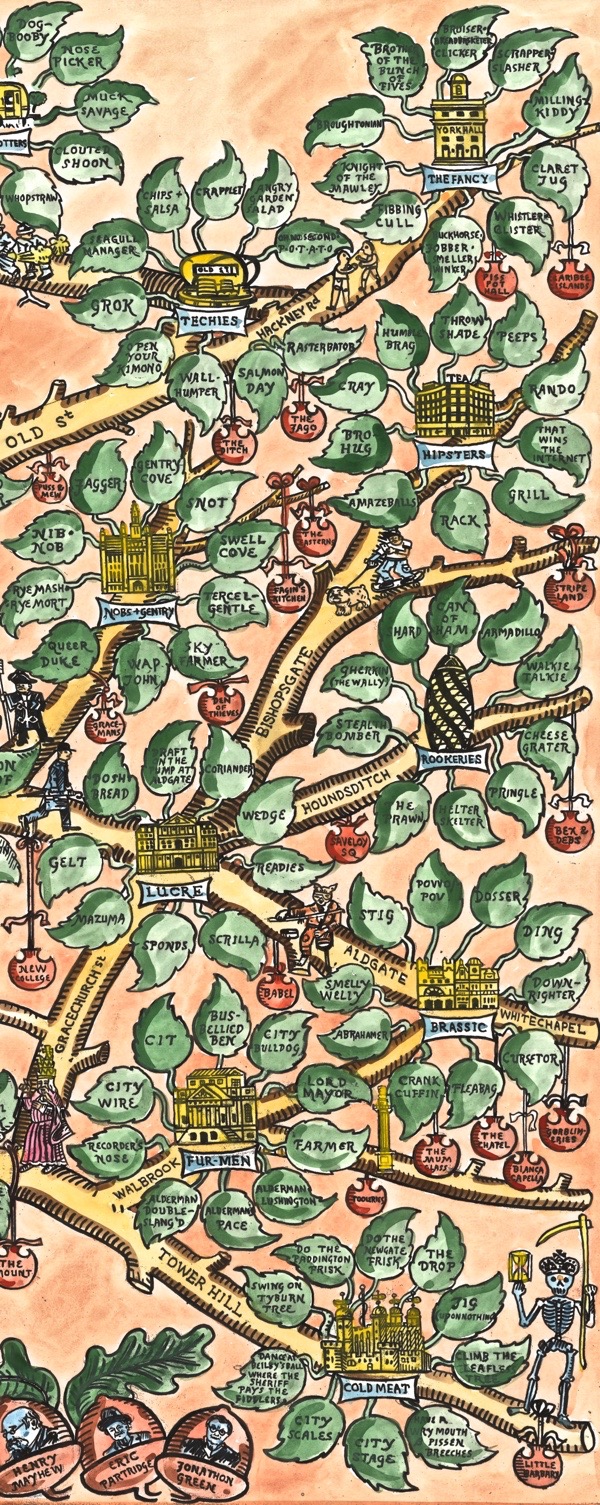
ARGOTOPOLIS, The map of London slang is a collaboration between Adam Dant & Jonathon Green, lexicographer of slang, organised around relevant locations in the capital. Click on Adam’s map to study it in detail and read Jonathon’s glossary to learn more about the language.

The Old Oak: rhyming slang, The Smoke, i.e. London
KEY TO THE SLANG WORDS & PHRASES IN ARGOTOPOLIS
compiled by Jonathon Green
Nappy Valley (David Cameron’s House, Notting Hill)
Misses: Missus or Mrs
Armful: an affectionate spousal embrace
Bit o’ Tripe: possibly rhyming slang but possibly a ref. to the human body as a ‘piece of meat’
Burick: Romani burk, a breast or Scottish bure, a loose woman
Doner: Italian dona, a woman
Poker-breaker: the domineering wife’s ‘breaking’ of her husband’s poker, i.e. penis
’Pon My Life: rhyming slang, a wife
Rib: woman as ‘Adam’s rib’
Ankle-biter: a child who has yet to walk
Bin-Lid: rhyming slang, a kid
Gawdelpus: a child, lit. God help us
Chip: a child, i.e. a chip off the old block
Yuppie Puppy: the progeny of the young and upwards mobile; also trustafarian
Lully: a child, from little or lullaby
Swag: a shop
Buttiken: a shop, from French boutique + ken, a house or place
Drum: a house or home, either he image of the hollow drum resembling a hollow house or room or the use of drum, the road, as a figurative ‘house’ for itinerants.
Plate o’ Meat: rhyming slang, the street
Bricks: the city streets, especially as seen from a prison cell.
Stones: the streets of London, the open air
Carsey: a brothel, pub or lavatory, from Italian casa, a house
Crib: a house, a pub, a shop, a brothel, a cheap theatre, a bed, a safe, a cell, the vagina; all from standard crib, a narrow room
Gaff: a fair, a cheap theatre, a dancehall, a brothel, a prison, a house, a bar, a casino, a hotel; from Romani gav, a (market) town
Clobber (Selfridges, Oxford St)
Piccadilly Fringe: a popular women’s hairstyle in which the hair is cut short into a fringe and curled over the forehead
Piccadilly Weepers: long side whiskers, worn without a beard
Dittos: a suit of clothes (jacket, waistcoat, trousers) all the same colour
Bobtail: a dandy, from the wide skirts of his jackets
Gorger: a dandy, perhaps from gorgeous
Spiff: a dandy, from spiff, echoic of a sharp sound and thus figuratively exciting, important, astonishing
All Nations: a multi-coloured or heavily patched coat; from ‘the flags of all nations’.
Immensikoff: a large overcoat; coined by the music-hall star Arthur Lloyd who called himself Immensikoff and appeared on stage in such a coat to sing, c.1868, his hit ‘The Shoreditch Toff’
Spittleonian, a yellow silk handkerchief, manufactured in Spitalfields
Arse-Rugs: trousers
Sin-Hiders: trousers; they disguise the male genitals
Moab: a turban-shaped hat, worn by women; a jocular reference to Psalm 60: ‘Moab is my washpot’
Billycock: a style of man’s hat; perhaps a variation on bully-cocked, i.e. ‘cocked after the fashion of the bullies’ or pimps
Golgotha: a hat; pun on Greek golgotha, the place of skulls
Headlight, a large and ostentatious tie pin, usually a diamond one
Hopper-dockers / hock-dockies: shoes
Piccolo & Flute: rhyming slang, a suit.
Rig-Out: a costume; from nautical imagery: one’s clothes are one’s ‘rigging’
Cover-Me-Queerly: ragged clothing
Gropus: a pocket; one must grope into its depths to find small items
Yiddish (Sigmund Freud’s House, West Hampstead)
Goy: a gentile
Dreck: dirt
Fress: to eat
Kishkes: the intestines, the guts
Nudnik: a fool
Shpilkes: anxiety, nerves
Schnorrer: a beggar
Mozzle: luck
Plotz: to to lose emotional control
Bubbe Mayse: an old wife’s tale
Bogtrotters – Country Folk (Caravan, Outlying Rural London)
Carrot Muncher: the peasant’s staple diet
Clouted Shoon: lit. ‘a shoe tipped with iron and secured with iron nails’
Dog Booby: dog = male + booby = fool
Lob: dialect lob, a country bumpkin. Note Yiddish lobbes, a rascal and Dutch lobbes, a clown
Muck Savage: the idea that peasants are ‘savages’ living in filth
Nose Picker: a derogatory stereotype
Queer Cuffin: lit. ‘an odd bloke’
Sod Buster: the peasant’s agricultural labouring
Squab: SE squab, a raw, inexperienced person, also a young, unfledged bird or animal
Whopstraw: from whop, to hit; the work of threshing corn
Techies (Old St Roundabout)
Crapplet: a badly written or wholly useless app.
Angry Garden Salad: a poorly designed website GUI
Seagull Manager: (s)he flies in, craps all everything, then leaves
P.O.T.A.T.O.: “People Over Thirty Acting Twenty One’
Rasterbator: a designer who is obsessed with Photoshop
Salmon Day: a wasted day’s work: one has spent the entire day ‘swimming upstream’
Wall Humper: a person who, rather the removing the card from their pocket, raises their hip in an effort to swipe it against a reader
Open Your Kimono: to reveal one’s business plans
Grok: to understand fully, from Robert Heinlein’s scifi novel Stranger in a Strange Land
Ohnosecond: the fraction of time it takes to realize one has committed a major error
Chips and Salsa: chips refers to computer hardware, salsa to software
The Fancy – Boxing (York Hall, Bethnal Green)
Brother of the bunch of fives: a prize-fighter
Broughtonian : a prize-fighter; from Jack Broughton, inventor of the first prototype boxing glove, writer of ‘Broughton’s Rules’ (which lasted 1743–1838) and champion of England 1730–5
Bruiser: a prize-fighter
Whister-clister / Whister-poop: a blow to the ear
Clicker: a knock-out blow
Knight of the mawley: a prize-fighter, from mawley, a hand or fist
Fibbing-cull: a prize-fighter, from fib, to punch
Buckhorse: a blow to the ear
Jobber: a blow to the head
Smeller: the nose or a blow that hits it
Winker: a blow to the winkers, i.e. eyes
Slasher: a prize-fighter
Milling-kiddy: a prize-fighter, from mill, to fight
Breadbasketer or belly-go-firster : a blow to the stomach
Claret jug/ Claret cask / Claret-spout: the nose
Quackery (University College Hospital, Euston Square)
Nimgimmer: a surgeon or physician, esp. a specialist in venereal diseases
Knight of the Pisspot: a doctor, from the analysis of urine for medical purposes
Pintlesmith: a surgeon, lit. a ‘penis worker’
Crocus Pitcher: an itinerant quack doctor; also crocus (metallorum), a pun on croak, to die and crocus metallorum, oxysulphide of antimony
Twat Scourer: lit. the ‘cleaner of the vagina’
Flesh Tailor: a surgeon
Dr Drawfart: an itinerant quack doctor
Clyster Pipe: a doctor; lit. ‘a pipe used to administer clysters, or enemas’
Jollop, medicine, from jalap, a purgative drug obtained from the tuberous roots of Exogonium (Ipomoea) purga
Bone juggler: a surgeon
Argy-Bargy – Political Dissent (Marx Memorial Library, Clerkenwell)
Boodler: a corrupt politician, from boodle, bribes
Mud-pusher: a member of parliament, i.e. an M.P.
Quockerwodger: a politician who works for a patron rather than his/her constituents; lit. ‘a wooden puppet which can be made to ‘dance’ by pulling its strings
Lefty: a left-winger
Red: a radical; specifically a Bolshevik, a Communist; synonymous with communism since its birth in 1848
Rad / Raddie: a radical
Threepenny Masher: a young man who poses as a gentleman but lacks the savoir-faire, not to mention the funds.
Jack-Gentleman: a man of low birth or manners who has pretensions to be a gentleman, thus an insolent fellow, an upstart.
Macer: a swindler, from a possible link to mason, one who acquires goods fraudulently by giving a bill that they do not intend to honour
Swell Mobsman: a leading pickpocket, often undistinguishable from the smartly dressed people he robs
Nobs & Gentry (The Guildhall, City of London)
Gentry-cove: an aristocrat or gentleman
Swell cove: an aristocrat or gentleman
Snot: a gentleman, who is seen as snotty or arrogant
Tercel-gentle: a well-off knight or any rich gentleman, lit. a male falcon
Skyfarmer: a criminal beggar who tours the country posing as a gentleman farmer fallen on hard times, backed by suitably impressive, if counterfeit, papers
Queer Duke: an impoverished gentleman
Jagger: a (country) gentleman, from German Jäger, a sportsman
Rye mort / Rye mush: a gentleman or gentlewoman, from Romani rei a gentleman + mort, a woman or mush, a man
Nob / Nib: probably from nobility or nobleman
Hipsters (Tea Building, Shoreditch)
Amazeballs: wonderful
Bro Hug: a manly hug between two men who are friends
Cray: amazing, remarkable, lit. crazy
Humblebrag: self-deprecation actually used for self-aggrandizement
Throw shade: to talk negatively about a third party
Peeps: people
Rando: a random person or thing
That Wins the Internet: a general exclamation of satisfaction
Grill: the face
Rack: the female breasts
Americana (US Embassy, Grosvenor Sq)
Ham Shank: rhyming slang, a Yank or American
Man up: behave in a manly or macho manner
Grow a Pair: the pair are testicles, again one is encouraged towards a macho posture
Fanny Pack: a small satchel tied around one’s waist; from fanny, the buttocks
Heads-up: a warning, a briefing
Do the Math: work it out
Touch Base: to speak to
Septic: rhyming slang, a Septic Tank, a Yank or American
Can I Get…: rather than UK could I have
I’m Good: things are satisfactory, synonymous with UK response to ‘how are you’ of ‘very well thank you’
Park Life (Peter Pan Statue, Kensington Gardens)
Bumblebee: rhyming slang, a tree
Dr Green: the grass
Sleep with Mrs Green: to sleep in the open air
Ruffmans: a wood
Robin Hoods: rhyming slang, the woods
April Showers: rhyming slang, flowers
Eiffel Towers: rhyming slang, flowers
Skylark: rhyming slang, a park
Joan of Ark: rhyming slang, a park
Crackmans: a hedge
Lad: a fox
Charlie: a fox, pun on the politician Charles James Fox (1749–1806)
Bufe / Buffer: a dog, either echoic of a bark or from Welsh bwch, a buck, a male animal
Carpet-herb: grass
Old Iron and Brass: rhyming slang, the grass
Penny-a-Pound rhyming slang, the ground
Gambling (Crockfords Casino, Mayfair)
Blackleg: his black boots
Buttoner: that member of a gang who entices suckers to play in a crooked game; he buttonholes the victim
Topper-toodle: a gullible fool, esp. as prey to crooked gamblers
Thimble-Rigger: operator of a cheating game of ‘find-the-lady’ or the ‘three-card-trick’
Spieler: a casino, from Yiddish spiel, to play
Rump and a Dozen: the 18th century wager of a whole rumpsteak and a dozen bottles of claret
Punting-shop: a casino, from punt, to wager
Levanter: one who defaults on his debts, he lit. runs away to the Levant, i.e. the Middle East
Hazard-drum: a casino, from the game of hazard, a precursor of craps, and drum, a house
Grumble and Mutter: rhyming slang, a flutter
Whores (Soho Sq)
(All but one terms are simple synonyms for ‘ladies of the night’)
Frisker: from frisk, to have sexual intercourse
Cockatrice: in myth, a hybrid monster with head, wings and feet of a cock, terminating in a serpent with a barbed tail – such a monster can kill with a single glance
Ramp: from rampant, spirited
Trot: from trot, a hag, an old woman; she also ‘trots’ down the street
Trull: from German Trulle, a prostitute
Tib: supposedly a typical name for a working-class woman
Bluegown: prostitutes confined in a house of correction once wore a blue dress as their uniform
Circus Cowboy: a rent boy, who frequented the Piccadilly Circus ‘meat rack’
Covent Garden Nun: the popularity of Covent Garden as a centre of whoring
Quean: a specific use of a general term for a woman
Market Dame: the popularity of Covent Garden as a centre of whoring
Kate / Kittie: a generic use of the proper name
Miss Town: her role as a quintessentially urban figure
Town Miss: her role as a quintessentially urban figure
Miss o’ the Town: her role as a quintessentially urban figure
Old Jack Lang – Rhyming Slang (St Mary Le Bow, Cheapside, City of London)
Brixton Riot: a diet
Emma Freuds: haemorrhoids
Iron Hoof: a homosexual, i.e. a poof
Newington Butts: the stomach or guts
Queen Mum: the buttocks, i.e. the bum
Tony Blair: hair, a chair or a nightmare
Petticoat Lane: a pain
Charing Cross: a horse
Westminster Abbey: a cabbie
Alf Garnett: the hair, i.e. the barnet (fair)
Lucre ( The Bank of England, City of London)
Draft on the Pump at Aldgate: a fake bank-note or fraudulent bill; the Aldgate pump offered no financial security for a draft, i.e. a written order for the payment of money
Coriander (seed): a figurative use of seeds as form of growth and as such necessary for life; money has the same importance
Wedge: originally a wedge of silver
Readies: i.e. ready money
Scrilla: possible from a scroll, on which accounts were once kept
Sponds: fom Greek spondlikos, i.e. spondulics
Mazuma: from Yiddish, ultimately Hebrew mazuma, prepared, ready
Gelt: from Yiddish and German, gold
Dosh: from doss, to sleep or a bed; thus originally the money required to pay for one’s accommodation
Bread: the ‘staff of life’, as is money
Rookeries – New Office Blocks (1 Old St Mary’s Axe, City of London)
Can of Ham: 60-70 St Mary’s Axe
Armadillo: City Hall
Walkie-Talkie: 20 Fenchurch St
Cheesegrater: Leadenhall Building
Pringle: the Olympic Cycle Track
Helter-Skelter: the Pinnacle Tower
The Prawn: Willis Building
Stealth Bomber: 1 New Change
Gherkin / Wally: 30 St Mary Axe
Shard: 32 London Bridge Street
Toffs (Buckingham Palace)
NQOCD: Not Quite Our Class, Darling
NSIT: Not Safe in Taxis
PLU: People Like Us
MTF: Must Touch Flesh
SOHF: Sense of Humour Failure
Yonks: a long time
Jew canoe: a large car, often a Jaguar
Killing: uproariously amusing
Gucky: the fashion label Gucci
Cockers-p: a cocktail party
Chateaued: drunk, not necessarily on claret
Wrinklies: old people
Stiffie: an invitation
Brill: brilliant
Nosh (Covent Garden Market)
Ozzimangerum, soup made from a leg of beef; from ox + French manger, to eat
Princess Di: rhyming slang, a pie
Fourpenny Cannon: a steak and kidney pie; the cost plus its supposed resemblance to a cannonball
Bags of Mystery: sausages, the specific meat ingredient is not specified by the seller
Alderman in Chains: a roast turkey garlanded in sausages
Banger: a sausage, which may explode in the pan
Sharp’s Alley Bloodworms: beef sausages or black puddings, from Sharp’s Alley, an abattoir near the Smithfield meat market in London]
Darby Kelly: rhyming slang, the belly
Chamber of Horrors: sausages
Zeps in a Cloud: sausage and mash
Sanguinary James / Bloody Jemmy / One-eyed Joint: an uncooked sheep’s head
Poodle: a sausage, a pun on hot dog
Irish Apricots: potatoes, the stereotyped link of the Irish and the potato
Violets: spring onions or sage and onion stuffing
Horn Root: celery, it is supposedly aphrodisiac
Welsh Turkey: a leek, the stereotyped link of the Welsh and leeks
Rose: an orange, possibly the fruit also has a pleasant smell
Whitechapel: rhyming slang, an apple
Teddy Bear: rhyming slang, a pear
Snob’s duck, a baked sheep’s head (which is far cheaper than a real duck)
Thames Butter: completely rancid butter, the ‘South London Press …published a paragraph to the effect that a Frenchman was making butter out of Thames mud at Battersea. In truth this chemist was extracting yellow grease from Thames mud-worms’
The Uproar (Covent Garden Opera House)
Synagogue: a shed – its use is not specified – standing at that time in the northeast corner of Covent Garden, London.
The Straights: a network of alleyways and small courts in an area bounded by St Martin’s Lane, Half Moon Street and Chandos Street, the haunt of pimps, thugs and similar unsavoury characters.
Short’s Gardens: a state of temporary penury; a pun on the street Short’s Gardens in Covent Garden and short, impoverished
Mutton Walk: the saloon at the Drury Lane Theatre, Covent Garden; thus any street where one finds prostitutes, especially the junction of Coventry Street and Windmill Street in the West End.
The Finish / Carpenter’s Coffee Shop: Carpenter’s late-night coffee shop, sited in Covent Garden opposite Russell Street and ostensibly catering to the market porters, which closed only when the last customer had gone home into the dawn
Go Shop: the Queen’s Head tavern, Duke’s Court, Bow Street, London WC2.
The Lane: Petticoat Lane, Middlesex Street in the east End; Drury Lane, Covent Garden, in the West End
Break One’s Shins Against Covent Garden Rails: to catch venereal disease
Russian Coffee House: the Brown Bear public house in Bow Street, Covent Garden, a popular haunt for both thieves and thief-takers.
Tekram: backslang for Covent Garden market
Hoorays (Chelsea Town Hall)
Maybs: maybe
Blates: blatantly
Defo: definitely
Dorbs / Adorbs: adorable
Totes: totally
Soz: sorry
Probs: probably
Presh: precious
Obvs: obviously
OMG!: Oh my God!
Slicksters (Houses of Parliament, Westminster)
Craftsby: a cheat, a swindler
Swindling gloak: a swindler; gloak is synonymous with bloke, a fellow
Dunlop tyre: rhyming slang, a liar
Holy friar: rhyming slang, a liar
Cony-catcher: a confidence trickster, from cony, a rabbit, i.e. a sucker
Queer plunger: a confidence trickster who plunges into water and is saved from ‘drowning’; conveniently pre-assembled ‘rescuers’ then claim money for saving the person
Tweedler: a small-time confidence trickster; a stolen vehicle that is passed off a legitimate
Nuxyelper: a confidence trickster who fakes a fit in order to gain money from bystanders; from nux vomica, the fruit from which strychnine is produced, and which would induce vomiting
Jack-in-the-box: a street pedlar who specialises on con tricks
Shearer: a confidence trickster, who ‘shears’ the gullible ‘lamb’
The Law (Royal Courts of Justice, Fleet St)
China Street Pig: a Bow Street Runner
Thieves’ Kitchen: the Law Courts in the Strand
Theatre: a police, later magistrate’s court
Tenterden Park: the King’s Bench prison for debtors
Gentleman of the Three In(n)s : one who is in debt, in gaol and in danger (of being hanged)
Fortune-teller / Conjuror: a judge, he ‘tells one’s future’
Ambidexter: a lawyer, he holds out both hands for bribes
Honest lawyer: a public house sign showing a headless man dressed in lawyer’s robes, the implication being that his honesty is only possible since, headless, he is bereft of the chance to speak.
God Box (St Paul’s Cathedral)
(All terms mean a clergyman, with an over-riding image of thumping the bible or pulpit)
Amen-Bawler
Bead Counter: the rosary beads
Smell-Smock: the clergyman’s alleged womanising
Mumble-Matin[s]
Black cattle: clergymen as a group
Soul Doctor / Soul Driver
Hum-Box Patterer: the hum-box is a pulpit
Cackletub: the tub is a pulpit
Good Book Thumper
Autem Cove / Pattering Cove: from autem, probably an altar, pattering, sermonising
Fur-men (Mansion House, City of London)
Bus-Bellied Ben: an alderman who ‘eats enough for ten’
City Bulldog: a constable
Lord Mayor: a large crowbar
Farmer: an alderman, from farm, to lease or let the proceeds or profits of customs, taxes etc. for a fixed payment
Alderman Lushington: a drunkard
Alderman’s Pace: a steady, careful pace, as befits an official with a fine sense of his own importance
Alderman Double Slang’d: a roast turkey garlanded with sausages
Recorder’s Nose: the rump of a chicken, duck, goose or other poultry.
City Wire: a fashionable woman; her use of wire to create elaborate hairstyles
Cit: a citizen, especially a merchant of the City of London
Brassic – Poverty (former Whitechapel Library, Aldgate East)
Pov / Povvo: an impoverished person.
Stig: a tramp or someone who resembles a tramp
Ding: a beggar, a tramp
Downrighter: a beggar, a tramp
Cursetor: a tramp or an impoverished lawyer
Fleabag: one who smells, usually a vagrant
Crank Cuffin: a tramp who poses as a sufferer from a sympathy-inducing illness
Abrahamer: a tramp, usually sporting picturesque rags to attract alms
Smelly Welly: a juvenile pejorative for a poor person who is seen as a tramp
Dosser: a tramp, a vagrant, a homeless person., from doss, to sleep (rough)
Cold Meat – Execution (Tower of London, Tower Hill)
Do the Newgate Frisk: from Newgate, outside public hangings took place from 1783-18688
Paddington Spectacles: the sack which is placed over the prisoner’s head prior to the hanging
Jig upon Nothing: the ‘dancing’ of the dying person’s feet as they choke to death
Climb the Leafless Tree: one of the many equations of the gallows with a ‘tree’
Have a Wry Mouth and Pissen Britches: a dry mouth and involuntary urination accompany one’s being hanged
City Stage: on which the guilty person ‘performs’
City Scales: the guilty man or woman is weighed off, i.e. sentenced and executed
Dance at Beilby’s Ball Where the Sheriff Pays the Fiddlers: the identity of Mr Beilby is unknown but a number of suggestions exist. [1] Beilby was a well-known sheriff; [2] Beilby is a mispronunciation of Old Bailey, the court in which so many villains were sentenced to death. [3] Beilby refers to the bilbo, a long iron bar, furnished with sliding shackles to confine the ankles of prisoners and a lock by which to fix one end of the bar to the floor or ground. Bilbo comes from the Spanish town of Bilbao, where these fetters were invented
Swing on Tyburn Tree: the Tyburn gallows at the west end of what would become Oxford Street, used for executions 1388–1783
Do the Paddington Frisk: Paddington was synonymous with Tyburn, original site of the main London gallows.
Terms for Places listed on the Tree Trunk
Alsatia: the 16th century ‘liberty’ south of Fleet Street, a law-free zone wherein crowded every fugitive villain
Black Mary’s Hole: a 17th century gay cruising ground in Clerkenwell, EC1
Cheape: Cheapside
Dilly: Piccadilly
Elephant; Elephant and Castle
Fleet: the river Fleet or Fleet Street
Garden: Covent Garden and its Market
Holy Land: the criminal rookery (i.e. slum) of St Giles (now the site of Centre Point)
In and Out; the Army & Navy Club, Piccadilly (from its doorposts which were thus painted)
Junction: Clapham Junction
Kangaroo Valley: Earl’s Court, once home of ex-patriate Australians
Lane: Petticoat Lane, focus of the Jewish East End
Mohocks: a gang of dissolute upper-class thugs, flourishing c. 1750
Newgate: London’s main prison, now the Central Criminal Court at the Old Bailey
Old Nask: Bridewell prison, Tothill Fields
Paddy’s Goose; a notoriously violent sailor’s pub on the Ratcliffe Highway
Queer Street: a figurative term for poverty
Recent Incision: the New Cut, Waterloo
Spittal: Spitalfields
Tyburn: London’s original execution ground, now Marble Arch
Up-West: the West End
Ville: Pentonville Prison, north London
Wanno: Wandsworth Prison, south London
X: Charing Cross
Yard: the police headquarters of Scotland Yard
Zoo: The Zoological Gardens, now London Zoo
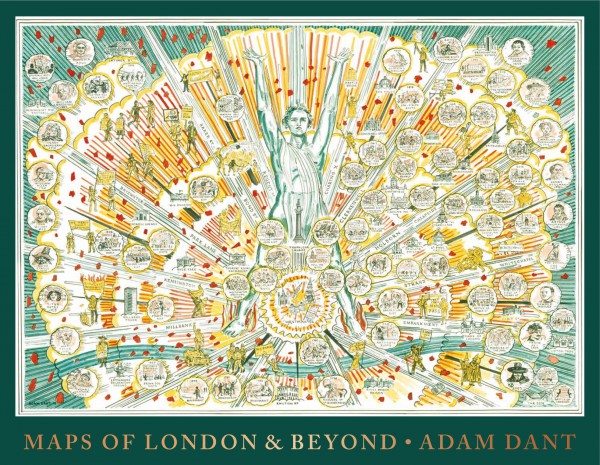
CLICK TO ORDER A SIGNED COPY OF MAPS OF LONDON & BEYOND BY ADAM DANT
Adam Dant’s MAPS OF LONDON & BEYOND is a mighty monograph collecting together all your favourite works by Spitalfields Life‘s cartographer extraordinaire in a beautiful big hardback book.
Including a map of London riots, the locations of early coffee houses and a colourful depiction of slang through the centuries, Adam Dant’s vision of city life and our prevailing obsessions with money, power and the pursuit of pleasure may genuinely be described as ‘Hogarthian.’
Unparalleled in his draughtsmanship and inventiveness, Adam Dant explores the byways of English cultural history in his ingenious drawings, annotated with erudite commentary and offering hours of fascination for the curious.
The book includes an extensive interview with Adam Dant by The Gentle Author.
Adam Dant’s limited edition prints are available to purchase through TAG Fine Arts
Sarah Ainslie’s Hatton Garden Portraits
In recent weeks, I have enjoyed the privilege of accompanying Contributing Photographer Sarah Ainslie into high security workshops to meet some of the most skilled craftsmen and women working in the creation of precious jewellery in Hatton Garden and Clerkenwell. These portraits were commissioned by The Goldsmith’s Centre for the exhibition Hidden Treasures which runs until 2nd May.
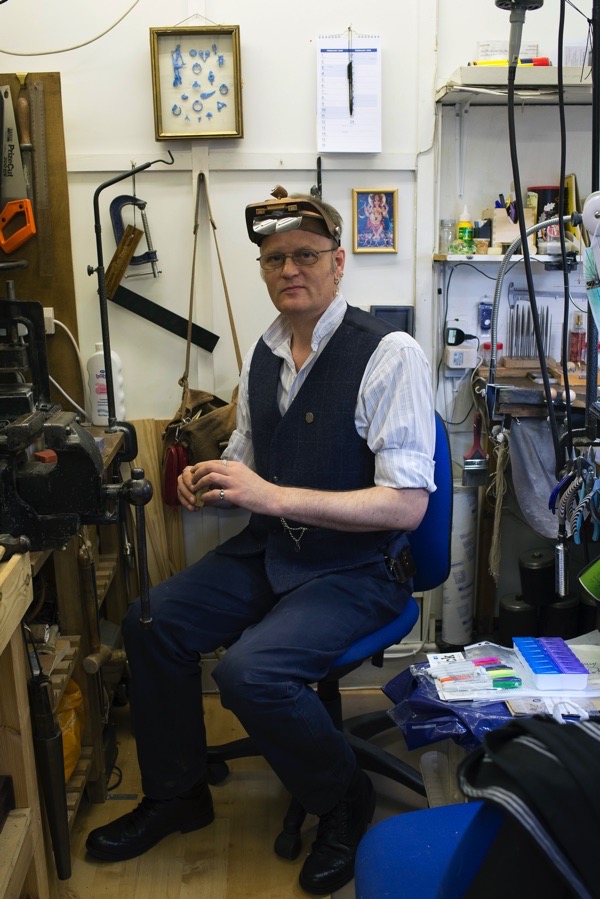
Russell Lownsbough, Designer, Wax-Carver & Goldsmith
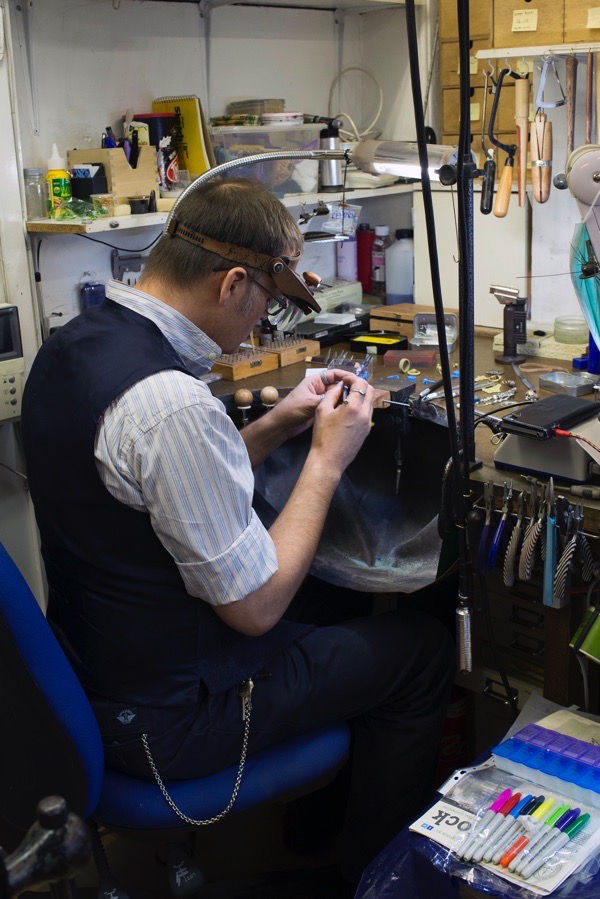
Russell Lownsbough
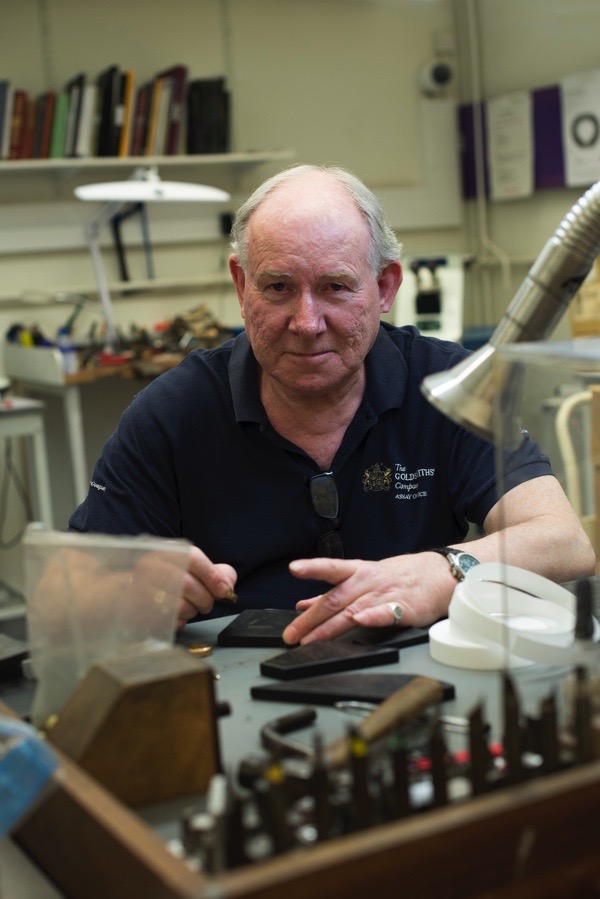
Dave Merry, Hallmarking Expert at the Assay Office, Goldsmiths Hall – “I am responsible for training and apprenticeships at the Assay Office but I am also a maker and a sampler. We employ twenty-two people and test six thousand articles every day. An exciting part of my job is going out on raids with the police to shops where they are selling counterfeit jewellery.”
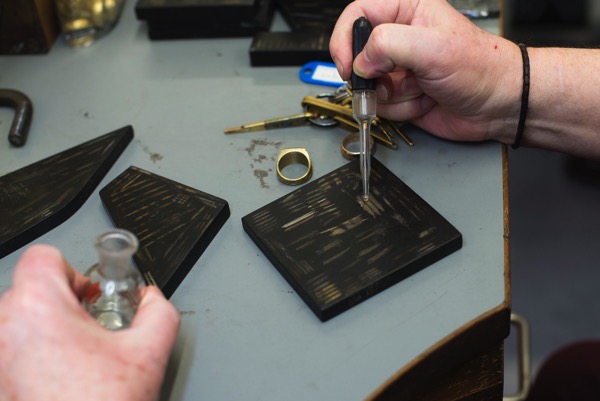
Dave Merry – “The phrase ‘up to scratch’ derives from the ancient practice of testing precious metals by rubbing them against a touchstone and applying aqua regia – known as ‘the acid test.’ I have had this stone for forty-seven years, since I was given it when I first walked in the door.”

John Taylor, Gemstone Cutter
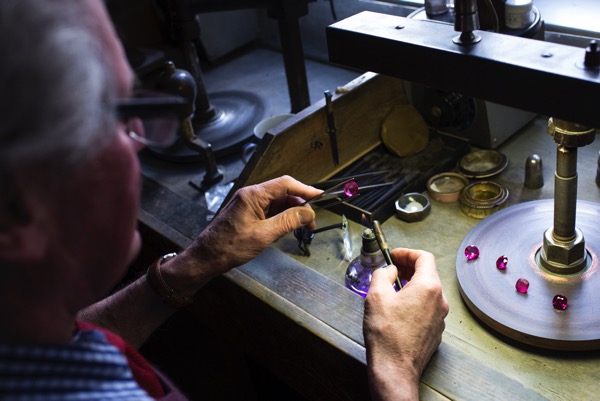
John Taylor
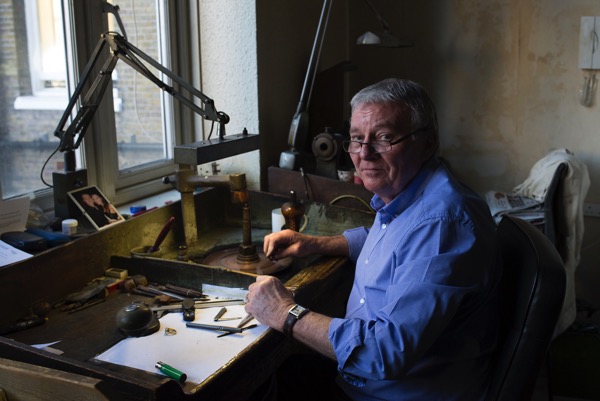
Pete Rome, Gemstone Cutter
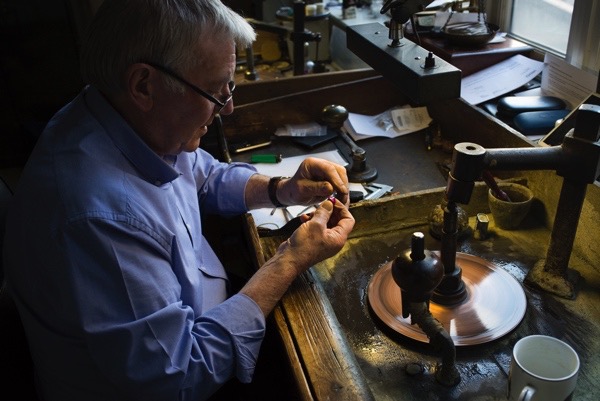
Pete Rome
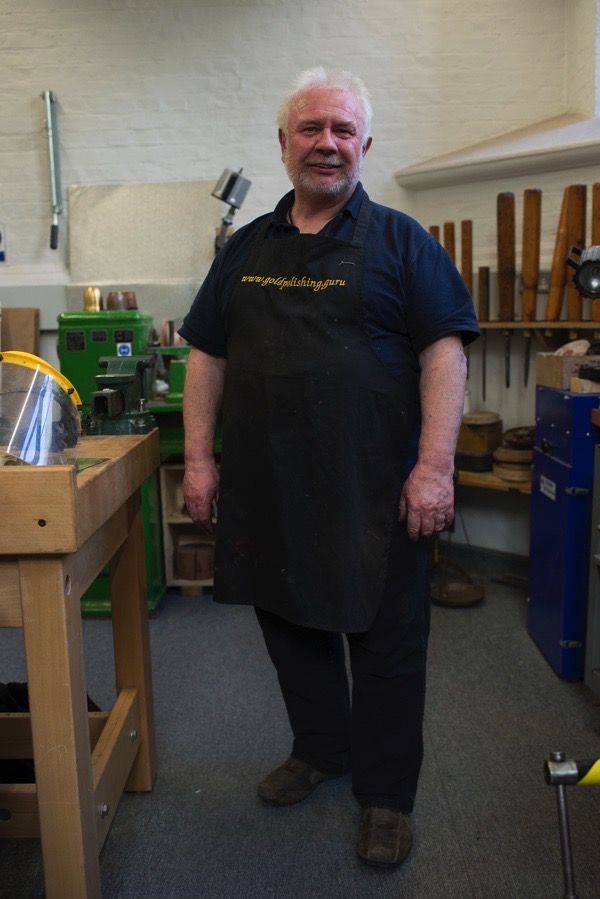
Steve Goldsmith, Polisher
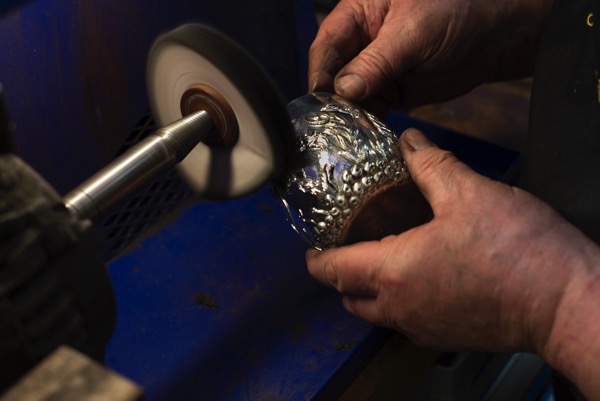
Steve Goldsmith
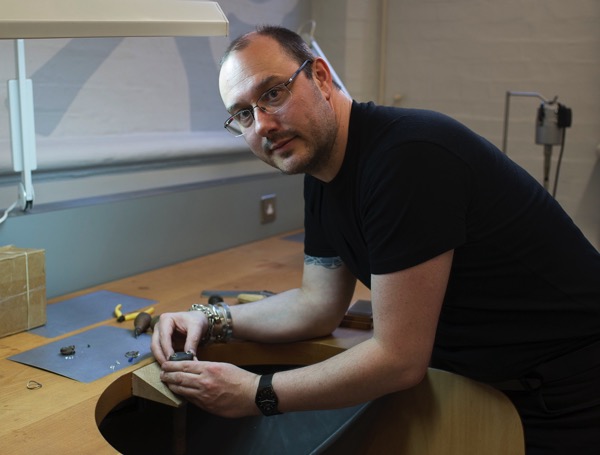
Niall Paisley, Diamond Setter – “I’ve been in the trade twenty-seven years, I started at sixteen. You learn a lot by heating stones, the hardness of the stones and the stress they will endure – diamonds can take any level of abuse whereas emeralds are brittle.”
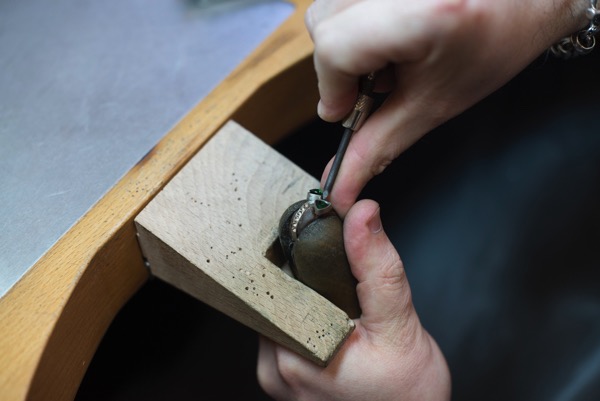
Niall Paisley

Jennifer Bloy, Designer of Jewellery, Silverware & Objet d’Art – “I wanted to be a smith but they wouldn’t let me because I am a woman, so I started making reproductions – but then there was a job going as a designer in Hatton Garden and I got it. Because I worked as a maker, I know how things are made, so I can design for making.”
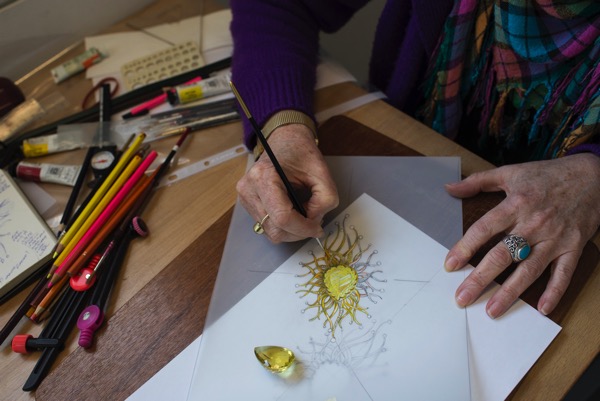
Jennifer Bloy – “I bought this stone, I love stones and I love colour.”
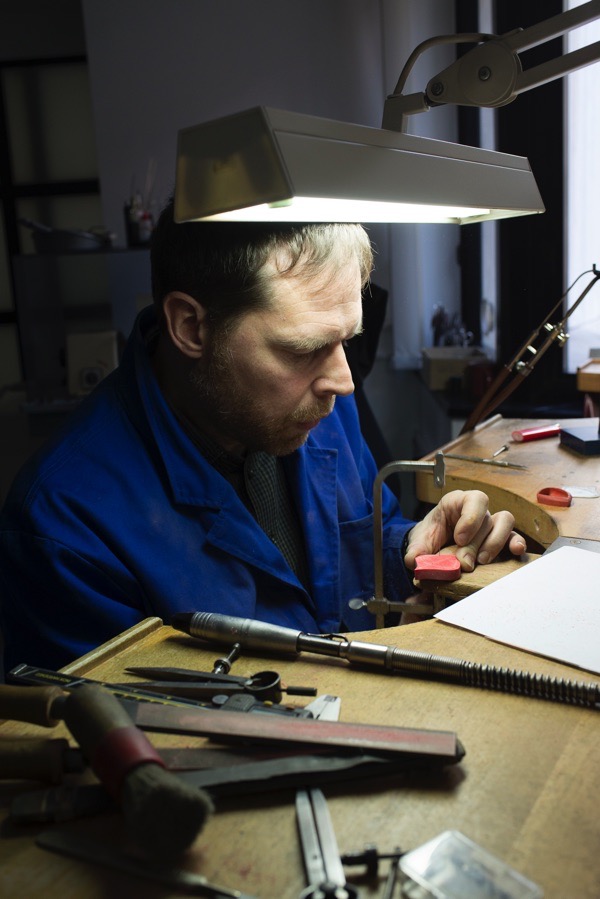
Ingo Henn, Master Goldsmith, Henn of London – “My great grandfather started in 1900, he was a stone cutter. He came from a family of fifteen and at twelve years old he was sent to be trained. When I was seventeen, I started as an apprentice in the family company but I have been designing since I was sixteen and I have been in London twenty-two years now. Any gemstone is valuable but it is not just down to its monetary value. The key is never to overpower a stone if the setting is too big or the design is too busy.”
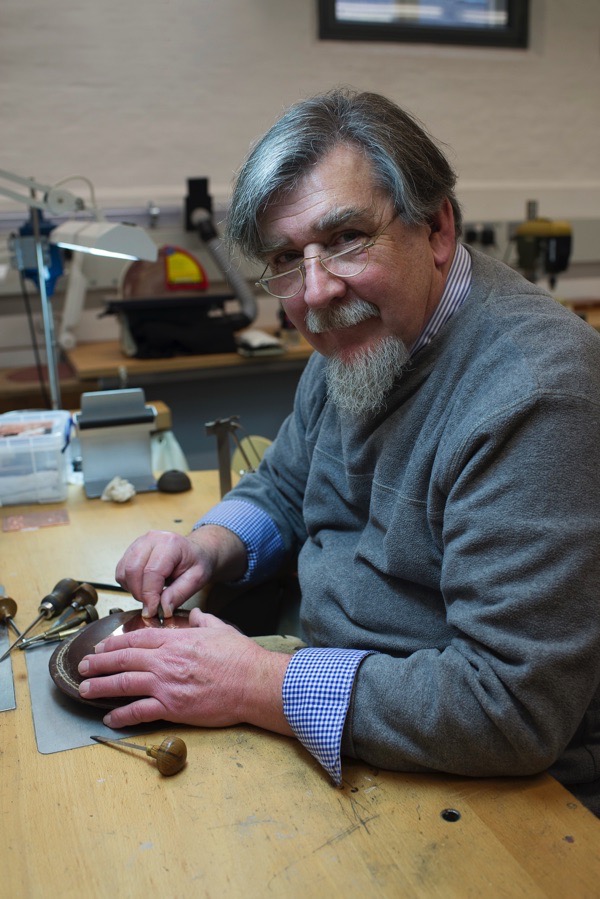
Wayne Parrott, Master Engraver – “In 1908, the security engravers at the Bank of England earned more than the governors. I began at thirteen years old, attending evening classes at Sir John Cass College and I was taught by George Friend. Later, I returned to the Cass as a teacher and lectured for over forty years. We are all artists in what we do and I have produced countless designs.”
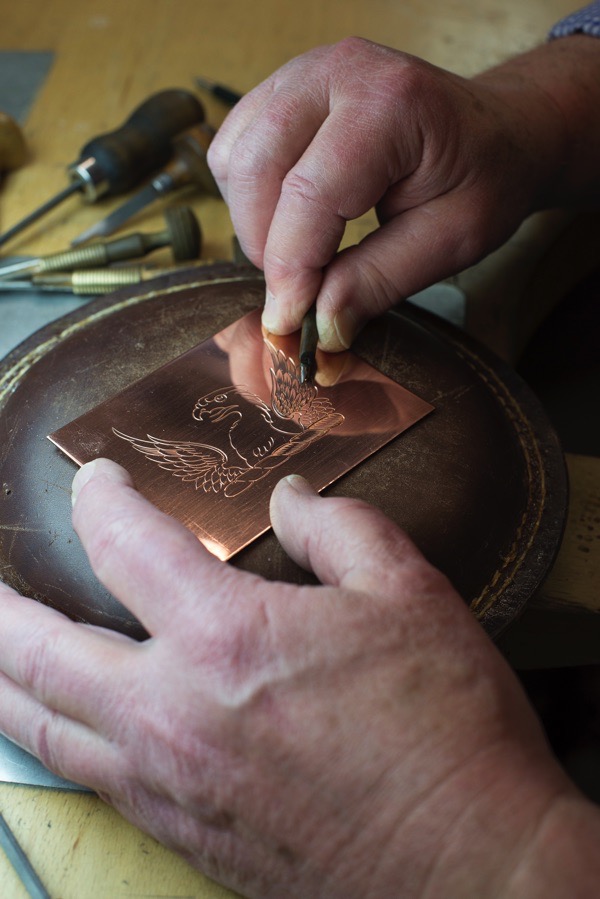
Wayne Parrott – “I specialise in designing seals.”
Photographs copyright © Sarah Ainslie
HIDDEN TREASURES, an exhibition of work by the Fellows of the Institute of Professional Goldsmiths runs until 3rd May at The Goldsmith’s Centre, 42 Britton St, Clerkenwell, EC1M 5AD
You may also like to read about
Bluebells At Bow Cemetery
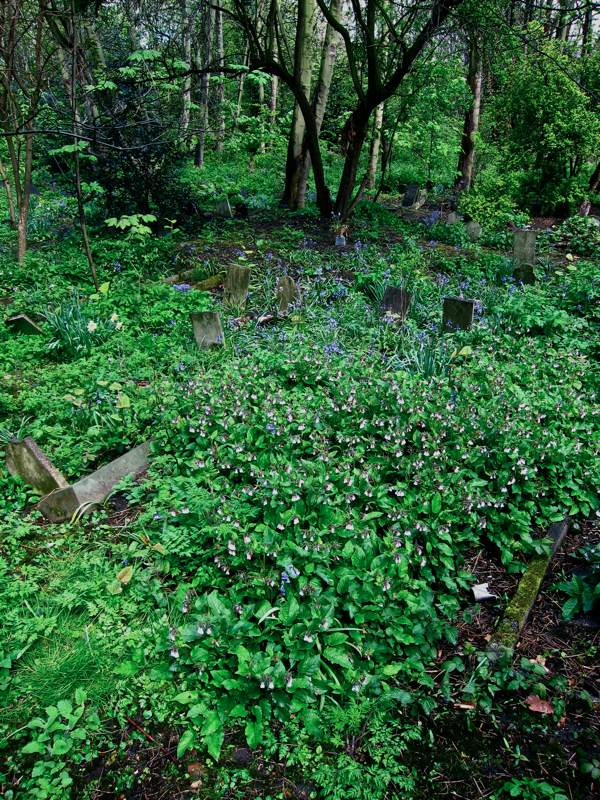
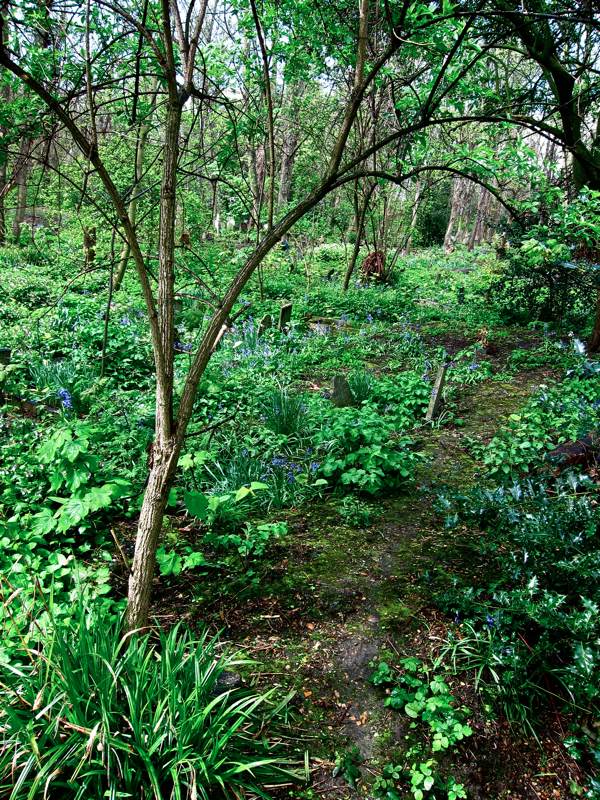
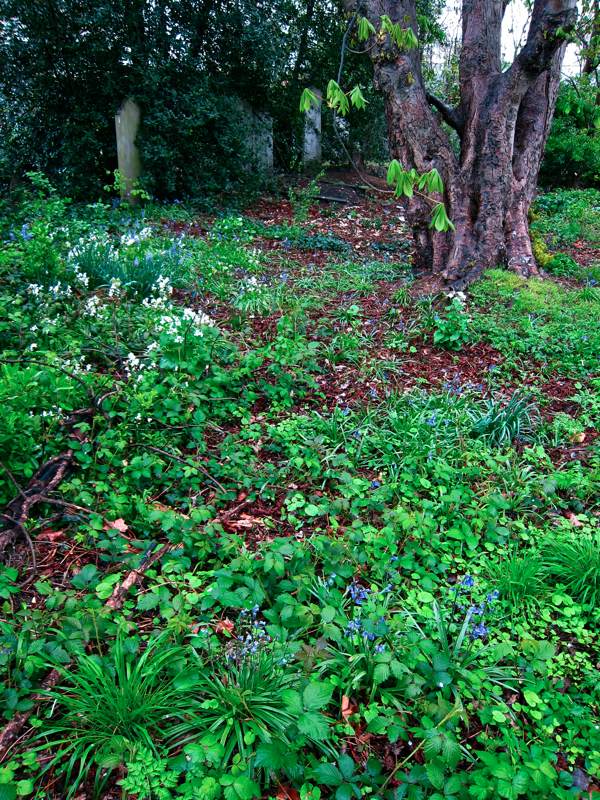
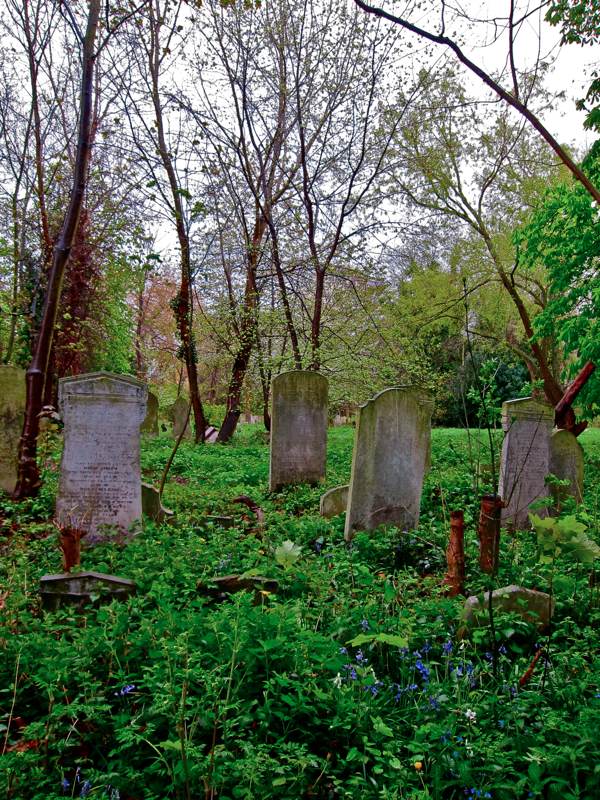
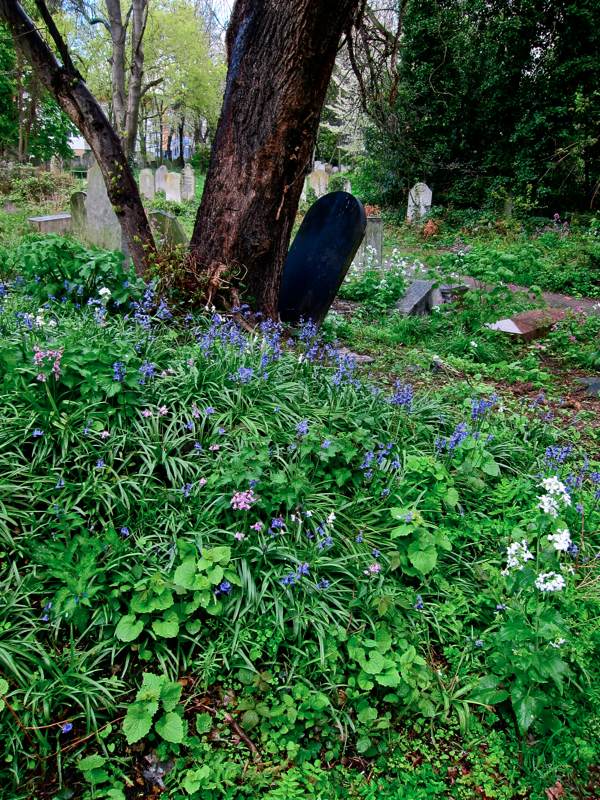
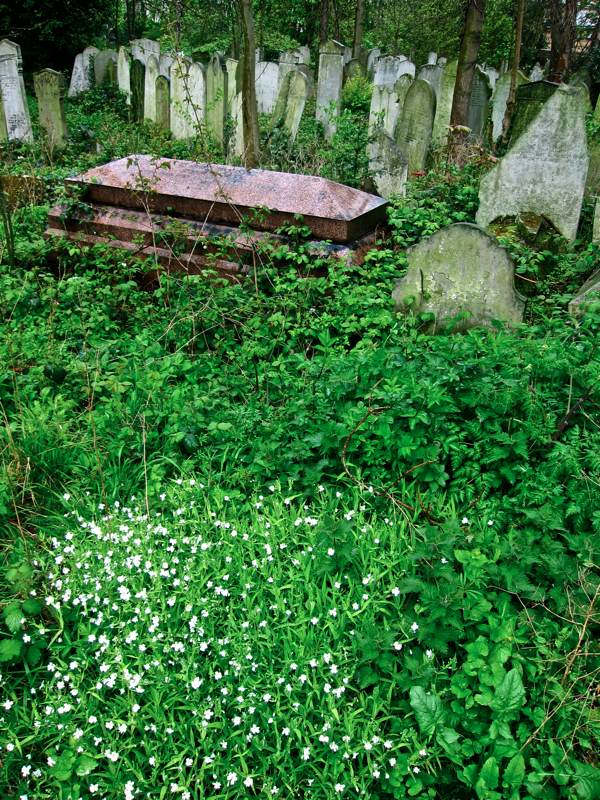
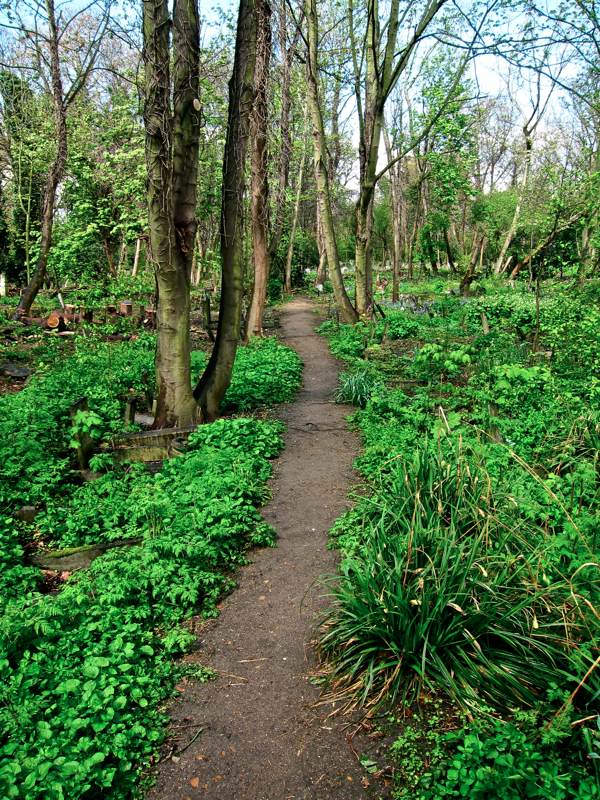
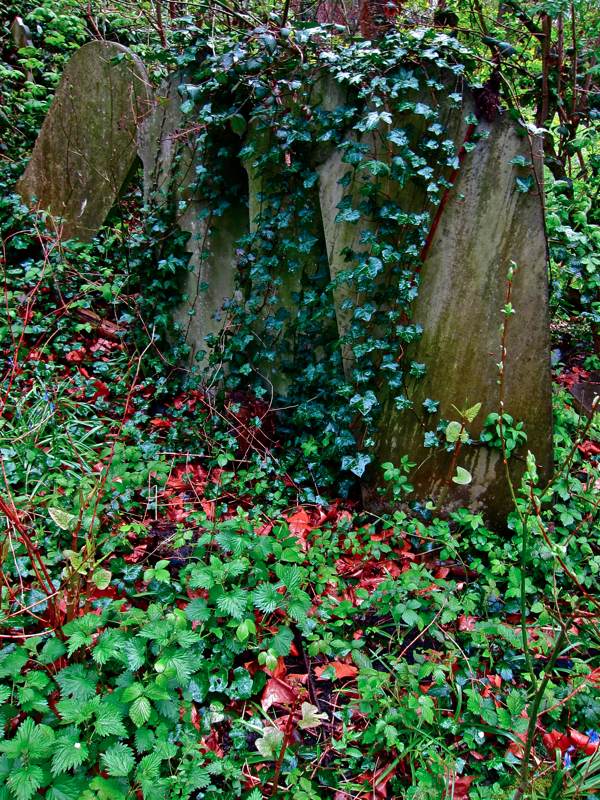
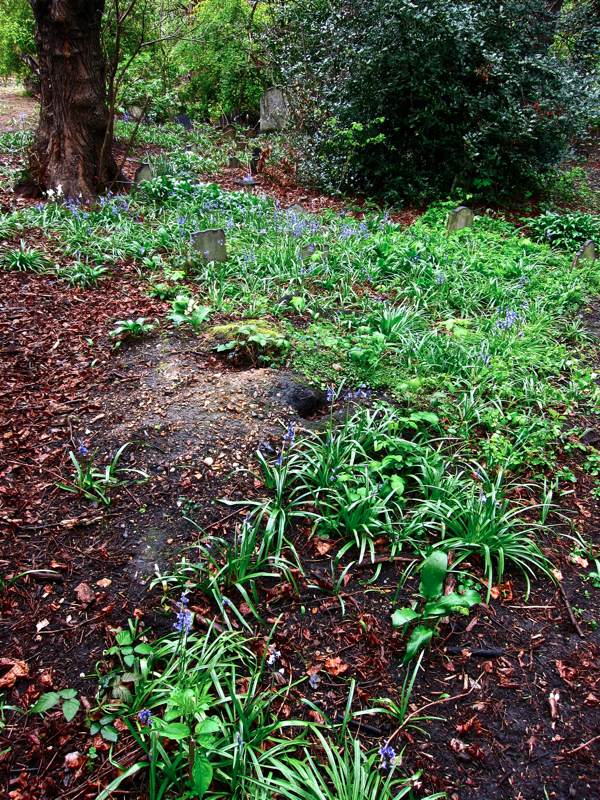
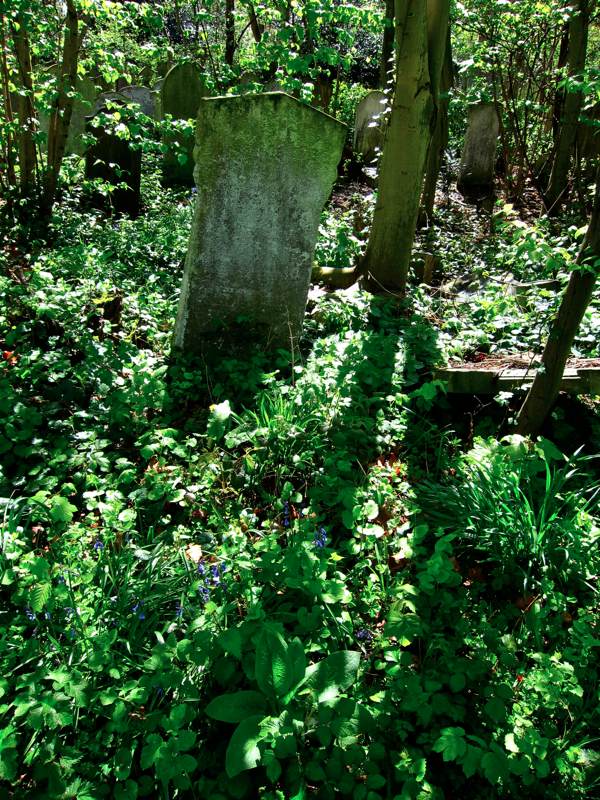
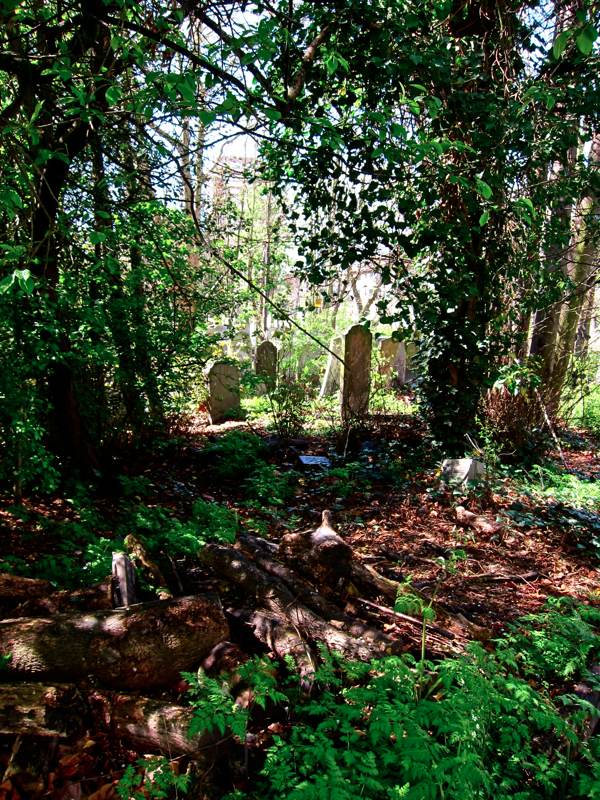
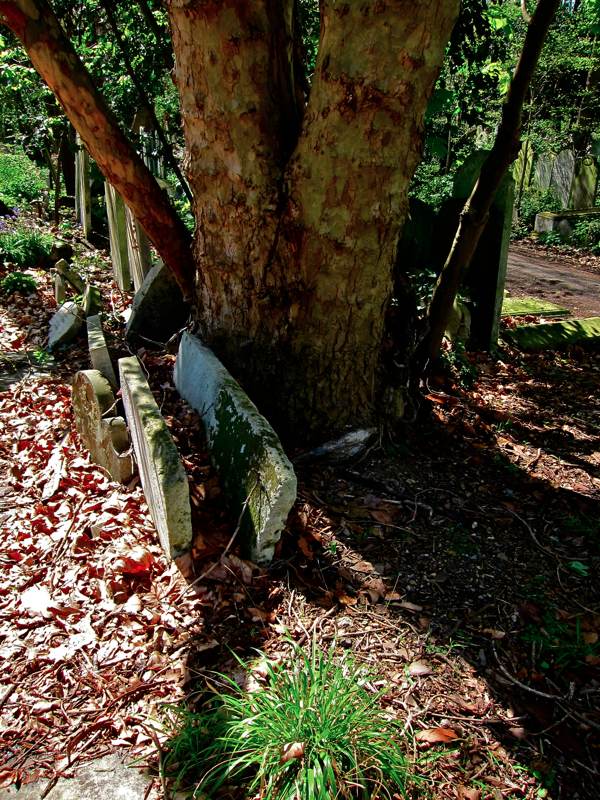
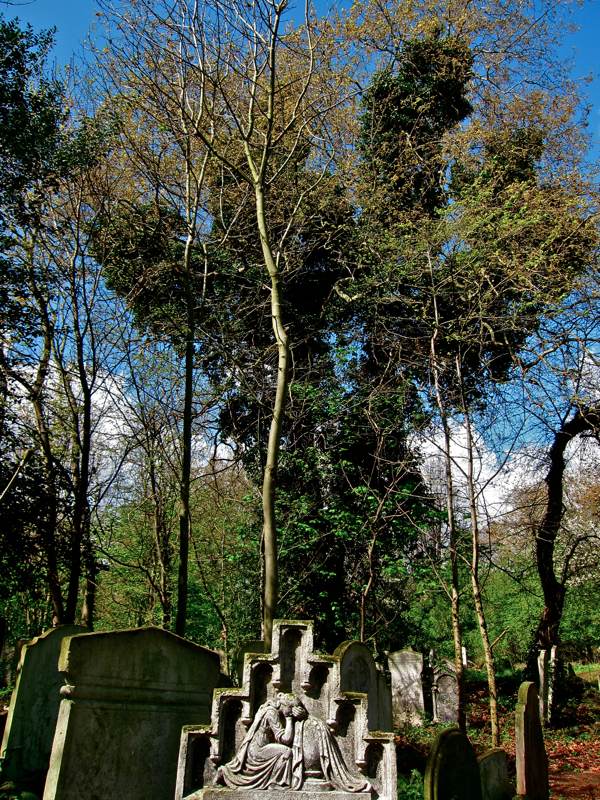
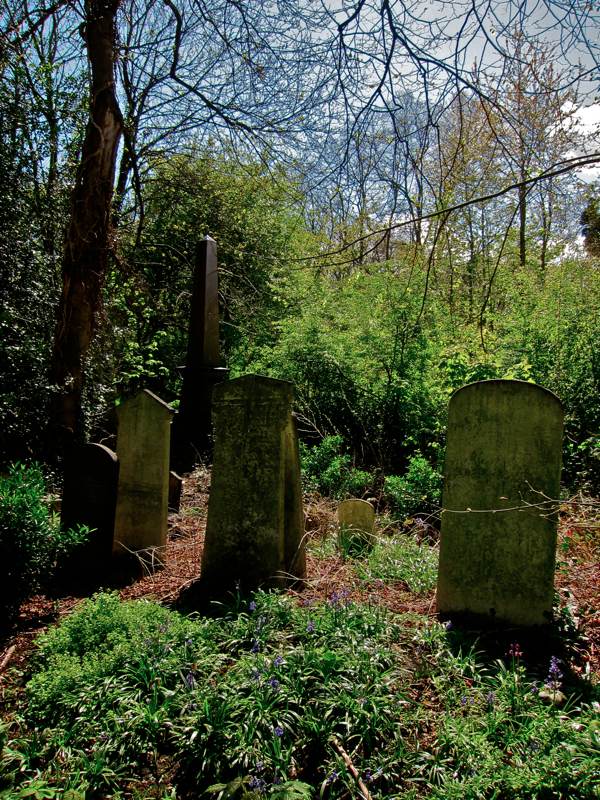
With a few bluebells in flower in my garden in Spitalfields, I was inspired make a visit to Bow Cemetery and view the display of bluebells sprouting under the tall forest canopy that has grown over the graves of the numberless East Enders buried there. In each season of the the year, this hallowed ground offers an arcadian refuge from the city streets and my spirits always lift as I pass between the ancient brick walls that enclose it, setting out to lose myself among the winding paths, lined by tombstones and overarched with trees.
Equivocal weather rendered the timing of my trip as a gamble, and I was at the mercy of chance whether I should get there and back in sunshine. Yet I tried to hedge my bets by setting out after a shower and walking quickly down the Whitechapel Rd beneath a blue sky of small fast-moving clouds – though, even as I reached Mile End, a dark thunderhead came eastwards from the City casting gloom upon the land. It was too late to retrace my steps and instead I unfurled my umbrella in the cemetery as the first raindrops fell, taking shelter under a horse chestnut, newly in leaf, as the shower became a downpour.
Standing beneath the dripping tree in the half-light of the storm, I took a survey of the wildflowers around me, primroses spangling the green, the white star-like stitchwort adorning graves, a scattering of palest pink ladies smock highlighting the ground cover, yellow celandines sharp and bright against the dark green leaves, violets and wild strawberries nestling close to the earth and may blossom and cherry blossom up above – and, of course, the bluebells’ hazy azure mist shimmering between the lines of stones tilting at irregular angles. Alone beneath the umbrella under the tree in the heart of the vast graveyard, I waited. It was the place of death, but all around me there was new growth.
Once the rain relented sufficiently for me to leave my shelter, I turned towards the entrance in acceptance that my visit was curtailed. The pungent aroma of wild garlic filled the damp air. But then – demonstrating the quick-changing weather that is characteristic of April – the clouds were gone and dazzling sunshine descended in shafts through the forest canopy turning the wet leaves into a million tiny mirrors, reflecting light in a vision of phantasmagoric luminosity. Each fresh leaf and petal and branch glowed with intense colour after the rain. I stood still and cast my eyes around to absorb every detail in this sacred place. It was a moment of recognition that has recurred throughout my life, the awe-inspiring rush of growth of plant life in England in spring.









You may also like to read about
Find out more at Friends of Tower Hamlets Cemetery Park