At Clapton Beauty Parlour
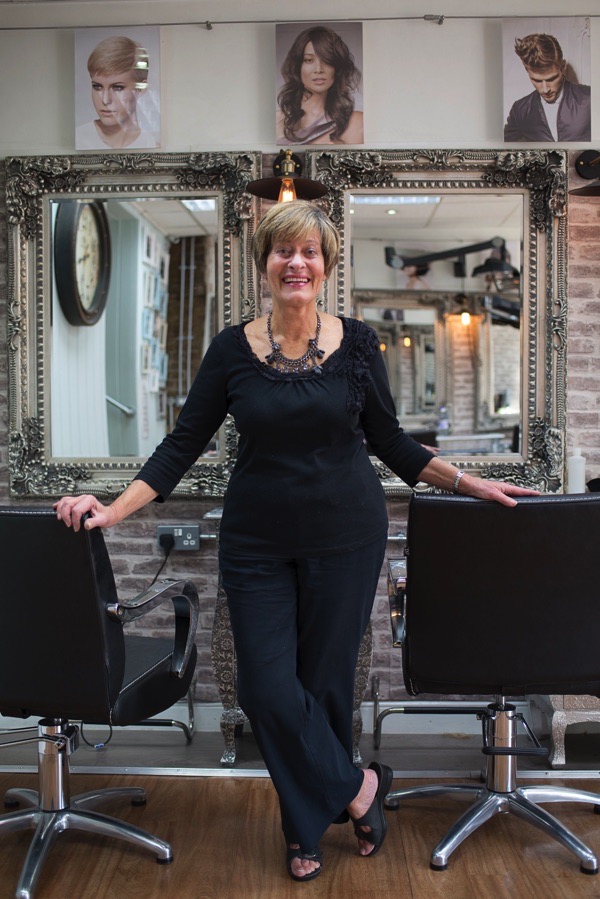
Marcia Manning
Marcia believes that Clapton Beauty Parlour, opened by her parents in 1930, is London’s oldest family-run salon and I have no reason to doubt her. For me, it was the perfect excuse to enjoy a trip to the hairdresser and the ideal opportunity to learn more of Hackney’s hidden hairdressing heritage. And Contributing Photographer Sarah Ainslie came along to capture Clapton’s celebrated coiffeuses.
“Both my grandparents’ families lived in Chatsworth Rd, my mother’s family lived in 104 and my father’s family lived at 83. He had his eye on my mother for a year until he got his opportunity to speak to her when the Prince of Wales visited Hackney. The route took him along Chatsworth Rd, so my father positioned himself behind my mother in the crowd and tapped her on the shoulder and asked to take her to the cinema. My aunt went as a chaperone, that’s what good class people did that in those days. My mother was maybe sixteen or seventeen and they started a courtship, and got married when mother was twenty-one in 1930. She was five months older than my father so, when they took the lease on this salon, it had to be in her name. She was already twenty-one but he was still twenty and they opened at Easter to catch the business.
My father’s family were all barbers. They lived above the shop at 83 Chatsworth Rd and the younger four brothers were all taught barbering by the eldest. Originally, the family came over from Russia where they were lumberjacks – none of them were barbers, it started here with the eldest brother. My father began when he left school at twelve and had to go out to work, he was a natural hairdresser. I recall him saying that hairdressing is a young man’s trade, because physically you cannot stand all day after the age of forty or fifty and because it’s the youngsters who dictate fashion.
When they opened this salon, it was ladies’ hairdressing. It was men’s barbering in Chatsworth Rd but when they opened this shop it was ladies only. He switched because he was a very futuristic man and he saw the future was in ladies’ hairdressing. After my parents opened up the salon, they were very often short of money and they would go to my grandmother in Chatsworth Rd who gave them money to keep them going. She would pawn her rings and reclaim them later. They used to worked until midnight. My mother made sandwiches for the girls who were working all day until 10:00 or 11:00pm. I remember them telling me that customers queued up outside from 6.30 or 7:00am to have their hair done before work.
My father was the hairdresser and my mother was very good at beauty and make up. Father took in fancy goods like gloves, handbags and they sold a lot of jewellery. He bought it and she sold it. Father sent her to Revlon and Max Factor to learn to do make up, so she knew all about that, and we sold all Max Factor and Revlon products here and also Leichner theatrical make up.
They lived above the salon at first and used Hackney Baths to wash. In 1936, when they had enough money, they bought a house in Upper Clapton. Father was a very advanced man. He learnt to drive and they were the first amongst their friends to have a fridge and a freezer and a mangle for wringing the washing. I loved using the mangle!
In the thirties, Vidal Sassoon was working in Whitechapel where he did his apprenticeship and then had his salon. He was only seventeen but in those days, you left school earlier – you were a man at fifteen or sixteen. His life was disrupted by the war when his salon was bombed out. The Sassoon family knew my parents and he came to see my father and asked, ‘I’ve got a few customers and I don’t want to lose them, can I work in your salon?’ My father replied, ‘Yes you can, here are the keys.’ Our salon was closed during the war because my father was in the fire service and he was injured and, after he recovered, he was stationed in Victoria Park on the anti-aircaft guns in the Home Guard. So he said to Vidal, ‘Here are the keys. Keep the salon clean. Use any products. Make sure you lock up.’
I first came here in 1974. I was never going into hairdressing. I went to Woodberry Down school in the year it opened and, when we had a careers evening, the headmistress said to my father ‘Well now Mr Manning, we’ve got to discuss Marcia’s future.’ She saw me as a model pupil. Although I had failed the scholarship exam, it was my luck that Woodberry Down opened that year so I became a model pupil and got six O levels and three A levels. Yet my father told her that I would be going into the family business. Well, that was all I needed to hear and I gritted my teeth against it. I went on to become a linguist and I studied at Holborn College of Languages but – low and behold – here I am today.
I’ve never done hairdressing but I’ve been running the place. The fact that I never learnt hairdressing has held me back, so I took myself off to Weller to do some short courses, even though you can’t just ‘do hairdressing,’ it’s a four-to-five year apprenticeship. I did colouring and that gave me a certain respect here among the staff. Before that, it was like running a plumbing business without being a plumber yourself, you can’t do it. Here, I’ve been a secretary with languages trying to keep these girls in order. My brother gave me a pat on the back and said, ‘Mum and dad would be really proud of you.’ I’ve managed to bring the salon into its eighty-fifth year.
About thirty years ago, there was a big thing about sunbeds, so I decided to go the Hair & Beauty Show at Olympia where they were displaying them. I had some empty rooms upstairs and I got a loan from the bank, and – my goodness it took off – I repaid the loan very quickly. You had to wait for an appointment, it was that busy, and I think this is also what my father found when he started, it took off.
We have one customer who is a hundred years old, Mrs Goodman. She is so alert, she comes on Wednesdays and we have lovely chats about the early days. She remembers my father and he has been dead for forty-two years. She must have been coming here for between fifty to sixty years. I have many customers who remember my father doing their hair for their weddings.
From the age of three or four, I was put on the counter and told that I had an important job, to watch. As far as I can remember, I’ve always been here. I love being here because this is where Mother and Father are, I feel the closeness. I just feel a bond with this place – this is my home.”
Once Marcia had told her story and given me a tour of the premises, from the former basement kitchen to the water tank in the roof, it was time for a word with Dawn Hammond, Marcia’s protégé and proud successor.
“It was my Saturday day job and I am the owner now. I took over seven years ago but Marcia still comes in two days a week and helps out. I lived just across the road when I was fifteen or sixteen and I saw there was a Saturday girl wanted. My mum used to do our neighbours’ hair and her own hair at home, she wanted to be a hairdresser but became a machinist. It was convenient for me, I didn’t have to fork out for bus fares and then Marcia took me on as an apprentice. I wanted to be an architect, but I haven’t got the brains for that. In architecture, you have to draw lines but in hair you have to draw angles, 180 and 360 degrees. If you hold the hair up, you just get a short back and side but, if you do an inverted bob. It’s all to do with angles.
Customers are different today. They see these models in the papers with black hair one week and blonde the next, they might be wigs. They say, ‘I want my hair like this’ – they have got black hair and they want it blonde, it ain’t gonna happen! When customers come in we turn into psychologists and, once we get to know them, they tell us their problems. I’ve got a customer who used to live near Victoria Park and now she has moved to Hove, but she still comes back to get her hair done. I ask her about her children and she asks about mine. With customers that we have been doing for years, we have a strong bond.”

Dawn Hammond
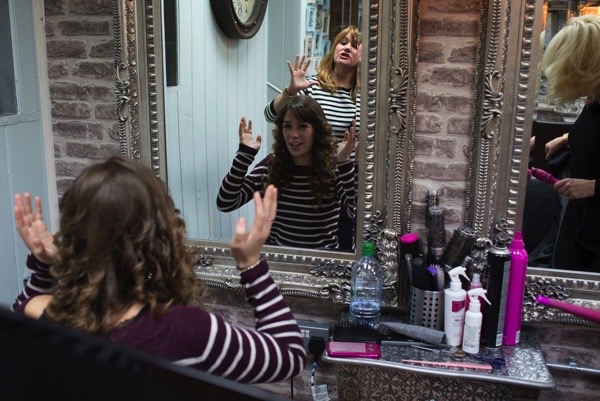
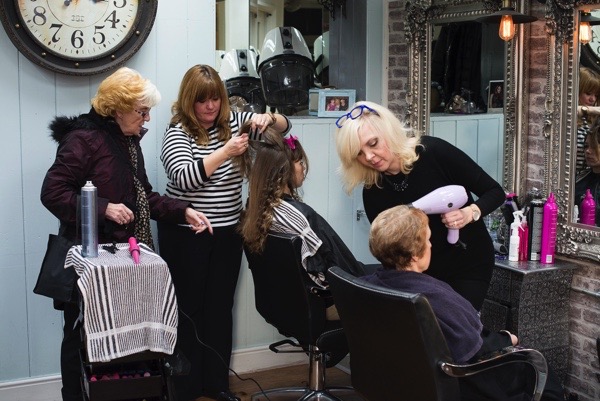
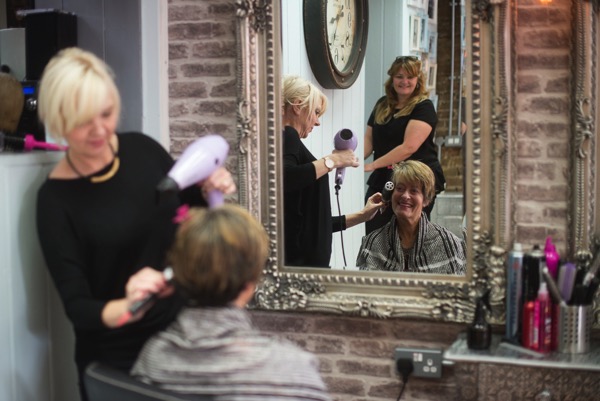
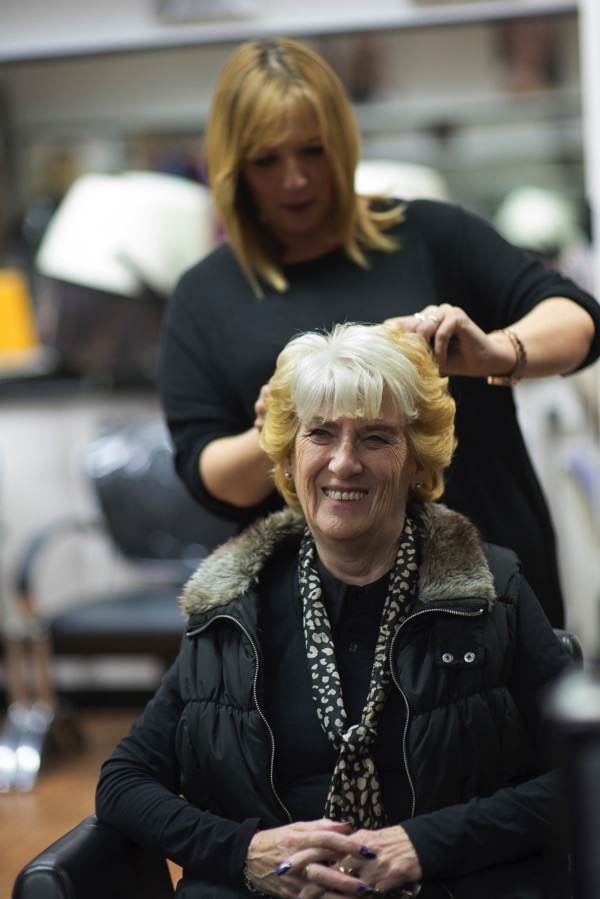
Marcia enjoys a blow dry
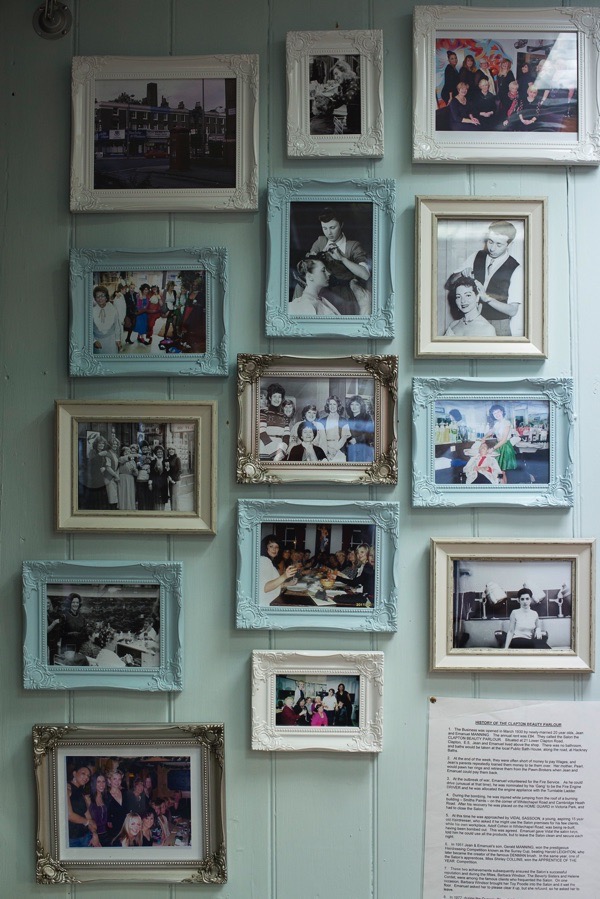
The shrine to Clapton Beauty Parlour’s history
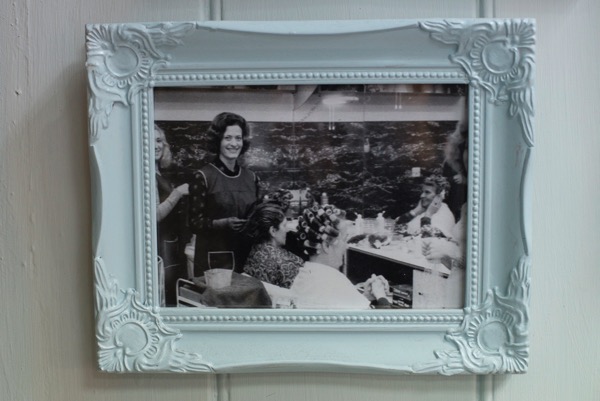
Marcia in the seventies
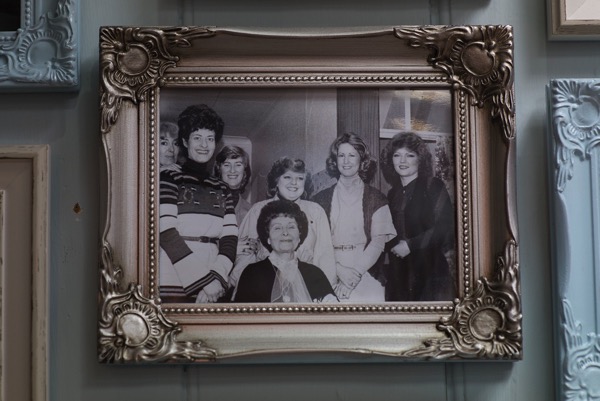
Marcia stands on the left and her mother sits in the centre at the salon in the eighties
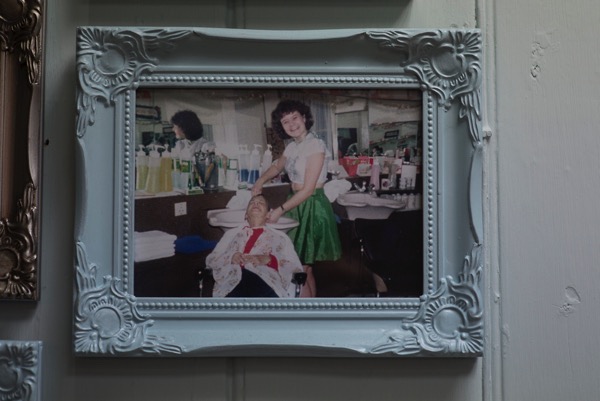
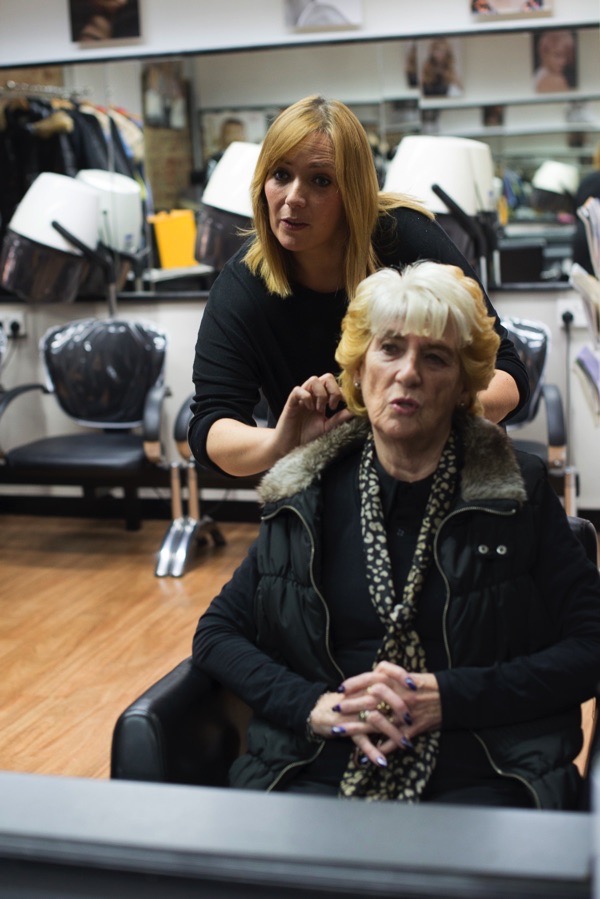
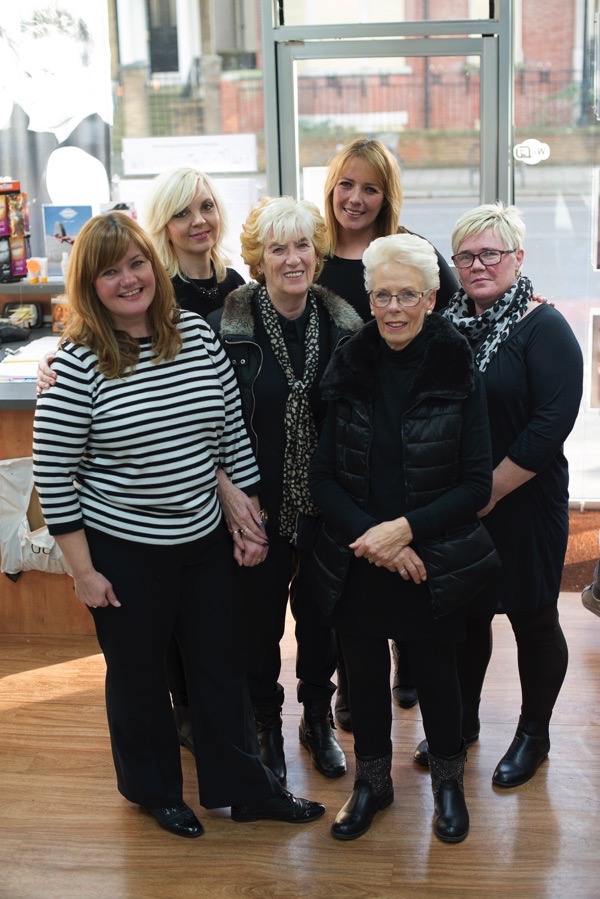
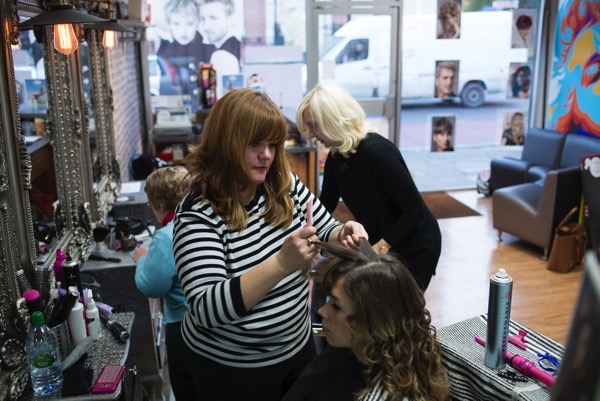
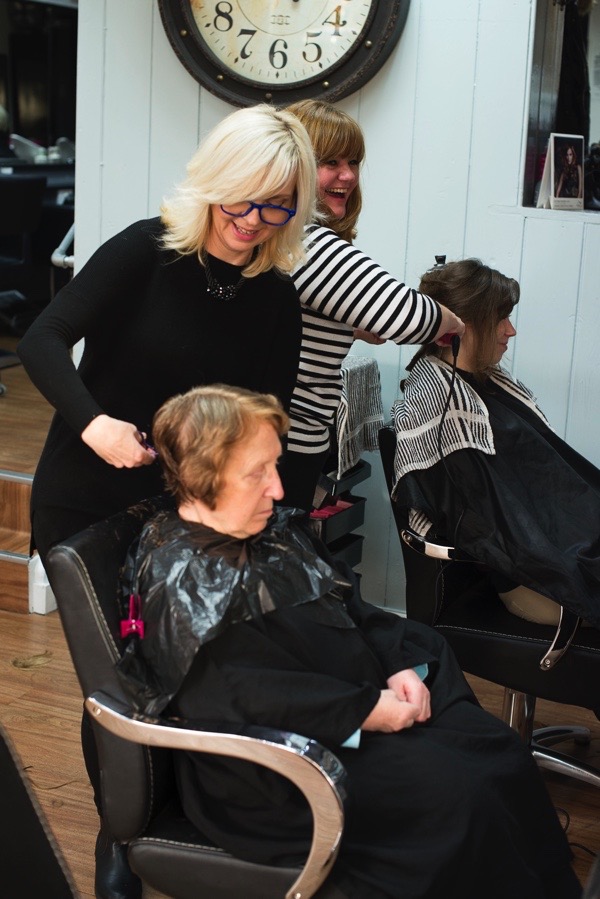
Customers and coiffeuses in Clapton

Photographs copyright © Sarah Ainslie
Transcript by Simon Scott
Book your appointment at CLAPTON BEAUTY PARLOUR, 21 Lower Clapton Rd, Hackney, E5 0NS
You may also like to read about
Aaron Biber, London’s Oldest Barber
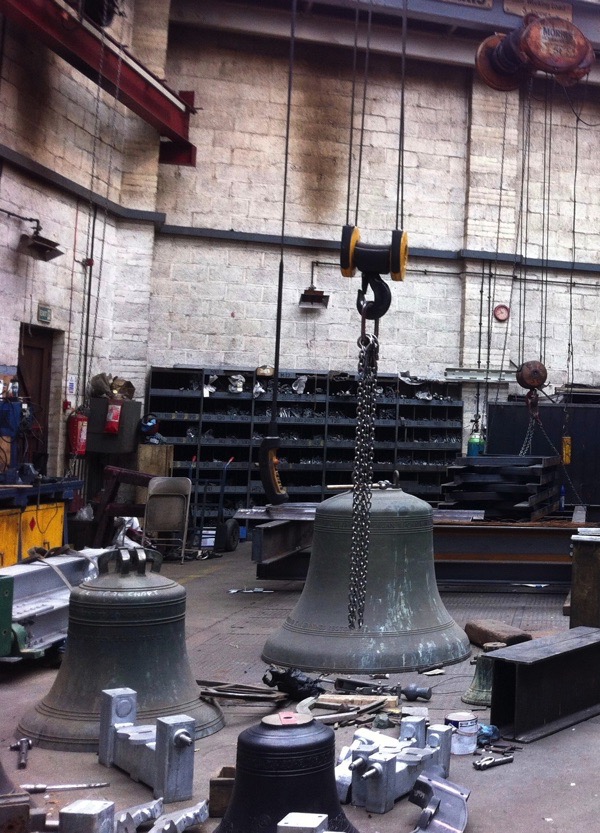
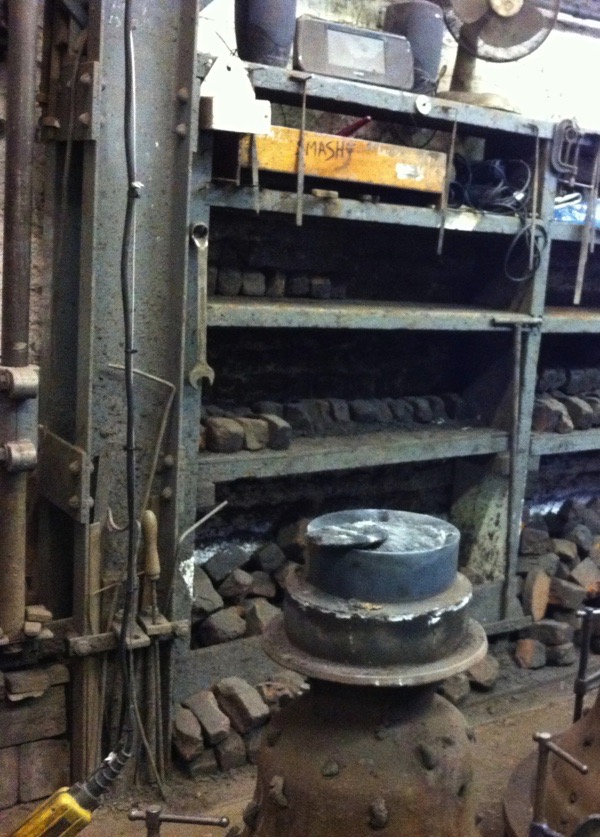
14 Short Whitechapel Bell Foundry Poems
Dan Thompson wrote these fourteen short poems about the Whitechapel Bell Foundry and its bells, as part of his project to write hundred poems about hundred places in England.
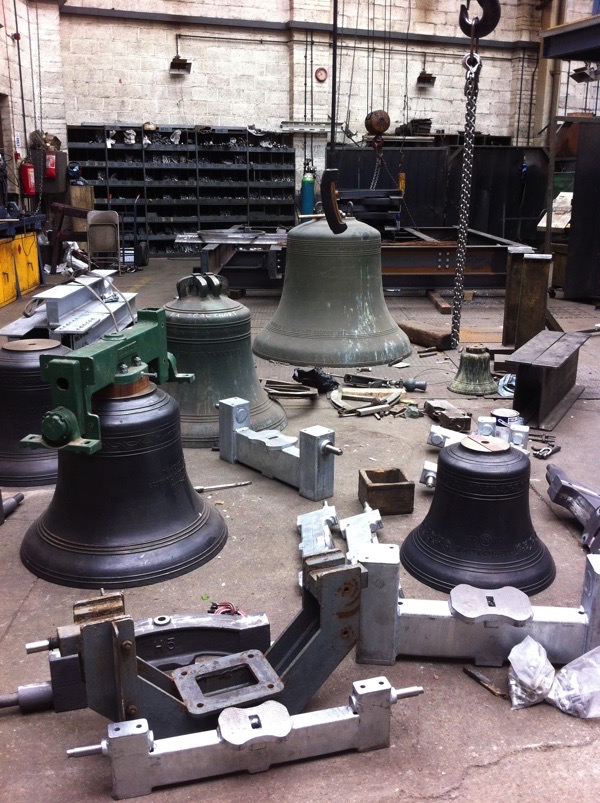
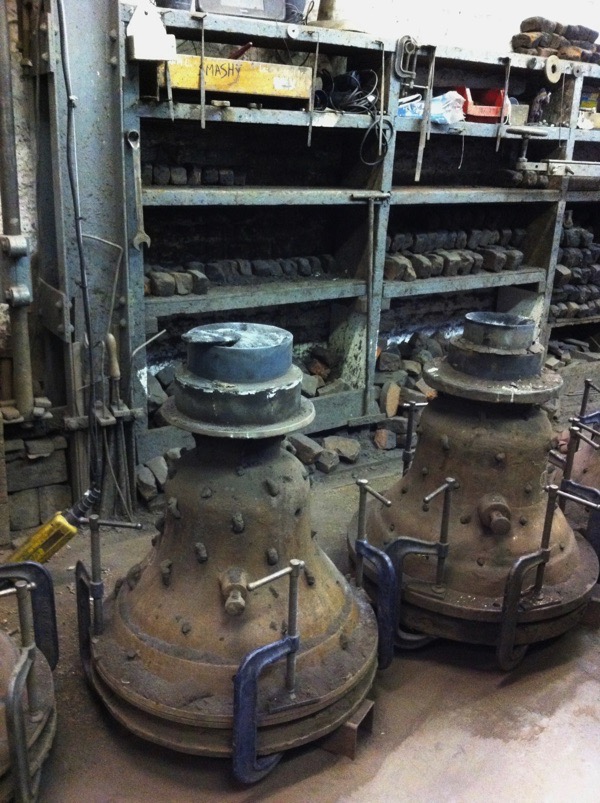
These are published for the first time here today and complemented with photographs of the foundry by Charlotte Dew. Below you can also find details of how you can help save the Whitechapel Bell Foundry by writing a letter of objection to the bell-themed boutique proposal to Tower Hamlets Council.
The Whitechapel Sound
I
The clapper strikes the place-bell’s rim,
a 1930s tune by Mears and Stainbank.
Down in a spireless church on the coast –
Captain Sophie Littlechild leads the band
in a Kent Treble Bob Major,
ringing a Kentish rag.
The changes are heard up in the Cinque Port.
Eight still bells hold the peace
they’ve kept since before the Great War:
but the bells of St Clements sound,
‘Oranges and lemons, oranges and lemons.’
II
In the Arundel Tower at Canterbury.
Dunstan’s Bell sounds the hour
for pilgrims at the site of the martyr.
Thomas gave his will
to find freedom in the will of god.
He has been killed for his faith:
so we mourn –
he has been elevated to the company of saints:
so we rejoice.
He has been killed:
the bells will be silent for a year.
‘It is only in these our Christian mysteries that we can rejoice and mourn at once for the same reason’.
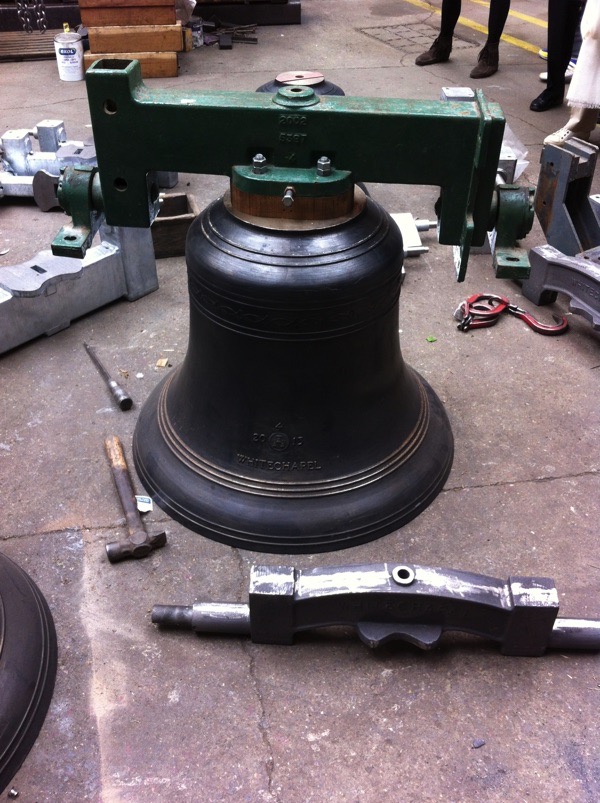
III
An old signalling-station,
a tower that flies the White Ensign,
the Prime Minister sung in the choir
as the bells brought by boat,
floated down the Estuary,
pealed over war graves
and Bones’ fields.
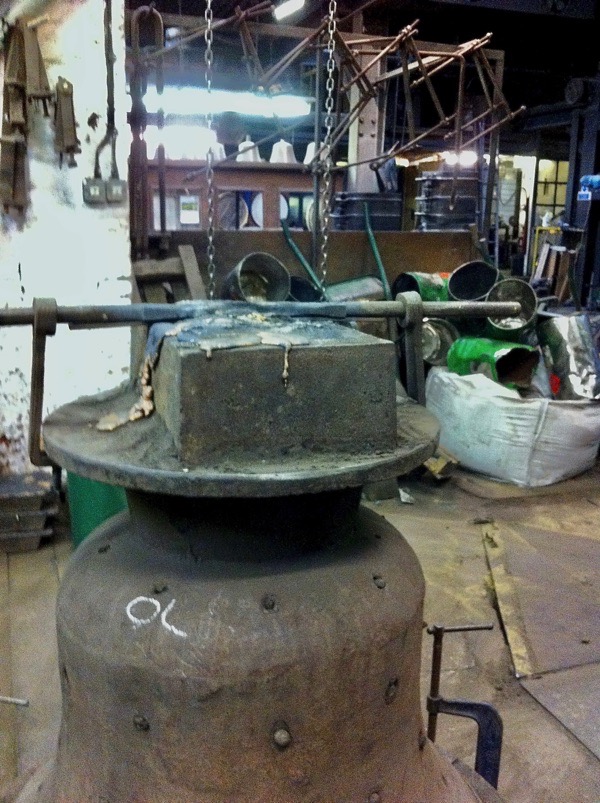
IV
Along the Estuary, on the hour,
promenaders at Herne Bay,
and pleasure-trippers boarding Thanet wherries,
ghost figures on a ghost pier,
set their watches by the bell in
Mrs Thwaytes’ Clock Tower.
The hour drifts on the tides
to sea forts, pirate radio stations,
across the windfarms.
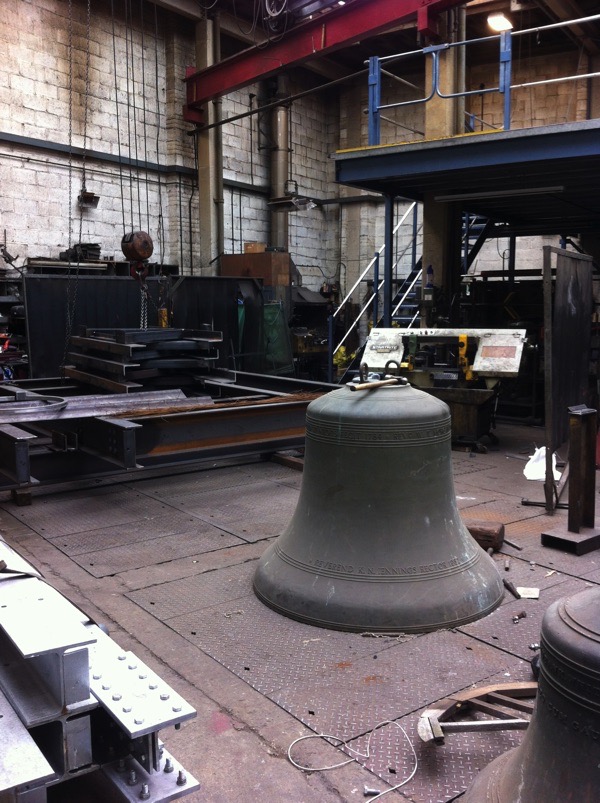
V
On the line between English and Danish,
Christopher Wren built a church,
German thunderbolts destroyed it –
the spire burning like a candle-
the Royal Air Force restored it.
Sign and countersign, fall and rise –
‘They held out their arms for you to pass under’
The man who burnt
Hamburg and Dresden
stands outside.
‘Lord, do you want us to
call fire down from heaven
to destroy them?’
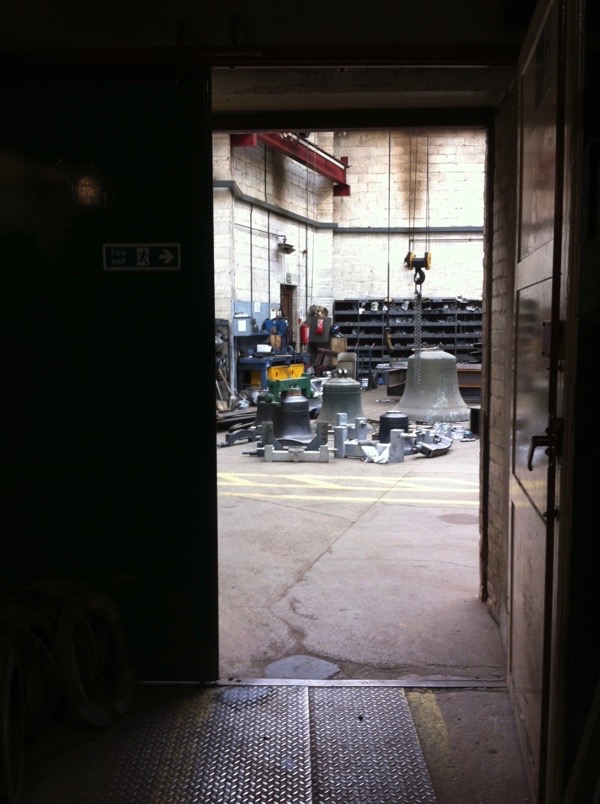
VI
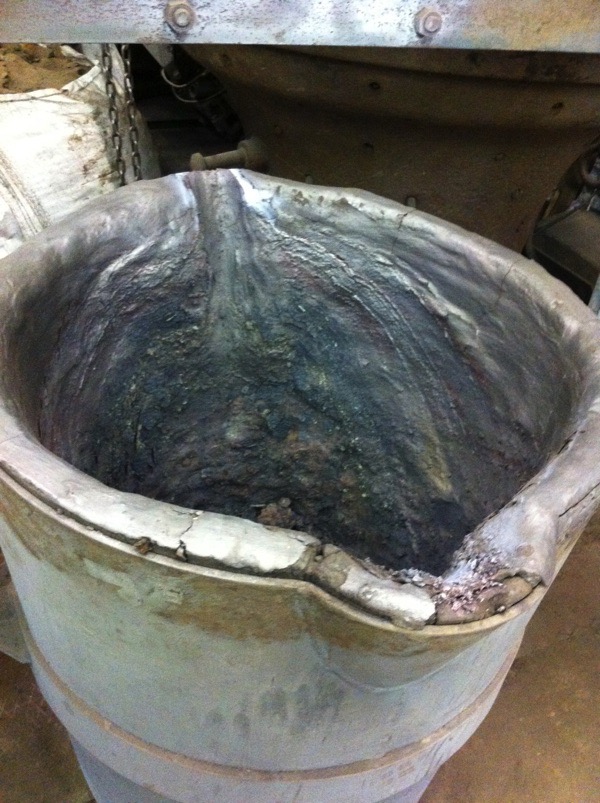
Two Sticks and Apple,
Ring the Bells at Whitechapple
When I am Rich,
Ring the Bells at Fleetditch
We were made in this place
Ring the Bells at Boniface.
VII
Big Ben in
The Elizabeth Tower,
St Paul’s, Westminster Abbey –
London rings.
The bells in Wren’s
St Mary-le-Bow
would have been heard
six miles to the east,
five miles to the north,
three miles to the south,
four miles to the west.
In St Andrew by the Wardrobe,
the bell rings by itself
when the vicar in Avenbury dies.

VIII
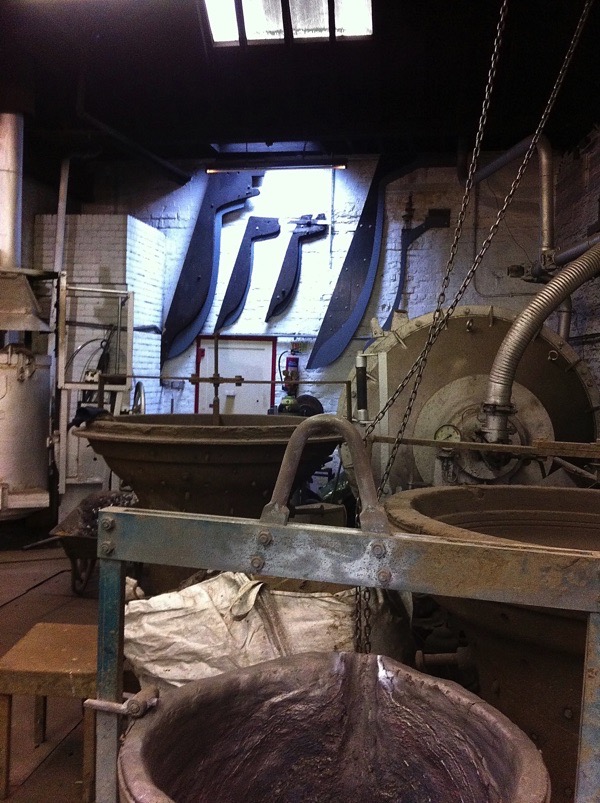
Be not afeard,
the isle is full of the
noise of bells –
Work No 1197:
All The Bells.
The wide bell
rings low and so loud,
nine hundred million people
can hear it.
IX
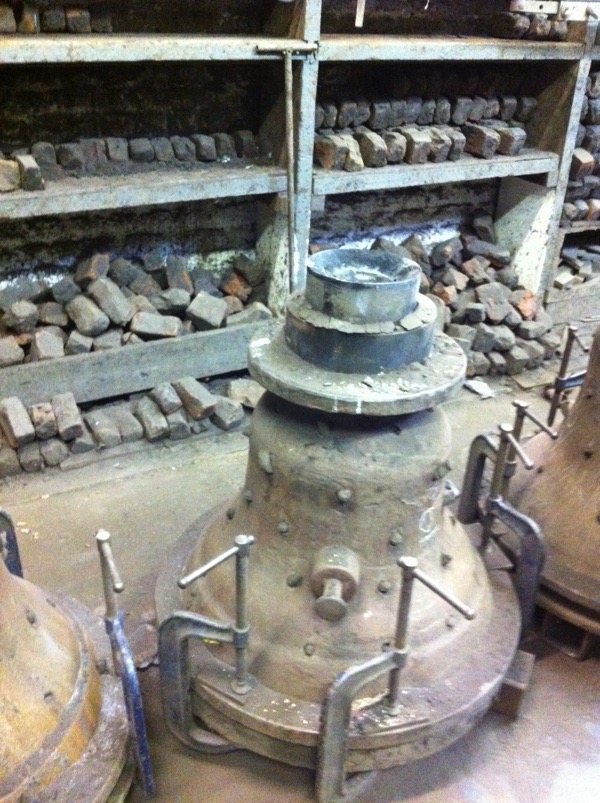
Before each service,
the tenor rings seventeen times,
once for each of the Lewes martyrs:
one ring more than
the years of protestant
Thomasina Wood’s life.
X
Target 53.
The Kampfgruppe dropped marker flares
at the corners of the city.
From 20,000 feet, a cathedral looks like a factory.
St Michael’s burned, a magnesium flame
melting lead, catching in the oak roof.
The water ran dry before midnight.
Churchill stood on the
Air Ministry roof, waiting
for bombs that never fell on London.
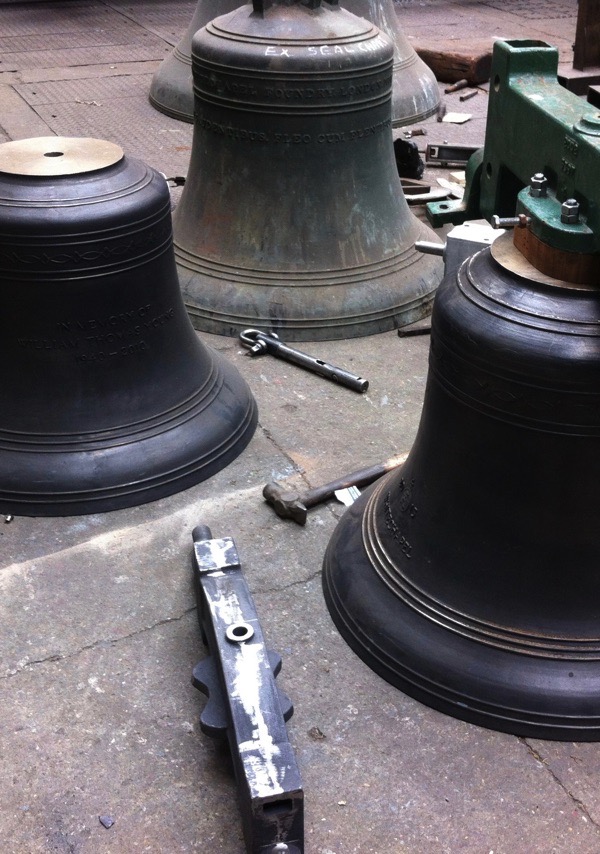
The old Pack & Chapman bells,
‘each bell of good, bold and pleasing tone,
a very fine peal of ten’, recast,
rang as the bombs fell.
XI
Habemus vicarium at Granchester –
‘we have a vicar, we have a vicar’
XII
Wind the handle,
a turn for each day of the year,
and Great Tom will mark the hour.
Cover the fire.
Two bells call the curfew,
one hundred and one rings.
Cover the fire.
Cover the fire.
XIII
The edge, the Borders,
St Andrew’s in Penrith,
where Kathleen Raine
sat out the war.
‘Write
me a piece about the
grave, James Joyce’.
Ken Twentyman will
show you the Fire Bell,
the Market Bell,
the Curfew Bell –
the Morta Bell for death.

XIV
After each round of bells
is a moment of silence,
change, before the bells
ring round again. In the
peace after and before
you can hear Whitechapel.
___________
Footnotes
I St Mary’s, Walmer, Kent: St Peter’s, Sandwich, Kent (where the bells last rung in 1913), St Clement’s
II Quote from TS Eliot Murder In The Cathedral.
III St Peters in Thanet, Broadstairs: the local farmer is Mr Bones.
IV Herne Bay Clocktower
V St Clement Danes, the RAF church. Quote from George Orwell Nineteen Eighty Four and Luke 9:54.
IX St Thomas, Lewes

Dan Thompson, Peace Poet
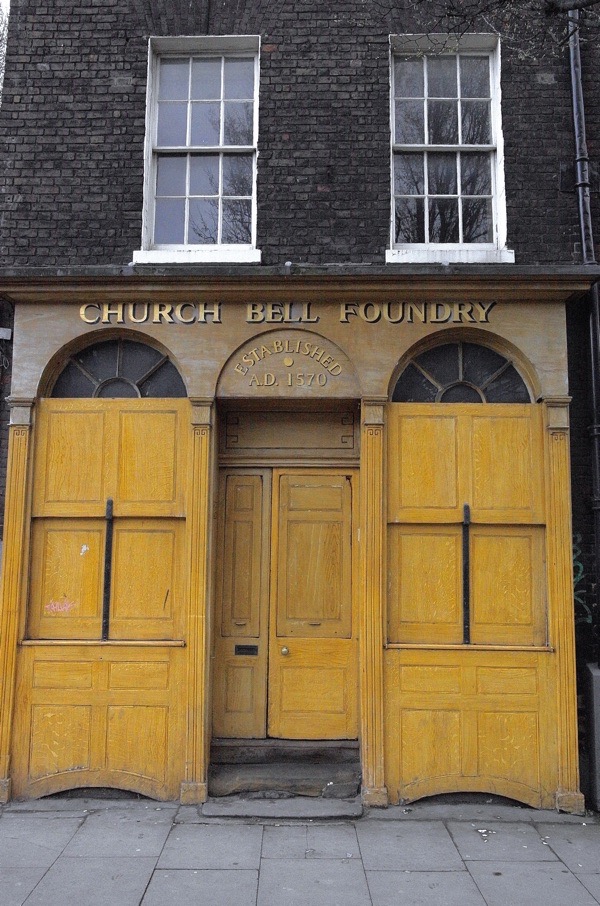
You can help save the Whitechapel Bell Foundry as a living foundry by submitting an objection to the boutique hotel proposal to Tower Hamlets council. Please take a moment this weekend to write your letter of objection. The more objections we can lodge the better, so please spread the word to your family and friends.
HOW TO OBJECT EFFECTIVELY
Use your own words and add your own personal reasons for opposing the development. Any letters which simply duplicate the same wording will count only as one objection.
1. Quote the application reference: PA/19/00008/A1
2. Give your full name and postal address. You do not need to be a resident of Tower Hamlets or of the United Kingdom to register a comment but unless you give your postal address your objection will be discounted.
3. Be sure to state clearly that you are OBJECTING to Raycliff Capital’s application.
4. Point out the ‘OPTIMUM VIABLE USE’ for the Whitechapel Bell Foundry is as a foundry not a boutique hotel.
5. Emphasise that you want it to continue as a foundry and there is a viable proposal to deliver this.
6. Request the council refuse Raycliff Capital’s application for change of use from foundry to hotel.
WHERE TO SEND YOUR OBJECTION
You can write an email to
planningandbuilding@towerhamlets.gov.uk
or
you can post your objection direct on the website by following this link to Planning and entering the application reference PA/19/00008/A1
or
you can send a letter to
Town Planning, Town Hall, Mulberry Place, 5 Clove Crescent, London, E14 2BG

You may also like to read about
Nigel Taylor, Tower Bell Manager
Hope for The Whitechapel Bell Foundry
A Petition to Save the Bell Foundry
My East End Vernacular Lecture
I shall giving an illustrated lecture on EAST END VERNACULAR, Artists Who Painted London’s East End Streets in the 20th Century, including all the artists whose works are below, at Nunnery Gallery, Bow Arts, E3 2SJ next Thursday March at 7pm. Click here for tickets
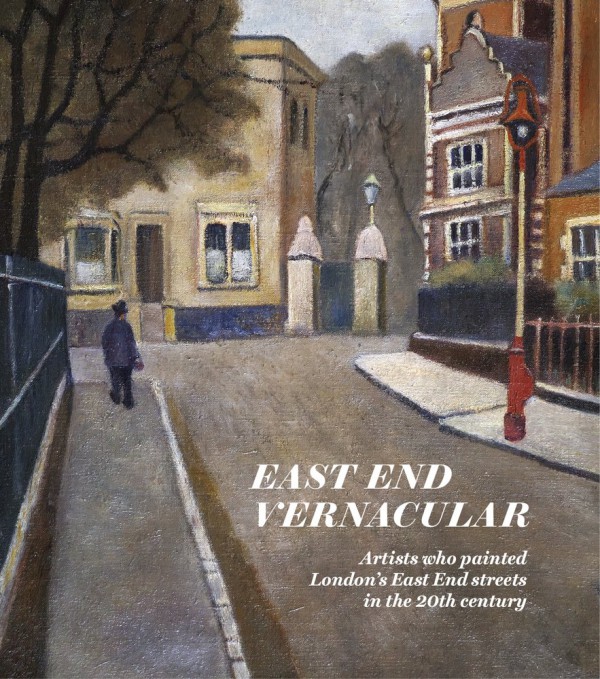
Click here to order a copy of EAST END END VERNACULAR for £25
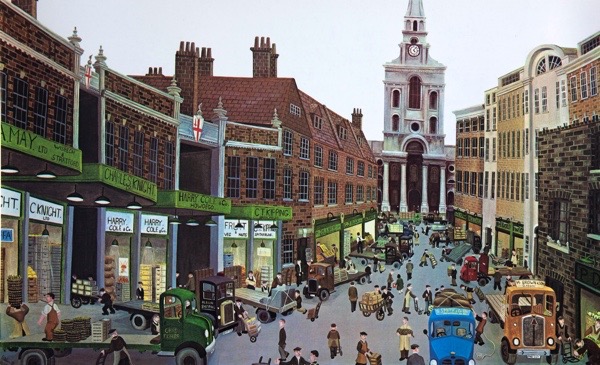
John Allin – Spitalfields Market, 1972
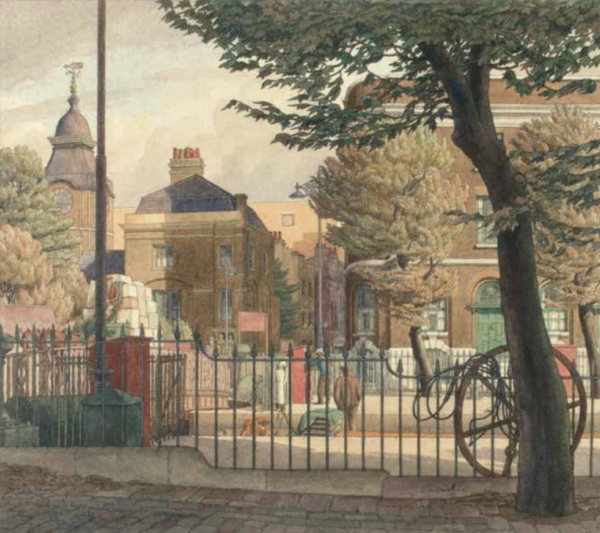
S.R Badmin – Wapping Pier Head, 1935

Pearl Binder – Aldgate, 1932 (Courtesy of Bishopsgate Institute)
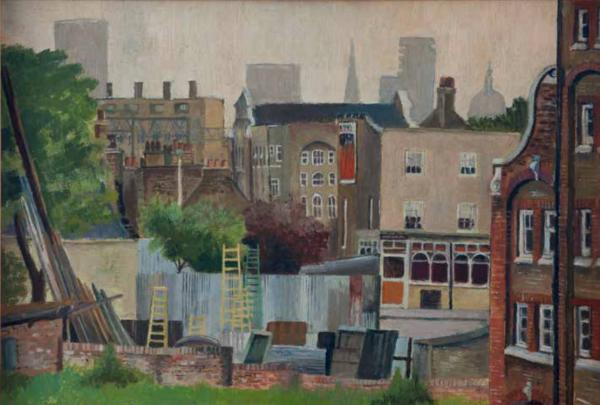
Dorothy Bishop – Looking towards the City of London from Morpeth School, 1961
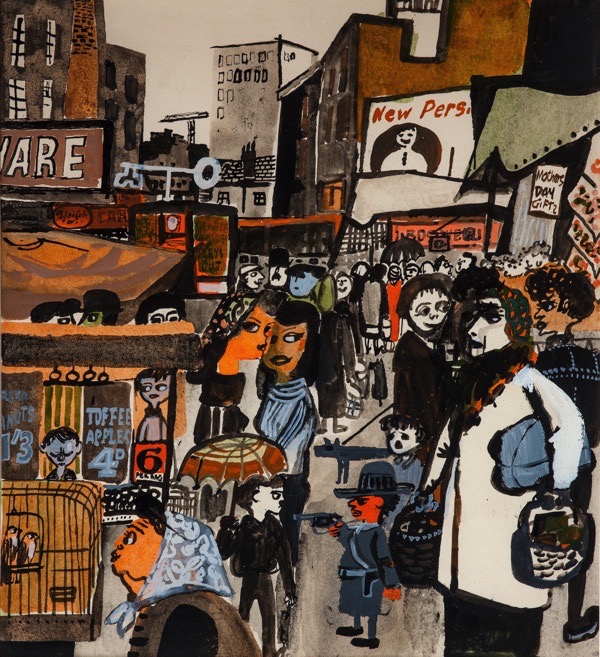
James Boswell – Petticoat Lane (Courtesy of David Buckman)
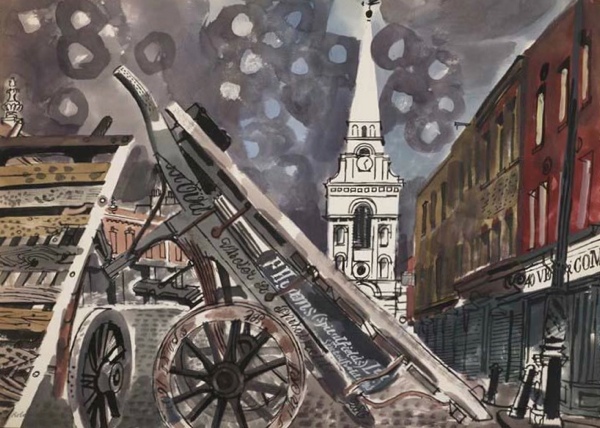
Roland Collins – Brushfield St, Spitalfields, 1951-60 (Courtesy of Museum of London)
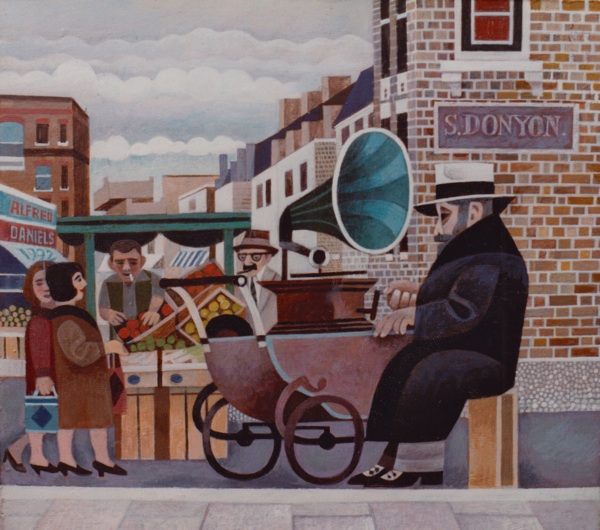
Alfred Daniels – Gramophone Man on Wentworth St
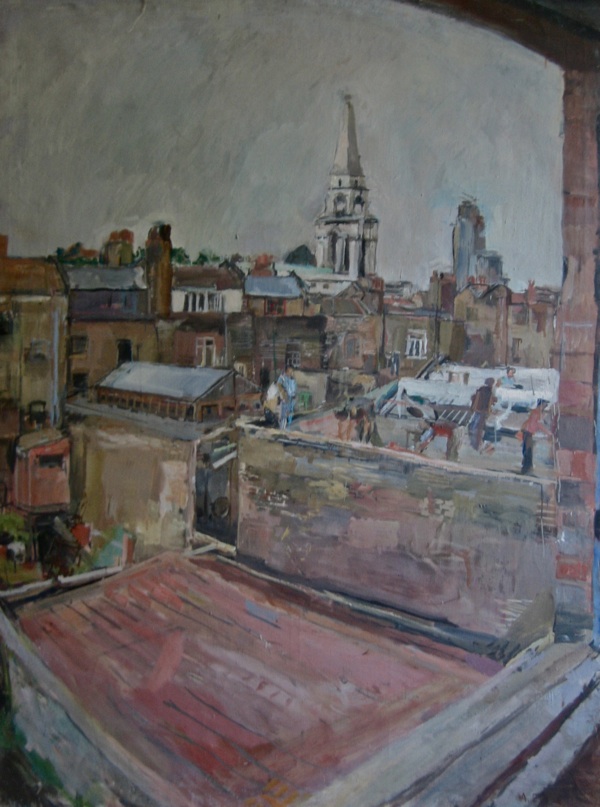
Anthony Eyton , Christ Church Spitalfields, 1980
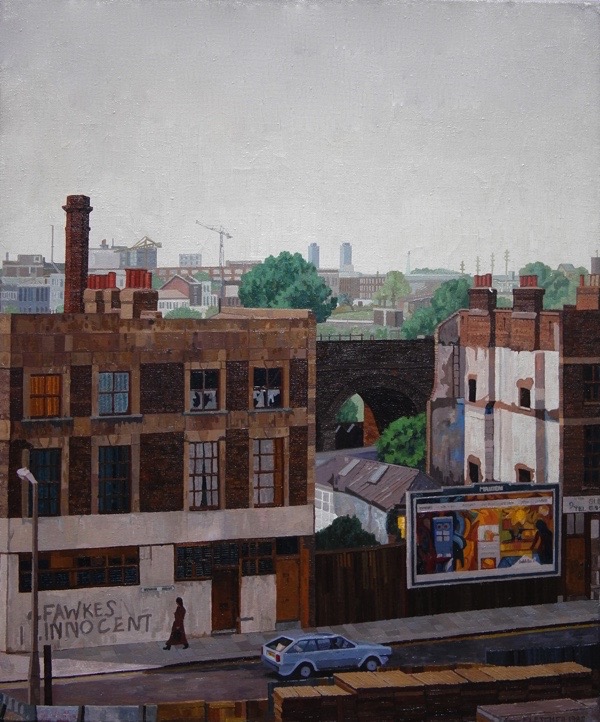
Doreen Fletcher – Turner’s Rd, 1998
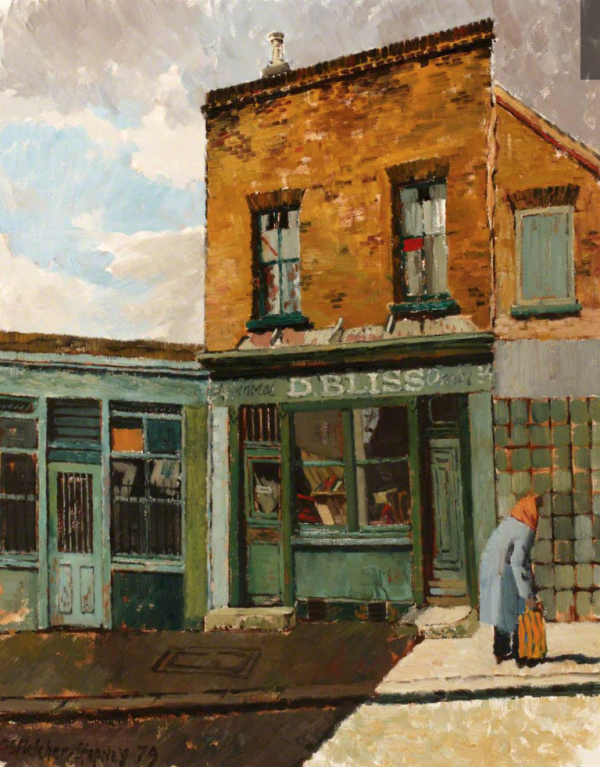
Geoffrey Fletcher – D.Bliss, Alderney Rd 1979 (Courtesy of Tower Hamlets Local History Library & Archives)
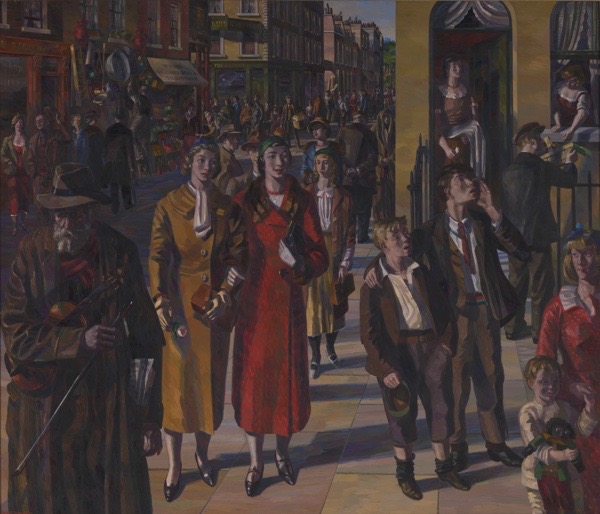
Barnett Freedman– Street Scene. 1933-39 (Courtesy of Tate Gallery)

Noel Gibson – Hessel St (Courtesy of Tower Hamlets Local History Library & Archives)
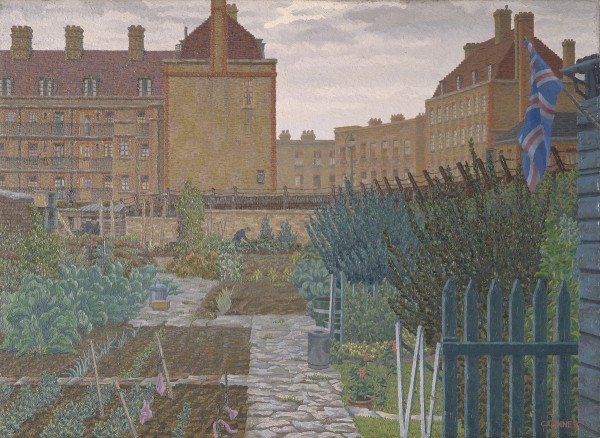
Charles Ginner – Bethnal Green Allotment, 1947 (Courtesy of Manchester City Art Gallery)
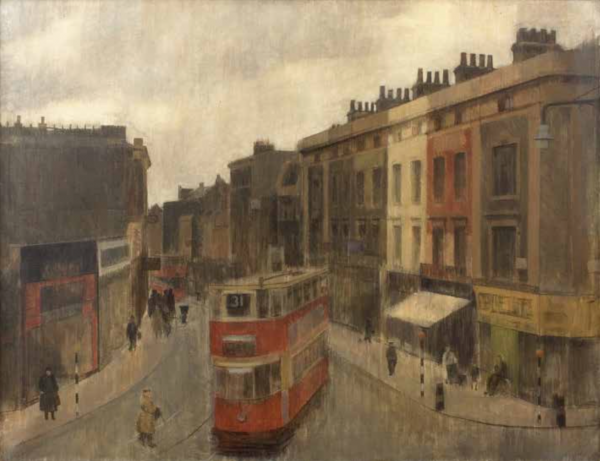
Lawrence Gowing – Mare St, 1937
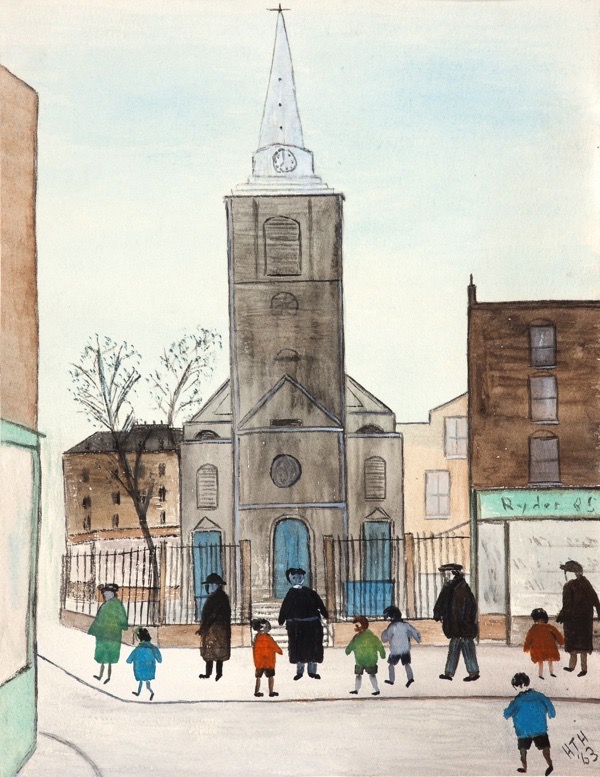
Harry T. Harmer – St Botolph’s Without Aldgate, 1963 (Courtesy of Tower Hamlets Local History Library & Archives)
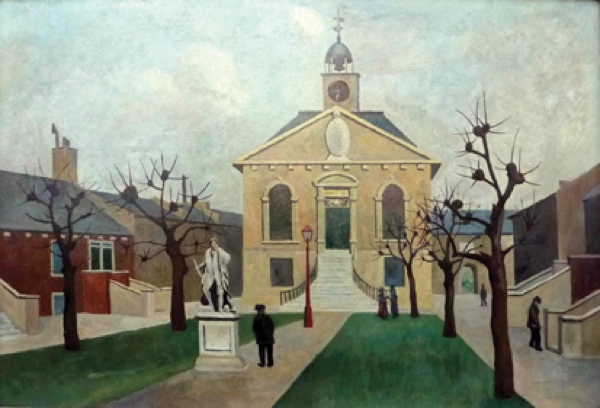
Elwin Hawthorne – Trinity Green Almshouses, 1935
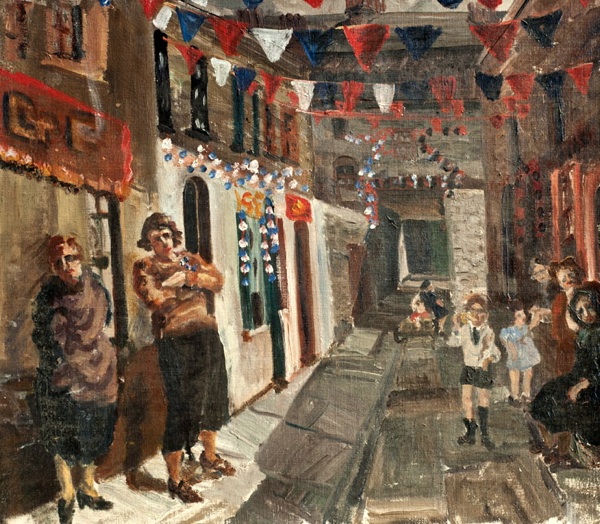
Rose Henriques – Coronation Celebrations in Challis Court, 1937 (Courtesy of Tower Hamlets Local History Library & Archives)
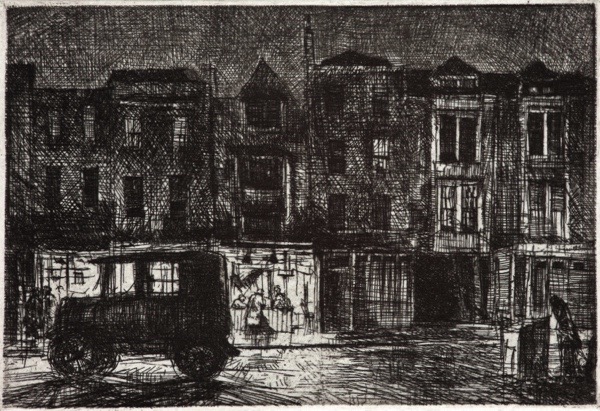
Nathaniel Kornbluth – Butcher’s Row, Aldgate 1934 (Courtesy of Tower Hamlets Local History Library & Archives)
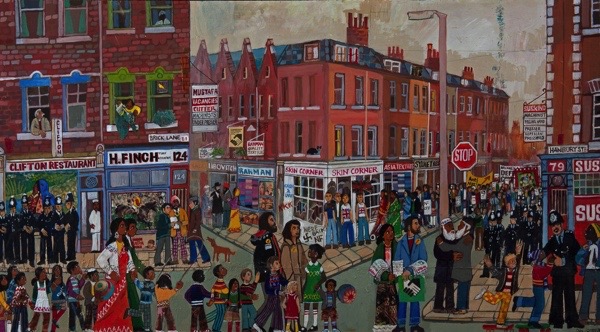
Dan Jones – Brick Lane, 1977
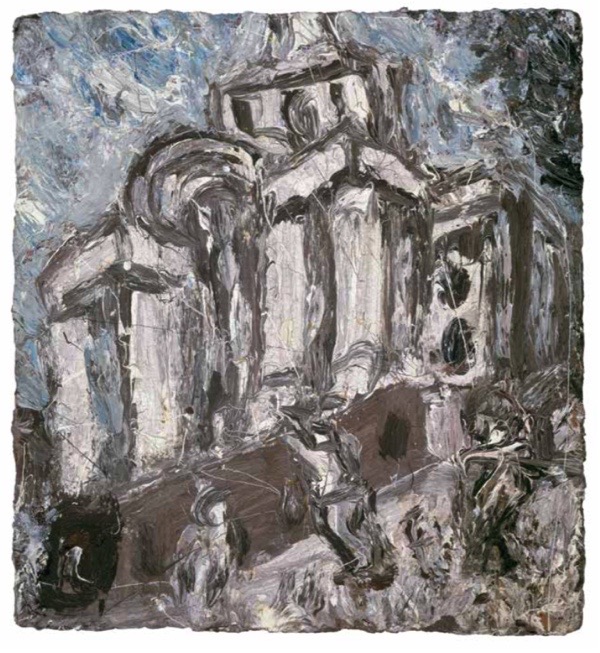 Leon Kossoff – Christ Church Spitalfields, 1987
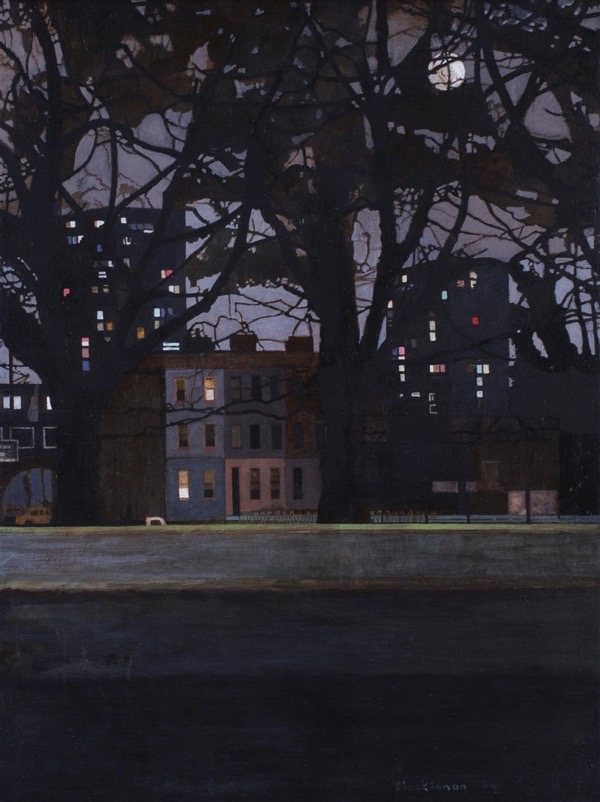
James Mackinnon – Twilight at London Fields
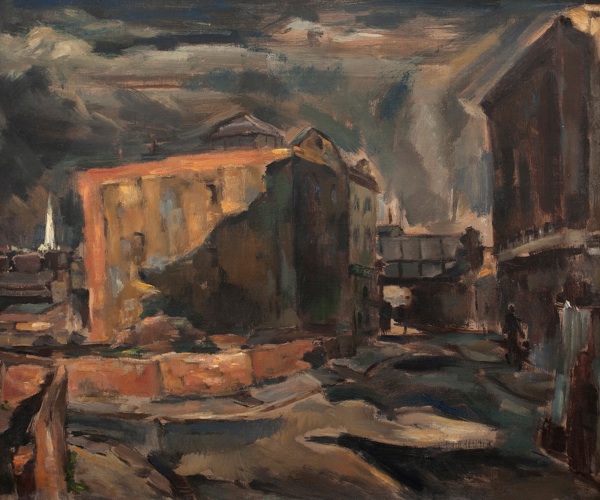
Cyril Mann – Christ Church seen over bombsites from Redchurch St, 1946 (Courtesy of Piano Nobile Gallery)
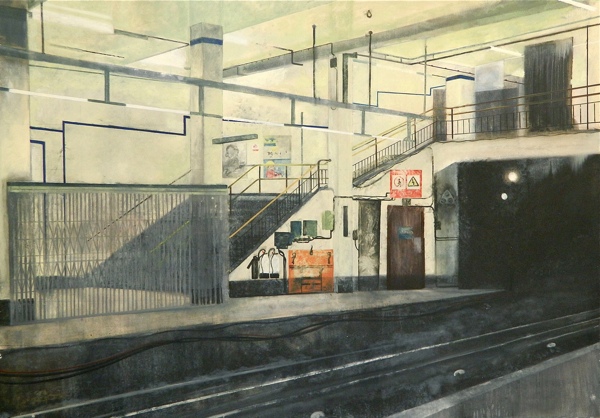
Jock McFadyen – Aldgate East
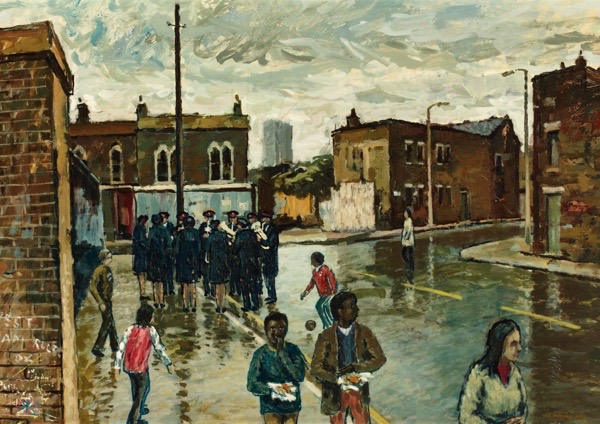
Ronald Morgan – Salvation Army Band Bow, 1978 (Courtesy of Tower Hamlets Local History Library & Archives)
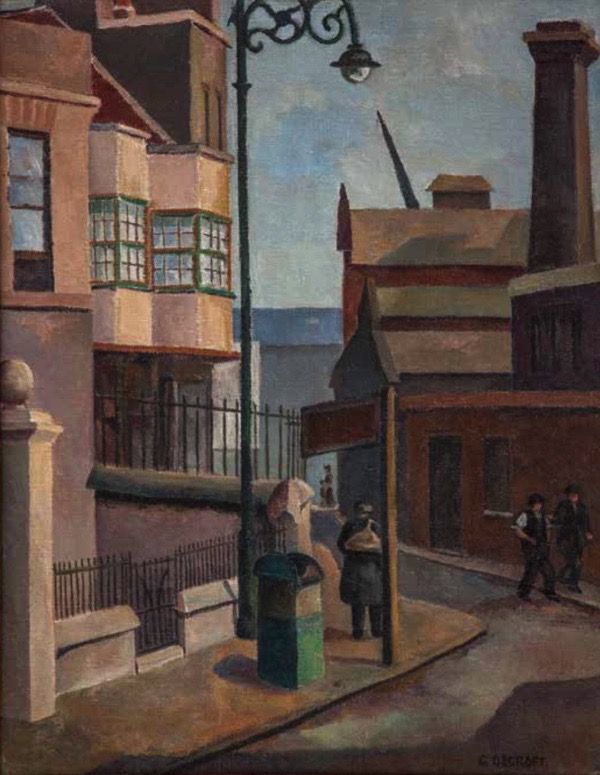
Grace Oscroft – Old Houses in Bow, 1934
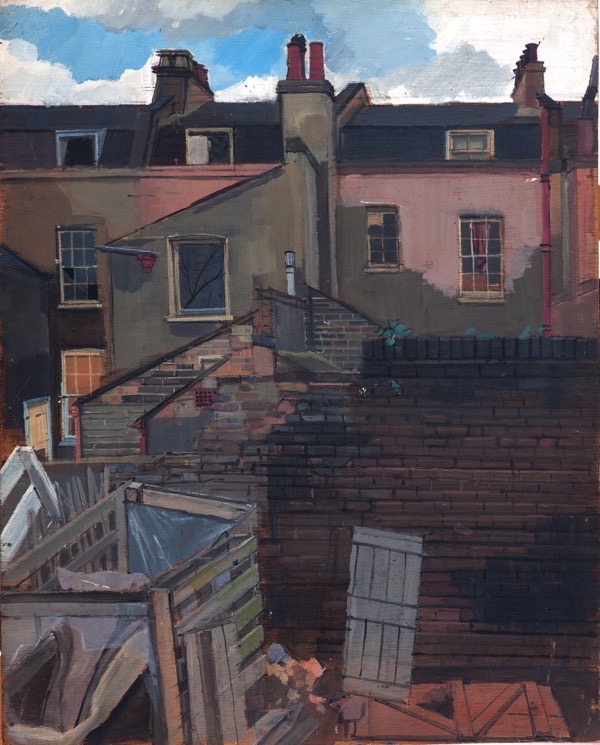
Peri Parkes – House in the East, 1980-81
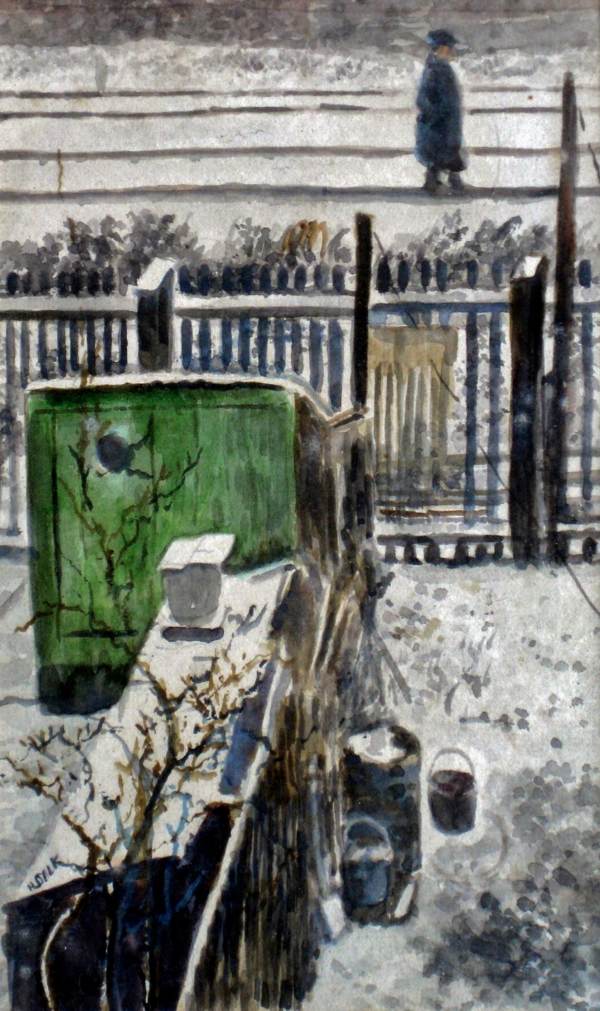
Henry Silk – Snow, Rounton Rd, Bow
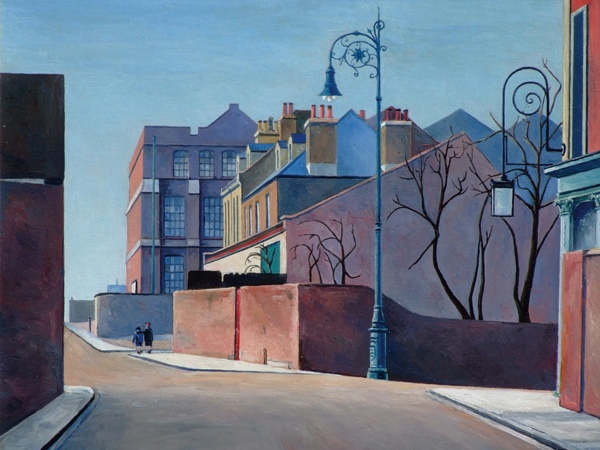
Harold Steggles – Old Ford Rd c.1932
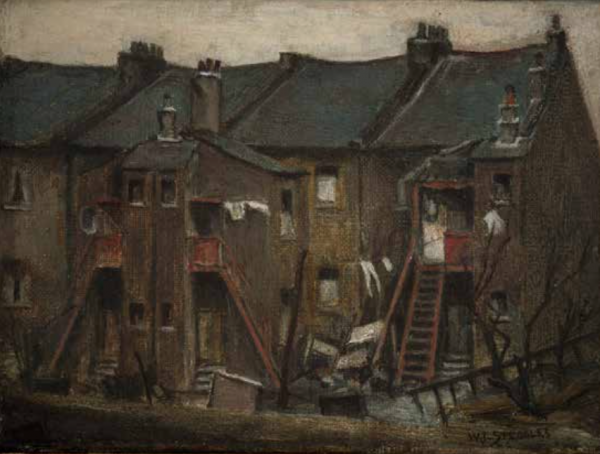
Walter Steggles – Old Houses, Bethnal Green 1929
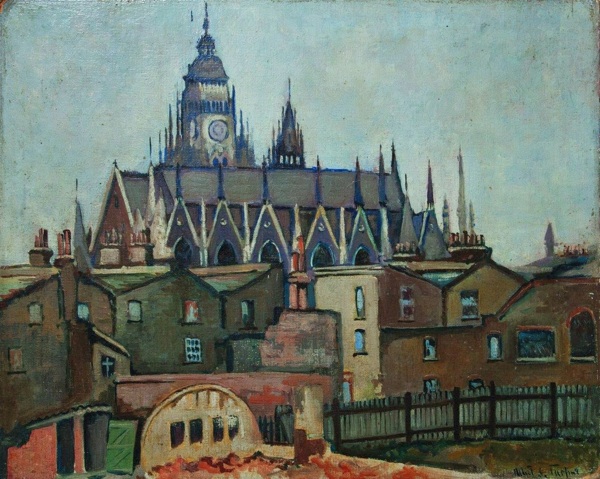
Albert Turpin, Columbia Market, Bethnal Green

Take a look at some of the artists featured in East End Vernacular
The Departure Of Empress Coaches
Empress Coaches who drove East Enders on beanos for generations have departed their historic garages at Corbridge Crescent next to the canal in Hackney after ninety years and now operate from Silvertown. Meanwhile, after a lengthy planning battle, the old garages have been levelled and the Georgian bow-fronted cottages facing the canal will be reduced to mere facades. Below you can read my account of a visit to Empress Coaches before the redevelopment.

Peter Stanton
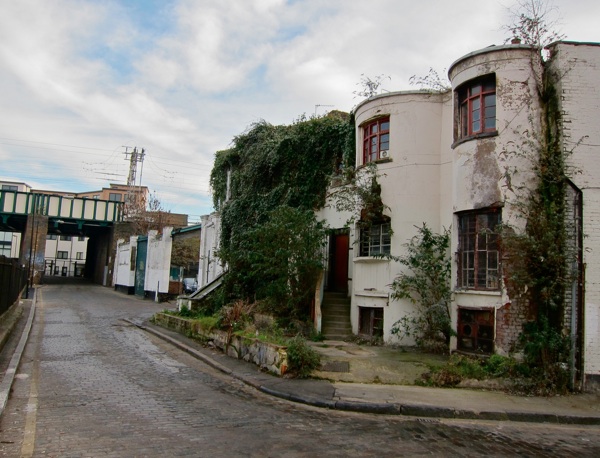
One of the corners of the East End that intrigues me most is at the boundary of Bethnal Green and Hackney, where a narrow path bordered by crumbling old brick walls leads up from the Hackney Rd to the junction of Mare St and the Regent’s canal. Cutting through at an angle to the grid of streets, it has the air of a field track that was there before the roads and the railway. Looming overhead against the skyline is a tall ruinous structure with the square proportions of a medieval castle, London’s last unreconstructed bomb site, left to decay since an incendiary hit in World War II. Beyond this, you pass under the glistening railway arches to arrive at the canal where, to your left, a vista opens up with majestic gasometers reaching up the sky and a quaint old building with bay-fronted windows entirely overgrown with ivy, cowering beneath. This was the headquarters of Empress Coaches.
Here I received a generous welcome from Peter Stanton, third generation of the Stanton family at the coach yard and still operating from the extravagantly derelict premises purchased by his grandfather.
Edward Thomas Stanton was an enterprising bus driver who bought his bus in 1923 and created a fleet operating from a yard in Shrubland Rd, London Fields, whence he initiated several familiar bus routes – including the No 8 pictured above on the office wall – journeys that became part of the perception of the city for generations of Londoners. In 1927, he bought the property here in Corbridge Crescent but when the buses were nationalised in 1933, he made £35,000 from the sale of the fleet, permitting him to retire and hand over to his son Edward George Stanton, changing the business from buses to coaches at the same time. “It was a bloody fortune then!” declared Peter, his grandson still presiding with jocularity over the vestiges of this empire today. Outside the fleet of coaches in their immaculate cream paintwork, adorned with understated traditional signwriting sat dignified and perfect as swans amidst the oily filth of the garage, ready to glide out over the cobbles and onto the East End streets.“A coach yard within two miles of the City of London, it will never happen again,” declared Peter in wonder at the arcane beauty of his inheritance.
“My father came here at sixteen with his sister Ivy who did all the accounts,” he explained, sitting proudly among framed black and white photographs that trace the evolving design of coaches through the last century. At first, the bodies of the vehicles were removed in the winter to convert to flat trucks out of season and these early examples resemble extended horsedrawn coaches but, as the century wore on, heroically streamlined vehicles took over. And the story of Empress Coaches itself became interwoven with the history of the twentieth century when they were requisitioned during World War II to drive personnel around airfields in Norfolk, while the staff that remained in London took refuge in the repair pit in the coach yard as a bomb shelter during the blitz.
“My father didn’t encourage me to come into the business,” admitted Peter, who joined in 1960, “But after being brought up around coaches and coming up here every Saturday morning with your dad, it gets into your blood and I could think of nothing else but going into it. I started off at the bottom, I was crawling under the coaches greasing them up. I was a mechanic for twenty-two years but then me and my brother Trevor bought out the company from the rest of the family, and the two of us took it over.”
“In those days, people didn’t go on holidays, they had a day out to the sea on a coach. And they had what they called “beanos,” pub and work excursions going to Margate or Southend and stopping at a pub on the way back and arriving back around midnight. Those pubs used to lose their local trade because people didn’t want to go into a bar filled with a lot of drunken East Enders. They were very rowdy and the girls were as bad as the boys.” revealed Peter, able to take amusement now at this safe distance and pulling a face to indicate that there is little he has not seen on the buses. “Put it like this, I used to say that when you took a coachload of girls out on a beano and their boyfriends and husbands came to pick them up at one o’clock – if they knew what I knew these girls had been up to they wouldn’t be so welcoming. In other words, they were not so innocent in those days as people thought they were. But the police were the worst, they went bloody barmy and they did things they would nick anybody else for doing!”
“When I first started there were six beanos every Saturday in the Summer but in the whole of the last year we only did two.” he admitted with a private twinge of disappointment. As the beanos decreased in the sixties, Empress Coaches were called upon by the military for troop movements. “We used to do the Trooping of the Colour, we drove the troops from Caterham Barracks with a police escort. It was the time of the IRA and they had to check all the bins along the way and have a guy with a jammer sitting in the front of the bus, so if there was a remote-controlled bomb it wouldn’t go off. They told us, ‘Whatever you do, drive on. Even if you hit someone.’ There’d be twenty of our coaches full of soldiers plus an escort.”
These were the twilight years at Empress Coaches at Corbridge Crescent, after the family sold the business and were simply employed to keep it ticking over, which explains why little maintenance was undertaken. Yet the textures of more than ninety years of use recalled the presence of all those who passed through and imbued the place with a rare charmed atmosphere. I was not the first to recognise the appeal of its patina, as I discovered when Peter reeled off the list of film crews that had been there, most notably “Tinker, Tailor, Soldier, Spy” who wallpapered his office with the gold wallpaper you see in the top picture. “We’ve had Michael Caine here,” he boasted, “Gary Oldman, Ray Winstone and Dennis Waterman too.”
“After I spent fifty-two years of my life here, I’ve got be here.” Peter assured to me, biting into a sandwich and chewing thoughfully,“It’s more than likely this place will be redeveloped before too long and that will be the end of it, but in the meantime – I’m just trying to keep this show on the road!”

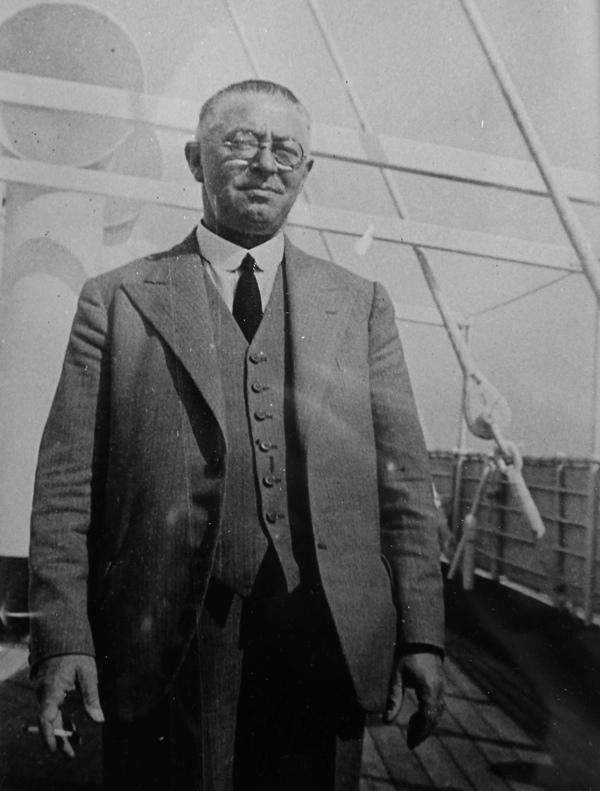
Edward Thomas Stanton, the enterprising bus driver who invented the number eight bus route.

Edward George Stanton in his leather bus driver’s coat.
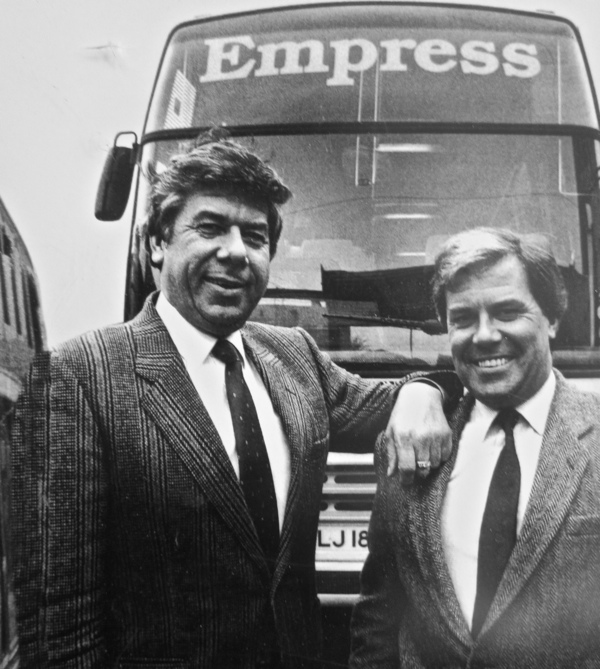
Brothers Peter and Trevor Stanton.
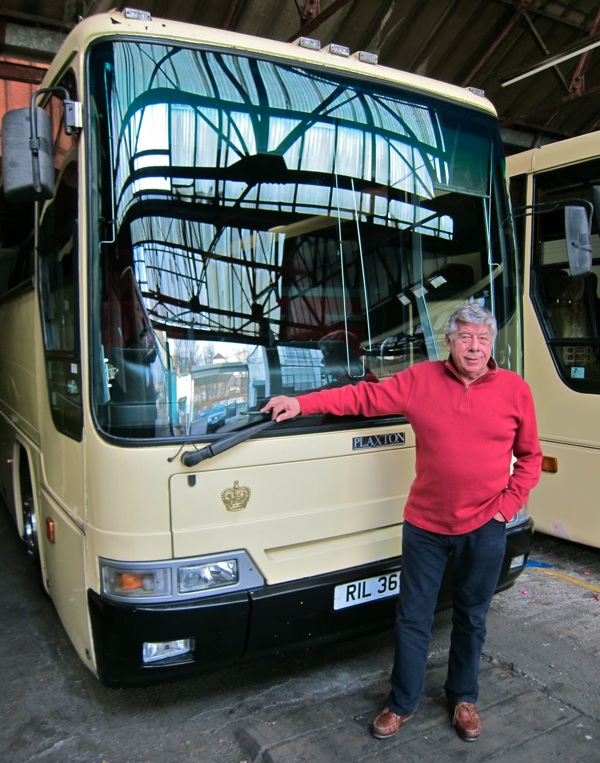
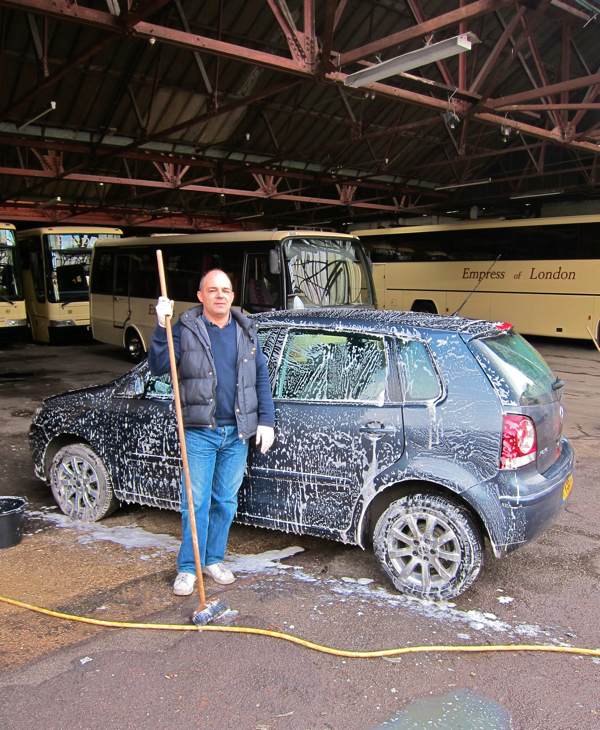
Mark Stanton, Trevor’s son.

Jason Stanton, Peter’s son.
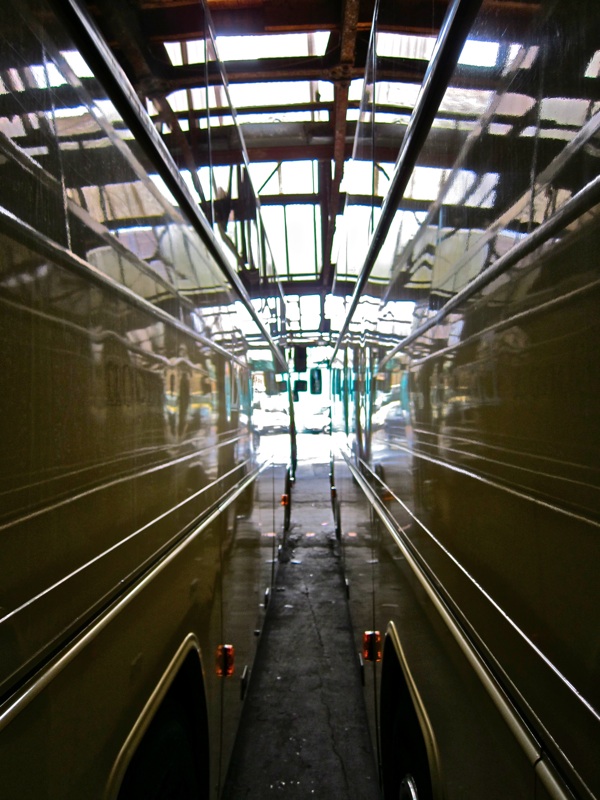
Between the coaches.
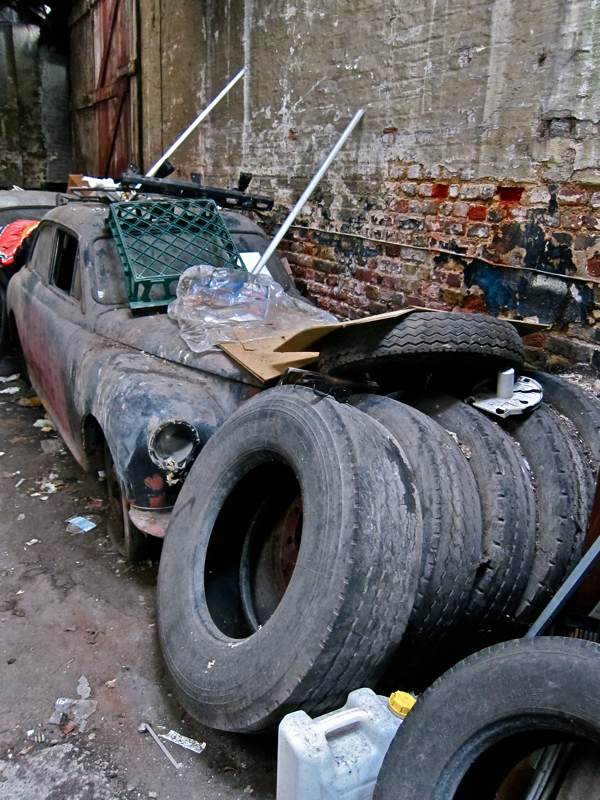
A forgotten corner of the yard.
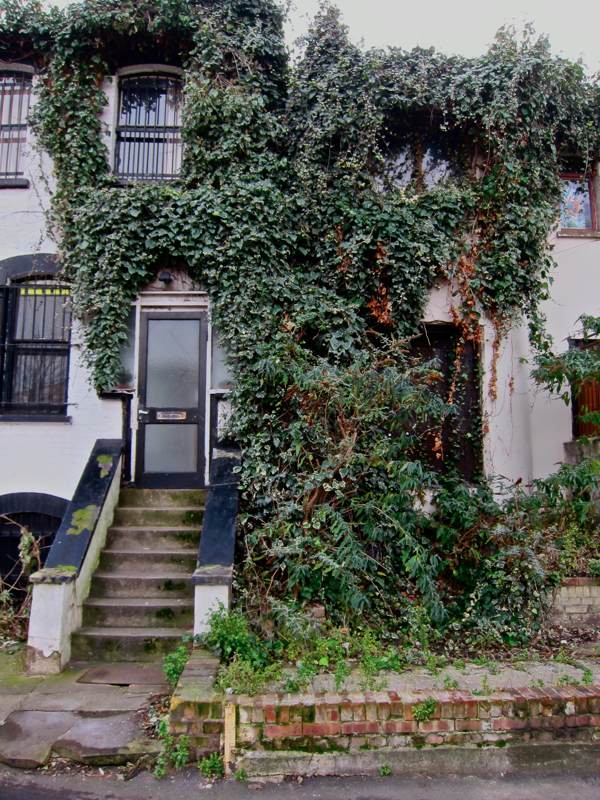
Empress Coaches, the office entrance.


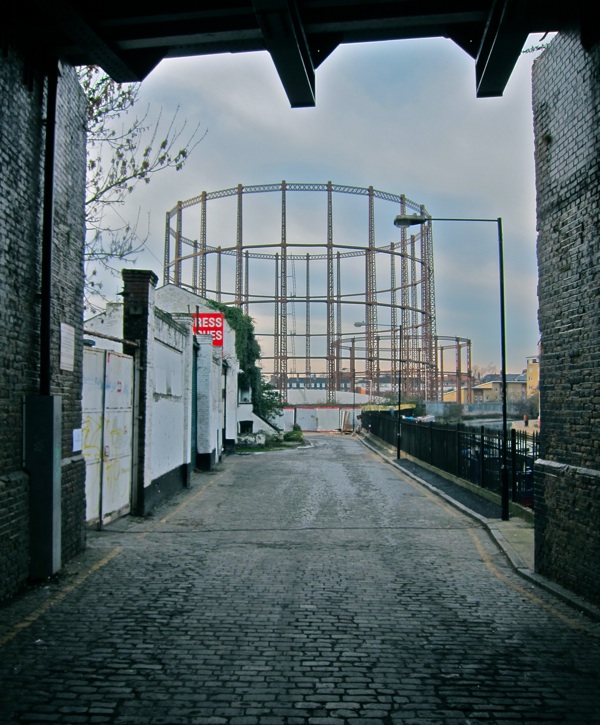
Corbridge Crescent, with the canal to the right
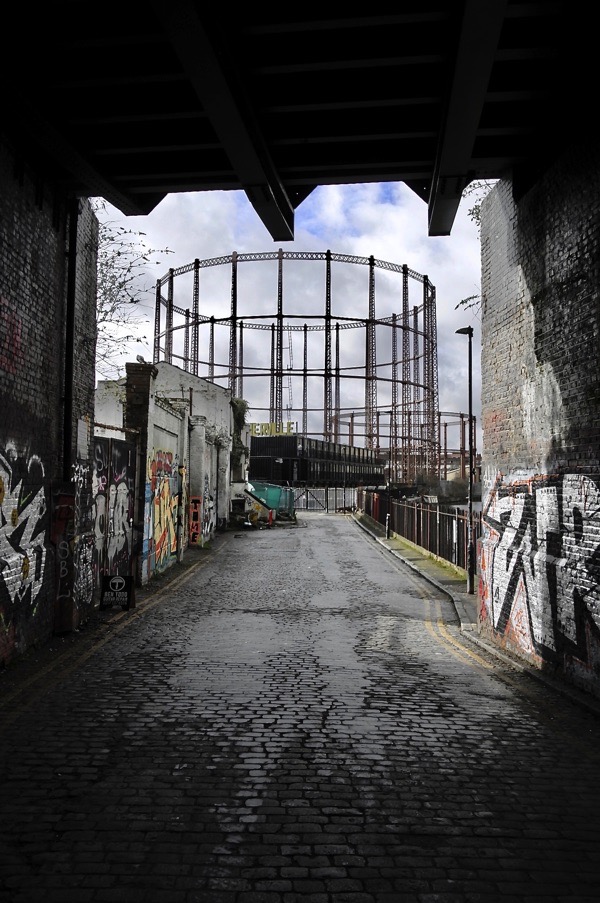
The distinctive red Empress Coaches sign is gone from Corbridge Crescent
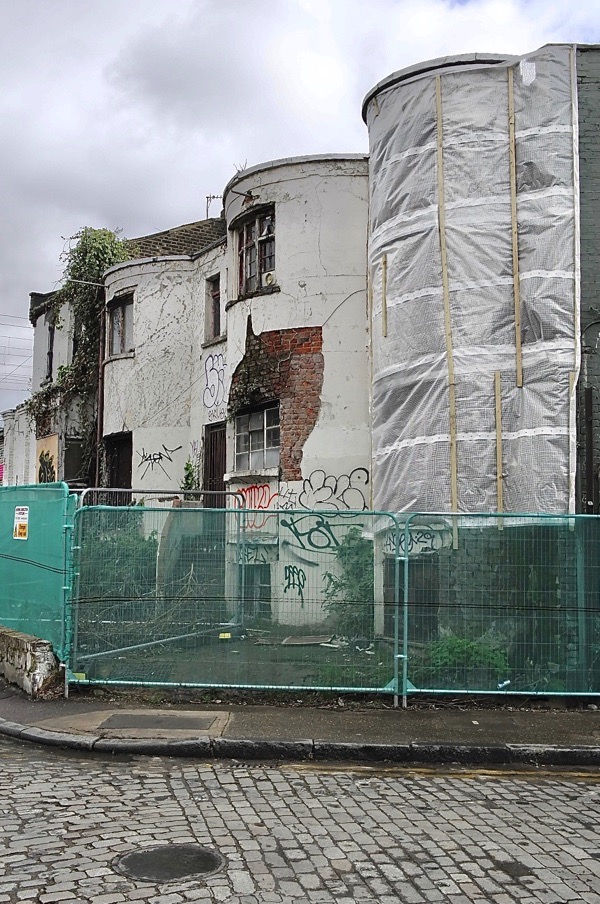
These Georgian bow-fronted cottages are all that is left standing now, but soon they will be reduced to facades.
You may also like to read about two nearby industries still going strong
Denton Welch’s Dolls House
I was thrilled when Jojo Tulloh offered to write this piece about the dolls house in the Victoria & Albert Museum of Childhood in Bethnal Green which was restored in the forties by one of my favourite authors, Denton Welch
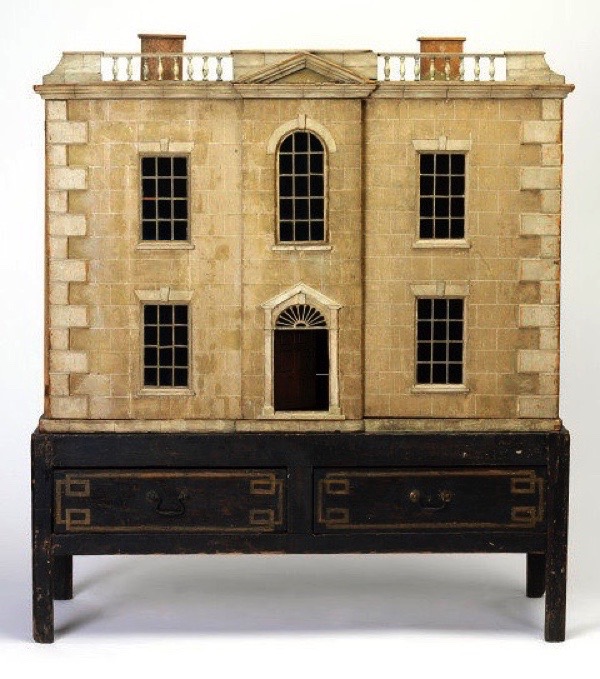
Upstairs in the ‘Home’ gallery of the Victoria and Albert Museum of Childhood at Bethnal Green is an eighteenth century dolls house. The outside is painted to resemble pale stone-colour bricks and it has a low dark wood stand. It is just one of many dolls houses displayed in the gallery’s large glass cases. The front is closed and the house quite plain looking, after a quick glance you might be tempted to go on to the next exhibit. However this dolls house is unlike any other in the museum. It is a physical link to a highly original human being, the artist and writer Denton Welch, who restored this house.
In his journal, Welch describes the moment he first saw the dolls house, a gift from Mildred Bosanquet whose mother’s family were the original owners.
26th March seven o’clock 1945
‘For the last few weeks I have been mending the mid-eighteenth century doll’s house (which Mrs Bosanquet of Seal handed over to me in 1941). It has been in her mother’s family (Littedale of Yorkshire) since it was made. Mrs B said glibly, “I suppose it was made by the estate carpenter.”
I first saw it in B’s cellar on a winter afternoon. She said, “Here’s something that might interest you, Denton,” and shined a torch into a grey oblong box, amazingly dilapidated, on a stand. There were windows out in it, but I hardly would have believed it was old, until she opened the doors and showed me the charming mantelpiece in each room, every one subtly different, with perfect mouldings. Then I saw that the tiny doors were two-panelled and that each room was wainscoted halfway up, just as eighteenth century rooms should be.
But it was all daubed and coated with so much thick paint and there were so many sordid remains of Edwardian doll’s furniture, together with moth eaten curtains and pieces of felt that it had clearly become something to be avoided and forgotten.”
Denton Welch is not well known and many of his books are out of print but he is the kind of writer that you discover and take to your heart as you would a new, fascinating and sometimes alarming friend. You quickly find yourself reading all of his works. He is a writer much loved by other writers for the vivid and intimate way he is able to narrate the circumstances of his adolescence and later his painful convalescence. The circumstances of his life were tragic but they combined to produce a writer with a singular voice.
Welch was born in Shanghai to an English father and American mother but from the age of eleven he was educated in England. His mother died around this time. After running away from school at sixteen, he took a journey with his father in China and then enrolled in art school at aged seventeen. When still a student at Goldsmith’s Art School, Welch was knocked down by a motorist while cycling to his uncle’s house. He was badly injured, his spine was fractured and he spent three years recovering in a nursing home. His fractured spine, caused inflammation of the bladder and kidney failure, which left him partly impotent.
The effects of the injury would greatly curtail his life, leading eventually to tuberculosis of the spine and frequent and severe headaches and high temperatures. He was often confined to bed, but it was during this time that he also produced his intense and arresting works of autobiographical fiction. His first two books In Youth is Pleasure and Maiden Voyage both recall his teenage years when he was in full health but beset by terrible anxiety about his inability to fit in with school and his conventional family. He had a great ear for dialogue and an ability to create a distinctive sense of place. Despite his frequent bouts of extreme ill health, before his premature death at the age of thirty-three, he managed to produce a significant amount of work. Several of his books and his journals were published posthumously. His last journal entry, written just a few months before his death is a detailed and very funny account of tea with Vita Sackville West and Harold Nicholson at Sissinghurst.
Because of his accident Denton Welch was isolated and lived in a world of memory and imagination, recreating past events both painful and pleasurable. The writer is often miserable but the books are far from that. Sometimes his books are painful to read but whatever he is writing about whether it is food, architecture, sexuality, churches, antiques, the behaviour of his relatives, his own impulsive and sometimes selfish actions, he makes it compelling.
The writer Edmund White has said of Welch that he is:
“one of those writers who is always interesting. The more his world is reduced to a hospital room and a handful of human contacts the more fascinating he becomes. Is it the precision of his observations, the fierce but gentle strangeness of his personality or his love of nature that captivates the reader? Like Colette and Jean Rhys, Welch has the power to generate interest out of even the most meagre materials. He had this gift from the beginning but suffering and illness refined it into a white hot flame.”
Welch’s novels are compressed pieces of recalled life. His journals are more discursive, during the times he was well he would cycle or walk to churches and ruins, visit antique shops and picnic. He often recalls conversations with those he meets along the way. He also writes at length about the restoration of the dolls house. Writing in March 1945, he recalls the acquisition of the house four years earlier.
“At last it arrived one morning when I was still in bed, having written Maiden Voyage for several hours. My head and eyes were tired, and I was almost trembling with excitement as the men climbed up the outside staircase with it and plumped it down in the middle of the studio. In my pyjamas I began to poke and peer and examine it.
First I tore away all the repulsive curtains and carpets which had been nailed on. The moths’ eggs were thick as fish roe and the dust was like bat’s fur. Gradually I emptied every room (dining, drawing, bed and kitchen). There were only two bits of Georgian furniture left. A charming dark mahogany Pembroke table with one flap, and two tapering legs missing, and a little chest, also very dark mahogany, but quite plain, with little brass knobs. I forgot the little oak stool for the kitchen. There was a tiny, perfect old brass saucepan, two good little pewter platters and some little Victorian dish covers.
The rest was muck, except perhaps for the curious little chair and chiffonier, perhaps 1880-90.
When I had stripped the rooms I saw how coated with ugly pink and green paint each delicate moulding was. Even the floors were painted pink and green. Perhaps by some child with two pots of bright enamel.)”
With great care Welch restores the exterior paintwork.
“As I looked closer at the body of the dolls’ house, I saw that under the grim unfeeling coat of battleship-grey was a lighter fawn paint, and on this paint were the signs of bricks painted in black.
This excited me and I began to scrape. I soon found that under the fawn were two other coats of yellower, bigger bricks with white outlines, and that right at the bottom the original coat was tiny red bricks. I longed to get down to this first coat, but it was impossible without ruining it in the process, so I contented myself with the first beige bricks, which by the texture and the quality of the paint seemed to date from at least the early nineteenth century.”
After many months work he strips off the different patterned wallpapers and uncovers the original colours of the rooms that you can see in the dolls house now (drawing, pink – dining, white – bed, blue – and kitchen, white and ochre).
“I painfully scraped down to these, stripped the floor to its original plain wood, and found that the doors were meant to be bare mahogany and white surrounds.”
He also discovers that the draws of the stand were originally painted with a Chinese Chippendale fret design, “very pretty but quite ruined by age and stripping. I carefully ruled out the shape of it, then painted nearly all of that in to preserve it.”
He makes a new handle out of odd bits of an old brass handle, but a bomb landed in the garden of his rented cottage in Kent and later on it caught fire, destroying many of his treasures and so he has to move. This time to damp, cramped rooms above a garage. The dolls house languishes for three years before he takes it up again in 1945.
“Then came the awful stupid scenes and troubles before I left Pond Farm, and again the dolls’ house had to go, this time to Mays’ outhouse studio where it was stored from 1942 until last month, when I suddenly had a passion for it again, unaccountable, unless it was just looking at it in its ruined condition and seeing again how lovely it could be.
And with May’s tools I started on it, never having done any carpentry since the age of eleven.”
He remakes the stand and repairs the big doors, and then turns to remaking the tiny tapered legs of the Pemroke table, the missing windows, front door steps and the pediment and tops of the columns, “The fanlight I made all of matches and putty, and it was good.”
He carves a tiny cedar newel post and remakes the chimneys, the balustrade he finds (part of a bracket) in a junkshop in Tonbridge.
“Nothing will look grander than the dolls’ house, with its perfect classical door, window proportions, heavy Palladian coigning, cornice, and then the pediment and the reconstructed balustrade, all standing on the stand with the fret pattern revived.
All these weeks I have been doing it every afternoon (after writing) in May’s garden. One has the feeling that slowly the house is coming to life again.”
Denton Welch never owned a home. He lived precariously in rented rooms but he always longed to restore a ruin, perhaps a grotto or a medieval chapel and live in it. He had a great love of old and beautiful things and a horror of poor restoration or alteration. The contemplation of ancient and fine things gave him great comfort. In his journal dated 21st of January 1945, a page or two before the entry about the dolls house, he recalls the eighteenth century house in which he rented a room at 34 Croom’s Hill, Greenwich whilst he an art student. He thinks back to the time when he was young and lonely, waiting for something to happen but still in perfect health.
“And the old eighteenth century room with everything just thicker, wider, more generous than absolutely necessary, seemed to hold me within its walls as if I were valuable, worth taking care of.”
It is tempting to believe that in restoring this eighteenth century home to its original, elegant beauty he was able to fulfill his ambition to make a permanent home of his own, even if only in miniature.

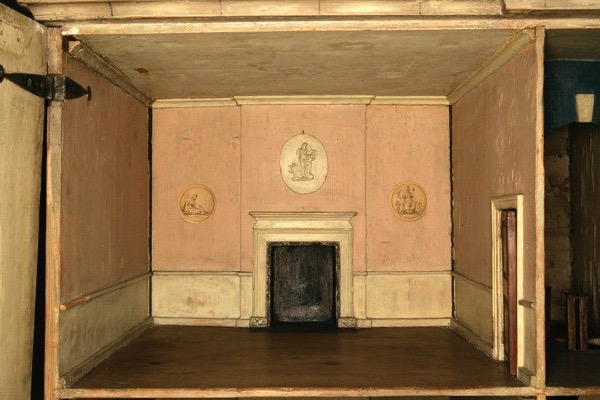
Drawing Room
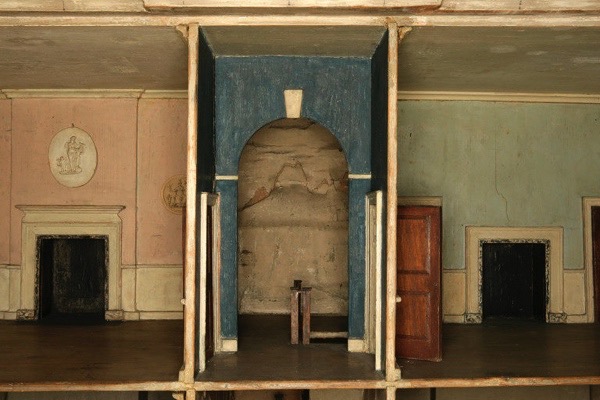

Bedroom
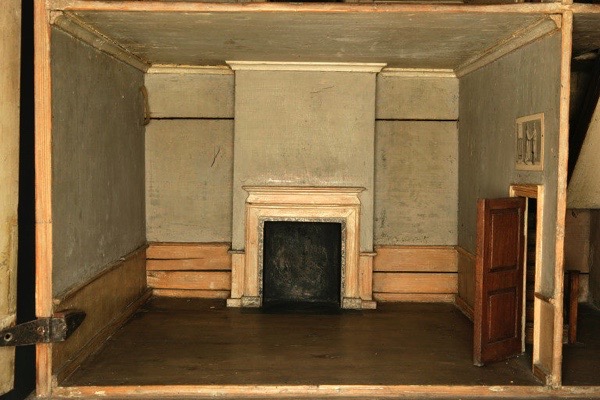
Dining Room
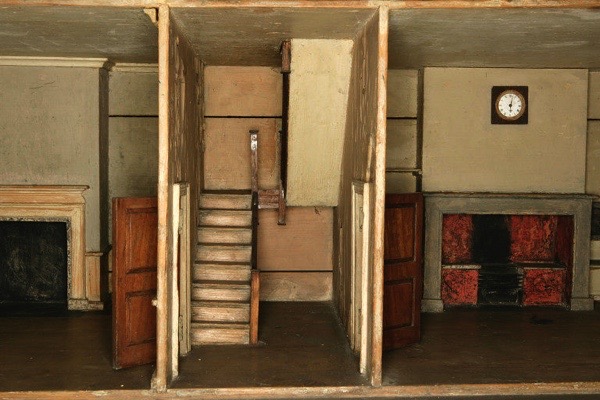
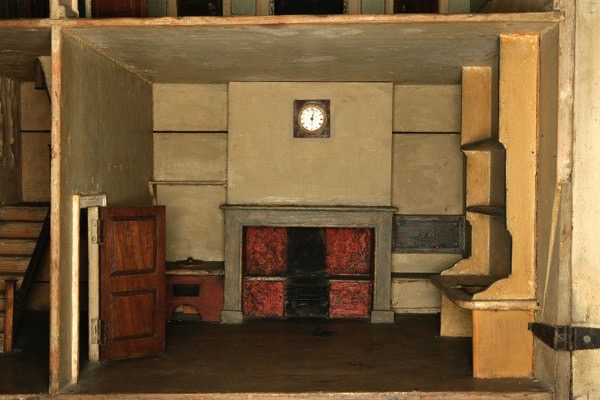
Kitchen

Ovens
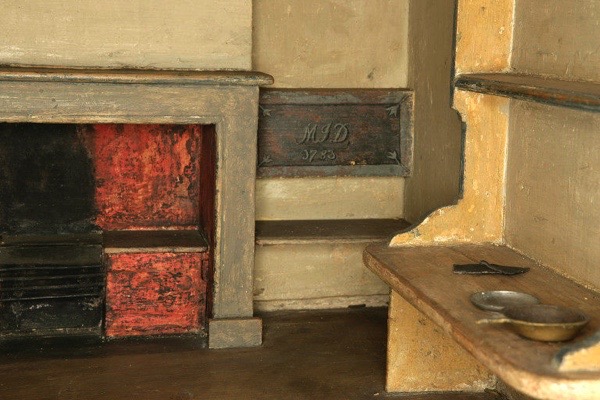
MJD, 1783
Photographs copyright © Victoria & Albert Museum
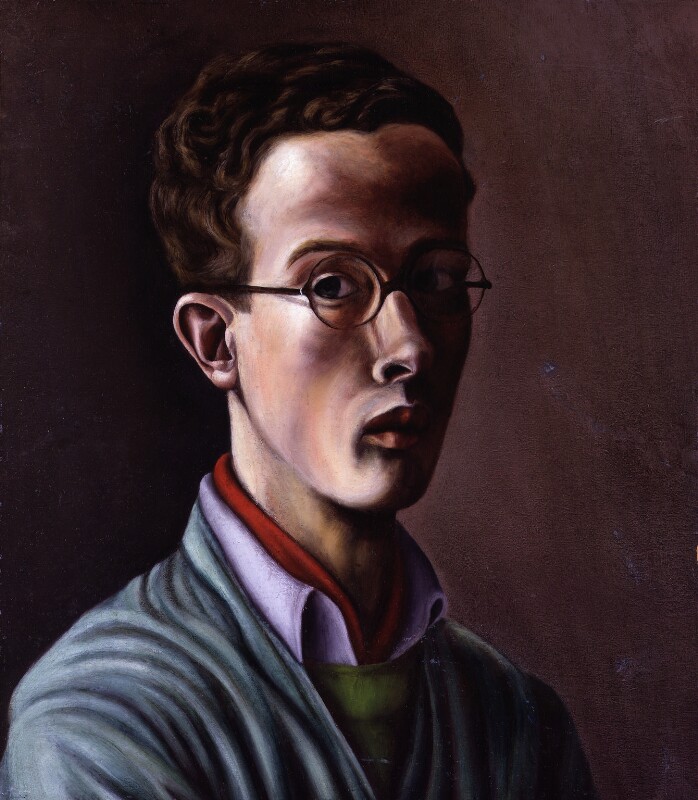
Portrait copyright © National Portrait Gallery
Self Portrait by (Maurice) Denton Welch (29th March 1915 – 30th December 1948)
Jojo Tulloh’s books include The Modern Peasant and East End Paradise
You may also like to read about
Anthony Cairns’ Small Shops
Complementing Antony Cairn’s elegaic series of East End Pubs, today I present his ethereal portfolio of small shops, created using the same nineteenth century Vandyke Brown process, and evoking those commercial premises which exist as receptacles of collective memory for the communities they served.
The first picture is of The Handy Shop, Tony’s first local shop when growing up in Plaistow, and the last picture is W.F.Arber & Co Ltd in Roman Rd, of which my friend Gary Arber was the proprietor.
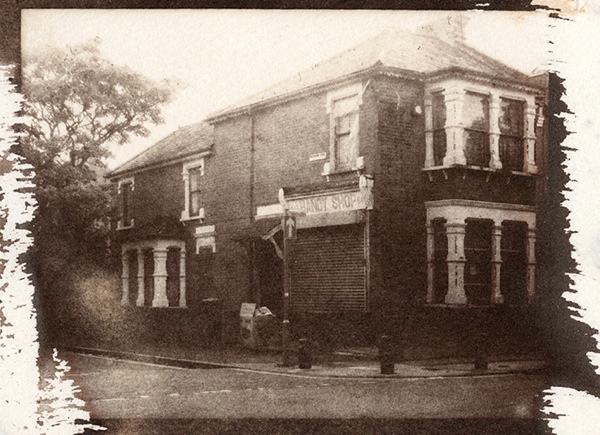
The Handy Shop, Ruskin Ave, E12
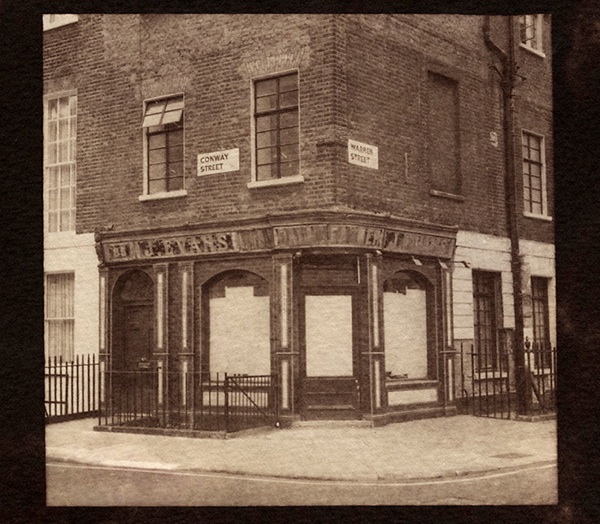
M.J. Evans, Warren St, W1
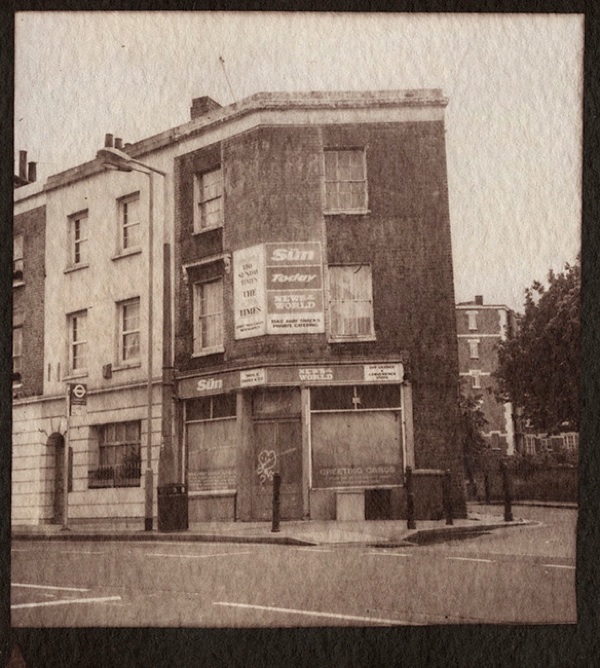
Unknown shop, Mile End, E1
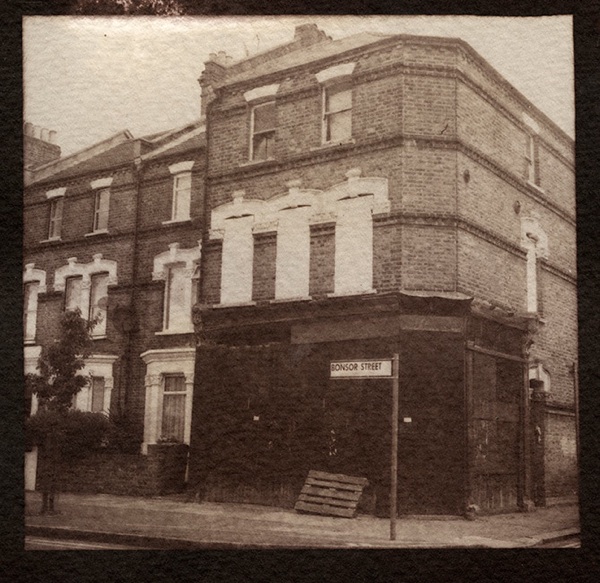
Unknown shop, Bonsor St, SE5
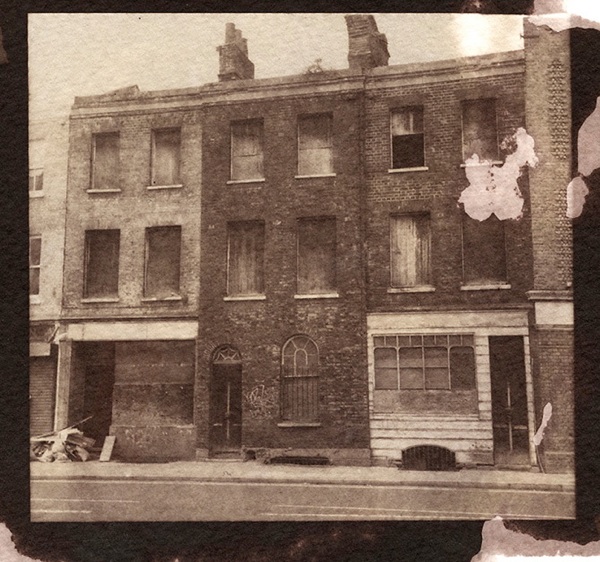
Unknown shops, unknown street
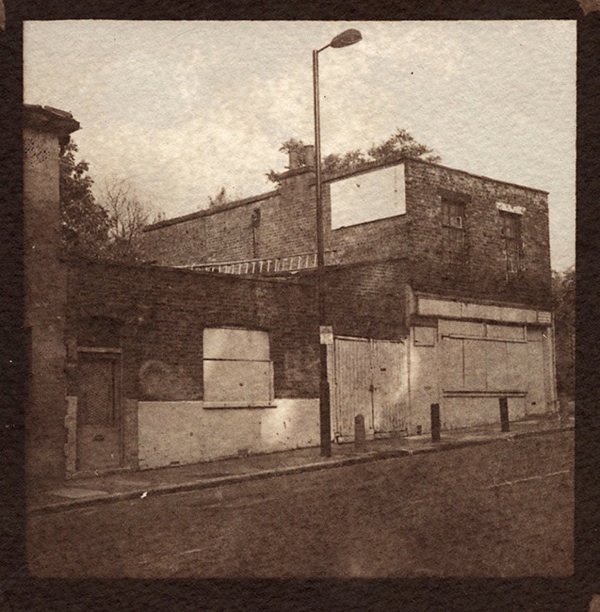
Unknown shop, Copenhagen St N.1
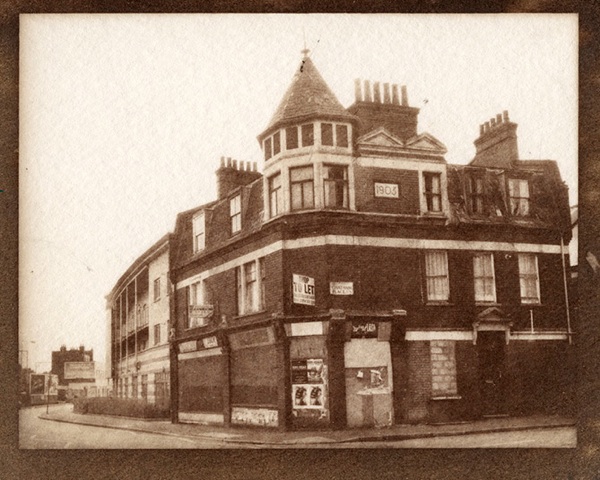
Unknown shops, Morning Lane, E8
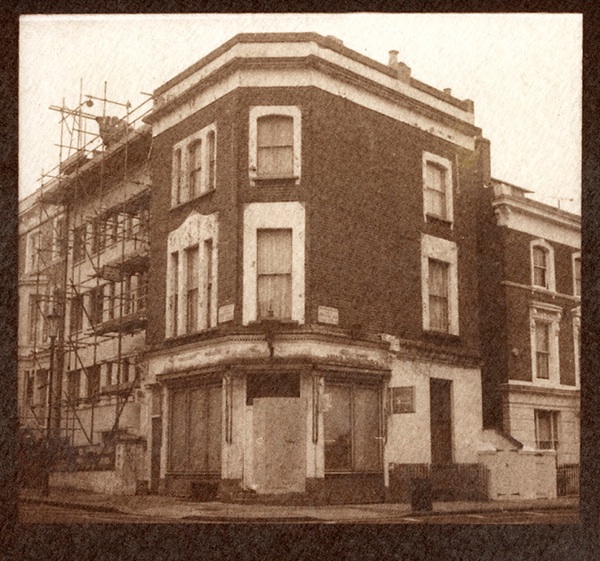
Unknown shop, Oswin St, SE11
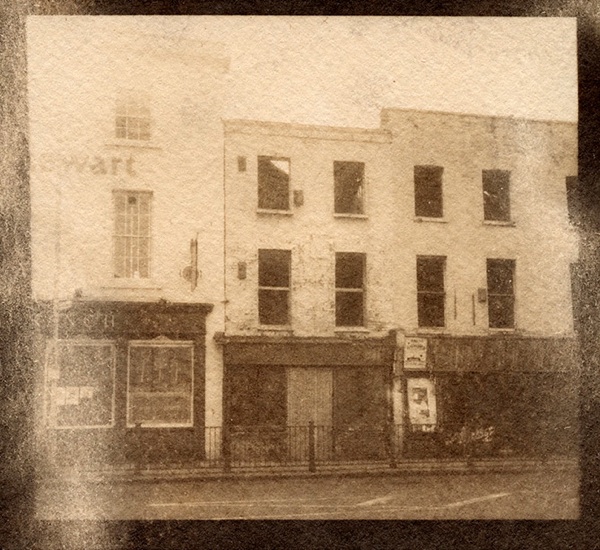
Unknown shops, Hackney Rd, E2
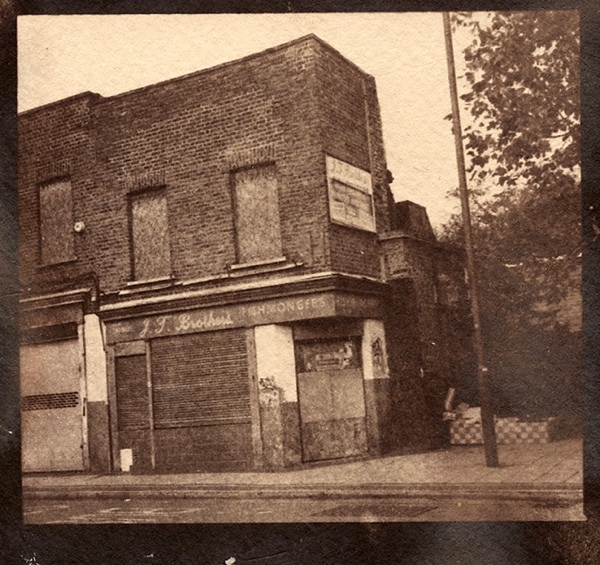
Fishmonger, Commercial Rd, E1
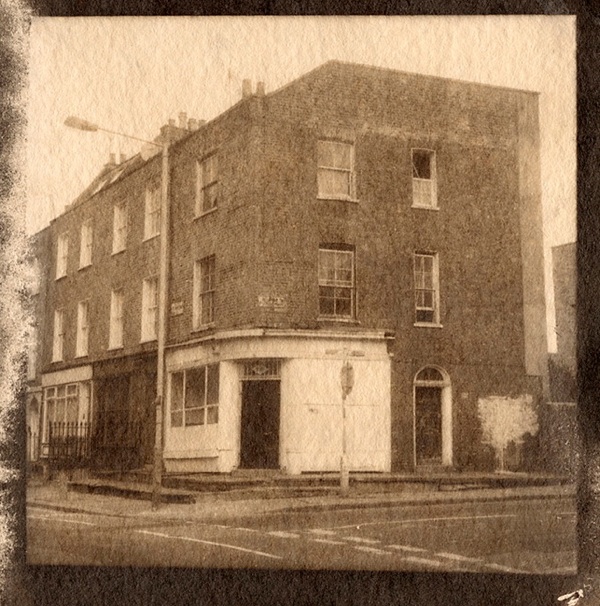
Unknown shop, St Pancras Way, NW5
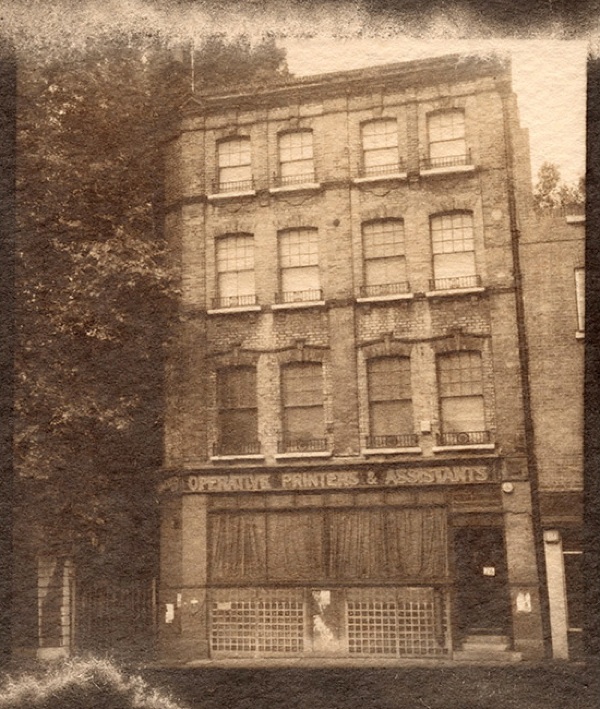
Printworks, Blackfriars Rd, SE1
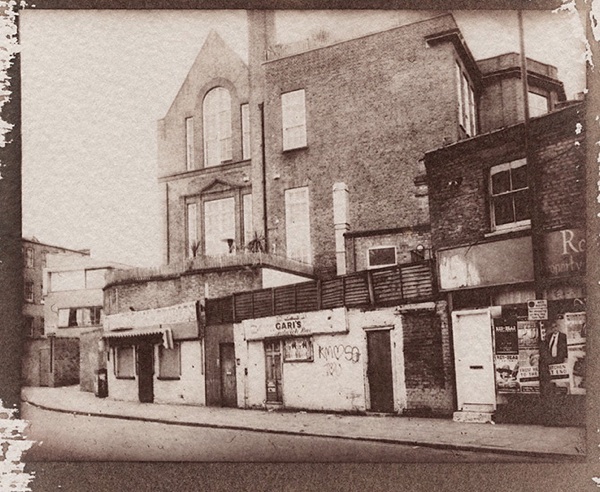
Gari’s, Northwold Rd, N16
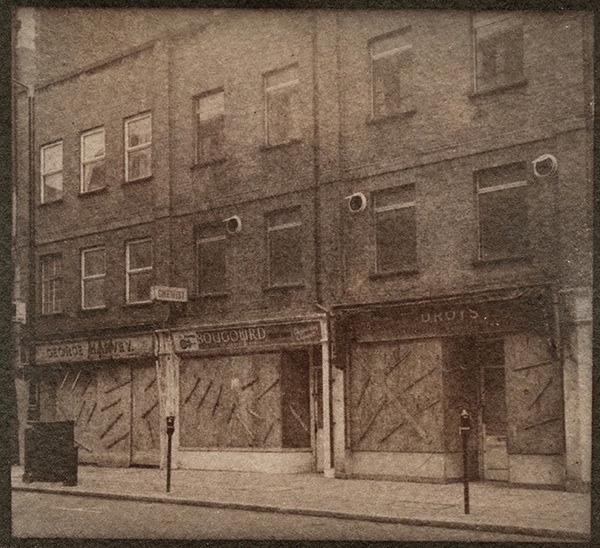
George Harvey, Bougourd Chemist & Droys, Rochester Row, SW1
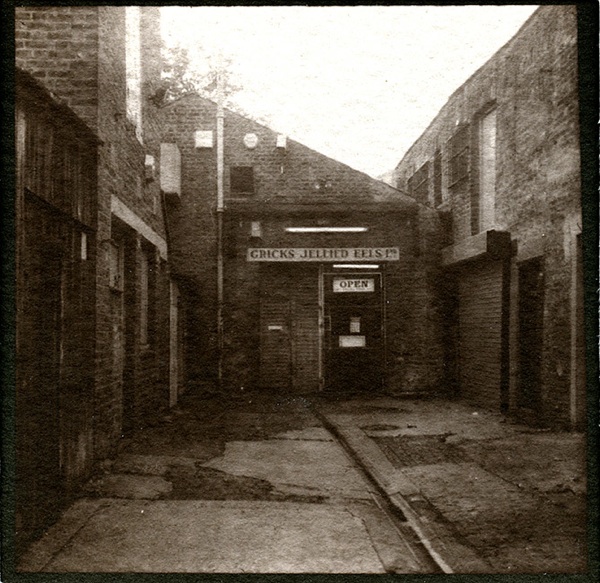
Gricks Jellied Eels, Rosebery Ave, Manor Park, E12
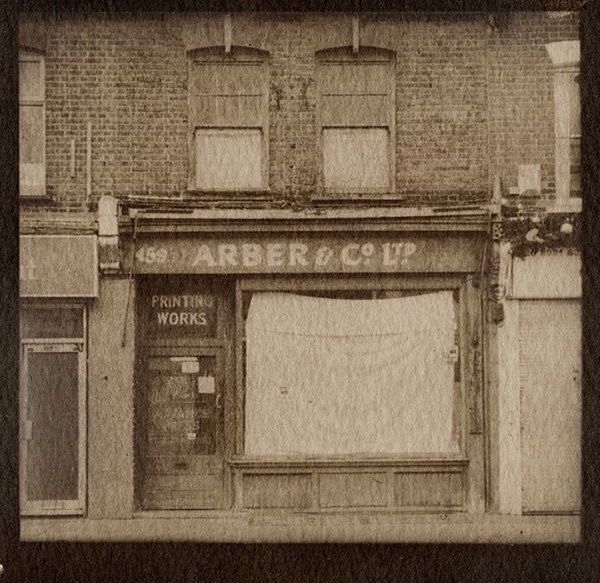
Arber & Co Ltd, 459 Roman Rd, E3
Photographs copyright © Antony Cairns
You may also like to take a look at
and these other photographs of shops
Harry Harrison’s East End Portraits
David – universally known as ‘Harry’ – Harrison came to Mile End in 1979 and liked it so much he has never left. An artist who became an architect, he has recently retired from his career in architecture and become an artist again.
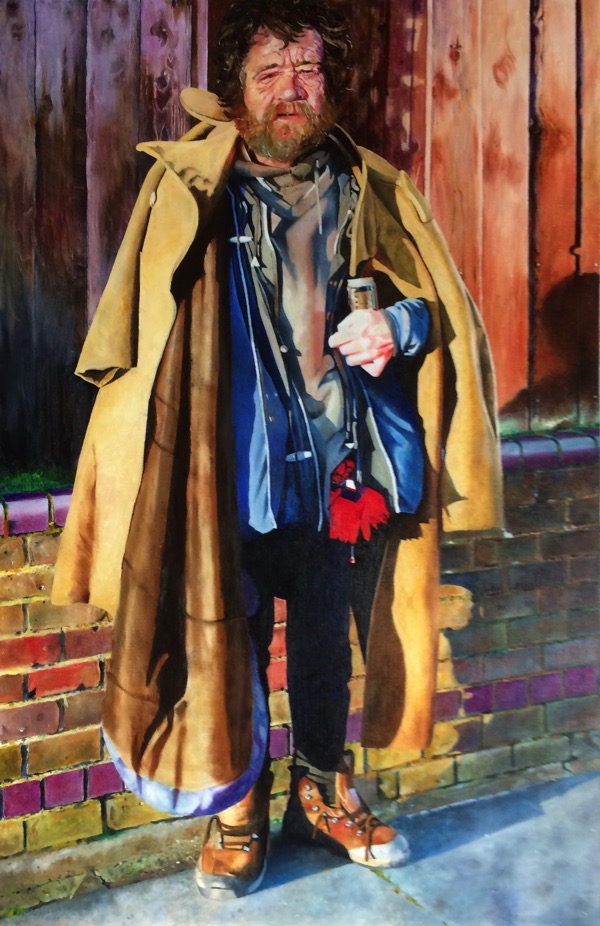
Tom was a gentle, polite and humble soul. His patch was between Mile End Station and the Roman Road and could be found most days in that area. He told me he was fifty-three years old when I painted him in 2014.
He wore a camel coat over a sleeping bag, over a denim jacket, over a fleece, over a jumper. I last saw Tom a couple of years ago outside Mile End Station and he looked very poorly.
I would love to hear that he survives somewhere still but I fear it is unlikely. I am moved by the depth of feeling in his forlorn expression. His obviously broken nose made me wonder if he may have once been a boxer?

Andrew inhabited a similar patch to Tom and, although seen as frequently, I never saw them together or at the same time. This painting also dates from 2014 and is in Mile End Park.
Unlike Tom, there was something defiant and angry about Andrew – even when offered money he could respond abusively. Yet he did once offer my wife a swig of his White Stripe, so he was not without chivalry.
Andrew would sometimes disappear for a few weeks and re-appear with a make-over, a haircut, clean shaven and with a set of new clothes. I was told that he was once a long distance lorry driver.
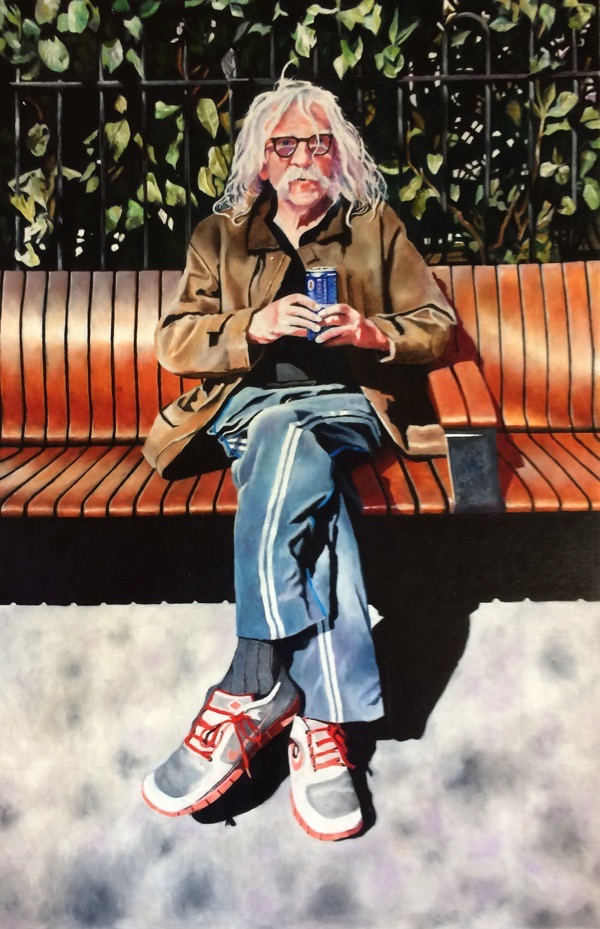
I saw Angus sitting on a bench in the evening sunshine in Old Street in 2017. What attracted me, apart from his extraordinary mane and facial hair was that he had a chess set set up on the pavement in front of him.
After striking up conversation, he challenged me to a game which I accepted. I am a poor player and out of practice, and I was hoping I may have stumbled upon an out of luck chess master.
I beat him rather quickly and easily, to my great disappointment and guilt – and Angus was gracious in defeat which made it even worse.
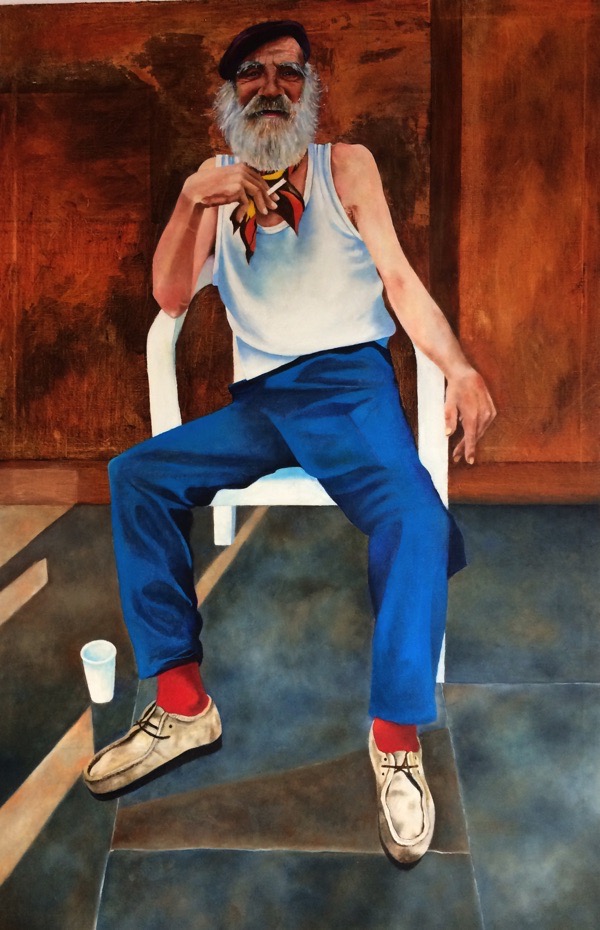
Anyone visiting Brick Lane in recent years could not fail to notice the stylish and urbane Mick Taylor. After completing this portrait I gave it to Mandi Martin who lives by Brick Lane and was a friend of Mick’s.
Mandi volunteers at St Joseph’s Hospice. In 2017, she spent some of Mick’s last few hours talking and reminiscing with him about their shared experiences of the East End.
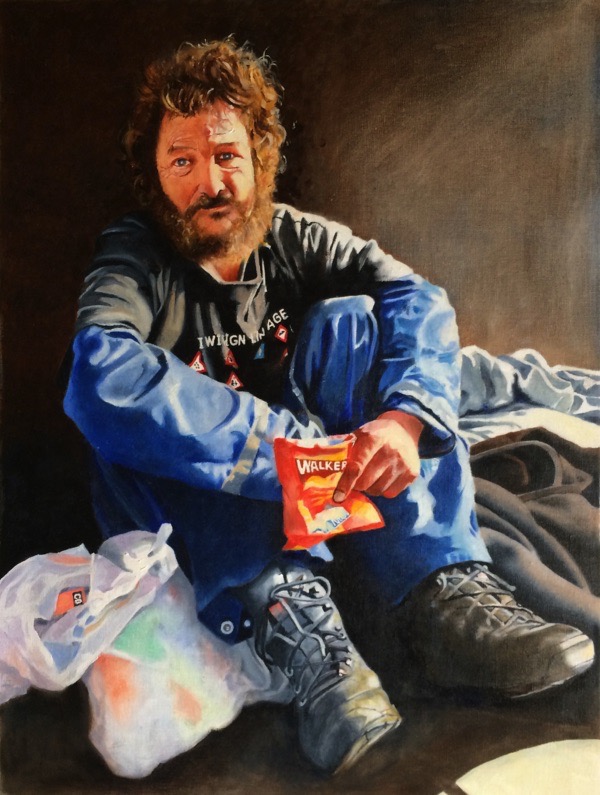
In 2015, I met Tim sitting on a blanket and begging outside a cash machine in Shoreditch. He seemed young, sad and vulnerable, sitting eating crisps and surrounded by plastic bags of his belongings. Tim was reluctant to talk and seemed embarrassed by his situation. I have not seen him since.

This is my portrait of Gary Arber whose former printworks in the Roman Rd is a short walk from my home. Gary’s grandparents opened the shop in 1897 and Gary ran it for sixty years after after sacrificing a career as a flying ace in the Royal Air Force in 1954.
Paintings copyright © Harry Harrison
You may also like to read about