
Authors At The Bloomsbury Jamboree
In collaboration with Tim Mainstone of Mainstone Press and Joe Pearson of Design for Today, I am organising a BLOOMSBURY JAMBOREE, a festival of books and print, illustration, talks and merriment on SUNDAY 8th DECEMBER from 11am until 5pm at the ART WORKERS GUILD, 6 Queens Sq, WC1.
Meet the authors and artists who will be speaking and signing copies of their books.
We advise readers to come early to avoid the rush…


Photo by George Woodford

Julian Woodford will be signing THE BOSS OF BETHNAL GREEN at 1pm

Photo by Patricia Niven

Click here for a talk on MEMOIRS OF A COCKNEY SIKH by Suresh Singh at 1pm

Photo by Colin O’Brien

Click here for a talk on SHOPFRONTS OF LONDON by Eleanor Crow at 2pm

Photo by The Gentle Author

Click here for a talk on MAPS OF LONDON & BEYOND by Adam Dant at 3pm

Photo by Stuart Freedman

Doreen Fletcher will be signing copies of her monograph at 3pm

Click here for a talk on GHASTLY FACADISM in London by The Gentle Author at 3pm
The Gentle Author will be signing books at 4pm
William Marshall Craig’s Itinerant Traders
A personal favourite among the innumerable prints of the “Cries of London” published over the centuries is William Marshall Craig’s Itinerant Traders of London in their Ordinary Costume with Notices of Remarkable Places given in the Background from 1804. A portrait artist who exhibited at the Royal Academy between 1788 and 1827, Craig was appointed painter in watercolours to the queen. This set of prints was discovered at the Bishopsgate Institute, bound into the back of a larger volume of “Modern London” published in 1805, and the vibrancy of their pristine colours suggests they have never been exposed to daylight in two centuries.

Hair brooms, hearth brooms, brushes, sieves, bowls, clothes horses and lines and and almost every article of turnery, are cried in the streets. Some of these walking turners travel with a cart, by which they can extend their trade and their profit, but the greater number carry the shop on their shoulders, and find customers sufficient to afford them a decent subsistence, the profit on turnery being considerable and the consumption certain. (Shoreditch Church, standing at the northern extremity of Holywell St, commonly called Shoreditch, is a church of peculiar beauty. It has a portico in front, elevated upon a flight of steps and enclosed with an iron railing, which is disgraced by a plantation of poplar trees.)

Baking & boiling apples are cried in the streets of the metropolis from their earliest appearance in sumer throughout the whole winter. Prodigious quantities of apples are brought to the London markets, where they are sold by the hundred to the criers, who retail them about the streets in pennyworths, or at so much per dozen according to their quality. In winter, the barrow woman usually stations herself at the corner of a street, and is supplied with a pan of lighted charcoal, over which, on a plate of tin, she roasts a part of her stock, and disposes of her hot apples to the labouring men and shivering boys who pass her barrow. (At Stratford Place, on the north side of Oxford St.)

Band boxes. Generally made of pasteboard, and neatly covered with coloured papers, are of all sizes, and sold at every intermediate price between sixpence and three shillings. Some made of slight deal, covered like the others, but in addition to their greater strength having a lock and key, sell according to their size, from three shillings and sixpence to six shillings each. The crier of band boxes or his family manufacture them, and these cheap articles of convenience are only to be bought of the persons who cry them through the streets. (Bibliotheque d’Education or Tabart’s Juvenile Library is in New Bond St.)

Baskets. Market, fruit, bread, bird, work and many other kinds of baskets, the inferior rush, the better sort of osier, and some of them neatly coloured and adorned, are to be bought cheaply of the criers of baskets. (Whitfield’s Tabernacle, north of Finsbury Sq, is a large octagon building, the place of worship belonging to the Calvinistic methodists.)

Bellows to mend. The bellows mender carries his tools and apparatus buckled in a leather bag to his back, and, like the chair mender, exercises his occupation in any convenient corner of the street. The bellows mender sometimes professes the trade of the tinker. (Smithfield where the great cattle market of London is held, on which days it is disagreeable, if not dangerous to pass in the early part of the day on account of the oxen passing from the market, on whom the drovers sometimes exercise great cruelty.)

Brick Dust is carried about the metropolis in small sacks on the backs of asses, and is sold at one penny a quart. As brick dust is scarcely used in London for any other purpose than that of knife cleaning, the criers are not numerous, but they are remarkable for their fondness and their training of bull dogs. This prediliction they have in common with the lamp lighters of the metropolis. (Portman Sq stands in Marylebone. In the middle is an oval enclosure which is ornamented with clumps of trees, flowering shrubs and evergreens.)

Buy a bill of the play. The doors of the London theatres are surrounded each night, as soon as they open, with the criers of playbills. These are mostly women, who also carry baskets of fruit. The titles of the play and entertainment, and the name and character of every performer for the night, are found in the bills, which are printed at the expense of the theatre, and are sold by the hundred to the criers, who retail them at one penny a bill, unless fruit is bought, when with the sale of half a dozen oranges, they will present their customer a bill of the play gratis. (Drury Lane Theatre, part of the colonnade fronting to Russell St, Covent Garden.)

Cats’ & dogs’ meat, consisting of horse flesh, bullocks’ livers and tripe cuttings is carried to every part of the town. The two former are sold by weight at twopence per pound and the latter tied up in bunches of one penny each. Although this is the most disagreeable and offensive commodity cried for sale in London, the occupation seems to be engrossed by women. It frequently happens in the streets frequented by carriages that, as soon as one of these purveyors for cats and dogs arrives, she is surrounded by a crowd of animals, and were she not as severe as vigilant, could scarcely avoid the depredations of her hungry followers. (Bethlem Hospital stands on the south side of Moorfields. On each side of the iron gate is a figure, one of melancholy and the other of raging madness.)

Chairs to mend. The business of mending chairs is generally conducted by a family or a partnership. One carries the bundle of rush and collects old chairs, while the workman seating himself in some convenient corner on the pavement, exercises his trade. For small repairs they charge from fourpence to one shilling, and for newly covering a chair from eighteen pence to half a crown, according to the fineness of the rush required and the neatness of the workmanship. It is necessary to bargain for price prior to the delivery of the chairs, or the chair mender will not fail to demand an exorbitant compensation for his time and labour. (Soho Sq, a square enclosure with shrubbery at the centre, begun in the time of Charles II.)

Cherries appear in London markets early in June, and shortly afterwards become sufficiently abundant to be cried by the barrow women in the streets at sixpence, fourpence, and sometimes as low as threepence per pound. The May Duke and the White and Black Heart are succeeded by the Kentish Cherry which is more plentiful and cheaper than the former kinds and consequently most offered in the streets. Next follows the small black cherry called the Blackaroon, which is also a profitable commodity for the barrows. The barrow women undersell the shops by twopence or threepence per pound but their weights are generally to be questioned, and this is so notorious an objection that they universally add “full weight” to the cry of “cherries!” (Entrance to St James’ Palace, its external appearance does not convey any idea of its magnificence.)

Doormats, of all kinds, rush and rope, from sixpence to four shillings each, with table mats of various sorts are daily cried through the streets of London. (The equestrian statue in brass of Charles II in Whitehall, cast in 1635 by Grinling Gibbons, was erected upon its present pedestal in 1678)

Dust O! One of the most useful, among the numberless regulations that promote the cleanliness and comfort of the inhabitants of London, is that which relieves them from the encumbrance of their dust and ashes. Dust carts ply the streets through the morning in every part of the metropolis. Two men go with each cart, ringing a large bell and calling “Dust O!” Daily, they empty the dust bins of all the refuse that is thrown into them. The ashes are sold for manure, the cinders for fuel and the bones to the burning houses. (New Church in the Strand, contiguous to Somerset House and dividing the very street in two.)

Green Hastens! The earliest pea brought to the London market is distinguished by the name of “Hastens,” it belongs to the dwarf genus and is succeeded by the Hotspur. This early pea, the real Hastens, is raised in hotbeds and sold in the markets at the high price of a guinea per quart. The name of Hastens is however indiscriminately used by all the vendors to all the peas, and the cry of “Green Hastens!” resounds through every street and alley of London to the very latest crop of the season. Peas become plentiful and cheap in June, and are retailed from carts in the streets at tenpence, eightpence, and sixpence per peck. (Newgate, on the north side of Ludgate Hill is built entirely of stone.)

Hot loaves, for the breakfast and tea table, are cried at the hours of eight and nine in the morning, and from four to six in the afternoon, during the summer months. These loaves are made of the whitest flour and sold at one and two a penny. In winter, the crier of hot loaves substitutes muffins and crumpets, carrying them in the same manner, and in both instances carrying a little bell as he passes through the streets. (St Martin in the Fields, the design of this portico was taken from an ancient temple at Nismes in France and is particularly grand and beautiful.)

Hot Spiced Gingerbread, sold in oblong flat cakes of one halfpenny each, very well made, well baked and kept extremely hot is a very pleasing regale to the pedestrians of London in cold and gloomy evenings. This cheap luxury is only to be obtained in winter, and when that dreary season is supplanted by the long light days of summer, the well-known retailer of Hot Spiced Gingerbread, portrayed in the plate, takes his stand near the portico of the Pantheon, with a basket of Banbury and other cakes. (The Pantheon stands on Oxford St, originally designed for concerts, it is only used for masquerades in the winter season.)

A Showman – This amusing personage generally draws a crowd about him in whatever street he fixes his moveable pantomime, as the children who cannot afford the penny or halfpenny insight into the show box are yet greatly entertained with his descriptive harangues and the perpetual climbing of the squirrels in the round wire cage above the box, by whose incessant motion the row of bells on the top are constantly rung. The show consists of a series of coloured pictures which the spectator views through a magnifying glass while the exhibitor rehearses the history and shifts the scenes by the aid of strings. (Hyde Park Corner, this entrance to London is worthy of the grandeur and extent of the metropolis. On one side of the spacious street of Piccadilly are lofty and elegant houses and on the other is a fine view of Green Park and Westminster Abbey.)

Mackerel – More plentiful than any other fish in London, they are brought from the western coast and afford a livelihood to numbers of men and women who cry them through the streets every day in the week, not excepting Sunday. Mackerel boats being allowed by act of Parliament to dispose of their perishable cargo on Sunday morning, prior to the commencement of divine service. No other fish partake that privilege. (Billingsgate Market commences at three o’clock in the morning in summer and four in winter. Salesmen receive the cargo from the boats and announce by a crier of what kinds they consist. These salesmen have a great commission and generally make fortunes.)

Rhubarb! – The Turk, whose portrait is accurately given in this plate, has sold Rhubarb in the streets of the metropolis during many years. He constantly appears in his turban, trousers and mustachios and deals in no other article. As his drug has been found to be of the most genuine quality, the sale affords him a comfortable livelihood. (Russell Sq is one of the largest in London, broad streets intersect at its corners and in the middle, which add to its beauty and remove the general objection to squares by ventilating the air.)

Milk below! – Every day of the year, both morning and afternoon, milk is carried through each square, each street and alley of the metropolis in tin pails, suspended from a yoke placed on the shoulders of the crier. Milk is sold at fourpence per quart or fivepence for the better sort, yet the advance of price does not ensure its purity for it is generally mixed in a great proportion with water by the retailers before they leave the milk houses. The adulteration of the milk added to the wholesale cost leaves an average profit of cent per cent to the vendors of this useful article. Few retail traders are exercised with equal gain. (Cavendish Sq is in Marylebone. In the centre of the enclosure, erected on a lofty pedestal is a bronze statue of William Duke of Cumberland, all very richly gilded and burnished. In the background are two very elegant houses built by Mr Tufnell.)

Matches – The criers are very numerous and among the poorest inhabitants, subsisting more on the waste meats they receive from the kitchens where they sell their matches at six bunches per penny, than on the profits arising from their sale. Old women, crippled men, or a mother followed by three or four ragged children, and offering their matches for sale are often relieved when the importunity of the mere beggar is rejected. The elder child of a poor family, like the boy seen in the plate, are frequent traders in matches and generally sing a kind of song, and sell and beg alternately. (The Mansion House is a stone building of considerable magnitude standing at the west end of Cornhill, the residence of the Lord Mayor of London. Lord Burlington sent down an original design worthy of Palladio, but this was rejected and the plan of a freeman of the City adopted in its place. The man was originally a shipwright and the front of his Mansion House has all the resemblance possible to a deep-laden Indiaman.)

Strawberries – Brought fresh gathered to the markets in the height of their season, both morning and afternoon, they are sold in pottles containing something less than a quart each. The crier adds one penny to the price of the strawberries for the pottle which if returned by her customer, she abates. Great numbers of men and women are employed in crying strawberries during their season through the streets of London at sixpence per pottle. ( Covent Garden Market is entirely appropriated to fruit & vegetables. In the south side is a range of shops which contain the choicest produce and the most expensive productions of the hot house. The centre of the market, as shown in the plate, although less pleasing to the eye is more inviting to the general class of buyers.)

A Poor Sweep Sir! – In all the thoroughfares of the metropolis, boys and women employ themselves in dirty weather in sweeping crossings. The foot passenger is constantly importuned and frequently rewards the poor sweep with a halfpenny, which indeed he sometimes deserves for in the winter after fall of snow if a thaw should come before the scavengers have had time to remove it, many streets cannot be crossed without being up to the middle of the leg in dirt. Many of these sweepers who choose their station with judgement reap a plentiful harvest from their labours. (Blackfriars Bridge crosses the river from Bridge St to Surrey St where this view is taken. The width and loftiness of the arches and the whole light construction of this bridge is uncommonly pleasing to the eye and St Paul’s cathedral displays much of the grandeur of its extensive outline when viewed from Blackfriars Bridge.)

Knives to grind! – The apparatus of a knife grinder is accurately delineated in this plate. The same wheel turns his grinding and his whetting stone. On a smaller wheel, projecting beyond the other he trundles his commodious shop from street to street. He charges for grinding and setting scissors one penny or twopence per pair, for penknives one penny each and table knives one shilling and sixpence per dozen, according to the polish that is required. (Whitehall – this beautiful structure stands in Parliament St, begun in 1619 from a design by Inigo Jones in his purest manner and cost £17,000. The northern end of the palace, to the left of the plate, is that through which King Charles stepped onto the scaffold.)

Lavender – “Six bunches a penny, sweet lavender!” is the cry that invites in the street the purchasers of this cheap and pleasant perfume. A considerable quantity of the shrub is sold to the middling-classes of the inhabitants, who are fond of placing lavender among their linen – the scent of which conquers that of the soap used in washing. (Temple Bar was erected to divide the strand from Fleet St in 1670 after the Great Fire. On the top of this gate were exhibited the heads of the unfortunate victims to the justice of their country for the crime of high treason. The last sad mementos of this kind were the rebels of 1746.)

Sweep Soot O! – The occupation of chimney sweep begins with break of day. A master sweep patrols the street for custom attended by two or three boys, the taller ones carrying the bag of soot, and directing the diminutive creature who, stripped perfectly naked, ascends and cleans the chimney. The greatest profit arises from the sake of soot which is used for manure. The hard condition of the sweep devolves upon the smallest and feeblest of the children apprenticed from the parish workhouse. (Foundling Hospital, a handsome and commodious building in Guildford St, stands at the upper end of a large piece of ground in which the children of the foundation are allowed to play in fine weather.)

Sand O! – Sand is an article of general use in London, principally for cleaning kitchen utensils. Its greatest consumption is in the outskirts of the metropolis where the cleanly housewife strews sand plentifully over the floor to guard her newly scoured boards from dirty footsteps, a carpet of small expense and easy to be renewed. Sand is sold by measure, red sand twopence halfpenny and white five farthings per peck. (St Giles’ Church at the west end of Broad St Giles is a very handsome structure. Over the gate, entering the church yard is fixed a curious bass-relief representing the Last Judgement and containing a very great number of figures, set up in the 1686)

New potatoes – About the latter end of June and July, they become sufficiently plentiful to be cried at a tolerable rate in the streets. They are sold wholesale in markets by the bushel and retail by the pound. Three halfpence or a penny per pound is the average price from a barrow. (Middlesex Hospital at the northern end of Berners St is the county hospital for diseased persons. It stands in a large court with trees, covered by a wall in front with two gates, one of which is represented in the plate.)

Water Cresses – The crier of water cresses frequently travels seven or eight miles before the hour of breakfast to gather them fresh. There is a good supply in the Covent Garden Market brought along with other vegetables where they are cultivated like other garden stuff, but they are inferior to those grown in the natural state in a running brook, wanting that pungency of taste which makes them very wholesome. (Hanover Sq is on the south side of Oxford St, there is a circular enclosure in the middle with a plain grass plot. In George St, leading into the square, is the curious and extensive anatomical museum of Mr Heaviside the surgeon, to the inspection of which respectable persons are admitted, on application to Mr Heaviside, once a week.)

Slippers – The Turk is a portrait, habited in the costume of his nation, he has sold Morocco Slippers in the Strand, Cheapside and Cornhill, a great number of years. To these principal streets, he generally confines his walks. There are other sellers of slippers, particularly about the Royal Exchange who are very importunate for custom while the venerable Turk uses no solicitation beyond showing his slippers. They are sold at one shilling and sixpence per pair and are of all colours. (Somerset House is a noble structure built by the government for the offices of public business. The plate shows the west side of the entrance which contains a gate for carriages and two foot ways. A visit will amply repay the trouble of a stranger.)

Rabbits – The crier of rabbits in the plate is a portrait well known by persons who frequent the streets at the west end of town. Wild and tame rabbits are sold from ninepence to eighteen pence each, which is cheaper than they can be bought in the poulterers’ shops. (Portland Place is an elegant street to the north of Marylebone. From the opening at the upper end is a fine view of Harrow and the Hampstead and Highgate Hills, making it one of the airiest situations in town. The houses being of perfect uniformity and no shops or meaner buildings interrupting the regularity of the design, it is one of the finest street in London.)

So Long, Jonathan Miller
A few years ago I met Jonathan Miller, the comedian, polymath and celebrated intellectual who died this week at the age of eighty-five, when he came in search of his East End roots
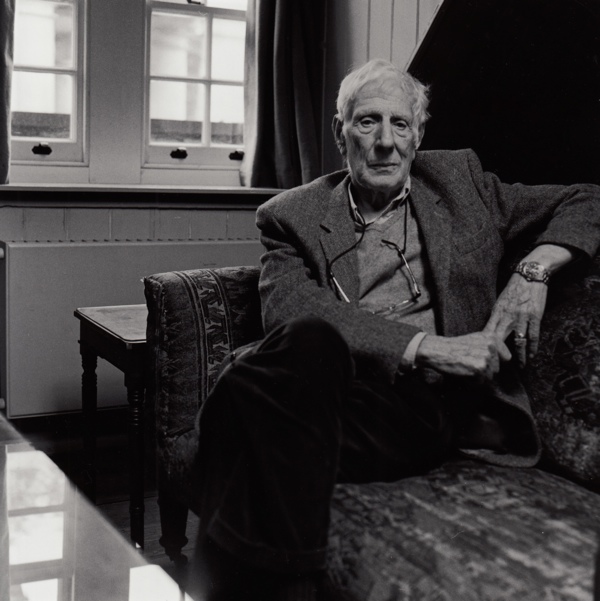
Jonathan Miller visited 5 Fournier St once, to see the house where his grandfather Abram lived and brought up his family more than a hundred years ago. Abram came to London from Lithuania in 1865 and worked as furrier in the attic workshop, the same room where Lucinda Douglas Menzies took this portrait of his grandson.
Jonathan did not know when Abram acquired the surname Miller. His grandfather arrived in the Port of London as an adolescent and found work as a machinist in the sweatshops of Whitechapel, where he met Rebecca Fingelstein, a buttonhole hand, whom he married in 1871. Somehow Abram worked his way up to become his own boss during the next ten years, running his own business from premises at 5 Fournier St by the time his son (Jonathan’s father) Emanuel was born in 1892, as the youngest of nine siblings. Emanuel’s sister Clara remembered how the children fell asleep listening to the whirr of sewing machines overhead.
As a supplier of fur hats to Queen Victoria and bearskins to the Grenadiers, Abram aspired to be an English gentleman with a pony and trap. Yet, at 5 Fournier St, the horse had to be kept in the back yard which meant leading it through the front hall, blindfolded in case it reared up at the chandelier.
Jonathan’s aunt Janie wrote her own account of her childhood there – “We lived in a large Queen Anne House in Spitalfields and part of the house was taken over by my father’s business who was a furrier. Needless to say, we all had coats trimmed with fur… My earliest recollection was my first day at the infant school in Old Castle St, and I remember the summer holidays we spent in Ramsgate for two weeks, year after year.”
Janies’s younger brother Emanuel looms large in her narrative – “We moved to Hackney when he was eight and he went to Parminter’s School, and from there got a scholarship to the City of London School and then another scholarship to St John’s College, Cambridge. I remember spending a really lovely week in Cambridge for May Week, attending the concerts etc and meeting all Emanuel’s friends. After leaving Cambridge, he went to the London Hospital in Whitechapel where he qualified as a doctor and served in the 1914 war as a Captain RAMC, and helped to cure the shell-shocked soldiers.” It was a long journey that Emanuel travelled from his father’s beginnings in Whitechapel and, as Janie records, he rejected the family trade in favour of the medical profession, “Emanuel refused to go into the business, as he had been to Cambridge and wanted to be a doctor, and he won the day.”
Jonathan Miller did not recall Emanuel speaking about the East End. “I never talked to my father very much because I was always in bed by the time he was back from his work, so I was completely out of it,” he admitted to me, “I am only a Jew for anti-Semites. I say ‘I am not a Jew, I am Jew-ish!'”
Although intrigued to visit the house where his father was born and where his grandfather worked, Jonathan was unwilling to acknowledge any personal response. “I’m not interested in my ancestry,” he joked, “I’m descended from chimpanzees but I am not interested in them either.” Like many immigrant families that passed through Spitalfields, in Jonathan’s family there was a severance – the generation that moved out and rose to the professional classes chose not to look back. And for Jonathan it was a gap – in culture and in time – that could no longer be bridged, even as we sat in the attic where his grandfather’s workshop had been a century earlier. “I know nothing about their life here,” he confessed to me, gesturing extravagantly around the tiny room and wrinkling that famously-furrowed brow.
As one who has constructed his own identity, Jonathan rejected distinctions of religion and ethnicity in favour of a broader notion of humanity to which he allied himself. Yet he was proud to tell me that his father came back and founded the East London Child Guidance Clinic in 1927, acknowledging where he had come from by bringing his scholarship to serve the people that he had grown up among. “He was interested in juvenile delinquents and he was really the founder of child psychiatry in this country,” Jonathan explained me, and the work that his father began continues to this day – with the Child & Adolescent Mental Health Services on the Isle of Dogs housed in the Emanuel Miller Centre.
So I found a curious irony in the fact that the son of a leading figure in the understanding of child development in this country should admit to no relationship to his father, and therefore none to his family’s past either. When 5 Fournier St was renovated, the gaps between the floor boards were found to be crammed with clippings of fur and every inch of this old house bears the marks of its three hundred years of use. Constantly, people come back to Spitalfields to search for their own past in the locations familiar to their antecedents, yet often the past they seek is already within them in their cultural inheritance and family traits – if they could only recognise it.
Clearly, Jonathan Miller’s choice to study medicine was not unconnected to his father’s career. When Jonathan reminded me of the familar Jewish joke about asking the way to get to Carnegie Hall and receiving the reply, ‘Practice, practice!’, he suggested that the pursuit of fame as musicians and as comedians had proved to be an important means of advancement for Jewish people. And I could not but think of Jonathan Miller’s own distinguished work in opera and his early success with ‘Beyond the Fringe.’ It set me wondering whether ancestry had influenced him more than he realised, or was entirely willing to admit.

Eighteenth century roof joists, exposed during renovations, still with their original joiner’s numbers which reveal that the roof was made elsewhere and then assembled on site

Weatherboarding revealed between 3 and 5 Fournier St during renovations, indicating that until the mid-eighteenth century number 5 was the end of the street, before number 3 was built

Abram Miller arrived from Lithuania in 1865 and is recorded at 5 Fournier St in the census of 1890

Wallpaper at 5 Fournier St from the era of Abram Miller

Watercolour of Fournier St, 1912 – the cart stands outside number 5

Emanuel Miller was born at 5 Fournier St in 1892

“I remember the summer holidays we spent in Ramsgate for two weeks year after year.” Emanuel is on the far right of this photograph.

Fournier St in the early twentieth century, number 5 is the third house

5 Fournier St today, now the premises of the Townhouse

The hallway where the blindfolded horse was led through

Emanuel Miller as an old man

Jonathan Miller
Portraits of Jonathan Miller © Lucinda Douglas Menzies
In William Blake’s London
On the eve of the great poet’s birthday, let me take you on a journey to William Blake’s London

Glad Day in Lambeth
If you wish to visit William Blake’s London, just turn left outside Waterloo Station, walk through the market in Lower Marsh, cross Westminster Bridge Rd and follow Carlisle Lane under the railway arches. Here beneath the main line in Lambeth was once the house and garden where William & Catherine Blake were pleased to sit naked in their apple tree.
Yet in recent years, William Blake has returned to Lambeth. Within the railway arches leading off Carlisle Lane, a large gallery of mosaics based upon his designs has been installed, evoking his fiery visions in the place where he conjured them. Ten years work by hundreds of local people have resulted in dozens of finely-wrought mosaics bringing Blake’s images into the public realm, among the warehouses and factories where they may be discovered by the passerby, just as he might have wished. Trains rumble overhead with a thunderous clamour that shakes the ancient brickwork and cars roar through these dripping arches, creating a dramatic and atmospheric environment in which to contemplate his extraordinary imagination.
On the south side of the arches is Hercules Rd, site of the William Blake Estate today, where he lived between 1790 and 1800 at 13 Hercules Buildings, a three-storey terrace house demolished in 1917. Blake passed ten productive and formative years on the south bank, that he recalled as ‘Lambeth’s vale where Jerusalem’s foundations began.’ By contrast with Westminster where he grew up, Lambeth was almost rural two hundred years ago and he enjoyed a garden with a fig tree that overlooked the grounds of the bishop’s palace. This natural element persists in the attractively secluded Archbishop’s Park on the north side of the arches in the former palace grounds.
To enter these sonorous old arches that span the urban and pastoral is to discover the resonant echo chamber of one of the greatest English poetic imaginations. When I visited I found myself alone at the heart of Lambeth yet in the presence of William Blake, and it is an experience I recommend to my readers.


‘There is a grain of sand in Lambeth that Satan cannot find”


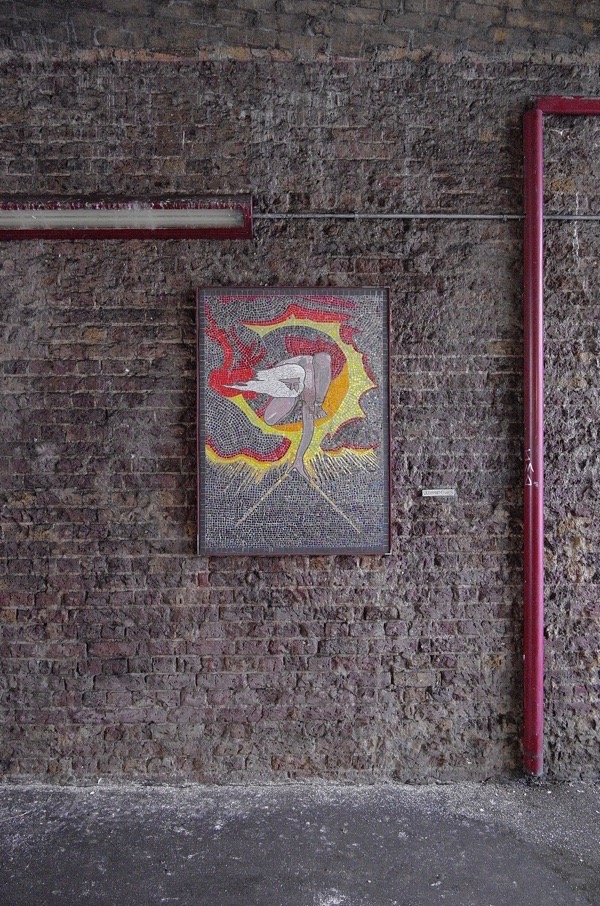


These mosaics were created by South Bank Mosaics which is now The London School of Mosaic
You may also like to take a look
At Clapton Community Football Club

Photographer Max Reeves has been documenting the drama and delight of the extraordinarily successful phenomenon that is Clapton Community Football Club over its inaugural year. With a shirt inspired by the colours of the International Brigades and the Spanish Republican flag, CCFC defines itself as an inclusive endeavour, celebrating the heroic East End Brigades of the thirties.
Large attendances and enthusiastic crowds demonstrate that CCFC has become a genuine community focus in Clapton. Owned by the fans and collectively-run, the club is a co-operative with 1300 members internationally, including a majority from Spain who joined in solidarity with the Republican flag.

Wilberforce Wanderers, winter 2018

The Curve, late autumn 2018

Samurai Rovers, early spring 2019

FC Roast, early autumn 2018

Eastfield FC, late autumn 2018

Stonewall FC, early winter 2018

Stonewall FC, early winter 2018

Chipperfield Corinthians, winter 2018

Ware Sports, midwinter 2018

Clapton Legends XI, early spring 2019

The Curve, late autumn 2018

Ware Sports, midwinter 2018

Samurai Rovers, early spring 2017

Eastfield, midwinter 2018

Eastfield, midwinter 2018

Samurai Rovers, winter 2018
Photographs copyright © Max Reeves
Copies of Max Reeves’ photographic book ‘TON’ are available direct from www.claptoncfc.co.uk
You may also like to read about
The Walking Footballers Of West Ham
The Curry Chefs Of Brick Lane

This is the ideal moment for a hot curry to warm the spirits, so I set out with photographer Jeremy Freedman to make the acquaintance of some of Brick Lane’s most celebrated Curry Chefs. We were privileged to be granted admission to the modest kitchens tucked away at the back or in the basement of the curry houses, where Head Chefs marshal whole teams of underchefs in a highly formalised hierarchy of responsibility.
It was a relief to step from the cold street into the heat of the kitchens, where we discovered our excited subjects glistening with perspiration, all engaged in the midst of the collective drama that results in curry. We found that these were men who – for the most part – had worked their way up over many years from humble kitchen porters to enjoy their heroic leading roles, granting them the right to a degree of swagger in front of the lense.
We encountered the charismatic Zulen Ahmed, pictured above, standing over his clay-lined tandoori oven beneath the Saffron restaurant where he has been Head Chef for ten years now. Trained by the renowned Curry Chef, Ashik Miah, Zulen served eight years as a porter before ascending to run his own kitchen, now supervising a team consisting of two chefs who do the spicing and make the sauces, a tandoori chef, two cooks who cook rice and poppadums, a second chef who prepares side dishes and a porter who does the washing up. “The Head Chef listens to everybody,” he explained deferentially, with his staff standing around within earshot, and thereby revealing himself to be a natural leader.
Across the road at Masala, we met Head Chef, Shaiz Uddin, whose mother is a chef in Bangladesh. She taught him to cook when he was ten years old. Shaiz told me he worked in her kitchen as Curry Chef for seven years, before he came to London ten years ago to bring the authentic style to Brick Lane, where today he is known for his constant invention in contriving new dishes for his eager customers.
It was quickly apparent that there is a daily routine common to all the curry kitchens of Brick Lane. At eleven each morning, the chefs come in and work until three to prepare the sauces and half cook the meat for the evening. At three they take a break until six, while the underchefs, who arrive at three, prepare the vegetables and salad. Then at six, when the chefs return, the rice is cooked and – now the kitchen is full – everyone works as a team until midnight, when it is time to throw out the leftovers and make the orders for the next day. This is the pattern that rules the lives of all involved. “I like to be busy,” Nurul Alam, Head Chef at Preem & Prithi, informed me blithely – he regularly cooks three hundred curries a night.
“When I started, I dreamed of being a chef,” confessed Jamal Uddin, Head Chef at Bengal Cuisine, referring to his ambition when he came here to Brick Lane from Bangladesh aged nineteen. For the last fourteen years, Jamal has reigned supreme in his kitchen with a Tandoori Chef, a Cook and a Porter working under his supervision as he prepares as many as two hundred curries every day. “I love cooking,” he admitted to me as his gleaming face broke into a smile, though whether it was the intensity of his emotion or the humidity in the kitchen that was the cause of his glowing complexion, I never ascertained.
Syed Jahan Mir, Head Chef at Chillies Restaurant, told me he came to this country at the age of eighteen with his mother and father. Syed was able to learn from his father who was also a chef and they started out together at first, working side by side in the same restaurant. “He’s better than me, but now he is retired to Sunderland I am the best!” Syed asserted, placing a hand on his chest protectively. “Of course I like it,” he confirmed for me with fierce pride, “Twenty-four years, I’ve been doing this, just making curry – it’s my profession.” A poet with spices, Syed creates his own personal mixture for curry. “It’s all the blending,” he emphasised, running his fingers through the golden powder in a steel dish to demonstrate its special properties.
Mohammed Salik still remembers arriving in Britain at the age of seven. “It was quaint and nice here and the people so good, not overcrowded and dirty like my country,” he recalled with a sublime smile of reminiscence, “My dad used to work at the Savoy, but I wanted to be part of the community here in Brick Lane.” Starting as kitchen porter, Mohammed spent the first five years watching and learning and is now Head Chef at Eastern Eye Restaurant. Our brief conversation in the kitchen was eclipsed by the arrival of a bucket on a piece of string from the restaurant above and inside was a yellow slip of paper, occasioning a polite, apologetic glance from Syed as he turned away to study the handwriting and order his team to work, making up the order.
At Cinnamon, Head Chef and veteran of twenty-five years in the business, Daras Miya was keen to introduce me to the two smiley, hardworking young Kitchen Porters under his care, skinny twenty-four year old Belal Ahmed who has been there three months and also works as a waiter, and nineteen year old Mizanor Rahman who started a week ago. Newly married and with little English, wide-eyed Mizanor was experiencing his first winter in London, after marrying his wife who came from Britain to Bangladesh find a husband.
Finally, at the Aladin we met Brick Lane’s most senior Curry Chef, the distinguished Rana Miah who started work in 1980 as a kitchen porter when he arrived from Bangladesh, graduating to chef in 1988. “At that time we served only Bengalis, but by 1995 the customers were all Europeans,” he recalled, describing his tenure as chef at one of Brick Lane’s oldest curry houses, which opened in 1985 and is second only to the Clifton in age. Rana explained that he runs his kitchen upon the system of “Handy Cooking,” based around the use of large stock pots to cook the food. “That’s the way it’s done in Bangladesh,” he confirmed, “This is a traditional restaurant.” As the longest serving Curry Chef, Rana gets frequent consultations from the other chefs on Brick Lane and, remains passionate about his vocation, arriving before everyone each day and leaving after everyone else too.
We never asked the Curry Chefs to cross their arms, but they all assumed this stance, independently and without prompting. It is a posture that proposes professionalism, dignity and self-respect, yet it also indicates a certain reticence, a reserved nature that prefers to let the culinary creations speak for themselves. So I ask you to spare a thought for these proud Curry Chefs, working away like those engineers slaving below deck on the great steam ships of old, they are the unseen and unsung heroes of Brick Lane’s Curry Mile.

Abdul Ahad Forhad, Curry Chef at Monsoon, 78 Brick Lane – “I’m the master of curry!”

Head Chef Shaiz Uddin with his colleague Monul Uddin, Tandoori Chef at Masala, 88 Brick Lane

Nurul Alam, Head Chef at Preem & Prithi, 124/6 Brick Lane, cooks three hundred curries a night

Abdul Tahid, Head Chef at Papadoms, 94 Brick Lane

Jamal Uddin, Head Chef at Bengal Cuisine, 12 Brick Lane

Syed Jahan Mir, Head Chef at Chillies Restaurant, 76 Brick Lane

Mohammed Salik, Head Chef at Eastern Eye Balti House, 63a Brick Lane

Daras Miya, Head Chef at Cinnamon, 134 Brick Lane

Belal Ahmed & Mizanur Rahman, porters at Cinnamon 134, Brick Lane

Rana Miah, Brick Lane’s longest serving Curry Chef stands centre, flanked by Kholilur Rahman and Mizanur Khan in the kitchen of the Aladin, 132 Brick Lane
Photographs copyright © Jeremy Freedman
You may also like to read about
A Bloomsbury Jamboree

In gleeful collaboration with Tim Mainstone of Mainstone Press and Joe Pearson of Design for Today, I am organising a BLOOMSBURY JAMBOREE, as a one-day festival of books and print, illustration, talks and seasonal merriment on SUNDAY 8th DECEMBER from 11am until 5pm.
It takes place at the magnificent ART WORKERS GUILD, 6 Queens Sq, WC1, which was founded in 1884 by members of the Arts & Crafts movement including William Morris and C R Ashbee. These oak panelled rooms lined with oil paintings in a beautiful old house in Bloomsbury offer the ideal venue to celebrate our books, and the authors and artists who create them.
There will be book-signings and a programme of ticketed lectures, as well as live music and entertainment for all ages, plus we have invited twenty friends to exhibit, including print and paper makers, small press publishers, toy makers, bee keepers, potters and craft workers.
Genius inventor Tim Hunkin will be bestowing instant beatifications for the festive season – King of the Bottletops, Robson Cezar, has made fifty bottle top crowns for parties and celebrations – favourite illustrators Alice Pattullo and Paul Bommer will be selling their prints – silhouette cutter, Matyas Selmeczi will be doing free portraits – New Dawn Traders will be offering olive oil and other produce from small farmers in Portugal imported by sail power – Caroline Bousfield of Victoria Park Village will be displaying her own pottery, and Tessa Hunkin of Hackney Mosaic Project will bring small mosaics for purchase.
All our Spitalfields Life Books titles will be in stock and there will be opportunities to meet Eleanor Crow, Adam Dant, Doreen Fletcher, Suresh Singh, Julian Woodford and The Gentle Author who will be signing and inscribing copies of their books.

Art Workers Guild

Art Workers Guild

Art Workers Guild

Click here for a talk on JOHN MINTON’S COMMERCIAL ART by Martin Salisbury at noon

Click here for a talk on MEMOIRS OF A COCKNEY SIKH by Suresh Singh at 1pm

Click here for a talk on JOHN PIPER’S BRIGHTON AQUATINTS by Alan Powers at 1pm
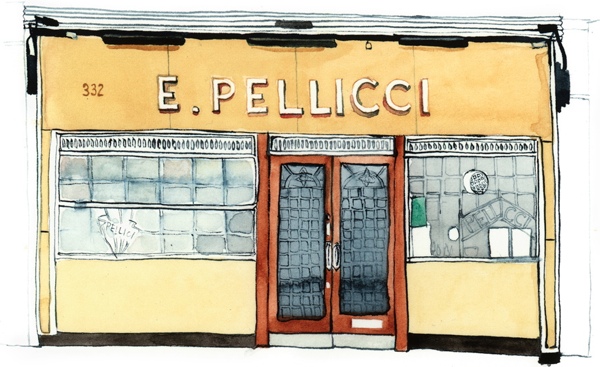
Click here for a talk on SHOPFRONTS OF LONDON by Eleanor Crow at 2pm

Click for a talk on ERIC RAVILIOUS’ LOST PICTURE PUFFIN by Joe Pearson at 2pm

Click here for a talk on GHASTLY FACADISM in London by The Gentle Author at 3pm

Click here for a talk on MAPS OF LONDON & BEYOND by Adam Dant at 3pm

Click here for a DARKTOWN QUIZ by Jonny Hannah at 4pm

Genius Inventor, Tim Hunkin in his workshop

King of the Bottletops wearing one of his bottletop crowns (Photograph by Sarah Ainslie)

Illustrator Alice Pattullo

Silhouette Cutter Matyas Selmeczi (Photograph by Colin O’Brien)

New Dawn Traders import produce to London from small farmers in Portugal by sail power

Caroline Bousfield makes pots in Victoria Park Village

Tessa Hunkin & Hackney Mosaic Project


