
Bloomsbury Jamboree Lectures & Readings

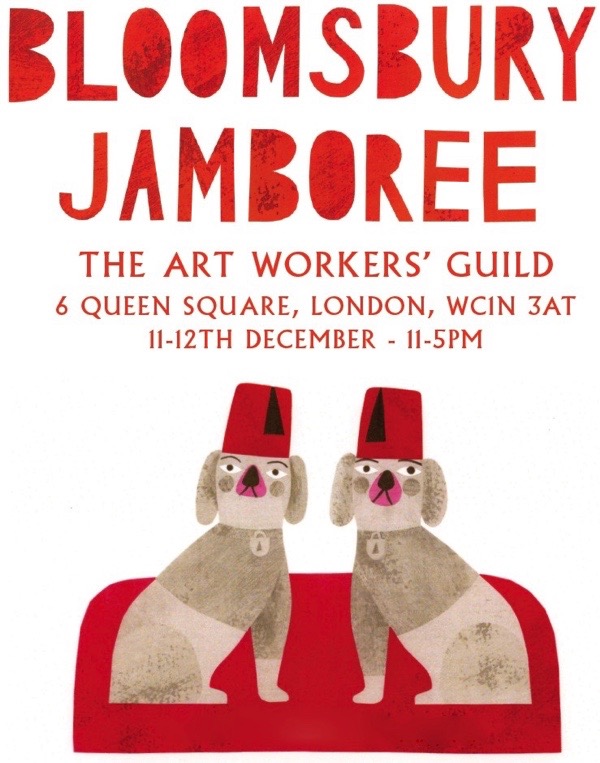
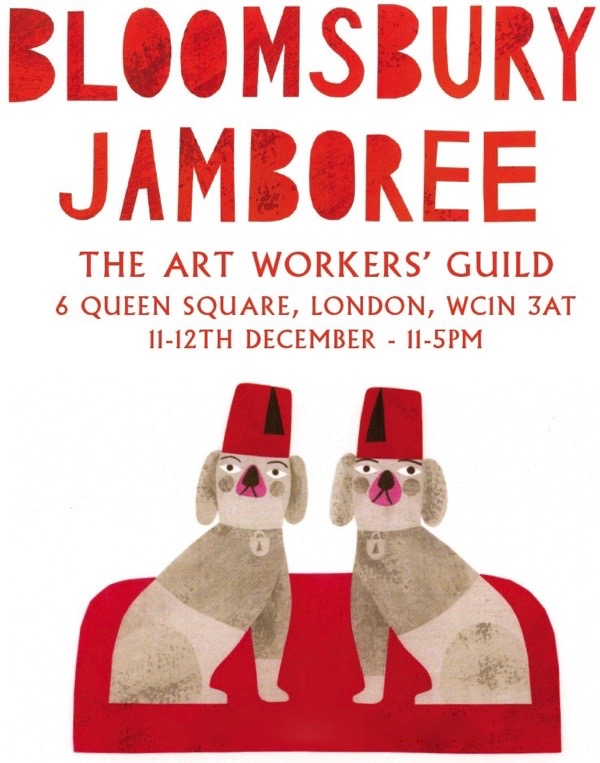
You are invited to our BLOOMSBURY JAMBOREE which runs from 11am-5pm on Saturday 11th & Sunday 12th December at Art Workers’ Guild, 6 Queen Sq, WC1N 3AT.
We are showing the work of our twenty favourite artists and makers, and we are proud to present this accompanying programme of talks and lectures.
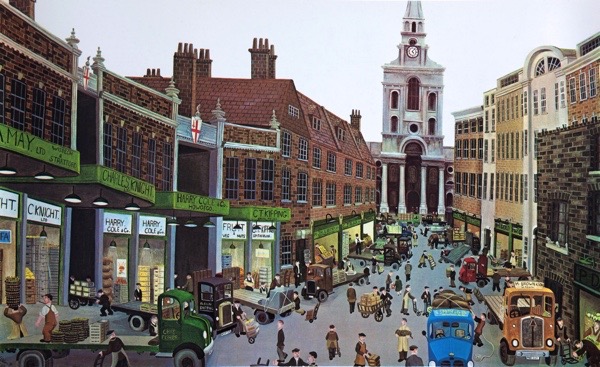
Spitalfields Market by John Allin, 1973
EAST END VERNACULAR, An Art History of the East End
by The Gentle Author
Noon, Saturday 11th December
The Gentle Author gives an illustrated lecture based on ‘EAST END VERNACULAR, Artists Who Painted London’s East End Streets In The 20th Century‘ telling the stories behind the paintings.
Click here to book your ticket for EAST END VERNACULAR
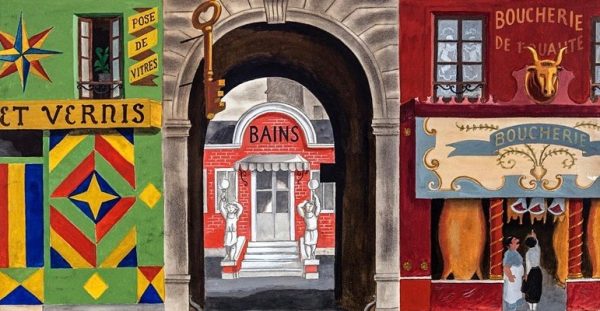
RAVILIOUS, BAWDEN & BOUCHER
by James Russell
1:30pm, Saturday 11th December
To celebrate ‘BOUTIQUES’, a new publication from Mainstone Press, James Russell explores the life of French illustrator Lucien Boucher whose colourful twenties survey of Parisian shops influenced many artists including Edward Bawden and Eric Ravilious.
Click here to book your ticket for RAVILIOUS, BAWDEN & BOUCHER
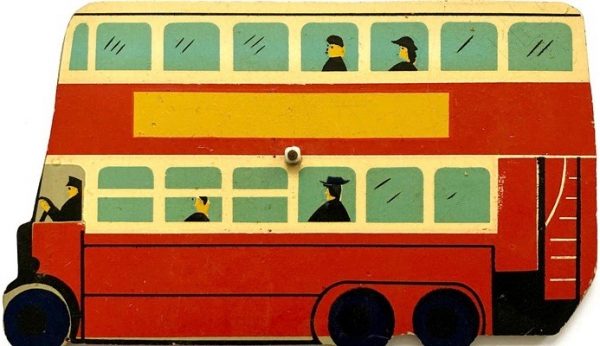
ABBATT TOYS, Modern Toys for Modern Children
by Alan Powers
3pm, Saturday 11th December
Who can resist the beautiful wooden toys and puzzles created by Paul & Marjorie Abbatt? The story behind their creation is told by leading architectural and design historian, Alan Powers.
Click here to book your ticket for ABBATT TOYS
DESIGN IN MINIATURE
by Neil Hadfield
Noon, Sunday 12th December
Neil explores the work mid-century stamp designers and design featuring the work of David Gentleman, Jonny Hannah, Barnett Freedman and others.
Click here to book your ticket for DESIGN IN MINIATURE
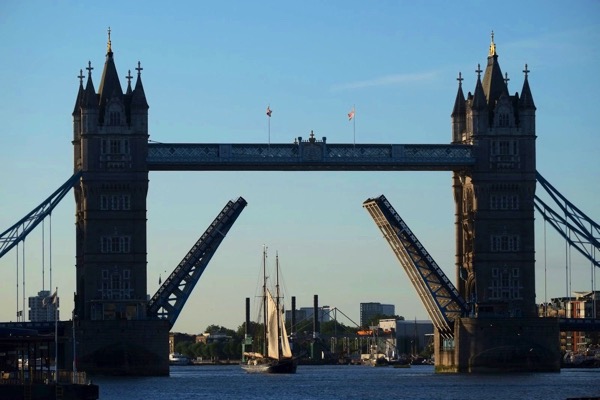
THE RETURN OF SAIL CARGO TO LONDON
by Gareth Maeer
1:30pm, Sunday 12th December
Gareth Maeer is the director of Raybel Charters, a social enterprise company. He will talk about the resurgence of sail cargo, and how a new breed of sailors is restoring classic sailing ships to transport produce around the world. He will describe how sail cargo has come back to London, explaining where this environmentally-inspired movement originated and the challenges that lie ahead.
Click here to book for THE RETURN OF SAIL CARGO
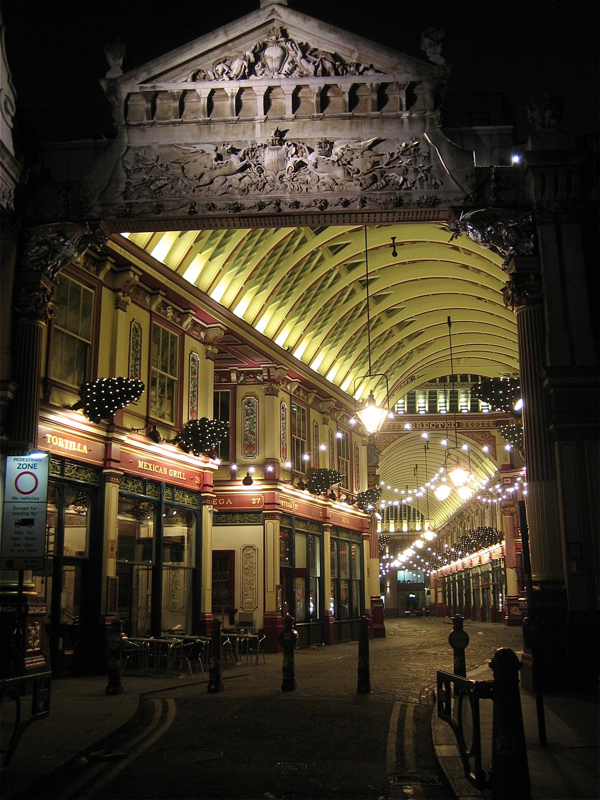
CHRISTMAS STORIES
A reading by The Gentle Author
3pm, Sunday 12th December
To get you in a festive frame of mind, The Gentle Author beguiles you with seasonal stories from Spitalfields Life, including a magical account of a midnight walk through London on Christmas Eve and a poignant memoir of the author’s childhood Christmas.
Click here to book your ticket for The Gentle Author’s CHRISTMAS STORIES
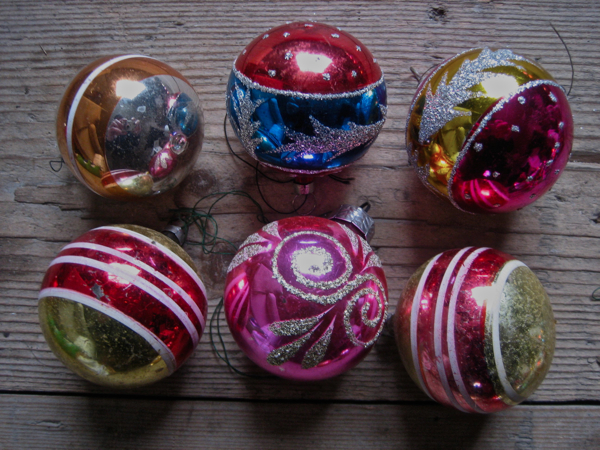
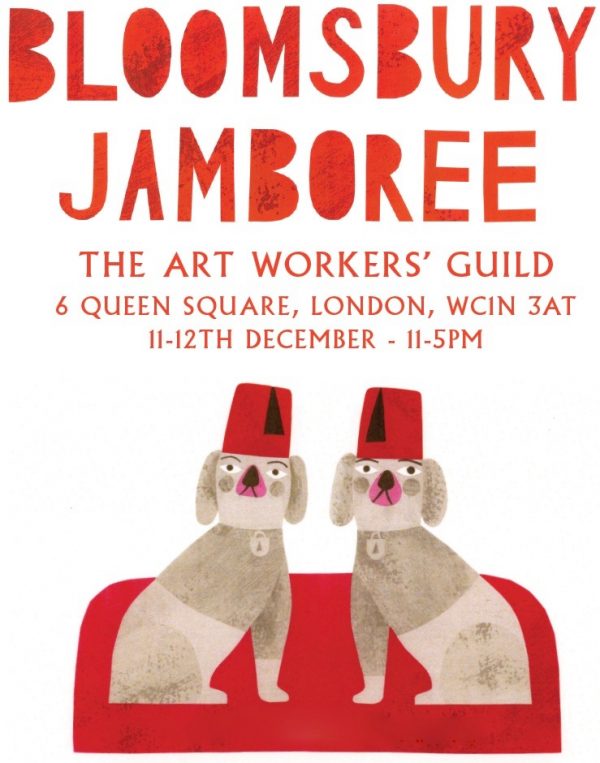
Bloomsbury Jamboree 2021
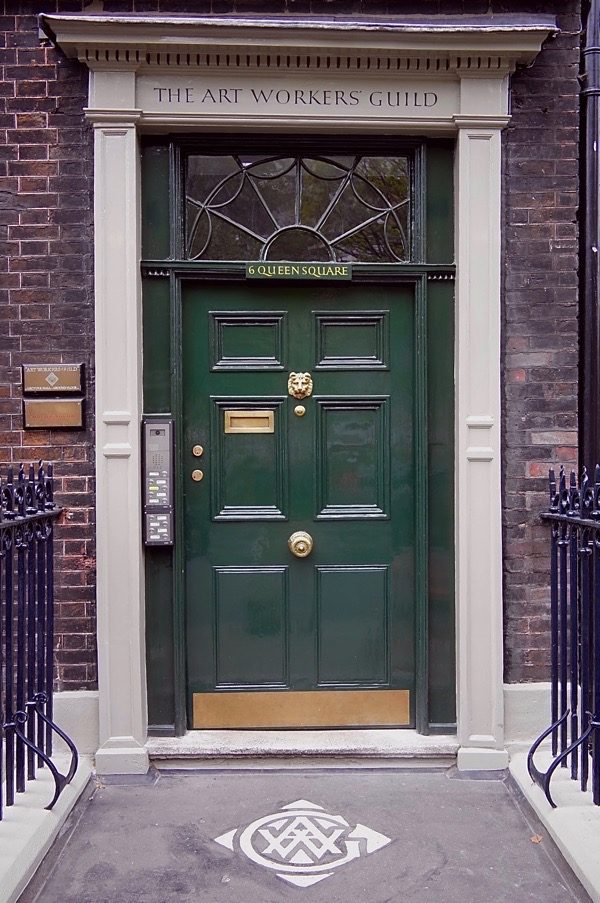
In gleeful collaboration with Tim Mainstone of Mainstone Press and Joe Pearson of Design for Today, I am hosting the BLOOMSBURY JAMBOREE, a two-day festival of books and print, illustration, talks and seasonal merriment on SATURDAY 11th & SUNDAY 12th DECEMBER from 11am until 5pm.
It takes place at the magnificent ART WORKERS GUILD, 6 Queens Sq, WC1, which was founded in 1884 by members of the Arts & Crafts movement including William Morris and C R Ashbee. These oak panelled rooms lined with oil paintings in a beautiful old house in Bloomsbury offer the ideal venue to celebrate our books, and the authors and artists who create them.
There will be book-signings and a programme of ticketed lectures and readings, as well as live music and entertainment for all ages, plus we have invited twenty friends to exhibit, including print and paper makers, small press publishers, toy makers, potters and craft workers.
Silhouette artist Matyas Selmeczi will be cutting silhouette portraits for free and Pia Matikka writing your name on a card in a her beautiful copperplate calligraphy.
Among many other makers – Jill Green will be selling her purses manufactured in Brick Lane – Spitalfields Artist, Robson Cezar, has made light-up wooden houses out of fruit boxes from Whitechapel Market – favourite illustrators Alice Pattullo & Marion Elliot will be selling their prints – Matilda Moreton will be showing her ceramics – Sail Cargo London will be offering olive oil and other produce from small farmers in Portugal imported by sail power.
We need volunteers over the weekend – if you can help please email spitalfieldslife@gmail.com
Tomorrow I will publish the full programme of lectures and readings.
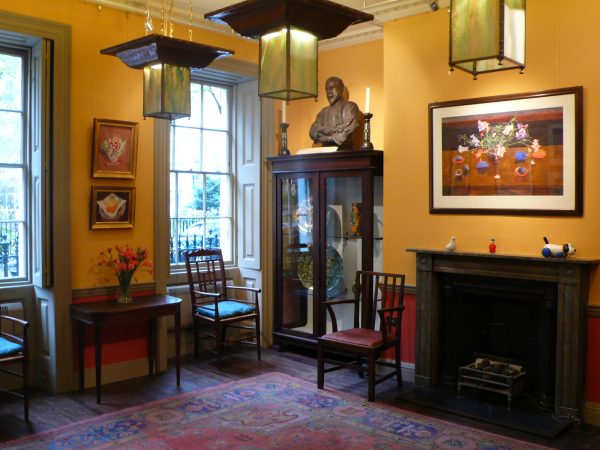
Art Workers Guild
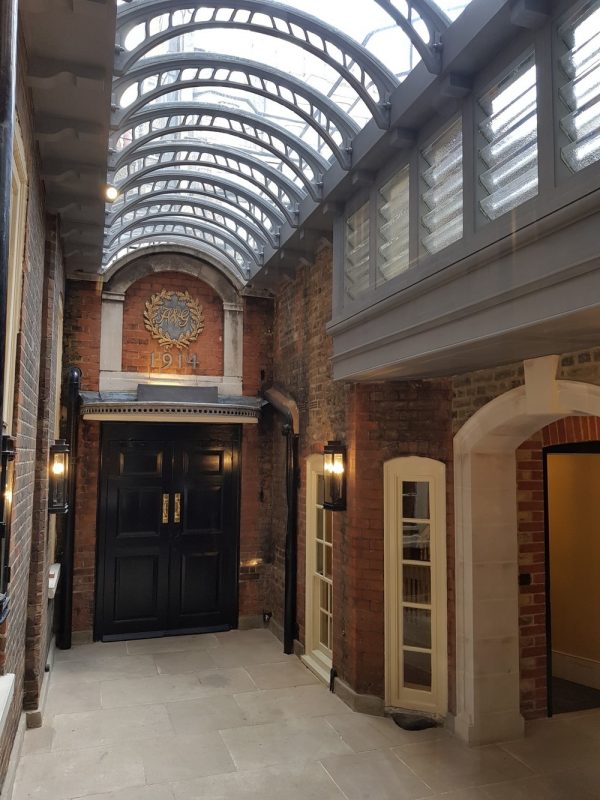
Art Workers Guild
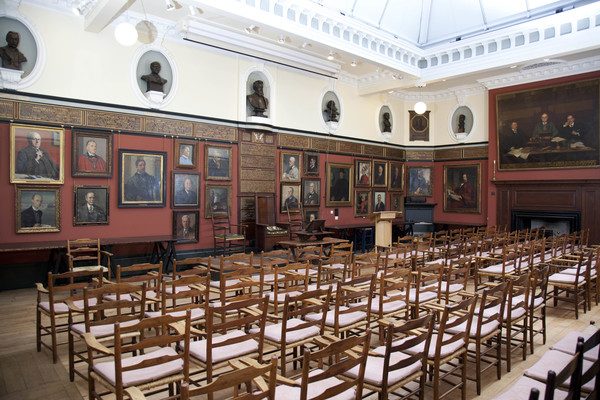
Art Workers Guild
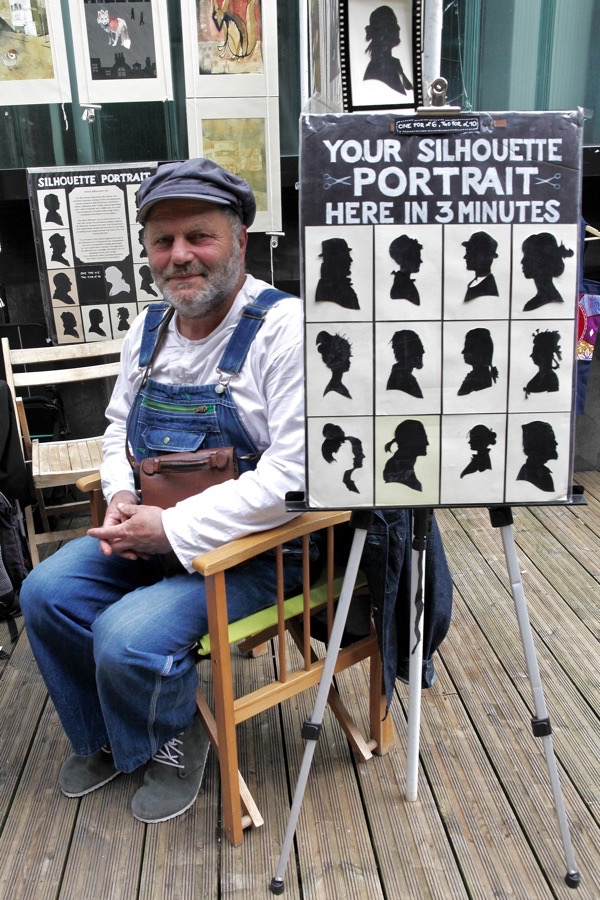
Matyas Selmeczi will cut your portrait in silhouette (photo by Colin O’Brien)
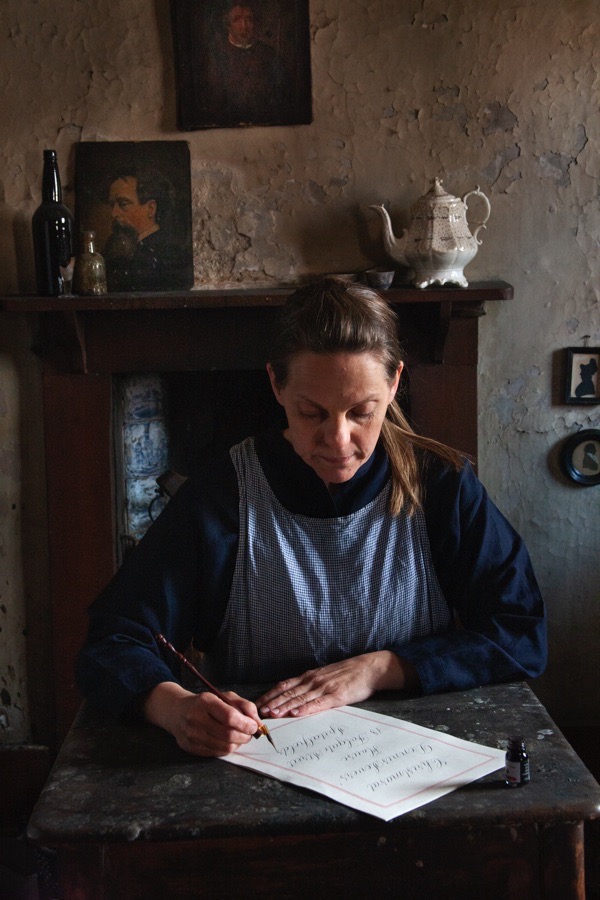
Pia Matikka will write your name in copperplate (photo by Lucinda Douglas Menzies)
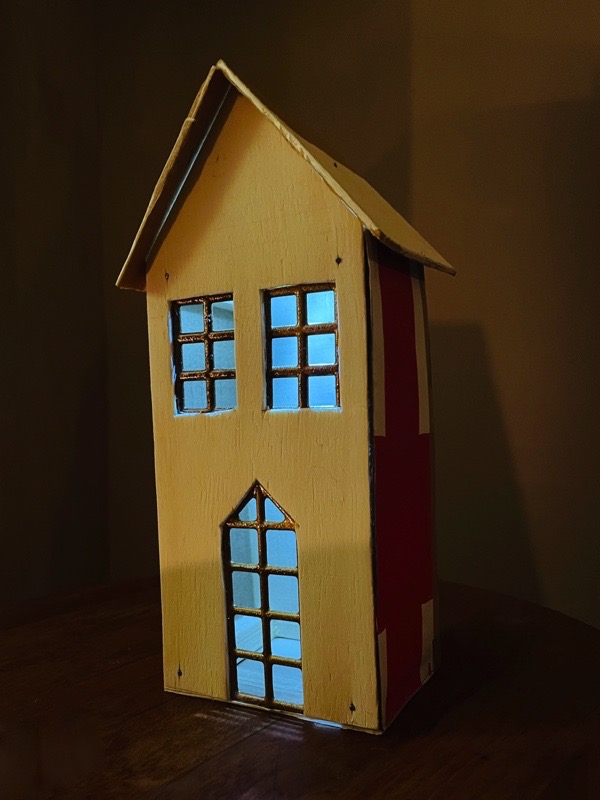
Wooden house made by Robson Cezar out of fruit boxes from Whitechapel Market

Hand bound notebooks from Judd St Papers
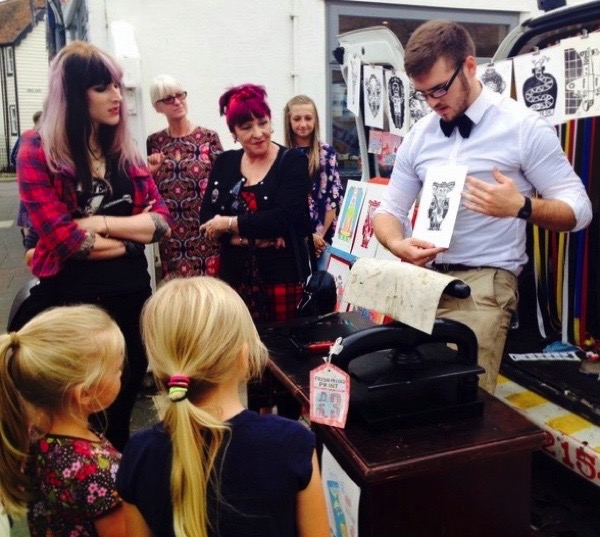
Aidan Saunders of Print Wagon will be demonstrating print techniques
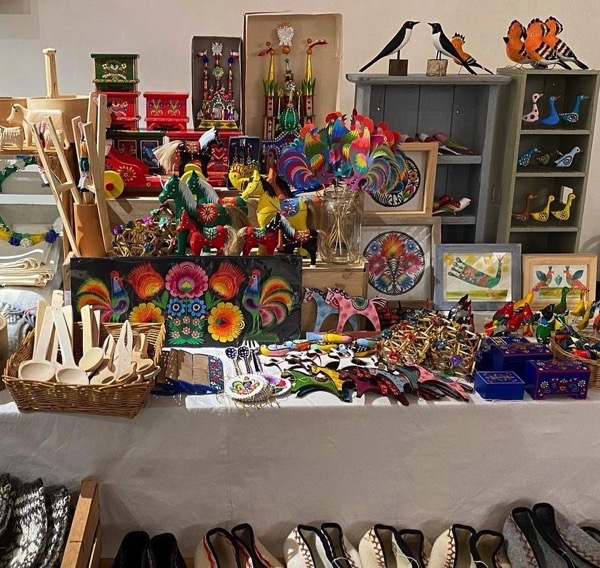
Traditional Polish toys and folk art presented by Frank & Lusia
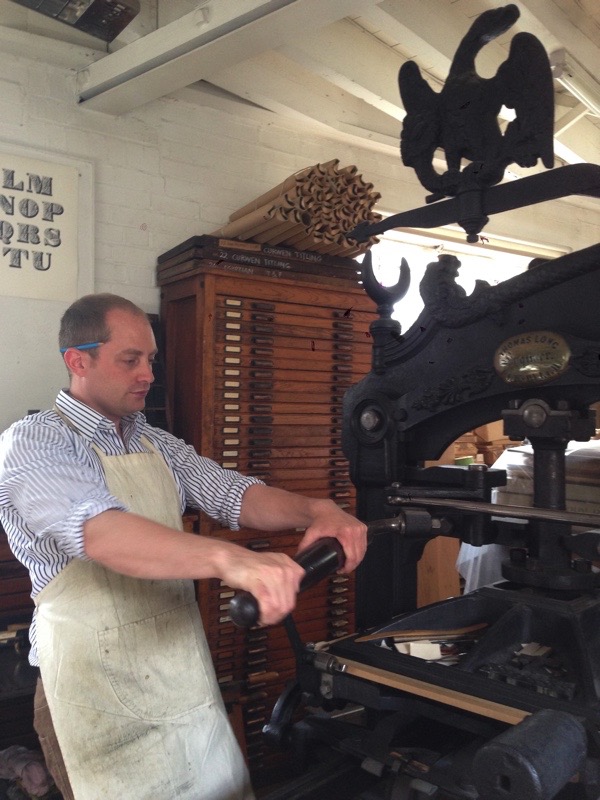
James Freemantle of St James Park Press
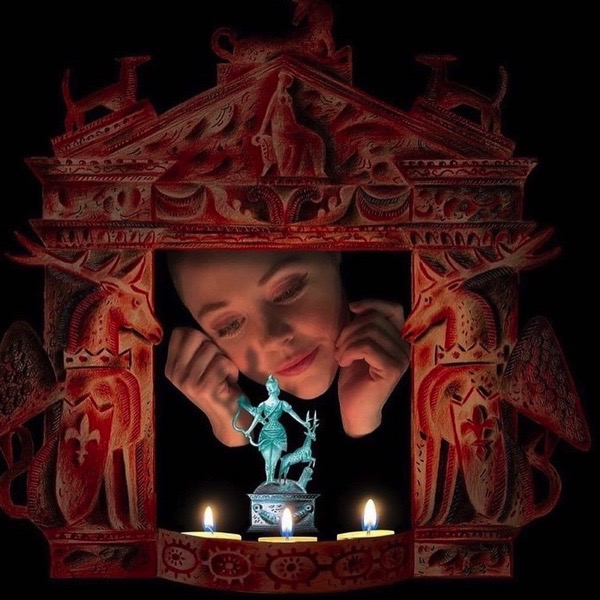
Toy Theatre by Clive Hicks-Jenkins published by Design for Today
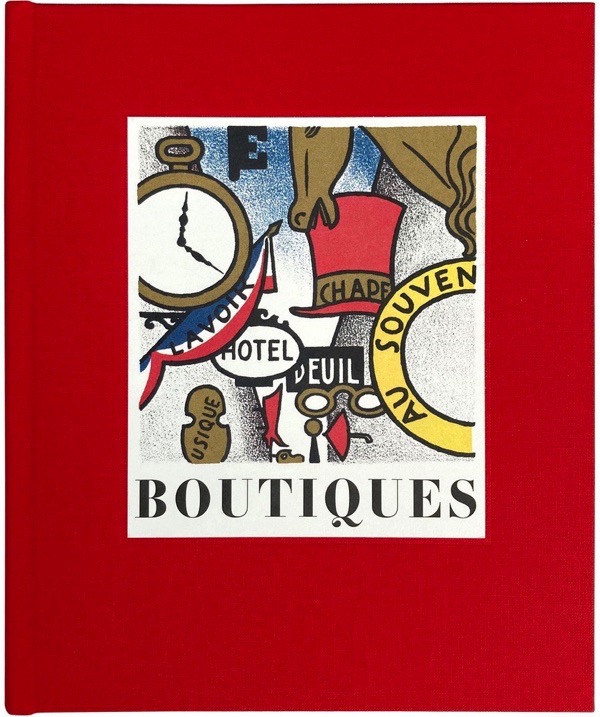
Boutiques (shopfronts of twenties’ Paris) by Lucien Boucher published by Mainstone Press
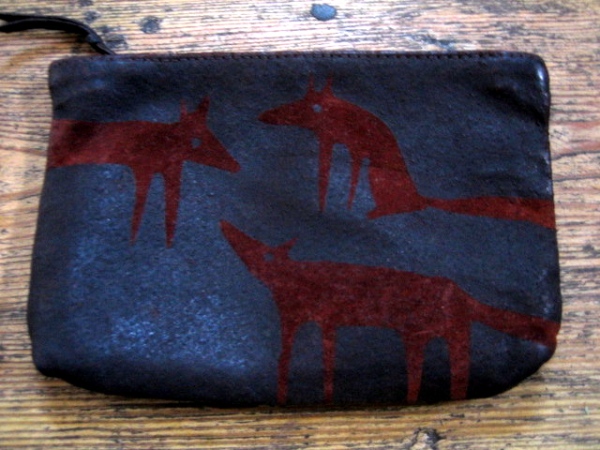
Suede purse by Jill Green
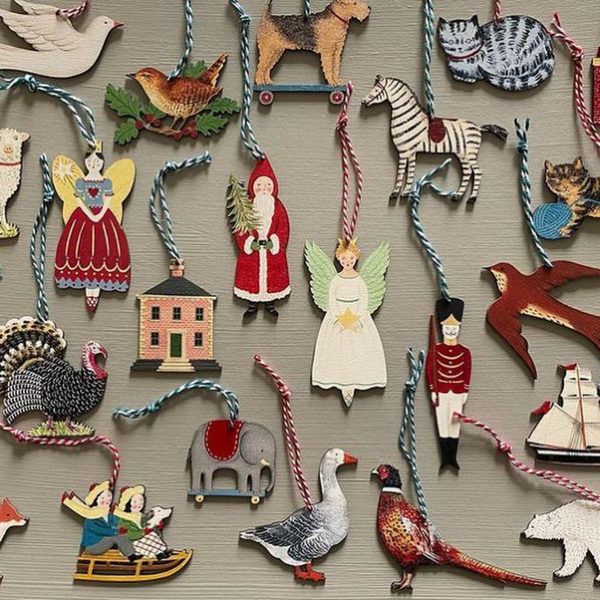
Painted wooden decorations by Elizabeth Harbour
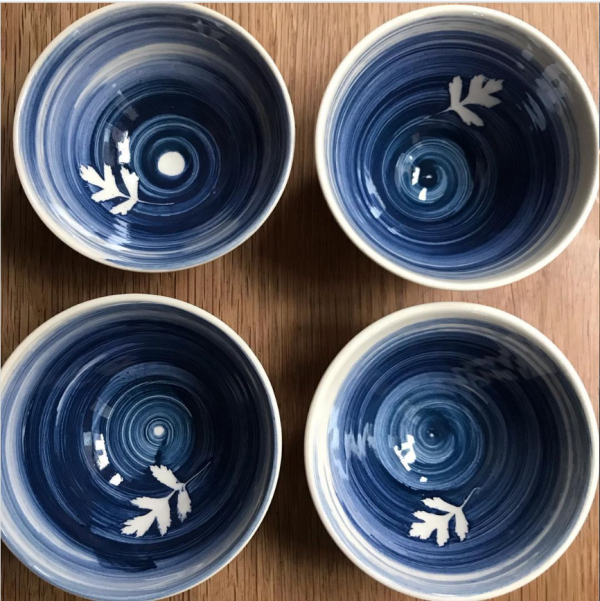
Bowls by Matilda Moreton
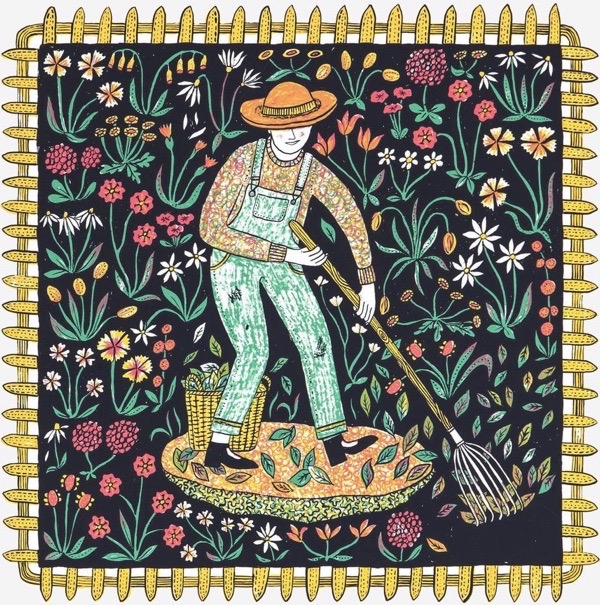
Autumn by Alice Pattullo
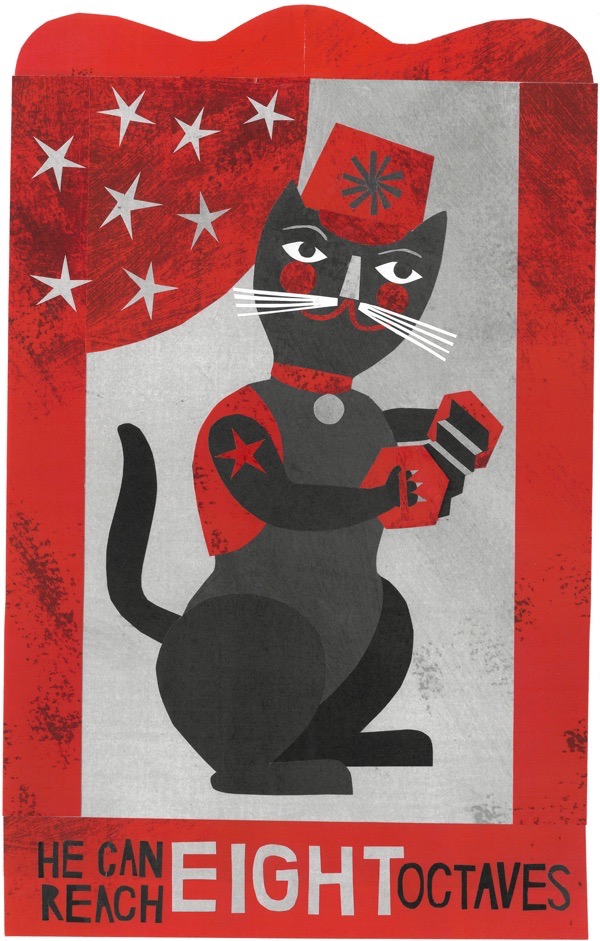
Wonder Cat by Marion Elliot

Sail Cargo London will be offering imports from small producers by sailing boat
The Language Of Beer
I offer this choice selection of the language of drinking lest it may be of use to any of my readers who might be planning to take a draught over the forthcoming festive season.
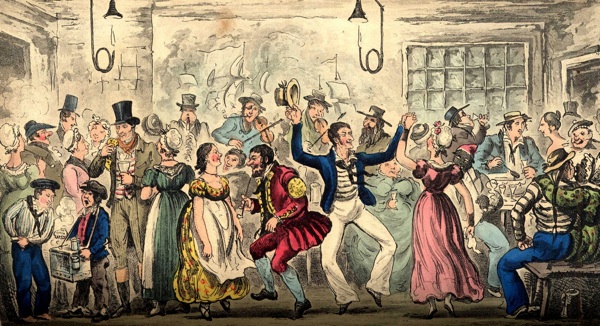
Life in the East – At the Half Moon Tap, 1830
Barrel – A cask built to hold thirty-six gallons.
Beer – There is no bad beer but some is better than others.
Binder – The last drink, which it seldom proves to be. Also used to describe the person who orders it.
Boiling Copper – Vessel in which wort is boiled with hops.
Boniface – Traditional name for an innkeeper, as used by George Farquhar in ‘The Beaux’ Stratagem.’
Bragget – A fancy drink made of fermented honey and ale.
Brewer – The artist who by his choice of barley and other ingredients, and by his sensitive control of the brewing process, produces beer the way you like it.
Butt – A cask built to hold one hundred and eight gallons.
Buttered Beer – A popular sixteenth century drink of spiced and sugared strong beer supplemented with the yolk of an egg and some butter.
Cardinal – A nineteenth century form of mulled ale.
Casual – An occasional visitor to the pub.
Cheese – A heavy wooden ball used in the game of skittles.
Chitting – The appearance of the first shoots while the barley is growing during the first stage of the malting process.
Coaching Glass – An eighteenth century drinking vessel with no feet that was brought out to coach travellers and consumed at one draught.
Collar – The frothing head on a glass of beer between the top of the beer and the rim of the glass.
Crinze – An earthenware drinking vessel, a cross between a tankard and a small bowl.
Crawler – One who visits all the pubs in one district, drinking a glass of beer in each.
Dipstick – An instrument used to measure the quantity of wort prior to fermentation.
Dive – A downstairs bar.
Dog’s Nose – Beer laced with gin.
Down The Hatch – A toast, usually for the first drink.
Finings – A preparation of isinglass which is added to the beer in the cask to clarify it.
Firkin – A cask built to hold nine gallons.
Flip – Beer and spirit mixed, sweetened and heated with a hot iron.
Fob – The word used in a brewery to describe beer froth.
Goods – The name used by the brewer to describe the crushed malted grains in the mash tuns.
Grist – Malt grains that have been cleaned and cracked in the brewery mill machines.
Gyle – A quantity of beer brewed at one time – one particular brewing.
Heel Tap – Term for beer left at the bottom of the glass.
Hogshead – A cask built to hold fifty-four gallons.
Hoop – A device displayed outside taverns in the middle ages to indicate that beer was sold. Later, it became the practice to display certain objects within the hoop in order to differentiate one tavern from another. eg The Hoop & Grapes
Kilderkin – Cask holding eighteen gallons.
Lambswool– A hot drink of spiced ale with roasted apples beaten up in it.
Liquor – The term used in the brewing industry for water.
Local – The pub round the corner.
Long Pull – Giving the customer more than they ordered, the opposite of a short pull.
Lounge – The best-appointed and most expensive bar of the public house.
Mash – The mixture of crushed malted grains and hot liquor which is run through the masher into the mash tun and from which is extracted liquid malt or wort.
Merry-Goe-Down – Old term describing good ale.
Metheglin – A spiced form of mead.
Mether Cup – A wooden drinking cup used by the Saxons, probably for Metherglin.
Mud-In-Your-Eye, Here’s – Traditional toast, with a meaning more pleasant than it sounds.
Nappy – Term describing good ale, foaming and strong.
Noggin – Small wooden mug, a quarter pint measure.
Noondrink – Ale consumed at noon when trade was slacker. Also, High Noon, drunk at three o’clock when street trading was finished.
One For The Road – Last drink before leaving the pub.
Pig’s Ear – Rhyming slang for beer.
Pocket – A large sack made to contain one and a half hundredweight of hops.
Porter – Popular in the late eighteenth and nineteenth centuries among London market porters, equivalent to a mixture of ale, beer and twopenny.
Public Bar – Where everything is cheapest and decoration and equipment is smiplest.
Puncheon – Cask built to hold seventy-two gallons.
Quaff – To drink in large draughts.
Regular – One of the mainstays of the public house.
Round – An order of drinks for more than one person.
Saloon Bar – Enjoying better amenities than a Public Bar and therefore more expensive to the customer.
Shandy – A drink of beer mixed with ginger beer, or sometimes beer and lemonade.
Short – A gin or whisky, usually taken before a meal.
Small Beer – A beer of lesser gravity, hence a trifling matter.
Smeller – A man employed in the brewery to examine casks after they have been washed and prior to their being filled with beer.
Snifter – Colloquial term for a drink.
Snug or Snuggery – Semi-private apartment in the pub, by custom reserved for use of the regulars.
Sparge – To spray hot liquor onto the grist in the mash tuns.
Spell, To Take A – To go round to the local for a beer, coined by Mr Peggotty in David Copperfield.
Stingo – A strong ale, similar to Barley Wine, popular during the winter months and usually sold in a bottle.
Stool – A useful piece of furniture for a customer who wants to stay at the bar, but is anxious to sit down.
Swig – To take a draught of beer, generally a large one.
Thirst – Suffering enjoyed by beer drinkers.
Tipple – To drink slowly and repeatedly.
Trouncer – The drayman’s mate who pushed and manhandled the wagon over potholes.
Tumbler – A flat bottomed drinking glass, derived from the Saxon vessel that could not stand upright and must be emptied in one draught.
Tun – Vessel in the brewery where the fermenting takes place.
Twopenny – A pale, small beer introduced to London from the country in the eighteenth century at fourpence a quart.
Wallop – Mild ale.
Wassail – Hot ale flavoured with sugar, nutmeg and roasted apples.
What’s Yours? – An invitation which sums up the companionable atmosphere of a public house.
Wort – The solution of mash extract in water, derived from the grist in the mash tuns.
Image from Tom & Jerry’s Life in London courtesy Bishopsgate Institute
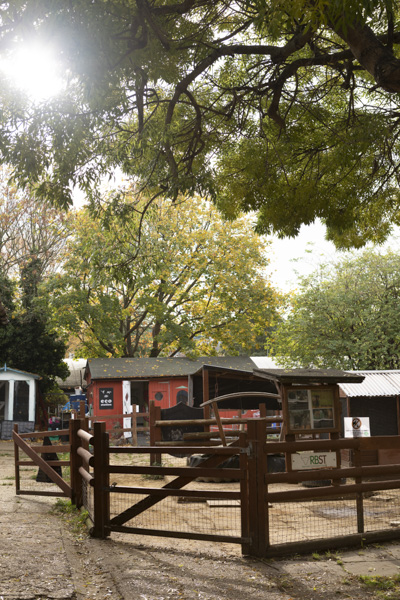
Autumn At Spitalfields City Farm
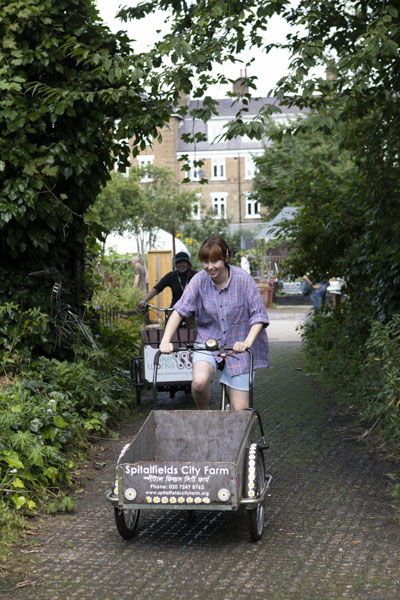
The final of four features in collaboration with Contributing Photographer Rachel Ferriman, documenting the seasons at Spitalfields City Farm.
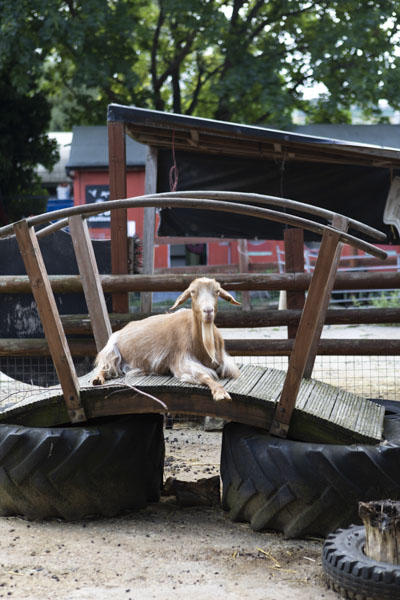
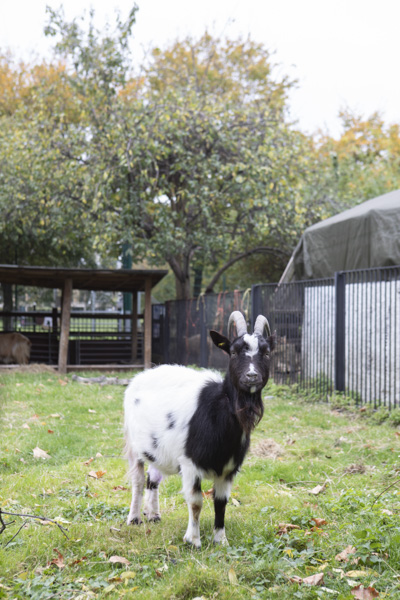
Autumn has been extended and mild this year, with a succession of sunny days lasting until the end of November. On such a day, Emma Poole, who has been working with the animals at the farm for seven years, led me on a personal tour around Spitalfields City Farm.
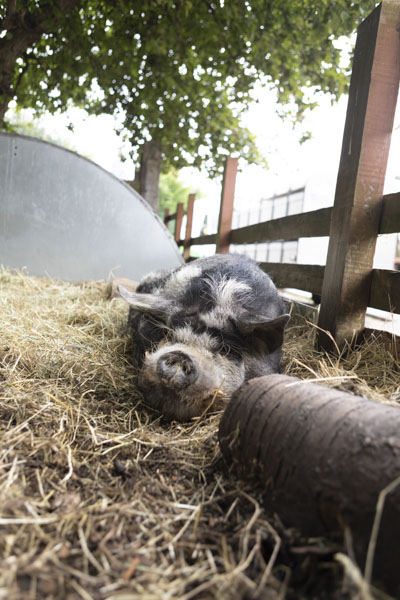
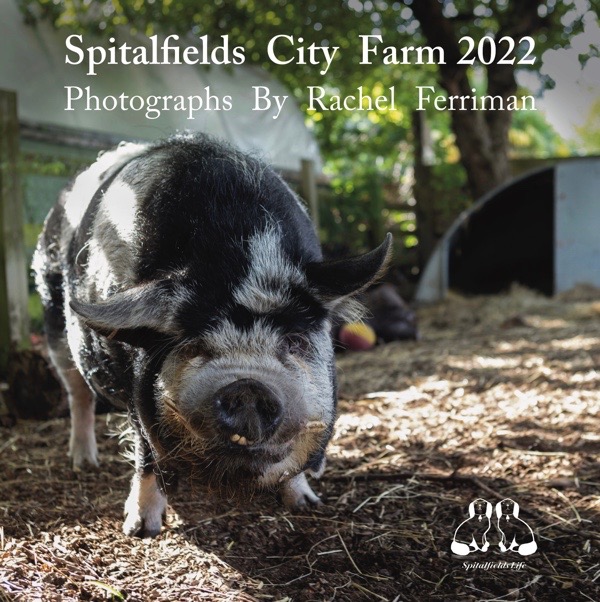
We began our stroll by paying a visit to Holmes, whose arrival as a piglet I recorded in the early days of Spitalfields Life. He has reached the grand old age of eleven now. ‘Holmes loves the autumn because he eats all the crab apples and forages through the leaves,’ Emma explained, ‘At night, we give him straw to keep warm and, since his brother, Watson, died in June, we will throw in a sleeping bag for him to bury himself underneath when it gets really cold.’
‘I prefer working with animals because they are so understanding,’ Emma admitted to me. ‘If you have had a bad day, an animal will never judge you. They are quick to forgive too. Even if we have to inflict pain for a medical reason, they will always forgive you and never hold a grudge. When I feel low, if I spend five minutes with a sheep or a donkey, it lifts my spirits..’
‘I love hosting school visits to the animals, especially for children who are new to them. If I had to sum up what the farm is for, I would say it is for education. Kids that struggle in a school environment thrive here. Everyone that comes here learns something. Many people do not realise where eggs come from.’
‘I could stand and watch the sheep all day, they are my favourite,’ Emma confided, ‘farmers will say that time spent staring at your animals is never wasted because when you know each one intimately and you can assess their well-being and health by their behaviour. Autumn is a good time for this.’
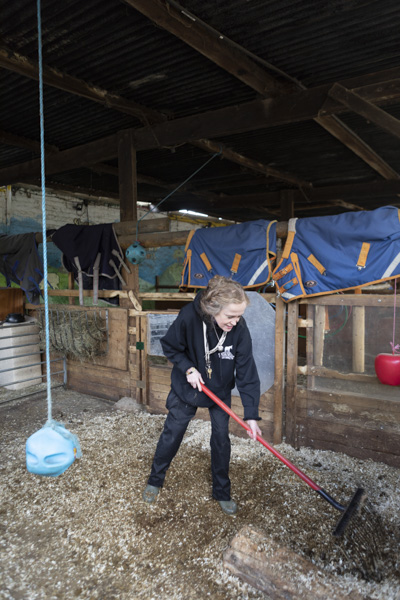
‘We are busy with maintenance now,’ Emma continued as we walked on, ‘this is when we mend the sheds and prune the fruit trees.’
‘After the harvest, we plant overwintering vegetables – kale, cabbage, sprouts and onions – or clear the land to lie fallow until spring. We spread manure and let all the home-grown nutrients go back into the soil. It’s our way of giving back and saying thank you to the garden for what it gave us this year. We have created a cycle without any chemical fertilisers and hopefully our good work will bear fruit next year.’
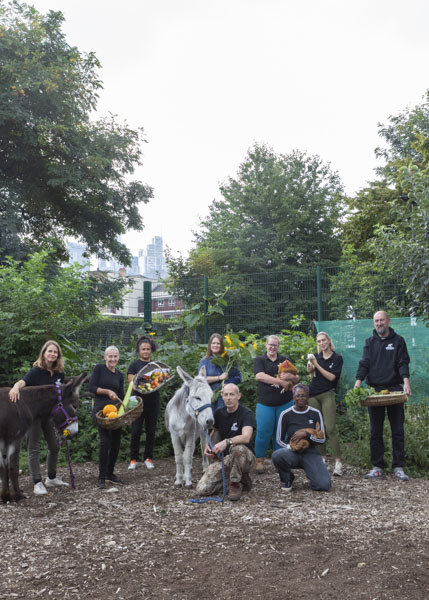
Harvest at the farm
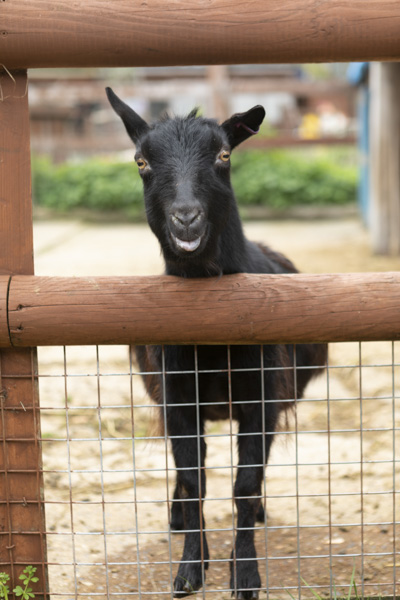
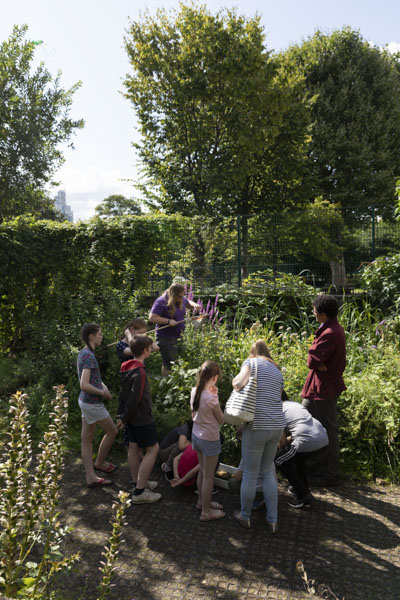
Pond-dipping
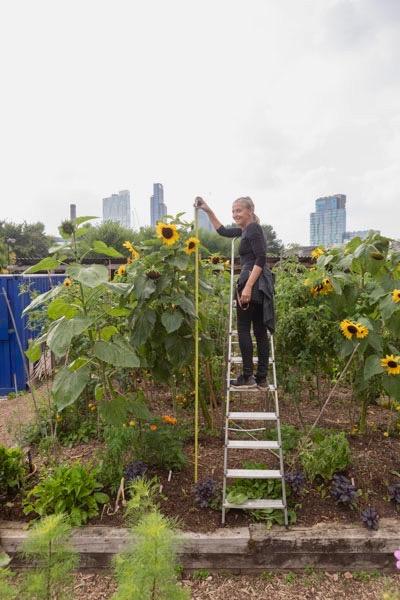
Tanya measuring the sunflowers
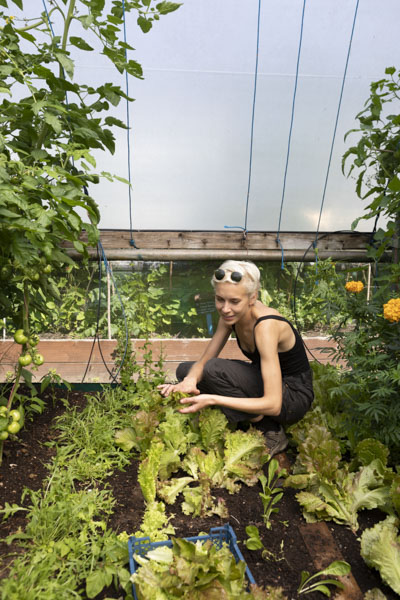
Galena harvesting lettuce
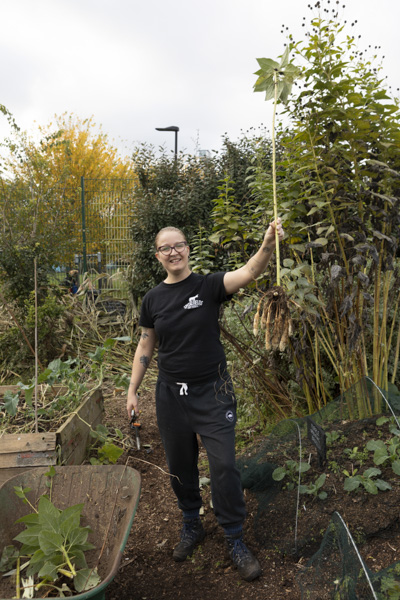
Sam harvesting Jerusalem Artichokes
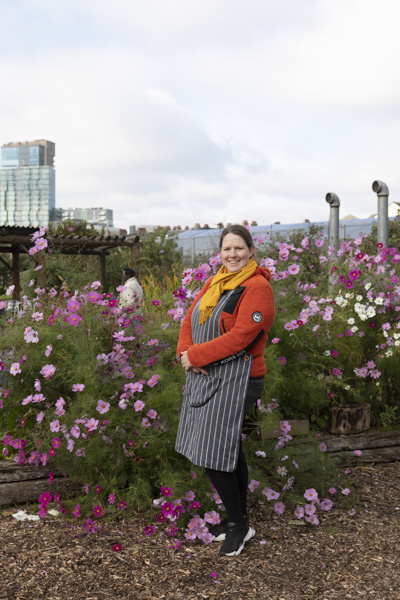
Simone who runs the Tea Hut with cosmos
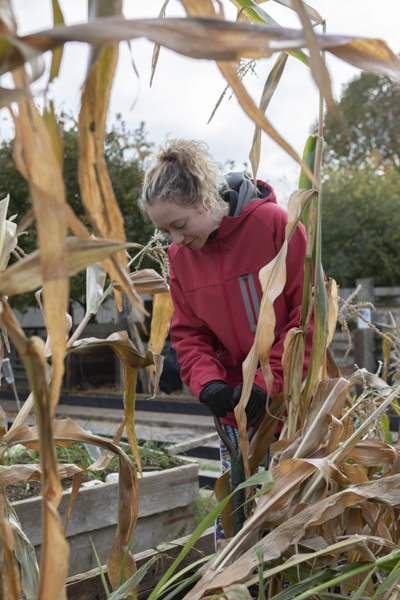
George harvesting and trimming sweetcorn
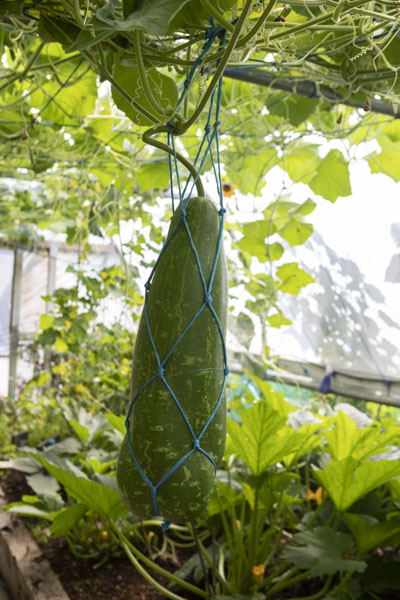
Kudu
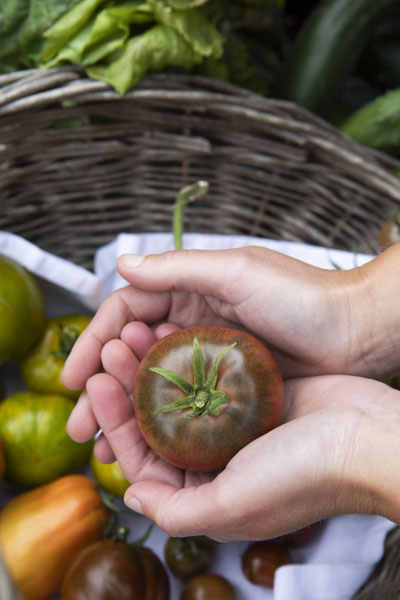

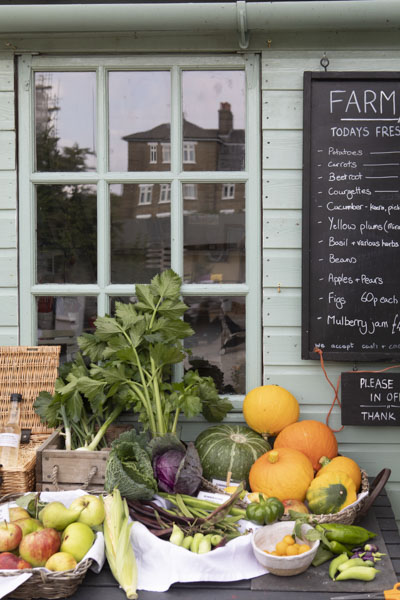
Produce at the farm shop
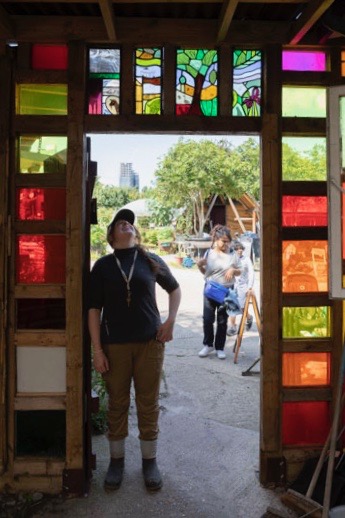
Ella with the stained glass panels she made
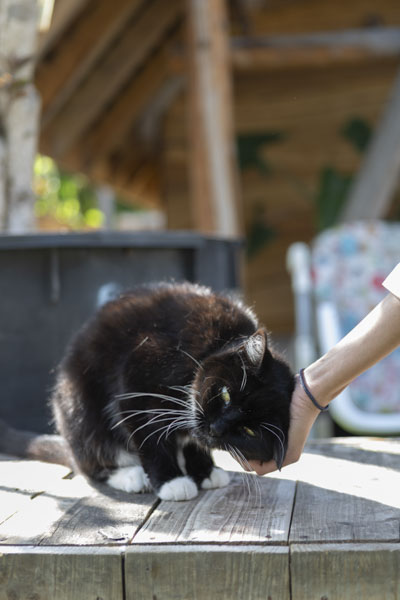
Bella

Th last cosmos of the year
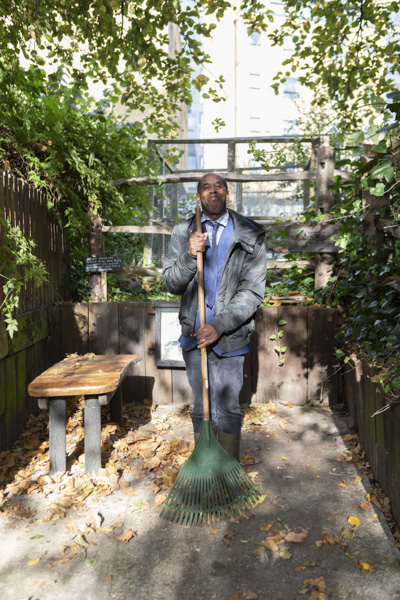
Frank sweeping the autumn leaves
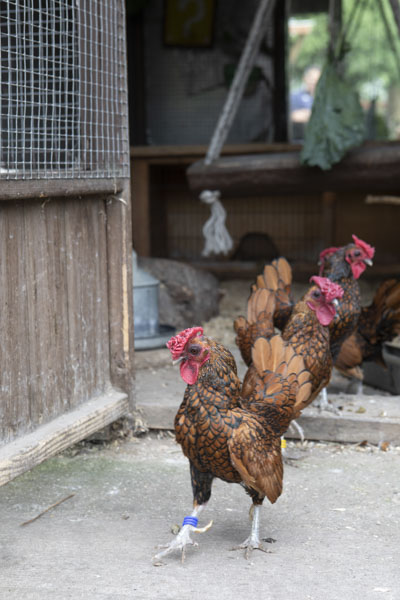
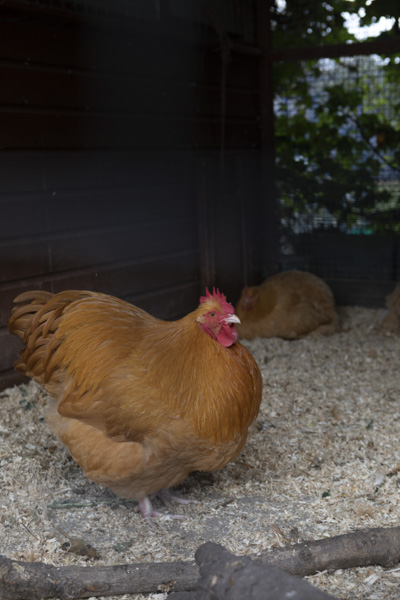
Gold Sebright hens
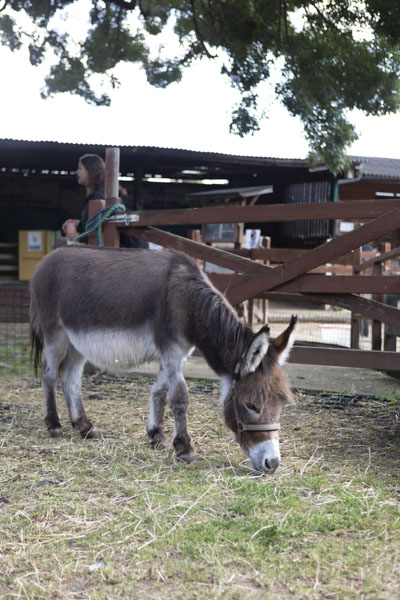
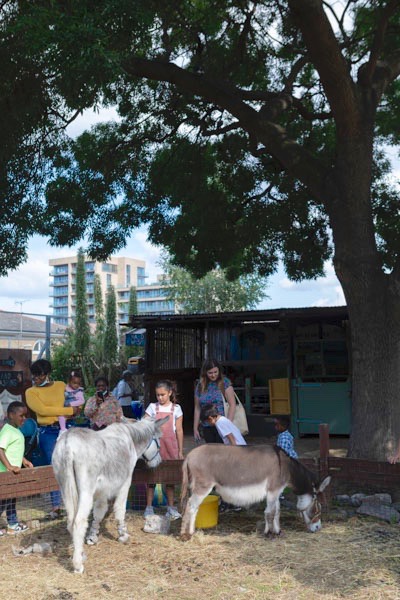

Donkey riding
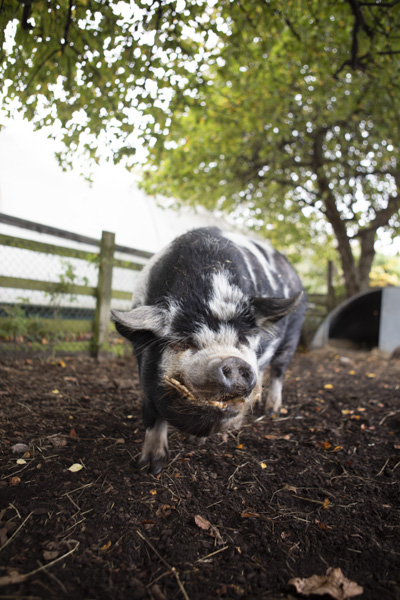
‘Holmes loves the autumn because he eats all the crab apples’
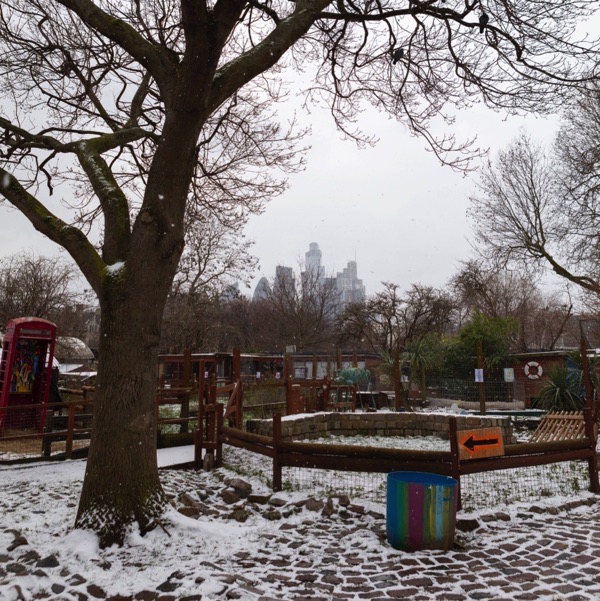
“There is poetry in the unexpected presence of agriculture in the city and it always makes my heart leap to hear animal cries in this urban setting, connecting me to the rural landscape beyond and reminding us of the fields that were here before the streets were built up. Despite the tower blocks visible through the greenery at Spitalfields City Farm, it is nature that prevails here.”
The Gentle Author
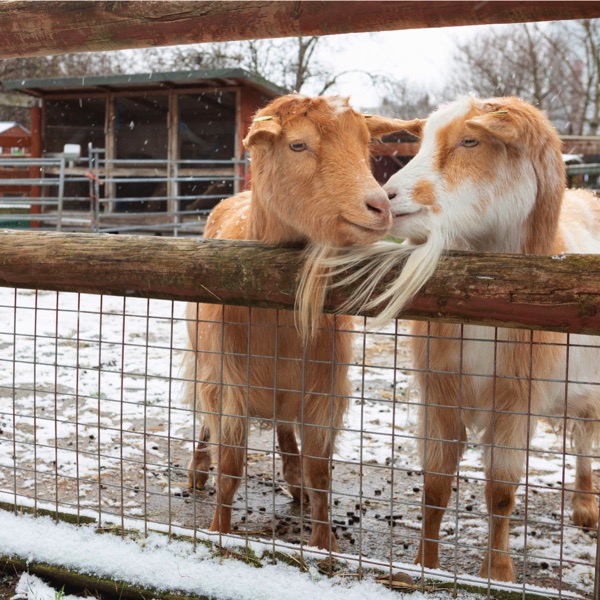
The first Spitalfields Life calendar is produced in support of our beloved Spitalfields City Farm and features Rachel Ferriman‘s splendid photographs from her features published in these pages.
This handsome wall calendar is a collaboration between our friends Newmans Stationers who have done the printing, Baddeley Brothers who have donated handmade envelopes and Gardners Bags who have donated paper bags.
ORDER YOUR SPITALFIELDS LIFE 2022 CALENDAR NOW FOR £10
January
February
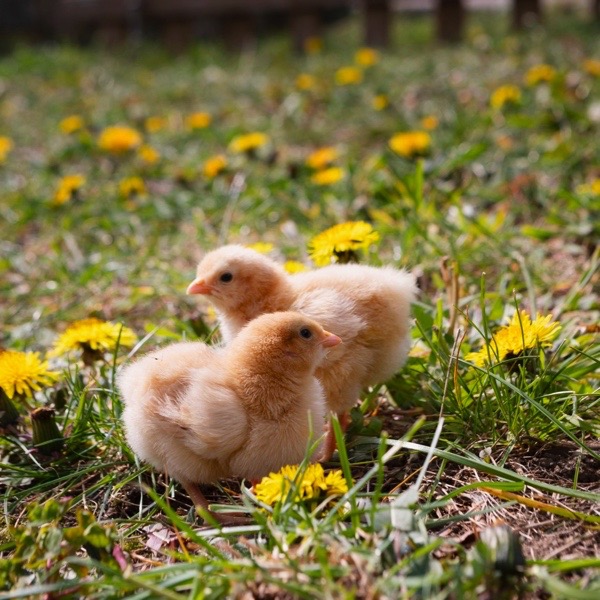
March

April
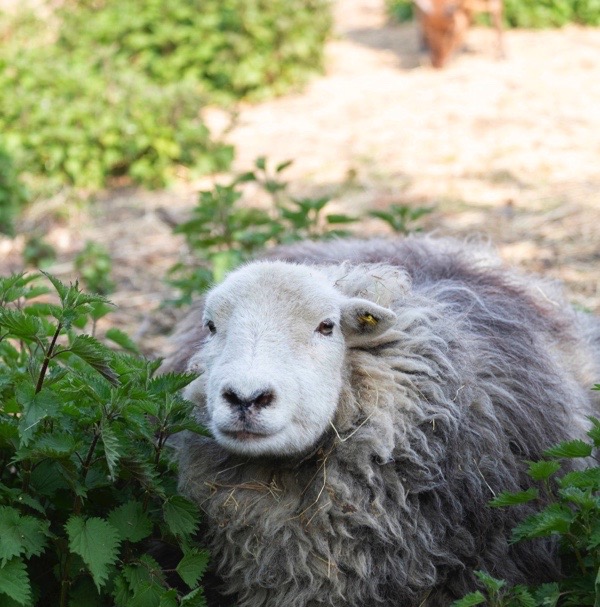
May
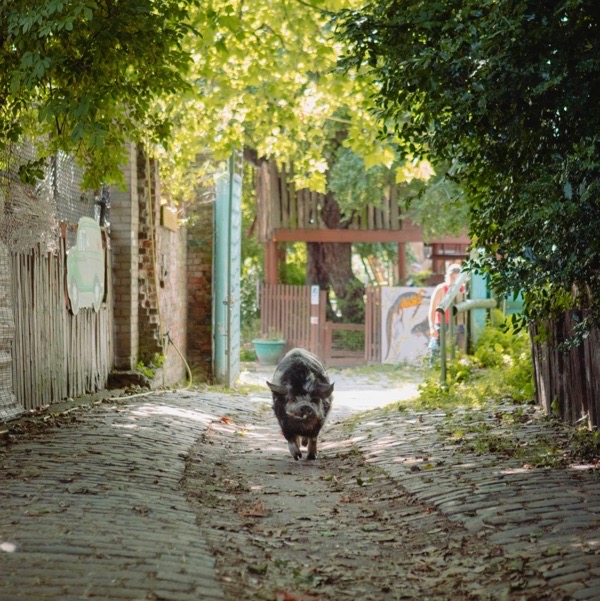
June
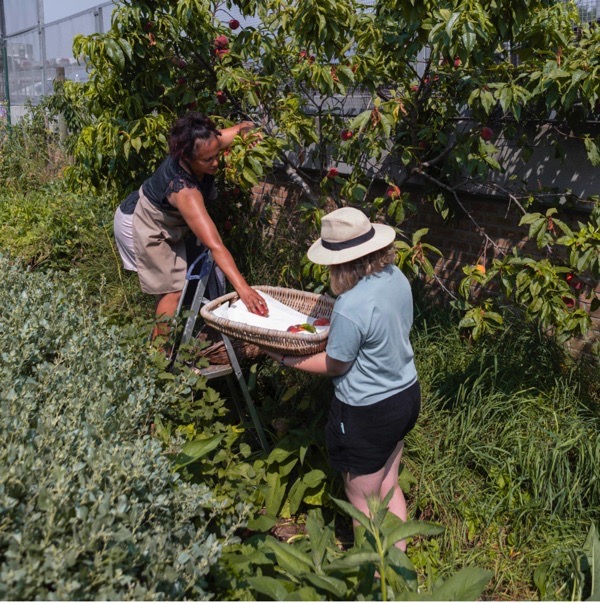
July
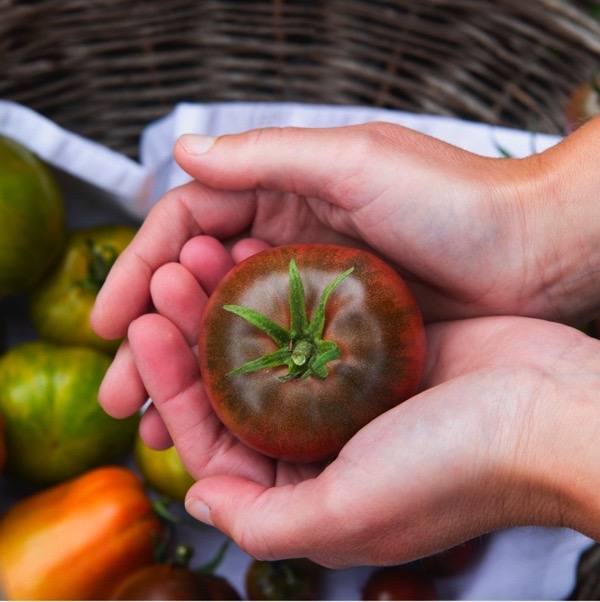
August
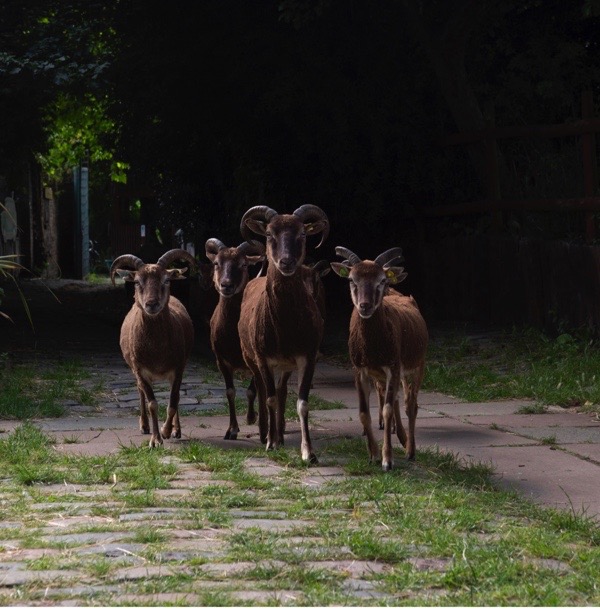
September

October
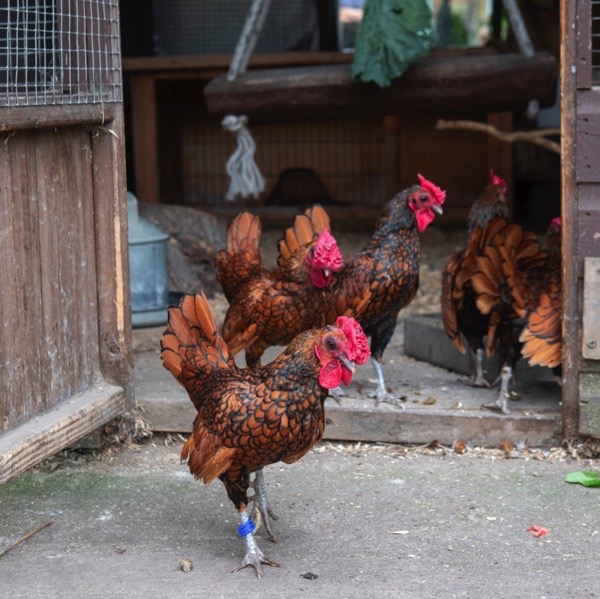
November
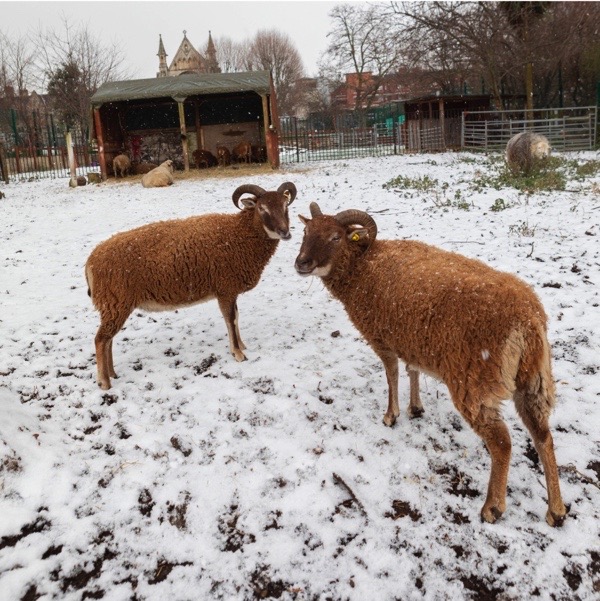
December
Photographs copyright © Rachel Ferriman
Retailers can order wholesale copies direct from q@newmans-stationery.co.uk
You may also like to take a look at
Winter At Spitalfields City Farm
David Garrick In Aldgate
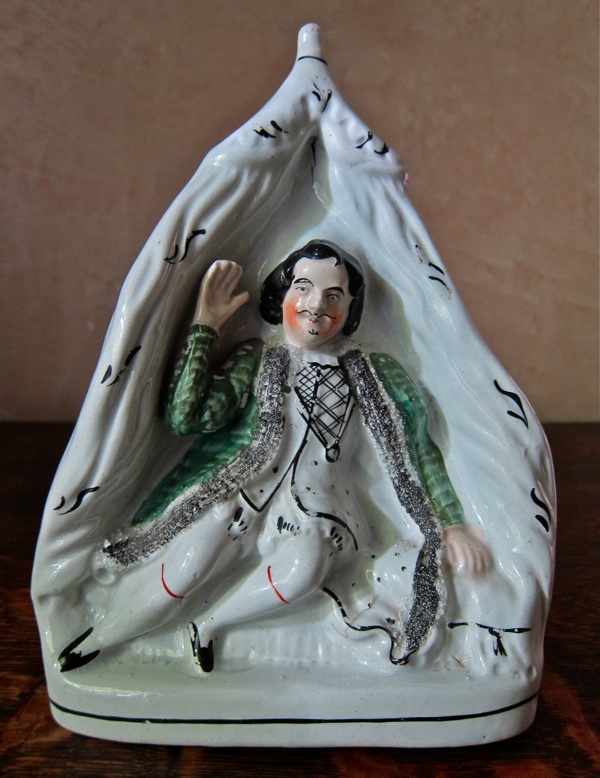
“Have mercy, Heaven” – David Garrick as Richard III
This nineteenth century Staffordshire figure upon my dresser illustrates a pivotal moment in British theatre, when David Garrick made his debut aged twenty-four as Richard III at Goodman’s Fields Theatre in Aldgate on Monday 19th October 1741. Based upon William Hogarth’s painting, it shows Garrick in the momentous scene on the night before the battle of Bosworth Field when those Richard has killed appear to him in a dream foretelling his death and defeat next day.
The equivocal nature of the image fascinates me, simultaneously incarnating the startling ascendancy of David Garrick, a new force in the British theatre who was to end up enshrined in Westminster Abbey, and the sudden descent of Richard III, a spent force in British monarchy who ended up buried in a car park in Leicester. You can interpret the gesture of Garrick’s right hand as attention seeking, inviting you to “Look at my acting” or, equally, it can be Richard’s defensive move, snatching at the air with fingers stretched out in horror. It is, perhaps, both at once. Yet my interest is in Garrick and how he became an overnight sensation, introducing a more naturalistic acting style to the London stage and leading the Shakespearean revival in the eighteenth century. And it all started here in the East End, just a mile south of Shakespeare’s first theatre up the road in Shoreditch.
Garrick’s family were Huguenots. His grandparents fled to London in 1685 and David was born in 1717 as the third of five children while his father Captain Garrick was travelling the country with a recruiting party. Suitably enough, at the age of eleven, David played the part of Kite in George Farquhar’s The Recruiting Officer. Then, in 1737, since there was no money to pay for university, David and his literary classmate Samuel Johnson left their school in Lichfield to walk to London and seek their fortunes. But the sudden death of Captain Garrick within a month delivered an unexpected legacy that permitted David to set up a wine business in the Strand with his brother Peter.
In that same year, the Licensing Act closed all the playhouses in London except Drury Lane and Covent Garden, yet the management of the unlicenced Goodman’s Fields Theatre managed to get a dispensation to present concerts. Far enough east to avoid the eye of the Lord Chamberlain, they bent the rules with posters declaring concerts – even if the performances they advertised were actually plays. Thus Richard III is advertised as a “A concert of vocal and instrumental music” at “the late theatre in Goodman’s Fields.” David Garrick’s name as the leading actor is not given, he is merely referred to as “A GENTLEMAN (Who never appeared on any stage)” – a common practice at this theatre.
Next day, the London Post & General Advertiser reported that Garrick’s “Reception was most extraordinary and the greatest that was ever known upon such an occasion.” And he wrote to his brother Peter immediately, quitting the wine business,“Last night, I play’d Richard ye Third, to ye Surprize of Every Body & as I shall make near £300 p Annum by It & as it is really what I doat upon I am resolv’d to pursue it.”
Garrick continued playing Richard throughout his career, essaying the role as many as ninety times, and this account written years later for The Gentlemen’s Magazine may give us some notion of his performance. “His soliloquy in the tent scene discovered the inward man. Everything he described was almost reality, the spectator thought he heard the hum of either army from camp to camp. When he started from his dream, he was a spectacle of horror. He called out in a manly tone, ‘Give me another horse.’ He paused, and, with a countenance of dismay, advanced, crying out in a tone of distress, ‘Bind up my wounds,’ and then falling on his knees, said in a most piteous voice, ‘Have mercy, Heaven.’ In all this, the audience saw the exact imitation of nature.”
By 27th November 1741, Garrick’s performance had turned into a phenomenon which all of London had to see, as The London Daily Post described, “Last night there was a great number of Persons of Quality and Distinction at the Theatre in Goodman’s Fields to see the Play of Richard the Third who express’d the highest Satisfaction at the whole Performance, several hundred Persons were obliged to return for want of room, the house being full soon after Five o’Clock.”
Yet the success that Garrick brought to the Goodman’s Fields drew attention to the unlicensed theatre – forcing its closure within six months by the authorities, encouraged by the managements of Drury Lane and Covent Garden who were losing custom to their East End rival. Meanwhile, Garrick considered his options and, after a triumphant summer season in Dublin, he walked onto the stage of Drury Lane as an actor for the first time on October 5th 1742 and he had found his spiritual home.
The myth of Garrick as the gentleman who stepped onto the stage, drawn magnetically by his powerful talent and declared a genius of theatre upon his first appearance, concealed a more complicated truth. In fact, Garrick had taken his first professional speaking role on the stage that summer in Ipswich, appearing under the name Lyddall. His own play, Lethe or Aesop in the Shades, had been produced at Drury Lane the year before. And, having played Harlequin in an amateur performance in the room above St John’s Gate in Clerkenwell, he took over at Goodman’s Fields Theatre one night when the actor performing the role became sick. So Richard III was far from Garrick’s first time in front of an audience, although it was the moment he chose to declare his talent, and it is likely that he made significant preparation.
Whenever I look at my Staffordshire figure of Garrick, whether he appears to be waving joyfully or reaching out in despair at the universe is an unfailing indicator of my state of mind. Ironically, Garrick’s monument in Westminster Abbey follows a similar design with a tent rising to a central apex, surrounding an effigy of the great actor making his final curtain call, yet here the proud gesture is entirely unambiguous, he’s saying “Look at me!”
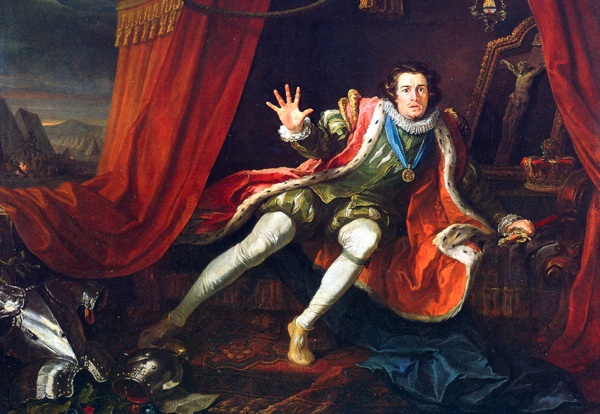
William Hogarth’s painting of David Garrick as Richard III, 1745.
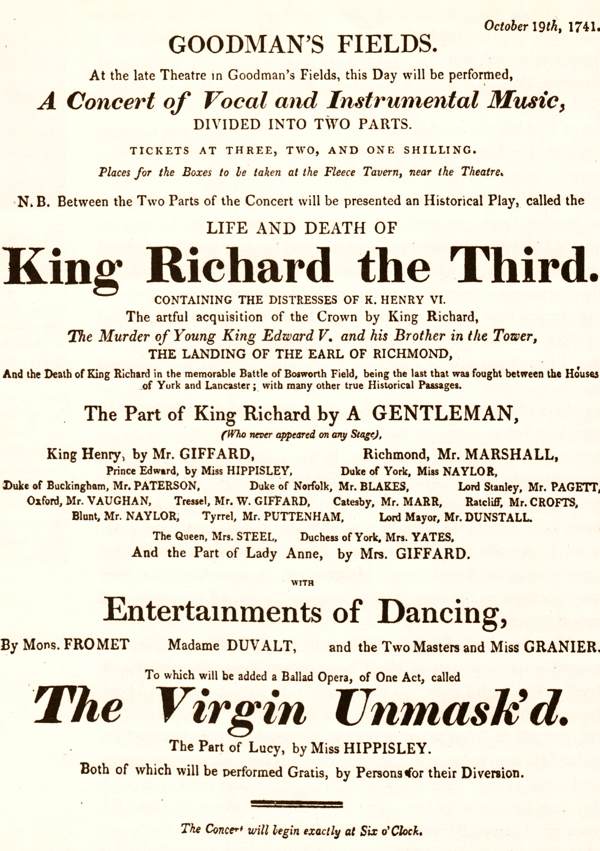
The playbill for David Garrick’s debut at Goodman’s Fields Theatre.
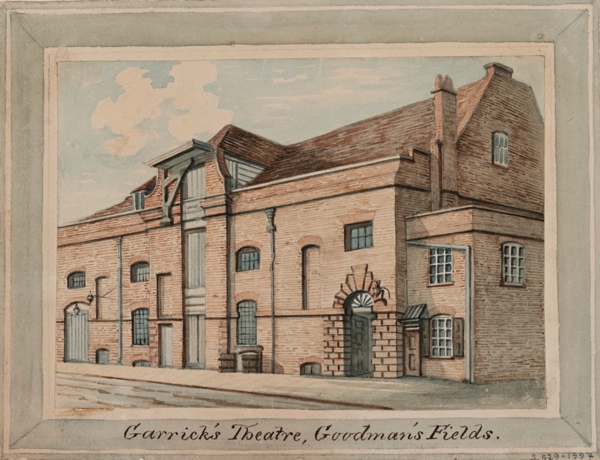
The Goodman’s Fields Theatre, Ayliffe St.
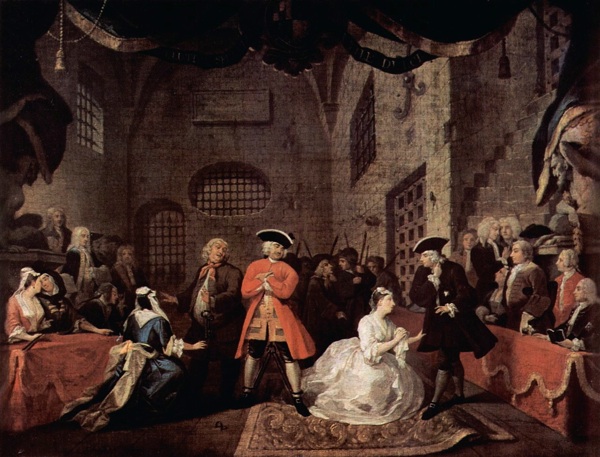
William Hogarth’s painting of The Beggar’s Opera by John Gay, performed as the closing production at Goodman’s Fields Theatre on May 27th 1742.
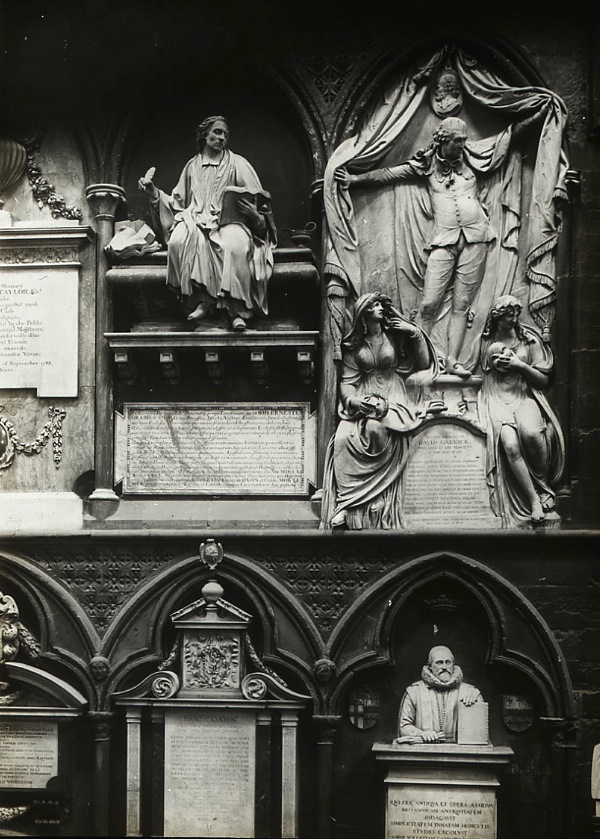
David Garrick’s monument in Westminster Abbey is to be seen on the top right of this glass slide.
Watercolour of Goodman’s Fields Theatre copyright © Victoria & Albert Museum
Glass slide of Garrick’s monument courtesy Bishopsgate Institute
You may also like to read about
David Carpenter, Ocularist
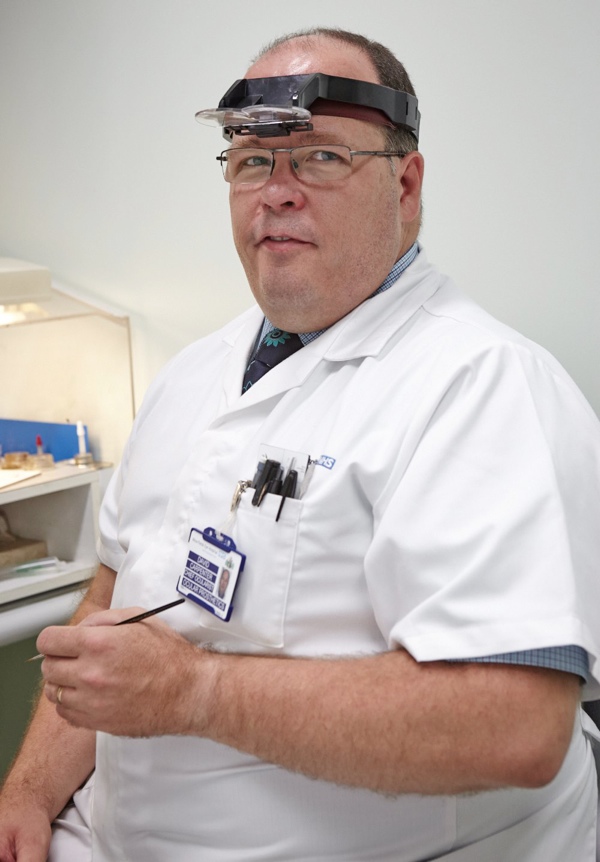
David Carpenter
In the nineteenth century, artificial eyes were sometimes made of lead-based glass, so if the owner were to walk in extreme cold temperatures and then enter a warm room with a blazing fire, there was always a danger their eye might explode – a risk that, thankfully, has been overcome these days through the prudent use of crystallite rather than glass.
This was just one of many memorable pieces of information upon the esoteric subject of glass eyes that I garnered when Contributing Photographer Patricia Niven & I visited David Carpenter, Chief Ocularist, at the Moorfields Eye Hospital in the City Rd. David and his team of four produce more than thirteen hundred eyes annually – each one hand-crafted and individually-painted – to replace those that get lost in the capital.
It may sound like an awful lot of eyes but David and his colleagues are so skilful that, if you were not looking for it, you would not notice the results of their handiwork. Such is their success in creating life-like eyes – David assured me – that you probably know people with artificial eyes but you do not even realise.
Yet there is far more to the work of an ocularist is than just technical expertise. “If people have to have an eye removed because they’ve had a tumour or a cancer, it’s akin to losing a limb,” David admitted to me quietly, “They put their life on hold – then, after surgery and the healing process, they come to me and I make the prosthetics. You give them an eye, but really you are giving them their life back. It can be a great moment when you give them their glass eye – often, they cry with joy and, sometimes, they give you a hug.”
As one who has wrought such transformations for the better in so many people’s lives – simultaneously a technician, an artist and a counsellor – David certainly carries his role lightly. “I make little model tanks, I made them as a kid and I’ve never stopped,” he confessed with a blush, revealing the early manifestation of his distinctive talent, “and when I applied for this job, I was able to show them to prove I could do modelling.”
“Let me get out my box of bits to show you,” David suggested enthusiastically, pulling a container from a cabinet that looked it might contain a sponge cake, only it actually contained a selection of glass eyes and pieces of rubber prosthetics attached to spectacles.
Glass eyes are not round like marbles – as I had naively assumed – but curved like sea shells, so they fit neatly under the lid and can move in tandem with their living partner. David makes a cast to ensure that the eye fits its owner perfectly and then paints the pupil with the patient in front of him, using his expert judgement to match it exactly. “An eye is more than just one colour, you’ll need to use two or three colours to get the effect you want,” he informed me, “You start with a little black disc and you paint lines outwards from the centre and these striations of different tones blend to create the colour of the pupil. In the States, they have tried to do this digitally but the effect is flat whereas building up the layers of paint creates a more three dimensional effect.” Then David pointed out how unravelled strands of red embroidery thread are used to create the impression of veins upon the white of the eye and grinned with pleasure as he studied the convincingly life-like result.
It was surreal to stand in the workroom surrounded by lone eyes of every hue peering at us, yet this was David’s normal environment and the place where he is at home. “I just fell into it really,” he informed me with shrug and a gauche smile, picking up an eye and polishing it tenderly with his finger, “I was training as a dental technician, making teeth at a college in Hastings – because I planned to emigrate to Australia and work in dentistry – when I saw an advert for an apprenticeship on ocularistry. Once you have trained as a dental technician, the next step is to become maxillofacial technician – I can make noses, ears, fingers – in fact, any part of the body that might get accidentally severed.”
“I can’t make arms and legs though, there are other people who do that,” he qualified modestly, acknowledging his own limitations, “but I can reconstruct any part of the face that is missing including the eye.” And then he picked up the pairs of spectacles with realistic parts of facial anatomy, noses and eyebrows, attached and proudly explained they were particularly useful for older people who might otherwise mislay their replacement facial features.
“I’ve worked here for sixteen and a half years,” he said, turning contemplative suddenly and speaking as if to himself, “I’ve got patients that I first saw when they were little babies who are now grown up and still come back to see me – there’s some that are almost friends.”
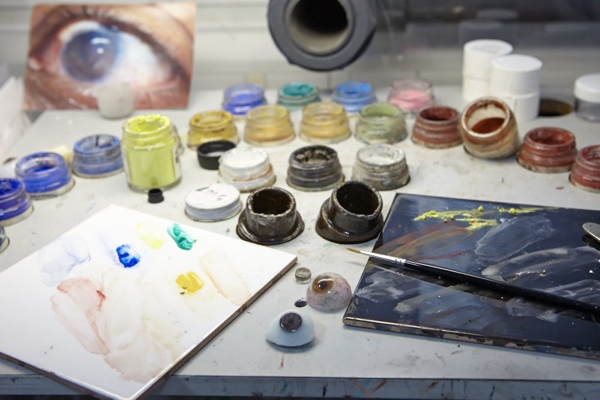
Painting artificial eyes
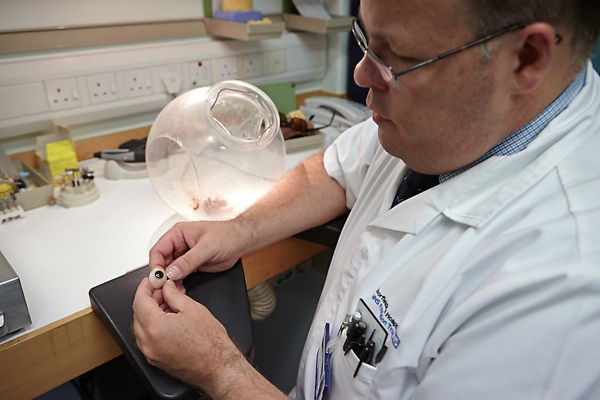
David scrutinises his handiwork critically
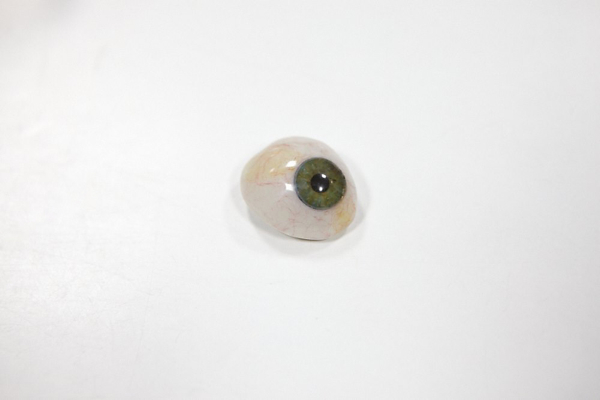
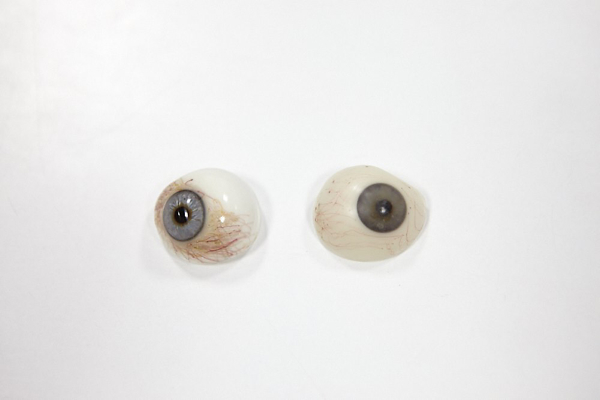
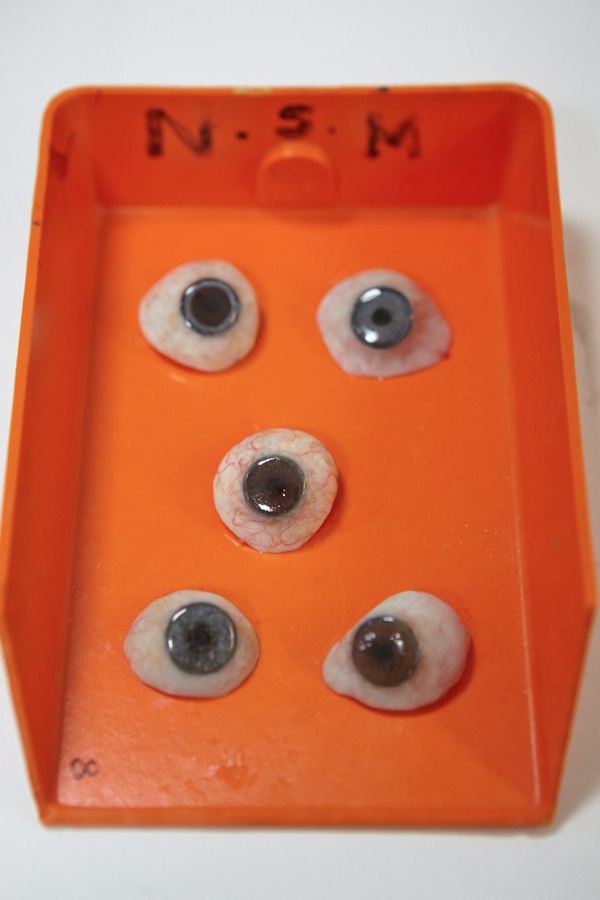
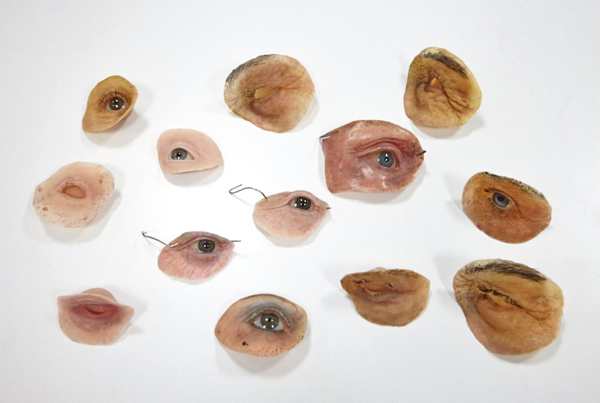
A selection of prosthetic eyes
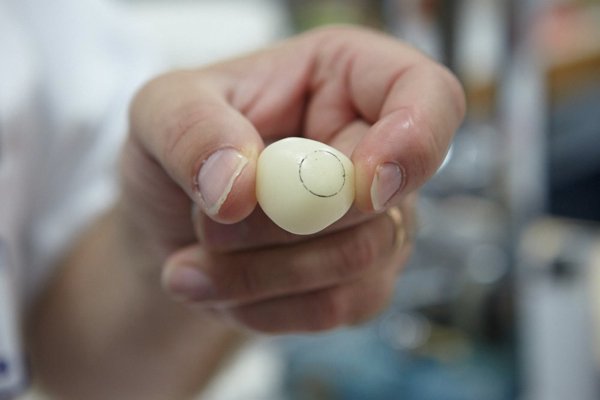
The white of the eye before the pupil is attached
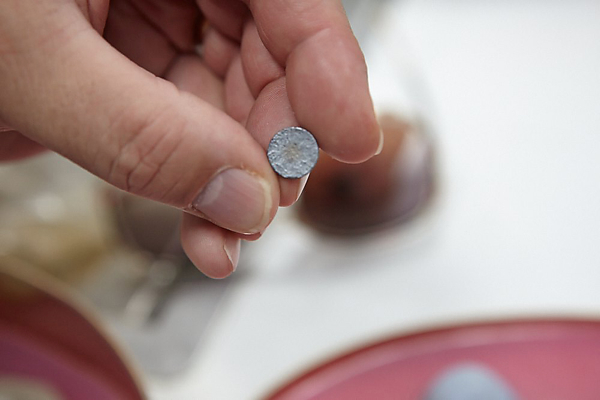
A pupil before painting
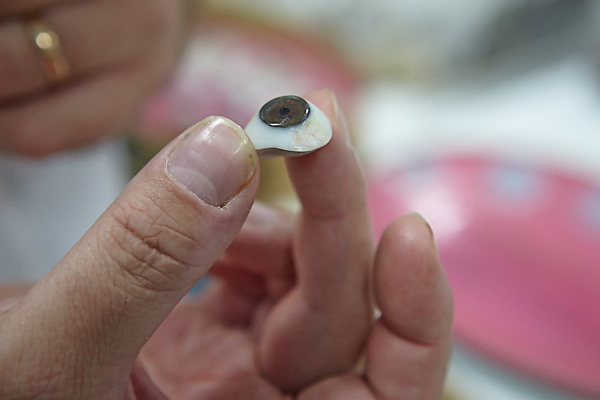
The pupil in place
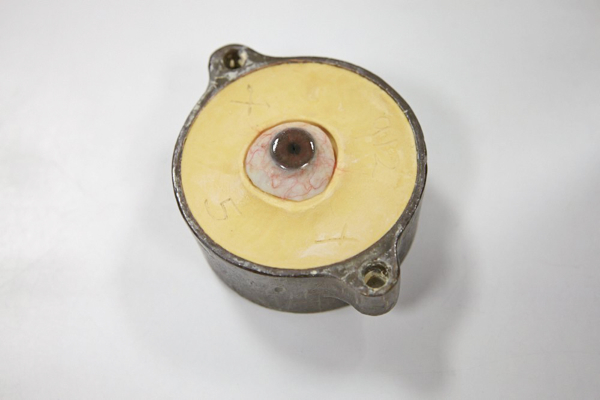
The finished eye emerging from the mould
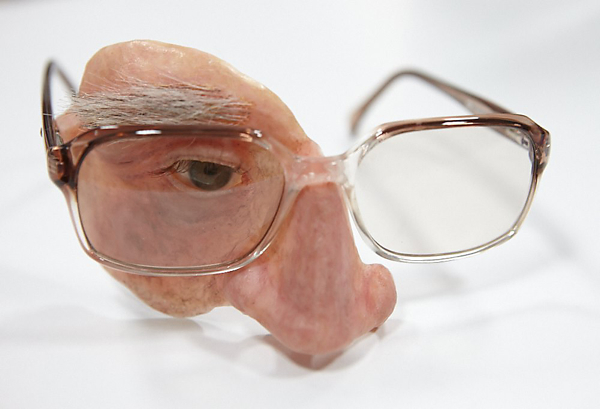
Prosthetic attached to a spectacle frame
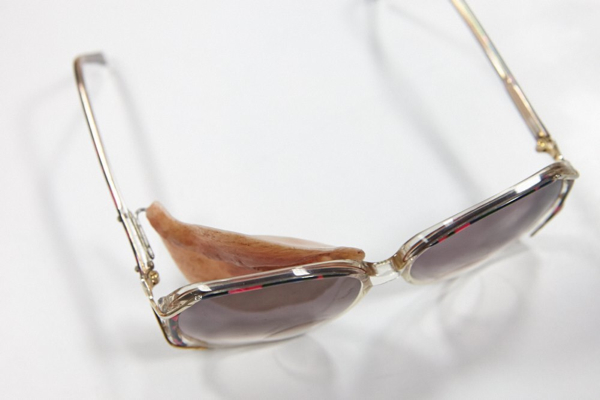
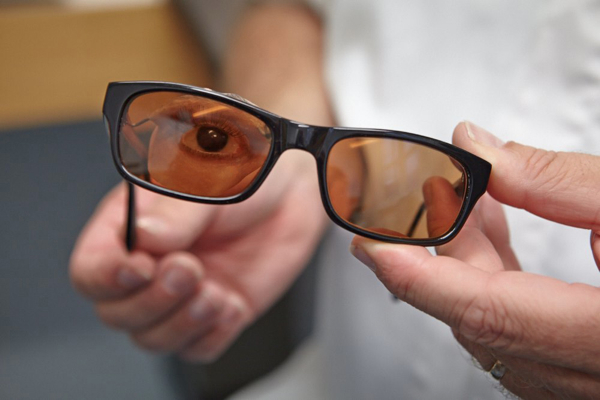
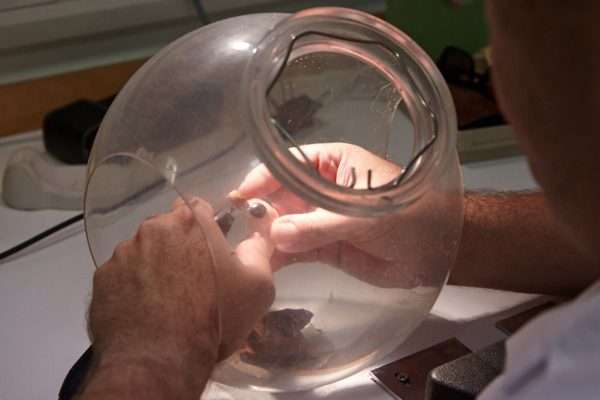
Polishing the eye

David Carpenter, Chief Ocularist at the London Eye Hospital
Photographs copyright © Patricia Niven
You might also like to read about
The Bread, Cake & Biscuit Walk

This biscuit was sent home in the mail during World War I
As regular readers will already know, I have a passion for all the good things that come from the bakery. So I decided to take advantage of the fine afternoon last week to take a walk through the City of London in search of some historic bakery products to feed my obsession, and thereby extend my appreciation of the poetry and significance of this sometimes undervalued area of human endeavour.
Leaving Spitalfields, I turned left and walked straight down Bishopsgate to the river, passing Pudding Lane where the Fire of London started at the King’s Bakery, reminding me that a bakery was instrumental in the very creation of the City we know today.
My destination was the noble church of St Magnus the Martyr, which boasts London’s stalest loaves of bread. Stored upon high shelves beyond the reach of vermin, beside the West door, these loaves were once placed here each Saturday for the sustenance of the poor and distributed after the service on Sunday morning. Although in the forgiving gloom of the porch it is not immediately apparent, these particular specimens have been there so many years they are now mere emblems of this bygone charitable endeavour. Surpassing any conceivable shelf life, these crusty bloomers are consumed by mould and covered with a thick layer of dust – indigestible in reality, they are metaphors of God’s bounty that would cause any shortsighted, light-fingered passing hobo to gag.
Close by in this appealingly shadowy incense-filled Wren church which was once upon the approach to London Bridge, are the tall black boards tabulating the donors who gave their legacies for bread throughout the centuries, commencing in 1674 with Owen Waller. If you are a connoisseur of the melancholy and the forgotten, this a good place to come on a mid-week afternoon to linger and admire the shrine of St Magnus with his fearsome horned helmet and fully rigged model sailing ship – once you have inspected the bread, of course.
I walked West along the river until I came to St Bride’s Church off Fleet St, as the next destination on my bakery products tour. Another Wren church, this possesses a tiered spire that became the inspiration for the universally familiar wedding cake design in the eighteenth century, after Fleet St baker William Rich created a three-tiered cake based upon the great architect’s design, for his daughter’s marriage. Dedicated today to printers and those who work in the former print trades, this is a church of manifold wonders including the pavement of Roman London in the crypt, an iron anti-resurrectionist coffin of 1820 – and most touching of all, an altar dedicated to journalists killed recently whilst pursuing their work in dangerous places around the globe.
From here, I walked up to St John’s Gate where a biscuit is preserved that was sent home from the trenches in World War I by Henry Charles Barefield. Surrounded by the priceless treasures of the Knights of St John magnificently displayed in the new museum, this old dry biscuit has become an object of universal fascination both for its longevity and its ability to survive the rigours of the mail. Even the Queen wanted to know why the owner had sent his biscuit home in the post, when she came to open the museum. But no-one knows for sure, and this enigma is the source of the power of this surreal biscuit.
Pamela Willis, curator of the collection, speculates it was a comment on the quality of the rations – “Our biscuits are so hard we can send them home in the mail!” Yet while I credit Pamela’s notion, I find the biscuit both humorous and defiant, and I have my own theory of a different nuance. In the midst of the carnage of the Somme, Henry Barefield was lost for words – so he sent a biscuit home in the mail to prove he was still alive and had not lost his sense of humour either.
We do not know if he sent it to his mother or his wife, but I think we can be assured that it was an emotional moment for Mrs Barefield when the biscuit came through her letterbox – to my mind, this an heroic biscuit, a triumphant symbol of the human spirit, that manifests the comfort of modest necessity in the face of the horror of war.
I had a memorable afternoon filled with thoughts of bread, cake and biscuits, and their potential meanings and histories which span all areas of human experience. And unsurprisingly, as I came back through Spitalfields, I found that my walk had left me more than a little hungry. After several hours contemplating baked goods, it was only natural that I should seek out a cake for my tea, and in St John Bread & Wine, to my delight, there was one fresh Eccles Cake left on the plate waiting for me to carry it away.
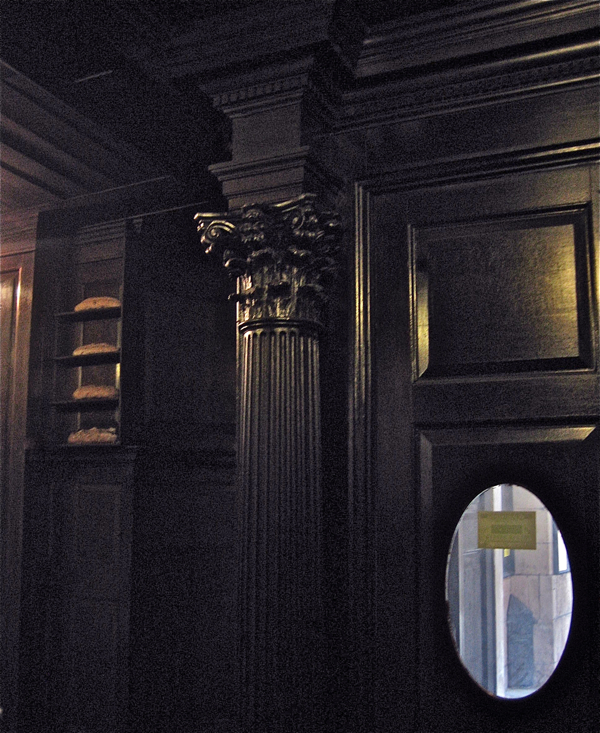
Loaves of bread at St Magnus the Martyr
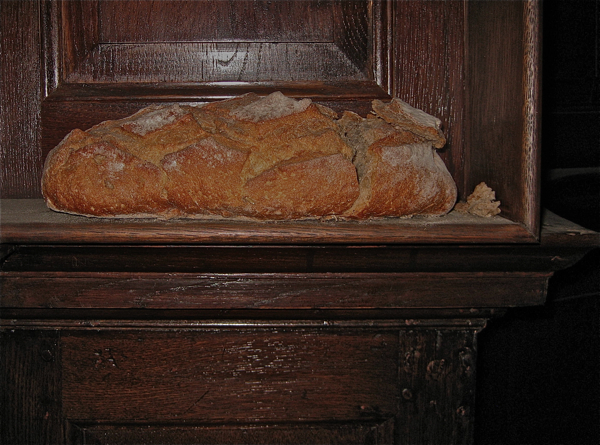
Is this London’s stalest loaf?
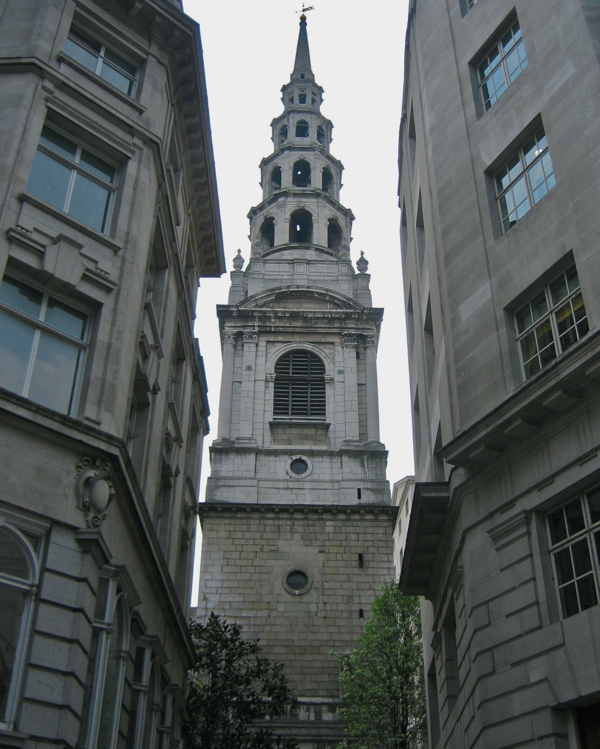
The spire of Wren’s church of St Bride’s which was the inspiration for the tiered design of the wedding cake first baked by Fleet St baker William Rich in the eighteenth century
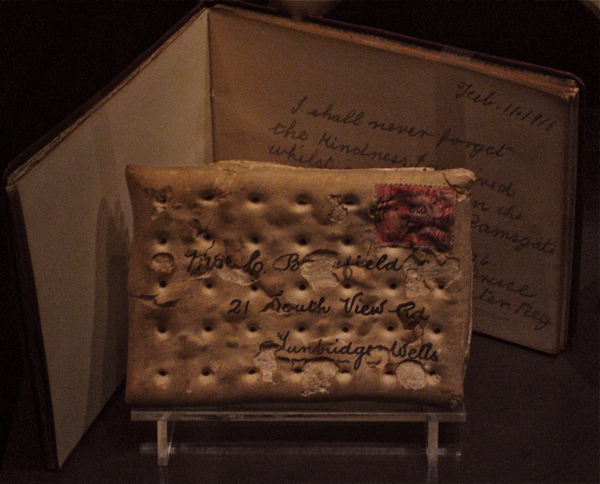
The biscuit in the museum in Clerkenwell
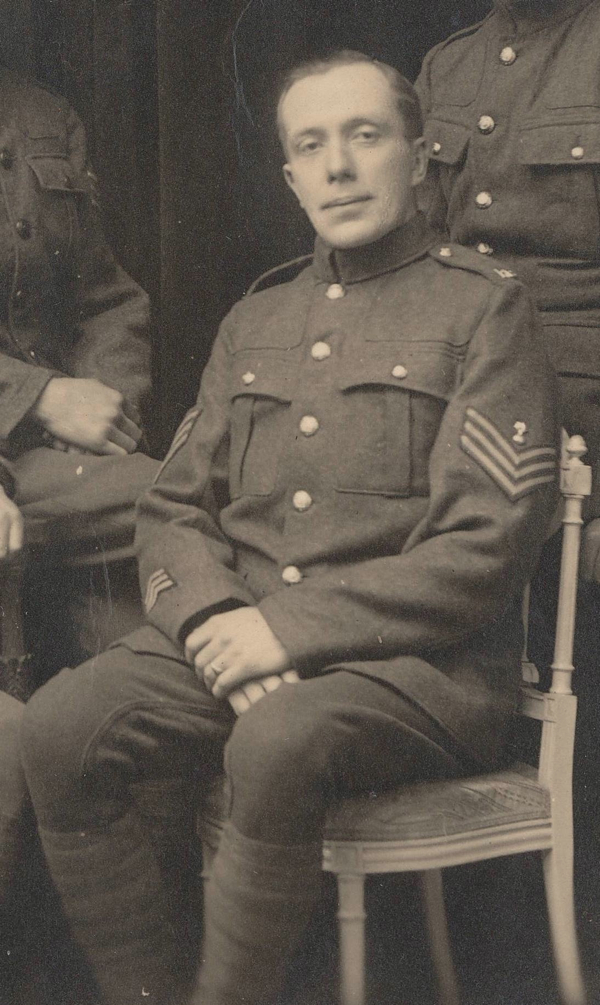
The inscrutable Henry Charles Barefield of Tunbridge Wells who sent his biscuit home in the mail during World War I

The freshly baked Eccles Cake that I ate for my tea
You may like to read these other bakery related stories












