People From Spitalfields’ History
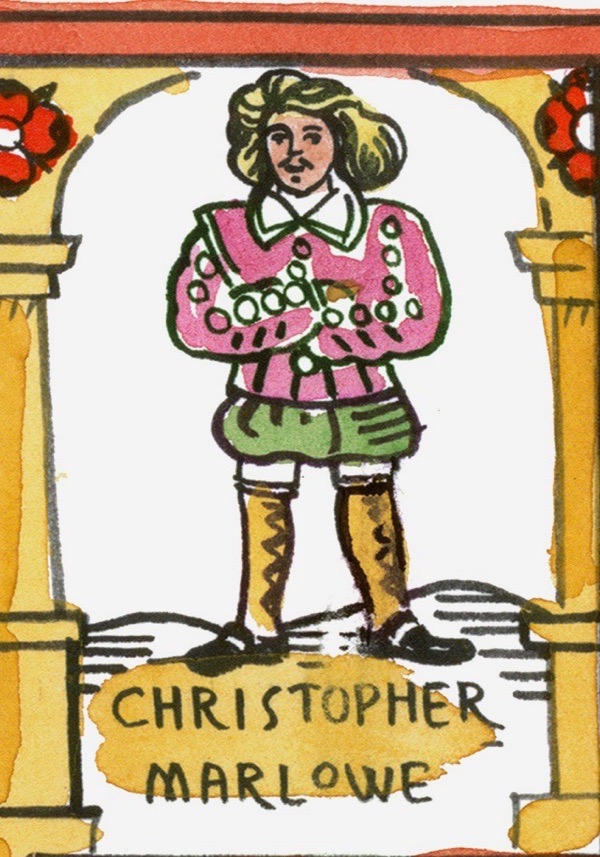
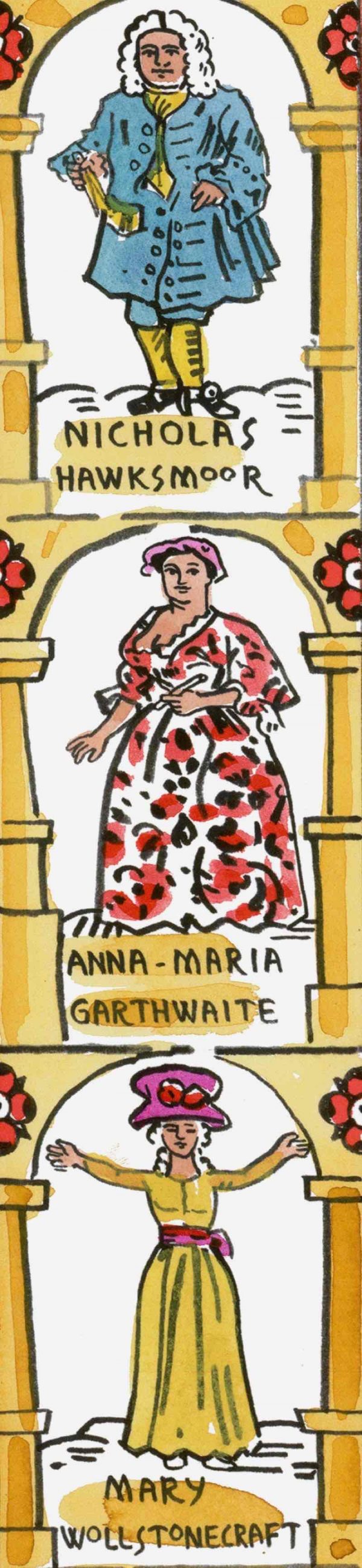
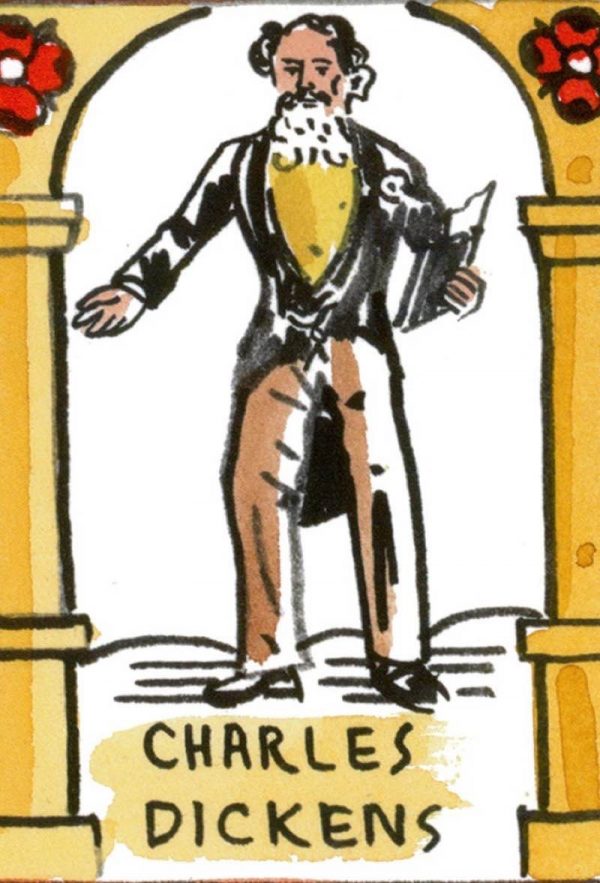
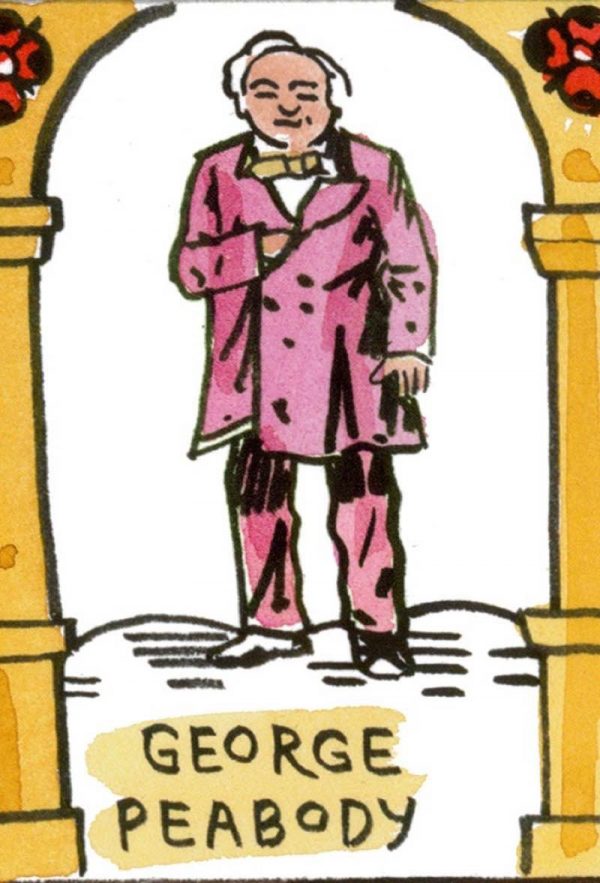
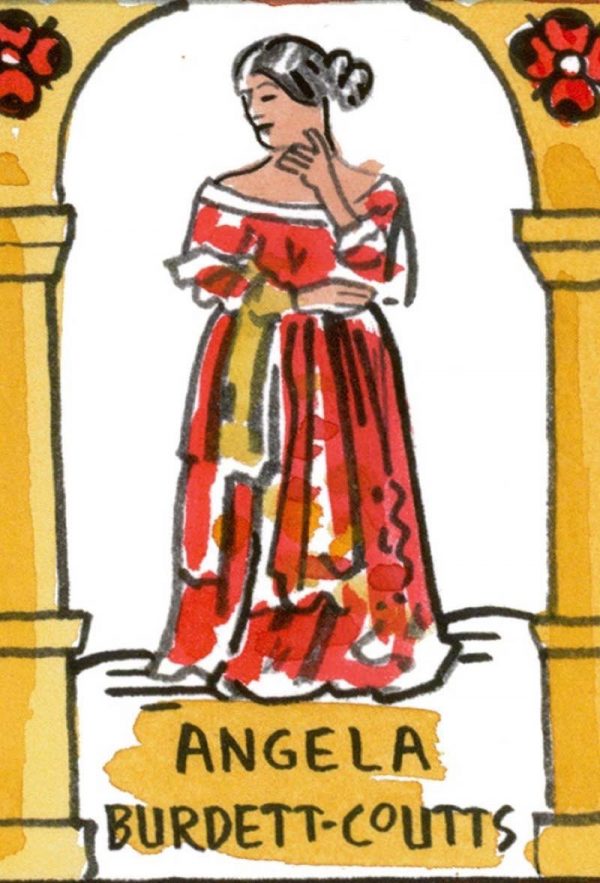
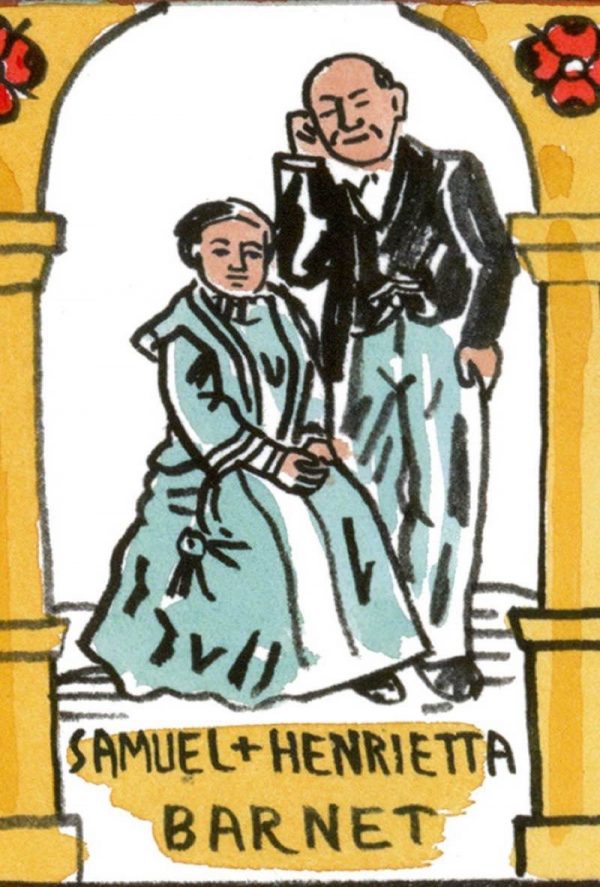
Here are some people from Spitalfields’ history who you may meet upon my tour, as illustrated by Adam Dant upon the border of the map of The Gentle Author’s Tour of Spitalfields
Click here to book tickets for the tour at Easter and through May
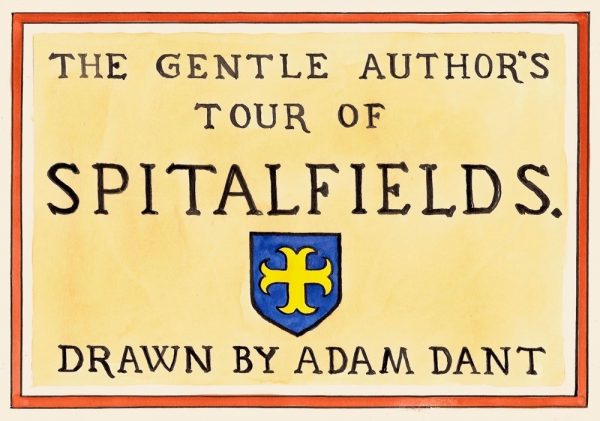
Click here to buy a pocket-sized fold-out copy of the map for £5

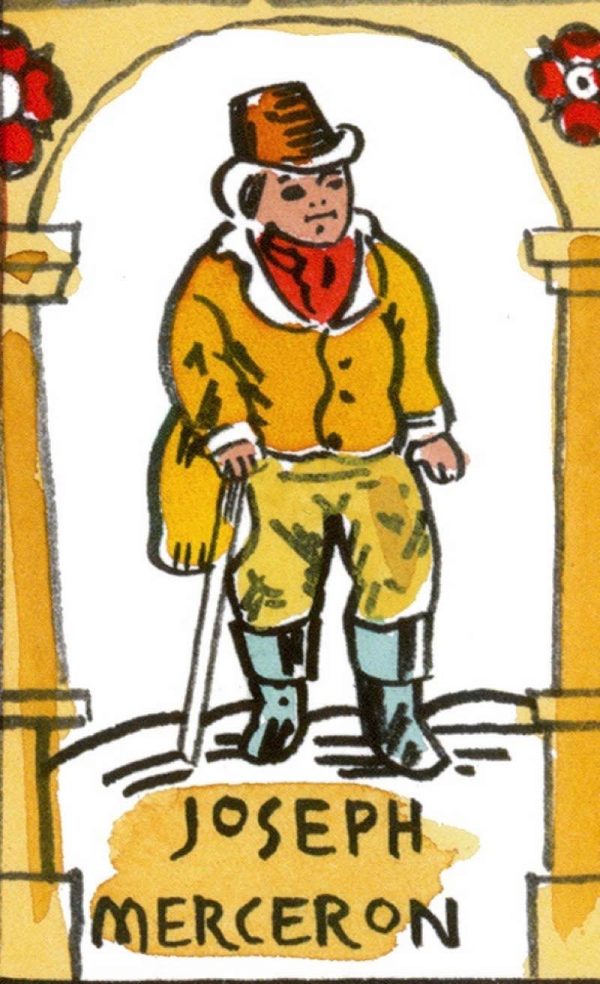
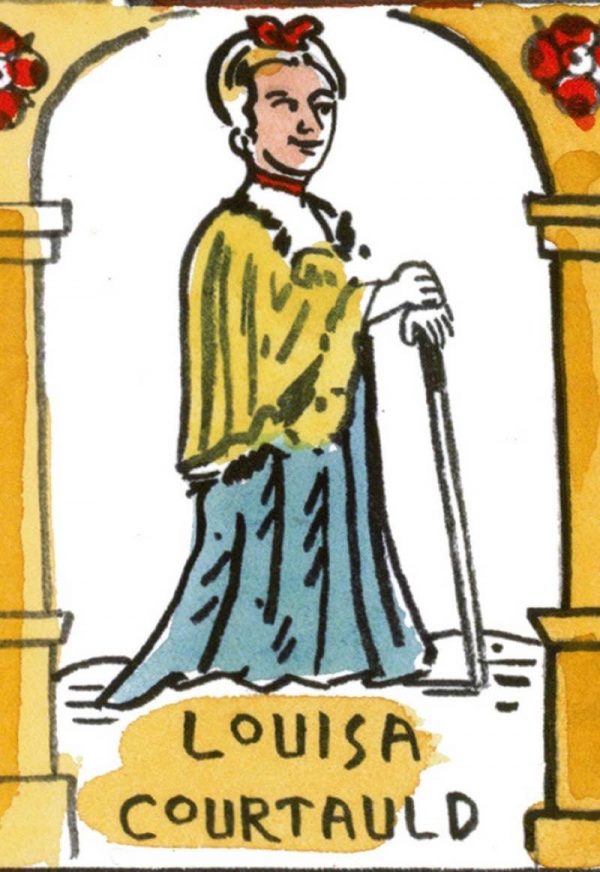
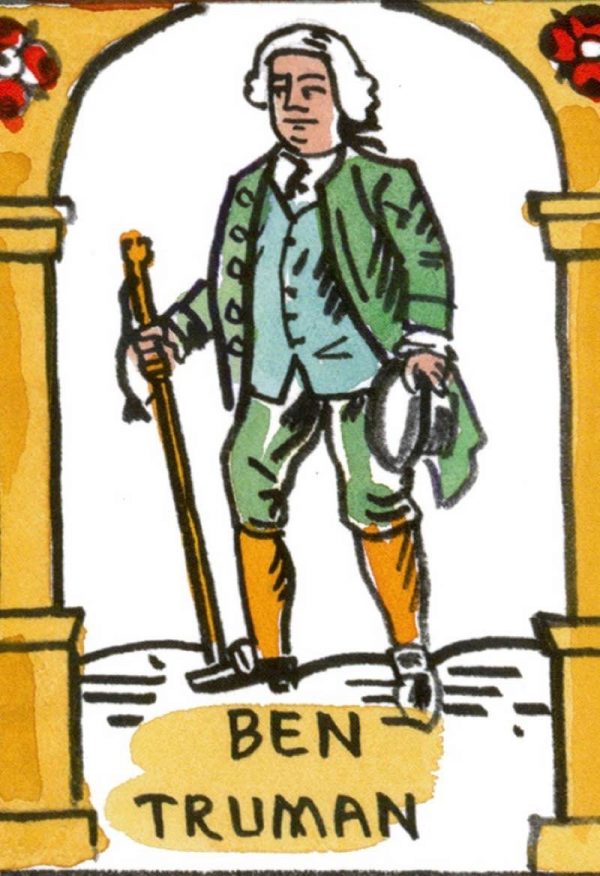
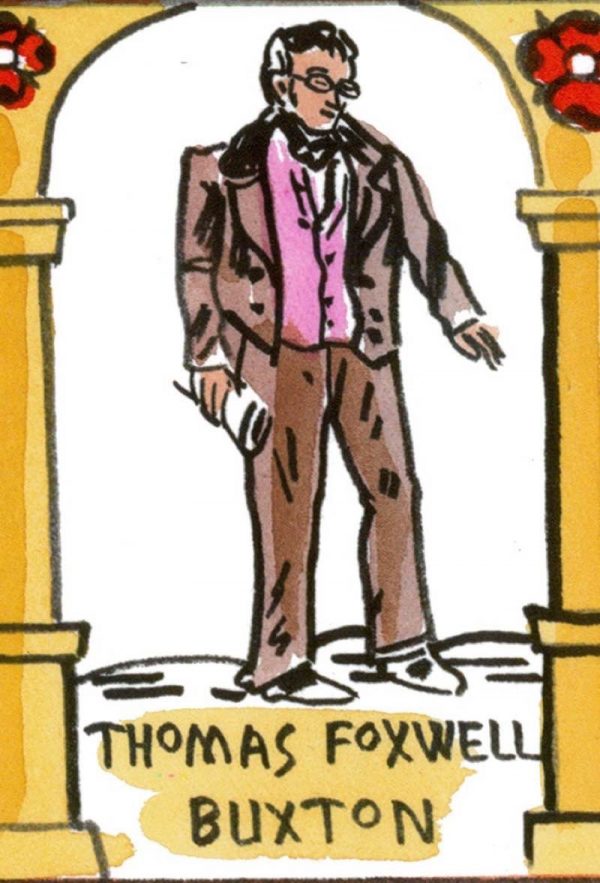
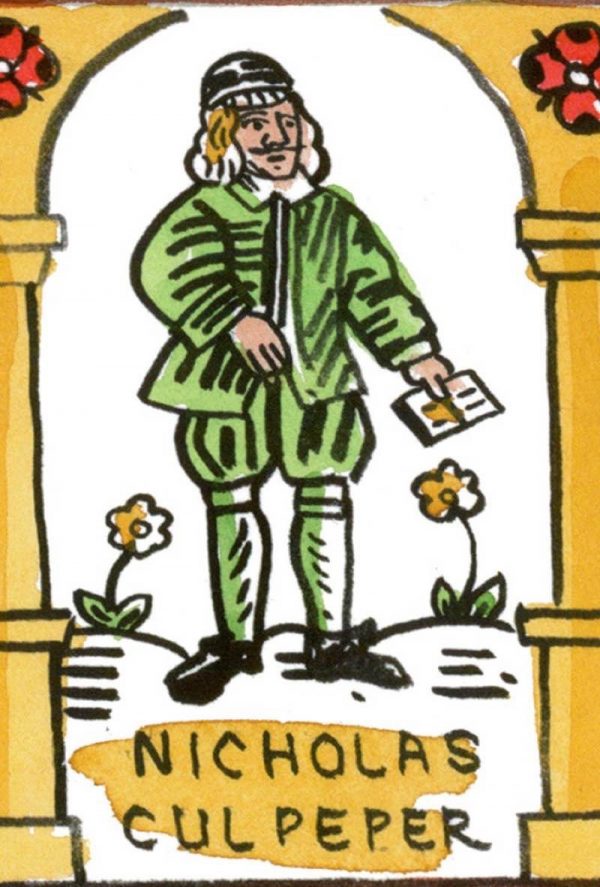
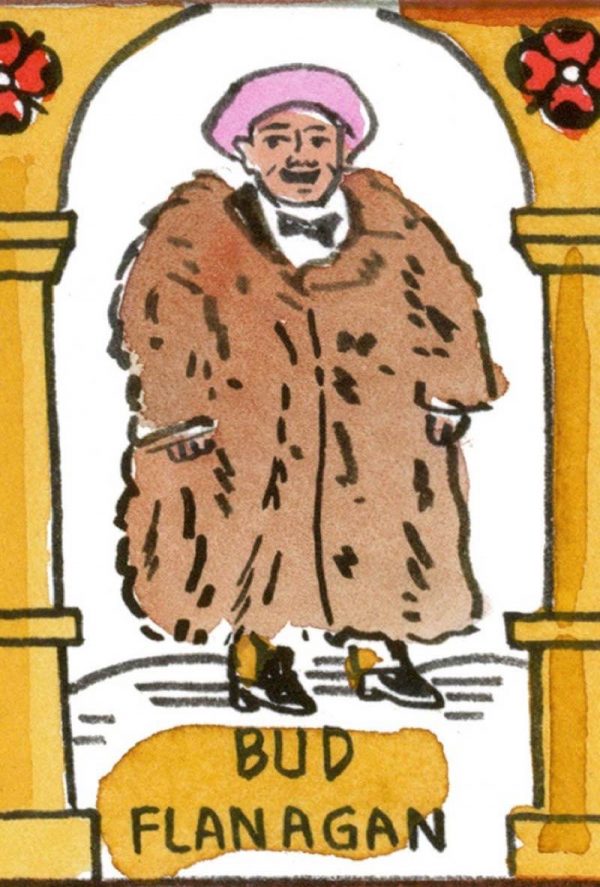
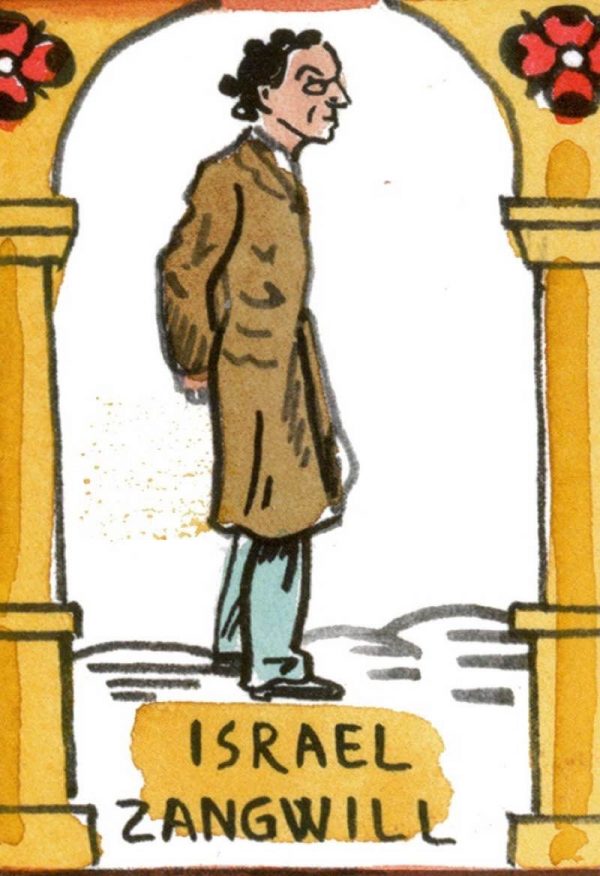
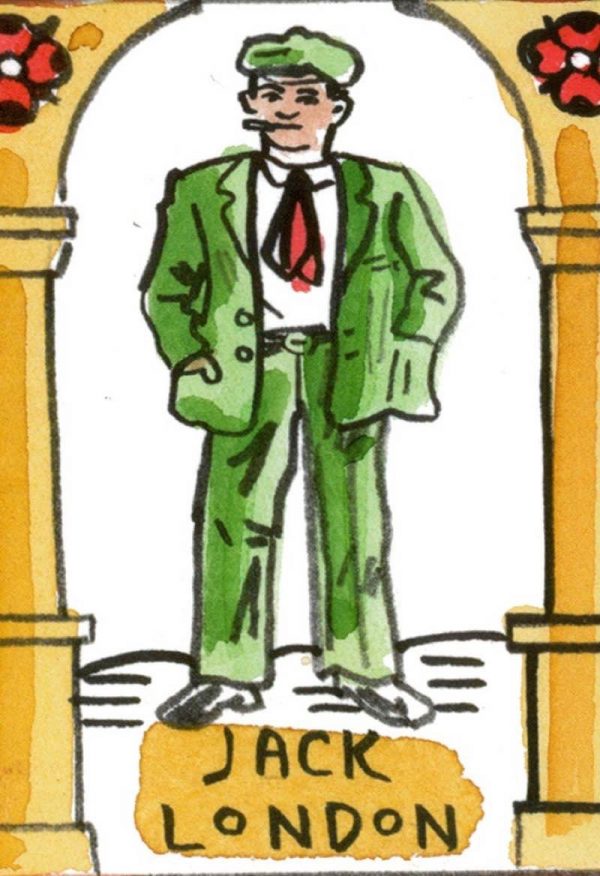
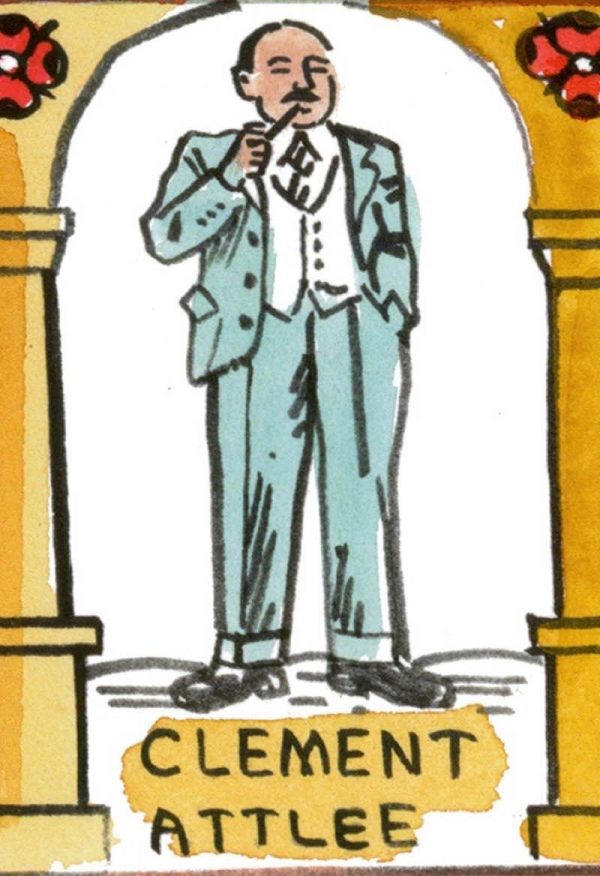
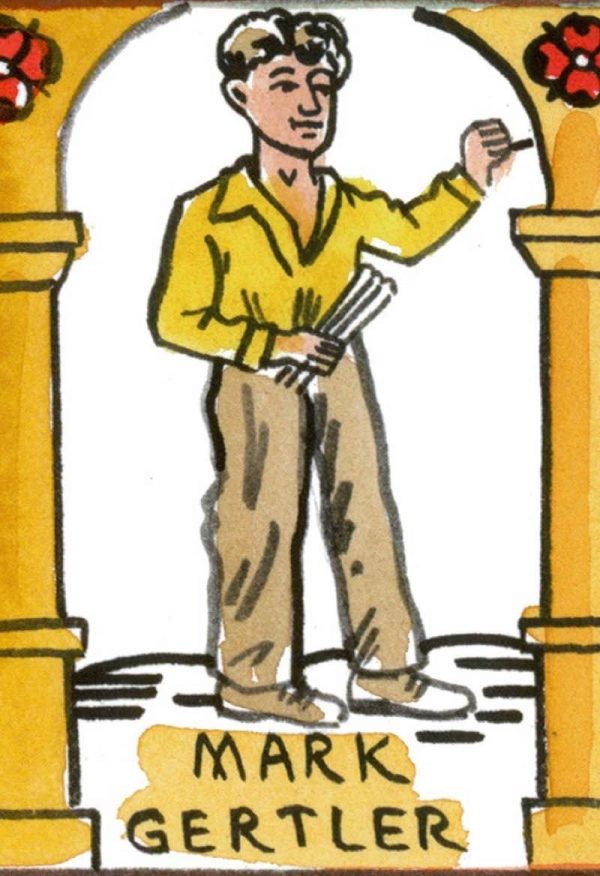
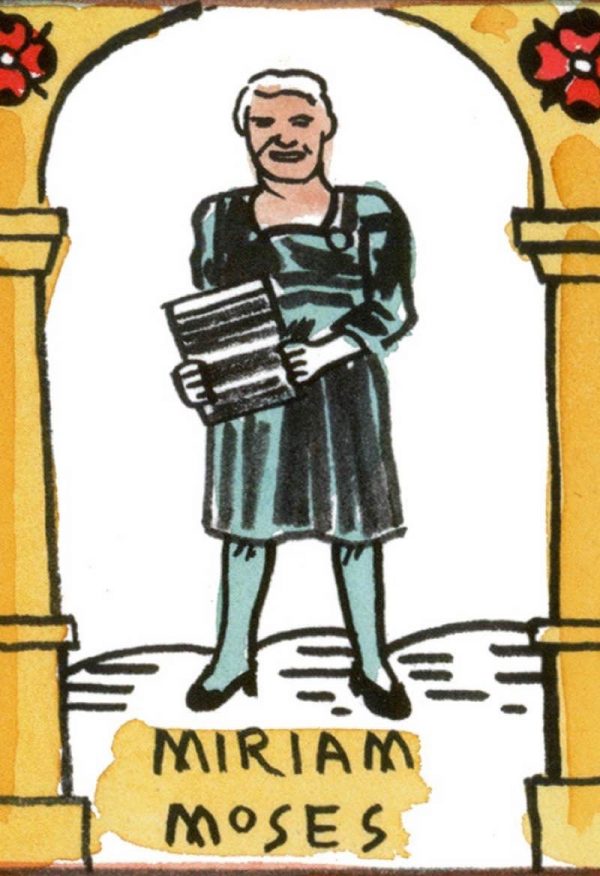
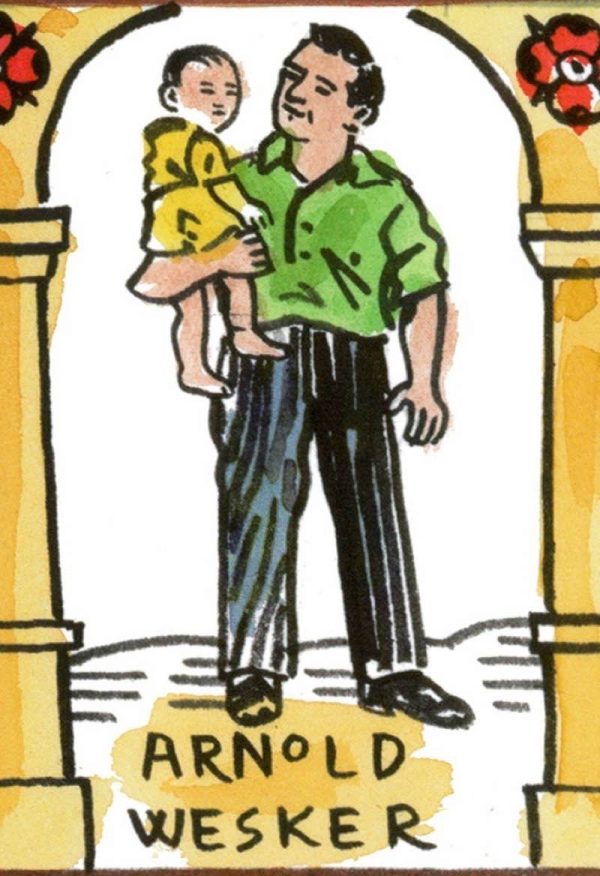
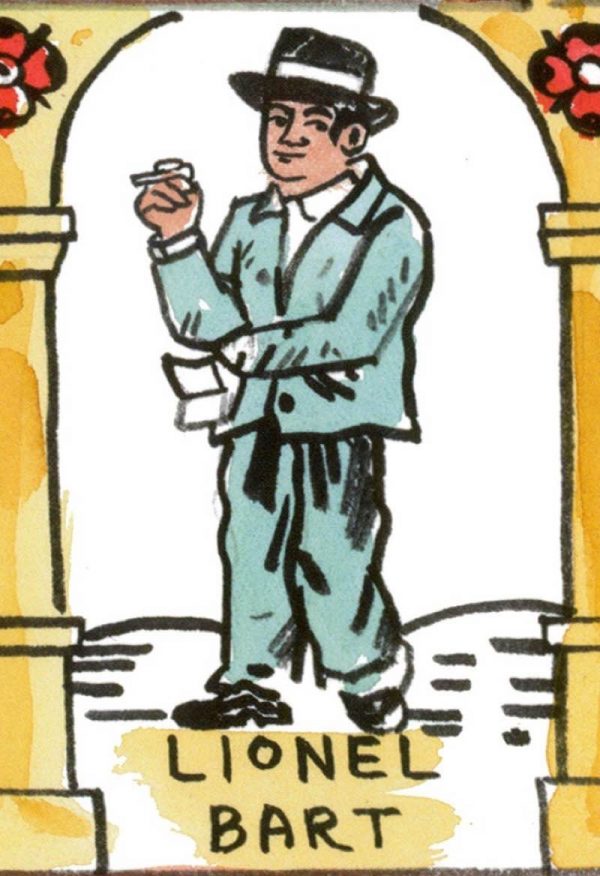

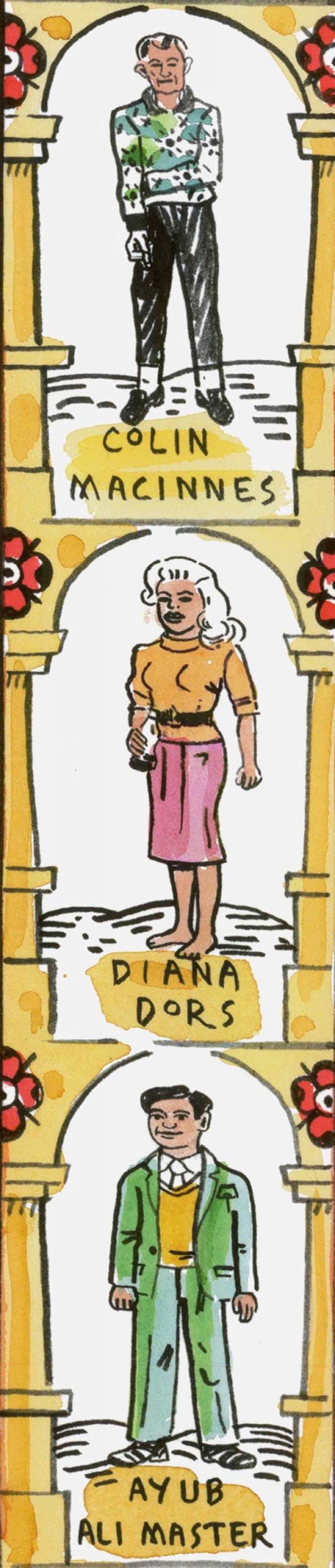
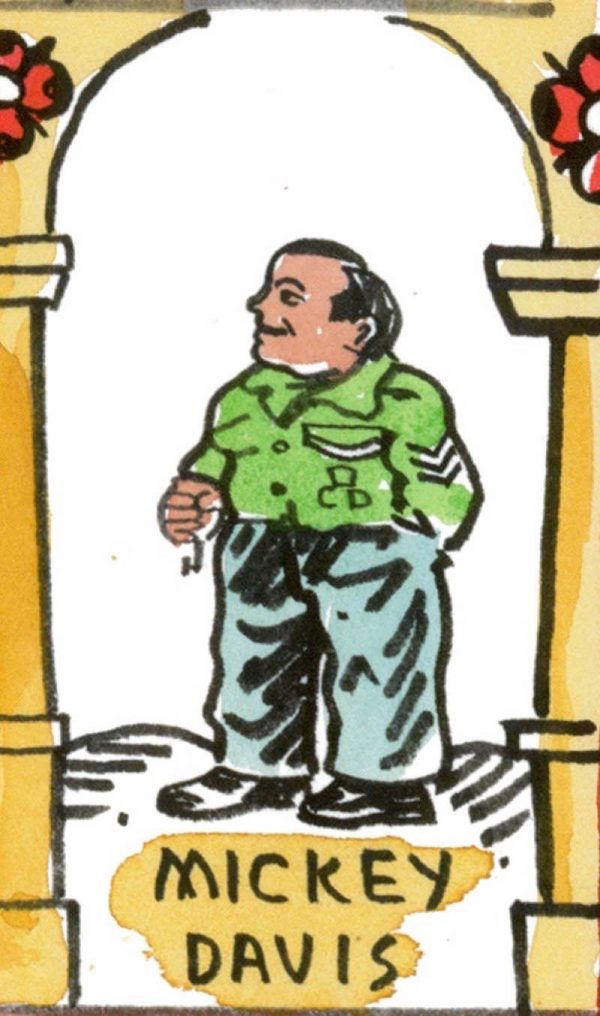
Adam Dant’s fine art prints are available from TAG
At Billingsgate Roman Bathhouse
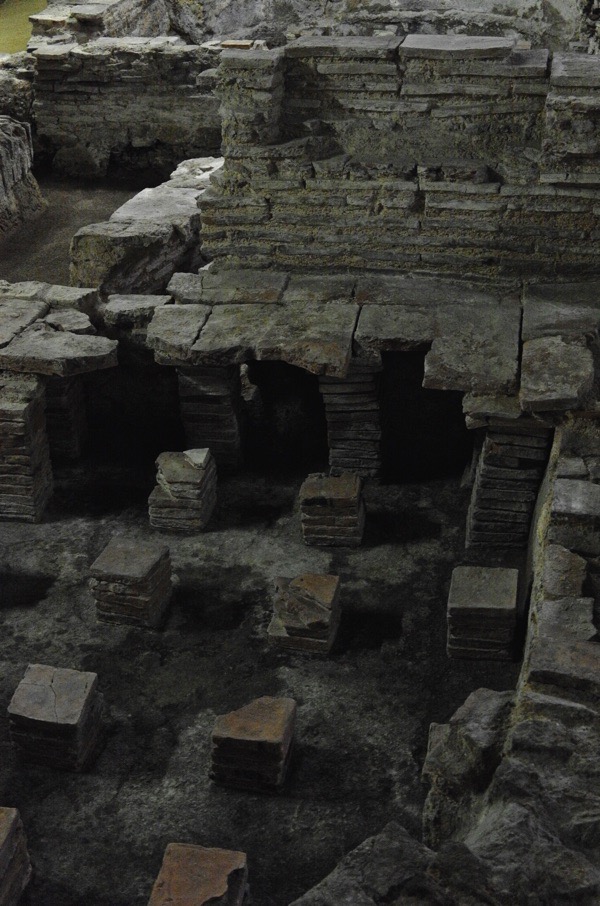
Tepidarium at Billingsgate Roman bathhouse
In Lower Thames St, where the traffic roars past old Billingsgate Market and around the Tower of London, there is an anonymous door that leads to the past. It is a piece of spine-tingling magic. You walk through a modern door into an unremarkable corporate building and descend a staircase to discover the best preserved piece of Roman archaeology in London.
Here is a second century riverside villa with an bathhouse of cruciform shape complete with an elaborate underfloor heating system. You can see the square frigidarium with its tessellated floor and then the smaller rooms with curved walls, the tepidarium and the caldarium, with tiled floors supported upon pilae permitting the hot air to travel underneath. In these rooms, water could be thrown upon the heated floor to create clouds of steam. For those who originated in warmer climes, the bathhouse provided a welcome antidote to the misery of cold winters in London.
The Billingsgate Roman Bathhouse was first uncovered in 1848 during the construction of the London Coal Exchange and drew a response of such wonder that – unlike many other ancient remains discovered in the City in that era – it was preserved. When the Coal Exchange was demolished in the last century for the widening of Lower Thames St, more of the Roman ruins were uncovered before being concealed in the basement of the block where they are housed today.
A century after the bathhouse was constructed, a six metre defensive wall was built along the water front, concealing the river view and blocking out the light. It was then that the bathhouse was expanded within the garden of the villa and perhaps the dwelling changed from a desirable private house to some form of temporary lodging, with the added attraction of a steam bath.
In use until the Romans departed London in the fifth century, the bathhouse then fell into disrepair and collapsed before being covered with a layer of silt, preserving the remains and preventing anyone carrying off the building materials for reuse. Tantalisingly, a Saxon brooch was found on top of the pile of collapsed roof tiles dating from a time when this part of the City of London was uninhabited. Did someone from the nearby Saxon settlements come to explore the Roman ruins one day and slip upon the rubble, dropping a brooch?
When you walk upon the metal gantries over the Roman walls, you feel you are a ghost from the future eavesdropping on another time. The scale of the rooms is apparent, the stone bench in the steam room is discernible and you can see the fragments of worn floor, smoothed with centuries of use by the long-dead. Square pipes, tiles and other details of the construction reveal the work of skilled craftsmen in ceramic and brick, and a single tile bears the imprint of a dog’s paw that wandered through the brick maker’s yard in London seventeen hundred years ago.
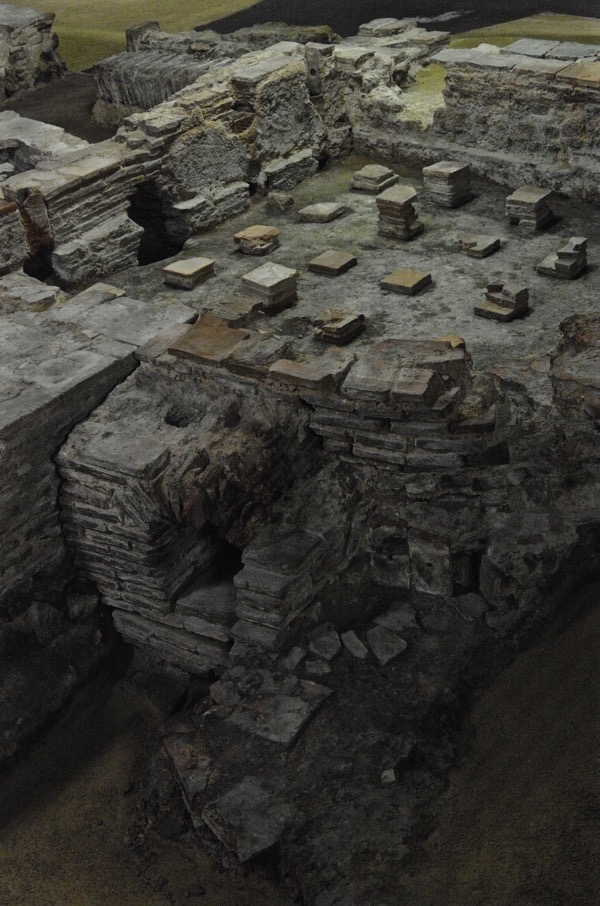
The hot air from the furnace entered the building and circulated under the floor
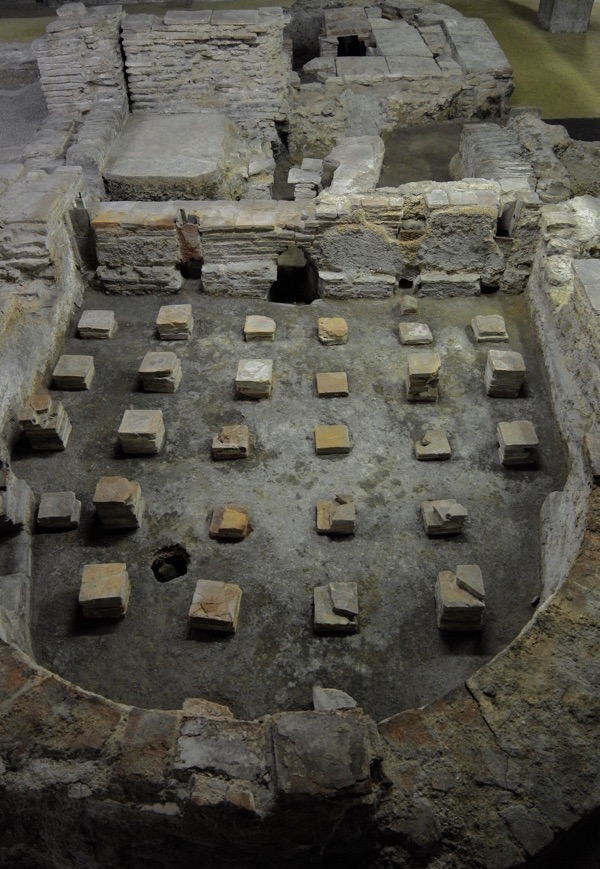
The curved walls of the caldarium
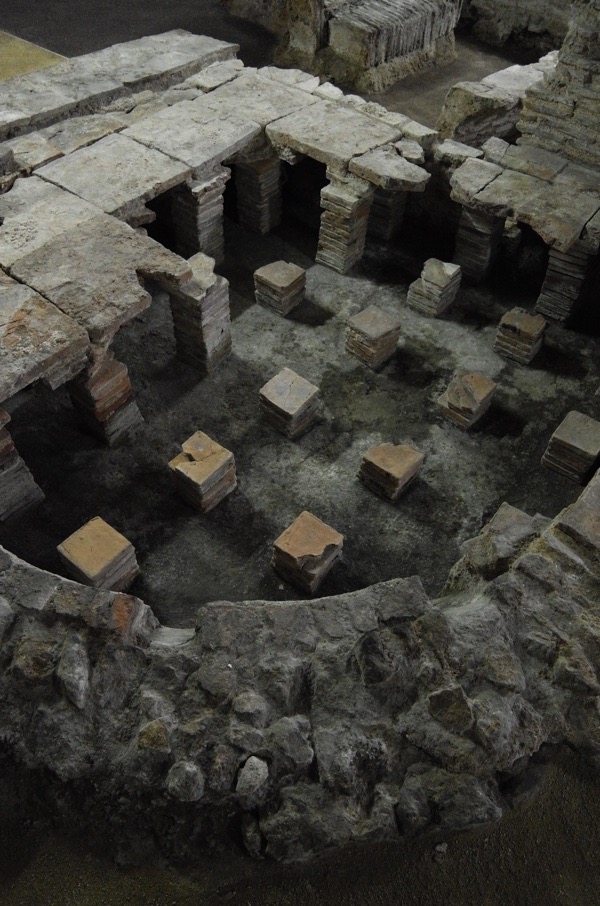
Tiles supported on pilae as part of the underfloor heating system in the tepidarium
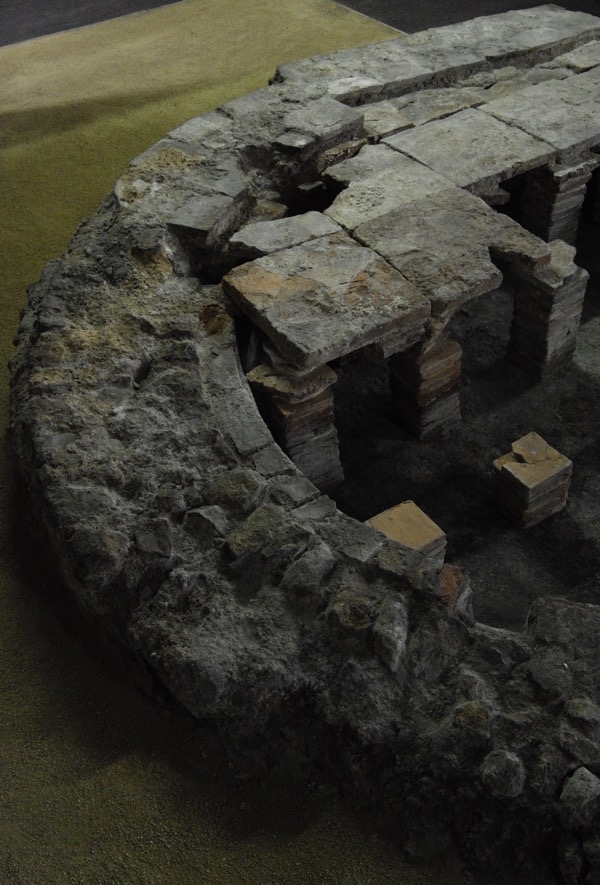
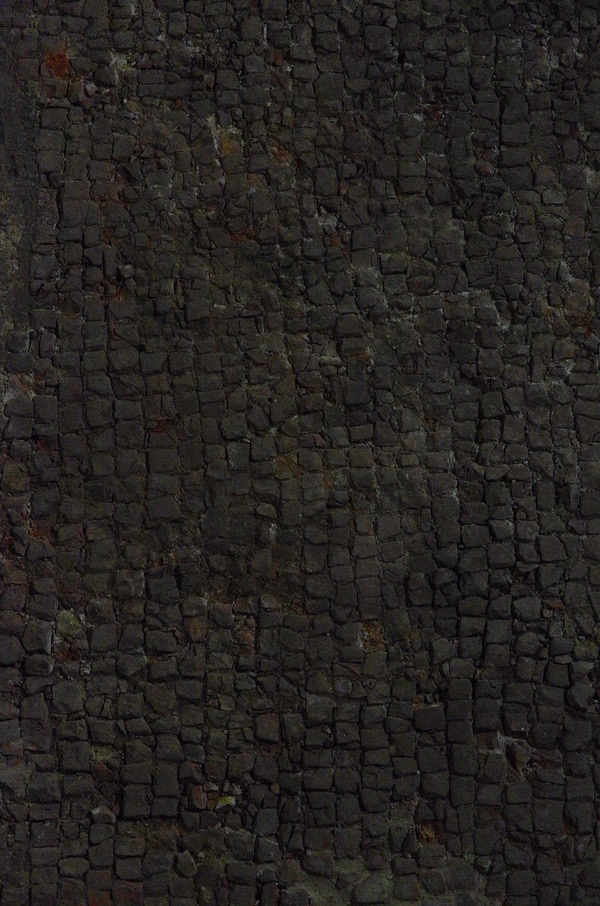
Tessellated floor in the frigidarium
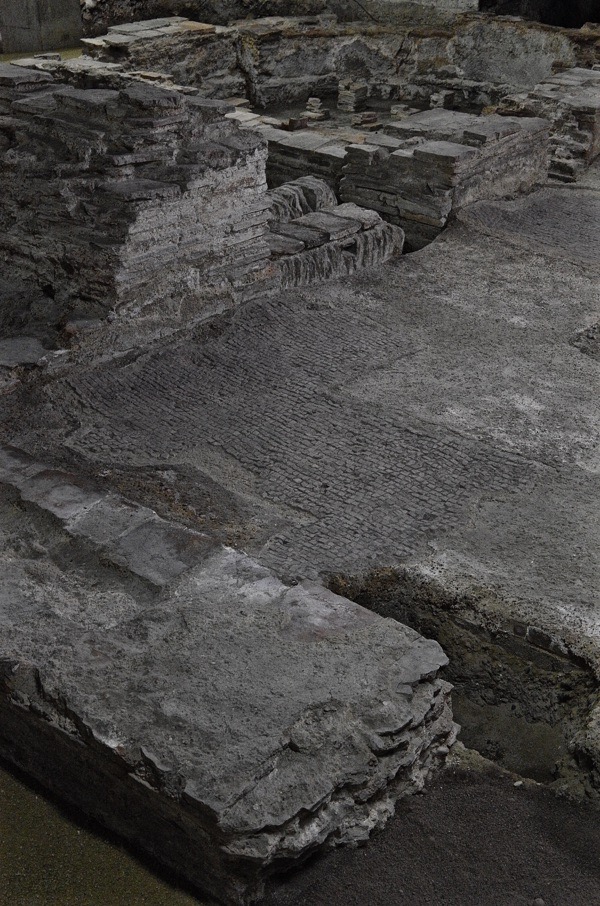
Fragment of tessellated floor
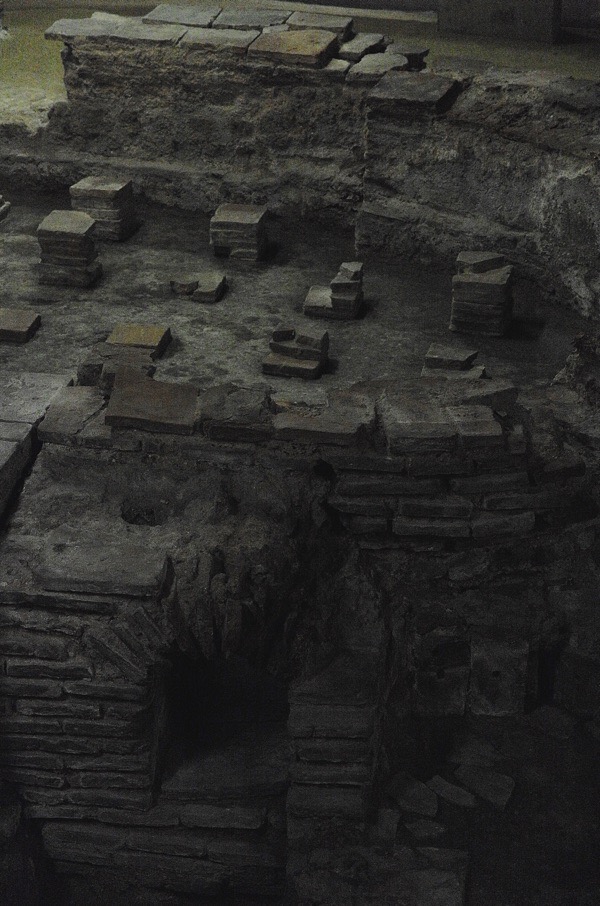
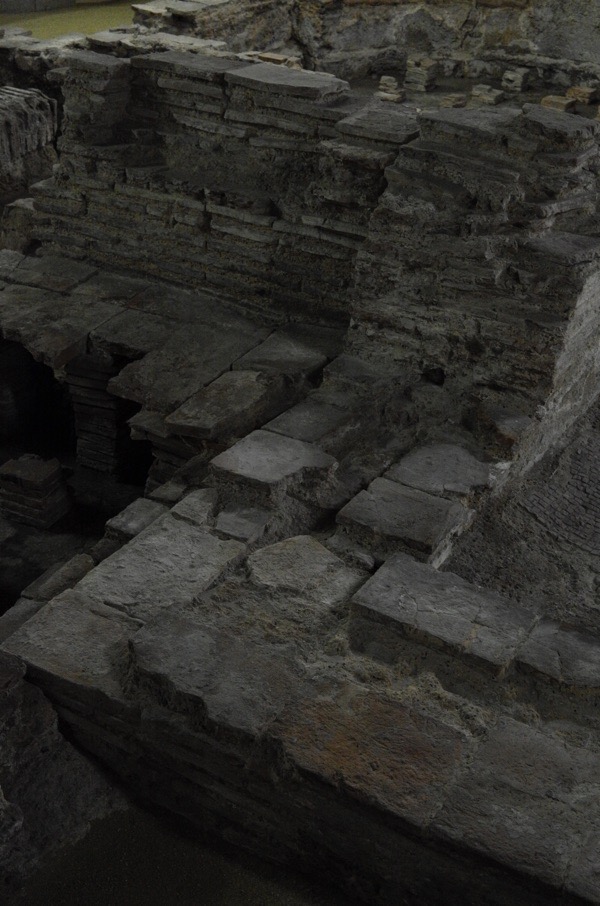
The stone bench in the tepidarium
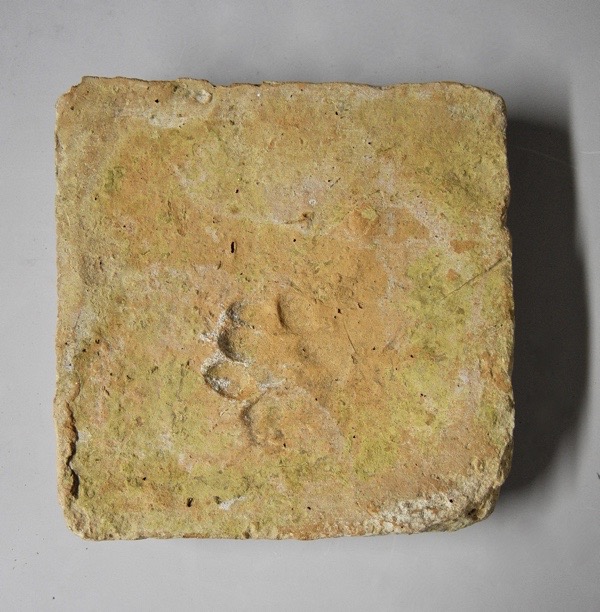
The paw print of a dog in London seventeen hundred years ago
You may also like to read about
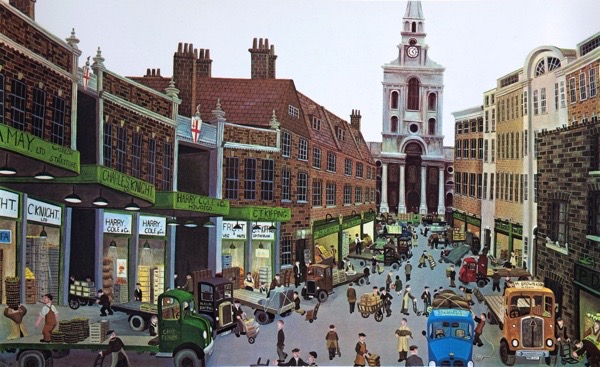
Spitalfields Market by John Allin, 1973
I am delighted to announce that thanks to the magnificent generosity of over 400 people who supported our crowdfund, The Gentle Author’s Tour of Spitalfields will launch at Easter and run throughout the summer.
Our website is now live for bookings until the end of May.
BOOK YOUR TOUR AT WWW.THEGENTLEAUTHORSTOURS.COM
A fold-out pocket-sized map of the tour, illustrated by Adam Dant, with text by The Gentle Author is available for £5.
The Gentle Author’s Tour map contains portraits of more than fifty people – both the living and the dead – who have lived and worked in Spitalfields over the past two millennia.
Follow in the footsteps of all those who came before, with a keen eye and an open heart, to discover the manifold wonders of Spitalfields.
Printed in London on recycled paper by Aldgate Press
Click here to buy a copy of The Gentle Author’s Tour of Spitalfields Map

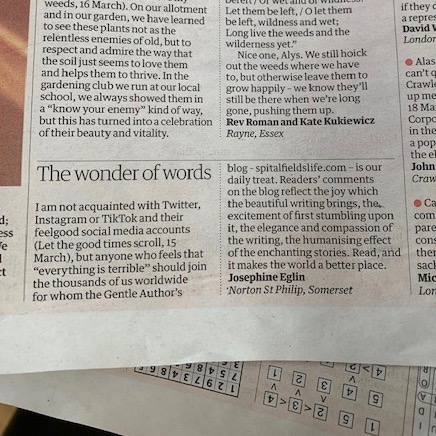
I hope my readers will not consider it immodest if I republish this letter which appeared in The Guardian last Saturday
The Gentle Author’s Wapping Pub Crawl

Four-hundred-year-old stone floor at The Prospect of Whitby
Tempted by the irresistible promise of spring sunlight, I set out for Wapping to visit those pubs which remain in these formerly notorious riverside streets once riddled with ale houses. Yet although there are pitifully few left these days, I discovered each one has a different and intriguing story to tell.
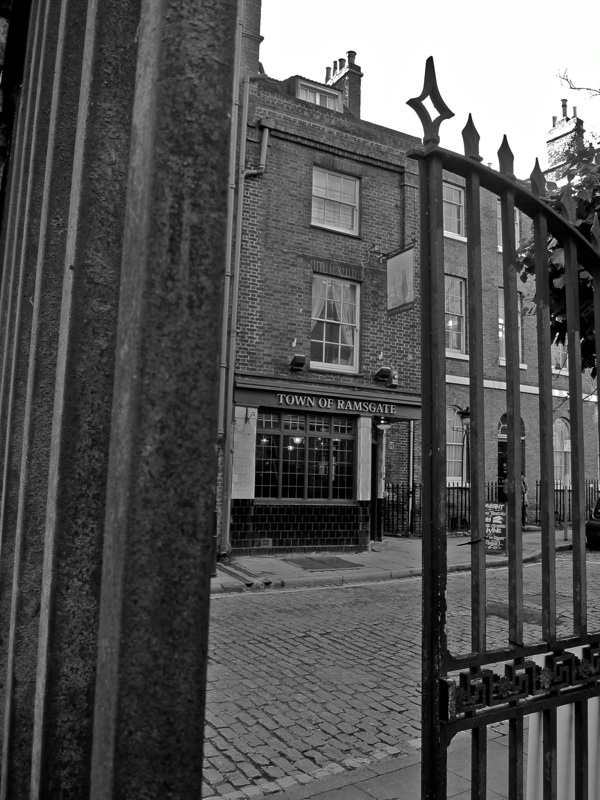
Town of Ramsgate, 288 Wapping High St. The first alehouse was built on this site in 1460, known as The Hostel and then as The Red Cow from 1533. The pub changed its name again, to the Town of Ramsgate, in 1766 to attract trade from Kentish fishermen who unloaded their catch at Wapping Old Stairs adjoining. Judge Jeffreys was arrested here in disguise, attempting to follow the flight of James II abroad in 1688, as William III’s troops approached London.

The Turk’s Head, 1 Green Bank. Originally in Wapping High St from 1839, rebuilt on this site in 1927 and closed in the seventies, it is now a community cafe.
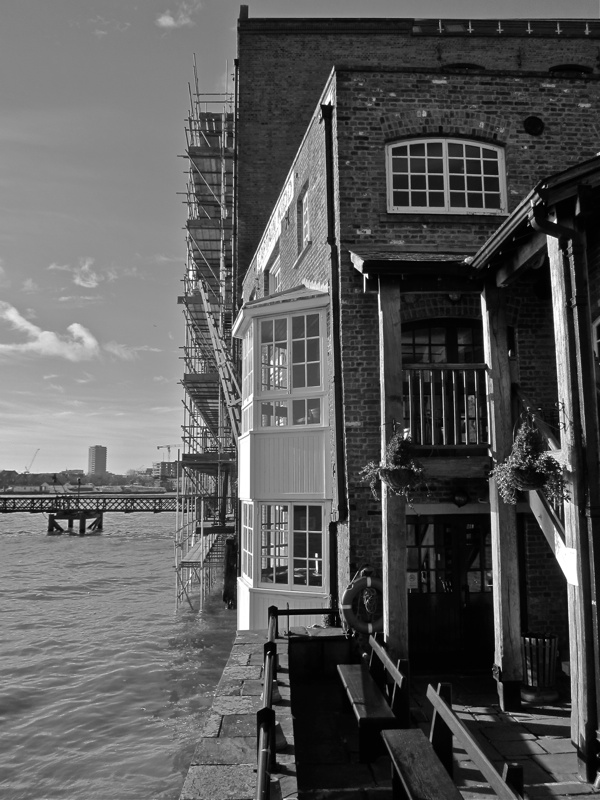
Captain Kidd, 108 Wapping High St. Established in 1991 in a former warehouse and named after legendary pirate, Wiiliam Kidd, hanged nearby at Execution Dock Stairs in 1701.
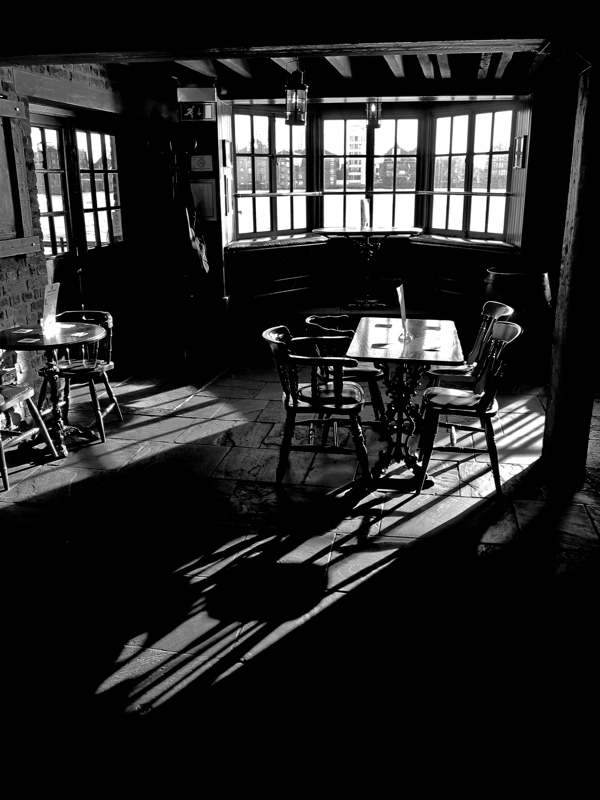

Turner’s Old Star, 14 Watts St. In the eighteen-thirties, Joseph Mallord William Turner set up his mistress Sophia Booth in two cottages on this site, one of which she ran as an alehouse named The Old Star. In 1987, the current establishment was renamed Turner’s Old Star in honour of the connection with the great painter. Notoriously secretive about his lovelife, Turner adopted Sophia’s surname to conceal their life together here, acquiring the nickname ‘Puggy Booth’ on account of his portly physique and height of just five feet.
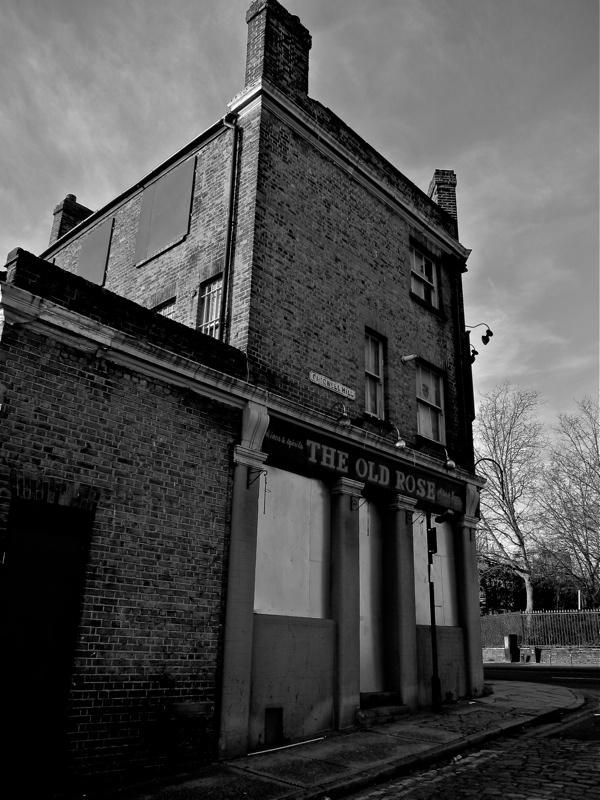
The Old Rose, 128 The Highway. 1839-2007
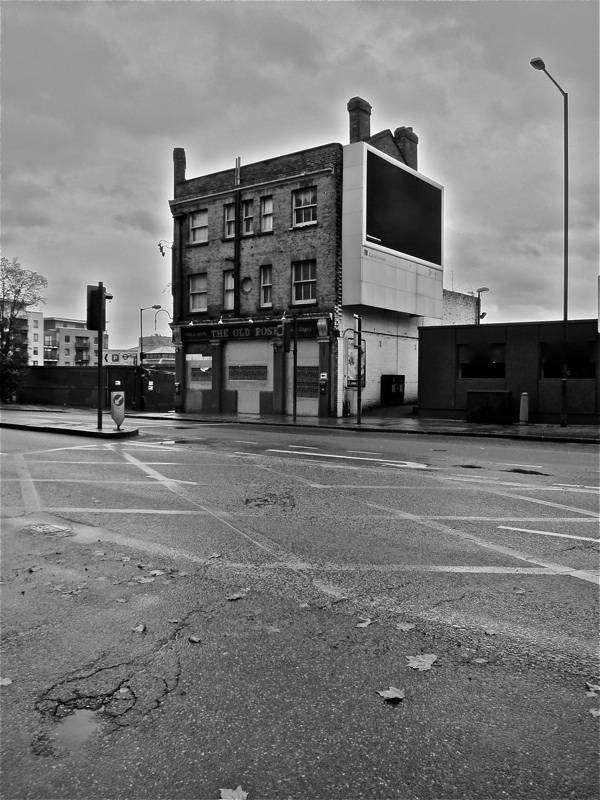
The last pub standing on the Ratcliffe Highway
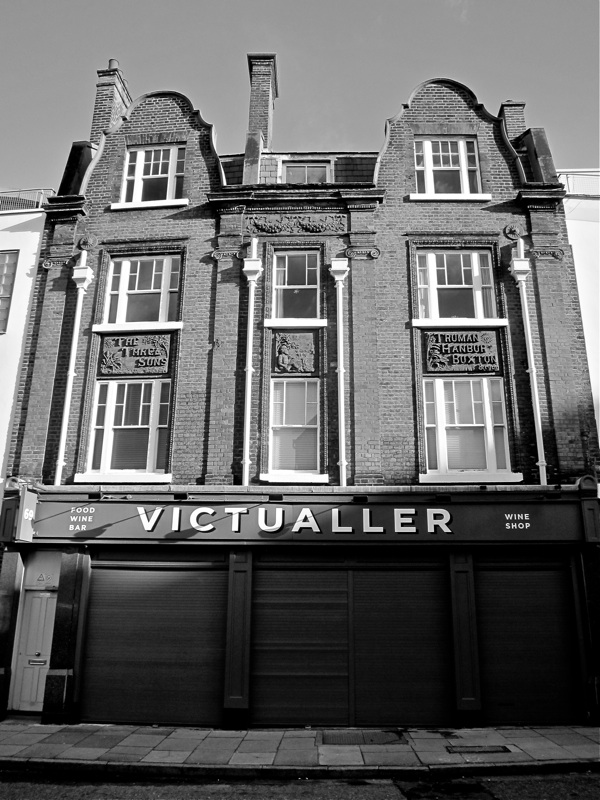
The Three Suns, 61 Garnet St. 1851 – 1986
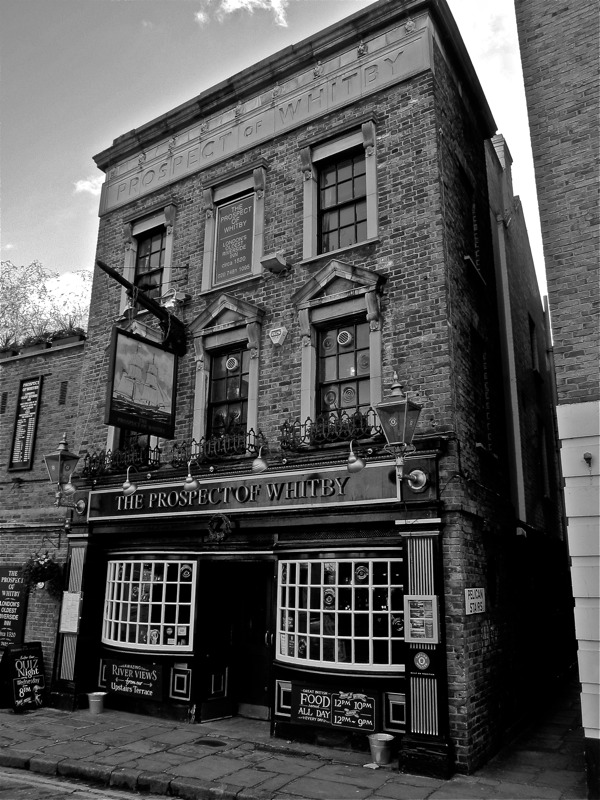
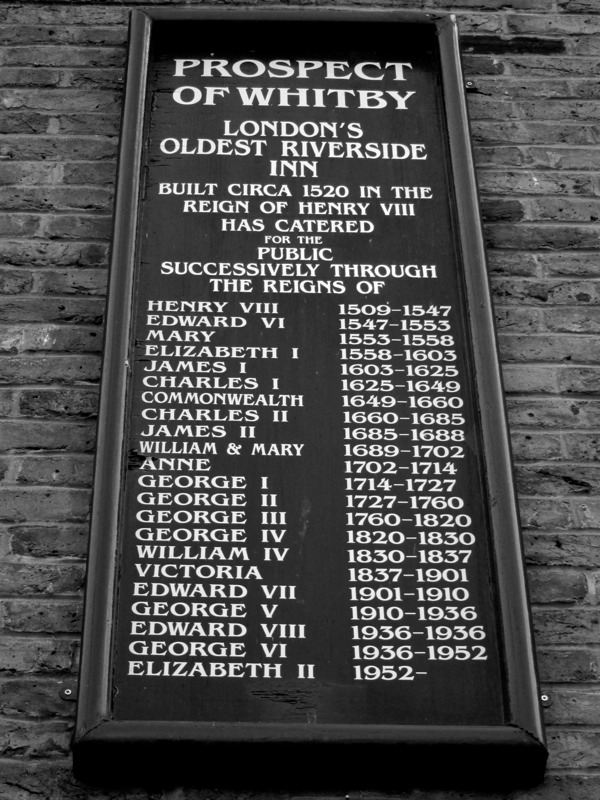
The Prospect of Whitby, 56 Wapping Wall. Founded 1520, and formerly known as The Pelican and The Devil’s Tavern.
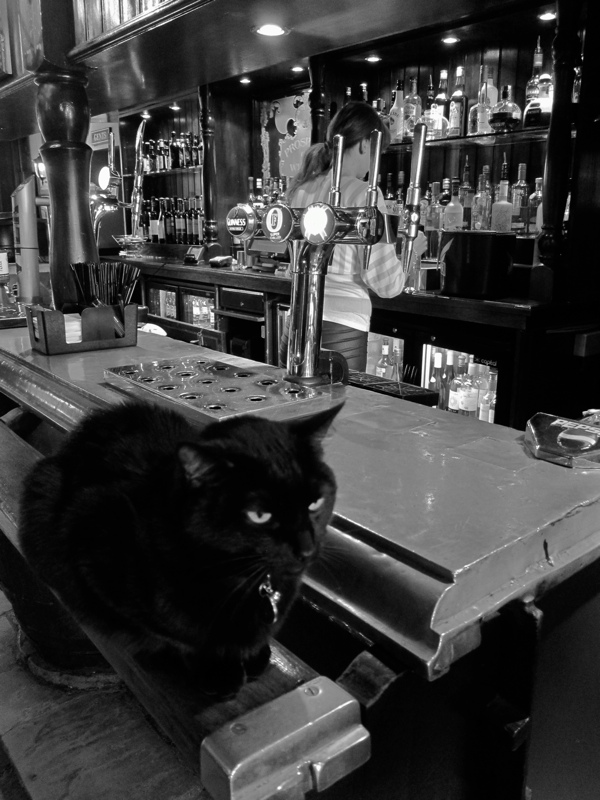
What does a cat have to do to get a drink around here?
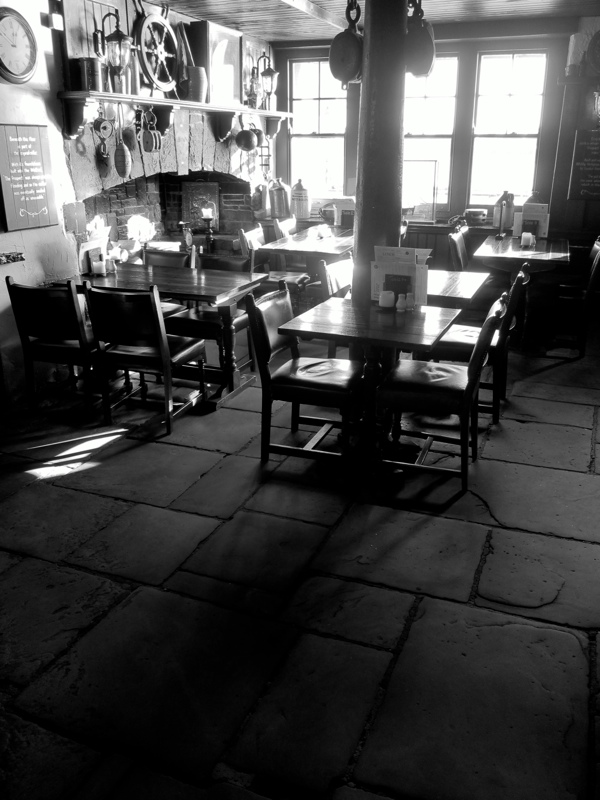
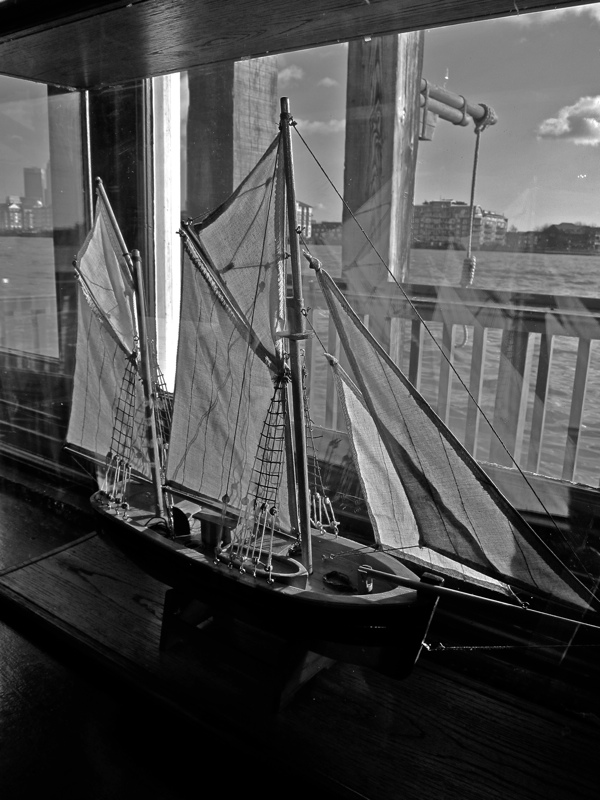
Sir Hugh Willoughby sailed from The Prospect of Whitby in 1533 upon his ill-fated attempt to discover the North-East Passage to China.
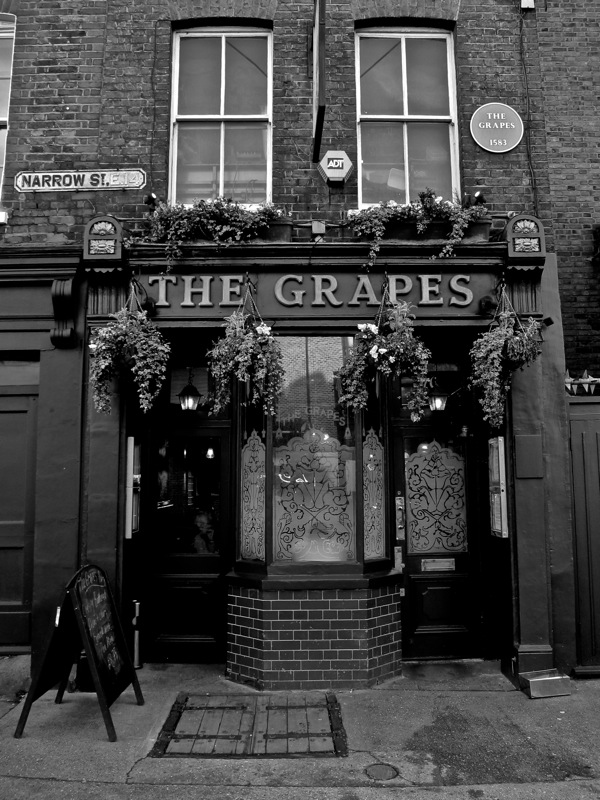
The Grapes, 76 Narrow St. Founded in 1583, the current building was constructed in 1720 – it is claimed Charles Dickens danced upon the counter here as a child.
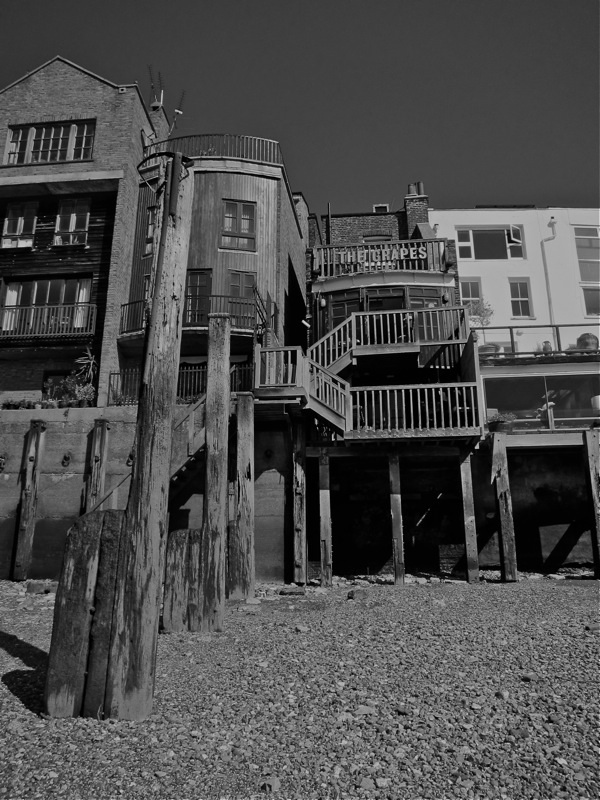

Anthony Gormley’s sculpture visible from the balcony of The Grapes
You may like to read about my previous pub crawls
The Gentle Author’s Next Pub Crawl
The Gentle Author’s Spitalfields Pub Crawl
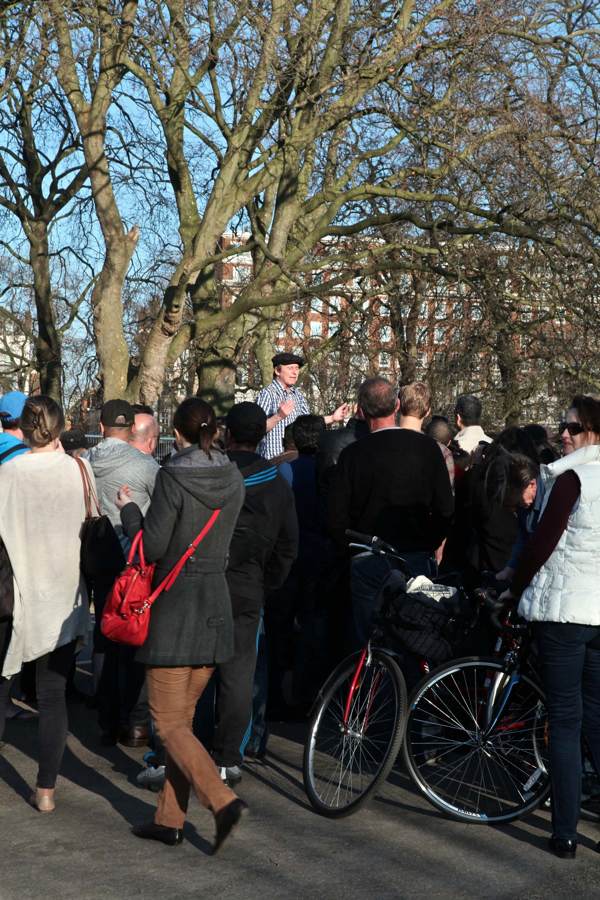
At Speakers’ Corner
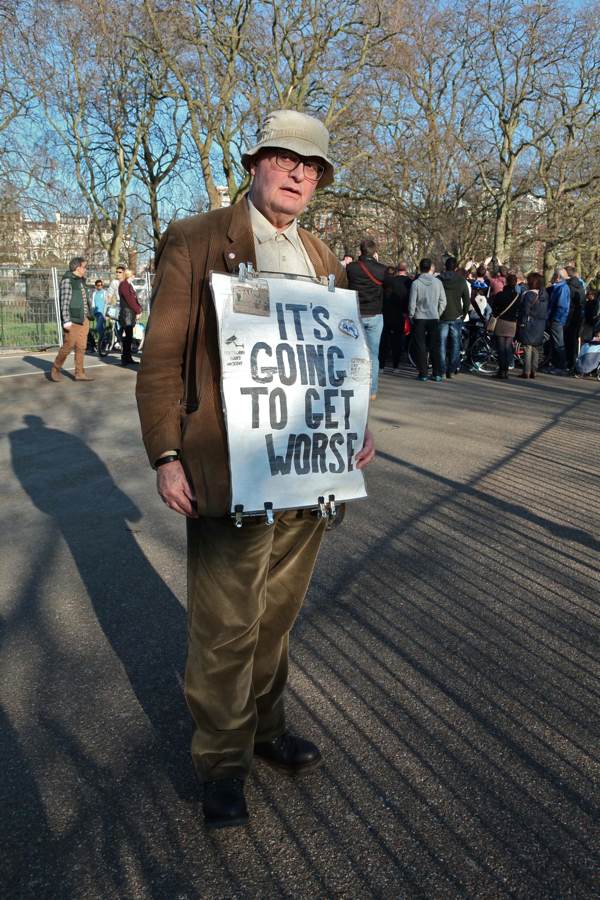
“I’m old enough to know better and young enough not to care”
Despite the timbre of the message he has been wearing around his neck each Sunday at Speakers’ Corner for decades, Bob Rogers is not the lugubrious fellow you might imagine. Contrary to expectation, he wears it to cheer people up – as he explained to me when I joined him in the park one Sunday.
“It was the winter when British Rail reported ‘The Wrong Kind of Snow’ on the line and that became an Evening Standard headline. The next day, I saw ‘It’s Going to Get Worse,’ on the newsstand as I went through Piccadilly on a bus. So I jumped off and took it from the hoarding and put in my bag because I like the prose style of newspaper headlines,” he explained. “Then I came here on a Sunday in February and everyone looked so miserable that I took it out of my bag and held it up, and it made them all smile. It caught on to such an extent that I am pictured wearing it in guidebooks to London.”
A stalwart of more than half a century at Speakers’ Corner, always in his faded brown corduroy suit with a beret in winter or a bucket hat in summer, and the celebrated notice round his neck, Bob Rogers is an erudite historian and a self-appointed custodian of this celebrated British institution.“Unless I am very unwell, I always come here because it retains its function as a meeting place and you encounter people from all around the world,” he revealed to me, “I keep coming back because I know people here and they know me, so it has a social content as well as a social purpose.”
As if to illustrate this, one of Bob’s pals joined us and, realising I was doing an interview, he took the opportunity to make some points.”These days people are frightened of saying the wrong thing,” he assured me, rolling his eyes contemptuously, “It’s no longer about politics, it’s just a circus of religion – fifty seven varieties of Christianity and fifty-seven varieties of Islam and they all disagree with each other.”
The 1873 reform of the Parks Regulation Act of 1872 conferred legitimacy upon Speakers’ Corner, enshrining the right to give an address though not – as some assume – the right to free speech since speakers are still subject to the law.“I enjoy the weekly privilege of visiting the only place where people can gather without police permission,” Bob confided to me, lowering his voice and casting his gaze around,“When people ask me how many police undercover agents are in the park, I say, ‘Every third man.'”
“Over fifty years ago, I missed a connection on my bus and I looked over the railings and I saw all these people and what got me was the babble of their voices,” he continued, as we stood against the railings watching the excited crowds gathered around the speakers and the hecklers adding drama with their interruptions.“The Catholic Evidence Guild were here one hundred years ago and are here this week and that’s because this is the site of of Tyburn, the place of public executions,” Bob added, gazing through the perspective of time,“Even as we speak they are praying for the Catholic Martyrs.”
Then, swinging his arms wildly and intoning like a priest, Bob enacted the bizarre yet compelling performance style of Nutty Norman, the ‘arms-up’ man, one of the past legends of Speakers’ Corner. “You’d never know he was homeless, he carried all his possessions in a shoulder bag,” Bob revealed, protective of his mentor, “He inducted me to the night buses and sometimes he passed the night at Heathrow.” Gesturing to a charismatic speaker surrounded by an attentive gathering, Bob pointed out Heiko Khoo, a part-German-part-Icelandic ex-bus conductor who famously threw Sir Michael Joseph off his bus, declaring, “I’m not having any Tories on my bus!”
Even as Bob and I chatted, bystanders came over and formed an audience around us, in expectation of a colourful debate and making tangible the rare quality of this special place where we are free to speak with each other as humans, without the need to be introduced.
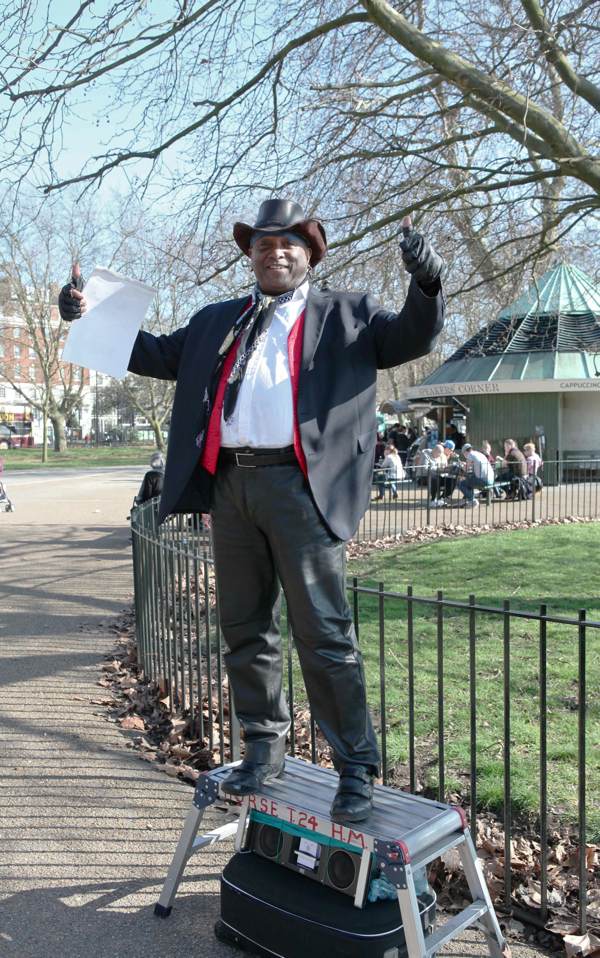
“Religious people talk about the power of God, I talk about Horse power!”

Omid Mankoo – “People’s lives are really fixated on the sex stuff and they’re neglecting everything else. I’ve written this book and I want to share my secrets.”

Matthew from St Albans – “Jesus told me to come here because the years of his blessing our nation are at an end.”
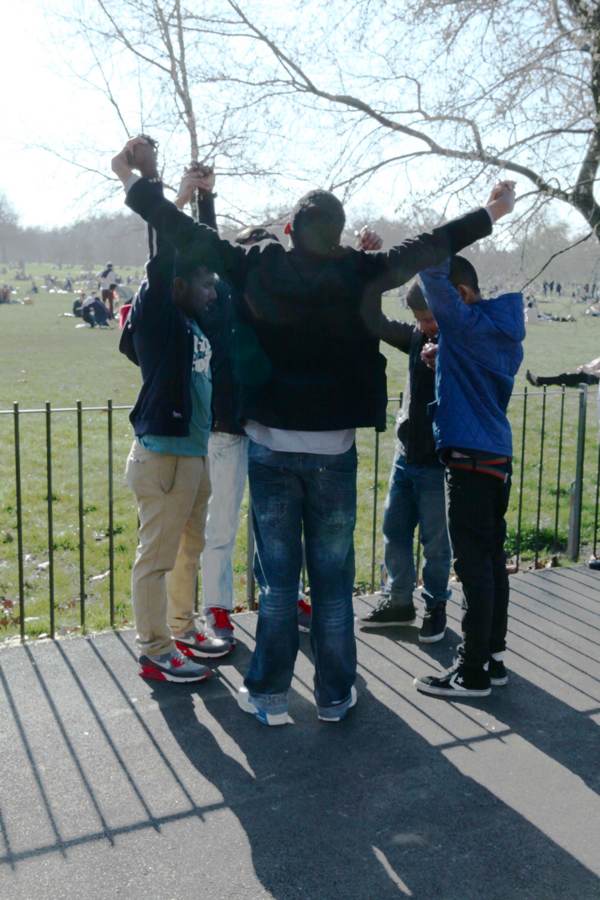
Christians praying

Christians spreading the Word

Thai people protesting against their corrupt government
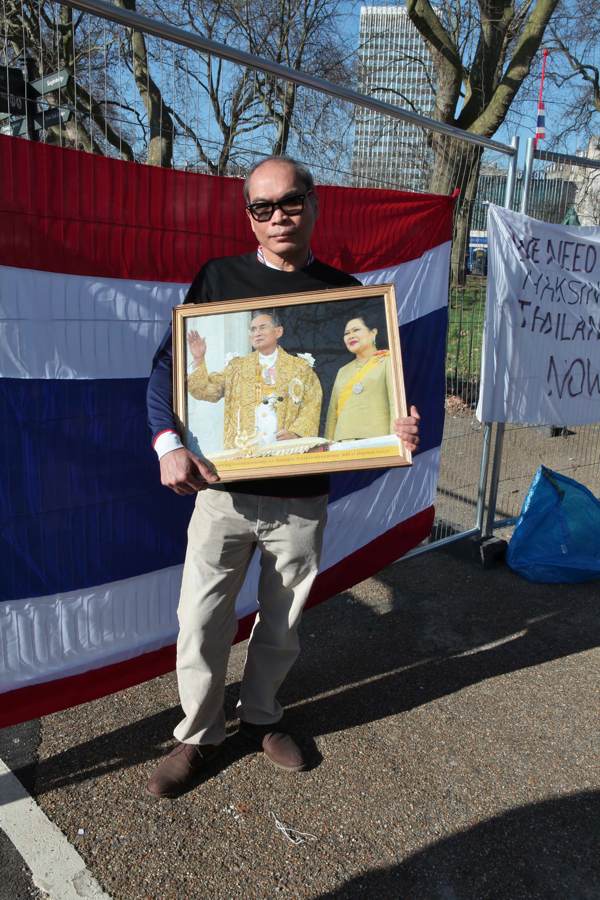
Celebrating the Thai Royal Family
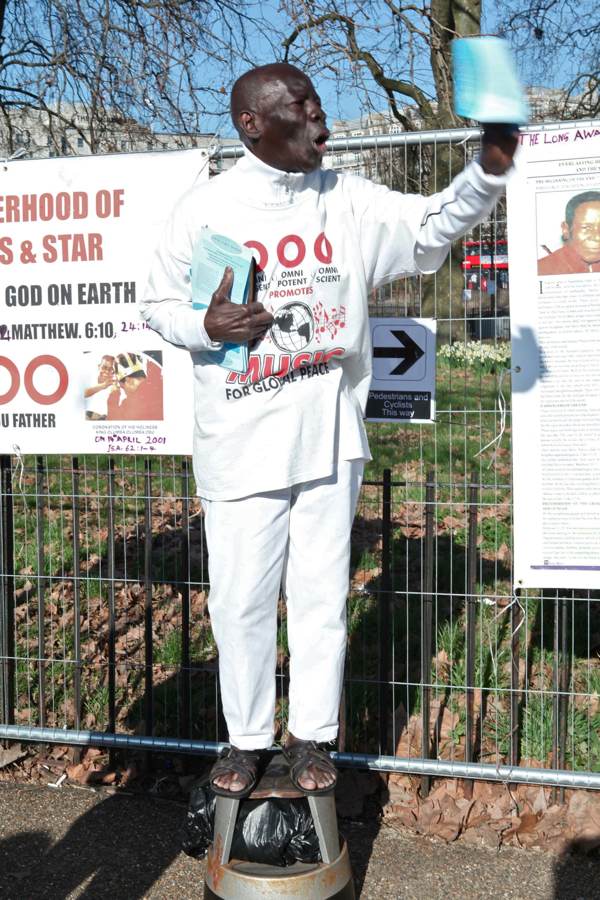
Proclaiming the Nigerian Messiah

“If that frightens you, give Jesus a call”
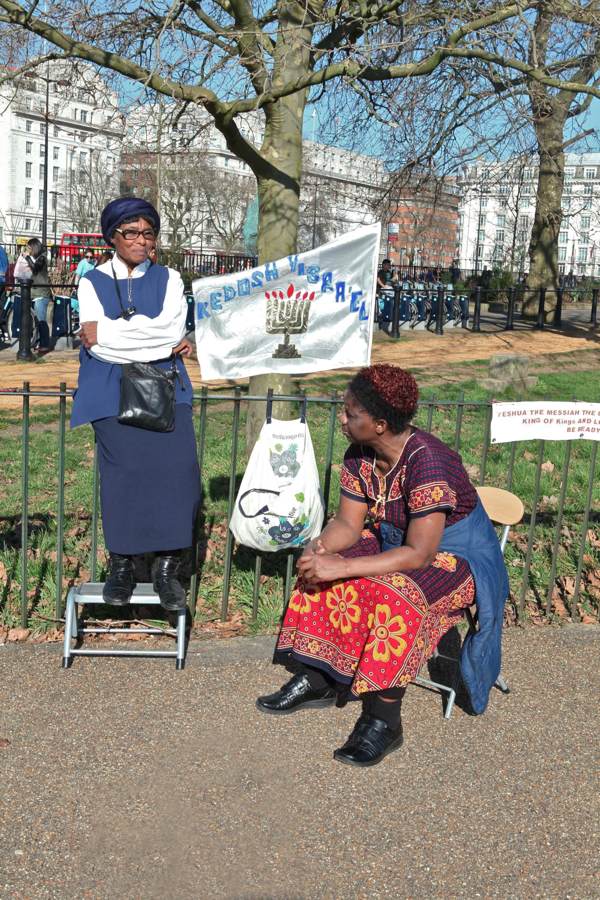
“Don’t be late like the foolish virgins”
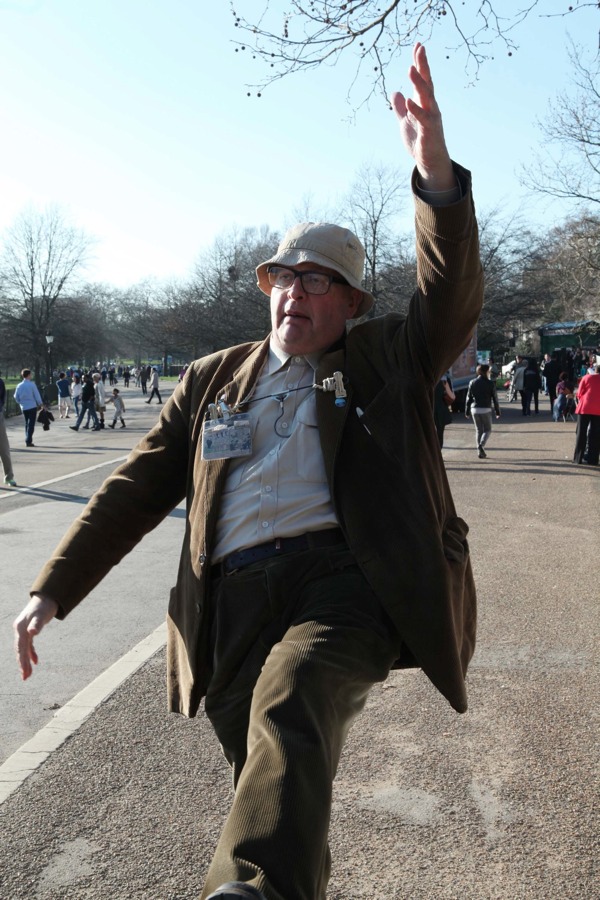
Bob re-enacts the gestures of Nutty Norman the ‘arms-up’ man

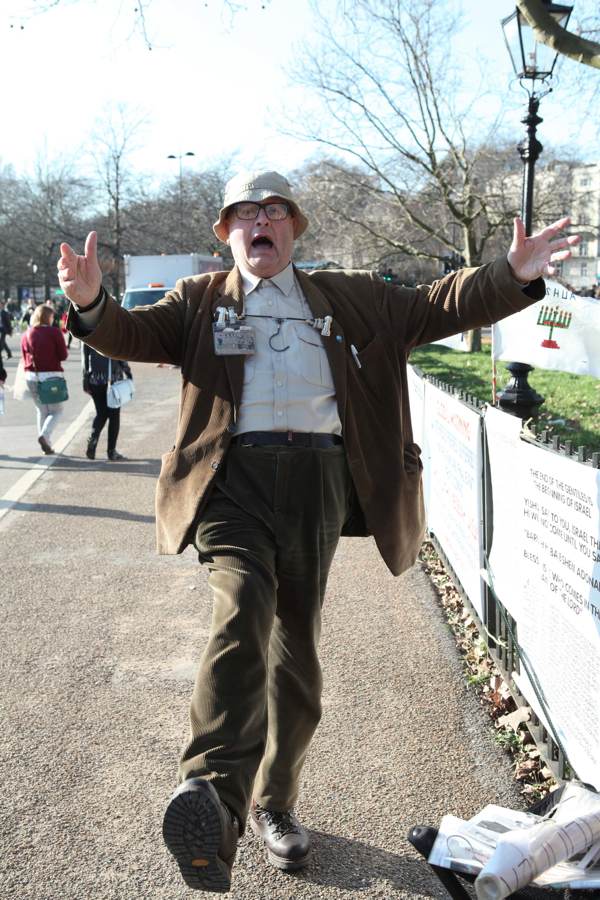

Heiko Khoo – “I’m not having any Tories on my bus!”

Photographs copyright © Estate of Colin O’Brien
You may also like to take a look at
On Mothering Sunday

Valerie, my mother
What are you to do on Mothering Sunday if you have no mother? My mother died in 2005 and each year I confront this troubling question when the annual celebration comes around.
If I was religious I might light a candle or lay flowers on a grave, yet neither of these is an acceptable option for me. Contemplating advertisements for Mothering Sunday gifts, I deliberate privately over the tender question as my sense of loss deepens in the approach to this particular day, only for it to dissipate afterwards. This uneasy resolution brings no peace, serving to remind me how much I miss her. It is a feeling which grows with each Mothering Sunday that passes, as the distance in time that separates us increases and the memories fade. I do not expect or wish to ‘get over it,’ I seek to live in peace with my sadness.
I wish she could see where I live now and I could share the joys of my life with her. I have a frustrated instinct to communicate delights, still identifying sights and experiences that I know she would enjoy.
My picture of her has changed. The painful experience of her final years when she was reduced to helpless paralysis by the onset of dementia has been supplanted by a string of fragmentary images from my childhood – especially of returning from school on summer afternoons and discovering her at work in her garden.
I think of how she raised her head when she smiled, tossing her hair in assertion of a frail optimism. ‘Not too bad, thank you!’ she is admitting, lifting her head to the light and assuming a confident smile with a flash of her eyes. This was her default answer to any enquiry into her wellbeing – whether it was a routine or genuine question – and she maintained it through the years, irrespective of actual circumstances. When life was smooth, it was a modest understatement and when troubles beset her, it was a discreet expression of personal resilience. For her, it was a phrase capable of infinite nuance and I do not believe she ever said it in the same way. Yet although I could always appreciate the emotional reality that lay behind her words, I think for everyone but me and my father it was an opaque statement which efficiently closed the line of enquiry, shielding her private self from any probing conversation. From her I learnt the value of maintaining equanimity and keeping a sense of proportion, whatever life brings.
I realise that I was lucky to have a mother who taught me to read before I started school at four years old. Denied the possibility of a university education herself, she encouraged me to fulfil her own thwarted ambitions and – perhaps more than I appreciate – I owe my life as a writer to her. Yet there is so much I could say about my mother that it is almost impossible to write anything. I recognise that the truth of what she means to me is in a region of emotion that is beyond language, but I do know that what she was is part of who I am today.
Increasingly, I am aware that many of those around me also share this situation of no longer having mothers. Perhaps I should buy them all flowers this Mothering Sunday? Certainly if anyone enquires, I shall reply ‘Not too bad, thank you!’ with a smile and raise my head. In that moment, I shall conjure her robust spirit from deep inside me and she will be present, in my demeanour and in my words, this Mothering Sunday.
You may also like to read about
Bishopsgate Tavern Tokens

The Ship Tavern, Bishopsgate
There are some artefacts that, in their detail and evidence of wear, can evoke an entire world. Although no larger than a thumbnail, these modest seventeenth century tavern tokens in the collection at the Bishopsgate Institute bring alive that calamitous era after the English Revolution when London was struck by the Great Plague in 1665 and then the Great Fire in 1666.
Bishopsgate was one of the few parts of the City spared by the Fire. It was lined with ancient taverns, used as points of departure and arrival for those travelling up and down the old Roman road north from the City of London. The part inside the City wall was known as Bishopsgate Within and the part outside the wall was Bishopsgate Without, and beyond, where the muddy road widened, was known as Bishopsgate St. The taverns served as hotels, drinking and dining houses, breweries and stables, couriers and coach offices, places of business and of entertainment, and were such significant centres of commerce that they issued their own currency for use as change.
There is a vibrant graphic quality in these miniature token designs, delighting in combining hand-lettering and familiar imagery with an appealing utilitarian irregularity. Long before universal literacy or the numbering of London streets, buildings were adorned with symbols and easily-recogniseable images like those graven upon the front of these tokens. The reverse carries the date and initials of the owner that issued the token, who may latterly be identified from the vintners’ records.
As well as those from Bishopsgate, there is one here from Spittlegate, now known as Widegate St, and another from Bedlam, now known as Liverpool St, which was formerly the location of the Hospital of St Mary of Bethlehem – of all the tokens here, The White Hart is the lone tavern that has weathered the centuries to survive into the present era.
After the Fire, rubble was spread upon the marshy land of Spitalfields, preparing it for the construction of the streets we know today, and, occasionally, charcoal is still uncovered when foundations are excavated in Spitalfields, recalling this distant event. In 1632, Charles I gave a licence for flesh, fowl and roots to be sold in Spitalfields and the market was re-established in 1682 by Charles II, defining the territory with a culture of small-scale trading that persists to this day.
Once, tavern tokens were unremarkable items of small monetary value, passed hand to hand without a second thought, but now these rare specimens are precious evidence of another life in another time, long ago in this place.

King’s Head, Spittlegate, Charles I

King’s Head, Spittlegate, issued by Vintner Thomas Avis in 1658

The Beehive, Bishopsgate Without, issued by Thomas Goss, 1652

The Mitre Tavern, Bishopsgate, issued by Robert Richardson 1644

The Flower Pot, Bishopsgate Within, issued by Ascanius Hicks, 1641

The Helmet, Bishopsgate Without, issued by Robert Studd

At the White Hart, Bedlam

The White Hart at Bedlam, issued by EE, 1637

Red Lion Court, Bishopsgate Without, issued by John Lambe

The Black Raven, Bishopsgate Without

The Black Raven, Halfpenny issued by Sam Salway

The Sunne, Bishopsgate Within

Lion Above a Stick of Candles, Bishopsgate Without

Lion Above a Stick of Candles, issued by Ralph Butcher, 1666

At the Sign Of The Boore, Bishopsgate Without

At The Sign Of The Boore, Bishopsgate Without

The Half Moone Brewhouse, Bishopsgate Without

Edward Nourse Next The Bull In Bishopsgate Street, 1666

The Mouth Tavern, Bishopsgate Without, issued by Robert Sanderson, 1638
Images courtesy Bishopsgate Institute
You may also like to look at
The Gentle Author’s Spitalfields Pub Crawl