
Henry Silk, Artist

Starting in 2013, Spitalfields Life Books published 15 books over 6 years until the pandemic shut us down. Now we are ready to begin again and are crowdfunding to raise enough money to cover production of our next 3 books. So far we have raised £9,250 but we still have a way to go.
CLICK HERE TO VISIT OUR CROWDFUND PAGE AND CONTRIBUTE
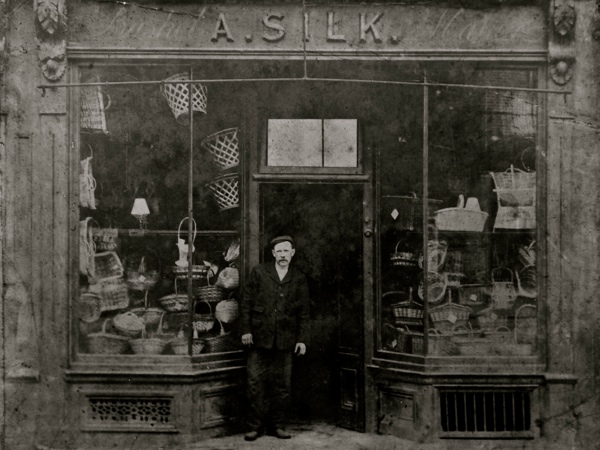
Henry worked at his Uncle Abraham’s basket shop in Bow
Here is David Buckman’s profile of Henry Silk in advance of my illustrated lecture, EAST END VERNACULAR, Artists who painted London’s East End Streets in the 20th Century, next week in the Hanbury Hall on Tuesday 3rd October at 7pm. Click here for tickets
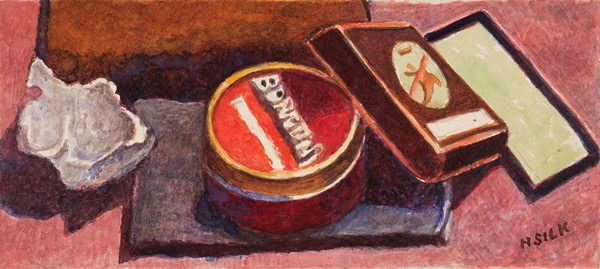
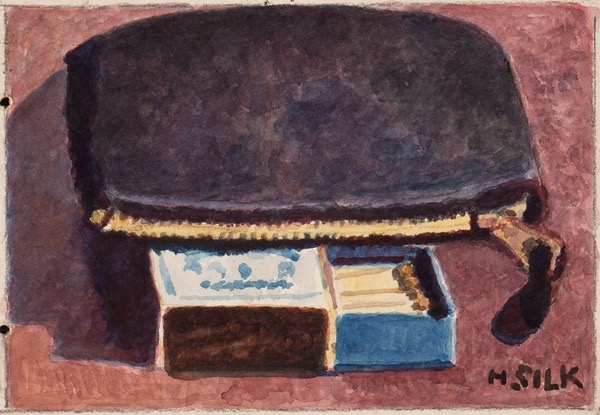
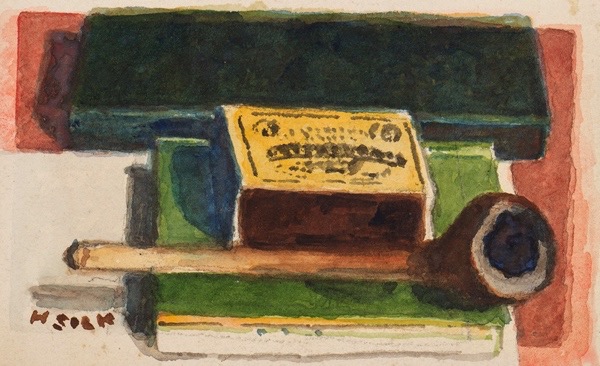
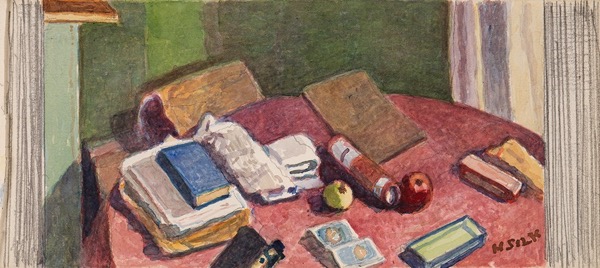
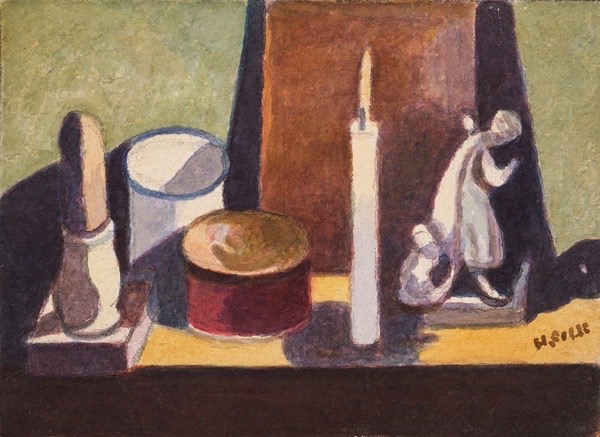
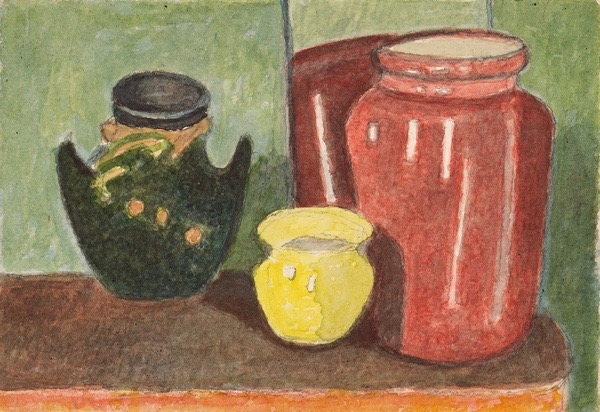
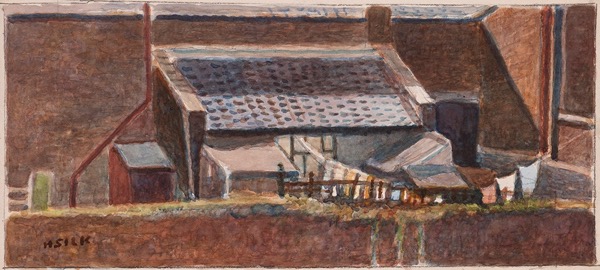
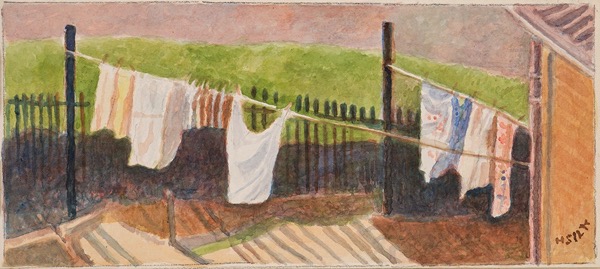
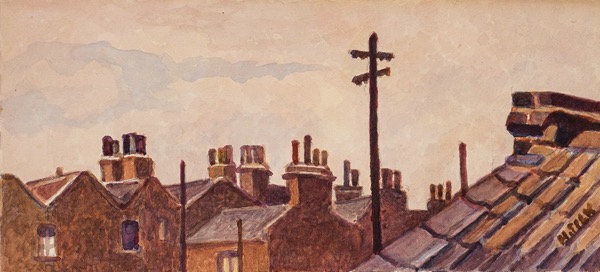
Which of the members of the members of the East London Group of painters most closely embodied what the Group stood for ? There are many advocates for Archibald Hattemore, Elwin Hawthorne, Cecil Osborne, Harold & Walter Steggles, and Albert Turpin – all painters from backgrounds that were not arty in any conventional sense who became inspired by their teacher John Cooper, the founder of the Group. Yet for some, the shadowy figure of Henry Silk, creator of highly personal and poetically understated images, is pre-eminent.
Silk’s talent was quickly recognised as far away as America, even while the Group was just establishing itself in the early thirties. In December 1930, when the second Group show was held in the West End at Alex. Reid & Lefevre, the national press reported that over two-thirds of pictures were sold, listing a batch of works bought by public collections. The Daily Telegraph and Sunday Times revealed that, in addition to British purchases, the far-away Public Gallery of Toledo in Ohio had bought Silk’s ‘Still Life’ for six guineas.
American links continued when, early in 1933, Helen McCloy filing an insightful survey of the group’s achievements for the Boston Evening Transcript, judged Silk to have “the keenest technical sense of all the limitations and possibilities of paint.” Coincident with McCloy’s article, Hope Christie Skillman in the College Art Association’s publication Parnassus, distinguished Silk as “perhaps the most original and personal of the Group,” finding in his works such as The Railway Track, The Platelayers, The Tyre Dump and The Wireless Set, “beauty where we were taught not to see it.”
Silk’s early life is obscure. He was an East Ender, born on Christmas Day 1883, who worked as a basket maker for an uncle, Abraham Silk, at his workshop and shop in the Bow Rd. Fruit baskets were in great demand then and men making baskets became features of Silk’s pictures. “He used to work for three weeks at basket-making and spend the fourth in the pub,” Group member Walter Steggles remembered, describing Silk’s erratic work and drink habits. Yet Steggles also spoke of Silk with affection, admitting “He was a kind-hearted man who always looked older than his years.”
Silk was the uncle of Elwin Hawthorne, one of the leading members of the group, and lived for a time with that family at 11 Rounton Rd in Bow. Elwin’s widow Lilian – who, as Lilian Leahy, also showed with the group – remembered Silk as “generous to others but mean to himself. He would use an old canvas if someone gave it to him rather than buy a new one.” This make-do-and-mend ethos was common among the often-hard-up Group members when it came to framing too. Cooper directed them to E. R. Skillen & Co, in Lamb’s Conduit St, where Walter Steggles used to buy old frames that could be cut to size.
During the First World War, the young Silk was already sketching. Even on military service in his early thirties, during which he was gassed, he would draw on whatever he could find to hand. By the mid-twenties, he was attending classes at the Bethnal Green Men’s Institute and exhibited when the Art Club had its debut show at Bethnal Green Museum early in 1924. The Daily Chronicle ran a substantial account of the spring 1927 exhibition, highlighting Henry Silk, the basket maker, whose paintings depicted “Zeppelins and were bought by an officer ‘for a bob.’”
Yorkshireman, John Cooper, who had trained at The Slade, taught at Bethnal Green and, when he moved to evening classes at the Bow & Bromley Evening Institute, he took many students with him including George Board, Archibald Hattemore, Elwin Hawthorne, Henry Silk, the Steggles brothers and Albert Turpin. They were members of the East London Art Club that had its exhibition at the Whitechapel Art Gallery in the winter of 1928, part of which transferred to what is now the Tate Britain early in 1929. These activities prompted the series of Lefevre Galleries annual East London Group shows throughout the thirties, with their sales to many notable private collectors and public galleries, and huge media coverage.
Henry Silk was a prolific artist. He contributed a significant number of works to the Whitechapel show in 1928, remained a significant exhibitor at the East London Group-associated appearances, showed with the Toynbee Art Club and at Thos Agnew & Sons. Among his prestigious buyers were the eminent dealer Sir Joseph Duveen, Tate director Charles Aitken and the poet and artist Laurence Binyon. Another was the writer J. B. Priestley, Cooper’s friend, who over the years garnered an impressive and well-chosen modern picture collection. Silk was also regarded highly by his East London Group peers, Murroe FitzGerald, Hawthorne’s wife Lilian and Walter Steggles, who all acquired works of his.
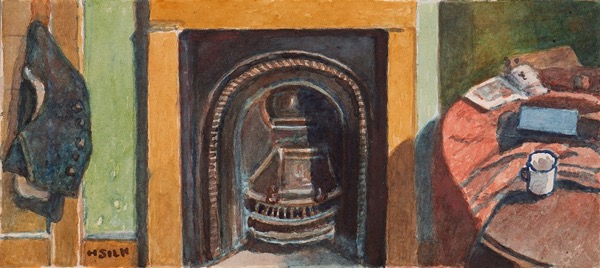
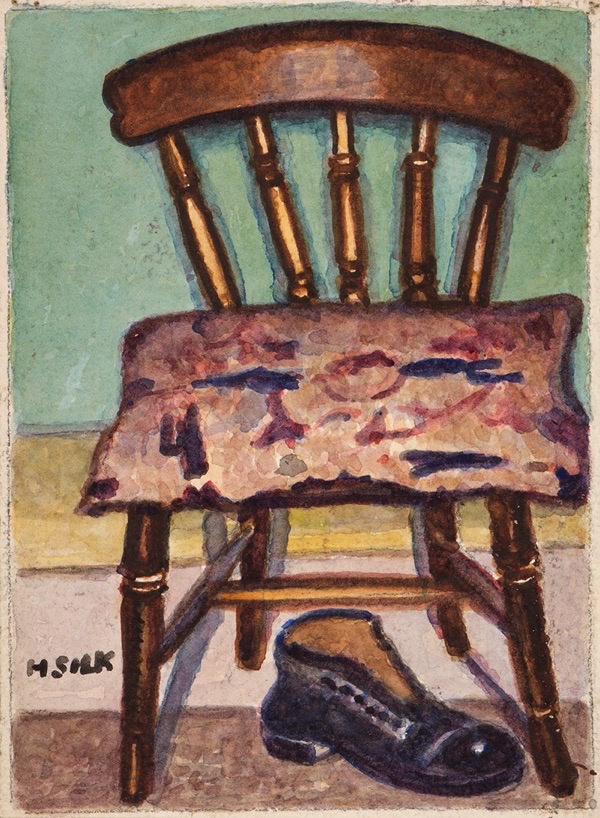
As each of the East London Group artists acquired individual followings as a result of the annual and mixed exhibitions, the Lefevre Galleries astutely organised solo shows for several of them. Elwin Hawthorne, Brynhild Parker and the brothers Harold & Walter Steggles all benefited. Yet, in advance of these, in 1931 Silk had a solo show of watercolours at the recently established gallery Walter Bull & Sanders Ltd, in Cork St. The small exhibition was characterised by an array of still lifes and interiors. Writing in The Studio magazine two years earlier, having visited Cooper’s Bow classe, F. G. Stone noted that Silk often saw “a perfect design from an unusual angle, and he has a Van Goghian love of chairs and all simple things.”
Cooper urged his students to paint the world around them and Silk met the challenge by depicting landscapes near his home in the East End, also sketching while on holiday in Southend and as far away as Edinburgh. Writing the foreword to the catalogue of the second group exhibition at Lefevre in December 1930, the critic R. H. Wilenski said that French artists were fascinated by the “cool, frail London light.” and many asked him “what English artists have made these aspects of London the essential subject of their work.” He responded, “The next time a French artist talks to me in this manner I shall tell him of the East London Group, and the members’ names that I shall mention first in this connection will be Elwin Hawthorne, W. J. Steggles and Henry Silk.”
Even after the East London Group held its final show at Lefevre in 1936, Henry Silk continued to show in the East End, until his death of cancer aged only sixty-four on September 24th 1948.

Thorpe Bay
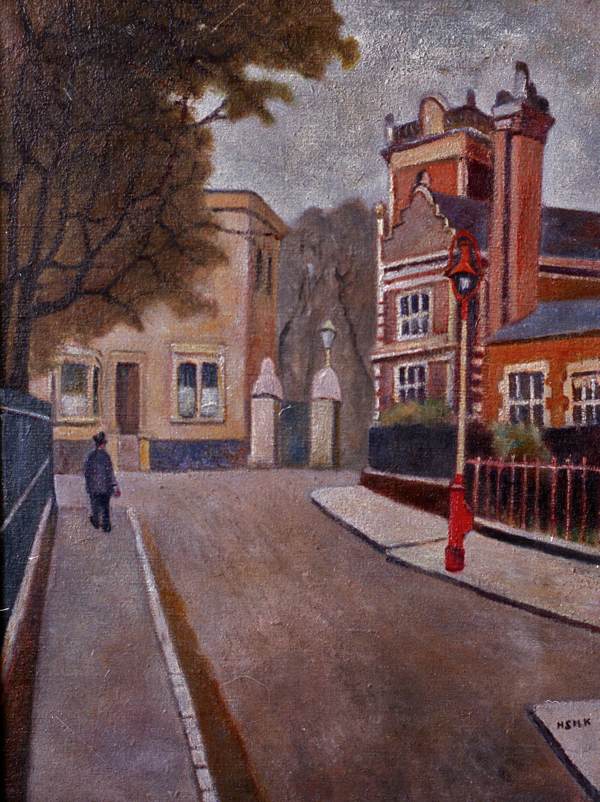
St James’ Rd, Old Ford
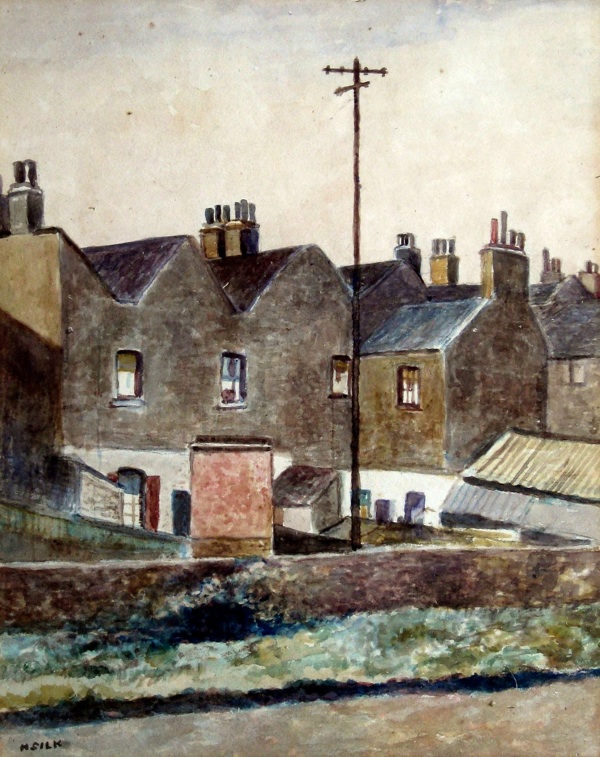
Old Houses, Bow (Walter Steggles Bequest)
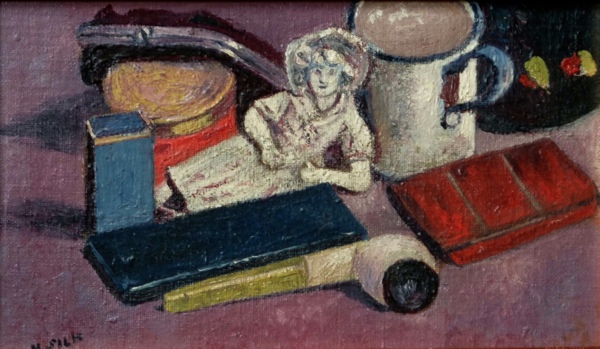
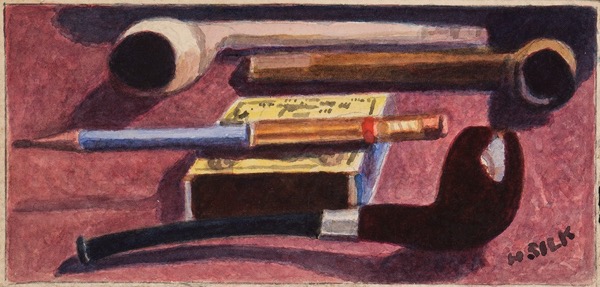
My Lady Nicotine
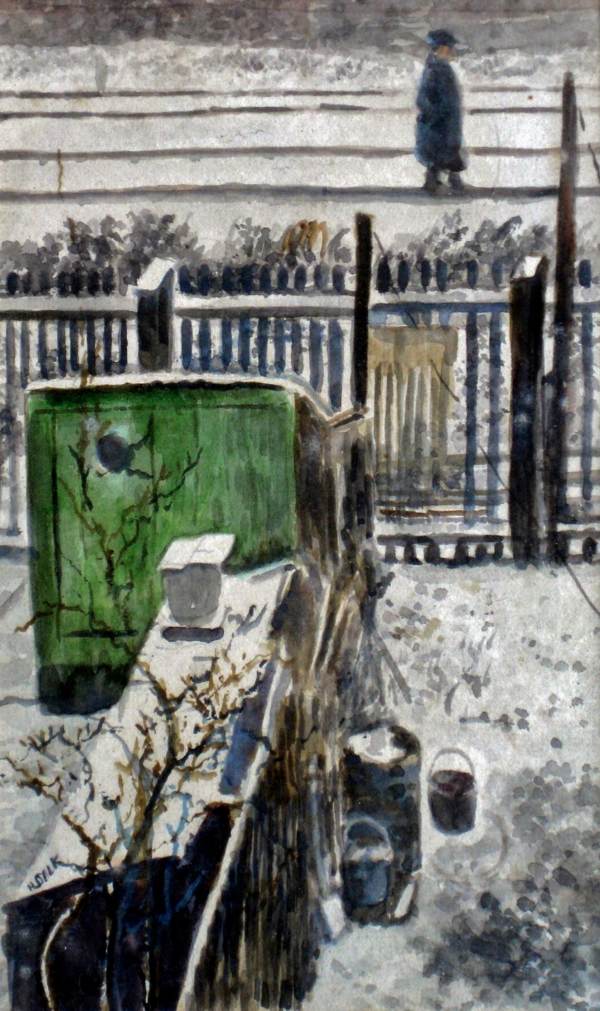
Snow (Walter Steggles Bequest)
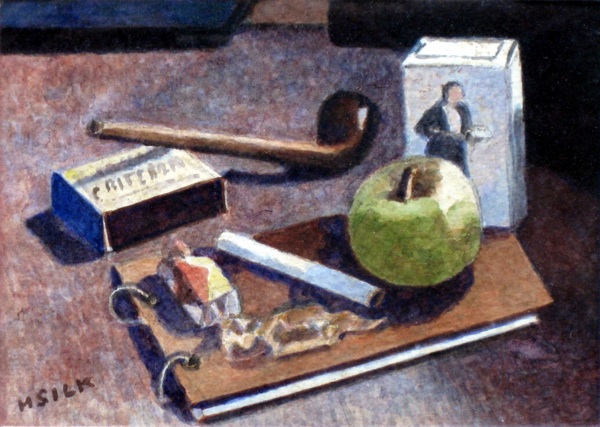
Still Life (Walter Steggles Bequest)
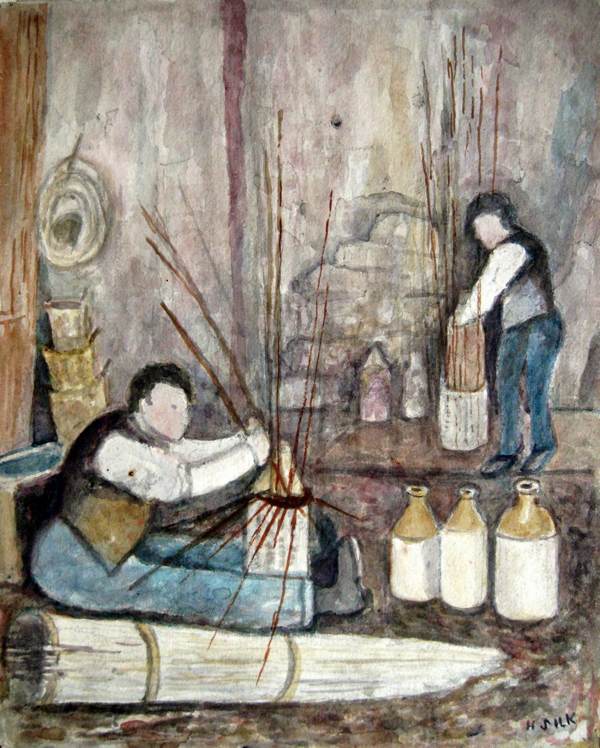
Basket Makers (Courtesy of Dorian Osborne)
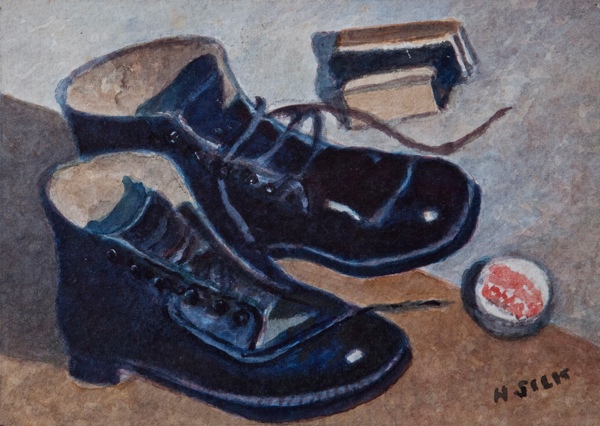
Boots, Polish and Brushes
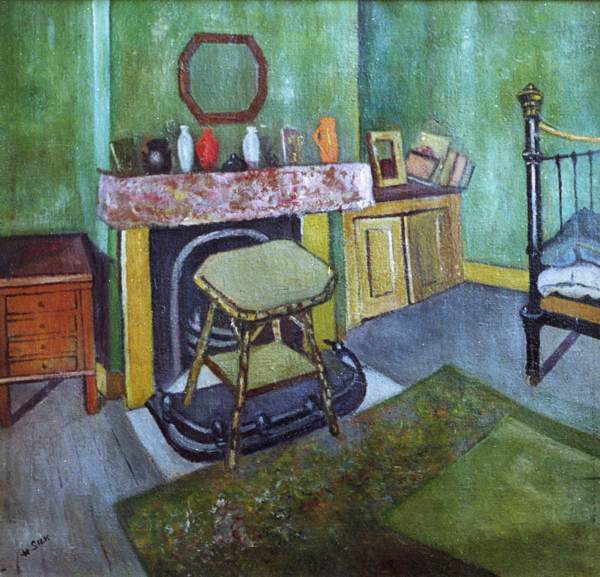
The Bedroom
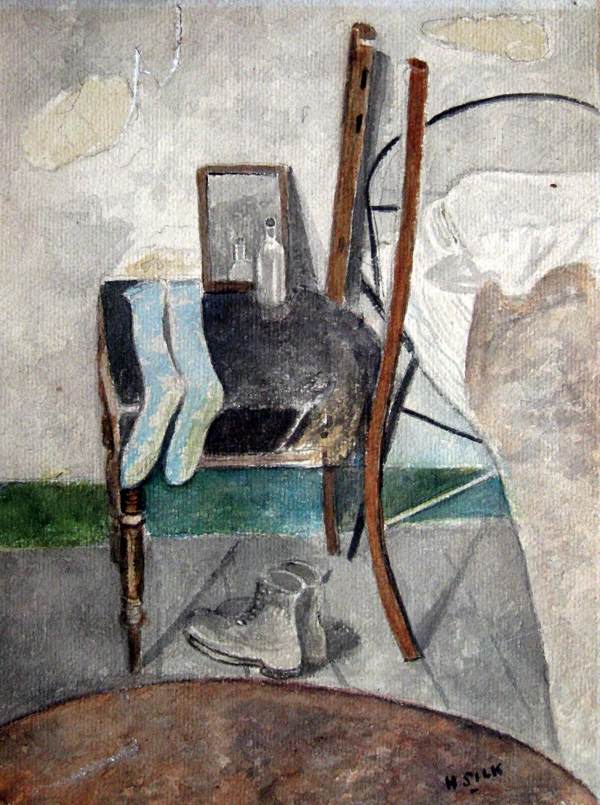
Bedside chair (Courtesy of Dorian Osborne)
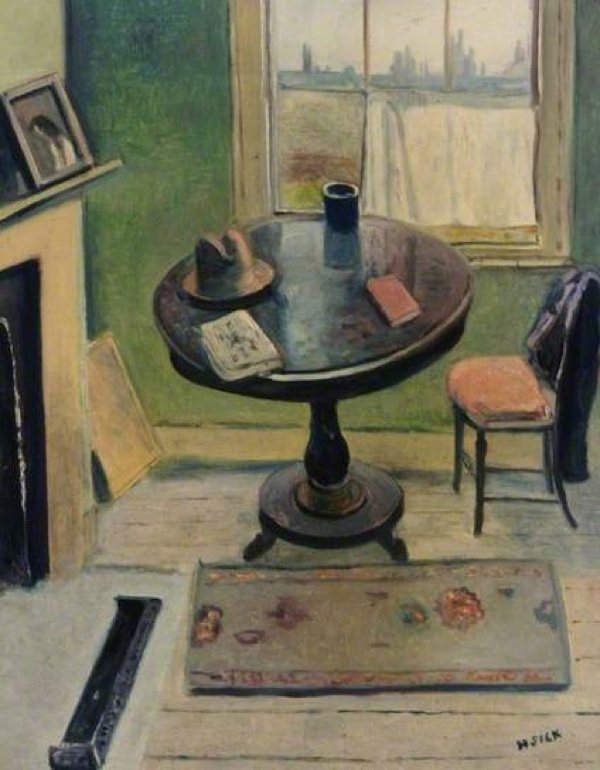
Hat on table, 1932 (courtesy of Doncaster Museum)
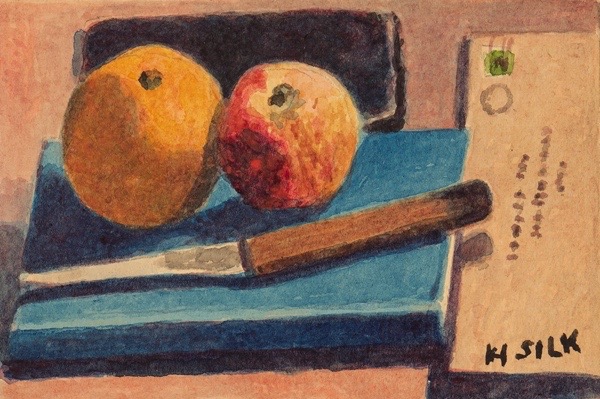
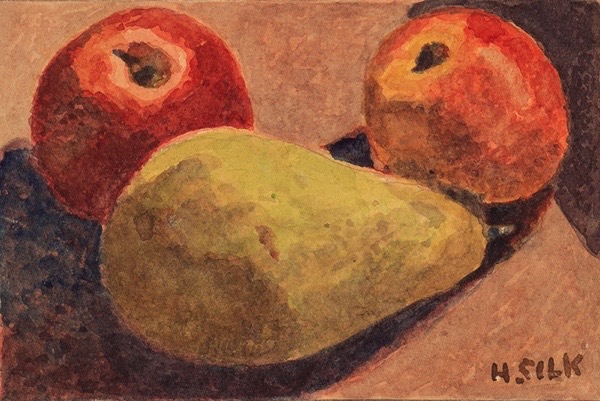
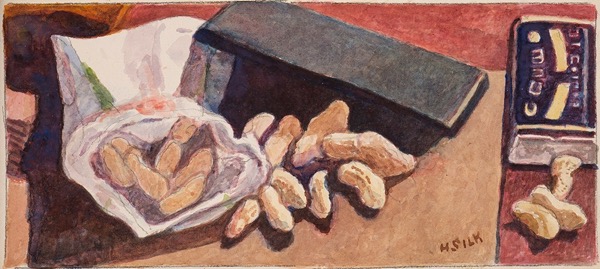
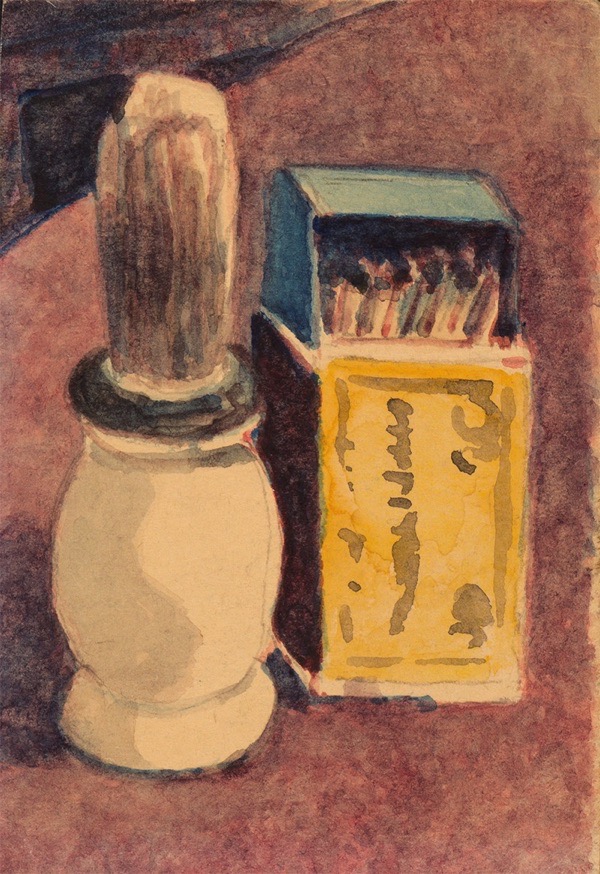
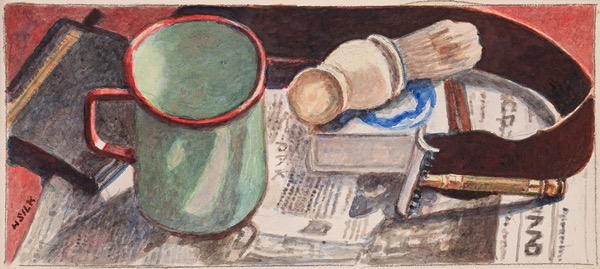
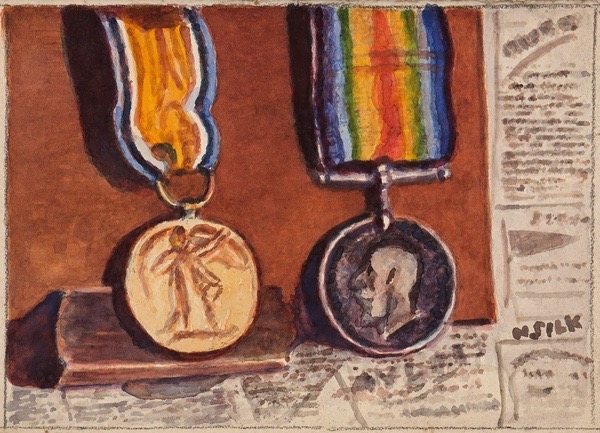
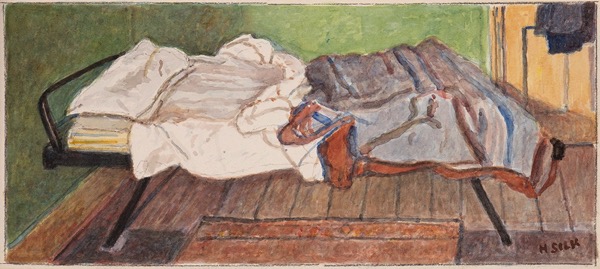
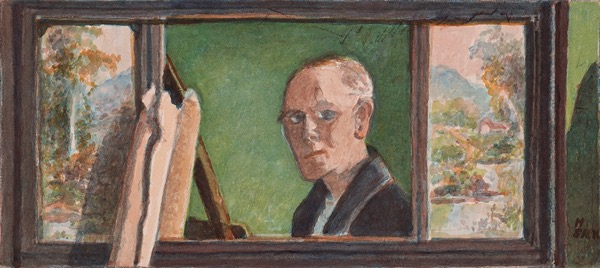
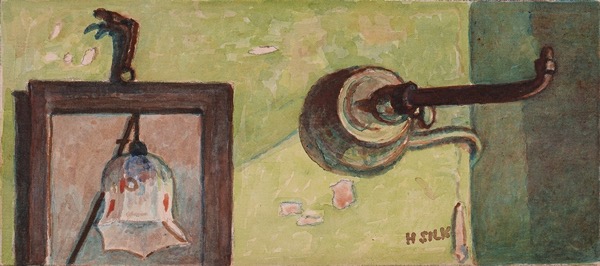
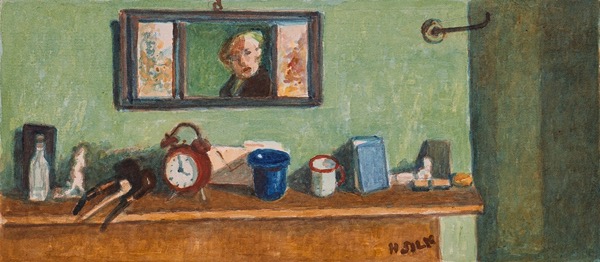
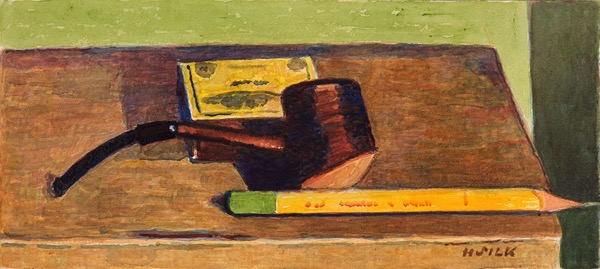
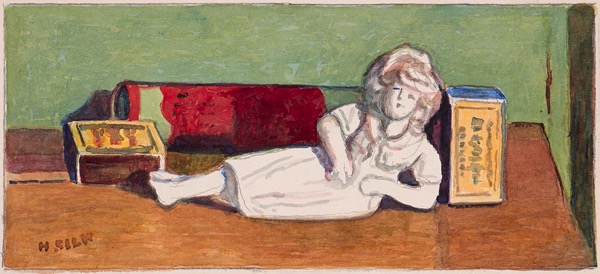
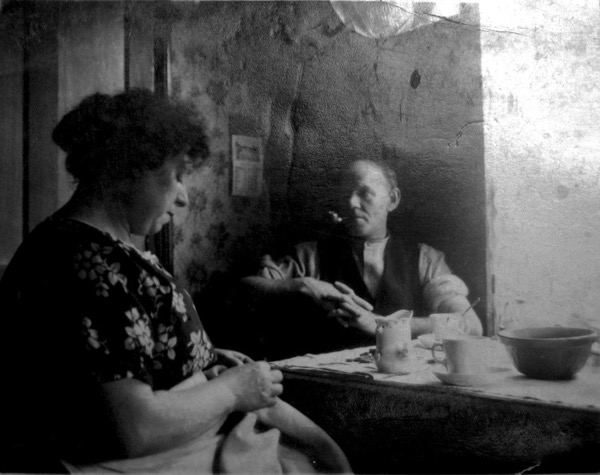
Henry Silk and his sister
Walter Crane’s Windows In Clapton
Starting in 2013, Spitalfields Life Books published 15 books over 6 years until the pandemic shut us down. Now we are ready to begin again and are crowdfunding to raise enough money to cover production of our next 3 books. So far we have raised £8,810 but we still have a significant way to go.
CLICK HERE TO VISIT OUR CROWDFUND PAGE AND CONTRIBUTE
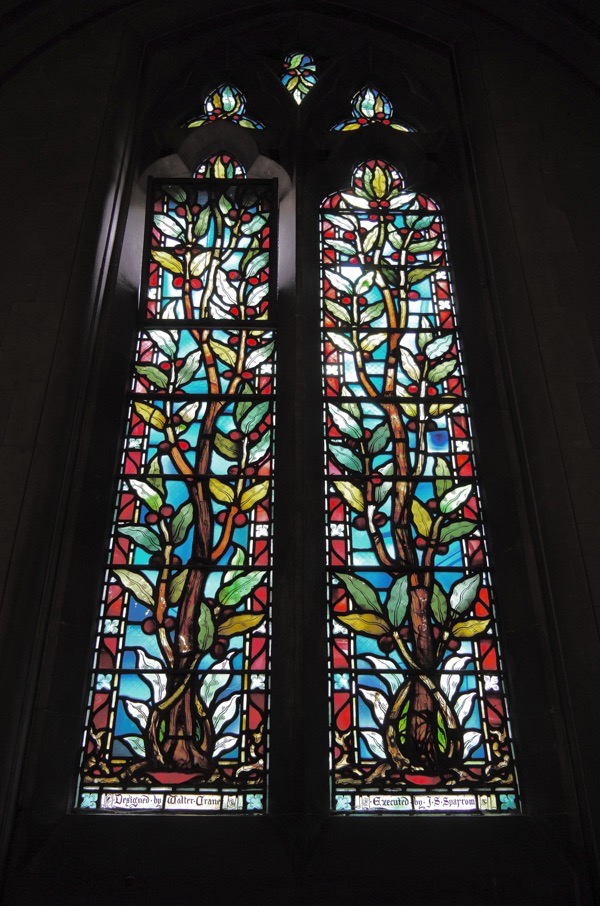
I have often seen the tall spire at Clapton from the footpath along the River Lea, but only recently I climbed the hill from the river to visit for the first time. Built as the Church of the Ark of the Covenant by the Agapemonites in 1892, it became the Catholic Church of the Good Shepherd after 1956 and then began a new life in 2011 as the Cathedral of the Nativity of Our Lord, a Georgian Orthodox Cathedral. Yet despite these different occupants, it remains almost unchanged since it was built in 1896.
My quest was to view Walter Crane’s windows which are considered to be his greatest achievement in stained glass and were described by Sir John Betjeman as”the richest Victorian glass I have ever seen” maintaining that “it made Burne-Jones and Rossetti’s glass look pale by comparison.”
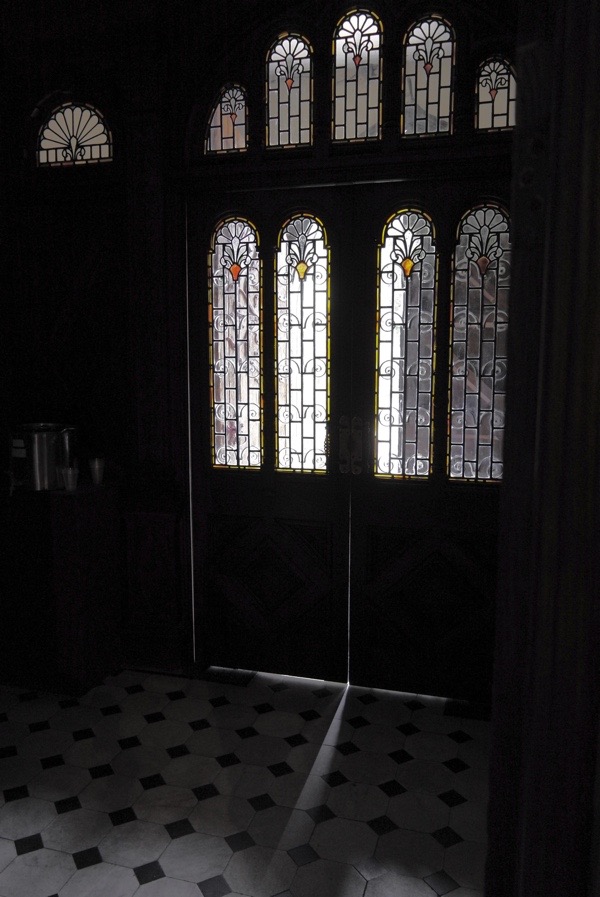
On either side of the nave are a series of pairs of lancet windows with lyrical designs of fruit and flowers, and it is these benign images that welcome the visitor, glowing within the darkness of the church beneath the heavy wooden roof lowering overhead.
It is in the west windows that a certain surreal melodrama creeps in. Here you will discover a Blakean tableau of the Rising Sun of Righteousness, flanked by personifications of the Powers of Darkness – Disease and Death, and Sin and Shame. The Art Journal had a quite a lot to say about these in 1896 which I quote below.
The submission of women to men was a central tenet of the Agapemonites, a bizarre misogynist sect founded by Henry Prince in 1856 that advocated polygamy for men and died out in 1956.
Thankfully Walter Crane interpreted his commission loosely, portraying nine female figures and a single male who is not presented as dominant. Yet there is a grotesquely seductive morbidity in the portrayal of the Powers of Darkness, who are embodied as female which must have made uncomfortable viewing for the long-suffering women of the Agapemonites.
Outside, on the exterior of the church, the effect is as much Gothic horror as Victorian gothic. On the corners of the spire sit outsize sculptures of the symbols of the four evangelists – the winged ox for Luke, the winged lion for Mark, the eagle for John and the angel for Matthew, each trampling underfoot a human figure, representing the trials of earthly existence: Death, Sorrow, Crying and Pain.
It is a strange experience to confront these brutally sentimental representations of melancholy descending to nihilism, the relics of a sinister cult extinguished a generation ago reduced now to mere curiosities.
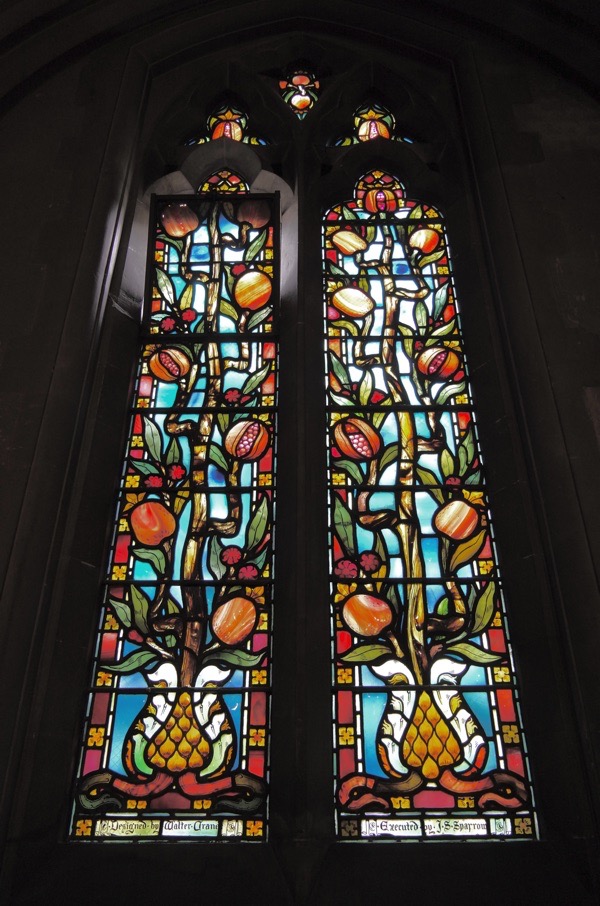
Pomegranates
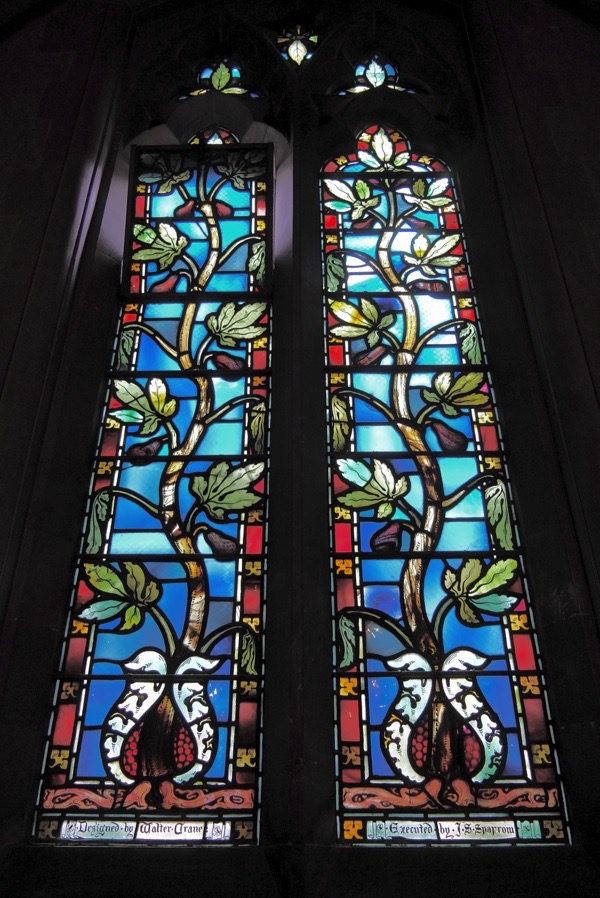
Fig
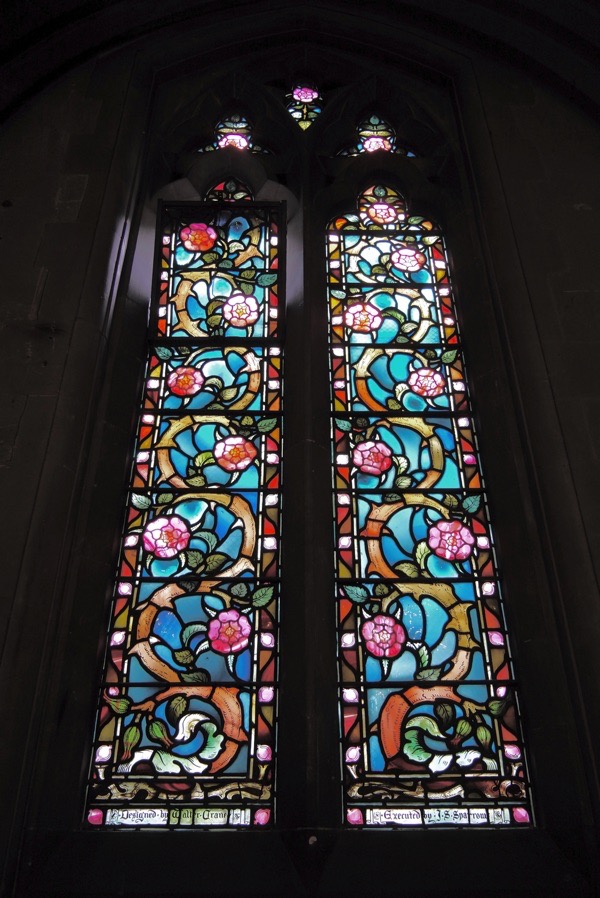
Briar rose
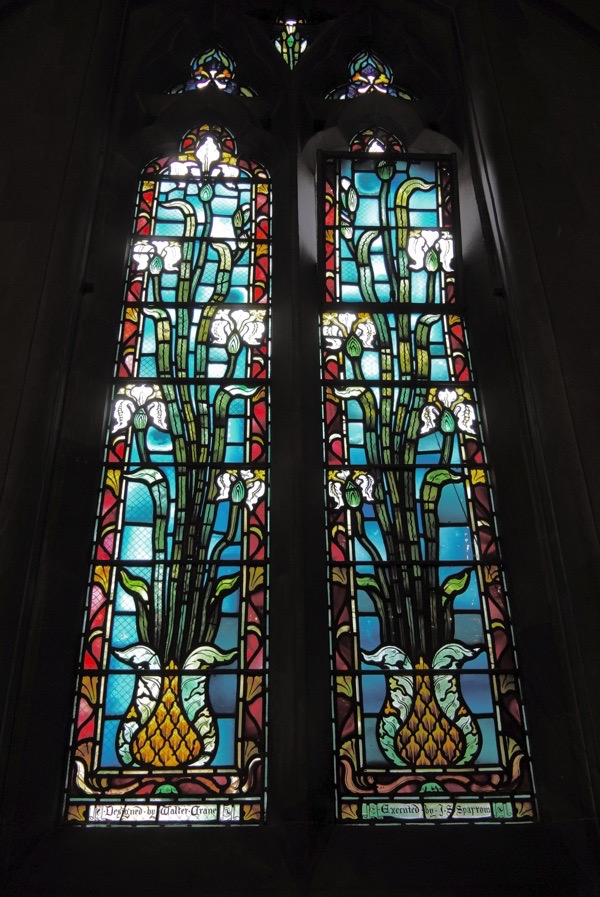
Iris
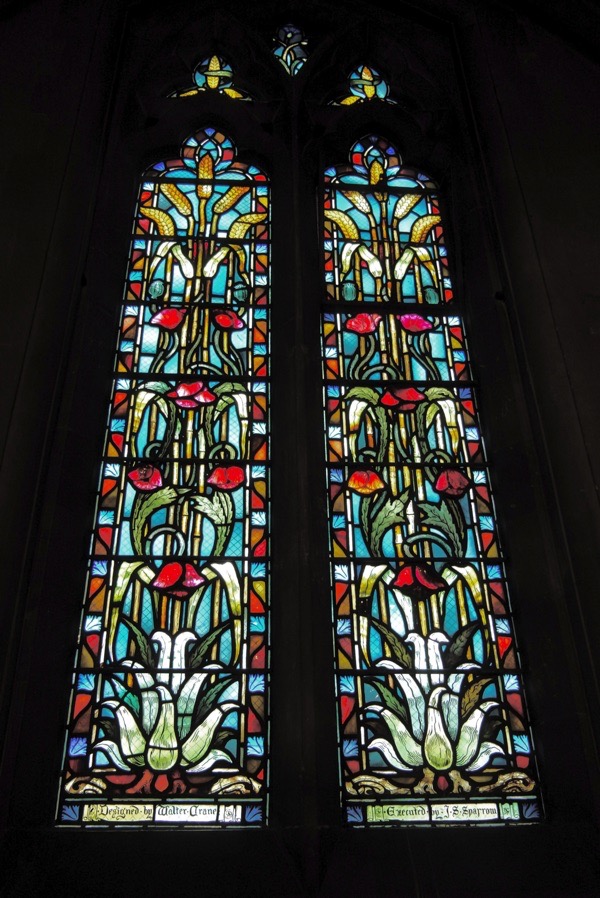
Poppies in the corn
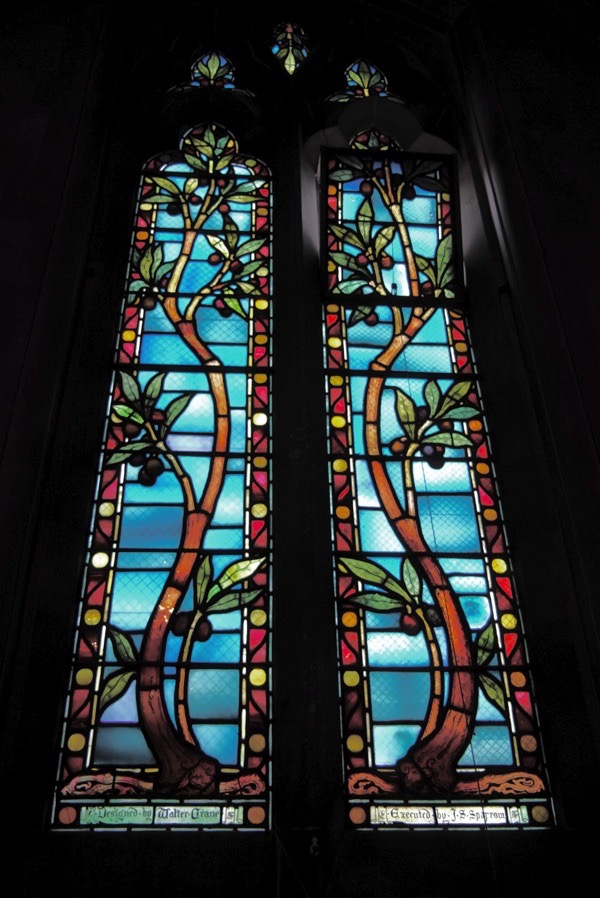
Olives
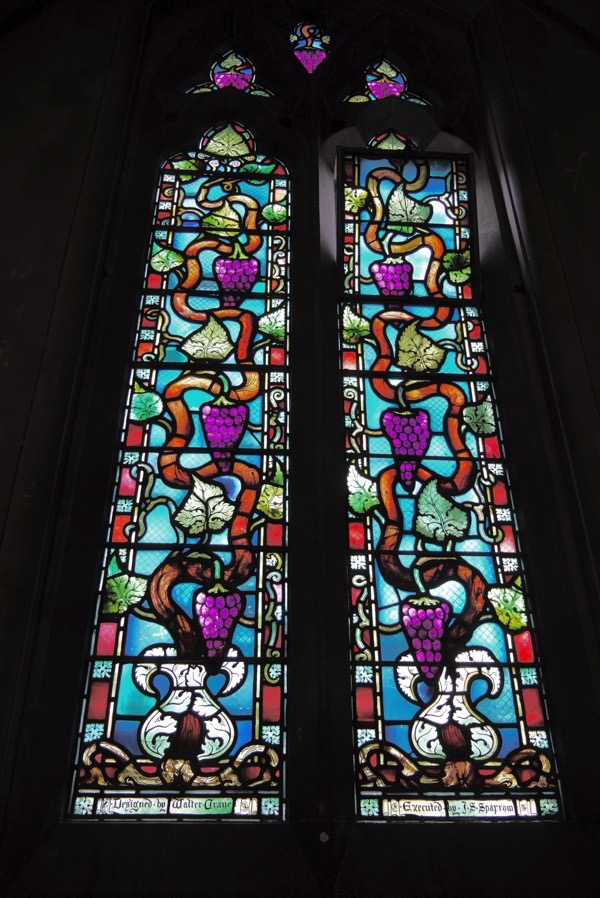
Grapes
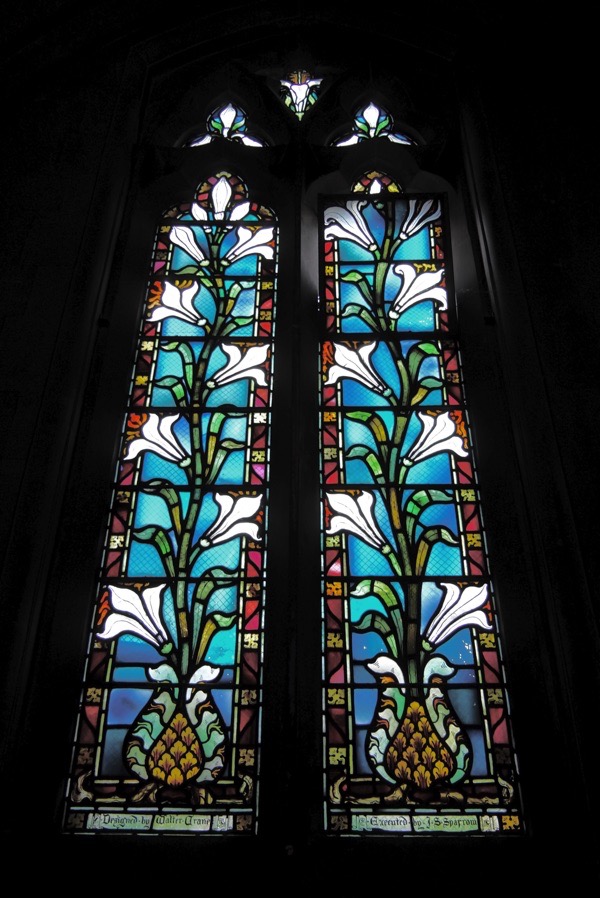
Lilies
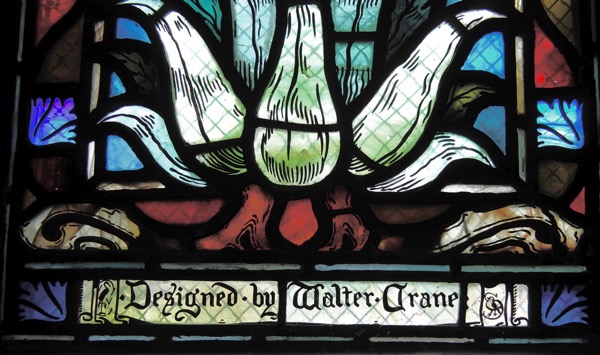
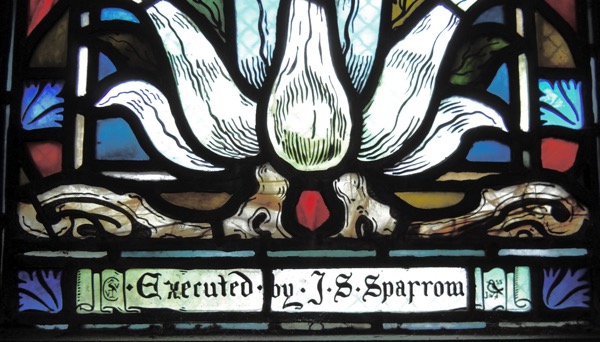
“The side windows of the nave, nine in all, are filled with flower and fruit designs, in considerably paler colour than the figure compositions. These include the rose, the fig, the pomegranate, the bay, the lily, the vine, the olive, corn and poppies, and the iris. They are naturally of less interest than the subject windows; but they are boldly, simply, and effectively treated, and in a fashion that is thoroughly glass-like, without too nearly following the lines of old work. Perhaps they are a trifle large in scale. It is characteristic of the thoroughness of the artist that no two of these windows are alike; and, more than that, there is absolutely no repetition whatever in them: even when one light seems at first sight to be the counterpart of the other, it is not actually so; each, it will be seen upon comparison, has been separately drawn.” Art Journal 1896
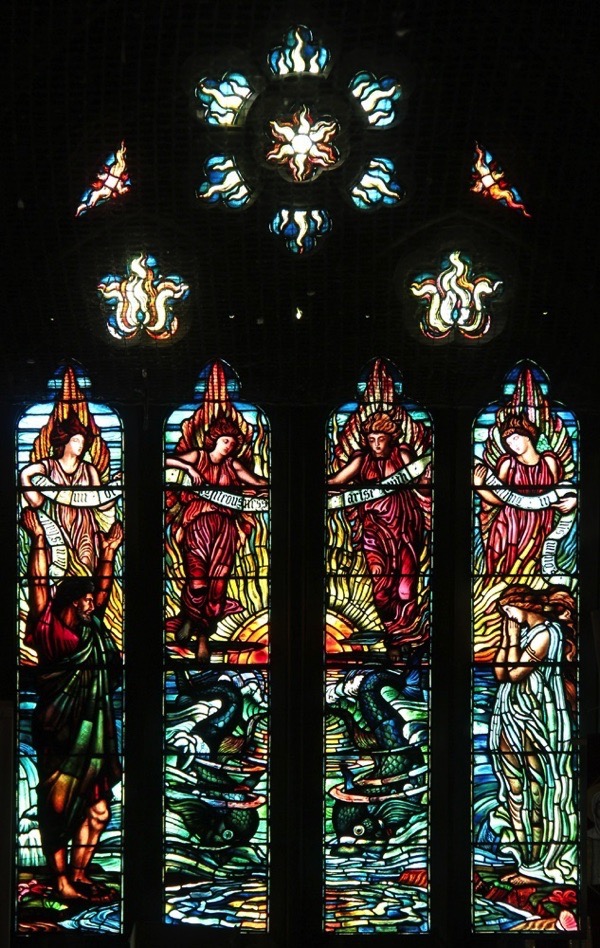
The Rising Sun of Righteousness (Photo by John Salmon)
“Thence rises the Sun, and from its rays issue the forms of Angels with flaming wings bearing a scroll inscribed, ‘Then shall the Sun of Righteousness arise with healing in His wings.’ To the right and left of the window stand the figures of a man with upstretched hands, saluting, and a woman with hands clasped in contemplation. ” The Art Journal 1896
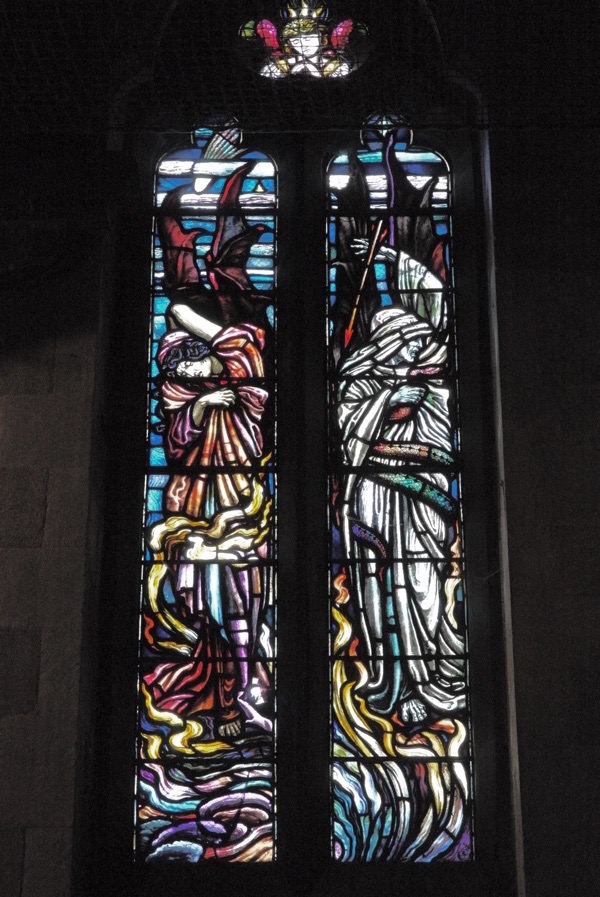
Disease and Death
“There is something most appropriately morbid in the many-hued raiment of Disease, crossed by forked tongues of flame; but it lends itself to strangely fascinating colour. The head is crowned, Medusa-like, with wriggling snakes, in place of locks of hair. The action of the arm behind the head, and the hand clutching the drapery on her breast, are indicative of intense pain. The white -shrouded figure of Death counterbalances in colour the figure of Sin. It again is encircled by a snake, which fulfils much the same decorative purpose as before; but in this case Death’s livid hand grips it by the neck. The other hand, uplifted, lets fall a blood- stained dart. It is a grim and ghastly figure enough; but at the same time admirably decorative. Imagine a white-clad figure, with greenish flesh and purplish wings, against a blue background, the blue and purple echoed, in fainter key, in the snake against the drapery. Its coils break the mass of white, whilst the greenish flames below, growing yellower as they begin to wrap the figure about, carry the lighter tones of colour into the lower part of the window. A clever point in the construction of these designs is the way the faces of Disease and Shame are artfully set in the colour of the drapery, as Death’s dark visage is wrapped in the folds of her white garment. To have made these painful subjects not only dramatically impressive, but at the same time decoratively delightful, is something of a triumph in design” Art Journal 1896

Sin and Shame
“Sin, draped in white, the cloak of pretended innocence, huddles herself together in the attitude of fear and shrinking; her bat-shaped wings break with deep purple the blue sky which forms the background to the greater part of the window. The blue below represents the sea, leaden towards the horizon, against which are seen flames, radiating, it may be presumed, from the Sun of Righteousness. A snake, encircling the figure, whispers the counsel of evil; and fulfils at the same time the decorative function of connecting, by the prismatic colour of its scales, the purple of the wings above with the colour of the flames below.
No less expressive is the companion figure of Shame, crimson-robed, with dull green wings, ruddy-tipped; about her sombre figure also leap the flames; her bent head, and the painful clutch of her hand upon it, are full of meaning.” Art Journal 1896
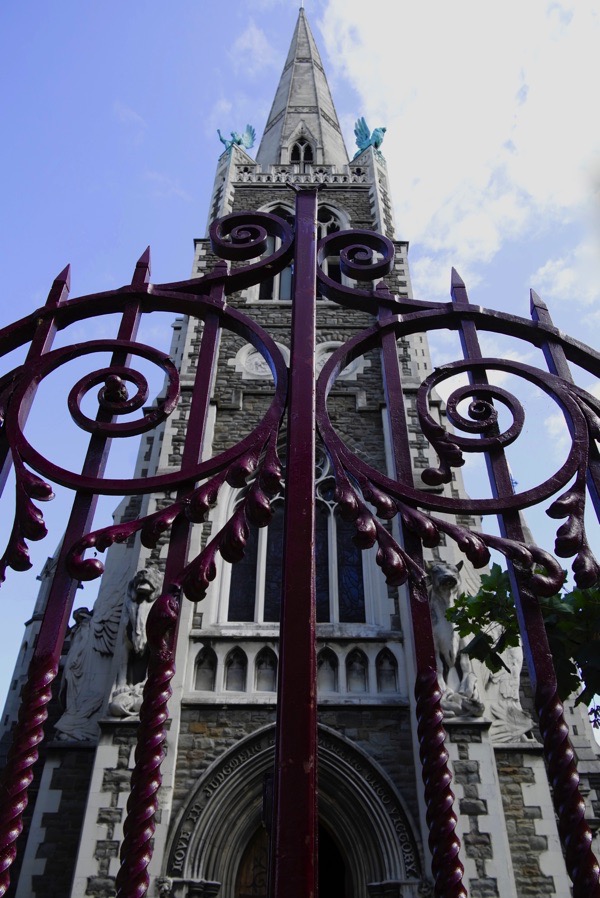
On the spire are the symbols of the four evangelists – the winged ox for Luke, the winged lion for Mark, the eagle for John and the angel for Matthew, each trampling underfoot a human figure, symbolising the trials of earthly existence: Death, Sorrow, Crying and Pain.
The Brady Girls
Starting in 2013, Spitalfields Life Books published 15 books over 6 years until the pandemic shut us down. Now we are ready to begin again and are crowdfunding to raise enough money to cover production of our next 3 books. So far we have raised £8,625 but we still have a significant way to go.
CLICK HERE TO VISIT OUR CROWDFUND PAGE AND CONTRIBUTE
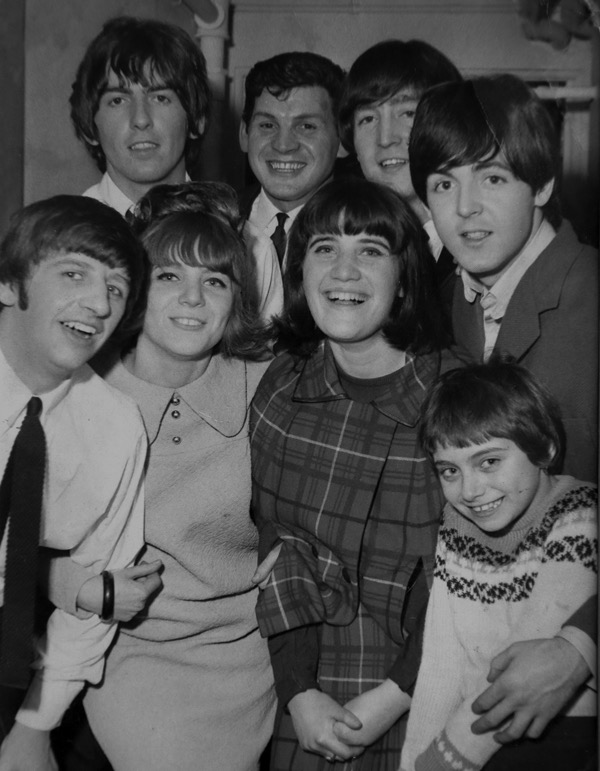
The Brady Girls with The Beatles, 1964
How glorious it is to publish these joyful photographs of the Brady Girls’ Club at the Brady Centre in Hanbury St which are now the subject of an exhibition WE ARE THE BRADY GIRLS, from 6th October to 7th November at the Atrium Gallery, London Metropolitan University, Goulston St, E1 7TP.
The Brady Girls’ Club ran from 1920 to 1970. Led by Miriam Moses OBE JP – the first female mayor of Stepney – the Club supported the community during the war years and after, offering shelter and practical help to hundreds of young women and families.
The exhibition features a collection of photography which was rediscovered in 2016 and has inspired a project funded by the Rothschild Foundation Hanadiv Europe to record video histories of former members of the Brady Boys’ and Girls’ Clubs.
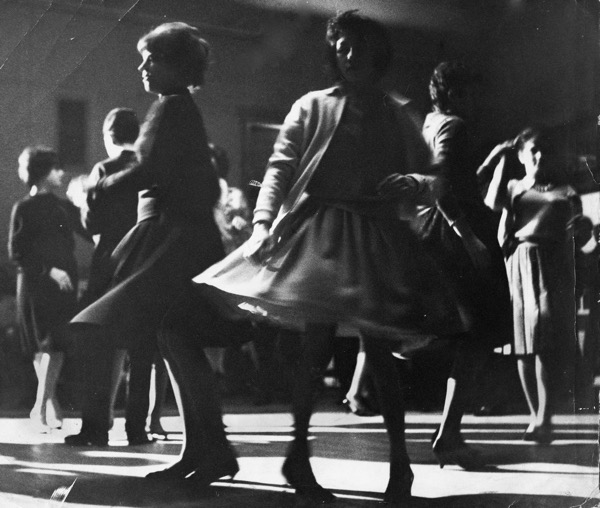
The Brady Girls dance
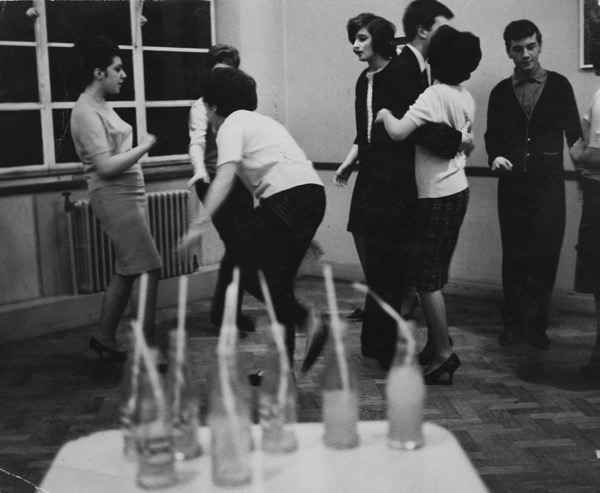
A Brady Club Social
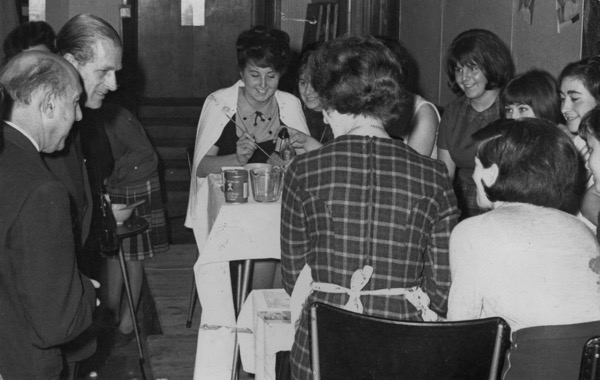
The Brady Girls and Prince Philip
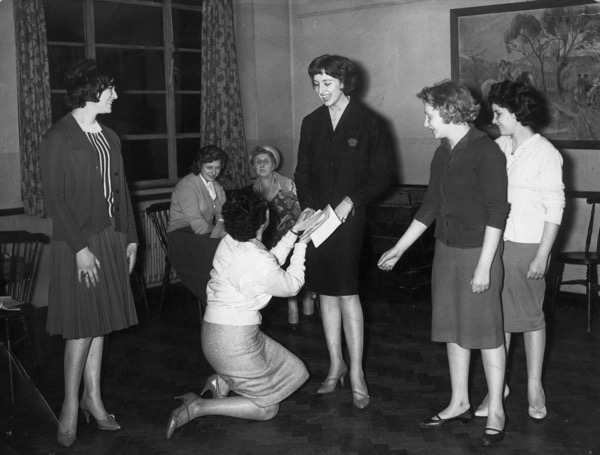
The Brady Girls drama class
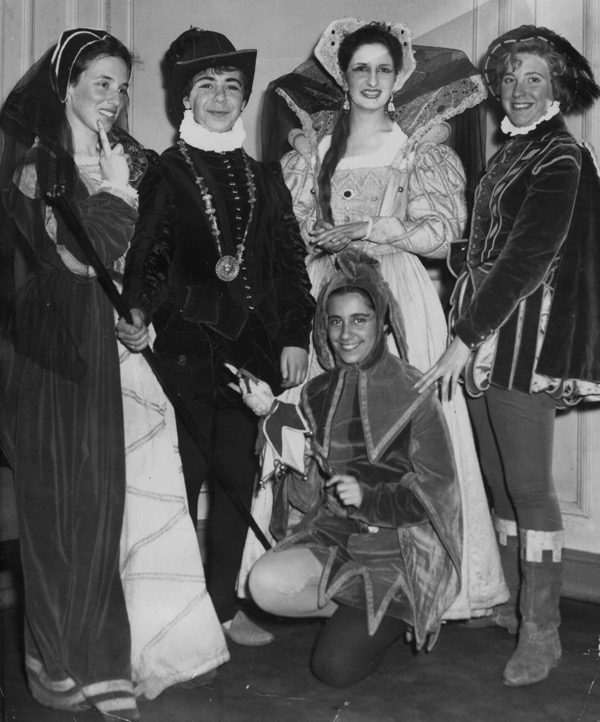
The Brady Girls perform Shakespeare
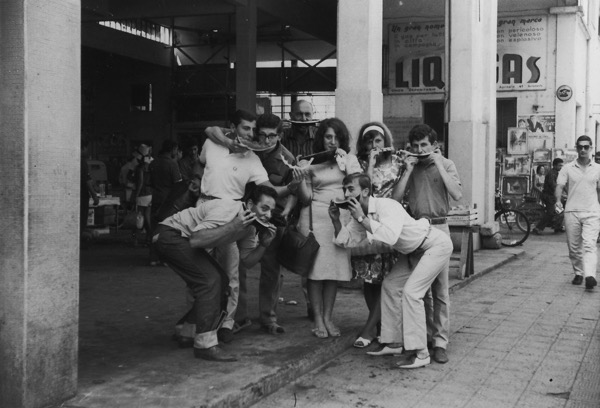
The Brady Girls on holiday in Oberhofen, 1961
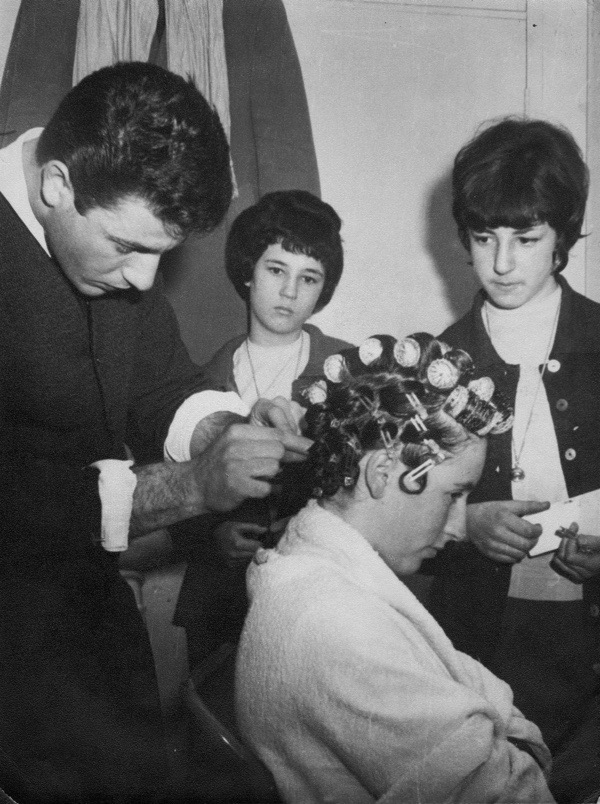
A Brady Girls hairdressing session
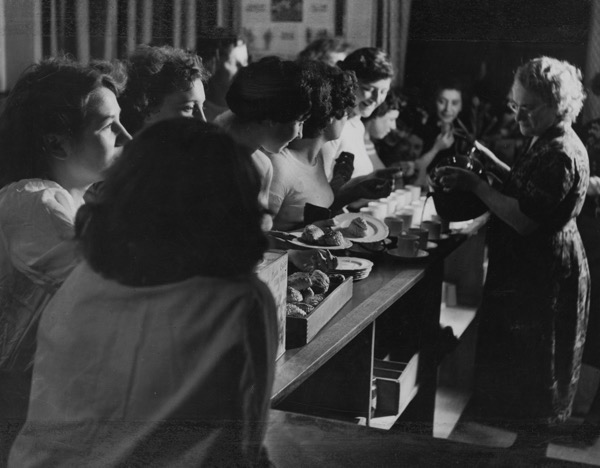
At the Brady Girls canteen
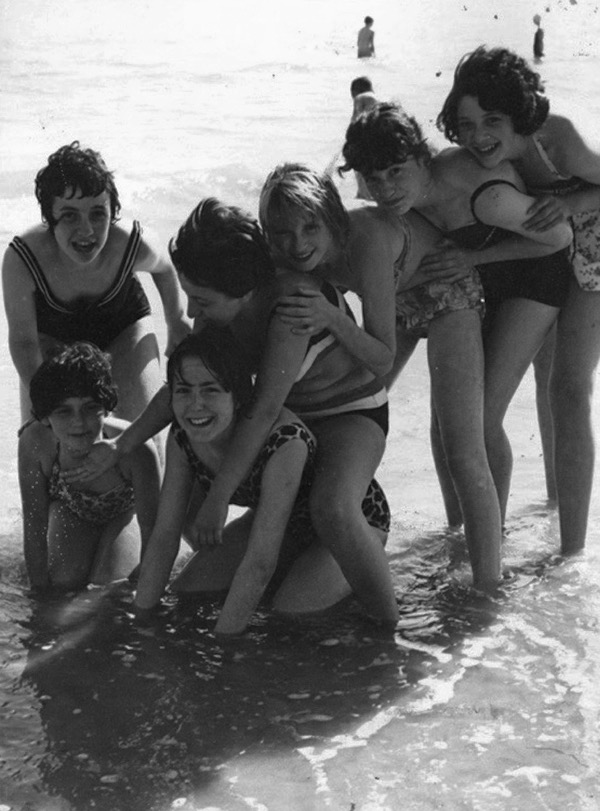
The Brady Girls at the beach
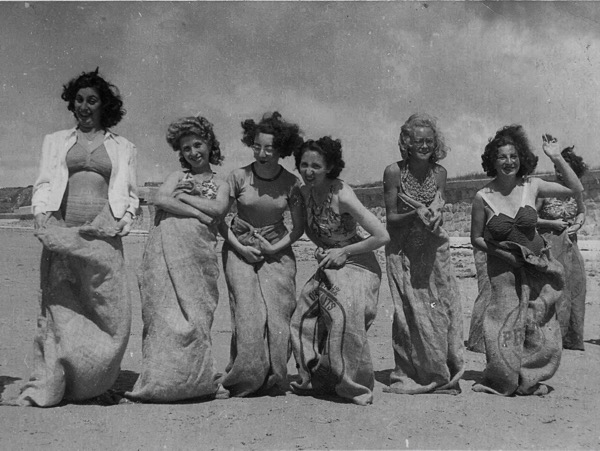
The Brady Girls sack race, 1941
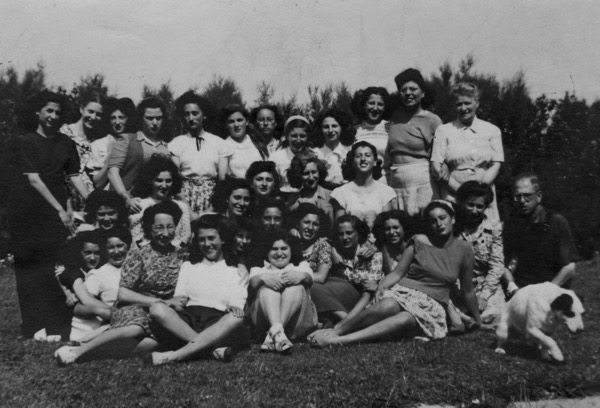
The Brady Girls at Bracklesham Bay, August, 1948
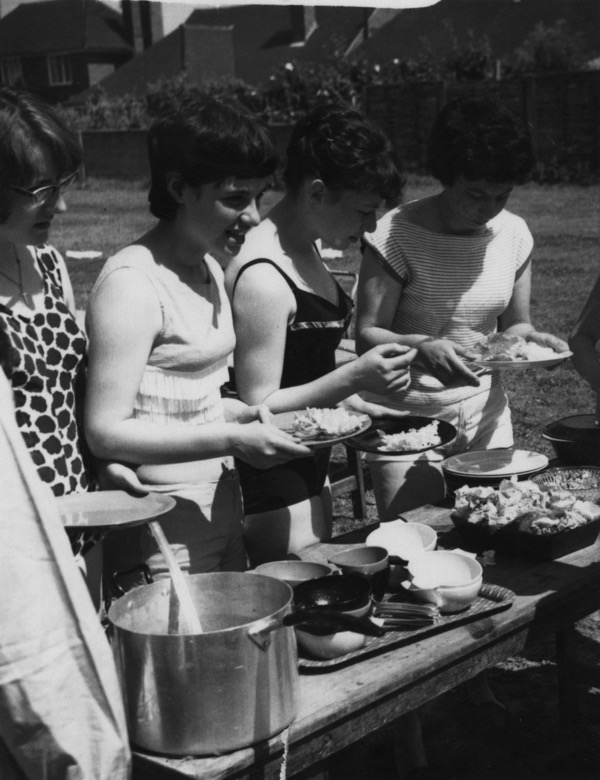
The Brady Girls’ camp
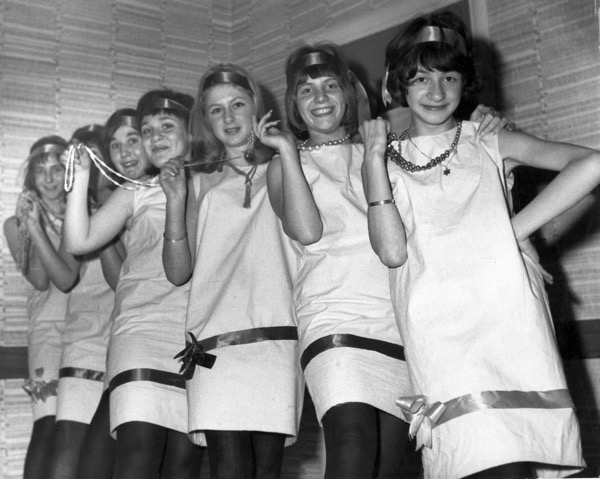
The Brady Girls as flappers
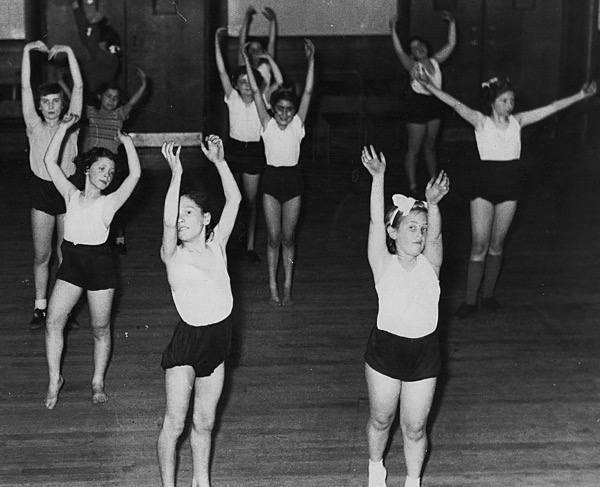
The Brady Girls dance class, 1940s
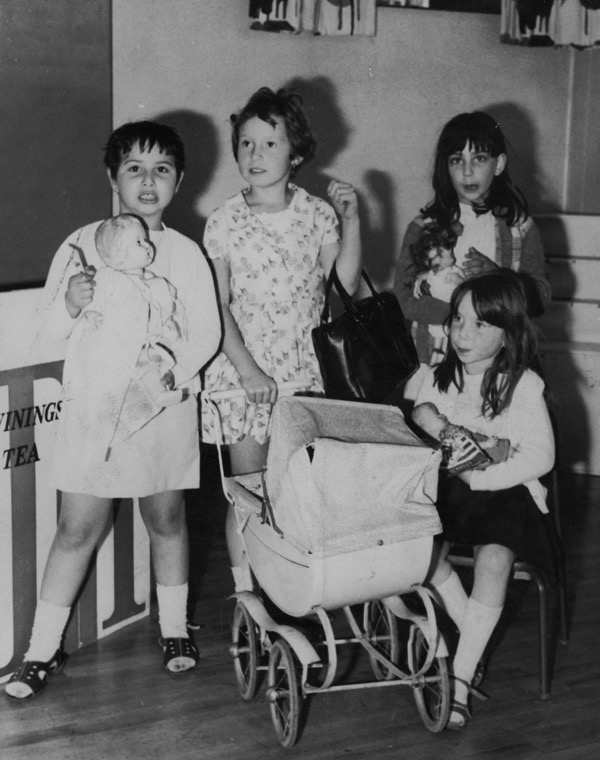
The Brady Girls play at being mothers
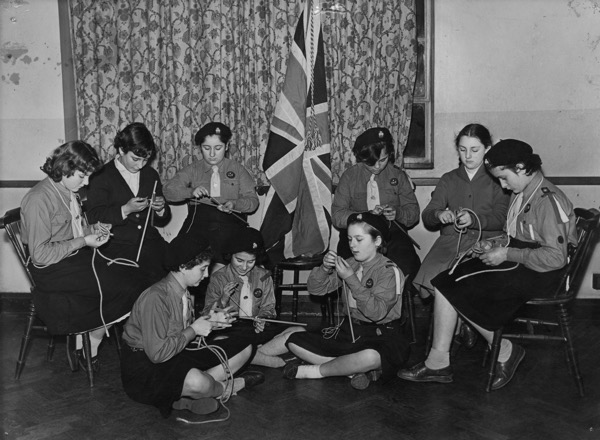
The Brady Girl guides
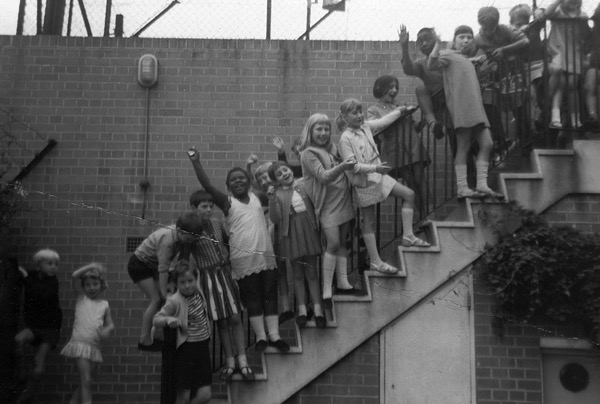
The Brady Girls climb the stairs in Hanbury St
Photographs courtesy The Brady Archive
My East End Vernacular Lecture

In our first week we raised over £8000, which is a big achievement. But we still have a way to go to reach our target, so if you have not yet contributed please search down the back of the sofa and check the pockets of your winter coat.
CLICK HERE TO VISIT OUR CROWDFUND PAGE AND CONTRIBUTE
THANK YOU to all who have already contributed, here are some of your comments.
‘I am definitely looking forward to the Hackney Mosaics book!’
Frances Oakley
‘I am supporting this project in memory of my Dad, who loved the East End. Spitalfields Life books gave him so much pleasure towards the end of his life and helped to rekindle his fading memory. May these new books similarly bring many happy memories old and new, and deliver a slice of the uniqueness that is Spitalfields Life.’
Christine Swan
‘Good luck with the relaunch of Spitalfields Life Books.’
Alison Felstead
‘Capturing this History in photographs is culturally important for the UK & my families. We have strong family roots – both sides- in & around Spitalfields, that goes back generations so being able to ‘see’ life through years of change via your books,helps to keep the past relevant & in the correct timeline of our personal histories. Good luck.’
Jab Carroll
‘David Hoffman’s photos are an invaluable record of a unique and pivotal period in the history of London’s East End.’
Angela Smith
‘Good luck ?’
Julie Begum
‘David’s work is absolutely gorgeous and I am totally behind getting this publication back up and running. I lived in the East End for 14 years when I moved to London after uni, only moved further out because who can afford to buy a place there now! But it is still the place I consider home. Good luck. Helen.’
Miss Helen E Rimmell
‘The Gentle Author should probably be made some kind of Saint of the East End with his extraordinary contribution to the awareness of and the visibility of the lives of its people, its history, its buildings and the pricelessness of the everyday. We look forward to more wonderful titles.’
Iain B
‘Dear Gentle Author, how could I not support this terrific initiative . Great good luck. Your ever loyal friend, Pen.’
Pen Thompson
‘I enjoy your blog and books very much. Good luck with the funding.’
Lynne Casey
‘A great series of projects to ensure the continuation of this important source of information.’
John Furlong
‘Roll the presses!’
Linda Granfield
‘Congratulations! – Looking forward to even MORE Spitalfields Life books in my art library.’
Lynne Perrella
‘Good luck with it all – I am looking forward to reading more of your beautifully produced books.’
Arabella Warner
‘This is a very worthwhile project. Your books are a joy and I can’t wait to see the next three titles in print.’
Tim Mainstone
‘Great to see more incoming books again.’
Corvin Roman
‘Spitalfields Life books are fascinating and wonderful works of art and I look forward to reading the new books.’
Sara Kermond
‘Love to see these three books out there.’
Ruth Campbell
‘I’ve recently discovered the fascinating history of the East End through the Gentle Author and so want these Amazing books to be out there again for us to have the opportunity to purchase. Publishing is an expensive business. A worthy fundraiser.’
Sharon Willard
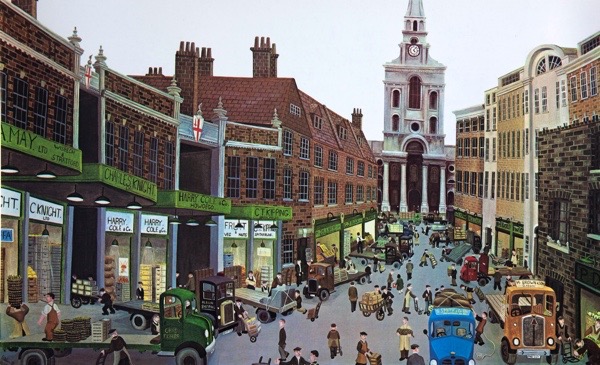
John Allin – Spitalfields Market, 1972
My illustrated lecture on EAST END VERNACULAR, Artists Who Painted London’s East End Streets in the 20th Century, including all the artists whose works are below, is at the Hanbury Hall on Tuesday 3rd October as the first in the new season of Spitalfields Talks
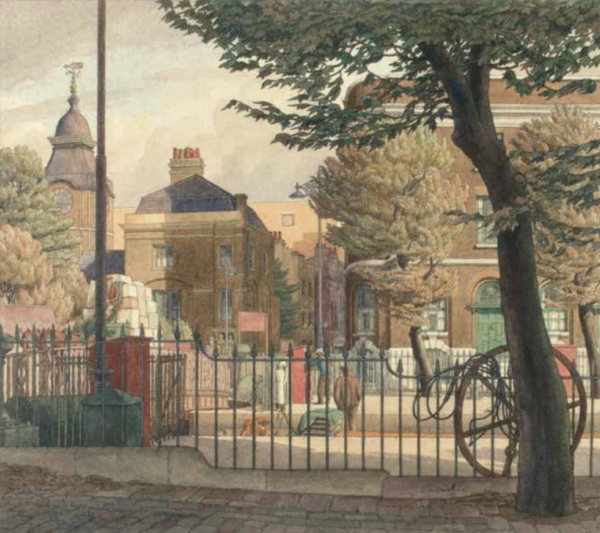
S.R Badmin – Wapping Pier Head, 1935

Pearl Binder – Aldgate, 1932 (Courtesy of Bishopsgate Institute)
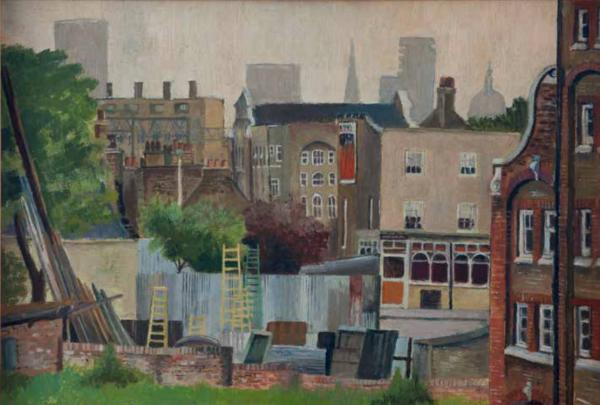
Dorothy Bishop – Looking towards the City of London from Morpeth School, 1961
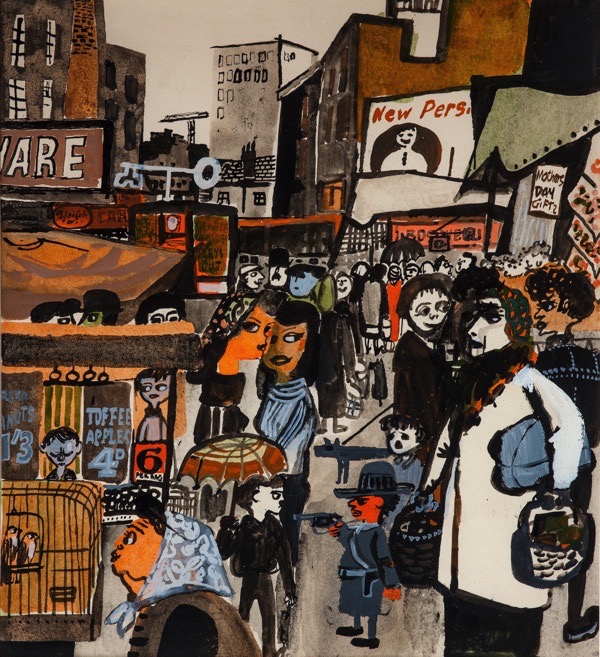
James Boswell – Petticoat Lane (Courtesy of David Buckman)
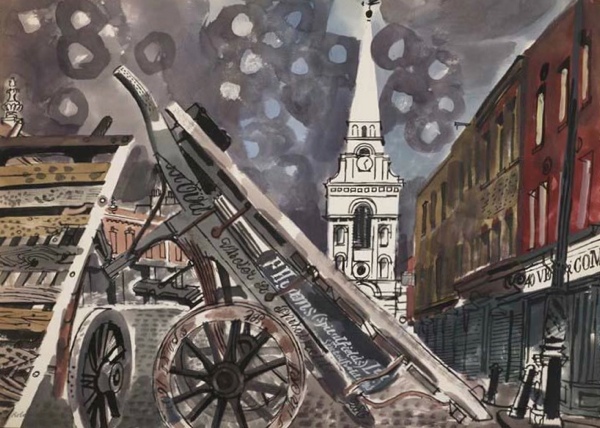
Roland Collins – Brushfield St, Spitalfields, 1951-60 (Courtesy of Museum of London)
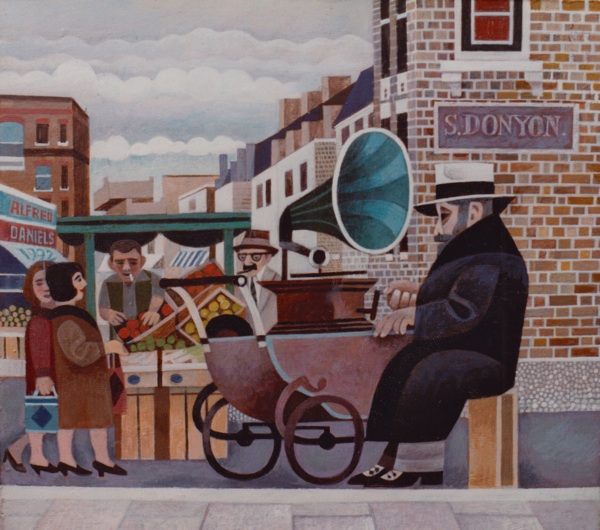
Alfred Daniels – Gramophone Man on Wentworth St
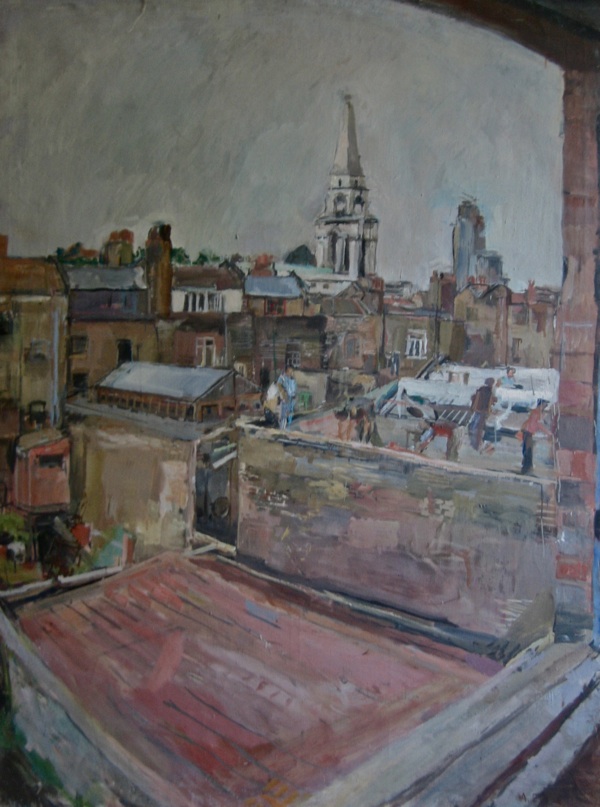
Anthony Eyton , Christ Church Spitalfields, 1980
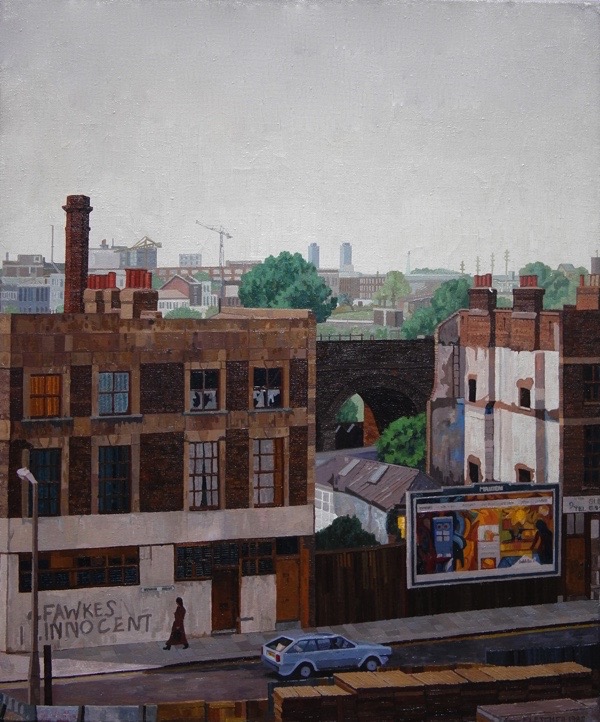
Doreen Fletcher – Turner’s Rd, 1998
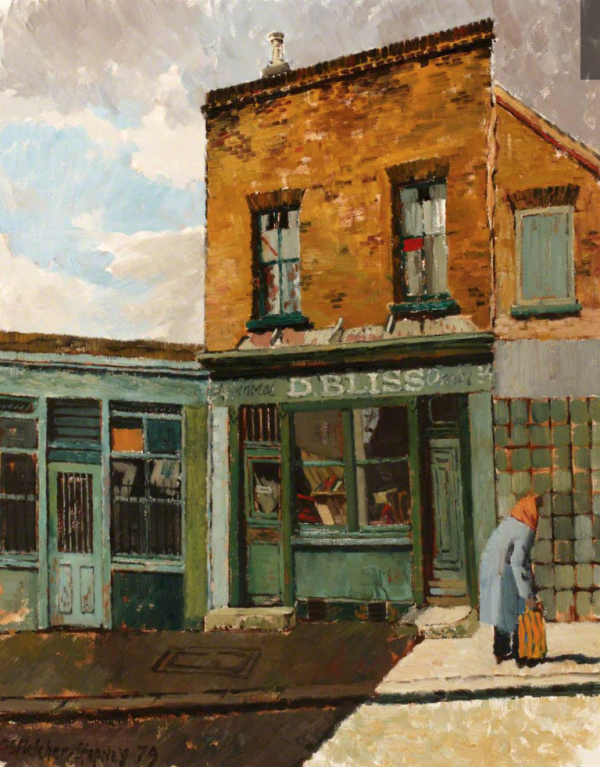
Geoffrey Fletcher – D.Bliss, Alderney Rd 1979 (Courtesy of Tower Hamlets Local History Library & Archives)
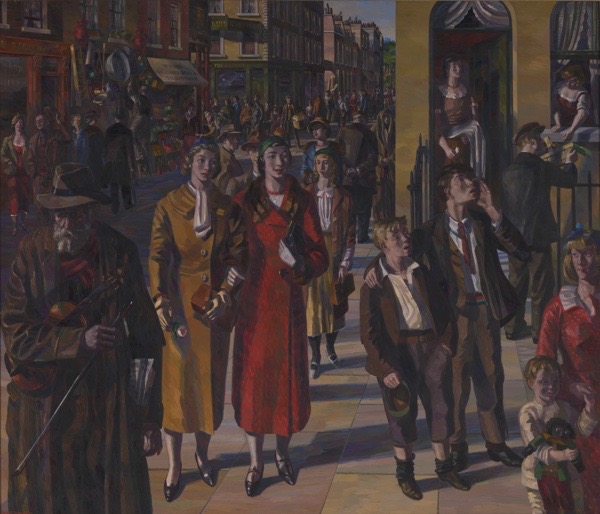
Barnett Freedman– Street Scene. 1933-39 (Courtesy of Tate Gallery)

Noel Gibson – Hessel St (Courtesy of Tower Hamlets Local History Library & Archives)
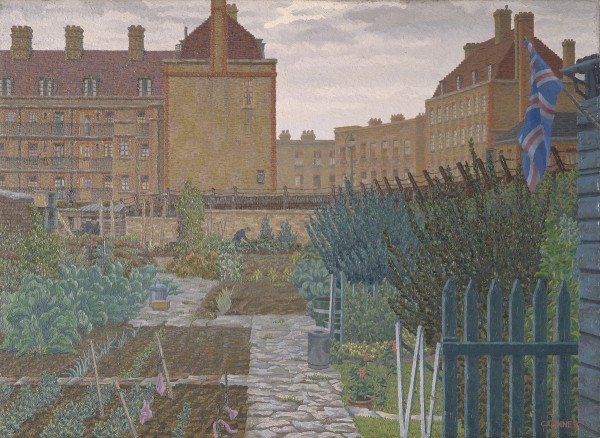
Charles Ginner – Bethnal Green Allotment, 1947 (Courtesy of Manchester City Art Gallery)
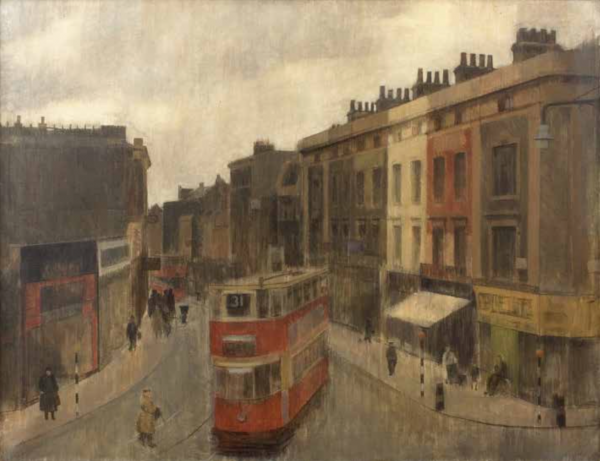
Lawrence Gowing – Mare St, 1937
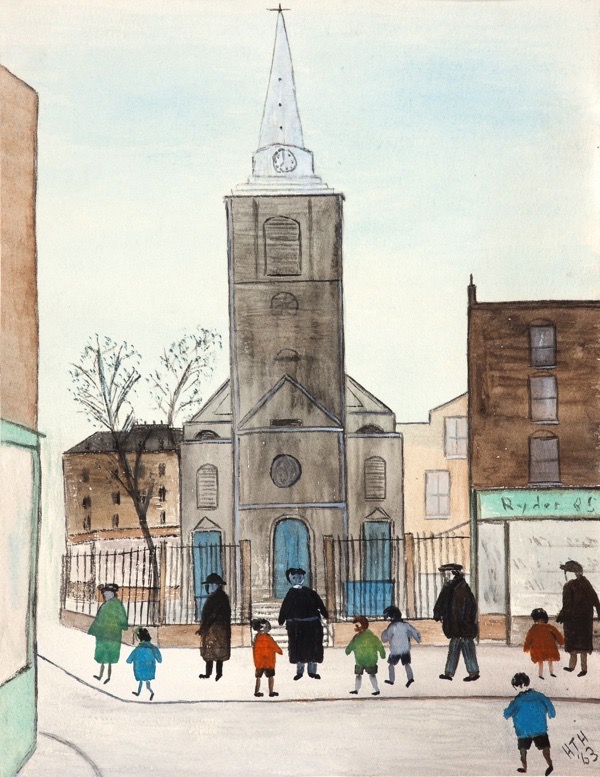
Harry T. Harmer – St Botolph’s Without Aldgate, 1963 (Courtesy of Tower Hamlets Local History Library & Archives)
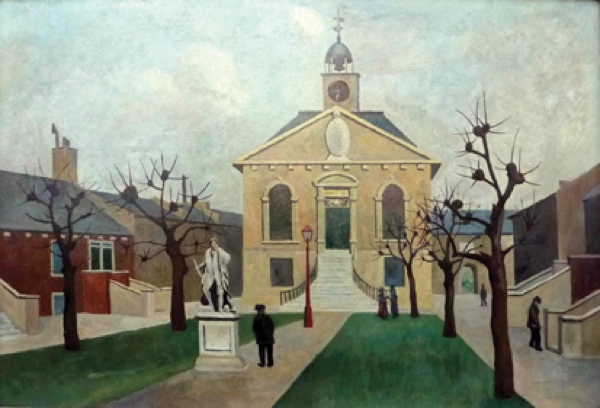
Elwin Hawthorne – Trinity Green Almshouses, 1935
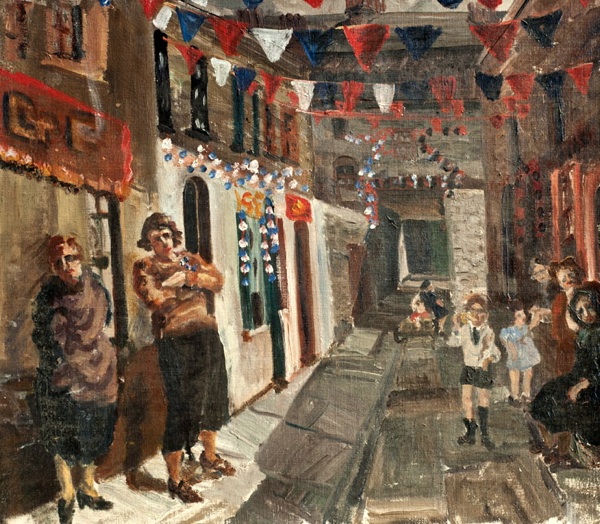
Rose Henriques – Coronation Celebrations in Challis Court, 1937 (Courtesy of Tower Hamlets Local History Library & Archives)
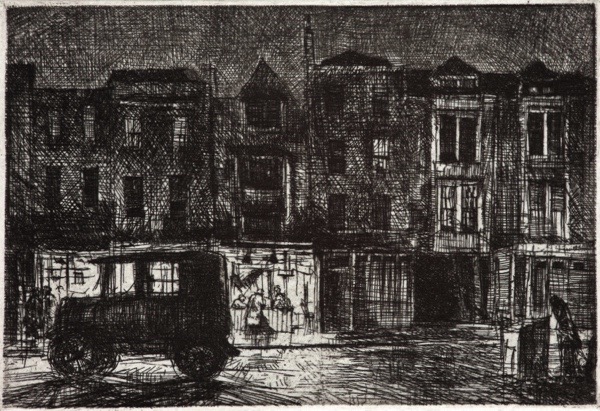
Nathaniel Kornbluth – Butcher’s Row, Aldgate 1934 (Courtesy of Tower Hamlets Local History Library & Archives)
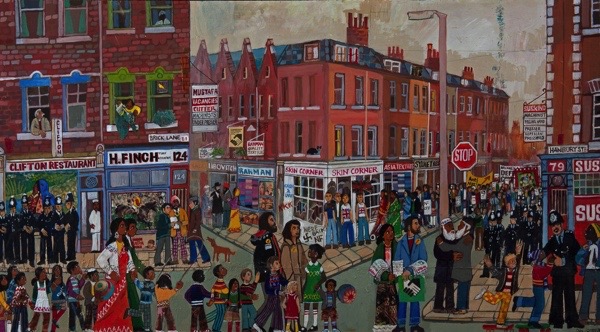
Dan Jones – Brick Lane, 1977
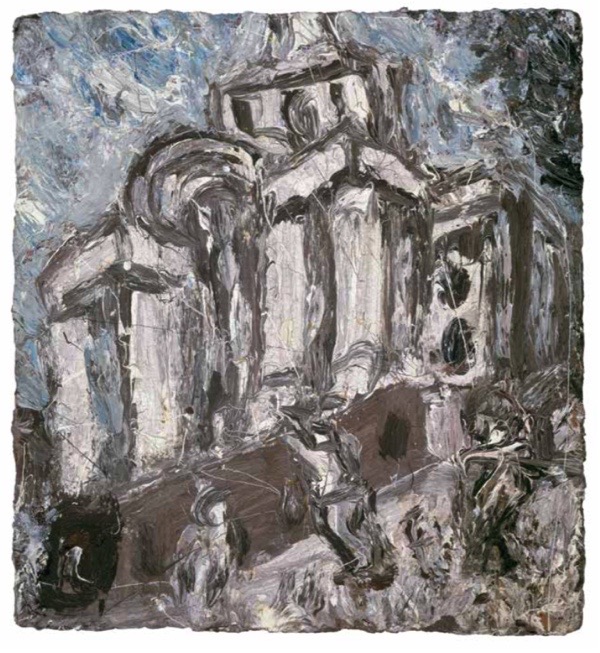 Leon Kossoff – Christ Church Spitalfields, 1987
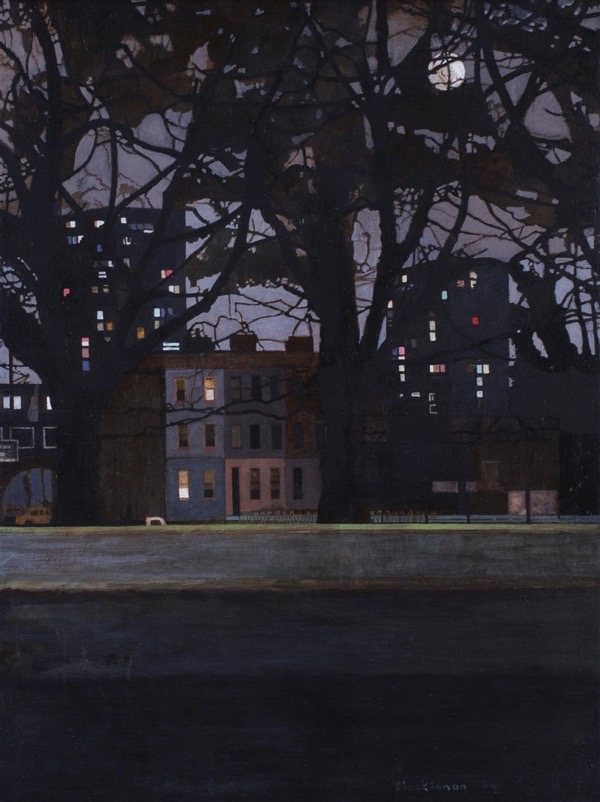
James Mackinnon – Twilight at London Fields
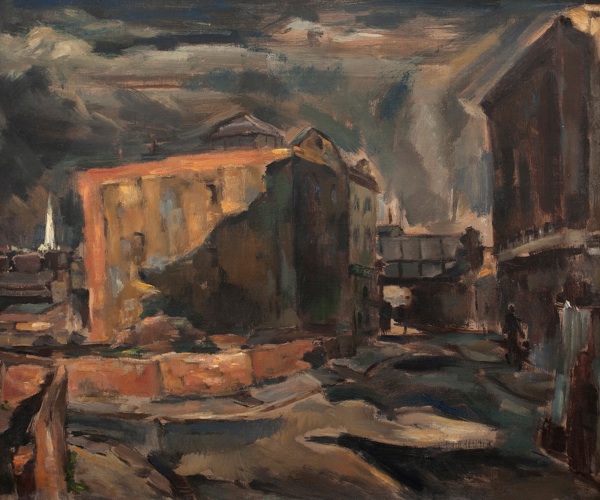
Cyril Mann – Christ Church seen over bombsites from Redchurch St, 1946 (Courtesy of Piano Nobile Gallery)
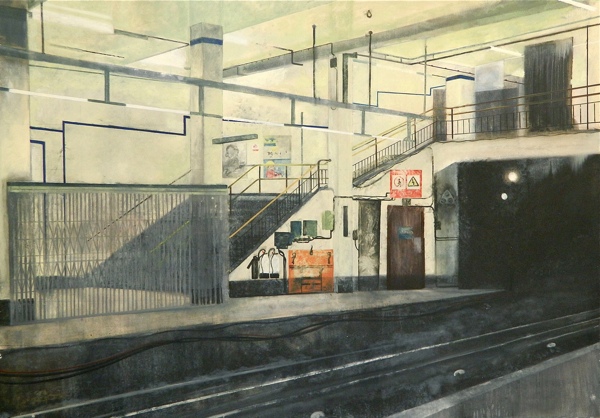
Jock McFadyen – Aldgate East
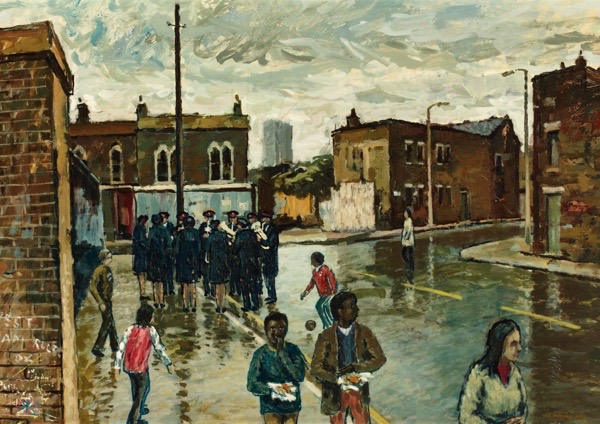
Ronald Morgan – Salvation Army Band Bow, 1978 (Courtesy of Tower Hamlets Local History Library & Archives)
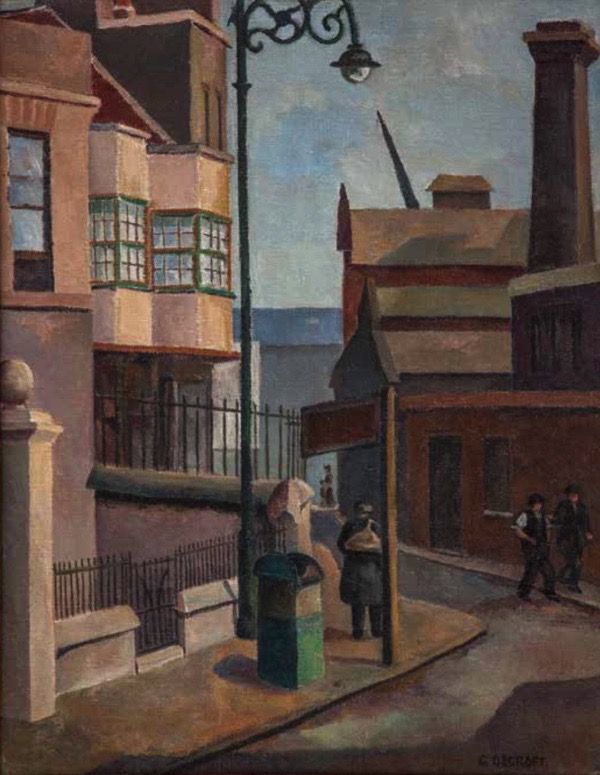
Grace Oscroft – Old Houses in Bow, 1934
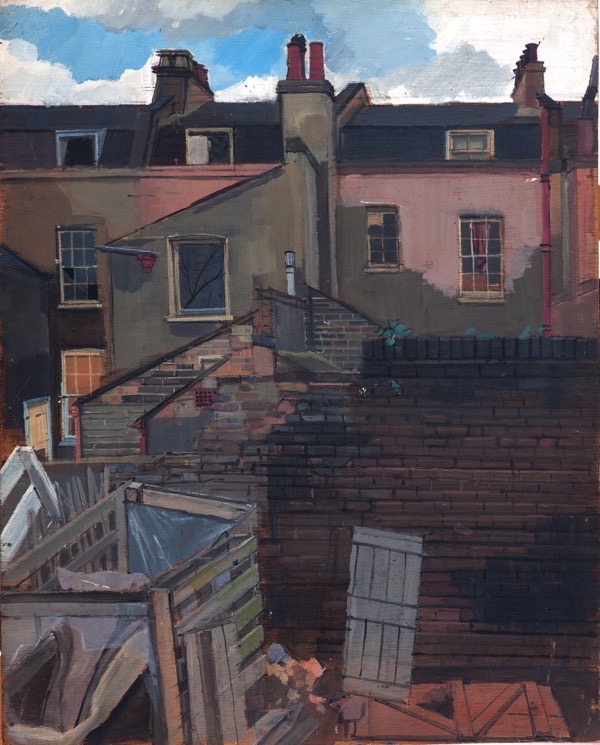
Peri Parkes – House in the East, 1980-81
Henry Silk – Snow, Rounton Rd, Bow
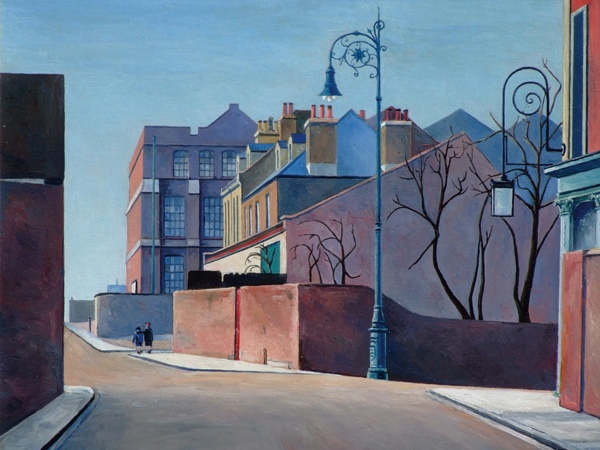
Harold Steggles – Old Ford Rd c.1932
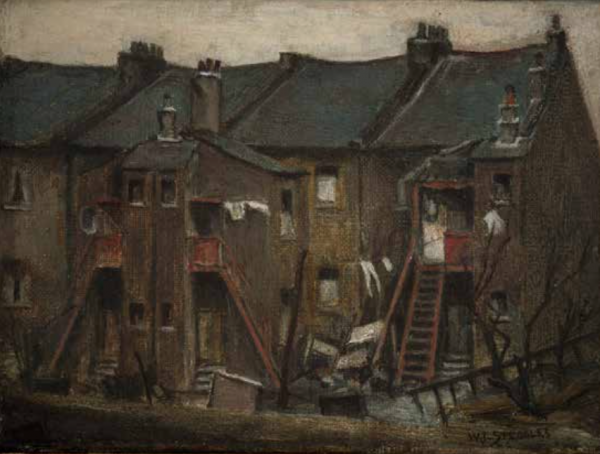
Walter Steggles – Old Houses, Bethnal Green 1929
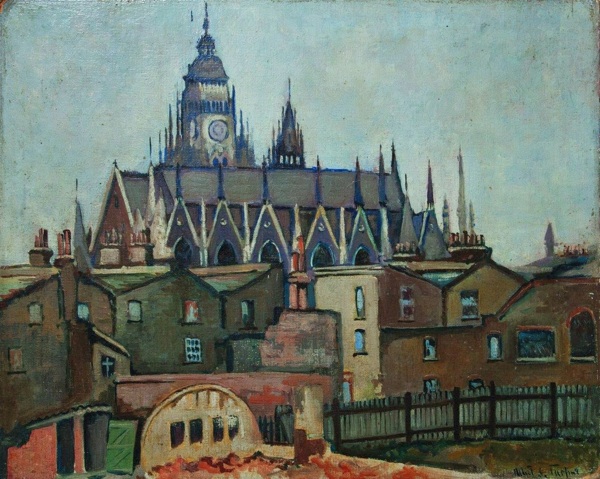
Albert Turpin, Columbia Market, Bethnal Green

Take a look at some of the artists featured in East End Vernacular
David Hoffman At St Botolph’s Aldgate

Starting in 2013, Spitalfields Life Books published 15 books over 6 years until the pandemic shut us down. Now we are ready to begin again and are crowdfunding to raise enough money to cover production of our next 3 books. We have raised £8,285 so far.
CLICK HERE TO VISIT OUR CROWDFUND PAGE AND CONTRIBUTE
Today we preview David Hoffman’s book:
A PLACE TO LIVE: ENDURANCE & JOY IN THE EAST END 1971-87
David Hoffman’s bold, humane photography records a lost decade, speaking vividly to our own times. Living in Whitechapel through the 70s, David documented homelessness, racism, the incursion of developers and the rise of protest in startlingly intimate and compassionate pictures to compose a vital photographic testimony of resilience.
“The old East End was disappearing as I took these photographs, being able to bring back a glimpse of its spirit in this book means a lot to me.”
David Hoffman
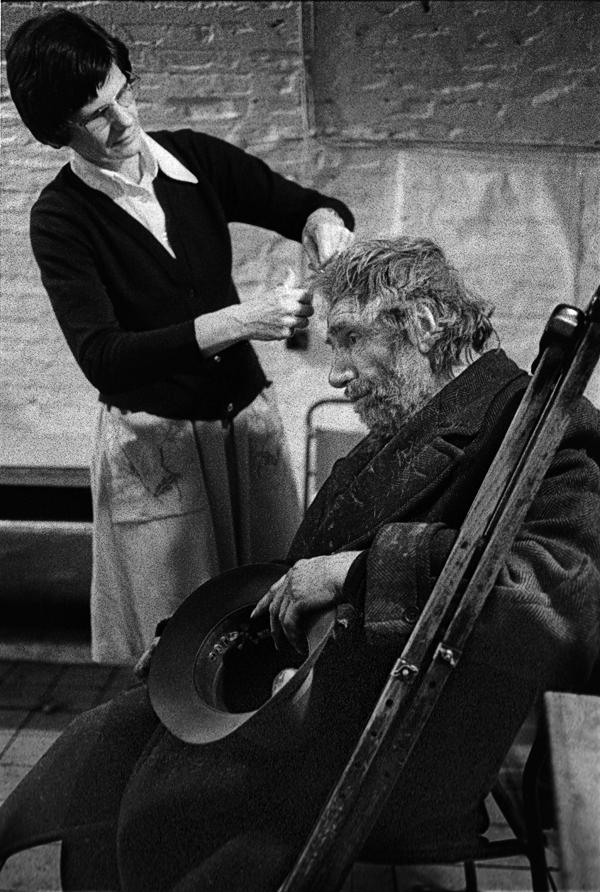
Bobbie Beecroft cuts Mr Sheridan’s hair, 1976
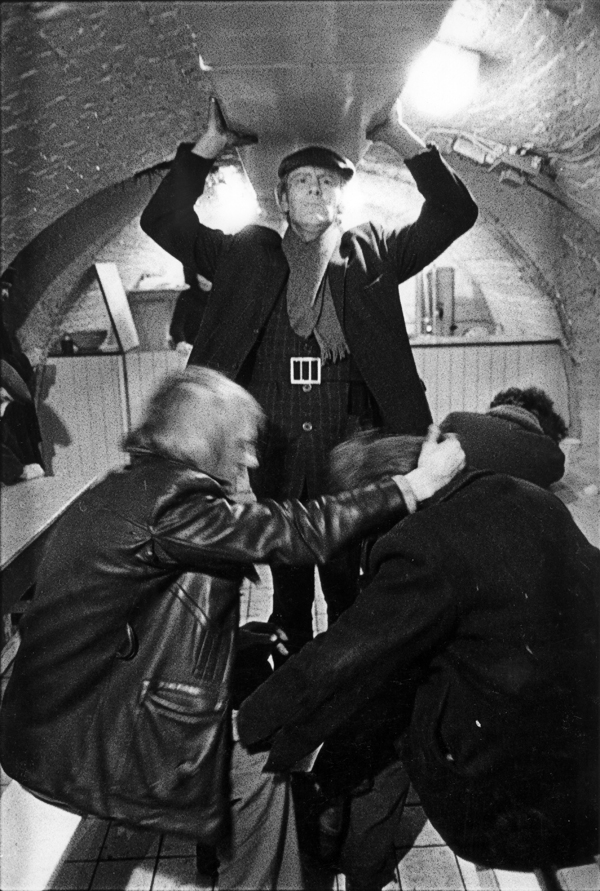
When photographer David Hoffman was squatting in Fieldgate Mansions in Whitechapel in the seventies, he was asked to do fund-raising shots for the shelter in the crypt of St Botolph’s in Aldgate which offered refuge to all homeless people without distinction. Yet this commission turned into a photographic project that extended over many years and resulted in a distinguished body of work documenting the lives of the dispossessed in hundreds of intimate and unsentimental images.
Initially, David found the volatile conditions of the crypt challenging but, over months and years, he became accepted by those at the shelter who adopted him as their own photographer. Rev Malcolm Johnson was the enlightened priest responsible for opening the crypt but, once he moved on, his brave endeavour was closed down. More than thirty years later, most of the people in David’s pictures are dead and forgotten, and his soulful photographs are now the only record of their existence and of the strange camaraderie they discovered in the crypt at St Botolph’s.
“St Botolph’s in Aldgate had a ‘wet shelter,’ an evening shelter for damaged or lost souls where alcohol and drugs were permitted. It was run by Rev Malcolm Johnson and Terry Drummond, who were very generous and accepting, and the purpose was a Christian one, based on the notion that you are accepted whoever you are. I’m not keen on organised religion, but here they were doing something that needed to be done.
I was asked if I could do some photographs to raise funds for the work and I remember arriving at the top of the steps outside the crypt and standing there for five minutes because I didn’t dare to go down. The noise was deafening and it really stank of piss and unwashed bodies. I was frightened I’d get attacked and my camera smashed but, equally, I thought it needed documenting, it was a part of life I’d never seen before. It was very noisy, very smelly, chaotic, and there was a lot of violence.
It was a place to get something to eat, get washed and get clean clothing. Not everybody was on drink or drugs but ninety per cent were. A lot were ex-servicemen who had travelled the world and would reminisce about bars in Cairo or Baghdad. It was amazing what they would talk about.
When I returned, I gave them eighth-size A4 prints so they could put them in their pockets. They gave me permission to take their pictures and, on each visit, I’d bring them prints from the previous evening. So I became their photographer.
Over six or seven years, I’d go every night for two or three months at a stretch. It was important to be regular while you were doing it. You needed to come frequently, so people relaxed and accepted you as part of the scene. I’d go every night for a couple of months. It was a place where nobody else goes, it was a humble part of life.”
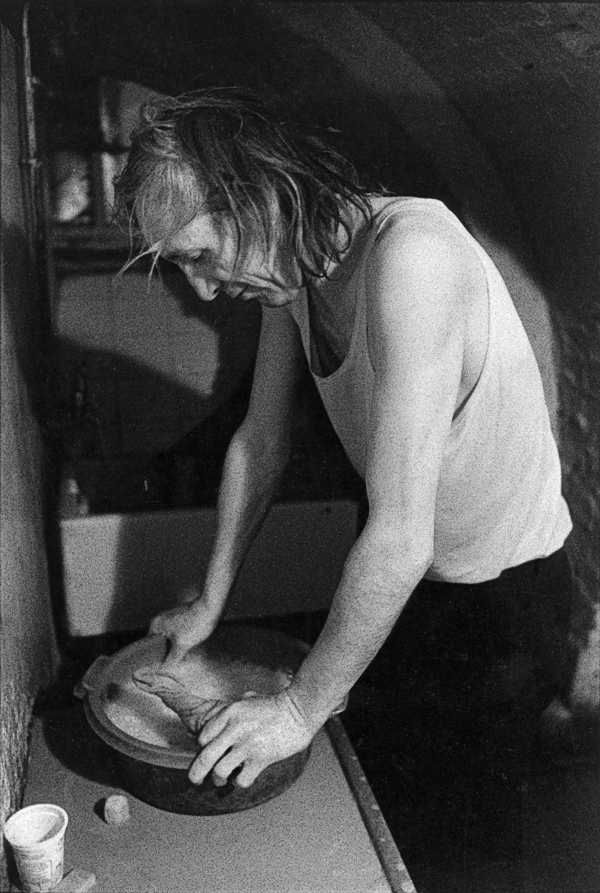
Washing a shirt at St Botolph’s, 1978
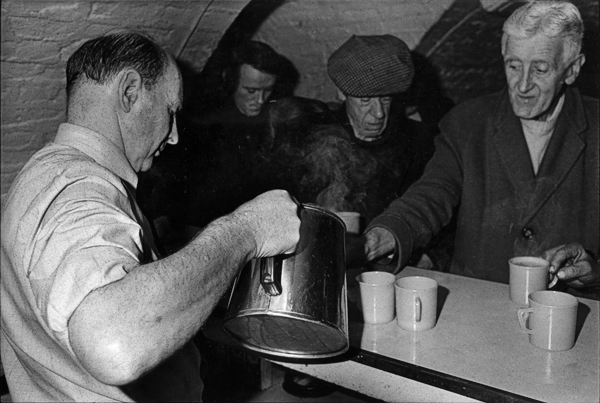
A volunteer serves tea and sandwiches
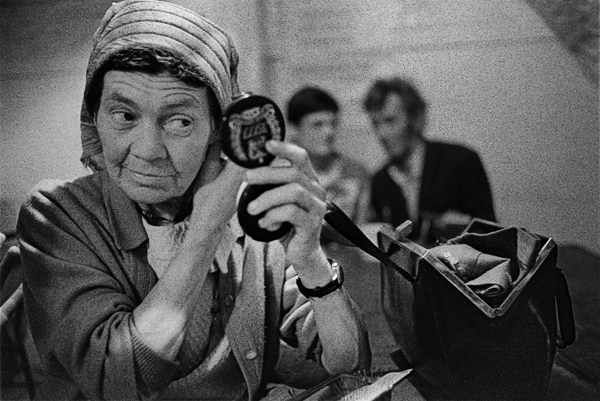
Azella, a regular at St Botolph’s, makes herself up before heading to the pub with a pal in 1977. Later that year, Azella was killed when a lorry drove over the cardboard box where she slept in Spitalfields Market.
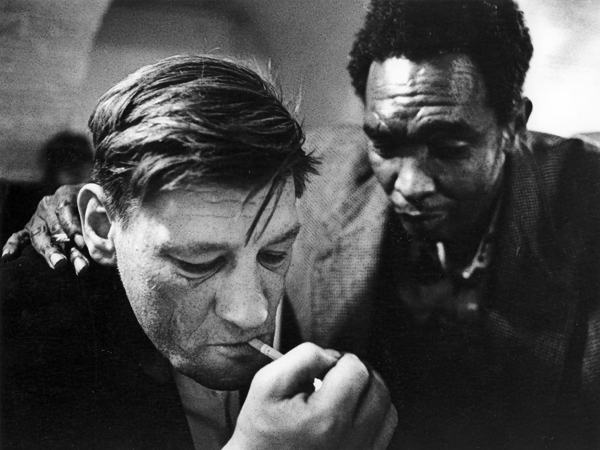
At St Botolph’s, 1978
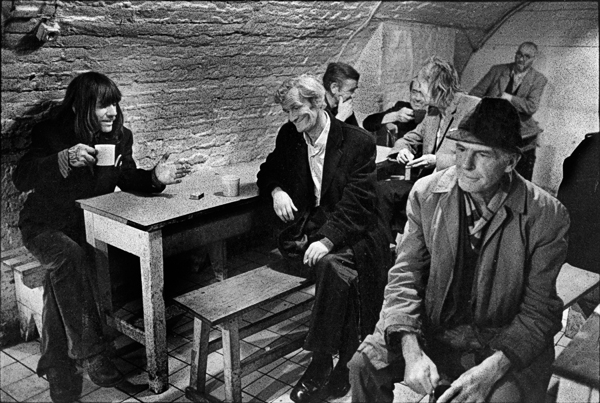
At St Botolph’s, 1976
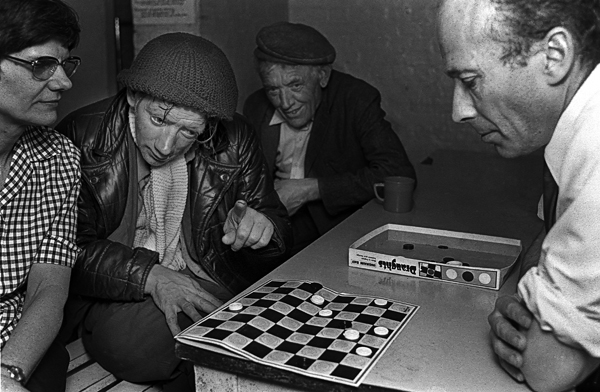
At St Botolph’s, 1978
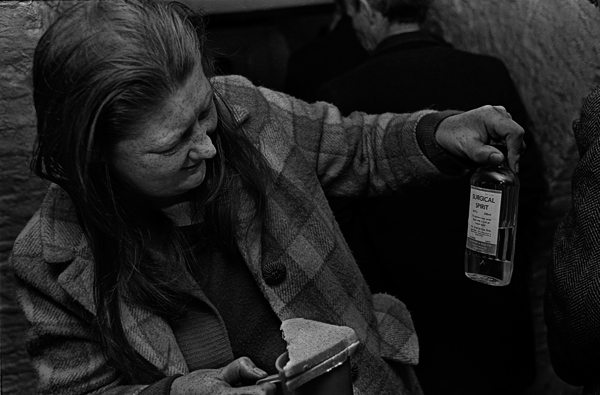
At St Botolph’s, 1978
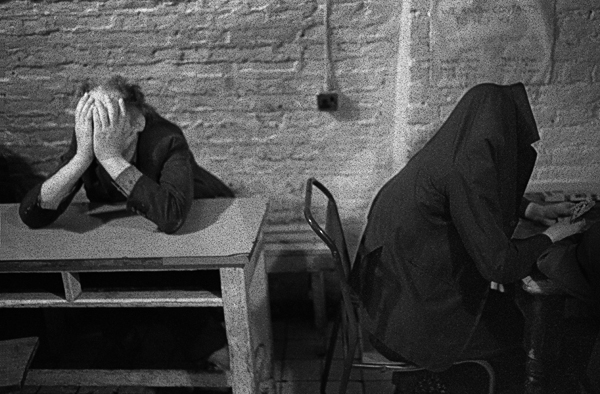
At St Botolph’s, 1978
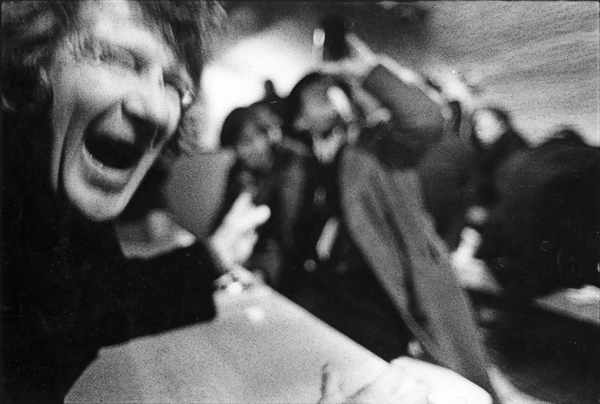
At St Botolph’s, 1978
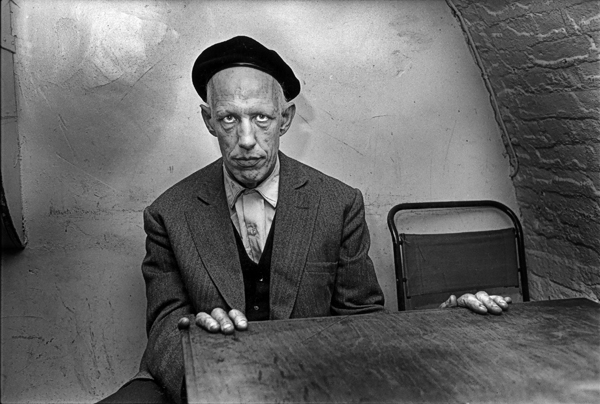
Leo, eighty-two years old and a non-drinker at St Botolph’s, 1976
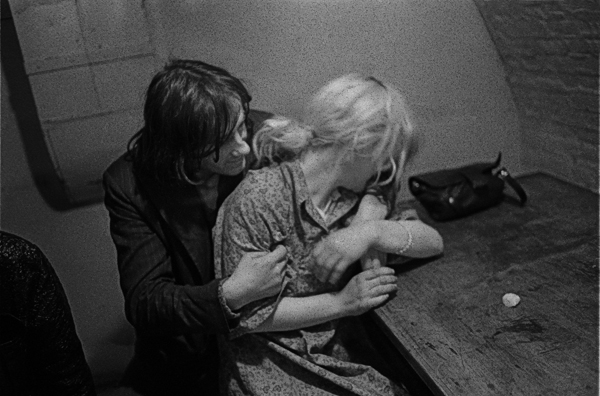
At St Botolph’s, 1978
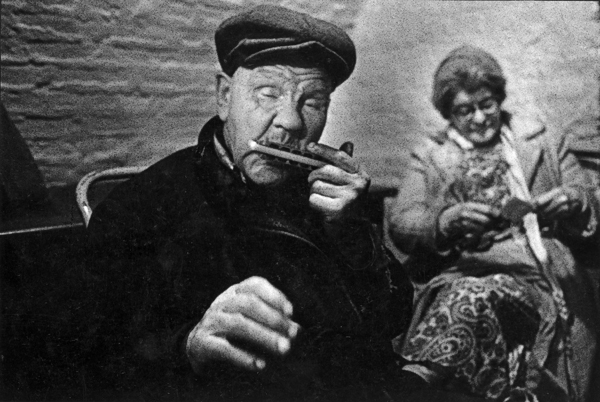
Percy & Jane, non-drinkers, at St Botolph’s, 1978
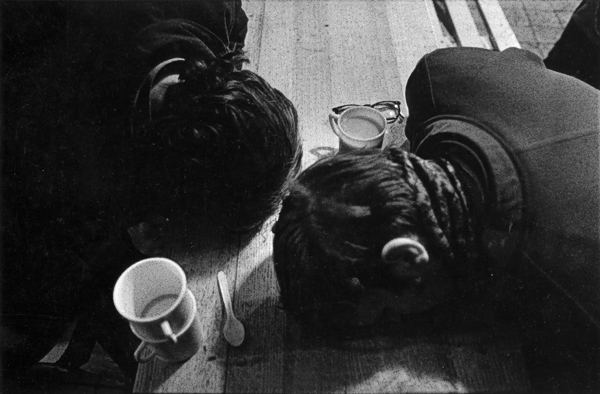
At St Botolph’s, 1978
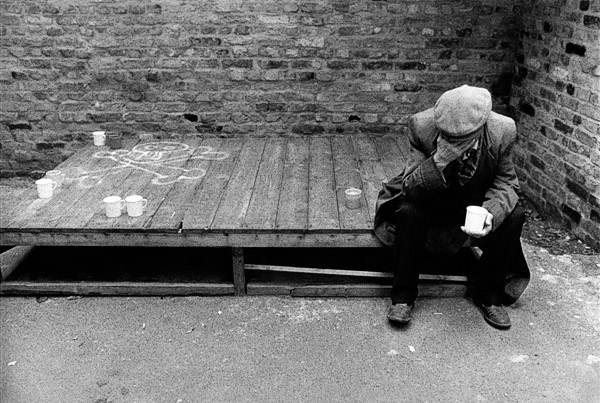
At St Botolph’s, 1977
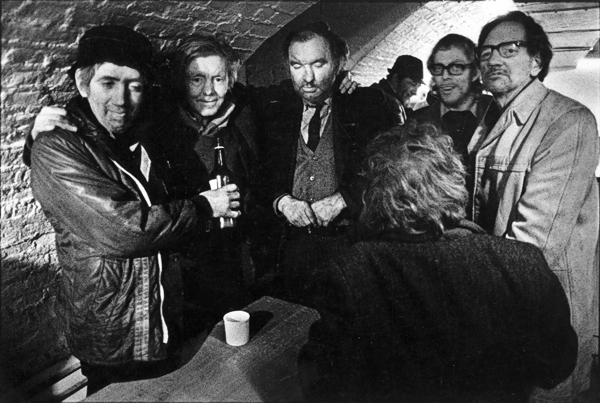
At St Botolph’s, 1978
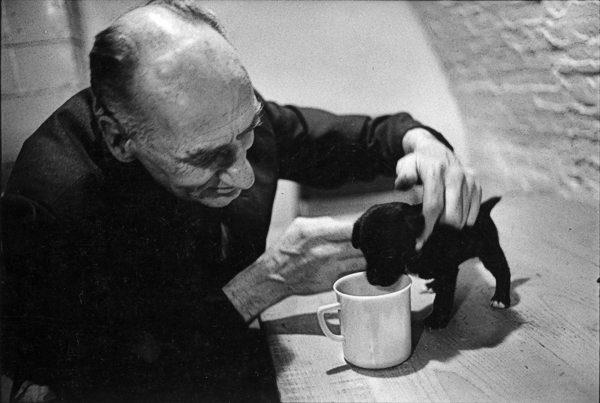
At St Botolph’s, 1978
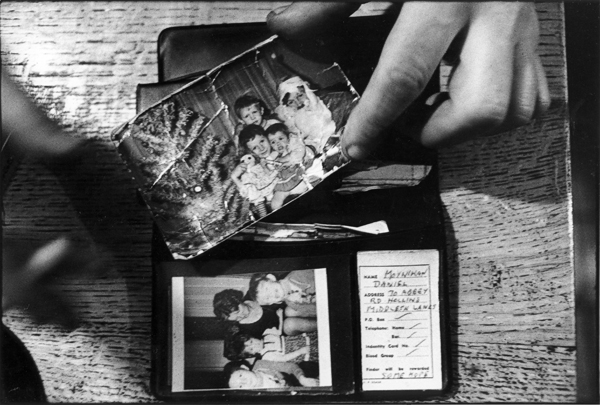
At St Botolph’s, 1978
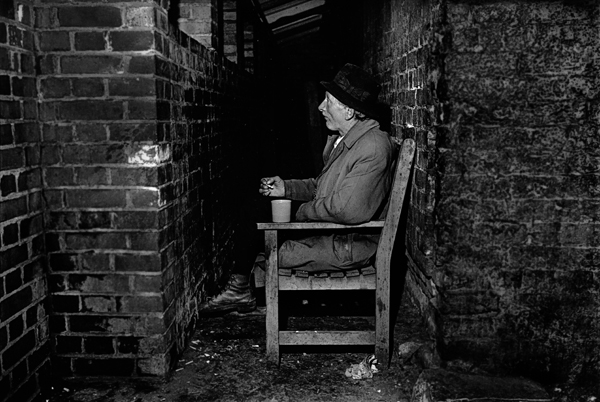
At St Botolph’s, 1978
At St Botolph’s, 1978
Photographs copyright © David Hoffman
You may also like to take a look at
The Mosaic Makers Of Hackney
Starting in 2013, Spitalfields Life Books published 15 books over 6 years until the pandemic shut us down. Now we are ready to begin again and are crowdfunding to raise enough money to cover production of our next 3 books. We have raised £7,750 so far.
CLICK HERE TO VISIT OUR CROWDFUND PAGE AND CONTRIBUTE
Today we preview Tessa Hunkin’s book
TESSA HUNKIN & HACKNEY MOSAIC PROJECT
Tessa Hunkin and Hackney Mosaic Project have created breathtakingly beautiful and witty mosaics in locations all across the East End over the past ten years. In the process, Tessa has won the reputation as the pre-eminent mosaic designer in this country while leading a community endeavour that has elevated the lives of hundreds of participants.
“A beautiful book about Hackney Mosaic Project will be the best reward for all the people who have worked on the mosaics, bringing their achievement to a wider public and giving them the recognition they so well deserve.”
Tessa Hunkin
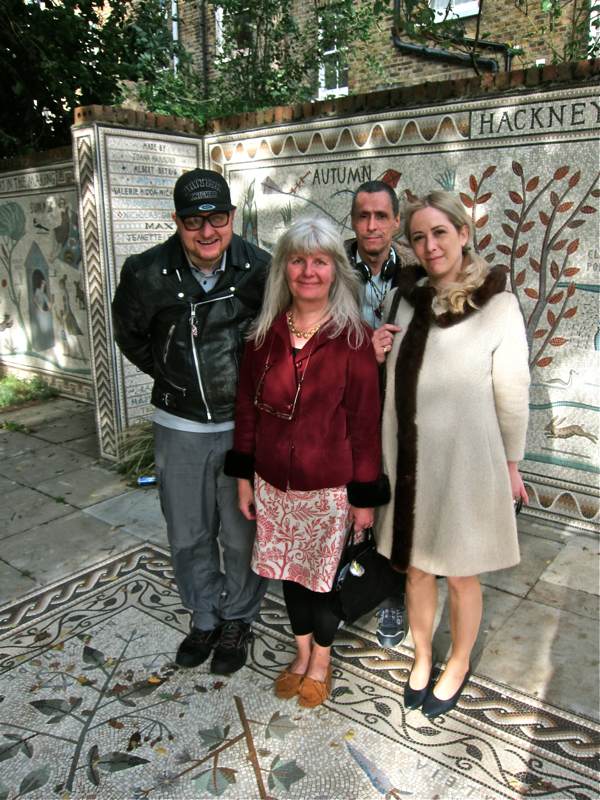
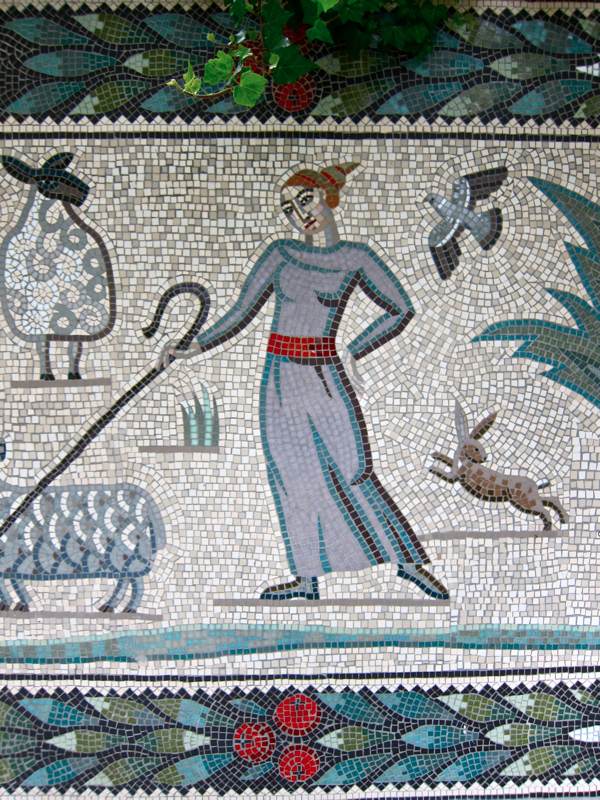
Next time you are walking up Shepherdess Walk in Hoxton and you pass that sinister tunnel with the worn flagstones, leading under the shabby nineteenth century terrace, I recommend you take courage and pass through it to the park at the other end where a wonderful surprise awaits you.
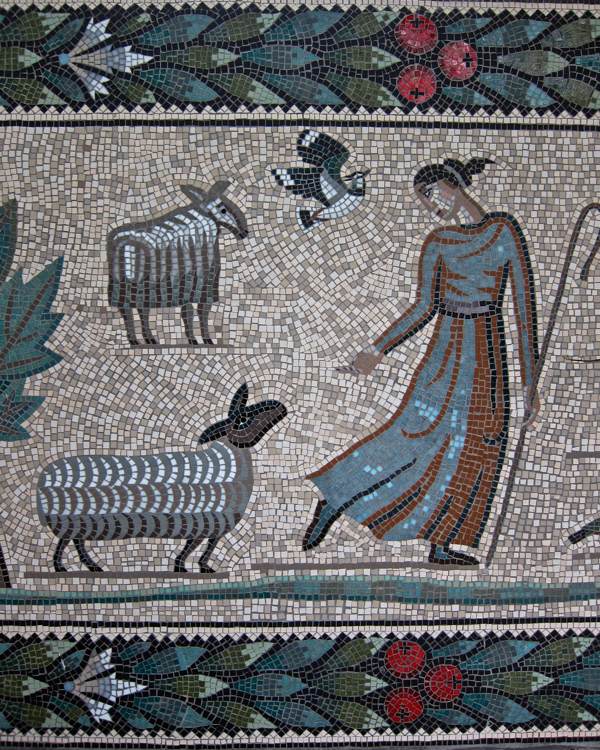
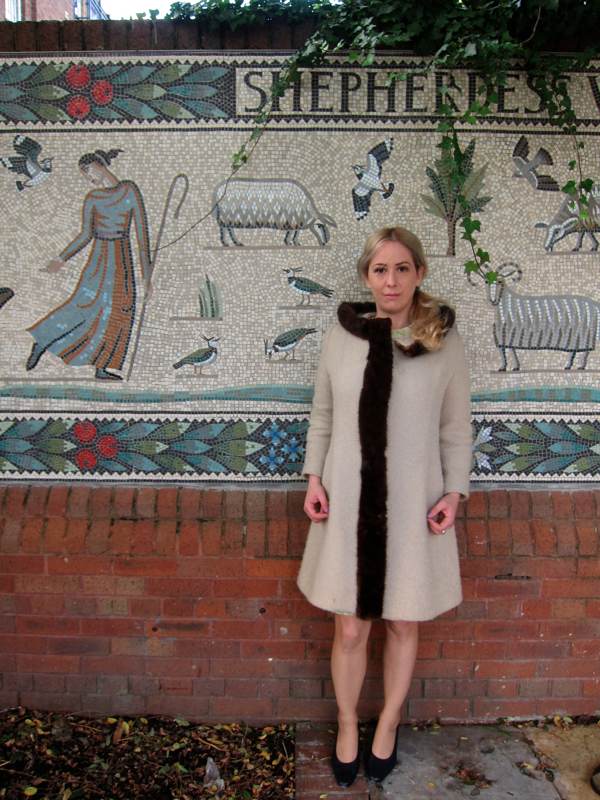
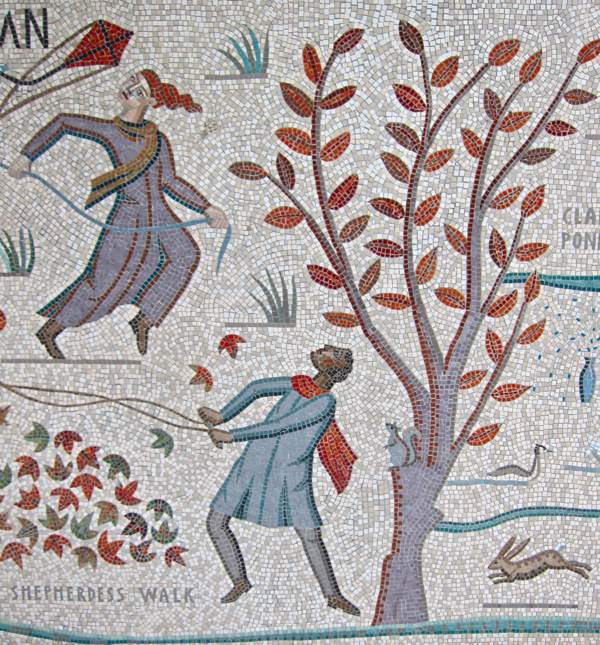
For two years, artist Tessa Hunkin and around one hundred and fifty people worked to create an elaborate set of mosaics in Shepherdess Walk Park. These breathtakingly beautiful pieces of work are an attraction in their own right – drawing people from far and wide to this corner of Hoxton.
I had the pleasure of going over to admire them in the company of Tessa and couple of the stalwart mosaic makers, when they contemplated the completion of their mighty task which transformed an unloved part of the park into an inspirational destination.
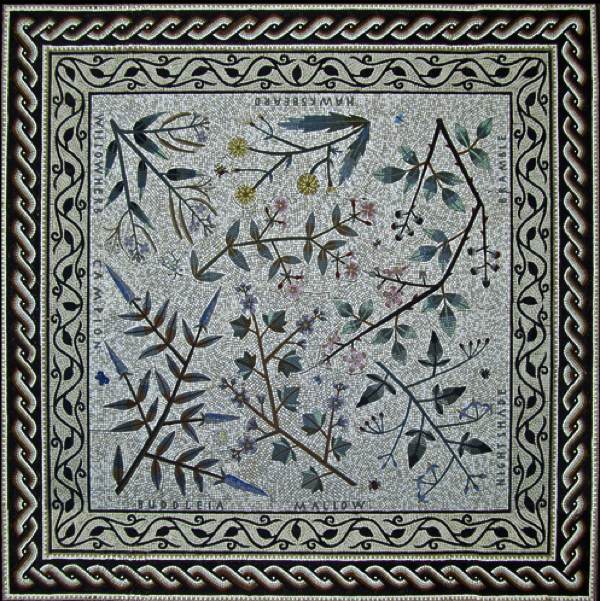
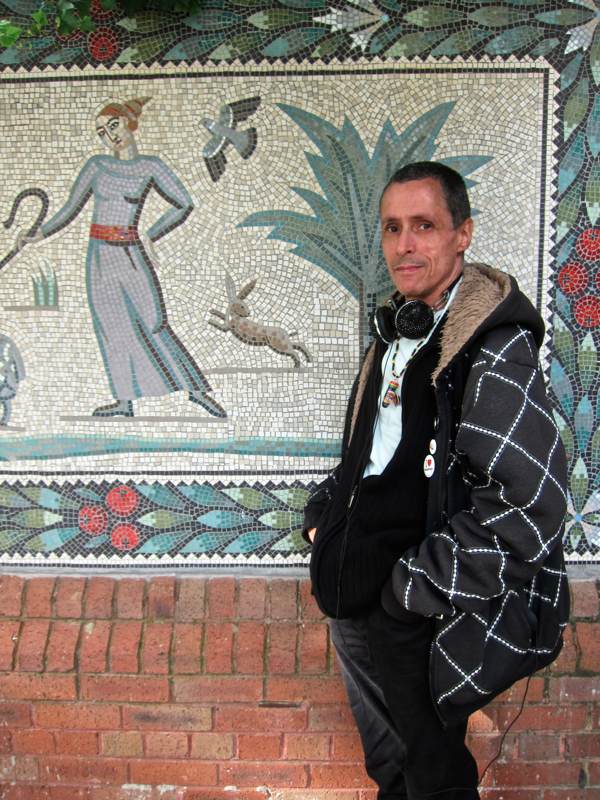
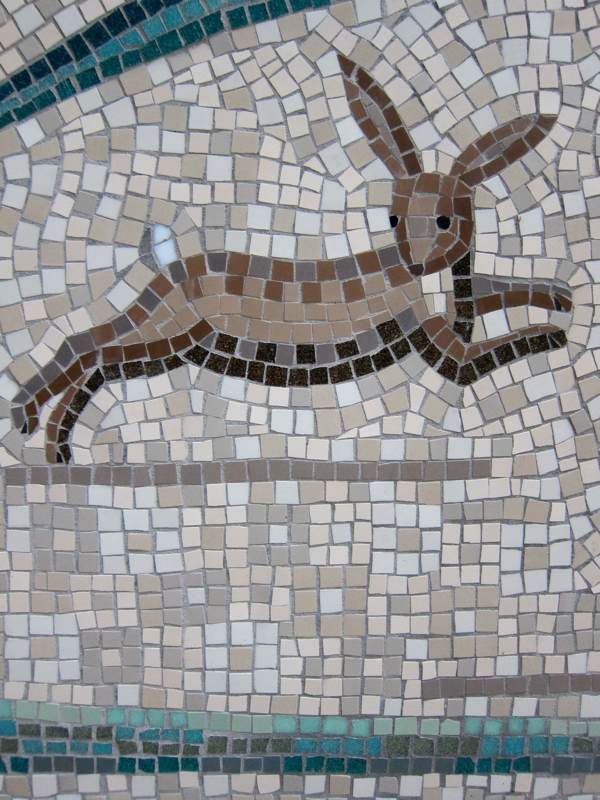
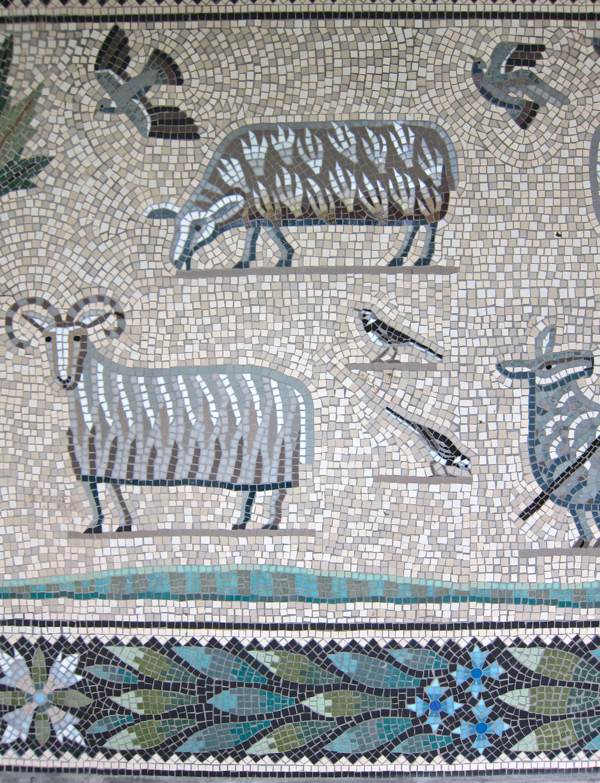
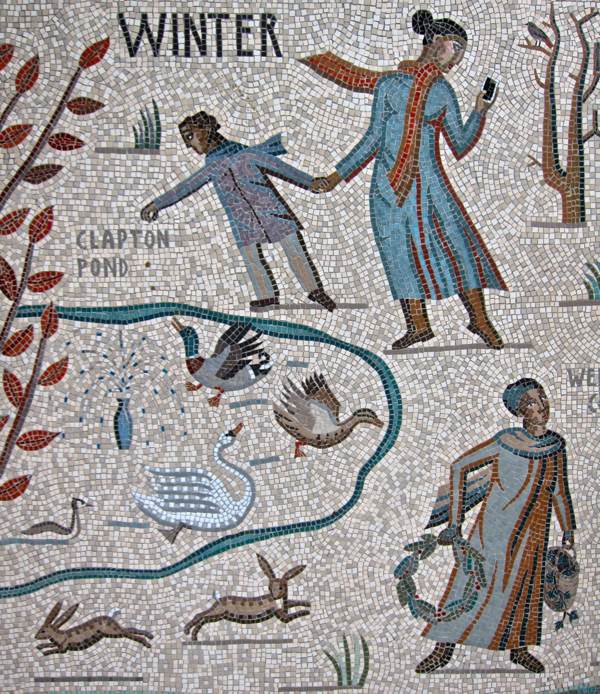
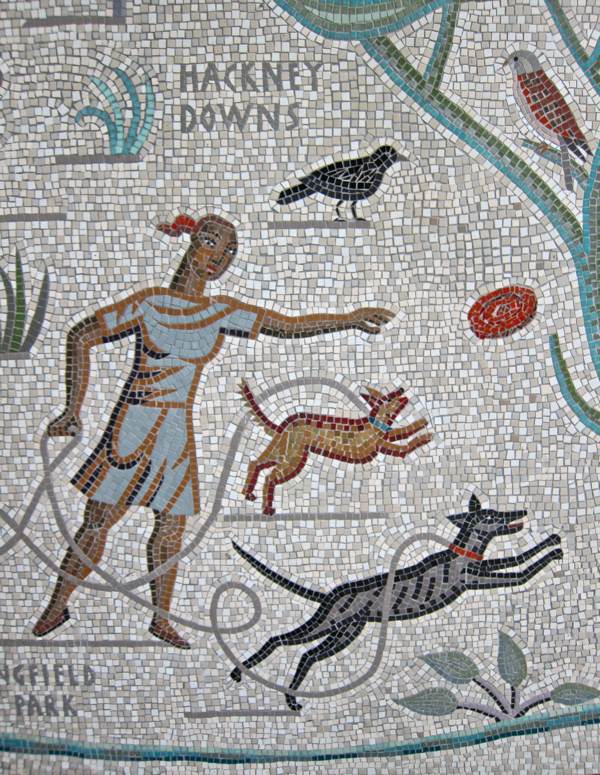
Taking the lyrical name of Shepherdess Walk as a starting point, the first mosaic portrays the shepherdesses that once drove their sheep through here when Hoxton was all fields. Next to this, a double wall panel illustrates park life throughout the seasons of the year in the East End while, underfoot, a pair of pavement mosaics show the wild flowers that persist, all illustrated in superb botanic detail.
The quality of execution and subtle sense of colour in Tessa Hunkin’s designs have combined with humorous observation of the detail of the social and the natural world to create works of lasting value which residents of Hoxton can enjoy for generations to come.
Ken Edwards
“That’s my little rabbit, I named him ‘Randy.’ I’ve been coming here for over a year but, the first time, I thought it was something I wouldn’t be able to do. Yet Tessa showed me how to do it and I’ve been coming ever since. We work each Wednesday and Thursday afternoon, and every other Saturday when the youngsters from the Estate come to help. Even when you are not here, it’s what you think about. I live over in Well St and I walk here. Coming here, it helps with your sanity. We talk, we laugh, we joke. I love coming here, it’s very therapeutic, it’s a family atmosphere. I was a painter and decorator before and when you paint a flat that’s it, but this work that we’ve done is going to be here long after we’ve all gone and that’s very important to me.”
Katy Dixon
“I joined the summer before last. I am an artist and maker and I believe that art can heal people. We work as a group and enjoy the art of conversation together, and I imagine that’s how people would have worked on mosaics a long time ago in Pompeii. We like to listen to music while we work but it’s not always easy to find music that we can all agree upon. We tend to listen to reggae because it has an earthy quality.”
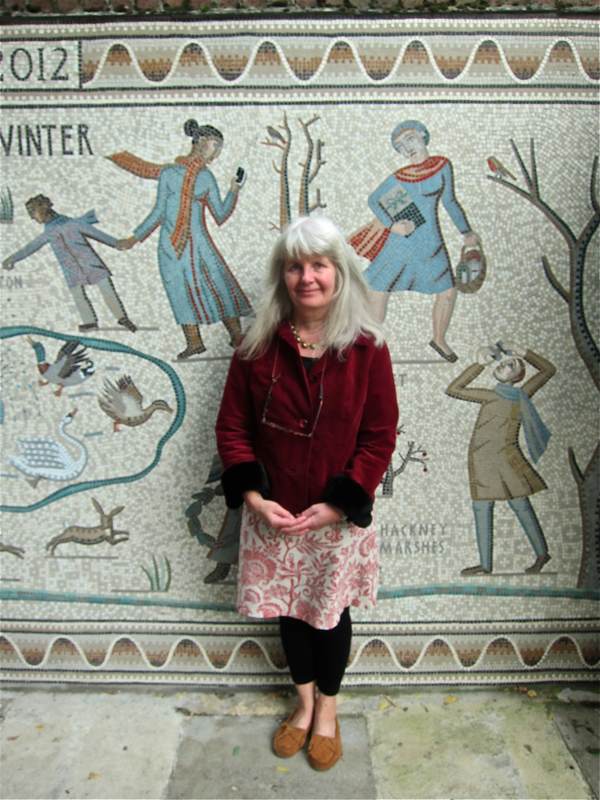
Tessa Hunkin
“We’ve made a little bit of Carthage here in Hoxton. I was inspired by the Roman mosaics of North Africa. It was my idea, I’ve been making mosaics for twenty-five years and I started working with people with mental health problems. I like working with groups of people on large compositions that they can be proud of. Mosaic-making is very time-consuming and laborious, so it seemed a good idea to work with people who have too much time, for whom filling time can be a problem. Also, I’m very interested in the historical precedents and that gives the work another dimension. This project started in July 2011 and it was going to be for six months but, when we came to end of the first mosaic nobody wanted the empty shop that is our workshop, so we just carried on.”
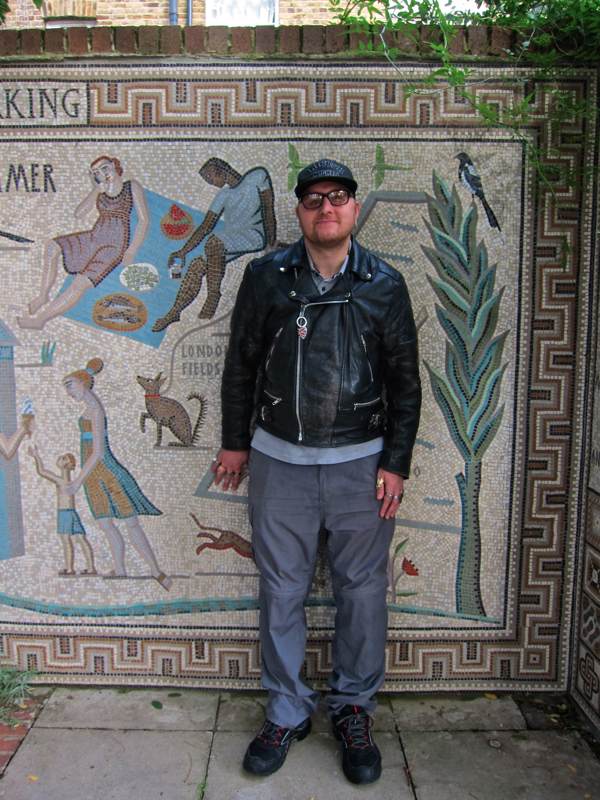
Nicky Turner
“When Tessa showed me the work, I thought it was interesting and I wanted to try but, originally, it was only going to be until the end of the year and now I’ve been here two years. I live in Stratford, two bus rides away, but I come two or three times a week. It’s always different here, so I never get bored. I worked on the borders, and I get satisfaction and self-esteem from doing this work.
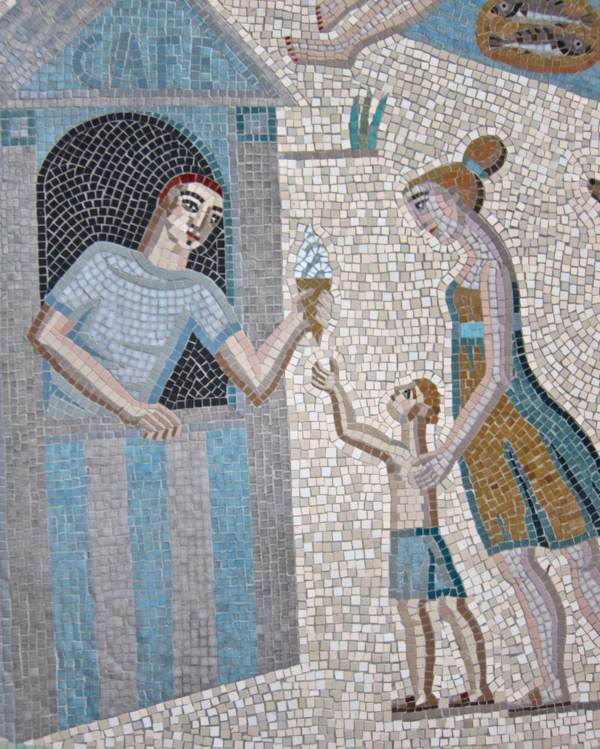
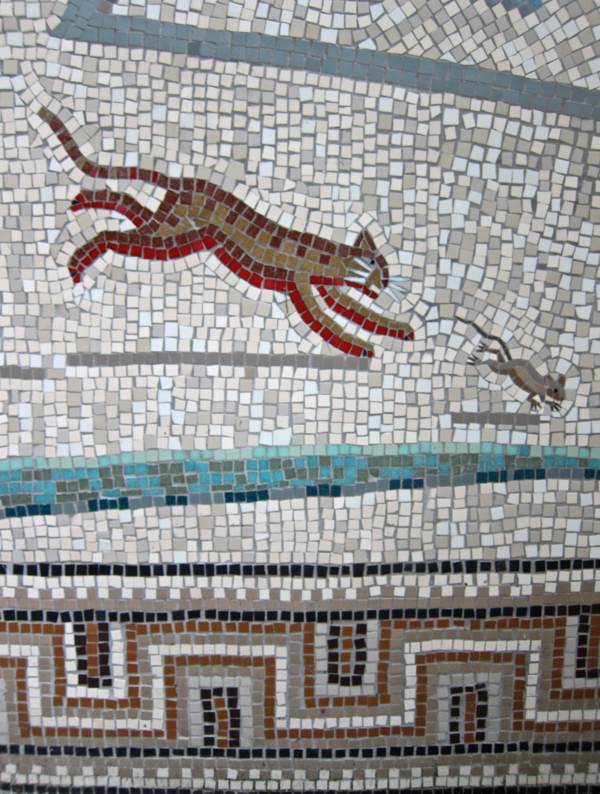
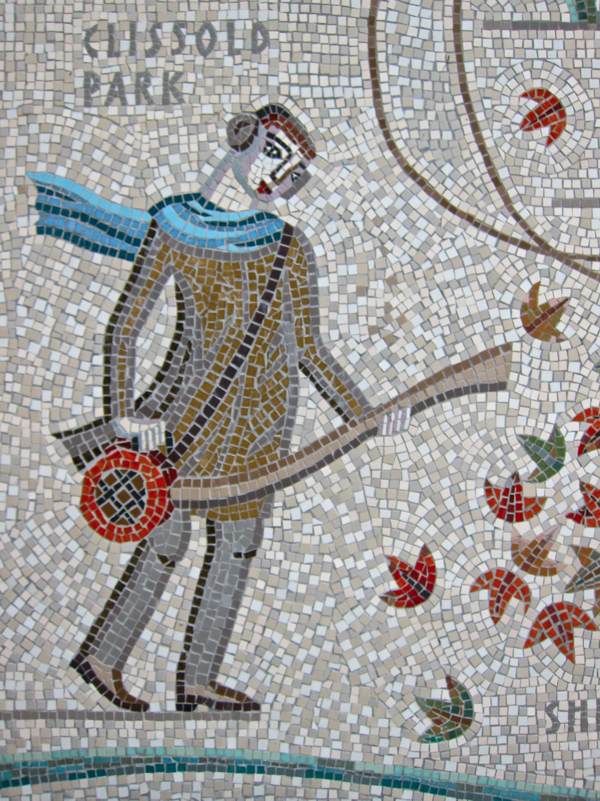
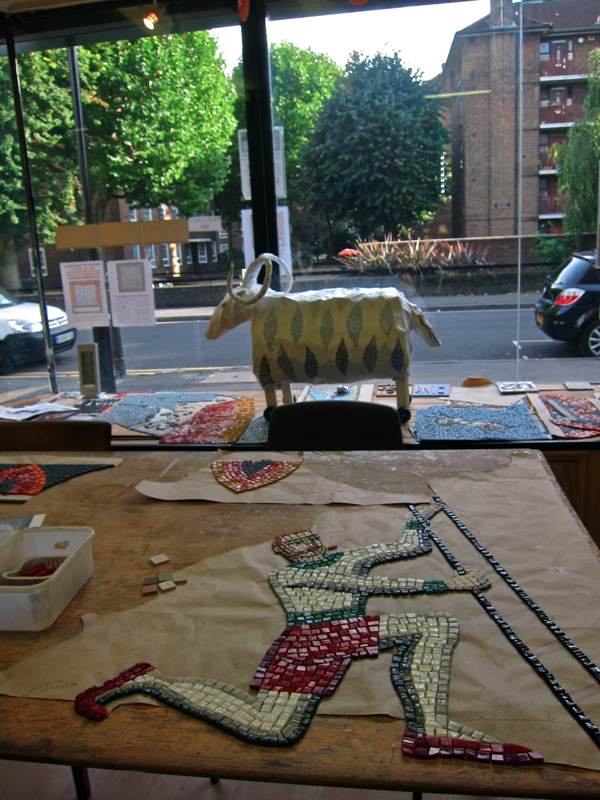
Work in progress on the new Pitfield St mosaic, celebrating the former Hoxton Palace of Varieties
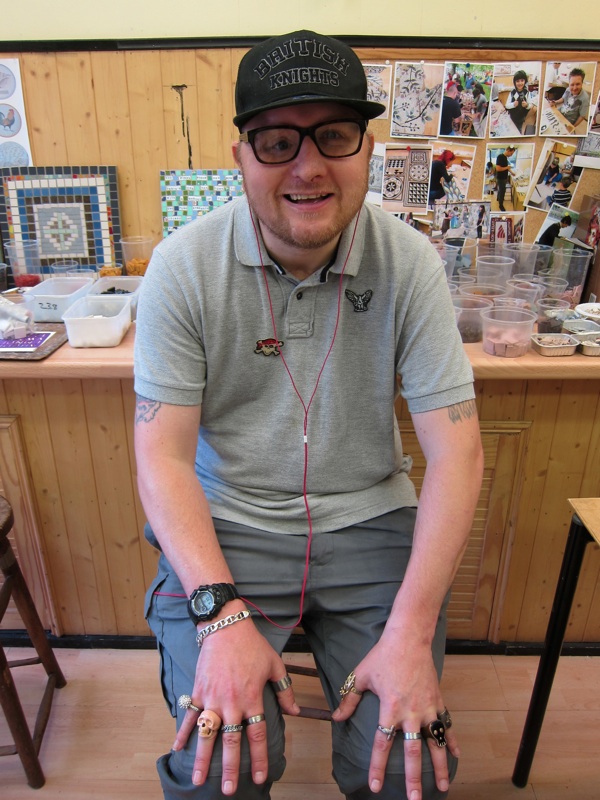
Nicky shows off his rings.
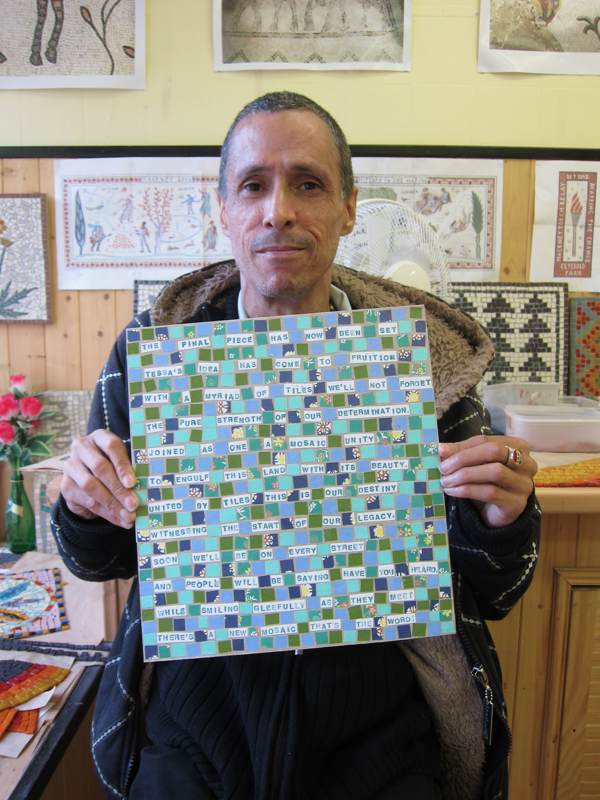
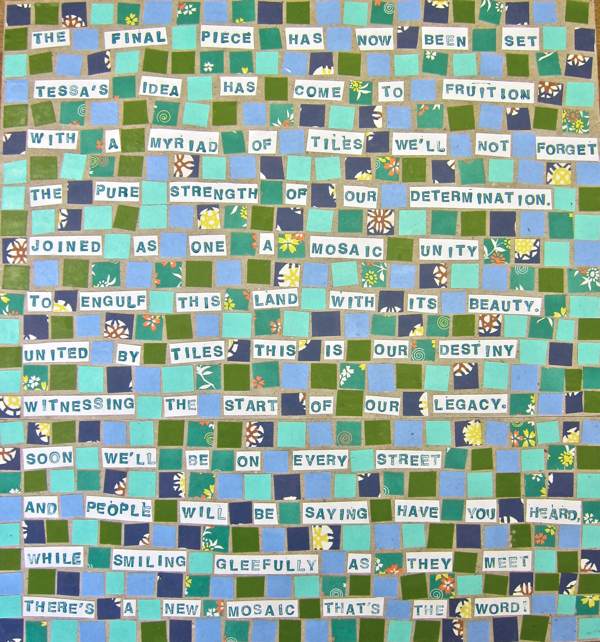
Ken with the poem he wrote about the mosaics
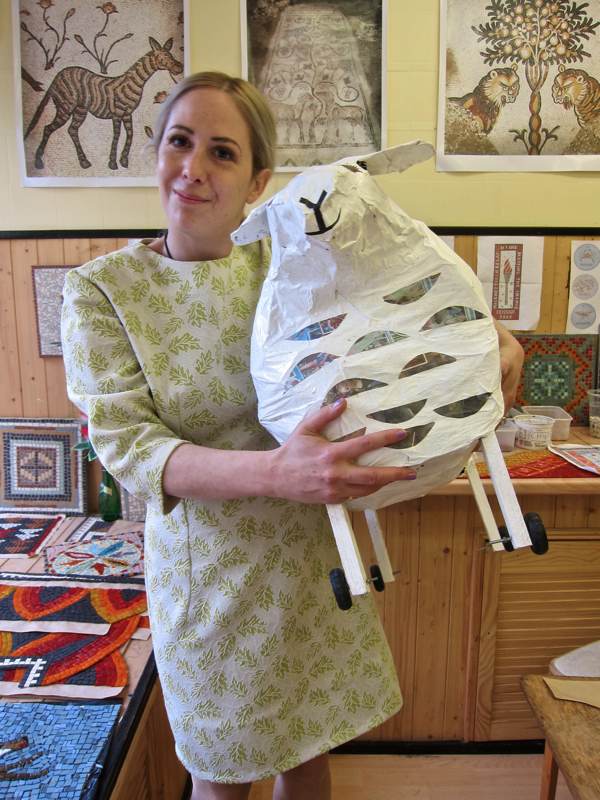
Katy with one of the sheep she led to the unveiling, dressed as a shepherdess
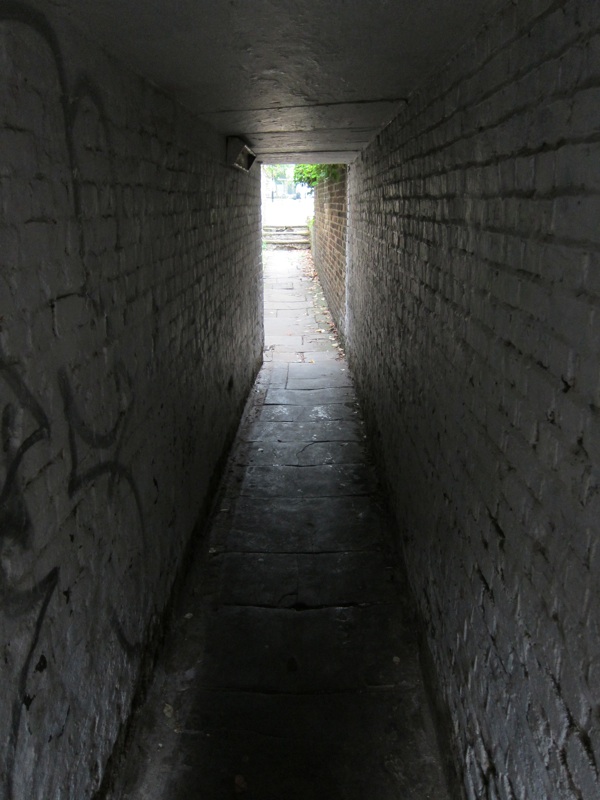
The old tunnel from Shepherdess Walk that leads to the mosaics in the park.

Click on this image to enlarge

Click on this image to enlarge
Women At Work In Hackney
Starting in 2013, Spitalfields Life Books published 15 books over 6 years until the pandemic shut us down. Now we are ready to begin again and we are inspired by a string of new titles that we have ready to publish.
We are launching a crowdfund to raise enough money to cover production of our next 3 books, then income from sales of these will permit us to continue and publish more.
CLICK HERE TO VISIT OUR CROWDFUND PAGE AND CONTRIBUTE
Today we preview more images from Sarah Ainslie’s book
WOMEN AT WORK IN THE EAST END OF LONDON 1992-2023
Sarah Ainslie celebrates the contribution of female labour over the past thirty years in exuberant portraits that capture the passion and struggle of the working life. Drawn from Sarah’s personal archive and her work as Spitalfields Life Contributing Photographer, this is a panoramic survey of social change.
“It means so much to me and will be an important recognition of all the women I have photographed over the years for this book to be published by Spitalfields Life Books, a perfect home for it.”
Sarah Ainslie
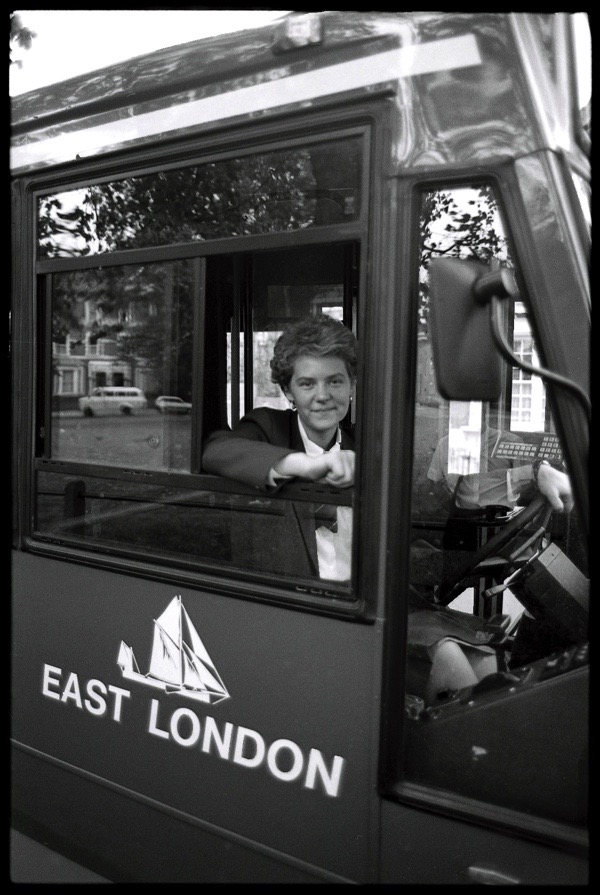
Terrie Alderton, Bus Driver
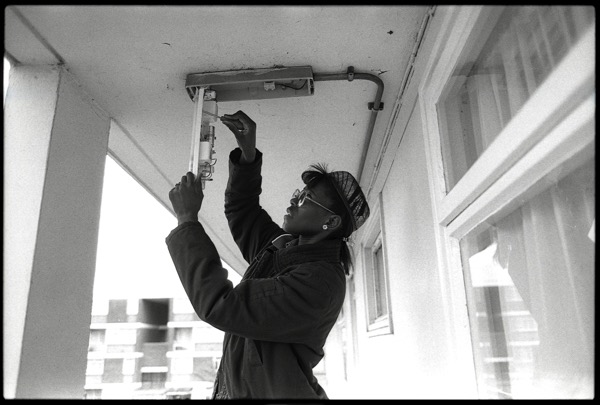
Loretta Leitch, Electrician
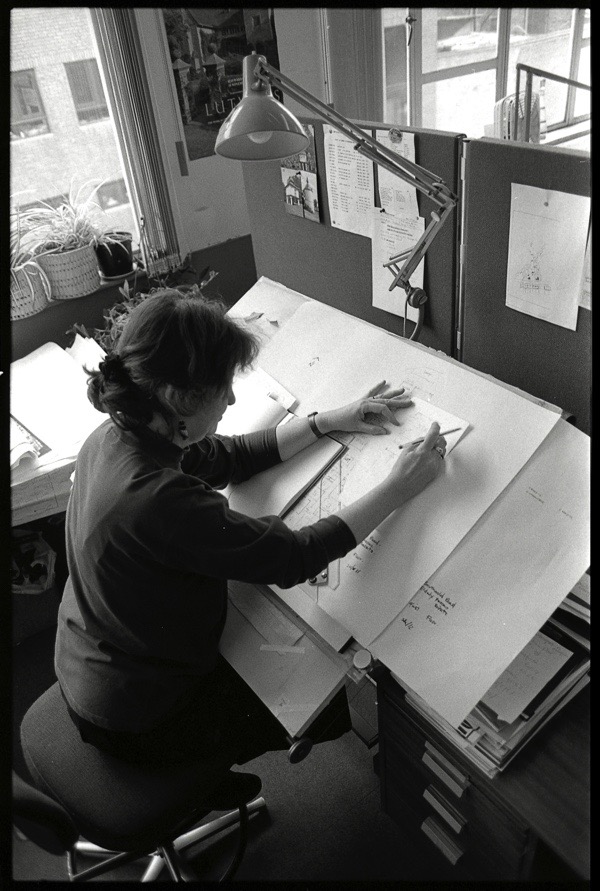
Rosemary More, Architect
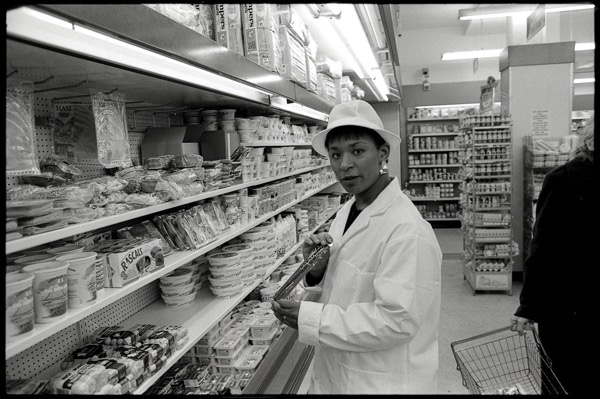
Fontanelle Alleyne, Environmental Health Officer
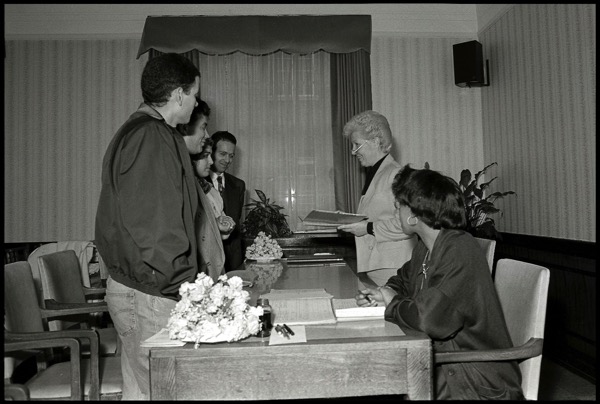
Hackney Registrar of Births, Marriages & Deaths
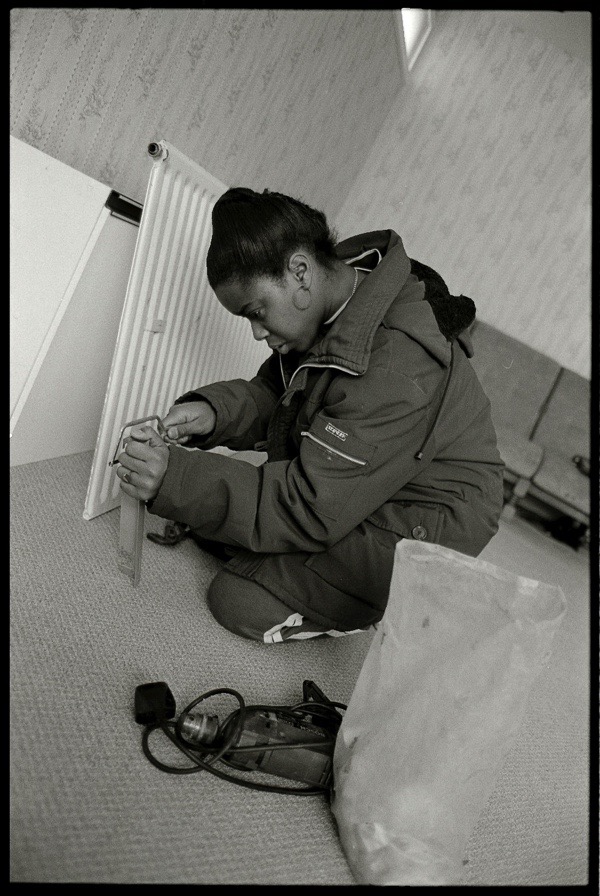
Jenny Amos, Heating & Ventilation Engineer
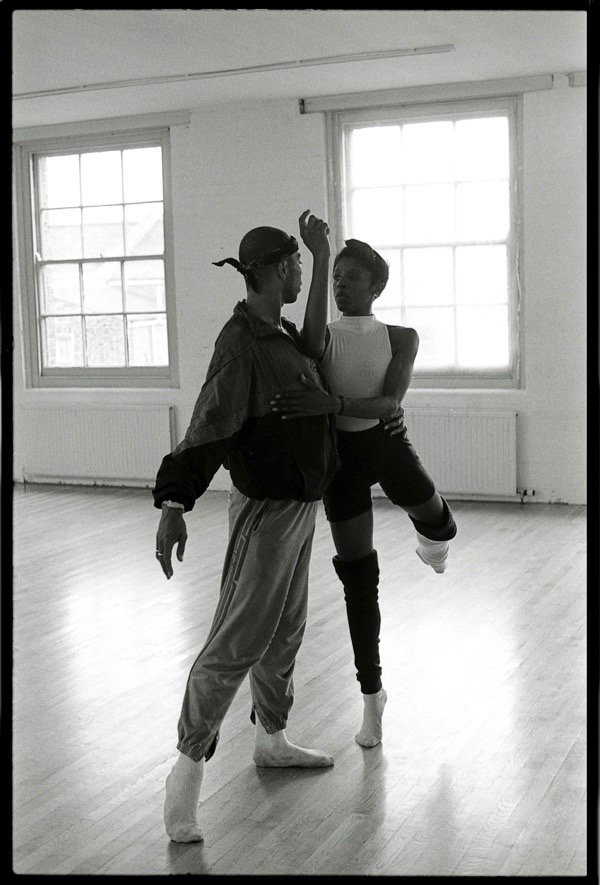
Carol Straker, Dancer
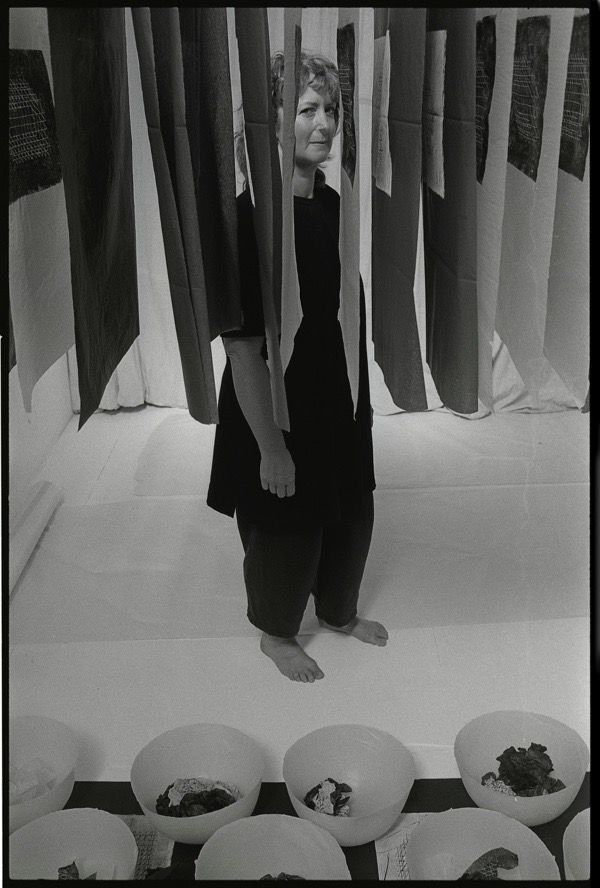
Annie Johns, Sculptor
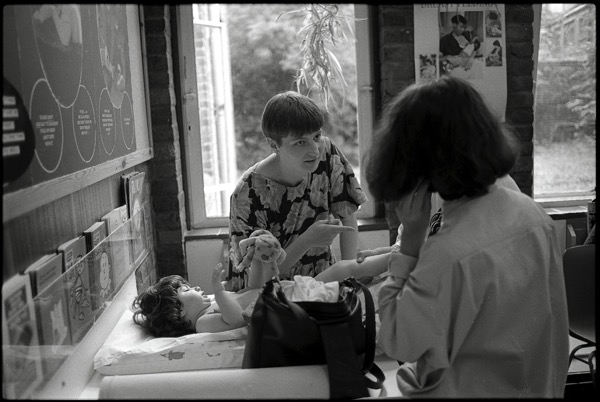
Sue Hopkins, Doctor at Lawson Practice Baby Clinic
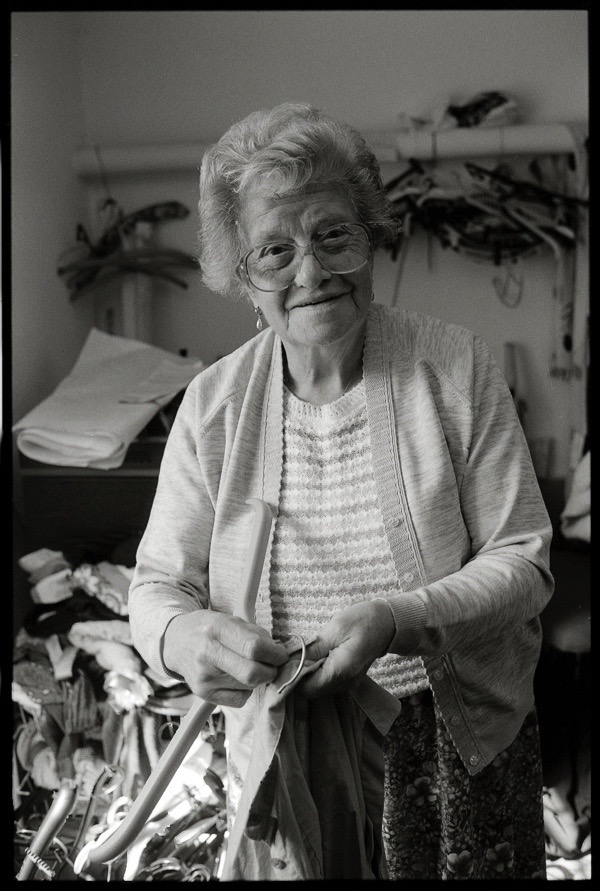
Lilly Claridge, Age Concern Charity Shop Manager
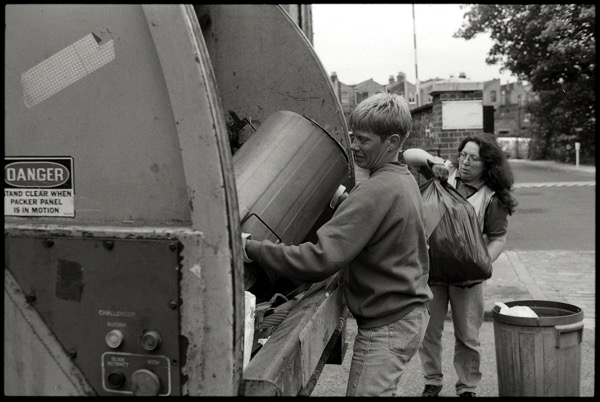
Karen Francis & Carolyn Donovan, Dustwomen
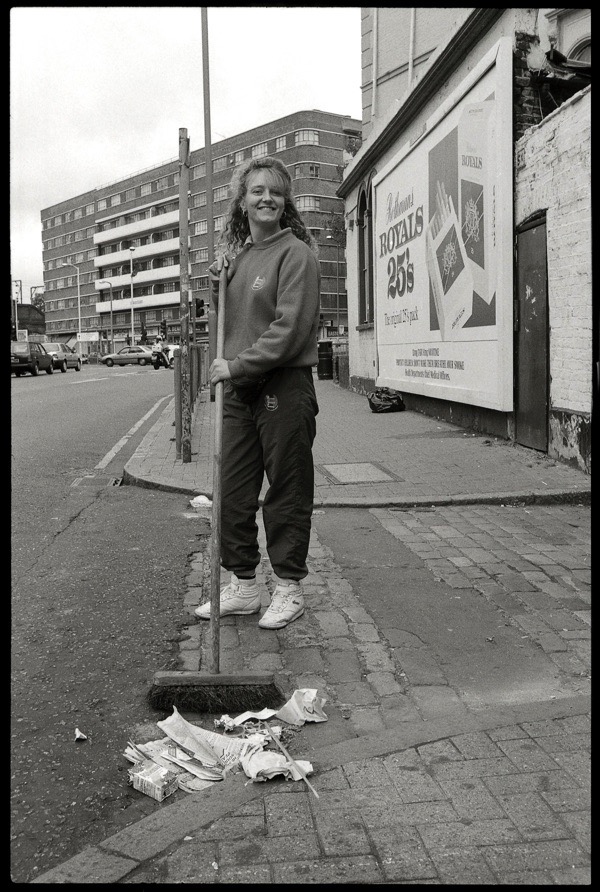
Helen Graham, Street Sweeper
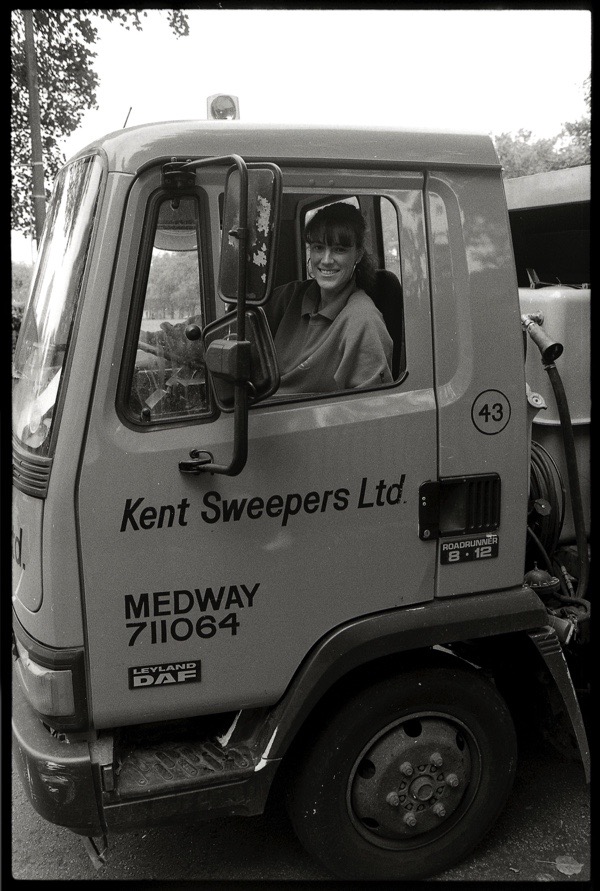
Denise Martin, Truck Driver
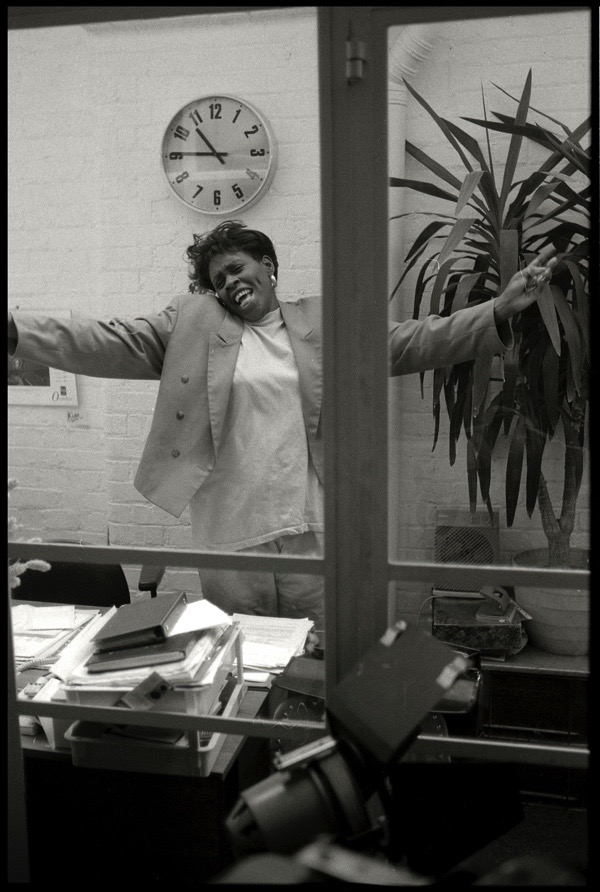
Judy Benoit, Studio Manager
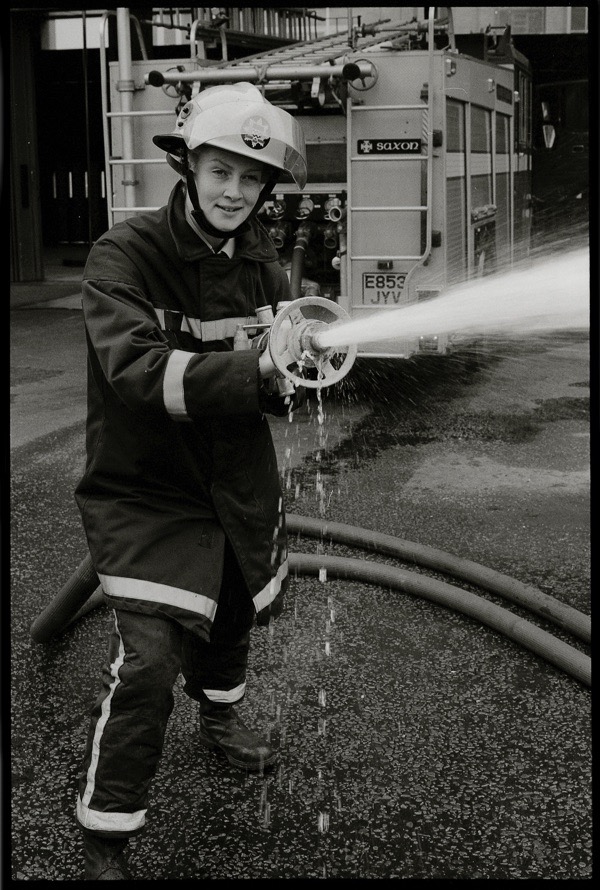
Luz Hollingsworth, Fire Fighter
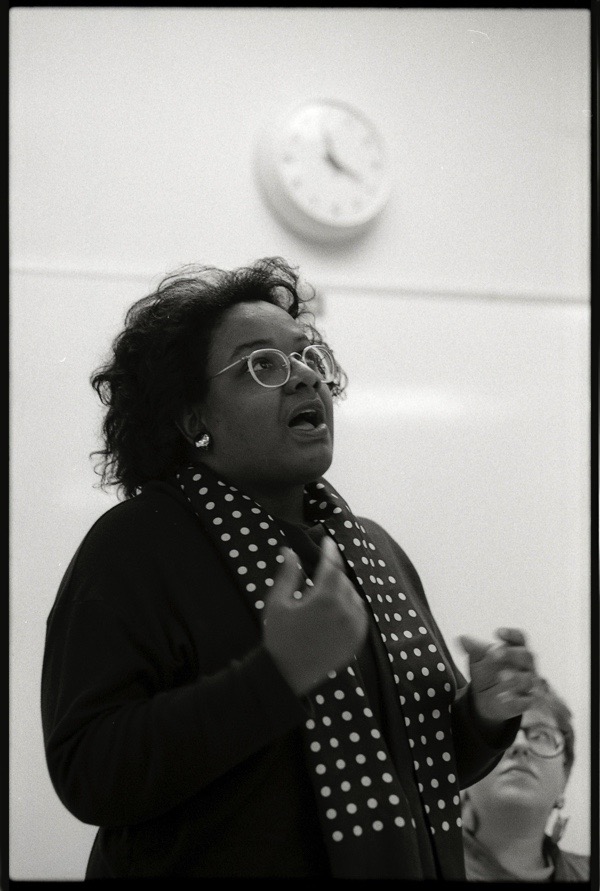
Diane Abbott, Member of Parliament
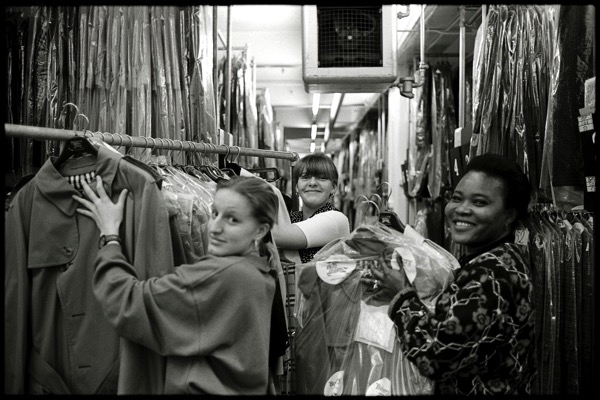
Dionne Allacker, Joanne Gillard, Winnifred John, Clothing Warehouse Supervisors
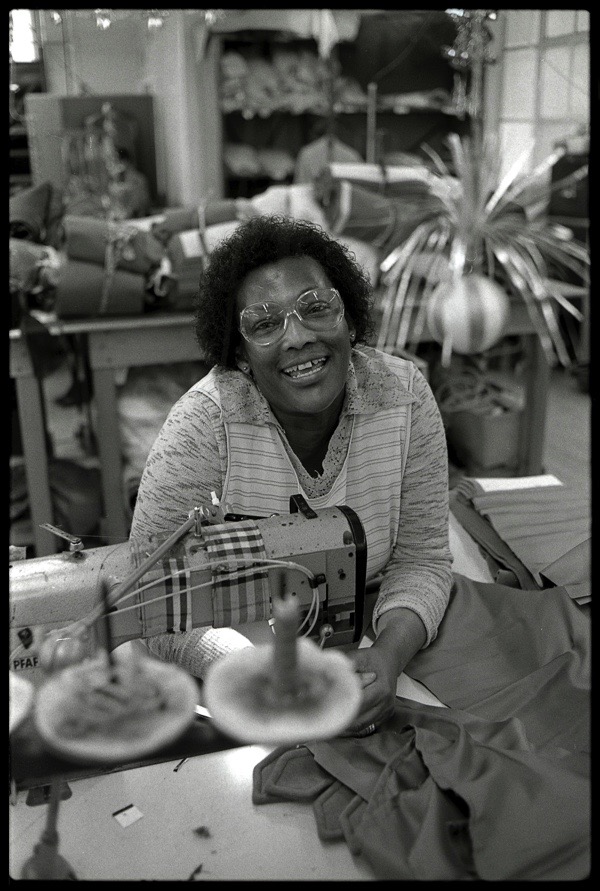
Lanette Edwards, Machinist
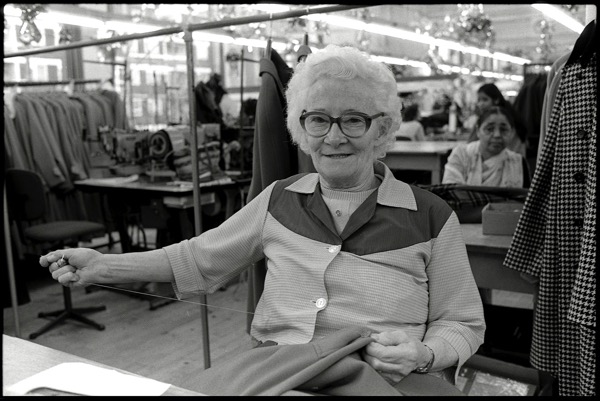
Nora Fenn, Buttonholist
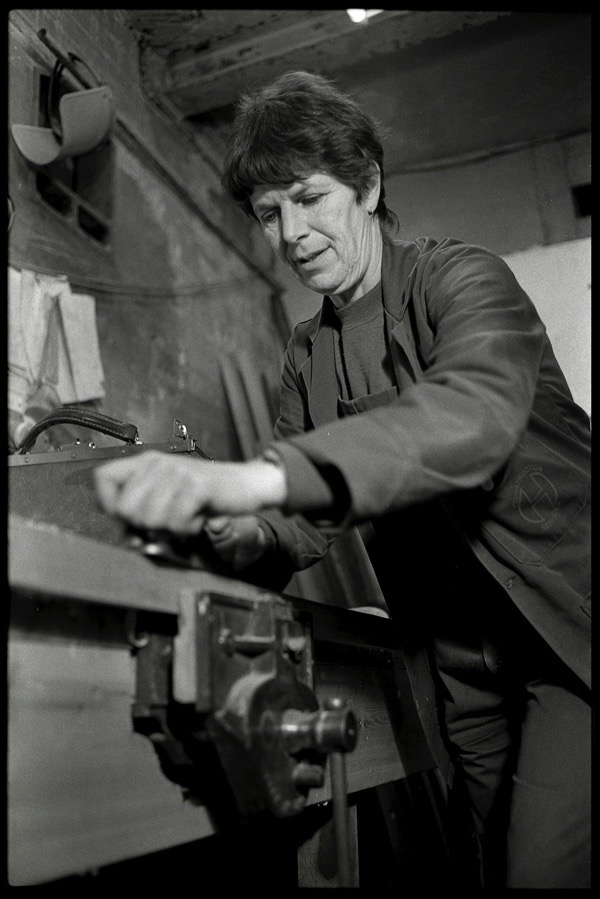
Jane Harris, Carpenter
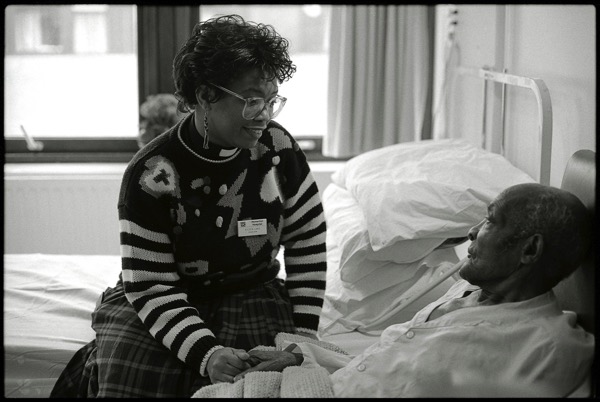
Eileen Lake, Chaplain at Homerton Hospital
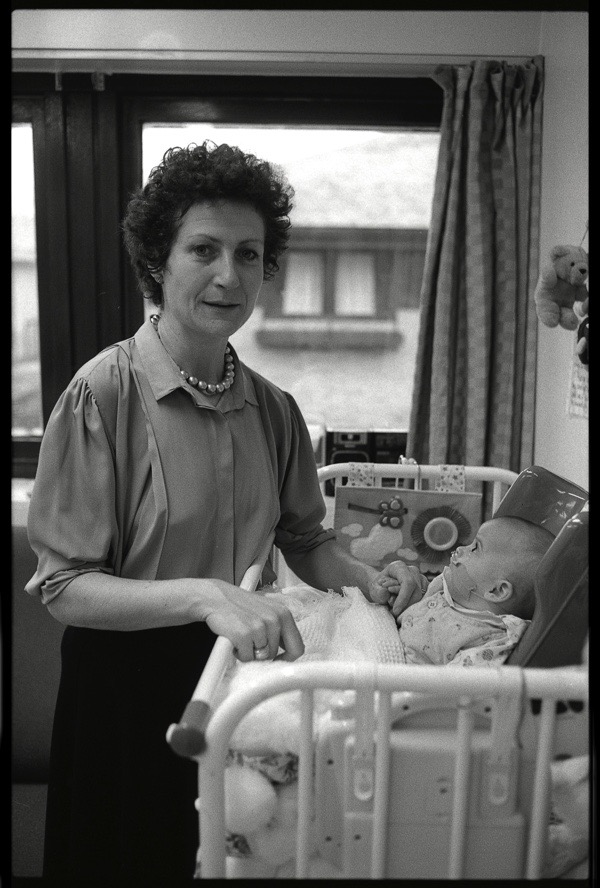
Dr Costeloe, Homerton Hospital
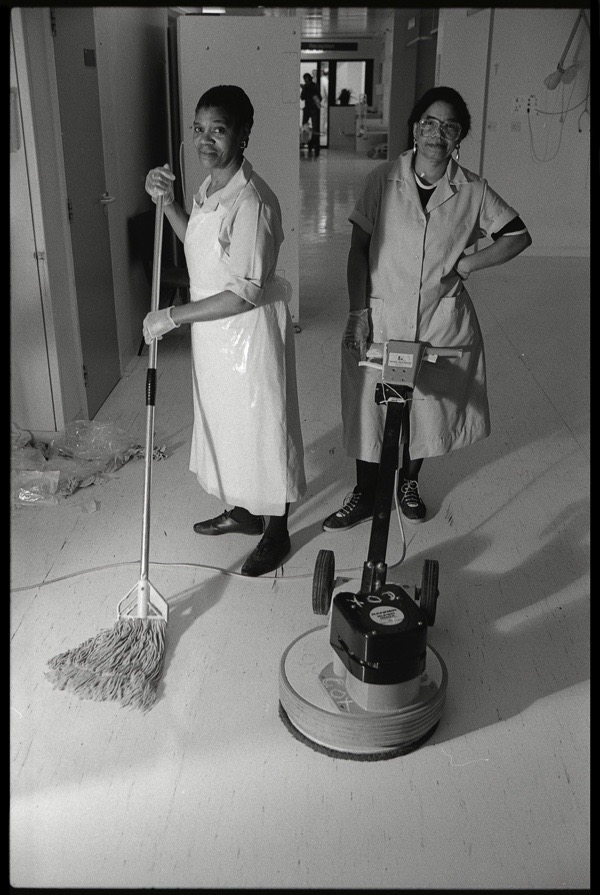
Ivy Harris & E Vidal, Cleaners at Homerton Hospital
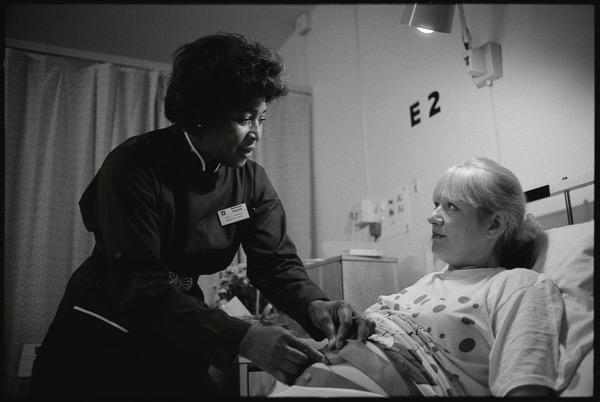
Sister Ferris Aagee, Homerton Hospital
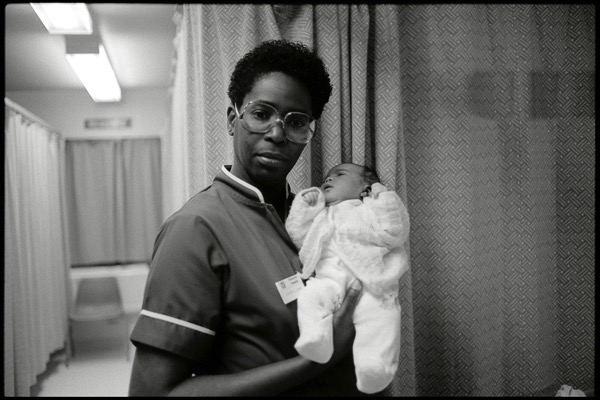
Joan Lewis, Homerton Hospital
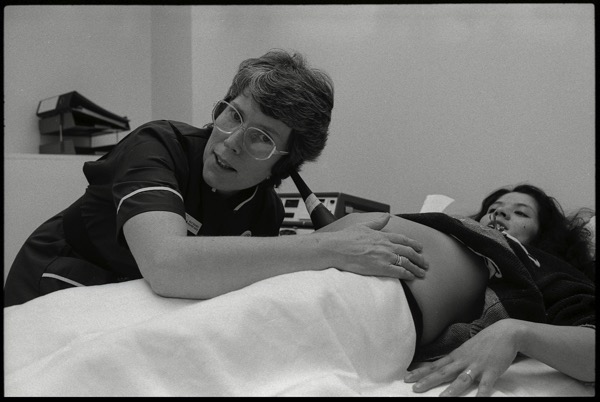
Sister Sally Bowcock
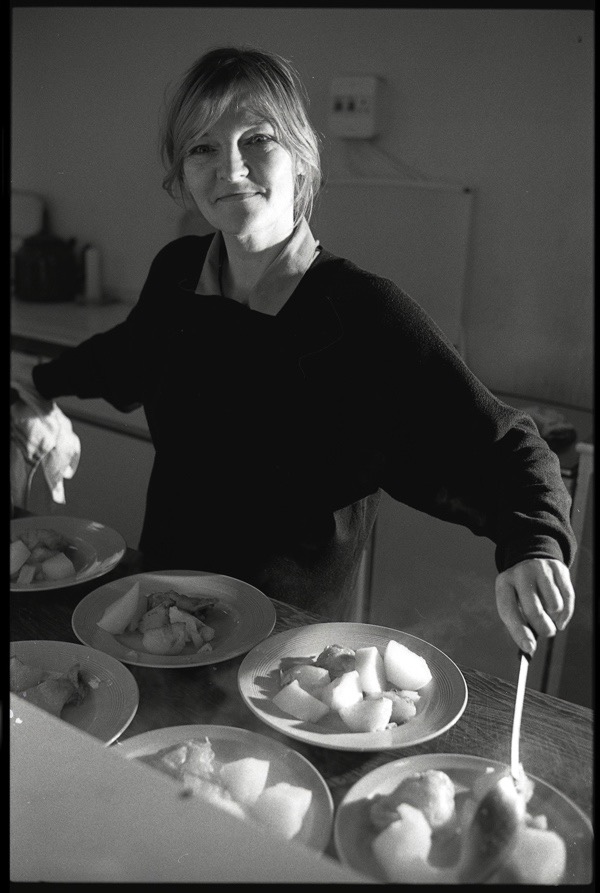
Valerie Cruz, Catering Assistant
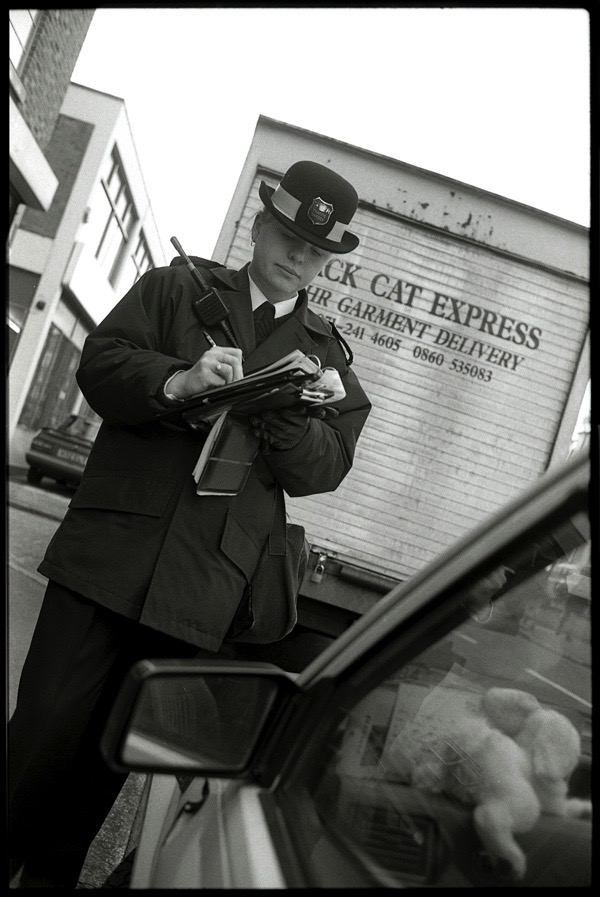
K Lewis, Traffic Warden
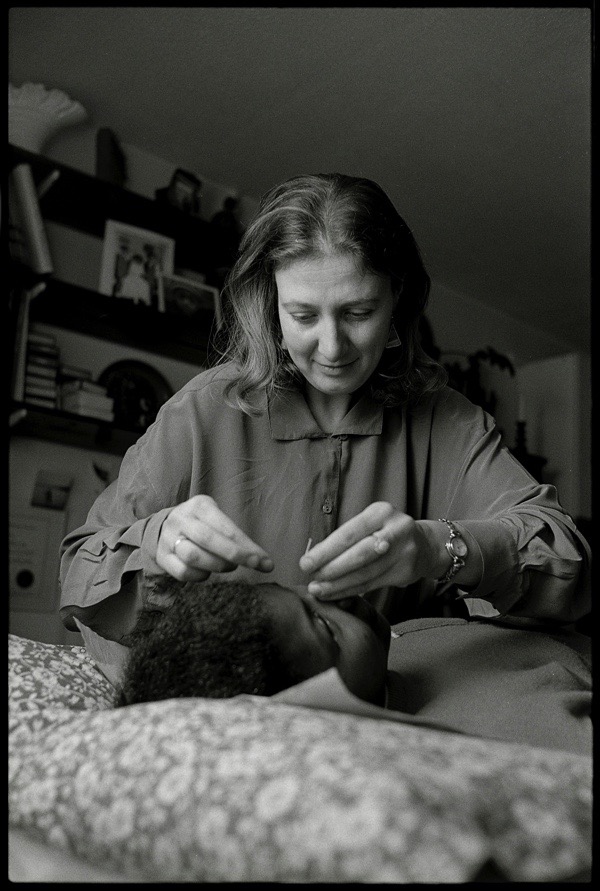
Gerrie Harris, Acupuncturist
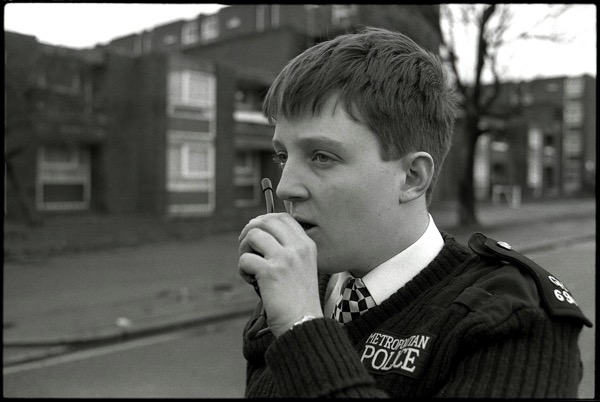
WPC Helen Taylor
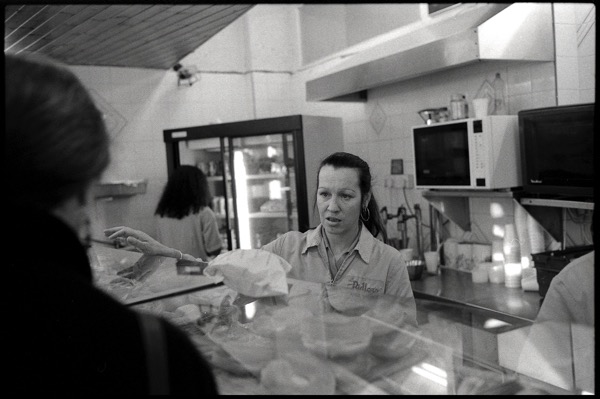
Mary, Counter Assistant at Ridley’s Beigel Bakery
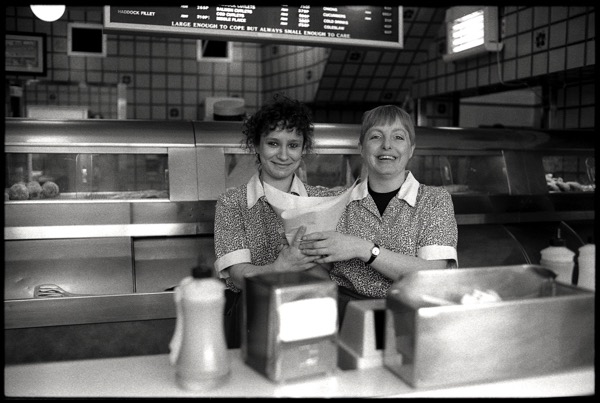
Mandy McLoughlin & Angela Kent, Faulkners Fish & Chip Restaurant
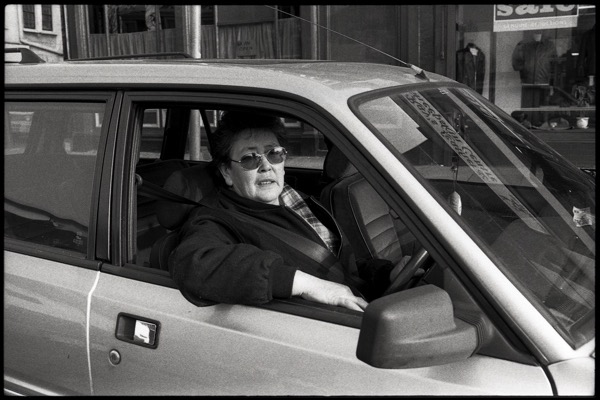
Terrie Tan, Driver at Lady Cabs
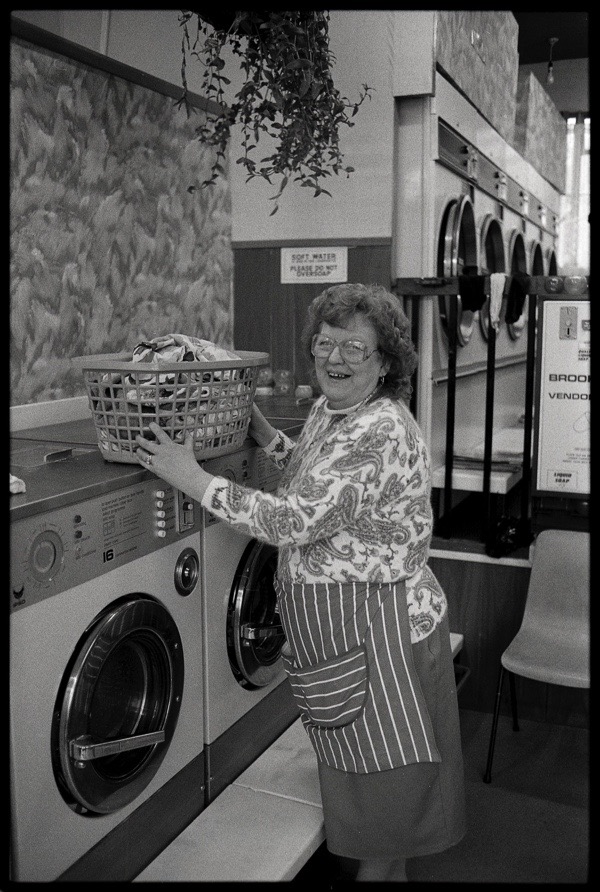
Maureen McLoughlin, Supervisor at Riversdale Laundrette
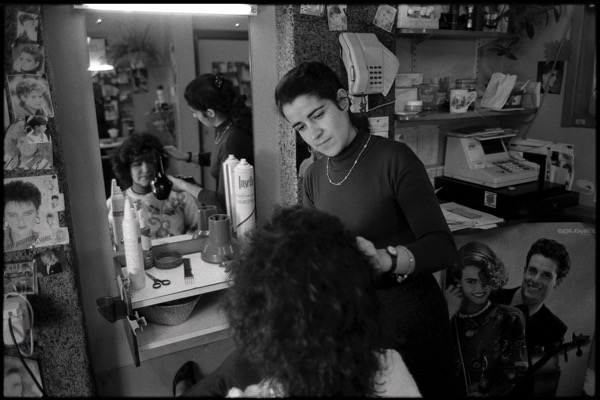
Anna Sousa, Hairdresser at Shampers
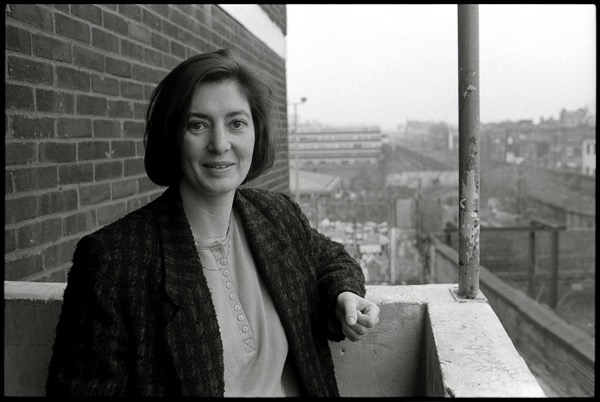
Jane Reeves, Councillor
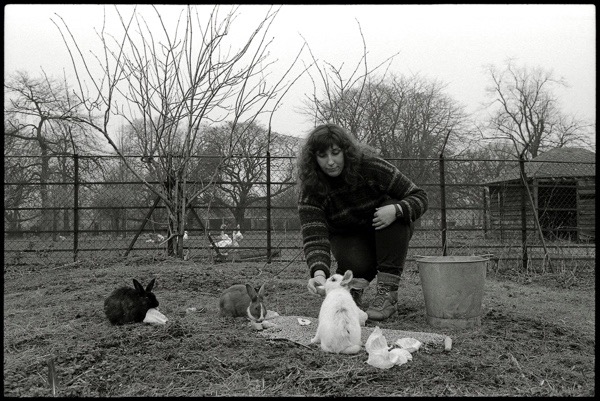
Carolin Ambler, Zoo Keeper
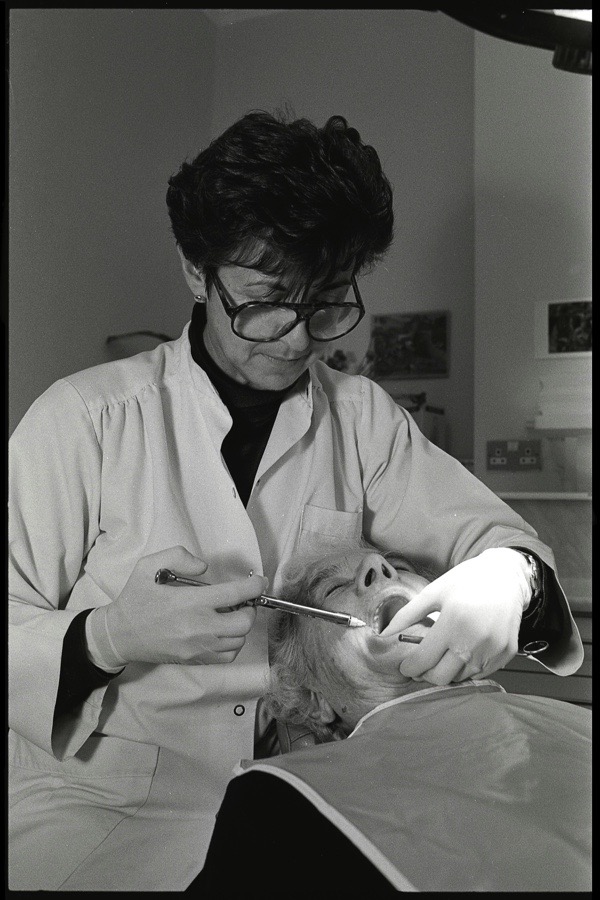
Mrs Sherman, Dentist
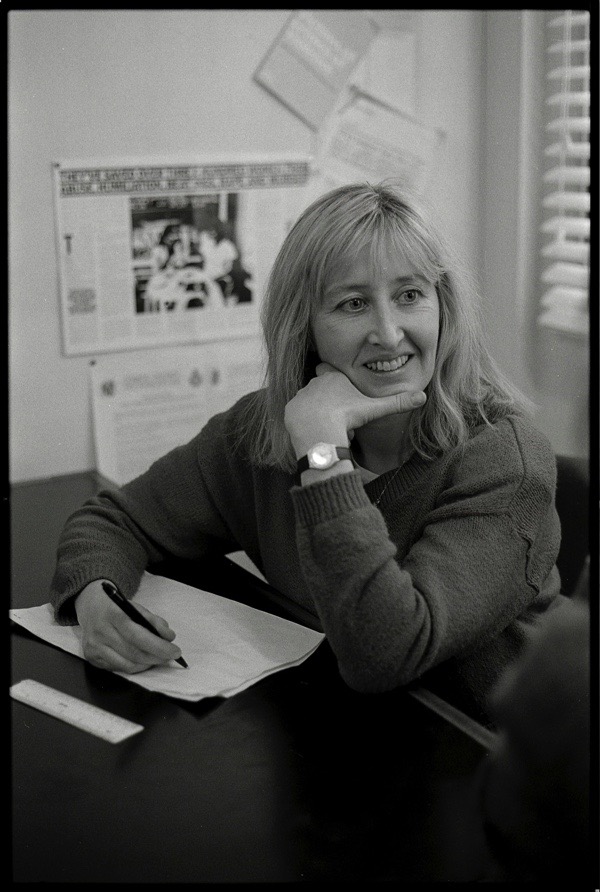
Eileen Fisher, Police Domestic Violence Unit
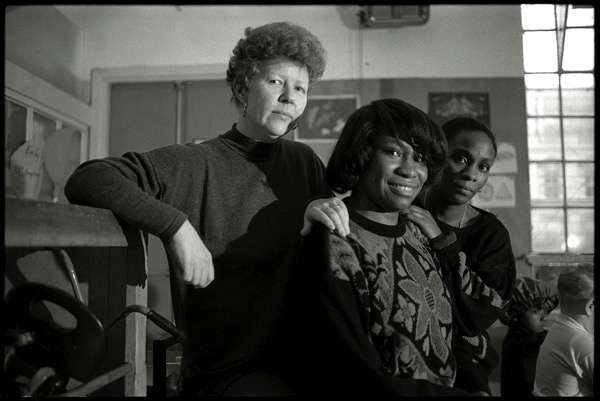
Yvonne McKenzie, Jacqui Olliffe & Dirinai Harley, Supervisors at Oranges & Lemons Day Nursery
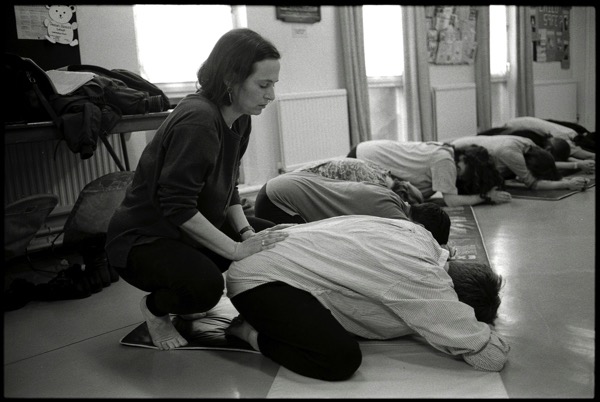
Jessica James, Active Birth Teacher
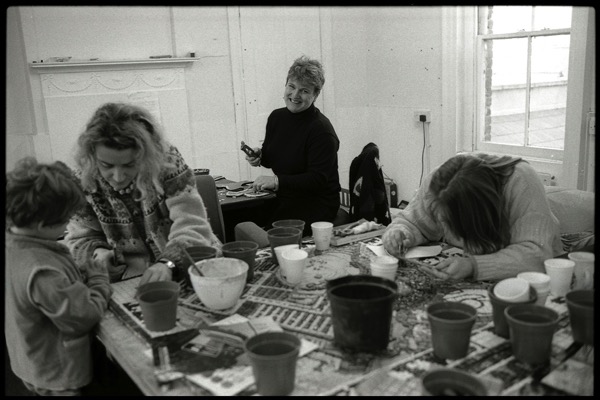
Di England, Supervisor at Free Form Arts
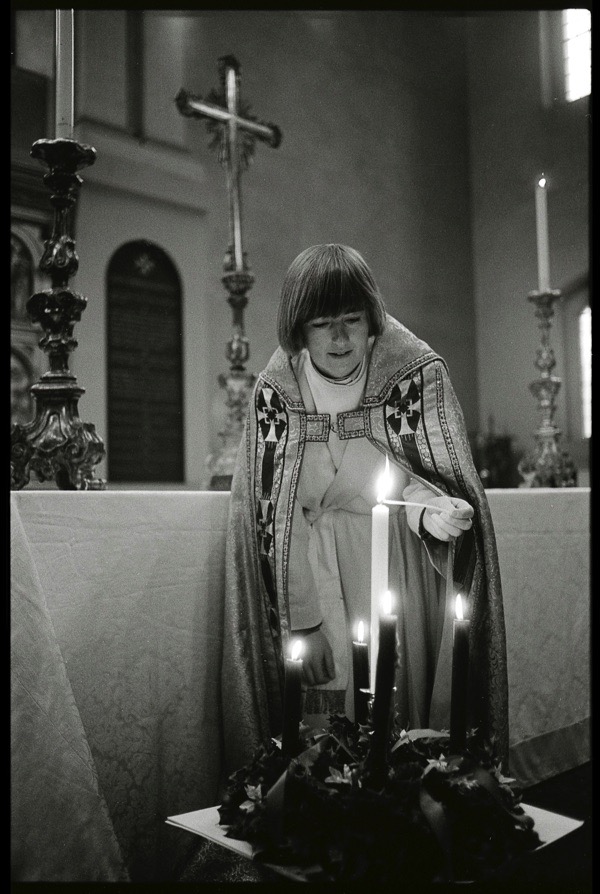
Sally Theakston, Chaplain, St John’s Hackney
Photographs copyright © Sarah Ainslie
Photographs courtesy Hackney Museum












