At Postman’s Park
Visit Postman’s Park with me on my next tour of the City of London this Sunday 21st April

Taking the opportunity afforded by the Spring sunshine yesterday, I enjoyed a stroll from Spitalfields through the City of London to visit Postman’s Park, a tiny enclave of green between St Bartholomew’s Hospital, the Barbican and St Paul’s Cathedral. Created in 1880 as a place of recreation for postmen, it is across the road from where the statue of Sir Rowland Hill, inventor of the postage stamp, stands outside the former sorting office. Of itself this is a quaint notion but it is not what attracts me to this melancholic shady corner, full of ferns, evergreen shrubs and dark fishponds. I have been a regular visitor here ever since I first discovered it years ago when I had an office in Clerkenwell where I used to go and write. Whenever I did not know what to write, I went out for walk. So, as you can imagine, I went for a lot of walks and this was how my curiosity for the City arose.
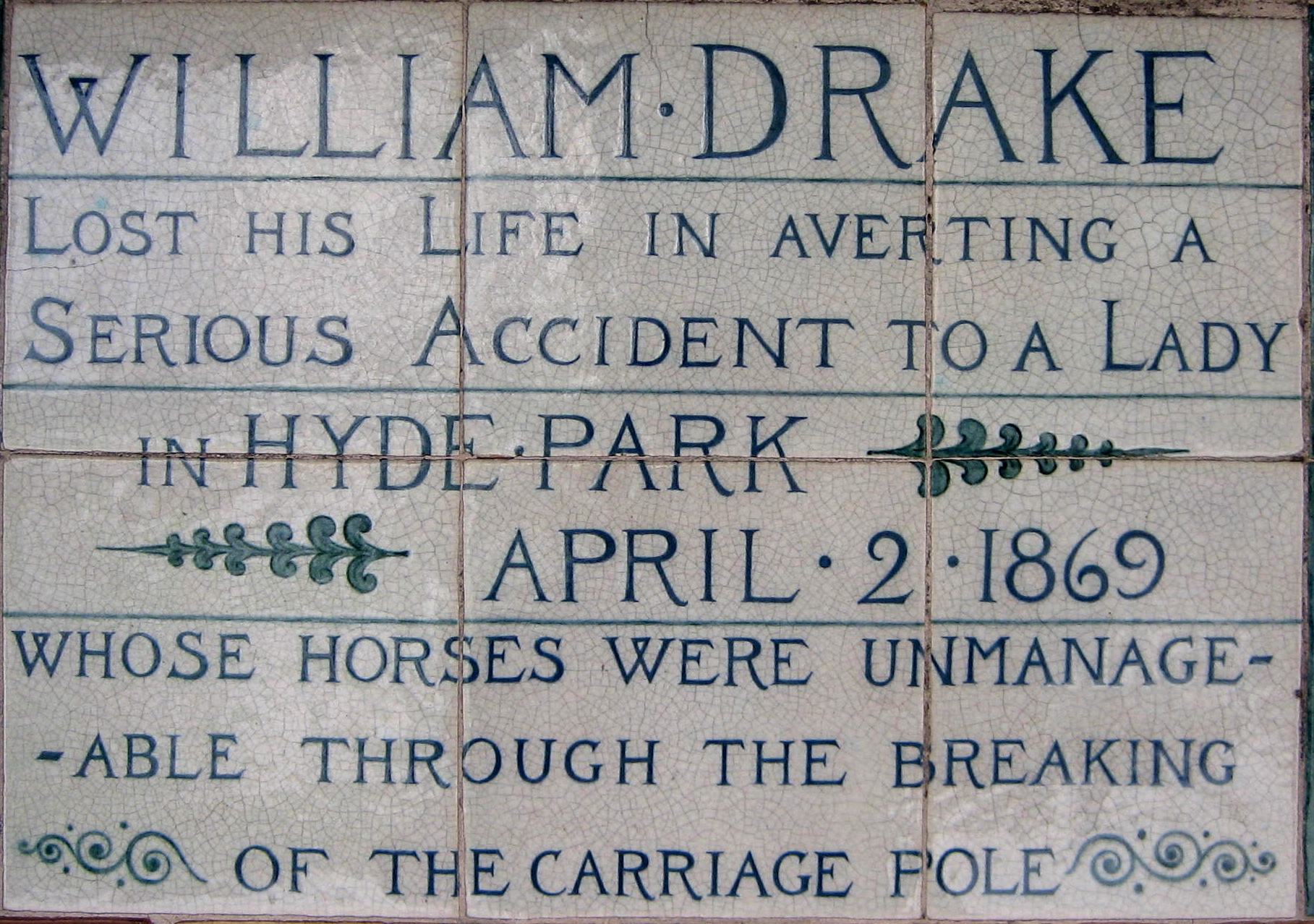
In 1900, the Victorian artist George Frederick Watts created a Memorial to Heroic Self-Sacrifice here, a wall of ceramic plaques with a lean-to shelter, commemorating those who lost their lives trying to save others. Undoubtably, it is a noble enterprise but I am not sure that my fascination with this strange Memorial is entirely noble. The Memorial is a catalogue of calamity, in which people meet their deaths in a variety of dramatic ways that induce awe and wonder. As you scan the plaques, taking in the fires, drownings, poisonings and other accidents, each appears more extraordinary than the one before, encouraging a certain morbid instinct that is innate to human nature. Before long, you are connoisseur of calamity and you have shuffled the plaques into a hierarchy of strangeness.
To my eyes,“Sarah Smith, the Pantomime Artiste at Prince’s Theatre, who died of terrible injuries received when attempting in her inflammable dress to extinguish the flames which had enveloped her companion, January 24 1863,” will always be in the limelight in death, just as she was in life, because of the theatrical nature of her demise which evokes those famous images of Loie Fuller, only with flames replacing the billowing dress. This Memorial appeals to me because every plaque is an elliptical drama which allows my imagination scope to conjure the images and imagine the whole story for myself. Edward Gorey might have illustrated a handsome book picturing these memorable disasters.
Watts believed that his heroes provided models of exemplary behaviour and character but I think that this amassing of examples proposes a certain ambiguity. Inevitably, you ask yourself whether this is a Memorial to courage or to foolhardiness.
Death spares no dignity, and a sewage works is an unfortunate place to drown just as an explosion in a sugar factory has undeniable bathos. Looking at the dates, which are primarily from the second half of the nineteenth century, you wonder if this was an especially dangerous time to live. Though, if you dwell on the Memorial further you cannot but conclude that life itself is dangerous, human existence is frail, and we live in a world where arbitrary accidents happen continuously. All of which is quite normal and self-evident, as the news reminds us daily.
I do not wish to diminish the seriousness of these real tragedies that are only rendered bizarre by our distance in time and the unique context of their collective presentation. The many tragic deaths of children and young people recorded here speak poignantly across the years, Elizabeth Boxall of Bethnal Green, aged seventeen, who died trying to save a child from a runaway horse, William Donald the nineteen-year-old railway clerk who drowned in the River Lea saving a lad from “a dangerous entanglement of weed” and eleven year old Solomon Galaman who died of injuries after saving his little brother from being run over in Commercial St, “Mother I saved him but I could not save myself.”
My grandmother had a print of George Frederick Watts’ painting “Hope” in her dining room and it fascinated me as a child. Here was a woman, representing hope, blindfolded and swathed in a muslin dress, carrying a lyre with just one string, while sitting on a rock in the lonely ocean as the tide rose around her. It was an absurdly aestheticised image that spoke of hopelessness as much as hope. George Frederick Watts chose a certain moment in the narrative to present as “poetic”. If the sequence were animated, then the water would rise and the woman would struggle and die while fighting for her last breath. But the reality of drowning would not be a desirable image that my grandmother could put on her dining room wall to glance at each Sunday before she carved her joint of beef.
The same disconnect exists in this Memorial in Postman’s Park. There is an uneasy disparity between the notion of tasteful remembrance of individuals, who demonstrated lofty ideals of courage and self-sacrifice, and the absurd catalogue of real accidents. However, this disparity does not make these people any less heroic, it just reminds us of the untidy and undignified nature of death, over which we have little control, but which permits certain people to reveal brave spirits and sometimes get remembered for it too.
Be assured, I took extra care in crossing the busy streets as I walked back on my return journey through the City to Spitalfields.




In The Roof Of St Paul’s
Click here to book for my next tour of the City of London this Sunday 21st April

On the right of this photograph, taken in the roof of St Paul’s Cathedral, is the concave wall of the outer dome and curving away to the left is the convex wall of the painted inner dome that sits inside it, just like an enormous boiled egg beneath a cosy. It is a strange configuration which means the lower dome does not have the bear the weight of the dome roof, and which creates extraordinary incidental spaces that never cease to fascinate me whenever I return to scale this majestic cathedral.
Once I am through the main door, passing all the visitors standing and gazing at the vaulted cathedral ceiling far overhead, I go straight to the entrance to the roof. This was where I came the very first time I was ever permitted to visit London on my own as a child, and I have returned consistently through all the intervening years without disappointment.
Leaving the nave and ascending the stairs, you enter a different St Paul’s – no longer the monumental space dedicated to public worship but a warren of staircases and narrow passages that enable people to run like rats within the walls and emerge again to peer down at their world askance. If you are lucky, your initial burst of enthusiasm will carry you clattering up the wide spiral stairs to the height of the nave roof. At the head of these, formal elegance ceases as you turn left into a crooked passage and right, up a steep, tapering staircase which is only as wide as your shoulders, and where you must lean forward when the ceiling lowers to child height, before – without warning and quite unexpectedly – you step out into the cavernous void of the Whispering Gallery.
This was where I was transfixed by vertigo on my first visit. Sitting perched upon the tenuous balcony that circumscribes the dome with my back to the wall, the emptiness was overwhelming and the expectation of imminent collapse tangible. To this day it remains the most intense spatial experience that I know. I see the space contained by the great dome overhead and the aisles stretching below in four directions and it sets my head reeling, and I cannot avoid envisaging the dome spinning out of kilter and collapsing in an apocalypse. I can feel the magnetism to leap into the nothingness as if it were a great pool. Even the paintings upon the dome fill me with dread that the figures will fall from their precarious height. And each time I come there I must sit, while whispers fly around me, and make peace with these feelings before I can leave.
Sobered by the initial climb and awed by the Whispering Gallery, visitors usually take a moment to relax and scrutinise the views from the Stone Gallery that runs around the base of the exterior dome. Here I sat with my father while he recovered himself, when he came to visit me once when I first moved to London. As we discussed the idle spectacle of the view, I became aware for the first time that he was failing and growing old, and was quietly ashamed of my thoughtlessness in bringing him, when I knew it would be a point of honour for him not to admit to any struggle.
From here you climb into the interior of the domed roof – laced with iron staircases, spiralling and twisting around the central brick cone, like a giant pie funnel, that supports the lantern at the very top. Every wall tilts or curves or arches in a different direction and there is no longer any sense of height, you could equally be underground. Let me confide, on this recent visit, to my surprise and for the first time, this was where I experienced disorientation. I found myself in a space without a horizontal floor and barely any vertical services, hundreds of feet in the air, sandwiched between the roof dome with the sky above and the interior dome beneath – promoting morbid thoughts of smashing through this inner dome to fall like one of the figures from the paintings on the other side of the wall.
Yet as before, none of these grim fantasies were realised and I came safely to the Golden Gallery at the very top of the cathedral, two hundred and eighty feet above the ground. There is a spyhole in the floor there – God’s eye view – that allowed me to look right down through both domes to the floor below where the crowds crept like ants. And then, with the great dome beneath me, I could gaze out upon the city from a point of security, and free of vertigo.
When I climbed back down to ground level, I looked up to the dome from underneath and saw the speck of light from the spyhole and knew that to whoever was gazing at that moment I was now one of the ants. In medieval cathedrals, the focus of the architecture was upon the altar but at St Paul’s it is directly under the dome, where anyone can stand and be at the centre of things. The scale and ingenuity of St Paul’s are both an awe-inducing human achievement and one that makes people feel small too – a suitable irony in a great cathedral designed by a man named after the smallest bird, Wren.
I shall continue to return and climb up to the dome as long as I am able, because my trips to the roof at St Paul’s offer contradictory experiences that unlock me from the day to day. It is a reliable adventure which always delights, surpassing my recollections and revealing new wonders, because the vast scale and intricate configuration of this astounding edifice defy the capacity of the human mind to hold it in memory.

At the foot of the stair.
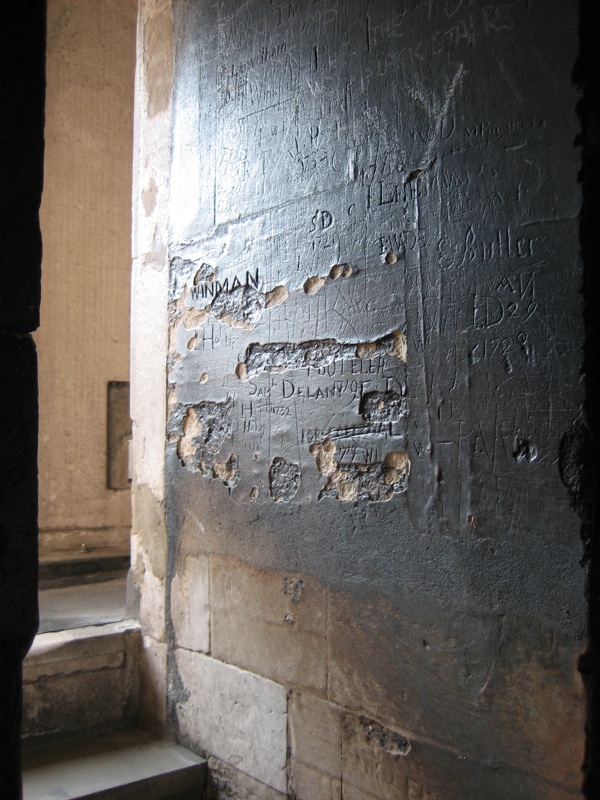
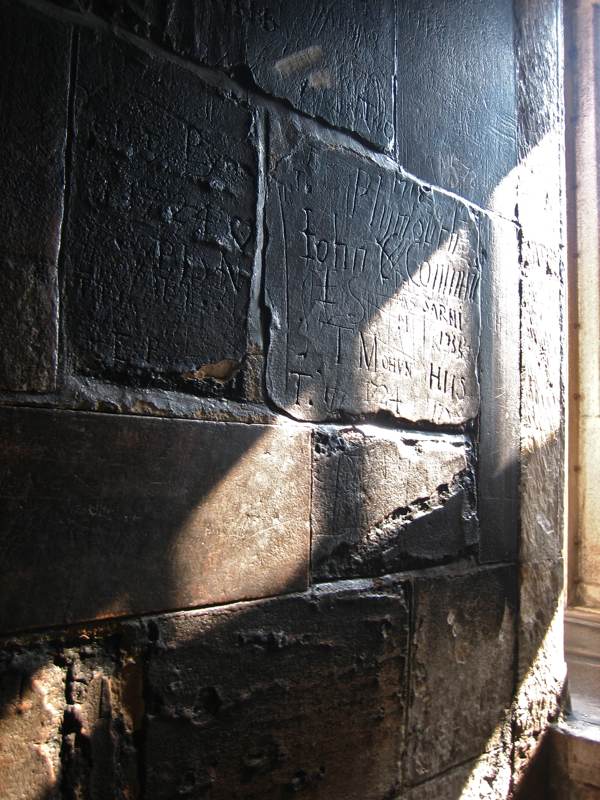
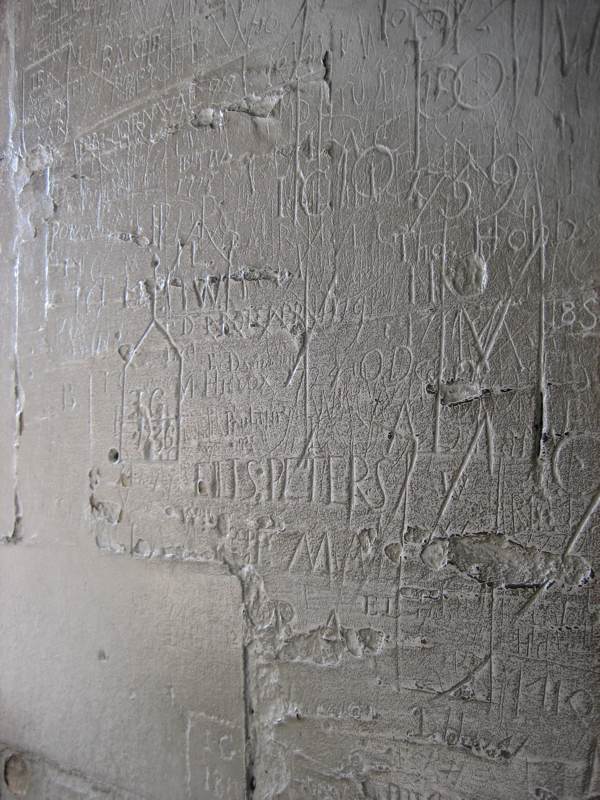
Graffiti at the entrance to the Stone Gallery.

On the Stone Gallery, at the base of the dome.

Iron staircases spiral in the hidden space between the inner and the outer domes of the cathedral.

Looking through from the top of the lantern down to the floor two hundred and seventy feet below.


Looking from the floor to the dome and the lantern above.
At Chu’s Garage
Click here to book for my next tour of the City of London this Sunday 21st April
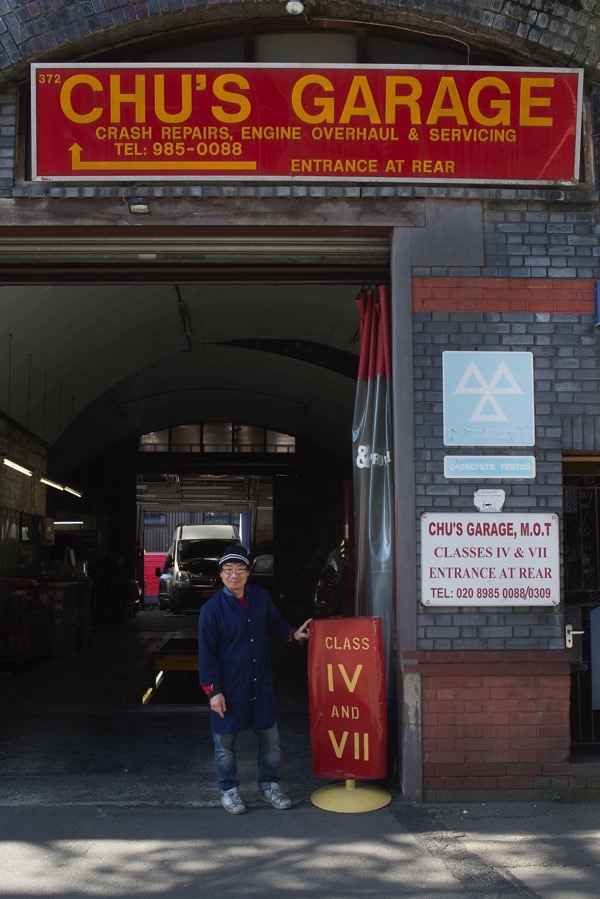
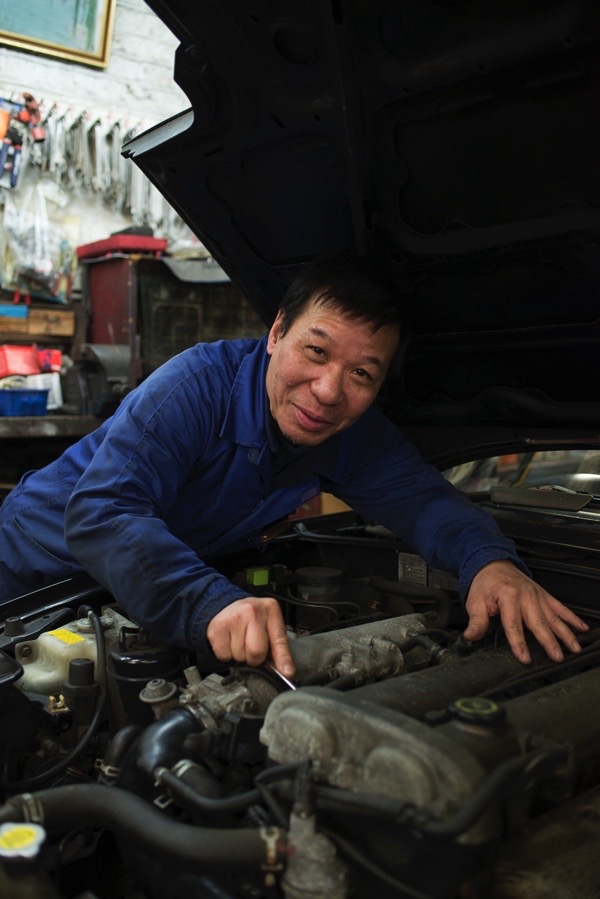
Quang Chu of Chu’s Garage
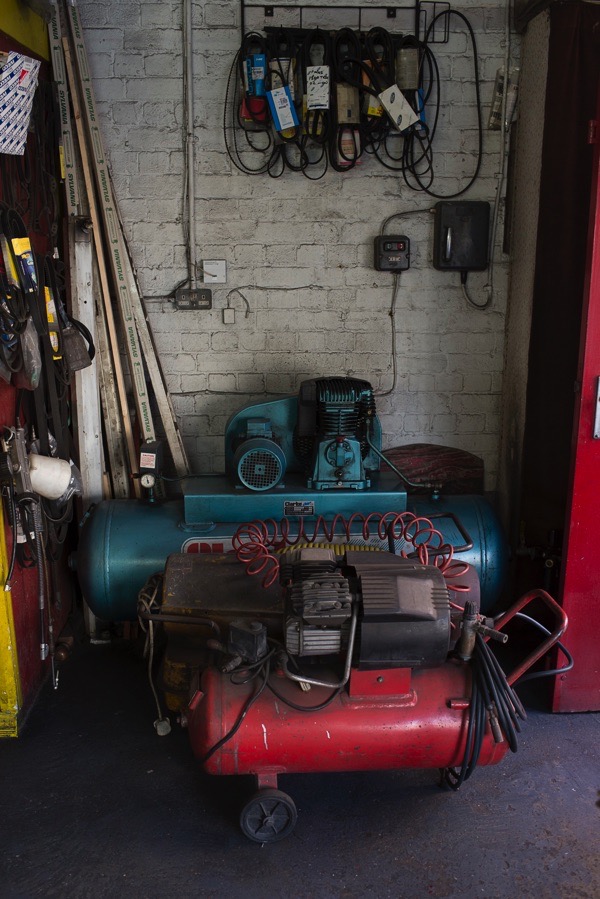
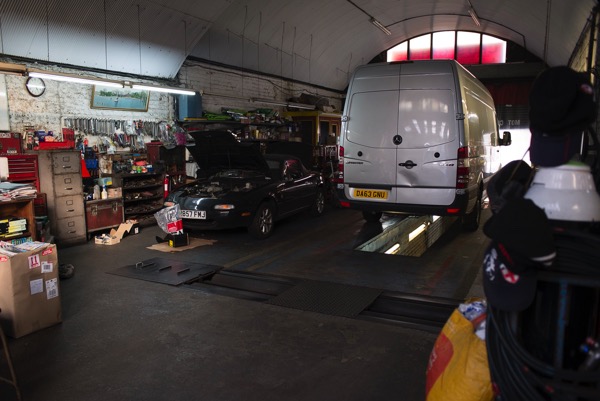
Chu’s Garage under the railway arches in London Fields has become a reliable institution among motorists in Hackney over the last thirty-five years for good service and honest dealing. Contributing Photographer Sarah Ainslie and I met the Chu family and were humbled to learn their astonishing tale.
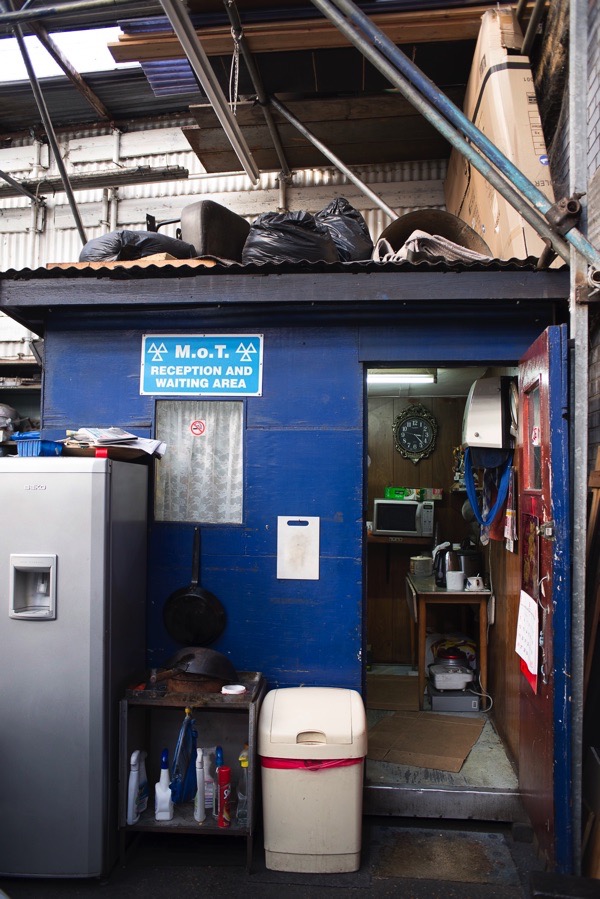
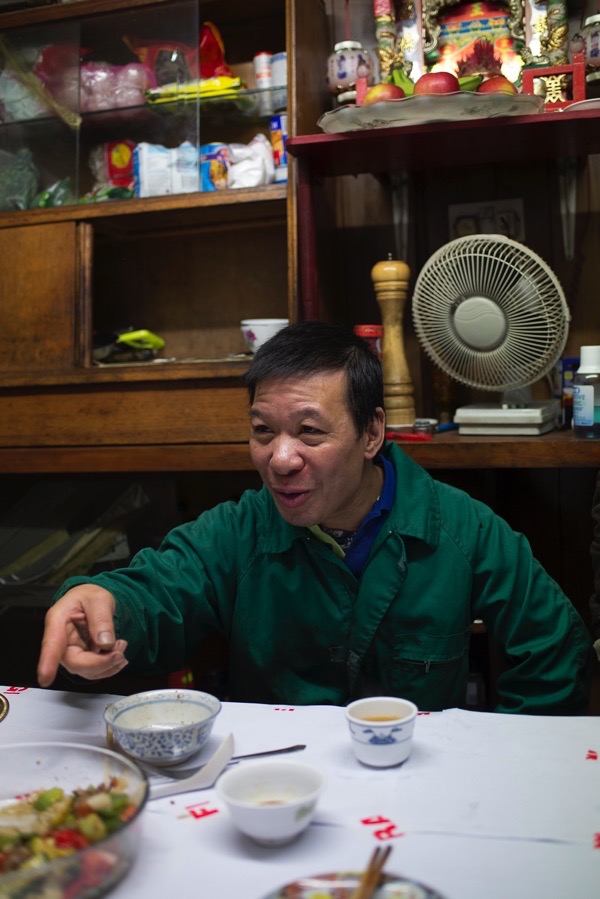
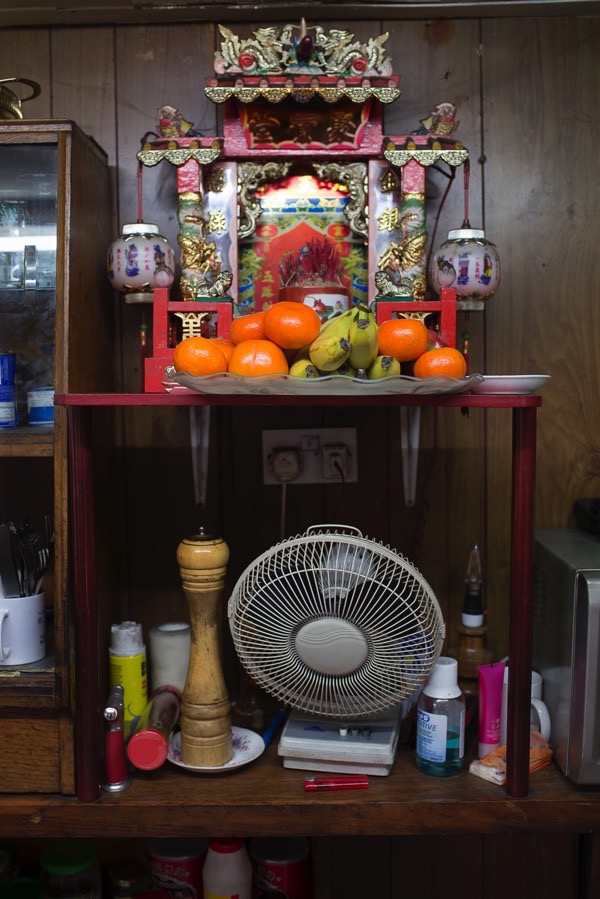
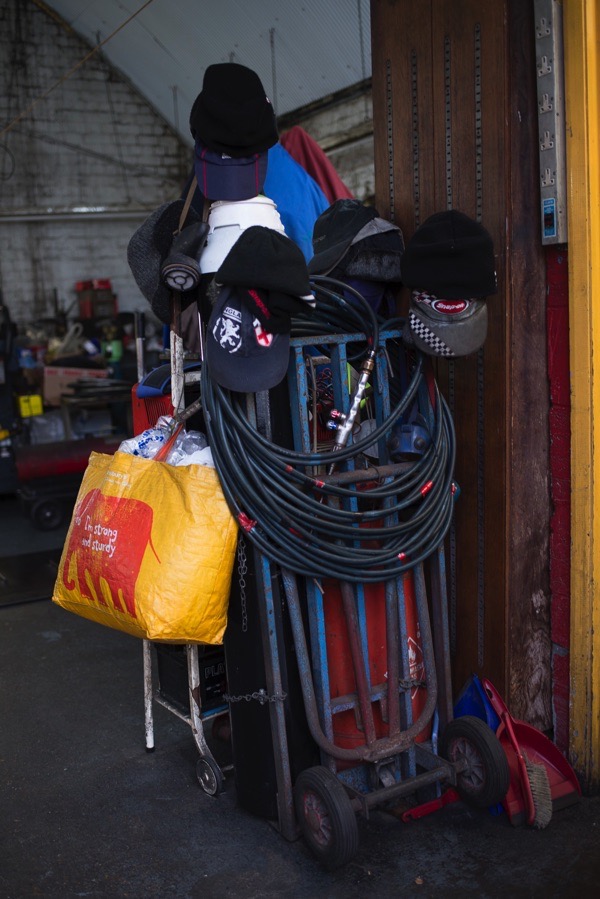
In the middle of the day at Chu’s Garage, work ceases and a ring is attached to a gas bottle for Jimmy Chu to cook a fresh lunch, which the family eat around the table in the cosy hut, complete with an altar, which serves as their dining room.
Sarah & I were honoured to be lunch guests and afterwards, over cups of green tea, we were told the story that lies behind Chu’s Garage. This was an unexpected epic, the dramatic tale of the Chu family’s perilous journey from Viet Nam to Britain, revealing their remarkable hard work, courage and tenacity in pursuit of a new life, which culminated in opening their beloved garage.
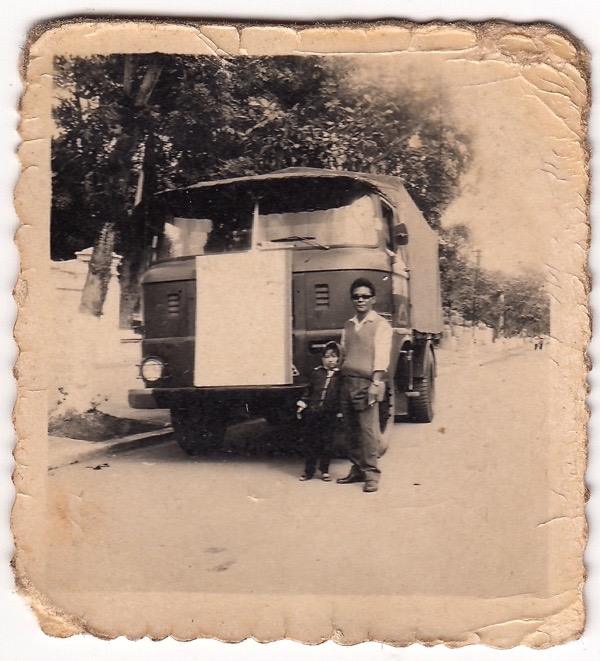
Chuong Kim Chu in Hai Phong, Viet Nam, 1974
Nhi Chu – My father, Chuong Kim Chu, was Chinese but he was born in 1935 in Viet Nam. My grandfather had come from Quanzhou in the south of China and migrated with his brothers to Viet Nam. So my father married my mother, Lien, who was Vietnamese and, although we grew up knowing that my dad was Chinese, we did not speak Chinese until we came to the refugee camp in Hong Kong.
Quang Chu – I remember when I was small my grandfather tried to speak Chinese with us. At that time, Viet Nam and America were at war and, many times by day and by night, they were bombing the city where we lived. It was very scary but interesting for a child. At night I saw the rockets and they were colourful, like fireworks. I remember the sound of the aeroplanes and fire everywhere. The table and chairs shook! Many times we were evacuated from the city to escape the bombs.
Chau Chu – One day my mum said there was a siren and, as we didn’t have a shelter, she went to the neighbours and asked ‘ Can we please come in to your shelter?’ But they said, ‘We’re so sorry, there’s no space.’ So my mum took us somewhere else and later that day, when we came back, we found our neighbours’ house had been bombed and everyone killed.
Nhi Chu – When my father grew up in Viet Nam, the family were poor so he didn’t go to school but he taught himself to read and write, Vietnamese and Chinese. He said, he learnt by eavesdropping on classrooms. When my father was seven, my grandfather, who was a herbalist, saved someone’s life and in return they said, ‘Your son can come with me and I will give him an education.’ But, one night, my father wet the bed and was so scared that he would be beaten up that he ran away, and that was the end of his education. When he was thirteen, he became an apprentice in the engine room on a big passenger ship. He had such a curious mind that, when the captain went away, he took an engine apart and memorised how it fitted together. But when he put it back he forgot one piece, so when the captain returned he got a whack over the head.
Chau Chu – We never saw our father much because he was always away from home as a long distance lorry driver. Whenever it broke down, he could fix it himself. That was how he started as a mechanic. The company gave him the lorry and he had to look after it. He saved up a long time to buy his truck, yet when the Communists took over they just took it from him.
Nhi Chu – During the war with America, Viet Nam and China were on good terms but, after the war ended the two countries fell out over a border dispute. At that time, there was a campaign by the Vietnamese government to get all Chinese migrants and their descendants to leave the country, and they were as hostile to them as they possibly could be. People started to lose their businesses. My mother said that my father was being subjected to a lot of abuse at work, from his colleagues who had once been his friends. He was quite a popular person and every year when they had the competition to see whose lorry was in the best condition, my dad always won the first prize. But then the tables turned and he had his truck taken away, so he no longer had his business or customers. My father knew that he had to leave because he was no longer able to make a living.
Meanwhile, my mother was being bombarded by people saying, ‘Leave your husband! He’s Chinese, you are Vietnamese. If he goes to China, you should stay here because you will be abused there.’ So there was a conflict, but my mother decided she wanted to stay with her husband and children. As children, we felt we were Vietnamese, we didn’t know we were Chinese, we didn’t make the distinction.
Chau Chu – All of a sudden, people were pointing at us and saying, ‘You are Chinese, you don’t belong here!’
Quang Chu – When we got to Hong Kong, they spoke Cantonese and we had to start everything from the beginning. Everything was very hard for us.
Chau Chu – We were forced to leave Viet Nam, we had no choice. We didn’t go to Hong Kong right away, we just wanted to leave the hostile environment of Viet Nam.
Nhi Chu – Because my father was Chinese, the Chinese government gave him visas and papers to go to China legally and we travelled from Viet Nam to China by train. We lived there for a year but the problem was that, although my dad was accepted as Chinese and got a job as a lorry driver, my mother and us kids were not accepted. We were city folk but we were sent to the mountains and every day we were given a portion of a field and had to turn it into fertile soil. Unfortunately, my mother looks Vietnamese and she was subjected to a lot of abuse from the locals. She had no choice but to hide inside the house. My dad realised this was no way to live and no future for us children. We couldn’t stay and he knew he had to find a new territory where all of us could live together peacefully.
We left China illegally because in those days no-one was permitted to leave. We couldn’t all leave in one go, so we divided the family. The plan was for our elder brothers Quang and Jimmy to leave to Hong Kong and make some money and send it back, and then the rest of us would join them there.
Quang Chu – The sea was very rough and lot of people died. The old boat was rotten and leaked inside, and it was overloaded. There were more than two hundred people, old and young and even babies just born. All kinds of people but all seasick. It was their first time ever on a boat. This was a short distance but a long journey, very long. Suddenly the sky might turn dark with thunder and lightning, heavy rain and strong wind – oh, it was scary. It was only a few days but the captains were inexperienced and they went round and round. We were lucky we survived the sharks but a lot of people didn’t.
Nhi Chu – We waited but we didn’t hear anything from them for six months and then a year.
Quang Chu – We sent them letters but they didn’t get them.
Nhi Chu – My dad decided that we couldn’t wait and we needed to go. We left at night but we had to make the house look as if we were still living there, because if the police found out they would come and stop us. For about a week, we were stranded at sea and then we got to Hong Kong.
Chau Chu – They hated us as well because we wanted to come onto their small island. They wouldn’t let our boat land, it was only when it was sinking that they picked us up. They had to check we were not from China, because if they knew we were from China they would send us back, so we had to say we had come from Viet Nam.
Nhi Chu – For two nights, we were on the boat and there was a storm which hit our boat and it began to sink, which is why they took us on board. For two weeks, we were held in a Forbidden Camp, where you can’t get out of, and then we were released to a Freedom Camp. We were waiting to be allocated a sleeping area when we saw my brother Jimmy. He came with Quang and we asked, ‘Still alive! How come you didn’t write to us?’ They explained that they had to get rid of all their paperwork at the border, so they lost the address and every day for a year they took turns to come to the camp to see if we were there. Finally, we were reunited but we found out that if we had been a month later we should have missed Quang and Jimmy, because they had already decided to go to America.
My dad didn’t want to go America, he wanted to come to England because he had been told that they treat old people very nicely here. He said, ‘I’m going to be old one day.’
Quang Chu – He said, ‘Why don’t they say ‘Speak American’? – they say ‘ Speak English.’ So he thought England must be a very good country, better than America.
Nhi Chu – That was 1979 and Mrs Thatcher announced she would accept ten thousand Vietnamese refugees, so we among the first batch. We came to England in 1980 and we first settled at the refugee centre in Dorchester for ten months where we started learning English.
Quang Chu – We went to the sea at Bridport, it was very nice.
Chau Chu – There were about fifteen families and we were happy there. Each of the families took turns cooking. Then we were resettled in Barrow-in-Furness and all the racism started again, like in Viet Nam.
Nhi Chu – We had been sheltered in Dorset but then suddenly we were the only Vietnamese family in Cumbria. It was back to square one, and we couldn’t find work so Quang had to move to Wigan and Jimmy to Bournemouth.
Quang Chu – Barrow-in-Furness is a very small town where everyone works at the shipyard and that only offers enough jobs for the local people, so we had to go elsewhere. But I think it’s good to see other places and other ways of life. You learn a lot when you have to stand on your own two feet, facing life.
Nhi Chu – After five years, we moved south.
Quang Chu – I think my father had decided that Barrow was good enough for him, but then he met so many people in London.
Nhi Chu – Even though my father was in his late forties by then, he managed to pick up the English language. He continued to attend evening classes after the rest of the family stopped and, after about a year, he managed to get a job at the local garage in Barrow. When he went for an interview, the manager just said, ‘Here’s a car, tell me how many faults you can find with it.’ When he came back, the manager said, ‘There should be eleven,’ and my father said, ‘I found thirteen’ – and that’s how he got the job. Dad worked there for three years to get his qualification and then he was promoted to foreman, but he had such a hard time because the other younger mechanics resented him because of his age and race.
Chau Chu – He always knew that he would come to London one day to set up a garage.
Nhi Chu – One of his mottos in life was ‘Whatever anyone can do, the Chu family can do it just as good, if not better.’ We could never go to him and say, ‘Dad I can’t do that.’ He’d say, ‘What do you mean? You can’t yet!’
Chau Chu – He was fifty when he came to London.
Quang Chu – In 1985, he started across the road from here in a shed that he shared with a Turkish guy. There were holes in the ceiling, which made it very slippery when it rained. At that time, the railway arches were vacant and this was a very rough area.
Nhi Chu – After a year, quite a few people applied to rent this arch, but my father was lucky and he was successful. The rent was between five and six thousand annually then.
Quang Chu – We moved in here in 1988 and we fitted it ourselves but there was no business.
Nhi Chu – Bricks and cement fell from the arch whenever trains ran across. We contacted Network Rail but they ignored us for years and years.
Quang Chu – Business was very difficult, so my father decided to do MOT Class 7, vans and light commercial vehicles. There were so many garages doing MOT Class 4 but MOT Class 7 was very rare. In Hackney, we have not heard of anyone else doing it. So my father decided that doing Class 7 MOTs was the way to survive. There was so much regulation and red tape to get to be an MOT Station – but then we realised we had no MOT testing equipment! Everything for us for us was new. It was very scary.
Nhi Chu – Dad had to study the MOT textbook, the rules and regulations, and then he had to go and do a test. He really struggled, so he had to have the help of his old English teacher to translate all the terminology – and my dad passed.
Quang Chu – When we first became the MOT-nominated tester, we held a party and invited our old friends. It was very expensive to set up and we had to borrow money from so many people. The bank wouldn’t lend to us, so we had to do it Vietnamese style – we go to a lot of people, relatives, neighbours and friends, and borrow small amounts of money and keep a list. They said, ‘This is good for everybody, good for you and for the Vietnamese community.’ So we have tried to look after them and pay back everyone gradually.
Chau Chu – The MOTs have kept our business going, otherwise we would have shut down.
Quang Chu – We feel good about it – even Hackney Council bring their vans here for MOT.
Nhi Chu – When my dad died, we wanted to have a grave to represent his life, so we got a designer to come here and take a look at the garage. He said, ‘Howabout if we design it with an arch?’ My father used to say, ‘I spent all my time here, my blood and sweat to make this garage as it is, so when I die bury me in the maintenance pit.’ We achieved that in a way by creating a tombstone in the shape of an arch which he is now resting beneath.
When we start talking about our father, we realise what an amazing character he was. When he passed away, we had to tell the customers and some of them burst out crying. A lot of people miss him. Without his motivation, we would not have been able to bring the whole family from one country to another country. This garage is his legacy.
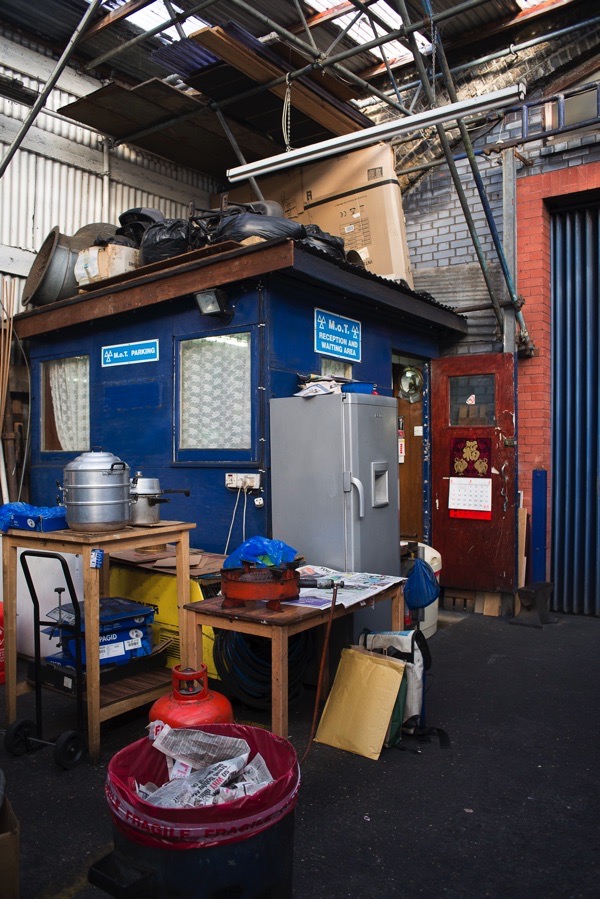
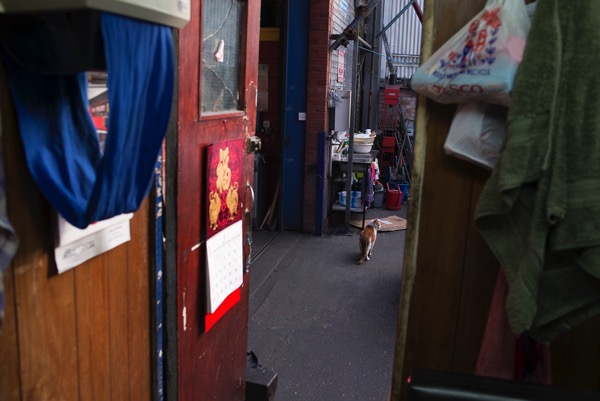
The Chus’ lunch cabin
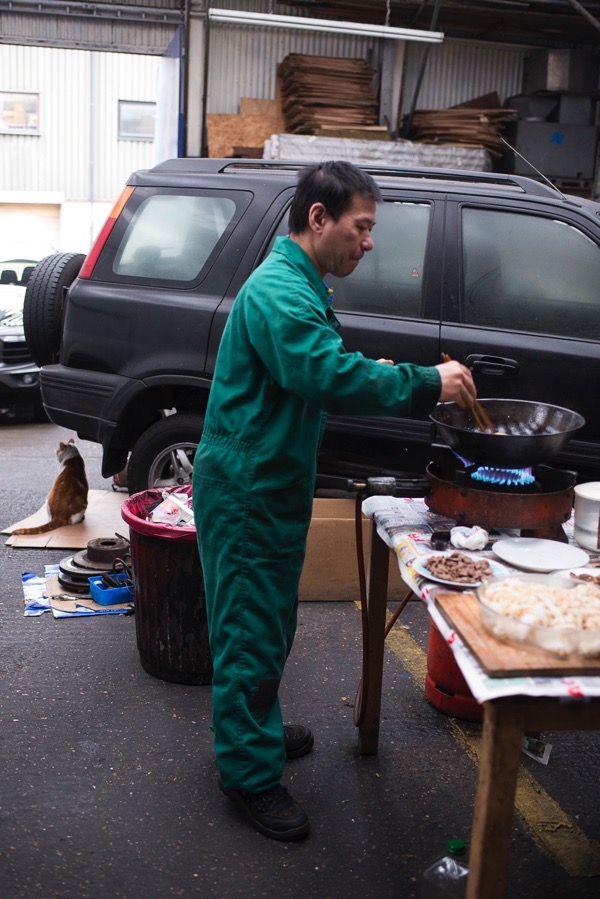
Jimmy Chu cooks lunch
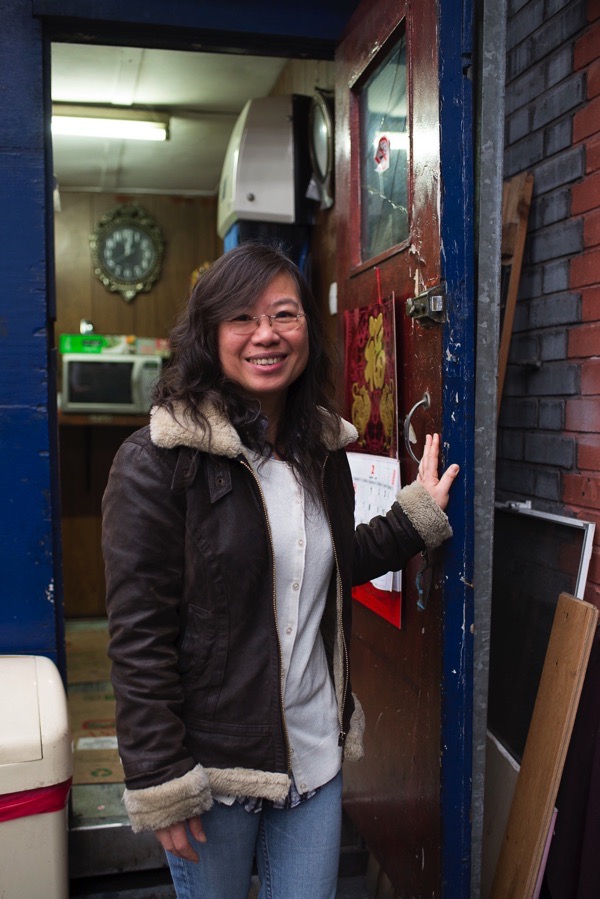
Nhi Chu
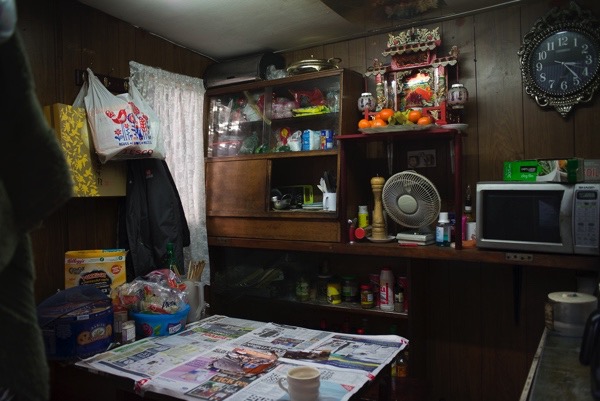
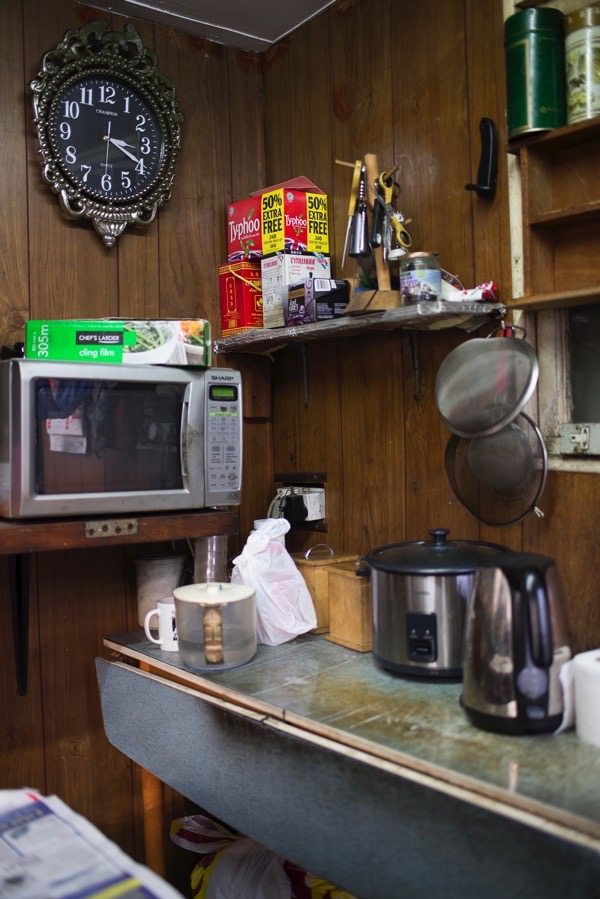
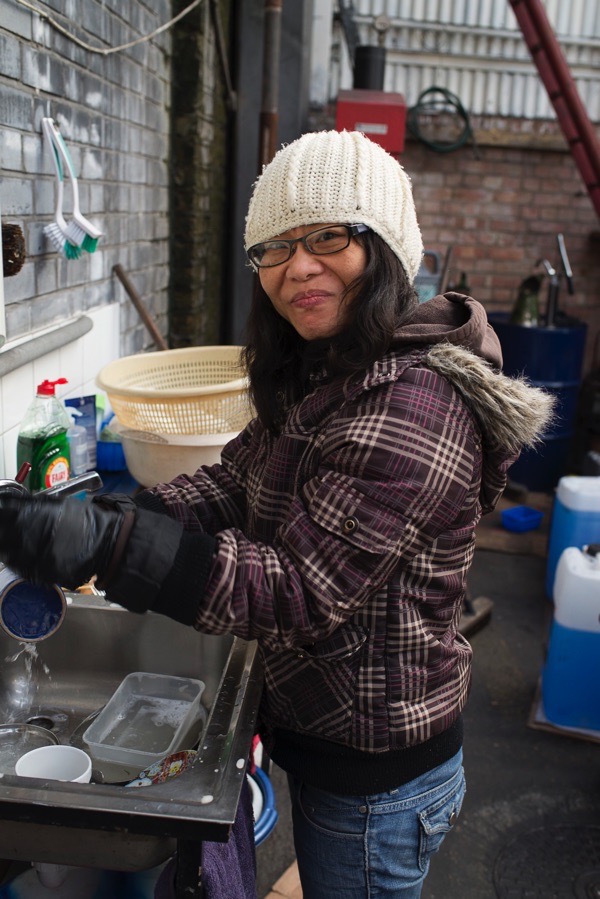
Chau Chu washes up
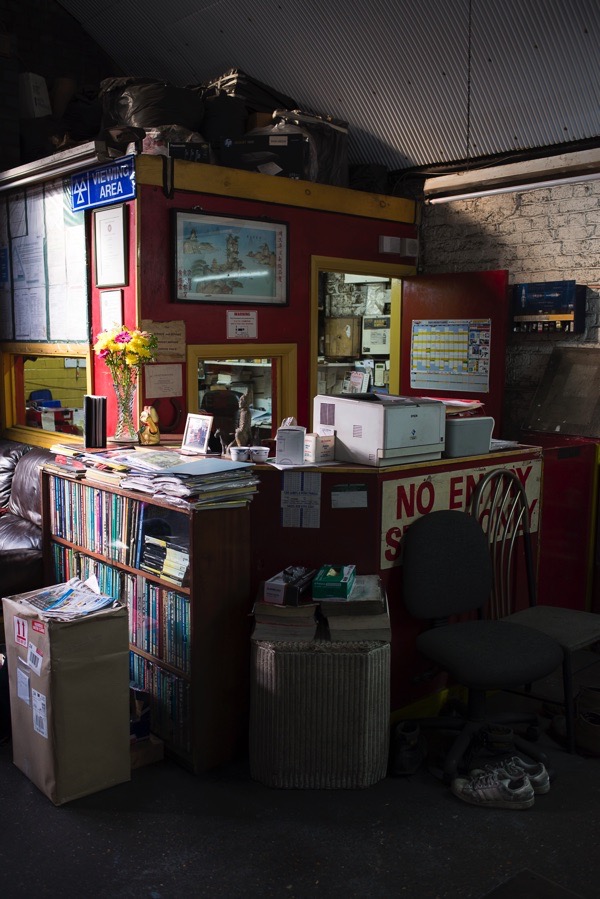
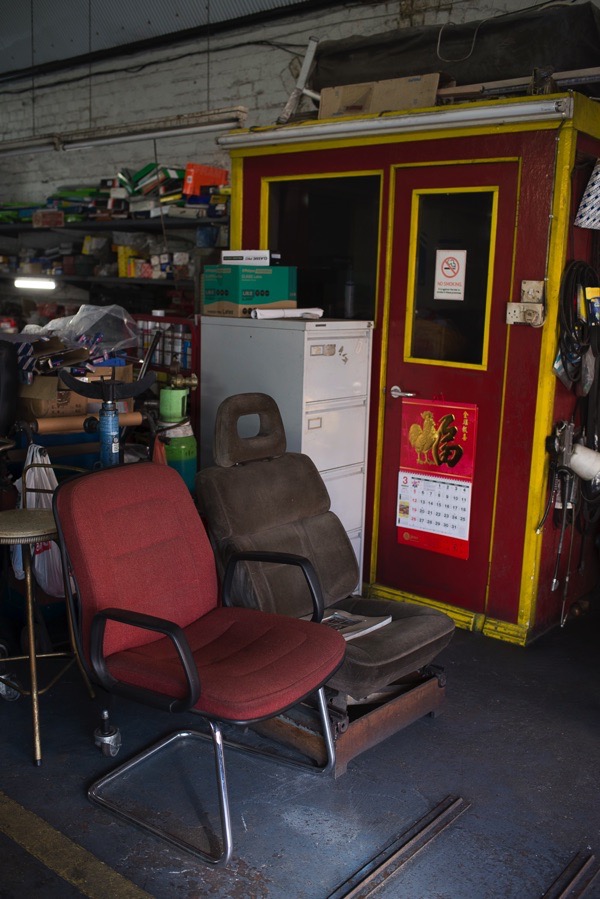
The Chu’s office
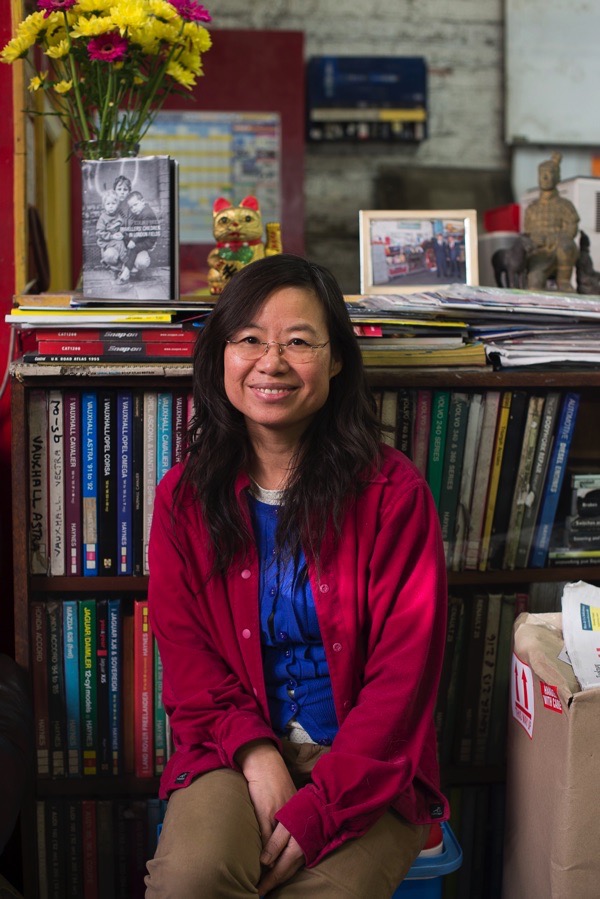
Nhi Chu
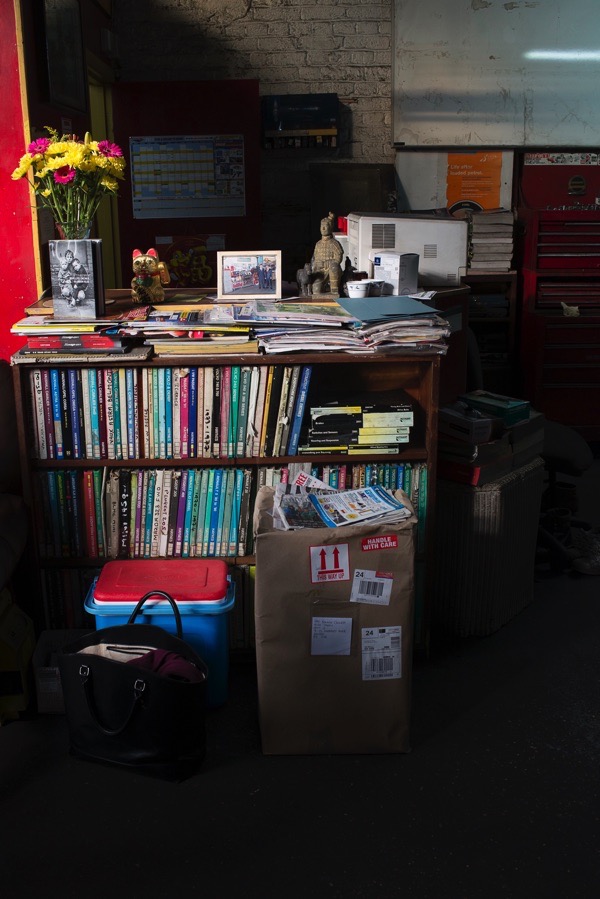
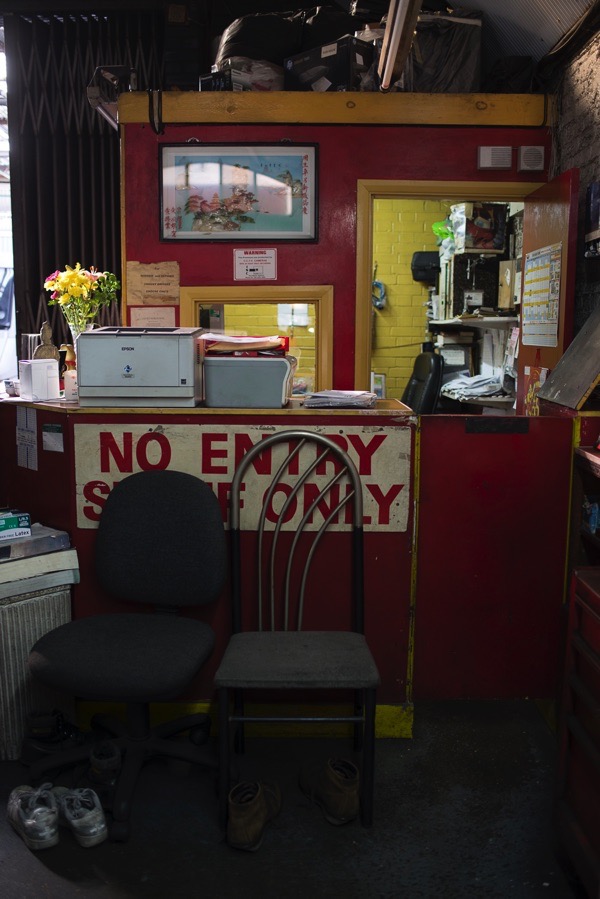
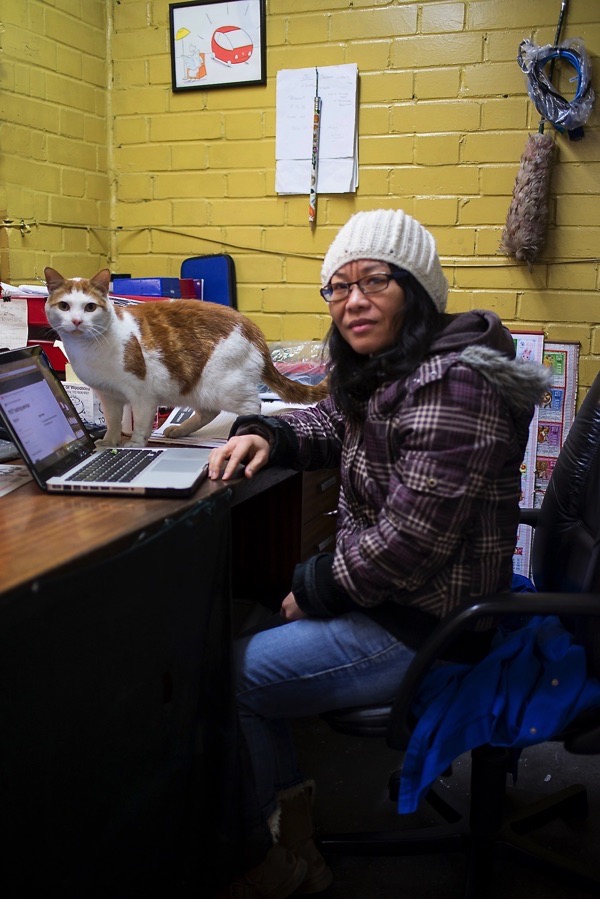
Chau Chu
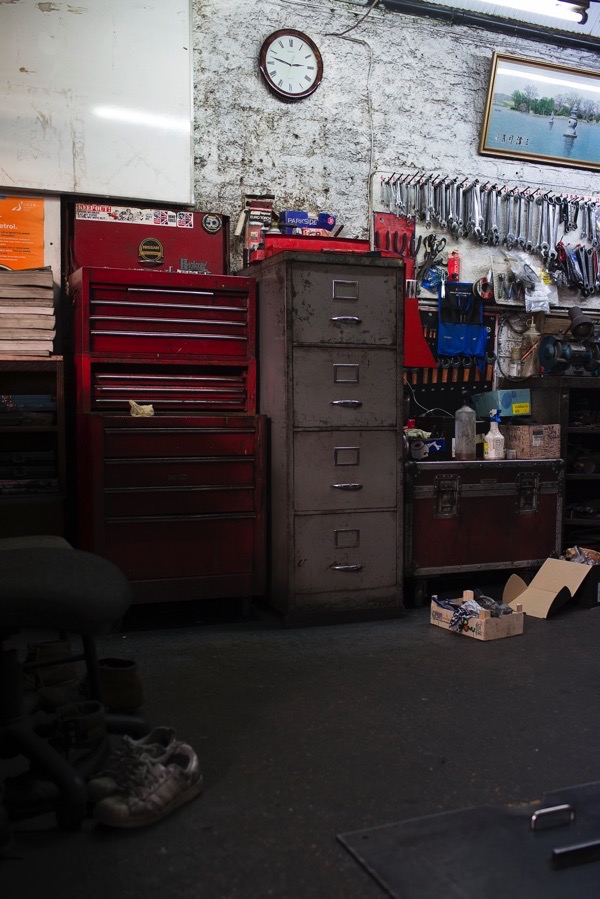
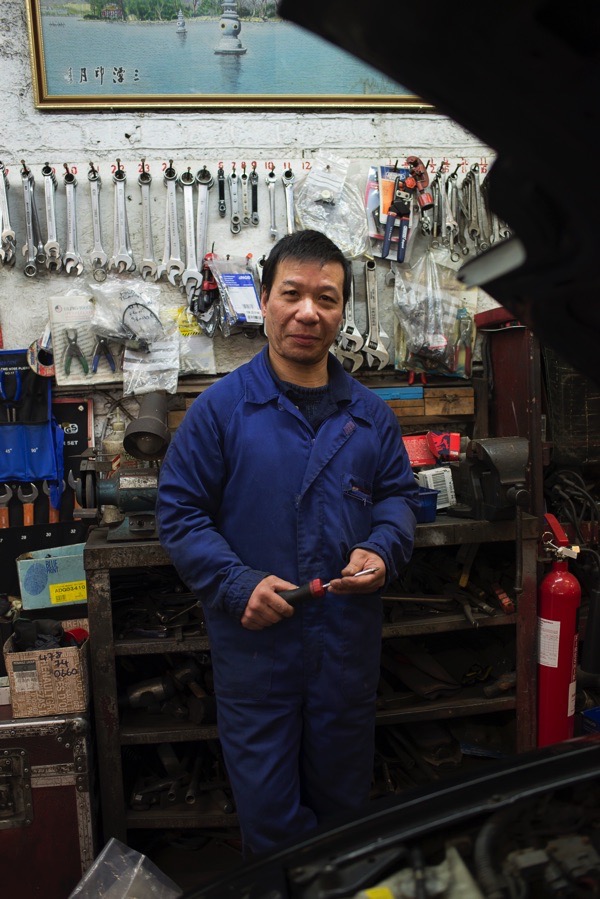
Jimmy Chu
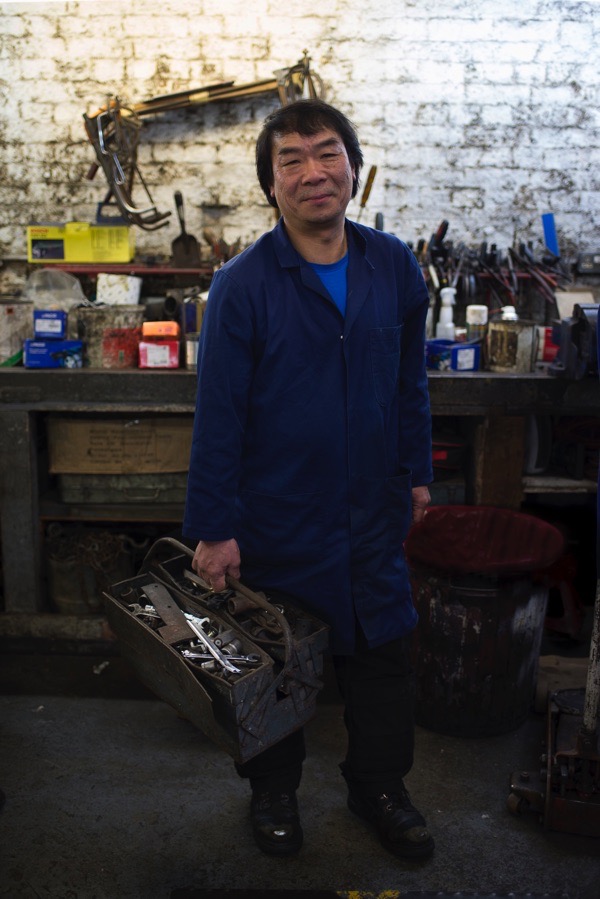
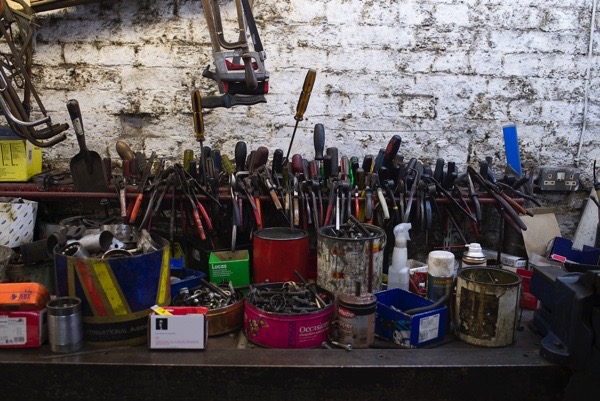
Quang Chu with his father’s toolbox
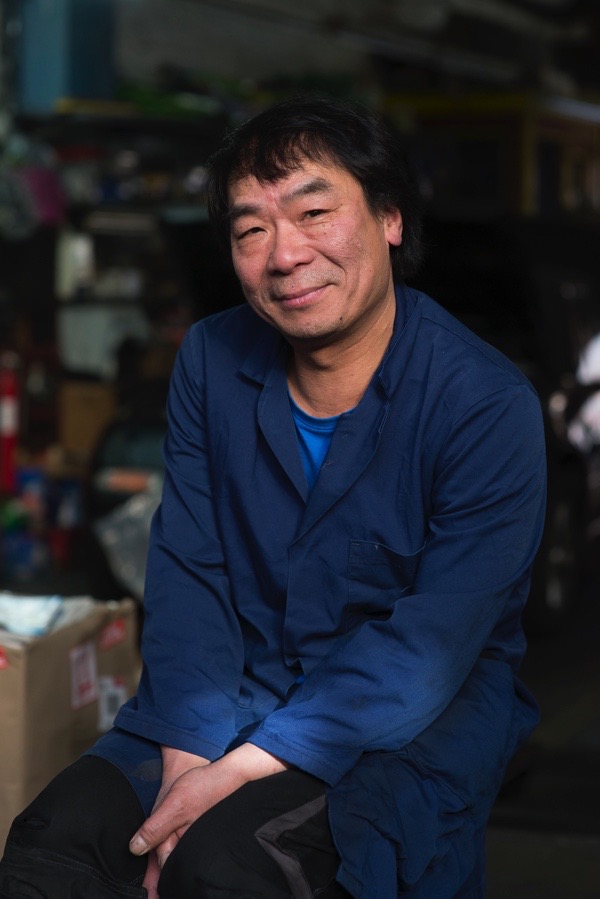
Quang Chu
Jimmy Chu
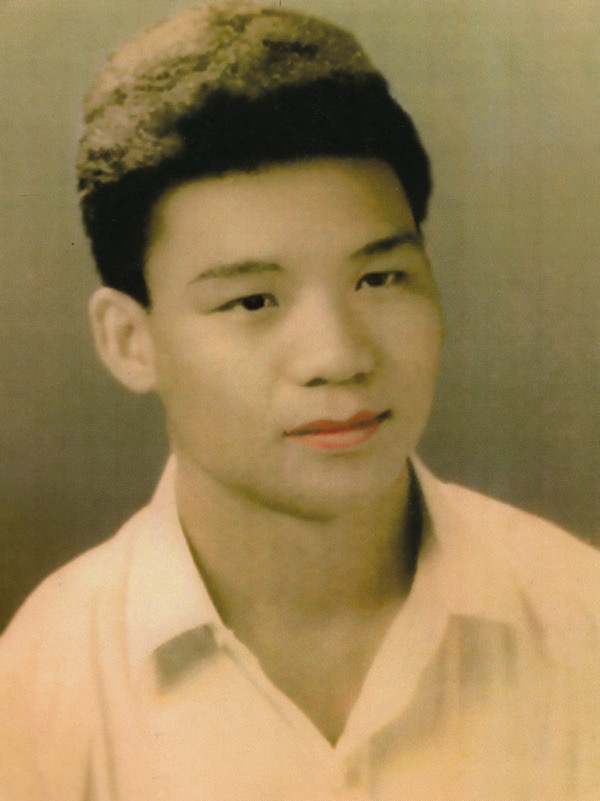
Chuong Kim Chu

Lien Chu
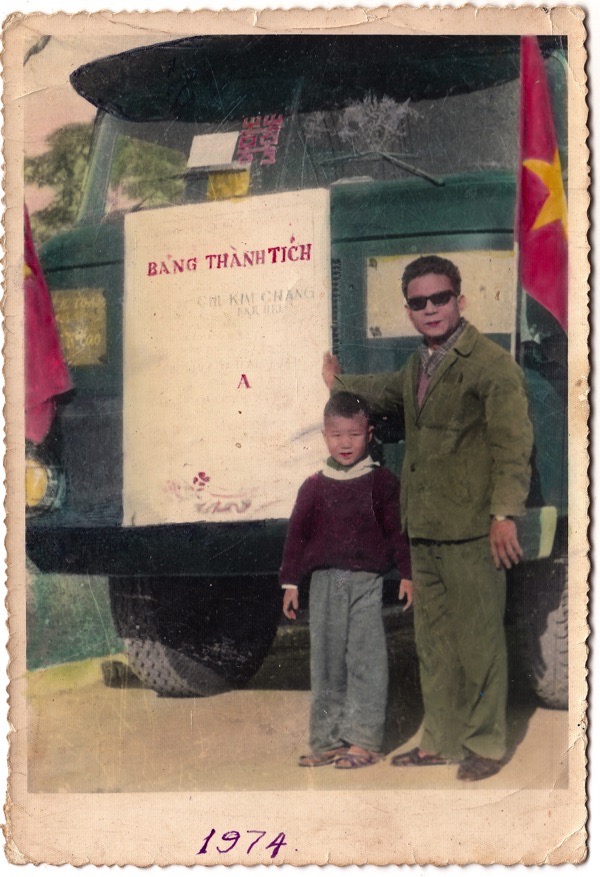 Chuong Chu standing in front of his trunk with Quang in Viet Nam, 1974
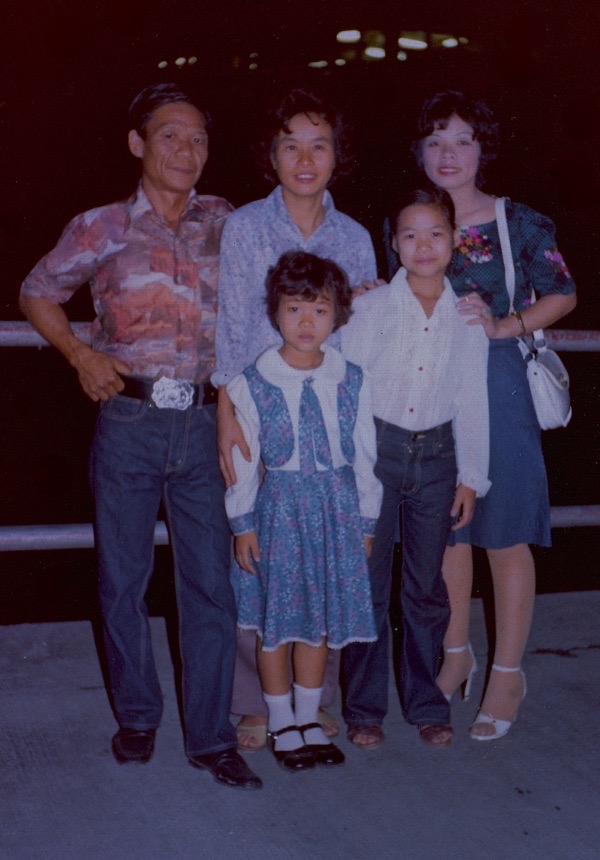
The Chu family reunited in Hong Kong 1979
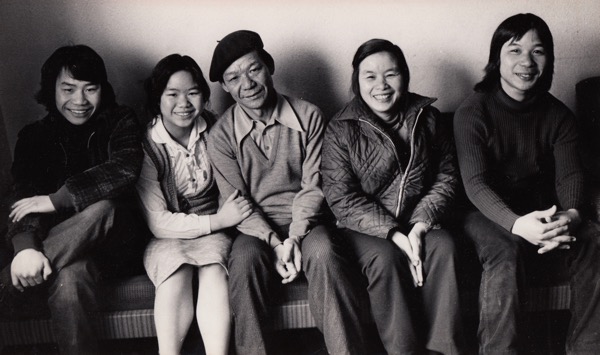
Chu family in Barrow-in Furness
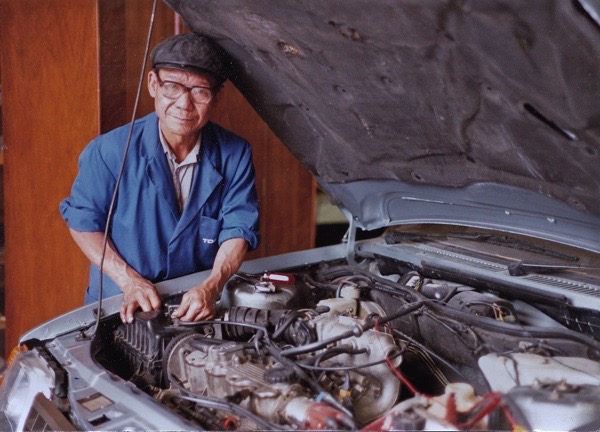
Chuong Chu at Chu’s garage
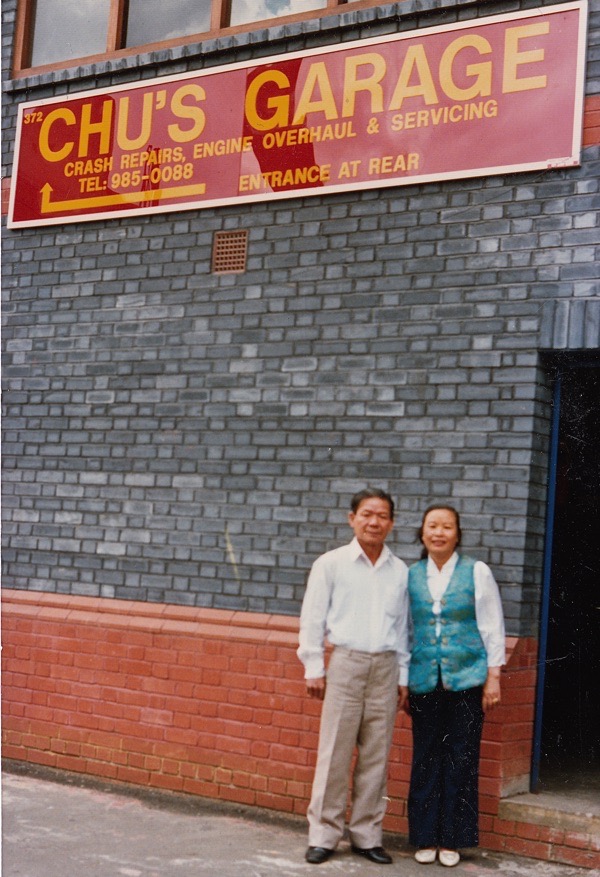
Mr & Mrs Chu outside Chu’s garage
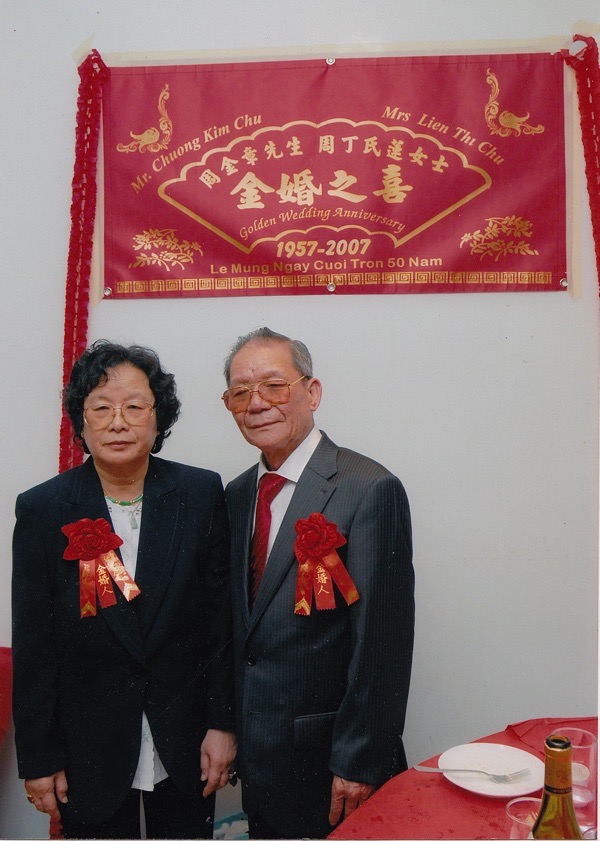
Mrs & Mrs Chu upon their return to Viet Nam for their fiftieth wedding anniversary
New photographs copyright © Sarah Ainslie
You may also like to read about
The Microcosm Of London
Click here to book for my next tour of the City of London on Sunday 21st April

Billingsgate Market
(click on this plate or any of the others to enlarge and examine the details)
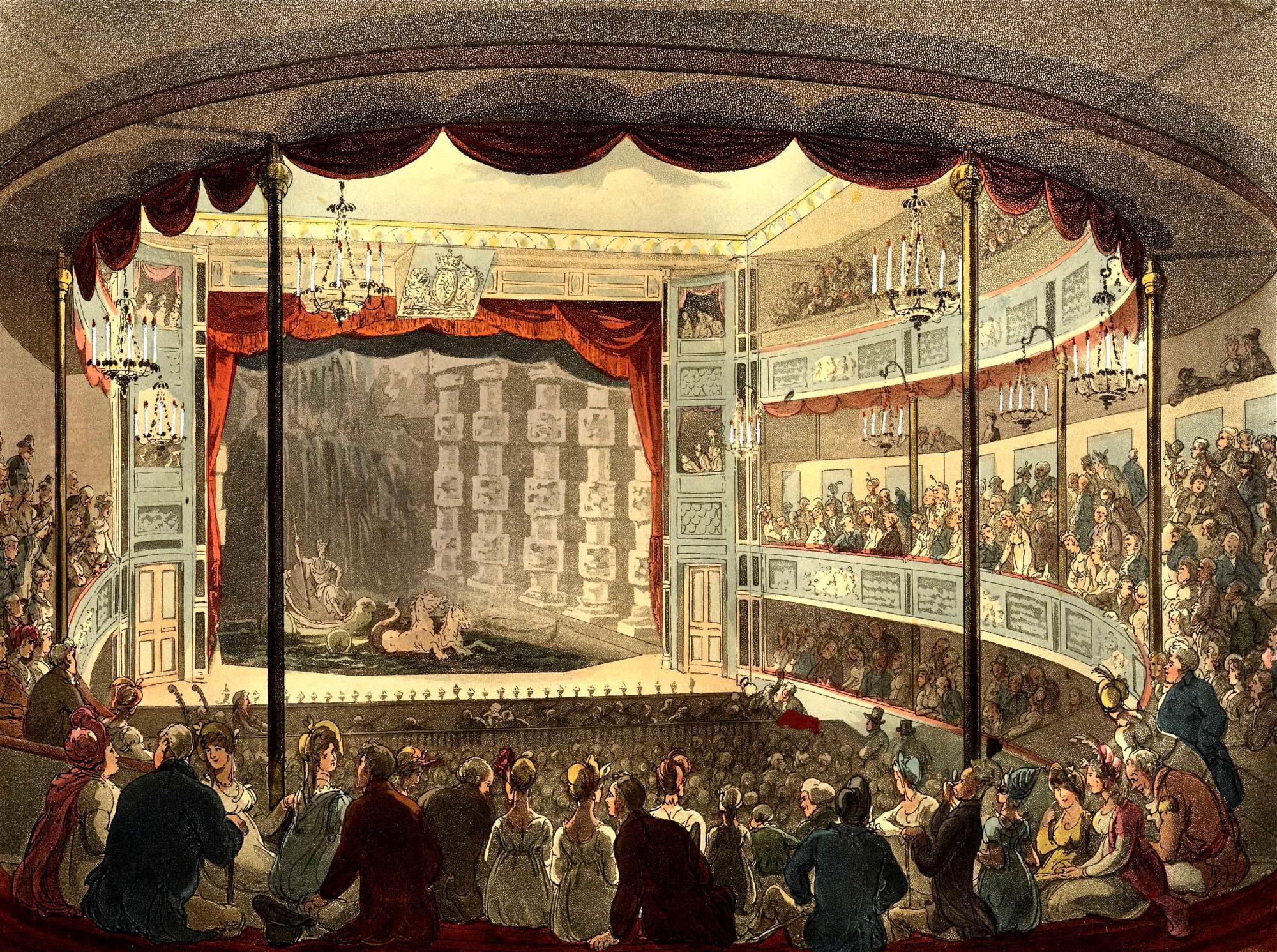
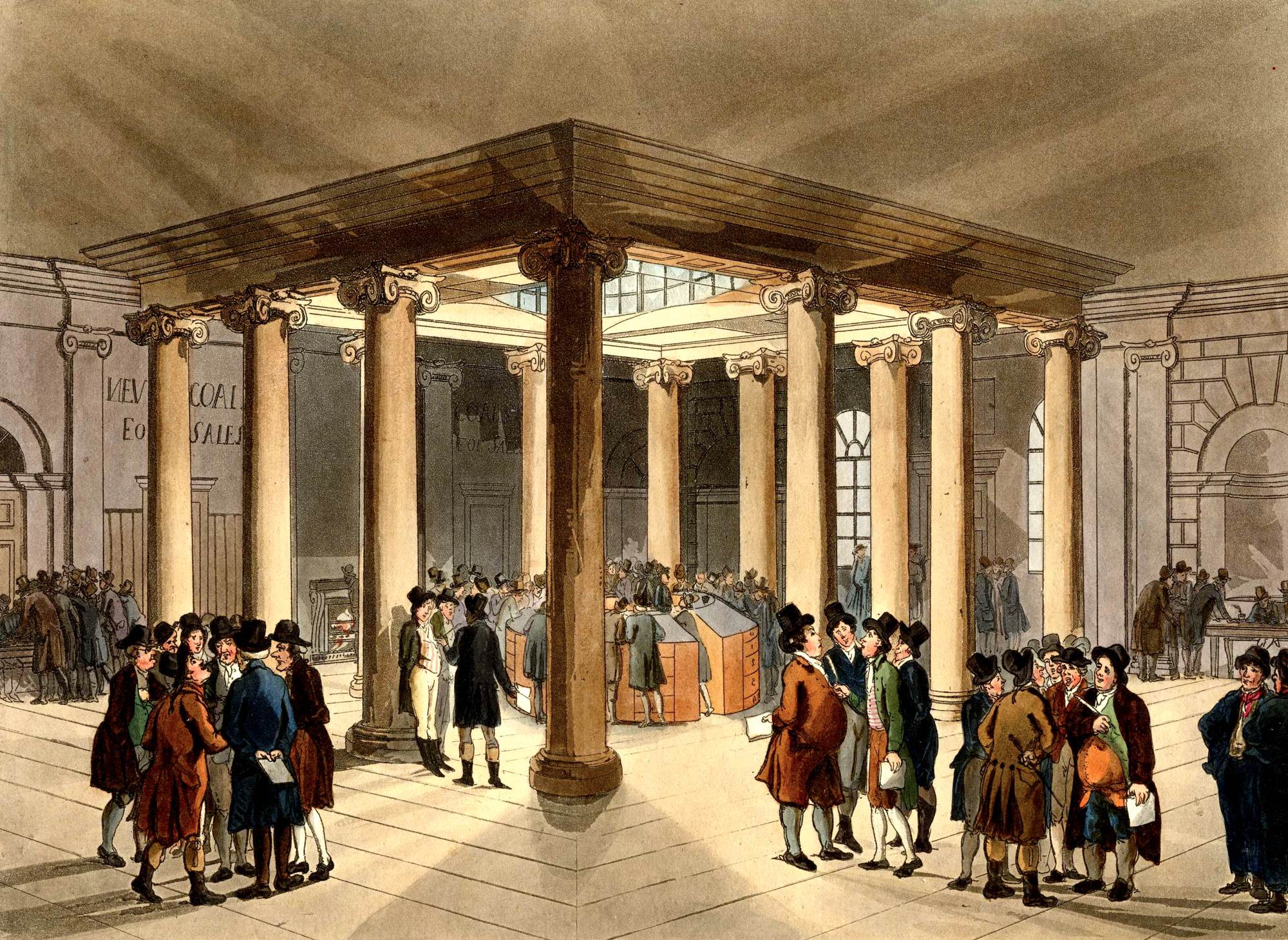
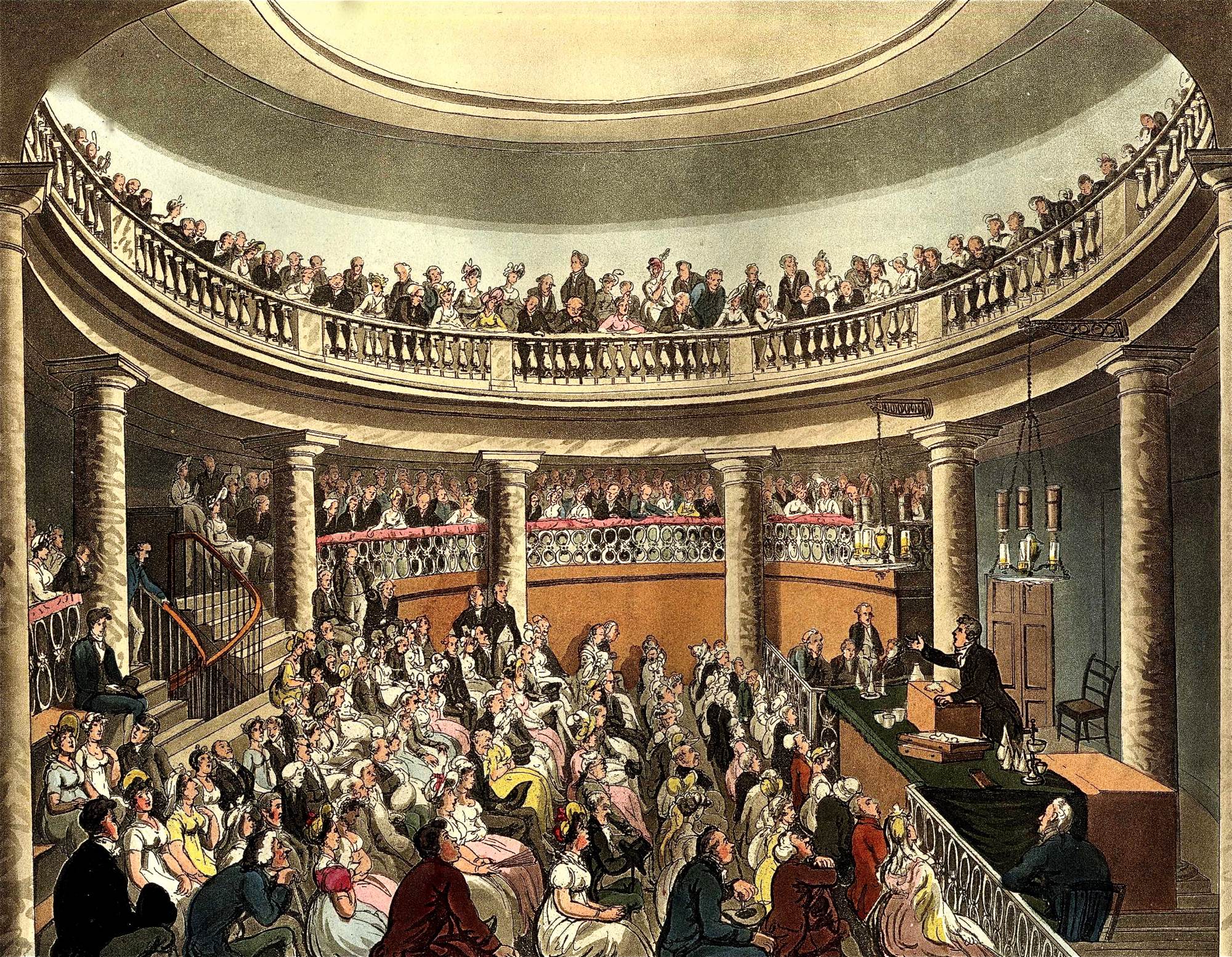
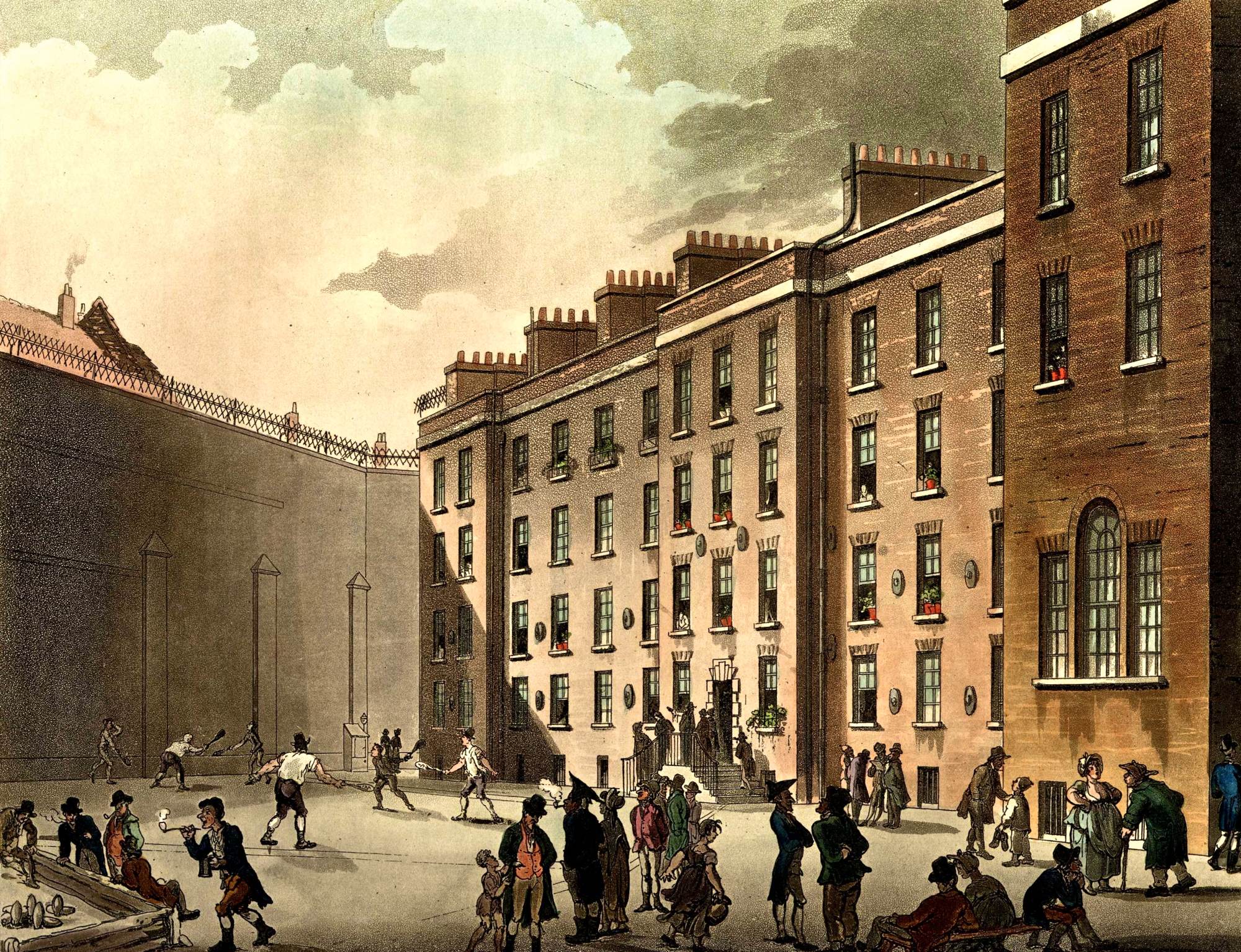
In 1897, Charles Gosse, Archivist at the Bishopsgate Institute, was lucky enough to buy a handsome 1809 edition of Thomas Rowlandson & Augustus Pugin’s ‘Microcosm of London’ from Quaritch booksellers in Piccadilly with just one plate missing, yet it took him until 1939 to track down a replacement to fill the gap and complete his copy – and the single plate cost him more in 1939 than the entire three volumes in 1897. Then the volumes were stolen in the nineteen-eighties but, thankfully, returned to the Bishopsgate years later as part of Operation Bumblebee, tracking art thefts back to their owners – and just waiting there for me to come upon them.
Augustus Charles Pugin, the architectural draftsman (and father of Augustus Welby Pugin who designed the Palace of Westminster) had the idea to create a lavish compendium of views of London life but it was the contribution of his collaborator Thomas Rowlandson who brought another dimension, elevating these images above the commonplace. While Pugin created expansive and refined architectural views, Rowlandson peopled them with an idiosyncratic bunch of Londoners who take possession of these spaces and who, in many cases, exist in pitifully unsentimental contrast to the refinement of their architectural surroundings.
How very pleasant it is to be a tourist in the metropolis of 1809, thanks to the magnificent plates of the ‘Microcosm of London.’ Here are the wonders of the capital, so appealingly coloured and so satisfyingly organised within the elegant classical architecture that frames most social activity, while also conveniently ignoring the domestic reality of the greater majority of the populace.
In only a few plates – such as Carlton House and the House of Commons – does Thomas Rowlandson submit to the requirement of peopling these spaces with slim well-dressed aspirational types that we recognise today from those familiar mock-ups used to sell bad architecture to the gullible. Yet the most fascinating plates are those where he has peopled these rationally conceived public spaces with the more characterful and less willowy individuals who illustrate the true diversity of the human form, and he satisfies our voyeuristic tendencies by celebrating the grotesque and the theatrical. In Billingsgate Market, Rowlandson takes a composition worthy of Claude and peoples it with fishwives fighting, revealing affectionate delight in the all-too familiar contrast exemplified by aspirational architecture and the fallibility which makes us human.
While the first impression is of harmony and everyone in their place – whether it be church, masquerade, asylum, theatre, prison or lecture hall – examining these pictures close-up reveals the genius of Thomas Rowlandson which is unable to resist introducing grotesque human drama or adding comic specimens of humanity to these idealised urban visions. Just like an early nineteenth century version of ‘Where’s Wally?’, Rowlandson implicitly invites us to seek the clowns.
Even if in some plates, such as the Drawing Room in St James, he appears to acquiesce to a notion of mannequin-like debutantes, Rowlandson more than makes up for it at the Bank of England where – surprise, surprise – the buffoons take centre stage. Spot the duffer in a stripy waistcoat with a girl on each arm in Vauxhall Gardens, or the dolts all robed up in coats of arms at Herald’s College, or the Masquerade where – as characters from Commedia dell’Arte – the funsters seem most in their element.
Meanwhile at the Post Office, in cubicles not so different from those in call centres of our own day, clerks are at work in identical red uniforms which deny them the individuality that is the vain prerogative of the rich in this vision of London. Equally, at the asylum nobody gets to assert themselves, while the prison inmates are diminished both in size and colour by their environment.
In the ‘Microcosm of London,’ Augustus Pugin portrayed an architect’s fantasy vision of a city of business, of politics, of religion, of education, of entertainment, of punishment and reward, but – thankfully – Thomas Rowlandson populated it with life.

Fire in London – the dreadful fire which took place on 3rd March 1791 at the Albion Mills on the Surrey side of Blackfriars Bridge. We have selected this from many objects of a similar nature which frequently occur in this great metropolis, because the representation afforded an opportunity of a more picturesque effect, the termination of the bridge in front and St Paul’s in the background contribute interesting parts to a representation which is altogether great and awful.

Pillory, Charing Cross. A place chosen very frequently for this kind of punishment, probably on account of its being so public a situation. An offender thus exposed to public view is thereafter considered infamous. There are certain offences which are supposed to irritate the feelings of the lower classes more than others, in which case a punishment by Pillory becomes very serious.

Guildhall. Examination of a bankrupt before his creditors, Court of King’s Bench Walk. The laws of England, cautious of encouraging prodigality and extravagance allow the benefits of the bankruptcy laws to none but the traders. If a trader is unable to pay his debts it is misfortune and not a fault.

Leaden Hall Market is a large and extensive building of considerable antiquity, purchased by the great Whittington in 1408 and by him presented to the City.

Astley’s Amphitheatre. Mr Rowlandson’s figures are here, as indeed they invariably are, exact delineations of the sort of company who frequent public spectacles of this description. With respect to teaching horses to perform country dances, how far thus accomplishing such an animal renders him more happy or a more valuable member of the horse community is a question I leave to be discussed by the sapient philosophers.

Bartholomew Fair, a spirited representation of this British Saturnalia. To be pleased in their own way, is the object of all. Some hugging, some fighting, others dancing, while many are enjoying the felicity of being borne along with the full stream of the mob.

Bow St Office, giving an accurate representation of this celebrated office at the time of an examination. The police of this country has hitherto been very imperfect, until Henry Fielding, by his abilities, contributed the security of the public, by the detection and prevention of crimes.

Covent Garden Market. The plate represents the bustle of an election for Westminster. The fruit and vegetable market certainly diminishes the beauty and effect of this place as a square, but perhaps the world does not furnish another instance of another metropolis supplied with these articles in equal goodness and profusion.

Christie’s Auction Room. The various effect which the lot – A Venus – has on the company is delineated with great ability and humour. The auctioneer, animated by his subject, seems to be rapidly pouring forth such a string of eloquence as cannot fail to operate on the feelings of his auditors.

The House of Commons is plainly and neatly fitted up, and accommodated with galleries, supported by slender iron capitals adorned with Corinthian capitals, from the ceiling hangs a handsome branch.

Drawing from life at the Royal Academy, Somerset House

The College of Physicians. There is nothing remarkable in the interior of the building except the library and the great hall – which is handsomely represented in this print is a handsome well-proportioned room. The eager disputatious attitude of the figure which is represented as leaning forward in the act of interrogating the candidate, is finely contrasted with two figures on the right hand, one of whom seems to have gathered up his features in supercilious indifference.

Exhibition Room, Somerset House. It would not be easy to find ay other artist, except Mr Rowlandson who was capable of displaying so much separate manner in the delineations placed upon the walls and such an infinite variety of small figures, contrasted with each other in a way so peculiarly happy. To point out any number of figures as peculiarly entitled to attention, would be an insult to the spectator, as very many would necessarily be left out of the catalogue, and everyone of taste will discern them at a glance.

Pass-Room, Bridewell. An interesting and accurate view of this abode of wretchedness. It was provided that paupers, claiming settlement in distant parts of the kingdom should be confined for seven days, prior to being sent of their respective parishes. This is the room apportioned by the magistrate for one class of miserable females.

Royal Cock Pit. It is impossible to examine this picture with any degree of attention, and not enjoy the highest degree of satisfaction at this successful exertion of the artists’ abilities. The regular confusion which this picture exhibits, tells a tale that no combination of words could possibly have done so well.

The Hall, Carlton House. Conceived with classic elegance that does honour to the genius of the late Mr Holland who as the architect, the tout-ensemble is striking and impressive.

The Custom House, in the uppermost of which is a magnificent room running the whole length of the building. On this spot is a busy concourse of nations who pay their tribute towards the support of Great Britain. In front of this building, ships of three hundred and fifty tons burthen can lie and discharge their cargoes.
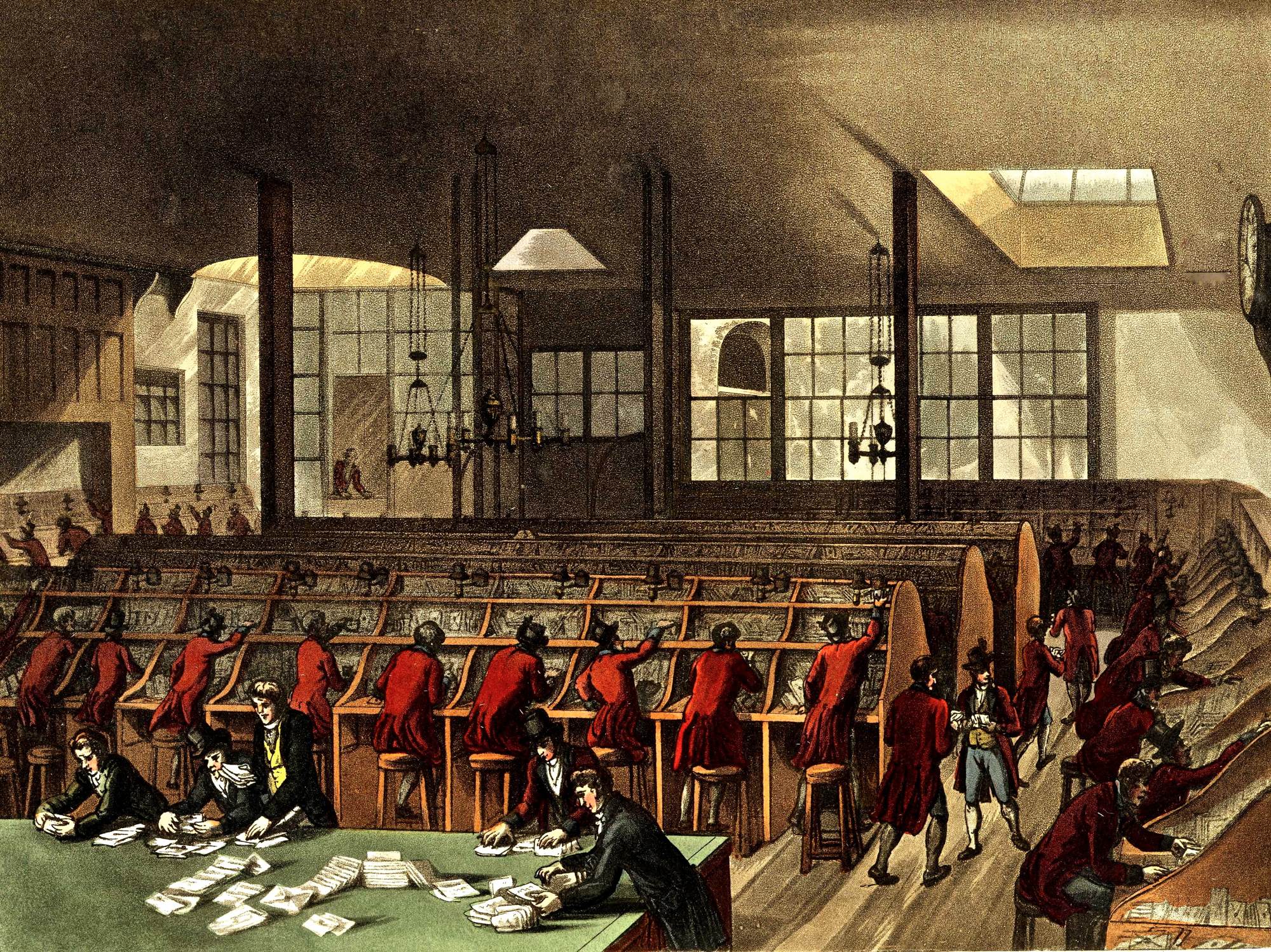
The Post Office
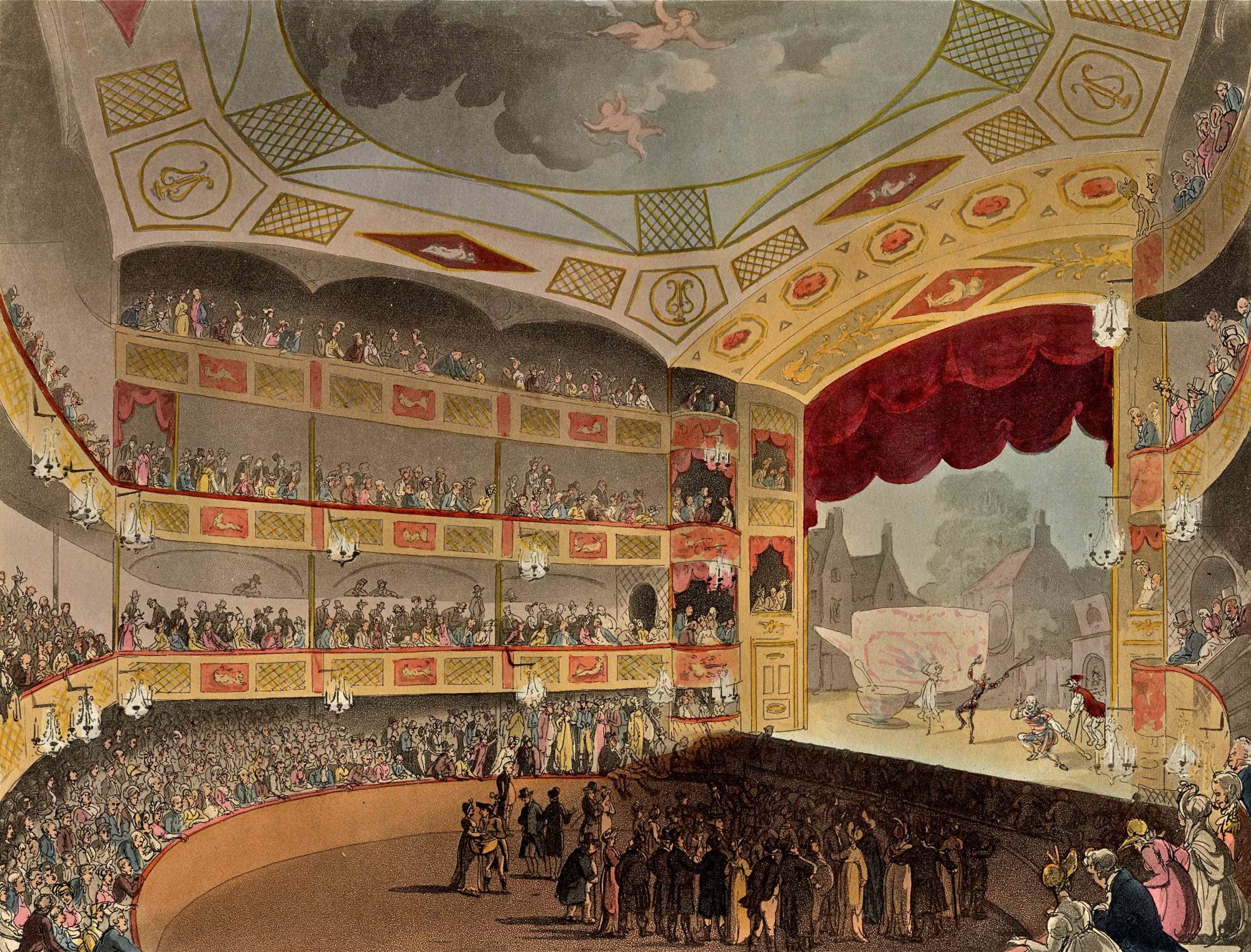
The Royal Circus

The Great Hall, Bank of England
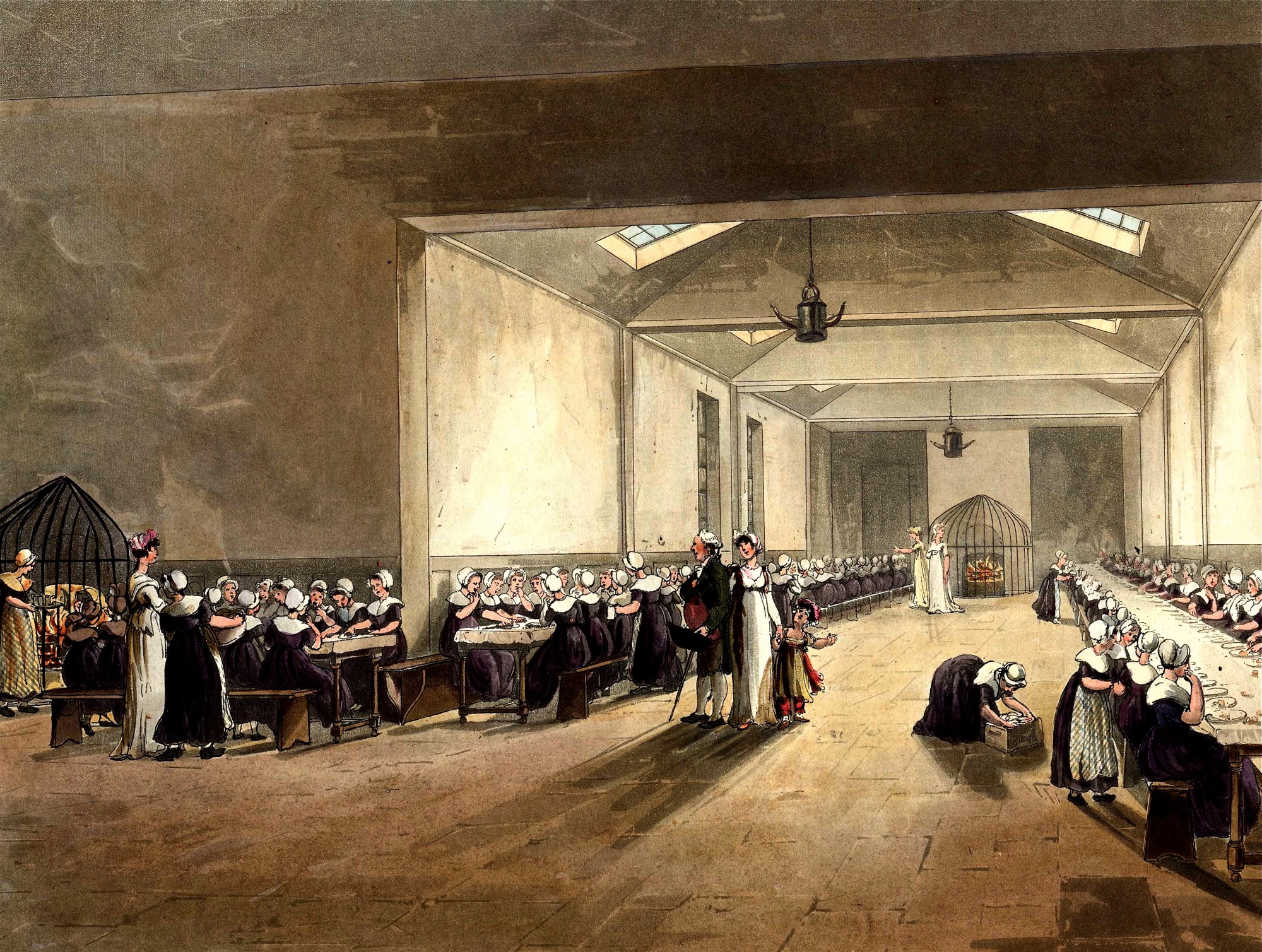
Dining Room, Asylum
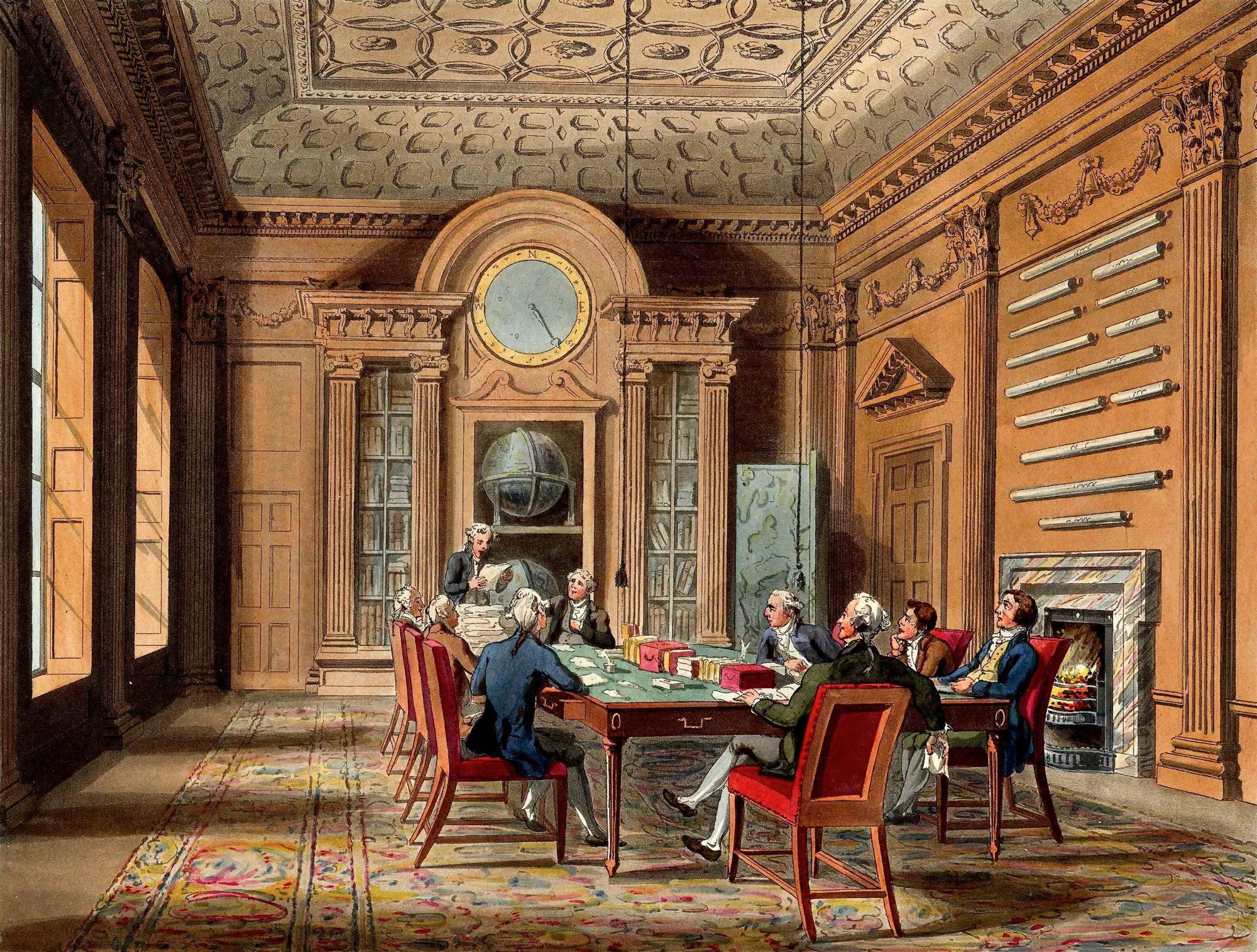
Royal Geographic Society

Drawing Room, St James

St Martin in the Fields
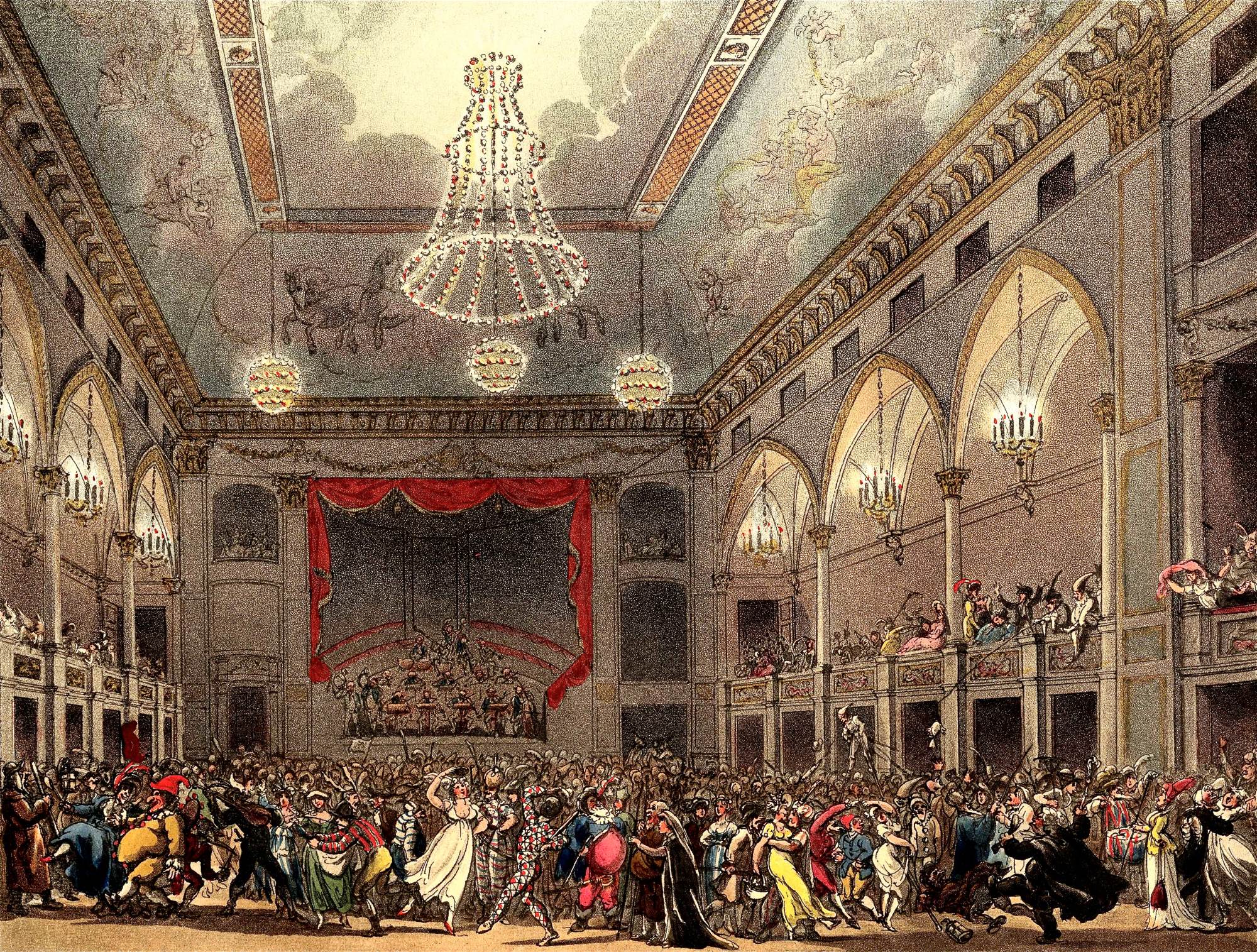
Pantheon Masquerade
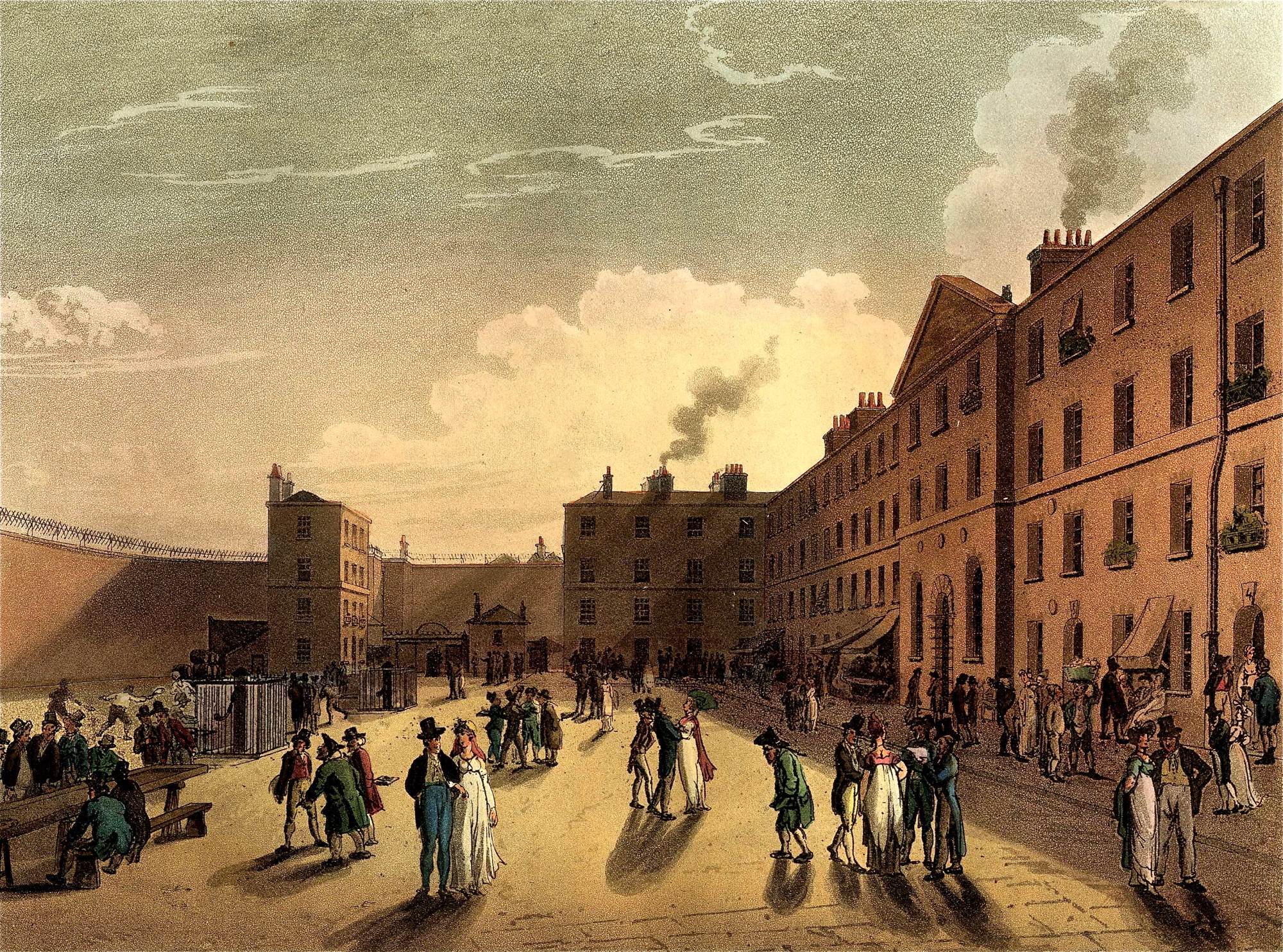
King’s Bench Prison
Sadler’s Wells Theatre
Coal Exchange

Herald’s College
Surrey Institution
Fleet Prison
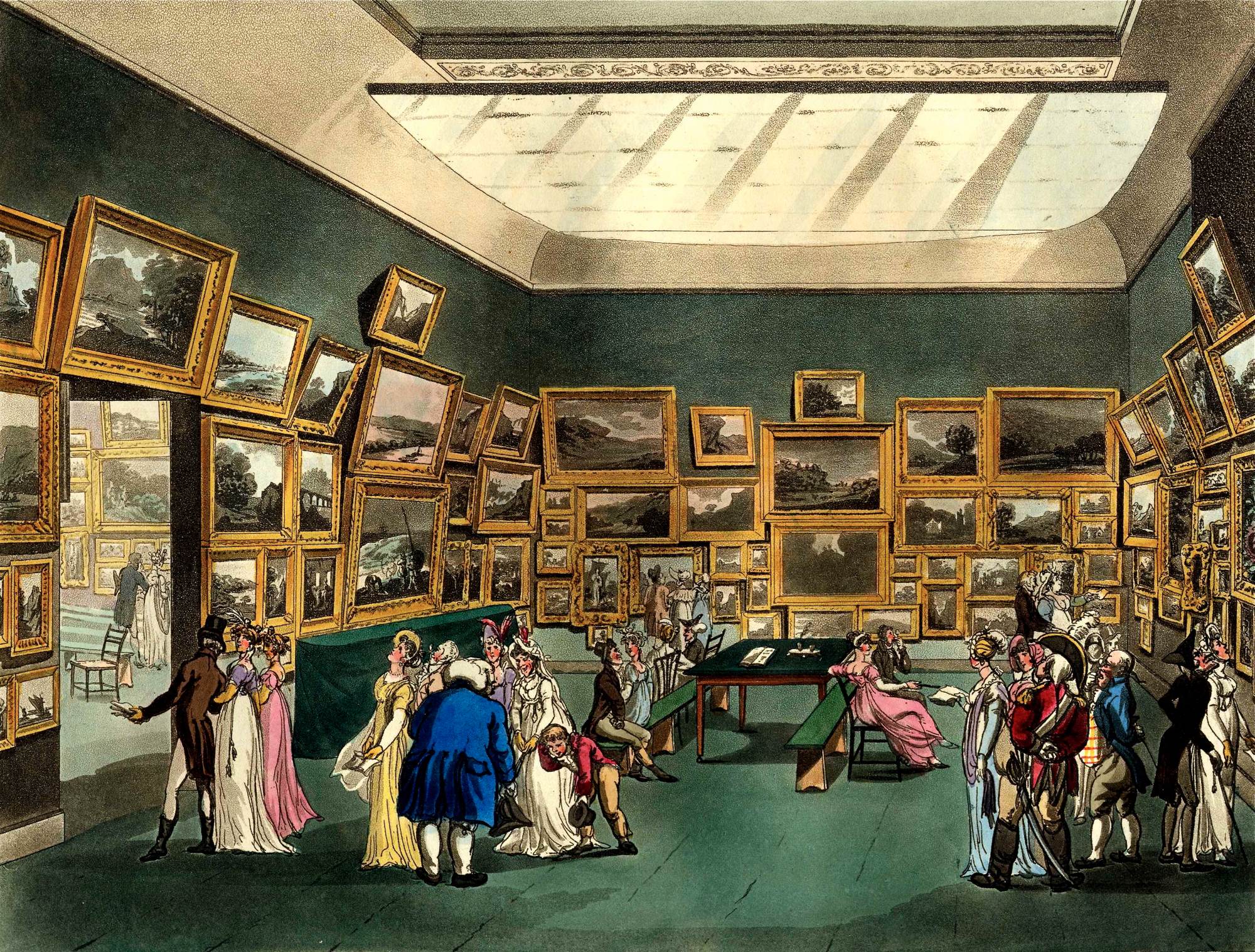
Watercolour Exhibition, Old Bond St
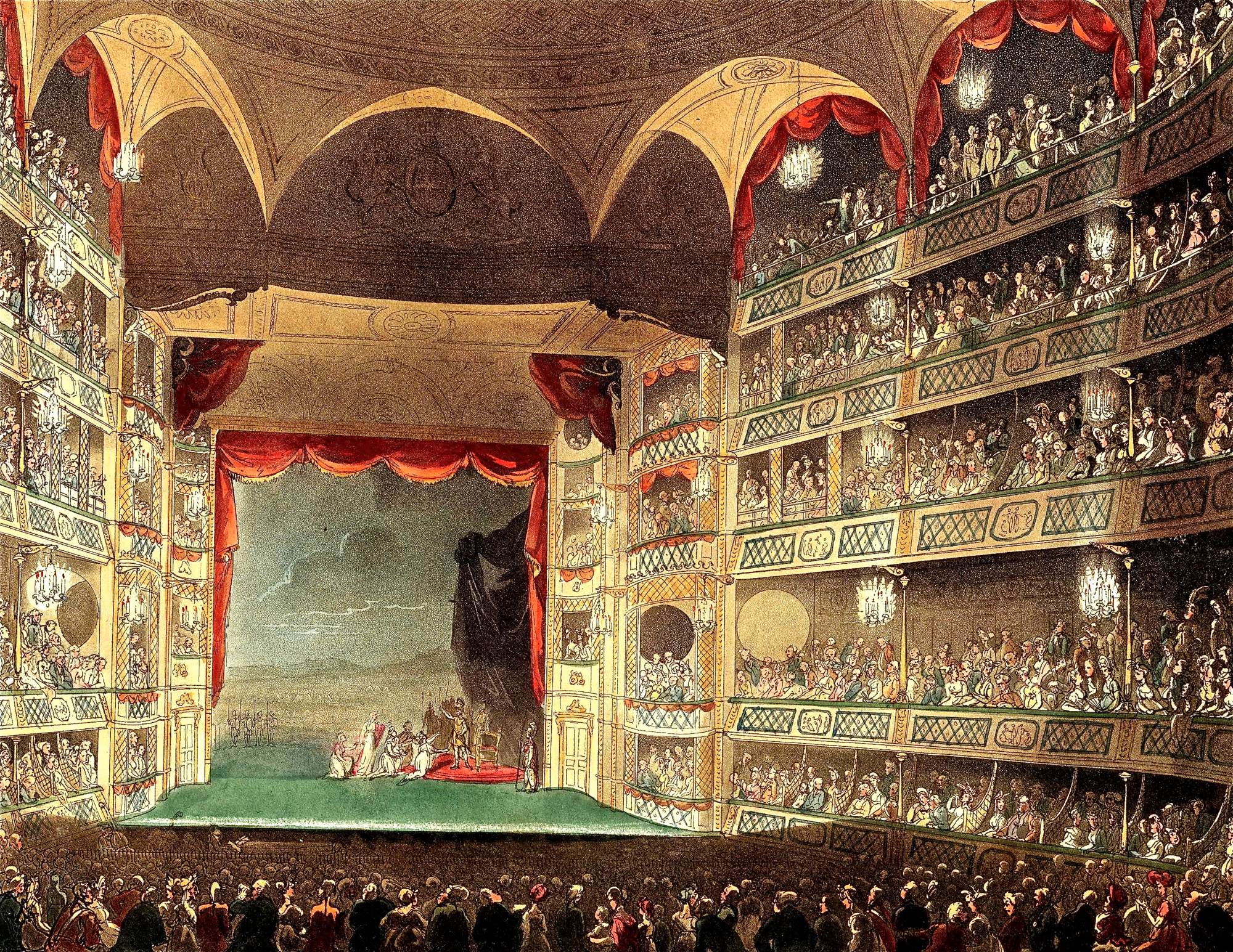
Drury Lane Theatre
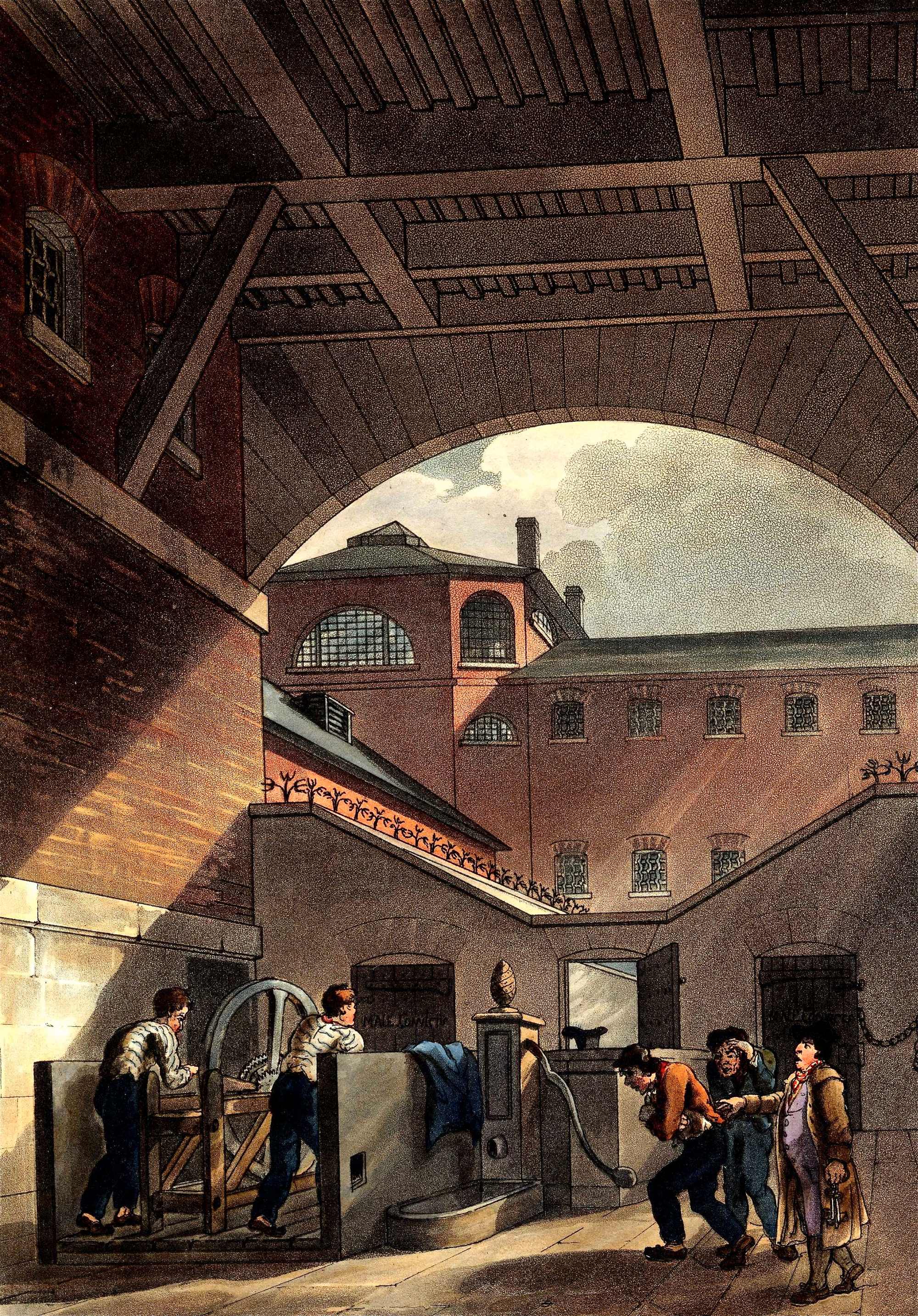
Coldbath Prison
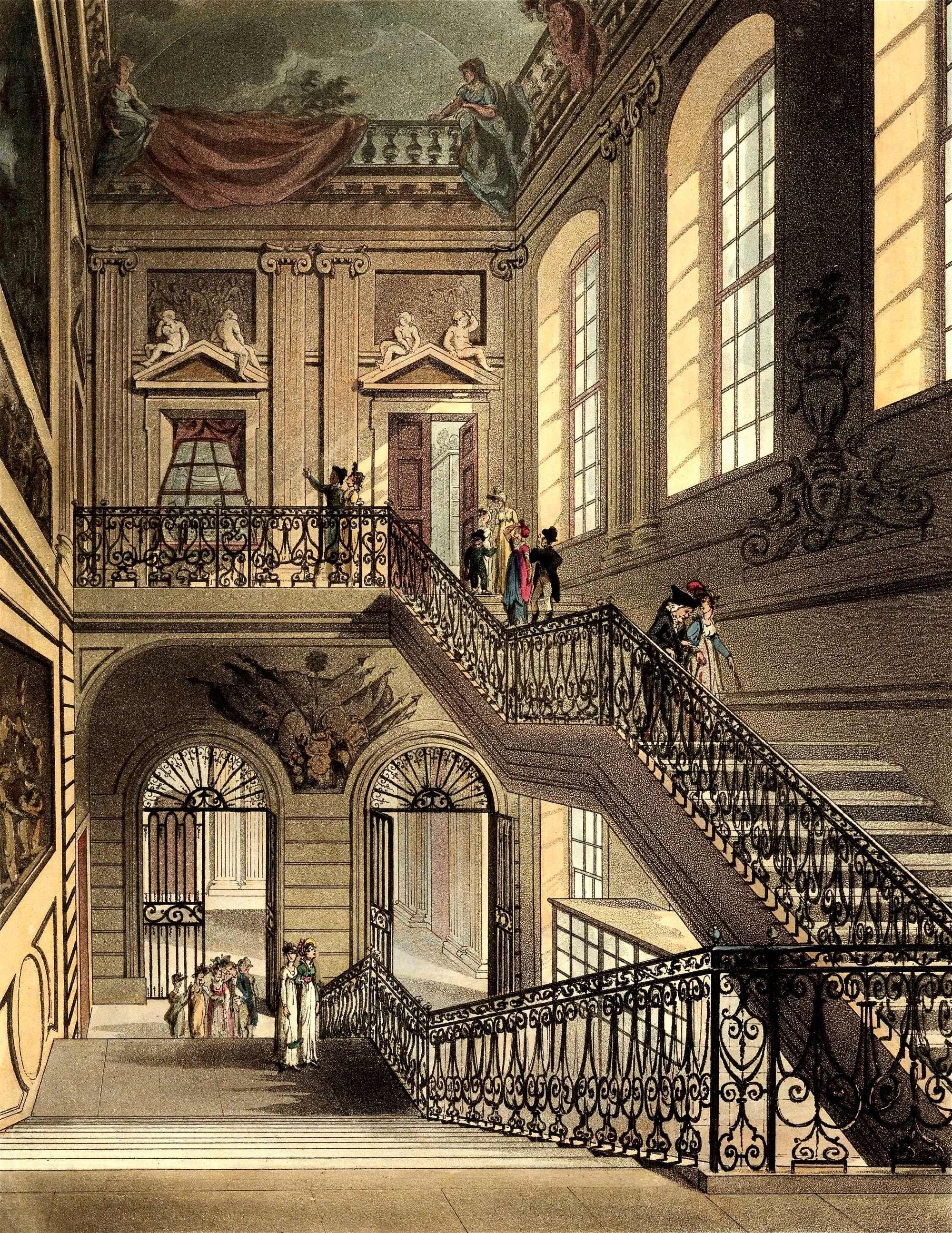
Hall and Staircase, British Museum
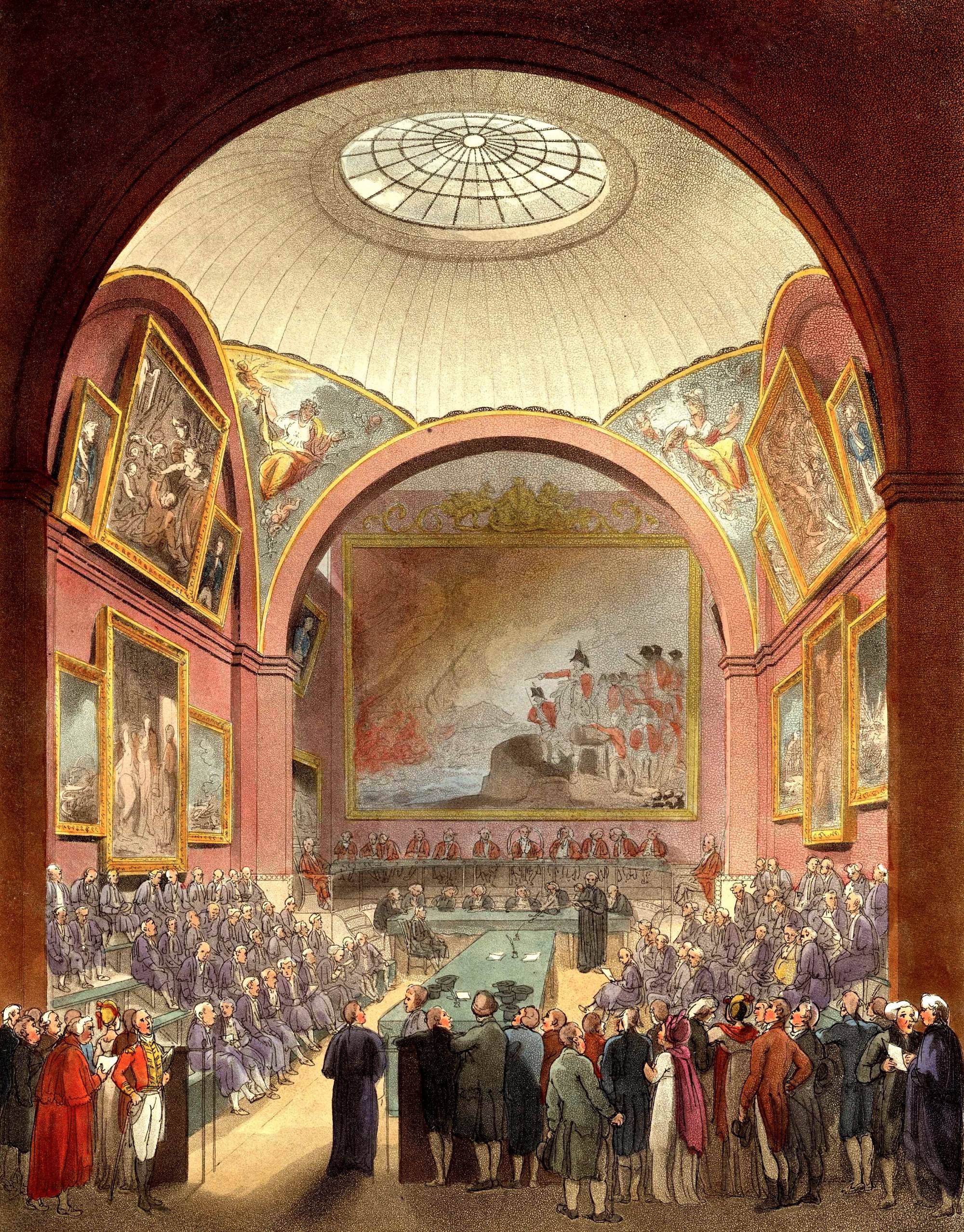
Common Council Chamber, Guildhall
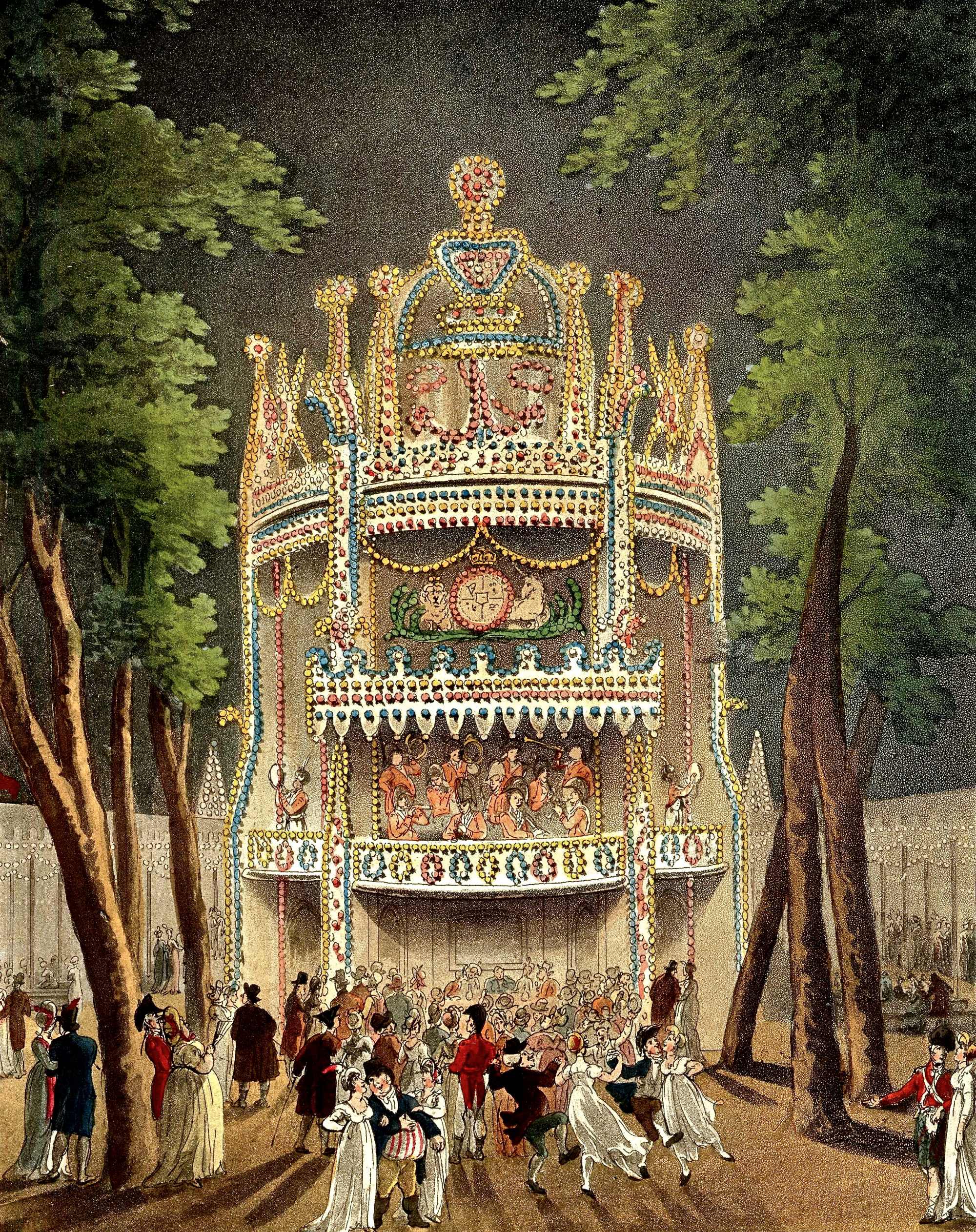
Vauxhall Gardens
Images courtesy Bishopsgate Institute
The Oranges & Lemons Churches
Click here to book for my next tour of the City of London on Sunday 21st April
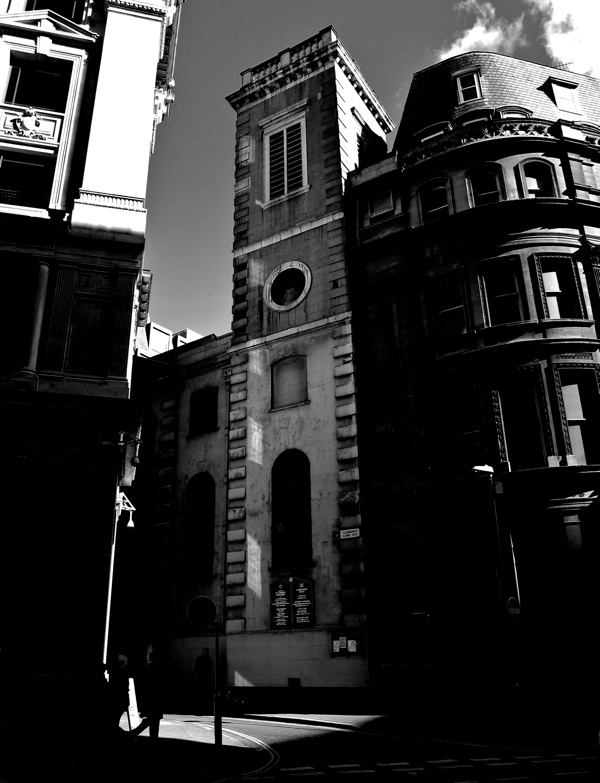
St Clement’s, Eastcheap
“Oranges and lemons,” say the bells of St. Clement’s.

Site of St Martin Orgar, Martin Lane
“You owe me five farthings,” say the bells of St. Martin’s.
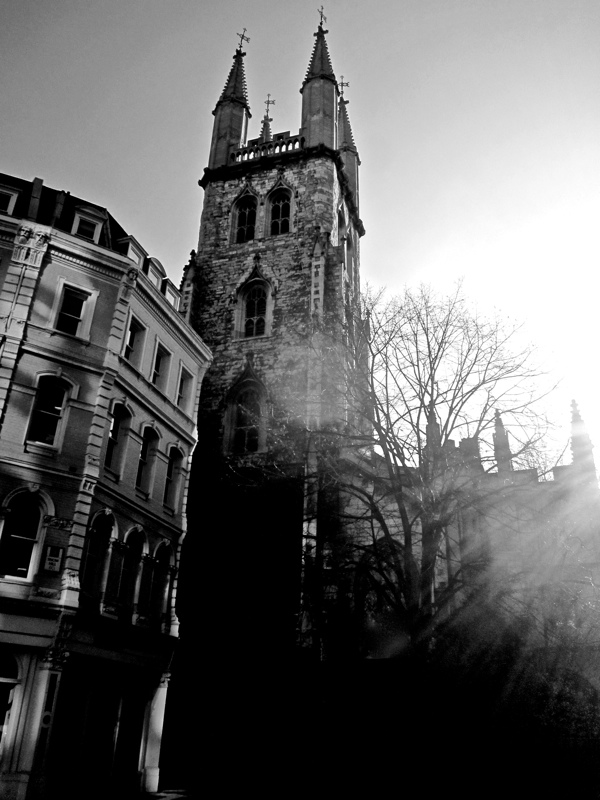
St Sepulchre-without-Newgate
“When will you pay me?” say the bells of Old Bailey.
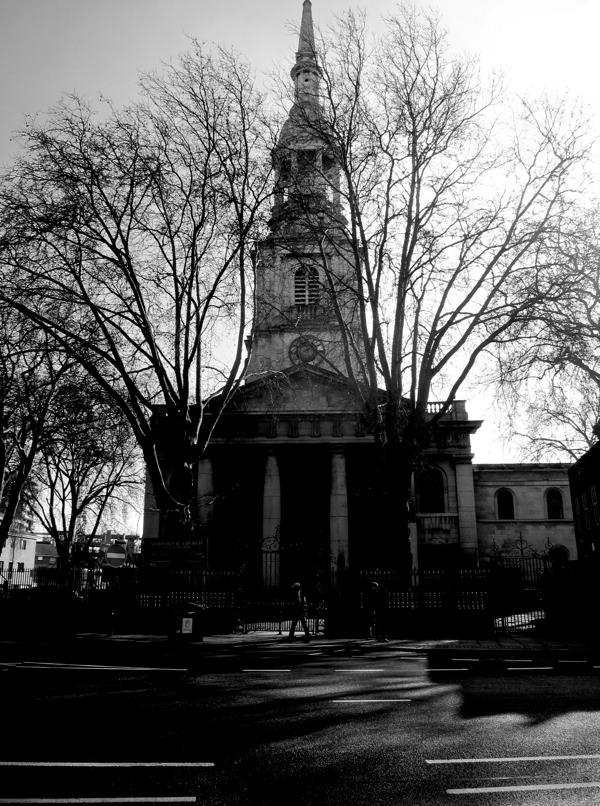
St Leonard’s, Shoreditch
“When I grow rich,” say the bells of Shoreditch.
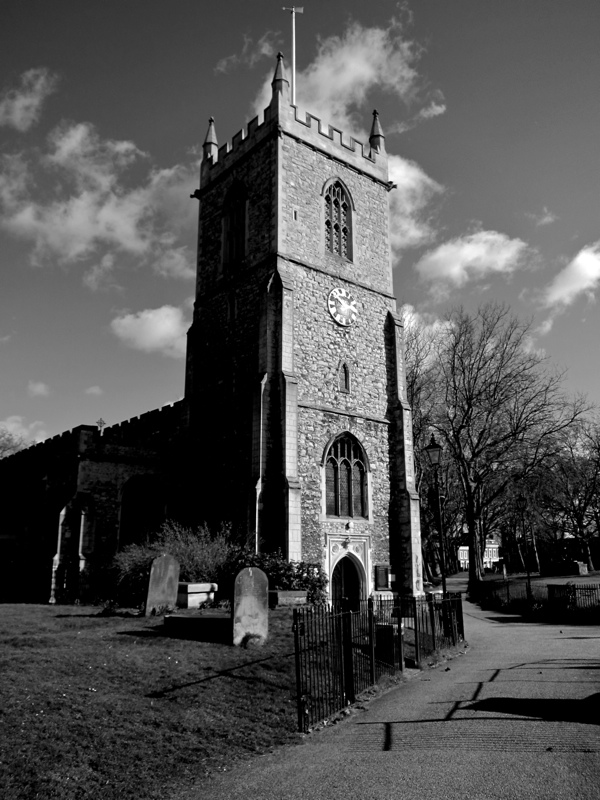
St Dunstan’s, Stepney
“When will that be?” say the bells of Stepney.

St Mary Le Bow, Cheapside
“I do not know,” says the great bell of Bow.
You may also like to take a look at
The Inescapable Melancholy Of Phone Boxes
Click here to book for my next tour of the City of London on Sunday 21st April
Red phone boxes are a cherished feature of my personal landscape because, in my childhood, we never had a telephone at home and, when I first made a phone call at the age of fifteen, it was from a box. In fact, for the major part of my life, all my calls were made from boxes – thus telephone calls and phone boxes were synonymous for me. I grew up with the understanding that you went out to make a phone call just as you went out to post a letter.
Yet the culture of mobile phones is now so pervasive I was shocked to discover I had hardly noticed as the red telephone boxes have vanished from our streets and those few that remain stand redundant and unused. So I set out with my camera to photograph the last of them, lest they should disappear without anybody noticing. It was a curious and lonely pilgrimage because, whereas they were once on every street, they have now almost all gone and I had to walk miles to find enough specimens to photograph.
Reluctantly, I must reveal that on my pitiful quest in search of phone boxes, I never saw anyone use one though I did witnessed the absurd spectacle of callers standing beside boxes to make calls on their mobiles several times. The door has fallen off the one in Spitalfields, which is perhaps for the best as it has been co-opted into service as a public toilet while the actual public toilet nearby is shut.
Although I must confess I have not used one myself for years, I still appreciate phone boxes as fond locations of emotional memory where I once experienced joy and grief at life-changing news delivered down the line. But like the horse troughs that accompany them on Clerkenwell Green and outside Christ Church, Spitalfields, phone boxes are now vestiges of a time that has passed forever. I imagine children must ask their mothers what these quaint red boxes are for.
The last phone boxes still stand proud in their red livery but like sad clowns they are weeping inside. Along with pumps, milestones, mounting blocks and porters’ rests these redundant pieces of street furniture serve now merely as arcane reminders of a lost age – except that era was the greater part of my life. This is the inescapable melancholy of phone boxes.
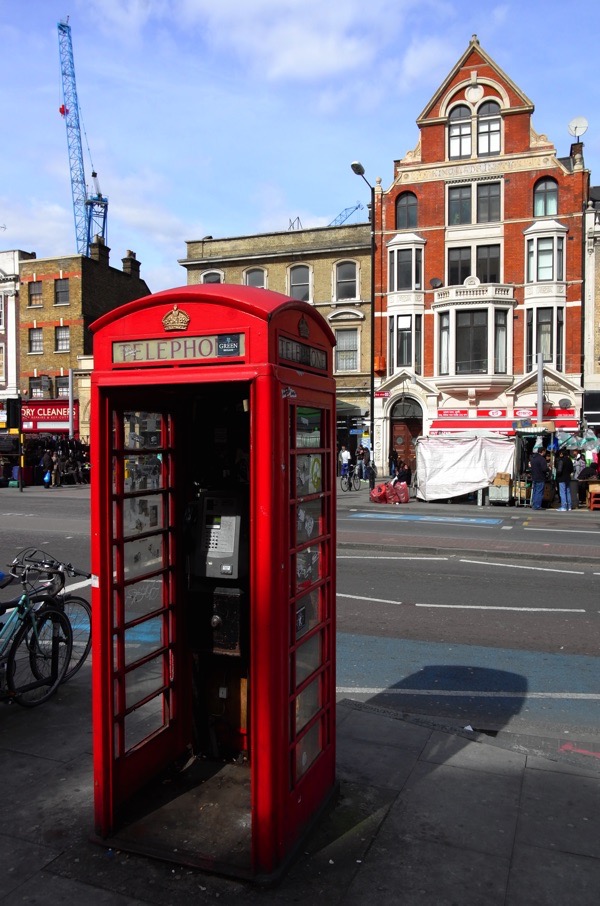
Ignored in Whitechapel
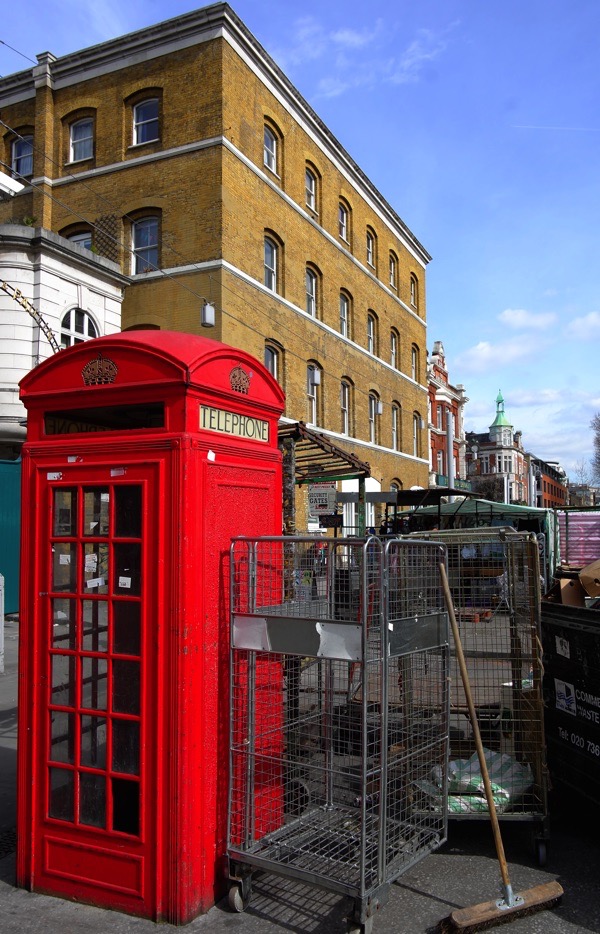
Abandoned in Whitechapel
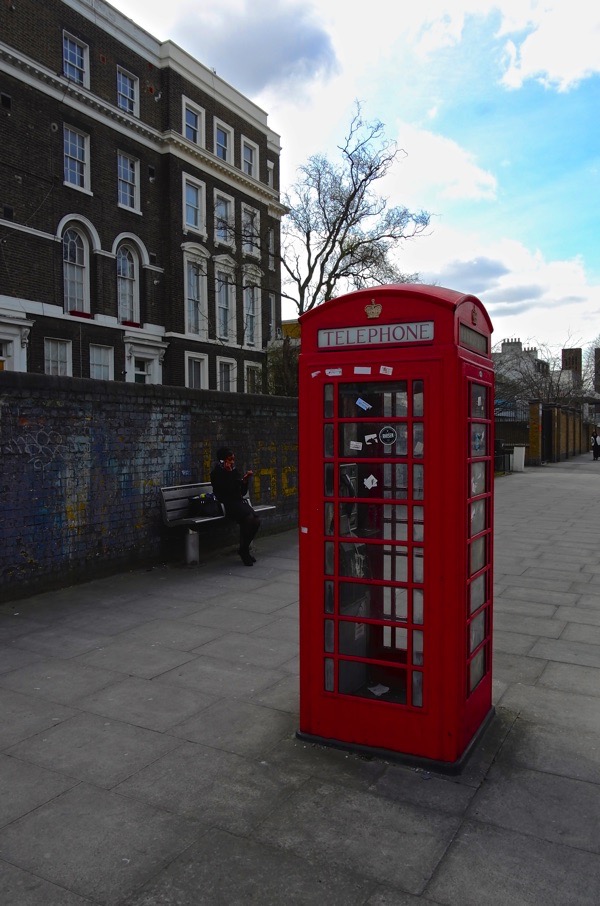
Rejected in Bow
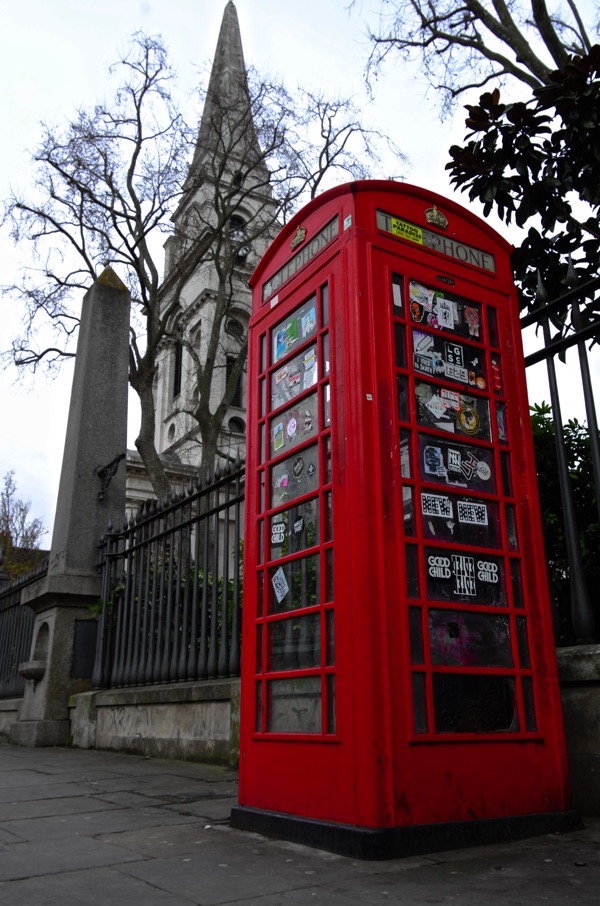
Abused in Spitalfields
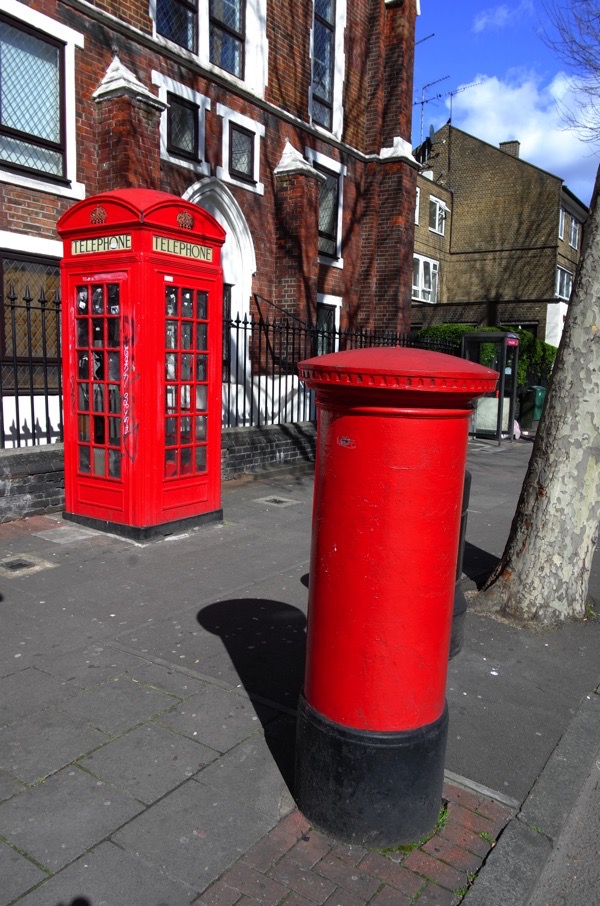
Irrelevant in Bethnal Green
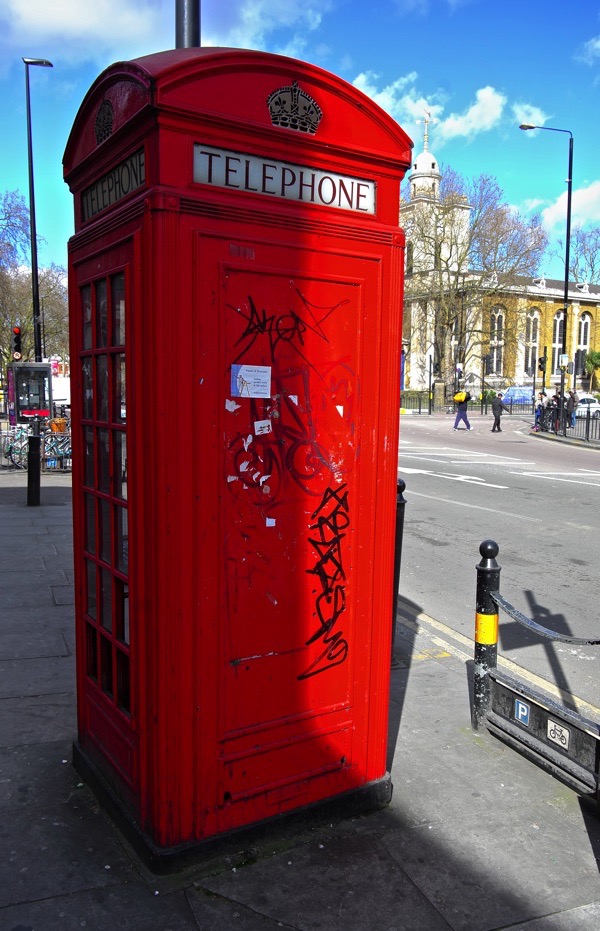
Shunned in Bethnal Green
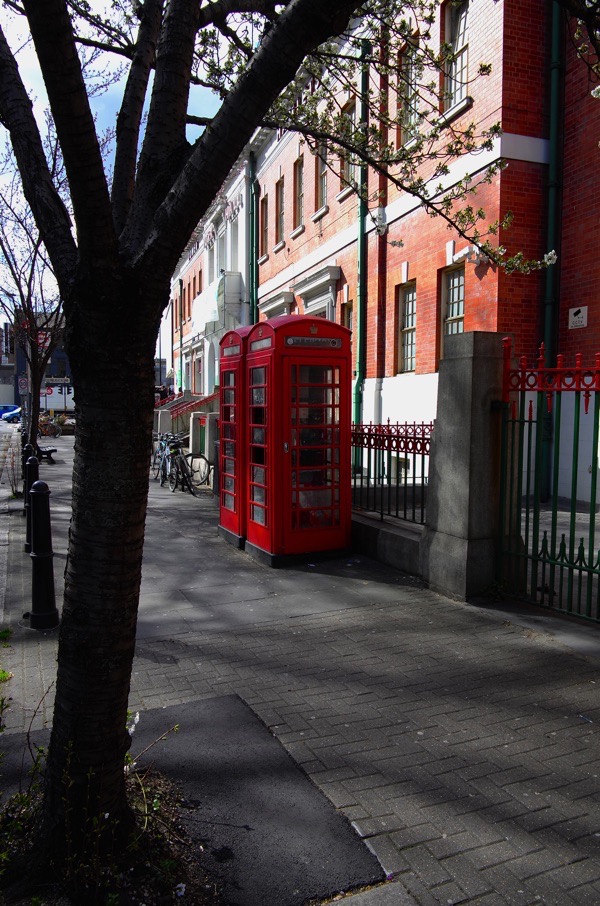
Empty outside York Hall
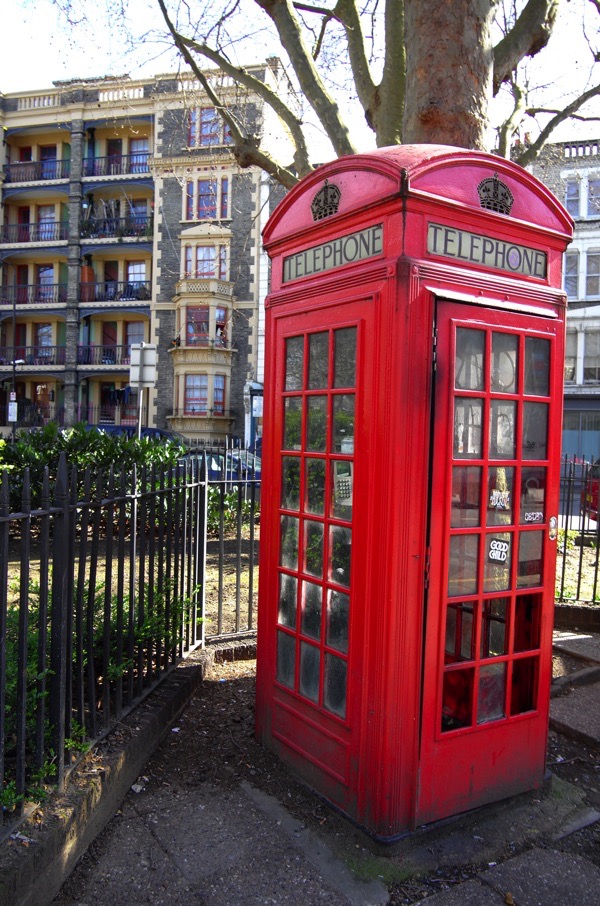
Desolate in Hackney Rd

Pointless in St John’s Sq
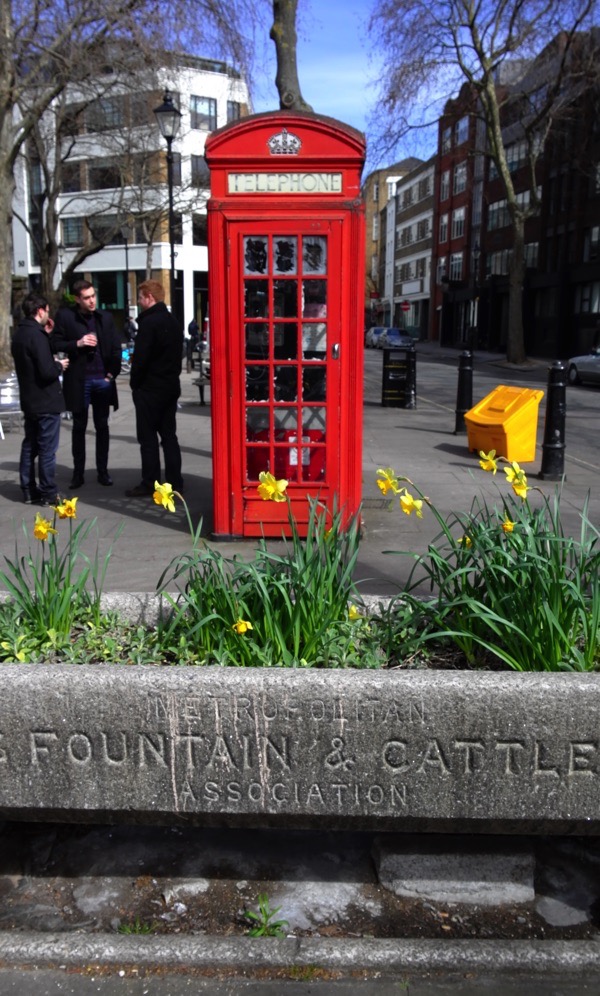
Irrelevant on Clerkenwell Green
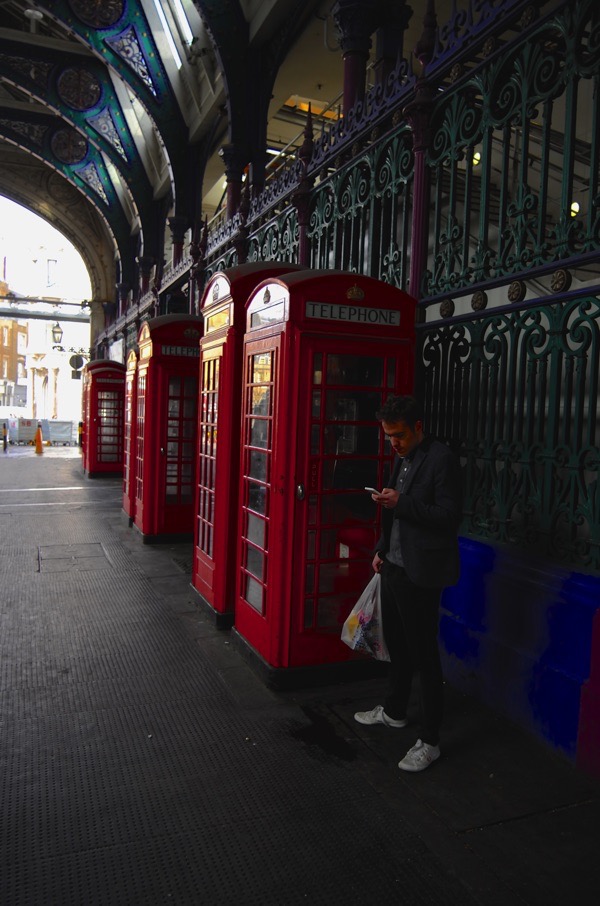
Invisible in Smithfield
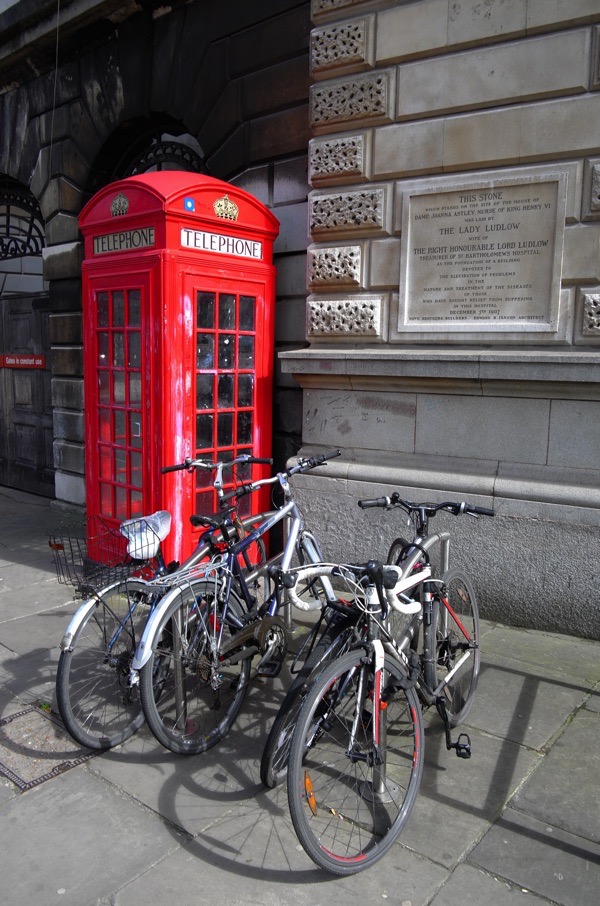
Forgotten outside St Bartholomew’s Hospital
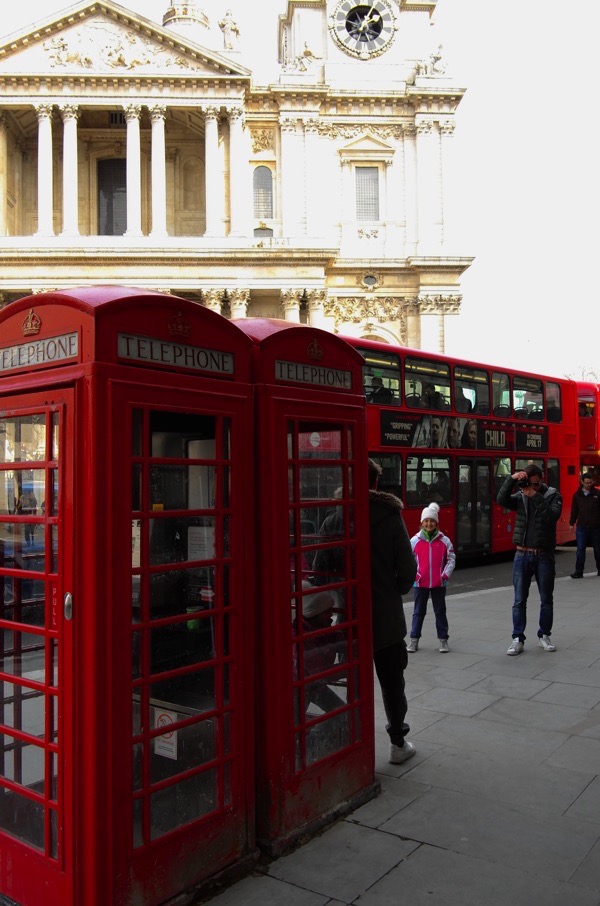
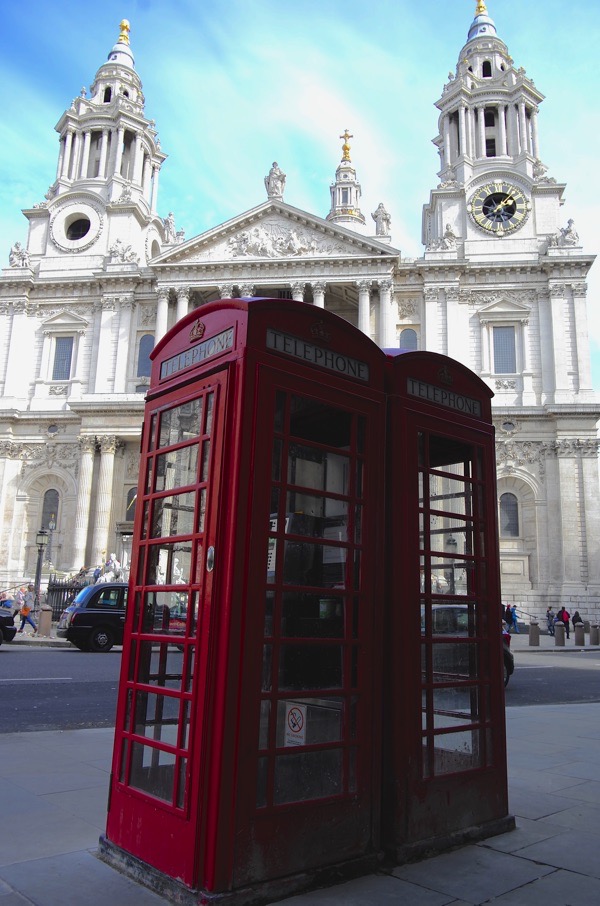
In service outside St Paul’s as a quaint location for tourist shots
You may also like to take a look at
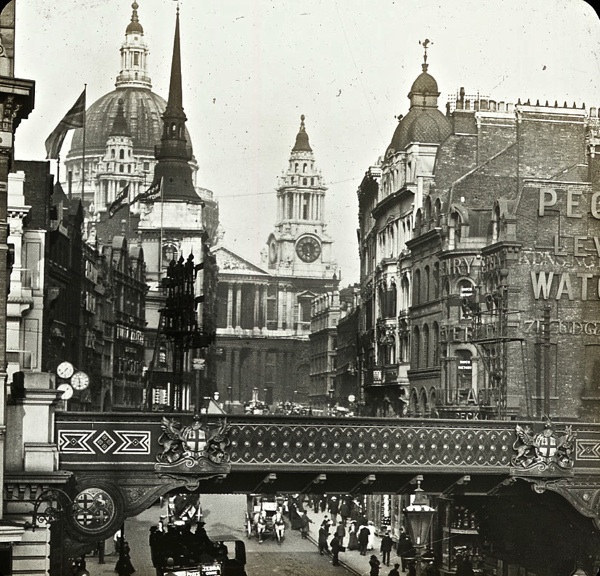
Charles Chusseau-Flaviens’ Petticoat Lane
Click here to book for my next tour of the City of London on Sunday 21st April

Petticoat Lane
Photographer Charles Chusseau-Flaviens came to London from Paris and took these pictures, reproduced courtesy of George Eastman House, before the First World War – mostly likely in 1911. This date is suggested by his photograph of the proclamation of the coronation of George V which took place in that year. Very little is known of Chusseau-Flaviens except he founded one of the world’s first picture agencies, located at 46 Rue Bayen, and he operated through the last decade of the nineteenth and first decade of the twentieth century. Although their origin is an enigma, Chusseau-Flaviens’ photographs of London and especially of Petticoat Lane constitute a rare and precious vision of a lost world.
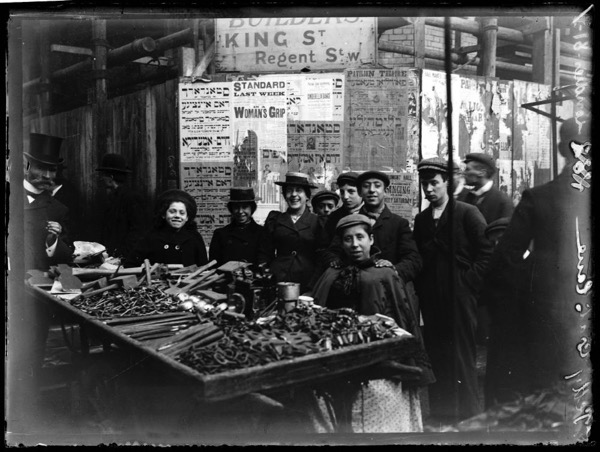
Petticoat Lane
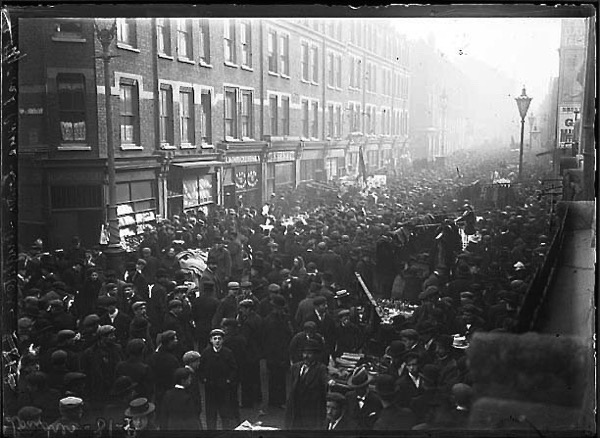
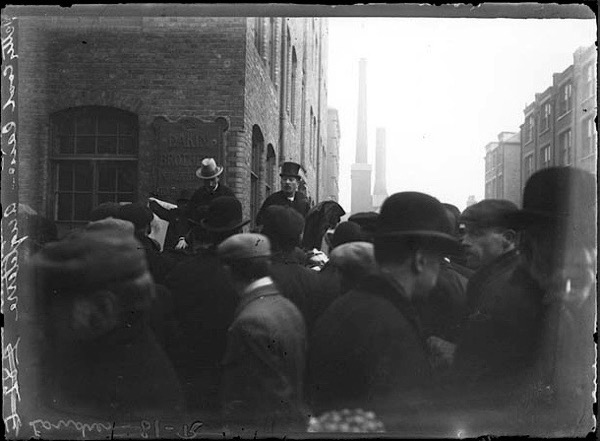
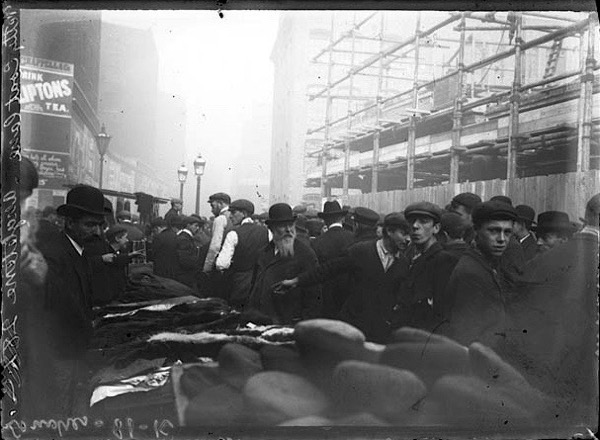
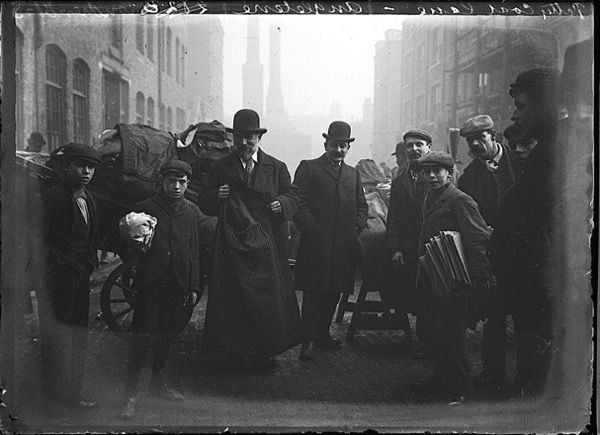
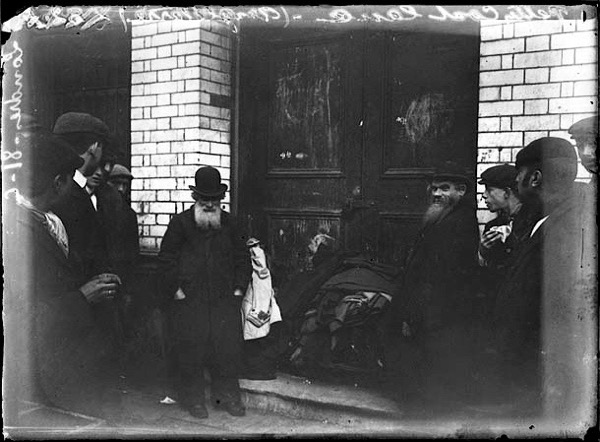
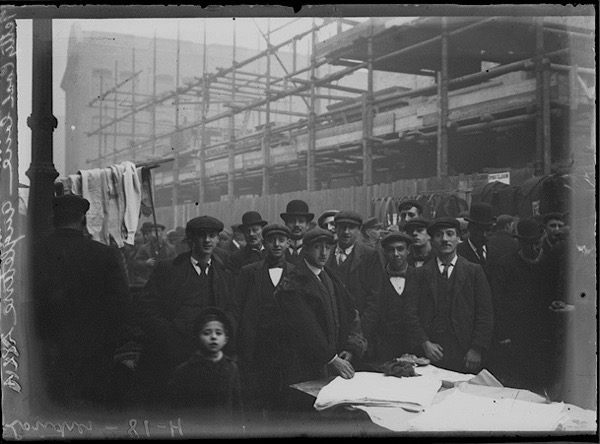
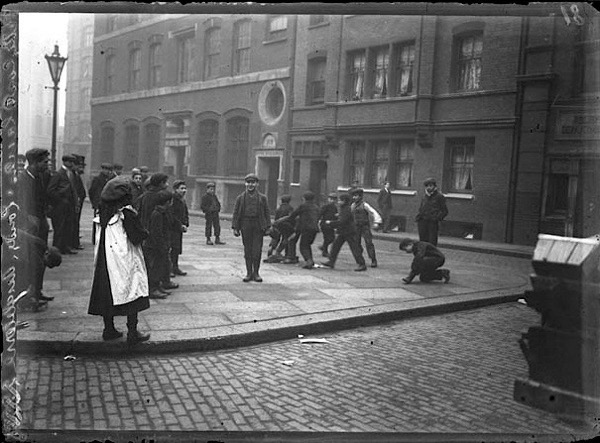
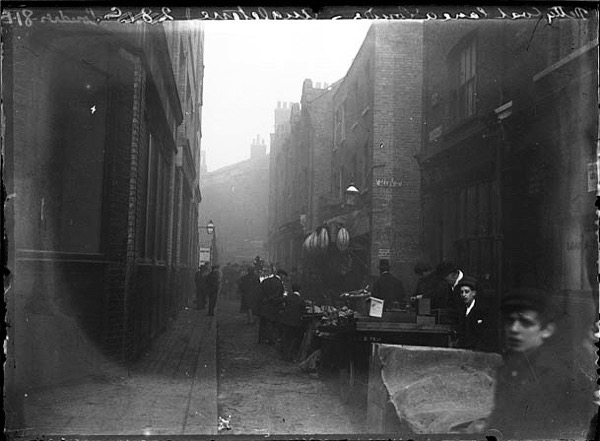
Sandys Row with Frying Pan Alley to the right
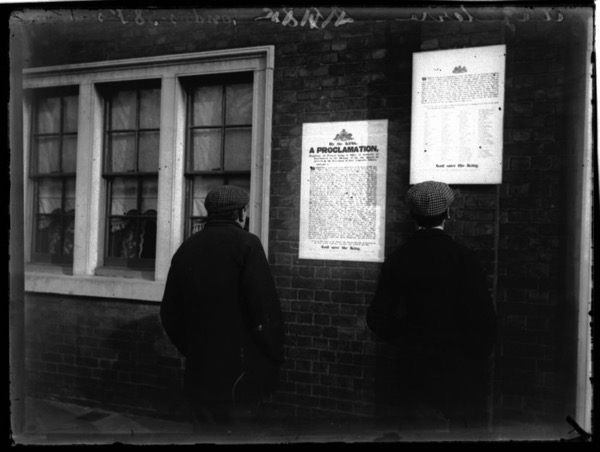
Proclamation of the coronation of George V, 1911
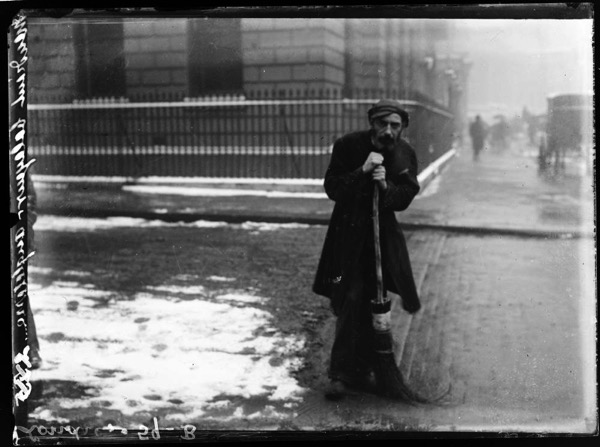
Crossing sweeper in the West End

Policeman on the beat in Oxford Circus, Regent St
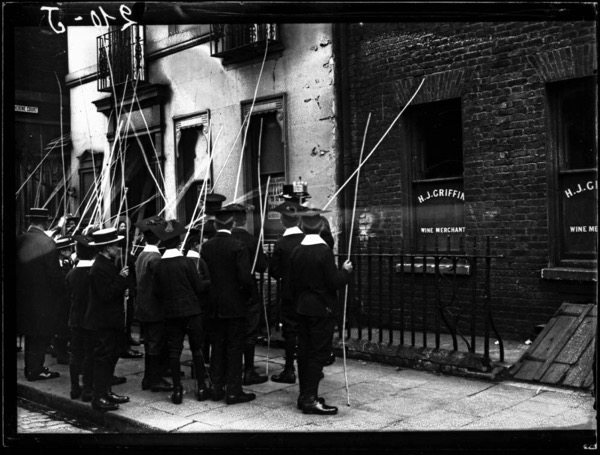
Beating the bounds for the Tower of London, Trinity Sq

Boats on the Round Pond, Kensington Gardens

Suffragette in Trafalgar Sq
Photographs courtesy George Eastman House
You may also like to take a look at