
An Alternative Scheme For Liverpool St Station
Henrietta Billings, Director of SAVE Britain’s Heritage asks if the demolition and tower scheme is the only way to pay for station improvements at Liverpool St, as Network Rail claim. She introduces John McAslan’s alternative scheme, offering a sympathetic solution that delivers Network Rail’s ambitions without ruining the station or subjecting passengers to years of disruption.
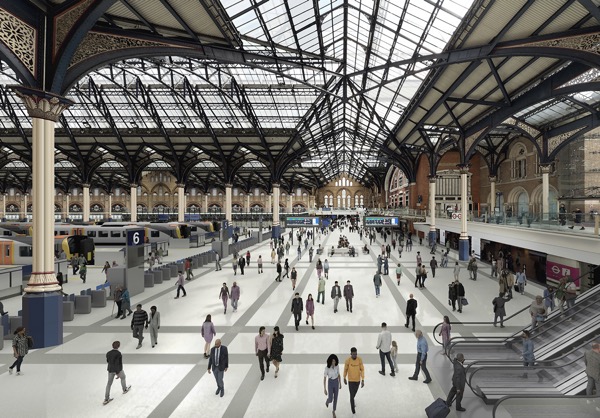
The improved concourse in John McAslan’s scheme (courtesy of JMP)
If you are one of the thousands who pass through Liverpool St Station regularly, you will be familiar with its magnificent features: the light-filled, triple-height concourse, the beautiful Victorian train sheds, and its illustrious adjacent neighbour, the grade II* former Great Eastern Hotel. With 270,000 people using the station every weekday, it is now the busiest terminus in the country. Everyone recognises it needs upgrades, like new escalators, lifts and more accessible toilets. The question is how can they be achieved without ripping out the guts of this well-loved landmark that is – at least theoretically – protected through its grade II listing and Conservation Area status?
Thanks to a number of highly controversial planning applications, Liverpool St Station is at the centre of a raging debate over how we fund essential upgrades to public buildings. Plans by Network Rail to build a nineteen-storey office block through the station are due to be considered by the Corporation of London on 10th February – with a recommendation for approval. Yet the plans have been met with significant opposition from commuters, residents and conservation groups since they were submitted in April last year (2,400 letters of objection, and counting).
The plans would see the beautiful concourse completely demolished. A new tower would loom over the remains of the original station and the historic hotel, and block out light from the rebuilt concourse. 50 Liverpool St, the Gothic revival masterpiece painstakingly built as part of the eighties conservation project, would be demolished, and the works would cause years of significant disruption to passengers. On heritage grounds alone, the City should refuse the plans because they contravene the City’s polices on heritage protection in relation to listed buildings and conservation areas. Additionally, the report we commissioned from sustainability expert Simon Sturgis shows the environmental credentials of the glass and steel tower fall short of the Corporation’s own sustainability ambitions.
Indeed, Network Rail’s £1.2bn proposal is “not technically viable” according to their own advisors and so far they have refused to release the actual costs of the station improvements. Given that the whole project was predicated on the need for the office block to fund the essential upgrades, releasing costs is essential both as a matter of transparency, and to assess the acceptability of what is on the table.
The proposal, designed by Acme Architects, follows an equally controversial application in 2023 by Herzog & de Meuron architects, which was shelved after also receiving thousands of objections including a strong rebuttal from Historic England. They objected “in the strongest terms” to what they argued were “fundamentally misguided” plans and called for a “comprehensive redesign” to avoid the harm caused by the scheme. Confusingly. this previous scheme has not been officially withdrawn, and remains in limbo as a “live” planning submission. In the words of Building Design senior writer Tom Lowe, it has been arguably the most chaotic development process of any major project over the past decade.
Against the backdrop of these competing contentious proposals, a new approach has emerged from a different team of architects and engineers. John McAslan + Partners, the architects behind the celebrated transformation of King’s Cross Station, have unveiled a fresh vision which shows that the station enhancements and accessibility upgrades could be achieved at half the cost, with a sympathetic, lighter-touch design.
When John McAslan + Partners approached SAVE six months ago with their scheme we immediately jumped at the opportunity to show there is an alternative way of providing the much-needed improvements to the station. We believe this proposal is an elegant design solution in the spirit of traditional railway architecture without the passenger disruption, demolition or over-scaled development currently on offer. It is an important contribution to a critical debate about how we develop our public buildings balancing heritage and commercial interests.
Working with architects on alternative schemes is a key campaign tactic that we use at SAVE - from Smithfield Market in Farringdon and the Little Houses on the Strand next to Somerset House, to Battersea Power Station and the mighty Wentworth Woodhouse in Rotherham, South Yorkshire. We know from fifty years of experience how powerful they can be in bringing fresh perspectives and impetus to contested development plans or important threatened landmarks.
John McAslan’s concept has been welcomed by Sir Tim Smit, founder of the pioneering Eden Project, and by heritage and sustainability experts alike as a helpful contribution to a debate that has so far been dominated by one idea: large-scale demolition and a nineteen-storey tower. We regard the McAslan approach as a compelling and viable alternative which is why we are calling on Network Rail and the City of London to pause the current scheme and give full consideration to this approach.
There is still time for Network Rail to get back on the right track. They should pause the Network Rail/Acme scheme for two reasons.
-
Costings of the required station upgrades have not been provided – so it is not possible to assess the full public benefit or justification for such massive and destructive over-station development in relation to the listed building and the conservation area.
-
The Corporation of London and Network Rail need more time to consider fully the heritage, financial and operational opportunities provided by the McAslan approach. The councillors on the planning committee can make this happen by voting to defer the planning application until they have had the chance to review this new information.
The committee date is approaching fast. Please add your voice by submitting your views on the Network Rail/Acme scheme and the alternative vision before 10th February.
CLICK HERE TO LEARN HOW TO OBJECT
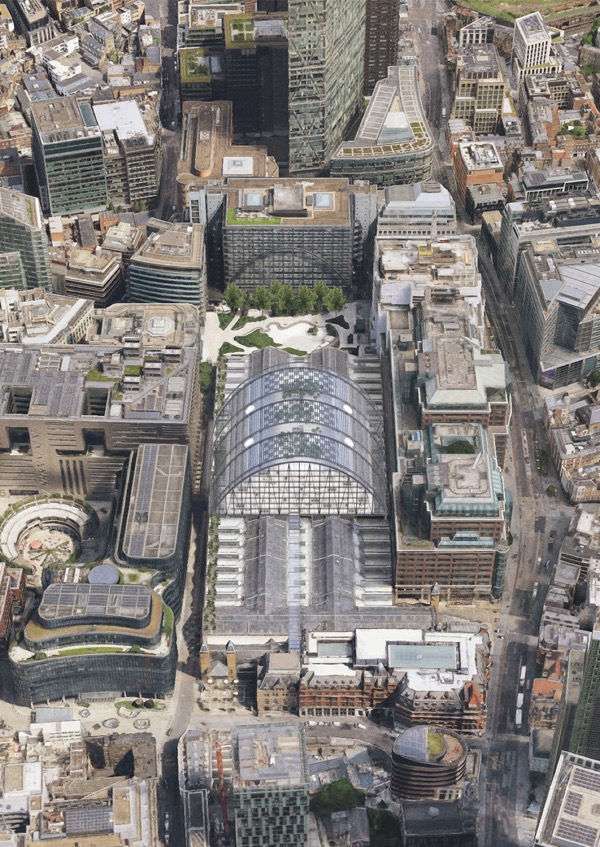
Instead of a nineteen-storey tower over the concourse, John McAslan + Partners propose a new steel office building cantilevered over the train sheds. The development could be delivered through access from the west without any interference to trains and is fully reversible. (courtesy of JMP)
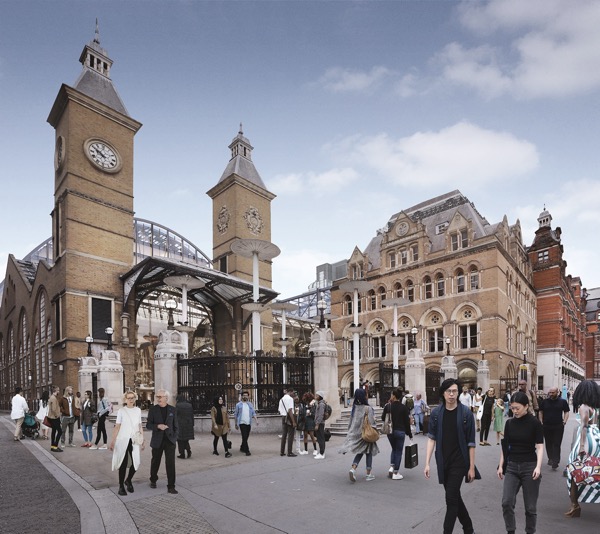
The Liverpool St entrance is unaltered in John McAslan’s scheme, with the new cantilevered offices just visible (courtesy of JMP)
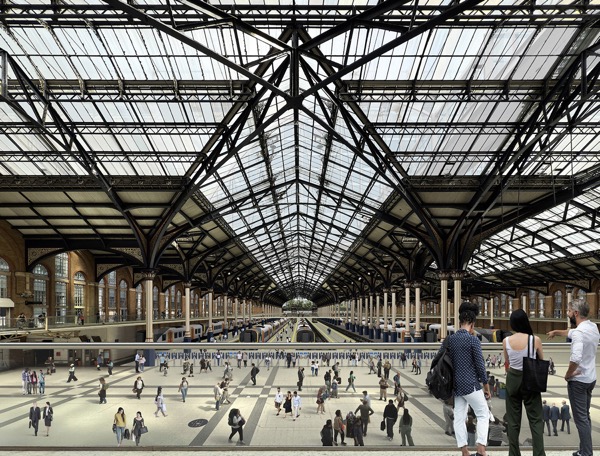
Looking from the concourse towards the historic train sheds (courtesy of JMP)
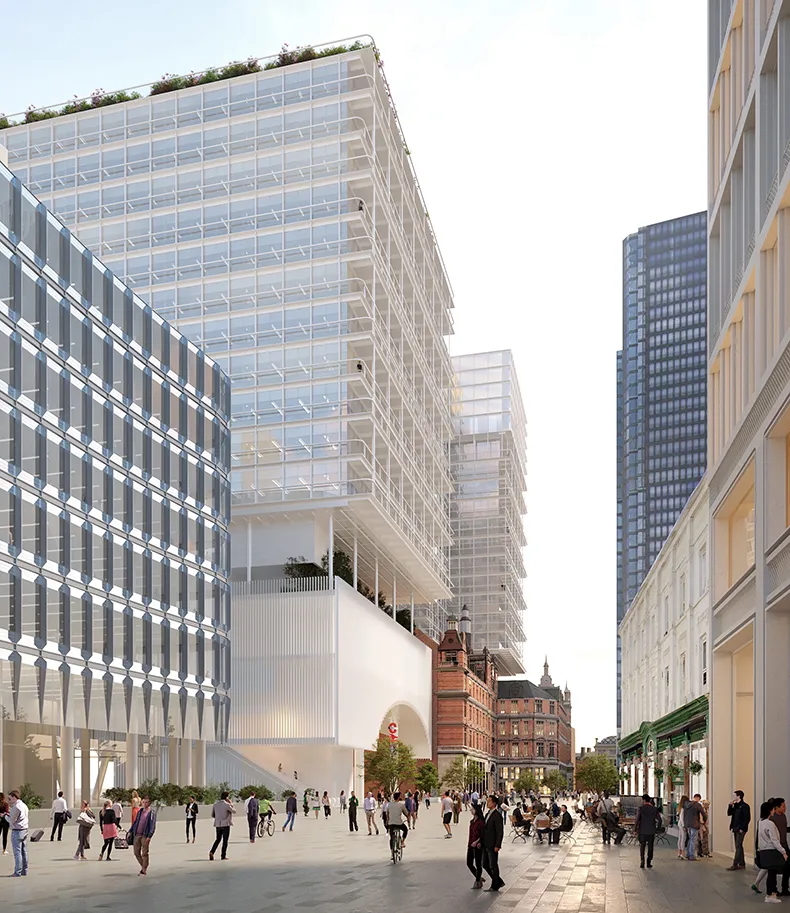
The Herzog & de Meuron scheme (courtesy of Herzog & de Meuron)
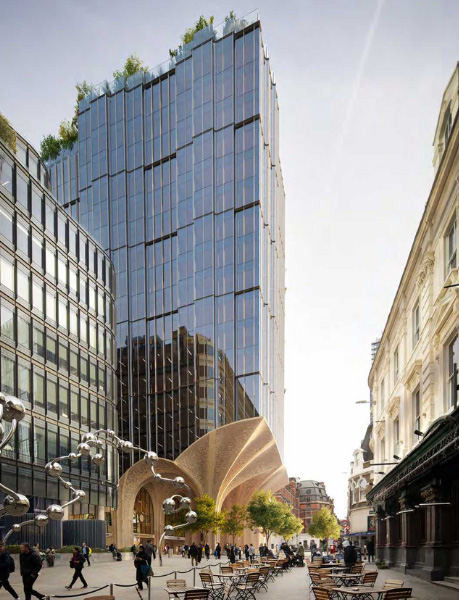
The Acme scheme (courtesy of Acme)
You may also like to read about
Towering Folly At Liverpool St Station













I am for the Alternative Design Scheme. I live on Middlesex estate.
Unfortunately, the committee meeting, yet again, falls on a working day for me otherwise I would have relished the opportunity to speak, even though this would be far more eloquently executed by more specialist speakers than myself. The planned “lump” is hideous, as hideous as the last. So much of London’s heritage has been swallowed up – something not permitted in many other great cities, such as Paris.
The inconvenience to commuters will not offer them any advantage, apart from a gloomier station with no natural light.
As part of my work, I get to visit many schools. A large number are recent builds, undertaken as part of the regeneration to increase capacity and modernise them – many as part of the government’s Building Schools for the Future initiative. A number of these buildings now have issues, including leaking roofs. We can argue that we now have increased capacity, if that was the aim, but in a building like a sieve. Some companies have now entered administration so it is not possible to claim compensation or to request remedial repair at no cost.
My point is this- currently the engine sheds for a huge span. The new proposals essentially turn Liverpool Street into a massive underground station – similar to Birmingham New Street. Not only will all of the heritage be lost, along with the aesthetics of the original Victorian structure, but, they could be starting something that is modern but creates more problems than it solves. Once aged, and everything original lost, Network Rail might be happy with their office block rent, but there is a great deal that could go wrong. I presume that public money will be involved and it is clear that they don’t want or need this development.
I wish those able to speak at the committee meeting the very best of luck. This development must be stopped.
Objectors are being given an opportunity to speak at the initial hearing incidentally
I have recieved such notification
What’s the point of more offices, hardly anyone goes to the office to work these days?
Objection submitted urging the planning authority to consider instead the JMP alternative scheme.
Power to your elbow … i so hope the Corporation of London will listen. Fingers crossed!
An excellent article, with a totally workable solution, I fail to understand why the City of London planners cannot see the damage this preposterous current submission will do. It is a disaster in the making, and will NOT improve life for commuters and others using Liverpool Street.
Time to TAKE A STAND! Everyone who lives in and loves London should write in their objections as soon as possible.
And contribute to SAVE, if possible.
John McAslan’s alternative scheme is faithfully sensitive to the historic station’s origins, character & design. It’s less costly, lighter & obviously the public approve so what could be better? I hope the Corp of London will be open to it too..