Joan Brown, The First Woman To Work At Smithfield Market
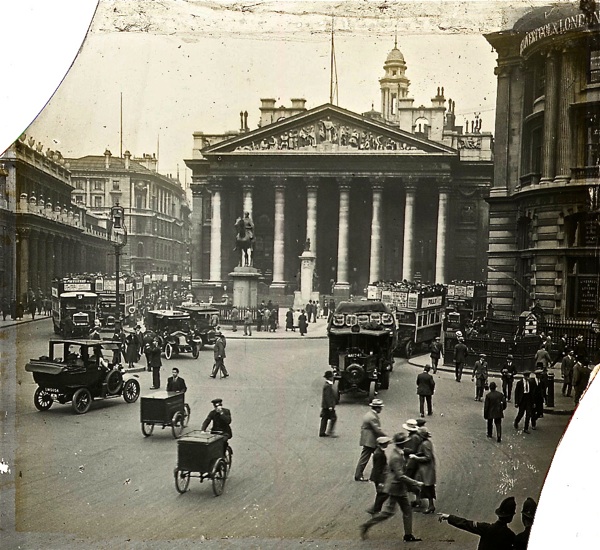
Join me on 28th December for an afternoon ramble from St Paul’s Cathedral to London Bridge through the alleys and byways of the Square Mile in search of the wonders and the wickedness of the City of London. CLICK HERE TO BOOK
On the eve of the opening of the new LONDON MUSEUM at Smithfield on Saturday, I publish my interview with Joan Brown, the first woman to be permitted to work inside Smithfield Central Market in 1945.

“When the cat can’t decide whether to go out, I say ‘Make up your Smithfield mind!'”
I visited Joan in her tiny bucolic cottage situated among overgrown gardens in a quiet cul-de-sac in Peckham. Of sprightly demeanour and impeccable manners, Joan has good claim to be the first woman to work in Smithfield Market. Yet, even though she was conscientious not to absorb the colourful vocabulary for which which the Market is famous,“When the cat can’t decide whether to go out, I say ‘Make up your Smithfield mind!'” she confessed to me.
“I went to work at Smithfield Market in 1937 when I was seventeen years old. I was studying at a school for commercial typists and, at that time, there was a recession so it was hard to find work, but my shorthand teacher was asked by a neighbour who worked at Smithfield if he knew of anyone reliable – so I was offered the job.
My mum was horrified – all those men and that bad language! But my dad said, ‘We’ll sort this out,’ and he went to take a look and discovered the office was in West Smithfield, not in the Market itself. So I took the job. It was a family business and I worked for John Jenkins, the son, as his Private Secretary. We were agents for Argentine Frigorifico and we had a stall in the market selling Argentine Chilled Beef, it was not ‘refrigerated’ but ‘chilled.’
It was very well organised, a number of Argentine famers formed a group and a ship of their meat arrived in the London Docks once a week. It opened up on a Monday and so much beef – only beef – was brought over to the market in time for the five o’clock opening. That went on each day until the ship was emptied at the end of the week. Then another one arrived and it happened all over again.
I worked there until the war came, when everything changed and I was employed by the Ministry of Food. We were evacuated to North Wales and the Ministry organised these Buffer Depots in every village in the country and my job was to keep a record of it all. I had to co-ordinate the corned beef supplies. It was incredibly complicated and there were no computers, I had a large sheet of paper – we called them ‘B*gger Depots.’
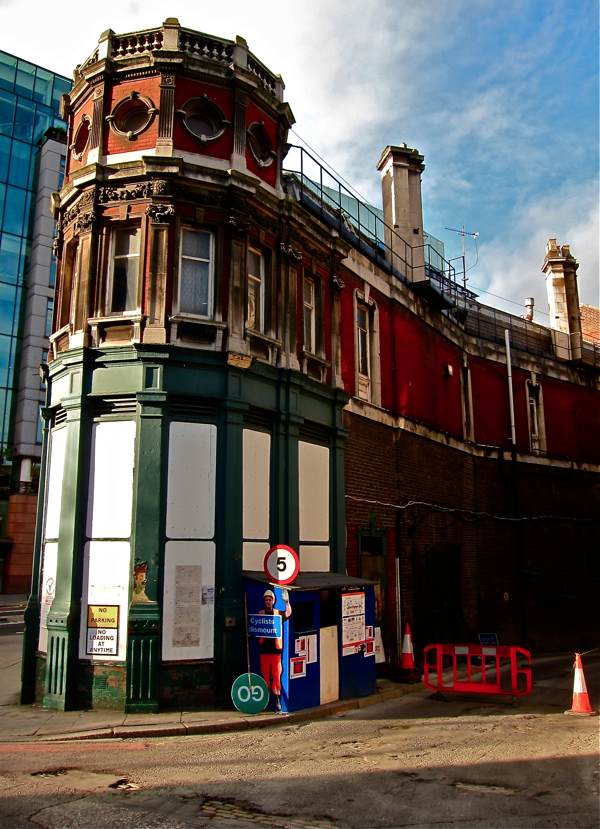
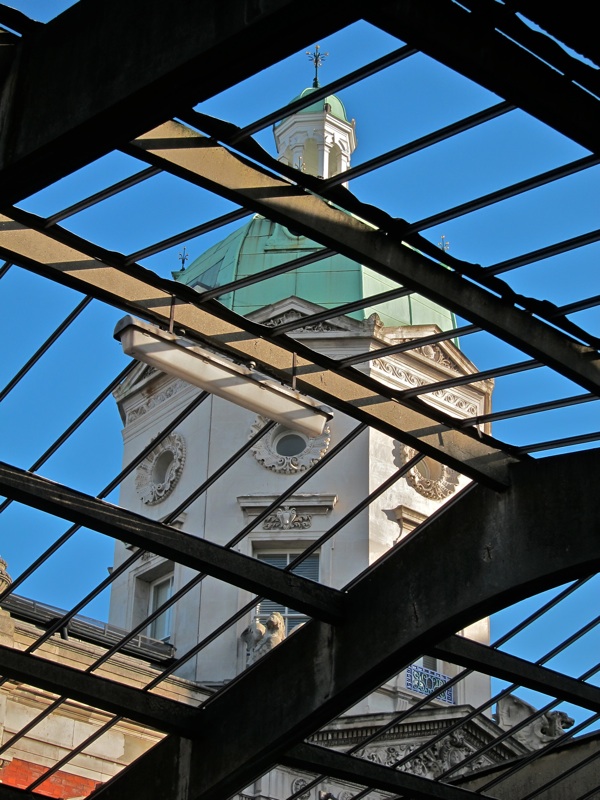
After the war, I came back to my old employer but I discovered we didn’t have an office anymore, it had been bombed. So I said, ‘John, why don’t we use one of the spaces over the shop in the Central Market?’ He said, ‘But we can’t expect customers to walk through the Market to get to our office.’ Then I reminded him that there was a door onto Charterhouse St, so they didn’t have to walk through the Market. We moved into an octagonal office in one of the rotundas above the Market and that was when I became part of Smithfield proper.
Before the War, women couldn’t go into the Market but afterwards we were allowed in. I always remember walking through the Market for the first time, the Bummarees were perfectly respectful. I walked down Grand Avenue and they all moved out of the way, calling ‘Mind the Lady!’ The Bummarees delivered the meat, they wore long overalls and they used absolutely appalling language and were famous for that. But it wasn’t real, they didn’t mean anything by it.
I worked for John for more than fifty years and sometimes we had visitors from the Argentine. After John died, the business was sold and I was taken on by the new owners, Anglo-Dutch Meats. I became Private Secretary to their Director, Mohammed El Maggot. He was Egyptian though he had been to school in England. He was known as ‘Hamdi’ in the Market and I worked for him for several years. He was a very polite young man and his father was determined that he was going to work, that’s why he bought the company to occupy his son. Mohammed came to work every day at five o’clock in the morning and he settled in to work.
One day, he walked into the office and announced, ‘I want you to come to my wedding – in Cairo!’ When we came back, he and his wife took a flat in the Barbican and he said, ‘I want you to come over and teach Imam how to make a proper cup of tea.’
As far as I was concerned, that was the end of my life in Smithfield – I was seventy-four and it was time to retire. Mohammed was terribly upset but I said, ‘It’s no good Hamdi, I have to go!’ I thought, ‘That’s where I cut my connections, otherwise it will be, ‘Can you go to Harrods to buy the baby a bottle?” So I cut myself off completely from Smithfield Market in 1994. I never married, I was always working in the Market. When I was sent to North Wales, I left all my boyfriends behind in London and I was surrounded by a lot of middle-aged men.
I was always happy to be in the Market, I was part of the Market. To look down from my office window upon the Grand Avenue and see everything going on. That was my life.”
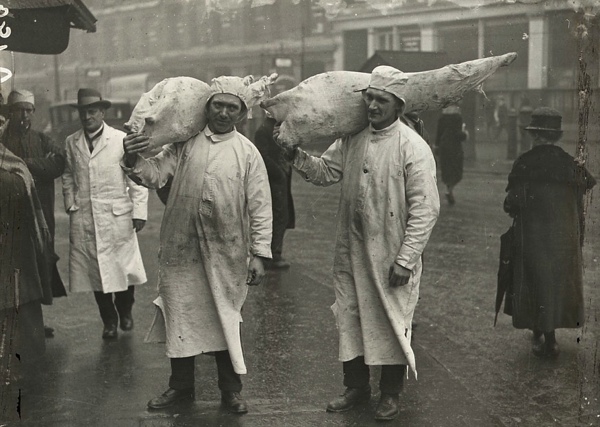
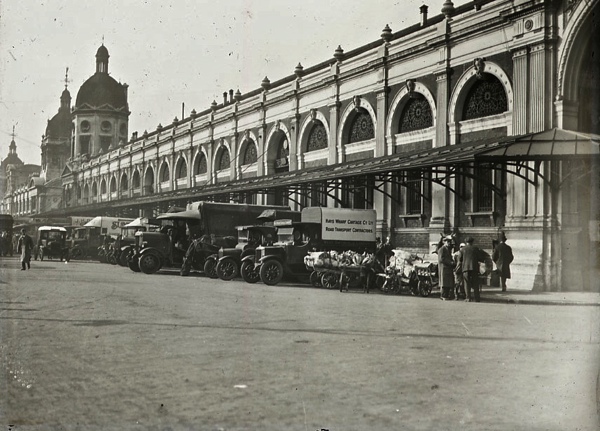
Smithfield Market as Joan Brown first knew it in the nineteen-thirties
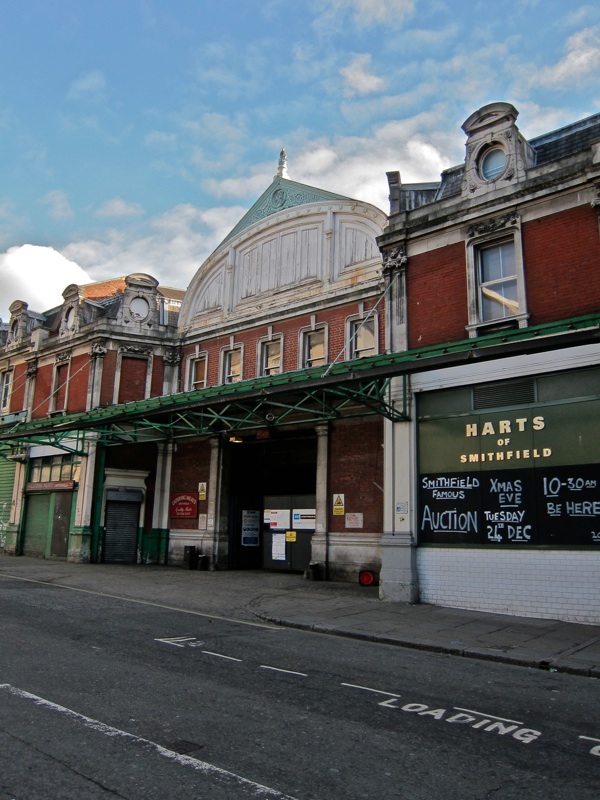
Entrance to the General Market on Charterhouse St, completed 1881
Entrance to the underground store at the General Market
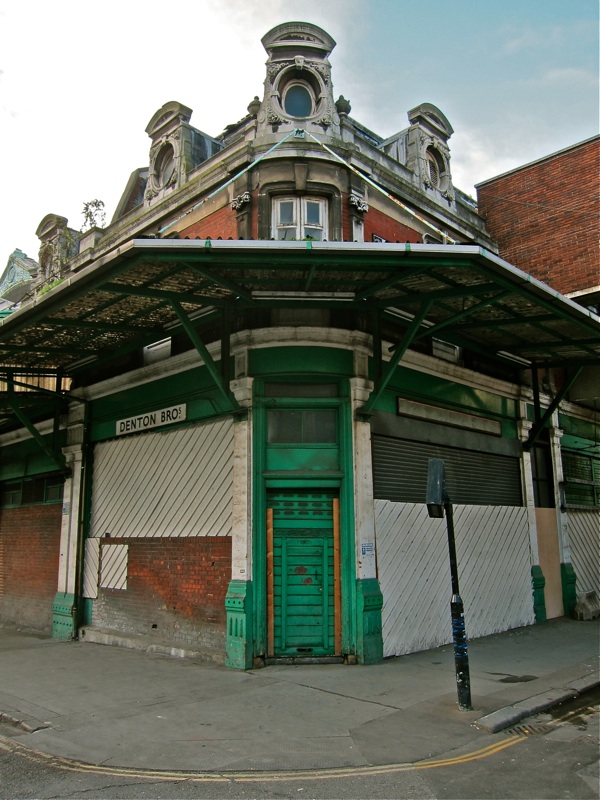
South-east corner of the General Market

North- east corner of the General Market
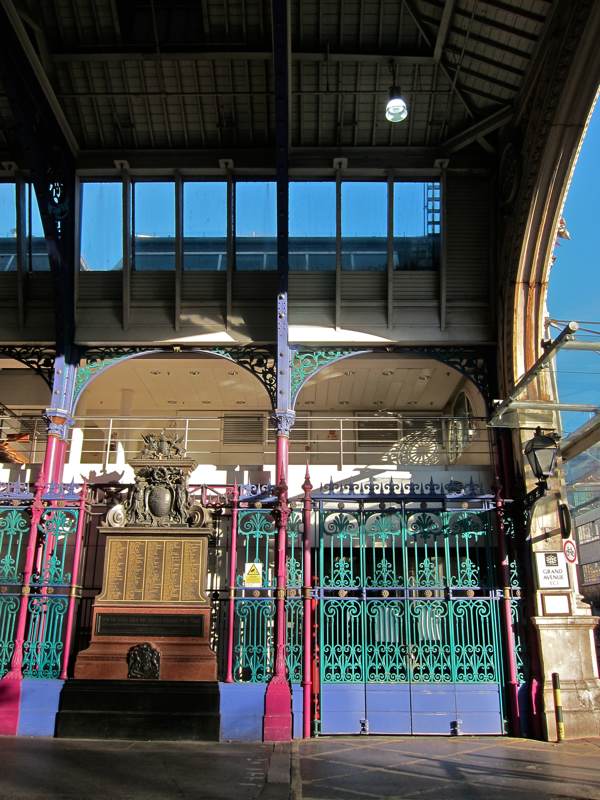
War Memorial in Grand Avenue in Central Market
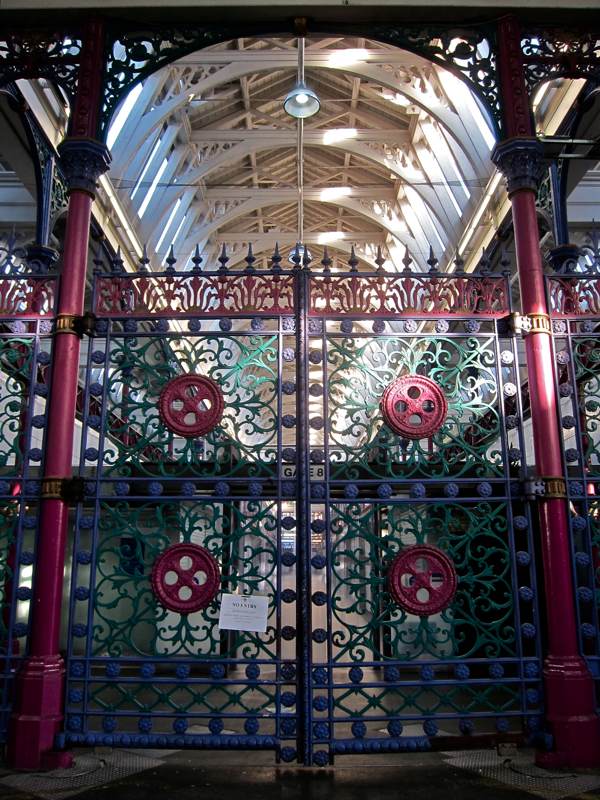
The Central Meat Market
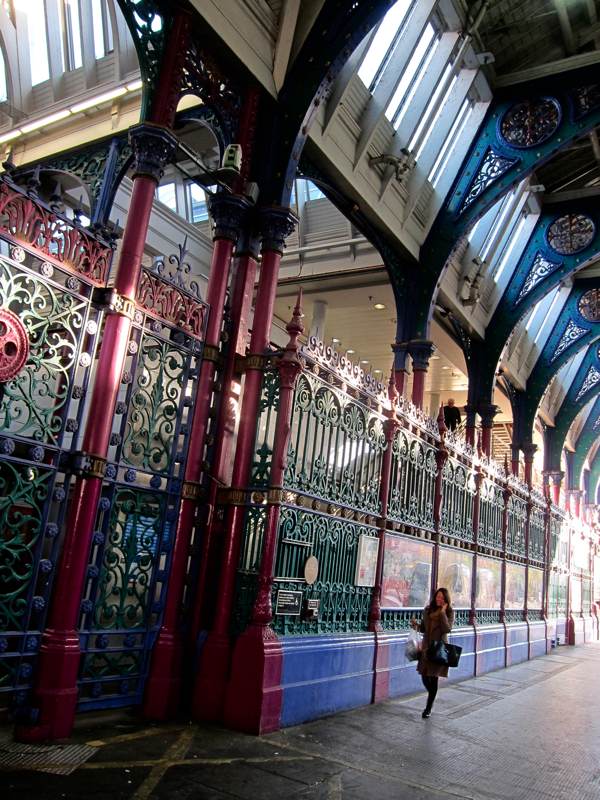
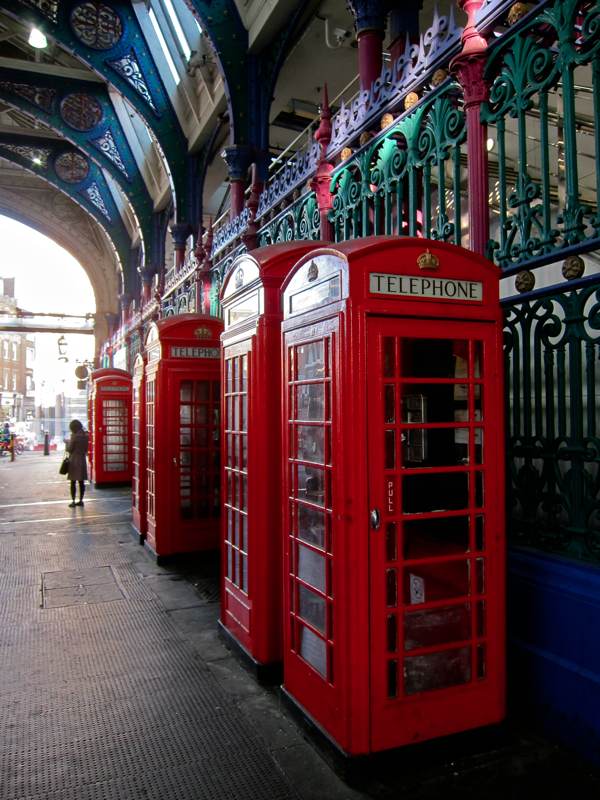
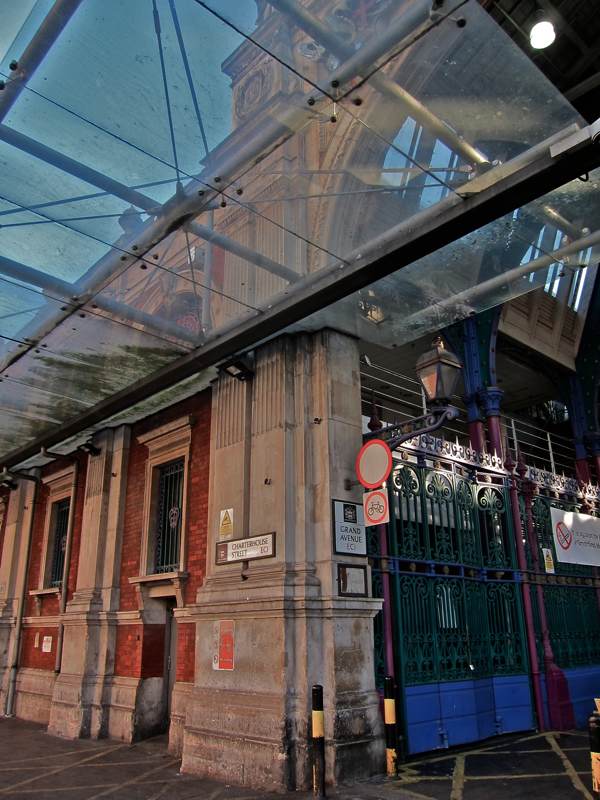
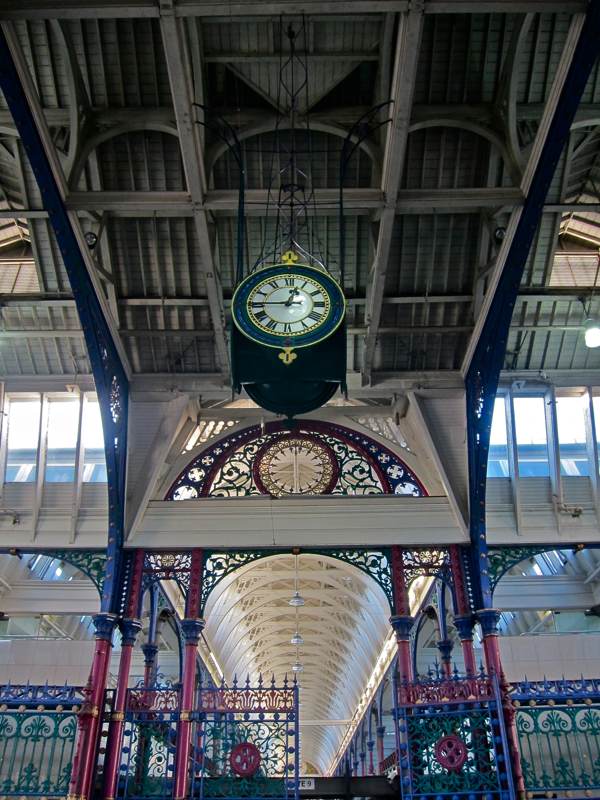
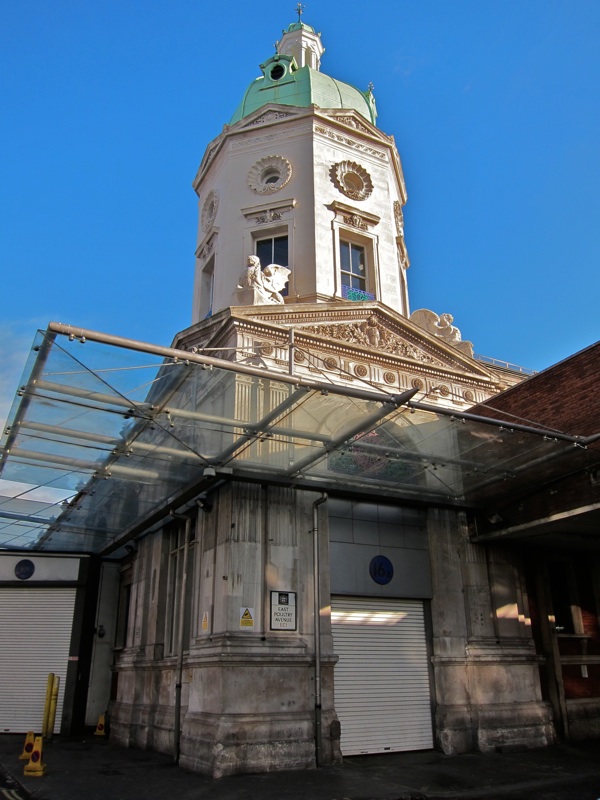
Joan Brown worked in an office in one of the rotundas at Smithfield’s Central Market

The Central Meat Market at Smithfield
Archive images courtesy Bishopsgate Institute