
Edith Tudor-Hart, Photographer
Click here to book for The Gentle Author’s Tours
Mark Richards explores the controversial work of photographer Edith Tudor-Hart and her secret life as a Soviet agent in London during the Cold War
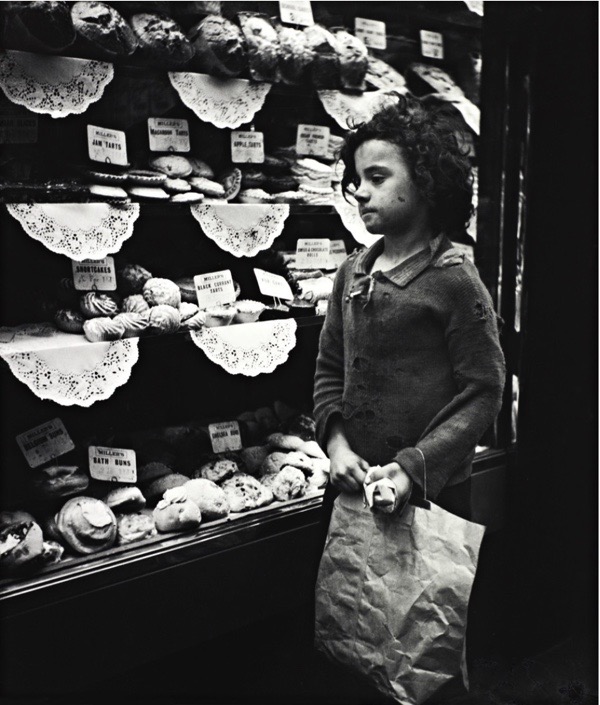
Child staring into a bakery window, Whitechapel, 1935 (Courtesy of National Gallery of Scotland)
On a wall in a flat in Maida Vale hangs this small photograph. It is a window into a world of social unrest, poverty, espionage and insurrection. The photograph and the story behind it add weight to the view that there is often little truth in photography. What we see is what the photographer wants us to see.
I saw the photograph when I visited the late photographer Wolfgang Suschitzky for an interview and portrait session in 2016. It was not taken by him, but by his sister Edith Tudor-Hart (1908–1973). The picture had pride of place on a wall of well-known photographs just inside the entrance. Edith Tudor-Hart was one of the most talented documentary photographers of her time, but has now faded into obscurity after being being blacklisted for her Communist activity.
For me, it is one of the strongest photographs of its era. One of those pictures that all photographers hope to be able to capture one day. Its ability to tug the heartstrings and generate strong emotion remains even ninety years after it was taken. On face value, it is a photograph of a poor child staring into a bakery window in Whitechapel in 1935. The disparity between the hungry child and the plentiful display has an enduring poignancy, inspiring a futile desire to intervene.
This photograph was first published next to another of a baby chimp in a zoo, which was much better fed than this girl. The message was clear, as was Edith’s ability to use her camera as a weapon for social justice. The picture was subsequently reproduced widely in Communist leaflets, representing a call to action. Yet to grasp the nature of this phenomenon and understand the other photographs that Edith took of the East End, we need to appreciate both the social context and her personal motives. None of the photographs that she took at that time can be taken at face value.
There is no doubt that this photograph was staged – the bundle clutched tightly in the girl’s left hand is evidence of that. We shall never know who the girl was or how she became to the subject. Edith destroyed her photographic records in 1951 for fear of prosecution, so the background to most of her work is now lost. She used photography to highlight social inequality and deprivation, realising early on – while studying at the Bauhaus – that photographs have the power to alter people’s beliefs and change the world. In her time, photography had become a medium for social change, ideal for the promotion of political views to a large audience, affecting them through the impact of the visual image more powerfully than by the written word.
Edith was acutely aware of the potential to use photography to break down social barriers and influence an audience like never before. For her, photography represented a move of the locus of control into the hands of the people, offering the possibility of self-representation for everyone. She understood that those who press the camera shutter can control the story that a picture tells.
As well as being an accomplished photographer, Edith was also a committed Communist and a Soviet agent who used her power to further her hidden agenda. Born in Vienna in 1908, she had grown up during a period of unprecedented political and social upheaval which shaped her beliefs. Her radical views are probably best summed up in Das Eland Wiens by the Marxist writer Bruno Frei, which attacks the inequality of capitalism and demands a commitment to revolutionary activism and change. Unusually, the book contained photographs and this was probably a decisive influence in Edith’s choice to become a photographer.
Edith’s father ran a Socialist bookshop which stocked Bruno Frei’s work and she mixed in radical Jewish circles in Vienna. In 1927, she trained as a Montessori teacher in England until she was deported to Austria in 1931 after being photographed at a Communist rally. Once in Austria again, she worked as a photojournalist for the Soviet news agency TASS, but in 1933 she was arrested there, again for being a Communist activist. At this point, Edith fled from Austria with her husband and was exiled in England.
Back in England, she continued her affiliation with the Communist party, both as an activist and a Soviet agent. It is likely that she had been recruited by the NKVD (the predecessor to the KGB) as early as 1927. Edith is often portrayed as a low-level agent yet she spotted and recruited Kim Philby. He was one of the Cambridge spy ring with Anthony Blunt, Guy Burgess and Donald Maclean, who caused damage to British interests and threatened its intelligence relationship with America during the Cold War. Edith knew Kim Philby’s wife Litzi Friedmann and was the one who introduced Philby to Arnold Deutsch, the Soviet Agent who managed the Cambridge spy ring. Her recruitment of Kim Philby was a seminal moment in her espionage activities.
In 1964, Anthony Blunt described Edith in his confession as being ‘the grandmother of us all.’ Yet, although she continued to be monitored by the security services until her death in 1973, she was never prosecuted for spying due to lack of evidence.
She had planned to produce a book of her photographs called Rich Man, Poor Man, after the nursery rhyme:
Daisy, daisy, who shall it be?
Who shall it be who will marry me?
Rich man, poor man, beggar man, thief,
Doctor, lawyer, merchant, chief,
Tinker, tailor, soldier, sailor…
The ambition of the book was to highlight the contrast between rich and poor in British society and it would have featured her photographs of the East End, together with a series she took of mining communities in Wales. The shocking juxtaposition of her ‘Poodle Parlour’ photograph with the picture of the Clerkenwell slums at Gee Street in Lilliput in 1939 demonstrated he power of her approach. However, the book was never published. Eventually, the difficulty of being a woman photographer as well as being blacklisted for her Soviet connections led Edith to abandon photography altogether at the end of the fifties.
Some of the images that were intended for this book are incredibly powerful and reveal the nature of her talent as a photographer. Her method included talking to her subjects instead of photographing them from a distance and she showed a real ability for putting people at their ease.
Bakery Window was to have been the cover photograph of Rich Man, Poor Man and what a book it might have been. Today it lies unconstructed among the negatives of her photographic archives held by the National Gallery of Scotland which were given to them by her brother Wolfgang in 2004.
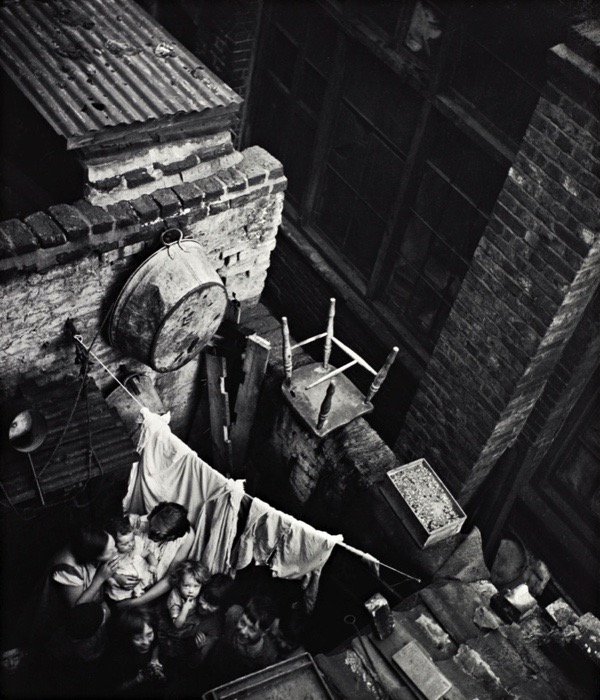
Slums at Gee St, Clerkenwell 1936
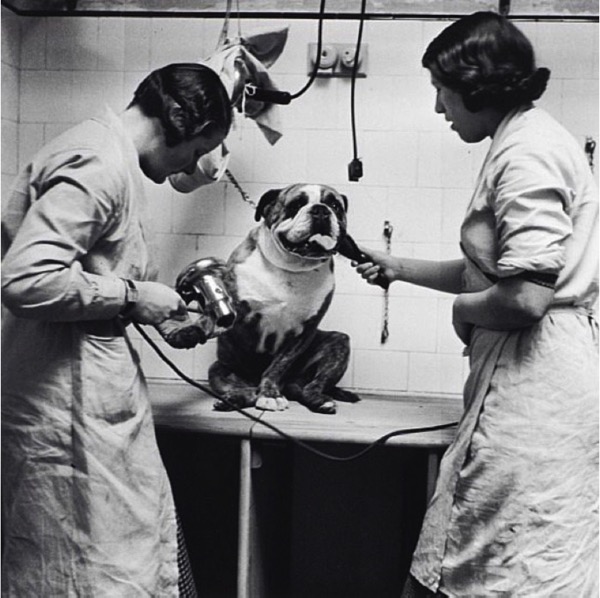
Poodle Parlour, West End, 1935
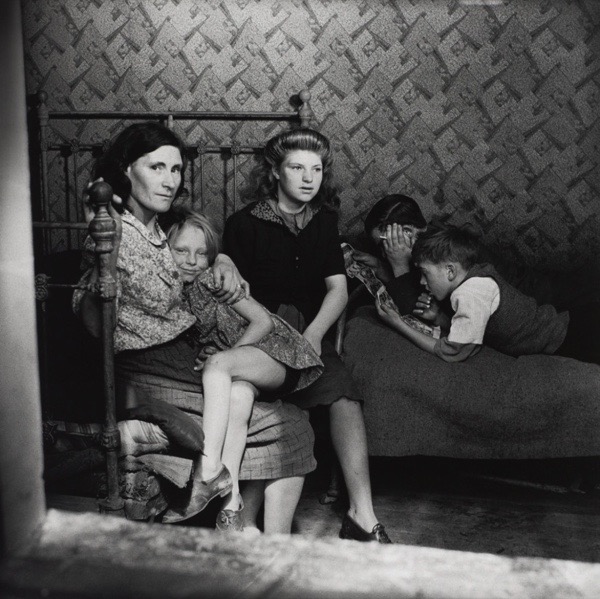
Family Group, Stepney, 1932
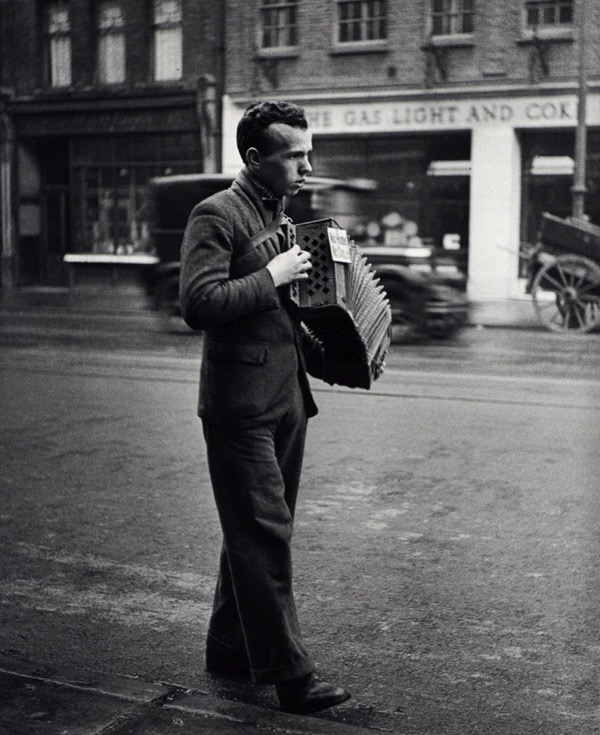
No Home, No Dole, London 1931
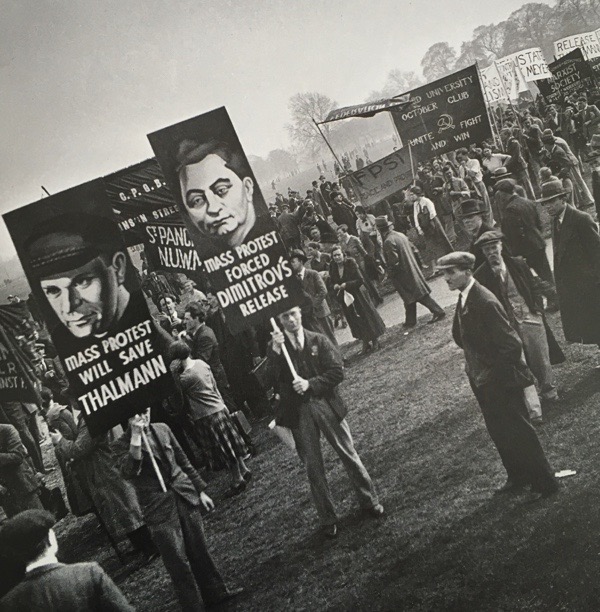
Communist Party demonstration, Hyde Park, c.1934
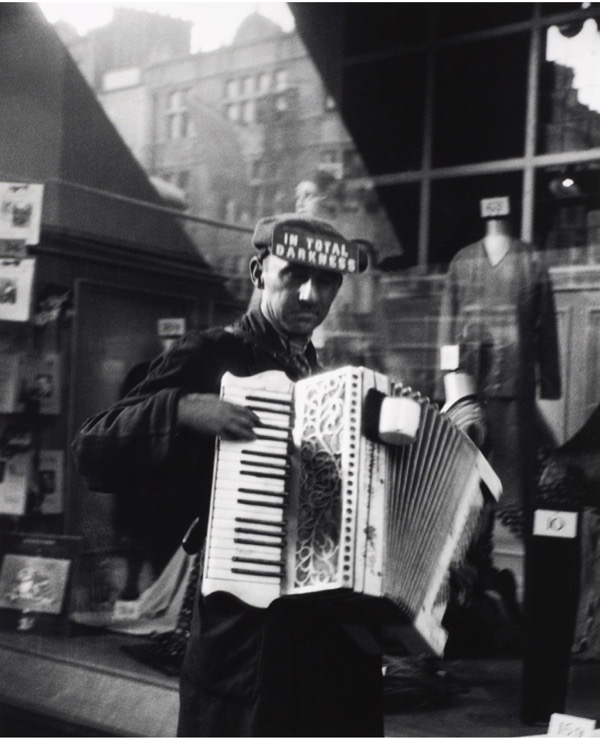
In Total Darkness, London 1935
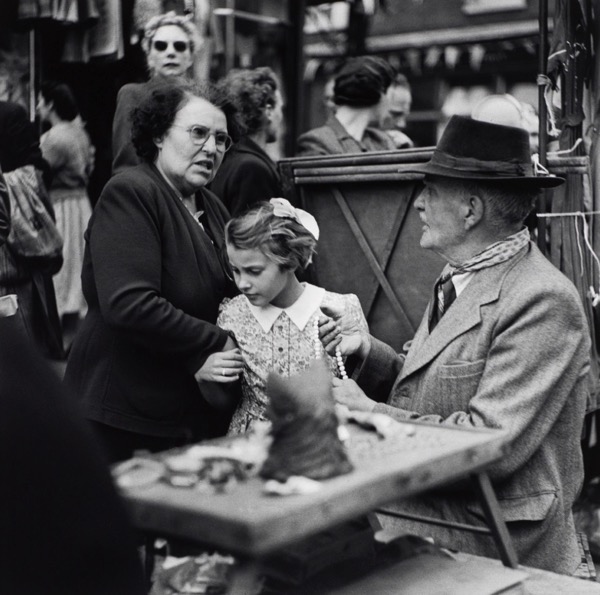
Caledonian Market, 1931
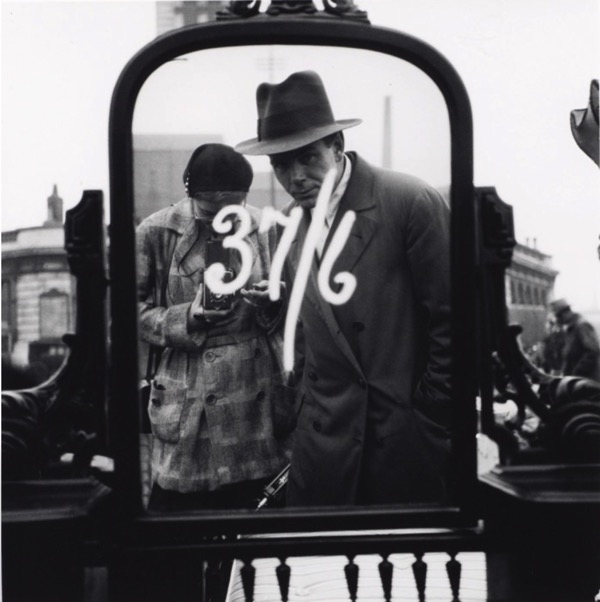
Self portrait with unknown man, Caledonian Market c.1935
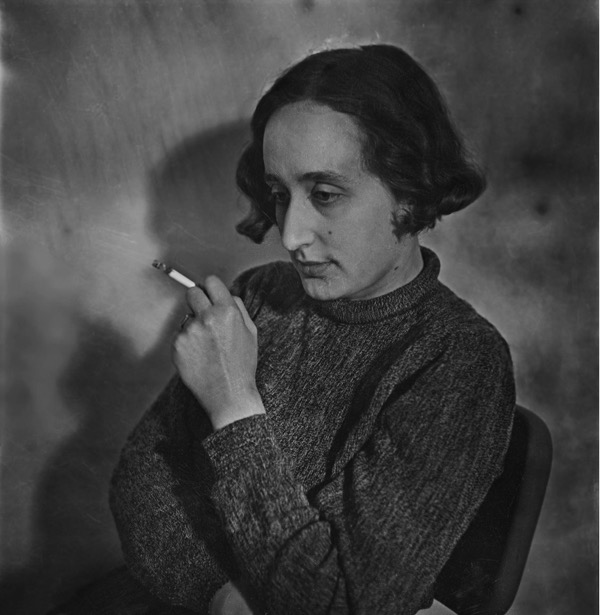
Edith Tudor-Hart, self portrait 1936
Photographs courtesy National Gallery of Scotland
You may also like to read about













A good reproduction of the earlier account. Currently at the Towner gallery in Eastbourne is an excellent exhibition entitled Comrades in Art.Artists against Fascism . It includes Edith Tudor Hart and many other left wing artists of that time. Wide range of material presented which I cannot remember ever seeing in London!
These are haunting photographs .
The pain of starvation is in the first photograph which I remember well at times from my own childhood .
Sadly , there are children all over the world including England and adults too who know those staring eyes for food .
Dear Gentle Author,
Thank you for this eye-opening report on ETH! It’s worth mentioning that Edith’s grand nephew Peter Stephan Jungk has produced a fascinating film documentary on her, Looking for Edith, based on his biography, The Darkrooms of Edith Tudor-Hart, now also available in English.
Please note: in the meantime, the ETH estate of photographs and archive materials, together with the copyrights, have been transferred from Scotland to Fotohof Gallery in Salzburg, Austria.