
At Kaymet, Tray & Trolley Makers
Click here to book for my tour through July, August & September
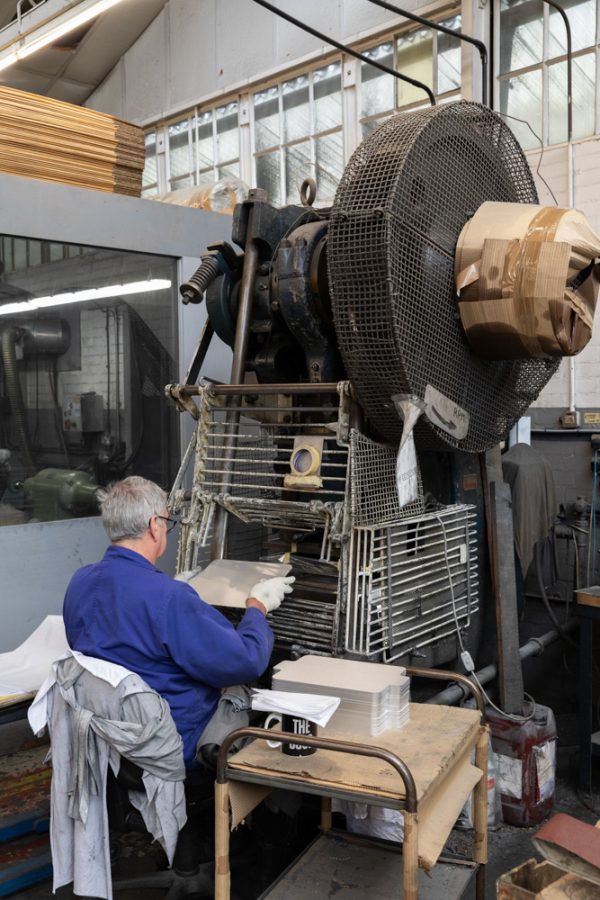 Ron uses a power press to form trays
Contributing Photographer Rachel Ferriman and I ventured a rare trip south of the river recently to visit the wondrous Kaymet factory in Bermondsey where snazzy trays and trolleys are hand made in aluminium.
We were delighted to be shown round by proprietor Mark Brearley who, as co-author of Made In London, knows a thing or two about the challenges and importance of manufacturing in the capital. Proving that he puts his money where his mouth is, thirteen years ago Mark came along to buy a tray for his wife’s birthday, discovered that the business was going into liquidation and agreed to take it on, without hesitation.
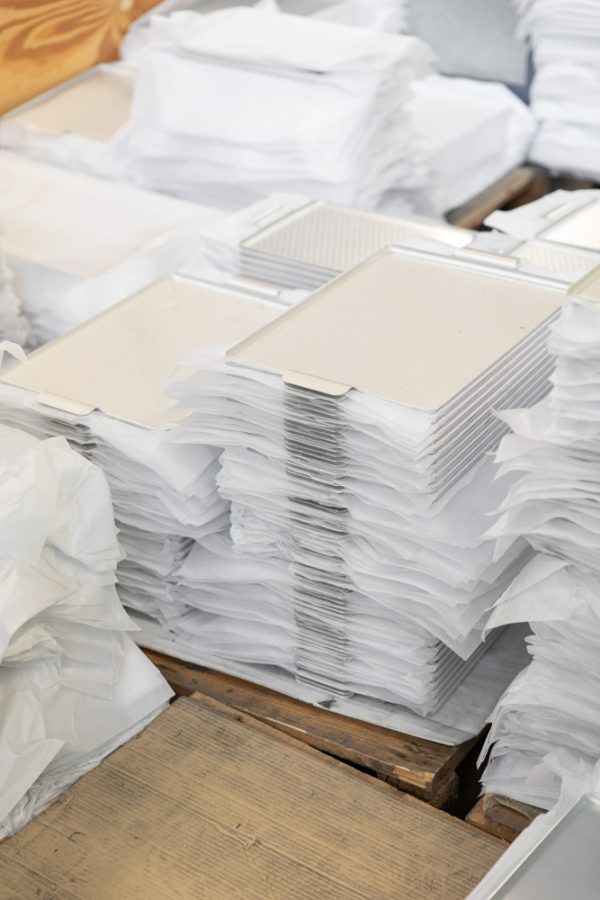
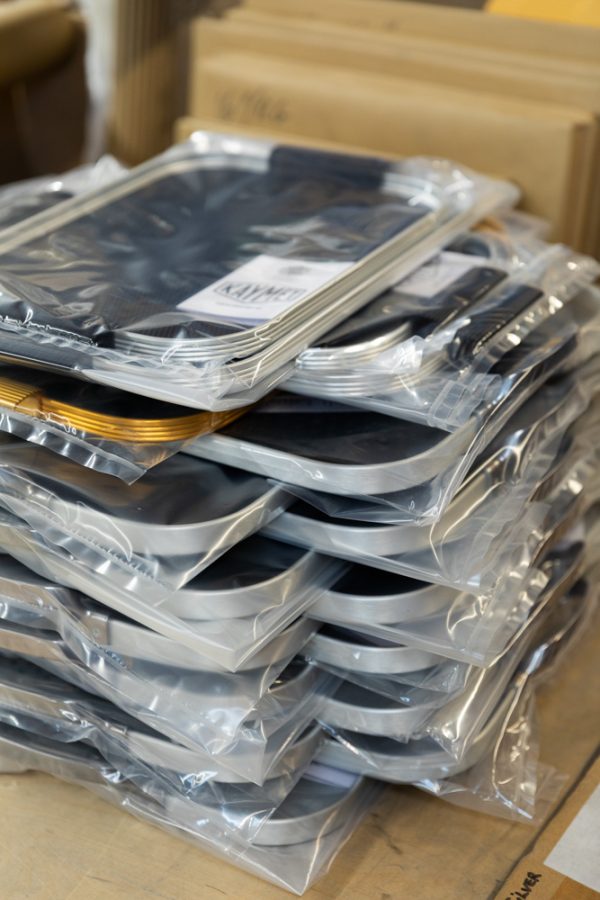
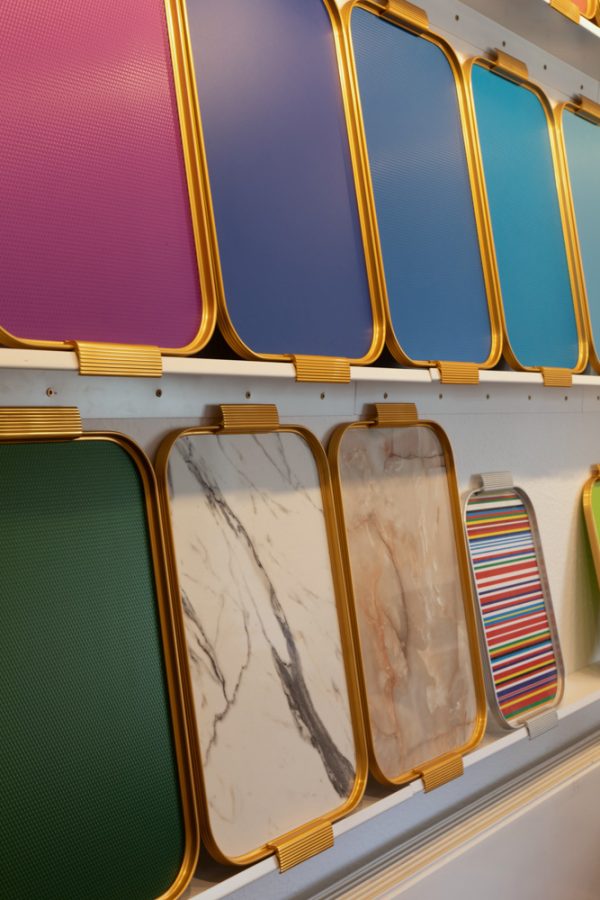
I had no idea how an aluminium tray could be hand made until I came here. Yet the processes of forming, punching, polishing, graining, anodising and assembly require significant human skill and painstaking craft at every stage. As well as preventing oxidisation, anodising introduces colour, while graining imparts an organic texture and, finally, polishing delivers the shine.
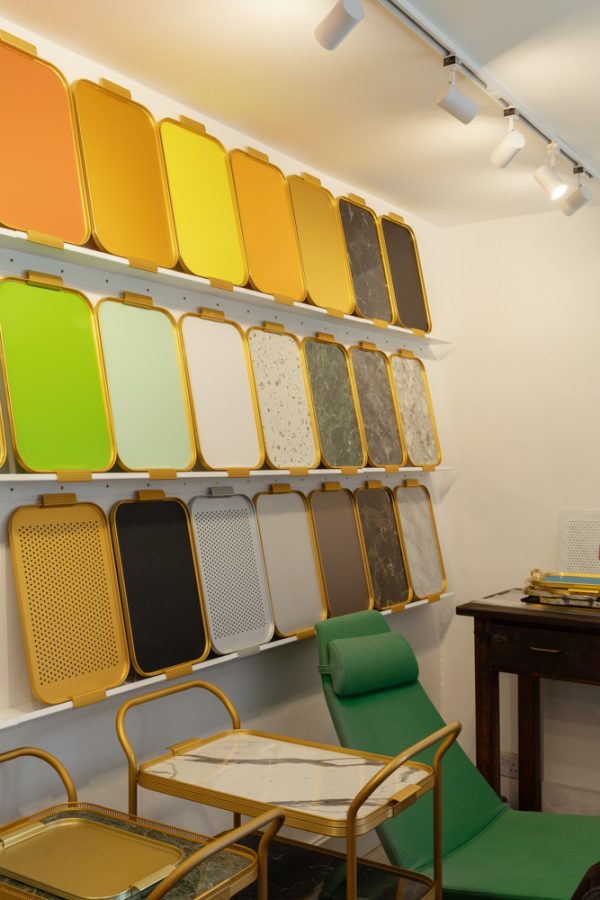
There are two kinds of trays made here. Pressed trays formed out of a single sheet of aluminium possess an elegant simplicity, while assembled trays offer an infinite variety of colour, texture and pattern contained within neatly ridged metal edges and handles. What could be more civilised for breakfast in bed or lunch in the garden than a stylish tray from Kaymet? The discreet royal warrant tells you all you need to know.
When Rachel & I sat down with Mark after our factory tour, he beguiled us with his lyrical tale of the origin of London’s top trays.
‘It all goes back to the nineteenth century, to the Schreiber family, who were immigrants of German origin with a history of metalwork and retail, and they were connected with another family, the Kahns. In fact, Sydney Schreiber who started Kaymet changed his surname to Kahn. By the early twentieth century, they had a few shops near the Elephant & Castle, one of which was a toy shop that carried on until the seventies. They had a radio shop when radios first became popular, also in Elephant & Castle, making the cases from sheet metal in the basement of the shop. And that’s the origin of what became the sheet metal and engineering business which moved to Kennington Lane and did very well during the Second World War making radio casings in aluminium. After the war, they had to decide what to do next, so in 1947 they decided to produce homewares in anodised aluminium. And that’s when Kaymet was founded – the ‘K’ of Kahn and ‘met’ from metal – making trays and trolleys.
No-one knows where the designs come from, they have emerged from production with no named designer. We just have a few old drawings and books with dimensions and instructions, and we know of some interventions by industrial designers. It was a process of huge inventiveness because they rapidly came up with a big product range. Somebody invented all those products and worked them out.
They’re very practical objects. If you take the ribbed tray – as we call it – with the ribbed pattern on the extruded handles and edges, that ribbed-ness makes it look very fifties and it just so happens that design originates from then. Yet the story behind it is a practical one. The trays we were making before that were expensive because they were edged with a flat strip of aluminium which required a lot of polishing to remove imperfections. But once we made them ribbed they needed less polishing and less volume of aluminium so they were lighter. It wasn’t primarily a stylistic choice although maybe they were influenced by the moment they were in.
Who came up the idea of making trolleys that, instead of having legs to support the tiers and a separate handle, had a frame which combined the legs and the handle? It appeared in the late fifties or early sixties across lots of manufacturers and it’s drastically better. It looks better, it’s sturdier and it’s easier to make.
After 1947, Kaymet expanded dramatically with up to 200 employees. They took on a lot of contract work, casting handles and anodising for other companies, which magnified the scale of the company. They built an impressive factory for themselves off the Old Kent Rd. But then fashions changed, with competitors making pressed plastic trays and manufacturing them cheaply in other parts of the world.
The aspirational trend for drinks trolleys fell away and the business shrunk and shrunk and shrunk, losing their factory in the nineties and ending up in a series of smaller and smaller premises. I took it on in 2013 when it went into liquidation and agreed to give it a go in collaboration with the proprietor, taking on the staff of four, re-renting the building and rescuing what we could of the tools, reinvesting and pushing sales with a new business strategy.
I had no idea. I was in the right place at the right time because I had been researching manufacturing in London. I simply went along to the factory one day to buy a tray for my wife for her birthday but unfortunately they were liquidating the company and asked if I had any ideas, which turned into ‘Let’s do it together!’ I had to decide over the weekend and I knew everyone is enthusiastic about provenance, where things are made. And it’s a design classic, they are brilliant designs. ‘Surely I can make it work?’ I thought. My business strategy is if we don’t sell more trays, we’re dead, it will eat all my money, so I’d better sell more.
We focussed on refreshing the presentation and getting a decent website. We started doing trade shows. We re-approached old customers and we rebuilt the sales by giving it more energy. We have regrown it again and moved to significantly bigger premises to flourish.’
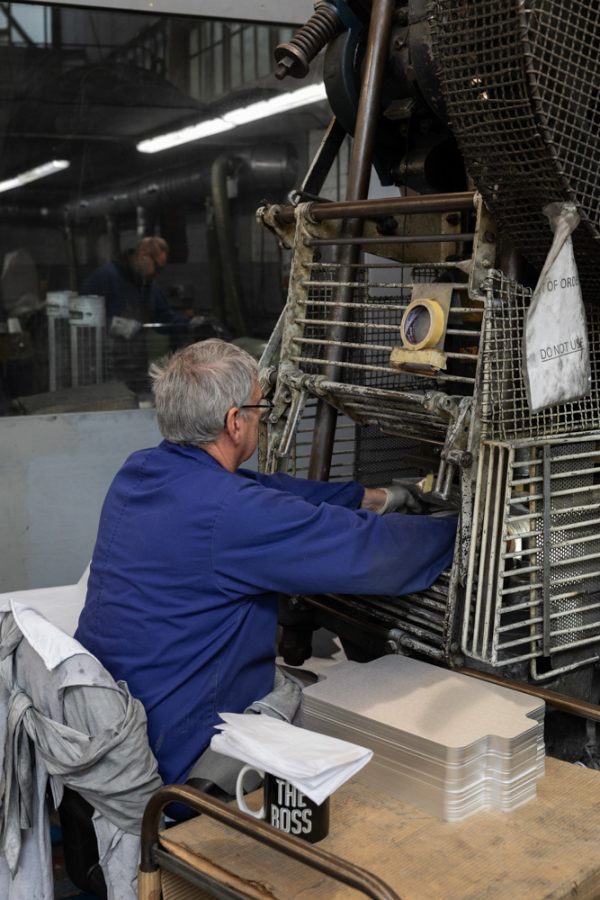 Ron places a blank into the press to make a tray
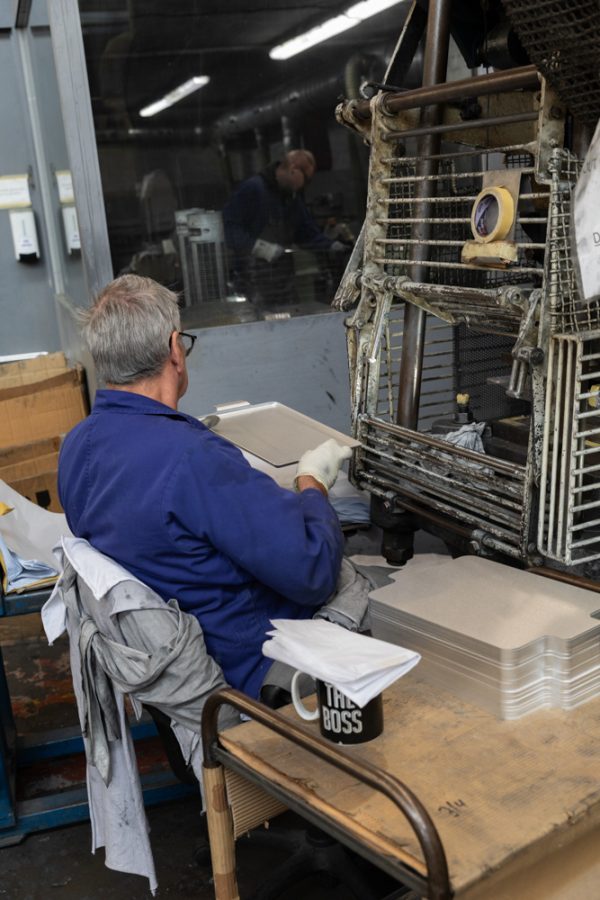 Ron takes the tray from the press
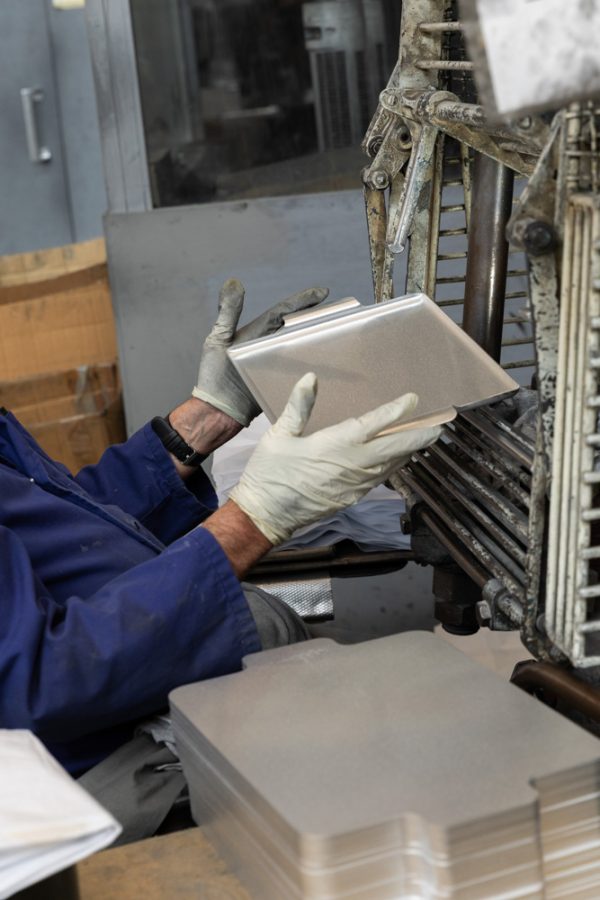 Ron examines the tray
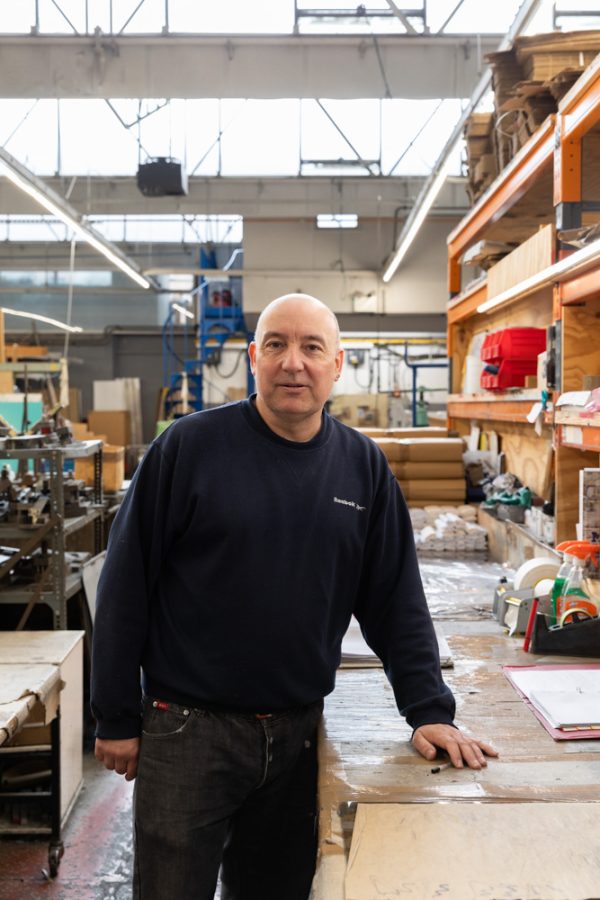 Matt punches the holes in the trays
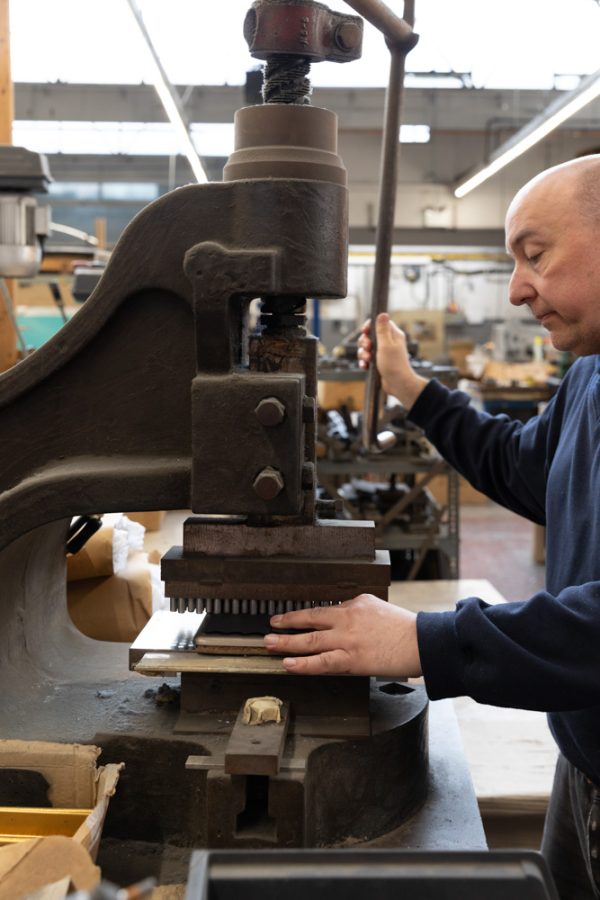 Matt uses the punch to make the holes
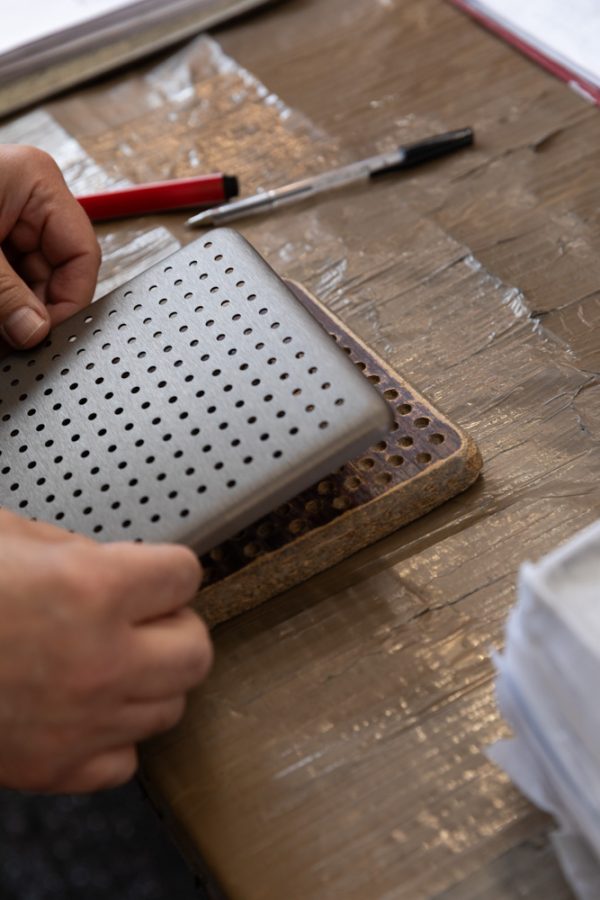 Matt examines a finished tray
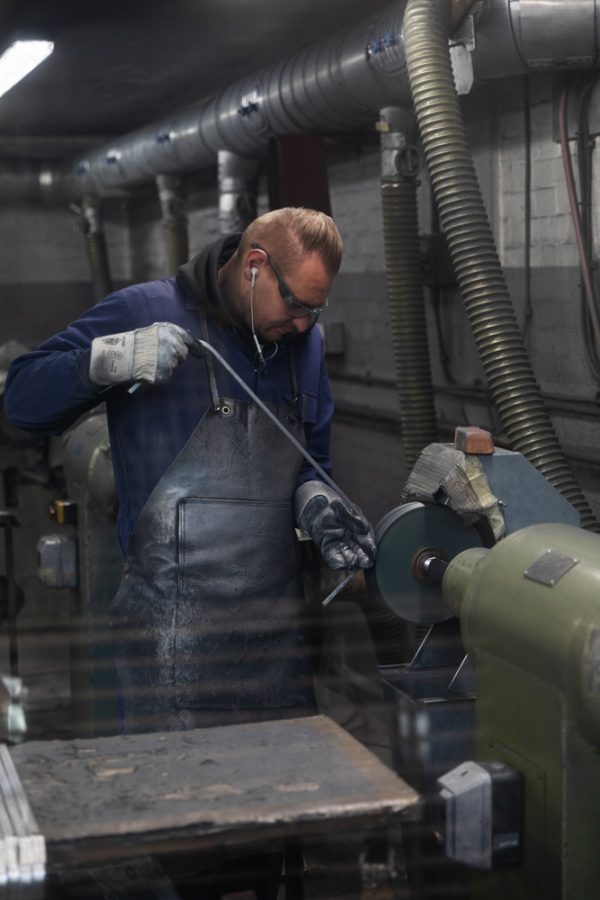 James polishes tray edges
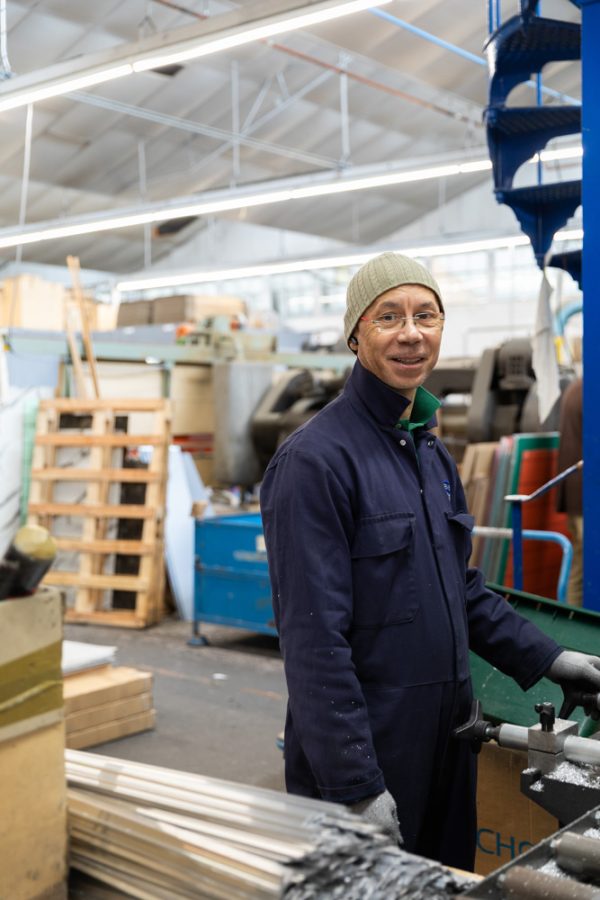 Junior trims the edge strips to size
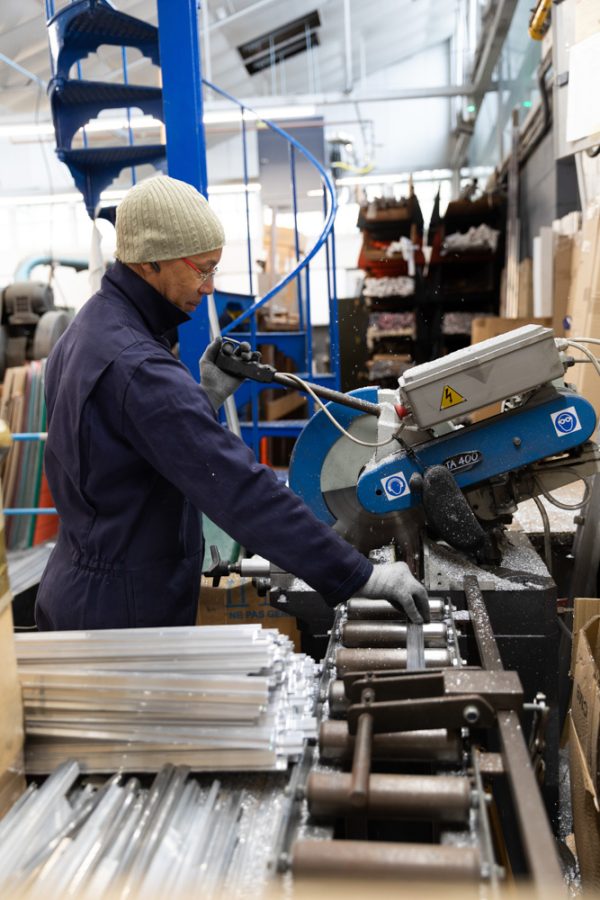 Junior using the chop saw to cut the edges to size
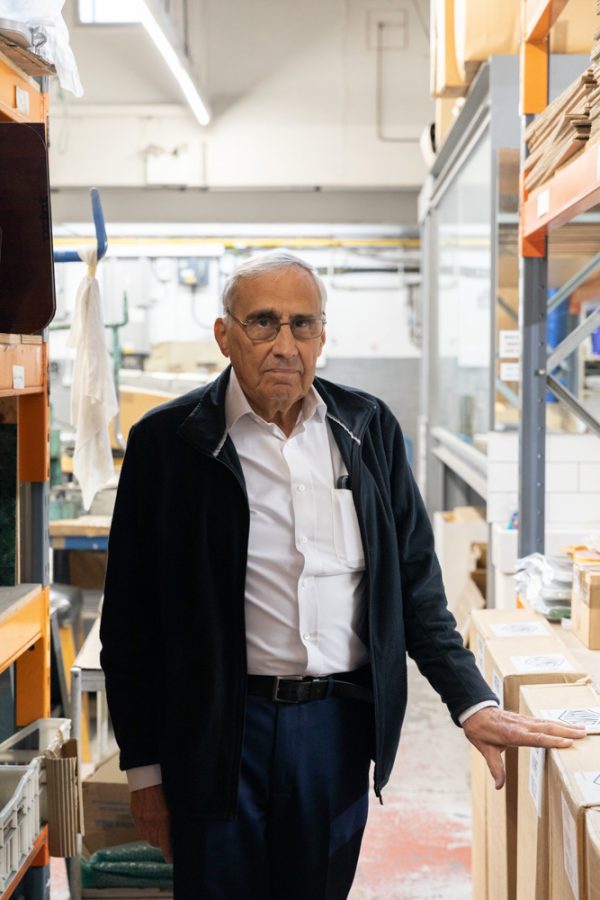 Ken supervises orders on the factory floor
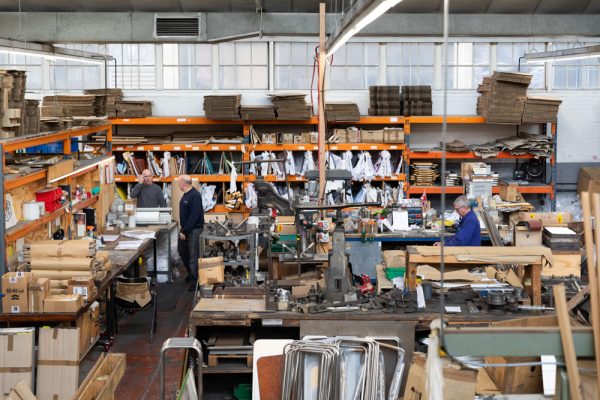
The factory
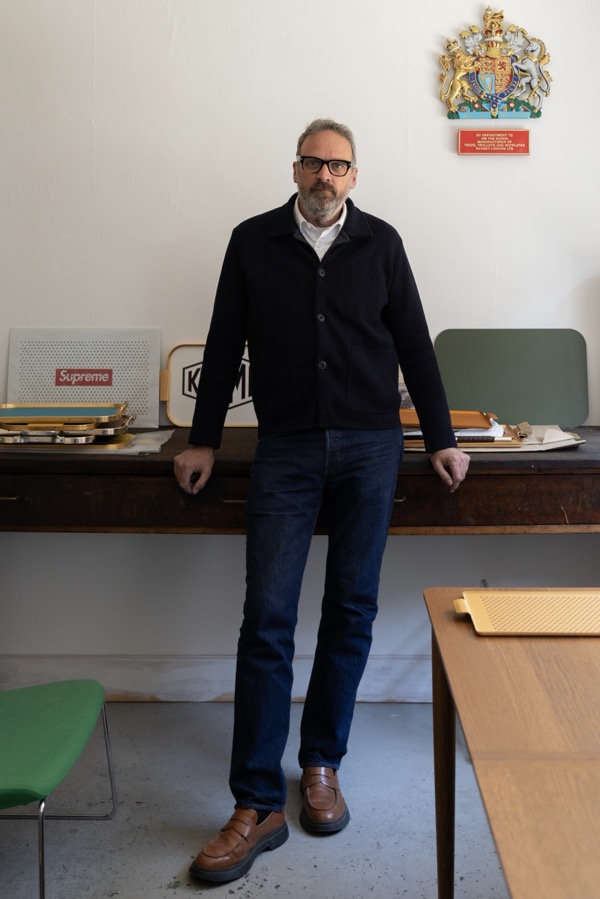 Mark Brearley
Photographs copyright © Rachel Ferriman
You may also like to read about












What’s a beautiful story. These are the people and businesses that should be supported.
These are fabulous!!! I had to poke around their website to see all the options and styles they make. Perfectly executed and in style, not to mention practical. I wish they were available in the US.
What a great story, and so pleased the business was saved. Too many things are now made abroad, and travel almost halfway across the world to get to us, but my father having been a Chief Engineer in a large factory up to the time of his passing in the mid-60s, was capable of doing almost anything, I hate seeing such skills disappear, and even my late husband didn’t know which end of a screwdriver to hold, it was always me that changed a plug or whatever needed doing at home!
Where can I buy the trays in London? Thank you.
Most of our stockists are shown on the Kaymet website. They include some in London, and the USA! If what’s wanted can’t be found then we can be contacted direct (contact details are on our website and on our Instagram). Mark