
Typefounders Of East London
Click here to book for my tour through July, August & September
Richard Ardagh, author of Type Archived, A visual journey through typographic history introduces the typefounders of East London
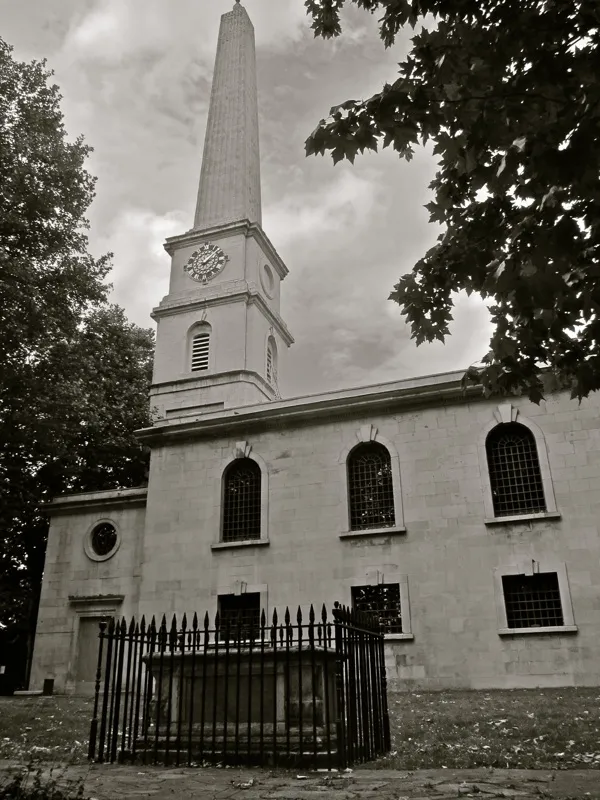
The Caslon tomb at St Luke’s, Old St
Typography can be thought of as the vehicle of words, giving them both form and voice. It is easy to take for granted how quickly we can compose and spread words today when, for centuries, type was manufactured as countless millions of individual physical components, a prerequisite for making the printed word possible.
East London played a huge part in the development of the typefounding industry, acting as a crucible (to use a relevant term) from which came many firsts: styles such as Sans-serif, Slab-serif (or Antique) and Clarendon were all the innovations of London typefounders. Even the screen typeface that you are reading (Georgia by Matthew Carter, 1993) was heavily inspired by the work of punchcutter Richard Austin, born in Finsbury, 1756.
England’s earliest typographer was Wynkyn de Worde, a German immigrant, who came to London around 1480 at the request of William Caxton to help improve his venture running the country’s first printing press. De Worde subsequently established his own press at Fleet St, which has forever after been synonymous with the print trade, and was buried there at St Bride’s Church. (The neighbouring St Bride Foundation is the custodian of much of the area’s rich printing heritage to this day.) But it was another 240 years before the skills necessary to produce original type designs were seen in London.
To create a new fount (font) required several significant stages: A punchcutter would painstakingly engrave master letters in steel, a craft demanding both an outstanding level of skill and artistic scrutiny. Every letter, numeral and symbol had to be cut individually, and replicated again for each size of type produced. Punches were used to strike a block of copper or brass, forming a matrix from which type could be cast. The matrix was fitted to a mould which was adjusted to match the width of the character. Casting could then begin by pouring molten typemetal (an alloy of lead, tin and antimony) into the cavity, which solidified on contact, then breaking the mould apart to release the sort (a single piece of type). In this way, repeated many times over, slowly an endless supply of type could be amassed.
Early English printers had relied on type imported from the Low Countries until, in 1722, an enterprising engraver transitioned into typefounding. A blue plaque at 22-23 Chiswell St marks the site of William Caslon’s pioneering foundry, run from this address for nearly 200 years. Caslon’s masterfully cut Roman and italic types established a uniquely English style for the first time and remain highly regarded – hence the adage, ‘when in doubt, use Caslon’. In the decade prior to Chiswell St, Caslon’s premises were at Ironmonger Row (now Helmet Row) opposite St Luke’s Church, where the family tomb can be seen, its raised stone chest clearly visible from Old St.
As the print trade flourished in the courts and alleys around Fleet St and spread beyond, typefounders situated their businesses nearby. The ward of Cripplegate had been home to early foundries such as Grover and Mitchell before Caslon. Later, the Bristol firm of Edmund Fry relocated there, giving the name Type St to an undeveloped lane, proudly listed on the title page of their specimen books (the street now forms part of Moor Lane).
A short walk away, the Fann St Foundry, established by Robert Thorne and later passing to William Thoroughgood and Robert Besley, occupied the premises at numbers 2, 4 and 6. This street name prevails and the site is now occupied by the Blake Tower. A plaque above the shopfronts opposite, where Aldersgate becomes Goswell Rd, records a now-absent drinking fountain erected in Besley’s memory but has no mention of the foundry.
As typefounding firms grew into more substantial enterprises their proprietors began to hold prominent positions within the City of London. Besley was an Alderman and went on to serve as Lord Mayor (1869-70). Typefounder Vincent Figgins, ‘an amiable and worthy character, and generally respected’, was a Common Councilman for the ward of Farringdon Without and his son James became an Alderman and MP. The ‘VJF’ monogram of their foundry is still visible on the iron railings in front of the Grade II listed building at Ray St in Clerkenwell.
Talbot Baines Reed, known as a writer of school stories for boys, is a figure that looms large in the world of typefounding. Reed inherited the Fann St Foundry in 1881 and went on to write a monumental account of the trade’s history. Whether or not he acquired the practical skills of casting type himself, we can certainly be grateful for his work cataloguing the foundry’s materials and identifying items of special historical interest in his ‘cabinet of curios’. Reed’s premature death at the age of forty-one is commemorated on the family tomb with a large Celtic cross close to the Church St entrance to Abney Park Cemetery, Stoke Newington.
The completion of Regent’s Canal in 1820 meant an easily accessible supply of heavy materials and lumber. Furniture-makers and wood trades flourished in Hoxton, including ‘printer’s joiners’ such as Gould & Reeves. The firm operated from Wenlock St where, as well as producing large wooden type for posters, they made the cabinets to house it and other furniture required by printing offices. And by 1900, as light industry spread further eastwards, the heirs of the Caslon foundry would open a factory at Rothbury Rd in Hackney Wick that employed over a hundred workers.
By the turn of the twentieth century, typesetting was undergoing a revolution. Automated solutions were introduced that enabled printers to break their reliance on a huge workforce of compositors (who set the type cast by traditional foundries by hand) and replace them with new typecasting machinery.
The Monotype Corporation, pioneers of this technology, still chose to locate their headquarters in the time-honoured district (Monotype’s building was at 43 Fetter Lane, just off Fleet St, until it was destroyed by a bomb in 1941 during the Blitz). But the coming of this new way of servicing the print industry brought dramatic changes and rendered the practices of the traditional foundries archaic, even though a small number continued trading for a few more decades. London’s last active typefoundry was Stevens, Shanks & Sons Ltd at 89 Southwark St, who were still casting type into the seventies.
Thankfully, unlike in many other countries, the materials of Britain’s preeminent typefounding industry were not lost forever when later technologies began to take hold. Having eventually all been absorbed by Stephenson Blake & Co of Sheffield, the artefacts of the traditional foundries mentioned here, along with the working hot-metal plant of the Monotype Corporation and Robert DeLittle’s York wood letter factory, were rescued in the nineties and held at the Type Archive in Stockwell. Unfortunately, although a hub of activity for over thirty years, it closed in 2023, following the death of its driving force, Sue Shaw (1932-2020).
The majority of the National Typefounding Collection is now in the care of the Science Museum. But before materials were removed from the Type Archive, where I was a volunteer, I managed to document some highlights which are presented in my book Type Archived.
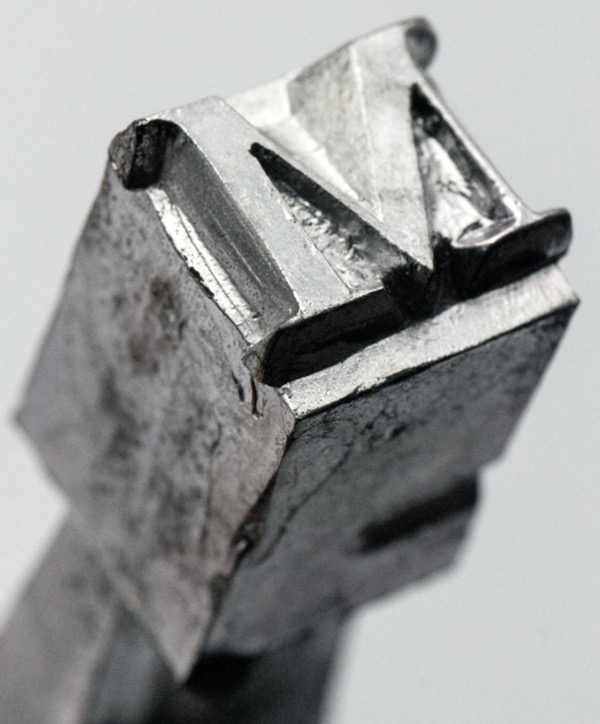
M sort (piece of type) cast from a hand-mould
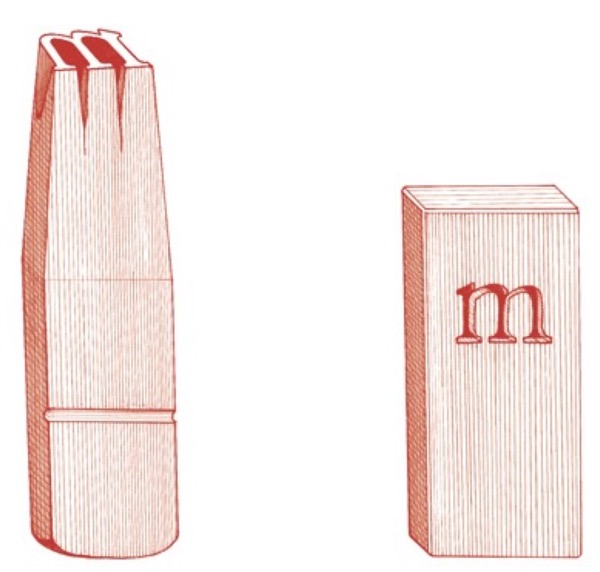
Stages of typefounding: punch, matrix
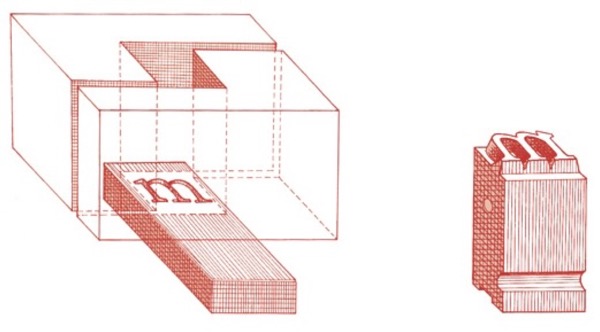
Stages of typefounding: mould, type
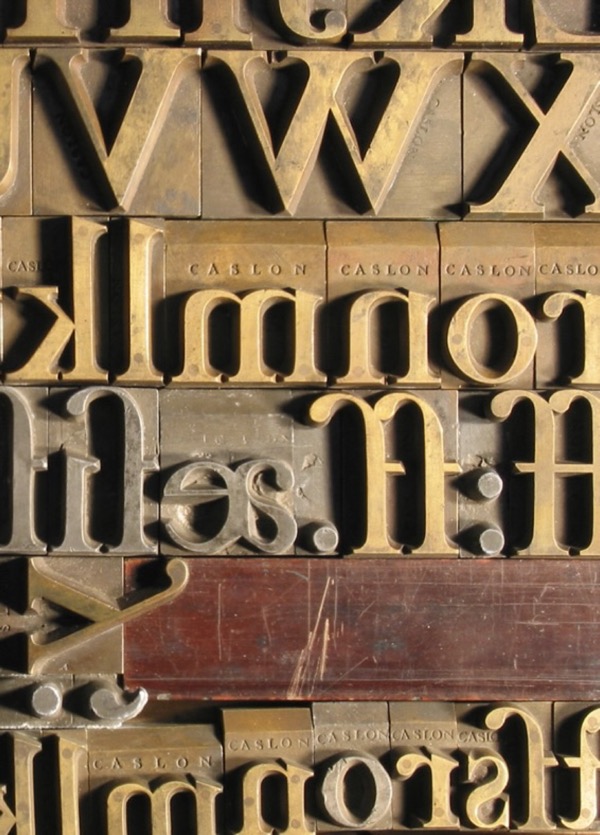
Caslon’s brass patterns for casting large type from sand, c.1770 (photograph copyright Andra Nelki)
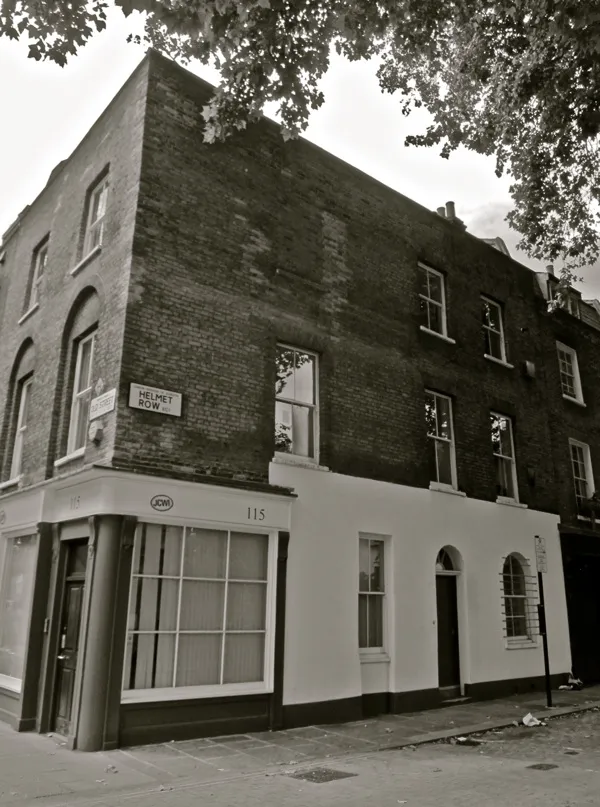
Helmet Row, off Old St, where William Caslon established his first type foundry in 1727
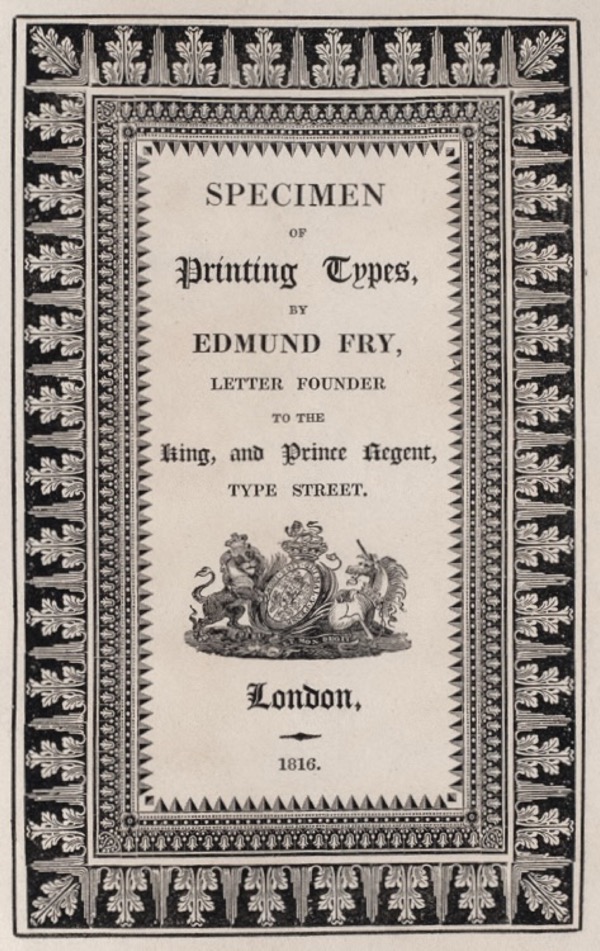
Title page of Edmund Fry’s 1816 type specimen book showing the firm’s Type St address
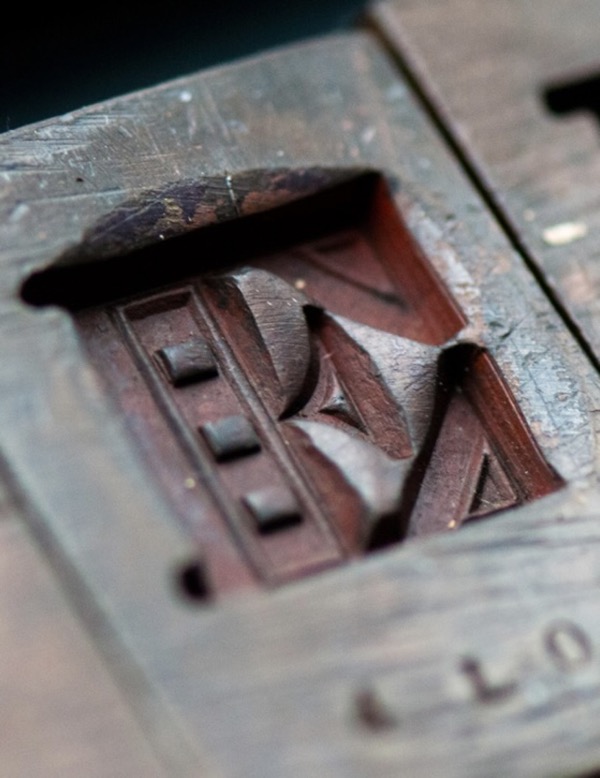
Thorowgood’s Four-line Pica Ornamented matrices, 1821
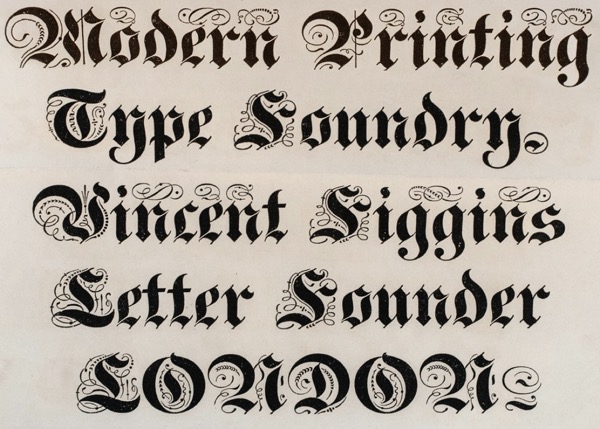
Figgins’ Five Lines Pica, German Text, from the foundry’s 1815 type specimen
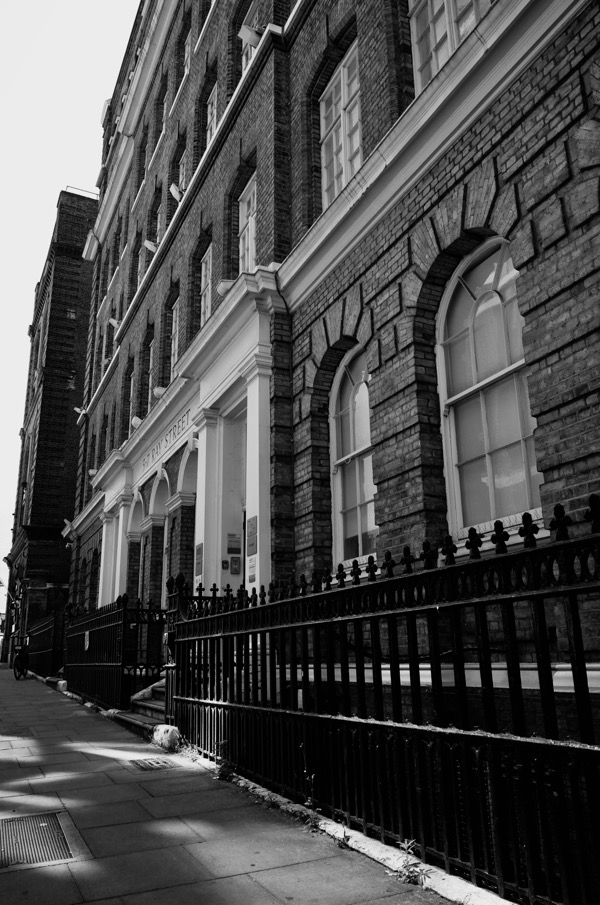
Figgins’ Letter Foundry in Ray St, Clerkenwell
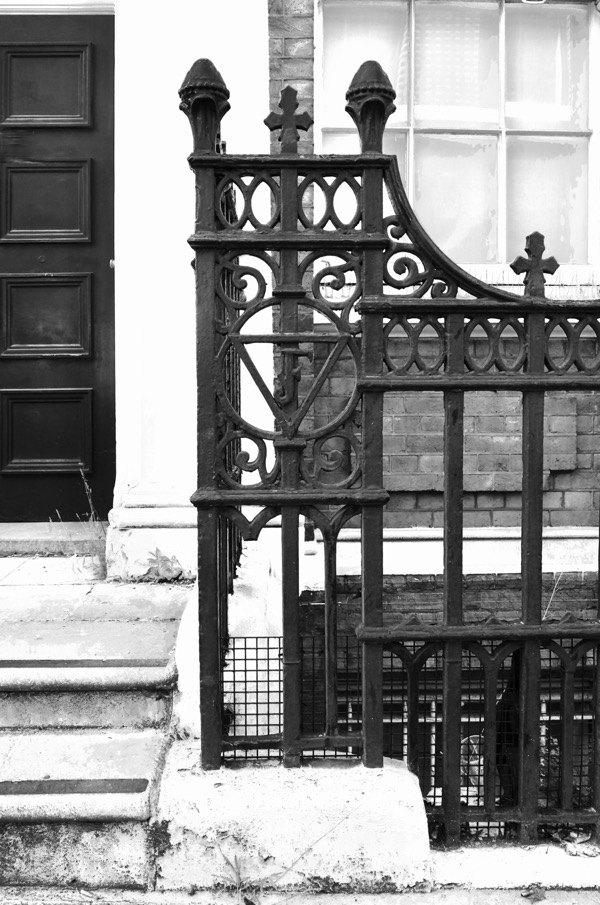
Vincent Figgins’ initials are still to be seen upon the iron work on the front of the letter foundry
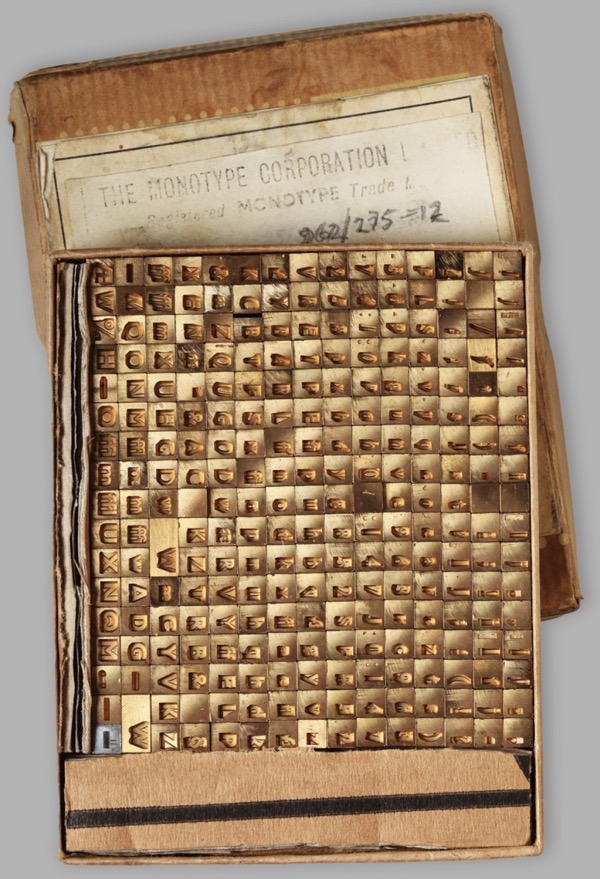
Monotype Gill Sans matrices (photograph copyright Andra Nelki)
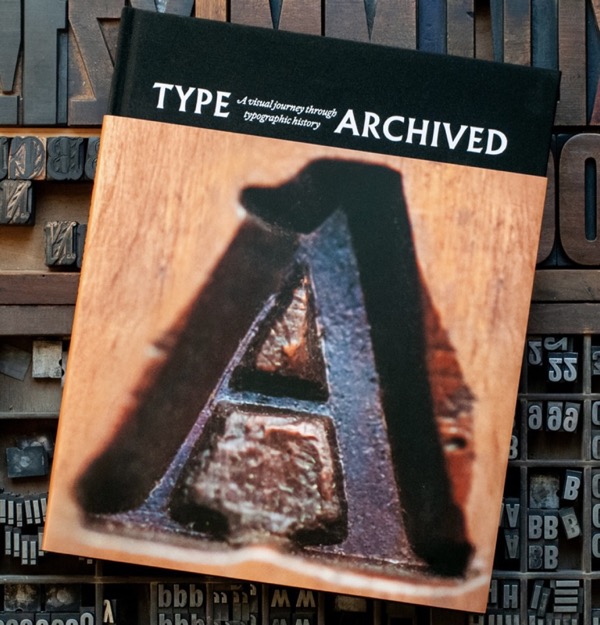
Click here to buy a copy of Type Archived by Richard Ardagh
The definitive account of the legendary Type Archive provides a stunning visual tour of traditional typefounding, tracing the origins of typography and the printed word.
Founded in London in 1992, the Type Archive brought together some eight million artefacts that tell the story of typography and printing. Now, for the first time, a new book by long-serving Type Archive volunteer Richard Ardagh sheds light on the organisation’s extraordinary materials, celebrating their significance and importance to both the history of art and engineering.
Type Archived presents the typographic treasures that made this possible, from the engraved punches (master letters) and matrices (dies for casting), to the letterpress type and printing presses that put ink to paper. Inside the book, these items have been arranged into chapters by material: iron, steel, copper, brass, bronze, lead, wood, and paper.
Alongside specially commissioned photography, the book features a detailed summary of the trials and achievements of the Archive, an essay on the techniques of typefounding, a glossary of terms and detailed image captions describing the objects, their designers and uses.
You may also like to read about










I found this article so interesting and relevant.
On researching my family history I discovered my paternal great grandfather – Henry Lowrie was a typefounder and living in Portpool Lane. I believe he may have worked for V J Figgins.
Born 1835
Died 1890c
Married to Susannah Perrin on 25/12/1861 at St Lukes
My Granfather Edward Lowrie, was a compositor
He worked for a company called Truscotts in Cannon Street
Born 1872
Died 1951
Wonderful piece, thank you! Do you include these sites in your city tours?
Good afternoon Caroline, These sites are too far flung around the City fringes to be included in my walking tour but Figgins’ Typefoundry in Ray St, Clerkenwell, and the Caslon tomb in the churchyard of St Luke’s, Old St, are easily accessible.
You sit in front of your computer screen and read a text set in the Georgia typeface as if it were the most natural thing in the world. You hardly give a thought to why this is possible. The fact that, in centuries past, resourceful people – including designers – went to great lengths to achieve this result is completely overlooked.
When I was studying industrial design, one of the basic exercises involved creating our own small posters in the typesetting workshop using movable type and lines. — That was one of the ways in which I developed my typographical skills.
Love & Peace
ACHIM