
At The Royal Naval College In Greenwich

Click here to book for The Gentle Author’s Tours
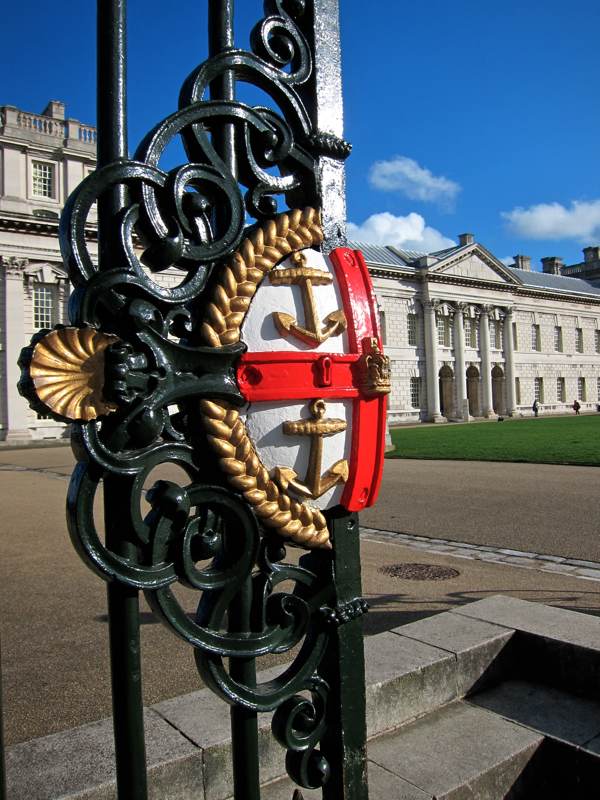
Water Gate at Greenwich
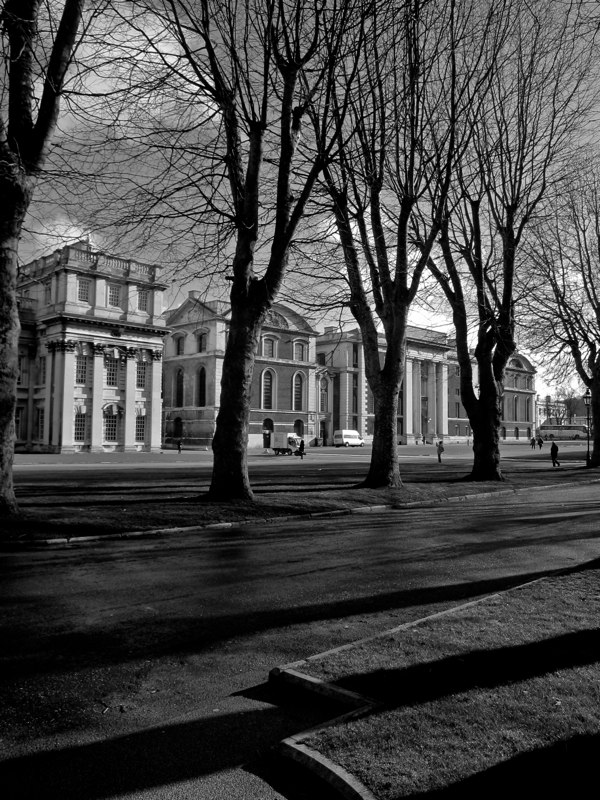
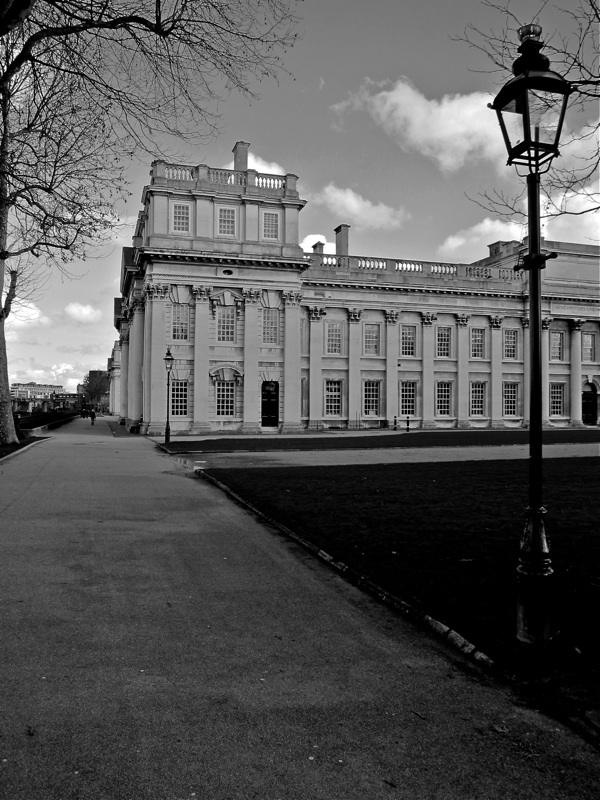
When Queen Mary commissioned Christopher Wren in 1694 to build the Royal Hospital for Seamen, offering sheltered housing to sailors who were invalid or retired, she instructed him to “build the Fabrick with Great Magnificence and Order” and there is no question his buildings at Greenwich fulfil this brief superlatively. Early on a summer morning, you may discover yourself the only visitor and stroll among these august structures as if they existed solely for your pleasure in savouring their ingenious geometry and dramatic spatial effects.
Since the fifteenth century, the Palace of Pleasaunce commanded the bend in the river here, where Henry VIII was born in 1491 and Elizabeth I in 1533. Yet Inigo Jones’ Queen’s House built for Anne of Denmark and the words ‘Carolus Rex’ upon the eastern extremity of the Admiral’s House, originally begun in 1660 as a palace for Charles I, are the only visible evidence today of this former royal residence abandoned at the time of the English Civil War.
It was Wren’s ingenuity to work with the existing buildings, sublimating them within the seamless unity of his own grandiose design by replicating the unfinished fragment of Charles’ palace to deliver magnificent symmetry, and enfolding Inigo Jones’ house within extended colonnades. The observant eye may also discern a dramatic overstatement of scale in architectural details that is characteristic of Nicholas Hawskmoor who was employed here as Wren’s Clerk of Works.
From 1705, the hospital for seamen provided modest, wood-lined cabins as a home-from-home for those who had spent their working lives at sea, reaching as many as two-thousand-seven-hundred residents at its peak in 1814, until superceded in 1869 by the Royal Naval College that left in 1995. Today the University of Greenwich and Trinity School of Music occupy these lofty halls but, in spite of its overly-demonstrative architecture, this has always been a working place inhabited by large numbers of people and the buildings suit their current purpose sympathetically .
The Painted Hall is the tour-de-force of this complex, guaranteed to deliver a euphoric experience even to the idle visitor. Here the Greenwich Pensioners in their blue uniforms ate their dinners until James Thornhill spent eighteen years painting the walls and ceiling with epic scenes in the classical style celebrating British sea power and it was deemed too grand for anything but special occasions. Yet down below, the home-made skittles alley brings you closer to the domestic lives of the former residents – who once enjoyed fierce after-dinner contests here using practice cannon balls as bowling balls.
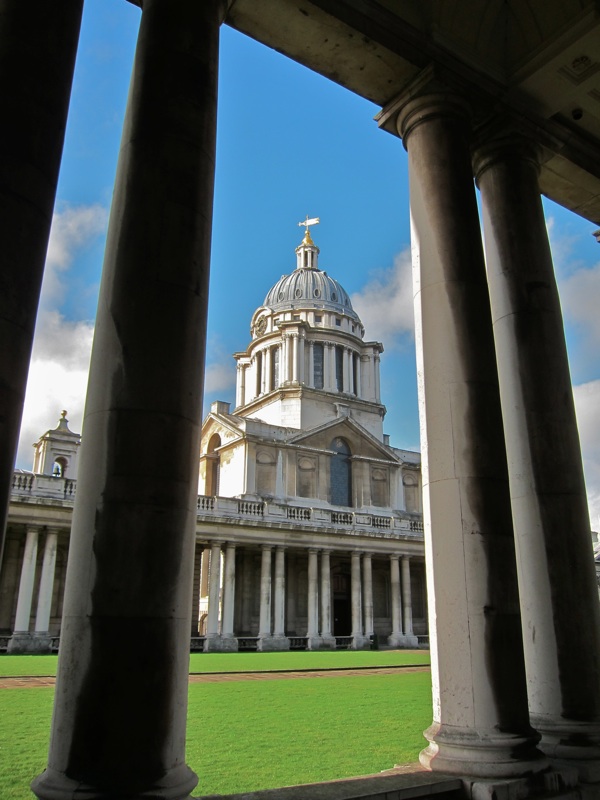
Exterior of the Painted Hall
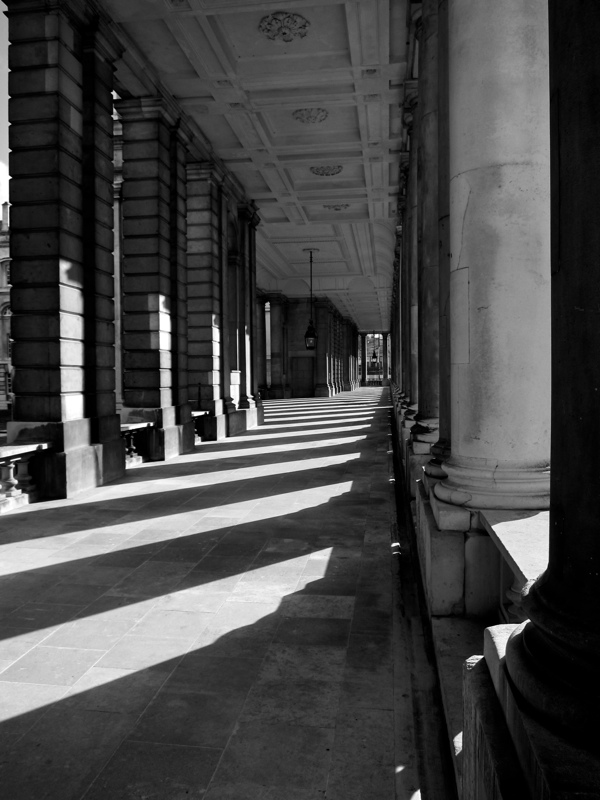
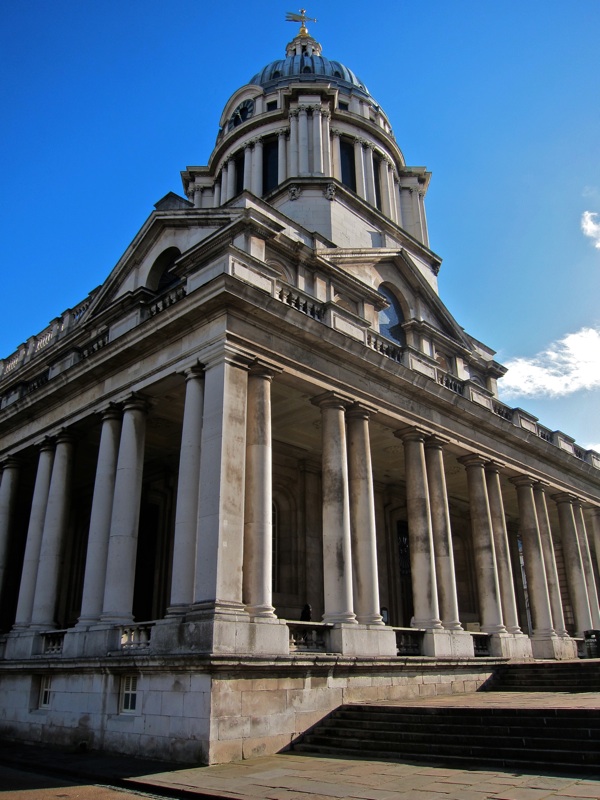
The Chapel
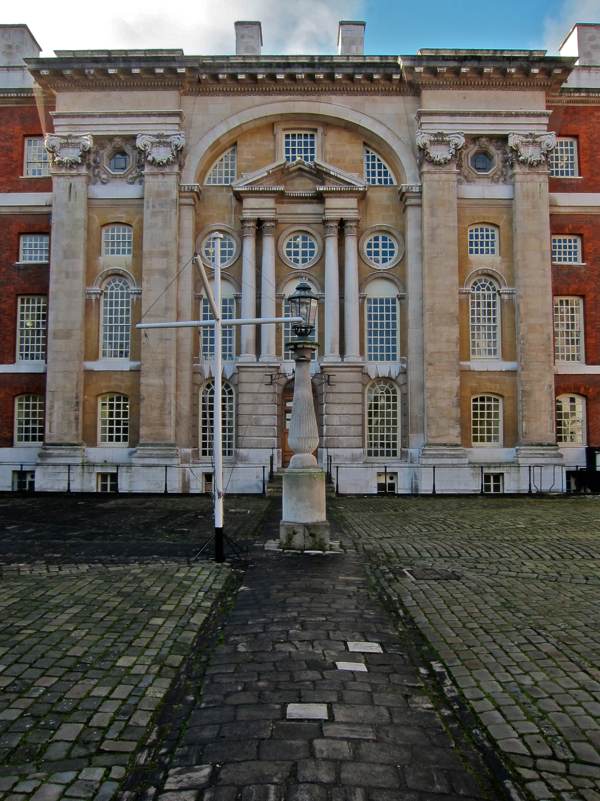
King William Court
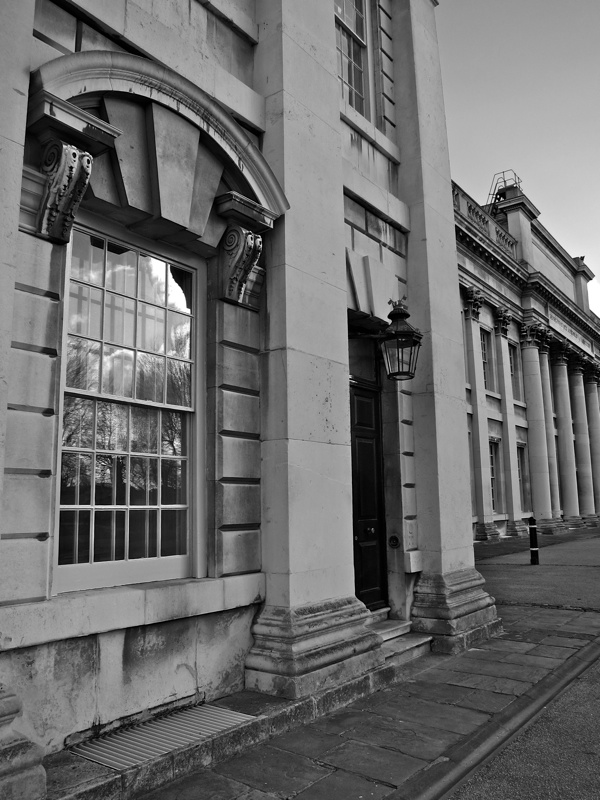

King William Court
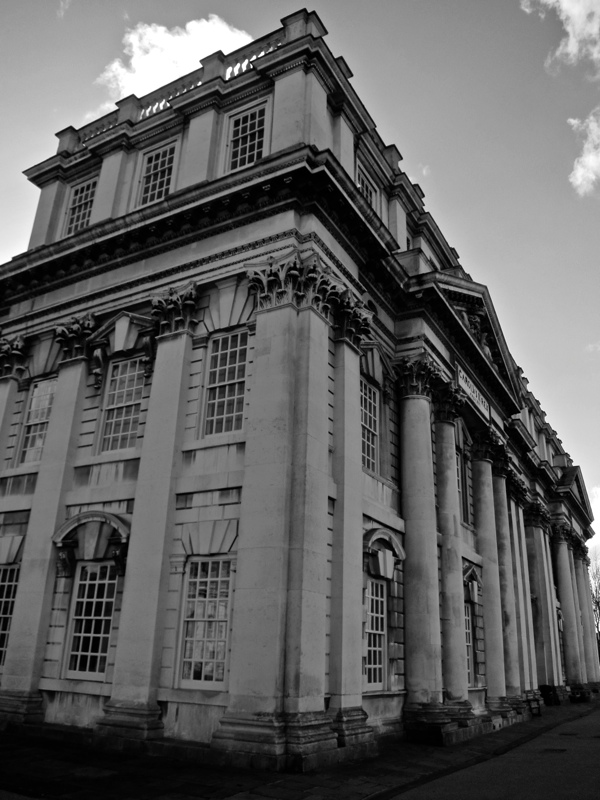
The Admiral’s House was originally built as a residence for Charles I. Abandoned in the Civil War, Queen Anne commissioned Wren to rehabilitate the unfinished palace as part of his design for the Royal Hospital for Seaman which opened in 1705
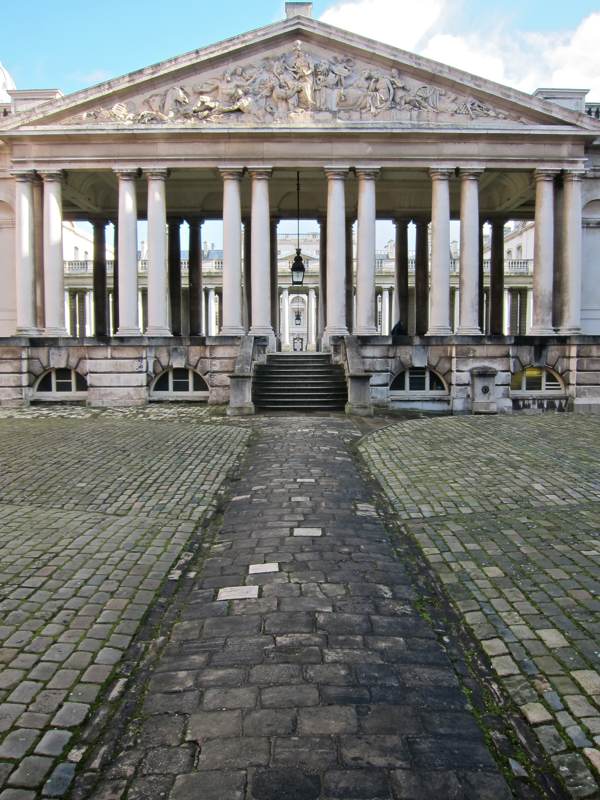
Inspired by the Elgin marbles, the elaborate pediment in Coade stone is a tribute to Lord Nelson
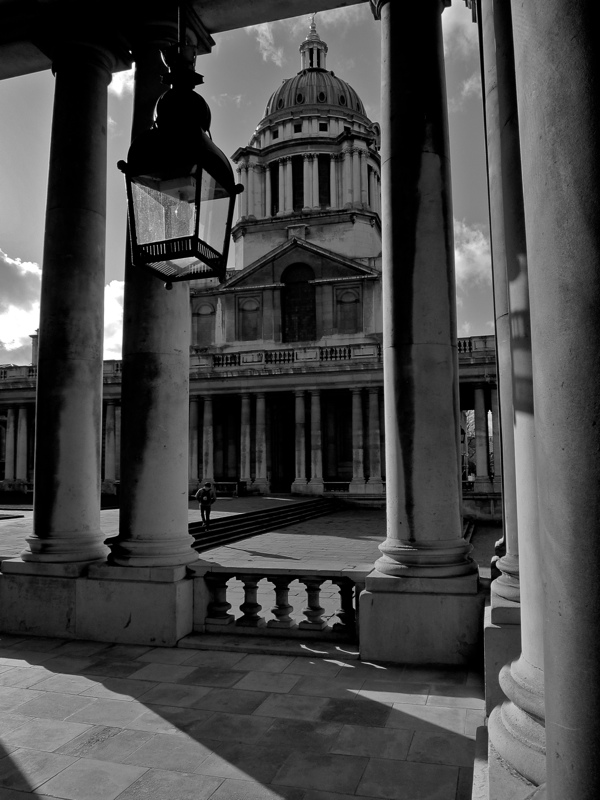
Exterior of the Painted Hall
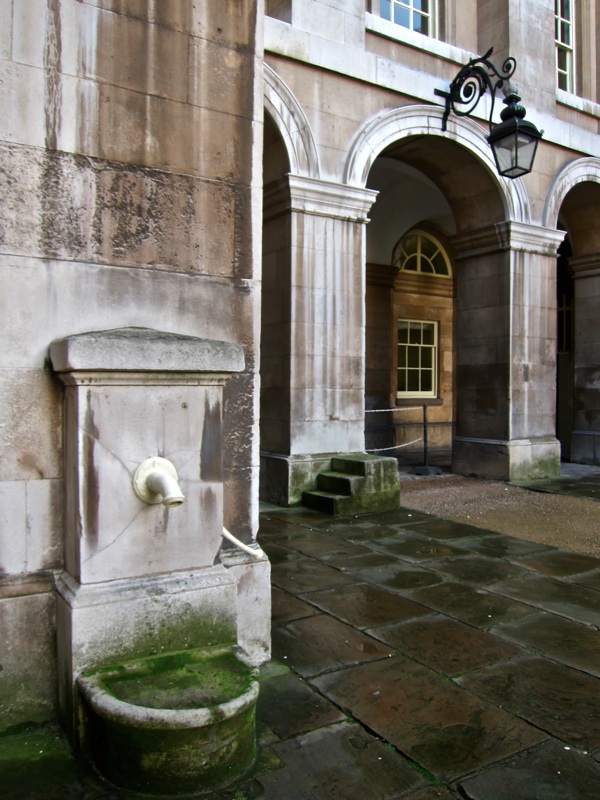
Pump and mounting block in Queen Anne Court
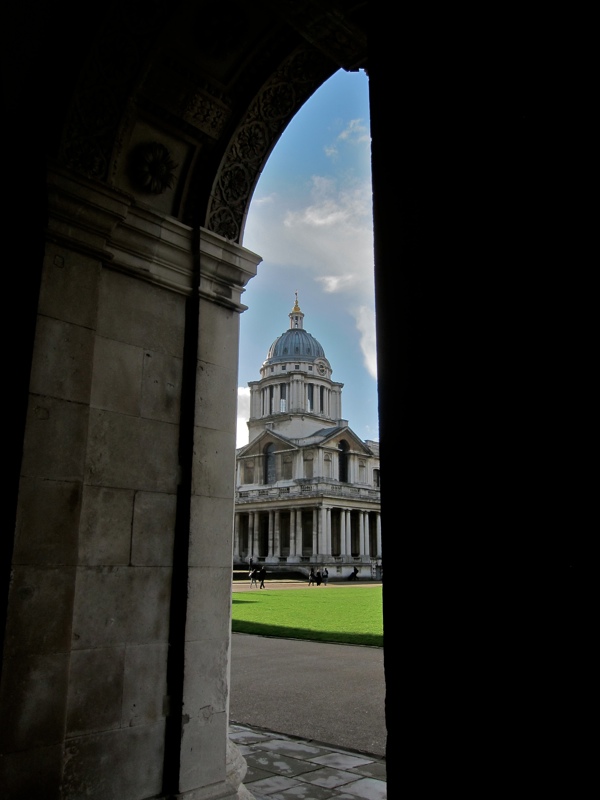
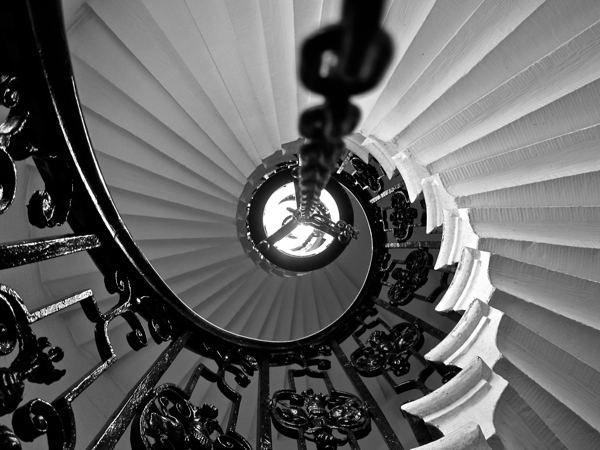
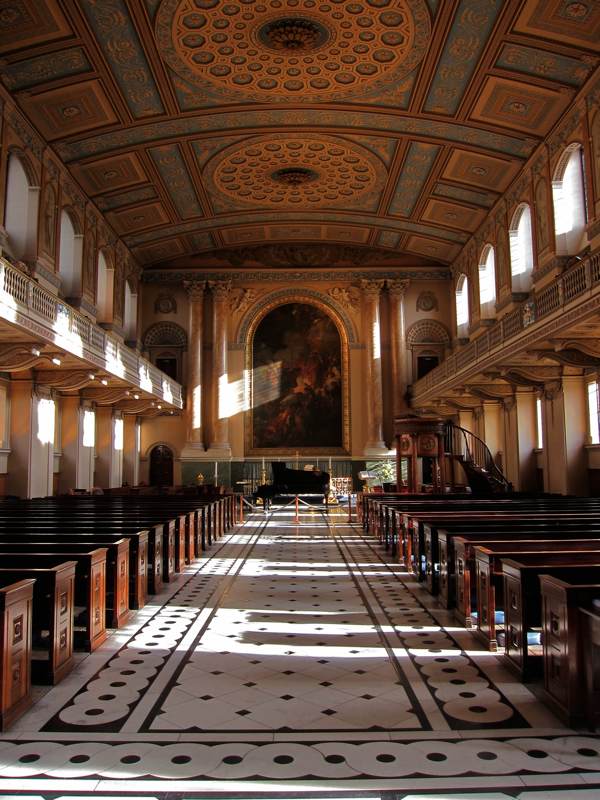
The chapel was completed to Wren’s design in 1751 and redesigned by James ‘Athenian’ Stuart in 1781
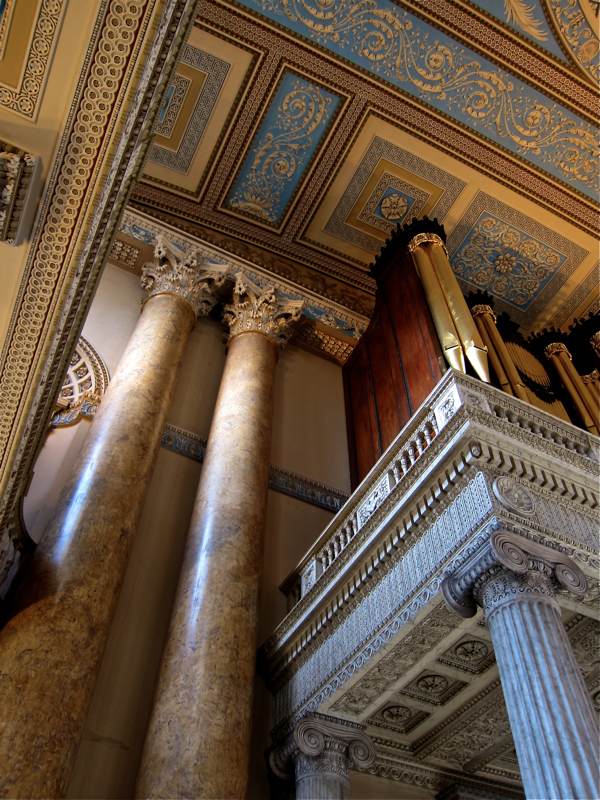
Plasterwork by John Papworth
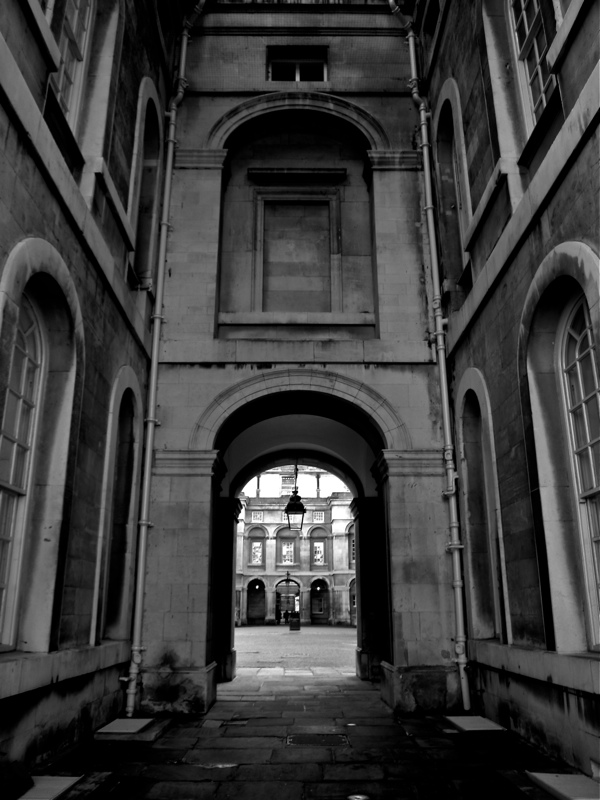
Queen Anne Court

In the Painted Hall
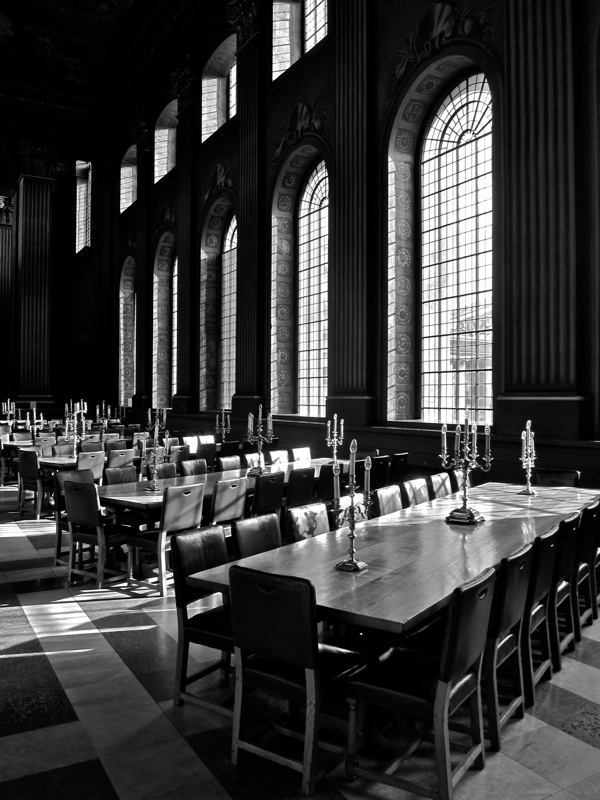
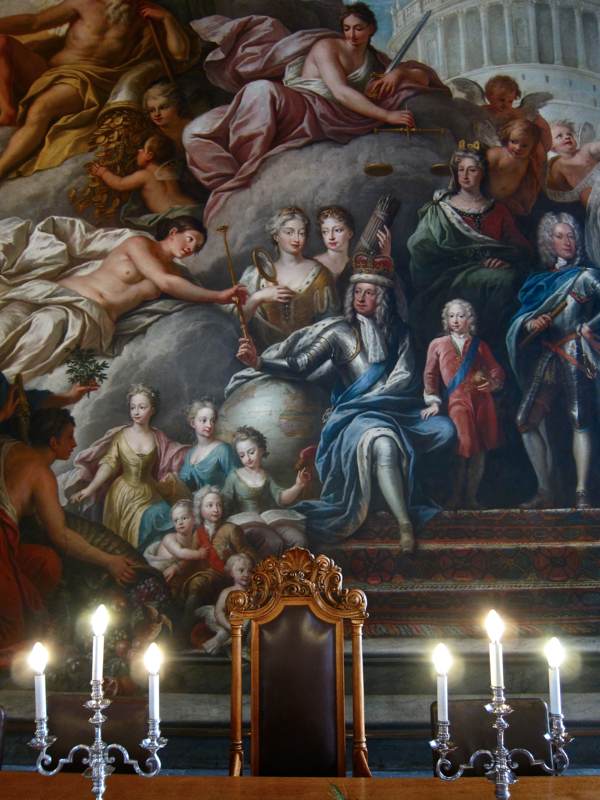
Begun in 1708, Sir James Thornhill’s murals in the Painted Hall took nineteen years to complete
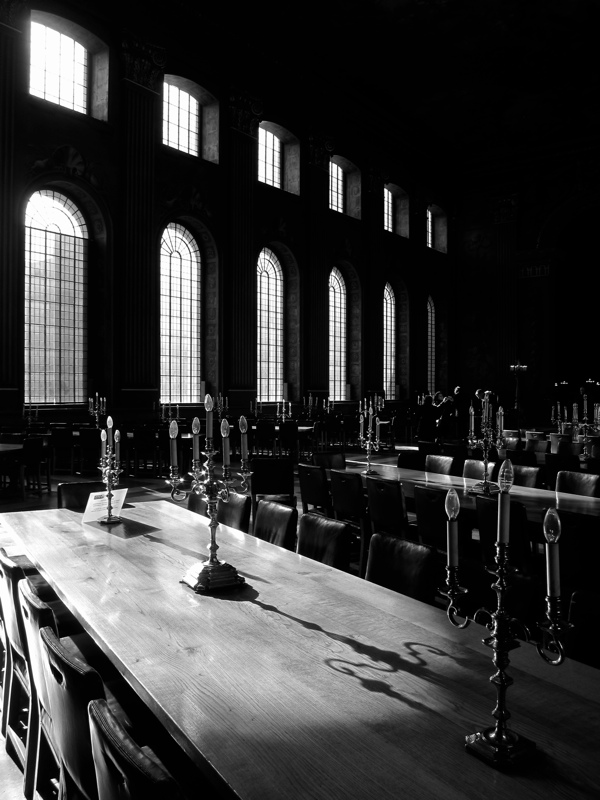
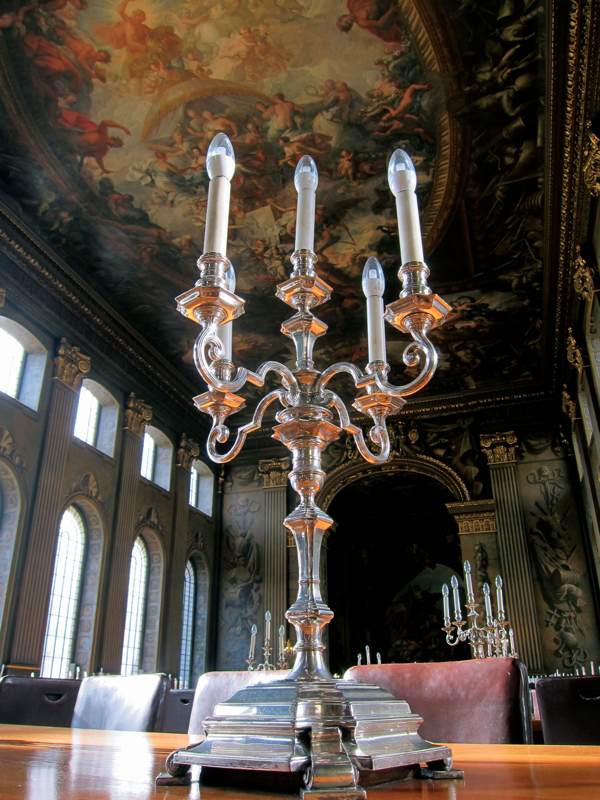

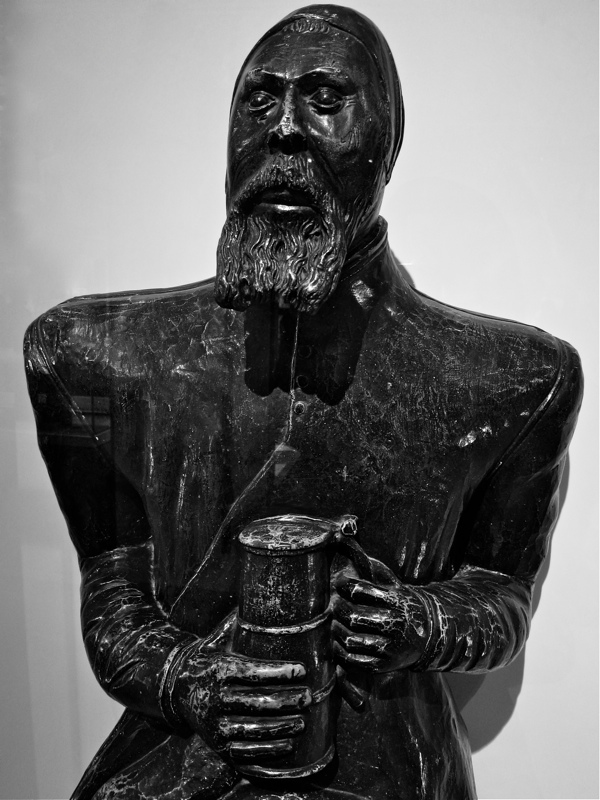
Man with a flagon of beer from Henry VIII’s Greenwich Palace
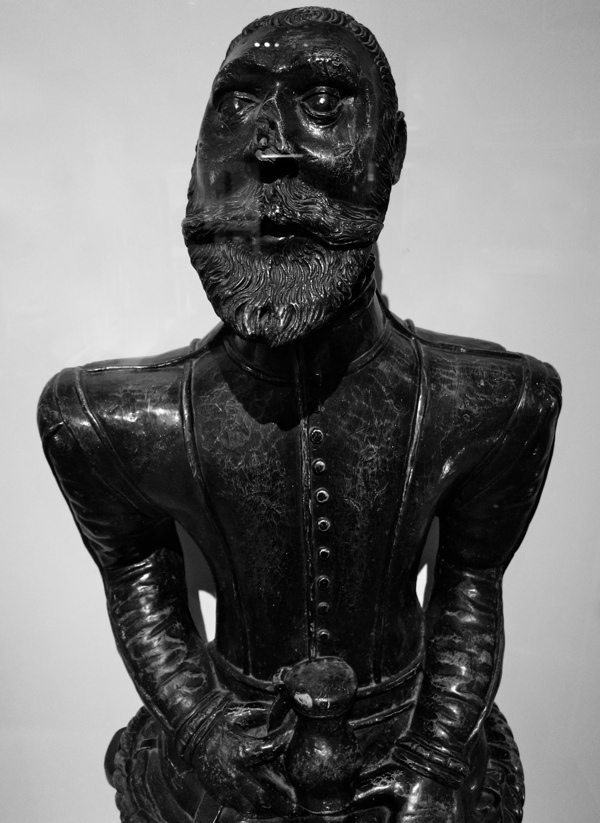
Man with a flask of gin from Henry VIII’s Greenwich Palace
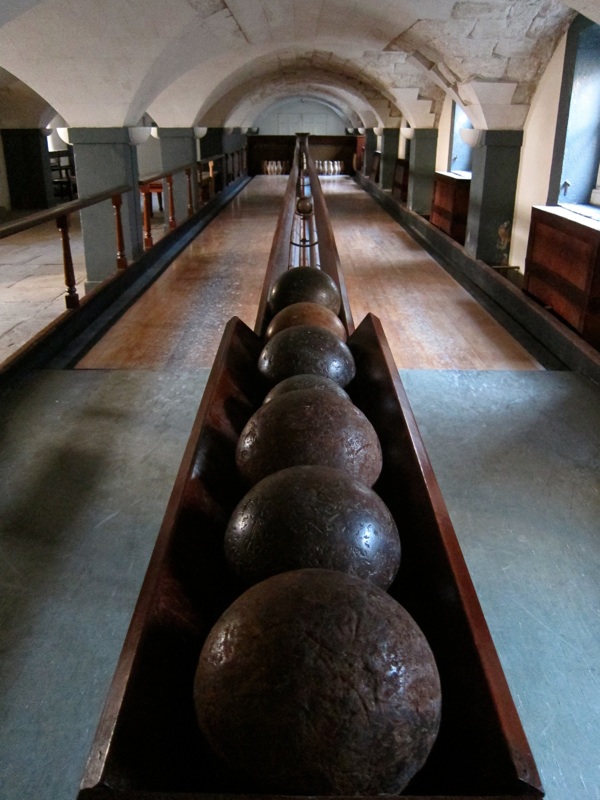
The Skittles Alley of the eighteen-sixties, where practice cannon balls serve as bowling balls
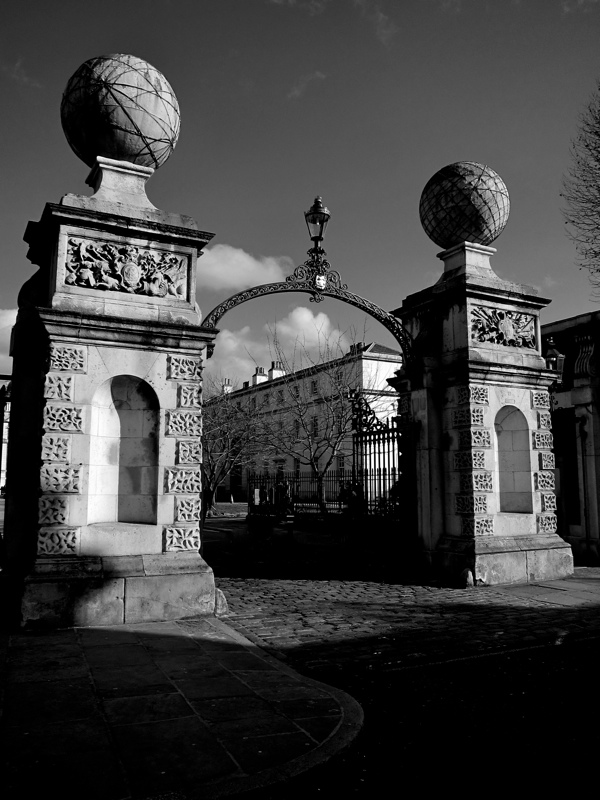
Entrance to the Old Royal Naval College
The Old Royal Naval College, Greenwich, is open daily 11:00 – 5:00 Admission Free














This is one of my favourite places on earth. I’ve visited many times, and yet you managed to show me things I hadn’t seen before!
In my mind this place is strongly associated with Nelson. It was here that his body lay in state in 1806, in the Painted Hall, when thousands of people stood in a queue in silence for hours to pay their respects to the man whose leadership disabled France’s navy. There is a table in the Admiral’s House on which his body is said to have lain on arrival in Greenwich; it is an unimposing thing. And it was from the Water Gate that his coffin(s) departed, carried by sailors, to proceed up the Thames to his funeral and final resting place in St Paul’s. One could easily miss the pediment, placed as it is in the interior courtyard of King William Court, but it is visible from the annex off the Painted Hall where Nelson’s body rested before being installed under the catafalque. (There is–or was–access to the courtyard from the exterior of the Painted Hall.)
And–thank you, Christopher Wren–all this grandeur was designed for the use common sailors. I wonder if it made an impression on them at all. It was an institution dressed as a palace, but in my opinion that beats an institution that doesn’t dissimulate. Its purpose might have been to glorify the beneficence of the Queen, but we can still glory in it today.
Oh dear — your history is a bit fuzzy!
Since the fifteenth century, the Palace of Pleasaunce commanded the bend in the river here, where Henry VIII was born in 1491 and Elizabeth I in 1533. Yet Inigo Jones’ Queen’s House built for Anne of Denmark (DIED 1618) and the words ‘Carolus Rex’ upon the eastern extremity of the Admiral’s House, originally begun in 1660 as a palace for Charles I (CHARLES I WAS EXECUTED IN 1649 — CHARLES II’S RESTORATION WAS 1660), are the only visible evidence today of this former royal residence abandoned at the time of the English Civil War (THE FIRST CIVIL WAR SORT OF KICKED OFF IN 1642).
May I humbly suggest you rewrite this paragraph? Maybe make one sentence about the original building(s), and a second about Charles II’s efforts to rennovate all the royal palaces? It was still a building site when Pepys and the Navy Board were moved there during the plague of 1665. It took until Mary II found a true use for it, as you reported, and the place came to life.
Like previous commentator, I think this is one of my favourite places, at least amongst the human built ones.
It has a feeling of serendipity about it, built (and don’t forget the observatory) at different times for different reasons and I feel it really gains something from that, that more studied places like Blenheim or Marlborough or Castle Howard don’t have.
It is altogether marvellous. I will go again soon, and read your post beforehand, Gentle Author ..
The first time I saw The Royal Naval College, coming round a bend in the Thames on a tourist boat, it took my breath away. I hadn’t expected something quite so grand.