
Along The Thames With John Claridge
Remembering John Claridge who died on Sunday aged eighty-one.
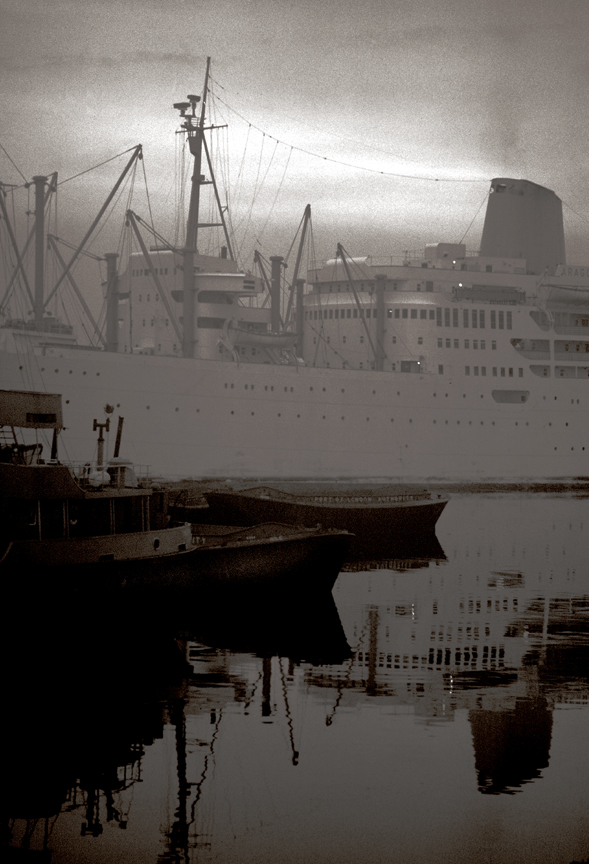
In Silvertown, 1964
These atmospheric photographs of the Thames by John Claridge offer a poignant vision of the working river that was once a defining element of the East End. Within living memory, the busiest port in the world was here yet today barely a trace of it remains. And John’s pictures, mostly taken when he was a mere kid photographer, capture the last glimmers of the living docks. “My dad’s friends were saying that the docks were going down, so I was aware of that and I just wanted to grab hold of it,” John told me.
“As a child, from my bedroom in Plaistow, I could see the lights of the docks at night and I used to go to sleep listening to the sound of the horns on the Thames whenever there was fog, which was quite often. You could smell the river if the wind was blowing in the right direction. A lot of the men in my family worked down the docks. My father took me down to the dock gate when he worked for the New Zealand Shipping Company and I used to go out with my camera at weekends, or any spare time I had, to take pictures. I went out to see what was going on, I reacted to what was there and, if I saw something, I photographed it. It was instinctive, I never thought I was documenting. I had a need to take pictures, it was as natural as breathing.”
John’s photographs convey the epic nature of the docks where once thousands worked to unload vast ships bringing cargos from distant continents, a collective endeavour upon a grand scale. Yet these are personal pictures and, for this reason John has included few people, even if their presence is always tangible. “You can put yourself and your emotions into the photograph if there’s nobody in it,” he confided to me, “These pictures were for myself. I was interested in the quality of the light which was magnificent. Because of the bends of the river, you got it coming in all directions and in each place it was different.”
As a youngster, John was able to get everywhere, creeping through side alleys, climbing over walls, even setting out in a tiny inflatable dinghy on the river, but sometimes, he would just walk right in through the main entrance.”I’d go through the dock gate,” he confessed, “It was much more of an innocent time – I should have got a pass, but I’d just say, ‘I’m doing photographs’ and they’d say, ‘On you go.’ As a kid you could get anywhere.” If you observe the shifting point of view in these pictures, you can see that some are taken from the Thames beach, some from John’s dinghy at water level while others are taken looking down from walls and bridges, where he had climbed up.
The majestic image above was taken in the dawn light in Silvertown in 1964, when John climbed onto the dock wall to photograph the huge cargo ship that had just arrived, and waited for the sun to rise before he took his picture. As a consequence, the vessel filling the background looks like a phantom fading in the first light of day. There is an equally fascinating distinction between the foreground and background in the photograph below, also taken over the dock wall in Silvertown in 1964. The ships in the background appear ethereal as if they were a mirage too, about to vanish. In John’s vision, the docks are haunted by their own disappearance, and the incandescent dreamlike ambiance of his pictures – often taken through fog or mist rising from the river – places them in a pictorial tradition of the Thames which includes Whistler and Turner.
Yet beyond their breathtaking quality as photography, John Claridge’s elegiac photographs of the Thames are special because they are taken by one who grew up with the river and knew the culture of the docks intimately. As he admitted to me, speaking of the river and his relationship with it, “It’s not something you discover, it’s always been there – it’s part of you who you are.”
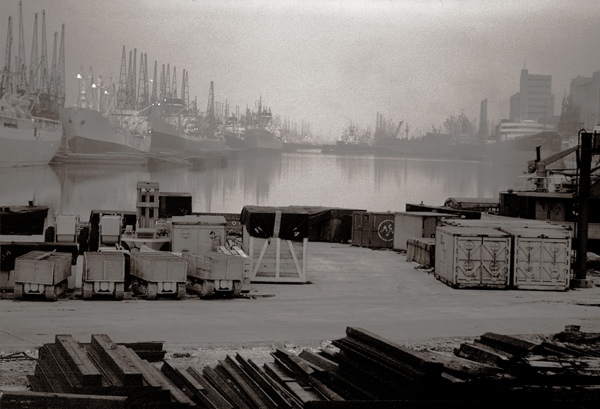
“I climbed over the dock wall to take this picture in New Canning Town. You never expect it to go and then all of a sudden it’s gone.” 1964
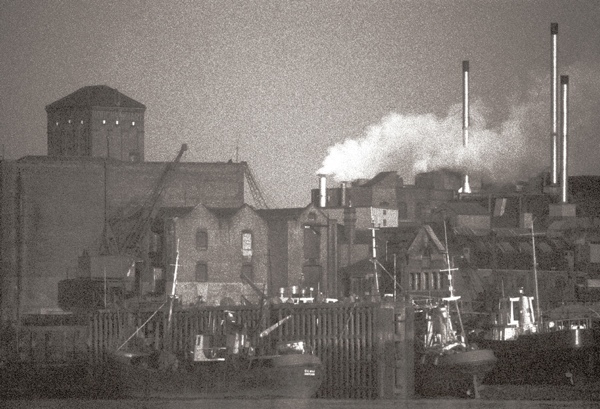
Old warehouses in Silvertown, 1982.
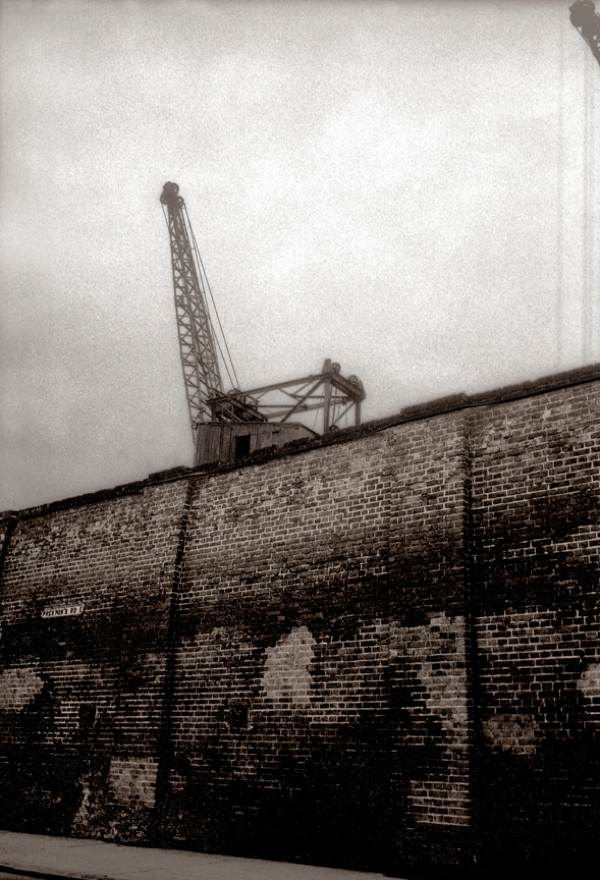
Dock wall, Isle of Dogs, 1982.
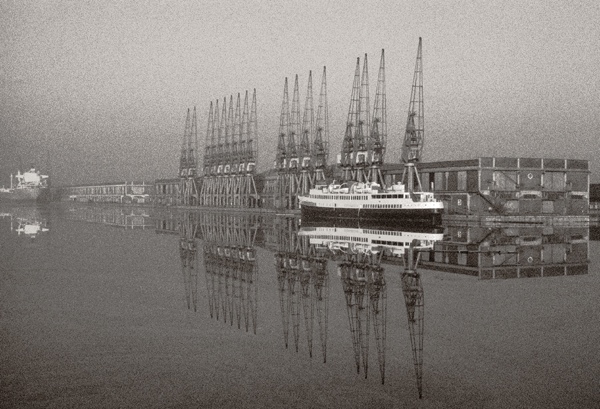
In Poplar, at the very end of the docks, 1982. “You can see how quiet it is.”
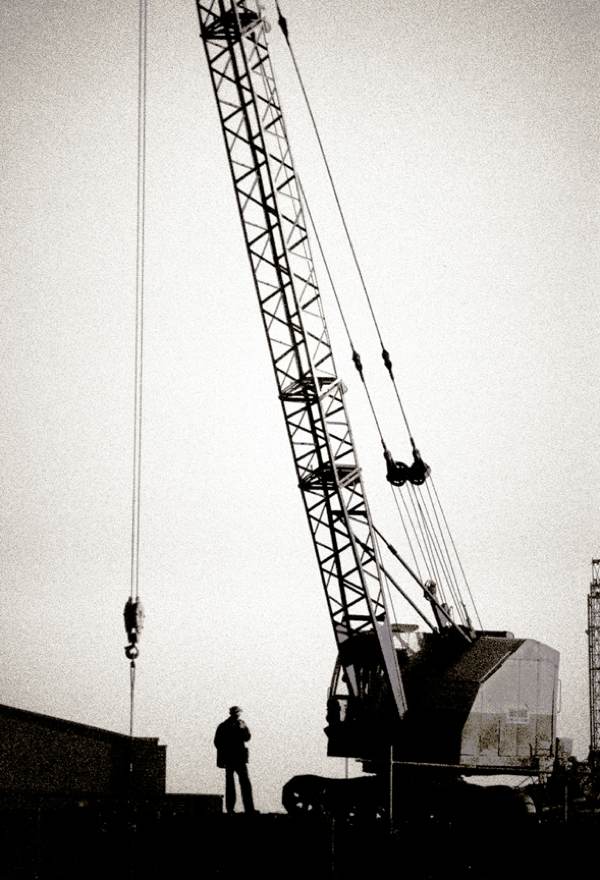
1962, a crane driver takes a break for a fag in Silvertown.
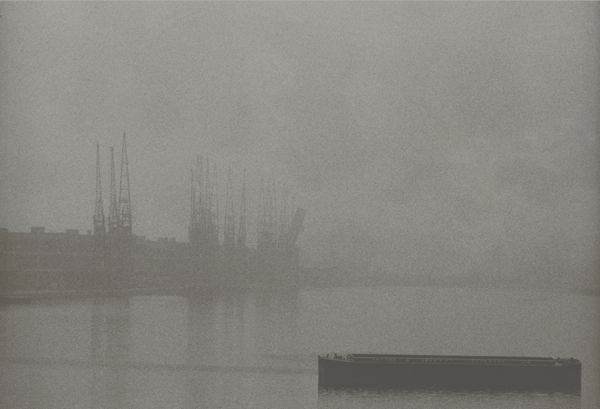
From the river, 1962
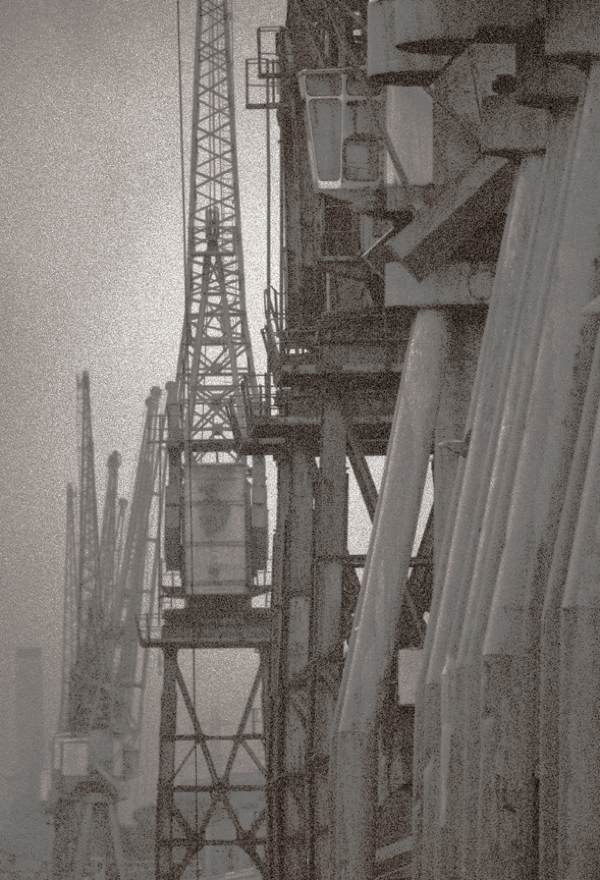
Inside the docks in Canning Town, 1968.”As soon as the containers moved down to Tilbury, you saw it winding down.”
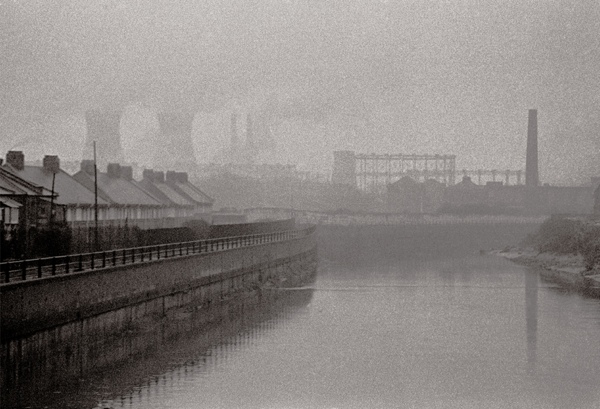
Near Stratford, from road bridge with the canal in the foregound, 1960.
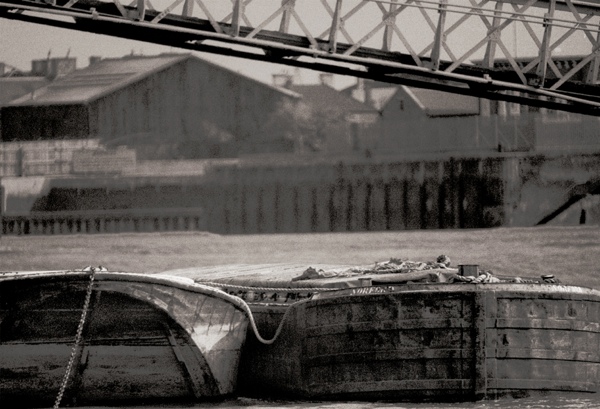
Limehouse, 1972.
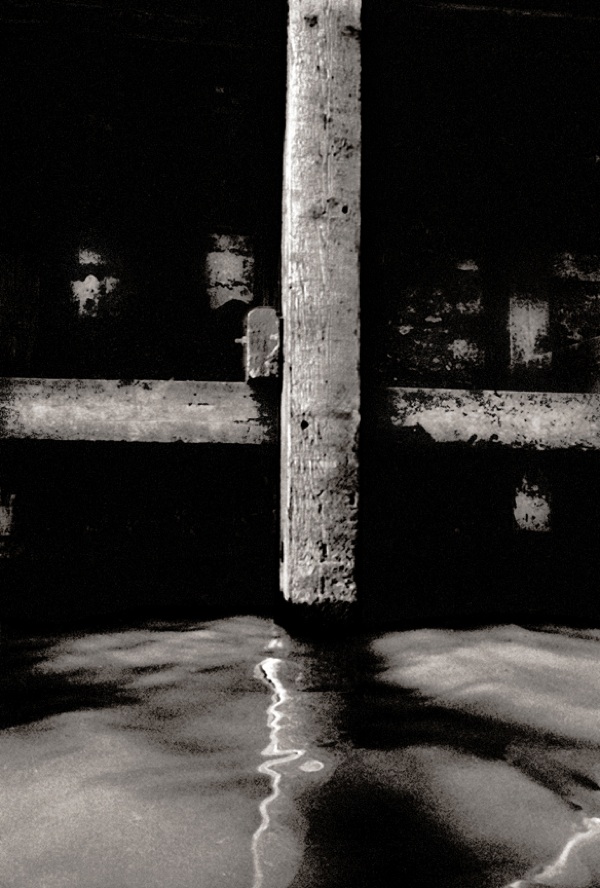
At water level, Wapping, 1964.
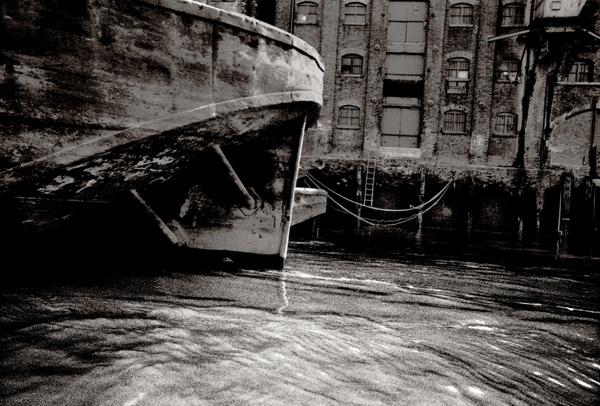
A lighter in Wapping, 1963
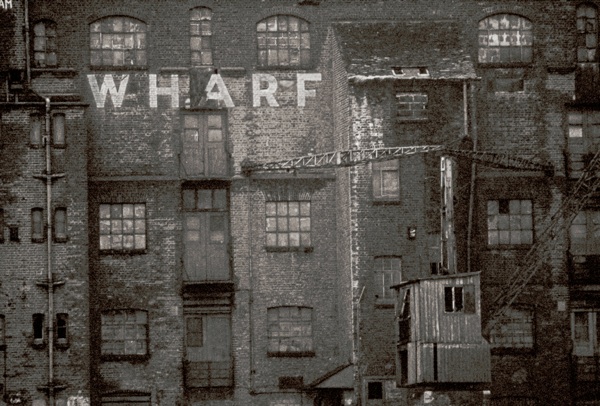
Warehouses in Wapping, 1965
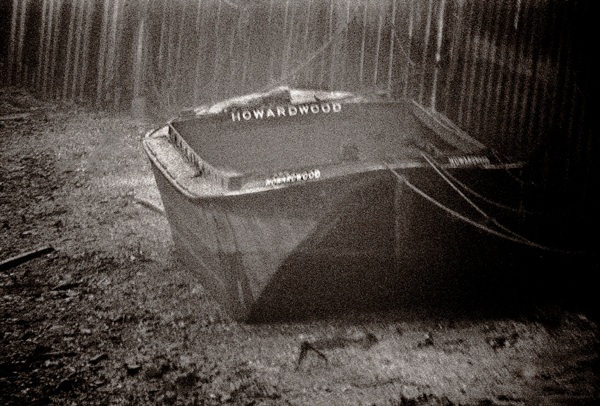
In a tributary at Canning Town, 1962
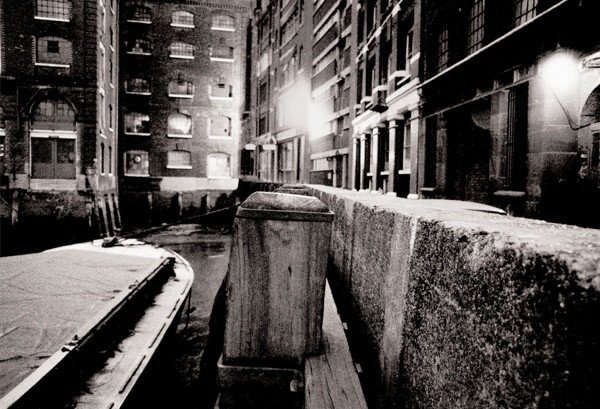
Near St Katherine Dock, 1960. “It was all open then, you could walk around.”
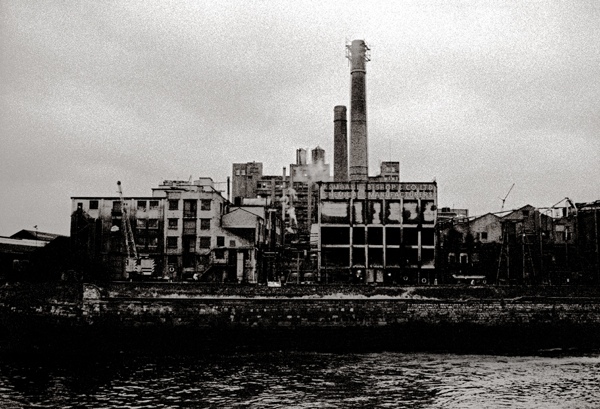
Chemical works near Bow, 1965.
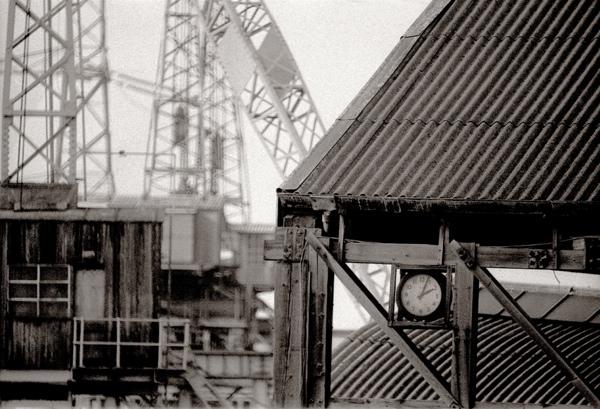
Looking into the dock from a bridge, Silvertown, 1982. “There may have been some manufacturing left but the dockland was dead.”
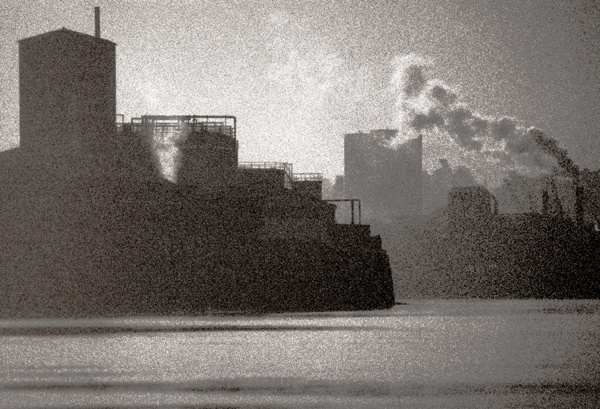
Winter light downriver, 1982
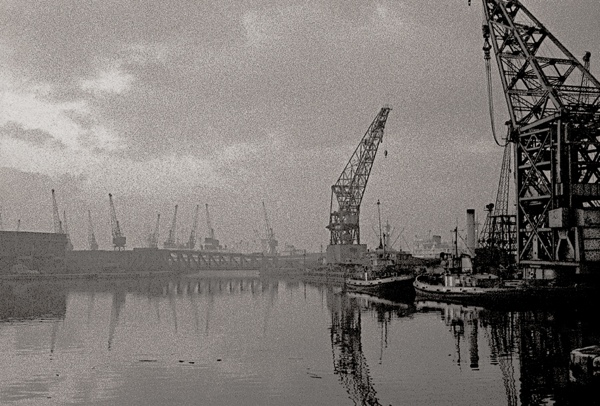
Near Silvertown, with one of the bridges across the dock in the background, 1966.
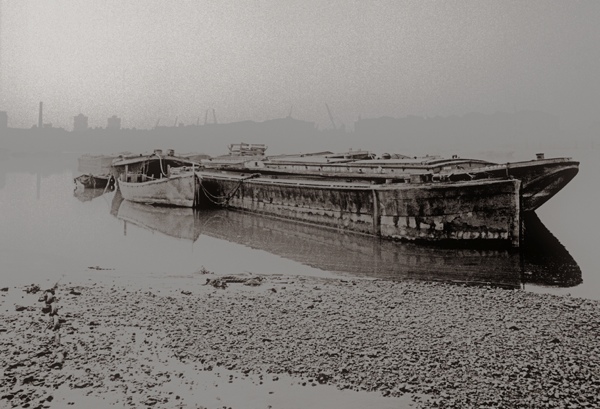
A lighter in Wapping, 1961.
Photographs copyright © John Claridge
You may also like to take a look at
and read these other stories of the Thames
“Old Bob” Prentice, Waterman & Lighterman














With modern digital cameras, it seems to be all about megapixel resolution these days. John Claridge shows me once again what really matters: the subject, the opportunity, and the photographic eye.
I’ve known that myself for decades. Now, looking back at these wonderful photos, I appreciate the graininess of the images all the more.
Dear JOHN CLARIDGE (1944-2026) — R.I.P.
Love & Peace
ACHIM
Haunting as the memories flood me and I think of lives and families .
All gone and all that work and non work and it was a life lost .
My late sister-in-law came from Canning Town, and was totally ashamed of her roots which I always thought was rather sad. My brother worked briefly at the Docks after finishing doing his National Service in the 1950s, which is how they met. Sadly the lovely Victorian terrace with lovely gardens behind them where s-in-law lived with her parents, no longer exists. There’s appears to be what now looks to be a flyover there instead, so a whole raft of history wiped out.
I am loving this series of John Claridge’s photos and the evocative words of both John and GA.
I’m so grateful that your tribute to John Claridge continues. Each post has been a perfect reminder of his inquiring spirit and innate abilities as a visual story teller. What a gift.
Without Spitalfields Life, I would have never discovered John Claridge.
When I placed my copy of “East End” back in its slot on the shelf, I noticed that it was side-by-side with 2 books about Walker Evans. That gave me a smile.
Thank you, GA.
John Claridge was an amazing self taught photographer who created magnificent images of the East End with his unique style. I treasure the book of his work published by Spitalfields life. He was a photographic genius.
John Claridges portraits of the docks are perhaps my favourite. The ice white ship at the top of the article takes my breath away.. I’ve been greatly inspired by his works of art and have tried to imitate his style for years, failing, of course, miserably!
A good and wise human being. Thanks for the inspiration.
The first third of Michael Ondaatje’s novel Warlight paints a very vocative picture of the Thames just after the war .
Thanks you so much for introducing me to these wonderful photos and such a talented photographer . DB