
Sarah Ainslie, Photographer
It is my pleasure to publish this interview with photographer Sarah Ainslie by Julia Harrison, author of the fascinating literary blog THE SILVER LOCKET.
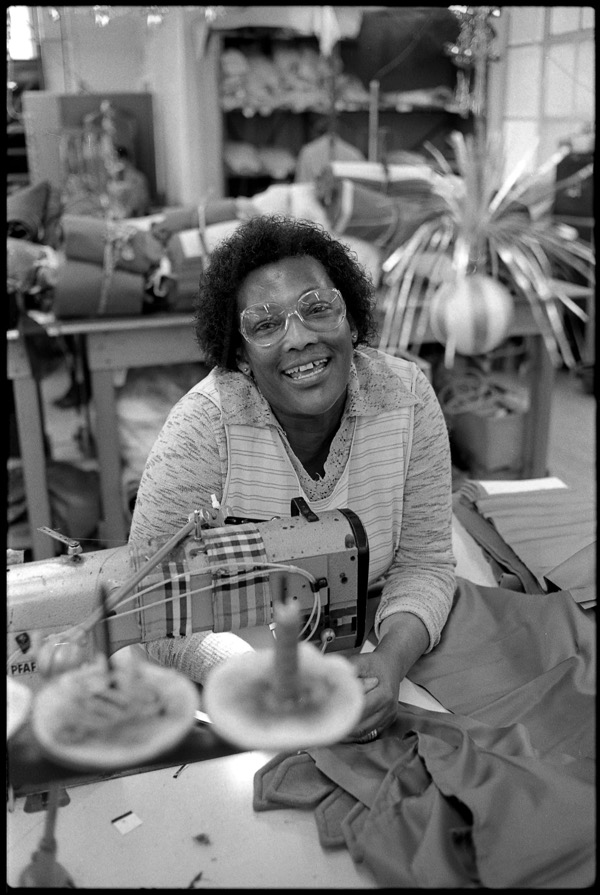
Lannette Edwards, Machinist at Burberry 1991
I have collaborated with photographer Sarah Ainslie twice in the course of my writing, both occasions were creating portraits of local cafes: Paul Rothe & Sons, near Daunt Books in Marylebone where I work, and Beppe’s Cafe in Smithfield Market near where I live. I was delighted that these pieces were published here by The Gentle Author.
In addition to writing Spitalfields Life, The Gentle Author also produces books, so I was very excited to learn that Spitalfields Life is running a crowdfunding campaign to publish a book of Sarah Ainslie’s portraits of women at work, accompanied by an exhibition of the photos. I was curious to find out how this came about, so last week I met Sarah for a chat about her life as a photographer. I began by asking her when she started taking photographs.
‘When I was ten I had a little box brownie, I think it was called a Brownie 44a and it had two different exposures, a twelve and a thirteen, so you could just press the button. I took pictures of animals and family, things like that.’
Sarah wasn’t interested in the professions suggested to her by her headmistress. ‘I think I always wanted to go into the arts. I had my portrait painted with my brother when I was nine and it was such a visceral experience. I remember thinking at the time, ‘I absolutely love this’. It was the smell of paint. We had these plums to eat and we would just sit there. My brother hated it. It wasn’t a great painting because my brother really didn’t like doing it but it was a pivotal moment for me, being in a room where someone is painting – the smell of it – very physical, and that’s the thing I love about photography and being in the dark room.
I wasn’t very good at painting or drawing so I went to Derby Art College to do photography. It was very male, there were only three of us girls in our year. We shared a dark room and we were doing quite wacky stuff, while the guys were doing pictures of cars and things. Of course, we weren’t interested in anything like that. We were painting emulsion on paper and being experimental. The three of us are still in touch. One is Canadian and I am going to be part of a show with her next year in Canada.
Then I went on a course in printmaking in Oxford, doing etching and lithographs, and I worked with two tutors as their assistant, printing editions. I had never done it before. That’s what brought me to London, the tutors rented a printing studio and asked me if I would come and be their assistant, printing their editions. That would have been in the late seventies.
We decided we needed a space for the etching press, so I was wandering around the East End looking for studios and found myself down in Wapping where I found a studio which we used to do the printmaking. Then I took on another floor which was about 4,000 square feet and divided it up into studios. I did most of it myself, apart from the electricity and plumbing. It was right on the river, an incredible place. Today it is a gated community but it was still a working industrial building then. There were masses of artists in all these buildings and I wanted to have my own space, and I lived there. It was very raw.
I got involved with taking photographs for theatre companies as well as doing my own projects, Brick Lane, Smithfield Meat Market and Shoreditch, at night. I was working mainly in fringe theatre, I really enjoyed working with the Women’s Theatre Group, Shared Experience, Theatre de Complicite and the Almeida.
I built my first darkroom in Wapping. There were six of us and I rented it for a tiny amount of money and then sublet the space. I got to know artists who were living there as well and met a couple of filmmakers Sally Potter and Jo Ann Kaplan, and started working with them. I was working on The Gold Diggers, it was night shoots in the middle of the city and was amazing, filming in all these little hidden alleys around Bank.’
The more we talk, the more fascinated I become with how Sarah found her connection with the city and the area she has loved for so long. ‘I did quite a lot of work with City Limits. They had no money, so when they asked you to do something you got paid hardly anything, but they published my theatre pictures which was helpful for me because it meant other theatre companies saw my work.
When we were thrown out of the building in Wapping, three or four of us got together and found this other building off Columbia Rd. At that time, the whole area was all about furniture and furniture restoration. It had no electricity or running water so we had to put all that in. Friends said this was a mad place to be buying, but it’s where I am now and where I have been since the mid-eighties.’
I tell Sarah that it is no wonder that she feels embedded in the East End, but then she tells me how she worked in South Africa, a fundamental experience in shifting her photography away from theatre. ‘I wanted to get more involved with other projects and be more collaborative,’ she confirms.
‘I went to South Africa with a company called Theatre Nomad and met a woman who asked if I would I like to visit a township. ‘I work with a group of women there and I’m really happy to take you in,’ she said, ‘I’m always asking people to come but no-one ever does.’ So we went and met some of the women, and I did some portraits. Then I realised I want to go back and do more, but I had to consider how I could do that because I am not part of that world. I came up with the idea of giving the women disposable cameras so that they took pictures and then I could make portraits of them.’
At the same time Sarah began a project focussing on striptease in the East End. ‘It happened after an exhibition at Shoreditch. The guy who ran the gallery asked ‘Do you think you would be interested in taking pictures of the strippers? I was keen because the photography I had done before had been in the street but I was keen to be within a community.
Lara, one of the strippers, was trying to organise a fanzine. She wanted to have the strippers’ words and some pictures of them, and pull it all together. A lot of the clubs were closing at that point so I felt it was important. There was one on the Hackney Rd and all the strippers worked in four or five different pubs down towards Bishopsgate. Because she trusted me, Lara took me in and I worked in the way I had worked with the women in Africa. I hung out in the toilets and the back rooms while they were changing. There was a camaraderie between the women, they looked after each other in the same way as the women in South Africa did. This project became the book, Baby Oil & Ice.’
In 1992, Sarah was commissioned by Hackney Museum to document the working lives of women in Hackney and she has continued to photograph women at work ever since, including through her work as Contributing Photographer for Spitalfields Life.
During the hour and a half we spent together I became totally drawn into Sarah’s working life as a photographer. I am amazed by how these projects have taken her into so many different worlds. To Sarah, this is her daily work but to me it is extraordinary. It reminds me of a friend’s catchphrase ‘be bold and proceed.’ When I told Sarah this she said, ‘It’s funny because I never think of myself as being bold at all.’
Sarah Ainslie and The Gentle Author have worked together on many stories over the past sixteen years. In their commitment to supporting and recording lives in their community they are perfectly matched. I wish them every success in reaching their goal of publishing Women at Work: East End Portraits 1992-2025.
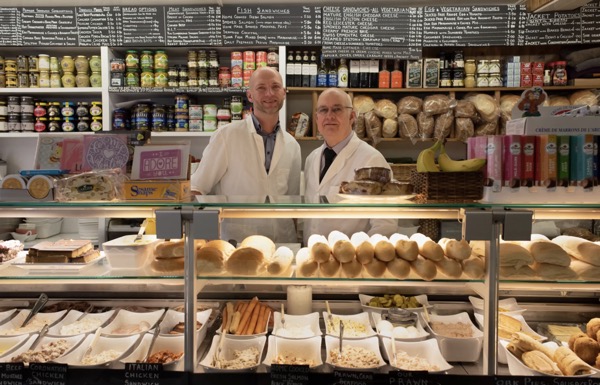
Stephen & Paul Rothe. ‘I said look at each other and, of course, what happens is that when they turn back to the camera they relax a bit and smile.‘
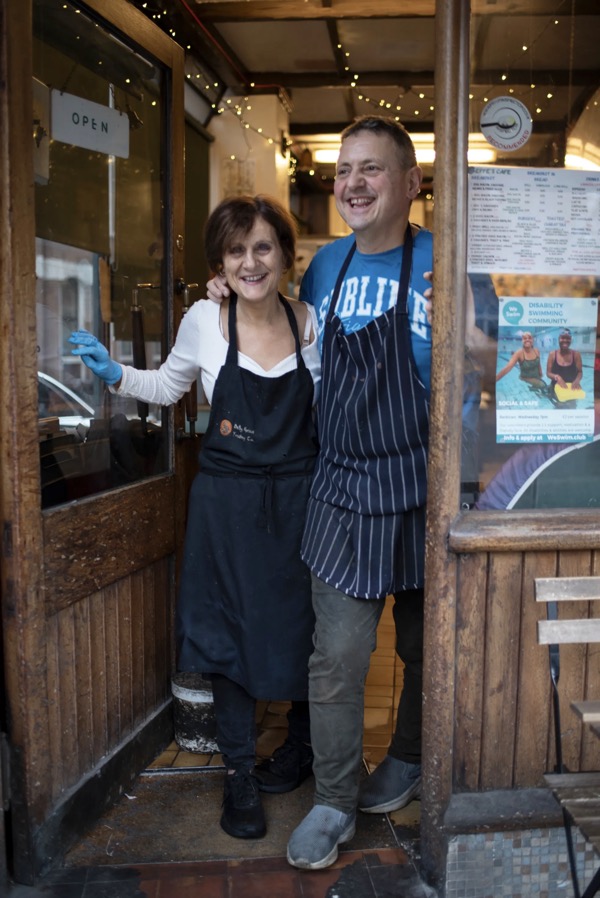
Portrait of Daniela and her cousin Sergio outside Beppe’s Cafe in Smithfield
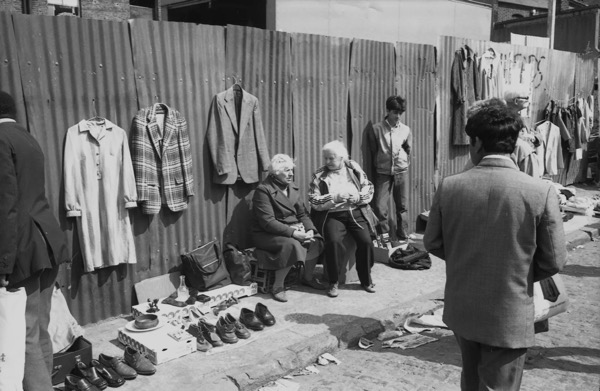
‘Working in this area in the eighties, I was fascinated by Brick Lane market, a surreal place where dramas were being played out in the streets. There was so much chaos, life and energy, with people displaying their personal possessions to sell on the pavements.’
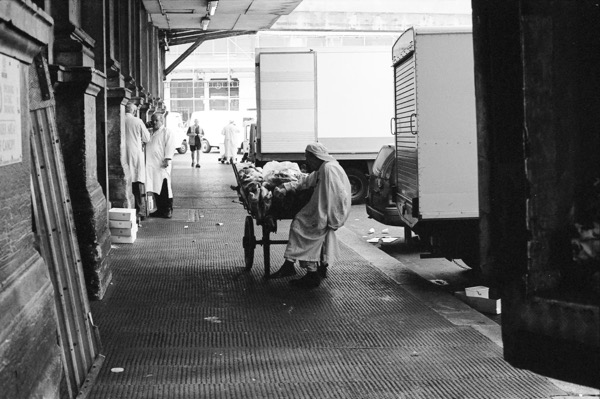
‘Smithfield Market had a strange subterranean feel, where the darkness and glowing lights lit rows of animals hanging off their hooks, reminding me of a Rembrandt. This world I explored has now completely transformed into something much more clinical, losing the soul and humanity of the place it once was.’
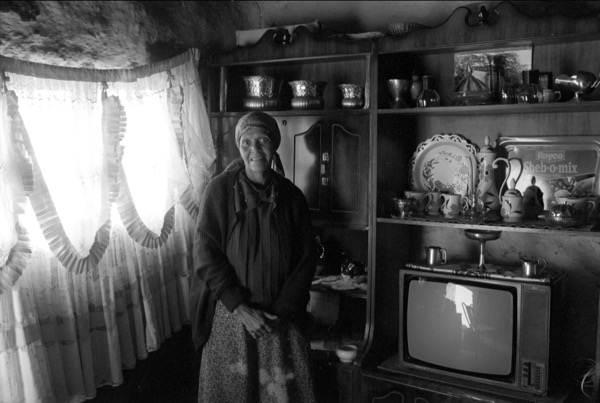
Portrait of Rosie in her home in the Grahamstown Township, South Africa
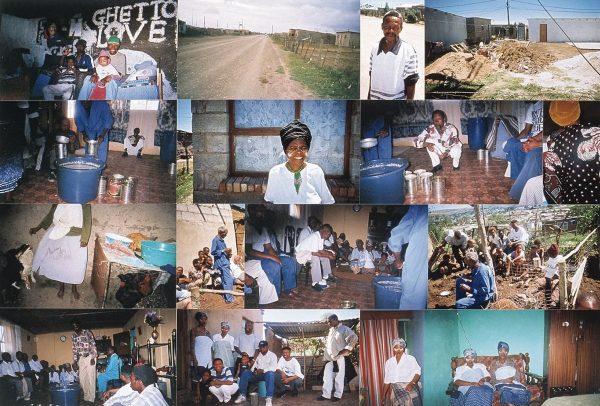
Photos by participants in the Grahamstown project. ‘I had to think of a way of collaborating rather than just going in, taking the pictures and leaving. It was amazing. I went two or three times over a year and then we had an exhibition – part of the Grahamstown Festival. The township had never been part of the festival. It was a great project.’
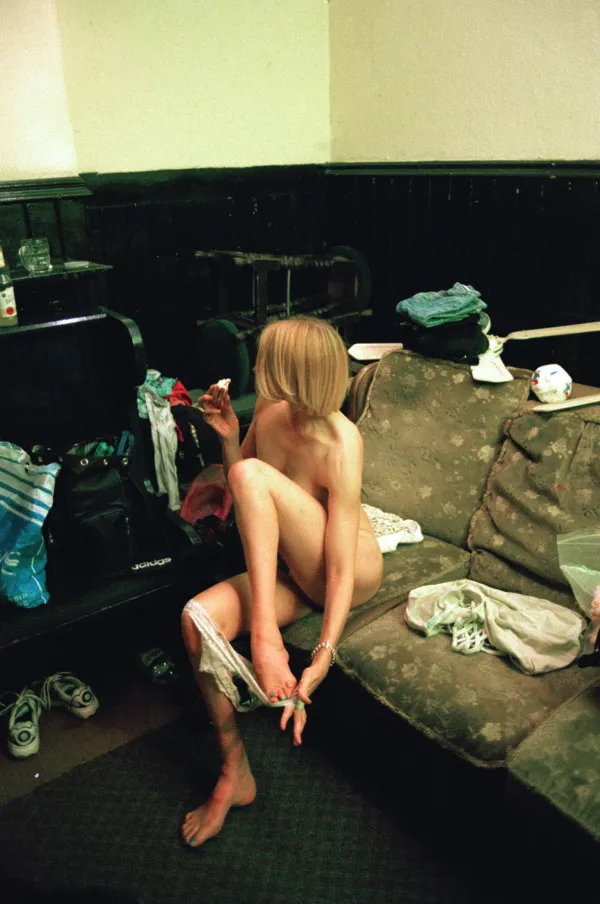
Dawn, Stripper
‘I was invited to photograph women who worked in the strip pubs in Shoreditch in 1999, it was an invitation into another world. In the very intimate area of the toilets and changing rooms I heard stories about their lives, laughter, banter, boredom, drinking, glamour and camaraderie. I was there when the outfits were chosen for each strip…and there when they returned naked holding their discarded clothes and still wearing their heels.’
Photographs copyright © Sarah Ainslie
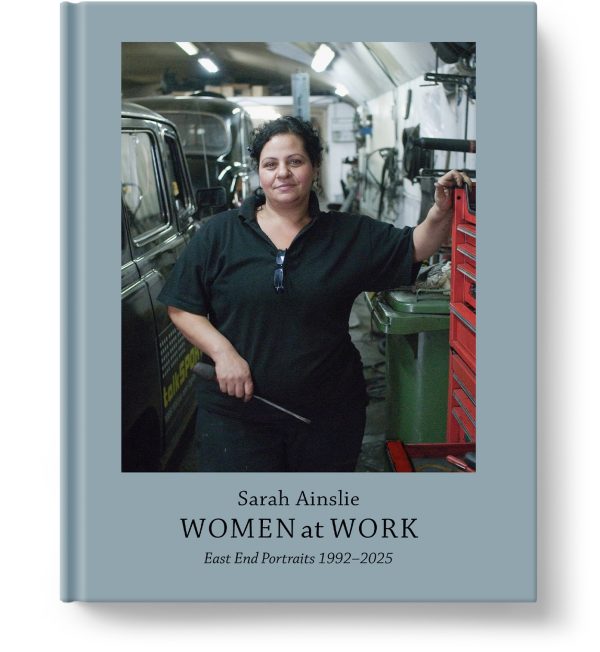
Click here to support publication of Sarah Ainslie’s WOMEN AT WORK













I had no doubt that Sarah Ainslie was a lovely person but this interview confirms it. No wonder she achieves such wonderful portraits. Good luck with the crowdfunding. Her pictures of women deserve to be bound into one of those beautifully produced books that have become a trademark of Spitalfields life.