
A Renovation at Trinity Green
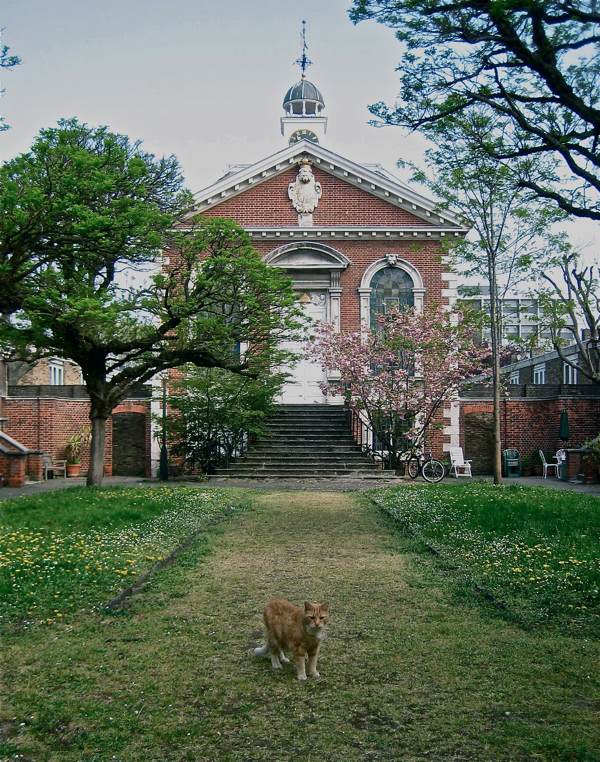
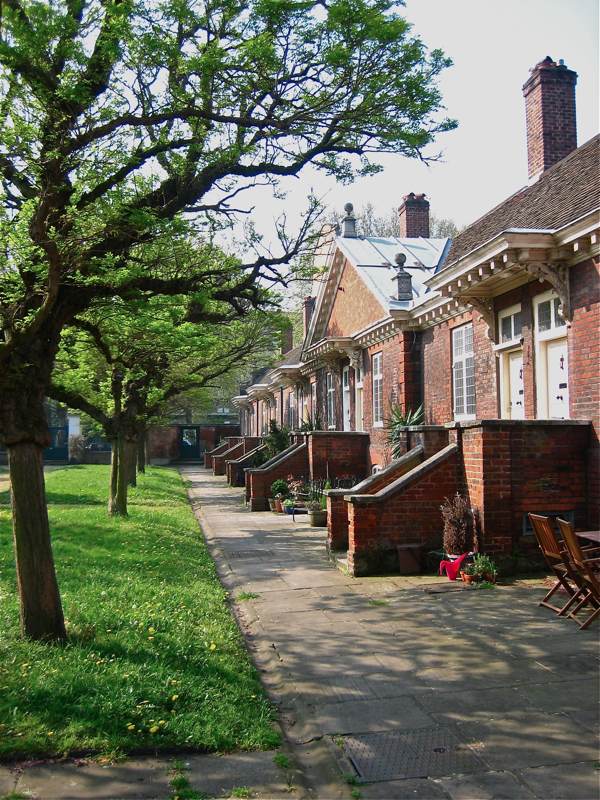
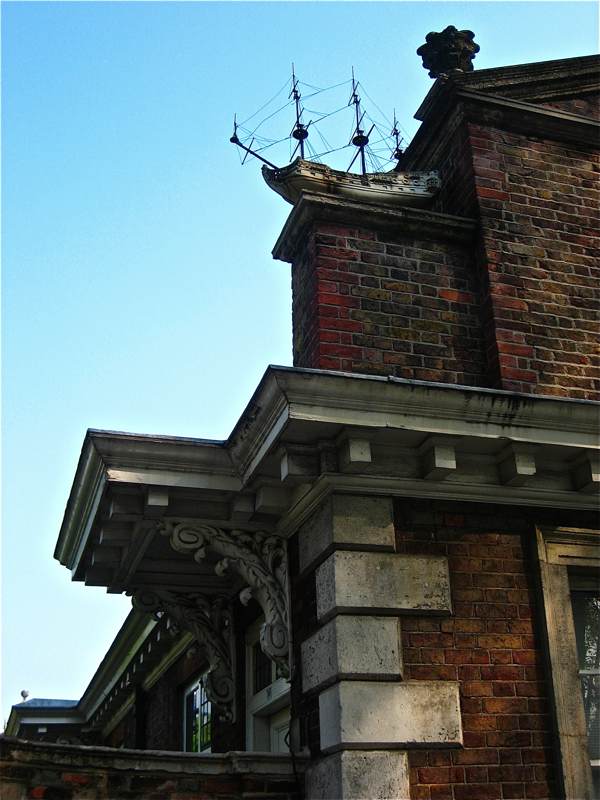
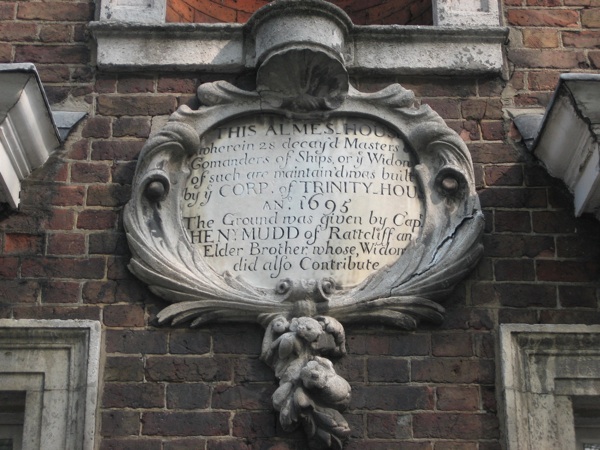
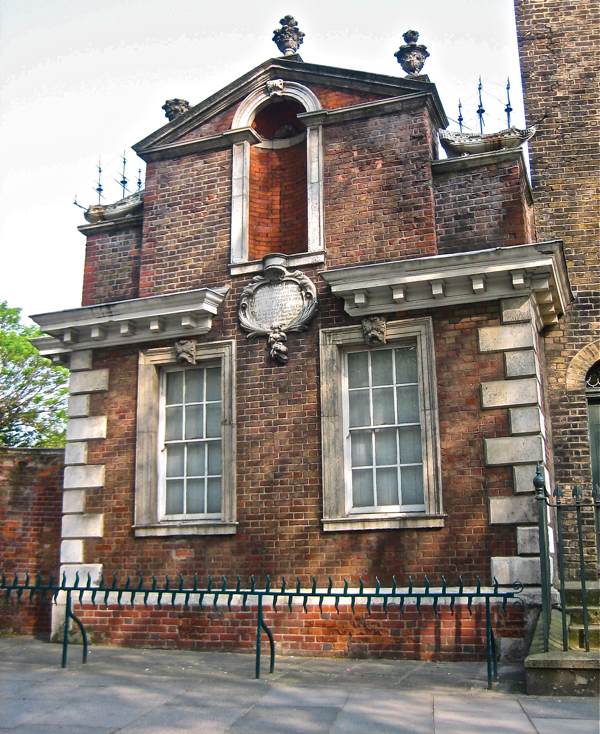
A pair of quaint narrow terraces face each other across a green off the Mile End Rd in Whitechapel. Although they are lined up neatly like ships’ cabins, only the model boats upon the street frontage remain as evidence that these were built for as almshouses for mariners. But, if you step closer and crane your neck, a stone plaque high on the wall proclaims their noble origin thus, “THIS ALMES HOUSE wherein twenty-eight decay’d Masters & Commanders of Ships, or ye Widows of such are maintain’d, was built by ye CORP. of TRINITY HOUSE, ano 1695. The Ground was given by Capt. HENY MUDD of Rattcliff an Elder Brother, whose Widow did alfo Contribute.”
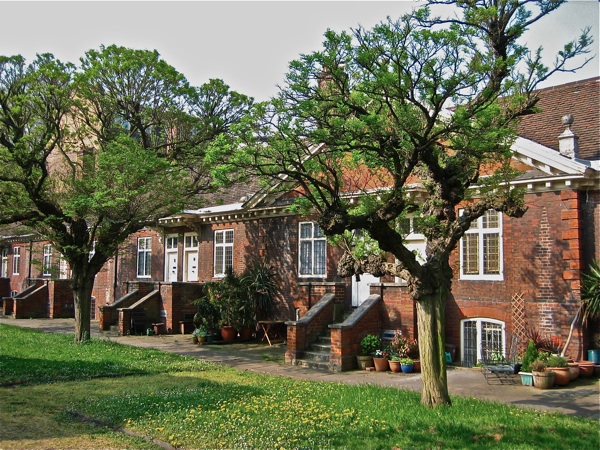
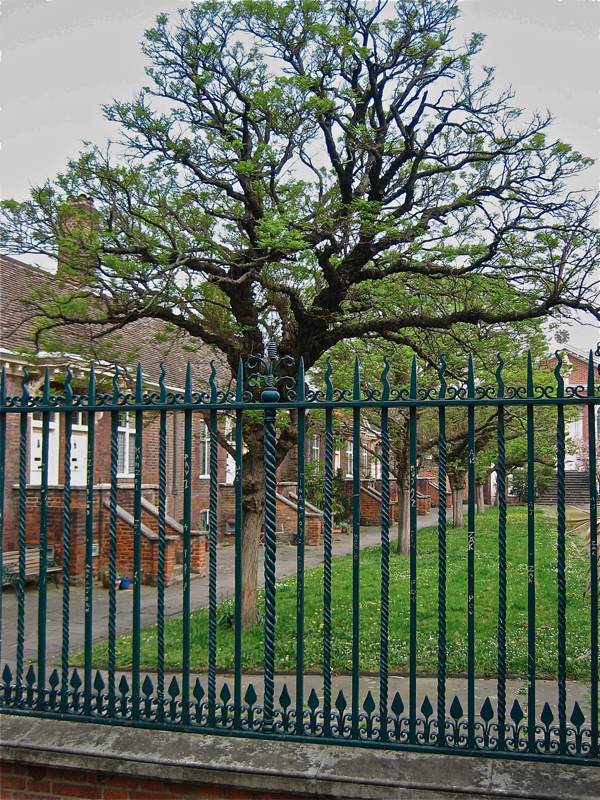
Even today, a certain atmosphere of repose hangs upon this small enclave, protected from the pandemonium of East London traffic by trees and delicate emerald green railings – now a preserve of cats and flowerpots and twisted old trees and lawns strewn with dandelions and daisies – where it is easy to imagine those “twenty-eight decay’d Masters & Commanders” who once sat around here competing to outdo each other with oft-repeated tales of high adventures upon the seven seas.
The architect was Sir William Ogbourne, and his design was ship-shape in its elegant organisation, fourteen dwellings on either side, each one with three rooms stacked up on top of the other, all arranged around a chapel at the centre to provide spiritual navigation. It was a rigorous structure enlivened by lyrical flourishes, elaborately carved corbels above each door, model boats and stone balls topping off the edifice, and luxuriant stone crests adorning the brick work.
In the nineteenth century, a tall mast stood at the centre of the green to complete the whole endeavour as an approximation of a ship upon dry land – complementing the concave walls at the front in place of a hull and the raised chapel in the aft where the poop deck would be. Just a mile from the docks, it was the perfect spot for Masters & Commanders to enjoy their decay, and it might have sailed on majestically, if it had not been sunk by the bombing in 1943, that destroyed the chapel and the rear eight cottages. Taken over by the LCC, Trinity Green experienced benign neglect in recent years and is now a mixture of private and public dwellings where everyone gets along peaceably, unified in their appreciation of this favoured spot.
Ten years ago, Dutch designer Eelke Jan Bles installed a floor at 5 Trinity Green and fell in love with it. He said to the owners, “If ever you want to sell, I will buy it.” and that is exactly what happened last year. Appreciating that centuries of alteration had taken the interior a long way from its original design, Eelke hired architect Chris Dyson to restore its dignity, and Chris was able to apply his experience working on old houses in Spitalfields to reconfigure the spaces, reinstate the lost panelling and create a sympathetic dwelling with modern amenities.
The ground floor room is a perfect square, a geometric elegance that may be the result of an original plan designed by Sir Christopher Wren, and when you ascend the steps from the green and walk in the door you find yourself in an amply proportioned room which catches the morning sunlight to great advantage. It is peaceful and resonant and, with an outlook only onto the wide lawn, you could easily forget you were in London. Undoubtedly, this is the room where anyone who lived here would delight to spend their time, retreating to the snug bedroom and bathroom below at night.
Throughout the cottage, each detail has been considered to create an accommodation where every area is used to maximum efficiency, just like on a ship. And there is an admirable restraint to Chris’ interventions which respect the quality of the building, allowing it to be used to its best advantage, while permitting the spaces to speak for themselves. The success of his work is to have created a sense of unity of design between the outside and the inside of the building.
Chris and Eelke developed a passion for Trinity Green in the course of their collaboration and research, and they were eager to take me on a tour. With delight at the ghostly enigma, Eelke pointed out how the numbering ends at twelve on the far left cottage and picks up at twenty on the top right, leaving a gap of eight for those vanished dwellings bombed in 1943. While Chris drew my attention to the delicate rope design upon the iron hand rail of the chapel steps, a residual nautical detail hinting at the lost naval statuary and long-gone paraphernalia from the time of those “twenty-eight decay’d Masters & Commanders.” And the result of this commitment is that 5 Trinity Green, uniquely, has both its panelling and its character back, and my good fortune in seeing this granted me a vision of how the whole place used to be.
After my visit to the cottage, I loitered on the chapel steps to savour the peace and quiet further, enjoy the sunshine, and commune with the old ginger tom who – judging by the multiple notches in his ears – is the undoubted decay’d Master & Commander at Trinity Green nowadays.
5 Trinity Green is to let, if you like to rent it contact Eelke Jan Bles eelke@solidfloor.co.uk
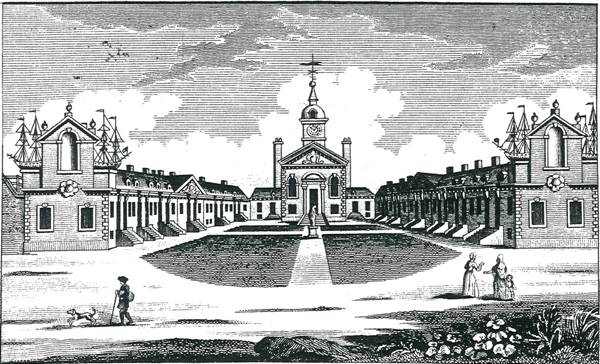
View of Trinity Almshouses, Mile End Rd, 1695.
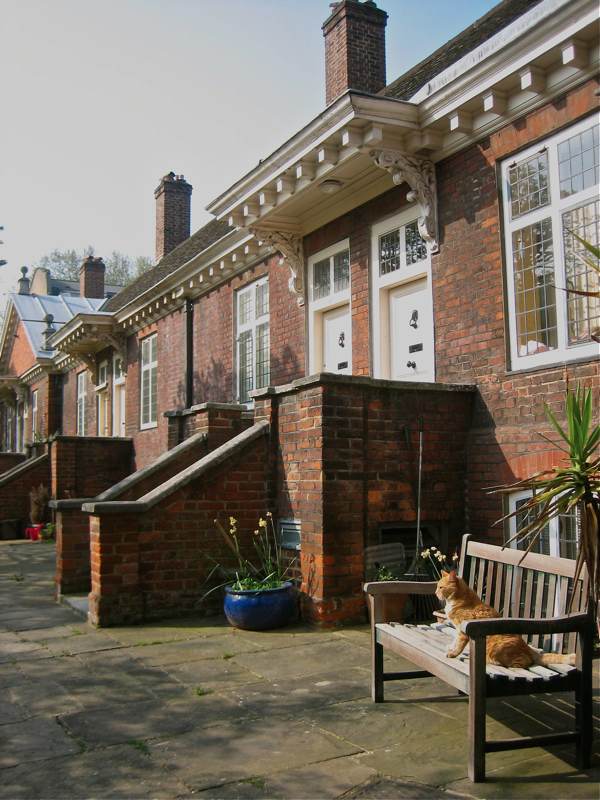
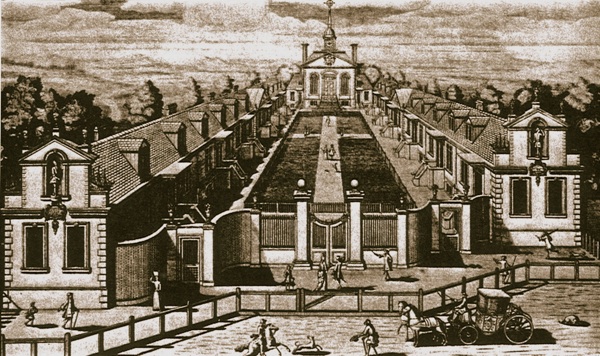
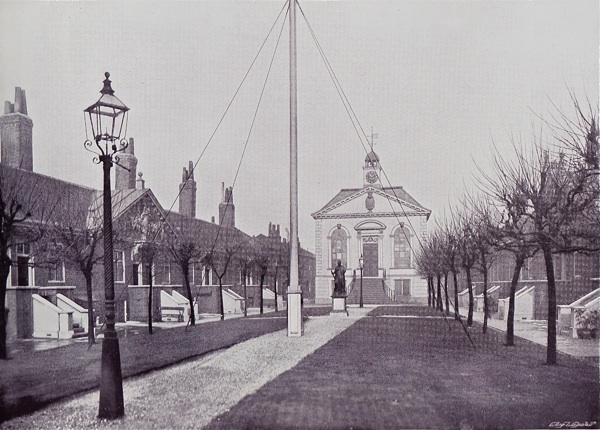
A hundred years ago there was a ship’s mast on the green with flags run up for special occasions.

The lamp post with a rope stem from the previous photograph now stands beside the chapel.
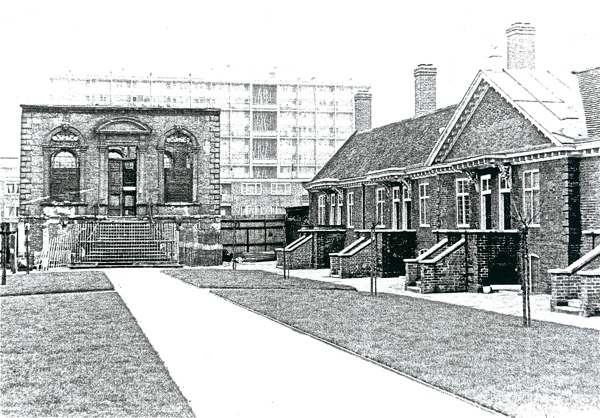
World War II bombs gutted the chapel and destroyed the rear eight cottages.
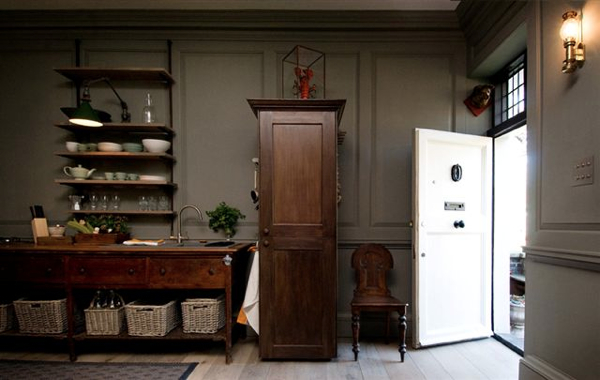
The ground floor of Chris Dyson’s renovation.

The ground floor in its previous incarnation.
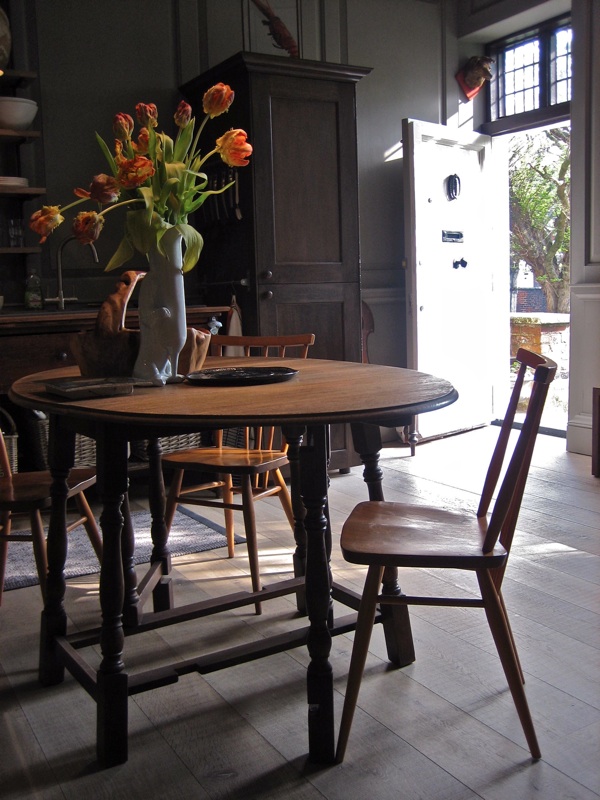
The entrance today.
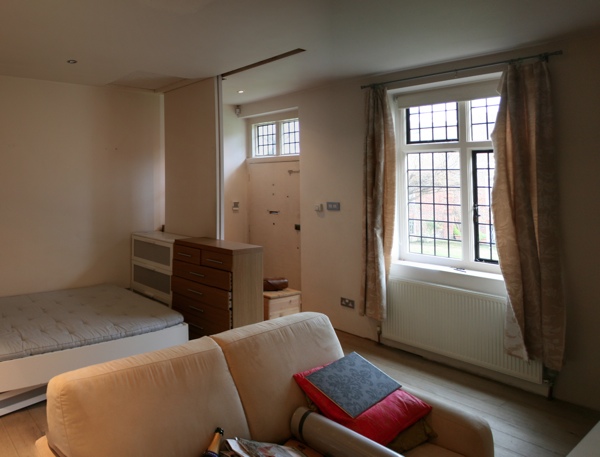
The entrance as it was before.
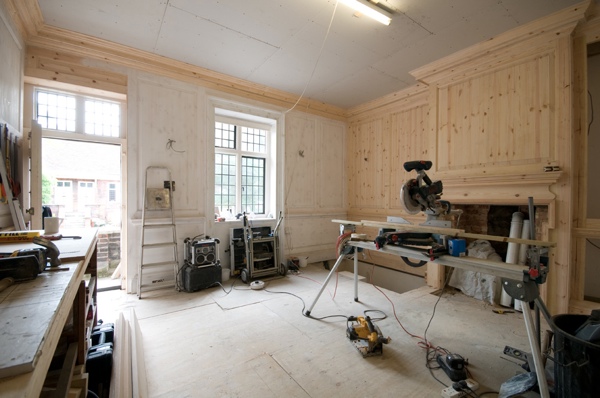
The panelling was restored by Matt Whittle.
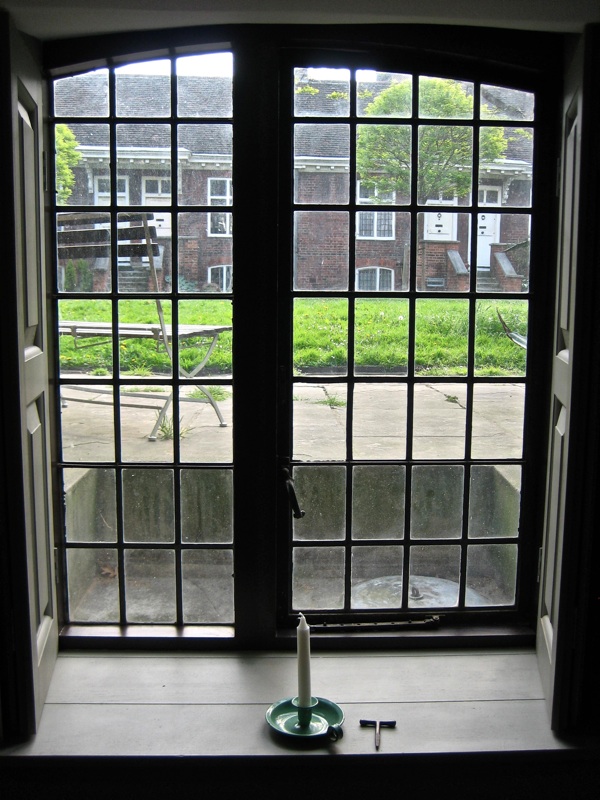
The view from the lower room with coalhole to the right.
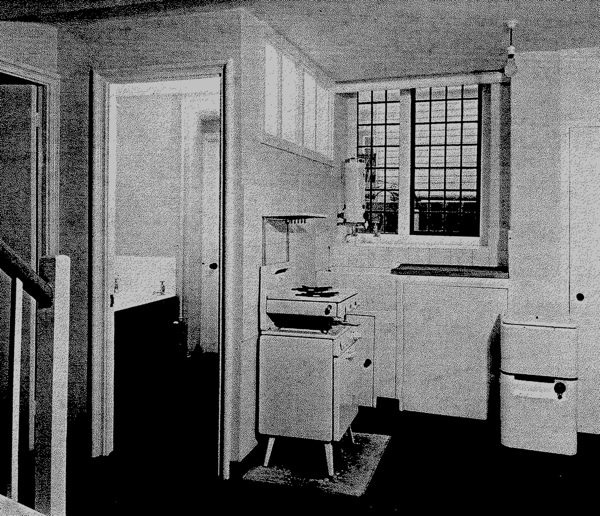
The lower room in 1957.
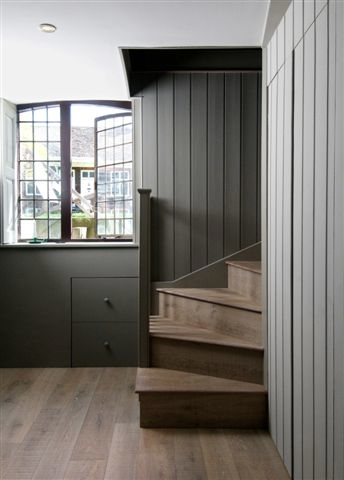
The lower room today.
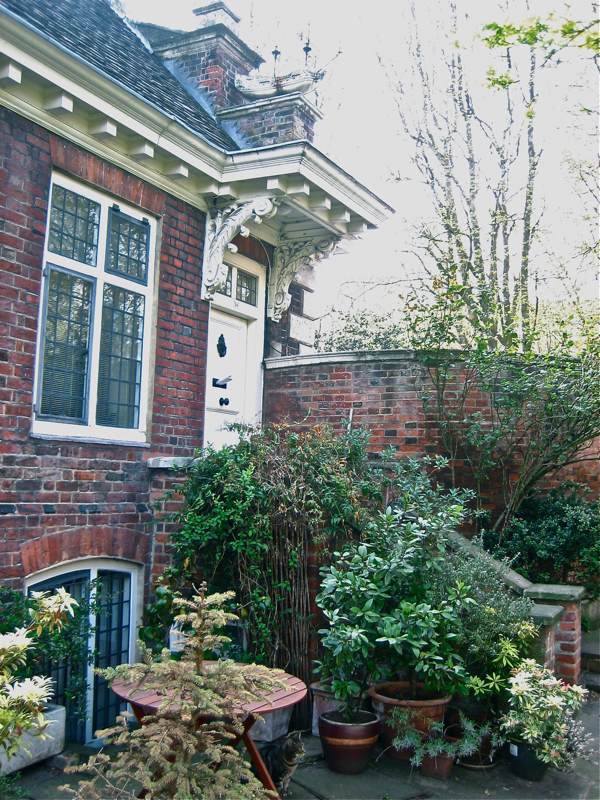
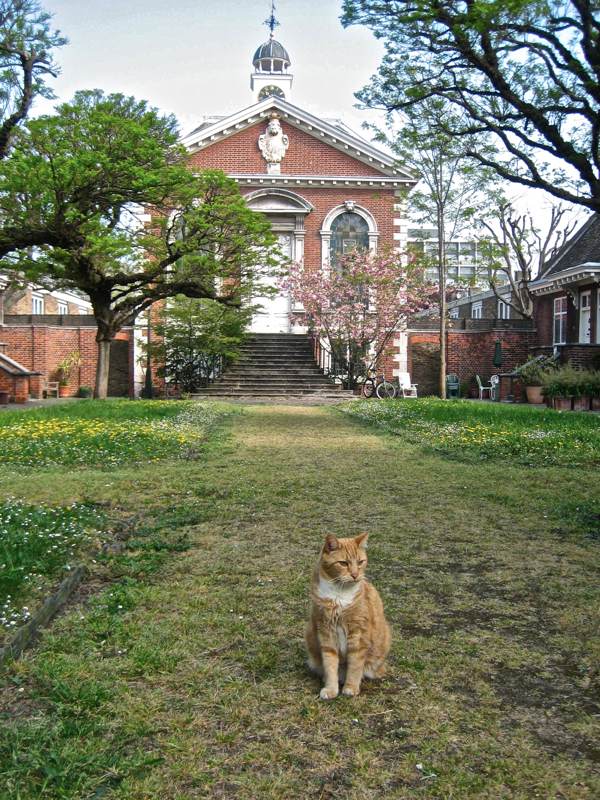
The old ginger tom who is the current Master & Commander of Trinity Green.














Wow, quite beautiful. I wished I lived there.
the ship decorations could almost pass off as old-fashioned tv antennae!
i cant help feeling envious of the lucky people living in these houses, who are able to enjoy a peaceful setting in the midst of one of the world’s busiest cities
My own mother lives in the modern version of Trinity Green, sheltered accomodation provided by an East End housing assication, which month by month cuts more and more services. They have a lounge, but no activities: a warden but her hours have just been slashed by half. The ladies who live there have spirit and humour and nothing to do all day. They’re not even allowed to keep cats.
Today’s Spitalfields Life made me happy that precious little enclaves like Trinity Green can survive and sad it seems certain such a lovely place will slip more and more into private ownership.
Gorgeous. Loving the present Master & Commander too! Many years ago, I used to work for Trinity House…
Now I know where our cat Tommy disappears to when he pops out our kitchen door here in New Hampshire! I wish I too could take up dual residences!
I live in an almshouse in the East End (not Trinity Green) and I love it. I love the renovation of this property, I wish they could come and renovate my house too!
The old ginger tom (well, no longer a tom, but he doesn’t like it being bandied about) is called Basil, and has the greatest sense of entitlement of any cat I’ve ever met. He belongs to the end house at the back, but he lives with whichever one of us he feels deserves him on any particular day. The two tabby cats are mine.
Empathically done, a marvellous aesthetic, and one to which I am increasingly drawn!
In the wilds of Wales I now reside, rolling hills instead of mountainous waves, but as the autumn of life inexorably draws down, when Amman Valley Railway have finished this interminable project of reinstating a railway so one can jump a tram once more at Mumbles and navigate easily north thereon to the Black Mountain; then mayhaps will I will look to renting in such idyll spot, some 12 years hence, if not before.
Great work, well done.
Mike
Basil is a law unto himself. Wasn’t he the cat that disappeared, only for it to be discovered that he’d been living in the pub up the road for several months?
Basil has disappeared many times, he clearly likes to wander around London much to my dismay!
Chris Dyson and his projects never cease to amaze me. I hope others see his work and take inspiration from it. Thanks for showing us inside this wonderful home!
I’m fairly sure that my great great grandfather lived at number 25 in 1891, his wife died in 1890. He was a master mariner but I can’t find out any more about which ships he served on. If anyone can give me any help – I’d really appreciate it – thank you.
My ancestor Richard Daines lived at number 3 with his wife Charlotte in 1851 he was a late (retired) pilot, who was born in Dover, Kent in 1790. I was delighted to know that the houses still exist and will travel to London to see them soon.
Casting my net into cyber space whilst researching my own Master Mariners came across your entry on the Spitalfields’ Almhouses site. You could try the Maritime Museum for your GGGrandfather’s records.
A fascinating page – I’ll circulate this to some maritime history buffs in the Gunroom, a web forum dedicated to the works of Patrick O’Brien (and Everything Else) . The renovation is superb, but with others I regret that the Almshouses have lost their original function
One of my 3xg grandfathers was Captain Thomas Hiller. He was a resident and died here in 1849. I visited in 2005 and can recommend a visit to the descendants of any past residents. I am delighted to see the empathy with which Chris Dyson approached his project.
How beautiful they look now. I would love to live there, but a bit far from Australia.
Congratulations to all who worked there.
Addendum: I forgot to say Capt Thomas Hiller lived at No. 5
Looks wonderful, including the cats. Thomas Hiller was also one of my 4G grandfathers, it seems. I would like to get in touch with Carole Sarvis. I live in Adelaide, South Australia but we hope to be in England in August and looking up places of historical family interest, though sadly, not in London.
Lovely to see! My great great grandfather Captain Richard Kirby and his wife and one daughter , petitioned the Trinity board in the 1840s and were granted an almshouse (number 9?) They moved down from North Shields, and I have the letter granting them the tenancy, and copies of his petitioning letters.
They lived there some years and were buried up the road at St Andrew’s Bromley by Bow. I have attended a Quaker meeting in the chapel, where my forebears would have sat all those years ago.Are the carving by Grinling Gibbons?
Stephen Kirkby (the second k comes and goes!)
My great great great (I think I have the correct number) grandad William Norwood, Master Mariner b. 1789 Dover lived and died in Number 48 Trinity Grounds with his wife Mary Ann. He was certainly at this address in 1871 (aged 81). He died on Saturday April 26th 1873 at this address and his wife continued there until her death on Tuesday June 28th 1887. His spinster daughter Ellen Norwood b. 1847 in Bermondsey was living in No 34 Trinity Alms Houses when she died on 28th January 1927, sharing the house with her sister, another of Captain Norwood’s daughters Susannah Jane Pugh (nee Norwood b. 1845 Bermondsey). Susannah died at No 34 on 12th April 1926. They are all buried in a family plot at Tower Hamlet’s cemetery on Mile End Road.
At last I have been able to see inside of one of these beautiful homes that I passed every day of my life until I got married at the age of 22. Being totally fascinated by their beauty as a child gave me an interest in History, Architecture and Art. I would stare through the closed gates and imagine like a fairytail all sorts of stories of me living there….Thank you .
I used to live at 68 trinity almshouses, now gone,entrance then was in Cambridge heath rd, but my tree is still there ,which I used to climb,up against a 10 foot wall,across the road from collingwood house. There where trolley buses then 1955,the Foresters cinema across the road,and my dad ,used to work in Mann Cross man, brewery. THE GOOD OLD DAYS.
Visited Whitechapel Rd for the first time last weekend on a dark night and came across this cluster of dwellings. Now I know the origins……fascinating! Will visit again when next in London in May.
lovely- so evocative-over the centuries so many people coming and going-good to read about the descendants of some of the occupiers—and ginger tom looks great too
Wonderful blog–thank you!
Such a beautiful restoration. If only more old properties were treated with such sensitivity. I am another whose G G Grandfather lived at Trinity Grounds. He was Captain Thomas Castle and he lived at number 57 with his daughter Susannah. He died in 1875 and Susannah was still living there in 1901, according to the census. I can’t assertain when she died. Is number 57 still in existence?
Between 1845 and 1852 , my great, great,great grandfather lived in Trinity grounds with his wife and daughter – presented by William iv for services rendered during the NApoleonic wars. He was Captain Ralph Hindmarsh. I have to research further to learn more but this is a wonderful restoration and I am delighted to come across this site.
My father Clifford McLaglen actor, brought my sister and I here in the late 1950s. At first we did not know why. Eventually we realised that this was near where my father had lived and his father had married a girl from Lichfield Road. This East End was the place where al my father’s brothers and one sister had been born, including Victor McLaglen. My father showed my the Almshouses at Trinity and the little boats, which we were amazed had survived so much time and the bombing in 1941. I hope that the people here love this place and keep it safe. Cynthia McLaglen
My GGGgrandfather was Captain Thomas Castle who died at 57 Trinity Grounds Amshouses in 1875. His son Louis Thomas Castle was a Master Marriner who moved to Sydney where he married in 1857. Interested in seeing another descendant on this blog. Currently in London and interested to have a look.
My Great Grandfather, William Henry Scott Hindmarsh, age 10yrs., went from Australia in his uncle’s ship to England to further his education and stayed with his grandmother and aunt from 1845 to 1852 in one of these cottages. His grandfather who had died by this time had been presented with the residence by William IV ‘in recognition of the Captain’s services to the Empire during the war with Napoleon ‘. I will be in London (from New Zealand) in June and am excited that these buildings are still in existence and that I will be able to see them. I see another descendent of Capt Hindmarsh has added to this blog.
I used to live at number 2, was lovely for the first 3/4 years but then every so often had rain water coming through the walls and ceiling. Thumbs down for the L.B.T.H. they never did a proper repair job on the property. After 17 years or so, was forced to move out. Good to see Basil (the cat) still keeping an eye on the place.
We used to live at no.12 between 1999-2001, was a special time. While we were there the ships at the entrance were stolen. It was all Grade 1 listed but the grounds were crumbling and no-one was keen to take responsibility. So good to see it all back in great shape.
Gerry.. You wasn’t the ones who’s cat sneaked into mine somehow and had me believing that I had a ghost? God that was a little spooky, had no idea who was moving things and making strange noises. Thankfully just a sweet little cat. Thanks again for my bottle of Scotch.
My Husband’s 2nd great Grandfather, James Evan Thomas lived at 5 Trinity Alms House according to 1911 census. James was a retired Trinity Pilot pensioner.
I lived in No 49 from 1945 to 1956 .
I have recently been researching my husbands family and came across Thomas Drew (1809-1896) who had been listed on various census records as a Coasting Pilot. In 1891 at age 83 his address was 34 Trinity Almshouse and he lived there with his 2nd wife Harriet who was in her 60’s. Imagine my surprise when I googled Trinity Almshouse to find such a wealth of information, and pictures. I live on the Central Coast of NSW, Australia, and am unlikely to be able to visit England in the near future, so I’m thrilled with what I’ve found.
We had William Laws of Great Yarmouth NFK (Master Mariner) at No. 16 in 1841 and his widow Elizabeth continued at no 35 from 1841 to 1867 their daughter Elizabeth at no 35 in 1861 but at no 20 till 1890 & daughter Anne died at No 15.
Henry Laws (Master Mariner) of St. Mary Walworth SRY -My G-G-Grandfather 1800-1880 was at No 16 from 1864-1880 his wife Mary Ann (formerly LOTHERINGTON of Woolwich KENT
died there in 1870
They must have known any number of the above
I was born in The London Hospital, Whitechapel in 1964 and we lived in Key Close, Cambridge Heath Road just around the corner from Trinity Green. My friends and I would play on the greens of Cleveland Estate as there were a few and still are I believe but I was always fascinated at the quaintness and beauty of Trinity Green and of course looking through the locked gates you couldn’t help but wonder why this little oasis sat in the middle of a very busy street. Thank you for the insight into the history and may it remain encapsulated in time for many more years.
I love Trinity Green Alms Houses. My father’s family, – His eight brothers and one sister, were all born in the Mile End Hospital from 1881 to 1901.
HOW DID I GET TO KNOW ABOUT IT? My father, who was a retired actor who made and lost a fortune in silent films and theatre, in England Germany and France after the First World War. He came back here with his two daughters,- me Cynthia, and my sister Katharine McLaglen, when we were in our early teens. He did not say much because he was getting his bearings. This is where he had spent his childhood; where the horse and cart would go up and down regularly to and from Spitalfields Market to get a whole sack of potatoes to feed the huge family. My father would say,”Would you believe that babas? We needed so many potatoes to feed the family?
Mile End Road had changed but not as much as now, with the “Jerkin” in the distance , and many people making a living from the Middle East and India with their stalls. In my father’s day the streets would have been full of carts and horses and carriages all milling about.
My father brought us to The Trinity Alms Houses and said, “Would you believe this Babas? These houses were built to help the old sailors who had been so courageous when they fought with Admiral Nelson and look what it says here, it was built by this man called Mudd at the end of the 18th century. See how beautiful it is! The ships have been there such a long time and have been respected. Even the bombs did not get them though they damaged part of the main building. We were very impressed at how old this was because we had seen films of the life of Lord Nelson and how courageous he was and what an amazing leader he was. Before this people had not looked after their old sailors but the attitude had changed and I think people would have been ashamed to see out heroic sailors begging in the streets.
My father told me his father had been born in Cape Town, in South Africa in 1851 and when he came to London in 1879-80 to study to be a cleric, he was horrified that the stories of London streets being paved with gold were not only untrue, but the poor were so much worse off than in Africa at that time, and the places they lived in and the children especially, made him want to more than ever, try to help in some way. He later befriended people like Dr Barnardo and many others who got the richer classes to give money, so that the beggars could be helped and the children’s lives might be better. My father said there were many women who had nothing, but they would scrub the front step and the wooden floors until they were spic and span. They had pride in that. Of course the Victorians had begun to made sewers with brick linings from the old streams which had disappeared underground like the Fleet. It was important to keep the drinking water separate from the sewers to prevent Cholera which caused some terribly large numbers of horrible deaths. These amazing sewers and also the trains, which eventually went underground were only some of the amazing feats of engineering that were achieved. My grandfather helped at St Martins in the Field especially at Christmas, by raising money for a big piece of meat to be purchased and roasted in the Crypt of the basement there. It is a coffee shop now for tourists. My Aunt Lilly and Grandpa would slice the meat and bread and a steaming cup of tea with volunteers to give some cheer at Christmas. This was in the tradition of St Martin who was a Roman soldier who became a Christian and the first act he made was to give half his cloak which he sliced off and gave it to a poor beggar. All the clerics at St Martins in the Field tried their best to emulate this caring attitude. Another place was at the Underground station at what was called Charring Cross and is now Embankment where beggars would collect. My grandfather helped to open The Silver Soup Kitchens there. I have tried to find remanants of that place but I think it was bombed in the wars. The oldest place there in Villiers St names after James First and Sixth of Scotland’s best friend Lord Villiers,- is a wine bar and restaurant called Gordons Wine Bar, which is the oldest one in the whole of London and frequented by actors who go there after their stage work is finished at night. There is nothing quite like it as the ceilings are so very low, the atmosphere is wonderful; the newspaper cuttings are framed, and are full of royalty from George V and Queen Mary, to newspapers showing the coronation from our present Queen Elizabeth they have candles on the tables. These places are the most historical from the Trinity Alms Houses to Gordon’s wine bar and I hope they continue to exist as they are so full of history, and “Thank you Eelke Jan Bles for renovating the Almshouses. I worry when I see that the steel and glass Library is stuck so close to it!
Just found this on ancestry my Grandfather x3 lived in 42 trinity with his sister .
He was a master mariner William Edward bennett . His sister lived with him Julia Ann batten . I will have to look up cemeteries. They are beautiful
Hi. Great blog. It’s fantastic how you can go from one subject to another. Just with a few clicks. Even if it’s yrs later. You can make a comment. It’s now Feb 2026! I have a Peabody flat in Covent Garden. I live right off Drury Lane. So it’s sooooo busy. Can be annoying! I suddenly thought about some beautiful almshouses in Central London. (There are some on Macklin St Cov Gar). I then saw this blog. I think everyone’s fascinated by the semi-secrecy of these lovely old buildings. I just hope these beautiful buildings, so steeped in interesting history, are safe. It breaks my heart when greedy property developers start circling. Like big, ugly vultures. Waiting to strip the carcus of such lovely architecture.