
Wheatley’s Cries of London

Two Bunches a Penny, Primroses, Two Bunches a Penny!
Francis Wheatley exhibited his series of oil paintings entitled the “Cries of London” at the Royal Academy between 1792 and 1795. Two year earlier, the forty-one year old painter had been elected to the Academy in preference to the King’s nominee and, as a consequence, he never secured any further commissions for portraits from the aristocracy. Losing his income entirely, what should have been the crowning glory of his career was its unravelling – Wheatley was declared insolvent in 1793 and struggled to make a living until his death in 1801, when the Royal Academy paid his funeral expenses.
Yet in the midst of this turmoil, Wheatley created these sublime images of street sellers that – although seen at the time as of little consequence beside his aristocratic portraits – are now the works upon which his reputation rests. Born in Covent Garden in 1747, Wheatley was ideally qualified to portray these hawkers because he grew up amongst them and their cries, echoing in the streets around the market. You will recognise the old stone pillars of the market buildings that still stand today in a couple of these pictures, all of which could be located specifically in that vicinity. However, these pictures are far from social reportage as we understand it, and you may notice a certain similarity between many of the women portrayed in these pictures, for whom it is believed Mrs Wheatley – herself a painter and exhibitor at the Royal Academy – was the model. Look again, and you will also see that variants on the same ginger and white terrier occur throughout these paintings too.
In spite of the idealised quality of these pictures, I am drawn to these “Cries of London,” as a project that places working people at the centre of the picture, and represents them as individuals of stature and presence. The body language of subservience is only present when customers are in the frame, as you will see in the Knife Grinder and Cherry Seller below, whilst the lone Strawberry Seller, Match Seller and Primrose Seller all gaze out at us with assured status, as our equals. Taking this a stage further, the final three pictures, the Ballad Seller, the Gingerbread Seller and the Turnip Seller portray sellers and customers meeting eye to eye – dealing on a level – and with a discernible erotic charge in the air.
Although coming too late to save his career, Wheatley was well served by his engravers who created the prints which brought recognition for his “Cries of London,” as the most beautiful and most popular series of prints on this subject of all time, with editions still available into the early twentieth century. In fact, when I examined this set in the archive of the Bishopsgate Institute, I realised that many were familiar to me from chocolate boxes and biscuit tins, and once glimpsed in frames in the houses of elderly relatives and the seaside hotels of my childhood.
Luigi Schiavonetti, born in Bassano in 1765, engraved the first three plates, the Primrose Seller, the Milk Maids and the Orange Seller, with lush velvety stippled tones – a style that was maintained by the three subsequent engravers (Cardon, Vendramini and Gaugain), when Schiavonetti became too successful and expensive for such a modest project. The “Cries of London” were sold at seven shillings and sixpence for a plain set and sixteen shillings coloured, and the fact all thirteen were issued is itself a measure of their popularity.
It touches me to understand that Francis Wheatley chose to paint these “Cries of London” at the time he was losing grip of his life, struggling under the pressure of increasing debt, because they cannot have been an obvious commercial proposition. And I like to surmise that these graceful images celebrate the qualities of the ordinary working people, which Wheatley experienced first-hand, growing up in Covent Garden, and chose to witness in this subtly political set of pictures, existing in noble contrast to the portraits of aristocratic patrons who had shunned him when he was in need.
One cold Winter’s morning, tracing my way through the narrow alleys at the heart of the City of London recently, I came upon singing and it stopped me in my tracks. This was a recording of the “Cries of London,” installed there by a composer, and it was a welcome reminder of the beauty of these songs, exploiting the acoustics of the City to elegant and haunting effect. Already a year has passed since the newspaper sellers went, seemingly un-noticed, and now it lifts my spirits to hear the fruit seller in Sclater St Market each Sunday with his distinctive rhythmic cry, “Bananas, bananas, bananas,” – because in my mind this is the very last reverberation of that vast symphony of many thousands of voices echoing down the centuries and through the streets of London to our present day. The Cries of London.
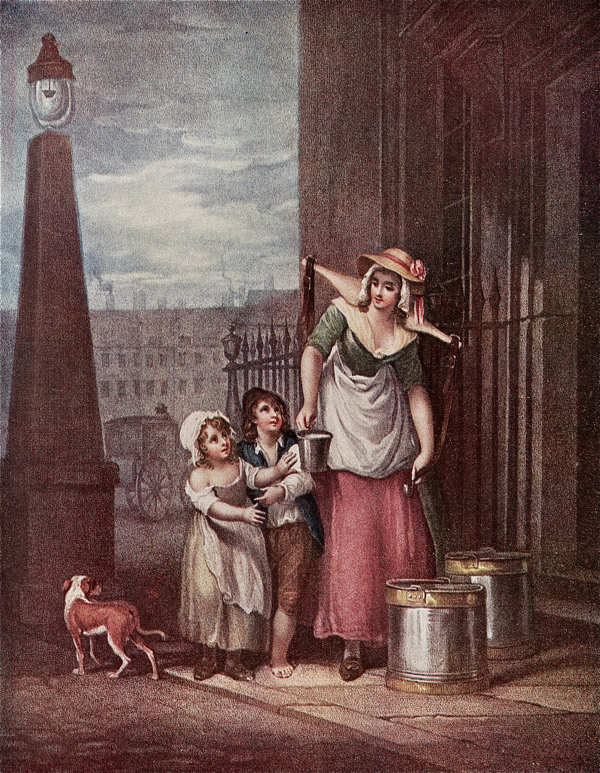
Milk Below! – This is believed to be the origin of the more recent milkman’s cry, “Milko!”
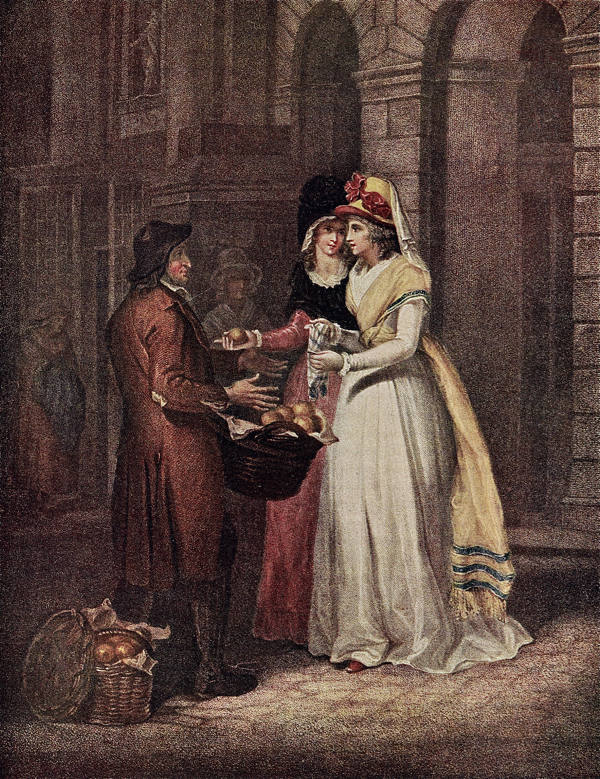
Sweet China Oranges, Sweet China.
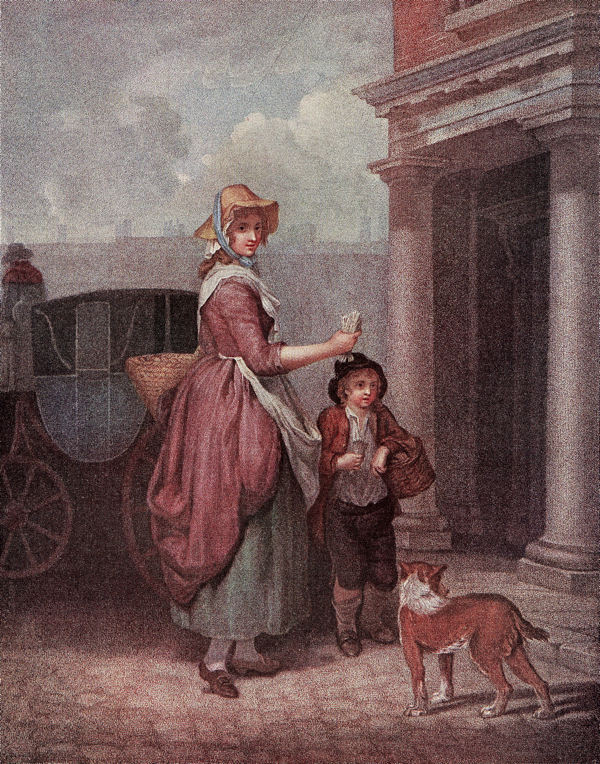
Do you want any matches?
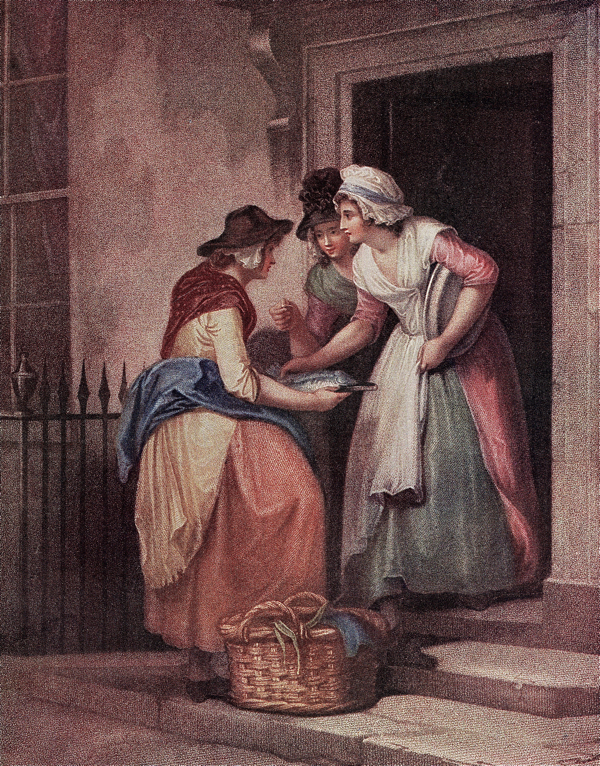
New Mackerel, New Mackerel
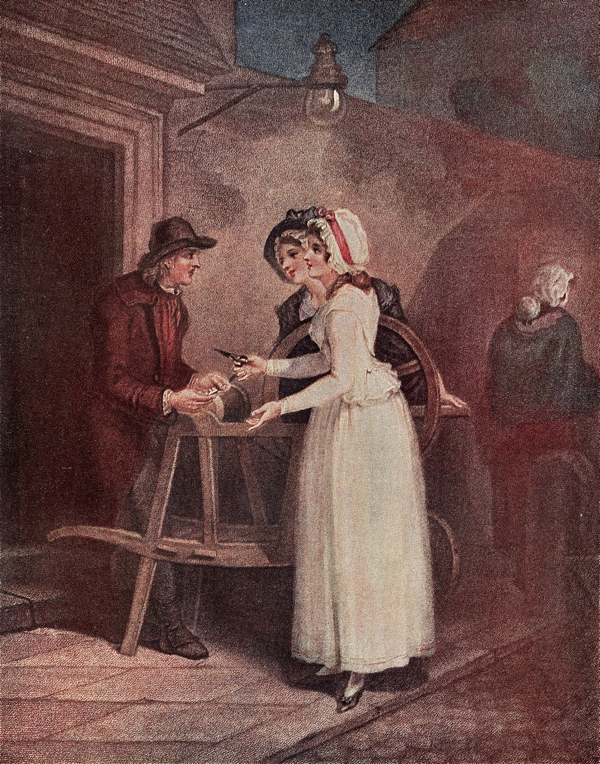
Knives, Scissors & Razors to Grind.
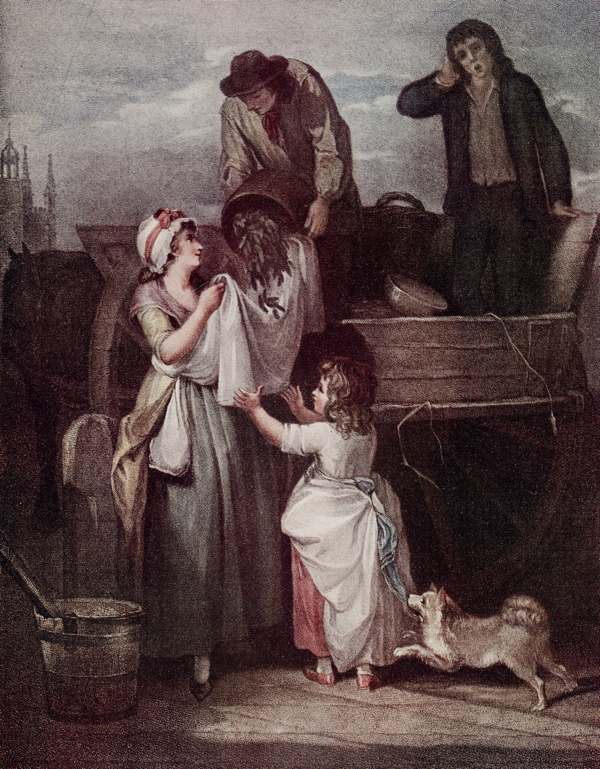
Fresh Gathered Peas, Young Hastings.
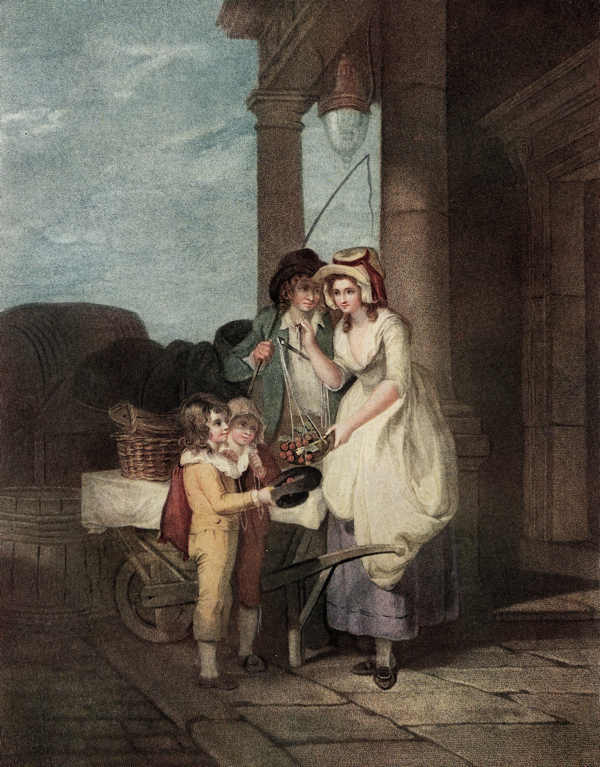
Round & Sound, Five Pence a Pound, Duke Cherries.
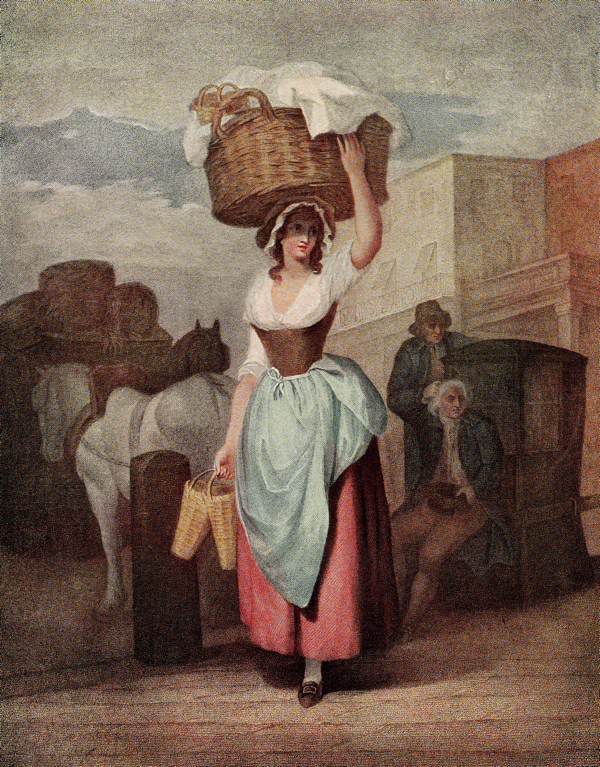
Strawberrys, Scarlet Strawberrys.
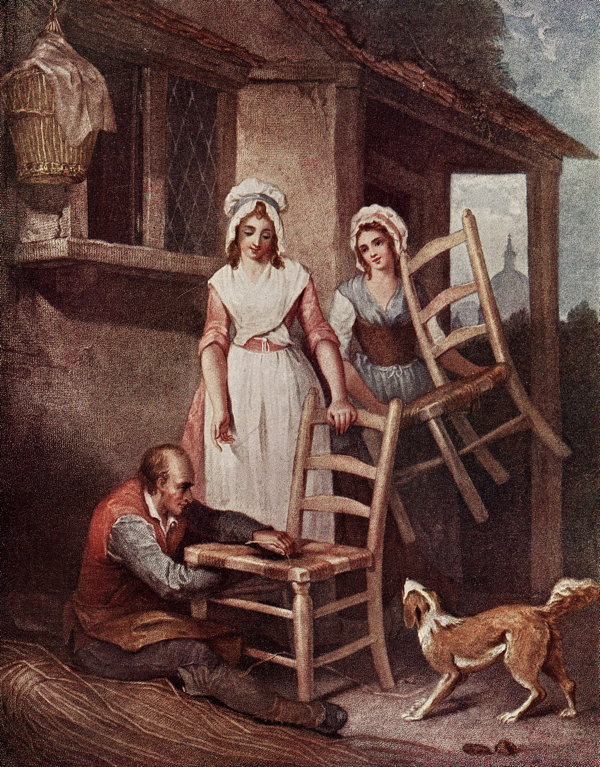
Old Chairs to Mend.
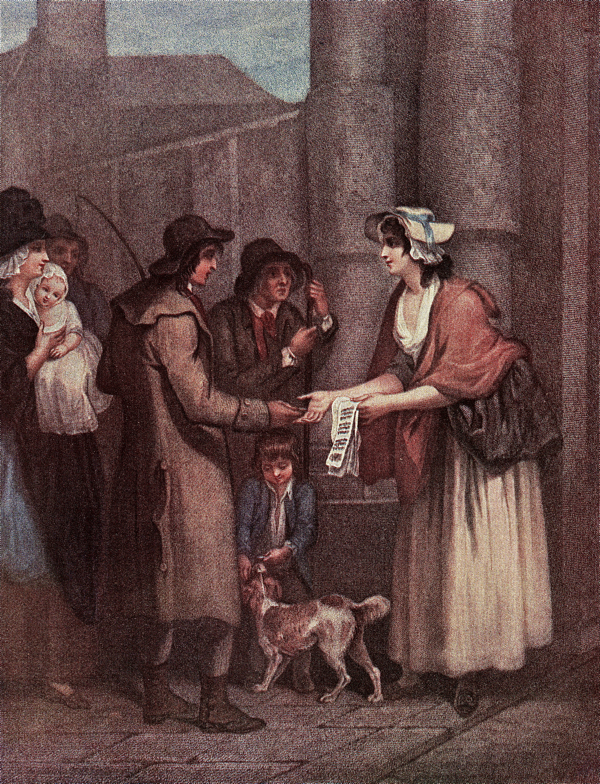
A New Love Song, only Ha’pence a Piece.
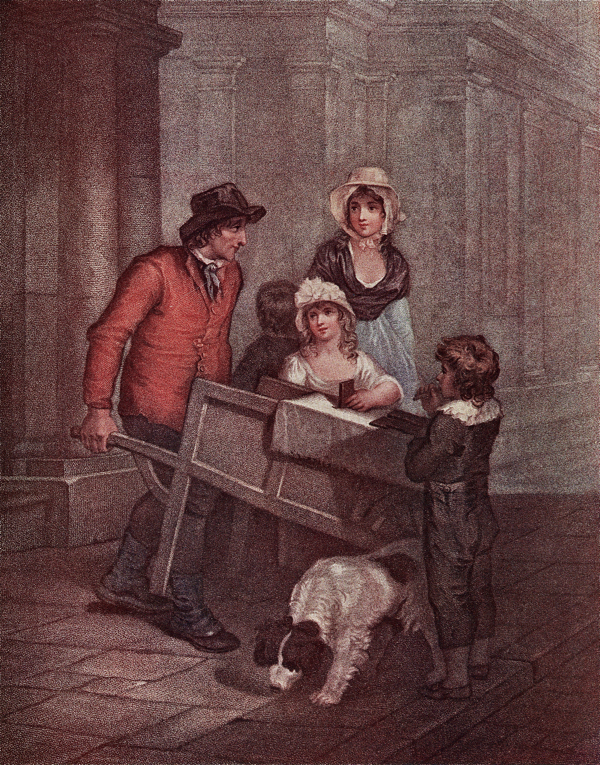
Hot Spiced Gingerbread, Smoking Hot.

Turnips & Carrots, ho!
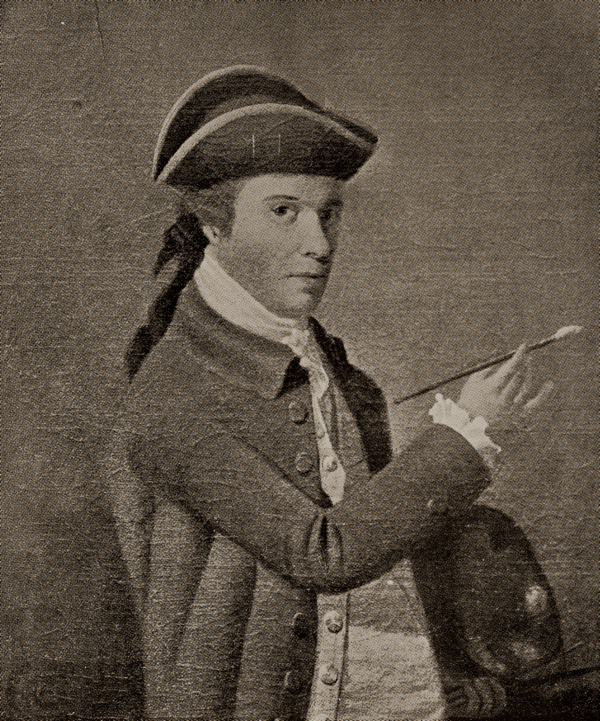
Francis Wheatley R.A. looks askance.
Images copyright © Bishopsgate Institute
You may like to take a look at













Lovely to see these and a lovely post. I didn’t know the story behind The Cries of London. I have prints of some of them and had them up in my living room until I recently moved. I’ll have to find a place for them again!
Fantastic post – thank you.
I dressed as the Primrose Seller and presented at least a dozen programs giving information about each of Francis Wheatley’s 13 Cries in earlier years.
I have all 13 plates (Adams porcelaine plates)and always made reference that Yardley of London Cosmetic Co. adopted The Primrose Seller as their trademark in 1913 ,removing the roses and filling the basket with sheaves of lavendar. She became the lavendar seller for Yardley to the point people almost forgot that in the original painting the models sell yellow primroses.
Enjoyed you comments and prints. Glad I found this as I’m giving a program for our local Chautauqua Club in May.
Did you realize the term “Holy Mackerel” came from the fact fish was the only commodity could be sold on Sun. because couldn’t hold it over until Mon. Thus the phrase,”Holy Mackerel.
It took me awhile to realize “Young Hastings” was a variety of peas not referring to the youngster.
A fascinating post about this series of prints. Some 60 years ago my Late Father came across a complete set of these prints in some shop (or it may have been in an auction house) in South India, in the Nilgiri Hills, and he bought the series.
However what he bought were stamped as being ‘artists proofs’ though the artist who signed the coloured prints was either T Petitjean or F Petitjean
I understand that the original series Cries of London was so popular that other artists copied Wheatley’s original works.
I have two cries of London, DO YOU WANT ANY MATCHERS 4th plate engraved and Two bunch a penny this one is 1973 but has no plate number, it is written on the left side and say first plate of the cries of London. it is engraved . please can you tell me if I should get them insured . thank you karen
on the reverse of my print it says this print is one of four which yardley of london limited have had specailly produced from the famous set of fourteen engravings etc, does this mean it is worth anything?
Some years ago, a local gift shop, The Carriage House, was closing, and I saw these thirteen prints. I knew nothing about them but was fascinted. Risking (for me!) s goodly sum of money, I bought them. We have kept six on the wall of the stairs going up to the bedrooms, rotating with others occasionally. We love them, and your beautiful site has helped us treasure them even more. Many thanks.
One the back of the frames is typed (some too faded to read):
Subject: [Title of eadh print], after Francis Wheatley R A
Engraving: Oure mezotint by Edward Stodart. There is a reference number, and says they are published by The Museum Gallaries, 26 Museum St, London, and framed 110 Meadow St,
Fort BOMBAY
I have 3 plates from my mother:Sweet China Oranges, Old Chairs to Mend, and Milk Below Maids. As my mother’s maiden name was Wheatley, I naturally now wonder of the connection! She was Emily Dix Wheatley born in Toronto, Canada-
Hello – From what I’ve read on your post, these images have been used to sell candies, etc., in the past, so this means that they are copyrighted, correct? Your comment would be appreciated. -JK
I bought for Cries of London at a yard sale. How do I find out if they are worth anything?
I have a the picture “New Mackrel” Maquereux Frais et Gros “Cries of London”
does this have any value? would be interested to find out please.
we have 2 colored engravings by F. Wheatley, one is milk below maids and the other is new mackrel new mackrel of cries of london. milk below maids is plate 2 and new mackrel new mackrel is plate 3. how could we find the value of these and if they need to be insured?
we love them
I have the full set of thirteen which I believe to be the original coloured engravings. I cannot really find out the value of them as there seems to be so many reproductions and this seems to cloud my research. Should I insure these as they are just now under home contents? If so, what would the value be?
I have two prints of the “Cries of London” Plate 4 and 11.signed by Cordon.Could you tell me if they are of value.I am looking to sell them any suggestions?Thank you.
I was fascinated to read your article on the Wheatley prints. I have in my possession a print of #4, Do you want any matches? It looks as if it is in its original framing,and in the matting there is printed D’Apres A. Cordon. What significance is this, as it does not have the Petit Jean as the colorist? There is also a marking on the back that says Mcrad, ORDER No. PICTURE No., and the picture No. is written in pencil as 876. I was given this by my grandmother before she passed, and I am wondering if I should have it insured, and for what amount. Thank you for your time and attention!
I have recently aquired plate 2 milk below maids, schiavonetti sculp quiveut dulaitil est tout chaud, and plate 5 new mackrel,new mackrel , d’pre’s n.schiavnetti,jun. maquereux,maquereax frais et gros, i would like as much information as possible on these as possible, i do not know where to begin. thank you
I like many readers have a couple of vintage prints some flock but definately early 20th Century I was curious of value. One is Want any Matches? the other Milk Below. Thanks for your time.
A few years ago I came across a pile of pictures,dumped,had a look and they were all these beautiful pictures of “The Cries of London”.I put them away to put in my kitchen when it was finished,they have been on my kitchen table since september and Ive only just got around to cleaning them and putting them up,Ive always been curious about them and this morning went online to see if I could find any information on them,I was delighted to find so much info on them.I have Plate 1,3,4,5,6,8,9,10,11,and 12.I look forward to seeing what Plate 2 and 7 look like.Thanking you.
Hi I have just purchased 6 Cries of London which appear very old they are in woood oak ftames and the y have wood on the back of them how can I tell if this are of aby value also I bought them because I jusy fell in love with them I have 7,8,9,10,11,13
I have all the set of twelve[Cries of LONDON] painted by F. Wheatly and on the
left hand side of the paintings there are the french word ‘D’APRES’AND A NAME.
CAN SOMEONE TELL ME WHAT THAT MEAN,PLEASE
regards –michael[malta]
I HAVE 2 PLATES “CRIES OF LONDON” I HAVE PLATE TWO MILK BELOW MAIDS; ALSO PLATE NINE STRAWBERRYS SCARLET STRAWBERRYS . IT HAS F.WHEATLEY ON LEFT HAND SIDE ALSO IT HAS D.APRES V? ON THE RIGHT HAND I CANT MAKE OUT WHAT IT SAYS. I WANTED TO KNOW WHAT THE VALUE IS. THEY ARE IN A GOLDISH FRAME. PLEASE LET ME KNOW ASAP!! THANKS HAVE A WONDERFUL DAY. IVE HAD THESE PICTURES FOR 25 YEARS NOW THEY BELONGED TO MY GRANDMOTHER SHE SAID SHES HAD THEM FOR 35 YEARS SOOOOOOO…??????? IM VERY CURIOUS LOL
I have collected 13 of the 14 engravings he made very cheaply in markets and on EBay. However I believe the 14th is of a lavendar seller and the copyright to this was bought by the English Lavendar Company (Yardleys?)and is not available as a print.
I just bought an engraving done by wheatlley engraved by anniss Repairing for market does anyone know anything about this
My mother In-Law recently passed away and we have two prints of F Wheatly. One print is called County Girl Going to Market and the other The Country Girl Going a Reaping. Down on the left side of prints, it says Printed by F Wheatly across on the right side it says, F Bartolozzi along the bottom it says “Specially re-engraved for Pears Annual 1915”.
Just wondering if there is any value and if they should be insured.
Any information would be appreciated.
Thank you
I have a book Cries of London Francis Wheatley, RA 1747-1801 with introduction by Stanford Rayner published by the art plublishing co london forty-two shillings net. made and printed in great britain by bemrose & sons ltd derby At the bottom of the preface page hythe august 1929 What is the value of the book?
I have 2 of the Wheatley “Cries of London”.One is “A New Love Song only ha’penny apiece Plate 2 and “Strawberrys Scarlet Strawberry” Plate9. They have emotional value but do they carry any monetary value. I am planning on framing them so I needed to know in order to figure out what avenue to take in terms of framing cost. Thank toy
I have just brought two prints of the cries of London one is a framed print of china oranges and the other is a wall plate of the round pound cherries. I was thinking of selling them on but I’ve fallen in love with them, and after seeing this sight and reading the background behind the pictures and some of the comments I think I’m going to keep them and see if I can find some more. They have a real charm to them .
I bought “Two bunches a penny primroses” @ an auction well over 15 years ago. The painting was in a big lot,which I hastily rummaged through. I kept it. It hung in my dining room for a number of years. Sold home and it now sits on a pile of books in my bedroom. i look at it before switching off hte lights @ night time and stare @ it first thing the mornings. On left hand of painting reads, ” Painted by F. Wheatley R. A. On right side bottom it reads “Engraved by L. Schiavonetti” Further down middle ” Two bunches a penny primroses twoo bunches a penny. Then a French translation on the right hand side. Further down @ left bottom reads “first plate of the Cries of London”. In the middle “London Pub in the Act Directs July2 by Calnaghi and Co. N 132 Pall Mall1793. A French translation to the right. What is this beautiful painting worth? All constructive suggestions would be considered. Please, contact me asap. Thank you.
I have the original painting by Francis Wheatley.. (Cries of London) “Turnips & Carrots”. I’m hoping to get it appraised..I live in Stafford, Va. and cannot find anyone to help me…please email me if you can help me out..Thank you lots!!! Donna…
I have just been given a copy of these pictures, with music for piano and voice arranged by Fitzgerald Slade. As a music teacher I have always been fascinated by this area of our past history, both historically as well as the tunes. By sheer coincidence, I have recently done a lot of research on the Spitalfields area with a view to taking a walk around. I see the cries in the illustrations are also written in French. Am I right in supposing they were cried bi-lingually due to the immigrant population of silk weavers living in the area at the time, some of whom perhaps were also sellers of produce around the streets?
I have 3 Cries of London that were my mothers. My husband wants to throw them away. Just trying to get an idea of value. First one is Cries of London Plate l Two bunches a penny primroses, Second one Turnips and Carrots plate 13 and Third oneStrawberrys, Scarlet Strawbery Plate 9. Would love any type of general value on these before my husband successfully disposes of them.
I was hoping you could help me finding out value of my 2 cries of London pictures. My mum has 2 and was throwing them out but I think they could be of value to someone it’s plate 2 and plate 5 thank you.
I have two of the paintings by F. Wheatly R. A. One is Do you want my matches? Marchande d Allumettes.achete’ mes.bonnes. Cries of London. Palate # 4. Engraved by A Cordon On the bottom it says London Pub 1794 july. and some other writing .
The other one is palate # 10 painted by F Weatley, engraved by Vendramini September 1795 by colnoghi & C:M:132 Pall Mall on the back of each one the number penciled 77-32 appear on the top left. on the bottom center it is plated Antiqued Custom Collection H. Hal Kramer Co. Chicago I would like to know if there is any value to them. They are in mint condition Beautiful Please let me know as soon as possible Thankyou
I purchased at a estate auction the following Plate 4 & Plate 2, on the lower left each reads, Printed By F. Wheatly R.A and the lower right reads Depres A Cardon. The prints have been matted and framed, so I can not view any information that might be on the back of the print. Can you help in letting me know their value if any at this time. Thank you
I have a print of chairs to mend””””dated 1904, a small piece of paper 0n the back marked in a square marked s p c k made in great britain C. 1904. i think it was bought in london after the first world war when my aunt was working in london as a sister in a hospital there, do you think it has a value, it has a glass frame bound in old passapatoo 4inches by 5 inches.
I have two of these “Cries of London” etchings framed that I inherited. I have an appraisal from 1978 that was $275.00 in value. Do you know what they are worth today? If not, where would I begin to search this? I don’t know a lot about art. I did very much enjoy reading the information you posted about these etchings!
I have four Cries of London:
1 Engraved by Schiavanetti: Milk below Maids;
2 Engraved by Vendiamini: Hot Spice Gingerbread Smoking Hotel & Old chairs to mend
1 Engraved by Gaugain: Turnips and Carrots ho
I’ve had them a while and am interested in establishing the value of each.. Looks as though alll have been colored by hand.
Buona sera,possiedo 2 stampe comperate 30 anni fa da un antiquario,la 1° sotto sta scritto:painted troy f.wheatley r.a. d’apres schiavonetti . plate 2
la 2° painted by f.wheatley r.a. cries & f. london d’apres g.vendramini. plate 6.
vorrei sapere cortesemente il suo valore. grazie attendo risposta.
I have a cries of London print Hot spice gingerbread engraved by Vendramini. It is a lovely piece of work but I have seen this image with different backgrounds and a different number of women. My one has 2 older girls whereas others only have 1. Why is this?
Dear Sir,
I have two color prints:
Milk below Maids – Plate 2 – Quient du laitil set tout chid
Painted by F. Wheatley on left,. Dapres Schiavonalli(?) on right
Printed in England A. Vivian Mansell & Co Ltd and
Hot Spice Gingerbread Smoking Hot! Cries of London Plate 12 – Du Croquet de Pain d’Epices! Painted by F. Wheatley on left,. Dapres Vendramum(?) on right
Printed in England AVM & Co Ltd
From what I have read, they may have some value. They are in old chipped frames and I am considering having them reframed if you think it is worth doing. Thank you for your thoughts and any advice.
I found a black & white scarlet strawberries drawing signed by Thomas g. Appleton does anyone have any information about it?
The black & white scarlet strawberry signed by Thomas Appleton has a seal that says print sellers association DIL can’t find any info help
I have 4 Wheatly prints colored by F.Petitjean that my husband received , the
copyright reads Henry Graves , London. Would like some idea of value &
other info & also if having new mats would hurt them .
I HAVE a plate of “Two Bunches A Penny Primrose” with the name of Adams, as I believe to be the manufacture of the plate. There are two markings on the back of the plate…to the right of the top is …17. Then to the middle left is a marking, either 23 or 25. Is this of a particular value or does this identify the time frame of when it was produced?
Any information would be appreciated.
50 years ago I bought 13 framed crys of London in a auction in mezzatint signed by Edward Stodart.The images and the subtle colours are beautiful and I never tire looking at them.
I wonder how much they are worth.
Would you be able to advice me.
I have Cries of London plate 11 Painted by E Wheatley R.A Engraved by A Cardon dated March 1796 A New Love Song only halfpenny a piece is this worth anything .
I have a painting of cries of london flower seller in brass round frame the painting has clips on the back were the painting looks like it can be removed it is signed f wheatley do you have any infomation about the value please.
To Whom It May Concern
I recently acquired a signed stipple print of “A New Love Song Only A Ha’ Penny A Piece” in the Cries of London Series. It is signed in pencil by H Scott Bridgwater.
It is embossed on the margin of the front of the print (?LUG). It also has 5×5 label from The Museum Galleries identifying the artwork on the back of the frame.
Can you provide any information about the value of this print? I am also interested in learning if H Scott Bridgwater painted any of the other works in the series.
Thank you in advance,
Bill Donnelly
Fantastic reading.i have a cries of london plate 1 copyright by s hildesheimer and co ltd. London and manchester. Also on the back it says not to be strained then a number 2112. Is this original?if so does it have any value many thanks kevin lucas.
Ps also engraved by l schiavonette.
I have 5 Cries of London bought in Staines some 40 years ago. I do like them and have always had then on display. We have moved over the years 5 times now. People have admired them and now I can give the some history on F Wheatley RA. Thank you for this information.
Robert Parks
My husband and I inherited two Cries of London prints. One Milk below Maids, plate #2 , engraved by Schiavonetti. The other is Turnips and Carrots, plate #13, engraved by Gaugain. We are interested to know what they are worth. Please help.
I enjoyed the history and replies tremendously. Thank you.
I have a colored picture painted by F. Wheatley Strawberries Scarlet Strawberries printed on the bottom left. D’apres Vendramini is printed on the bottom left. It is framed in a chipped black frame with a dark green textured mat. The paper on the back of the picture frame says, museum mounted 100% rag. Fungus Treated. The last statement led me to think this picture might be worth something and I am curious about it. What do you think about it?
How can I tell if my Knife, Scizsors and Razors to Grind (PLATE 6) is an original print
The Wheatley’s ‘turnips and carrots’ appears to include a third commodity – look at the leaves she is holding and those in the cart – do you think they could be rhubarb? Certainly the leaves bear a striking resemblance to rhubarb. This is of some interest since the usual story of rhubarb being first marketed (coming from Mayhew) is by Joseph Myatt (who undoubtedly was a major innovator in rhubarb growing) a decade or more after Wheatley produced these prints.
I see you are getting many requests in regards of value. Is there a link you could refer me to as I have the same question. I have the fourth engraving “Do you want my matches”? Cordon is the engraver It looks quite old paper is yellowed and fragile. The color however is still very good. On my print the woman’s dress color is opposite. Dress is red instead of blue etc.
The history you researched is amazing! I’m looking forward to a response.
Have a blessed day!
Hi i have 13 cries of london by wheatley in nice condition nicely framed ready to hang down sizing so may have to go what are they worth?
hi i have the original book with water colors etc cries of london is it worth anything thanks
I have two picturesby Wheatley, new Mackeral and Round and Sound Five pence a pound . can you tell me what they are worth.
I have a set of 6 Adams coffee cups and saucers showing the “Cries of London”. Can you tell me anything about them please?
Thank you so much for this information. I recently bought and refurbished an old stone home from the 1730’s.Among the many things that were left for me in the nooks and crannies were 2 of these beauties. “Fresh gathered peas, young Hastings” and Old chairs to mend.” I fell in love with their detail and expressions. I have since found a few more and hope, to collect them all!What fun!Thank you for the story behind them. Have a very Happy Holiday Season!
We live in Australia and have acquired a full set of framed prints of The Cries of London that came out of an old UK pub. They are VERY old but we are wondering what the full set is worth. They are quite remarkable.
I just today came across 5 of these prints in little wooden frames very well made and sealed ( 5″ x 6″) in an op shop. The one Two bunches a penny etc has the stamp No 37 on the left hand back. What does this mean? A well spent $7.50 Australian I think. I love them!
Sorting through the attic we have found 8 “cries of London ” prints and would like to know their value , Hot spice and gingerbread plate no 2 , a new love song only ha, penny and piece plate no 11, fresh gathered peas young , plate 7 , knifes scissors and razors to grind plate no 6 , new mackerel , new mackerel plate 3 , do you want any matches plate 4 ,sweet china oranges plate 3 , tow bunches a penny primroses 2 bunches a penny primroses , look forward to hearing from you.
I have 5 painting crys off London* can you tell me if they worth anything I have two bunches a penny an more .thanks for your help.
This is my Great great great great great Grandpa Francis Wheatley, I am so proud of him, I am an author and an artist, gosh if I could post a photo of myself you couldn’t deny us, the resemblance is uncanny, I am a Wheatley blood and bone! Bravo!
I purchased a plate yesterday and on the bottom of the picture it says cries of London sweet oranges. There is no stamp on the back but the picture has a white background and the plate is emerald green with gold trim. The back of the plate is white. Is it worth anything ?
i have plate 6 cries of london what is its value
Hi everyone, if anyone is interested in buying I have 9 of those prints and I wish to sell them as one lot. I’m open to offers. Thank you!
Hi
I have six small plates of cries of London painted by Wheatlyra and engraved by Schavonetti
Dated 1657, Sweet China Oranges. Can you give me an idea of their value?
I purchased a set of four ceramic round tiles surrounded in some sort of beautiful timber. They are pictures of women selling flowers and fruit in the streets of London. I’ve had them for YEARS and was going to donate them to the local Op Shop but thought I would just check their value first. BLOODY GLAD I DID!! No way I’m giving them away now!!! Mind you I can’t seem to find ANY OTHER ONES THAT are round framed tiles?? They’re all plates or cups or prints. I’m not really sure how to find out exactly what they would be worth???? Is there anyone who could help me?
This is my great, great, great, great, great Grandpa, I am so proud of him! Ahhh XXX
This is my Great, great, great, great, great Grandpa, I am so sad that he died in a debtor’s jail. A brilliant artist, his descendants are England’s oldest fairground family, The Wheatleys, fairground travellers and hawkers.
Attention Paula Marie Wheatley Kenny.
I went to Opatiga in what was then Yugoslavia in the 1970’s and met two elderly gentlemen called Sydney and
I went to Opatija in the 1970s and staying in the same hotel were two elderly gentlemen called Leonard and Sydney who we often used to chat too. Leonard told us that his Great Grandfather was the painter Francis Wheatley. I have a photograph if you would like to see it.
I would love to see it Margaret. X
Hi!
I have a few .
Old framing.
How can I know their value and if they are originals or copies?
Thanks for your time and help, it is very generous!
I have 11 prints of the “Cries of London” with the music on the back. Plate 8 “Round and Sound Five Pence a Pound Duke Cherries” has “Arrangement copyright 1955 by Associated Newspapers Ltd., London, E.C.4” at the bottom of the song.
I have never framed the engravings as I didn’t want to cover the music. I would like to sell them but I have no idea how much to ask for them. It would be a shame to sell them separately but I will if necessary. Could you please give me some idea as to their value separately and as a group.
I recently purchased two prints at a flea
Market .. I never went to one before .. well I came across
These two prints one print 2 milk under .. the other
Print 7 fresh peas .. they have this beautiful
Color to them and are in French as well as
English . They also have an Italian name in the
Bottom left corner . They are framed in this
Very old wood and are in pristine condition
Would you know there value ? They are lovely
Thank you .
Kindly
Louann
On dealing with my mothers house contents which has proved a massive task as so much I have found a set of 13 Cries of London pictures. Are these likely to be valuable? They have always been in my mothers home all my life 67 years! Would an auction house be the best place to sell them?
I have recently acquired Fresh Gathering of Peas Young Hastings. It says Cries Of London Plate No.7 . Left is says Painted by F. Wheatley R. W. and to the right its says engraved by G Vendrmen? Hard to read. The back is original and very old paper so I don’t want to take that off. How do I tell how old this is or if worth anything. It also has some very small print at bottom starting with Loudon Pub’d as the art director Jau ………………and at the end it says No. 132 Pall Mall. Does any of this identify the age?
Music sheet on the back ?.. hi I have plate 4..engraved by Cordon but it has the music sheet of the song to ‘Do you want any matches ?’on the back.
I haven’t heard anyone else with this example ?..
Any information would be great.
I purchased all 13 of the “Cries of London” from an antique shop in Beauchamp Place, London. They are 21″ x 23″ matted and framed.
I just purchase the no 6. Trying to find out if they are worth any monetary value. Please let me know.
Thank you,
Jewel
Great article..beautiful pictures.How does one date the prints?
Hello I have 2 plates of the… cries of London , 1.. will you buy my lavender.. 2nd sweet oranges.
They both are green around the edges with raised pattern .
On the back they have a hanging strap through the back of the plate ,also they both have a back stamp of a crown with letters underneath ( Alfa )
can you tell me about them please ?.
my grandma gave them to me and said they were my great grandma’s.
ASAP reply would be great thank you
I have 12 cries of London prints in very good condition
I see previous replies have asked if anyone knows the value I also note many have recently
Purchased these at antinque shops etc
It would be helpful if those people who have recently purchased these they give the amount they purchased them for
This will go some way and estimating the value
Sue adunn
I have several Cries of London place mats with a glass surround in excellent condition which belonged to my grandparents. Please could you advise the sort of value and if anyone might be interested in them? Thank you.
I have a Frances Wheatly print in I think oak frame.
2 bunches a penny. Plate one
Bought at an auction many years ago because i quite liked it. We are shifting and has just come to light.
Is it worth selling? Can you please give me any idea of price if I sell.
I am in New Zealand
Thank you.
Gail
I have a small dish with cries of London match cellar In the base of the dish and it has Adams printed on the bottom The make of the Potters with two coloured signatures Interested if anyone knows about them
I ha very the round& sound 5 pence a pound. I’ve had it for many yrs & still enjoy looking at it.
I purchased Fresh Gathered Peas. It was a wedding gift in 1902. The womans dress is in blue and has “F.Wheatly, R.A.” bottom left but no engraver noted bottom right. It is matted and framed under glass so I cannot see further notations on the engraving. Perhaps it’s not an engraving? But the are no dots to suggest it’s a reproduction. Thank you! Any advice?
I have two as well, “turnips” and “Primrose”. Mine have the title written below with “Dry Point Etching” embossed in the lower left hand corner. I’m a bit confused why the title is written in pencil and why it is embossed “dry Point etching” . Trying to date my pieces. Thank you.
Our family has 13 cries of london which a great uncle made in tapestries. Not worth a penny but we love them for the memories. ?
I also have been really interested in reading about the cries of London. On the back of each framed picture is the relevant song with music. I can’t find anything out about this could you give me any further information thank you for your information
We have 12 framed pictures of cries of London with relevant music with words on back of each picture. They are all framed and in excellent condition. Are these rare with the music does anyone know
Thank you very much for this lovely, informative post.
My parents bought the entire set of 13 prints when I was a child (some 40 years ago) in England and we still have them in our possession. One strange aspect is that my mom is convinced that when she looks at the prints long enough she can see an arm move or a head turn! Although 89 she is perfectly sound of mind 🙂
I wonder if anyone else has ever experience something like this?
The archive of Southwark Art Collection has a complete set of the engravings.
In the 1930s Spode offered 6 Wheatley ‘Cries of London’ figurines for sale, all Registered Designs and closely based on the Wheatley engravings. The are listed in Robert Copeland (1997) Spode & Copeland Marks. Studio Vista pp. 115-116. 6 10 32 777264 Cherries, 778046 Milk Below, 778047 Primrose, 778048 Turnips & Carrots, 778049 Fresh Peas, 778050 Strawberries.
I note Donna Little 11 9 2012 says she has the original painting for Turnips & Carrots and C Garner 14 11 2013 says they have a flower seller. I wonder where the others are? It would be an interesting exercise, as one can do with Hogarth’s paintings and prints, to compare Wheatley originals with the prints issued.
I have 2 ungrafted painting plate 9 and plate 10. I was wondering the price of these painting they are from the cries of london. Old chairs to mend and strawberry scralet lady
I have two, framed Wheatley prints from The Cries of London series. They’re quite old. How can I tell if they’re original metal plate engravings or mezzotints? Thanks for any help.
I have three Wheatly Cries of London framed prints: ‘A New Love Song…’, ‘Strawberrys…’ and ‘Milk Below…’ They are very shabbily framed with stapled brown paper backing that is crumbling. The titles are in English on the left and then French on the right. I have searched and searched for exact matching prints on the Internet but can’t find any. Antique Identification Websites are no help. What exactly do I have and how old? I can send pictures.