
Fifteenth Annual Report

Fifteen years ago, I began to publish a daily story here in these pages. It has been such a eventful journey that I can barely recall any of it as sit here writing to you now, except to say that I am without regrets because it has enriched my own life immeasurably. I have met so many inspiring people and learnt so much that I should never have done without Spitalfields Life.
As I write this fifteenth annual report, I have two things in mind.
Firstly, this past year has been especially busy as we prepare to relaunch Spitalfields Life Books in October with David Hoffman’s two-hundred-and-forty page hardback photographic monograph, ENDURANCE & JOY IN THE EAST END 1971-1987.
When David was a young photographer, he came to live in a squat in Whitechapel and it changed his life. Over the next decade, he documented homelessness, racism and the rise of protest in startlingly intimate and compassionate pictures to compose a vitally important photographic testimony of resilience.
It is the forefront of my mind that we only have three weeks to raise the remaining £6000 we still need to stage the accompanying exhibition. If we can frame David’s photographs in museum quality frames, the Museum of the Home will host the exhibition from October until March and then take the pictures into their permanent collection as a legacy of our project.
CLICK HERE TO CONTRIBUTE TO DAVID HOFFMAN’S EXHIBITION
Secondly, there is a new planning battle looming that is set to dominate the next year in Spitalfields.
I am sure you will recall the fight four years ago when the Truman Brewery applied for permission to build a hideous shopping mall with a block of corporate offices on top. Our fight to stop this reached the Supreme Court this summer and we hope for a verdict in our favour this autumn.
Regrettably, the shopping mall has proved to be merely the tip of the iceberg as the Truman Brewery has now submitted a new planning application to build corporate office blocks across the entire site.
I believe the needs of the local community for genuinely affordable homes and workspaces must be prioritised in the redevelopment of the brewery. This appalling proposal for soulless corporate style development would push up rents on Brick Lane, driving out the small independents and undermining the long-established Bangladeshi community, destroying Spitalfields as we know it today.
Yet, on contemplation,I realise that these two things I have in mind are not unrelated.
David’s Hoffman’s photography is a salient reminder of the enduring nature of East End communities, how they have united repeatedly through the years to resist different threats, and how they have always shown resourcefulness and thrived despite inopportune circumstances.
Thus, with all these thoughts in mind, I come to the end of the fifteenth year in the pages of Spitalfields Life.
I am your loyal servant
The Gentle Author
Spitalfields
23rd August 2024
PS You can still book here for THE GENTLE AUTHOR’S TOUR OF SPITALFIELDS through September and October

Schrodinger sleeping peacefully

David Hoffman’s monograph published October 14th

Office blocks planned across the Truman Brewery

The Truman Brewery’s proposed towers overshadowing Allen Gardens
You may like to read my earlier Annual Reports
At The Halal Restaurant

Following the random racist murder of Altab Ali, a twenty-five-year old Bengali textile worker, anti-racists occupied Brick Lane preventing the National Front from setting up a stall, 1978.
We have now raised over four thousand pounds towards our target of ten thousand pounds to stage David Hoffman‘s exhibition of photography at the Museum of the Home in October.
PLEASE CLICK HERE TO SUPPORT DAVID HOFFMAN’S EXHIBITION

It is just before midday at the Halal Restaurant, the East End’s oldest Indian restaurant, and Mahaboob Narangali braces himself for the daily rush of curry hounds that have been filling his dining room every lunchtime since 1939. On the corner of Alie St and St Mark’s Place, occupying a house at the end of an eighteenth century terrace, the Halal Restaurant has plain canteen-style decor and an unpretentious menu, yet most importantly it has a distinctive personality that is warm and welcoming.
For the City workers who come here between midday and three each day – nipping across the border into the East End – the Halal Restaurant is a place of retreat, and the long-serving staff are equally comfortable at this establishment that opens seven days a week for lunch and dinner but only get busy at lunchtime on weekdays. Stepping in by the modest side door of the Halal Restaurant, it is apparent that the small dining room to your right was the original front room of the old house while the larger room to your left is an extension added more recently. The atmosphere is domestic and peaceful, a haven from the nearby traffic thundering along Aldgate High St and down Leman St.
Even though midday was approaching, Mahaboob was happy to talk to me about his beloved restaurant and I was fascinated to listen, because I realised that what I was hearing was not simply the story of the Halal Restaurant but of the origin of all the curry restaurants for which the East End is celebrated today.
“Usman, my father, started working here in 1969. He came to Britain in the merchant navy and at first he worked in this restaurant, but then he became very friendly with the owner Mr Chandru and soon he was managing all three restaurants they had at that time. The other two were in Collum St in the City and in Ludgate Circus. Mr Chandru was the second owner, before that was Mr Jaffer who started the Halal Restaurant in 1939. Originally, this place was the mess of the hostel for Indian merchant seamen, with rooms up above. They cooked for themselves and then friends came round to eat, and it became a restaurant. At first it was just three kinds of curry – meat, meatball or mince curry. Then Vindaloos came along, that was more spicy – and now we sell more Vindaloos than any other dish. In the early nineties, Tandoori started to come in and that’s still popular.
My father worked hard and was very successful and, in 1981, he bought the restaurant from Mr Chandru. At twenty-one years old, I came to work here. It was just on and off at first because I was studying and my father didn’t want me to join the business, he wanted me to complete my studies and do something else, but I always had my eye on it. I thought, ‘Why should I work for someone else, when I could have this?’ And in 1988, I started running the restaurant. The leases of the other restaurants ran out, but we own the freehold here and I enjoy this work. I’ve only been here thirty-four years while many of our customers having been coming for forty years and one gentleman, Mr Maurice, he has been coming since 1946! He told me he started coming here when was twelve.”
Intrigued to meet this curry enthusiast of so many years standing, I said my farewells to the Halal Restaurant and walked over from Aldgate to Stepney to find Mr Maurice Courtnell of the Mansell St Garage in Cannon St Row. I discovered him underneath a car and he was a little curious of my mission at first, but once I mentioned the name of the Halal Restaurant he grew eager to speak to me, describing himself proudly as “a true East Ender from Limehouse, born within the sound of Bow Bells.” A little shy to reveal his age by confirming that he had been going to the Halal Restaurant from the age of twelve, yet Maurice became unreservedly enthusiastic in his praise of this best-loved culinary insitution. “My father and my uncles, we all started going round there just after the Second World War.” he recalled with pleasure, “Without a doubt it is the best restaurant of any kind that I know – the place is A1, beautiful people and lovely food. I remember Mr Jaffer that started it, I remember holding Mahaboob in my arms when he was a new-born baby. Every Christmas we go round there for our Christmas party. It is the only restaurant I recommend, and I’ve fifteen restaurateurs as regular customers at my garage. When Leman St Police Station was open, all the police officers used to be in there. It is always always full.”
Held in the affections of East Enders and City Workers alike, the Halal Restaurant is an important landmark in our culinary history, still busy and still serving the same dishes to an enthusiastic clientele after more than eighty years. Of the renowned Halal Restaurant, it may truly be said, it is the daddy of all the curry restaurants in the East End.

Asab Miah, Head Chef at the Halal Restaurant, has been cooking for forty-two years. Originally at the Clifton Restaurant in Brick Lane, he has been at the Halal Restaurant for the last nineteen years.

Quayum, Moshahid Ali, Ayas Miah, Mahadoob Narangoli, Asab Miah and Sayed.

At 12:01pm, the first City gent of the day arrives for curry at the Halal Restaurant.

Abdul Wahab, Mohammed Muayeed Khan and J.A. Masum.

At 12:02pm, the second City gent of the day arrives for curry at the Halal Restaurant.

Maurice Courtnell, owner of the Mansell St Garage and the Halal Restaurant’s biggest advocate, has been going round for curry since 1946. – “The place is A1, beautiful people and lovely food. I remember Mr Jaffer that started it, I remember holding Mahaboob in my arms when he was a new-born baby.”

Mahaboob Narangoli, owner of the East End’s oldest Indian restaurant.
David Hoffman At The Wet Shelter
Thanks to all the readers who have contributed, in the first week of our crowdfund, we have raised £3825.
If, in the remaining three weeks, we can hit our target and raise sufficient funds to frame David’s photographs to museum standard, then the Museum of the Home have offered us an exhibition from October to March. Afterwards, the exhibition will become part of the museum’s permanent collection so they can be shown in future as a legacy of our project.
Please forward the details of our crowdfund to you family, friends and work colleagues.
CLICK HERE TO HELP US STAGE DAVID’S EXHIBITION IN OCTOBER

Bobbie Beecroft cuts Mr Sheridan’s hair, 1976
When photographer David Hoffman was squatting in Fieldgate Mansions in Whitechapel in the seventies, he was asked to do fund-raising shots for the shelter in the crypt of St Botolph’s in Aldgate which offered refuge to all homeless people without distinction. Yet this commission turned into a photographic project that extended over many years and resulted in a distinguished body of work documenting the lives of the dispossessed in hundreds of intimate and unsentimental images.
Initially, David found the volatile conditions of the crypt challenging but, over months and years, he became accepted by those at the shelter who adopted him as their own photographer. Rev Malcolm Johnson was the enlightened priest responsible for opening the crypt but, once he moved on, his brave endeavour was closed down. More than thirty years later, most of the people in David’s pictures are dead and forgotten, and his soulful photographs are now the only record of their existence and of the strange camaraderie they discovered in the crypt at St Botolph’s.
“St Botolph’s in Aldgate had a ‘wet shelter,’ an evening shelter for damaged or lost souls where alcohol and drugs were permitted. It was run by Rev Malcolm Johnson and Terry Drummond, who were very generous and accepting, and the purpose was a Christian one, based on the notion that you are accepted whoever you are. I’m not keen on organised religion, but here they were doing something that needed to be done.
I was asked if I could do some photographs to raise funds for the work and I remember arriving at the top of the steps outside the crypt and standing there for five minutes because I didn’t dare to go down. The noise was deafening and it really stank of piss and unwashed bodies. I was frightened I’d get attacked and my camera smashed but, equally, I thought it needed documenting, it was a part of life I’d never seen before. It was very noisy, very smelly, chaotic, and there was a lot of violence.
It was a place to get something to eat, get washed and get clean clothing. Not everybody was on drink or drugs but ninety per cent were. A lot were ex-servicemen who had travelled the world and would reminisce about bars in Cairo or Baghdad. It was amazing what they would talk about.
When I returned, I gave them eighth-size A4 prints so they could put them in their pockets. They gave me permission to take their pictures and, on each visit, I’d bring them prints from the previous evening. So I became their photographer.
Over six or seven years, I’d go every night for two or three months at a stretch. It was important to be regular while you were doing it. You needed to come frequently, so people relaxed and accepted you as part of the scene. I’d go every night for a couple of months. It was a place where nobody else goes, it was a humble part of life.”

Washing a shirt at St Botolph’s, 1978

A volunteer serves tea and sandwiches

Azella, a regular at St Botolph’s, makes herself up before heading to the pub with a pal in 1977. Later that year, Azella was killed when a lorry drove over the cardboard box where she slept in Spitalfields Market.

At St Botolph’s, 1978

At St Botolph’s, 1976

At St Botolph’s, 1978

At St Botolph’s, 1978

At St Botolph’s, 1978

At St Botolph’s, 1978

Leo, eighty-two years old and a non-drinker at St Botolph’s, 1976

At St Botolph’s, 1978

Percy & Jane, non-drinkers, at St Botolph’s, 1978

At St Botolph’s, 1978

At St Botolph’s, 1977

At St Botolph’s, 1978

At St Botolph’s, 1978

At St Botolph’s, 1978

At St Botolph’s, 1978

At St Botolph’s, 1978
Photographs copyright © David Hoffman
You may also like to take a look at
Cat Women

So far we have raised £3,655 in less than a week
CLICK HERE TO HELP ME STAGE DAVID HOFFMAN’S EXHIBITION IN OCTOBER
Since there are rumblings against cat women on the other side of the Atlantic, I thought this was a good time to publish this fine collection of portraits of females and their felines assembled by Alice Maddicott author of CAT WOMEN : An Exploration of Feline Friendships and Lingering Superstitions.
“I became a cat woman the moment I was hit with a thud of love that I’d never realised a creature could produce,” Alice admitted to me. “I never thought I’d become a cat lady but, as I think of it now, the strangest thing is that it is something you can become.”

“It is easy to miss the second cat, he disappears into the white of her floral dress, next to the tabby stripes of his friend.”

“Girl and cat are all the life of this photograph – her happiness so bright.”
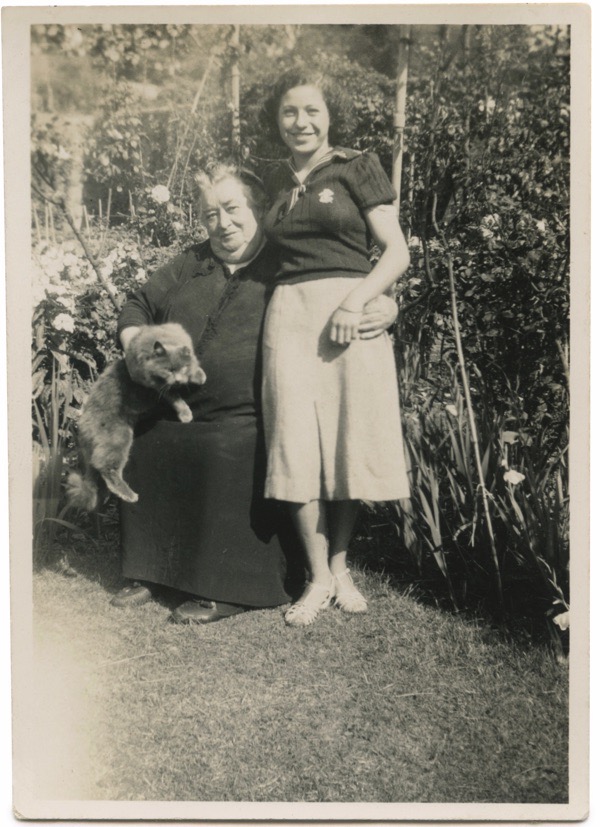
“A mother sits, her daughter stands, made one by the curve of her arms. The cat has been grabbed to make a triptych – their little family – a tumble of curves.”

“Look at me and Mary, he says, we are one and you can never tear us apart.”

“Rosalind lifts Marmalade out of the pram – her precious patient.”

“There are some pains only cats can make better.”

“The invisible ribbons that bind her and Sadie are stronger than any threat. She will not leave her.”

“He’s wrapped in arms, she frames him, a tender representation of perfect teenage dreaminess, when the world was vast and full and for the taking.”

“The kitten she holds is Gretel, her brother Hansel is elsewhere, a black blur battling the wire fence.”

“This is not their first Christmas together and each year they pose together by the sparkling tree.”

“On her dress near her shoulder, that could be a tear from naughty claws and teeth.”

“She is smiling but it is the love for her cat that stands out. She cuddles him properly.”

“He’s going doolally, blissed out as she holds him so protectively.”

“Cradling the loose end of a washing line, she rests. A well-earned sit on the steps and a bowl of food for the cat.”

“Her neatly parted hair, clips in place, hides her true wildness, how much she and Moppet share and the joy of freedom waiting for them.”

“She doesn’t look mean, more frustrated and worn out, the feeling any parent of toddlers would understand.”

“This cat is somewhat grander and gazes more at ease than her owner, who is strangely still, arms obscured, buckled feet neatly turned out.”

“Her garden is beautiful and full of sun. Her cat is white and all candyfloss despite the strange grip she has on her.”

“She could have forgotten the strength of the bond she had with her cat then suddenly be flooded with the memory, months or years later.
Photographs and text copyright © Alice Maddicott
You may also like to read about
The Petticoat Lane Mosaic

Thanks to those who have contributed so far we have raised a third of our target in less than a week
CLICK HERE TO HELP ME STAGE DAVID HOFFMAN’S EXHIBITION IN OCTOBER

Mosaic makers, Elspeth, Ken, David, Sheri, Alice, Beryl, Dani and in the front row, Lee, Tessa, Janice
Petticoat Lane Market has a special place in my affections because it was where my parents went on their honeymoon in 1958. Today it commands my respect as the most authentic local market, because Petticoat Lane is not a recreational market as the others are but the place where you go if you need to buy things cheap.
So it was an especial delight to go over there and congratulate Tessa Hunkin and her colleagues from Hackney Mosaic Project, the makers of the new Petticoat Lane mosaic which celebrates the history of the market.
For many months, they have been working to complete the mosaic in the pavilion on Hackney Downs which serves as their workshop and yesterday came to admire their latest creation now installed on the wall of the Petticoat Tower Estate on the west side on Middlesex St.
Even as we stood there, passersby stopped to take photos of themselves in front of the mosaic which gave the proud makers a visible and gratifying confirmation that they have created a popular success.
At the centre of the mosaic is a view down Middlesex St, flanked by roundels of textile designs and the market personalities of yesteryear (including Prince Monolulu and Sid Strong), embellished with images of petticoats. If you look closely, there are even some actual pearl buttons set into the mosaic in honour of the pearly kings and queens.
Afterwards, the mosaic makers took the opportunity for a stroll around the market followed by a hearty lunch at Nora’s Cafe on Wentworth St to celebrate the completion of yet another successful project to add to the dozens of mosaics they have installed over the past ten years which elevate our East End streets with their wit and beauty.

A Spitalfields silk design and Sid Strong, the crockery juggler

A Bengali textile design and an Organ Grinder

A Pearly Queen and a Wax Batik textile design


THE HACKNEY MOSAIC PROJECT is seeking commissions, so if you would like a mosaic please get in touch hackneymosaic@gmail.com
You may also like to read about
The Mosaic Makers of Hackney Downs
The Award-Winning Mosaic Makers of Hackney
Beano Season

Thanks to everyone who has contributed so far, we have raised £3,180 towards David Hoffman’s exhibition at the Museum of the Home.
PLEASE CLICK HERE TO HELP ME STAGE DAVID’S EXHIBITION IN OCTOBER

A beano from Stepney in the twenties (courtesy Irene Sheath)
We have reached that time of year when a certain clamminess prevails in the city and East Enders turn restless, yearning for a trip to the sea or at the very least an excursion to glimpse some green fields. In the last century, pubs, workplaces and clubs organised annual summer beanos, which gave everyone the opportunity to pile into a coach and enjoy a day out, usually with liberal opportunity for refreshment and sing-songs on the way home.

Ladies’ beano from The Globe in Hartley St, Bethnal Green, in the fifties. Chris Dixon, who submitted the picture, recognises his grandmother, Flo Beazley, furthest left in the front row beside her next door neighbour Flo Wheeler, who had a fruit and vegetable stall on Green St. (courtesy Chris Dixon)

Another beano from the fifties – eighth from the left is Jim Tyrrell (1908-1991) who worked at Stepney Power Station in Limehouse and drank at the Rainbow on the Highway in Ratcliff.

Mid-twentieth century beano from the archive of Britton’s Coaches in Cable St. (courtesy Martin Harris)

Beano from the Rhodeswell Stores, Rhodeswell Rd, Limehouse in the mid-twenties.

Taken on the way to Southend, this is a ladies’ beano from The Beehive in the Roman Rd during the fifties or sixties in a coach from Empress Coaches. The only men in the photo are the driver and the accordionist. Joan Lord (née Collins) who submitted the photo is the daughter of the publicans of The Beehive. (Courtesy Joan Lord)

Terrie Conway Driver, who submitted this picture of a beano from The Duke of Gloucester, Seabright St, Bethnal Green, points out that her grandfather is seventh from the left in the back row. (Courtesy Terrie Conway Driver)

Taken on the way to Southend, this is a men’s beano from The Beehive in the Roman Rd in the fifties or sixties in a coach from Empress Coaches. (Courtesy Joan Lord)

Beano in the twenties from the Victory Public House in Ben Jonson Rd, on the corner with Carr St. Note the charabanc – the name derives from the French char à bancs (“carriage with wooden benches”) and they were originally horse-drawn.

A crowd gathers before a beano from The Queens’ Head in Chicksand St in the early fifties. John Charlton who submitted the photograph pointed out his grandfather George standing in the flat cap holding a bottle of beer on the right with John’s father Bill on the left of him, while John stands directly in front of the man in the straw hat. (Courtesy John Charlton)

Beano for Stepney Borough Council workers in the mid-twentieth century. (Courtesy Susan Armstrong)

Martin Harris, who submitted this picture, indicated that the driver, standing second from the left, is Teddy Britton, his second cousin. (Courtesy Martin Harris)

In the Panama hat is Ted Marks who owned the fish place at the side of the Martin Frobisher School, and is seen here taking his staff out on their annual beano.

George, the father of Colin Watson who submitted this photo, is among those who went on this beano from the Taylor Walker brewery in Limehouse. (Courtesy Colin Watson)

Pub beano setting out for Margate or Southend. (Courtesy John McCarthy)

Men’s beano from c. 1960 (courtesy Cathy Cocline)

Late sixties or early seventies ladies’ beano organised by the Locksley Estate Tenants Association in Limehouse, leaving from outside The Prince Alfred in Locksley St.

The father of John McCarthy, who submitted this photo, is on the far right squatting down with a beer in his hand, in this beano photo taken in the early sixties, which may be from his local, The Shakespeare in Bethnal Green Rd. Equally, it could be a works’ outing, as he was a dustman working for Bethnal Green Council. Typically, the men are wearing button holes and an accordionist accompanies them. Accordionists earned a fortune every summer weekend, playing at beanos. (courtesy John McCarthy)

John Sheehan, who submitted this picture, remembers it was taken on a beano to Clacton in the sixties. From left to right, you can seee John Driscoll who lived in Grosvenor Buildings, Dan Daley of Constant House, outsider Johnny Gamm from Hackney, alongside his cousin, John Sheehan from Constant House and Bill Britton from Holmsdale House. (Courtesy John Sheehan)
Images courtesy Tower Hamlets Community Homes
You may also like to read about
Roy Wild, Hop Picker

We have raised £1230 towards David Hoffman’s exhibition a the Museum of the Home.
PLEASE CLICK HERE TO HELP ME STAGE DAVID HOFFMAN’S EXHIBITION IN OCTOBER

There is Roy standing on the right with his left hand stuck in his pocket – to indicate the appropriate air of nonchalance befitting a street-wise man of the world of around twelve years old – on a hopping expedition with his family from Hoxton.
Roy went hop picking each year with this relations until he reached the age of eighteen and, at this season, he always recalls his days in Kent. Still in touch with many of those who were there with him in the hop fields in the fifties, Roy was more than happy to get out his photographs and settle down with a cup of tea with a drop of whisky in it, and tell me all about it.
“I first went hopping with my family in 1948 when I was ten or eleven. We went to Selling near Faversham in Kent. The fields were owned by Alan Bruce Neame of Shepherd Neame, and he would employ people to pick the hops which he sold to breweries. We all lined up on the last day and he would pay each of us in person.
Some Londoners went by train from London Bridge St, all waiting on the station and carrying all their stuff with them. We were very fortunate, dad’s brother Ernie, he had an asphalt company and had an open backed lorry, for which he made a frame for a rain canopy, and we all went down to hopping together – our family, Ernie’s family, also Renee’s sister Mary and her family. Ernie would drive down to Hoxton and pick us up at Northport St, with all our bits and pieces, our bags and suitcases with bed linen and that type of thing, and away we’d all go down to Faversham. We’d go at the weekend, so we could spend a day unpacking and be ready to start picking on Monday.
There was us hop pickers from London but Neame would also employ ‘home-dwellers,’ these were Kentish people. The accommodation they lived in was far superior to what we were subjected to. We were given no more than Nissen huts, square huts made of corrugated iron with a door and that was about all, no windows. It was very, very primitive. We washed in a bowl of water and the toilet was a hole dug in a field. My mother would take old palliasses down with us from Hoxton and they would be stuffed with straw or hay from the barn, and that would our mattresses. The beds were made of planks, very basic and supported upon four logs to prop them up off the floor. You’d put the palliasses on top of the planks and the blankets on top of that. The huts were always running alive with creepy-crawlies, so anyone that had a phobia of that wasn’t really suited to hop picking.
There was another room next to it which was half the size, this was our kitchen. My dad would take down an old primus stove for cooking. It was fuelled by paraffin and the more you pumped it up the fiercer the flame, the quicker the cooking. It was only a small thing that sat on a box. The alternative to that was cooking outside. The farmer would provide bundles of twigs known as ‘faggots,’ to fuel the fire and we would rig up a few bricks with a grill where we’d put the kettle and a frying pan. They’d literally get pot-black in the smoke.
We usually went from three weeks to a month hop picking, sometimes the whole of September, and you could stay on for fruit picking. When we first started, we picked into a big long troughs of sacking hanging down inside a wooden frame. They were replaced by six bushel baskets. The tally man would come round with a cart to collect the six bushel baskets and mark your card with how much you had picked, before carrying the hops away to the oasthouses for drying.
At the time, we were paid one shilling and sixpence a bushel. You’d pick into a bushel basket while you were sitting with it between your legs and when it was full, you’d walk over to the six bushel basket and tip it in. My dad was a fast picker, he’d say ‘Come on Roy, do it a bit quicker!’ All your fingers got stained black by the the hops, we called it ‘hoppy hands.’
If you had children with you, they would mess about. Their parents would be rebuking them and telling them to get picking because the more you picked, the more you earned. Some people could get hold of a bine, pull the leaves off and, in one sweep, take all the hops off into the basket. Other people, to bulk up their baskets would put all kinds of things in there. they would put the bines at the bottom of the six bushel basket and nobody would know, but if you got caught then you was in trouble. My dad showed me how to fill a six bushel basket up to the five bushel level and then put your arms down inside to lift up the hops to the top just before the tally man came round.
The adults were dedicated pickers because you had to buy food all the time and being there could cost more money than you made. There was a little store near us called ‘Clinges’ and further up, just past the graveyard, was another store which was more modern called ‘Blythes’, and next door to that was a pub called the ‘White Swan’ and that was the release for all the hop pickers. They all used to go there on Saturday and Sunday nights and there’d be sing-songs and dancing, before going back to work on Monday morning. It was the only enjoyment you had down there, except – if you didn’t go up to the pub – you’d get all the familes sitting round of a weekend and reminiscing and singing songs, round a big open fire made up of the faggots
We worked from nine o’clock until about four, Monday to Friday. The owner of the hop fields employed guys to work for him who were called ‘Pole Pullers,’ they had big long poles with a sharp knife on the end and when you pulled a bine, if it didn’t come down, you’d call out for a pole puller and with his big long pole he’d cut the top of it and the rest if it would fall down. When it was nearing four o’clock, they’d call out ‘Pull no more bines!’ which was what all the kids were waiting for because by this time they’d all had just about enough. A hop field can be one muddy place and if you’re in among all that with wellingtons on it can get pretty sticky. If it was ready to rain, the pole pullers would also go round and call ‘Pull no more bines.’ Nobody was expected to work outside in the rain. We dreaded the rain but we welcomed the pole pullers when they called out, because that was the day’s work done until the following morning.
We looked forward to going hop picking because it was the chance of an adventure in the country. It was just after the war and we’d had it rough in Hoxton. I was born in 1937 and I’d grown up through the war, and we still had ration books for a long time afterwards. I was a young man in the fabulous fifties and the swinging sixties. In the fifties, we had American music and Elvis Presley, and in the sixties the Beatles and British music. Hop picking was being mechanised, they had invented machines that could do it. So we grew away from it, and young men and young women had better things to do with their time.”

Roy stands in the centre of this family group

Renee Wild and Rosie Wild

Picking into a six bushel basket

Roy’s father Andy Wild rides in the cart with his brother Ernie

Roy’s grandfather Andrew Wild is on the far left of this photo

Roy is on the far right of this group

Roy sits in the left in the front of this picture


Rosie, Mary & Renee


Roy’s father Andy Wild with Roy’s mother Rosie at the washing up and Pearl

Roy’s mother, Rosie Wild


Renee, Mary & Pearl

Roy’s father Andy stands on the left and his Uncle Ernie on the right


Roy

Roy (with Trixie) and Tony sit beside their mother Rosie

Roy’s mother and father with his younger brother Tony

Roy stands on the right of this group of his pals
You may also like to read about


