The Camp at Finsbury Square

Exactly a week after demonstrators first gathered upon the steps of St Paul’s and then pitched camp beside the cathedral, a second camp has appeared at Finsbury Sq. It is the same location in Moorfields where protestors gathered in the Summer of 1780, drawn together by many grievances including unemployment, rising prices and a government that was out of touch with the populace. Yet any similarity ends there because – in contrast to their eighteenth century predecessors – these people are committed to staging an entirely peaceful occupation.
When I visited the camp at St Paul’s, I could not tell whether it would last – but the arrival of a second camp in the City confirms growing support for this international movement, which began last Summer in Wall St, New York, and has now spread across the globe.
By mid-evening, once the commuters have piled out of the offices that surround Moorgate and disappeared into the tube, these streets are usually deserted with just a few stray drunks stumbling from the pub to hail a taxi home. All that changed this week, as orderly lines of tents appeared upon the green at the centre of Finsbury Sq, quickly establishing a small community and drawing the attention of crowds of passersby who linger upon the pavement in conversation with the tent dwellers .
Standing in the shadowy park sets you at one remove from the illuminated towers that surround it. Here I joined the evening’s general assembly and learned the language of hand signals that has become a unifying characteristic of this movement, enabling large groups of people to communicate efficiently. The primary gestures are – shaking your fingers to agree, crossing your hands to disagree, raising both your index fingers to make a point, making the letter ‘T” with your hands to make a technical comment and rolling your hands in a circular gesture which proposes that the meeting needs to move on.
In effect, one hundred people were gathered in parliament with a “facilitator” acting in a similar role to the Speaker in the House of Commons, directing who should talk next. In the half-light, one by one, various working groups of the residents reported to the assembly on the day’s developments in their collective efforts to establish the camp sustainably. A plan was mooted to join the striking electricians in Blackfriars next day and a message of support was read out from workers on the London Underground who are currently facing fifteen hundred job cuts. Just three days into the camp, the discussions moved from getting portaloos and keeping the park tidy, to T’ai Chi classes, organising a football team, arranging nightwatchmen and inviting musicians from the Guildhall School to come and play in the square.
“We are not here to make ourselves a luxury life, we are here to change this situation,” declared one resident, with noble understatement in regard to the living conditions. No one could fail to be touched by the courtesy that was paid to each speaker, however timid their contribution. There was no cynicism among this group of hardy souls gathered in the darkened park, who had put themselves on the line for the sake of daring to dream of a better world. It was a wide constituency, including students, nurses, ex-servicemen, teachers and old timer activitists. And it was a timeless spectacle, watching these individuals crouched together at such an intense conference in the gloom. In three days, this disparate group of people had created their own society with discrete codes of respect and shared responsibilities.
As rain began to fall in the darkness, we all took shelter and I found myself under an awning in conversation with a resident of Fitzrovia who had been here each night and over the weekend at St Paul’s, working in the media department, representing the protestors to journalists. Looking slightly at odds in his dark suit and tie, he revealed he was an investment banker who came to the park after finishing work. “This is an historic moment. We are on the precipice of what could easily become another great depression like the nineteen thirties,” he informed me, his eyes gleaming with agitation, “I am here because money does not mean much to me, I value people for what they do rather than their wealth.”
The rain was closing in and I was grateful to walk back to Spitalfields where my warm bed awaited, yet I shall be keeping the sleepers at these camps in mind, as the nights grow colder and Winter begins.


You may also like to read about
Changes at Sandys Row Synagogue

Spitalfields Life contributing artist Lucinda Rogers began this picture of the interior of Sandys Row Synagogue almost a year ago – just a week before major structural renovations commenced – and it bears testimony both to the scrupulous nature of the restoration and also to the precision of Lucinda’s drawing that, to the untrained eye, if you were to stand at this spot in the women’s gallery and look down upon the view now there would appear to be have been no change.
Yet in the past year, the roof of the synagogue – built originally as a Huguenot chapel in 1766 – has been entirely reconstructed, following the alarming discovery that as a result of vibrations caused by exploding bombs in 1942, the timbers had shifted and the entire structure was resting upon no more than lathe and plaster, leaving it in danger of collapse at any moment.
As both the last synagogue operating in Spitalfields and the oldest Askhenazi synagogue in London, the meaning of the building is composed of the many layers of its usage, which means this was could never be one of those speculative renovations taking the structure back to how it might have been. This project was about preserving Sandys Row with all its history intact for the future. Consequently, once the roof had been secured, the former colours of gloss paintwork dating from the nineteen-fifties improvements were reinstated, and now the synagogue has regained its distinctive pink and coral paintwork, highlighted by touches of gold. For those who have been coming here their whole lives, like Henry Freedman, the synagogue is as it has always been – the soul of the place remains.
“My first visit to the shul was probably as a baby in 1956 when my parents lived in Petticoat Lane,” he told me when I went to take a look recently and we sat to enjoy a quiet chat in the peace of the empty synagogue. Henry’s ancestor’s were Dutch tobacco dealers and even though he is a fifth generation immigrant, Henry still has relatives living in Amsterdam who escaped the prison camps of World War II. “I was Bar Mitzvahed here and so was my father, grandfather and great-grandfather – and my ancestor was one of the founders,” he confided, casting his eyes around this charged space that carries so much signficance for his family.“It’s the only place I have ever felt any spiritual connection.” he continued, thinking out loud, “I’ve got memories of people, I can see their ghosts in the places where they used to sit.”
“My father was president of the shul for twelve years and when he was dying, I said, ‘What’s going to happen to the place when you’re not here?'” Henry revealed to me, “That generation were content to let things tick over.” Throughout the second half of the last century, Jewish people left Spitalfields and the synagogue went into decline but, after his father’s death, Henry decided to become involved as a Treasurer & Trustee, working alongside the other board members to secure a future for the shul. Undaunted when the surveyor revealed the potential collapse of the roof, whilst assessing the meaning of a large crack, they raised half a million pounds to address the problem, partly funded by one of the largest grants to a Jewish organisation from English Heritage and with the help of numerous private donations.
Meanwhile, an assessment of the contents of the building has thrown up some hidden treasures, including a two-hundred-and-fifty-year-old iron strong box, which had not been unlocked in living memory but opened first time when the genuine keyhole had been distinguished from the false ones. A mysterious object, evoking an unknown past, it reflects both aspects of the history of the building since it could equally have come to Spitalfields with the Huguenots as with the Askhenazi Jews. When Henry showed me the cellar, dominated by huge roof beams creating the atmosphere of being below deck in a eighteenth century man’o’war, I leaned against a timber which should have been supporting the floor above only to have it swing out of position. Clearly, there is both scope for further renovation and additional space here, offering the possibility of a gallery or centre for visitors.
Throughout the last year, services continued uninterrupted by the scaffolding that was finally removed from the building in time for a dinner on 28th September, the eve of Rosh Hasanah, the Jewish New Year. “We want to continue as a full-time shul, now that Jewish people are moving back into Spitalfields,” Henry confirmed for me, able to speak with an assured optimism, now that the largest renovation in its history has secured the future of Sandys Row.


The cellar, like the lower deck of an eighteenth century man’o’war.

The mysterious eighteenth century strongbox discovered in the cellar.

Eighteenth century ceiling rose before restoration…

…and after.

The scrolls are returned to the synagogue after the restoration.

Henry Freedman

Dinner at sundown on the eve of Rosh Hashanah.

Photographs copyright © Jeremy Freedman
Lucinda Rogers’ drawing of Sandys Row Synagogue is available as a limited edition print in support of the restoration fund from www.lucindarogers.co.uk. The synagogue is now open again and tours can be arranged by contacting www.sandysrow.org.uk
You may also like to read about
Brick Lane Market 17
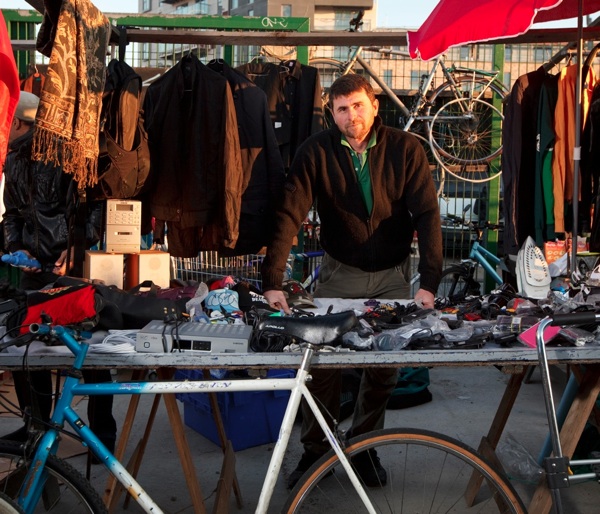
This is Ivan Tchoukouv from Bulgaria, who will shortly be making the thirty-five hour bus journey back to his home country for the Winter. “I only come over for the Summer now, working on building sites all week and trading here each Sunday,” he explained to me, “I came to United Kingdom first in 1995 in the back of a lorry.”
Since 2006, Ivan has been migrating annually, travelling back and forth with the seasons. “My wife is a teacher and, when it was time for our children to go to school, she took them back to Bulgaria because the education system is better there.” Ivan told me with a frown of regret, “Here they are allowed to do whatever they want but in my country the schools are tough on discipline.”
Ivan speaks to his family each night by Skype, missing his children who he has not seen since the Spring. “I live in a small town there, where I’ll be looking after my properties.” he revealed with a tender grin, “My house has a big garden where I keep honey bees and chickens.” In the meantime, Ivan will be making the best of crowded sleeping conditions in London for just one more week – confessing with dignified self-effacement, “In the tiny flat where I live there is a Bengali family who are Muslims, two youths from India who are Hindus and me, I am a Christian, yet we all get with no problem.”
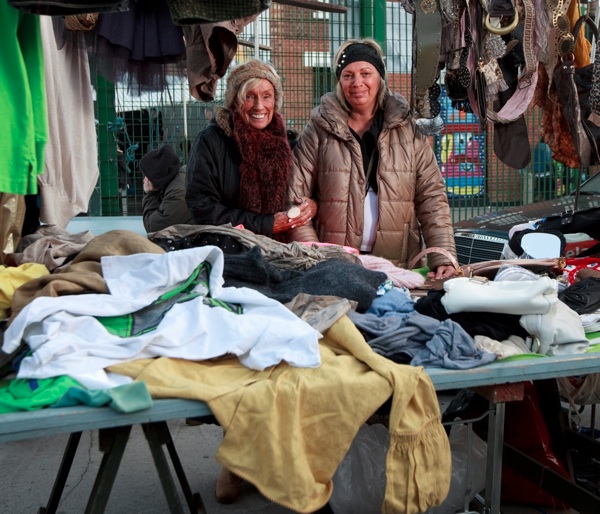
This is Leigh Kelly and her niece Tina Allpress, two feisty East End females. “We are local,” declared Tina proudly, slipping an arm round her favourite aunt.“My dad worked as a Spitalfields market porter,” boasted Leigh, her bright eyes shining with nostalgic emotion to confide she was born in Columbia Rd and counts Mary Kelly – one of the Whitechapel murder victims – among her ancestors.
“I was here in Sclater St when I was three years old with my dad, selling chaffinches and Yorkshire terriers,” she continued, fondly recalling the days of the animal market, “we had chickens in the back yard, monkeys in the house and I used to watch the dogs giving birth to puppies on the kitchen table.”
Leigh worked in Maurice Ginsberg’s handbag shop in Petticoat Lane for over thirty years and her niece joined her there before it shut fifteen years ago.”We’re always been close,” admitted Tina, “and we can’t sleep the night before coming down to the market, we’re so excited.” Both women were feeling the heat of the October sunshine, swathed in layers of scarfs and furs against the cold. “I was up at three,” chirped Leigh breathlessly, clasping her hands adorned with rings and setting her bangles jangling, “It was dark and frosty then, but at the end of the day we go home sweaty and rosy-cheeked.”
Pictures copyright © Jeremy Freedman
Syed Monsur Uddin, Newspaper Editor
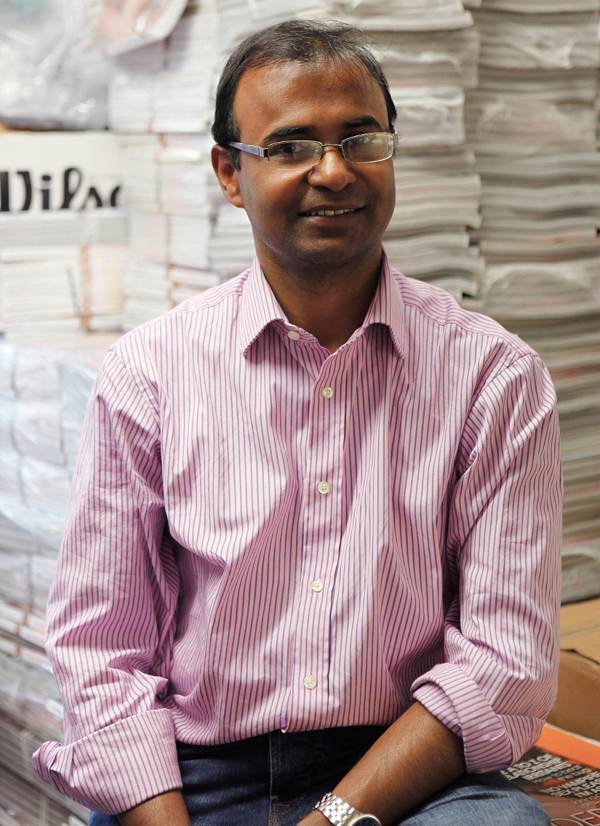
Syed Monsur Uddin is editor of Surma – Britain’s largest Bengali newspaper – operating from modest premises in Quaker St. Now in its thirty-first year of publication, Surma is distributed by mainstream outlets and available in hundreds of supermarkets and corner shops up and down the nation.
As editor of the most widely-read Bengali publication, it befalls to Syed to face the knotty dilemma of creating a weekly newspaper that reflects the nature of an increasingly diverse community, while remaining acceptable to the entire readership. Yet, in spite of this weighty responsibility, Syed presents a relaxed professional persona, displaying lively humour and carrying his status lightly.
“When I came to the United Kingdom in 1997, it was to work for Bangla TV and then in 2000 there was a vacancy as a news editor here at Surma. At first, I lived in Bethnal Green but now I live in Chigwell which Charles Dickens described as the greatest place in the world.
Previously, I worked at Daily Banglabazar, the primary newspaper in Bangladesh. Whilst I was a student at Dhaka University, I started working as a freelancer for them and then, when I graduated, they offered me a job as a full-time journalist.
As editor at Surma, it’s a mixture of reporting, translation and editorial work – it’s a varied job, and I have to do everything. I lead a team of seven, we go to print each Thursday, so Wednesday is our deadline and we can work many long hours, until two or three o’clock in the morning.We publish every Friday. I write an editorial each week and the paper is a mixture of stories from Bangladesh, stories from the UK and world news, all in Bengali. Surma is sold nationwide in every Bengali grocery store. It’s rewarding in terms of serving my community, they are immigrants, they left their country and they left their families. They want news from home in their own language. Quite a serious newspaper.
I am forty years old, so this is the peak of my career. My uncle was a journalist and he introduced me to this profession. It is a very serious occupation. In no other career do people judge you every day. You have to be careful. I find it a very tough job. You have to balance everything, find the middle ground and keep everyone happy. Sometimes it is very difficult. If you appear to support the Conservatives, the Labour supporters are unhappy and vice versa. Your reputation is always on the line.
We had a very bad experience in 2007, when we were all beaten up. We covered the suicide of a Bengali woman in a mental hospital. Suicide is a huge stigma amongst the Bengali community, so when we published the story – even though it was against the mental hospital – the relatives of that woman came and beat us. Her brothers and three or four other people, around eight of them, they arrived in three cars, parked outside here, came in and beat us severely. They broke a television remote control over my head! Yet our story was completely in support of the lady, criticising the negligence of the hospital which should should have supervised her twenty-four hours.
It can be a dangerous job, but this is one of the most civilised countries in the world. In Bangladesh, as a journalist you can get killed – if you upset a rich or powerful person, they can order it. There is no law and order, here you can get justice. The Metropolitan Police Commander came to help us and they tried to get the thugs. We had support. This is the beauty of this country, this is why Britain is great. You will not find this in any other country except perhaps the United States. Every language, colour and creed is welcomed here.
It was a real example of how people can overreact, but we are not just trying to make people happy, we are trying to tell the truth.”
When Syed told the story about being beaten up, he pointed outside into the street – indicating where the thugs had blocked the road with their cars – and he picked up the television remote control to indicate how they broke it in pieces over his head, illustrated by dramatic eye-rolling on his part. It was a shocking story in itself, and sobering to learn that, by contrast with Bangladesh, Syed regards the United Kingdom as a safe haven for journalists.
Syed Monsur Uddin can understand his readers because he has travelled their journey, from Bangladesh to the East End, and beyond – and he appreciates the human accommodations necessary upon such an odyssey across continents. His special quality – which qualifies him to edit Surma – is that instead of being doctrinaire, he has found a means to speak to his people by demonstrating generosity of spirit.

Syed is seen on the right, at three years old in 1975, in a studio portrait with his mother and aunty.
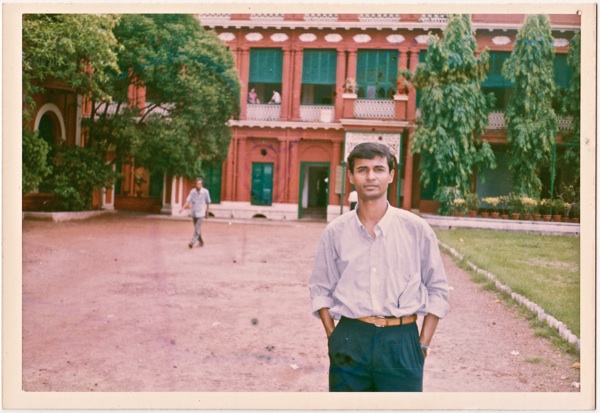
As a young student outside the house of Rabindranath Tagore in Kolkata.
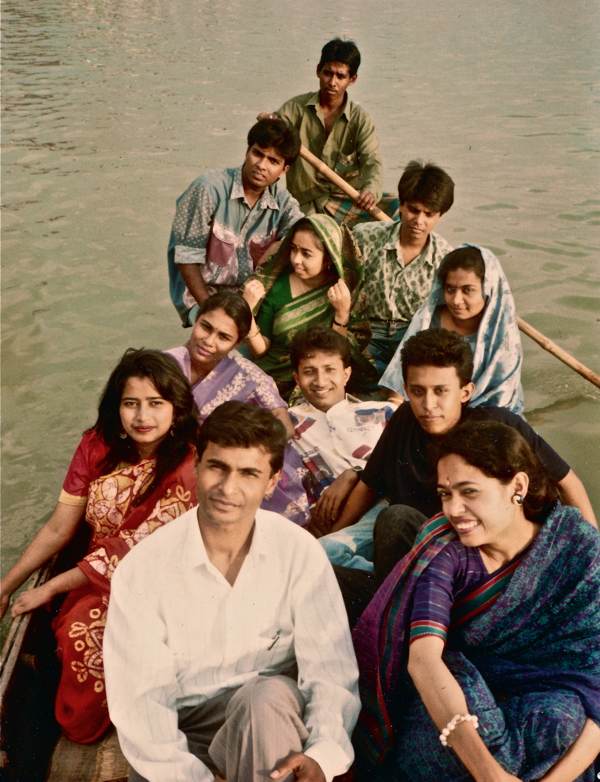
Enjoying a boat trip as a student 1992/93.
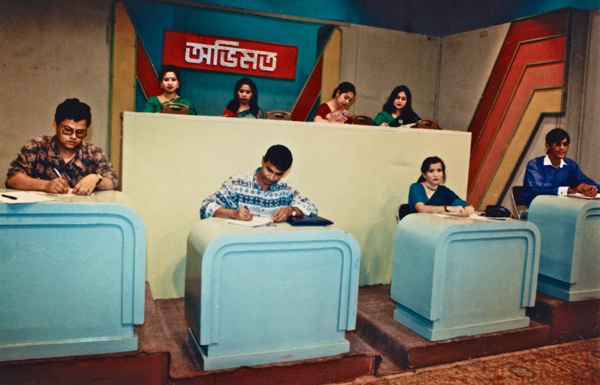
Syed working for the TV news in Bangladesh.
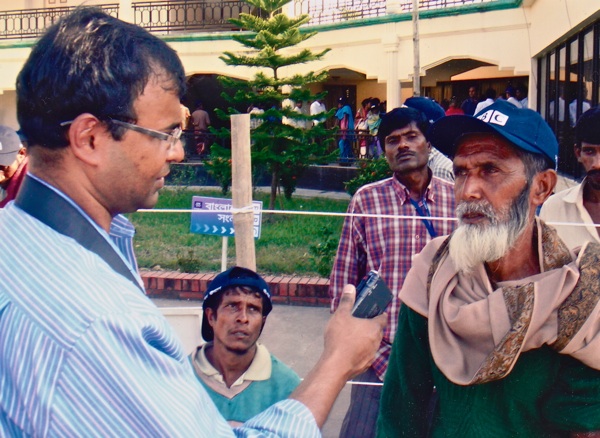
Interviewing a victim of the Bangladesh cyclone for Banglabazaar.
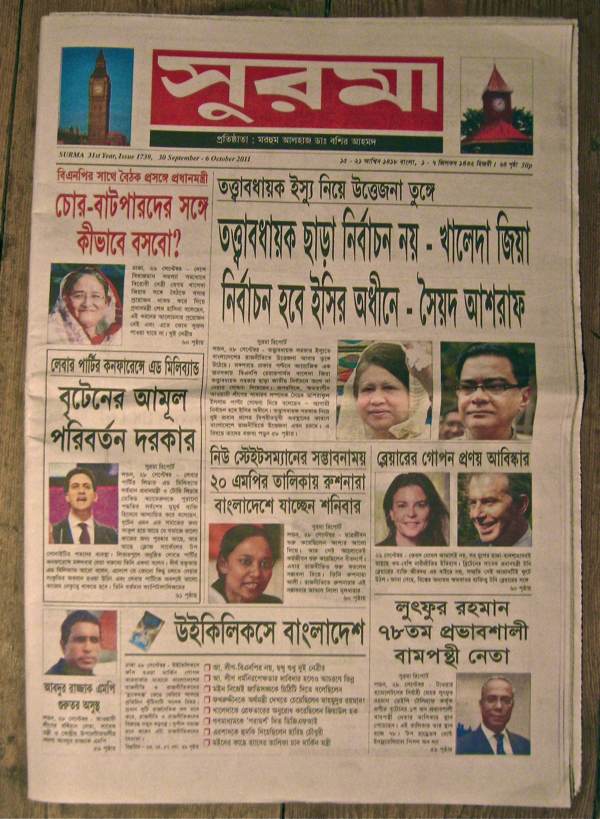
A recent copy of Surma.
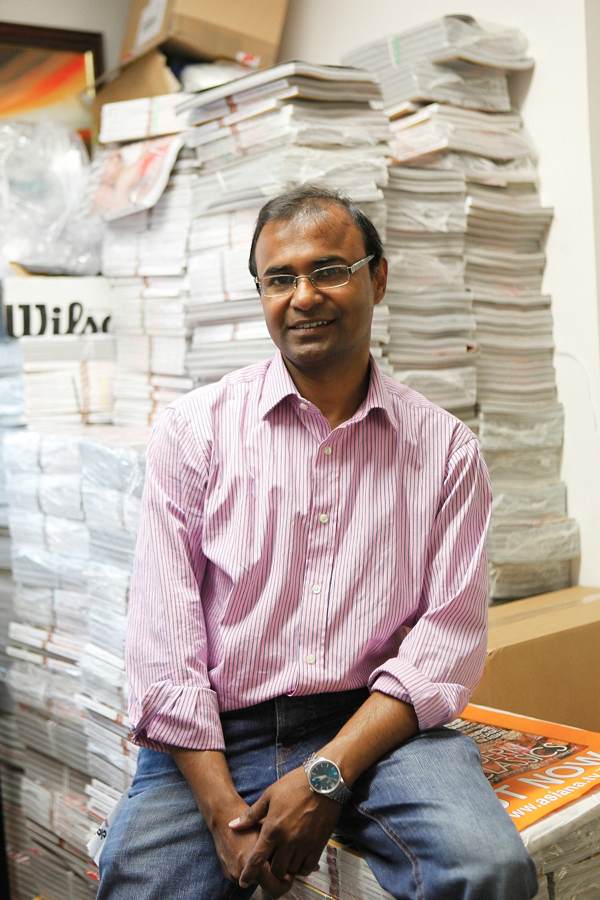
Syed Monsur Uddin, Editor of Surma, Britain’s largest Bengali newspaper.
Portraits copyright © Patricia Niven
You may also like to read about
Boundary Estate Cooking Portraits
At Eel Pie Island
Even though Twickenham is a suburb of London these days, it still retains the quality of a small riverside town. The kind of place where a crowd forms to watch a crow eating a bag of crisps – as I observed in the High St, before I crossed the bowed footbridge over to Eel Pie Island.
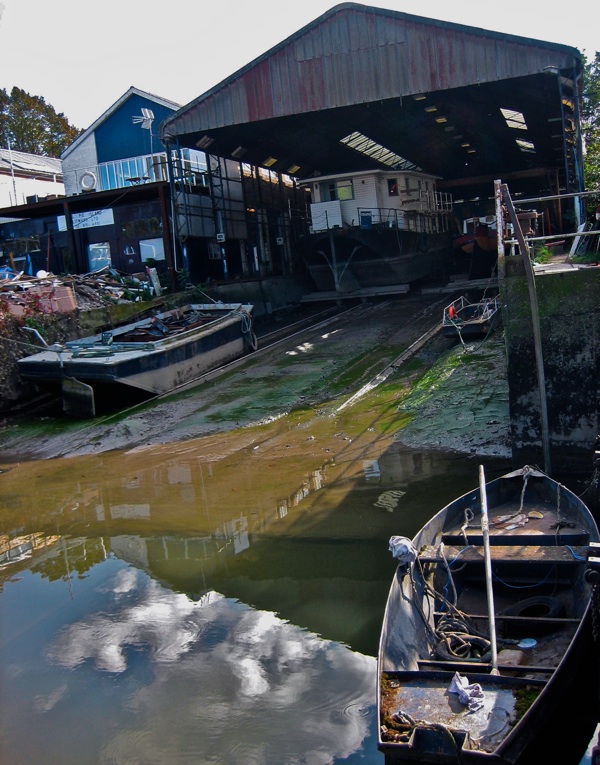
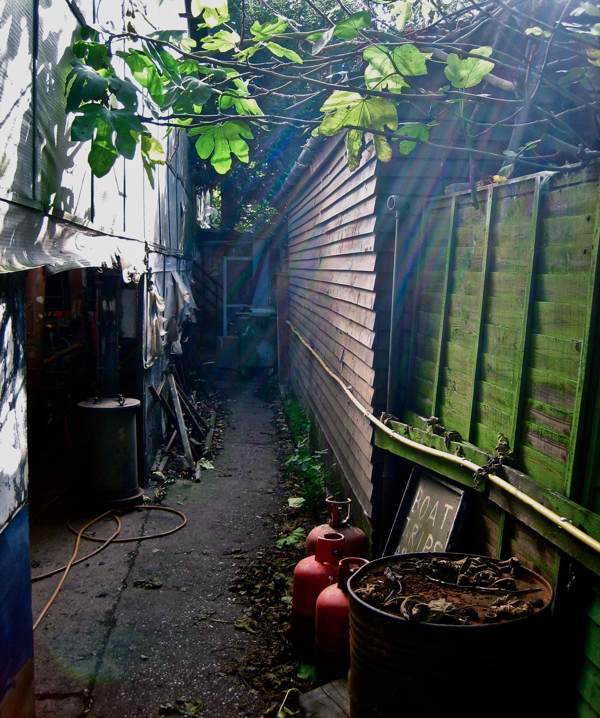
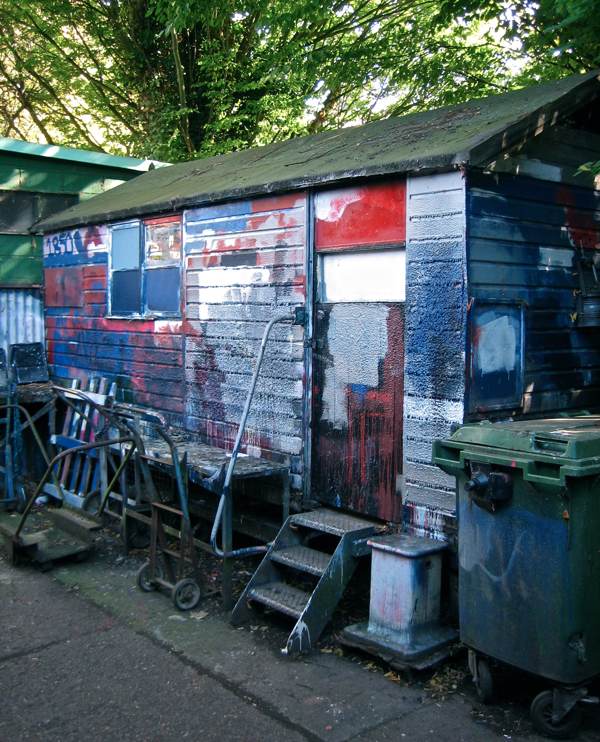
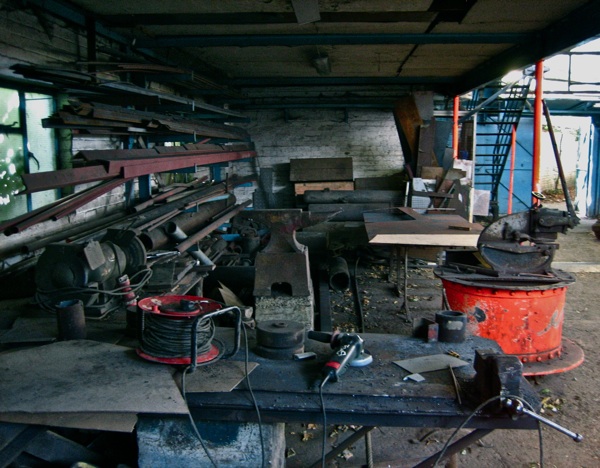
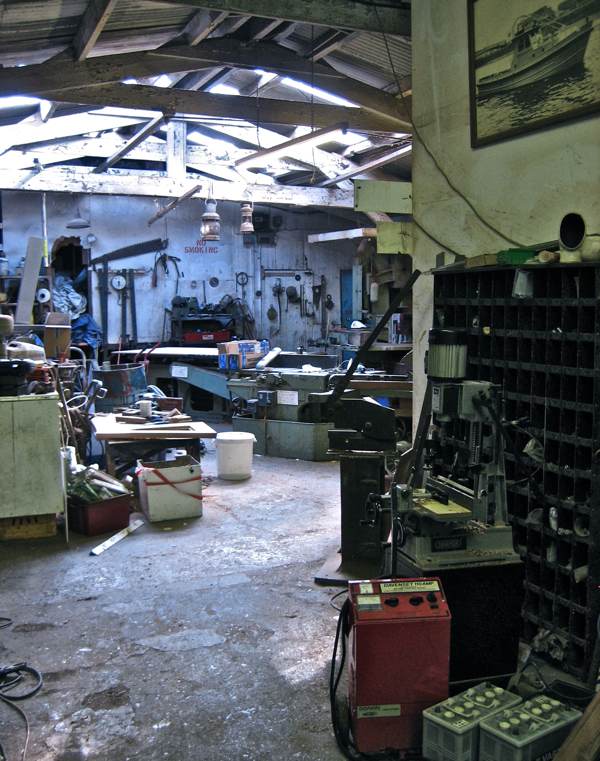
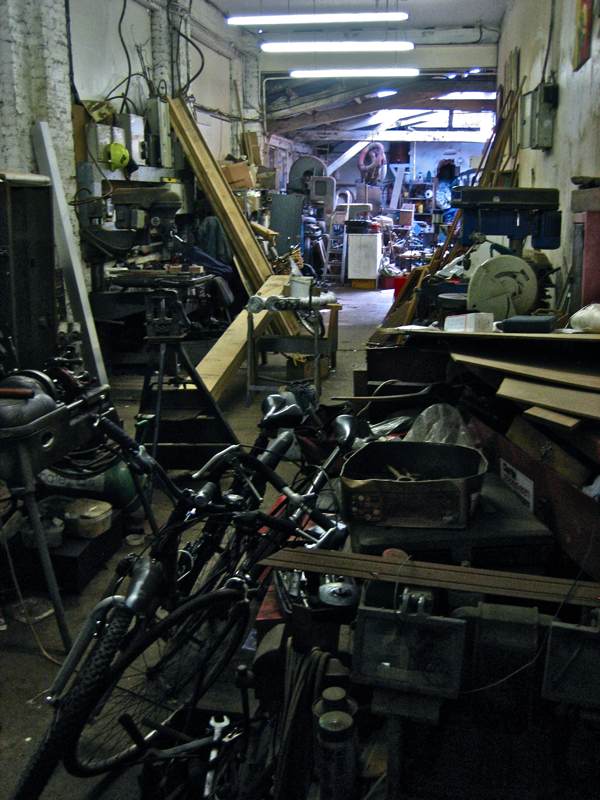
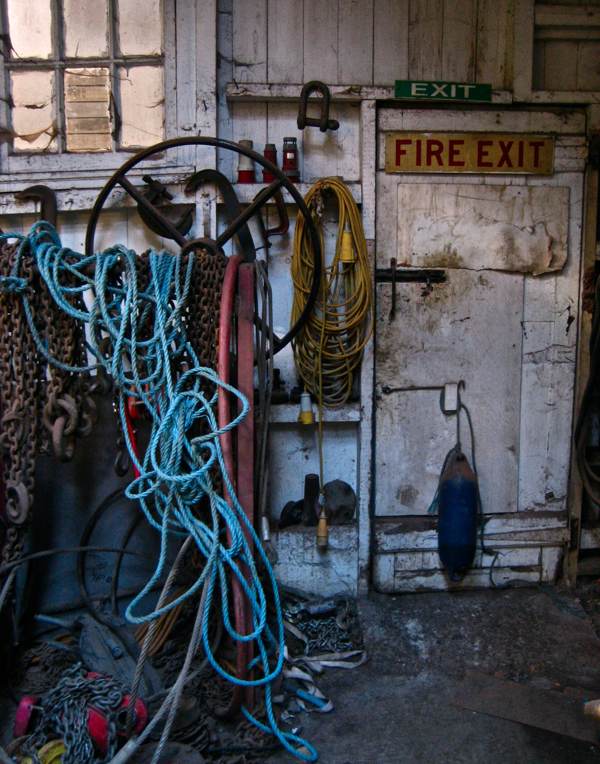
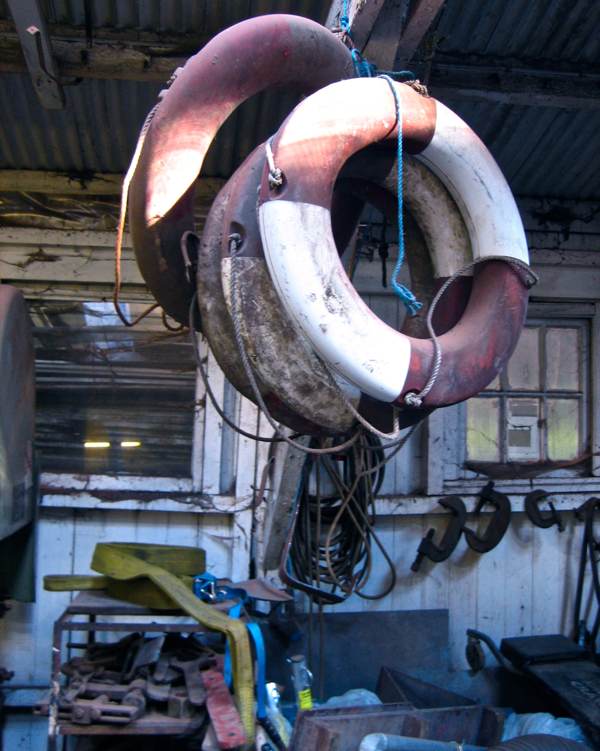
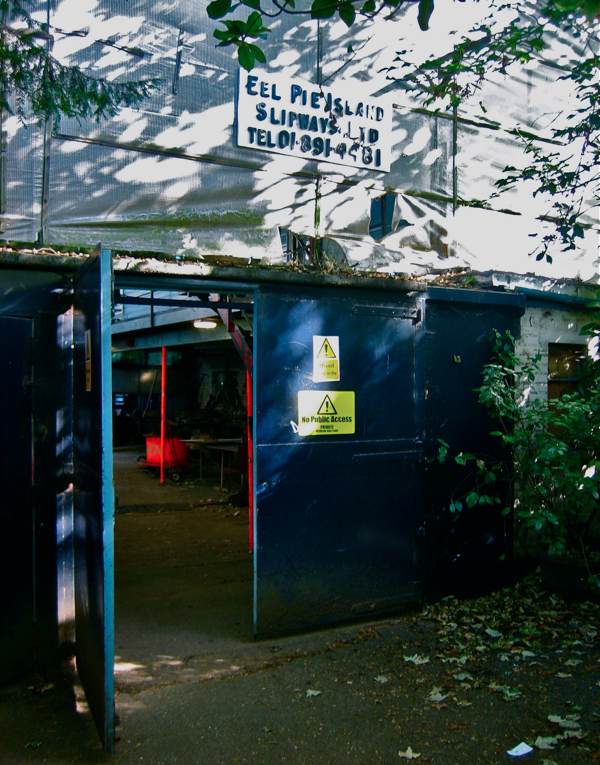
This tiny haven in the Thames proposes a further remove from the metropolis, a leafy dominion of artists’ cabins, rustic bungalows and old boatyards where, at the overgrown end of the only path, I came upon the entrance to Eel Pie Island Slipway. Here, where there are no roads, and enfolded on three sides by trees and tumbledown shacks, a hundred-year-old boatshed over-arches a hidden slipway attended by a crowded workshop filled with an accretion of old tools and maritime paraphernalia.
For the past twenty years, this magnificent old yard has been run by Ken Dwan, where twelve men work – shipwrights, platers, welders, marine engineers and marine electricians – on the slipway and in the workshop. “We have all the skills here, “ Ken informed me, “and the older ones are passing it onto the younger ones. Everybody learns on the job.” One of just four yards left on the Thames, Ken has his order book full for the next year, busy converting barges into houseboats, and maintaining and repairing those already in existence which, by law, have to be surveyed every five years.
Like his brother John Dwan – the Lighterman I spent a day with in September – Ken has worked on the river his whole life, earning a living and becoming deeply engaged with the culture of the Thames. Ken makes no apology to describe himself as a riverman and, as I discovered, the currents of this great watercourse have taken him in some unexpected directions.
“I started as an apprentice Waterman & Lighterman at fifteen. When the Devlin Report came out in 1967, all Lightermen had to be fully employed by lighterage companies, and I joined F.T.Everard & Sons. You got your orders over the phone the night before, and they sent you to collect and deliver from any of the docks between Hammersmith and Gravesend. We used to drive and row barges of every conceivable cargo – lamp black, palm oil, molasses, wool, petrol, sugar – I even moved a church once!
The work moved East as the docks quietened down and companies closed. Because of the Devlin Report, we had a domino effect whereby, when one company shut, everybody would join the next but there wasn’t enough work and so they shut too. But, as freemen of the Thames, we Lightermen were able to work in civil engineering. I worked on the building of the Thames Flood Barrier, and a lot went into the construction of Canary Wharf and the redevelopment of the Pool of London.
After that, I worked on the passenger boats, and I decided to buy one with a partner and we formed Thames Cruises – doing trips from Westminster to Gravesend. We started by buying other people’s cast-offs and we needed to repair them, so then we bought this place and I came up here while my partner ran the passenger boats. They still run from Lambeth. I found that if you have the facility, a lot of people want repairs and now most of our work is for other people. We also do a small amount of boat building and we provide a service of scattering of ashes on the river for the Asian community.
I did a lot of rowing years ago, I went to two Olympics as a single sculler, in 1968 and 1972. I won my Doggett’s Coat & Barge and was made a Queen’s Waterman, becoming the Queen’s Bargemaster for three years. My job was to move the crown in the State Coach from Buckingham Palace to Westminster for the Opening of Parliament. It dates back to the time when the safest way to travel was by water. They do suggest that the London streets are safer now than years ago, but you may wish to question that. I was Master of the Watermen’s Company from 2007/8, and now both my sons have got their Doggett’s Coat & badge and work on the river too.
I loved working around the Pool of London years ago, and, sometimes after work, I used to walk through Billingsgate Market late at night. There’d be be fish and ice everywhere, the atmosphere in that place was incredible. When we were out of work, we could get a tanner there for pushing the barrows of fish up the hill. My favourite place in London then was Tower Hill in the early morning, the escapologist on the corner trying to get out of the bag, and the old coffee shops where you could get steak and kidney pudding. When the big old tomato boats moored on the West side of London Bridge, the bridge would be full of people watching what was being moved around – it didn’t matter what time of year, people lined the bridge because there was always something different being unloaded. All the cranes were still working then and the place was hive of industry. It was a privilege to be part of it. For a fifteen year old, the London Docks was an adventure playground.
It’s never been hard getting out of bed and going to work. I still love going on the river seven days a week. It was never a job. It was an absolute pleasure. It was a life.”
When Ken visited Eel Pie Island as a fifteen year old apprentice Lighterman, he did not know that one day he would come back as master of the boatyard here. Yet today, as custodian of the slipway, he is aware of the presence of his former self – indicating to me the hull of a lighter that he worked on when it carried cargo which now he is converting to a houseboat. His sequestered boatyard is one of the few unchanged places of industry on the Thames, where the business of repairing old vessels that no other boatyard will touch is pursued conscientiously, using the old trades – where all the knowledge, skills and expertise that Ken Dwan once learnt in the London Docks is kept alive.
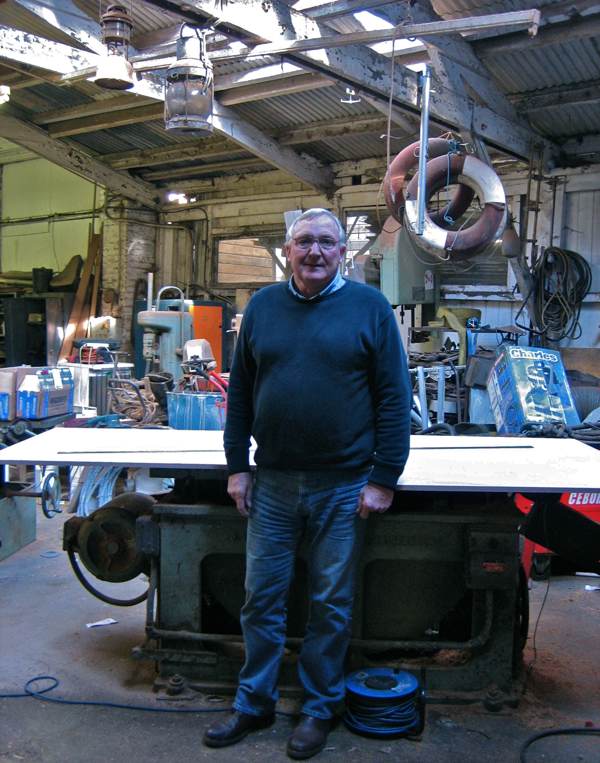
Ken Dwan, Waterman & Lighterman
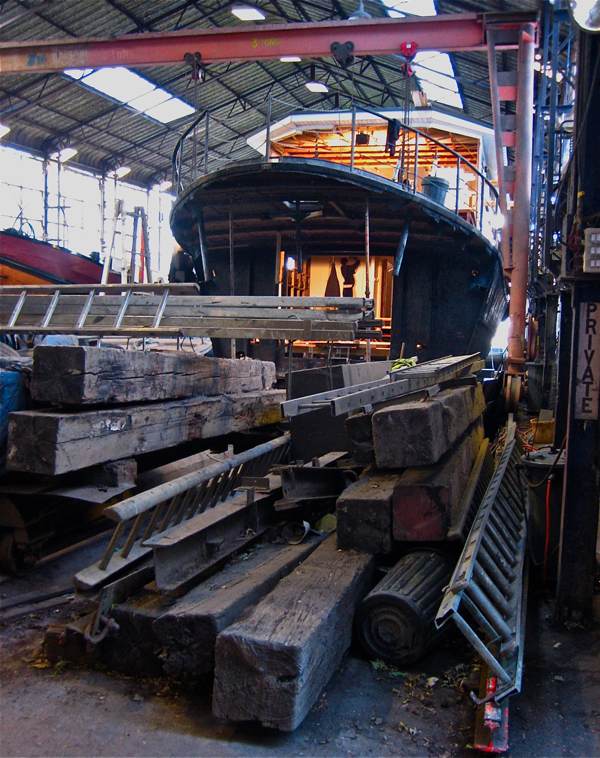
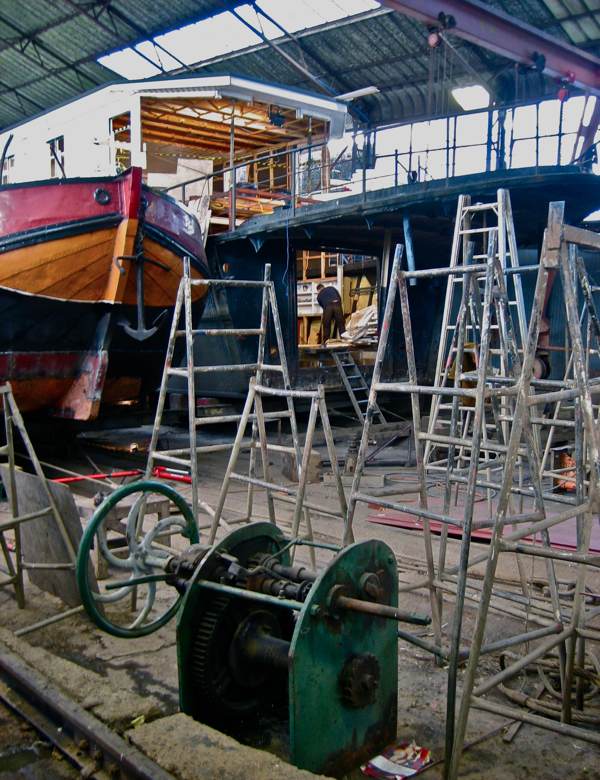
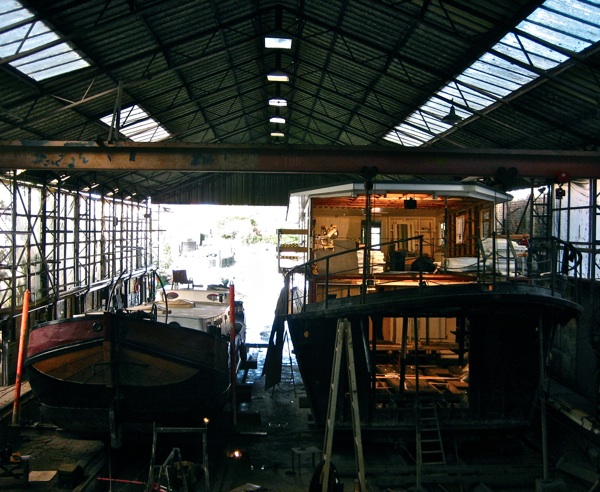
A nineteenth century Dutch barge and Thames lighter of a hundred years ago.
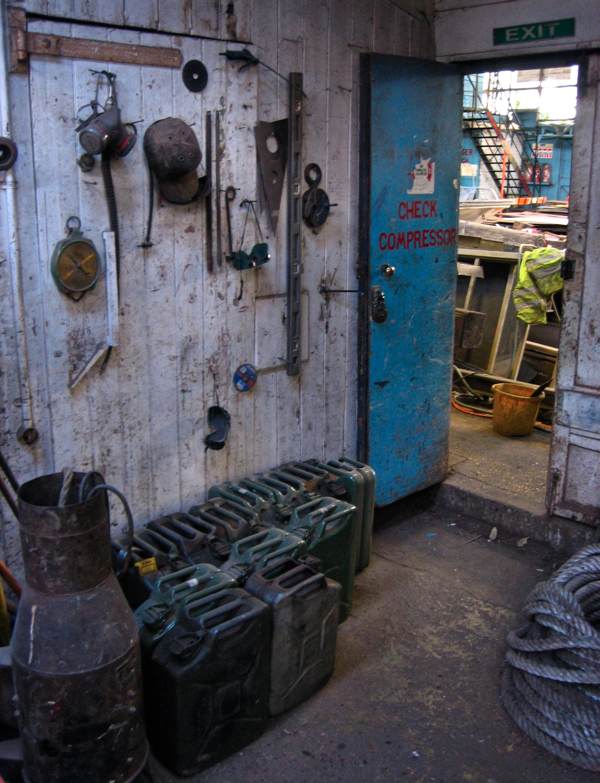
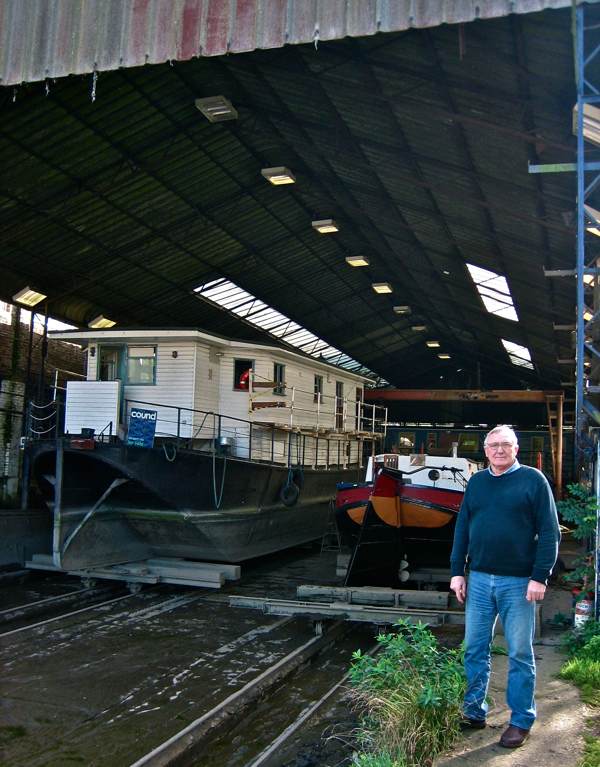
“This barge, I worked on it when it moved cargo and now we are converting it into a palace!”

Ken Dwan – the Queen’s Bargemaster – stands at the centre, surrounded by fellow Watermen.
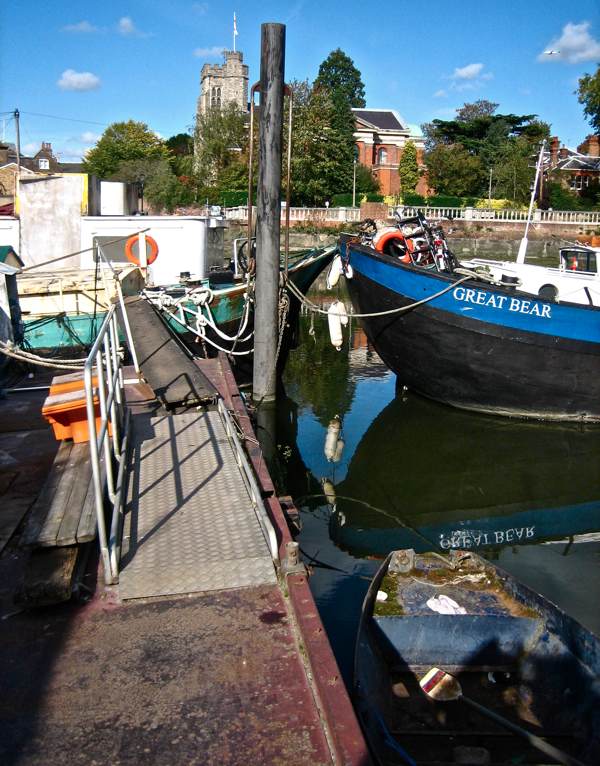
Looking across to the mainland and Twickenham church.
You may also like to read about
The Camp at St Paul’s Cathedral
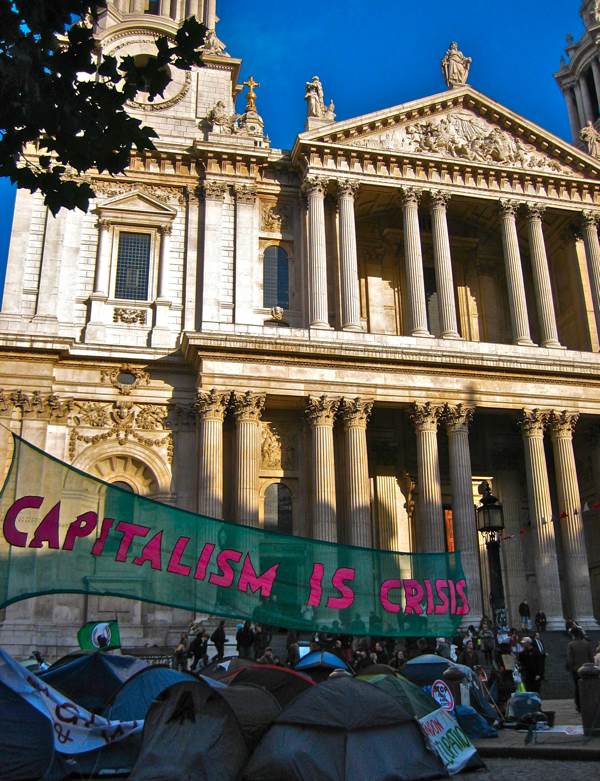
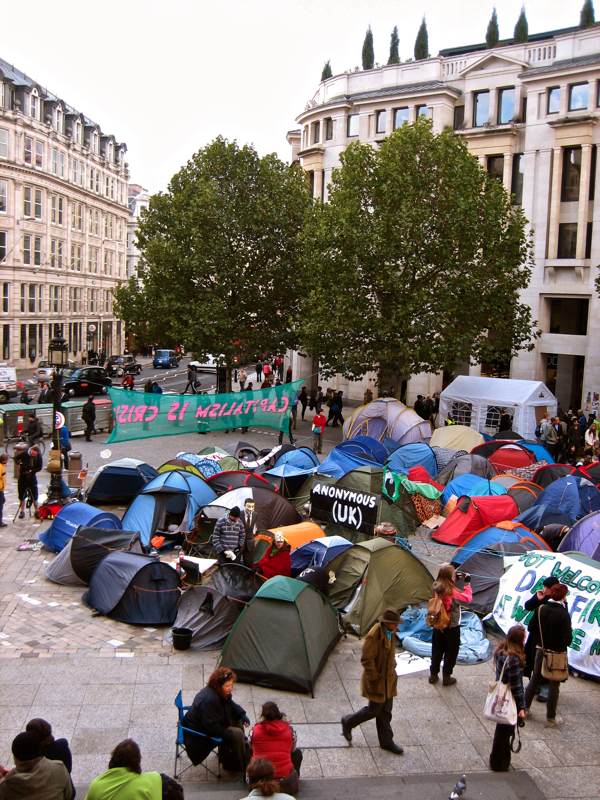
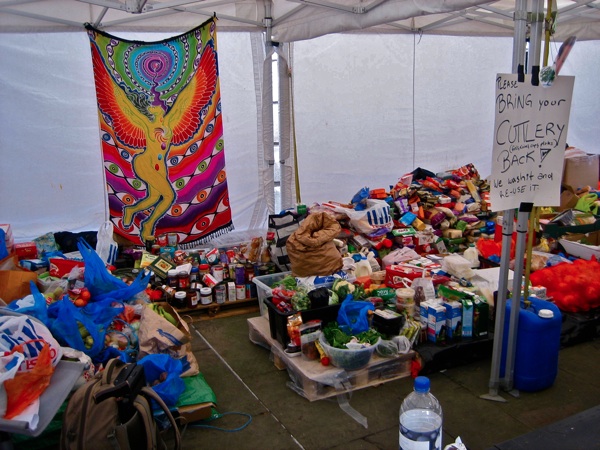
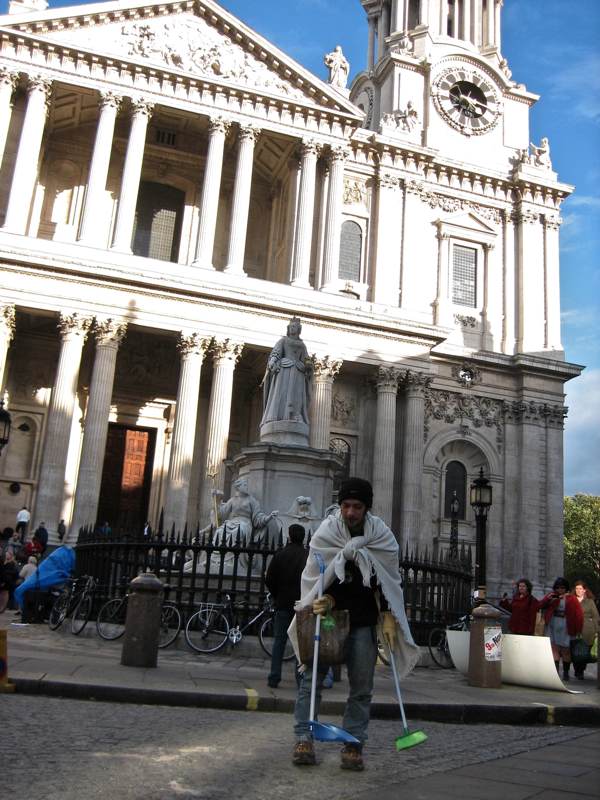
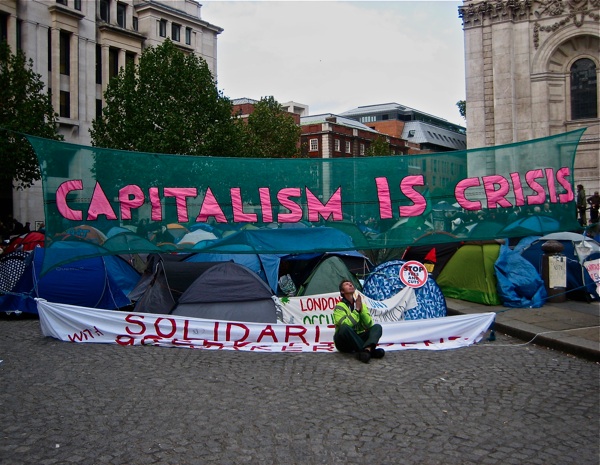
Something extraordinary has happened at St Paul’s Cathedral. Inspired by the recent occupation of Wall St in New York, protestors gathered in the City of London to occupy the Royal Exchange on Saturday, yet the police made sure they never got beyond their rallying point on the steps of the Cathedral. But then – in an unexpected move – Canon Giles Fraser came out of St Paul’s to welcome them and ask the police to leave, effectively granting sanctuary to the protestors. And since Saturday, they have pitched a small encampment of tents beneath the towering West front of Wren’s great edifice, thus establishing a highly visible presence for themselves at the heart of Europe’s financial centre, with the blessing of the Cathedral authority.
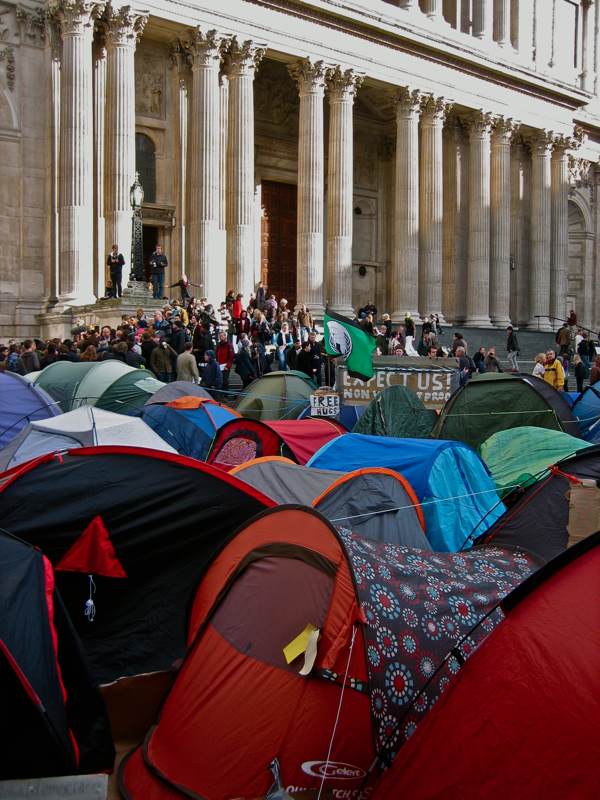
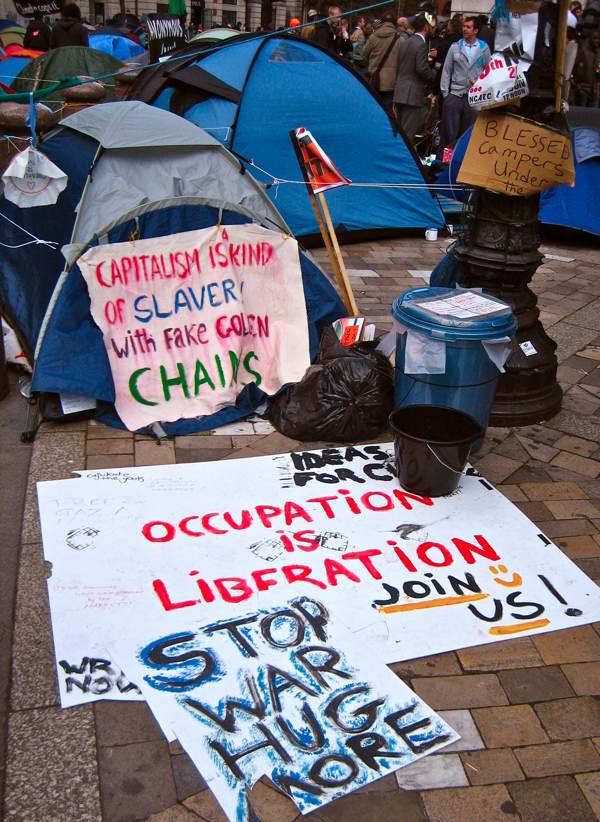
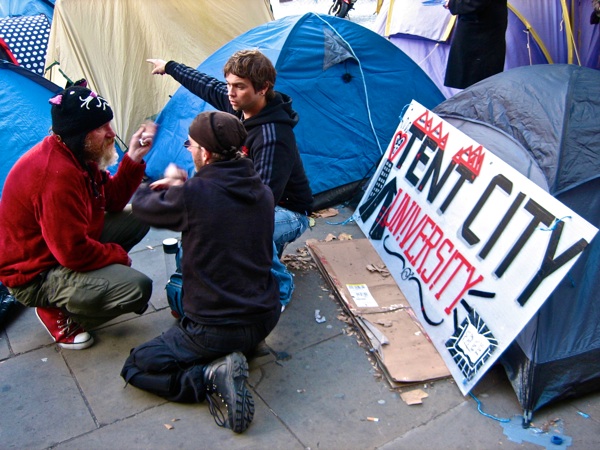
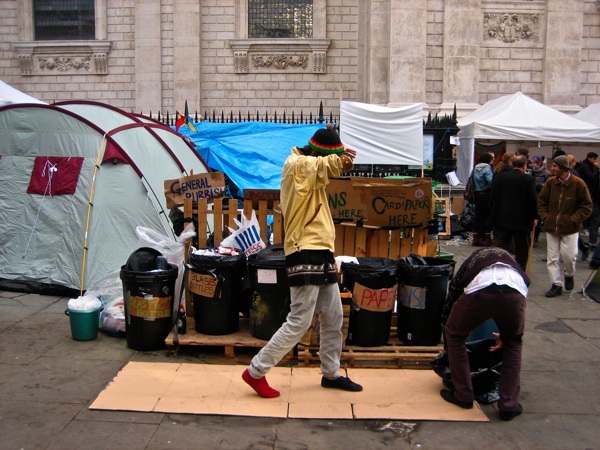
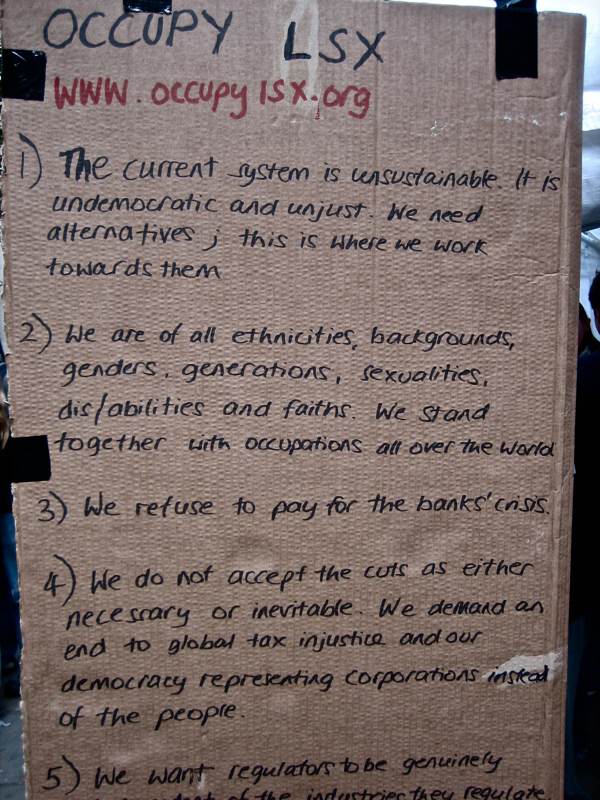
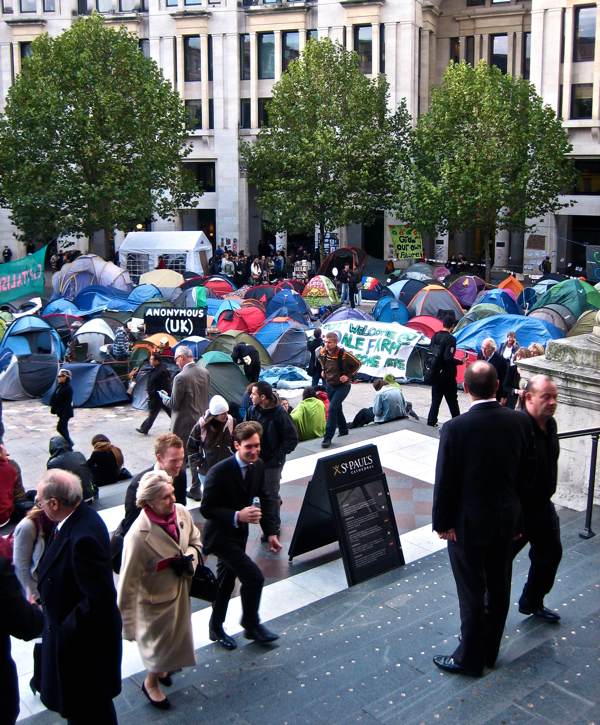
In just a few days, this city within the City has established its own life, with a first aid post, legal advice centre, a cafeteria serving meals prepared from donations of food which are being received, a recycling centre and even a university offering seminars in alternative economics and a range of other relevant topics. “We all understand there’s something fundamentally wrong,” one of the tent occupants admitted to to me, citing the prolonged wars, global financial crisis and collapsing economies that are indicative of our time.
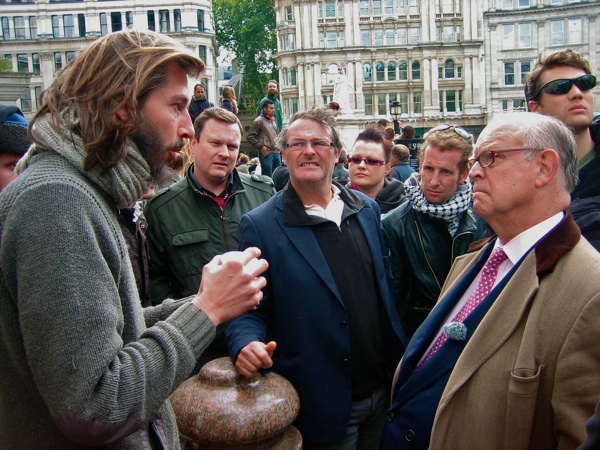
“Does the society we live in function to benefit the people who live in it, or for some other reason? – to benefit only the rich? – to benefit those in power?” he asked rhetorically, gesturing to the buildings of the City that surrounded us, “People are losing their homes, their jobs, they cannot pay their bills, and entire countries are going broke – that is why we are here.”
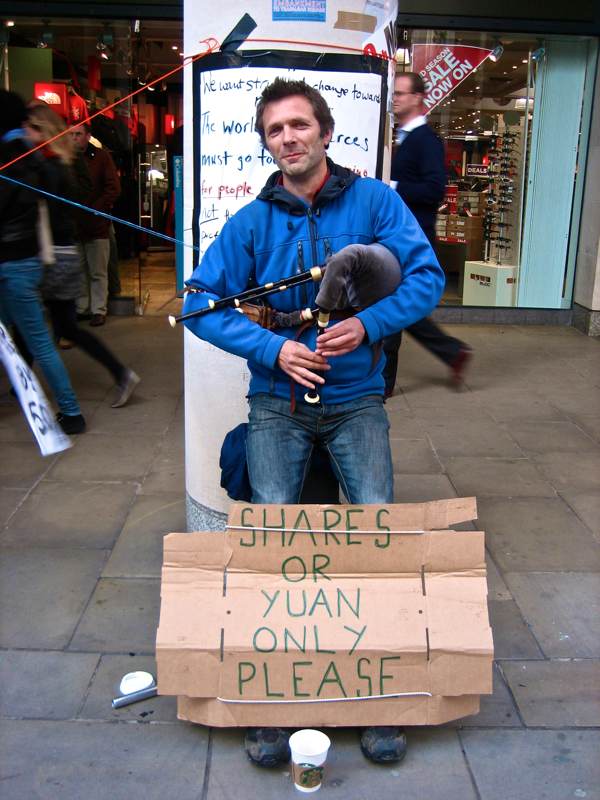
I stood among the sea of tents in the deep shadow of late afternoon with a bright October sky overhead and realised I had arrived in a different place, an intense emotional space, transformed by the presence of those camping there. Everywhere I looked, people were engaging in heated discussions about is right and what is wrong, and what should be done about it. City workers and other passersby had stopped to participate in debates, among the tents, those dwelling there were sitting in circles discussing their beliefs, and upon the steps of the Cathedral large crowds were gathering to participate in disputes filmed by television cameras. “This is not about Left or Right, it’s a human thing,” explained my host, recognising the wonder upon my face in reaction to the spectacle – “something needs to change.”
Yet to my eyes, a near miraculous change had already come about – because the presence of the camp gave everyone the opportunity to speak their minds publicly, to be heard and to listen. The combination of circumstances had delivered a rare moment of liberty, in which recognition of common humanity was uppermost as the basis for all interaction.
The quality of openness and mutual respect – and the possibility that complete strangers could open their hearts to share their beliefs about what kind of world they want to live in – was such that I can only describe this event as a spiritual one.
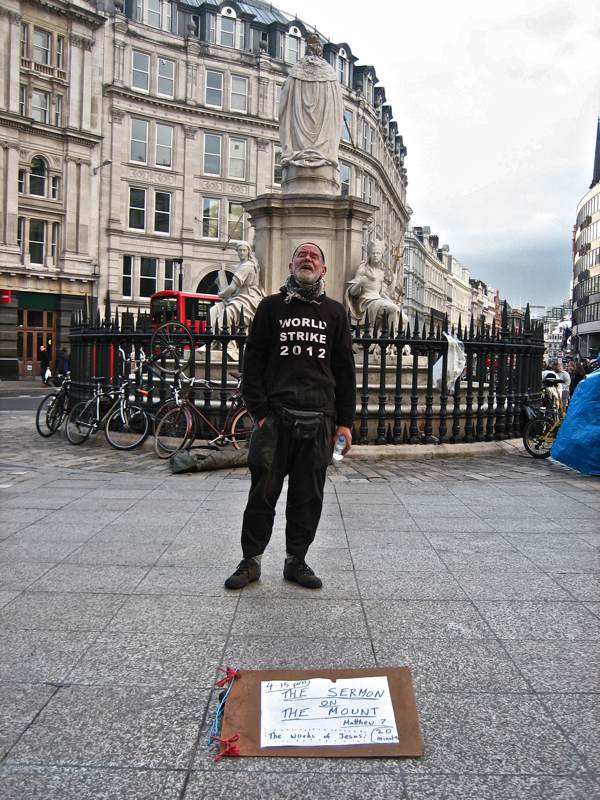
In front of the vast Cathedral, a man was reciting the sermon on the mount. All around, musicians were playing and the standard anonymity of the City streets was suspended. Normality was exposed as a charade because a group of ordinary decent people felt passionate enough to risk themselves, taking leave of their jobs and families and everyday lives, sleeping on concrete at the onset of Winter in Northern Europe to express their moral outrage at the direction our world has taken. And when you see this, it renews your hope.
You may also like to read about Richard Jefferies in the City of London
At Grenson’s Shoe Factory
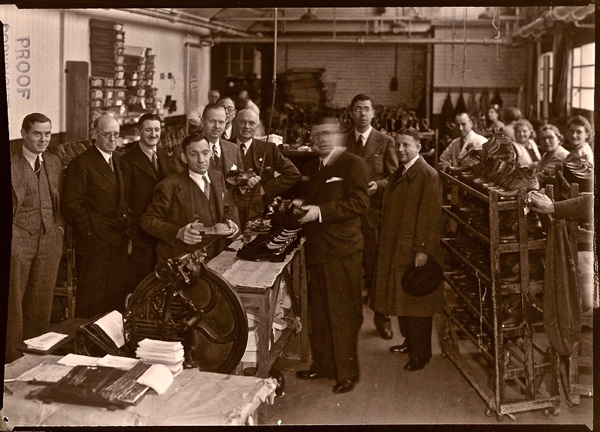
Starting in 1866, a shoe factor by the name of William Green came regularly from Northamptonshire up to the City of London to get orders and then take them back to Rushden where, in 1874, he opened his first factory as William Green & Son, founding the company we know today as Grenson.
Now that Grenson have opened two shops in Spitalfields, I set out to follow William Green’s footsteps back to where it all started. In his time – and until quite recently – Northamptonshire was renowned as the centre of the British shoe industry. Yet although those days are gone, the red brick Grenson factory, turreted at one end, still stands majestic among the little terraced streets at the heart of Rushden, just as it did when William Green opened it in 1895.
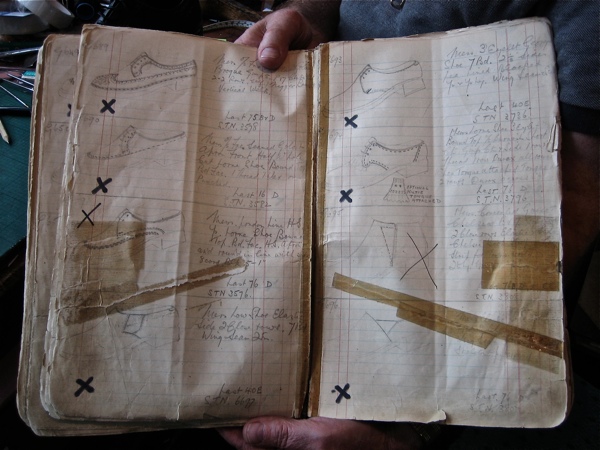
The appealingly named Roger Tuffnail, pattern cutter, was my guide –“My grandparents were blacksmiths,” he explained by way of introducing himself,“and I always understood the surname originated from that.” I could not help admiring Roger’s venerable brogues, cut from his own patterns. “Because I work in a shoe factory, I do not polish my shoes,” he confessed with a blush and a shy smile in response to my compliment. In fact, Roger is a key employee at the Grenson factory where he has worked since 1981.“I cut the patterns that make the uppers of the shoe, creating the style from a drawing,” he explained.
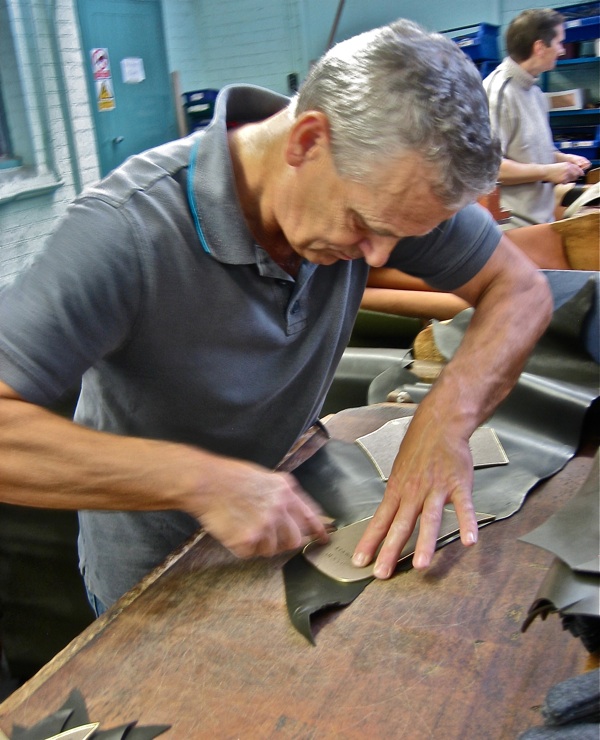
“I just naturally do it,” Roger added – just in case I should get an inkling how skillful he is – opening an old ledger full of drawings of shoes as he cast his mind back, “I was seventeen when I joined the shoe trade – in the clicking department.” Minutes later, we stood in the clicking department where foreman Robert Taylor – who knows a trick or two with a knife – revealed that this name derives from the sound the blade makes when you pull it out from thick leather, once you have finished cutting round the patterns.
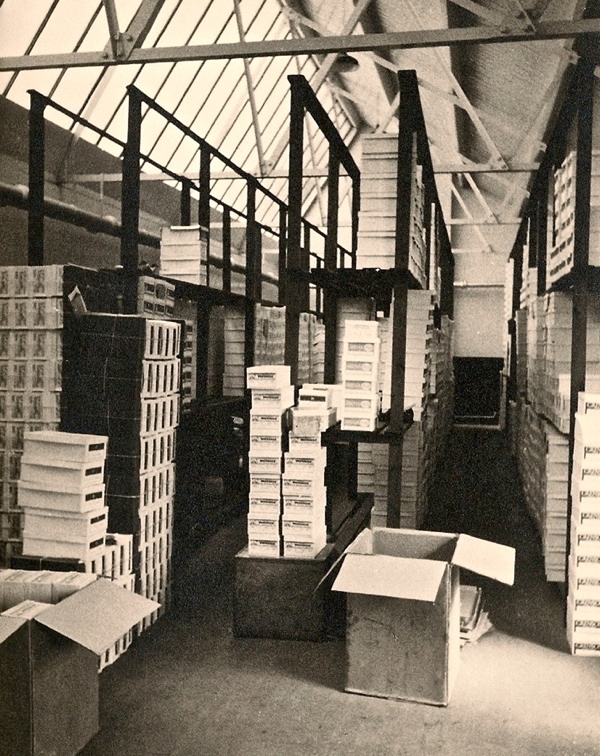
Here at the centre of the old factory, intoxicated by the smell of new leather, I took a moment to appreciate this extraordinary industrial structure, designed to admit Northern light from rows of windows in the roof, creating an interior space almost ecclesiastical in its luminosity. Ancient photographs, ledgers, racks for time cards and most importantly old machines – well-maintained and working as well as ever – attest to more than century of shoemaking within these walls.
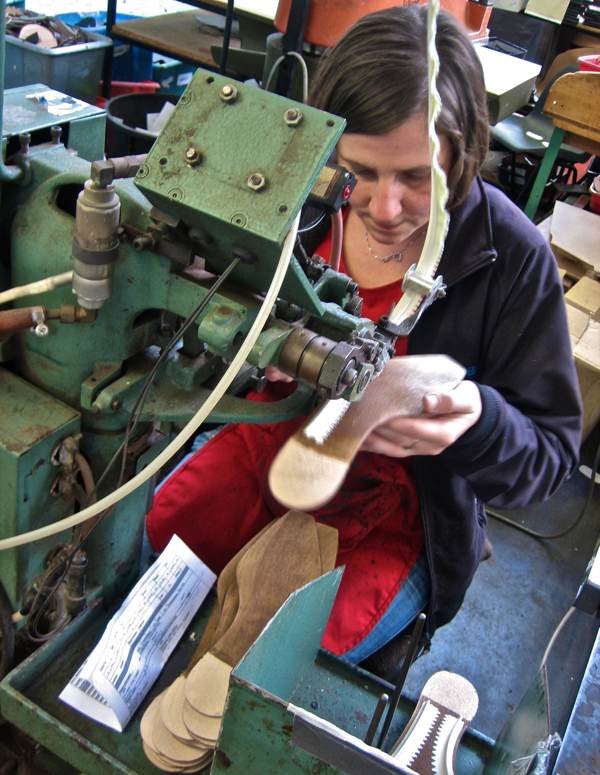
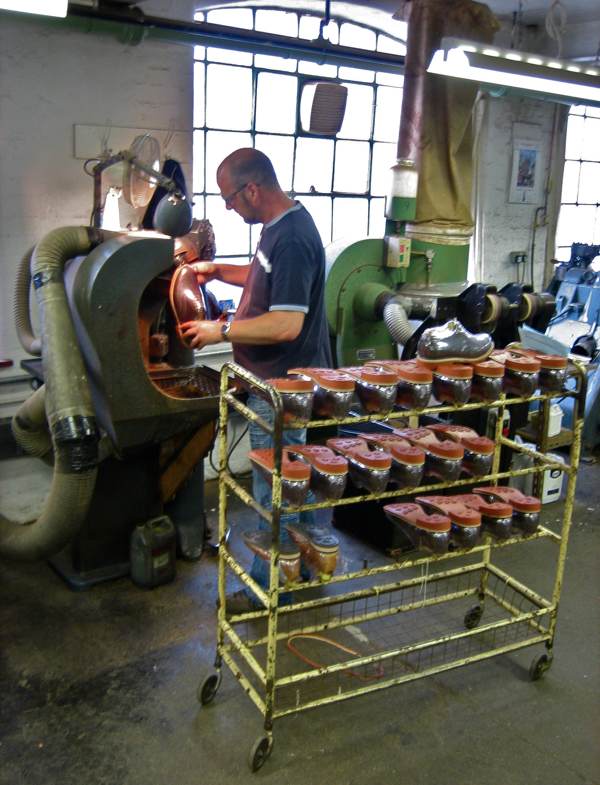
Nearby, a bevy of local ladies manned sewing machines and other cunning devices, joining pieces of the uppers together and punching those wonderful patterns that characterise the brogues which are a speciality here. This is known as the closing department. On the floor below, these uppers are moulded around the last and attached to the sole using the famous Goodyear Welting process. Sewing a strip of leather around the upper to join it to the sole makes it more waterproof and permits the option of removing the entire sole in years to come which means the shoe can be refurbished almost endlessly. This takes place in the lasting and making department. Once the heel is attached, the “making” of the shoe is complete and then after careful finishing, trimming, stamping, waxing and buffing, it arrives in the boot room where Sharon Morris fits the laces and Mavis Glen gives it a good polish. The whole process has taken three weeks to make as beautiful a pair of shoes as you could wish, in the traditional manner.
Yet this magnificent factory is not, as you might assume, some arcane endeavour quietly fading into obsolescence, like so many of the other Northamptonshire shoe factories that have gone forever. Instead, Grenson is enjoying a renaissance. Breaking his customary reserve, Roger turned positively declamatory to assure me “The future is very good for us.”
Today, he works very closely with new proprietor Tim Little to create shoes he describes as “traditional footwear with a little bit of a twist – a livelier look,” and the result has been that Grenson shoes have become popular with a whole new generation of younger customers, alongside those who have always bought their classic English styles.
“We were the first to bring out platform shoes for men in the seventies,” Roger reminded me, just in case I had assumed he was complete fogey. In fact, the current evolution of Grenson has been achieved through more subtle means, retaining the integrity of Roger’s classic shoe patterns while introducing different colours and soles to make them contemporary.
From his modest office on the top floor, Tim Little is evangelical to uphold the Grenson tradition and make it relevant in the twenty-first century. “There’d be no point, if I didn’t love English shoes and the way they have evolved,” he confided to me, committed to keep William Green’s business alive in Rushden, and to be selling shoes in London where his predecessor took orders a hundred and fifty years ago.
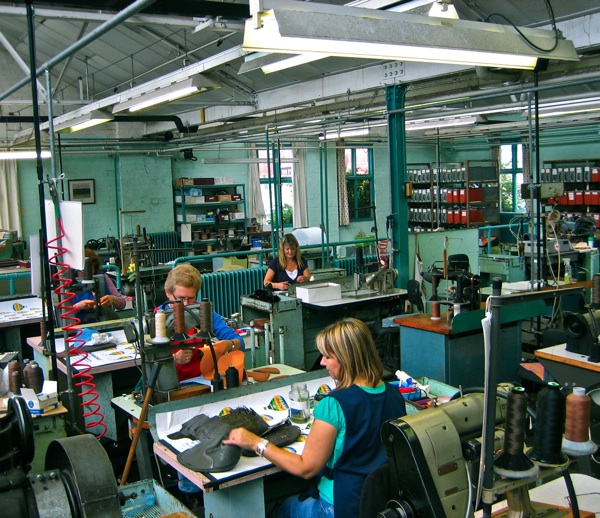

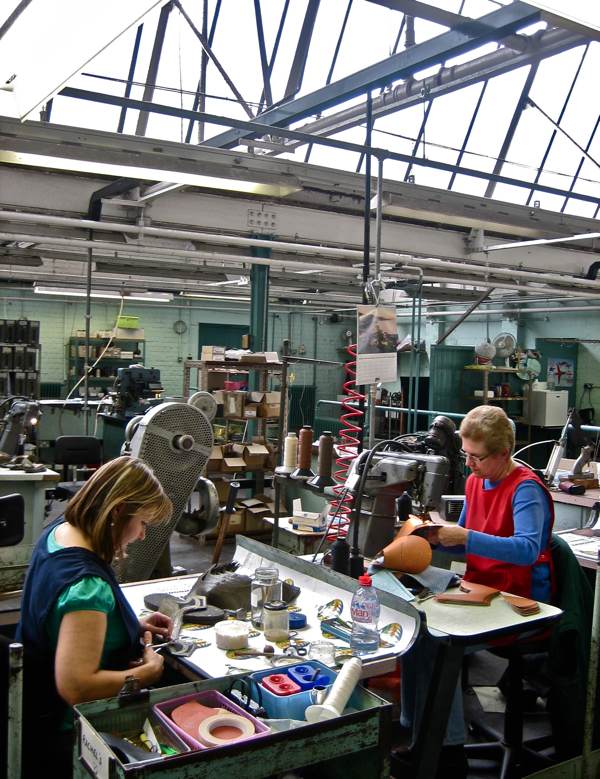
Rachel Brice has been here ten years and Jane Norman thirty-two years.
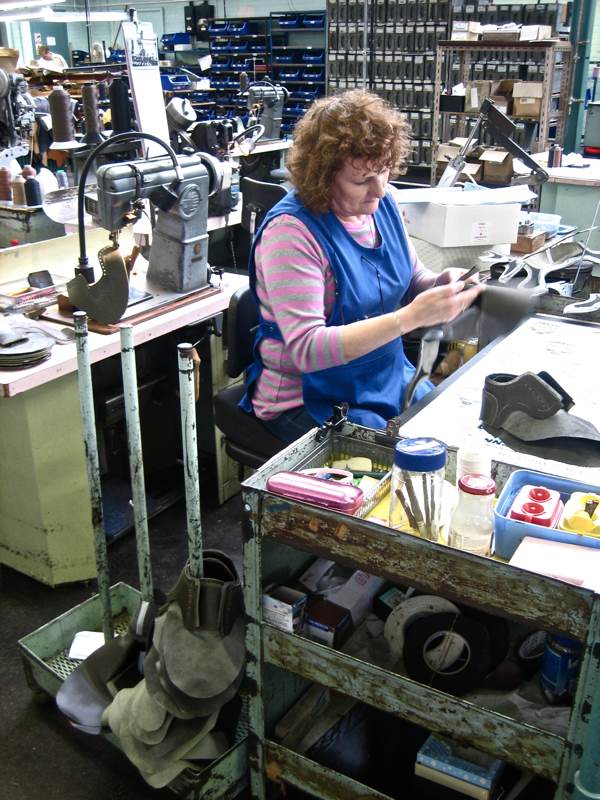
Lainie Alcock has been here fourteen years.
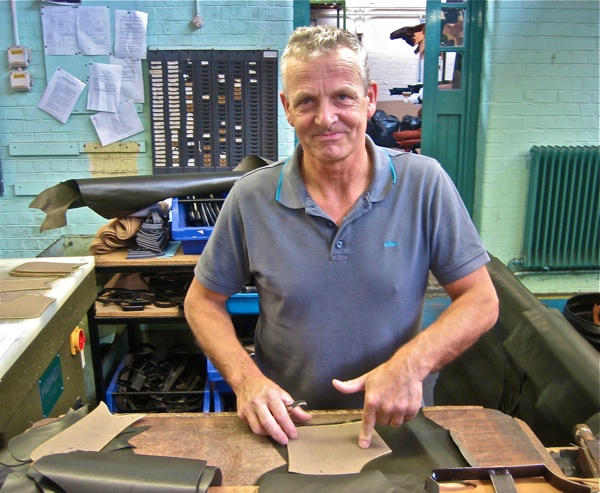
Robert Taylor, Clicking Room Foreman, has worked at Grenson since 1969.


Peter Neagle in the lasting room.
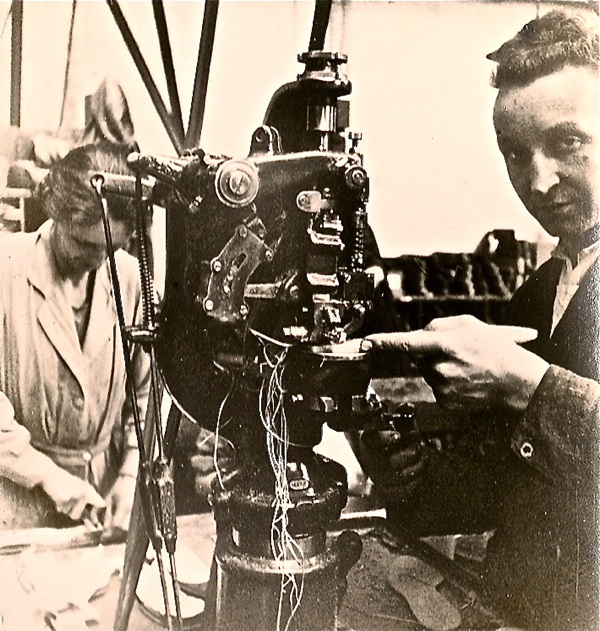
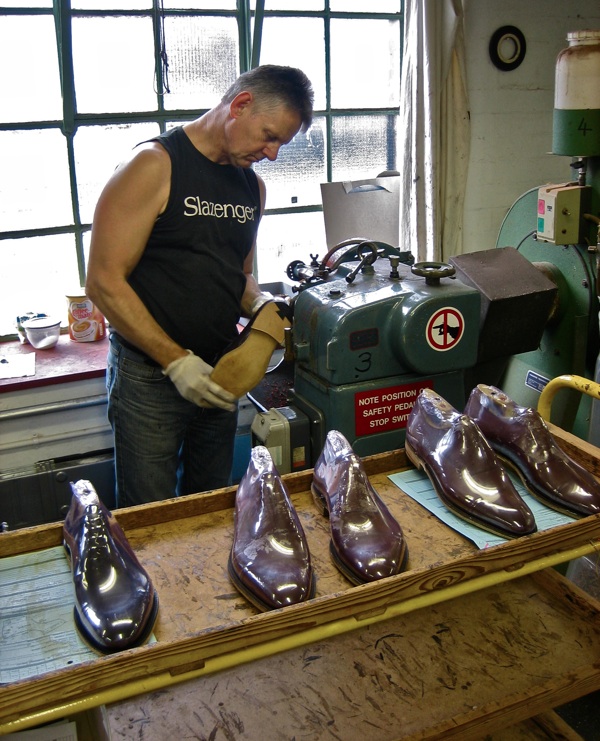
Dave Alcock ( Lainey’s husband) has worked here thirteen years.
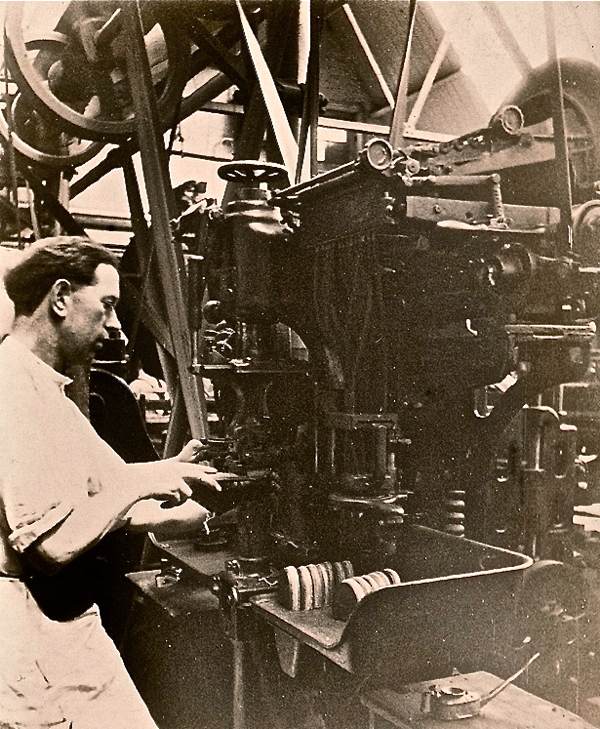

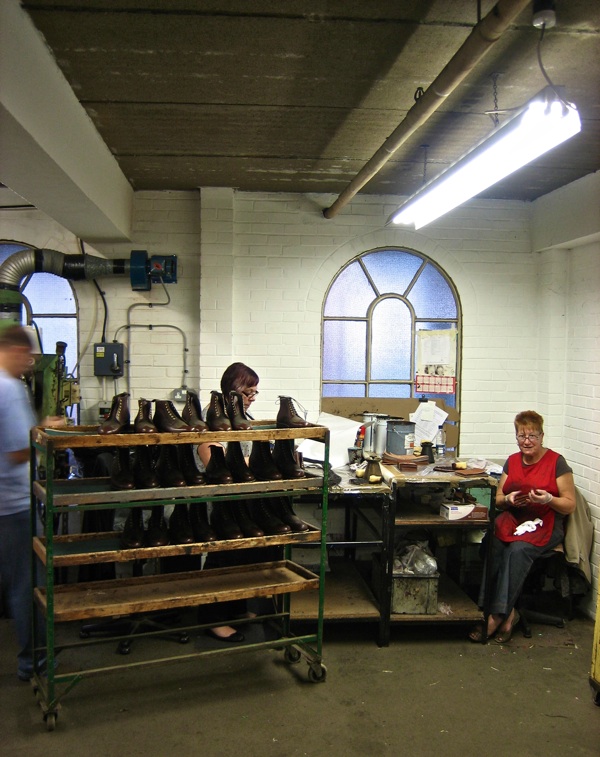
Sharon Morris and Mavis Glen in the boot room.
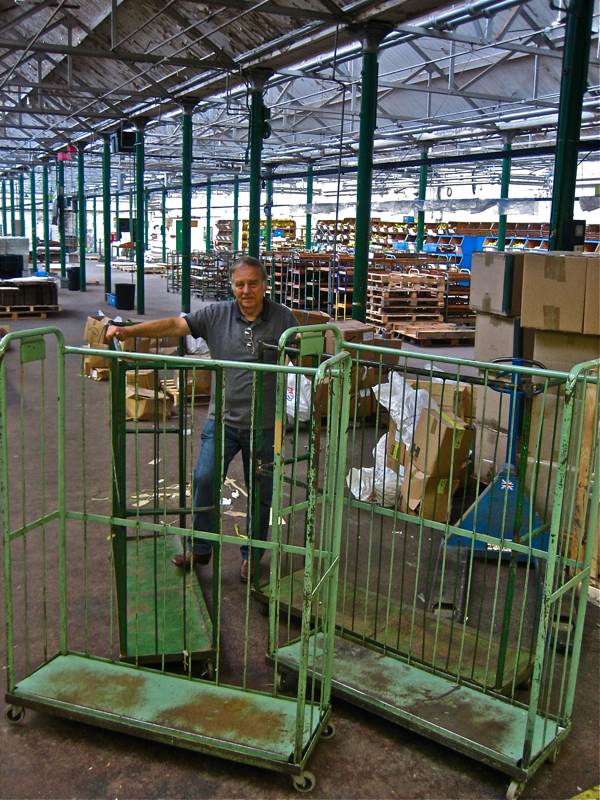
Roger Tuffnail, pattern cutter
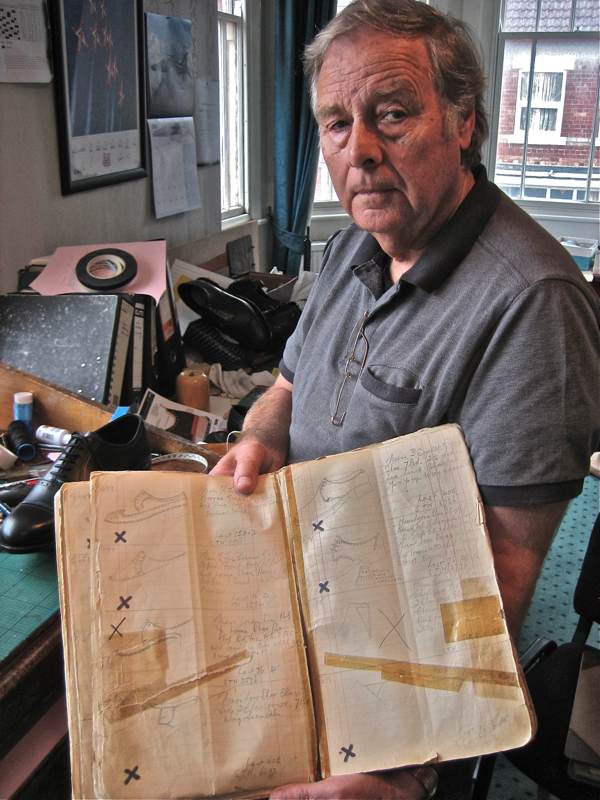
Roger shows an old Grenson pattern book.


Archive photographs copyright © Grenson
You may also like to read about
At Rayner & Sturges, Shirtmakers
At Drakes of London, Tiemakers