
Alie Touw’s War
In the second of three stories published over the holiday, Alie Touw tells of her life in the occupation

Centenarian Alie Touw lives in a small flat in Petticoat Lane where she delights in domesticity. The kitchen is clean and well-organised, and Alie is especially pleased to have acquired a new grinder suitable for apple sauce. To impart the ideal flavour to apple sauce – she explains – you need to include the peel but then it raises the question of how to achieve the smooth puree that is the desired texture for proper apple sauce, which is why a grinder is essential.
Such culinary matters are important to Alie Touw, not because she is a pedant or unduly house proud but because she believes in the significance of small things. Alie understands that the culture of keeping house is the basis of a civilised life, she knows this because she has experienced the disruption when a family home is destroyed and the domestic world is displaced by chaos and violence.
I visited Alie to hear of her experiences during the war and we sat together in conversation on either side of her kitchen table as the dusk gathered in the late afternoon. ‘I don’t like taking about the war,’ she confided to me with a frown, ‘My father lived through two wars but he would never speak about it.’ Only after she had finished telling her story did I fully understand her reluctance but, now that I know what happened, I am grateful to her for her astonishing testimony.
“We had a hard time in Holland during the war, especially the last winter of 1944, it was terrible. We were occupied for more than five years.
At that time you could not even trust your own neighbours. I was twenty-six, I had been married two years and I had a one year old baby. I had a pro-German neighbour living next to me in our house in Arnhem near the Rhine. He was from Germany and he had ten children who had to fight for his country. His wife was Dutch but she was even more pro-German, so we had to be very careful what we said to them. I never spoke to her anymore, just in case.
People were bringing Jewish children over the bridge, arranging for them to escape from Germany, and sometimes they stayed with me overnight before catching the train next morning to London. Another of my neighbours who I was very friendly with, she had five Jews hiding in the loft of her house. On the other side of me I had an old couple who knew I was alright, that I would never reveal anyone for the sake of a reward. He was in the resistance and every morning he listened to Radio London. He would tell me, ‘It’s going well, it’s going well’ and I would say, ‘Fine, fine.’ But then we all had to leave.
We had to leave our home on the 23rd September, two days after my birthday. Everybody had to leave or they would shoot us they said. We had no telephones at that time, so had no idea what was going on. Arnhem was not a small village, it was big town and everyone had to leave. There were dead soldiers lying in the street. My father went to look in the pockets of the dead soldiers and took their addresses, so he could inform the families. There was shooting through the streets and in the windows. Nothing was safe anymore. There was fighting everywhere and every night the sky was red with the buildings near the bridge over the Rhine burning. We saw people running through the street and we asked, ‘What’s happening?’ and they answered, ‘Our house is gone!’
The Red Cross gave us addresses where we could go to, so we started walking from town to town. I had to walk for hours with my baby. At first, we were staying with my parents, but we had to leave them. Me and my husband and his sister, all of us went walking until we came to the place. The weather was so bad and all we had was a bicycle. It was raining and there was thunder, everything. We got soaked. All we had was a small suitcase for ourselves and a big one for the baby. It was all we could carry, since they told us it would only be a fortnight, so we did not take much with us but it was nine months before we could come back, after the war ended.
They expected a fight over the bridge over the Rhine which was the border with Germany – they called it the Battle of Arnhem. The Germans wanted to hold it but on the other side were the English, American and Polish soldiers. There had been fighting in the streets. The British and the American and Polish wanted to cross the bridge over the Rhine but the Germans would not give up, and so many people died. The Dutch blew up the bridge.
On the first night, a farmer took us in and we had to sleep on the floor because they did not have beds for us. We did not know how long we could stay or how long the war would go on. They were very kind and they had plenty of food for us. We brought what we had with us but we did not have much.
We slept on straw on the floor of the stable with a blanket over us. After five or six weeks, my husband said, ‘We have to go, we are eating up all their food.’ So we had to leave and, one afternoon before we left, we were having a cup of tea and we looked outside and saw a familiar face, my brother-in-law. I rushed out and he told me he had been made to digging holes in the streets for people to jump into if a bomb fell. He had never lifted a spade or done physical work in his life before. So we brought him in and gave him a cup of tea, and he told us my father and my sister and her three little children were sleeping on the floor of a school.
We went to join them and stayed overnight. Of course, we had to ask permission and we asked to stay but we were told, ‘No get out, get out! There are too many here and we don’t trust you.’ So we had to go back.
We had to find a place to stay. My father-in-law contacted his daughter who lived in Aalsmeer near Amsterdam and she said, ‘Come over here.’ The Germans told us we could go to the north or the west. It took us four days to walk there. Every night, the Red Cross gave us an address of a place we could stay. I still cannot understand how they organised it, but there were so many who wanted to take in people who had been evacuated. We could not always stay together. It was November when we started walking, and it was raining and raining for days. We had no raincoats.
Everywhere the Germans stopped us to check our identities. From the beginning of the war, we had to show it wherever we went. We were not free any more. There was a curfew every night between ten and four o’clock when we could not go outside.
On 5th December, we arrived at my sister-in-law’s house. We had been travelling since September. My husband had made a little cart for wood which we put the baby in and attached to the back of the bicycle. When we still had five kilometres to go, a farmer with a big cart stopped. He said, ‘Put the whole lot on board, where do you have to go?’ It was evening already and he took us to my sister-in-law. She was standing outside and my father-in-law was there already. They took us in and we stayed there until the war was over.
In January, my husband said, ‘I am going to see what is left of our house.’ I do not know how he ever dared, we were not supposed to go there. It was so near the end of the war that I do not think the Germans had any ammunition in their guns to shoot you. There had been fighting in the street and lots of houses were damaged. He found our front door open, there was no glass left in the windows and the house was empty. When they blew up the bridge in Arnhem, all the windows in the nearby streets were broken. I had been saving up since I was eighteen and I had some lovely things, some brand new furniture, bed linen and cutlery. There were no curtains left, they even took the curtains off. All my husband found was some baby clothes and a little cot in the loft.
Food was very scarce at that time. The winter was long and cold, and food became so scarce that some people died of hunger. We had no money but you could not buy anything – the Germans stole everything. Every morning we went to farm to see if they had any food and they asked us, ‘You’ve come all the way from Arnhem, we don’t know who you are – we want to know if you have been with the Germans?’ There was a list of people who collaborated with the Germans and, after the war, they got those people. They shaved the heads of girls who had been with German soldiers.
At the farm, they said to us, ‘We will find out who you are, come back tomorrow.’ Next morning they saw us coming and gave us a sack of flour. My sister in law took us in even though she had hardly any food herself. There was almost no electricity or gas to cook but there were these communal kitchens and people brought what food they had to share. My husband said, ‘I will go and try to help out.’ My father-in-law went with him and they came back with soup.
Then the Germans became desperate. They could come to your house and if you said, ‘No you cannot come in,’ they would shoot you. You had to let them in. They went in all the houses looking for radios, although we had already got rid of them because we were not allowed to have radios. We were not supposed to listen to London but people hid radios.
All the young men were summoned to the quay on Saturday afternoon and were taken to Germany. My husband had to go. They were put on a boat to Amsterdam and from Amsterdam sent by train to Germany. It was April and the war was nearly over. I went to the quay to say goodbye to him and he said, ‘Don’t cry.’ They were told, ‘Take a blanket with you and a spoon and a mug,’ so that if somebody came to the train when it stopped they might get a drink or some food. The Dutch people did this. But my husband said, ‘I’m not taking a mug or a spoon, I’m going to escape.’
The train stopped at the border with Germany and my husband saw a familiar face. His brother lived there and he recognised his sister-in-law, going round with a kettle giving everyone on the train a drink. There were soldiers on the train and they were at a station. She saw my husband and said, ‘Peter, what are you doing here?’ He told her, ‘They took me, we have to go to Germany.’ She said, ‘You’re not, here’s the kettle,’ and she took him home. My brother-in-law was in the resistance. They stole German uniforms and put them on and went to the gaol every evening with a list of names from Aalsmeer. They said, ‘These people have to come out.’ Each time, they took a few out. It was unbelievable really what they did.
I did not know when my husband would come back, if ever, but one day the baker returned to Aalsmeer. The shortage of food got very bad and there was no soup kitchen anymore. It was just at the end of the war and my husband was still not back. There were no dogs and cats, people were eating the animals.
My son got very ill because he had no fruit, no vitamins. My sister was a nurse in another town and, before my husband left, he put the child on his bike to take him to the hospital where she worked and asked, ‘Can you take care of your nephew?’ They admitted him to the hospital and I did not see him for a fortnight. The hospitals still had a little food. They were able to make him better but he cried, ‘Mama, mama,’ day and night. He was just two years old and when the doctor saw him, he said, ‘This child is so ill.’ I had to send him to bed without any food. The boy should never have been born then, but what can you do?
My brother who lived in Amsterdam was in the resistance and he had a typewriter to type pamphlets for the underground secret service. One day he had a knock and the door and he had to chuck the typewriter out the window. If they had found a typewriter, they would shoot you.
By 5th May, it was over. My husband came back home on a bicycle all the way from the east. He had to travel all the way across Holland on his bicycle, but he came back. There was no money and no jobs but my husband went to the bakery and repaired some bicycles and they gave him a loaf. Sweden sent us flour and bakers started baking. There was no butter but bread tasted like cake for us.
The Red Cross made up wooden boxes of food. We saw the planes came over flying low and dropping the boxes in the fields. Each family got a case containing bacon, beans, sardines, flour, yeast, egg powder, biscuits and chocolate. Those planes were all coming from Lincolnshire and people spread out sheets on the ground with the words ‘Thankyou boys!’ We were so grateful. Today my son lives in Lincolnshire and is married to the niece of one of the pilots who flew those planes.”
Tomorrow, Alie concludes with her account of how she came to London after the war


Photographs copyright © Sarah Ainslie
Alie Touw, Centenarian
In the first of a series of three stories published over the holiday, Alie Touw tells of her childhood

‘I am an optimist, most of the time’ – Portrait by Sarah Ainslie
‘I don’t know how it happened!’ declares centenarian Alie Touw, shaking her head and raising her hands with a smile of mock bewilderment if you ask the secret of her longevity. ‘I have so many things wrong with me and I fell over several times, but I keep getting up again.’ With her shock of white hair and keen green eyes, Alie sits peacefully and keeps her counsel.
High above Petticoat Lane, Alie lives in a small flat where she peers down upon the City to the west and Spitalfields to the east, observing the relentless passage of life below and contemplating the ironies of existence. Each week, she ventures out to buy food at the supermarket and savour the exoticism of our present age. I doubt if many of those who pass Alie in the street are aware of this traveller from another time walking in their midst. Such is her vitality and demeanour, Alie easily passes as someone decades younger than her hundred years.
Yet Alie is acutely aware of the extraordinary times and momentous events she has witnessed in her long life. She carries equivocal and turbulent memories of the world before we were born. They colour Alie’s personality today and she acknowledges she herself is the outcome of these experiences. This admission makes Alie’s generosity of spirit especially impressive, because her relationship with existence has been forged in dark times and perilous situations. ‘I am an optimist, most of the time,’ Alie will reveal if you press her.
‘There are so many stories to tell,’ Alie confesses to me with a helpless grin, conceding the astonishing journey she has made through inauspicious circumstances, across Europe from Arnhem in Holland and over an entire century, to discover peace in Spitalfields. I visited Alie at her flat in Petticoat Lane over several weeks through this last winter and was inspired and uplifted to hear Alie’s stories because – although she speaks of the past – she has much to say to us today.
“I was born at the end of the First World War. Holland was invaded and there was not much food, so I do not know how they brought me up. I came into the world on 23rd September 1918 as the fifth daughter, the twelfth child of my parents. My father was a train driver. He was born in 1847 and he never talked about his past.
I still remember my mother who died when I was eight years old. She was nineteen when she got married and twenty-one when she had her first child. She went on and on, until she had thirteen children. We were living in Arnhem near the river Rhine and, if the weather was nice, we went for a walk and sat on the riverside with her before we went to bed. When she got ill, my eldest sister looked after her and us, which was quite a challenge.
On my mother’s last night, we were woken up in the middle of the night by my sister who said, ‘Your mother is not very well, you had better come and say ‘Good night’ to her.’ That was the last time I saw her. We were sent to stay with the neighbours but we could hear the carriages in the street and my little sister who was six years old screamed when they took our mother away from our house. I could hear my father crying in the night.
I was always ill. Even as a baby, when I was a couple of months old, I was in hospital. My sister told me my mother kept one of my jumpers and would not wash it until I got better. She told everything to my sister. A lot of what I know of her is what my sister told me.
My elder sister was already engaged to be married, with a fiancé who had a good job. She said to my father, ‘I cannot look after the family.’ She was sixteen years older than me and she had her own life to live. My father did not like that, he expected her to stay at home, so we had to go into an orphanage. I spent ten years there until my eighteenth year. In September of that year I was nineteen but I was able to leave at Easter. They looked after us very well, except we did not get enough food. We did not starve but were always hungry. It was just bread and butter in the morning, and in the afternoon we had a meal.
You were not allowed to complain. One girl complained. There was a monthly meeting with the people who looked after us and she was asked to apologise to them, but she said, ‘I’m not going to say ‘Sorry.” So they said, ‘Out you go!’ and she was thrown out with only the clothes she had on. She was seventeen years old.
Sometimes we had a good time in the orphanage but I was often ill. I had tuberculosis and pneumonia but I recovered. Every day my father visited, to see a different one of us. He came every Friday morning to see me. He had a botched cataract operation so he was nearly blind and he carried a white stick. I said, ‘Oh father, do be careful.’ He came on the bus to see me but one day a van knocked him over when he was nearly home.
In the orphanage, we had savings of ten cents a week – out of which you were given pocket money of three cents to put in the collection at church. On Monday nights, we felt very lonely, so they gave us wool to knit socks for the boys and, every Friday night, we had to wash the boys’ socks. I could knit when I was four years old, my sisters taught me and it came in handy. They would say ‘This is how much you have to do tonight. ‘
The boys never had to do anything, we had to do all the chores. We did not have much free time. We went to an ordinary school with normal children but we had to walk in a line with a woman supervising us. After school, we always had to prepare the potatoes for the next day.
On Sunday morning we went to church, then we had a meal and we could go home for the afternoon. My father walked for half an hour to collect us and we walked home with him. He brought us back again by six o’clock and by seven o’clock we were in bed.
When we were fourteen, we had to leave school and learn domestic service. They wanted me to leave at thirteen but I said, ‘Can I do another year?’ You did six weeks in the kitchen, six weeks in the house, doing cleaning and scrubbing wooden floors, six weeks in the laundry and six weeks in the sewing room. I was not strong enough to scrub floors so they sent me straight to the sewing room. They saved our money for us in the bank and, when we were twenty-one, they gave it to us – a hundred guilders. The first thing I bought was a bicycle. In the last year, you did not have to anything for the orphanage but make your own clothes buying the materials out of that money.
When I was eighteen, I had to go home to take care of my father. He was ninety years old by then. My elder sister who had taken care of us, she took him in after my mother died and took care of him for ten years. She had to do all the sewing and the cooking. She was an angel but she had had enough. We all had to look after my father and our brothers. The two eldest brothers were already married but the other brothers still at home. They needed help.
I was one of my father’s favourites. I said, ‘I want to be a nurse.’ He said, ‘No you have to look after us.’ My other sister had already taken care of the family for five years, since she left the orphanage at seventeen. When she got married, I took over. I did not mind really, I had no choice. Think about it, it was a large house, we had no washing machine or vacuum cleaner or central heating.
When I was twenty, I got engaged and my younger sister had to take over. After a couple of years I got married and had a child. Then the war started.”
Tomorrow, Alie Touw continues with her account of life during the occupation
Portrait copyright © Sarah Ainslie
You also like to read about
Harry The Pencil’s Lunchtime Sketchbook
When I was visiting Harry The Pencil – also known as Harry Harrison – in Mile End yesterday, he showed me this modest little sketchbook that he filled ten years ago when he was working in Great Sutton St, Clerkenwell, undertaking a single half hour drawing each lunch hour – most are nearby his office but you will spot a few further afield in Soho, Kings Cross, Hatton Garden & Spitalfields.


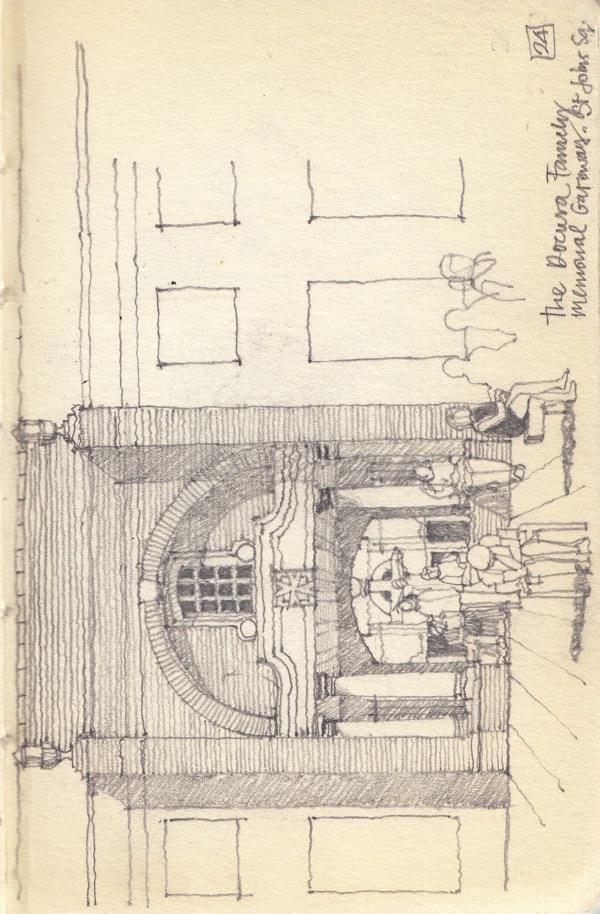


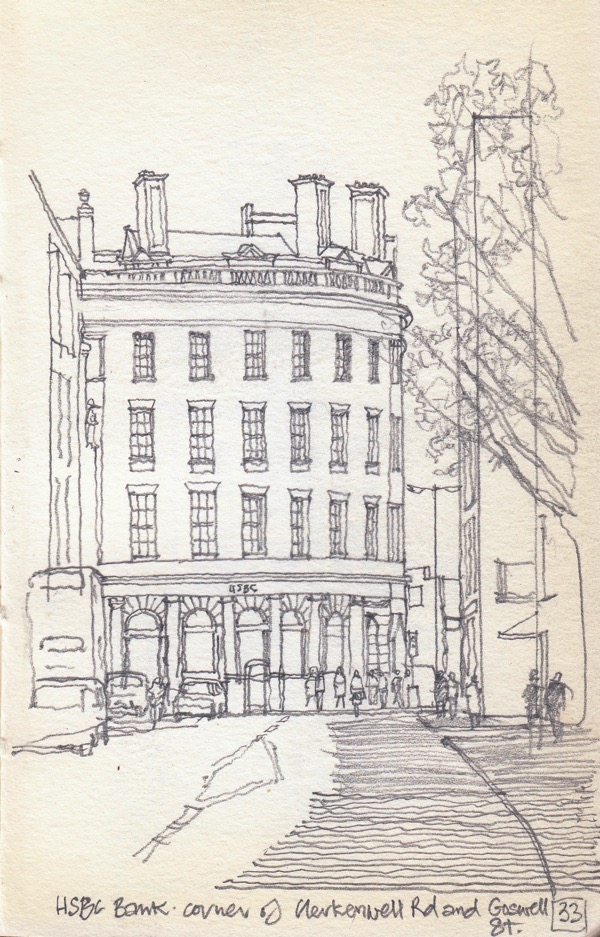


Drawings copyright © Harry Harrison
You may also like to take a look at
Hot Cross Buns At St Bartholomew The Great
Tomorrow at 11:30am sees the Ceremony of the Widow’s Sixpence in Smithfield

Distribution of buns to widows in the churchyard of St Bartholomew the Great
St Bartholomew the Great is one of my favourite churches in the City, a rare survivor of the Great Fire, it boasts the best Norman interior in London. Composed of ancient rough-hewn stonework, riven with deep shadow where feint daylight barely illuminates the accumulated dust of ages, this is one of those rare atmospheric places where you can still get a sense of the medieval world glimmering. Founded by Rahere in 1123, the current structure is the last vestige of an Augustinian Priory upon the edge of Smithfield, where once martyrs were burnt at the stake as public entertainment and the notorious St Bartholomew Fair was celebrated each summer from 1133 until 1855.
In such a location, the Good Friday tradition of the distribution of charity in the churchyard to poor widows of the parish sits naturally. Once known as the ‘Widow’s Sixpence,’ this custom was institutionalised by Joshua Butterworth in 1887, who created a trust in his name with an investment of twenty-one pounds and ten shillings. The declaration of the trust states its purpose thus – “On Good Friday in each year to distribute in the churchyard of St. Bartholomew the Great the sum of 6d. to twenty-one poor widows, and to expend the remainder of such dividends in buns to be given to children attending such distribution, and he desired that the Charity intended to be thereby created should be called ‘the Butterworth Charity.'”
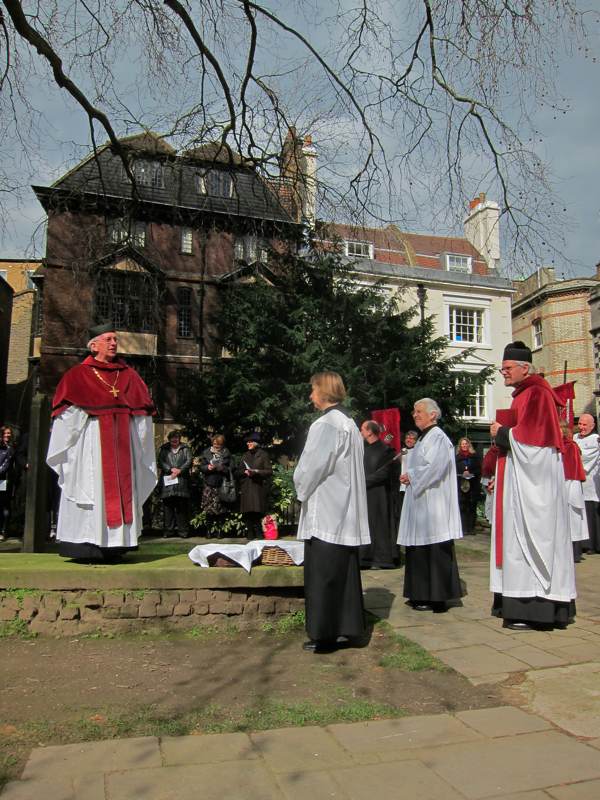
Those of us who gathered in the churchyard at St Bartholomew the Great on Good Friday were blessed with sunlight. Yet we could not resist a twinge of envy for the clerics in their heavy cassocks and warm velvet capes as they processed from the church in a formal column, with priests at the head attended by vergers bearing wicker baskets of freshly buttered Hot Cross Buns, and a full choir bringing up the rear.
In the nineteen twenties, the sum distributed to each recipient was increased to two shillings and sixpence, and later to four shillings. Resplendent in his scarlet robes, Rev Martin Dudley, Rector of St Bartholomew the Great climbed upon the table tomb at the centre of the churchyard traditionally used for that purpose and enacted the motions of this arcane ceremony – enquiring of the assembly if there were a poor widow of the parish in need of twenty shillings. To his surprise, a senior female raised her hand. “That’s never happened before!” he declared to the easy amusement of the crowd.
I detected a certain haste to get to the heart of the proceedings – the distribution of the Hot Cross Buns. Rev Dudley directed the vergers to start with choir who exercised admirable self-control in only taking one each. Then, as soon as the choir had been fed, the vergers set out around the boundaries of the yard where senior females with healthy appetites reached forward eagerly to take their allotted Hot Cross Buns in hand. The tense anticipation gave way to good humour as everyone delighted in the strangeness of the ritual which rendered ordinary buns exotic. Reaching the end of the line at the furthest extent of the churchyard, the priests wasted no time in satisfying their own appetites and, for a few minutes, silence prevailed as the entire assembly munched their buns.
Then Rev Martin returned to his central position upon the table tomb. “And now, because there is no such thing as free buns,” he announced, “we’re going to sing a hymn.” Yet we were more than happy to oblige, standing replete with buns on Good Friday and enjoying the April sunlight.

The Priory Church of St Bartholomew the Great, a century ago.


John Betjeman once lived in this house overlooking the churchyard.


The ceremony of the Widow’s Sixpence in the nineteen twenties.
“God’s blessing upon the frosts and cold!”

A crowd gathers for the ceremony a hundred years ago.

Hungry widows line up for buns.

The churchyard in the nineteenth century.


Rev Martin Dudley BD MSc MTh PhD FSA FRHistS AKC is the 25th Rector since the Reformation.

Testing the buns.


The clerics ensure no buns go to waste.

Hymns in the cold – “There is a green hill far away without a city wall…”


The Norman interior of St Bartholomew the Great at the beginning of the twentieth century.

The Gatehouse prior to bombing in World War I and reconstruction.

Archive images courtesy Bishopsgate Institute
You may also like to read about
The Riflemen Of Bow

Once upon a time when the veterans of the Tower Hamlets & Stepney Rifles met for monthly reunions in the Drill Hall in Mile End, more than a hundred Riflemen would attend. In 2007 when the Drill Hall was demolished and the reunion was transferred to the Bow Bells pub, only sixteen Riflemen remained. Consequently, it was a poignant occasion when Contributing Photographer Sarah Ainslie & I visited last week’s reunion to discover a gathering of just a handful of stalwarts in their eighties, but we were delighted to take the portraits of these dignified old soldiers and inspired to hear their stories.

Eric Wadey
“I grew up in Lever St just off the City Rd in Finsbury and went to Old St School. At fifteen I went to work for a tie firm in Cheapside, carrying materials. I used to walk there from Old St, in those days you could walk it in a straight line across the bombsites. Golden Lane and where the Barbican is now were all levelled off. All that was left was St Giles Cripplegate, where Cromwell got married, and I used to play football in the graveyard because all the stones had been flatted by the bombs.
We lived in Guinness Buildings then and were bombed out during the war, while we were there a bomb hit the building. I was six years without a father because he was away, so my mother was the only parent and I had to do my bit looking after my siblings. I walked to King’s Cross along the railway tracks picking up coal that had fallen off the trains because we had nothing to burn. I was refused entry onto a bus because I was black with the dust, but I had a sack of coal with me that I had collected and I wasn’t going to let it go.”

George Neal
“I was born Bethnal Green and was a market porter in Spitalfields all my working life. I started as an empty boy in the old market in 1953, working for W & H Bailey. I’ve been coming to these reunions for about thirty years, I served in the Rifle Brigade in Malaya. I was eighteen years old, doing my National Service. It was the first time I had been out of the East End. We flew from Stansted and it took us four days to get to Singapore. After I was demobbed, I went straight back into the Spitalfields Market and stayed there until it moved in 1992. I went back to have a look around recently and where I worked for twenty years is now a fashion boutique.”

Nobby Clarke
“My father was killed in 1944, leaving only me and my mother until she remarried in Coronation year. I was not a very good boy at school, but when I left in 1955 I became a telegram boy in the City of London working in Threadneedle St. At eighteen, I joined the Post Office in Whitechapel but after a year it was getting a bit tedious, so then I joined the mail train running from Euston to Carlisle, sorting letters as we travelled up the north-west side of the country. We used to drop mailbags out of one door and pick up more bags from the other, catching them in a net on the other side.
At twenty years old, I felt I had had enough so I joined the army as a volunteer. I was in Cyprus for four years when the troubles started in 1963, then I taught at Sandhurst Officers Training College for three years and I was discharged in 1969, but I did three years reserve and did not leave until 1972. I was at a bit off a loss then but, as I had done a lot of driving in the army, I worked as driver driving articulated lorries from the Tate & Lyle sugar factory in East Ham to the Docks, also to the sweet factory and the Guinness brewery in Park Royal. I met my wife while working for the British School of Motoring in Charing Cross Rd, then I started driving buses from the Bow bus garage.”

Ray Francis
“I’m from Ruislip, West London, but I come over to this meeting once a month with my wife to see the other guys. We’re gradually disappearing. We take the mickey out of one another and talk about old times when we were in the jungle in Malaya, when the Communists were trying to disrupt the rubber plantations. It brings it back to when you were eighteen and up to your neck in stinking swamp. Whether you were quite well-to-do or whether you came from the East End, we all came together doing National Service. We became as one and learnt to look after each other like brothers, that’s why we still have these reunions. Ask any soldier his number and he will peal it off straightaway: 2336534
I left school on a Friday and started work on a Monday, drawing in an engineering office. After I was demobbed I went back there until I was made redundant and for the past twenty-five years, I have been an ambulance man, a frontline paramedic. I was comfortable in uniform, I knew what to expect and I was used to seeing injuries.”

Trevor & Hazel Tallon with the photograph of their father Arthur Tallon (1932-2019) who died since the last reunion
Trevor – There was no work in the thirties, so when our grandad came out of the army, he moved the family from Alton in Hampshire to Tooting where he got a job as a postman, that was the start the family needed. So from the age of five, our dad grew up as a Londoner.
Hazel – His first job at fourteen was working as a telegraph boy delivering telegraphs in the Houses of Parliament. He was very proud of it.
Trevor – He worked for the Post Office his whole life – the only thing that interrupted that was his National Service – and he ended up a postal executive.
Hazel – He had been coming to these reunions for twenty-three years.
Trevor – We joined the reunion for trip in a minibus to Calais where their regiment was stationed. He was a proud Rifleman.
Hazel – For the last six years of his life, he struggled with walking so I used to come and pick him up every month from the reunion, that’s how I met the other Riflemen and their wives.
Photographs copyright © Sarah Ainslie
You may also like to take a look at
The Mysterious Stone Heads At Greenwich
Novelist Rosie Dastgir ruminates upon the significance of the old stone heads at Greenwich
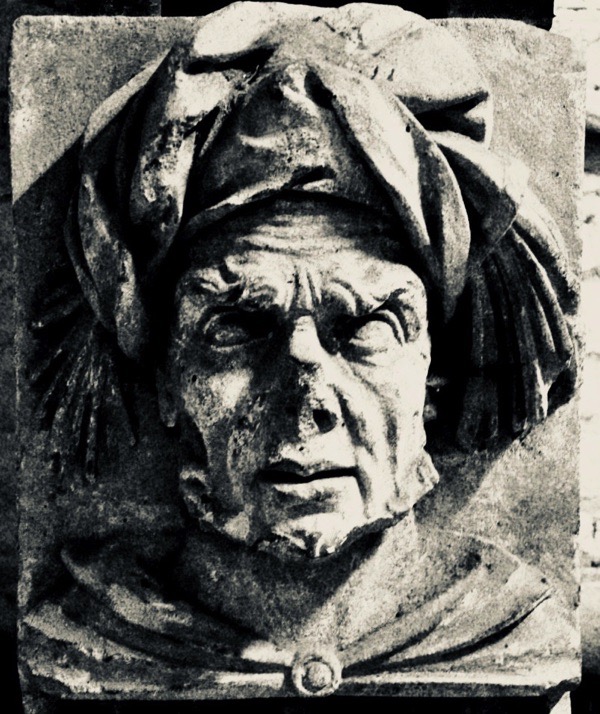
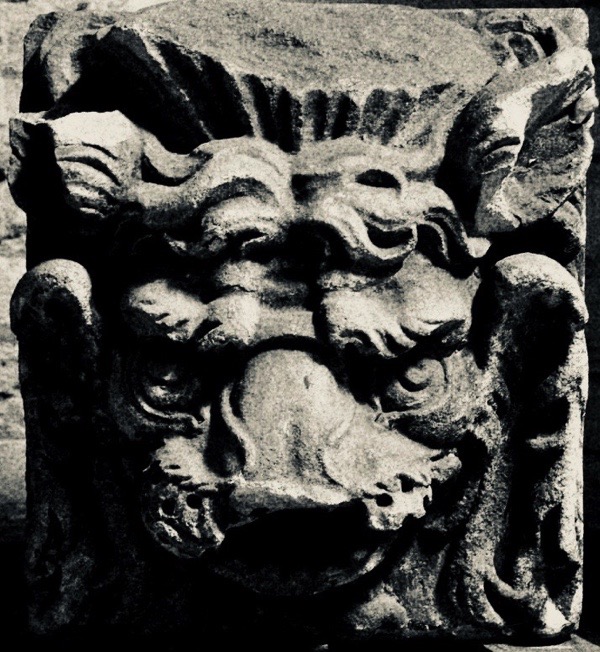
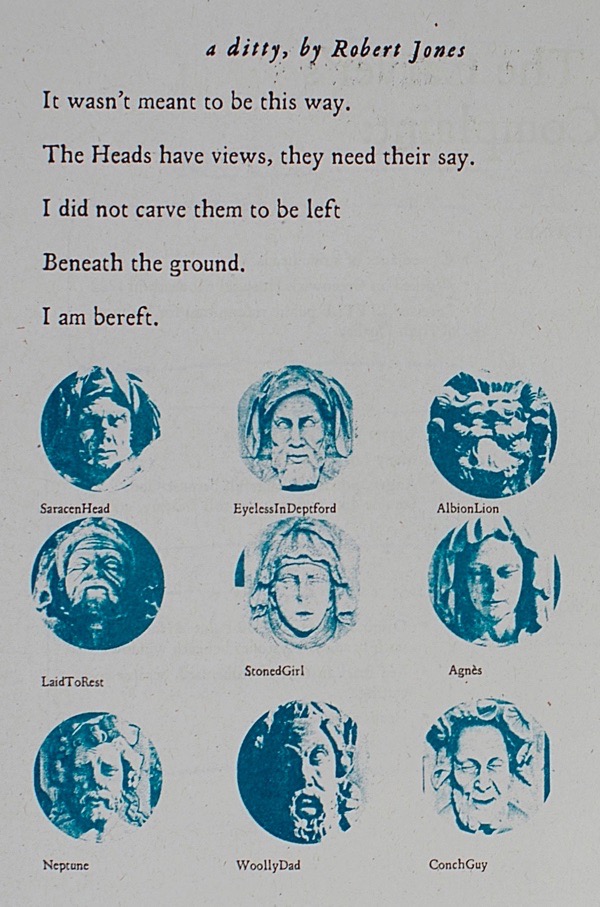
In the Undercroft of Queen Anne’s Court at Sir Christopher Wren’s Old Royal Naval College in Greenwich lies a collection of stone heads from the early eighteenth century. Depicting Neptune, Galatea, and other denizens of the deep, they were intended for display upon the south elevation of the Painted Hall, but a decision by the architects to use brick instead of stone meant they were abandoned. For three centuries they have languished out of sight and remain hidden, tucked away in the shadow of the newly restored Painted Hall.
Last summer, I descended into the undercroft to visit the stone heads, in the company of artist Camilla Wilson who had been commissioned to paint them for an exhibition at the Old Royal Naval College. I found myself mesmerized and, gazing at their expressively wrought stone faces, wondering what their story might be. Lapidary worry is etched in their features and they are a little battered: a broken nose here, a chipped veil there, their quiet ruination a reminder of our ultimate return to dust. There is a quality of the old heads that is redolent of Samuel Beckett’s Waiting for Godot: anguish, bewilderment, a waiting for something that may never come to pass. They exude mystery yet appear to say something, a communication from a primordial time.
‘Omissions are not accidents’, wrote poet Marianne Moore, and I wanted to rescue the stone heads from the obscurity of their interment. I dug around for anything I could find about the carver who had sculpted them, Robert Jones of Stepney, and discovered little. He worked on Greenwich Hospital for Retired Seamen from the beginning of its construction until his death in 1722. He was paid for carving around fifty heads and was probably also responsible the ornate carvings on the Trinity Green Almshouses in Stepney. I found a ghostly facsimile of his will in the National Archives at Kew but its few more ragged details shone no light upon the carvers’ forgotten work.
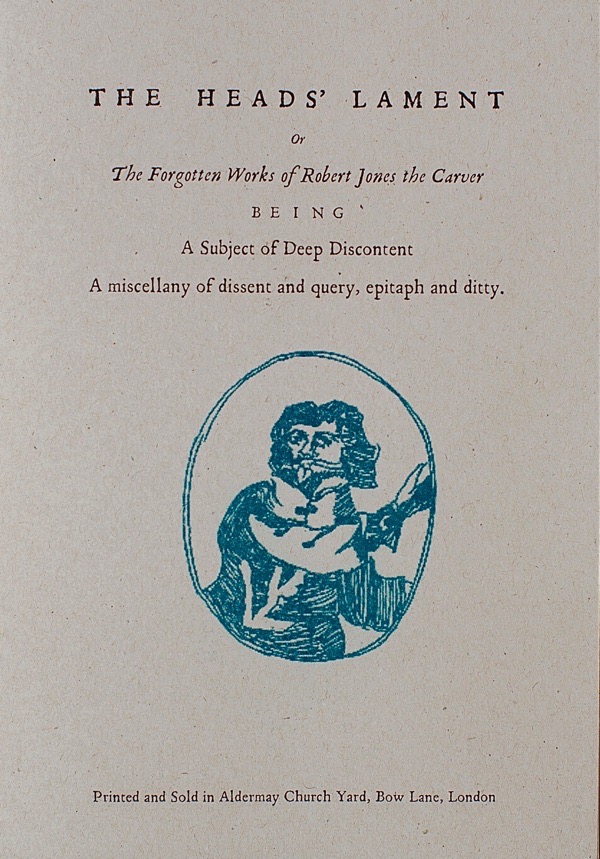
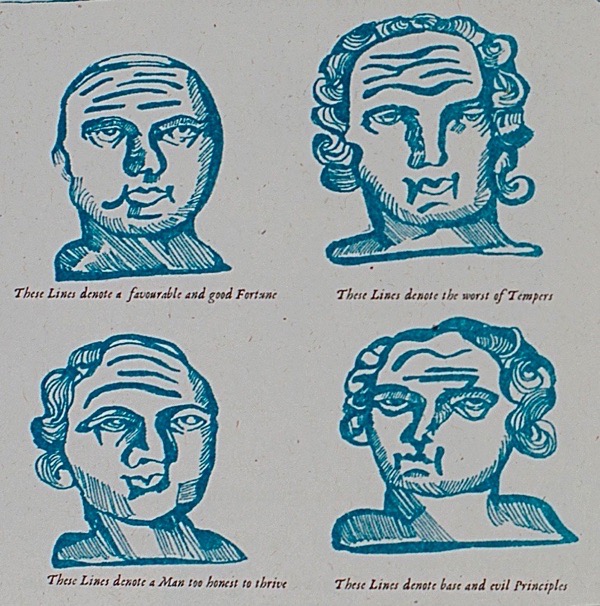
The enigma of the heads exists in the patchy narrative of their origin and abandonment, and I sought a suitable idiom to capture their story. Sifting through a stack of eighteenth century chap books in the British Library, I became smitten by the rough hewn quality of these vibrant yarns and gossipy playlets embellished with simple woodcut prints. Cheaply made booklets that were sold on the street, they were published widely in England in the seventeenth and eighteen centuries. At the peak of their popularity, they sold in thousands, passed from hand to hand, and featured a trove of subjects from fairytales and folklore, to politics, crime and magic tricks. They offered a vital medium for the dissemination of popular culture and entertainment, a digest of unreliable history for the common people of England. Like social media, they were textual exchanges occupying the fragile space between truth and fiction, cheaply made and easily disseminated.
My version of an eighteenth century chap book, The Heads’ Lament, conjures an imaginary WhatsApp conversation among the old stone heads at a moment when our nation teeters on the cusp of instability. We have been here many times before – of course – yet it is worth noting the historical parallel with our own times in the early seventeen-hundreds, around the time the heads were carved. Sir James Thornhill had been commissioned to paint the Great Hall at the Royal Naval College to commemorate the tumultuous political moment when the United Kingdom was taking shape. Denizens of the deep, the old carved heads bear witness to the gyre of history, keeping watch over our islands’ waters and the people who cross them. Sidelined for centuries, they yearn to be seen.
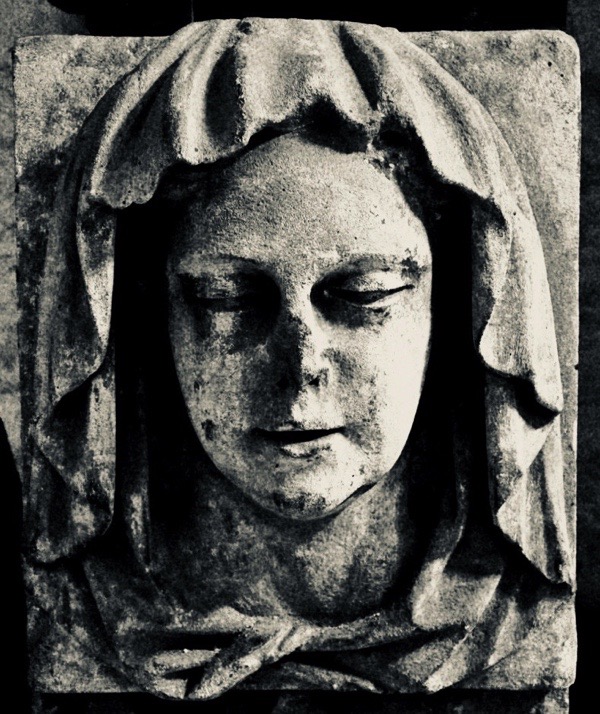
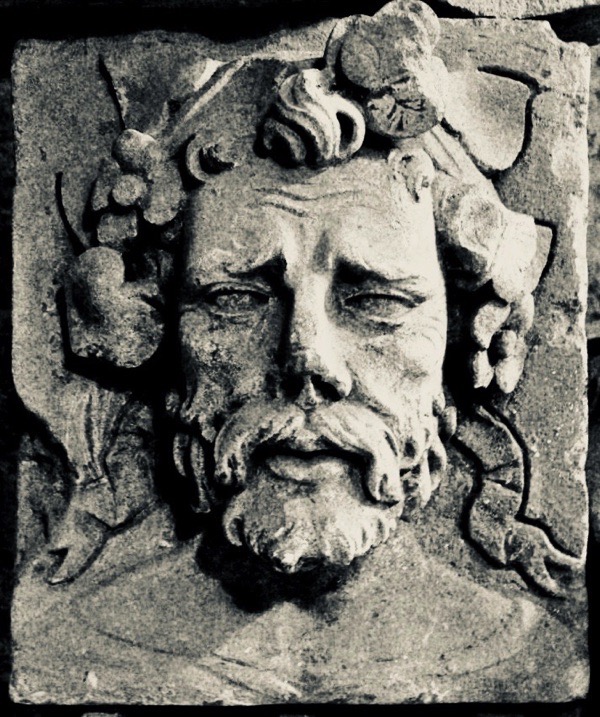
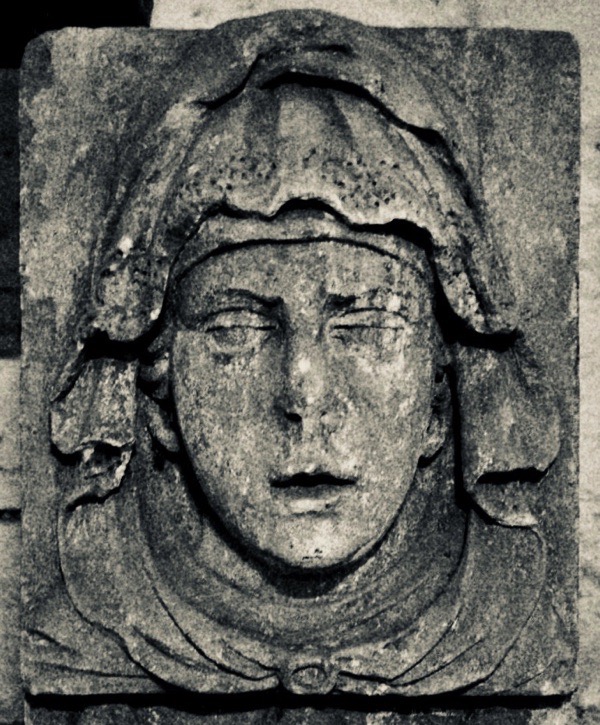
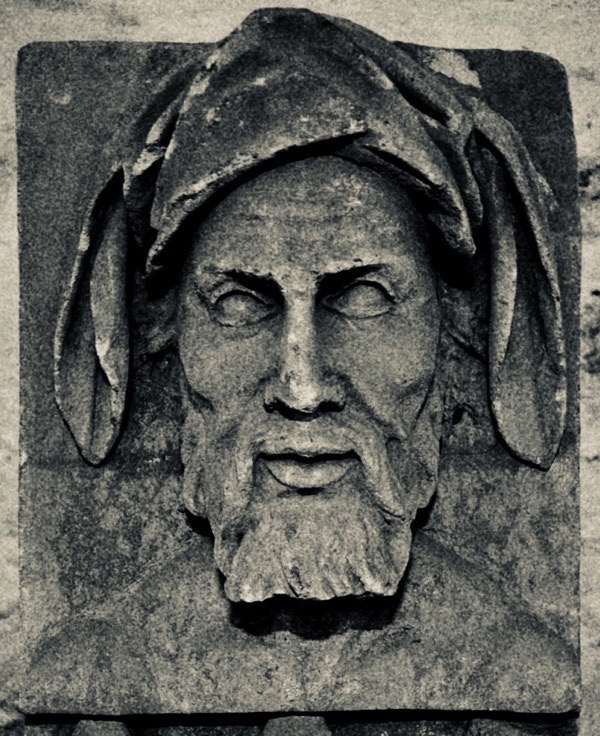
Photos of the heads © Camilla Wilson
Chapbook photography © Sarah Ainslie
Rosie’s chapbook will be on sale at the exhibition
You may also like to take a look
Tony Bock At Watney Market

Tony Bock took these pictures of Watney Market while working as a photographer on the East London Advertiser between 1973 and 1978. Within living memory, there had been a thriving street market in Watney St, yet by the late seventies it was blighted by redevelopment and Tony recorded the last stalwarts trading amidst the ruins.
In the nineteenth century, Watney Market had been one of London’s largest markets, rivalling Petticoat Lane. By the turn of the century, there were two hundred stalls and one hundred shops, including an early branch of J.Sainsbury. Tony’s poignant photographs offer a timely reminder of the life of the market before the concrete precinct.
Born in Paddington yet brought up in Canada, Tony Bock came back to London after being thrown out of photography school and lived in the East End where his mother’s family originated, before returning to embark on a thirty-year career as a photojournalist at The Toronto Star. Recalling his sojourn in the East End and contemplating his candid portraits of the traders, Tony described the Watney Market he knew.
“I photographed the shopkeepers and market traders in Watney St in the final year, before the last of it was torn down. Joe the Grocer is shown sitting in his shop, which can be seen in a later photograph, being demolished.
In the late seventies, when Lyn – my wife to be – and I, were living in Wapping, Watney Market was our closest street market, just one stop away on the old East London Line. It was already clear that ‘the end was nigh,’ but there were still some stallholders hanging on. My memory is that there were maybe dozen old-timers, but I don’t think I ever counted.
The north end of Watney St had been demolished in the late sixties when a large redevelopment was promised. Yet, not only did it take longer to build than the Olympic Park in Stratford, but a massive tin fence had been erected around the site which cut off access to Commercial Rd. So foot and road traffic was down, as only those living nearby came to the market any more. The neighbourhood had always been closely tied to the river until 1969 when the shutting of the London Docks signalled the change that was coming.
The remaining buildings in Watney St were badly neglected and it was clear they had no future. Most of the flats above the shops were abandoned and there were derelict lots in the terrace which had been there since the blitz. The market stalls were mostly on the north side of what was then a half-abandoned railway viaduct. This was the old London & Blackwall Railway that would be reborn ten years later as the Docklands Light Railway and prompt the redevelopment we see today.
So the traders were trapped. The new shopping precinct had been under construction for years. But where could they go in the meantime? The new precinct would take several more years before it was ready and business on what was left of the street was fading.
Walking through Watney St last year, apart from a few stalls in the precinct, I could see little evidence there was once a great market there. In the seventies, there were a couple of pubs, The Old House At Home and The Lord Nelson, in the midst of the market. Today there are still a few old shops left on the Cable St end of Watney St, but the only remnant I could spot of the market I knew was the sign from The Old House At Home rendered onto the wall of an Asian grocer.
I remember one day Lyn came home, upset about a cat living on the market that had its whiskers cut off. I went straight back to Watney St and found the beautiful tortoiseshell cat hiding under a parked car. When I called her, she came to me without any hesitation and made herself right at home in our flat. Of course, she was pregnant, giving us five lovely kittens and we kept one of them, taking him to Toronto with us.”


Eileen Armstrong, trader in fruit and vegetables


Joe the Grocer

Gladys McGee, poet and member of the Basement Writers’ group, who wrote eloquently of her life in Wapping and Shadwell. Gladys was living around the corner from the market in Cable St at this time.


Joe the Grocer under demolition.

Frames from a contact sheet showing the new shopping precinct.
Photographs copyright © Tony Bock
You may like to see these other photographs by Tony Bock












