So Long, Leon Kossoff
Today we remember Leon Kossoff (1926-2019) who died on Thursday 4th July aged ninety-two. He was one of the few artists from the East End to win an international reputation.

Presiding over Spitalfields for three hundred years, Nicholas Hawksmoor’s Christ Church in Commercial Street is the East End’s most enduring landmark and it has caught the imagination of many artists. Yet perhaps Leon Kossoff captured its awe-inspiring scale more effectively than anyone else in a recurrent series of paintings and drawings executed over the past half century.
Born just half a mile up the road in Shoreditch, Leon grew up on the Boundary Estate where his family ran a bakery. At the age of nine, a trip to the National Gallery inspired him with a love of painting which was to become the consuming passion of a lifetime. When his school was evacuated to Norfolk in 1939, Leon had the good fortune to stay with the Bishop family in Kings Lynn who encouraged his interest in art, which led him to make his first paintings and, on his return to London in 1943, he enrolled for art classes at Toynbee Hall.
Even before he ever drew it, Christ Church was a landmark on Leon’s landscape, both culturally and literally. Built with the proceeds of a coal tax in the early eighteenth century, Christ Church was constructed as an emblem of power to impress the Huguenot immigrants of Spitalfields and encourage their conversion to Anglicanism. Its overbearing scale makes the onlooker feel small, yet equally it offers the converse experience to those leaving the church, to whom, elevated upon the steps of the portico, the world appears spread out below. For the child of first generation immigrants, such as Leon, the building was a constant reminder of his place in the continuum of successive waves of immigration which have come to define the East End.
Leon first drew Christ Church in the fifties when he was living in Bethnal Green and the building was derelict, returning to the subject again in the seventies when it was under threat of demolition. But it was not until the eighties, when he had moved from the East End to Willesden, that he undertook drawings which became the basis for his series of paintings of this monumental subject beginning in 1987.
His densely wrought paintings embody both the complex emotionalism of Leon’s personal response to everything that Christ Church represents and the struggle of the onlooker to contain such titanic architecture.
“In the dusty sunlight of this August day, when this part of London still looks and feels like the London of William Blake’s Jerusalem, I find myself involved again in making drawings, and the idea of a painting begins to emerge. The urgency that drives me to work is not only to do with the pressures of the accumulation of memories and the unique quality of the subject on this particular day but also with the awareness that time is short, that soon the mass of this building will be dwarfed by more looming office blocks and overshadowed, the character of the building will be lost forever, for it is by its monumental flight into unimpeded space that we remember this building.” Leon Kossoff, March 1989
After serving in the Second World War, Leon studied commercial art at St Martin’s and then painting at the Royal College of Art. Despite winning international acclaim for his work in recent decades, Leon Kossoff remained a modest, reclusive figure and he returned to Arnold Circus and the Boundary Estate in his final years undertaking a series of affectionate, intimate drawings of the urban landscape of his childhood.

Christ Church

Saturday afternoon at Arnold Circus
Images copyright © Estate of Leon Kossoff
Reproduced courtesy of Annely Juda Gallery, London
Piotr Frac, Stained Glass Artist

Happy in the crypt beneath John Soane’s St John on Bethnal Green of 1828, Piotr Frac works peacefully making beautiful stained glass while the world passes by at this busiest of East End crossroads. Contributing Photographer Sarah Ainslie & I visited Piotr in his subterranean workshop and were delighted to observe his dexterity in action and admire some of his recent creations.
Piotr’s appealingly modest demeanour and soft spoken manner belie the moral courage and determination it has cost him to succeed in this rare occupation. This is to say nothing of his extraordinary skill in the cutting of glass and the melding of lead to fashion such accomplished work, or his creative talent in contriving designs that draw upon the age-old traditions of stained glass but are unmistakably of our own time.
Gripped by a passion for the magic of stained glass at an early age, Piotr always knew this what what he had to do. Yet even to begin to make his way in his chosen profession, Piotr had to leave his home country and find a whole new life, speaking another language in another country.
It is our gain that Piotr brought his talent and capacity for work to London. That he found his spiritual home in the East End is no accident, since he follows in the footsteps of centuries of skilled migrants, starting with the Huguenots in the sixteenth century, who have immeasurably enriched our culture with their creative energies.
“I am from a working class family in Byton, Silesia, in the south of Poland. My interest in stained glass began when I was ten or eleven years old and I went with my school to see Krakow Cathedral. The stained glass was something beautiful and that was the first time in my life I saw it. I was inspired by the colours and the light, it still excites me.
I always had an interest in drawing and painting – so, after high school, I went to a school of sculpture where they taught stained glass restoration. This was more than twenty years ago, but it was the start of my journey with stained glass. After I got my diploma in the restoration of stained glass, I worked on a project at a church for a few weeks before university. I studied art education in Silesia and I learnt painting, sculpture and calligraphy. I believe every artist needs a background in drawing and painting.
My ambition was to do stained glass, but there were hardly any jobs of any kind – I sold fish in the market in winter and I worked in a hospital, I took whatever I could get. Around 2005, I decided to leave the country. I had some Polish friends who had come to London and they helped me find a place to stay in Brixton. In the beginning, it was very difficult for me because of the language barrier. Without English, it was hard for me to communicate and find a job here. I worked on building sites. Every morning I got up at five and I walked around with this piece of paper which told me how to ask for a job. Someone wrote down a phonetic version of the words for me and I asked at building sites. After two weeks, I got a labouring job.
I lived in many places south of the river but seven years ago I moved to East London and I have stayed here ever since. At first I lived in the Hackney Rd near Victoria Park and I am still in that area, close the Roman Rd. I visited stained glass workshops but I could not get a job because I could not communicate. I did not want to work as a labourer forever so I decided to go to language school to learn English and this helped me a lot. At the English school here in the crypt of St John’s Bethnal Green, my teacher asked us to prepare a talk about myself and my interests. So I talked about my profession as a stained glass artist and my teacher introduced me to a stone carver in the crypt workshop. He told me, ‘If you are willing to teach stained glass classes, you are welcome to use the workshop.’ I started eight years ago with one student.
My first commission was to repair a Victorian glass door. Most of my work has been Victorian and Edwardian windows and doors, which has allowed me to survive because there are plenty that need repair or replacement. There are not a lot of creative commissions on offer but sometimes people want something different.
Two years ago, I won a competition to design a window for St John’s Hackney. It took a year for them to approve the design and I am in the middle of working on it now. I need to finish and install it. Also the Museum of London bought a piece of mine. It is gorilla from a triptych of gorillas and it will be displayed there next year.
Once I moved to East London, I felt I belonged to here – not only because I started my workshop but because I met my wife, Akiko, here. In 2016, I become a British citizen so now I am a permanent member of the community.
Stained glass is a wonderful medium to work with and always looks fantastic because it changes all the time with the light, in different times of the day and seasons of the year. I believe there is a great potential for stained glass in modern architecture.
These days I am able to make a living and I would like to become more recognised as a stained glass artist. I am seeking more ambitious commissions.”

Constructing a nineteenth century door panel


A panel from Piotr’s triptych of gorillas


Piotr’s first panel designed and made in London

Piotr with one of his stained glass classes in the crypt of St John’s Bethnal Green


Repairing a Victorian glass door

Restoring nineteenth century church glass

Before repair

After repair

Piotr Frac, Stained Glass Artist
Studio portraits © Sarah Ainslie
Contact Piotr Frac direct to commission stained glass
You may also like to read about
The Facades Of Spitalfields
In today’s extract from my forthcoming book, I explore the rash of facades that has erupted in Spitalfields.
THE CREEPING PLAGUE OF GHASTLY FACADISM combines a gallery of the most notorious facades and a humorous analysis of facadism – the unfortunate practice of destroying everything apart from the front wall and constructing a new building behind it – revealing why this is happening and what it means.
I still need a few more investors for my book, so if you would like to know more please write to me at spitalfieldslife@gmail.com . You can also support the book by preordering and you will receive a signed copy in October when it is published.
Click here to preorder your copy
Please suggest other London facades I should include.

The facade of Paul Pindar’s House in the Victoria & Albert Museum
Spitalfields is quickly becoming the epicentre of façadism in London. Confronting these examples daily has become such a source of disquiet, it has lead me to consider the nature and meaning of these curious transformations that have taken place before my eyes.
At first in Spitalfields, there was only the facade of the Cock A Hoop public house in Artillery Lane, two nineteenth century front walls punctuated by window openings, standing at angles to each other like a book cover propped open. They stand six feet in front of the new building and their windows do not coincide with the windows behind. Only the steel props which stabilise the facade connect the old and the new.
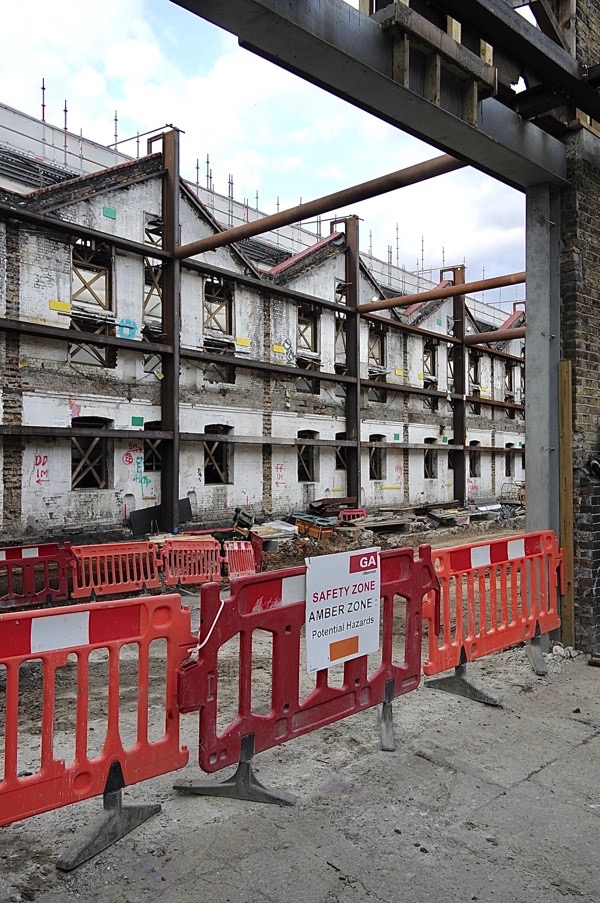
Although this was a troubling sight, it was the facading of the London Fruit & Wool Exchange in Brushfield St in the heart of Spitalfields that truly shocked me. The destruction of a high quality building from 1927 was forced through by the Mayor of London against the wishes of the local council and offices for small independent businesses replaced by an international legal corporation. This was followed by the destruction of the White Hart in Bishopsgate which traces its origins to 1246 and was replaced with a cylindrical office block rising over the front wall of the ancient tavern. Currently a dignified stable block to the north of Spitalfields in Quaker St, constructed by the Great Eastern Railway in 1888, is being reduced to its exterior wall that will contain a new chain hotel. This building had previously been occupied by local businesses too.
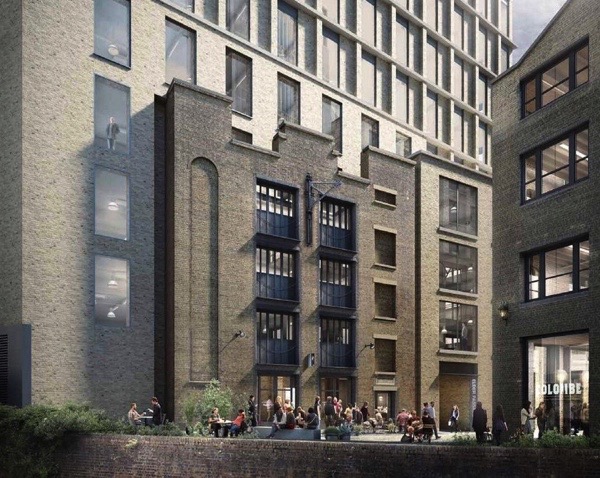
As I write, British Land is demolishing more than eighty per cent of the fabric of their development site in a Conservation Area in Norton Folgate, a former ancient liberty to the west of Spitalfields. Again this was forced through contrary to the wishes of the local council who were overruled by the Mayor of London. More than forty separate premises spread across several streets are being reduced to a handful of large corporate offices with floor plates extending the width of a city block. Only the facades of a few distinctive buildings within this medieval quarter will be preserved as evidence of an urban landscape that developed over centuries. ‘A kind of authenticity’ is the developer’s oxymoronical language to sell this approach. As if there were fifty-seven varieties of authenticity, when ‘authentic’ is not a relative term – something is either authentic or it is phoney.
Now that I am surrounded by façadism on all sides, a certain pattern has become evident. Historically, Spitalfields evolved as a place outside the walls of the City of London where small trades could benefit from the proximity of wealthy customers while paying cheaper rents for workshops. Yet equally the City has been an ambivalent influence. It has been a consistent source of violence in the subjugation of its less powerful neighbour and policies enacted in the City commonly have implications in Spitalfields. When Jewish people were forbade from trading in the City in the twelfth century, they started a market outside the walls which trades to this day as Petticoat Lane Market.
Over the centuries, violence has always had a hand in the creation of the identity of Spitalfields. When Henry VIII ‘dissolved’ the Priory of St Mary Spital which gives its name to the place, he distributed the properties among his friends and turned the gardens and orchards into his artillery ground. When the Great Eastern Railway cut across the north of Spitalfields in the eighteen-thirties, thousands were forced from their homes crowding into nearby streets. It was the same pattern when Commercial St was cut through in the eighteen-fifties – bisecting the parish from north to south – in order to carry traffic from the docks which the City of London wished to divert from its own streets. And again when the railway was extended south across the west side of Spitalfields to Liverpool St, residents were forcibly evicted and their homes demolished.
The construction of Liverpool St Station entailed the destruction of Paul Pindar’s house, a lavish renaissance mansion built in Bishopsgate to house the extravagant collections of Queen Elizabeth’s envoy to Constantinople, Sir Paul Pindar. The headquarters of the Society for the Protection of Ancient Buildings sits nearby in Spital Sq upon the site of the medieval priory and in their archives are letters written in the late nineteenth by architect CR Ashbee pleading with the railway company to save Pindar’s mansion or at least integrate it into their new building. Many of the sentiments and arguments rehearsed in his letters will be familiar to those campaigning to protect historic buildings from destruction today.
In the event, only the frontage of Paul Pindar’s house was saved by the Victoria & Albert Museum in South Kensington where it sits to this day as a poignant relic, the earliest Spitalfields facade – both a reminder of earlier world and a strange precursor of things to come. I can only speculate at the how those in the future will view the museum’s recent acquisition of a fragment of the frontage of Robin Hood Gardens, an idealistic attempt at social housing in East London in the sixties.
The wonder is how, through the centuries, Spitalfields has thrived as a working community in spite of the violence enacted upon it. As if an indomitable spirit of survival arose that found its expression in the resourcefulness of the residents. Yet the generation of such a culture relies upon the provision of cheap workshops and housing.
For the most part, the façadism that has been imposed upon Spitalfields in recent years enables the transformation of buildings which once provided multiple spaces for small local businesses into a handful of large offices for international businesses in the financial industries, and chains. The bizarre and awkward appearance of these structures speaks of this discontinuity, reconciling elements that do not belong together. In short, the facades of Spitalfields are indicative of the corporate takeover of spaces forcibly imposed upon the neighbourhood while maintaining the superficial appearance of a continuum of use.
Yet these new structures are not intended to have longevity. History tells us that Spitalfields is a consistently mutable place where the influence of the greater world always makes itself felt. When Henry VIII’s soldiers ‘dissolved’ the hospital and priory of St Mary Spital, turning out the patients from infirmary and Augustinian brothers from the precinct, it must have seemed like the end of days. But the world always moves on and, a century later, the Truman Brewery opened and the Spitalfields Market was established by royal charter, endeavours whose legacies shape the neighbourhood to this day.
There is no doubt that limited resources will increasingly effect how buildings are constructed. I hope it will demand greater reuse of existing structures and less destruction. London already has examples of buildings that have been facaded more than once. Maybe the facades of Spitalfields will outlive their current forced marriages to find themselves in more sympathetic relationships with buildings yet to be conceived.
We can only dream of this future but we can be certain that this grotesque contemporary practice will not endure.

The former Cock A Hoop tavern in Artillery Lane

The former Fruit & Wool Exchange in Brushfield St

The former White Hart in Bishopsgate

The former Great Eastern Railway stables in Quaker St

British Land are currently demolishing more than 80% of the fabric of their Norton Folgate development site which sits entirely within a Conservation Area

British Land describe the impending facadism in Norton Folgate as ‘a kind of authenticity’

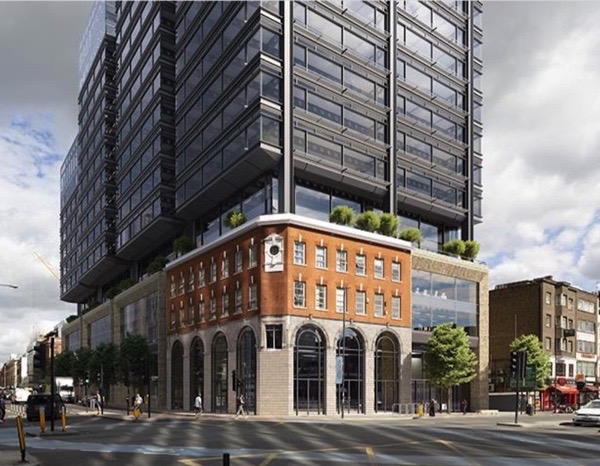
Norman Foster’s proposal for a facaded tower at the corner of Commercial St in a Conservation Area

The exterior cover of the book…

…which opens to reveal the title.
CLICK HERE TO ORDER A COPY OF THE CREEPING PLAGUE OF GHASTLY FACADISM
At The Italian Parade In Clerkenwell
Sunday 21st July sees the 134th Italian Parade in Clerkenwell and the weather promises to be much better this year than when photographer Colin O’Brien & I joined the crowds

In spite of the volatile weather, alternating downpours with blazing sunshine, I set out (with my umbrella in hand) to Clerkenwell, where photographer Colin O’Brien invited me to join him at the Italian Parade that he first attended in 1946.
For one Sunday each year, the narrow backstreets are transformed when the descendants of the immigrants who once lived in here in London’s “Little Italy” return to participate in a procession honouring Our Lady of Mount Carmel, and, such is their love for their culture and custom, they were not to be discouraged by a few drops of rain.
Growing up in Victoria Dwellings at the corner of the Clerkenwell Rd and Farringdon Rd, the Italian Parade was an annual fixture in Colin’s childhood and in 1946, at six years old, he marched in the procession as a little blond boy dressed in white – the picture of innocence – to celebrate his confirmation. Later, as a precocious child photographer, some of Colin’s earliest pictures were of the parade and when I first saw these I suggested that he might like to return to Clerkenwell, a lifetime later, to photograph the event again.
There is a certain magic that reigns on these occasions when a Neapolitan atmosphere presides upon these London streets where, for one day of each year, only Italian is spoken, and the recorded mellifluous tones of sentimental songs echo between tall old buildings towering over a full blown Festa taking place in the secret enclave of Warner St, between the major roads of Clerkenwell on either side.
Here, on this special day in July, polenta is cooked in a barrel and served with sizzling sausages and Chianti, old ladies offer homemade cakes, veterans of the Alpine brigade from the nineteen fifties run a coconut shy and old friends meet to enjoy ceaseless embraces, recounting the passing years with sentimental delight.
Walking a little further, you come to Back Hill where the floats assemble and encounter those who will feature in the tableaux, all toshed up in robes thrown together from pairs of old curtains, with unnatural orange makeup applied to their skin and sporting bad wigs and dodgy facial hair, all to give an authentic effect of life in Biblical times. Like a fantasy sequence from some mid-century Italian neo-realist movie, I once saw Jesus step from his car with his crown of thorns already in place. And, as you weave your way through the alleys and byways on this day, it is not uncommon to glimpse angels in tinsel nighties fleeting in the distance.
I joined the hushed crowds outside St Peter’s in the Clerkenwell Rd as three doves were released into the lowering sky. Then, in an explosion of glitter, came the procession of saints, borne aloft and bobbing over the heads of the crowd, each with their attendant retinue of dignified matriarchs from Woking, Aylesbury, Ponders End, Epsom and Hoddesdon – to name only a few of the Italian communities represented.
When the heavens opened and the rain fell upon us, a forest of umbrellas came forth and the saints were swathed in an additional layer of polythene robes, floating ethereally upon the breeze. And, since the commentator reminded us of the afflictions of these medieval holies, like St Rita of Cascia – the patron saint of the impossible – who suffered from a splinter of the cross lodged in her forehead, we were able to draw consolation that a shower of rain was an inconsequential discomfort by comparison. Yet there was an additional poignancy to the tableau of Jesus nailed to the cross, shivering in a loin cloth, as the rain poured down upon him, and to observe the devout concentration of those who maintained their static postures whilst holding trumpets aloft in frozen moments of religious transfiguration, seemingly oblivious of the wet.
With floats and marching bands, and the latest batch of newly-confirmed little children in white, the procession approached its climax, and along came St Michele with one figure raised heavenwards to a sky that was visibly lightening. Then, sure enough, as the figure Our Lady of Mount Carmel appeared, the clouds parted and a ray of sunlight descended upon the church, the catalyst for a spontaneous round of applause from the crowd and even for some, among the credulous, to wipe away a tear.
Once the procession had walked up Rosebery Avenue, down the Farringdon Rd and returned to Ray St, the Italian community had unified for another year in celebration of its common ancestry. It was time for the devout to attend mass, crossing themselves and dipping their fingers in holy water as they entered St Peter’s, London’s oldest Italian church. While for the rest, including Colin (who was a lapsed Catholic) and myself, it was time to savour the temporal delights of the Festa before the rain came down again.

Colin O’Brien marches in the Italian procession in 1946


The procession photographed by Colin O’Brien in the early nineteen fifties from the flat where he grew up at the junction of the Clerkenwell Rd and Farringdon Rd.


Photographs copyright © Estate of Colin O’Brien
More photographs by Colin O’Brien
Colin O’Brien’s Clerkenwell Car Crashes
John Claridge’s Soho Faces
There is a strange atmosphere in Soho these days with the redevelopment of Walker’s Court, the destruction of Foyles and the desecration of Denmark St – which makes it a tonic to enjoy these portraits by Contributing Photographer John Claridge selected from his ongoing series of over six hundred and fifty.
“I started taking portraits of people at The French House in the seventies when I took a picture of Gaston Berlemont. Then, while taking Spike Milligan’s portrait, we got to talking about Soho. At the time, I was living in Frith St, so Ronnie Scott’s and The French were both very familiar to us and, even then, both of us voiced our sadness at changes we saw – lovely delicatessens, independent restaurants and specialists shops closing down, all of which had been there for years.
In 2004, I decided to document the customers at The French in earnest. For me, it was the one place in Soho that still held its Bohemian character, where people truly chose to share time and conversation, and I became aware that many I had once chinked glasses with were no longer around.
These portraits of the regulars are a cross-section of those who sat for me, but there is no rhyme or reason to my selection.”
– John Claridge

Spike Milligan, Comedian & Writer

Molly Parkin, Painter & Novelist

Gaz Mayall, Musician

Lisa Stansfield, Simger & Songwriter

Eddie Gray, Jazz Violinist

Kenny Clayton, Jazz Pianist

Fergus Henderson, Chef & Restauranteur

Georgina Sutcliffe, Actor

John Phillips, Journalist

Norman Balon, Landlord of the Coach & Horses

Millie Laws, Reflexologist

George Baker, Actor

Oliver Bernard, Poet

Clare Shenstone, Artist

Peter Boizot, Founder of Pizza Express

Peter Owen, Publisher

Vanessa Fenton, Dancer at the Royal Ballet & Choreographer

Sebastian Horsley, Artist

Burt Kwouk, Actor

Kevin Petillo, Television Producer

Pinkietessa, Costume maker

James Birch, Art Dealer

Jay Landesman, Nightclub Owner, Writer & Publisher

Anna Lujan Sanchez, Dancer with Ballet Rambert

Freddie Jones, Actor

Paul Lawford, of The Rubbishmen of Soho

Alison Steadman, Actor

Paul Barlow, Cyclist
Photographs copyright © John Claridge
You may also like to take a look at
John Claridge’s Boxers (Round One)
John Claridge’s Boxers (Round Two)
John Claridge’s Boxers (Round Three)
John Claridge’s Boxers (Round Four)
John Claridge’s Boxers (Round Five)
John Claridge’s Boxers (Round Six)
John Claridge’s Boxers (Round Seven)
John Claridge’s Boxers (Round Eight)
John Claridge’s Boxers (Round Nine)
John Claridge’s Boxers (Round Ten)
John Claridge’s Boxers (Round Eleven)
John Claridge’s Boxers (Round Twelve)
and
John Claridge’s Clowns (Act One)
John Claridge’s Clowns (Act Two)
John Claridge’s Clowns (The Final Act)
and
and these other pictures by John Claridge
Along the Thames with John Claridge
At the Salvation Army with John Claridge
A Few Diversions by John Claridge
Signs, Posters, Typography & Graphics
Views from a Dinghy by John Claridge
In Another World with John Claridge
A Few Pints with John Claridge
Some East End Portraits by John Claridge
Sunday Morning Stroll with John Claridge
Just Another Day With John Claridge
At the Salvation Army in the Eighties

John Claridge At The French House
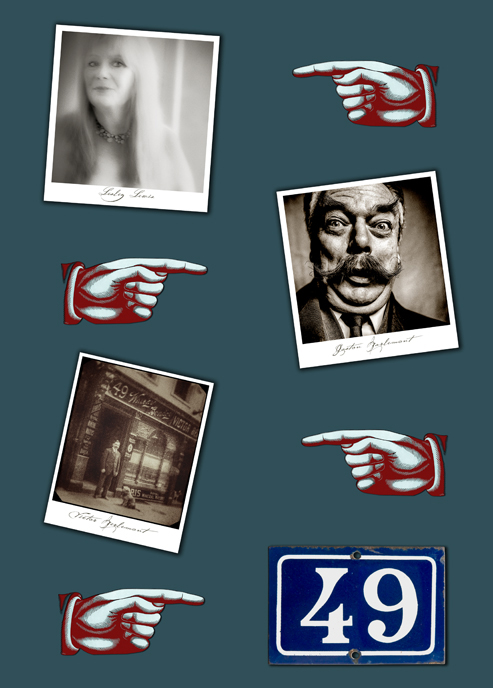
Contributing Photographer John Claridge has been a regular at the French since the sixties and below you can read his eulogy to this beloved London institution. Now he has a book launch there and an exhibition of his photomontages in celebration of Lesley Lewis’ thirty years as publican, opening tonight – Wednesday 3rd July at 6pm. All are welcome to join us in raising a glass.

Gaston Berlemont, publican at the French House 1945-89

Lesley Lewis, publican at the French House since 1989
“I first went to Paris in the early sixties, when I was seventeen, working as an assistant to David Montgomery. We were there to shoot pictures for a fashion magazine and, early every morning before the shoot, we would go into a bar or brasserie for a coffee and a croissant. The smell of strong coffee, brandy and Gitanes, posters for art and photographic exhibitions – this was a whole beautiful new world and one that stayed with me.
In the sixties, I also started going to Ronnie Scott’s which was – at that time – in a basement in Gerrard St in Soho. One night on my way to Ronnie’s, I happened to pass the French. The door was open and the smell of coffee, French cigarettes and alcohol engulfed me. I walked in and the rest, as they say, is history.
It still holds that magic for me – a bohemian atmosphere, if you will. Full of artists, actors, poets, directors, media and, dare I say it, photographers. All crazy you understand! All with their own opinions and all very different, as it should be. And as the drink flows, all putting the world to rights, or at least trying to, and certainly with emotion.
I met landlord Gaston Berlemont in the early sixties. He invited me upstairs and introduced me to absinthe – the real stuff. It knocked my bloody head off! We started talking about all the wonderful people who had passed over the threshold, those who have passed away, those who are still around. Later I documented some of these people in my series Soho Faces, which at the moment totals over six hundred and fifty portraits.
It was thirty years ago that Lesley Lewis took over at Gaston’s retirement. After all these years, she ensures the French retains that magic. She not only encouraged me with my project of Soho Faces but also was a fantastic help. I regard her as a very special friend whom I love dearly.
To produce a small show and book that encompasses thirty years is impossible. So I thought I would approach it in an abstract way. Enough, I hope, to capture the smell of coffee, Gitanes, and of course alcohol, and including all the wonderful crazy people, past and present, who all call the French ‘home.’”


Images copyright © John Claridge
Lesley Lewis, The French House
Today, I commence a new occasional series in collaboration with photographer Sarah Ainslie of GREAT LANDLADIES OF LONDON.
I want to celebrate the wonderful women who are responsible for those cherished oases of culture and civility – the pubs which make London a city worth living in. I introduce them in no particular order but I choose to start with Lesley Lewis who has run the French House in Soho for thirty years.
Please send your suggestions of candidates for this series.

‘It is a sort of family, a very strange family’
When you walk into the French House in Dean St, you enter a magical realm of possibility where you discover you are welcome and where you might meet almost anyone. It is the last place I can think of where the spirit of old Soho lingers and where you feel you are at the heart of London. It is a public place and yet people behave as if they were in private, a place where – just by walking in the door – you become accepted into a community.
Since 1891 when it opened, there have only been three publicans at the French House. In 1989, Lesley Lewis took over when Gaston Berlemont passed into legend. Today, Lesley presides with a regal hauteur worthy of Catherine Deneuve, a shrewd humour worthy of Marie Lloyd and a generosity of spirit worthy of Mistress Quickly.
On the road to the French house, Lesley performed with a python in cabaret before graduating to managing a strip club in Old Compton St in 1979, where admission cost 50p and senior customers brought sandwiches to stay all day. As it turned out, these formative experiences proved the ideal qualifications when destiny called.
Lesley tells how Gaston Berlemont’s family took over the pub from the first landlord, a German by the name of Schimdt, whose wife returned – after he had left the country at the outbreak of WWI – to sign over the lease on September 12th, 1914. Gaston spent his whole life at the French House and, on his return from WWII, his father said,”Enough of that. You’re behind the bar, I’m off.”
It was a brawl in the twenties between French sailors smashing pint glasses over each other’s heads that led to the house policy of only serving half pints of beer, which continues to this day with the annual exception of April 1st.
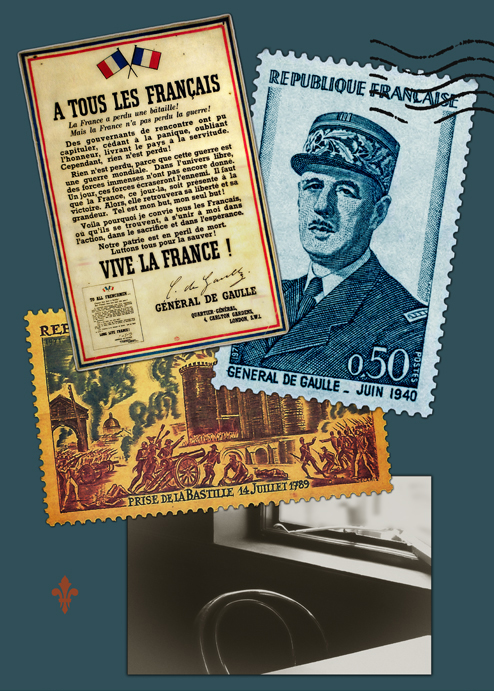
During the last war, the pub – known as the York Minister – became a centre for French ex-patriates in London, serving wine which was a rare commodity then. Gaston’s daughter Giselle recalls Errol Flynn and Orson Welles tasting wine in the cellar at this time, and in June 1940 General De Gaulle wrote his famous speech in the bar -“La France a perdu une bataille. Mais la France n’a pas perdu la guerre!” After the war, the nickname of ‘The French House’ stuck and, in 1984, the name was officially changed.
With such illustrious predecessors, it was a great delight and privilege to sit down with Lesley in a quiet corner of the bar and hear her story in her own words over a glass of Ricard.
“I was General Manager at Peppermint Park, a restaurant and cocktail bar in Upper St Martin’s Lane, and when they sold the company I was offered redundancy or a pub. So I took the pub. It was the George & Dragon in Clerkenwell, a marvellous old pub. I had never poured a pint in my life, but some of my staff came with me because we were all made redundant, and that was the start of loving the pub business.
It took me a while to get into the swing of things and I learnt a good few lessons. We had no idea what we were doing but the customers helped us. After the first week, we were called together by some of the regulars and they said, ‘Lesley, this is fine. We don’t mind you looking after our pub for us.’ That is the truth of pubs, it is not my pub it is the customers’ pub – because without them, we are absolutely nothing.
Slowly, we learnt to pull pints and amuse the customers. We were next door to the school of journalism so we had a lot of students, but most of our customers were the old time, edge-of-the-East-End, Clerkenwell people. They were characters – all been pretty much wiped out, it is something quite different now.
I lived above the George & Dragon and I live upstairs here, it is a very difficult job to do without living on the premises because you are pretty much on for seven days a week. After about five years in Clerkenwell, they offered me a ‘wine bar,’ and this was the wine bar! I knew the French House already and I had always loved it, and I have been here thirty years.
It was always full of wonderful characters – it still is, but they are different kinds of characters today – writers, painters and bohemians. Gaston was the landlord then and it was condemned when he retired in 1989, which I did not discover until I went to get the licence and I was given three months to sort it out. The place had been left to rack and ruin, which I think is probably why Gaston wanted to retire. He was facing a huge bill, instead I got the huge bill but it was worth it.
We had to rebuild it in a way that people would not notice, so we were building through the night. It was the most loved place in the world and I had this feeling I was going to destroy it but the red linoleum on the bar top had to go. It is British oak to go with the rest of the interior and it cost a fortune. Then I had to bash it up a bit so it looked in tune with the whole pub. The windows had not opened since the sixties but we fixed that. There was this awful seating along the window and you burnt your ankles on the heating which was underneath, so we got rid of that and bar stools came in. This pub has evolved.
I have stayed thirty years at the French House because I love it, this is what I do. It is a sort of family, a very strange family. Most of my staff have been with me a very long time and we are very close. Eighty per cent of my customers are regulars and we are all close to each other. We help each other through everything. To be honest, I do not know what I would do without it.
A big city can be a lonely horrible place sometimes and if there is a place where you can go for a bit of comfort and conversation. It is not just about drinking, it is about going to have a chat with somebody, and feel safe in an environment that is yours – where you are not threatened in any way, as you are in a lot of clubs. It is for all ages. Our eldest customer is Norman who is ninety-two but he does not come in very often and our youngest is a year and two months, Georgie’s little boy who has been coming in here since he was conceived.
For me, it all about the people who have been in here over the years – like Francis Bacon, Dylan Thomas, Dan Farson and Lucian Freud. I think at some point just about everybody who is anybody has put a foot over the threshold. They are all still here in a funny kind of way. Their essence is here.
I think it is really important that we keep our pubs. You notice how – particularly in Soho – they are disappearing all the time. It is even more important in the country villages where, if the pub goes, there is nothing. People need to have somewhere to go. It is a very British thing, a pub.”

Portraits copyright © Sarah Ainslie
The French House, 49 Dean Street, Soho, London, W1D 5BG
You may also like to read about