Peta Bridle’s Riverside Sketchbook
Peta Bridle sent me this latest series of her drawings.
“I made these sketches this spring. My drawings were all made on the spot and I was grateful for the bright dry weather which granted me excellent drawing conditions. I use Quink and a Chinese calligraphy brush which has a beautiful quality of line. You can create either the slightest hairline or a full heavy stroke of ink simply by altering the pressure a little. I was only able to make visits to London when my work rota allowed because I am a home carer. It has been drawing which got me through the lockdown.” Peta Bridle

Dr Salter’s Daydream, Bermondsey
This statue of a cat crouches on the river wall in Bermondsey. It is one of a collection of four statues to commemorate Dr Alfred Salter (1873-1945), his wife Ada and their only child Joyce, made by artist Diane Gorvin. Dr. Salter was a doctor, campaigner and Labour politician who lived and worked locally. In the Victorian era, the Salter family dedicated themselves to tackling poverty in Bermondsey and Alfred set up a medical practice to treat its poorest residents. His daughter Joyce died of Scarlet Fever when she was only eight years old. The statue of Dr Salter sits on a bench remembering his family in happier times. As I sketched the family cat, Dr. Salter and Ada looked on in silence whilst little Joyce leant against the wall, smiling to herself.

Boat Nails, Roof Tile, Oyster Shell, Cumberland Wharf, Rotherhithe
Cumberland Wharf has a sandy beach that you can reach by some stone steps. Along with an abundance of rusty nails, I found an oyster shell and a red roof tile. The nails were evidence of a barge building and boat repair workshop that once operated here. Charles Hay & Sons was established in 1789 and the premises backed directly onto the beach.

Houseboat, Cumberland Wharf, Rotherhithe
This sits on the bank at Cumberland Wharf. It is a quiet spot to draw in, the only distraction being the occasional police boat or clipper traversing the river. A walker brought their dog onto the beach whilst a mudlark searched the shore, looking for finds.

Monument, St Mary’s Churchyard, Rotherhithe
A park bench offered a convenient place to sit and draw this leaning monument with its faded inscription to Reverend Edward Blick, put there in affection by his parishioners. The churchyard was bright with spring flowers and I could hear the voices of children playing in the nursery beyond. St. Mary’s stands close to the Thames on a narrow cobbled street, close by the Mayflower Pub where Captain Christopher Jones moored the Mayflower on his way to North America in 1620.

Phoenix Wharf, Wapping
Phoenix Wharf is an Victorian warehouse backing directly on to the Thames. Unlike the other warehouses that line Wapping High St, it appears undeveloped as yet.

The York Watergate, Victoria Embankment Gardens
This was built in 1626 in the grounds of York House for the Duke of Buckingham to access the river. When the Embankment was constructed in the nineteenth century and the land reclaimed, the watergate became stranded and was left in situ. When I made this sketch the gardens were busy with people enjoying the spring sunshine and there was the drone of a lawnmower circling behind me.

Sphinx by George John Vulliamy, Victoria Embankment
This bronze sphinx is one of pair on either side of Cleopatra’s Needle, an Egyptian obelisk from 18th Dynasty, Pharaoh Thutmose III, presented to Britain in 1819. Tourists like to stop and have their photo taken next to the sphinx and many did while I was drawing there.

Herb Garden, Surrey Docks Farm, Rotherhithe
I sat in the corner of the herb garden, looking towards Canary Wharf over the river. From behind me came the gentle tap of metal from the blacksmith’s forge. In front, the high tide pounded the river wall, sending water slapping up onto the path. I used to visit Surrey Docks with my eldest daughter when she was small. Where the farm stands today was once part of a shipyard. Then it became a Victorian timber wharf. From 1883, it was used as a river ambulance receiving station from where smallpox and fever patients were transferred by boat to isolation hospitals further down the Thames Estuary.

Merchant Vessel Royal Iris with Tate & Lyle Plant
The MV Royal Iris once ferried passengers across the River Mersey in Liverpool and was the ship that inspired Gerry & the Pacemakers to write ‘Ferry ‘Cross The Mersey.’ It became a floating dance floor where bands performed, but pigeons have now replaced the partygoers from the past and the boat is a partially sunk wreck moored at Trinity Wharf.

Trinity Buoy Wharf Lighthouse
I sat across from the car park to draw London’s only lighthouse. It was built in 1864 to experiment lighting equipment for Trinity House lighthouses, lightships and buoys. The Chain and Buoy Store sits behind where iron mooring chains were once kept.

The Hope & Anchor, Charlton
I sat in the beer garden of the pub to sketch one of the anchors leaning against the railings. In the distance, the cable car spans the water from Greenwich Peninsula to the Royal Docks. The pub itself is painted black with a little round tower one end and faces directly onto the Thames.

Lola Rose, Broadness Creek, Kent
There are ramshackle buildings on stilts, reached via rickety walkways crossing the water, and the boatyard is very picturesque. I sat hidden among the reeds to sketch this little boat, the Lola Rose.

Double page of Broadness Creek, Swanscombe Marsh, Kent
Broadness Creek is a tidal inlet on the edge of Swanscombe Marshes. It is home to a small boating community and I spent a few indulgent days making sketches here. A line of electric pylons cross the marsh and reach beyond. A Dutch barge is moored in the distance. From where I sat, I could hear birdsong from the marsh – including a cuckoo – gulls wheeling overhead, wind catching the rigging of the boats and, out on the Thames, the throb of a ship’s engine as it slid past. In the distance, a procession of vehicles crossed the Dartford Crossing, linking Kent and Essex. The marshes have been designated a Site of Special Scientific Interest due to its wetland, saltmarsh and varied wildlife habitats. Swanscombe Marsh is a magical place.
Drawings copyright © Peta Bridle
You may also like to take a look at
Peta Bridle’s Gravesend Sketchbook
Peta Bridle’s City of London Sketchbook
At Wellington Buildings In Bow
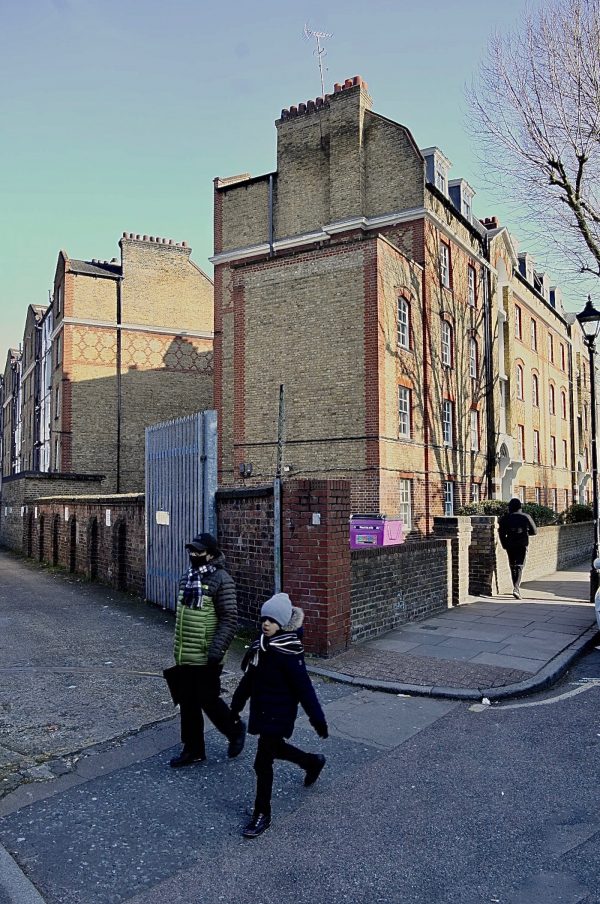
No doubt you have seen them out of the corner of your eye, looming over Bow Rd tube station. Wellington Buildings, Cuthbert Arthur Bereton’s dignified Victorian housing blocks rise up like fairytale castles when you peer up at them from the railway platforms below.
They were constructed around 1900 by Brereton when he was Engineer to the Whitechapel & Bow Railway, for people displaced by the building of the underground railway line and Bow Rd station, which opened in 1902. Wellington Buildings serve as an attractive landmark within the vernacular urban landscape in Bow and are an important example of the social and industrial change which took place here over century ago, especially the impact of the expansion of the railways.
When the Whitechapel & Bow Railway Act was passed in April 1897, it gave the Metropolitan District Railway Company power of compulsory purchase and demolition of a third of the houses in Mornington Rd nearby. Consequently, they were obligated to rehouse those displaced and Wellington Buildings was the result, tucked in at the north end of Wellington Way beside the station.
Comprising two tall blocks of tenements of yellow London stock bricks, the buildings are embellished with glazed Doulton bricks at ground level, and red bricks at corners and in the window surrounds – and a little discreet lattice work in the manner of William Butterfield’s ecclesiastical and collegiate architecture, high upon the wall, just to give them distinction. Brereton also contrived projecting bays for staircases that were originally open to the elements under pointed gables, and a low range on the south side of the courtyard served as a laundry and bathhouse. He came from a family of generations of heroic civil engineers and architects, but is chiefly remembered today for the elegant austerity of his design for Kew Bridge.
Wellington Buildings are a noble location in the history of the Suffrage movement. In 1913, number 37 was the home of Miss F E Adams, Honorary Secretary of the East London Branch of the Women’s Freedom League. According to The Vote newspaper, regular meetings were held there as part of the Women’s Suffrage movement.
“On Monday last a branch meeting was held at 37, Wellington Buildings, Bow. It was decided that till further notice branch meetings should be hold at the same address on alternate Thursdays.”
The Vote, Friday 7th Nov 1913
Standing today in their pristine, unaltered state after more than a century, Wellington Buildings are not listed yet adjoin Bow Rd Underground station which is Grade II listed and built at the same time. We must hope that their position, within the curtilage of the listed structure and being by the same architect as the station, will afford them some degree of protection.
A planning application for crude bulky extensions to Wellington Buildings in grey brick with grey zinc-clad roofs and aluminium windows is currently under consideration by the council. You can study the plans online by clicking here and entering PA/21/00427/A1 in the search box. Comments can be mailed to development.control@towerhamlets.gov.uk until 21st May.
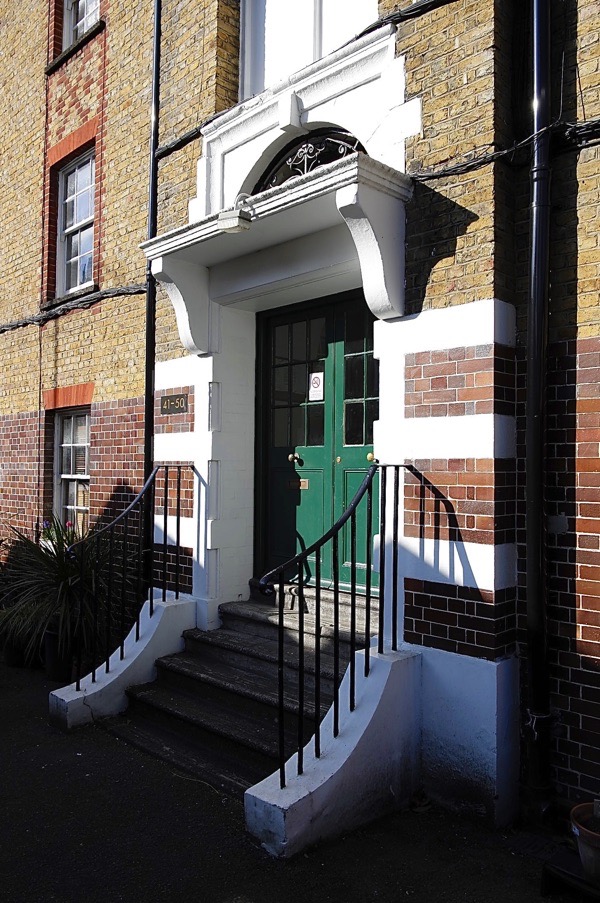
‘projecting bays for staircases that were originally open to the elements under pointed gables’
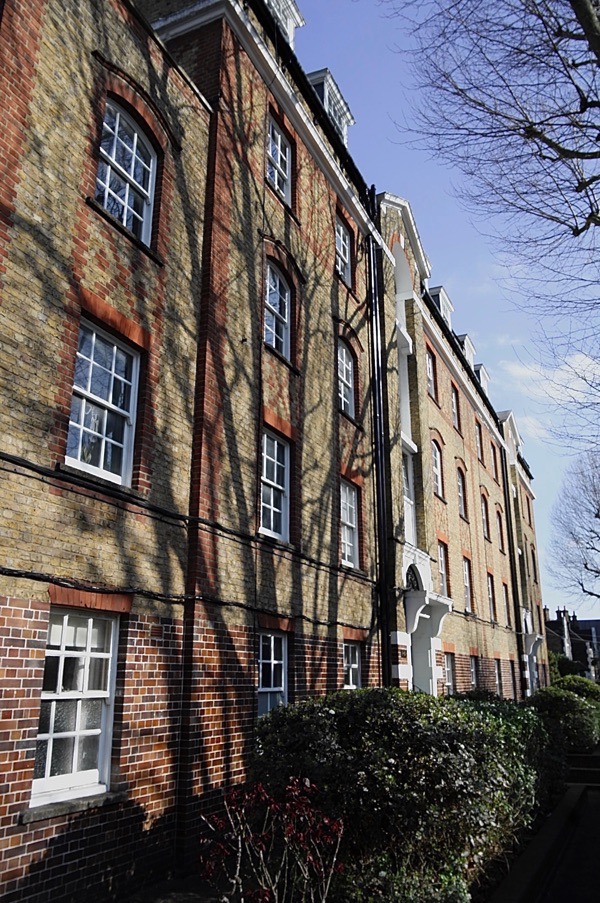
’embellished with glazed Doulton bricks at ground level, and red bricks at corners and in the window surrounds’
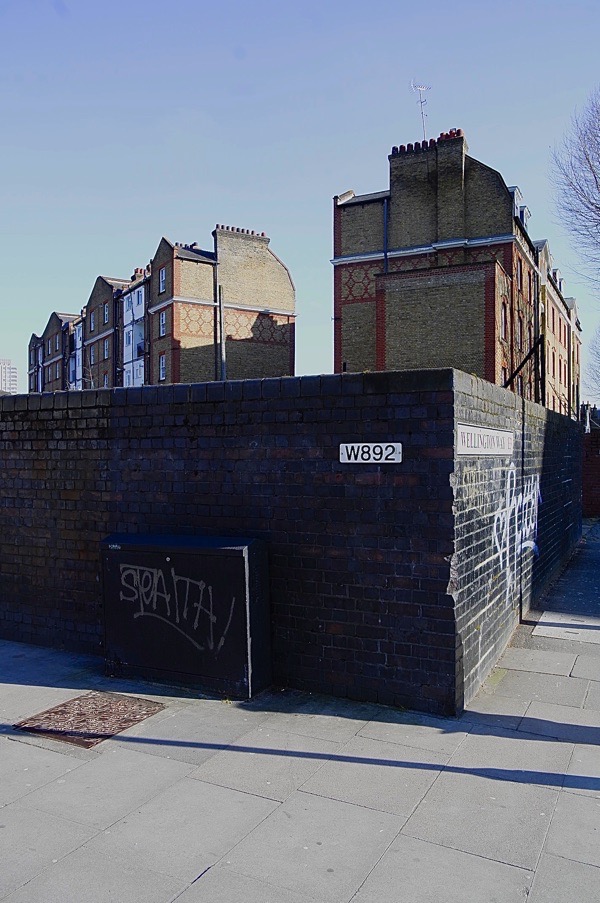
‘a little discreet lattice work in the manner of William Butterfield’s ecclesiastical and collegiate buildings high upon the wall, just to give them distinction’
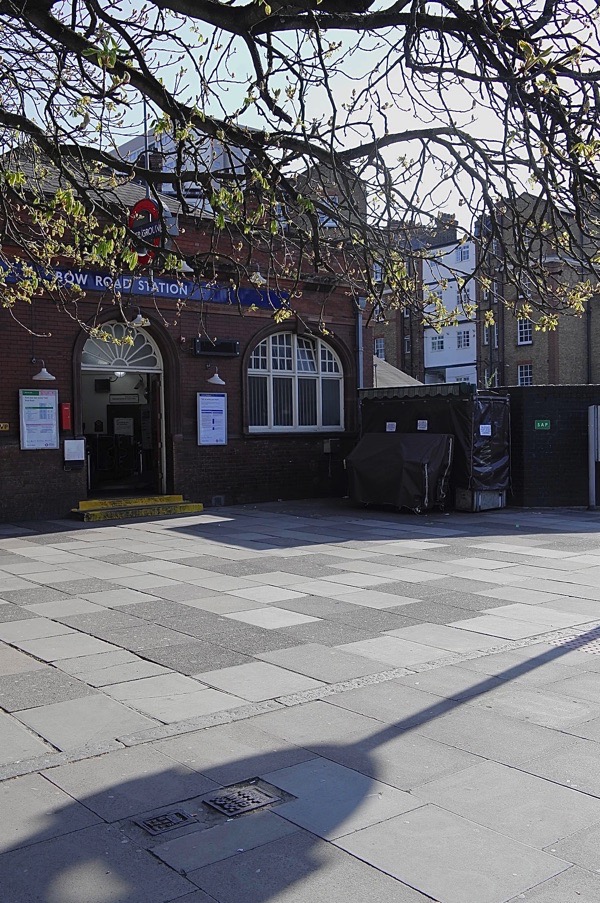
Bow Rd Station
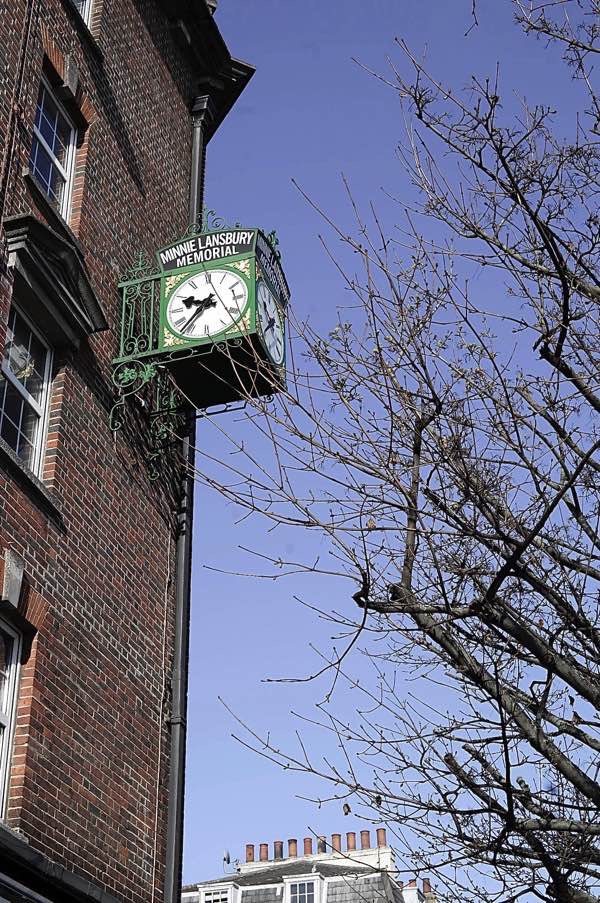
Minnie Lansbury clock in Bow Rd opposite Wellington Buildings
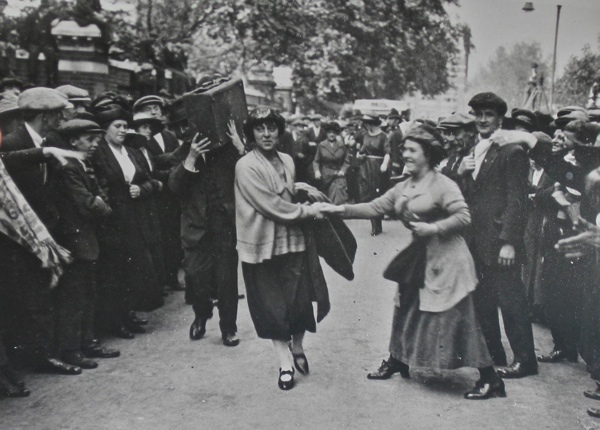
Suffragette Minnie Lansbury on her way to be arrested at Poplar Town Hall
You may also like to take a look at
Click on Adam Dant’s new map to explore the parish of St Martin-In-The Fields

Adam Dant created this print to celebrate beating the bounds at St Martin-in-the- Fields on the three hundredth anniversary of the building of James Gibbs’ famous church. It forms the centrepiece for an exhibition of Adam’s maps in the crypt which is open now and runs through the summer in Trafalgar Sq.
Visitors are encouraged to use Adam’s map to walk the bounds of the parish of St-Martin-in-the-Fields. It illustrates a broad historical sweep, augmented with familiar landmarks and buildings, anecdotes and incidents from the lives of numerous former parishioners. The friendly personages of many of the parish’s current residents are also dotted across the terrain, permitting map readers to spot the locals.

CLICK TO ORDER A COPY OF MAPS OF LONDON & BEYOND
Adam Dant’s MAPS OF LONDON & BEYOND is a mighty monograph collecting together all your favourite works by Spitalfields Life‘s Contributing Cartographer in a beautiful big hardback book.
Including a map of London riots, the locations of early coffee houses and a colourful depiction of slang through the centuries, Adam Dant’s vision of city life and our prevailing obsessions with money, power and the pursuit of pleasure may genuinely be described as ‘Hogarthian.’
Unparalleled in his draughtsmanship and inventiveness, Adam Dant explores the byways of London’s cultural history in his ingenious drawings, annotated with erudite commentary and offering hours of fascination for the curious.
The book includes an extensive interview with Adam Dant by The Gentle Author.
Adam Dant’s limited edition prints are available to purchase through TAG Fine Arts
Spring At Spitalfields City Farm
The second of four features in collaboration with Contributing Photographer Rachel Ferriman, documenting the seasons of the year at Spitalfields City Farm

This was the spring we waited too long for, the spring that came late, the spring that teased us with bouts of warm weather in March and then frosts in May. Yet at last, this spring that we all been yearning for has indubitably arrived.
With the lifting of restrictions, Spitalfields City Farm is reopening to visitors, resulting in long lines down Buxton St of east enders seeking solace, young and old waiting in eagerness to reacquaint themselves with Nature.
It was my pleasure to be greeted at the farm gate by development manager Jamie Morrish who kindly took me on a ramble around the precincts. With his worn tweed jacket and white beard, he looks the very picture of a rural retainer yet he revealed he is fascinated by the urban cobbled roads traversing the site, remnants of the streets that once stood where now are fields. ‘They tell a story of what used to be,’ he explained, ‘and I think that’s important.’
Already the vegetable patch at the farm is full of life, with lines of Swiss Chard flourishing, and potatoes, beetroot, onions and broad beans on the way. ‘As an experiment we are trying out a variety of different vegetables to see which things work,’ Jamie explained proudly. ‘It’s a bit of fun because when you see all these coloured leaves, it’s really attractive. We’re going to have an amazing array this year and we’re going to be producing salad boxes for local people.’
I was very impressed by the way rainwater is collected on the roof of a shed and drains along the gutters to pipes which run underneath the vegetable patch, automatically watering the plants. Jamie led me into a polytunnel where shiny green lettuces flourished in the humid moist atmosphere. Outside, the crab apples were heavy with pink blossom and, despite the late frosts, a plum tree had already developed hundreds tiny green fruit covering the branches. ‘It’s going to be good year for fruit,’ Jamie exclaimed in delight. ‘We’re in a warm pocket here.’
‘We’re going to plant a long border for bees and birds,’ he continued introducing a new idea and showing me a rectangle of bare soil. ‘We focus a lot on production for humans to eat and now we are going to pay attention to the needs of bees and birds. This is going to be a perennial bed and will take a few years to mature.’
A loud chorus of birdsong accompanied our ramble, interrupted only by the trains of the East End London line passing close by on their journey between Whitechapel and Shoreditch High St.
Jamie introduced me to a pair of handsome Buff Orpington chicks only a few weeks old. ‘One was born with splayed legs, so we splinted his legs together,’ Jamie admitted protectively. ‘When he hatched, he couldn’t balance, he kept tipping over and falling on his back, but Emma took care of him by bandaging his legs and, now his legs have straightened, he’s fine. He’s grown quite big.’
Thus I present my evidence to you, should you require it, that – after a few stumbles – spring has truly arrived in Spitalfields.

Crab apple in flower


Beatrix lost her right ear but survived a dog attack as a lamb in Surrey six years ago

Sarah, one of the volunteers


Buff Orpington chicks at five days old

One of the Buff Orpington chicks, around two weeks old


Patricia watering


Tess with freshly harvested Chard leaves


Tanya & Tess in the potting shed


Bella, the farm cat, dozes in the warmth of a polytunnel


Holmes, the kune kune pig, emerges for spring


Photographs copyright © Rachel Ferriman
You may also like to take a look at
Charles Chusseau-Flaviens, Photographer

Petticoat Lane
Photographer Charles Chusseau-Flaviens came to London from Paris and took these pictures, reproduced courtesy of George Eastman House, before the First World War – mostly likely in 1911. This date is suggested by his photograph of the proclamation of the coronation of George V which took place in that year. Very little is known of Chusseau-Flaviens except he founded one of the world’s first picture agencies, located at 46 Rue Bayen, and he operated through the last decade of the nineteenth and first decade of the twentieth century. Although their origin is an enigma, Chusseau-Flaviens’ photographs of London and especially of Petticoat Lane constitute a rare and precious vision of a lost world.
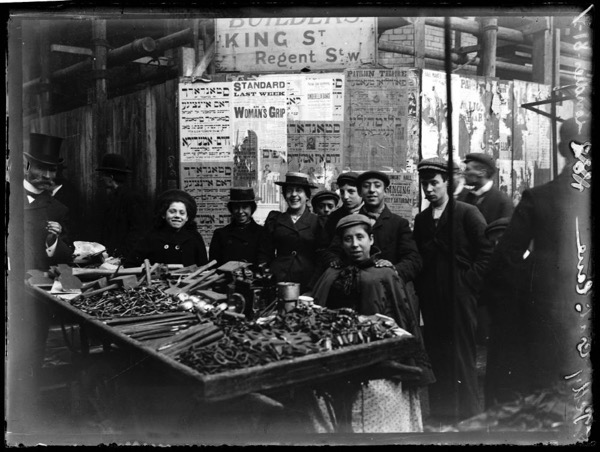
Petticoat Lane
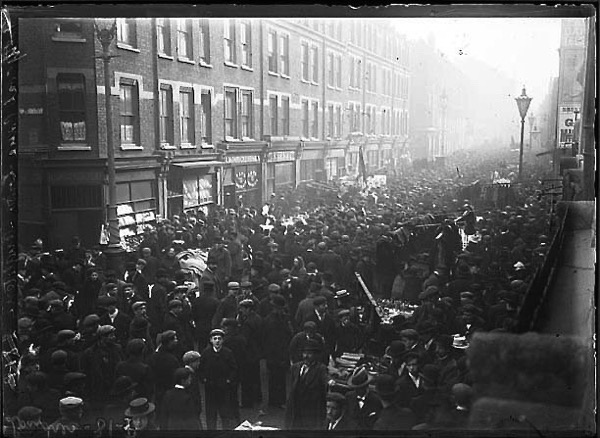
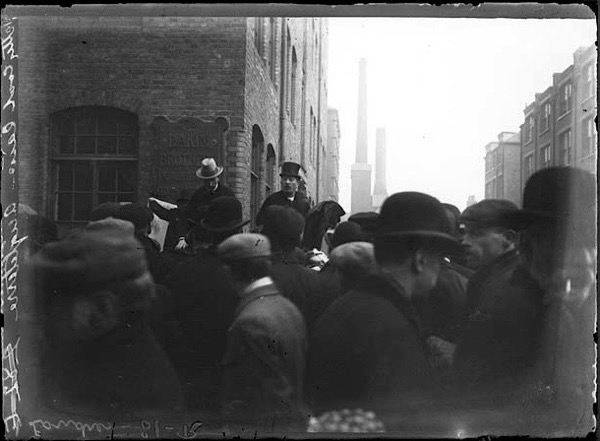
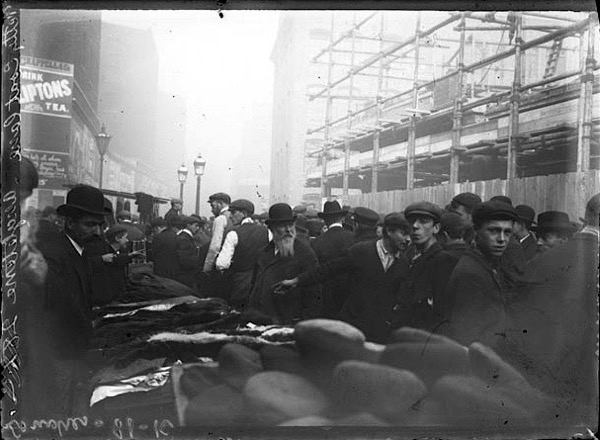
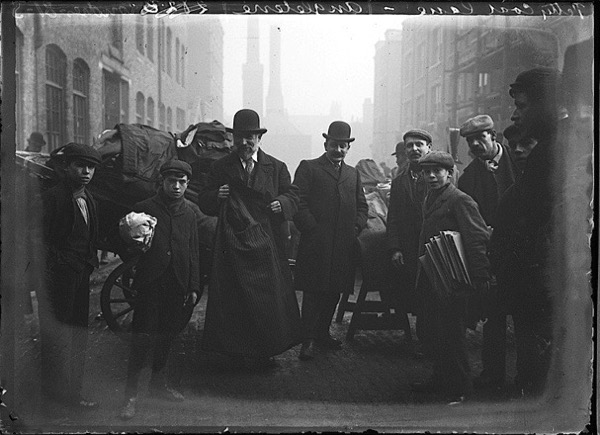
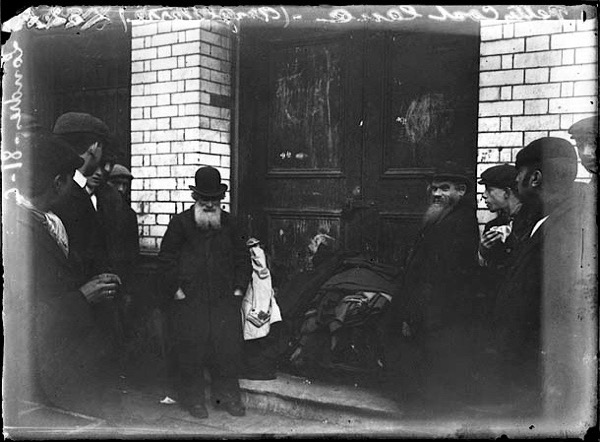
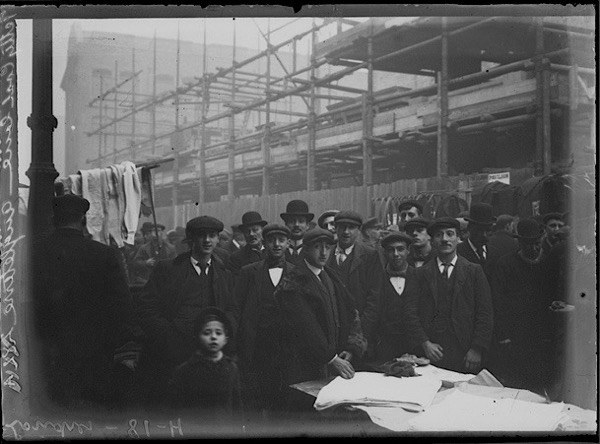
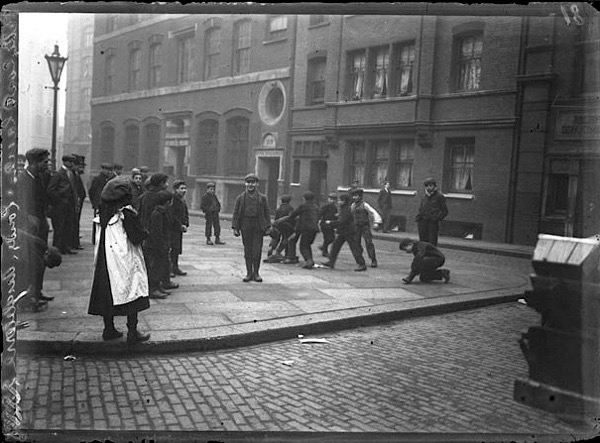
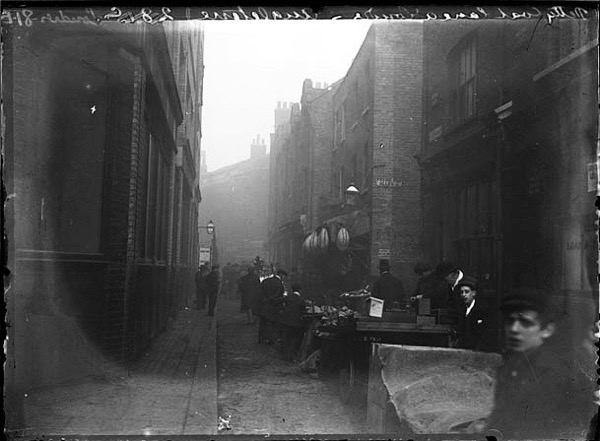
Sandys Row with Frying Pan Alley to the right
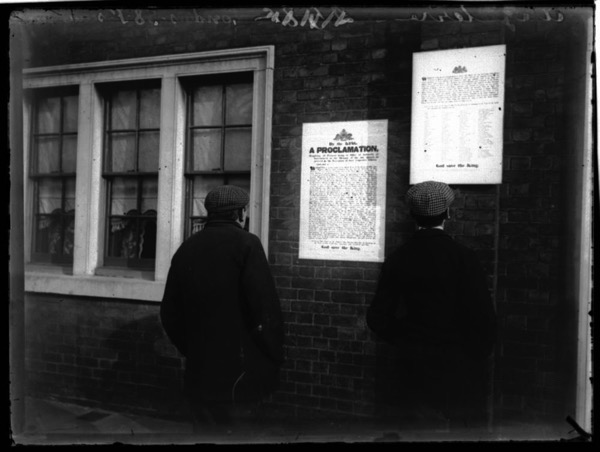
Proclamation of the coronation of George V, 1911
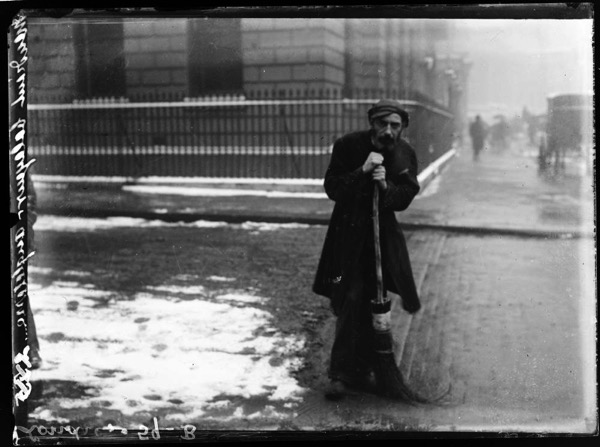
Crossing sweeper in the West End

Policeman on the beat in Oxford Circus, Regent St
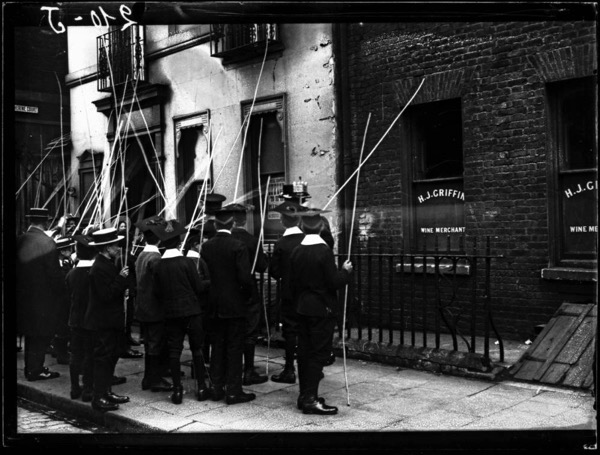
Beating the bounds for the Tower of London, Trinity Sq

Boats on the Round Pond, Kensington Gardens

Suffragette in Trafalgar Sq
Photographs courtesy George Eastman House
You may also like to take a look at
My Source Of Inspiration In Lockdown
Fiona Atkins, curator of Town House Gallery in Fournier St, reveals a personal inspiration that she discovered during lockdown

In common with many, I found this last lockdown the hardest. It was winter and London was grim. Unlike the first lockdown, I knew it was going to last a long while. I am lucky enough to have a garden and, if you had asked me what was the one thing that sustained me, I would have said that was it.
Yet one day towards the end of March, when I found myself in a low mood triggered by news of variants and further waves of infection, I came across a photo of an old Afghan bridal dress while browsing online, struggling to lift my mood. Our last family event before Coronavirus loomed on the horizon was my daughter’s wedding and this dress, with its wonderfully bright pink and swirly skirt, instantly brought back the joy of that day which seemed so very distant then.
I must confess I know little about Afghan wedding customs or traditions, but my mother and grandmother were good seamstresses who taught me when I was a child and I have started sewing again during this last year.
When I examined the dress, I grew fascinated by the volume and quality of work involved in the panel on the reverse and by the evidence of the several ‘hands’ involved in making the garment, and – by contrast – the roughness of some of the stitching and the patching used here and there. I could see the passage of time in the making and re-making of this dress.
As I came across more of these old Afghan wedding clothes, for men as well as women, my despondent mood was displaced by the excitement of discovering these exuberant creations with their wonderful embroidered panels, braids and silk fabrics. I ended up buying them all and they are now on display in the gallery at Town House in Fournier St, as my special source of consolation in lockdown.
Drawing inspiration from this experience, the theme for this summer’s Open Exhibition is ‘one thing that helped me through lockdown.’ I wanted to strike as positive a note as possible as we leave restrictions in June.
Submission is open for another week until next Sunday 16th May and Fiona Atkins’ collection of Afghan dresses is on display in the gallery until the end of May.


You may also like to take a look at
Rachael South, Chair Caner

Rachael South at her workshop in Dalston
It never fails to inspire me when I meet someone who finds joy in the work they do – and Rachael South, third-generation chair caner, is a prime example. The chain of events that led me to Rachael was extraordinary and the resultant visit to her workshop proved a rewarding outcome.
One day, I published a picture of an unknown man in a suit sitting on the kerb mending a cane chair, which came from David Sweetland’s A London Inheritance, where he writes a weekly commentary upon his father’s photographs of London. The picture fascinated me because of its similarity to the age-old images of chair menders to be found in the Cries of London series of prints published in these pages. Imagine my surprise when his granddaughter, Rachael, got in touch, naming him as Michael South and explaining that she carries on the trade to this day which was taught to her by her father, who had in turn been taught by her grandfather.
My quest led me to an old workshop in Shacklewell Lane where Rachael spends her days caning and upholstering chairs by the light of a large window. “The family lived in Ladbroke Grove but was Irish in origin, I believe there were a lot of Irish immigrants there at one time,” she revealed to me, talking as she worked at her caning, “Michael, my grandfather, was a prizefighter and bare-knuckle boxer, but over time the chair caning took over as his boxing career waned. He had a pedlar’s licence and walked up the hill from Ladbroke Grove to work around Kensington and Knightsbridge. They may have been travelling people once, because I was told it was called ‘Gypsy Caning.’ You can do it in the street because you don’t need any tools, just a knife and a block of wood or hammer to knock out the pegs.”
Certainly, chair caning has been carried out upon the streets of London for centuries and Rachael delights in the notion of being the inheritor of this artisan tradition, which suits her independent nature very well and guarantees a constant income as long as she chooses to do it.
“Terry, my dad, wanted to stay on at school and train as a draughtsman but at fourteen my granddad said, ‘You’ve got to get a job,'” Rachael admitted to me. “He had been brought up doing chair caning and he managed to get an apprenticeship with Mrs Shield, who was a celebrity decorator of the time – before setting up his own upholstery workshop in Harrow where he trained six apprentices”
“My dad taught me caning when I was fourteen. I used to go along to his workshop and I liked it, because I’m quite a patient person and the upholsterers were a good laugh,” Rachael recalled fondly,” and when I went to Art College, it was what I did to make money – I lived in Hammersmith and went round all the antiques dealers and they supplied me with enough caning to see me through.”
Employed as a textile designer, Rachael soon felt the need for freedom and set up her own workshop as upholsterer and chair caner. “I’ve never been without work and I have three people working with me. I’m fifty-two now and I’ve been caning chairs for thirty-eight years,” she confided to me proudly, “I can’t turn work away because I know I can do it and people are always so delighted when I give it back to them. I say, ‘That’s it done for another generation.'”

Rachael’s grandfather Michael South (1905-1964) at work in Kensington, sitting on his tool box

Michael worked with a pedlar’s licence in West London –“He had many brothers and sisters. One called Samson used to ride a motorbike on the wall of death and another called Danny had only one ear.”

Rachael’s father Terry South at work in his workshop in Harrow in the seventies

Rachael South at work today in Dalston

Terry South and Rachael at his workshop in 1978

Rachael sets to work with cane soaked in water for flexibility

Michael always went to work dressed in a suit and leather shoes

Rachael with a bundle of reeds
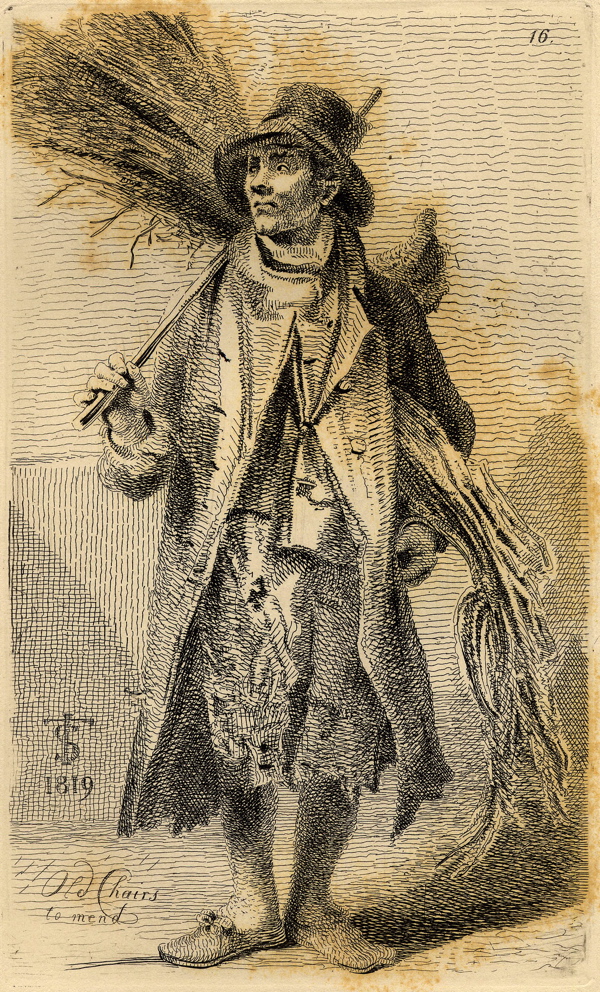
“Israel Potter, one of the oldest menders of chairs still living” – as portrayed by John Thomas Smith in Vagabondiana, 1819
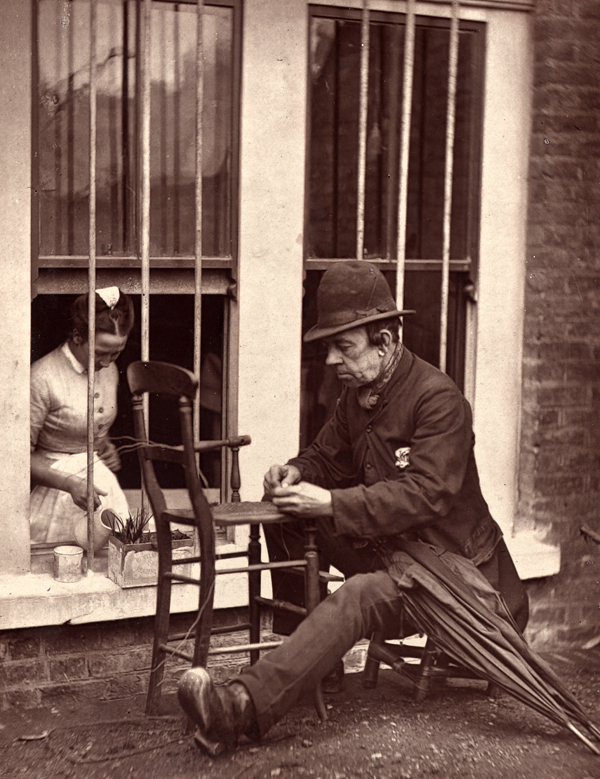
Photo by John Thomson from Street Life in London, 1876: Caney the Clown – ”thousands remember how he delighted them with his string of sausages at the yearly pantomime, but Caney has cut his last caper since his exertions to please at Stepney Fair caused the bursting of a varicose vein in his leg and, although his careworn face fails to reflect his natural joviality, the mending of chairs brings him constant employment.”
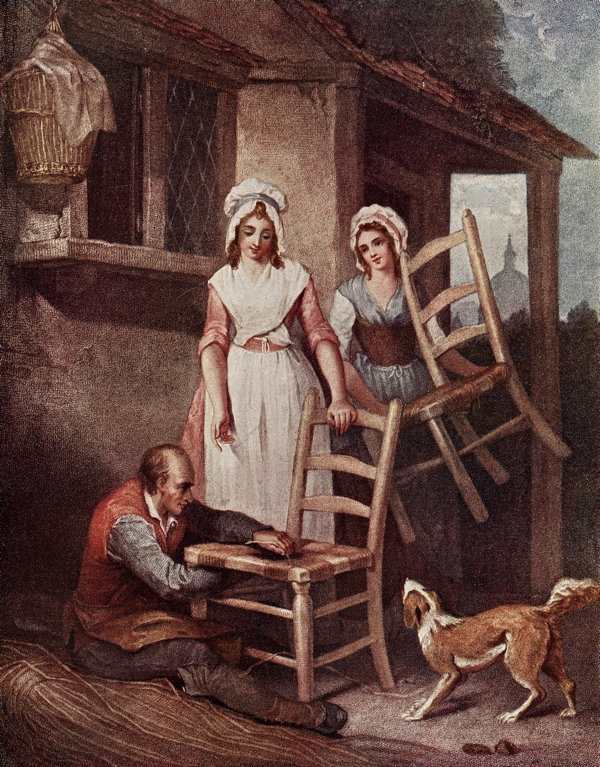
“Old Chairs to mend!” by Thomas Wheatley, seventeen-nineties

“Any Old Chairs To Mend! & Green and Young Hastings!” by Sam Syntax
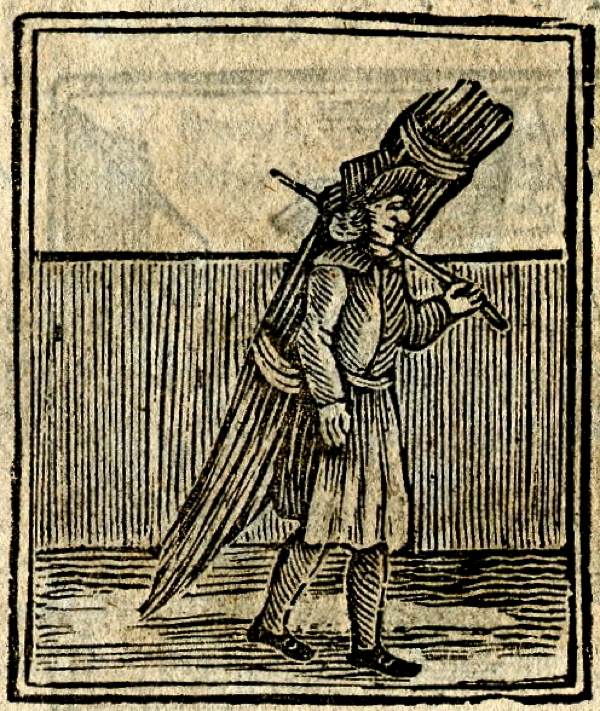
“Old Chairs to mend, Old Chairs to Mend!” by J. Kendrew

“Chairs to Mend!” from The New Cries Of London, 1803

“The kerbside mender of chairs, who ‘if he had more money to spend would not be crying – “Chairs to mend!’ is one of the neatest-fingered of street traders. Watch how deftly he weaves his strips of cane in and out – how neatly he finishes off each chair, returning it to the owner, ‘good as new.'” from London Characters, 1934
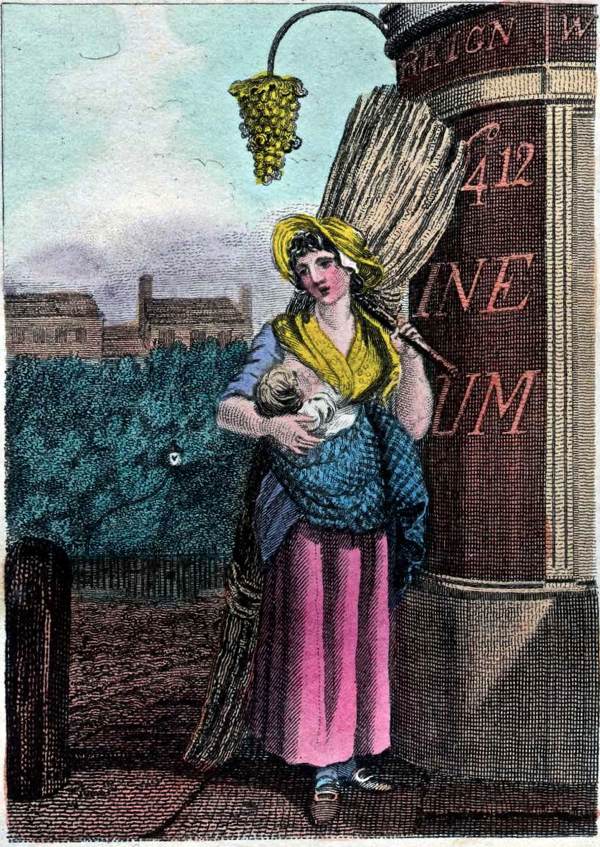
William Marshall Craig’s Itinerant Traders in their Ordinary Costune, 1804 : “Chairs to mend. The business of mending chairs is generally conducted by a family or a partnership. One carries the bundle of rush and collects old chairs, while the workman seating himself in some convenient corner on the pavement, exercises his trade. For small repairs they charge from fourpence to one shilling, and for newly covering a chair from eighteen pence to half a crown, according to the fineness of the rush required and the neatness of the workmanship. It is necessary to bargain for price prior to the delivery of the chairs, or the chair mender will not fail to demand an exorbitant compensation for his time and labour.”
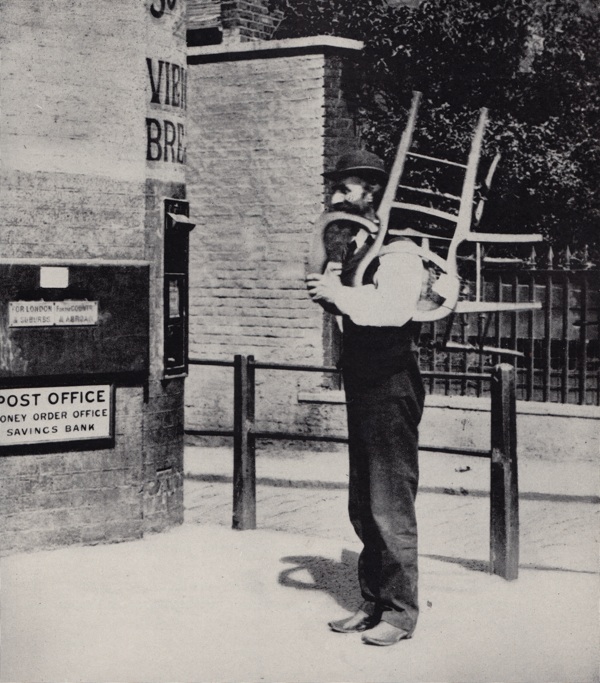
Chairmender at corner of Prince Orange Lane, Greenwich from Charles Spurgeon’s Londoners


From Julius Mendes Price’s London Types, 1919
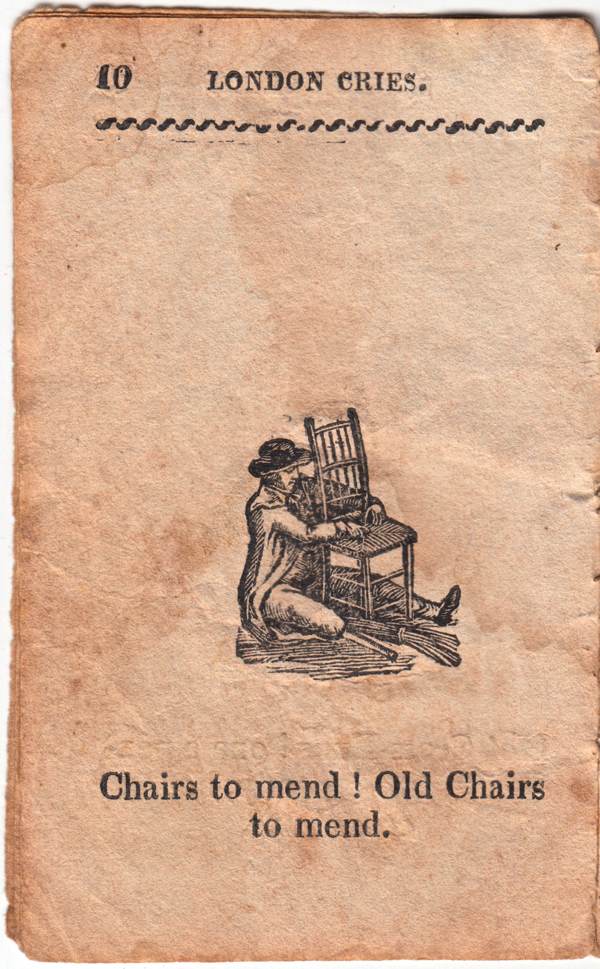
From The Cries of London, early nineteenth century
Archive photos of Michael South © A London Inheritance
Cries of London courtesy Bishopsgate Institute
Contact Rachael South for chair caning and upholstery