Harold & Walter Steggles At Southend
If you are seeking an excuse for a day trip to Southend, I can think of no better reason than to visit the current exhibition of paintings by East London Group Artists Harold & Walter Steggles, BROTHERS IN ART, at the Beecroft Gallery until 8th January.
Both artists are featured in my book, EAST END VERNACULAR, Artists Who Painted London’s East End Streets in 20th Century.
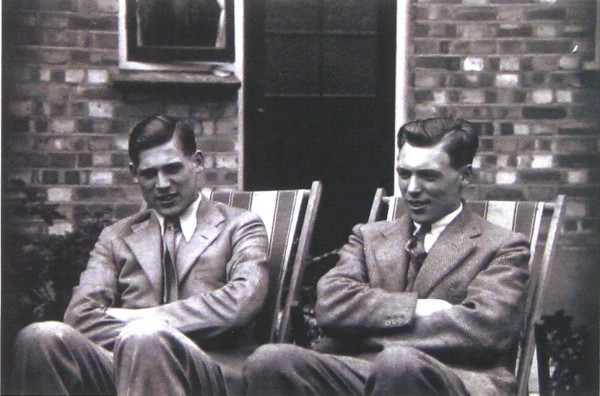
Harold Steggles (1911-71) and his elder brother Walter were precocious artists who found early success as adolescents. Harold was the second of five children and grew up in Ilford with a father who managed a specialist shoe shop in the Strand and a mother who worked as dressmaker but had always wanted to be a painter.
When Harold left school and found employment as a clerk with a solicitor in Gray’s Inn at fourteen years old, he and Walter took to visiting galleries and viewing the national painting collections together. Soon they were undertaking sketching trips to pursue their shared passion, and reading widely about art, discussing the writings of John Ruskin and Joshua Reynolds.
In 1925, they visited an exhibition of paintings by the Bethnal Green Men’s Institute Art Club at the Bethnal Green Museum and signed up for lessons at the Institute, aged fourteen and seventeen respectively. However, the brothers were quickly disappointed with the tuition and they transferred to John Cooper’s art classes at the Bromley & Bow Institute where he encouraged them to paint scenes in the vicinity of the Institute in Bow. Under his tutelage, both brothers flourished as artists and they were to become the youngest members of the East London Group.
When Harold was just seventeen years old, John Cooper hung eight of his paintings at the East London Art Club exhibition at the Whitechapel Gallery in 1928, and Charles Aitken, Director of the Tate Gallery bought one, offering twice the asking price of one guinea.
Photographs of the brothers at this time show them as a pair of smiling handsome youths with short, neat haircuts and near-identical matching suits, sometimes worn with plus fours. Enjoying the fruits of their artistic success, they took motoring trips together and expanded the range of their subject matter to include the rural landscapes of East Anglia.
“All my brother’s pictures found buyers,” wrote Walter in excitement at his younger brother’s triumph when they showed with the East London Group at Lefevre Galleries and, over successive years, Harold contributed more than sixty pictures to these exhibitions. Before long they found themselves sought after by other galleries and Harold became a protégé of the flamboyant aesthete Eddie Marsh who lived near his office in Gray’s Inn as well as accepting a prestigious commission from Villiers David to paint the gentlemen’s clubs of St James.
The climax of this run of success for the brothers came with Harold & Walter Steggles’ joint exhibition at Lefevre Galleries in 1938, yet Harold continued his work as clerk. When the war came, both were excluded from service for health reasons and applied to become war artists but were turned down. Instead, Harold was asked by Muirhead Bone to contribute paintings to an exhibition at the Ashmolean Museum in Oxford which were to be sold to benefit the Red Cross.
In 1943, when he was thirty-two, Harold married Lilian Wood, the widow of a Spitfire pilot, even though her father did not approve of Harold being an artist. It was a curious union of contrasting personalities, Harold considerate and quiet, and Lilian, outgoing, keen on tennis and uninterested in art. Harold took legal exams and advanced in his work at the solicitors but considered himself lacking in the necessary education, confiding to his daughter Elizabeth that, if it had not been for the war, he might have carried on with commissions.
Twenty-five years after Harold died at the age of sixty, Walter wrote, “I have not yet recovered from the shock of losing him.”
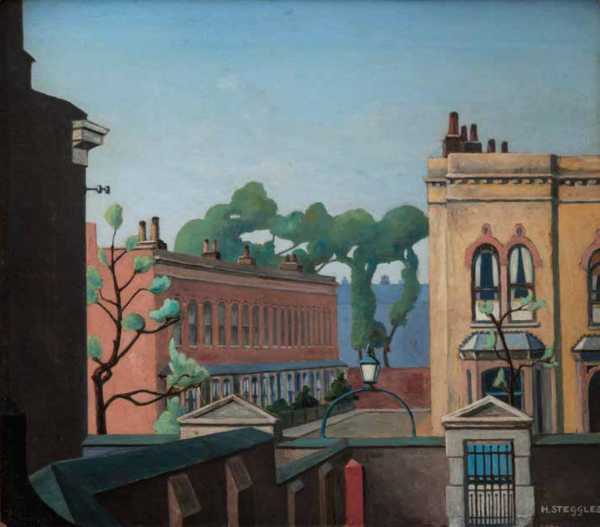
Grove Road, Bow

Warner Street, Clerkenwell, 1935
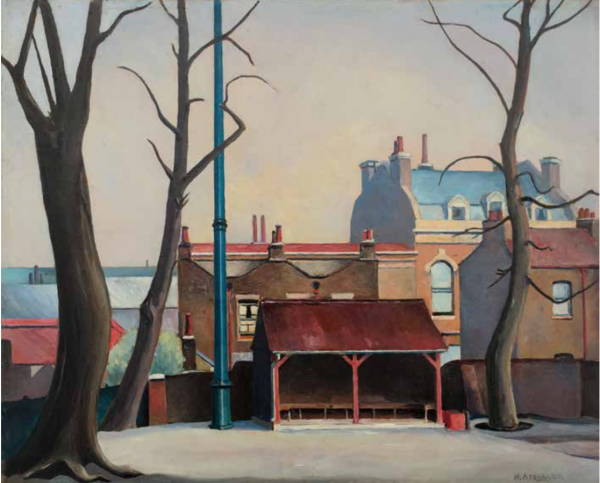
Grove Hall Park, Bow, 1933
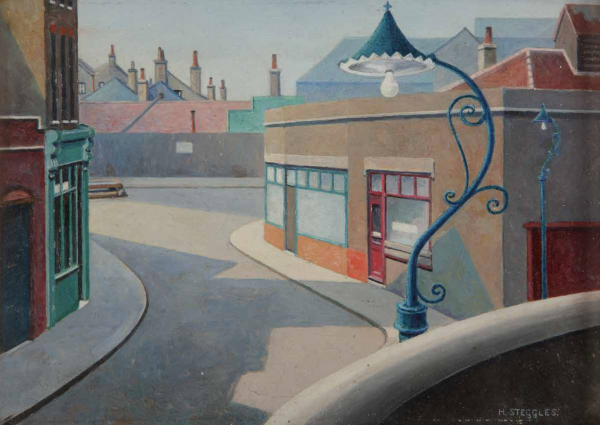
Blackwall
When Walter Steggles (1908-1997) left school at fourteen, he joined a shipping firm in the City of London, working, “as dogsbody in the superintendent’s department which meant spending periods in the drawing office.” Once he and his younger brother Harold started regular art classes in 1925, such was his enthusiasm that he would take the train from Fenchurch Street Station back to the family home in Ilford for dinner before returning to the East End.
Like Harold, Walter enjoyed the encouragement of John Cooper at Bow, whom he described as “probably the best teacher I ever knew,” recalling how “He would always find a good point to remark on in someone’s work and would say, ‘You are trying to imitate someone not as good as yourself.’” Walter also appreciated the participation of established artists at the classes in Bow, writing “Sickert’s advice has been constantly with me,” and was both challenged and flattered when John Cooper sometimes asked him to take over the class.
At twenty years old, Walter contributed eleven paintings to the East London Art Group Show at the Whitechapel Gallery in 1928, three of which were then hung in the Tate. With admirable lack of ego, Walter wrote, “I do not like one man shows, my pictures look better mixed in with others.” He and Harold both exhibited at all the East London Group shows at the Lefevre Galleries between 1928 and 1936, followed by a joint show in 1938, and the two brothers found themselves part of a cosmopolitan artistic milieu that included Ben Nicholson, Charles Ginner, Philip Wilson Steer, George Braque and Raoul Dufy. In the midst of this success, Walter’s crowning achievement was having a painting in the British Pavilion at the Venice Biennale in 1936.
In 1939, excluded from military service due to asthma and not chosen as a war artist, Walter was transferred to the Ministry of Transport for war work but continued his art studies at Central School of Art. Offered a job as an art teacher by London County Council after the war, instead he returned to work at the shipping company in the City.
After Harold’s marriage, Walter’s sister Muriel sometimes accompanied him on painting trips and she remembered that when he found a scene that he liked, he would sketch it on the spot and then work up the painting at home, also Sickert’s preferred method. Walter wrote, ”sketching is better than a camera, I only did one painting from a photograph and it was dead.”
Inspired perhaps by the presence of Stanley Spencer, Walter moved to Cookham where his parents came to live with him, much to his father’s regret, declaring “We should never have left Romford!” By now his mother was painting prolifically. “My son has his own studio,” she boasted to Stanley Spencer. “He’s lucky, I paint in my bedroom,” replied the old master.
Still working into the nineteen-nineties, Walter wrote, “I sometimes wonder what makes us pursue the arts. It is not money as people in insignificant jobs usually do better.” At the end of a long and sustained painting career, he wrote proudly, “It is sixty-five years since I sold my first picture at a public exhibition. It was bought by Sir Joseph Duveen and was hung at the Tate Gallery in 1929.”
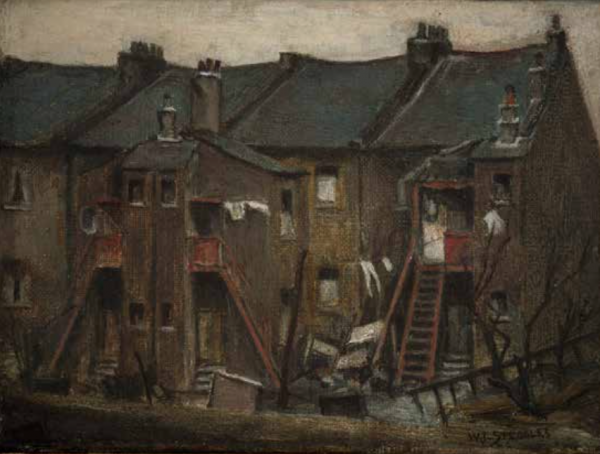
Old Houses, Bethnal Green, 1929
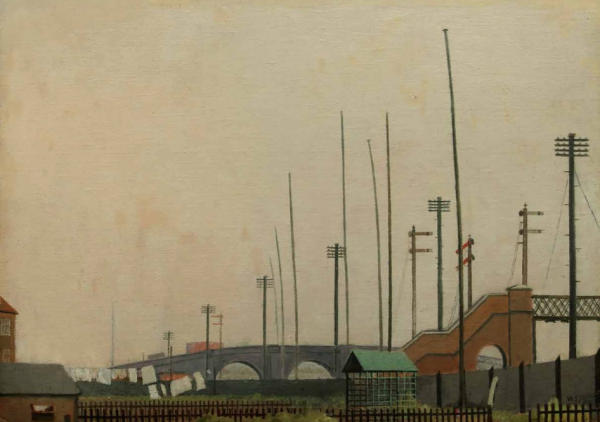
The Railway Fence
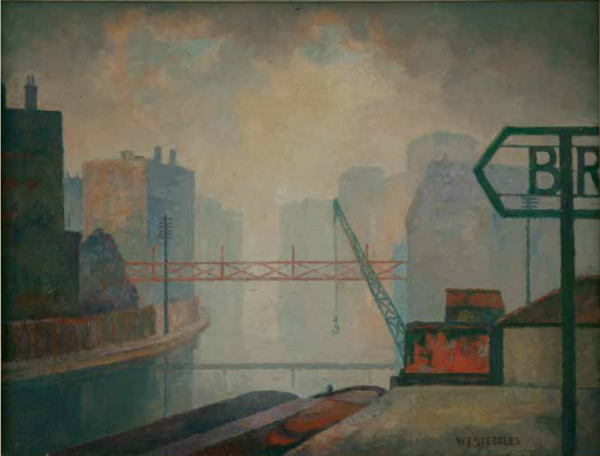
Bryant & May Wharf
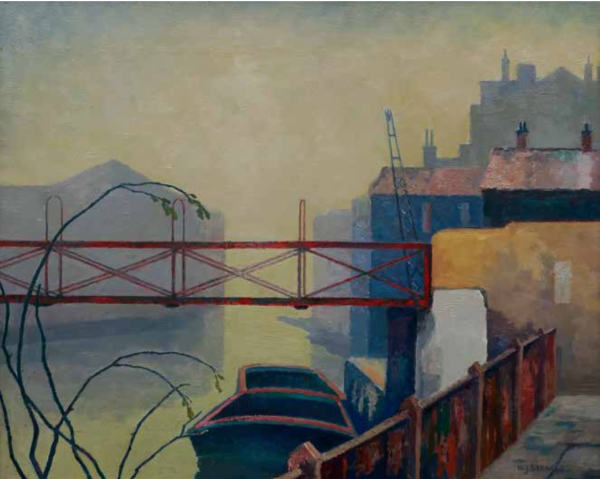
The Red Bridge
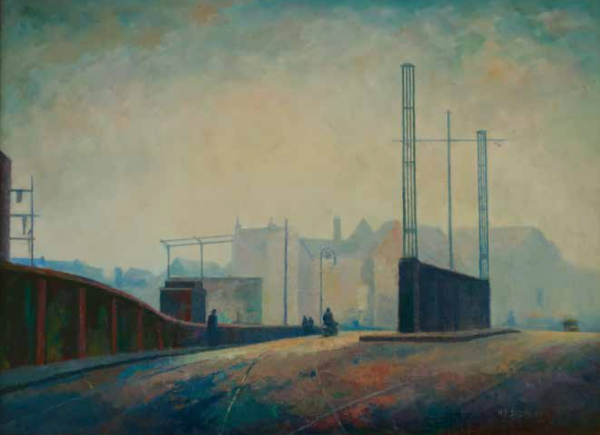
Bow Bridge
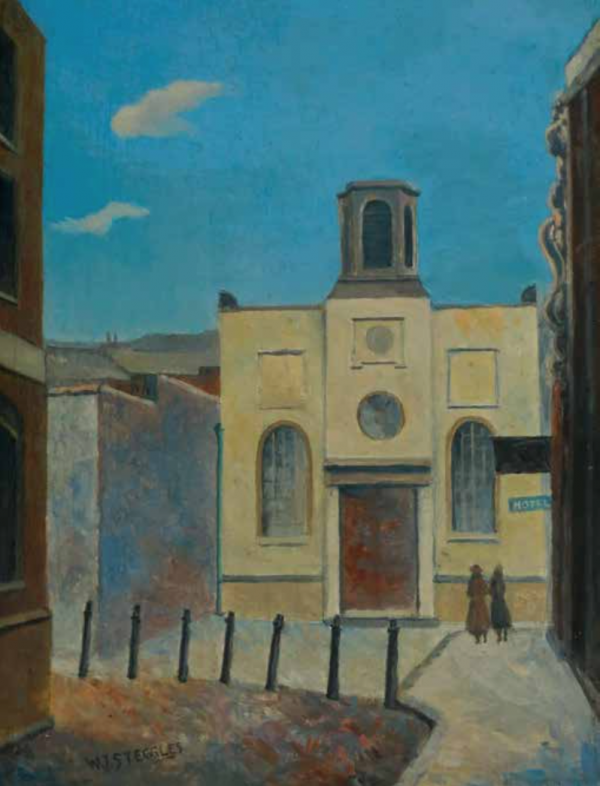
The Chapel, Minories
Take a look at some of the other artists featured in East End Vernacular
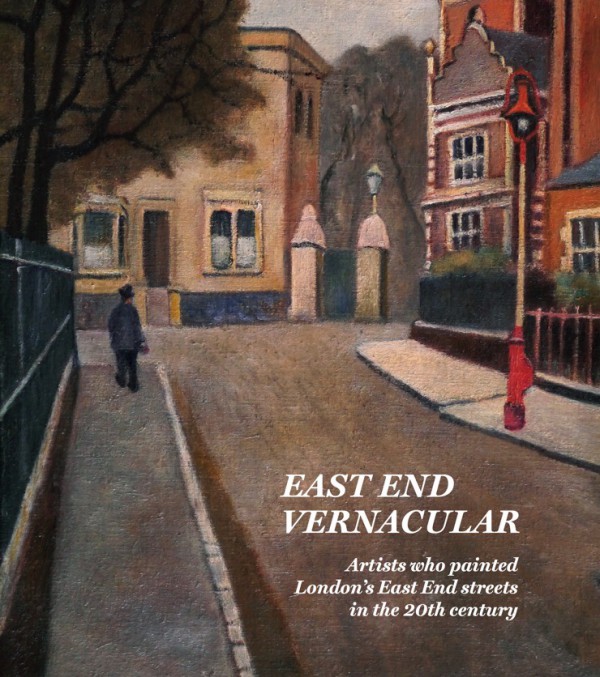
Click here to buy a copy of EAST END VERNACULAR
Philip Cunningham At Oxford House
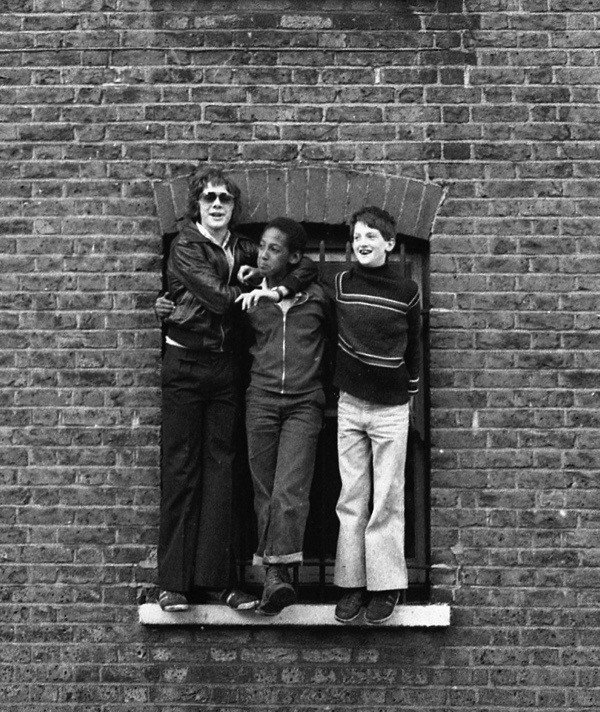
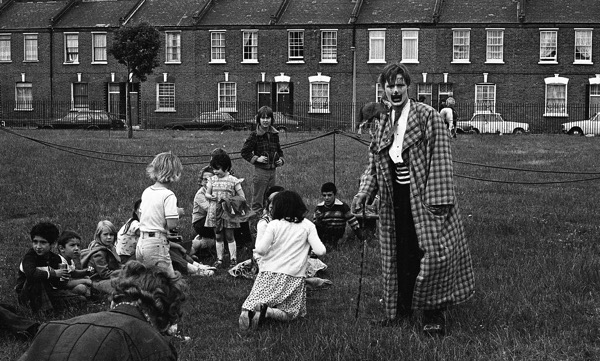
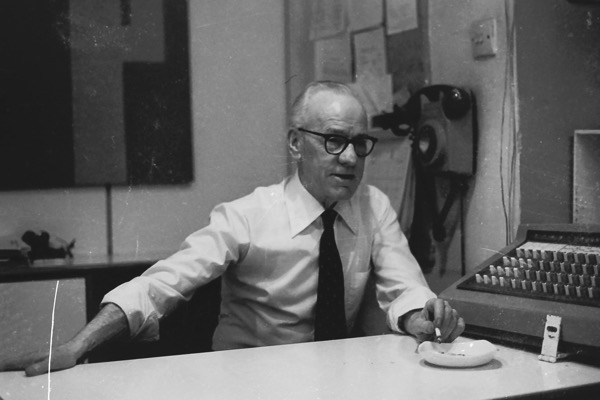
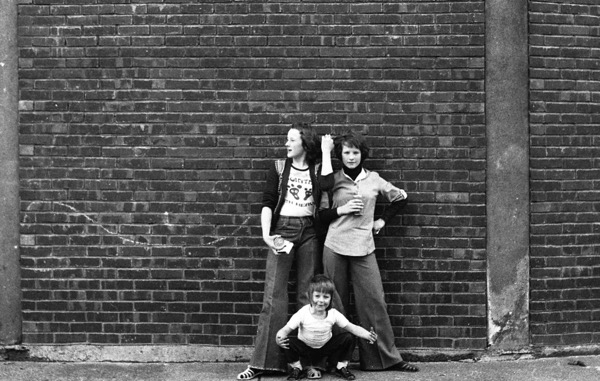
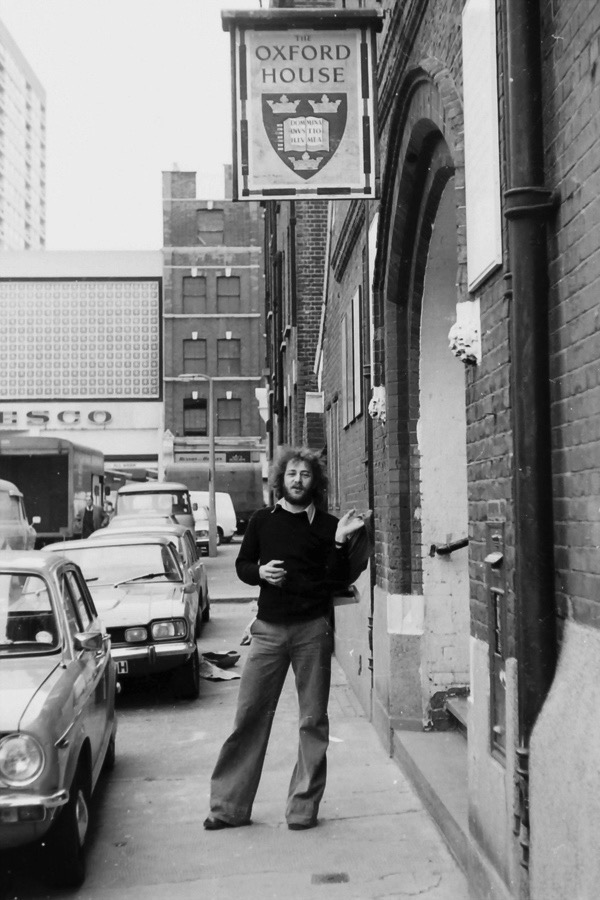
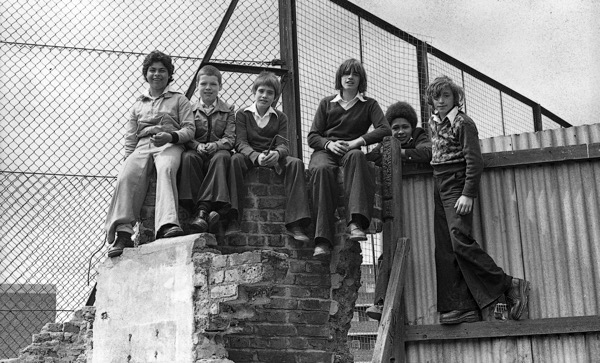
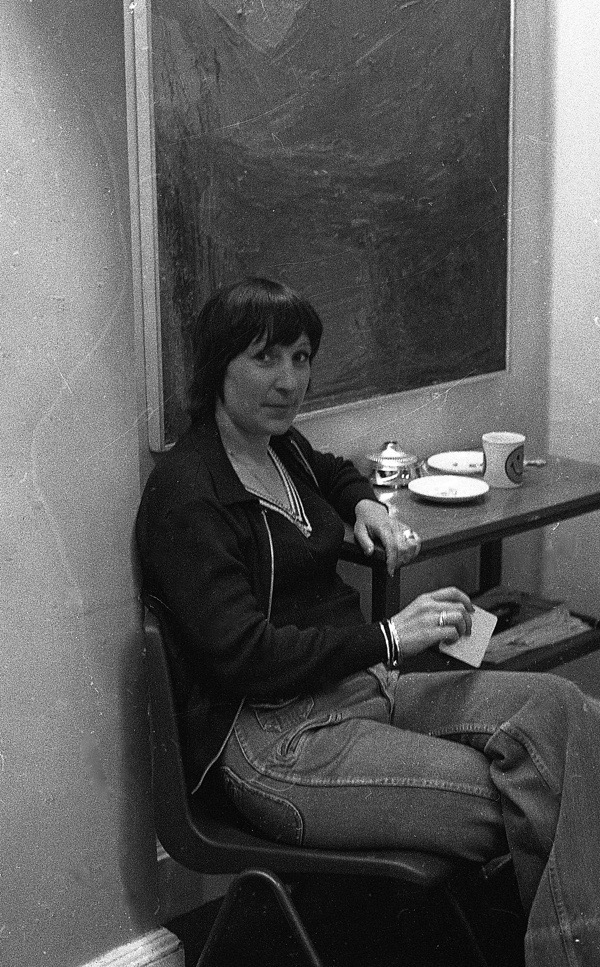
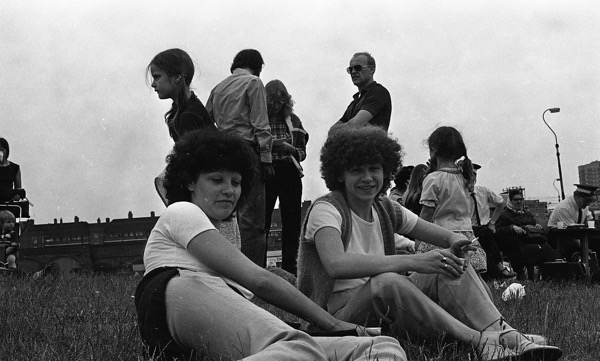
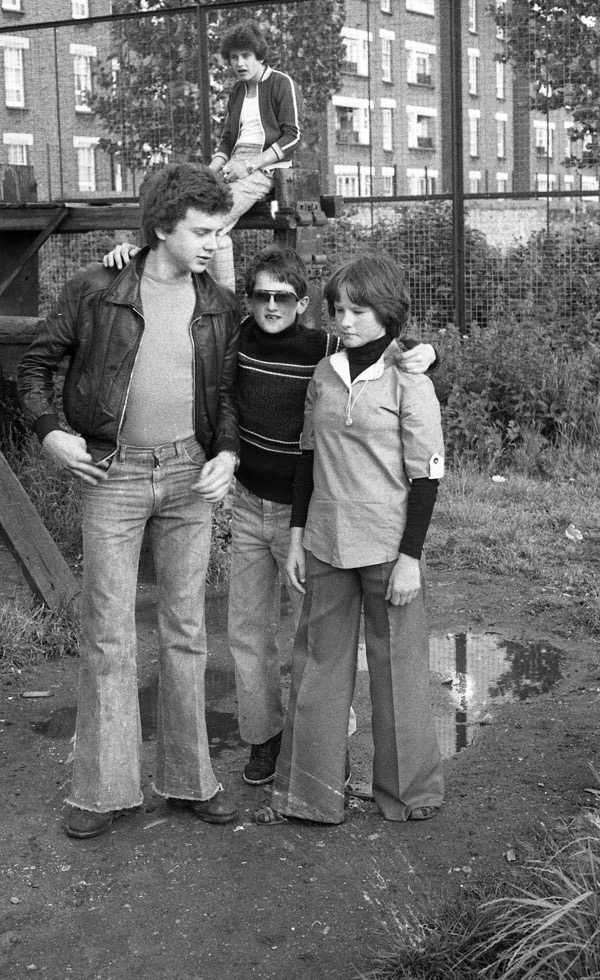
Photographer Philip Cunningham took these lively pictures while working as a youth leader at Oxford House in Bethnal Green in the seventies. They are now the subject of an exhibition entitled Youth of Yesteryear at Oxford House from 22nd September until 17th December.
“In the early seventies, I was trying to get into art school but living in a small house in Mile End Place where there was no room to paint, so a friend suggested that I tried the art studio at Oxford House. I gave it a go and found myself surrounded by THARGS (Tower Hamlets Arts Group) who were mostly Abstract Expressionists.
Upstairs was an antiquated dark room used by kids from the youth club which was under the art workshop. I soon became involved and worked there for nearly five years. During this time, I gained a place at Ravensbourne Art College and used their darkroom equipment which was all new.
The tutors at Ravensbourne encouraged me to ‘Photograph everything!‘ and that was I started to do, which was how and why many of these pictures were taken. They capture an era and an effervescent energy that I still find inspirational.”
Philip Cunningham
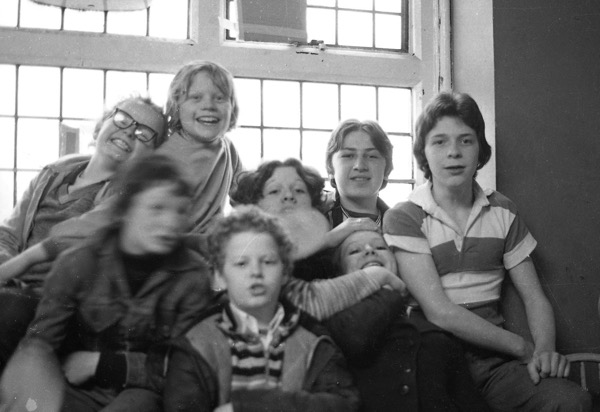
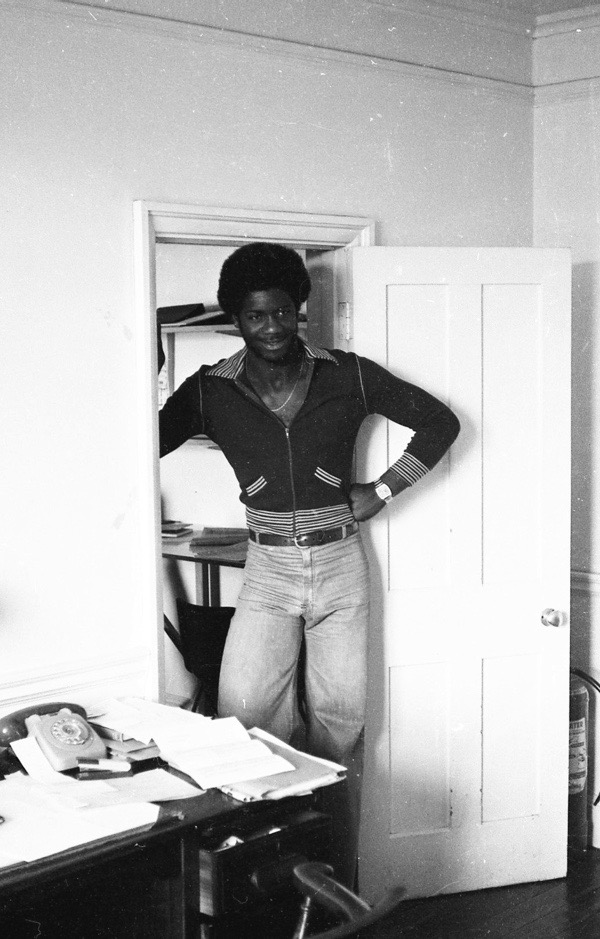
Victor
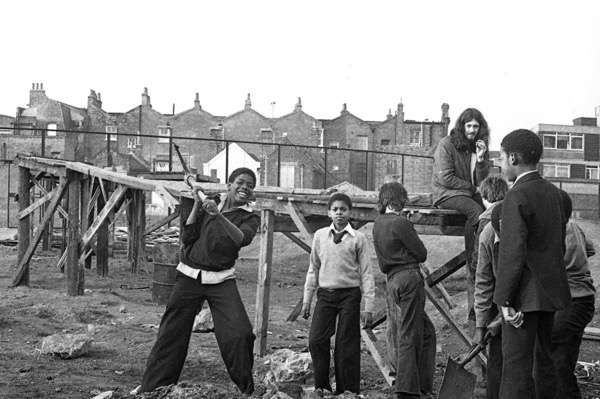
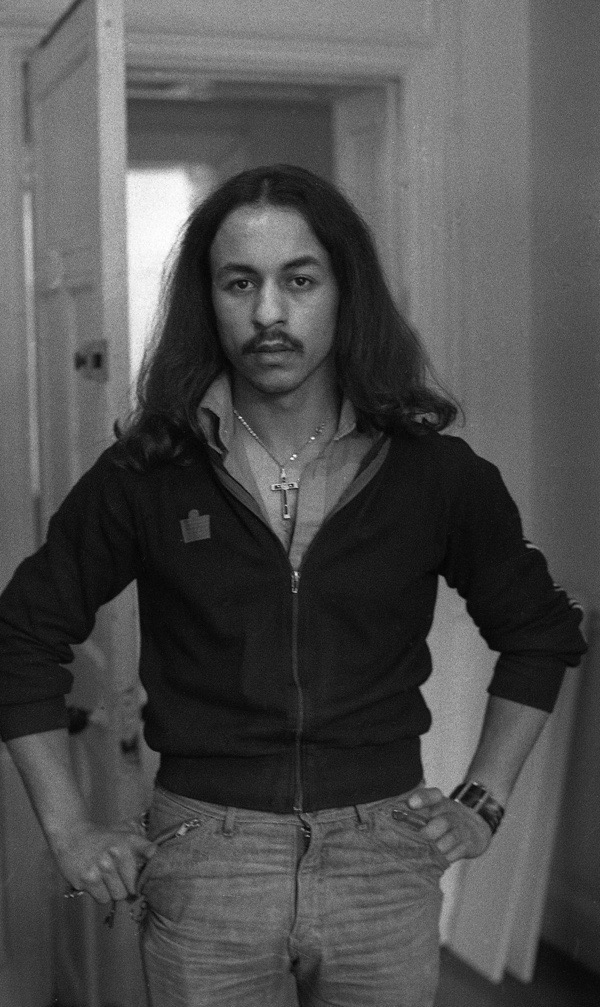
Caretaker
Joe
Bob Drinkwater
Pat Leeder
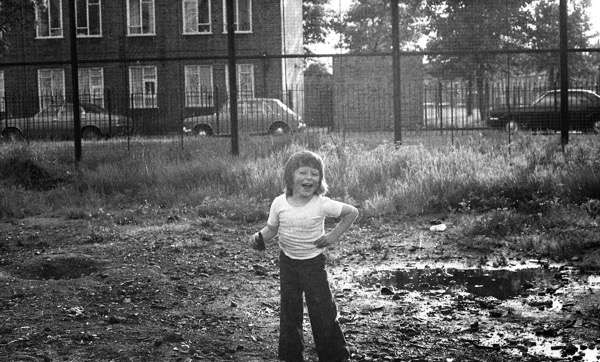
Photographs copyright © Philip Cunningham
You may also like to take a look at
Philip Cunningham at Mile End Place
Philip Cunningham’s East End Portraits
More of Philip Cunningham’s Portraits
People You May Meet On My Tour
My walking tour of Spitalfields is full this weekend but a few tickets remain for Saturday 25th & Sunday 26th September at noon. Email spitalfieldslife@gmail.com to book.
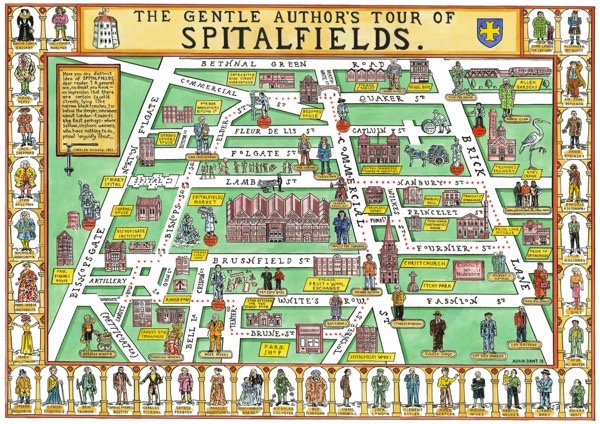
Map of the Gentle Author’s Tour drawn by Adam Dant
Join me on a ramble through Spitalfields taking no more than an hour and a half, but walking through two thousand years of history and encountering just a few of the people who have made the place distinctive. Here is a selection of those that we may meet. Click here for further information
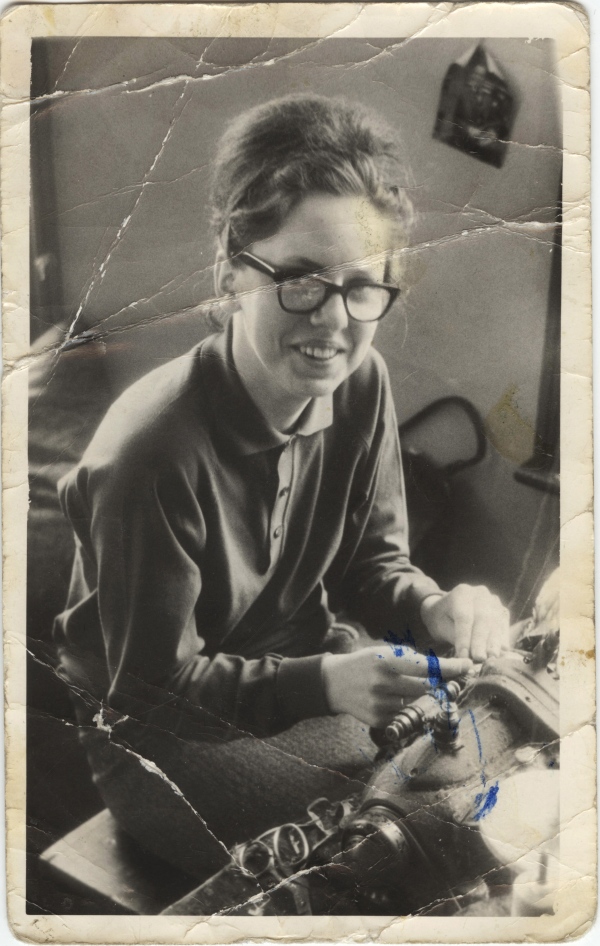
Linda Carney, Machinist
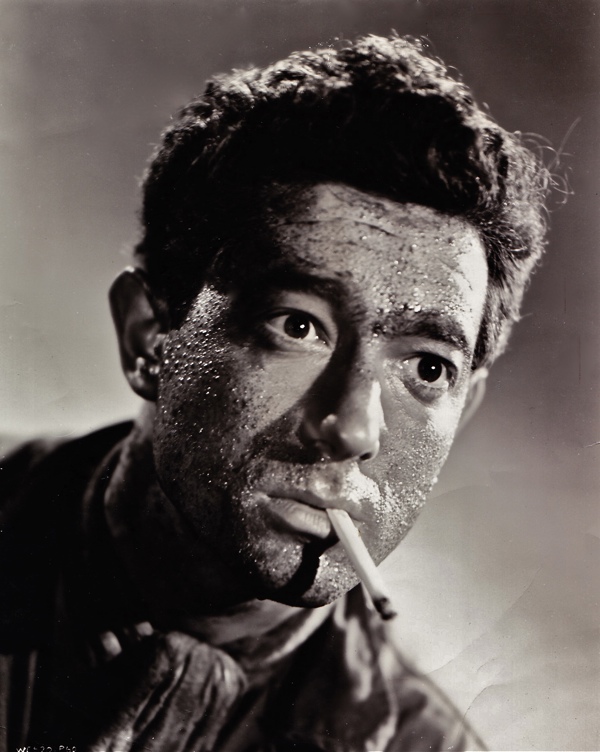
Harry Landis, Actor
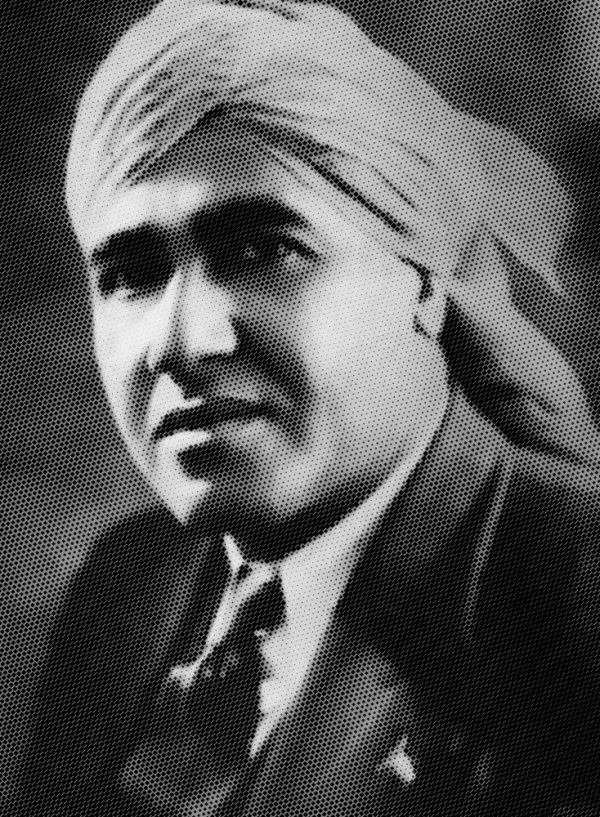
Udham Singh
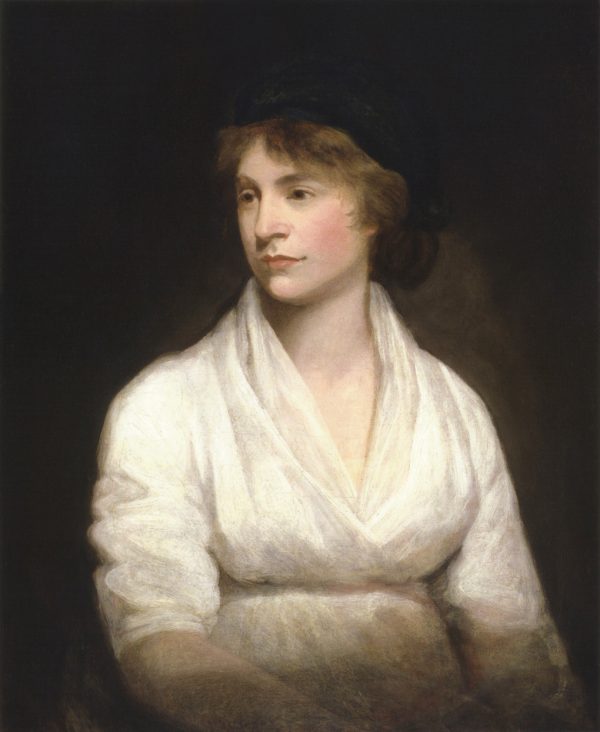
Mary Wollstoncraft
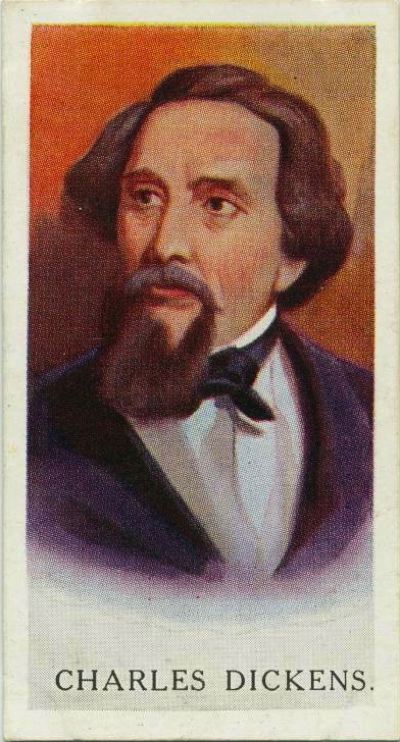
Charles Dickens

Millie Rich (Photo by Patricia Niven)
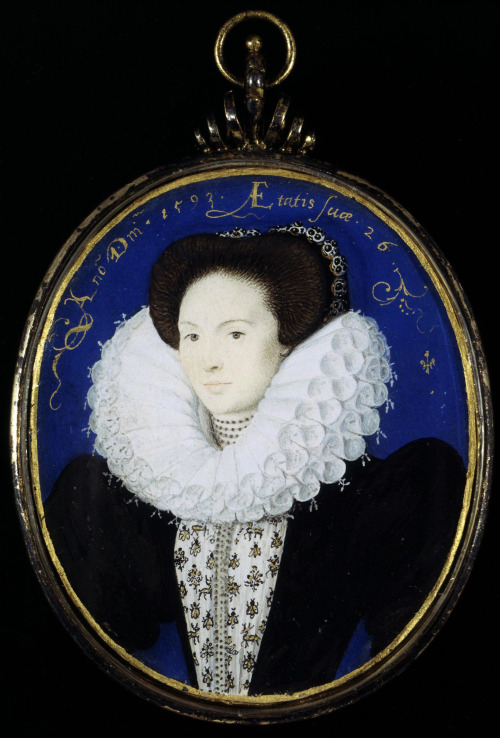
Emilia Bassanio Lanier (Portrait by Nichols Hilliard)
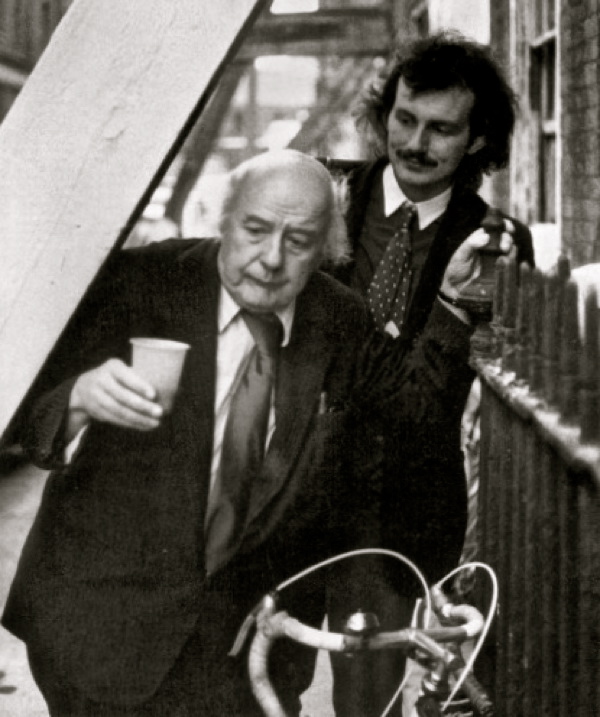
Sir John Betjeman & Dan Cruickshank
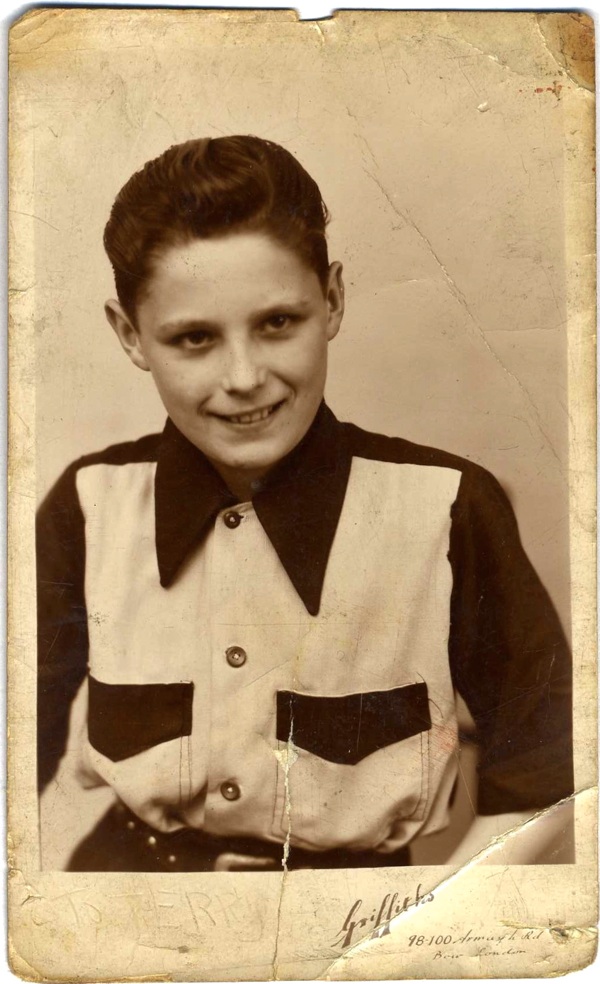
Neville Turner
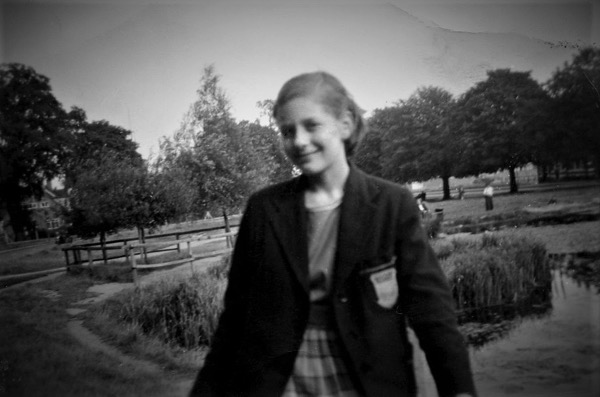
Audrey Kneller
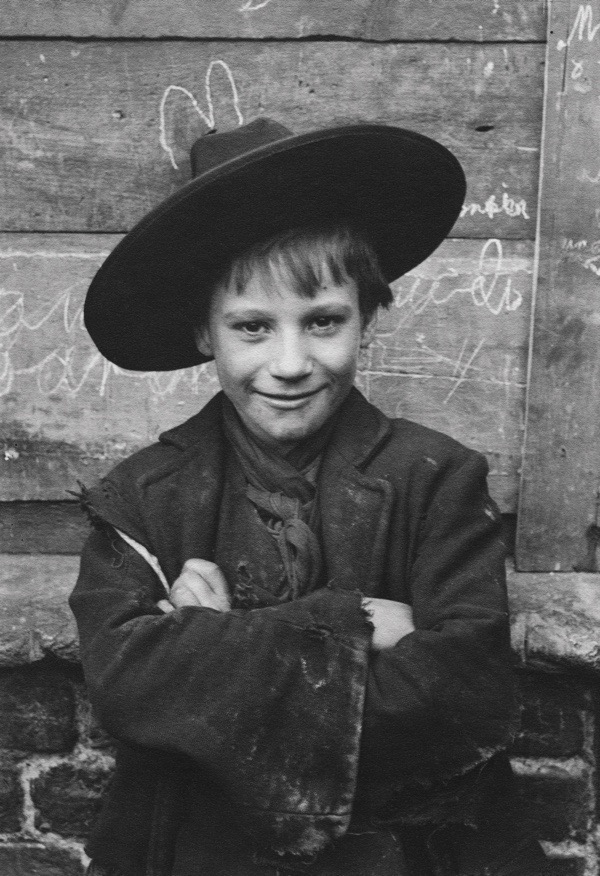
Boy wearing Horace Warner’s Hat
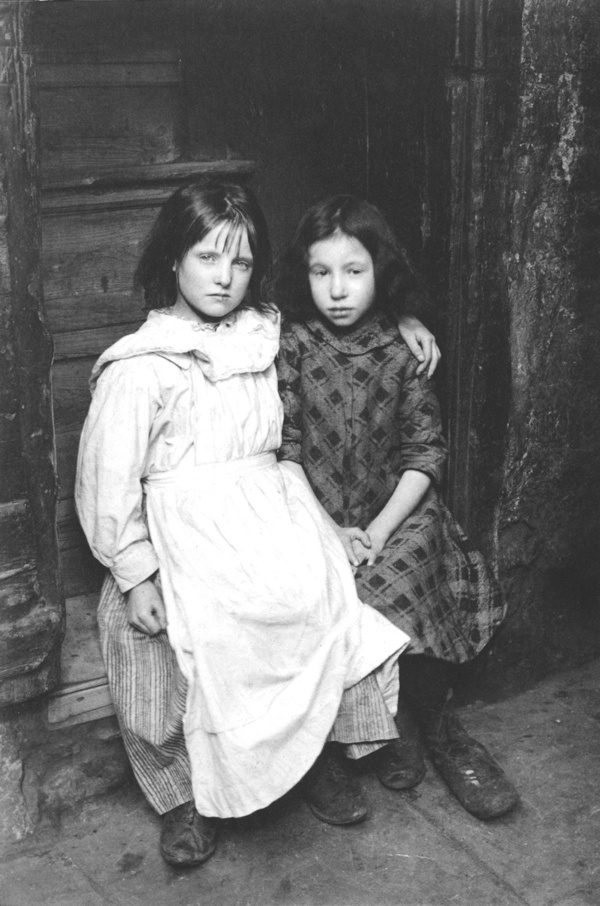
Jessica & Rosalie Wakefield
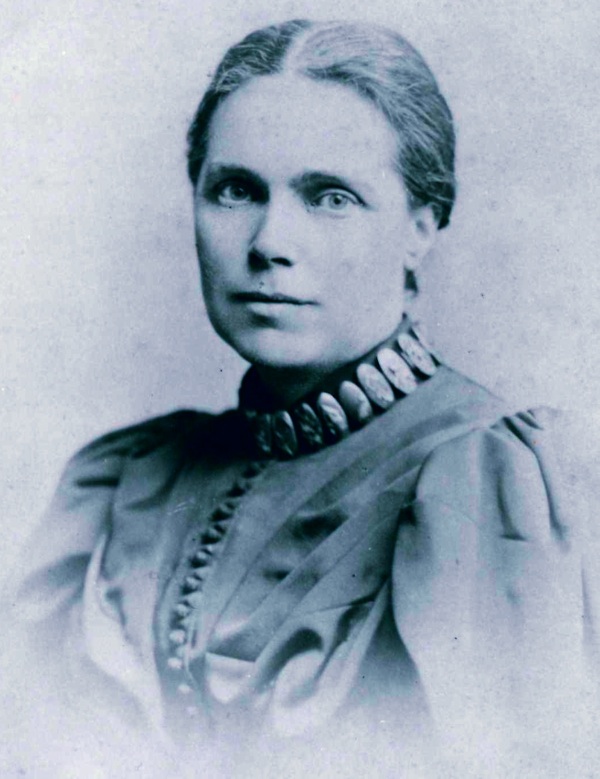
Henrietta Barnett
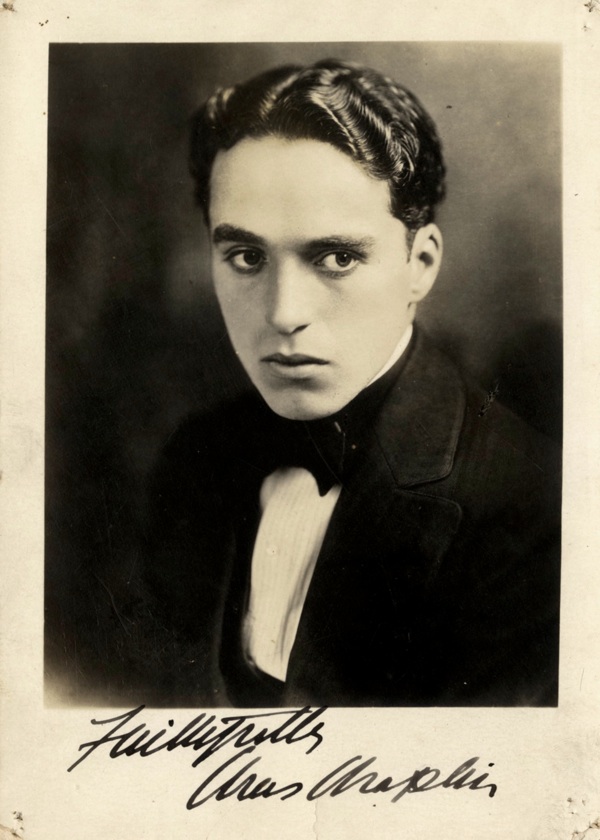
Charlie Chaplin
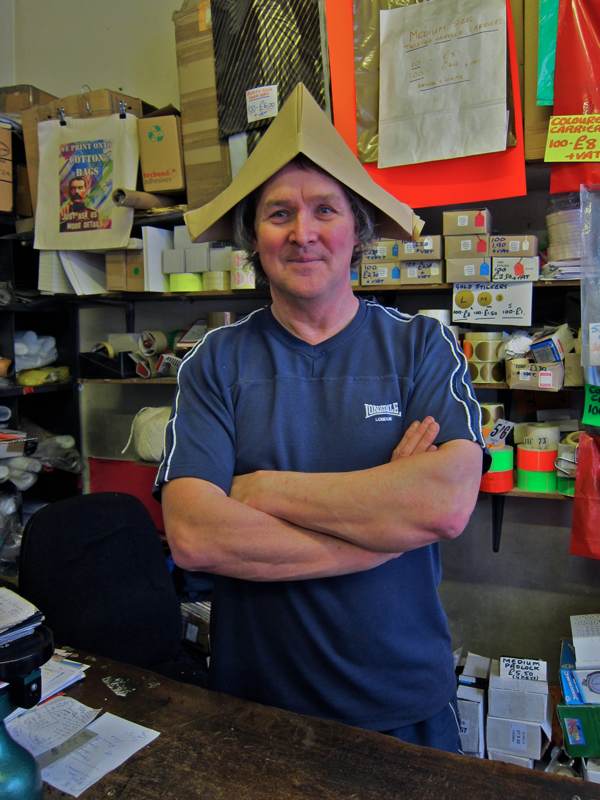
Paul Gardner
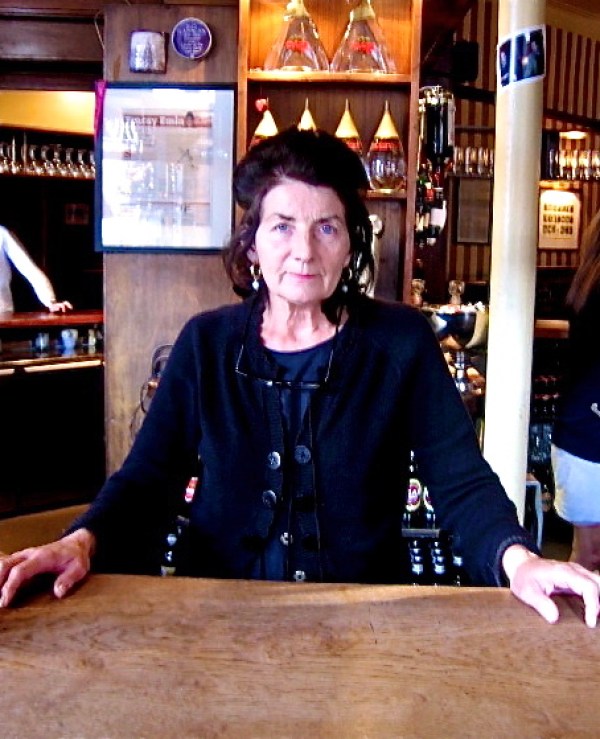
Sandra Esqulant
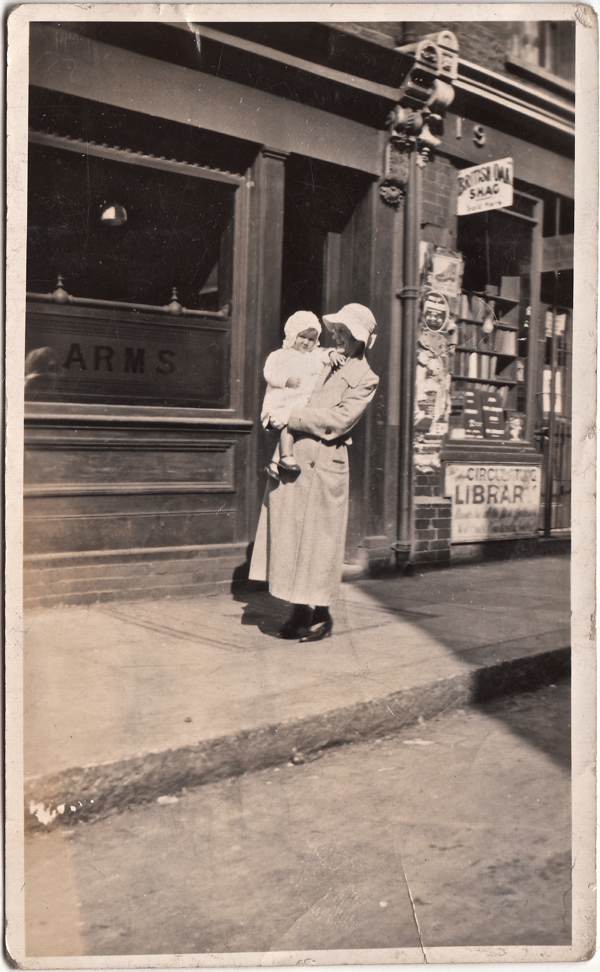
Mavis Bullwinkle
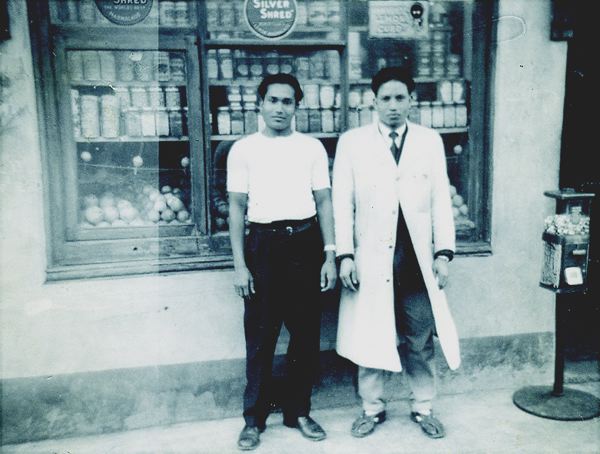
Abdul Khalique
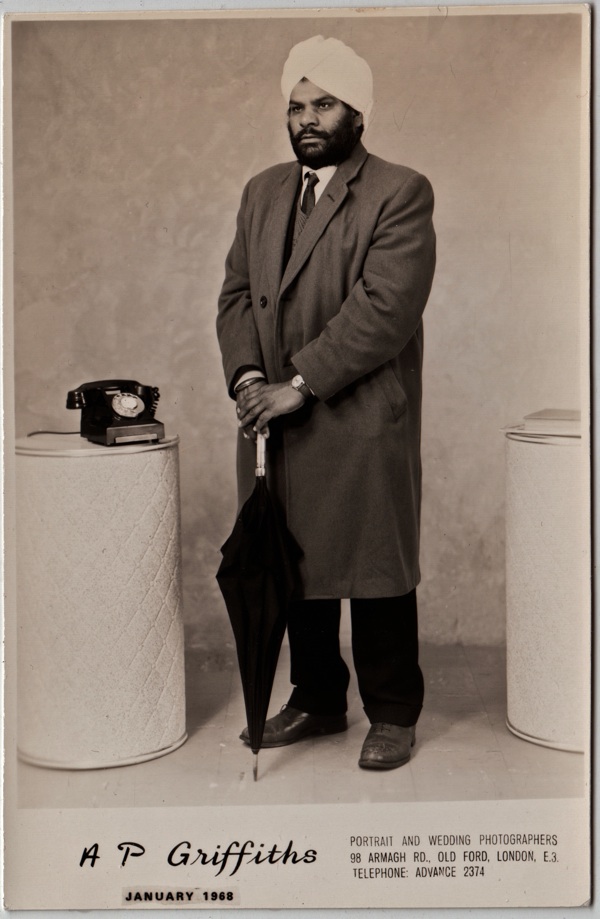
Joginder Singh
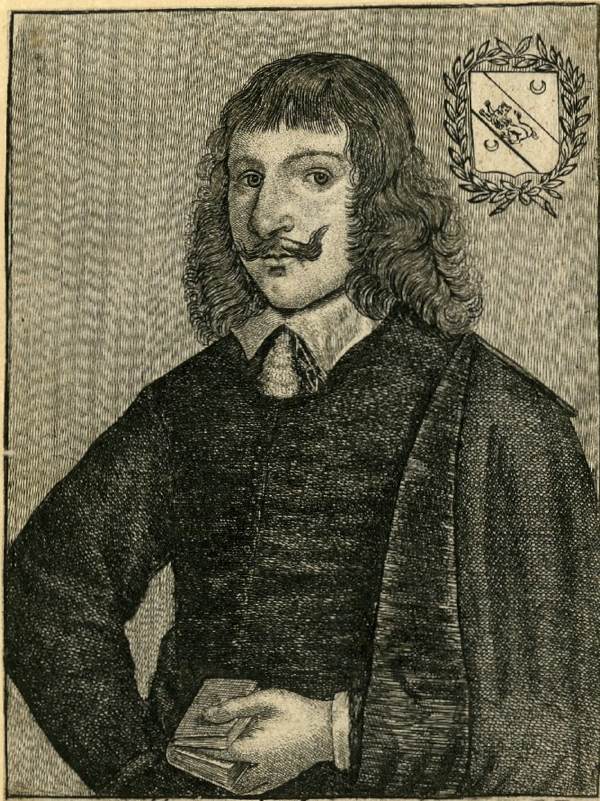
Nicholas Culpeper
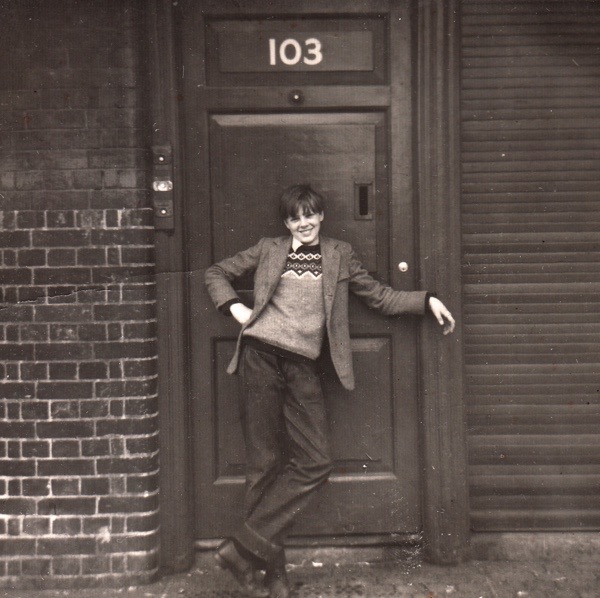
David Prescott
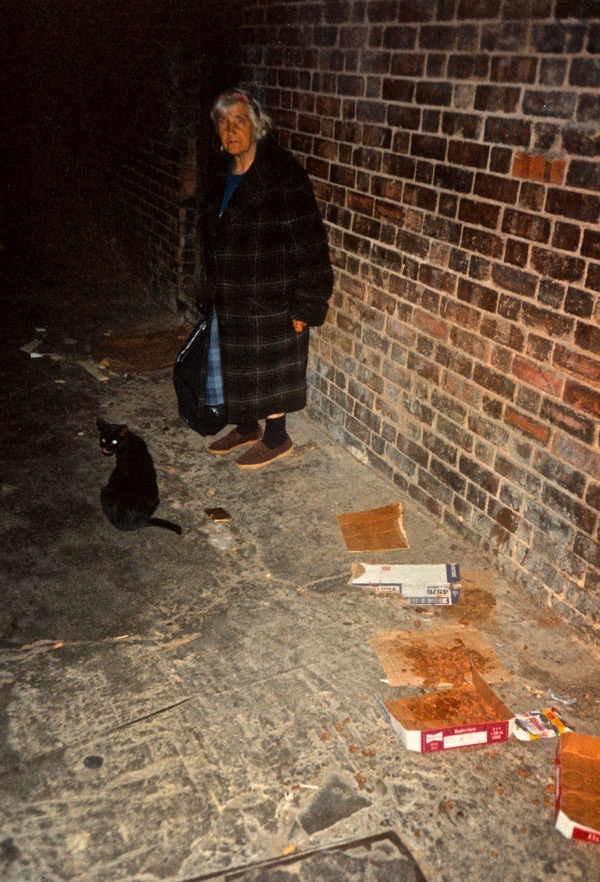
Joan Lauder, the cat lady of Spitalfields
A Walk With Suresh Singh
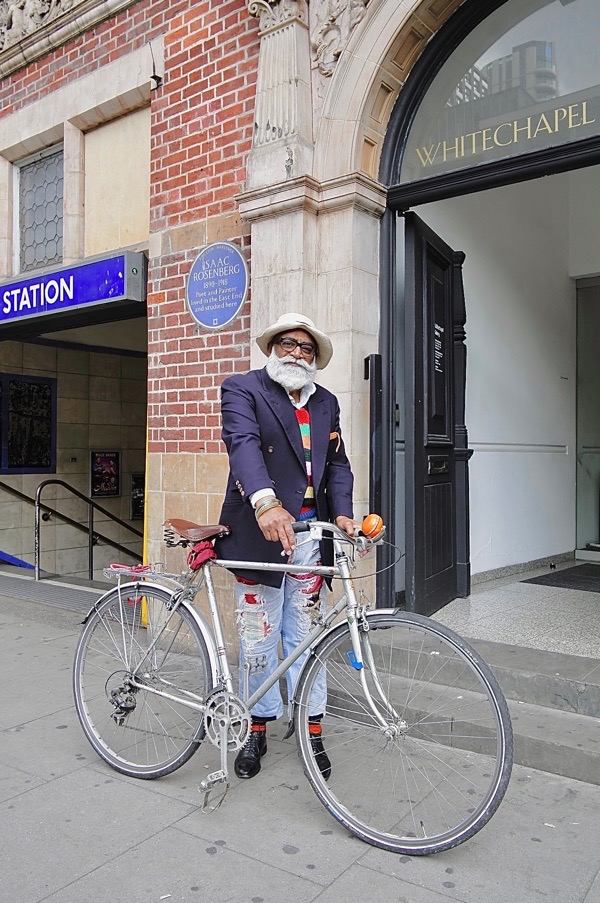
We are proud to be the publishers of A MODEST LIVING, Memoirs of a Cockney Sikh, London’s first Sikh biography, telling the story of one family in Spitalfields over seventy years. Author Suresh Singh will be in conversation Stefan Dickers at Rich Mix this Sunday 19th September at 2pm. (Click here for tickets)
In the meantime, Suresh and I enjoyed a ramble round Spitalfields recently to visit some of his favourite places.
“I love Whitechapel Library, Aldgate East. It was the library I used to go to every Friday when I was at primary school. You could sit and read. It was just lovely. Upstairs was the art and music library. They had big oversize books of Michelangelo, Leonardo da Vinci, the Impressionists, Matisse, Degas and Le Corbusier’s book about Chandigarh.
It was amazing to have this in Brick Lane, at the end of my street. You were given freedom to look at the books and could borrow twelve books and five records at a time. The librarian in the music library would order whatever you requested. Even if you asked for ‘Yes’ album, he would get it by next week. My dad had a record player and I learnt to be really careful with a record because when you returned it they would meticulously check it.
The library was a whole world. It taught me to read quietly. It exposed me to books that I might never have found. My mum and dad could not read or write. We had no books at home. I liked the art section because the books had pictures and I learnt that pictures told stories as well as words. The librarians always helped me and I could spend hours there. It was a sanctuary from the mayhem outside, a kind of university of the ghetto.”
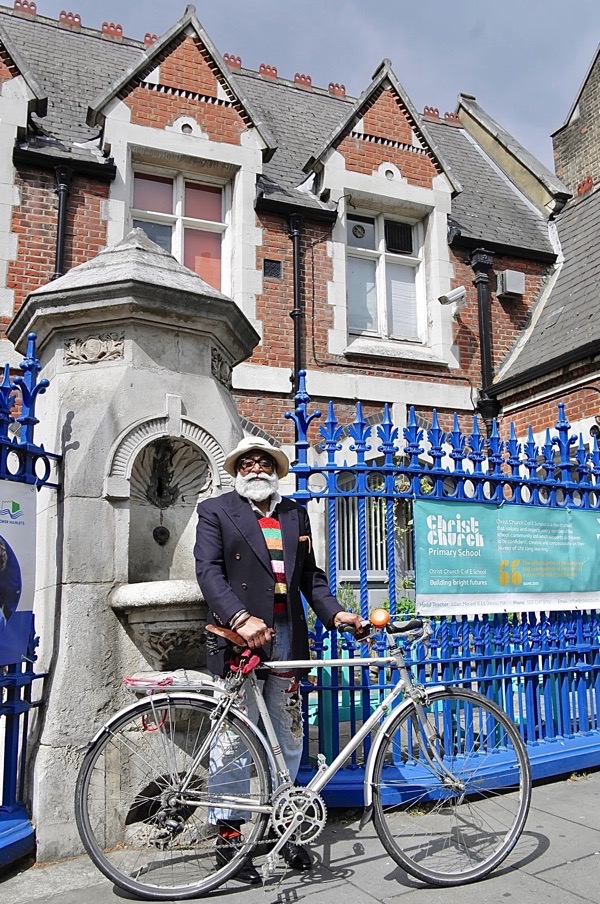
“Christ Church School, Brick Lane, was my primary school. I loved it when I came back after a long visit to India at six years old. I have frightening memories of it too, as the place I had to go to after the freedom I had experienced in our village. My mum used to walk me here every day and I would walk home for dinner at Princelet St and come back again. School dinners were so bland but my mum gave me dal and roti.
The water fountain used to work and we could drink from it. I remember it as so high, my friends had to give me a lift up so I could drink from it. You pressed the button and it worked. There were little fish that lived in there.
Later on, Eric Elstob – a friend whom I worked for in the renovation of his house in Fournier St – was treasurer of the school and he restored the railings, which was lovely. A couple of years ago, they were repainting them blue and I asked them to paint a bit of my bike with the same colour to remind me of the great memories I have of this school. We used to have great jumble sales at Christmas. You could climb through the school and out through the back, past the gardens of the houses in Fournier St and Nicholas Hawksmoor’s Christ Church into Itchy Park, and out into Commercial St and Spitalfields Market. I loved it because it was a backstreet school.”
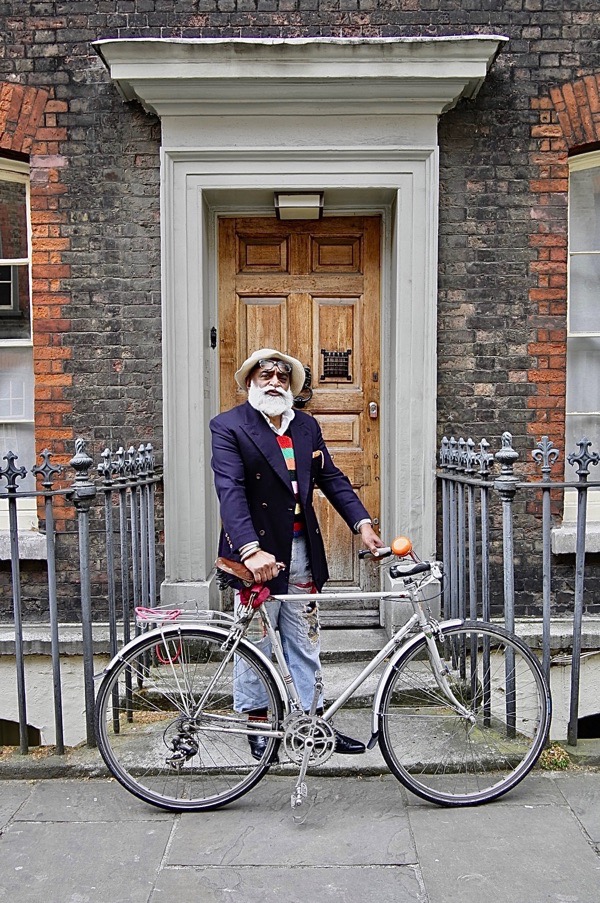
“I have fond memories of the rectory at 2 Fournier St when Eddie Stride was Rector. It is one of the few Hawksmoor houses. I helped Eddie wash the steps with Vim when the tramps pissed all over them. There used to be queues outside and Irene Stride made sandwiches for them.
It was a place where Eddie made me feel very welcome. I rang the bell or knocked on the door, and he would always open it to me. The door was never closed. I could always go in and play in the garden. Later on, there were big power meetings at the rectory when Eddie became the chairman of the Festival of Light. So you would meet people like Malcolm Muggeridge, Mary Whitehouse, Cliff Richard and Lord Longford coming and going. It was always an open house.
I was brought up as a Sikh but there were no gurdwaras in Spitalfields, and my dad said ‘You need some moral purpose,’ so he send us to Sunday school and that was how I became friends with Eddie Stride. He was a great friend to our family. He helped me get grants for further education from the Sir John Cass Foundation which led me to study architecture. I loved that time and these steps mean a lot to me. It is amazing how Vim can clean Portland stone. ”
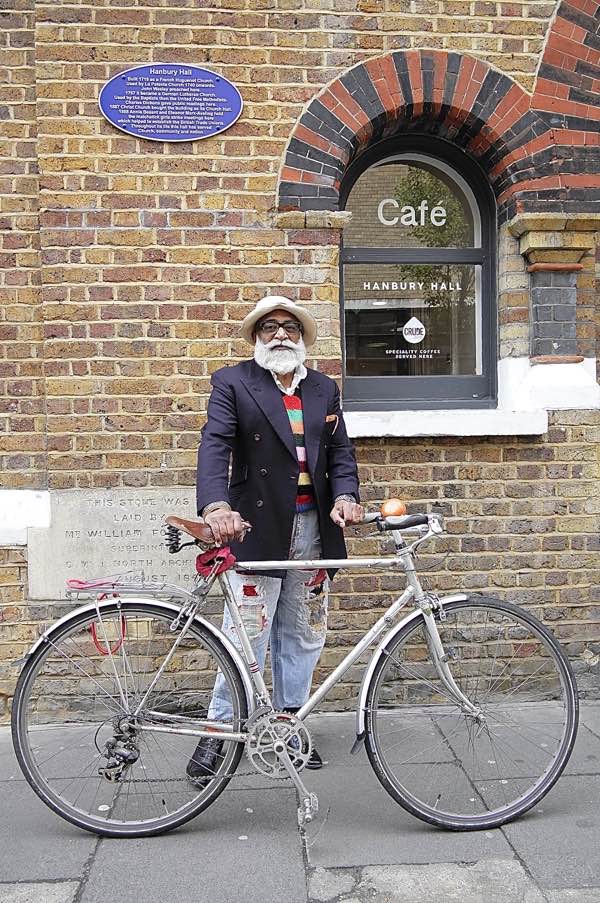
“I always knew the Hanbury Hall as 22a Hanbury St. In those days, Christ Church was closed because it was unsafe and this was used for services instead. There was a youth club at the top of the building on Thursdays and Fridays and we had our Sunday school in the hall.
Because it was built as a Huguenot chapel, everyone used to say that this hall is older than the church and sometimes that used to scare me late at night. There were these big wooden doors that closed with a hasp and I always feared someone might come down the winding stone staircase. Later, when I was doing carpentry work, Eddie gave me the task of housing the remains of the smallpox victims that they found when they were cleaning out the crypt.
When I started a group, we were allowed to rehearse in the vestry at the back. This place was a playground for me but also a church where services were held until the eighties. Then I helped move the furniture from here back to Christ Church. I remember we put the communion table on casters and I had to clear out all the copies of Lord Longford’s pornography report which were being stored in the church.
This hall was a treasure because it had a lovely atmosphere but also a haunted atmosphere too. It was the main meeting point for all of us in Spitalfields at that time.”
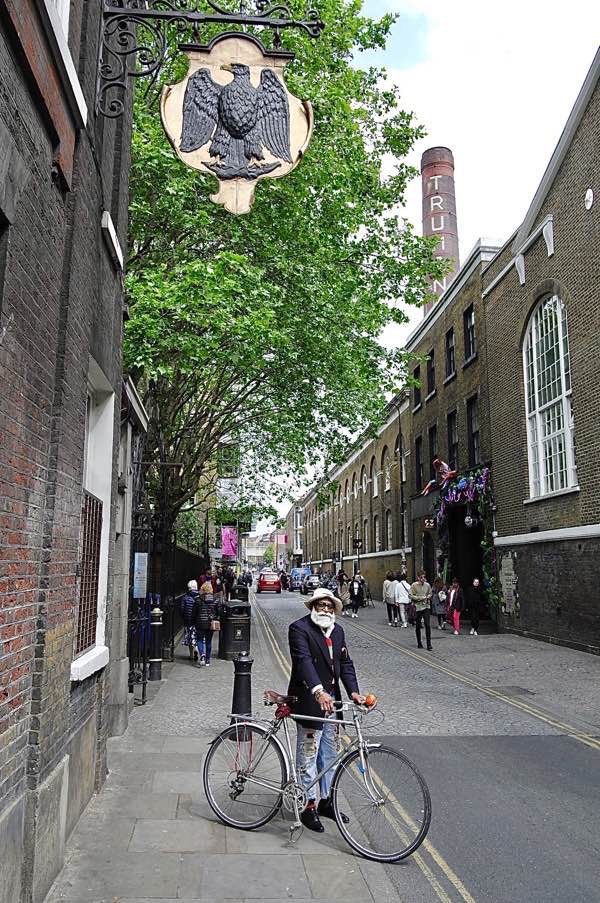
“Once, the Truman Brewery in Brick Lane was a dark scary corridor for me. It was my route from my home in Princelet St to my secondary school, Daneford in Bethnal Green. At that time, it used to smell of hops and it was dark and dirty. I got beaten up by a bunch of fascist skinheads at the corner of the brewery where it meets Buxton St. I still try to avoid this route but like a magnet it draws me through. I used to run through or cycle because to go round the other way was much longer and sometimes more scary- you would have to cut past Shoreditch Station and round the back to Cheshire St.
So this was the quickest route but it was like going through a factory. The brewery was always there in my childhood. The smell and the noise were twenty-four hours, and it was always dark beneath the brewery walls. The brewery was a landmark and I remember smoke coming out of that chimney. It was a place that you had no choice but to pass through. At the other end of the brewery was where the skinheads hung out but at this end was the Bengali area where I felt safer. Every day I hoped I would not get my head kicked in as I went to school.
As a kid, I found these long brewery walls interminable. I walked and walked and thought, ‘Will I ever get through to the end?’ It still scares me in a way.”
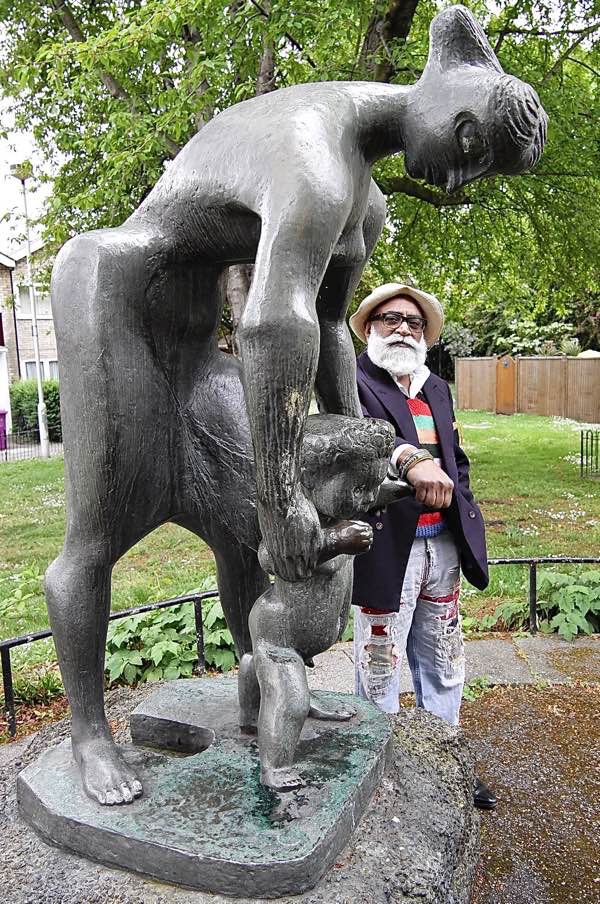
“I used to pass Franta Belsky’s sculpture in Bethnal Green every day when I walked along the little passageway to Daneford Secondary School. Today, I am wearing the tank top my mum knitted when I was eleven and I remember wearing it to a non-school uniform day all those years ago.
I always used to see this sculpture out of the side of my eye. My friends would say, ‘You go on Singhey, I dare you to touch her breasts and come back down again.’ But slowly I began to appreciate the beauty of it and began looking at books of Henry Moore and David Smith. It was a lovely thing to see before you went to school every day. It comforted me to see a woman and her baby because I thought, ‘That’s how my mum cares for me.’ It gave me a sense of security. I thought, ‘How amazing that we have a piece of sculpture outside our school.’ It made me feel proud because of the sculpture. My dad used to take me to Hyde Park where there were Henry Moores next to the Serpentine. I thought, ‘We’re on a par with the West End here in Bethnal Green.’
I slowly started loving it. I loved her plait and it reminded me of when I had a topknot. I appreciated it in different types of light and I still love it today.”
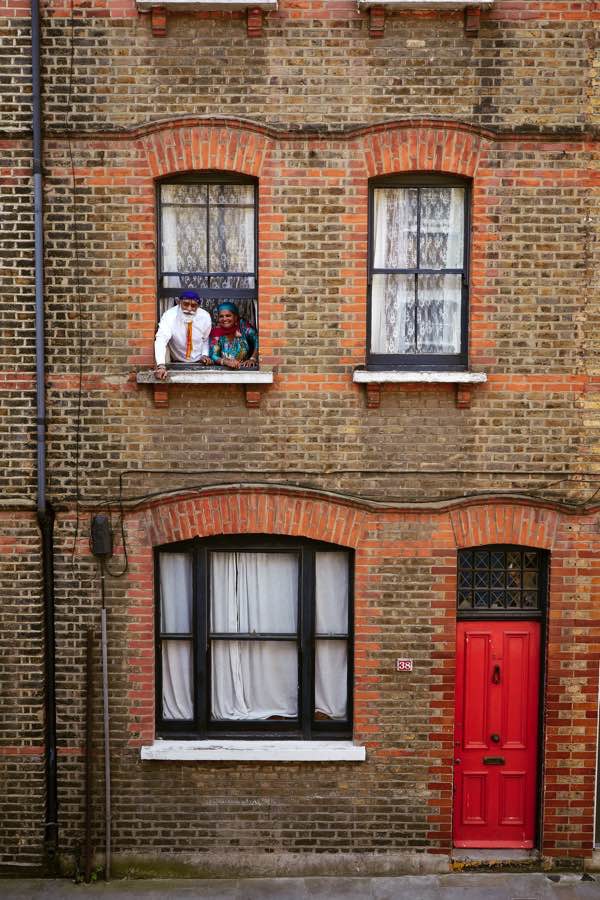
Suresh Singh & Jagir Kaur at 38 Princelet St last summer (Photograph by Patricia Niven)
You may also like to read about
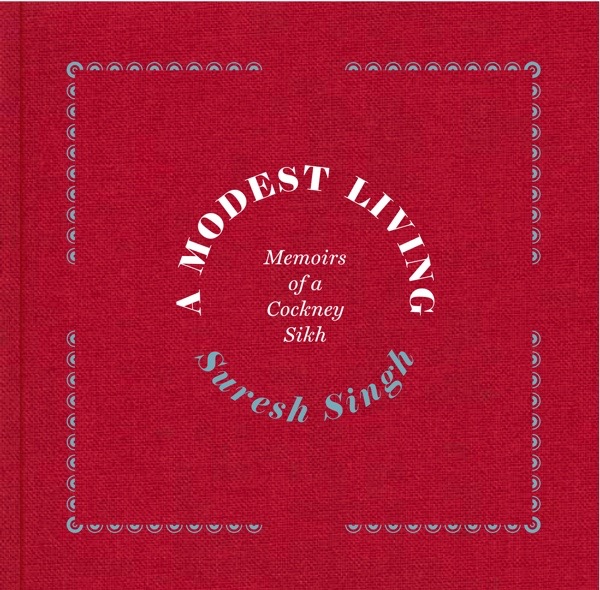
Click here to order a copy of A MODEST LIVING for £20

The Fight For The Soul Of Spitalfields
UPDATE: The Truman Brewery’s planning application was approved by Tower Hamlets Development Committeee with councillors Kevin Brady and Kahar Chowdhury voting in favour and Abdul Mukit against.
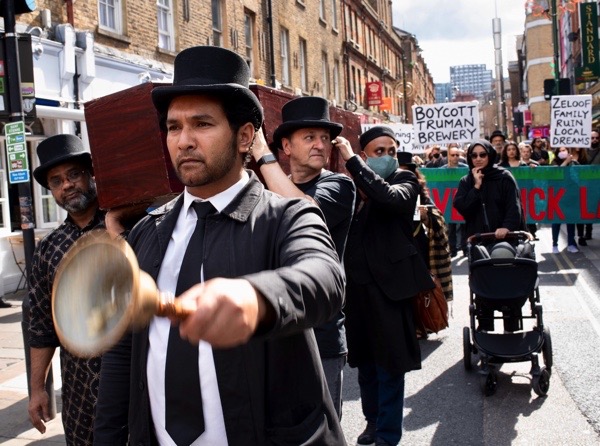
The bellman led the way as the campaign to SAVE BRICK LANE reached its climax on Sunday when protestors staged a mock funeral procession with speeches outside the Truman Brewery.
Contributing Photographer Sarah Ainslie was there to capture the drama of the occasion.
Tonight, Tuesday 14th September, Tower Hamlets Council’s Development Committee makes its decision upon the Truman Brewery’s controversial planning application for a shopping mall with four floors of offices on top, as the first step in the redevelopment of the entire brewery site into a corporate plaza.
Click here to watch the committee meeting live at 6:30pm
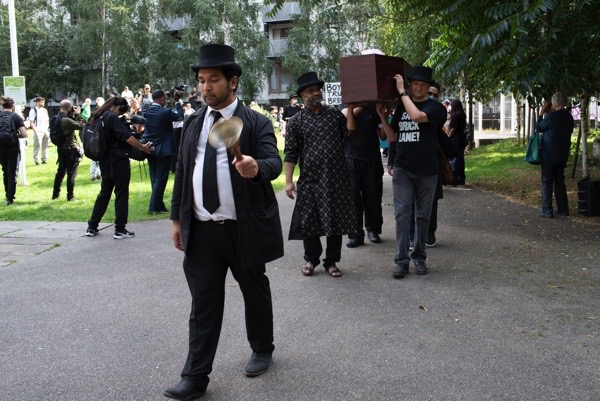
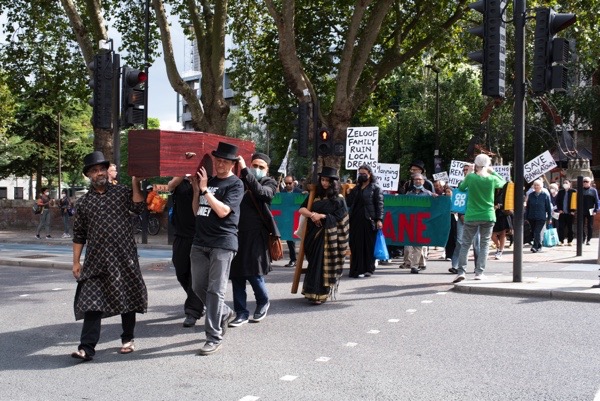
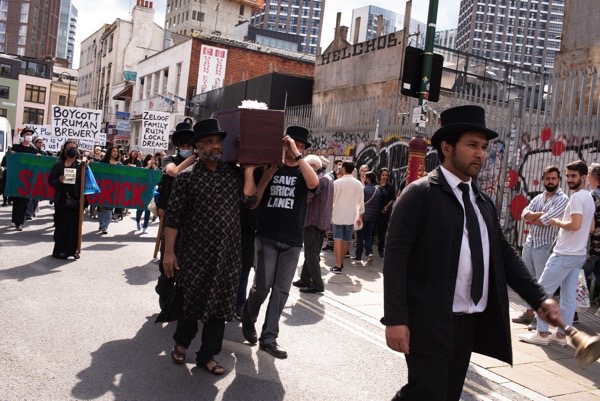

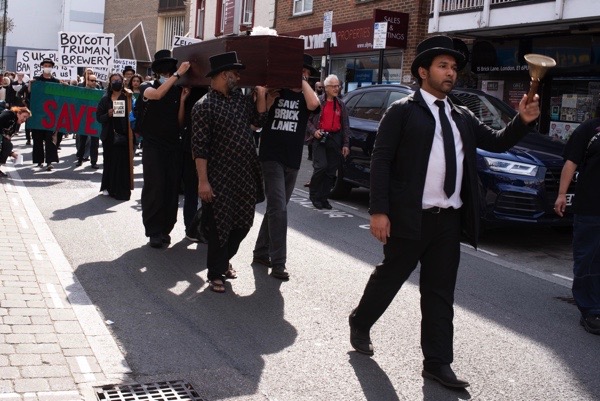

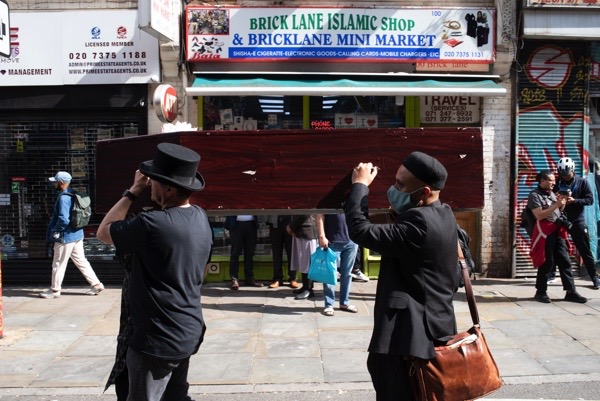

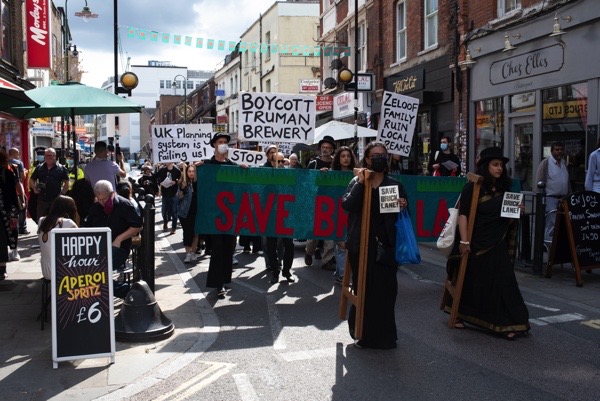
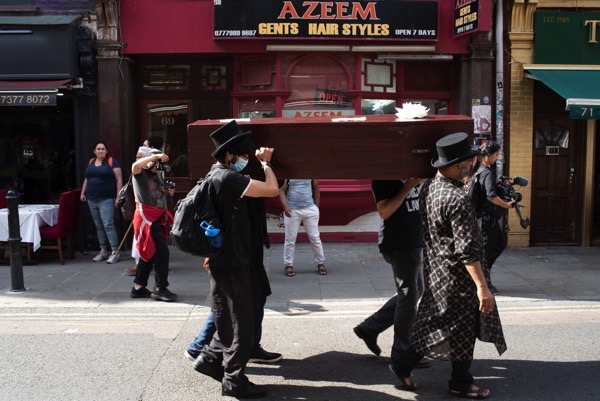
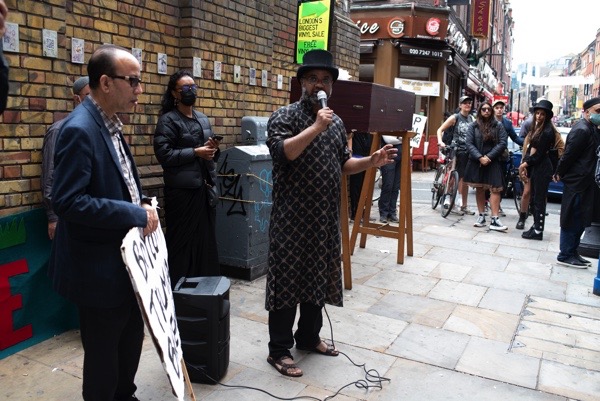
Local councillor Shad Chowdhury speaks for the community against the Truman Brewery development
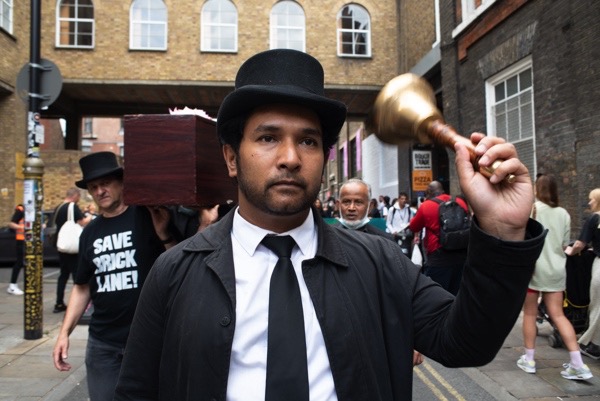
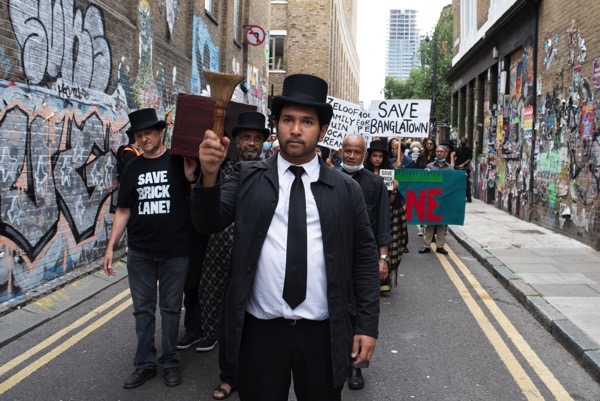
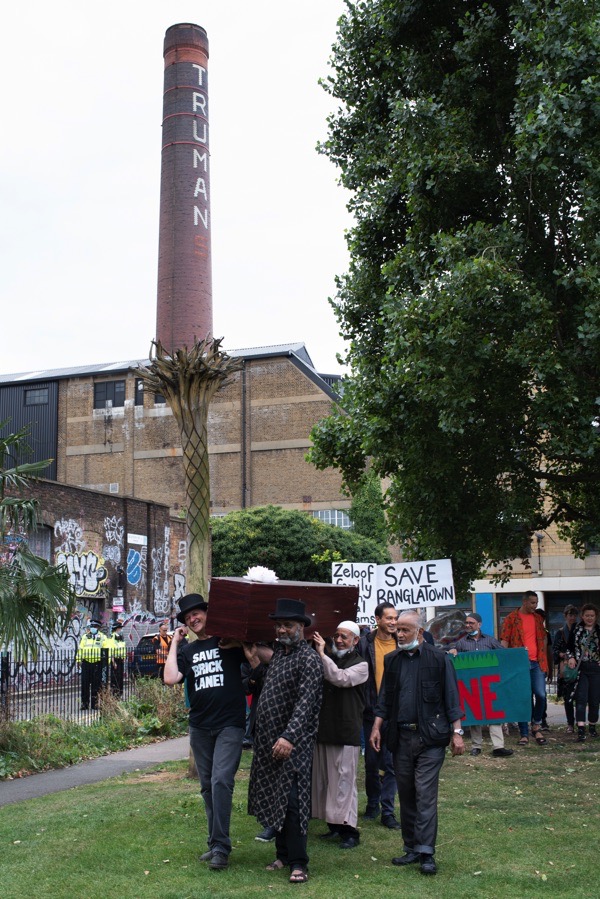
Photographs copyright © Sarah Ainslie
You may also like to read about
Hounds Of Hackney Downs
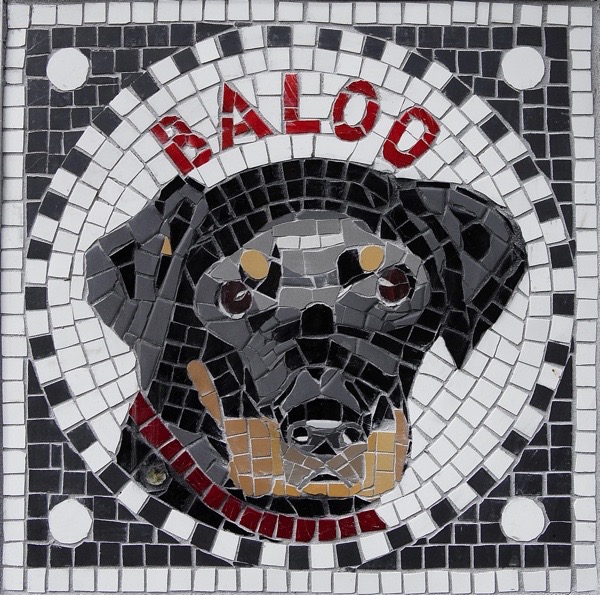
In strict alphabetical order, here are the latest heroic hounds to achieve canine immortality in the ever-growing gallery created by Hackney Mosaic Project under the inspired direction of Tessa Hunkin on Hackney Downs.
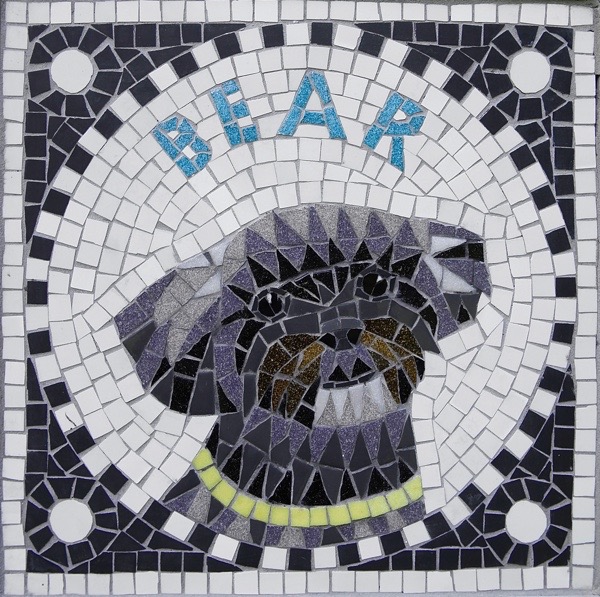
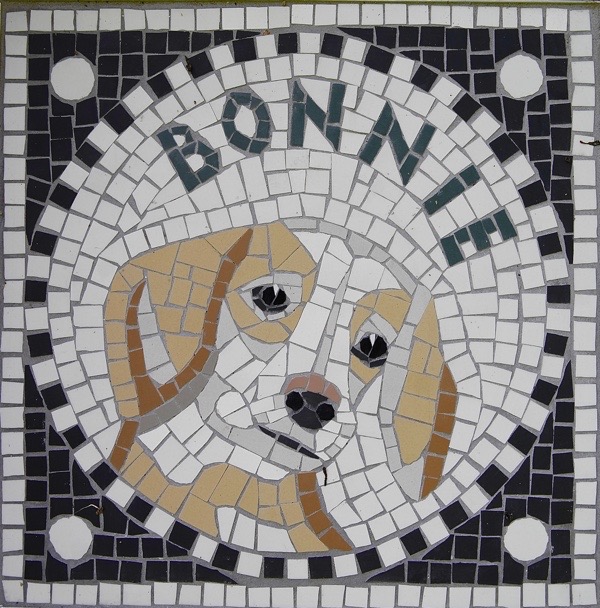
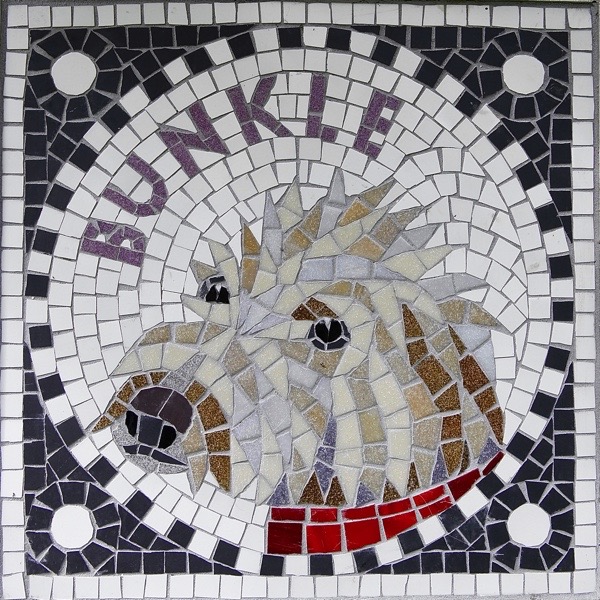
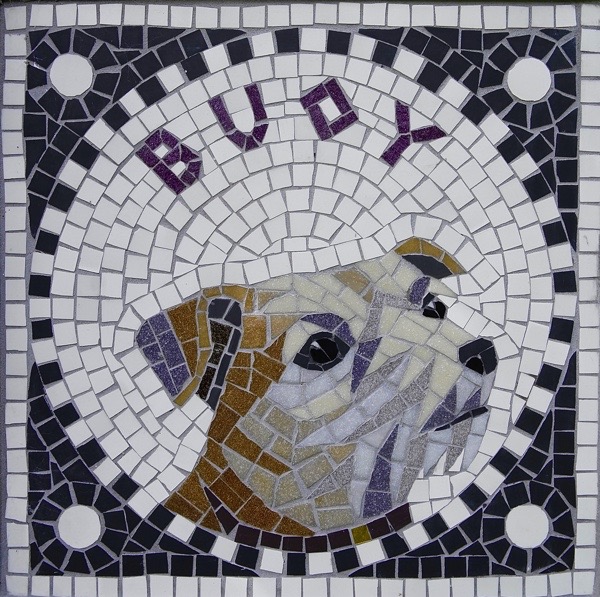
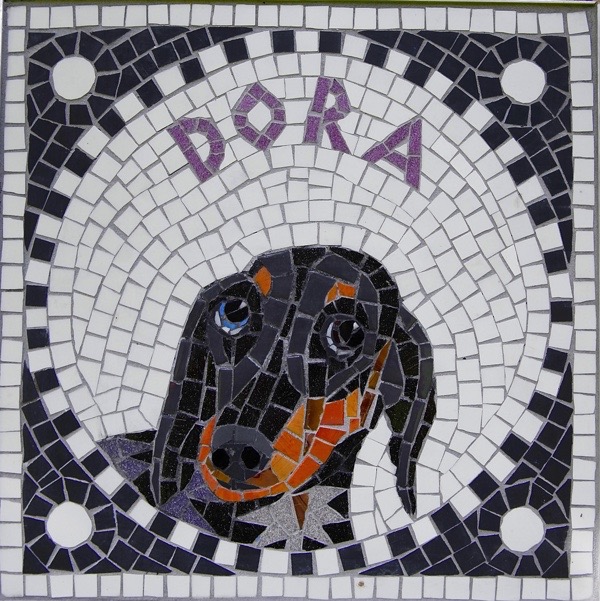
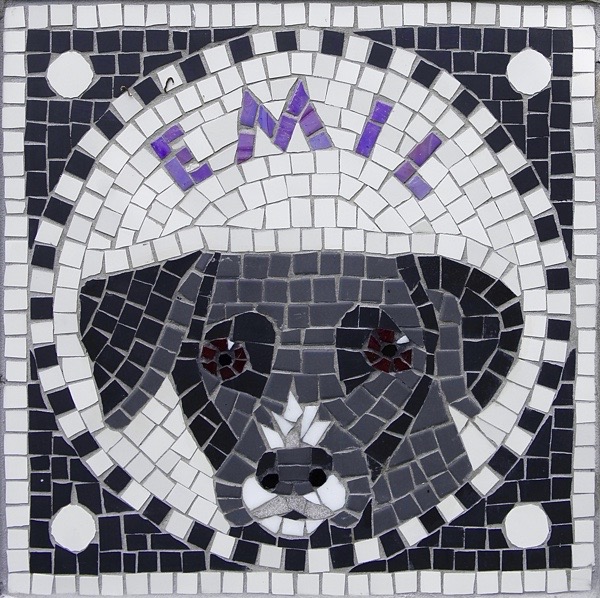
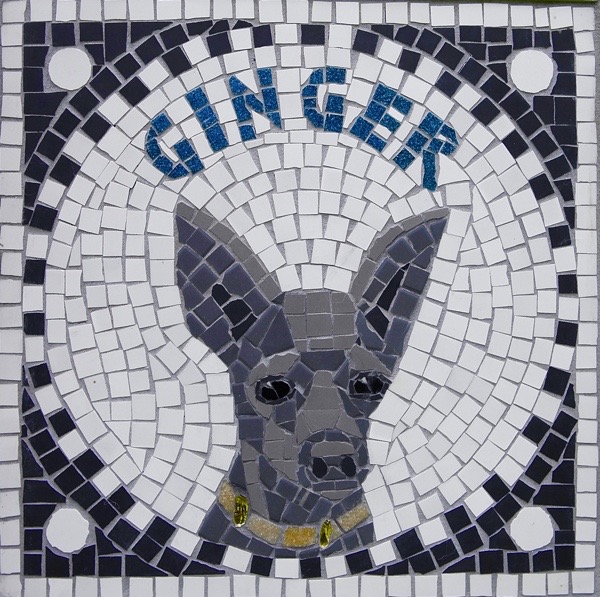
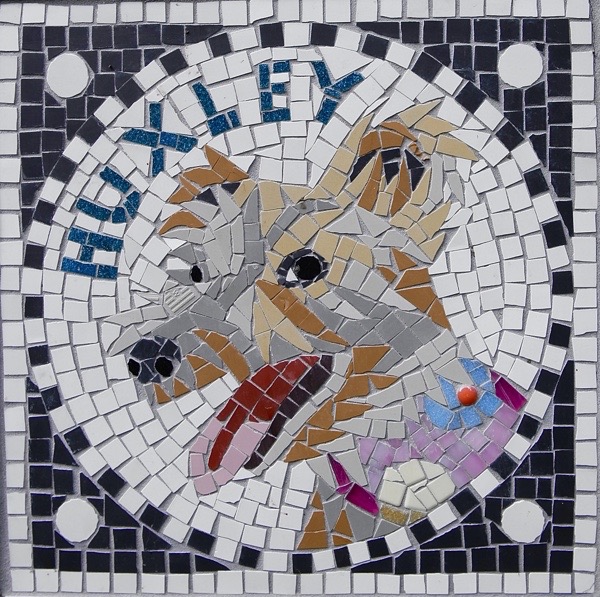
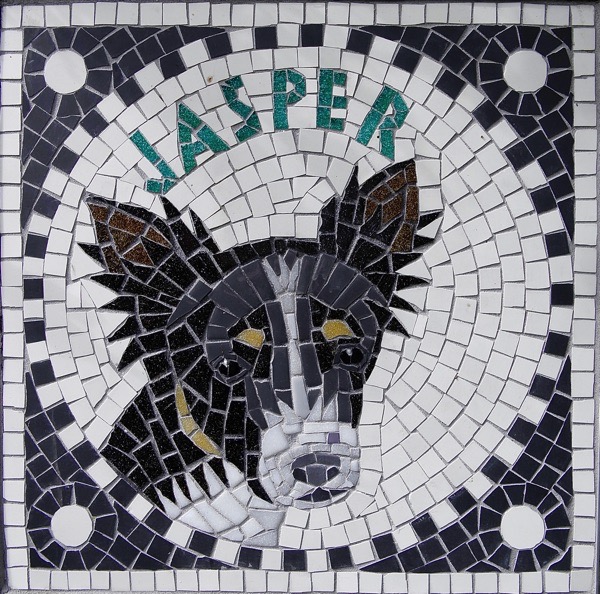
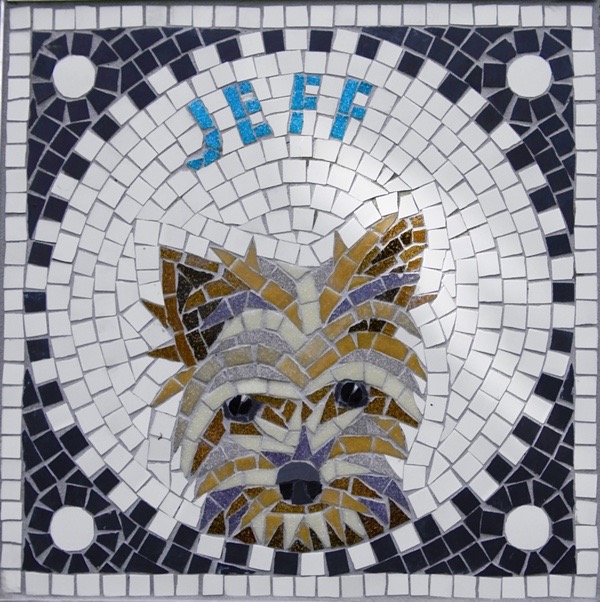
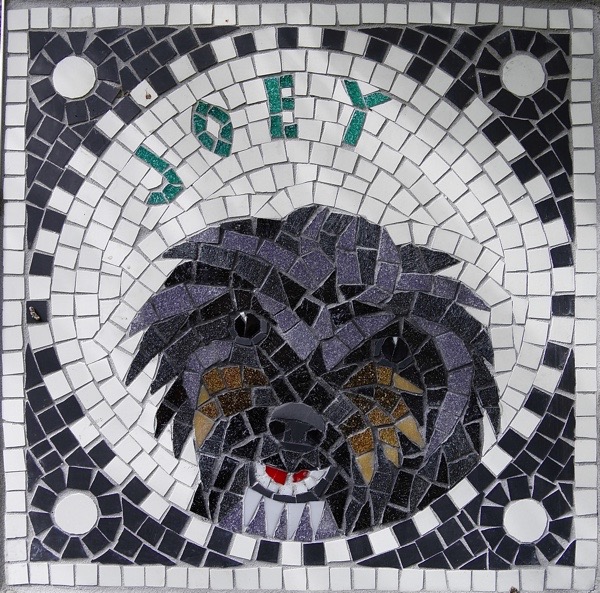
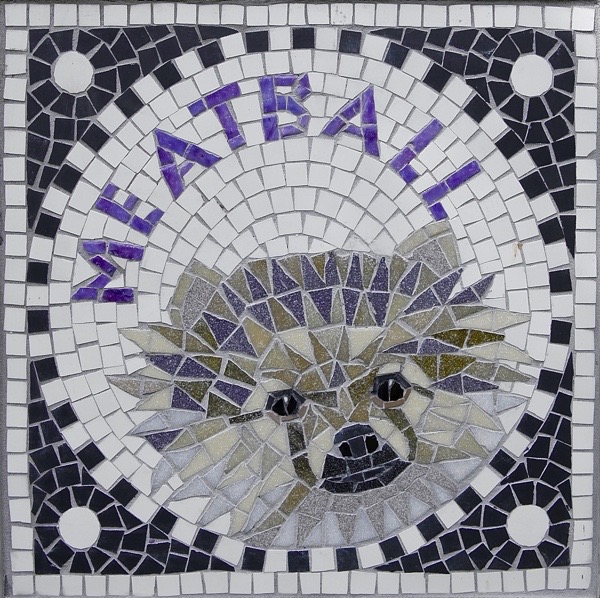
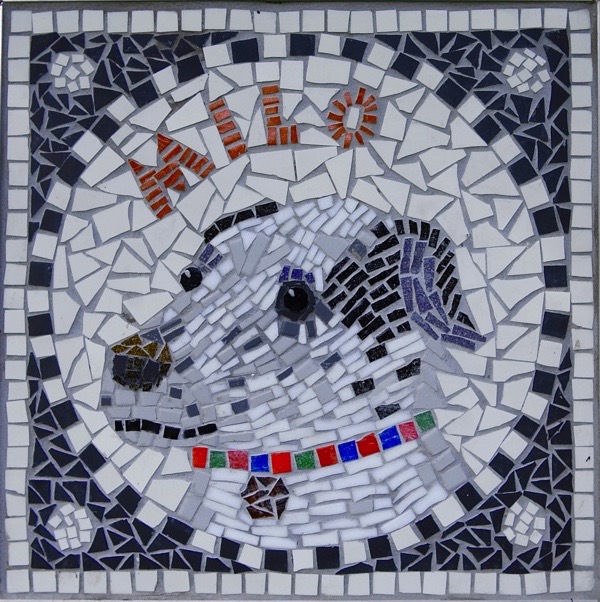
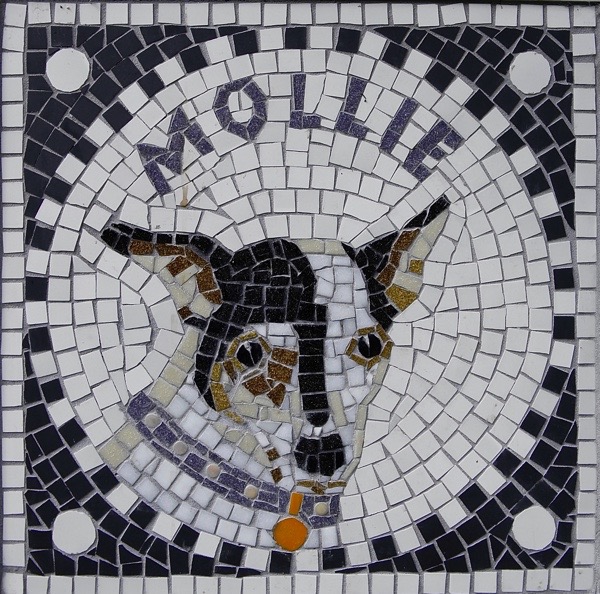
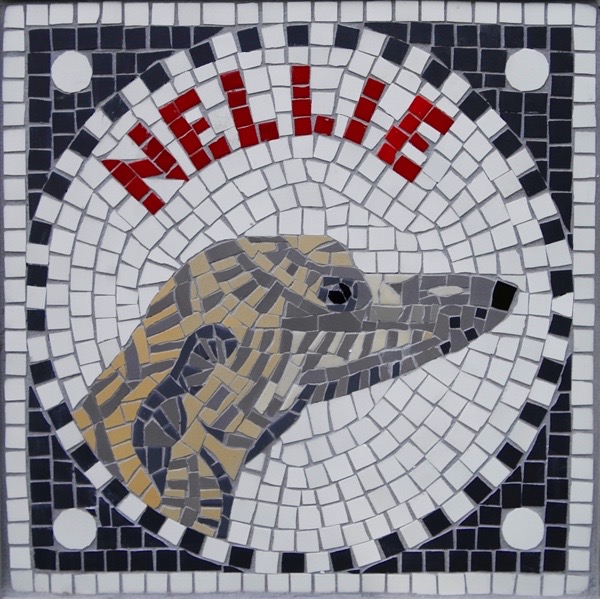
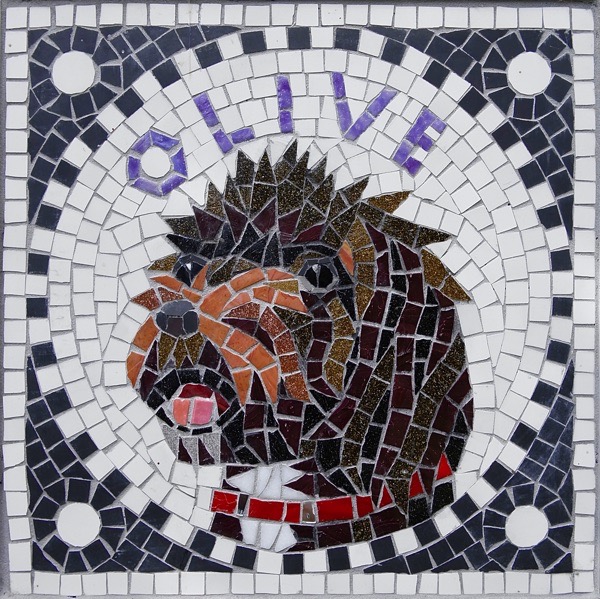
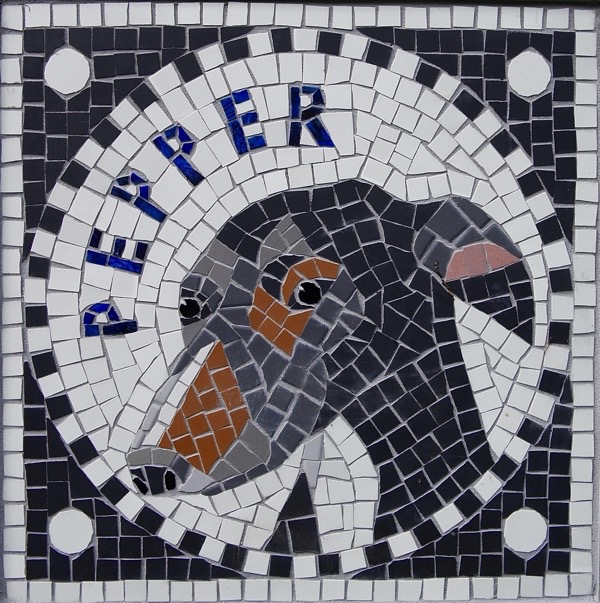
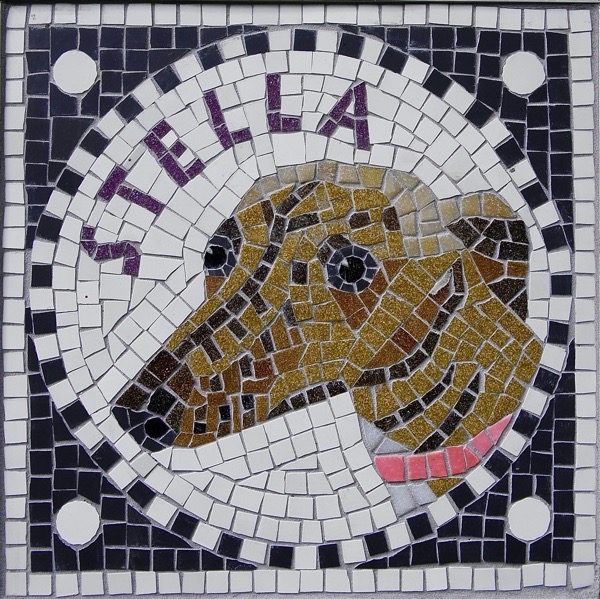
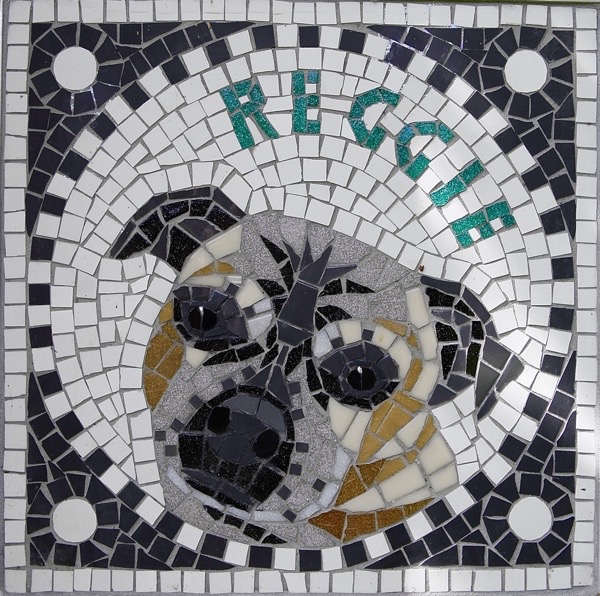
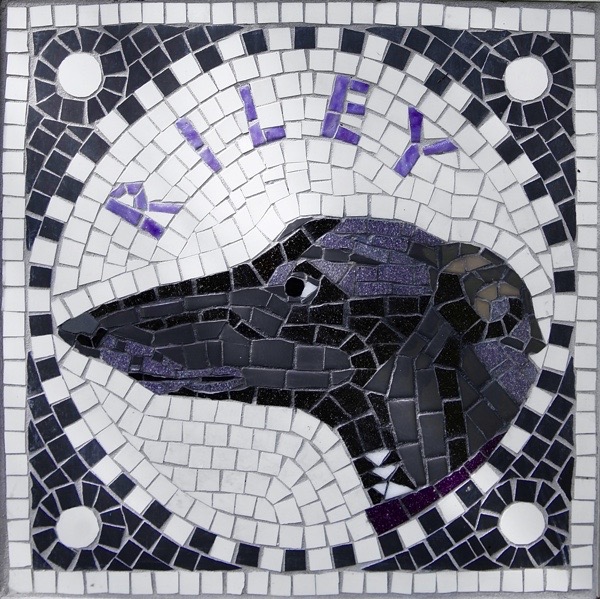
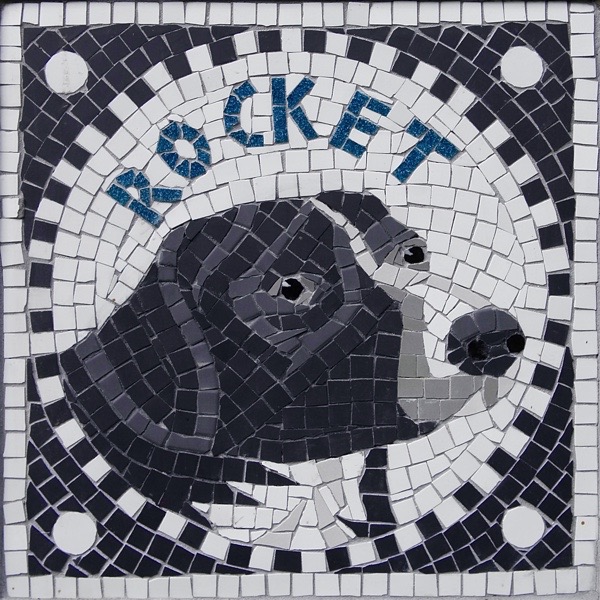
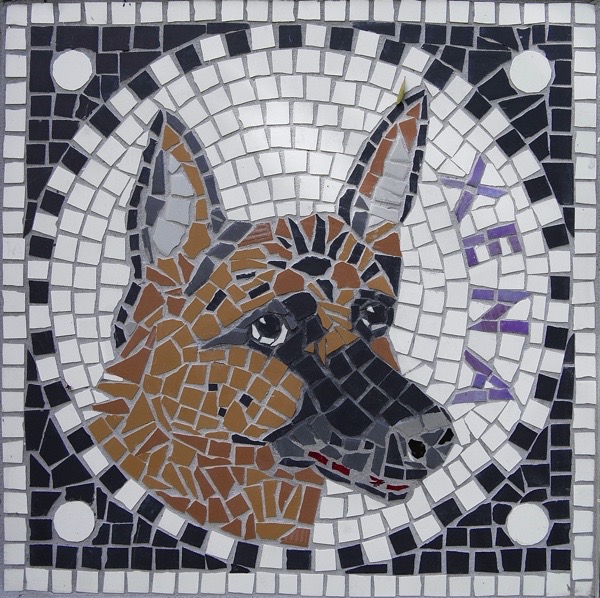
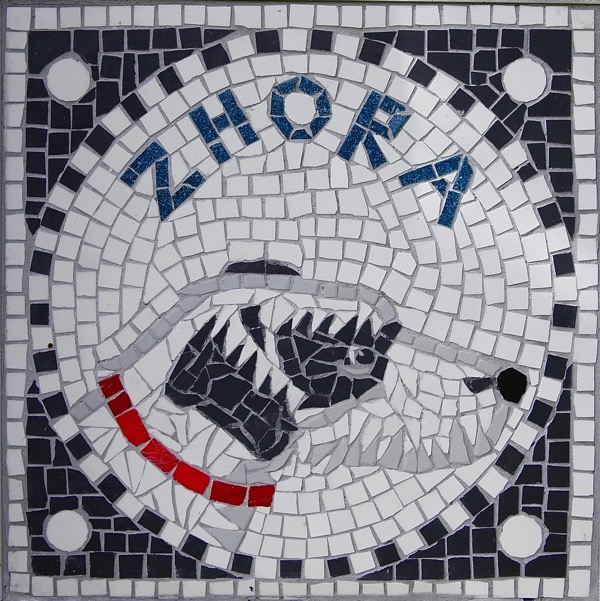
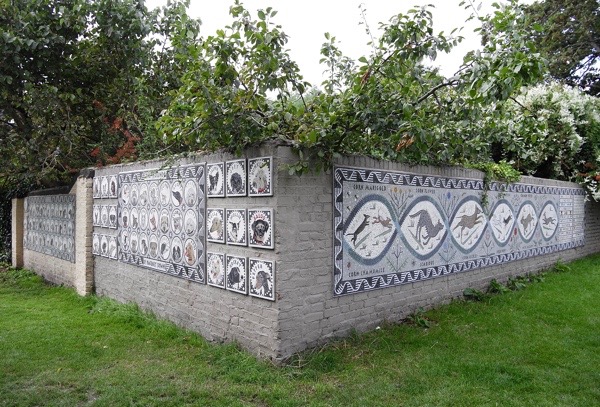
THE HACKNEY MOSAIC PROJECT is seeking commissions, so if you would like a mosaic please get in touch hackneymosaic@gmail.com
You may also like to read about
The Mosaic Makers of Hackney Downs
The Award-Winning Mosaic Makers of Hackney
A Walk On The White Cliffs
This is the last day of the Gentle Author’s holiday, so you only have until midnight to take advantage of our HARVEST SALE, selling all our books at half price. Simply add code ‘HARVEST’ at checkout to claim your discount.
CLICK HERE TO VISIT THE SPITALFIELDS LIFE BOOKSHOP
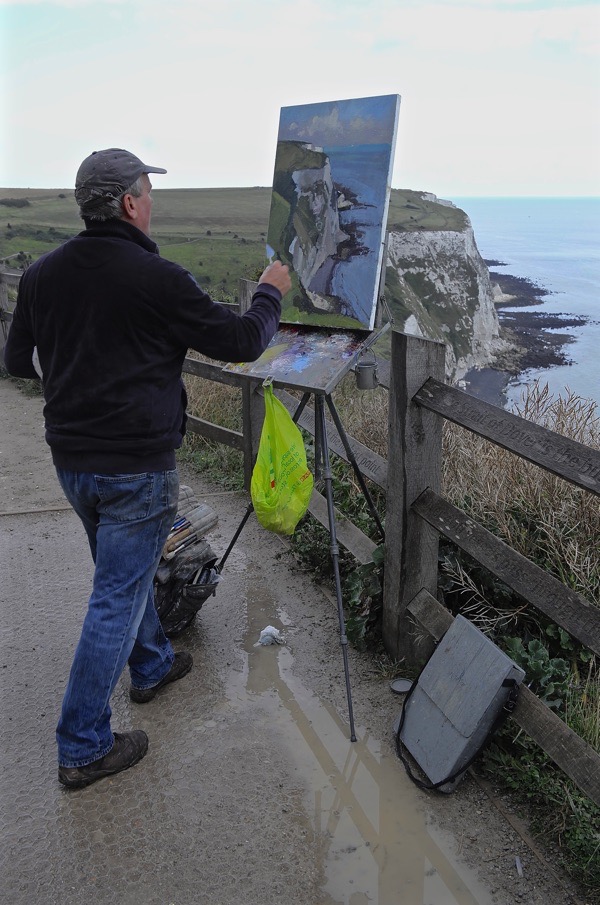
The White Cliffs are a popular source of inspiration for artists
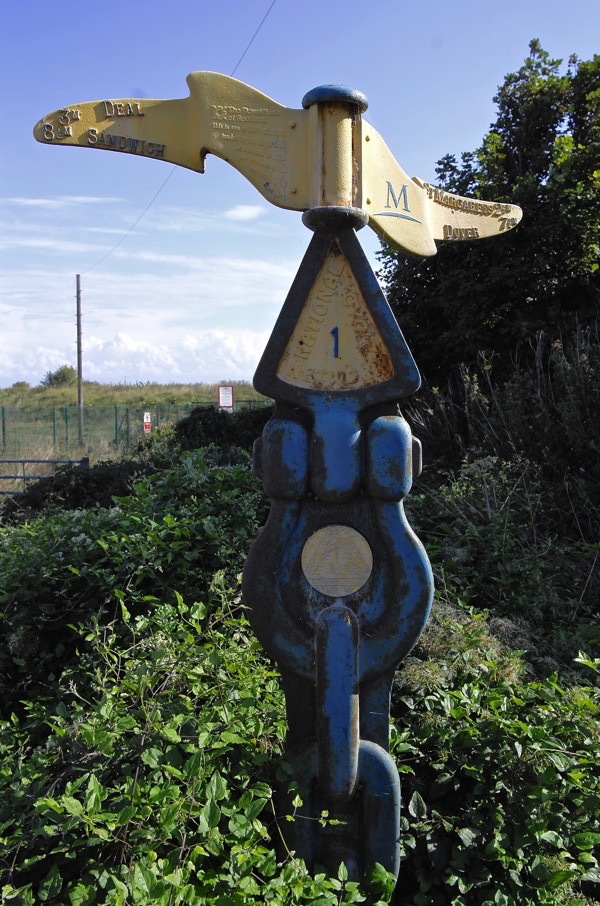
In common with thousands of other travellers, the point of departure for my journey was Dover yet, unlike everyone else, I turned left at the ferry terminal to follow the coastal path eastward towards Deal.
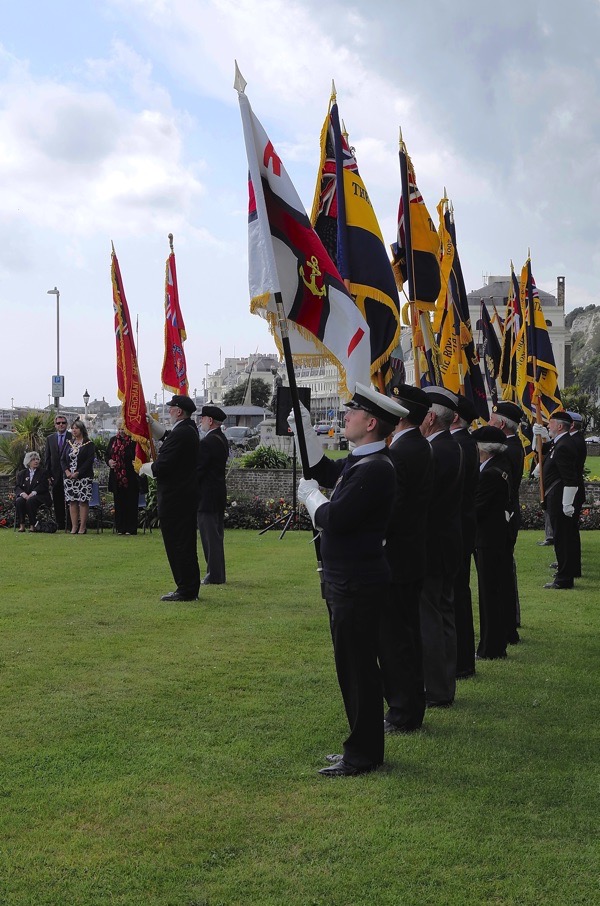
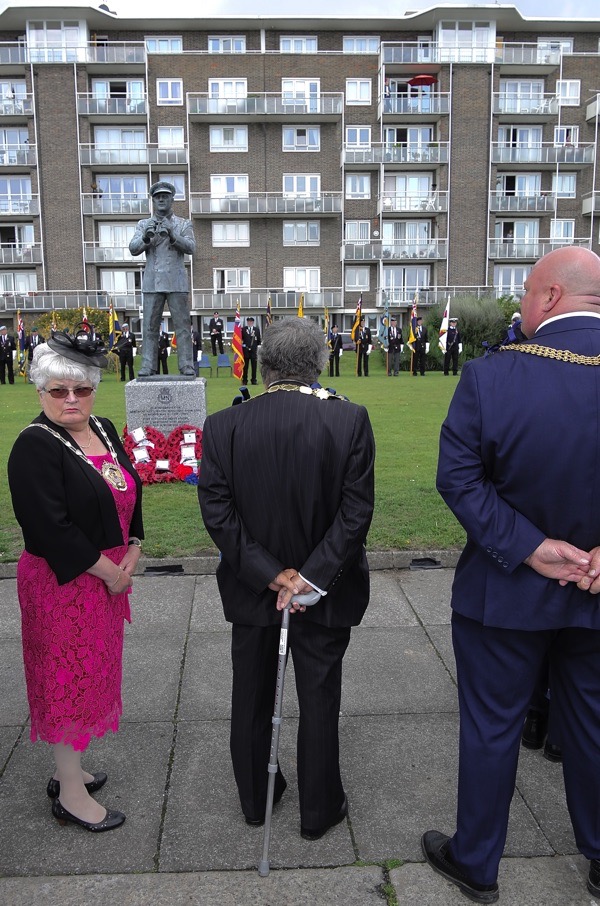
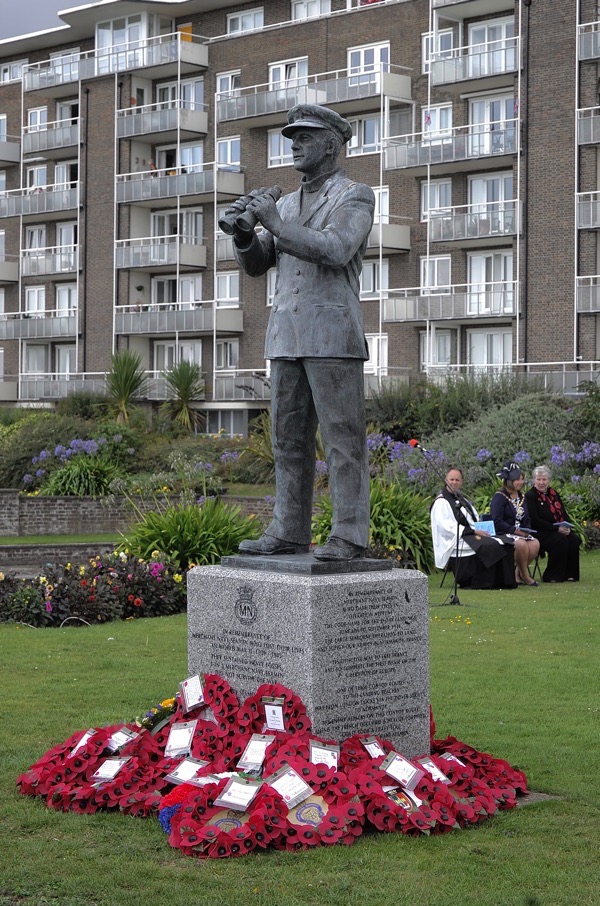
Before I even began the climb uphill to the cliffs, I was confronted with a poignant reminder of the strategic importance of this small town situated at the narrowest point of the English Channel. A statue was being unveiled commemorating the seamen of the Merchant Navy who lost their lives in the Second World War, a third of whom never returned. Just a few frail veterans with medals gathered in sadness, as sailors lined up with flags and local dignitaries made speeches, while a vintage airplane puttered overheard in gathering clouds.
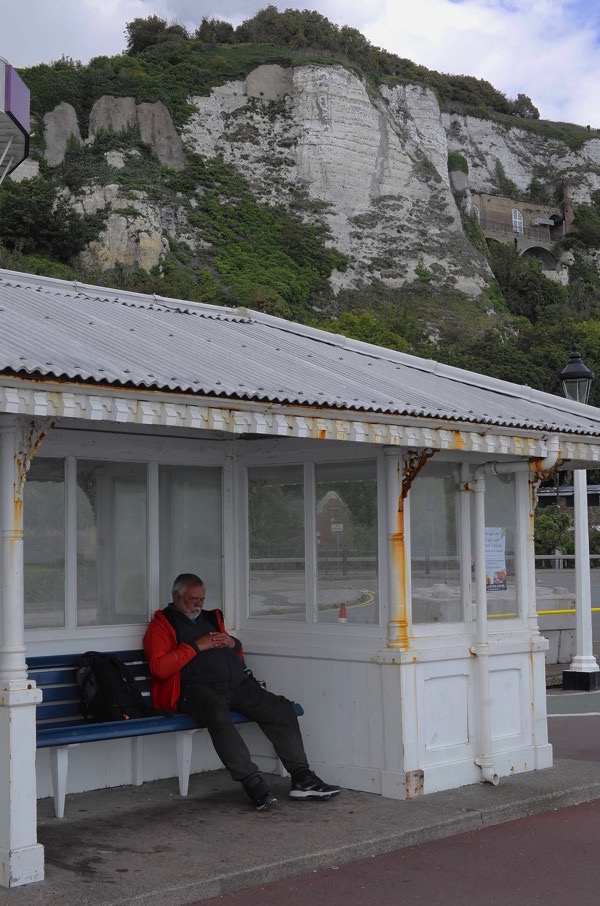
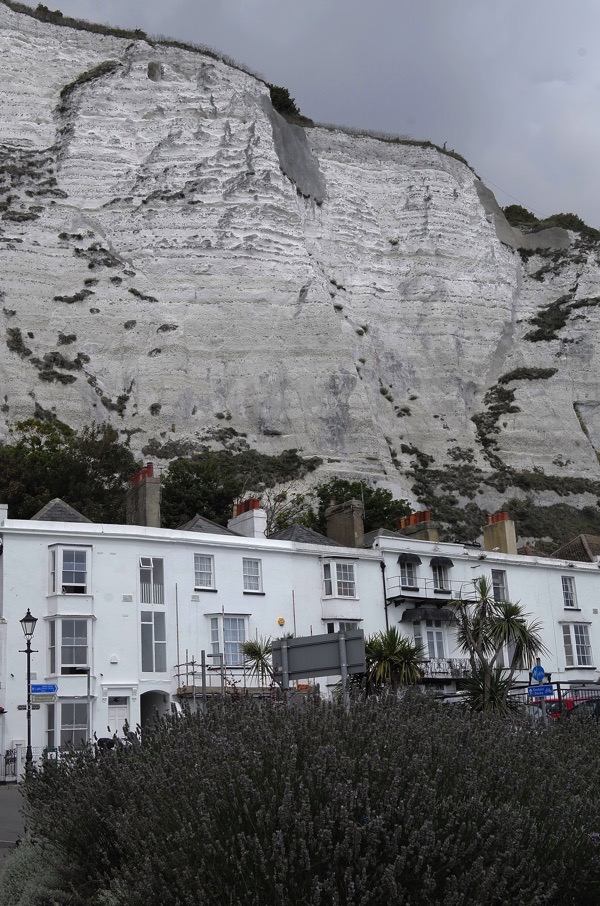
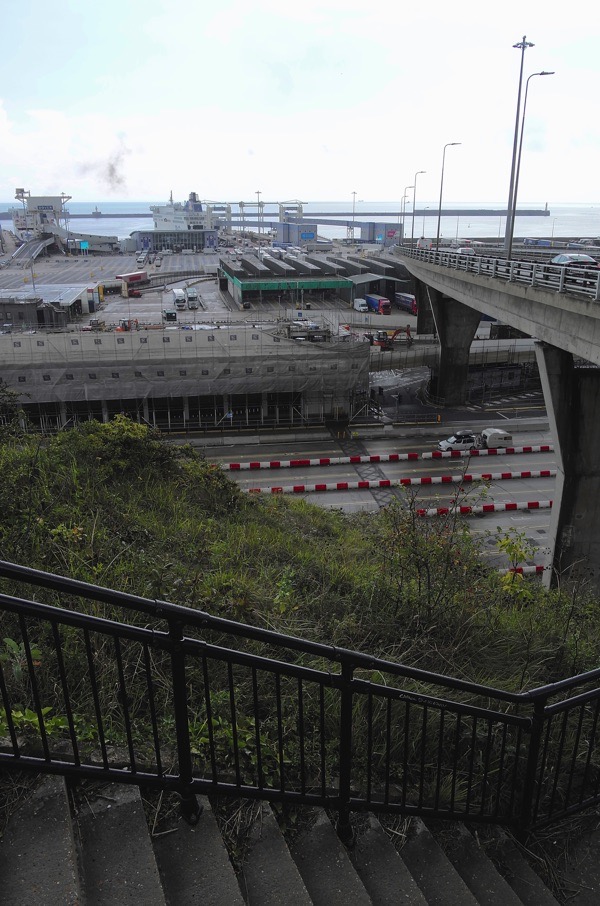
As the ceremony concluded and umbrellas unfurled, I walked on past narrow terraces tucked in at the foot of the tall cliffs towering aloft. The epic spectacle of the ferry port only becomes apparent as you ascend the narrow path crossing beneath the motorway suspended above, feeding the terminal with a ceaseless flow of traffic.
At this point, it seemed that my excursion might be over when a thunderstorm broke over my head, sending arrows of forked lightening into the sea. Impatient with standing under the concrete bridge waiting for the rain to stop, I set out again and was forced to take shelter again in a thicket, contemplating an abandoned shopping trolley and an old lawnmower. Once the storm relented, I struggled uphill to the cafeteria for visitors to the White Cliffs Experience, joining the melancholy throng eating all-day breakfasts and gazing jealously across the channel at the sunlit French coast.
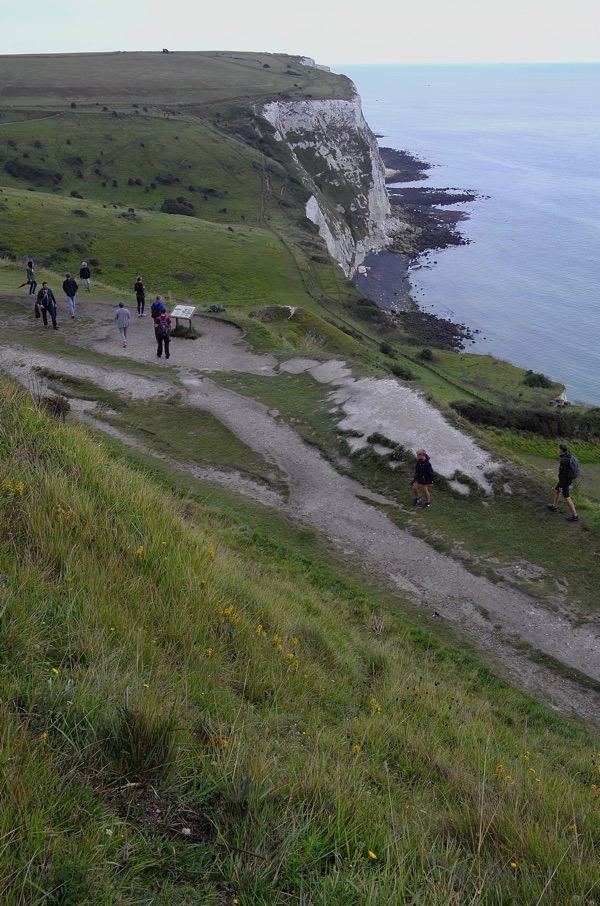
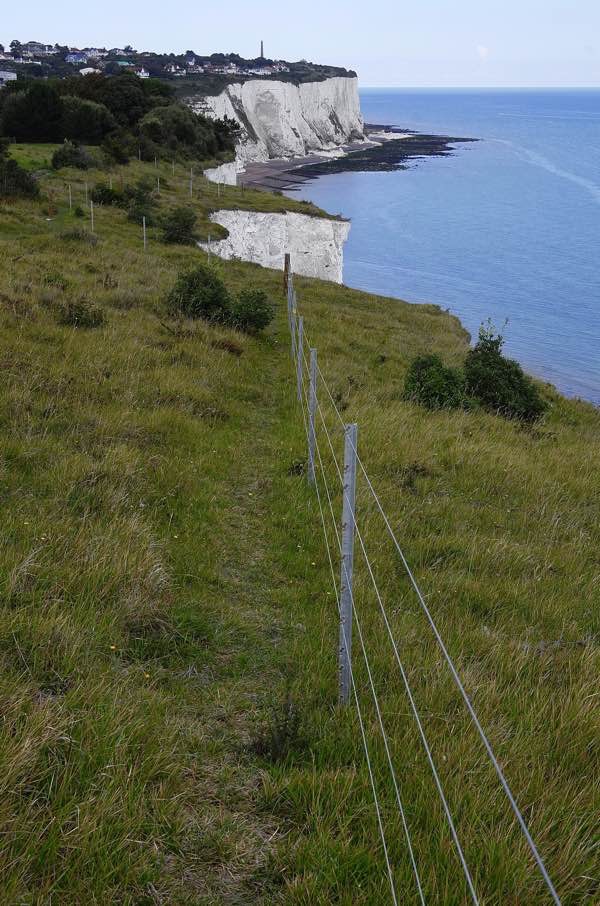
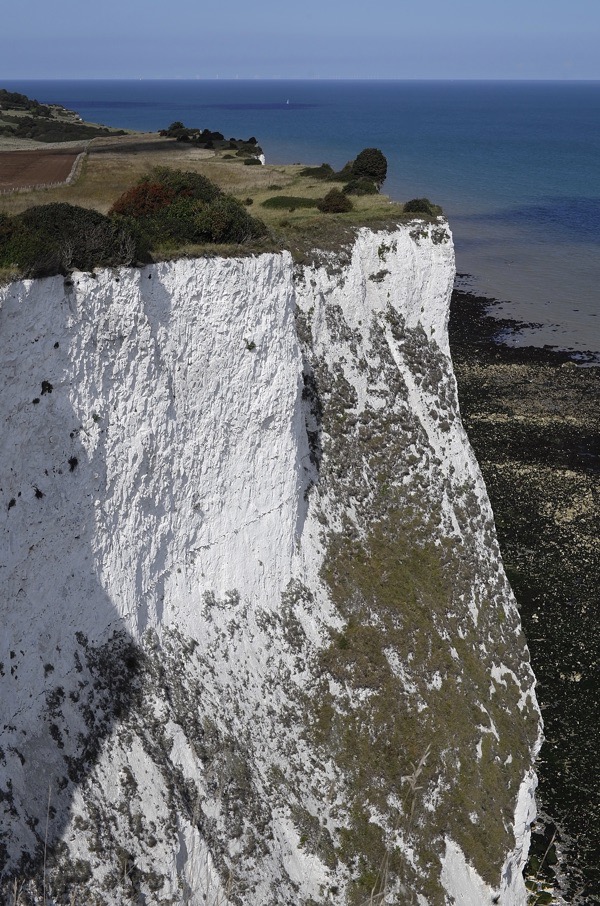
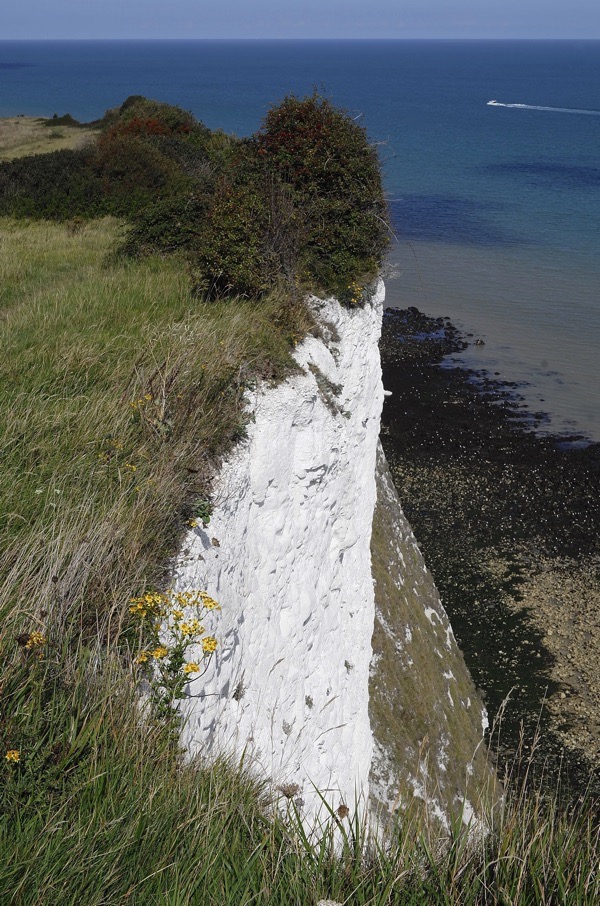
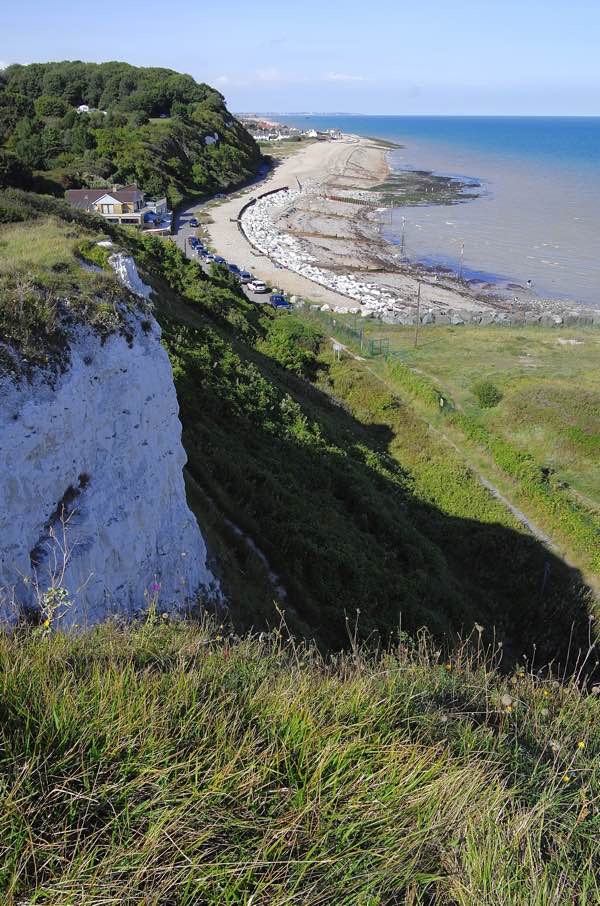
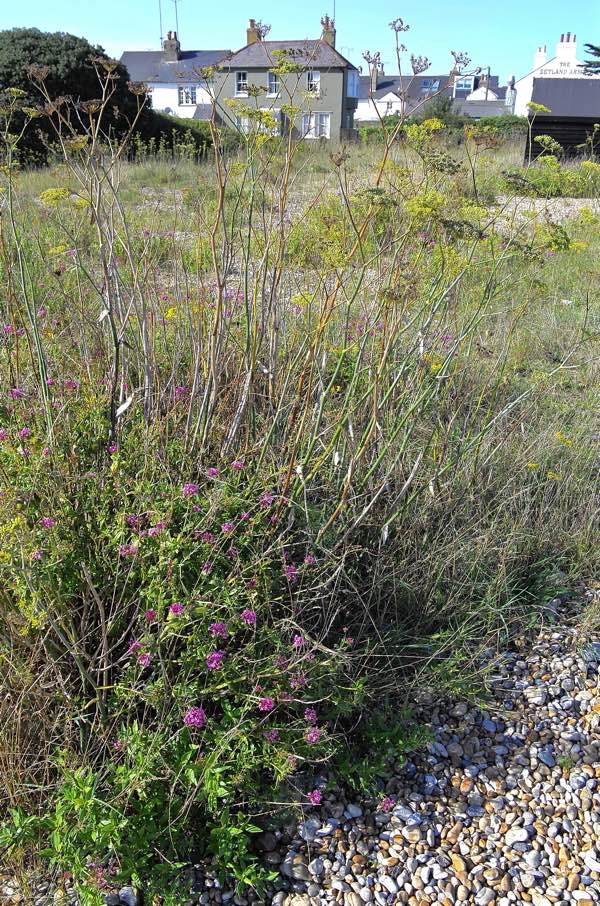
How grateful I was when the rain stopped and I set out in earnest through the puddles and muddy paths. After a mile or so, I left the visitors behind and the grassy footpath became less worn, bordered with wild thyme and fennel. The undulating nature of the cliff exposed impressive deep chasms faced with sheer walls of chalk descending hundred of feet to the water below, inducing a sense of giddy exhilaration tinged with vertigo. The dark clouds were behind me and a warm wind was in my face, and the French coast gleamed in the sunlight twenty-three miles across the sparkling sea. When I descended to the bay at St Margaret’s At Cliffe, barely a soul disturbed the peace underscored by the gentle rise and fall of the waves.
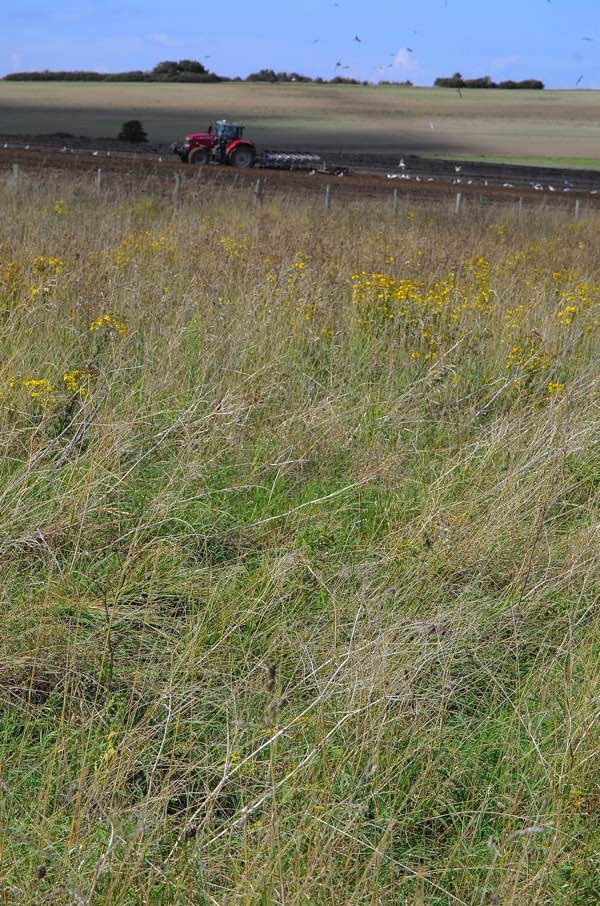
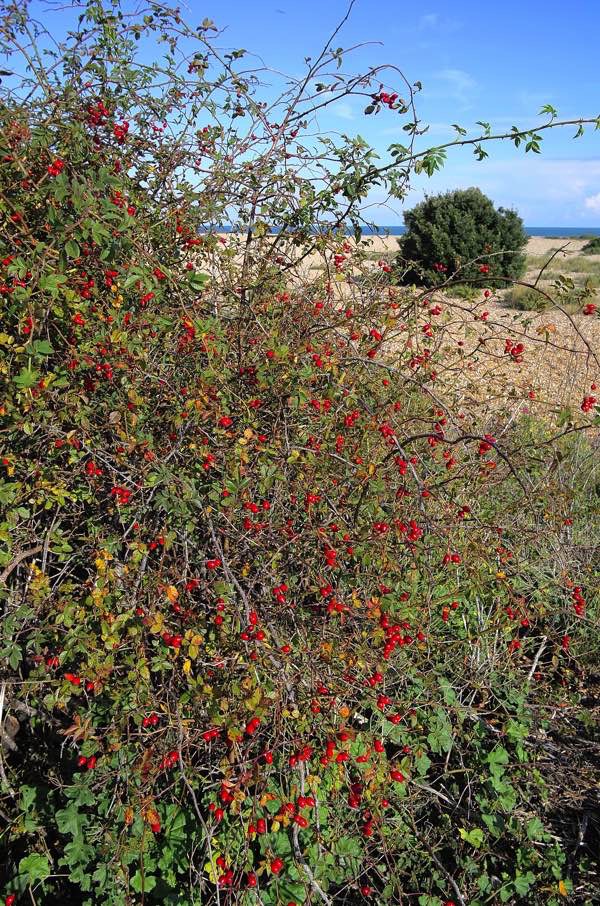
Autumn declared itself in the red hips, hawthorn and sloe berries along the path and in the sight of a tractor ploughing up the stubble, trailed by a flock of seagulls. Yet, after the squall, the weather was benign, the walking was good and within a few hours the cliffs declined, delivering me to the long shingle beach at Kingsdown. On the last stretch, a hawk hovered overhead, drifting and swooping on the currents of warm air before folding his wings and dropping like a dart towards his prey.
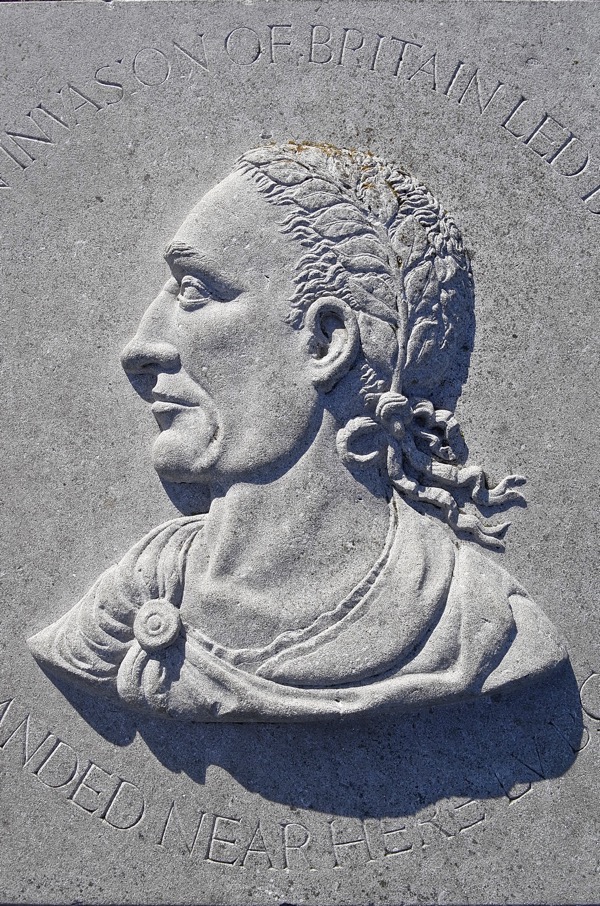
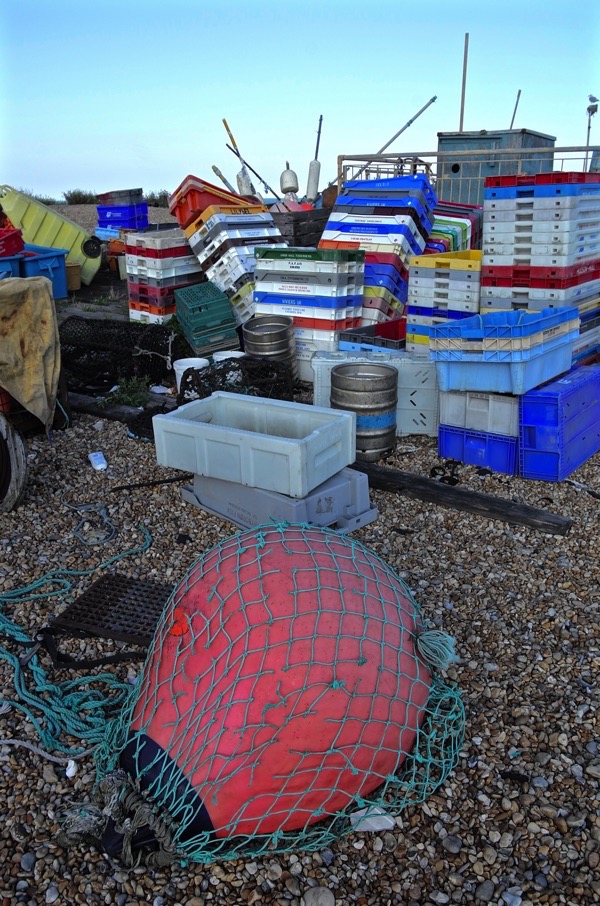
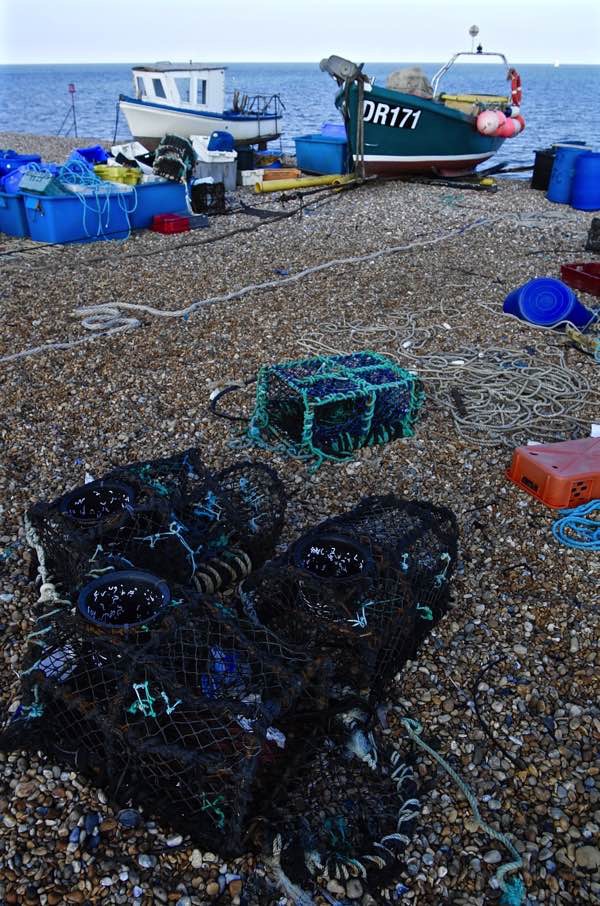
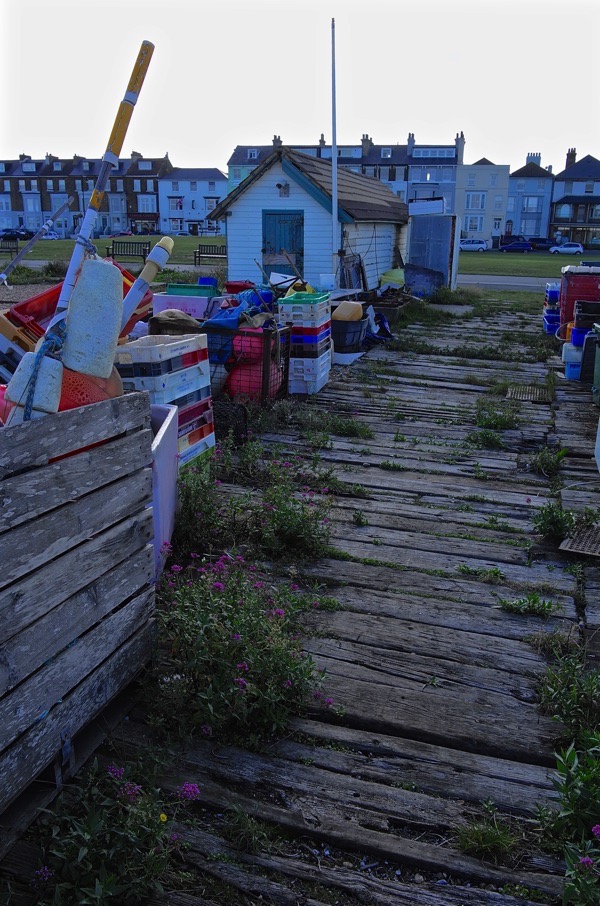
For places so close to London, both Kingsdown and Walmer were unexpectedly quiet and unspoilt seaside towns. A magnificent long line of Edwardian villas borders the beach, which has a sparse forest of dwarf evergreen oaks shielding the land from the sea. This was where Julius Caesar landed two thousand years ago and it is not difficult to imagine the Roman galleys pulled onto the beach here. Castles at Walmer and Deal, and eighteenth century barracks in Deal, serve as a reminder of the threat of invasion that persisted into the last century. At Walmer, a handsome stone gothic boathouse on the seafront reveals the importance of the lifeboat to these small communities that relied upon the sea for their livelihood. Today just a handful of fishing boats remain, surrounded by their paraphernalia of plastic fish trays, lobster pots and nets.
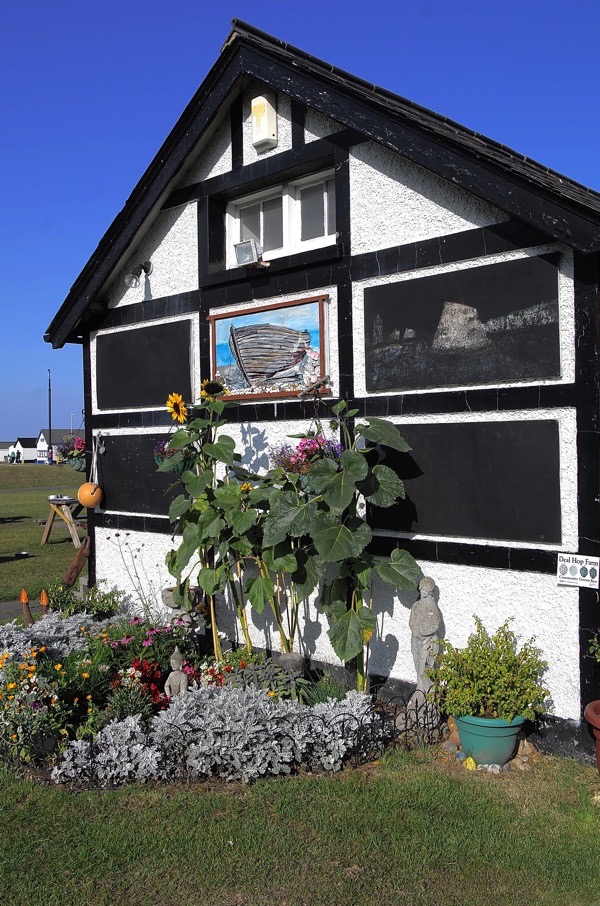
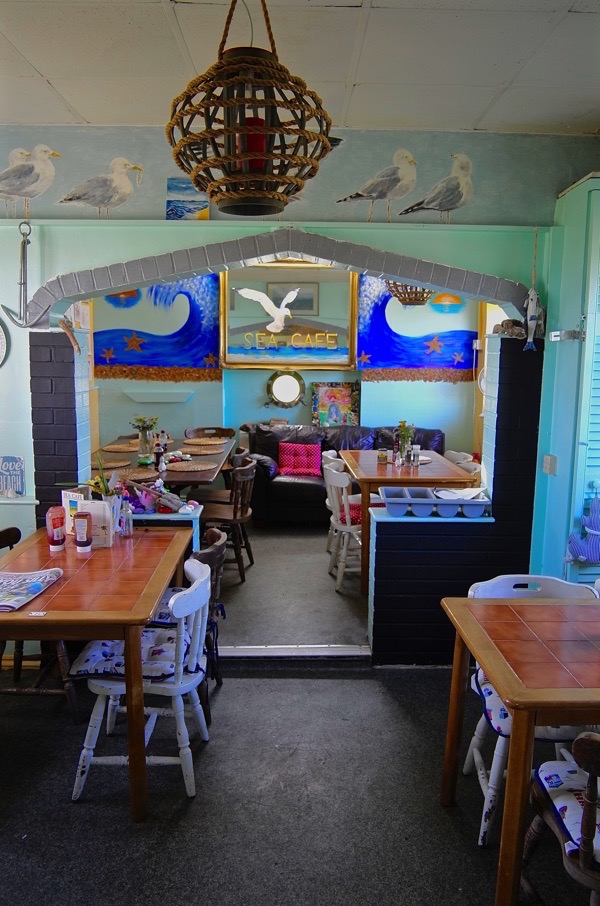
A portion of cod and chips provided necessary sustenance to make it along this seemingly-endless seafront to Deal, where a cup of tea outside the ramshackle shed known as the Sea Cafe offered welcome refreshment upon arrival. The last of the afternoon sun was fading and the shops had all shut, which meant that an exploration of the manifold delights of Deal would have to wait for another day.