
William Kent’s Arch In Bow
Click here to book your tour tickets for this Saturday and beyond
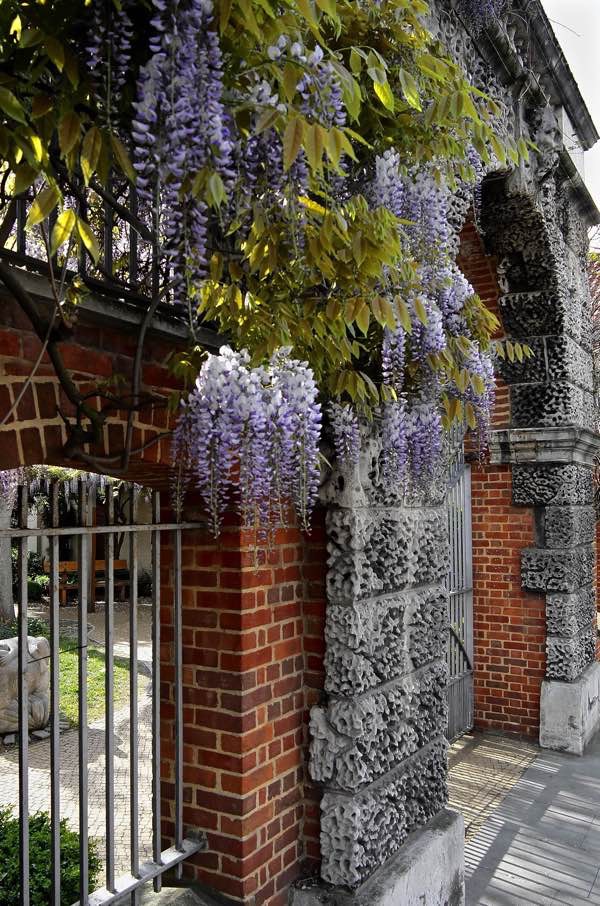
‘a poignant vestige from a catalogue of destruction’
Ever since I first discovered William Kent’s beautiful lonely arch in Bow, I want to go back to take a photograph of it whenever the wisteria is in bloom. For a couple of years circumstances conspired to prevent me, but eventually I was able to do so and here you can admire the result without needing to leave your home.
This fine eighteenth century rusticated arch designed by the celebrated architect and designer William Kent was originally part of Northumberland House, the London residence of the Percy family in the Strand which was demolished in 1874. Then the arch was installed in the garden of the Tudor House in St Leonard’s Street, Bow, by George Gammon Rutty before it was moved here to the Bromley by Bow Centre in 1997, where it makes a magnificent welcoming entrance today.
The Tudor House was purchased in a good condition of preservation from the trustees of George Gammon Rutty after his death in 1898 by the London County Council, who chose to demolish it and turn the gardens into a public park. At this point, there were two statues situated at the foot of each of the pillars of the arch but they went missing in the nineteen-forties. One of the last surviving relics of the old village of Bromley by Bow, the house derived its name from a member of the Tudor family who built it in the late sixteenth century adjoining the Old Palace and both were lovingly recorded by CR Ashbee in the first volume of the Survey of London in 1900.
The Survey was created by Ashbee, while he was living in Bow running the Guild of Handicrafts at Essex House (another sixteenth century house nearby that was demolished), in response to what he saw as the needless loss of the Old Palace and other important historic buildings. Today, only William Kent’s arch remains as a poignant vestige from a catalogue of destruction.
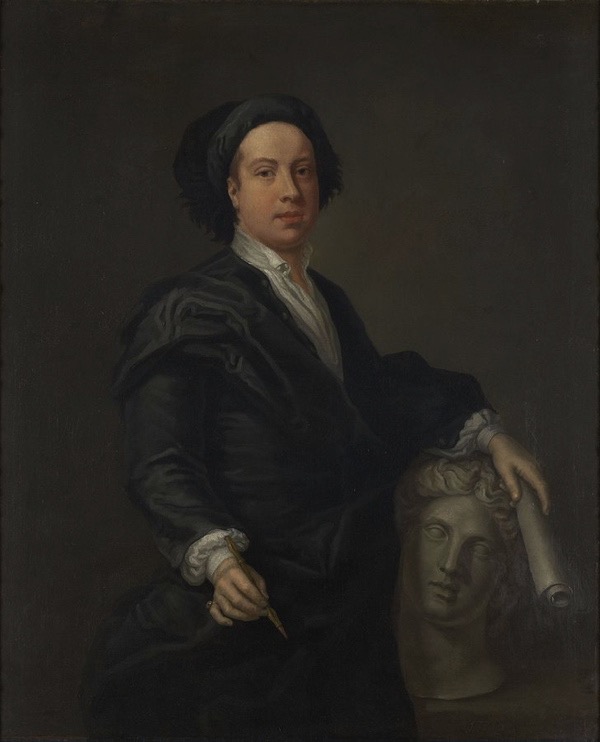
William Kent (1685 –1748) Architect, landscape and furniture designer
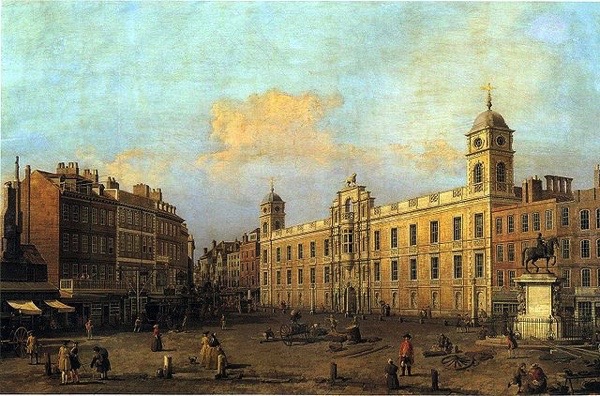
Northumberland House by Canaletto, 1752
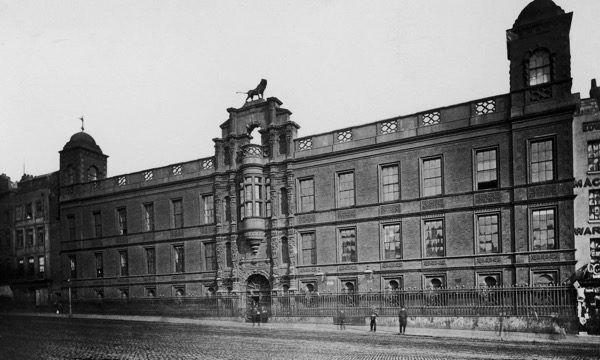
Northumberland House shortly before demolition, 1874
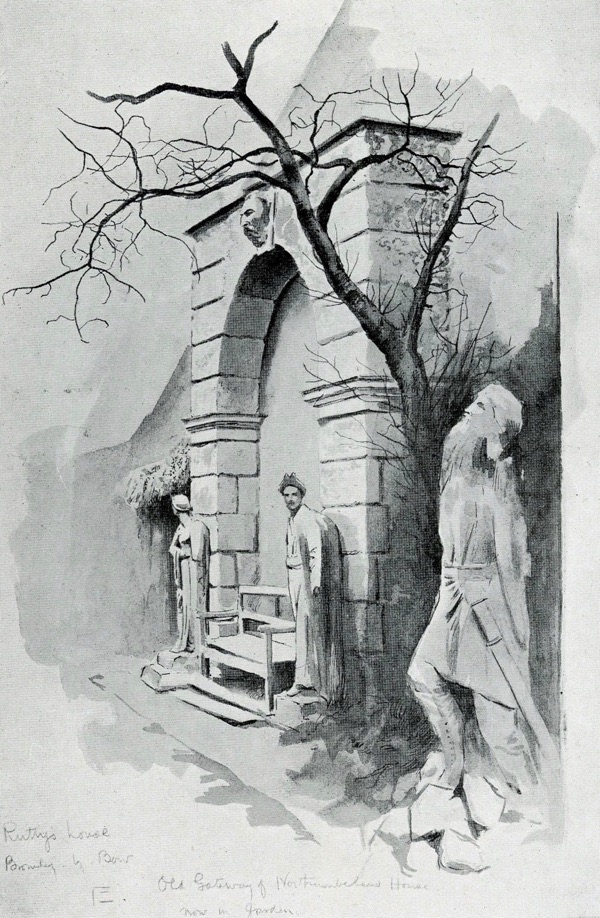
William Kent’s arch in the grounds of the Tudor House, Bow, in 1900 with its attendant statues, as illustrated in the first volume of the Survey of London by CR Ashbee (Image courtesy Survey of London/ Bishopsgate Institute)
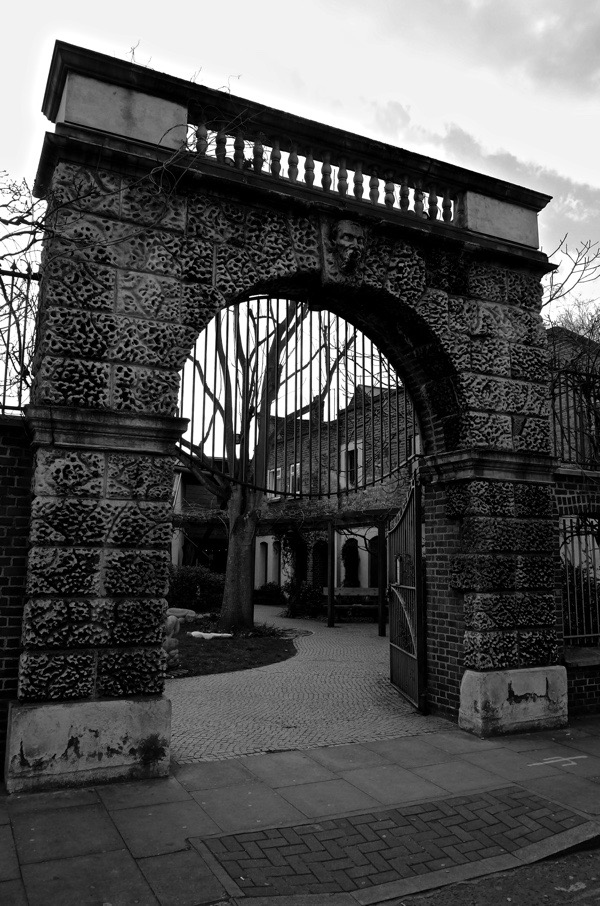
William Kent’s arch at St Leonard’s Street, Bromley by Bow
You may also like to read about
Hackney Mosaic Project In Regent’s Park
Click here to book your tour tickets for next Saturday and beyond
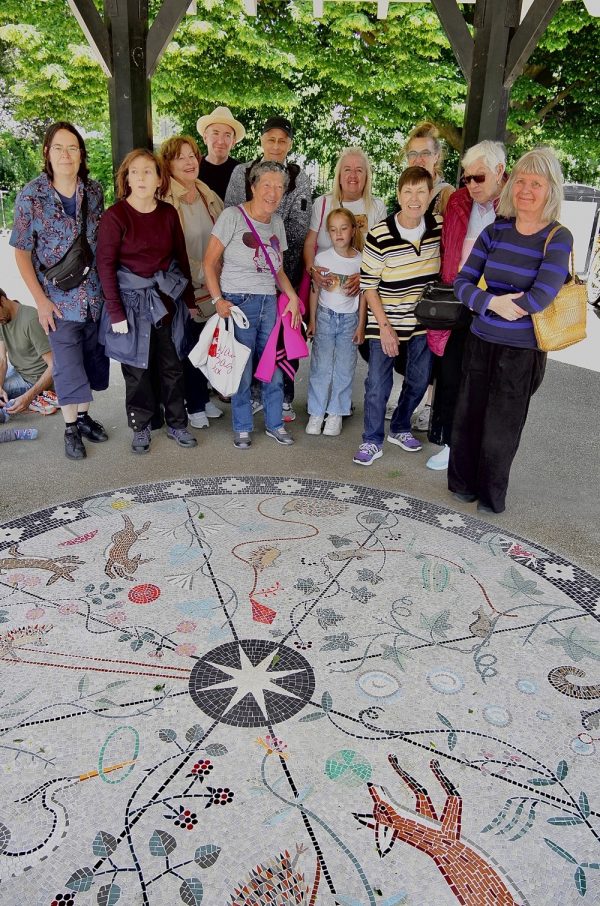
Creators of the mosaic, Lisa Werner, Jackie Ormond, Gallina Sheke, Robin Pritchard, Ken Edwards, Janice Desler, Katrina & Iris Harvey, Gabi Liers, Rada Stilianova, Rose Woolmer & Tessa Hunkin
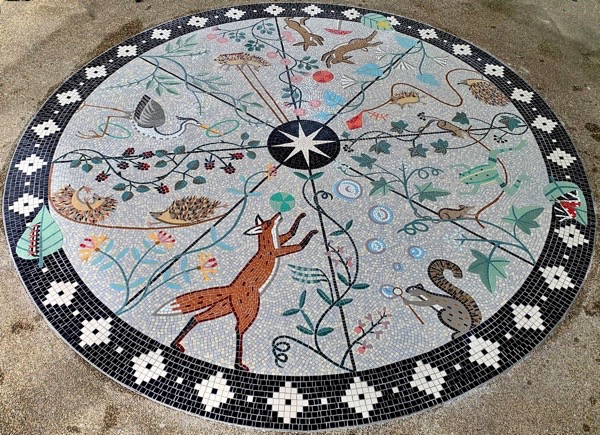
I cycled over to Regent’s Park to visit my friends at Hackney Mosaic Project as they celebrated the unveiling of their latest masterpiece in the children’s playground at the Parkway entrance, Camden Town.
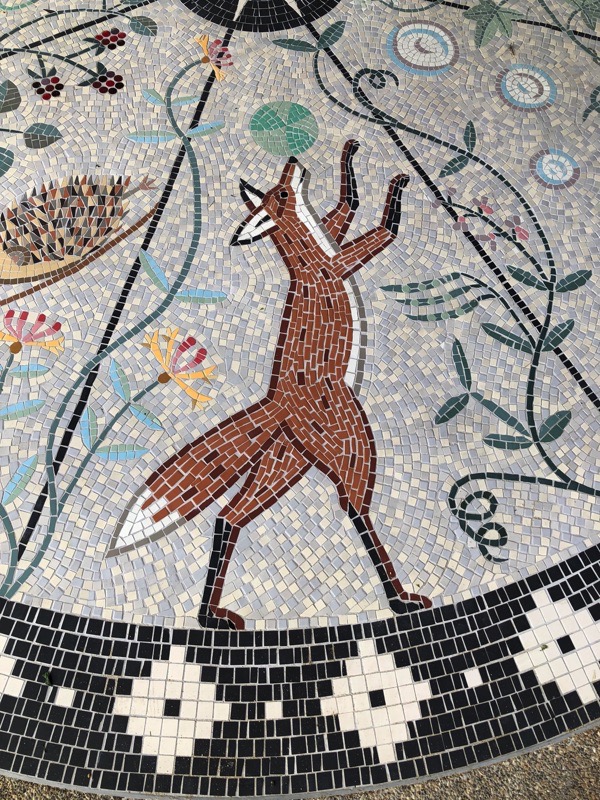
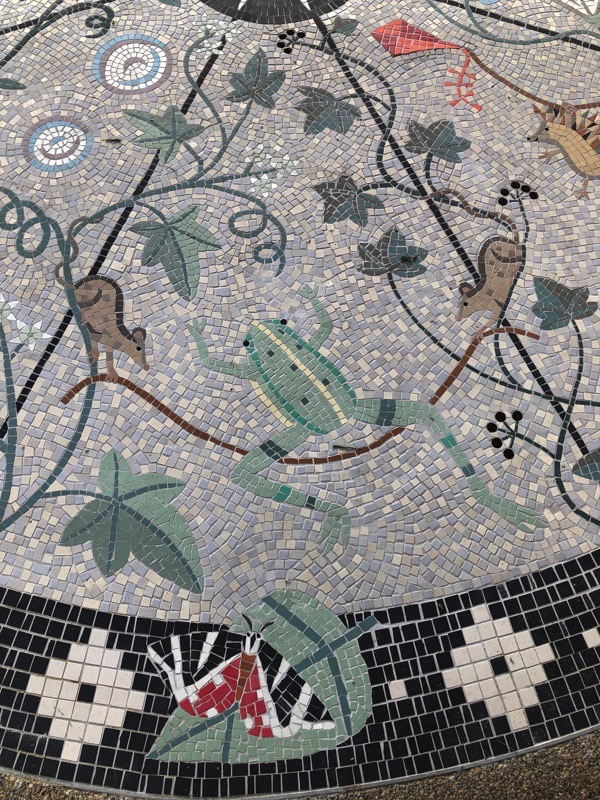
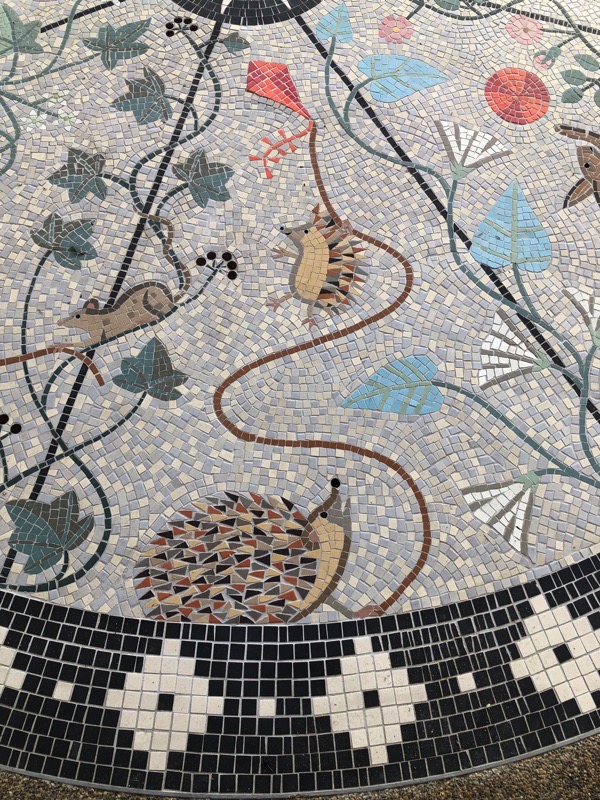
Designer Tessa Hunkin and her team have conjured an elegant circular pavement within a pergola where children play on rainy days. Divided in slices like a pie, the design features whimsical images of the wild creatures who inhabit the park desporting themselves at play in a pastoral scene – hedgehogs flying a kite, a heron with a hula hoop, a squirrel blowing bubbles, a fox balancing a ball on his nose, and more.
‘The design was approved by the end of 2022,’ Tessa Hunkin explained to me, ‘so we were able to start work after Christmas. Our team took on the task with incredible enthusiasm and it was all finished in three months. Installation was delayed by the unsettled weather but we finally got three dry days and Walter Bernardin, the master mosaic fixer, was able to complete the job with his usual skill.’
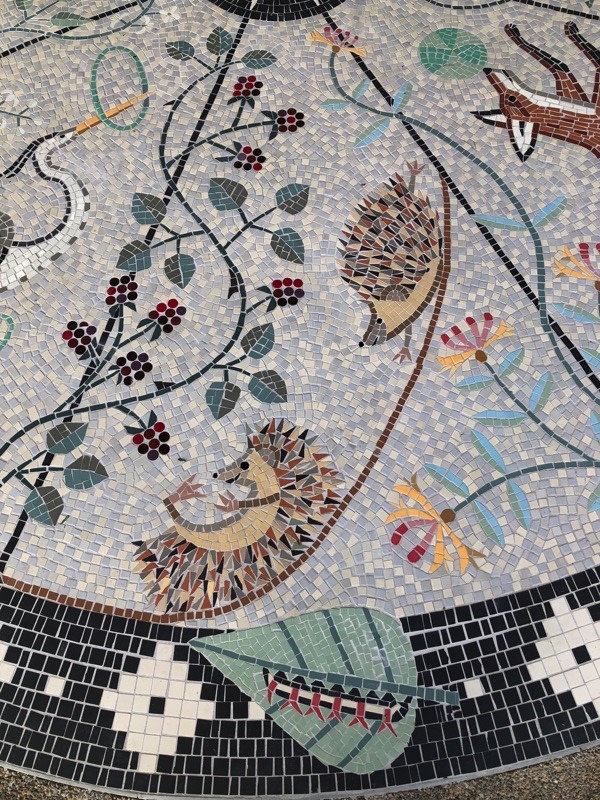
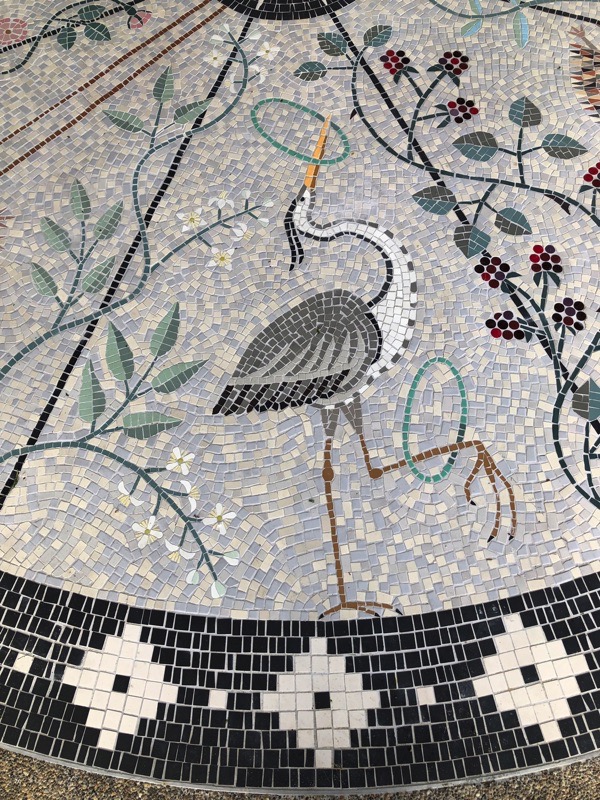
THE HACKNEY MOSAIC PROJECT is seeking commissions, so if you would like a mosaic please get in touch hackneymosaic@gmail.com
You may also like to read about
The Mosaic Makers of Hackney Downs
The Award-Winning Mosaic Makers of Hackney
Save JC Motors Of Haggerston
Click here to book your tour tickets for next Saturday and beyond
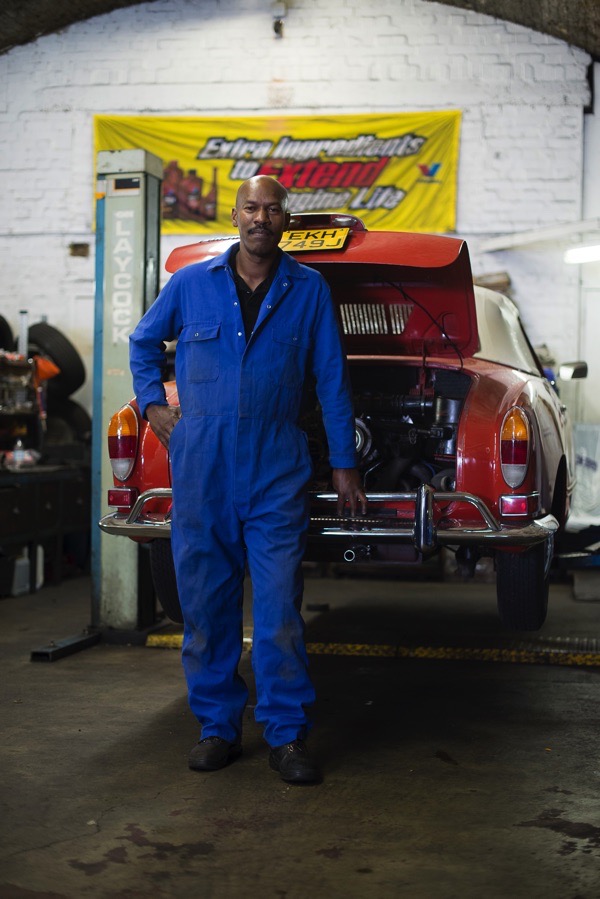
Leonard Maloney
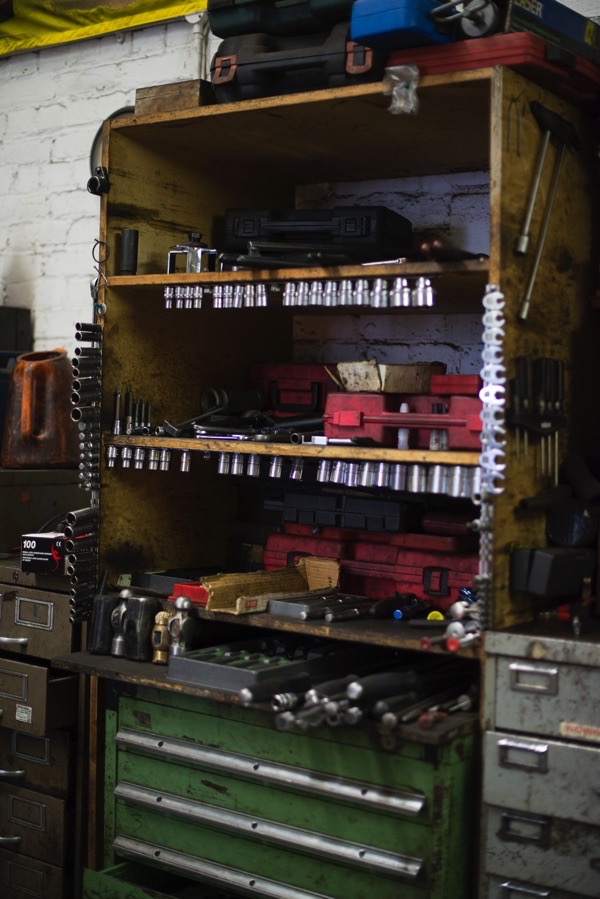
Please support Leonard Maloney and his staff at JC Motors. Working from a railway arch in Haggerston, Len and his colleagues provide an invaluable and affordable service to drivers as well as offering training in skilled employment to dozens of young people. Thus JC Motors fulfils an important social function alongside a necessary service to customers, and Len has been recognised by local residents and celebrated the Mayor of Hackney for his important contribution to the community.
Yet Len’s business is under threat. In 2017, Transport for London who own the arches confronted Len with an annual rent increase from £22,000 to £72,000. Such an increase makes Len’s business unviable since he cannot increase charges to the customers to cover it or increase the volume of repairs in the space he has.
Since then – with the support of East End Trades Guild – Len has been trying to negotiate a sustainable rent but instead TfL have just been clocking up £70,000 of ‘arrears’ and now are threatening eviction if he does not pay by this Friday June 9th.
We urge readers sign this letter to Sadiq Khan, Mayor of London, asking him to intervene and save JC Motors.
CLICK HERE TO SIGN THE LETTER IN SUPPORT OF LEN MALONEY & JC MOTORS
“I’ve spent my whole working life here in the arches,” Len admitted to me, when Contributing Photographer Sarah Ainslie & I visited him. He spoke placidly, shook our hands in welcome and made relaxed eye contact when we arrived at his garage, and I was immediately aware how tidy and ordered the place was.
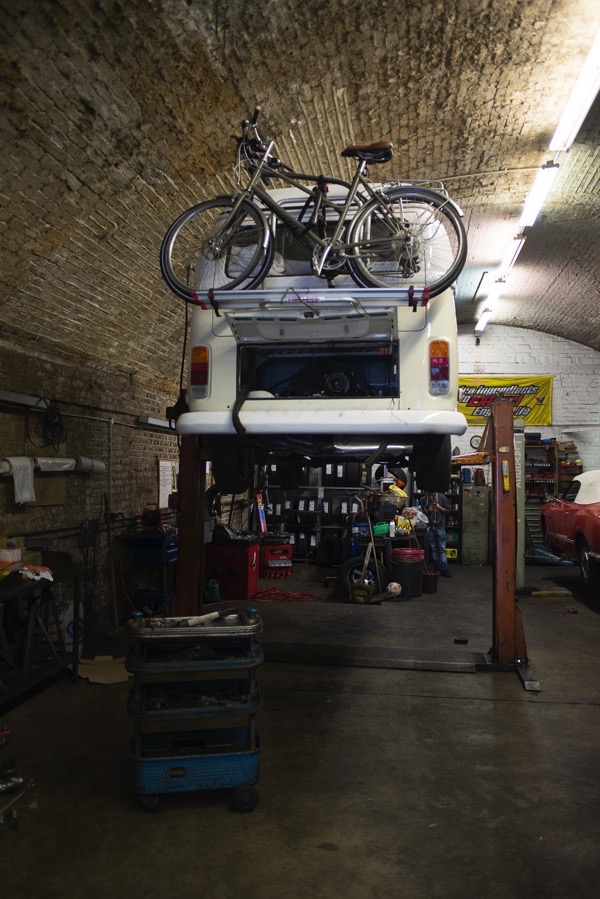
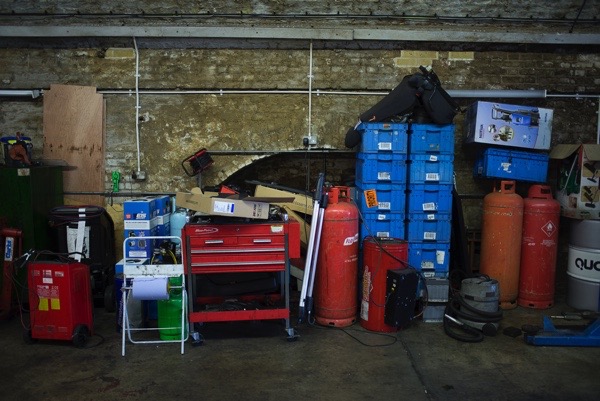
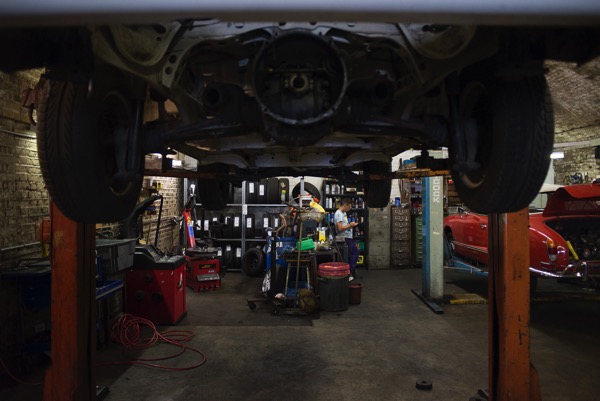
A peaceful atmosphere of mutual respect and concentration prevailed – a white camper van was up in the air undergoing maintenance beneath and the boot of a red sports car was open while repair was undertaken. Len & I sat on two car seats at the rear of the arch to chat while Sarah photographed the motor engineers at work.
JC Motors has been serving customers for more than decade at this location and earned a reputation in the neighbourhood for honest pricing and reliability, and many of his mechanics are local people who have joined through placements and schemes. Everything might appear as it should be, yet there is an air of poignancy since Len – in common with many other businesses under the railways arches – lives with uncertainty since all the arches were sold off.
“Everything is becoming coffee bars around here now,” Len informed me in regret, “and it seems our job has become seen as ‘dirty’ and we’re no longer wanted any more now that it’s become posh.”
“My dad had an old Austin Cambridge that he used to repair at weekends and that gave me a taste for this work. I’ve always loved taking things apart and putting them back together, and the smell of diesel oil has been attractive to me for as long as I can remember.
In 1981, I was sent on a day release from Danesford School to Hackney College where I met Barry Carlisle who specialised in repairing minis, and in the evenings I came to work for him in an arch here in Haggerston. Then Joe Chee came long and saw me working on a Volkswagen Camper van and he said, ‘If ever you need a job, come and see me.’
At first when I left school, I went to work for Barry but he had an accident and lost an eye, so then I had to go back to Joe Chee and we began working together in 1982. He was foreman at a Volkswagen garage in St John’s Wood. We made a great team and I learnt a lot from him. We started a body shop off the Kingsland Rd and a shop selling Volkswagen parts. That was fantastic and it carried on until 1999. He did the paperwork and sold the parts and I ran the bodyshop, and we collected lots of customers and took on three apprentices. But eventually Joe Chee got ill and passed away and I couldn’t run the whole business, so I closed the shop and continued with the garage.
I began taking on local young people through the Inspire Hackney scheme and now my son Miles is working with me. Everyone has their job to do and they know where the parts are and I have taught them what to do. Some customers bring their cars in and just tell me to repair whatever needs doing, but I also get single mums who don’t have a lot of money and I can just repair what is necessary to keep the car safe. I’ve had mums bring in their kids in prams and then the kids come back to me to ask advice when the time comes to get their first car.”
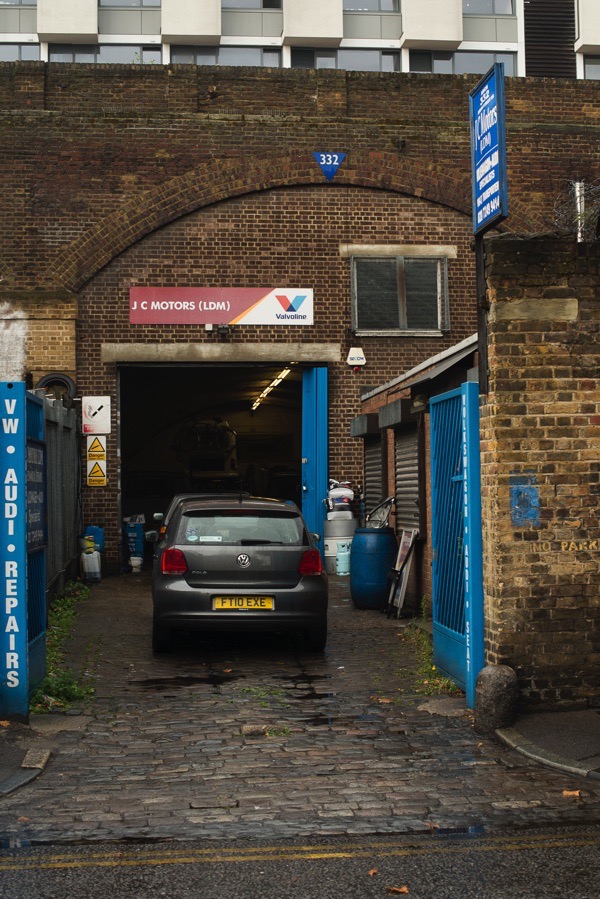
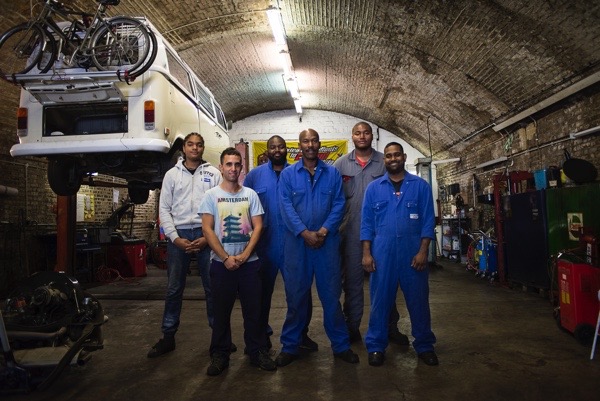
The team at J C Motors
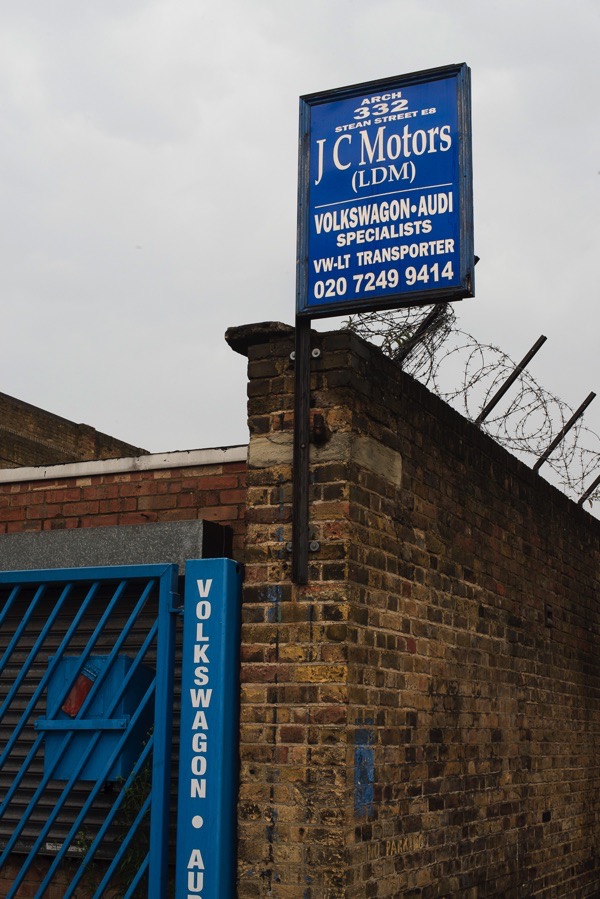
Joe Chee is commemorated in the name of the company ‘JC Motors’, followed by Leonard’s initials
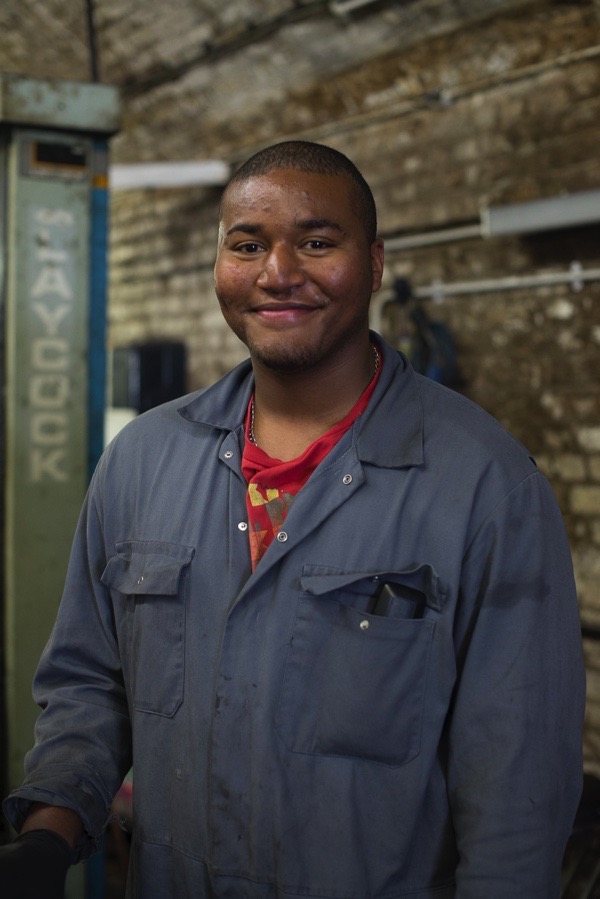
Miles Maloney
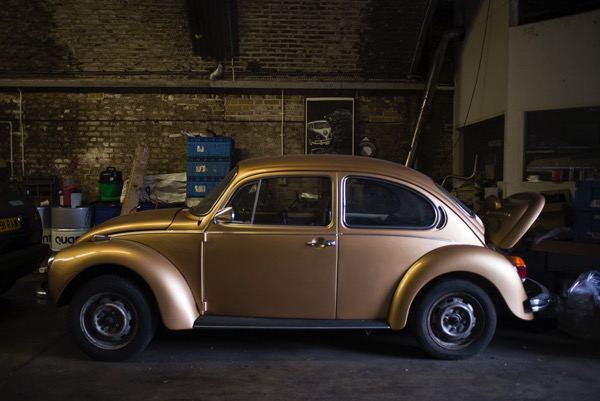
Len’s own beetle that he hopes to restore one day
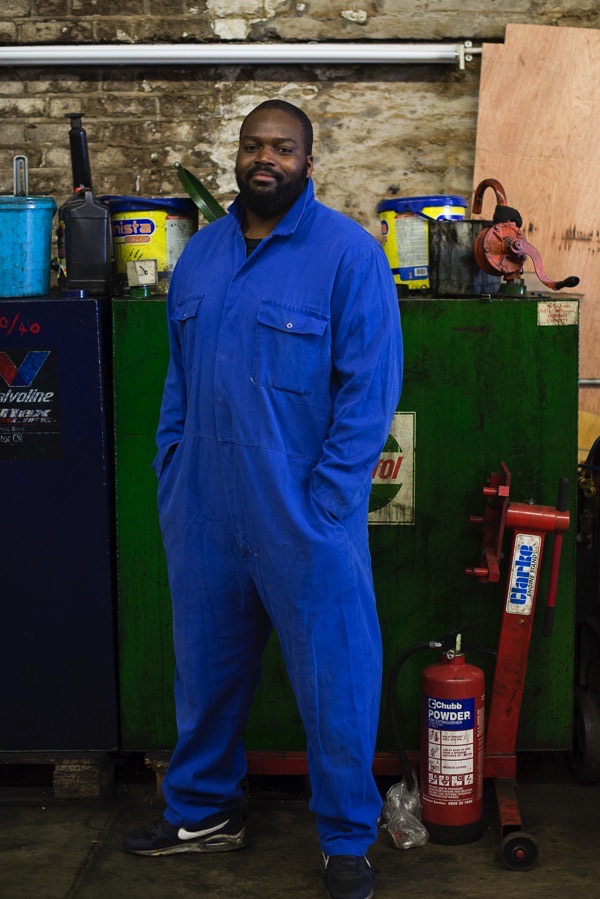
Mr Bramble, Motor Engineer
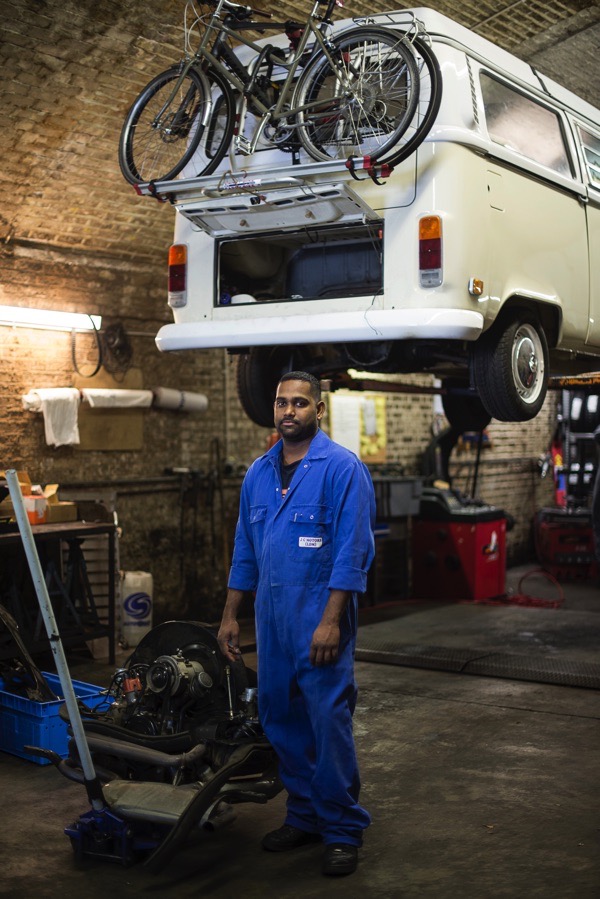
Mr Singh, Motor Engineer
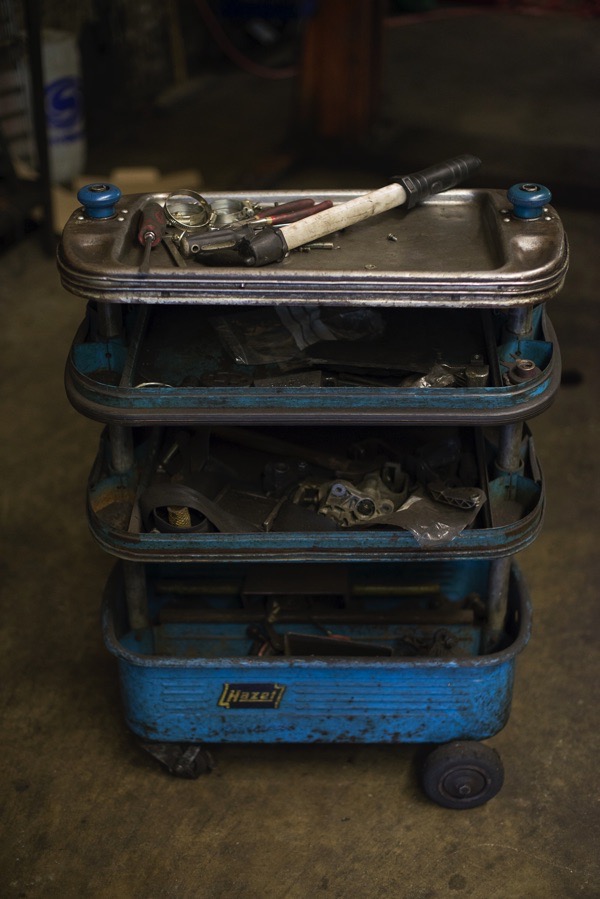
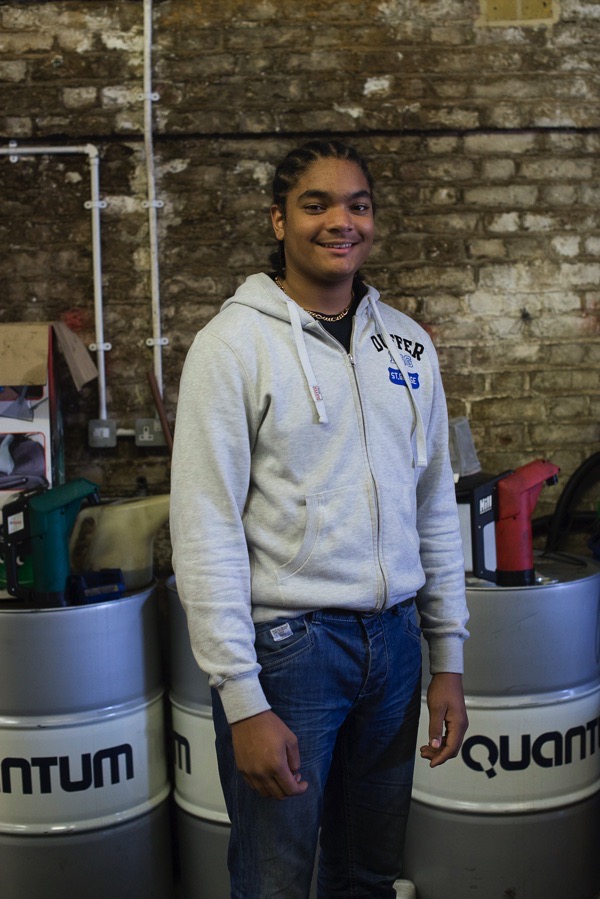
Hakeem Saunders – “I’ve been here since I was thirteen”
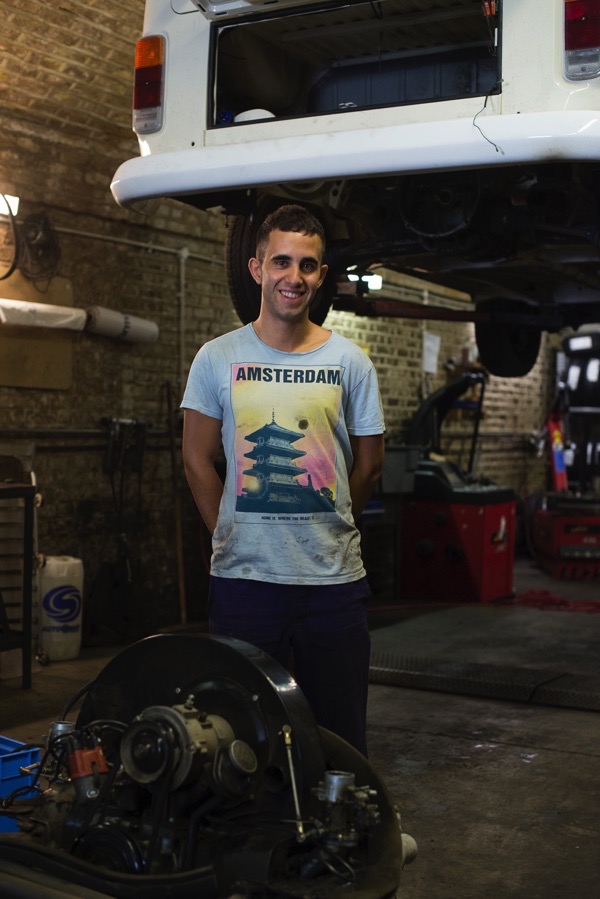
Adnan Leal
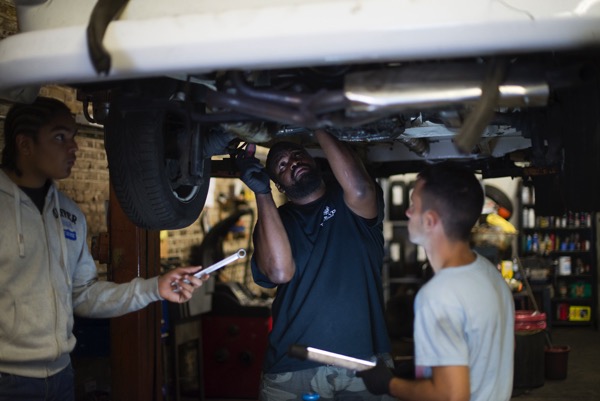
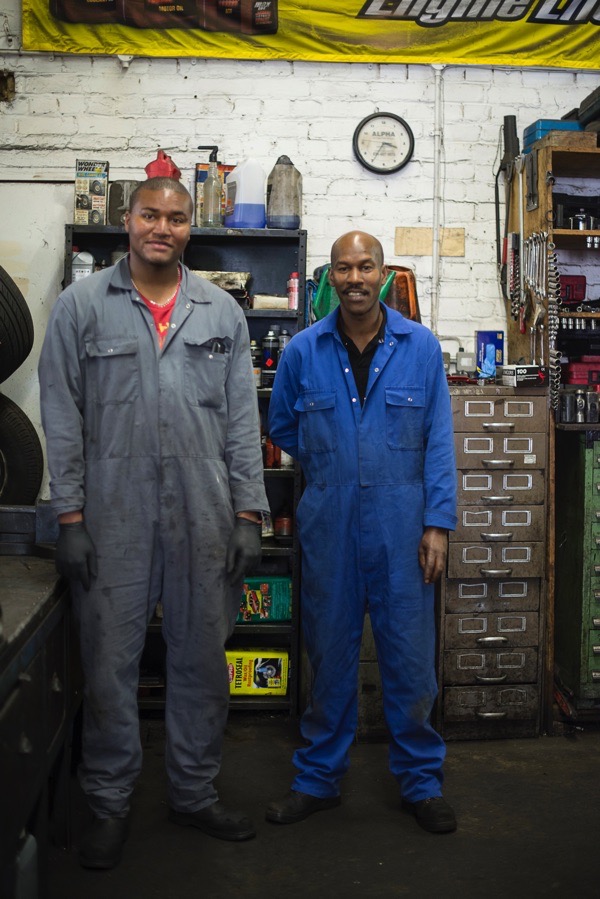
Leonard & his son Miles
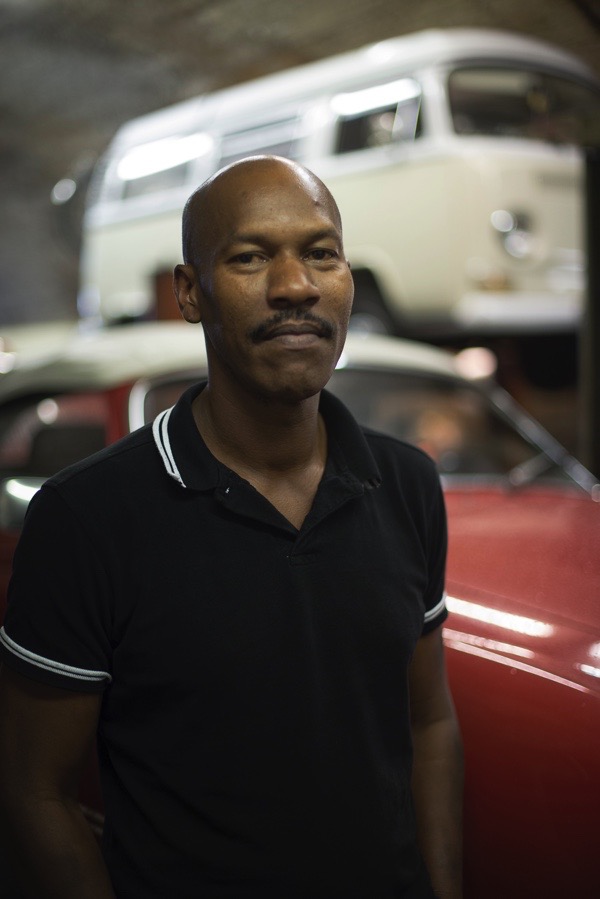
Leonard Maloney
Photographs copyright © Sarah Ainslie
J C Motors LDM, 332 Stean St, Haggerston, E8 4ED
You may also like to read about
Israel Bidermanas’ London
Click here to book your tour tickets for next Saturday and beyond

Lithuanian-born Israel Bidermanas (1911-1980) first achieved recognition under the identity of Izis for his portraits of members of the French resistance that he took while in hiding near Limoges at the time of the German invasion. Encouraged by Brassai, he pursued a career as a professional photographer in peacetime, fulfilling commissions for Paris Match and befriending Jacques Prévert and Marc Chagall. He and Prévert were inveterate urban wanderers and in 1952 they published ‘Charmes de Londres,’ delivering this vivid and poetic vision of the shabby old capital in the threadbare post-war years.

In the cemetery of St John, Wapping

Milk cart in Gordon Sq, Bloomsbury

At Club Row animal market, Spitalfields

The Nag’s Head, Kinnerton St, W1

In Pennyfields, Limehouse

Palace St, Westminster

Ties on sale in Ming St, Limehouse

Greengrocer, Kings Rd, Chelsea

Diver in the London Docks

Organ Grinder, Shaftesbury Ave, Piccadilly

Sphinx, Chiswick Park

Hampden Crescent, W2

Underhill Passage, Camden Town

Braithwaite Arches, Wheler St, Spitalfields
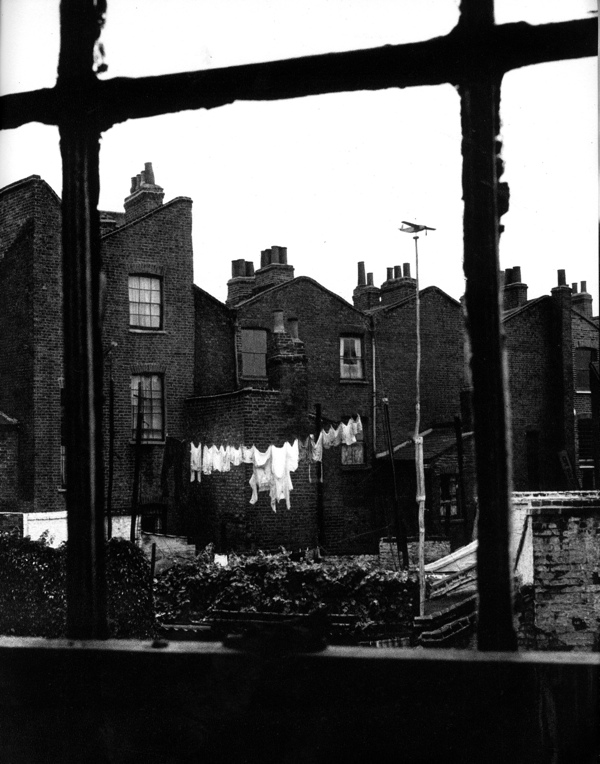
East India Dock Rd, Limehouse

Musical instrument seller, Petticoat Lane

Grosvenor Crescent Mews, Hyde Park Corner

Unloading in the London Docks

London Electricity Board Apprentices

On the waterfront at Greenwich

Tower Bridge
Photographs courtesy Bishopsgate Institute
You may also like to take a look at
Bewick’s Birds Of Spitalfields
Click here to book your tour tickets
Coming across an early copy of Thomas Bewick’s ‘History of British Birds’ from 1832 in the Spitalfields Market inspired me to publish this ornithological survey with illustrations courtesy of the great engraver.
I have always known these pictures – especially the cuts of the robin and the blackbird – yet they never cease to startle me with their vivid life, each time I return to marvel at the genius of Bewick in capturing the essence of these familiar creatures so superlatively.
The book reminded me of all the birds that once inhabited these fields and now are gone, yet it is remarkable how many varieties have persisted in spite of urbanisation. I have seen all of these birds in Spitalfields, even the woodpecker that I once spied from my desk, coming eye to eye with it while looking into a tree from a first floor window to discern the source of an unexpected tapping outside.
 The Sparrow
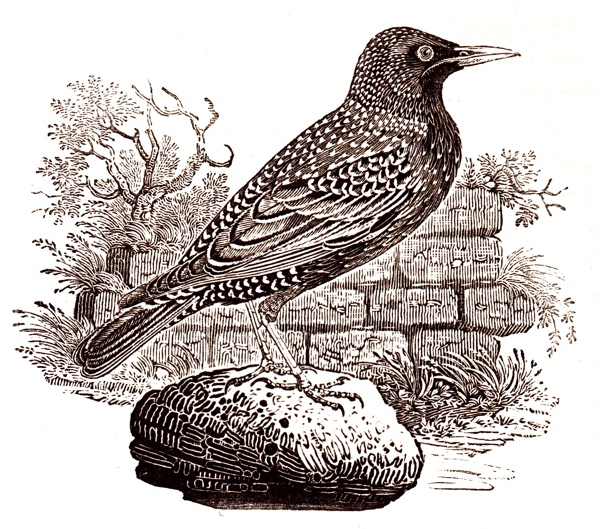
The Starling
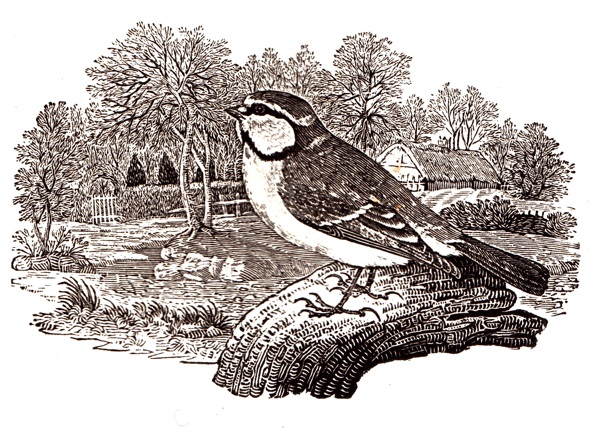 The Blue Tit
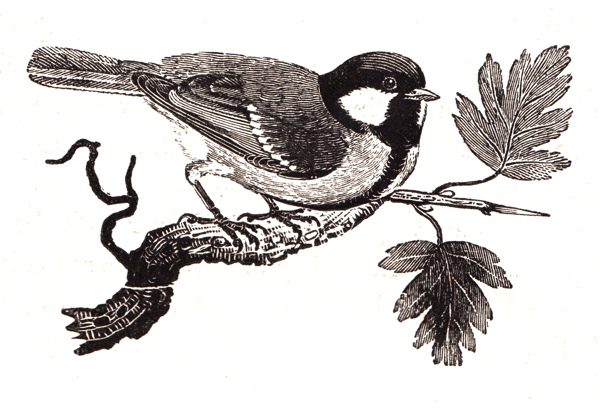 The Great Tit
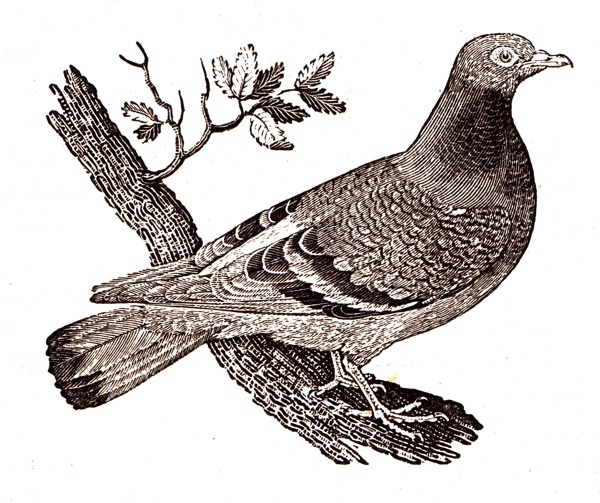 The Pigeon
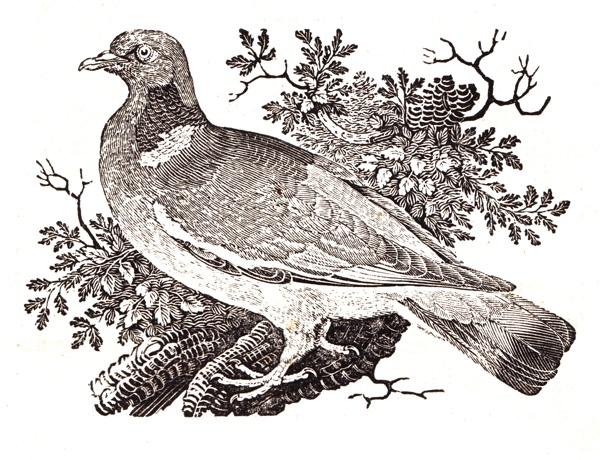 The Collared Dove
 The Blackbird

The Crow
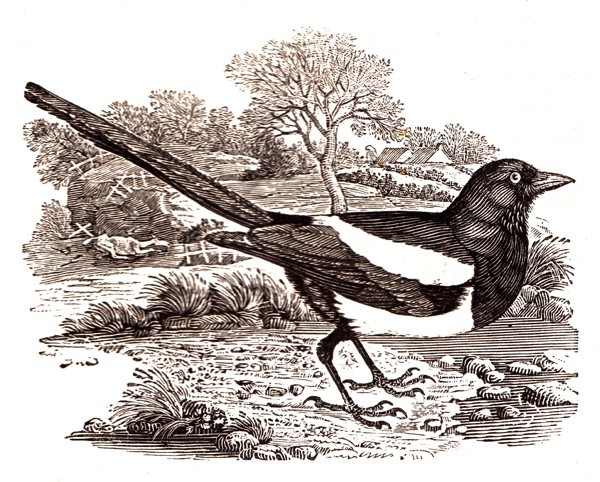 The Magpie
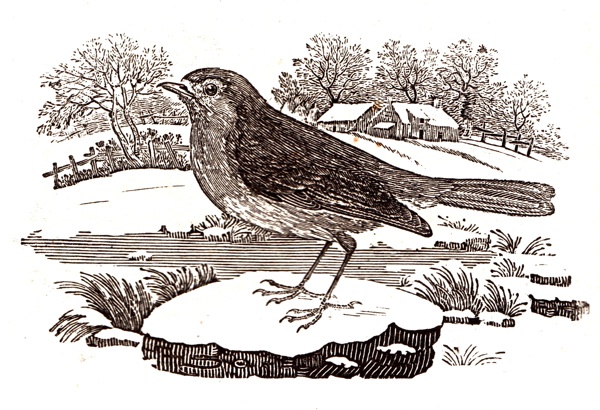 The Robin
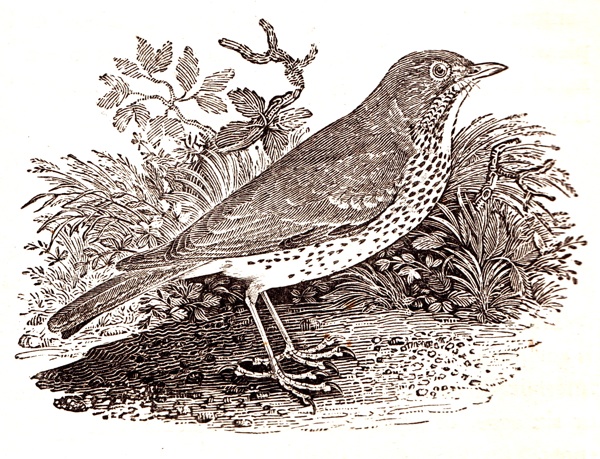 The Thrush
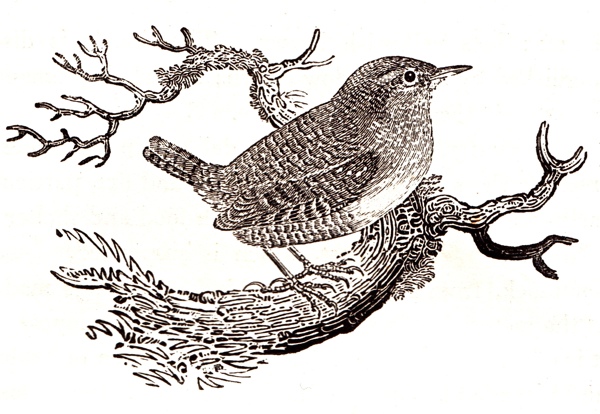 The Wren
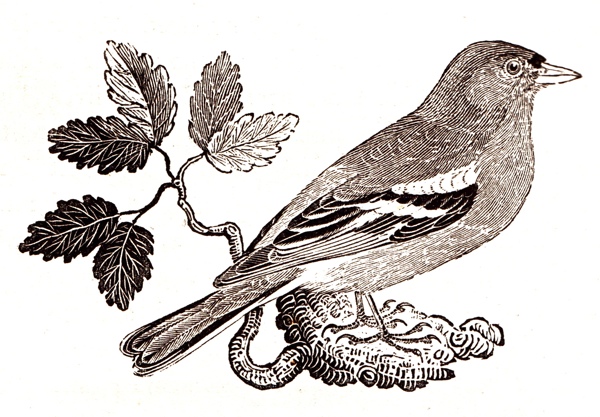 The Chaffinch
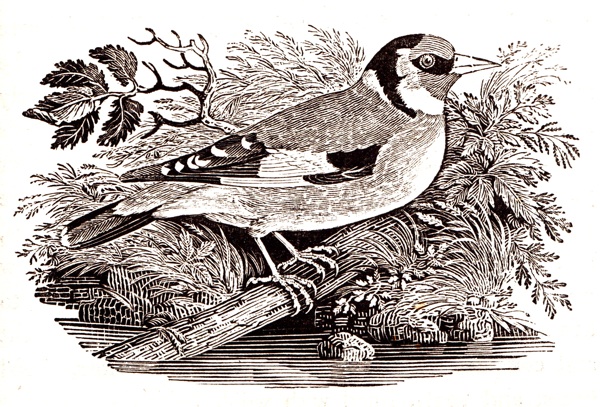 The Goldfinch
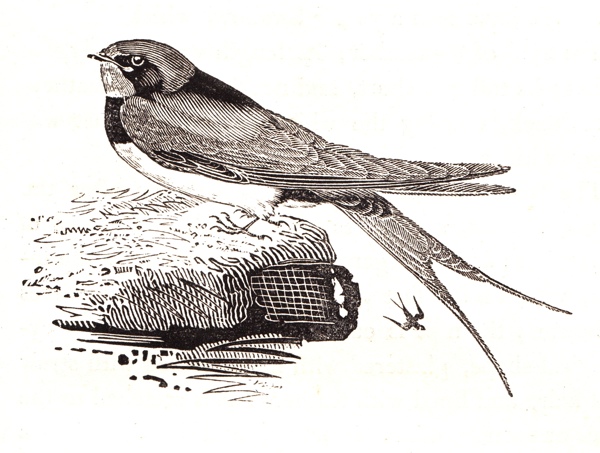
The House Swallow
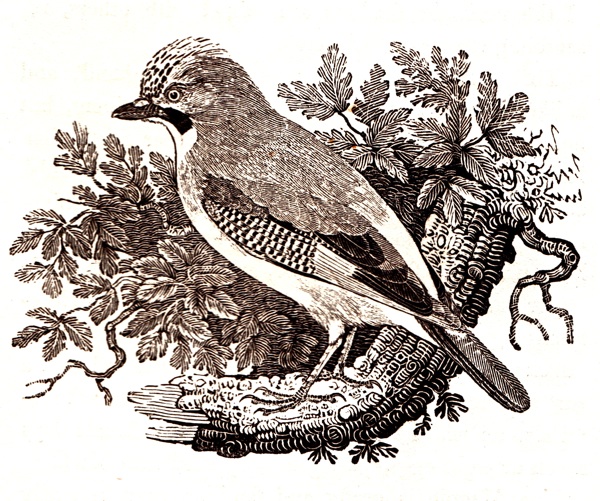
The Jay
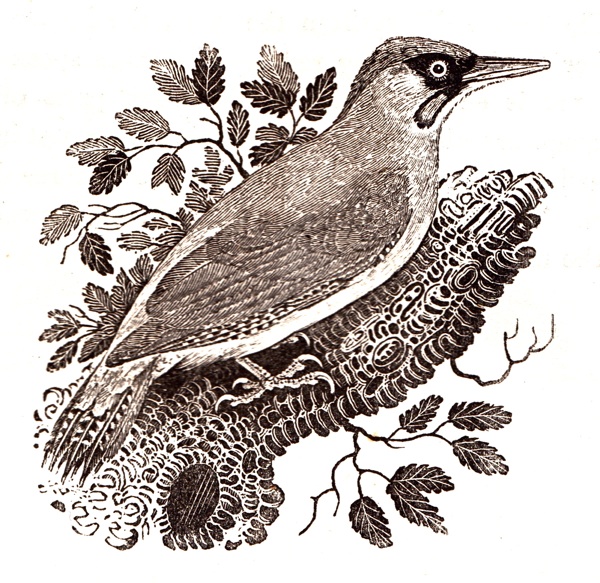
The Woodpecker
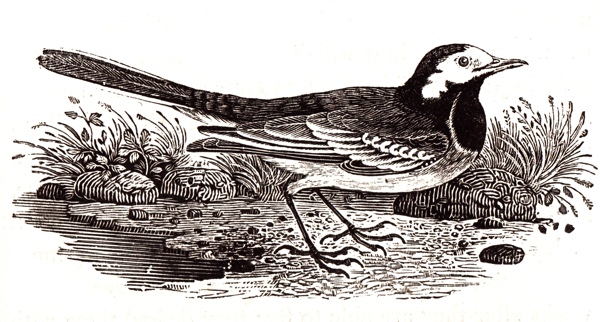
Pied Wagtail – spotted by Ash on the Holland Estate, Petticoat Lane
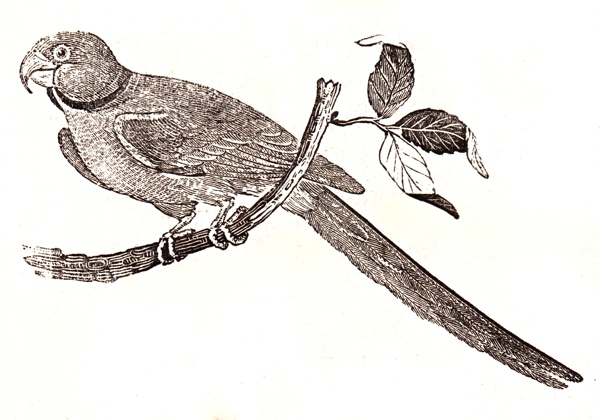 Rose-ringed Parrakeet – an occasional visitor to Allen Gardens
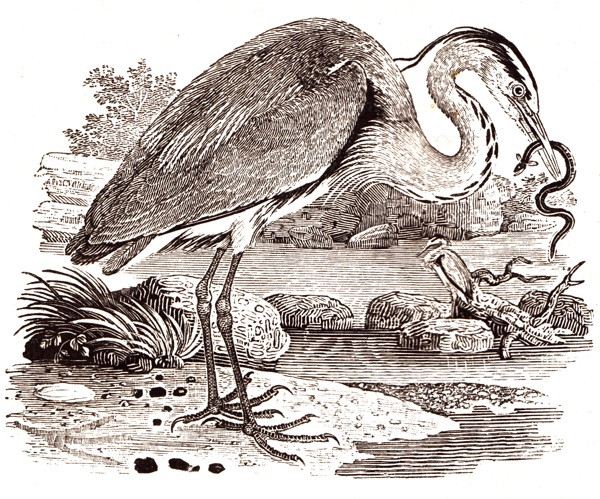 Heron – occasionally spotted flying overhead
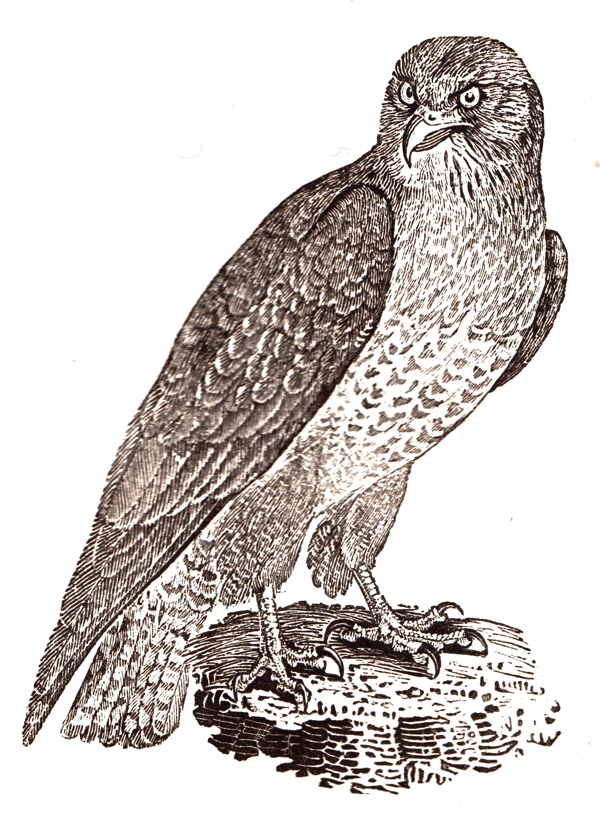 Buzzard – spotted over Holland Estate, Petticoat Lane
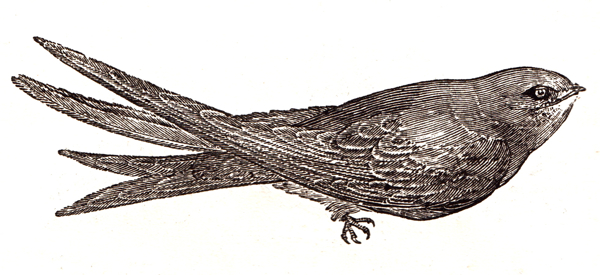
Swift – spotted by Ian Harper around Christ Church
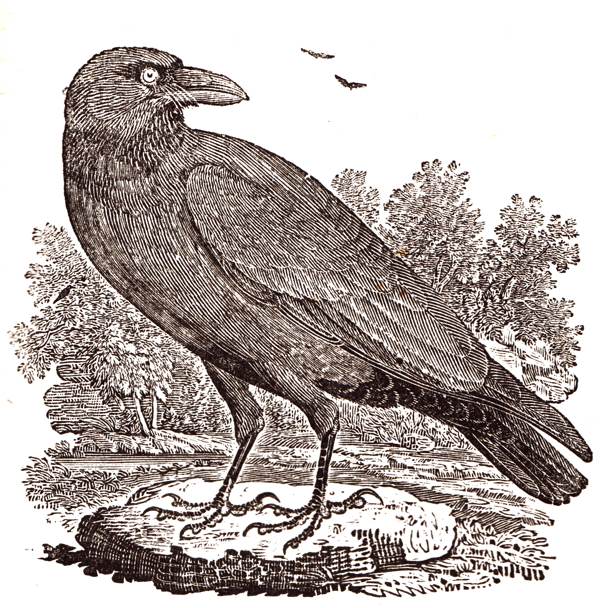
Raven – spotted by Ian Harper & Jim Howett around Christ Church

Kite – spotted by Ian Harper & Jim Howett around Christ Church
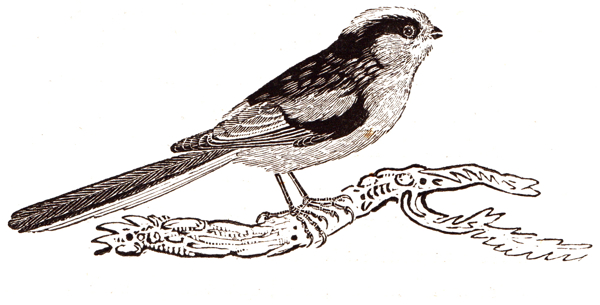
Long-tailed Tit – spotted in Wapping
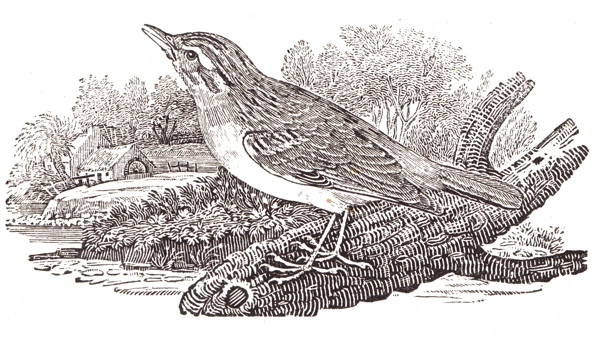
Willow Warbler – spotted by Tony Valsamidis in Whitechapel
If any readers can add to my list with sightings of other birds in Spitalfields, please drop me a line
You may also like to take a look at
At Emery Walker’s House
Click here to book your tour tickets
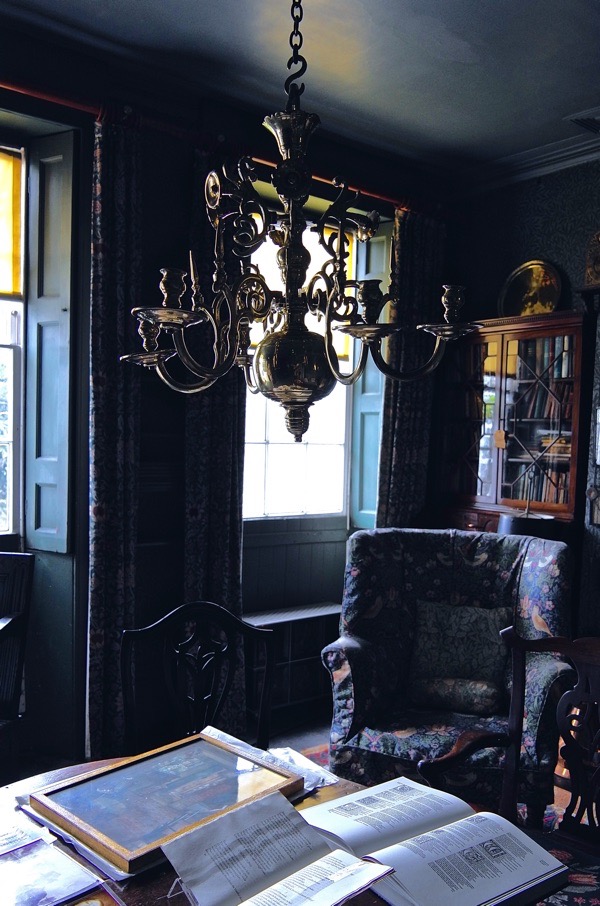
Kelmscott Press & Doves Press editions at Emery Walker’s House
Typographer and Printer, Emery Walker and Designer and Poet, William Morris both lived in houses on the Thames in Hammersmith, but they first met at a Socialist meeting in Bethnal Green and travelled home together on the train to West London.
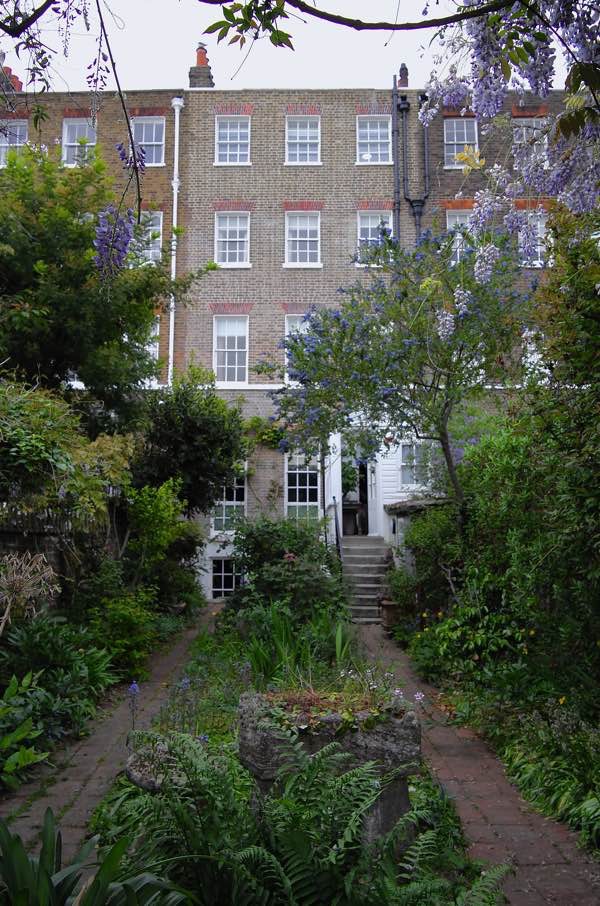
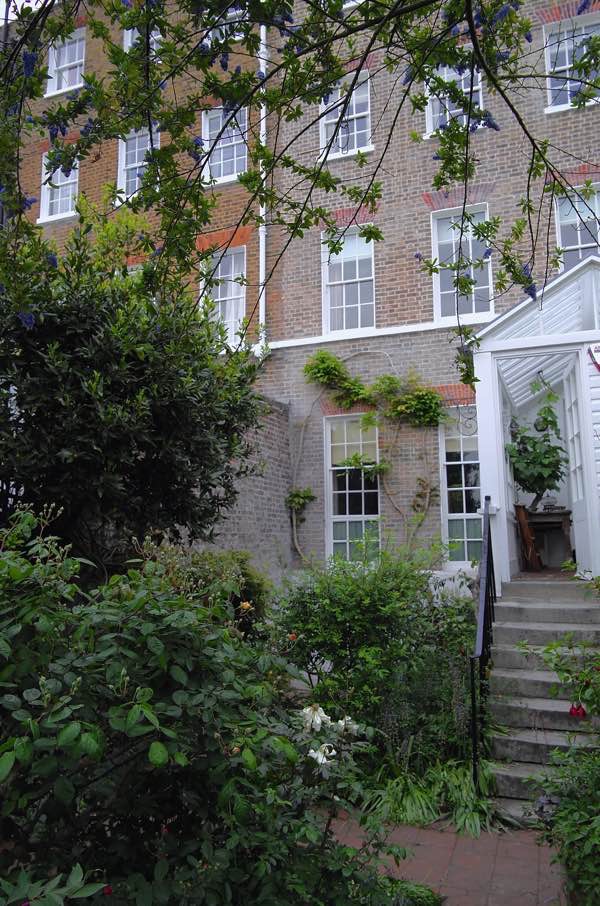
Both houses are adorned with plaques commemorating their illustrious former residents, and remarkably Emery Walker’s House in Hammersmith Terrace has survived almost as he left it, thanks to the benign auspices of his daughter, Dorothy, and her companion Elizabeth de Haas. Today it boasts one of London’s best preserved Arts & Crafts interiors and stepping through the threshold is to step back in time and encounter the dramas that were played out here over a century ago.
After their first meeting, Emery Walker and William Morris met each other regularly walking on the riverside path and soon became firm friends. Morris once commented that his day was not complete without a sight of Walker and the outcome of their friendship was that Emery Walker took responsibility for the technical side of Morris’ printing endeavours at the Kelmscott Press – designing the Kelmscott typeface – and then subsequently nursing Morris through his final illness.
The previous resident of Emery Walker’s house was Thomas Cobden-Sanderson, who is credited with coining the phrase ‘arts and crafts.’ After Morris’ death, he and Emery Walker established the Doves Press in 1900, for which Walker designed the celebrated Doves typeface. Although this highly successful creative partnership set the precedent for the private press movement of the twentieth century and they employed typographer Edward Johnston, who also lived in Hammersmith Terrace, it came to grief due to Cobden-Sanderson’s volatile emotional behaviour. The nadir arrived when Cobden-Sanderson dumped more than a ton of Doves type off Hammersmith Bridge to prevent Emery Walker having any further use of it. Only in own time have specimens been retrieved from the Thames and the font recreated digitally.
Meanwhile, William Morris’ daughter May and her husband, Henry Halliday Sparling, who was Secretary of the Socialist League moved in next door to Emery Walker – until May’s lover, George Bernard Shaw, moved in with them too and Henry Halliday Sparling moved out.
As with many old houses, you wish the walls could speak to you of the former residents and at Emery Walker’s house they do, because they are all papered with designs by William Morris. Within these richly patterned walls are rare pieces of furniture by Philip Webb, hangings and carpets by Morris & Co, photographs of William Morris by Emery Walker, a drawing of May Morris by Edward Burne Jones, needlework by May Morris and more. Most of the clutter and paraphernalia gathered by Emery Walker remains, including a lock of William Morris’ hair and several pairs of his spectacles.
Yet in spite of these treasures, it is the unselfconsciously shabby, lived-in quality of the house which is most appealing, mixing as many as five different William Morris textile and wallpaper designs in one room. Elsewhere, a Philip Webb linen press has been moved, revealing an earlier Morris wallpaper behind it and a more recent Morris paper applied only on the walls surrounding it.
Thus, the ghosts of the long-gone linger in this shadowy old riverside house in Hammersmith.
Click here to enjoy a virtual tour of Emery Walker’s House
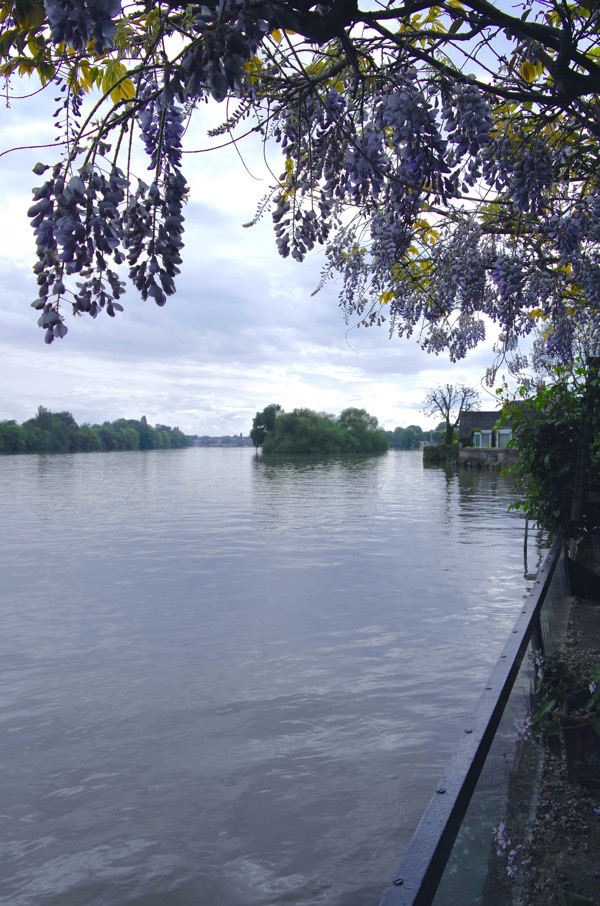
Looking upriver
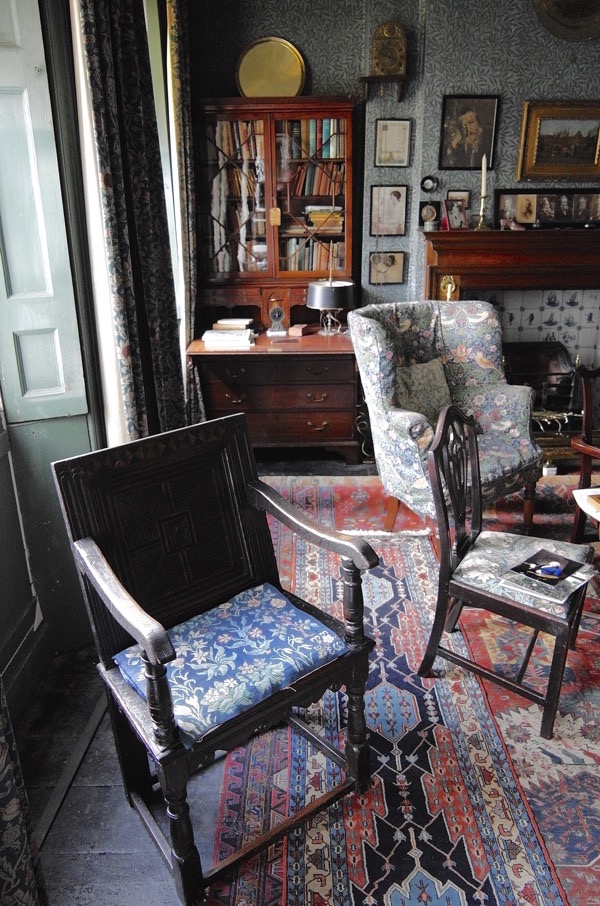
This seventeenth century chair belonged to William Morris and was given to Emery Walker by May Morris after her father’s death with addition of the tapestry cushion designed and worked by May
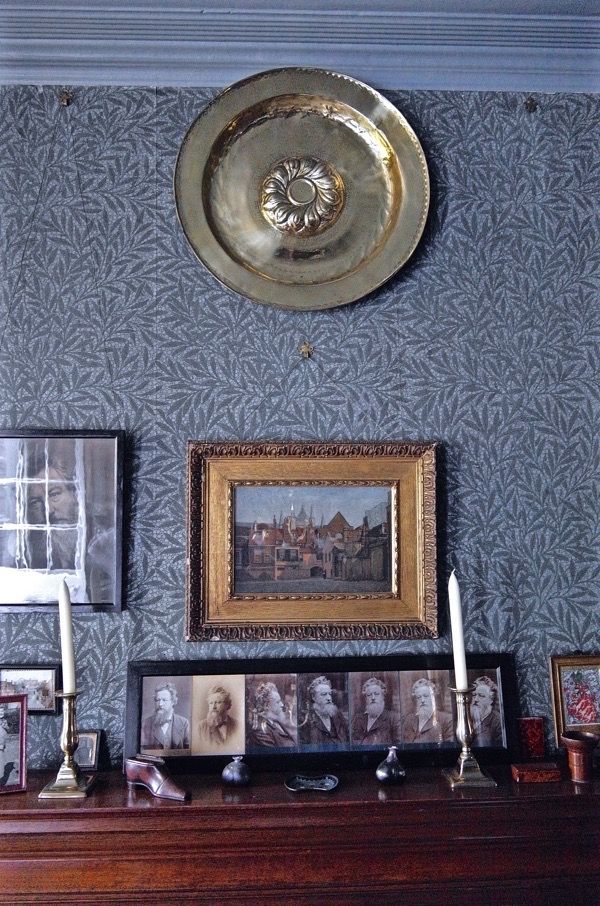
Portraits of William Morris taken by Emery Walker
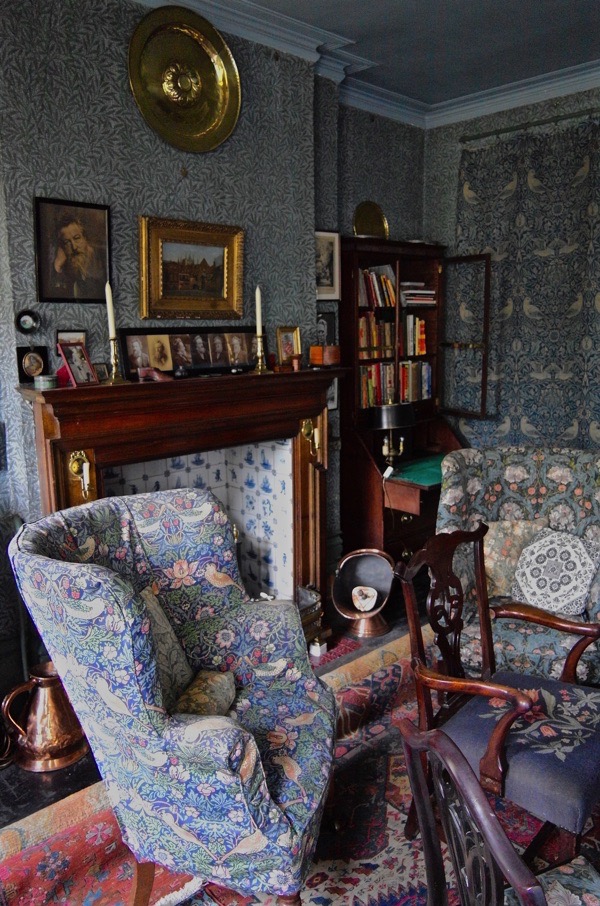
Four different designs by William Morris for Morris & Co combined in the same room

Emory Walker looks down from the chimney breast in his drawing room. The teapot and salts once belonged to Dante Gabriel Rossetti
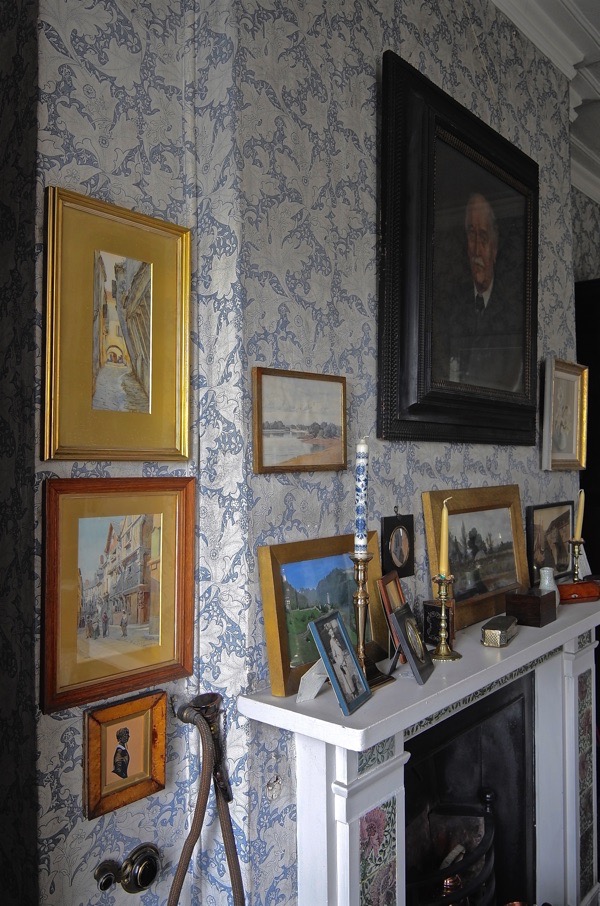
Fireplace with tiles by William de Morgan
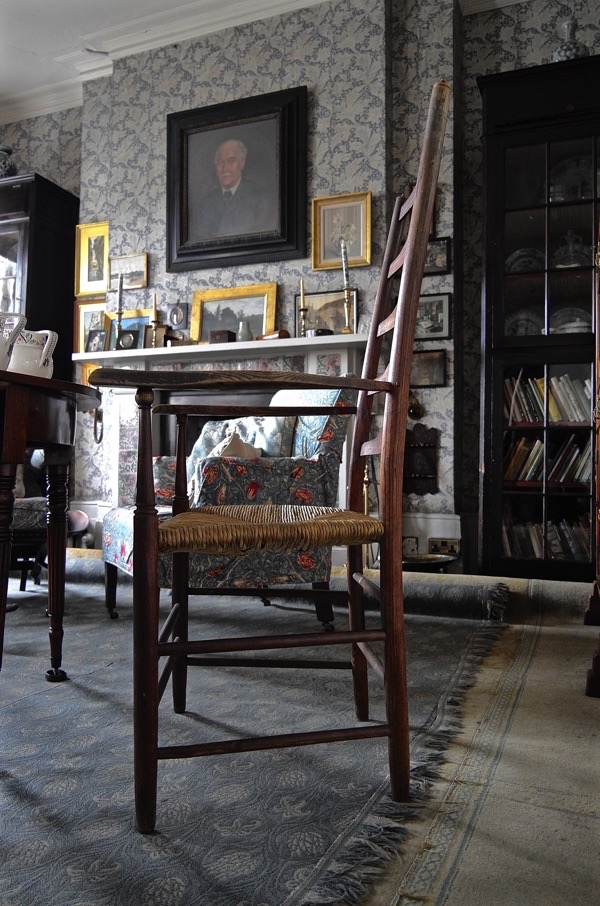
Traditional English rush-seated ladder back chair by Ernest Barnsley and Morris & Co carpet bearing the tulip and lily design which is believed to have belonged to Morris, acquired from the sale at Kelmscott Manor in Oxfordshire
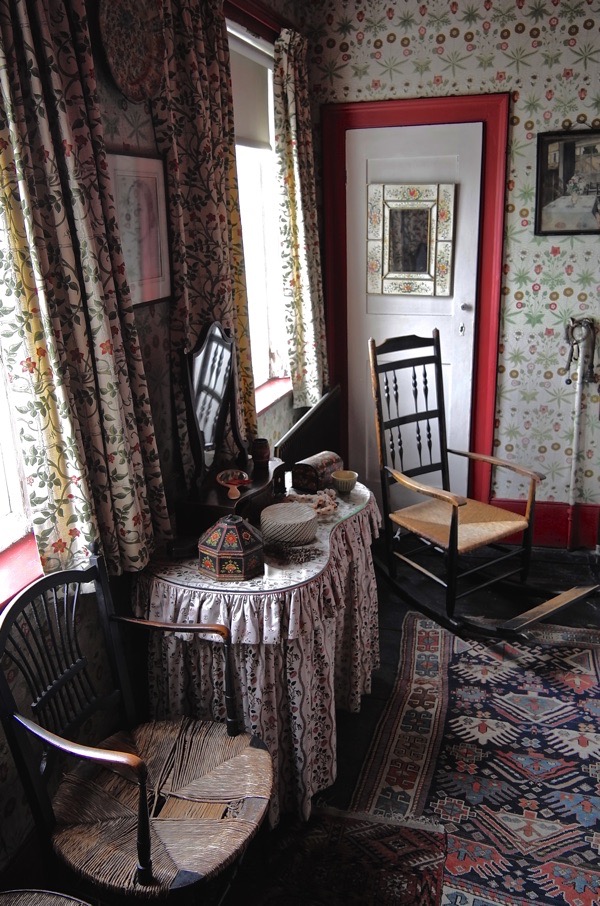
William Morris’ daisy wallpaper and Sussex chairs in the bedroom overlooking the river
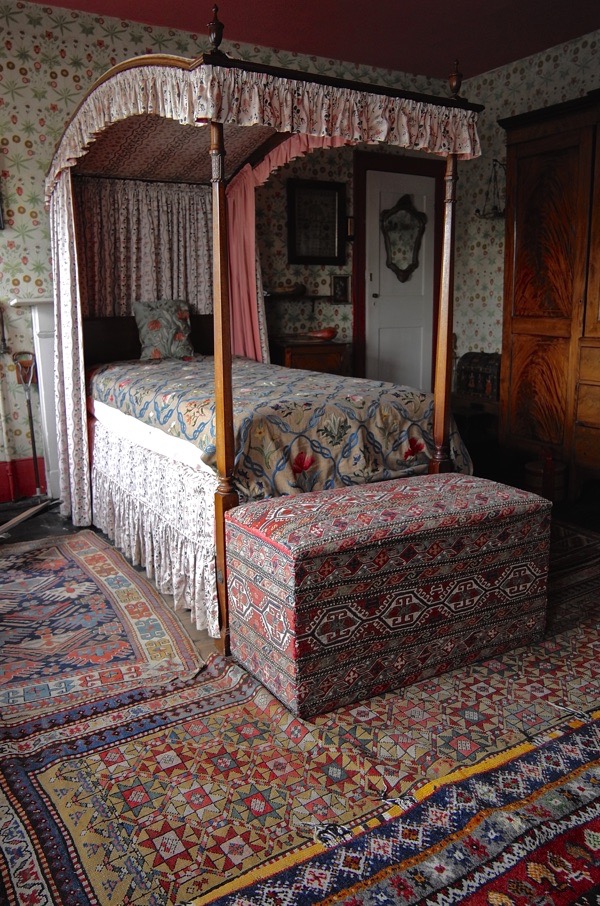
Woollen bedcover embroidered by May Morris
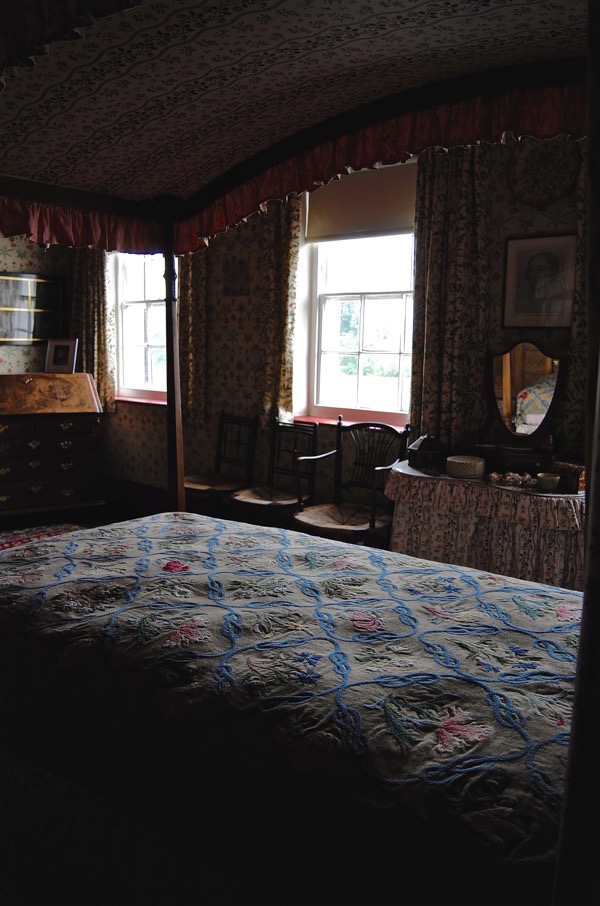
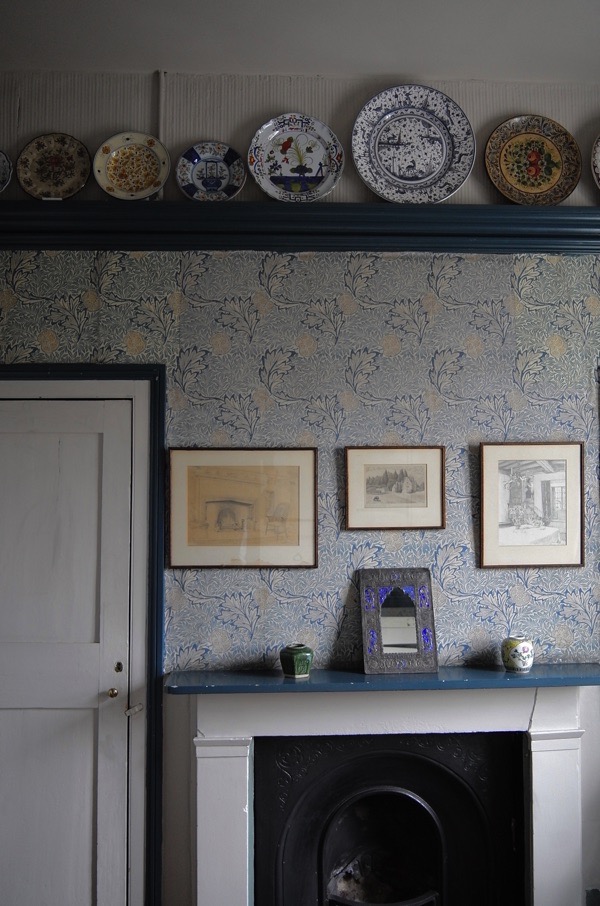
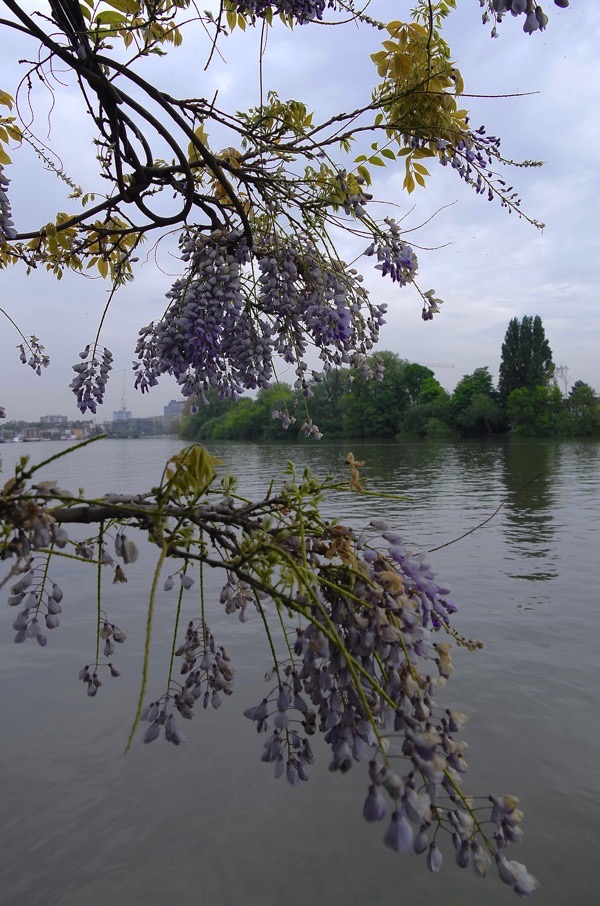
Looking downstream
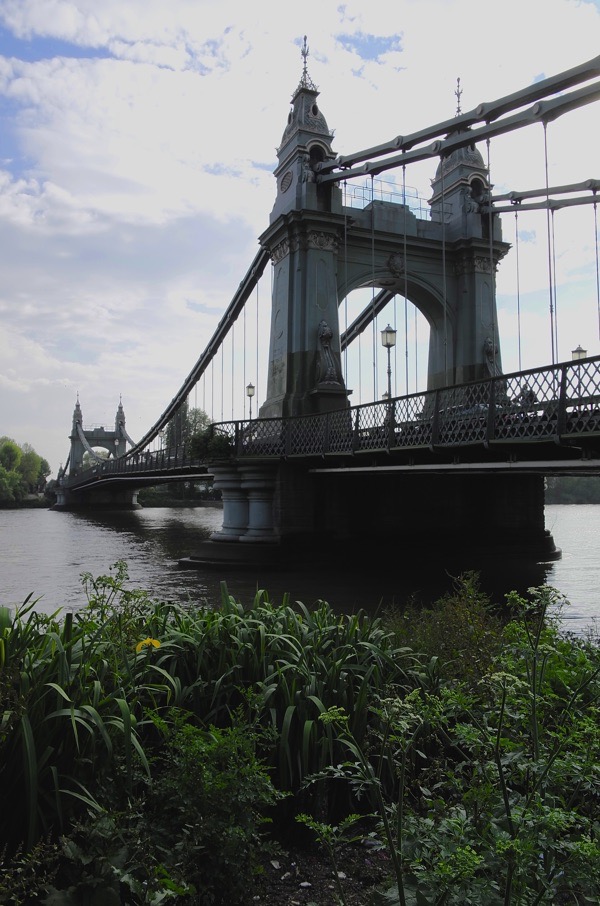
A yellow flag iris at Hammersmith Bridge where Emery Walker’s Doves typeface was dumped in to the Thames by Thomas Cobden-Sanderson
You may also like to take a look at
Music Hall Artistes Of Abney Park
Meet me tomorrow on the steps of St Paul’s Cathedral and we will spend the afternoon walking eastward together through the square mile to explore the wonders and the wickedness of the ancient City of London.
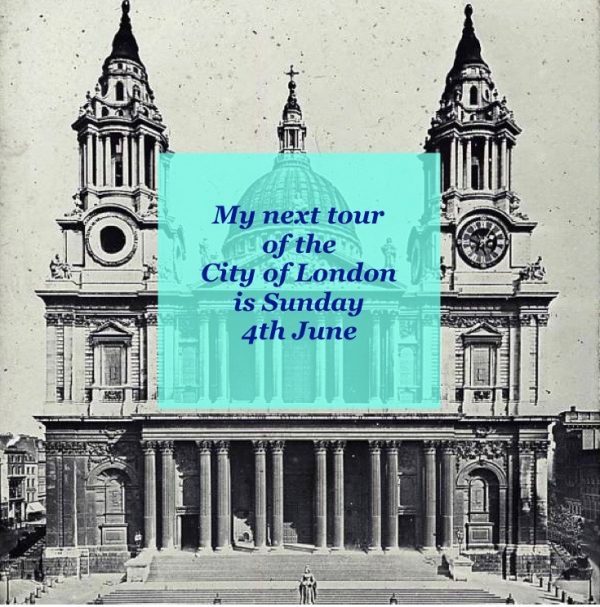
Click here to book for The Gentle Author’s City of London walk on Sunday 4th June
In Abney Park Cemetery I sought the graves of the Music Hall Artistes resting there. John Baldock, Cemetery Keeper, led me through the undergrowth to show me the memorials restored by the Music Hall Guild and then left me to my own devices. Alone in the secluded leafy glades of the overgrown cemetery, I swore I could hear distant singing accompanied by the tinkling of heavenly ivories.
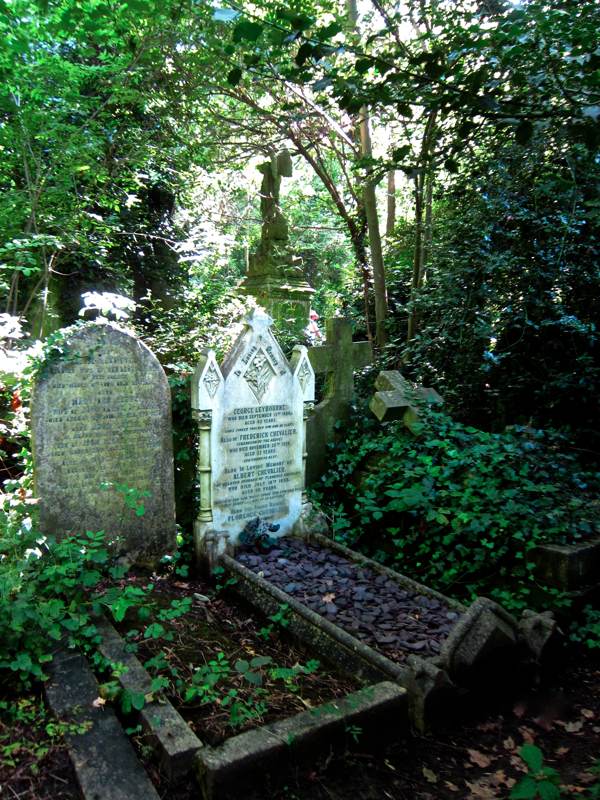
George Leybourne, Songwriter, Vocalist and Comedian, also known as Champagne Charlie (1842 – 1884) & Albert Chevalier (1861- 1923), Coster Comedian and Actor. Chevalier married Leybourne’s daughter Florrie and they all rest together.
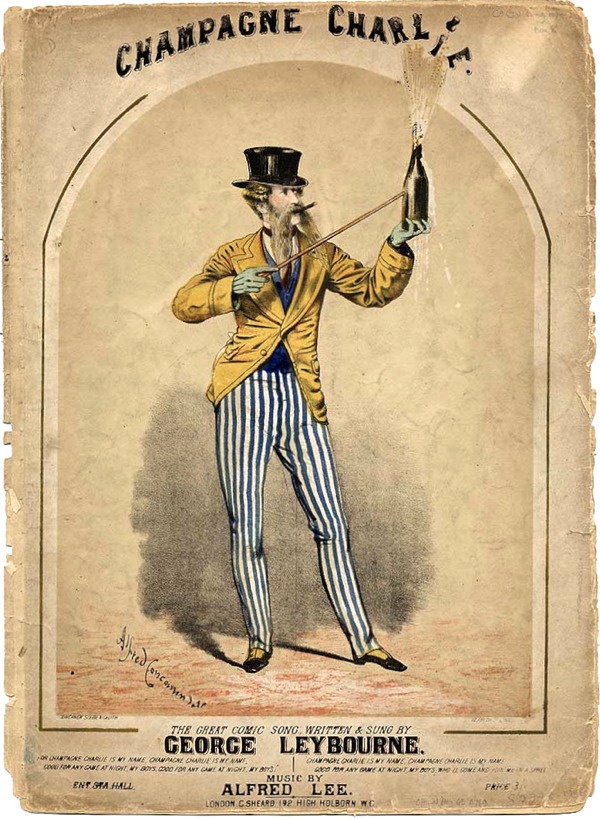
George Leybourne – “Champagne Charlie is my name, Champagne Charlie is my name ,There’s no drink as good as fizz, fizz, fizz, I’ll drink every drop there is, is, is!”
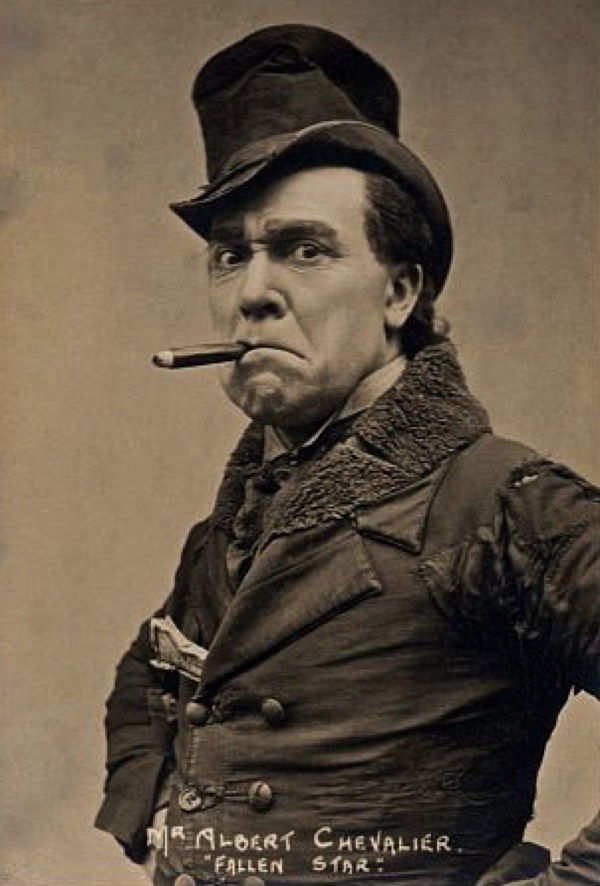
Albert Chevalier – “We’ve been together now for forty years, An’ it don’t seem a day too much, There ain’t a lady livin’ in the land, As I’d swop for my dear old Dutch.”
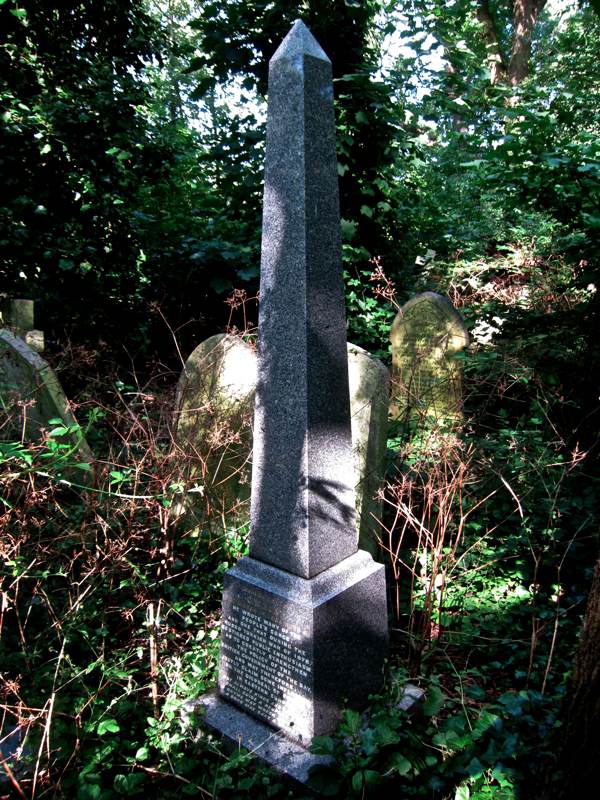
G W Hunt (1838 – 1904) Composer and Songwriter, his most famous works were “MacDermott’s War Song” (The Jingo Song), “Dear Old Pals” and “Up In A Balloon” for George Leybourne and Nelly Power.
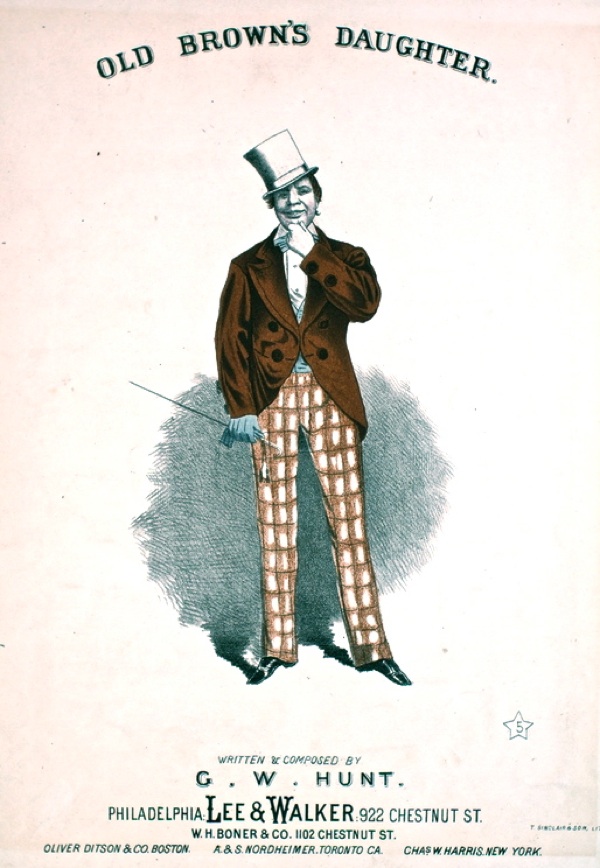
G W Hunt
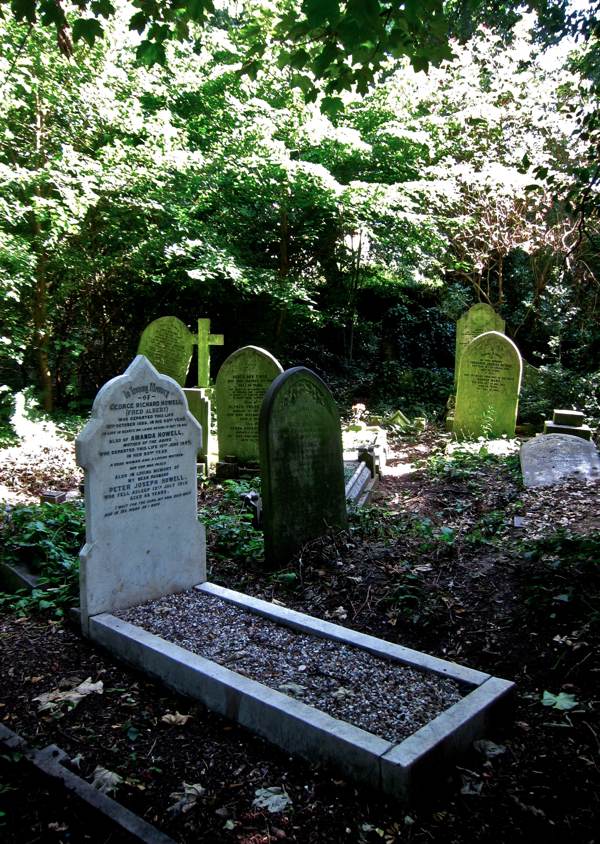
Fred Albert George Richard Howell (1843 – 1886) Songwriter and Extempore Vocalist
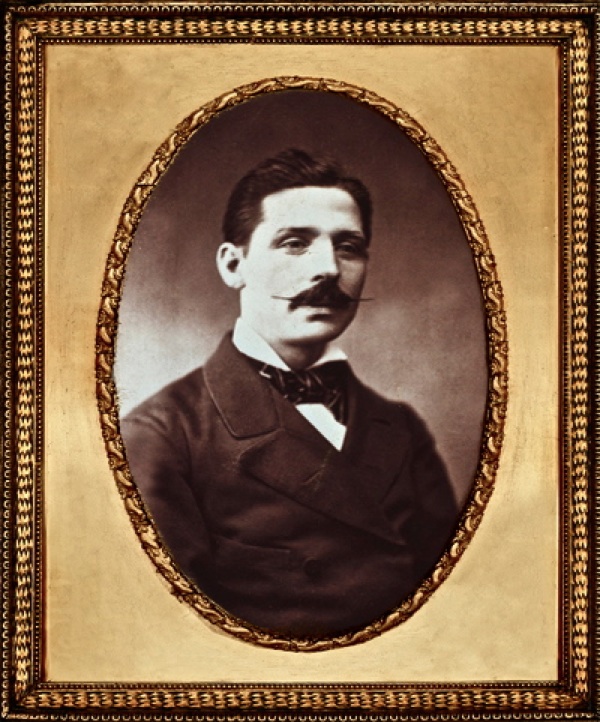
Fred Albert
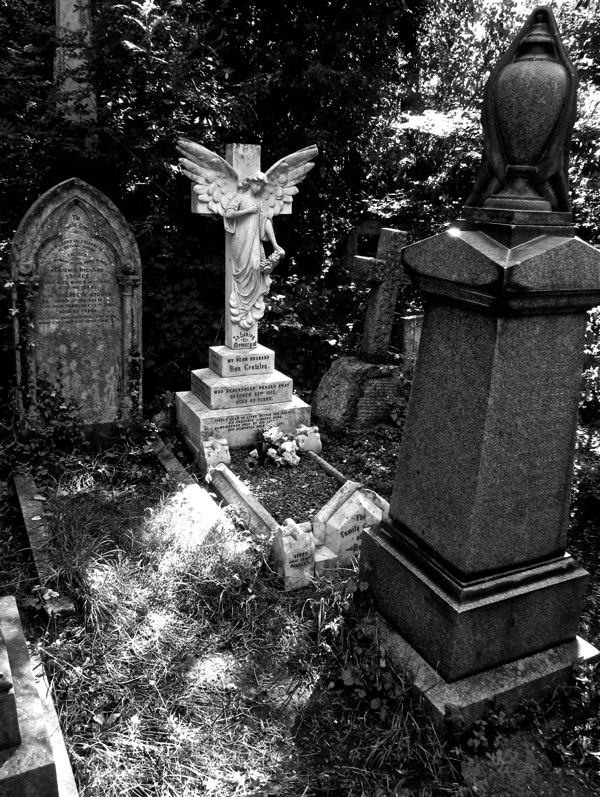
Dan Crawley (1871 – 1912) Comedian, Vocalist, Dancer and Pantomime Dame rests with his wife Lilian Bishop, Actress and Male Impersonator. He made his London debut at nineteen at Royal Victor Theatre, Victoria Park, and for many years performed three shows a day on the sands at Yarmouth, where he met his wife.They married in Hackney in 1893 and had four children, and toured together as a family, including visiting Australia, before they both died at forty-one years old.
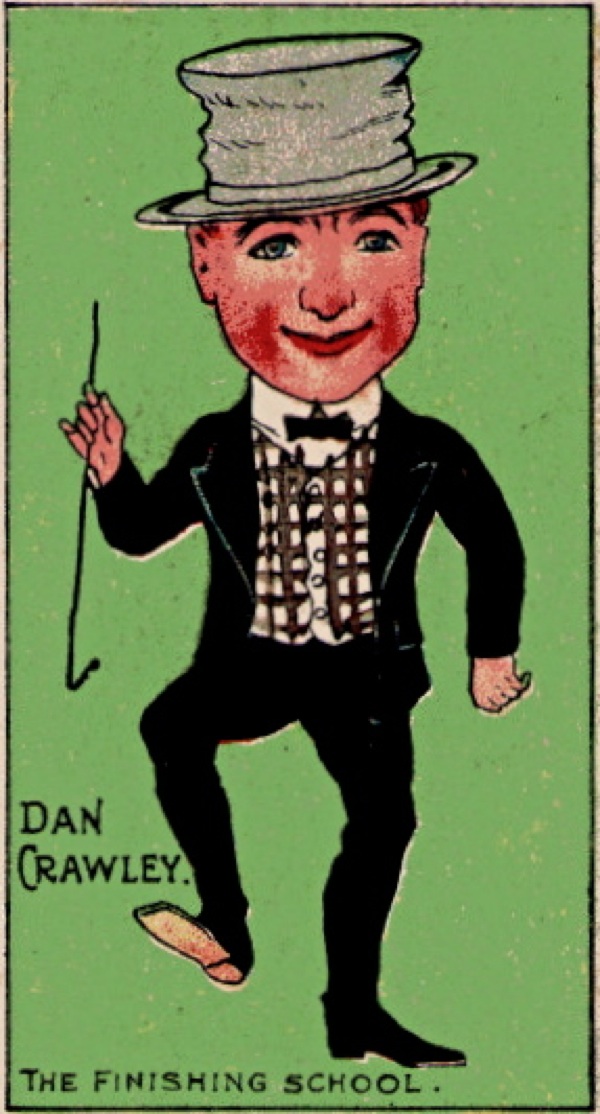
Dan Crawley
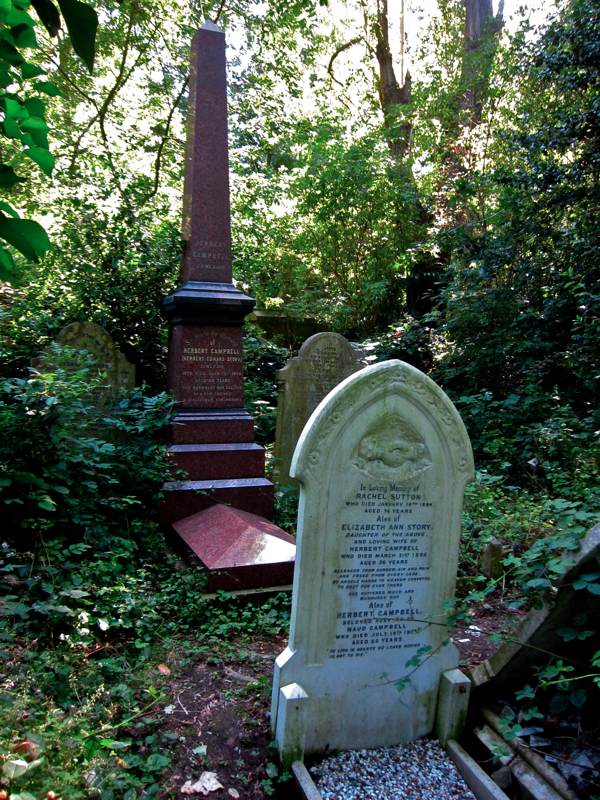
Herbert Campbell (1844 – 1904) Comedian and Pantomime Star. The memorial behind the tombstone was erected by a few of his friends. Herbert Campbell played the Dame in Pantomime at Drury Lane for forty years alongside Dan Leno, until his death at at sixty-one.
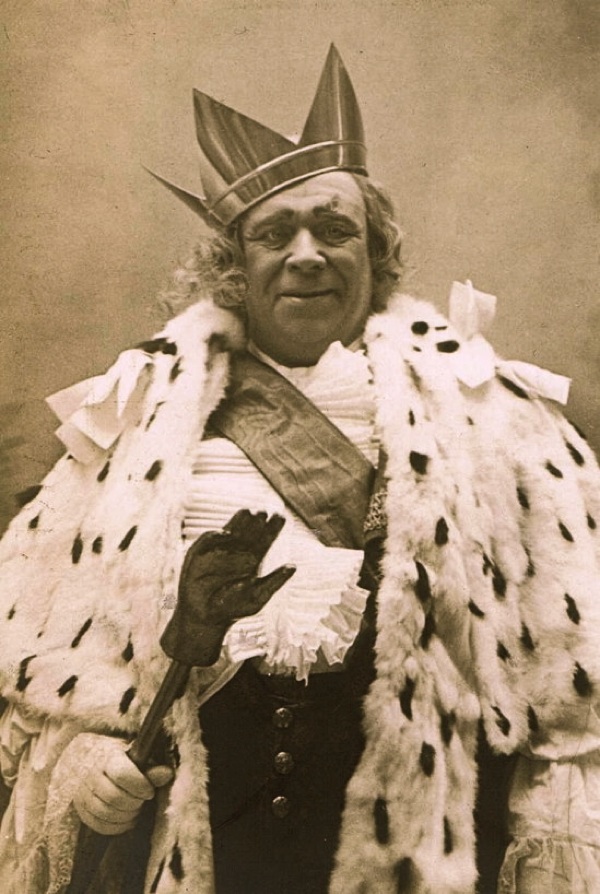
Herbert Campbell, famous comedian and dame of Drury Lane
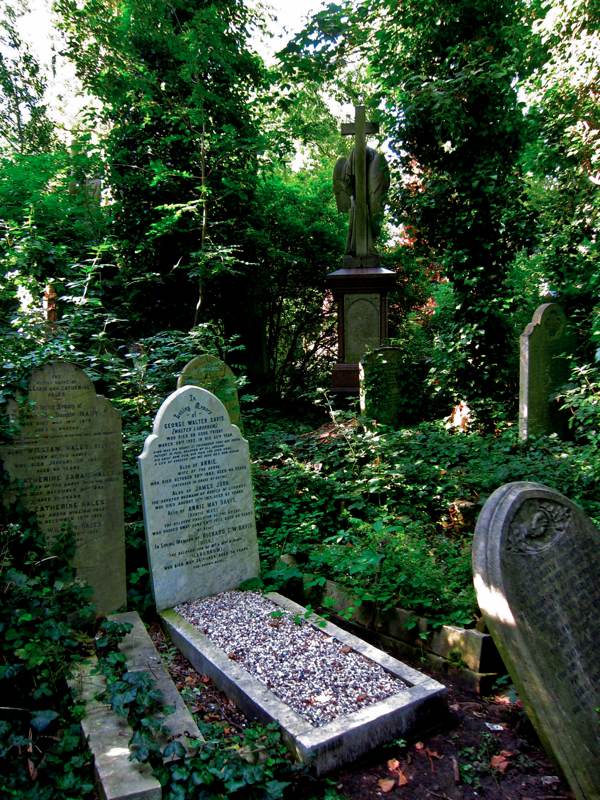
Walter Laburnum George Walter Davis (1847 – 1902) Singer, Patter Vocalist and Songwriter
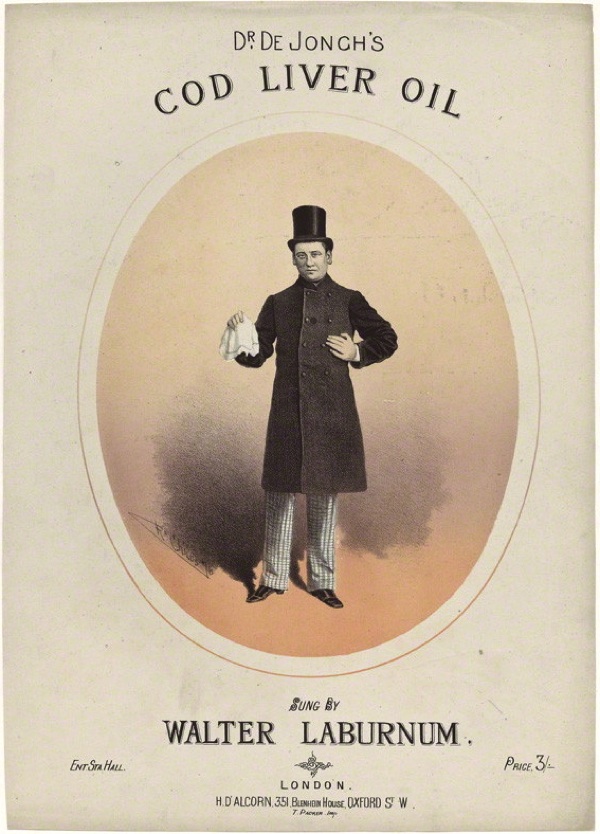
Walter Laburnum

Nelly Power Ellen Maria Lingham (1854 – 1887) started her theatrical career at the age of eight, and was a gifted songstress and exponent of the art of male impersonation. Her most famous song was ‘The Boy I Love Is Up In The Gallery.” She died from pleurisy on 19th January 1887, aged just thirty-two.
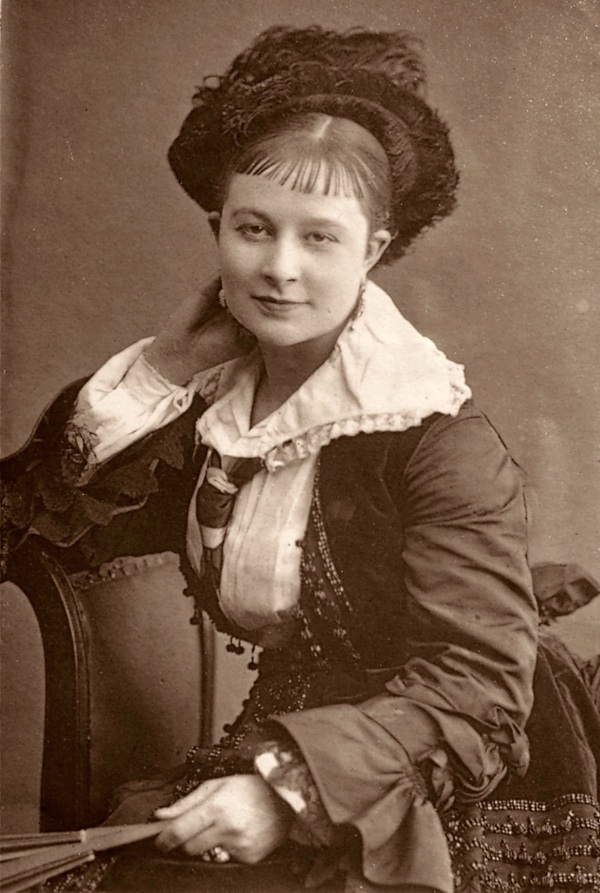
Nelly Power – Vesta Tilley was once her understudy












