
William Morris In The East End
TICKETS AVAILABLE TODAY SATURDAY 11th MAY
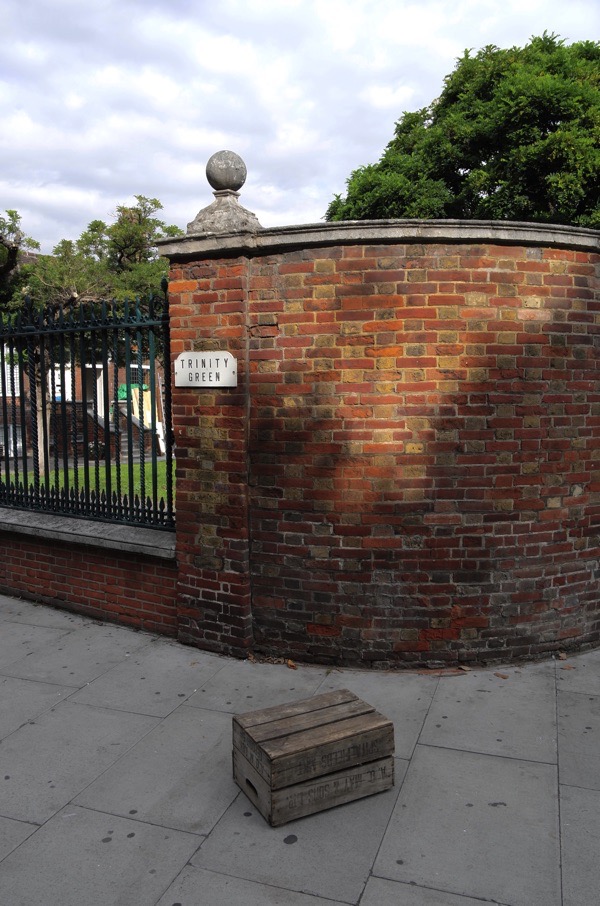
If you spotted someone hauling an old wooden Spitalfields Market orange crate around the East End, that was me undertaking a pilgrimage to some of the places William Morris spoke in the hope he might return for one last oration
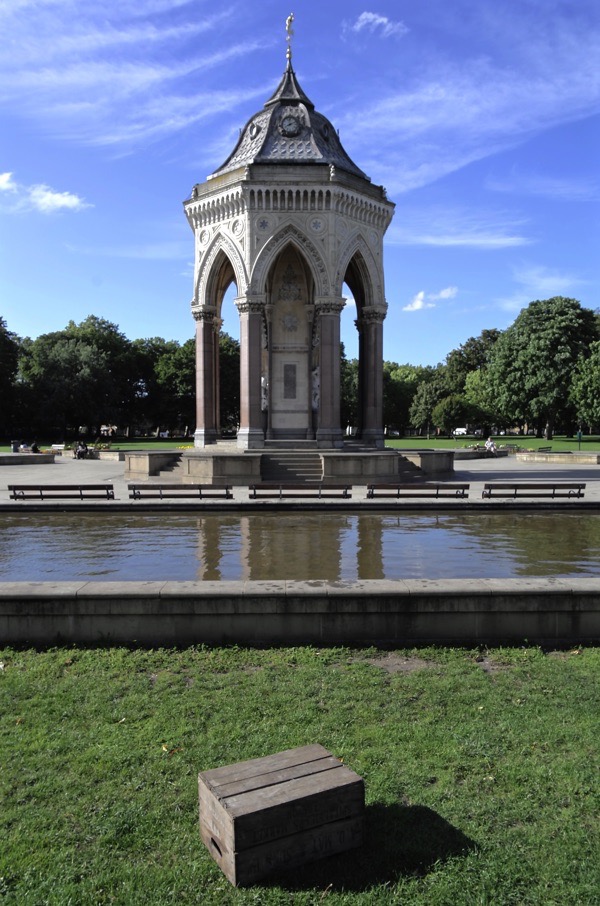
William Morris spoke at Speakers’ Corner in Victoria Park on 26th July & 11th October 1885, 8th August 1886, 27th March & 21st May 1888
The presence of William Morris in the East End is almost forgotten today. Yet he took the District Line from his home in Hammersmith regularly to speak here through the last years of his life, despite persistent ill-health. Ultimately disappointed that the production of his own designs had catered only to the rich, Morris dedicated himself increasingly to politics and in 1884 he became editor of The Commonweal, newspaper of the Socialist League, using the coach house at Kelsmcott House in Hammersmith as its headquarters.
As an activist, Morris spoke at the funeral of Alfred Linnell, who was killed by police during a free speech rally in Trafalgar Sq in 1887, on behalf of the Match Girls’ Strike in 1888 and in the Dock Strike of 1889. His final appearance in the East End was on Mile End Waste on 1st November 1890, on which occasion he spoke at a protest against the brutal treatment of Jewish people in Russia.
When William Morris died of tuberculosis in 1896, his doctor said, ‘he died a victim to his enthusiasm for spreading the principles of Socialism.’ Morris deserves to be remembered for his commitment to the people of the East End in those years of political turmoil as for the first time unions struggled to assert the right to seek justice for their workers.
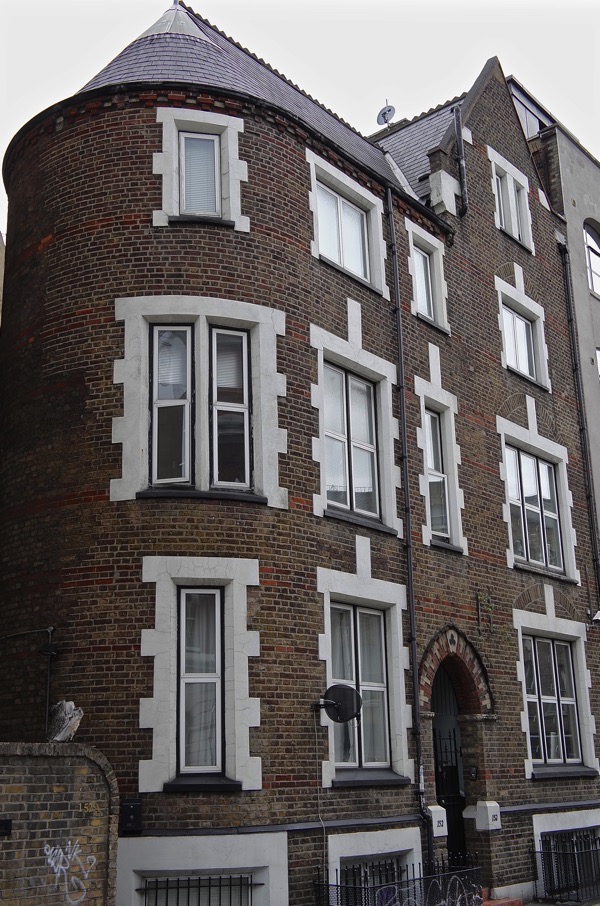
8th April 1884, St Jude’s Church, Commercial St – Morris gave a speech at the opening of the annual art exhibition on behalf of Vicar Samuel Barnett who subsequently founded Toynbee Hall and the Whitechapel Gallery.
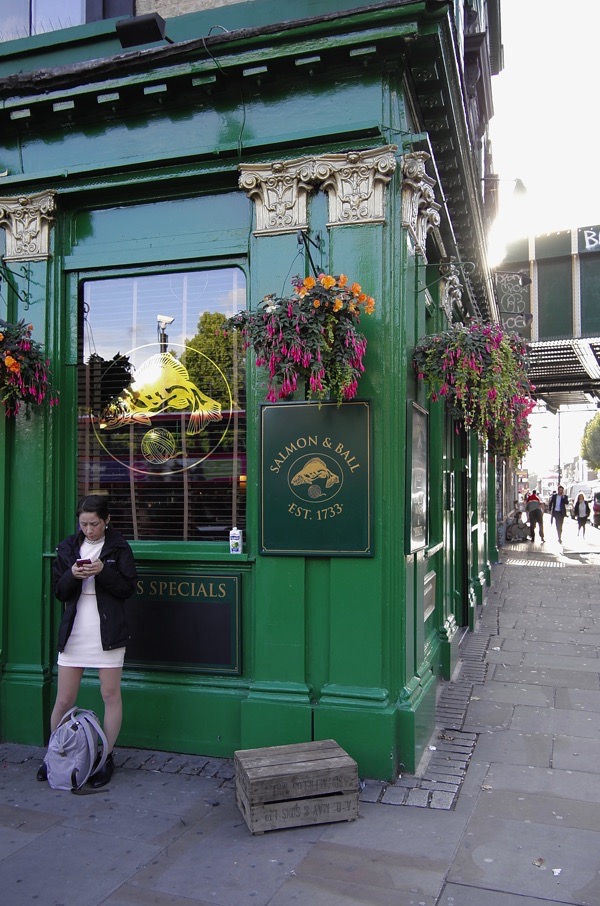
During 1885, volunteers distributed William Morris’ What Socialists Want outside the Salmon & Ball in Bethnal Green
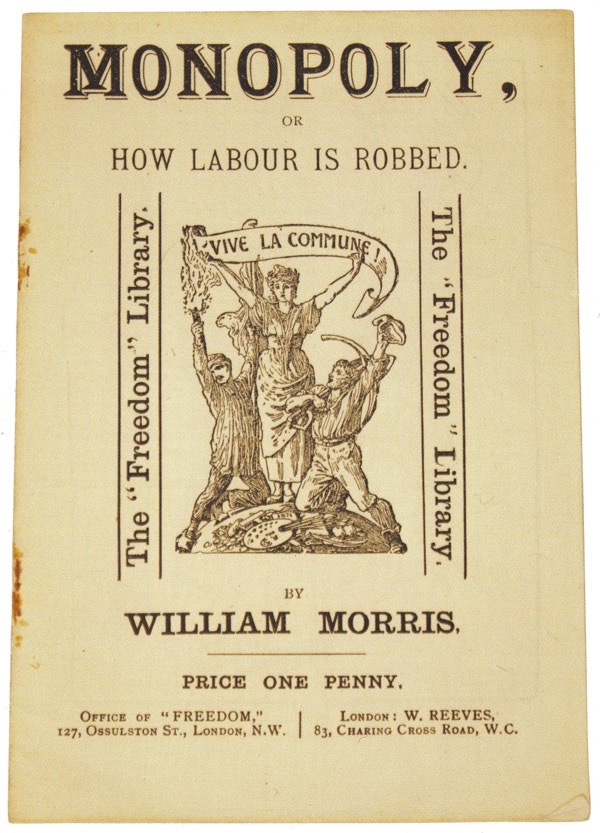
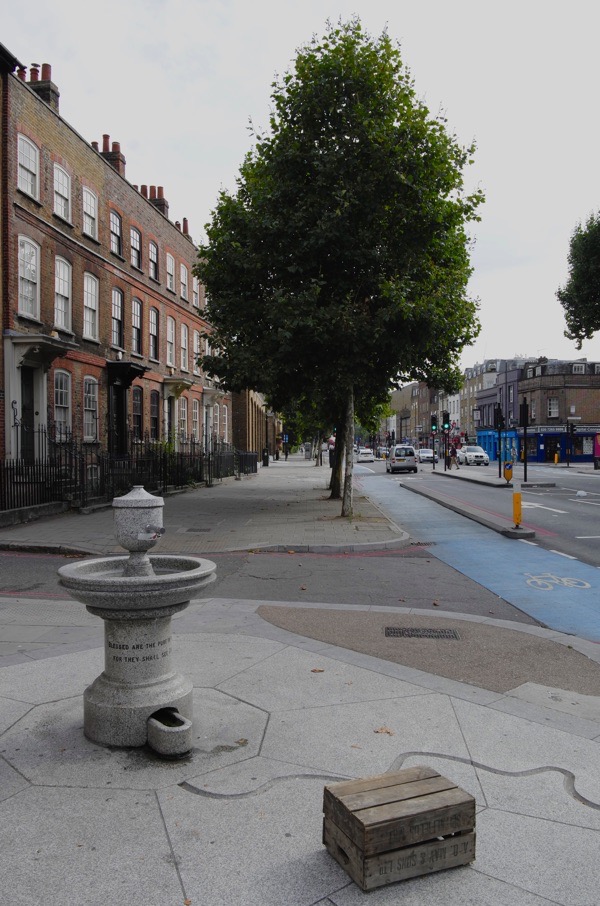
1st September 1885, 103 Mile End Rd
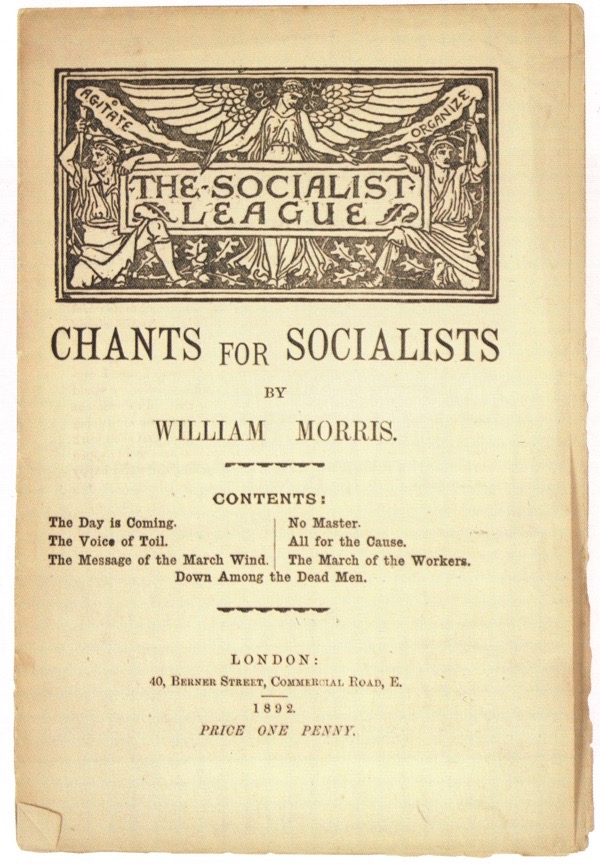
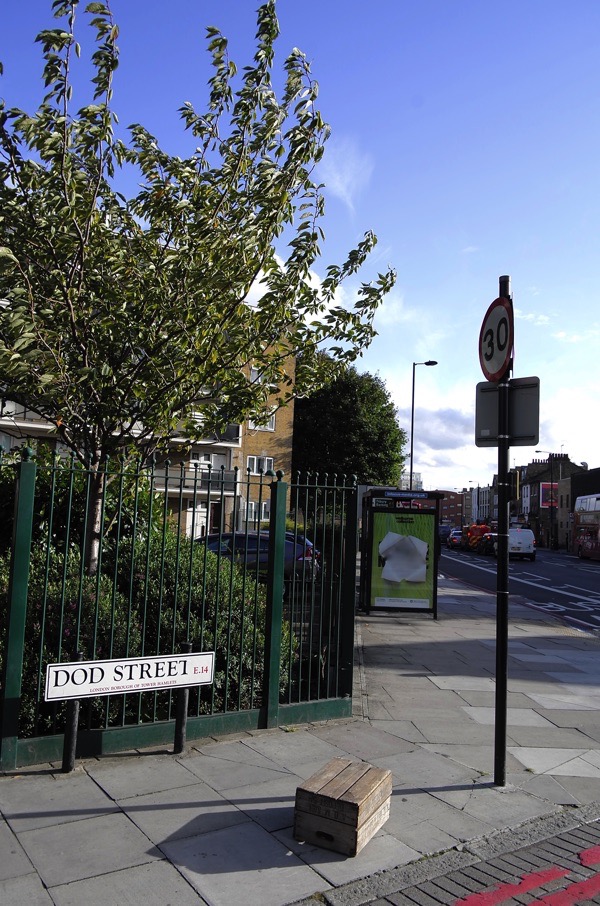
20th September 1885, Dod St, Limehouse – When police launched a violent attack on speakers of the Socialist League who defended the right to free speech at this traditional spot for open air meetings, William Morris spoke on their behalf in court on 22nd September in Stepney.
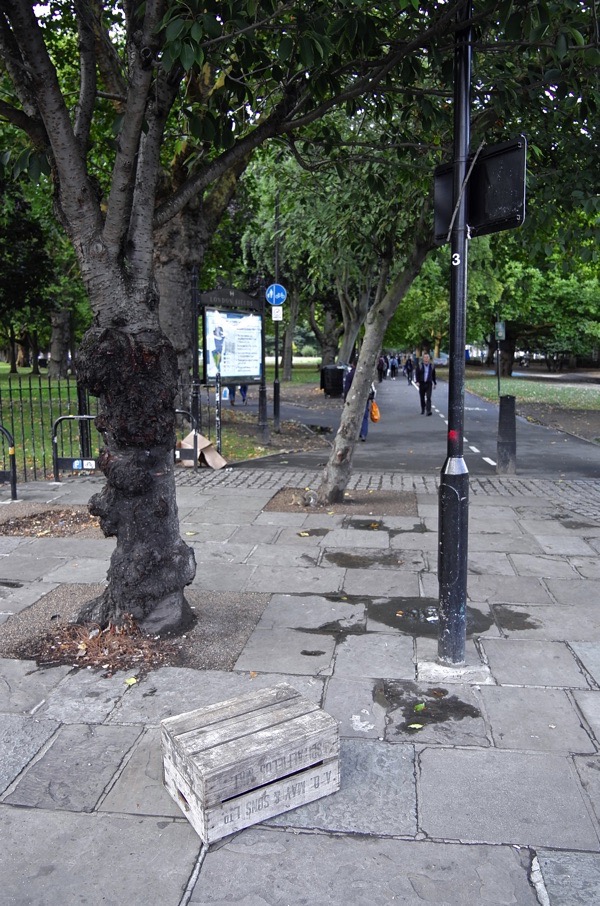
10th November 1886 & 3rd July 1887, Broadway, London Fields
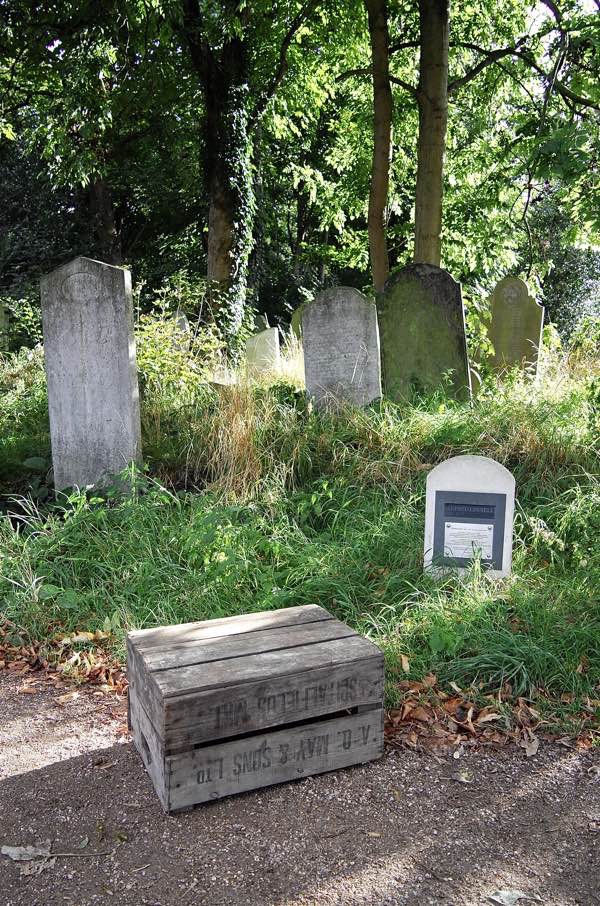
November 20th 1887, Bow Cemetery – Morris spoke at the burial of Alfred Linnell, a clerk who was killed by police during a free speech rally in Trafalgar Sq. ‘Our friend who lies here has had a hard life and met with a hard death, and if our society had been constituted differently his life might have been a delightful one. We are engaged in a most holy war, trying to prevent our rulers making this great town of London into nothing more than a prison.’
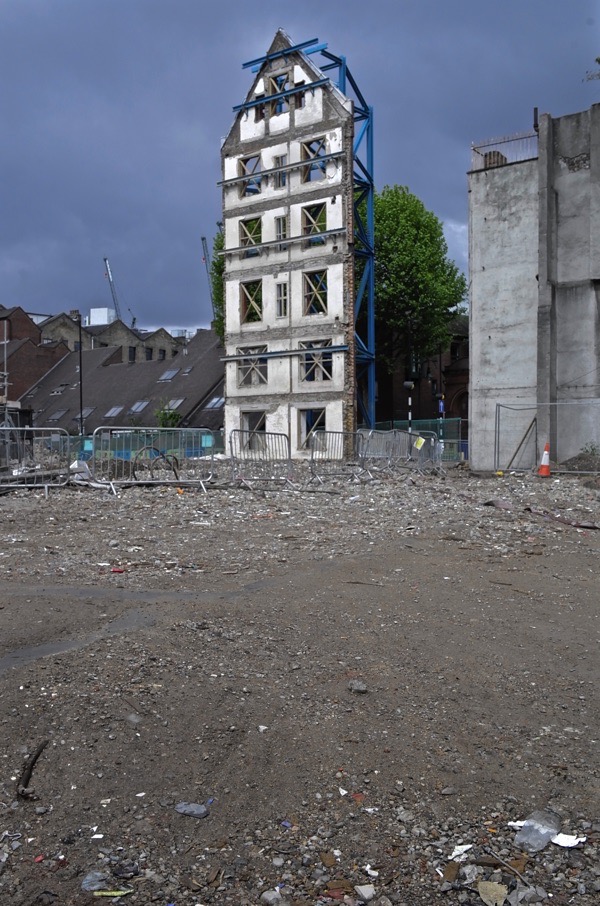
9th April 1889, Toynbee Hall, Commercial St – Morris gave a magic lantern show on the subject of ‘Gothic Architecture’
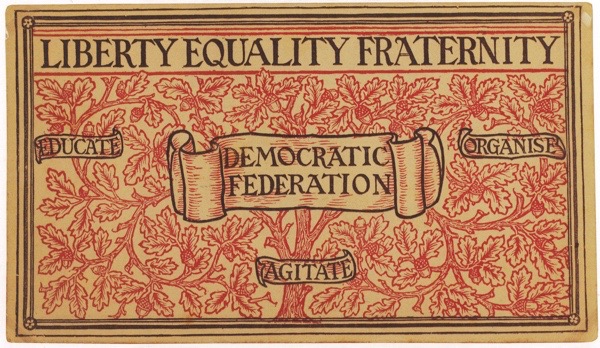
1st November 1890, Mile End Waste – Morris spoke in protest against the persecution of Jews in Russia
William Morris in the East End
3rd January & 27th April 1884, Tee-To-Tum Coffee House, 166 Bethnal Green Rd
8th April 1884, St Jude’s Church, Commercial St
29th October 1884, Dod St, Limehouse
9th November 1884, 13 Redman’s Row
11th January & 12th April 1885, Hoxton Academy Schools
29th March 24th May 1885, Stepney Socialist League, 110 White Horse St
26th July & 11th October 1885, Victoria Park
8th August 1885, Socialist League Stratford
16th August 1885, Exchange Coffee House, Pitfield St, Hoxton
1st September 1885, Swaby’s Coffee House, 103 Mile End Rd
22nd September 1885, Thames Police court, Stepney (Before Magistrate Sanders)
24th January 1886, Hackney Branch Rooms, 21 Audrey St, Hackney Rd
2nd February 1886, International Working Men’s Educational Club, 40 Berners St
5th June 1886, Socialist League Stratford
11th July 1886, Hoxton Branch of the Socialist League, 2 Crondel St
24th August 1886, Socialist League Mile End Branch, 108 Bridge St
13th October 1886, Congregational Schools, Swanscombe St, Barking Rd
10th November 1886, Broadway, London Fields
6th March 1887, Hoxton Branch of the Socialist League, 2 Crondel St
13th March & 12th June 1887, Hackney Branch Rooms, 21 Audrey St, Hackney Rd
27th March 1887, Borough of Hackney Club, Haggerston
27th March, 21st May, 23rd July, 21st August & 11th September, 1887 Victoria Park
24th April 1887, Morley Coffee Tavern Lecture Hall, Mare St
3rd July 1887, Broadway, London Fields
21st August 1887, Globe Coffee House, High St, Hoxton
25th September 1887, Hoxton Church
27th September 1887, Mile End Waste
18th December 1887, Bow Cemetery, Southern Grove
17th April 1888, Mile End Socialist Hall, 95 Boston St
17th April 1888, Working Men’s Radical Club, 108 Bridge St, Burdett Rd
16th June 1888, International Club, 23 Princes Sq, Cable St
17th June 1888, Victoria Park
30th June 1888, Epping Forest Picnic
22nd September 1888, International Working Men’s Education Club, 40 Berners St
9th April 1889, Toynbee Hall, Commercial St
27th June 1889, New Labour Club, 5 Victoria Park Sq, Bethnal Green
8th June 1889, International Working Men’s Education Club, 40 Berners St
1st November 1890, Mile End Waste
This feature draws upon the research of Rosemary Taylor as published in her article in The Journal of William Morris Studies. Click here to join the William Morris Society
You may also like to read about
Among The Pagans At Beltane
NEXT TICKETS AVAILABLE THIS SATURDAY 11th MAY

When my friend Geraldine Beskin, the witch, who runs the Altlantis Bookshop invited me to attend the Pagan Pride Parade at Beltane, I knew it was too good an opportunity to miss. From far and wide, emerging from their secret groves and leafy bowers, the pagans converged upon Red Lion Square. They dusted off their antlers, wove their garlands of green and desported themselves in floaty dresses to meet the morn. Many were old friends who have gathered here annually in this quiet corner of the old square in Holborn for years to celebrate pagan rites, and they were eager to embrace the spirit of the occasion, joining hands and frolicking mischievously in a long line weaving in and out of the crowd to the rhythm of the tabor.
On my arrival, I had the honour of shaking hands with the druid of Wormwood Scrubs, attired in an elegant white robe adorned with a fabulous green beetle. “I studied theology but I lost my faith,” he confessed, raising his eyebrows for dramatic effect, “but in 1997, I was rehoused next to Wormwood Scrubs and there was a crescent-shaped line of trees outside my house and – for some reason I don’t understand – I went out to greet the dawn and discovered I had Druidic tendencies.” Next I met Carol, an ethereal soul with ivy woven in her long flowing hair, in an ankle length emerald crushed velvet dress and eau de nil cape. “I feel so tremendously privileged to know that I am not on my own, that I am loved and protected.” she said, clasping her hands, casting her eyes towards the great trees overarching the square and smiling affectionately. Leaning against the railings nearby was Vaughan – naked from the waist and swaggering a pair of horns at a jaunty angle, he was eager to show me his panpipes. “I love Nature,” he declared, beaming, “I keep my bees and chickens and I grow herbs. I love collecting my eggs and I make my own remedies – it’s such a natural way of life…”
The cheery atmosphere was pervasive, though I was a little alarmed by the police van and officers placed strategically around the square, conjuring visions of all the pagans getting arrested for misrule and ending up in a cell. But Geraldine Beskin reassured me the police were there to stop the traffic to allow the pagans’ free passage through Holborn and up Southampton Row to Russell Square. “Once upon a time we wouldn’t be allowed to appear in public, but these days we are more accepted.” she revealed, flashing her sparkling eyes,“The council have given us their approval, now they realise we are not devil worshippers.” Geraldine Beskin led the Pagan Pride Parade in partnership with Jeanette Ellis who started it many years ago, the first of its kind in the world. And when the heavenly orb reached its zenith these twin goddesses gave the nod to the officers, stepping forth regally as the police motorbikes roared into life to escort the procession of ladies in flowing gowns and gentlemen with horns protuberant.
They were a joyous sight with their coloured robes and long hair drifting on the breeze, as they advanced up Southampton Row and streamed into the gardens of Russell Square where they circled the fountains. Before long, an audacious red-haired maiden in a blue satin gown was prancing barefoot in the water to the beat of a drum, then a dog and other pagans followed to enjoy a good humoured splashing match. “We’re celebrating male energy and the sap rising at this time of the year,” Geraldine explained to me in delight, as we surveyed the watery mayhem erupting before our eyes.

Geraldine Beskin – “the council have given us their approval, now they realise we are not devil worshippers.”

J.T.Morgan, the Druid of Wormwood Scrubs – “for reasons I don’t understand I went out to greet the dawn.”

Jeanette Ellis started the Pagan Pride Parade fourteen years ago.

Vaughan Wingham -“I’m proud to be pagan”

Carol Mulcahy – “I feel tremendously privileged…”


Pagans celebrate in Russell Square.
You may also like to read about
Henry Croft, Road Sweeper
NEXT TICKETS AVAILABLE SATURDAY 11th MAY
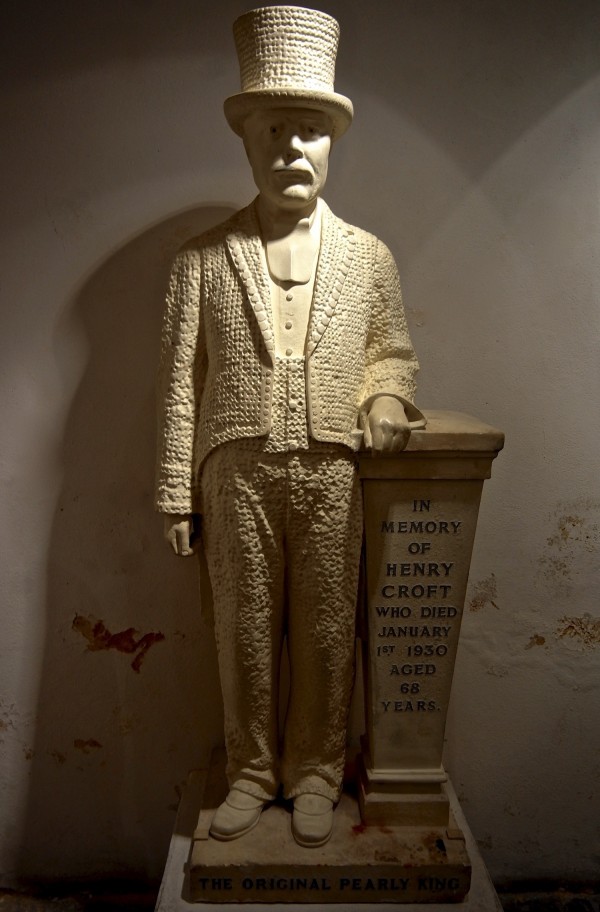
Henry Croft
Trafalgar Sq is famous for the man perched high above it on the column, but I recently discovered another man hidden beneath the square who hardly anybody knows about and he is just as interesting to me. I have no doubt that if you were to climb up Nelson’s Column, the great Naval Commander standing on the top would have impressive stories to tell of Great Sea Battles and how he conquered the French, though – equally – if you descend into the crypt of St Martin in the Fields, the celebrated Road Sweeper who resides down there has his stories too.
Yet as one who was born in a workhouse and died in a workhouse, Henry Croft’s tales would be of another timbre to those of Horatio Nelson and some might say that the altitude history has placed between the man on the pedestal and the man in the cellar reflects this difference. Unfortunately, it is not possible to climb up Nelson’s Column to explore his side of this notion but it is a simple matter to step down into the crypt and visit Henry, so I hope you will take the opportunity when you next pass through Trafalgar Sq.
Henry Croft stands in the furthest, most obscure, corner far away from the cafeteria, the giftshop, the bookshop, the brass rubbing centre and the art gallery, and I expect he is grateful for the peace and quiet. Of diminutive stature at just five feet, he stands patiently with an implacable expression waiting for eternity, the way that you or I might wait for a bus. Yet in the grand scheme of things, he has not been waiting here long. Only since since 2002, when his life-size marble statue was removed to St Martin in the Fields from St Pancras Cemetery after being vandalised several times and whitewashed to conceal the damage.
Born in Somers Town Workhouse in 1861 and raised there after the death of his father who was a musician, it seems Henry inherited his parent’s showmanship, decorating his suit with pearl buttons while working as a Road Sweeper from the age of fifteen. Father of twelve children and painfully aware of the insecurities of life, Henry launched his own personal system of social welfare by drawing attention with his ostentatious outfit and collecting money for charities including Public Hospitals and Temperance Societies.
As self-appointed ‘Pearlie King of Somers Town,’ Henry sewed seven different pearly outfits for himself and many suits for others too, so that by 1911 there were twenty-eight Pearly King & Queens spread across all the Metropolitan Boroughs of London. It is claimed Henry was awarded in excess of two thousand medals for his charitable work and his funeral cortege in 1930 was over half a mile long with more than four hundred pearlies in attendance.
Henry Croft has passed into myth now, residing at the very heart of London in Trafalgar Sq beneath the streets that he once swept, all toshed up in his pearly best and awaiting your visit.
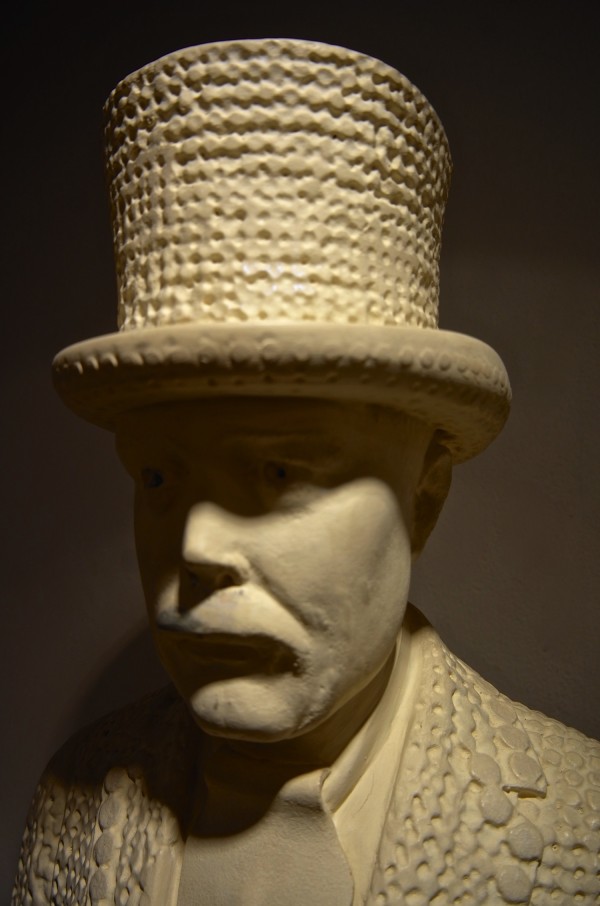
Henry Croft, celebrated Road Sweeper
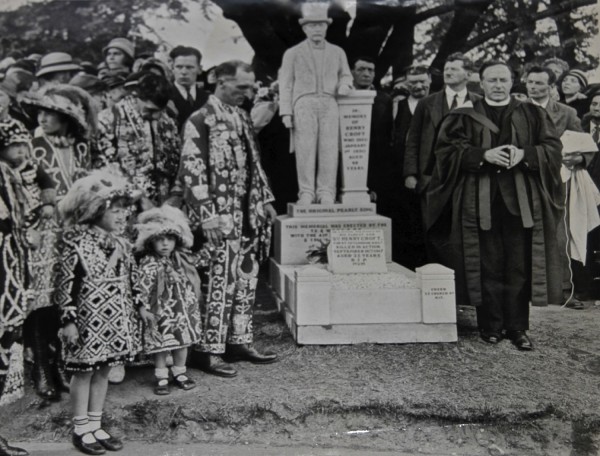
At Henry Croft’s funeral in St Pancras Cemetery in 1930
You may also like to read about
So Long, Ray Newton
NEXT TICKETS AVAILABLE SATURDAY 11th MAY
Local historian Ray Newton died on 30th April aged eighty-four
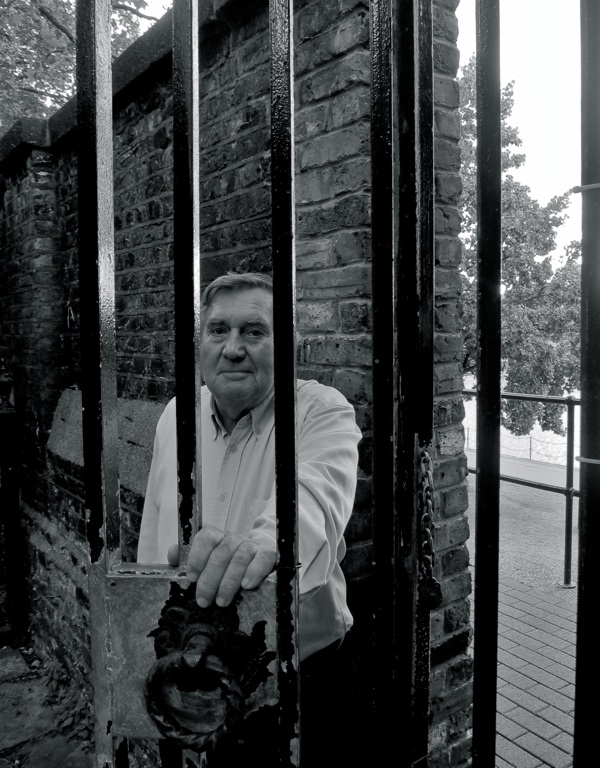
Ray Newton at the churchyard gate of St Paul’s Shadwell
You do not meet many people who can say they come from Shadwell these days, not in the way that Ray Newton could when he told you his family had been there since at least 1820 – which was only as far he chose to probe yet more than sufficient to claim Shadwell as his place of origin.
Ray dedicated himself to learning the history of Shadwell and, for thirty years, he ran the local history trust with Madge Darby who was his counterpart in Wapping. Between the pair of them they were able to enjoy specialist conversations that traced niceties of historical detail, especially concerning the boundary between their adjoining Thames-side parishes.
“Madge would tell you that the Prospect …” Ray began, referring to the ancient Prospect of Whitby riverside pub by its familiar name, “Madge would tell you that the Prospect is in Wapping because, since the early nineteenth century when the Docks were built, the Wapping people have said that you have to cross water to get to Wapping – yet prior to that the Prospect was in Shadwell.”
In confirmation of this assertion, Ray took me round the back of St Paul’s Church in Shadwell and gestured significantly towards a blank wall before turning one hundred and eighty degrees to indicate a route crossing the Basin towards the Thames. “This used to be Fox’s Path, from the Highway down to the Prospect,” he informed me, “it was raised on stilts across the marshes that were here before the Docks.”
Thus Ray’s thesis about the shifting boundary of Shadwell and Wapping was proven, though it left me with an unfulfillable yearning to cross Fox’s Path upon the long-gone stilts over the marshes and down to the Prospect of Whitby.
“My father, Thomas Newton, was born in 1904 in Cornwall St off Watney St Market but he lived his early life in Juniper St, which was swarming with hundreds of children then. Although it was a big family, my grandfather John Newton had a good job, he was a foreman in a cold store at Bankside, so my father got educated and he could read and write letters for people in Juniper St.
We were lucky because my dad had a secure job and even in the thirties, when there were no jobs, he worked. At twelve years old, my father left school and went to work with my grandfather at the cold store, and his brothers worked there with him too.
When he was fourteen, he went to Broad St Boys’ Club in the Highway that was run by the son of Bombardier Billy Wells (the man who wielded the hammer on the gong at the start of J. Arthur Rank films) and, at eighteen years old, my father became a professional boxer. He fought against Raymond Perrier, the Champion of France, and beat him and he topped the bill in the twenties. He fought all over the East End but, because he was boxer not a fighter, he had trouble with his eye and he had to have an operation. After that, he couldn’t box anymore so he became a manager and ran a gym in Davenport St above the Roebuck.
My mother, Maria Edgecombe, was born in Gravesend. Her mother was a farmer’s daughter who married my grandfather, who was a waterman who came from Shadwell and worked for the Tilbury Dock Company. When it was taken over by the Port of London Authority, he moved out and worked on the Pierhead and they lived in Cable St, where my mother met my father and they had three boys and a girl.
On my dad’s side, they were all dockers and on my mother’s side they all worked for the Port of London Authority. They were different people, because in the docks it was all casual labour whereas the Port of London Authority was regular employment. It was very hard work in the docks but I never met anyone that didn’t love working there. The docks could find a job for anyone.
When the War came, my dad was still working in the cold store and it was a reserved occupation. He joined the Home Guard and his job was to guard the London Dock and the King Edward VII Memorial Park which was the entrance to the Rotherhithe Tunnel – and he was given five rounds of ammunition. I remember him in his uniform because I was born just before the War.
My father was always into everything sporty and boxing was his life so, when his father died, he become a bookmaker and set himself up as a turf accountant and gave up the docks. Next, he decided to be a publican and bought a pub on the Highway opposite Free Trade Wharf called the Cock but, while I was doing National Service, he became ill. At fifty-one, he was told he had lung cancer and had five years to live, and he died at fifty-six.
He was a lad but he wasn’t a criminal. He was a hard man and he could fight anyone just like that, yet he was also very generous. He was into everything, he organised dances and sold tickets.
We had a boxing gym in the cellar of the pub and he gave away all the equipment to the St Georges Boxing Club in the church crypt – where they produced a world champion, Terry Marsh. I didn’t want him to give it away because I thought they’d damage it but he said to me, ‘You don’t know what it’s like to have no money.’
At twenty-three years old, I took over the pub and I was a publican right on the docks, serving seamen and dockers. So you had to be a little hard – but I’m not. During the days, it was dockers, lightermen and ships’ captains but at nights, and at weekends, local families came. We had a piano player and everyone knew the words, they had competitions – one song in the Saloon Bar then one in the Public Bar. In the Saloon, you could charge what you pleased but in the Public Bar the drinks’ prices were set. Ships’ officers, customs’ men and the management of Free Trade Wharf went into the Saloon and dockers and lightermen went in the Public Bar – they never met, that was the class system.
I ran the pub until it was pulled down to make way for the widening of the Highway and I was rehoused in Gordon House, where I still live today. After the pub came down, I worked for my elder brother – he was a bookmaker – in his betting shops, but it wasn’t me. When he decided to sell the shop in Walthamstow, I stayed on and worked for the new people – for the company which became City Tote.
Yet I realised I didn’t want to do this for the rest of my life so, at thirty-two, I decided to get an education and, after the shop closed at night, I used to go to evening classes. I enrolled for a basic English class and the teacher said, ‘Write something down so I can look at it,’ and when he saw it he said, ‘This ain’t your class but if you help me with teaching the other students, I’ll mark your essay each week.’ So I got a year of personal tuition.
Then I was doing my homework in the betting shop one day, when two young men who were different from the other punters asked what I was doing. I said, ‘I’m doing O levels.’ They were lecturers and they said, ‘We’ll help you with your O levels if you’ll teach us gambling.’ After I did my O levels and A levels, I realised that if I don’t go to university, I’d be disappointed for the rest of my life, so I went to Middlesex Polytechnic and did a four year degree in Social Sciences. While I was a student, I was working as an Adult Literacy volunteer and after I got my degree I became a lecturer in Social Sciences at West Ham College, but the most rewarding thing I did was teaching partially blind people.
After thirty-six years of teaching, I retired and for the past ten years I’ve had an allotment in Cable St Gardens, and I’m secretary of the History of Wapping Trust. I used to teach a Local History class and one day Madge Darby came along, there’s nothing about Wapping she didn’t know. We published over twenty books. We never set out to make money, it is a thing we did for love.
Once upon a time, we were all in the same boat, we all went to the same school, we all went to the same pub, we all had the same doctor and everybody knew everybody. Now nobody knows anybody. I think I was lucky because I worked in a pub at twenty-three and I met the full range of people, and it got me interested in local history.”
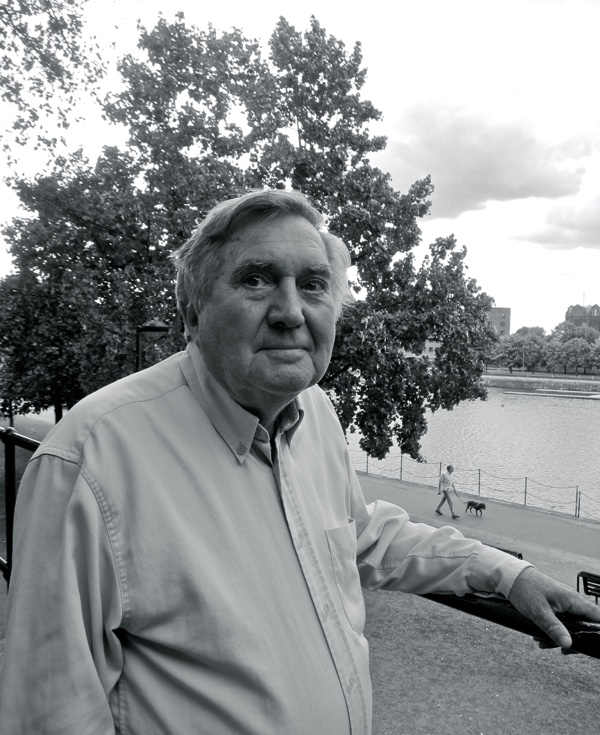
Ray upon the steps overlooking Shadwell Basin
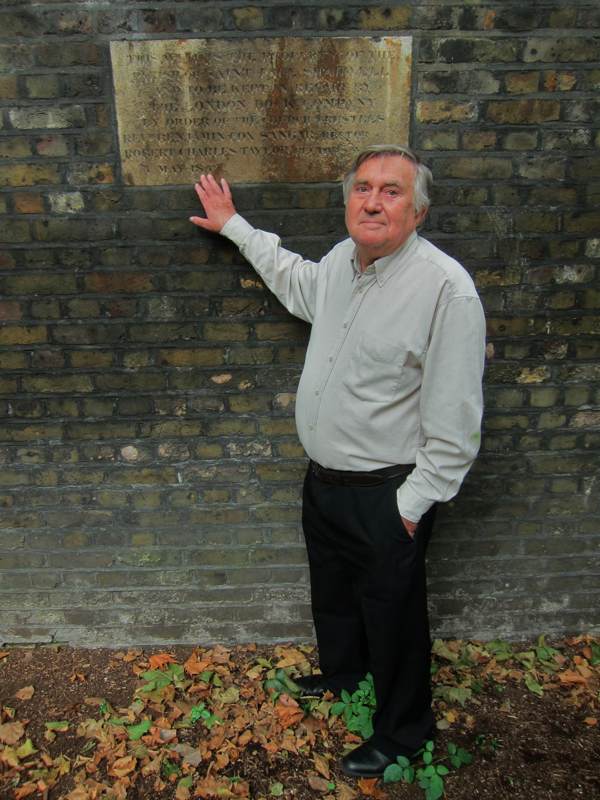
Ray shows the stone plaque in the churchyard wall of St Paul’s Shadwell, placed after it was shored up when Shadwell Basin was being excavated between 1828-32 and the church began to slide downhill
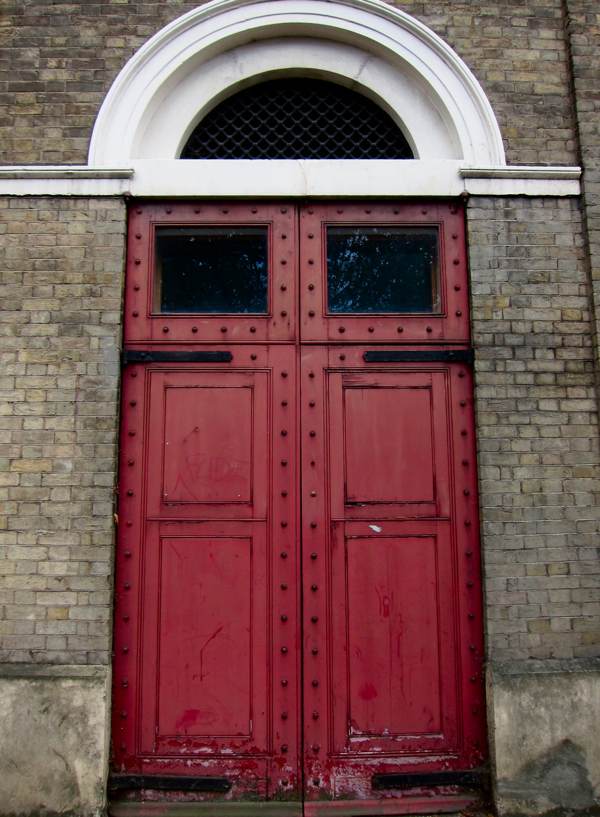
Ray pointed out these early nineteenth century doors facing the Highway, in the side of the Vestry at St Paul’s Shadwell, which were once the entrance to Shadwell’s first Fire Station
You may also like to read about
Costakis Costa, Barber At Mario’s
NEXT TICKETS AVAILABLE SATURDAY 11th MAY
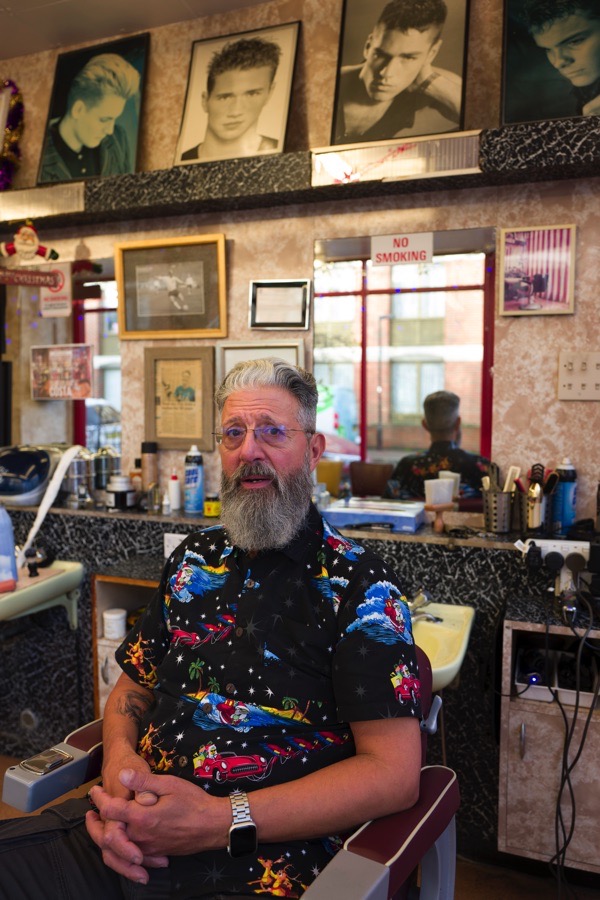
‘ Me, I’m a barber’ – Costakis Costa
All readers are invited to a free screening of a short film about Mario’s entitled PROBABLY NOT THE HAIRCUT by Idea Space, tomorrow Wednesday 8th May 6:30-7pm at Mario’s Gents’ Hairdressing, 562A High Rd Leytonstone, E11 3DH. Drinks will be served. No need to book.
Mario’s has been a friendly landmark for over half a century, a beloved barbering institution where generations have sought consolation and renewal amidst the rigours of life in Leytonstone.
One quiet afternoon, after Costa – the presiding master of ceremonies – had finished his final haircut of the day, we sat on chairs in the empty salon and he regaled me with his story.
‘Me, I’m a barber. Although my grandfather was a carpenter, two of my grandfather’s brothers were barbers. My dad, Mario, is a barber and my aunt is a hairdresser. My cousin is also a hairdresser and my nephew cuts hair for a living. When I was a toddler, the front room of our family home in Leytonstone was a salon run by my aunt.
This shop was opened by my dad who came from Larnaca, Cyprus, in 1962 to work at his uncle’s shop on Moorgate Station – it doesn’t exist any more. Dad got the business here in 1967 and I joined him in 1980.
I never had any interest but, when I went to my careers officer, he said, ‘Your dad’s got a business, have you considered that?’ So I had a chat with dad and he said ‘It’s up to you. son.’ He never pressured me into anything but I came to the salon and realised ‘This is nice, I can chat to people. They come into the salon willingly, are happy with the result, give you money and you talk bollocks all day.’ It was right up my street, though you don’t realise that until later do you? The careers officer got me a place to learn hairdressing at the London College of Fashion and I never looked back.
When my grandfather said to my dad, ‘Go to England,’ his brother already had a shop here so that was an opportunity. Cyprus had recently got its independence and he could come without a visa. But my dad said ‘There’s this girl.’ My grandfather asked, ‘Whose this girl?’ That was my mum. She came over with my dad and left her family in Cyprus. My grandad, the carpenter, and his three sisters came too. He made the fittings of this salon.
I think about people that migrate today and I wonder how they do it. I could not. My dad could not even speak the language. When he first worked for his uncle, the customers used to say what they wanted and one of the other barbers would translate. He did some evening classes but mostly he learnt by reading newspapers. He retired in 2010 and went back to Cyprus where he still reads British newspapers online.
I’ve got two children but they are not involved in hairdressing, it was never a thing. You bring up your kids to follow their own paths. We used to live in Leytonstone until 1980 when we moved to Enfield in North London, so the business was not in close proximity. If it was, perhaps they would have been influenced? I used to walk past this shop every Saturday morning with my mum on the way to do our shopping.
In my job, you get vibes from customers. People tell me their troubles. I’ve had a few heartfelt moments and they have approached me years later to thank me for helping them through difficult times, just for giving them somewhere to sit.
I enjoy the daily conversations with people. I have three or four generations of families that come into my shop. It is a relationship. They ask me, ‘When you retire, what am I going to do? Where am I going to go for a haircut?’ I don’t know the answer to that question. I still have a great relationship with my wife and I hope to retire one day. We may be older but we are still the same people. We want to spend long weekends in the garden and go on holidays together. I don’t have any regrets. Regrets can destroy you. It’s earning a living, it’s bringing up a family.
There’s developers. But if I have got two or five years left on the lease of this building then happy days. As long as there’s enough people that want me then that’s all I need. This is my place.’
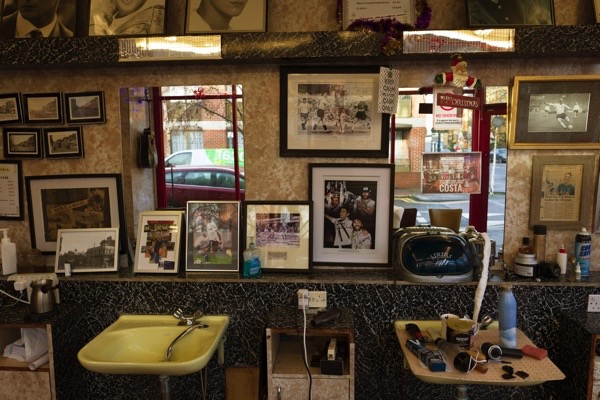
‘My grandad, the carpenter, he made the fittings of this salon’
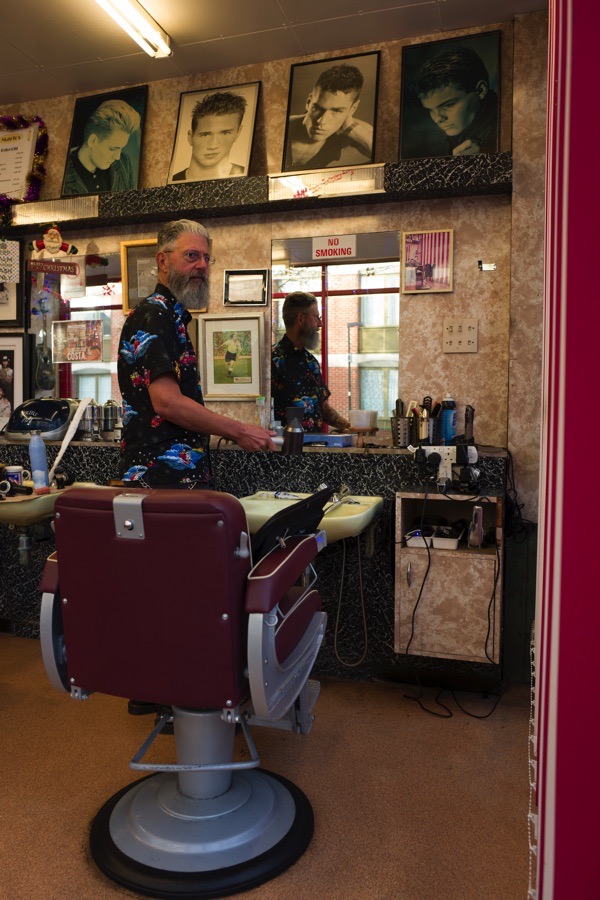
‘I have three or four generations of families that come into my shop’
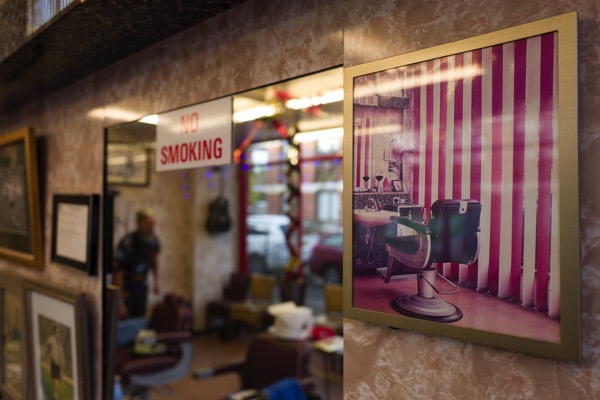
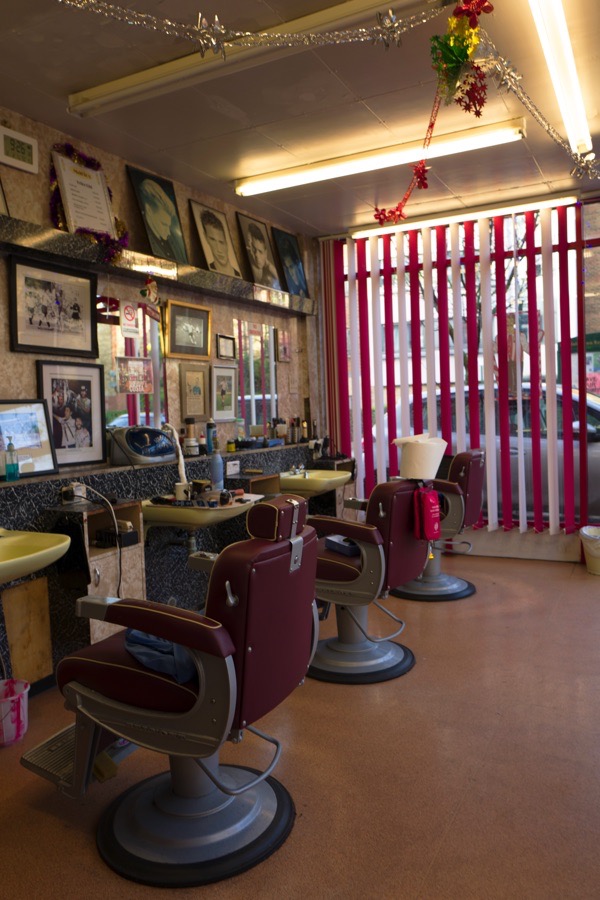
‘They come into the salon willingly, are happy with the result, give you money and you talk bollocks all day.’
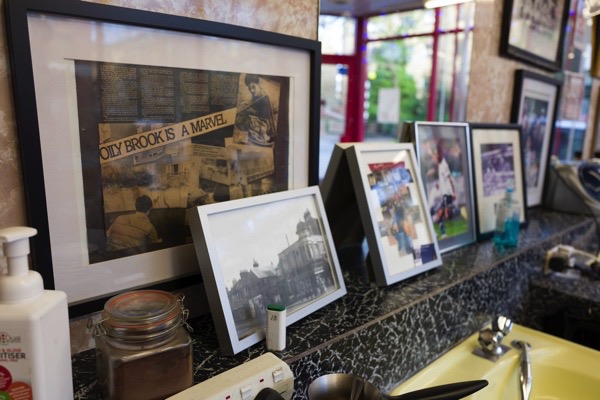
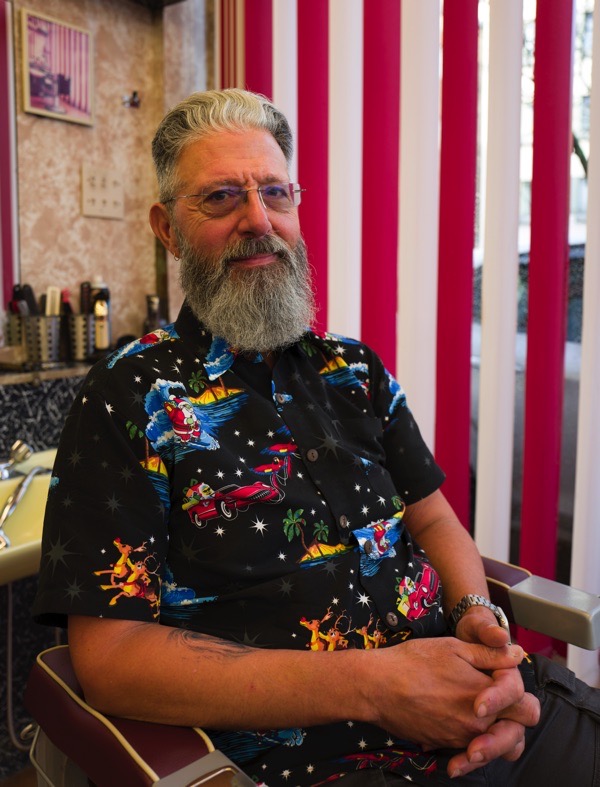
‘As long as there’s enough people that want me then that’s all I need’
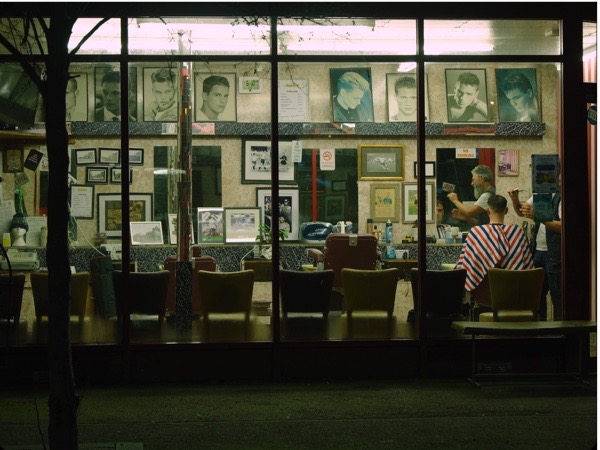
‘I enjoy the daily conversations with people’
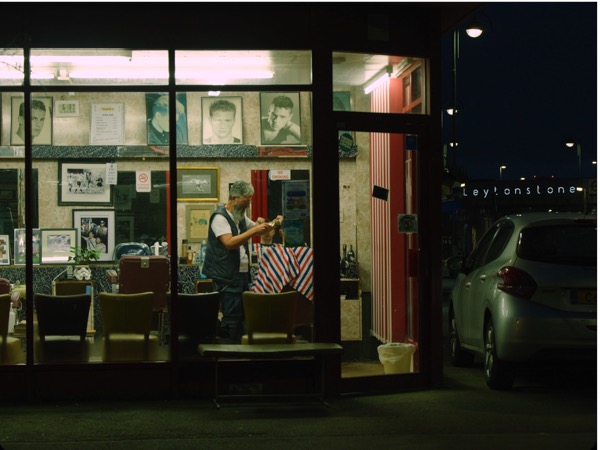
Photographs copyright © Zak Crafer
You may also like to take a look at
The Relics Of Old St Paul’s
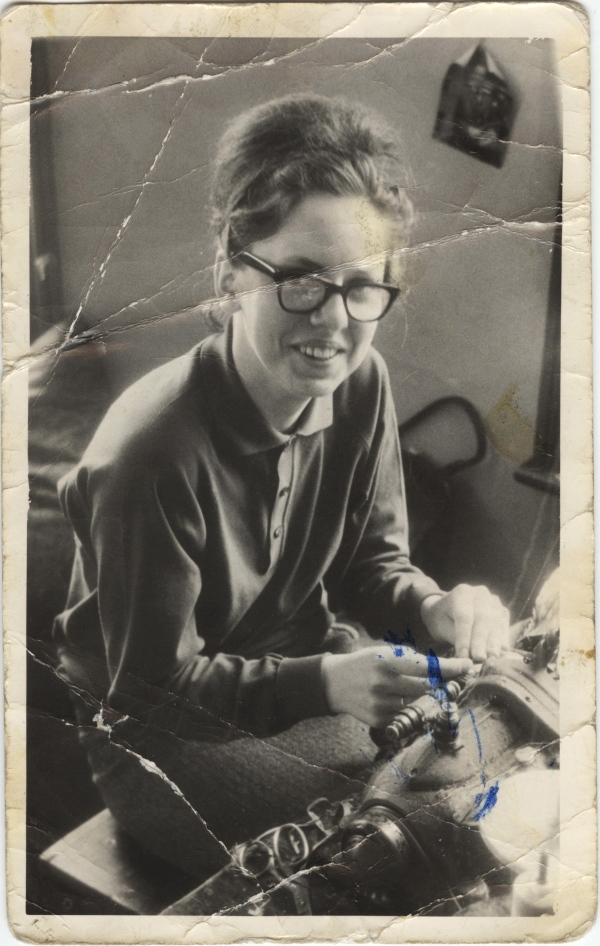
Linda Carney is just one of the people you will meet on The Gentle Author’s Tour of Spitalfields. Click here to book for next Saturday

Looking through into the whispering gallery
Sir Christopher Wren’s success at St Paul’s Cathedral is to have envisaged architecture of such absolute assurance that it is impossible to imagine it could ever have been any different than it is today. Yet Wren was once surveyor of Old St Paul’s, confronted daily with a tottering gothic pile and carrying the onerous responsibility for this vast medieval shambles upon his shoulders, until the Great Fire took it away three hundred and fifty years ago.
The spire of Old St Paul’s collapsed in 1561 and, in Wren’s, time wooden scaffolding was necessary to hold up the poorly-built Cathedral. Parts of the cloister were carried off to build Somerset House and even a fancy new portico designed in the classical style by Inigo Jones failed to ameliorate the general picture of decay and dereliction.
When the Great Fire of London began in the summer of 1666, the Stationers Company stored their books and paper in the crypt of the Cathedral for safe-keeping and residents piled their precious furniture in the churchyard – one of the few open spaces in the City – so that it might be safe even if they lost their homes in the conflagration. These prudent measures only exacerbated the catastrophe when a spark set fire to the wooden roof of the Cathedral which collapsed into the crypt, sending a river of molten lead running down Ludgate Hill, igniting a violent inferno of paper that brought down the entire building and consumed all the furniture in the churchyard as well.
After the pyre of Old St Paul’s was at last extinguished in September, weeks after the Fire had been quenched elsewhere in the City, it became a popular pastime to scavenge through the ruins for souvenirs. You might assume nothing survived but, if you know where to look and what to look for, there are relics scattered throughout New St Paul’s.
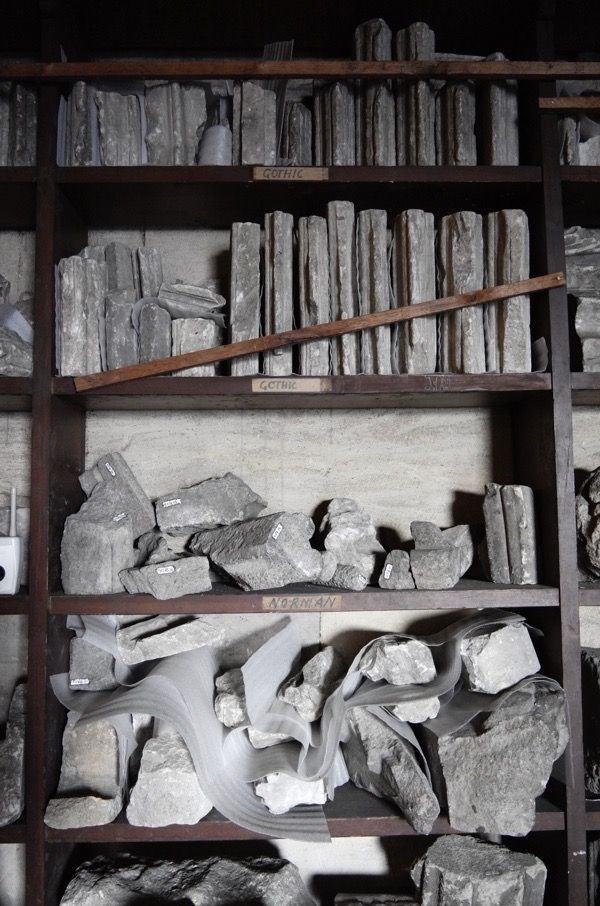
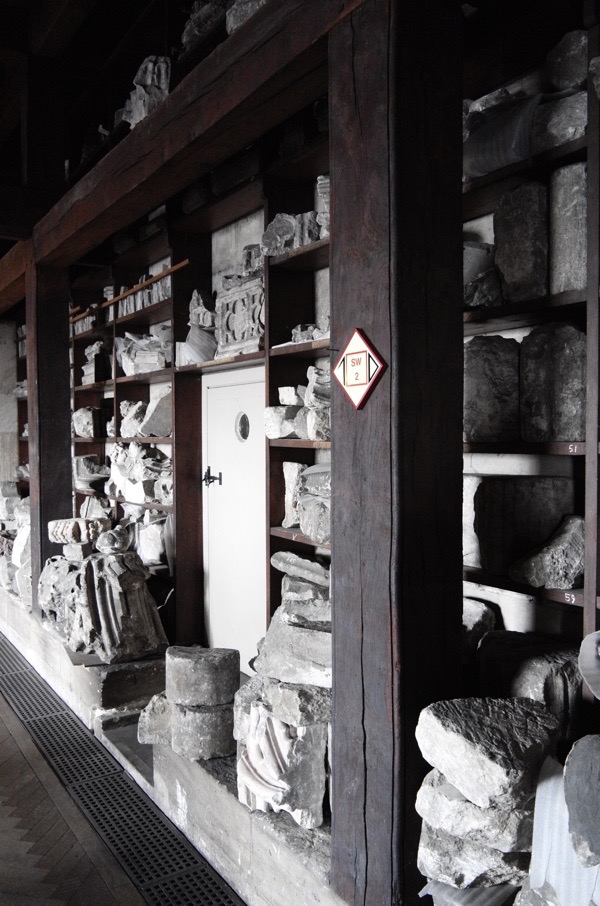
There are Roman tiles, an Anglo-Saxon hog’s back tomb, a Viking grave marker and multiple stone fragments of the Cathedral itself, catalogued in the nineteenth century – although I was most fascinated by seventeenth-century effigies that withstood the Fire.
Medieval monuments and statuary were destroyed in the Reformation, and Oliver Cromwell famously stabled his horses in the Cathedral at the time of the English Revolution, but there was a brief period when new monuments and figures were installed prior to the Great Fire of London and a handful of these remain today.
John Donne would have conjured an astute sonnet upon the metaphysical irony of his monument being the only one surviving intact. In his last days, he insisted upon modelling for his own effigy, wrapped in a shroud, and the resultant sculpture is distinguished by remarkably naturalistic drapery. Yet, in spite of this, I can only see it as an image of a flame in which the great poet glimmers eternally.
A small collection of seventeenth-century human effigies rest down in the crypt, burnt black by the Fire. Carved from pale marble or alabaster, they have been transfigured by the furnace-like temperature of the conflagration and emerged charcoal-black, glistening and broken, as if they had been excavated like coal – as if they were creatures of another time, as remote as prehistoric creatures. But, even as they were ravaged by apocalyptic lfire and damaged beyond recognition, some have retained fine detail of armour and clothing, and all have acquired presence. These compelling fragmentary forms are worthy of Henry Moore, charmed stones that manifest an eternal spirit forged in fire.
Unsurprisingly, Christopher Wren had little interest in the relics of Old St Paul’s because he was looking to the future. Wary of medieval foundations, he had his New St Paul’s re-aligned to avoid them. Yet, although Wren had most of the ancient stone broken up to use as infill for New St Paul’s, there are a couple of spots in the crypt where you can see fragments of detailed Romanesque carving sticking out from the wall, hidden in plain sight, to remind us that – even though Old St Paul’s has gone – it is still with us.

Roman tiles and Anglo-Saxon grave cover in the triforium
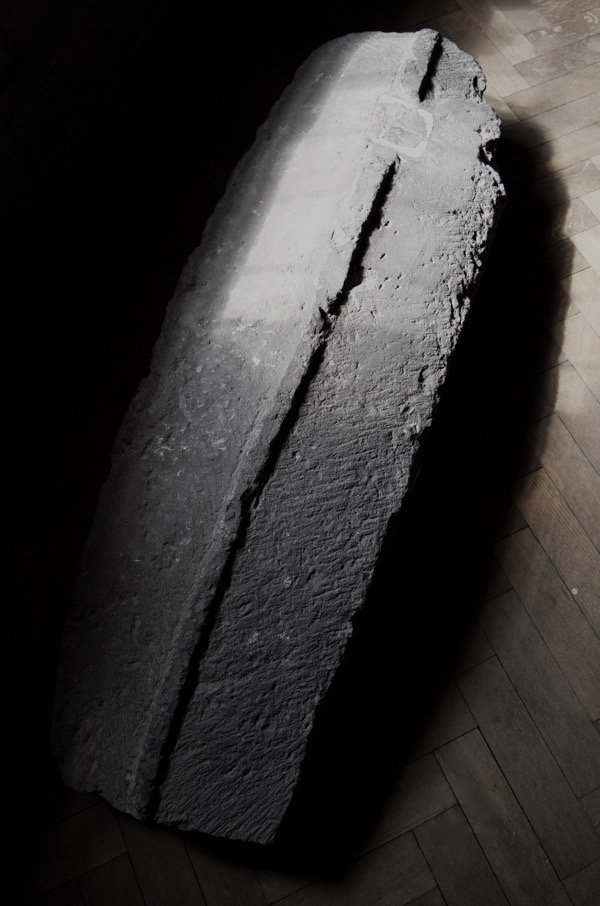
Hogback grave cover, dating from 1000-1050 AD, possibly from the grave of King Athelstan
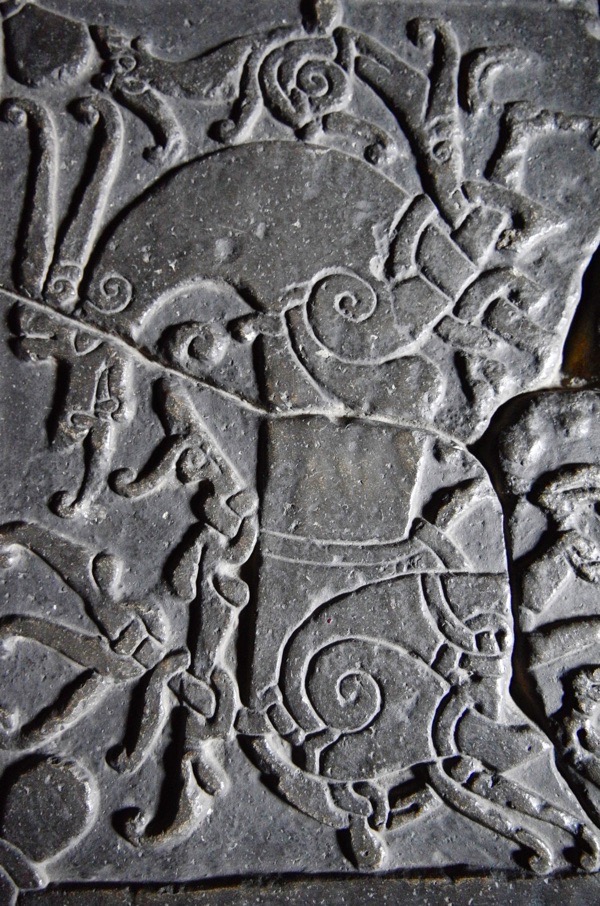
Viking grave marker, dating from 1125-50AD, dug up in 1852 in the churchyard
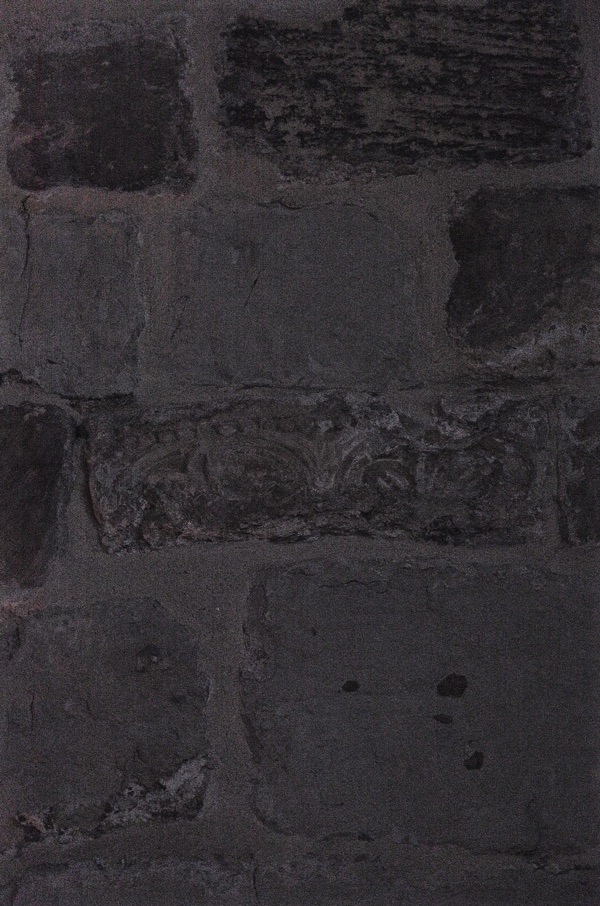
Twelfth century Romanesque carving of foliage in the wall of the crypt
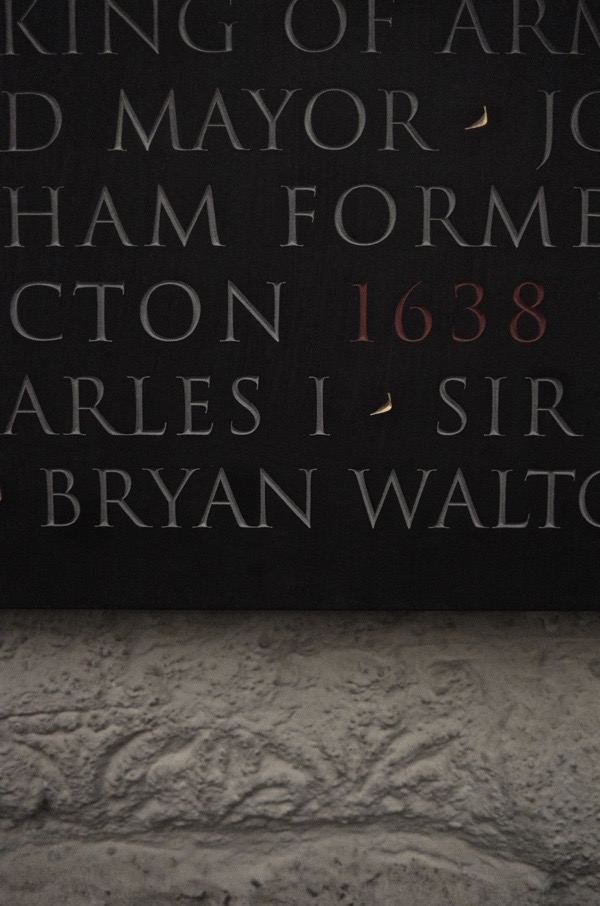
Twelfth century Romanesque carving of foliage in the wall of the crypt
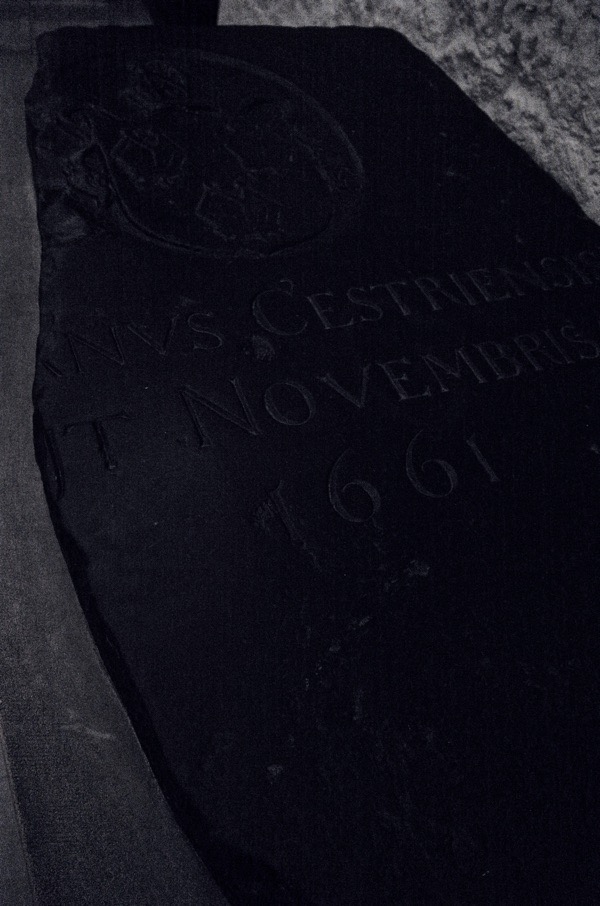
Ledger stone of Brian Walton, Bishop of Chester, died 1661
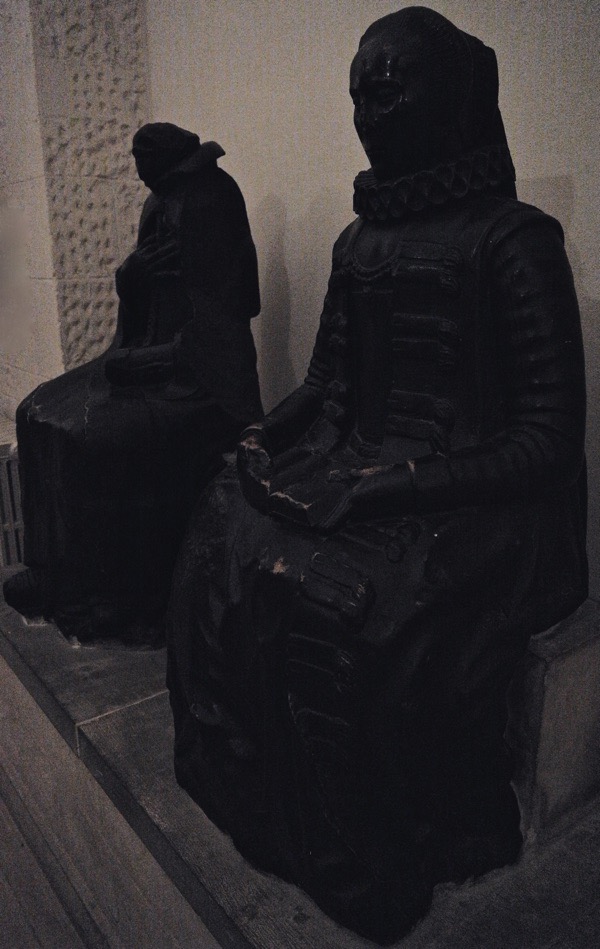
Sir John & Eliza Wolley
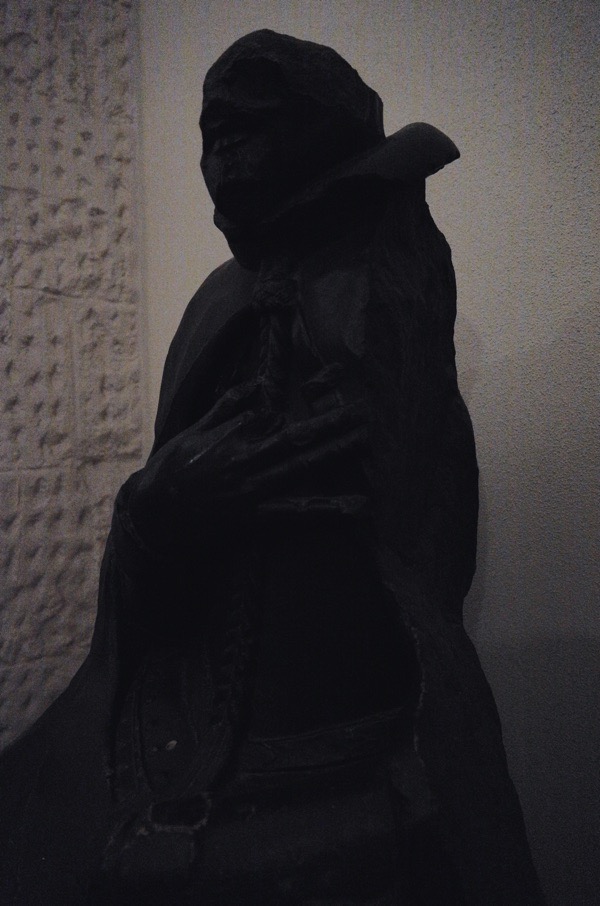
Sir John Wolley, Latin Secretary to Elizabeth I, died 1596
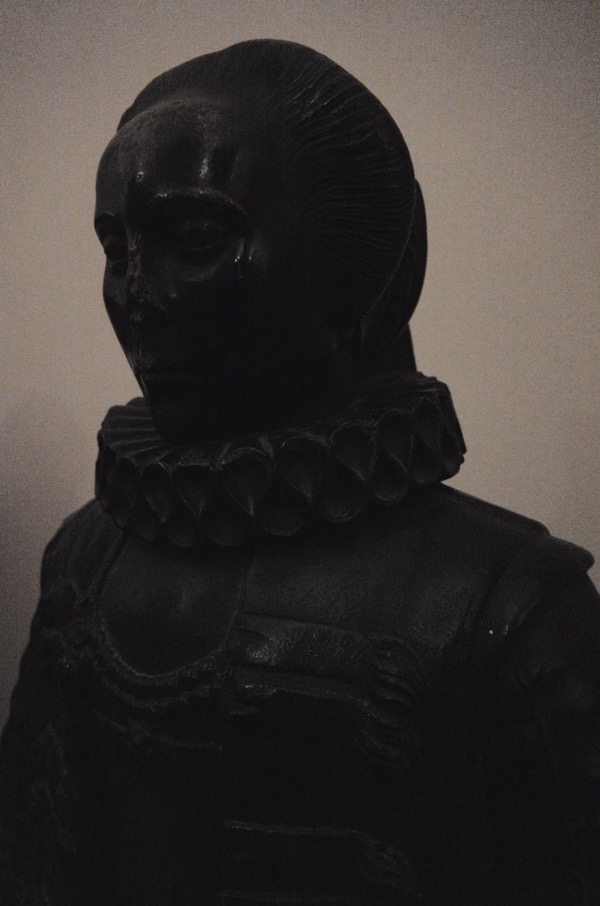
Eliza Wolley, Lady of the Privy Chamber to Elizabeth I, died 1600
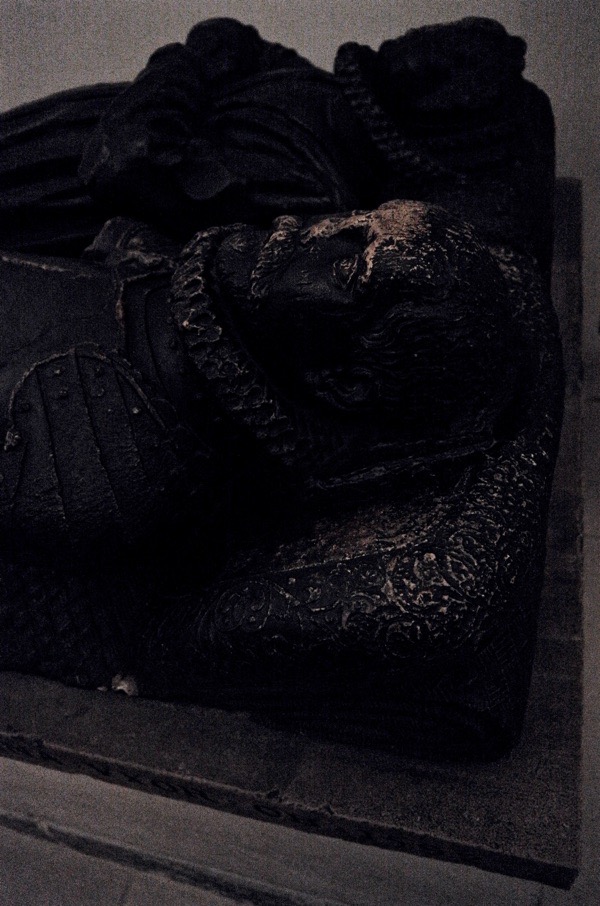
Sir Thomas Heneage Vice-Chamberlain to Elizabeth I, died 1594, & Anna Heneage, died 1592

Unknown effigy
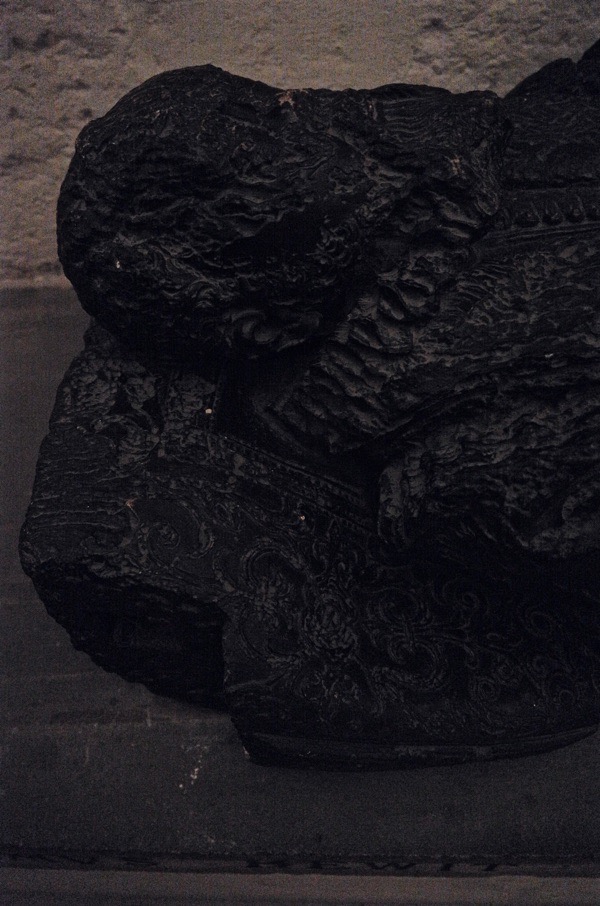
Unknown effigy
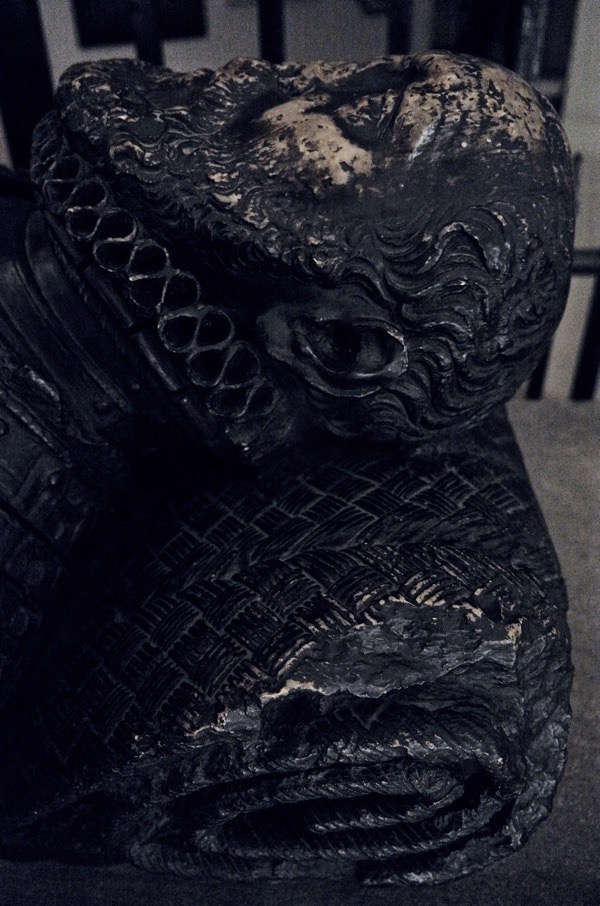
William Cokain, Mayor of London 1619, died 1626
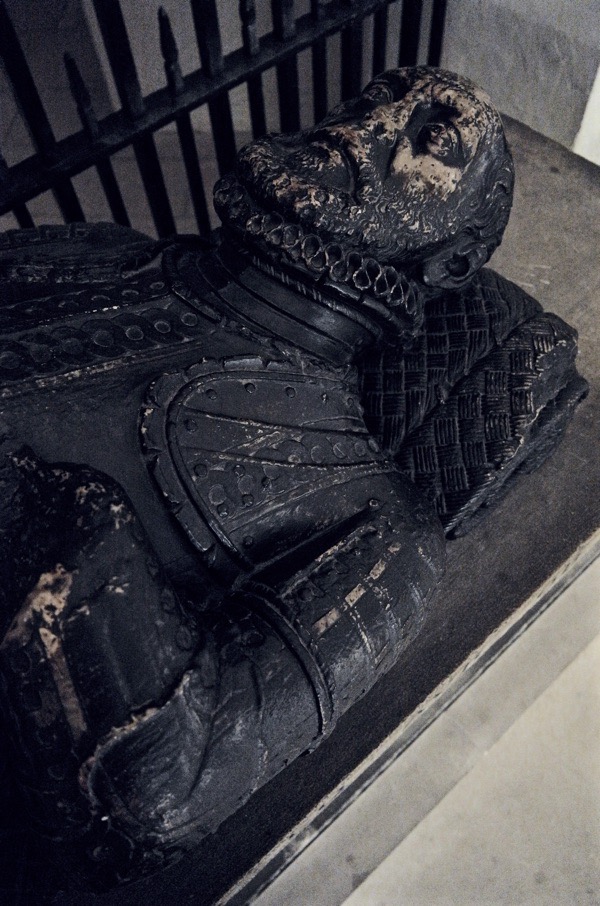
William Cokain, Mayor of London 1619, died 1626
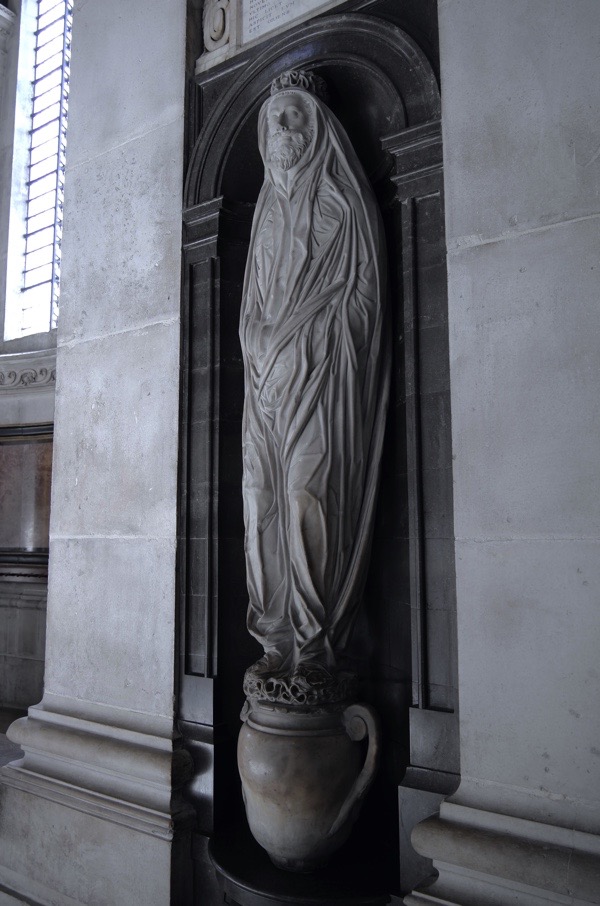
John Donne, Poet & Dean of St Paul’s (1572-1631), monument by Nicholas Stone
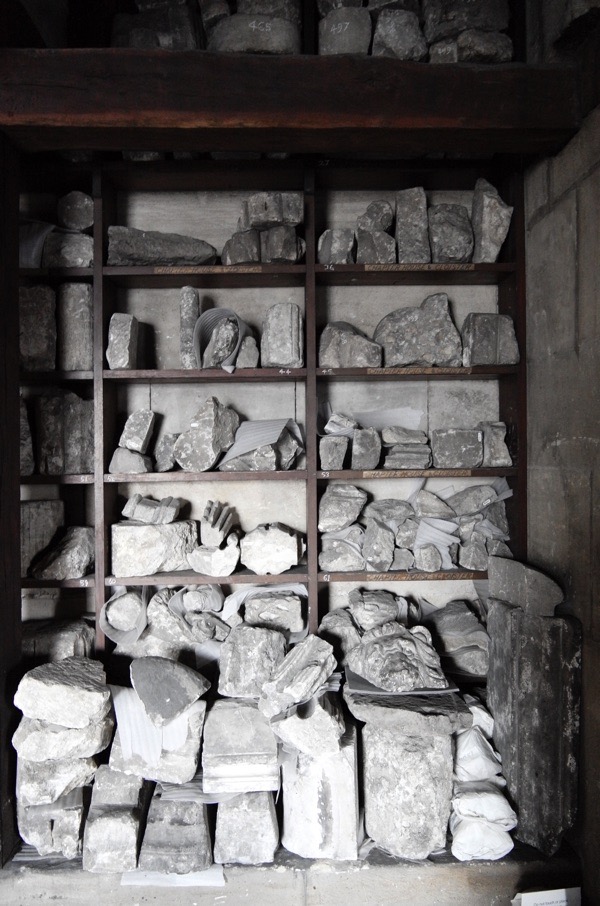
Caen & Reigate stones from Old St Paul’s (1180-1666 AD) excavated by Francis Penrose, Cathedral Surveyor in the nineteenth century
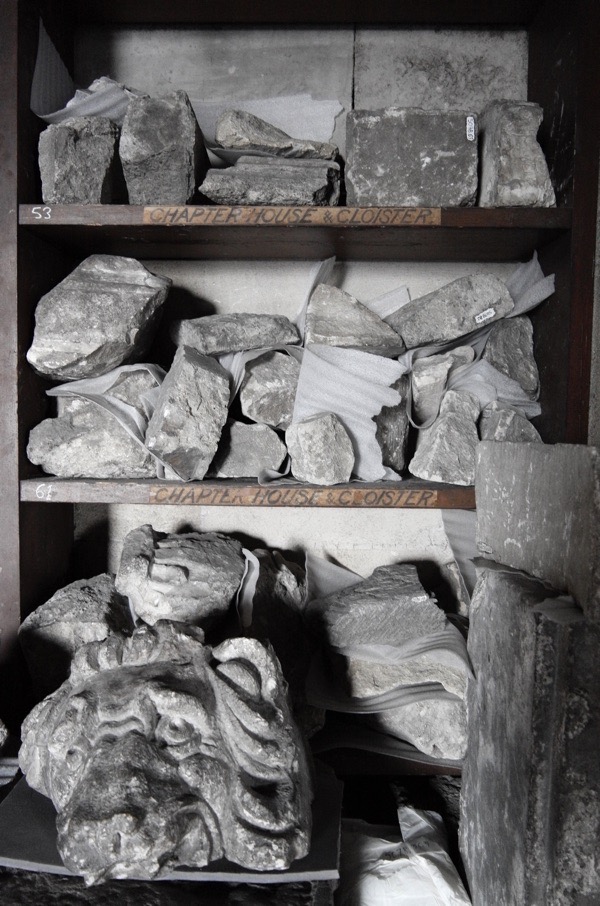
This lion is a fragment of Inigo Jones portal to St Paul’s which inspired Christopher Wren


Click to enlarge this comparative plan of 1872 which superimposes the outlines of Old and New St Paul’s (Reproduced courtesy of St Paul’s)
You may also like to read my other stories of St Paul’s Cathedral
At The Ragged School Museum
NEXT TICKETS AVAILABLE SATURDAY 11th MAY
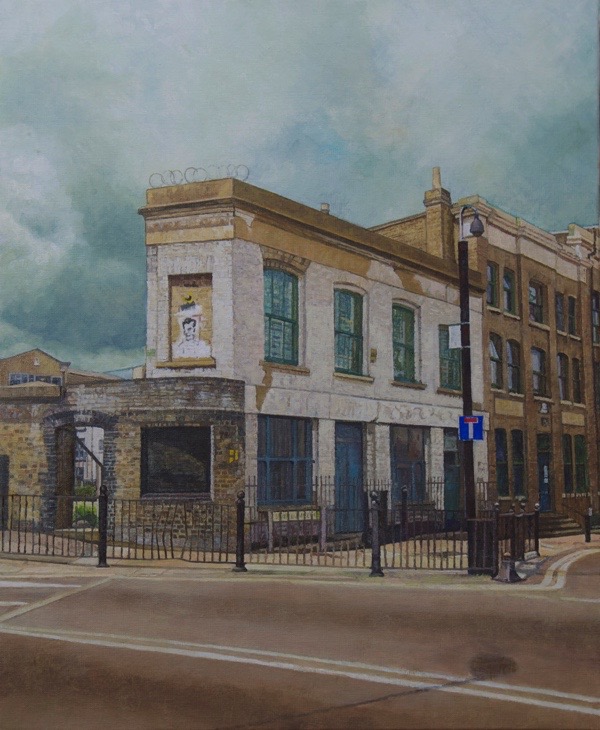
The Ragged School Museum by Doreen Fletcher, 2017
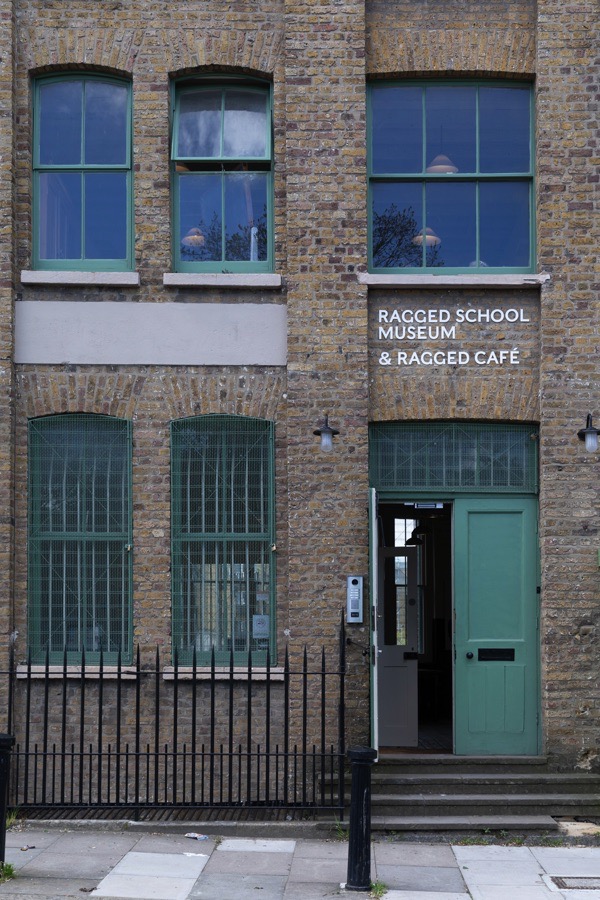
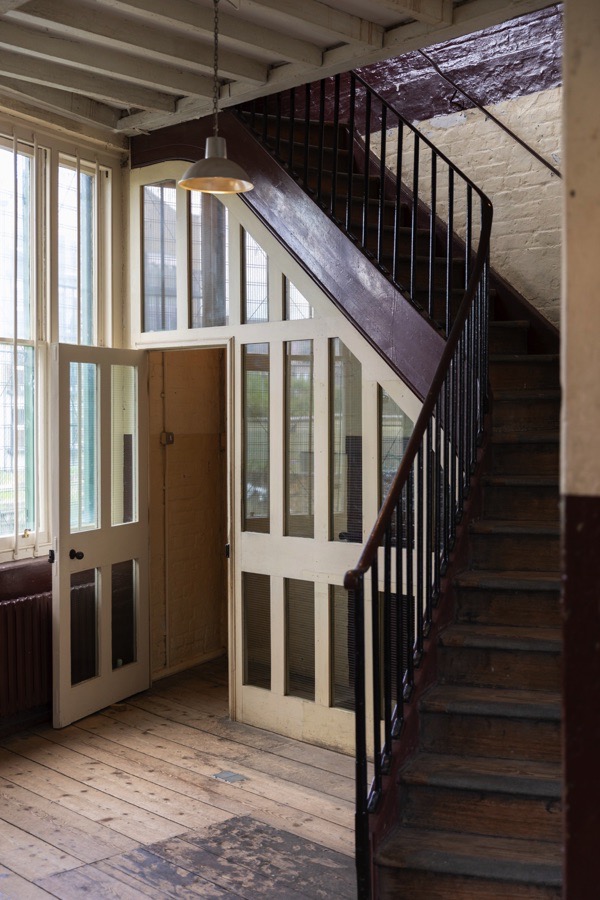
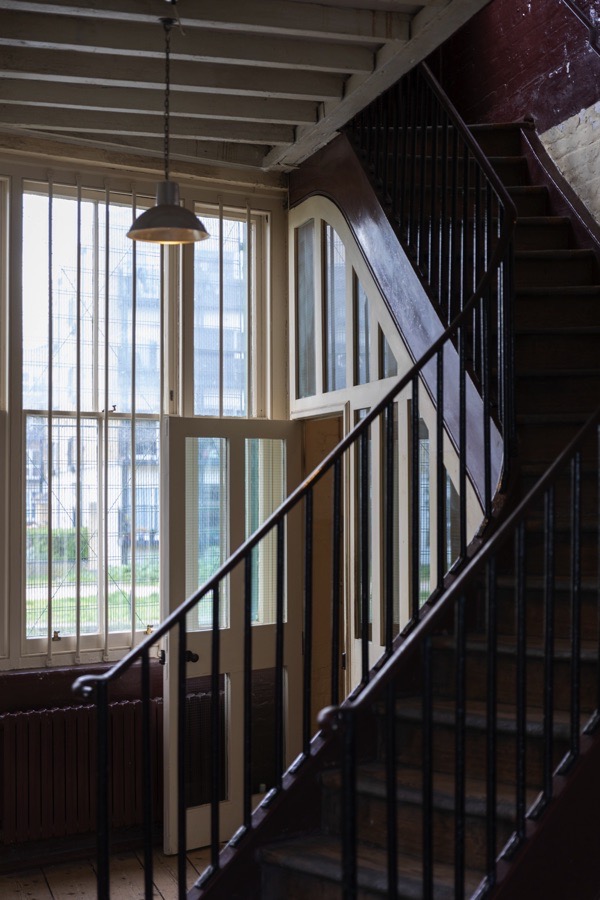
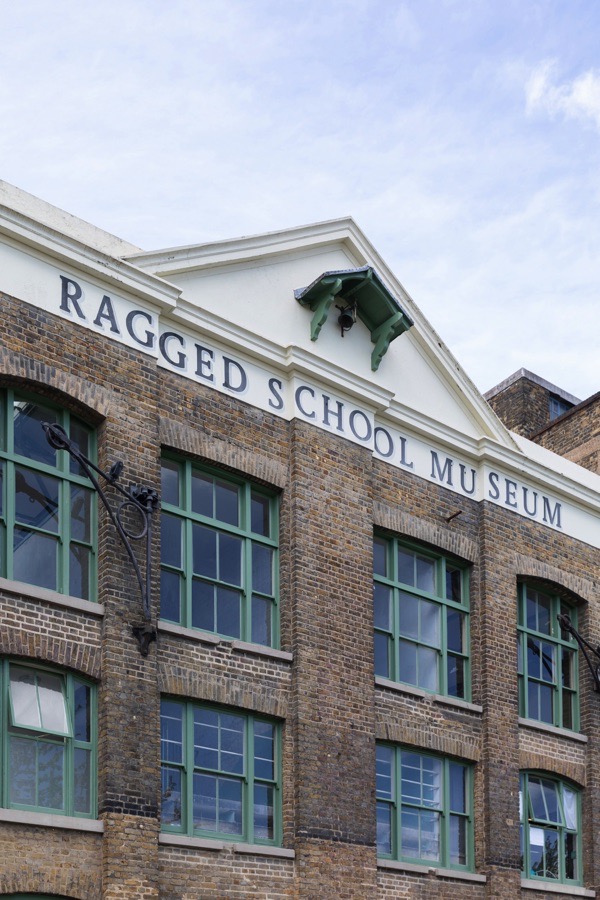
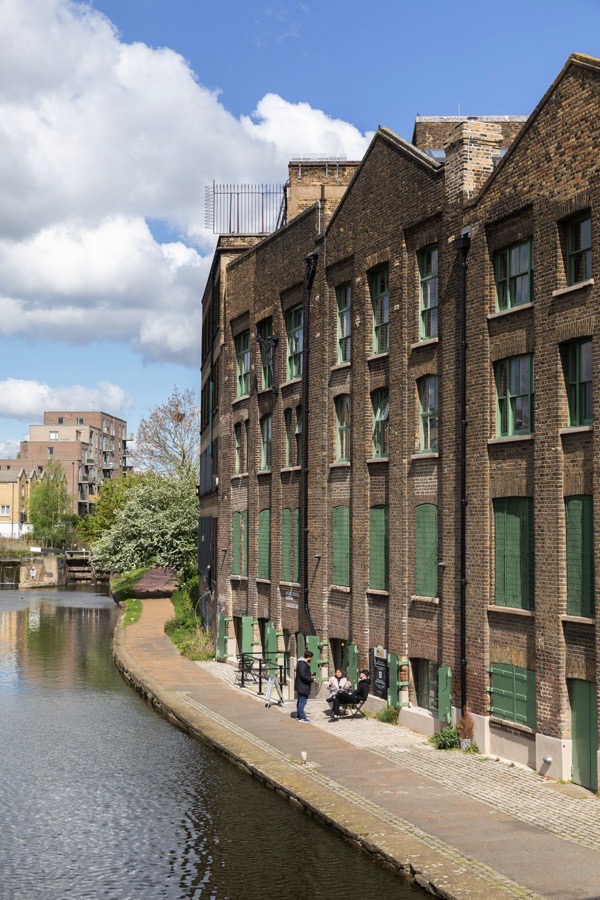
On a recent bright spring morning, Contributing Photographer Rachel Ferriman and I paid a visit to the Ragged School Museum in Copperfield Rd, Bow, next to the canal. One hundred and fifty years ago, Dr Barnardo opened the first of his ‘ragged schools’ here, teaching literacy and basic arithmetic to poor children in a converted warehouse.
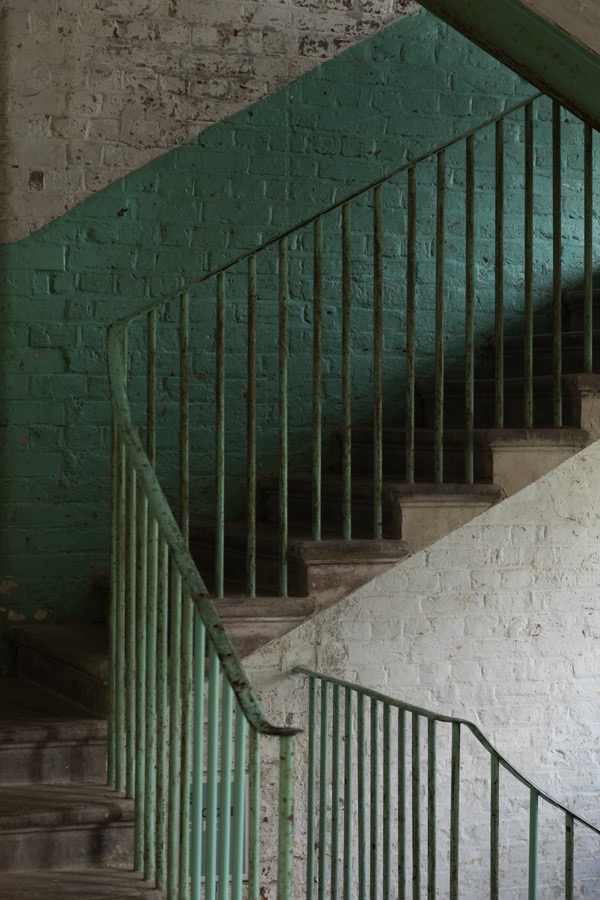
In 1990, the building became a museum of the life and works of Dr Barnardo, with a classroom where pupils from schools around London come to experience nineteenth century disciplinarian education. They discover the delight of practising cursive hand in chalk upon slates, the wonder of pounds, shillings and pence, and the importance of elocution in speaking ‘properly.’ I can assure you that the enthusiastic hordes of children storming up and down the staircases did not appear unduly troubled by the experience, and their teeming presence certainly evokes the former life of this building.
While Rachel explored the labyrinthine museum to take her photographs, Director Erika Davies explained her mission to me.
‘When I came here in 2008, the building was in a poor state and a survey revealed that the roof was in a parlous condition, so it was clear something had to be done. With my trustees, I oversaw the Heritage Lottery Fund grant which put the place in good order as you see it today.
Schools come from all over London, and one regularly from Rome, for our strict Victorian lessons. Some children have been known to get weepy. They also do kitchen sessions to experience the misery of domestic life before electricity, using carbolic soap to scrub laundry, before boiling water and washing it, then mangling it. This is the other side of Victorian life, the hard domestic work that women did.
At weekends, families come and – on the first Sunday of each month – we offer a free drop-in Victorian lesson.
I believe it is important to reflect on where we have come from and the importance of what we now take for granted, namely education. We should not forget the dire state of so many lives not that long ago, especially in the East End.’
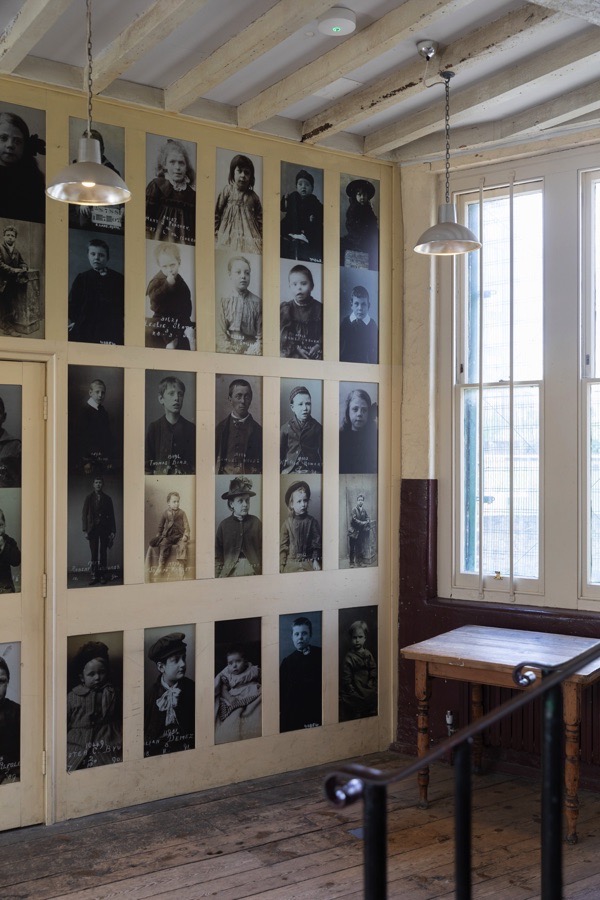
Portraits of Barnardo’s children from the nineteenth century
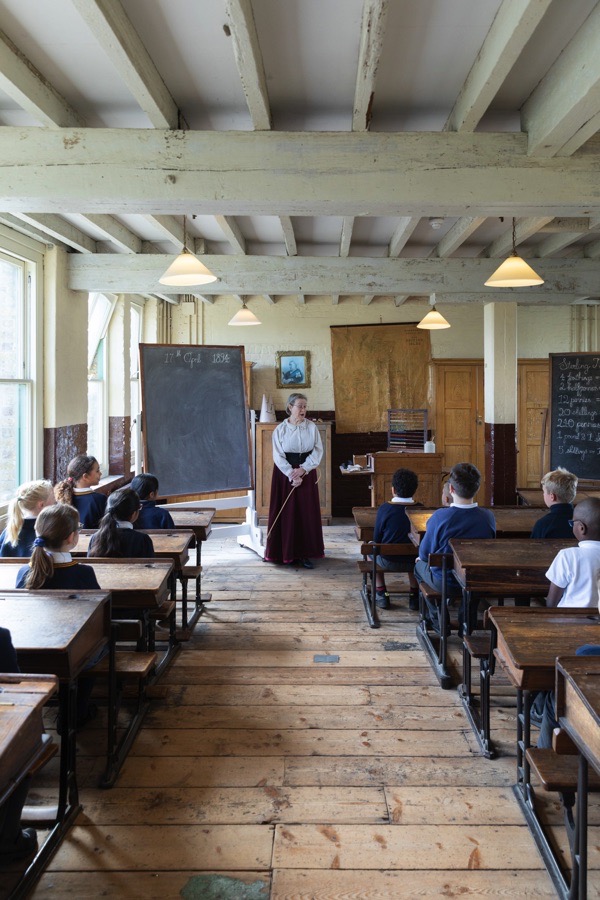
A class in progress
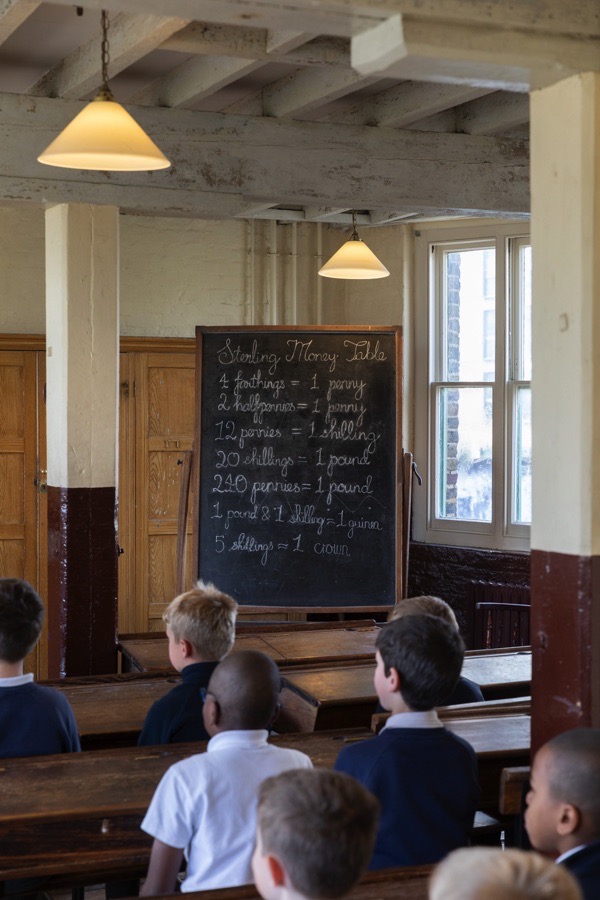
Learning pounds, shillings and pence
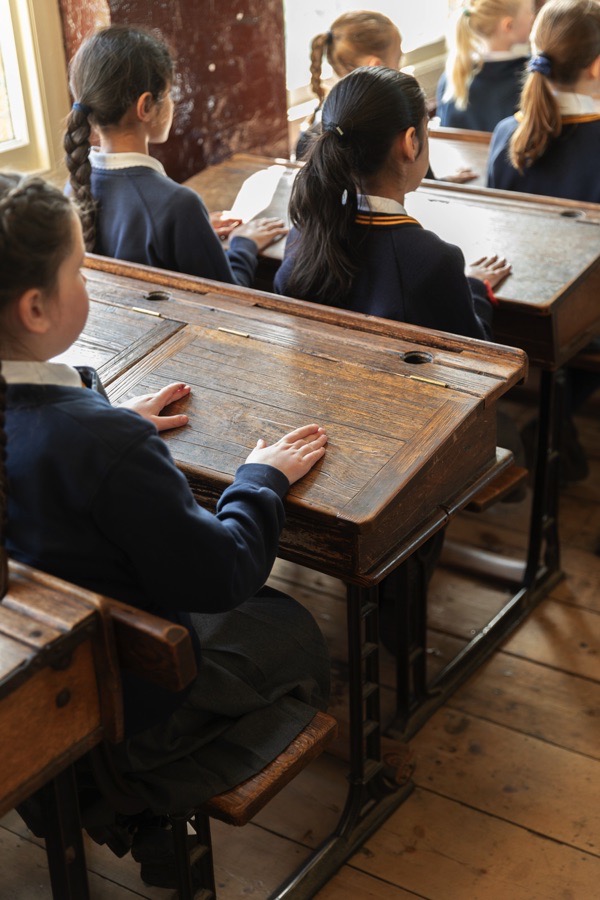
Hands on the table!
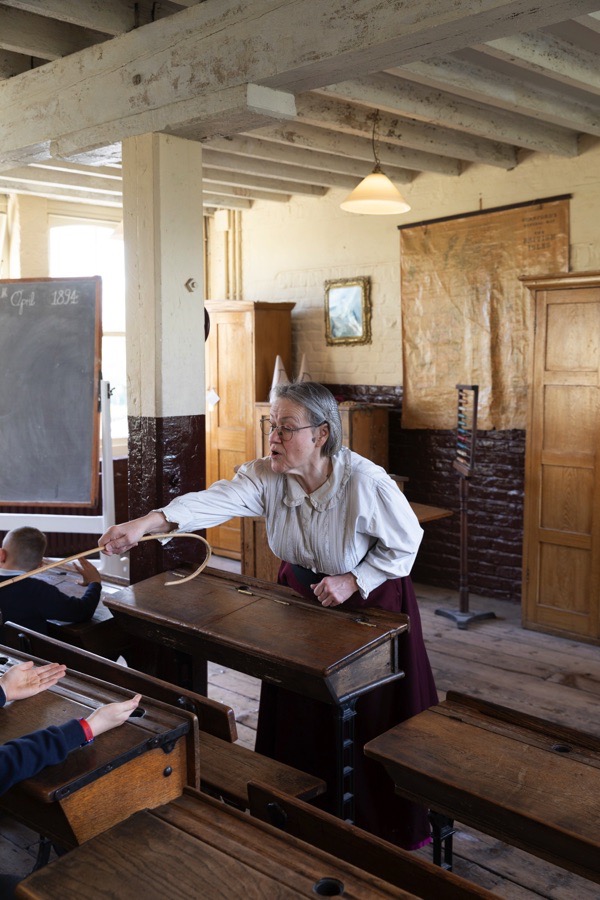
Corporal punishment is dispensed instantaneously
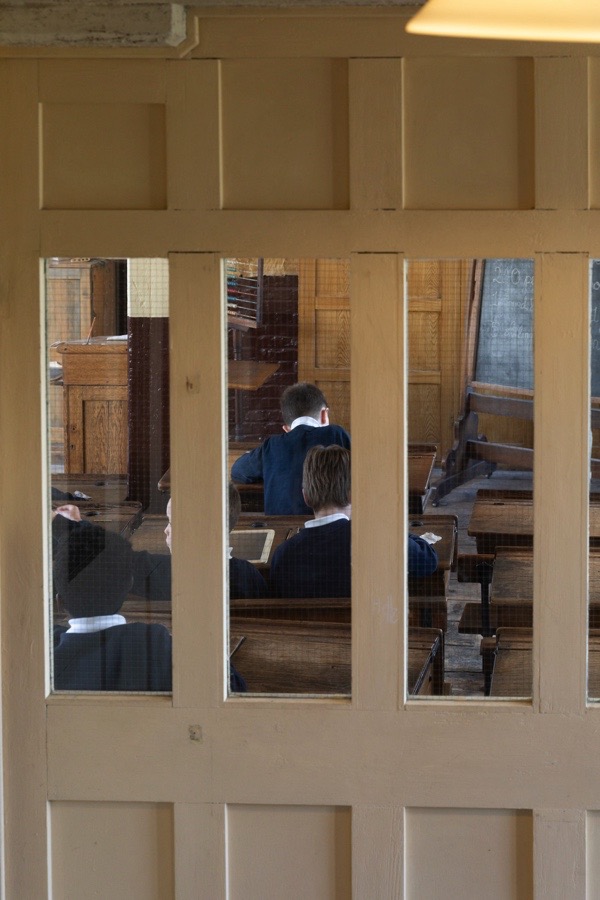
Writing on slates
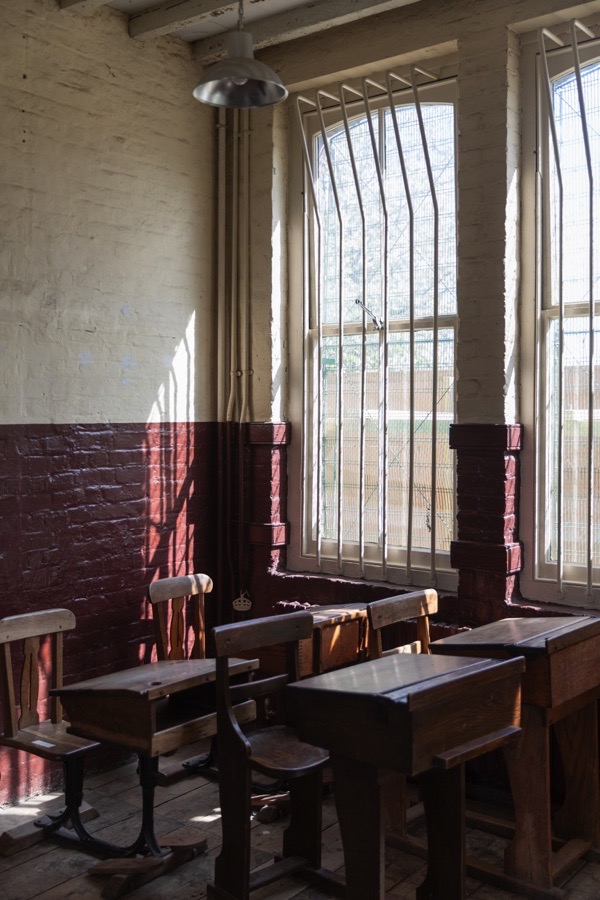
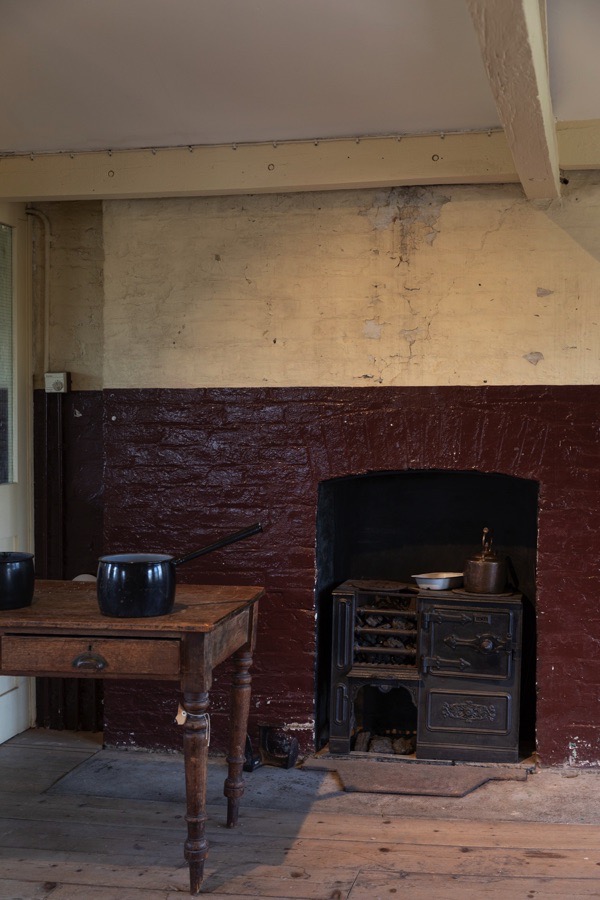
‘kitchen sessions to experience the misery of domestic life before electricity’
Photographs copyright © Rachel Ferriman
The Ragged School Museum is hosting three talks in the next month.
Wednesday 22nd May at 6.30pm – Professor Emma Griffin: Life in Dr Barnardo’s East End












