Underneath Smithfield Market

During the forthcoming festive season, I am offering the opportunity of some gentle exercise and fresh air in the midst of the holiday. Click here to book for The Gentle Author’s festive tours
Prior to the opening of the new LONDON MUSEUM next on Saturday, here is my account of a visit to the site seven years ago, before the work began.
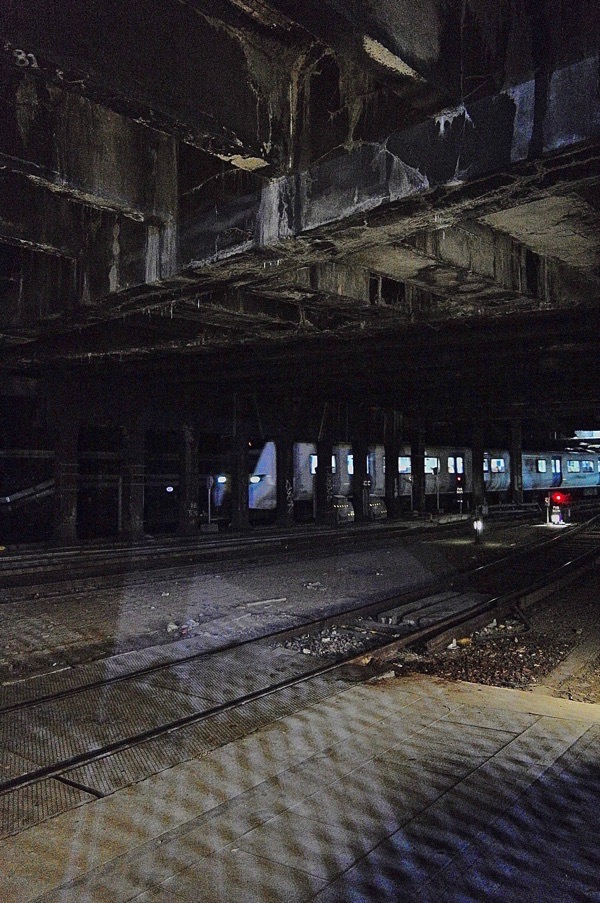
A train runs beneath Smithfield Market
As one of those who fought to save Smithfield General Market from demolition five years ago, I was delighted have the opportunity last week of exploring the infinite dark recesses of this vast structure which extends deep underground. This was the first time I have been inside Horace Jones’ market building of 1868 and it was a heart-stopping experience to enter his soaring iron cathedral and walk beneath the vast dome at last.
If events had turned out differently in 2014, this magnificence would all have been destroyed with only the facade remaining upon the front of a steel office block. So it was gratifying to visit now as a guest of the Museum of London who are taking it over as their new home, adopting a policy of ‘light touch’ in their treatment of the old building.
In announcing the outcome of the Public Enquiry into the Smithfield Market proposals, the Secretary of State criticised the City of London for deliberately allowing Horace Jones’ beautiful market to fall into decay and disrepair. Readers will be pleased to learn the City of London is now paying for extensive and expensive repairs which are underway.
When I arrived, the traders’ pavilions that had accumulated to fill the market floor were being dismantled to reveal the open space for the first time since the nineteenth century – this majestic hall will be where all visitors enter the new museum. The only major architectural decision taken here regards the location of the staircase leading down to the subterranean galleries below. After some discussion of a central spiral staircase under the dome, permanently restricting the possibility of displays, a decision has been taken to cut a straight staircase along the north side of the building leaving the ground floor clear for exhibitions.
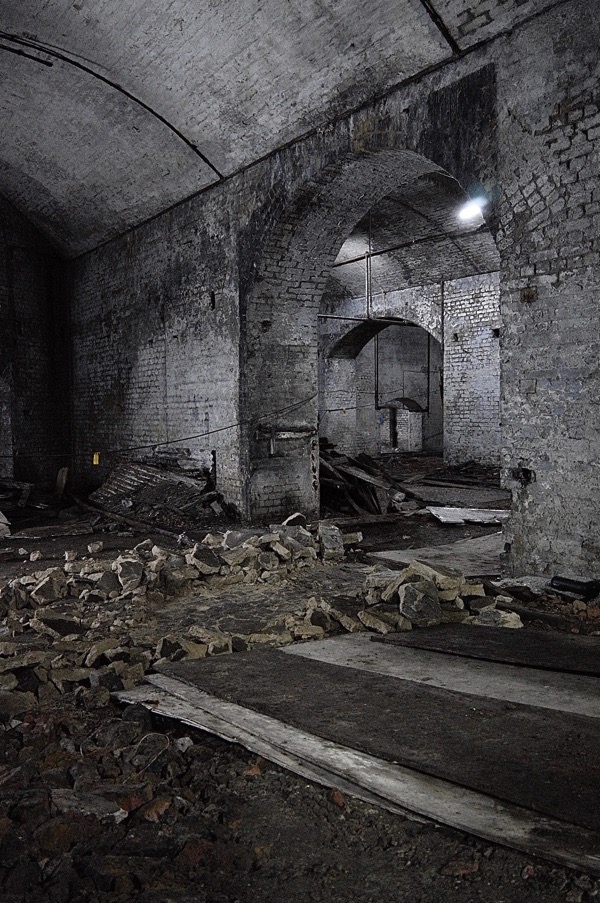
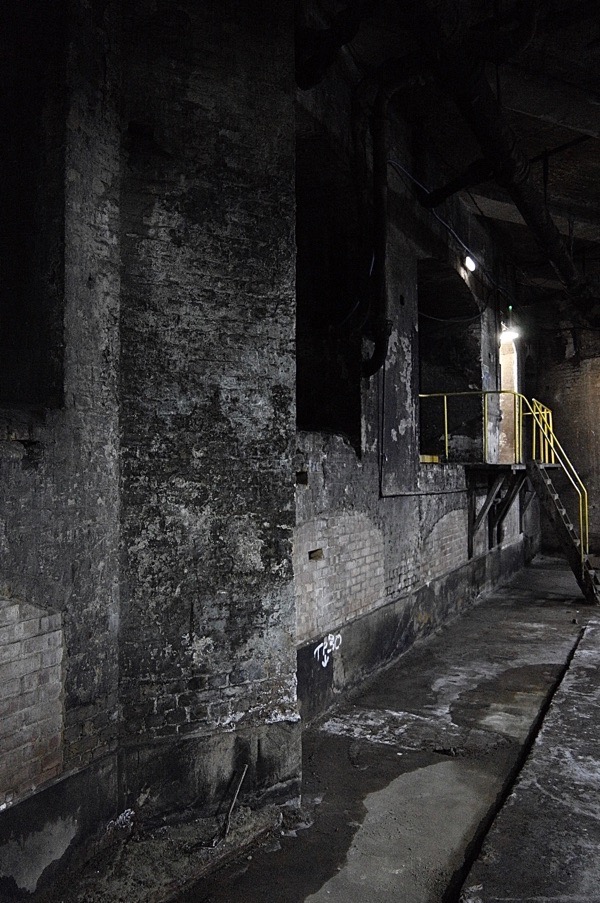
The great drama lies beneath. Here is an enormous black underground cavern, wider than the market above, with a vaulted roof of brick, grimy from steam trains. This was constructed as a railway station where trains from the London docks once brought meat which arrived from across the world. Deliveries were unloaded onto carts that drove up the ramp to the market above.
As you pause to contemplate the wonder of it, a diabolic rumble fills the darkness. It is a train coming! You stand in the darkness as a Thameslink train full of commuters rattles past, coming from Blackfriars on its way to Farringdon. The passengers sit preoccupied in their lit carriages, unaware of the watcher observing them from the darkness. One day, these commuters will peer out from their windows and discover they can see directly into the galleries of the Museum of London and, one day, visitors to the museum will be able to observe trains passing from a window in the gallery.
Beyond this empty hangar, lies another deep space with brick arches soaring overhead and dripping vaults receding into the velvet blackness of history. The moisture that permeates the structure evidences the presence of the River Fleet flowing below. You stand beneath London, between the underground trains and the subterranean river. You are at the heart of the city. It is dark. It is a space of infinite mutability. It is a place with soul, where the past lingers. It is a natural home for a museum of London.
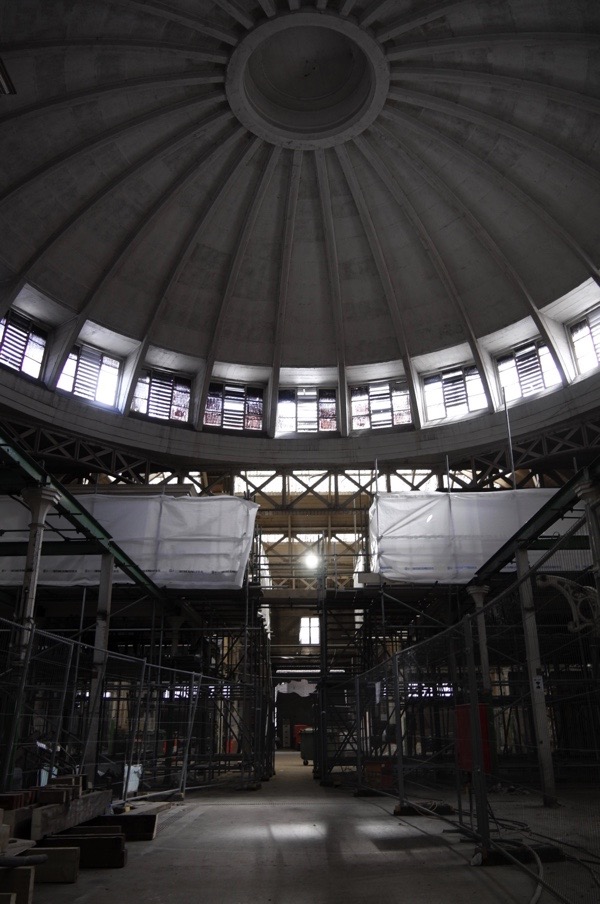
This concrete dome was constructed post-war to replace the original destroyed in the Blitz
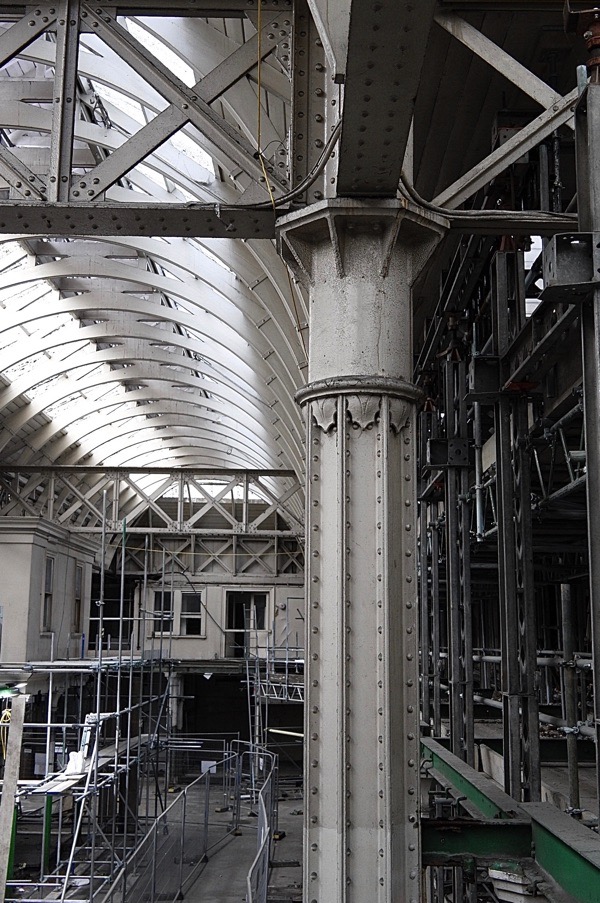
The rare ‘phoenix columns’ that support the roof are hollow, used in preference to cast iron, to minimise the weight of the structure which sits over a tube line
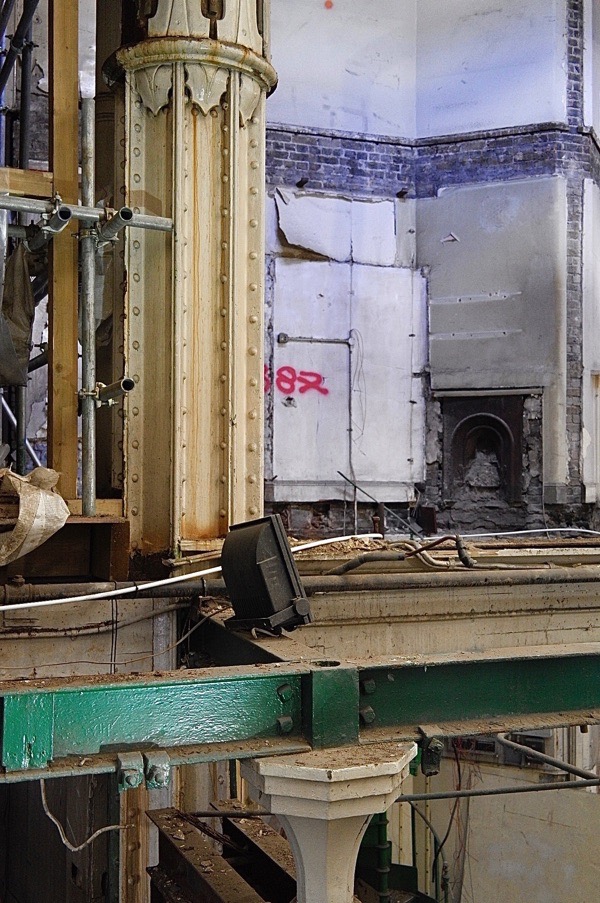
First floor pavilions added to the building as traders offices are currently being removed
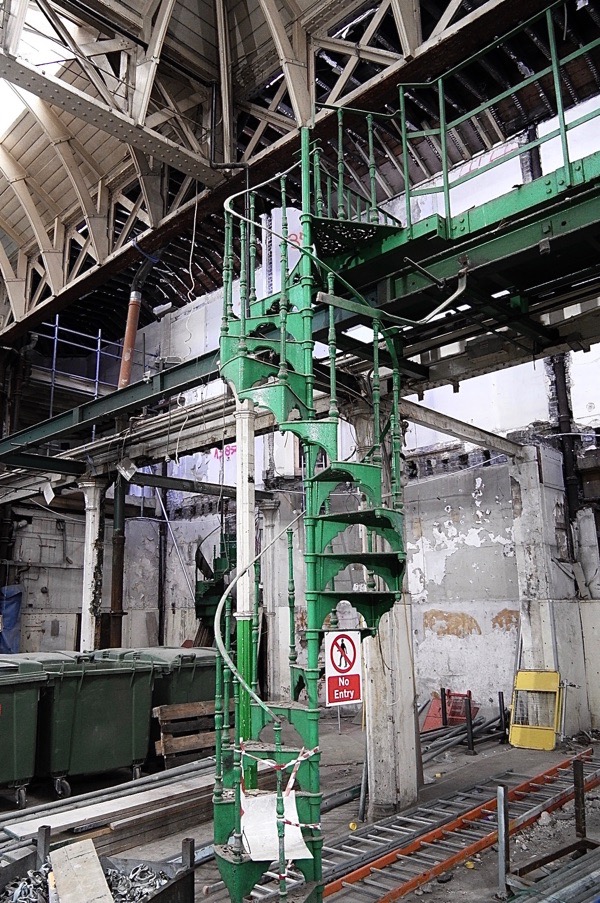
A spiral staircase leads to an office that no longer exists
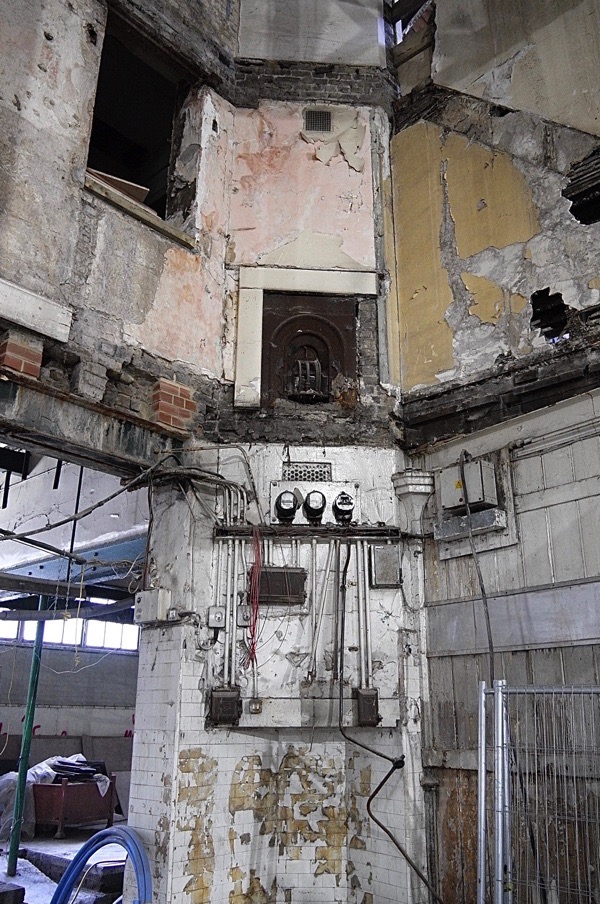
Hanging fireplaces attest to former first floor offices
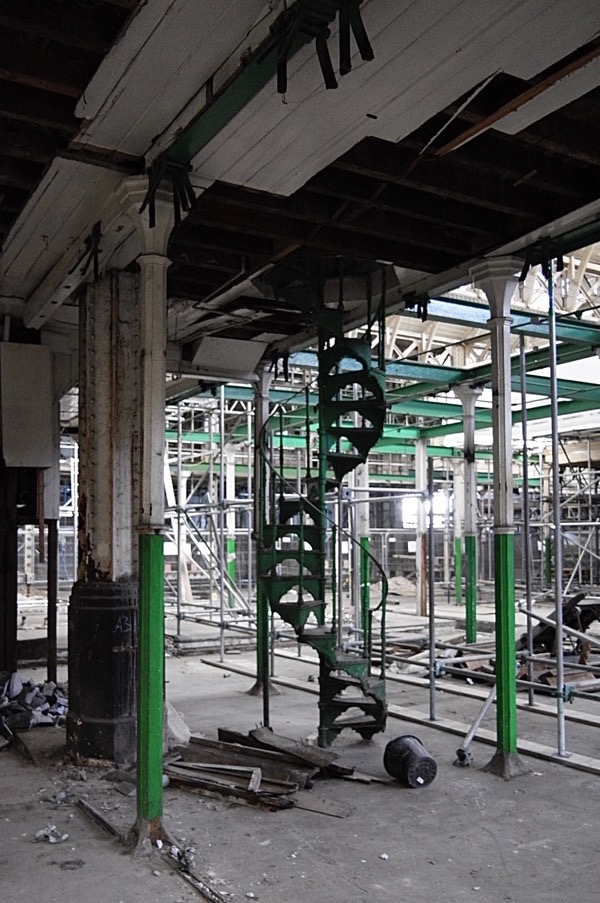
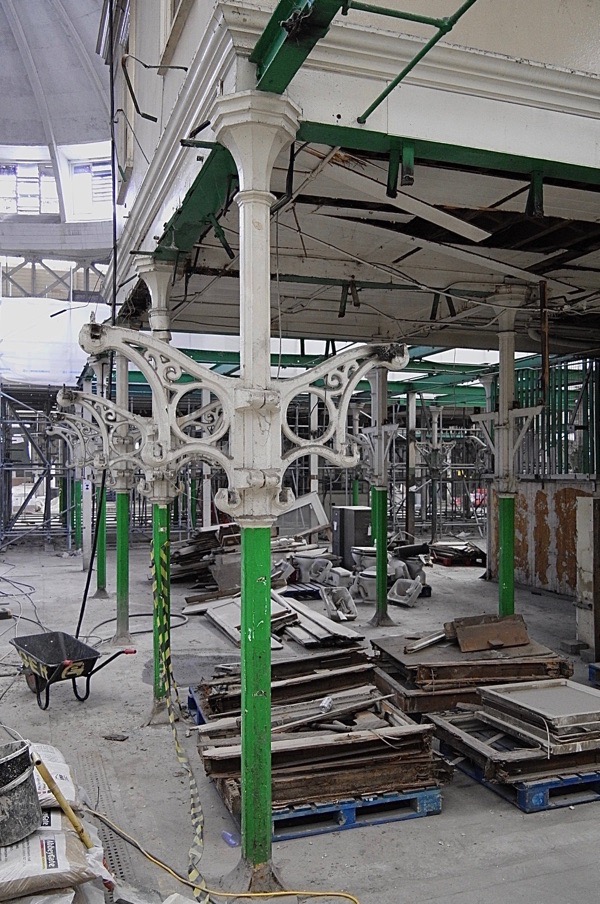
Cast iron racks once supported rails for displaying meat
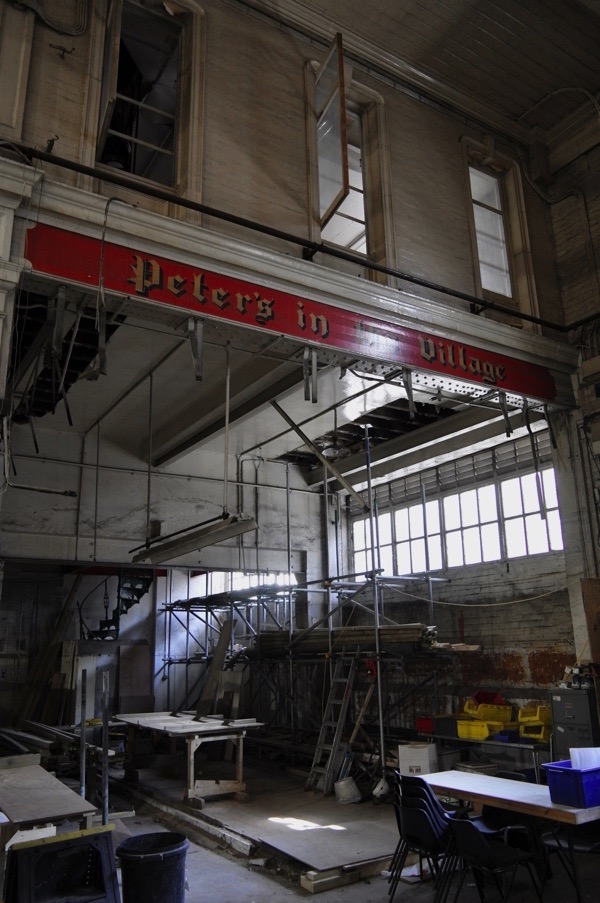
The agglomeration of traders pavilions on the ground floor was known as ‘the village’
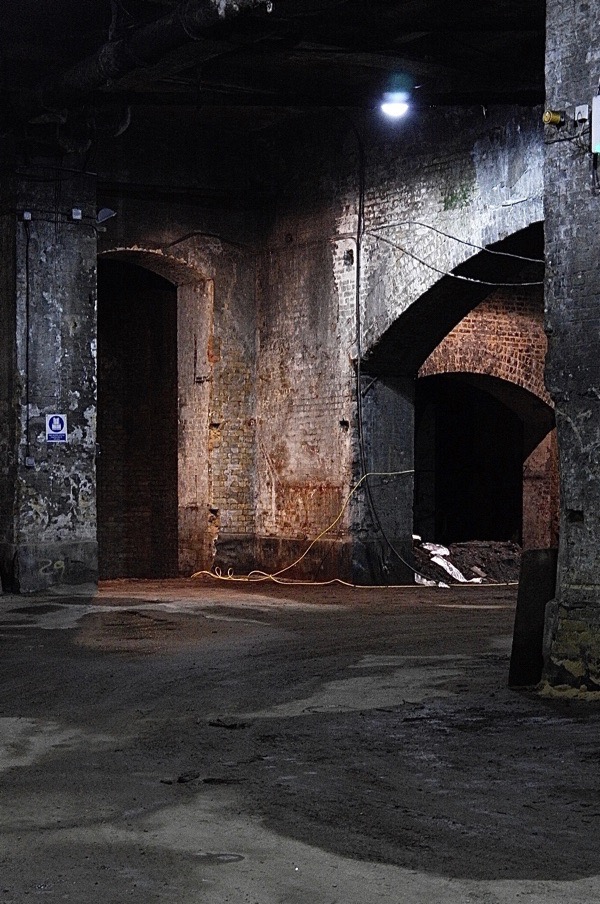

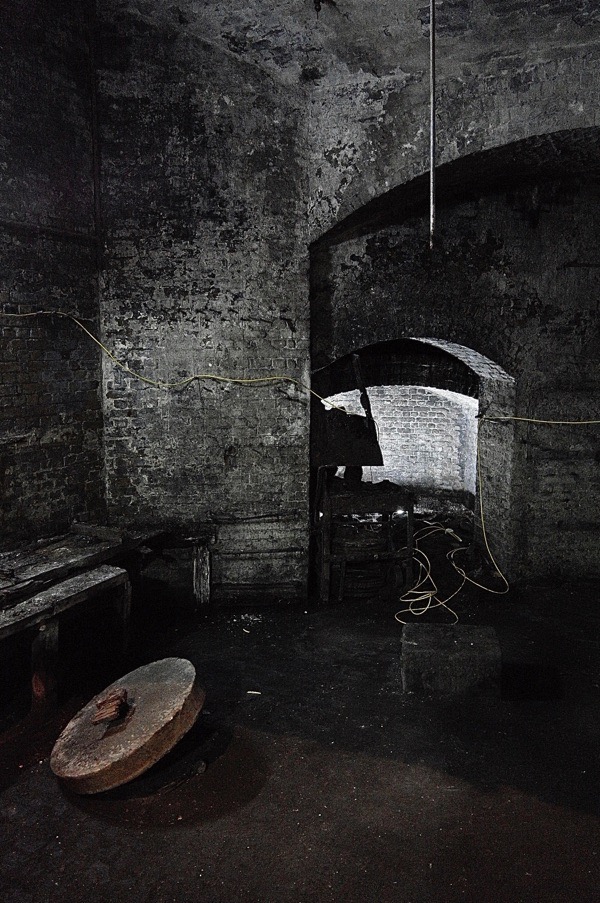
Abandoned grinding wheel for sharpening knives
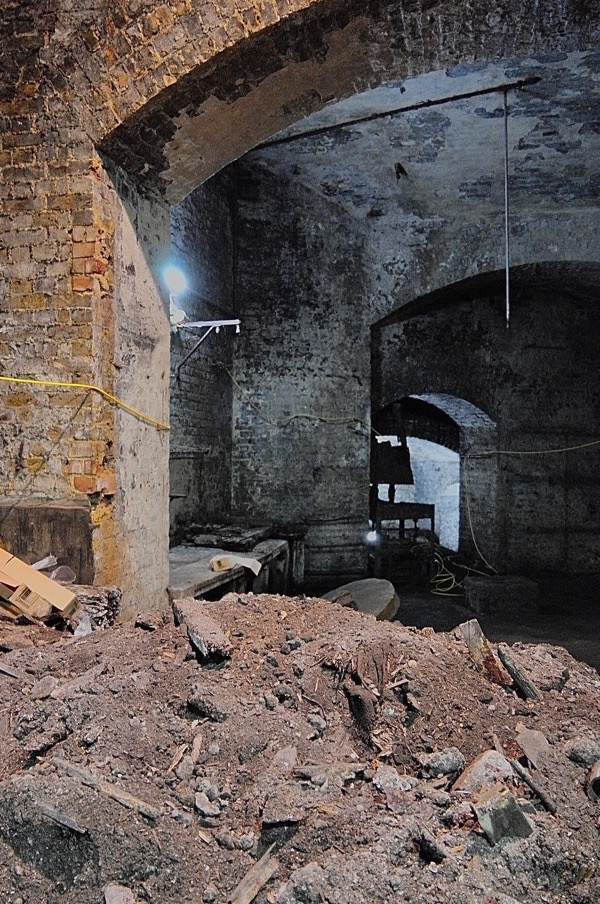
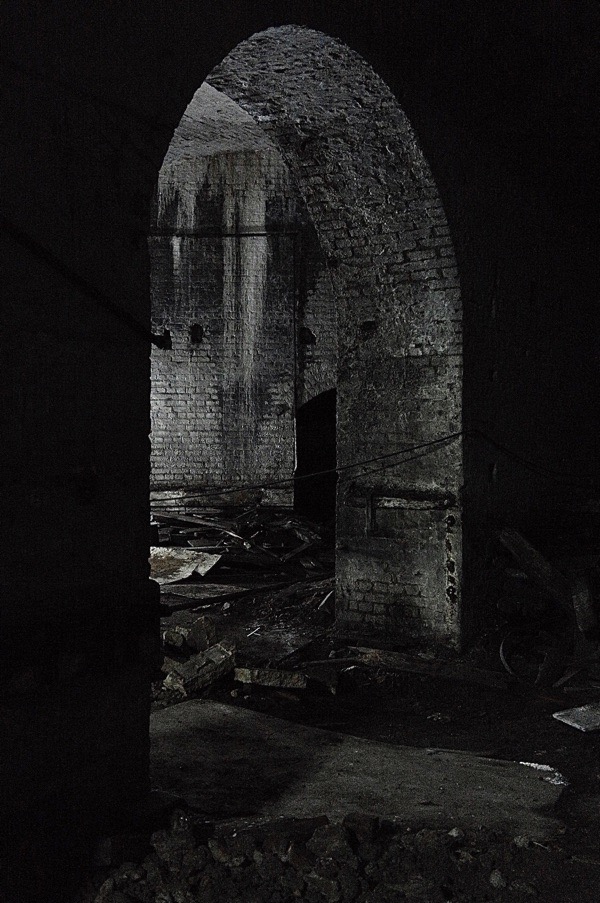
Ancient dripping brickwork indicates the vicinity of the River Fleet flowing beneath
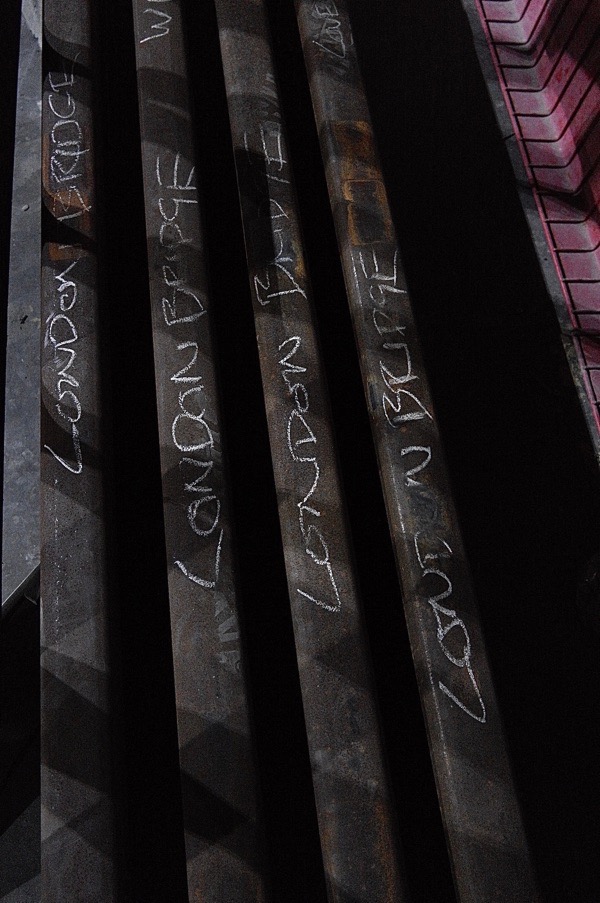
Thameslink rails stored under the market
You may also like to read about