
The Jungle On The Corner Of Princelet St
Contributing Writer Delwar Hussain remembers growing up in Puma Court, Spitalfields, in the nineteen-nineties
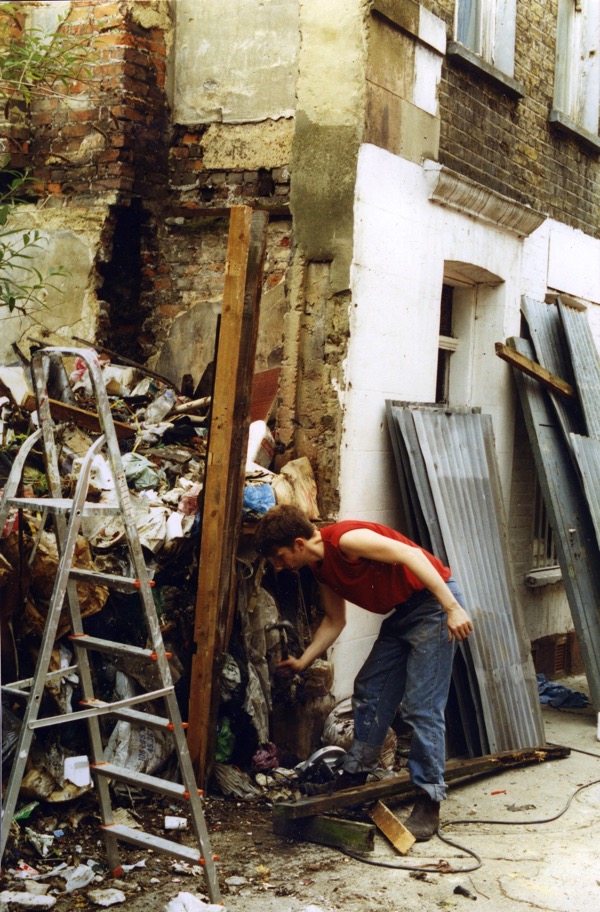
Simon Chambers at the entrance to the ‘jungle’
Next time you walk through Spitalfields, stop at the junction of Princelet St and Wilkes St. Stand with your back to Brick Lane and look closely at the house on the right hand corner. You may be surprised to learn that buried beneath 1 Princelet St is – or rather once was – a ‘jungle.’
Let me take you back to the early nineties when Spitalfields was a place of abandoned buildings, bustling warehouses and overcrowded factories. There was no house on the corner of Princelet St and Wilkes St. It was literally a bomb site and piled with rubbish at least ten feet high, forever threatening to topple over onto passersby. A neighbour, Charlie Brandt who lived at 13 Wilkes St, overlooking the corner, built a fence out of timber and corrugated sheets, yet still the rubbish accumulated.
A plan to clear the rubbish and make a garden upon this site emerged. Like many things, no single person suggested the idea yet organically it came together. The plan was discussed between neighbours and, slowly, things began to happen. History had become piled up in front of us, so we set ourselves the challenge of making a new start.
It took five skips over a period of several months to clear the rubbish from the site. At the very top were plastic shopping bags of domestic refuse, chair legs and glass. Amongst these were syringes, balls of aluminium foil and used condoms. Then followed waste from nearby garment factories, rusty sewing machines and bags of shredded leather and cloth. Underneath it all, rubble and concrete from the Georgian building that had once stood there.
In 1993, I was a shy, introverted thirteen year old. I spent much of my time with the family cat Sheba and thought swearing was one of the worst things a person could do. I dreamt about being a ballet dancer and I did secret and exclusive performances for my siblings in my bedroom. I rarely left the house except to go to the Whitechapel Library to borrow Nancy Drew novels.
Whilst helping clear the site, I met youth workers, teachers, unemployed people, restaurant waiters, a storyteller, single parents, factory workers, a prostitute and other kids. These were the people who lived and worked in the surounding streets, with personalities and histories of kinds I had never encountered before.
Recently, I spoke with Simon Chambers who squatted 3 Princelet St, about what he remembers from that time. I met Simon just before the ‘jungle’ begun and, over the proceeding years, he became my oldest friend. “We had to clean out the space because rats were coming into the house and we asked the council several times to do it, because it was their land, but they refused. So we decided to do something about it ourselves,” he told me.
When the last of the skips was full, I remember all of us standing in the empty space, confident about what we had done but quite unsure as to where we were headed. Yet before long the ‘jungle’ began to take shape. I do not know where the name came from. Maybe it was a reference to the amount of rubbish or, possibly, an over-estimation of what we were going to create?
Neighbours donated soil, plants, bits of wood and tools. We built a wall using cobble stones that we found and Simon made benches out of railway sleepers. “In those days, people would dump all sorts of things that we could pick up. I found a great big door in Liverpool St that had been chucked out when a building was being cleared. We used this for a fence and then painted the wood with engine oil because we thought it would stop it rotting,” he recalled.
After the initial euphoria, we held meetings to discuss what we wanted out of the ‘jungle.’ It was a cultivated place where everyone had a voice and everyone was listened to. Over time, participating in these conversations changed me from the person I had been.
We discussed what to do about the massive buddleia with its lilac flowers that had grown amongst the rubbish. With my newly-developed sense of confidence, I led the charge to cut it down. I wanted the jungle to represent something new, a break from what it had been, but Simon argued that the buddleia should stay, that it had grown while the site had been abandoned and had its story to tell – plus it attracted loads of butterflies. So the buddleia stayed and I did not spend too much time agonising over it, because there were plenty of other things going on.
We organised parties that spilled out onto the street. One autumn, we led a lantern procession from the jungle to the Spitalfields City Farm and performed our interpretation of the Guy Fawkes story. We even considered the possibility of doing an alternative version of the Ripper tours that were becoming popular then, with the idea of inviting tour groups into our jungle.
Sets of keys were necessary to get in through the fence. My younger brother Ali, who was also involved in creating the jungle, remembers the keys circulated in such a way that they were always available from one of the neighbours whenever they were needed. He used to go and chill with his friends in the jungle.
The jungle thrived, becoming the centre of the community. A tree was planted and a fishpond dug out. There were treasure hunts at Easter and fireworks at New Year. Ali and Simon remember the bonfires, when we cooked food together and sang.
Over time, there were differences of opinion about who the jungle was for, and when and how it could be used. Some neighbours were concerned that the jungle was being used by ‘unwholesome’ people and the keys were finding their way into the hands of those we did not know, and stolen car radios were turning up amongst the bushes. There was fear that the jungle might become similar to its adjacent plot, also a bomb-site, that was cleared and turned into a car park, where junkies took heroin and prostitutes brought tricks. Yet others said that they did not mind how the jungle was utilised as long as people were respectful of the place.
Such are my memories of the impressions which that time and place left in my mind. With hindsight, the jungle and the discussions it generated seem quaint compared to the monumental changes that were occurring around us. Towards the end of the jungle, in the late nineties, ruined and derelict houses became scarce in Spitalfields as they were bought up by the well-heeled, who fashioned them into the homes they imagined them to once have been.
In my mind, it was around this time that the presence of estate agents became pervasive, though they had stalked these streets for longer than I was conscious of. Our neighbours were changing. Tempted by wads of money, many were moving out. Sweatshop workers were kicked out. My friend Simon, who had lived in Princelet St for many years, was forced to leave too.
Many of the buildings were replaced and occupied by people whom we did not know and whom we rarely saw, who led an altogether different sort of life. A developer came knocking on the doors of the jungle too. No one I spoke with remembered precisely when this happened or the details of it, but the land was sold and the jungle was demolished along with everything it stood for.
I was not around to see this happen. By then, I had become a fully blown teenager, interested in other things. I made new friends with new excitements that took me away from the jungle. I turned my back on it, blotting it out of my memory in order to make room for the next phase of my life. My brother Ali cannot remember the changes either. “One day it was the jungle and next a house had been built on top of it,” he said to me.
Only years later when the streets around it had irrevocably changed, the ‘jungle’ and its existence came back to me, and I realised that the restless roots below 1 Princelet St grew from a different time, of different ideals, sensibilities and possibilities.
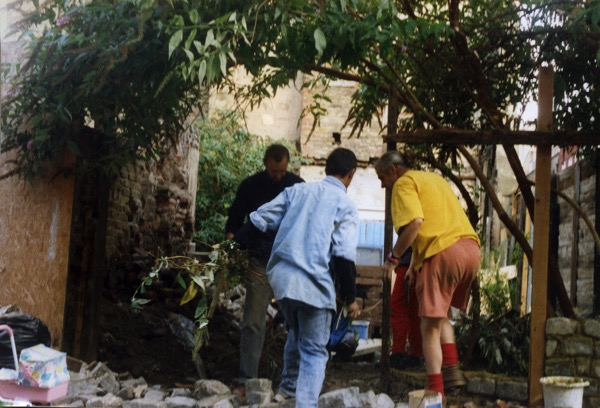
Delwar (in blue) assists neighbours in clearing the ‘jungle’
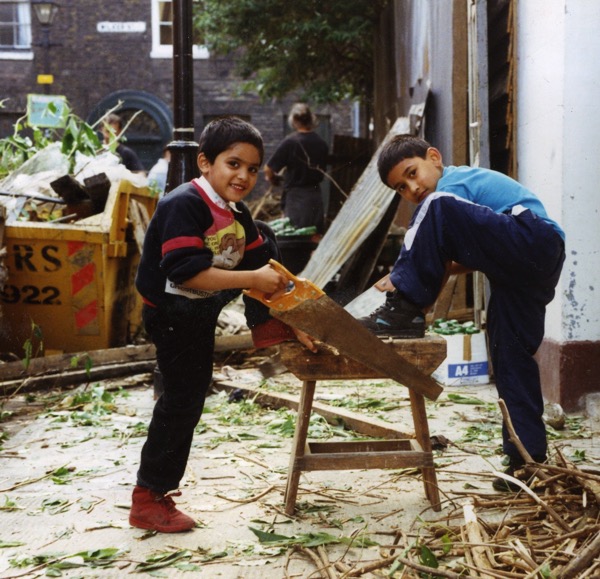
Iqbal Hussain and pal
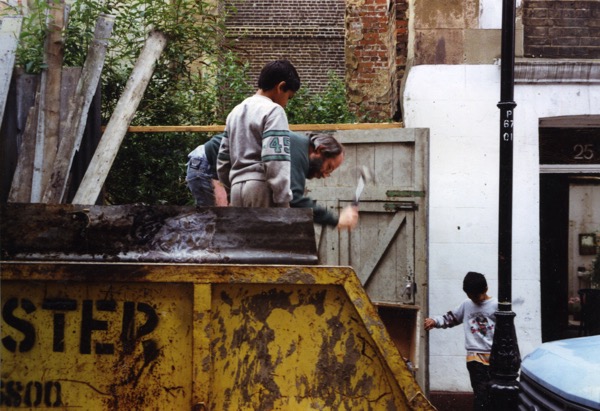
Charlie Brandt (resident of 7 Wilkes St with helpers)
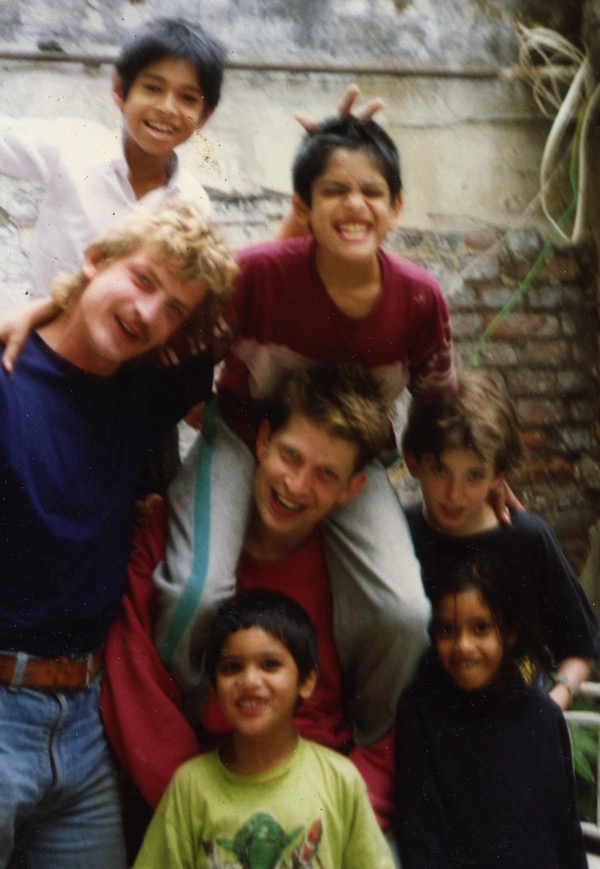
In the centre, Simon Chambers with Ali Hussain on his shoulders and Iqbal Hussain in front, Halima Hussain to the left, surrounded by neighbours in 1993
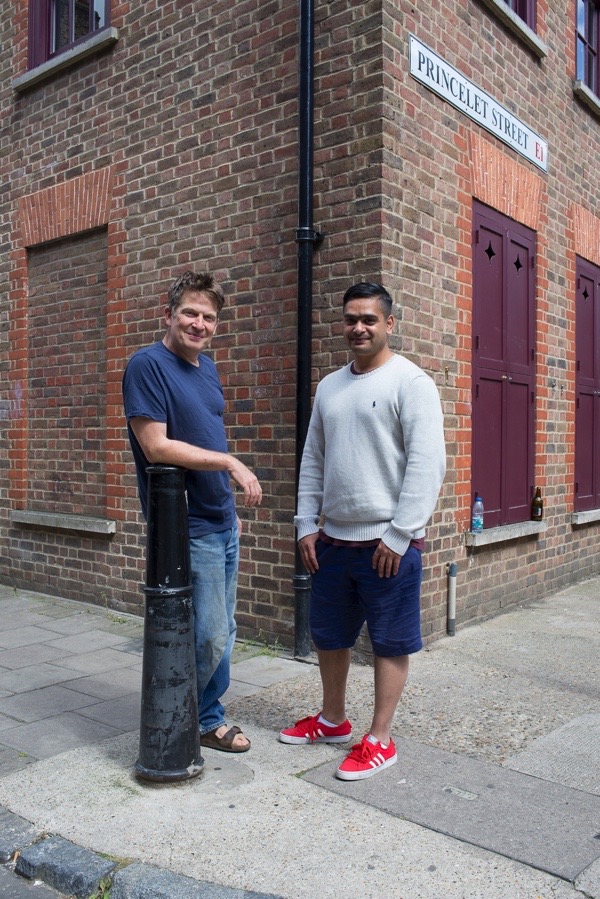
Simon Chambers & Ali Hussain stand on the corner of Princelet St today
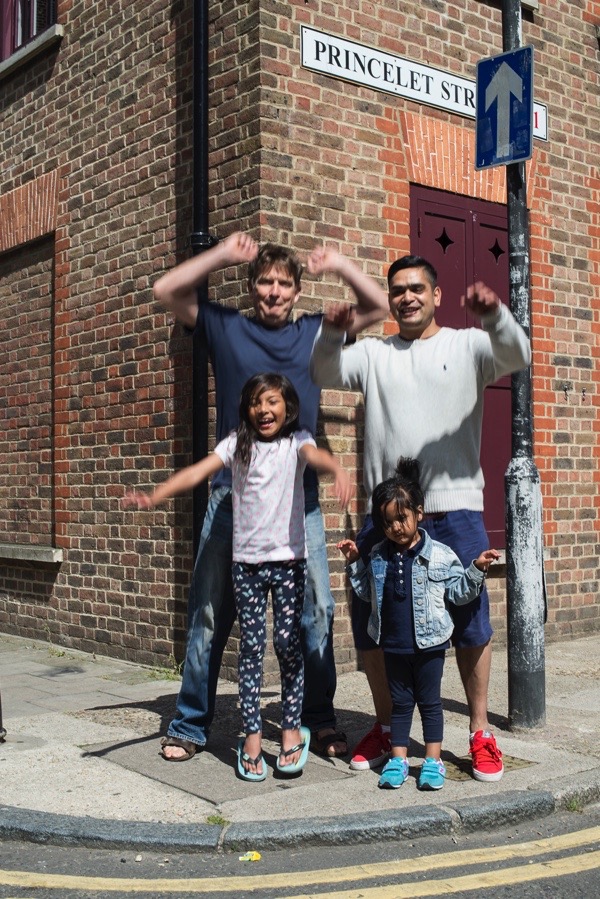
Simon & Ali with Ali’s daughter and niece
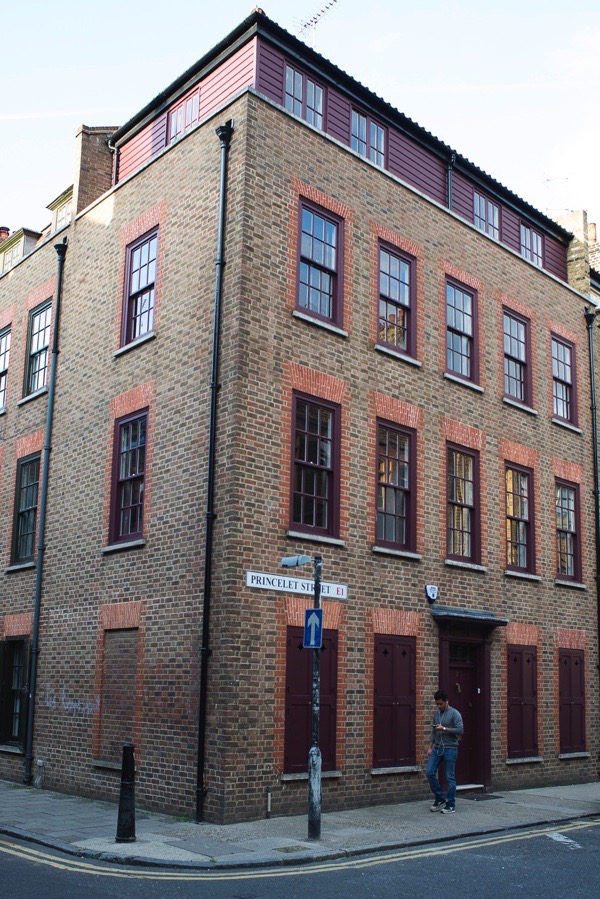
The corner of Princelet St & Wilkes St today where once there was a ‘jungle’
New portraits © Sarah Ainslie
You may also like to read these other stories by Delwar Hussain













Such an evocative memory of this time. I was working at Canon Barnett school 1991-94. I have memories of going out doing home visits for new starters and walking round the still remaining bomb sites, covered in buddleia! Hard to believe how it used to look now.
What a beautiful story of fellowship and friendship. Wonderful memories for everyone involved.
The community doing what it does best – getting ‘stuck-in’ & sorting out the problem when authorities are remiss.
They all look so happy too! Great effort & great result!
My heart breaks that city. didn’t care about the jungle .Now a horrid modern ugly building. Cities hate parks and green space.. Cities (city govt) only care about more money.
Cities don’t care about green space. and butterflies..only money and profit .
Tragic.
A lovely beautiful story of local history of neighbors doing what the city failed to do or even care about.
thank you
Debra
True communities back then, everyone knowing and helping each other