
At The West India Docks Impounding Station
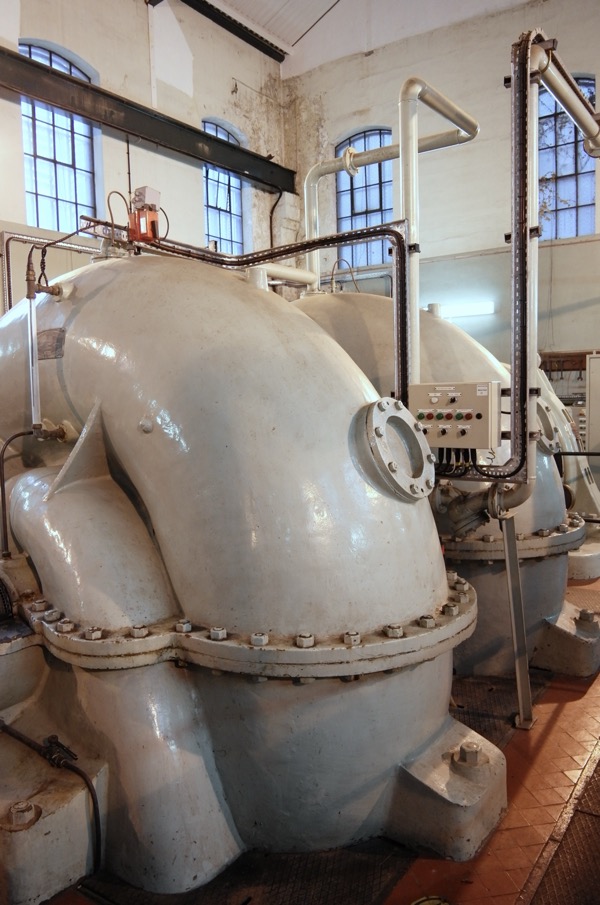
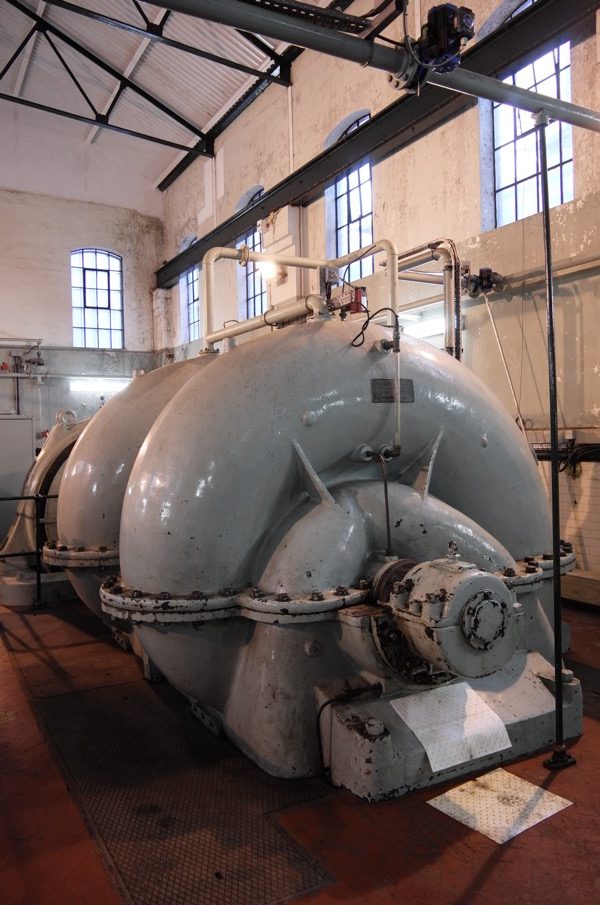
This is one of three monster pumps whose purpose is to maintain the water level in the West India Dock at Canary Wharf. Coiled up like giant sea serpents, these mysterious green creatures inhabit an impounding station built where the dock meets the Thames at Limehouse. From the exterior, this old brick shed reveals nothing of its function, yet once you step inside you enter another realm where the pumps line up dutifully to serve their purpose, like cows in a milking shed or horses in a stable. It is quite an adventure to climb down the stairs into the vast industrial space that houses the mighty pumps and discover that the building is much larger than it looks on the outside.
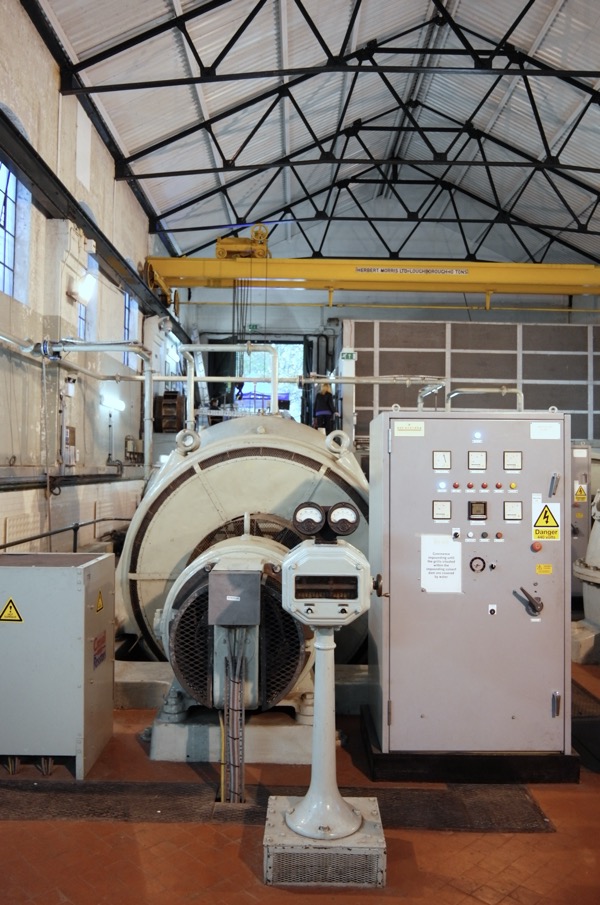
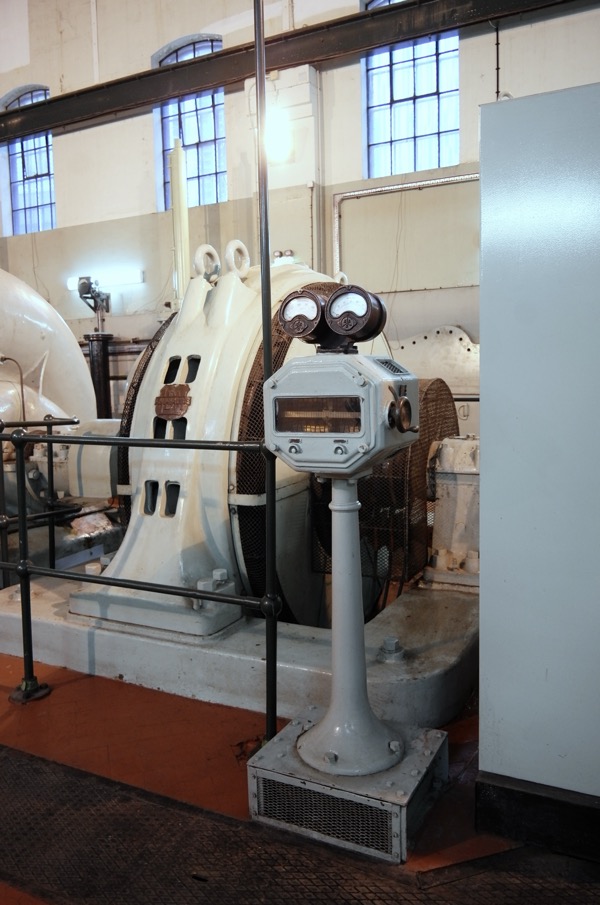
Built in the twenties and opened in 1930, the West India Docks Impounding Station is a shining marvel of engineering that is maintained in constant good working order today by the Canal & River Trust. Gauges measure the water in the dock and, if it drops below the desired level, the electric pumps automatically whirr into action to top it up, drawing water from the Thames. Usually only one of the pumps is required, with another as a back-up and a spare in case one of the others breaks down. All eventualities are covered.
Long ago, when the constant to-and-fro of the ships into the tidal Thames caused the water level in the docks to fall, the impounding station became necessary to ensure that the water was kept at sufficient level to prevent grounding of vessels in the dock. On the day I visited, our guide took us first to gaze in wonder upon the great expanse of water in the dock hemmed on all sides by tall towers and explained – to my alarm – that if all the water drained out of the dock then the buildings might fall down. I was marginally relieved when it was explained to me later that, when the docks were constructed two centuries ago, they were built with bevelled brick walls which make them exceptionally robust structurally.
I do wonder if the guide had been pulling my leg about the towers at Canary Wharf collapsing if the water drained out, but I take reassurance in the continued existence of the impounding station to ensure that I will never find out the truth, or otherwise, of this apocalyptic supposition.
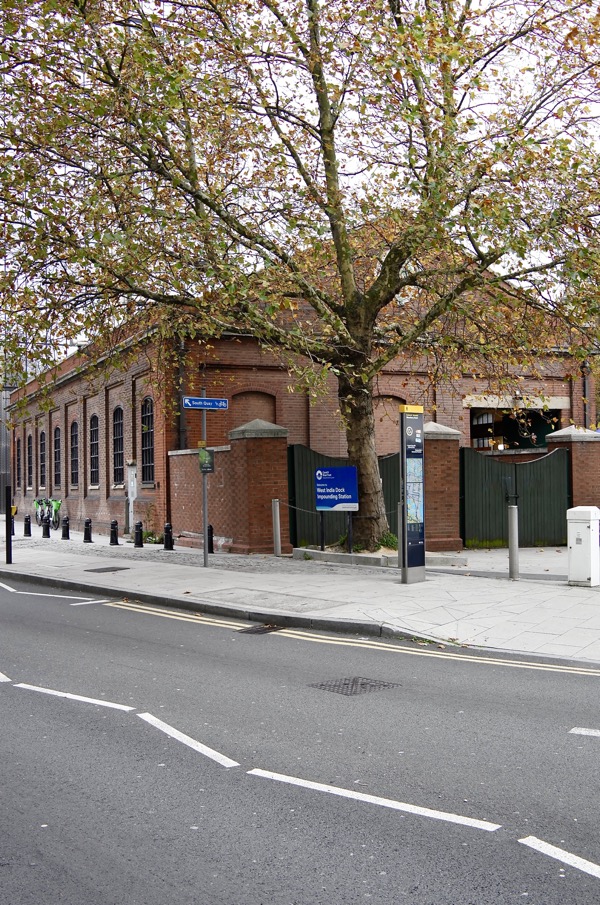
The anonymous exterior of the West India Docks Impounding Station
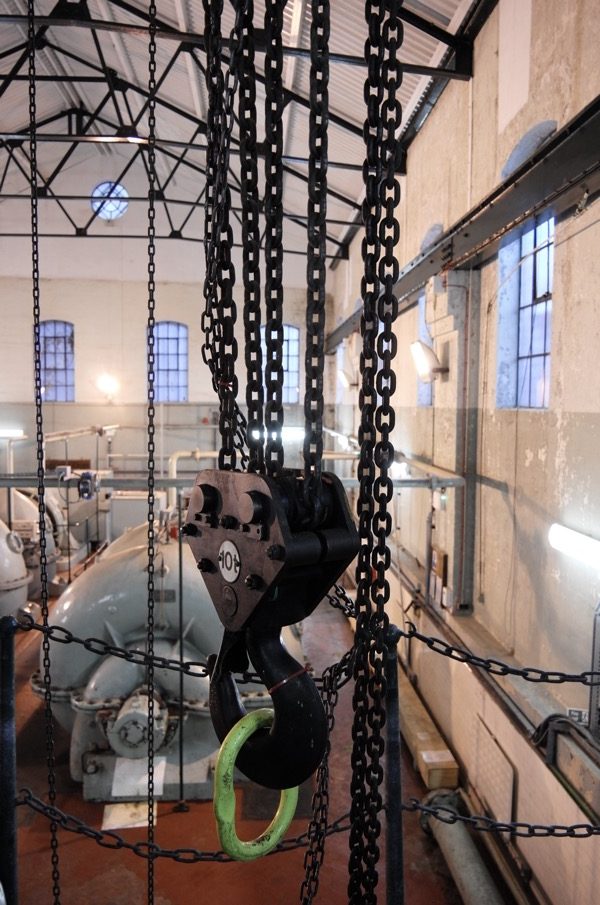
‘You climb down the stairs into an industrial space and discover that the building is much larger than it looks on the outside’
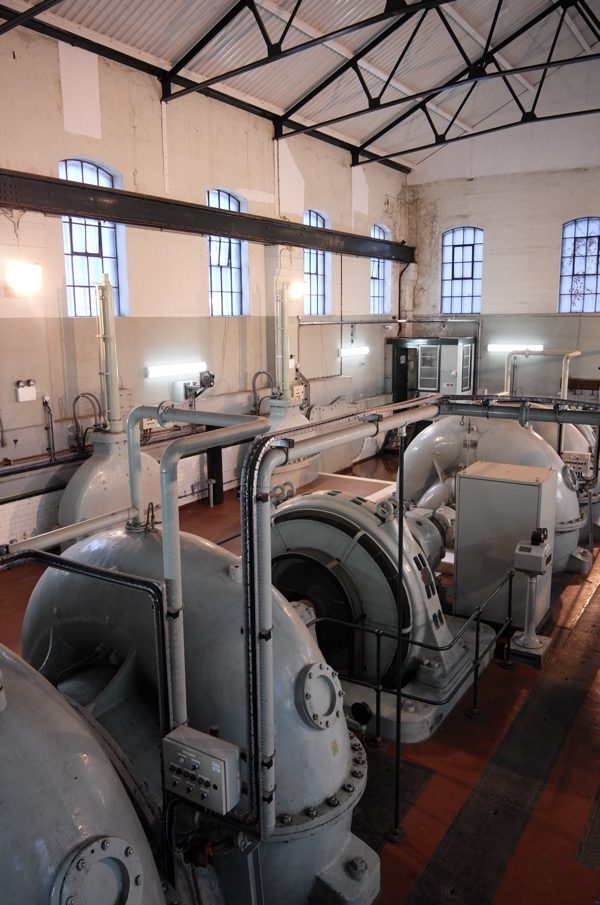
‘The pumps line up dutifully to serve their purpose, like cows in a milking shed or horses in a stable’
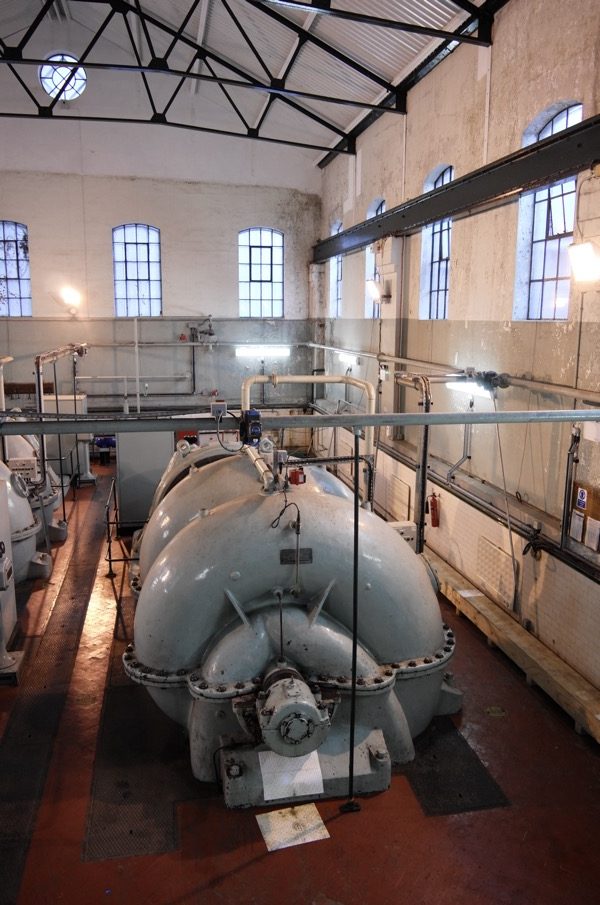
‘Coiled up like giant sea serpents’
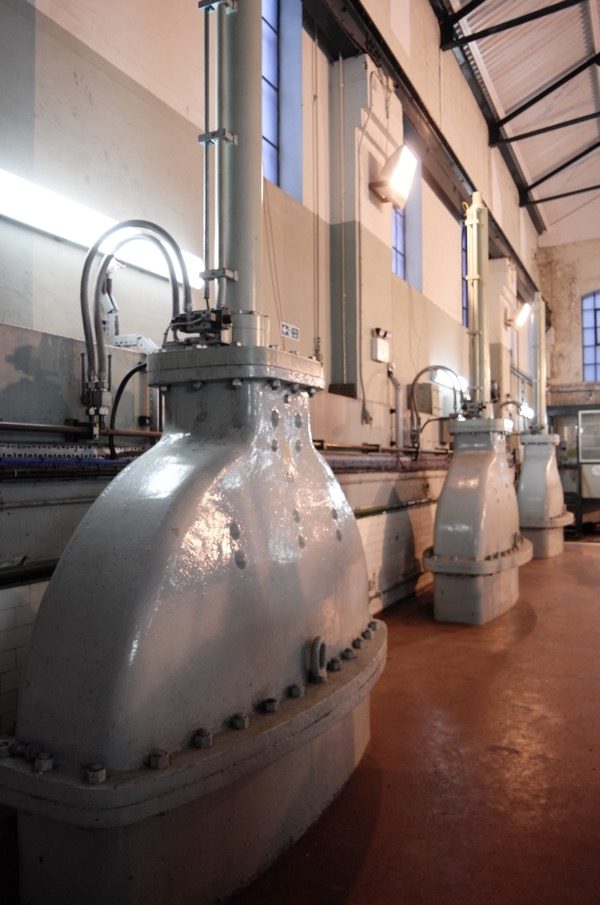
These contain blades that may be lowered or raised to control the ingress of water into the dock
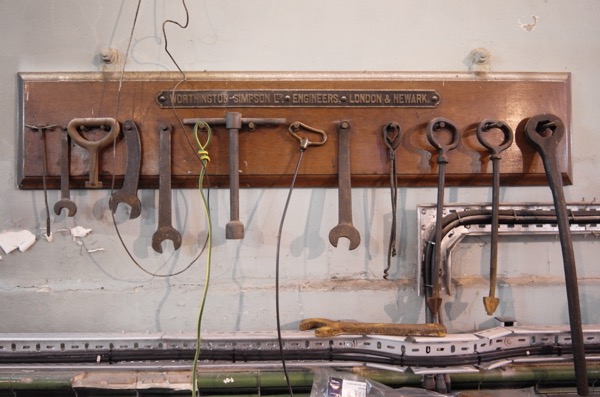
Maintenance tools from 1930
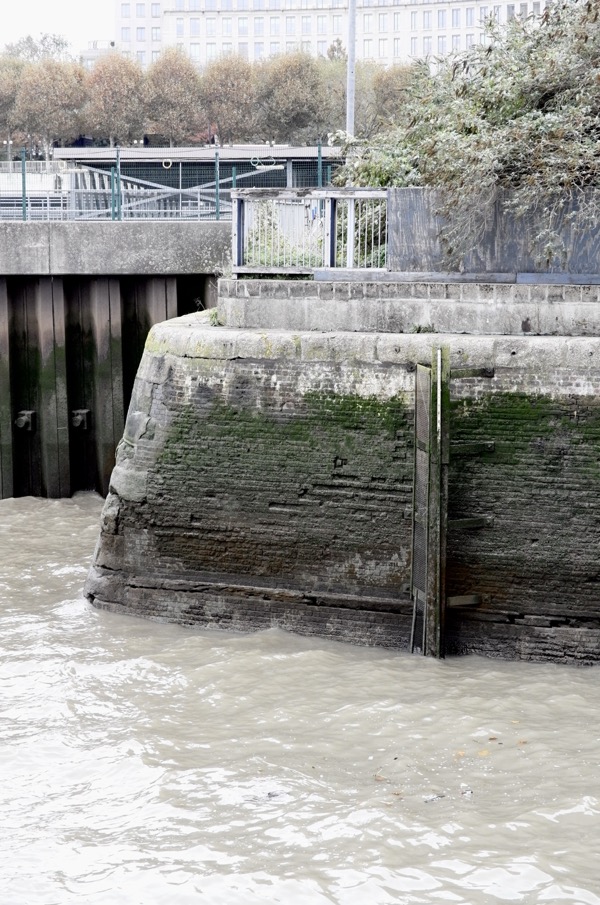
Entrance to West India Docks, originally built as the City Canal in 1805 and then sold to West India Dock Company in 1829 to construct the dock.
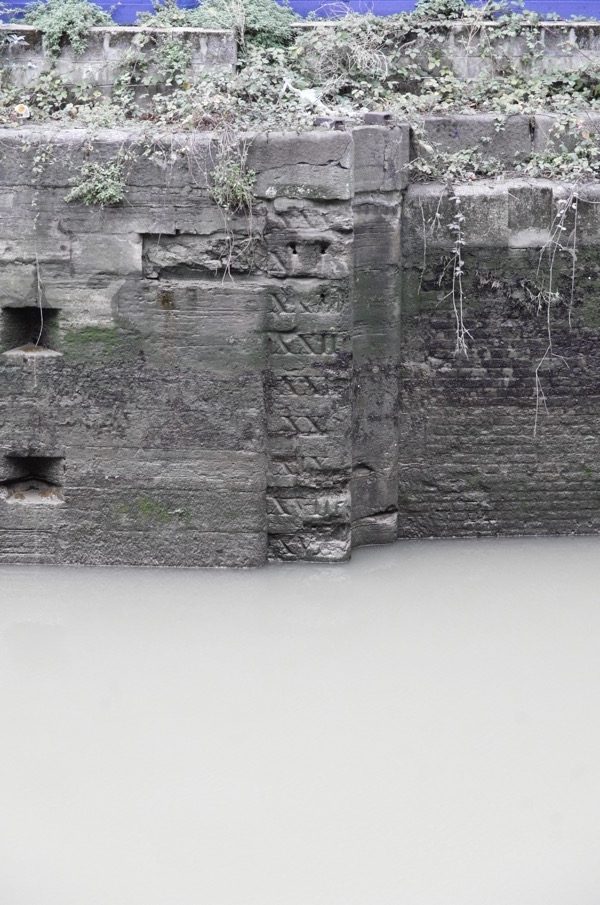
Carved numerals indicate the water level at the entrance to the dock
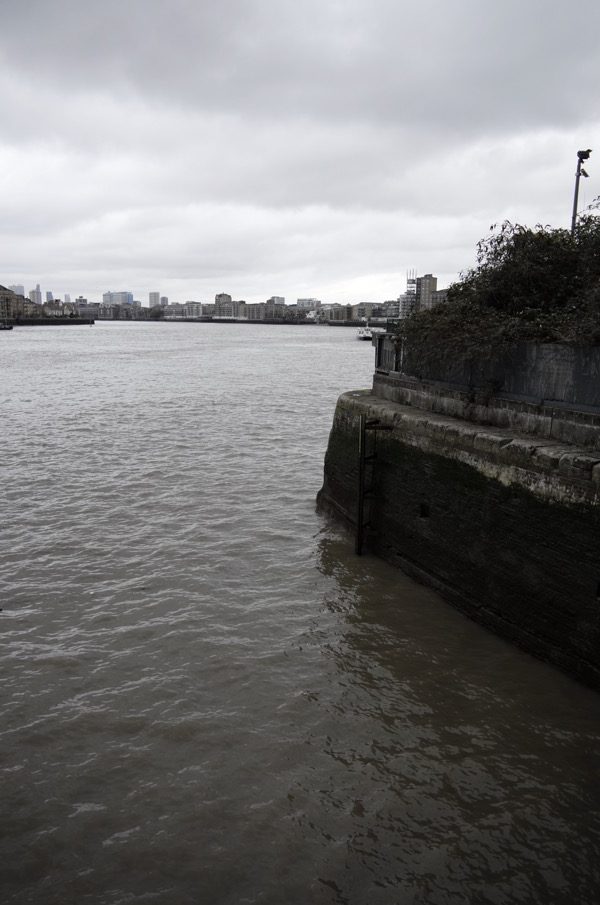
Looking west up the Thames from the dock entrance at Limehouse
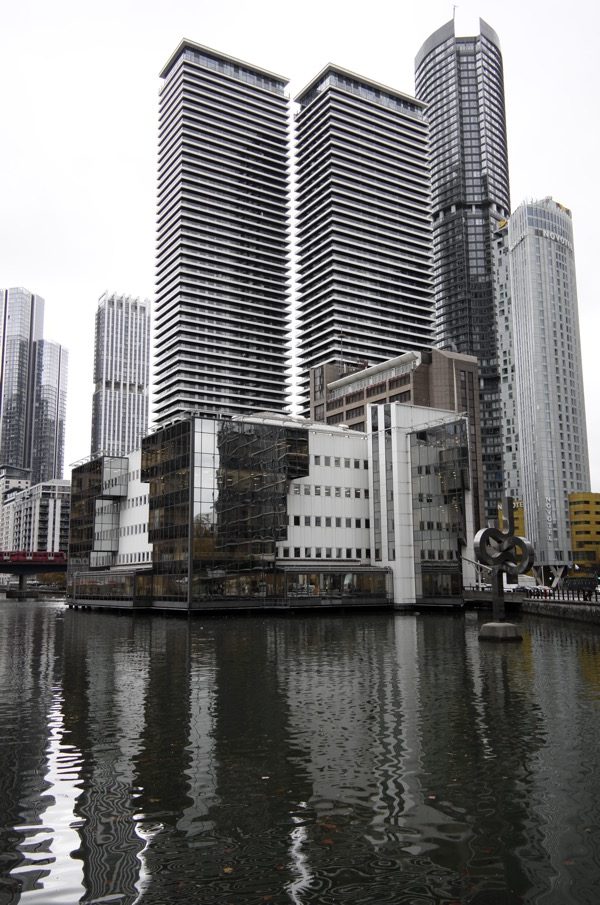
West India Docks is surrounded by tall towers today
Contact the Canal & River Trust to find out when the Impounding Station my be visited














Glad to see you made it down there. Quite impressive and weirdly fascinating.
I’ve seen that building from the outside but unsurprisingly not inside. It really is a TARDIS!
Love the serpentine giant pipes. Compelling.
adore seeing these ‘sea serpents’! thankyou