
Dorothy Annan’s Murals At The Barbican
Years ago, I wrote this appreciation of Dorothy Annan’s ceramic murals adorning Fleet House in Farringdon St which was due for demolition, but I am happy to report that – as a consequence – these wonderful pieces were moved to a new location in the Barbican, where they lighten a gloomy passage and bring joy to thousands, both residents of the estate and visitors to the arts centre alike.
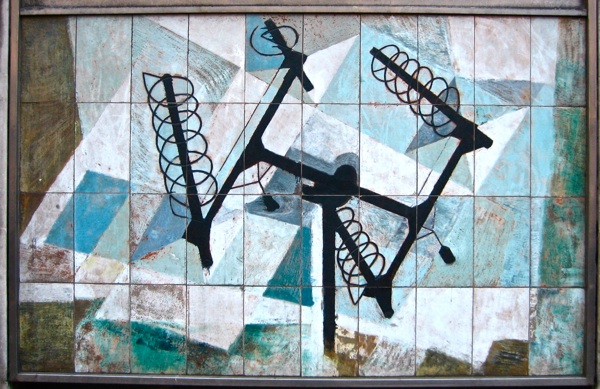
1. Radio communications and television
Wandering down under Holborn Viaduct years ago on my way to magicians’ convention at the Bridewell Theatre, I was halted in my tracks by the beauty of a series of nine large ceramic murals upon the frontage of Eric Bedford’s elegant modernist Fleet House of 1960 at 70 Farringdon St. Their subtle lichen and slate tones suited the occluded November afternoon and my mood. Yet even as I savoured their austere grace, I raised my eyes to discover that the edifice was boarded up and I wondered if next time I came by it should be gone. Just up from here, there were vast chasms where entire blocks had disappeared at Snow Hill and beside Farringdon Station, so I was not surprised to discover that the vacant Fleet House was next to go.
Each of the murals was constructed of forty bulky stoneware panels and it was their texture that first drew my attention, emphasising the presence of the maker. Framed in steel and set in bays defined by pieces of sandstone, this handcrafted modernism counterbalanced the austere geometry of the building to sympathetic effect. Appropriately for the telephone exchange where the first international direct-dialled call was made – by Lord Mayor of London Sir Ralph Perring to Monsieur Jacques Marette, the French Minister of Posts, Telegraphs and Telephones in Paris at 11am on 8th March 1963 – these reliefs celebrated the wonders of communication as an heroic human endeavour. In 1961, the General Post Office Telephonist Recruitment Centre was housed there at Fleet House and they paid telephonists £11 week, plus a special operating allowance of six shillings and threepence for those employed on the international exchange.
These appealing works, enriching the streetscape with a complex visual poetry, were created by Dorothy Annan (1908-1983) a painter and ceramicist with a Bohemian reputation who, earlier in the century, produced pictures in a loose post-impressionist style and was married to the sculptor Trevor Tennant. Although her work is unapologetic in declaring the influence of Ben Nicholson and Paul Klee, she succeeded in constructing a personal visual language which is distinctive and speaks across time, successfully tempering modernism with organic forms and a natural palette.
It was the abstract qualities of these murals that first caught my eye, even though on closer examination many contain figurative elements, illustrating aspects of communication technology – motifs of aerials and wires which are subsumed to the rhythmic play of texture and tone, they offered a lively backdrop to the endless passage of pedestrians down Farringdon St.
Once a proud showcase for the future of telecommunications, Fleet House had been empty for years and was the property of Goldman Sachs who won permission this summer to demolish it for the construction of a ‘banking factory.’ I feared that the murals might go the same way as Dorothy Annan’s largest single work entitled ‘Expanding Universe’ at the Bank of England which was destroyed in 1997. Yet although Fleet House itself was not listed, the City of London planning authority earmarked the murals for preservation as a condition of any development. And today, you can visit them at the Barbican where they have found a sympathetic new permanent home, complementing the modernist towers, bringing detail and subtle colour to enliven this massive complex. The age of heroic telephony may have passed but Dorothy Annan’s murals survive as a tribute to it.
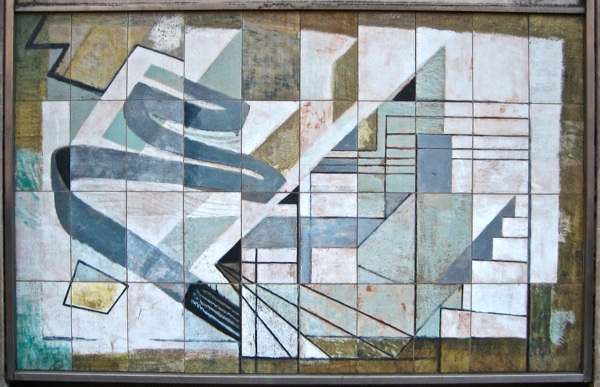
2. Cables and communication in buildings
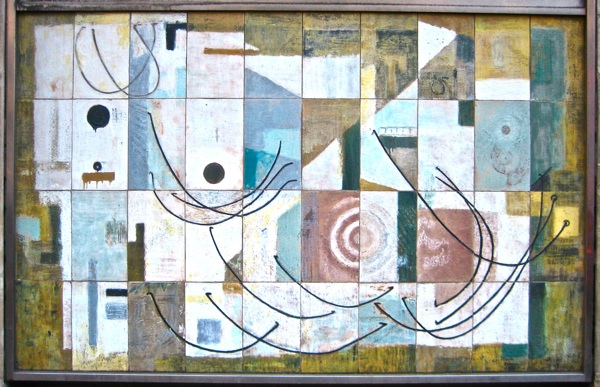
3. Test frame for linking circuits
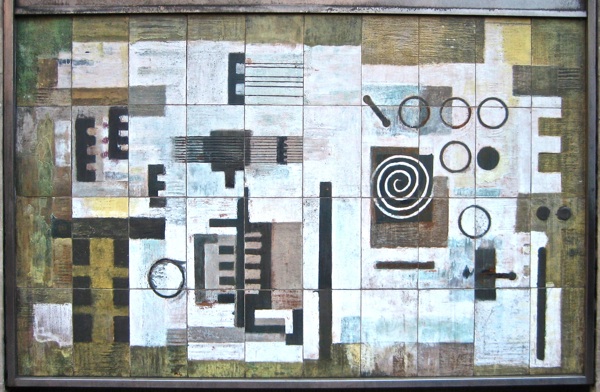
4. Cable chamber with cables entering from street
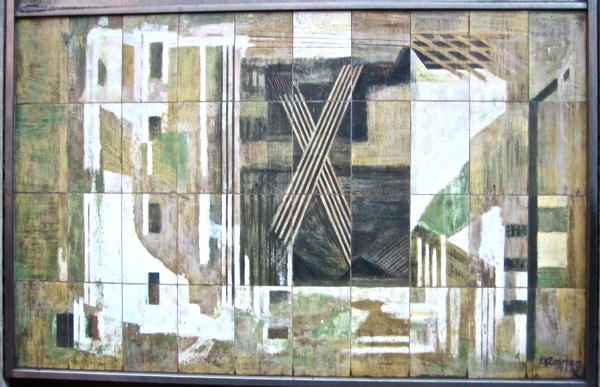
5. Cross connection frame
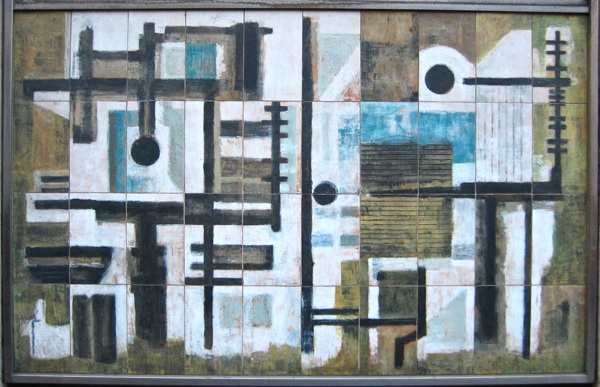
6. Power and generators
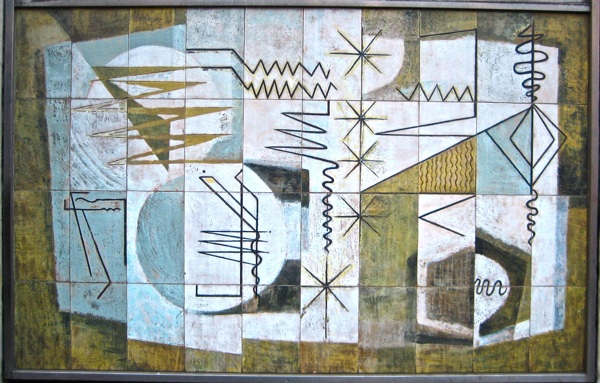
7. Impressions derived from the patterns produced in cathode ray oscilligraphs used in testing
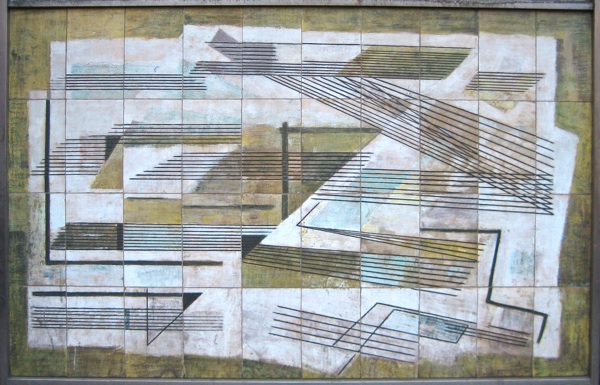
8. Lines over the countryside
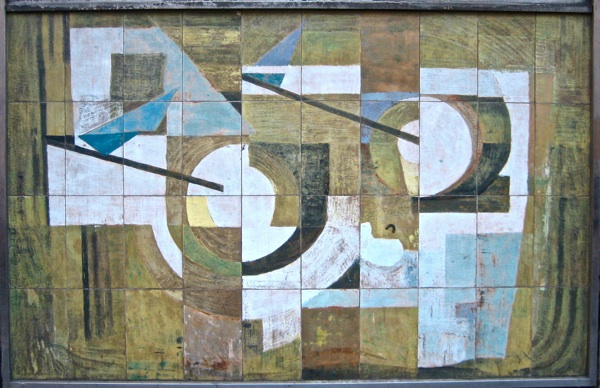
9. Overseas communication showing cable buoys
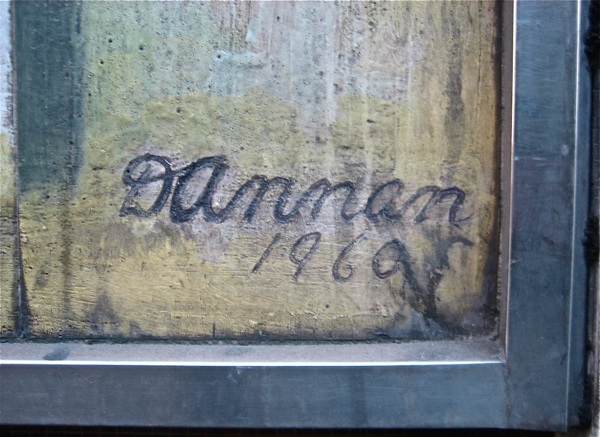
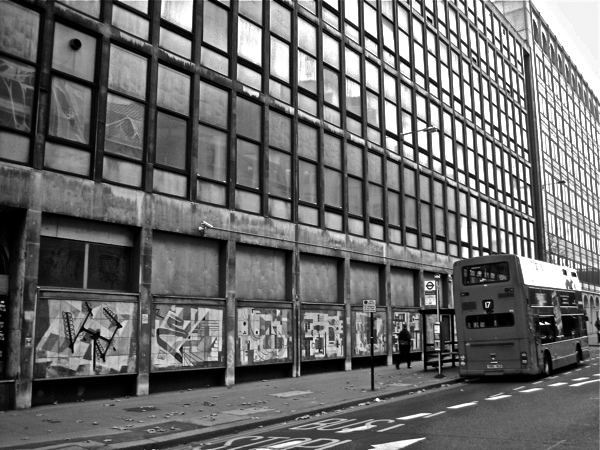
Dorothy Annan’s murals upon Fleet House, Farringdon St, November 2011
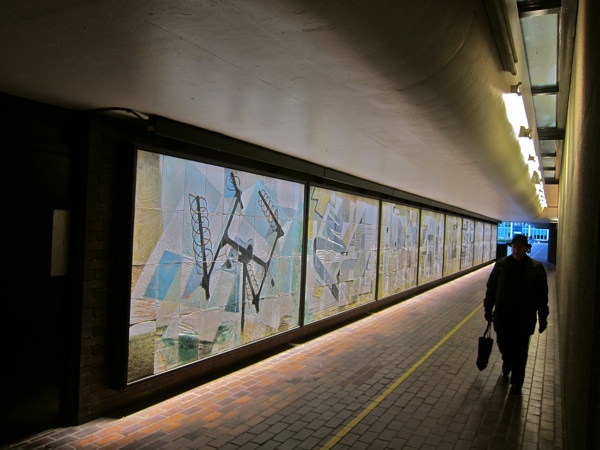
Dorothy Annan’s murals at the Barbican Centre, November 2013
You might also like to take a look at
Philip Lindsay Clark’s Sculptures in Widegate St











This is very good news indeed. I remember walking past them and photographing them myself many years ago, and thought surely these beautiful pieces should be saved. Many thanks for posting GE.
What lovely pieces and how wonderful that your advocacy was able to save them for everyone. I will make sure to go and see them the next time I’m in London….
These motifs are expressed in a muted, painterly palette that reflects both technological optimism and artistic modernism of the era.