
At Canvey Island

Help publication by preordering now and we will post you a copy signed by Tessa Hunkin at the end of September in advance of publication on October 2nd. Additionally, we are including a complimentary copy of A Hoxton Childhood (cover price £20) with all pre-orders in the United Kingdom. CLICK HERE TO ORDER YOUR COPY
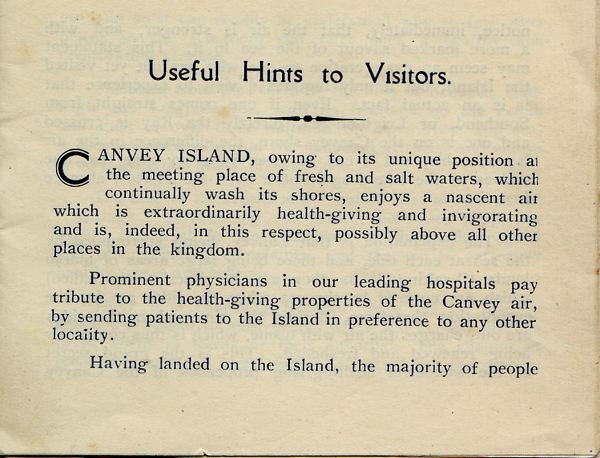
Inspired by a brochure given to me by Gary Arber, I decided to go for a day trip to Canvey Island. Printed by W.F.Arber & Co Ltd in the Roman Rd in the nineteen twenties – when Gary’s grandfather Walter ran the shop, his father (also Walter) was the compositor and uncles Len and Albert ran the presses – this brochure seduced me with its lyrical prose.
“Canvey Island, owing to its unique position at the meeting place of fresh and salt waters, which continually wash its shores, enjoys a nascent air which is extraordinarily health-giving and invigorating, and is, indeed in this respect, possibly above all other places in the kingdom. Prominent physicians in our leading hospitals pay tribute to the properties of the air, by sending patients to the Island in preference to any other locality.”
Yet in spite of this irresistible account of the Island’s charms, when I told people I was going to Canvey, they pulled long faces and declared, “You’re joking?” Undeterred by prejudice, I packed sandwiches in my satchel and set out from Fenchurch St Station with an open mind to discover Canvey Island for myself. Alighting at Benfleet, I crossed the River Ray to the Island arriving at the famous wall that reclaimed the land from the sea – constructed in the seventeenth century by three hundred dutch dyke diggers under the supervision of Cornelius Vermuyden.
“One of the first places the visitor will make for is the sea-wall, which he has undoubtedly heard a good deal about before coming to Canvey, and with which he will be anxious to make a closer acquaintance. The wall completely encircles the Island, and, following all its windings in and out, covers a distance of about eighteen miles.”
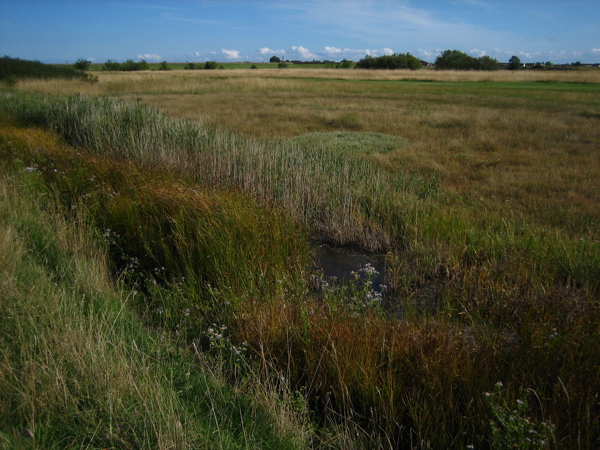
Since I had no map and had not been to Canvey before, Gary Arber’s brochure was my only guide. And so I set out along the wall where stonecrop and asters grew wild, buffered and blown by salt winds from the estuary. With a golf course to the landward side and salt marshes to the seaward side, that widened out into a vast open expanse stretching away towards Southend Pier on the horizon, it was an exhilarating prospect and I enjoyed the opportunity to fill my lungs with fresh sea air.
“The grand secret of the wonderful health-giving properties of the air is the evaporation from the “saltings,” during the time when the tides are out, which charges the air with ozone, which is thus constantly renewed and refreshed, making it extremely healthy, clean and bracing.”
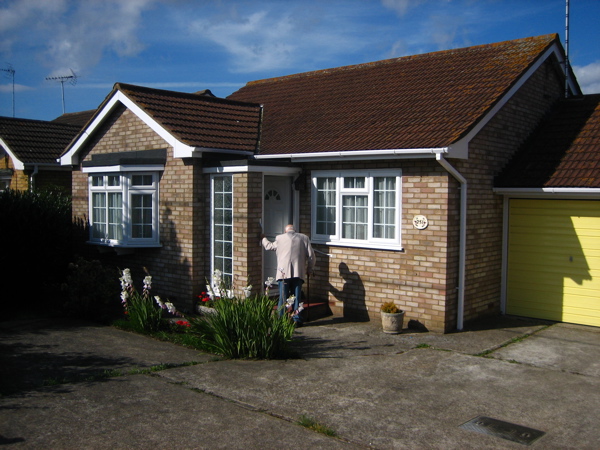
Reaching Canvey Heights and looking back, the contrast between the hinterland crowded with bungalows and whimsical cottages, and the bare salt flats beyond the wall became vividly apparent. Many thousands before me, coming to escape from East London, had also been captivated by the Island romance that Canvey weaves – and I could understand their affection for this charmed Isle that proposes such a persuasive pastoral idyll, when resplendent beneath a sky of luminous blue.
“There is a charming freedom about life on Canvey which will appeal to most people whose work-a-day life has to be spent in towns or their suburbs. The change of scene is complete in every respect; streets, bricks and mortar, are replaced by bungalows of very varied designs and appearances”
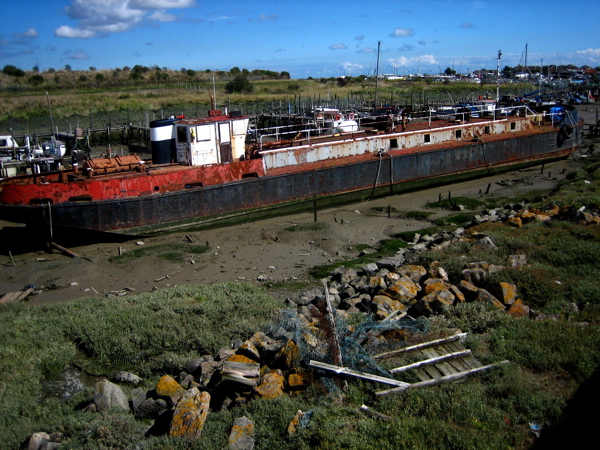
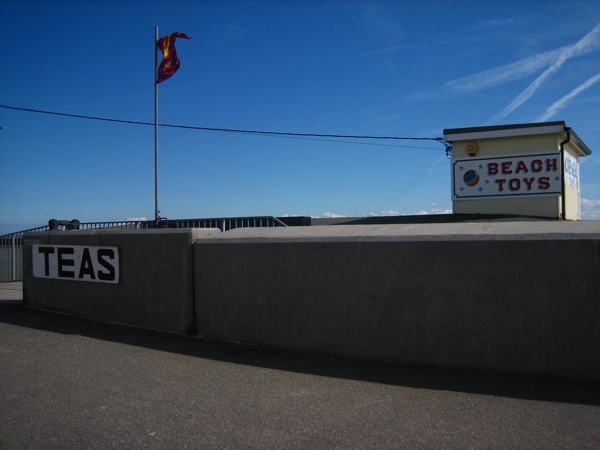
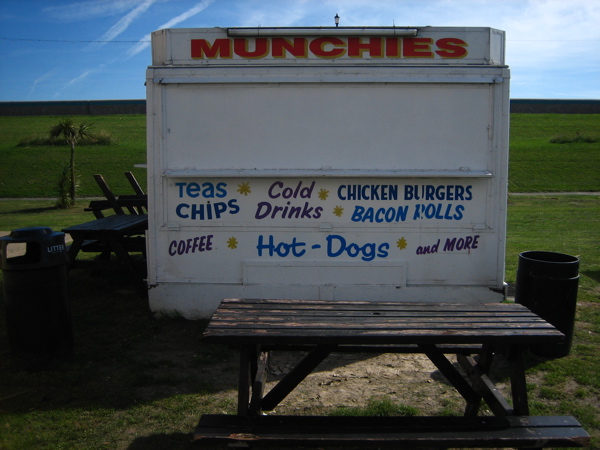
Surrounding Canvey Heights, I found a neglected orchard of different varieties of plum trees all heavy with fruit, and filled my satchel with a selection of red, yellow and purple plums, before making my way to Rapkins Wharf with its magnificent old hulks nestled together in a forgotten creek. The Island breezes played upon the rigging like a wind harp, filling the boat yard with other-worldly music, where old sea salts sheltering amongst the array of rotting vessels. Next, turning the corner of the Island, I reached the shore facing the estuary and walking along the esplanade soon came to Concord Beach Paddling Pool where I joined the happy throng at the tea stall, spying the big ships that pass close by.
“All the vessels, bound to and from the large ports on the Thames, must pass Canvey, and thus a constant procession of all sizes can be watched with interest and pleasure, ploughing their lonely furrows through the waters. Monster ocean-going liners bound for the other side of the world, sailing vessels with their full rig of canvas spread, and, as the sun catches the sails, delighting the eye with one of the most haunting sights to be imagined – the estuary teems with interest at all times. Here one can realise that, despite the progress of motor and steam in water travel, there still remain a few ocean-going vessels under sail only.”
At the next table, a group of residents were debating the relative merits of Benidorm and Costa del Sol as holiday destinations, only to arrive at the startling yet prudent consensus that staying here in Canvey Island was best. Eavesdropping on their conversation, and observing the idiosyncratic villas adorned with pigeon lofts and flags, I recognised that an atmosphere of gleeful Island anarchy reigns in Canvey, situated at one remove from mainland Britain.
“The strict conventions of dress and deportment so tiresomely observed in towns can be ignored here in Canvey, and the visitor casts off all artificial restraints, simply observing the ordinary rules of decency and respect towards others which his own courtesy will dictate.”
Crossing through the streets, marvelling at the varieties of bungalows, I came to the Canvey Island Rugby Club playing field at Tewkes Creek, where I sat upon a bench to rest and admire the egrets feeding in the creek, while men walked their bull terriers on the green. Tracing my path back along the wall towards Benfleet station, I discovered circles of field mushrooms and picked myself a bunch of the wild fennel that grows in abundance, imparting its fragrance to the breeze. Then I returned home on the train to Fenchurch St at six, pleasantly weary, sunburnt and windswept, with my mushrooms, plums and fennel in hand as trophies, enraptured by all the delights of Canvey.
“For the family there is no better spot than Canvey for holidays – the glorious, exhilarating air sends them home again pictures of health and happiness.”
I never saw Canvey Island’s petrochemical refineries, or what happens at night. I am prepared to countenance that Canvey has its dark side, but I was innocent of it. I am an unashamed day-tripper.
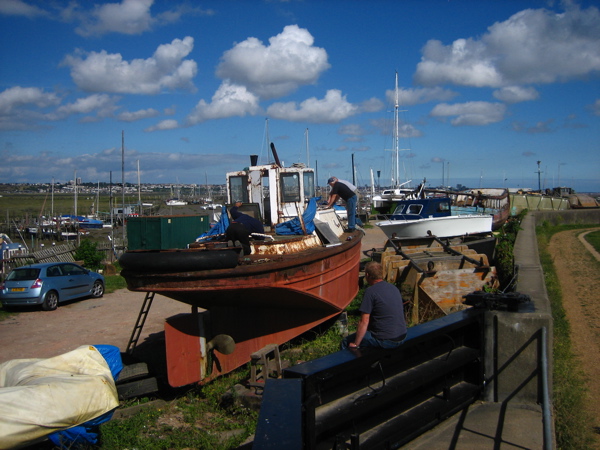
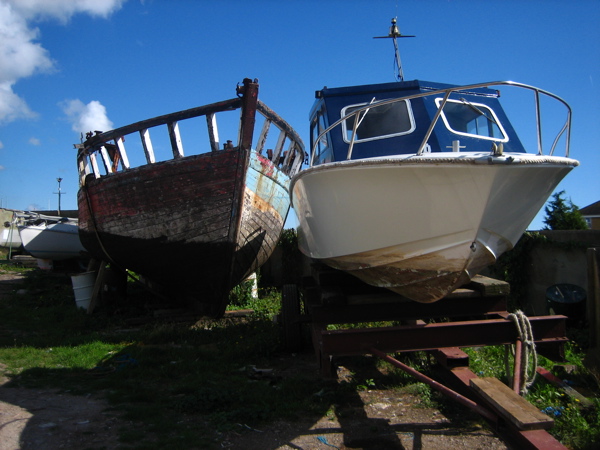
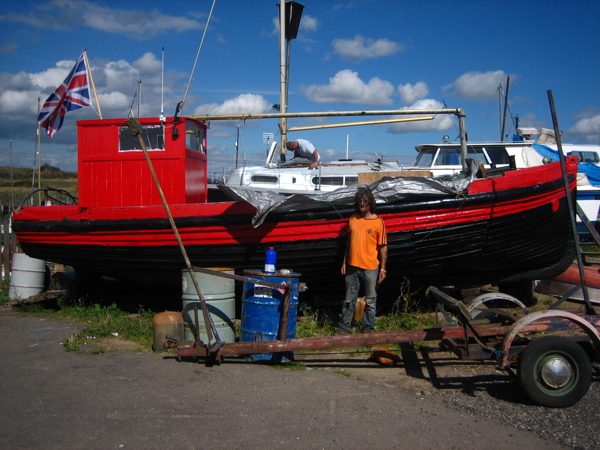
This boat is for sale, contact the owner at Rapkins Wharf, Canvey Island.
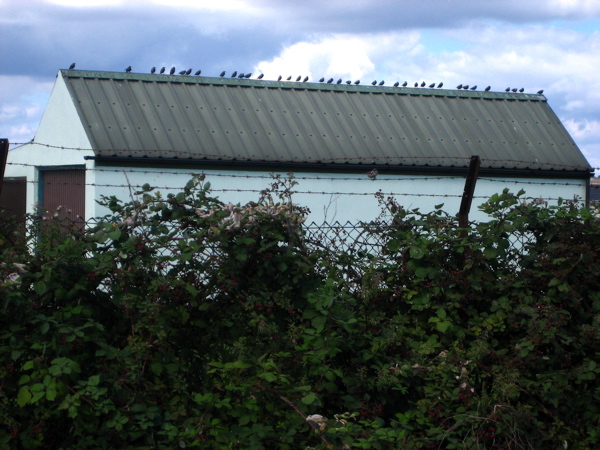
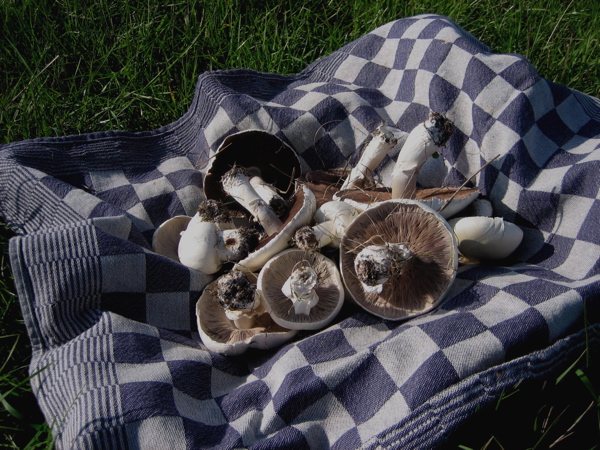
Mushrooms picked at Canvey
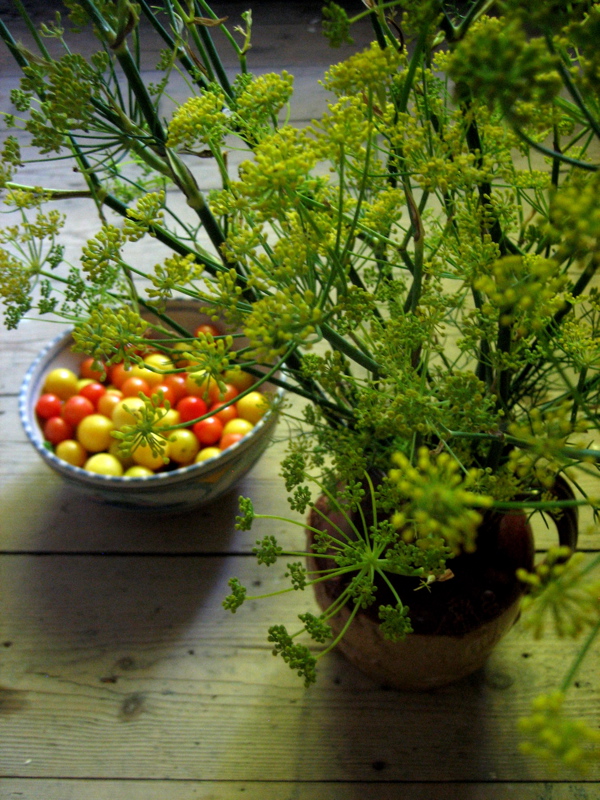
Plums and fennel from Canvey
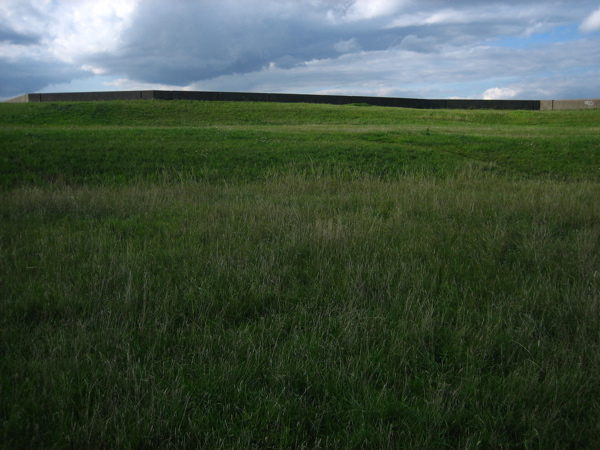
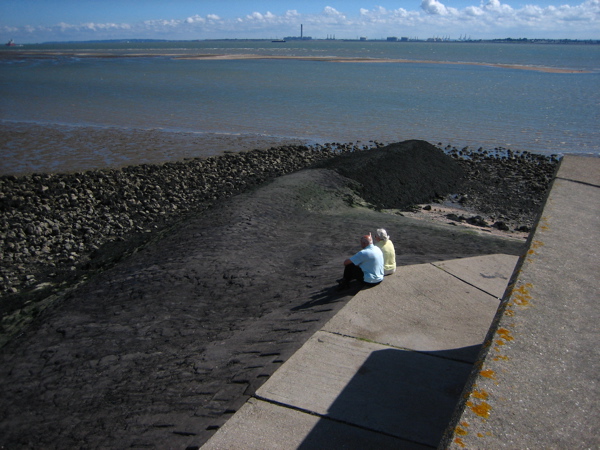
The wall around Canvey Island













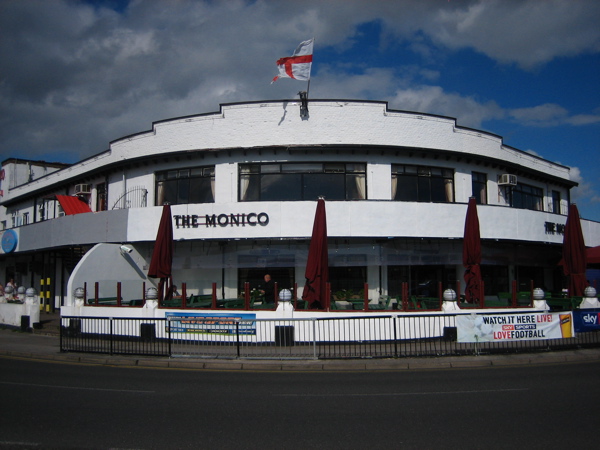
Some of the best times of my childhood were spent on Canvey with my extended family, all of us escaping the daily grind of Stepney. 4 generations of us regularly made the journey, starting around the 1910s/20s and ending with us in the 60s. However, these days I’m back there regularly again because of my nostalgic tendencies now I am old. Setting foot on the island prompts memories and emotions to wash over me. We had the best childhood. There’s nothing like a short stroll along the wall followed by a super lunch in the Lobster Smack, a centuries old inn on the waterline looking over the estuary. Or maybe a wander along the seafront across from the Monico pub where as children we enjoyed the delights of the long row of amusement arcades and snack bars. Yes, those days are long gone but it’s still there both in the air around me and in my heart.
Ah me! So many missed opportunities! But one cannot do everything!
As a youth and teenager in North London Canvey was one of the many places I heard of from schoolfellows and local pals but never set out to visit. I don’t know why! But somehow what I heard wasn’t enough to persuade me to splurge my meagre pocket-money on this, rather than some other outing. Now, almost eighty years later, I can only hope that the balance I chose was right.
Amazing, my grandfather was an East End Boy and may well have visited Canvey Island.
Unfortunately, grandfather died when I was quite young, so I didn’t get the chance to ask
him about his youth in Whitechapel and trips to Essex! However, I did manage to check
out Southend whilst in my teens!
The grandmother of my ‘bestie’ from senior school once lived in the most deprived part of Bermondsey. In her latter years, she moved to Canvey Island and lived there until the end of her days. It seemed such an idyllic place.
Very enjoyable reading. My friends and I would ride our bikes down to Canvey Island for a day visit during the early 50s. Journeying from Bow, East London. Aged about 12 or so. Quite a ride with the return trip on sometimes unsuitable bikes.
Later during working years in the 60s, I would sometimes be on a Thames lighter, or tug alongside the oil jetty at Hole Haven, with the Lobster Smack pub just ashore over the sea wall. In 1972, married with children, we moved to Canvey, our kids grew up playing in fields and open spaces, and attending modern schools.
So different to my growing up playing on bomb sites and war damaged houses. Still living on Canvey Island today. Some 50 odd years now. A lot of the open spaces have been built upon, but there is still plenty of open recreational areas.
So, no regrets.
I very much enjoyed reading this account of a day trip to Canvey, surely one of the quirkiest places in England, with much still to recommend it. However may I make one correction? I was brought up in South Benfleet, and I never heard the tidal waterway that separates Canvey from the mainland called anything else but “Benfleet Creek”. I know that old maps have sometimes labelled it “Hadleigh Ray”, but nowadays that is the name of the channel which remains at low tide, several miles down river, and a mile or so off Leigh-on-Sea and the Southend foreshore.