
An Afternoon In Great Bardfield

CLICK HERE TO BOOK FOR MY SPITALFIELDS TOUR ON 19th JULY

Inspired by the Edward Bawden exhibition at Dulwich and encouraged by an invitation from resident Stella Herbert, I enjoyed a trip to Great Bardfield. Stella is an inveterate collector but perhaps most impressive is her collection of watering cans parading through her yard like a flock of prize geese. Did you know that English watering cans have a handle positioned laterally over the can while French watering cans have a handle that traverses the can from back to front? This was just the first of many interesting facts I learned in what proved to be a day filled with wonders.
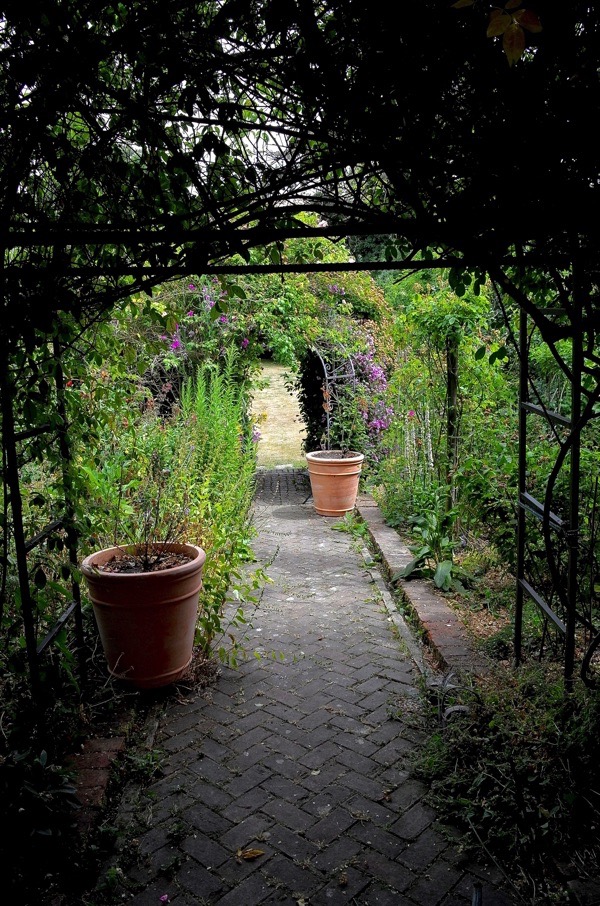
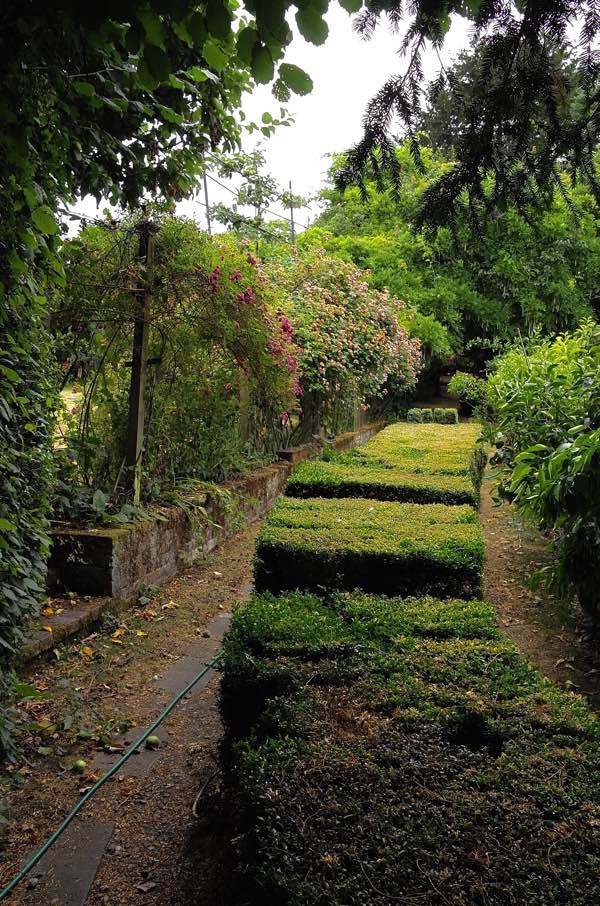
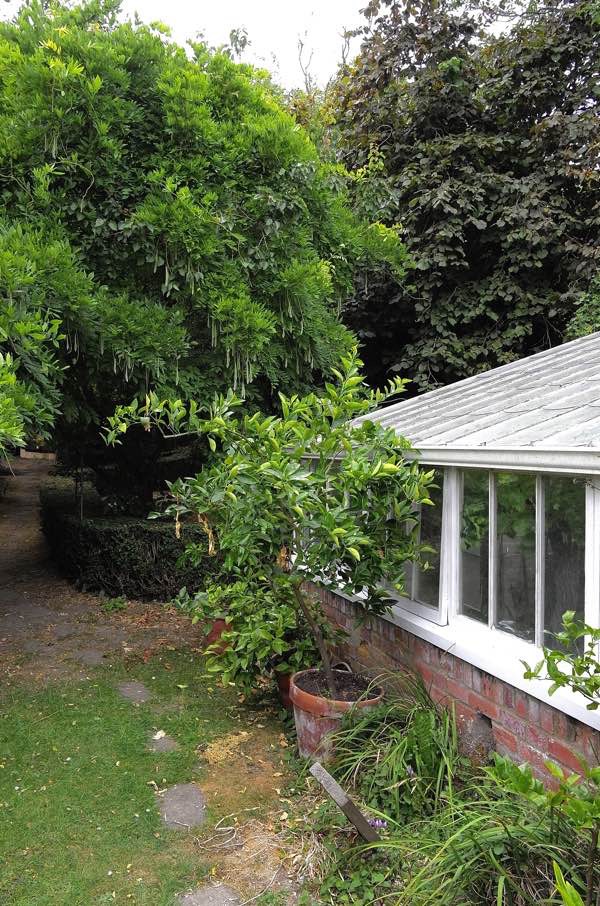
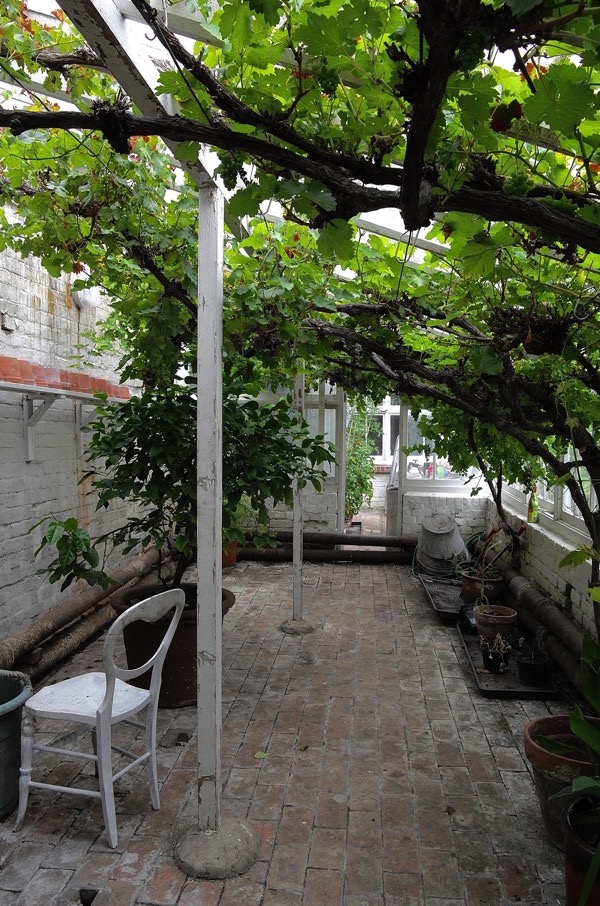
Alas I arrived a few weeks too late to view Stella’s cherished rainbow-hued herbaceous border, yet I was entranced by her garden with its hidden arches and mysterious pathways leading to an old brick-floored greenhouse where an ancient vine and a lemon tree preside.
After the clamour of London, the quietude of Great Bardfield was startling. When we ventured to walk up through the High Street, the peace that is distinctive to an English village in the middle of the day in the middle of summer prevailed. No pedestrians and few cars. The square Brick House where Edward Bawden and Eric Ravilious lived in the middle of the last century sits at the centre of an appealing array of immaculately kept old houses of idiosyncratic form and style. Our destination was the cottage museum with its memorable display of locally made corn dollies and agricultural tools, all preserved within a cosy one room dwelling.
Great Bardfield was the subject of Edward Bawden’s Life in an English Village in 1949, illustrating the small trades that were essential to community life in his time, including the butcher, the baker, the tailor and the saddler. All gone now except the local pub, The Bell, and perhaps more residents work in London these days than in the village itself. Yet I was delighted to visit the excellent bookshop which is clearly a vital social focus as well as a supply of good reading material.
Stella is the keeper of the keys for the ‘cage,’ a lock-up for presumed miscreants in past days. We peered through the grille at the bearded mannequin perched upon his straw mattress and patiently listened to the recording which explained the history of misbehaviour in Great Bardfield, before Stella locked up for the night.
The attractive flint parish church sits on a hill overlooking the village which may explain the huge blue and gold tower clockface, claimed to be the largest in the land, which is of a scale to be read comfortably from a distance. Dating from the twelfth century, it has a modest down-to-earth squat proportion and is notable for its curious fourteenth century stone rood screen, sprouting like a tree diverging into branches of tracery with corbels representing Edward III and his wife. Within the sanctified stillness of the old church, tombs, artefacts and monuments testify to eight hundred years of village life in Great Bardfield.

A flock of watering cans
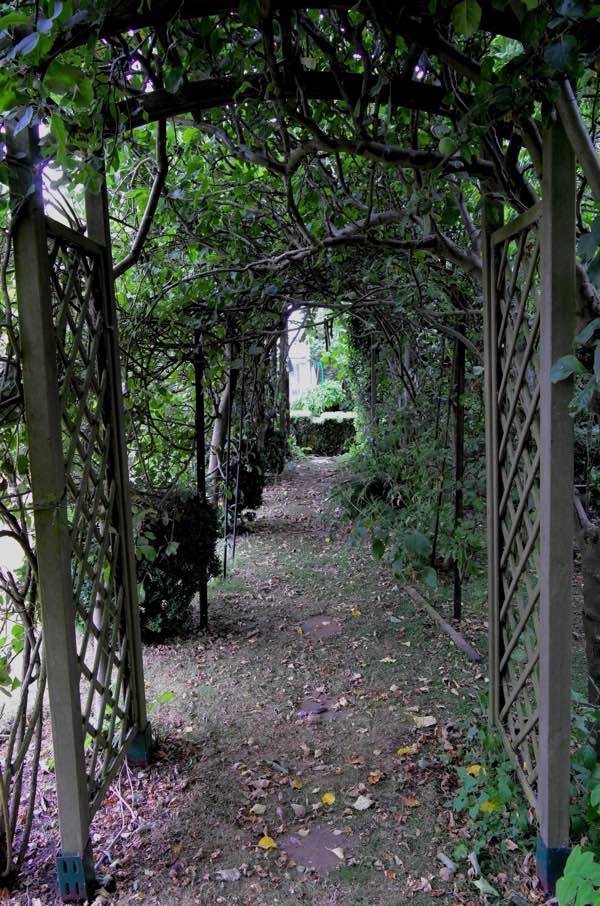
An avenue of apple trees
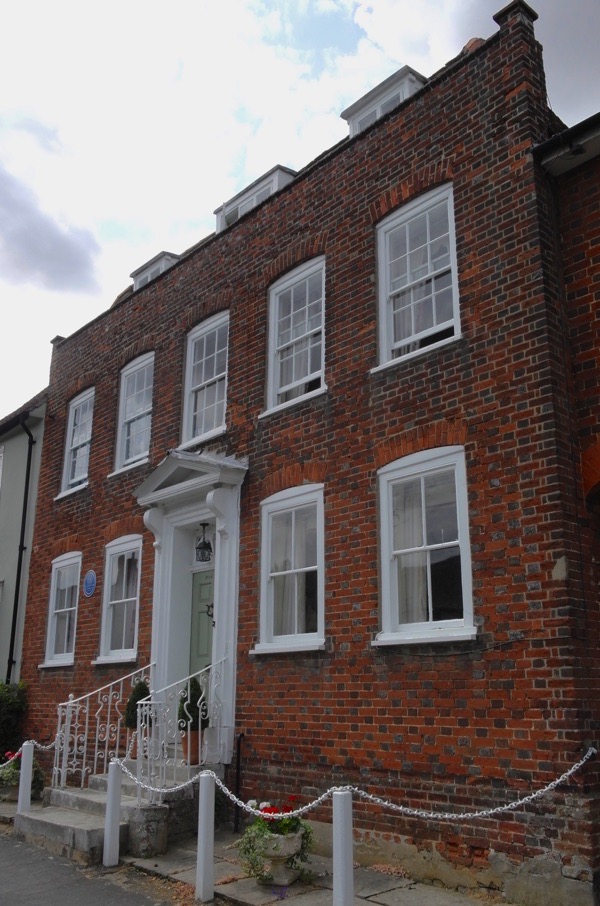
Edward Bawden’s house
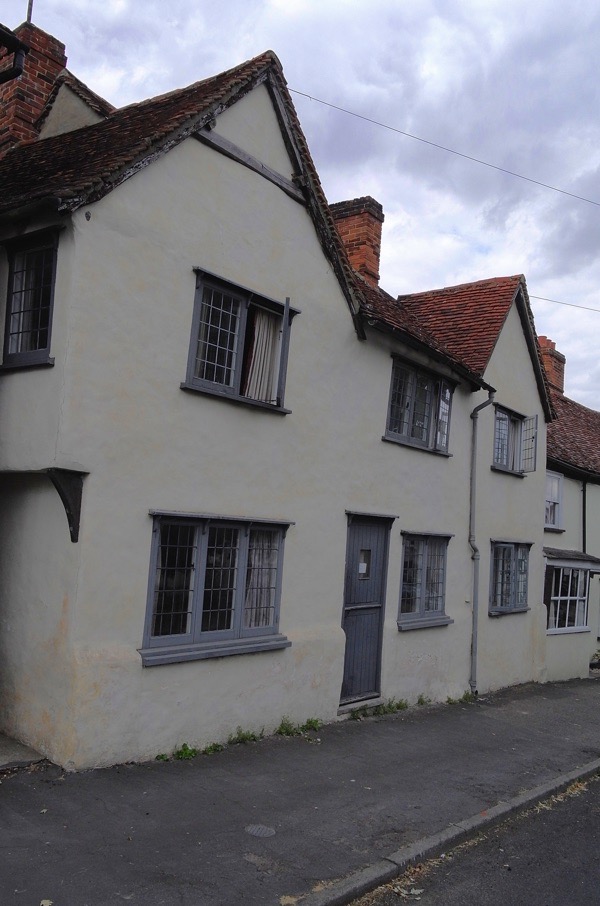
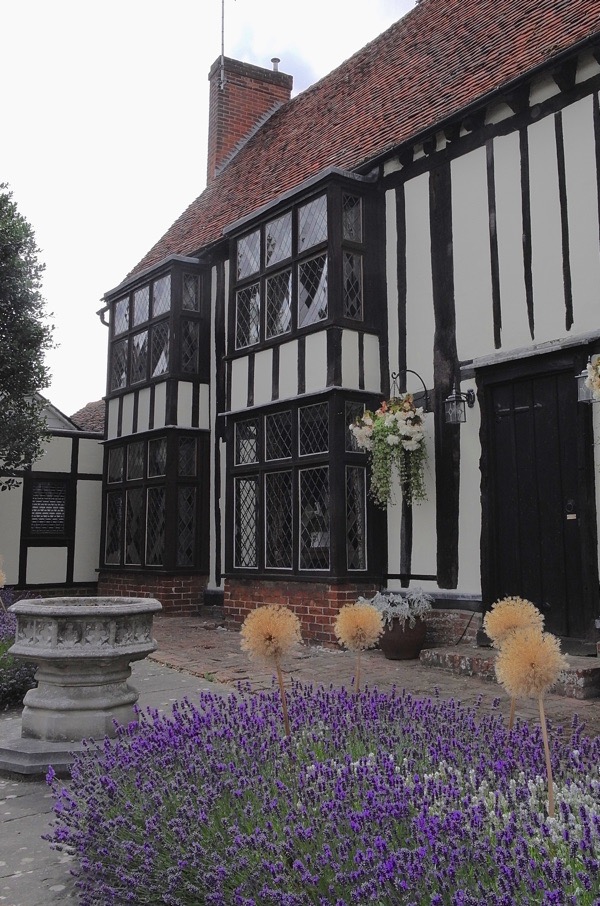
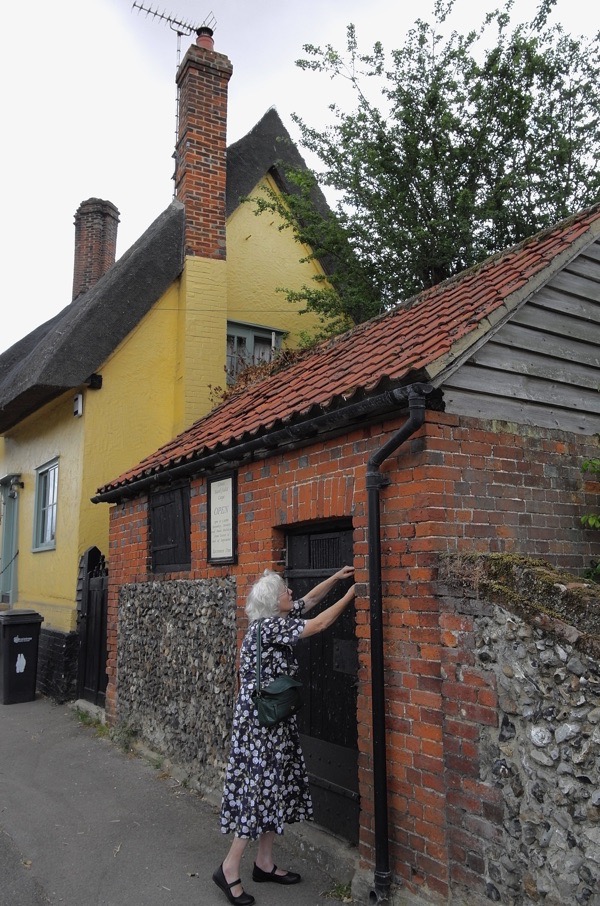
Stella locks the village ‘cage’ for the night
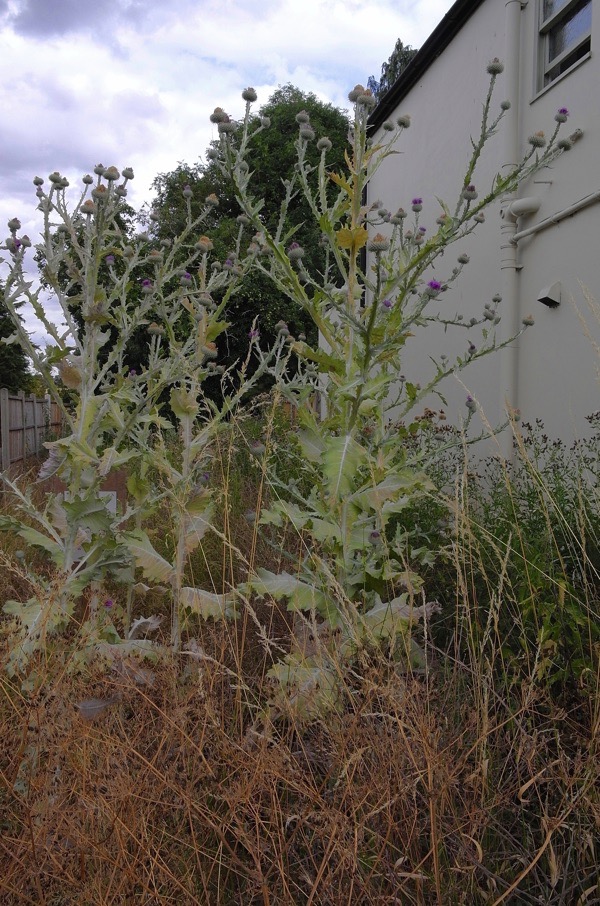
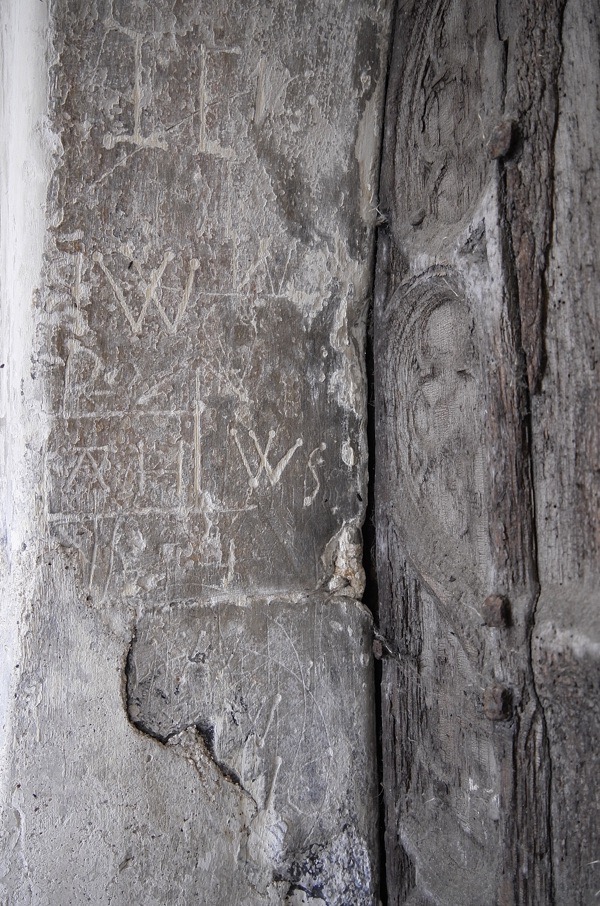
Graffiti at the church
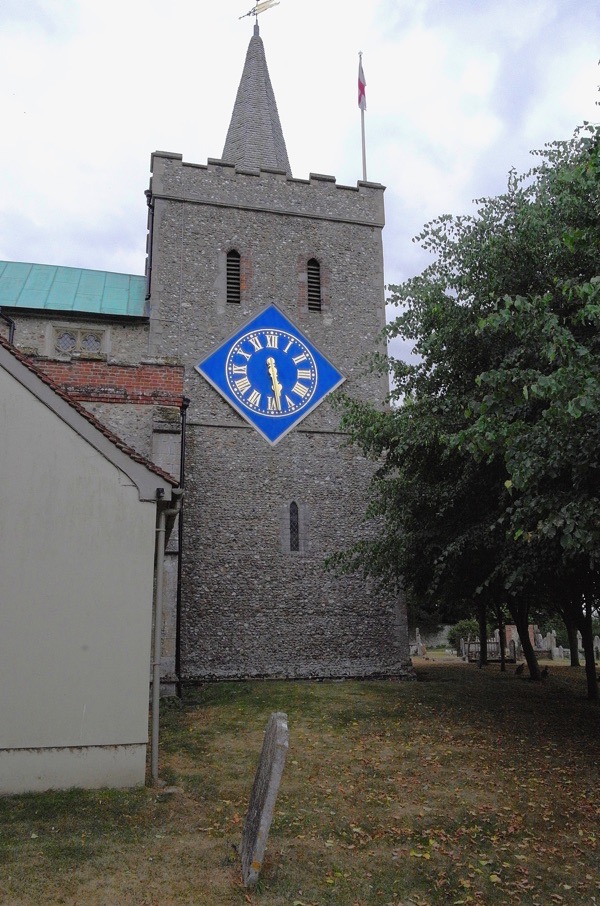
Great Bardfield church has one of the largest clockfaces in the land
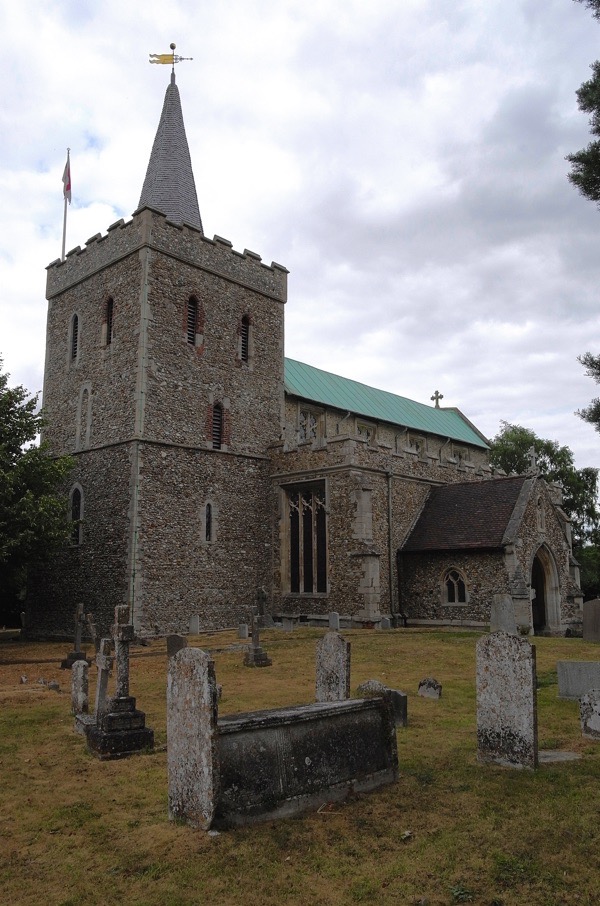
Parish Church of Great Bardfield













Very interesting and the village looks beautiful. I was surprised that you didn’t mention Tirzah Garwood, who was married to Eric Ravilious and also an artist. There was a recent exhibition of her work at Dulwich Picture Gallery which I really enjoyed. She wrote extensively about their time in Great Bardfield in her autobiography.
Tirzah Garwood’s autobiography Long Live Great Bardfield is a wonderful book. (Tirzah was Eric Ravilious’ wife) I think her daughter actually put it together from her mother’s diaries. It covers much more than Great Bardfield though it plays an important part in her story. It is well worth reading (I found the book completely by chance at the Town House in Fournier Street several years ago.)
Oh how I wish I could settle in this village!
That’s what I love so much about England: after enjoying a few days in London, you look forward to the countryside. You drive out for an hour or so and you’re there — Great Bardfield is such a typical place that can inspire you. Beautifully British!
Love & Peace
ACHIM
My discovery of Edward Bawden and Eric Ravilious was a Magnitude Ten! Don’t ask what took me so long, but I suspect I was buried in awe for American illustrators, and simply had not widened my horizons. But discovering Bawden’s mannerly/creative depictions of High Street, and also his notable book about Kew Gardens, etc. — also the Fortnum and Mason work he did — oh, just everything! — It so enriched my ideas of What An Illustrator Could Be. I have collected facsimile editions of many of his books (also Ravilious) and there is a cunning small-press book about Brick House (from Design For Today) that captures the mutual kindred friendship between the two gents.
Yours is a rich history of visual artists — and the love of gardening! Thanks, GA, for bringing us heaping helpings of both. Love the procession of watering cans!
I confess that I’d not recognised the name of the village, but what a lovely little corner of our green and pleasant land, and love the architecture visible here – as well as all the wonderful watering cans! Well done Stella, keeper of the keys.
I live just across the road from Wiltshire Museum, which hosted a hugely successful exhibition of Ravilious’s work, including his famous view of the Westbury White Horse from a railway carriage. I’ve always been fascinated by his style — and intrigued by the idea of being a “war artist”. This, in turn, led me to discover through books Ravilious’s connection with Edward Bawden and Great Bardfield. The artists’ community there was remarkable, although reading Thirza Garwood’s autobiography rather shattered my romantic notion of artists collaborating harmoniously within their enclave. They were just as prone to gossip and personal sniping as any other tribe. And as for the difference between English and French watering cans — who’d have thought it?